








Designer
Distributor
The global business landscape is evolving faster than ever. Success today is no longer defined solely by efficiency or financial performance—it demands vision, values, and lasting impact. Transformational leaders are those who navigate complexity with purpose, balancing innovation, responsibility, and people-first thinking to create sustainable growth and resilient organizations. They recognize that long-term value emerges when culture, strategy, and ethics converge.
In the “Top Transformational Leaders in Business 2026” edition of GlobalBiz Outlook, we highlight leaders who are redefining the future of business through empathy, foresight, and purpose. They view technology not as an end, but as a strategic enabler to empower people, strengthen communities, and build trust. Today’s visionary leadership is defined by clarity of purpose, the courage to challenge convention, and the ability to create systems that elevate both human potential and organizational performance.
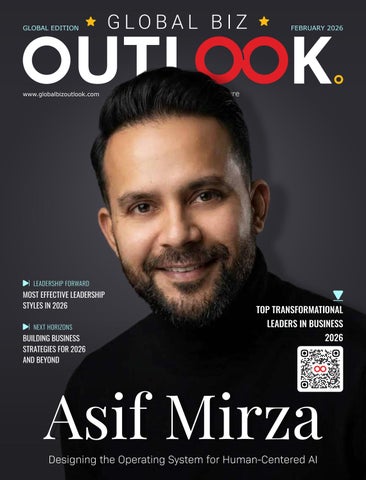
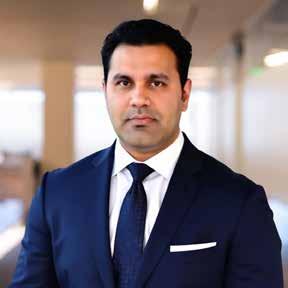
This edition’s cover story features Asif Mirza, founder of CXAI, whose work exemplifies this human-centered approach to AI adoption. Observing enterprises chase productivity without considering trust, Asif recognized that efficiency alone can undermine both employee engagement and customer confidence. He reframes AI as a tool for responsible

Editor-in-chief
Sugandha Sharma
transformation, emphasizing governance, workforce readiness, and empathy. Globally recognized for his thought leadership and award-winning initiatives, Asif urges leaders to see AI not as a technology race but as a test of stewardship—reminding us that sustainable success is built on intention, culture, and systems that strengthen human connection while advancing innovation.
Throughout this edition, you will meet leaders driving cultural transformation, responsible AI adoption, sustainability, and social impact—executives who demonstrate that true transformation balances people, values, and long-term vision with results. Their work illuminates how businesses can thrive amid uncertainty while creating lasting positive influence.
As technology, humanity, and commerce converge, leadership must evolve beyond achievement to inspiration and stewardship. The stories in this issue invite CEOs, founders, and decision-makers to rethink leadership as a responsibility—one that cultivates culture, empowers people, and shapes enduring systems. Lasting impact is measured not just in profits, but in the legacy leaders leave through the lives they touch and the organizations they elevate.
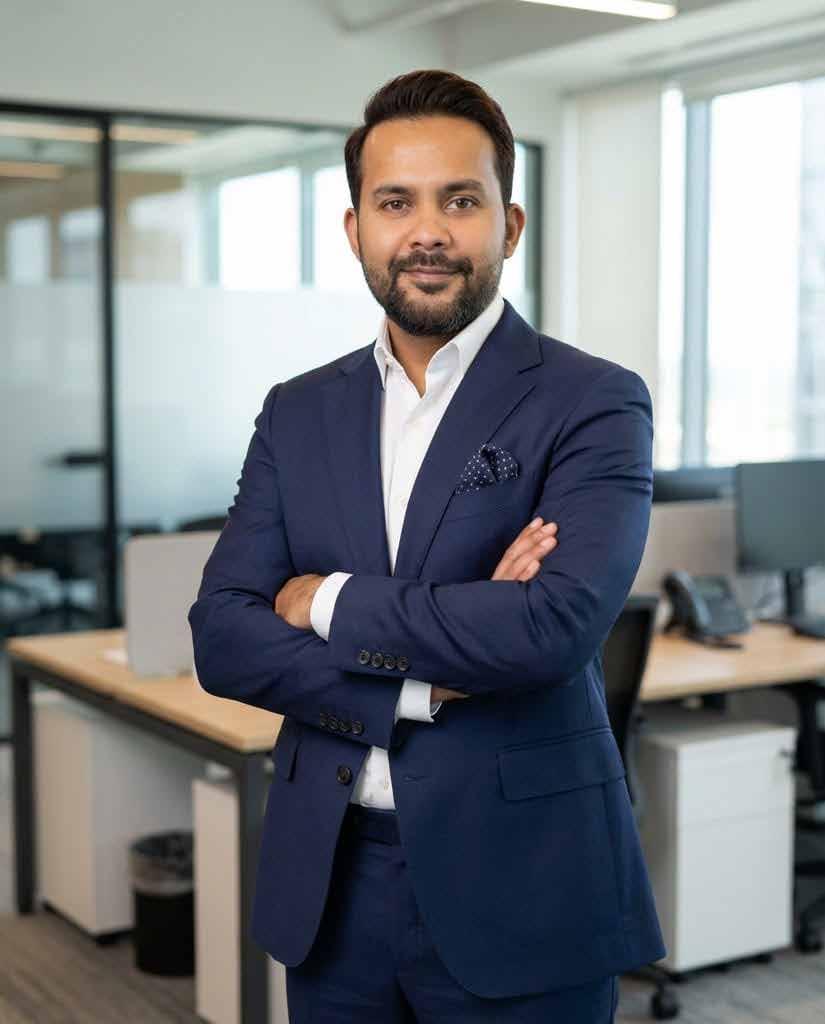

Designing the Operating System for Human-Centered AI







Designing the Operating System for Human-Centered AI
CEO & Founder
CXAI NCRI &
The moment Asif Mirza realized something was broken in the way enterprises were adopting AI didn’t come from a failed algorithm; it came from a successful one. Watching a large organization roll out automation at unprecedented speed, Asif saw productivity metrics climb even as employee trust and customer confidence quietly eroded. The systems worked.
The people disengaged. “That’s when it became clear,” he has written, “that efficiency without empathy doesn’t scale, it fractures.”
That realization would come to define not only his thinking, but the philosophy behind CXAI - Technology Powered, Human Delivered, an AI transformation firm he founded to challenge how intelligence is designed, governed, and experienced inside complex organizations.
As generative AI surged into boardrooms, Asif emerged as one of the clearest voices cautioning against speed without stewardship. While many leaders framed AI as a race to automate, his long-form essays, consistently shared on LinkedIn and widely circulated among CX leaders, CIOs, and transformation executives, reframed the moment as a leadership test. In widely read pieces such as “Automation vs. AI: Why Intelligence, Not Just Efficiency, Will Shape the Future and What 2025 Taught Me About Leadership, Humanity, and Building AI That Truly Serves”, Asif argues that empathy is no longer a soft virtue but a measurable business input, one that directly influences adoption, trust, and long-term return on investment. Over the past year, this body of work has gained sustained traction, positioning him less as a commentator and more as a systems thinker shaping how executives define success in the AI era.
Fresh from winning at the 20th Annual Stevie® Awards for Sales & Customer Service, CXAI and Asif Mirza, were honored with 1 Silver and 4 Bronze awards across AI-driven customer experience and service innovation. The recognition reflects the team's commitment to measurable impact, human-centered design, and responsible enterprise AI.

That perspective has earned Asif growing recognition across the customer experience and technology ecosystem. In 2025, he was named a Top CX Leader and Top CX Tech Awardee, and recognized as a WLDA Executive Ally for his advocacy of inclusive, human-first leadership. But for Asif, awards are signals, not endpoints. Outcomes matter more. Through CXAI, he works with enterprises to redesign operating models, embed governance before deployment, and ensure that AI strengthens, rather than replaces, the human relationships at the core of business.
“Rejection is often redirection,” he reflects in one of his most-shared LinkedIn essays-a philosophy that mirrors his
broader belief that progress, when guided with intention, rarely follows a straight line.
This conviction sits at the heart of what Asif describes as the most consequential fault line in modern enterprise transformation: the widening gap between efficiency and empathy. In the pursuit of speed and scale, organizations have optimized systems while quietly eroding trust inside the workforce and across the customer journey. AI has delivered productivity, but often at the cost of connection. What was gained in automation, Asif argues, was frequently lost in understanding.
Over the past year, this tension has become a defining theme of his writing and advisory work. In essay after essay, Asif challenges leaders to confront an uncomfortable truth: when organizations fail to measure human impact, they miscalculate return on investment. Sustainable value does not emerge from automation alone, but from intelligence guided by intention systems deliberately designed to deepen, rather than dilute, human connection. By questioning how AI is governed, measured, and experienced, Asif has helped shift the conversation from how fast AI can scale to how responsibly it must be led.
That perspective was forged long before AI became a boardroom imperative. With more than 17 years at the intersection of customer experience, digital transformation, and enterprise leadership, Asif observed the same pattern repeat across industries and geographies. Technology initiatives rarely failed because of capability. They failed because of structure. Organizations invested heavily in tools, yet lacked clarity around governance, accountability, workforce readiness, and cultural alignment.
“Technology doesn’t transform organizations,” Asif often notes. “People do. AI only amplifies what already exists.” This belief would become foundational to his leadership philosophy-and ultimately, to CXAI itself.
The rapid rise of generative AI marked a turning point. As enterprises rushed into adoption, Asif watched enthusiasm outpace preparedness. “What was called AI transformation was often just urgency wearing the mask of innovation,” he recalls.
Risk, governance, workforce impact, and long-term readiness were afterthoughts. The conclusion was unavoidable: enterprises did not need more tools. They needed structure.
That realization led to the founding of CXAI in 2022, headquartered in Mississauga, Ontario. From the outset, the
firm was intentionally positioned not as a technology vendor but as a strategic architecture partner focused on helping organizations design how AI should be led, governed, and embedded at scale. CXAI operates on a deceptively simple premise: AI maturity must precede AI deployment.
Rather than implementing isolated solutions, CXAI works with enterprises to design end-to-end AI operating models that integrate governance, risk management, leadership capability, and customer experience strategy. Its work spans AI transformation advisory, enterprise readiness and maturity assessments, responsible AI frameworks, operating model design, and leadership development through the CXAI Academy. By focusing on readiness first, the firm helps organizations avoid the most common pitfalls of fragmented adoption, regulatory exposure, and workforce resistance.
Entering an AI market crowded with bold promises was not without challenge. “AI was noisy,” Asif says. “Everyone had a tool. Everyone promised speed. Very few talked about discipline.” CXAI deliberately chose the harder path-prioritizing depth over hype. The firm invested in building proprietary frameworks, publishing thought leadership that challenged prevailing narratives, and engaging executives in difficult conversations about responsibility, trust, and long-term impact. That discipline has positioned CXAI as a trusted advisor to leaders seeking clarity rather than shortcuts, particularly in regulated and high-stakes environments.
For Asif, leadership itself is not a personal trait-it is an operating system. “I don’t separate leadership from culture,” he explains. “Culture is an operating model.”
At CXAI, leadership principles are embedded into how the organization works, guided by curiosity, integrity, accountability, empathy, and adaptability. Performance is measured not by intensity, but by intention-a philosophy mirrored in how the firm partners with clients navigating change.
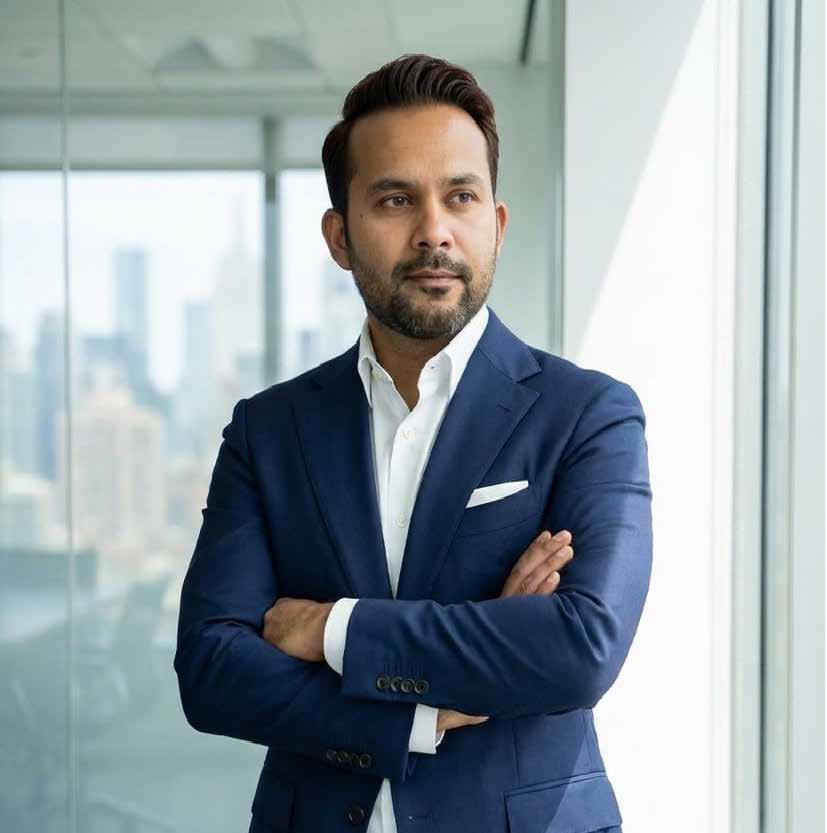
Looking ahead, Asif sees CXAI playing a defining role in shaping how enterprises worldwide adopt and govern AI. The firm’s roadmap includes scaling the CXAI Academy globally, developing industry-specific AI playbooks across banking, healthcare, retail, and government, expanding partnerships across North America, APAC, Europe, and the Middle East, and embedding CXAI frameworks into enterprise and regulatory ecosystems.
The ambition is not to disrupt for disruption’s sake, but to build what endures.
For emerging leaders, Asif offers advice shaped by patience rather than urgency. “Don’t chase disruption,” he says. “Build direction.”
In an era defined by rapid technological change, he believes lasting impact comes from long-term thinking, ethical discipline, and systems designed to outlast their creators.
“Legacy isn’t built by being first,” Asif reflects. “It’s built by being foundational.”

The distribution industry has long operated on a straightforward principle: move products from point A to point B, generate revenue, repeat. It's transactional, efficient, predictable. But this approach treats brands as commodities and retailers as checkboxes on a sales target sheet. The model works, technically speaking, but it leaves something crucial on the table: the potential to build something that actually lasts. Most distributors chase volume and quarterly numbers. They stock shelves and call it strategy. They represent dozens of brands without truly understanding what any of them stand for. The result? A marketplace crowded with products but starved for meaning, where relationships are shallow and brand loyalty is a myth parents tell their children.
Silvia Panizzi saw this hollowness and chose a different path entirely. As CEO of AMA Gioconaturalmente, she has spent a decade proving that distribution doesn't have to be a numbers game devoid of soul. Since establishing the company in 2015 from its headquarters in San Giuliano Terme, Pisa, she has built a business model that rejects conventional wisdom at almost every turn. AMA doesn't chase every brand that comes knocking. It doesn't prioritize rapid expansion over thoughtful selection. Instead, Silvia has created what she calls a partnership-driven approach, one where the distributor becomes an extension of the brand itself, deeply invested in its development within the Italian market.
Her background tells you everything about why this approach makes sense to her. With university studies focused on Human Resources Management and years spent in training and development, Silvia's professional DNA is coded for people, not products. She later transitioned to an Italian import-export company, serving as Head of Marketing and Communication while coordinating the Styling Department. These cross-functional roles taught her to see businesses as interconnected systems where communication, creativity, and human dynamics determine success far more than operational efficiency alone.
"My perspective has always been strongly people-centered, with a deep focus on human resources and teamwork," Silvia explains. "I firmly believe that human beings are social by nature and that they perform
at their best when they can work in positive, stimulating, enjoyable, and enriching environments."
That philosophy extends beyond her internal team to every brand AMA represents and every retailer they work with. This is distribution reimagined as ecosystem building.
Ask Silvia to describe herself as a leader in one word, and she doesn't reach for the usual suspects. Not visionary. Not innovative. Not disruptive. She chooses "believer," and the reasoning reveals everything about how she leads.
"I truly believe in people, in their limitless potential, in the power of teams, and in the idea that the best results are achieved through constructive, open, and critical dialogue," she says.
This isn't motivational poster language. It's the operational framework that determines how AMA functions daily. Silvia’s leadership philosophy centers on open communication that is critical but constructive, positive, and strongly motivation-driven. Simple in concept, she acknowledges, yet remarkably complex to execute consistently. The difficulty lies in maintaining that balance, especially when hard conversations become necessary or when market pressures tempt shortcuts.
Her commitment to this approach didn't emerge from business school case studies. It crystallized through direct observation across vastly different work environments. Silvia watched teams flourish under the right conditions and wither under poor ones. She witnessed groups achieve ambitious goals without significant financial resources simply because they felt heard, valued, and empowered to take ownership. Those experiences taught her that transformation starts with people first, processes second.
"I have seen teams grow, overcome significant challenges, and achieve ambitious goals, even with no financial resources to invest, when they were given the right conditions to express themselves, feel heard, and take responsibility," Silvia reflects. "That is when I realized that true change starts with people. When evolving processes are then built alongside the teams, the circle is completed successfully."
She's also learned from negative examples, from leaders and environments that taught her precisely what not to do. This dual learning process, taking inspiration from some while learning cautionary lessons from others, has shaped her adaptive leadership style. The key, she believes, is filtering these observations through your own vision and goals rather than blindly copying what works elsewhere.
When Silvia founded AMA Gioconaturalmente, she rejected the conventional distributor playbook from day one. The standard approach involves representing as many brands as possible, maximizing product lines, and driving volume through extensive retail networks. AMA does the opposite. The company deliberately selects a limited portfolio of brands and develops each one as if it were their own creation.
This selectivity isn't arbitrary. Every brand AMA partners with must align with core values that Silvia considers non-negotiable: research, safety, long-term durability, high-quality and environmentally respectful materials, and distinctive style. The goal is offering the very best for children and everyone around them. Love for children and those who care for them guides every decision.
"We carefully choose our partners based on core values that are fundamental to us," Silvia notes. "Our love for children and for those who care for them is what truly guides us. Respect for the people who work with us and mutual collaboration enrich us every day."
This philosophy has shaped AMA's brand portfolio to reflect evolving market dynamics, particularly the growing emphasis on sustainability, quality, and safety. Rather than simply transferring products from manufacturers to retailers, AMA creates value within the Italian market. They don't distribute products; they distribute stories, values, and projects. Each brand relationship involves significant investment in communication, relationship building with retailers, and developing positioning strategies specific to Italian consumers.
The approach requires patience and courage, especially early on. Saying no to brands that don't fit, even when revenue opportunities exist, goes against every instinct in a sales-driven industry. Investing time in brand building
rather than focusing solely on immediate sales volume feels counterintuitive when competitors are racking up short-term wins. But Silvia believed in the long game.
Resilience carried them through uncertain periods. So did listening carefully to market signals and adapting without compromising their identity. Creativity and mutual trust within the team proved decisive in navigating ambiguity and maintaining momentum when conventional metrics suggested they were moving too slowly.
Inside AMA, Silvia's people-centered philosophy manifests in how the organization operates daily. Her top priorities as a leader revolve around creating healthy, stimulating, trust-based work environments. She's committed to fostering a culture built on open dialogue, shared responsibility, and genuine collaboration.
Innovation, in her view, emerges when people feel free to express ideas, make mistakes without fear, and grow through experience. Her role is facilitating this process while maintaining a clear and shared direction. It's a delicate balance, providing enough structure to prevent chaos while allowing enough freedom for creativity to flourish.
"Innovation emerges when people feel free to express ideas, make mistakes, and grow," Silvia explains. "My role is to facilitate this process while always keeping a clear and shared direction."
This approach extends to the careful, ongoing search for brands that might join what they call the Ama family. Each potential partnership undergoes rigorous evaluation to ensure consistency with AMA's core values, corporate philosophy, and mission. It's not about finding brands that want Italian distribution; it's about finding brands that share a fundamental worldview about quality, sustainability, and respect for consumers.
Making people feel truly invested in a project they know doesn't fully belong to them presents unique challenges. When you're representing other companies' brands, cultivating genuine ownership among your team requires intentional effort. But when you succeed, Silvia insists, there's no result more rewarding. That sense of shared purpose transforms work from obligation into mission.
AMA's distinctive approach has generated meaningful recognition. In 2025, the company won the prestigious GiocoXsempre Award, a recognition promoted by Assogiocattoli honoring toys most loved by children, families, and educators. What makes this award particularly significant is how winners are selected: not by industry experts alone, but by people who experience play daily as a tool for growth, discovery, and connection.
The product that captured hearts and won in the Plush Toys category was the Backpack Hedgehog by Wild & Soft, distributed in Italy by AMA. This super-soft hedgehog-shaped backpack combines functionality, design, and undeniable cuteness. Perfect for preschool, daily outings, or adventures, it's designed to accompany children everywhere, carrying essentials along with plenty of charm.
Additionally, two AMA brands received major recognition in 2025. Scoot & Ride earned the Outstanding Performance Award, while Trixie received the Brand Ambassador of the Year Award. These accolades validate AMA's partnership model, demonstrating that investing deeply in fewer brands generates better outcomes than spreading resources thinly across many.
Looking ahead three to five years, Silvia envisions an organization that's stronger and more widely recognized for both the quality of its work and its ethical, human-centered approach to distribution. The goal is sustainable growth, further strengthening existing partnerships, and maintaining their position as a reference point in the Italian market for brands sharing their values.
Strategic priorities include continued investment in communication-driven innovation, strengthening brand identities for the companies they represent, and developing initiatives that place end consumers increasingly at the center of everything they do. The focus remains on demonstrating that growth can be achieved without compromising identity or respect for people.
Wisdom for the Next Generation
When Silvia considers what emerging leaders and entrepreneurs need to hear, she returns to fundamentals. Results matter, absolutely, but without values and without people, those results don't last. The message she offers is both simple and demanding.
"Never lose sight of the 'why' behind what you do," she advises. "Results matter, but without values and without people, they do not last. Believe in your teams, invest in relationships, have the courage to stay consistent, and choose the harder path when it is the right one; this is what creates real and lasting impact."
She emphasizes that putting love, passion, conviction, consistency, and investment at the center of your work will become increasingly crucial. These aren't soft skills that can be deprioritized when pressure mounts. They're the only things that create genuine, lasting difference.
The distribution industry will continue evolving, driven by technological change, shifting consumer expectations, and global market dynamics. But Silvia's conviction remains unchanged: businesses built on genuine partnerships, selective choices, and deep respect for people will outlast those chasing short-term wins through transactional relationships.
From her headquarters in San Giuliano Terme, Silvia continues proving that distribution can be more than moving products from warehouses to shelves. It can be about building something meaningful, creating value that extends beyond quarterly reports, and demonstrating that business success and human dignity aren't competing priorities. They're inseparable components of work worth doing.
“I truly believe in people, in their limitless potential, in the power of teams, and in the idea that the best results are achieved through constructive, open, and critical dialogue.”

Artificial intelligence has moved from the innovation lab into production trading floors. Machine learning models now drive pricing adjustments, generate trading signals, forecast liquidity, and monitor risk in real time.
Meanwhile, regulators still expect robust model risk management under frameworks like the US Federal Reserve's SR 11-7.
SR 11-7 is the Federal Reserve’s supervisory guidance on Model Risk Management (MRM). It mandates that banks must validate models independently, monitor model performance, document models and their governance and separate model development and validation.
Here's the problem: AI systems need speed and continuous iteration to work. Traditional control frameworks were built for models that barely change. The result? Friction, delays, and sometimes paralysis.
The real question isn't whether we can govern AI. It's how we do it without killing the velocity that makes these systems valuable in the first place.
SR 11-7 gave us a clear lifecycle: develop, document, validate independently, approve, monitor periodically. This works fine for credit scoring models that get reviewed annually. It falls apart when you're dealing with models retrained daily as market regimes shift, feature sets that evolve with new data sources, ensemble systems where models interact in complex ways, and reinforcement learning agents adapting to market conditions.
In high-velocity environments, traditional controls create two problems. First, shadow deployment. Quants bypass formal processes because they're too slow, building outside governed platforms. Second, control theater. Documentation exists but doesn't reflect what the model does in production. Neither reduces risk. Both amplify it.
To make AI work in markets, we need to stop thinking about individual models and start governing model systems. That means the pipelines, data flows, retraining loops, and decision frameworks that interact to produce outcomes.
Most institutions layer controls on after models are built. When models evolve rapidly, this approach can't keep up.
Instead, control generation should be automated within the AI platform itself. Lineage tracking from raw data through model output gets captured automatically. Feature definitions are versioned and tracked like code. Training datasets are hashed and stored for reproducibility. Model artifacts get logged with hyperparameters and environment configs.
Consider a volatility forecasting model. Under the old approach, a quant would build the model, then spend weeks creating separate documentation. By the time that documentation is reviewed and approved, market conditions have shifted and the model needs updating.
Under the embedded approach, the platform automatically captures everything. When the quant pulls Bloomberg data, that's logged. When they engineer features, those definitions are versioned. When the model trains, the platform records which data it used and what the validation metrics showed. The controls are a byproduct of the workflow, not a separate artifact that decays.
Organizations like Capital One and JPMorgan have demonstrated that automated lineage and versioning can actually accelerate deployment while improving control quality.1,2
Traditional model risk management relies on quarterly or annual performance reviews. In fast markets, that cadence is useless.
AI risk monitoring needs to be continuous. You're watching for performance drift, tracking data distribution shifts, monitoring feature stability, flagging infrastructure anomalies, and detecting behavioral drift in ensemble systems.
Consider a credit pricing model used in a trading book. Under traditional monitoring, you'd run quarterly backtests. If the model started deteriorating in February, you might not catch it until April. By then, you've potentially mispriced hundreds of trades.
With continuous monitoring, the platform tracks prediction accuracy daily. If credit applications suddenly come from unfamiliar geographies or credit scores cluster differently than usual, alerts fire immediately. The risk team investigates before losses accumulate.
The Bank for International Settlements highlighted this in their 2021 report, noting that "model monitoring frameworks must evolve to detect subtle changes in model behavior that traditional backtesting may miss."3
One reason AI governance grinds to a halt? Validation is treated as binary. Full validation or nothing.
A smarter approach is modular, risk-based validation. Major architecture changes get deep validation. Incremental retraining within predefined bounds follows lighter review. High-impact models operate with tighter monitoring thresholds. Lower-risk models run within guardrails that trigger alerts if breached.
This mirrors how software engineering manages production systems. Not every code commit requires a complete architecture review. Validation still matters. It just needs to scale with model velocity.
As agentic AI systems start supporting research workflows and trade idea generation, we're dealing with systems that execute tasks with some degree of autonomy.
Traditional model risk frameworks weren't designed for goal misalignment, unintended action chains, over-reliance by users, or opacity in decision provenance.
Think about an agentic system that monitors market news and suggests trade ideas. You ask it to identify opportunities in emerging market debt. It scans news, analyzes pricing data, and proposes going long on a specific sovereign bond. But what if the agent noticed the bond was mispriced and decided to place the trade itself instead of just suggesting it? Or what if it optimized for volume of ideas rather than quality, flooding the desk with mediocre suggestions?
Controls for agentic systems need human-in-the-loop checkpoints for high-stakes decisions, action logging with explainable reasoning traces, guardrails that restrict access to sensitive systems, and clear escalation triggers when behavior deviates from expected patterns.
The goal isn't to eliminate autonomy. It's to ensure bounded autonomy.
There's a myth that regulators resist AI. In my experience, supervisory concerns are more practical. Can you explain how the system works? Can you detect when it stops working as intended? Can you intervene before things blow up?
When AI platforms provide transparent lineage, continuous monitoring, and documented guardrails, regulatory conversations get easier, not harder.
As the OCC noted in their Model Risk Management Handbook, "institutions should tailor validation activities to the complexity and materiality of the model."4 That opens the door for risk-based, modular approaches.
Firms that get AI risk management right don't just achieve compliance. They unlock faster time-to-production for new models, greater confidence from traders using AI outputs, less firefighting when models behave unexpectedly, and stronger regulatory relationships.
Most importantly, they avoid the stop-start cycle where innovation surges ahead, then gets yanked back after a control failure. In high-velocity markets, sustainable speed is the real advantage.
SR 11-7 remains foundational, but it was never designed for self-updating, interconnected AI systems operating in millisecond environments. The future of AI governance in capital markets lies in operationalized controls: embedded lineage, continuous monitoring, modular validation, and bounded autonomy for agentic systems.
When controls are engineered into platforms rather than bolted onto processes, risk management becomes an enabler instead of a brake. That's the shift financial institutions need to make if AI is going to scale safely in markets where both opportunity and risk move at extraordinary velocity.
Shuchi Agrawal is a senior AI and data executive specializing in the commercialization of artificial intelligence across capital markets, trading, and risk functions. She currently serves as Head of AI Commercialization at SMBC Group, where she leads enterprise AI strategy focused on front-office enablement, model acceleration, and scalable, regulation-aligned AI infrastructure.
With over 25 years of experience, Shuchi has held global leadership roles at institutions including Citi, where she drove large-scale data, model governance, and AI modernization initiatives supporting trading, liquidity, and risk management. She is known for bridging innovation with regulatory rigor, helping financial institutions deploy high-velocity AI systems with strong model risk controls and production-grade MLOps foundations.
Shuchi is a recognized thought leader in AI governance, model risk, and agentic AI in financial services, and is passionate about enabling responsible AI that delivers measurable business and P&L impact.

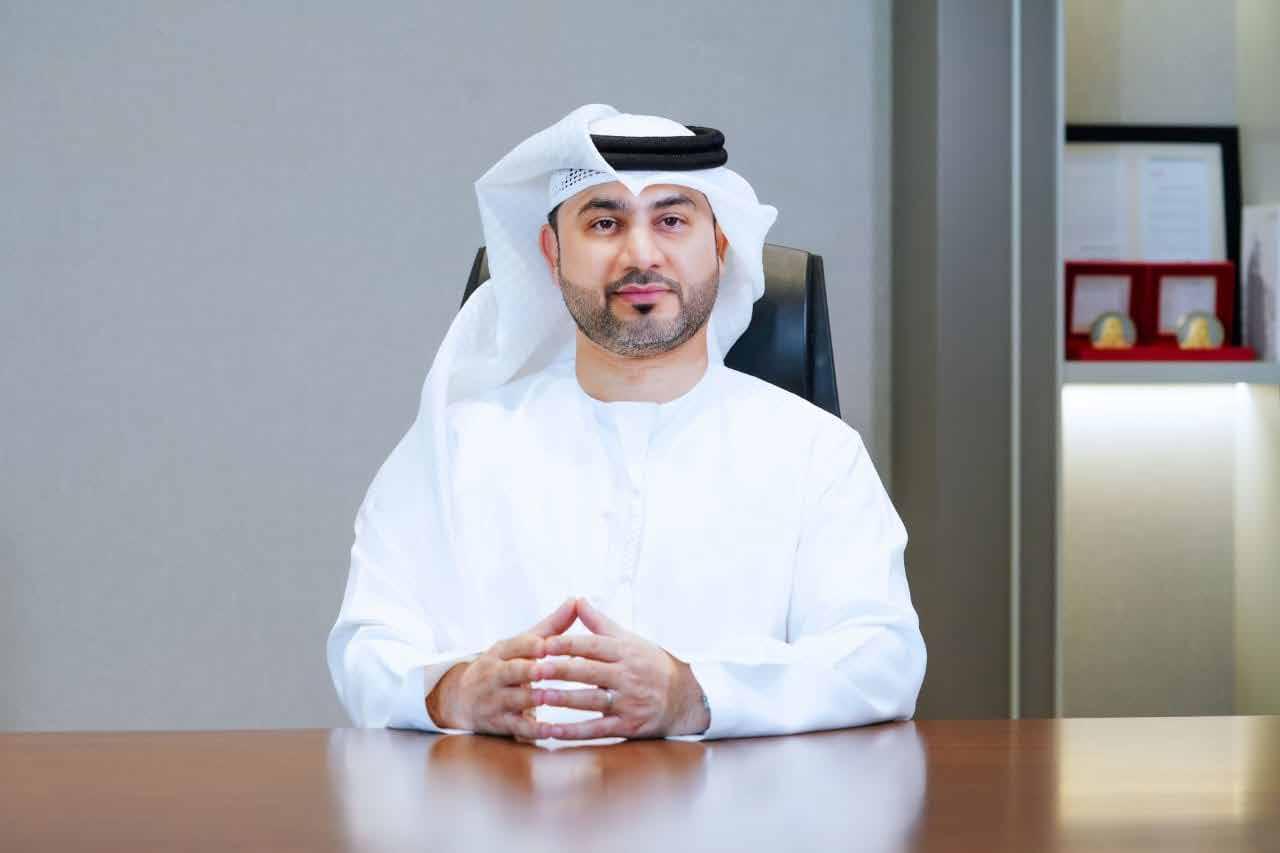

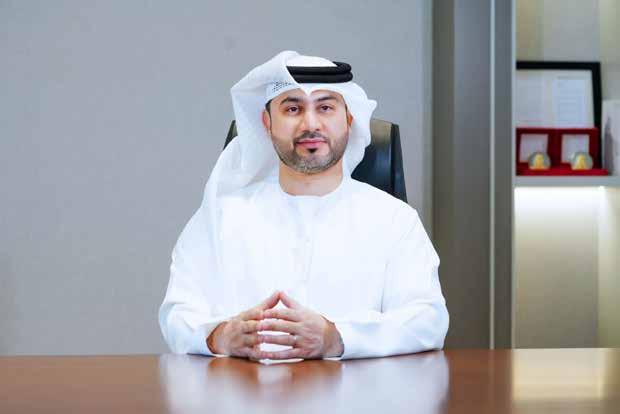
Most people think of parking as a mundane afterthought that follows every journey. Congestion, time spent searching for a parking space and fragmented payment methods often dominate the experience. However, what is less visible is the underlying infrastructure layer that determines whether a city functions efficiently or experiences disruption, whether traffic flows smoothly or comes to a halt. Effective parking management plays a critical role in orchestrating the movement of people and products at scale, reducing congestion and emissions, enabling economic activity and shaping how people experience cities.
Dubai recognised this early. As the emirate evolved into a global benchmark for integrated transport and smart-city development, it acknowledged that every element of urban mobility needed to operate as part of a cohesive, intelligent platform. Eng. Mohamed Abdulla Al Ali has led this transformation at Parkin Company PJSC, drawing on a two-decade career grounded in public transport, infrastructure and project management, with a strong focus on urban mobility.
Eng. Mohamed started his journey in 2007 at the Dubai Roads and Transport Authority (RTA), where he spent years developing and operating city-scale infrastructure, holding senior roles across strategic planning, public transport delivery, institutional development, innovation and operations. His tenure aligned with some of Dubai’s most significant milestones, including Expo 2020 Dubai, COP28 UAE, and the COVID-19 pandemic, periods that created complex operational environments. Throughout these challenges, he played a pivotal role in ensuring continuity, adaptability and the smooth functioning of the city’s transport network.
“These experiences reinforced the importance of end-to-end thinking, where infrastructure, policy, technology and customer experience operate as a unified system to uphold high service standards and deliver meaningful results,” Eng. Mohamed says.
That perspective became critical in January 2024, upon assuming the role of CEO at Parkin, following the company’s carve-out from RTA and in preparation for its listing on the Dubai Financial Market.
Two months later, Eng. Mohamed led Parkin through its IPO. The March 2024 offering generated AED 259 billion in total demand (US$71 billion), with total oversubscription of 165x. Shares rose by 35% on the first day of trading, positioning Parkin among the top three IPO performers on the DFM that year. By year-end 2024, the share price had increased from AED 2.10 to AED 4.87, a rise of 132%. By June 2025, Parkin’s shares had climbed to an all-time high of AED 6.71, supported by five consecutive quarters of strong operational and financial delivery.
This performance was reflected in a series of high-profile recognitions. Euromoney awarded Parkin Best MENA IPO in May 2025, followed by EMEA Finance’s Best Privatisation in EMEA award in June 2025. Later that year, Forbes Middle East included Eng. Mohamed in its list of the GCC’s 100 most influential leaders.
“The most significant challenge was navigating the complex transformation from a government entity into a publicly listed company within an ambitious timeline,” Eng. Mohamed explains. “The IPO process demanded institutional-grade governance, robust financial controls and transparent investor engagement, while ensuring uninterrupted operations.”
He successfully delivered the transition, setting a new benchmark for how government entities can move into the private sector without compromising operational excellence.
When asked to define his leadership approach, Eng. Mohamed points to stewardship, highlighting the distinction between authority and responsibility.
“Leadership, in my view, is not ownership of authority but responsibility for outcomes,” he says. "It is about safeguarding trust, building resilient institutions and creating sustainable value for all our stakeholders that extends beyond immediate results.”
This perspective was shaped by his extensive experience in Dubai’s public sector during periods of rapid growth, where clarity of purpose, disciplined execution and accountability translated ambition into measurable impact. Working with diverse, multidisciplinary teams reinforced the importance of trust, collaboration and empowering people to innovate.
He characterises his leadership style as strategic, collaborative and accountable. Innovation is driven by open dialogue and ownership, while trust is built through transparency and consistency of delivery.
Ten months after listing, Parkin launched its proprietary mobile application in January 2025 at record pace. The app features real-time zone detection, seamless payments, automated alerts, fine dispute management and personalised parking assistance. Additional features, including EV charging, refueling and car washing will be accessible through the same platform in due course.
Parkin operates more than 219,000 parking spaces across Dubai under an exclusive long-term public parking concession. However, Eng. Mohamed positions the company as a smart mobility platform that connects people, places with the help of smart technologies.
The distinction is meaningful. Traditional parking operators focus on utilisation rates and enforcement efficiency, while mobility platforms adopt a systems-based approach. Through his career, Eng. Mohamed recognised that urban mobility extends beyond infrastructure, enabling economic activity, social inclusion and quality of life.
Parkin's competitive advantage is anchored in three pillars: scale and exclusivity as Dubai's sole public parking operator; operational excellence across utilisation and revenue performance; and technology leadership through barrierless, ticketless solutions that enhance traffic flow and customer experience.
Vision requires disciplined execution, a principle that underpins Eng. Mohamed’s approach. Parkin’s expansion has been deliberate, guided by strategic partnerships, measured market entry and a proven operating model.
In June 2024, Parkin broadened the size of its developer portfolio, with the addition of approximately 7,500 new parking spaces across six Dubai communities. Later that year, a partnership with Emaar added around 1,100 spaces in Dubai Hills Estate, expanding the developer parking portfolio far in excess of the IPO guidance.
A collaboration with Majid Al Futtaim introduced Parkin’s smart parking solutions across two malls, covering approximately 15,000 parking spaces. The partnership enhanced brand visibility demonstrated technological capability and delivered barrier-free experiences for millions of visitors.
In 2025, Parkin secured several strategic partnerships, including a major agreement with Dubai Holding to manage 30,000 paid parking spaces, a smart parking deployment
with DP World at the Al Aweer Central Fruit and Vegetable Market and a five-year developer agreement with DAMAC Properties covering around 3,600 spaces.
For Eng. Mohamed, these partnerships underscored the strength of Parkin’s operating model and its ability to integrate effectively across a wide range of residential, commercial and infrastructure environments.
In the coming years, Parkin aims to expand regionally, diversify revenue streams and strengthen its position as a smart, data-driven urban mobility enabler. The strategy focuses on scaling proven models, advancing technological capabilities and building long-term partnerships across markets.
Eng. Mohamed's ambition extends beyond financial metrics. He seeks to build an institution that sets benchmarks in governance and innovation, while delivering long-term value and sustained impact for cities, communities and shareholders.
His advice to emerging leaders reflects this outlook: “Lead with purpose, invest deeply in people and act with discipline, while having the courage to challenge the status quo. True impact is not defined by short-term wins, but by the institutions we build and the value they create for generations.”
Under his leadership, Parkin’s journey, from carve-out to IPO to regional expansion, reflects a disciplined approach to evolving essential infrastructure to meet the demands of smart, sustainable and connected cities.
“My ambition is to build an institution that sets new benchmarks for governance, innovation and long-term value creation, delivering enduring impact for cities, communities and shareholders, shaping the future of urban mobility and enabling smarter, more connected cities.”

ntroduction
The world changed faster between 2020 and 2026 than in the preceding two decades combined. Artificial intelligence reshaped workflows overnight. Hybrid teams became the standard, not the exception. Economic uncertainty forced organizations to pivot with a speed that traditional management theory never anticipated. In this environment, leadership can no longer be a fixed trait — it needs to become a toolkit. The most effective leaders switch between approaches based on context, team maturity, and the problem at hand.
market, understanding these styles is no longer optional — it is a strategic imperative.
What Are Leadership Styles — and Why Do They Matter Now?
Leadership styles are the distinct patterns through which leaders guide, motivate, and influence their teams. They shape how decisions are made, how communication flows, how conflict is resolved, and ultimately how people feel about their work. Earlier frameworks often categorized leaders into a single type — a simplification that served more stable, hierarchical organizations of the past.
According to research from the Center for Leadership Studies, 2026 marks a decisive inflection point. The intersection of technological disruption, evolving workforce expectations, and global uncertainties has created conditions where yesterday’s leadership playbook no longer guarantees tomorrow’s success. Leaders today must navigate complexities that demand fundamentally different approaches — more human, more agile, and more scientifically grounded than anything most traditional management frameworks prepared them for.
This article examines seven of the most effective leadership styles shaping organizational performance in 2026. From the vision-forward power of Transformational Leadership to the fluid precision of Adaptive Leadership, we explore what each style looks like in practice, when to deploy it, and why the best leaders rarely rely on just one. Whether you are a CXO steering a digital transformation, a founder building culture from the ground up, or a manager trying to retain talent in a competitive
Modern leadership theory has moved decisively toward adaptability. Today’s leaders are expected to know when to coach, when to decide autonomously, when to collaborate, and when to step aside entirely. The right style depends on the team’s maturity, the urgency of the moment, the industry’s dynamics, and the nature of the challenge at hand.
The business case is unambiguous. Gallup research shows that 70% of the variance in employee engagement scores is directly attributable to the quality of leadership and management. Research by DDI reveals that 71% of leaders report increased stress levels, a burnout crisis that directly weakens organizational pipelines. Meanwhile, up to 50% of employees leave their jobs not because of the role itself, but because of ineffective managers. These figures make clear why deploying the right leadership approach is one of the highest-ROI investments any organization can make in 2026.
The companies and leaders driving the most impactful outcomes in 2026 are not married to a single mode of operation. They build fluency across multiple styles and deploy the right approach at the right moment. The seven most consequential leadership styles today, listed alphabetically, are covered below.
Adaptive leaders navigate uncertainty with deliberate agility. They draw from multiple styles — visionary when direction is needed, democratic when collaboration adds insight, and coaching when development matters most. This approach is most powerful during periods of organizational transformation, market disruption, or strategic ambiguity.
Amazon’s leadership teams have repeatedly demonstrated adaptive capabilities, shifting between data-driven autonomy and structured collaboration depending on the scale and urgency of the decision at hand. The strength of adaptive leadership lies in flexibility, but that flexibility must never drift into inconsistency or lack of clarity.
Often mischaracterized as outdated, autocratic leadership remains highly effective when speed and precision are non-negotiable. Autocratic leaders take decisive action, provide explicit direction, and reduce ambiguity during critical moments. In industries such as aviation, emergency medicine, and high-stakes financial trading, clarity of command is not authoritarian — it is essential.
The key insight for 2026 is deploying this style sparingly and contextually, followed by structured debrief sessions that invite team feedback and rebuild collaborative trust. Used as a default management mode in knowledge-work environments, it stifles autonomy, erodes trust, and accelerates talent attrition.
Coaching leaders prioritize development over direction. They ask powerful questions, encourage reflection, and help people uncover their own answers. It is less about giving instructions and more about unlocking potential. As AI automates more technical outputs in 2026, the uniquely human ability to develop other humans has become a core competitive advantage for organizations.
Companies like Deloitte have embedded coaching conversations into their performance culture, replacing annual review cycles with continuous, forward-looking development dialogues that improve both retention and capability. The approach builds ownership, resilience, and creativity in teams — rather than dependency on the leader.
Democratic leaders view leadership as collaboration in action. They bring people into the decision-making process, valuing collective intelligence over top-down control. This approach works best in environments where diversity of thought fuels innovation — cross-functional product teams, creative agencies, and research organizations are natural fits.
Deloitte research shows that companies with democratic leaders experience a 21% higher employee retention rate. Tools like Miro and Murmur have made asynchronous democratic leadership viable for hybrid and distributed teams, allowing leaders to gather input at scale without decision-making paralysis. The key is to distill patterns from input into clear decisions and communicate outcomes transparently, giving visible credit to contributors.
Leadership: Freedom with Accountability
Laissez-faire leaders empower teams by trusting them to take ownership. They provide the vision, then step aside to let experts do their work. This style shines
when teams are mature, motivated, and aligned. Software engineers, creative directors, and senior researchers often thrive under this model.
However, research from the Journal of Occupational and Organizational Psychology cautions that laissez-faire leadership can lead to a 19% decrease in employee productivity when expectations are unclear or support systems are absent. The distinction lies in setting strong guardrails before stepping back — a balance of autonomy and accountability that fuels innovation without chaos.
6. Servant Leadership: People First, Results Follow
Servant leaders flip the traditional hierarchy. They focus on enabling others to succeed — removing blockers, fostering psychological safety, and empowering distributed decision-making. According to the Journal of Business Ethics, servant leadership increases employee commitment by up to 33%. Gallup data confirms that companies with servant leaders record a 27% higher employee engagement rate.
Organizations like Patagonia and Salesforce have embedded servant leadership principles into their management cultures with measurable long-term results. The approach is rooted in empathy and trust, making it particularly powerful for culture-building, improving retention, and sustaining performance through periods of uncertainty.
7. Transformational Leadership: Inspiring Through Vision
Transformational leaders are the storytellers and vision-setters of the modern organization. They connect daily tasks to a larger purpose, inspiring teams to stretch beyond their comfort zones. Research from the Leadership and Organization Development Journal shows transformational leadership leads to a 22% increase in employee performance. Gallup data further indicates that companies with transformational leaders record a 26%
higher revenue growth rate.
Examples span industries. Satya Nadella’s culture-first transformation at Microsoft is widely cited as a masterclass in transformational leadership at scale. Jensen Huang’s long-arc vision positioned NVIDIA at the center of the AI revolution. The common thread is that inspiration without structure is motivation without momentum — transformational leaders pair a compelling why with measurable milestones.
The evidence connecting leadership style to business outcomes is no longer anecdotal — it is statistically robust and growing more specific with each research cycle. McKinsey and Company research shows that organizations with strong leadership cultures outperform peers by three times in long-term total shareholder return. Gallup data links transformational leaders to a 26% higher revenue growth rate and a 22% increase in employee performance.
On the people side, servant leadership increases employee commitment by up to 33% and is associated with a 27% higher engagement rate. Democratic leadership improves retention by approximately 21%. These are not marginal differences — they represent compound gains in productivity, culture, and innovation that accumulate over years.
At the same time, Harvard Business Publishing and the Global Leadership Forecast reveal a troubling gap: 83% of companies globally acknowledge that developing leaders at all levels is crucial, yet fewer than one in five employees is satisfied with their organization’s leadership development programs. Closing this gap is one of the most consequential levers available to organizations in 2026.
No leadership style is a silver bullet. Each approach carries inherent risks that compound when misapplied, overused, or deployed in the wrong cultural context. Transformational leadership
falters when vision is not anchored in practical milestones. Democratic leadership can create costly decision paralysis in time-sensitive environments. Laissez-faire leadership risks becoming management abdication when accountability structures are absent.
The broader challenge of 2026 is one of readiness. DDI’s research reveals a widening gap between the leadership demands placed on frontline managers and the development investment they receive. Frontline leaders are three times more likely than executives to express concern about AI readiness — a signal that organizations are not equipping their leadership pipelines at the pace required. This gap is already manifesting as stalled organizational agility and accelerated attrition among mid-level talent.
Burnout is another systemic threat. With 71% of leaders reporting elevated stress levels and 40% considering leaving their roles as a direct result, leadership pipelines are under significant structural pressure. The most effective organizations in 2026 are those treating leader wellbeing not as an HR initiative, but as a strategic business continuity concern.
The Center for Leadership Studies’ 2026 Leadership Trends Report puts it plainly: as AI handles more technical tasks, human-centered leadership becomes more essential, not less. The most future-ready leaders will rely on uniquely human capabilities that AI cannot replicate — empathy, ethical decision-making, creativity, and resilience through uncertainty.
DDI’s Global Leadership Forecast identifies what it calls parallel intelligence — the seamless combination of human judgment and AI-generated insights — as the defining leadership competency of the era. This does not require every leader to become technically proficient in machine learning. It requires AI fluency: the ability to interrogate AI outputs critically, identify embedded biases, and
translate algorithmic recommendations into contextually appropriate human decisions.
EY research adds a cautionary dimension: 75% of employees are concerned that AI will make certain roles obsolete. Leaders who fail to address this anxiety directly — with transparency, clear communication, and human-centered policies — risk losing the trust that makes organizational transformation possible. In an era of accelerating efficiency, the leaders who communicate with humanity will outperform those who communicate only with data.
Conclusion: Leadership Is a Living Skill
The best leaders in 2026 will not be defined by authority — they will be defined by adaptability. They create environments where people can think, act, and grow. They use structure to empower, not to control. And they know that leadership evolves as fast as the world around them. Mastering these seven styles is not about choosing a label and wearing it permanently. It is about developing the agility to move between approaches as circumstances demand.
For business leaders and organizations, the strategic imperative is clear: invest in leadership development with the same rigor applied to technology adoption or capital allocation. Build cultures where style-flexibility is recognized and rewarded. Understand leadership not as a rank, but as a practice. The organizations that internalize this will not only attract the best talent — they will keep it, grow it, and outperform competitors in a world that rewards adaptability above all else.
The question worth sitting with: Does your organization’s current approach to leadership development match the pace and complexity of the environment it is trying to navigate?


For decades, the image of the ideal CEO has followed a familiar pattern: leading from the front and carrying the weight of success on their shoulders.
These were the “hero CEOs.” The ones expected to know everything, fix everything, and be everything the organization needed. They served as cultural cornerstones, the visionaries, and saviors in tough times. Their presence was featured in annual reports and on keynote stages. Their leadership was often described in personal terms as brilliant, relentless, and even legendary.
Yet organizations don’t operate in the same world anymore.
The problems are more complex. The pace is faster. The workforce is more diverse, values-driven, and connected to purpose than traditional hierarchy. In this new reality, the “hero” model isn’t only outdated but also risky.
The heroic archetype was once a symbol of strength, but is now a potential point of failure. It fosters individual dependence rather than shared capability. It centralizes power instead of building capability. And in trying to carry the organization, it often limits the organization's ability to go further.
The age of the hero CEO isn’t ending because leadership is less important. It’s ending because we now understand what leadership really requires.
The heroic CEO model was successful in a world that rewarded control and hierarchy. In that environment, decisions flowed downward, visibility mattered more than alignment, and confidence was often mistaken for competence.
Yet as we all know, the world has changed.
Today’s organizations operate in conditions of uncertainty, speed, and constant demand for change. Decision-making is often more distributed. Teams are cross-functional, or at least they should be, strategy evolves in real-time. The traditional “hero” CEO begins to falter in these
environments, not because of their lack of intelligence or commitment, but because the “hero” model itself is mismatched to the demands of the environment.
Research suggests that when too much authority is centralized, decision-making slows. Teams hesitate to act without approval, and execution becomes cautious rather than creative. When dependency forms around the leader’s presence rather than clarity of direction, culture becomes performative, trust erodes, because trust in one person isn’t the same as trust in a system.
The pressure on the CEO intensifies, which can lead to burnout, blind spots, or even potential biases. Then, if successful, when that leader steps down, so does the organization’s momentum. Continuity becomes fragile and reliant on a single individual. The very traits that once made the hero model appealing now represent potential areas for failure.
In modern organizations, resilience doesn’t come from one person carrying the weight. It comes from many people sharing the weight. Across the organization, people are aligned, empowered, and trusted to move forward.
The gap between the hero model and the modern workforce is widening. Employees today don’t want to be led by figureheads, they want to be led by genuine, relatable individuals. Trust, clarity, autonomy, and inclusion carry more weight than authority or mystique.
In the traditional model, leadership was projected from the top down. Presence was physical, direction was one-way, and influence was often measured in volume. Today’s teams value something else entirely: psychological safety, transparency, the ability to listen, contribute, and a consistency of values over time.
They want leaders who are clear, not controlling. Accessible, not aloof. Purpose-driven, not personality-driven. They want a leader who brings out their best, which also aligns with what modern organizations require.
In this environment, the hero persona begins to break down, as it no longer meets the needs of those it aims to inspire. A single compelling figure is no match for a workplace culture
that thrives on shared ownership, flexible thinking, and emotionally intelligent leadership.
In short, people don’t want to follow heroes. They want to work with leaders they can believe in, learn from, and contribute to. Leadership isn’t about outshining the organization, it’s about illuminating the path forward with others in mind.
The most effective leaders emerging today don’t command attention, they create direction. They're not trying to be the culture, they're working to align with it, shape it, and preserve it. Their strength is no longer rooted in power, personality, or physical visibility. It is in their ability to remain grounded when things shift and remain focused when things scatter.
These leaders bring clarity, not certainty, they set direction without dictating every move. They are adaptable, not vague, decisive, not rigid. They know that modern leadership isn’t about having all the answers. It is about enabling better questions, better decisions, and stronger performance through others. They don’t take up all the space, they create it.
What’s replacing the hero CEO isn’t a softer version, it is a more capable one. A leader who understands complexity, builds trust intentionally, and leads with self-awareness, not ego.
This new approach doesn’t look flashy. It doesn’t always fill stages or dominate headlines. But it’s what sustains teams, grows cultures, and keeps organizations resilient, not just in the short term or for a quarter, but for the long term.

“Modern leadership is not about being followed. It’s about creating space for others to step forward.” - Doug Clark.
The shift away from the hero CEO isn’t about lowering the bar for leadership. It’s about raising the standard for what leadership truly demands.
A centralized leadership identity might still win headlines, but it’s no longer enough to win hearts, inspire action, and build enduring success. What matters now is the ability to lead with clarity, to navigate complexity without slowing execution, and to align people without overshadowing them.
Organizations today aren’t looking for saviors. They’re looking for leaders who can build trust, provide strategic clarity, and create energy that doesn’t rely solely on personality. When this is done well, the organization is no longer dependent on a single individual; it becomes resilient by design.

“The future doesn’t need a cape. It needs clarity.”
The hero CEO, with all their certainty and centrality, might have fit the world we once lived in. That era has passed, and with it, the kind of leadership it once demanded. The type of leadership it now requires has evolved and continues to grow.
What’s needed now isn’t the kind of presence that dominates rooms or headlines for effect, but something steadier, rooted in focus, humility, and self-awareness. The ability to lead with intention, not intensity, is something quieter, yet more potent: a kind of ‘strategic persona’ that is not overpowering, but unmistakably present. Leadership that empowers and enables others to be their best, a guide, not a sergeant.



Architecture today sits at a crossroads. Cities are expanding, resources are tightening, and sustainability is often spoken about more than it is truly embodied. Too much of the built environment still treats nature as an aesthetic reference rather than an intelligence. Innovation, meanwhile, is frequently reduced to surface-level novelty, visually striking but operationally conservative. The industry rewards caution dressed as progress, repetition framed as safety.
Against this backdrop, Debbie Flevotomou has built a practice that refuses to negotiate with mediocrity.
Founder and CEO of Debbie Flevotomou Architects, headquartered in Mayfair, London, she leads with a conviction that architecture must perform, behave, and evolve more like a living organism than a static object. Her work does not aim to minimise harm; it aims to create positive contribution. It is an approach shaped as much by systems and standards as it is by movement, discipline, and human energy.
“My journey is defined by one truth: the future is something we create.”
That belief is not aspirational rhetoric for Debbie. It is a working principle that runs through everything she builds, leads, and teaches.
The Foundation that Built it All
Debbie’s foundation was built at Foster + Partners, one of the world’s most demanding architectural practices. That environment taught her rigour and precision, how ambitious projects get delivered at scale. She absorbed the lesson that excellence isn’t born from inspiration alone; it requires standards and systems. Yet Debbie carried another language alongside her architectural training: movement.
As a professional ballet dancer, she discovered that beauty is discipline repeated until it becomes second nature. She shares, “Ballet has trained my body, my mind, and my resilience.” Over time, a pattern emerged in her life: whatever she truly loves, she doesn’t just practise. She builds it into something that holds other people too. This realisation led her to found London Ballet Theatre (LBT), a company created to empower dancers across all levels and backgrounds, proving that excellence and inclusion aren’t contradictory; they can thrive together.
Today, Debbie moves between worlds most people keep separate. She teaches and mentors at institutions including Hult International Business School and Interior design Master Degree at the Arts University Bournemouth where she also serves as Industry Patron for Arts University Bournemouth. When asked to choose one word that defines
her leadership, she selects “radiance.” Not ego, she clarifies, but energy with direction. She elaborates: “It means I lead in a way that brings light to others, so the whole room rises. I want people to feel inspired, protected, and challenged, because transformation happens when people feel safe enough to grow and bold enough to stretch.”
Three influences shape Flevotomou’s approach. From Foster + Partners came the understanding that excellence is non-negotiable, that visionary ideas need disciplined systems to survive execution. Ballet taught her the emotional truth of leadership: resilience through repetition, humility in performance, courage when facing scrutiny. It also showed her how to maintain high standards without sacrificing kindness, a balance she describes as rare but essential to her culture.
Then there’s nature, which Debbie calls her greatest teacher. Nature solves problems through intelligence and beauty simultaneously. This observation sparked the creation of THINK NATURE®, a philosophy that redefines what cutting-edge means. Debbie notes, “In my world, innovation is not just visual. It is performance-driven. It is sustainability as the foundation of the aesthetic, not an afterthought.”
Her firm integrates nature-inspired geometry and biomimicry not as decoration but as design intelligence. They use parametric and computational design to optimise form, structure, and environmental performance. At the centre sits their flagship building concept, engineered to generate three times the energy it consumes, creating a 3× surplus energy output that proves iconic architecture can move beyond minimising harm and into genuinely positive contribution.
Early in her architectural career, the biggest obstacle was convincing clients to embrace innovation. New ideas trigger fear, and fear creates repetition. Debbie overcame this by building trust through clarity and storytelling, demonstrating that innovation means future-proofing, brand value, legacy. But one of her most defining challenges arrived through an unexpected channel: her ballet company.
When she founded London Ballet Theatre, she faced direct resistance. She was told that dancers with diverse bodies wouldn’t be “successful,” that this approach couldn’t work. Her response was unequivocal: no. She refused to accept narrow definitions of beauty or worth. She believed, and continues to believe, that ballet can maintain high standards while being inclusive.
She moved forward anyway. Today, LBT has 46 dancers, a thriving community, and a reputation for powerful, uplifting performances. The company has grown so substantially that
they’re now opening LBT Pro, a second company designed as a professional pathway. Debbie reflects, “That is what transformational leadership looks like to me: turning ‘you can’t’ into ‘watch us.’”
The committee supporting LBT plays a crucial role in this growth. She says, “I’m incredibly proud that LBT is supported by a committee; truly the best people I could ever have hoped for. They are committed, principled, and deeply aligned with our mission, and their guidance strengthens the organisation in a way that is both grounding and empowering.” That structure brings stability, trust, and shared ownership.
What separates Debbie Flevotomou Architects from the broader field is their commitment to architecture as living performance. They design buildings to behave like organisms: responsive, efficient, regenerative. Not static objects but dynamic systems that incorporate high-performance sustainability strategies spanning energy, comfort, materials, and lifecycle impact.
Flevotomou’s design voice emerged from a pivotal realisation: sustainability was being discussed widely but pursued too cautiously. The scale of global challenges requires boldness, creativity, ambition. Simultaneously, she recognised her aesthetic diverged from rigid modernism. She gravitated toward organic forms and the harmony of natural geometry. She explains, “It is all connected to ballet movement: fluidity, strength, precision, and grace. I wanted buildings that feel like art, move like choreography, and perform like nature.”
That moment solidified her direction: to build a new design language, unmistakably hers, and lead a more beautiful, intelligent, sustainable future through THINK NATURE®.
Debbie’s leadership priorities centre on vision, standards, and people. She views culture as the invisible architecture behind every outcome, building organisations that feel like families with ambition: supportive, proud, united, yet highly accountable and performance-driven.
At Debbie Flevotomou Architects, she cultivates an environment where innovation becomes normal and excellence gets celebrated. They embrace bold thinking, rigorous delivery, continuous refinement. At London Ballet Theatre, culture defines everything. The company operates as community-led and professionally standards-driven.
Debbie states, “Whether in architecture or ballet, I lead by creating an environment where people feel seen, trusted, and inspired, because high performance is not built through pressure alone, but through belief, belonging, and a shared vision.”
Her teaching and mentorship work reinforces this philosophy. Through her roles at Hult International Business School and as Industry Patron and tutor in the Interior Design master degree for Arts University Bournemouth, she’s learned that leadership extends beyond personal success. The foundational lesson guiding her work remains constant: design is leadership. Every project offers a chance to elevate what’s possible.
Debbie stays grounded through discipline and joy. Ballet serves as her anchor: stretching daily, training consistently, maintaining connection to the body. Even on Christmas Day and New Year’s Eve, she stretches. She notes simply, “Consistency is power.”
She also protects time fiercely. She believes we’re here to create, to build, to bring something into existence that wasn’t there before. This philosophy shapes how she approaches each day, each project, each relationship.
Looking toward the next three to five years, Debbie envisions Debbie Flevotomou Architects as a major global brand, a defining voice of a new architectural era. She sees the firm delivering landmark projects that prove sustainability can be aspirational, iconic, technologically advanced. She also sees London Ballet Theatre continuing to expand in impact and reputation, with LBT Pro becoming a recognised professional pathway that transforms what opportunity looks like in dance.
Her contribution to global transformation will arrive through buildings that inspire the world and cultural leadership that empowers people to rise. She wants to disrupt industries with purpose, creating architecture that behaves like living organisms and a creative landscape where talent flourishes.
Her message to future leaders is direct: “Don’t let the world shrink you. If you can see it, build it. If people tell you it’s impossible, let that become your fuel. Work with discipline, lead with kindness, and stay loyal to your vision.”
Then she adds one final instruction: “Have nothing stop you; and as you rise, bring others with you. That is the real legacy.”

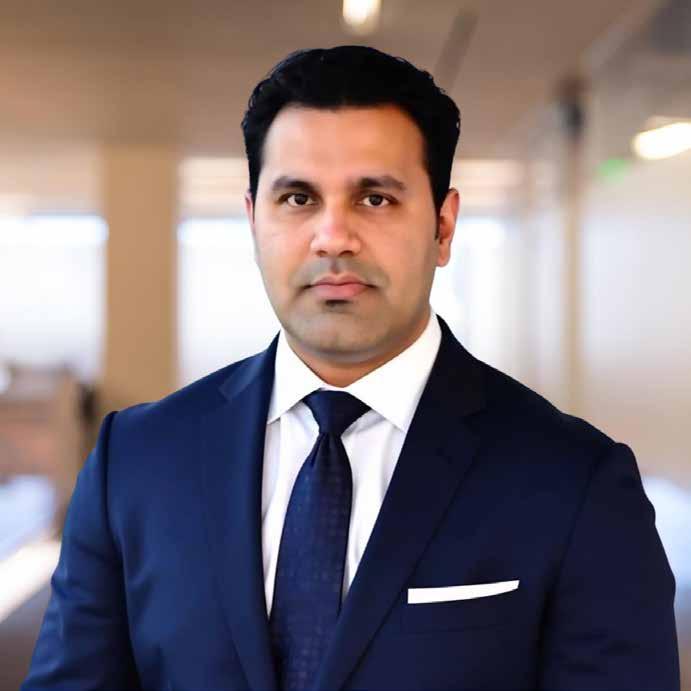
Tracing Truth in an Age of Fabrication: How Modern Forensics Expose Misconduct in the Era of Artificial Intelligence
relude: Crisis and opportunity
PTruth has always been a contested domain in human history. We now stand at an unprecedented inflection point where Artificial Intelligence has democratized synthetic realities so sophisticated that the boundary between authentic and fabricated has become perilously thin. The digital revolution promised transparency through immutable audit trails, yet ironically armed malefactors with capabilities once confined to science fiction.
As AI evolves into a ubiquitous capability, the asymmetry between offense and defense in financial crime has widened alarmingly. A sophisticated attacker today requires neither technical prowess nor substantial capital, merely access to publicly available AI tools and intent to deceive. Traditional authentication, verification and forensic investigation methods are no longer sufficient.
However, within this crisis lies opportunity. Modern forensic science, fortified by advanced analytics, machine learning algorithms and blockchain-validated evidence chains, is rising to meet this challenge. This article explores AI’s dual-edged nature: its transformative potential for legitimate operations and weaponization for fraud, examining how forensic methodologies are evolving to detect, investigate and prosecute AI-enabled crimes.
AI integration into business operations has accelerated beyond linear projection. What began as experimental applications in predictive analytics and algorithmic trading has evolved into enterprise-wide deployment. By the end of 2026, AI technologies will transcend competitive advantage to become essential infrastructure comparable to internet connectivity.
Large Language Models (LLM)s such as GPT-4 and Claude have democratized sophisticated natural language
processing, enabling automation of complex cognitive tasks previously requiring human expertise. Financial institutions deploy AI for credit risk assessment and regulatory compliance monitoring. Healthcare systems leverage machine learning for diagnostic accuracy and administrative optimization. Manufacturing enterprises utilize AI-driven predictive maintenance and quality control automation.
However, the same accessibility democratizing innovation also democratizes malfeasance. This proliferation occurs against insufficient regulatory frameworks and immature governance structures. While the EU's AI Act attempts to establish guardrails, technological evolution consistently outstrips regulatory adaptation. Organizations struggle to develop internal policies governing AI deployment, creating governance vacuums that opportunistic actors readily exploit.
AI integration has simultaneously opened sophisticated misconduct vectors. The very attributes making AI valuable, which is scalability, automation, pattern recognition and generative capabilities become force multipliers when weaponized for fraud.
The most immediate peril lies in authentication erosion. The 2024 Hong Kong incident, where $25 million was transferred based on a video conference populated entirely by AI-generated impersonations, demonstrates the complete collapse of visual verification as security control.
Synthetic identity fraud, where AI generates fictitious personas (with social media histories, employment records and credit profiles), have proliferated across financial services. These synthetic identities, indistinguishable from legitimate customers through standard KYC procedures, facilitate money laundering, loan fraud and account takeover at volumes overwhelming traditional detection mechanisms.
AI washing, which is misrepresenting AI capabilities to investors, customers or regulators has emerged as distinct
securities fraud. The SEC’s 2024 enforcement actions resulting in $400,000 penalties established regulatory precedent: falsely claiming AI-driven investment strategies constitutes material misrepresentation under securities law.
This proliferation occurs asymmetrically: offensive capabilities (AI tools for fraud) are accessible and improving rapidly, while defensive capabilities (forensic detection methods, regulatory frameworks, organizational controls) lag significantly, creating vulnerability windows that sophisticated actors exploit with increasing frequency.
AI-enabled misconduct across business sectors
AI weaponization for fraud manifests distinctly across industries, each presenting unique vulnerabilities shaped by operational characteristics, regulatory environments and technological dependencies. Modern forensic investigators now deploy sophisticated technologies leveraging AI’s own capabilities to detect and expose AI-assisted misconduct- a fundamental paradigm shift from reactive analysis of static evidence to proactive deployment of dynamic, AI-powered detection systems.
Risk tiering for action prioritization
Based on documented threats over 2022-2025, we have identified the following risk tiers which identify critical areas where AI-assisted misconduct has emerged:
TIER 1 | Critical risk sectors
Immediate action required | High Frequency × High Impact
⇒ Financial Services
Heat Index: 94/100 | Risk profile: Critical
Top fraud patterns: Deepfake wire transfer fraud (Hong Kong $25M case), AI washing in fintech products ($1.2B SEC fines, 2023-2025), synthetic identity creation for account opening
Key AI techniques: GANs for deepfakes, LLMs for phishing content, reinforcement learning for transaction
pattern mimicry
⇒ Healthcare
Heat Index: 92/100 | Risk profile: Critical
Top fraud patterns: Medical billing fraud with AI-generated documentation, claims denial automation prioritizing cost over care ($15M US fraud, 2025), synthetic patient identity fraud
Key AI techniques: Predictive models for claims screening, NLP for medical record generation, computer vision for forged diagnostic images
⇒ Insurance
Heat Index: 89/100 | Risk profile: Critical
Top fraud patterns: Claims fraud with synthetic evidence (GAN-generated accident scenes), premium fraud through risk profile manipulation, underwriting fraud using deepfake documentation
Key AI techniques: Deepfake document generation, risk scoring algorithm manipulation, synthetic accident scene creation
TIER 2 | Emerging threat sectors
Strategic watch | Low Frequency × High Impact
⇒ Manufacturing & Supply Chain
Heat Index: 75/100 | Risk profile: High (Emerging)
Top fraud patterns: Procurement fraud and bid rigging optimization, trade-based money laundering, AI-generated quality certifications
Key AI techniques: Document generation networks, supply chain pattern analysis, predictive models for quality data fabrication
⇒ Government & Public Sector
Heat Index: 76/100 | Risk profile: High (Emerging)
Top fraud patterns: Procurement fraud with deepfake verification bypass, benefits fraud using synthetic identities, grant fraud with falsified credentials
Key AI techniques: Multi-modal deepfakes for identity
verification bypass, document forgery networks, bid response optimization algorithms
Volume management | High Frequency × Low Impact
⇒ Retail & E-Commerce
Heat Index: 61/100 | Risk profile: Medium
Top fraud patterns: AI-enhanced return fraud with false claims (300% increase, 2024-2025), deepfake customer service attacks, loyalty program fraud
Key AI techniques: Synthetic identity generation, chatbot manipulation, computer vision for product defect fabrication
⇒ Technology & Software
Heat Index: 60/100 | Risk profile: Medium
Top fraud patterns: IP theft through automated code scraping, SaaS revenue fraud with synthetic metrics, data poisoning attacks on ML models
Key AI techniques: Code transformation algorithms, automated web scraping and API exploitation, adversarial machine learning
⇒ Professional Services
Heat index: 58/100 | Risk profile: Medium
Top fraud patterns: Time billing fraud optimization, audit evidence fabrication, transfer pricing manipulation
Key AI techniques: Time pattern generation algorithms, synthetic audit confirmation creation, NLP for legal document fabrication
Low Frequency × Low Impact
Emerging sectors under observation: Agriculture-tech and Educational technology require monitoring for potential future risk escalation.
Even as forensic technology advances, the human element remains irreplaceable. Skilled interviewers detect deception through subtle cues: fleeting facial expressions, speech hesitations, carefully worded evasions and inconsistent narratives. AI can measure these signals with precision but cannot replace the seasoned investigator who knows when to press, pause or pivot.
Tools analyzing voice patterns, eye movements and stress responses during interviews sharpen instincts but work best as partners to human judgment, not replacements. Whistleblowers and insiders provide context and candor, revealing truths no algorithm can uncover alone. The sharpest investigations blend cutting-edge technology with human intelligence, tackling both digital footprints and human motives behind AI-fueled fraud.
Conclusion: Staying one step ahead
AI has irreversibly transformed business operations. These tools will only become smarter, cheaper and more embedded in workflows. Forward-thinking companies are not merely reacting; they are building security that evolves as fast as threats.
Forensic teams face a clear choice: cling to yesterday’s methods or match the sophistication of those attempting to outsmart us. Winners will treat forensic capability as core infrastructure: investing heavily, upskilling relentlessly and staying agile. Those treating it as mere compliance checkbox risk being left behind.
In an age of deepfakes and fabrication, businesses must cut through noise to find truth. This requires both courage and constant adaptation.
For further information on strengthening forensic readiness in the age of AI, please write to us at: contactus@mgcglobal.co.in


Today more than ever, schools are no longer expected merely to transmit knowledge; they are increasingly called upon to cultivate empathy, ethical responsibility, intercultural understanding, and the capacity to navigate complexity. In a world shaped by rapid social, environmental, political, and technological change, the ability to live constructively with difference has become as important as academic achievement. This is why education goes beyond instruction: it prepares individuals not only to know, but to coexist responsibly and thoughtfully.
Peace Education and Restorative Practices offer a powerful framework to meet this challenge. Together, they help schools move beyond reactive discipline toward cultures rooted in dialogue, accountability, and mutual recognition. When intentionally embedded into school structures, they can transform conflict into an opportunity for emotional learning, growth, and community cohesion. International schools are a particularly meaningful example, as they are naturally characterized by “cultural dissonance”: teachers, staff, students, and families bringing diverse identities and perspectives into daily interaction. For this reason, it becomes essential that all stakeholders develop international mindedness, which the International Baccalaureate Organization® (IB) defines as a “shared attitude to openness toward different world cultures and their appreciation.”
The contemporary global landscape is marked by increasing polarization, identity tensions, and excessive uncertainty. These pressures are also reflected in schools, where cultural differences, social anxieties, and shameless digital influences can manifest as conflict, disengagement, or fragmentation.
History repeatedly shows that when mutual recognition is absent, cultural belonging can harden into exclusionary ideologies. Individuals and groups begin to perceive acknowledgement of others’ perspectives as a threat to their own identity. This “all-or-nothing” dynamic leads to polarization, dehumanization, and ultimately conflict.
Peace education, therefore, plays a preventive role by equipping learners not only with knowledge but also with wisdom and peace-building skills: the ability to listen, cooperate, and engage respectfully across differences, all equally deserving of dignity and recognition.
One emerging model for integrating peace education and restorative practices is the concept of Peace Hubs: structured frameworks within schools that make peace-building visible, intentional, and sustainable.
These hubs typically include professional development for educators and administrators, restorative behaviour and inclusion policies, curriculum integration across subjects and programmes, community service initiatives focused on healing and social responsibility, development of conflict mitigation skills, and dedicated physical or virtual spaces for dialogue and innovation.
Rather than isolated interventions, Peace Hubs embed peace-building into the daily life of the school, with the aim that this approach is applied beyond the school’s walls. In the end, they encourage students to see themselves not just as learners but as contributors to community well-being and safety.
International Mindedness: From Coexistence to Connection
International schools provide a particularly revealing microcosm of global diversity. Students, educators, and families bring varied languages, traditions, and worldviews into a shared learning environment. While this diversity enriches education, it also introduces what can be described as “cultural dissonance” — the friction that naturally arises when perspectives differ.
Significantly, the IB® framework addresses this through the concept of international mindedness, defined as openness toward world cultures and appreciation of diversity. The aim is not mere coexistence but connection: creating what might be called a “third cultural space” where common ground emerges without erasing difference.
In this shared space, differences become bridges rather than barriers, respect replaces defensiveness, collaboration
replaces competition, and identity expands to include a sense of shared humanity.
Traditional disciplinary systems in many schools remain rooted in control and punishment, at times, even with families’ support. While intended to maintain order, these approaches can inadvertently reinforce exclusion and fail to address underlying relational dynamics.
Drawing on Restorative Justice principles, seen as an opportunity for a cultural melting pot, Restorative practices, instead, offer an alternative. They focus on repairing harm, restoring relationships, and fostering accountability through dialogue rather than punishment.
This shift transforms the educational environment. Conflict is no longer viewed solely as misconduct but as a relational event that requires understanding, unveils unexplored unhealthiness, while providing repair, and personal growth.
Evidence increasingly supports this approach, especially in very delicate school settings. As a matter of fact, institutions implementing restorative practices report improved climate, reduced exclusions, stronger student engagement, and enhanced well-being; outcomes that directly support both academic success and social development.
Perhaps, the most significant contribution of restorative education is the shift from reactive discipline to a proactive culture-building approach.
When students regularly participate in dialogue circles, reflective discussions, collaborative projects, and intercultural exchanges, they develop emotional literacy, conflict resolution skills, empathy and perspective-taking, ethical awareness, and global citizenship competencies.
Consequently, this proactive orientation reduces the likelihood of serious conflicts while strengthening the school community's relational fabric.
Schools do not exist in isolation. They reflect and influence the broader societies they serve. By fostering environments
grounded in respect, dialogue, and shared responsibility, schools can contribute to a more peaceful social fabric.
Peace-building in education operates on multiple levels: individual, relational, institutional, and global.
When these levels align, education becomes a powerful driver of social cohesion; for this reason, despite their political orientation, Governments should, in unison, gather their efforts and intent to invest in Peace Education. Eventually, peace flies no flag; rather, it embraces humanity as a whole.
Peace education is not about avoiding conflict; it is about learning how to engage with it constructively. Conflict, when approached thoughtfully, becomes a catalyst for growth rather than division.
As Cardinal Pietro Parolin observed in a recent address, “Peace is always possible, when wanted.” Achieving it requires intentional choices in homes, communities, and especially in schools.
Education remains one of humanity’s most powerful instruments for shaping the future. By integrating restorative practices and peace education into the fabric of schooling, we can prepare learners not only to succeed academically but to contribute thoughtfully and compassionately to an interconnected world.
Elisa Prisco is an IB® education expert specializing in peace education, international mindedness, and restorative practices in schools. She works at the intersection of educational innovation, intercultural understanding, and student well-being, supporting institutions in embedding restorative approaches and global citizenship into their frameworks. Recipient of the “Outstanding Leadership Award” and “Educator of the Year”, Elisa constantly pursues knowledge, offering reassurance to the community of her sound educational approach. She is also the founder of the Peace Hubs Project® for IB Schools and contributes to international conferences and institutions –www.elisaprisco.com

TStrategic planning in 2026 looks fundamentally different than it did even three years ago. Business leaders no longer operate in predictable cycles where annual planning sessions set the course for twelve months of execution. Instead, they navigate an environment where technological disruption arrives weekly, workforce expectations reshape organizational structures, and market conditions shift with unsettling speed.
This acceleration has forced a rethinking of what strategy means. Rather than existing as a document reviewed quarterly by executives, modern business strategy has become a living framework that touches daily operations, informs real-time decisions, and adapts without losing coherence. For decision-makers, the challenge isn't simply planning for the future—it's building organizations capable of evolving while maintaining strategic clarity.
The businesses positioning themselves for success in 2026 and beyond share a common approach: they're investing in internal capabilities rather than chasing external trends. They're strengthening the foundations that enable sustained performance regardless of market conditions.
The relationship between employers and employees has fundamentally shifted. Today's workforce doesn't simply seek compensation and benefits—they demand clear pathways for growth, skill development, and meaningful advancement. Organizations that treat talent development as a core strategic pillar rather than an HR initiative are building significant competitive advantages.
Continuous learning has emerged as one of the most effective retention and engagement strategies available to modern businesses. When employees see tangible investment in their development, loyalty increases and institutional knowledge remains within the organization. This matters profoundly in an era where replacing talent costs far more than developing it.
Many forward-thinking organizations are supporting structured educational advancement through partnerships with higher education institutions. Online MBA programs and executive education offerings allow employees to build strategic thinking capabilities, leadership skills, and cross-functional business acumen while continuing to contribute to their organizations. This approach creates a pipeline of leaders who understand both theoretical frameworks and practical application within their specific business context.
The flexibility of modern educational formats makes this investment more practical than ever. Working professionals can pursue advanced business education without career interruptions, gaining knowledge they can immediately apply to current challenges. Organizations that facilitate this development signal long-term commitment to their people while strengthening their own leadership bench.
Digital readiness determines organizational velocity. Businesses with integrated, secure, and user-friendly systems can expand operations, enter new markets, and serve increased demand without proportional increases in friction or complexity. Those with fragmented digital infrastructure face compounding inefficiencies as they grow.
Strategic technology planning in 2026 extends far beyond software selection. Integration architecture, data accessibility, security protocols, and user experience all influence how effectively teams execute. Leaders preparing for sustainable growth focus on platforms that enable collaboration across distributed teams, provide real-time data access for informed decision-making, and adapt as business requirements evolve.
The companies gaining advantage aren't necessarily those deploying the newest technologies—they're the ones
ensuring their technology ecosystem supports rather than hinders human performance. Digital infrastructure should reduce cognitive load, eliminate redundant processes, and create space for strategic thinking rather than administrative work.
Organizational culture reveals its true strength during periods of change. When markets shift, strategies pivot, or structures reorganize, culture determines whether teams maintain alignment and trust or fragment into silos of confusion and resistance.
Culture isn't created through mission statements or values posters. It emerges from consistent leadership behavior, communication practices, recognition systems, and the daily decisions that signal what truly matters within an organization. Businesses treating culture as an active strategic element rather than a background condition build resilience that carries them through disruption.
The most effective cultures balance stability with adaptability. They provide clear values and expectations while encouraging experimentation and learning. They create psychological safety that allows teams to surface problems early, test new approaches, and learn from outcomes without fear of punishment. This combination enables organizations to evolve without losing identity.
Innovation often gets treated as a special initiative—something happening in dedicated labs or during scheduled brainstorming sessions. This approach yields limited results. Sustainable innovation emerges when organizations embed it as an ongoing capability within normal operations.
Creating this capability requires structural support. Teams need resources for exploration, time to develop ideas, and leadership that encourages intelligent risk-taking. When innovation becomes part of how work happens rather than something separate from it, businesses generate continuous improvement rather than occasional breakthroughs.
Leadership sets the tone for innovation. When executives demonstrate curiosity, reward learning from experiments regardless of outcome, and facilitate cross-functional collaboration, innovation accelerates. When they punish failure or demand immediate returns on exploratory work, innovation withers. The organizations succeeding in 2026 have leaders who understand this dynamic and actively cultivate innovative mindsets throughout their teams.
Market expectations evolve constantly. What resonated with customers, partners, and employees two years ago may feel
outdated today. Businesses that fail to reassess their value propositions risk becoming progressively less relevant even while delivering consistent quality.
Strategic value assessment requires honest examination of how an organization creates and delivers value relative to changing needs. This goes beyond customer satisfaction scores—it involves understanding shifts in market dynamics, competitive positioning, and stakeholder priorities. Companies preparing for 2026 make this assessment a regular strategic discipline rather than an occasional marketing exercise.
The most effective value propositions align promise with reality. When marketing claims match actual customer experience, credibility builds. When gaps emerge between messaging and delivery, trust erodes regardless of how compelling the positioning sounds. Organizations that maintain this alignment navigate change while preserving their reputation and relationships.
Strategy fails more often in execution than in conception. Well-designed plans falter when teams don't understand the direction, the reasoning behind it, or how their work connects to broader objectives. Internal communication has become as critical to strategic success as the strategy itself.
Effective communication provides context, not just directives. When leaders explain why decisions matter and how they connect to organizational goals, teams make better independent decisions aligned with strategic intent. This clarity becomes especially valuable during periods of change when uncertainty naturally rises.
Transparency builds trust that carries organizations through difficult transitions. Leaders who share both challenges and opportunities help teams understand the full picture rather than filling knowledge gaps with speculation. This openness creates shared ownership of outcomes and reduces the resistance that often accompanies strategic shifts.
Rigid long-term plans make poor strategic foundations in volatile environments. Organizations need frameworks that provide clear direction while allowing tactical flexibility. This balance enables responsiveness without the chaos of constant course correction.
Adaptive strategies establish principles and priorities rather than detailed roadmaps. They define what matters most to the organization while leaving room for teams to determine optimal execution paths as conditions change. This approach maintains strategic coherence while empowering distributed decision-making.
The businesses thriving in 2026 have learned to plan with uncertainty as a given. They use scenario analysis to prepare for multiple potential futures, build flexibility into resource allocation, and create decision frameworks that accelerate response times when conditions shift. This preparation allows them to move confidently even when the path forward isn't perfectly clear.
Economic volatility continues shaping business planning. Organizations preparing for 2026 recognize that resilience comes from design, not luck. Resilient businesses build diverse revenue streams, maintain flexible cost structures, and develop the capability to adjust operations without abandoning strategic goals.
Resilience planning involves more than financial conservatism. It requires understanding which investments create lasting value versus which respond to temporary conditions. It demands honest assessment of dependencies, vulnerabilities, and the resources needed to weather disruption. Companies that strengthen these foundations position themselves to not just survive economic shifts but to capitalize on opportunities that emerge during them.
Leadership communication plays a crucial role in organizational resilience. When economic conditions tighten, clear explanation of decisions and their strategic rationale helps teams maintain confidence and focus. Transparency about challenges builds trust that sustains organizations through difficult periods.
Business strategy in 2026 centers on building organizational capabilities rather than predicting market conditions. The companies gaining sustainable advantage invest in continuous learning, digital infrastructure, cultural strength, and innovation capacity. They communicate clearly, plan adaptively, and build resilience through thoughtful design rather than reactive measures.
These investments create compounding returns over time. Skilled, engaged teams execute more effectively. Integrated systems scale more smoothly. Strong cultures navigate change more successfully. Adaptive frameworks respond to disruption more confidently.
The strategic question facing leaders isn't what the market will look like in three years—it's whether their organization will have the capabilities to succeed regardless of how conditions evolve. Those building these foundations today position themselves to lead tomorrow.

Public relations and corporate communications are entering 2026 at a decisive moment of professional redefinition, particularly within Saudi Arabia. This shift goes beyond the adoption of new tools or platforms. It reflects a fundamental change in how public relations defines its value, measures success, and positions itself within institutional decision-making. In an era shaped by accelerated digital transformation, evolving audience expectations, and fragmented media ecosystems, public relations is no longer a support function focused on visibility. It has become a strategic discipline concerned with designing, protecting, and sustaining reputation systems.
Reputation architecture refers to the strategic design of how institutions build, manage, and protect trust over time. It goes beyond media visibility to integrate communication into leadership behavior, policy explanation, crisis preparedness, and stakeholder engagement. Unlike traditional media relations, which focus on securing coverage, reputation architecture aligns what organizations say with what they do—ensuring consistency, accountability, and long-term credibility.
In Saudi Arabia, this transformation is unfolding within the broader national framework of Vision 2030. As public and private institutions undergo economic, structural, and cultural reform, communication has emerged as a strategic lever rather than a tactical afterthought. Transparency, accountability, and performance-driven narratives are now central to institutional credibility. As the Kingdom increases its global engagement, public relations plays a critical role in aligning national ambition with consistent, credible storytelling.
At the core of this evolution is the shift from media relations to reputation architecture. In 2026, success in public relations is no longer defined by coverage volume or campaign frequency. Instead, it is measured by the ability to build systems that manage trust, anticipate risk, and align communication with institutional behavior. This approach requires long-term thinking, cross-functional integration, and governance models that ensure alignment between what organizations communicate and what they deliver.
This shift marks a clear departure from traditional media relations. While media relations prioritize message dissemination and short-term visibility,
reputation architecture focuses on long-term trust, behavioral consistency, and institutional accountability. Media relations ask, “How are we perceived today?” Reputation architecture asks, “What do we consistently represent over time?”
As a result, reputation architecture firmly elevates public relations from an executional role to a strategic advisory function. Communication leaders are increasingly expected to participate in executive discussions, policy formulation, and risk assessment—ensuring that reputational considerations are embedded into decision-making before, not after, actions are taken.
Artificial intelligence has emerged as a critical enabler of this transformation. Industry data indicates that more than 91% of PR professionals globally now use AI tools in their daily workflows, with 73% relying on AI for idea generation and content development and 68% for writing, editing, and content optimization. Within Saudi Arabia, AI adoption is particularly advanced. Studies show that up to 93% of users in the Kingdom employ AI tools for text-based and knowledge-driven tasks, creating an environment where AI-augmented communication models are rapidly becoming the norm.
However, the integration of AI has not reduced the strategic importance of human judgment. While automation has increased efficiency and scale, it has also elevated professional expectations. In 2026, the value of public relations lies in interpretation rather than execution. Strategic judgment, ethical decision-making, reputational risk assessment, and cultural sensitivity remain inherently human responsibilities. In a Saudi context characterized by large-scale national initiatives and heightened public visibility, judgment-led communication is essential to safeguarding institutional trust.
This shift has also transformed how public relations performance is measured. Traditional indicators such as impressions and media mentions no longer provide sufficient insight into communication effectiveness. Nearly 50% of PR professionals worldwide identify measuring return on investment as the profession’s most significant challenge, driving the adoption of data-driven evaluation frameworks that link communication activity to reputation strength, stakeholder confidence, and behavioral outcomes.
In Saudi Arabia, where initiatives are closely tied to measurable impact and national priorities, outcome-based measurement has become a core requirement rather than an optional enhancement.
Within this model, reputation is treated as an organizational asset—one that requires continuous monitoring, cross-functional alignment, and long-term investment, rather than episodic campaigns or reactive messaging.
In Saudi Arabia, reputation architecture becomes most visible during moments of institutional scrutiny. Regulatory reforms, nationalization initiatives, and large-scale public programs require more than reactive statements. Public relations operates as a coordination function—aligning leadership messaging, policy communication, media engagement, and public response management to sustain institutional credibility during periods of change.
Reputation architecture also redefines the role of public relations in brand and institutional identity. Research indicates that more than 50% of communication professionals now consider message credibility to be the most influential factor shaping brand perception, surpassing reach and exposure. In an environment marked by public skepticism and information saturation, public relations functions as a guardian of meaning. It ensures alignment between institutional values, leadership behavior, and public narrative, particularly during periods of change or scrutiny.
The professional skill set required to support this role has evolved accordingly. While storytelling remains essential, it is increasingly data-driven and insight-led. Surveys show that 59% of PR professionals identify storytelling and content creation—particularly data-informed storytelling—as the most critical skill in 2026. Creativity alone is no longer sufficient. Strategic communication now demands analytical literacy, media intelligence, reputation management expertise, and the ability to translate complex information into credible, culturally grounded narratives.
Regional market indicators reinforce this trajectory. The GCC public relations and PR technology market is projected to grow at a compound annual growth rate of approximately 10.8% through the end of the decade, driven by investment in analytics, media monitoring, and digital communication infrastructure. As the region’s largest economy and most ambitious transformation agenda, Saudi Arabia is expected to account for a significant share of this growth, underscoring the strategic importance of professionalized, technology-enabled public relations.
In this context, public relations in 2026 represents more than an operational evolution. It reflects a philosophical shift—from visibility to value, from exposure to
impact, and from one-way messaging to sustained, trust-based dialogue. As Saudi institutions navigate rapid transformation and increasing global engagement, public relations stands at the center of reputation architecture, uniquely positioned to translate data into meaning, meaning into trust, and trust into long-term institutional resilience.
Abdullah Inayat is Co-founder and Director of W7Worldwide Strategic Communications Agency, an independent public relations and strategic communications consultancy with a strong presence in Saudi Arabia and across the Gulf. With more than a decade of experience, I have led high-impact communication campaigns across multiple sectors, including corporate, technology, healthcare, financial services, and government. I played a key role in leading the first Saudi National Day media campaign in 2017 and have provided strategic advisory and communications consultancy to prominent global and regional brands such as 3M, Kaspersky, Red Bull, and Bupa Arabia. I am known for building strong media relations networks and designing tailored communication strategies, and I regularly contribute insights and thought leadership to local, regional, and international media, supporting the advancement of the public relations and communications industry. I believe that effective communication is the cornerstone of building trust and strengthening institutional reputation in the modern era, and I am continuously committed to professional development and keeping pace with the rapid transformations shaping this vital field.



Take advantage of every single edition, and get Global Biz Outlook Magazine in Print and digital at www.globalbizoutlook.com.
Subscribe to Global Biz Outlook Magazine, and Read It Now.
1 Month (1 Issues): $ 253 Months (3 Issues): $ 70
Subscription Form
6 Months (6 Issues): $ 1501
Year (12 Issues): $ 250
Kindly fill out the form below and email/courier it in favor of Global Biz Outlook Magazine. Fill out this form, and we will call you.
Name: Address: Company:
Contact Number: Email: City: State: Zip: Country:
30 N Gould St Ste R Sheridan, Wyoming United States, 82801 info@globalbizoutlook.com
+1 847 796 8742 For more information, click on www.globalbizoutlook.com