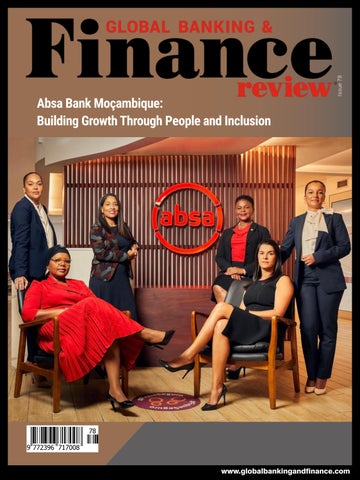
Issue 78
Absa Bank Moçambique: Building Growth Through People and Inclusion
www.globalbankingandfinance.com
CONTENTS
Chairman and CEO Varun SASH Editor Wanda Rich email: wrich@gbafmag.com Managing Director Martin Murphy Project Managers Megan S | Raj G | Chethan G Executive Operations and Client Relations Specialist Anupama KU Head of Operations Robert M Director of Operations Babitha G Business Consultants - Digital Sales Paul N | Enosh S | Rohit D Business Consultants - Nominations Sara Mathew | Adam Luiz Research Analysts Varshitha | Devendra Patil | Shilpa Churiwala Video Production & Journalist Phil Fothergill Graphic Designer Shiva K Advertising Phone: +44 (0) 208 144 3511 marketing@gbafmag.com GBAF Publications, LTD Alpha House 100 Borough High Street London, SE1 1LB United Kingdom Global Banking & Finance Review is the trading name of GBAF Publications LTD Company Registration Number: 7403411 VAT Number: GB 112 5966 21 ISSN 2396-717X. The information contained in this publication has been obtained from sources the publishers believe to be correct. The publisher wishes to stress that the information contained herein may be subject to varying international, federal, state and/or local laws or regulations. The purchaser or reader of this publication assumes all responsibility for the use of these materials and information. However, the publisher assumes no responsibility for errors, omissions, or contrary interpretations of the subject matter contained herein no legal liability can be accepted for any errors. No part of this publication may be reproduced without the prior consent of the publisher
editor Dear Readers’ Welcome to Issue 78 of Global Banking & Finance Review. As financial institutions navigate evolving expectations and emerging challenges, this issue highlights how the sector is adapting through innovation, inclusion, and resilience. Featured on our front cover is Hanifa Hassangy, Human Capital Director at Absa Bank Mozambique. In our exclusive interview, Hanifa shares insight into how the bank is addressing workforce development, driving employee engagement, and fostering organisational resilience in a rapidly changing financial landscape. We also explore the impact of emerging technologies on the future of finance. From artificial intelligence and quantum computing to blockchain, institutions are leveraging innovation to enhance decision-making, risk management, and client services. These technologies are not just reshaping operations—they are redefining what it means to compete and thrive in today’s global financial ecosystem. Trade finance, long a paper-heavy and complex corner of global commerce, is also undergoing transformation. Banks and fintechs are introducing digital platforms to streamline documentation, automate compliance, and expand access. The shift promises faster, more transparent, and more inclusive cross-border trade, narrowing the trade finance gap that has long challenged small and medium-sized enterprises. At Global Banking & Finance Review, we remain committed to delivering expert perspectives on the forces shaping the financial sector. Whether you lead in banking, fintech, investment, or corporate finance, we hope this issue provides timely insight to support your strategy, innovation, and growth.
Enjoy the latest edition!
Wanda Rich Editor
Stay caught up on the latest news and trends taking place by signing up for our free email newsletter, reading us online at http://www.globalbankingandfinance.com/ and download our App for the latest digital magazine for free on Google Play and the Apple App Store
Issue 78 | 03
CONTENTS
Inside... BANKING
06
What the Rise of Sovereign Digital Currencies Means for Banks
32
Digital Transformation in Banking: Redefining Traditional Models
TECHNOLOGY
38
BUSINESS
12
The Global AI Economy and Its Impact on Business Models
26
Corporate Resilience in a Changing Global Economy
34
Redefining Corporate Purpose in the Age of Stakeholder Capitalism
42
Rethinking Corporate Travel in the Age of Sustainability
46
Leading Through Distance: Effective Conflict Resolution in Remote Teams
50
Driving Business Success Through Customer-Centric Strategies
The Rise of Digital Trade Finance Platforms
FINANCE
08
The Great Treasury Shift and the Transformation of Corporate Cash Management
16
AI, Quantum, and Beyond: What Emerging Tech Means for the Future of Finance
04 | Issue 78
CONTENTS
24 INTERVIEW
Absa Bank Moçambique: Building Growth Through People and Inclusion Hanifa Hassangy, Human Capital Director
BANKING
What the Rise of Sovereign Digital Currencies Means for Banks Money is changing. Sovereign currencies are no longer only paper bills or commercial bank deposits. Central banks themselves are preparing to issue money in digital form, designed to circulate alongside cash and traditional deposits. The Atlantic Council tracks more than 130 countries now exploring or piloting Central Bank Digital Currencies, representing almost the entire global economy. China’s eCNY already processes millions of transactions in pilot form, while the European Central Bank is in advanced stages of designing a digital euro. This is no longer a theoretical discussion; it is becoming a defining feature of monetary policy. The motivations differ, but the momentum is clear. Some governments see CBDCs as a way to strengthen financial inclusion by reaching citizens outside the traditional banking system. Others want to improve payment efficiency and reduce costs. For many, the push is also about responding to the rise of private cryptocurrencies and stablecoins that challenge central banks’ control over money. For commercial banks, this represents both promise and peril. Faster settlement, programmable money, and new payment rails could open opportunities to innovate in retail and wholesale banking. At the same time, questions over deposit flight, data privacy, and the central bank’s role in payments loom large. The question is not whether CBDCs will matter, but why central banks are moving on them now and what that means for the banking system.
06 | Issue 78
Why CBDCs, Why Now? The global shift toward Central Bank Digital Currencies is not happening in isolation. It reflects a combination of policy goals, market pressures, and technological change that together are reshaping the way money moves. One driver is financial inclusion. In Nigeria, the eNaira was introduced to provide citizens outside the formal banking system with safe and affordable access to digital money. The ambition was to extend financial services to millions through mobile devices. Yet results have been disappointing. An IMF review found that 98.5% of wallets remained inactive a year after launch, highlighting the challenges of building adoption without strong merchant networks, user trust, and integration into daily economic activity. Another factor is efficiency. China’s eCNY is the most advanced retail CBDC in operation, supporting more than 180 million wallets and processing transactions worth over ¥7.3 trillion by mid-2024. These figures demonstrate that CBDCs can scale to handle real volumes of consumer and business payments. They also give central banks around the world a working model to study. Still, China’s highly managed financial system makes its experience unique, and not all lessons will translate directly to more open markets. There is also the rise of private digital money. Stablecoins such as USDC and Tether have become widely used in remittances and cross-border transactions, often filling gaps left by slower traditional systems. Their popularity shows that users value speed and reliability, but it also reduces the visibility central banks have over monetary flows. The Bank for International Settlements has pointed to this trend as one of the reasons
BANKING central banks are accelerating CBDC development, seeking to provide sovereign alternatives that combine efficiency with regulatory oversight. Finally, there is resilience. The pandemic accelerated demand for digital and contactless payments, while recent geopolitical tensions have underscored the need for domestic payment infrastructure that is less reliant on global networks. For central banks, CBDCs are both a defensive response to vulnerabilities in existing systems and a forward-looking bet on the future of money. Opportunities for Banks For commercial banks, the arrival of CBDCs is not only a challenge but also an opening. At their core, CBDCs create new payment rails that can lower transaction costs and speed up settlement. For banks handling high volumes of domestic and cross-border payments, this could mean greater efficiency and new products that ride on top of central bank infrastructure. CBDCs may also help expand access. In countries where financial inclusion remains low, banks could integrate CBDC wallets into their existing mobile apps, offering users a gateway into the formal system. By positioning themselves as the interface between central bank money and the broader economy, banks can build stronger customer relationships while meeting regulatory expectations. Programmable money offers another opportunity. Transactions can be designed with conditions — for example, a loan disbursement that is released only when funds are used for a specific purpose. This opens the door to new forms of lending, payroll systems, and supply chain financing that are more transparent and easier to audit. The European Central Bank has highlighted programmability as a feature under consideration for the digital euro, noting its potential to reshape how financial contracts are structured. CBDCs also create potential for banks in cross-border payments. Traditional systems can be slow and costly, especially for remittances. Multi-CBDC arrangements are being tested in Asia, where the Hong Kong Monetary Authority and regional partners have advanced the mBridge project to a minimum viable product stage, demonstrating the feasibility of faster and cheaper settlement between currencies. For banks active in trade finance or global treasury services, this could reduce friction and unlock new flows. Risks and Disruptions While CBDCs present opportunities, they also pose significant risks for banks. The most immediate concern is disintermediation. If customers are able to hold central bank money directly, deposits could shift away from commercial banks. This would affect lending capacity and potentially increase funding costs. Central banks designing two-tier systems aim to prevent this, but uncertainty over how deposit bases might change remains a key risk. Privacy is another challenge. CBDCs create the technical possibility of highly traceable transactions. While central banks stress that design choices will balance privacy with compliance, public trust will depend on how these systems are implemented. The European Central Bank has emphasized that privacy is a central consideration in its digital euro project, but concerns remain over potential government surveillance. Operational costs also weigh heavily. Banks will need to upgrade infrastructure, integrate CBDC wallets, and ensure cybersecurity standards are met. These investments come at a time when digital transformation budgets are already stretched. The Bank for International
Settlements has noted that the complexity of building secure, interoperable systems is one of the largest barriers to CBDC deployment. Finally, there is the risk of fragmentation. Different national approaches could lead to CBDC systems that do not easily connect across borders. This would undermine the goal of efficiency and could create new frictions in global payments. For international banks, navigating multiple CBDC frameworks would add layers of compliance and operational burden. Bank Strategies Emerging Faced with both opportunity and risk, banks are already shaping strategies to adapt. One approach is partnership. Commercial banks in several jurisdictions have worked directly with central banks to pilot CBDC wallets and test integration with existing apps. These collaborations help banks maintain their role as the primary interface for customers while supporting national initiatives. Another strategy is to develop value-added services around CBDCs. Instead of competing on access to central bank money, banks can differentiate through credit products, advisory, and transaction services layered on top of digital currency infrastructure. The Bank of England has emphasized that a two-tier model, where commercial banks provide distribution and innovation, is critical to preserving financial stability while enabling competition. Banks are also exploring cross-border pilots. In Hong Kong, HSBC participated in the mBridge pilot, executing live transactions across multiple CBDCs. The Hong Kong Monetary Authority confirmed that 20 banks took part, completing more than 160 cross-border payments and FX transactions in the 2022 pilot. For banks active in trade finance or global treasury, such initiatives provide valuable insight into how settlement models may change. Finally, communication and education are emerging as strategic priorities. Banks need to reassure clients about privacy, security, and functionality in a CBDC environment. Those that succeed in building trust may strengthen loyalty at a time when the structure of money itself is shifting. The Road Ahead The trajectory of CBDCs is becoming clearer, but the pace and design will vary widely across regions. Some economies are moving quickly, aiming to capture first-mover advantage in payments and financial infrastructure. Others are taking a more cautious approach, balancing innovation with stability. In Europe, the European Central Bank continues to advance its digital euro project, with the preparation phase running through 2025. Its choices on privacy, programmability, and distribution will likely influence global standards, given the euro’s role as a reserve currency. Elsewhere, pilots such as China’s eCNY and Hong Kong’s mBridge are testing how CBDCs can scale in both retail and cross-border contexts. These initiatives will provide valuable lessons for central banks still at the exploratory stage. For commercial banks, monitoring these developments is essential to anticipate regulatory expectations and align investment priorities. CBDCs are unlikely to replace banks, but they will redefine their function. The task for banks is to position themselves as indispensable partners in this evolving system by safeguarding trust, driving innovation, and ensuring that digital money advances both efficiency and stability. Those that adapt early will play a decisive role in shaping the future of sovereign currency.
Issue 78 | 07
FINANCE
The Great Treasury Shift and the Transformation of Corporate Cash Management
Corporate treasurers are facing a new landscape. Rising interest rates, supply chain disruptions, and shifting geopolitics have transformed the way companies think about liquidity and risk. What was once a back-office function is now at the center of strategic decision-making. The years of near-zero interest rates created habits that are no longer sustainable. Easy access to cheap funding and limited returns on deposits meant cash was often treated as a passive resource. Today, higher rates have made liquidity management a source of earnings as well as a buffer against volatility. Global trade complexity has added another dimension. Disruptions in supply chains and fluctuations in currency markets have pushed treasurers to diversify cash pools and improve forecasting. For many multinationals, the ability to see and move liquidity across regions in real time is no longer optional but essential. Technology is also rewriting the playbook. Digital treasury platforms, artificial intelligence forecasting tools, and instant payment systems are allowing treasurers to manage liquidity with greater precision. Banks and fintechs are competing to provide the infrastructure that makes this possible, from virtual accounts to automated cash pooling. Treasury is no longer just about keeping the lights on. It has become a driver of resilience and even competitive advantage, shaping how firms invest, expand, and manage risk in an uncertain world.
08 | Issue 78
Drivers of the Treasury Shift Interest rate dynamics are reshaping corporate cash strategies. After a decade of historically low rates, central banks have moved aggressively to combat inflation, pushing borrowing costs higher. Companies that previously parked large sums in low-yield accounts now face an imperative to optimize returns while maintaining liquidity. The shift has made cash management an active component of financial strategy rather than a passive operational task. Supply chain disruptions are another key factor. Events ranging from the COVID-19 pandemic to geopolitical tensions have highlighted vulnerabilities in working capital management. Corporates are increasingly seeking to maintain multiple liquidity buffers across regions to ensure they can meet obligations even when shipments are delayed or foreign currency availability fluctuates. Corporate treasuries are also responding to changing client and stakeholder expectations. Investors, rating agencies, and boards are demanding more transparency and efficiency in liquidity use. Companies that can demonstrate proactive cash management, precise forecasting, and strategic investment of idle funds are viewed more favorably in capital markets. Technology adoption is accelerating the shift. Digital treasury platforms, AI-driven forecasting tools, and integrated banking services are enabling treasurers to manage liquidity in real time across multiple jurisdictions. Banks and fintechs offering advanced automation, virtual accounts, and instant payment capabilities are helping corporates transform cash into a strategic asset rather than a static balance sheet line.
FINANCE
Regulatory and reporting pressures add to the urgency. Changes in liquidity coverage ratios, reporting standards, and cross-border compliance requirements have forced treasury teams to rethink cash visibility and control. Companies that fail to adapt risk penalties, inefficiencies, or missed opportunities in both domestic and international operations. Implications for Corporates and Banks Higher interest rates have made cash management a strategic lever for corporates. Treasury teams are now expected to optimize returns on idle cash while ensuring sufficient liquidity to cover operational needs. This has prompted firms to adopt more sophisticated forecasting models and actively manage short-term investments, turning cash into a potential profit center rather than a static balance. Banks are adjusting as well. Corporate clients demand integrated platforms that allow real-time visibility and control across multiple accounts, currencies, and jurisdictions. Financial institutions that provide advanced treasury services, including automated cash pooling, virtual accounts, and instant payments, are better positioned to retain and grow corporate relationships. Supply chain volatility is reshaping working capital solutions. Companies are increasingly negotiating flexible credit lines and dynamic payment terms with banks, requiring lenders to provide more agile financing options. Banks that can anticipate cash flow disruptions and offer tailored liquidity solutions gain a competitive advantage. The rise of digital treasury tools is changing the service landscape. Platforms offering AI-driven forecasting, scenario planning, and
automated reconciliation allow corporates to make informed decisions faster. Deloitte's 2024 Global Corporate Treasury Survey highlights that nearly 50% of treasurers prioritize enhancing cash flow forecasting capabilities, yet only about 20% rate their current capabilities as above average. This underscores the growing demand for advanced digital solutions to bridge the gap in treasury functions. Finally, regulatory pressures influence both corporate and banking behavior. Treasury teams must comply with evolving reporting standards, liquidity coverage ratios, and cross-border compliance rules. Banks that help clients navigate these requirements while maintaining operational efficiency enhance trust and deepen relationships.
Issue 78 | 09
FINANCE
Strategic Recommendations for Banks To remain indispensable partners, banks should offer integrated platforms combining liquidity forecasting, payments, and working capital optimization. Corporates appreciate having a unified interface that reduces friction across operations. Partnering with fintechs helps close gaps in innovation and delivery. For instance, J.P. Morgan Payments works with fintechs by leveraging API integrations to enhance its ecosystem of treasury and payments services. Such collaborations allow banks to deliver new capabilities faster without building every piece inhouse. Advisory services can distinguish one bank from another. As treasurers face complex challenges across rate volatility, FX exposure, and regulatory change, they increasingly seek banks that offer insight—not just execution. Providing customized guidance deepens client engagement. Banks must also invest in secure, cloud-based infrastructure. With corporates digitizing their treasury operations, expectations for resilience, cybersecurity, and compliance rise. Institutions offering
10 | Issue 78
scalable, dependable tech foundations will gain longer-term trust and edge. Future Trends in Corporate Cash Management Corporate treasury functions are undergoing a profound transformation, driven by technology, market pressures, and regulatory evolution. These trends are redefining how companies manage liquidity, risk, and capital allocation. Real-Time Cash Visibility and Liquidity Management Real-time visibility into cash positions is becoming essential for corporates to navigate volatility. Treasury teams are adopting centralized treasury management systems (TMS) to monitor balances across accounts, currencies, and regions. According to JPMorgan’s AI-driven Cash Flow Intelligence platform, clients have improved forecasting accuracy and reduced manual interventions by up to 90%. This demonstrates that advanced tools are not just efficiency enhancers—they are strategic enablers, allowing treasurers to allocate liquidity proactively and optimize working capital.
FINANCE
AI and Automation in Treasury Operations Artificial intelligence is transforming core treasury functions such as cash forecasting, reconciliation, and fraud detection. A Strategic Treasurer survey found that 65% of corporates see cash forecasting as the top area where AI can add value. This highlights a gap in current practices: while the tools exist, adoption is uneven. By integrating AI into day-to-day operations, banks can offer corporate clients predictive insights, enabling faster decision-making and reducing operational risk. Integration of ESG Considerations ESG-linked liquidity products, green bonds, and sustainable investment options are influencing treasury practices. However, a TreasurySpring report indicates a temporary pullback in ESG adoption, with 55% of organizations not currently invested in institutional ESG products in 2024, up from 32% in 2023. This suggests that while interest in sustainability is growing, treasurers face barriers such as cost, availability, or operational complexity. Banks that can offer structured ESG solutions, or help corporates navigate these products, position themselves as trusted advisors in the evolving sustainability landscape. Cross-Border Cash Mobility Global expansion increases the complexity of treasury operations. Corporates need systems that facilitate cash movement across currencies and jurisdictions, while remaining compliant. The Tradeweb acquisition of Institutional Cash Distributors (ICD) for $785 million reflects the industry’s focus on enhancing corporate liquidity solutions. This move underscores the growing demand for platforms that can centralize global cash management, streamline short-term investments, and reduce friction in cross-border operations. Strategic Role of Treasury in Corporate Decision-Making Treasury is increasingly a strategic function, providing insights into capital
allocation, risk management, and operational efficiency. PwC’s 2025 Global Treasury Survey notes that leading organizations are adopting inhouse banks, centralized payment models, and AI-enhanced forecasting to drive working capital efficiency. This illustrates that treasury’s insights are not limited to daily operations—they directly influence corporate strategy, M&A decisions, and investment planning. Banks that can support these initiatives with advanced tools and advisory services reinforce their role as strategic partners rather than transactional service providers. Looking Ahead Corporate cash management is at a pivotal moment. Banks and treasuries are adapting to higher interest rates, market volatility, and the growing expectations of corporates for integrated, digital, and strategic solutions. Real-time visibility, AI-driven forecasting, ESG-aligned products, and cross-border cash mobility are no longer optional—they are becoming core requirements for efficient treasury operations. For banks, the opportunity lies in offering platforms that combine technology, advisory, and strategic insight. Collaborations with fintechs, investments in secure cloud-based infrastructure, and the provision of advanced analytics position financial institutions as essential partners rather than transactional providers. Treasury functions are also evolving internally. From optimizing cash balances and managing liquidity risks to influencing corporate strategy and capital allocation, treasuries are becoming strategic decision-makers within their organizations. Institutions that support this evolution, while navigating regulatory and operational complexities, will gain competitive advantage. Ultimately, the future of corporate cash management depends on adaptation, integration, and foresight. Banks that can anticipate client needs, embrace digital transformation, and provide actionable insights will define the next era of corporate finance.
Issue 78 | 11
BUSINESS
The Global AI Economy and Its Impact on Business Models Artificial intelligence has quickly progressed from a specialized technology to a force that is reshaping global business. No longer confined to narrow use cases, it is now driving change in finance, healthcare, manufacturing, and consumer markets. The result is a new stage in economic development where intelligent systems are influencing how value is created and how companies compete. The impact reaches beyond the adoption of digital tools. AI is altering cost structures, decision-making, and the pace at which innovation occurs. In financial services it is helping banks refine credit assessments and detect fraud with greater accuracy. In healthcare it supports faster drug discovery and more precise diagnostics. In manufacturing it improves efficiency through predictive analytics and automation. Even in consumer markets, AI is behind the personalized services and seamless experiences that customers increasingly expect. These changes are beginning to register at the macroeconomic level. International institutions are tracking the contribution of AI to productivity and growth, while policymakers weigh new standards to encourage innovation and safeguard trust. For businesses, the task is to integrate AI in ways that strengthen competitiveness without losing sight of accountability and workforce adaptation. The spread of AI across industries represents more than a technological advance. It signals a reconfiguration of how enterprises operate and how economies expand, making it one of the most significant business transformations of the modern era.
12 | Issue 78
AI in Financial Services Financial services have been among the earliest adopters of artificial intelligence, drawn by the sector’s reliance on data and the potential to improve both efficiency and decision-making. Banks and insurers are using machine learning to analyze transaction patterns, detect fraud in real time, and strengthen compliance monitoring. Credit risk assessment is becoming more precise as models incorporate broader sets of information, from spending behavior to macroeconomic indicators, allowing lenders to tailor products more accurately to individual customers. Customer engagement is also being reshaped. Chatbots and virtual assistants, once limited to answering basic queries, are now supporting more complex interactions and providing financial guidance at scale. This reduces pressure on call centers while allowing institutions to maintain service levels around the clock. At the same time, personalization engines help firms recommend products that match customer needs more closely, strengthening loyalty and increasing cross-selling opportunities. The gains are not limited to the front office. Asset managers are applying AI to portfolio construction and risk management, while treasury teams use predictive analytics to forecast liquidity needs. These applications improve speed and accuracy in areas where even small advantages can influence performance. Regulation is beginning to shape how these tools are deployed. The European Union’s AI Act introduces requirements for transparency and
BUSINESS
risk management, especially for high-impact financial applications. The Bank for International Settlements has also underscored the importance of governance frameworks, calling for stronger oversight to ensure that AI models in finance remain explainable, fair, and reliable. For the industry, AI is no longer an experimental add-on but an integral part of business strategy. Institutions that embed it responsibly are improving resilience, sharpening their competitive edge, and creating new standards for customer experience. Those that lag risk falling behind in an increasingly data-driven marketplace. AI in Healthcare and Life Sciences Healthcare is one of the sectors where artificial intelligence has the potential to create the most profound impact. Hospitals, pharmaceutical firms, and research institutions are adopting AI to support diagnostics, drug development, and patient care. By analyzing medical images, for example, machine learning systems can assist clinicians in detecting conditions such as cancer or cardiovascular disease earlier and with greater accuracy. This improves outcomes and helps reduce the costs of late-stage interventions. Drug discovery is also being transformed. Traditional research processes that once required years of laboratory work are now accelerated through AI models that can scan vast datasets, identify promising compounds, and predict how they might behave in the human body. This shortens timelines and increases the efficiency of research investment. In some cases, AI-driven approaches have reduced early-stage drug discovery from years to months, opening new opportunities for life sciences companies.
At the patient level, AI is improving the quality of care by supporting personalized medicine. Algorithms that analyze genetic information, lifestyle data, and treatment histories can help physicians recommend tailored therapies. Virtual health assistants are also playing a growing role in guiding patients through routine care and improving adherence to treatment plans. The World Health Organization has noted both the promise and the risks of these developments. In its 2021 report on ethics and governance of AI in health, it emphasized the importance of transparency, accountability, and equity to ensure that the benefits of AI are shared broadly and that patient trust is maintained. For healthcare and life sciences organizations, the opportunity is clear. AI offers the means to improve efficiency, accelerate discovery, and raise standards of care. Success will depend on how well institutions balance innovation with responsibility, ensuring that technology enhances rather than replaces the essential human elements of medicine. Manufacturing has become one of the strongest test beds for artificial intelligence. Leading facilities known as “Lighthouse factories” have demonstrated how AI can unlock significant gains in efficiency and agility. Research from McKinsey shows that these factories are using advanced analytics and automation to capture new sources of value and set higher benchmarks for the industry. Predictive maintenance is one of the clearest examples of impact. By analyzing continuous streams of sensor data, AI systems can identify the early signs of equipment wear and schedule service before failures occur. This reduces downtime and extends the life of expensive machinery.
Issue 78 | 13
BUSINESS
Robotics and computer vision are reshaping the production floor. Adaptive robots can adjust to variations in assembly tasks, while imaging systems supported by AI detect defects that human inspectors may miss. The result is higher accuracy, better product quality, and less waste. Supply chains are also benefitting from real-time intelligence. Algorithms analyze information on shipping routes, supplier performance, and inventory levels, allowing managers to anticipate disruptions and act more quickly. Digital twin models provide a virtual environment where companies can test scenarios such as demand spikes or transportation delays, giving decision-makers a clearer view of vulnerabilities before they materialize. Together these developments illustrate how AI is helping manufacturers achieve more than cost savings. The technology is creating stronger resilience, faster response to market changes, and greater flexibility in how production and logistics are managed. Companies that invest in these capabilities are positioning themselves as leaders in the next era of industrial competitiveness. AI and the Consumer Economy Artificial intelligence is reshaping how consumers interact with businesses in retail, entertainment, and everyday services. Recommendation engines are now central to e-commerce, tailoring product suggestions to individual preferences and driving higher conversion rates. Streaming platforms rely on similar
14 | Issue 78
systems to personalize viewing and listening experiences, while retailers use AI to optimize pricing and promotions in real time. Customer service is also being transformed. Virtual assistants and chat interfaces are handling routine inquiries with increasing fluency, freeing human agents to concentrate on more complex issues. These systems improve response times, reduce costs, and extend service availability well beyond traditional operating hours. In financial technology, AI supports products such as buy-now-pay-later solutions, automated investment platforms, and personalized budgeting tools. These innovations are giving consumers more options for managing spending, saving for long-term goals, and accessing credit. The result is a more dynamic consumer economy where companies compete on personalization and convenience as much as on price. The International Monetary Fund has noted that AI is already influencing employment patterns and consumer markets on a global scale. Its 2024 staff discussion note on AI and the future of work estimated that around 40 percent of global jobs are exposed to AI, highlighting how deeply the technology is reaching into industries and households. This level of exposure also shapes consumer expectations, as people encounter AI not only in their workplaces but in their daily transactions and experiences. For businesses, the challenge is to balance innovation with responsibility. As personalization becomes more advanced, questions of data privacy and fairness remain in the spotlight. Companies that build trust while refining AI-driven services will be better placed to thrive in an economy where convenience and integrity are equally valued.
BUSINESS
Risks, Regulation, and Workforce Transformation
Reshaping Global Business Models
As artificial intelligence spreads across industries, conversations about bias, transparency, and accountability have become central. The benefits are clear, yet the risk of unintended outcomes grows when models are deployed without strong oversight and clear lines of responsibility.
Artificial intelligence is no longer a peripheral technology. It is changing how industries operate, how companies compete, and how consumers experience value. From finance to healthcare, from manufacturing to retail, AI is altering cost structures, accelerating innovation, and shifting expectations for service and personalization.
Governments are responding with new frameworks. In the European Union, the AI Act sets harmonized rules for transparency, risk management, and governance in higher-impact uses, creating clearer expectations for developers and users across the single market. The workforce dimension requires equal attention. Some tasks are being automated, while demand rises for skills in data, engineering, and AI operations. The OECD Employment Outlook 2024 finds that generative AI exposure is widespread and underscores the importance of reskilling so workers can move into roles that complement new technologies rather than compete with them. The common thread is governance. Companies that pair innovation with rigorous model oversight and continuous workforce development are more likely to unlock durable value while maintaining the trust of customers, regulators, and employees.
The opportunities are considerable, but they come with responsibilities. Regulation is beginning to establish clearer guardrails, and businesses are learning that resilience depends on governance and workforce readiness as much as on technology. Those that treat AI as a strategic capability, integrated into both operations and culture, are more likely to achieve sustainable gains. What is emerging is not just a more digital economy but a more adaptive one. Companies that invest wisely in AI while maintaining trust, accountability, and human capital will set the pace for global competition. For leaders, the task is to harness intelligence in a way that enhances both performance and resilience, ensuring that the benefits of the global AI economy extend across industries and societies.
Issue 78 | 15
FINANCE
AI, Quantum, and Beyond: What Emerging Tech Means for the Future of Finance Financial services are entering a period of significant transformation, driven by technologies that are reshaping the way banks and financial institutions operate. Artificial intelligence, quantum computing, and blockchain are no longer abstract concepts for the future; they are actively influencing decisionmaking, risk management, and client services today. Banks and corporates are recognizing that adopting these technologies is not just about efficiency, but about maintaining a competitive edge. AI enables more precise credit assessments and personalized customer experiences. Quantum computing is beginning to offer solutions for complex portfolio optimization and risk analysis. At the same time, blockchain is redefining how transactions are recorded, settled, and secured across borders. Understanding how these technologies are applied in practice and the impact they have on the financial ecosystem is critical for institutions aiming to remain ahead of the curve. AI in Financial Services Artificial intelligence is increasingly shaping how financial institutions assess risk, manage operations, and interact with clients. One of the most prominent applications is in credit scoring, where AI-driven models analyze a broader range of data—such as transaction patterns, payment histories, and behavioral indicators—to provide more accurate assessments of borrower risk. For instance, a study by the Federal Reserve Bank of Philadelphia found that incorporating alternative data into credit scoring models can improve predictive accuracy and expand access to credit for underserved populations. Beyond lending, AI supports fraud detection, portfolio management, and customer personalization. By analyzing vast volumes of transaction data in real time, banks can identify unusual activity quickly, adjust risk strategies, and offer tailored financial products to individual clients. This improves operational efficiency, reduces losses, and strengthens client trust. For
16 | Issue 78
example, the European Central Bank has selected AI startup Feedzai to help combat fraud associated with its planned digital euro, highlighting the growing reliance on AI for fraud prevention in the financial sector. AI also plays a growing role in regulatory compliance and reporting. Machine learning algorithms can monitor transactions for suspicious patterns, flag potential violations, and automate reporting to regulatory authorities. This not only reduces manual workload but also enhances accuracy and helps institutions stay ahead of evolving regulatory requirements. The adoption of AI in financial services is not without challenges. Institutions must invest in data quality, infrastructure, and talent, while ensuring ethical and transparent use of AI models. Those that navigate these challenges successfully gain a significant strategic advantage, transforming AI from a cost-saving tool into a driver of innovation and client engagement. Quantum Computing in Financial Services Quantum computing is emerging as a transformative force in financial services, particularly in areas requiring complex optimization and risk analysis. One of the most promising applications is portfolio optimization, where quantum algorithms can process vast datasets and complex variables more efficiently than classical methods. For instance, a collaboration between IBM and Vanguard demonstrated that hybrid quantum-classical workflows could match or surpass traditional methods in solving complex optimization problems in asset management. Their study involved increasing the portfolio size from 30 to 109 bonds using quantum techniques, with plans to quadruple that scale in the next 18 months. This demonstrates how quantum computing could allow asset managers to optimize larger portfolios more efficiently than ever before, potentially reshaping risk management practices across the industry. Similarly, JPMorgan Chase has explored the use of the Harrow-HassidimLloyd (HHL) algorithm to solve linear systems of equations, a common
FINANCE
challenge in portfolio optimization. By casting the optimization problem into a linear system, quantum computing offers a potential speedup over classical methods, which may translate into faster trading decisions and improved portfolio performance. This initiative reflects how major financial institutions are actively experimenting with quantum solutions to gain competitive advantages. However, the integration of quantum computing into financial services is still in its early stages. While the potential benefits are significant, challenges remain in terms of hardware limitations, algorithm development, and scalability. Nevertheless, ongoing research and pilot projects indicate growing confidence in quantum computing's role in shaping the future of finance. Blockchain in Financial Services Blockchain technology is increasingly being adopted in mainstream
finance, offering faster, more transparent, and more secure ways to handle transactions. Beyond its origins in cryptocurrencies, the focus has shifted to infrastructure applications that address inefficiencies in payments and capital markets. One of the most advanced use cases is in cross-border payments, where traditional processes are often slow and costly. The mBridge Project, led by the Hong Kong Monetary Authority, the Bank of Thailand, the Central Bank of the UAE, and the People’s Bank of China, has tested a multi-CBDC platform for real-time international settlements. According to the BIS Innovation Hub, the pilot demonstrated significant improvements in settlement time and cost efficiency compared to existing correspondent banking models. This highlights how blockchainbased platforms could redefine global payments. In capital markets, blockchain is also being tested for securities settlement and tokenization. The DTCC’s Project Ion, which processes
Issue 78 | 17
FINANCE trillions of dollars in securities annually, has launched in a parallel production environment, handling over 100,000 daily bilateral equity transactions using distributed ledger technology. Reports from Securities Finance Times confirm the platform’s ability to provide settlement in near real-time with reduced operational risk. Tokenization efforts, such as these, also point toward a future where traditionally illiquid assets gain new levels of accessibility and liquidity. The implications for banks and financial intermediaries are significant. By reducing reliance on central counterparties and shortening settlement cycles, blockchain introduces efficiency while challenging long-established business models. Although regulatory clarity and interoperability remain hurdles, the pace of adoption suggests blockchain will become an integral part of global financial infrastructure in the years ahead. Regional Variations in Open Banking Adoption The journey toward effective open banking is shaped by different priorities across regions. Some markets emphasize regulatory clarity and security, while others focus on innovation and partnerships. Markets that combine strong regulation with active collaboration between banks and fintechs are moving faster, while others remain in the early stages of development. In Europe, the adoption of open banking is largely driven by regulatory frameworks. The EU’s proposed Financial Data Access (FIDA) regulation aims to establish clear rights and obligations for managing customer data sharing across the financial sector. For banks, this represents both a compliance challenge and a competitive opportunity. Expanding data-sharing requirements beyond payment accounts could reshape competition in retail and investment banking, allowing financial institutions to create new, data-driven services while opening the door to greater fintech participation. In the United Kingdom, open banking has been a catalyst for innovation. The UK's implementation of open banking, mandated by the Payment Services Regulations 2017, has fostered competition and encouraged new business models in retail banking. The Open Finance Taskforce, established in 2024, is now working to extend open data principles beyond banking to sectors such as insurance, energy, and retail. This expansion reflects the UK’s continued push to integrate financial data access with broader digital transformation goals. APAC’s unique digital adoption patterns contrast with Europe’s regulatory-driven approach, while Latin America is rapidly advancing open finance initiatives. The Asia-Pacific (APAC) region continues to demonstrate resilience amid global economic uncertainties, underpinned by strong domestic demand, digital transformation, and increasing regional integration. According to the Asian Development Bank (ADB), developing Asia’s growth is projected to remain steady at 4.7% in 2025, supported by recovery in global trade and robust consumer spending in major economies such as India, Indonesia, and the Philippines. Inflation is expected to moderate to 3.2%, allowing several central banks to consider easing monetary policy. China’s economic momentum remains moderate but stable, with the IMF forecasting 4.5% GDP growth in 2025, driven by targeted fiscal support and investment in green technologies. Meanwhile, India is positioned as the fastest-growing major economy, maintaining a 6.8% expansion rate supported by infrastructure
18 | Issue 78
investments and a thriving services sector. Southeast Asia’s growth is set to accelerate to 4.9%, helped by increased manufacturing diversification and improved supply chain connectivity. Foreign direct investment (FDI) into the region has rebounded strongly. The UNCTAD World Investment Report 2025 notes that Asia accounted for over 45% of global FDI inflows last year, highlighting its continued importance as a global investment hub. However, regional policymakers face ongoing challenges, including managing capital outflows amid global rate adjustments, addressing rising household debt, and ensuring inclusive growth. Financial institutions across APAC are advancing digital transformation to enhance financial inclusion and operational efficiency. According to EY’s Asia-Pacific Banking Outlook 2025, over 80% of surveyed banks cite technology modernization as their top strategic priority for the coming year. At the same time, sustainability and climate finance have become central to regulatory agendas, with countries like Singapore, Japan, and Australia introducing new green finance frameworks to support net-zero transitions. Latin America is witnessing rapid momentum, particularly in Brazil. Over 80% of participating banks now allow Payment Initiation Service Provider (PISP) functionality, signaling a strong shift toward open finance. According to LuxHub’s analysis, Brazil’s regulatory-driven model is increasingly being replicated across the region, with insurers and pension funds integrating similar standards to promote inclusion and accessibility. In the United States, open banking remains in its formative stage due to the absence of a unified regulatory framework. However, the Consumer Financial Protection Bureau has taken steps toward greater data openness through its Personal Financial Data Rights rule. The move signals a shift toward improved consumer control over data sharing, laying the groundwork for a more competitive and transparent financial ecosystem. Regional variations underscore that open banking’s success depends not only on regulation but also on the alignment of innovation, collaboration, and trust. As jurisdictions refine their frameworks, the balance between competition and consumer protection will define how quickly and effectively open finance takes root worldwide. Preparing for a Tech Integrated Future The convergence of artificial intelligence, quantum computing, and blockchain is creating new possibilities that extend far beyond efficiency. For financial institutions, the next decade will be defined by how effectively these technologies are integrated into business strategy, not simply as tools but as competitive differentiators. According to McKinsey & Company, over half of financial institutions now use AI in at least one core business function, marking a turning point in how the sector approaches data driven decision making. This mainstream adoption underscores that AI is no longer experimental; it is a foundation of modern banking operations. While AI transforms the analytical backbone of finance, JPMorgan Chase and other global institutions are already building dedicated infrastructure to integrate emerging technologies into risk management, investment strategies, and client services. JPMorgan’s research teams have invested heavily in quantum computing pilots, focusing on algorithmic development for portfolio optimization and derivative pricing. These initiatives highlight a growing awareness among leading banks that technological preparedness now directly influences market positioning and client confidence.
FINANCE
Financing the Net-Zero Transition Blockchain integration is progressing in parallel. As institutions adopt distributed ledger solutions for payments, trade finance, and settlements, the operational model of banking is gradually shifting from centralized to network based systems. The European Central Bank has acknowledged that digital asset infrastructures could reduce transaction costs and improve transparency across cross border settlements, a development that complements efforts to launch a potential digital euro. The ECB’s exploration demonstrates how blockchain innovation is increasingly framed not as disruption but as modernization within established regulatory structures. For banks and corporates, competitive readiness requires coordinated investment in technology, governance, and talent. AI models must be transparent and explainable. Quantum research must align with practical business use cases. Blockchain deployments must balance speed with compliance. Each technology demands a distinct maturity curve, yet their combined potential lies in interoperability; the ability to merge predictive intelligence, computational power, and secure digital infrastructure into a cohesive financial ecosystem. As these technologies mature, the institutions that prioritize adaptability, ethical frameworks, and cross disciplinary collaboration will define the next phase of global finance. Their success will not depend on any single breakthrough but on building the internal capacity to translate technological progress into sustained strategic advantage.
The shift toward a net-zero economy is reshaping capital allocation across the financial sector. Banks, asset managers, and institutional investors are increasingly integrating sustainability into lending, investment, and risk management practices. This transformation is driven not only by regulatory pressures but also by evolving client expectations, as corporations and individuals demand investment products aligned with environmental and social objectives. Sustainable finance encompasses a wide array of initiatives, from green bonds and ESG-linked loans to climate-focused venture investments. According to the Climate Bonds Initiative, by the end of 2024, the cumulative volume of green, social, sustainability, and sustainabilitylinked (GSS+) debt aligned with Climate Bonds methodologies reached USD 6.9 trillion. In 2024 alone, USD 1.05 trillion in aligned deals were priced, marking a record year with 10,331 deals and a year-on-year increase of 31%. Notably, renewable energy, low-carbon transport, and sustainable buildings accounted for over 70% of issuance, reflecting a clear focus on decarbonizing core economic sectors. Leading financial institutions are actively shaping this transition. For instance, HSBC has committed to providing between USD 750 billion and USD 1 trillion in sustainable finance and investment by 2030. The bank's strategy focuses on three key areas: catalyzing the new economy, decarbonizing trade and supply chains, and supporting clients' transition plans. HSBC aims to become a net-zero bank by 2050, aligning its financing activities with the goals of the Paris Agreement.
Issue 78 | 19
FINANCE
The integration of ESG criteria into lending and investment processes is becoming increasingly sophisticated. Advanced analytics enable institutions to assess carbon footprints, supply chain emissions, and climate-related risks when making credit or investment decisions. Asset managers use scenario modeling to evaluate potential climate impacts on portfolio performance over decades, allowing for informed allocation of capital toward companies with credible transition strategies. Despite rapid growth, challenges persist. Measuring impact consistently across sectors remains complex, ESG data often lacks standardization, and transition risks—such as sudden regulatory changes or technological disruption—require careful management. Institutions that successfully navigate these hurdles gain strategic advantages by aligning client demand, regulatory compliance, and long-term resilience. Sustainable finance is no longer a niche segment; it is central to the financial ecosystem. How banks and investors allocate capital today will define their competitive positioning in a net-
20 | Issue 78
zero economy, influencing risk exposure, client relationships, and market leadership in the decade ahead. Digital Currencies and the Future of Money The acceleration of central bank digital currency (CBDC) projects marks one of the most consequential shifts in modern finance. Over 130 countries are now exploring or developing CBDCs, according to the Atlantic Council’s CBDC Tracker. The motivations range from improving payment efficiency and transparency to reducing reliance on traditional correspondent banking networks. For central banks, the move represents both an opportunity to modernize monetary systems and a challenge to balance innovation with financial stability. In China, central bank officials are advancing the digital yuan (e-CNY) as part of a broader push to internationalize the renminbi and reduce dependence on the U.S. dollar. The People’s Bank of China has expanded pilot programs across multiple provinces and sectors, and recent statements highlight efforts to promote the e-CNY as part of a “multipolar currency system.”
FINANCE
Singapore has also taken a leading role in exploring digital currencies at the wholesale level. The Monetary Authority of Singapore (MAS) announced in late 2023 that it will pilot the live issuance of a wholesale CBDC, moving beyond theoretical testing environments toward real-world use cases in interbank settlement and cross-border payments. Meanwhile, in Europe, the European Central Bank (ECB) continues its digital euro initiative, completing its investigation phase and entering a two-year preparation stage. The project aims to ensure that European citizens retain access to risk-free public money in an increasingly digital economy while reinforcing monetary sovereignty across the eurozone. For banks, the rise of sovereign digital currencies brings both opportunities and disruption. CBDCs can streamline settlements, reduce counterparty risk, and enable greater inclusion, yet they may also reshape existing business models for deposits, liquidity management, and payments infrastructure. As financial institutions assess how to position themselves in this evolving landscape, issues such as cybersecurity, data integrity, and digital trust are becoming critical considerations for sustaining competitive advantage. Cybersecurity and Digital Trust in Financial Services As financial institutions increasingly rely on digital channels, cybersecurity and digital trust have become core strategic priorities. Banks and fintechs must not only safeguard sensitive customer data but also maintain seamless and convenient digital experiences. High-profile breaches and growing regulatory scrutiny demonstrate that digital resilience is now a fundamental component of business strategy rather than a purely technical concern. Cyber threats in financial services continue to grow in both sophistication and frequency. Phishing attacks, ransomware, and supply chain vulnerabilities target institutions of all sizes, disrupting operations and eroding customer confidence. According to the 2024 IBM X-Force Threat Intelligence Index, the financial sector remains one of the most targeted industries, with attacks increasingly aimed at customer credentials, payment systems, and cloud infrastructure. This highlights the need for proactive threat detection, continuous monitoring, and rapid incident response protocols. Building digital trust extends beyond preventing breaches. Transparency in data usage, clear communication of privacy policies, and compliance with regulations such as the European Union’s General Data Protection Regulation (GDPR) and the U.S. Consumer Financial Protection Bureau’s Personal Financial Data Rights rule are essential for fostering client confidence. Institutions that combine robust security measures with ethical data practices not only protect clients but also strengthen longterm loyalty and brand reputation. Emerging technologies are shaping the cybersecurity landscape in tangible ways. Artificial intelligence and machine learning help detect anomalies, predict potential breaches, and automate threat response. For example, Feedzai has partnered with several banks globally to identify and prevent fraudulent transactions in real time, demonstrating AI’s practical value in operational security. Similarly, blockchain and distributed ledger technologies are being applied for secure transaction verification and digital identity management, reducing the risk of fraud and enhancing transparency in payment systems. Integrating these technologies requires careful attention to operational risk, regulatory compliance, and alignment with existing IT infrastructure.
The strategic implications are significant. As banks explore innovations like central bank digital currencies, open banking, and advanced payment platforms, the ability to secure infrastructure, protect client data, and uphold transparent practices will increasingly differentiate market leaders. Institutions that prioritize cybersecurity and digital trust are better positioned not only to avoid operational and reputational risks but also to leverage these capabilities as a competitive advantage in a rapidly evolving financial ecosystem. Risk Management and the Changing Landscape of Corporate Finance The corporate finance environment is undergoing significant transformation, driven by volatile markets, technological disruption, and evolving regulatory requirements. For treasurers and finance leaders, effective risk management is no longer limited to mitigating traditional credit or market risk; it now encompasses operational, cyber, liquidity, and geopolitical risks that can impact financial stability and strategic decision-making. Interest rate and market volatility remain critical challenges. The ongoing adjustment of global monetary policies has increased uncertainty for corporations managing debt, investments, and cash positions. According to the Bank for International Settlements (BIS) 2024 Annual Report, institutions that implement comprehensive stress testing and scenario planning frameworks are better equipped to anticipate shifts in interest rates, currency fluctuations, and commodity prices, thereby maintaining financial resilience. Operational and technological risks have become increasingly prominent. The adoption of digital treasury platforms, cloud-based ERP systems, and automated reconciliation tools improves efficiency but also exposes corporates to cyber threats and system failures. Research from Deloitte’s 2024 Global Corporate Treasury Survey indicates that nearly 50% of treasurers prioritize enhancing cash flow forecasting capabilities, yet only about 20% consider their current systems above average. This highlights a growing demand for robust digital solutions to bridge the gap in treasury capabilities and ensure accurate, timely financial decision-making. Geopolitical and regulatory risks further complicate corporate finance. Sanctions, trade restrictions, and evolving tax regulations can create operational uncertainty, particularly for multinational corporations. Proactive risk monitoring, scenario analysis, and agile response strategies are essential for navigating these complexities while safeguarding shareholder value. Emerging tools are reshaping the risk management landscape. AI-driven predictive analytics enable real-time risk assessment, while blockchain applications improve transparency in supply chain financing and crossborder transactions. For example, J.P. Morgan’s blockchain initiatives have enhanced settlement speed and reduced operational risk in trade finance, demonstrating practical applications of technology in mitigating exposure. As the corporate finance environment continues to evolve, institutions that integrate advanced risk management strategies, leverage innovative technologies, and maintain proactive compliance will be best positioned to thrive. Understanding and managing the full spectrum of risk is increasingly central to strategic decision-making, ensuring organizations remain resilient, adaptable, and competitive in a rapidly changing global economy.
Issue 78 | 21
FINANCE
Sustainable Finance and ESG Integration Environmental, social, and governance (ESG) considerations are increasingly central to corporate strategy and investment decisionmaking. Financial institutions are now expected to not only deliver strong returns but also demonstrate responsible stewardship of capital in alignment with broader societal and environmental goals. The integration of ESG factors into finance is reshaping lending, investment, and risk assessment practices across the globe. Green and sustainable financing has grown substantially over the past few years. According to Bloomberg’s 2024 EU Sustainable Finance Trends report, global sustainable debt issuance exceeded $1.8 trillion in 2023, reflecting strong investor appetite for climate-aligned and socially responsible financial products. Banks and asset managers are increasingly offering green bonds, sustainability-linked loans, and ESG-focused investment funds to meet rising demand from clients and regulators.
22 | Issue 78
Integration of ESG into risk management is critical. Institutions that incorporate environmental and social risk assessments into lending and investment decisions can better anticipate long-term vulnerabilities, such as climate-related exposure or supply chain labor risks. The Task Force on Climate-related Financial Disclosures (TCFD) provides a framework for companies to assess, disclose, and manage climate-related risks, helping investors and stakeholders make more informed decisions. Operationalizing ESG strategies requires robust data and analytics. Advanced platforms now enable real-time tracking of carbon emissions, social impact metrics, and governance practices. For example, MSCI ESG Research provides analytics and ratings that allow banks and asset managers to quantify ESG performance across portfolios, ensuring alignment with regulatory requirements and investor expectations. By leveraging these tools, institutions can translate ESG commitments into measurable outcomes that drive accountability and transparency. Regulatory momentum is accelerating ESG adoption. The European Union’s Sustainable Finance Disclosure Regulation (SFDR) and the proposed Corporate Sustainability Reporting Directive (CSRD) mandate
FINANCE
standardized reporting of ESG metrics, reinforcing transparency and comparability across institutions. Similarly, in the United States, the Securities and Exchange Commission is enhancing climate and ESG disclosure requirements, signaling increased scrutiny and enforcement. Institutions that proactively integrate ESG into their business models gain both reputational and strategic advantages, positioning themselves as leaders in sustainable finance. The growing prominence of ESG integration reflects a broader shift in corporate priorities, where financial performance is increasingly intertwined with environmental stewardship, social responsibility, and governance integrity. Institutions that embed ESG principles throughout their operations, risk frameworks, and client offerings are better prepared to navigate evolving regulatory landscapes, attract capital, and meet stakeholder expectations in a rapidly changing financial ecosystem. The Future of Global Finance The financial services industry is at a pivotal juncture. Banks, corporates, and investors are navigating a landscape shaped by rapid technological
innovation, evolving regulatory frameworks, and growing demands for sustainable and inclusive finance. Institutions that proactively integrate AI, quantum computing, blockchain, ESG principles, and open banking capabilities position themselves to capture emerging opportunities and mitigate risks effectively. Regional dynamics will continue to influence global strategies. AsiaPacific’s digital transformation, Europe’s regulatory rigor, and Latin America’s expansion of open finance illustrate that tailored approaches remain critical for success. At the same time, advances in fintech and digital banking are democratizing access to financial services, enabling a more inclusive ecosystem across markets. Strategic foresight, operational agility, and data-driven decision-making will define the competitive edge in the years ahead. Financial institutions that embrace innovation while remaining aligned with societal expectations will not only sustain growth but also strengthen trust and resilience in an increasingly interconnected global economy.
Issue 78 | 23
INTERVIEW
Absa Bank Moçambique: Building Growth Through People and Inclusion Absa Bank Moçambique continues to strengthen its position as a key partner in the country’s economic development, supporting large institutions while advancing digital transformation and promoting financial inclusion. The Bank’s ability to serve diverse sectors — from energy and natural resources to agriculture and trade — is underpinned by a commitment to building long-term partnerships and delivering solutions tailored to the Mozambican market. As Human Capital Director, Hanifa Hassangy plays a pivotal role in translating this commitment into practice, focusing on leadership, talent development, and workplace culture. Her perspective highlights how investing in people strengthens Absa’s capacity to grow sustainably while making a lasting difference for its employees and the communities it serves. Absa Bank Moçambique has positioned itself as a key partner for corporate clients. What are the Bank's priorities when it comes to supporting large companies and institutions in Mozambique's evolving economic landscape? Absa Moçambique is positioned as a reliable partner in supporting the business dynamics typical of a complex and competitive market. The Bank accompanies and supports the sustainable growth of large companies and institutions, offering financial solutions tailored to each Client, while seeking to be a strategic partner at every stage of the business journey. Absa continues to focus on organizations that are crucial to the economy, such as those operating in the energy, natural resources, agriculture, infrastructure and foreign trade sectors. The Bank's in-depth knowledge of the Mozambican market makes it the right partner to offer the most appropriate and effective solutions. How is the Bank innovating to meet the unique financial needs of companies, particularly in the sectors that drive the country's growth? The future of banking is based on new technological trends, on which Absa has positioned itself to meet the many concerns of companies, offering personalized products and services. We are an institution that values innovation, and we are focused on digital transformation in order to remain at the forefront of solutions. We want to grow alongside companies and have an impact on people's lives, which is why we are conducting the digital transformation in a flexible, inclusive and consistent way, using new technologies and Artificial Intelligence, such as Chatbots and Machine Learning, which are revolutionising areas such as predictive analysis, investment advice and adherence to structured financial products. The Bank is implementing the use of the Absa Access Online platform, which enables integrated payment and
24 | Issue 78
treasury management, as well as automating processes to reduce response times in international operations. Expanding access to financial services remains a national priority. What role is Absa playing in promoting financial inclusion and supporting disadvantaged communities? Financial inclusion is crucial to society's economic development. With access to knowledge about finance, people become capable of evolving in their lives. As a bank, we don't limit ourselves to being a financial institution, we position ourselves as a key partner in social and economic development, aligned with building inclusive and resilient social histories through initiatives to empower people, especially those most in need. Our commitment is to build a financially healthy and inclusive society. We recently launched the financial literacy campaign on the main national and community radio stations to facilitate access to information and knowledge for all. Because we are a nation rich in cultural and linguistic diversity, the campaign is broadcasted in 12 national languages, through radio soap operas to reach communities in a simple way. How do you describe the leadership philosophy at Absa Mozambique, and how does it translate into the Bank's day-to-day culture? Our leadership philosophy is centred on excellence in what we do, always upholding ethical standards and mutual respect. We are a Bank of People for People and this makes Absa an institution that values human assets in every position. At Absa, leadership is not limited to senior positions. Every employee contributes to institutional development through ideas and actions that make a difference to everyone. Creating a high-performance, people-centred workplace is an ongoing process. What initiatives have been most effective in strengthening employee commitment and well-being? At Absa we have improved labour policies focused on people and on creating a favourable working environment for everyone. Determined to constantly improve our value proposition, we offer benefits in addition to the usual ones, such as holidays, health insurance and psychosocial support. Absa's success depends on investing in human capital. The Bank recently completed the training of around 120 managers, focused on strengthening their banking management and leadership skills, thus preparing the teams to deal with the challenges of the market. Absa promotes flexibility in the way employees carry out their duties, supporting a balanced approach between professional and personal life. As a result of these innovations, Absa Bank Moçambique was awarded the title of ‘Best Place to Work in Mozambique’ at the Global Banking and Finance Awards 2025 for the third year running.
INTERVIEW
What is the Bank's approach to attracting and developing talent in today's competitive market - especially among young professionals entering the sector? Our approach to attracting talent is centred on initiatives that prepare young people for the challenges of the job market. We recognise the importance of offering highquality extracurricular training opportunities, which is why we have developed professional skills programmes specifically for youth. Since 2016, our Ready to Work programme has impacted more than 22,000 young people across the country. With eight editions completed, the programme has been equipping participants with essential skills for the professional world. In 2025, it will launch its ninth edition. The training content is comprehensive, aiming to develop entrepreneurial, professional, financial, and interpersonal skills. It prepares young people for employment and entrepreneurship, while promoting inclusion and employability. We are also committed to the Postgraduate Programme for recent graduates, who undertake a 10-month apprenticeship across various business areas to facilitate their integration into the banking sector.The bank also offers an 18-month apprenticeship program for recent graduates, designed to fast-track their skills in specific fields and support their professional development within their areas of expertise. As a Bank, we are continuously focused on creating an environment that supports the well-being of our employees, as we believe this is a key factor in sustaining talent and, by extension, ensuring the long-term success of our organisation. What future developments or innovations can clients expect to see from Absa Moçambique in the short term? Our working philosophy is to be at the forefront, to be a bank of the future, to better serve customers by offering them a unique and innovative experience and excellent service. In the short term, Customers can expect to continue to witness the evolution of digital transformation. Our focus is on bringing simplicity, convenience, security and permanent availability to every customer. Looking ahead, what are your main priorities for Absa in the coming years, and how do you plan to continue driving growth and impact? Our aim is to continue to be a banking benchmark in Mozambique, even in the midst of the adversities typical of every context the country and the world go through. Our priorities for the coming years include strengthening the training and development of our employees and promoting sustainability. We believe that the Bank's growth and impact are intrinsically linked to the training of our leaders and constant investment in innovation, all in pursuit of excellent service for our customers.
Hanifa Hassangy Human Capital Director
BUSINESS
Corporate Resilience in a Changing Global Economy Companies today are operating against a backdrop of almost constant disruption. The pandemic reshaped supply chains, inflation placed new pressures on balance sheets, and climaterelated events tested the resilience of infrastructure and communities alike. For many leaders, the reality is clear: volatility is no longer an exception but part of the operating environment. Resilience, once viewed narrowly as a defensive posture, has become a defining measure of corporate strength. It is less about reacting to crises after they occur and more about building the capacity to adapt, adjust course, and sustain growth in uncertain conditions. Businesses that can shift production networks, maintain liquidity, or mobilize their people quickly are not only better protected but often positioned to outperform slower-moving competitors.
reach, many networks proved vulnerable when confronted with border closures, transport delays, and raw material shortages. For businesses that relied heavily on single-source suppliers or concentrated production hubs, the lessons were immediate and costly. In response, companies are rethinking how their supply chains are designed and managed. Diversification has become a priority, with many firms adopting strategies such as nearshoring and friendshoring to reduce dependence on distant or geopolitically sensitive regions. Research from the McKinsey Global Institute highlights how moving production closer to end markets not only shortens delivery times but also reduces exposure to transport disruptions and currency fluctuations. At the same time, organizations are seeking to balance efficiency with redundancy, ensuring that no single supplier or route represents a critical point of failure.
Supply Chain Reinvention
Technology is playing a pivotal role in this reinvention. Advanced analytics, blockchain solutions, and real-time monitoring platforms allow businesses to map their supply chains with greater accuracy and anticipate potential disruptions before they escalate. Predictive modeling tools can simulate scenarios ranging from port closures to spikes in commodity prices, giving managers the ability to adjust purchasing decisions or logistics strategies proactively. These capabilities are helping organizations shift from reactive problem-solving to proactive resiliencebuilding.
Few areas of business have faced more scrutiny in recent years than global supply chains. Once celebrated for their efficiency and
Notably, some of the world’s largest manufacturers have already begun to restructure production footprints. In sectors such as electronics,
This shift is influencing the way organizations manage everything from global supply chains to financial strategies and workforce planning. The concept of resilience has moved beyond boardroom discussions into day-to-day decision-making, shaping how companies prepare for an uncertain future and where they direct their investments.
26 | Issue 78
BUSINESS
automotive, and pharmaceuticals, production is increasingly spread across multiple countries to strengthen resilience while maintaining scale. These shifts illustrate how businesses are combining digital visibility with geographic diversification to reduce exposure to shocks.
Scenario-based stress testing is now a standard practice. By modeling a variety of macroeconomic conditions such as rate hikes or prolonged inflation cycles, companies can pinpoint vulnerabilities early and adjust capital or funding plans. This turns reactive management into structured resilience.
What is emerging is a new model of supply chain management that places flexibility on par with efficiency. Companies that once pursued lean operations above all else are now recognizing that resilience carries its own form of value—protecting revenue streams, stabilizing customer relationships, and creating the capacity to recover more quickly when disruptions occur.
According to Deloitte’s 2024 Global Corporate Treasury Survey, liquidity risk management remains a top priority, and treasurers are placing stronger emphasis on refining cash flow forecasting and improving capital structure. This reflects an understanding that resilience is not just about guarding against losses but also about preserving the flexibility to invest and grow.
Financial Resilience
For many organizations, the goal is no longer simple cost efficiency. It is the ability to absorb shocks without losing strategic momentum. That reoriented view is raising the role of treasury from behind-the-scenes operator to strategic partner in navigating uncertainty.
A strong financial foundation has always been essential for business stability, but recent disruptions have shown just how critical it is to balance liquidity and flexibility. Firms with limited cash reserves or heavy reliance on short-term financing struggled to maintain operations under stress, while those with more diversified funding models and active treasury strategies had room to maneuver. Today, financial resilience depends on how well companies see and manage cash flows. Treasury departments are investing in digital forecasting tools that provide real-time visibility into cash positions across regions. Automation eliminates many manual tasks and accelerates decision-making. At the same time, hedging techniques help protect against volatility in currencies, interest rates, and commodity prices.
ESG and Climate Adaptation Climate change has become one of the most pressing business risks of our time. Beyond the direct impact of extreme weather events, shifting regulations, changing consumer expectations, and evolving investor priorities are all influencing how companies plan for the future. Resilience in this context means more than safeguarding physical assets; it requires embedding environmental, social, and governance considerations into long-term strategy.
Issue 78 | 27
BUSINESS
Businesses across sectors are beginning to recognize that climate resilience is inseparable from financial performance. Rising insurance premiums in climate-exposed regions and higher costs of capital for companies with weak sustainability records highlight how environmental factors now carry material financial weight. Firms that adapt early, by strengthening supply chains, investing in cleaner technologies, or relocating vulnerable infrastructure, are often rewarded with greater stability and investor confidence. At the governance level, new reporting frameworks are accelerating this shift. In Europe, the Corporate Sustainability Reporting Directive is requiring more detailed disclosures on climate-related risks and actions. Similar expectations are emerging in other markets, with regulators asking firms to demonstrate how climate considerations are integrated into decision-making. According to the World Economic Forum’s Global Risks Report, environmental risks dominate the long-term outlook, reinforcing the need for business leaders to address climate adaptation as part of core strategy rather than as a peripheral initiative.
system failures, and data breaches pose operational, reputational, and financial risks that can quickly undermine stability. Maintaining secure and uninterrupted digital operations now rivals supply chain continuity or financial strength in importance. Cybersecurity practices are evolving. Organizations are building multilayered defenses that include continuous monitoring, rapid incident response, and partnerships across sectors. Cloud infrastructure investments increasingly reflect a need for redundancy and disaster recovery to preserve uptime in crisis. Artificial intelligence and predictive analytics are also helping firms detect anomalies earlier and strengthen defenses before damage occurs. Digital twin models allow businesses to simulate disruptions and identify vulnerabilities in advance. Regulators are raising expectations in this area. The European Union’s Digital Operational Resilience Act sets requirements for financial institutions to anticipate, test, and report on cyber risks. In its State of Cybersecurity Resilience 2025, Accenture found that only about one in ten organizations currently combine strong business strategy with robust cyber capabilities, placing most firms at risk of falling behind.
Practical measures are already visible in industries such as energy, transport, and real estate. Companies are investing in renewable energy to reduce exposure to volatile fuel prices, building more flexible logistics networks, and redesigning facilities to withstand environmental stress. These initiatives not only mitigate risks but also open opportunities for innovation and differentiation in competitive markets.
For forward-looking leaders, digital resilience is no longer an isolated IT function. It is a business-wide capability that must be integrated into strategy, operations, and culture. This shift helps companies protect assets, deliver reliable services to customers, and sustain growth even in uncertain conditions.
The integration of ESG principles into resilience planning represents a broader change in corporate thinking. Businesses are increasingly viewing sustainability not as a compliance exercise but as an essential component of resilience, shaping how they safeguard operations, attract investment, and build long-term trust.
While supply chains, treasury functions, and digital systems are often the focus of resilience planning, people remain the foundation of an organization’s ability to adapt and recover. A skilled, engaged, and flexible workforce can make the difference between navigating disruption effectively or struggling to respond.
Digital Resilience As businesses grow more dependent on digital systems, resilience in the cyber realm has become indispensable. Cyberattacks,
28 | Issue 78
The Human Factor in Resilience
Reskilling has become central to this effort. As technology transforms industries, employees need training to adapt to new tools, processes, and expectations. Companies that invest in continuous learning are better positioned to redirect talent quickly when priorities shift. Flexible work arrangements also contribute to resilience by allowing firms to sustain productivity during disruptions that limit access to traditional workplaces.
BUSINESS
Employee well-being plays a critical role. Organizations that support mental health and foster open communication often see stronger levels of trust and collaboration. In times of uncertainty, transparent leadership and clear guidance from management help employees remain focused and confident. This creates a culture that is better equipped to handle change. According to Gallup’s State of the Global Workplace 2024 report, highly engaged employees are not only more productive but also more resilient in the face of challenges. Engagement provides stability for the business, reduces turnover, and strengthens the capacity to adapt. The human dimension of resilience underscores that organizations are more than their systems and strategies. Companies that value adaptability, foster engagement, and prioritize well-being create cultures where employees are ready to respond when disruptions arise, ensuring that resilience is embedded at every level of the enterprise.
Resilience as a Strategic Advantage Resilience has moved from being a specialized function to becoming a defining characteristic of successful enterprises. Businesses that can adapt quickly in supply chains, preserve strength in their finances, integrate sustainability into long-term planning, safeguard digital operations, and empower their people are better prepared to navigate an uncertain global environment. The recent period of volatility has shown that resilience is not about eliminating disruption altogether. It is about creating the capacity to absorb shocks, recover with speed, and continue advancing. Organizations that treat resilience as a core capability rather than a temporary response are positioning themselves not only to withstand challenges but also to find opportunity in change. For business leaders, the priority is to embed resilience into strategy and culture in ways that endure. Those who succeed will not simply survive in a volatile world. They will create the stability and adaptability that underpin long-term growth, innovation, and trust.
Issue 78 | 29
BANKING
Digital Transformation in Banking: Redefining Traditional Models The banking sector is navigating a period of unprecedented transformation. Digital innovations, once considered optional enhancements, have become central to survival and competitiveness in a rapidly evolving financial landscape. Traditional banking models, built around physical branches, in-person service, and manual processes, are increasingly complemented or in some cases replaced by technology driven operations that promise greater efficiency, security, and customer engagement. For centuries, banks relied on personal relationships, branch networks, and labor intensive processes to serve their clients. While effective in their era, these models are being challenged by shifting customer expectations, accelerated by the proliferation of smartphones and digital platforms. In the United Kingdom, cash usage fell below 10 percent of total payments in 2024, reflecting a broader societal shift toward digital transactions and contactless payments. Customers now demand seamless access to financial services at any time, with expectations for speed, personalization, and transparency driving the adoption of digital channels. Across Europe, the European Central Bank reports that nearly 60 percent of all bank customers now conduct the majority of their transactions digitally, a figure that continues to rise annually. Technologies such as mobile banking, blockchain, artificial intelligence, machine learning, and big data analytics are at the forefront of this transformation. Mobile banking applications have enabled clients to manage accounts, execute payments, and access financial products without visiting a branch, reshaping the very notion of customer engagement. In Latin America, digital wallet usage has grown by more than 70 percent between 2020 and 2024, signaling a rapid shift to digital channels. Blockchain technology is enhancing transaction security and transparency, offering immutable ledgers that facilitate cross border payments and streamline operations. JPMorgan Chase and Santander have leveraged blockchain to reduce settlement times and operational costs, while South African banks such as Standard Bank are exploring blockchain for trade finance, demonstrating the global applicability of this innovation. Artificial intelligence and machine learning are improving risk management, detecting fraud in real time, and providing hyper personalized financial advice. In Southeast Asia, several banks use AI algorithms to offer predictive financial planning for small and medium enterprises, helping reduce default risk while increasing access to credit. Big data analytics allows institutions to gain deep insights into client behavior, driving the development of targeted financial products and more effective marketing strategies. Citigroup and DBS Bank in Singapore have pioneered data-driven approaches
32 | Issue 78
that significantly enhance customer segmentation and product personalization. The benefits of digital innovations extend beyond operational efficiency. Banks can offer round the clock services, enhancing customer satisfaction, while simultaneously reducing costs through automation. Digital platforms also expand financial inclusion by providing access to services in regions previously underserved by traditional branches. In sub-Saharan Africa, digital banking services offered via mobile networks have expanded access to financial services for over 200 million previously unbanked adults, a transformation largely driven by companies such as M-Pesa and regional banks adopting mobile-first strategies. At the same time, sophisticated cybersecurity measures embedded in digital infrastructures strengthen client trust, an essential currency in modern banking. Yet the journey toward digital transformation is not without challenges. Regulatory frameworks must continuously evolve to keep pace with innovation, balancing the need for security with support for technological progress. Cybersecurity remains a pressing concern, as banks manage increasing volumes of sensitive data vulnerable to sophisticated attacks. A recent survey of global financial institutions found that over 75 percent of banks reported cyber threats as the primary obstacle to digital adoption. Internally, institutions face cultural and organizational shifts, requiring leadership and employees to embrace digital first mindsets and acquire new technological competencies. The transition also demands significant investment in technology infrastructure, with some institutions dedicating over 10 percent of their annual budget to digital transformation initiatives. Several banks provide illustrative examples of successful digital integration. JPMorgan Chase has deployed blockchain based solutions to accelerate international payments, reducing settlement times and associated costs. Bank of America leverages AI driven virtual assistants to provide personalized client interactions, while Citigroup applies big data analytics to anticipate customer needs and optimize service delivery. In Asia, DBS Bank has launched a comprehensive digital platform that integrates AI, data analytics, and mobile banking features, attracting millions of new users while improving service efficiency. These cases demonstrate that thoughtful adoption of digital technologies not only enhances operational efficiency but also creates tangible competitive advantages. Regulatory bodies also shape the trajectory of digital banking. In the United Kingdom, the Financial Conduct Authority has actively overseen the Buy Now Pay Later market, ensuring transparency and fair lending practices for consumers. Similar initiatives have emerged globally, including in Singapore, where the Monetary Authority of Singapore has issued digital banking licenses coupled with strict cybersecurity and
BANKING
consumer protection requirements. Compliance with such frameworks remains essential for banks as they integrate innovative technologies, highlighting the importance of coordination between regulators and financial institutions.
Sources 1.
https://www.thetimes.co.uk/article/cash-used-for-less-than-10percent-of-payments-for-first-time-2024-jrdwz0c9h
The COVID 19 pandemic further accelerated the adoption of digital banking, as customers and institutions sought remote and contactless solutions. Digital transactions increased exponentially, with mobile banking app downloads reaching record highs worldwide. This period highlighted the strategic necessity of digital readiness and demonstrated that digital capabilities are not simply complementary but central to resilience and future growth. The experience has left an enduring impact, reshaping consumer behavior and expectations permanently.
2.
https://www.ecb.europa.eu/press/financial-stability-publications/ fsr/focus/2025/html/ecb.fsrbox202505_04~17b39a3c1a.en.html
3.
https://coinlaw.io/mobile-banking-statistics
4.
https://www.investopedia.com/articles/investing/083115/ blockchain-technology-revolutionize-traditional-banking.asp
5.
https://hellotars.com/blog/ai-and-ml-in-banking-how-technologyis-revolutionizing-the-banking-industry
6.
https://www.planview.com/resources/articles/digitaltransformation-banking
7.
https://www.reuters.com/business/finance/santander-launchesfintech-mexico-expand-digital-services-2024-11-19
8.
https://www.theguardian.com/business/2025/oct/01/buy-nowpay-later-uk-finance
9.
https://www.worldbank.org/en/news/feature/2024/financialinclusion-africa
Looking forward, the banking sector is likely to embrace a hybrid model, blending digital convenience with traditional personalized service. Partnerships with fintech companies, investments in technology and talent, and a strong focus on customer experience will be critical for traditional banks seeking to thrive. Moreover, digital banking can contribute to sustainability by reducing reliance on physical infrastructure and paper based processes, aligning operational efficiency with environmental stewardship. Banks that successfully balance technology and personal service will be best positioned to lead in an increasingly competitive and digitally driven global market. Digital innovations have irrevocably altered the landscape of traditional banking. For financial institutions, embracing this transformation is not optional but essential. By integrating technology thoughtfully and strategically, banks can enhance operational efficiency, expand their reach, and provide services that meet the evolving expectations of their customers, ensuring resilience and competitiveness in an increasingly digital financial ecosystem.
10. https://www2.deloitte.com/global/en/pages/financial-services/ articles/digital-banking.html 11. https://www.mas.gov.sg/news/media-releases
Issue 78 | 33
BUSINESS
Redefining Corporate Purpose in the Age of Stakeholder Capitalism “The social responsibility of business is to increase its profits,” wrote Milton Friedman in a 1970 essay for The New York Times Magazine, a statement that shaped corporate governance for decades. Boards, executives, and investors largely embraced the view that maximizing shareholder returns was the primary purpose of the corporation, while social or environmental considerations were treated as outside the scope of business. More than fifty years later, the landscape is very different. Companies are expected to account for the interests of a wider range of stakeholders: employees, customers, suppliers, communities, and the environment, alongside their investors. This approach, often referred to as stakeholder capitalism, is no longer an abstract concept but an idea influencing strategic decisions and regulatory debates around the world. The shift has been driven by a combination of forces. Climate risk is influencing financial stability, leading regulators and investors to demand more detailed disclosures. Social and demographic changes are raising expectations for how companies treat their employees and engage with communities. Customers are increasingly willing to buy from brands that align with their values, and younger workers often prefer employers with a clear sense of mission. These pressures are pushing corporate leaders to consider how profit is generated, not only how much is earned. This does not mean profit is losing its importance. Rather, it highlights that long-term profitability is linked to broader responsibility. Companies that manage environmental and social risks effectively, and that are transparent about governance, are more likely to create sustainable value over time. The sections that follow will examine how this change is being expressed in practice. They explore the balance between shareholder and stakeholder priorities, the evolution of reporting standards, the role of purpose in employee engagement, the leadership of financial institutions in redefining strategy, and the
34 | Issue 78
need for authenticity in an era of heightened scrutiny. Together, these themes show how corporate purpose is being redefined in the age of stakeholder capitalism. Balancing Shareholder Returns with Stakeholder Demands For many companies, profit remains the measure by which success is judged. Investors still expect dividends, earnings growth, and competitive returns. Yet the question has shifted from whether profits matter to how they are generated and distributed. The balance between rewarding shareholders and meeting wider stakeholder expectations has become a defining test of corporate strategy. Companies that manage this balance well tend to present a clear framework. They articulate how investments in sustainability, workforce development, or community engagement contribute to long-term value, and they explain how these initiatives support both financial stability and brand reputation. Rather than treating stakeholder initiatives as costs that detract from returns, leading firms show how they reduce risk, open new markets, or strengthen customer loyalty. This approach is increasingly recognized by investors themselves. Large asset managers now factor environmental, social, and governance performance into their decisions, not only as a matter of ethics but as an indicator of resilience. When firms demonstrate how broader responsibility aligns with financial discipline, they attract capital from investors who are focused on sustainable performance rather than shortterm gains.
BUSINESS
The World Economic Forum has argued that companies which embrace stakeholder principles are more likely to achieve durable profitability, noting that social license and financial license are becoming inseparable. This perspective reinforces the view that profit and purpose should not be treated as competing objectives but as interdependent goals. The reality for most boards is that managing this balance is a continuous process rather than a single shift. Shareholder expectations remain high, but stakeholders exert greater influence than in previous decades. Companies that communicate how they are aligning these interests are finding that they can maintain investor confidence while also addressing the wider responsibilities that come with their role in society.
across disclosures, the directive aims to give investors a clearer picture of how companies are positioned for long-term resilience. The United States is following its own path. The Securities and Exchange Commission has proposed rules that would require listed companies to disclose climate-related risks, including greenhouse gas emissions and exposure to transition costs. While the approach differs from Europe’s, the intent is the same: to ensure that investors can evaluate how companies are preparing for a changing economy.
The Evolution of Reporting Standards
These developments reflect a broader global shift. Standard-setters are working to align frameworks so that investors can compare performance across markets. Integrated reporting, once voluntary and fragmented, is becoming part of mainstream regulation. According to the European Commission, the CSRD alone will apply to nearly 50,000 companies, highlighting the scale of change.
Transparency has become one of the defining features of stakeholder capitalism. Investors, regulators, and customers increasingly expect companies to provide clear information about how they manage environmental and social risks. This has pushed reporting beyond financial statements to include detailed disclosures on sustainability and governance.
For boards and executives, stronger reporting requirements present both challenges and opportunities. They raise the cost and complexity of compliance, but they also create a chance to build credibility with investors and stakeholders. Companies that approach disclosure as a strategic tool rather than a regulatory burden are more likely to differentiate themselves in competitive markets.
In Europe, the Corporate Sustainability Reporting Directive (CSRD) is reshaping expectations for large companies. It requires more granular information on climate impact, resource use, workforce practices, and supply chain oversight. By mandating consistency
Linking Purpose to Employee Engagement and Innovation Purpose is not only a matter of reputation; it has a direct effect on how employees connect with their work. When staff feel that an organization’s
Issue 78 | 35
BUSINESS
mission aligns with their own values, they are more likely to be engaged, motivated, and committed to staying long term. In an era of tight labor markets and shifting workforce expectations, this connection has become a critical driver of competitiveness. Companies that articulate a clear purpose often find it easier to attract top talent. Younger professionals, in particular, look for employers that demonstrate responsibility to society as well as to shareholders. A workplace that offers a sense of meaning can become a decisive factor in whether individuals choose to join, remain, or advance within a company. The benefits extend to innovation. A strong sense of purpose fosters creativity by encouraging employees to think beyond shortterm targets. When teams see how their work contributes to larger goals, they are more likely to generate new ideas, experiment with solutions, and collaborate across disciplines. This link between purpose and innovation is one reason why purpose-driven organizations often outperform their peers in adapting to change. Research supports these observations. Gallup has found that highly engaged employees are substantially more productive and are more resilient during times of uncertainty. Engagement also correlates with lower turnover, stronger customer relationships, and higher profitability. These findings underline the point that purpose is not simply a matter of image but a foundation for sustainable business performance.
36 | Issue 78
For executives, the challenge is to embed purpose into daily operations rather than confine it to mission statements. Companies that align incentives, leadership communication, and innovation processes with their stated purpose create cultures where employees are motivated to deliver both performance and progress. Financial Institutions Leading Purpose-Driven Change The financial sector has become one of the most visible arenas for purpose-driven strategy. Banks, asset managers, and insurers sit at the center of capital flows, giving them a unique ability to influence how resources are allocated and which projects receive funding. By embedding purpose into investment criteria, they can drive outcomes that support both profitability and social value. Sustainable finance is the clearest expression of this trend. Institutions are directing capital toward renewable energy, green infrastructure, and companies that demonstrate strong governance. These decisions are not only about social responsibility; they also reflect an understanding that long-term returns depend on the stability of the economic and environmental systems in which businesses operate. Inclusive banking initiatives add another dimension. Expanding access to financial services for underserved communities helps build customer bases, strengthens local economies, and reduces systemic risk. Microfinance, mobile banking platforms, and tailored SME lending programs are examples of how purpose can align with business opportunity.
BUSINESS
Global standard setters are encouraging these efforts. The OECD notes that sustainable finance is now essential to achieving economic resilience, highlighting how policy frameworks and market practices are converging to support purpose-driven investment. For financial institutions, this validation provides both legitimacy and pressure to demonstrate measurable results. The lesson from these examples is that purpose is not a distraction from core business in finance. Instead, it is emerging as a framework that shapes lending, investment, and risk management in ways that build long-term value. Institutions that lead in this space are redefining their role in the economy, showing how financial performance and social responsibility can reinforce each other. The Risk of Greenwashing and the Need for Authenticity As stakeholder capitalism gains momentum, the risk of overstatement is growing. Many companies promote sustainability or social initiatives in their communications, but stakeholders are increasingly asking whether the claims are supported by measurable action. When there is a gap between rhetoric and results, accusations of greenwashing can undermine both trust and brand value. The consequences are not limited to reputational harm. Regulators are paying closer attention to how environmental, social, and governance
claims are presented. In Europe, new rules under the CSRD require companies to provide verifiable data on their performance, while financial supervisors are issuing guidance on how investment products are marketed. Misleading claims can result in penalties, litigation, or exclusion from capital markets. Authenticity therefore becomes a strategic imperative. Companies that demonstrate transparency in setting goals, reporting progress, and acknowledging challenges are more likely to maintain credibility. Independent audits, clear metrics, and consistent communication help ensure that sustainability and stakeholder initiatives are not viewed as promotional exercises but as genuine commitments. The International Organization of Securities Commissions has underscored this point. In its guidance on sustainability disclosures, it emphasized the importance of robust governance to prevent greenwashing and protect investors. The message is clear: accountability and authenticity are as important as ambition. For boards and executives, the lesson is straightforward. Purpose-driven strategies must be grounded in evidence, integrated into operations, and communicated honestly. Only then can companies avoid the risks of overstated claims and build the trust that underpins long-term stakeholder relationships.
Issue 78 | 37
TECHNOLOGY
The Rise of Digital Trade Finance Platforms
Trade finance is a vital but often invisible part of the global economy. It ensures that exporters are paid, importers receive their goods, and banks provide the liquidity and security needed to keep commerce moving across borders. Yet much of the industry still relies on processes that have changed little for decades. Paperbased documentation, manual checks, and fragmented systems remain common, even as other parts of finance have embraced digital transformation. These outdated methods slow transactions, increase costs, and make trade financing less accessible for many businesses. Banks and fintechs are now introducing digital platforms that replace paper with electronic records, automate compliance, and improve efficiency. What was once a conservative and paper-heavy corner of finance is beginning to shift toward modernised systems that promise greater speed and transparency. Why Trade Finance Needs to Go Digital Trade finance underpins cross-border commerce, yet large parts of it still run on paper. Letters of credit, bills of lading, and physical documentation remain the foundation of deals between importers, exporters, and banks. These instruments provide assurance and liquidity but often delay settlement and create vulnerabilities in a global economy that requires speed and resilience. The pandemic highlighted these weaknesses. Lockdowns and supply chain disruptions revealed how dependent trade finance remains on couriers and physical paperwork. Delays in processing documentation held up shipments and strained working capital
38 | Issue 78
for companies already under pressure. For banks, the inefficiency drove up operational costs and added compliance risks. For small firms with limited resources, access to trade finance became even more difficult. Momentum for digitalisation is now building. Banks are working with fintechs to develop platforms that digitise letters of credit and streamline documentation. The International Chamber of Commerce’s Digital Standards Initiative is creating shared standards for digital trade so institutions can exchange data and documents reliably. Governments are also beginning to recognise electronic trade documents in law through instruments such as UNCITRAL’s Model Law on Electronic Transferable Records, which provides a legal basis for electronic documents of title to be treated like paper. The goal is to move from fragmented manual processes to systems that are faster, more secure, and more inclusive. The State of Global Trade Finance Trade finance supports almost 80 to 90 percent of global trade, yet the system is struggling to keep up with demand. The World Trade Organization notes that access to trade finance is essential for the vast majority of cross-border transactions, but barriers remain significant for many companies. The Asian Development Bank reports that the global trade finance gap reached USD 2.5 trillion in 2022, a sharp increase from USD 1.7 trillion in 2020. This widening gap leaves many businesses without the credit and guarantees they need to participate in international markets. Small and medium-sized enterprises are disproportionately affected, as they often lack established relationships with major banks and are viewed as higher risk.
TECHNOLOGY
This gap is not just a number on a balance sheet; it translates into lost opportunities and stalled growth for companies that could otherwise expand into new markets. SMEs in developing economies face particular challenges. Documentation requirements are complex, compliance checks are manual, and costs remain high for transactions that might be relatively small in value. The result is that many firms turn to informal or non-bank financing, which can be more expensive and less reliable. Even for large corporates, reliance on paper slows transactions and creates operational risk. Every letter of credit, bill of lading, or customs document that requires physical signatures and couriers introduces delays. For banks, heavy use of manual checks drives up costs and creates bottlenecks in compliance, especially around anti-money laundering and know-your-customer requirements. For regulators, paper trails are harder to monitor, which complicates efforts to track systemic risk. The scale of these challenges explains why so much attention is now focused on digitising trade finance. Digital solutions are not only about efficiency. By reducing reliance on paper, standardising data formats, and automating compliance, banks and fintechs can expand access and reduce risk across the system. Technology Driving Change The shift to digital trade finance is being powered by a combination of technologies that are transforming how documentation, payments, and compliance are handled. These tools aim not only to replace paper but also to make the entire trade ecosystem more transparent, efficient, and accessible.
One of the most significant developments has been the rise of blockchainbased platforms for letters of credit and other trade documents. Networks such as Contour and Marco Polo allow banks, importers, and exporters to share and verify documentation on a distributed ledger, reducing the risk of fraud and cutting processing times from weeks to days. These initiatives also make it easier to trace the movement of goods and payments, which improves trust among trading partners. Artificial intelligence is also beginning to reshape trade finance. Machine learning tools can scan large volumes of documents to detect discrepancies, flag compliance risks, and automate know-yourcustomer and anti-money laundering checks. By reducing the need for manual reviews, AI enables faster approval cycles and lowers the cost of compliance. This is especially important in markets where regulators demand increasingly detailed reporting.
Issue 78 | 39
TECHNOLOGY
Cloud-based platforms are another driver of change. By moving trade finance workflows onto shared, secure cloud systems, banks and fintechs can deliver services that are faster to implement and easier to scale. These platforms also lower the barrier for small and medium-sized enterprises, which often cannot afford costly bespoke systems but can access trade finance digitally through user-friendly portals. Global efforts to create common standards are providing the foundation for these technologies. The International Chamber of Commerce’s Digital Standards Initiative is working with banks, corporates, and regulators to harmonise data models and documentation formats so that platforms can interoperate across borders. Without such standards, digitalisation risks becoming fragmented and losing its efficiency gains. Together, these technologies are moving trade finance away from manual, paper-heavy processes toward integrated systems that can handle transactions more quickly, securely, and inclusively. While adoption remains uneven across regions, the direction of travel is clear. Banks and Fintech Partnerships The digitalisation of trade finance is not being driven by banks or fintechs alone. Progress has come from collaboration, with institutions pooling resources, experimenting through consortia, and building shared platforms that bring scale and credibility to new solutions. Large banks have traditionally dominated trade finance, but many recognise that technology development is not their core strength. By partnering with fintech firms, they can accelerate innovation while focusing on client relationships and risk management. Fintechs, in turn, gain access to established distribution networks and the trust that comes with bank endorsement. This blend of capabilities has been critical in creating platforms that are both technically advanced and widely accepted. Several consortia illustrate how this model is taking shape. The Contour network, backed by a group of global banks, has digitised letters of credit and demonstrated that blockchain-based trade documentation can operate at commercial scale. In Europe, the Marco Polo initiative has shown how distributed ledger technology can be applied to financing and receivables. These collaborations have moved beyond pilots into live transactions, providing evidence that digital trade finance can deliver tangible results. Regional governments are also encouraging public–private partnerships to advance digital trade. Singapore has become a leading hub through initiatives such as TradeTrust, which provides a legal and technical framework for electronic trade documents. By aligning regulators, banks, and technology providers, Singapore has positioned itself as a model for how jurisdictions can accelerate adoption while maintaining strong governance. For smaller businesses, fintech partnerships with local and regional banks are particularly important. These arrangements allow SMEs to access digital trade services without needing direct relationships with the largest global institutions. By lowering
40 | Issue 78
barriers to entry, such partnerships are helping to address the trade finance gap and extend inclusion to firms that would otherwise remain excluded. Collaboration remains a defining feature of this transition. Banks that view fintechs as partners rather than competitors are better placed to offer clients faster, more transparent, and more secure trade finance. Fintechs that align with established institutions can scale more effectively and build trust with regulators. Together, they are laying the groundwork for a global trade finance ecosystem that is digital by default. Regional Perspectives Digital trade finance is advancing at different speeds across regions, reflecting variations in regulatory frameworks, infrastructure, and market priorities. Asia has emerged as a leader. Singapore in particular has positioned itself as a global hub through initiatives such as TradeTrust, which provides both a legal and technical framework for recognising electronic trade documents. Hong Kong has also invested heavily in trade digitalisation, aligning banks and logistics providers to streamline documentation flows. These markets demonstrate how regulatory clarity combined with public– private partnerships can accelerate adoption. Europe has relied on consortia. Networks such as Contour and Marco Polo gained early traction there, supported by major European banks seeking to reduce costs and improve efficiency in cross-border trade. The European Union is also advancing reform to harmonise and digitalise customs systems, with the proposed EU Customs Reform aimed at replacing paper-based declarations with smarter, data-led procedures that improve consistency across member states. This approach underscores the importance of alignment between technology and regulation. The Middle East and Africa show significant potential. Some Gulf states, including the United Arab Emirates, are piloting blockchain-based trade finance platforms such as UAE Trade Connect as part of wider digital transformation strategies. In Africa, efforts remain more fragmented, but digitalisation offers the possibility of leapfrogging paper-based systems and expanding access to SMEs that have long been underserved. In the Americas, adoption has been slower but steady. North America remains dominated by traditional processes, though banks are increasingly testing cloud-based trade platforms to streamline operations. In Latin America, interest is growing as governments and development banks explore how digital systems could reduce barriers for exporters and attract more international investment. Together, these regional developments show that while the destination is the same, the creation of a more efficient and transparent digital trade finance system, the pathways differ. Markets that combine regulatory support with strong partnerships between banks and fintechs are moving fastest, while others are still at an earlier stage of transition. Challenges to Overcome The case for digital trade finance is compelling, but several obstacles still stand in the way of widespread adoption. These challenges span technology, regulation, and market readiness, and they determine how quickly digital platforms can move from pilot projects to mainstream use.
TECHNOLOGY
Interoperability is the first hurdle. Dozens of platforms have been launched by banks, fintechs, and regional consortia, but many operate in silos. Without common standards for data formats and messaging, a digital letter of credit issued on one platform may not be recognised on another. Efforts such as the International Chamber of Commerce’s Digital Standards Initiative are designed to close this gap, but until greater alignment is achieved, the benefits of digitalisation will remain fragmented. Regulatory recognition is uneven. Some jurisdictions, such as Singapore and the United Kingdom, have already updated their laws to give electronic trade documents the same legal status as paper. Others are still in the process of reviewing frameworks, which creates uncertainty for businesses that operate across borders. Instruments such as UNCITRAL’s Model Law on Electronic Transferable Records provide a global reference, but adoption remains patchy. Cybersecurity is another concern. Moving trade documentation and payments onto digital platforms increases efficiency but also widens the potential attack surface. Banks and fintechs must invest heavily in encryption, identity management, and monitoring systems to maintain trust. Smaller institutions and SMEs may struggle with the cost of compliance, which risks leaving them behind. SME adoption remains a challenge. While digital platforms can reduce costs in the long run, the initial investment in training, technology, and process changes can be a barrier for smaller firms. Development banks and industry associations are exploring ways to support SMEs, but progress will take time. These obstacles do not diminish the promise of digital trade finance. Instead, they highlight the importance of coordinated action among regulators, banks, fintechs, and international bodies. Overcoming issues of interoperability, legal recognition, cybersecurity, and SME readiness will be essential for digital trade finance to reach its full potential.
Future Outlook The transformation of trade finance is still in its early stages, but the trajectory is clear. What has long been a paper-heavy and opaque corner of global commerce is gradually becoming more digital, transparent, and accessible. The pace of adoption will vary by region, but the direction is unmistakable. In the coming years, more jurisdictions are expected to adopt legal frameworks that recognise electronic trade documents as equivalent to paper. Broader uptake of standards from organisations such as the International Chamber of Commerce and UNCITRAL will make interoperability easier and give businesses greater confidence to adopt new systems. Once these foundations are in place, banks and fintechs will be able to scale platforms that cover not only letters of credit but also supply chain finance, receivables, and other products that support global trade. Technology will continue to play a central role. Blockchain networks, artificial intelligence tools, and cloud-based platforms are already demonstrating how efficiency and trust can be improved. As these technologies mature, their integration into mainstream trade finance will become more seamless. For smaller companies, digital platforms promise faster access to financing, opening the door to new opportunities in international markets. The broader impact of digital trade finance goes beyond efficiency. By reducing costs, increasing transparency, and expanding access, digitalisation has the potential to narrow the trade finance gap and support more inclusive growth. If banks, fintechs, regulators, and multilateral bodies maintain their current momentum, digital trade finance can evolve from a series of pilots and regional initiatives into a global system that underpins commerce with speed and resilience.
Issue 78 | 41
BUSINESS
Rethinking Corporate Travel in the Age of Sustainability For years, the sight of business travellers crisscrossing the globe was synonymous with progress. Conferences, client meetings, and cross-border projects were the lifeblood of modern enterprise. Yet as companies confront the realities of climate change and regulatory scrutiny, that image has begun to shift. The question now facing corporate leaders is not whether to travel, but how to do so responsibly. Business travel today sits at the intersection of environmental obligation and commercial necessity. According to Amadeus’ Business Travel Trends 2025, global spending on corporate trips is expected to exceed US$1.6 trillion this year, but the rebound is tempered by a growing insistence on accountability. Companies are being asked to measure, report, and reduce emissions across every aspect of their operations, and travel has become one of the most visible tests of that commitment. This change is particularly significant for the financial sector. Institutions built on credibility and trust are expected to demonstrate those same values in sustainability. Stakeholders, including investors and employees, increasingly view travel emissions not as a peripheral concern but as a reflection of how seriously a firm takes its wider ESG responsibilities. The Case for Change The numbers speak for themselves. Air travel accounts for around 2.5 percent of global carbon emissions, but its share of corporate emissions is often far higher. For many financial institutions, travel is one of the largest contributors within Scope 3, which includes indirect emissions from activities outside a company’s direct control. The European Union’s Corporate Sustainability Reporting Directive (CSRD) now requires companies to include such data in their disclosures, a move that has pushed travel policies firmly into the governance spotlight.
42 | Issue 78
At the same time, expectations are shifting inside organisations. Younger professionals are more likely to weigh a company’s environmental practices when choosing an employer. Clients and institutional investors are demanding evidence of measurable progress rather than broad sustainability statements. For an industry that prizes reputation and stewardship, the need to align rhetoric with reality has never been clearer. From Policy to Culture Creating a sustainable business travel policy is not a box-ticking exercise. It requires a shift in mindset, moving from seeing travel as routine to treating it as a strategic resource that must be managed, justified, and optimised. The process begins with information. Companies must first understand the scale of their travel footprint. Modern booking systems and carbon calculators make it possible to track emissions per journey, per department, or per employee. This data becomes the foundation for meaningful targets. Once the numbers are clear, firms can follow the hierarchy that defines credible sustainability: avoid travel where possible, reduce emissions where necessary, and offset only what cannot be eliminated. Virtual collaboration tools have made avoidance more feasible than ever. Internal meetings and some client interactions can be handled online, saving both carbon and cost. Where travel remains essential, the emphasis turns to reduction. In Europe and parts of Asia, high-speed rail now offers a practical alternative to short-distance flights. The International Energy Agency estimates that trains produce up to 90 percent fewer emissions per passenger kilometre than planes. For long-haul journeys, firms can favour airlines that invest in Sustainable Aviation Fuel (SAF) or operate newer, more efficient fleets. Ground transport is another area suitable for reform. Encouraging the use of electric vehicles, shared transport, or public transit reduces local emissions and demonstrates a visible commitment to low-carbon choices.
BUSINESS
Hotels are also under scrutiny. Travel managers increasingly look for properties with recognised environmental certifications such as LEED or Green Key, or those that publish data on water, energy, and waste performance. The expectation is that sustainability should be part of commercial negotiations, not an afterthought. Making It Work in Practice The mechanics of a sustainable travel policy depend on the culture behind it. Policies fail when they are seen as restrictive or disconnected from daily business. Success depends on communication, consistency, and leadership by example. Executives who choose rail instead of air or consolidate trips send a message more powerful than any internal memo. When senior leadership treats sustainability as an operational priority, it filters naturally through
the organisation. Recognition programmes can reinforce this by celebrating departments that cut emissions or individuals who champion greener options. Education also plays an important role. Simple guidance, such as reminders to travel light, decline daily hotel cleaning, or use digital receipts, helps travellers make better choices without added complexity. Some firms have introduced gentle prompts within booking systems that highlight lower-emission alternatives, encouraging responsible decisions without mandates or penalties. Technology underpins much of this change. Advanced travelmanagement platforms can calculate emissions automatically, integrate with offset providers, and produce accurate reports for ESG disclosures. Artificial intelligence is being used to suggest more efficient itineraries, combining multiple meetings into one journey or recommending the
Issue 78 | 43
BUSINESS
lowest-impact routing options. This results in a smaller footprint as well as tighter control of budgets and scheduling. The Question of Offsetting Carbon offsetting remains a controversial area. While it can play a role in addressing residual emissions, it cannot replace genuine reduction. Offsets should be viewed as the final step in a broader sustainability strategy, and only when they are verified for quality. Projects certified by independent bodies such as Gold Standard or Verra provide assurance that offsets are real, permanent, and transparent. Increasingly, companies are moving beyond generic credits to invest directly in “in-setting,” funding projects within their own supply chains, such as renewable energy installations or electric ground transport. This approach ties carbon reduction directly to business operations, offering both credibility and local benefit. Why Financial Firms Should Lead For banks, insurers, and investment houses, the move toward sustainable travel is not only an environmental duty but also a strategic opportunity. Implementing a clear, data-driven travel policy signals governance discipline, demonstrating that the firm understands and manages its indirect emissions, which is a key consideration for ESG-minded investors. Visible climate action
44 | Issue 78
enhances reputation, reinforcing credibility with clients, regulators, and the public. According to the World Economic Forum, nearly two-thirds of consumers now say they prefer to engage with companies that show genuine sustainability in practice. Sustainable travel also delivers operational efficiency. Reduced travel frequency and smarter planning lower costs, while consolidating meetings, choosing efficient routes, and leveraging digital collaboration save both emissions and time, creating a tangible return on environmental investment. Finally, sustainable policies strengthen talent attraction, as the next generation of professionals expects employers to act responsibly. A sustainable travel policy is not just a line in an ESG report; it is a visible reflection of values. Measuring Success Progress must be measured with the same rigour applied to financial performance. Annual reports now routinely include emissions data from travel, calculated per employee or per kilometre travelled. Benchmarks and trend analysis help management understand where improvements are working and where gaps remain. External validation adds credibility. Submitting travel data to frameworks such as the Carbon Disclosure Project (CDP) or aligning with the Science Based Targets initiative (SBTi) gives stakeholders confidence that the numbers are genuine.
BUSINESS
The emphasis should be on transparency, not perfection. Stakeholders respect openness about challenges as much as success. A company that discloses both its progress and its remaining obstacles will appear more trustworthy than one that avoids the discussion.
In the years ahead, firms that act with foresight will not only reduce their environmental footprint but also shape the standards by which responsible business is judged. In finance, as in travel, credibility remains the most valuable currency of all.
The Broader Payoff
Sources
Ultimately, the benefits of sustainable travel extend beyond the environment. Reduced travel brings tangible savings, lowers stress, and can improve productivity. Employees spend less time in transit and more time focused on meaningful work. Firms strengthen their reputation, meet evolving regulatory demands, and demonstrate that environmental stewardship can coexist with commercial ambition.
•
Deloitte, Corporate Travel Study 2025 – https://www.deloitte.com/ us/en/insights/industry/transportation/corporate-business-travelsurvey.html
•
Amadeus, Business Travel Trends 2025 – https://amadeus.com/ documents/resources/research-report/business-travel-trends2025-compressed.pdf
•
International Energy Agency, The Future of Rail – https://www.iea. org/reports/the-future-of-rail
•
BCD Travel, Sustainability in Business Travel – https://www. bcdtravel.com/wp-content/uploads/BCD-report-Sustainability-inbusiness-travel.pdf
•
World Economic Forum, Future of Sustainable Consumption 2024 – https://www.weforum.org/reports/future-of-sustainableconsumption-2024
As new technology and fuels evolve, sustainability in travel will become easier to achieve. Sustainable Aviation Fuel is gradually scaling, and electric aircraft for regional routes may soon be a reality. Artificial intelligence will continue to refine routing and booking, while carbon accounting will become as routine as financial auditing. But none of these developments will replace leadership. The transition begins with intent, with a board or chief executive willing to ask difficult questions about whether every flight, every meeting, and every hotel night is necessary. Sustainable business travel is not about stopping movement; it is about making every journey matter.
Issue 78 | 45
BUSINESS
Leading Through Distance: Effective Conflict Resolution in Remote Teams Remote teams have become a cornerstone of modern business. Technology enables employees to collaborate across continents, yet conflict remains an inevitable aspect of team dynamics. For organizations operating across multiple geographies and cultures, managing conflict effectively is critical. Unresolved disagreements can undermine morale, slow project timelines, and threaten talent retention. When addressed proactively, conflict can instead become an opportunity to enhance clarity, strengthen relationships, and drive innovation. The Unique Challenges of Remote Team Conflict Conflict in virtual teams differs significantly from traditional office environments. The absence of non-verbal cues, such as body language and tone, makes it difficult to interpret messages accurately. Harvard Business Review emphasizes that misunderstandings caused by these gaps in communication are a primary driver of friction in remote teams. For example, a project manager might assign a task via text without clarifying expectations. The recipient may interpret this as criticism or micromanagement, escalating tension unnecessarily. This highlights the importance of deliberate and precise communication in remote settings. Distributed teams often bring together individuals from diverse cultural and linguistic backgrounds. Research published by ScienceDirect shows that differences in communication styles, decision-making norms, and attitudes toward hierarchy frequently spark misunderstandings. One team may favor direct communication, while another relies on implicit signals. These differences can result in assumptions about intent, competence,
46 | Issue 78
or commitment. Organizations that invest in cultural intelligence training report higher levels of understanding and lower rates of miscommunication, while scenario-based exercises help team members anticipate potential conflict triggers. Working across multiple time zones introduces delays in responses and challenges in coordinating real-time collaboration. According to Upskill2own, asynchronous communication can inadvertently create the perception that colleagues are disengaged or unresponsive. Leaders can mitigate this by establishing designated response windows, rotating meeting times, and leveraging asynchronous communication strategically. This approach allows participants to reflect before responding in highstakes conversations, reducing the risk of escalation. Clarity of roles and responsibilities is essential to avoid friction. Jointhecollective research indicates that unclear task ownership is a frequent source of conflict in remote teams. Overlaps in responsibilities may lead to duplicated work, while gaps may result in missed deadlines, both of which can cause frustration. Documenting responsibilities, using project management platforms, and defining handoff processes significantly reduce conflict, and executive oversight ensures accountability and understanding of expectations. Trust is inherently more difficult to build when team members rarely meet in person. Theseus research highlights that weak interpersonal connections allow minor disagreements to escalate into more serious conflicts. Trust acts as a buffer, enabling team members to assume positive intent and give each other the benefit of the doubt. Organizations can foster trust through structured opportunities for informal interactions, such as virtual coffee breaks or peer mentorship programs, which help humanize remote colleagues.
BUSINESS
Finally, many conflicts in remote teams stem from systemic inefficiencies rather than individual shortcomings. Growthspace emphasizes that process gaps, unclear workflows, or poorly implemented tools often generate frustration that can be mistaken for interpersonal tension. Addressing these structural issues is a proactive strategy that reduces conflict incidence and improves overall team performance. Diagnosing Root Causes Effective conflict resolution begins with identifying the source of a dispute. Conflicts may arise from interpersonal differences, task-related issues, or structural and process deficiencies. Leaders must recognize recurring patterns, such as repeated involvement of specific team members or regular miscommunications across time zones. Surface-level solutions, such as mediating between individuals, may fail if underlying structural causes are not addressed. For instance, if a project repeatedly misses deadlines due to ambiguous roles, resolving a single interpersonal disagreement will not prevent future conflicts. Leaders should examine both the human and systemic dimensions of conflict to implement durable solutions. Establishing Clear Protocols and Norms Structured conflict resolution protocols are among the most effective tools for preventing escalation in remote teams. Such frameworks define how conflicts are raised, how they are escalated, and the responsibilities of all parties involved. Clear protocols reduce ambiguity, ensure fairness, and build confidence that disputes will be handled consistently. For example, a multinational financial services firm implemented a digital
ticketing system for conflict reports. Employees could log issues anonymously, and HR tracked progress through predefined stages. The system led to a measurable reduction in repeated conflicts and improved employee satisfaction by providing transparency and structure. Fostering Psychological Safety Psychological safety allows team members to surface issues without fear of reprisal. Leaders foster this by demonstrating transparency, admitting mistakes, and creating structured opportunities for open discussion. Providing channels for anonymous feedback further encourages employees to speak up. Reinforcing the notion that conflict, when managed constructively, drives growth helps employees engage openly. Teams with high psychological safety demonstrate greater perspective-taking, reducing escalation and fostering collaboration. A technology startup that introduced weekly virtual retrospectives, for instance, allowed employees to voice minor concerns early, preventing them from developing into significant disputes. Choosing the Right Communication Channels The medium of communication profoundly affects conflict resolution. Video calls allow richer interaction and capture tone and body language that text alone cannot convey. Structured communication frameworks, such as those based on Nonviolent Communication principles, encourage clarity and reduce accusatory language. Asynchronous communication offers time for reflection, helping participants avoid impulsive responses. Recording decisions and follow-up actions in
Issue 78 | 47
BUSINESS
shared spaces ensures transparency and accountability, reducing misunderstandings and reinforcing mutual trust. Active Listening and Empathy Active listening and empathy are central to resolving disputes. Leaders and team members benefit from asking clarifying questions, paraphrasing messages to confirm understanding, and acknowledging emotions during discussions. Perspectivetaking exercises, such as those facilitated by Empathosphere, allow individuals to understand others’ viewpoints more deeply. Anchoring discussions in shared goals ensures alignment and helps maintain focus on collective outcomes rather than individual disagreements. A global consulting firm, for instance, introduced structured empathy exercises in cross-continental project meetings, reducing interpersonal tension and improving collaboration outcomes. Collaborative Problem-Solving and Mediation Structured negotiation frameworks support collaborative problemsolving. Successful resolution involves defining the issue clearly, sharing perspectives and interests, exploring multiple potential solutions, and agreeing on criteria for selecting the best option. Documentation of agreements and monitoring implementation ensures accountability. Neutral mediators, whether peers, HR representatives, or trained external facilitators, help ensure fairness and prevent escalation in complex or high-stakes conflicts. Highstakes cross-cultural disputes particularly benefit from thirdparty facilitation, protecting trust and maintaining professional relationships. Continuous Improvement Post-conflict review processes provide opportunities for organizational learning. Conducting retrospectives and tracking metrics such as conflict frequency, resolution time, and recurrence allow teams to identify improvements in processes and behavior. Lessons learned can be shared across teams to prevent repeated conflicts and strengthen overall capabilities. This continuous improvement approach ensures that conflict resolution skills and protocols remain effective as teams evolve.
48 | Issue 78
Developing Emotional and Cultural Intelligence Emotional intelligence and cultural intelligence are critical in managing remote conflicts. Training in self-awareness, empathy, and communication equips team members to interpret signals accurately and respond constructively. Peer mentoring and informal storytelling sessions help employees understand diverse cultural perspectives and communication preferences. Organizations that invest in emotional and cultural intelligence report stronger collaboration, fewer misunderstandings, and improved retention across global teams. Leveraging Technology Technology can support conflict management by providing early indicators of tension. Sentiment analysis, communication analytics, and pulse surveys help leaders identify potential issues before they escalate. Dedicated channels for raising concerns offer structured opportunities for employees to voice grievances. Tools should complement human judgment and leadership oversight rather than replace structured processes. Implementing a Conflict Resolution Flow A structured conflict resolution flow ensures consistency and accountability. Employees can raise issues through private channels or coaching support, followed by mediated discussions and collaborative problem-solving sessions. Agreements are documented with clear responsibilities and timelines, and periodic follow-ups reinforce accountability. Retrospectives capture lessons learned, enabling insights to be shared across the organization. This approach standardizes resolution processes, reduces repeated disputes, and embeds a culture of constructive conflict management. Conclusion Conflict in remote teams is not a dysfunction to be suppressed but a natural tension to be harnessed. With the right frameworks, leadership behaviors, and emotional and cultural intelligence, organizations can transform conflict into opportunities for clarity, alignment, and innovation. Continuous learning, structured processes, and supportive technology enable teams to emerge stronger and more cohesive after resolving disputes, ensuring long-term success in a distributed work environment.
BUSINESS
References 1.
How to Resolve Conflicts with a Remote Coworker — Harvard Business Review https://hbr.org/2017/12/how-to-resolve-conflicts-with-a-remotecoworker
2.
Empathosphere: Promoting Constructive Communication in Ad-hoc Virtual Teams through Perspective-taking Spaces — arXiv https://arxiv.org/abs/2111.13782
7.
5 Strategies for Conflict Resolution in the Workplace — Harvard Business School Online https://online.hbs.edu/blog/post/strategies-for-conflict-resolutionin-the-workplace
How Leaders Can Resolve Conflict in a Hybrid (Remote) Workplace — The Soft Skills Group https://www.tssg.ca/how-to-resolve-conflicts-in-the-hybridworkplace
8.
8 Ways to Prevent Workplace Conflict in Remote and Hybrid Environments — Employers Council https://www.employerscouncil.org/resources/workplace-conflictremote
9.
A Grounded Theory of Coordination in Remote-First and Hybrid Software Teams — arXiv https://arxiv.org/abs/2202.10445
3.
4.
How to Master Conflict Resolution — Harvard Business Review https://hbr.org/2024/10/how-to-master-conflict-resolution
5.
Resolve Conflicts at Work Like a Pro — Harvard Business Review https://hbr.org/tip/2024/11/resolve-conflicts-at-work-like-a-pro
6.
Successful Remote Teams Communicate in Bursts — Harvard Business Review https://hbr.org/2020/10/successful-remote-teams-communicatein-bursts
10. Eery Space: Facilitating Virtual Meetings Through Remote Proxemics — arXiv https://arxiv.org/abs/2406.00370
Issue 78 | 49
BUSINESS
Driving Business Success Through Customer-Centric Strategies Companies that focus on understanding and serving their customers achieve stronger results over time. A customer-centric business model is more than a strategy. It is a practical framework for growth, customer loyalty, and long-term profitability. By making decisions based on customer needs, companies build lasting relationships that differentiate them from competitors. A business that consistently delivers value to its customers not only retains them but also encourages referrals, strengthening its reputation. This approach is effective across industries from retail and banking to technology and services. Customer-centricity has become essential for businesses seeking long-term sustainability and competitive advantage. Understanding Your Customers A customer-focused business begins with a thorough understanding of its audience. Companies need to know who their customers are, what they want, and what challenges they face. This involves collecting information on demographics, purchasing patterns, lifestyle preferences, and behavior across channels. Segmenting customers into meaningful groups allows companies to tailor products, services, and communications effectively. For example, a bank may offer different financial products to young professionals, small business owners, or retirees based on their unique needs. Using tools such as surveys, focus groups, and analytics platforms provides actionable insights. Moving beyond assumptions to develop a fact-based understanding of customers ensures that products and services resonate and deliver value. Building a Customer-Focused Culture Culture plays a central role in how customers perceive a company. Leadership must demonstrate that customer satisfaction is a priority and integrate this value across the organization. Employees should be empowered to resolve issues promptly and make decisions that benefit the customer. Recognizing and rewarding
50 | Issue 78
behavior that improves customer experiences strengthens accountability and engagement. Companies such as Amazon and Zappos have built strong reputations by embedding customer-focused values into their culture, making every employee aware that every interaction with a customer matters. A culture that values empathy and responsiveness also enhances collaboration across teams, as employees work together to provide better customer experiences. Listening and Acting on Feedback Customer feedback is a critical tool for improving products, services, and operations. Companies should actively collect feedback through surveys, online reviews, social media, and direct conversations. This information helps identify strengths, address weaknesses, and highlight opportunities for improvement. For instance, a retail company may modify product design, packaging, or delivery options based on customer input. Once feedback is collected, it must be analyzed and acted upon. Companies that implement changes based on feedback show customers that their opinions are valued. Regularly reviewing and responding to feedback also helps organizations stay aligned with customer needs and maintain relevance in the market. Personalizing the Customer Experience Personalization is increasingly important in maintaining customer satisfaction. Customers expect services and communications that reflect their preferences, history, and individual circumstances. Personalization can include tailored messages, product recommendations, loyalty program benefits, and customized online experiences. Banks, for example, may offer dashboards with insights and guidance based on individual account activity. E-commerce platforms use purchase history and browsing behavior to suggest relevant products. Personalized experiences make customers feel recognized and valued. By anticipating customer needs and providing appropriate solutions, companies strengthen engagement, loyalty, and advocacy, encouraging repeat business and long-term relationships.
BUSINESS
Leveraging Technology Technology plays an important role in supporting a customer-focused strategy. Customer Relationship Management systems, analytics tools, and digital platforms allow companies to track interactions, anticipate needs, and streamline communications. Automation can handle routine questions or tasks, freeing employees to focus on complex issues that require judgment and empathy. For example, chatbots may manage standard customer inquiries while human agents address more intricate problems. Analytics can reveal patterns in customer behavior, identify emerging needs, and inform service improvements or new product development. Using technology effectively allows companies to deliver consistent, high-quality customer experiences without losing the human element that builds trust. Retaining Customers Through Value While attracting new customers is important, retaining existing customers drives long-term success. Retention strategies include proactive communication, loyalty programs, and consistently reliable service. Each positive interaction strengthens trust, making customers more likely to return and recommend the company to others. Subscriptionbased businesses rely heavily on retention strategies to maintain client engagement over time. Monitoring customer retention and lifetime value allows companies to understand the impact of their initiatives and adjust strategies to improve performance. A focus on retention enhances profitability and strengthens the brand’s reputation. Adapting to Change Customer expectations evolve as society, technology, and markets change. Companies must regularly review processes, services, and customer feedback to ensure continued relevance. Proactive adaptation allows businesses to meet evolving needs and respond to market developments before competitors do. For example, during periods of economic change, financial institutions that adjust lending options or offer flexible repayment solutions can maintain customer trust. Continuous
improvement and operational agility allow companies to deliver consistent value and remain aligned with customer expectations. Organizations that fail to adapt risk losing market share to more responsive competitors. Measuring What Matters Measuring the effectiveness of customer-focused strategies is essential for accountability and growth. Key performance indicators such as customer retention, lifetime value, satisfaction scores, and engagement metrics provide insight into performance. Companies can also track complaint resolution times, repeat purchases, and referrals. Consistently monitoring these metrics helps leadership identify successes, address weaknesses, and allocate resources to the initiatives that create the most value. Measurement transforms strategy into actionable insights, ensuring that the organization continues to meet customer needs effectively. Final Thoughts Building a customer-focused business requires sustained effort, strategic vision, and operational commitment. Organizations that integrate customer-centric principles into strategy, culture, and daily operations build stronger relationships, foster loyalty, and achieve long-term growth. Businesses that listen, respond, and consistently deliver value are wellpositioned to meet rising customer expectations. Success is reflected not only in transactions but also in trust, satisfaction, and advocacy. Companies that prioritize their customers will continue to lead the market and maintain relevance for years to come.
Issue 78 | 51