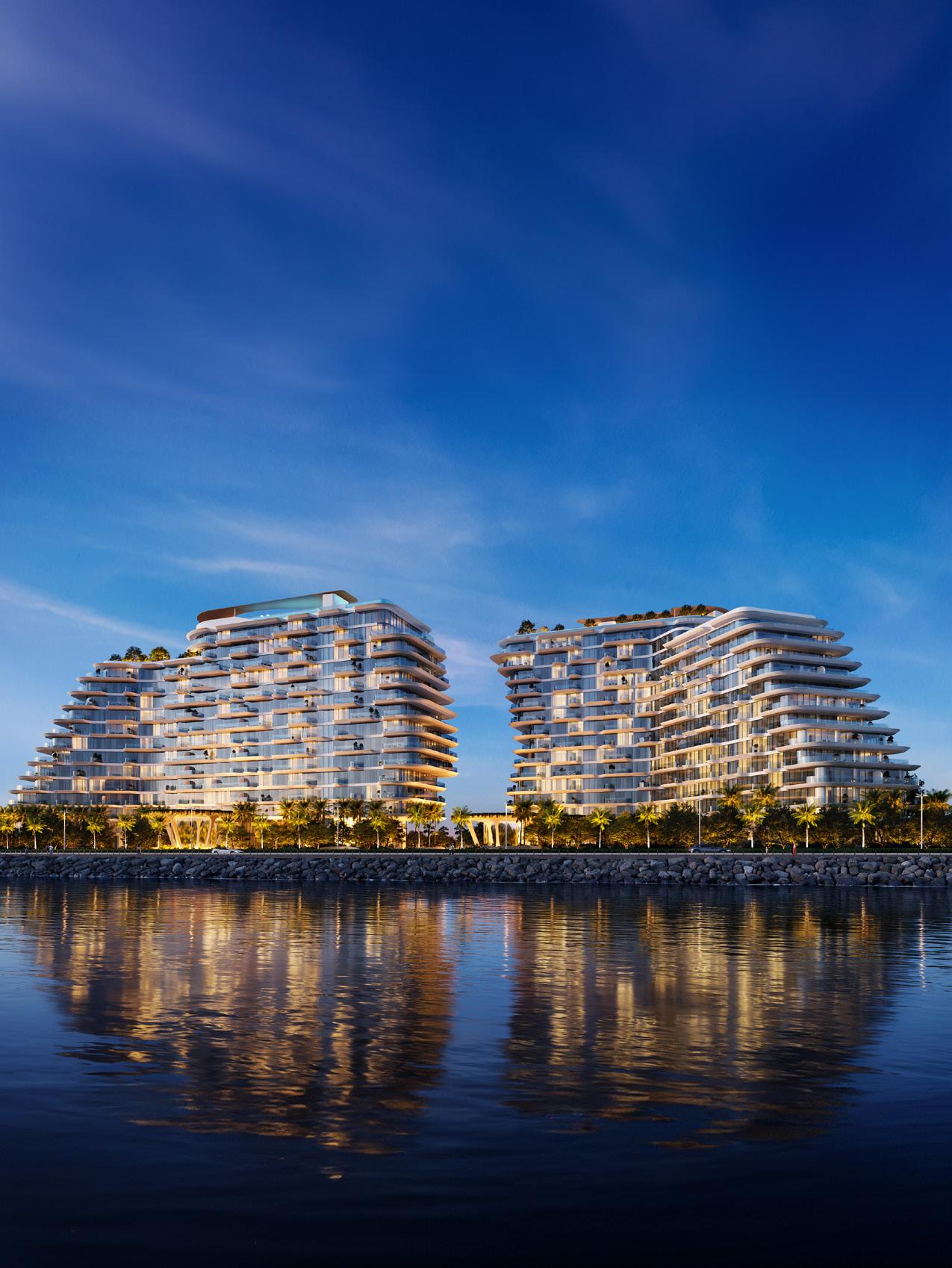
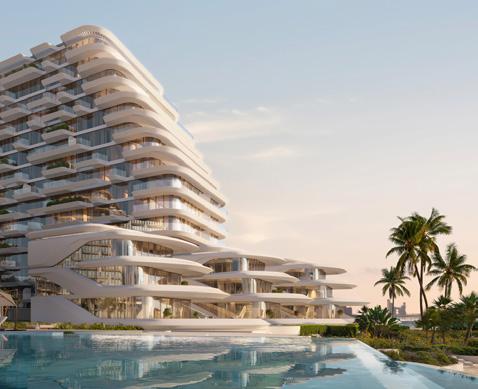
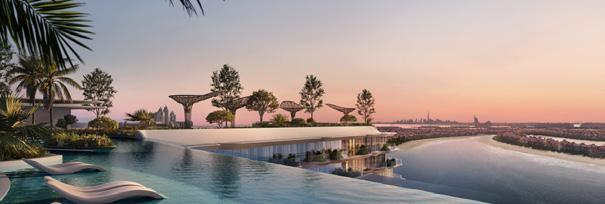
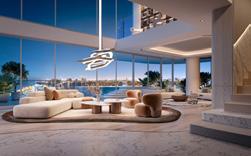
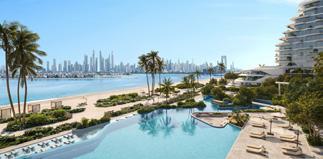
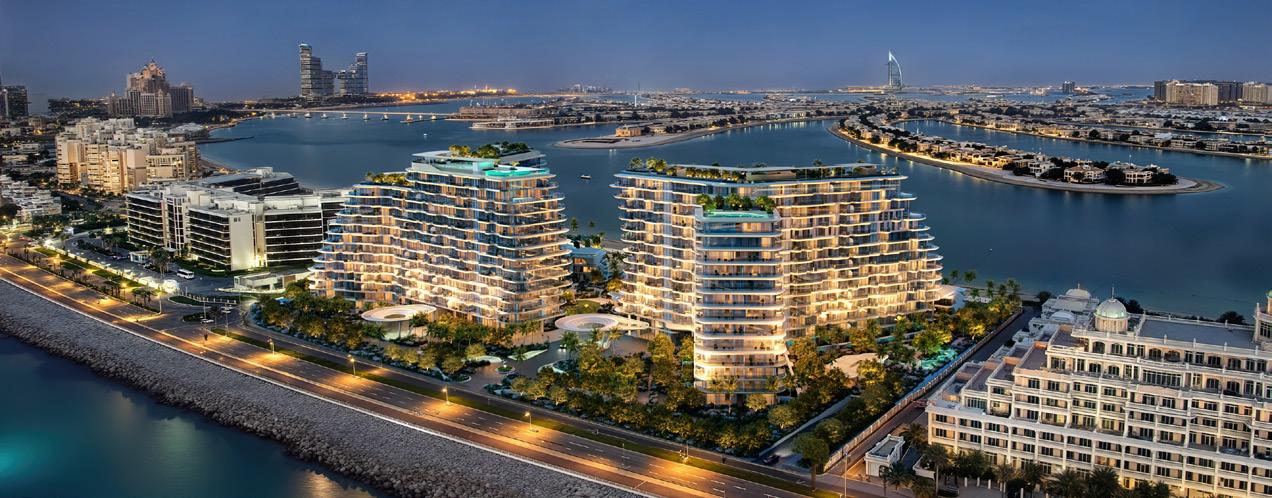
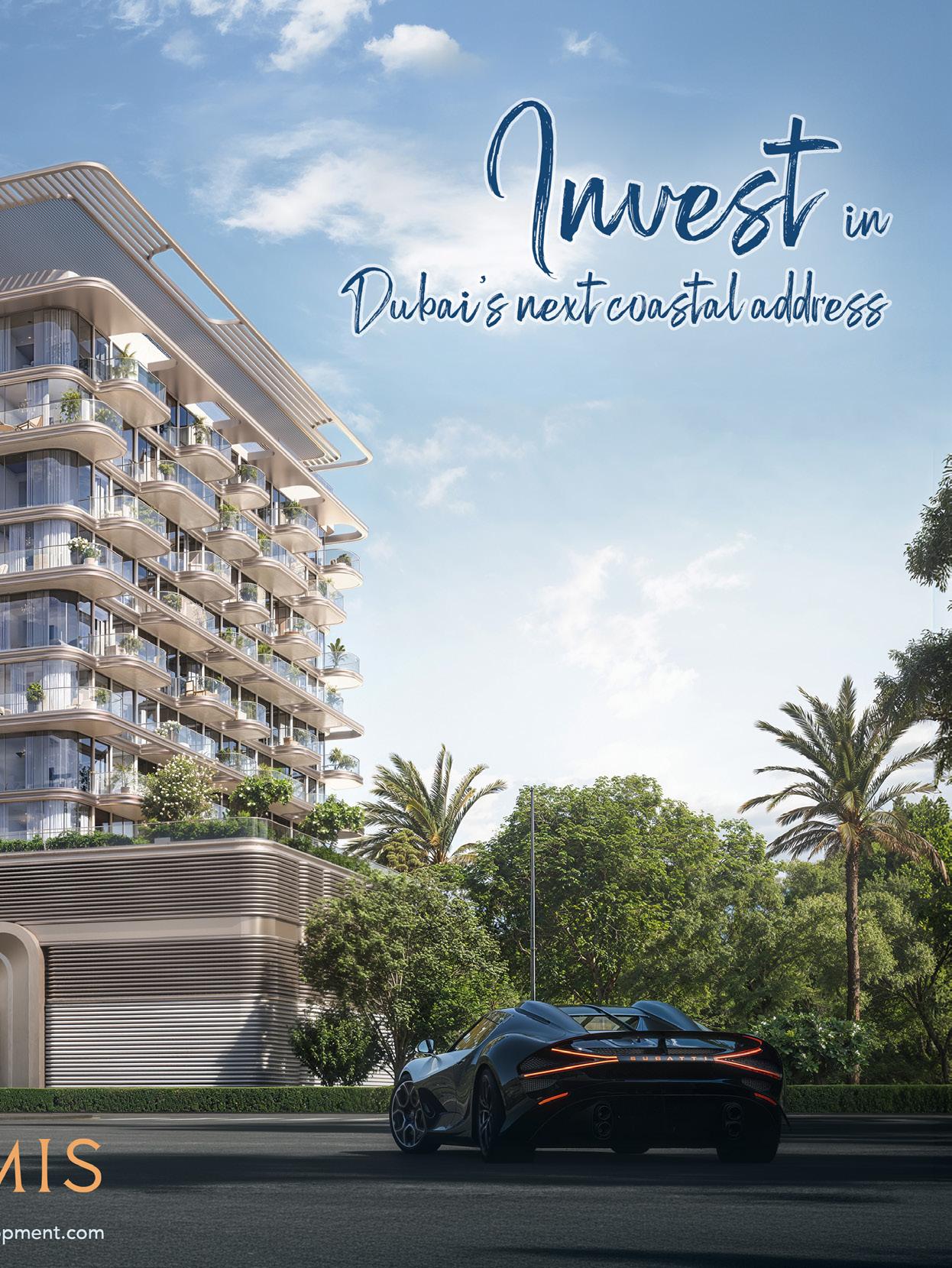
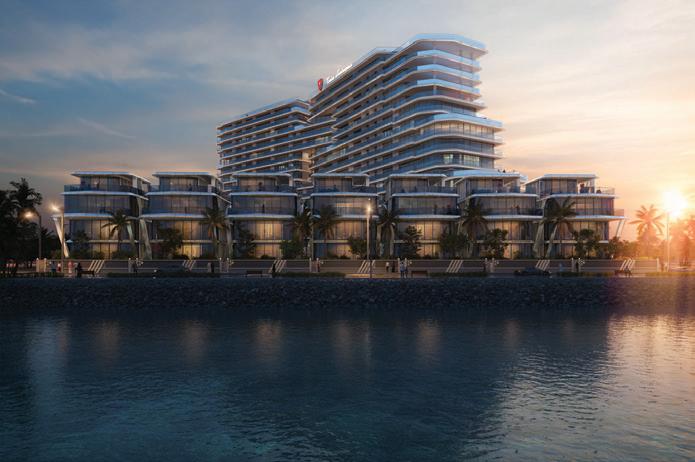
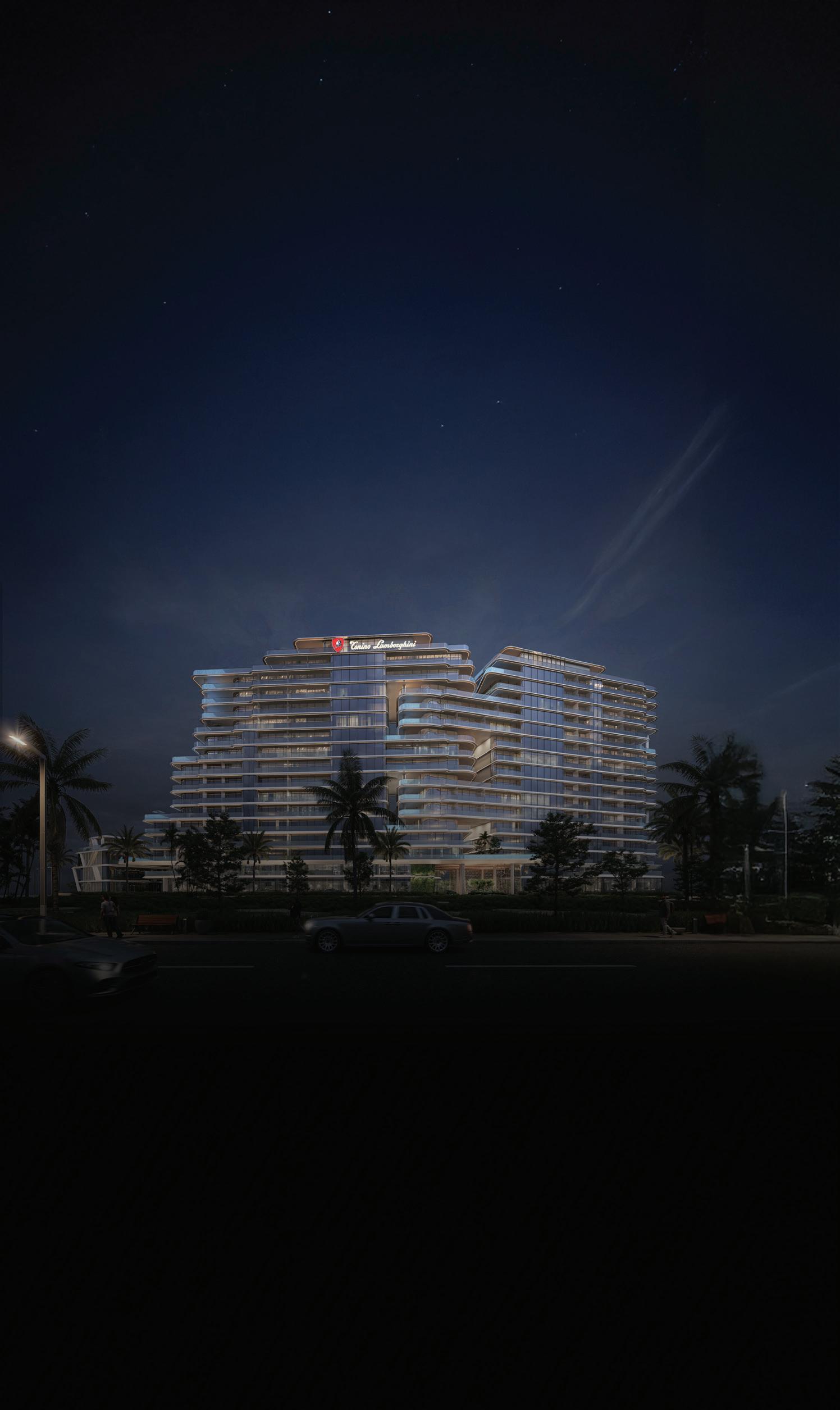
PASSO is BEYOND’s waterfront landmark on Palm Jumeirah, conceived as a sculptural expression of contemporary coastal living.
DESIGNED TO MOVE YOU.
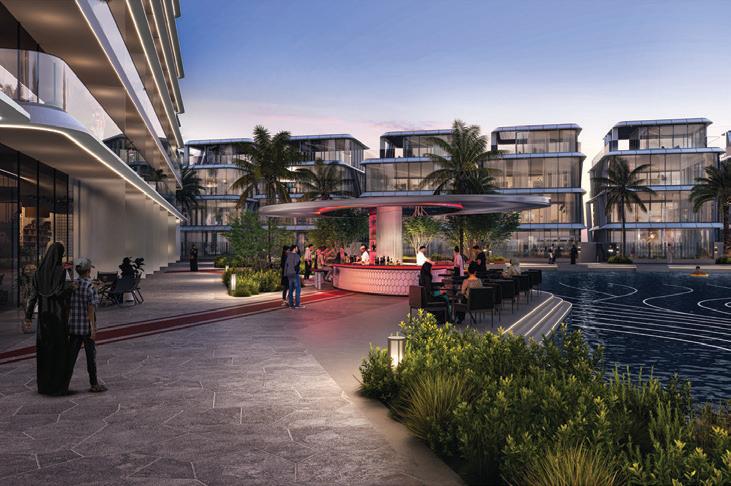
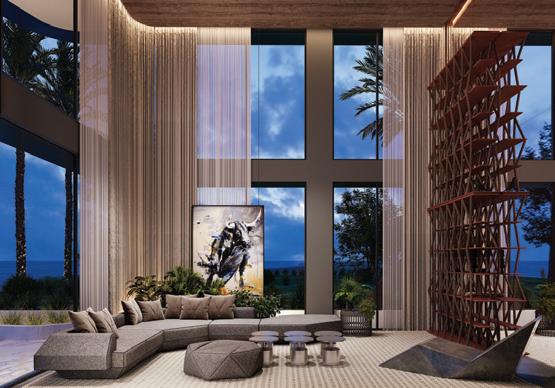
Comprising the twin towers Bella and Avita, the development unites architecture, nature, and emotion through light, movement, and the rhythm of the sea. It offers over 600 curated residences from one- to four-bedroom homes, complemented by sky-level penthouses and 6 exclusive Beach Mansions on the shoreline, all designed with fluid layouts, panoramic glazing, and sweeping views of the Arabian Gulf, the Palm, and Dubai’s skyline.
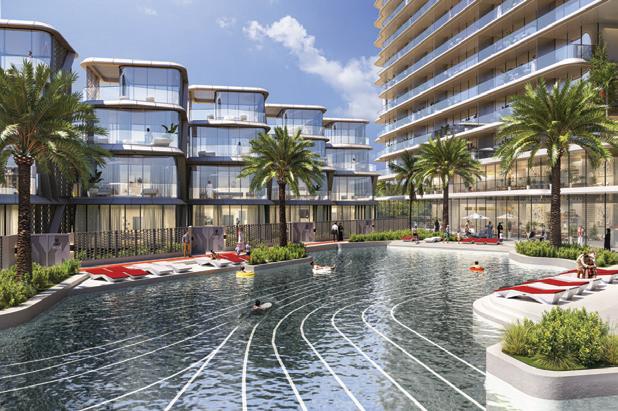
PASSO offers 5 distinct residential collections, from wellness-led homes with private gardens and plunge pools to elite residences, penthouses, and beach mansions. A sculptural arrival piazza, cascading pools, landscaped paths to 250 metres of private beachfront, and curated wellness, family, and leisure amenities complete the experience.
More than a destination, PASSO reflects BEYOND’s vision for design-led waterfront living, where architecture, nature, and emotion flow as one.
HYDROCONQUEST
HENRY CAVILL
BEN C HMA R K . BE AT E N .
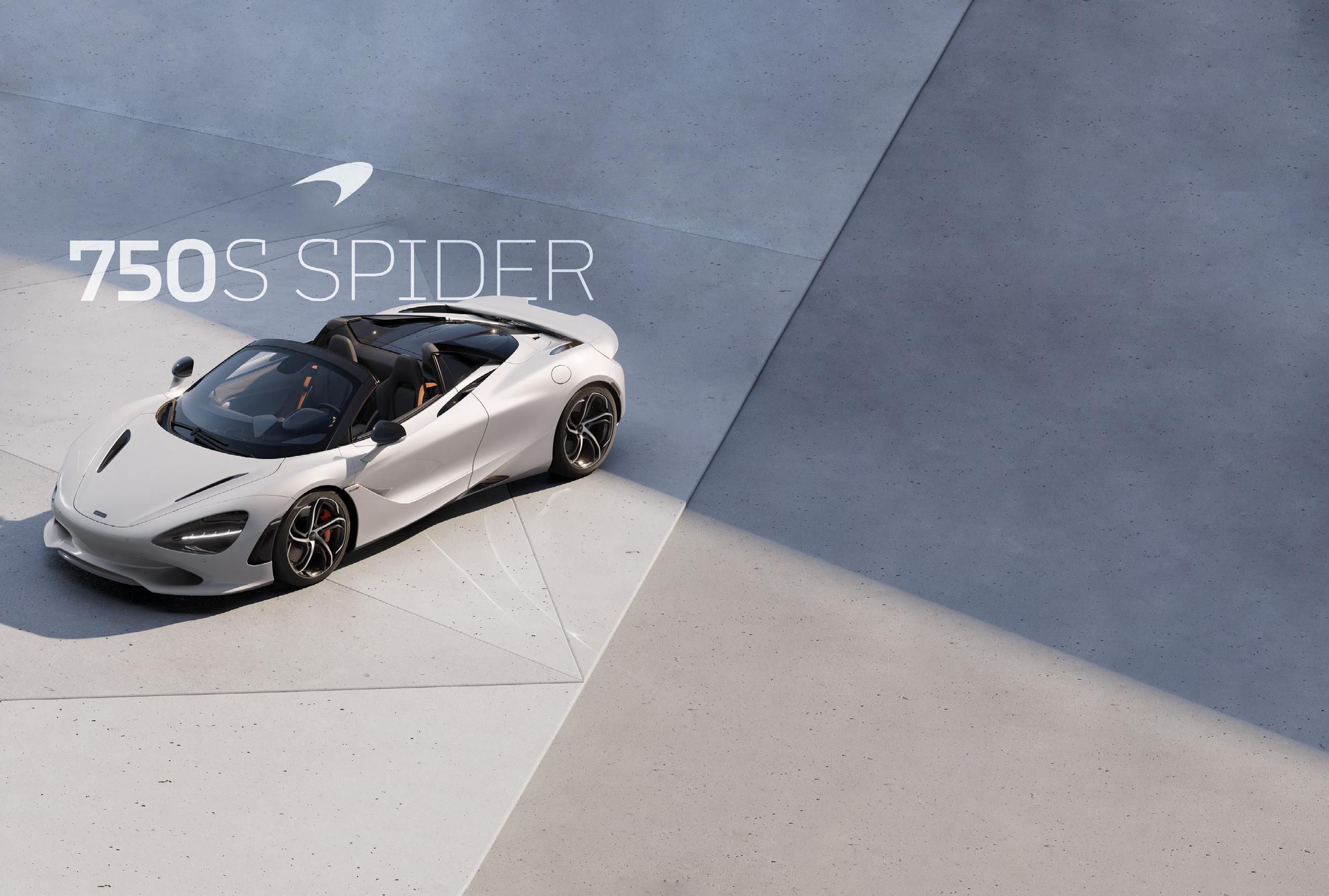
more exhilaration. You can feel it. Hear it. Sense it. Every moment you’re behind the wheel.
One incredible ambition: to raise the bar in supercar performance and engagement. To a brand new level
T HE N E W Mc
GLOBAL CITIZEN CLUB
EMPOWERING ACCESS. REDEFINING FREEDOM.
In a world where true wealth is measured by freedom, Arton Capital and The VIP Global unite to offer an unparalleled membership, reserved for the world’s most discerning.
A seamless fusion of global mobility, sovereign freedom, and bespoke luxury, crafted exclusively for those who command the extraordinary.
This is your invitation to life without boundaries.
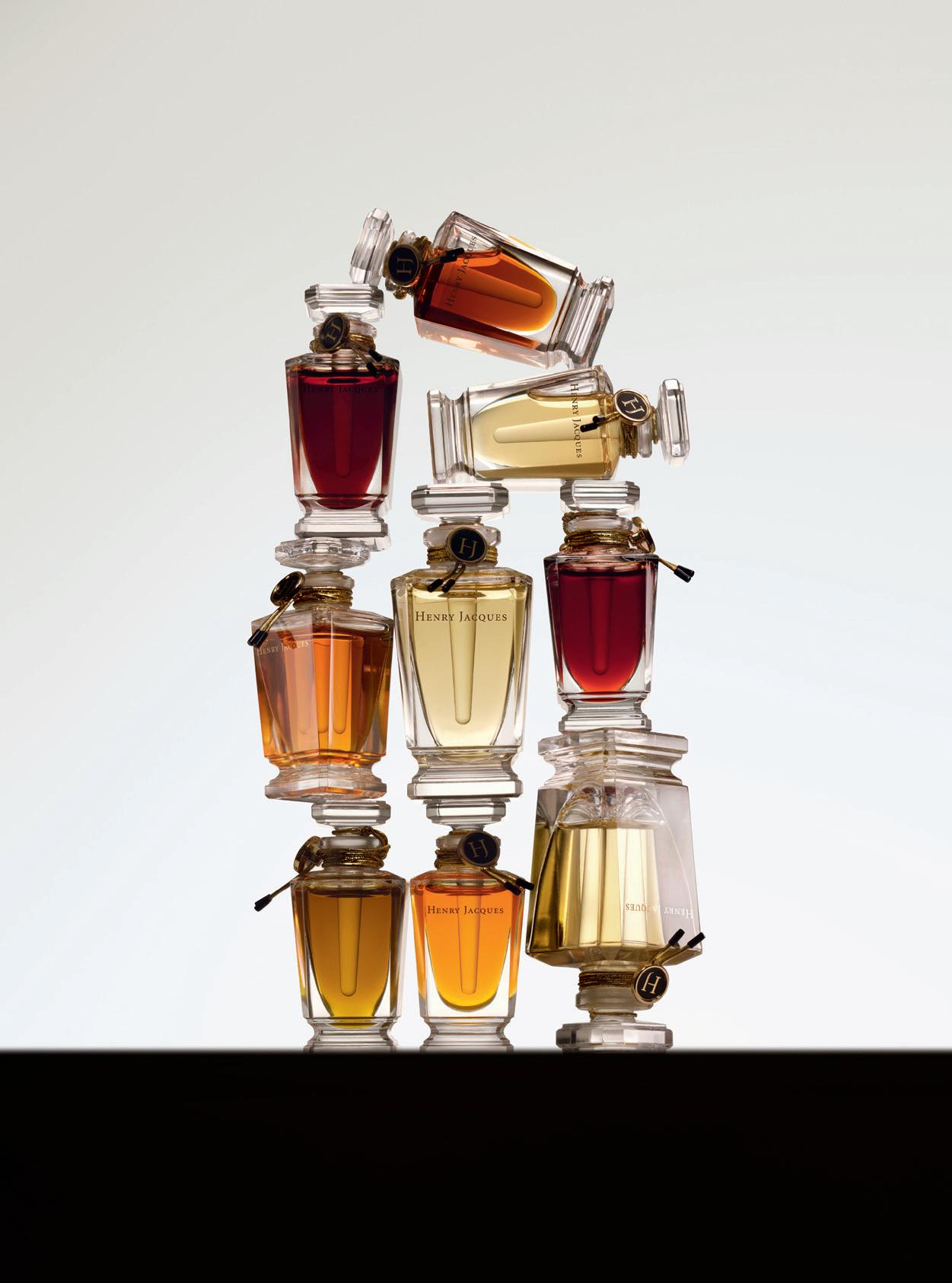
www.parfumshenryjacques.com
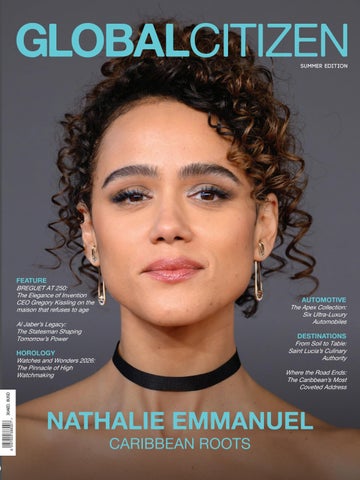
24 KEEP PADDLING TO SHORE Nathalie Emmanuel on Heritage, Belonging and Caribbean Pride
28 BREGUET AT 250: THE ELEGANCE OF INVENTION
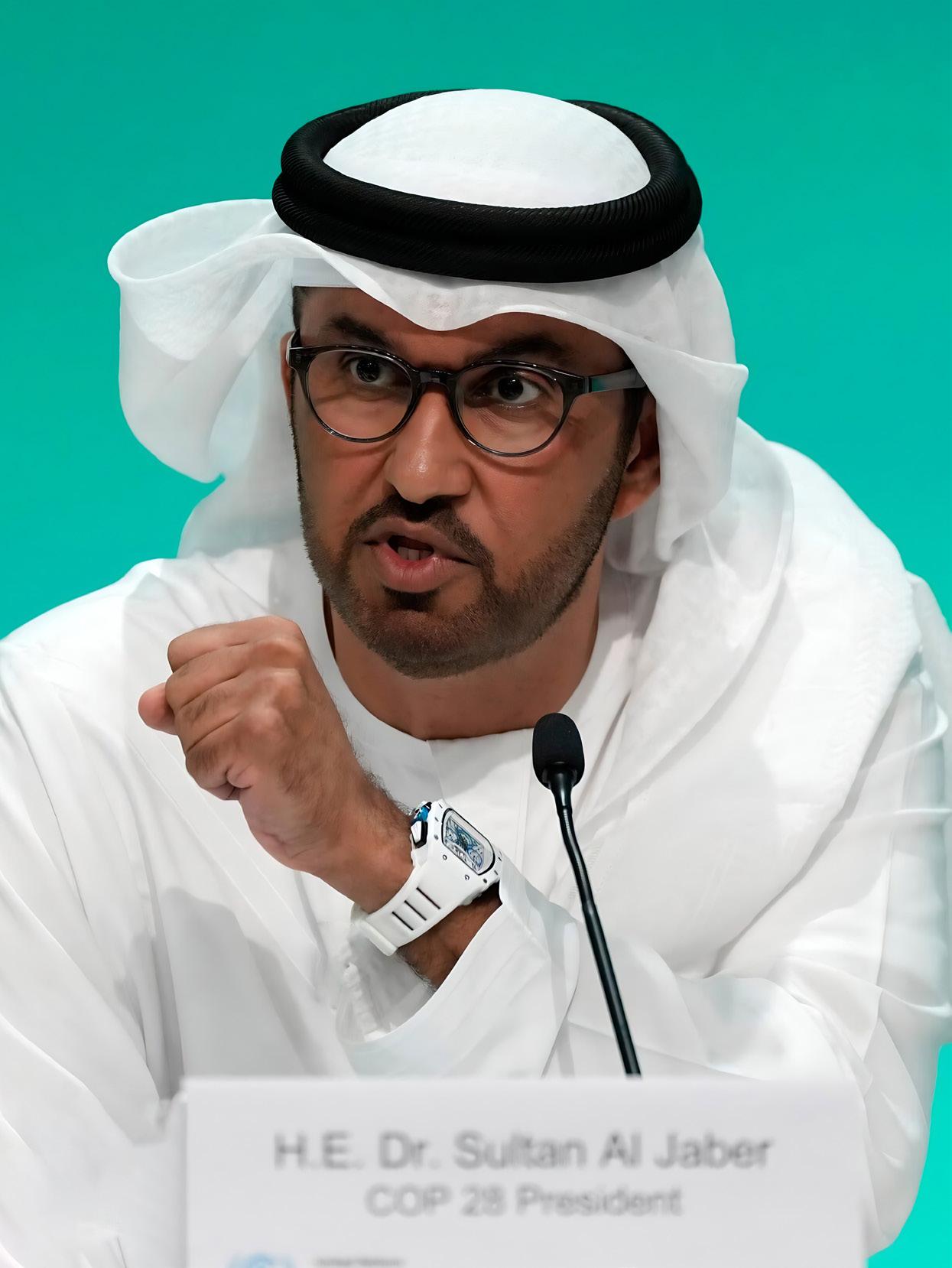
32 SULTAN AHMED AL JABER THE ENTERGY STATESMAN
38 THE ARCHITECT OF MODERN FINANCE
46 WHAT “FREEDOM OF MOVEMENT” ACTUALLY MEANS IN 2026
50 BEYOND THE NUCLEAR FAMILY: STRUCTURING RESIDENCY STRATEGIES
56 WATCHES AND WONDERS 2026 THE PINNACLE OF WATCHMAKING
64 THE APEX COLLECTION Six Automobiles Defining Power, Prestige and the Future of UltraLuxury Motoring REAL ESTATE
76 THE REFINED CARIBBEAN Inside Saint Lucia’s Luxury Landscape
DESTINATIONS
80 FROM SOIL TO TABLE Saint Lucia’s Most Compelling Food Narrative
84 WHERE THE ROAD ENDS The Caribbean’s Most Coveted Address
STYLE
88 THE FRAGRANCE EDIT Four Unisex Scents Worth Knowing
90 THE GROOMING EDIT Five Skincare Essentials Without the Fuss
92 THE VACATION EDIT Six Essentials from Carry-On to Coastline
GADGETS
98 SAMSUNG GALAXY S26 ULTRA Why Less Is Suddenly More
100 INSIDE APPLE’S AI WEARABLES STRATEGY
102 GADGETS WORTH YOUR ATTENTION Five That Earn Their Place in Your Daily Rotation
EDITOR’S LETTER
Dear Readers,
Some places linger in your memory long after you’ve left. Saint Lucia is one of those places, not just for its beauty, but for what it asks of you in return: attention, respect, and a willingness to see beyond the obvious. This edition is shaped by that same spirit. Our cover story with Nathalie Emmanuel shows how to carry heritage with grace. She talks about identity as something you protect, build on, and share with others. Her journey, from a seaside town in Essex to the world stage and back to her grandfather’s homeland, is a story of quiet, steady pride.
We also shine a light on the minds shaping our world. Sultan Ahmed Al Jaber, The Energy Statesman, redefines leadership at the intersection of industry and sustainability. Hana Al Rostamani, The Architect of Modern Finance, is quietly transforming the region’s financial landscape. From the corridors of power, we turn to the ateliers of precision — Watches & Wonders delivers The Pinnacle of Watchmaking, a celebration of craft and heritage. Beyond these, we explore the people and ideas pushing boundaries across luxury, technology, and design, all connected by one thread: substance over spectacle.
Neither this publication nor any part of it may be reproduced, stored in a retrieval system, or transmitted in any form or by any means electronic, mechanical, photocopying, recording or otherwise, without the permission of Fierce International. Where opinion is expressed it is that of the author and does not necessarily reflect the editorial views of the publisher or Global Citizen All information in Global Citizen is checked and verified to the best of the publisher’s ability, however the publisher cannot be held responsible for any mistake or omission enclosed in the publication. FIERCE
Copyright 2026 Fierce International. All rights reserved.
Global Citizen is made of 100%
Nathalie Emmanuel
MASTER OF MATERIALS
ANATOM SKELETON
Credit: Arved Colvin-Smith (@arvedphoto) for Armani Beauty
There is a photograph Nathalie Emmanuel keeps close to her heart. In it, her grandmother stands before the Pitons in Saint Lucia, smiling against a backdrop so vivid it almost seems staged. Years later, Emmanuel found herself at Jade Mountain, posing in front of that same view, quietly recreating the image. It was not planned as a statement. It was something more instinctive — a thread pulled taut across time, connecting her to a woman who had made it her mission to keep the Caribbean alive in the lives of her grandchildren, even from a small seaside town in Essex.
Emmanuel grew up in Southend-on-Sea, a place she describes with warmth and honesty. The demographics of the town, she says, were far less varied than they are now. There were only a handful of Caribbean families in the area, and seeing yourself reflected in the world around you was rare. Her grandfather was from Saint Lucia, and her other grandfather from Dominica, but the family’s connection to the islands had been disrupted in ways familiar to many in the diaspora. It is a story she knows is not hers alone — the fractures of the Windrush generation, the severed ties, the relatives discovered decades later. “It’s a very common story,” she says. “I’ve had various conversations with people from the diaspora talking about this — discovering relatives they didn’t know about.”
What kept the connection alive was her grandmother, an Englishwoman who had moved to Dennery with her second
husband and lived there for over twenty years. She would return to England bearing gifts: CDs of carnival music, postcards of famous landmarks, and snacks from the island. Once, for a school show-andtell, she brought back a palm leaf so that young Nathalie could talk about Saint Lucia and what it looked like. These were not grand gestures, but they built something durable.
The real turning point came at fourteen, when Emmanuel visited Saint Lucia for the first time. Her mother had saved for years to make the trip possible. The effect was immediate and lasting. “I really understood that this is where my grandfather came from,” she recalls. “These are the shores, this is the earth, this is the sky that my family came from.” She returned to school after the summer holidays with her afro fully brushed out. “I dare someone to tell me anything about how my hair should be or shouldn’t be,” she remembers thinking. She describes it, simply, as one of the most empowering experiences of her life.
That early visit planted a seed that has only deepened with time. In 2024, Emmanuel returned to Saint Lucia and played mas at Carnival — an experience she describes as profoundly moving, particularly as both her grandmother and step-grandparents had since passed. “I missed them and I felt them,” she says. “I felt connected to them there.” A year later, she did the same in Dominica. Her ambition now, she says with a laugh, is to do every carnival in the Caribbean and the diaspora.
But the humour sits alongside something more serious. Emmanuel speaks with urgency about the need to protect Caribbean heritage, particularly in the United Kingdom. She draws a direct line from the Windrush generation to the cultural institutions that exist today — and to the threats they face. Notting Hill Carnival, she notes, is a prime example: a celebration with deep roots in Caribbean-British history that feels, every year, as though it must justify its existence. “Every year it feels like we’re fighting to exist and to celebrate our legacy and our culture and our history,” she says. “Our very, very deep-rooted history in the UK.”
This protectiveness extends to her professional life. Emmanuel’s career, which spans Game of Thrones and the Fast & Furious franchise, as well as more intimate projects, has reached a stage where she is no longer simply choosing roles but actively shaping what gets made. She and her partner are developing projects to tell stories that have been overlooked — particularly Caribbean stories. She speaks with admiration of Fiona Compton, a Saint Lucian artist and historian, whose page, Know Your Caribbean, has become a vital resource. Through Compton, she learnt about figures like the woman who led a rebellion that secured four years of independence for Saint Lucia. “How do we not know that story?” she asks. “These stories are so amazing, but they’re so universal.”
She is clear-eyed about the climate in which this work is taking place. She sees the current cultural moment as a kind of pushback against the progress made in the wake of 2020 — an observation she frames not with defeat but with resolve. A friend and dialect coach once offered her a metaphor she has carried ever since: equality is the shore, and you are at sea, paddling against the current. You may not always have to paddle as hard, but if you stop entirely, you drift further from where you need to be. Emmanuel has clearly decided not to stop paddling. She is building, connecting, producing, and showing up in rooms that were not always open to people like her — and thinking carefully about who she can bring along.
Her message to the next generation is stripped of sentimentality. “To hell with” the pressure to conform, she says. Carry your culture. Find your people. Remember where you came from. “Caribbean people are survivors, we’re fighters, and we are the descendants of the strongest of them.” It is a statement that lands not as rhetoric but as lived conviction — grounded in a palm leaf brought home for show and tell, in a photograph recreated across generations, and in the knowledge that the current is always pulling, but the shore is worth reaching.
BREGUET AT 250: THE ELEGANCE OF INVENTION
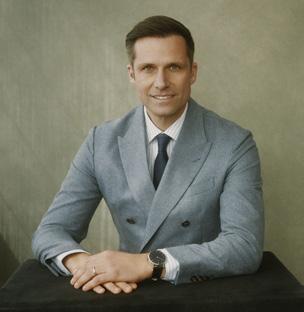
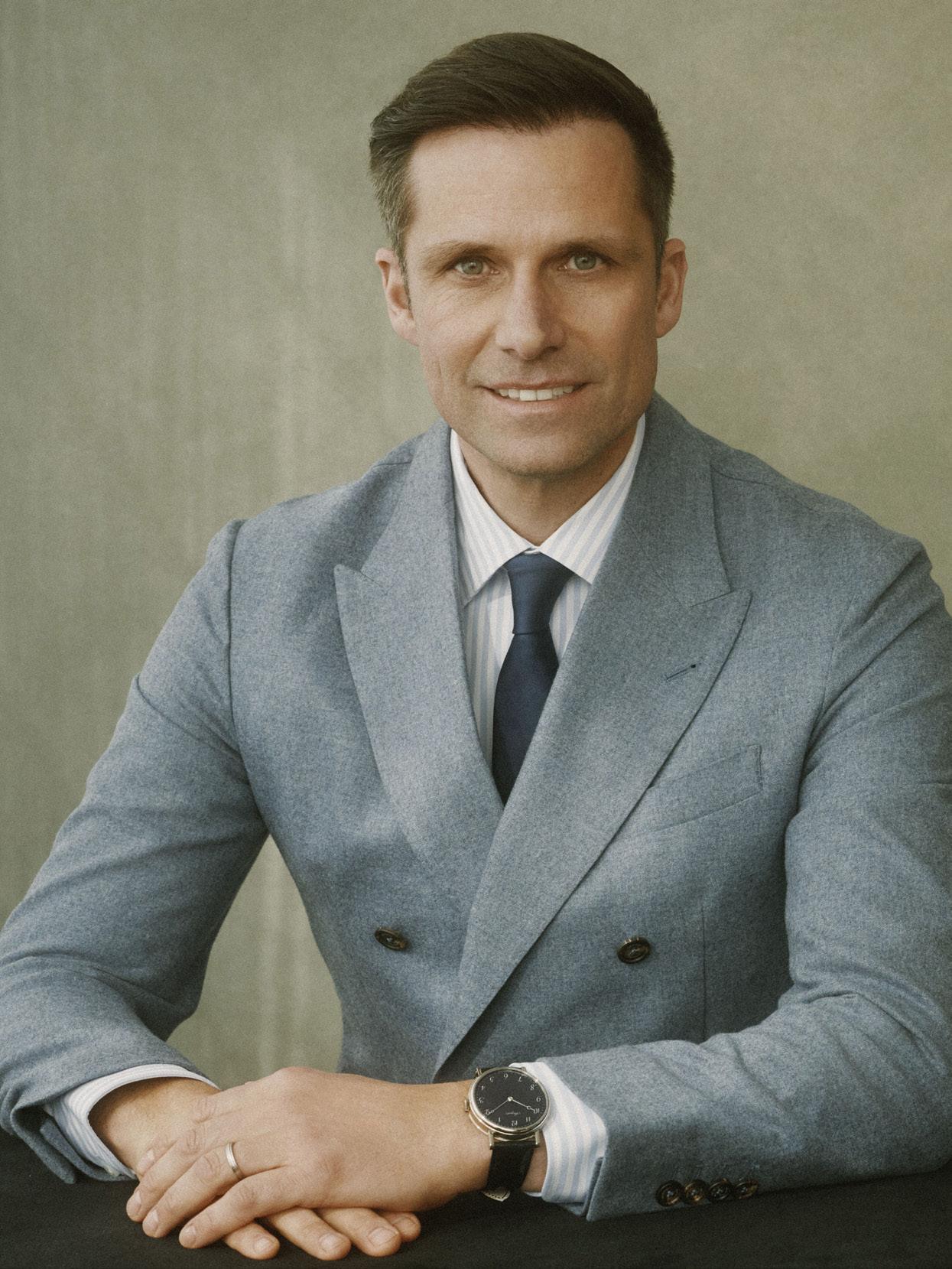
CEO Gregory Kissling on emotion, innovation, and the maison that refuses to age.
Few maisons can claim a legacy that has survived revolutions, empires, and entire artistic eras. Breguet can. As the brand celebrates its 250th anniversary, its CEO shares what has kept the maison relevant today not as an artefact of the past, but as a living force in contemporary watchmaking.
The Design Code That Never Aged
Asked which principle has defined Breguet most across two and a half centuries, his reply is immediate: design.
“You can take a Breguet from the late eighteenth century and one from today and immediately see the connection,” Kissling says. “Abraham-Louis Breguet wasn’t only a brilliant watchmaker, he was the first watch designer.”
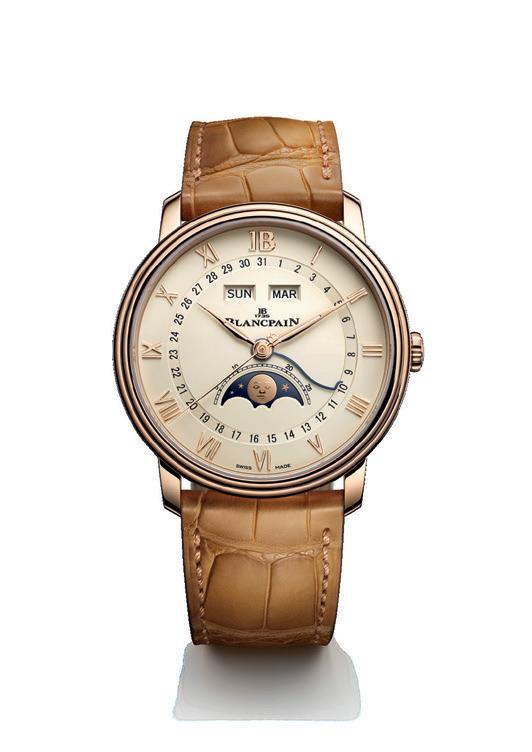
At a time when watchmaking was elaborate and heavy, Breguet introduced a new philosophy of refinement long before the vocabulary of minimalism existed. He reimagined everything: the hands, numerals, hour track, and dial layout, establishing the aesthetic language now known worldwide as the “Breguet style.” Today, even competitors reference “Breguet hands” and “Breguet numerals.”
For 250 years, this design DNA has remained intact, while the craftsmanship beneath it continues to evolve quietly and deliberately.
Carrying the Genius of a Founder Into a New Aged
Breguet invented the tourbillon and influenced virtually every corner of modern horology.
How does a brand innovate under the shadow of such genius?
“Our duty is to keep the spirit of the founder, with the tools of today,” Kissling explains. He cites one of Breguet’s most important collectors, Sir David Lionel Salomons: “To carry a fine Breguet watch is to feel you have the brains of a genius in your pocket.”
This mindset underpins the maison’s approach to innovation. Breguet was among the first to introduce silicon components in 2006, well before others in the industry. More recently, it unveiled the magnetic pivot, a breakthrough that uses magnetic fields not to deter them, but to improve precision and stability.
“We blend tradition with modernity. We respect our design DNA, but we innovate where it matters,”
Kissling says.
Why Mechanical Craftsmanship Still Matters
In an age dominated by smartwatches, is there still a place for mechanical art?
“We don’t wear mechanical watches to tell time anymore,” Kissling declares, pointing to both wrists – one with a smartwatch, the other with a mechanical timepiece. “A mechanical watch gives emotion. That is why we say: crafting emotion for 250 years, one invention at a time.”
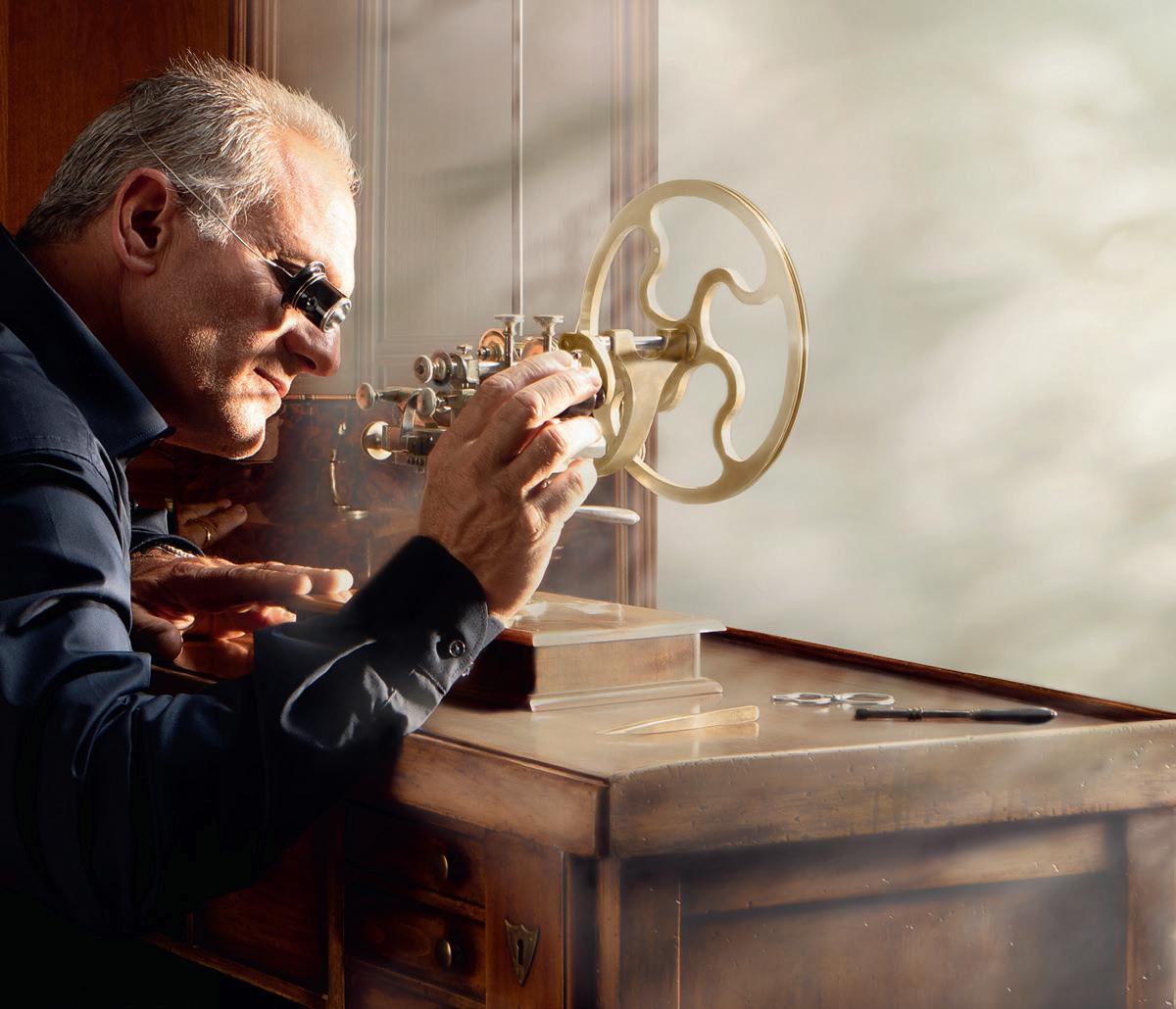
This year, Breguet shifted its storytelling to what lies behind the dial. Visitors can enter the workshops, speak with artisans, and witness engraving, guillochage, enamelling, and beveling at close range.
“Sometimes it takes three months just to engrave a mainplate,” he says. “It can take a full year to bring all the crafts together into one watch. When clients meet the artisan who engraved their bridge, the emotional connection becomes unforgettable.” To “export the manufacture,” Breguet is now taking its craftsmen around the world, giving collectors deeper insight into the maison’s savoir-faire.
Sustainability, Ethics, and Longevity
Heritage brands face increasing demand to modernise responsibly. Breguet’s response is the newly announced Breguet Hallmark, first presented in Japan.
The hallmark is built on three pillars: aesthetic harmony and finishing; technical performance (including chronometry, magnetic resistance, and acoustic quality for minute-repeaters); and ethics. “We certify that 100 % of the watch head and buckle are manufactured in Switzerland,” Kissling says. The maison also adheres to the Swatch Group’s sourcing standards, including gold traceability, Kimberley Process compliance, and strict supplier ethics codes.
Yet Breguet’s most powerful sustainability commitment is simpler.
“We can repair any Breguet, from any era. There is no limit—even two-hundred-year-old pieces can be restored. That permanence resonates deeply with the new generation, who value authenticity and longevity,” he explains.
Balancing Exclusivity With Cultural Relevance
How does a maison synonymous with exclusivity remain relevant to broader culture?
“By being client-centric,” Kissling says. Breguet is expanding its boutique network to be closer to its clients physically, while taking greater control of its distribution. Digital platforms remain crucial for reaching younger audiences.
The maison has also created a travelling exhibition to introduce new generations to the genius of Abraham-Louis Breguet, showcasing his inventions and legendary creations, from the tourbillon to the Type 20.
“For connoisseurs, Breguet needs no introduction. For new audiences, we must teach. When people learn the history, the innovation, the storytelling, they understand the value,” he adds.
Evolving Without Nostalgia
How does Breguet translate centuries of DNA into modern creations?
“By being inspired by the past, not copying it,” Kissling emphasises. The maison brings historical ideas to life using contemporary engineering. He cites the free escapement, a Breguet invention abandoned centuries ago due to the limitations of the time. Today, modern technology makes it possible to revive the concept.
“We take the idea, the spirit—and express it with modern materials, modern design and modern techniques. That is the Breguet way,” he says.
Leadership Guided by the Founder’s Vision
As Breguet enters its 250th year, Kissling continually revisits the principles of Abraham-Louis Breguet, who fused art, science and visionary thinking.
“Don’t imitate, innovate. One invention at a time,” he says.
He hints that the anniversary year still has more to come.
Looking Toward the 300th Anniversary
What does he hope Breguet will represent in fifty years?
“That we didn’t focus on one product or one moment, but told the full story of 250 years—the chapters, the inventions, the evolution from pocket watches to the tourbillon to the Type 20,” he reflects.
He hopes future generations will say this era honoured the past while pushing boundaries.
“If we stay true to our DNA, keep innovating, and continue crafting emotion, Breguet will remain timeless,” he concludes.
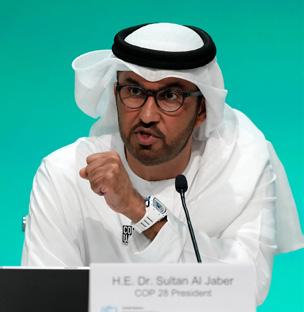
THE ENERGY STATESMAN
How Sultan Ahmed Al Jaber is balancing energy security, economic resilience, and the transition toward a lowercarbon future
In today’s rapidly shifting geopolitical and economic climate, energy leadership demands far more than operational oversight; it requires strategic vision, diplomatic agility, and the ability to navigate uncertainty at scale. Few executives embody that balance more effectively than Sultan Ahmed Al Jaber.
At the centre of the UAE’s evolving energy agenda, Al Jaber has emerged as one of the defining architects of the nation’s long-term resilience strategy. His leadership philosophy is rooted in pragmatism: maintaining the reliability of traditional energy systems while accelerating investment into cleaner technologies and future-facing infrastructure.
As global markets continue to face supply-chain instability, fluctuating energy demand, and geopolitical fragmentation, the UAE has positioned itself as a stabilising force within the international energy
ecosystem. Under Al Jaber’s stewardship, the emphasis has remained firmly on continuity, adaptability, and disciplined longterm execution.
What distinguishes his approach is the refusal to frame energy security and sustainability as opposing forces. Instead, his strategy recognises that economic growth, industrial competitiveness, and climate responsibility must evolve in parallel. This dual-track vision has strengthened the UAE’s standing as both a trusted global energy supplier and an emerging leader in the transition economy.
In a decade increasingly defined by disruption, Al Jaber’s leadership reflects a broader regional reality: resilience is no longer a defensive strategy; it is the foundation of modern progress.
THE DISRUPTOR OF THE DESERT
How Rashid Al Ghurair is redefining mobility, energy convenience, and urban innovation through a technologyfirst vision.
While the Al Ghurair name carries the weight of a century-old industrial legacy, Rashid Al Ghurair is defined by his refusal to rely on tradition alone. As the Founder and CEO of CAFU, he has taken the most fundamental element of the region’s economy—energy—and reinvented it for the digital age.
In 2026, Rashid stands as a beacon for the “New Emirati” entrepreneur. CAFU has evolved from a pioneering on-demand refueling service into a multi-vertical technology ecosystem. By integrating AI-driven logistics and carbon-capture initiatives, he has transformed a convenience app into a global model for urban mobility and environmental stewardship.
His approach is surgically precise: identify a friction point in daily life and solve it with elegant tech. Yet, his vision extends far beyond the UAE’s borders. Rashid’s expansion strategy is bold, scaling into international markets while maintaining a lean, startup-like agility that belies his family’s conglomerate roots.
For the Global Citizen reader, Rashid Al Ghurair represents the perfect synthesis of heritage and futurism. He is not just participating in the global energy conversation; he is rewriting the script, proving that even the most established industries are ripe for a tech-first revolution. He is the vanguard of the region’s next economic chapter.
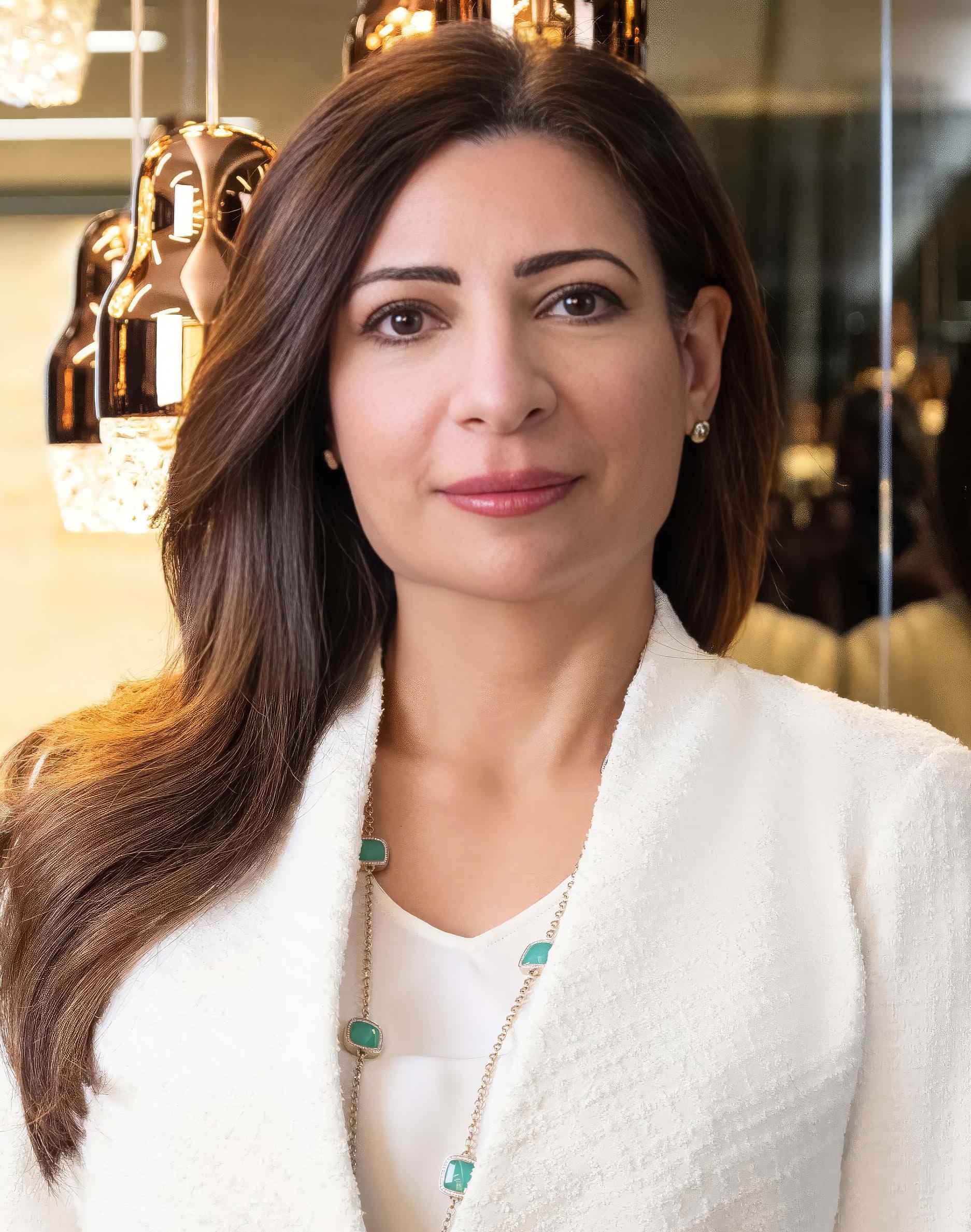
THE ARCHITECT OF MODERN FINANCE
How Hana Al Rostamani is redefining global banking through innovation, resilience, and visionary Emirati leadership.
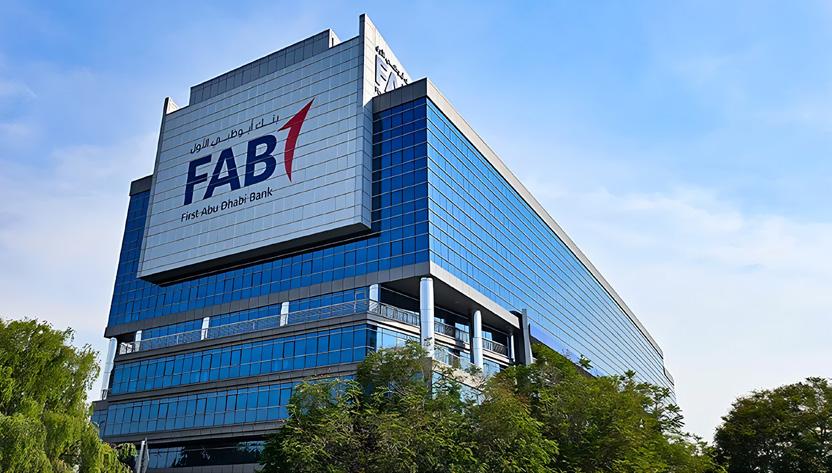
In the high-stakes world of global finance, few figures command as much respect and quiet authority as Hana Al Rostamani. As the Group CEO of First Abu Dhabi Bank (FAB), the UAE’s largest lender, Al Rostamani has transcended the role of a traditional banker to become a global visionary.
Under her stewardship, FAB hasn’t just grown; it has evolved. In an era defined by volatility, she has anchored the institution in three pillars: digital disruption, sustainable investment, and aggressive international expansion. While others reacted to the shifting economic tides of the mid-2020s, Al Rostamani anticipated them, positioning FAB at the intersection of AI-driven banking and the transition to a net-zero economy. Her leadership
style is a masterclass in “Global Citizen” philosophy deeply rooted in Emirati values of hospitality and long-term partnership, yet fluent in the languages of Wall Street, London, and Singapore. Often cited as one of the world’s most powerful women, she remains focused on the human element of finance, mentoring the next generation of leadership while navigating multi-billion dollar cross-border acquisitions.
As we look toward the horizon of 2026, Al Rostamani isn’t just managing wealth; she is architecting the future of the Middle East’s economic legacy on the world stage. She is, quite simply, the blueprint for the modern executive.
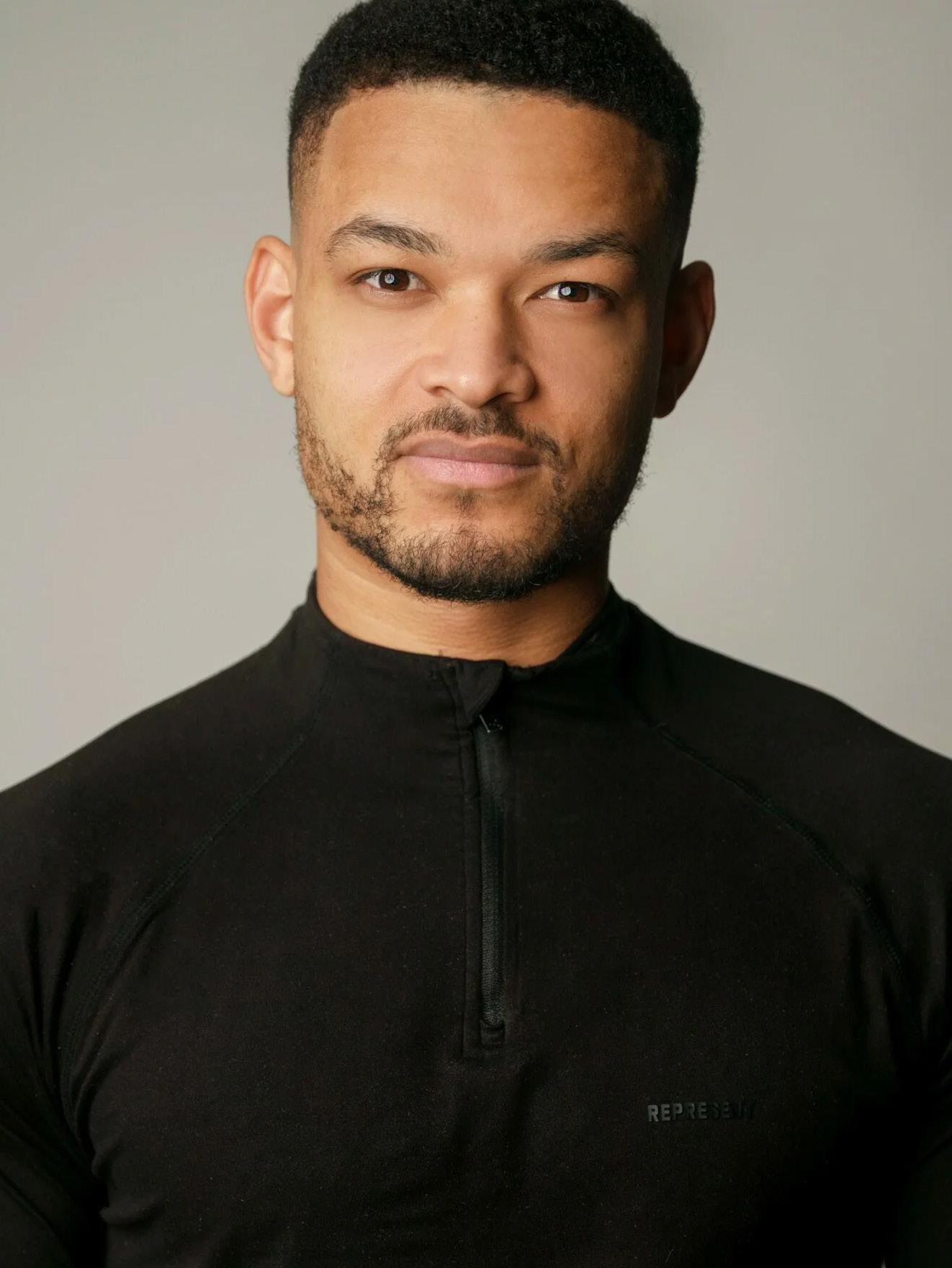
STEVEN BARTLETT’S HUMAN-CENTERED LEADERSHIP RISE
The Entrepreneur Who Changed the Leadership Rulebook
Steven Bartlett has become one of the most influential voices in modern entrepreneurship—not by following traditional leadership rules, but by challenging them.
After co-founding Social Chain and building it into a multimillion-pound business before the age of 30, Bartlett evolved into a global thought leader through The Diary of a CEO, where conversations around business, failure, mental health, and purpose resonate with millions worldwide.
What sets Bartlett apart is his rejection of the outdated image of the untouchable CEO. Instead of projecting perfection, he champions honesty, vulnerability, and emotional intelligence as core leadership strengths.
For Bartlett, success is no longer measured solely by valuation or revenue, but by clarity, balance, and meaningful impact.
He openly speaks about burnout, therapy, and the importance of protecting mental well-being an approach increasingly shaping the future of executive culture.
Equally important is his perspective on failure. Bartlett views setbacks not as defeat, but as data—an essential part of growth and innovation. That mindset has helped him connect deeply with a new generation of entrepreneurs seeking authenticity over corporate polish.
In an era where trust has become the most valuable business currency, Bartlett believes brands and leaders who embrace transparency will ultimately win.
His message is simple yet powerful: the future belongs to leaders who are human enough to listen, evolve, and lead with purpose.
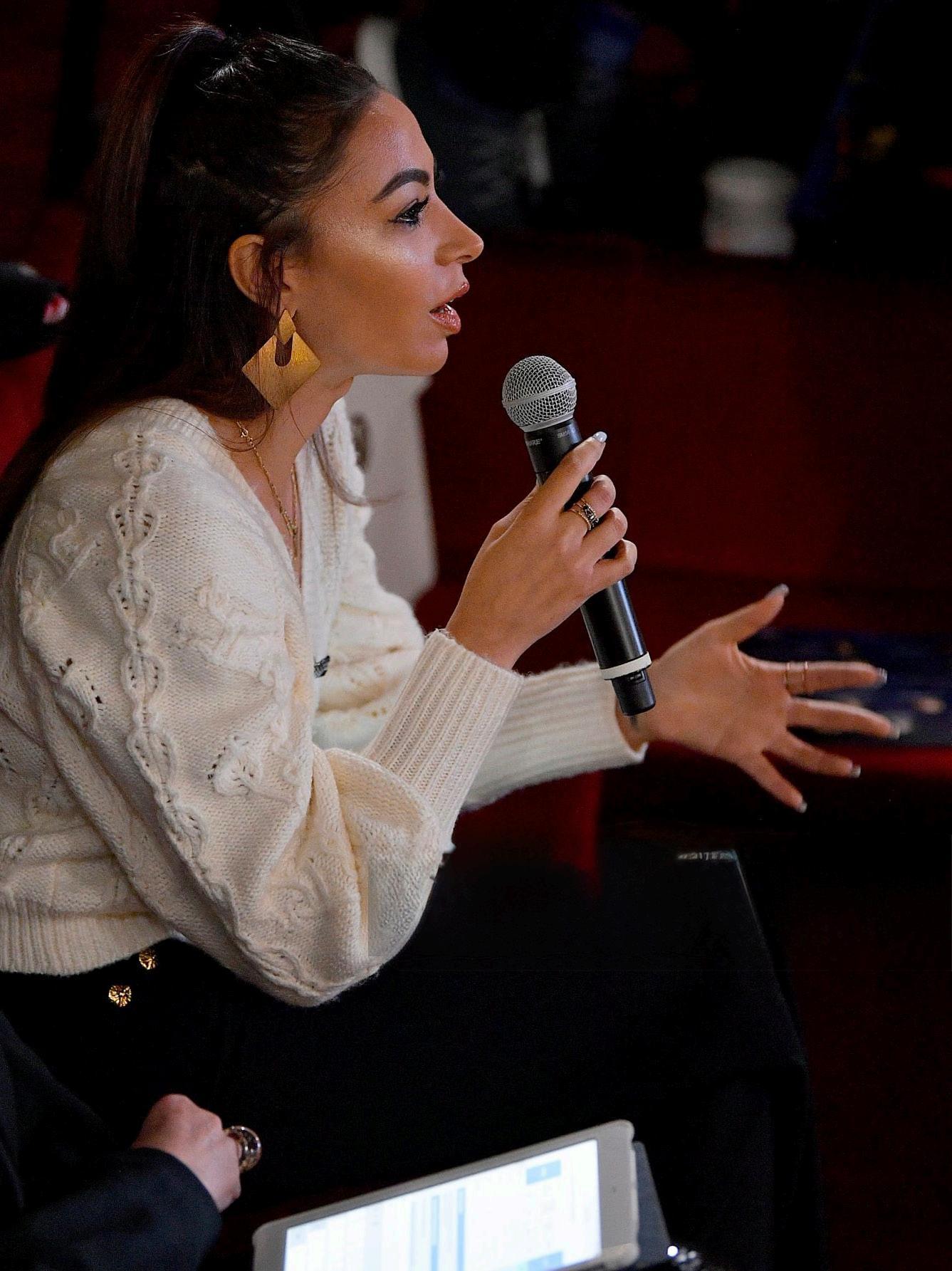
IMAN OUBOU REDEFINES MODERN
From scientist and beauty queen to tech entrepreneur, the founder of Vocable.ai is reshaping the future for women in business
Iman Oubou has never followed a conventional path. With a background in biochemistry and molecular biology, a title as Miss New York, and now a growing presence in artificial intelligence and media, she represents a new generation of multidimensional leadership.
What connects each chapter of her journey is a clear mission: empowering women to define success on their own terms.
After recognizing the lack of representation for women in STEM and leadership, Oubou launched Sway Media to amplify female voices and challenge outdated narratives surrounding ambition, intelligence, and identity. Her message was simple—women should never feel forced to choose between intellect and visibility.
Today, she is focused on the future of AI
through Vocable.ai, an AI-powered platform helping businesses streamline content creation and digital storytelling. For Oubou, artificial intelligence is not only about efficiency, but inclusion.
She also addresses the internal barriers many women face in leadership through her book, The Glass Ledge, where she explores confidence, self-sabotage, and the importance of taking risks before feeling “fully ready.”
Authentic, ambitious, and deeply forward-thinking, Oubou is helping redefine what leadership looks like across media, technology, and entrepreneurship.
Her philosophy reflects a broader cultural shift: women are no longer waiting for a seat at the table—they are building entirely new ones.
WHAT “FREEDOM OF MOVEMENT” ACTUALLY MEANS IN 2026
The benchmark has shifted. For globally mobile investors, the passport count is no longer the point.
isa-free travel to 150-plus countries.
For years, this was the headline figure. The single metric used to define passport strength, rank jurisdictions, and guide citizenship decisions.
In 2026, that definition is no longer sufficient.
Freedom of movement today is not measured solely by how many borders you can cross. It is defined by how reliably, how efficiently, and under what conditions you can move when it truly matters.
Beyond the Numbers
On paper, many passports continue to offer extensive visa-free access. In practice, that access is becoming more conditional. Entry frameworks are evolving. Electronic travel authorisations, digital preclearance systems, and increasingly detailed documentation requirements have become standard features of international travel. What was once considered seamless is now layered with additional steps that were unimaginable a decade ago. The distinction between visa-free and frictionless has never been more important.
Access vs Certainty
The central question has shifted. It is no longer simply “Where can I go?” It is now “Can I go when I need to?”
Recent developments have demonstrated how quickly access can change. Policies evolve. Restrictions can be introduced with little notice. Processing timelines can extend without warning. For globally mobile individuals, this introduces one critical factor: uncertainty.
Mobility Is Becoming Structured
Freedom of movement today is less about a single passport and more about a mobility structure — one that may include multiple residencies, strategic citizenships, and regional access points across different parts of the world.
Rather than relying on one jurisdiction, individuals are building layered access across different regions. Not as a contingency. As a deliberate strategy.
The Rise of Regional Access
Another significant shift is the growing importance of regional mobility frameworks. Access to the Schengen Area, for example, offers more than travel convenience. It provides business continuity across Europe, lifestyle flexibility, and long-term positioning toward citizenship. Similarly, access to specific jurisdictions can unlock investment opportunities, tax efficiency, and operational flexibility.
In this context, movement is no longer about tourism. It is about capability.
From Privilege to Planning
Freedom of movement was once viewed as an inherent privilege of a strong passport. Today, it is something that is actively designed.
Investors are no longer asking “What is the strongest passport?” They are asking “What structure provides the greatest level of control?” This subtle shift is redefining how mobility is approached at the highest levels.
What Freedom Really Means Today
In 2026, a strong mobility strategy rests on three pillars. The first is access — the range of destinations you can reliably reach. The second is reliability — the stability of that access over time, across policy cycles and geopolitical shifts. The third is flexibility — the ability to adapt when conditions change. Access alone is no longer enough. The architecture behind it is what matters.
The Hidden Risk of Single-Pass-Port Dependence
Relying on one nationality introduces a level of exposure that many investors are quietly reassessing — not because that passport lacks value, but because it concentrates risk within a single jurisdiction. Changes in policy, geopolitics, or bilateral agreements can carry immediate implications.
Diversification, therefore, extends beyond assets. It is also geographic.
Closing Perspective
Freedom of movement has not diminished. It has evolved — from a static number to a dynamic system that must be structured, maintained, and protected. Those who understand this shift are not simply seeking access. They are building optionality.
Arton Capital works with investors and families to design mobility strategies aligned with access, flexibility, and longterm security. In a world where conditions can change quickly, the true advantage lies in the ability to move with certainty. Contact Arton Capital to design a structured approach to residency and citizenship planning.
BEYOND THE NUCLEAR FAMILY: STRUCTURING RESIDENCY STRATEGIES
For many high-net-worth families, global mobility is no longer an individual decision. It is a family strategy.
The traditional model of residency by investment focused on the principal applicant, with limited provisions for a spouse and minor children. Today, that model is increasingly outdated. Families are thinking in generations, not households. Aging parents, adult children studying abroad, and even extended family members are part of the equation. What matters now is not only where you can go, but who you can bring with you.
The Shift Toward Multi-Generational Planning
Across the investment migration landscape, family inclusion rules vary significantly. Some programs remain restrictive, limiting eligibility to a narrow definition of dependents. Others have evolved to reflect how global families actually operate.
This distinction has real financial and strategic implications. A program that allows three or four generations under a single application can reduce duplication of costs, simplify administration, and ensure alignment across the family’s long-term mobility strategy.
More importantly, it provides continuity. In times of uncertainty, having a unified structure for relocation, education, healthcare access, and estate planning becomes critical.
Europe: Structured, Stable, and Family-Oriented
Europe continues to offer some of the most sophisticated frameworks for multi-generational residency.
Malta Permanent Residency Program
Malta stands out for the depth of family inclusion. It allows up to four generations under a single application, including parents and grandparents alongside children. This is particularly relevant for families managing intergenerational wealth and care responsibilities.
The program combines flexibility with immediate usability. Temporary residence rights are granted early in the process, allowing families to relocate, enroll children in school, and access Schengen mobility while the application is finalized.
For families willing to establish a physical presence, Malta also offers a relatively structured pathway toward citizenship within the European Union.
Portugal Golden Visa
Portugal remains one of the most established programs globally. It accommodates three generations, including dependent adult children and parents, with
minimal physical presence requirements.
While recent legislative changes have extended the timeline to citizenship for most applicants, the program’s core value remains intact. It provides long-term access to Europe with operational flexibility.
For families with children approaching university age, Portugal’s inclusion rules are particularly practical, allowing continuity during critical life stages.
Greece Golden Visa
Greece offers one of the most cost-efficient structures for families. Its standout feature is the inclusion of parents without age or dependency restrictions, a rare advantage in Europe.
Combined with low ongoing costs and no minimum stay requirement, Greece has become an effective mobility solution for families seeking optionality without immediate relocation.
Beyond Europe: Expanding the Definition of Family
Outside Europe, some programs are
pushing the boundaries of what family inclusion means.
Certain jurisdictions now allow extended dependents such as siblings, adult children well into their thirties, and in some cases even business partners under structured frameworks. These models are not designed for relocation alone. They are tools for diversification and contingency planning.
However, these options require careful consideration. While they may offer broader inclusion, factors such as infrastructure, education systems, and longterm geopolitical alignment must be assessed with equal weight.
What Sophisticated Families Are Prioritizing
In our experience advising global families, the conversation has shifted from cost to coherence.
Key considerations now include:
• Generational alignment: Ensuring parents, children, and future heirs are covered under one strategy
• Mobility access: Immediate and longterm travel rights, particularly within Europe
• Education continuity: Access to international schooling and university pathways
• Healthcare infrastructure: Reliability and accessibility across jurisdictions
• Succession planning: Structuring residency and citizenship to support wealth transfer
The right program is rarely the cheapest. It is the one that integrates seamlessly into the family’s broader global footprint.
A Strategic Perspective
Residency is no longer a transactional decision. It is a long-term asset.
For families managing complexity across jurisdictions, the ability to include multiple generations under a single framework is not simply a benefit. It is a necessity.
A well-structured residency strategy ensures that when circumstances change, whether driven by geopolitics, education, or personal priorities, the entire family can move with clarity and confidence.
At Arton Capital, we approach mobility as a portfolio. Each jurisdiction serves a purpose. Each decision is aligned with long-term objectives.
Because ultimately, global citizenship is not about where you can go.
It is about ensuring that everyone who matters can go with you.
CULTURE, IDENTITY, AND THE MEANING OF CITIZENSHIP IN SAINT LUCIA
For families who think generationally, citizenship is not a transactional decision. It is a long-term alignment with a country’s institutions, cultural identity, and global standing.
In the case of Saint Lucia, identity runs deeper than its natural beauty. Yes, the twin Pitons are recognised as a UNESCO World Heritage site. Yes, the island’s coastline and climate support a lifestyle that many associate with the Caribbean ideal. But the substance of citizenship lies elsewhere, in history, governance, language, and cultural continuity.
A Layered Colonial Legacy That Shaped Modern Governance
Saint Lucia’s past reflects alternating French and British control during the colonial era. The island changed hands between the two powers multiple times before ultimately becoming a British colony in the nineteenth century.
This history left a visible imprint. English is today the official language and the language of government, law, and commerce. The island operates under a parliamentary democracy modelled on the Westminster system, with an independent judiciary and common law foundations. Saint Lucia gained independence in 1979 and remains a member of the Commonwealth.
At the same time, French influence endures. Saint Lucian Creole French, known locally as Kwéyòl, remains widely spoken in informal and community settings. It is not simply a dialect but an essential part of national identity, reflecting the lived experience of generations.
For investors assessing governance risk, this dual heritage matters. The legal system is predictable and aligned with established common law principles. Political transitions occur within democratic norms. For globally mobile families, these are not minor details. They are foundational.
Cultural Confidence Beyond Scale
With a population of under 200,000, Saint Lucia is a small state. Yet cultural confidence is not measured by size.
The island celebrates Jounen Kwéyòl annually to honour Creole heritage. Carnival, with its music and pageantry, remains a major cultural and economic event. The internationally recognised Saint Lucia Jazz and Arts Festival attracts performers and audiences from across the region and beyond, reinforcing the island’s role in global cultural dialogue.
Perhaps most significantly, Saint Lucia is the birthplace of Derek Walcott, who received the Nobel Prize in Literature in 1992. His work positioned the island firmly within global literary discourse and demonstrated that intellectual and artistic influence need not be limited by geography.
For families evaluating second citizenship, culture is not an abstract consideration. It speaks to how a nation sees itself and how it engages with the world. A country that invests in cultural preservation and creative expression often reflects broader confidence in its institutions and identity.
Citizenship in the Modern Context
Saint Lucia introduced its Citizenship by Investment Program in 2016 under a structured legal framework. Like other Caribbean nations with similar programs, it operates within clearly defined legislation and due diligence procedures.
Applicants undergo multi-layered background screening, and the program has evolved in response to regional and international standards. For globally active investors, compliance architecture is increasingly important. Second or even third citizenships must be durable, not simply accessible.
Saint Lucia is also a member of regional organisations such as CARICOM and the Organisation of Eastern Caribbean States, embedding it within broader economic and regulatory frameworks. This regional integration enhances policy coordination and institutional resilience.
Second citizenship today is rarely about a single objective such as travel access. It is about constructing a mobility portfolio. Families seek diversification across jurisdictions, legal systems, and geopolitical exposures. They assess tax frameworks, political stability, international reputation, and succession planning structures.
In that context, Saint Lucia occupies a specific position. It offers a small, stable
democracy with a transparent legal structure, a recognised program, and a clear sense of identity.
Belonging in an Era of Strategic Mobility
Over the past decade, global mobility has shifted from opportunistic to strategic. High net worth families increasingly think in terms of jurisdictional diversification rather than a singular contingency plan.
Citizenship, even when acquired through investment, intersects with a nation’s narrative. It links individuals to its institutions, culture, and international obligations. It is not simply an insurance policy. It is a formal relationship with a sovereign state.
Saint Lucia offers scale without anonymity. Governance without overreach. Lifestyle without excess.
For families building resilience across generations, the question is no longer whether to diversify. It is how to do so thoughtfully, aligning with jurisdictions whose values, governance frameworks, and cultural identity will stand the test of time.
In a world where mobility is strategic, belonging still carries weight.
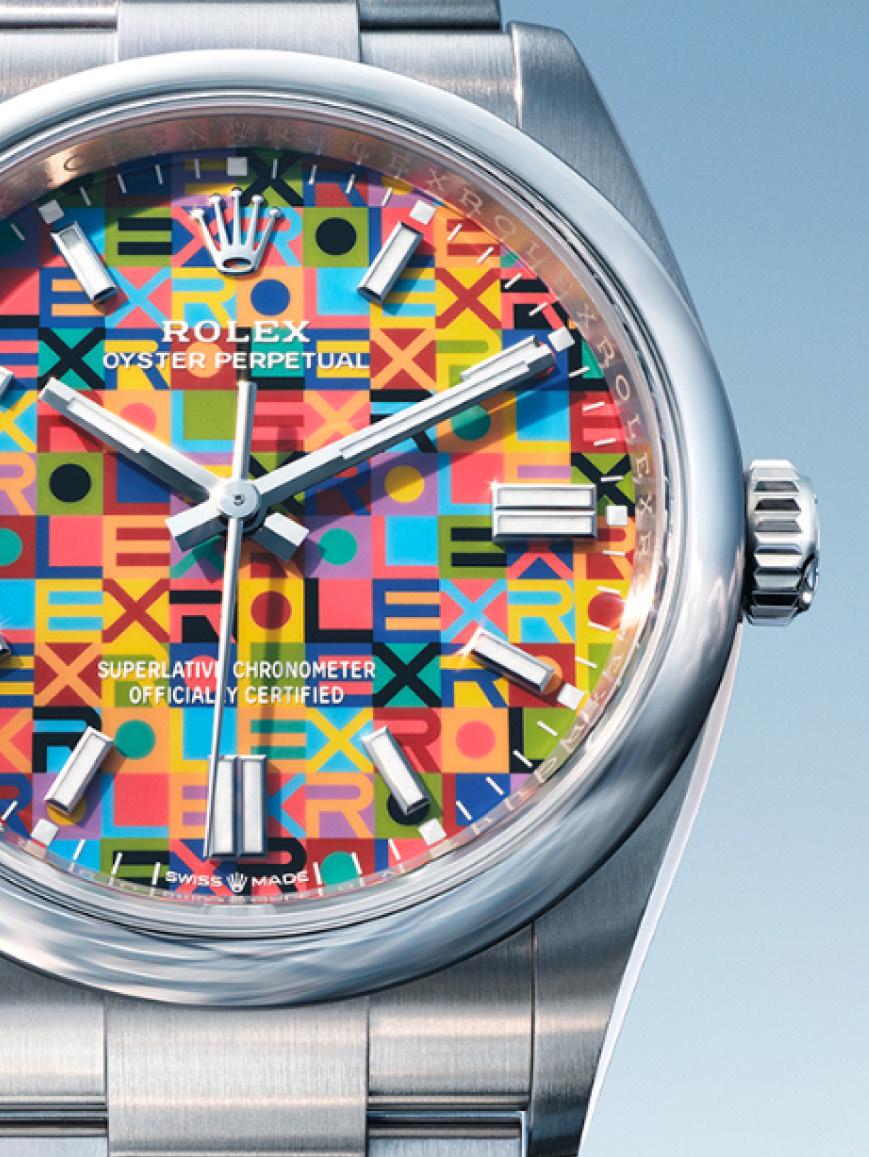
A DIAL FULL OF CHARACTER
SOME WATCHES TELL TIME.
THIS ONE TELLS A STORY.
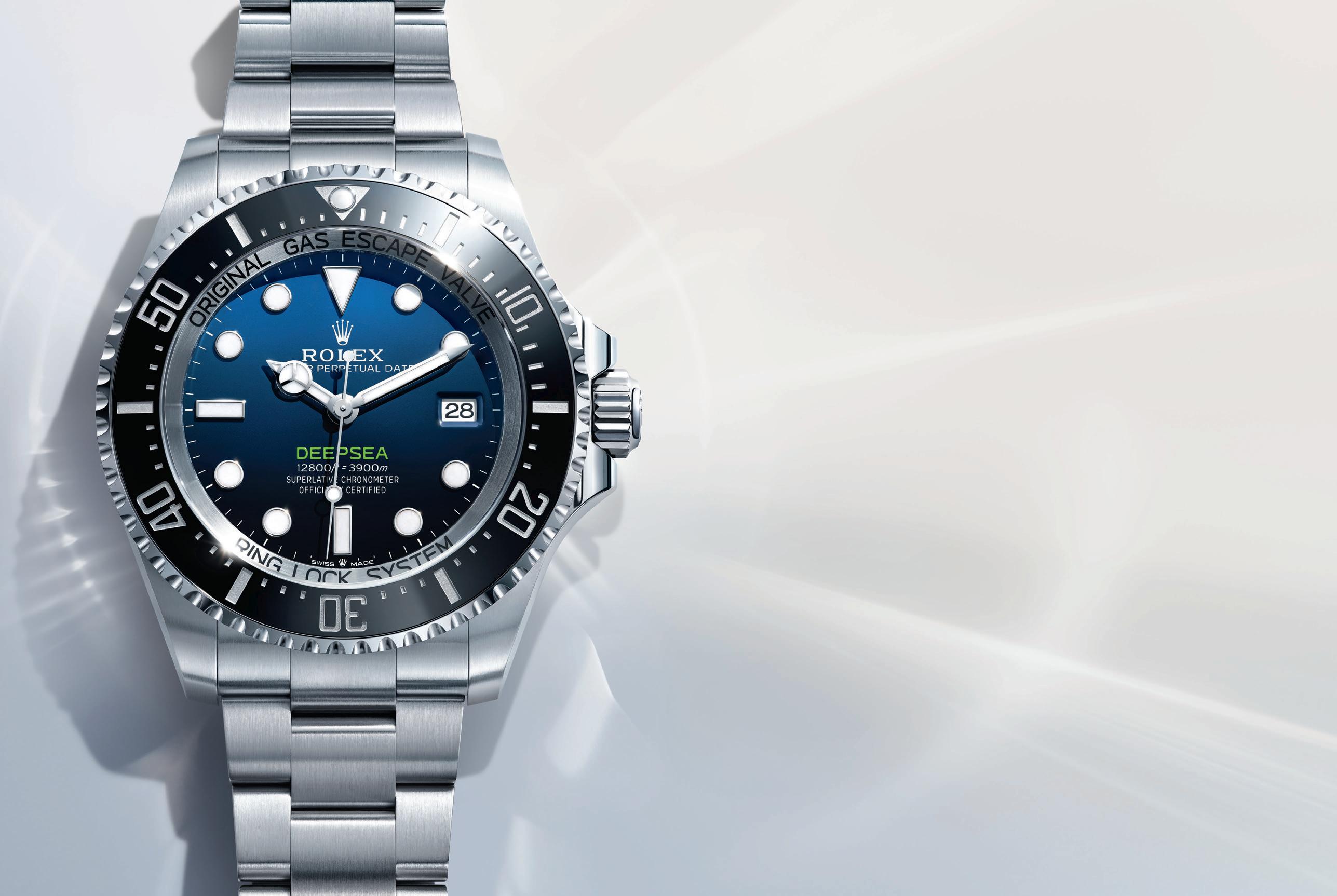
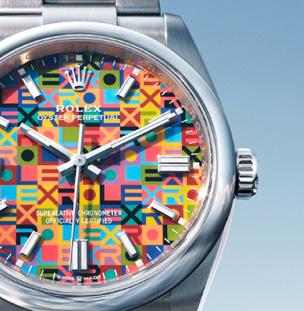
The Oyster Perpetual 36 arrives with one of Rolex’s most visually striking dials to date a multicoloured lacquer face built around the iconic Jubilee motif, first introduced in the late 1970s. Ten colours, applied one at a time with surgical precision, form the letters of the Rolex name in a composition that feels simultaneously celebratory and refined. It is dial-making as a genuine art form.
Beneath that expressive face lies a watch built without compromise. The case is crafted from Oystersteel a proprietary 904L alloy more commonly found in aerospace and chemical engineering and remains waterproof to 100 metres. The sapphire crystal is virtually scratchproof. Every component, from the hermetically sealed caseback to the Twinlock winding crown, is engineered to last. sapphire crystal is virtually scratchproof. Every component, from the hermetically
sealed caseback to the Twinlock winding crown, is engineered to last.
The movement, Calibre 3230, is entirely Rolex-made. It offers a 70-hour power reserve, magnetic field resistance via a nickel-phosphorous Chronergy escapement, and a blue Parachrom hairspring that absorbs shocks with quiet confidence.
Completing the picture is the classic Oyster bracelet — robust, elegant, and fitted with the Easylink extension for on-the-go comfort adjustments.
Every piece carries the Superlative Chronometer certification, now reinforced in 2026 with new criteria covering magnetism resistance, reliability and sustainability — and backed by Rolex’s five-year international guarantee. Timeless, technically formidable, and unmistakably itself.
ULYSSE NARDIN SUPER FREAK
The Most Complicated Time-Only Watch Ever Made
Some watches mark time. The Ulysse Nardin Super Freak redefines it.
Born from 180 years of obsessive precision and 25 years of pushing the Freak collection to its absolute limits, the Super Freak is not simply a new watch — it is a reckoning. Four years in development, 511 components, assembled entirely by a single master watchmaker across 60 hours of meticulous hand-finishing. Limited to just 50 pieces worldwide.
At its heart beats the UN-252 calibre, housing the world’s first automatic double tourbillon that also functions as a carousel. Two titanium flying tourbillons, each inclined at 10 degrees and rotating in opposite directions, sit within a minute bridge weighing just 3.5 grams — 30% lighter than its predecessor. Over 97% of the movement is in perpetual motion.
lighter than its predecessor. Over 97% of the movement is in perpetual motion.
“The [Super] Freak Marks a Historic Milestone: It is the World’s First Automatic Double Trorbillon— An Unprcedented Configuration in Watchmaking”
Powering this mechanical density is Ulysse Nardin›s patented Grinder® winding system, the most efficient in the industry. A newly patented gimbal system — the world’s smallest — enables the Super Freak’s most significant breakthrough: a seconds display, appearing in a Freak for the very first time. Housed in a refined 44mm white gold case, time is set via the bezel. No crown. No concessions.
The Super Freak doesn’t ask for your attention. It commands it.
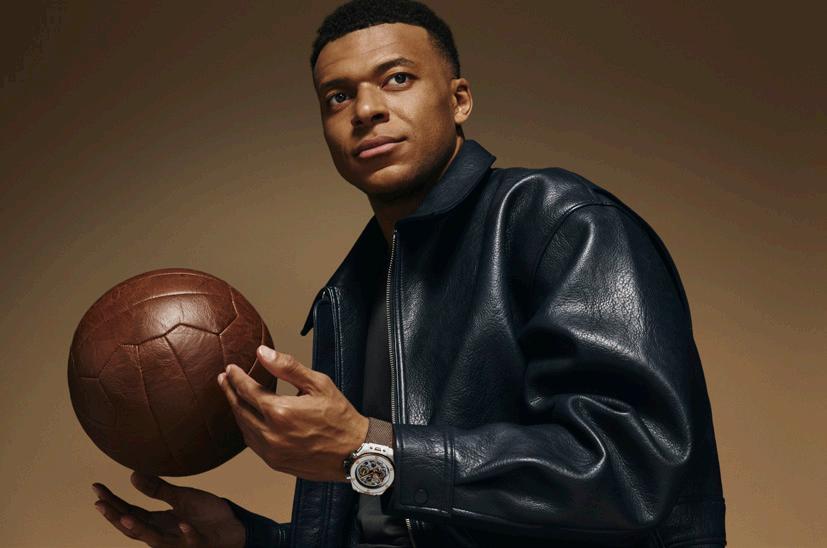
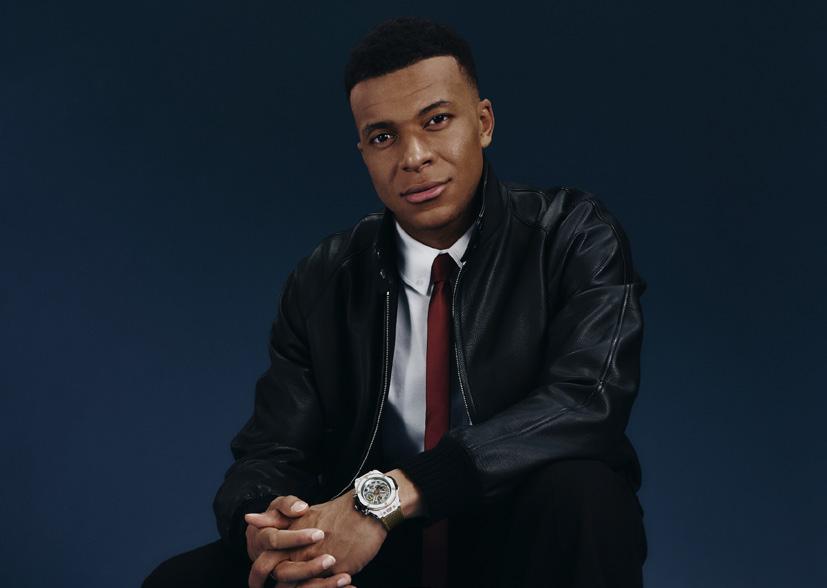
KYLIAN MBAPPE: A STATEMENT OF UNSTOPPABLE AMBITION
Quiet Authority, Worn Daily
here are collaborations, and then there are statements. The Hublot Big Bang Reloaded Kylian Mbappé belongs firmly to the latter.
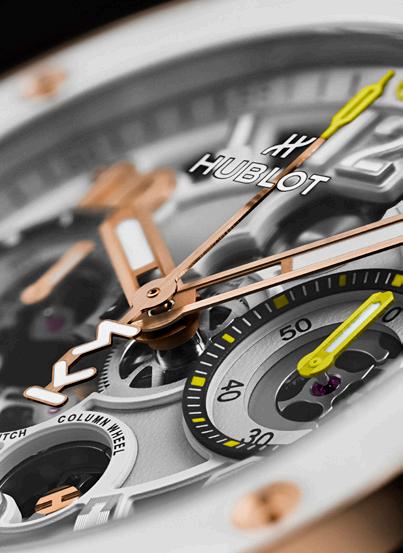
Limited to just 200 pieces, this is the first time the maison has co-created a watch with its long-standing ambassador, Kylian Mbappé—and the result feels deeply personal. Crafted in polished white ceramic and 18K King Gold, the 44mm case reflects a duality that defines Mbappé himself: clarity and ambition.
At 6 o’clock, a simple engraving—Trust Yourself—anchors the piece. It’s not branding; it’s philosophy. A mindset that has carried Mbappé from prodigy to global icon in under a decade.
Inside, Hublot’s Unico chronograph delivers technical authority, while the skeletonized dial reveals a sharp, contemporary edge. The gold-toned “10” subtly honours his identity on the pitch, while interchangeable straps balance sport and sophistication.
More than a timepiece, this is a narrative captured in mechanics—precision meeting purpose. It celebrates a decade of acceleration, from first goal to global dominance, and a partnership built on belief.
In true Hublot fashion, it doesn’t just tell time—it tells you to move.
L.U.C QUATTRO SPIRIT
25 - STRAW MARQUETRY
EDITION
Artistic crafts sublimate a renowned horological complication from the Manufacture: a jumping-hour with an eight-day power reserve
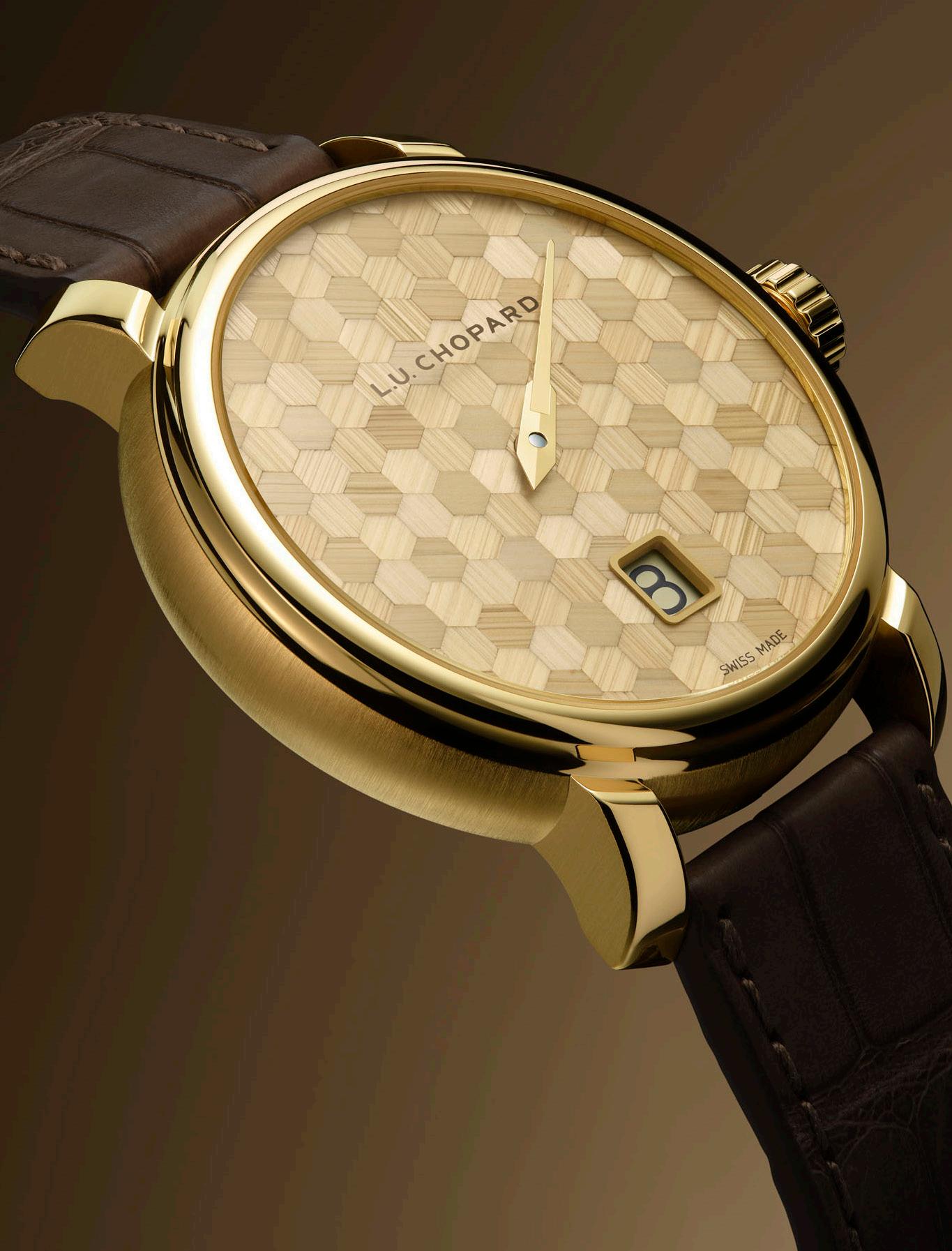
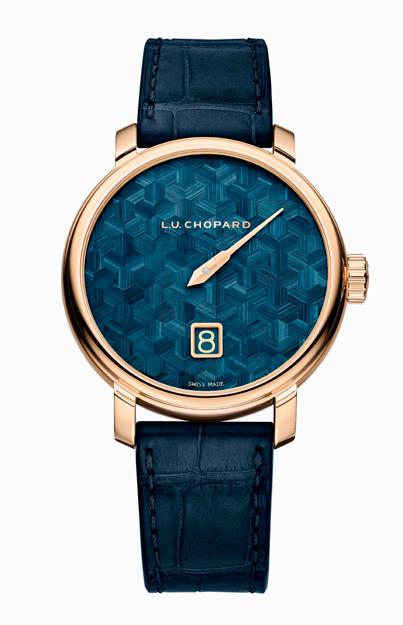
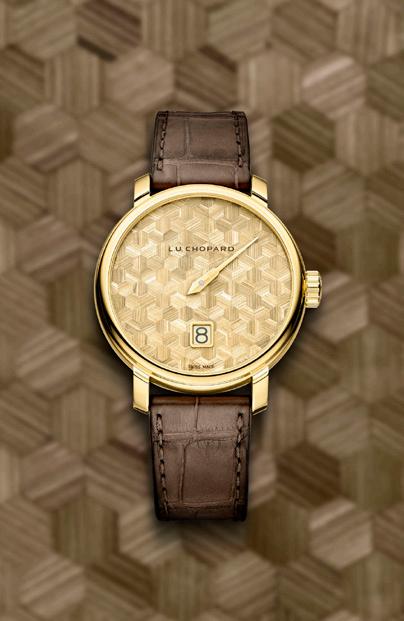
Chopard introduces two new eight piece limited editions of the L.U.C Quattro Spirit 25, showcasing the Maison’s mastery of artistic crafts and technical innovation. These exceptional timepieces unite the Chopard Manufacture’s jumping hour movement with dials adorned in an intricate straw marquetry motif. The first one is presented in 18 carat ethical rose gold with a deep-blue straw dial. The second, in 18 carat ethical yellow gold, welcomes a natural-colour straw dial – one that has known neither tinting nor alteration, which is used in its simplest, most authentic form.
The dial of each watch is a testament to the rare craft of straw marquetry that is perpetuated by Chopard Manufacture – requiring delicate handiwork whereby
organic, fragile and demanding material is manipulated. Rye straw grown in France is carefully selected, each strand is individually split with a fingernail and assembled into a handmade honeycomb motif. The latter honours founder Louis Ulysse Chopard, who early on adopted the bee for its symbolic virtues – a creature celebrated for industriousness and humility, whose harmonious activity evokes that of a Manufacture working together like a hive. A jumping hour aperture positioned at 6 o’clock ensures uninterrupted legibility while preserving the purity of the dial.
Driven by the calibre L.U.C 98.06 L, these editions embark the much admired jumping hour complication with characteristic Chopard ingenuity.
WATCHES & WONDERS
2026 THE ART OF SHAPE
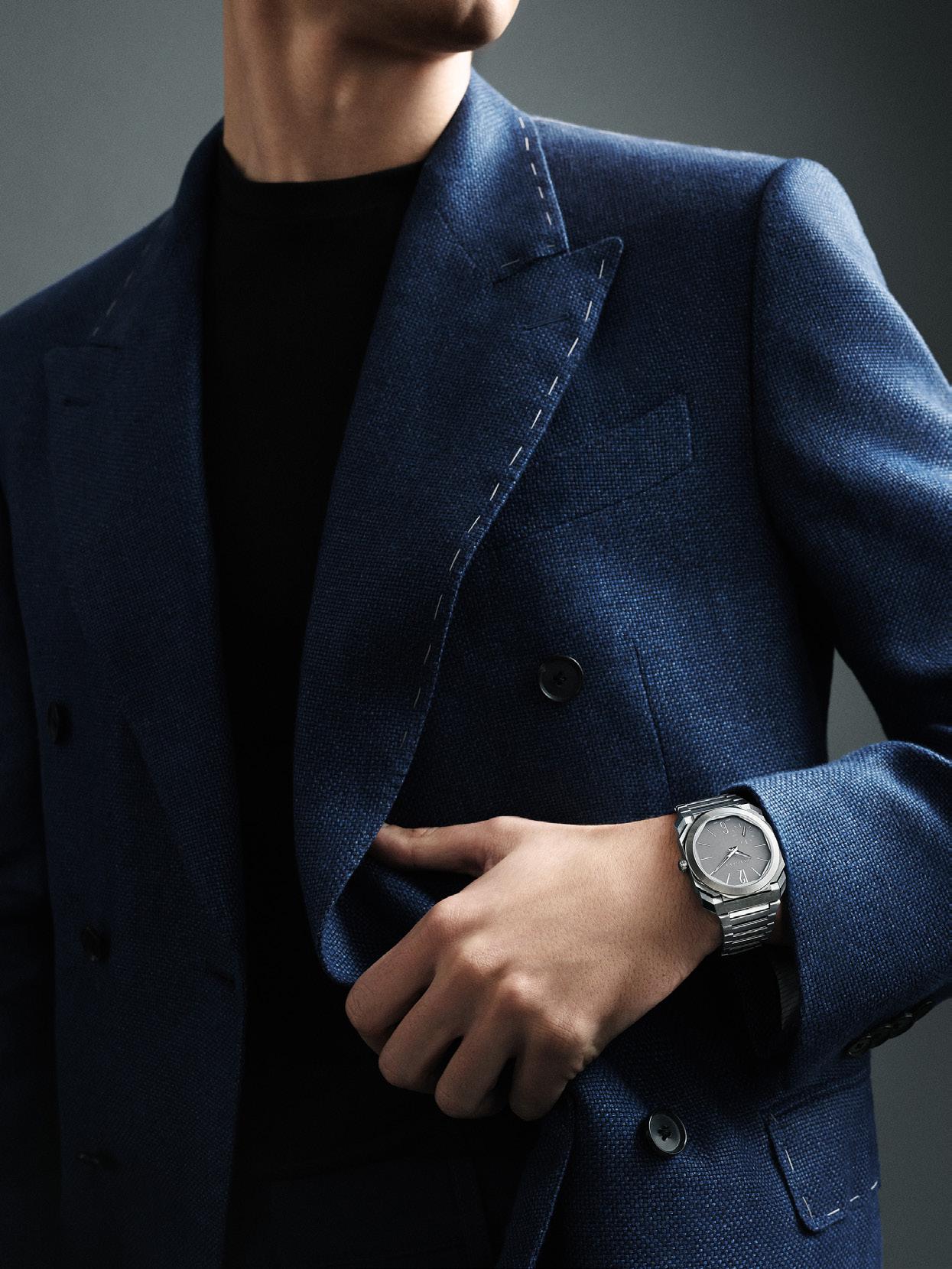
Bvlgari marks its second participation to Watches and Wonders in Geneva
All 799 units are allocated. If you’re reading this hoping to place an order, you’re too late. That, in itself, tells the story. The F80 is Ferrari’s new halo car, and it arrives with the kind of scarcity that turns ownership into a statement of standing within Maranello’s inner circle. Beneath the sculpted bodywork sits a hybrid twin-turbo V6 platform with three electric motors, producing 1,184 horsepower. Active aerodynamics and a reimagined chassis push the F80 into a new tier of road-car capability, with technology pulled from Ferrari’s highest-performance playbook.
What makes the F80 significant beyond its spec sheet is what it represents in Ferrari’s timeline. This is the car that bridges electrification with the visceral drama the brand is built on. It doesn’t apologise for going hybrid. It makes the case that hybrid was always the destination. For the collectors who secured an allocation, the F80 is less a purchase and more a position in automotive history. Ferrari had indicated production runs from 2025 through 2027, so the anticipation of arrivals has been part of the experience.
MCLAREN W1 Engineering Over Everything M
cLaren has never been interested in competing on volume or visual spectacle. The W1 is the clearest expression of that discipline yet. As the successor to the F1 and P1, the W1 carries serious lineage. It pairs a twin-turbocharged V8 with hybrid technology for a combined output of 1,275 horsepower, all housed within an ultra-lightweight carbon architecture that prioritises aerodynamic efficiency over theatrical design. Production commenced in 2025, with build numbers capped at 399.
For collectors who care more about what a car does than how it photographs, the W1 is the pick of this generation. Limited production ensures rarity, but the real exclusivity here is philosophical. In a segment increasingly drawn to drama, McLaren is making a case for substance. The W1 doesn’t shout. It proves.
ASTON MARTIN VALHALLA
From Concept to Tarmac
The Valhalla has been a long time coming. First shown as a concept, it now advances into its delivery phase as a genuine mid-engine hybrid supercar with Formula 1 influence threaded through its development. Aston Martin has stated deliveries are set to commence in H2 2025, with production limited to 999 units.
A bespoke twin-turbo V8 paired with electric motors delivers 1,064 horsepower through a lightweight carbon structure. The F1 connection is more than marketing. Lessons from Aston Martin’s Valkyrie
programme and motorsport methodology are visible in the way the Valhalla has been engineered, from its aerodynamic philosophy to the calibration of its hybrid powertrain. The design is assertive without being aggressive. It reads as composed, a car for collectors who prefer authority to flamboyance. The Valhalla changes the conversation for Aston Martin at the engineering extremes of this segment, and for those who have followed its journey from render to reality, delivery will feel like vindication.
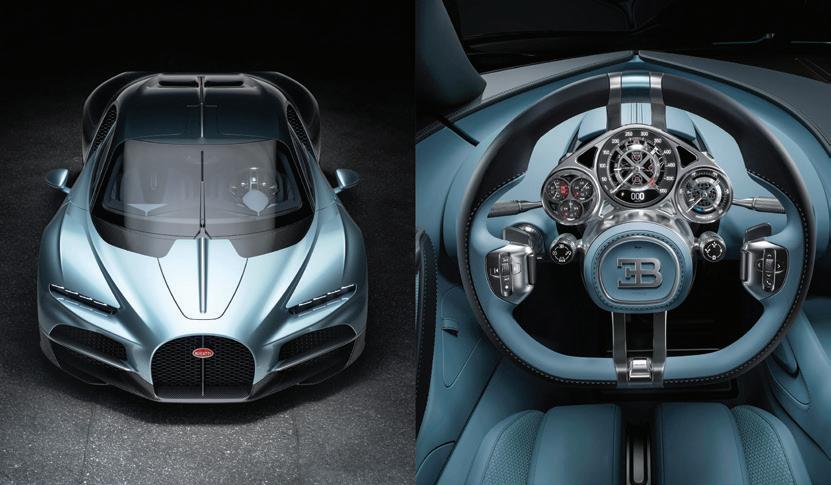
BUGATTI TOURBILLON
Built to Outlive Its Owner
The Tourbillon is Bugatti’s answer to a question most automakers aren’t asking: what if a hypercar were designed to endure for generations? Limited to 250 units and with production and deliveries set to begin in 2026, the Tourbillon introduces an all-new naturally aspirated V16 paired with three electric motors for a combined output of 1,800 horsepower.
Those numbers are staggering, but the philosophy behind the car is what sets it
apart. The instrument cluster is constructed by Swiss horologists and engineered with watchmaking tolerances, a deliberate move away from disposable screens and short-life interfaces. The Tourbillon reads as a founding statement of Bugatti’s new era under Bugatti Rimac, more declaration than continuation. It borrows the logic of haute horlogerie: build once, build without compromise, and build something that appreciates in meaning over time.
LAMBORGHINI REVUELTO
A Landmark for the V12
Lamborghini could have retired the naturally aspirated V12. Instead, they electrified it. The Revuelto pairs a 6.5-litre V12 with three electric motors to deliver a combined 1,001 horsepower, making it Lamborghini’s first plug-in hybrid super sports car. The result is a car that sounds like a Lamborghini should while performing like something entirely new.
Production remains active and the model continues as Lamborghini’s halo hybrid through the current cycle, keeping it relevant into 2026. For enthusiasts, the Revuelto sits at an inflection point. It preserves everything that made Lamborghini’s V12 lineage iconic while introducing the engineering architecture that will carry the brand forward. If you’ve ever considered owning a V12 Lamborghini, this is the moment to pay attention.
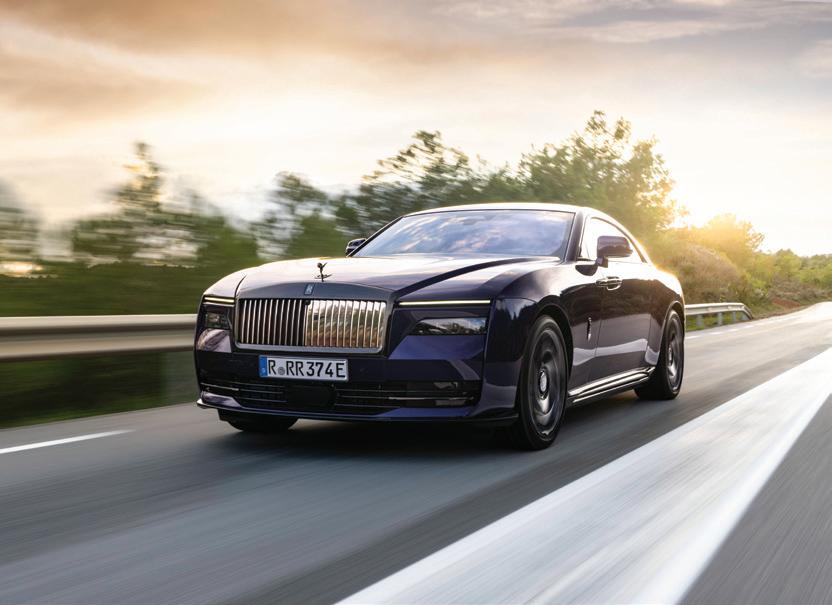
ROLLS-ROYCE BLACK BADGE SPECTRE
Silent Authority
The original Spectre proved that RollsRoyce could go electric without losing its identity. The Black Badge edition proves it can go electric and gain an edge. With 650 horsepower and 1,075 Nm of torque, the Black Badge Spectre is the most powerful Rolls-Royce ever produced. The performance gains are accompanied by a darker aesthetic and recalibrated driving dynamics, with modes designed to sharpen throttle response and deliver more immediate force on demand.
This is what the future of ultra-luxury looks like: silent, powerful and entirely uninterested in justifying itself. The Black Badge Spectre doesn’t make a case for electric motoring. It simply assumes the argument is over. For collectors already thinking beyond the internal combustion era, this is the car that meets them there.
THE REFINED CARIBBEAN Inside Saint Lucia’s Luxury Landscape
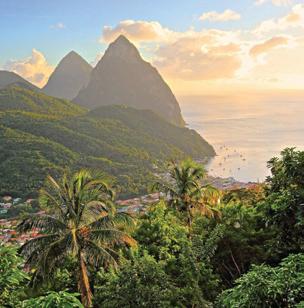
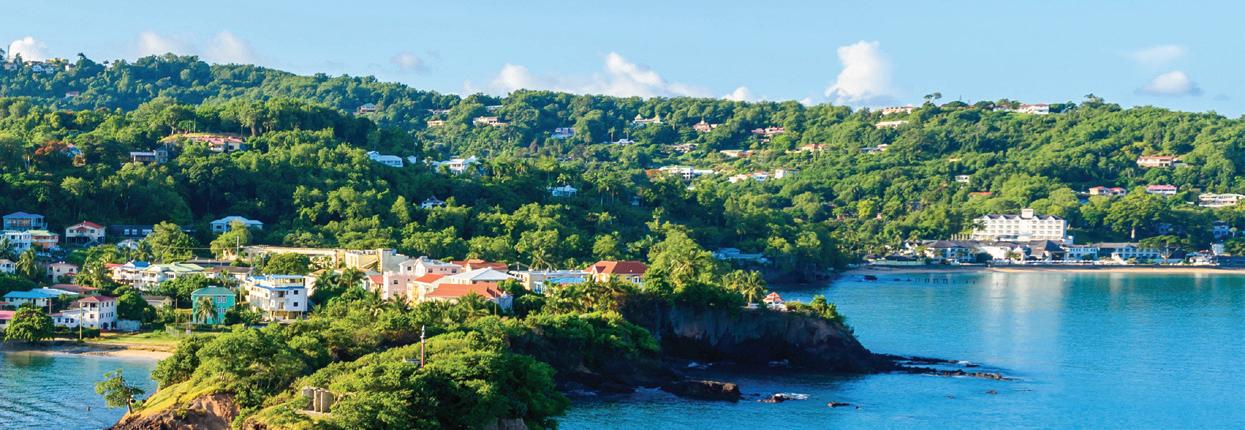
Saint Lucia’s luxury identity is shaped as much by geography as by design. The island’s most iconic features, the Gros Piton and Petit Piton, rise dramatically from the southwest coastline, forming part of a UNESCO World Heritage Site and creating one of the most distinctive natural backdrops in the Caribbean. Their volcanic origins, dense rainforest surroundings, and sheer vertical presence define the island’s visual language. Development here has not attempted to overpower nature. It has learned to frame it.
For globally mobile families, this distinction matters. In a region where several destinations have leaned into scale, casino districts, and dense marina corridors, Saint Lucia has evolved along a more restrained trajectory. The island’s luxury landscape is not defined by height or volume. It is defined by integration.
High-end hospitality has matured toward architectural discretion rather than spectacle. Jade Mountain Resort is internationally recognised for its open-walled sanctuaries and private infinity pools that visually dissolve into the Piton skyline. The absence of a fourth wall is intentional. It reinforces a philosophy of immersion rather than enclosure.
Nearby, Sugar Beach, A Viceroy Resort, occupies a former eighteenth-century sugar plantation set between the Pitons. The property combines beachfront villas and estate residences with full resort services, while preserving the historical footprint of the land. Restoration rather than reinvention has guided its positioning.
In the north of the island, Cap Maison overlooks the Caribbean Sea near Rodney Bay. Private pool villas, marina proximity, and low-density residential clusters have defined the Cap Estate and Rodney Bay corridor as the epicentre of high-end ownership. This region benefits from adjacency to Rodney Bay Marina, one of the Eastern Caribbean’s established yachting hubs and a regular host of international sailing events.
Saint Lucia’s infrastructure has evolved in parallel with its hospitality offering. Hewanorra International Airport in the south has undergone phased redevelopment to modernise facilities and expand terminal capacity, supporting the island’s growing premium travel segment. The airport accommodates large commercial aircraft and private jets, with direct connections to major gateways in North America and Europe. For ultra-high-net-worth families operating across multiple jurisdictions, this level of accessibility is foundational.
Yet accessibility has not been translated into overexposure. Unlike larger Caribbean markets that have embraced high-density branded residences and expansive resort corridors, Saint Lucia has retained a comparatively limited inventory approach. Planning approvals have historically favoured boutique properties, private estates, and smaller-scale residential enclaves. The result is an ecosystem where exclusivity is structural rather than manufactured.
This restraint has implications beyond aesthetics. In global mobility planning,
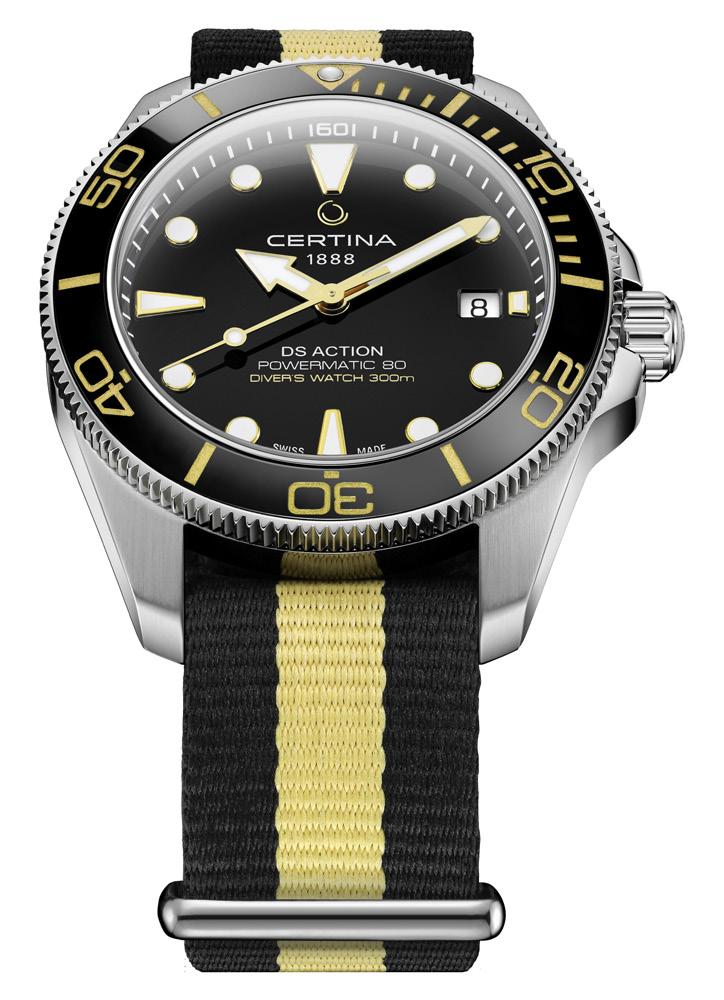
DS ACTION DIVER
clients increasingly assess not only passport strength or tax efficiency, but lifestyle durability. They seek environments that can function as seasonal bases, generational retreats, or contingency of residences without compromising privacy. Visibility, in this context, can become a liability.
Saint Lucia offers five-star hospitality without the overt publicity associated with some neighbouring jurisdictions. There are no sprawling entertainment districts or skyline-defining towers. Instead, luxury is expressed through topography, private acreage, and controlled development. Ocean views are uninterrupted. Beaches are not overshadowed by highrise structures. Estate living remains embedded within natural contours.
The island’s yachting infrastructure, marina access, and private aviation capability provide practical mobility advantages. At the same time, the cultural rhythm remains measured. Annual events such as the Saint Lucia Jazz and Arts Festival and international sailing regattas contribute to global engagement without transforming the island into a transient spectacle economy.
For sophisticated families building mobility portfolios, this balance between discretion and connectivity is increasingly compelling. A residence in Saint Lucia can serve multiple roles: a lifestyle asset, a regional gateway, and a long-term hedge within a diversified global footprint. It offers proximity to North America while remaining culturally and geographically distinct.
Luxury here is less about spectacle and more about space. Space between residences. Space between obligations. Space to recalibrate.
In a world where many premium destinations compete for attention, Saint Lucia has refined a different proposition. It does not attempt to be the largest or the loudest in the Caribbean. Its value lies in controlled growth, architectural sensitivity, and a natural landscape that remains the principal luxury asset.
For global citizens evaluating where to anchor part of their future, that distinction is not cosmetic. It is strategic.
FROM SOIL TO TABLE
From plantation heritage to culinary authority, Saint Lucia is forging one of the Caribbean’s most compelling food narratives
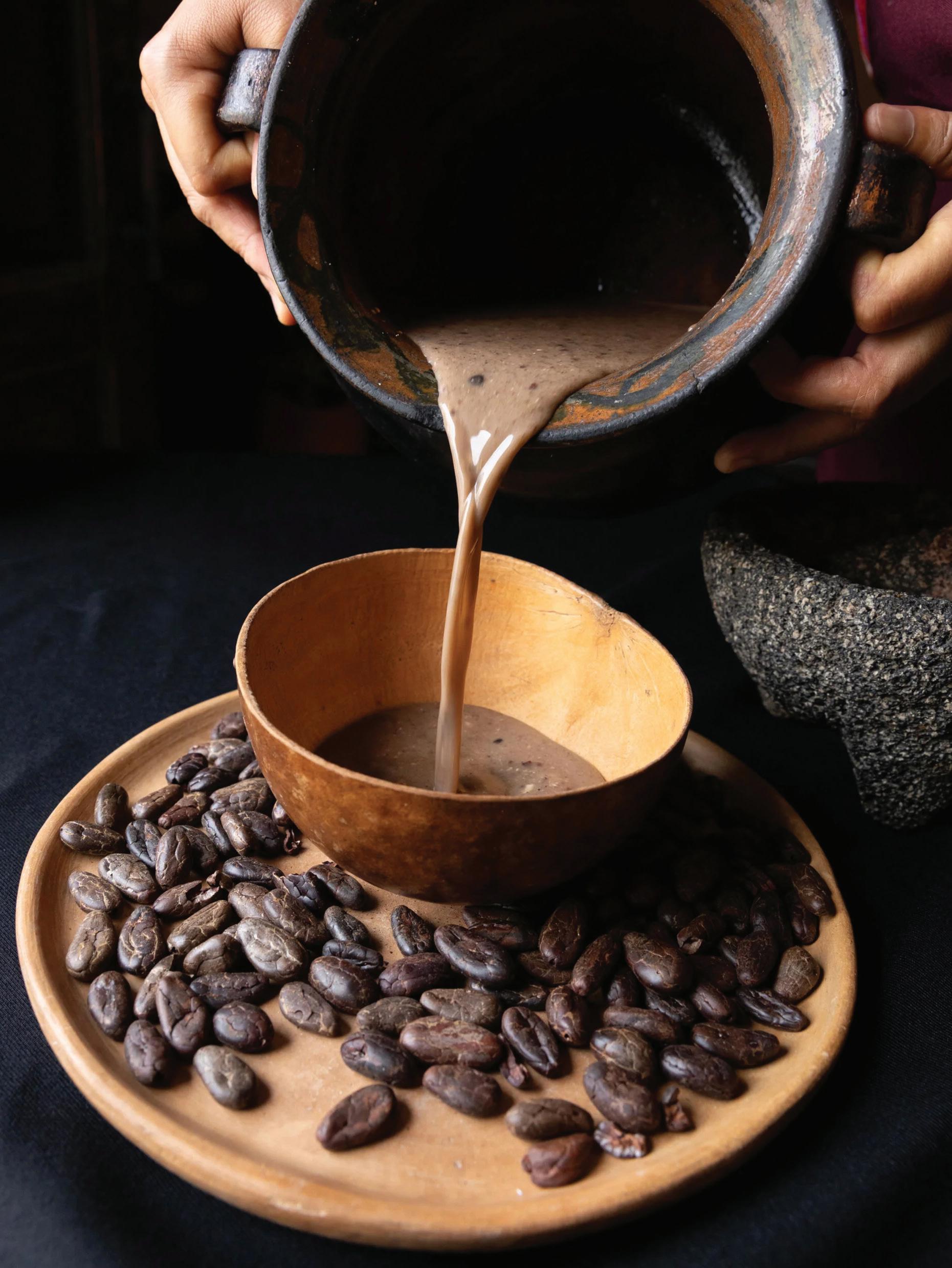
The cacao pod doesn’t look like much when it’s still on the tree. Heavy, ridged, the colour of a bruised sunset. Crack one open on a hillside estate above Soufriere, though, and something changes. The seeds inside are slick, pale, tart, nothing like chocolate. That distance between the raw fruit and the finished bar is, in many ways, the story of Saint Lucia’s food culture: rich at the source, underestimated in translation, and finally starting to be understood on its own terms.
For decades, Saint Lucian cuisine lived in the margins of Caribbean food discourse. Overshadowed by Jamaica’s boldness, Trinidad’s complexity, and Barbados’ polish, the island’s Creole kitchen was treated as rustic comfort food (green fig and saltfish, breadfruit and bouillon) rather than as a culinary tradition with depth and range. That perception is changing. The catalyst is not a single restaurant or a celebrity chef. It is an ingredient: cacao.
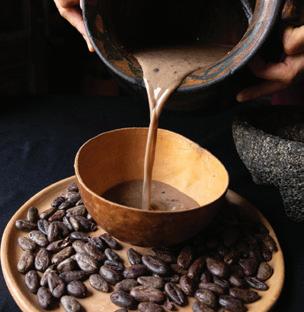
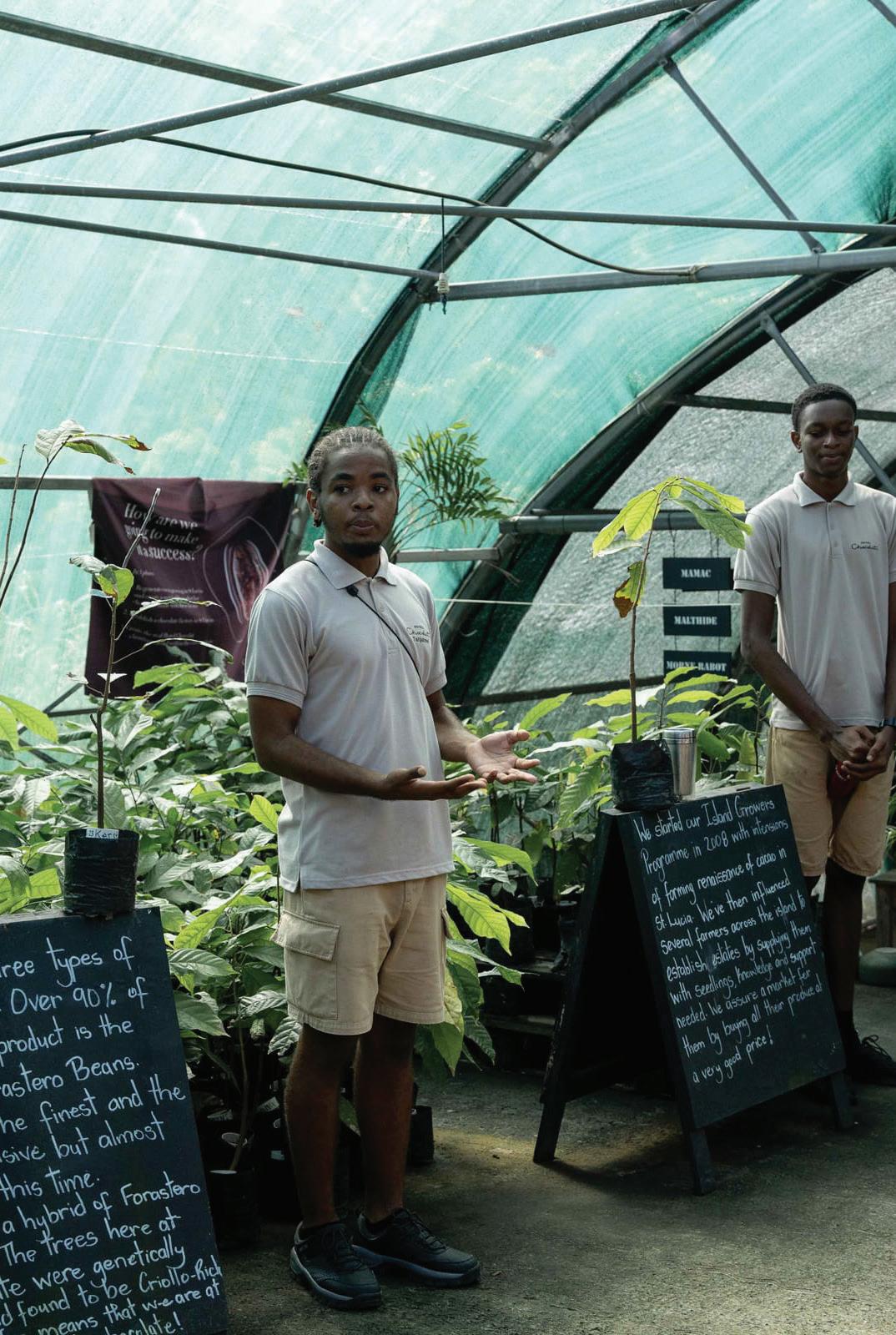
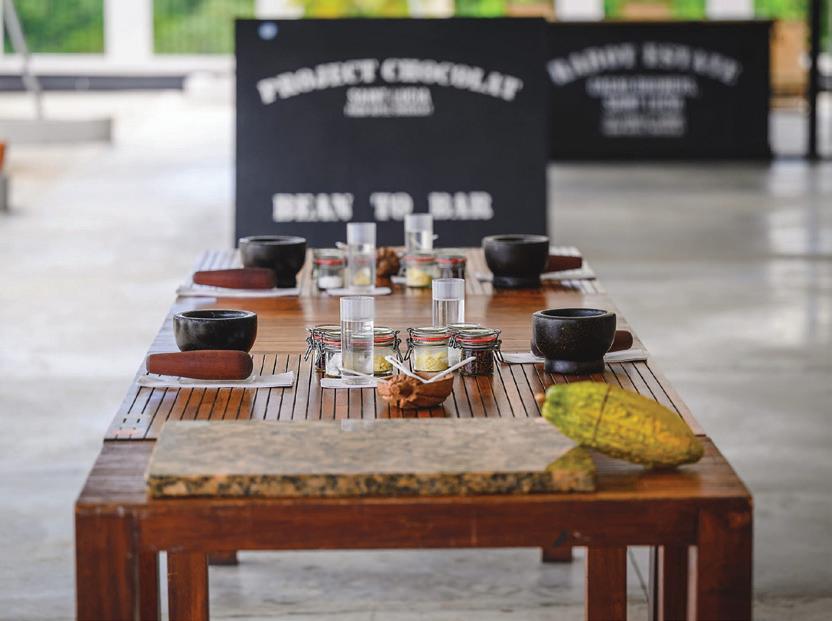
The Rabot Estate, owned by Hotel Chocolat, has become one of the more visible expressions of this evolution. Situated on a working plantation in the shadow of Petit Piton, Rabot Restaurant has built an entire culinary philosophy around the cacao tree: not just the bean, but the fruit, the husk, the butter. The kitchen applies cacao across savoury dishes with the same instinct European chefs bring to wine or stock, with preparations that have included cacao-crusted fish, cocoa nib vinaigrettes, and cacao butter folded into root vegetable purées. At the adjacent Cacao Bar, drinking chocolate is treated with the seriousness of a single-origin espresso.
Rabot is not alone. Smaller estates like Morne Coubaril and Fond Doux have begun developing visitor-facing culinary offerings and on-site tastings, each shaped by the particular microclimate and cultivar of their land. What connects them is not a brand or a trend. It is a shared conviction that Saint Lucian cacao, rooted in the Trinitario varietal with a long cultivation history on the island, deserves to be treated as terroir, not commodity.
What makes this compelling is not novelty. It is coherence. These kitchens are not grafting chocolate onto Caribbean food for effect. They are building from the volcanic soil, the microclimate, the specific heritage of this hillside. The result is a cuisine that feels of the land in a way that resort dining rarely achieves.
Beyond the cacao estates, a broader revolution is unfolding in the kitchens of smaller operations and chef-driven ventures across the island. Farm-to-table is not a marketing term here. It is a logistical reality. The mountainous interior produces dasheen, christophene, golden apples, turmeric, and a startling variety of peppers. Fishermen along the west coast regularly bring in catches of red snapper, tuna, and lionfish, the latter now embraced as both an ecological solution and a culinary prize, its delicate white flesh appearing on tasting menus as ceviche and crudo.
Several properties now offer private estate dining experiences that take guests beyond the resort altogether. These are not staged farm tours. They are serious meals: multi-course, wine-paired, served under
canopies of breadfruit trees or on the verandas of restored plantation houses. The chefs behind them are often Saint Lucian-born, trained abroad, and returned with the ambition to cook the island’s ingredients at a level the wider culinary conversation recognises.
This is not without tension. The economics of Caribbean agriculture remain fragile. Rising import costs, climate unpredictability, and the gravitational pull of resort supply chains all threaten the independence of small producers. The gap between culinary ambition and agricultural reality is real, and the chefs and farmers driving this movement navigate it daily. The demand for locally sourced ingredients is growing faster than the systems needed to sustain them at scale.
That friction is also what gives the movement its credibility. This is not a curated experience designed to flatter visitors. It is a food culture working through its own contradictions, in real time, with real stakes.
There is a scene that stays with you. A cacao farmer on the Fond Doux estate, splitting pods with a cutlass in the late afternoon light, explaining that the same trees his grandmother tended now supply ingredients to some of the island’s most celebrated kitchens. He doesn’t say this with irony. He says it with pride. In that moment, you understand what Saint Lucia’s food story is really about: not reinvention, but recognition. The island has always known how to feed people well. The world is just now learning to listen.
WHERE THE ROAD ENDS
Inside the Caribbean’s most coveted address, where the best guests are the ones who arrive unannounced
There is a particular kind of traveller who has already seen the Pitons. They’ve done the catamaran at sunset, the volcanic mud bath, the Sugar Beach lounger with the rum punch arriving unprompted. They’ve posted none of it. They’re coming back, not for the view, but for what the view conceals.
Saint Lucia has always traded on its beauty. In the last decade, however, a deeper transformation has taken hold. The island has become one of the Caribbean’s most discreet addresses for travellers who no longer measure destinations by amenities, who return without itineraries and leave without telling anyone where they’ve been.
Privacy, in this context, is no longer a preference. It is infrastructure. Saint Lucia has built it with unusual sophistication.
Start with Jade Mountain, Nick Troubetzkoy’s architectural provocation on the hillside above Anse Chastanet. The resort’s open-wall sanctuaries, each missing
its fourth wall to frame the Pitons in a kind of permanent, private cinema, are now so iconic they risk becoming their own cliché. Yet the experience resists reduction. There are no televisions or telephones in-room. Many of the sanctuaries are designed without conventional doors, using the open-air structure itself as both boundary and invitation. The design philosophy is radical: the landscape is the room. For guests who seek this out, it is not eccentricity. It is architecture that enforces disconnection, which is, today, the entire point. The operational culture reinforces it. The property is designed so that guest paths rarely overlap, and the service ethos prioritises presence without intrusion.
Further south, Sugar Beach has evolved from its Viceroy-era polish into something more layered. Set within a former sugar plantation between the Pitons, the resort now operates with the feel of a private estate, with plunge pools, residential-style villas, and a concierge culture that anticipates rather than asks. The lay-
out and arrival experience are designed to feel unhurried, with much of the logistics kept deliberately out of sight. The resort doesn’t need to announce what it offers. Its geography does the work.
Then there is Ladera, perched 1,000 feet above sea level on a volcanic ridge, where the entire property is open to the elements. No glass. No air conditioning. Only trade winds and a vertigo-inducing drop into rainforest. Ladera has always attracted guests with a certain confidence, those who don’t need a lobby to feel arrived. Its hillside suites, each with a private plunge pool cantilevered over the valley, have become understated landmarks of Caribbean design. Returning guests tend to describe a particular atmosphere: unhurried, unperformative, and uninterested in explanation.
The real story, though, isn’t unfolding at the resorts. It’s unfolding above them, in the private hillside villas and gated estates that have begun to dot Saint Lucia’s western ridge. A growing number of long-term owners are building on land between Marigot Bay and Soufriere, creating homes that function less like holiday properties and more like self-contained retreats. Some are accessible only by private road. A few are managed by dedicated
teams that handle everything from provisioning to charter logistics with minimal visibility.
These are not compounds designed for security. They are homes designed for distance. Saint Lucia’s volcanic terrain, once a liability for large-scale development, has become its greatest asset. The ridgelines don’t lend themselves to the kind of density that resort development demands. What they do offer is elevation, seclusion, and the kind of natural separation that no gate or wall can replicate.
Compare this to Mustique, long treated as the reference point for island privacy, yet now, paradoxically, too well-known for its own discretion. Or Paros, where the influx of design-world attention has turned seclusion into spectacle. Saint Lucia occupies a rarer position: it is known but not exposed. It has the infrastructure of a serious destination without the constant visibility that often accompanies one.
For the traveller who has been everywhere and wants to be seen nowhere, Saint Lucia is no longer just an option. It is an answer. Somewhere on a ridge above Soufriere, a veranda faces west into the last of the afternoon light, with no camera pointed at it and no reservation required.
MOBILITY IN AN ERA OF REGIONAL UNCERTAINTY
What the Middle East Situation Means for Global Families
Periods of geopolitical tension often remind investors and globally mobile families of a simple reality: stability cannot be assumed indefinitely. The current situation across parts of the Middle East has once again placed international mobility into focus for many high-net-worth individuals evaluating how best to structure their long-term security.
While political developments continue to evolve, one clear takeaway is that mobility planning has become an essential component of modern wealth preservation. For families with international interests, the ability to relocate, travel freely, and access multiple jurisdictions is increasingly viewed not as a luxury, but as a strategic safeguard.
A Region Central to Global Movement
The Middle East occupies a uniquely important position in global connectivity. Major aviation hubs such as Dubai, Doha, and Abu Dhabi link Asia, Europe, and Africa, facilitating some of the busiest international travel corridors in the world. The region is also home to large expatriate populations, global financial centers, and significant cross-border investment flows.
As a result, developments in the region are closely monitored by governments, businesses, and investors worldwide. When tensions rise, even if localized, travel patterns, visa policies, and regional logistics can adjust quickly.
International airlines sometimes revise flight routes or schedules in response to evolving airspace considerations. Governments may issue updated travel advisories or temporarily adjust entry requirements depending on the circumstances. These are standard precautionary measures used globally during periods of heightened regional uncertainty.
For globally mobile families, these adjustments reinforce the importance of maintaining flexible travel and residency options.
THE FRAGRANCE EDIT
Four unisex scents worth knowing, and worth wearing. What they share: warmth, complexity, and the kind of depth that settles into skin like it was always yours.
very fragrance on this list leans into gourmand and warm-spicy territory, but none of them are one-note sweet. They layer richness with something unexpected, whether that’s a shot of cognac, a bitter almond edge, or a musk that barely announces itself. They’re designed to wear close, linger long, and work on anyone.
Tom Ford Lost Cherry
Eau de Parfum
Black Cherry · Tonka Bean · Almond
This one opens like a dare. Black cherry liqueur meets bitter almond in a combination that reads indulgent without tipping into saccharine. Turkish rose and jasmine sambac pull it back toward something more grounded, more grown-up. The deep cherry-red bottle with its pale pink label tells you exactly what you’re getting into: sweetness with an edge.
KILIAN Paris Angels’ Share
Paradis Extrait de Parfum
Raspberry Liquor · Cognac · Oakmoss
Absolute
If you know Angels’ Share, this is the version that stays later and talks louder. The extrait concentration deepens everything: raspberry liquor and Bulgarian rose oil up front, praline and Venezuelan tonka bean underneath, all sitting on a base of amber and oakmoss. Kilian Hennessy’s family legacy in cognac runs through every note here. The wooden cap is a nod to the oak barrels that inspired it. Not subtle, not trying to be.
Dolce&Gabbana
Velvet Infusio
Italian Bergamot · Black Tea · Cedarwood
The outlier in this lineup, and here for good reason. Where the others go warm and gourmand, Velvet Infusion opens bright with bergamot and mandarin before settling into earthy black tea and cedarwood. It’s the one you reach for on a cooler evening or when you want something clean but never clinical. Created exclusively for D&G by Alex Lee, it comes in the Velvet Collection’s signature weighted glass flacon with a velvet-trimmed stopper.
CLEAN RESERVE
Skin Eau de Parfum
Fresh Musk · Copaiba Oil · Salted Praline
The understated one. Skin does exactly what the name promises, sitting close with a blend of Madagascar vanilla and fresh musk that reads less like a fragrance and more like a second layer of warmth. It works beautifully on its own or layered underneath something bolder. The sustainable angle is worth noting too: Spanish wood cap, biodegradable packaging, cruelty-free and vegan, with sourcing that supports reforestation and community programs in Madagascar. Substance all the way through.
THE GROOMING EDIT
Five skincare essentials that do the work without overcomplicating the routine.
Asolid skincare routine doesn’t need to be a 12-step production. The best products for men are the ones that earn their place on the shelf by doing more than one thing well. These five deliver on texture, tone, and hydration, and none of them requires a tutorial.
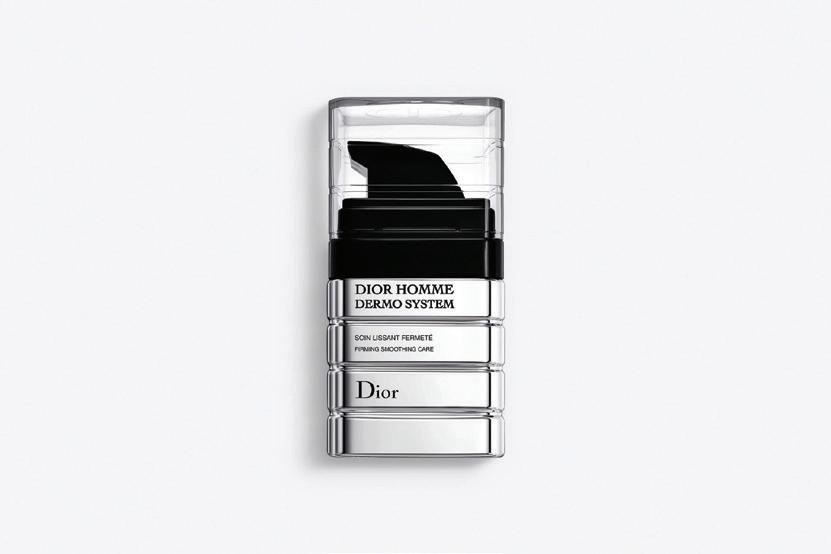
Dior Homme Dermo System Firming Smoothing Care
A moisturiser that pulls double duty. Centella asiatica calms redness and sensitivity while the firming formula works on fine lines over time. It absorbs clean, feels lightweight, and sets a good foundation under SPF. One product, multiple results.
PCA Skin Hyaluronic Acid Boosting Serum
Hyaluronic acid gets a lot of airtime for good reason, but this serum goes further with added ceramides and niacinamide to strengthen the skin barrier. Best applied to damp skin. Celebrity aesthetician Sean Garrette keeps it in steady rotation, calling it one of the most nourishing serums in his lineup.
Orveda Deep-Clearing Mud Mask Treatment
Five minutes, once a week. That’s it. This clarifying mask is built for combination and oily skin, targeting breakouts and enlarged pores without stripping moisture. It’s the kind of low-effort, high-return step that turns a basic routine into a better one.
Sunday Riley Auto Correct Brightening and Depuffing Eye Contour Cream
The under-eye area is where late nights, dehydration, and screen fatigue show up first. This lightweight cream depuffs and brightens with minimal effort. A small amount goes a long way, morning and night.
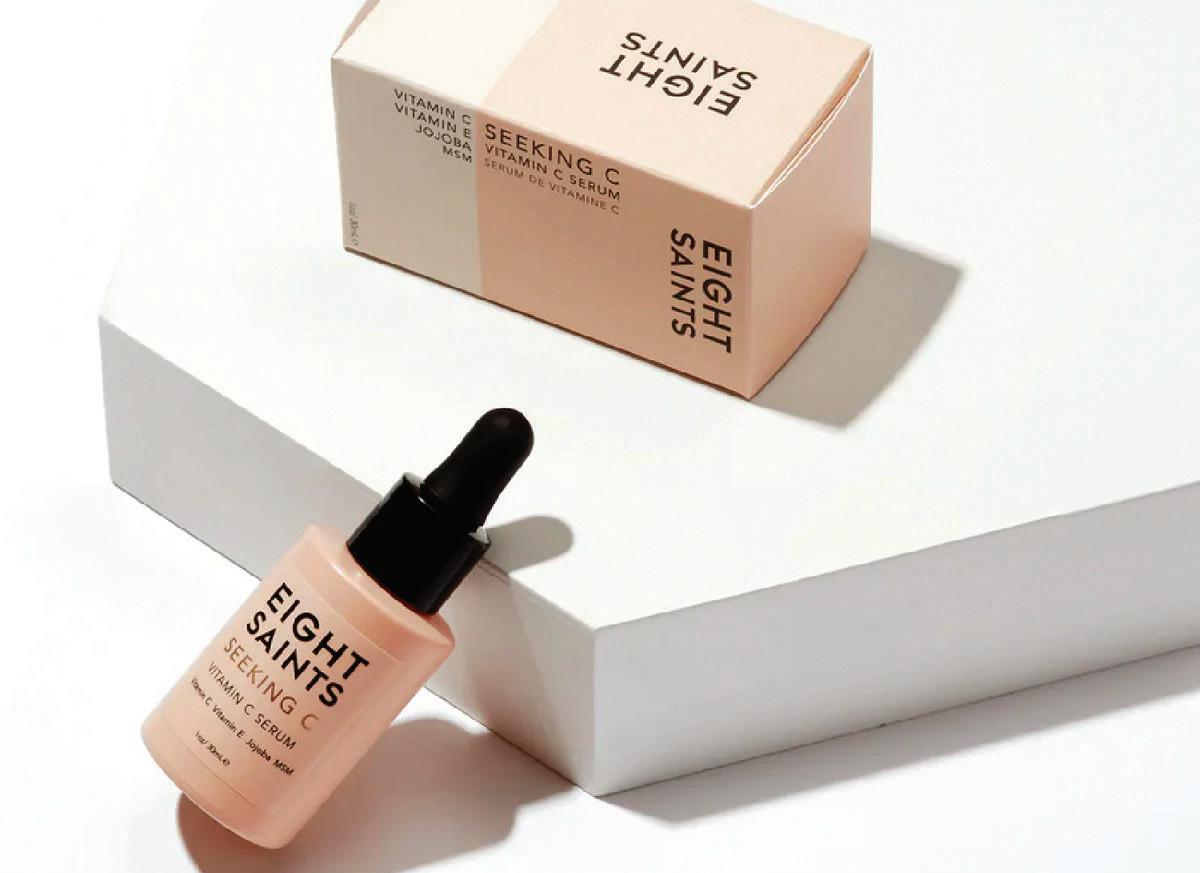
Eight Saints Seeking C Vitamin C Face Serum
Discolouration from shaving, breakouts, and skipped exfoliation is common. This stable vitamin C serum absorbs fast, leaves no residue, and keeps working on dark spots and acne scars for up to eight hours. One note: always follow with sunscreen to protect the results.
THE VACATION EDIT
Six essentials that travel as well as you do, from carry-on to coastline.
Prada Logo-Embossed Bag
The kind of bag that moves seamlessly from transfer lounge to hotel lobby. In camel brown cotton with rolled top handles and a detachable woven shoulder strap, it’s relaxed without trying and roomy enough to keep everything you need within reach.
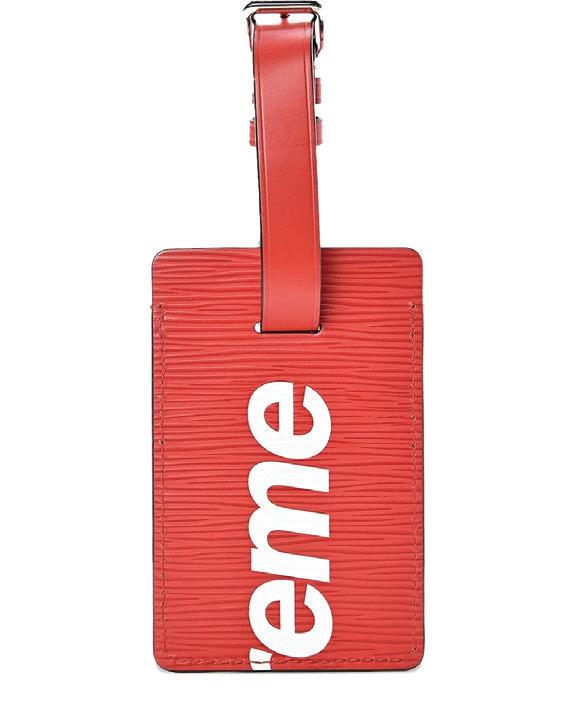
Supreme x Louis Vuitton Luggage Tag Set
A small detail that says a lot. This luggage tag set pairs buckle-fastening straps with that unmistakable collaborative edge. Even your checked bag deserves a proper introduction.
Cartier Eyewear Pilot Sunglasses
Gold-tone frames, grey lenses, and the kind of craftsmanship you’d expect from the maison. Made in Italy with brass detailing and a protective case. These are the pair you reach for when the light hits the water just right.
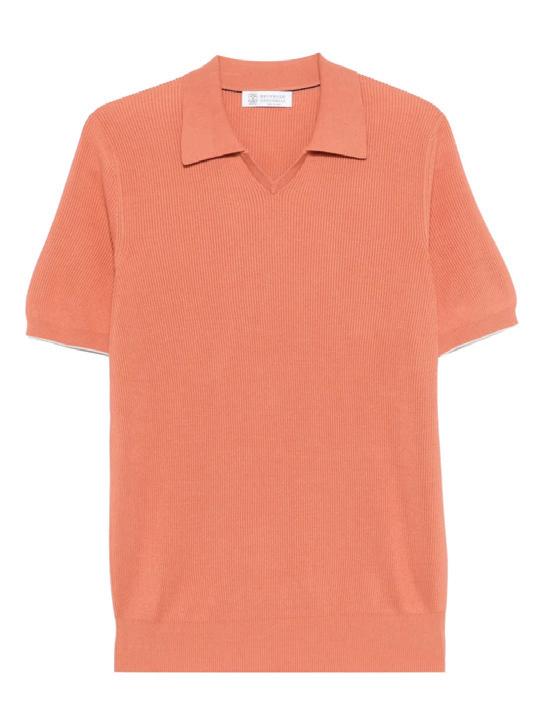
An orange ribbed cotton knit with contrasting trim and a polo collar. Proof that a simple tee can still feel considered. Hand-wash only, which tends to be the case with the good stuff.
Brunello Cucinelli V-Neck Ribbed T-Shirt
Dolce & Gabbana Striped Drawstring Shorts
Easy, elevated, and made for days with no fixed plans. These Italian-made cotton-silk shorts feature an elasticated waist, relaxed drawstring, and the kind of stripe that looks just as good at lunch as it does on the sand.
Burberry Pavilion Checked Sandals
The house check, reimagined for warm concrete and sun-bleached boardwalks. A flat sole, open toe, and Burberry’s signature lettering underfoot. Even your most laid-back moments deserve a little polish.
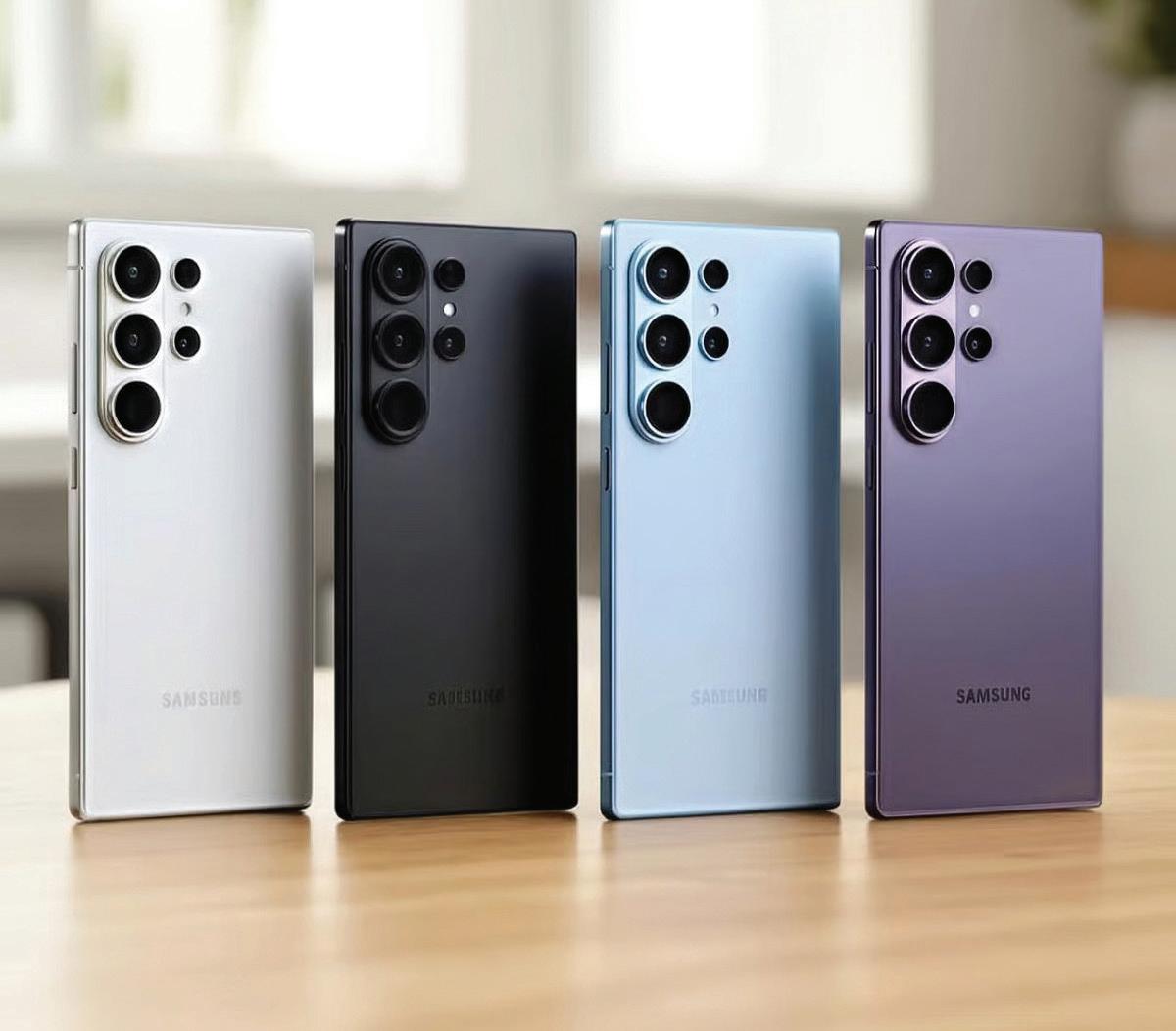
SAMSUNG GALAXY S26 ULTRA: WHY LESS IS SUDDENLY MORE
How Samsung’s latest flagship quietly rewrote the rules of smartphone photography.
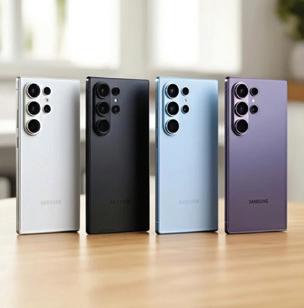
Samsung’s Galaxy S26 Ultra arrives with a camera spec that, at first glance, looks like a step backwards. The new 3x telephoto lens captures at 10 megapixels, down from the previous model’s 12. In a market that has spent a decade selling bigger numbers as the measure of a better camera, the move invites scepticism.
The reality is more interesting than the spec sheet suggests.
The phone uses a sensor called the ISOCELL 3LD, natively a 12-megapixel unit. But instead of using the full surface, it captures from only the central portion, where image quality is cleanest. The outer edges of any sensor produce softer results. By cropping them out at source, Samsung prioritises sharpness over size. The final image still delivers a full-resolution photograph through multi-frame fusion, combining multiple rapid exposures into a single, richer result.
But resolution isn’t the real story. Architecture is.
The ISOCELL 3LD builds memory directly into the sensor, eliminating the delay that occurs when image data is handed off for processing. That fraction-of-a-second gap is where blur happens, where motion distorts, where the moment you meant to capture becomes the one just after it. With memory at the sensor level, the camera grabs and holds the image almost instantaneously. A deceptively simple idea that required significant engineering to execute.
gimbal-like, achieving steadiness that typically requires dedicated hardware. Paired with the Snapdragon 8 Gen 5 and its AI image signal processor, the camera makes thousands of micro-decisions about colour, brightness, and sharpness in real time.
Zoomed-in portraits hold their detail even with unsteady hands. Fast-moving subjects come through crisp. Low-light zoom retains clarity with less grain. Video at 3x feels closer to stabilised rig footage than handheld smartphone output. And shutter response is near-instant, so the photograph you take is the moment you actually intended to take.
“The photo you get is finally the moment you meant to capture.”
Samsung has rebuilt the relationship between sensor, memory, and processor so they function as one integrated system rather than separate components passing data between them. The result is a camera that’s faster, sharper, and more intelligent, not because it added more of anything, but because it rethought how the existing pieces work together.
The results are tangible. Rolling shutter distortion on fast-moving subjects is dramatically reduced. Stabilisation at 3x zoom is described as
Sometimes fewer pixels, in the right hands, produces better pictures than more. In an industry long addicted to inflation, restraint may be the most compelling upgrade of all.
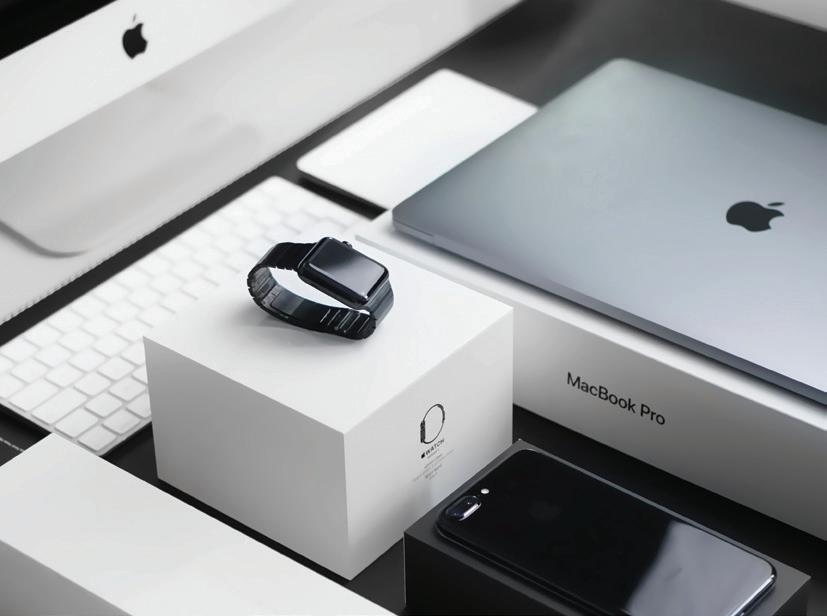
INSIDE APPLE’S AI WEARABLES STRATEGY
How Apple is embedding artificial intelligence into everyday devices, without turning them into gadgets you have to think about.
ost companies treat artificial intelligence as something to announce. Apple treats it as something to install. While rivals build outward, launching concept hardware and AI-first prototypes, Apple has been folding intelligence into the devices people already carry, wear, and trust. That approach is becoming harder to ignore.
According to Bloomberg, the company is accelerating development across three categories: smart glasses, a camera-enabled wearable device currently in development, and AI-enhanced AirPods, all built around a more capable version of Siri designed to interpret visual and environmental context. There is no single “AI device” on the horizon. Instead, intelligence is being distributed across the ecosystem.
Meta has had genuine mainstream success with its Ray-Ban smart glasses. OpenAI is building its own hardware. Apple’s response is structurally different. Rather than creating standalone products, it is reinforcing the iPhone as the centre of a network of supporting devices.
The glasses are expected to provide visual input. The camera wearable would extend environmental awareness. AirPods handle voice, audio, and translation. None are designed to replace the phone. Each one closes a specific gap between what you need and how quickly you get it.
The hardware itself is deliberately unremarkable. The smart glasses are expected to omit displays entirely, relying on cameras, microphones, and speakers. The camera wearable is reportedly compact and easy to overlook. The AirPods remain visually unchanged. What changes is how each device shares context with the others, without requiring you to manage the handoff yourself.
Privacy reinforces the entire position. Apple Intelligence processes data on-device wherever possible, keeping personal information off external servers. When more processing power is needed, Private Cloud Compute handles it through Apple-designed servers with encrypted requests and no stored data. At a time when people are paying closer attention to where their information goes, that architecture does real commercial work.
“Apple isn’t trying to build smarter gadgets. It’s building a smarter system.”
Timelines remain fluid. Enhanced AirPods are expected first, potentially from late 2026 onward. Camera-based wearables and smart glasses are likely to follow, with broader releases closer to 2027. These are not abstract concepts. They are part of Apple’s current hardware roadmap, according to multiple reports, backed by hundreds of millions of iPhone users worldwide.
The failures of bolder approaches make this logic easier to understand. Humane’s AI Pin tried to replace the smartphone with something visibly futuristic. Consumers walked away. Apple Vision Pro demonstrated what spatial computing could do, but at a price that kept it out of most people’s hands. Apple seems to have absorbed the lesson from both: technology lands when it fits into how people already live, not when it asks them to start over.
The longer play is clear enough. Apple is moving toward a system where intelligence runs through every device you own, not as a feature you open, but as something that’s simply there. The goal is not more screens. It’s less need for them.
Apple has never been especially interested in arriving first. It has always been more interested in staying. And its most distinctive move right now may be building technology that works best when you forget it’s there at all.
GADGETS WORTH YOUR ATTENTION
Five gadgets that earn their place in your daily rotation, not your junk drawer.
The best tech right now isn’t about novelty. It’s about devices that solve something real, look good doing it, and don’t require a manual to get started. These five stand out for exactly that.
Ray-Ban Meta Wayfarer (Gen 2) Smart Glasses
Smart glasses have genuinely matured, and the Gen 2 Ray-Bans are one of the most practical mainstream options available. They keep the classic Wayfarer silhouette while packing in a better camera (shooting up to 3K video and 12MP photos), improved battery life (around eight
hours per charge), and direct Meta AI integration. All in a wearable you’d happily put on in public. Reviews place these at the top of smart glasses lists, even if they don’t yet rival full augmented reality displays. Practical everyday wearable tech, truly usable battery life, and competent media capture without looking like futuristic goggles.
Theragun Mini Plus by Therabody
Therabody continues to lead portable recovery tech with tools that actually feel good rather than just look the part. The
Mini Plus brings deep-tissue percussion together with rapid heat therapy, something rare in travel-sized devices, and works with various attachments for cold and vibration. Its size makes it ideal for pre- and post-workout use, or after long travel days. A genuinely effective body recovery gadget that’s both portable and powerful.
Bose QuietComfort Ultra Earbuds
Bose stays at the top for noise cancellation and overall listening comfort. The QuietComfort Ultra Earbuds deliver adaptive ANC strong enough to cut through aeroplane noise, crowded cafés, or busy streets. Sound is rich and balanced, spatial audio adds immersive depth, and comfort for long wear is excellent. They’ve picked up praise from listeners and tech editors alike, reinforcing their position as standout earbuds. Best in class for noise cancellation and everyday sound quality.
Insta360 X5 Action Camera
Widely regarded as one of the most versatile action cameras available, no bulky rigs required. Its 360-degree capture lets you reframe shots after the fact, so even handheld footage looks cinematic and stable. With waterproofing and robust stabilisation, it excels across travel, sports, and lifestyle scenarios. Review ratings remain consistently high, especially for creators and active travellers. The ultimate do-itall capture device.
Oakywood Triple Charging Dock in Walnut
Not all standout tech is high-spec silicon. This solid walnut dock solves a universal pain point: cable chaos. It consolidates your phone, earbuds, and watch charging in one smart surface, combining minimal design with practical everyday use. Quality materials and thoughtful layout make it a timeless accessory for desks and nightstands alike. Simplicity and utility that actually improves your daily routine.
The Future of At-Home
Skincare Has a New Face
Shark Ninja’s CryoGlow isn’t just another LED mask — it’s a clinically considered step forward. Combining iQLED Technology with tri-wick LED sequencing, it was developed alongside dermatologists to work across all skin types and tones. Its standout feature: cryo-inspired undereye cooling that tackles fatigue where it shows first.
www.sharkninja.com
A Villeret is for eternity.
Featuring an endless array of watchmaking’s most fascinating complications, the Villeret bears authentic testimony to the talent of our watchmakers. Essentials imbued with timeless elegance.