a publication of Rowan University’s Master of Arts in Writing
featuring life’s eccentricities connection and loss returning to dust
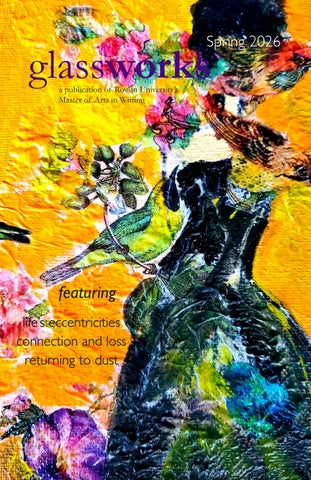
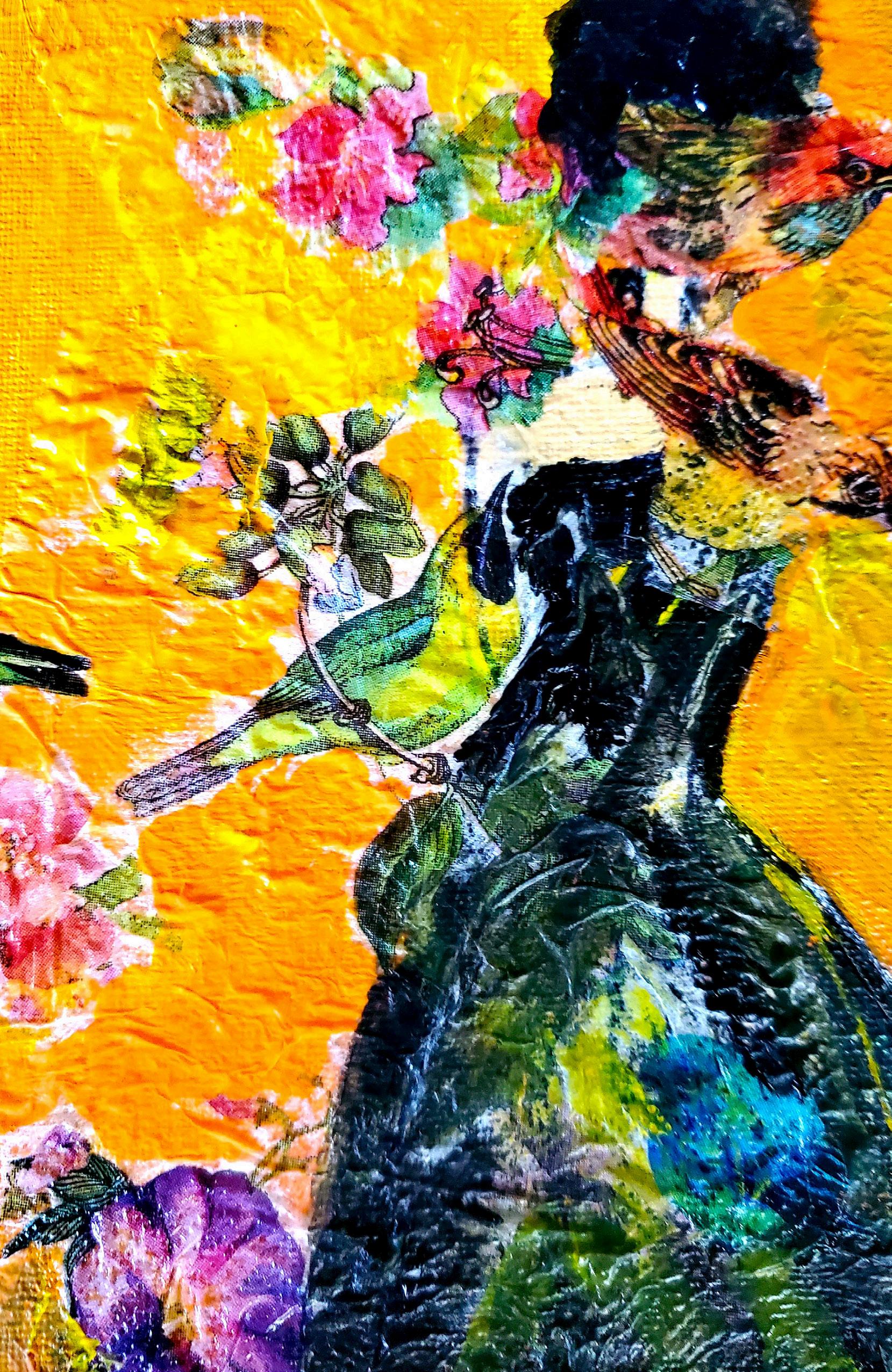
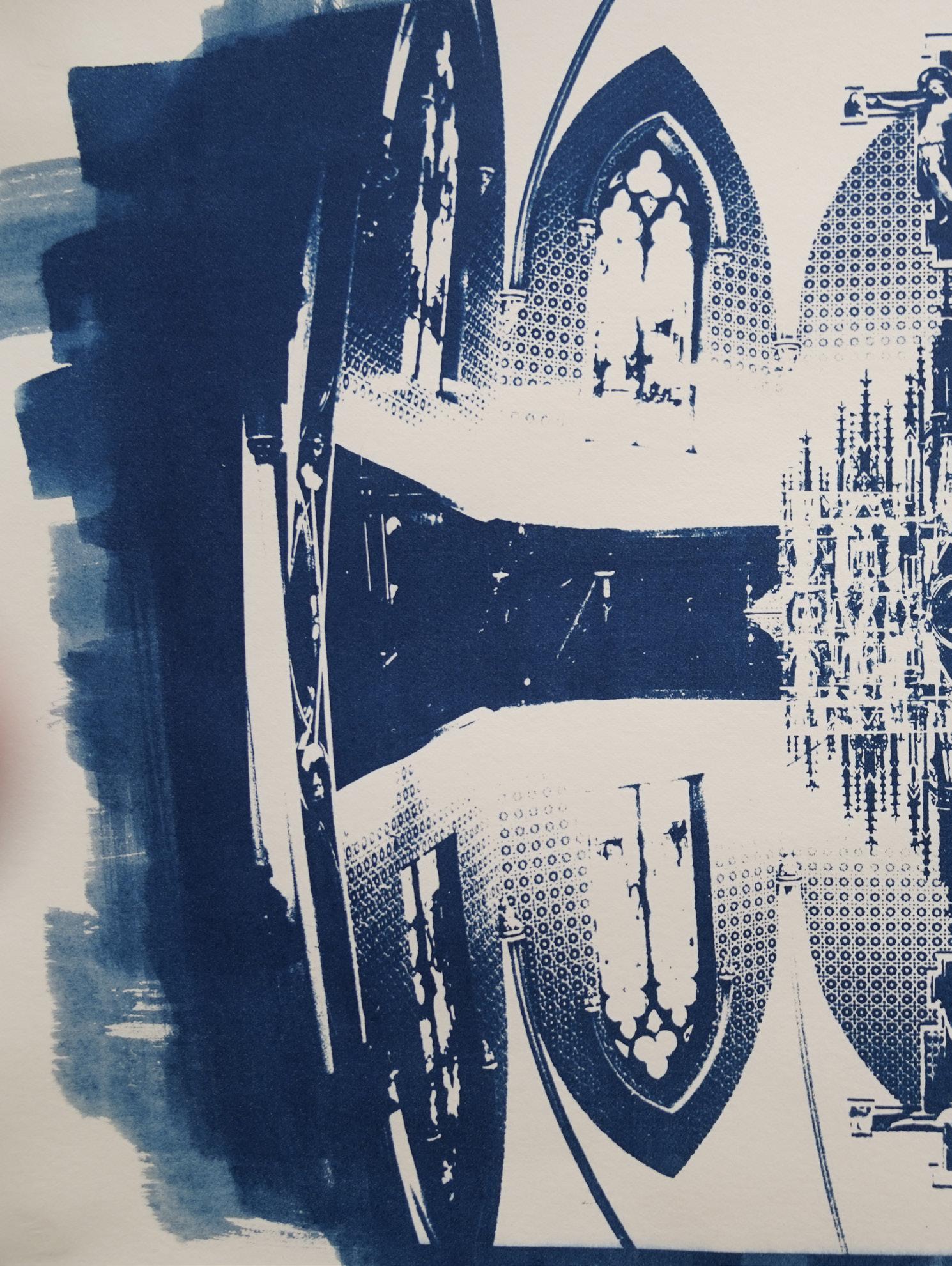
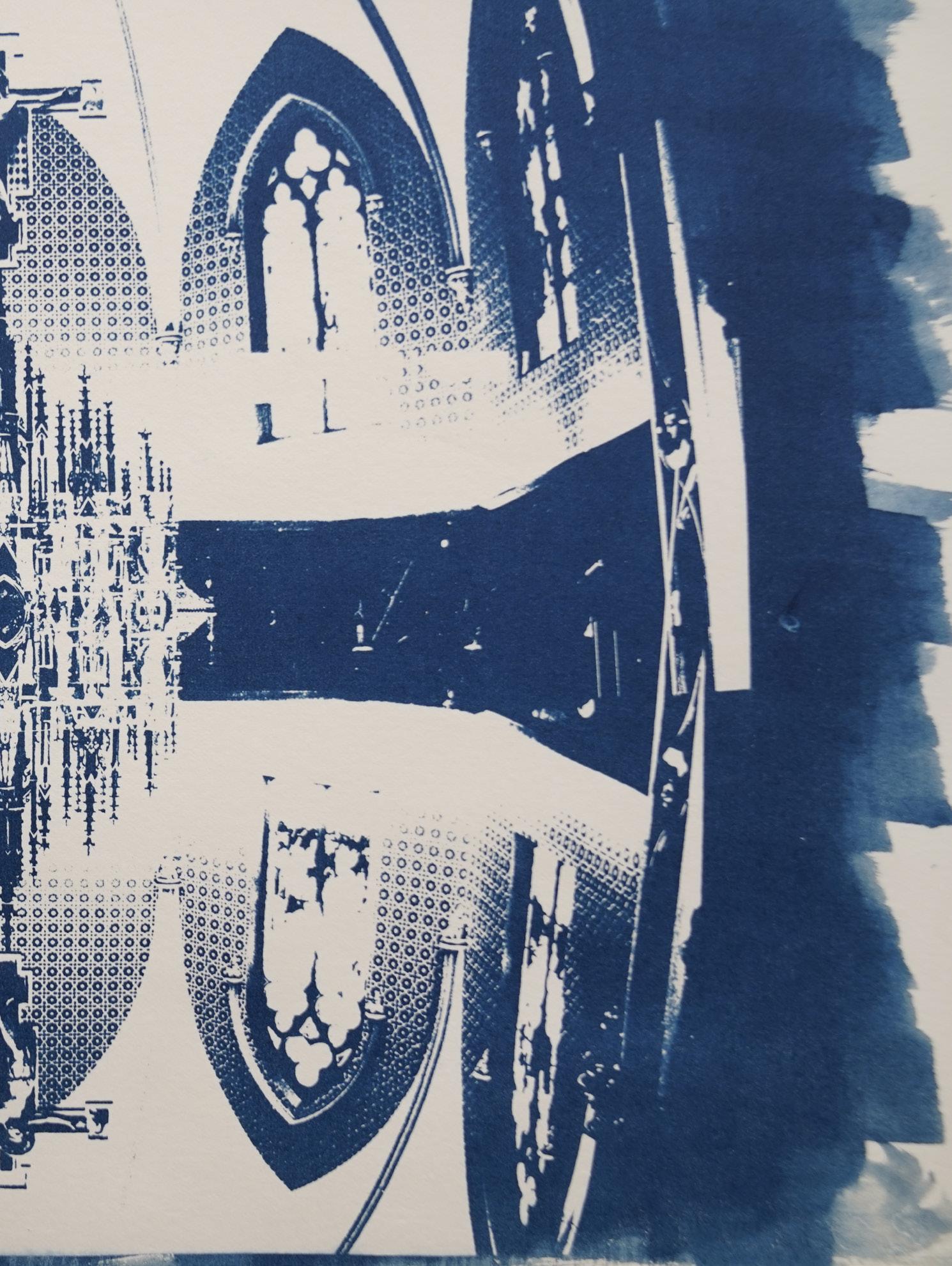
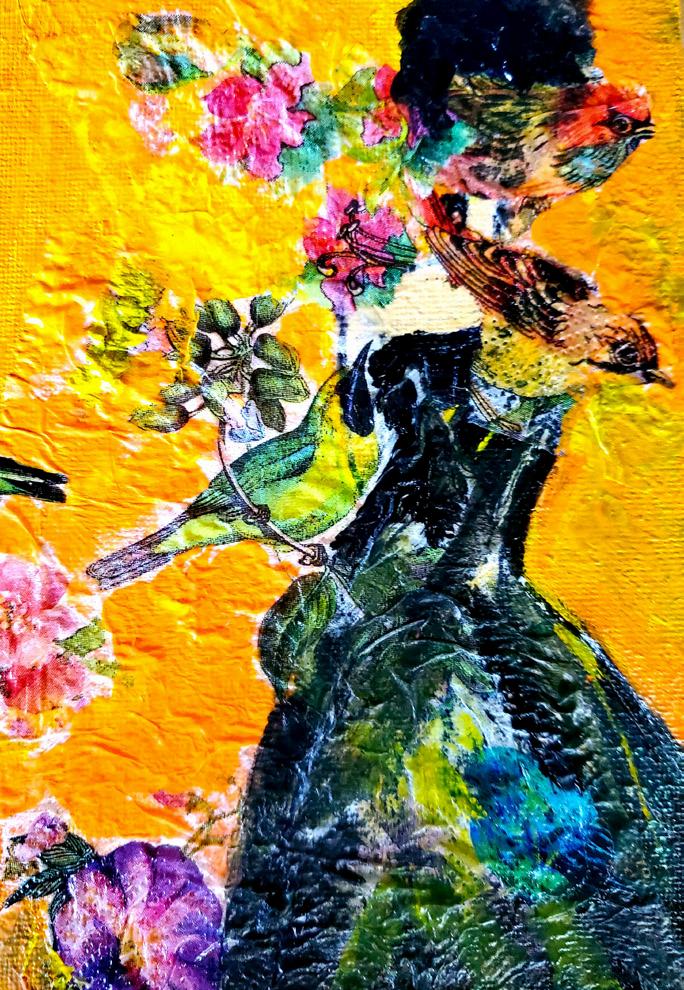
Cover art: “The Sun’s Vestments” by
Gerburg Garmann
first published in The Passionfruit Review
The staff of Glassworks magazine would like to thank Rowan University’s Master of Arts in Writing Program and Rowan University’s Writing Arts Department
Cover Design & Layout: Katie Budris
Glassworks is available both digitally and in print. See our website for details: RowanGlassworks.org
Glassworks accepts literary poetry, fiction, nonfiction, craft essays, art, photography, short video/film & audio. See submission guidelines: RowanGlassworks.org
Glassworks is a publication of Rowan University’s Master of Arts in Writing Graduate Program
Serial Rights for publication in our journal and First Electronic Rights for reproduction of works in Glassworks and/or Glassworks-affiliated materials. All other rights remain with the artist.
EDITOR-IN-CHIEF
Katie Budris
MANAGING EDITOR
Cate Romano
ASSOCIATE EDITORS
Bella Bisicchia
Alexia Breeden
Adam Buckley
Erica Lee
Sophia Nigro
Samantha Szumloz
FICTION EDITORS
Emily Mendelsohn
Meg Nielsen
Janaye Roberts
Gianna Vanore
NONFICTION EDITORS
Samuel Costello
Laura Del Viscio
Samantha Grasso
Erica Lee
POETRY EDITORS
Adam Buckley
Dimitrius DeMarco
Desirae Mack
Samantha Szumloz
glassworks
Spring 2026
iSSue ThirTy-Two
MASTER OF ARTS IN WRITING PROGRAM
ROWAN UNIVERSITY
Issue 32 | Table of ConTenTs
ArT
gerburg gArmAnn, The Sun’S VeSTmenTS | coVer
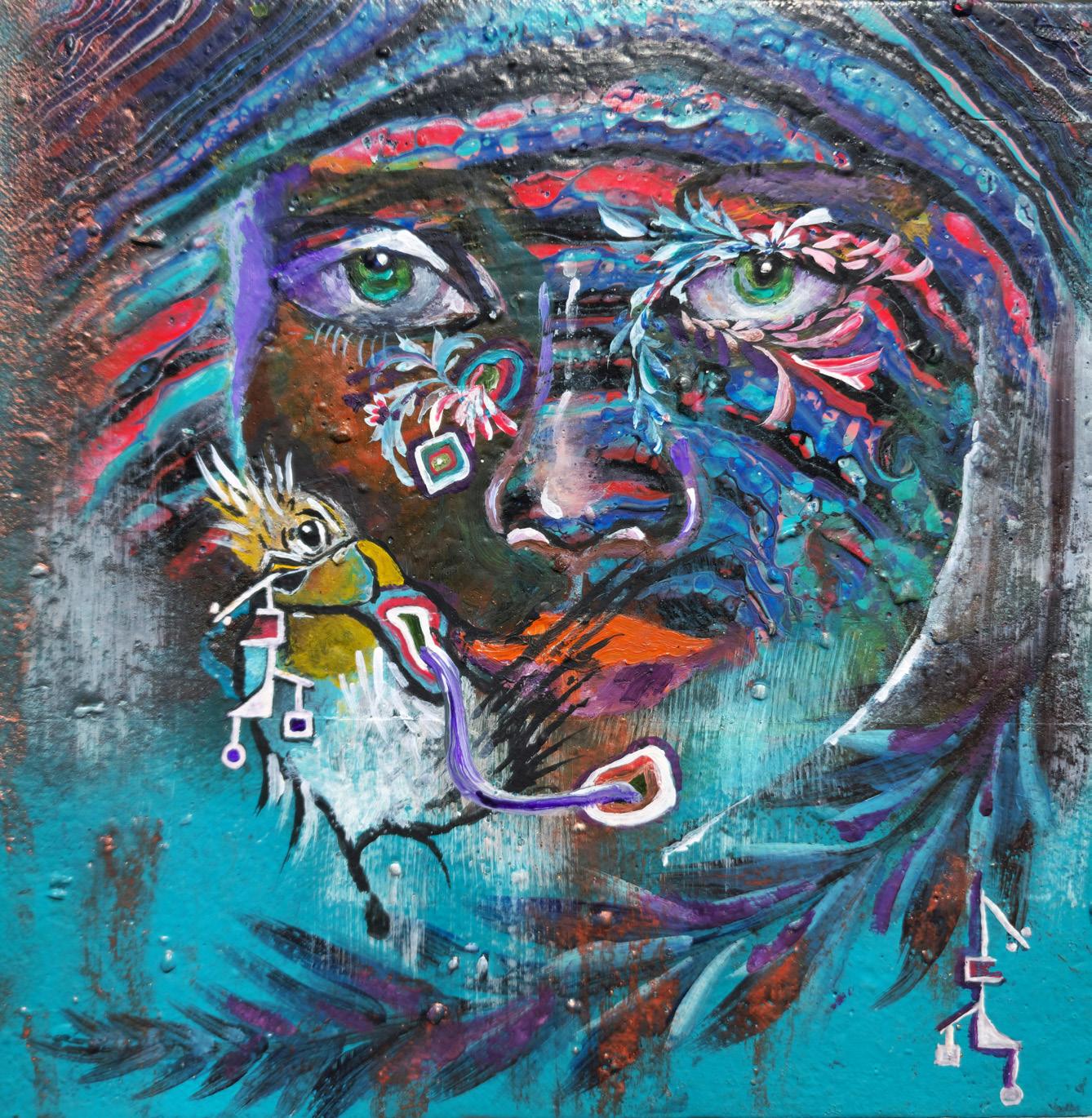
grAcielA DeAnDA, AlTAr | 6
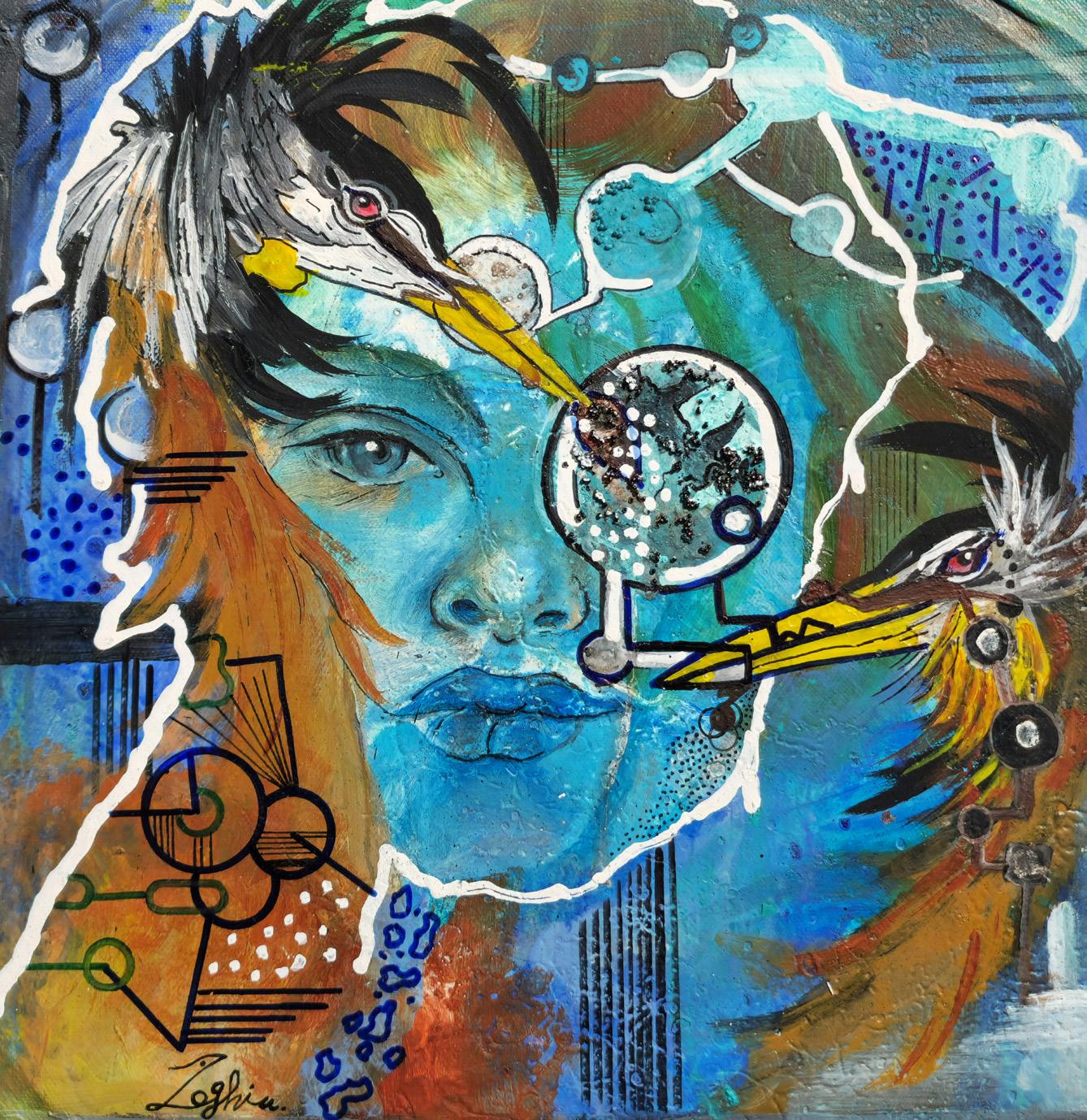
ZAhrA Zoghi, where wingS remember | 15
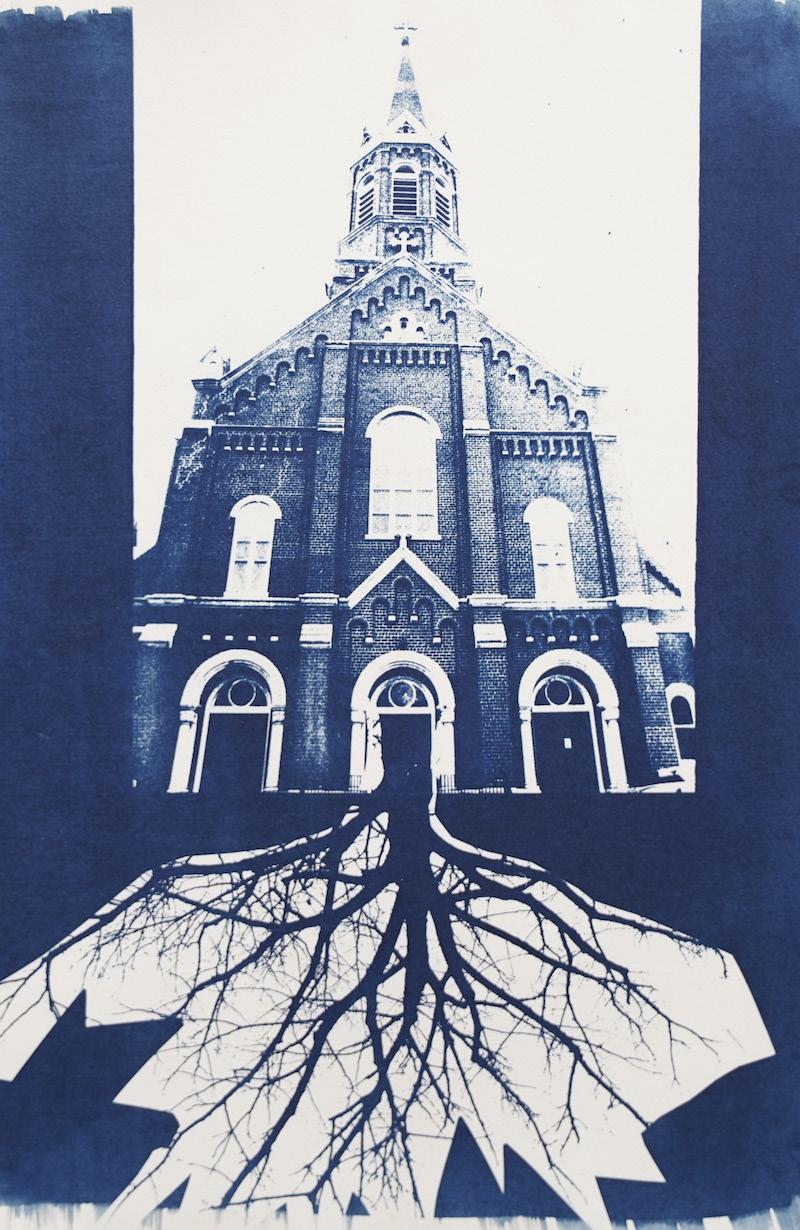
grAcielA DeAnDA, rooTS | 19
ZAhrA Zoghi, where FlighT reFrAcTS | 31
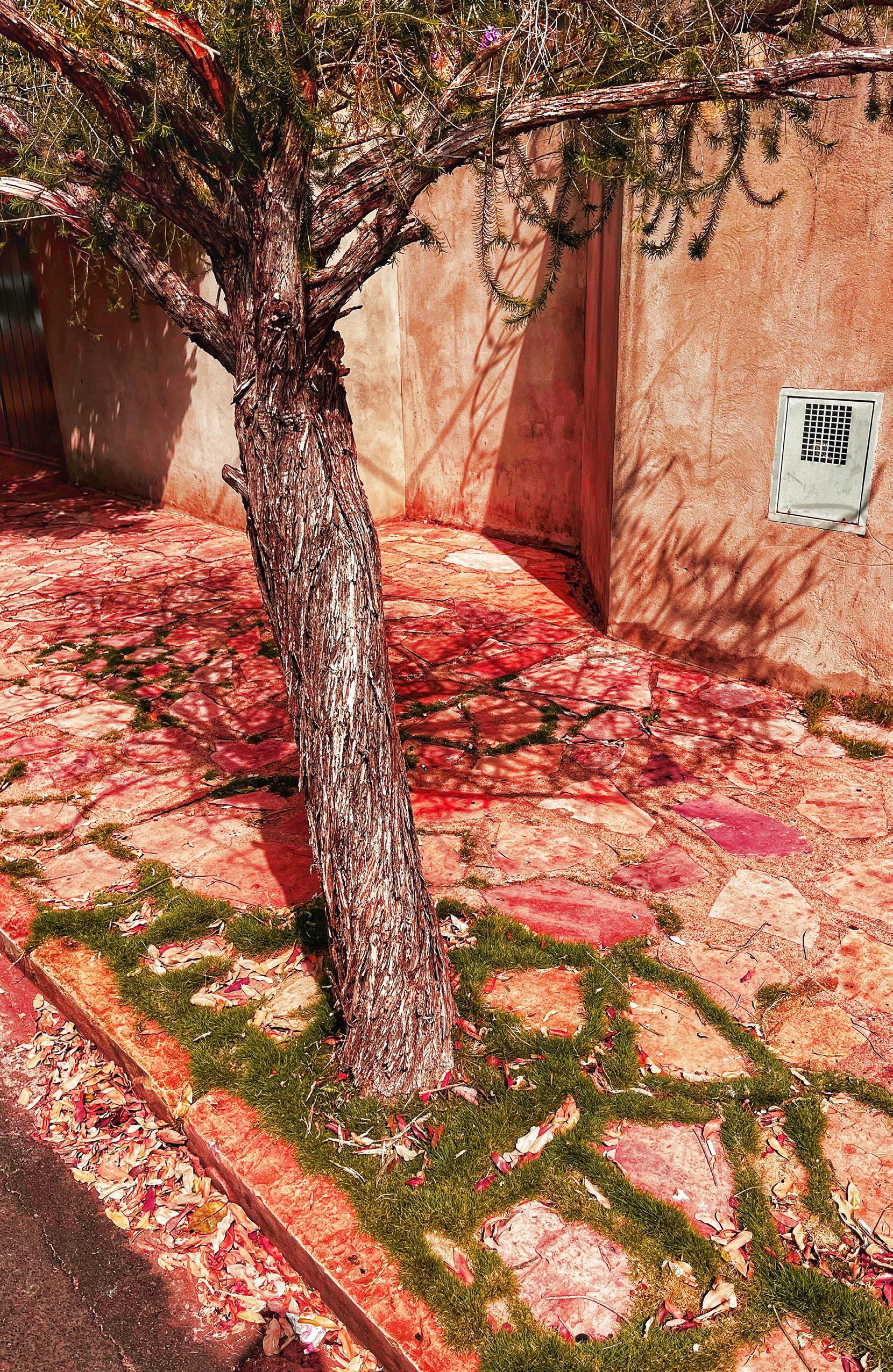
DAViD AuguST, SiDewAlk | 34
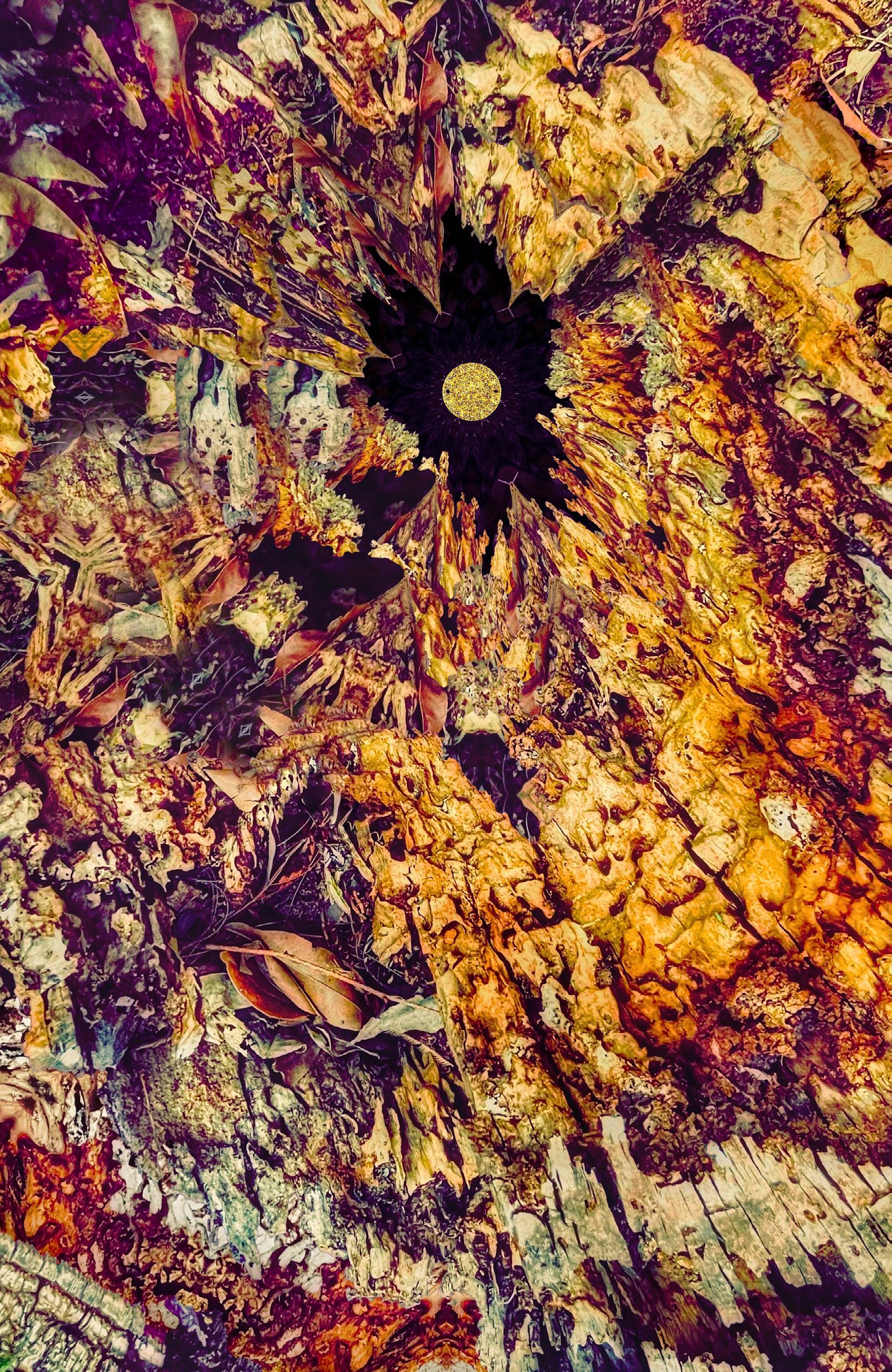
DAViD AuguST, STump | 43
ZAhrA Zoghi, where FeATherS echo | 55
gerburg gArmAnn, heArTSTringS | 63
FicTion
Jin Jung, The yeAr oF The DrAgon | 20
ScoTT pomFreT, AVAlAnche conTrol: A loVe STory | 44
nonFicTion
A.l. gorDon, i’ll Tell her i remember | 10
heATher AuguSTyn, in The ShADow oF The millS | 35
nAn bryAn, AperTure | 57
poeTry
wenDy booyDegrAAFF, reViVAl | 3
bAckyArD | 4
SArinA reDZinSki, A womAn in The TrAin SeAT
AheAD oF me eATS A peAch | 5
michAel c. SmiTh, yArD SAle | 8
mickie kenneDy, AcciDenTS | 16
beeTle grAVeyArD | 18
AuDrA burwell, The yeAr you cAme bAck | 32
The FuTure hAngS SuDDenly empTy | 33
SebASTiAn Subir, pASSing A FAllen oAk
on The croSS-counTry TrAil | 39
AnDreA reynolDS, For you my FrienD | 40
ScAVenger FinDS A boDy | 42
kenTon k. yee, remember when i kepT DemAnDing you
Tell me The purpoSe oF liFe? | 56
olADeJo AbDullAh FerAnmi, chApTerS TurneD AnD Torn | 64
QuieTly DAmneD | 65
riTA rouVAliS chApmAn, how To become An exTrATerreSTriAl | 66
The hIsTory of Glassworks
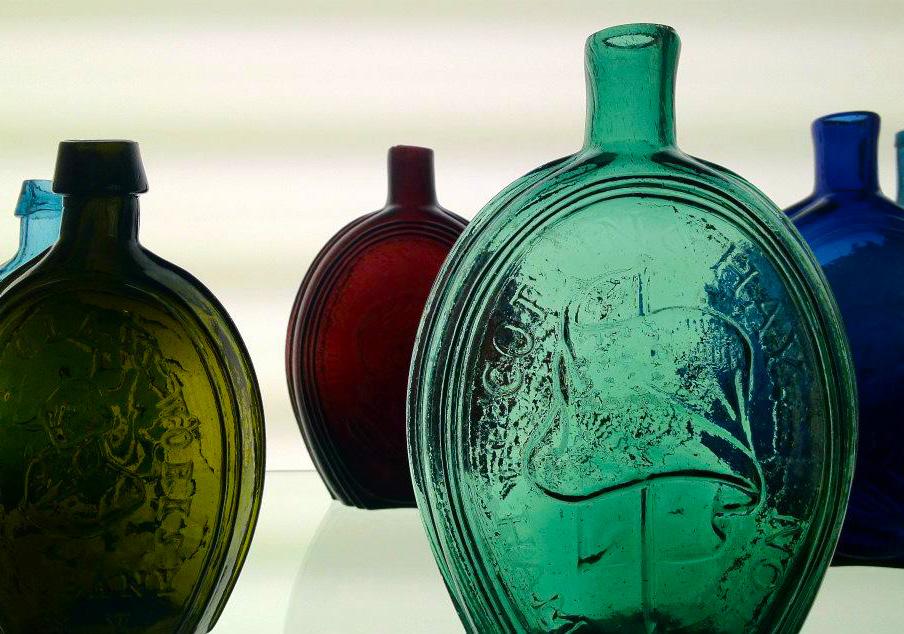
The tradition of glassworking and the history of Rowan University are deeply intertwined. South Jersey was a natural location for glass production—the sandy soil provided the perfect medium, while plentiful oak trees fueled the fires. Glassboro, home of Rowan University, was founded as “Glass Works in the Woods” in 1779. The primacy of artistry, a deep pride in individual craftsmanship, and the willingness to explore and test conventional boundaries to create exciting new work is part of the continuing spirit inspiring Glassworks magazine.
revIval
Wendy BooydeGraaff
There is a river he said, there is a river, he repeated. The river he spoke of as he paced up and down the church’s aisle was a scriptural river a future river, a metaphorical river described by John in his apocalyptic revelations which was meant to ignite our own visions of everlasting purity and peace.
There is a river, he said, and he’s right, there is a river, and it’s here in my city, being cleaned up and restored which requires significant funding and tests to determine if the per- and polyfluoroalkyl substances are at appropriate levels to not kill fish or poison people. There is a river suggests the existence of the many other rivers that are not crystal but rather suffer toxicity; it’s invigorating to believe there is a river that does not require intervention though when we all arrive on the banks of John’s crystal river will it be too late to drink the water?
baCkyard
Wendy BooydeGraaff
Sawgrass glistening with dew, echinacea bending toward monarchs, canna in pots, Mandevilla over
flowing with white blooms swallowing dark yellow centers, limelight hydrangeas directing
to the sun. Green against blue, brown against gray. The garden is full, yet I’ll find a way to fit the St.
John’s wort, the nesting spruce, the fall blooming asters that will spread into each unleafed nook.
I want the vine that will grow over me and provide shade while the earth preheats. There will be no beep
to let us know it’s reached optimal temperature. Don’t you, too, crave an enclave of plants, a crock
on the roof, a bonsai forest by the bed, a box of climbers on the window ledge, an Eden for this hell?
a woman In The TraIn seaT ahead of me eaTs a peaCh
Sarina Redzinski
and I stare at her reflection in the window, remembering all the things I watched you eat: simmered lentils, Cajun chicken, raw spinach, cinnamon oatmeal (no butter), and two bites of shared strawberry shortcake at the dinner where you met my father and told him how you were punched in the face at the Irish pub around the corner.
The woman is happy with her peach, savoring its finitude, and I resent her. We spent all that time ignoring ours, and so much is already fading: the angle of your jaw, the color of the Band-Aids perpetually on your thumbs, even where that scar split your eyebrow.
I know now that I was timid in my relish, that I didn’t really know how to do it, not like this woman in the seat ahead of me slurping her peach. Her lips curl around pink-yellow flesh, a flash of teeth sinking down into stringy fruit-muscle, clotted juice clinging to her chin; a push of the tongue laps up the remnants and I think: perhaps other people are too gruesome.
Graciela DeAnda
yard sale
Michael C. Smith
Nothing has prepared us for the man who knows the current world market value of cut-glass bowls or the connoisseur of broken speakers.
We are shy and flattered they want our things and amazed at the things they want: a chipped drinking glass with a frieze of pink babies, a chair as dark and thin as Don Quixote.
Even the purple and blue cubist painting that looked like the ragged birth of some animal sells—and at a price much higher than we imagined. “Say what you will about realism,” the buyer says, “color is always in.” But how to price
bone white cylinders with deckled lids when we don’t even know what they are, how they work, where, in our lives, they come from.
Are we letting go of something valuable or important or just lucky and mysterious, like tonsils?
We wander like refugees among islands of faded dresses and scuffed shoes, among unavoidable memories, and watch the shoppers, their questionable choices, soon lowering prices without dickering.
A woman with a baby carriage full of spatulas backs carefully down our driveway. Say what we will about realism, we know it’s not a question of how many more eggs she can turn.
I’ll Tell her I remember
A.L. Gordon
Since she’s been in the home, my mother calls more often, but I never answer. I do listen to her voicemails. Hello. She pauses. Hello? You don’t have to talk. She pauses again, waiting for a reply. I guess you don’t know who this is. I’m sorry you don’t remember. Ok then, if you don’t want to talk I’ll hang up. After a very long pause. Do you remember me?
And the question just slips away into silence as the message continues to play but nothing more is said. My memory is good. Her memory is the one that is gone now. Maybe one time I’ll answer her call and tell her what I remember.
I remember the night when I was nine or ten. I watched her get hit and slapped, watched her boyfriend blacken both her eyes. I remember the force of Fred’s hand as he slapped my face when I grabbed his arm and tried to stop him. After the slap, I remember reaching for him again, my hand trying to grip his forearm, and how I tried to pull it, and how his forearm was so big my hand could barely grab it. He pushed me down, and my mother rushed over, helped me up and walked me to my room. She got me back in bed, ran her hand over my hair. Once she left my room, I got up and went to my bedroom door, opened it a crack and tried to see what was happening.
I remember the next day, her sitting next to me, her blue eyes, surrounded by darkening skin, locked onto mine. I could still feel on my cheek where Fred had slapped me. She reached over and lightly touched it, looked at it like she was looking for a bruise. For some reason I remember her fiddling with the buttons on her shirt as she asked if I wanted him to stay. It’s up to you, she said, if you want Fred to go, I’ll make him go. I tried to figure out what I should say, what she wanted me to say. I thought maybe he was just mad, maybe she did something wrong, maybe he will never hit her again. So I said he should stay.
That’s a memory she won’t want to hear.
But there are some she will, some that will make her smile. Like when I was a bit younger, when she was still married to my father, the three of us were driving along a country road in Vermont. We stopped at a few antique stores, and then a store that sold cowboy boots and hats, and country style knickknacks. And raccoon-fur caps. I can still feel the lust in me when I saw those fur hats hanging in the window. Coon skin caps, like Davy Crocket wore. I’d been watching reruns of the show and wanted nothing more than to be Davy.
I ran into the store and over to the hats. I held one, propped it up on my head and looked up at my mom. She had picked up a hat and was inspecting it. She turned it this way and that. Looked inside of it. My father came over and looked at the hat she was holding. He turned the dangling price tag so he could read it. It’s too expensive, he said. I remember the wave of disappointment. My mom still studied the hat she held. You can get a raccoon tail though, my dad said to me. They had a bin full of them. Better than nothing, I’m sure I told myself, and inspected the tails until I found one I thought was good.
I can make you a hat, my mom said. She then walked over to a bin of rabbit furs. These are pretty cheap, she said to my father.
At home my mom set to work sewing and cutting, and by the end of the day she had sewn me a rabbit’s fur hat that had a raccoon tail hanging from the back.
~
If I answer the phone one day and talk to her, which memory will I bring up? Will I talk about fur hats and raccoon tails or will I tell her I remember thinking if I had just told her that morning Fred should leave, then my life would have been different? I wouldn’t have slipped around like a shadow whenever he was home. My stomach wouldn’t have knotted whenever he was near.
~
Although he worked evenings, the mornings with Fred stay with me. When I was in junior high, he somehow became in charge of making sure I got up for school.
“
. . if I had just told her that morning Fred should leave, then my life would have been different. I wouldn’t have slipped around like a shadow whenever he was home. ”
Maybe my mom asked him, maybe he took it upon himself. I don’t know, I just know he was superb at it. His technique was simple—he’d come into my room, say “time to get up,” and start hitting my thighs and calves with a wiffle ball bat. I can still feel the sting and the shock and the humiliation. It took less than a week before his steps in the hallway woke me and I’d be out of bed before he got to my room. He trained me well. The training never faded—when I was grown and married, my then wife marveled at how the tiniest sound from our new baby had me wide awake.
In the mornings, after Fred woke me up, I tried to go unnoticed until it was time to leave for the bus.
glassworks 11
He would be in his room but would hear everything. One time I was in the bathroom peeing and he yelled, Jesus, it sounds like a god damn waterfall in there. I finished and slinked away. After I had learned to wake at the sound of his steps, school days were easy. Summers were not. Maybe, if I ever answer the phone, I will tell her how much I hated summers at her house because of Fred. While my friends slept late, or watched cartoons while eating sugary cereal, or did whatever normal kids did, I still woke early and rushed out the door, trying not to have any contact with Fred if he was already awake. I was always ready with a story of where I was going, but he never asked.
I’d bike away, pedaling to nowhere really, wondering where I should go. I had to be gone until 2:30 when he left for work. Once it was late enough, I’d stop by friends’ homes. If they could play, that was the best. But if my friends were busy, I’d ride my bike around town. Alone, my baseball bat laid across the handlebars, my baseball glove hanging off the handle, I’d pedal slowly down the streets. No destination and no hurry. Sometimes I’d stop first at the baseball field. Alone, I’d hit my baseball and retrieve it or practice throws from the outfield. If enough time passed and no one showed up, I might bike to the elementary school’s playground hoping for company. Sometimes
I’d go by the lake and throw rocks, and when bored by that, sit and look at the water. Anything to pass the hunger-filled time until I could go home.
Wednesdays were a little better. He would go grocery shopping every Wednesday morning at ten and be gone for about an hour and a half. I’d hide just beyond our driveway and wait for him to pull out. Then I’d spend a glorious hour or so watching tv or eating some chips. My hearing was attuned to his car, my eyes always flitting to the window where I could see when he was driving up. When I did see him approaching, I knew I had just enough time to get out the door and disappear around the side of the house before he was out of his car and to the front door with his grocery bags.
One day my timing was off and I was running out the door as he was nearing it. I waved and rushed past him, around to the side of the house where my bicycle was hidden. You’re up to something, he yelled after me, I’ll figure out what it is.
~
I could tell her about those memories. But part of me wants to be kind, wants to tell her how I remember the time she took me to Burger Chef. Since Fred worked second shift, after school I’d be home alone until my mom got off work. On a typical day, she’d be home from work around six, and glassworks 12
I’d have already microwaved myself something for dinner. But on this day, I didn’t want the frozen chicken that was my staple. I had found coupons to a fast-food restaurant called Burger Chef. I spent the time before she was home watching M*A*S*H* reruns on TV and staring at the pictures on the coupons. My mom came home from work, tired I’m sure after eight hours working at the General Electric factory, tired I’m sure after driving the thirty-minutes home.
find out the way Fred treated me? After the divorce I spent every weekend with my dad, but there was fear there too—fear that I’d slip and tell him some of the things Fred did. I was scared what would happen if my dad knew. Fred kept various guns around the house, and I was sure he’d use one if my father confronted him—as I knew my father would.
“ She made herself feel better about staying with an abuser by pretending to give the choice to me, to take the burden of action off herself. It took me so long to realize that, and even longer to forgive her for it, if I actually have forgiven her. ”
I was at the door waiting for her. I begged her to turn around and drive thirty minutes back the way she had just driven to buy me a burger and fries. She studied the coupons, looked up and studied me. Come on, she said, and picked up her purse. It must have been winter because it was dark as we waited our turn in the drive through. Dark as we drove home. Dark as I ate my burger in the car and shared my fries with her.
~
If I answer her call someday, should I tell her I remember how scared I was that my father would
I don’t know if I’ll ever answer her call. It took me until middle age to realize I never had a choice of whether Fred stayed or went. She made herself feel better about staying with an abuser by pretending to give the choice to me, to take the burden of action off herself. It took me so long to realize that, and even longer to forgive her for it, if I actually have forgiven her.
I wonder now, when she’s sitting on her stiff mattress in her little room, what she remembers.
Does she remember that Fred kept hitting her on and off through the years they were together? He didn’t do it often, but often enough. Every time he hit her, I shrank a little, thinking it was my fault since I said he should stay. But maybe she only remembers days of making me hats and moccasins, and faux buckskin shirts complete with fringe. Maybe she doesn’t remember me crying and pulling at her leg and blood coming out her mouth.
Is it fair that she gets to forget?
I can’t help but remember. And when her number appears on the caller ID, it’s that memory of blood and fear and powerlessness that makes me stare at her number, pause for a moment, then decline the call.
Zahra Zoghi
aCCIdenTs
Mickie Kennedy
The dog who had me as a boy, a collie named Lady, struck by a van. She dragged herself onto our porch, panting, a trickle of blood in each nostril. Every time I touched her, she winced. She lingered until my father arrived, licking the hand that held the rifle.
~ My mother heard the crash before she saw it—flesh on metal. Cicadas sawing into dusk. He was walking home from work. The screech of tires. My father, slumped in a patch of ditch. A bag of hard candies by his head.
~ When I left for college, I left an indoor cat named Kitty with my mother, who banished him outdoors. A month later, his body by the curb, a flattened skull. He sprinted towards those wheels, she lied.
~
The other day, a squirrel streaked across the road. I braked, but it jerked back under the car, unable to place where the danger was. The pop beneath my tire almost joyful—like a baseball smacking into a mitt.
beeTle Graveyard
Mickie Kennedy
after Benjamin S. Grossberg’s “Beetle Orgy”
To neighbors, I was the perfect husband— grilling brats in the backyard, tossing my kids into the swimming pool, rubbing sunscreen on Cindy’s back.
Pride meant yard work was never finished. Each shrub tidy as a freshly-buzzed head. Rose bushes to save, their leaves nibbled ragged by metallic-green
beetles the size of thumbnails.
I set out traps, funnel-topped bags hanging from branches, each baited with pheromones. I watched them swell with dozens, then hundreds, of bodies. The bags pulsed, almost muscular, then grew still, rattled only by a rough breeze. I emptied them out
past my property line, coppery husks at my feet while the roses gleamed, aggressively healthy.
rooTs
Graciela DeAnda
The year of The draGon
Jin Jung
During a phone call, my mother, who lives 2,000 miles away from me, asks me when I will be married.
“You do realize women wither and die at thirty, right?”
“I will make sure to invite you to my self-immolation party before that.”
Mother curses me in Korean and hangs up. I do understand her concern. It’s hard to imagine better than Ian, my boyfriend. He is thirty-five years old, works as a software engineer, and cooks for both of us, although that’s only because he doesn’t eat Korean food. We split the rent 50/50. He pays for groceries, I utilities. In the distant future, I wouldn’t mind dying shortly after his passing.
Then why am I hesitating to marry him? ~
When friends ask me what Ian is like, I have to take a moment to answer. While there are many things I know about him, trying to pick the correct details to characterize Ian makes me feel as if trying to pick one shade from another in a monochromatic painting. I feel like a bad writer, although I am only a technical writer. I try. I resort to writing a list.
The said list:
1. Ian likes plaids. About 70% of
his shirts are various shades of blue, dark green, and grey plaids.
2. Beneath the plaid shirts he wears three identical black undershirts that he alternates every other day, which absorb his sweat and smell like him by the time he is done with work.
3. Ian is one of those crazy people who prefers in-person work. His boss forces him to work from home twice a week. I work remotely. He scolds me for playing a cat video as I draft the client manual.
4. Ian’s prescription is out of date. In August, I bought him an eye exam and a new pair of polarized sunglasses because of his pale blue eyes, which I suspect will wear down faster than mine.
“You know, you have such beautiful dark eyes,” he once said.
“Yes, I am Korean, I am aware,” I replied.
5. Ian is quiet during sex, even though sometimes I ask that he make some sound. After he comes, Ian likes to hold me without conversing. I place my head against his chest and listen to his heartbeat, which gradually becomes steadier as time passes.
But it’s not that Ian never unspools in front of me.
Shortly after my birthday, he shot up in bed in the middle of the night,
waking me up. While he made no sound, I could somehow hear the ear-splitting that echoed within him. I pulled him in before I could even think. He did not breathe or move for a full minute. When I at last released him, he thanked me and insisted I go back to sleep.
If someone were to ask me if I loved Ian, I would say yes. Because that is the English word closest to how I feel. But what I feel is far more subdued in texture, much more closely netted with the nerves beneath my skin. ~
“
If someone were to ask me if I loved Ian, I would say yes. Because that is the English word closest to how I feel. But what I feel is far more subdued in texture, much more closely netted with the nerves beneath my skin. ”
6. On days that work goes well, Ian takes me to a nice Italian restaurant.
Today, it’s La Bocca by Sixth and Oak. The venue is large, and
every dish costs at least $28. I wear my nice jeans, although I get a sense that Ian prefers a dress. He does not, however, complain. Why would he? An outing like this means success at work. I can always tell when he is excited because he speaks slightly faster than usual and over-pronounces his T’s. As I nibble through the lobster salad, he talks about the new intern and triangulation.
I don’t understand his work, but I appreciate the quiet fervor with which he explains it. As I pick up all the cherry tomatoes for myself—Ian doesn’t like them—he tells me he will likely get a promotion.
“With my new raise, we can definitely think about buying a place.” He pauses. “What do you think?”
I impale another tomato and tell him that sounds nice. Ian stares at me. I realize this is a gentle segue to the discussion of marriage. Ian has alluded to it a couple times this year, such as when he asked me what my IRA account balance was or what I thought about private school. To think of it, Ian has even asked me if my mother would be okay with me marrying an American. I am American, I replied.
I gaze at his face, the clouded anxiety over his pale eyes. I tell him I have too little money saved.
“You are not that bad with money. I don’t believe you.”
7. Ian overestimates my sanity.
I remind him I did not know
what S&P 500 was until I met him. A hint of concern covers his face. I do not tell him I played dumb because I wanted him to find me attractive. Ian does not know that he finds helplessness irresistible, and it’s probably better if things stay that way. ~
8. Ian is very, very tenable.
I forget it sometimes, although his life is shaped by this fact. It is what got him out of his rural Pennsylvania hometown and landed him into the state funded STEM university with a focus on computer programming. It is what allowed him to survive on nothing but brown rice and retail work for a year before he landed his first job, and it is what allowed him to create distance from his father.
Although I usually like his discipline, today, it irritates me.
After the restaurant, Ian disarms me by buying a pint of Haagen-Dazs. We eat it while watching Ian’s favorite film, Interstellar. By the time we are in bed, I have forgotten about the conversation during dinner. But just as I lean against the headboard and turn on my Kindle, Ian speaks.
“No pressure, but can I ask again why you don’t feel ready?”
His voice is kind but demanding. I stare at the black screen of the TV hanging across from my bed. Then I turn toward Ian. After having gotten so used to his face, I had long begun to perceive it as a concept. But today I see his physical features as they are.
The purple blood vessels beneath his eyes. The soft chestnut hairline slightly more receded than last year. His lips, his three day old stubble, and the expression between anxiety and indifference.
“It’s not you, it’s me.”
9. Ian does not criticize cliches.
I wonder if this upsets him, but his face has gone so still it is unreadable. He nods and turns our bedside lamp off. Suddenly, I fear he would slip away. I pull him by his pajama collar and kiss him. I expect sex, but he pushes me away.
Next morning, I prepare buttered toast, ricotta pancakes, bacon, and two sunny side ups, all cooked in pork grease. After I place the plate on the kitchen island we also use as a dining table, I brew myself a cup of tea. When Ian appears in the kitchen, I ask him if he would like coffee. He says yes and sits down by the counter. He eats silently, which does not alarm me until he puts his fork down.
“You don’t have to do this.”
“What?”
“You always do this when you want to appease me. I told you I understand, didn’t I?” He finishes shoveling the rest of the food into his mouth, stands up, and grabs his backpack.
“Will be late. Don’t forget to order seltzer. We ran out.”
After he leaves, I stand in the kitchen, feeling like an idiot.
10. Ian might have a list of things he knows about me.
~
I have to update the client manual screenshots according to recent changes. I cannot concentrate, however. What happened this morning is an anomaly. If Ian ever notices my overcompensating, he rarely comments on it. I chew on the end of my ball point pen. What if this becomes ongoing? What if he demands an explanation?
There are countless answers I could give that Ian might accept. I could tell him that I want a career change, and that big decisions like this should wait. I could tell him about cultural differences, all the white people’s food we consume and how it alienates me from my home. I could even tell him about my fear of having a child who would always suffer from the shame of being half Korean. All of this contains truth, although none of them are the sole reason. What worries me is that Ian will always find a solution, be it an algorithmic scheme, couple’s counseling, or rigorous financial planning.
I do not know how to articulate what I want, but such neatness it is not. I want love like that look on my mother’s face as she smoked with all the windows shut, ignoring us as we coughed in the living room. I want love like shattered pieces of dishware that my mother refused to— perhaps could not—clean for days
while she lied on the bed and watched Oldboy on repeat. If I were to explain any of this to Ian, he would think I am ill. I would be recommended Zoloft or Prozac or psychoanalysis or a swimming routine. It is something I should appreciate. I do not.
I pull out a piece of paper from the desk drawer. I try to write down my thoughts, and surprisingly, it does become something loosely articulate: I do not want to get fixed by Ian. I feel nauseaous. Ian is not the type of man to relent. He will treat me like a crumbling house he cannot abandon, not realizing the mold that has taken over the structure. The thought suffocates me. I crumple the piece of paper and throw it in the garbage. But what once forms in a writer’s mind—yes, even a technical writer’s—never disappears. It sits there like a piece of gum on the running shoes, pulling each step back with a sticky, residual pull.
I pinch the space between my eyes to relieve a developing headache. Just then, my phone rings. It’s my mother.
“Hello? What’s up?”
“Good, good, checking up on you.”
“I am doing okay. A little bit busy. You?”
“Preparing for the New Year.
I need new decorations. You see, I was wondering…”
The way she trails off is familiar. I ask her if my father’s gotten in another fight with Mr. Park, his business partner. She sighs.
“I want to clarify, it’s not just for him. It’s for me. I need help.”
“I know.”
“I am sorry.”
“It’s okay. I will send what I can. Take care, Mom. I will call again soon.”
I wait for my mother to hang up, but she doesn’t. It would be easier for me to do it first, but somehow that feels wrong. No, maybe I want to remain in this silence, in her implied apology. I end up asking her something unexpected.
“Mom, how did you decide you would marry my father?”
“What? Why?”
“I’m just curious.”
“Is everything alright between you and that boy?”
“Yes, Mom. Everything is fine.”
She falls quiet. Then at last, she adds. “Your dad’s shirt, it was ironed.”
This does startle me. Before I can ask anything else, she hangs up. I put my phone down. After I Zelle the amount she asked for, I unplug my laptop from the monitor and bring it to the living room with me. After minimizing my messenger, I text Ian. He does not respond. I ask him to call me when he has a chance, but he does not see the message until
hours later, when he apologizes for missing it. I don’t text back.
When Ian comes home, he finds me stretched over our sofa, halfasleep, streaming the last season of The Great British Bakeoff. He glances at the empty cans of Diet Sprite on the coffee table and asks me if my parents called me. I do not answer. He asks again, and I tell him yes. He follows up by asking if they needed something from me. I do not reply, but Ian knows me well enough to take my silence as an affirmation.
“ . . . I want to remain in this silence, in her implied apology. I end up asking her something unexpected. ‘Mom, how did you decide you would marry my father?’ ”
“You know, if it upsets you this much, maybe you should stop helping them out.”
“Ian.”
“This isn’t about the money. I support you and whatever you do. But I don’t like seeing you like this. It isn’t wrong to set some boundaries.”
The cleanliness of his logic, as well as the conviction in his voice, annoys me. But I am too tired to
explain that it was not merely money that wore me out today. I close my eyes. How can I even explain that I cannot separate my resentment from my love? My mother hated us for ruining her dream of earning a medical degree in the United States. Yet she also loved us. Her disgust was only a fragment of her affection, a careful and obsessive kind of attention one pays only to the deformities of their body.
Ian’s voice is clear, almost soothing in their resoluteness.
“Are you listening to me?”
I wonder if Ian would be happier without me. The thought is upsetting. I ask to be left alone. Ian hesitates, but he does as I want.
This is a familiar routine. We excel at performing it, and we will continue to do so for as long as we are together. We teeter around the emptiness inside of me. We pretend there is a bridge where there is hollowness. Tomorrow I will make him another elaborate breakfast. Tomorrow he will let me choose the film to watch for the night. So it goes, on and on.
~
Days pass. I stay in bed as he gets ready for work. I listen to him open our closet and get dressed. I expect the scent of reheated food as he microwaves the leftovers, but instead, I smell in the air faint mint and woody cologne that Ian wears only for important occasions. Ian comes back to the room and sits on the edge of the
bed. I raise myself up and lean against the headboard. It’s only when I see Ian in a haphazardly ironed button down that I recall that he is traveling for work.
“Hey. I’m heading out.”
I rub my eyes. It feels odd to think he is going. Ian takes very few vacations, and as a developer, he rarely attends marketing events. But his recent project has gotten him enough attention that his boss wants him present at a major aerospace conference in New York. I wonder if this will become more frequent. I give Ian a hug.
“Bring back some Levain cookies for me.”
“What?”
“They are these fat cookies from New York.”
Ian tells me that he will do his best.
11. Ian is cautious about making promises, even if he will fulfill them.
I walk him to the door. After he leaves, I make myself coffee and then walk around the apartment for a bit. I still have thirty minutes until work, but I turn on my laptop and keep pacing around while it boots. Somehow the dust feels thicker, and the ambient noises—the plane outside, the lawn mower, that one floorboard prone to creaking— feel much louder. I feel agitated. With Ian around, every task
has comforting immediacy. Dishes must be taken out of the rack in the morning. The mirror gets wiped after I brush my teeth. I eat breakfast before taking multivitamins. In his absence, I am simultaneously restless and stagnated, a sensation I no longer enjoy.
Wanting to feel rooted, I sit back down at my desk. I scroll through the manual I have been drafting, but I am waiting for a content update from the top and have no tasks. After tinkering around with desktop icons, I saunter to the kitchen and open the freezer and take out the bottle of vodka. After I pour some into my mug, I think about the moment Ian asked me to be his girlfriend, his face seen through my shot glass a blushed distortion. I drink the vodka straight and begin to chop veggies to cook fermented soybean soup. Ian cannot tolerate the smell of the heated paste, so I have to make sure I cook while he is gone.
After work, I eat the same soup for dinner on the sofa. Around eight, I get a phone call from Ian. I almost think about pretending to have my volume off, but I answer.
“Hey, Ian. What’s up?”
“I’m at the Vessel.”
“What?”
“The Vessel? The building in NYC. You said you wanted to visit, remember?”
I finally recall the silly beehive structure in Manhattan. About six months ago, I mentioned that I
would love to go once I went back to New York. It wasn’t a genuine interest. I simply wanted to say something to Ian, and the image of the building happened to appear on the shorts I watched.
“That is, nice, Ian.”
“It is. I feel dizzy.”
“Ian, are you drunk?”
“Maybe. Dinner meeting. Drank too much wine. It was good, though. Something cabernet. I’m... at the Vessel, by the way. I told you that, right?”
“Ian, please get down from that building. It’s a fall hazard.”
“No, just crazy people. Four suicides so far. They also reinforced the structure, so it’s safe.”
“Can you please get down from that thing?”
Ian does not answer.
“Ian?”
“I’m here. I’m not going to fall. I wanted to tell you that I had been thinking about us. I…”
I suspect that Ian is not as drunk as he seems. He has a tendency to overplay his intoxication whenever he has to be vulnerable. All of the major advancements in our relationship happened while he was under influence. He asked me out at a bar. He asked me to be his girlfriend after three shots on our sixth date. He told me about the time he was beaten with a shovel after getting drunk on our first Christmas, and later that day asked me to move in with him. I wonder if he is glassworks
breaking up with me over the phone. Instead, Ian says this:
“I wanted to tell you, I accept it.”
“What?”
“All of it.”
“Ian, you are not making any sense.”
“I am talking about your mother.”
The ‘th,’ a consonant I struggled for years to pronounce correctly, slithers out with ease from between his top and bottom front teeth.
“I know that I wanted both of us to keep some distance from our family, and I know it has been hard. It’s…cultural. So, I wanted to say, I understand. What she means to you, whatever you have to do for her. I am sorry I spoke out of line last time.”
I finally see what is happening. I realize I could go along with this misunderstanding, let Ian think
The flatness in his voice makes his words take longer to register as a plea. When I do, I feel a sharp tightness in my chest. I wish, very briefly, that Ian is an alcoholic or physically abusive. Then there would be no guilt about asking him to change. But no, he is who he is.
“Gina?”
He calls my English name, which I use because Americans, even second generation east Asian immigrants, cannot pronounce my given name correctly. It used to bother me, but it is the sound I associate with his care. He says it again. This time, there is need in his voice. I cannot lose him. Not like this. I tell him the only thing I can.
“Ian, you are important to me.”
“ He calls me by my English name. . . It used to bother me, but it is the sound I associate with his care. He says it again. This time, there is need in his voice. I cannot lose him. Not like this. ”
he has identified the error in our relationship. That would at least buy me time. But while I often avoid an answer, I do not lie to Ian. I close my eyes. I start replying.
“Ian, you must know–”
He interrupts me.
“Don’t leave me.”
Ian pauses before he replies. The gap in our conversation is barely long enough to be called silence.
“I know.”
12. Ian does not pretend to know what he doesn’t fully understand.
The first time Ian told me he loved me, he said it very still, his face almost motionless. It felt tinged with disdain, like someone spitting out a foul piece of meat they could not stomach. Then, as if startled by his own repulsion, he covered his mouth with his hand. He mumbled.
“I mean that.” He pressed his palm against his lips. “I really do.” I wanted to tell him I already knew. Some things need not be explained. Once when I was a child, I fell and scraped my knee at the mall. My mother stared down at me, her face contorted with exhaustion. I was sure she would scold me. She did not. She helped me up, held my hand as we walked to the bathroom, and used a napkin from the food court to clean up my wound. Every time I hissed from the pain, she hushed me softly. The frustration never departed her eyes.
That is how I love Ian. Is that not enough?
Throughout the rest of the trip, Ian and I never discuss our relationship again. Our phone calls are about his day and what he ate for lunch. Ian tells me about the bakeries he visited that he would like to take me to. I tell him that he should go to Eileen’s if he has the chance. He agrees and reminds me that we need to return the desk lamp from Nordstrom by the next day.
On Sunday he texts me about departing New York, and I drive to the airport in the afternoon. It starts to rain as I wait for him in the parking lot, and I stare at the droplets shattering on the windshield. When he calls me, I start driving again. From the distance, I see Ian in his navy plaid, leaning against the green suitcase he has owned for the last five years. It occurs to me that I can recognize his outline immediately from a distance where even his face is barely visible.
I pull up by where he is standing. After he places the suitcase in the trunk and gets in the passenger seat, I reach my arms out and hug him. For a moment, I imagine the warmth of his body abridging all the crevasses in our speech, substituting language where it fails. It’s a nice thought. After we separate, I grab the wheel and ask him how the flight was. Instead of answering, he shows me a box of Levain cookies.
The rain stops on the way home. As we drive back, we are quiet. We tend to be on longer drives, but there is tense artificiality to the way that we imitate comfortable silence.
I start talking about how pleasant it is to have gotten rain for the first time this month. He nods in agreement. But our conversation drops off in random places, and his voice is taut as he tries to describe the presentation that supposedly went very well. His hands are locked, his jaw strained.
“How did you like being in the city this time around?”
“Good.”
He lowers the passenger seat mirror, trying to block the emerging sunlight from pouring into his eyes. “It was good.”
At home, while he unpacks, showers, and changes, I nibble on the cookies he has bought. They are so buttery that they have become stale during the flight, but are still sweet and rich. When Ian walks out of the bedroom, a towel slung around his shoulders, I offer him one half of the cookie. He sits next to me and eats it. I turn towards Ian and ask him if he can hug me. He nods.
After I push him away, I hold his hands.
“Ian, I’ve thought about us.”
His shoulders tense up.
“I am content with you. I am not lying about that.”
“And?”
I look at him. I open my mouth, and I feel a deluge in me, a desire to let go, a longing to hold on. To be his. To remain his. To be free from him.
13. Ian is does not understand that I am not—what I am trying to say is that Ian is not what I think is that I am his desire for stability Ian holds me steady and I am not what I want and what you want and I am scared of how he will what I am to him what it can be turn into and I am Ian once held me and told me that I his sharp look the wanting that
is unable to that is cold.
Ian’s pale eyes, blue mixed with grey, are unreadable. But his affection for me is never illegible. His hands are rolled into tight fists. His knuckles have grown white. He speaks.
“I want you to be happy, Gina.”
His monotonous voice would almost read as mocking if I did not know him. But Ian means everything he says. I stare at his face. I wait for his lids to tremble or his eyes to frown, something, anything to give away his concern. I manage to find it. While Ian’s eyes and mouth remain still, the muscles around his cheeks flinch so subtly that even I barely notice them. I feel a hot knot in my throat. I swallow it.
“Ian, the coming year is the year of the dragon.”
“What?”
“The year of the dragon. Blue dragon, actually.” I go on before he can stop me. “It’s the third year of the dragon in your life.”
Ian gives me a look that indicates that while he does not fully understand, he senses what I say matters. I reach my hand out and place it on his.
“I need this year to think through things.”
Ian’s pupils dilate, then contract. He seems to want to say something, but he stops himself. Instead, he grabs my hand.
I seize his hand. I hope that, if he chooses to leave, it would be despite this.
“
좋아해”
Ian’s body tenses up. He asks me what it means. I tell him it’s hard to describe. I could, but the meaning of the word will become muddy, as it always does in translation. The closest I can do is “to feel inseparable from.” The caveat, however, is that it’s so easy to be separated from the things one “좋아해.” The value of the word is in its contradiction.
Ian hugs me, like that one night I anchored him after his nightmare. His body runs hotter than mine, and his warmth heats me up until we are at an equilibrium. I imagine what it would be like to be separated from him, and it’s nauseating. His arms around my waist grow tighter. I relinquish myself to his embrace, like that one cold winter day, when my mother wrapped her scarf around my neck, and I understood that I would never be able to leave her, no matter how far my body would be from her. But Ian is not my mother. At any second, he may let me go.
where flIGhT refraCTs
Zahra Zoghi
The year you Came baCk
Audra Burwell
the night his mother launched a burning log through the window i watched it arc, a punctuation mark at the end of a childhood no one wanted
glass kissed the carpet with tiny, translucent teeth, as he sat on the floor, vodka clawing his throat. i held his hair while he coughed blood into a bathtub
when her pills ran dry, she kicked him out, a night that smelled of dying orchids and engine oil. he came to me, a stray with restless fingers and motherboard eyes
i used to ride his mother’s horses, a herd of salt-muscled saints, sorrow lodged in their hooves. she couldn’t mount anymore, her bones brittle as moon-bleached paper
sometimes we’d pretend to make love, like children starved by loss. he tried to offer me his best friend’s body, a sweethearted jock, like a bandage i could fuck
i did, in the backseat of a mall parking lot. his kiss tasted like lemonade and summer hope and it wasn’t enough, his touch like wet matches, warm, useless in my palm
maybe i loved him because he bled the same color, because his pain fit into the shape of mine, and maybe i’m still pulling splinters from a hand i used to hold
The fuTure hanGs suddenly empTy
Audra Burwell
Amber light blights the dead sky
Swollen and spilling chartreuse
The color of want spreading
Between cotton willow stalks.
The muck is a mouth. It gulps my Ankles whole. Grass tongues lap wet, Eager, like children with too many Wounds and not enough mothers.
A thistle blooms where my heel
Once lived, needle-heart pulsing
Loneliness, like a thing born too
Early, skin leathered by lichen.
Nails click the shattered field
Behind me, brittle hay cracking
Bones with whimpers, not human
Something with sharper teeth.
A perfume of tallow piss and mulled
Wine ferments, soured by sun grief, Pustules poised to birth new throats
Filled with soft milk and meaning.
The sky drools gelatinous grey
Like eyeballs churned in a blender
Poured back into the clouds to weep
For bellies filled with burnt lands.
David August
In The shadow of The mIlls
Heather Augustyn
Before K-Mart built on top of the marshes and mallard nests on the corner, and before two-story sodium lamps lit the side of the street, Indian Boundary was dark as coal. We moved “way out in the middle of nowhere,” as mom called it then, to have a yard and a place to ride our bikes in a new subdivision off Indian Boundary Road. But that meant driving out to Lake County every weekend to see the rest of the family—grandparents, aunts and uncles, cousins who all lived in houses built on streets named for U.S. Presidents or states as they entered the Union.
All the streets in Gary led to the steel mills. But in Chesterton where we played kick the can and captured little yellow sparks of light in jars, the roads looped and linked one house to the next. When we first moved into our home, our driveway was still made of slag until we could afford to have it paved. We rode our Big Wheels, later our mopeds up and down the blacktop, around and around the neighborhood. We hiked through the woods behind Chrissy Youngman’s house, down to the river, across Dead Man’s Alley to the railroad tracks, felt the breeze as coils of steel rushed past on train cars.
It was the summer between middle school and high school and my dad had already been unemployed for two years. They didn’t call it “losing your job,” even though U.S. Steel’s Tubing Specialties plant had completely closed down in 1984. They called it being “laid off,” as if the thousands of millwrights, machinists, welders, furnace operators, boilermakers, pipe fitters, crane operators, and, like my dad, salesmen, would ever be called back to work.
“It’s the Japanese steel,” my father tried to explain as I loaded plates and bowls into our harvest gold dishwasher. “We just can’t compete anymore.”
Unable to understand the complexities and nuances of global economic market fluctuations at thirteen-years-old, or even where Japan was specifically located on a map, I took my dad’s words to mean that forces beyond his control were to blame.
“Chuck sent out twenty resumes three weeks ago, 22¢ a stamp, and not one call for an interview,” my mom reported to neighbors.
Everyone in the subdivision came out after dinner to take their walks and gain strength from one another. They talked about whose unemployment just ran out and who they heard might be hiring again
come fall. But no one had a call for an interview. There were no interviews for which to call. All the mills were idle on the southern shore of Lake Michigan, and so were the men.
Until then, I had come to believe the steel mills provided men like my dad with solid jobs that had pensions and benefits and a reliable paycheck until they retired. Three generations of my family had forged a living in the mills. They worked through the Great Depression, through the Second World War, through strikes and double shifts and midnights.
“I was only eighteen-years-old when I got a job in the mills,” my grandfather, Papa, told me so many times I can recite the story by heart. “My dad worked there when he came from Europe. He got a job in the Merchant Mill and I finally ended up there. My dad went to Eddie Lawson, the foreman of the mill, and asked him if he could get me a job.” Papa got a letter from Eddie, took it to “the building where you get hired on Virginia Street,” climbed over a gate, got his clothes caught on the top, “got loose and dropped down to the floor,” opened the door to the “ladies on their typewriters,” presented the letter to the “woman who was sitting there,” over to the mill hospital for an exam, down to the Merchant Mill, running “all the way from Broadway,” where he presented his exam slip and started work. “That’s where I was from 1933.” Every time Papa
recounted that story, he’d crack open a Pabst Blue Ribbon and let me take the first sip. After forty-four years at U.S. Steel, loading cooled steel bars into boxcars, Papa had retired. Now he and Nanny played board games with us every weekend when my mom and dad drank rum and Cokes at taverns with their friends.
That summer, my dad coached my little brother Charlie’s Little League team, when he wasn’t tanning himself outside in the hammock or sleeping off a hangover. Every baseball team was named after a business in town that sponsored it, meaning that each ten- or eleven-year-old kid who ran the bases or around town was a living advertisement, hawking goods or services. In Charlie’s case, his stiff-brimmed baseball hat bore the name White’s Funeral Home. Technically, my dad was an assistant coach, since my cousin Tommy already had the head coach job, but that didn’t stop my dad from working at his position both on and off the field. At home, dad broke in my brother’s baseball mitt by oiling the leather with some special liniment he bought from Blythe’s Sporting Goods, binding a ball into the pocket with twine, and baking it in the oven at low heat.
“Are you going to bury that thing in the back yard too?” I remember my mom joking with him. “Maybe the dog could pee on it, while you’re at it, or we could run it over in the van.”
Charlie played outfield, which was an important position, according to my dad. At home he analyzed every play with my brother, like he had it on VHS in his head.
“You got that ball to your relay, but Brad didn’t have any hustle out there,” he’d say, or, “Bobby wasn’t on his A-game tonight, but that’s okay, we’ve still got time before we play Tastee Freeze next week.”
Little League coaches didn’t have to wear uniforms, like the kids, so my dad took after Tommy, which I couldn’t understand since Tommy was twenty years younger. They both wore cut off jean shorts, short enough so everyone on the bleachers could see the bottoms of their white pockets hanging out, their skinny stomachs visible beneath cropped t-shirts. It was grody. And embarrassing.
“There’s a lot of heat out there on that field,” my dad told me when I asked him why he had to dress like that.
“Dad, it’s a night game. The sun is down,” I remember replying with sarcastic authority, but I was informed that even “the lights put off so much heat” that it warranted such attire.
My brother’s team took the championship that year. I think the trophy is still in my mom’s attic in a box. My dad probably has one in his attic too.
If you look up U.S. Steel and the 1980s on the internet now, the first
search result that pops up is a Wikipedia page on the “Steel crisis.” There are four paragraphs about the steel “recession” in the United States, two about Britain, and two about the European community. There are line charts with colorful data points that peak and dip and never recover. That summer, neither did we. Few families found work in the steel mills again, which by fall 1986 had grown permanently cold. Some moved away to find work in little finishing mills in Youngstown, Ohio or Birmingham, Alabama. Other fathers left steel altogether, becoming handymen or painting houses. My dad took a different sales job every year for five years, hopping from Acorn Steel to Gary Machine and Manufacturing to some other long defunct shop without salary glassworks
“ My dad took a different sales job every year for five years . . .
No matter how hard he worked, it was impossible. No family could survive. ”
Heather Augustyn
In the Shadow of the Mills
on 100% commission. No matter how hard he worked, it was impossible. No family could survive.
You know those books of Ancient Rome or Ancient Greece that have photographs of ruins with the little transparency sheets that show what it looked like during the days of Caesar or Socrates? Well, that’s how I think of the steel mills when I drive past them today on the Indiana Toll Road or the Cline Avenue Bridge. I see the skeletal remains of industry and families and entire communities and cities. But through a transparent lens, I step off that bus in second grade during a class field trip to U.S. Steel, walk single file into the belly of the beast to witness the blast furnace, sparking molten metal. I see the ladle pour, orange-red, glowing, running veins cast into slabs and ingots and sheets for coil. I feel the heat and light in my body. I still store the energy in my cells.
passInG a fallen oak on The Cross-CounTry TraIl
Sebastian Subir
Perhaps the white parasites festooned on her trunk were just a nuisance found in the mirror of the lake, irregularities on worn tan skin she’d sworn off as nothing when telling a friend.
Perhaps her last day was like this one, latticed in sunlight, neighbor across cracked pavement, holding the kind of charged air we hope comes off as polite.
Perhaps she whispered to her children, as trees are known to speak in tongues to those they hold close.
I crouched down to her half-dome, cupped the red ringlets of dusk, as if this seashell-body could say something about loss, how it always burns so quietly.
for you my frIend
Andrea Reynolds
the only advice I have to offer— always, at all costs, avoid trampling wild strawberries. The fragile Virginias prefer open woodland slopes.
Born in clusters the white flowers reach atop slender stalks. Coarsely toothed green leaves embrace the rooting stolons running sideways on the soil surface.
Bright red, pea-sized berries. Round, not elongated, like their cultivated siblings.
But you should know the earth has a plan for those tiny, red berries, and plans for life after the budding frost.
And those plans catch twilight in the silence of silk spring. Creatures whisper together next to a flat stone.
And those plans are told in a garter snake’s tongue, to a chipmunk clinging to a scraggly feather.
The earth and the bright red berries leave a shadow, as a signal for you for what you are meant to be.
sCavenGer fInds a body
Andrea Reynolds
Bloated and bobbing near the undergrowth the body lagged against the shore.
Landing near the marsh marigolds, a scavenger—dark pinkish legs, with sharp talons. The scavenger petrified at water’s edge.
Hooked beak bowed down, a sign of weariness. Only one or two pecks before the swell pushed the sour smelling flesh beyond reach.
The turkey vulture watched again, and again, as the dead teased his hunger.
Unwilling to move, hours dragged. Be willing, be ruthless, conquer.
avalanChe ConTrol: a love sTory
Scott Pomfret
It was your idea, Minnesota. That January night the wind howled and the pow dumped and we ski patrollers were car-sleeping under the overpass and waking every hour to clear the tailpipes so we didn’t gas ourselves.
You said, “Someone could legit die here, Scrap. Carbon monoxide poisoning. Freeze to death.” No political theory or foresight. Only a survival instinct. “Gotta go somewhere, Scrap, before the storm gets any worse.”
“But where, dude?” I asked. None of us could afford a pad in Silverglade, and if we drove over the pass an hour south to the valley, where a guy didn’t have to be a tech billionaire to meet rent, the snow would keep us from coming back for tomorrow’s work. “It’s President’s Week. Every hotel’s booked solid, and anyway too pricey even if we all pooled paychecks.”
You said, “Let’s break into one of the mansions on Camelot Ridge. No one’s ever there, Scrap. I ski by them every day. Maybe one week a year, at most. Christmas. CEOs and hedge fund pricks. No one that matters.”
“You wanna go to jail, Minnesota?”
“I wanna survive the night, bro.”
We roused the other lifties, ski patrols and instructors from their
cars. They knuckled sleep from their eyes as you explained the plan. Place to crash. Weather the storm. Out before work in the morning. Easy-peasy.
Truth was, you could have told them we were going to break through the gates of hell, Minnesota, and they’d have gone along. You were that kind of guy, a mountain yourself—criminally handsome, blond, six-foot-six and broad as a whiskey barrel, but with a dancer’s grace. Even in the drifts, you moved as if you had wings on your ankles, a lilt to your step as if your feet could sing.
Next to you, I was just another scrawny East Coast transplant, pale and bristly, a thin patch of chest fur covering pick-up-sticks ribs, a mountain EMT with a certificate in backcountry medicine, who was toying with med school, if he could stomach the debt. Where I came from, in Vermont, the highest calling of a patroller like me was his skill in providing emergency care. But here in the Rockies, the top of the heap were master blasters like you, the guys who oversaw the avalanche mitigation team. You were a local god, an overpowering avalanche of personality, the one who nicknamed me Scrap, which stuck.
At Camelot Ridge, you forced a window on a mansion with an excellent view of the road, so we could at least see who was coming after us. Within minutes, you had smoke belching from the mansion’s chimneys. The instructors, patrollers, and lifties peeled off their outer layers and curled up in front of the fireplaces under blankets you found in a linen closet. You gave every last refugee a bottle of sparkling Pellegrino.
Then you and I did reconnaissance. The mansion was at least eight thousand square feet, three stories high, with multiple stone chimneys and tennis-court-sized, south-facing windows. We counted seven bedrooms, nine baths, a pool table, a hot tub, a home office, a sauna, and even a little movie theater. The kitchen contained two enormous refrigerators and a Viking stove as big as my girlfriend’s SUV.
“Scrap,” you said, “the kind of person who’d build or buy this heap is a guy with an enormous will and an undersized cock.” Your tone wasn’t vindictive. It was cheerful. Even appreciative. As if you admired the ingenuity of a man who compensated so smartly for his native shortcomings. Maybe that’s why you liked me.
~
That winter, few people knew my secret. My mother, of course. My girlfriend Tamara. And you, Minnesota, though I’m not quite
sure how you figured it out, since we never talked about it. Maybe you noticed a hitch in my step. Or a tremor. But you said nothing, and your nothing was full of meaning, respect, sympathy, and warmth.
The truth was, my days were numbered. Just twenty-six, but my fate was sealed. Within a few years, the degenerative neuromuscular disorder that had been diagnosed in my teens would trap me.
Tamara didn’t believe in giving in. She believed that with enough gumption, anybody could change history. Nothing was written in stone. A killer athlete, Tamara was an always-prepared, find-a-way girl. The moment I told her, she resorted to Google. She suggested this and that remedy.
She meant well. But there was something distinctly rigid about Tamara. She had to muscle her way into having a good time. She liked routine. She skillfully avoided questions about where she was from (“outside Boston,” she said, so as to avoid having to say “Wellesley”) or what college she’d attended (“New Haven” instead of “Yale”). She hated it when I changed plans at the last minute, which she thought I did just to irk her, even when I meant to surprise her with something off-the-cuff. She claimed my weird oddball nerdy ways were her kryptonite, but Tamara tended to fetishize what she most disliked. And she favored my med school glassworks 45
plans, which made me question whether med school was right for me.
When I texted her from the mansion on Camelot Ridge, Tamara couldn’t keep herself from responding, Gonna piss people off, Scrap. It’s not like you’re laborers in a mine. You’re ski bums. You can’t expect sympathy. We save lives, I texted back.
~
Just before dawn on that first night we spent in the mansion, chimes of a dozen phone alarms woke us. Those of us on the schedule headed to work. You and I, Minnesota, plunged into the glades and steeps and secret spots where tourists didn’t know to go. The gifts of gravity and three feet of fresh glory gave strength back to my flawed body. I gave no thought to what we’d done the night before.
Late that afternoon, in unspoken agreement, you and I and everyone else returned to the mansion on Camelot Ridge rather than to our cramped apartments down in the valley. Around the fire, to the music of pool balls clicking, we talked about other mansions that were mostly unoccupied all season long, and other friends who needed a place to crash.
“Matter of survival,” you said, a phrase that became your mantra. No highfalutin ideas about economic justice. No grand philosophy. “Just a bunch of mountain rats in desperate need.”
Word leaked out. More patrollers and lifties joined us. They filled one fridge with groceries and the other with beer and hard seltzer. Every night someone different cooked a glorious meal on that eight-burner Viking stove. None of us had figured out how the heated driveway worked, so we took turns shoveling, leaving a kindling of shovel handles by the front door. Whenever it snowed, nearly all of us got our laps in, because a powder day was a powder day, and the mansion was ski-in ski-out.
“ I stayed up nights watching the race of dreams across your face. I never felt so safe. ”
The room where you and I crashed, Minnesota, had a bed so big each side had its own zip code, but inevitably by night’s end, you’d be spooning me. I stayed up nights watching the race of dreams across your face. I never felt so safe.
A week into the occupation, a property manager of a neighboring house knocked. He said, “I saw cars in the driveway. Who’re you? Renters?”
I explained we were mostly patrollers at the resort.
This gave him pause. “Y’all supposed to be here?” glassworks
This was a philosophical sort of question, and I wasn’t sure how to answer. What scale of justice did the man customarily use? What technicalities would he get tripped up on? Was he like Tamara, or was he like me and you?
“For now, I think, yes.” My tone was tentative, uncertain, waffling. But then you slipped up behind me, Minnesota. I got conviction. “Yes, sir,” I said. “We’re supposed to be here. We belong here. We deserve it.”
He shrugged. “OK.” He stepped back so he could look up at your face, Minnesota. He seemed to like what he saw. He turned to go. He turned back. He said, “I admire the patrol’s work.” He recalled a time a few years back when the patrol had rescued his kid after he was hit by an out-of-control skier.
“Good people,” he said. “Thank you for what you do.”
“Hope your boy’s OK,” I said.
The property manager nodded slowly, appreciatively. “I appreciate you saying that. Good as new.”
Not gonna lie. These were heady times. We thought we had it all figured out. ~
Camelot Ridge beefed up security. They blocked all non-resident vehicular traffic, so Tamara could no longer pick me up in the morning and drive me to work. Instead, you and I skied down to the patrol base and skinned back at night. Patrollers
who had the day off remained on prem for fear the cops might storm the place if it was left empty. You hung a tattered Red Cross flag as big as a bedsheet from a second story window.
TV and newspapers portrayed us in an “occupy wall street” light, as if what we’d done was political. As if we’d picked sides. The headlines blared: “Mountain Rats” Occupy Homes of the Ultrarich. Housing Crisis in Ski Resorts Grows Critical. Absentee Owners Demand Action/Eviction.
“Matter of survival,” you said over and over. Not so subtly, you reminded the reporters you were in charge of avalanche mitigation and worked with explosives every fucking day of your life.
Shit quickly snowballed. Though colossally rich, the absentee owner of the mansion was a bored person, constantly seeking the next challenge and perennially willing to take offense. He was quoted online as asking why nothing was being done while his home was being destroyed. He fumed, “Who pays taxes in this town?” He called for the corporation that owned the resort to fire every member of the ski patrol involved. He said that if the police wouldn’t raid the property, he’d hire private security who would. He petitioned the governor, who was in a tight
race for re-election, to call out the national guard.
After the homeowner’s outburst, certain members of the patrol living in the mansion convened a house meeting. They proposed certain rules, including that no one should talk to reporters any more without their permission.
“We want to keep the message clean,” they said. “We want to avoid confusion.”
“What message, exactly?” you asked. The mansion groaned in the wind as if it, too, didn’t understand who these poseurs were.
The philosopher kings of the patrol stroked their beards and wrinkled their foreheads and muttered something about consensus.
You hardly gave them a second thought. When the philosopher kings decreed that we shouldn’t exploit the luxury that surrounded us, which would send the wrong message, you took an occasional dip in the hot tub or had quick sex in the sauna with your girlfriend.
I didn’t grudge you your fun. If I could have convinced Tamara to cross the threshold, I’d have done the same thing. If I’d had more courage, I’d have jumped in naked right alongside you.
~
What had been our private refuge became the world’s property. The governor, whose election campaign was slumping, took the opportunity to appear tough on the woke.
“First it’s loan forgiveness, and now it’s free housing,” she complained.
You and I got drunk and made a video of us responding to the governor and the homeowner alike.
“I hope you break a leg.”
“I hope you’re impaled on a ski pole.”
“I hope you bust your spleen.”
We vied with each other to come up with better and more gruesome injuries based on our years of experience on the slopes. Some fool posted the video. The authorities said the video constituted criminal threats. The philosopher kings bemoaned the loss of media discipline. Drones and helicopters circled overhead.
The unrest went viral. Ski instructors occupied another empty mansion on Camelot Ridge. Lifties took over a third. The snowmaking crews yet another. All over the country, unoccupied properties of the rich were seized.
“Remember Silverglade,” people chorused. They hung bedsheets painted with red crosses in a show of make-believe solidarity.
Talking heads suggested the absentee owner of our mansion take advantage of the situation by donating the mansion to secure a charitable tax deduction. A lawyer formed a nonprofit limited liability company for us that would own the donated mansion, but the governor directed the Secretary of State glassworks
to refuse the charter.
“No corporations for criminals,” she told the newspapers, which printed the quote as an inch-tall headline.
The next day, I was at work inspecting snow quality in the woods, where snowboarders regularly built ski jumps that had to be dismantled for safety reasons. The trunks of the firs and spruces soared around me like columns in a cathedral. The silence was so thick I could hear a chipmunk skitter across the snow at four hundred yards. What was happening at our resort— and even across the globe—didn’t matter, was unimportant, and would be forgotten. My illness was also unimportant, and though it wouldn’t be forgotten, it would at least take its own time and arrive without fanfare at its intended end. The avalanche that would take me out had already started.
As I mulled these thoughts with as much philosophy as our local kings had ever mustered, a stranger skied up through the trees.
“You on the patrol?”
“I am,” I said, indicating the red cross on my jacket. “Is there an emergency?”
“You with these communists stealing other people’s property?”
I didn’t know how to answer, so I didn’t. I said, “The rich take my labor without factoring in all the costs. They’ve gotten my services at a discount for eight years.”
The stranger said, “Your father would want you dead.”
Never mind I’d never had a father, so who gave a fuck what my sperm donor might want? All I knew was that the stranger would never have dared give me attitude if you’d been at my side, Minnesota.
When I told Tamara about the encounter, she begged me not to return to the mansion. She said, “It’s not safe, Scrap. You’ll get arrested. You’ll get hurt. Given your condition, you know?”
This kind of talk made me suspect maybe Tamara and I didn’t have much future together.
“ The avalanche that would take me out had already started. ”
“Have you ever noticed,” I complained to you, “this habit Tamara has of tightening the laces on her boots until they scream? And she yanks her ponytail back so far she gives herself a facelift?”
You raised an eyebrow imperceptibly and nodded ever so slightly, as if you thought it unseemly to acknowledge these things, though my observations were absolutely and 100% accurate. You had my back.
When Tamara insisted that there was something fundamentally wrong with what you and I and the others were doing, I told her she and I couldn’t possibly be together if that was how she looked at it. Tamara looked stunned. Even to my ears, the blunt words sounded needlessly cruel. I knew Tamara really wanted to be more liberal than she was. Cooler. More of a free spirit. Her native conservatism distressed her, which was probably why she was dating a ski bum like me.
You and I, Minnesota, were different from Tamara. We were used to seeing things the wrong way out. A bone poking through the skin. A limb twisted at an impossible angle. A face twisted in fear and pain. I was gifted that way. It wasn’t all medical training. Some people had an innate sense of what was needed to soothe and mitigate pain. Others didn’t. You were somewhere in between.
raised in other parts of the country, the philosopher kings questioned whether we were profiting for partisan advantage from what ought to have been a neutral symbol. While they debated, you beckoned me over. You shook a baggie of pot at me and jerked your head toward the door.
It was a new moon. Trail lit by our headlamps, we skinned up to a patrol shack. Looking out over the Valley, we got thoroughly stoned. Being alone with you felt daring and naughty. I was breathless. It felt as if everything I did, I was doing for the first and last time.
You extinguished the roach and reached over and loosened a floorboard. “Check this out.”
Beneath the floorboard was a cache of explosives. Three eighteen-inch howitzer shells. An avalanche launcher that looked like a Nerf gun.
I whistled. “You’re a fucking genius, bro.”
“ I felt proud to be the only one in the world who knew they were nevertheless apt descriptions of you, Minnesota. It broke your heart that you didn’t love me the way I loved you. ”
The tattered Red Cross flag became a new source of dispute among the patrollers and other occupants of the Camelot Ridge mansions. Prompted by concerns
“A mad man,” you agreed. You smiled down on your handiwork. I didn’t ask how you’d managed to steal so much explosive. For obvious reasons, the supply was tightly glassworks
regulated and under lock and key.
You said, “While they talk and talk and talk, someone’s got to do something real.”
“Amen, brother,” I said. I meant, I’m with you to the end, Minnesota.
You said, “You know, I wish I had your skill with the patients, bro. That would be rad.”
I knew you were trying to say something about me and my condition, but without Tamara’s pity or condescension. I heard you, bro, and it made it hard for me not to be in love with you.
The next morning, Feds in black uniforms showed up in the circular driveway. The philosopher kings eyed you with distrust. They said the Feds were asking about explosives. You were evasive and coy. Soon after, the Feds came sniffing around patrol headquarters at the resort, asking about you and your reputation.
“Minnesota’s the best,” I said. “He doesn’t make mistakes.”
Later, Tamara said, “They’re asking about you, too.”
“Me? What? No. How crazy would that be?” But I was a little thrilled to be in the same company as you, Minnesota. I was thrilled to be your brother. Your partner in crime.
Responding to the presence of the ATF agents, a right-wing militia blocked the roads of Camelot Ridge and erected barricades near the
mansion. They swore they wouldn’t let the Feds evict us. They, too, flew red cross flags in solidarity. I brought them hot food from the Viking stove. You brought nachos still warm from the slope-side cantina, because you can streak uphill on your skins like a shot from a gun.
“It’s not political,” we told them.
“Everything’s political,” said the pot-bellied stranger in full winter camo who seemed to be their leader. “Did you bring any salt?”
The militiaman admitted there was dissension in their ranks. They opposed government oppression, but they also believed in absolute property rights. Our little rebellion put their principles in conflict.
“Do you have weapons?” the militiaman asked.
“We’re medics,” I said.
“In the marines, even a medic knows how to handle a rifle.”
“I’m not in the marines. I’m in the ski patrol,” you said with a smile.
“You know what I’m saying.”
“I can’t help but think some time in the future we’ll be on different sides,” you said, ever fierce, ever skeptical, your looming presence so firm that it seemed the mountain itself could lean on you if it ever needed rest.
“Don’t count on it,” the militiaman said. “We can always use a good medic. Open arms, I promise.”
That night, under dense cloud cover, you and I smuggled the ordnance from the patrollers’ shack to the billiards room at the mansion. On the table’s green felt, you set out fuses under the brilliant overhead light. You taught me how to rig them to the timers. You never lost your patience. You never said, “Let me do that for you,” when it took me three times as long to do anything. When my hand trembled, the first manifestation of my condition, you covered it with your own massive paw to steady me.
“You’re a gentle giant,” I said, which made you howl.
“No one’s ever called me gentle before.”
“Or subtle. Or quiet, I guess.”
“Those neither.”
I felt proud to be the only one in the world who knew they were nevertheless apt descriptions of you, Minnesota. It broke your heart that you didn’t love me the way I loved you.
~
In early April, the media vans and drones disappeared. The Feds and the militia stood down. The lone cop staking out the driveway came only rarely now, but I always brought him a fresh coffee. In retrospect, we should have realized that removing the camera’s glare was a tactical de-escalation designed to
soften the target. We didn’t count on the fact that the absentee mansion owner liked to win, and he played for keeps.
You and I were playing video games when the electric power to the mansion was cut. You stared out into the darkness for a long time.
“They’re coming,” you said.
“Who’s coming?” asked the philosopher kings. They were sanguine about the turn of events, because the absentee mansion owner was a part-time prepper, who stocked kerosene, candles, and endless firewood, so we were able to keep the mansion heated and lit.
You took me aside. You said we couldn’t control the national narrative, but we could take local matters into our own hands. You said we weren’t powerless. You whispered that you’d planted explosives all around the perimeter of the property.
“What’s the point of doing that if you don’t tell anyone? You get no deterrence,” I whispered back.
“I’m gonna show you how to set them off. If ever, I’m, y’know, incapacitated, you gotta promise me you’ll do this for me.”
I promised. I could refuse you nothing, Minnesota, and the notion of your ever being incapacitated was preposterous. You were a hero. A mad man. A one-man army. Incapacitation was my thing.
Three days later, private thugs sent by the mansion’s owner
ambushed you while you were skinning back toward the mansion after work. When you failed to show for dinner, I set off down the most likely path. There had been no avalanche activity. There was no moon. What made me turn on my beacon I couldn’t say. I retraced my steps. Nothing. Back again. That faint ping. Growing closer as I moved off the trail. A sense of delight that I’d found you but also fear. Why had you activated your beacon?
You were the abominable snowman bleeding out in the snow from two gunshot wounds. Hypothermic. No longer shivering. On auto-pilot, without a shred of emotion, I staunched the blood. Bandaged the wounds. Took the vitals as if you were no more than a CPR dummy. Spread a sleeping bag on the ground. Wrestled you out of your clothes, which were no longer keeping you warm but keeping the warmth from you. Shed my own clothes. Slipped in behind you in the sleeping bag and attempted to cover your giant body with my puny frame, doing my best not to rupture the bandages over the wounds. Looked at the dark, which was relentless, which was offering no sign of tomorrow. Your teeth chattered. You raved. Then came a moment of lucidity that I knew was death’s harbinger.
You gasped, “Remember what you promised, Scrap.”
Sobbing over your dead body, I whispered, “This is my fault. This
whole thing was my idea.” I may have been nobody, but I had enabled your heedless, headlong approach. I hadn’t talked sense to you.
I hauled your body back to the mansion and shrouded it in the giant Red Cross flag. The owner of the mansion tweeted gleefully that taking down the flag was a sign of surrender.
On the day of your funeral, my trembling hands hovered over the timers and fuses. My forehead sweat. In the driveway, Tamara sounded three taps on the car horn.
Now! said the voice inside me that was your voice, Minnesota. Do what you promised. End the occupation with a bang.
Again, the insistent tap-taptap of Tamara’s horn.
Doubt immobilized me. For months, I had imagined that you’d be my arms and legs when my disease overtook me, Minnesota. That you’d be my mobility and my hope and my partner in crime. Instead, here I was faced with the work you could no longer do. I felt ill-equipped and alone.
Tap-tap-tap, went Tamara’s horn.
My knee trip-hammered. My heart raced. Later, I decided. Forgive me Minnesota. I shoved all the equipment back into its hiding place.
While we attended your funeral, the cops muscled aside the mansion owner’s mercenaries and raided the empty mansion. Tamara admitted that she’d tipped them off that none of us would be there to oppose them, because we were attending your funeral.
“For your own sakes,” she insisted, “so no one got killed.”
“Minnesota’s got killed,” I muttered.
“Minnesota brought it on himself,” she said primly, but without any malice. “He was like a skier in the backcountry who unwittingly triggers an avalanche that buries him.”
“I need to be alone, babe,” I said. Tamara gave me a glance that was blank, but also skeptical and ungenerous. In an instant, it disappeared.
“Of course,” she said, putting a hand on my forearm and giving it a good squeeze, as if she completely understood. “I knew you’d act this way, and I understand it, I do. I want us always to be together, no matter what happens to your body.”
How do you say goodbye to an entire state, Minnesota? How do you relinquish the physical body with grace?
I tied the blood-sodden red cross flag that had been your shroud around my neck like a cape and set off among the spruces and firs. The snow-piled drifts released their loads with a leaden whoomph.
glassworks
I pounded the snow from my chest. I whooped until I was exhausted, and the shouts gave way to sobs. Not for a way of life, or for a philosophy, Minnesota, but only for the flesh. Deep in the glades, I discovered a jump snowboarders had clandestinely constructed, and I left it intact, because we all eventually find ways to kill ourselves.
where feaThers eCho
Zahra Zoghi
remember when I kepT demandInG you Tell me The purpose of lIfe?
Kenton K. Yee
Don’t ask so many questions, you said. Worry about things you can control.
Today, at the observatory we saw rings— all seven of them in stunning clarity. I counted six moons, showed them to Don and Judy, who liked them too.
Seeing so clearly made me smile— clarity always does. The Milky Way. Lunar craters and mountains. Mars. I question, therefore I’m conscious.
Hummingbirds sipping from our feeder. Egg white omelet with cold brew coffee. Oatmeal, strawberries. Wispy clouds. I still disagree, Mom, and I love you.
aperTure
Nan Bryan
This spring the swans have four cygnets. Each morning, I check to see if all four are there. If the babies all make it, that feels like a good sign. Sometimes you can hear the swans’ wings when they’re chasing away the other waterbirds.
I sit here at the round table near the oak tree holding the birthday card dad gave me on my thirty-ninth birthday. The front of the card depicts several scenes of whimsical insects going about their day, flying and perching on daisies. When I open the card this morning I see I’ve had the words wrong; as bland as the card’s greeting is, I’d remembered them as something even blander. For all these years, I’d reduced the general message of the card to something like, you deserve the best life has to offer.
~
On the night Dad gave me this card, in March 2000, I was sitting with him and Mom in their living room. I was newly divorced. My son was four years old. My mom’s sister, Nancy, had just died. Mom and Dad were having serious marital issues. Dad was having an affair. A month later my father would end his life.
But on that night, we’re all together, and he presents the card to me, and tells me, This is my favorite card I’ve ever found.
~
Here’s what the card actually says: You seem to know what’s really important in life—like taking time for others and giving of yourself. That’s on the front. And inside: That’s why you deserve all the happiness. And that’s why I think so much of you.
~
Mom had left that Friday to visit her friend in Boston for the weekend. Dad drove Mom to the airport. On Saturday morning I went to an Al-Anon meeting in a church basement. Our son, George, was with his dad and I went shopping and bought a set of green straw round placemats.
When I got home, there was a voice message on the answering machine from Mom. Nan, your dad and I had a terrible fight yesterday and I’ve been trying to reach him. I called him all last night and this morning and he won’t answer my calls. Will you go over to our house and see if you can find him? She knew of his affair. The fight was about money. Suicide is present in our family. I could hear the worry in her voice and I knew what it meant.
I was only a five minute drive from their house.
I saw the closed garage doors. They were never closed. I tried the back door. Locked.
I walked around the garage to the backyard. At the greenhouse, their two dogs, Sammy and Nicky, were panting and scratching at the metal door. Light rain. He would never leave them out in the rain. I let the dogs in and they followed me into the garage.
His car was parked inside. It was never inside.
I saw a garden hose lying next to the car door. I saw the passenger seat reclined.
I opened the kitchen door and let the dogs in. I saw a yellow coffee cup on the breakfast table with a small puddle of coffee. I went to the sink, one juice glass.
I went back and opened up the closets on the first floor, the second floor and in the basement, the storage room door. Then, I left. When I got home, I paced. Made myself wait a half hour, and went back to the house, hoping I’d see the garage doors open, or a plate on the table. Nothing changed. I did this five or six times.
What were the dogs doing? I don’t remember.
I called my Uncle and asked him if he’d come over to look with me. It was dark by now. He had a cocktail in his hand and tripped over the pine tree roots. We went inside. Did you check his toothbrush? he asked.
“ The small letters go up. I wonder what that means in handwriting. Optimism? Joy? I first took the upward motion as lightness. But, now, I think of Sisyphus pushing the stone uphill. ”
I went into their bedroom. The bed perfectly made.
I walked upstairs to his office. Looked in the guest room. If his car is here, where could he be? I gave up and went back home.
I called my ex-husband, J to ask him if he’d come to look for my dad. No, he told me. George is with me. I called my sister in the Berkshires and she said, Go back, did you look in all the closets?
The only place I remember looking with him was the basement. Both of us got to the bottom of the stairs. Looked around and went back up to the kitchen. We sat at the breakfast table. He said, Maybe he went off with T. He told me Dad was talking a lot with her on their ski trip a few weeks before. You know your mother is not easy, he said. I countered, Yes, I know. But, he’s not either.
Mom decided to fly home early. Can you pick me up at the airport, Nan? As we went over the Raritan Bridge, Mom and I asked simultaneously, Do you think he drowned himself? A fisherman, Dad often went off by himself to the ocean.
Inside the house, Mom went straight to the basement door, opened it. Down the steps. I followed. A few steps toward what I thought was an old piece of furniture draped in a clear plastic tarp.
She pulls the light string. His body lights up. I scream. Run up the stairs and fall on the kitchen floor.
We buried him in Fairview Cemetery where his mother and father and one brother and my cousin are buried. I have visited his gravesite four or five times in twenty-four years.
~
Today, I look at the card with my friend. I’ve always thought the small flying creatures were birds and generic small insects. She asks, Is that a ladybug?
I say yes. I see the red wings, like a camera aperture, with dots.
The only thing that looks real in the card is his handwriting: Love Dad.
The L looks like it’s leaning into the wind and o and v and e are connected and going uphill, upward. No comma after Love. His D begins as a straight line and then at the lowest point rises up and loops around the
top and keeps going…a…could be an o…connecting to the small d. The curve of the d detaches from the line that loops around like the big D and suddenly stops. Capital L and D begin low. The small letters go up. I wonder what that means in handwriting. Optimism? Joy? I first took the upward motion as lightness. But, now, I think of Sisyphus pushing the stone uphill.
Today, I write in the backyard with the swans and ospreys making their spring nests.
It’s taken me twenty-five years, but this morning I want an apology letter from Dad, so I write it. I can’t expect one from him, but I can imagine one.
Dear Nan—Do you remember the dream? The plateau I walked, with you–visitation dream, just after I died–so windy, your dog close–the wind took your dog. You cried on the shoulder I did not offer in your hardest hour as mother. Three days before George’s fifth birthday. How could I? You worked so hard, Nan. To make my death into speaking–You, being stolen. Deserving and light. And, look. You have made more than a book, a card, a son. You kept climbing up and up, writing, sculpting, collaging. I wish I had not taken words with me.
I am sorry. Love Dad
I was imagining his voice, but as I wrote I realized I wanted to hear my own voice.
What would it be like for him to be silent, for him just to listen. I want to tell you what it’s been like.
That image of you—slumped over on a bench under the plastic tarp.
Let me tell you what the officer asked me: How did you know?
Let me tell you what it was like to live in this town. Who? Me? You, mom, mistress? She lived down the road!
Let me tell you what it was like to tell George.
What did the gun look like?
Who found him? Where?
Let me tell you what he said, I only believe you a little.
Let me tell you what it was like to hear Tommy (George’s cousin) whisper, Poppy committed suicide. I yelled, Why did you say that? Don’t say that!
Let me tell you how one sister took sides with you. The other took Mom’s.
If it’s taking sides, I felt more compassion for you. In the end, if there is a side, I take hers.
Let me tell you in all the years as your daughter, I don’t ever remember having a conversation with you.
Let me tell you I’ve tried to cover it all up with all your good— the orchids, the fishing, the garden, the roses, the compost heap, the dogs, sitting under the Kousa dogwood without talking, all that silence.
Let me tell you what you gave me and George. You left a pathway. It pricks the undercurrents of our terrible minds.
Let me tell you what you left— bleak star, the option. The rest we had to figure out. Reinvent. Remake. All because you did not want to be exposed.
Let me tell you what you stole.
I wanted to feel and see clearly my four year old son. Instead, I saw him through the lens of trauma—my one chance. You stole a big part of my motherhood.
~
Wait, then what is actually going on here? I wonder out loud, holding the card up to the zoom screen for my friend. I laugh at how I’ve misread the scene.
It turns out, there is a sequence, a story about the ladybug and the baby ladybugs. We look at the four scenes in order, piecing together the story. First, the ladybug and two larvae are jumping rope.
Then we see one of the larva has apparently broken a leg and sits in a wheelchair with its leg elevated in a cast. The mother ladybug comes along carrying a basket to attend to the injured one. In the next scene, the mother lady bug reads a book to a young ladybug.
In the final scene the ladybug is bandaging the thin broken stem of a daisy. Giving the closed white bud a second chance.
~
My dad had a red sailboat named Ladybug.
He let me name it. I liked ladybugs. They didn’t bite. I liked counting their dots. They were gentle on the skin, would hang out on my arm, and didn’t fly away.
I look up ladybugs and discover the spots send a message to predators—frogs, birds—don’t eat me… I taste nasty. Also: winter doesn’t bother them—they live through it. They can symbolize spiritual guidance, abundance, and protection.
“ I liked ladybugs. They didn’t bite. I liked counting their dots. They were gentle on the skin, would hang out on my arm, and didn’t fly away. ”
I’ve been exhausting the question: What did he steal?
Today, I think it was my son’s happy birthday. For years, grief hovered over the day George was born. Then, I think he stole that feeling of the nest, the protection. The idea that I could keep my son safe. I thought I could close up the pathway by talking about feelings, telling him the truth. No hiding, teaching the lessons of a father’s dying. I read
every book on raising sons, on emotional intelligence for boys. But, I was pushed to the edge and out of the nest— a bird dropped a bad egg in our bodies—and we didn’t want the inheritance.
I asked my therapist, What is healing? She answered, It’s nothing you do.
~
Healing. Seeing. Paradoxically, it’s nothing you do, but it also is something you do, something you decide to do—to look again.
~
Dad and I are sitting under the Kousa Dogwood tree with the dogs at our feet. Birdsong. No talking, waiting for my sisters and mother to be ready.
~
I found the card today, Mother’s Day, in a closet inside a plastic bin with other photos and letters I’ve saved. I couldn’t remember if I’d thrown it out. Why do this? I want to be done with it.
Each time I take it out to look, I see something new.
Now I see the words inside: that’s why you deserve all the happiness life can bring…and it’s why I think so much of you!
That’s why I think so much of you: I have not been able to swallow these words.
Today, as I look at the scene with the young ladybug in a cast,
I remember I broke my leg twice. I was eleven and thirteen. Once when I was skiing. It was the last run of the day and I was exhausted. And once was while playing lacrosse on wet grass.
~
My old story went that I was the only caretaker in my family. But, the real story is more complicated than that. Maybe I haven’t been able to see that Dad was a caretaker sometimes, that he loved me. I was the baby of the family. He carried my skis.
Maybe my story of not being taken care of has been protecting me, paradoxically. It’s easier to think he didn’t love me.
If I admit the ways he did love me—
~
Can I have come out whole? Can I just be who I was born to be?
Being okay and whole—what if it’s nothing I had to do?
~
Out my window there’s a family of swans in the creek. At the beginning, you only see one swan out getting food. And the other one is on the nest. Suddenly you see the whole family. This year they had four cygnets. Each morning, I check to see if all four are there and this morning they are. glassworks
hearTsTrInGs
Gerburg Garmann
ChapTers Turned and Torn Oladejo Abdullah Feranmi
The heart’s noises surface only in the quiet chambers of lungs, where everything breathes life softly.
Feet flee toward the very things they shun, crafting private sciences, while the weight of thought moors spirit to gravity. Perhaps west traveled north when man first pressed palms to magnetic poles.
Still, ambition dances, seeking breaths unwilling to barter with the clock’s hands. Yet there will always be noons, woven from the thread of want, tales stitched into the hem of stars.
The tongue, a coin, held at the well of silence— some wish might climb from its fall.
Let voice be a flare seen before it is heard. Greatness once crouched in a corner, and the fear of beginnings steadies the hands that would end.
Here, a story faith unearthed at the mouth of fate, laid on the tongue like prayer.
The taste of plots, now a mastered art. Memory, an ameen folded in the throat.
QuIeTly damned
Oladejo Abdullah Feranmi
When grief repeats itself, it grows into the wind, choking breath, kissing pores awake.
It becomes every morning, curling beside the spine.
August carved the memory— truth pried loose from a tongue that might have swallowed itself before the next fragile breath, before the chance to answer the soft questions of sleep, before soaring above the tallest memories, unsweetened.
The point fled toward is the point fled from; life, defined better by fleeing than by staying.
Each morning, alarms tremble against a timed body, reminding flesh to breathe life into every fleeting reflection.
Summer rises, Dearest, where leaves of thought loosen, and fall can be danced into being.
how To beCome an exTraTerresTrIal
Rita Rouvalis Chapman
Go ahead, crack me open and tiny worlds burst from my chest they snap into the endless, spiral into galaxies swarm into clusters gathered in corners of darkness.
I can hear Saturn’s rings colliding against one another, Neptune, draped in star trails and blue gas, singing praises in electromagnetic verse.
If I pivot on my rotational axis, I can be a shining disk, a knotty glowing structure, nothing but a dust path.
All those suns calling me into life, red plasma bursting through a million heavens, all mine.
a rT work
David August lives in São Paulo, Brazil, and works in human rights advocacy. His stories have appeared in 3:AM Magazine, Bright Flash Literary Review, and The Rumen, among others. Find him on Mastodon: @davidaugustwriter
Graciela DeAnda is a multidisciplinary artist whose work examines religion, ritual, and cultural memory through historical photographic processes such as cyanotype and mordancage. Drawing from personal and ancestral experiences, she uses these tactile, transformative methods to explore how faith, symbolism, and spiritual inheritance shape identity across generations. Her current practice focuses on experimenting with materiality and process to reveal the emotional and spiritual traces carried through inherited beliefs.
Gerburg Garmann, a painter, poet, and recently retired professor of Global Languages and Cross-Cultural Studies at the University of Indianapolis, is now fully concentrating on the arts. Her scholarly publications appear in English, German, and French in international journals. Her artwork and poems have appeared in various magazines and anthologies around the world. She specializes in creating art for women. Visit her website: gerburggarmann.com
Zahra Zoghi (she/her) is a multidisciplinary artist based in Tehran with over three decades of experience. Her work explores themes of memory, identity, and transformation through richly textured surfaces, emotional abstraction, and symbolic bird imagery. Her art has been featured on covers and within numerous literary magazines across North America and Europe. She holds a Master’s in Art Research and mentors emerging artists. Her visual language honors tradition while inviting new ways of seeing. Find her online at: zahrazoghi.com
fICTIon
Jin Jung is a Korean immigrant who arrived in New York ten years ago. She now hops around the country and writes about how the memory of loss is preserved, reenacted, and amplified within the Korean community. She will start pursuing her MFA degree at Syracuse University.
Scott Pomfret is the author of Since My Last Confession: A Gay Catholic Memoir; Hot Sauce: A Novel; the Q Guide to Wine and Cocktails ; and over sixty short stories published in magazines including Ecotone, Smokelong Quarterly, The Short Story (UK), Post Road, New Orleans Review, Fiction International, and Fourteen Hills. An MFA candidate in creative writing at Emerson College and a resident of Provincetown MA, Scott’s at work on a comic queer Know-Nothing alternative history novel set in antebellum New Orleans. More at: scottpomfret.com and @bostonseanachie on most social media.
nonfICTIon
Heather Augustyn is Assistant Professor of Practice in Writing at Purdue University Northwest and a PhD student in Western Michigan University’s English/Creative Writing program. She is author of eight books on ska and Jamaican music history including Ska: An Oral History (McFarland), with a forward from Cedella Marley; and Don Drummond: The Genius and Tragedy of the World’s Greatest Trombonist (McFarland), with a foreword by Delfeayo Marsalis. She is a regular contributor to SPIN and Wax Poetics, and she has spoken on ska and pioneering women in music at the Grammy Museum, Cambridge University, in Jamaica, and throughout the U.S.
Nan Bryan lives and works in New Jersey. She is an educator, writer, and mom. Her poetry collection, The Blue Lantern was published in 2017. Her poems and artwork have been published in Calyx, Poetry Daily, Ruminate, The Cortland Review, among other journals. She holds an MFA from Vermont College of Fine Arts. Nan offers private mentorship to writers of all ages. Visit: nancysbryan.com
A.L. Gordon is an emerging writer and high school teacher in Central Wisconsin. Gordon is the winner of Cleaver Magazine’s 2024 Emerging Artist Award. In addition to Cleaver Magazine, his creative nonfiction has appeared in literary magazines including The Rappahannock Review, Waccamaw - a journal of contemporary literature and Ellipsis Zine, among others. You can find him on Bluesky: @a-l-gordon.bsky.social and at: al-gordon.com
poeTry
Oladejo Abdullah Feranmi , a Black writer, won the 2025 Rehumanize International Contest and SEARCH Magazine’s Poetry Contest. His work appears in POETRY, Oxford American, The Hinternet, Strange Horizons, Blue Earth Review, and elsewhere.
Wendy BooydeGraaff’s poems have appeared in Afterimages, The Elevation Review, Litmosphere, and Novus Literary Arts Journal, and are anthologized in Under Her Eye (Blackspot Books), Not Very Quiet (Recent Works Press), and Midwest Futures: Poems & Micro-Stories from Tomorrow’s Heartland (Middle West Press). Born and raised in Ontario, Canada, she now lives in Michigan.
Audra Burwell is a dedicated writer, poet, and communications professional with a passion for creative expression and community engagement. She earned her BA in Creative Writing from California State University, Fresno, and is currently pursuing an MFA in Creative Writing with a specialization in poetry. In her professional role as Communication Coordinator at College Bridge, a nonprofit organization committed to increasing college access and success for underrepresented students, Audra combines her love for storytelling with her commitment to making higher education more accessible.
Rita Rouvalis Chapman’s poetry has appeared most recently in Gyroscope Review, Quartet, I70 Review, and Figure 1. She works as a conservation educator at the Saint Louis Zoo.
Mickie Kennedy is a gay writer who resides in Baltimore County, Maryland. His work has appeared in Prairie Schooner, POETRY, The Threepenny Review, The Southern Review, The Sun, and elsewhere. His first full-length book of poetry, Worth Burning, was published by Black Lawrence Press in February 2026. Follow him on social media @MickiePoet or his website mickiekennedy.com
Sarina Redzinski lives on unceded Ohlone land in Oakland, California and has an MFA from the University of Florida. You can find Sarina’s poems in or forthcoming in Salmagundi, Copper Nickel, Grain, and now Glassworks.
Andrea Reynolds is a high school teacher from Missouri. Her work has been published in The San Pedro River Review, UMSL Litmag, Glacial Hills Review, The Blue-Collar Review, The MacGuffin, and The Journal of Undiscovered Poets. Andrea often hikes in the Ozarks, finding peace in nature. Her latest joy is a 50-pound lap dog named Rigby. Look for her on social media as: @poetandreareynolds
Michael C. Smith’s work has appeared in or is forthcoming in several publications, including Iowa Review, Seneca Review, Northwest Review, Pembroke Review, Water-Stone Review, American Writers Review (finalist), Phoebe, Blue Unicorn, Avalon Literary Review, Bicoastal Review, Synkroniciti, Blood and Bourbon, and Anacapa Review, among others. He is a graduate of the MFA program at the University of Arizona and lives in Pomona, California.
Sebastian Subir is a writer based in the United States. His work appears or is forthcoming in Consequence, Good River Review, Grain, The Indianapolis Review, River Heron Review, and Salt Hill Journal, among others.
Kenton K. Yee’s recent poems appear in Kenyon Review, Threepenny Review, Cincinnati Review, RHINO, Quarterly West, Poetry Northwest, Plume Poetry, Southeast Review, Poetry Wales, Rattle, Best Microfiction 2026, and other venues. His debut poetry chapbook is expected from Bull City Press in 2027. He writes from Northern California. Follow on Facebook: @scrambled.k.eggs and Instagram: @kentonkyeepoet