DECEMBER 2019
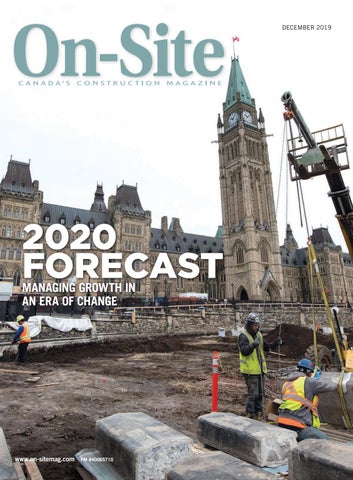
2020 FORECAST MANAGING GROWTH IN AN ERA OF CHANGE
www.on-sitemag.com
PM #40065710
Sand, water, sweat. Just a day at the beach.
Conquer any job with the #1 best-selling medium-duty truck in North America: the Freightliner® M2 106.* Powered by the dependable Detroit® DD5™ or DD8™ engine, it’s born to run circles around any jobsite. And its comfortable, ergonomic cab makes driving a breeze. The M2 106 is whatever you need it to be, every day. No matter what kind of sandcastle you’re building. Get moving at Freightliner.com/Versatile
*Based on Polk new truck registrations in U.S. & Canada for class 6-7 vehicles from 2012-2019. Competitive financing available through Daimler Truck Financial. For the Freightliner Trucks dealer nearest you, call 1-800-FTL-HELP. FTL/MC-A-1593. Freightliner Trucks is registered to ISO 9001:2008 and ISO 14001:2004. Specifications are subject to change without notice. Copyright © 2019 Daimler Trucks North America LLC. All rights reserved. Freightliner Trucks is a division of Daimler Trucks North America LLC, a Daimler company.
Now, one estimator accomplishes what it took two people to do before. LARRY BUTLER – TRAFFIC & LIGHTING SYSTEMS B2W Estimate
Break new ground, win more work and complete it more profitably with the unified ONE Platform for heavy construction estimating, operational workflows and business insight. HEAR LARRY’S SUCCESS STORY AND MORE AT B2WSOFTWARE.COM/LARRY
VOLUME 64, NO.7/ DECEMBER 2019
FORECAST 17 Managing growth in 2020 Positive momentum to continue, but industry needs to embrace change
IN THIS ISSUE 7 Comment
17
Megaprojects test industry’s capacity to deliver
10 News
The major developments
16 Construction stats The key figures
42
34 Ahead of the pack Canadian heading to finals of global operator challenge
35 Diesel demand On-Site’s 2020 work truck report
COLUMNS 58 Software
35
Improving data flows
60 Risk Technology and procurement
62 Contractors and the Law Duty of honest performance
59 Index of Advertisers
COVER PHOTO COURTESY OF PUBLIC SERVICES AND PROCUREMENT CANADA
CONCRETE ON-SITE 45
51
54
Strong growth continues at the Canadian Concrete Expo
Last year’s event was the show’s largest in a decade
The Ontario Concrete Awards celebrate some of the best in the industry
Prepping for year three
World of Concrete 2020
Concrete recognition
on-sitemag.com / 5
BUILT FOR BIG DREAMS AND SMALL SPACES. With Kubota’s KX and U-series excavators, you no longer need to choose between power and fuel economy, size and utility. Both series offer variations in operating weight, dig depth and blade size along with the hydraulic power and spacious operator cab you’re used to. With Kubota, there’s no need to flip a coin between power and function. Look forward, dig deep and dream big with Kubota.
kubota.ca | *Dealer may sell for less. Dealer order/trade may be necessary. Prices, payments and models featured throughout may vary by dealer. Some restrictions apply. See your dealer for complete details. Offers valid only at participating dealers in Canada and are subject to change, cancellation or extension at any time without notice or obligation. For all offers: taxes, applicable fees (including, but not limited to, governmental environmental fees, administration fees, set-up fees, dealer fees, and delivery fees), insurance and registration are extra. Freight is included. Dealer order/trade may be necessary. The minimum down payment of 10% required for financing offers on excavators. Specifications and features shown in this ad are based on the latest available information at the time of publication. Although descriptions are believed to be correct, accuracy cannot be guaranteed. We reserve the right to make changes at any time, without notice or obligation, specifications, accessories, materials, models, prices, payments and other information. Financing offer or cash discount available. KX040-4G with an MSRP of $78,133 financed at 0% APR equals $1,221 per month for 48 Months $19,533 down payment required. Cost of borrowing is $6,514.85 for a total obligation of $78,133. The cash discount will be deducted from the price before taxes; and (ii) may not be combined with special lease and finance rates offered by Kubota as part of a low rate interest program. All advertised finance rates are special rates. Cash Discount offers to take place at the time of purchase and are subject to change or cancellation without notice. Offer valid until December 31, 2019. See your participating Kubota dealer or visit www.kubota.ca for details.
COMMENT
Megaprojects test industry’s capacity to deliver
Get the latest construction news! Follow us on Twitter @OnSiteMag
Few and far between just a few years ago, multibillion-dollar infrastructure projects have become the norm in Ontario. With planning now underway for four new or extended transit lines in the Toronto area, Canada’s most populous province will be measuring large-scale building projects in the billions as opposed millions from here on out. Work on the all-new Ontario Line, the Yonge North subway extension, the Eglinton Crosstown West extension and the three-stop Scarborough subway extension is expected to take more than a decade and cost an estimated $28.5 billion. The series of big transit jobs offer Canadian contractors and subcontractors significant opportunity, but will severely test their ability to deliver in what’s already a hot market. The heads of provincial agencies Infrastructure Ontario (IO) and Metrolinx acknowledged the capacity issue last month at the annual conference of the Canadian Council for Public-Private Partnerships in Toronto. Ehren Cory, IO’s president and CEO, said staging will help the industry prepare the proper resources at the right time, but is unlikely to provide a complete solution. “When we look down the pipe, where it becomes more problematic is where you layer on not just our program, which is big in and of itself,” Cory said. “There are some significant health care-related projects also coming in the same time frame. Then there’s nuclear refurbishments going on in our market. And then there’s the private sector activity, which you only have to look around Toronto to see.” The early 2020s will be particularly troublesome when it comes to capacity issues, Cory said, citing a recent study. Currently, all four of the lines are scheduled to be delivered between 2027 and 2031. As the industry is well aware, the timelines
coincide with a worsening labour crisis in the skilled trades and wider construction sector. With Toronto and its suburbs continuing to swell, however, the two government agencies are pushing ahead with transit expansion in spite of the hurdles. “We are ploughing $4 billion worth of infrastructure into the region every year,” Phil Verster, president and CEO of Metrolinx, said “I need to push that up to six or eight billion in the years to come.” Contractors planning to take part in the rush to expand transit, as well as those nurturing a backlog of other work in the Toronto area, will need to step up their efforts to retain their current workforces and attract new staff. This includes recruiting workers currently calling other provinces home. A growing consensus around how public infrastructure is built is also likely to influence how this handful of upcoming Toronto megaprojects, along with others across the country, will be delivered. Increasingly, stakeholders at all levels of construction are working to approach projects more collaboratively and adjust how the burden of risk can be more fairly shared. If all goes well, these changes are expected to boost job site efficiency, ultimately allowing the industry to take on more work with fewer resources. Though tens of billions in new infrastructure work should let Canadian contractors add substantially to their backlogs, the influx of transit spending isn’t without its challenges. As you’ll read in our 2020 Forecast, embracing change, both on and off the job site, is almost certainly the best way forward for everyone with a stake in getting projects delivered.
David Kennedy / Editor dkennedy@on-sitemag.com
on-sitemag.com / 7
CONTRIBUTORS
MEET OUR CONTRIBUTORS FOR THIS ISSUE
www.on-sitemag.com / Fax: 416-442-2230
PUBLISHER | Peter Leonard (416) 510-6847 pLeonard@on-sitemag.com
MARIO CYWINSKI/ Editor, Machinery and Equipment MRO magazine and member of the Automobile Journalists Association of Canada (AJAC)
EDITOR | David Kennedy (416) 510-6821 dkennedy@on-sitemag.com
On what to watch for in the 2020 pickup truck market: “Safety and technology take centre stage for 2020, as many brands are adding features not usually seen on pick-up trucks in the past.”
MEDIA DESIGNER - TEAM LEAD | Lisa Zambri lzambri@annexbusinessmedia.com
ASSOCIATE EDITOR | Megan Hoegler (416) 510-5201 mhoegler@on-sitemag.com
ASSOCIATE PUBLISHER | David Skene (416) 510-6884 dskene@on-sitemag.com ACCOUNT COORDINATOR | Kim Rossiter (416) 510-6794 krossiter@on-sitemag.com CIRCULATION MANAGER | Urszula Grzyb (416) 442-5600 x3537 ugrzyb@annexbusinessmedia.com
JACOB STOLLER / Principal, StollerStrategies On data’s growing role on the job site: “As we enter the age of Industry 4.0, construction is still struggling with the age-old problem of getting information to flow between diverse apps. New technology won’t solve the problem, but it will help contractors work around it.”
Vice President | Tim Dimopoulos (416) 510-5100 tdimopoulos@annexbusinessmedia.com COO | Scott Jamieson sjamieson@annexbusinessmedia.com Established in 1957, On-Site is published by Annex Business Media 111 Gordon Baker Road, Suite 400, Toronto, ON M2H 3R1 Publications Mail Agreement No. 40065710 ISSN: 1910-118X (Print) ISSN 2371-8544 (Online)
DAVID BOWCOTT / Global Director – Growth, Innovation & Insight, Global Construction and Infrastructure Group at Aon Risk Solutions On technology’s role in evolving procurement models: “Springboarding off [a] technological foundation, project models that have not been widely adopted in the past, such as partnering, integrated project delivery, and alliancing may start to be utilized more frequently.”
Circulation email: apotal@annexbusinessmedia.com Tel: 416-442-5600 ext 3258 Fax: 416-510-6875 or 416-442-2191 Mail: 111 Gordon Baker Road, Suite 400, Toronto, ON M2H 3R1 SUBSCRIPTION RATES Canada $49.50 per year, Outside Canada US$87.00 per year, Single Copy Canada $13.50. On-Site is published 7 times per year except for occasional combined, expanded or premium issues, which count as two subscription issues. Occasionally, On-Site will mail information on behalf of industry-related groups whose products and services we believe may be of interest to you. If you prefer not to receive this information, please contact our circulation department in any of the four ways listed above. Annex Privacy Officer privacy@annexbusinessmedia.com Tel: 800-668-2374 Content copyright ©2019 by Annex Publishing & Printing Inc may not be reprinted without permission.
SONNY INGRAM / Borden Ladner Gervais LLP On revisiting the duty of honest performance: “Last fall, in CM Callow Inc. v. Zollinger, the Ontario Court of Appeal heard an appeal that may ultimately provide further guidance on how parties are to fulfill their duty of honest performance.”
On-Site receives unsolicited materials (including letters to the editor, press releases, promotional items and images) from time to time. On-Site, its affiliates and assignees may use, reproduce, publish, re-publish, distribute, store and archive such unsolicited submissions in whole or in part in any form or medium whatsoever, without compensation of any sort. DISCLAIMER This publication is for informational purposes only The content and “expert” advice presented are not intended as a substitute for informed professional engineering advice. You should not act on information contained in this publication without seeking specific advice from qualified engineering professionals.
MEMBER OF
Canadian Construction Association
8 / DECEMBER 2019
Build your profits with IoT. Measure project safety and productivity with valuable data.
telus.com/IotConstruction
INDUSTRY NEWS
INDUSTRY>NEWS Toronto signs onto province’s nearly $30B GTA transit construction plan The City of Toronto and the province of Ontario have endorsed a unified plan for building four new or extended subway lines in Toronto, ending a months-long standoff over the future of the city’s transit system. City council voted in favour of the province’s transit expansion plans Oct. 29, which will allow city staff to work with the province on future transit projects for Toronto. Specifically, city and Toronto Transit Commission (TTC) staff will collaborate with the province to advance construction of the Ontario Line, the Eglinton West LRT, the Yonge North Subway Extension and the three-stop Line 2 East Extension that will stretch the Bloor-Danforth line farther into Scarborough. The Ministry of Transportation estimates the Ontario Line will be completed by 2027; the Yonge North subway extension by 2029-2030; the Eglinton
The two levels of government agreed to cooperate on the four huge projects after a months-long standoff over how best to address Toronto’s transit issues. PHOTO: PROVINCE OF ONTARIO
Crosstown West extension by 2030-2031; and the Scarborough subway extension by 2029-2030. “With an agreement that balances city and provincial priorities, we begin a new era of cooperation and partnership that will make our government’s vision for subway expansion a reality,” Caroline Mulroney, minister for Transportation and Kinga Surma, associate minister of Transportation for the GTA said in a joint statement. As part of the agreement, and contrary to earlier plans to “upload” Toronto’s subway to the province, the city will retain ownership of the existing subway network and the TTC will remain responsible for
transit network operations. The provincial government, with help from the federal government, will allocate nearly $30 billion towards the new transit expansion projects. The city’s $5 billion contribution will go towards maintaining and repairing the existing transit system. “This is a deal that is good for our city,” Toronto Mayor John Tory said in a release. “As a mayor who was elected to finally get on with building transit and who was elected on a promise to work with the other governments, I believe this is our very best way forward.” The province will cover any overrun costs on the four projects.
Crews complete $1.9B Regina Bypass on time, on budget after four years of work The largest highway project ever undertaken in Saskatchewan officially wrapped up in late October as the 61-kilometre Regina Bypass fully opened to traffic. The $1.9 billion construction effort took four years, adding 37-kilometres of new four-lane highway while upgrading another two dozen kilometres of road. The bypass will allow through traffic on the Trans-Canada Highway to swing around Regina to the south. “The opening of the Regina Bypass is an important milestone for our province and will greatly improve the transportation of goods in and out of our province’s capital city,” Scott Moe, Saskatchewan’s premier, said in a release. “More importantly, the Regina Bypass will greatly improve the The full bypass route totals 61 kilometres, and diverts drivers south of Saskatchewan’s capital. PHOTO: SASKATCHEWAN MINISTRY OF HIGHWAYS AND INFRASTRUCTURE
10 / DECEMBER 2019
safety of our roads and highways for our families and industries.” Spurred, in part, by a high number of collisions at junctions just east of Regina, the project added 12 new interchanges and 33 new bridges and viaducts. As new segments of the road have come online, first responders have already reported safety improvements. Delivered through a P3 agreement, the $1.9 billion price tag for the highway project includes approximately $700 million for 30 years of maintenance on the new road. France-based Vinci took the lead on the design-finance-build-operate-maintain project with a 37.5 per cent stake in the Regina Bypass Partners consortium. U.S. engineering firm Parsons Enterprises and Toronto-based investment fund Connor Clark & Lunn each have a 25 per cent interest, while Graham Group Ltd. holds the remaining 12.5 per cent share. Construction started in summer 2015 and included three main segments to the east, south and west of Regina. Altogether, about 8,200 construction jobs were created over the four years of work. The build team also boasts a near-perfect safety record with a single lost-time incident despite five million hours worked.
The tower crane collapsed after buckling in the high winds from post-tropical storm Dorian.
Crews handling pieces of the downed crane in downtown Halifax earlier this month. PHOTOS: TRANSPORTATION AND INFRASTRUCTURE RENEWAL
Last remnant of storm-toppled crane removed from Halifax building after nearly two months Post-tropical storm Dorian wreaked havoc on the Halifax area this fall, downing power lines and damaging buildings. Amid the high winds, a construction crane in the city’s downtown swayed precariously before buckling, collapsing onto an under construction apartment building Sept. 8. The mass of twisted steel would remain in place for more than a month before engineering and construction crews could mobilize to remove it from a development known as the Olympus building. At the end of October, workers finally cut away the final pieces of the crane. “The work has required many long hours and painstaking planning,” said Lloyd Hines, the province’s Minister of Transportation and Infrastructure Renewal, when the final steel components were removed. To address the rare incident, the province had declared a localized state of emergency at the site Sept. 18. This shifted potential liability to the province if something went wrong as the crane was being removed and helped get the process underway quicker. A week later, Nova Scotia hired Harbourside Engineering Consultants Ltd. and R&D Crane Operator Ltd. to tackle the complex job. After plotting out how to safety remove the crane one component at a time, crews began the dismantling process by cutting away the tower crane’s catwalk Oct. 13. They followed that up by removing the front jib, counterweight jib and the top portion of the front boom the following day. With work ongoing, an evacuation order hung over the immediate area around the crane for weeks, sparking a proposed class action lawsuit on behalf of local residents and businesses. It wasn’t until nearly 10 days later when workers were able to safety take off the crane’s main tower, and on Oct. 26, the province said contractors had cleared the Olympus building of any crane components. With the wreckage removed a sense of normalcy is slowly returning to the city’s downtown.
π STRAPPING GOOD SELECTION
ORDER BY 6 PM FOR SAME DAY SHIPPING
1-800-295-5510 uline.ca
on-sitemag.com / 11
INDUSTRY NEWS Two big building projects get underway as downtown Montreal keeps evolving Montreal’s skyline is about to get taller. A pair of major construction projects – one that will become the city’s largest mixed-use residential development and the other a new campus for a prominent business school – got underway this fall. In late September, a team of developers made up of Devimco Immobilier, the Fonds immobilier de solidarité FTQ and Fiera Real Estate broke ground on the Maestria project, which was first announced last year. The $700 million development includes two towers that will stand 57 and 61 storeys and house a combined 1,750 units. Located at St. Catherine Street and Bleury Street in downtown Montreal, the first of the two new towers will be built on the site that once housed well-known concert venue, Spectrum de Montreal. Along with the residential units, the development will have a public plaza for retail
shops, several restaurants, a virtual-golf room and a “Skylounge” with terraces, among other features. Edyfic Construction, a subsidiary of Devimco, will oversee the job as the general contractor. As in Canada’s other major urban centres, construction in Montreal is bustling as 2019 draws to a close. Crews began work on another major building in the city’s downtown in October. University of Montreal affiliate HEC Montreal started construction Oct. 16 on a new 24,000 square-metre (approximately 260,000 sq. ft.) facility on the corner of Rue de la Gauchetière and Beaver Hall Hill, next to St. Patrick’s Basilica. The business school said the new building, which will include 27 classrooms, a 300-seat auditorium and a conference centre, will help it address a “serious shortage” of space at the
school’s current campuses. The location in the city’s business district also aims to strengthen the school’s ties to the business community. Magil Construction, which is based in Montreal but has operations across the country, will take the lead on the project as the general contractor, while WSP Canada Inc. will serve as a project manager. Provencher Roy Associés Architectes Inc. took care of design for the building, which slopes down a relatively steep section Beaver Hall Hill toward Rue de la Gauchetière. The plans preserve large sections of the green space currently surrounding St. Patrick’s. The project will reconfigure the block, however, requiring the demolition of several low-rise buildings and a small above-ground parking lot. The new building will stand next to the gothic revival church built in the mid-1800s. Among other benchmarks, HEC Montreal is aiming for a LEED Gold certification on the project. At least 30 geothermal wells, several green roofs and electric vehicle charging stations are included in the design. Work on Maestria is scheduled to wrap up by 2023, while the new business school campus is scheduled to open in spring 2022.
Above: Officials from HEC Montreal and government broke ground at the construction site Oct. 16. PHOTO: HEC MONTREAL Left: The first of Maestria’s two towers will be built on a site that once housed well-known concert venue, Spectrum de Montreal. PHOTO: RES PUBLICA CONSULTING GROUP
12 / DECEMBER 2019
Pomerleau, Bessac win $184M tunnelling contract for Metro Vancouver wastewater plant upgrades Metro Vancouver has taken the next major step in its years-long project to upgrade the Annacis Island wastewater treatment plant in Delta, B.C. The federation that oversees water and wastewater in the Vancouver area has awarded a $184 million contract to Pomerleau Inc. and Bessac, which is a unit of Soletanche Bachy and ultimately, France-based Vinci Construction. Metro Vancouver awarded the contract earlier this year, but Vinci disclosed the deal Oct. 16. The Pomerleau Bessac General Partnership will be responsible for building a new outfall pipeline for the treatment plant on Annacis Island, a largely industrial island in the Fraser River southeast of Vancouver. The wider upgrade project, known as the Stage 5 Expansion, has been underway for An aerial shot of the wastewater plant several years and is expected to cost highlighting the first two approximately $1 billion. phases of the ongoing Among other stages of work, a joint expansion project. PHOTO: METRO VANCOUVER venture between Aecon Group Inc. and Graham Group Ltd. are currently expanding the facility’s primary sedimentation tanks, solids contact tanks and secondary clarifiers to accommodate the area’s growing population. This $252 million part of the upgrade project got underway in 2017 and is expected to continue through 2021. Construction of the new outfall system will overlap with the ongoing work to expand the wastewater plant that serves 14 municipalities across the Lower Mainland. Vinci said the project consists of digging two access shafts, each about 40-metres deep, as well as building two segment-lined tunnels 4.2-metres wide and, respectively, 580 and 200 metres long. The tunnels will eventually house a new outfall pipe that will discharge treated wastewater into the river. Work on the the treatment plant’s diffuser and water control systems are also part of the project. The piping and diffuser system is designed to discharge treated water from the plant across a large area of the river to maximize dilution and minimize any impacts on the environment. Construction on the outfall is scheduled to wrap up by 2024. Meanwhile, work on the final phases of the Stage 5 Expansion project will run until 2026. Metro Vancouver said it has yet to tender contracts for two new trickling filters and an associated trickling filter pump station; a new centrifuge; two new gravity thickeners; and a new maintenance facility. on-sitemag.com / 13 OS_Dec19_AHES1.indd 1
2019-11-20 2:26 PM
INDUSTRY NEWS Mobilinx consortium firms up $4.6B deal to build, maintain 18-kilometre Hurontario LRT Infrastructure Ontario, Metrolinx and a P3 construction team have finalized the multibillion-dollar contract for the Hurontario light rail transit system. Designed to run 18 kilometres through the heart of Mississauga and part of Brampton, Ont., the $4.6 billion line is the latest in a series of big-ticket Toronto-area transit projects. The two crownowned entities had picked the Mobilinx construction consortium as the preferred proponent for the job in August, but the deal did not close until Oct 21. The contract totals $4.6 billion, and of that, $2.1 billion will be spent on the construction stage of the project, according to Infrastructure Ontario. Mobilinx’s scope of work covers the design, construction and financing of the transit line, as well as operations and maintenance over a 30-year term. After several scope changes to the original design, which dropped a three-
14 / DECEMBER 2019
stop loop in downtown Mississauga and a connection to downtown Brampton, the LRT is expected to run from the Port Credit GO Station near Lake Ontario to the Gateway Terminal at Steeles Avenue in Brampton. The route includes 19 stops along dedicated lanes. Mobilinx will also be responsible for the construction of a light rail vehicle maintenance and storage facility at Highway 407. Pre-construction for the LRT is already underway, as is the final design work. Construction activity will ramp up once the design is signed off on. At peak, Mobilinx anticipates the project will create 800 construction jobs. The new light rail line is expected to begin carrying passengers in fall 2024.
A rendering of the new 18-kilometre LRT that will run through Mississauga and Brampton. PHOTO: TRANSDEV
Slight scale-backs to the new light rail network Ontario transit agency Metrolinx revised the route of the Hurontario LRT earlier this year, most notably chopping off a downtown loop included in the original plans. The provincial crown agency pointed to “potential” budget pressures and “a more convenient route” as the motivation for the change. The redrawn LRT map simplifies the original plan by eliminating the Mississauga city centre loop that included three stops and circled the Square One Shopping Centre. The main 18-kilometre route running along Hurontario between the Port Credit GO station and the Brampton Gateway Terminal will remain intact. Along with the significant rerouting, the province put a pedestrian bridge originally planned for the LRT’s Cooksville stop on hold. It also made changes to the street-scaping along the entire right-of-way.
McKenna to take over infrastructure file after four contentious years on environment
McKenna has served as a lightning rod on the environment file with her championing of the federal carbon tax. PHOTO: PMO A map of the First Nations to be connected to the grid as part of the transmission line project. The power lines will run about 1,800 kilometres through a sparsely-populated area north of Thunder Bay. PHOTO: PROVINCE OF ONTARIO
Valard to start work on $1.9B Wataynikaneyap Power project that will connect 17 Ontario First Nations to grid More than a dozen remote First Nations communities across Northern Ontario are poised to shut down their diesel generators for good over the next four years as work gets underway on the $1.9 billion Wataynikaneyap Power project. Utility contractor Valard Construction – a subsidiary of U.S.-based Quanta Services Inc. – was given the green light Oct. 29 to start construction on the power line that will stretch approximately 1,800 kilometres through a sparsely-populated area of northwest Ontario. The go-ahead followed Wataynikaneyap Power reaching financial close on the project, which included a $1.3 billion loan from the provincial government. The transmission company is majority-owned by 24 First Nations communities, while Fortis Inc. and other private investors hold minority stakes. “Today marks a significant milestone for the 17 First Nations communities who will be connected to the main electricity grid
in Ontario for the first time,” Barry Perry, Fortis’ president and CEO, said in a release. “We are proud to work with our First Nations partners to bring cleaner and more reliable energy to their communities.” Along with significantly cutting costs by eliminating the need to truck diesel to the communities, the project will decrease Ontario’s greenhouse gas emissions by connecting the First Nations with a combined population of about 14,000 people to the far greener and more reliable electricity grid. Wataynikaneyap Power anticipates the project will create 769 jobs during construction. Valard, which was awarded the engineering, procurement, and construction (EPC) contract for the project in September, is responsible for the design, as well as procuring the materials, equipment and labour to build the transmission line. The project is scheduled to be complete by the end of 2023.
After four years on a portfolio rife with conflict, Ottawa Centre MP Catherine McKenna will be taking over the infrastructure file from Francois-Philippe Champagne. Prime Minister Justin Trudeau laid out his new cabinet Nov. 20 at Rideau Hall in a swearing-in ceremony alongside Gov. Gen. Julie Payette. McKenna served as environment minister for Trudeau’s entire first term and was tasked with overseeing the federal carbon tax plan. Forcing the plan on provinces that didn’t initiate an equivalent system of their own led to considerable criticism from opponents of carbon pricing. The plan remains divisive and several provinces have launched legal challenges against it that remain ongoing. As the new minister of Infrastructure and Communities, McKenna will steer the government’s approximately $190 billion infrastructure plan through the mid section of its 12-year duration. Francois-Philippe Champagne, meanwhile, will become Canada’s minister of foreign affairs. He spent about 18 months on infrastructure after being dropped into the post during a July 2018 cabinet shuffle. on-sitemag.com / 15
Workers Employed in Construction by Month
CONSTRUCTION STATS
2018
A selection of data reflecting trends in the Canadian construction industry
CONSTRUCTION INDUSTRY LOSES 21,300 JOBS IN OCTOBER, LED BY DECLINES IN QUEBEC, ONTARIO A loss of 21,300 construction jobs in October pushed overall employment in the industry down to about 1.46 million, according to the latest data from Statistics Canada – translating to a construction labour market only marginally ahead of where it was 12 months ago. The seasonally adjusted figures compare with a solid gain a month earlier and to the overall Canadian economy holding steady with a statistically insignificant loss of 1,800 jobs across all industries. Construction employment fell in five provinces through October, Statistics Canada said, with Quebec and Ontario the largest contributors to the 1.4 per cent decline in jobs. Year-over-year, 17,400, or 1.2 per cent more people were employed in construction in October than in the same month last year.
2019
January 1,433.9 February 1,433.9 March 1,452.2 April 1,433.3 May 1,420.3 June 1,447.5 July 1,435.2 August 1,418.8 September 1,446.8 October 1,443.4 November 1,458.2 December 1,453.4 January 1,444.9 February 1,438.3 March 1,435.9 April 1,465.1 May 1,456.5 June 1,449.1 July 1,474.1 August 1,472.0 September 1,481.8 October 1,460.5 In thousands of workers, seasonally adjusted SOURCE: STATISTICS CANADA
LABOUR CRUNCH ADDS TO BUILDING CONSTRUCTION COSTS IN THIRD QUARTER Construction prices for residential and non-residential buildings were up 0.6 and 0.5 per cent, respectively, in the third quarter. Statistics Canada, in its latest analysis, pointed to skilled trades shortages as one cause of the uptick. Non-residential contractors in Montreal, Ottawa and Toronto all cited labour as a reason for higher costs. Non-residential building prices are up considerably from last year, led by Montreal, where costs have risen four per cent year-over-year. Ottawa follows closely behind with a 3.8 per cent gain over the past 12 months.
PER CENT INCREASE IN NON-RESIDENTIAL BUILDING COSTS
QUARTER INCREASE
2017
Q1 0.9
Q2 0.8
Q3 0.6
Q4 0.8
2018
Q1 0.9
Q2 1.4
Q3 1.6
Q4 1.1
2019
Q1 0.8
Q2 0.6
Q3 0.5
16 / DECEMBER 2019
AVERAGE WEEKLY EARNINGS FOR AUGUST YEAR
CONSTRUCTION INDUSTRY
ALL CANADIANS
2019
$1,321 $1,271 $1,211 $1,210 $1,208 $1,222
$1,035 $1,006 $978 $958 $945 $939
2018 2017 2016 2015 2014
HOW DO CONSTRUCTION WAGES STACK UP? The average weekly earnings for workers in the construction industry has continued to climb over the past year. According to the latest figures from Statistics Canada, workers earned an average of $1,321 this August, compared with $1,271, or 3.9 per cent less, in 2018. The growth outpaces salary increases for the overall Canadian workforce. Seasonally adjusted, the average Canadian made $1,035 this August, versus $1,006 12 months earlier. Among Canada’s 10 largest industries, wages in construction have grown the most over the past year.
$
SOURCE: STATISTICS CANADA
MANAGING GROWTH
REGIONAL OUTLOOK PG. 22
TOP 10 TRENDS PG. 31
2020 FORECAST
PHOTO: PUBLIC SERVICES AND PROCUREMENT CANADA
PG. 20
on-sitemag.com / 17
One platform to connect everything and everyone. Manage your projects, resources, and financials on one open, easy-to-use platform—designed for how you actually build. With every stakeholder working off the most up-to-date information, Procore helps you cut back on rework and concentrate on the real work.
The majority of Procore customers
20+
report that their project staff save 20+ hours per month.
90% %
92% %
90% say their client satisfaction has increased since using Procore.
92% say their company is more protected against claims due to the data tracked by Procore.
“
We have one measure of success— your success.
“Everybody who works at Procore is fantastic. There’s been much more support than we expected, and we think
”
that’s probably the best part of Procore. They listen to
their customers and really try to improve the software.” TANG LEE MAGIL CONSTRUCTION
procore.com | 866 477 6267
2020 FORECAST
WELCOME LETTER
P
rocore is proud to sponsor On-Site Magazine’s 2020 Forecast report, which looks at the major Canadian construction trends industry leaders are watching for in the upcoming year. As the leading provider of construction management software, we are aware and mindful of the challenges owners, general contractors, specialty contractors and engineers can face. With issues like the skilled labour shortage, the gender gap and the lack of technology, now is the time for the construction industry to embrace change. It would be impractical to expect the industry to be able to continue growing in its current form without innovating operationally and looking at ways to boost productivity – all of which ties back to adopting and effectively leveraging technology and the insights it drives. There has never been a better time to embrace change. This will enable the industry to keep pace with increasing complexity and do more with less. It’s not too late to start the journey towards a digital transformation of your business. We can use this report to help us identify specific market signals, and build an agile and enduring business that can effectively weather what 2020 has in store for us. Sincerely,
Jas Saraw Vice President, Canada Procore Technologies
on-sitemag.com / 19
MANAGING GROWTH Positive momentum to continue in 2020, but industry needs to embrace change BY DAVID KENNEDY
A
steady stream of building projects in most regions of Canada, and particularly within its big urban centres, have kept the construction industry busy through the second half of 2019. Though concerns about how long growth can continue persist, much of the same is forecast for the year ahead, with most industry experts seeing the nationwide outlook for 2020 as positive, or at least steady. In a country as large and as diverse as Canada, there are exceptions. Certain provinces are expected to just hold their own over the next 12 months, or see slight declines in activity. The continued muted performances of the oil and gas and resource sectors, for instance, mean the Prairie provinces will be getting little help. In Atlantic Canada as well, industry watchers see few catalysts that will propel
20 / DECEMBER 2019
the building market beyond neutral. Elsewhere, most see reasons to be optimistic growth will continue. As has been the case in recent years, significant expansion in cities – Montreal, Ottawa, Toronto and Vancouver most notably – will likely lead the way, fuelled by new residential and commercial builds, as well as a laundry list of multibillion-dollar infrastructure projects vital to supporting growing populations. The positive sentiment comes with an asterisk. For the most part, the construction industry and its labour force have been able to absorb burgeoning demand across the country over the past several years. In 2020 and beyond, this may begin to change. As fewer young workers embrace construction and a large cohort of industry veterans step out of their steel toes for good, experts agree that simply maintaining the status quo isn’t an option. Along with
changes that will make the industry more welcoming to groups that have traditionally shunned working on job sites, the industry needs to take steps to increase productivity. New technologies, innovative operational processes and methods that force stakeholders to take a more collaborative approach to projects all have a role to play in Canada’s construction industry recalibrating itself to meet the demands of the modern world.
ACROSS THE COUNTRY From a national perspective, there’s no immediate shortage of work heading into 2020. “The industry is very busy overall,” says Gary Webster, a partner at KPMG, as well as the firm’s national head of Infrastructure for Canada and the global head of Capital Projects Leadership. “If you look at the supply
2020 FORECAST
PHOTO:METROLINX
Work on the new Avenue Station on Toronto’s Eglinton Crosstown LRT. Construction above and below gound is progressing on the transit megaproject, which is scheduled to open in 2021.
side, there are more projects, it seems, than there is demand side to deliver them these days.” “There is so much out there that contractors are taking informed choices,” he adds, noting that some large public jobs are down to a single bidder, or even no bidders at all, as contractors pick and choose what they want to work on. Gerard McCabe, managing director for Turner & Townsend Canada, is similarly bullish for the industry in 2020. “We’re certainly not growing at the rates overall that we were a few years ago, but it feels positive,” he says. With the federal election now in the rear view and a strong minority entrenched in Ottawa, McCabe anticipates a bit more stability in the coming months. “I think it’s fairly safe to say that it feels like for the next year or two, that government will stay and the provinces
are fairly well settled.” Further investments in infrastructure could also help mend fences between certain segments of the country following the election, says Mary Van Buren, president of the Canadian Construction Association. “With the polarization that we’re seeing politically [and] regionally, infrastructure is such a great uniter,” she says, adding that a significant portion of Canada’s existing infrastructure still needs work. Van Buren pointed to the 2019 Canadian Infrastructure Report Card, which found that about 40 per cent of Canada’s roads and bridges are in fair, poor or very poor condition. Though prospects are generally good for builders next year, where you look in the country is a factor. Toronto’s skyline, for instance, is dotted with more cranes than any other city in North America. The same
can’t be said of the Prairies, where next year’s outlook is less optimistic. Paul De Jong, president of the Progressive Contractors Association of Canada, is more cautious in his forecast for the industry in 2020. “I think there’s a lot of headwinds that we’re facing still,” he says. “Until we have more clear and committed political leadership and the ability to demonstrate to investors that we are a fit and a vibrant industry that is worth the investment, I think the construction industry is going to be facing the wind.” De Jong points to the passing of bills C-48 and C-69 earlier this year, which placed a moratorium on oil tankers on B.C.’s northern coast and overhauled the country’s environmental review process, as major obstacles for construction as a whole. He acknowledges the industry covers a far wider scope than just the energy sector, but feels the effects will trickle down across the country. “If [the energy] industry is constrained, I have grave concerns about the level of economic activity in general in Canada,” he says. “You see fewer dollars going into provincial and federal coffers… and you see corporate and institutional investors looking at Canada with a doubtful eye and wondering if it’s really a healthy place to do business.” Having taken the temperature of countless contractors over the last few months, Douglas Correa, executive vice-president of Global Specialties and national leader of the Construction Services Group at Aon Canada Inc. is cautious in his outlook for 2020 as well, particularly when it comes to smaller contractors that don’t play in larger arenas, such as the P3 market. “I’m not hearing a lot of the sky is falling, but I’m hearing a lot of pessimism rather than optimism,” he says, adding that after years of strong economic growth, contractors are viewing 2020 with more trepidation than they have any other year in the past five.
on-sitemag.com / 21
2020 FORECAST
Regional outlook A look across Canada at what experts are watching next year, as well as a survey of economic expectations, which are typically a good indicator of construction activity
BRITISH COLUMBIA There are few causes for concern on Canada’s West Coast. Between LNG work, pipelines and big civil projects such as the new Pattullo Bridge and the Broadway Subway Project in Vancouver, “B.C. will continue to be busy,” Webster says. “There are some new projects that could hit the street as well.” Construction on the Site C project in northeastern B.C. is also scheduled to continue well into next decade. Work on the substantial earthworks required to support the $10.7 billion dam on the Peace River are already well underway. The real estate market in the Vancouver area and the strong demand for multi-unit residential is another driver. In its most recent Provincial Outlook, released in mid-October, Scotiabank forecast B.C.’s real GDP to advance 2.8 per cent next year.
ALBERTA After several years in the doldrums, Alberta’s economy is forecast to finish 2019 little changed, but is poised to perform better next year. In a recent research note, RBC Economics says it expects the province’s real GDP to grow 1.9 per cent in 2020. Likewise, Bill Ferreira, executive director of construction research organization BuildForce Canada, expects greater consistency for the province’s labour force. “Alberta does seem to be through the worst,”he says. “We are now hitting a period of greater stability.” That doesn’t mean there aren’t challenges. Coming off a slowdown, the province’s construction market is already running at lower capacity than those in other provinces. Recent developments – most notably the provincial government reining in spending on light rail lines in Calgary and Edmonton – could also force the two cities to slow down these public transit projects considerably. “With the austerity measure that the government of Alberta has taken, they’re going to be reducing investment in infrastructure or at least delaying investment in infrastructure,” McCabe says. “So, that is not going to help what is already a fairly difficult construction market.” McCabe does not anticipate Alberta will climb out of its slow construction period until pipeline projects can get off the ground and oil prices begin to inch back up.
22 / DECEMBER 2019
SASKATCHEWAN With crews completing the $1.9 billion Regina Bypass this fall and low levels of investment expected to continue in the oil and gas and resource sectors, Saskatchewan builders are likely looking at a limited number of major projects in 2020. Insiders expect the building market to remain steady, though this translates to little change in what’s already a down market. “In Saskatchewan we’re not seeing much of anything happening,” Ferreira says. “It’s fairly consistent with last year’s forecast, unfortunately.” In its most recent annual report, BuildForce noted Saskatchewan has lost more than 7,000 construction jobs since the resource sector peaked in 2014. The residential segment of the market will offer little help. The Conference Board of Canada expects housing starts to be under 1,400 next year, just above the post-recession high of 1,200 projected for 2019.
MANITOBA Construction reaching completion, or beginning to wind down, on several long-running projects, most notably the Keeyask Generating Station in the northern part of the province and a segment of Enbridge’s Line 3 pipeline, will take their toll on Manitoba’s building market in 2020. In a research note this fall, TD Economics said it expected to see non-residential investment decline next year with major project work slowing. Overall, the bank forecast real GDP growth of 1.7 per cent next year. De Jong, likewise, sees some construction activity continuing across the province, but few new major sources of work. Construction ramping up on the approximately 200-kilometre Manitoba-Minnesota Transmission Project, worth $453 million, is one exception that will provide some positive momentum.
QUEBEC
ONTARIO A construction market already running close to full steam and a substantial load of new work for 2020 and beyond mean Canada’s most populous province will remain very busy. “The real estate market just continues to defy all odds... in the Greater Toronto Area, but the activity across the province of Ontario is very high in all regions,” Ferreira says. “There’s been a slight uptick in mining interest in the north, the southwest remains very busy with a number of major projects both projects in Sarnia, the bridge in Windsor [and] a new food processing facility in London.” In Toronto, the slate of building projects remain diverse. Work on the Eglinton Crosstown LRT is progressing above and below ground, while new large-scale residential, commercial and institutional projects continually add to company backlogs. If the province-led initiative to build four new or expanded transit lines worth about $30 billion moves forward, it will keep infrastructure construction crews busy for at least another decade. Strength in the Ottawa market is expected to continue as well, between residential, transportation infrastructure and government rehabilitation work. McCabe pointed to the overhaul of Centre Block on Parliament Hill – that’s been described as the “largest, most complex heritage rehabilitation” ever undertaken in Canada – as one prominent example. Few insiders have any concern for the Ontario construction market, with the exception of uncertainty about where contractors will find the labour force to take on new projects. In a November research note, RBC said it anticipates the province’s real GDP growing by 1.5 per cent in 2020.
The outlook in Quebec is positive, with Montreal leading the way. Webster singled out work on the city’s port, airport and transit infrastructure as key areas to watch. Construction on the Réseau express métropolitain, or REM, is already underway and early prep work for the extension of the Metro’s blue line could start as early as next spring. As in the country’s other urban centres, the tight Montreal real estate market and increasing need for density is also driving residential development activity. Outside Montreal, construction is expected to remain steady. Strong real GDP growth in Quebec has outpaced much of the rest of the country in recent years. Though its pace of economic expansion is expected to slow slightly in 2020, Scotiabank still anticipates the province to record 1.6 per cent growth.
ATLANTIC CANADA There’s not a “big boom” of new projects coming to Atlantic Canada in 2020, but all parties view the East Coast market as relatively steady. Some provinces are forecast to do better than others. In Newfoundland and Labrador, major projects, such as the Muskrat Falls dam that brought an influx of workers to the province, are expected to begin winding down after years of work. “Newfoundland and Labrador is coming off an exceptional period of investment that required an increase to its non-residential labour force,” Ferreira says. “We’re now readjusting back to a more normal level of activity.” With few drivers, experts expect similarly slow forward momentum in New Brunswick. Stronger growth is forecast for Nova Scotia, and for Halifax in particular. With a growing population and real GDP growth of 2.1 per cent expected for the city in 2020, according to the Conference Board of Canada, builders will be kept busy on residential work. Several health care projects are also moving through procurement in Nova Scotia and an investment decision on the multibillion-dollar Goldboro LNG project is expected next year. Though it remains a small market, population growth in P.E.I. continues to fuel new infrastructure projects and the construction market. The province plans to spend about $156 million on infrastructure in 2020.
on-sitemag.com / 23
2020 FORECAST
Transit tunnel construction in Toronto. A major expansion of the city’s subway network is one of the many building programs to watch in 2020 and beyond.
Certain pockets of the country are busier than others, but overall, the relatively healthy economy and long list of major new projects scheduled to get underway in 2020 and beyond mean securing work is unlikely to be the construction industry’s biggest challenge. When it comes to finding and retaining workers, the industry is on looser ground. If stockpiles of key materials, such as steel or concrete, begin to run low, suppliers can typically increase production capacity to meet demand. The supply of labour, McCabe notes, is far more temperamental. “The level of skilled resources is decreasing over time and it doesn’t seem to me as if we’re doing enough about it,” he says. “We’re just waiting for something to change, but we’re not actually doing anything to make the change.”
24 / DECEMBER 2019
‘‘
The issue is well documented and while industry advocates are undeniably focussing on addressing it, the impending wave of retirements is daunting. In its most recent assessment, BuildForce, which publishes nationwide figures on the topic annually, expects the industry will need to attract about 80,000 more workers over the next decade than it currently expects to. A new batch of data will be available in early 2020. Along with the sheer numbers, the breadth of the shortage raises alarm bells. “It’s at all levels of the demand side,” Webster says. “From management, down though the trades to the labourers, there’s a shortage.” Without an adequate workforce at its foundation, the industry won’t be able to deliver on the significant pipeline of new projects. Solving the problem will require new
“It’s at all levels of the demand side. From management, down through the trades to the labourers, there’s a shortage.” – Gary Webster, KPMG
innovations and a willingness to adopt new ways of thinking. “Five to 10 years in the future, if we adopt technology correctly, there’ll be many more construction sites,” Webster says. “There probably aren’t many more people employed in the industry, but those people that are will be on more construction sites because productivity increases will allow more to be built.”
PHOTO: METROLINX
A SHAKY FOUNDATION
PER MONTH POWER THROUGH THE HARSH CONDITIONS WITH PRODUCTIVE AND RELIABLE SNOW REMOVAL EQUIPMENT.
5 years or 5000 hour warranty
3.5yd3
48 hours
capacity and standard exclusive guaranteed limited slip front and uptime agreement rear differentials
√ NO DPF √ NO UREA √ NO REGENERATION √ WINTER TIRES INCLUDED
* Please see terms and conditions on our website
Contact us today!
For more details visit go.wajax.com/zw180
XXXXXXXX
Construction of Montreal’s new REM, another of Canada’s major transit infratructure initiatives crews are currently working on.
Just under 10 years ago, the first iPad hit the market. Today, it’s tough to find a construction site without one. For an industry notoriously behind the times, the transformation has been a bolt from the blue. Following this example, experts see Canadian builders embracing tools such as building information modeling (BIM), drones, automated equipment and machine learning, with increasing frequency in the year ahead. Most expect novel equipment and software systems to boost worker productivity and help the
26 / DECEMBER 2019
PHOTOS: REM
THE RISE OF TECH
‘‘
2020 FORECAST
“We could use technology far better than we are using it right now, but at the end of the day, we need skilled trades, we need skilled engineers, management staff, all the way through the hierarchy of how we deliver projects.” – Gerard McCabe, Turner & Townsend
industry mitigate some of the worst effects of the labour crisis. “We’re seeing that dialogue shift in the perception of technology and the need for construction project management technology,” says Jas Saraw, vice-president of Procore Canada. “It’s almost like it’s become table stakes for the industry. We’ve got this massive amount of data that we have to consume and we’ve got a level of complexity that’s increasing daily on the types of jobs that contractors are running.” Among other benefits, software capable of making use of job site data can save valuable time, often letting existing crew refocus on tasks machines can’t do.
“Technology is an enabler, whether that’s augmenting processes, helping people become more productive, or that’s investing in technology that can automate where workers just aren’t available,” Van Buren says. While workers in other industries – manufacturing being one prominent example – have seen their productivity nearly double since the 1990s, global construction productivity has barely budged, according to McKinsey & Co. Insiders see this trend beginning to change as technology companies purpose-build more solutions for construction. “There’s been a big shift over the past five years for the construction industry to find technology,” Correa says, “and suppliers with the industry are bringing technology solutions to projects.” The lively construction tech start-up scene in both Canada and around the world is a case in point. With high levels of venture capital funding available to innovative new companies, contractors are getting custom tools and services that solve long-nagging issues. So far, adoption remains inconsistent, with some contractors aggressively investing in new job site tech and others content to pull in just the tools that have proven themselves invaluable. Before long, however, Webster anticipates those shifting too slowly will be left behind. “If our contractors don’t adopt it now, there’ll be new players that come in. We’re seeing technology companies experiment in construction techniques right now,” he says, adding that tech firms aren’t necessarily looking to become builders, but are
innovating more quickly. “They will take over the construction sites of the future if we don’t smarten ourselves up.” Tech is guaranteed to play an ever-increasing role in construction, but it’s doubtful it offers a complete answer to the labour crunch. “I think we could use technology far better than we are using it right now,” McCabe says, “but at the end of the day, we need skilled trades, we need skilled engineers, management staff, all the way through the hierarchy of how we deliver projects.”
LEVELS OF SOPHISTICATION The need for change goes well beyond the job site itself. “We’re not that sophisticated,” McCabe says. “The industry needs to evolve beyond where it is right now and do business in a different way – whether it’s using technology, whether it’s changes in how we procure construction work… to how we negotiate construction contracts.” The diverse list of challenges require a diverse set of solutions, but all revolve around bringing a higher level of sophistication to construction processes. The low-cost bid framework that still dominates much of the public sector, for instance, certainly limits job site experimentation. It may also be holding the industry back. “What we’d like to see is more piloting [and] a little bit more room for including innovation within the project itself,” Van Buren says. “Whether that’s trying out new materials, whether that’s investing in technology, whether that’s new processes
on-sitemag.com / 27
“I can see updates to any plan—in real time?” You heard right. With Bluebeam, project partners around the world can all work from the same plan — at the same time. Life-changing software bluebeam.com
© [AGNORMARK] / ADOBE STOCK
2020 FORECAST
‘‘
“You can get performance by having a big stick, or you can get performance by having value that is shared and gains that are shared.” – Phil Verster, Metrolinx
that can be tried, or new ways of working together.” Van Buren says the CCA would like to see the Infrastructure Bank step in and play a role in this arena, helping to de-risk projects that test new methods. Other countries have already started moving away from the low-cost bid environment in favour of more nuanced approaches. Webster points to New Zealand as one example. This fall, the country introduced a so-called “broader outcomes” framework that takes more into account than just a low cost to the public purse. In conjunction with this price point shift, increasingly, stakeholders throughout the construction pyramid are abandoning traditional top-down project models for a more collaborative approach. “The traditional way is owners will police contracts and so that automatically creates an adversarial relationship in the delivery,” Webster says. “Contractors don’t know the challenges that owners go through to get projects approved… Conversely, owners don’t really understand the challenges of the contractors,” he adds. “When you get this collaborative contract that they’re working together to those ends, all of a sudden, you’re seeing a different view, you’re able to solve problems better.” Integrated project delivery (IPD) and early contractor involvement (ECI) are just two examples of new strategies being used to deliver jobs. Insiders expect the appetite for these alternative procurement models will only increase in 2020 and beyond. In Ontario, for instance, provincial agencies Infrastructure Ontario and Metrolinx recently awarded the Canadian sector’s first Alliance contract for an upcoming expansion of Toronto’s Union Station. At the annual conference of the Canadian Council for Public-Private Partnerships this November, Phil Verster, president
and CEO of Metrolinx, said all segments of the industry need to do a better job working in partnership with one another. “That requires that we have a contracting structure that is more incentivizing rather than penalizing,” he said. “You can get performance by having a big stick, or you can get performance by having value that is shared and gains that are shared.” Slowly, these sort of approaches are taking root. Often they’re helping to address other long-nagging issues, such as the burden of risk. “Projects are seeing more and more risks added to them and I would say stakeholders within projects are looking for ways to mitigate risk,” Correa says, adding that all levels of the industry are experimenting with a range of tools that adjust how jobs are delivered. “The essence of it is, much more collaboration on the front of the projects, so the surprises don’t occur procuring and on the back end.”
For more information and to secure your space, please contact: MARK CUSACK, National Show Manager mcusack@mpltd.ca • Toll Free: 1.888.454.7469
on-sitemag.com / 29 OS_Dec19_AHES2.indd 1
2019-11-20 2:26 PM
2020 FORECAST
10 CONSTRUCTION TRENDS TO FOCUS ON IN 2020
1. INFRASTRUCTURE AS AN ENABLER OF NATION-BUILDING At a time of Canadian domestic polarization and lackluster performance among OECD countries, we have the opportunity to invest in infrastructure to stimulate weak provincial economies and build the Canada of the future while tapping into the emerging millennial workforce and technology.
2. INFRASTRUCTURE IN CRISIS The 2019 edition of the Canadian Infrastructure Report Card (CIRC) reveals the country’s public infrastructure requires urgent attention to reverse its current state of disrepair. Government policies supporting contractors and commitments to long-term infrastructure investments can bring much needed stability to the industry.
3. THE WAR FOR TALENT Construction is facing a critical workforce shortage. Not only are firms competing with each other for highly skilled talent, the industry is competing with virtually all other sectors of the economy. Despite the variety of careers available, the industry is not seen as an employer of choice.
4. SAFETY CULTURE Safety is a priority for construction firms and this culture is being led from the top. The goal is to raise the bar for all.
© [HODA BOGDAN] / ADOBE STOCK
C
anadian contractors enter 2020 with most experts optimistic about their prospects. Still, changes in technology, political divisions and the sheer scale of many new building projects will present both opportunities and challenges. These are the top trends the Canadian Construction Association and its President, Mary Van Buren, are keeping tabs on in 2020.
5. RISK TRANSFER LEAVES NO ROOM FOR INNOVATION Contractors are expressing increased concern that the public-private partnership model, or P3 projects, have shifted all the risk to the contractor. When the continued culture of low cost bid is added in, there is little to no appetite to invest in innovation.
6. MISALIGNED SOCIAL PROCUREMENT POLICIES The industry has long been a significant supporter of communities and has been actively recruiting from under-represented groups. Federal policies tying social procurement to infrastructure projects may work at cross purposes with industry workforce realities and the government’s own challenges.
7. GROWTH OF MEGAPROJECTS The expected growth of megaprojects could polarize the industry into large general contractors and small sub-contractors, leaving little room in the market for mid-sized firms to compete for business.
8. MODULARIZATION The continued focus on productivity is
generating interest in practices such as applying Lean principles to construction projects. Modularization is also on the upswing as some firms adopt more of a manufacturing approach to construction components.
9. AUGMENTATION BEFORE AUTOMATION New construction technologies can automate some jobs, but the Canadian construction industry is likely to start with augmentation before automation. It is time for Canada to catch up with its international counterparts in developing and acquiring cost-saving technologies that address labour shortages.
10. BIG DATA AS A PROJECT MANAGEMENT TOOL Big data has entered the construction industry. From streamlining business practices to improving safety and productivity, the construction industry is leveraging big data to improve how the industry functions. Big data is being used by construction companies to make more real-time, information-driven decisions.
on-sitemag.com / 31
BREAK NEW GROUND. Tradition is good. Tradition helps us become who we are and who we’re going to be. But tradition also holds us back. To get ahead you have to try something new. Something better. Something different. It’s time to try something you’ve never tried before. To not do what you’ve always done. To not drive what you’ve always driven. It’s time for a truck with a rugged past and a rugged future. So break free. Break the rules. Break from the expected. And break new ground with Western Star.
Western Star - A Daimler Group Brand WS/MC-A-598 Specifications are subject to change without notice. Western Star Truck Sales, Inc. is registered to ISO 9001:2008 and ISO 14001:2004. Copyright © 2019 Daimler Trucks North America LLC. All rights reserved. Western Star Truck Sales, Inc. is a subsidiary of Daimler Trucks North America LLC, a Daimler company.
OPERATING
AHEAD OF THE PACK Canada’s Jaus Neigum heading to finals of Cat Global Operator Challenge
In the dirt at the “Easy Doze It” challenge at the North American Global Operator Challenge at Caterpillar’s North Carolina facility
BY DAVID KENNEDY
M
ore than two dozen equipment operators from across Canada and the U.S. – from balmy Hawaii to relatively frigid Bloom Lake, Quebec – converged on North Carolina last week to test their mettle against one another in the North American finals of Caterpillar Inc.’s inaugural Global Operator Challenge. The competition at the Caterpillar’s Clayton, N.C. facility put 32 operators at the controls of four machines and demanded they fulfill a series of challenges. The event took place over two days, with western North America competing on day one and easterners facing off on day two. The fastest participant from each pool earned more than bragging rights. Both qualified for the final phase of the competition, which will be held at CONEXPO-CON/ AGG in Las Vegas next March. Of the 14 construction pros to lace up their boots on day one, it was Jaus Neigum, 34, of Medicine Hat, Alta. who won first place, punching his ticket to the global finals in Vegas. The pressure of the moment didn’t make it easy at first. “Right out the gate,” he said later, “[in] my loader challenge, I basically backed up, knocked a basketball off, knocked a couple cones over, blew the basketball up.” The loader challenge, known as Load and Carry, put Neigum and the others in a Cat 962M Aggregate Wheel Loader with Payload Scale. It required they load and carry material through an obstacle course and move at least 13.5 tons material over
34 / DECEMBER 2019
three loads. After the tough start, Neigum came out on top in the Easy Doze It challenge – no small feat as he doesn’t typically get into a dozer in his day-to-day. In fact, the competition was the first time been inside the cab of a Cat dozer. He credited the D6XE Track Type Tractor Grade Assist function for helping him through. The other challenges were a trenching test using a 320 Hydraulic Excavator with GRADE 2D and a unique golf green challenge with operators at the controls of a 302 Mini-Excavator. Neigum recorded a time of 27:56.47. Martin Bills of Idaho, came in second, clocking in at 30:58.23. Like many competitors, Neigum essentially grew up in an operator’s chair. “My summers I was riding in the backhoe with Dad, learning all the skills,” he said. Industrial Backhoes Ltd., the business his uncle started and his father later joined, has been operating out of Medicine Hat for over 40 years. Neigum was a natural fit for the family business and has taken on an increasing amount of responsibility over the years. He’s now a part owner, often shifting to tasks such as project management and estimating in addition to operating equipment. Still, he has no plans to give up the controls any
time soon. “I love being on the equipment every day,” he said. “That’s almost hard to step back from.” Along with years of on-the-job experience, the Albertan pointed to Finning Canada as another reason he’ll be heading to Vegas next spring. The dealer was able to get him into a new 320 excavator ahead of the competition. “I was able to get comfortable with the grade control 2D grading system, so I had a feel for it, I knew what it could and couldn’t do,” he said. Along with Neigum, Ben Sandy of Sandy’s Hauling & Backhoe Service will represent North America at the global finals. Sandy finished the competition with a time of 28:15.17, beating out Ohioan Landon Greer, who finished in second-place by about three minutes. At the global finals of the competition at CONEXPO-CON/AGG, Neigum and Sandy will face off against seven others who earned their place on the world stage at other regional finals in Malaga, Spain and Chichibu, Japan. The Canadian and American will be pitted against one South American competitor, three Europeans and three from Asia. The culmination of the nearly year-long competition, which Cat set in motion at bauma earlier in the year, will take place March 10, 2020.
PICK-UP PREVIEW
DIESEL DEMAND On-Site’s 2020 work truck report
O
nce exclusive to heavy-duty pick-ups, truck brands are now adding diesel engines to their light-duty trucks. While FCA added one to its Ram 1500 a few years ago, it’s now introducing a new version on its 2020 truck. General Motors is also adding a diesel options for its Chevrolet Silverado and GMC Sierra, while Ford added a diesel to the F-150 in 2019. Safety and technology take centre stage for 2020, as many brands are adding features not usually seen on pick-up trucks in the past. These include cameras to better see around the vehicle, automatic emergency braking, adaptive cruise control and options to help with towing. For 2020, a new player is added to the mix. The Jeep Gladiator makes its debut in the mid-size segment. Heavy-duty models also see updates for 2020, as both Ford (Super Duty) and General Motors (Chevrolet Silverado HD and GMC Sierra HD) are all-new. Nissan has updated its Titan and Titan XD. Here, On-Site looks at what’s new, updated and available in the pick-up truck market for 2020.
BY MARIO CYWINSKI
SUPER DUTY Ford has updated the Super Duty for 2020, with engine, capability, design and technology changes. A new engine is added to the line-up, as a 7.3 litre V-8 gasoline engine with 430 horsepower and lb.-ft. of torque makes its debut. The 6.7L Power Stroke diesel engine gets an update and now offers 475 hp and 1,050 lb.-ft. of torque. The standard engine continues to be a 6.2L gasoline variant. A new 10-speed heavy-duty automatic transmissions has been added to the Super Duty and features drive modes including normal, tow/haul, eco, slippery, and deep sand and snow. The updated diesel engine allows the Super Duty to now offer gooseneck towing of 16,783 kilograms, fifth wheel towing of 14,742 kg, and conventional towing of 10,977 kg. Maximum towing numbers are increased for all Super Duty models for 2020 (F-250, F-350 and F-450). Ford has optimized the front end of the Super Duty to help with cooling, including a new front bumper and air dam. The rear tailgate, taillights and rear bumper are all updated. The LED headlights have been freshened up, as have the DRLS on higher trims.
FORD
on-sitemag.com / 35
PICK-UP PREVIEW
OTHER VEHICLES Canada’s top selling pick-up truck, Ford F-150, goes into 2020 with only minor package and colour changes. New in 2019, the mid-size Ranger carries over into 2020 with minor changes.
Technology and safety changes also occur, as Pro Trailer Backup Assist is now offered on and allows the truck’s Trailer Reverse Guidance to be compatible with fifth wheel and gooseneck trailers. Automatic emergency braking, lane-keeping alert and blind spot monitoring are now standard on XLT trim and above. Other standard features now include FordPass Connect with 4G LTE modem, available wireless charging and Ford Telematics. A new Tremor off-road package is also added to the line-up for 2020, featuring an upgraded suspension, running boards, 35-inch tires, and Trail Control (described as cruise control for off-road driving by Ford).
CHEVROLET SILVERADO After being all-new for 2019 model year, the 2020 model gets a new 3.0L turbocharged inline-six diesel engine that offers 277 hp and 460 lb.-ft. of torque, with maximum towing for four-wheel-drive models of 4,218 kg and maximum payload of 848.2 kg. A 10-speed automatic transmission is now available on 5.3L V-8 models. Silverado will also receive available 15 camera views and adaptive cruise control with camera.
CHEVROLET COLORADO Carrying over into 2020, Chevrolet has announced an all-new Colorado to come out for the 2021 model year. It will offer
updated lower fascia, front skid plates, and centre bars, new logos, embossed tailgate, and unique looks for each trim. The ZR2 model will feature a lettered Chevrolet front fascia.
GMC SIERRA HD
As both the GMC Sierra HD and the Chevrolet Silverado HD are all-new for 2020, and share many changes, we will focus on the GMC model. The Sierra HD features an all-new design that makes it taller, longer, larger and with a longer wheelbase. Redesigned lighting is prominent
GENERAL MOTORS 36 / DECEMBER 2019
as headlights, taillights, fog lights, roof marker lights and DRLs are all available in LED. Additionally, the grille is larger and hood scoops are more functional. In the back, cargo bed volume is improved, 12 corner tie-downs are included, a 120-volt power outlet is available and cargo bed steps are new. In addition to the current corner steps, the MultiPro tailgate, which debuted on the Sierra in 2019, is available on HD models. Technology is front and centre, as GMC’s ProGrade Trailering system is now available on HD models, as is an available 15 camera views. Additional technologies available are an automatic electric parking brake, park grade hold assist, and tow/haul mode that stays on until the next time the vehicle is turned on (up to four hours). When it comes to power, Sierra HD now offers a 10-speed automatic transmission on its 6.6L turbocharged diesel engine that outputs 445 hp and 910 lb.-ft. of torque. An AT4 off-road version is also added for 2020. The package bolders the truck’s off-road credentials with improved suspension, Rancho shocks, skid plates and all-terrain tires. An inclinometer is available on the display.
OTHER VEHICLES GMC Sierra models also receive the 3.0L diesel engine as all-new for 2020. GMC Canyon sees the addition of AT4 off-road variant for 2020. A max towing capacity of 13,607 kg is expected.
GLADIATOR
NISSAN TITAN For 2020, Nissan has updated the exterior styling of the Titan, which it dubs the Powerful Warrior design. The new design offers a unique grille for each of its three trim levels, PRO-4X and Platinum grades now offer standard new headlights, LED DRLs and available LED fog lights. The bed and rear of the Titan now have all-LED lighting. Exterior changes include an updated front bumper, fog lights, badging and wheel designs. Taking a look inside, the Titan now offers a nine-inch touchscreen (an eightinch screen is standard) as part of its integrated command center, which also includes Apple CarPlay, Android Auto and a Wi-Fi router (subscription required). A seven-inch driver information display is also included. With a new NissanConnect on the 2020 Titan, it now has over-the-air software updates. For 2020, Nissan has also updated its 5.6L V-8 engine, which has 400 hp and 413 lb.-ft. of torque. It’s mated to a new nine-speed automatic transmission. Nissan Safety Shield 360 technology is now standard on all Titan models. It offers: automatic emergency braking with pedestrian detection, blind spot monitoring, rear cross traffic alert, lane departure warning, automatic high beams and rear emergency braking. The larger Titan XD model shares the updates of the smaller Titan. It will now be offered in a crew cab body with a 6.5’ bed and four-wheel-drive as the only configuration available in SV, PRO-4X, and Platinum Reserve trims.
All-new for 2020, the Jeep Gladiator is the newest member of the mid-size pick-up truck market. It brings Jeep’s off-road pedigree, so when it is driven off the main road – something many contractors do on a daily basis – it doesn’t miss a beat. It has a wheelbase of 3,487 millimetres, a five-foot cargo box (1,531 millimetres with the tailgate closed), and towing capacity of 1,814 kg to 3,469 kg (depending on how it’s equipped). Power for the Gladiator comes from the Pentastar 3.6L V-6 with 285 hp and 260 lb.-ft. of torque mated to an eight-speed automatic transmission or a six-speed manual transmission. A 3.0L diesel engine will also be available and offer 260 hp and 442 lb.-ft. of torque, mated to an eight-speed automatic transmission as standard. The vehicle is available with trailer sway control. The cargo box offers standard cargo lights, dampened tailgate, tie-down loops and optional spray-in bedliner and roll-up tonneau cover. Three sizes of FCA’s uConnect system are available, though a fiveinch screen is standard. The instrument cluster comes with a standard 3.5-inch screen, or an optional seven-inch. Gladiator is available in Sport, Overland and Rubicon models. Continued on Pg 40
,%33 '2)0%
JEEP
-/2% '2)0
THE EASY WAY TO BOOST PRODUCTIVITY.
Adrian Steel’s Grip Lock and Drop Down Ladder Racks are designed with ergonomics and user safety in mind. Whether you’re upfitting a single van or an entire fleet, Adrian Steel has just what you need. Increased efficiency starts now.
AdrianSteel.com
Š Adrian Steel Company 2019, all rights reserved. Adrian Steel Company is an independent equipment manufacturer, prices may vary. Please visit AdrianSteel.com to contact your local distributor for further details.
on-sitemag.com / 37 OnSite_Feb_AdrianSteel.indd 1
2019-01-25 2:27 PM
ADVERTORIAL
Your toughest gets our toughest. The 2019 Ford Super Duty is the Most Capable Super Duty Ever
Y
ou don’t step into the 2019 Ford Super Duty, you step up to it. An absolute beast of a truck, it’s designed to challenge the laws of physics. No matter how tough your task, this truck has your name on it. Depend on the 2019 Super Duty to get the job done, and then some. It starts with a 6.7-litre Power Stroke V8 diesel engine offering 450 horsepower and 935 lb.-ft. of torque. Super Duty allows you to get the job done while outsmarting the competition thanks to its mighty capability plus a suite of intelligent features.
Enough Muscle to Move Mountains You’ll get a maximum gooseneck towing of 35,000 lbs.^ and a conventional towing maximum capacity of 21,000 lbs.^ So if you’re looking to tow big, call on none other than the beast that is the Super Duty. Tons of Torque for Tonnes of Hauling 7640-lb. maximum payload** rating When the Super Duty went to a military grade‡ aluminum alloy bed and body paired with a high strength steel frame, the net weight saving‡‡ went into its frame, leaf springs, trailer hitch, rear axles and transfer case, while also coming out up to 24 times stiffer than the outgoing model. This truck will not buckle to heavy payloads.
^ When properly equipped. Maximum gooseneck towing capacity of 35,000 lbs. on F-450 4x2 with 6.7L diesel engine configuration. Maximum conventional towing capacity of 21,000 lbs. on F-350/F-450 DRW with 6.7L diesel engine. ** When properly equipped. Maximum payload of 7,640 lbs. on F-350 DRW Regular Cab 4x2 with 6.2L gas engine. ‡ 6000-series aluminum alloy. ‡‡ up to 350 lbs † Class is Full-Size Pickups over 8,500 lbs. GVWR based on Ford segmentation. Driver-assist features are supplemental and do not replace the driver's attention, judgment and need to control the vehicle. Vehicle may be shown with optional features.
Available Class-Exclusive Trailer Reverse Guidance System† The Ford Super Duty is the only heavy-duty truck in its class to offer an available Trailer Reverse Guidance System† to help increase its sightlines. Visibility is enhanced via cameras in the side view mirrors and visual guides in the centre dash screen, giving you a clear rear view of where the trailer is going. And with a customer-placed rear trailer camera that seamlessly integrates into the centre stack screen, it turns reversing a trailer from an exercise in futility into an exercise in precision. The 2019 Super Duty. Works as hard as you do, and then some.
©2019 Ford Motor Company of Canada, Limited. All rights reserved.
THE 2019 SUPER DUTY ®
OUTSMART AND OUTWORK THE COMPETITION MAX TOWING*
35,000 LBS
MAX DIESEL TORQUE** 935 LB-FT
MAX PAYLOAD^ 7,640 LBS
AVAILABLE BLIS® WITH CROSS-TRAFFIC ALERT † & TRAILER COVERAGE
FOR DETAILS, VISIT FORD.CA/SUPERDUTY Vehicle may be shown with optional features. *When properly equipped. Maximum towing capacity on F-450 Regular Cab 4x2. **When properly equipped. Maximum diesel torque on 2019 Super Duty with 6.7L V8 diesel engine and 6-speed automatic transmission (standard) conguration. ^When properly equipped. Maximum payload on 2019 F-350 DRW Regular Cab 4x2 with 6.2L gas engine. † Driver-assist features are supplemental and do not replace the driver’s attention, judgment and need to control the vehicle. ©2019 Ford Motor Company of Canada, Limited. All rights reserved.
PICK-UP PREVIEW TACOMA The mid-size Tacoma sees incremental changes for 2020, with all models now offering Toyota Connected Services Audio with seven- or eight-inch touchscreen, as well as Apple CarPlay and Android Auto. Some models get a multi-terrain view monitor and birds-eye view monitor. TRD Pro models get new colours and features, while other trim levels get equipment updates. The Tacoma is available with a 3.5L V-6 engine with 278 hp and 265 lb.-ft. of torque, mated to a six-speed automatic transmission, with a six-speed manual transmission available on several TRD models. Access cab and double cab are available in 4x4 configuration. Toyota Safety Sense P is standard on all Tacoma models. It offers adaptive cruise control, lane departure warning, automatic high beams and automatic emergency braking with pedestrian detection. All 4x2 and four-cylinder models are discontinued for 2020.
TUNDRA
TOYOTA
The Tundra full-size pick-up is a carryover for 2020, with Connected Services Audio offered just like with the Tacoma. It also comes standard with Toyota Safety Sense P. Added for 2020 is a Premium trim for TRD Sport and Off-road models. It offers premium audio with a remote and has embedded navigation with destination assist, leather seat cladding, a leather-wrapped steering wheel, dual zone automatic climate control, blind spot monitoring with rear cross traffic alert and a spray-in bed liner. Also new for 2020 is standard Smart Key with push button start on TRD Sport/Off Road trims and above.
1500
2500 HEAVY DUTY
Introduced as an all-new model in 2019, for 2020 a diesel engine is added to the 1500 lineup. The 3.0L EcoDiesel V-6 engine offers 260 hp and 480 lb.-ft. of torque, and has a towing capacity of 5,697 kg. It joins the 3.6L eTorque Pentastar V-6 with 305 hp and 269 lb.-ft. of torque; and the 5.7L HEMI V-8 (with or without eTorque) outputting 395 hp and 410 lb.-ft. of torque. Added for 2020 is a Night Edition model that offers monochromatic design with black wheels (22-inch on Laramie, 20-inch on Big Horn), black badging and a variety of colour options. The Rebel model offers a Black Appearance package with black wheels, black skid plate, and a black interior (red is optional). It now has a safety package with adaptive cruise control, automatic emergency braking, lane departure warning and automatic high beams.
For 2020, the HD models get a new Night Edition with similar options. Ram also adds lane keeping and adaptive steering as available equipment on all trims. Additionally, trailer tire pressure monitoring and blind spot monitoring (including coverage for trailer) are added, as is an auxiliary camera system that can have two cameras added. Crew cab with an eight-foot bed now comes standard with an 187-litre fuel tank.
RAM Mario Cywinski is the Editor of Machinery and Equipment MRO magazine. He is a member of the Automobile Journalists Association of Canada (AJAC), a judge for Canadian Truck King Challenge, and has over 15 years of automobile industry experience. He can be reached at mcywinski@mromagazine.com.
40 / DECEMBER 2019
PHOTO: CANADIAN CONCRETE EXPO
DECEMBER 2019
CANADIAN CONCRETE EXPO PREPPING FOR YEAR THREE 45
IN THIS ISSUE: www.on-sitemag.com 42 Concrete
news | 51 WoC approaches | 54 Concrete recognition
COS NEWS
Concrete placement at Site C dam’s upper spillway buttress complete ahead of schedule After pouring more than half a million cubic metres of roller-compacted concrete this year, construction crews have finished placing the concrete for one of the Site C dam’s three main buttresses. BC Hydro said the massive concreting job was completed Oct. 30 – about seven months ahead of schedule. The upper spillway buttress is the second of the Site C project’s three main foundations to be completed. Work on its powerhouse buttress wrapped up last year. The final component, known as a dam buttress, will get underway in 2020. Together, the buttresses will measure approximately 800 metres across and
Completing all three of the dam’s main buttresses will require approximately two million cubic metres of concrete. More than a million cubic metres have already been poured. PHOTO: BC HYDRO
stretch up to 70 metres wide at the facility outside Fort St. John, B.C. They’re designed to support the hydro plant’s powerhouse, spillways and the dam itself, ensuring it remains stable even if an earthquake occurs. To date, about 1.2 million cubic metres of roller-compacted concrete have been placed. Completing the final buttress will require roughly 800,000 cubic metres more. Commonly used in dams, roller-compacted concrete is considerably stiffer than conventional mixes. The build team
on the $10.7 billion project is producing the concrete on-site and transporting it to the buttresses on trucks and conveyors. Crews have made significant progress on other aspects of the hydro project this year as well. This summer, for instance, tunnellers broke through on the dam’s two diversion tunnels. Work is now underway to line each tunnel with concrete before the river is rerouted to allow construction to begin in the river’s main channel. Site C is scheduled to be complete and producing power in 2024.
PCL tops off new 32-storey tower built alongside, over existing mixed-use building in downtown Toronto PCL Constructors Inc. has wrapped up work on the concrete skeleton for a complicated building project in busy downtown Toronto. The contractor, along with the building’s owner KingSett Capital, held a topping off celebration for the multifaceted job at 700 Bay Street on Oct. 24. Shortly before, workers completed the final concrete pour for the 32-storey renovation/expansion that includes a new tower built alongside and overtop of an existing 26-storey building. “Construction of 700 Bay at Gerrard has required precise methodology to expertly tie renovations into a new tower, while minimizing impact to tenants and properties along Toronto’s hospital row,” said Kelly Wallace, vice-president and district manager for PCL’s Toronto operations, in a release. “PCL is honoured to share this milestone with our partners, subcontractors, suppliers and over 400 workers who have all played a role in bringing KingSett’s vision for this project to life.” The wholly new part of the building rises out of what was once a seven-level parking garage on the west end of the site. Crews tore down the two above-ground levels of the parking structure and cleared the five below-grade floors to create space for the new building’s foundation. Priestly Demolition Inc. was the subcontractor for the demolition work. The top floor of the
42 / DECEMBER 2019
A pair of workers completing the final concrete pour on the 700 Bay overbuild project. PHOTO: PCL
existing tower at 700 Bay was also demolished so the building could be structurally reinforced, reshored and a crane installed on the roof. PCL and its contractors then turned their efforts to building the new tower and the six-floor overbuild of the existing building. With the concrete structure in place, interior and exterior work will be the focus during the coming months. The project is expected to be complete by next summer.
Zero Turn for Mobility
Visit with us in Vegas about your 2020 project needs!
Central Hall -- C5150 Las Vegas Convention Center February 4-7, 2020
Central Hall -- C30384 Las Vegas Convention Center March 10-14, 2020
info@gomaco.com x www.gomaco.com Long, straight runs are nice. But many of you have curb and gutter projects with short runs, radii, and corners in parking lots or tight locations. GOMACO’s Xtreme curb and gutter machines have Zero-Turn capabilities for maneuverability. You’ll be able to place more curb than ever before and move your machine in ways you have never moved before. You’ll be able to pour a tight radius that you could only dream of before. GOMACO’s proprietary G+ controls makes your concrete paver smoother and easier to operate. Have fun paving curb and gutter with your new Zero-Turn GOMACO paver. Our worldwide distributor network and our corporate team always stand ready to serve and assist you. CONCRETE STREETS AND HIGHWAYS x AIRPORT RUNWAYS x CURB AND GUTTER x SIDEWALKS RECREATIONAL TRAILS x SAFETY BARRIER x BRIDGE PARAPET x BRIDGE DECKS x IRRIGATION CANALS GOMACO CORPORATION IN IDA GROVE, IOWA, USA x 712-364-3347
CANADIAN CONCRETE EXPO
Canadian Concrete Expo grows again heading into third year Registration for the Toronto-area show is now open
I
n just a few short weeks, contractors from across the country will pour into Toronto for the third annual Canadian Concrete Expo. The show, which takes place Jan. 22 and 23, 2020 at the International Centre in Mississauga, Ont., is the country’s only national trade show dedicated entirely to the concrete construction industry. This year’s show is poised to be the biggest one yet with over 350 companies represented on the show floor. “After overwhelming support from years one and two of the show, we are proud to announce a larger show floor with more exhibitors, more equipment demos, more conferences and more networking events,” Stuart Galloway, president of 2020 Show Productions, the producers of the Canadian Concrete Expo, said in a release. The 2020 expo will be 300,000 sq. ft., 30 per cent larger than last year’s show floor. “In this digital age, very few trade shows are growing,” Galloway said. “The show’s continued growth demonstrates the value we are bringing to exhibitors and attendees.” The Canadian Concrete Expo will include multiple ongoing equipment demos, including a full-space, live and interactive demonstration from Lafarge featuring its Ultra Series FibrePlus Poly product line and the Artevia Exposed decorative concrete brand. Other demonstrations include a test pour and walk-through of the Volumetric Concrete Mixer presented by Bay-Linx. Lifting equipment dealer Manulift will demo its versatile line of Merlo material handling equipment, as well as its radio-controlled rotating telescopic handler. Finally, BIK Hydraulics Ltd. will show off its BIK Series Forming FC-67 Crane by unloading cage panels from top seat controls and radio remote controls. “Lafarge will also be launching a new ready-mixed concrete offer to the Canadian market called the CityBAG,” Galloway said. Last year more than 6,000 people from across Canada’s diverse concrete industry attended the show.
Attendees can pre-register for the conference at: www.canadianconcreteexpo.com/register. on-sitemag.com / 45
CANADIAN CONCRETE EXPO
TAKING A SNEAK PEEK AT THE SHOW FLOOR Manufacturers and service providers are bringing a wide range of products to the 2020 event BAY-LYNX Capable of discharging up to 1,150 tons of material per hour, the Bay-Linx Ultralite Stone Spreader excels at aggregate delivery tasks for jobs such as concrete footings, backfill and various utility work. The spreader features an all-aluminum throw conveyor that saves on weight without sacrificing strength. An integrated dual drive conveyor system, which takes advantage of two motors, gives the Ultralite more torque to ensure high speed unloading.
GOMACO BOSCH The new X-Lock Interface from Bosch makes grinder wheel exchange fast and simple – as much as five times faster, according to the company. X-Lock wheels are ejected from a grinder with a lever pull and firmly connected without requiring any other tools. They’re also backward compatible with standard 7/8-inch mounts. Bosch says the X-Lock brings a new level of ease of use for trade pros who rely on their grinders to get the job done.
GIATEC A wireless sensor for monitoring the curing and hardening of concrete, Giatec’s SmartRock sensor is fully embedded and secured on the rebar, making its application maintenance and hassle-free. SmartRock monitors the temperature, maturity and strength of in-place concrete. The results are accessible in real-time and remotely through the SmartRock mobile app and the Giatec 360 cloud dashboard. SmartRock’s AI assistant, known as Roxi, sends smart notifications and alerts to help project managers make informed decisions and optimize their construction schedules
46 / DECEMBER 2019
Gomaco’s new Xtreme GT-3600 curb and gutter machine builds on the success of its predecessor, the GT-3600. The Xtreme package improves tight radius paving, adds G+ radius software with slew drives and smart-sensored hydraulics, among other features. The control system can make steering adjustments to all three tracks for greater accuracy, while an optional on-board camera is available to closely monitor designated areas of the slipforming process.
INTERNATIONAL POWER SYSTEMS With a powerful Kubota diesel engine the BT120H-2/5/PFY44 ride-on trowel from Beton Trowel and its Canadian distributor International Power Systems is an economic and reliable option. The trowel includes hydraulic steering to make maneuvering simple and a fully adjustable seat to improve operator comfort. Heavy-duty gearboxes with a large oil reservoir keep the machine running cool while operating.
HUSQVARNA For efficient compaction of deep or medium-depth granular soil, Husqvarna’s LG 504 is a powerful, reliable answer. The reversible plate compactor can serve as an alternative or complement to rollers when working in confined areas. It features a Hatz 1D817 diesel engine with electric start and an ergonomic, service-friendly design. Between a forward/reverse lever and vibration-damping handle, handling is easy on all surfaces. An optional indicator tells you when the ground is ideally compacted.
LIGCHINE The newest innovation from Ligchine, the SpiderScreed, will be on display at the Canadian Concrete Expo this January. A lightweight and maneuverable drive-in system designed for upper deck concrete and slab-on-grade screeding applications the machine features an entirely TIG welded tubular aluminum cage to keep weight down. With a power-toweight ratio of 25 kilograms (55 pounds) per horsepower, the SpiderScreed incorporates Ligchine’s patented machine leveling system.
on-sitemag.com / 47 OS_Dec19_Hoskin.indd 1
2019-11-22 2:18 PM
CANADIAN CONCRETE CCE PREVIEW EXPO MAPEI
MACK TRUCKS A new service offering that promises to increase vehicle uptime was all-new at Mack Trucks this fall. Known as dynamic maintenance, the company is using data from vehicle analytics to map out when maintenance is needed and replace traditional “set mileage” service schedules. Tied into Mack GuardDog Connect telematics and Mack ASIST, the new service is a first step toward predictive maintenance. For now, dynamic maintenance focuses on powertrain-related issues.
On jobs where dimensional stability is required to prevent shrinkage cracks in structures, the Mapecrete System offers a solution. Designed for producing shrinkage compensated concrete, the Mapei system combines a blend of three admixtures within the concrete: A water reducer developed for slabs, a shrinkage-compensating agent and a shrinkage-reducing agent. The system reduces the amount of weak points in the concrete and increases its durability, extending the service life of the structure.
SOMERO The S-940 laser screed machine from Somero pairs versatility and simplicity with increased power and productivity. Available with a fully automated self-levelling screed head and raking/fine grade head, the machine has an easy-access hinged console, helping operators feel comfortable with any job. It has a foldable elevation beam that provides a narrow profile during transport with the added benefit of providing easy entry to job sites.
MINNICH It may not be quite ready to premiere in Toronto, but Minnich Manufacturing is introducing a new 50cc gas-powered backpack concrete vibrator this winter. The vibrator unit weighs 20.5 pounds and is designed to maximize operator comfort, mobility and productivity during concrete consolidation. All core/casings and vibrator heads will be interchangeable between the company’s other flex shaft units.
VACUWORX NUDURA
POWER CURBERS
The new XR35 from insulated concrete form maker Nudura has an R-Value of R-35 with all the innovative features as the company’s standard ICF block. At 4-inches (102 millimetres) thick, the expanded polystyrene panels and newly designed fastening strips make this form more energy efficient with the same lightweight technology.
In January, the Power Curbers 5700-D will replace its predecessor the 5700-C as the “one machine solution” for concrete slipform applications. The next generation machine features a range of enhancements and excels at tasks such as curbing, sidewalk, barrier, ditches, paving, tunnel, agricultural and a range of other specialized applications.
48 / DECEMBER 2019
Updated from the original model introduced in 2016, Vacuworx is bringing its SL 2 Subcompact Vacuum Lifting System to Toronto. Compatible with a range of equipment, including skid steer loaders, small excavators, backhoes and cranes, the vacuum lifter creates enough suction to be able to lift 1,200 kilograms (2,700 pounds) while making common job site nuisances like noise, debris and vibration a non-issue.
“THE CONCRETE BREAKS BEFORE THE BOND BREAKS !” TM
PROTECTS RECAP FROM MOISTURE FOR UP TO 8 MONTHS.
WE DON’T JUST DABBLE IN CONCRETE AND MASONRY. We’re the authority on it. That’s why each year, WOC is
FEBRUARY 4-7, 2020
the first and only annual international event to bring you
EDUCATION: FEBRUARY 3-7
all the new products & equipment, training and technology to get the job done faster and more profitably than ever before. Join us, and in just five days you’ll find everything you need to
LAS VEGAS CONVENTION CENTER LAS VEGAS, NV, USA
conquer the year ahead.
REGISTER TODAY worldofconcrete.com
A selected participant in the Trade Events Partnership Program
WOC PREVIEW
International concrete industry readies itself for Vegas World of Concrete 2020 follows the annual show’s biggest event in a decade
W
ith a jam-packed show season, the construction industry will be getting to know Las Vegas quite well over the first few months of 2020. World of Concrete 2020 kicks off the year at the beginning of February. Doors are open at the annual show, which draws international crowds from the concrete, masonry and wider construction sector, for four days from Feb. 4 to 7. Next year’s event – the 45th iteration of World of Concrete – comes on the heels of the busiest show in a decade. Despite 10 years of growth since the 2008 recession, the 2019 show proved the construction industry is still going strong. Attendance of more than 60,000 last year outpaced 2018 by several thousand as exhibitors set up over approximately 776,800 sq. ft. of the Las Vegas Convention Center. With construction continuing to grow, much of the same is forecast for 2020. As usual, contractors that work with concrete will find a plethora of products, resources and valuable information to help them strengthen their businesses. Exhibitors include original equipment manufacturers from around the world, distributors and technology service providers. Along with the vast show floor, several demonstrations are already on the books that will put equipment such as crushers, vibrators and commercial trucks to the test. World of Concrete’s substantial educational component also returns in 2020. A long list of certification courses, hands-on training classes and seminars led by industry experts are scheduled to run all week.
Among other special events, the Spec Mix Bricklayer 500 will take place on day two of the show. Last year, Hamilton, Ont.’s Mario Alves topped more than two dozen competitors from the U.S., Canada and Australia to win what’s known as the “Super Bowl” of masonry. The show floor is open between 9:30 a.m. and 5 p.m. from Feb. 4 to 6. Doors on the final day are from 9 a.m. to 12 p.m.
SEMINARS TO WATCH Shotcrete technology for diverse and cost-saving projects Attendees will learn about the challenges associated with shotcrete, explore the cost-savings benefits of shotcrete and learn how to create the proper mix design formulation for successful results. Managing a multigenerational workforce from millennials to baby boomers The departure of baby boomers and influx of millennial workers can create confusion in the workplace. This session offers tips and tools on how the two generations can commingle. From enforcer to ally: Understanding the psychology of safety management Presented by Caterpillar, this session will focus on how to overcome the ‘safety cop’ persona by balancing leadership and collaboration to help participants create a more engaged safety culture on the job site. Sustainability of concrete structures through durability enhancing technologies Attendees will learn about innovative technologies that can enhance the durability and sustainability of concrete structures as well as techniques to preventing water damage and erosion. Hot weather: Dealing with concrete in hot, dry and windy conditions Kim Basham, president at KB Engineering will discuss how to avoid problems associated with hot weather by properly ordering, placing, finishing and curing concrete. Addressing hardened concrete problems after concrete placement Michelle Wilson, director of concrete technology for the Portland Cement Association, will cover common problems with hardened concrete as well as practical solutions to correcting existing problems. How to maintain polished concrete with composite resin abrasive pads Attendees will explore field testing reviews and compare DIP (Diamond Impregnated Pads) to a newer floor maintenance system, Composite Resin Abrasives (CRAs).
on-sitemag.com / 51
52 / DECEMBER 2019
to WOC 2020 Exhibitors contributing equipment & materials used for hands-on training and decorative workshops
SPECIAL APPRECIATION
PROJECT MGMT
BUSINESS &
CONCRETE REPAIR
PRODUCTION
CONCRETE
POLISHING
CONCRETE
FUNDAMENTALS
CONCRETE
3-Hour Tracks
NEW! MO07 Retail & Industrial Slabs: Polishing Processes, Productivity & Profit B. Harris
MO06 Expectations and Maintenance of Polished Concrete Slabs J.Ledger-Kalen
● TUFPE Comm/Ind Performance Exam
• TUAIW Inspector Written Exam Tues, 8:00 am - 11:30 am
WE21 How to Turn Inefficiency into Profitability B.Humphrey
WE12 Mix Design I: Evaluation of Mixtures K.Hover See Hands-On Mix Design Labs WE17 Advanced Repair: Structural Distress, Assessment & Strengthening Solutions J.Thomas
WE08 Polished Concrete Overlays: Creating a Successful Installation J. Zingale
WE04 Design and Control of Concrete Mixtures: Applications, Methods & Materials M.Wilson
8:00 AM—11:00 AM
NEW! TH22 Improving Scheduling Practices: Understand Impacts of Jobsite Productivity K.Wolfe, R.Geans
TH13 Mix Design II: Adjusting with Aggregates and Admixtures K.Hover
NEW! TH09 From Bid to Contract: Preparing for Successful Concrete Polishing Bill Bencker
NEW! TH05 Practical Concrete Specifications for Contractors, Suppliers & Design Professionals T.Ley
8:00 AM—11:00 AM
THURSDAY February 6
• THCFF Flatwork Written Exam Thurs, 1:00 pm - 3:00 pm
WE408 ACI Flatwork Associate & Advanced Finisher Wed, 8:00 am - 12:00 pm J.Holland, B.Simonelli
**ICRI Examinees MUST be pre-approved
• THRPE Moisture Testing 1-Hr Perf Exam ** Thurs, 12:00 pm - 4:00 pm
WEDNESDAY Febrary 5
TUMD1 Tues, 8:00 am - 11:30 am TUMD2 Tues, 10:00 am - 1:30 pm TUMD3 Tues, 1:00 pm - 4:30 pm
THSC1 Thurs, 8:00 am - 12:00 pm
THURSDAY February 6
WEPTD1 Wed, 1:00 pm - 5:00 pm
WEMD1 Wed, 8:00 am - 11:30 am WEMD2 Wed, 10:00 am - 1:30 pm WEMD3 Wed, 1:00 pm - 4:30 pm
THPTD1 Thurs, 8:00 am – 12:00 pm THPTD2 Thurs, 1:00 pm - 5:00 pm
Place & Finish Floors • J.Groom, C.White , S.Lloyd
WESC1 Wed, 8:00 am - 12:00 pm
WESTS1 Wed, 8:00 am - 12:00 pm - Advanced Surveying
Mix Design & Testing Labs • J.Schemmel, T.Greene
TUSC1 Tues, 1:00 pm - 5:00 pm
Stamped Concrete • P.Schneider
TUSTS1 Tues, 8:00 am - 12:00 pm - Basics of Surveying for Beginners TUSTS2 Tues, 1:00 pm - 5:00 pm - Basics of Surveying for Beginners
Surveying with Total Stations • T.Houston, P.Urbano
TUDOD Decorative Overlays Wkshp & Live Demo Tues, 1:00 pm - 5:00 pm • C.Sullivan, K.Duhon, B.Farnsworth TUFPT Train-the-Trainer: Fall Protection End User Tues, 8:00 am - 12:00 pm • R.Overton TURSS Train-the-Trainer: Rigging & Signaling for Cranes Tues, 1:00 pm - 5:00 pm • R.Overton
NEW! MOLW2 Field Planning & Execution Mon, 1:00 pm - 5:00 pm • B.Humphrey
MOCFT Train-the-Trainer: Construction Forklift Mon, 8:00 am - 12:00 pm • R.Overton
NEW! MOAWP Train-the-Trainer: Aerial Work Platform Mon, 1:00 pm - 5:00 pm • R.Overton
Tuesday February 4
NEW! TUCEW Estimating Strategies & Risk Management Tues, 8:00 am - 12:00 pm • R.Geans, T.Ruttura
NEW! MOLW1 Effective Field Communications Mon, 8:00 am - 12:00 pm • B.Humphrey
WEDNESDAY February 5
WEVCD Vertical Concrete Wkshp & Live Demo Wed, 1:00 pm - 5:00 pm • C.Sullivan, W.Ness, B.Farnsworth
WECCD Concrete Countertops Wkshp & Live Demo Wed, 12:30 pm - 4:30 pm • J.Girard
Opportunities for craftsmen, technicians, supervisors and inspectors to receive internationally recognized credentials.
for the construction professional
INDUSTRY CERTIFICATIONS
FR23 How to Establish Teamwork on Every Crew & Job J.Stokes
FR18 Repairing Concrete Cracks: Evaluation and Selection of Repair Methods K.Basham
8:00 AM—11:00 AM
FRIDAY February 7
THASD Acid Staining Wkshp & Live Demo Thurs, 1:00 pm - 5:00 pm • F.Jasso, M.Zambrano
NEW! THLSW Laser Scanning for Concrete Thurs, 8:00 am - 12:00 pm • W.Paul, K. Stein
Thursday February 6
See additional certifications INDUSTRY TRAINING – pg 3.
• THTUS Tilt-Up Written Exam Thurs, 4:00 pm - 6:00 pm
TH410 ACI/TCA Tilt-Up Technician/Supervisor Thurs, 12:00 pm - 4:00 pm S.Hickey
• THCFA Foundation Written Exam Thurs, 1:00 pm - 3:30 pm
• WERCE Recertification Written Exam ** Wed, 2:00 pm - 3:00 pm
• WECRT Moisture Testing Written Exam
THURSDAY February 6
TH409 ACI/CFA Residential Foundation Technician Thurs, 8:00 am -12:00 pm J.Baty
WEDNESDAY Febrary 5
WE407 ICRI Concrete Slab Moisture Testing Technician Wed, 8:00 am - 12:00 pm P.Craig, S.Tarr
WOC HANDS-ON TRAINING
TUESDAY February 4
Wednesday, 8 am – 12 pm
**Practice Session (optional)
• THFTP 2-Hr Field Testing Perf Exam ** Thurs, 8:00 am -12:00 pm
• WEFTW Field Testing Written Exam Wed, 3:30 pm - 5:00 pm
TU406 ACI Concrete Field Testing Technician - Grade I Tues, 1:00 pm - 5:00 pm M.Englestead
• TUCPE Written Exam Tues, 1:00 pm - 3:00 pm
TU405 ACPA Concrete Pump Operator Safety Tues, 8:00 am - 12:00 pm L.Ainsworth
WOC INTERACTIVE WORKSHOPS & LIVE DEMONSTRATIONS
• TUDCW Decorative Concrete Written Exam Tues, 3:00 pm – 5:00 pm
MONDAY February 3
• TUPCW Pervious Installer Written Exam Tues, 3:00 pm – 5:00 pm
NEW! MO404 ACI Decorative Concrete Flatwork Finisher & Associate Mon, 1:00 pm – 5:00 pm C. Sullivan
Tues, 3:30 pm - 5:30 pm
● TUCIF Comm/Ind Written Exam
Tues, 7:00 am - 1:00 pm
MO403 ACI Advanced/Specialty Comm/Indus Concrete Flatwork Finisher/Technician Mon, 1:00 pm - 5:00 pm J.Holland, B.Simonelli
MO401 ACI Post-Installed Concrete Anchor Installation Inspector Mon, 8:00 am - 12:00 pm W.Hellmer
MO402 Pervious Concrete Installer Mon, 8:00 am – 12:00 pm A.Sparkman
TUESDAY February 4
TU11 What is Wrong With My Concrete? Troubleshooting Concrete Quality T.Ley TU16 Repair II: Waterproofing, General Protection & Corrosion Prevention P.Emmons, E.Alhariri
NEW! TU03 Concrete Basics III: Troubleshooting Typical Problems, Tips & Marketplace Trends J.Groom, R.Szecsy
8:00 AM—11:00 AM
WEDNESDAY February 5
WOC 3-HOUR SEMINARS
TUESDAY February 4
(as of 10-3-19)
WOC 4-HOUR CERTIFICATION REVIEW SEMINARS & EXAMS
NEW! MO20 Effective Communication Skills to Increase Your Personal Influence R.Anderson
NEW! MO19 Construction Field & Project Management Systems that Work G.Hedley
MONDAY February 3
MO15 Repair I: Surface Prep, Reinf. Repair, Mat'l Selection & Placement P.Emmons
MO14 Troubleshooting Concrete Cracks: Understand and Minimize Cracking K.Basham
MO10 Effective Use of Chemical Admixtures C.Nmai
NEW! MO02 Concrete Basics II: Ordering, Producing, Placing & Finishing Concrete J.Groom, R.Szecsy See Hands-On Place & Finish
1:00 PM—4:00 PM
NEW! MO01 Concrete Basics I: Concrete Materials, Mixtures & Fresh Properties J.Groom, R.Szecsy See Hands-On Mix Design Labs
8:00 AM—11:00 AM
MONDAY February 3
WORLD OF CONCRETE 2020 EDUCATION PROGRAM Program-at-a-Glance WOC PREVIEW
A NEW WAY TO BUILD Finally, take control of your projects at every phase of construction. Find out how with InEight software.
InEight.com/site
CONCRETE AWARDS
CONCRETE RECOGNITION The 2019 Ontario Concrete Awards recognize spectacular builds across Ontario 1
T
he Concrete Awards celebrate the efforts of suppliers, designers, contractors and owners in Ontario. Held during the Buildings Show at the Metro Toronto Convention Centre, this year’s winners were diverse, representing building projects from transit stations to modern condo complexes. 1. INFRASTRUCTURE AWARD – GUILDWOOD STATION
2
Situated in the far east end of Toronto is the newly constructed Guildwood Station. Owned by Metrolinx, the $62M project contains 5,374 cubic metres of placed concrete. The project began in 2014 and was finished in June 2019, with Kenaidan Contracting Ltd. acting as general contractor.
Bear Island in Northeastern Ontario is home to 244 residents as well as the Temagami First Nations community. It is also home to the newly constructed Temagami First Nations Multi-use Facility. Owned by the Temagami First Nations, Quinan Construction Ltd. acted as general contractor while Lafarge Canada supplied materials. The $5 million facility features 400 cubic metres of concrete.
54 / DECEMBER 2019
PHOTOS: CONCRETE ONTARIO
2. INSTITUTIONAL BUILDING AWARD – TEMAGAMI FIRST NATION MULTIUSE FACILITY
4
3
3. MATERIAL DEVELOPMENT AND INNOVATION AWARD – MASTER X-SEED 55, PIER 27 Increasing concrete strength, durability and reducing environmental impact are some of the main benefits of Master X-Seed 55. Located at Pier 27 on the Toronto Harbourfront, this 36-floor complex is recognized for its innovative use of concrete. A collaborative project between contractors and engineers such as TMG Builders, BASF Canada, the Carpenters Union and Entuitive, this project features 25,000 cubic metres of concrete.
4. MID-TO-HIGH RISE RESIDENTIALPRECAST – INTERCONTINENTAL COMBO HOTEL Owned by Vrancor Group and located in picturesque Niagara-on-the-Lake, the Intercontinental Combo Hotel is a 174-room multi-purpose hotel complex. Featuring 4,553 square metres of cladding, 140 square metres of precast cornices and an impressive 11,447 square metres of precast landings and stairs, this project was created by M2Construction Management as the general contractor and M.A Steelcon Engineering Ltd. Stubbe’s Precast supplied the material for the adjoining six-story hotels.
The Advantage is
Productivity Vacuworx lifting systems increase productivity and benefit your bottom line. Vacuum lifting allows you to handle materials with speed and precision, with less downtime than conventional methods, while the need for fewer ground personnel reduces the risk of accidents and lowers payroll and insurance costs. Find out how much faster, safer and smarter your crew can be using Vacuworx lifting systems and put the Vacuworx Advantage to work for you.
vacuworx.com on-sitemag.com / 55
CONCRETE AWARDS
5
5. MID-TO-HIGH RISE RESIDENTIAL: CAST IN PLACE AND SUSTAINABLE CONCRETE CONSTRUCTION – RIVER CITY PHASE 3
6
A series of three residential condominium buildings, known as River City Phase 1, 7 2 and 3 sit perched above the Don Valley Parkway at King and River streets in Toronto. The third and final tower, River City Phase 3, owned by Urban Capital, is this year’s winner for Mid-to-High Rise Residental: Cast in Place, as well as the Sustainable Concrete Construction category. It features a 29-storey residential tower along with a seven-storey podium. The $68 million project began in 2015 and was completed in October 2018. It features a 3,000 square-metre foot plate and 17,700 cubic metres of concrete.
8
6. STRUCTURAL DESIGN INNOVATION – GAY LEA DISTRIBUTION FACILITY The Freezer Building of Gay Lea’s Brampton-based production facility has 140,000 sq. ft. of concrete flooring and features a total usage of 3,700 cubic metres of concrete, along with a Compensating Concrete slab. The project’s floor, which is owned by the Orlando Corp. and built by United Floor Ltd., was completed in 2018 and is currently an operating facility.
7. SPECIALTY CONCRETE CONSTRUCTION – DIETRICH COMMODITIES GRAIN SILO The new grain silo at Dietrich Family Farms, located in Lucan, Ont., has walls constructed of 10-inch thick concrete.
56 / DECEMBER 2019
7
Standing at 26.2 meters in interior diameter and 40.2 meters in height, it is this largest silo ever built by MWI Silo Systems Inc. Dufferin Concrete supplied 1,500 meters of concrete for the walls, the equivalent of 29 cubic meters per 4-foot lift. MWI served as the general contractor on the project while Stephen B Clarke and Associates Inc. were the engineers of record on the unique silo project.
Announced at the Buildings Show in Toronto Dec. 4, other winners at this year’s Ontario Concrete Awards include Stubbe’s Precast Head Office in Harley, Ont., which received the Architectural Merit Award and Marineland’s Polar Splash, which received the Architectural Hardscape Award. The award take place each year. Projects can be submitted for nomination in several different categories.
Come see us at the Canadian Concrete Expo space #2635
A ONE-OF-A-KIND LIGHTWEIGHT DRIVE-IN SCREED New from Ligchine, the SpiderScreed™ addresses the common issues of drive-in screeds such as weight, power, navigation, and leveling capabilities. Aluminum frames, high speed electric actuators, unmatched navigation with the Versa-Drive™ system, and Ligchine’s patented machine leveling system elevate the SpiderScreed™ into a class of its own.
>> See more at www.ligchine.com sales@ligchine.com | 812-903-4500
• Upper Deck • Residential • Slab-On-Grade • 3D Surfaces
SOFTWARE By Jacob Stoller
The enterprise dashboard challenge As we enter Industry 4.0, construction is still struggling with getting information to flow between diverse apps. New technology won’t solve the problem, but it will help contractors work around it
T
he frequent portrayal of contractors as technological laggards is in some respects unfair. While it’s true that construction has fallen behind other industries in using technology to manage the enterprise, it’s also more difficult to integrate data in construction than in other sectors. “Construction has not landed on any standard format like manufacturing and other industries have,” says Jeremy Larsen, vice-president of Products at Portland, Oregon-based Viewpoint Construction Software. In spite of efforts by industry associations, he notes, construction workflows such as request for information (RFI) processes, change orders and submittals have yet to be standardized from a data perspective. “What it comes down to is database schema, and how systems can standardize on that so that they can talk to each other,” he says. One of the difficulties is that construction data is unusually diverse – while manufacturing environments are relatively static, the construction site is a perpetually moving target for software to codify. “Projects are all a little different,” says Larsen. “All have nuances, owner requirements, and municipal codes that are different, so it’s harder to standardize.” This diversity results in a proverbial double-edged sword – a wide variety of task-specific apps that are tough to integrate into the company’s data network. “Integration is a big challenge because there are so many pieces of software out there that do a particular task really well, but not one that has everything,” says Paula Dobrowolska, vice-president of Enterprise Tech Solutions for Toronto-based EllisDon Corp. The classic alternative, of course, are manual workarounds, where data is entered and re-entered in order to share data between, say, an estimating app and a finance app. People pick up an app that makes their job easier, but they often pay the price through repetitive data entry tasks. Viewpoint and other construction software vendors offer cloudbased integrated software suites that circumvent this problem. “Our solutions are built with integration in mind and talk to each other through the workflows,” Larsen says. “A superintendent can capture T&M and progress in the field and have the data go to the back-office system, because it was built with integration in mind. Because the solutions are already integrated, standardization is
58 / DECEMBER 2019
not an issue for us.” Integrated suites are not without trade-offs. As Larsen points out, software vendors need to strike a balance between flexibility, which allows the suite to accommodate a wide variety of business practices, and ease of use. Viewpoint is using artificial intelligence tools from Microsoft Azure to help bridge this gap. “With machine learning, the software can learn the habits of users, and then help out,” Larsen says. “Auto completion of forms for field applications will help people who don’t have time to use the software, for example.” However, ease of use is no guarantee of adoption. “People are used to building in a certain way,” Dobrowolska says, “and they say ‘I’ve been doing this for 35 years and I’m making you money. Why should I change?’” While IT departments are struggling with integration challenges and users in the field are fuming about the forms they have to fill out, construction companies are amassing large stores of big data in diverse formats – much of it unstructured – from sources that include photos, video, sensor data, drawings, hand-written notes, field notes and client data. Instead of trying to integrate their big data, larger firms are storing it in data lakes – repositories that include structured and unstructured data in their native formats. The companies then apply powerful analytics tools to extract actionable information from these diverse data sets. The practice opens the door to a new era of data use. “I think one thing that’s really going to come to the forefront is computer vision along with machine learning,” Dobrowolska says. “So you’ll have cameras all over your site, and you’ll know who’s in and out, how fast your buildings are going up, and the productivity rate. That can really help you estimate your next building.” “Data will be the next game changer,” Larsen says, “the next mobility in construction. It will change how folks do projects and look at their business beyond just a single project. These are exciting times for vendors like us and the construction companies that are out there doing work.”
Jacob Stoller is principal of StollerStrategies. Send comments to editor@on-sitemag.com
ADVERTISERS’ INDEX & WEBSITES Adrian Steel..........................www.AdrianSteel.com.................................................... 37
Kubota..................................www.kubota.ca................................................................ 6
AHES.....................................www.ahes.ca........................................................... 13, 29
Ligchine................................www.ligchine.com.......................................................... 57
B2W Software........................www.b2wsoftware.com/larry............................................ 4
Procore..................................www.procore.com........................................................... 18
Bluebeam..............................www.bluebeam.com....................................................... 28
Quikrete................................www.quikrete.com......................................................... 49
Canadian Concrete Expo.......www.CanadianConcreteExpo.com.................................. 44
Telus.....................................www.telus.com/IotConstruction....................................... 9
CONEXPO..............................www.conexpoconagg.com.............................................. 30
Uline.....................................www.uline.ca................................................................. 11
Ford.......................................www.ford.ca/superduty............................................ 38, 39
Vacuworx...............................www.vacuworx.com........................................................ 55
Freightliner...........................www.Freightliner.com/Versatile.................................... 2, 3
Viewpoint..............................www.viewpoint.com....................................................... 64
Gomaco.................................www.gomaco.com.......................................................... 43
Wajax....................................go.wajax.com/zw180...................................................... 25
Hoskin Scientific...................www.hoskin.ca............................................................... 47
Western Star..........................www.westernstar.com.............................................. 32, 33
Hyundai.................................www.hceamericas.com.................................................. 63
World of Concrete..................www.worldofconcrete.com............................................. 50
InEight..................................www.InEight.com/site.................................................... 53
Construction 2019 Canadian PHOTO CONTEST SHARE THE VIEW FROM YOUR SITE
Enter today at www.on-sitemag.com
on-sitemag.com / 59
RISK By David Bowcott
Is tech forcing the built world to evolve its procurement models?
U
nlike the manufacturing industry, where environments can be tightly controlled and products are often carbon copies of one another, construction projects will likely always face a degree of uncertainty. Advancing technology and enhanced computing power, however, are helping to usher in a new, more predictable era in building. I recently attended the latest edition of Building Venture’s Built Environment Innovators Network (BEIN) which took place in bustling Brooklyn, N.Y. Jesse Devitte and his team from Building Ventures have done a great job of putting together a network of thought leaders and innovators and these sessions never disappoint as the provocative presentations and panels have amazing content and the members of the Innovators Network are highly interactive during each of the sessions. The Brooklyn event was opened by Phil Bernstein, currently the associate dean at the Yale School of Architecture and a former vice-president of AutoDesk Inc., where he was in charge of future vision and tech strategy. Bernstein helped dream up the name Building Information Modelling (BIM) when Autodesk was transitioning from their Computer Aided Design (CAD) offering into the world of three-dimensional design. Bernstein’s session set the tone for the entire event, painting a picture that illustrated how technology – through the design, construction and operations phases of projects – is creating a great opportunity for the construction industry to re-think its current offering and procurement models. As most of us know, several of the top procurement models being utilized by owners, design firms and contractors are not delivering the desired outcomes on a consistent basis. In fact, they largely miss the mark when it comes to consistency. As often cited, McKinsey & Co. research has indicated 98 per cent of large construction projects face either cost overruns or delivery delays. Now, this is not entirely surprising when you consider the fragmentation of the industry and the fact that each project is done on a unique location. Among a long list of other project unknowns, the disjointed information sharing amongst the three key stakeholders – owners, designers and contractors – adds to the problem. There is no mistaking construction for the auto sector where cars are built in controlled environments, allowing you to mitigate most, if not all, the unknowns. Every construction project, on the other hand, begins with a multitude of mysteries that are often only uncovered as you journey through the building process. These mysteries come in many forms. What are the ground conditions like? Where are the exact locations of the utilities? What will the weather be like? Are the stakeholders (from the owner, designer
60 / DECEMBER 2019
and contractor to the many subconsultants, subcontractors and suppliers) financially sound and capable of doing the necessary work? One of the greatest risks is that you are often dealing with a unique design that will never be used again. Likewise, you have a unique mix of stakeholders that come together for one project only, often based on who had the most competitive pricing. With so many unknowns and so much uniqueness, one can understand why the historical stats around projects being delivered on time and on budget are so poor. Times are changing. In his discussion, Bernstein proposed the architecture and engineering sector is no longer constrained by its human limitations. In an age of what sometimes feels like unlimited computing power, the design sector can almost instantaneously iterate thousands of designs. Further, they can set output parameters to arrive at the optimal design from the thousands of iterations. Finally, they can simulate the optimal design to eliminate a lot of the unknowns faced in the construction and operations phase. In this way, technology is allowing the design community to interrogate the design to ensure the mysteries associated with buildability and operability are eliminated, or at least reduced. Questions that could be answered include: What will the operating budget for the asset be? How will the asset hold up in a Category 4 hurricane? How big will the asset’s carbon footprint be? These and many other questions can be answered to a high degree of certainty based on advancements in the design technology and the forward strides in data capture and its integration into the design process. The addition of other technologies, such as real-time data capture during all phases of the asset’s life (digital twin) and distributed ledger technology, could create a single source of truth available to all stakeholders, making disputes easier to resolve and forging a foundation for a more collaborative approach amongst stakeholders. Springboarding off this technological foundation, project models that have not been widely adopted in the past, such as partnering, integrated project delivery and alliancing may start to be utilized more frequently. Further, with new technologies being applied to all phases of an asset’s development and operations, these models could be extended to allow for collaboration that considers not just the total cost of construction but encompasses the total cost of ownership.
David Bowcott is Global Director – Growth, Innovation & Insight, Global Construction and Infrastructure Group at Aon Risk Solutions. Please send comments to editor@on-sitemag.com.
DECEMBER 2019
FREE TO QUALIFIED SUBSCRIBERS! Please fill in the following and mail/fax today!* For faster service, simply visit on-sitemag.com and click on Subscribe
Y ES! I wish to receive/continue to receive Digital
Choose your edition:
absolutely FREE.
Signature (required)
Both
/
Date DD
Name
Professional content for professional contractors
/ MM
YR
Title
Company Address City
Prov.
Tel
Do you wish to receive our E-Newsletter?
Yes
Postal Code
No
Please answer the following questions to renew your free subscription. Incomplete forms cannot be processed. What best describes your primary business? (Choose only one)
Do you purchase and/or approve the purchase of Yes No construction products or services?
Contractor engaged in Highway & Heavy Construction Contractor engaged in Building Construction Distributors & Rental Houses Government & Public Works Other (please specify)
Do you rent equipment?
Yes
No
What is the approximate number of employees at this location? Are you a contractor who works with concrete
related products and services?
Yes
No
If Yes, please indicate which products Earth moving equipment Compact Equipment Safety Equipment Paving Equipment Dump Trucks Used Equipment Pick-Up Trucks Trailers Generators Attachments Hand Tools Compressors Lifting Equipment Power Tools Welding Tools
On-Site Magazine (416) 510-1113 Fax: 416.442.2191 111 Gordon Baker Rd., Suite 400, Toronto, ON M2H 3R1 email APotal@annexbusinessmedia.com *Publisher reserves the right to determine qualification & limit distribution.
visit
on-sitemag.com to subscribe today
CONTRACTORS & THE LAW By Sonny Ingram
Supreme Court set to revisit the duty of honest performance Upcoming appeal could have major ramifications
I
n 2014, the Supreme Court of Canada released its decision in Bhasin v. Hrynew, which recognized a new duty that applies to all contracts: a duty of honest performance, requiring parties to be honest with each other in relation to the performance of their contractual obligations. Not surprisingly, Bhasin is, to put it mildly, a seminal decision. In fact, some commentators suggest more words have been written about Bhasin than any other case in the Canadian law of contracts. Nevertheless, some uncertainty has followed Bhasin since its release. Practically speaking, what does the duty of honest performance mean? Last fall, in CM Callow Inc. v. Zollinger, the Ontario Court of Appeal heard an appeal that may ultimately provide further guidance on how parties are to fulfill their duty of honest performance. C.M. Callow Inc. provided maintenance services to ten condominium corporations. Those corporations formed a committee to make decisions regarding joint assets and, in April 2012, entered into a pair of two-year maintenance contracts with Callow. One covered summer, and the other, winter maintenance. The winter contract, which ran from November 2012 to April 2014, contained an early termination provision requiring 10 days’ notice. In the spring of 2013, the committee decided to terminate the winter contract but did not provide Callow with notice of termination. Subsequently, during the summer of 2013, Callow, on its own, performed free landscaping work in the hope that this would act as an incentive for the committee to renew both contracts. However, in September 2013, the committee notified Callow that it intended to terminate the winter contract. Callow sued for breach of contract. At trial, the Superior Court found the committee breached its contractual duty of honest performance by acting in bad faith in withholding its intention to terminate the winter contract and by continuing to represent to Callow that the winter contract was not in danger of non-renewal. The Court of Appeal disagreed. Relying on Bhasin, the Court of Appeal held that the committee owed Callow nothing beyond the 10-day notice period in the winter contract and that its failure to provide notice on a timelier basis was not evidence of bad faith. In reaching its decision, the Court of Appeal emphasized
62 / DECEMBER 2019
the language in Bhasin, which held that the duty of honesty in contractual performance means simply that parties must not lie or otherwise knowingly mislead each other about matters directly linked to the performance of the contract. Moreover, this does not impose a duty of loyalty or disclosure or require a party to forego advantages flowing from the contract. It is a simple requirement not to lie or mislead the other party about one’s contractual performance. The Court of Appeal considered the committee’s failure to inform Callow of the decision to terminate and its acceptance of the free work (knowing that it was performed with the intention of leading to future contracts), but held that although such behaviour may suggest a failure to act honourably, it does not rise to the “high level required to establish a breach of the duty of honest performance.” The Court of Appeal noted the duty of honest performance is tied to contracts then in effect and did not limit the committee’s freedom concerning future contracts not yet negotiated or entered into. The contract had a 10-day notice period and more was not required However, the Court of Appeal is not the end of the road for Callow and the committee. Earlier this year, the Supreme Court of Canada granted leave for Callow to appeal the decision of the Court of Appeal to the Supreme Court of Canada. The appeal is set for Dec. 6, where it is expected Callow will argue the Court’s decision in Bhasin prohibits what it describes as active non-disclosure: in particular, the committee breached its duty of honest performance by withholding from Callow the decision to terminate when it knew its silence would mislead the contractor. Stay tuned, as the Court’s decision could significantly influence how parties in the construction industry behave in the future. Full references to all works referenced are available in the online version of this column.
Sonny Ingram is a Senior Associate practicing Construction Law in Borden Ladner Gervais LLP’s Toronto office. This article is provided for general information only and may not be relied upon as legal advice. Please send comments to editor@on-sitemag.com
A HARD DAY’S WORK DOESN’T HAVE TO FEEL LIKE IT.
0% for 48 MONTHS
Check us out at
Booth N11601 and Booth F6914
on HL940 and HL955 (all versions) Contact your local dealer www.hceamericas.com
WIDE TOUCHSCREEN MONITOR
March 10th-14th, 2020
AUDIO/ CLIMATE
A comfortable, alert crew means more productivity and fewer mistakes. With climate controlled cabs, shock absorbing air-ride seats, and ergonomically designed controls, our wheel loaders keep your crew running as strong as the day is long.
CENTRALIZED CONTROLS HEATED AIR-RIDE SEAT
TOMORROWSEDGETODAY.COM
The value of ONE Construction can be complex, but one construction software provider can manage these complexities and make your job easier. All From One Company.
Job Cost Accounting | Project Collaboration | Workforce Management Field Data Capture | Business Intelligence
Learn the significance of having one long term technology partner for all of your office, team and field needs. Learn the Value of One: VIEWPOINT.com/ValueofOne
Š 2019 Viewpoint, Inc. All rights reserved.