
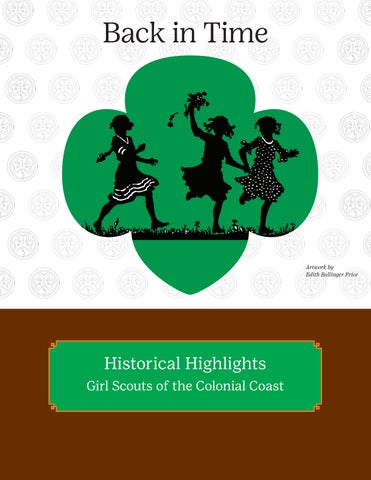







This booklet includes historical highlights of Girl Scouting, both nationally and locally. Research was done by the Council Archives Group. Information was taken from annual reports, newspaper articles and other archival documents. The events highlighted are in chronological order. Trends in program are summarized to give readers an idea of how Girl Scouts has met the needs and interests of girls and adults it serves over the years. Within the book, you will also find brief summaries of important camps. As you travel through the years with us, we hope you will gain an appreciation of the Girl Scout legacy and the impact it has had on so many lives through generations.
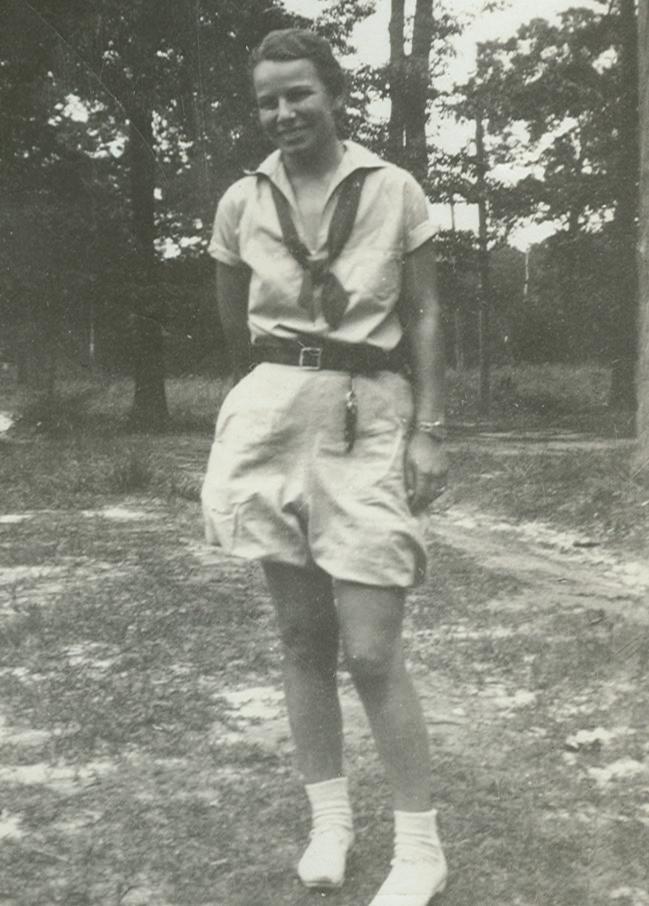
Edith Ballinger Price, a nationally recognized Girl Scout, served on Girl Scouts of USA’s National Committee on Brownies. She was responsible for developing and launching the national Brownie program. She wrote the first Brownie handbook and the first leader’s handbook, as a volunteer while living in Newport, Rhode Island. She moved to be with her niece in Virginia Beach in later years. During an interview with the Virginian Pilot in 1984, she said, "To be a Girl Scout leader in the 1920s one had to be a Girl Scout first. The leaders had training courses and earned badges just as the Girl Scouts do. Brownies were organized on three levels and the girls worked their way up the ladder. Leaders were called Brown Owls." (Miss Price was the Great Brown Owl.)
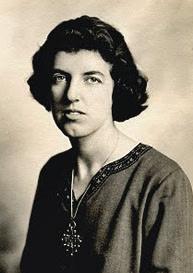
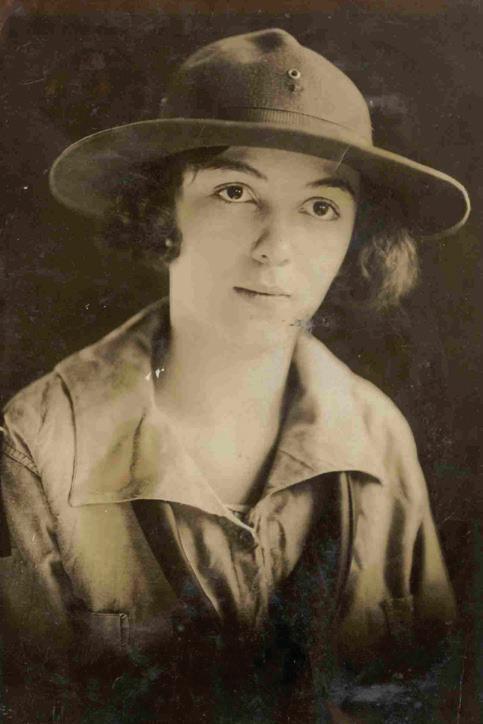
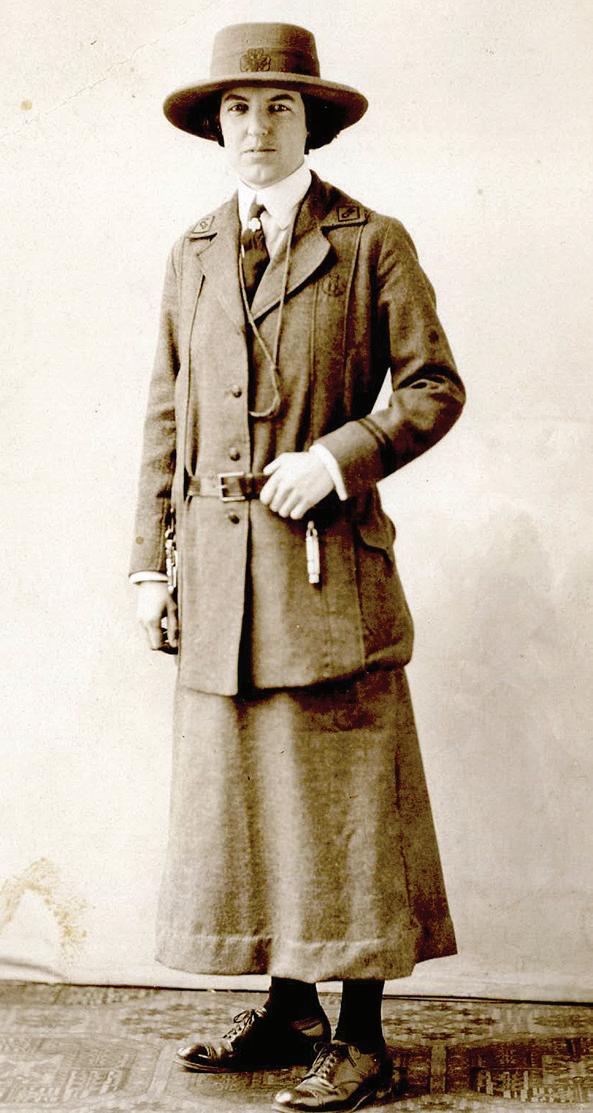
Girl Scouting was only one of her interests. She wrote and illustrated 18 novels for teenagers and has been a regular contributor to American Girl magazine. She also illustrated "The Christmas Tree Hessian," a book by Cora Cheney. She was involved with Girl Scouts of Colonial Coast's Archives Committee. When she turned 98 in 1995, committee members and staff held a birthday party for her. The council was then located on South Plaza Trail in Virginia Beach at that time. Her Girl Scout uniform from the 30s and some memorabilia were donated to Girl Scouts of the Colonial Coast.
Jeanette Rankin, from Montana, was elected to Congress even before women were given the right to vote. Minimum wage laws were being passed and industrial safety codes enacted. The fox trot and tango were the hottest dance steps of the time; however, the progressive energy of the country was changed in April 1917, when America entered World War I.
• Girl Scouts published The Rally (later named American Girl), a magazine for girls and women.
• Girls could earn more than 25 badges, including Child Nurse.
• During World War I, girls learned about food production and conservation, sold war bonds, and collected peach pits for use in gas mask filters.
• National membership was at 5,000 by 1915 and dues were set at 25 cents.
•The Golden Eaglet, the first Girl Scout film, was shot on location at Central Valley Camp in upstate New York in 1918. It follows the story of Girl Scout Margaret Ferris, with a cameo appearance by Juliette Gordon Low, and was shown in theaters across the country in 1919. As a result there was a substantial membership increase and the organization relocated to 1 Madison Avenue in New York — the tallest building at the time.
•The sale of cookies to finance troop activities began as early as 1917, five years after Juliette Gordon Low started Girl Scouts in the United States. The Mistletoe Troop in Muskogee, Oklahoma, baked cookies and sold them in its high school cafeteria as a service project.
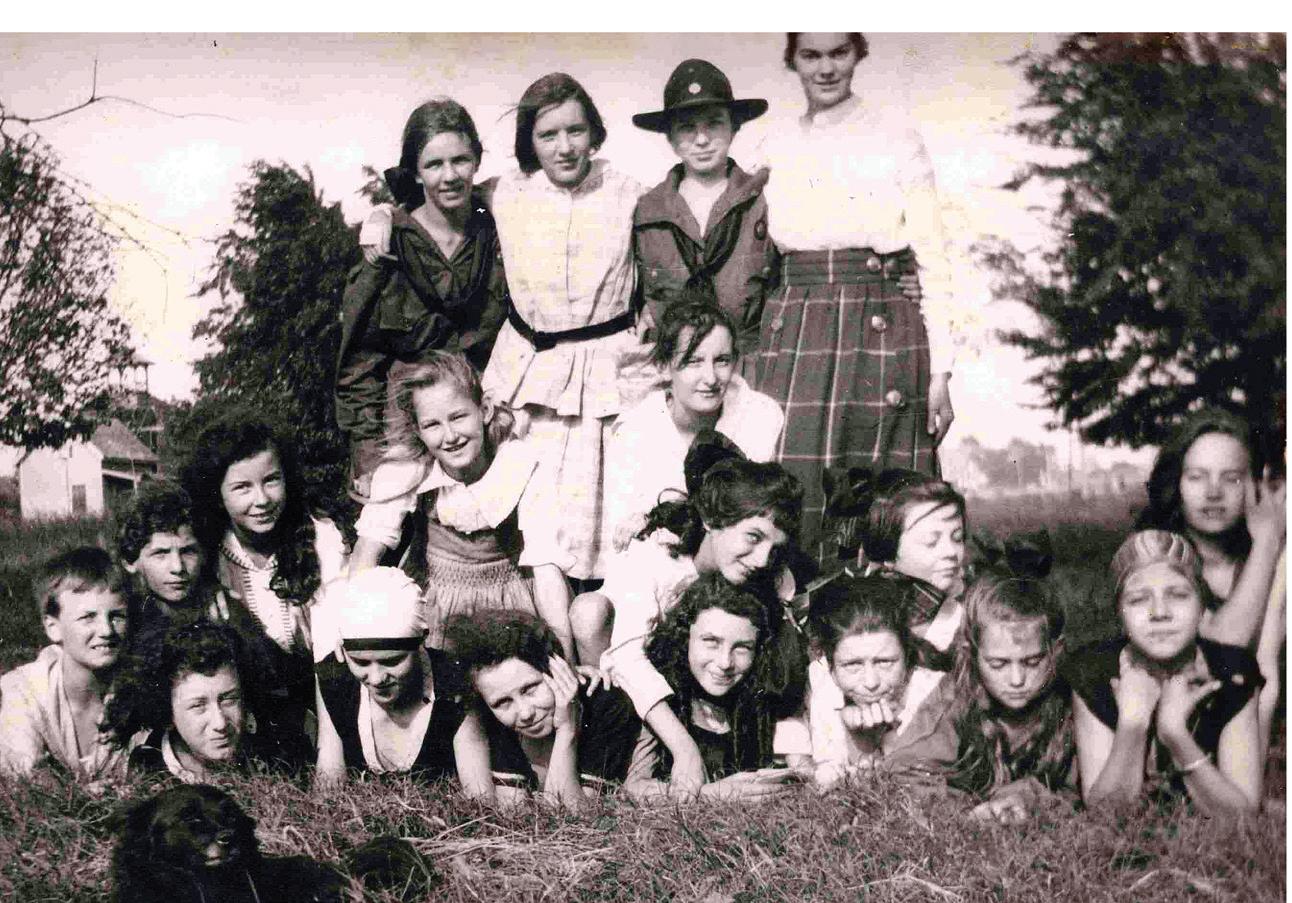
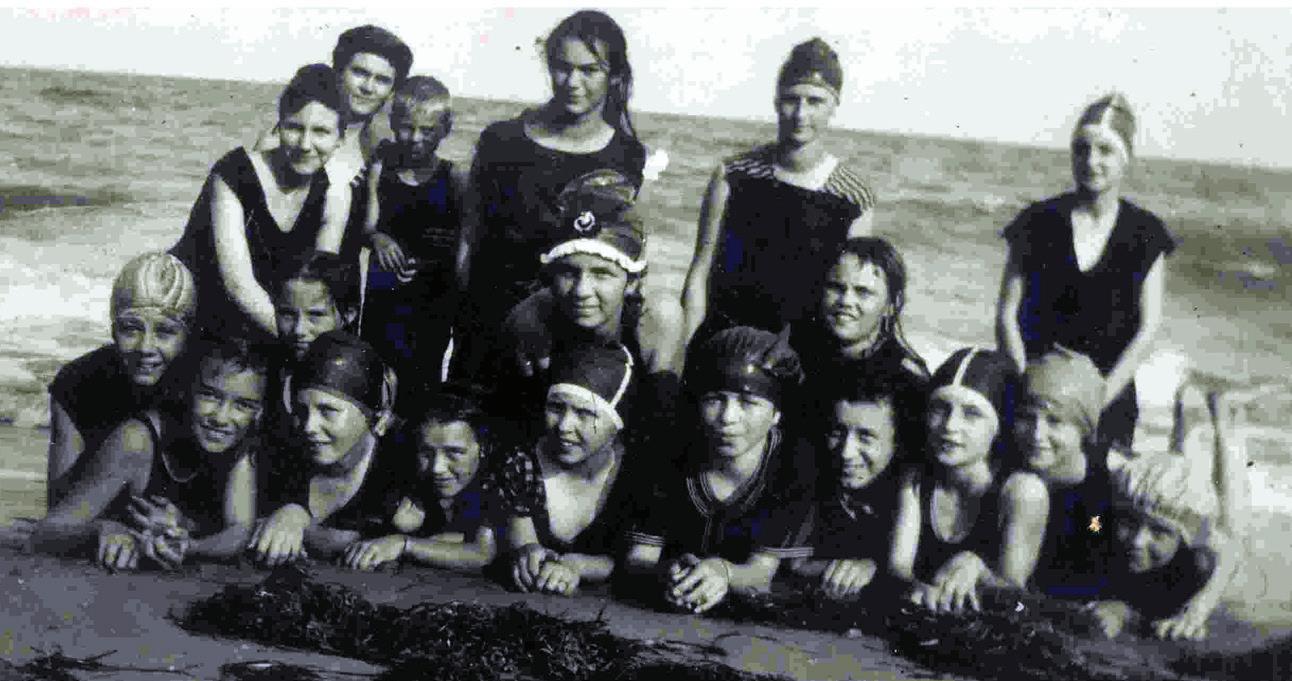
• 1916 - The women of Tidewater Virginia awakened to the call “Follow Me and Volunteer” and gave the girls of this area a unique organization.
•1917 - A Lone Troop was formed in Oceana. Other Lone Troops formed in Portsmouth at the Trinity Parish House, in Norfolk at the Christ Church in Ghent, and another at Olef Sholom Temple with Miss Eloise Lavenberg (later Mrs. Henry VanOs) as Captain.
•1918 - Hampton Lone Troops organized under Eleanor Hewins at First Presbyterian Church and at B’nai Israel. The “Hily” troop was recorded as Troop 1 and was formed at Fort Monroe.
The 1920’s were times of American prosperity, advancement and optimism. The first transatlantic flight took place and movies lit up the big screen. Urbanization fueled industrialization and the economy. The decade also symbolized victory for women with the passage of the 19th Amendment, which granted them the right to vote. Many immigrants were deported in favor of “100 percent Americanism.”
• The first Girl Scout Troops on Foreign Soil (T.O.F.S) was established in China, Mexico, Saudi Arabia, and Syria for American girls living in other countries.
• The first Native American Girl Scout troop was formed with girls of Onondaga Nation in Central New York, and a troop of MexicanAmerican girls was formed in Houston, Texas.
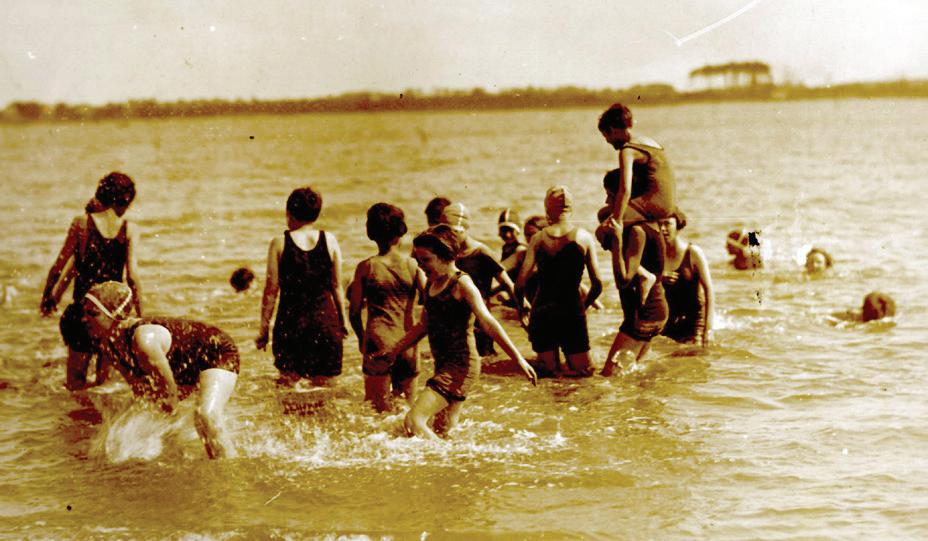
• By the end of the decade, there were more than 200,000 Girl Scouts. Membership dues were raised to 50 cents.
• New Girl Scout badges included Economist and Interpreter, and revisions were already being made to the Journalist and Motorist badges.
• Girls in Pittsburgh, Pennsylvania, formed a Girl Scout Radio Troop in collaboration with pioneering radio station KDKA.
• Juliette Low’s Birthday, October 31, was officially designated as Founder’s Day in 1920.
• Camp Andree Clark in Briarcliff Manor, New York, (the location of what is now the Edith Macy Center), was given to Girl Scouts by Senator William M. Calder.
•1920 - Girl Scout Lone Troops of Norfolk and Portsmouth were coordinated to become the Norfolk-Portsmouth Council of Girl Scouts. Council headquarters rented the Pender Building in Norfolk. During the summer they rented the Y.W.C.A.’s Camp Owaissa in Virginia Beach for two weeks. The membership of ten troops was 136 girls and adults. The annual budget was $1,700.
•1922 - The American Girl magazine, published by Girl Scouts of the USA, featured an article by Florence E. Neil, a local director in Chicago, Illinois, including a cookie recipe that had been given to the council’s 2,000 Girl Scouts. She estimated the approximate cost of ingredients for six to seven dozen cookies to be 26 to 36 cents. The cookies, she suggested, could be sold by troops for 25 or 30 cents per dozen. Throughout the decade, Girl Scouts in different parts of the country continued to bake their own simple sugar cookies with their mothers and with help from the community. These cookies were packaged in wax paper bags, sealed with a sticker, and sold door-to-door for 25 to 35 cents per dozen.
•1922 - Margaret McAllister was the first Girl Scout from the Hampton “Holly” Troop to receive the Golden Eaglet award. One of the badge requirements to earn the award was to prepare a meal from beginning to end — from plucking the chicken to setting the table.
•1924 - The “Blue Bonnet” Troop was formed at Fort Monroe.
•1926 - Girls could buy uniforms and equipment at the Smith and Welton Department Store in Norfolk.
•1927 - Camp Matoaka on Lake Price, in historical Nansemond County, opened as a Girl Scout camp.
• 1922-1925 Norfolk Girl Scout Council
• 1925-1926 Norfolk-Portsmouth Girl Scout Council
• 1929-1940 Suffolk Girl Scout Council
The Great Depression, precipitated by the stock market crash of 1929, opened the decade. The New Deal was launched to provide economic relief and recovery for businessmen, laborers, and farmers. Escapism through movies and mystery novels were the era’s popular diversions. Musicians, dancers, and other artists played a role in helping to lift the country’s spirits.
• The promotional booklet Who Are the Girl Scouts? was printed in in English, Polish, Yiddish, and Italian.
• Girl Scout resources were transcribed into Braille, and the Helen Keller Scholarship was established for training leaders who worked with blind girls.
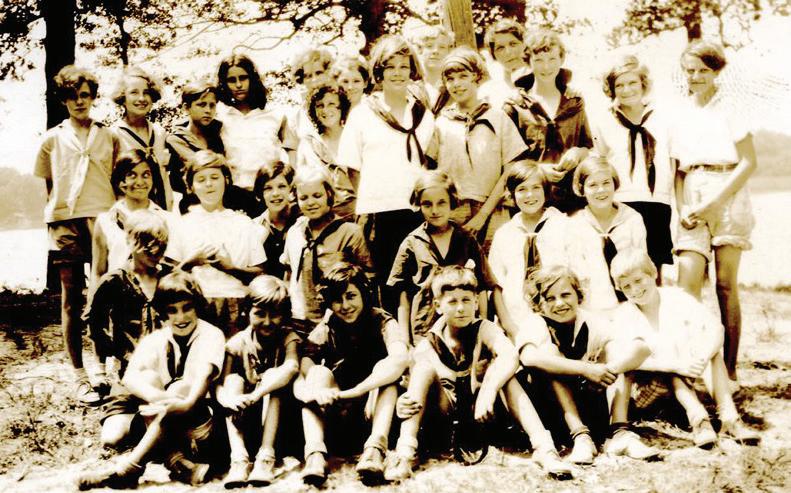
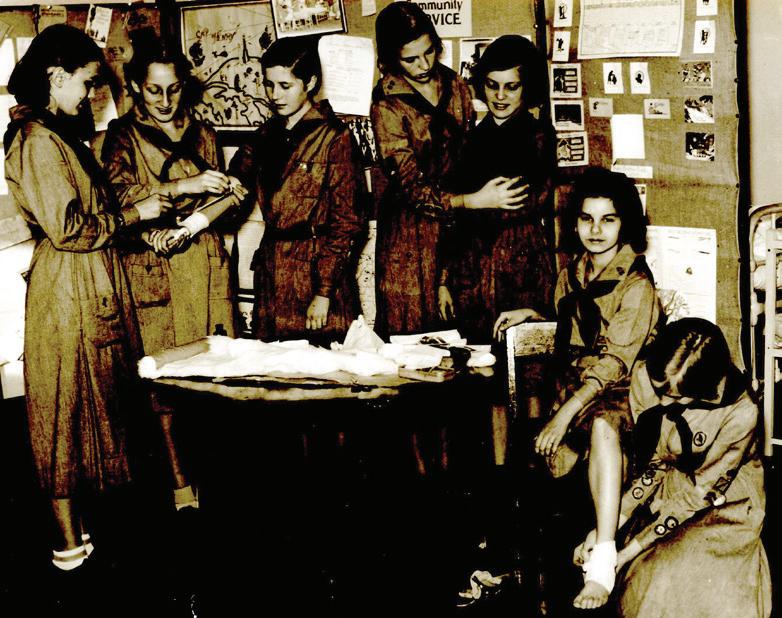
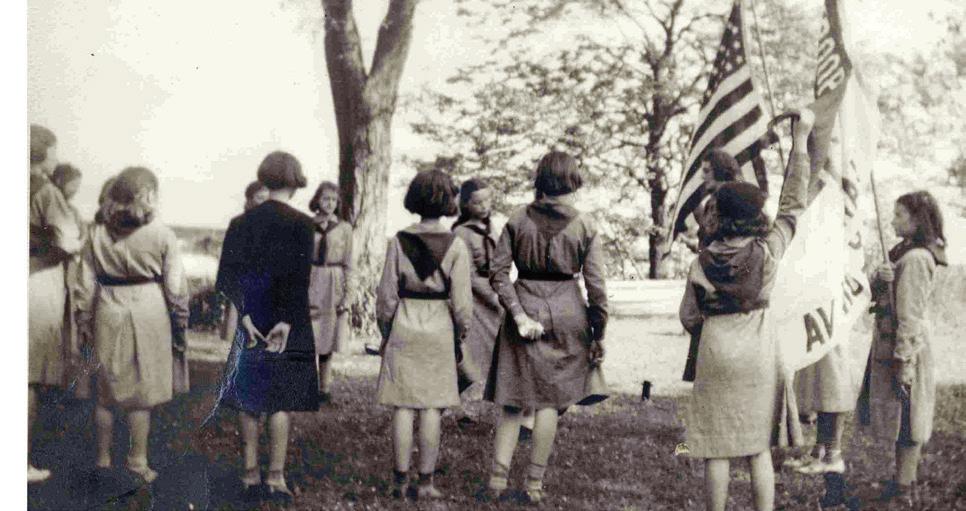
• The Girl Scout program was divided into three groups — Brownie, Intermediate, and Senior — in order to enhance service and provide age-appropriate activities for girls.
• Girl Scouts led community relief efforts during the Great Depression by collecting clothing, making quilts, carving wooden toys, gathering food for the poor, assisting in hospitals, participating in food drives and canning programs, and providing meals to undernourished children.
• This decade saw the first sale of commercially-baked Girl Scout Cookies.
• The Mariners interest group was launched to give Senior Girl Scouts an opportunity to develop skills in boating, sailing, navigation, and water safety.
• 1931 - The Norfolk Girl Scout Council applied and was accepted to incorporate to include Norfolk, Portsmouth, and Virginia Beach.
• 1932 - The 18th National Girl Scout Council meeting was held at the Cavalier Hotel in Virginia Beach and featured a visit from First Lady and Girl Scout Honorary President Lou Henry Hoover.
• 1933 - The Golden Eaglet award was presented to Marie Gzell, Troop #4, the Hampton Blue Bonnet Troop at Fort Monroe.
• 1933 - A Leader’s Association was formed on the Peninsula. Any adult interested in Girl Scouts was invited to attend; social events always followed the meetings.
• 1933 - Nachman’s Department store in Newport News opened a Girl Scout equipment agency.
• 1933 - Peninsula Girl Scout troops came together to celebrate the 21st birthday of Girl Scouting. A mother-daughter banquet was held with 300 in attendance. President Franklin Roosevelt sent them a special greeting via telegram.
• 1935 - A year after writing the Plan for Organization of Colored Girl Scouts in Norfolk, the Norfolk Council decided to extend Girl Scouting to African American girls.
• 1936 - The first day camp, later known as Camp Apasus, was held in Norfolk City Park and was led by Mrs. VanOs as Chairwoman.
• 1939 - The first cookie program in the area took place for the purpose of purchasing a station wagon for Council use.
• 1931 – The Norfolk Girl Scout Council was incorporated to include Norfolk, Portsmouth, and Virginia Beach.
• 1934 – The Norfolk Girl Scout Council became Virginia Tidewater Area Council.
• 1936 – The City of Suffolk was added to the Virginia Tidewater Area Council.
• 1938 – A Colored Community Committee was formed in the Council, with seven members. At this point, there were five African American troops with 98 Girl Scouts, 35 adults, and 18 leaders.
The mood of the nation took on a serious tone after the bombing of Pearl Harbor on December 7, 1941. The need for skilled American service people led to the creation of the Woman’s Auxiliary Corps of the Army, Navy, Marines, Air Force, and Coast Guard. Women met the needs of the nation by taking on jobs in factories that were once occupied by men. The charter for the United Nations was signed by 51 nations.
•Girl Scouts sponsored Defense Institutes for 10,000 women, which taught survival skills and techniques for comforting children during blackouts and air raids.
• A publication, Senior Girl Scouting in Wartime, was created to encourage older girls to perform war-related service projects, like Hospital, Child Care, and Emergency Outdoor Aide.
• Girls collected 1.5 million articles of clothing that were shipped overseas to children and adult victims of war — many made their way to these children on Liberty Ships. One of the ships was christened the Juliette in honor of Juliette Gordon Low.
• 1941 - A day camp program was made possible through the cooperation of the Y.W.C.A. at Camp Southfield. The fee was 25 cents per week. Mrs. Hewins, the director, wrote, “rather difficult around here to have a camp due to the large numbers of soldiers, sailors, and defense workers stationed here.”
• Three local African American leaders had their first opportunity to attend weekend regional training in Quantico, Virginia. Also, a Senior Troop of African American girls was organized; the following year, the first day camp for African American Girl Scouts was held thanks to planning and cooperation with the Colored Community Chest.
•1942 - Camp Sherwood Forest was opened in Portsmouth City Park. Girls at day camp had victory gardens.
•1944 - Newport News Warwick Council sent Agnes Jones, the first African American Girl Scout leader, to camp training at Edith Macy — the first African American from the area that attended National Training.
• 1945 - Camp Matoaka was renovated and improved with water and electric lines to each unit, rebuilt floors, and better pool facilities.
• A sponsored program called the “Book Project,” in which Girl Scouts sent a treasure chest full of books to the Philippine Islands.
•The Elizabeth City County Girl Scout Council (Peninsula) made a profit of $213.84 from their annual cookie program.
•1946 - Due to the demand for Girl Scouts during the war years, the Council was granted special permission from National headquarters to have extra large troops on military bases.
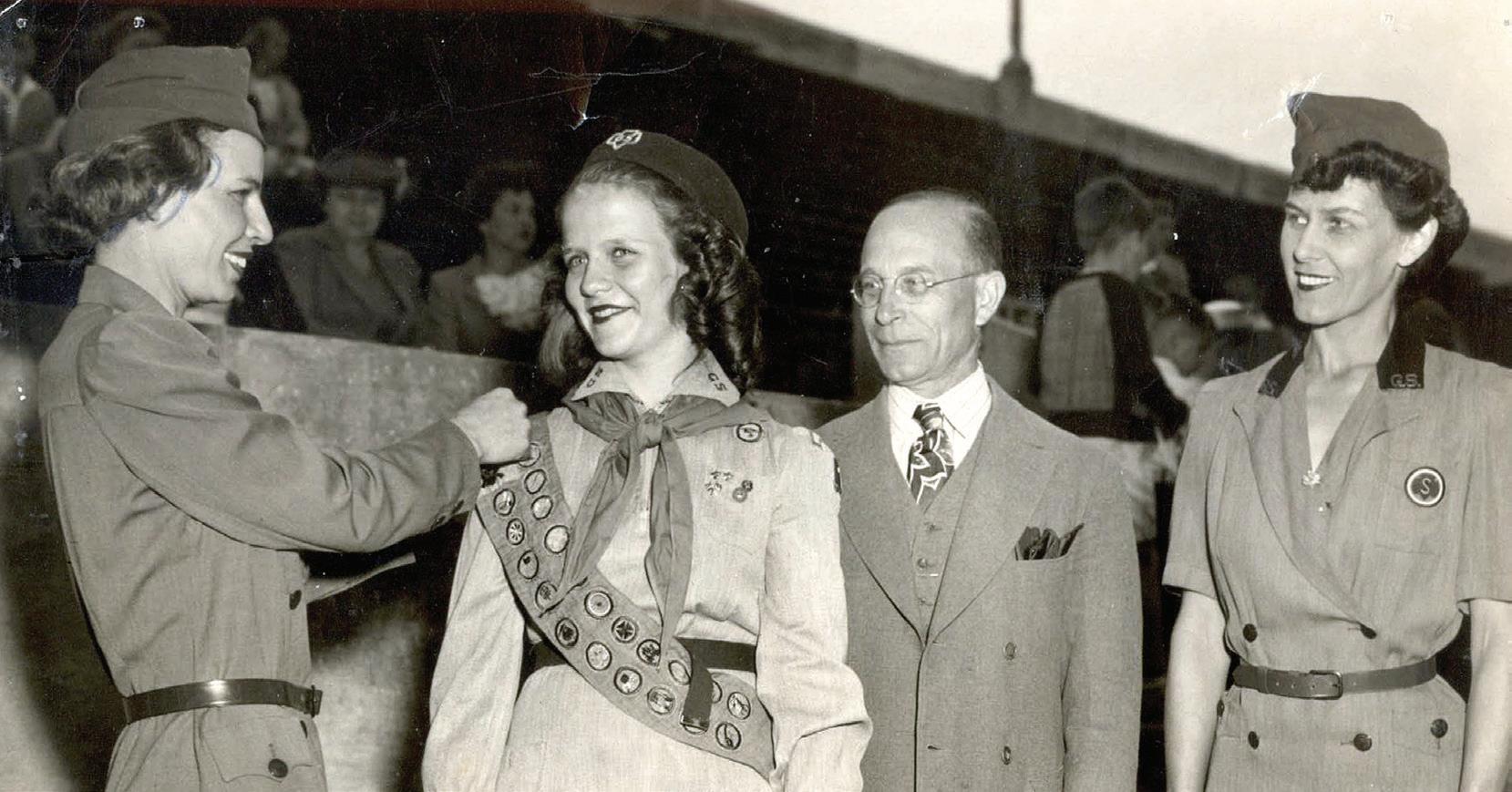
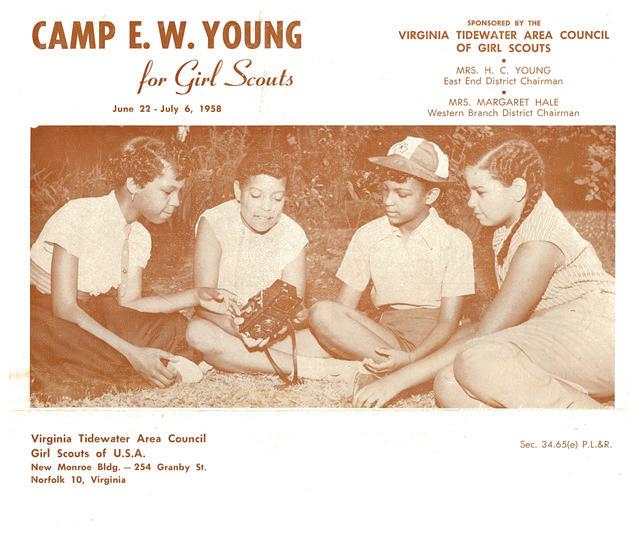
• 1946 - The first area camp to serve African American girls on the Southside, Camp Young (Chesapeake), was established. Soon after there were special sessions for Girl Scouts. In a 1958 camp brochure, it stated the camp ran from June 22 to July 6. The first established camp for African American Girl Scouts on the Peninsula was held at Camp James River in 1948. It became one of the first integrated camps in Virginia.
• 1947 - National Regional Advisor, Miss Elizabeth Figner, came to speak at a local Negro Community Committee meeting. Five African American troops of Elizabeth City County had a picnic at Zion Baptist Church in Phoebus to close out the season’s activities.
• 1948 - The first established camp for African American Girl Scouts on the Peninsula was held at Camp James River.
• 1940 - The Suffolk area organized to be a separate council - Tri-County Girl Scout Council.
• 1940 - 1950 - Council name changed to Virginia Tri-County Girl Scout Council and was chartered.
• 1941 - 1952 - Elizabeth City Council Girl Scouts chartered.
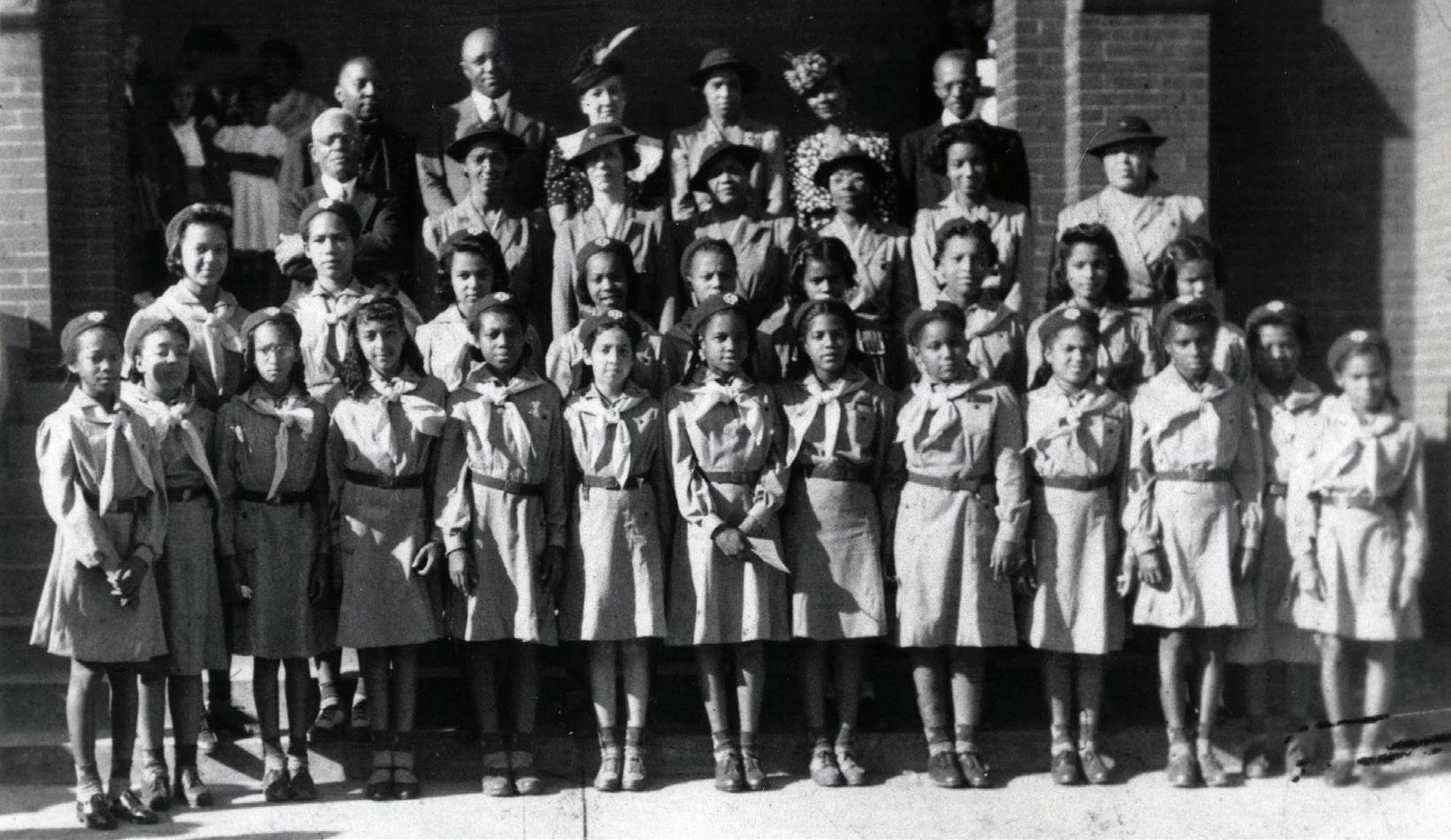
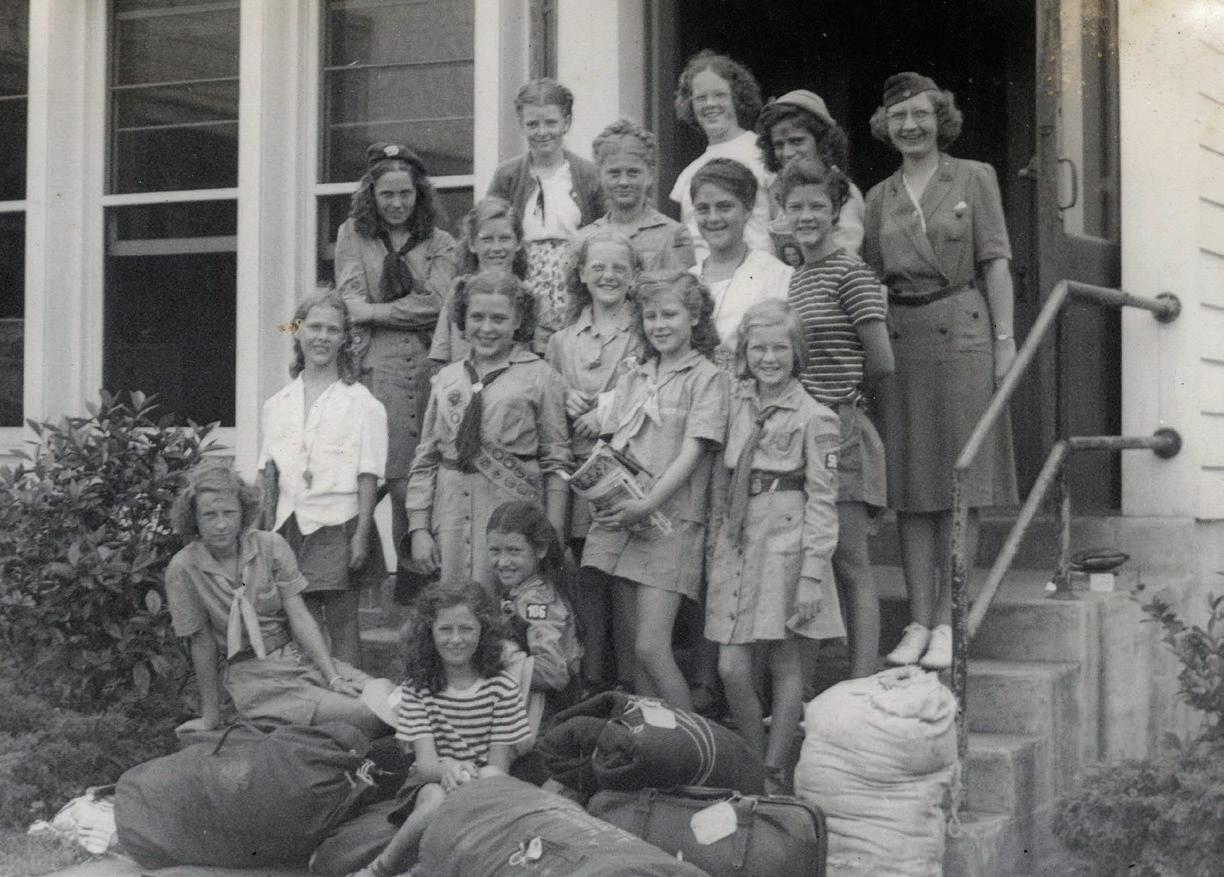
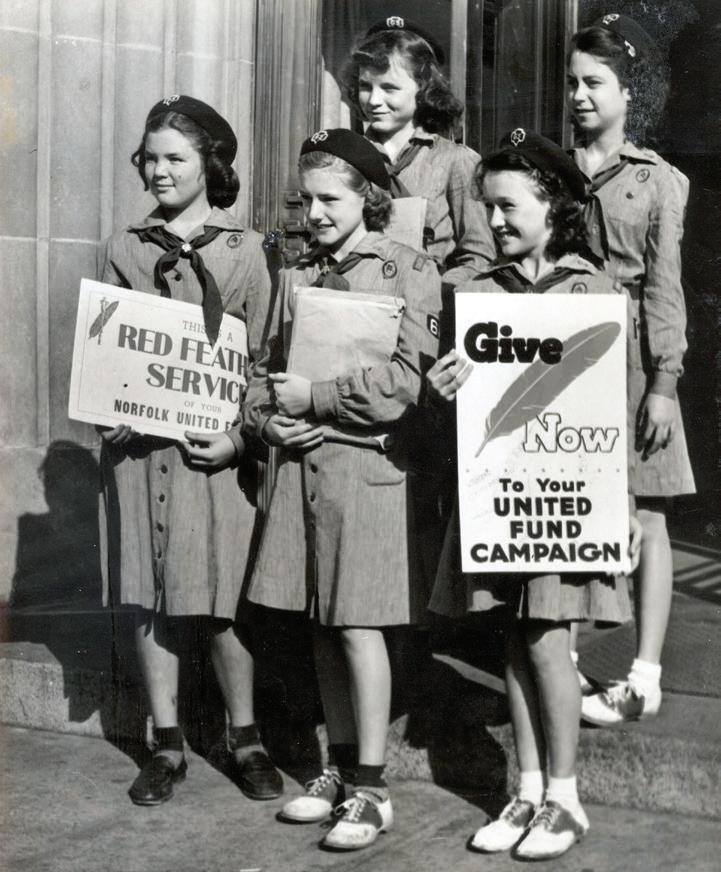
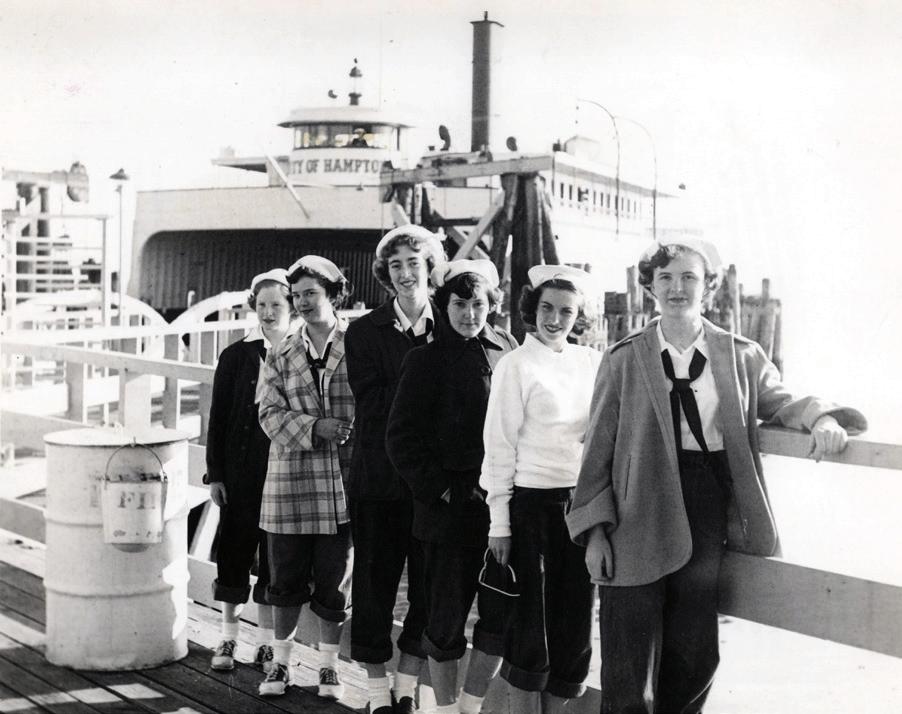
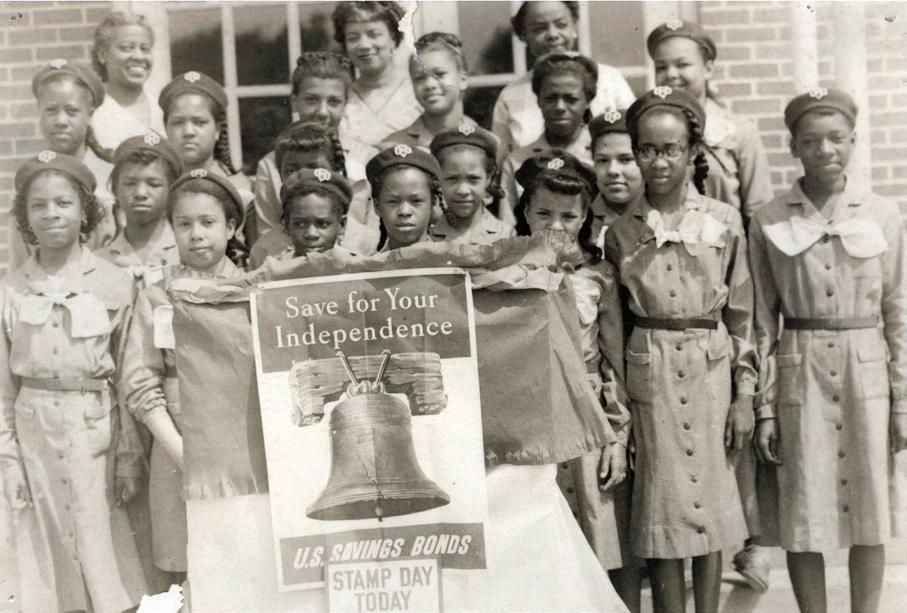
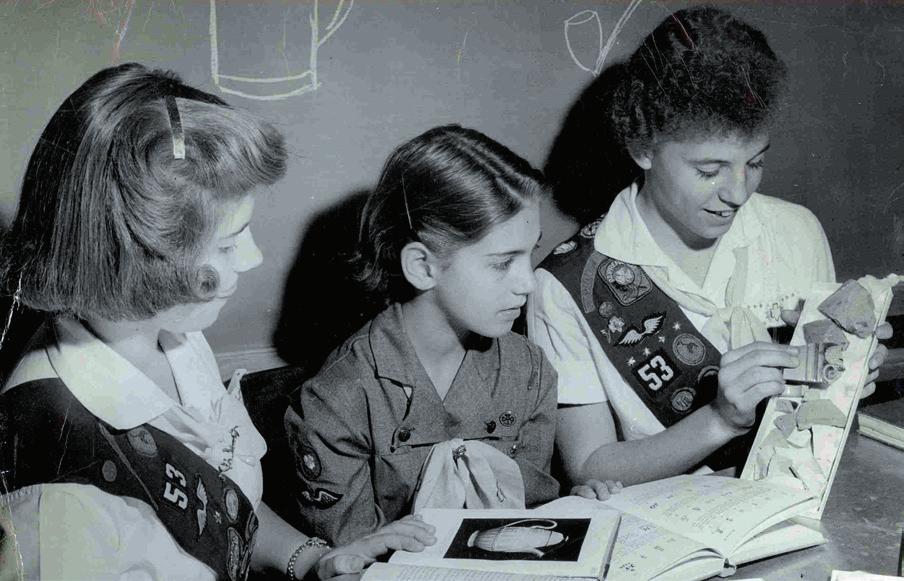
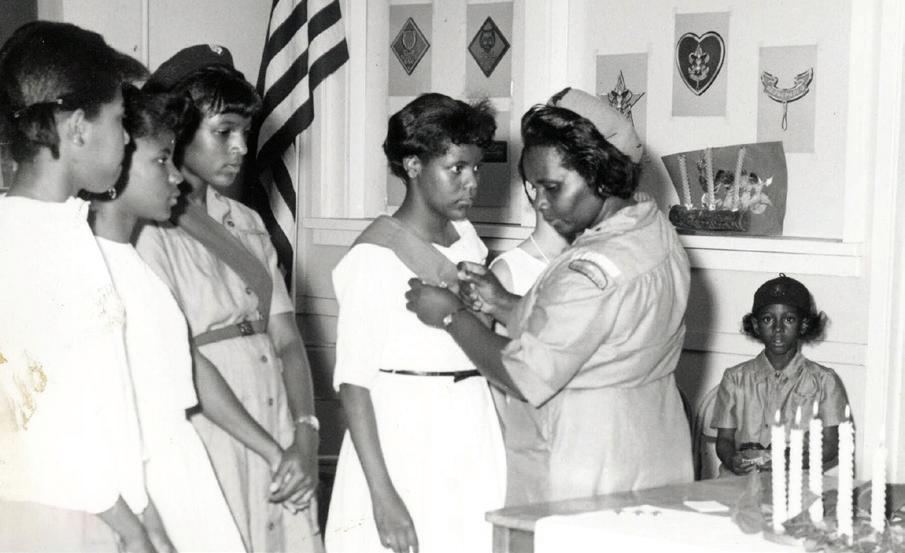
Dr. Benjamin Spock’s book, Baby and Child Care, about child-rearing techniques, transformed family dynamics. Television sets started to appear in every home. The “separate but equal” doctrine was applied to public education as the forerunner of school integration. Elvis Presley and rock-and-roll replaced Frank Sinatra and Big Band as the music of choice for teenagers. The Korean Conflict and the Cold War with the Soviet Union reminded Americans that peace was not to be taken for granted.
• The Girl Scout movement was well established as the decade started, with 1.5 million girls and adult volunteers. A special effort was made to include the daughters of migrant agricultural workers and military personnel.
• The March 1952 issue of Ebon magazine reported: “Girl Scouts in the south are making steady progress toward breaking down racial taboos.”
• 1951 - Suffolk Brownie troops sold Girl Scout cookies for the first time.
• 1954 - Camp Werewanee Day Camp opened in Chesapeake.
• Four girls — two from Warwick County Council and two from Williamsburg — attended the first Girl Scout Round Up at Colorado Springs, Colorado. Connie Dressler was the staff advisor.
• 1956 - Camp Skimino in Williamsburg became a full-fledged Girl Scout Camp.
• 1956 -The Senior Girl Scout Round Up was held in Michagan. Eight participants were sent from the Virginia Tidewater Council.
• 1956 -Janice “Jay” Johnson from Hampton was selected to attend the All-State Encampment in Wyoming. She was the first African American Girl Scout to attend a national outdoor event.
• 1959 - Virginia Electric and Power Company sponsored a six-week cooking economist course for Girl Scouts.
•1952 - 1963 – Hampton Girl Scout Council was chartered.
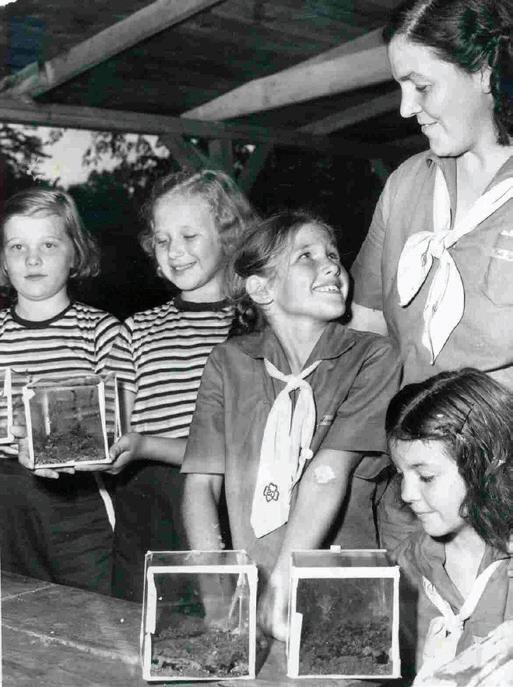
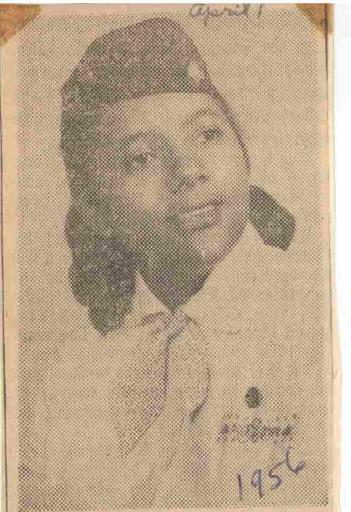
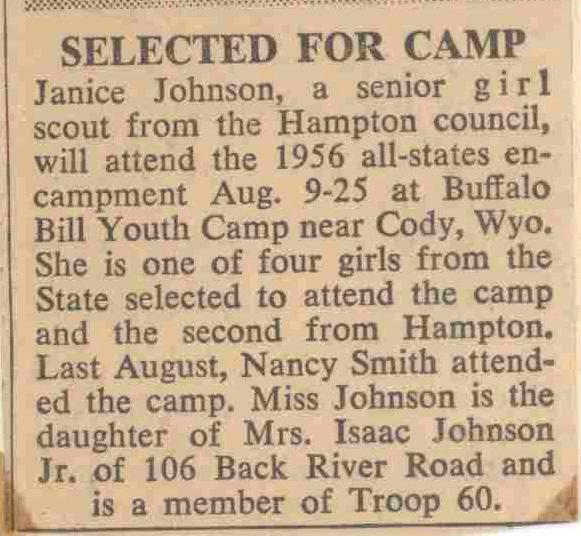
A few months after Reverend Martin Luther King’s rousing “I Have a Dream” speech, President John F. Kennedy was assassinated. President Lyndon Johnson signed the Civil Rights Act of 1964 and the Voting Rights Act of 1965 on behalf of the constitutional rights of African Americans, but he was also embroiled in controversy about America’s growing involvement in the Vietnam War. To close out the decade with hope for the future, Neil Armstrong became the first person to walk on the moon.
• Girl Scouts launched Action 70 in 1969 to “know individuals of different religions, races, and nationalities, so they can know me.”
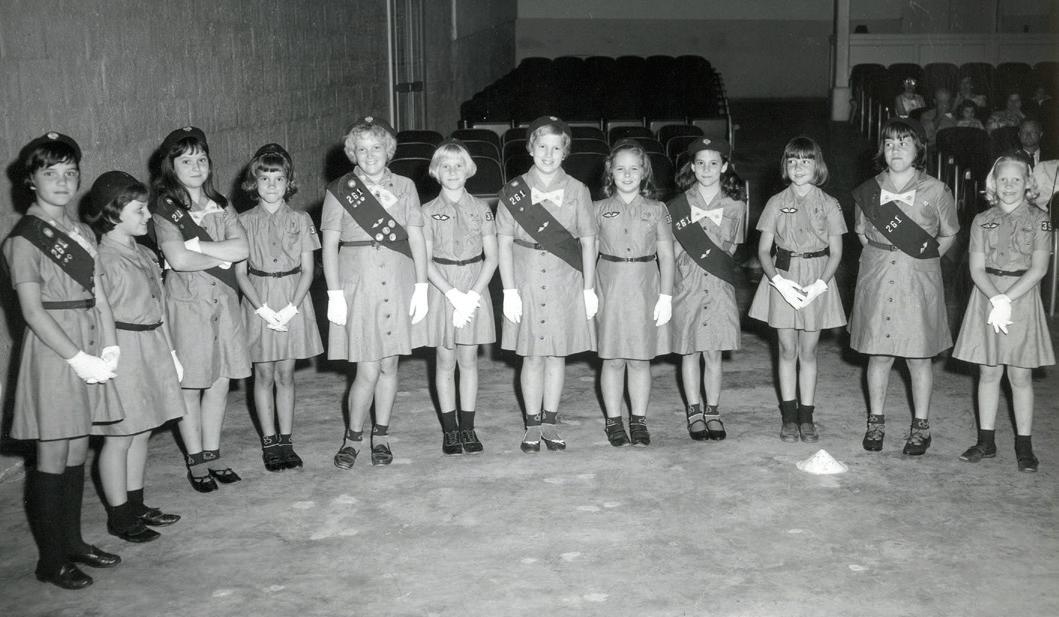
• The Piper Project, headed by actress and Girl Scout troop leader Debbie Reynolds, was launched to retain girls so they could benefit from the program for each grade level, as well as to recruit Girl Scouts in populations that were under-served.
• The Senior Girl Scout Handbook was translated into Spanish, and the Brownie Girl Scout Handbook was translated into Japanese.
• More than 100 Girl Scouts were special guests of the National Aeronautics and Space Administration (NASA) for the launch of Apollo 12 at Cape Kennedy, Florida, now known as Cape Canaveral.
• 1963 - Day camps were operated on the Peninsula that included a site at Virginia State School, The Mariners’ Museum, Camp Kicotan on Old Buckroe Road in Hampton, and another site in the Gloucester area. The cost was $1 per girl per day.
• 1963 -Virginia Tri-County Girl Scout Council and Virginia Tidewater Girl Scout Council merged to form Girl Scout Council of Greater Tidewater.
• 1966 - There were 1,119 registered African American Girl Scouts in the Greater Tidewater Council, not counting those in integrated troops, out of 25,876 African American girls in the council’s jurisdiction.
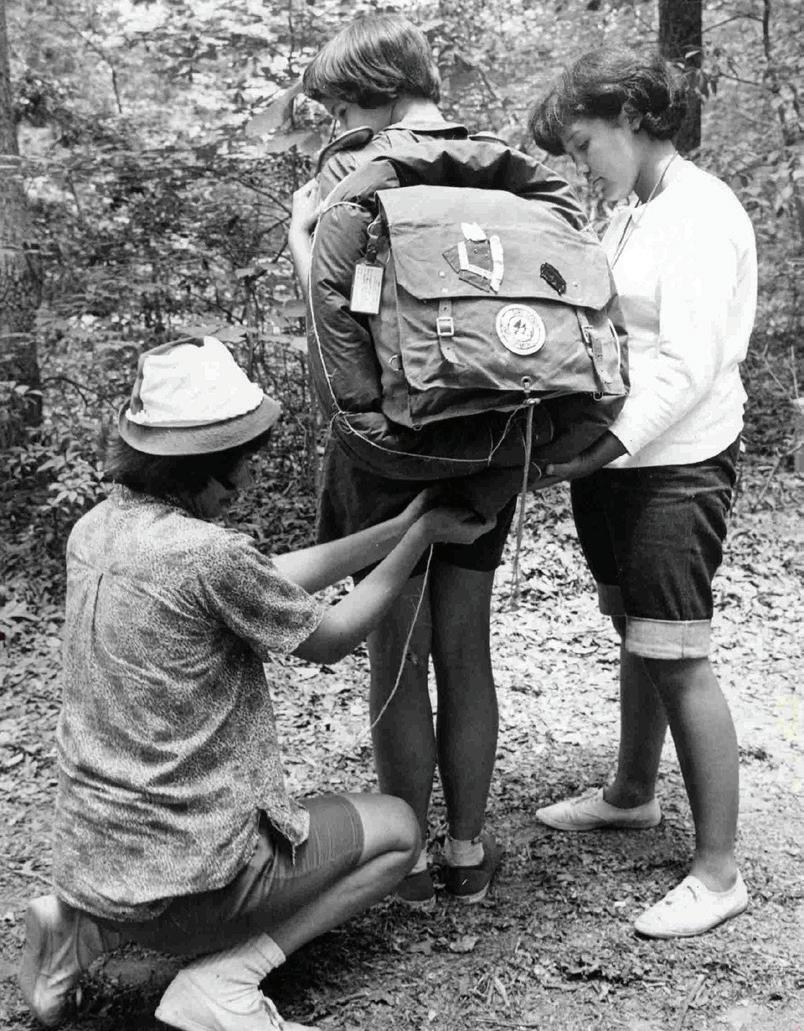
• 1967 - The Buck Harris Endowment fund was created.
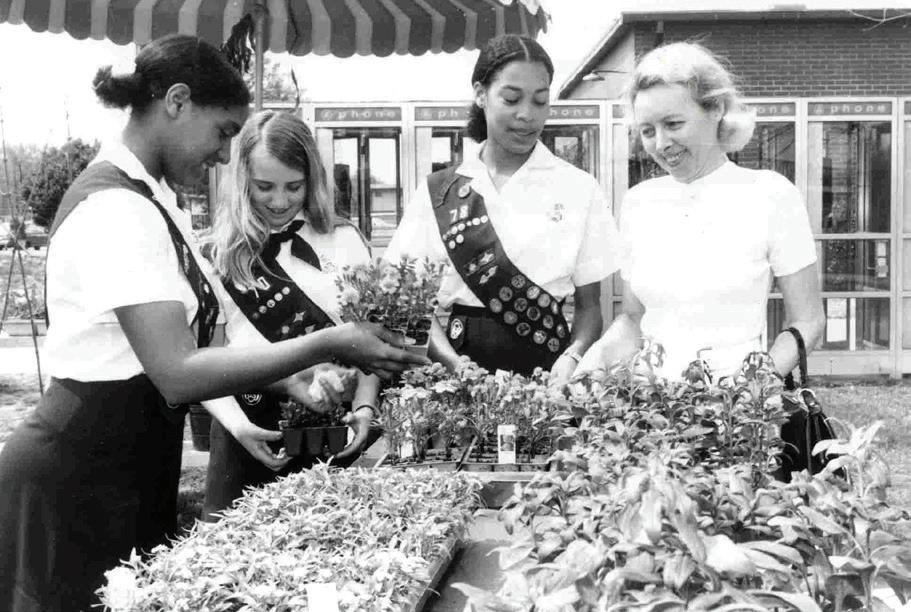
• 1968 - Girl Scout Troop 32 from Fort Monroe sponsored Camp Shiloh at Gosnold’s Hope Park for underprivileged children from Newport News and Hampton. The camp was supported by the Office of Economic Opportunity.
• 1960 - 1963 – The Virginia-Tidewater Girl Scout Council was chartered.
• 1963 – The Girl Scout Council of Greater Tidewater was formed as part of the “great umbrella” national restructuring. Northeastern North Carolina counties were added to the southeastern Virginia territory.
• 1963 – The Heritage Girl Scout Council formed from the merger of troops in Williamsburg, Hampton, York County, Newport News, Gloucester, and Mathews.
• 1960-1963 – The Virginia-Tidewater Girl Scout Council was chartered.
The 1970’s brought many social issues into focus. Seeing footage of the Vietnam War via television heightened awareness of war like never before. Advances were made in civil rights. Environmental pollution became a focus of concern, as did world hunger and the deteriorating ozone layer. Interest in space exploration increased. With a spotlight on the environment, Congress established the Environmental Protection Agency (EPA).
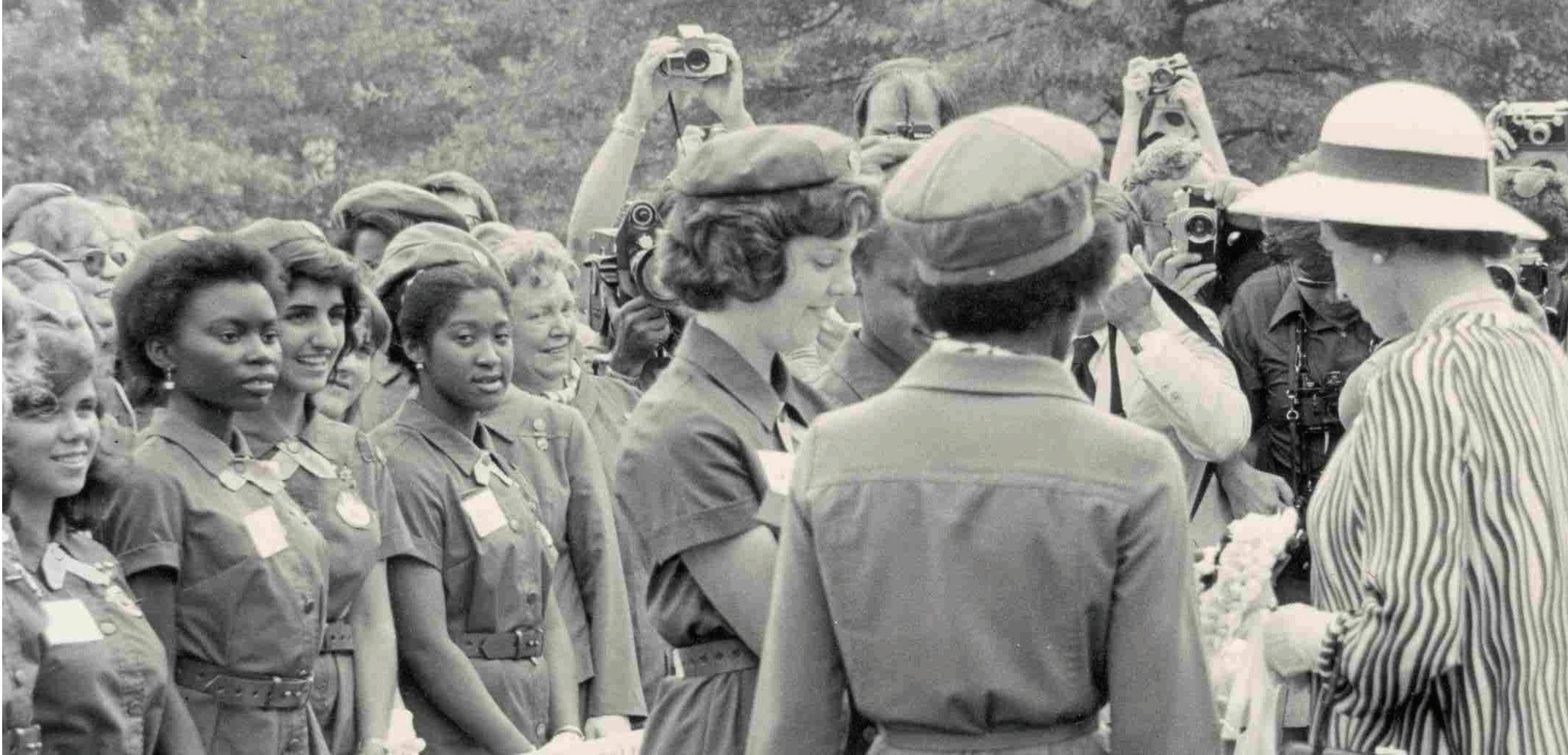
Patricia Wright (far left) met the Queen of England in Philadelphia 1976
• Girl Scout members elected the first African American National Girl Scout President, Gloria D. Scott, in 1975.
• Girl Scouts helped Vietnamese refugee children adapt to their new homes.
• Girl Scouts contributed to a White House Conference on Food, Nutrition, and Health.
• Norman Rockwell designed 12 medals based on the ideals of Girl Scout movement as expressed in the Girl Scout Promise and Law, and the Girl Scout motto. The sets, issued by the Franklin Mint, were made available in bronze, silver, and gold.
• The Girl Scout logo was redesigned. Created by Saul Bass, it featured three faces of girls silhouetted on a trefoil, symbolizing the diversity of Girl Scouting.
• Juliette Gordon Low was elected to the Women’s Hall of Fame in Seneca Falls, New York, in 1979.
• 1970 - A day camp was held at Elizabeth City State College.
• 1970 - Girl Scout Sing Out was held on March 8 at the Hampton Coliseum.
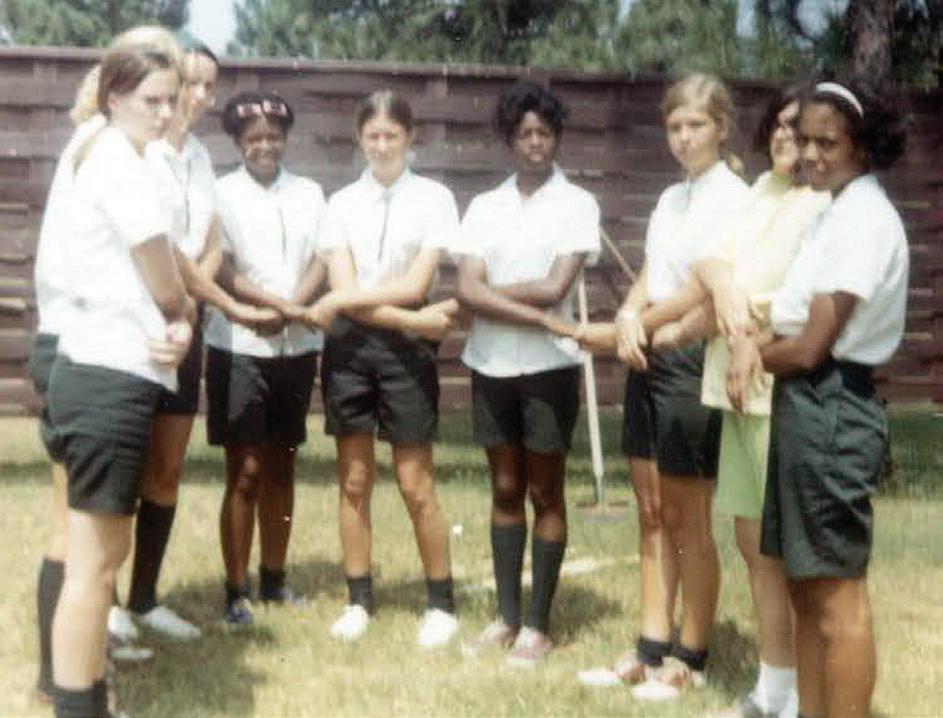

• 1971 - Local membership was 12,185. Eight Senior Girl Scouts attended the Wyoming Trek Wider Opportunity and traveled to National Center West.
• 1972 - Girl Scout Flag Fling, a celebration of patriotism and citizenship, was held at the Norfolk Scope.
• 1973 - Greater Tidewater Council sponsored “Tides of Time” in Virginia Beach, a National Wider Opportunity.
• 1975 - Connie Allen became the first African American President of the Greater Tidewater Council.
• 1977 - Five girls in Troop 735 were the first Suffolk Girl Scouts to receive the First Class Award.
• 1977 - Agnes Jones became the first African American President of Heritage Girl Scout Council (Peninsula Area).
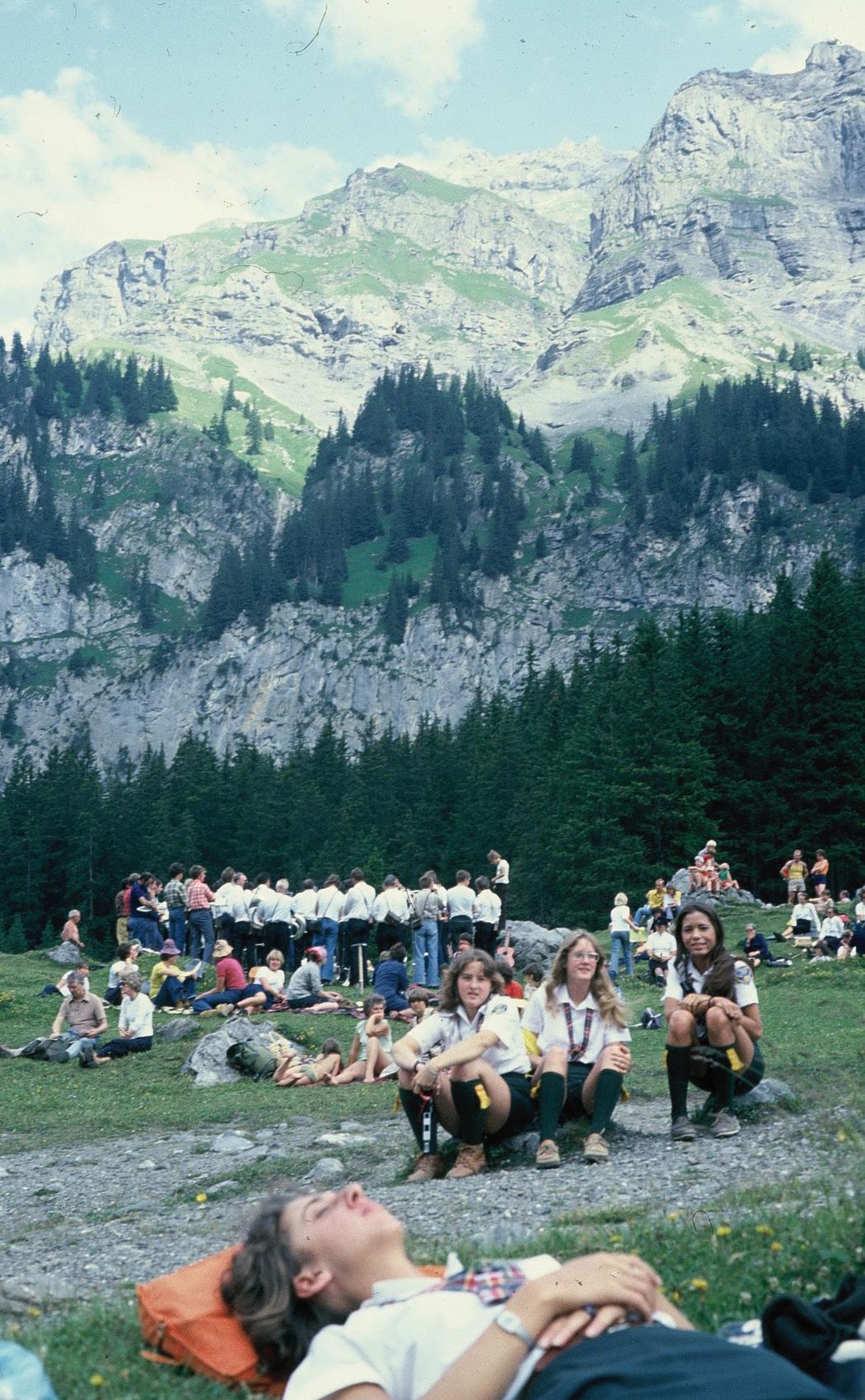
• Several Wider Opportunities took place in the 1970s. Among them were: Japan Junket, the first trip taken to Asia, led by Ann Edwards from Virginia Beach; a trip to National Center West attended by area African American Girl Scouts and led by Veronica Thomas from Norfolk, and England Bound, a trip to England and Switzerland led by Francis Carr from Suffolk, where Girl Scouts visited two World Centers.
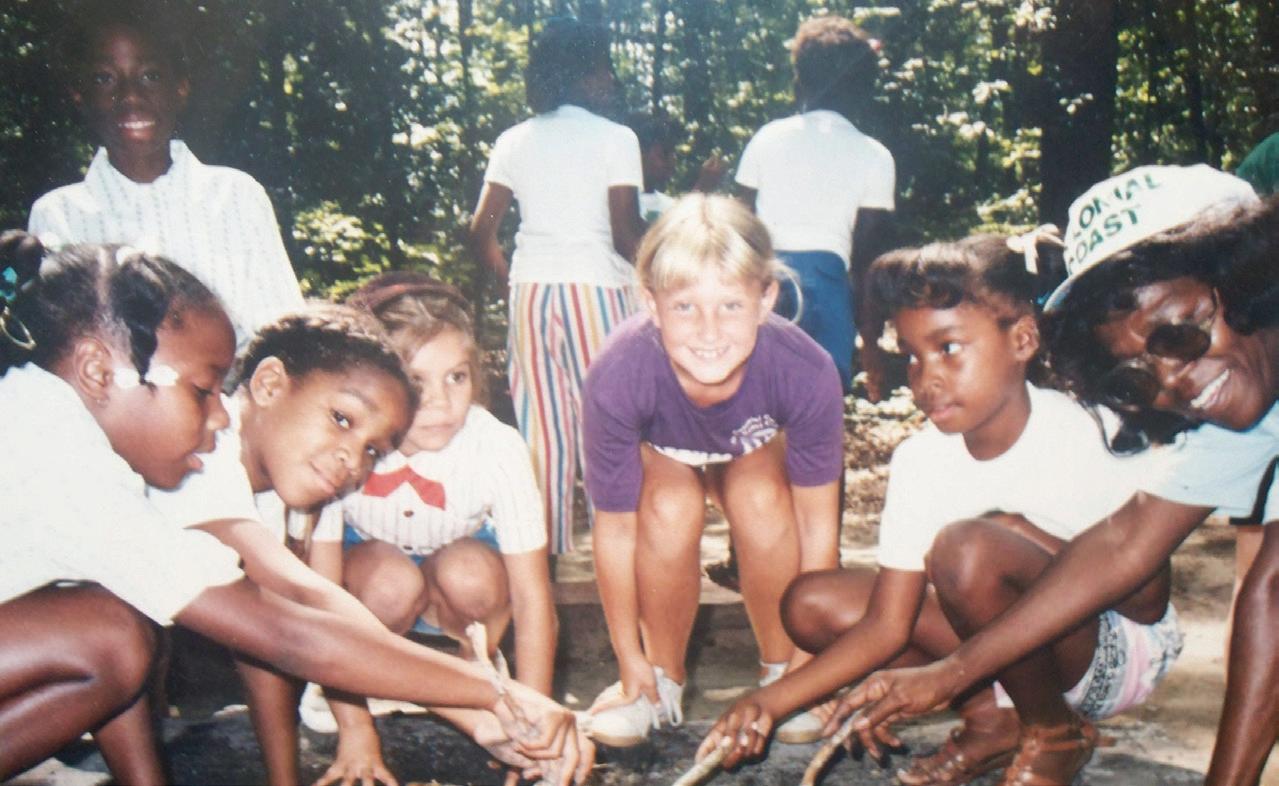
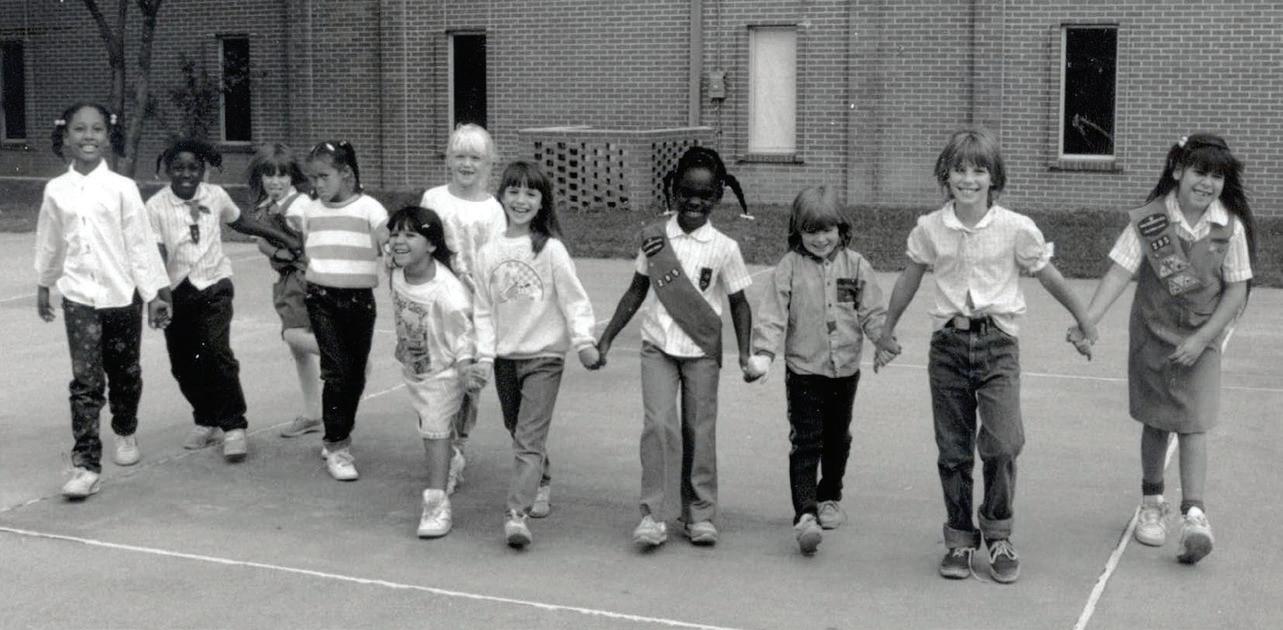
Prisons overflowed with inmates as violent crime rates climbed and the AIDS virus reached epidemic proportions. In 1986, the nation shuddered when the spacecraft Challenger exploded, killing all seven astronauts, including school teacher and Girl Scout alumna, Christa McAuliffe. In good news: Sandra Day O’Connor, also a Girl Scout alumna, become the first female Supreme Court Justice.
• The Contemporary Issues series was developed in the 1980s to help girls and their families deal with serious social issues. “Tune Into Well Being, Say No to Drugs” was introduced in collaboration with a project initiated by First Lady Nancy Reagan.
• Project Safe Time was introduced for girls whose parents were not home to care for them after school.
• Management guru Peter Drucker cited the Girl Scouts as his choice for the best-managed organization.
• New badges included Computer Fun, Aerospace, and Business Wise.
• Girl Scouts immersed themselves in a Global Understanding project on five topics: health care, hunger, literacy, natural resources, and cultural heritage.
•The first annual Girl Scout Leader’s Day was celebrated on April 22, 1982.
• Daisy Girl Scouts, for girls five years old or in kindergarten, was introduced in 1984.
• 1980 - The Golden Circle Award, local precursor to the Gold Award, was awarded to Senior Girl Scouts at Greater Tidewater Council’s annual meeting.
•1980 - The Mariners’ Troop of Boy Scouts and Girl Scouts teamed up to sail to New York.
• 1980 - First Lady Lynda Bird Johnson Robb joined council president, Lucy Salzburg at the dedication of the Enmeier Center at Camp Skimino.
• 1980 - Three girls in Troop 735 were the first Suffolk Girl Scouts to receive the Golden Circle Award.
• 1982 - Membership events included Sea, Shore and Sky and Tarheel Olympic Fest.
• 1983 - The Virginia Enmeier Program Center at Camp Skimino was dedicated.
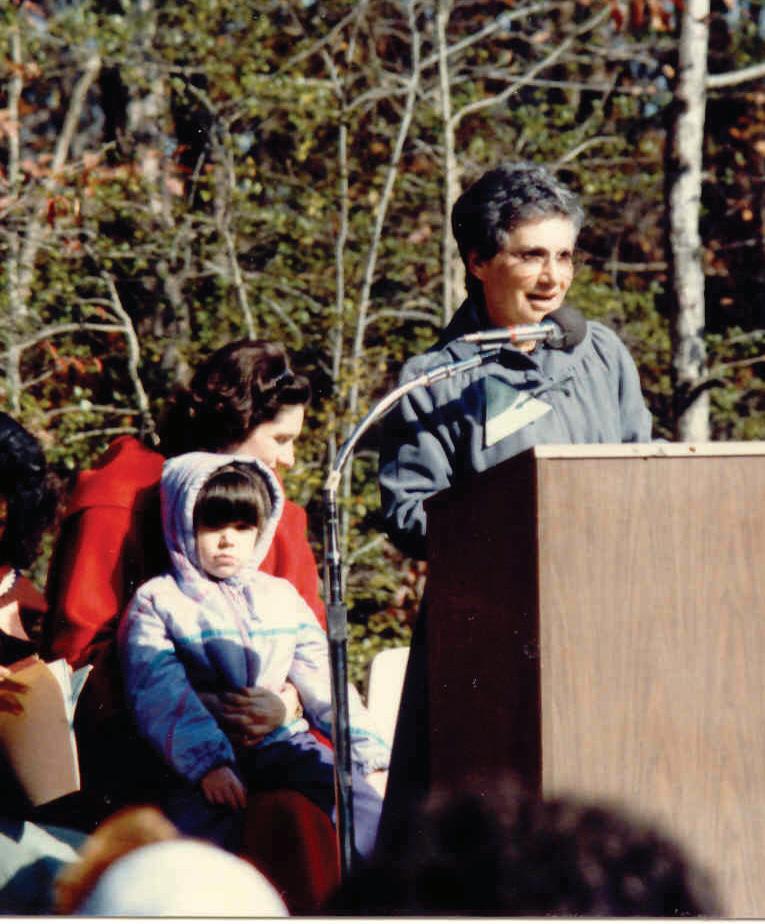
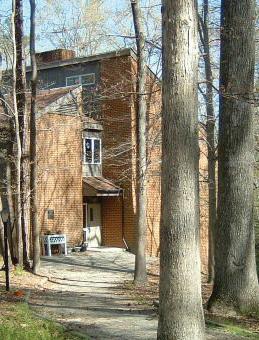
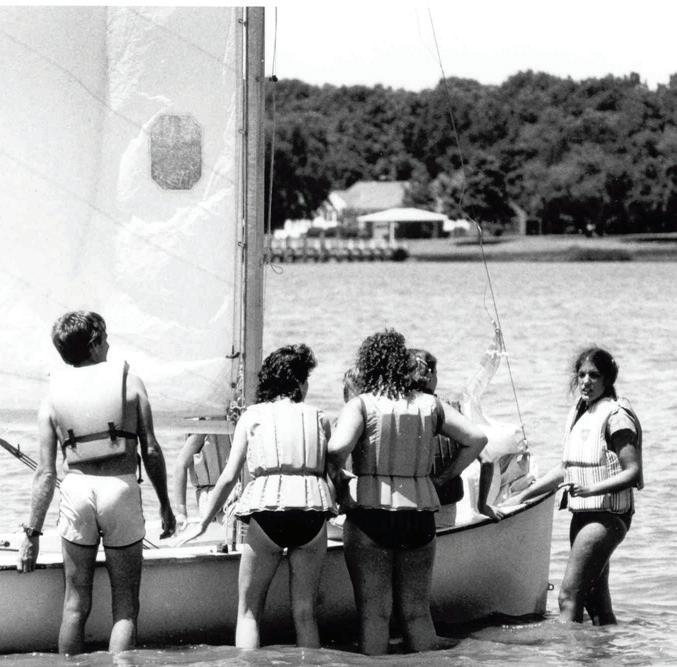
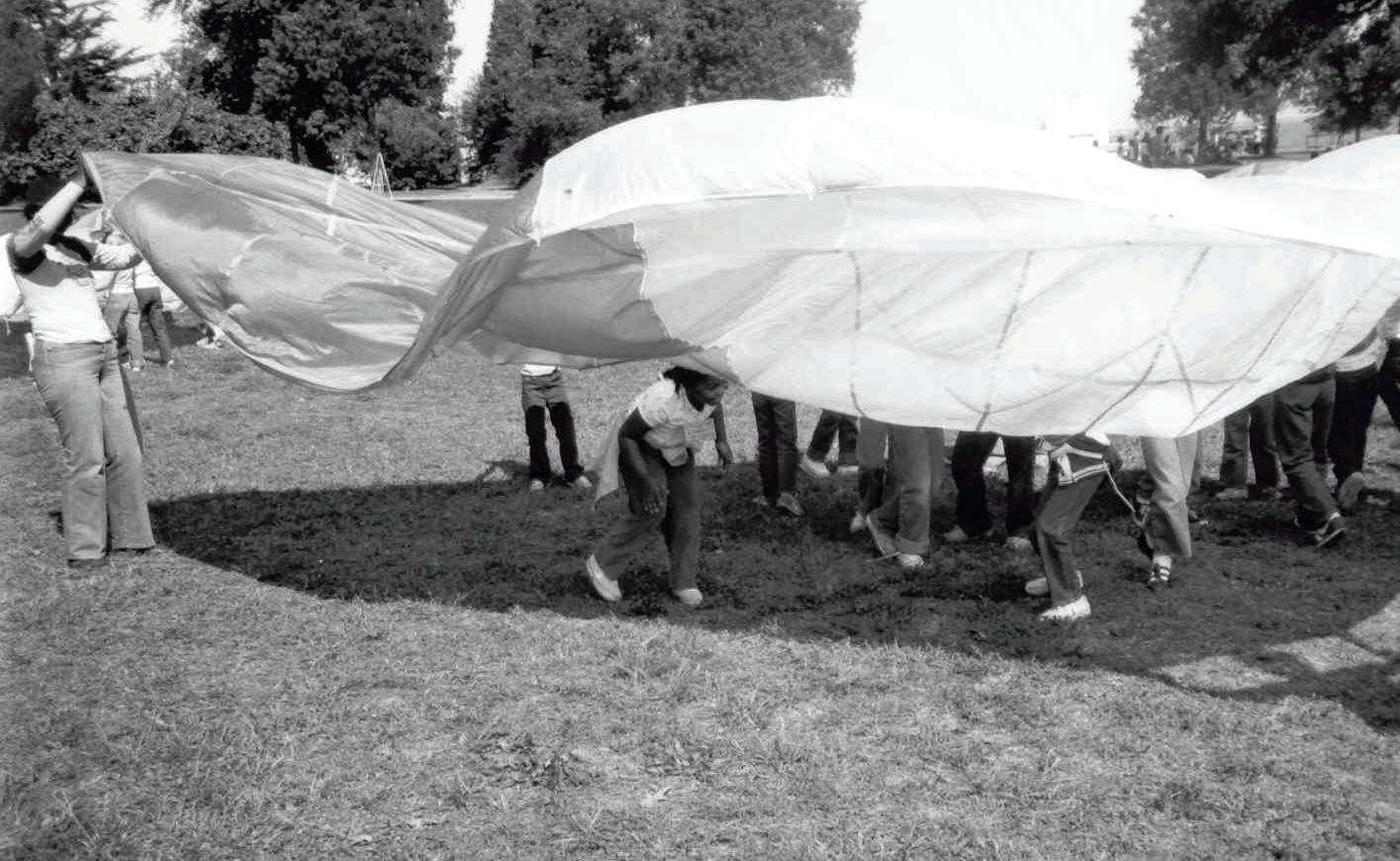
• 1984 - The Girl Scout Norfolk Runaway Youth Program was started and funded by the City of Norfolk to serve at-risk girls.
• 1984 - A Girl Scout conference focusing on non-traditional careers was held at Old Dominion University. It was partially funded by the Virginia Department of Education. Girl Scouts and non-members alike attended this event which was supported by area high schools.
• 1986 - A Juliette Low Recognition Banquet was held in honor of the 75th Anniversary of Girl Scouts. Famous Former Girl Scouts were recognized.
•1986 - The Colonial Coast Girl Scout Council and First American Bank sponsored a “Preserving the Dream” reception to pay tribute to the pioneer group of black women who brought the dream of Girl Scouting to minority girls on the Peninsula.
•1987 - Girl Scout gear was sold at Hess's department stores in Greenbrier Mall and Patrick Henry Mall.
•1987 - Explore Patch program was created by Pat McKinney, Celistine Phillips, and Ethel Welch.
•1987 - Girl Scouts 75th Anniversary was celebrated at Hampton Coliseum.
•1987 - Forty-foot long mural was installed at Camp Skimino depicting 75 years of Girl Scouts.
•1988 - The Society for the Aid of Sickle Cell Anemia of South Hampton Roads began a troop that brought together 19 girls who had the disorder.
•1988 - Girl Scout Day Camp Linkhorn opened.
•1988 - Barabara Mettler went to Australia for Girl Scout training. Twenty-four countries represented, two from the U.S.
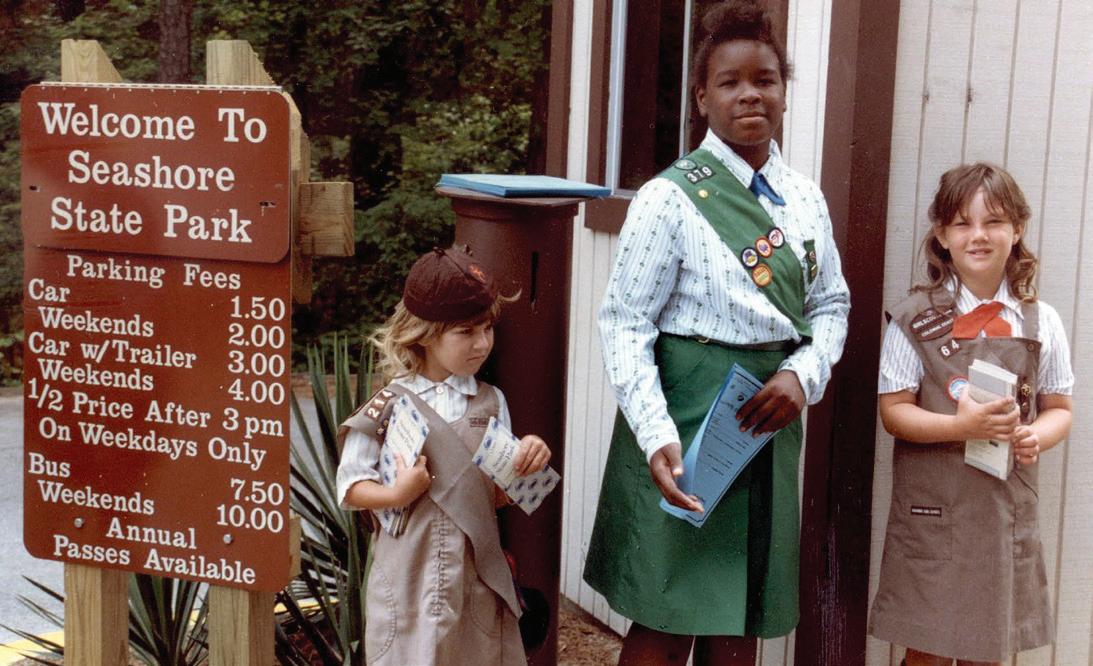
•1988 - Day Camp Linkhorn opened a new site at Seashore State Park.
•1988 - Farm Fresh raised $33,987 from cash register receipts.
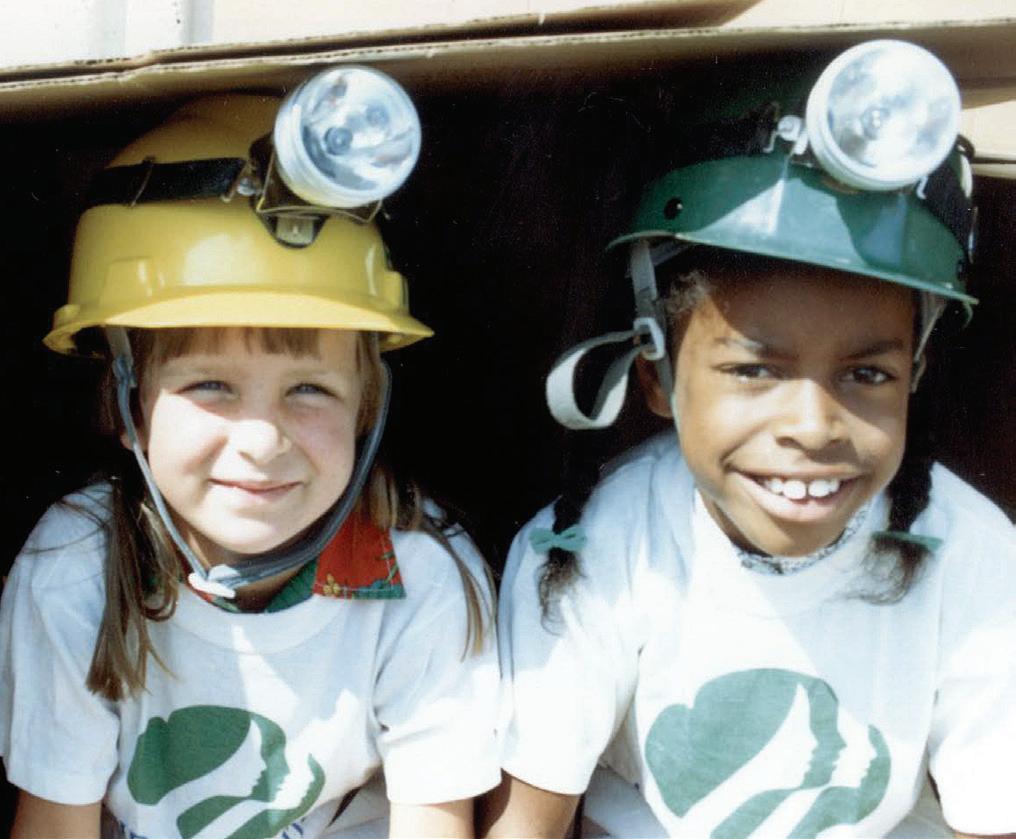
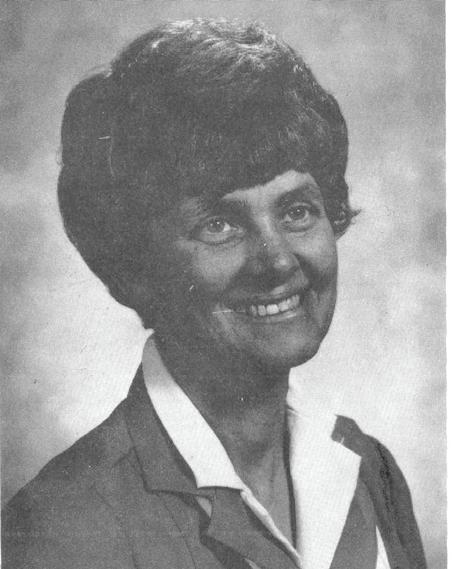
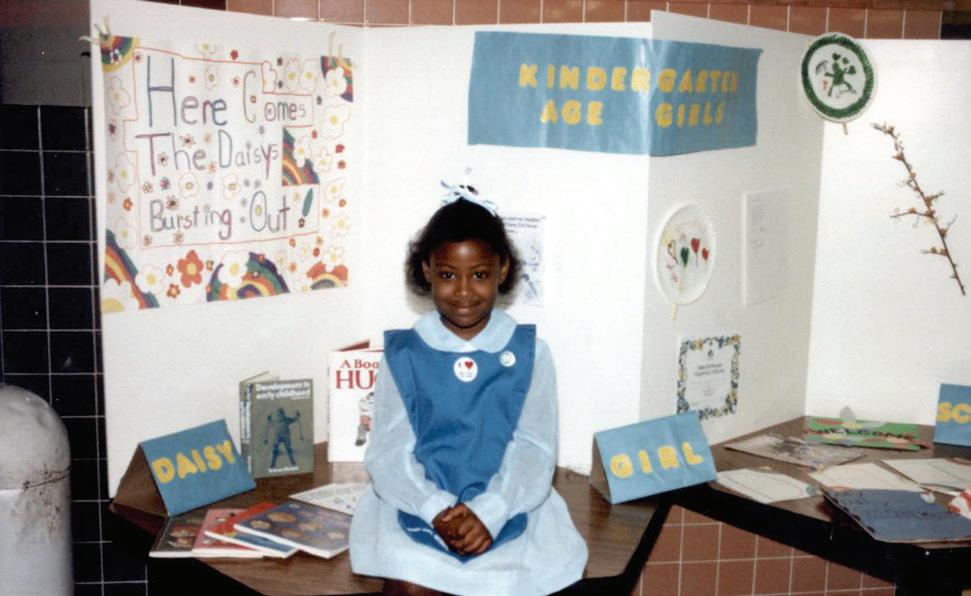
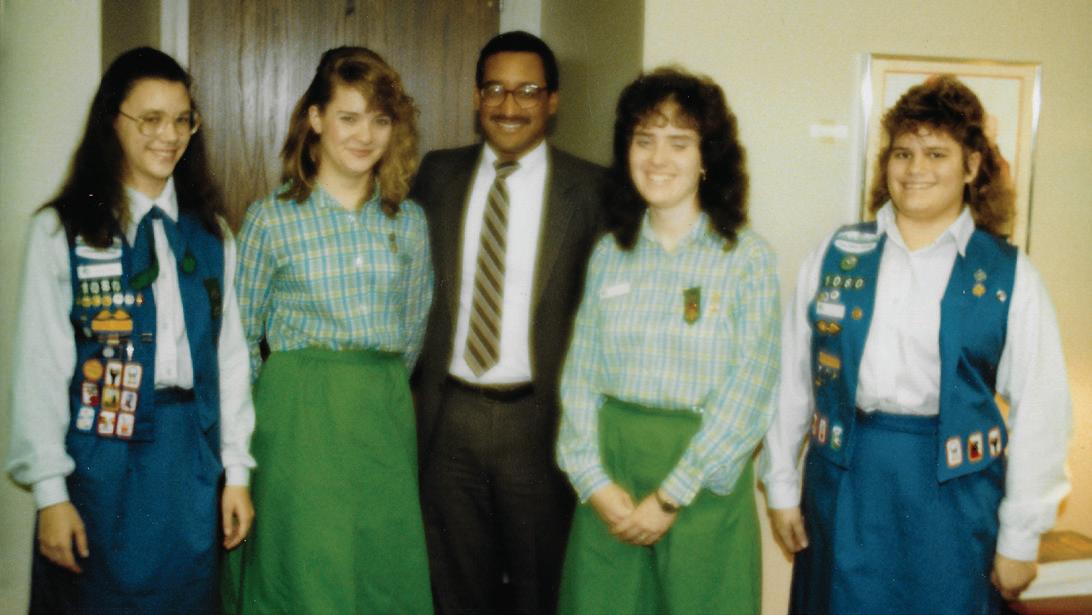
•1989 - Council built pavilion at Sea Shore State Park.
•1989 - Girl Scouts participated in the Say No to Drugs campaign.
•1989 - GSUSA chose Girl Scouts of the Colonial Coast for a week of filming training videos.
•1989 - No more sales tax for Girl Scouts, under section 501 of the Internal Revenue Code.
•1989 - The GSCCC Cavers hosted the first Cracks, Crevices, and Crawlways at Camp Skimino
•1989 - The Pluralism Task Group conducted the Triennial Minority Audit and made recommendations to assist the Council in their efforts to provide equal access to all girls and adults wishing to belong to the Colonial Coast Council.
•1981 – Colonial Coast Girl Scout Council chartered by GSUSA. The council was formed with the merger of Heritage Council and Greater Tidewater Council to create a southeast Virginia and northeastern North Carolina regional council.
•1981 – Nellie Hayse became the first executive director for the newly formed council. The headquarters was established at the Rotunda Building in Norfolk.
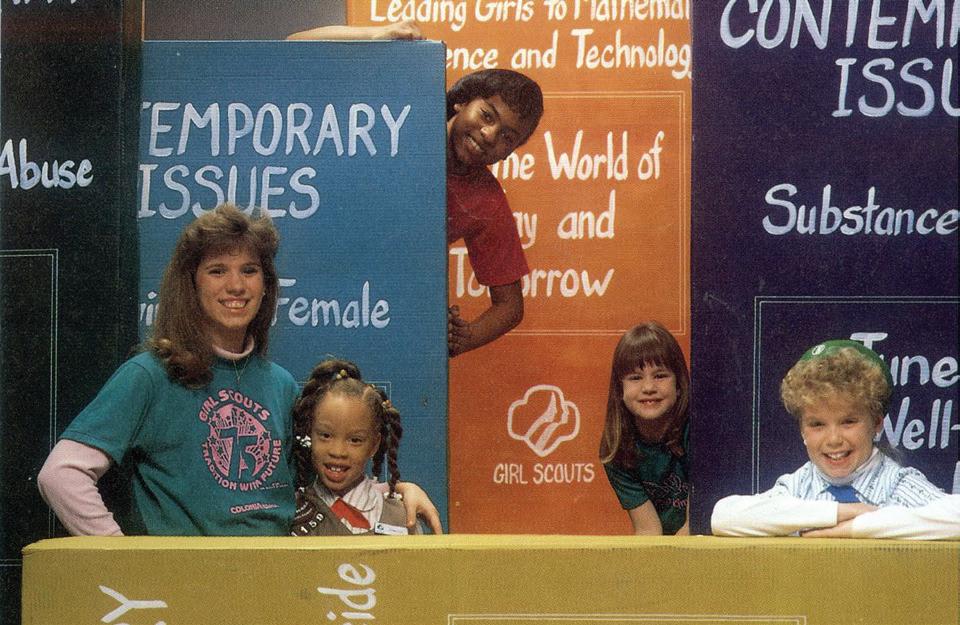
The Cold War ended as the Berlin Wall came down and the Communist government of the Soviet Union collapsed. America engaged in the Gulf War. The computer was rapidly growing in importance in homes, schools, and libraries. The Euro currency is introduced as a competitive tool to stem the power of the dollar and maximize the economic power of the European Union nations.
• The Girl Scout Survey on the Beliefs and Moral Values of America’s Children (January 1990) proved that girls in Girl Scouts were less likely to cheat on tests.
• Girl Scouts Beyond Bars, the first and only mother-daughter prison visitation program, was formed.
• The first Asian-American National Girl Scout President, Connie Matsui, was elected.
• Nearly four million Girl Scouts tackled literacy alongside First Lady Bush in the Right to Read service project.
• Girl Scouts inaugurated a health and fitness national service project, Be Your Best, to promote different ways of being healthy, keeping fit, and eating right.
• More than 1,300 sporting events were held nationwide as part of the Girl Sports 2000 initiative.
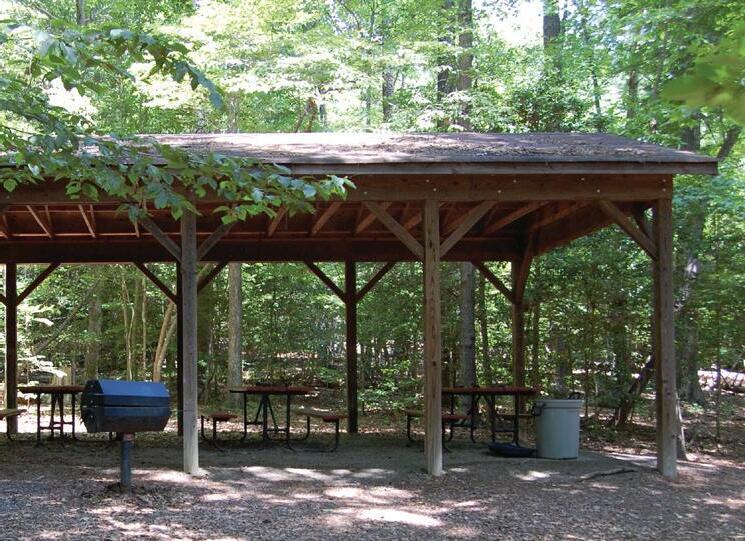
• Governor's Award for Volunteering Excellence was presented to Assistant Executive Director Pat McKinney for her work on the Sea Shore State Park picnic shelter project.
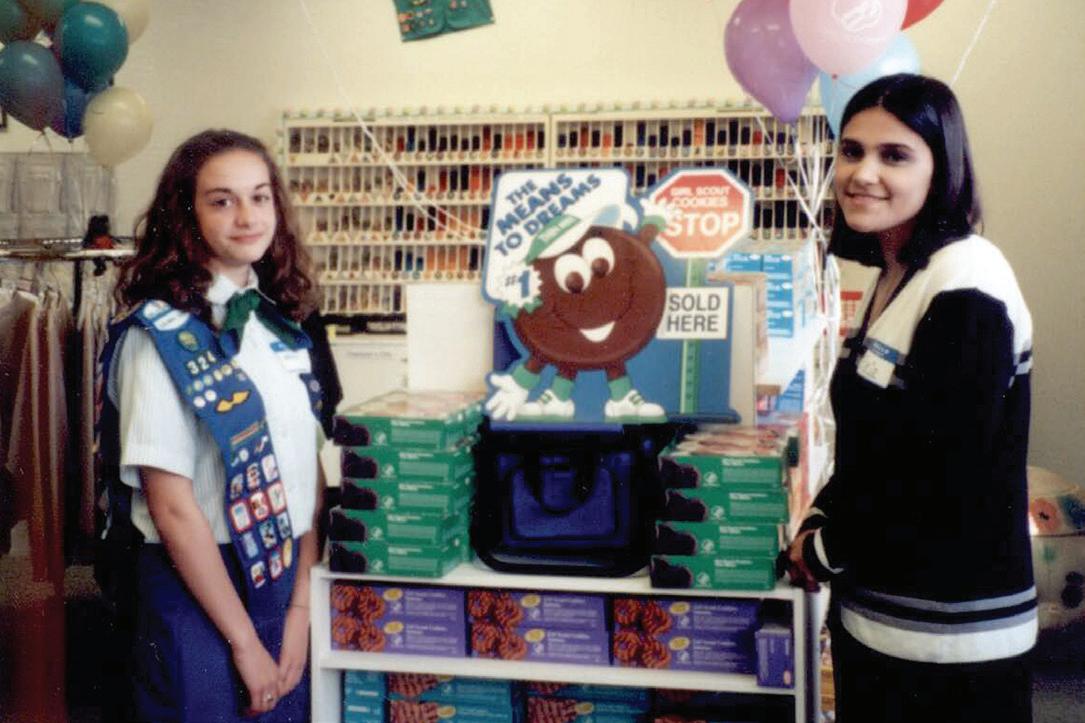
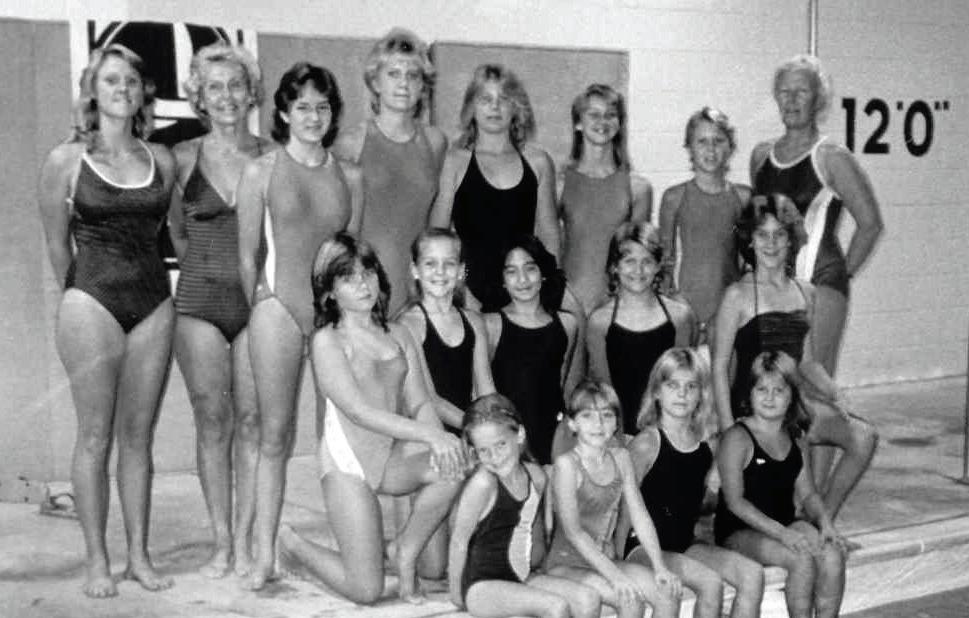
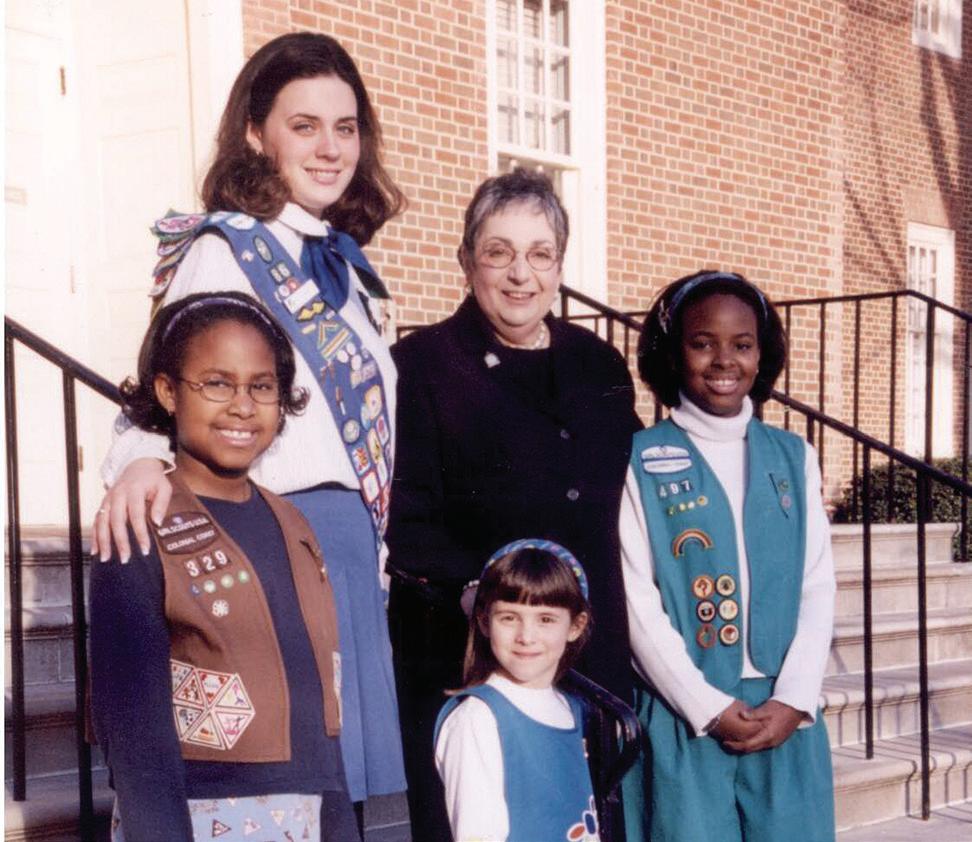
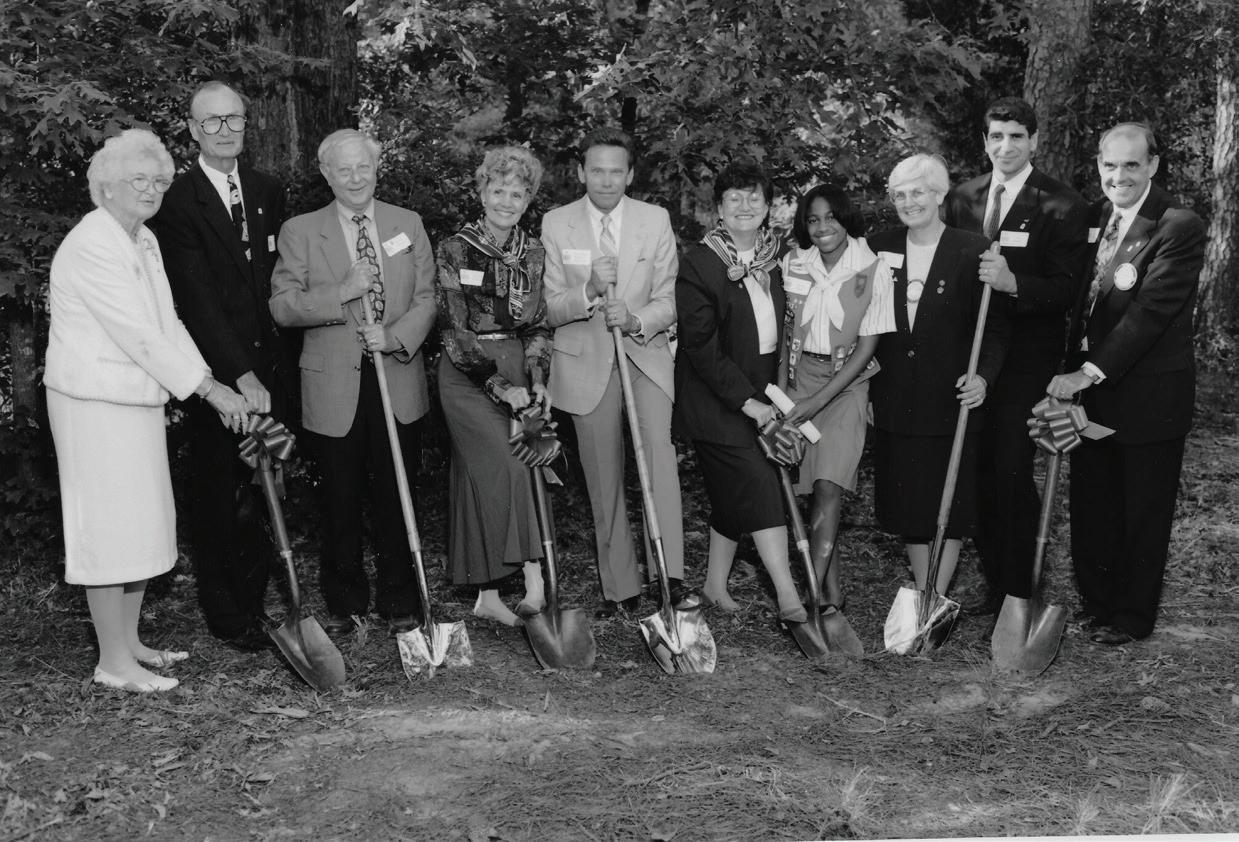
• 1990 - Annual Council Meeting was held in Suffolk and Girl Scouts of the USA Executive Director Mary Rose Main was the guest speaker.
• 1990 - 11.5 percent of girls in the Council’s jurisdiction were registered Girl Scouts. There were 3,129 minority girls, an increase of 36 percent, and 581 minority adults, an increase of 28 percent from the year before.
• 1990 - A new “I Have a Dream” patch was introduced to celebrate Dr. Martin Luther King’s contributions to society.
• 1991 - A Council-sponsored Wider Opportunity event called Cracks, Crevices, and Crawlways was attended by Girl Scouts from 16 states.
• 1991 - The 10th anniversary of the Girl Scout Council of Colonial Coast was celebrated at Norfolk Scope.
• 1992 - Council celebrated Girl Scouts’ 80th anniversary at Hampton Coliseum with 3,000 attendees.
• 1992 - The Council held a Cultural Awareness Celebration at Camp Apasus in Norfolk to help girls appreciate cultures other than their own.
• 1993 - Make a Difference, an event for former Girl Scouts, was held at the Hilton Hotel in Norfolk.
• 1993 - More than 10,000 Girl Scouts helped end hunger through "Scouting for Food" with 108,000 lbs collected!
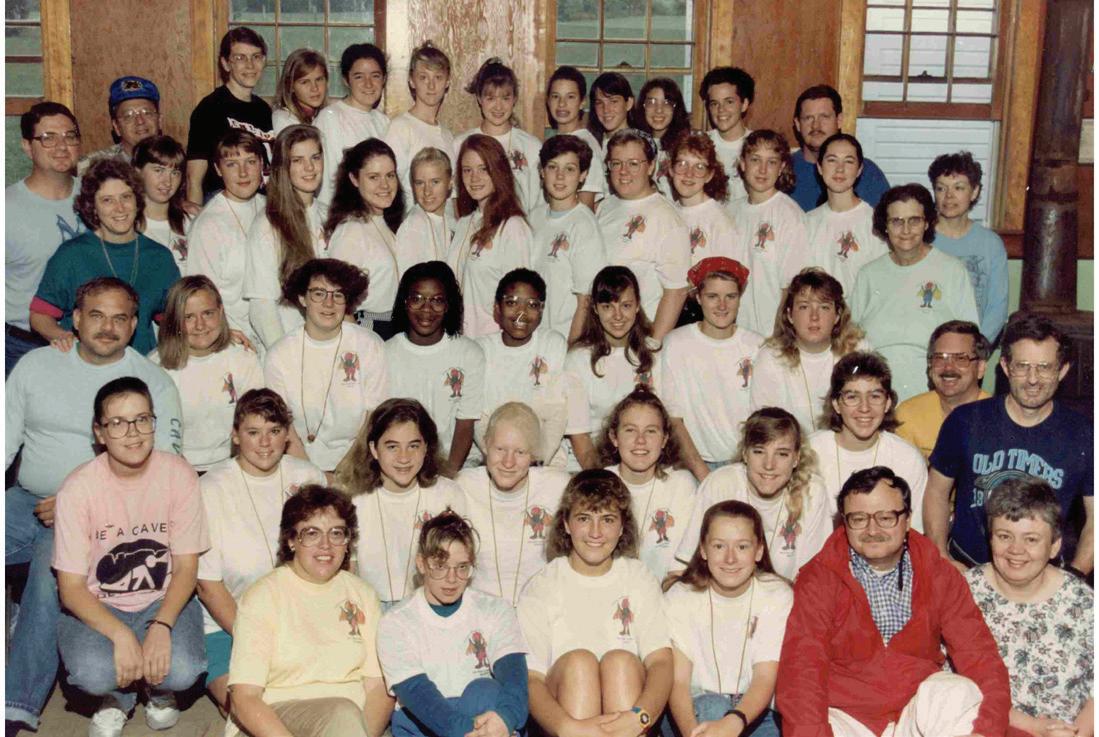
• 1994 - The GSCCC Board of Directors accepted prioritized recommendations of the Council’s Pluralism Committee, including developing a clear vision statement and establishing a resource bank of pluralism information, ideas, and potential funding sources, conducting Girl Scout perception assessments, revising troop organizational structure to better facilitate pluralism, and increasing pluralism training for volunteers between 1995 and 1997.
• 1995 - Troops were invited to put special items in a lead box to be placed in the A Place for Girls (APFG) cornerstone. Girls received a commemorative APFG patch for participating.
• 1996 - A Place for Girls, the council’s headquarters and program center in Chesapeake, Virginia, officially opens.
• 1997 - Hometown History Project is sponsored by local Girl Scouts, Cox Communications, and the History Channel: a project that links Girl Scouts with senior citizens and historical organizations.
• 1998 - Newly constructed cabins opened at Camp Darden: Union Camp; Camp Foundation, Camp Younts Foundation, and Ruth Camp Campbell Foundation.
• 1998 - Council held their first science and technology fair for girls, called Weird Science.
• 1998 - Girls' Day in Golf event was held with professional golfers at Honey Bee Golf Course.
• 1998 - Anheuser-Busch troop shelter, Owens cabin, Brockway cabin, and Dianne’s shower house were dedicated at Camp Skimino.
The Presidential election of 2000 was the closest in decades, with a controversial recount; more than a month after the election, George W. Bush was finally declared the winner. Terrorist attacks on September 11, 2001, resulted in devastation and loss of life at the World Trade Center in New York, the Pentagon in Washington, D.C., and in rural Pennsylvania. The United States engaged in war against the Taliban regime in Afghanistan and terrorists around the world. The Mars Exploration Rovers, Spirit and Opportunity, successfully reached the surface of the red planet. Technology use was on the rise; wireless Internet, Facebook, and texting were widely used. Studies showed that 60 percent of U.S. children ages 9-17 used the Internet regularly.
•The Girl Scout Research Institute launched its first study, Teens Before Their Time, which found that contemporary pre-teen girls were maturing faster mentally and physically, but not emotionally, than previous generations.
•Grants from Fortune 500 companies such as Lucent Technologies, Intel, and Lockheed Martin supported Science and Technology Exploration programs for girls.
•Girl Scouts took to the World Wide Web via the national organization’s website, local council websites, and online troop meetings.
•New badges included Global Awareness, Adventure Sports, Stress Less, and Environmental Health.
•Uniquely ME!, a program for girls eight and up funded by Dove, was introduced to help girls build self-esteem and strengthen character.
•Girl Scouts transformed through a core business strategy. Major changes were made in program, governance and brand. The organization restructured from 300 councils into 113, GSCCC remained the same. New resources, the Journey series, were launched: It’s Your World, Change It! (2009); It’s Your Planet, Love It! (2010); and It’s Your Story, Tell It! (2011).
•A breakthrough study by the Girl Scout Research Institute, Change It Up, revealed that girls were redefining leadership. They valued personal principles, ethical behavior and the ability to affect social change.
•2000 - GSCCC introduced the Dorothy Barber Lifetime Achievement Award.
•2000 - Girl Scouts of the Colonial Coast was chosen as the council to be spotlighted in the Little Brownie Baker’s marketing video.
•2001 - A Place for Girls received the Chesapeake Beautification Award.
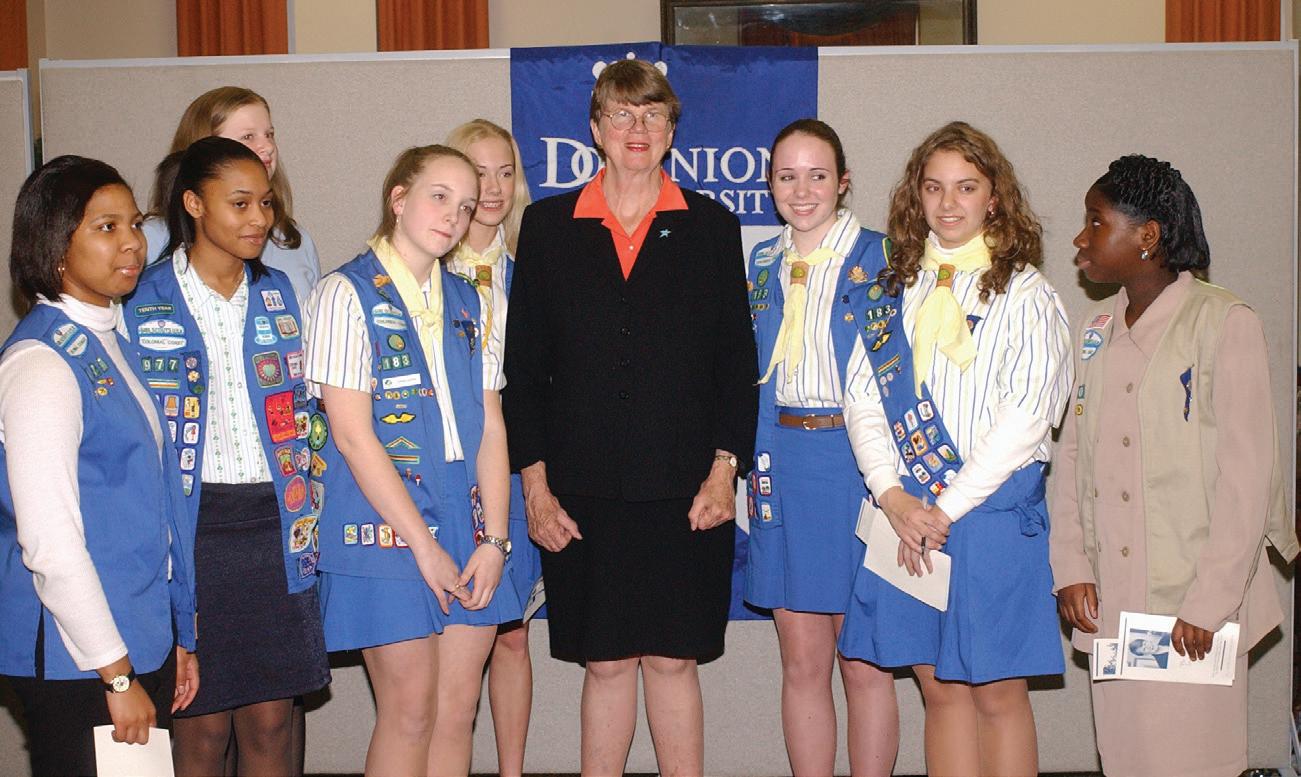
•2002 - GSCCC was invited to send Girl Scouts to a special dinner hosted by Old Dominion University to meet US Attorney General and Girl Scout alum Janet Reno.
•2002 - A Girl Scout Mariner Exhibit was displayed at the Mariners’ Museum in Newport News as part of Girl Scouts’ 90th anniversary celebration.
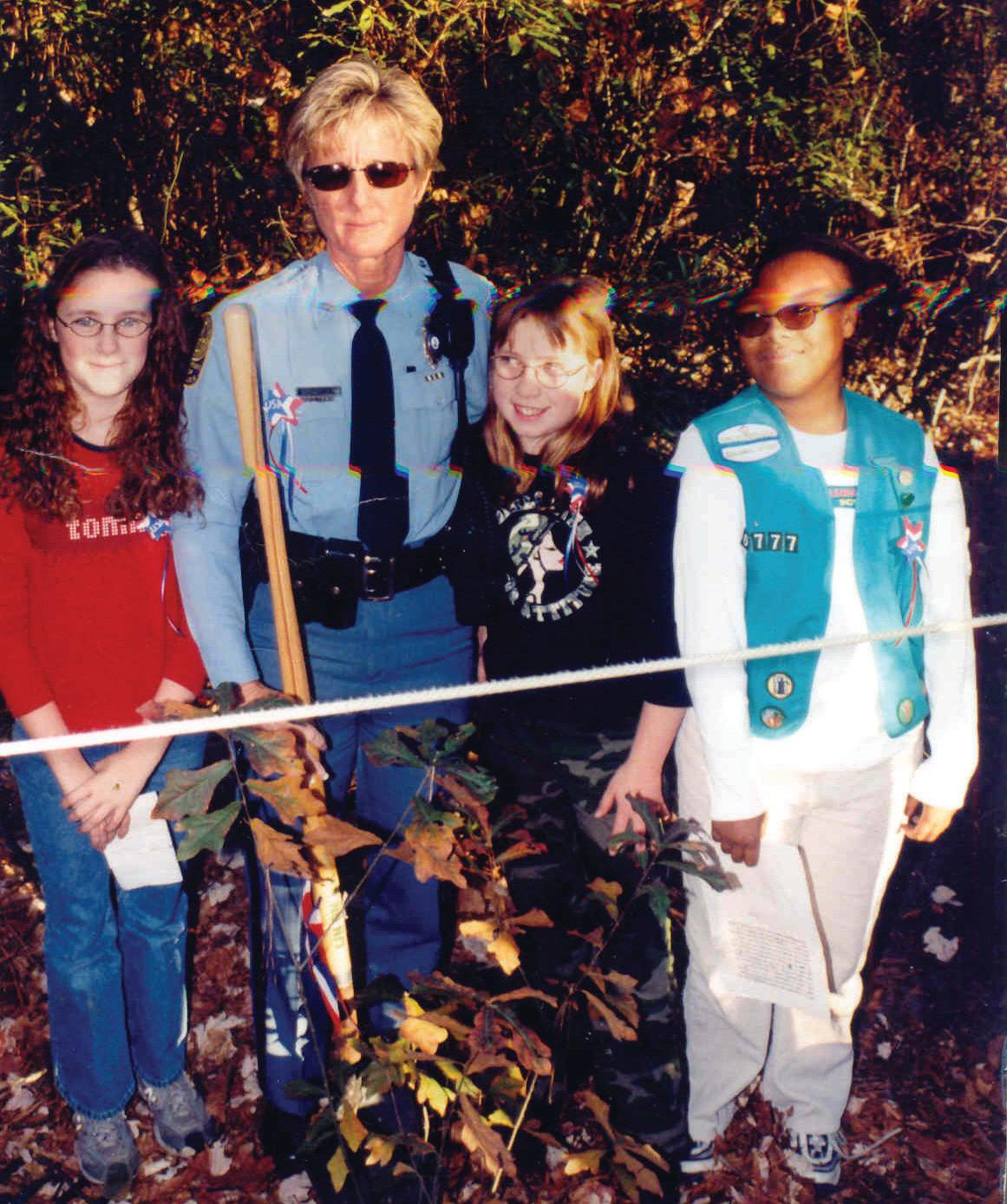
•2003 - The Girl Scout Women in Aviation event was held at Wright Brothers National Memorial on the Outer Banks of North Carolina.
•2003 - Girl Scout of the Colonial Coast partnered with Kids Vote and volunteered at election sites.
• 2003 - Formation of an alumna network called the Green Hats.
• 2004 - Chief Executive Officer Nellie Hayes retires.
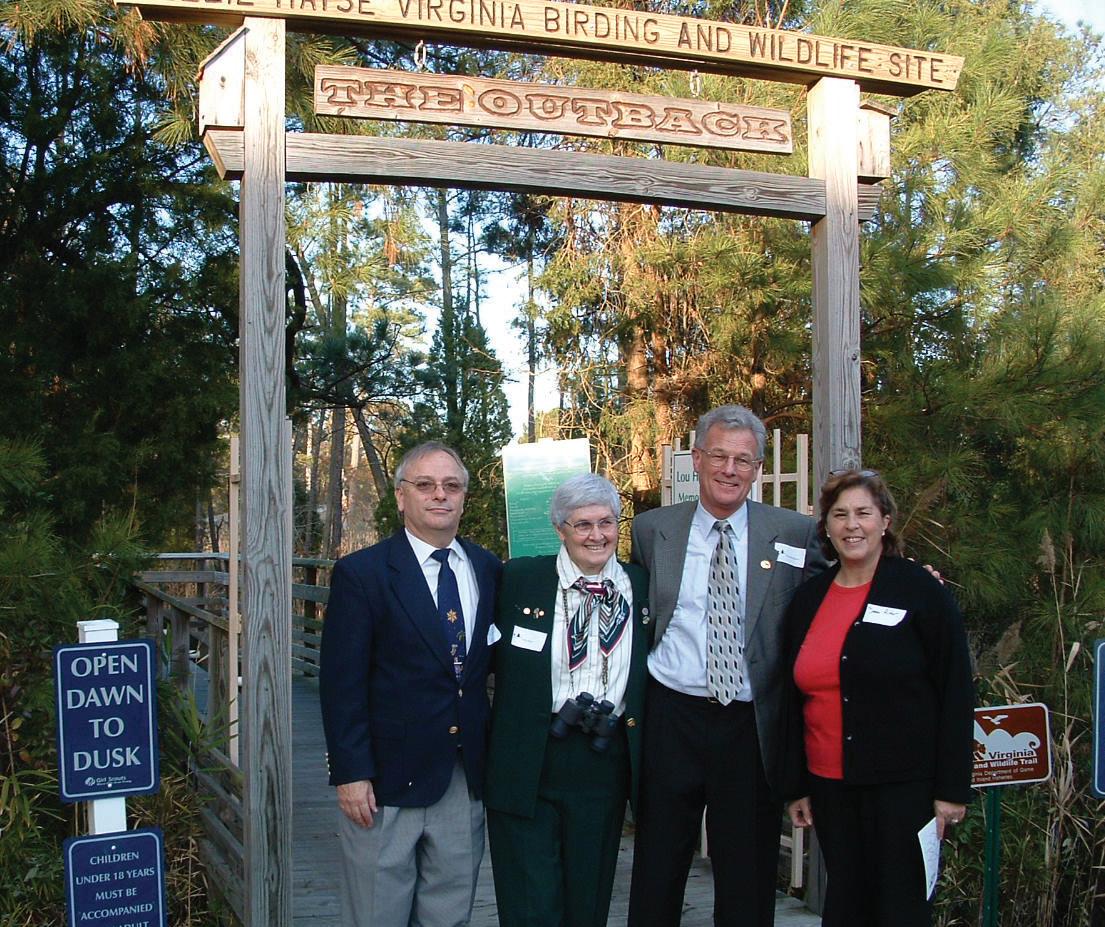
• 2004 - Dedication of Nellie Hayes Birding and Wildlife Trail.
• 2005 - Tracy Keller, a lifetime member and Gold Award Girl Scout from Girl Scouts of the Colonial Coast was hired as Chief Executive Officer.
• 2006 - A Place for Girls celebrated its 10th anniversary.
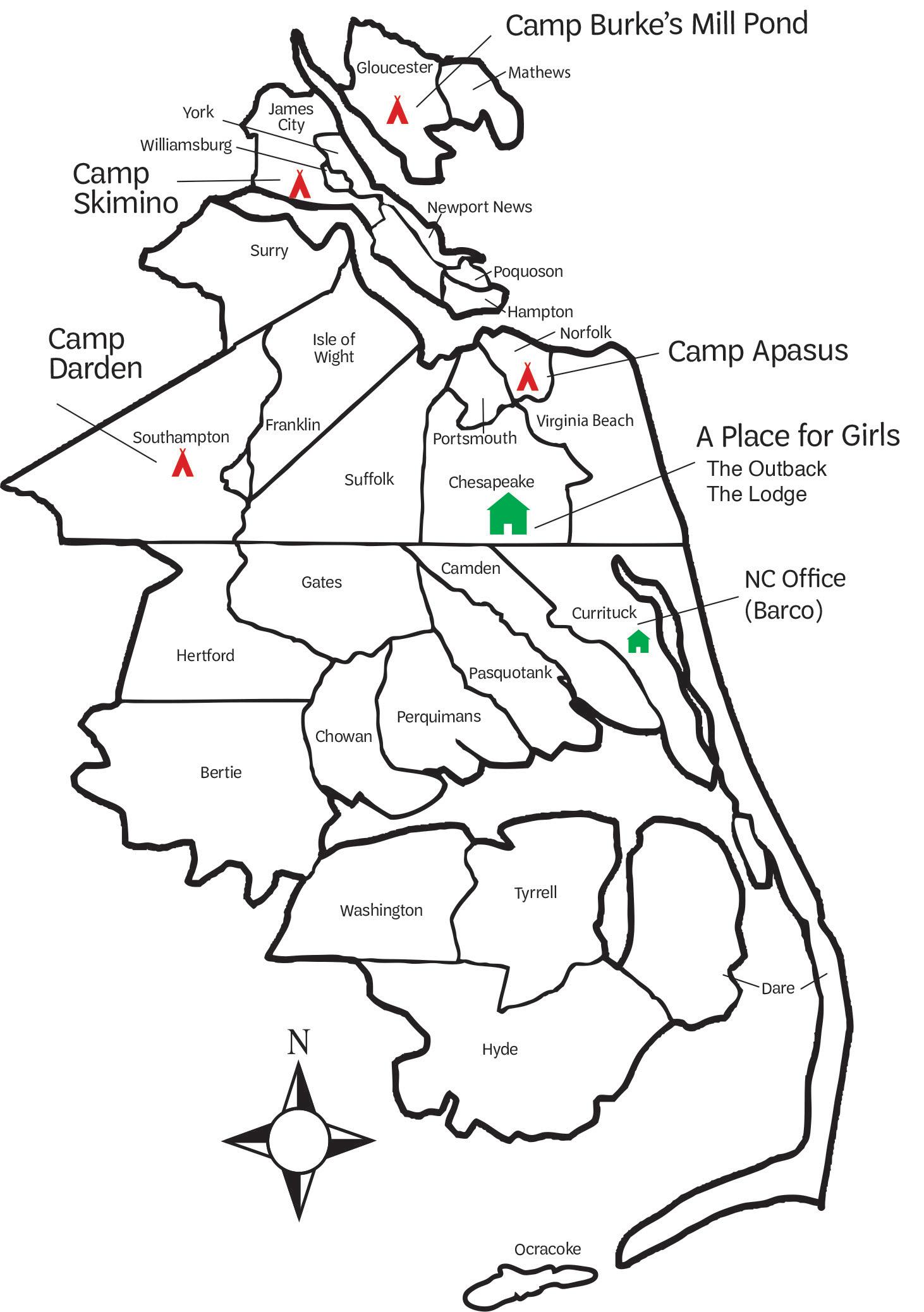
• 2007 - Additional territories were added to the Colonial Coast jurisdiction: Surry, Virginia; Washington County, Hyde County, Bertie and Tyrell in North Carolina.
• 2008 - Olympian Dominique Dawes spoke at the Legacy Breakfast.
• 2008 - The Ninety-Nines, a group of women pilots, did a flight program for 50 girls.
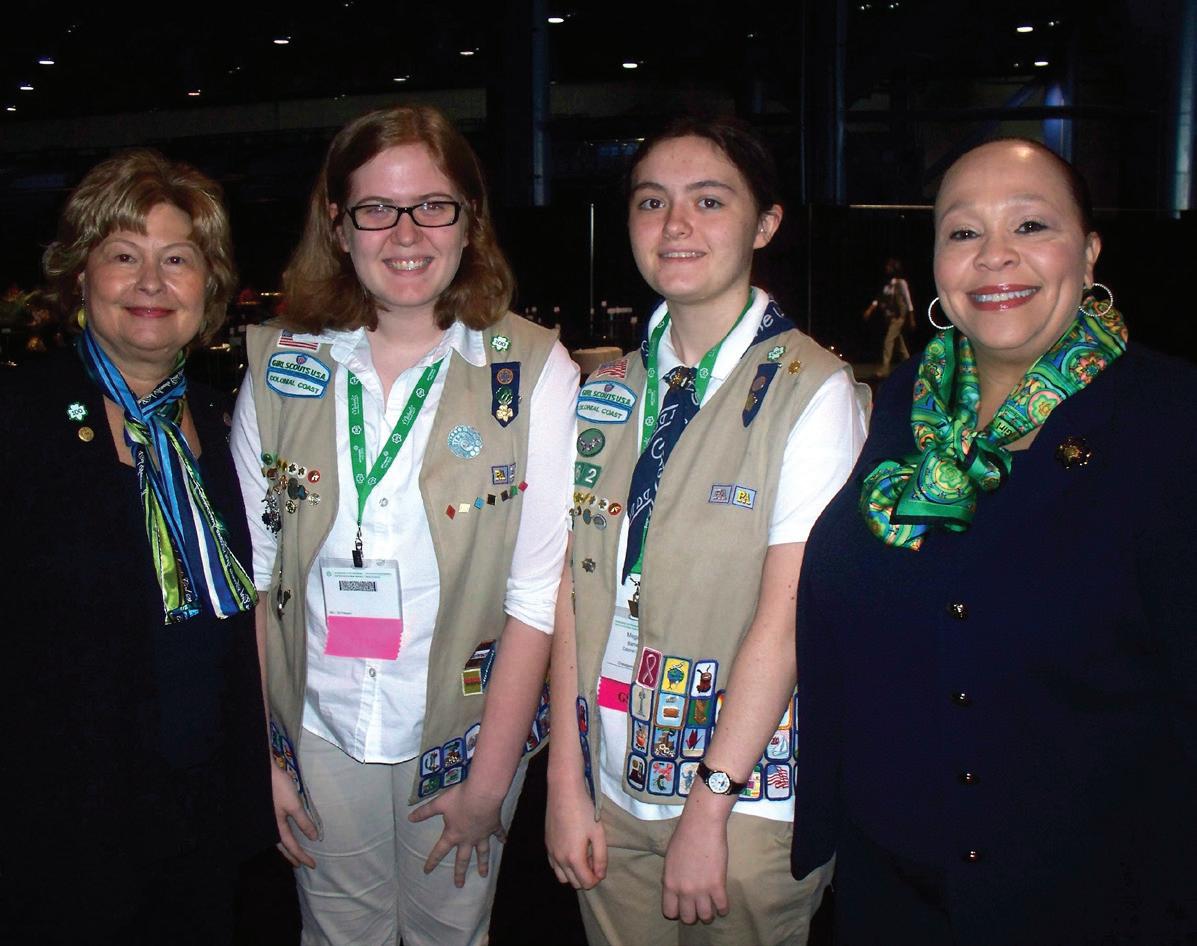
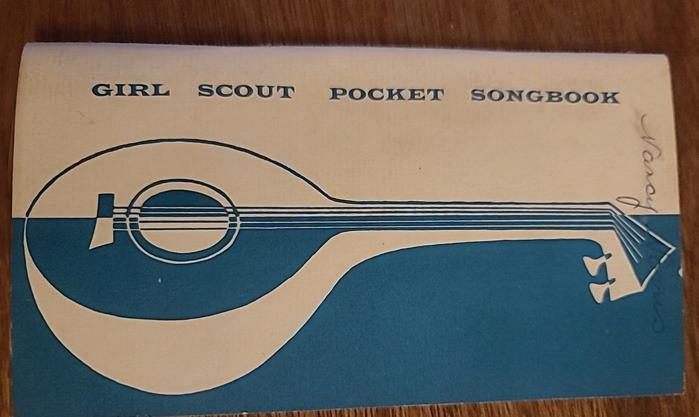

Technological growth was the hallmark of this era; from smartphones to social media, tech use became the norm. In 2018, for the first time, social media sites (particularly Facebook) surpassed print newspapers as a top news source for Americans. Girl Scouts partnered with Google for “Made with Code,” a program encouraging girls to get an early start in computer science. Even as technology played a larger and larger role in Americans’ lives, Girl Scouts also stayed connected to nature with new badges to promote outdoor activities. In 2012, Girl Scouts celebrated their 100th Anniversary and new outdoor badges were introduced.
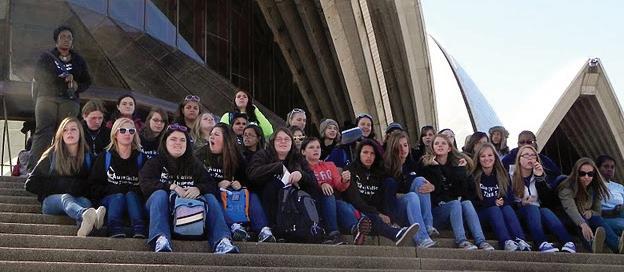
•2011 - GSCCC hosted a Council Destination Travel to Australia and New Zealand the summer of 2011.
•2012 - Girl Scouts Rock the Beach at the Virginia Beach Convention Center celebrated 100 years of Girl Scouts.
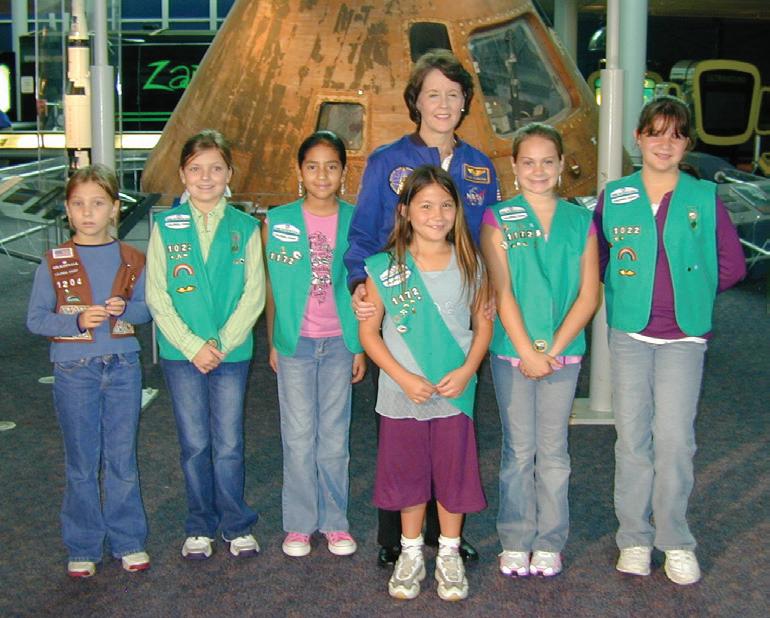
•2010 - Astronaut Kathryn Thorton was a special guest at GSCCC STEM event at Virginia Air and Space Museum.
• 2010 - GSUSA National Board Chair Connie Lindsey spoke at Annual Meeting.
•2010 - Blazing Blue Herons Canoe Team was founded.
•2011 - First Girl Scout Famous Formers celebration luncheon was held to celebrate local alum.
•2011 - GSCCC CEO Tracy Keller inducted in Association of Girl Scout Executive Staff Hall of Fame.
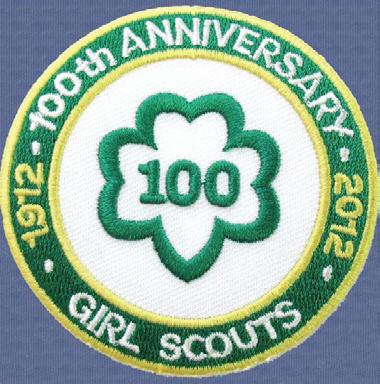
100th Anniversary Girl Scout patch
•2012 - Several museum exhibits were hosted by GSCCC to celebrate Girl Scouts’ 100th anniversary. Birthday parties were held throughout the Council, including one where girls made Birthday-in-a Box kits for local food banks to distribute.
•2012 - 100th Girl Scout Celebratory Calendar was produced.
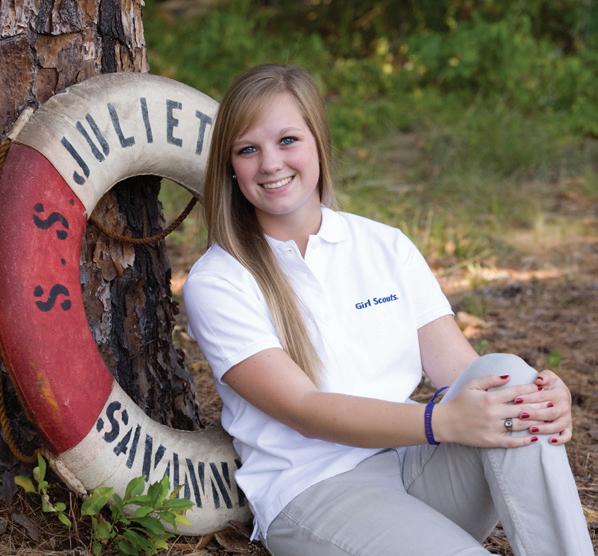
One of the photos in the 100th anniversary council calendar included Girl Scout Nicole Livick sitting in front of one of the two lifesaving rings GSCCC has in archives. The lifesaving rings were from the Juliette Low ship, a liberty ship used during WWII as an emergency cargo ship. It was dismantled at the Norfolk Naval Shipyard. The council received the lifesaving rings and the ship’s bell.
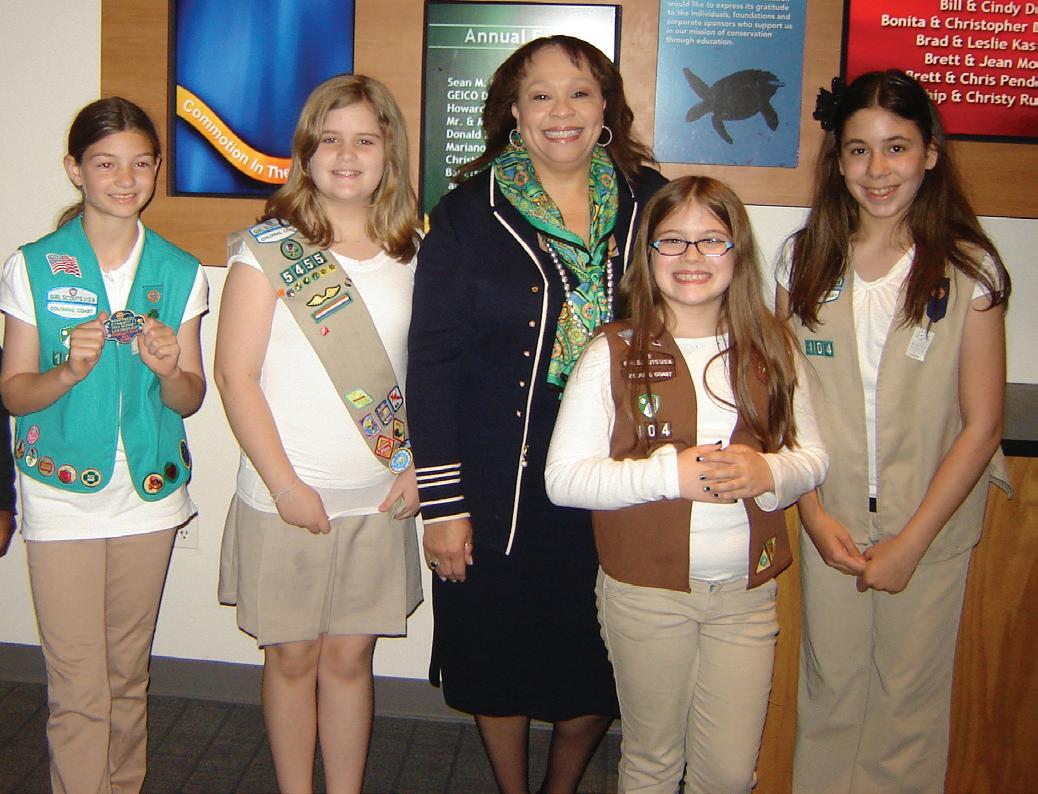
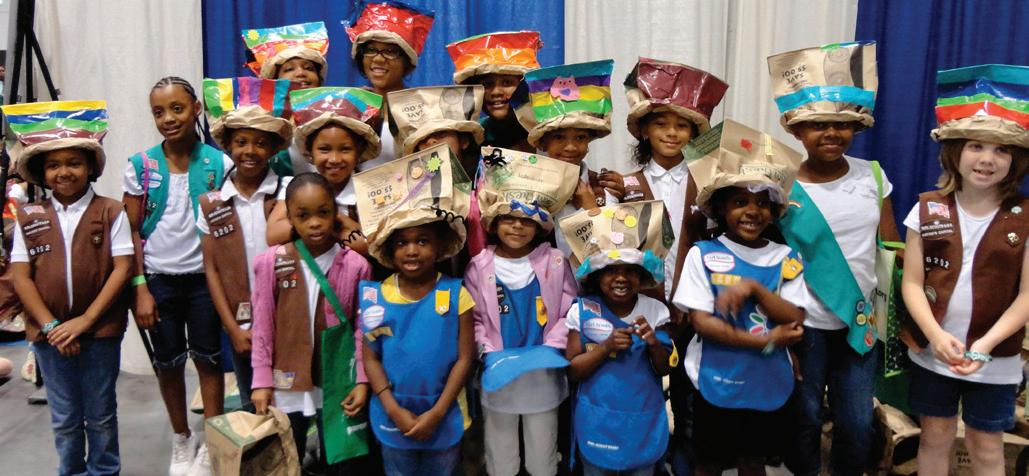
•2012 - Retired GSUSA National CEO Kathy Cloninger spoke at Annual Meeting and signed copies of her book, “Tough Cookies: Leadership Lessons from 100 Years of the Girl Scouts.”
•2012 - A new high ropes course was introduced at Camp Skimino.
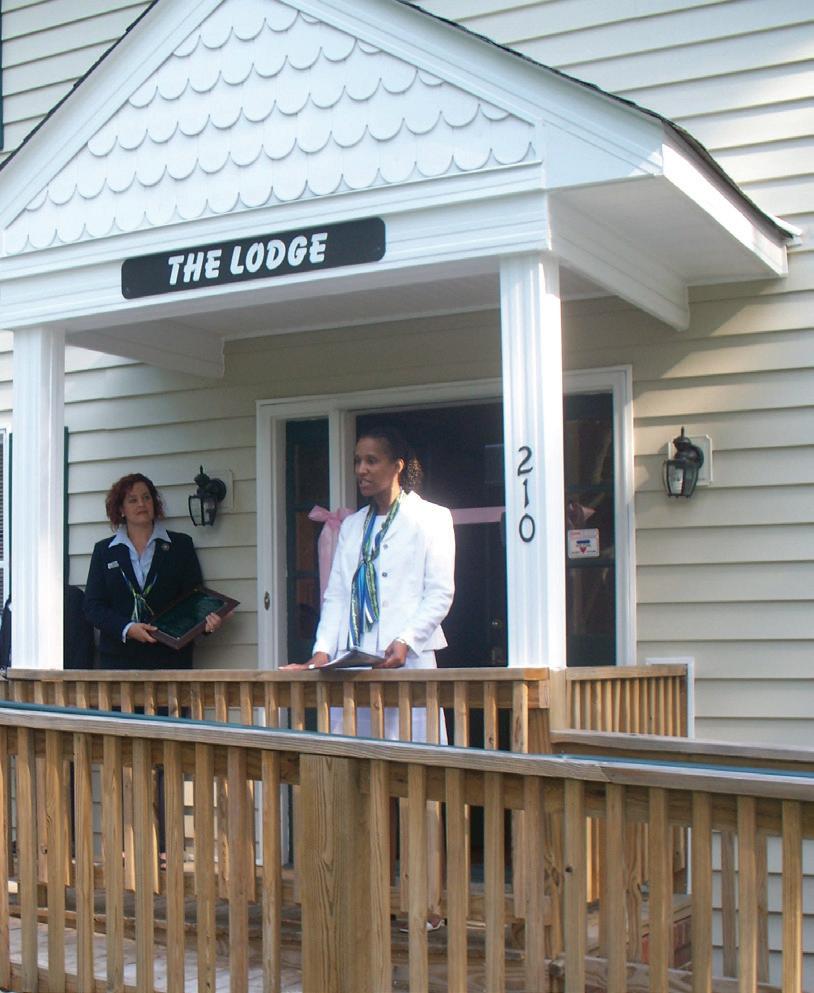
•2012 - The Lodge, an annex property adjacent to A Place for Girls that provides program space and overnight accommodations, officially opened.
•2014 - GSCCC participated in Women in Aviation celebration and STEM event in 2014 at Wright Brothers National Memorial and met Mary S. Feik, the first woman aviation engineer.
•2014 - GSCCC CEO Tracy Keller took Gold Award Girl Scouts to Washington, DC, to celebrate the 100th anniversary of Girl Scouts' highest award, the Gold Award.
•2014 - The Alcoa Foundation awarded GSCCC $50,000 to fund STEM programming for girls.
•2014 - Keep Virginia Beautiful awarded GSCCC a $750 grant as part of their Thirty Grants in 30 days program.
•2014 - The first Bricks of Honor ceremony took place at GSCCC in August 2016.
•2014 - GSCCC and GEICO received the Governor’s Transportation Safety Award – youth category for their Car Care Badge program.
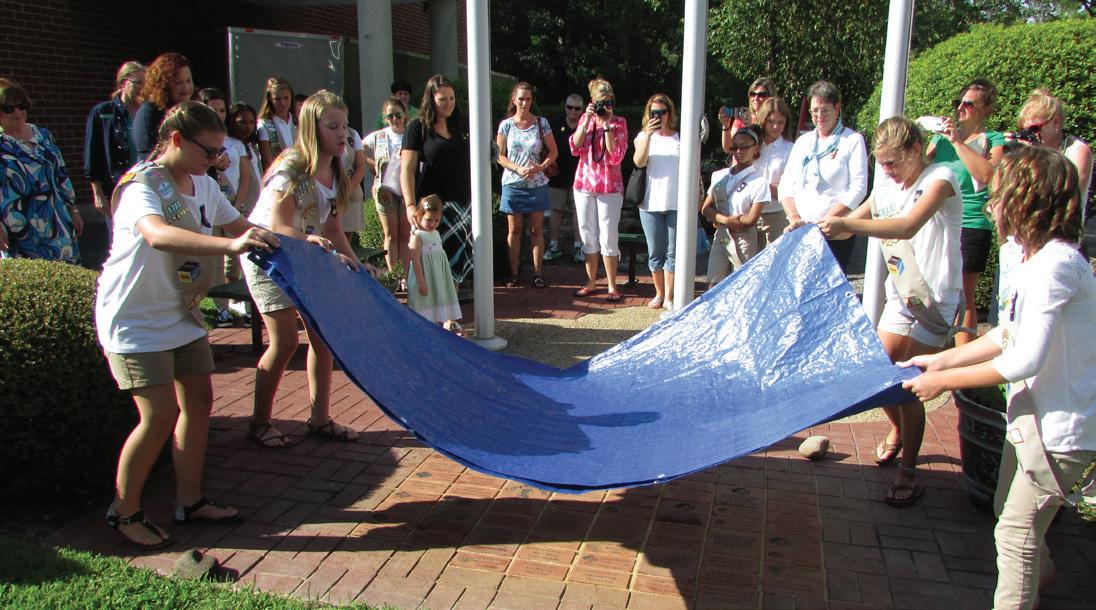
•2014 - Members from GSCCC helped christen USS Indiana.
•2014 - Extention of Sertoma building at Camp Apasus dedicated.
•2014 - Girl Fest was held at the Aviation Museum in Virginia Beach, country music singer Sara Beth performed.
•2017 - The Juliette Gordon Low Society, a national philanthropic group, was founded by Dianne Belk.
• 2017 - Gold Award Girl Scout Lea Bonner from Chesapeake was the first GSCCC Gold Awardee to be recognized with the National Young Woman of Distinction Award and scholarship.
•2018 - Arconic Foundation donated $50,000 and Cox Communications gave $10,000 towards GSCCC’s STEM programs for girls.
•2018 - Gold Award Girl Scout Lauren Prox spoke at the congressional reception in Washington DC.
•2019 - Four GSCCC Girl Scouts received the Medal of Honor Lifesaving Award. Morgan Nottingham and Katie Heine from Troop 373 and Girl Scout Ambassadors Morgan Harvey and Gabriella Gonzalez.
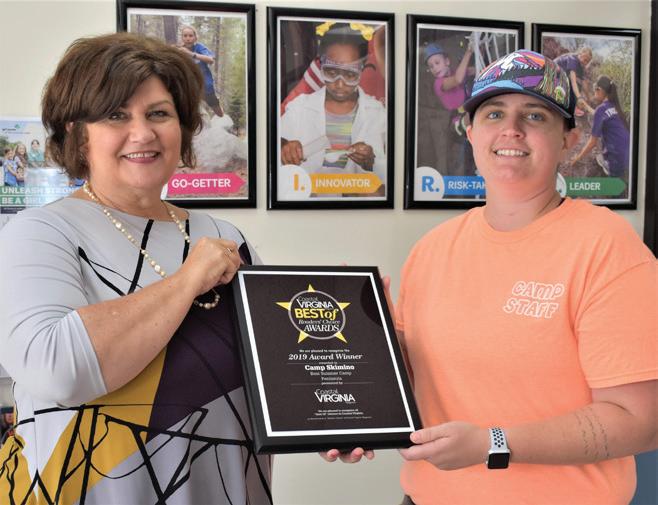
•2019 - Camp Skimino earned the Best of Virginia Award.

In the beginning, it was believed that vaccines would eradicate the virus. The pandemic caused long-term stress for many, and all communities felt the strain that came with isolation. Throughout 2020, the dual COVID-19 pandemic and racial injustice epidemic brought immeasurable stress, loss, and grief. Parents — particularly mothers — had a most difficult time. COVID exacerbated long-term problems, such as balancing work and child care, forcing the two to coexist in one place since moms are more than three times more likely than dads to take on most of the domestic work and childcare (according to a 2021 report from McKinsey). Girl Scouts never missed a beat. It’s a true testament to the powerful ways in which girls learn and grow as Girl Scouts. Early and often, they learned to be creative, resilient, and face challenges head on, always finding ways to support their communities and make the world around them better, no matter what.
•2020 - GSCCC celebrates passage of the 19th Amendment with the introduction of the Women’s Suffrage Centennial patch program.
•2020 - Girl Scouts, both individuals and as a GSCCC effort, made face masks that were distributed in their communities.
•2020 - Girl Scout cookies were delivered to first responders.
•2020 - GSCCC created “Just for Me,” a web page offering virtual Girl Scouting, as well as a Virtual Camp Program called “U-pick Camp Adventures.”
•2020 - GSCCC ensured service units and troops had access to Zoom and other methods of virtual communication.
•2020 - Kate Godby’s “She Believes She Can, So She Does” scholarship was awarded to its first recipient, Jazzlyn Childs.
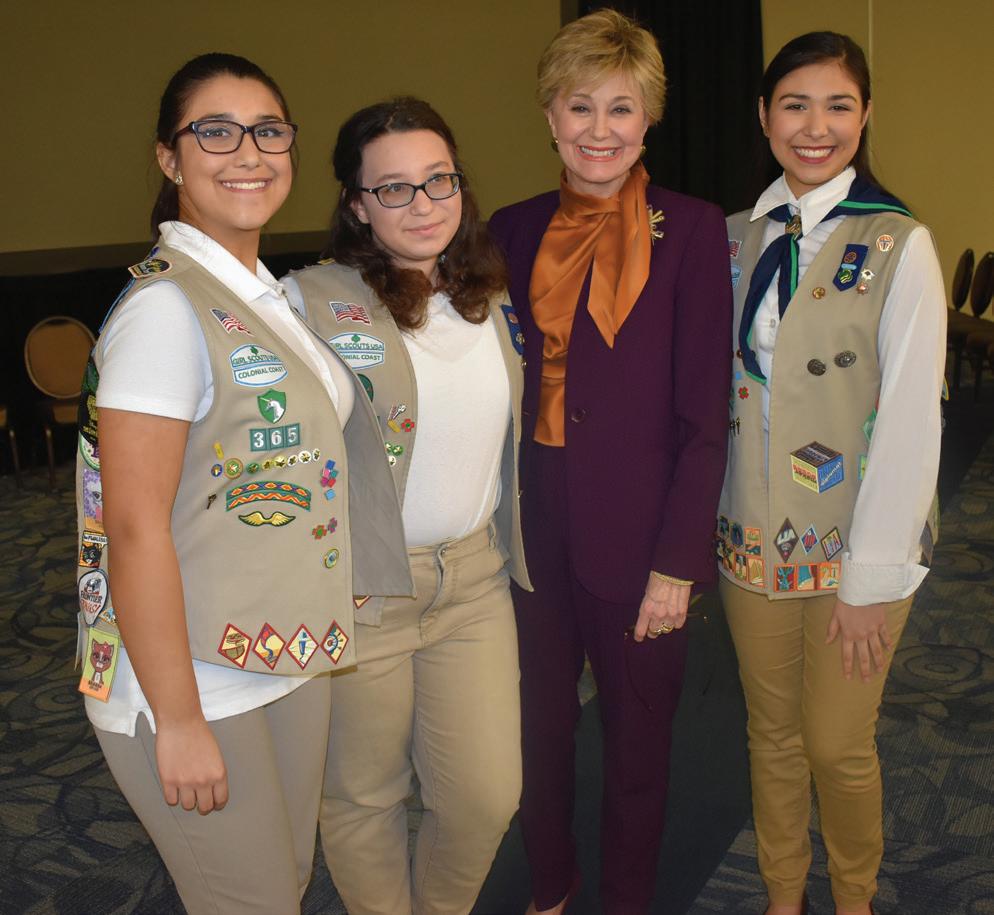
•2020 - National Journalist Jane Pauley presented with the Women’s Suffrage badge.
•2020 - Girl Fest, the first in-person Council event since the start of the pandemic, was held in October.
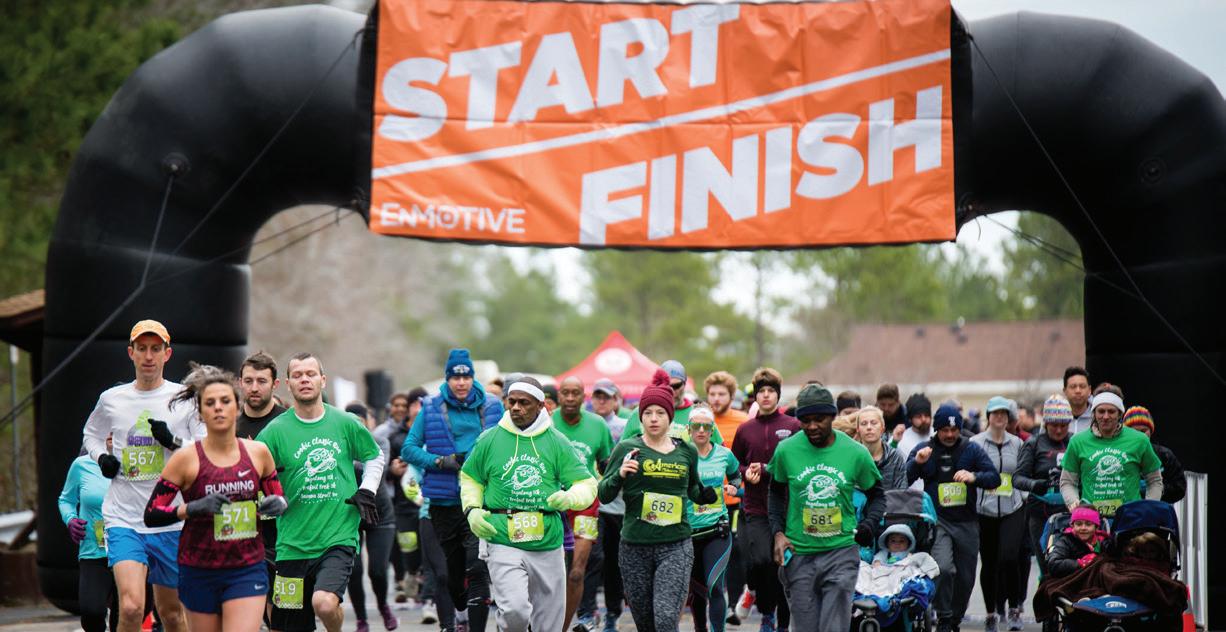
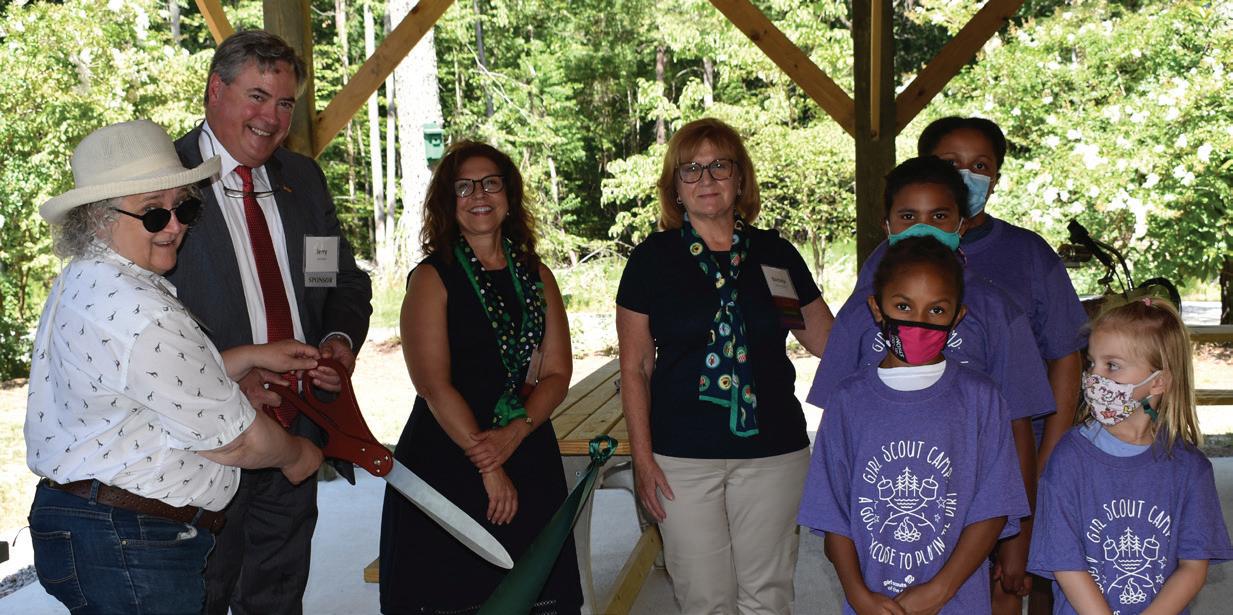
•2020 - The Cookie Classic Run raises $25,000 for GSCCC.
•2020 - A partnership with Dairy Queen allowed GSCCC to host Meet & Treat events.
•2020 - Girl Scouts Celebrates 110 Years!
•2021 - GSUSA National Board Member Leslee Temple attended the Cookie Kickoff.
•2022 - Camp Burke's Mill Pond in Gloucester celebrated its 50th anniversary. An exhibit on the camp was placed at the Gloucester Museum of History.
• 2022 - GSCCC is recognized as a Top Workplace in Hampton Roads by Inside Business for the second consecutive year.
• 2023 - GSCCC presents its first Spread Kindness patch program which included a peanut butter drive
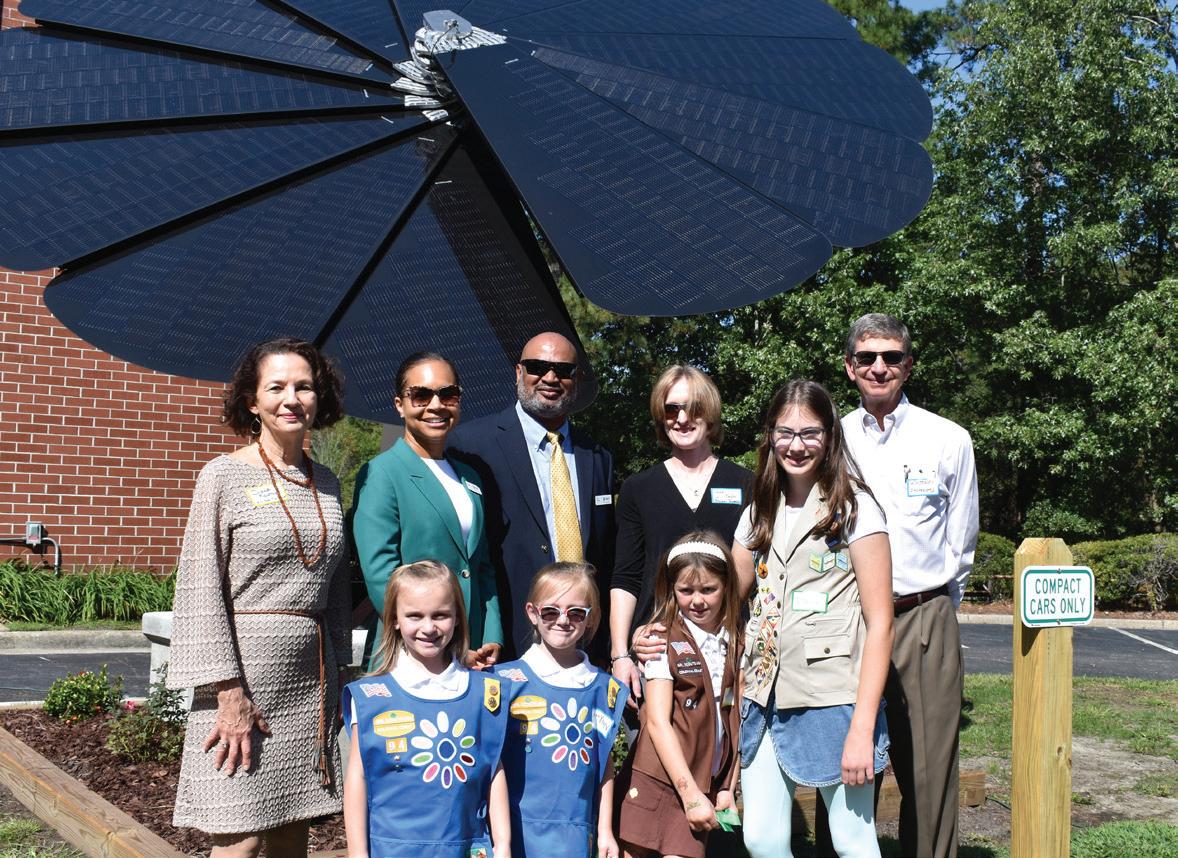
• 2023 - A solar SmartFlower was installed at A Place for Girls which helps produce power for APFG.
• 2024 - Girl Scout Fest held at Northwest River Park
• 2024 - Spread Kindness to Our Four-legged Friends.
•2024 - GSCCC offers a matching scholarship for GSUSA Gold Award recipient.
•2024 - GSCCC Philanthropy department hosts an all adult weekend at Camp Darden.
•2024 - GSUSA announces new Girl Scout Mental Wellness program.
• 2025 - Spread Kindness to Seniors
• 2025 - GSCCC Philanthropy department introduces Daisy's Circle, a monthly giving program.
• 2025 - Girl Scout alum go cruising to Turks, Caicos, Dominican Republic, and the British Isles.
• 2025 - GSCCC Board Member, author Dawn Brotherton, presents her playful theater experience, "The Great Girl Scout Cookie Mystery" at Camp Skimino.
• 2025 - GSCCC Outdoor adventures introduces Slingshots.
• 2025 - GSUSA announces new leadership awards.
• 2025 - GSUSA announces new Body Appreciation badges.
• 2025 - GSUSA Founder, Juliette Gordon Low, Honored on U.S. Mint Quarter
• 2025 - GSCCC closed the Franklin Hut and the Elizabeth City Service Center.
• 2025 - GSCCC opened office in Barco, NC
• 2026 - GSCCC recognized by the Elizabeth River Project with the Advancing to Achievement Level River Star
•2026 - World Thinking Day celebrates 100 years.
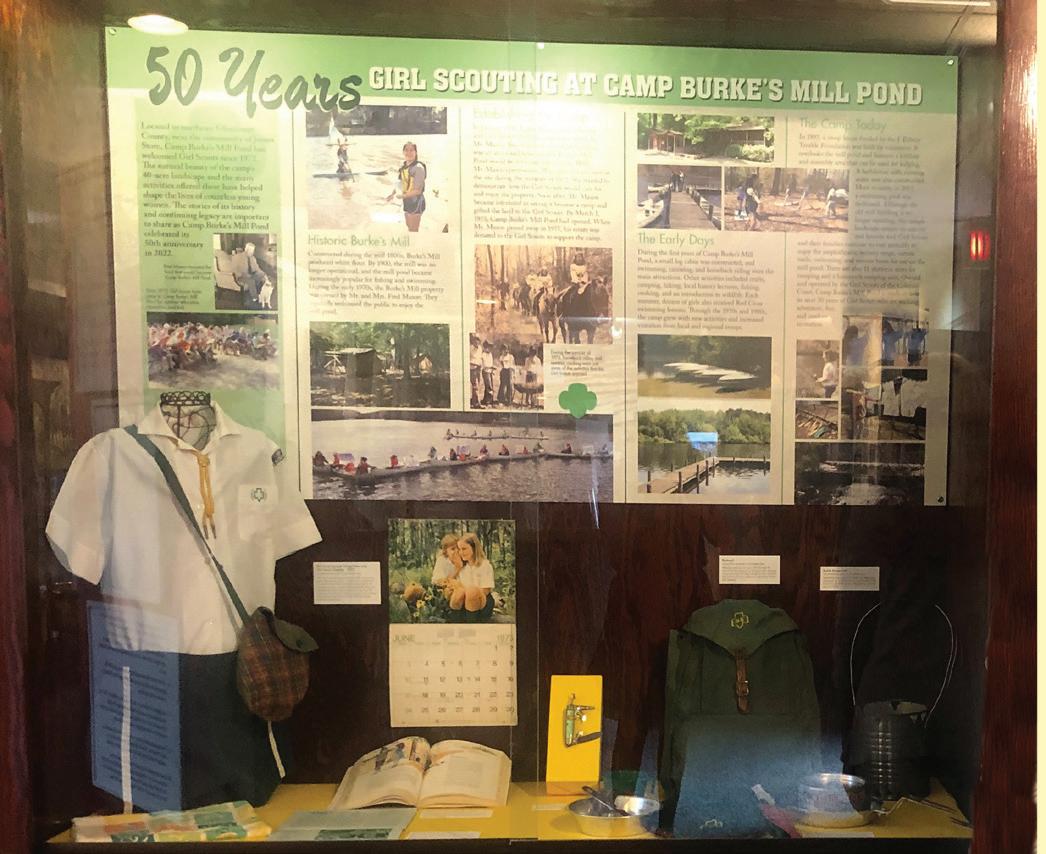
Camp Burke's Mill Pond 50th anniversary in 2022
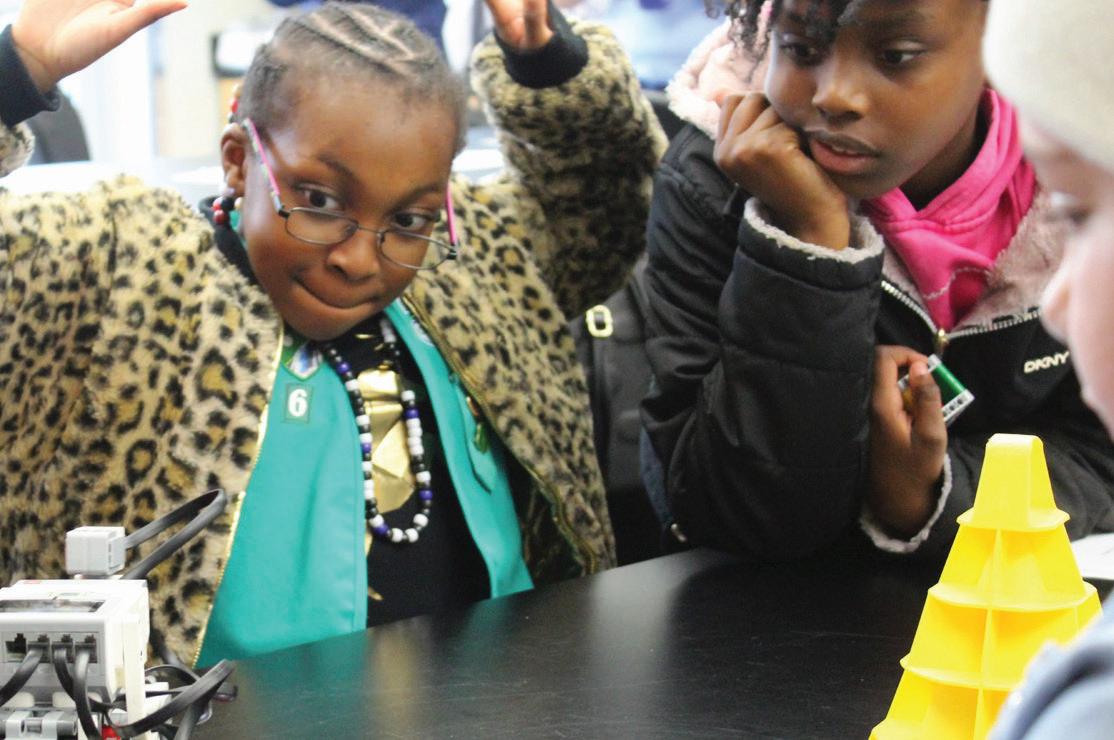
Building relationships with program partners, such as Old Dominion University’s Engineering Department, has grown as a priority as more and more badges are STEM focused – 140 badges included STEM activities in 2020.
Camp Apasus dates all the way back to the 1930s when day camp was held in Lafayette Park. The name Apasus comes from the Native Americans who inhabited the area long before Europeons settled in Virginia.
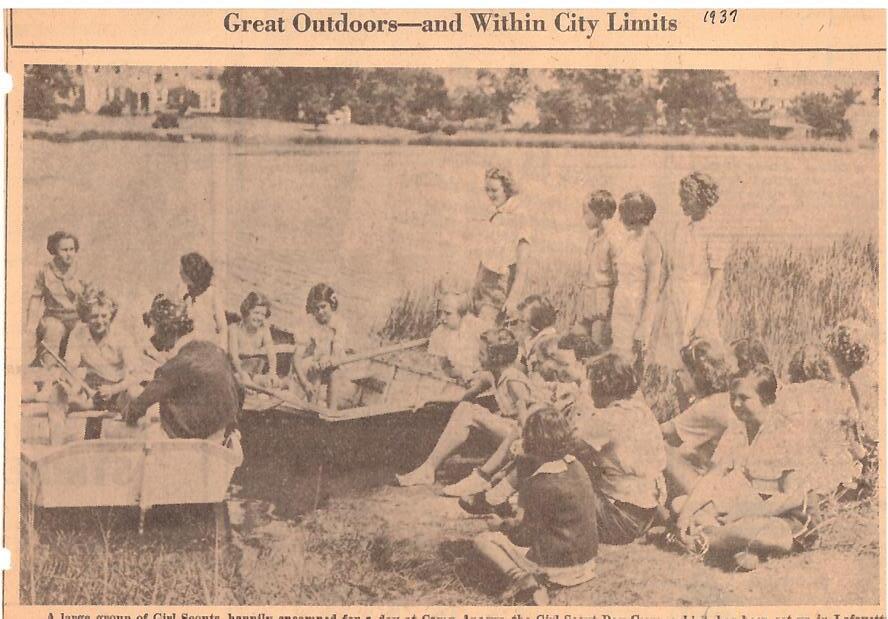
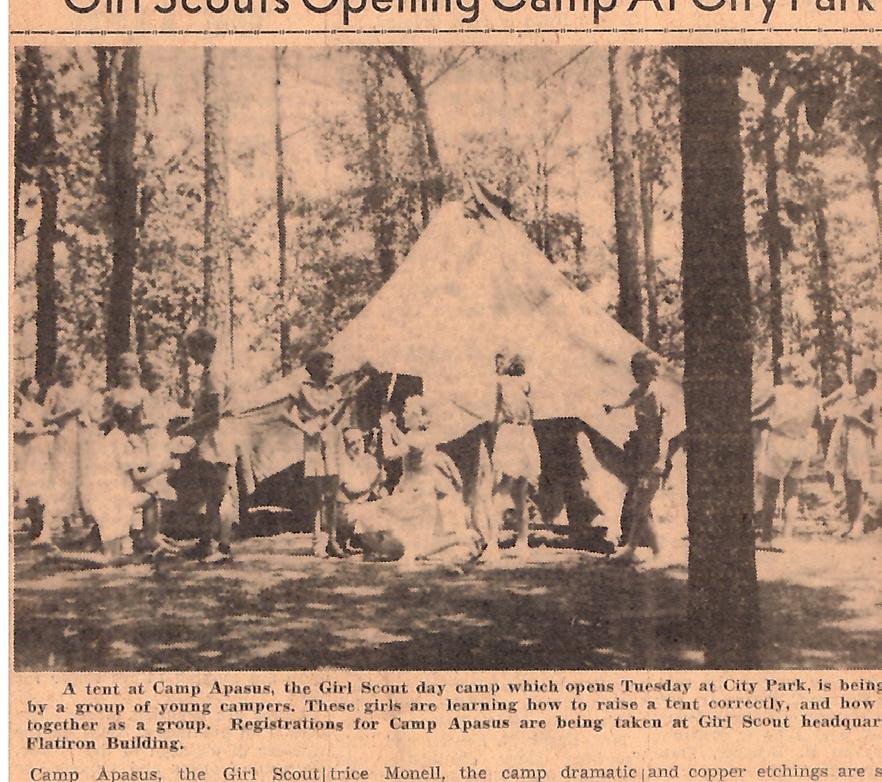
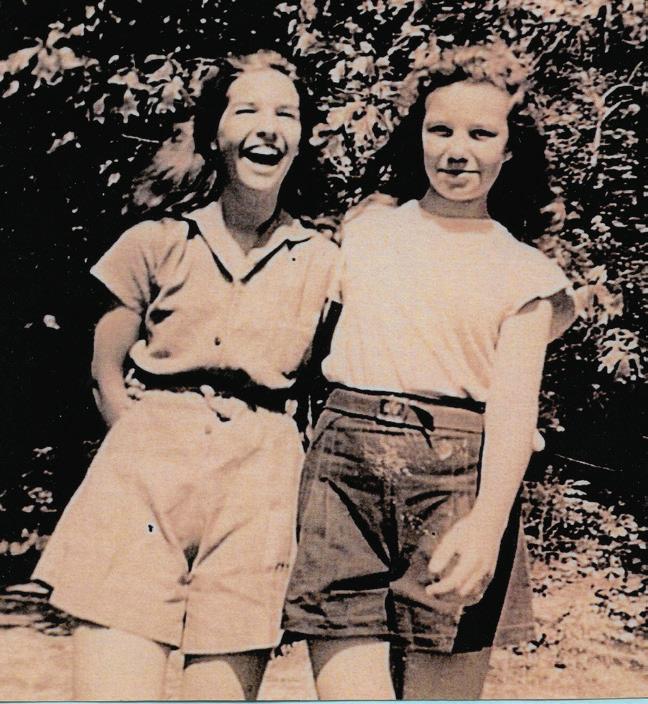
During World War II, Camp Apasus was moved from City Park to property owned by the City of Norfolk on Mason’s Creek, known as Pilgrim’s Rest. GSCCC records show that 269 girls attended camp in 1939 and did activities such as bicycle trips, boating, bird trips, crafts, and archery. During the 1940s, girls got to camp by catching the bus and taking it to the stop right before Mason’s Creek, where they were greeted by a Camp Counselor and a Traffic Officer to assist in crossing the street. In 1949, the camping guide required list of items to bring to camp consisted of: a cup, bandana, comb, clean handkerchief, and a knife. Girls also had to bring a nosebag lunch on days that they did not cook-out. The camping guide said that an ideal nosebag lunch would contain sandwiches, fruit, vegetables, and cookies.
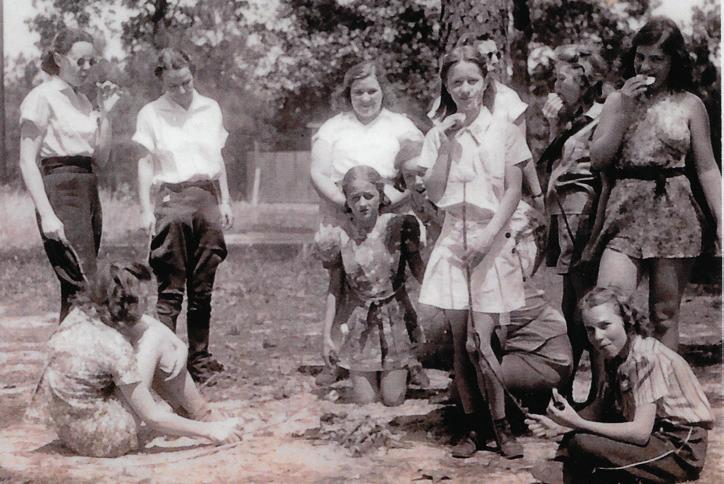
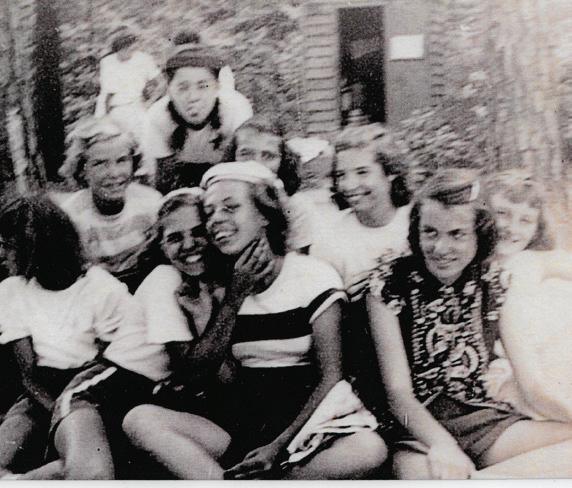
It was in the mid-1940s when the Norfolk Sertoma Club became involved as a supporter of the camp. Camp Apasus was moved in 1952 from Pilgrim’s Rest to a new site on Mason Creek nearer to Granby Street.
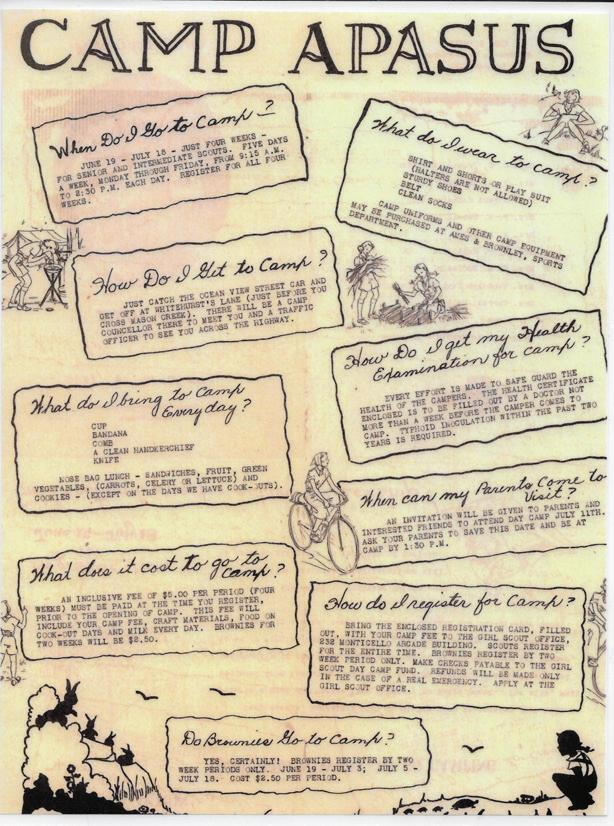
A camp guide from 1952 lists the cost as $4.50. This payment went to buy craft materials, food for cook-out days, milk every day, and medical insurance for the campers. The camping guide that year told parents that their daughters would learn outdoor cooking and the art of camp craft, and become acquainted with various types of trees, birds, and insect life at Camp Apasus.
After the 1964 camping season, it was noted that Camp Apasus needed the fence to be extended and the ship’s bell from the Juliette Low Liberty Ship which was dismantled in Norfolk was added to the property.
In 1970, sessions were designed with older girls in mind and included Music Arts Dramatics for Cadettes interested in participating in a variety of art forms, working on Cadette badges, and meeting Cadettes with similar interests. Also during this time, steps leading to Mason Creek boat dock were made thanks to Robby Ogg, son of the camp’s nurse, Kathyrn Ogg.
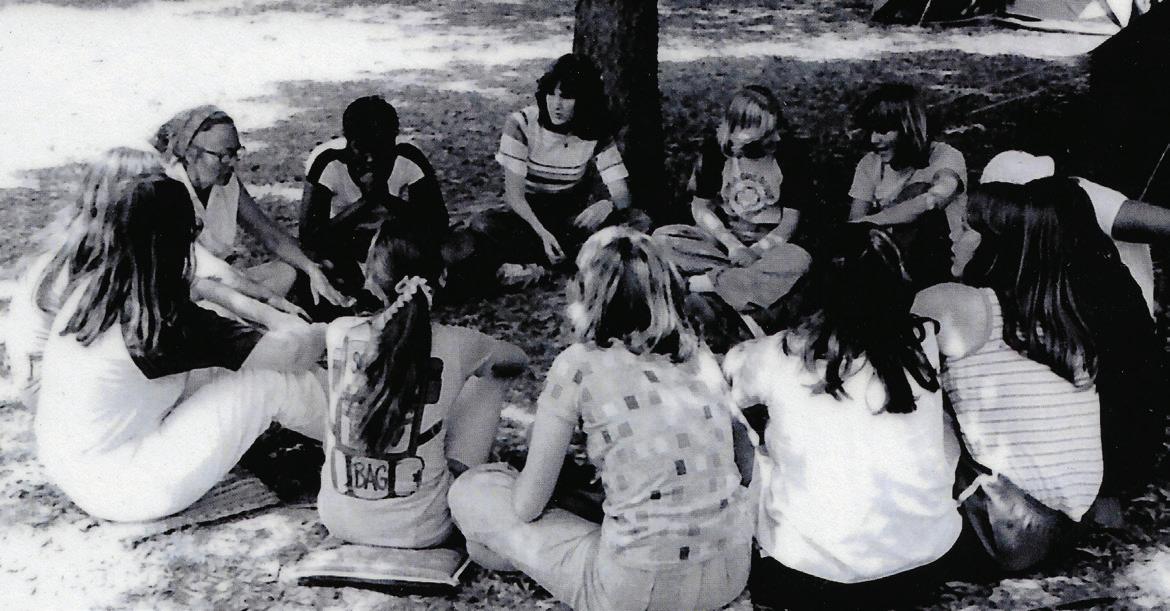
This era also brought in many special programs, including one about the American flag presented by men from Fleet Marine Force Atlantic. In 1979, there were Sun, Wind, Rain, and Soil weeks where girls did activities such as solar cooking, pond life under a microscope, beetle races, and used a water machine.
During the 1980s, Camp Apasus was rented by several groups who wanted to offer summer camp programs and included the YWCA of South Hampton Roads. In 1984, there were three special events during Day Camp at Apasus: TRIS (Tidewater Rape Information Services) gave a presentation on safety in the community, Girl Scout Songfest workshop was hosted by a well-known Girl Scout leader who participated in a Wider Opportunity Songfest, and Indian Folklore where a researcher shared his findings of local Indian folklore with the Girl Scouts. In 1988 and 1989, the four sessions at Apasus were Insects on Stage, Watch the Birdie, Trees are Terrific, and Amazing Mammals.
In 1991, Camp Apasus received an above ground pool from the Norfolk Public School System. A Cultural Awareness Celebration was held at camp in 1992 to help girls appreciate cultures other than their own. The day included African storytelling and a Kwanza a presentation.
In 1988, Camp Apasus expanded with additions of plumbing and electricity to the Sertoma Lodge. In 1998, there were four special program sessions including Splash!!!! with water fun activities, Dream Weavers learning about Native American heroes through outdoor skills, Team Up and Win! where girls participated in games and sports, and Wet & Wild, with field trips to Ocean Breeze Water Park and Wild Water Rapids.
Throughout the years, various special programs and activities have been held at Camp Apasus, but girls who attend day camp there today experience and learn some of the same things that girls did over 80 years ago—nature study, camp skills, swimming, arts and crafts, and more
• 2014 - Above ground pool added, pool removed in 2022
• 2017 - Sertoma screened in addition completed
• 2019 - Rotary Club was enclosed and interior finished
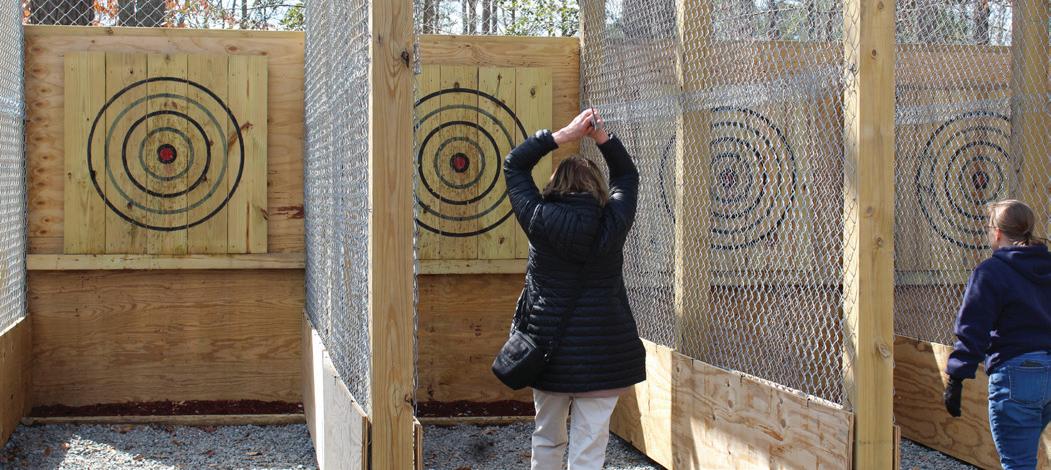
• 2023 - Axe throwing range added
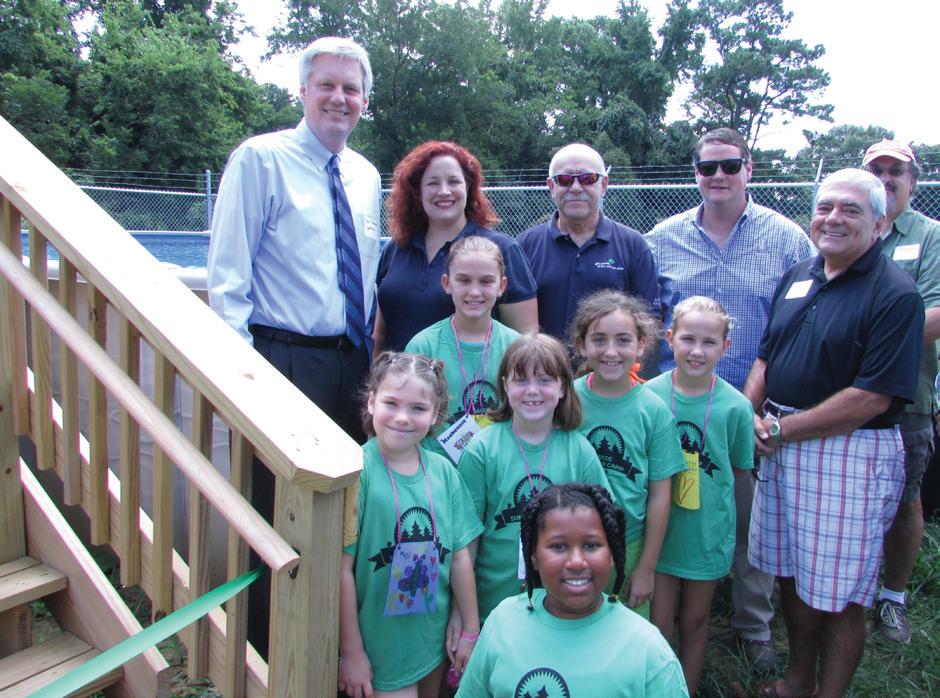
Camp Burke’s Mill Pond, located in Gloucester, Virginia, is a property that was gifted to Girl Scouts in 1972 by Mr. Fred Mason. He had a long-time interest in Girl Scouting and left all of his assets to the Heritage Girl Scout Council when he died in 1977. Prior to the Girl Scouts owning Burke’s Mill Pond, Mr. Mason had already allowed public access to the lake on his property. Red Cross swimming programs had been taught there since the 1940s.
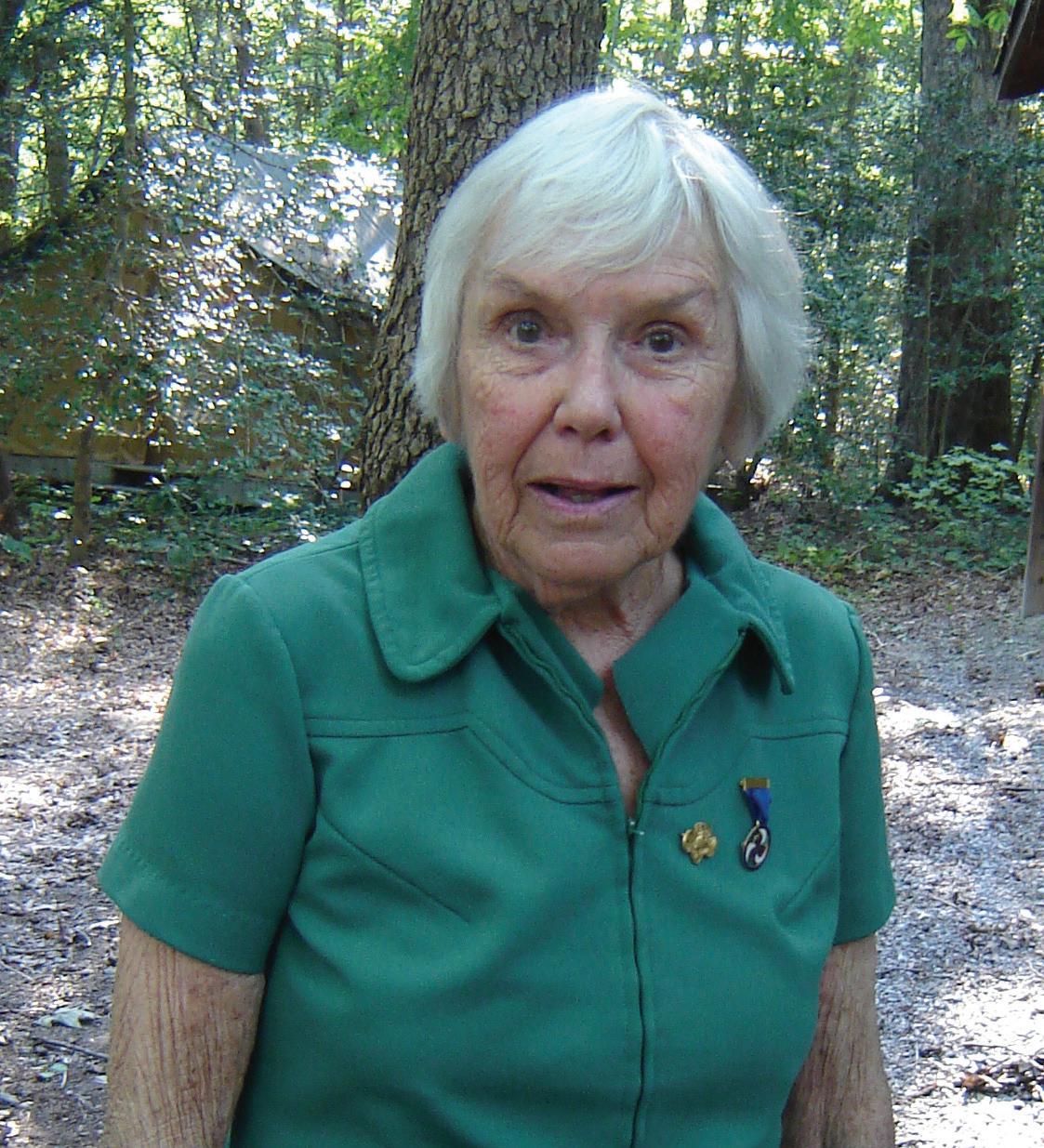
Lorna Wass at the 2012 100th Anniversary
Fred Mason had retired in Gloucester with his wife after a career as the owner of a candy manufacturing company in New York.
Before receiving the Burke’s Mill Pond property, the Heritage Girl Scout Council formed a committee, with Lorna Wass as chair, to explore the possibility of acquiring the land for Girl Scout use. Lorna prepared a report for Mr. Mason that described how Girl Scouts could use the property. During that time, Lorna also planned a Girl Scout event to take place at Burke’s Mill Pond, so that Mr. Mason could see firsthand how the Girl Scouts would benefit from having the property as a local camp.
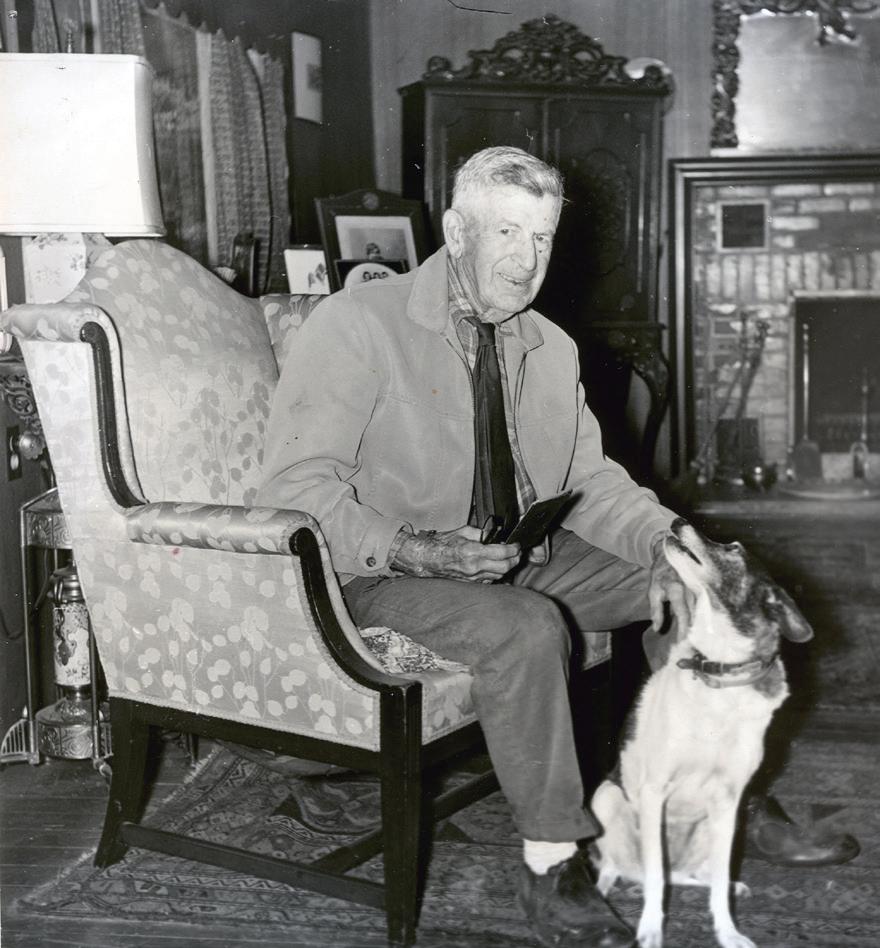
Mr. Fred Mason, donor of the Camp property
Although winter troop camping was not possible that year because of hunting season and necessary repairs to the cottages on site, by March 1, 1973, Camp Burke’s Mill Pond was open for troop camping and featured basic and advanced canoeing and horseback riding.
At day camp that summer, 60 girls advanced in Red Cross swimming level. Other activities included camp crafts, an overnight stay, ecology games, nature trail walks, a local history lecture, fishing, cooking, and an introduction to snakes. Day camp at Burke’s Mill Pond in 1980 had the theme “Back to Basics.”
Many repairs and updates have been made to the camp over the years. In 1993, the Treakle Foundation and volunteer workers gave $10,000 to replace the log cabin at Burke’s Mill Pond campsite for troop overnight purposes. The year before, the Treakle Foundation had given $5,000 to renovate the cabin, but once construction began, it was discovered that termite damage would make renovations impossible and an entirely new structure needed to be built. A new roof was provided by E.L. Keel Roofing and Sheet Metal Company in 1994.
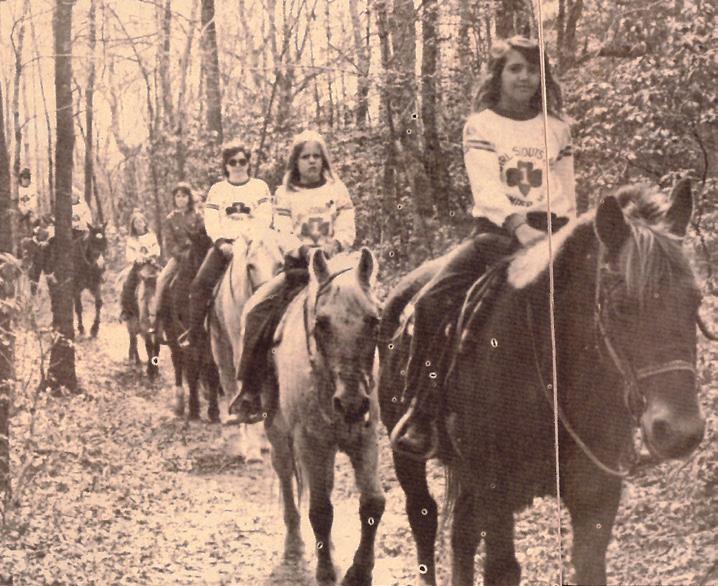
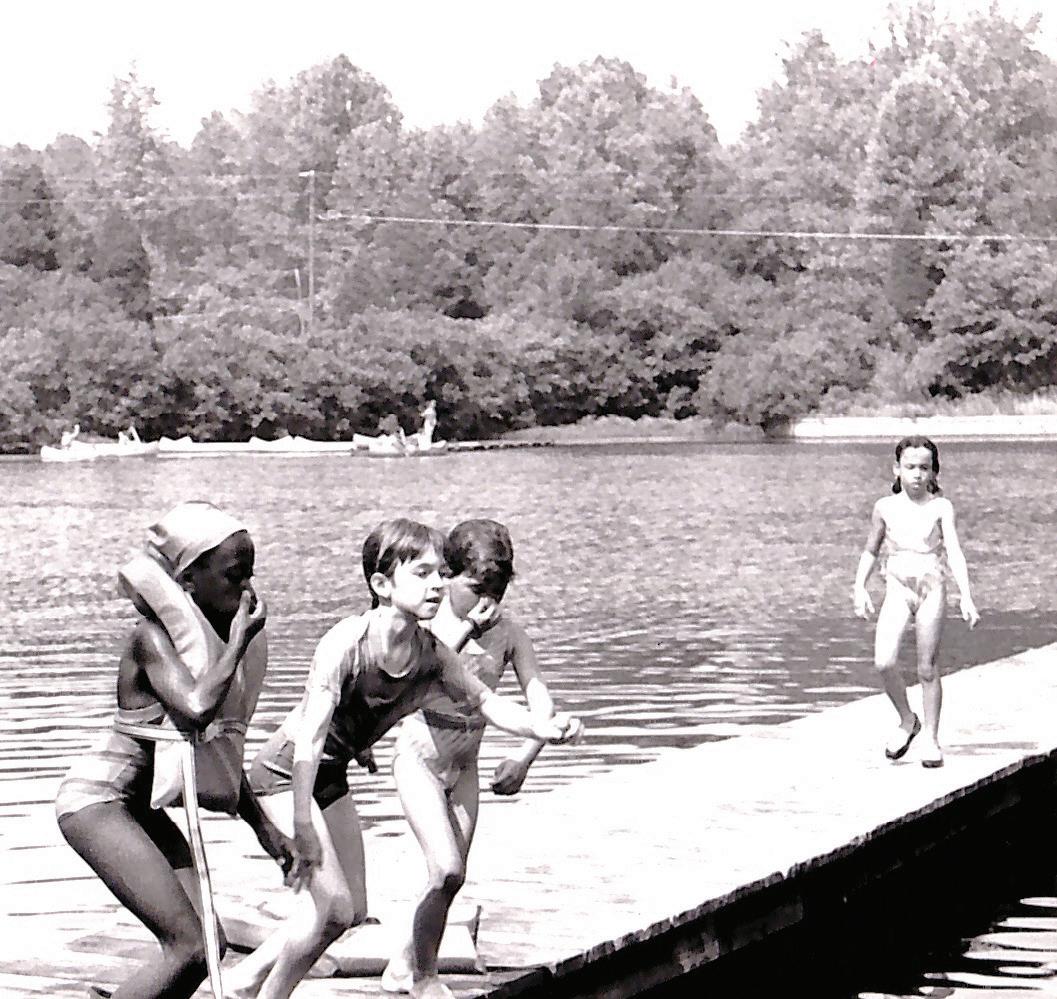
In 2012, as part of the celebration of the 100th birthday of Girl Scouts, a camp reunion was held at Burke’s Mill Pond. An above ground pool was added to the camp in 2015 and there was a dedication ceremony on June 30 of that year. Girl Scouts were able to add the pool, as well as a deck around the pool, thanks to generous donations by Marion S. Kaurup and A. Kenneth Scribner, Jr.
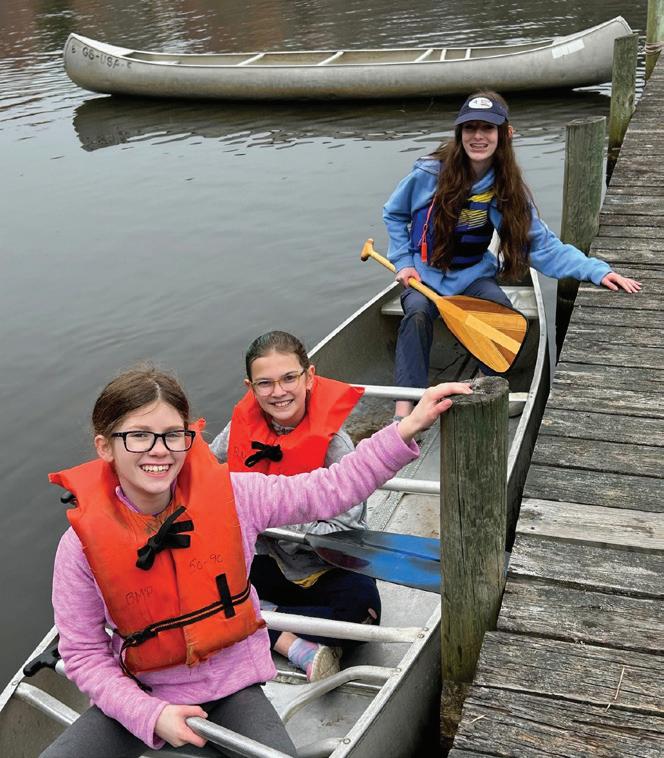
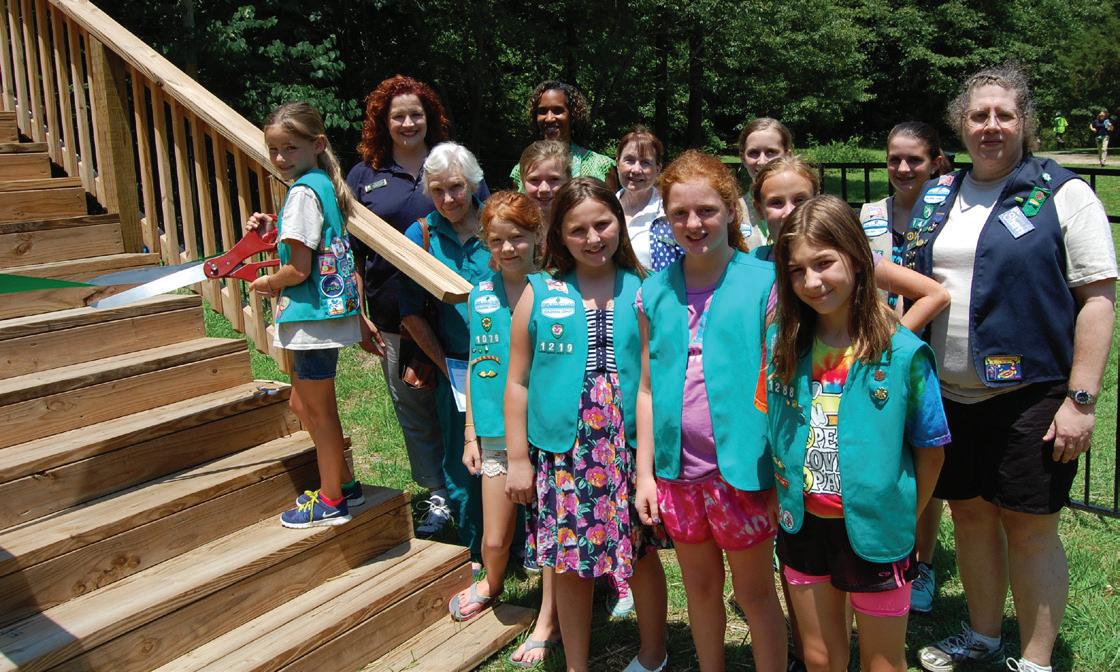
In 2016, the Blazing Blue Herons, the council’s canoe group, began using the camp for training and event purposes. The group hosted Camp Burke's Mill Pond’s 50th anniversary celebration in March of 2022. During that year, the Gloucester History Museum also created and sponsored an exhibit to celebrate the camp’s special anniversary.
In 2020, with dam regulation changes made by the state, the council began repair work on Burke's Mill Pond dam. A major property project, it required research by engineers and contracted work by engineering companies. With cost escalating beyond council capacity, federal and state funds were requested for the project.
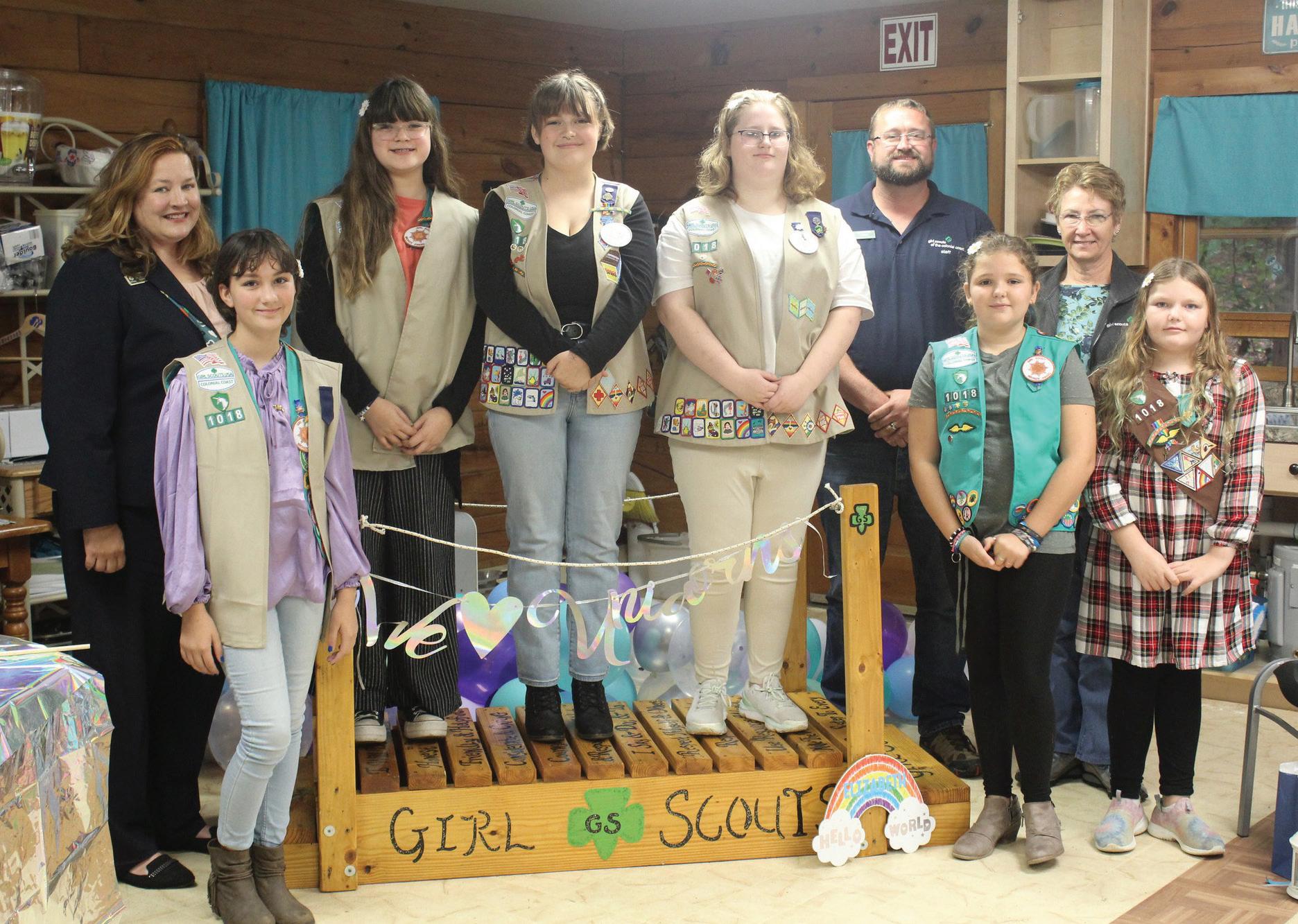
Camping, especially at Camp Burke's Mill Pond, is a favorite activity for many Girl Scouts in Gloucester. In 2022, Girl Scouts from Troop 1018 in Gloucester planned and carried out a Girl Scout Bronze Award project, "Spruce Up Treakle Cabin," that resulted in the refurbishing of the Treakle Cabin. They wrote to local businesses and friends of their troop to help with sprucing up the cabin by updating some interior items. Curtains were replaced, a new kitchen sink and cabinets were added, and interior decor and furniture completed the look. After the project completion and receiving their Bronze Awards, the Girl Scouts continued their efforts and replaced the refrigerator, added metal storage shelving, and worked on organizing day camp inventory.
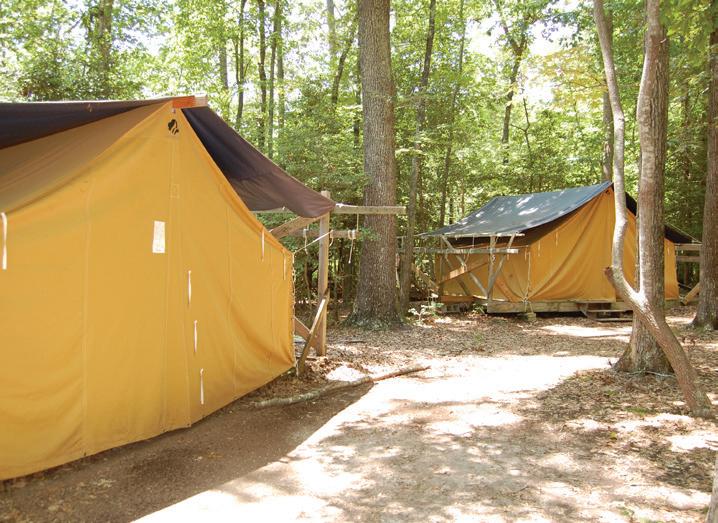
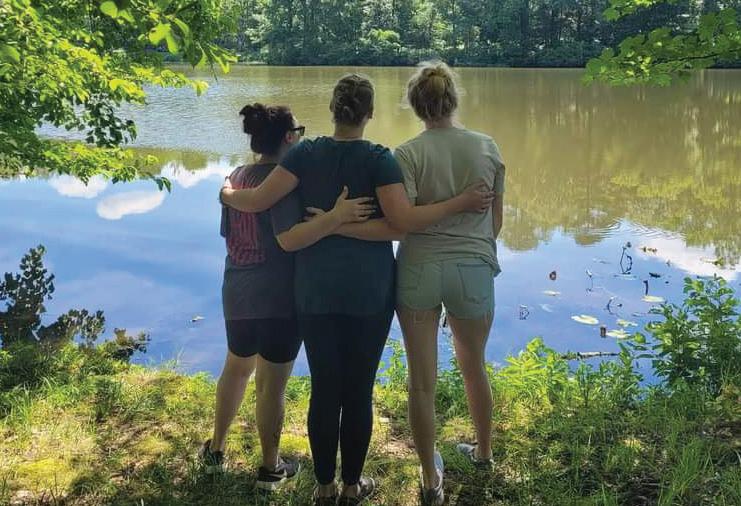
Camp Darden is located in Courtland, Virginia. The property, owned by Governor Colgate Darden, was offered for Girl Scout use to Greater Tidewater Girl Scout Council in 1964. In 1965, the Girl Scouts obtained the lease on the land. At that time, the camp was mostly used for short-term training, special events, such as Program Aide Training, and as a primitive camp site. In 1972, the camp began to be used for resident camp.
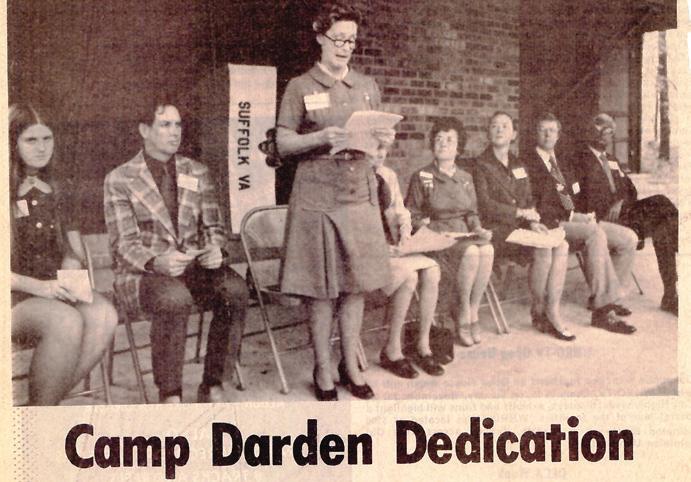
Girl Scout volunteer, Mrs. Roger Beale, Jr., helped lead a dedication ceremony that officially opened Camp Darden in 1975
The land was officially deeded to the Girl Scout Council of Greater Tidewater in 1979. Plans included building an access road to the camp and the construction of a fence at the request of Governor Darden to mark the boundary of the deeded property, estimated to cost approximately $5,000. The Norfolk Foundation awarded a grant to cover the cost and these improvements were started in 1981 by Girl Scouts of the Colonial Coast, a council formed in 1981 with the merger of Greater Tidewater Girl Scouts and Heritage Girl Scouts. The camp was officially dedicated as Camp Katherine Pretlow
Darden with a dedication that took place July 11, 1984. Mr. Colgate Darden had requested that the camp be named in honor of and dedicated to his mother, Katherine.
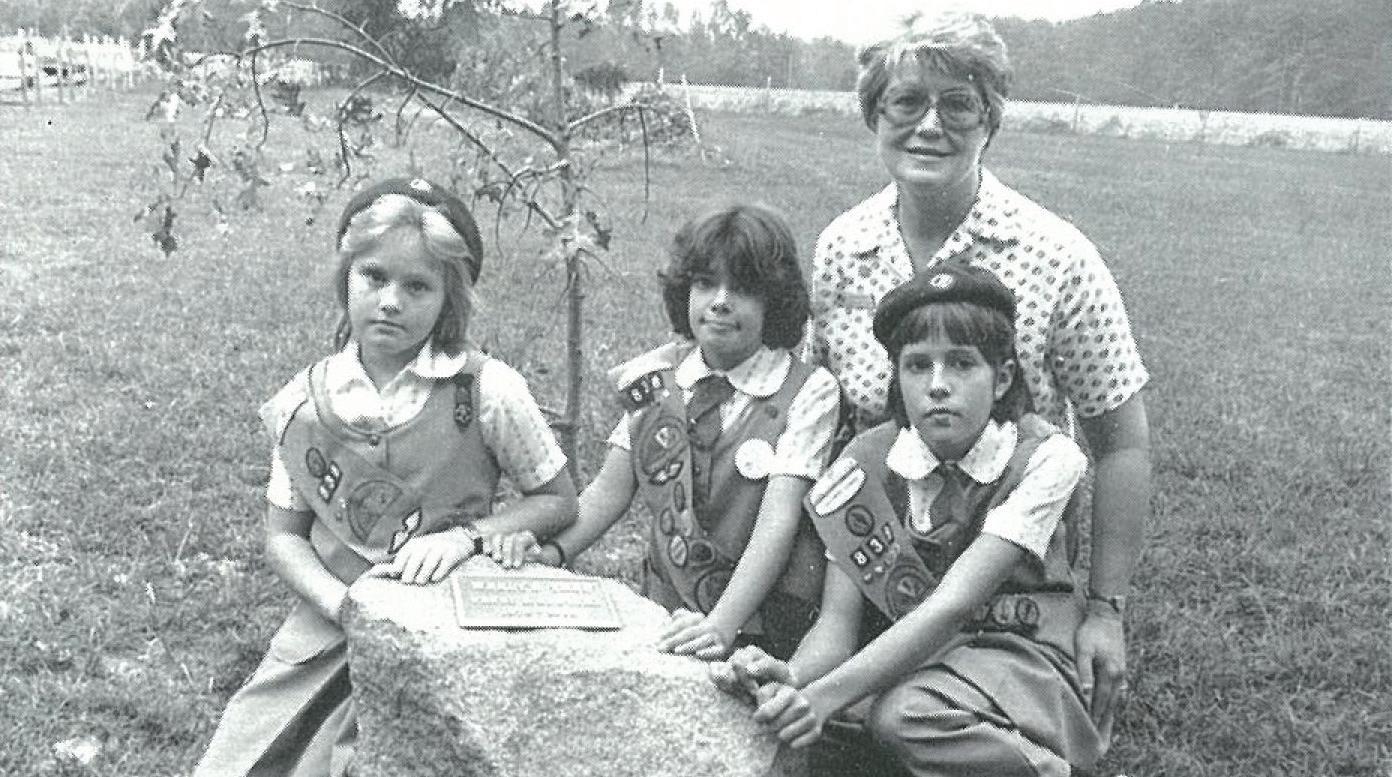
The Ahoskie Service Unit held a dedication ceremony at Camp Darden on October 20, 1986. This was in memory of Wendy Newsome, an 11 year-old Girl Scout, who died in a three-wheeler accident. A pin oak was planted and a plaque placed on a rock at the base of the tree.
Girl Scout campers posing in front of a mushroom they called “Herman” at Camp Darden in 1981
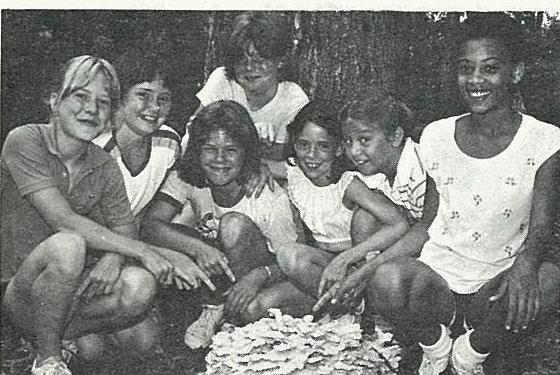
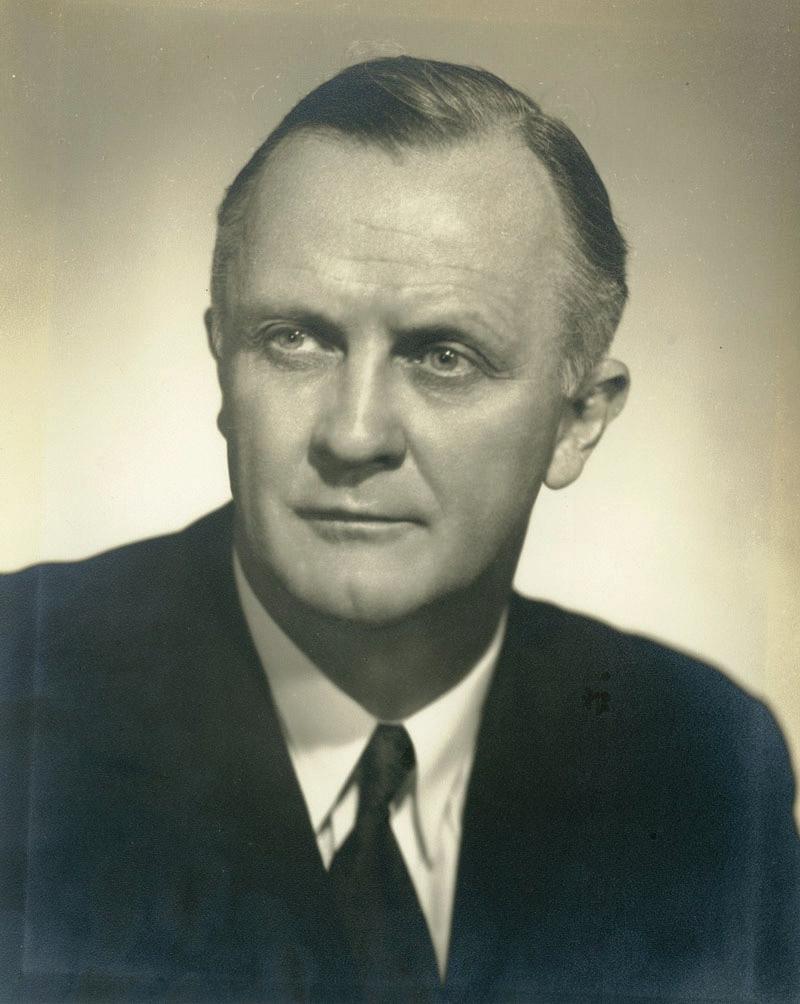
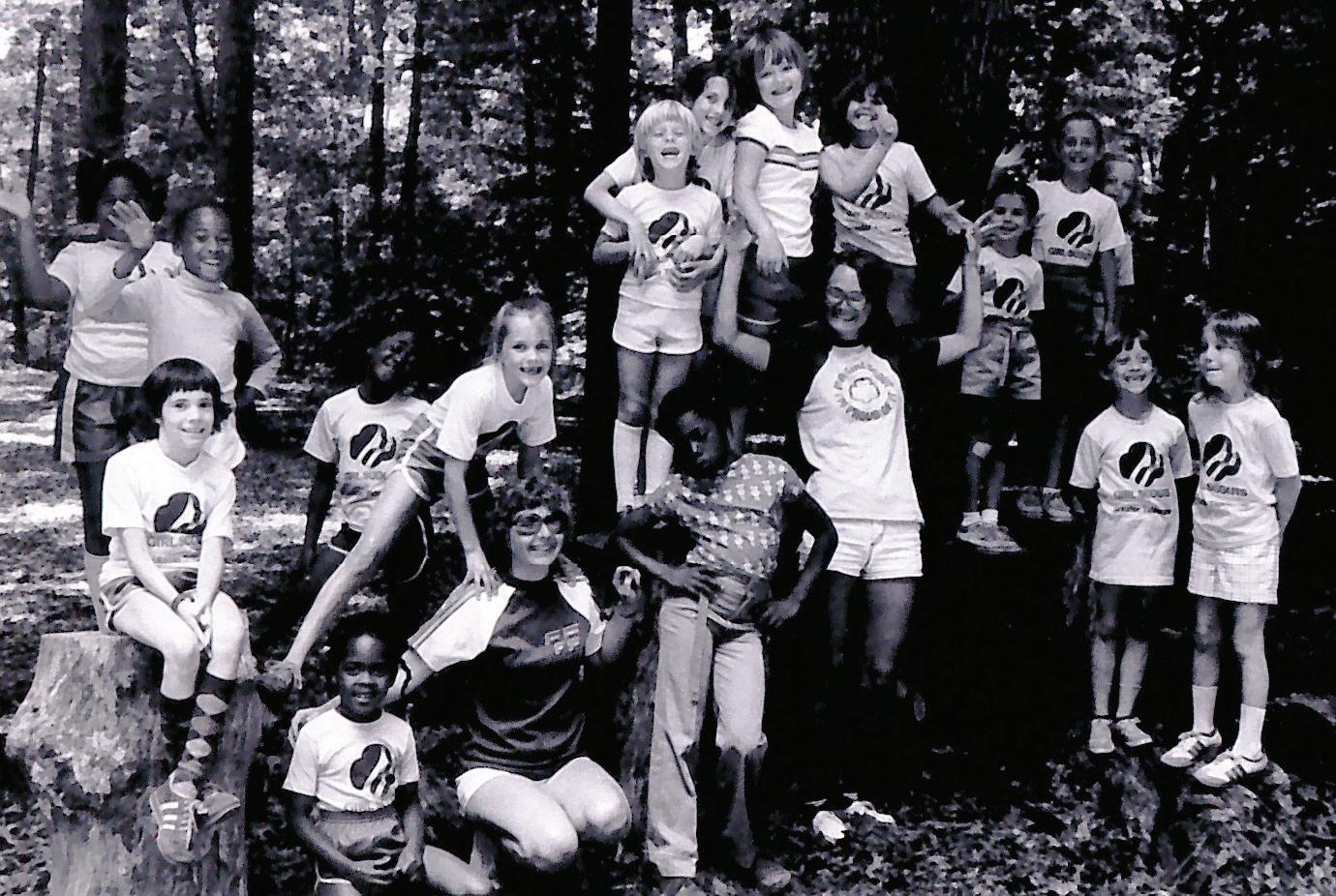
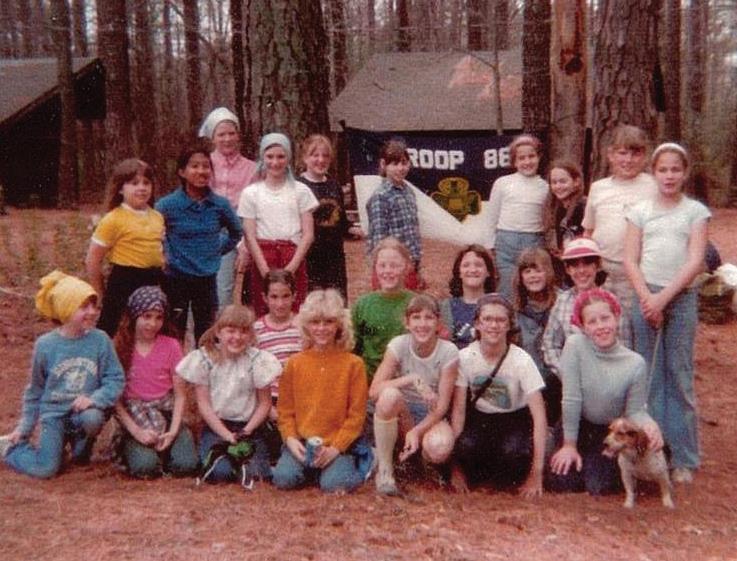
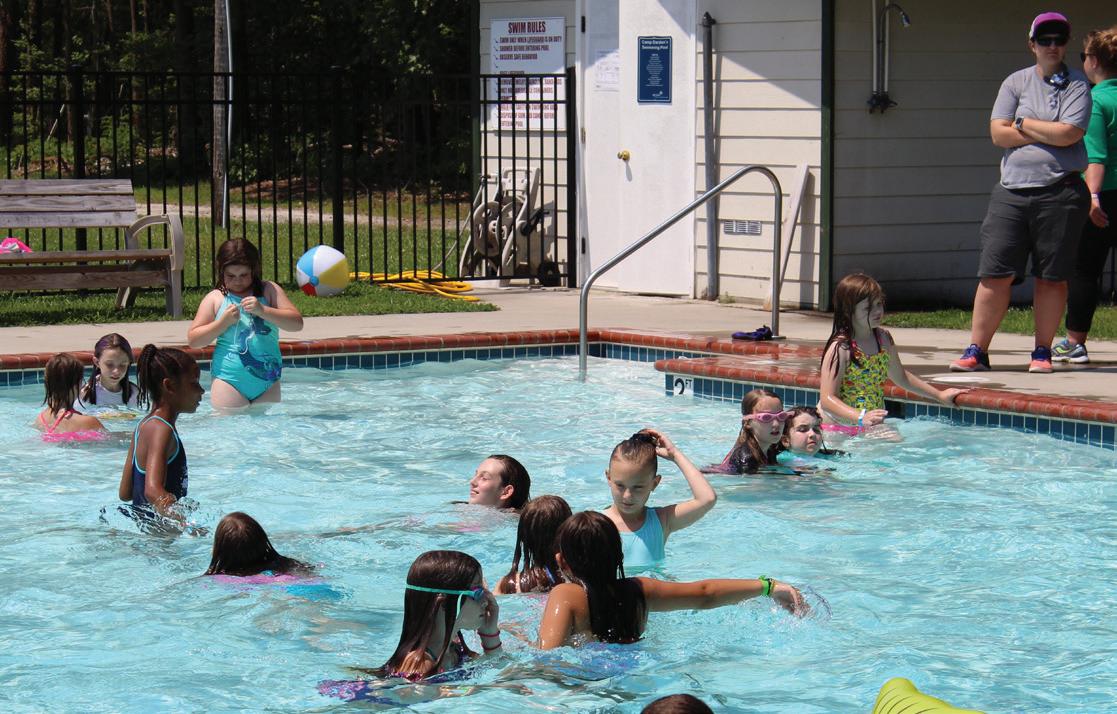
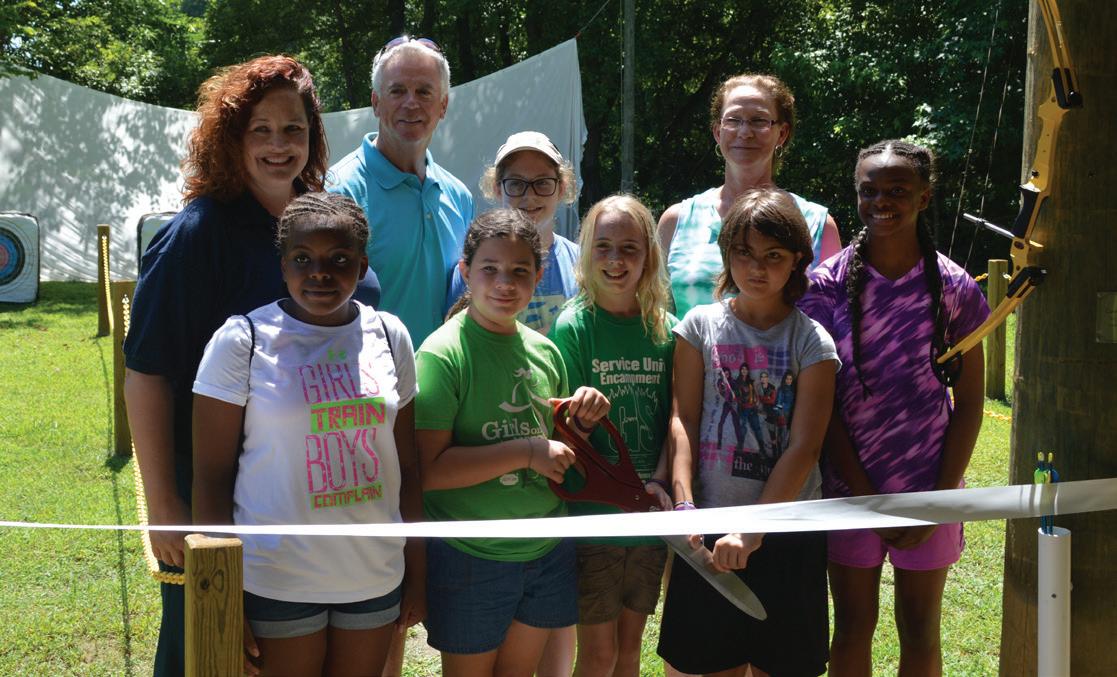
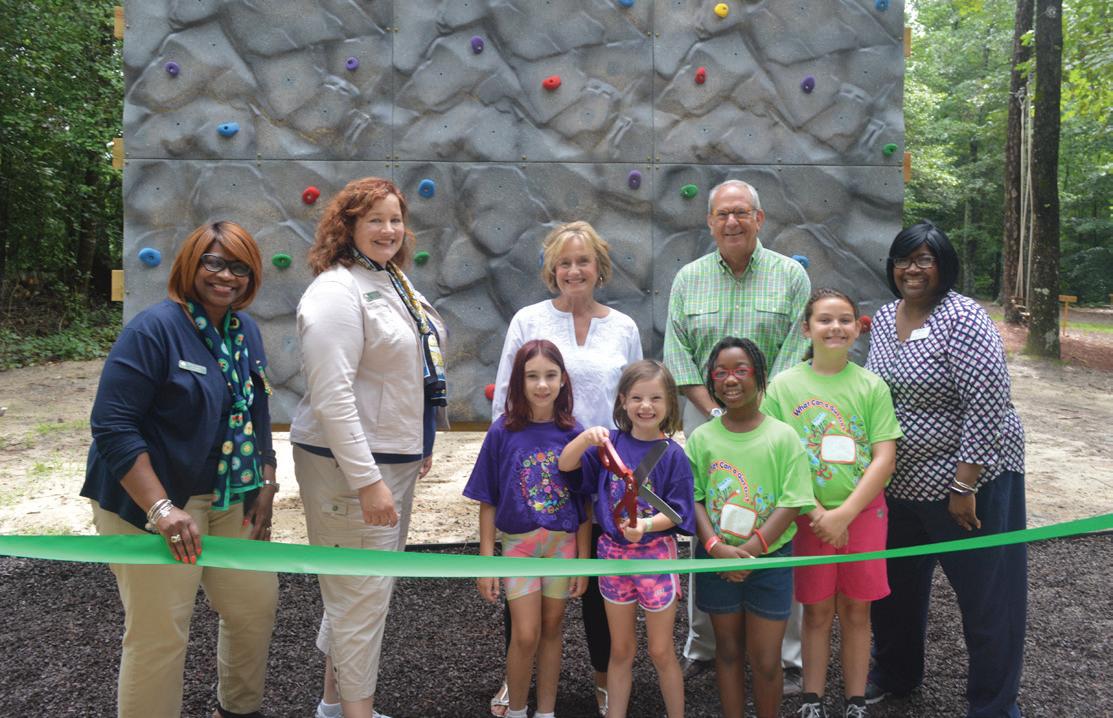
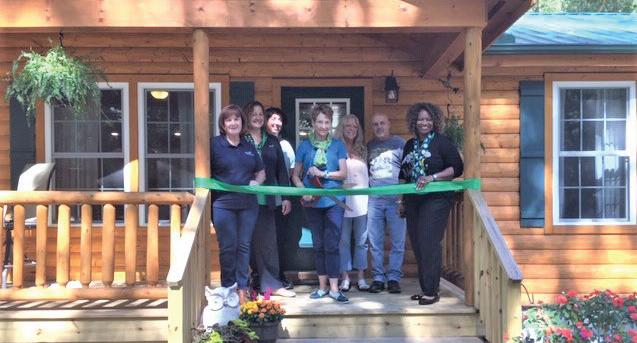
•1985 - Mataoka Unit added with six platform tents, picnic shelter and bathrooms.
•1990 - A new unit house was built in the Franklin unit.
•1991 - A shower/toilet facility was built to serve the Franklin/Nansemond units.
•1993 - The Health Lodge was renovated.
•1998 – Newly constructed cabins opened at Union Camp funded by Cap Foundation, Camp Younts Foundation, and Ruth Camp Campbell Foundation.
•2001 - Construction began on a new troop lodge, Sacajawea, at Camp Darden.
•2002 - Camp Darden opened Sacajawea Lodge, which has two rooms housing bunk beds, a fully equipped kitchen and a modern bath/shower room.
•2009 - Six acres of property adjacent to the original camp property was donated by William M. Camp Jr. and Jay Clifton Barnes, owners of Camp Barnes, Inc.
•2013 - The pool was replaced and a dedication was held in June where Irene Darden Fields, daughter of Governor Colgate Darden, and her husband, John Fields, attended the ceremony.
•2013 - A new low-ropes course was also opened.
• 2016 - Archery range was dedicated on June 29.
•2017 - Obici Healthcare Foundation donated $15,000 towards the building of a rock wall at the camp which was opened and dedicated on June 20 of that year.
•2018 - Low-ropes course elements (troop leader-led) for Girl Scout Daisies and Brownies added. In that year, there was also a storm that resulted in a tree falling on the dining hall’s roof. The roof was replaced with a metal one.
•2018 - A new ranger home was built, and an archery range and gaga pit was added to the camp. Selective tree harvesting was also started.
•2018 - Camp Darden installed a low-rope course.
•2020 - Pavilion built, located near the pool.
•2020 - Axe throwing range opened.
•2022 – A human foosball arena was added.
•2023- Extensive upgrades were made to the Virginia Enmeir Program Center at Camp Skimno.
Founded in 1927, Camp Matoaka was the Council’s first camp. The site was provided by the City of Norfolk that sat on a bluff overlooking Lake Prince and the Nansemond River. A building used in the construction of the dam in 1924 was renovated to be used as a camp dining hall and kitchen. By 1929, the camp had acquired floored tents, a new water system from an artesian well, and a new kitchen. Georgie "Buck" Harris, who served the council from 1934 to 1972, first as a camp director and ending her career as the executive director, loved Camp Matoaka.
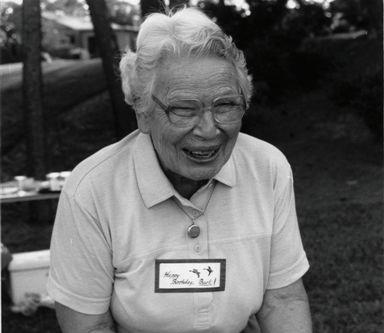
In 1934, the year Buck became director, a swimming hole was added to the camp. In 1936, with the help of volunteers, Buck built a craft house and four new units were added the next year. Each season, the camp would grow in program offerings and became known as a magical place. The camp was closed down during World War II (1942-1945) because Lake Prince was a potential target, as it was a water supply lake. After the war, Camp Matoaka reopened. Buildings were renovated and improved, water and electric lines were extended to each unit, floors were rebuilt, and pool facilities were improved. This renovation was funded by the Capital Accounts Improvement Fund and the Norfolk, Portsmouth, and Princess Anne Community Chests.
In 1948, a winterized building was constructed which meant that the site was now available for year-round camping. By 1952, the camp was 99 acres in size. In 1963, the City of Norfolk had begun to prepare the area for the building of the new Western Branch Reservoir. Camp Matoaka lost its swimming pool, the Crow unit, the artesian well, and the water storage tank. The City of Norfolk agreed to build a new olympic size pool with a filtered system, fencing around the pool, and a new pool house on a new location and much higher ground than before.
In the 1970s, Camp Matoaka specialized in aquatics and mounted units and was a popular summer destination for regional Girl Scouts for many years. The camp was closed in the 1980s after the consolidation of Greater Tidewater and Heritage Girl Scout councils. It was determined that the camp was in need of major repairs and resources would be better spent redirected to other properties that offered more potential.
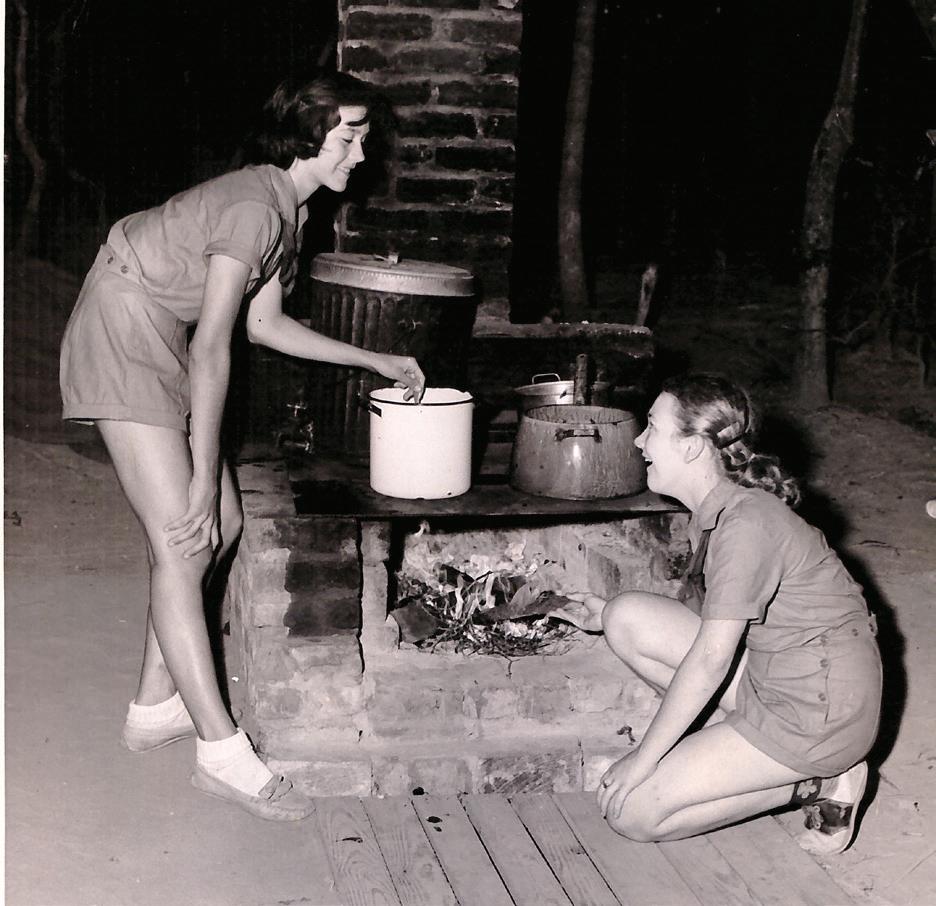
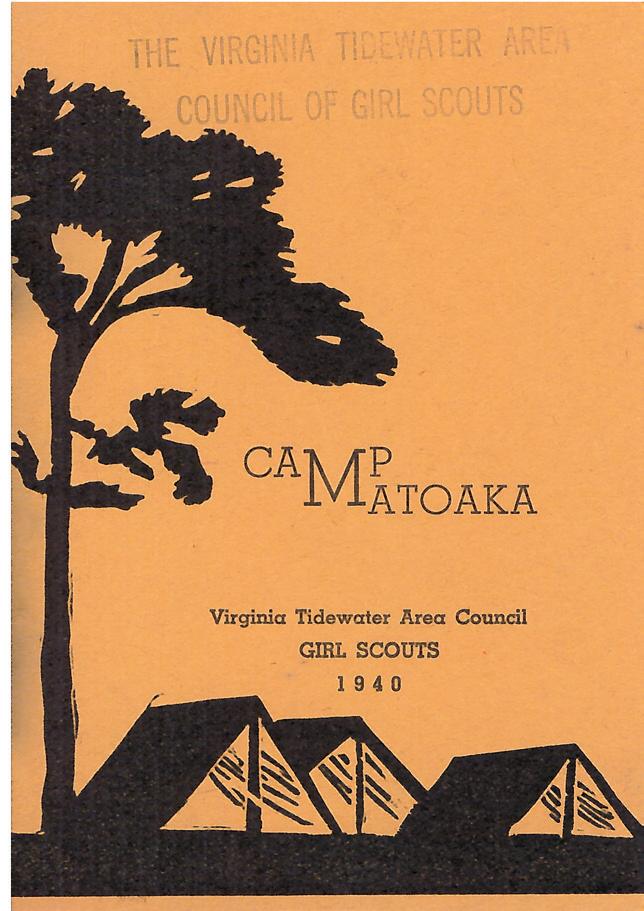
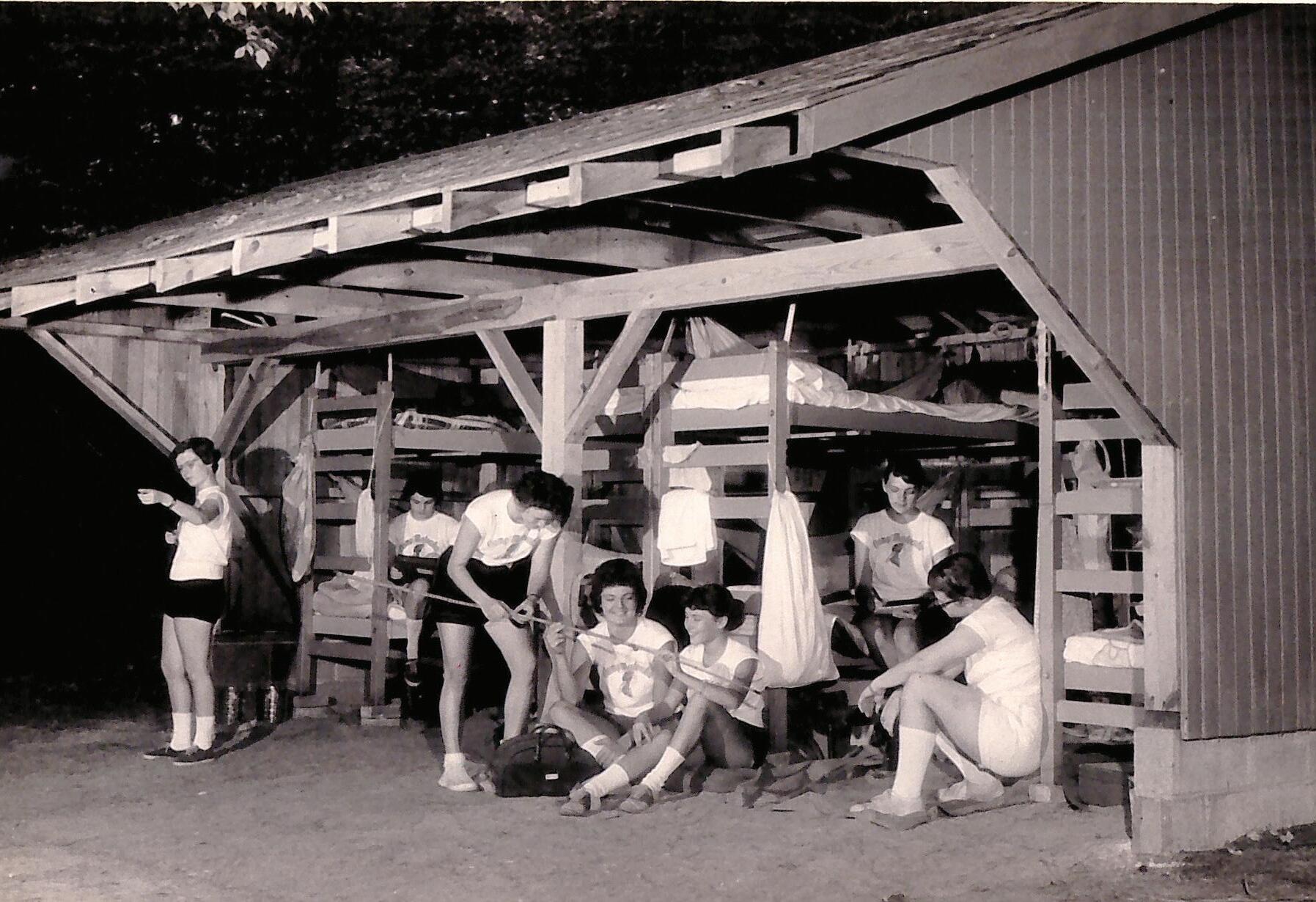
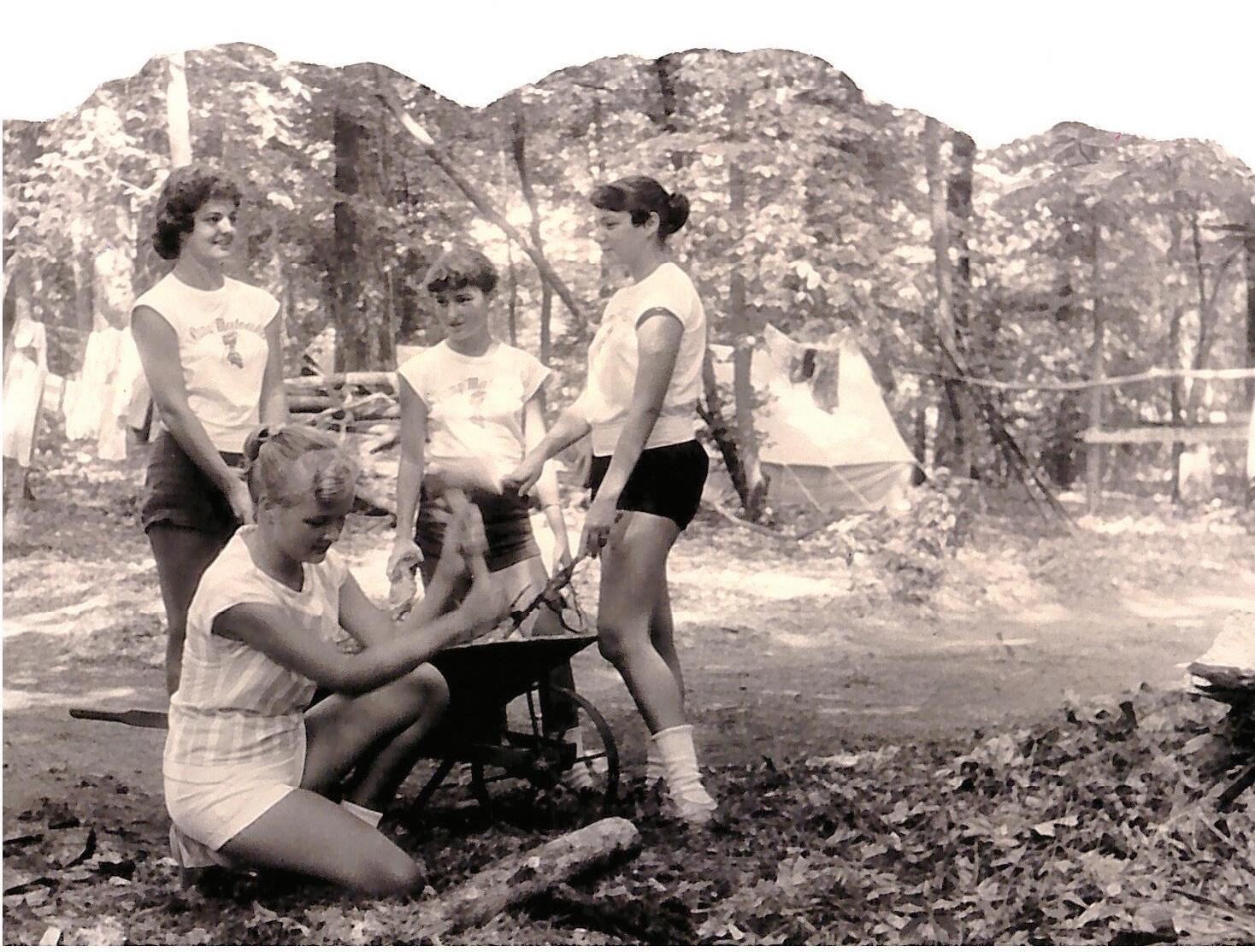
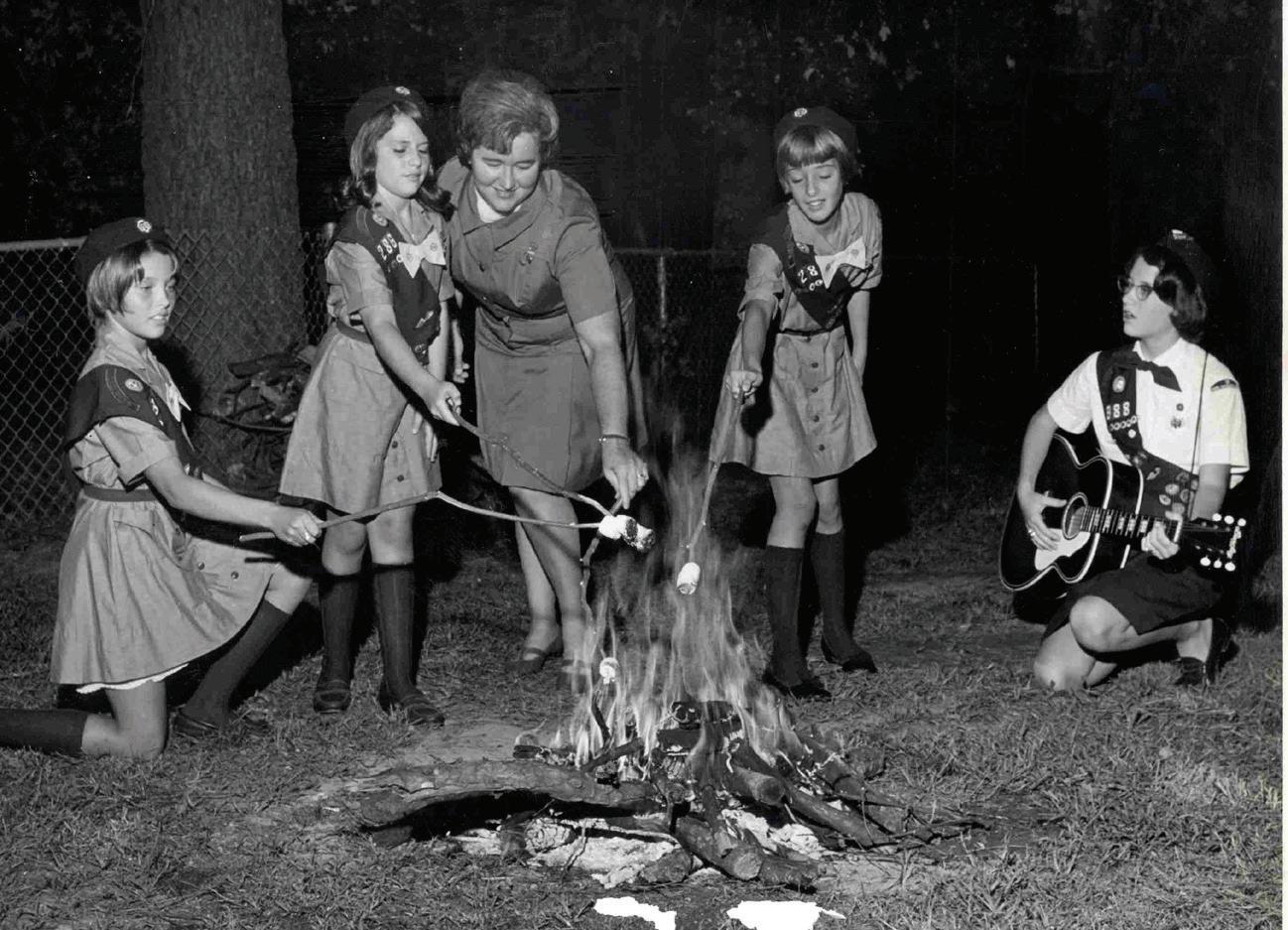
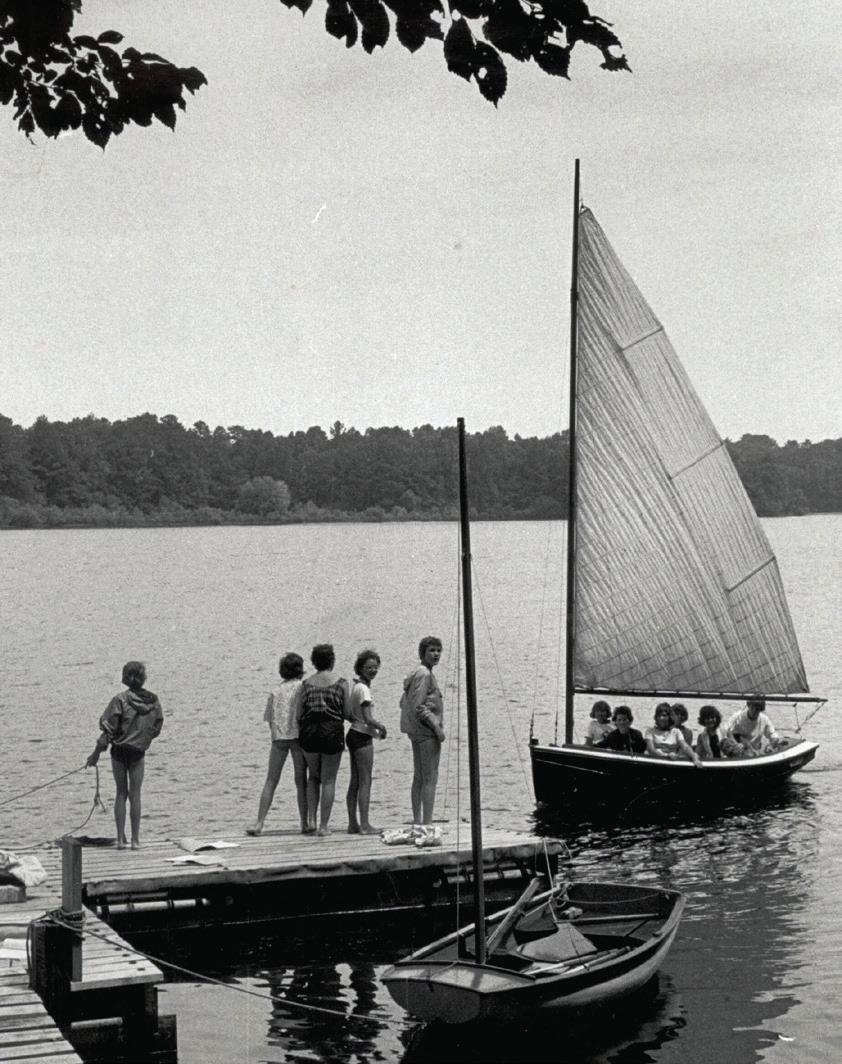

In a woods and near a lake, There lies a camp we know, Her ideals and her traditions Are the highest of all. We learn to work and learn to play Each hour of the day.
As scouts we sing together, Raise our voices loud and clear.
Camp Matoaka we’ll sing to you To the camp we love so dear, With our hearts and voices ringing In the air so clear, We will treasure the memories, Of the friendships tried and true. Where e’er we are and what we do
We will praise and honor you.
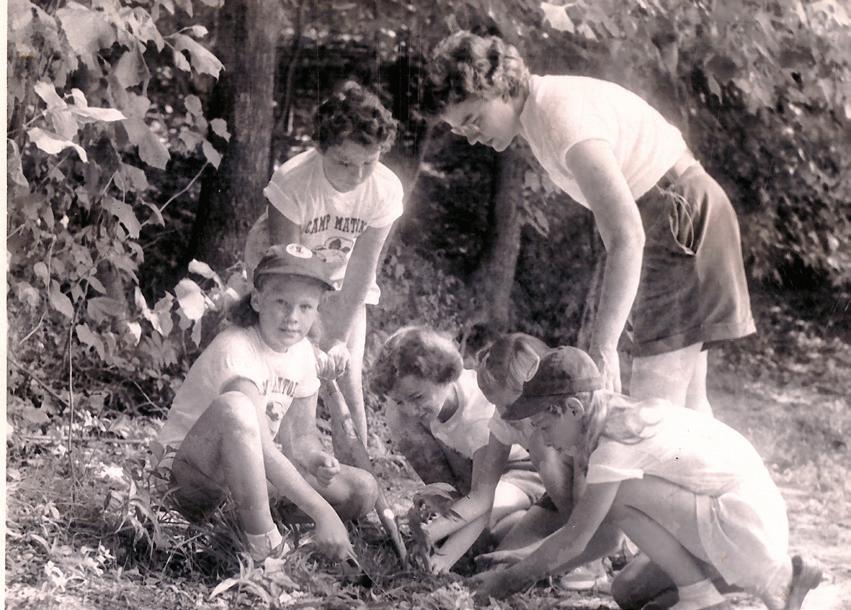
The Outback, the nature area that lies behind A Place for Girls, had its beginnings in 1990 when the Council purchased property for the regional program center and headquarters that would also include the nature area. In 1999, 160 volunteers came out to build boardwalks and a bridge over Bells Mill Creek at the newly built A Place for Girls, the Council’s regional headquarters and program center. This began the construction of Camp Outback, which was dedicated in 2000. Mayor Bill Ward officiated at the dedication ceremony.
At just over seven acres, The Outback nature area is a protected tidal wetland area. Girl Scouts can enjoy hiking on nature trails, be challenged on the health and fitness trail which was funded by Chesapeake General Hospital, climb the 50-foot observation tower, canoe on Bells Mill Creek, or participate in outdoor classroom activities in one of the four outdoor pavilions located on the property. Summer day camp is held at A Place for Girls and The Outback is referred to by day campers as Camp Outback! Over the years, there have been many updates and additions. In 2022, TowneBank gave a gift which made it possible for the 400 foot wooden boardwalk to be replaced.
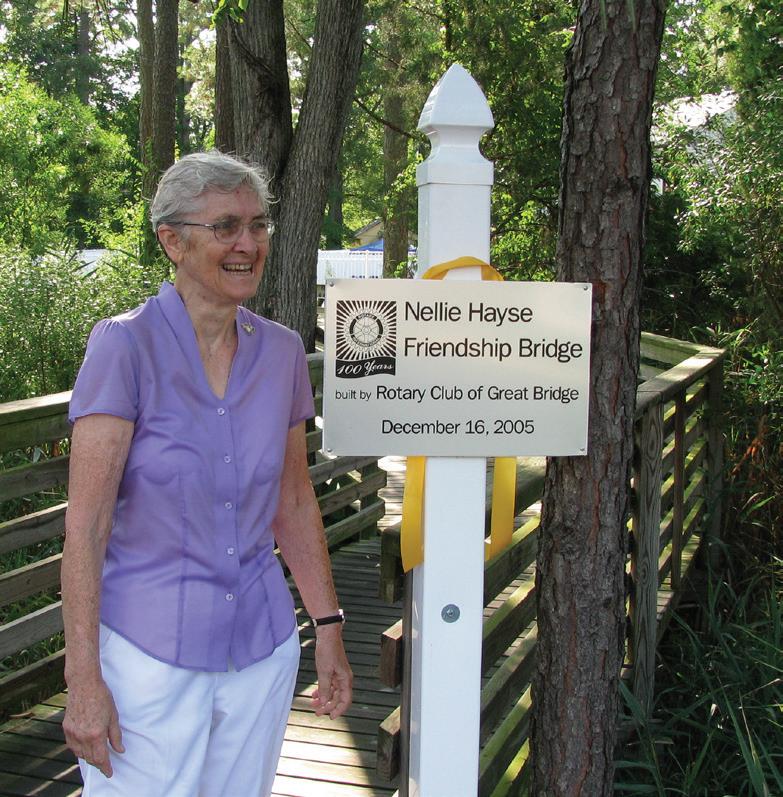
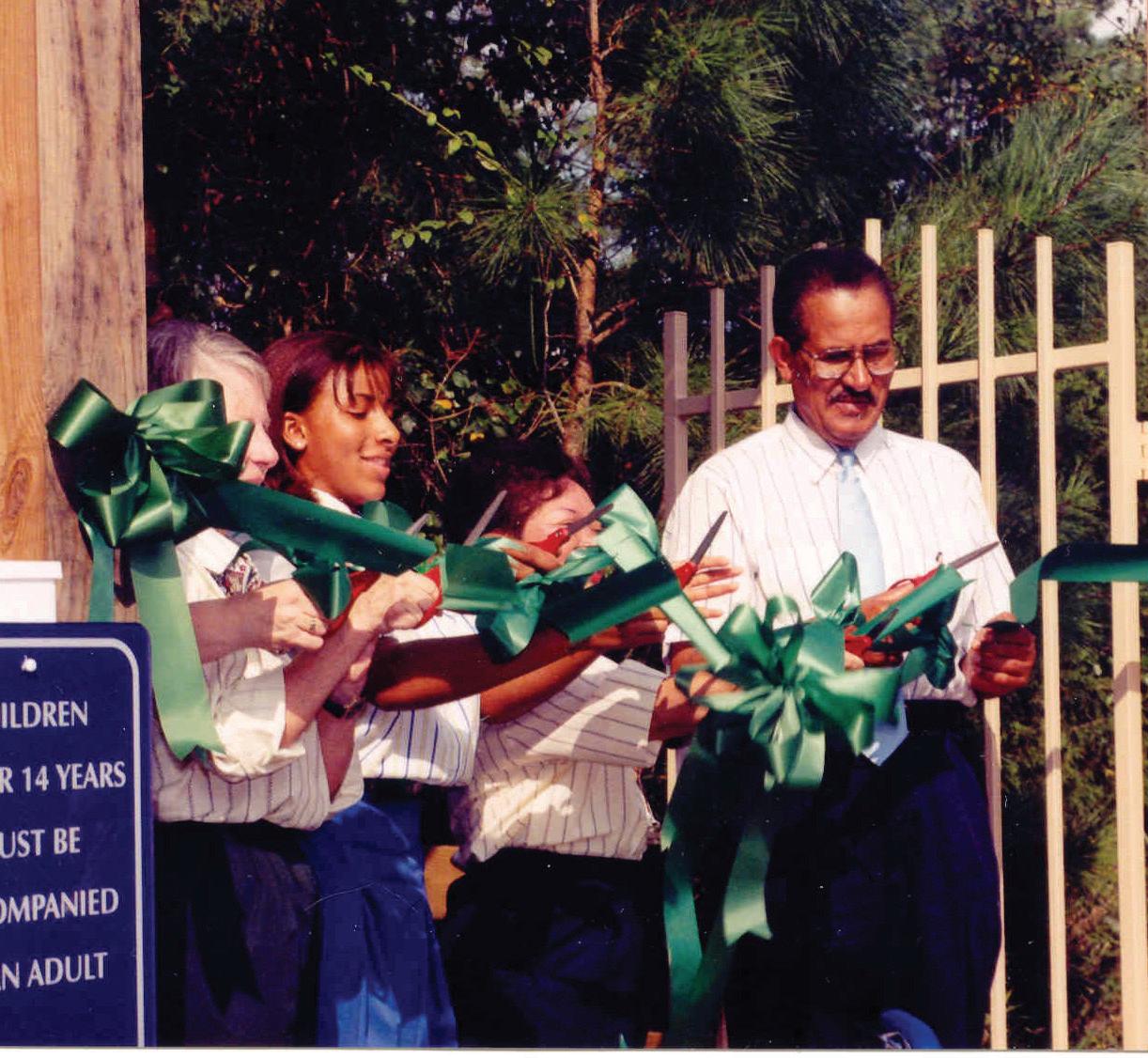
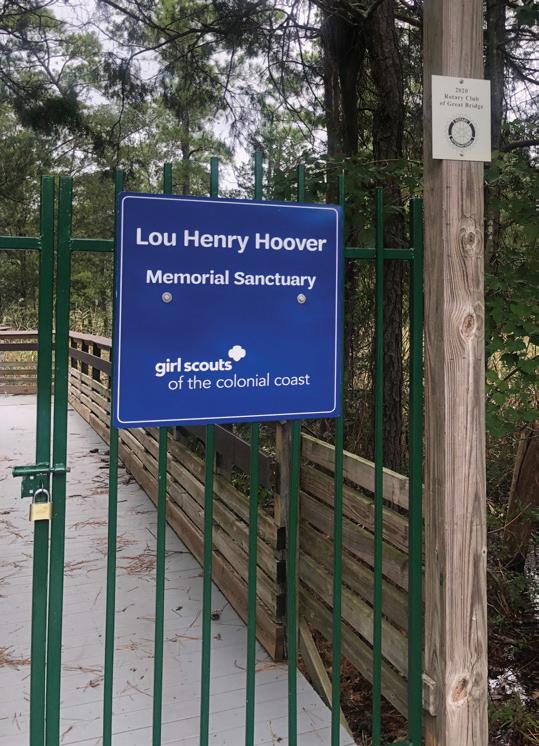
In 2005, The Outback became a designated site on the Virginia Birding and Wildlife Trail in honor of Nellie Hayse who retired in that year. It is also a Lou Henry Hoover Memorial Sanctuary. In honor of her memory, Lou Henry Hoover Forest and Wild Life Sanctuaries have been established in Girl Scout camps throughout the United States and serve as an opportunity for girls to experience nature and environmental preservation. Hoover was integral in developing Girl Scouting on the West Coast and served the national Girl Scout organization in a number of positions. She was National President from 1922-1925 and again from 1935-1937, National Honorary President during her tenure as First Lady from 1929-1933, and Honorary Vice President from 1933-1944. She was particularly involved in the Girl Scout Little House Movement, camping and the outdoors, and conservationism.
The Council purchased property and a home that was adjacent to A Place for Girls in 2004. The home was renovated for group use by the Council and plans were made to add a pool to the property. The new facility was named The Lodge. Construction was eventually finished on the pool, and it opened later in 2010, with the Lodge officially opening for overnight campers in 2011. It serves as an annex to A Place For Girls and provides space for both indoor and outdoor program, along with overnight accommodations.
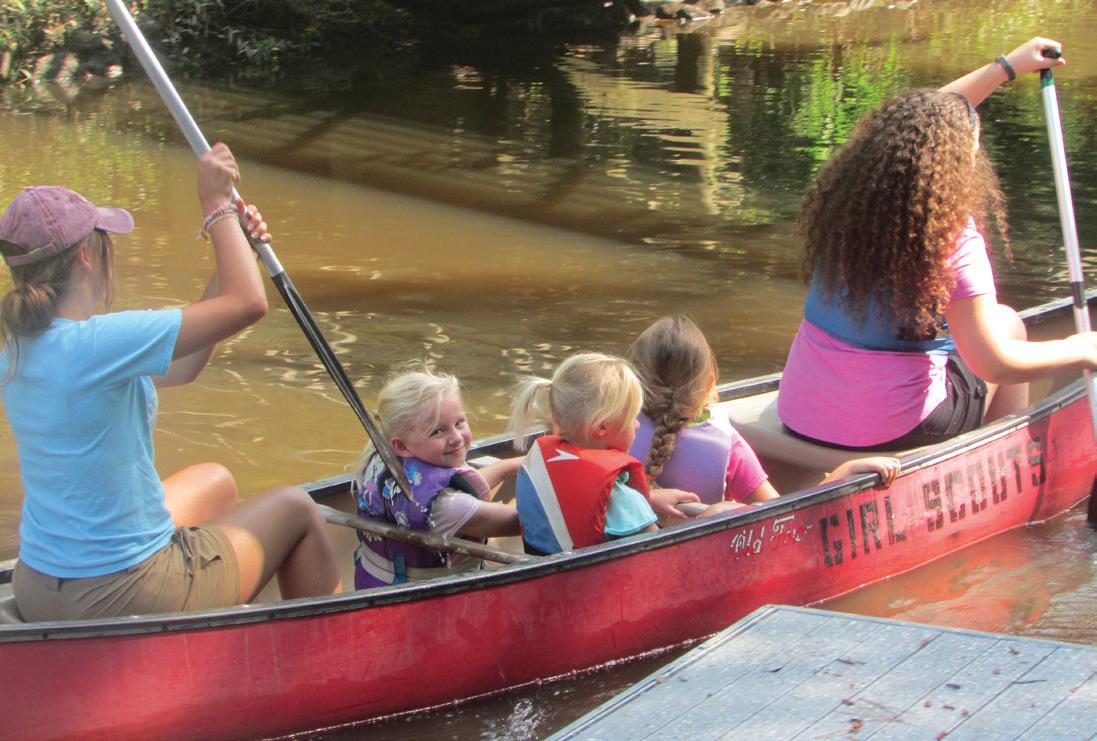
Area Rotary Clubs have been very supportive over the years and provided many services that benefited The Outback, such as helping build the boardwalk, funding and building a boat dock, and building the Nellie Hayse bridge that connects The Lodge to A Place for Girls.
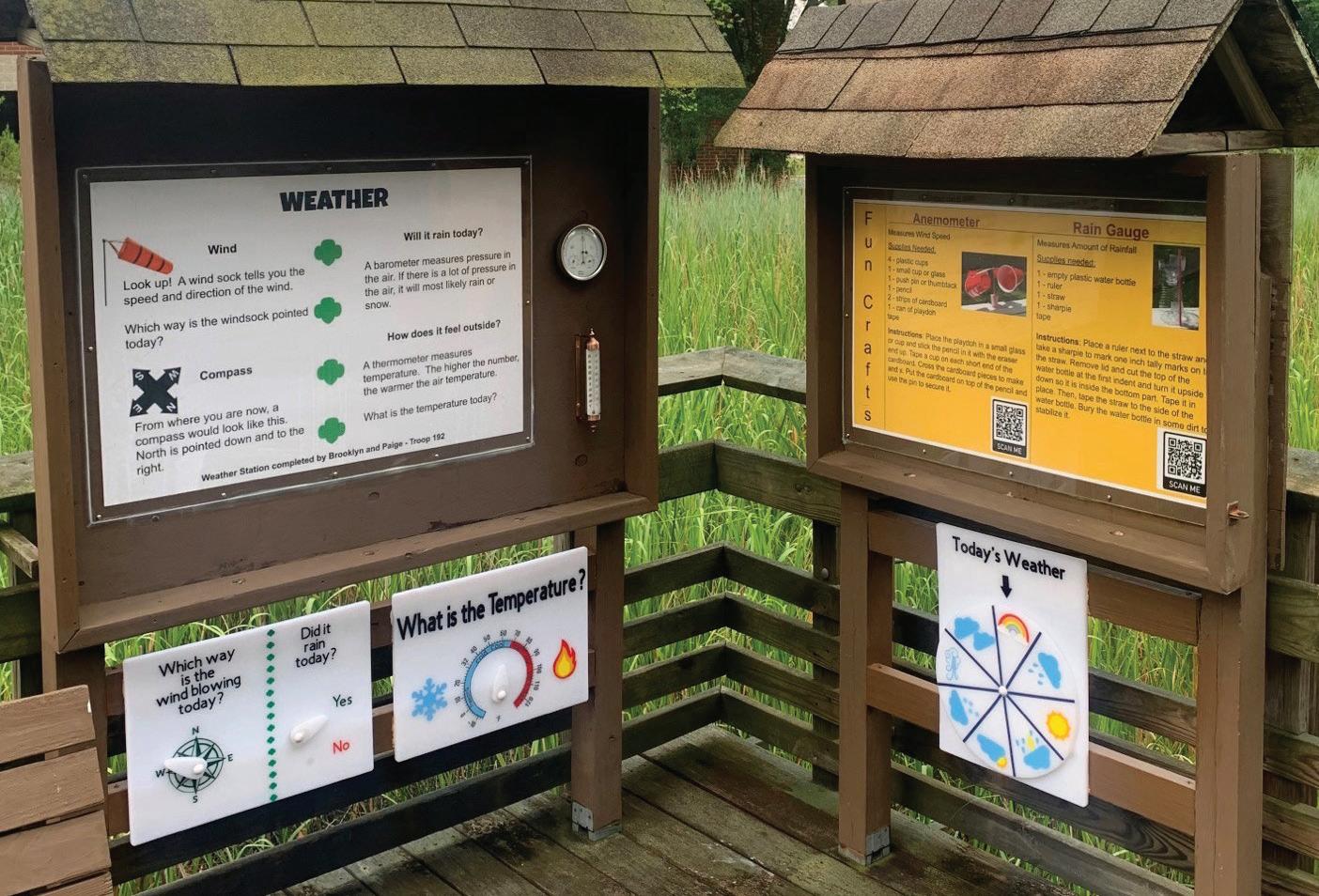
A weather station located on the boardwalk was updated in 2021, the station was refreshed by two Girl Scouts as part of their Girl Scout Silver Award project.
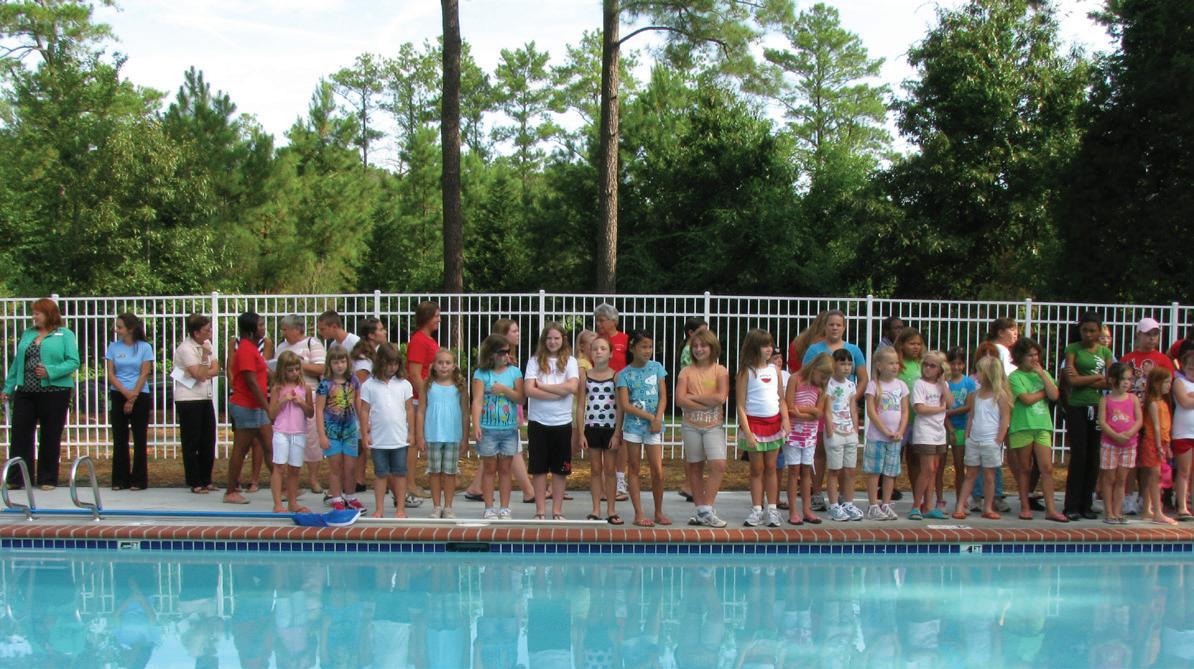
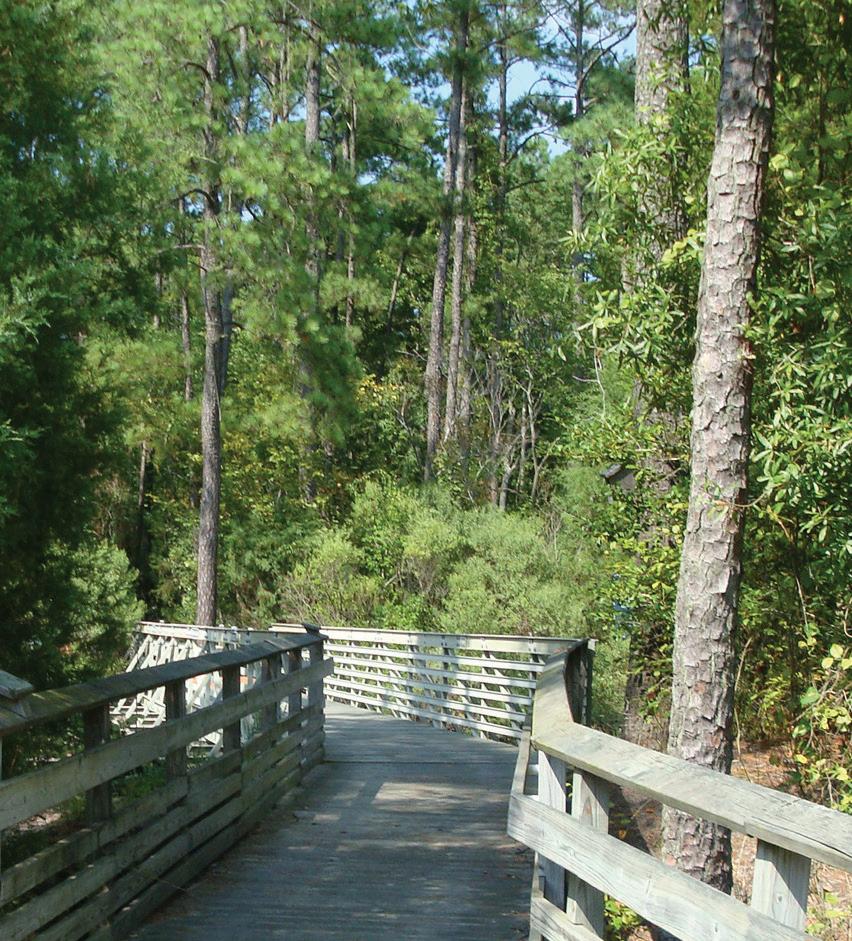
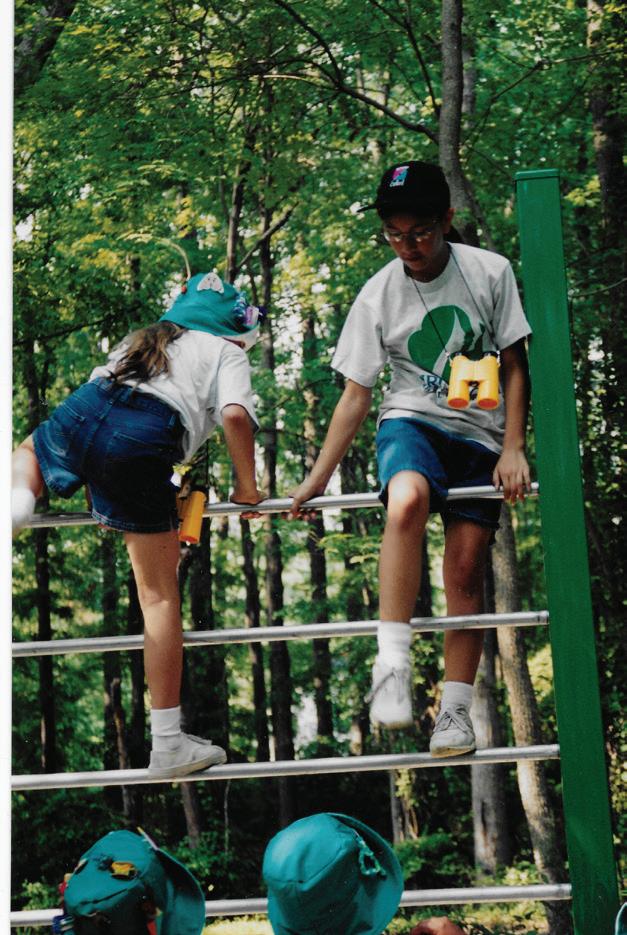
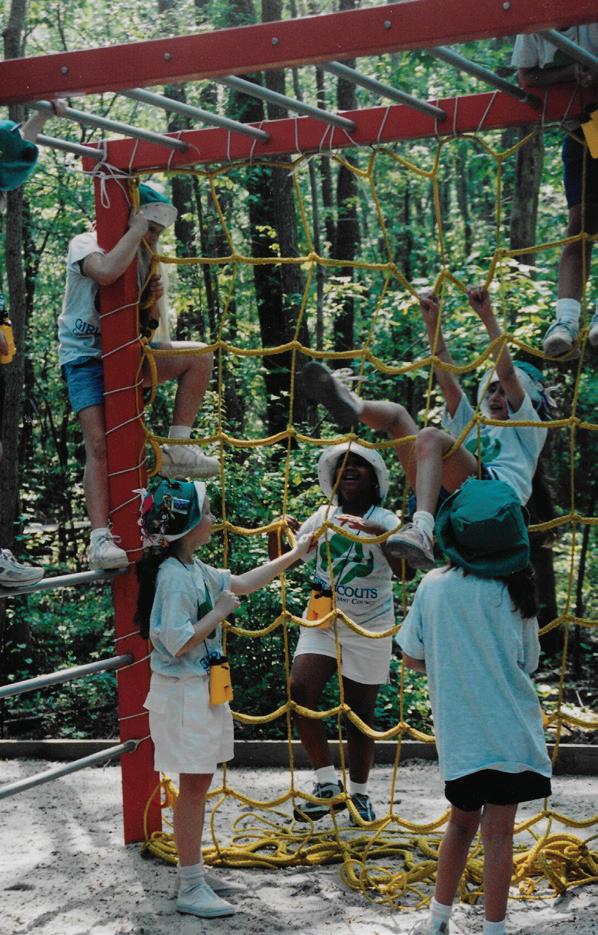
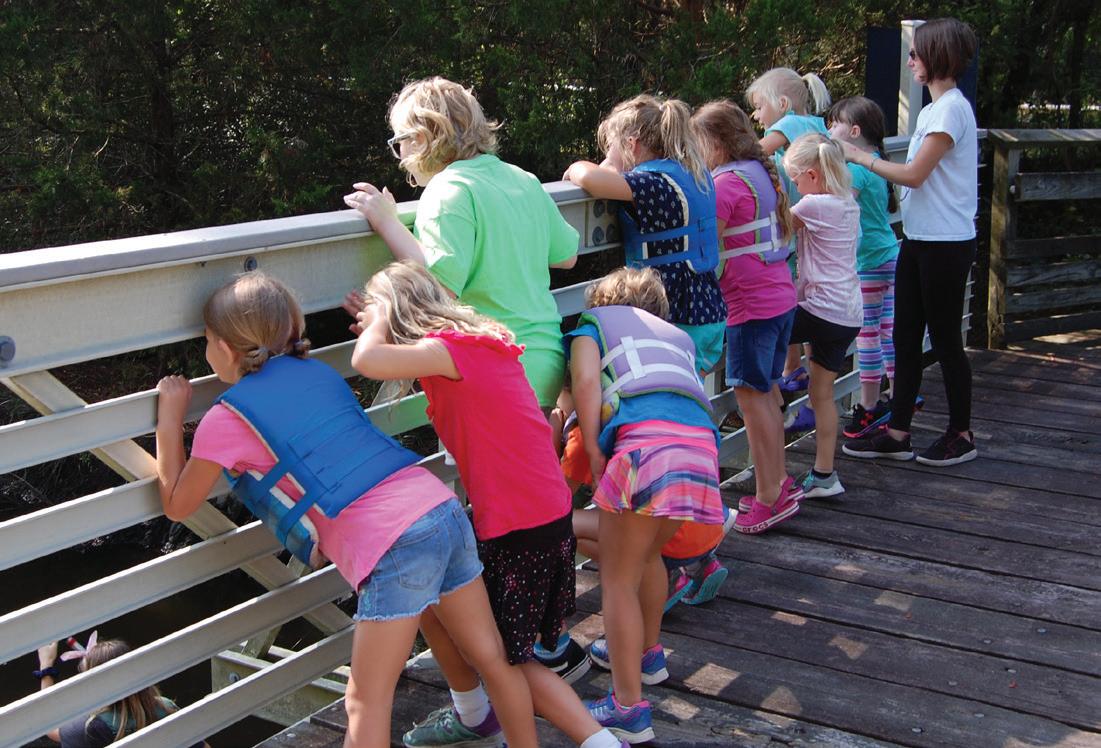
1999 - Fitness Trail- 10 elements added, sponsored by Chesapeake General Hospital
2021 - Weather Station Updated-Parson Gilbert Bridge
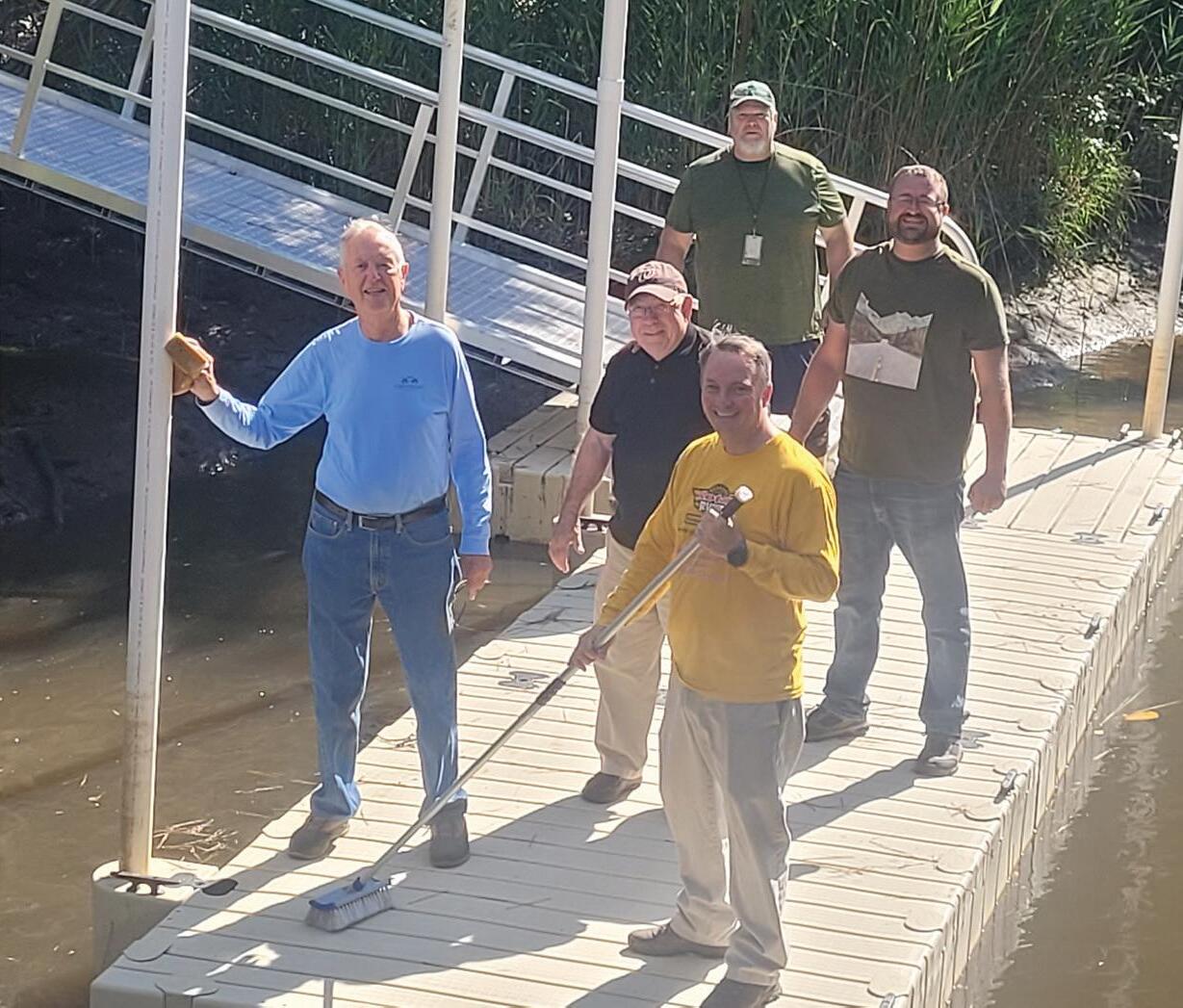
2022 - Floating dock- Great Bridge Rotary Club November
The 98 acre property for the site of Camp Skimino was purchased in 1955 from Mary Louise Downs for $8,000 dollars. The council, then the Newport Newport News-Warwick Girl Scout council, made a $35 dollar down payment and rest of the money used to pay off the balance was donated by troops and Peninsula businesses. The effort was led by the council’s executive director, Harriet McMahon. Every donation helped, from the 26 cents collected by a Girl Scout Brownie troop who gave a penny each, to the large funds provided by the Newport News Shipyard. Volunteers built roads, the old dining hall, and the first unit, Cedar Knoll. The council chose Skimino for the camp’s name, a Native American word meaning “smooth creek.” In 1956, Camp Skimino officially opened for two weeks of established camping. Harriet was the camp director who continued to develop the camp property until her retirement. Additions she helped secure included a fireplace in the then dining hall built by materials donated by the Fort Eustis Officers Wives Club in 1957.
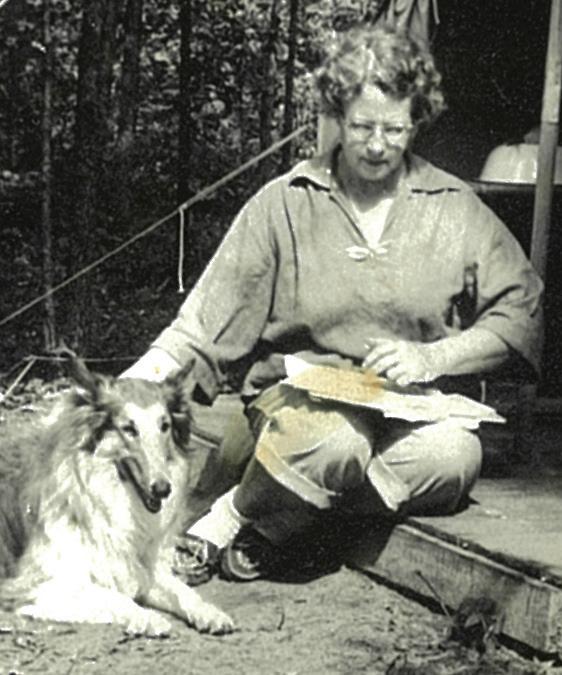
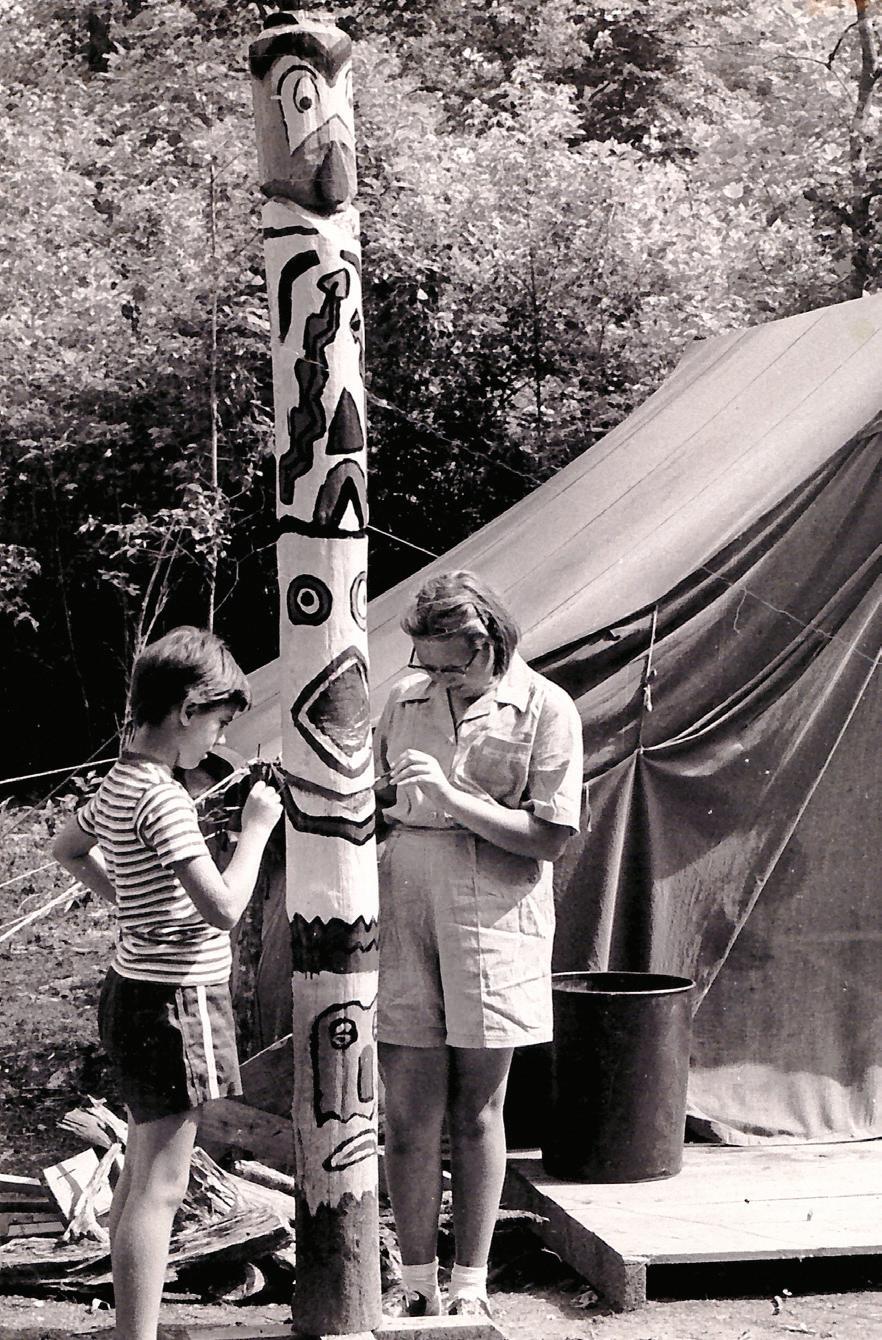
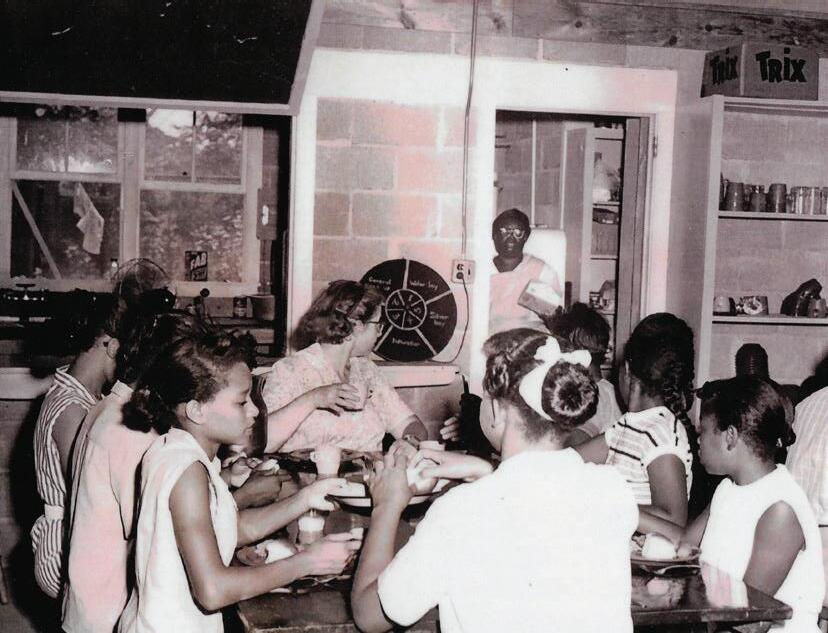
In 1957 and 1958, there were four weeks of established camping for white Girl Scouts and two weeks for African American Girl Scouts. In the summer of 1959, 126 campers attended Skimino and paid $35 each. Camp program continued to grow over the years.
In August of 1970, the Heritage Girl Scout Council hosted a Wider Opportunity at Camp Skimino, Candles to Capsules. While staying at Camp Skimno, Girl Scouts from several different states participated and took field trips to points of historical interest in nature such as Jamestown, Colonial Williamsburg and NASA Langley Research Center. Also in the 1970s, several more additions were made that included the Mary Louise Downs Health Lodge, named after Mrs. Downs who sold the property to the Girl Scouts, Lake Adahi, a man-made lake meaning “peaceful” or “gentle” water, Chippewa camp unit, a Native American word meaning lodge for Indians, and Seikooc camp unit, resident campers in 1978 chose this name, it spells “cookies” backwards.
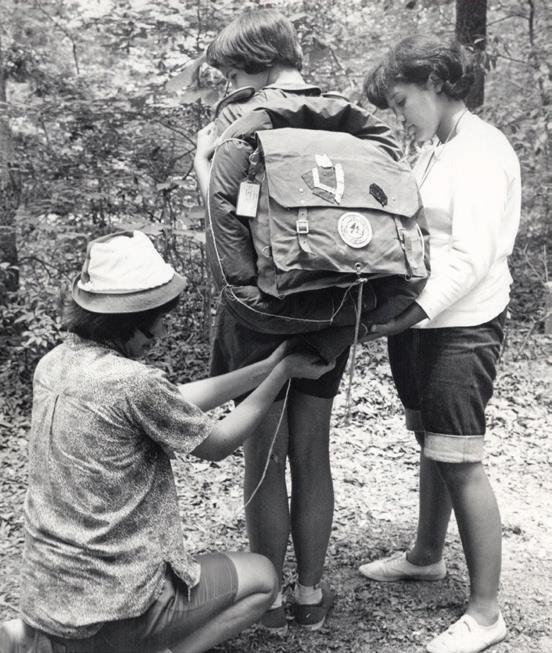
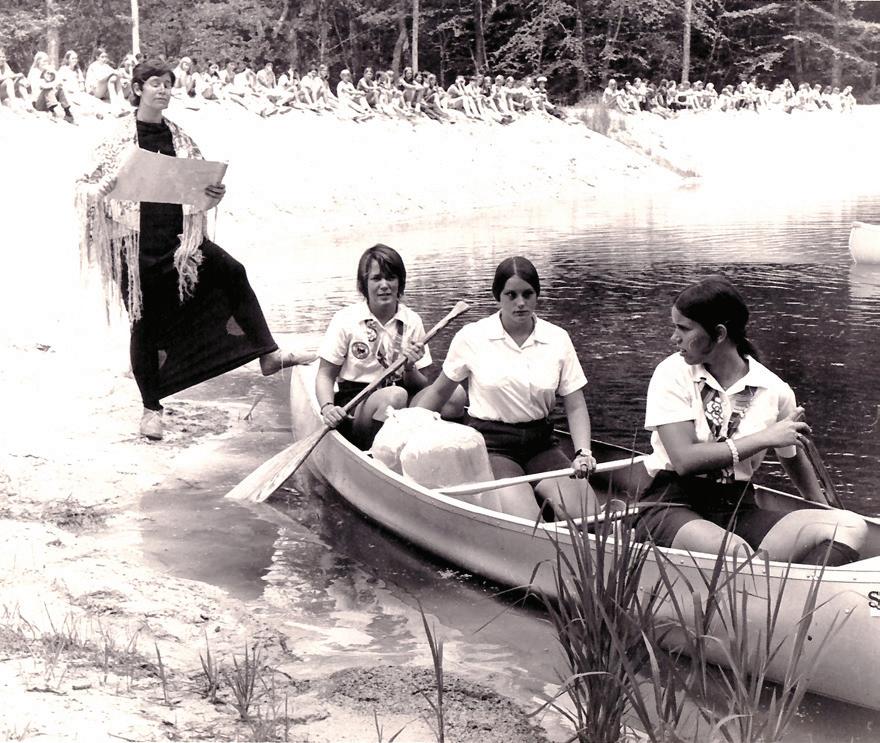
In 1978, with the help of 18,000 raised from the annual cookie sales, Hewin’s Lodge, a cottage/recreation building, road improvements, and two new open-sided roofed pine and cedar shelters were built. Volunteers from the US Army Corps of Engineers assisted in the road grading and building repairs. Also that year, the new camp infirmary was dedicated. As of 1978, over 3,200 girls and women were using the camp site during the season, which ran from early spring until late fall. This consisted of 400 resident campers, 1,975 troop campers, and 800 visiting Girl Scouts.
The Virginia Enmeier Program Center, a 10,692 square foot building, was opened and dedicated in 1983. It was a project started by the Heritage Girl Scout Council and completed by Colonial Coast Girl Scout Council, the council formed in 1981 through the mergers of the Heritage Girl Scouts and Greater Tidewater Girl Scouts. The Virginia Enmeier Program Center was named after Virginia Enmeier, who served as Heritage Girl Scout Council Board President and was a Girl Scout since the 1920s. She had also been the director of the Candles to Capsules Wider Opportunity that took place at the camp in 1970.
In July 1995, there was a celebration at Skimino for the 40th birthday of the site. That year, Anheuser-Busch gave a donation for renovation of Glen Unit to include showers, flush toilets, heated year-round use, and accessible cabins and trails.
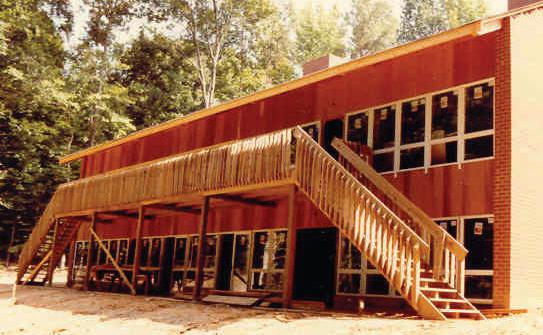
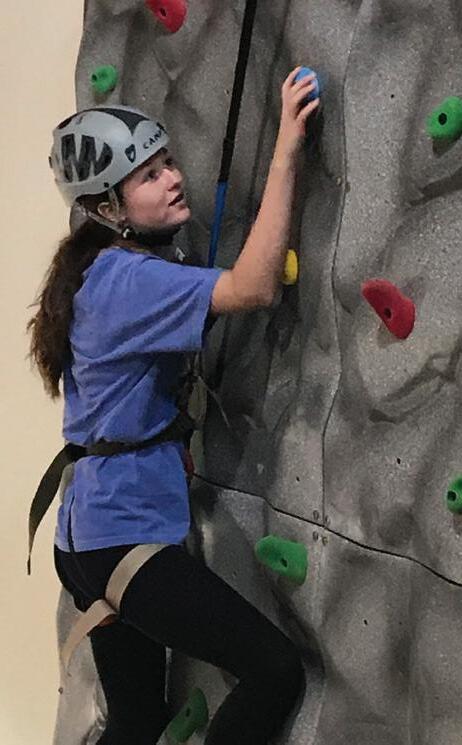
Over the years, Camp Skimino has offered many different themed camp sessions. A Sister/Brother camp session was held in 1998, a session never tried before. It was a week-long camp session for Girl Scouts and their brothers to get a camping experience together. In 2011 a high ropes course was introduced that included: a pamper pole—25 foot high platform, a 2-line bridge, and a wobbly walk suspended 25 feet high in the trees. In 2013 Oma's Daisies' Boathouse was added thanks to a donation from Marion S. Kaurup, grandmother of GSCCC property manager Jody Kaurup. In 2017 an indoor climbing wall was added to the dining hall, as well as an outdoor archery range, thanks to funds provided by the Virginia Beach Lynnhaven Shores Service Unit led by Susan Ramsland.
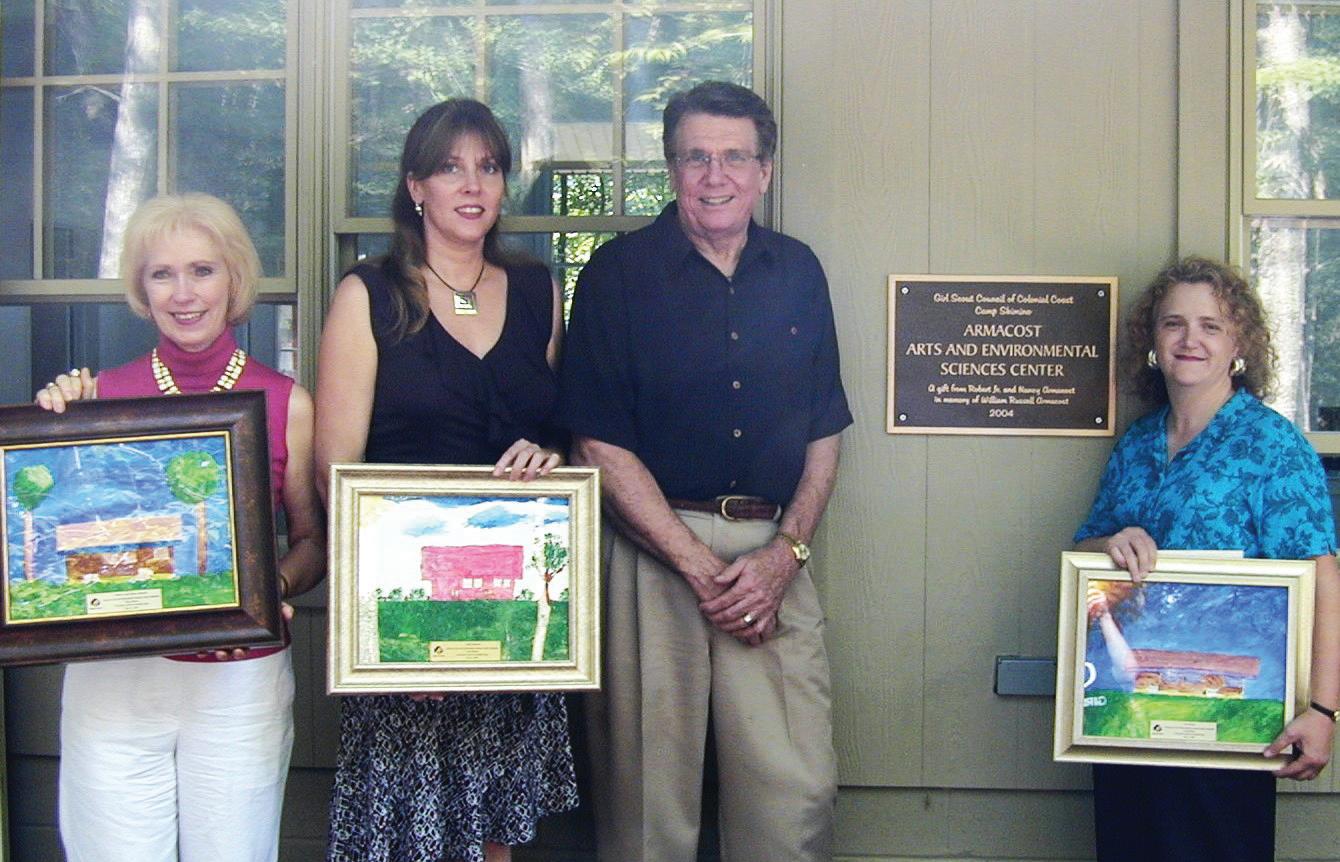
In 2004, Norfolk Lodge and the Armacost Arts and Environmental Science Center opened and a dedication was held to thank donors that included Nancy and Robert Armacost and the Norfolk Foundation. Girl Scout alum and architect Amy Reneri was also recognized for volunteering her services as an architect.
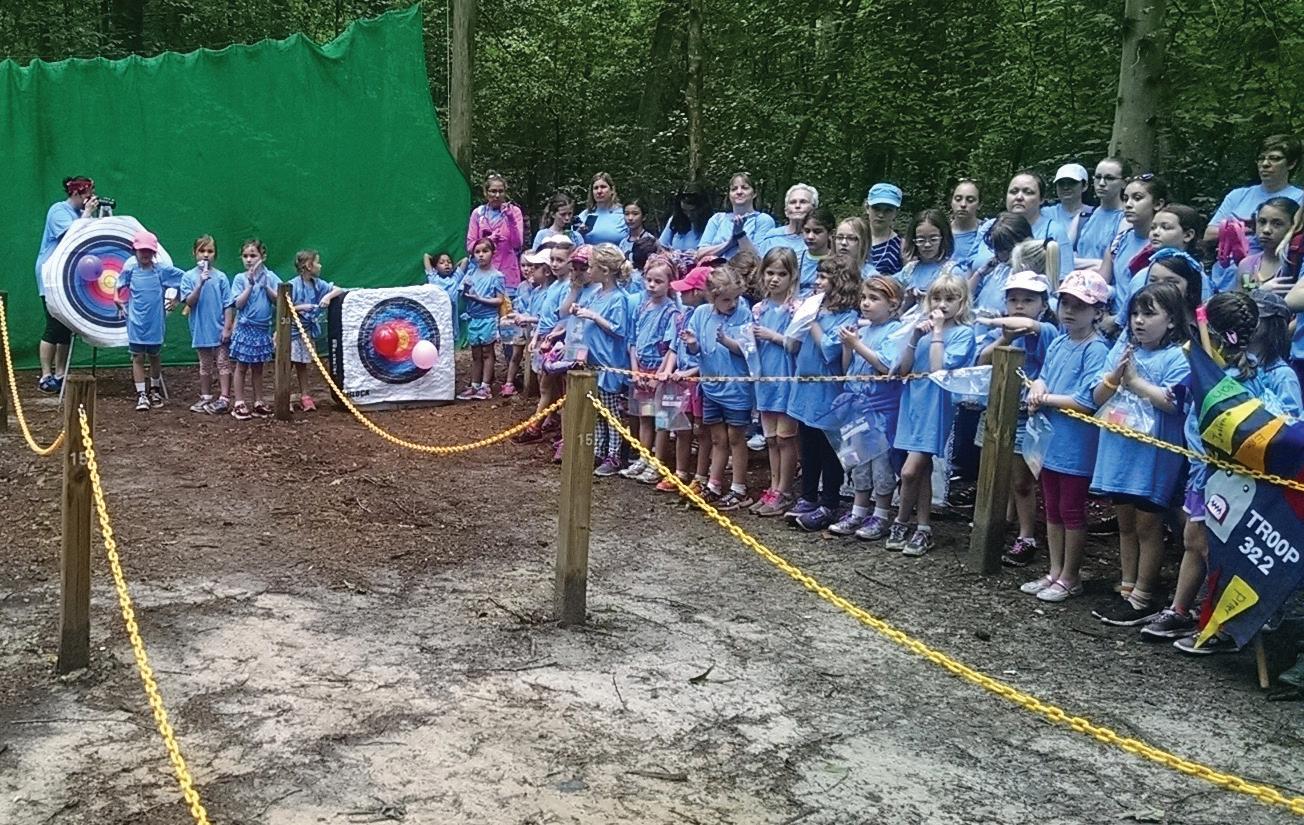
Tiny Houses were added in 2018, the Health Lodge was renovated in 2019, and in 2022, an outdoor pavilion with fireplace, located near the front on the camp entrance near the pool, was built to accommodate large group gatherings.
In 2025, a two-year project was completed to repair and make renovations at Camp Skimino’s Enmeier Center. Termite and moisture damage had compromised the structural integrity. Repairs and renovations cost just over $166,000. Major donors included the TowneBank Foundation, Hampton Roads Community Foundation, and Virginia Beach Lynnhaven Shores Girl Scout Service Unit 250.
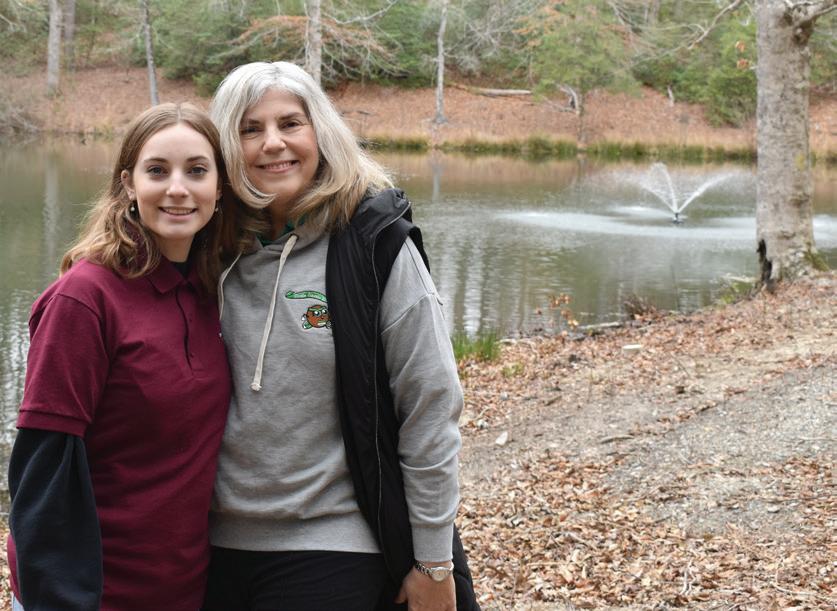
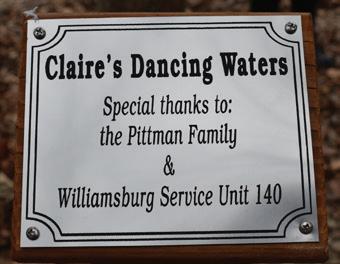
In 1990, after four years of searching, the Council found 4.81 acres of land, including a wetlands area, on the north side of Cedar Road in Chesapeake and purchased it for $380,000 to build the new Council headquarters. At that time, Council girl membership reached 16,220. Adult membership was up eight percent from the former year at 5,342.
In 1994, Armada/Hoffler Construction Company partnered with Girl Scouts of Colonial Coast to build the new regional center, A Place for Girls. Armada/Hoffler acted as general contractor but did not collect a fee for the services. The president of the construction company placed the value of the donated services at $100,000. A Chesapeake reception for A Place for Girls gave the community a chance to see the plans and drawings for the new building.
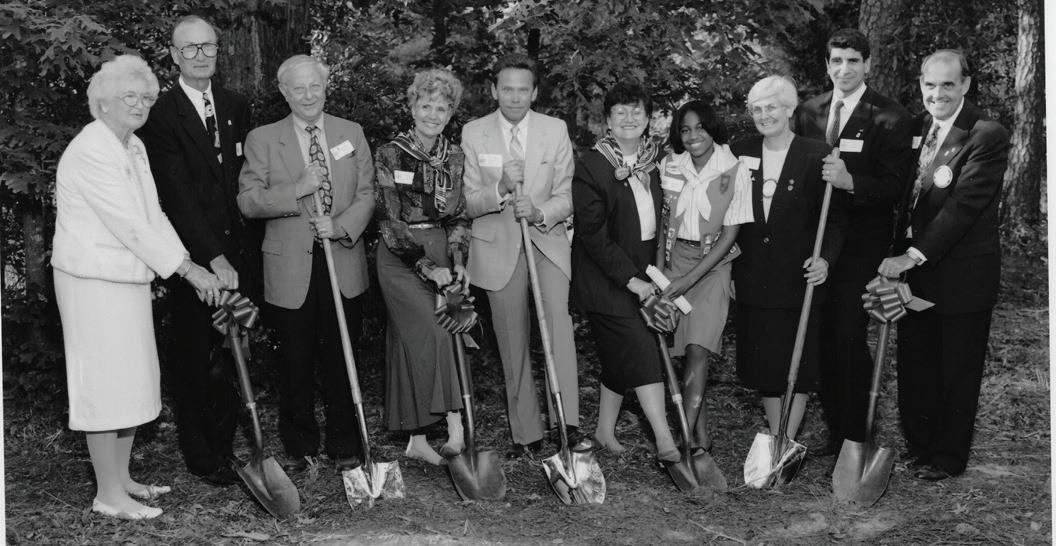
On May 31, 1995, the groundbreaking ceremony was held for A Place for Girls and construction began soon after. The campaign to raise money for the center was at 70%.
The dedication of A Place for Girls took place May 5, 1996. Three hundred Girl Scouts, donors, public officials, and community friends gathered to dedicate the center. The 18,000 square foot building took over ten years of planning and dreaming. The lower level included a lobby, shop, three large rooms named in honor of donors: Rotary’s Teen Room, Parson’s Amazing Room, and Young Performer’s Room, which could be opened and connected to accommodate large events. Hands-on crafts could be done in the Beasley’s Science and Hands Art Room which included a kiln. A full operating kitchen, Rowena’s Kitchen, was named for Rowena Fullinwider, a Campaign Chair for A Place for Girls. The Fun Room was available for troop overnights and included bathroom facilities and showers along with a kitchen area for cooking. A smaller room, a first-aid room, was dedicated in honor of Dr. Aleli Romero, a board member and donor who later became a Council Board Chair.
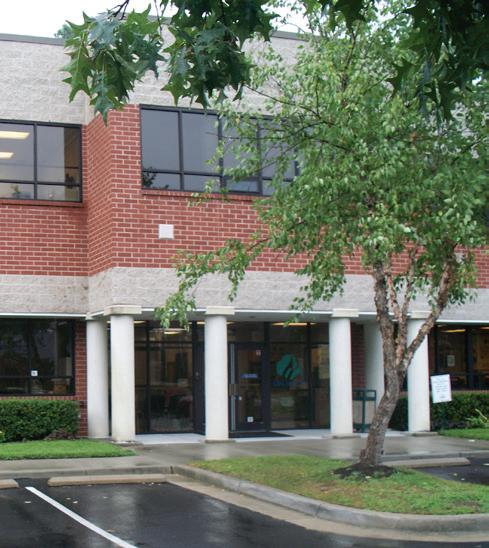
During the summer of 1996 various activities were held at A Place for Girls including Leader Support Team conferences, Red Cross Training, Imagimazing Summer Fun Camp (serving 200 girls), troop lock-ins, a potluck dinner for twenty-nine Belgian Boy and Girl Scouts and their host families, and even a wedding of council staff members James Flowers and Claudia Musick.
Phase II at A Place for Girls was the Natural Area Construction which would become known as The Outback, and Phase III, a plan to build a swimming pool which would ultimately end up being part of The Lodge which was realized many years later.
In 2001, A Place for Girls was nominated and received the Chesapeake Beautification Award “in recognition of the visual impression and awareness of the environment exemplified by the grounds and building.
In 1998, an after-school program was started at A Place for Girls. Many of the girls continued to attend the program throughout the summer when day camp was offered at the center. In 2007, the after-school program was operating at full capacity. The council’s girl members was more than 14,000 girls. The after-school program was discontinued in 2011.
In May 2006, friends and staff gathered at A Place for Girls to celebrate the 10th anniversary of the regional headquarters and in June of that year there was a Camp Werowanee reunion at A Place for Girls. During 2006, four thousand girls were given the opportunity to participate in environmental and learning activities at A Place for Girls.
In 2016, to celebrate the 20th anniversary of A Place for Girls, guests gathered to dedicate a plot of commemorative bricks purchased by donors.
In 2023, a solar flower, Daisy, was added to A Place for Girls. A unique solar device that tracks the sun across the sky to maximize solar energy generation throughout the day.
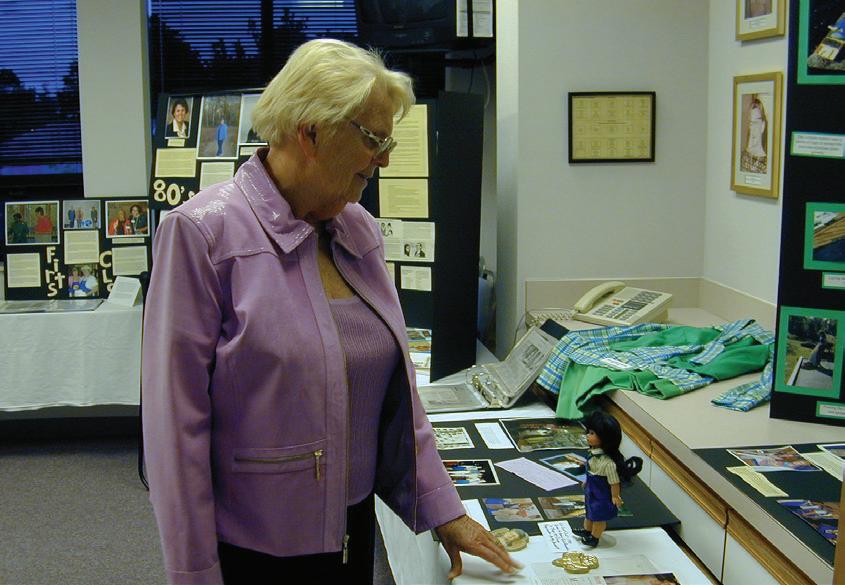
1916: Lone Troops

1923: Norfolk-Portsmouth Council of Girl Scouts

1926: Norfolk Council of Girl Scouts


1934: Virginia Tidewater Area Council
1950: Suffolk Area Council

1951: Virginia Tri-County Council



1916: Lone Troops

1932: Fort Monroe Committee


1941: Elizabeth City County Girl Scout Council
1952: Hampton Girl Scout Council
1960: Virginia Tidewater Council

1964: Greater Tidewater Girl Scout Council

North Carolina Lone Troops



1931: Hampton Committee

1933: Peninsula Community Committee
1941: Gloucester Lone Troops
1952: Newport News-Warwick County Girl Scout Council


1954: Williamsburg Girl Scout Council
1958: Newport News-Warwick Girl Scout Council

1963: Heritage Girl Scout Council of Virginia

1981: Colonial Coast Girl Scout Council

1990: Girl Scouts of the Colonial Coast

Lone
Mrs. Sarah Hartigan
Mrs. Herman Aspergren
Mrs. Saunders
Mrs. V. Hope Kellam Norfolk
Mrs. Leigh R. Powell Norfolk
Mrs. Abner S. Pope
Mrs. W.R.C. Cocke
Mrs. J.S. Gregory
Virginia Tidewater Area
Virginia
Mrs. W.A. Reeves Virginia Tidewater Area
Mrs.
Mrs. Henry VanOs
Mrs. J.S. Gregory
Mrs. C. Dodson Morisette
Mrs. Brinkley Trammell
Mrs. Harmon Jones
Virginia Tidewater Area
Virginia
Mrs. Burkes Tankersley Virginia
Mrs.
Mrs.
Mrs.
Mrs Harry McCoy
Mrs. R. Palmer Lawler (Karla Lawler) Greater Tidewater 1970-1973
Mrs. Edward W. Stephens (Dot Stephens) Greater Tidewater 1973-1975
Mrs. Jesse Allen (Connie Allen) Greater Tidewater 1975-1978
Mrs. Robert Salzberg (Lucy Salzberg)
Judy
Dorothy N. Barber
Lynn B. Dutton
Linda Bass
Judy Scott
Mary Ellen Maxwell
Ann Fitzgibbon
Sandra Deloatch
Melissa L. Burroughs
Cheryl Mack
Carolene Goodwyn Harris
Barbara Tierney
Marisa Porto
Carolyn Pittman
Lu Ann Klevecz
Girl Scouts of the Colonial Coast
Girl Scouts of the Colonial Coast 1997-1999
Girl Scouts of the Colonial Coast 1999-
Girl Scouts of the Colonial Coast 2003-2005
Girl Scouts of the Colonial Coast 2005-2007
Girl Scouts of the Colonial Coast 2007-2009
Girl Scouts of the Colonial Coast
Girl Scouts of the Colonial Coast 2011-2015
Girl Scouts of the Colonial Coast 2015-2017
Girl Scouts of the Colonial Coast 2017-2019
Girl Scouts of the Colonial Coast 2019-2021
Girl Scouts of the Colonial Coast 2021-2023
Girl Scouts of the Colonial Coast 2023-2025
Girl Scouts of the Colonial Coast 2025-
President Years
Mrs. E.T. Thomasson 1952-1954
Mrs. Nathan J. Levy 1954-1956
Mrs. H.J. Lichtefeld 1956
President Years
Mrs. John Halliday 1963-1968
Mrs. Edward Kahn 1969-1971
Mrs. Margaret Shield 1975-1977
Mrs. Carole Stockberger 1978-1979
Beblon Parks 1980
Executive Director Council Years
Lone Troops Troops were registered with National Councils 1916-1923
Lone Troops Norfolk—Portsmouth 1923-1927
Mary Diggs Norfolk 1927-1928
Margaret Rangley Norfolk 1929-1931
Mabel White Norfolk 1931-1936
Georgie (Buck) Harris Norfolk 1937-1964 Virginia Tidewater Area Greater Tidewater
Edith McRobbie Greater Tidewater 1964-1970
Jerry Harris Greater Tidewater 1970-1972
Rebecca (Becky) White Greater Tidewater 1972-1981
Executive Director Years
Mrs. Edna R. Haught 1948-1952
Mrs. Harriet McMahon 1953
Executive Director Years
Georgetta Moore 1963-1975
Helen A. Wilson 1976-1980
1981
Collen Murphy
Wendy Foden
1982
Beatrice Ziegenfuss
Cheryl Borszich
1983
Molly Durham
Melissa McGowan
1984
Terri Michelle Davis
Laura Ann Vinson
1985
Betty Mugler
Holly Franz
1986
Rebecca Lynn Huntley
Tracy Kessler
1987
Christian Burison
Theresa Bredeson
Holly Norfleet
This award was established in honor of Buck Harris upon her retirement in 1963, a former executive director of the Virginia Tidewater Girl Scout Council. The award honors a Girl Scout who loves the outdoors, relates to others with respect, has developed values that give meaning and direction to her life, and uses her skills and talents to serve the community. The recipient receives a framed certificate and a free week at a Council-sponsored summer camp. Please note that the following names are what GSCCC currently has in our archived records.
1988
Elizabeth Butler
Sonia Kessler
Louisa Gaiter
Artreece Tall
1989
Dyanna Giles
Leeza Beazlie
Amy Marlins
Jennifer Phelps
1990
Dawn Cretella
Kayla Becker
Felicia Renee Dozier
Karmen Toney
1992
Dawn Marie Kruschke
Sharnnia Artis
Ernecia Denise House
Kelly Walters
1993
Amber Hines
Evonne Nwankwo
Heather Anne Schlobohm
Susan Sumiko Tallieu
1994
Amber Wynne
Michelle Yatsko
Samatha Jo Goyne
Jamila Jordan
1995
Wendy Scott
Stacey Barnett
Julia DiVito
Gina Wiegand
1996
Christina Bierbaum
Amy Jerigan
Christina Hart
Ashley Robinson
1997
Jennifer Sutton
LaTasha Ann Fayton
Catarina “Katie” Bumbar
Laura Neff
1998
Katrina Bird
Ashley Hargrove
Megan Holland
Chelsea Peoples
2005
Amiee Gallagher
2017
Alexa Goldblatt
2018
Tara Grady
2019
Lily Tomlinson
2020
Morgan Lynch
2021
Jasmine Barbour-Bassett
2022
Sarah Sass
2023
Payton Grubbs-Walker
2024
Cailyn Yerigan
2025
Lily Willis
The award is named after former Council President Dorothy Barber, who served from 1993-1997, and is the highest adult award sponsored by Girl Scouts of the Colonial Coast. The award recognizes a volunteer who has achieved success in their personal and professional life, has contributed to her community and to the Girl Scouts of the Colonial Coast, and is a role model and mentor to other Girl Scouts.
Dorothy Barber
Aleli Romero
Nellie Hayse
Connie Allen
Pat McKinny
Barbara Mettler
Helen Katwinkel
Sandra DeLoatch
Mary Ellen Maxwell
Judy Scott
Carolyn Abram McCaden
Jay Johnson
Betty Hoover
Lila Davis
Anne Dinterman
Barbara Tierney
Susan Ramsland
Melissa Burroughs
The GSCCC Famous Former Award was created in 2011 in preparation for the 100th anniversary of Girl Scouting in 2012. A calendar of the first awardees was created and a luncheon was held in November of 2011 at the Norfolk Yacht Club. The award continued until 2022 and then began again in 2025.
2011
Melissa Burroughs
*Dr. Sandra DeLoatch
Dr. Deborah DiCroce
Kerry Dougherty
Naomi Estaris
*Rowena Fullinwider
Vice Admiral Mary Jackson
Tracy Keller
Angelica Light
*Meyera Oberndorf
Judith Scott
Betty Shotton
Jan Trombly
2012
Sharon Durrette-Hunt
Sharon Gibson-Ellis
Melissa Howell, Esq.
Anne-Marie Knighton
Mary Ellen Maxwell
Andria McClellan
Dr. Carol Simpson
Marian Ticatch
Rosemary Trible
Charlotte Underwood
*Ann Vernon Edith White
2013
Carolyn Abron-McCadden
Deborah Butler
Ann Hoffman
Raystine Johnson
Ashburn Suzy Kelly
Dr. Laura Sass
Kirsten Talken-Spaulding
2014
Dr. Wanda Barnard-Bailey
Dr. Lucy Gibney
Susan Mayo
Regina Mobley
Janis King Robinson
Jeanne Zeidler
2015
Peggy Birkemeier
Emma Brady
Susan Colpitts
Barbara Hamm Lee
Khadijah Sellers
Sylvia Weinstein
2016
Mary Kate Andris, Ed.D.
Terri Hathaway, MA Ed.
Kirkland Kelley, Esq.
Eileen Livick Linda Rice, Ph.D.
Mariah Rule
Carolyn Tyler, M.Ed.
2017
Anne Conner
Betty Wade Coyle
Carol Curtis
Katherine Glass
Nicole Stuart
Cecelia Tucker
Nancy Welch, MD
Future Famous Former
Amy Godby
2018
Stephanie Adams
Kim Curtis
Michelle Ferebee
Daun Sessoms
Hester Vickie Kearn
CAPT Lisa Schulz
Charity Volman
Future Famous Former
Sarah Buck
2019
Joann Bautti
Kate Godby
Bonita Billingsley Harris
Tricia Hudson
Janice “Jay” Johnson
Lisa Spiller
Future Famous Former
Michaela Britt
Corporate G.I.R.L. Champion TowneBank
2020-21
Holly Deal
Cathy Fox
Suzanne Garcia
Dawn Peters
Janet Roach
Dr. Michelle Woodhouse
Future Famous Former
Sarah Noffsinger
Corporate G.I.R.L. Champion
United Way of South Hampton Roads
2022
Kimberly Brush, PhD.
Colita Nichols Fairfax, PhD.
Sharon Martin
Lisa Ziehmann
Future Famous Formers
Dr. Meridith Borza
Melanie Dare Garrett
Sara Mackenstadt
Community Partnership Award
NASA Langley Research Center
* Deceased
2025
Javaune Adams-Gaston, Ph.D.
Tonya Byrd
Sierrah Chavis
CDR Heidi Koski
Wendy Scott, Ph.D.



Our mission is to build girls of courage, confidence and character, who make the world a better place.