
A F I E L D G U I D E T O N E W T O N
A F I E L D G U I D E T O N E W T O N
AguidefortouringNewton villagebyvillage,inarchitecture, history,andhoweachonelivestoday.
Newton is not one place. It is thirteen each with its own founding, its own architectural fabric, its own rhythm of daily life. Some were built by railroads, others by rivers or horse-drawn streetcars. Some arrived all at once, in a single decade. Others accumulated over three centuries
This guide walks through all thirteen villages the prices, the housing stock, the school assignments, what's nearby. It also zooms out: thirty years of Newton market data, how the city ranks against its Greater Boston peers, and the forces railroads, highways, zoning that shaped what you see today
6.3squaremiles,twohigh-schooldistricts,oneriver,andthreehighwaysinandout.
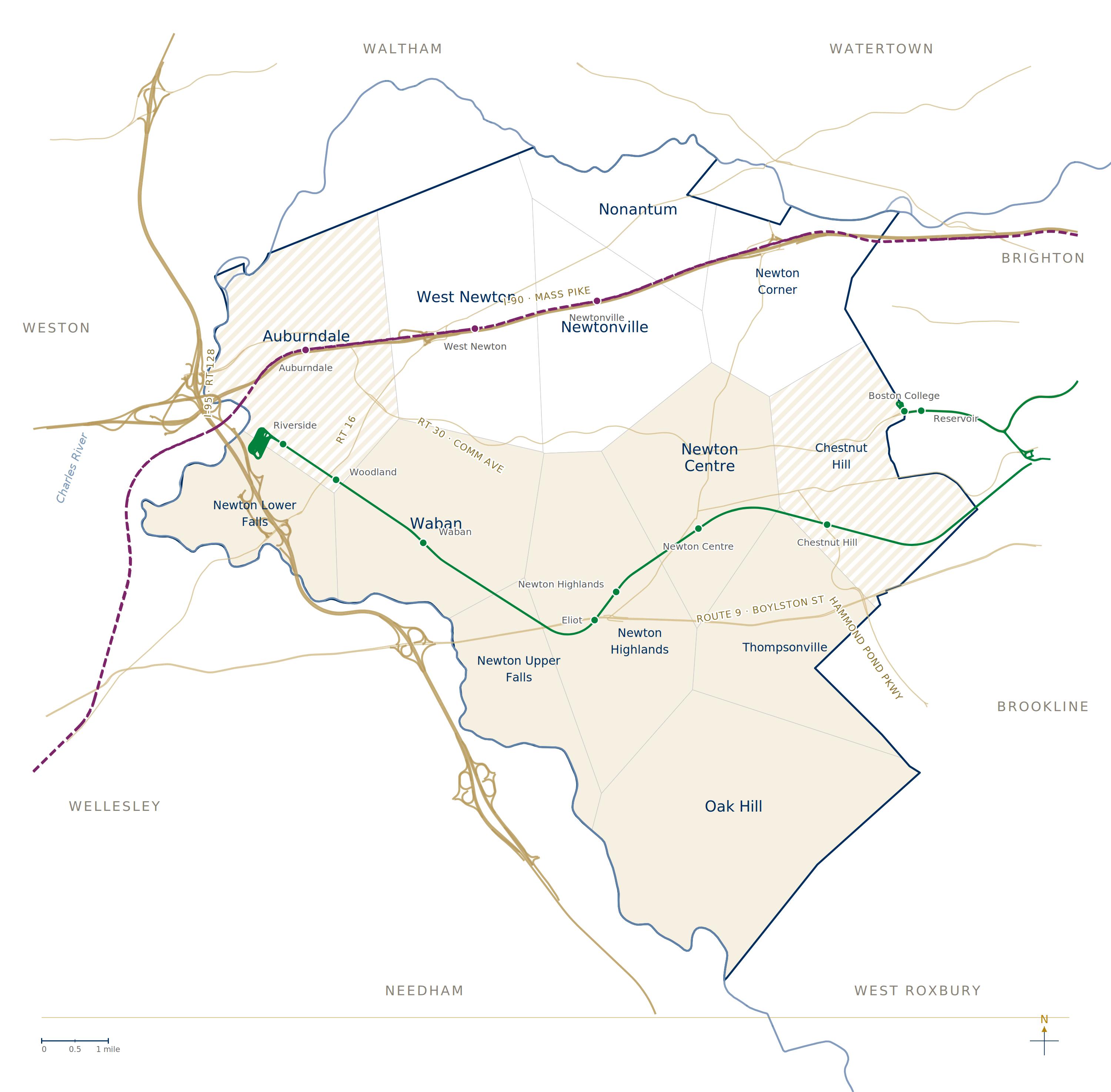
Newton South HS district
Newton North HS district
Mixed (Chestnut Hill, Auburndale)
MA J O R RO U T E S
I-90 Mass Pike 30–35 min to downtown Boston, AM rush
I-95 Route 128 metro Boston beltway
Route 9 Boylston St 35–45 min to downtown Boston, AM rush
Route 30 Comm Ave 35–45 min to downtown Boston AM rush
Route 16 SW–NE diagonal; crosses Charles at Lower Falls Hammond Pond Pkwy Rt 9 to Brookline via Chestnut Hill
Highway (I-90, I-95)
Major road (Rt 9, 16, 30) Charles River
T RA N SI T
Commuter Rail Green Line B / D
Commuter Rail (Framingham/Worcester) 25–30 min to South Station Green Line B / D 40–50 min to Park Street, +5 min to North Station
Chestnut Hill and Auburndale are rendered with a striped fill because assignment to Newton South or Newton North is determined streetby-street within those villages, not by the village boundary Commute times are approximate and vary by origin stop, time of day, and traffic Village boundaries are drawn from the city's published centroids and are intended for orientation only
TencomparableGreaterBostoncommunities,selectedforsimilarhousingpricerangeandtransitaccess.
Thenumbersthatshapewhatitcoststoliveineachvillage,andhowtheytradetoday
Salesandrentalseasonality,averagedacrosselevenyears.
Single-family andcondominium, monthly averages 2015–2025
0
SPRING PE A K
Listings peak in May ( 115/mo), offers are strongest the same month; closings lag by roughly two months
M AR KET T EM P ER AT U R E
SU MME R C LOSINGS
July is the biggest closing month ( 110 sales), reflecting spring offers settling before the school year
Newton's monthly activity index, by offervolume (averaged2015–2025)
HOTTE ST MONTH
May averages ~111 offers 3 5× the pace of the quietest month Listing here means competing for attention; buying means competing for inventory
R EN T AL S
All rental property types, monthly averages 2015–2025 0
A C A D E MIC -YE A R C YC LE
Rentals follow Boston's academic calendar
Listings surge May–June; leases peak in August ( 91/mo) as tenants move in before September
December is the quietest, with only ~32 offers Serious buyers in this window face minimal competition; disciplined sellers can still transact
W INTE R LU LL
December listings drop to 15/mo Sellers who list in January face less competition; buyers have more leverage
OFF-SE A SON A D VA NTA GE
Tenants searching in December–February face roughly a third of the inventory available in May but negotiate with far less urgency from landlords
September–October run warm as a secondary push before the holidays Properties that miss the spring can still find a deep buyer pool in early fall
THRE E -MONTH LA G
The gap between new listing and signed lease runs roughly 60–90 days Rentals listed in May typically sign by August
Averages computed across 26,881 Newton sales and 9,991 Newton rental transactions, 2015 through December 31, 2025 Data from MLS PIN Monthly figures are the mean over eleven years; any individual year may deviate "Offers accepted" is counted by the date the listing moved to under-agreement status

Victorianrivertownhouse, c 1880
I N T H E V I L L A G E
Auburndale Square
Star Market (2040 Commonwealth Ave)
Charles River frontage
Lasell University (1851)
Auburndale Park
Auburndale Cove
Commuter rail station

LasellUniversity
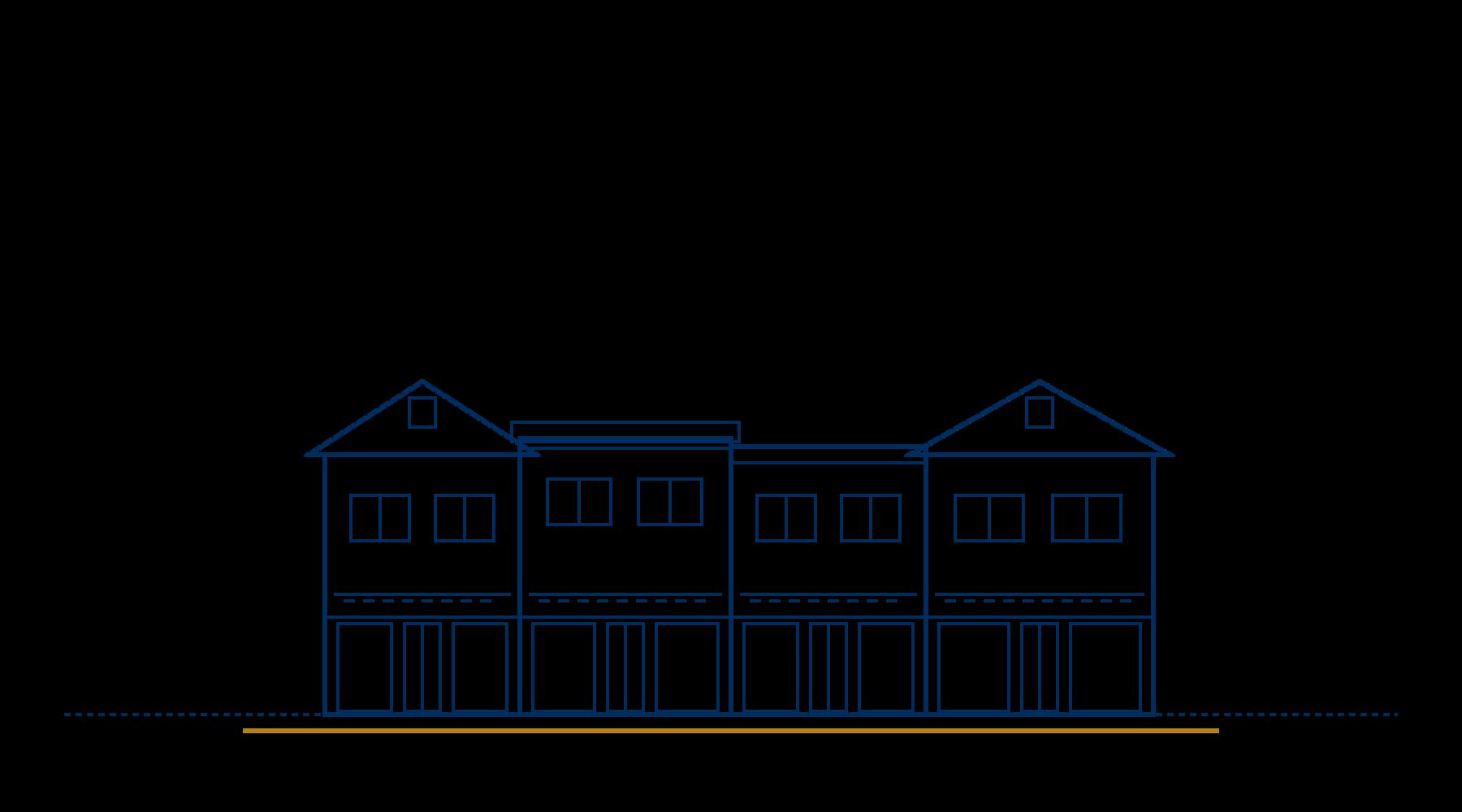
AuburndaleSquare
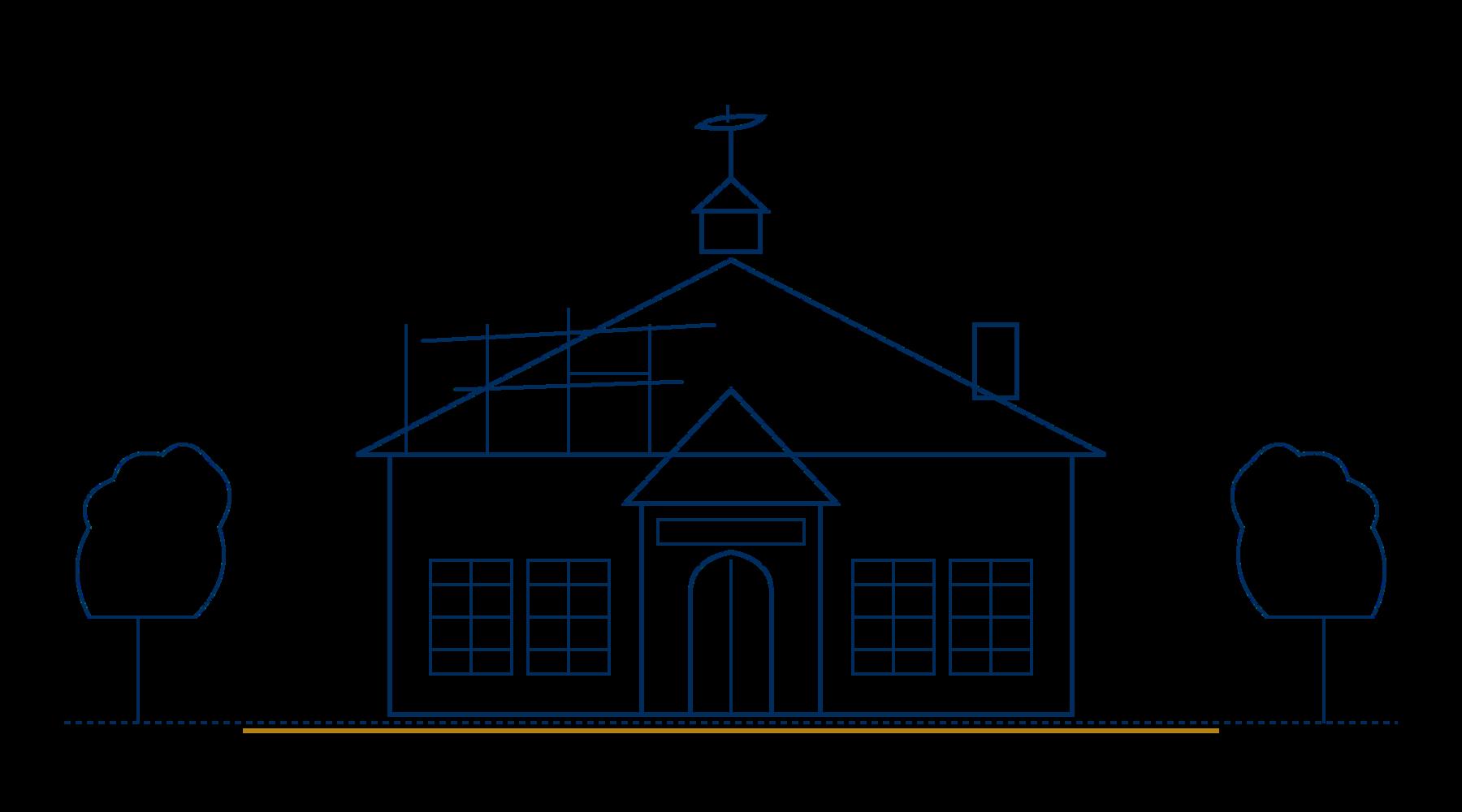
Plummer MemorialLibrary, 1927
Auburndale began as a remote district of farmland, wooded hills, and marsh Even in 1831, only seven families held title to the entire area The Boston and Worcester Railroad's extension in 1837 began to change that, but the real transformation came in 1847, when William Jackson and his North Auburndale Land Company laid out streets and lots north of Auburn Street explicitly marketing the neighborhood to a new kind of Newton resident: the suburban commuter
Auburndale's defining feature is the Charles River, which curves along its western edge. Through the late 19th century the river was a recreational magnet boat clubs built boathouses, canoeing and skating were popular, and in the 1890s the Newton Street Railway opened Norumbega Park on 21 acres of riverfront The park's Totem Pole Ballroom drew national touring acts through the 1930s and 1940s before closing in the 1960s
The village's residential fabric is largely Victorian and early-20th-century a mix of Queen Annes, Shingle-styles, and Colonial Revivals on leafy streets The housing stock is intact enough that two historic districts have been designated within the village
Lasell University, on Woodland Road at the village's southern edge, has been an educational presence in Auburndale since 1851 originally as the Auburndale Female Seminary and still shapes the character of the streets around it
The Auburndale commuter rail station is one of Newton's three current stops on the Framingham/Worcester Line, and the village has seen careful, scale-appropriate infill over the past decade rather than major redevelopment. Single-family transaction volume runs high Auburndale addresses feed both Newton North and Newton South depending on the street
$1.75M
MEDIAN SINGLE-FAMILY #8 OF 13
MEDIAN CONDO $1 52M 21 sales
MEDIAN RENT $3,600/mo 33 leases POPULATION 8,300
HOUSING MIX1,206 SF · 293 condo 247 multi
MEDIAN HOME 2,149 sqft
MEDIAN LOT 8,947 sqft · 0 21 ac
MEDIAN YEAR BUILT (SF) 1927
ELEMENTARY Williams Franklin Burr
MIDDLE Day Brown
HIGH SCHOOL Both districts
TRANSIT Commuter Rail (Auburndale stop)
As of 4/18/26
Auburndale is defined by two features that together don't exist in any other Newton village: direct commuter-rail access to Boston and serious open space along the Charles River The station puts South Station 25 minutes away; the river frontage, Auburndale Park, and the proximity of Brae Burn and Woodland golf courses give the village a recreational amenity set closer to Weston than to the rest of Newton
The housing fabric follows the village's dual identity The rail-adjacent blocks are late-Victorian and early-1900s Colonials, close-set on streetcar lots The lots running down toward the river and along Commonwealth Avenue are larger classic estate-scale properties from the 1910s–1920s, many with substantial grounds and mature plantings Auburndale has one of the widest lot-size ranges of any Newton village.
Lasell University, at the village's south edge, is a distinguishing institution rather than a disruption. The campus is small, the student population is compact, and the village's character isn't organized around it the way Chestnut Hill is around Boston College What Lasell does add is a community of faculty and administrators as long-term owners, and a small but steady rental market at its edges
The market distinction buyers should understand: Auburndale trades below Waban and Newton Centre despite comparable housing stock, in large part because the school assignment is split and because the village is farther west than the buyer base typically searches For a buyer who prioritizes commute time, lot size, and access to the river over proximity to retail density, Auburndale is frequently the best value in Newton
A NOT E ON RE NT A L C HA RA C T E R:
Auburndale's rental inventory is limited and concentrated near the rail station Lasell University adds a small seasonal rental market at its edges
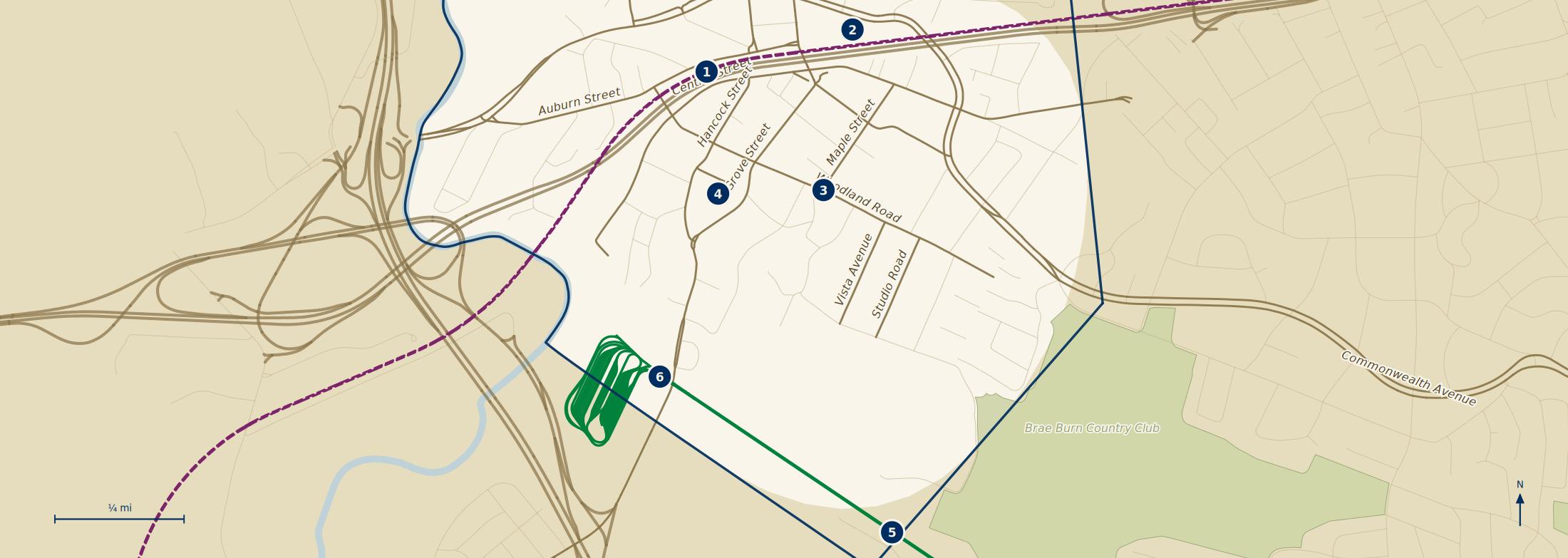
W H AT T O EXP EC T I N AU BU R N D AL E
MA P K E Y
1 Auburndale (Commuter Rail)
2 Star Market (2040 Comm Ave)
3 Lasell University
4 Williams Elementary School
5 Woodland (Green Line D)
6 Riverside (Green Line D) NOT A B LE ST RE E T S
Commonwealth Avenue the broad tree-lined spine; larger lots with estate-scale homes
Lexington Street residential connects the rail station to Lasell
Central Street runs north-south through the village center
Woodland Road wraps around the Woodland golf course; large lots
Grove Street leads to Auburndale Park and the Charles River frontage RE T A I L & D I NI NG
C OMMU T E
Downtown Boston by train 25 minutes to South Station on the Framingham/Worcester line
Auburndale (Commuter Rail) on-village station with direct Boston service
Star Market 2040 Commonwealth Avenue; the village grocery anchor
Auburndale Village small commercial cluster near the rail station
Lasell University campus dining a few spots that serve the broader community
Auburndale post office a neighborhood-scale civic anchor
Brae Burn & Woodland clubs two private country clubs bookend the village
Woodland (Green Line D) 6 minutes walk to the southern Green Line D station
Mass Pike access 5 minutes to Pike entrance at Exit 127
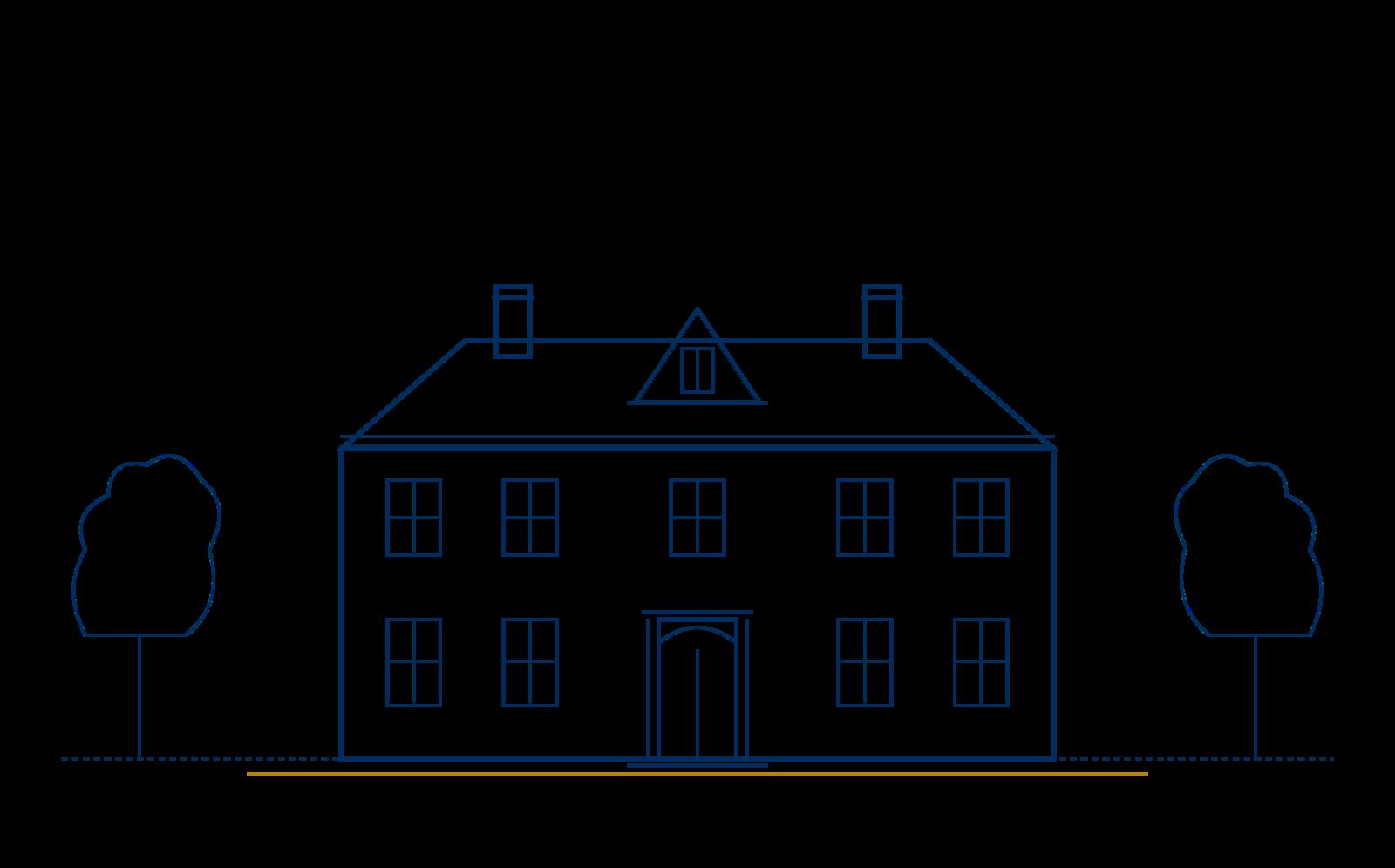
ColonialRevivalestate, c 1895
I N T H E V I L L A G E
Route 9retail corridor
Wegmans (Chestnut Hill Square)
Star Market (Boylston Street)
The Street at Chestnut Hill
Shops at Chestnut Hill (Bloomingdale's)
Hammond Pond Reservation
Boston College campus
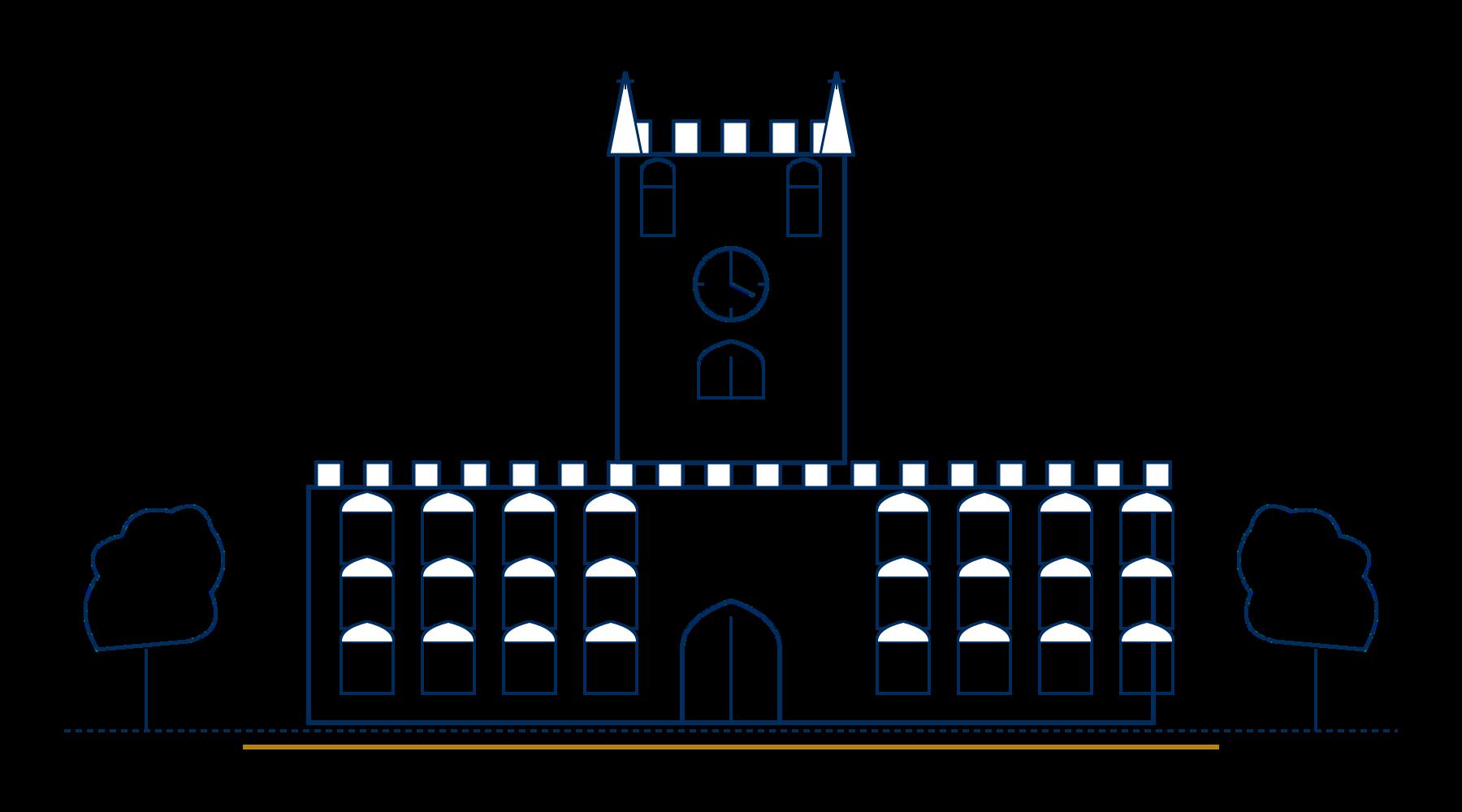
GassonHall, BostonCollege, 1913
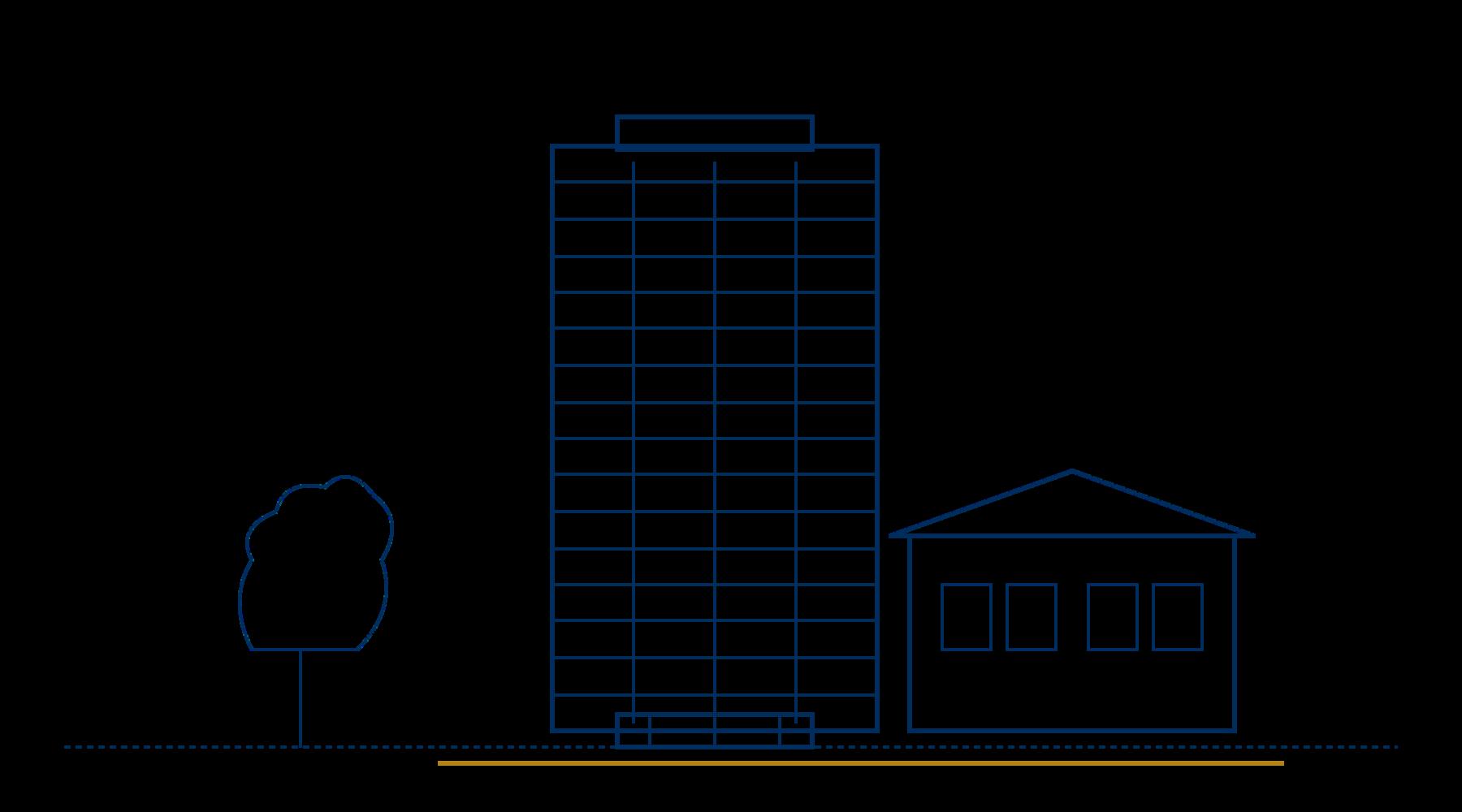
TheTowers ofChestnut Hill
In Newton's easternmost corner, Chestnut Hill was first settled in 1665 by the Hammond family whose name endures on Hammond Street, Hammond Pond, and the surrounding woods The family held the land for generations, and the area remained sparsely settled into the mid-1800s
The turning point came in 1822, when Capt Joseph Lee purchased a farm from the Hammonds When Lee died in 1845, the property passed to his six nieces and nephews, who laid out a plan for a community of country estates. As rail access improved through the 1850s, more of the Lee family along with the Lowells, Cabots, Lawrences, and Saltonstalls arrived from the North Shore The enclave became known as the Essex Colony Most of Chestnut Hill was not built out until after 1880; between 1880 and 1910 the remaining land was carved into large building lots and private estates in the Georgian, Colonial Revival, and Shingle styles In 1991, the Chestnut Hill Local Historic District was established to preserve this fabric
Modern Chestnut Hill is defined as much by its commercial density as its estates The Route 9 corridor through the village contains the only Bloomingdale's in Massachusetts, anchoring the Shops at Chestnut Hill; The Street at Chestnut Hill, a lifestyle center with retail and the Showcase SuperLux cinema; Chestnut Hill Square with its flagship Wegmans; and the Chestnut Hill Reservoir nearby in Brighton
The concentration of retail is unusual for a Newton village and reflects the area's commercial scale and proximity to Boston The village has one of the most distinctive housing mixes in the city Estates and newer single-family construction coexist with significant luxury condominium stock most notably The Towers of Chestnut Hill (423 units across two 16-story buildings near Bloomingdale's) and The Waterworks at Chestnut Hill (more than 100 units in the renovated 19th-century waterworks overlooking the reservoir). The result is a median condo price substantially below median single-family the widest spread in Newton reflecting the dominance of highrise stock rather than a weaker condo market Addresses feed both Newton North and Newton South depending on the street
$2.62M
MEDIAN SINGLE-FAMILY #2 OF 13
DAYS TO OFFER 17 days
LAST-12-MONTH SALES 18 sales
MEDIAN CONDO $727K 29 sales
MEDIAN RENT $3,250/mo 16 leases
POPULATION 7,000
HOUSING MIX 575 SF · 666 condo · 42 multi
MEDIAN HOME 3,384 sqft
MEDIAN LOT 13,200 sqft · 0 30 ac
MEDIAN YEAR BUILT (SF) 1928
ELEMENTARY Bowen Ward
MIDDLE Oak Hill Bigelow
HIGH SCHOOL Both districts
TRANSIT Green Line B/D (Chestnut Hill stop)
As of 4/18/26
What does that mean for a buyer today? The first thing to understand is that "Chestnut Hill" is a label that crosses municipal lines The neighborhood spans Newton, Brookline, and a small corner of Boston (the Brighton side, near Boston College and the Chestnut Hill Reservoir); the figures on the preceding page describe only the Newton portion Addresses a few hundred feet apart can sit in different municipalities, different school districts, and different tax rolls Verifying the town by street address is step one
The second thing: the condominium stock is a market unto itself The Towers of Chestnut Hill 423 units across two 16-story buildings and The Waterworks account for hundreds of units in high-rise formats you will not find anywhere else in Newton That depth of condo inventory pulls the village's overall median downward relative to its single-family numbers, and creates two almost distinct buyer pools: estate buyers on the Hammond Street corridor, condo buyers in the Route 9 high-rises Rental activity concentrates in the condo towers as well.
The Route 9 retail corridor is the village's daily infrastructure From The Street at Chestnut Hill in the west, through the Mall at Chestnut Hill and Chestnut Hill Square in the east, it is possible to do a week's errands without leaving the village an unusual feature for Newton The tradeoff is that Route 9 itself is a regional arterial, not a pedestrian street The pedestrianoriented center you find in Newtonville or Waban Square is not what Chestnut Hill offers
School assignment is the other variable buyers need to check The village straddles the North-South line, and within the Newton portion some streets feed Newton North, others Newton South determined by City assignment, not by geography alone.
A NOT E ON RE NT A L C HA RA C T E R:
The Chestnut Hill rental market is condo-dominant Median rents tend to reflect the Towers and newer luxury buildings rather than single-family stock
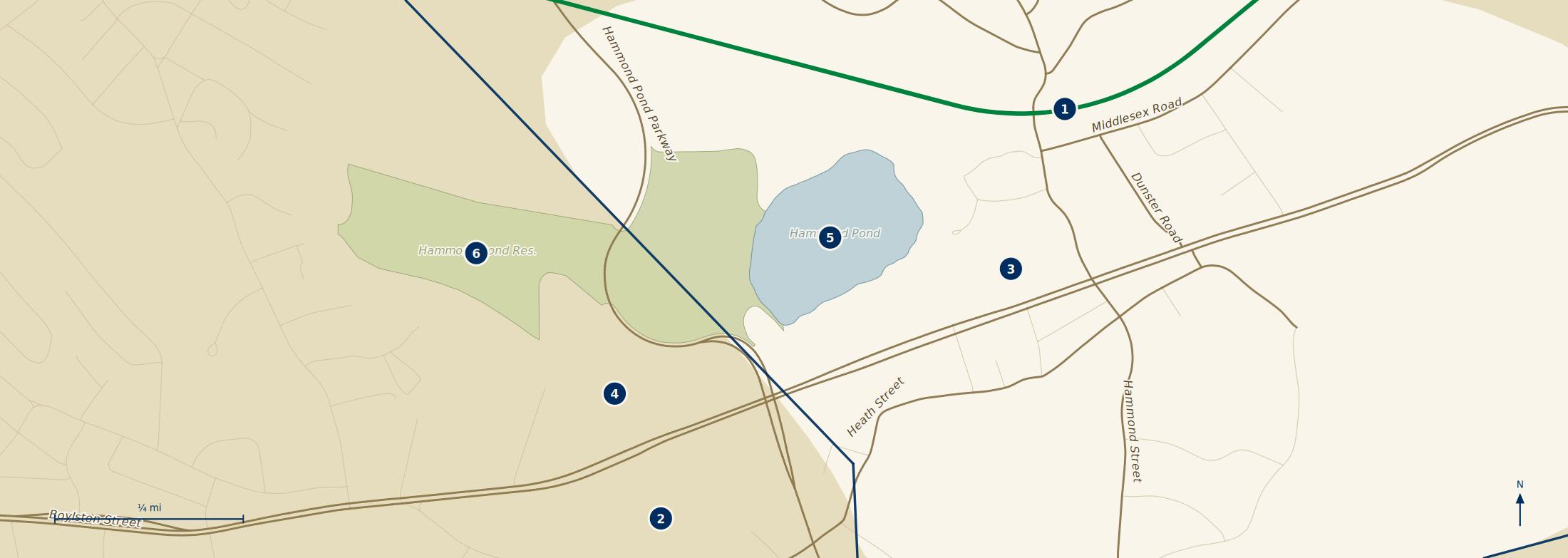
W H AT T O EXP EC T I N C H ES T N U T H I L L
MA P K E Y
1 Chestnut Hill (Green Line D)
2 Wegmans (Chestnut Hill Square)
3 Star Market / The Street
4 Mall at Chestnut Hill
5 Hammond Pond
6 Hammond Pond Reservation
A B LE ST RE E T S
Hammond Street the spine through the Towers district; large estates from the 1890s
Suffolk Road one of the largest-lot single-family streets in Newton; Newton South
Old Orchard Road classic Colonial Revivals and interwar Tudors
Heath Street border with Brookline; mix of estate homes and luxury condos
Reservoir Avenue proximity to Chestnut Hill
Reservoir and Boston College RE T A I L & D I NI NG
C OMMU T E
Downtown Boston by car 22–35 minutes via Route 9 / Mass Pike
Boston College (Green Line B) 4 minutes to the village edge
Wegmans flagship grocery at Chestnut Hill Square (Route 9)
Star Market 1 Boylston Street, at The Street
The Street at Chestnut Hill open-air lifestyle center with Showcase SuperLux and Shake Shack
The Mall at Chestnut Hill Bloomingdale's-anchored regional mall
The Capital Grille / Legal Sea Foods destination dining along Route 9
Chestnut Hill (Green Line D) on-village station, 25 min to Park Street
Logan Airport 25–35 minutes via Mass Pike
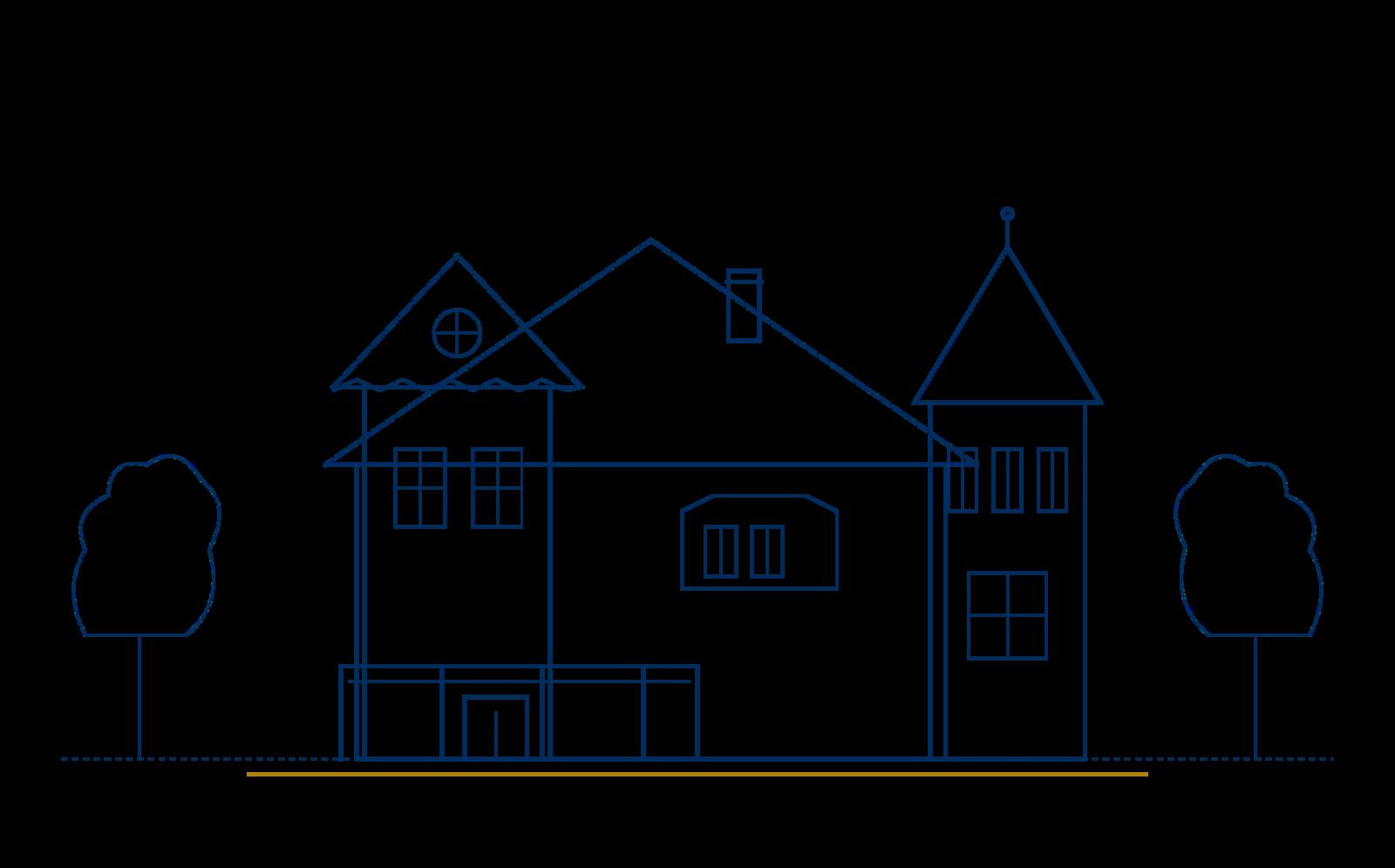
c 1890
I N T H E V I L L A G E
Union&BeaconStreets
Newton Free Library (main branch)
Crystal Lake public beach
Newton Centre Playground
Union Street cafes and restaurants
First Settlers' Burying Ground
Newton Centre (Green Line D)
ClosestgroceriesareTraderJoe's(WestNewton, 1121Washington)andWholeFoods(Newton Highlands,916Walnut)

Hall, 1932

Newton Centre is the oldest settled part of Newton home to the First Settlers' Burying Ground dating to 1664 and the town's original meeting house For two centuries it was simply "Newton," the civic and religious center of a farming town that stretched across the Charles River's north bend
The railroad changed everything When the Charles River Branch Railroad arrived in 1852, Newton Centre transformed from an agricultural hub into a streetcar suburb By the 1880s, large Victorian homes Queen Annes, Shingle-styles, and Colonial Revivals were rising on lots carved from the old farms. The village green at Centre and Beacon Streets remained the anchor, now ringed by civic buildings, churches, and a commercial district that still defines the village today
The village's architectural register is one of Newton's deepest Early 19th-century Federal houses near the burying ground; substantial Italianates and Second Empires from the 1860s and 1870s; a dense stock of Queen Annes and Shingle-styles from the 1880s and 1890s; and Colonial Revivals running into the 1920s Postwar infill is minimal.
Newton Centre is the commercial heart of Newton south of the Pike with one of the city's densest village centers, anchored by the Green Line's D Branch and a mix of shops, restaurants, and professional offices on Union and Beacon Streets The Newton Free Library's main branch is here, as is the MasonRice elementary school and a concentration of civic institutions.
Today the housing mix reflects three overlapping pools: new residents relocating from Brookline and Cambridge; longtime residents aging in place; and downsizers moving from larger single-family homes elsewhere in Newton into the pedestrianoriented village core The housing stock reflects this a large single-family stock alongside a growing number of condominiums, much of it in converted Victorians near the village center
$1.95M
MEDIAN SINGLE-FAMILY #6 OF 13 DAYS TO OFFER 7 days LAST-12-MONTH SALES 87 sales
MEDIAN CONDO $1 27M 21 sales
MEDIAN RENT $4,200/mo 66 leases
9,375 sqft · 0 22 ac MEDIAN YEAR BUILT (SF) 1928
ELEMENTARY Mason-Rice Bowen
MIDDLE Brown Oak Hill
HIGH SCHOOL Both districts
TRANSIT Green Line D (Newton Centre stop)
As of 4/18/26
In practice this centrality shows up in two places the range of housing and the range of buyers. On the housing side, a search confined to Newton Centre can surface anything from a late-Victorian estate near the village green to a 1950s splitlevel near the Brookline line to a converted-Victorian condo off Union Street The architectural register runs from Federal through contemporary within a single square mile, and the price spread within the village rivals the spread across the rest of Newton
On the buyer side, the village pulls from three distinct pools simultaneously Buyers arriving from Brookline and Cambridge seeking the school district and more space; longtime residents downsizing from larger homes elsewhere in Newton into condos near the Green Line; and first-time buyers with an eye on the commute. These pools compete for different inventory, but they all compete in Newton Centre which is part of why the village's days-on-market sit at the tighter end of the range
The condominium market here warrants its own note Newton Centre has more active condo inventory than any Newton village outside Chestnut Hill much of it in converted Victorians and small postwar multifamily buildings near the Green Line That inventory trades at significant discounts to the single-family median, making Newton Centre one of the few places in the city where a buyer can access a pedestrian-oriented village center without clearing the two-million threshold
The retail district along Union and Beacon carries that density through daily life: coffee, restaurants, professional services, the Newton Free Library's main branch It is the closest thing Newton has to a downtown, and on a weekend morning in the village green, it shows.
A NOT E ON RE NT A L C HA RA C T E R:
Rental inventory in Newton Centre spans condominium units near the village center and occasional single-family homes; the range is wider than any other Newton village
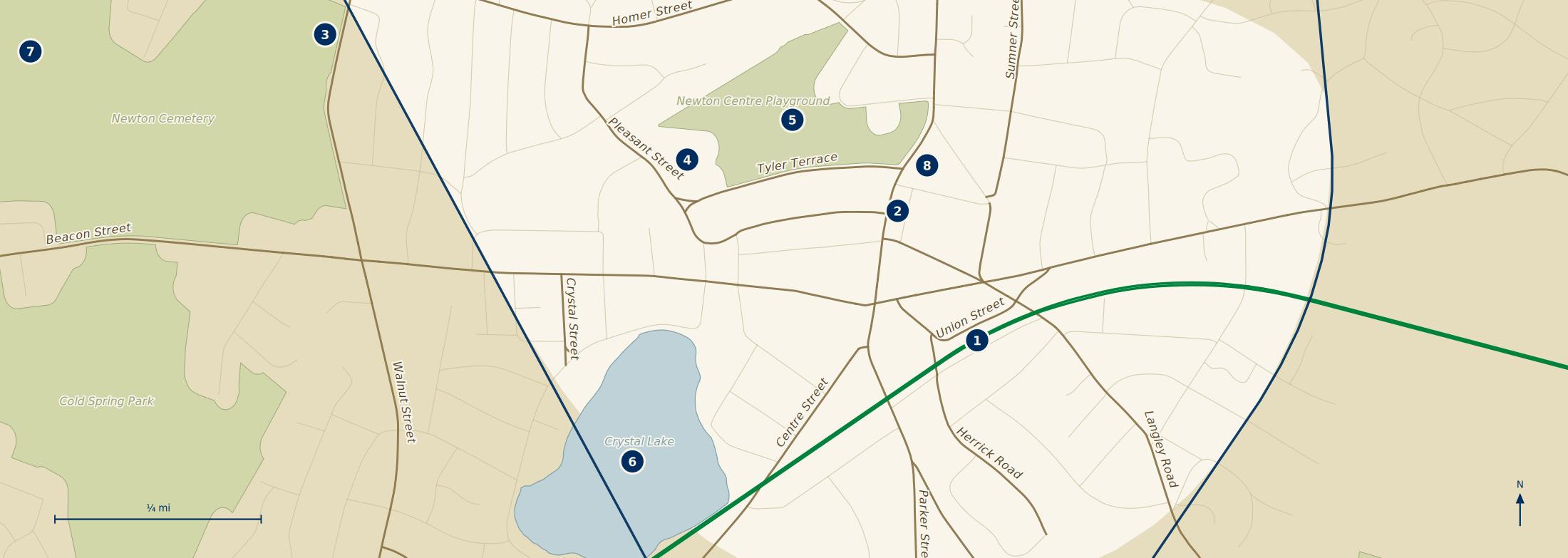
W H AT T O EXP EC T I N N EW T O N C EN T R E MA P K E Y
1 Newton Centre (Green Line D)
2 Newton Centre Green
3 Newton Free Library (Main)
4 Mason-Rice Elementary School
5 Newton Centre Playground
6 Crystal Lake
7 Newton Cemetery
8 Newton Fire HQ / Station 3
NOT A B LE ST RE E T S
Commonwealth Avenue the broad, tree-lined spine of Newton Centre; large estate homes
Beacon Street mixed-use with the village center and the Green Line D
Centre Street runs the length of the village from north to south
Ward Street quiet residential; strong Newton South district association
Sargent Road close to the village center and the Green Line D RE T A I L & D I NI NG
C OMMU T E
Downtown Boston by car 25–35 minutes via Beacon Street / Commonwealth Avenue
Newton Centre (Green Line D) on-village station, 30 min to Park Street
Union Street the heart of Newton Centre dining: Sycamore, Comella's, Farmstead Table
Langley Road neighborhood retail: Newtonville Books, Volante Farms, Lulu's
Beacon Street at the T coffee shops, yoga, and boutique fitness clustered near the Green Line
Newton Centre Playground civic center with weekend farmer's markets
Nearest grocery Trader Joe's 1121 Washington (West Newton) or Whole Foods 916 Walnut (Newton Highlands)
Mass Pike access 6 minutes to Route 95 / Mass Pike interchange via Centre Street
Logan Airport 25–35 minutes via Mass Pike
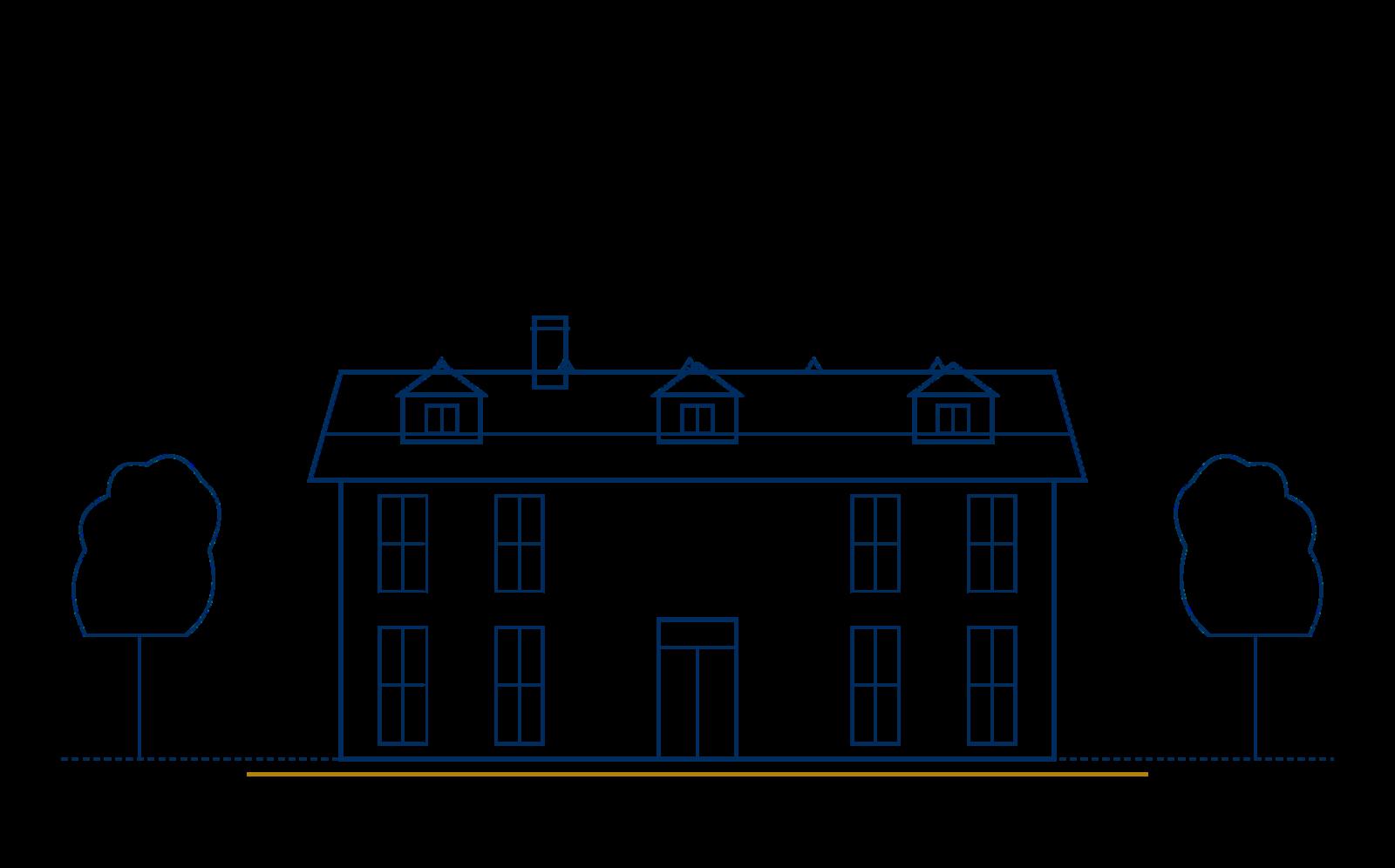
SecondEmpireresidence, c 1875
I N T H E V I L L A G E
WashingtonStreetcorridor
Farlow Park & gazebo
Corner Cafe (breakfast & lunch)
Walgreens (399 Washington)
Newton Marriott (Pike interchange)
Claflin School
Express bus to Downtown Boston
Mass Pike access
Nogroceryin-village;mostresidentsshopatStar MarketorWholeFoodsinNewtonville,orStop& ShopinWatertown
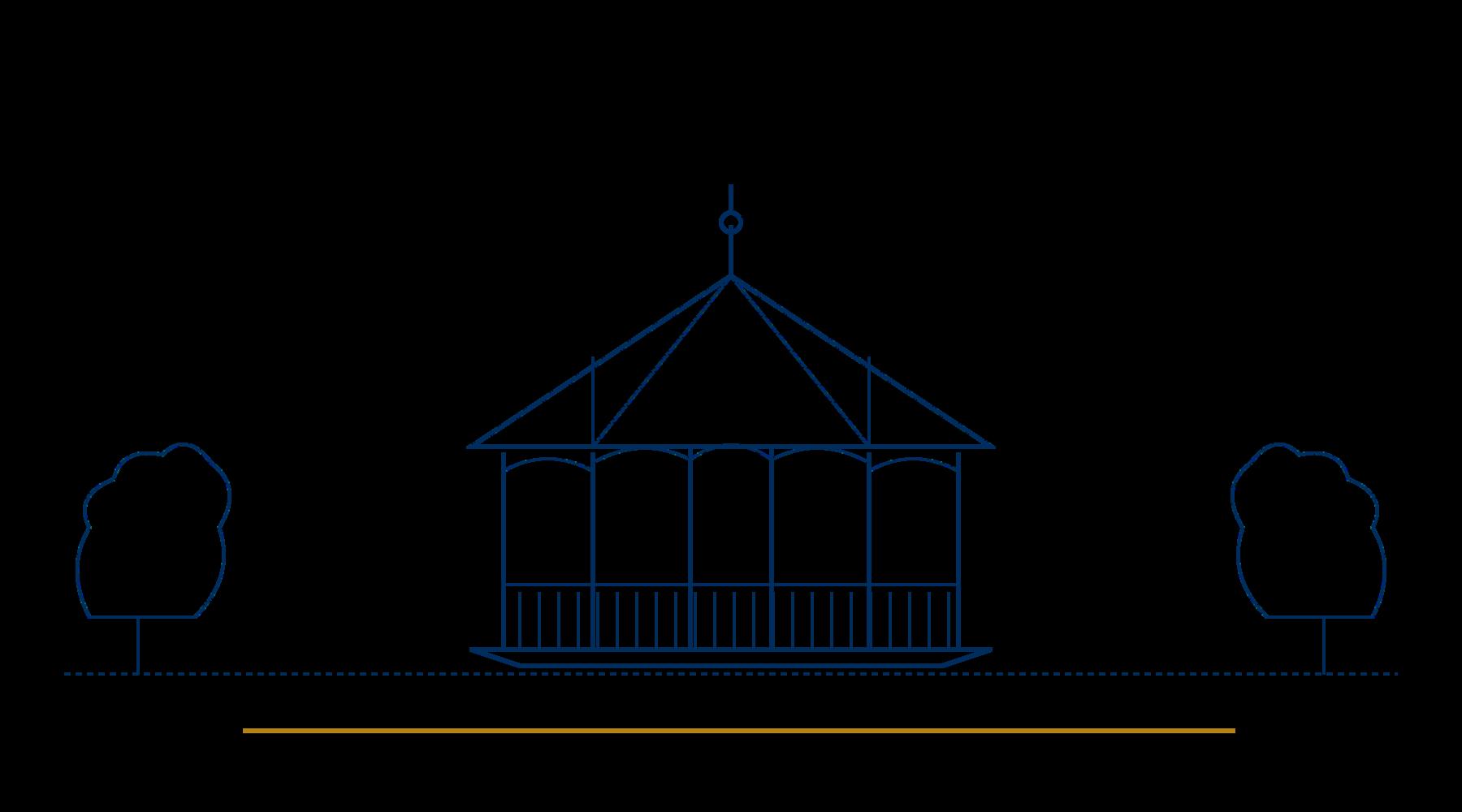
Farlow Park

WashingtonStreet corridor
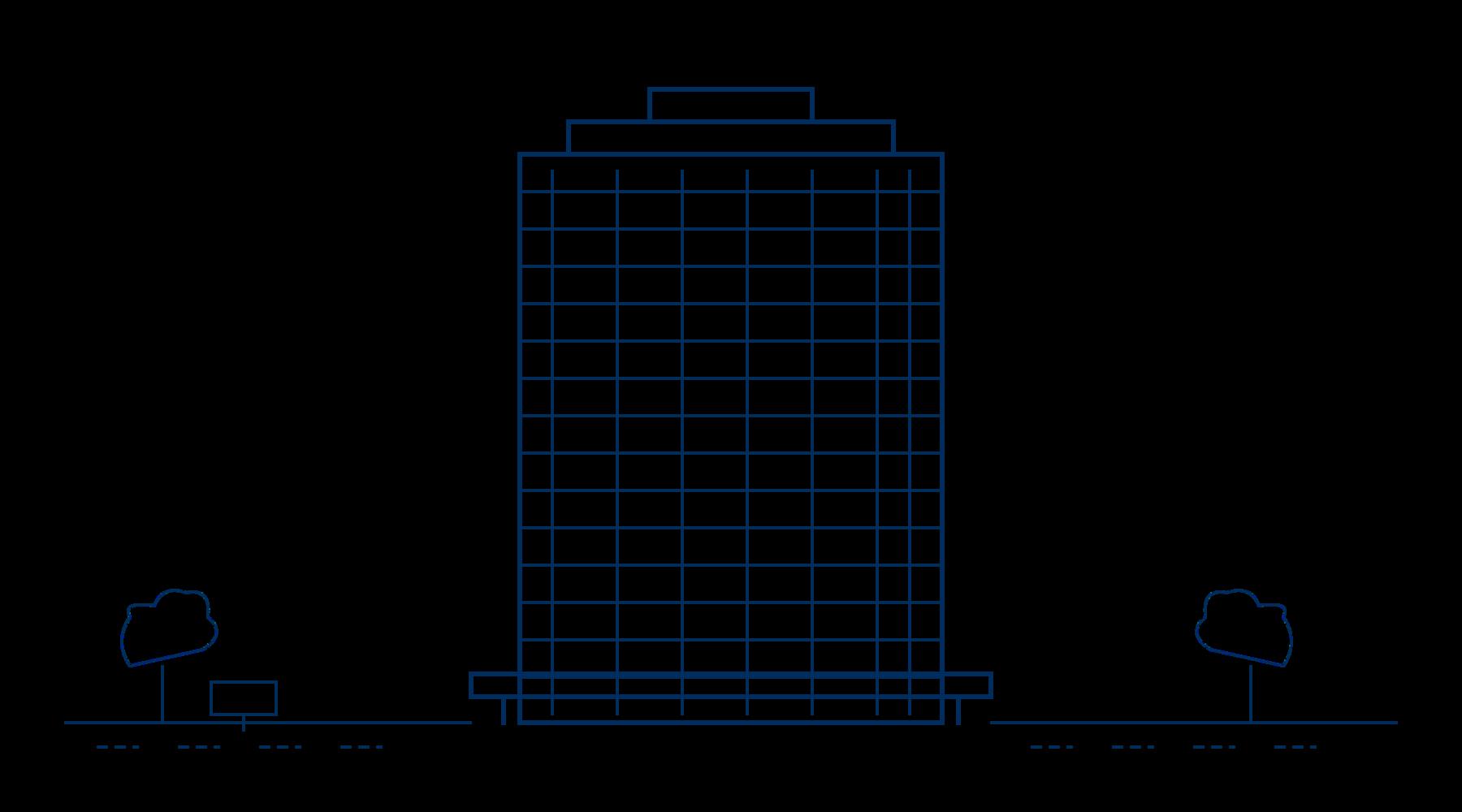
Sheratonover thePike
Newton Corner sits where Newton meets Boston the "corner" being the junction of the old colonial road from Boston and the road north toward Watertown It was one of the earliest parts of Newton to be developed, and when the Boston and Worcester Railroad opened its first Newton stop here in 1834, the village became Newton's first true commuter suburb.
The railroad ushered in a building boom through the 1850s and 1860s Speculators platted streets, laid out lots, and sold them to Boston merchants and professionals who now rode the train to work. The Second Empire and Italianate houses that line Waverley Avenue and Park Street today date from this period elaborate mansard roofs, tall narrow windows, and deep cornices reflect the wealth and ambition of that founding generation
The Mass Pike construction in the 1950s altered the village geography cutting through the historic center and replacing several blocks with interchange infrastructure The 19th-century fabric endures on the residential streets to the north and south, but the village's connection to its own commercial core was broken, and the area has spent the decades since reckoning with that
Today's Newton Corner is in the middle of a long, uneven recovery The Washington Street corridor is a working commercial spine a mix of independent restaurants, professional offices, and neighborhood retail though it lacks the concentrated pedestrian activity of Newton Centre or West Newton Square. The Pike interchange is the village's dominant feature and its dominant challenge
Newton Corner is the closest Newton village to downtown Boston by car under ten miles and several MBTA express bus routes run directly from the Newton Corner rotary to Downtown Boston via the Mass Pike That commuter advantage, combined with a housing stock of well-built Victorians at prices below Chestnut Hill or Waban, makes Newton Corner one of the stronger value plays in the city Restoration-minded buyers have been steadily working through the housing stock over the past fifteen years
$1.95M
MEDIAN SINGLE-FAMILY #5 OF 13
HOUSING MIX 1,330 SF · 754 condo 450 multi
MEDIAN HOME 2,583 sqft
MEDIAN LOT 9,644 sqft · 0 22 ac
MEDIAN YEAR BUILT (SF) 1926
ELEMENTARY Underwood Lincoln-Eliot
MIDDLE Day
HIGH SCHOOL Newton North
TRANSIT Express Bus to Boston As of 4/18/26
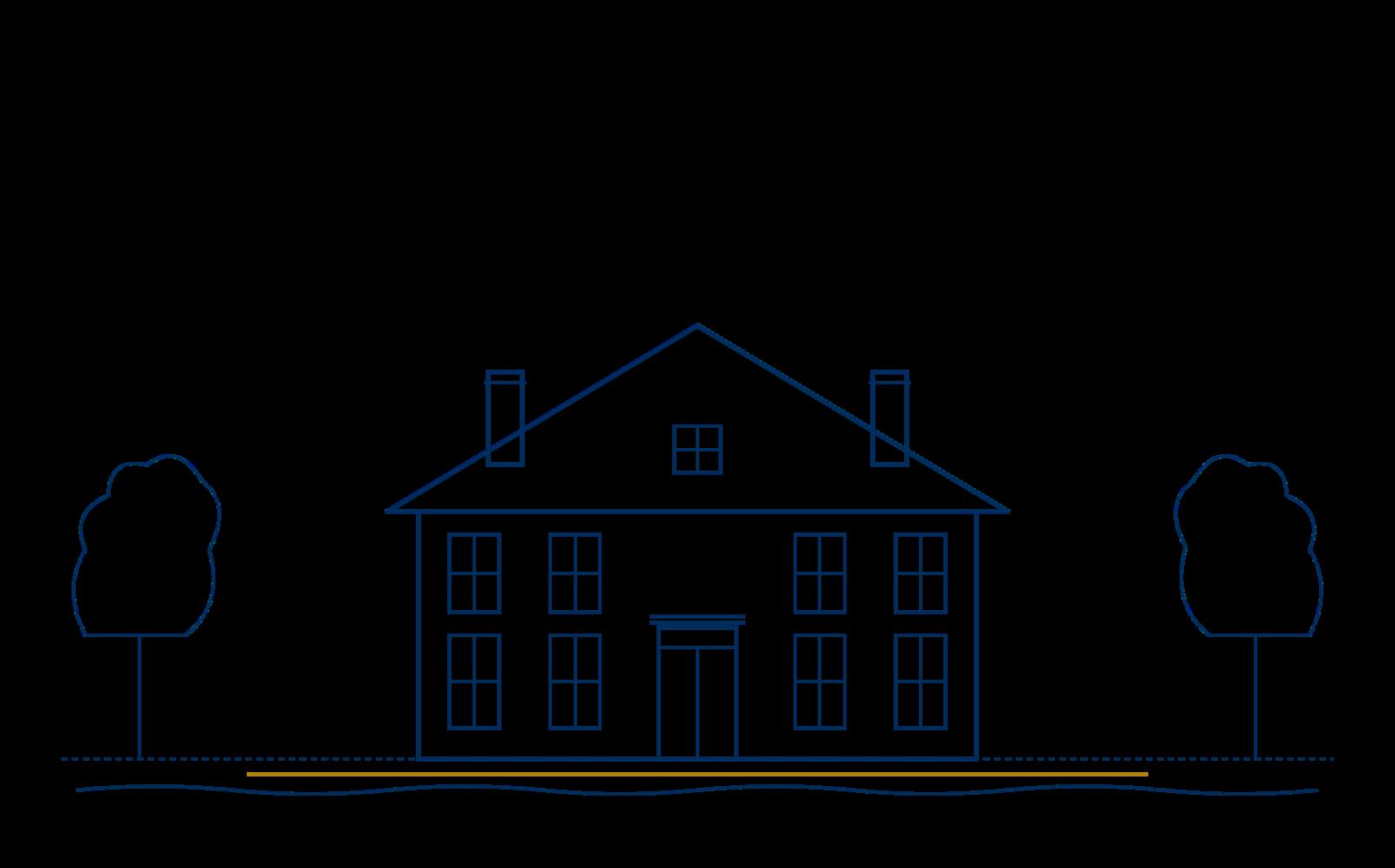
Federal-eracottage, c 1810
I N T H E V I L L A G E
Novillage center
Newton-Wellesley Hospital (largest employer)
Quinobequin Park (Charles River)
Charles River Peninsula reservation
Williams Elementary (adjacent, Auburndale)
Route 16 / I-95 access
Noin-villagegrocery;residentsshopatRoche Bros inWellesleyLowerFalls(acrosstheriver)or TraderJoe'sonNeedhamStreet

Newton-Wellesley Hospital
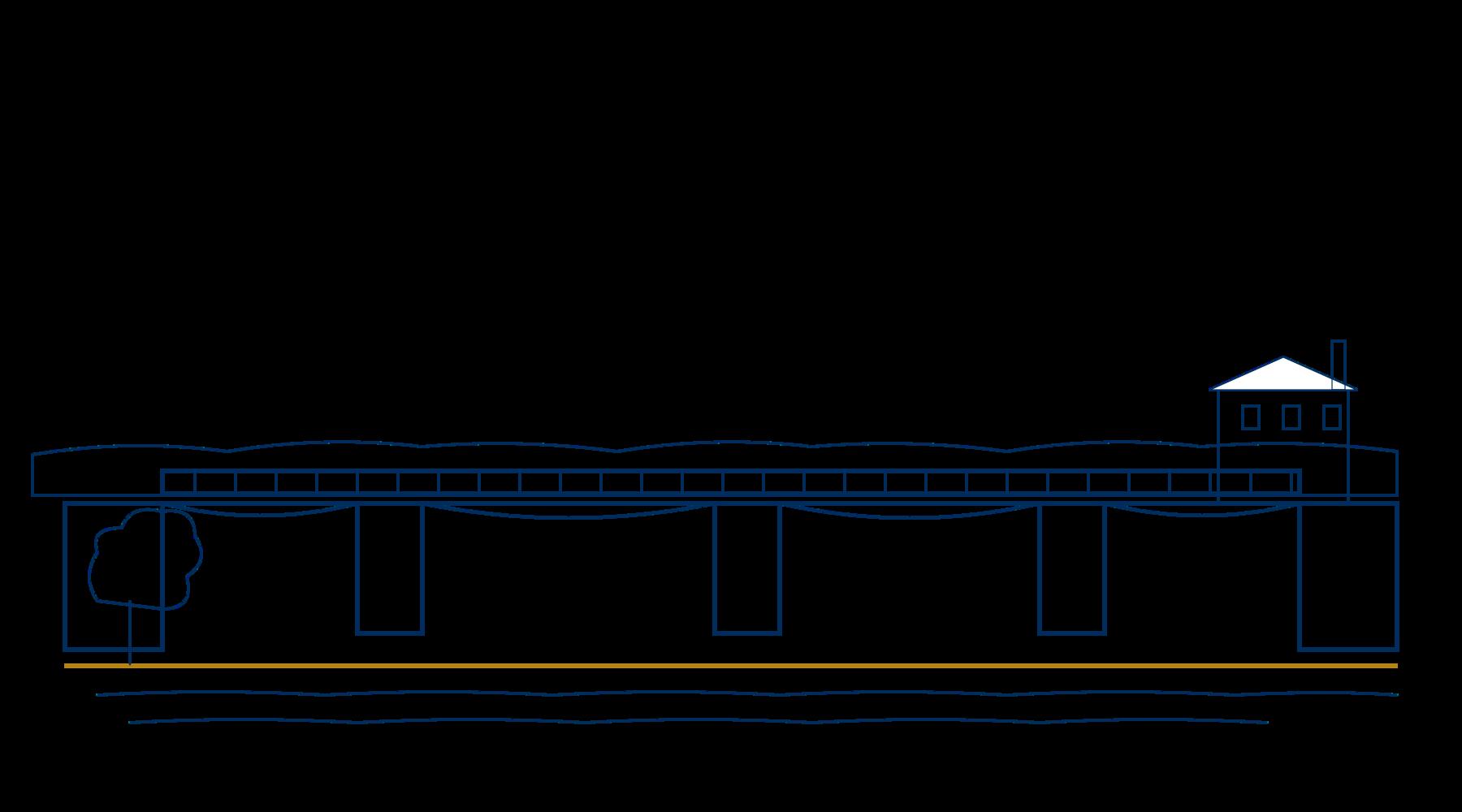
Bridgeover theCharles

William Curtis House
Newton Lower Falls is one of the oldest continuously settled parts of Newton
The name is literal the Charles River drops here, and the waterpower made the area a natural site for mills Grist mills, sawmills, and paper mills operated along the river from the 1700s, well before Newton's suburban era
The paper industry in particular shaped the village By the early 19th century, several paper mills were producing writing paper for the national market The Crehore, Curtis, and Rice families were among the most prominent mill owners their homes, modest Federalera and Greek Revival cottages, still define the older streets.
Lower Falls is Newton's smallest village by area. It sits tucked between Wellesley and Weston, separated from the rest of Newton by the Charles River and Route 16. The historic mill buildings have largely been redeveloped into offices and residential use, but the village retains an unusually intimate, early-19thcentury scale
The village has no traditional commercial core of its own residents rely on Wellesley's Lower Falls village across the river, or on Needham Street's commercial strip just southeast What Lower Falls does have is the river, and Newton-Wellesley Hospital founded as Newton Cottage Hospital in 1881 at 2014 Washington Street, the largest institution in the village
The village's isolation bounded by highway, river, and two town lines has insulated it from the teardown pressure seen elsewhere in Newton and kept much of the historic housing stock intact Transaction volume is among the lowest in the city simply because of how few houses exist. When they come to market, they tend to move quickly to buyers specifically seeking the village's scale and riverfront character
$1.33M
MEDIAN SINGLE-FAMILY #11 OF 13
DAYS TO OFFER 25 days LAST-12-MONTH SALES 9 sales
MEDIAN CONDO $635K 1 sale
MEDIAN RENT $5,900/mo 4 leases
POPULATION 2,200
HOUSING MIX 303 SF · 25 condo · 6 multi
MEDIAN HOME 2,030 sqft
MEDIAN LOT 10,000 sqft · 0 23 ac
MEDIAN YEAR BUILT (SF) 1945
ELEMENTARY Williams MIDDLE Brown
HIGH SCHOOL Newton South
TRANSIT Limited car-oriented
As of 4/18/26
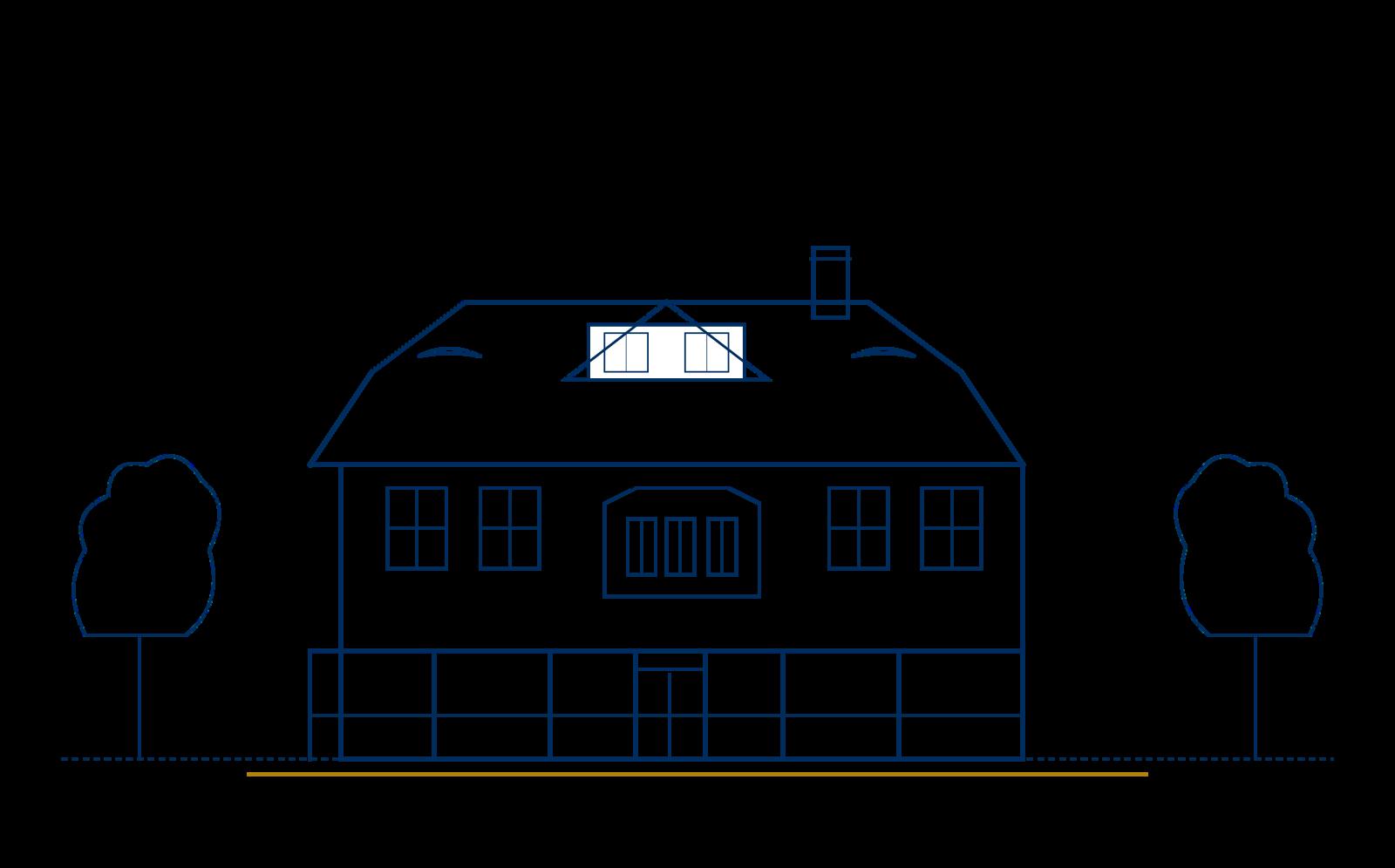
Shingle-stylegambrel, c 1900
I N T H E V I L L A G E
Lincoln&Walnut
Whole Foods (916 Walnut Street)
Walgreens (1101 Beacon Street)
Crystal Lake
Hyde Community Center
Newton Highlands Depot (historic)
Cold Spring Park
Newton Highlands (Green Line D)
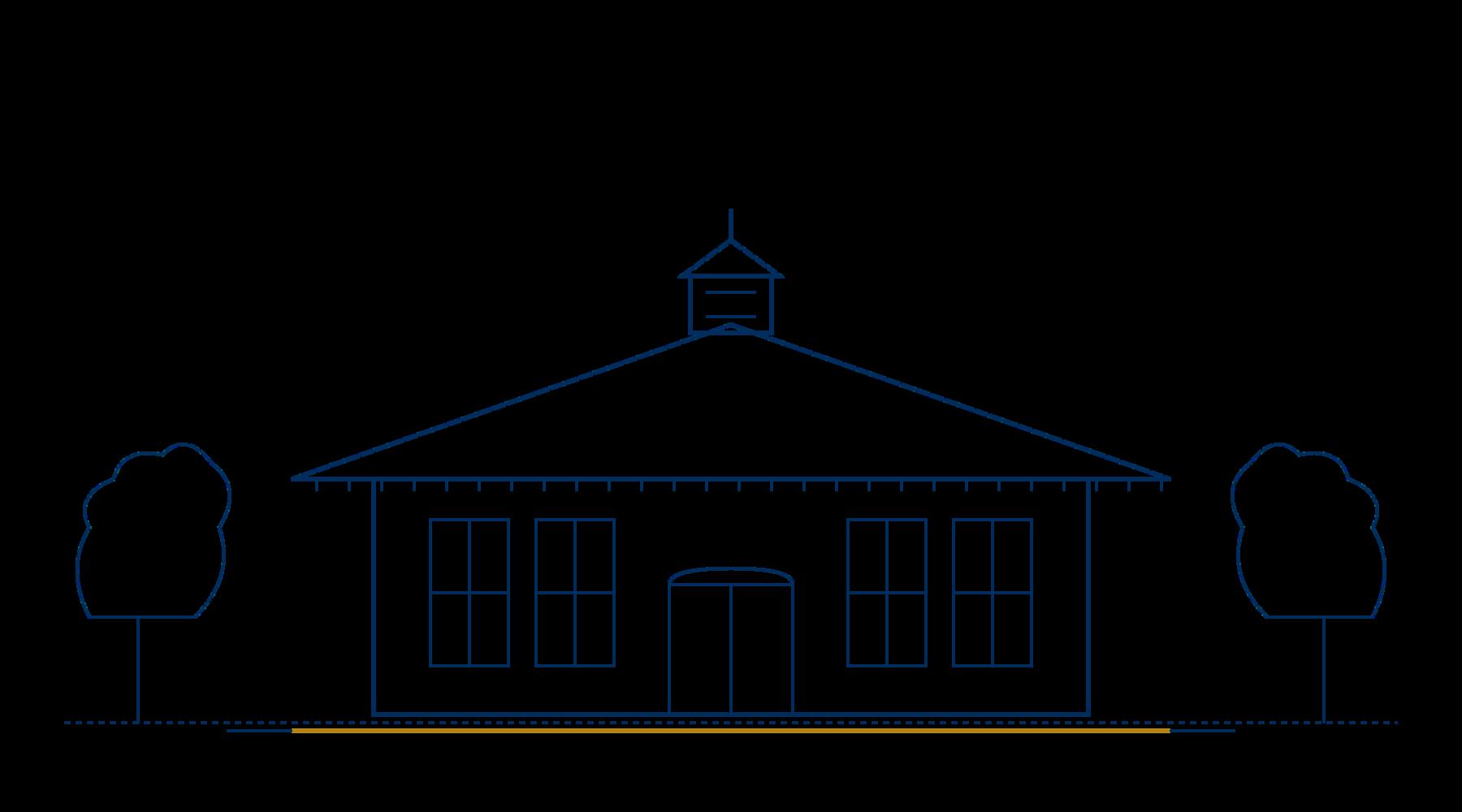
Depot, 1886
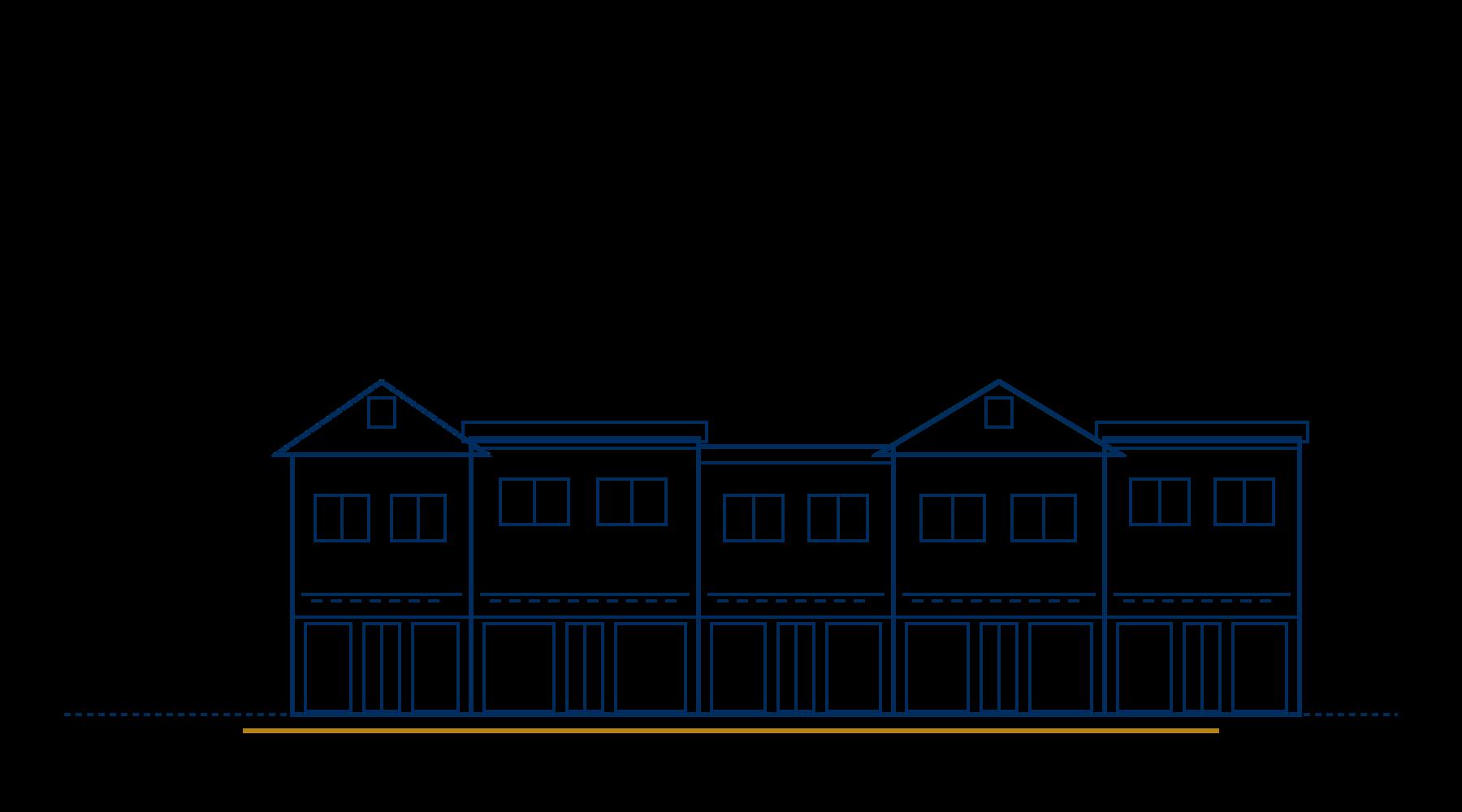
Square
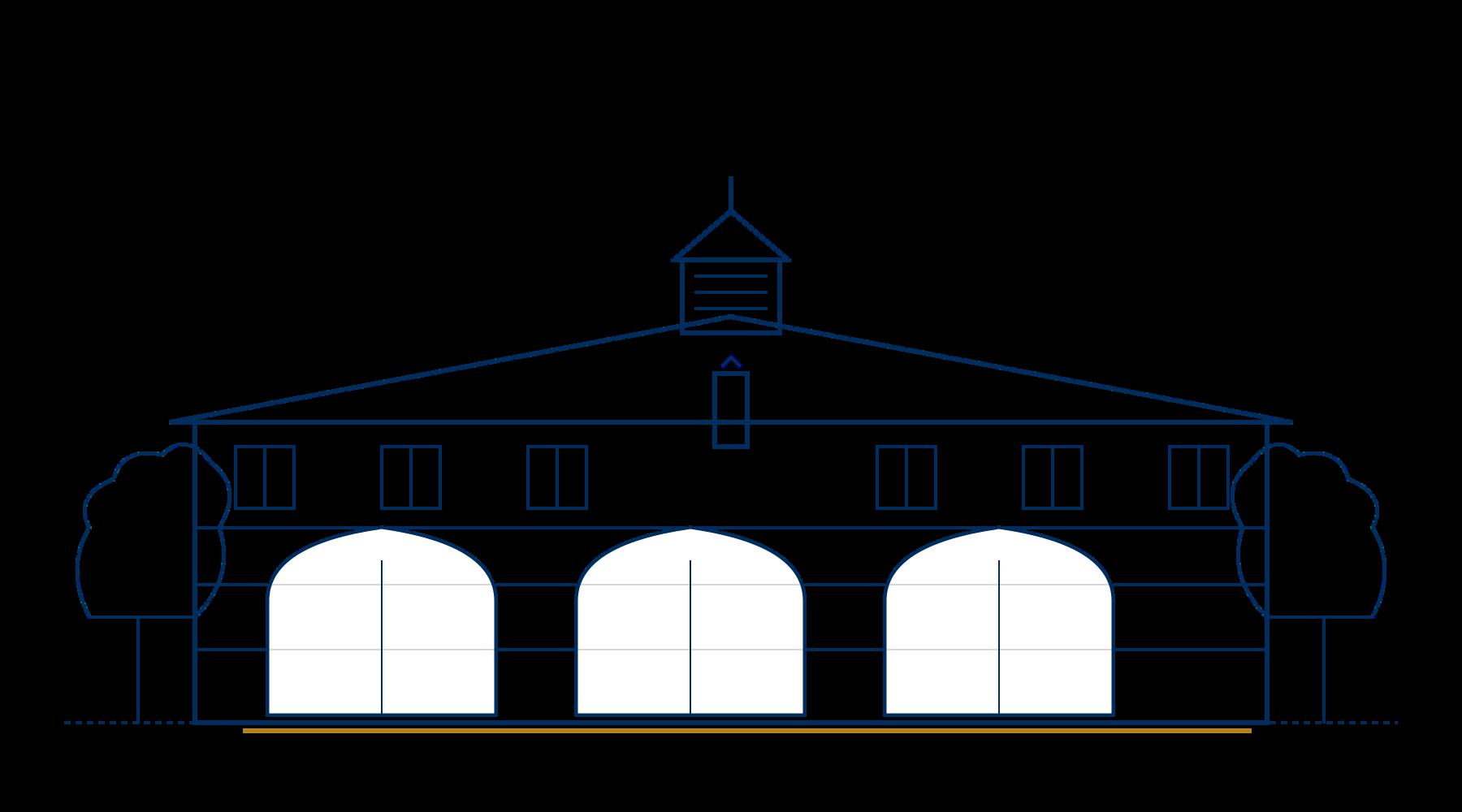
Newton Highlands was among the last of Newton's villages to take form The area around Crystal Lake originally called Wiswall's Pond after an early settler remained largely undeveloped until the Boston & Albany Railroad's Highland Branch opened its Newton Highlands station in 1886 Within a decade, the village had a post office, a church, a school, and the characteristic grid of residential streets.
The village's architectural fabric is predominantly late Victorian and early 20th century: Shingle-style homes, Queen Annes with gambrel roofs, and Colonial Revivals built between 1886 and 1925. The Hyde Community Center originally the Hyde School, built in 1896 remains a civic anchor, and the Newton Highlands Railroad Depot, still standing, is one of the best-preserved small-town rail stations in the Boston area
Crystal Lake itself has been a public swimming and recreation spot since the 1870s The public beach at the north end remains in active summer use, and the lake's residential ring homes with deeded lake access or waterfront lots is one of the most soughtafter micro-markets in Newton
The village center at Lincoln and Walnut Streets is a small, pedestrian-oriented commercial hub on the Green Line's D Branch It lacks the scale of Newton Centre but has a dense concentration of independent shops, restaurants, and neighborhood services
Newton Highlands feeds the Countryside and Memorial-Spaulding elementary schools and Newton South High School. The housing stock has seen meaningful renovation activity but little teardown the existing Victorian and Foursquare envelopes tend to be retained and modernized rather than replaced
$1.65M
MEDIAN SINGLE-FAMILY #9 OF 13
DAYS TO OFFER 8 days LAST-12-MONTH SALES 56 sales
MEDIAN CONDO $1 46M 45 sales
MEDIAN RENT $4,200/mo 53 leases
POPULATION 8,700
HOUSING MIX 1,747 SF · 317 condo · 198 multi
MEDIAN HOME 2,134 sqft
MEDIAN LOT 8,540 sqft · 0 20 ac
MEDIAN YEAR BUILT (SF) 1934
ELEMENTARY Countryside Memorial-Spaulding
MIDDLE Oak Hill
HIGH SCHOOL Newton South
TRANSIT Green Line D (Newton Highlands stop)
As of 4/18/26
The practical upshot is that a buyer can approach Newton Highlands on at least three distinct theses, and the village rewards each differently The transit thesis: the village's Green Line D stop sits in the heart of the commercial district, and the commute to Park Street runs on the same clock as Waban or Newton Centre but the housing that comes with that access prices lower The South-side schools thesis: Newton Highlands addresses feed Countryside and Memorial-Spaulding elementaries and Newton South, the same high school assignment buyers pay a Waban premium for The architectural thesis: the village's late-Victorian housing fabric is largely intact, and renovations have tended toward preservation rather than replacement.
Those three theses, layered, are what produce Newton Highlands' market character. The village is not defined by scarcity pricing the way Waban is, nor by commercial density the way Newton Centre is It trades more, it trades tighter on days-onmarket, and it draws the broadest buyer profile of any Newton village on the southern side
Crystal Lake is the village's unusual anchor The lake's residential ring homes with deeded lake access or direct waterfront constitutes one of the most sought-after micro-markets in the city, with its own pricing dynamic distinct from the rest of the village
The village center itself remains deliberately small. Lincoln and Walnut carry a dense concentration of independent businesses Comella's for a neighborhood sit-down dinner, Cafenation for a morning meeting but the scale is neighborhood, not destination Residents rarely leave the village for daily needs, but the village does not draw visitors the way Newton Centre or Chestnut Hill do.
A NOT E ON RE NT A L C HA RA C T E R:
Rental stock is a mix of condo units and single-family homes The village trades at a discount to Newton Centre for similar transit and school access
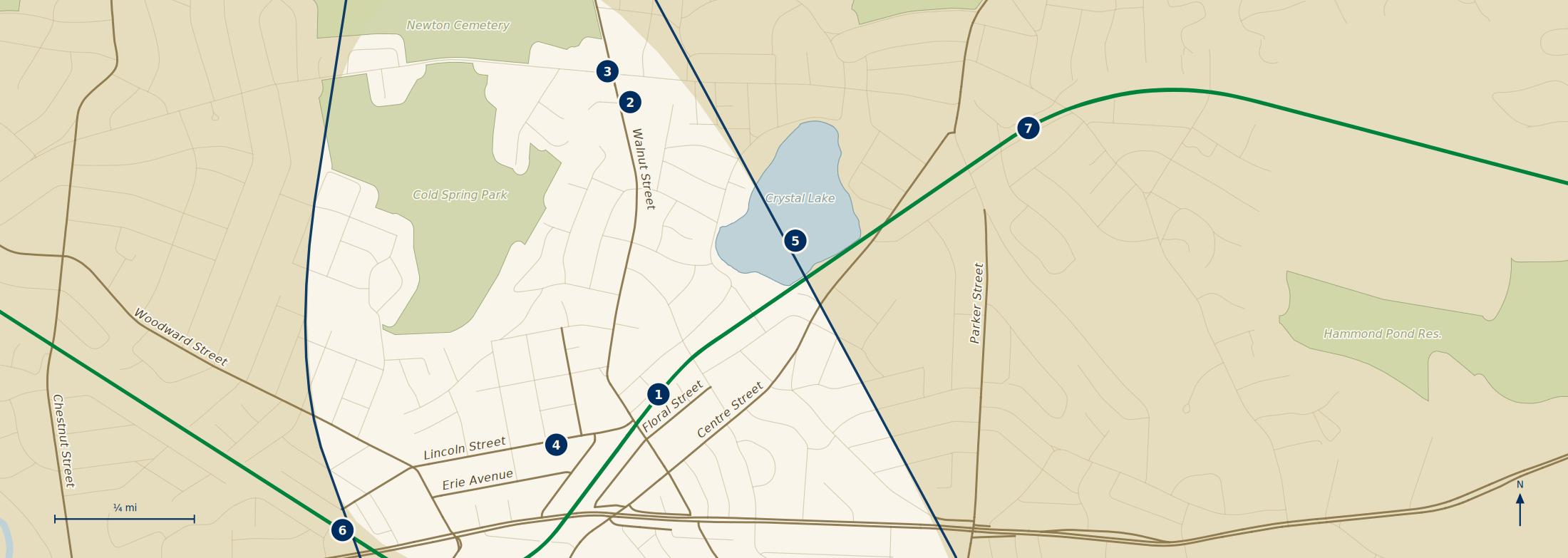
H AT T O EXP EC T I N N EW T O N H I G H L AN D S
MA P K E Y
1 Newton Highlands (Green Line D)
2 Whole Foods (916 Walnut)
3 Walgreens (1101 Beacon)
4 Hyde Community Center
5 Crystal Lake
6 Eliot (Green Line D)
7 Newton Centre (Green Line D) - adjacent
NOT A B LE ST RE E T S
Hartford Street character street with Queen Anne and Shingle-Style houses from the 1890s
Lincoln Street runs through the village center with the Highlands post office
Woodward Street ties the village to Newton Centre to the north
Winchester Street boundary with Oak Hill; larger post-war homes
Walnut Street connects the Highlands to Newton Upper Falls RE T A I L & D I NI NG
C OMMU T E
Downtown Boston by car 28–35 minutes via Route 9 / Mass Pike
Newton Highlands (Green Line D) on-village station, 35 min to Park Street
Whole Foods Market 916 Walnut Street; village grocery anchor
Walgreens 1101 Beacon Street
Newton Highlands Square a small cluster of shops and cafes at Lincoln and Walnut
Comella's Family Italian neighborhood fixture for family dining
Cafenation independent coffee shop at the village center
Brigham House & Hyde Center community buildings on Hartford and Lincoln civic anchors
Route 9 access 3 minutes to Route 9 at Chestnut Street
Mass Pike access 8 minutes to Pike at Newton Corner
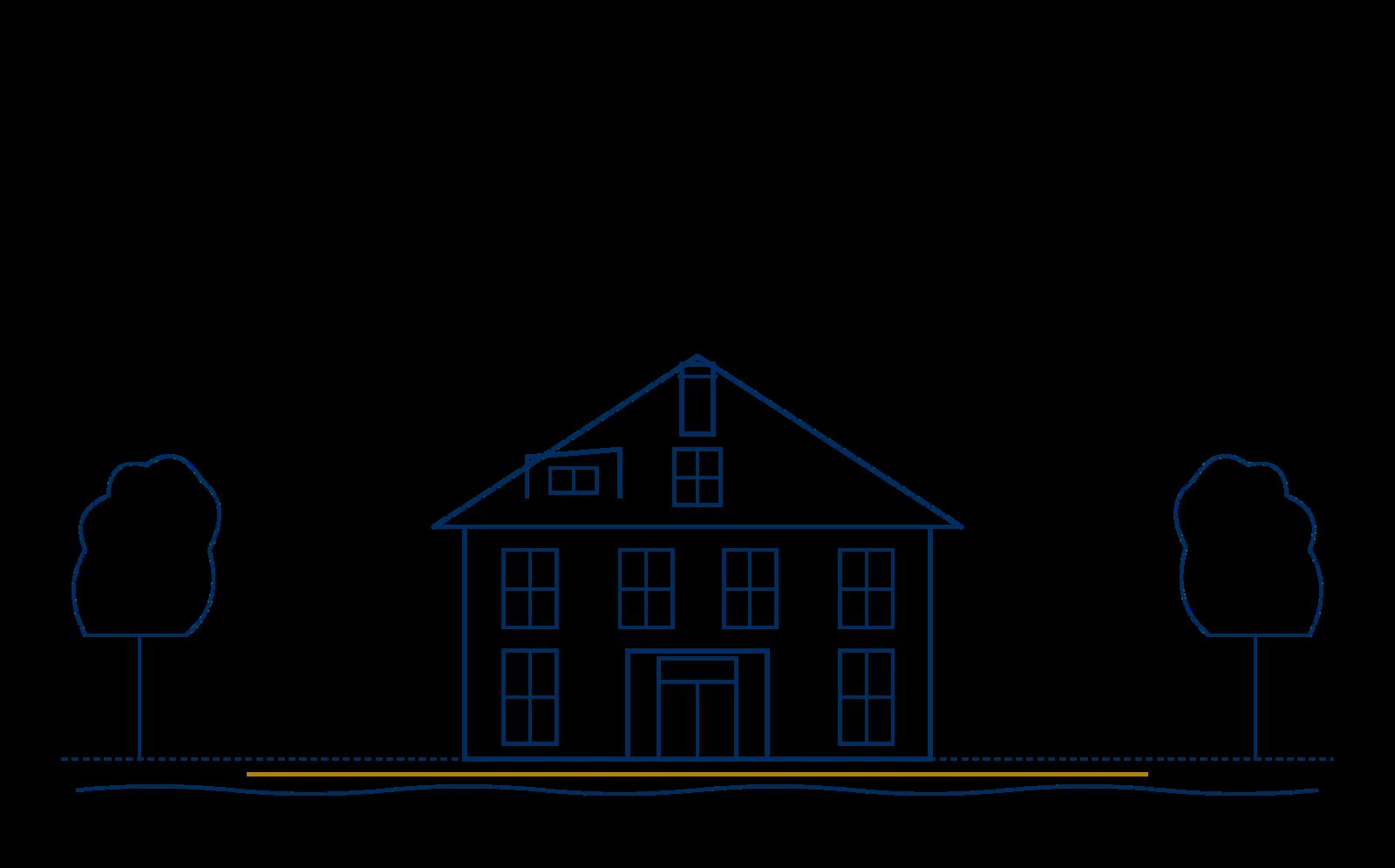
Worker's cottage, c 1830
I N T H E V I L L A G E
ChestnutStreet/Needham Street
Trader Joe's (165 Needham; opened 2025)
Northland development (new village center)
Needham Street retail corridor
Hemlock Gorge Reservation
Echo Bridge (1876)
Eliot Station (Green Line D)
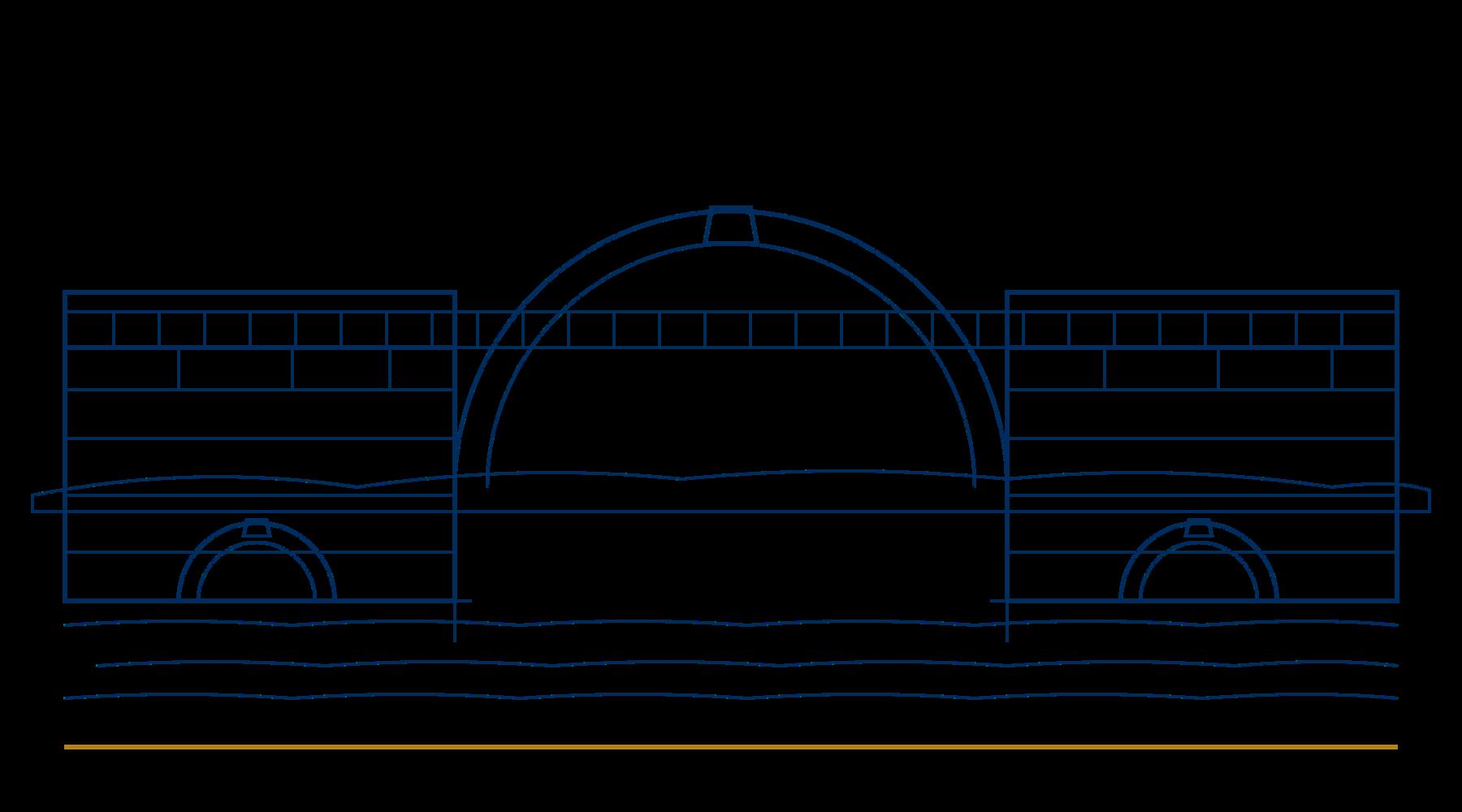
EchoBridge, 1876
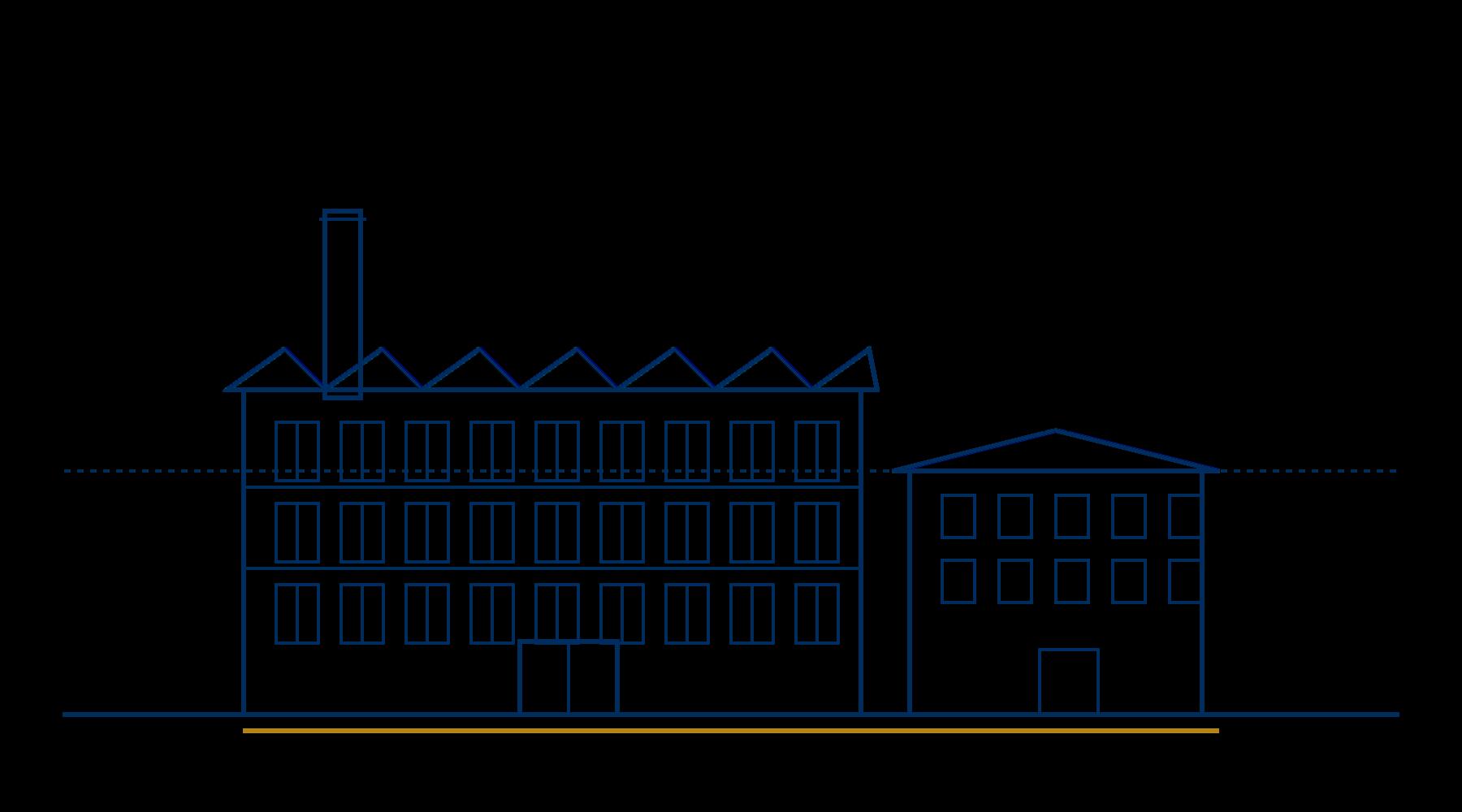
Millbuildings
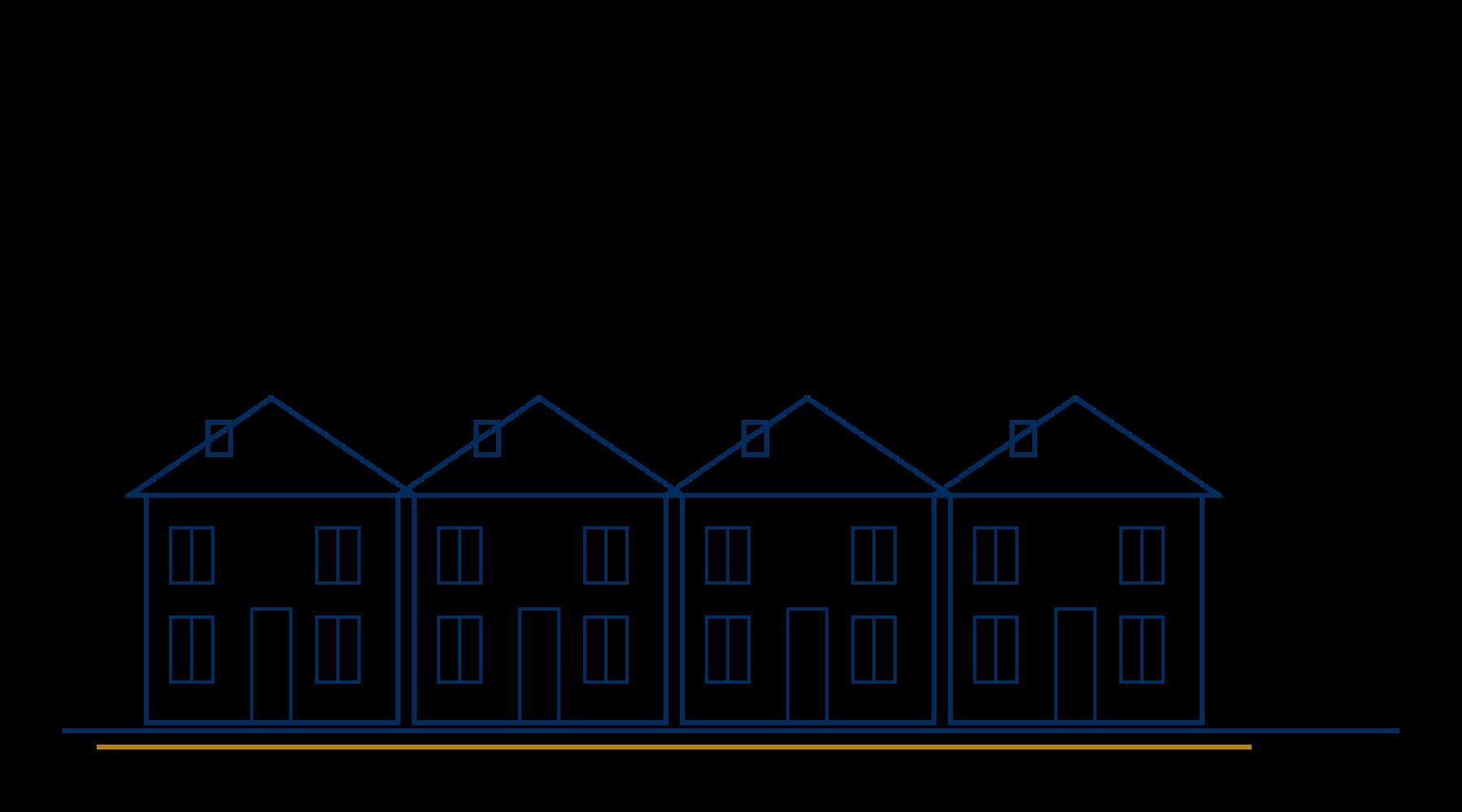
Saco-Lowellworkers'housing
Newton Upper Falls was Newton's first industrial village The Charles River falls more sharply here than at Lower Falls, making the site especially valuable for waterpower As early as the 1770s, the Elliot Manufacturing Company was operating cotton and wiredrawing mills at the falls among the earliest factories in New England
The village grew around those mills Workers' cottages small, steep-roofed, 1 5 stories, with shed dormers and simple trim were built in clusters along Chestnut and Oak Streets. The Hemlock Gorge reservation and Echo Bridge (1876) mark the river's most dramatic stretch within the village.
Industry persisted in Upper Falls well into the 20th century longer than in most Newton villages. The mill buildings have gradually been converted to residential and commercial use, but the village's tight 19th-century street grid remains distinctive, and multiple small historic districts protect the oldest blocks
The village's commercial anchor has shifted onto Needham Street, a broad retail corridor running along the village's eastern edge The Needham Street redevelopment a multiyear, multi-parcel rezoning and build-out is adding several hundred new residential units and a reworked retail mix, and has been among the largest pieces of active development in Newton
Upper Falls has the lowest median singlefamily price in Newton, a function of the smaller scale of the workers' cottage stock and their typical lot sizes The condo market is comparably priced Green Line access at Eliot Station and the Needham Street retail corridor have shaped the village's recent trajectory.
$905K
MEDIAN SINGLE-FAMILY #13 OF 13
DAYS TO OFFER 10 days
LAST-12-MONTH SALES 17 sales
MEDIAN CONDO $845K 33 sales
MEDIAN RENT $3,250/mo 38 leases
POPULATION
4,100
HOUSING MIX 303 SF · 543 condo · 141 multi
MEDIAN HOME 1,618 sqft
MEDIAN LOT 7,149 sqft · 0 16 ac
MEDIAN YEAR BUILT (SF) 1920
ELEMENTARY Countryside
MIDDLE Oak Hill
HIGH SCHOOL Newton South
TRANSIT Green Line D (Eliot stop)
As of 4/18/26
Upper Falls is Newton's industrial-heritage village, and its market reflects that legacy in two directions at once. The historic core the mill-era fabric along Chestnut and Oak Streets, the workers' cottages, Echo Bridge, Hemlock Gorge gives the village an older, denser, more village-like feel than the postwar tracts to the south The Needham Street corridor, meanwhile, is now the most actively changing commercial district in Newton
Northland Newton is the driver of that change The 800-unit mixed-use development along Needham Street is the largest multifamily project in Newton's history, and it is reshaping the village's housing profile in real time As units come online, rental inventory has deepened, condo stock has diversified, and the commercial frontage along Needham has pivoted toward restaurants, ground-floor retail, and public open space.
The market effect is already visible. Upper Falls logs the lowest single-family median in Newton in most years not because the housing stock is substandard, but because the mill-era workers' cottages are smaller than the postwar and early-20thcentury stock that dominates other villages That price point has historically made Upper Falls the most accessible entry into Newton for first-time buyers, and the Northland density is now adding condo and rental options at even more accessible price points
The Eliot Green Line D station anchors the village transit-wise Buyers who want Green Line access at Newton's lowest price point, with retail and dining within the village, have fewer alternatives than they might think Upper Falls is often the answer
A NOT E ON RE NT A L C HA RA C T E R:
Upper Falls has Newton's deepest condo-rental market, concentrated in the Northland development and Needham Street corridor buildings Single-family rentals are less common; the housing stock is smaller than elsewhere in Newton W H AT T O EXP EC T I N N
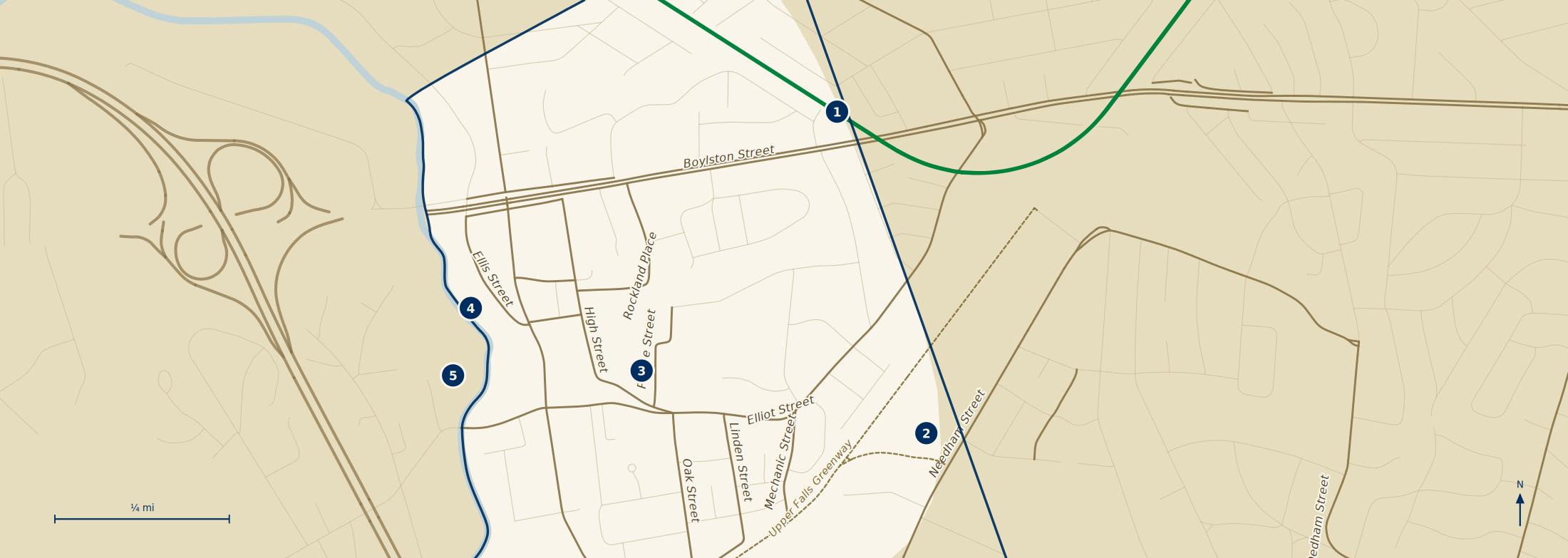
MA P K E Y
1 Eliot (Green Line D)
2 Trader Joe's (165 Needham 2025)
3 Emerson Community Center
4 Echo Bridge
5 Hemlock Gorge Reservation
A B LE ST RE E T S
Needham Street the commercial spine; Northland Newton redefines this corridor
Chestnut Street historic mill-era core with the oldest housing stock
Elliot Street runs north to Newton Highlands and the Eliot station
High Street residential; part of the original mill workers' village
Oak Street small-scale 19th-century workers' cottages
C OMMU T E
Downtown Boston by car 20–30 minutes via Route 9 / Mass Pike
Eliot (Green Line D) on-village station, 35 min to Park Street
Trader Joe's 165 Needham Street; opened November 2025 in the Newton Nexus plaza
Needham Street corridor restaurants specialty retail, big-box stores along the Northland district
Northland Newton mixed-use development with ground-floor retail and dining
Echo Bridge historic 1877 aqueduct arch; village landmark and open space
Hemlock Gorge Reservation conservation land along the Charles River
Route 9 access direct; Needham Street runs into Route 9
Mass Pike access 8 minutes via Needham Street and Route 9
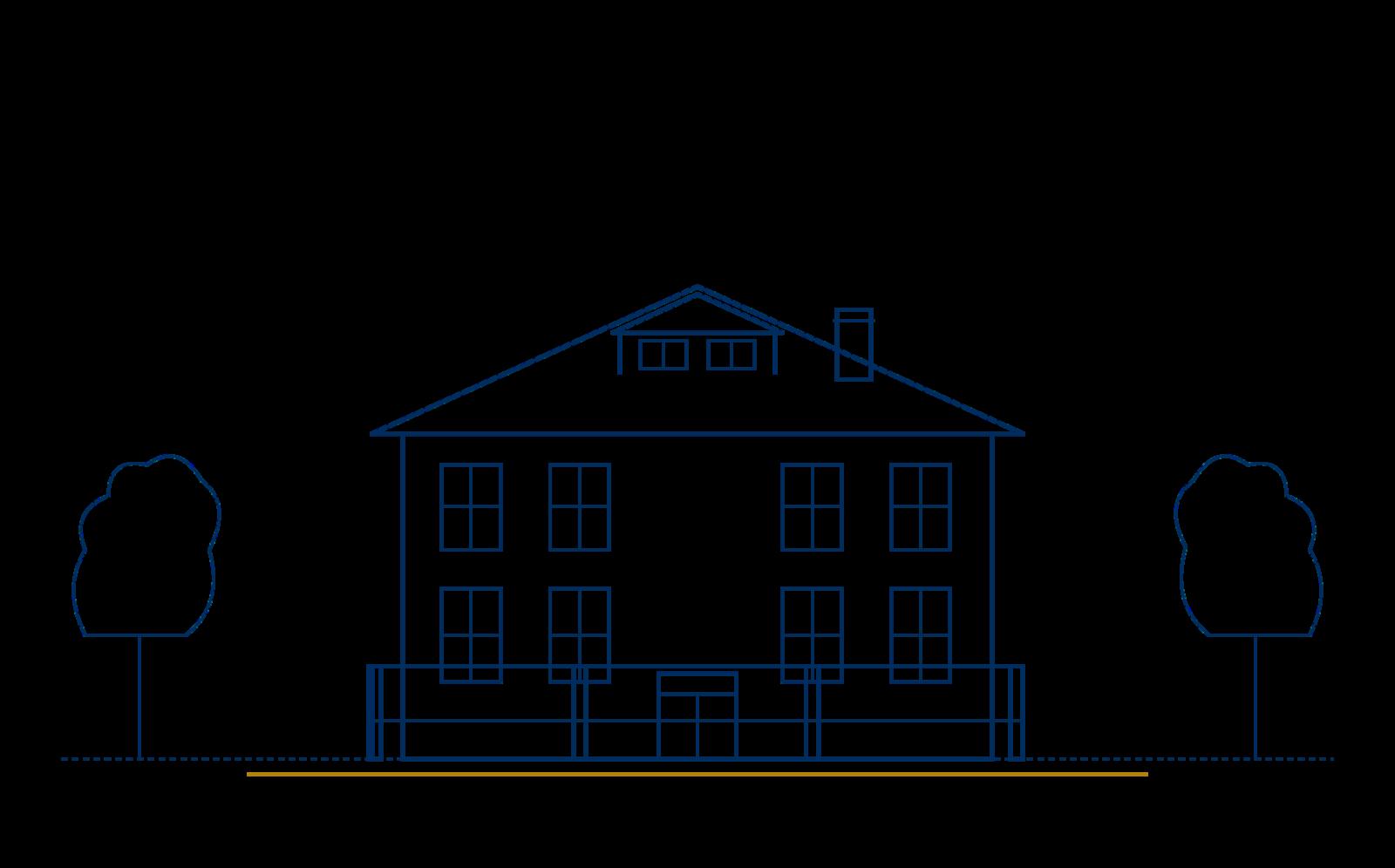
AmericanFoursquare, c 1910
I N T H E V I L L A G E
Newtonville Square
Star Market over the Pike (33 Austin)
Whole Foods (647 Washington)
Newton North High School
Edmands Park
Bullough's Pond (adjacent)
Albemarle Field & playground
Commuter rail station

NewtonNorthHighSchool
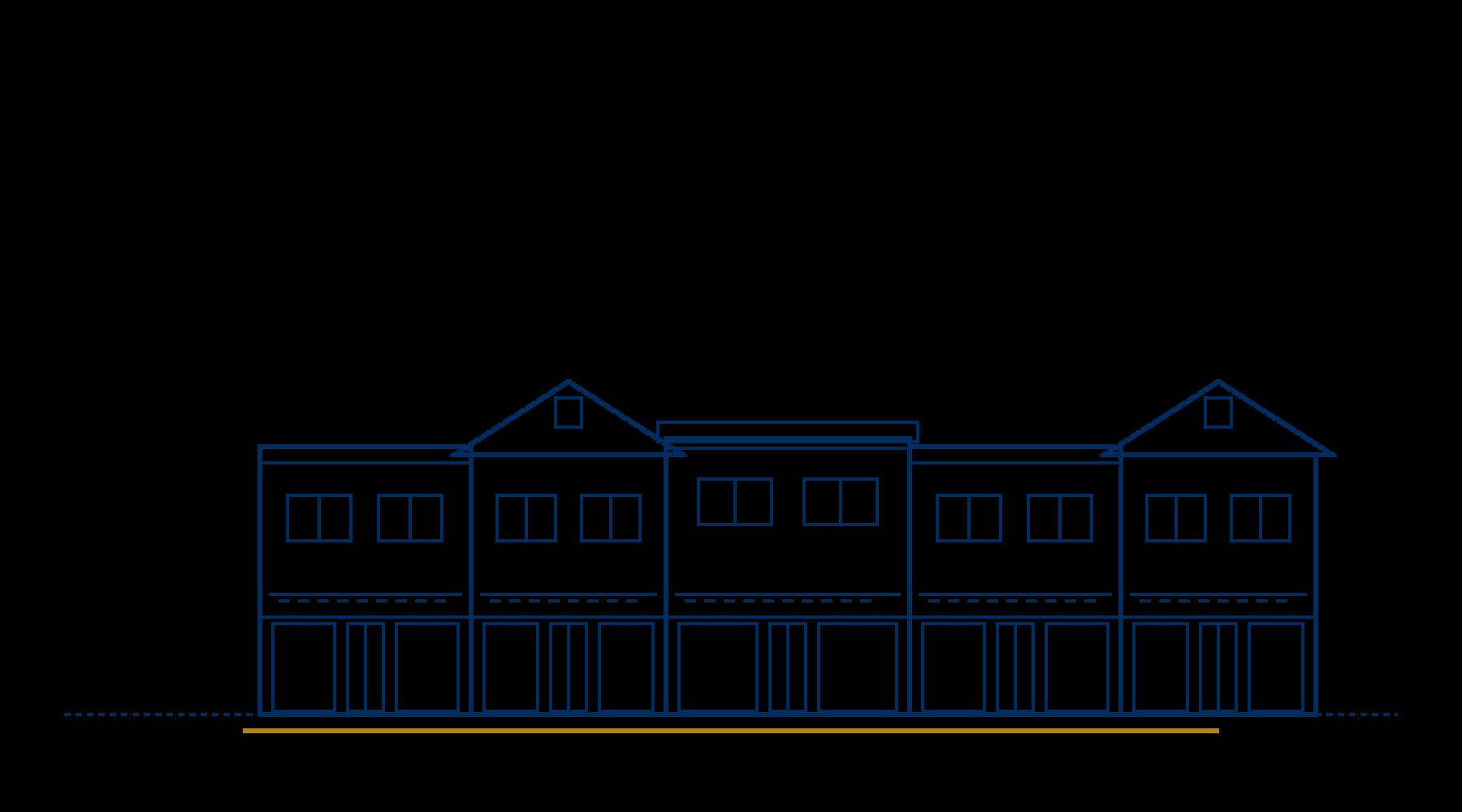
Newtonville was carved out of the broad farmlands between Newton Corner and West Newton in the 1860s and 1870s, its development driven by a single change: the Boston and Albany Railroad added a Newtonville station in 1851 The station made the village a practical home for Boston commuters, and a wave of development followed through the rest of the century.
By 1900, Newtonville had the fabric it still has today grid-platted streets running north and south from Washington Street, lined with two-story Colonial Revivals and American Foursquares. The Foursquare in particular boxy, solid, with a broad front porch and a central dormer became the village's signature form, and Newtonville has one of the highest concentrations of intact Foursquares in the Boston area
Newtonville is the home of Newton North High School, which moved into its current $200 million Walnut Street building in 2010 (on the same site as its predecessor) The school's presence along with the Education Center and the North District sports complex gives the village a civic and institutional density beyond its commercial size
Newtonville Square, straddling Washington Street and Walnut Street, remains the commercial anchor It is smaller and less dense than West Newton Square, but has its own rhythm of independent coffee shops, restaurants, and neighborhood retail.
$1.97M
MEDIAN SINGLE-FAMILY #4 OF 13 DAYS TO
BUILT (SF) 1920
ELEMENTARY Horace Mann Cabot MIDDLE Day
HIGH SCHOOL Newton North TRANSIT Commuter Rail (Newtonville stop)
As of 4/18/26
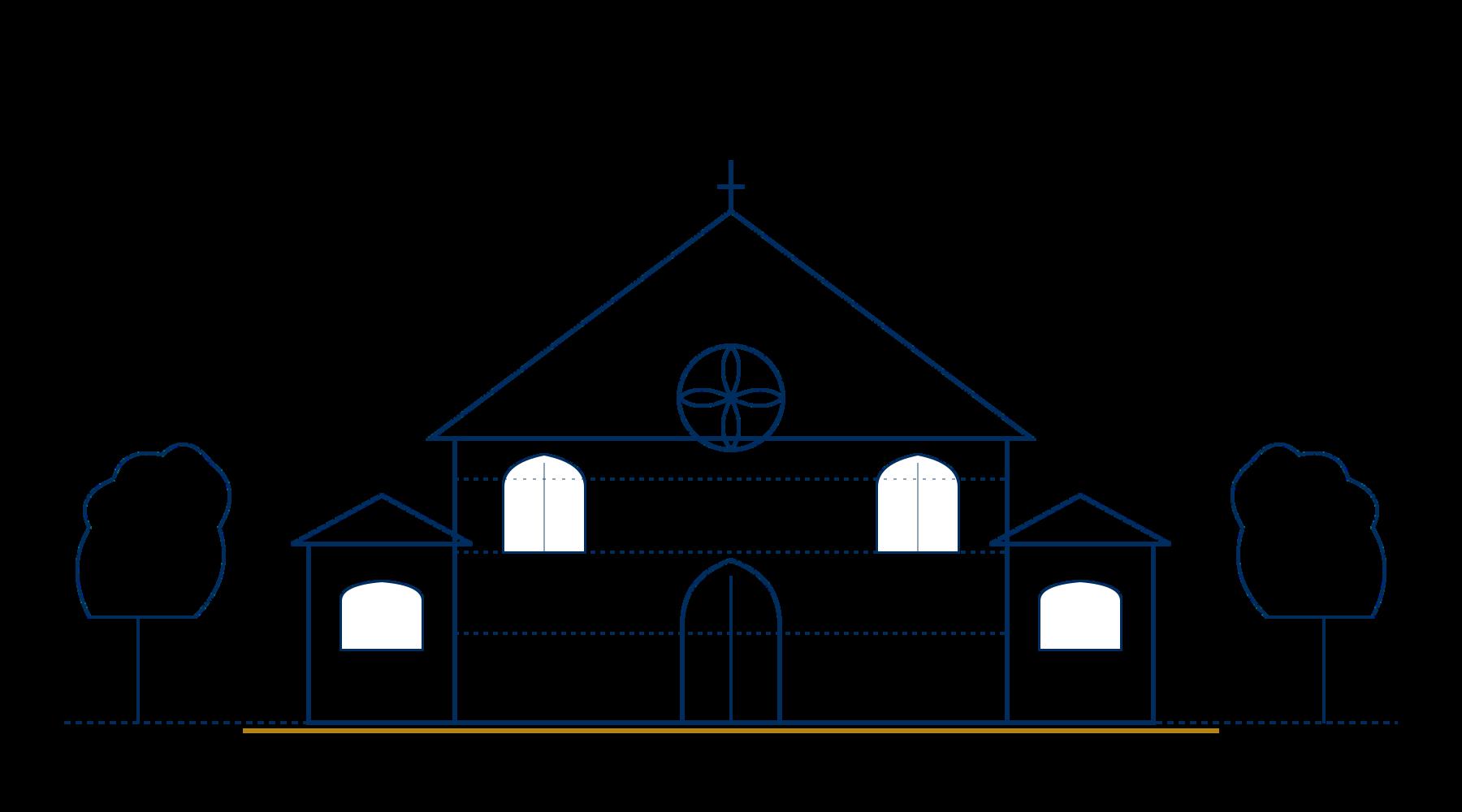
NewtonvilleSquare ChurchoftheOpenWord 1893
The village has seen substantial mixed-use redevelopment near the commuter rail station in the past decade New residential buildings have added apartment and condominium stock adjacent to the historic core, and further development is active along Washington Street Newtonville has one of the stronger middle-market single-family patterns in Newton a high transaction count and tight days-on-market
What does that mean at the search stage? A Newtonville listing tends to compete on two axes buyers rarely get together in Newton at the same price point: commute time and pedestrian access The 22-minute rail run to South Station beats every Green Line D village by 10 to 15 minutes on a good day, and the commute happens entirely below grade no street-level stops, no Longwood transfer At the same time, the Washington Street commercial district is the most pedestrian-oriented center in Newton outside Newton Centre itself
That combination is reflected in the transaction data Newtonville consistently logs one of the tighter days-on-market figures in the city, and a higher transaction count per unit of housing stock than most villages meaning the inventory that does come up moves. Median prices sit in the middle of the Newton range, which is what makes the village attractive: Newton's school district, commuter-rail access, and a pedestrian-oriented center, at a price that clears without reaching into the top tier
The housing-stock story is layered The blocks closest to the commuter-rail station are predominantly American Foursquares from 1895 to 1920 Newtonville has one of the highest concentrations of intact Foursquares in greater Boston Further out, interwar Colonial Revivals and Tudors fill the middle ring, with mid-century ranches at the edges And close to the station, new mixed-use construction
Washington Place is the most visible has added apartment and condominium inventory at price points below the single-family median
Newton North High School anchors the village civically Its $200 million Walnut Street campus, opened in 2010, sits alongside the Newton Education Center, giving the village an institutional density that extends beyond its commercial size.
A NOT E ON RE NT A L C HA RA C T E R:
Newtonville's rental inventory includes a growing share of new-construction apartments along Washington Street alongside traditional two- and three-family homes
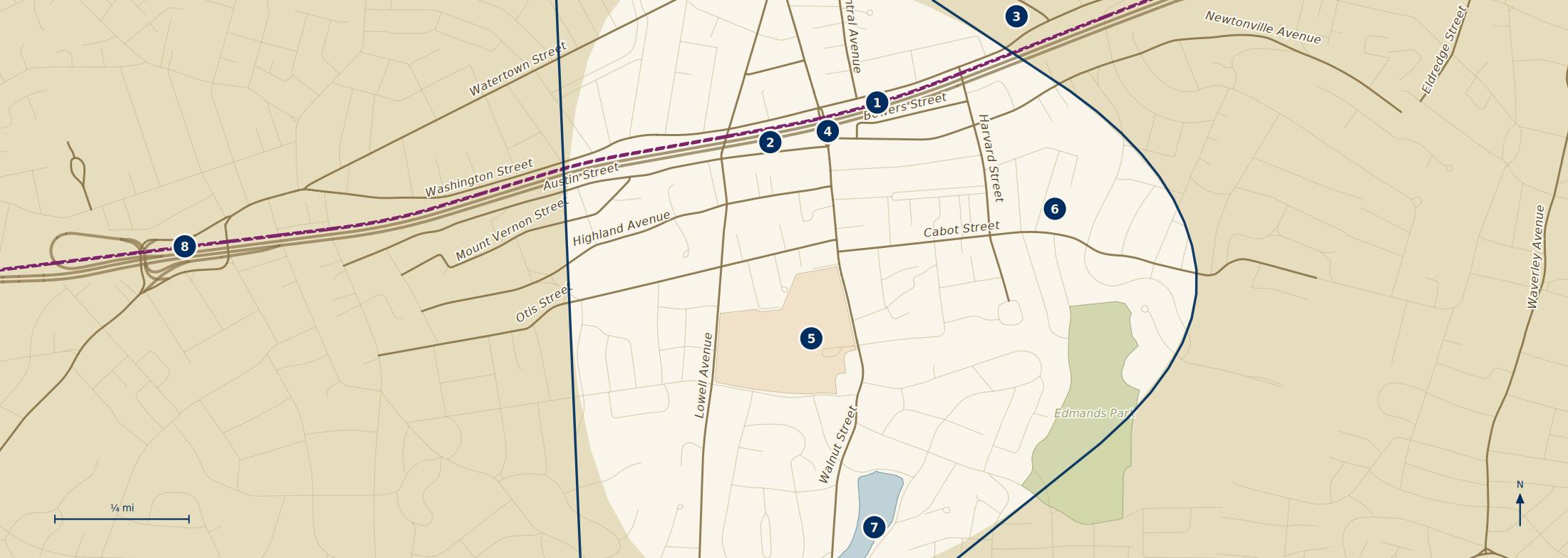
A B LE ST RE E T S
1 Newtonville (Commuter Rail)
2 Star Market over the Pike
3 Whole Foods Market
4 Washington Place (mixed-use)
5 Newton North High School
6 Cabot Elementary School
7 Bullough's Pond
8 West Newton (Commuter Rail)adjacent
Washington Street the village commercial spine; lined with restaurants and shops
Walnut Street residential and mixed-use, northsouth through the village
Lowell Avenue home to Newton North High School
Watertown Street the older commercial stretch with neighborhood retail
Crafts Street residential side street; neighborhood scale, close to the rail station
C OMMU T E
Downtown Boston by train 22 minutes to South Station on the Framingham/Worcester line
Newtonville (Commuter Rail) on-village station with direct Boston service
Star Market over the Pike 33 Austin Street; grocery cantilevered over I-90, a Newton landmark since 1961
Whole Foods Market 647 Washington Street; fullservice grocery
Washington Place mixed-use development with retail, dining, and housing
The Local flagship Newtonville restaurant; gathering place
Newtonville Books independent bookstore community cultural anchor
Downtown Boston by car 25–35 minutes via Mass Pike
Mass Pike access 4 minutes to Pike at West Newton or Newton Corner
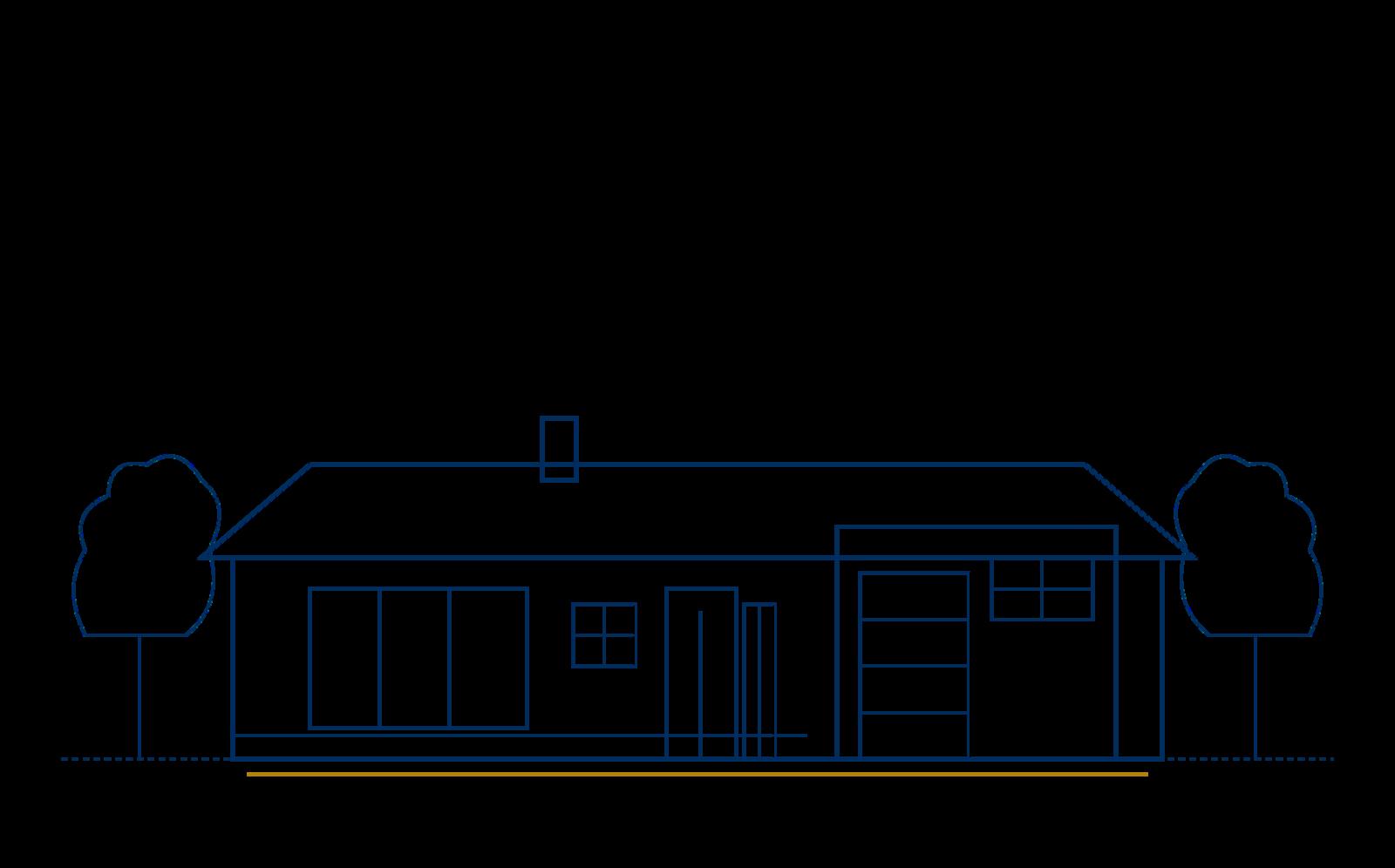
Mid-century ranch, c 1955
I N T H E V I L L A G E Novillage center
Oak Hill Park (historic 1949 development)
Saw Mill Brook Reservation
Memorial-Spaulding Elementary Nahanton Park (Charles River)
Oak Hill Middle School
Noin-villageretail;residentsuseNeedhamStreet (TraderJoe s,Northland)orNewtonCentre (library,restaurants)fordailyamenities

Matureoakcanopy
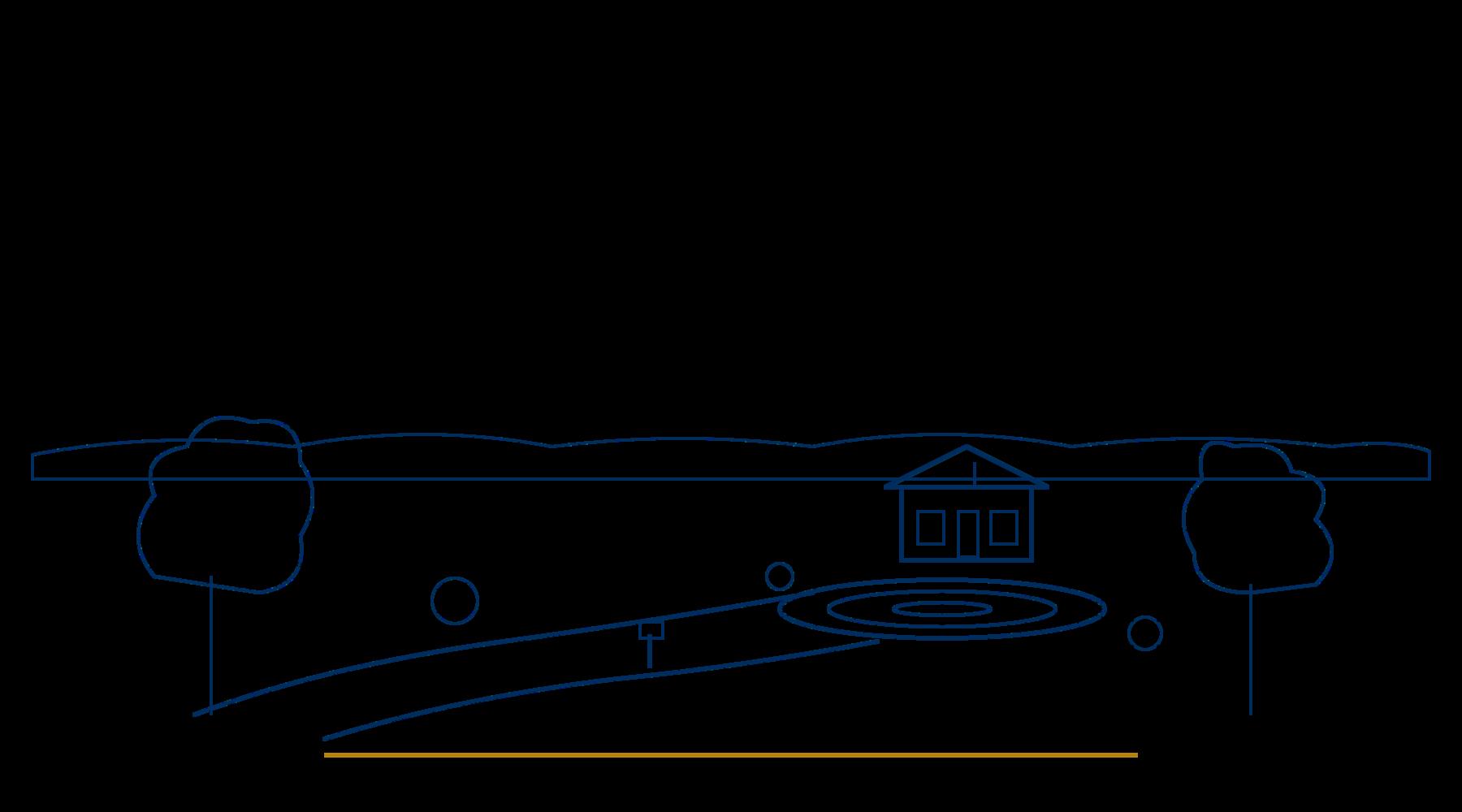
Cul-de-sacstreetscape

Memorial-SpauldingElementary
Oak Hill is Newton's youngest village and in some ways its most distinct While much of Newton was built out by the 1920s, Oak Hill remained largely rural woodland until the post-World War II suburban boom reached it in the late 1940s and 1950s The real estate developer Arnold Hartmann, whose papers are preserved in the Historic Newton archives, was among the most active figures shaping the village during this period.
The houses Hartmann and others built are quintessentially mid-century: sprawling onestory ranches, raised ranches, split-levels, and Garrison Colonials on generous wooded lots. Streets curve organically through the terrain rather than marching on a grid The lot sizes are among the largest in Newton, and the density is among the lowest
Oak Hill Park, the cluster of streets carved out in 1949, remains one of the most intact midcentury developments in Massachusetts originally conceived as housing for returning World War II veterans and later protected by a neighborhood association that has been vigorous in preserving its character
In recent decades, Oak Hill has seen substantial teardown and rebuild activity the original mid-century stock increasingly giving way to larger contemporary homes on the same generous lots The village currently has the highest median single-family price in Newton a function of large lots, buildable footprints, and the volume of new construction on those sites.
Oak Hill has no village center and limited commercial activity groceries and services are in Newton Centre, Chestnut Hill, or across the Needham line. Transit is limited; the village is car-oriented. What it offers instead is privacy, yard, and house more of all three than any other village in the city
$2.72M
MEDIAN SINGLE-FAMILY #1 OF 13
MEDIAN CONDO $859K 12 sales
MEDIAN RENT $6,800/mo 45 leases
POPULATION 6,300
HOUSING MIX 2,161 SF · 297 condo 19 multi
MEDIAN HOME 2,634 sqft
MEDIAN LOT 11,768 sqft · 0 27 ac
MEDIAN YEAR BUILT (SF) 1956
ELEMENTARY Memorial-Spaulding Countryside
MIDDLE Oak Hill
HIGH SCHOOL Newton South
TRANSIT Limited car-oriented
As of 4/18/26
Oak Hill is Newton's postwar village. While every other Newton village was substantially built out by 1930, Oak Hill is the product of a 1950s planned suburban development, organized around cul-de-sacs and consistent mid-century housing stock
Walking Brandeis Road, Wheeler Road, or Kilsythe Road, the year-of-construction range is measurably narrower than anywhere else in the city
That consistency is both the village's appeal and its constraint The appeal: buyers who want modern layouts, attached garages, and the standard postwar suburban form not a Victorian in need of updating have one real choice in Newton, and it's Oak Hill. Teardown-rebuild activity here has been higher than in any other Newton village for exactly that reason: the housing stock is the most replaceable, because the replacements fit the existing context.
The school assignment is the village's other defining feature. Oak Hill addresses feed Memorial-Spaulding and Countryside elementaries and Newton South High School the same assignment Waban pays a significant premium for A buyer who prioritizes Newton South access but is willing to accept a 1950s-built home instead of a 1910s Victorian will find Oak Hill's pricing meaningfully below Waban's for comparable square footage
The village lacks a pedestrian commercial center; daily errands happen in Newton Highlands, Newton Centre, or along Route
9 For some buyers that's disqualifying; for others, the absence of through-traffic and the neighborhood-scaled street grid is precisely the point
A NOT E ON RE NT A L C HA RA C T E R:
Oak Hill's rental inventory is thin and skews toward single-family homes The village is overwhelmingly owner-occupied, and the postwar housing stock is less commonly sub-divided into multifamily units than older Newton villages
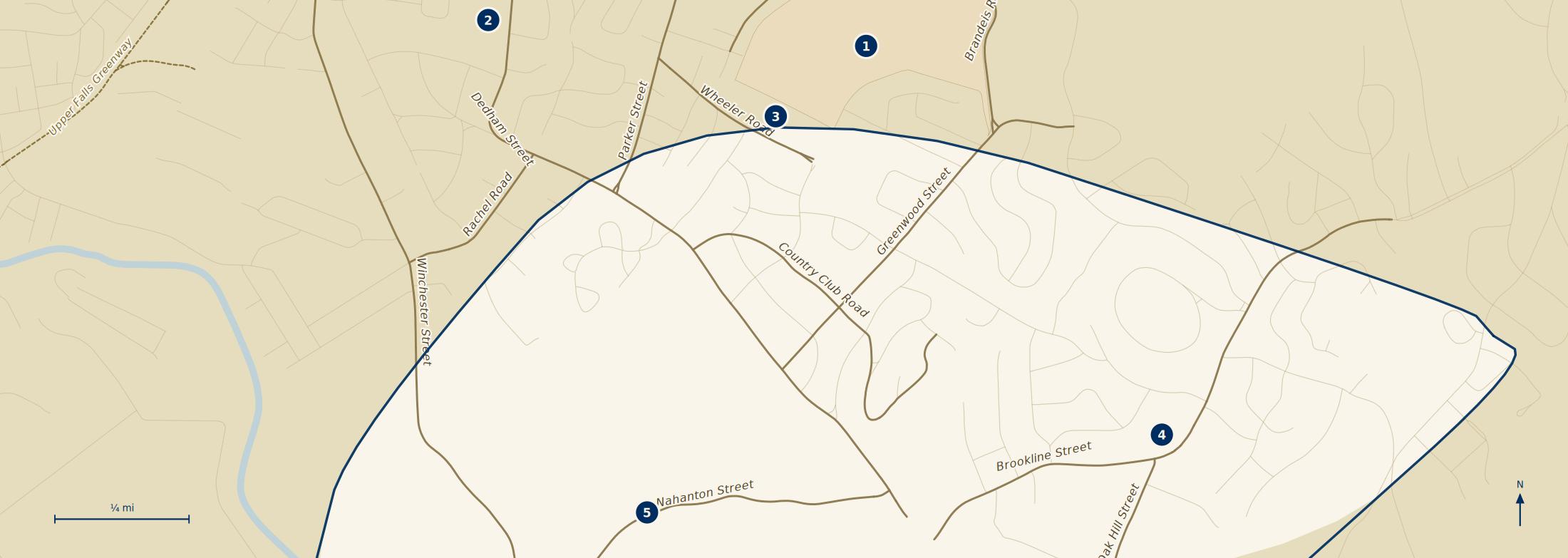
W H AT T O EXP EC T
2 Countryside Elementary School
3 Oak Hill Middle School
4 Memorial-Spaulding Elementary
5 Nahanton Park (Charles River) NOT A B LE ST RE E T S
Dedham Street runs along the north edge of the village
Parker Street ties Oak Hill north to Newton Highlands
Brandeis Road the spine of the 1950s planned development
Wheeler Road home to Oak Hill Middle School; culde-sac feeders
Winchester Street boundary with Newton Highlands; larger postwar homes
C OMMU T E
Downtown Boston by car 28–40 minutes via Route 9 or I-95
Newton Highlands (Green Line D) 6–8 minutes by car to the nearest Green Line station
RE T A I L & D I NI NG
No village center daily retail happens in Newton Centre, Needham Street, or Route 9
Trader Joe's & Northland Needham Street corridor, 5–8 minutes south
Newton Centre retail 6–10 minutes north for library, restaurants, cafes
Newton South High School the village's primary civic and institutional anchor
Nahanton Park Charles River-adjacent open space on the south border
Saw Mill Brook Parkway tree-lined parkway that defines the village's northern edge
Route 9 access 3 minutes to Route 9 at Parker Street
I-95 / Route 128 access 5 minutes to I-95 at Highland Avenue
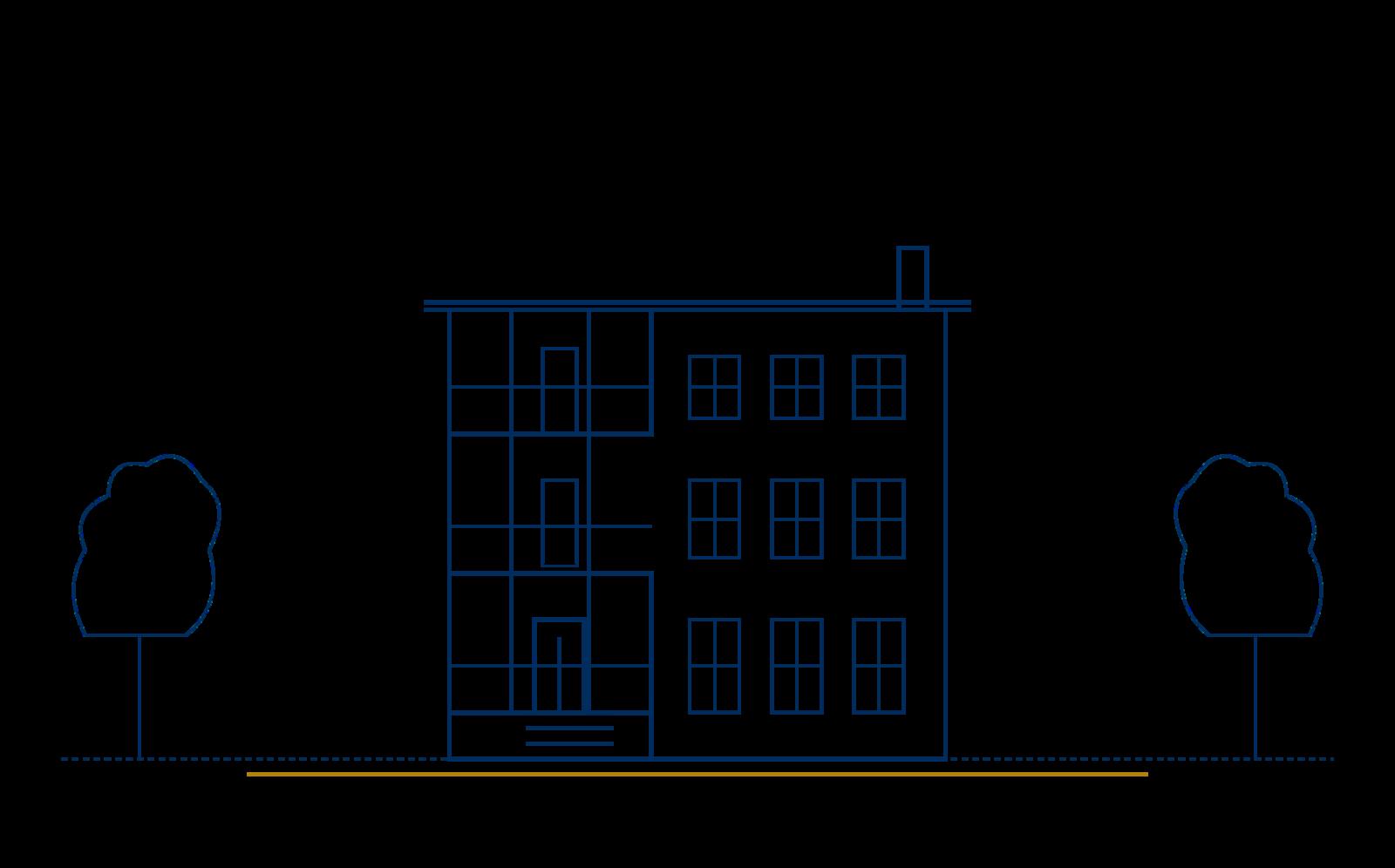
Two-family withtripleporch, c 1905
I N T H E V I L L A G E
WatertownStreet
Antoine's Pastry Shop (classic Italian bakery)
St Mary of Carmen Festival (July)
Pellegrini Park
Cabot Elementary School
Multi-generation family restaurants
Arsenal Yards (adjacent, Watertown)
Noin-villagegrocery;residentstypicallyshopat StarMarketinNewtonvilleorArsenalYards
TargetinWatertown

PellegriniParkbandstand

WatertownStreet

TheColumbus Building
Nonantum holds Newton's oldest history and some of its youngest housing stock at once The name comes from the Christian Indigenous village founded here in 1646, when followers of the Massachusett leader Waban settled at the urging of the Puritan evangelist John Eliot Colonial authorities forced the relocation of that community to Natick in 1651; the name meaning "rejoicing" in Algonquian stayed.
The village's modern form came from the 19th century, when the Silver Lake manufacturing area drew Italian, Irish, and French-Canadian mill workers. Two- and three-family houses with stacked porches, modest colonials, and small commercial buildings define the village's fabric The commercial spine along Watertown Street has sustained generations of familyowned businesses
Nonantum is culturally distinct from the rest of Newton locally sometimes called "the Lake," a reference to Silver Lake that once anchored the village before it was filled in The annual St Mary of Carmen Festival, held in July since 1935, is the village's signature civic event and draws a citywide crowd
The village retains a working-class streetscape, tight lot lines, and a higher multifamily share than any other Newton village Family-owned Italian delis, pizzerias, and bakeries some of them multi-generational give the commercial core a character unlike anything else in Newton
Nonantum feeds Newton North High School and the Cabot and Burr elementary schools Housing prices sit toward the lower end of the Newton range, which combined with the tripledecker and two-family stock has made the village an accessible entry point. In recent years the village has seen both steady teardown activity on single-family lots and continued family-owned renovation on multifamily properties two patterns running in parallel.
$1.23M
MEDIAN SINGLE-FAMILY #12 OF 13 DAYS TO OFFER 13 days LAST-12-MONTH SALES 33 sales
MEDIAN CONDO $1 40M 43 sales
MEDIAN RENT $3,400/mo 97 leases
POPULATION 6,700
HOUSING MIX 837 SF · 624 condo · 539 multi
MEDIAN HOME 1,684 sqft
MEDIAN LOT 6,881 sqft · 0 16 ac
MEDIAN YEAR BUILT (SF) 1928
ELEMENTARY Cabot Burr MIDDLE Day
HIGH SCHOOL Newton North TRANSIT Bus 57/553
As of 4/18/26

Gardenapartments, c 1965
I N T H E V I L L A G E Novillage center
Route 9 / Hammond Pond Parkway access
Hancock Village (adjacent, Brookline)
Hammond Pond Reservation (adjacent)
Memorial-Spaulding Elementary (adjacent)
Brookline line retail
Noin-villageretail;residentsuseChestnutHill (Wegmans,TheStreet)orRoute9corridorfor groceries,pharmacy,anddining

ColonialRevival, c 1920
Residentialstreetscape
BowenElementary School
Thompsonville is Newton's smallest and least-known village Tucked between Newton Centre and Brookline at the city's southeastern edge, it was historically part of the Newton Centre area and is sometimes overlooked on village maps The name comes from the Thompson family, who farmed the land here in the 19th century
Unlike most of Newton's villages, Thompsonville developed relatively late and incrementally Single-family Colonial Revivals went up through the early 20th century, but the village's dominant fabric today is midcentury and later: apartment complexes and garden-style condominiums, with the large Hancock Village development (built in the 1940s for returning veterans, and still owned and operated today) sitting just across the Brookline line
The result is one of the youngest village housing stocks in Newton median year-built around 1930 for the single-family stock but with a dominant overlay of multi-family buildings from the 1940s onward and the highest share of multi-family housing of any Newton village
Thompsonville has no traditional village center Its commercial needs are met by adjacent Newton Centre and Chestnut Hill, and its identity is defined more by its housing mix and its Brookline-adjacent location than by a distinct commercial district
The combination of pedestrian-scale density, proximity to Brookline and Boston College, and competitive rental and condo stock has made Thompsonville distinctive in Newton Addresses feed Newton South, Bowen or Mason-Rice elementary depending on the street, and Oak Hill middle. The median singlefamily price runs below most of Newton, while the condo market trades at a tight pertransaction pace
$1.65M
MEDIAN SINGLE-FAMILY #10 OF 13
DAYS TO OFFER 6 days
LAST-12-MONTH SALES 4 sales
MEDIAN CONDO $1 82M 13 sales
MEDIAN RENT $5,600/mo 16 leases
POPULATION 5,700 HOUSING MIX 196 SF · 653 condo · 79 multi
MEDIAN HOME 1,824 sqft
MEDIAN LOT 6,956 sqft · 0 16 ac
MEDIAN YEAR BUILT (SF) 1930
ELEMENTARY Mason-Rice Memorial-Spaulding
MIDDLE Oak Hill
HIGH SCHOOL Newton South TRANSIT Bus 51 As of 4/18/26

Shingle-styleresidence, c 1895
I N T H E V I L L A G E
WabanSquare
The Waban Market (10 Windsor; only grocery in village)
Strong Block (c 1890)
Waban Hall (1887)
Cold Spring Park
Angier Elementary
Waban (Green Line D)
WabanHall, 1887
WabanSquare
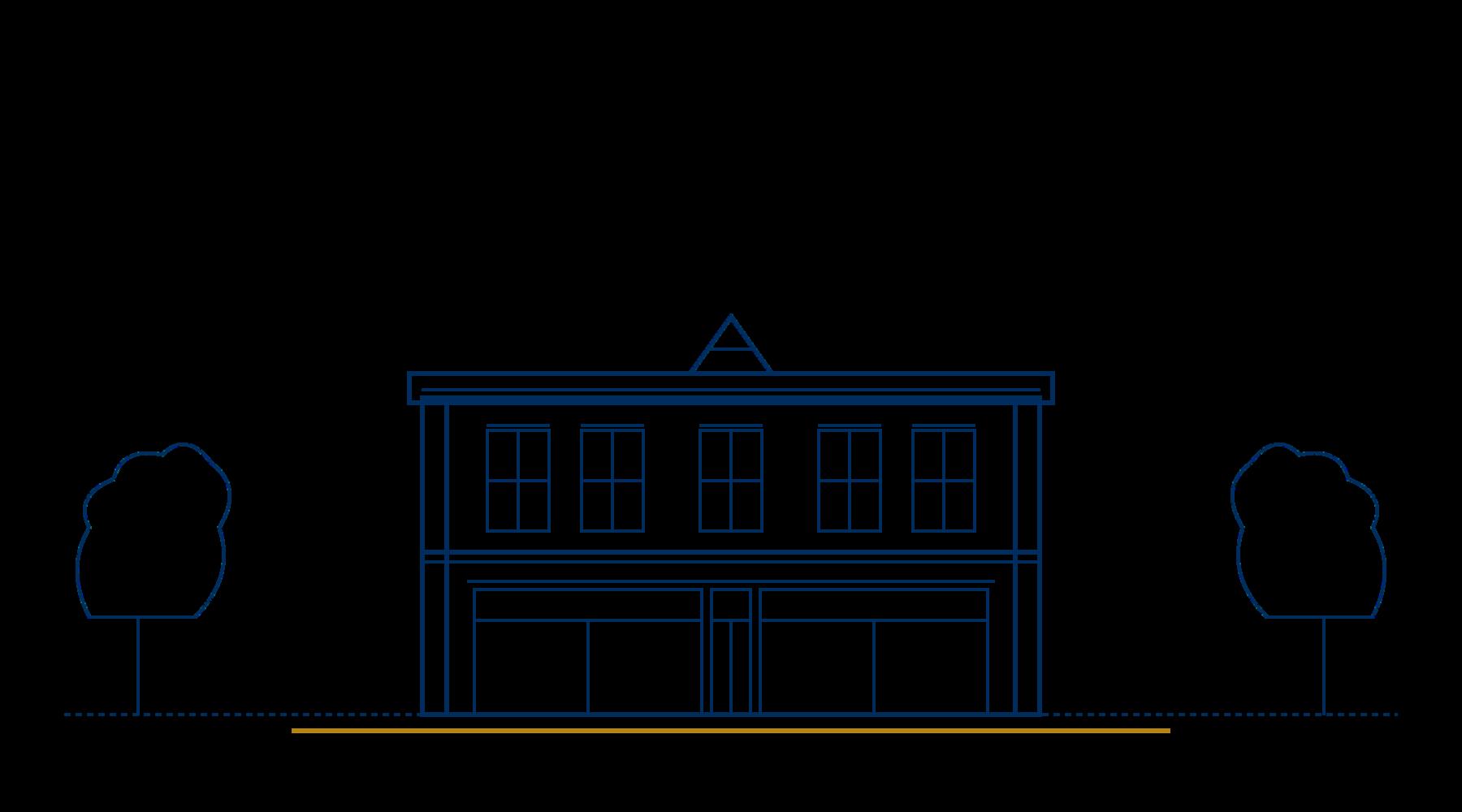
StrongBlock, c 1890
Colonial settlement came late to Waban
As late as 1874 the area was farmland four large farms meeting at the corner of Beacon and Woodward, with fewer than 20 families holding title to all of it That changed in May 1886, when the Boston & Albany Railroad's new Highland Branch opened a commuter stop here Within a generation, the farmland was replaced by a fully planned streetcar suburb.
The village takes its name from Waban, a 17thcentury leader of the Massachusett people who lived here before colonial settlement. Resident William Chamberlain Strong proposed the name when the station opened, and the Waban Improvement Society he founded in 1889 shaped early development financing sidewalks, gas lines, a general store, and Waban Hall. The society is still active today
Shingle-style and Queen Anne homes built between 1886 and 1910 define the village's architectural core Colonial Revivals came in the 1920s The 19th-century fabric remains remarkably intact throughout, even where homes have been thoroughly renovated deep porches, turrets, and hand-cut shingling are still the village's visual signature
Waban is anchored by its small, pedestrianoriented village square at Beacon Street and Wyman Road the train station building, Waban Hall, and a tight cluster of independent coffee shops and retail. The scale is deliberately modest. There is no large retail, no chain presence, and the Waban Improvement Society continues to exert significant influence over development
Waban's single-family pricing is among the highest in Newton. Teardown-rebuild activity has been measurable but slower than in Oak Hill or Chestnut Hill a reflection both of the intact historic fabric and of community resistance to demolition Most renovation is adaptive: preserving the envelope, modernizing the interior
$2.30M
MEDIAN SINGLE-FAMILY #3 OF 13
$1 39M 5
MEDIAN RENT $6,000/mo 23 leases POPULATION 5,600
HOUSING MIX 1,907 SF · 108 condo 27 multi
MEDIAN HOME 2,739 sqft
MEDIAN LOT 12,218 sqft · 0 28 ac
MEDIAN YEAR BUILT (SF) 1930
ELEMENTARY Angier Zervas MIDDLE Brown
HIGH SCHOOL Newton South
TRANSIT Green Line D (Waban stop)
As of 4/18/26
The practical consequence of all that preservation is a market that behaves differently from its neighbors. Inventory is thin the homes that come to market come infrequently, and the ones that do tend to be generational transitions rather than moves of convenience Days-on-market are tight, and multiple-offer situations are more common here than in comparable villages, because buyers who want Waban specifically cannot substitute Newton Centre or Newton Highlands and feel they got the same thing
The single-family pricing reflects that scarcity premium Waban sits at or near the top of Newton's median range in any given year, and the premium over Newton Highlands which shares school assignment and transit access is traceable almost entirely to the housing fabric and the residential character the Waban Improvement Society has preserved. Teardown-rebuild activity has arrived in Waban but remains measurably slower than in Oak Hill or Chestnut Hill. Most renovation work preserves the envelope: the deep porches, turrets, and hand-cut shingling that define the village's visual signature are usually kept, with modernization happening inside The Waban Improvement Society exerts informal but meaningful influence on that outcome
The village center at Waban Square is by design modest: the train station building, Waban Hall, and a small cluster of independent retail. There is no mall, no chain presence, and no plan for either Buyers attracted to Waban are, by and large, attracted specifically to that absence
A NOT E ON RE NT A L C HA RA C T E R:
Waban's rental inventory is thin the village is dominated by owner-occupied single-family homes When rentals do come up, they rent quickly and tend to be character homes
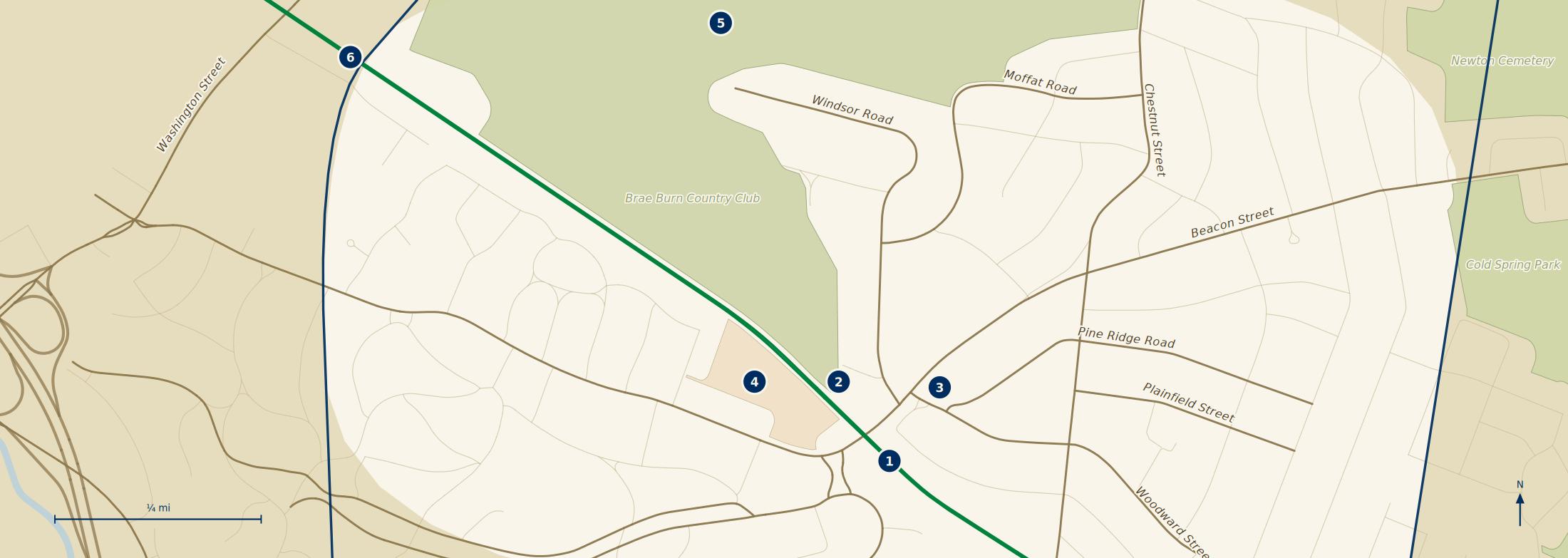
W H AT T O EXP EC T I N W ABAN
MA P K E Y
1 Waban Square & Green Line D
2 The Waban Market (10 Windsor)
3 Waban Library Center
4 Angier Elementary School
5 Brae Burn Country Club
6 Woodland (Green Line D) - adjacent
NOT A B LE ST RE E T S
Beacon Street runs along the north of the village with the Green Line D
Woodward Street ties Waban to Newton Highlands to the east
Chestnut Street Shingle-Style houses on large lots from the 1890s
Waban Avenue the residential spine leading to Waban Square
Windsor Road classic early-1900s subdivision on generous lots
C OMMU T E
Downtown Boston by car 28–38 minutes via Beacon Street / Mass Pike
Waban (Green Line D) on-village station, 35 min to Park Street
RE T A I L & D I NI NG
The Waban Market 10 Windsor Road; family-owned grocery since 1986, the only grocery in the village
Waban Square small, pedestrian-oriented village center around the Green Line D stop
The Local Wab'n neighborhood cafe and gathering place
Waban Hall the historic 1886 meeting hall still hosting community events
Waban post office a rare village-scale postal service in Newton
Newton Highlands and Eliot 3–5 minutes away by Green Line D
Mass Pike access 8 minutes via Beacon Street to the Pike
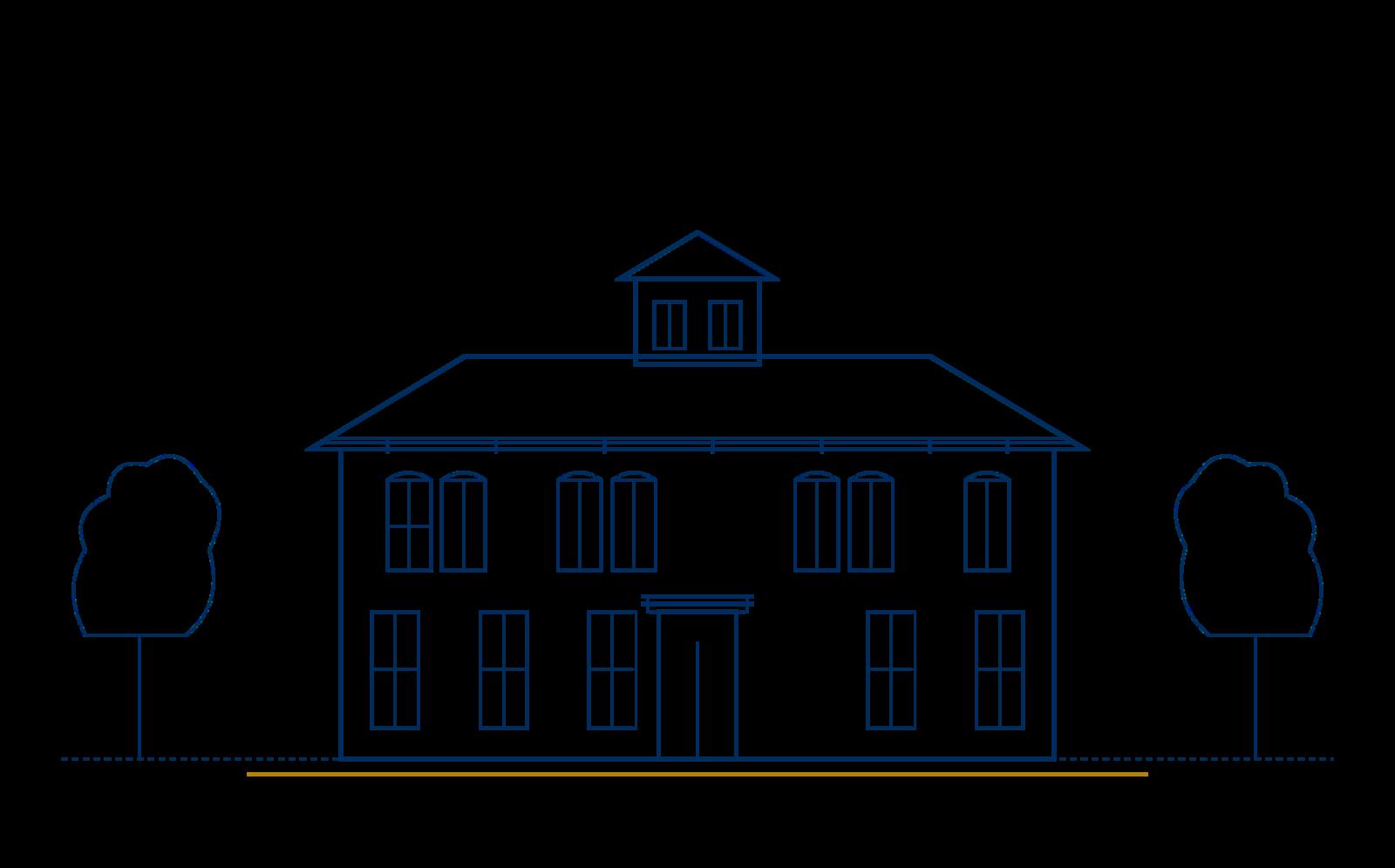
Italianatewithbelvedere, c 1865
I N T H E V I L L A G E
WestNewtonSquare
Trader Joe's (1121 Washington)
CVS Pharmacy (999 Watertown Street)
West Newton Cinema (1937)
West Newton Historic District
Commuter rail station
Blue Ribbon BBQ
Lincoln-Eliot Elementary
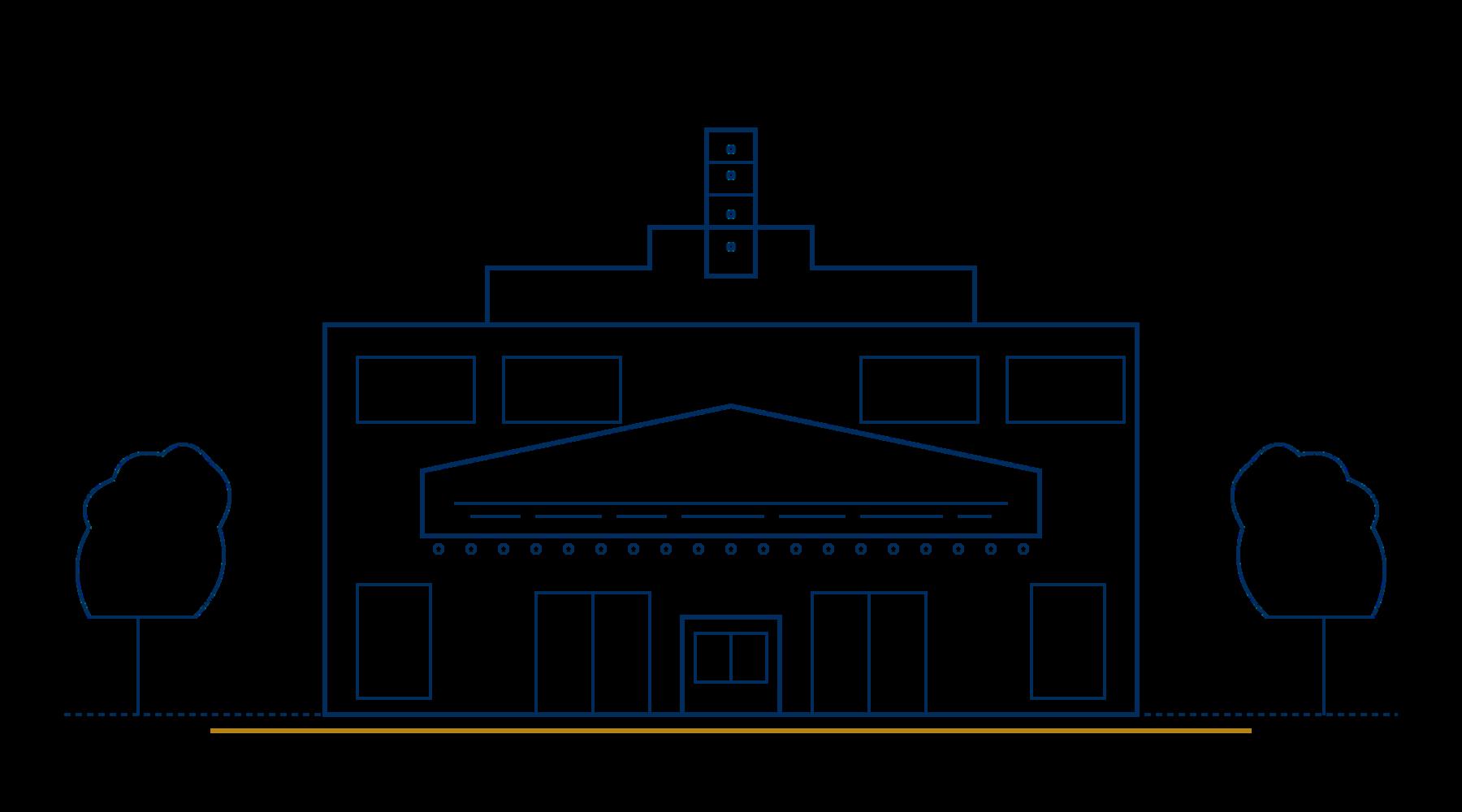
West NewtonCinema, 1937
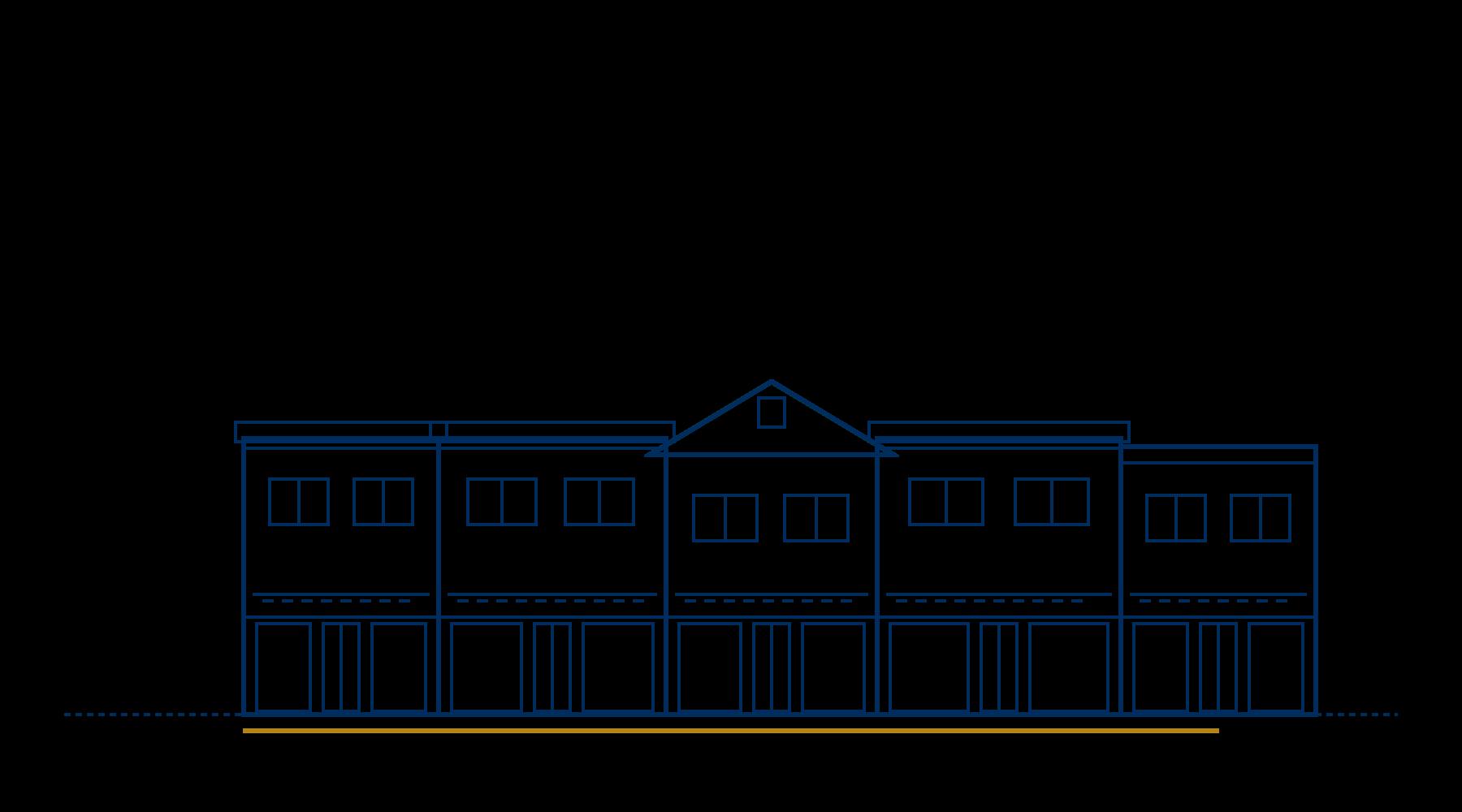
West NewtonSquare
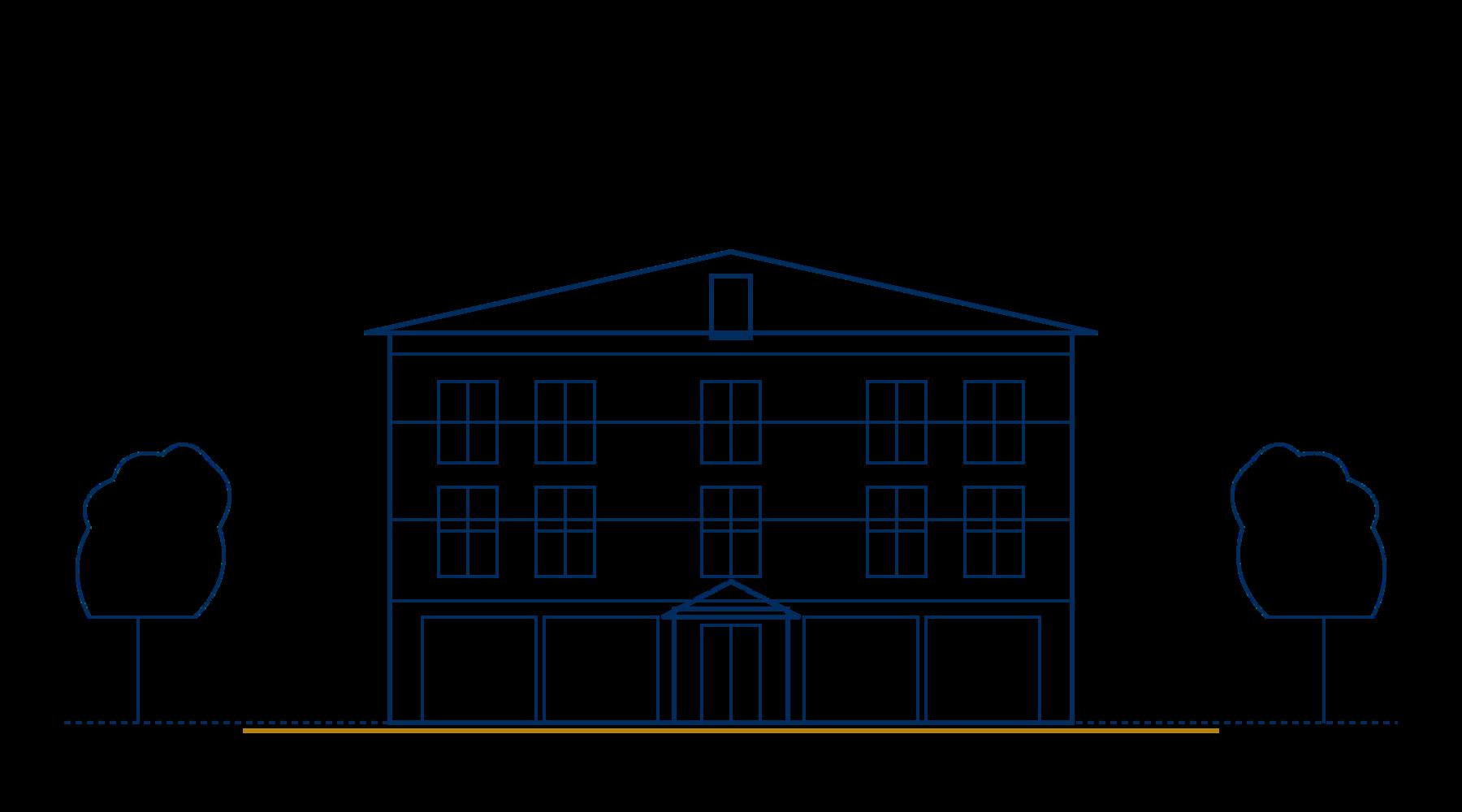
RailroadHotel(Davis Tavern), 1831
West Newton was Newton's original civic center its town hall, library, and public schools concentrated here when the city was incorporated in 1873 The village had been a hub of 18th-century Newton life thanks to the Boston Post Road (now Washington Street) passing through its center, and 19thcentury development reinforced that role
The arrival of the Boston and Worcester Railroad in 1834, with a stop at what is now West Newton Square, transformed the village Commuter development followed quickly West Newton also became a national nexus for education reform home to Horace Mann's pioneering normal school in the 1840s, and later to the Allen School and the Fessenden School.
The Italianate and Second Empire houses built through the 1860s and 1870s along Highland Street and Prescott Street represent the village's mid-19th-century flowering Colonial Revivals and American Foursquares filled in through the early 20th century The village today has one of the most varied housing stocks in Newton Federal-era houses, substantial Victorians, and early 20th-century middle-class homes within a few blocks of each other
West Newton Square remains one of Newton's most distinctive village centers a pedestrian-oriented mix of retail, cinema, civic space, and rail access to Boston The West Newton Cinema, an independent theater in continuous operation since 1937, is a landmark; in 2024 the community-led West Newton Cinema Foundation raised $5 6 million to save it from demolition and now operates it as a nonprofit Independent restaurants and small retail fill out the rest of the square
In the past decade West Newton has absorbed significant new mixed-use development around the commuter rail station, with new condominium and apartment stock at both the western and eastern edges of the square The village has accepted this growth more readily than some Newton villages partly because the historic core is already dense and partly because the rail access makes the case Single-family pricing has held strong through the change
$1.93M
MEDIAN SINGLE-FAMILY #7 OF 13
MEDIAN CONDO $1 14M 24 sales MEDIAN RENT $3,425/mo 58 leases
448
HOME 2,078 sqft MEDIAN LOT 8,620 sqft · 0 20 ac
MEDIAN YEAR BUILT (SF) 1930
ELEMENTARY Peirce Franklin Horace Mann
MIDDLE Day Bigelow
HIGH SCHOOL Newton North
TRANSIT Commuter Rail (West Newton stop)
As of 4/18/26
West Newton is the rarest combination Newton offers: a commuter-rail village with a genuinely pedestrian-oriented commercial square The 20-minute run to South Station sets the commute benchmark, and West Newton Square the wedge where Washington, Watertown, and Waltham Streets converge delivers the kind of coffee, restaurants, and independent retail that most rail-adjacent villages never developed Few Greater Boston suburbs pair both
The housing stock maps directly onto that commercial history The late-Victorian and American Foursquare blocks closest to the station date from the 1890–1920 rail boom, with deep front porches, hand-cut trim, and lot sizes measured to the streetcar grid Further south, toward Lasell, the fabric shifts to interwar Colonial Revivals and Tudors on larger lots The price spread within the village reflects that range.
The village straddles a school-district line that matters at the transaction level. Addresses north of Washington Street generally feed Newton North; addresses to the south generally feed Newton South Buyers interested in West Newton for Newton South access should verify assignment before signing
The current chapter is development pressure The Armory redevelopment, the MBTA Communities zoning overlay along Washington Street, and developer interest in the commercial square are all on the horizon What West Newton looks like in 2030 will differ from what it looks like today in the mix of housing types, not in its essential character
A NOT E ON RE NT A L C HA RA C T E R:
West Newton's rental inventory is a mix of two- and three-family conversions close to the rail station and larger single-family rentals on the outer blocks Armory redevelopment will add mid-rise multifamily inventory W H AT T O EXP
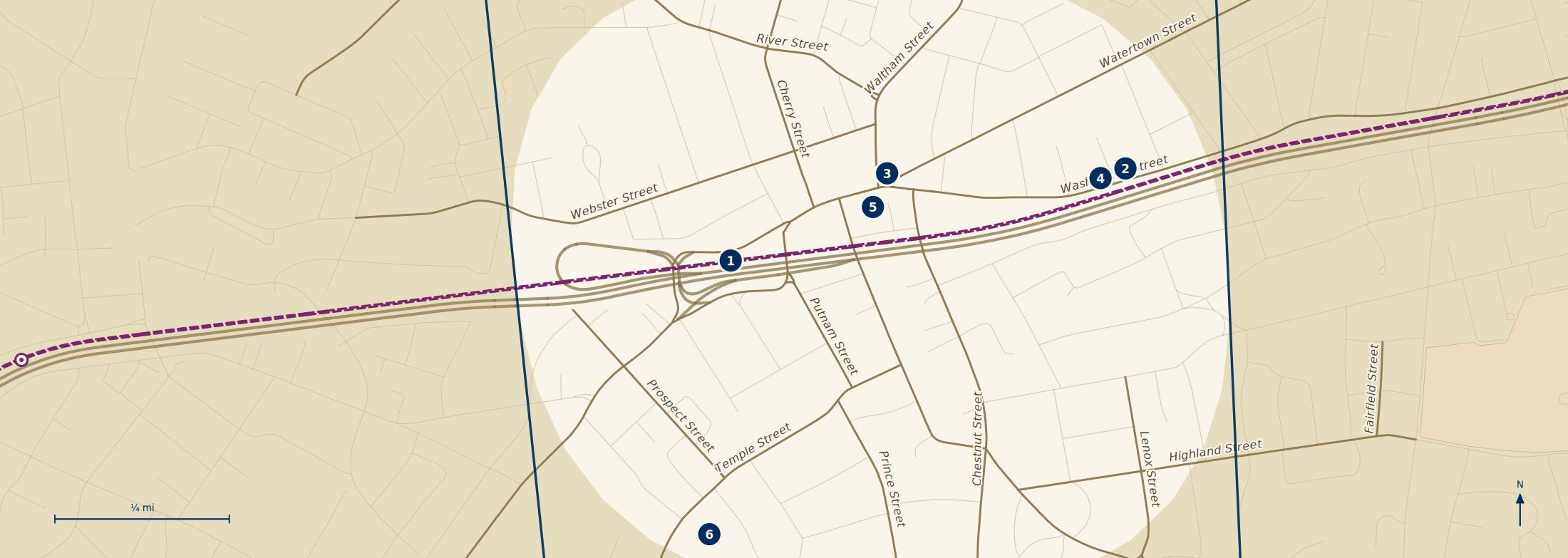
MA P K E Y
1 West Newton (Commuter Rail)
2 Trader Joe's (1121 Washington)
3 CVS Pharmacy (999 Watertown)
4 West Newton Armory
5 West Newton Cinema
6 Peirce Elementary School NOT A B LE ST RE E T S
Washington Street the commercial and institutional spine through the village
Waltham Street one of the three legs of West Newton Square
Highland Street historic district with late-Victorians on larger lots
Chestnut Street ties the village to Newtonville north and Lower Falls south
Temple Street residential, with Peirce Elementary at the south end
C OMMU T E
Downtown Boston by train 20 minutes to South Station on the Framingham/Worcester line
West Newton (Commuter Rail) on-village station with direct Boston service
RE T A I L & D I NI NG
Trader Joe's 1121 Washington Street; the village grocery anchor
CVS Pharmacy 999 Watertown Street; the village pharmacy
West Newton Square pedestrian-oriented center at Washington / Watertown / Waltham
West Newton Cinema independent art-house theater, local institution
Lincoln Street & Washington independent coffee, restaurants, specialty retail
West Newton Armory historic 1909 building slated for affordable-housing redevelopment
Downtown Boston by car 25–35 minutes via Mass Pike
Mass Pike access 3 minutes to Pike entrance at West Newton
Theeventsthatbuiltthecityyouseetoday sequencedacrossfiveeras. V I L L A GE ER A 1630–1830
Newton separates from Cambridge
After five decades as “Cambridge Village,”the settlement west of the Charles River formally separates and becomes its own town: Newtown, later Newton The village pattern established by scattered farmsteads along the river remains legible in today's street geometry
1834
The railroad arrives
The Boston & Worcester Railroad opens through Newton, establishing stations at what would become West Newton, Newtonville, and Auburndale The spatial pattern of villages around railroad stops is set
1873
Newton incorporates as a city
Population around 16,000, Newton changes its charter from town to city The village structure predates the charter and is preserved within the new form of government
1886
Waban by streetcar
The Boston & Albany Railroad's Highland Branch opens a commuter stop at Waban William Chamberlain Strong's Waban Improvement Society develops the village as a planned Shingle-Style suburb within a generation
1893
The Emerald Necklace extends Frederick Law Olmsted's firm designs the approach to Chestnut Hill Reservoir and influences Hammond Pond Reservation and Cold Spring Park Naturalistic landscape principles define Newton's parks for the next century
Founded as Newton Cottage Hospital, the institution establishes a medical campus at Lower Falls that remains the largest employer in the village today
1922
The Boston Marathon route formally passes through Newton on its final miles The 600-foot climb along Commonwealth Avenue is christened “Heartbreak Hill”by a sportswriter in 1936 1920s–30s
The residential decades
Newton's signature housing stock Colonial Revivals, Tudors, Dutch Colonials, Shingle Styles is built across the interwar period Most of the single-family fabric buyers tour today dates from this era
The Green Line extends
The MBTA converts the Highland Branch from commuter rail to rapid transit The D Branch connects Riverside directly into the Boston subway, with stops in Waban Newton Centre Newton Highlands Chestnut Hill and others
The Pike arrives, the rails leave
The Mass Pike extension through Newton opens, adding a four-lane expressway along the northern corridor The Pike accelerates commuter access to Boston but at a cost: Newton Corner's commuter rail stop, operating since the mid-1800s, is eliminated during construction Newton Corner trades its rails for an interchange
1973 · 1975
Newton South opens in 1960 on Brandeis Road Newton North opens at its Lowell Avenue site in 1973 The two-district arrangement is today the central variable distinguishing Newton neighborhoods for buyers
1974
The Mall at Chestnut Hill
Bloomingdale's opens at the Mall at Chestnut Hill, establishing Route 9 as a regional retail corridor and turning Chestnut Hill into the commercial anchor of the city's south side 1990s–2000s
A wave of luxury high-rise condominium conversions and new builds transforms Chestnut Hill's housing stock The Towers, Longyear, and subsequent buildings create the condo-dense inventory that defines the village's market today
The Atrium becomes The Street
The Atrium Mall, which had opened in 1984 across Route 9 from the Mall at Chestnut Hill, closes and is redeveloped as The Street at Chestnut Hill an open-air lifestyle center that reshapes the village's retail character
2021 · 2024
The Northland Newton Development (Needham Street, 800 units) wins comprehensive-permit approval as the largest multifamily project in Newton's history In 2024 the city complies with the state's MBTA Communities Act, zoning for transit-oriented multifamily near Green Line and commuter rail stops
2025·2026
Northland opens, zoning takes effect
The first phases of Northland Newton come online, bringing hundreds of market-rate and affordable units, ground-floor retail, and new public open space to the Upper Falls / Newton Highlands corridor Newton's MBTA Communities zoning takes effect, opening parcels near the Green Line D and the Framingham/Worcester commuter rail to multifamily construction by-right reshaping the pipeline for the next decade
Each Newton village is a distinct place with its own founding, its own builders, and its own architectural fabric. The three-times spread in single-family prices from the mid-$900,000s to nearly $2 8 million is not a function of geography alone It reflects three centuries of settlement patterns laid atop one another, still visible today in the streetscapes
Use this guide as a companion to a first tour of the city, or as a reference through the search. Every good Newton story begins with a village.
Data & methodology Market data from MLS PIN; village-level figures reflect trailing-twelve-month sales ending April 18, 2026 Historical data covers 1995–2025 Housing stock from City of Newton Assessor Population from 2020 U S Decennial Census School data from U S News & World Report and Newton Public Schools Livability rankings from U S News, Niche, and Boston Magazine as cited on page 4 Fair housing Gibson Sotheby's International Realty is an Equal Housing Opportunity brokerage and fully supports the principles of the Fair Housing Act and the Equal Credit Opportunity Act This guide presents facts and third-party rankings for orientation; Gibson Sotheby's International Realty does not evaluate rate or rank schools school districts or neighborhoods and nothing in this guide is intended to steer any prospective buyer toward or away from any community on the basis of race, color, religion, sex, national origin, familial status, disability, or any other characteristic protected by federal or Massachusetts law School assignments are set by the City of Newton and may change; buyers should verify any factor relevant to their decision independently General Information herein is deemed reliable but not guaranteed and is subject to errors, omissions, changes, or withdrawal without notice This guide is not a solicitation of property currently listed with another broker © 2026 Gibson Sotheby's International Realty All rights reserved Sotheby's International Realty® and the Sotheby's International Realty Logo are service marks licensed to Sotheby's International Realty Affiliates LLC and used with permission Each office is independently owned and operated