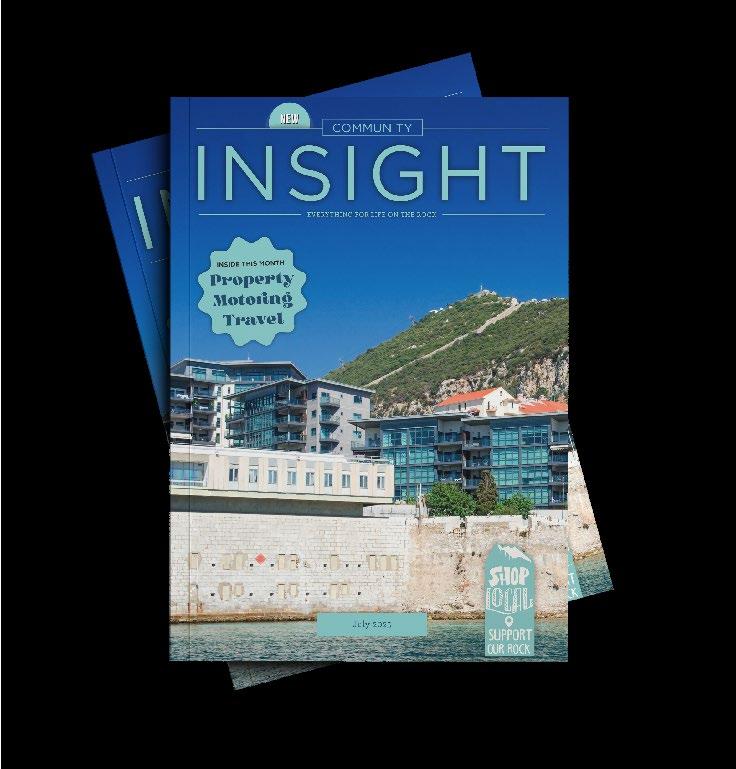
GIBRALTAR’S OWN COMMUNITY MAGAZINE FEATURING BUSINESS, MOTORING, SPORT, WOMEN’S SPOTLIGHT, HEALTH & WELLBEING, CULTURE,LOCAL EVENTS AND SO MUCH MORE.
Each month, Community Insight magazine is distributed across Gibraltar - from banks, gyms, and offices to the World Trade Center, clinics, the University of Gibraltar, the GFA, and major car dealerships. With engaging, high-quality content, each issue remains on display throughout the month and beyond, keeping your brand visible and top of mind.
ADVERTISING DOESN’T STOP
That means your brand connects directly with Gibraltar’s buying audience - in print, online, and across social media.
• Rates from just £60/month. Discounts available for 4+ months.
The Government of Gibraltar has recently announced it is committed to equalisation of pensionable age at 60, meaning reducing the retirement age for both men and women to 60.
Longer life expectancy, better health in later years and the increasing flexibility of modern work mean that many people reaching retirement age still have decades of productive, creative and financially active life ahead of them. Rather than a full stop, retirement is increasingly becoming a new chapter.
One of the most important aspects of this new phase is staying engaged — intellectually, socially and financially. For many people, continuing to generate some form of income, even if modest or passive, provides not only financial security but also a strong sense of purpose and independence.
The good news is that retirement can offer something that working life rarely provides: time. And with time comes the opportunity to explore ideas, projects and ambitions that may have been postponed during busy careers.
Here are several ways retirees in Gibraltar might transform their experience and free time into meaningful activity and income.
Turning a Long-Held Dream into Reality
Many people spend decades working in structured careers while quietly holding onto an idea for a business they would love to start one day. Retirement may finally provide the space to pursue that dream.
For some, this could be opening a small retail concept, starting a consultancy based on their professional expertise, launching a niche tourism experience or turning a hobby into a commercial venture. The goal does not necessarily have to be building a large company. Even a modest enterprise can provide stimulation, social interaction and supplementary income.
What often makes retirees particularly successful in entrepreneurship is the experience and perspective they bring. After years in the workforce, they tend to understand customers, markets and risk far better than many first-time entrepreneurs.
Staying Involved in the Business World — Just at a Different Pace
Retirement does not have to mean disconnecting entirely from the professional world. In fact, many organisations increasingly value the guidance of experienced professionals who are no longer seeking full-time roles but still wish to contribute.
Former executives and professionals can remain involved through
roles such as non-executive directors, advisors, mentors or external consultants. These positions allow retirees to share their knowledge, help guide strategic decisions and support younger management teams — often while working only a few days each month.
Another growing trend is freelancing, where professionals offer specialised expertise on a project basis. This arrangement provides flexibility for the retiree while allowing companies access to high-level experience without long-term employment commitments.
For many retirees, this kind of involvement offers the perfect balance: staying mentally engaged and connected to their field without the intensity of a full-time career.
Building an Online Business from Gibraltar
One of the most transformative changes in the modern economy is the ability to run businesses entirely online from the comfort of your bedroom and serve customers around the world.
Retirees with knowledge, creativity or niche expertise can now build online ventures that require relatively modest start-up costs. Examples include:
• Selling specialised products through e-commerce platforms
• Offering online training or educational content
• Publishing digital guides, books or subscription services
• Providing remote consultancy to international clients
The digital economy has effectively removed geographical barriers. For retirees who enjoy learning new technologies and exploring new ideas, the online world offers remarkable possibilities.
Becoming Your Own Asset Manager
Another avenue that attracts many retirees is taking a more active role in managing their wealth and investments.
Rather than relying entirely on traditional savings accounts, some retirees choose to diversify their assets across different investment opportunities. These may include property investments, investment in startup projects, investments in stock markets, or emerging digital assets such as cryptocurrencies.
This approach requires research, discipline and risk awareness, but it also offers the possibility of building a steady passive income stream over time.
For many retirees, the process of studying markets, evaluating opportunities and making investment decisions becomes both intellectually stimulating and financially rewarding.
A Cultural Shift in How We View Retirement
The idea of retirement as a period of complete withdrawal from productive life is gradually giving way to a more dynamic model. Around the world, people are recognising that experience is one of society’s most valuable resources, and that retirement can be a time to deploy that experience in new and creative ways.
If retirement age in Gibraltar does change in the coming years, the conversation may need to move beyond the question of when people stop working, and towards a more exciting one: how people choose to spend the next stage of their lives.
For many, the answer may lie not in stepping away from economic activity entirely, but in embracing new forms of engagement — slower paced perhaps, but no less meaningful. After all, retirement may simply be the moment when people finally gain the freedom to do the things they always wanted to do.
Let us know what is your dream retiremement business? Perhaps we can help turn it into a reality.
Eran Shay, Managing Director Benefit Business solutions www.BenefitGibraltar.com
Government CLInICS
The Minister for Health, Care and Business, and Constituency MP for the Westside Area, the Hon Gemma Arias-Vasquez, will be holding her next constituency clinic on Wednesday 29th April 2026 from 10am to 12pm at the Ministry for Health, Care and Business, Suite 971, Europort.
Residents of the Westside Area who wish to discuss any personal or community matters with Minister Arias-Vasquez are encouraged to book an appointment by emailing westsidearea@gibraltar.gov.gi. While walk-ins will be accommodated where possible, scheduling in advance is recommended to ensure availability.
Minister Arias-Vasquez said: “Constituency clinics are an important way for me to stay connected to residents in the Westside area, to listen carefully to their concerns and to take forward the issues that matter most to our community.”
BOUNDARIES ARE A PERFORMANCE SKILL, NOT A PERSONALITY TRAIT.
There’s a persistent belief in modern work culture that success comes down to effort: how responsive you are, how much you take on, how willing you are to step in wherever needed. The people who advance, we assume, are the ones who say “yes” the most. But if you look closely at how high-performing, high-impact professionals operate, you will see it is actually a different story as usually they are not the most available people in the room but rather they are the most selective, which can be considered a skill.
We tend to think of boundaries as something soft or personal which doesn’t transfer into work because we want to impress our employers. However, boundaries can function much more like a professional capability as they determine how your time is allocated, how your value is perceived, and ultimately, how your career develops. The difference between people who feel constantly overwhelmed and those who seem to move forward is often from a sense of control, rather than effort or natural intelligence. More specifically, it is the control over what they do, and just as importantly, what they don’t.
THE HIDDEN COST OF ALWAYS SAYING YES
Early in a career, saying yes works and builds trust, signals reliability and opens doors as many people are rewarded for being helpful, responsive, and willing to take on whatever is needed. However, the problem is that what gets rewarded early often becomes a trap later, because over time, saying yes stops being a signal of potential and starts becoming an expectation. You become the person who can be relied on for everything: Urgent requests, last-minute tasks, unclear responsibilities, emotional labour, coordination work that no one else wants to own, and the list continues. Individually, none of these requests seem unreasonable, however collectively, they create an unbearable workload which is where many careers quietly stall, because their time is being spent in too many directions at once and not because the person lacks the ability or ambition. Without clear boundaries, your role expands in ways that dilute your impact and you become busy.
BOUNDARIES AS RESOURCE ALLOCATION
At its core, a boundary is a decision about where your resources go. These resources are things like time, attention, energy, and mental capacity which are finite. Every time you say yes to something, you are implicitly saying no to something else whether you realize it or not. The problem is that most people make these trade-offs unconsciously and they respond to what is urgent rather than what is important. Meaning they prioritize what is seen in the moment rather than what compounds over time.
Boundaries can reverse that dynamic and demonstrate your intentions. Instead of asking yourself, “Can I do this?” ask, “Is this the highest-value use of my
time?” That shift sounds simple, but it changes everything, because once you start evaluating requests through the lens of value instead of obligation, you begin to see how much of your workload is actually optional.
THE LINK BETWEEN BOUNDARIES AND PERCEIVED VALUE
There’s another dynamic at play that is less obvious but equally important: how boundaries shape our perception. In most professional environments, value is interpreted instead of created. People make judgments based on signals like what you prioritize, what you decline, how available you are and what you protect. So, when you consistently take on anything that comes your way, you signal how flexible you can be, but you also signal that your time is not important.
THE HIDDEN SKILL BEHIND HIGH PERFORMERS: SETTING BOUNDARIES
People who are selective with their time are often perceived as more senior, more strategic, and more in demand because their behaviour suggests it. This is why two people with similar capabilities can be seen very differently: One is always busy, always responsive, always helpful and the other is harder to access, more focused, more deliberate. The first is often seen as dependable whereas the second is often seen as valuable. Boundaries, in this sense, are not just about managing workload, but are about shaping how your role is understood.
THE TRANSITION FROM REACTIVE TO STRATEGIC WORK
One of the clearest differences between mid-level and senior roles is the nature of the work itself. At lower levels, success is often defined by execution such as completing tasks, supporting others, and meeting deadlines. Whereas at higher levels, success is defined by directions like deciding what should be done, what should not be done, and where effort should be concentrated. That transition requires a fundamental shift. You cannot operate strategically if your time is fully consumed by reactive work which has a way of expanding to fill all available space unless it is actively constrained. Therefore, boundaries create that constraint and protect time for thinking, planning, and higher-leverage activities. They reduce context switching. And they allow you to focus on fewer things more carefully. In other words, without boundaries, even highly capable people remain stuck in execution mode.
WHY BOUNDARIES FEEL DIFFICULT
Saying no can sometimes feel uncomfortable, can create friction and can challenge expectations (especially if you have built a reputation as someone who always says yes). There is also a fear component: Fear of missing opportunities, of being seen as unhelpful, or of damaging relationships. However, these concerns are not unfounded as boundaries, if applied poorly, can create problems. But arguable, the absence of boundaries creates a different set of problems such as burnout, stagnation, or loss of direction. The key is not to avoid boundaries, but to intentionally apply them.
WHAT EFFECTIVE BOUNDARIES LOOK LIKE
Boundaries in a professional context are rarely absolute. They are not about rigid refusal or disengagement but rather they are about clarity and trade-offs. In practice, this can look like:
• Redirecting work
• Negotiating timelines instead of accepting urgency
• Asking for prioritization when multiple demands conflict
• Declining tasks that fall outside your role or strategic focus
• Protecting blocks of time for deep work
Importantly, boundaries are often communicated through questions rather than statements. Instead of saying, “I can’t do this,” you might ask “Which of these requests should take priority?” or even “Who else could do this?”. This keeps the conversation collaborative while still maintaining control over your workload.
BOUNDARIES AND LONG-TERM CAREER GROWTH
Over time, the effects of boundaries build. When you consistently allocate your time toward high- impact work, you build a track record that reflects it and you become associated with outcomes that matter instead of effort that is appreciated. Additionally, you also develop a clearer sense of your own role, meaning instead of being defined by what others need from you, you begin to define what you contribute. Careers rarely progress because someone does more but because someone does the right things consistently and boundaries make that consistency possible.
ONE FINAL THOUGHT
The most important shift is this: Boundaries are not a limitation. They are a filter. Which determine what gets your time, your attention, and your effort. And over time, those decisions define your progress. The people who move forward are not the ones who absorb the most work but the ones who decide what is worth doing as well as what is not.
Youth Symposium Session with His Excellency the Governor
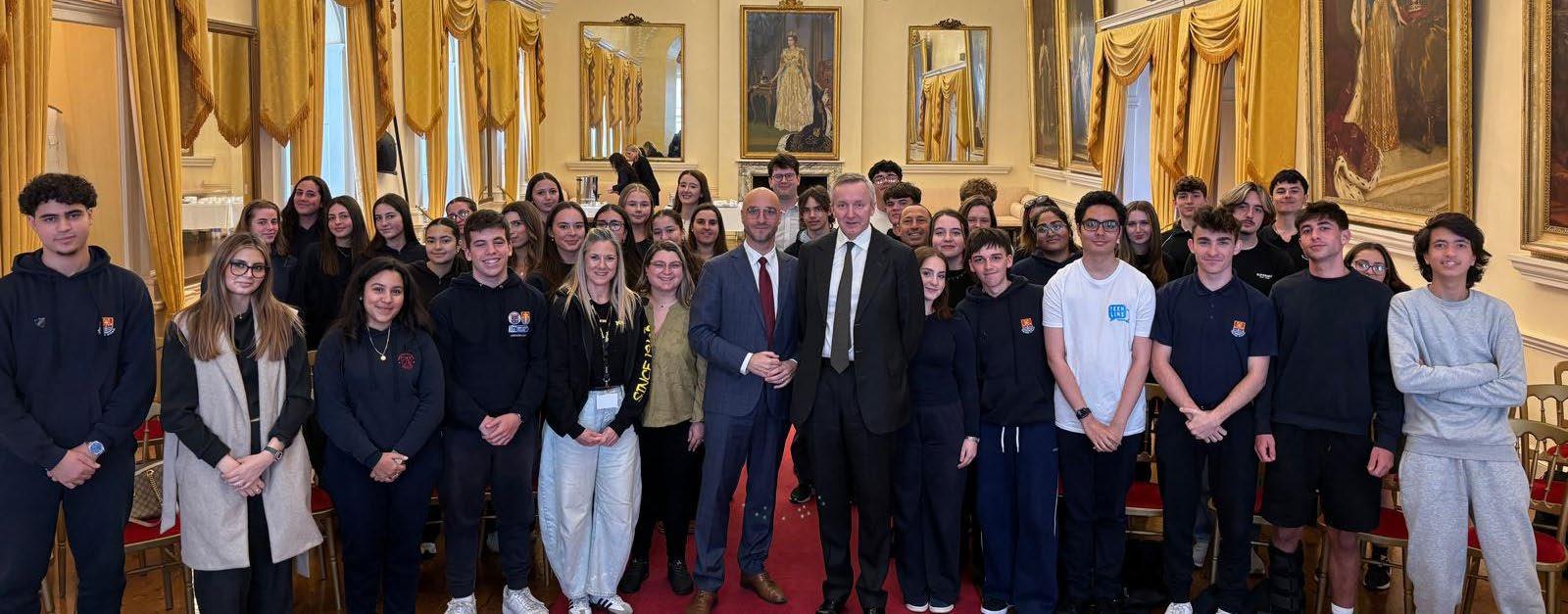
A special session of the Gibraltar Youth Symposium was held at the Convent, hosted by Minister for Youth, the Hon. Christian Santos GMD MP with guest speaker His Excellency the Governor, Lieutenant General Sir Ben Bathurst KCVO CBE.
Minister Santos opened the session by introducing His Excellency to the forty attendees, representatives of schools and NGOs. His Excellency then shared insights into his background, experience and the journey that led him to serving as Governor of Gibraltar and also explained his key roles and functions under the Gibraltar Constitution. The young participants were engagd
throughout, posing relevant questions to the topics discussed.
Minister Santos announced that the Youth Service will be introducing a smaller-group model for future Youth Symposium sessions which will allow sub-groups to explore specific issues of interest more deeply. These discussions will directly inform the question-and-answer sessions with the Minister for Youth, ensuring young people’s perspectives and queries are captured more effectively.
Minister Santos said: “I would like to thank His Excellency for speaking to the Youth
Symposium. His contribution was fascinating and the young people were thrilled to be invited to the Convent for this session. It is important to see the participants engage directly with key public figures and understand their roles further by asking informed questions. These opportunities help strengthen the youths’ understanding of institutions and encourage their active participation in civic life.”
For further information on the Youth Symposium please email rebecca.figueras@gibraltar.gov.gi
SOUNDTRACKING THE ROCK: THE FOUR-DECADE EVOLUTION OF THE CALPE BAND
A HUMBLE BEGINNING ON THE ROCK
In 1985, a modest group of just half a dozen musicians gathered with a shared purpose, laying the groundwork for what would become a cultural cornerstone in Gibraltar. Originally formed as the Rooke Volunteer Band, the ensemble’s formative years were defined by rigorous discipline and a pursuit of musical excellence. From its inception until 1997, the band’s development was uniquely shaped by an appointed Royal Marine Bandmaster. Under this meticulous direction, the small outfit transformed into a highly proficient musical unit, ready to meet the demanding standards of official military engagements.
BRIDGING THE GARRISON AND THE COMMUNITY
As the band expanded its repertoire and membership, its identity evolved alongside its growing role on the Rock. Transitioning into the Calpe Rooke Band, the ensemble became a vital bridge between Gibraltar’s Armed Forces and its civilian population.
For the military, the band provided the quintessential soundtrack to formal garrison life, delivering precise musical accompaniment for official mess dinners, military garden parties, and international events. Yet, they were equally devoted to the civilian community. The brass and woodwind notes of the Calpe Rooke Band became a familiar comfort at local weddings, theater productions, and the Gibraltar Spring
Festival, while also serving as a warm, musical welcome to cruise liners arriving at the port. To cater to this wide array of local events, the ensemble even branched out internally, forming smaller specialized groups like a Swing Band and a festival-ready Oompah Band.
THE CALPE BAND TODAY: A MODERN MISSION
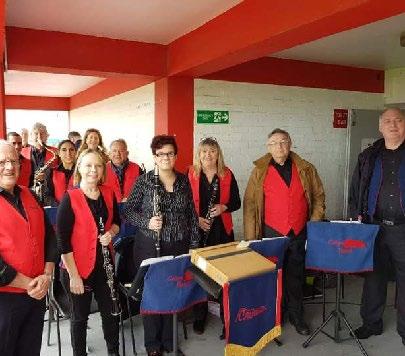
Today, operating under the streamlined banner of The Calpe Band, the ensemble gathers for rehearsals at its permanent home at 35a Town Range. While the military precision of its early days remains woven into its DNA, the modern band is distinctly characterized by its profound commitment to civic duty and community outreach.
The Calpe Band remains a highly visible and beloved fixture across Gibraltar’s cultural landscape. Whether they are bringing festive cheer to the annual Christmas extravaganzas in Casemates Square and Cathedral Square, or teaming up for moving collaborative performances with the PAAMOA Community Choir, the band’s focus is squarely on public enrichment. Their impact is perhaps most deeply felt during their dedicated charity functions, such as the
poignant spring concert held at the Piazza in May 2022, where the band played the Ukrainian national anthem to rally local support and awareness.Almost forty years since those first six musicians convened, the Calpe Band endures not just as an ensemble of performers, but as a dedicated volunteer force that continues to soundtrack the history, heritage, and heart of Gibraltar.
GibYellow Awards 2026 Officially Launched Live on GBC
The GibYellow Awards Gala 2026 were officially launched today during an appearance on GBC’s flagship programme Gibraltar Today, marking the beginning of what promises to become a landmark annual celebration of Gibraltar’s business community.
Hosted by GibYellow and established as a fully not-for-profit initiative, the Awards will culminate in a prestigious black-tie Gala evening on 1st July 2026, broadcast live on GBC. All profits from the event will be donated to Cancer Relief Gibraltar.
Michelle Tavares, Managing Director of GibYellow outlined the vision behind the Awards:
“The GibYellow Awards are about giving the public a genuine voice in recognising the businesses that shape our everyday lives. Every winner will be chosen by public vote. This is about community pride, transparency, and celebrating excellence across Gibraltar.”
A defining feature of the Awards is their dual structure: public-voted categories alongside a select number of industry-recognised awards supported by respected professional and civic bodies, the Gibraltar Federation of Small Businesses (GFSB), the Chamber of Commerce, Rotary Club, The Round Table / 41 Club.
Representatives from both organisations joined the launch broadcasts, reinforcing
the credibility and collaborative nature of the initiative.
Kim Chang from the GFSB commented:
“We are proud to support an initiative that celebrates hard work, innovation and service within Gibraltar’s business communi-
ty. The Awards reflect the importance of recognising excellence while maintaining fairness and integrity.”
Public Nominations Now Open
Nominations officially opened today at awards.gi, where members of the public
Nautilus are extremely excited to have announced their 10th annual World Oceans Day School Competition. The theme this year is When Youth Lead, Oceans Win with a focus on a decade of Nautilus Marine Science Studies offered to schools.
Since its inception the submissions are always of such high standard and TNP always look forward to receiving them. We are in no doubt that this year will supersede once again. The deadline for entries is May 22nd.
can nominate their favourite businesses across a range of categories including customer service, retail, hospitality and community impact.
The nomination phase will run for six weeks, after which the Top Five businesses in each public category will progress to the final voting round.
The Gala on 1st July 2026 will bring together senior business leaders, Ministers, dignitaries and members of the wider community for a live televised celebration of enterprise and achievement in Gibraltar.
An Annual Fixture for Gibraltar
The GibYellow Awards have been designed as a long-term, annual event aimed at strengthening community engagement and recognising the contribution of businesses across all sectors.
Michelle Tavares added:
“This is not a one-off event. We are building something that will grow in stature year after year, an occasion where Gibraltar comes together to celebrate the businesses that make a difference.”
Businesses and members of the public are encouraged to visit awards.gi to nominate, participate and learn more about the Awards framework and voting process.
“ Where Youth Lead, Oceans Win” 10th World Oceans Day Nautilus Competition
• Four Categories: Individual Year Group, School, Overseas
• Deadline for entries: May 22nd
• Submissions via: info@thenautilusproject.co
• Prizegiving Ceremony: June 8th
Celebrating 10 years of Nautilus on the Rock! Email
Ayelet Mamo Shay
Building Bridges, Businesses, and Belief in Gibraltar
“Don’t be afraid. Just do it. The worst case is that you fail, but if you don’t try, nothing will ever happen.”
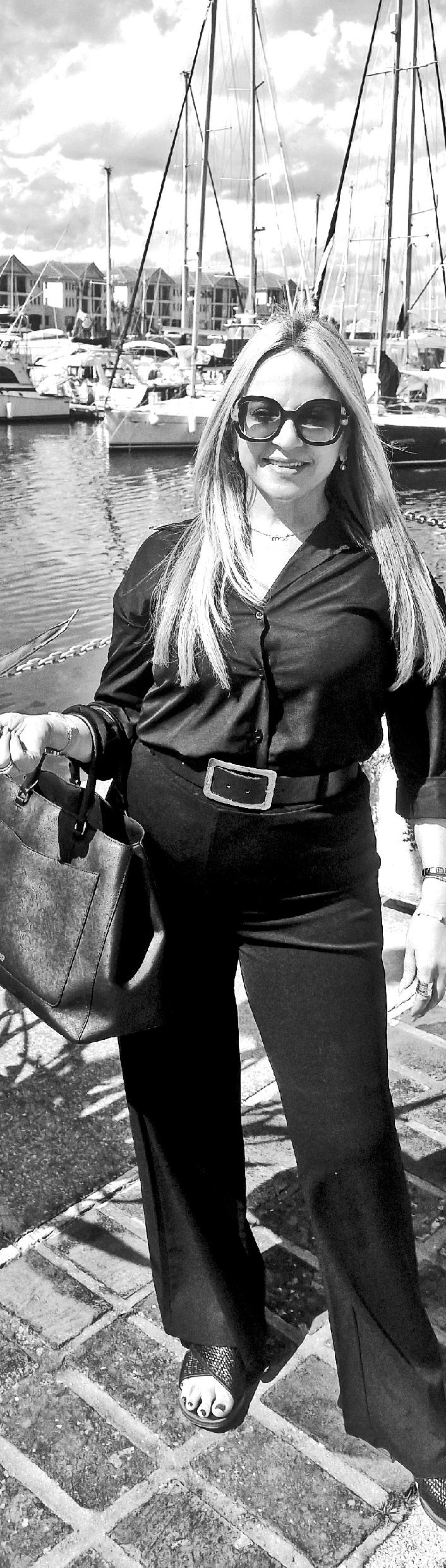
For Ayelet Mamo Shay, this isn’t just advice, it’s a philosophy that has shaped her entire journey. From arriving in Gibraltar as a newcomer to becoming one of its most dynamic business figures, her story is one of bold decisions, relentless work ethic, and a deep belief in possibility.
Today, as co-founder of Benefit Business Solutions Ltd, chairwoman of the Gibraltar-Israel Chamber of Commerce, and founder of initiatives celebrating women in business, Ayelet has become a powerful force within Gibraltar’s entrepreneurial landscape. But her journey began with something far simpler: a dream and the courage to act on it.
Long before she entered the world of business, Ayelet had already set her sights high. Growing up in Israel, she would confidently declare at just nine years old that one day she would become President. It was a bold ambition, but one rooted in a deep inner belief that anything was possible. That same attitude would later define her approach to entrepreneurship.
“I always had the dream to set up a business,” she says. “But I believe in life there is a right time and a right moment. When that moment comes, you just have to take it.”
That moment arrived years later, having moved from Israel to Gibraltar due to her husband’s role at Deloitte, she spent years building her own professional experience, including a role at BetVictor. Yet, the entrepreneurial spark never faded. That moment of transition came when her husband decided to step away from a stable, high-ranking corporate path and told her that he wanted to set up a business on his own. Instead of resisting the risk, Ayelet did the opposite and she doubled down on it. “I’m not the normal wife,” she says with a smile. “I told him that I would leave my job too and we would do it together.”
The early days of Benefit Business Solutions Ltd were far from glamorous. There were no clients, no office setup, and no safety net, just determination and belief. “I didn’t even have a table or a chair,” she recalls. “I had nothing. Not even one client.” In a moment that still resonates deeply with her, a former manager offered support, lending basic office furniture to help them get started. It was a small gesture, but one that symbolised something bigger: trust. “It showed me that sometimes people see your potential before you even prove it,” she says. “That belief can make all the difference.”
From those humble beginnings, the business grew steadily, built on relationships, reputation, and an ability to deliver in complex, highstakes situations. For Ayelet, Gibraltar has been more than just a place to live, it has been a catalyst for growth.
Coming from Israel, where business often involves long travel and intense schedules, she found Gibraltar’s scale and connectivity to be a unique advantage. “We’ve been very fortunate here,” she says. “You can build a business, travel the world, and still have lunch with your children, and that balance is priceless.”
Through Benefit Business Solutions Ltd, Ayelet has worked on projects that have had a tangible impact on Gibraltar’s economy. One of the most notable involved the relocation of over 200 individuals, 43 families, in a single coordinated effort. The scale was unprecedented, requiring the management of housing, documentation, healthcare, education, and more. “It was very, very difficult,” she admits, but the long-term impact of that project is still being felt. “There are now over 180 employees,” Ayelet states.
Her approach to challenges is refreshingly direct: “Nothing comes to me easily. Everything I’ve achieved is from hard work, putting all the pieces together like a puzzle until it works.” Ayelet is persistent, practical, and solution-driven, and that has been key to her success.
Ayelet’s work extends far beyond consultancy. As chairwoman of the Gibraltar-Israel Chamber of Commerce, she has played a central role in strengthening ties between Gibraltar and Israel. Through business delegations, international events, and ongoing collaboration, she has helped position Gibraltar as a gateway for global opportunity.
She is also co-founder of Gibraltar Pass, demonstrating her ability to identify opportunities across sectors from corporate services
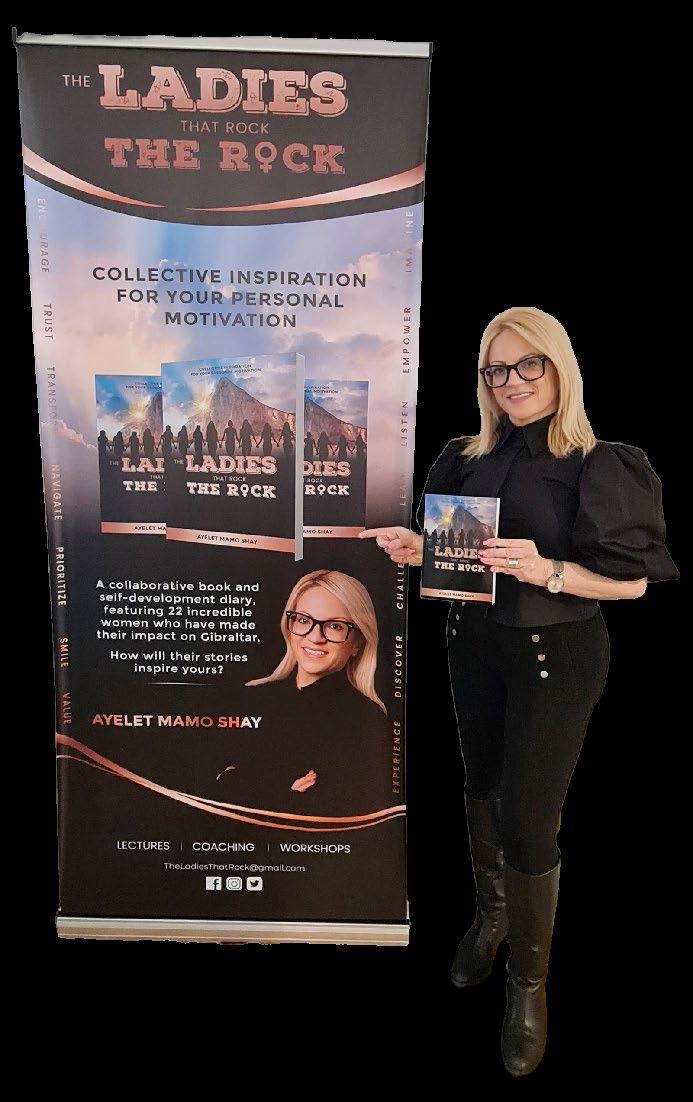
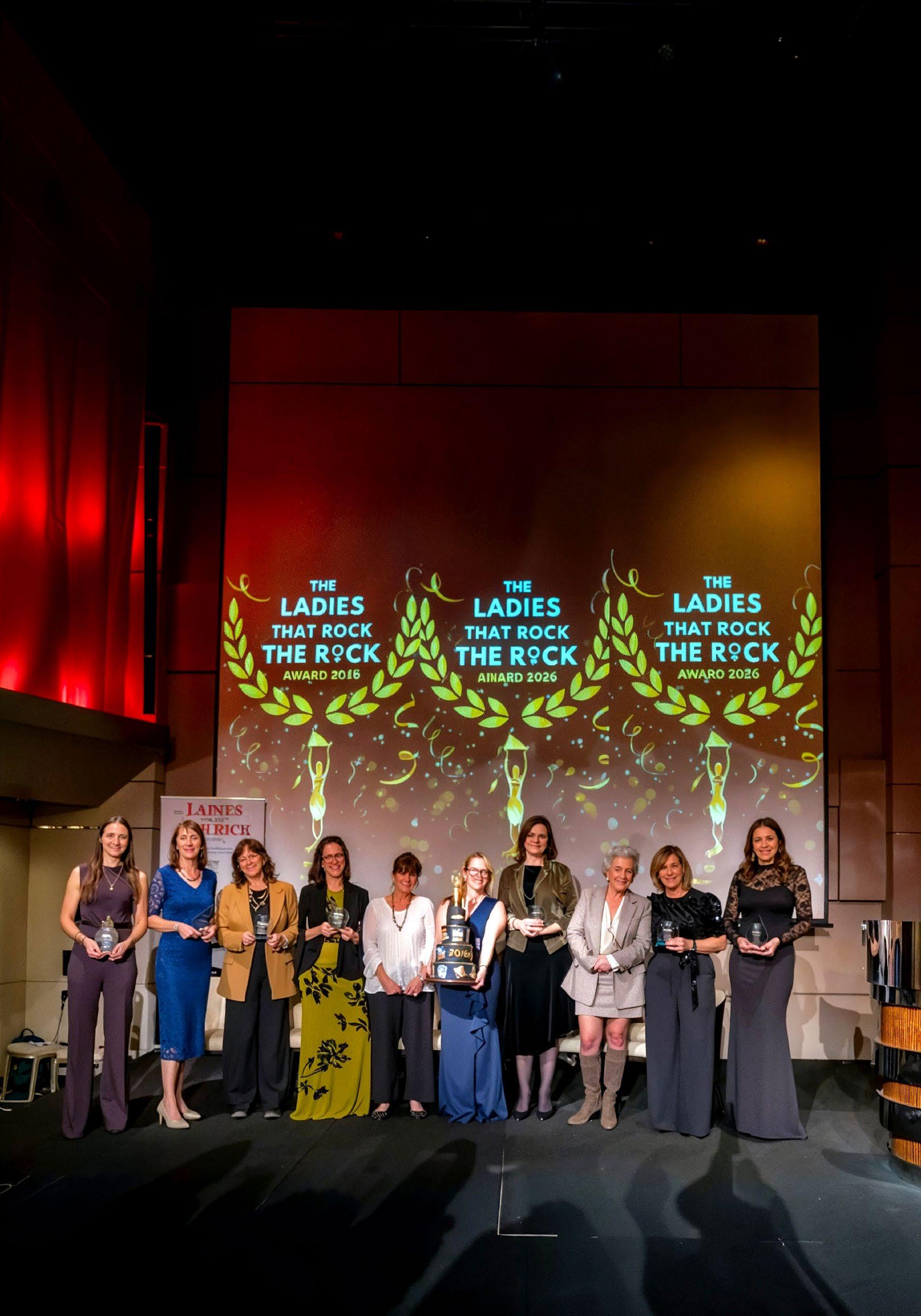
to tourism and innovation. Her career is not defined by a single industry, but by a consistent ability to connect ideas, people, and markets. While Ayelet resists being defined solely by gender, her impact on women in business in Gibraltar is undeniable. Her initiative, The Ladies That Rock the Rock, began with a simple but powerful observation: despite the many accomplished women in Gibraltar, there was no platform recognising their contributions.
While frequently travelling for business, Ayelet makes a conscious effort to prioritise her role as a mother, often bringing her children along on trips. During one visit to London with her young daughter, after a tour of Parliament it was a trip to the gift shop sparked something bigger. Her daughter asked for a book about women who changed the world. “She was about six and I said of course I will buy it for you but I also wrote her a dedication in the book that said: ‘To my beautiful daughter Shavit, one day you will be a lady that will change the world as well’.”
“On the way back on the flight I realised there are lists of powerful ladies in other countries, but there is no list of powerful women in Gibraltar, and there are so many powerful ladies here, why shouldn’t they be recognised?” That thought, combined with that inspiration on the journey home, led to the creation of The Ladies That Rock the Rock, an idea born from both motherhood and a desire to celebrate local female achievement.
What started as a book featuring 22 women has evolved into an annual awards programme, supported by the Ministry of Equality and driven by public nominations. Today, it attracts over 100 nominations each year, celebrating women across industries and backgrounds. The initiative has become more than an awards programme, it is a movement that highlights the depth and diversity of female talent in Gibraltar.
When asked about the “power of women,” Ayelet’s perspective is clear: it’s not about comparison, it’s about mind-set. “The power is to understand and believe that we are equal,” she says. “That we can do anything we want.”
For her, power comes from within, from intuition, determination, and the willingness to act. Interestingly, she credits much of her support
network to men, mentors and colleagues who opened doors and encouraged her progress.
In Gibraltar’s collaborative business environment, she sees opportunity rather than limitation. “It’s not about men or women,” she adds. “It’s about believing in yourself.”
In 2021, Ayelet became the first Israeli to receive the Gibraltar Mayor’s Award, an achievement that held deep personal meaning. “I was so focused on my work, I never even thought about awards,” she says. “When it happened, I was emotional. I couldn’t believe it.” For Ayelet, the recognition was not just professional, but it reflected acceptance, contribution, and a sense of belonging in a community she had grown to love.
Beyond her entrepreneurial work, Ayelet is also a writer, journalist, and PhD researcher focusing on small Jewish communities around the world. Her book Relocation Darling, Relocation! draws on her own experience of moving countries, a journey she describes as both challenging and transformative.
Despite her many roles, she is clear about what matters most. “First of all, I’m a mum to my three children, and a wife to my husband,” she says. “That is my most important role.”
The future, for Ayelet, remains as ambitious as her past. Her early dream of entering politics has never fully faded. Whether in Gibraltar or Israel, she continues to explore how she might one day contribute on a broader public level. For now, her focus remains on building, connecting, and inspiring.
For anyone considering a bold step, starting a business, changing careers, or moving countries, Ayelet’s message is simple and direct: “Don’t be afraid. Just do it.” It’s a message rooted in experience, not theory. Because if her journey proves anything, it’s that success doesn’t come from waiting for certainty, it comes from acting in spite of it.
In a few weeks, I turn 47. I run my own business and juggle the usual pressures that come with it, and, like most people I speak to, try to make sense of a world that feels increasingly noisy, uncertain, and, at times, very divided. On paper, I have a successful life. I have a family whom I love, I am blessed with some great friends, and I am generally satisfied with how my career is going. But that doesn't stop me from feeling pretty unhappy at times.
I've sat with that contradiction for a while. How can someone who, by most reasonable measures, has a good life still sometimes find himself staring at the ceiling at 2am? It bothered me enough that I started asking questions. Not in a crisis kind of way, just in the way you do when something doesn't quite add up, and you're old enough to know it's worth figuring out. That curiosity is what led to this series.
In my business and work as a podcaster and magazine editor, I tend to stick to the facts, ask the questions, and keep myself out of the story. HAPPINESS+ is something different. It's probably the most personal thing I've put my name to, and I want you to be part of it. Each month, I'll take happiness and one dimension of life (work, family, money, social media, community etc) and explore what the research says, what people here in Gibraltar experience and try to make sense of it all.
Lots of research = lots of confusion
There's never been more research into human happiness, and there's never been more confusion about it either. The wellness industry tells us to meditate and be grateful. Social media shows us highlight reels of other people's apparent joy. Politicians talk about how well everything’s going. And yet rates of anxiety, loneliness, and dissatisfaction remain stubbornly high across much of the developed world. The latest World Happiness Report ranked the UK 29th globally, with a life ladder score of 6.694 out of 10. The Nordic countries (Finland, Iceland, Denmark) continue to dominate the top of the rankings, and the research consistently points to why: it isn't just wealth driving those scores, but levels of social trust, quality of public institutions, strength of community support, and a genuine sense of personal freedom.
While there’s no data on Gibraltar (there never seems to be!), we potentially sit in a uniquely interesting position in this conversation. We're a small, close-knit community with strong family bonds, extraordinary natural surroundings, and a cultural richness that larger places can only envy. But we also face our own pressures, including property costs, years of uncertainty since Brexit, and the same global currents of anxiety and disconnection that are reshaping wellbeing everywhere. I've seen that tension surface, both in my work at GibSams and in the many conversations that led me here. We are, at our core, a compassionate community. But compassion, like happiness itself, needs tending.
Defining "happiness"
Researchers typically break it down into three distinct but related things. The first is evaluative wellbeing: how satisfied you feel with your life overall when you step back and take stock. The second is experiential wellbeing: the emotions you actually feel day to day, the joy, the stress, the anxiety, the pleasure. The third is something called eudaimonic wellbeing, a sense of meaning, purpose, and fulfilment, the feeling that what you're doing is worthwhile.
These three things don't always move together, and I think that's where a lot of us get confused. Like me, you can have a life that looks good on paper (stable job, comfortable home, loving family) and still feel flat on a Wednesday morning. Equally, someone going through genuine hardship can report a deep sense of purpose. That's not a contradiction; it's just a reflection of how complex this subject really is. And as I can personally attest, you can tick most of the boxes and still find yourself wondering whether you're genuinely happy at all.
The UK's official measure of national wellbeing tracks all three dimensions: life satisfaction, feelings of worthwhileness, happiness yesterday, and anxiety yesterday. What the data reveals is striking. The wellbeing gap between people in very good health and those in very bad health is vast. In the most recent figures, over 43% of people reporting very bad health also reported low life satisfaction, compared to just 1.4% of those in very good health. Mental and physical health, it turns out, sit at the very heart of how we experience our lives.
HAPPINESS+
David Revagliatte explores what it means to be happy.
What the science says
Fortunately, the research highlights several areas as central to our overall happiness. Employment matters enormously, not just for income, but for structure, identity, and social contact. A recent European panel study found that unemployment was associated with a loss of 0.64 points on a tenpoint life satisfaction scale. Fascinatingly, around 20% of that loss was mediated specifically through loneliness rather than financial strain alone. Lose your job, and part of what you lose is connection. As someone who has run his own business for years, I know that the line between work and identity can become blurry in ways that aren't always healthy. We'll explore all of that in depth in the HAPPINESS+WORK feature.
Social relationships emerge repeatedly as one of the most powerful drivers of wellbeing. Money matters too, but in more complicated ways than we might assume. Once individual differences are accounted for, the direct relationship between income and happiness weakens considerably, particularly for higher earners. It's financial strain and insecurity that does the real damage, rather than the absence of absolute wealth. I suspect many of you reading this will recognise that feeling: that earning more hasn't necessarily made life feel easier or more meaningful in the ways you hoped it might.
Perhaps most encouraging for those of us lucky enough to live here, with the Rock as our backdrop and the sea never far away, is the growing body of evidence on the benefits of nature and green spaces. A re-
cent meta-analysis across 20 studies found that exposure to natural environments significantly increased positive affect and reduced negative affect in participants. That Med Steps climb or early morning run along Europa Road isn't a luxury. Science says it genuinely makes you feel better.
And then there's the role of community and institutions. Across international rankings, countries with strong public services, high social trust, and a sense that systems are fair and functional consistently score higher on life satisfaction. Community matters at a structural level, not just a personal one. It's something I think about a great deal in the context of what I see at GibSams, where the relationship among connection, purpose, and mental health plays out in very real, very human terms every single day.
What to expect
Each feature in this HAPPINESS+ series will take one dimension of life and open it up properly. Here's a taste of what's ahead.
HAPPINESS+COMMUNITY: Perhaps most relevant for Gibraltar of all, what does it mean to belong somewhere? What does that closeness give us, and what does it cost?
HAPPINESS+WORK: When did you last feel genuinely satisfied at work? Is satisfaction even the same thing as happiness? We'll look at what makes work meaningful, and what quietly corrodes it.
HAPPINESS+FAMILY: The bonds that shape us most are also the ones that can stress us most. How do family dynamics (the expec-
tations, the traditions, the love, and the friction) influence how happy we feel?
HAPPINESS + SOCIAL MEDIA: We scroll, we compare, we post. But what is all of that actually doing to us? The evidence here is more nuanced than the headlines suggest.
HAPPINESS+MONEY: Is there a point at which financial worry stops affecting your happiness? The research offers some genuinely interesting insights on this.
Let's figure this out together
At this stage, I don’t think this will be a selfhelp journey with a neat list of tips at the end, and I am absolutely not presenting myself as someone who has cracked the happiness code. Over the coming weeks, I'll be speaking to all sorts of people from across our community about their own experience of happiness. I'll bring in the best available research and I'll share my own reflections along the way (including the uncomfortable ones).
In the meantime, get in touch - tell me what happiness means to you, what gets in the way of it, and what you'd like this series to explore.
For more:
email: david@motion.gi follow: @david_revagliatte
COMMISSIONER OF POLICE ANNOUNCES PROMOTIONS IN THE ROYAL GIBRALTAR POLICE
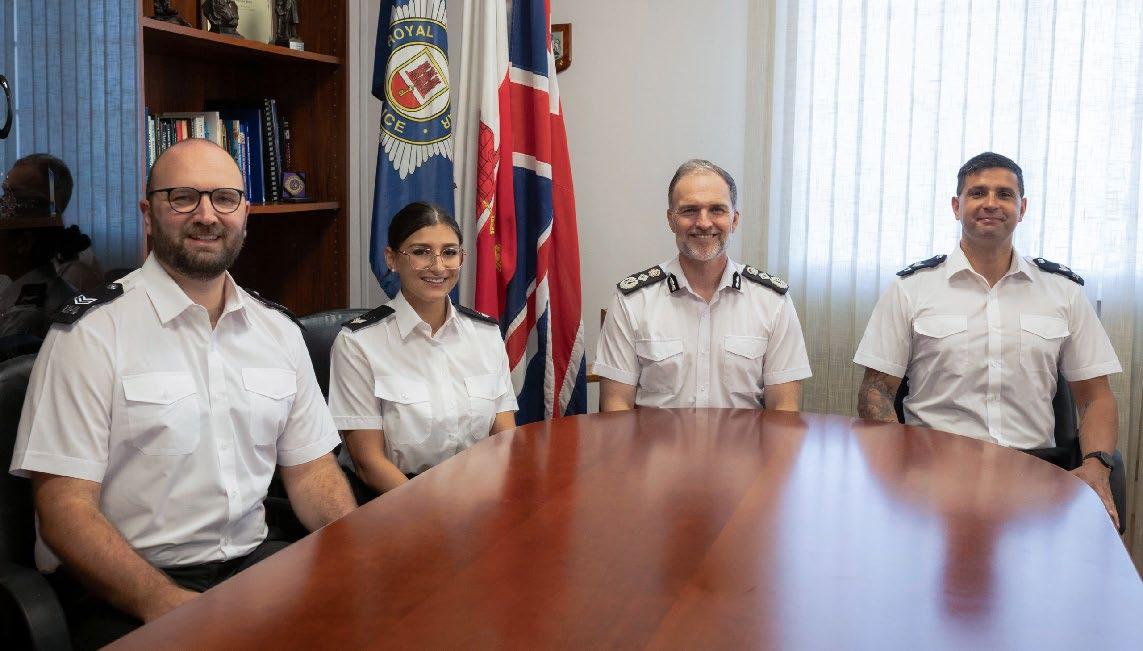
Commissioner of Police Owain Richards is pleased to announce the promotion of 6 RGP officers to the ranks of Inspector and Sergeant, follow recommendations by a selection panel comprising representatives from the Royal Gibraltar Police (RGP) and HM Government of Gibraltar.
Police Sergeant Patricia Gonzalez joined the RGP in 2004, commencing her career in a Response Team before being transferring to the Criminal Investigation Department (CID) as a Detective Constable, where she gained extensive experience in complex investigations, including non-recent sexual abuse and other serious crime.
Police Sergeant Byron Shute joined the RGP in 2018, initially serving on Response Teams before transferring to the Crime and Protective Services Division as a Detective Constable and serving within both the Professional Standards Department and Drugs Squad. In 2024, he returned to uniformed policing, performing the roles of Crown Sergeant
Training team. He is one of the RGP’s accredited Public and Personal Safety Training (PPST) instructors, and has represented both Gibraltar and the RGP at international sporting competitions over the past 10 years in the US and Europe, winning Silver and Bronze medals in Taekwondo.
Police Sergeant Matthew Flowers commenced his policing career in 2006 with Northamptonshire Police (UK), where he served for 13 years within Response Teams and the Southwest Sector Safer Community Team, where he participated in several long-term joint operations targeting the supply of Class A drugs. He joined the RGP in 2019, and has to date served within various Response Teams and the RGP’s Professional Standards Department.
and Force Incident Manager in various Response Teams, before joining the Operations Planning Team in June 2025, forming part of the team managing operational demand and resourcing linked to daily frontline policing operations and events policing Police.
Constable Alexander Trinidad joined the RGP in 2013, and has throughout his career to date has served in Response Teams, Community Policing, File Preparation and in the Recruitment and
Inspectors
Police Constable Kianna Hermida joined the RGP in 2020, initially serving in Response Teams before transferring to the Public Protection Unit as a Detective Constable within the Safeguarding Team. She currently leads the RGP’s Domestic Abuse Champions Network, and in December 2025, she received the “Gavin Clinton Constable of the Year" award following nomination by peers and approval by a selection panel.
Police Constable Mark Anderson commenced his policing career with the States of Jersey Police, where he served for 9 years. He joined the RGP in 2022, and has served in Response Teams and within the Professional Standards Department. He is an accredited National Firearms Instructor and an Armed Response Officer, and in February of this year, was one of two RGP Firearms instructors who completed specialist training that accredited them to deliver training to fellow RGP instructors and all RGP Firearms Officers on the new Taser 10 conducted energy device, currently being rolled-out to various UK police forces.
Sergeants
Property ON THE ROCK
GIBRALTAR PROPERTY QUARTERLY MARKET UPDATE
At BMI Group, we believe in keeping our clients, investors, and stakeholders informed about the dynamic landscape of Gibraltar's property market. Through our periodic updates, we share insights, trends, and forecasts based on extensive analysis and on-the-ground expertise, as shared by our Co-Founder and Managing Director, Louis Montegriffo. These updates provide clarity on the opportunities and challenges shaping the market, ensuring you have the information you need to make informed decisions.
Louis C. Montegriffo
SPRING
A market moving forward, but not quite there yet
The first Gibraltar Property Market Update of 2026 lands at a moment of cautious progress. While the announcement that the Treaty text is expected to be in place by April 10 has helped clarify direction, confidence has not yet fully translated into momentum.
In the latest BMI podcast, Managing Director Louis Montegriffo speaks with David Revagliatte and offers a grounded, honest assessment of the market. His message is consistent throughout. Gibraltar remains fundamentally strong, but global uncertainty, oversupply in parts of the market, and a pause in residency approvals are all shaping sentiment.
As Louis puts it simply, the market is “ticking along” rather than accelerating.
Global events are weighing heavily on confidence
Louis is clear that the recent property realignment cannot be explained by local factors alone. While the Treaty remains central to Gibraltar’s long-term outlook, wider global events continue to influence buyer behaviour.
“One of the main reasons we’ve seen the realignment in the market… has mainly been the world crisis, interest rates, inflation,” he explains, adding that recent geopolitical instability has only heightened caution.
For international buyers in particular, the challenge is not Gibraltar’s fundamentals, but the mood created by global headlines.
“Most people are watching the news and thinking it’s a pretty scary time out there,” Louis says.
Why today feels similar to 2008
One of the most striking moments in the conversation is Louis’s comparison with the 2008 financial crisis. Not in terms of outcomes, but in terms of mood.
“There are some similarities in so far as the mood… and how as a business we are approaching clients,” he explains.
He is careful to stress that Gibraltar did not experience a property crash in 2008 and he does not expect one now. In fact, Gibraltar’s economy continued to grow through that period. The parallel lies in sentiment. Clients are cautious, investors are hesitant, and external events are shaping decisions more than local performance.
His message is clear. “Let’s not panic,” Louis says. “Gibraltar has so much to offer.”
Sales activity tells a clear story
Despite the cautious mood, BMI has started the year positively. What matters, however, is who is buying.
A MORE DISCIPLINED, PRICE-SENSITIVE MARKET
The Gibraltar property market is currently defined by a refined sense of balance, where discerning buyers are placing greater emphasis on quality, positioning, and long-term value.
RESILIENT PRICES DESPITE LOWER TRANSACTION VOLUME
While transaction levels have moderated, pricing across prime developments has remained notably resilient, underpinned by limited supply and sustained demand for well-located, high-specification homes.
CAUTIOUS CONFIDENCE DRIVEN BY EXTERNAL FACTORS
Against a backdrop of broader economic and policy considerations, the market continues to demonstrate quiet confidence, with premium properties and turnkey residences particularly sought after by both local and international purchasers seeking security, lifestyle, and enduring investment appeal.
“Where things have been quite good has been developments like Midtown, Ragged Staff, King’s Wharf,” Louis explains. “Owner-occupier, larger properties, two, three, four bedrooms.”
These buyers are not speculating. They are people already in Gibraltar, buying homes to live in. External uncertainty matters far less to them.
By contrast, segments with oversupply, particularly studios and small one-bedroom units, continue to struggle. The market, Louis says, is no longer moving as one. Different segments are performing very differently depending on supply and buyer profile.
Investors are under pressure from better alternatives
The speculative investor market remains subdued. For much of the past two years, fixed-term deposits have offered better returns than rental yields.
“For the past couple of years, you’ve been able to get more of a return out of a fixed deposit account than you would out of buying a property and getting a yield,” Louis explains.
With rental yields historically between 4.5 and 5.2 percent, rising interest rates have shifted behaviour. Some investors are holding cash rather than committing to property.
That said, Louis points out that smart money still moves in cycles. Drawing a comparison with London, he notes, “London will always be London.” His conclusion is that Gibraltar shares similar long-term characteristics. “Gibraltar is Gibraltar,” he says, and that stability still matters.
Residency pause creates short-term friction
Louis is candid about the impact of the residency pause. From an estate agency perspective, he describes it as “terrible news” in the short term. Buyers who cannot secure residency often will not even rent, let alone purchase.
At the same time, he understands the Government’s reasoning. The potential impact of the Treaty on population, healthcare, education, and infrastructure is significant.
“I get completely the reasoning behind the pause,” Louis says, adding that Gibraltar is holding “an incredible card” in terms of what residency offers.
He expects tighter, clearer criteria to emerge, likely raising thresholds for Cat 2 residency and focusing on investable wealth rather than headline net worth.
Patience, not pressure
If there is one theme Louis returns to repeatedly, it is patience.
“It’s not going to happen overnight,” he says. “And when it does happen, it’ll be oh my God, it happened.”
Trying to force the market, he warns, risks creating the opposite effect. Gibraltar is not in trouble, but it is realigning. Some segments will adjust. Others will strengthen.
His advice to buyers and sellers is simple. Take good advice, understand your objectives, and do not rush decisions based on noise.
In summary
The Gibraltar property market enters 2026 steady but cautious. Owner-occupier demand is holding firm. Investors remain selective. Global uncertainty continues to weigh on sentiment, but Gibraltar’s fundamentals remain strong.
As Louis puts it, “Places like Gibraltar tend to do well” during periods of global instability.
For those prepared to take a long-term view, opportunities remain very much in play.
To hear the full conversation, watch the latest interview between David Revagliatte and Louis Montegriffo, and follow BMI Group on social media for ongoing property market insight.
After years in the making, one of the Rock's most significant housing developments is opening its doors - and it's worth understanding what makes it tick. There's a particular kind of anticipation that comes with waiting for a home. Not a hotel room, not a rental stopgap, but an actual place to put down roots. For hundreds of Gibraltarian families, that wait is finally coming to an end.
Chatham Views, the Government of Gibraltar's latest affordable housing development, is built on the site of the former Westside School on Queensway Road a plot that generations of Gibraltarians will know well. It's a neat piece of continuity: ground that once educated the community is now housing it.
Located in Gibraltar's western residential hub, residents of Chatham Views will be within walking distance of Main Street and all major leisure and entertainment areas.
The mix of apartment sizes reflects that too. The development offers one, two, three and four-bedroom configurations, meaning young couples starting out and larger families alike can find something that genuinely fits. The project budget was confirmed at £57.4 million significant investment in getting this right.
Designed to Belong
One of the quieter achievements of Chatham Views is how it sits within its surroundings. The development has been designed to fit comfortably within its neighbouring sites, with the overall building height deliberately capped to match that of the adjacent Montagu Gardens estate. It's the kind of considered planning decision that often goes unnoticed but its absence is always felt. Rather than imposing a new skyline on a well-established neighbourhood, Chatham Views steps in as a natural extension of the streetscape.
HOME, FINALLY:
CHATHAM VIEWS AND WHAT IT MEANS FOR GIBRALTAR
In a territory where location is everything and space is always at a premium, that kind of connectivity matters enormously.
A Development Built for the Community
A total of 228 homes have been created, with one block dedicated purely to rentals - 44 purpose-built flats for the elderly, each with their own parking spaces directly underneath. It's a detail that says a lot about the thinking behind the project. Rather than simply stacking apartments and calling it done, Chatham Views has been designed with the reality of Gibraltarian family life in mind: multi-generational, community-rooted, and practical.
Next door, new school buildings for Bishop Fitzgerald Middle School were developed in tandem meaning the community infrastructure and the homes grew up alongside each other. The result is a neighbourhood that arrives more or less complete, rather than requiring residents to wait years for amenities to catch up.
The Bigger Picture
Chatham Views doesn't exist in isolation. It forms part of a sustained Government programme that has delivered thousands of affordable homes - from Beach View Terraces to Bob Peliza Mews with the explicit aim of keeping Gibraltarians on the
Rock rather than priced out of it. In a territory where land is finite and demand is constant, that commitment is not a small thing.
Completion was programmed for January 2026, with delays largely attributed to the disruptions of the Covid years- a challenge shared by construction projects across Europe. The wait, for those who have been allocated a home here, has been a long one. But the result is a development that feels considered rather than rushed: a place designed to serve its residents well for decades, not just on move-in day. Gibraltar is a place that has always made a lot out of a little. Chatham Views, in its own unpretentious way, is a good example of that instinct in action - community housing that takes its responsibility seriously, built on ground that the community already knew and loved.
Space Saving in your new home
Space is the defining luxury of modern urban living. Nowhere is this more apparent than in compact, high-density homes, where every square metre must work harder, smarter, and more efficiently. As cities evolve and populations grow, the challenge is no longer simply finding a home, it’s making that home feel expansive, functional, and comfortable, regardless of its footprint.
In newly built residential environments, thoughtful design is increasingly shaping how people experience their living space. Developments rising in tightly constrained urban areas, particularly in places like Gibraltar, where land is scarce and demand is high, are redefining what it means to live well within limited dimensions. With hundreds of new homes being delivered as part of a broader housing initiative, these residences are designed not just to accommodate, but to optimise.
Multi-functional living: one space, many roles
Modern living demands flexibility. Homes are no longer used solely for relaxation, they are also workplaces, gyms, and social hubs. In compact environments, this means spaces must serve multiple purposes.
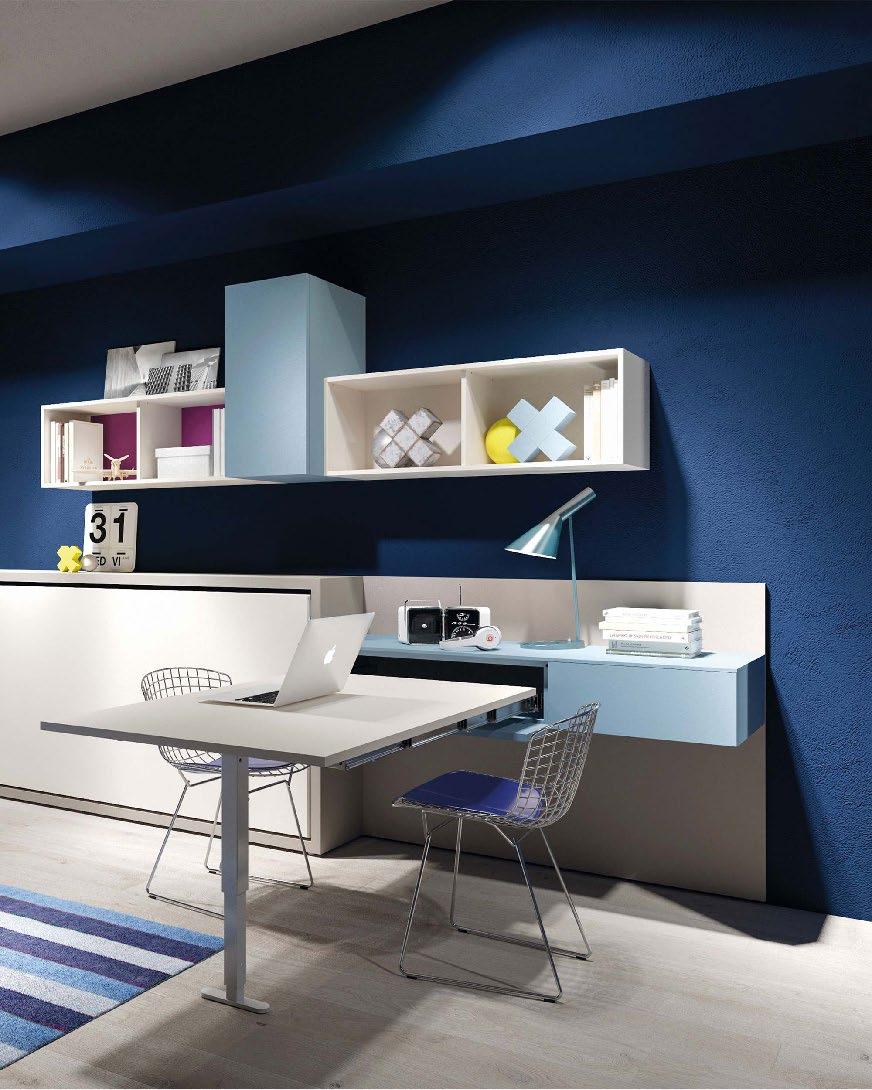
Furniture plays a key role here. Fold-away desks, extendable dining tables, and sofa beds allow rooms to transform depending on the time of day. A living room can double as a workspace during the day and revert to a social space in the evening.
This adaptability is not just a convenience - it’s essential. As more people spend time working remotely, the ability to carve out functional zones within a limited footprint has become a defining feature of contemporary home design.
Jo Ward
SPRING
Designing for space without adding square metres
The most effective way to create a sense of space is not by increasing floor area, but by improving how that space is used. Modern homes are being designed with open-plan layouts that remove unnecessary partitions and allow light to flow freely throughout the interior. This approach instantly creates a feeling of openness, even in smaller properties.
Smart storage: the invisible game-changer
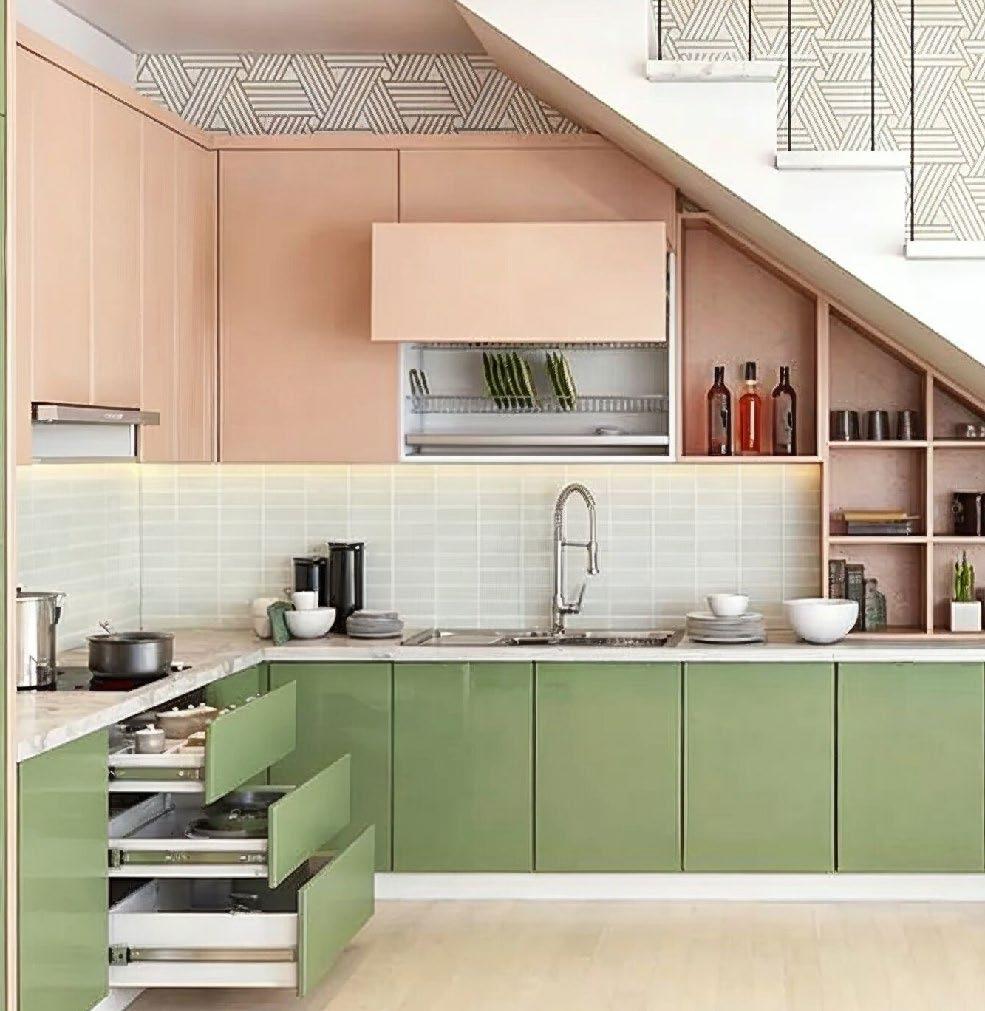
Living in a small apartment can be tricky, but with some clever furniture choices, you can make the most of your limited space. From beds that fold away to tables that double as storage, there are plenty of smart solutions to help you live comfortably and stylishly in a compact home. Here are some brilliant space-saving ideas to transform your small apartment.
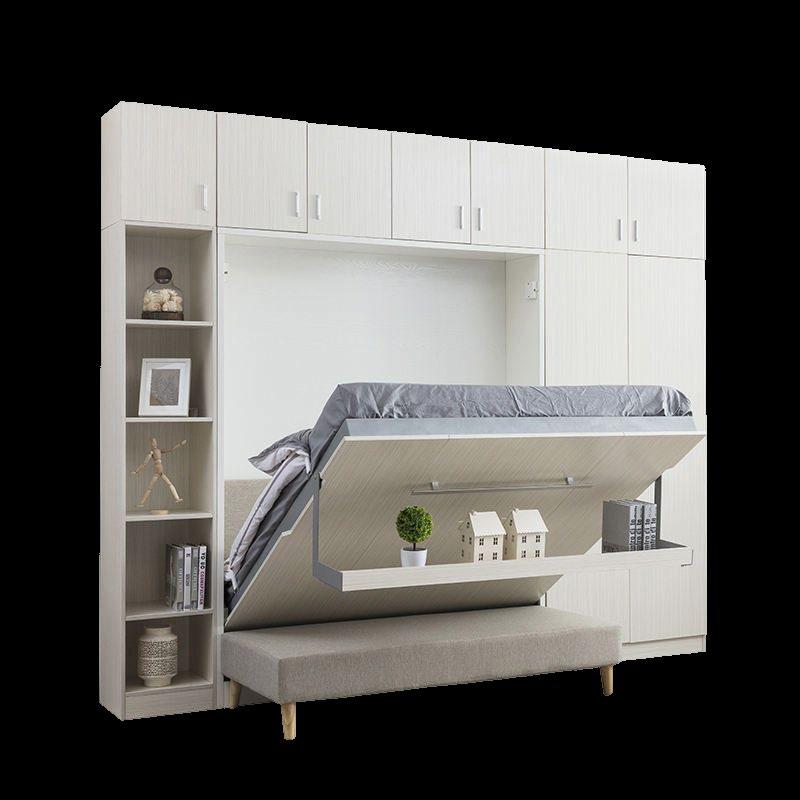
Maximise space in a small bedroom with under-bed storage which makes it possible to keep belongings out of sight while maintaining easy access. For kids’ bedrooms, consider multi-functional furniture such as cabin beds which are perfect for storing toys and clothes. A Murphy bed, also known as a wall bed, is a fantastic solution for small apartments. This clever piece of furniture can be folded up against the wall when not in use, freeing up valuable floor space. It's perfect for those who need a bedroom design that maximises space. Don’t forget the useful sofa bed which is a fantastic addition to any small apartment. During the day, it serves as a comfortable seating area for you and your guests. But at night, it effortlessly transforms into a cosy bed, providing a restful sleep experience, and the best news is that sofa beds these days are stylish and come in a variety of colours and fabrics to blend seamlessly into any home.
Living areas often have to perform several tasks, and in this day and age, when working from home has become increasingly common and you may not have a dedicated work space, there are several creative options that can be incorporated into a corner of your living room or even your bedroom. A wall-mounted foldable desk saves room, looks beautiful, and is ideal for creating a minimal, small desk setup. When folded down, this space-saving desk provides a functional work surface for writing, studying, or laptop use and best of all it folds back up neatly when not in use. If you are looking to optimise a small space, setting up a ladder-style desk is a smart and stylish solution. This space-saving desk leans against or mounts to
the wall like a ladder, combining workspace and storage or display in one vertical unit. Another option is to invest in a mobile rolling desk with wheels for easy movement.
An over-the-bed desk combines convenience and comfort. Designed to slide or sit over the bed, this compact desk creates a functional workspace without requiring a separate area, making it an ideal small desk for bedrooms.
Smart kitchen space saving ideas
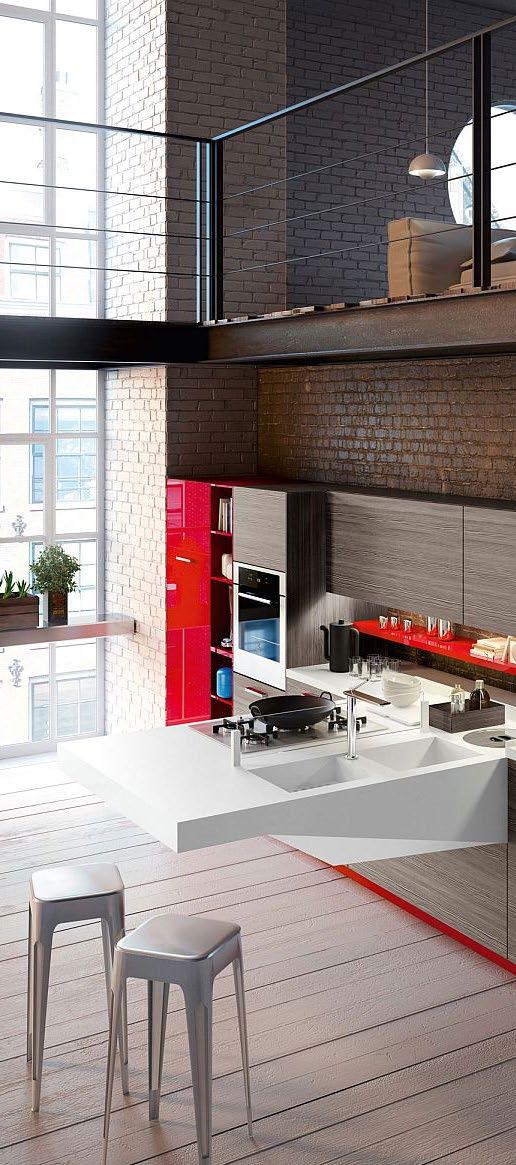
New build apartments often lack kitchen workspace. You can fix that dilemma by adding a rolling trolley with a drop leaf that will act as both an extra counter and provide storage. Another option is a butcher-block top kitchen island trolley which is a great choice if you do a lot of cooking or baking. The butcher block provides a great surface for prep work, and it’s also easy to clean.
Lightweight self-adhesive hooks are perfect for hanging smaller items on the inside of cupboard doors, ideal for storing those measuring cups and spoons that take up so much space in the drawers.
When it comes to pots and pans, rather than piling everything on top of each other, look for a simple, extendable shelf organiser which will make reaching for your favourite pan easier.
Cupboards often have a surfeit of usable space, especially when it comes to storing jars of spices and herbs. Simple tiered spice rack shelving is completely transformative for those small cupboards packed full of ingredients of similar heights and sizes. It utilises every single inch of space and enables you to see everything at first glance to aid your day-to-day cooking routine.
Don’t ignore under-shelf solutions. Depending on the depth of your cupboard, this is an easy way to store transparent film, aluminium foil and plastic bags, or any other loose items you need to keep close to hand but out of the way.
The psychology of space
Ultimately, space is as much about perception as it is about physical dimensions. A well-designed home can feel significantly larger than its actual size, while a poorly designed one can feel cramped regardless of square footage.
Key factors influencing this perception include light, layout, colour, and organisation. By carefully considering these elements, you can create environments that feel open, welcoming, and easy to navigate.
A new standard for modern living
Rather than viewing limited space as a constraint, modern design treats it as an opportunity to innovate, to simplify, and to create homes that truly reflect the needs of contemporary life. In the end, space-saving is not just about fitting more into less. It’s about creating environments that feel bigger than they are, work better than expected, and support the way people live today.
Property
The Importance of
Home Insurance
For most people, their home is the most valuable asset they own. It is not just a building, but a place filled with memories, belongings and a sense of security. While many homeowners focus on maintaining and improving their property, protecting it with the right insurance is just as important. Home insurance provides financial protection and peace of mind should the unexpected happen.
Protection for your property
Home insurance helps protect the structure of your property against events such as fire, storms, flooding, or other types of damage. Repairing or rebuilding a home can be extremely expensive, and without insurance the costs would fall entirely on the homeowner.
Cover for your belongings
Most home insurance policies also include contents cover, which protects the items inside your home such as furniture, electronics, appliances and personal belongings. If these items are stolen, damaged or destroyed, insurance can help cover the cost of replacing them. Considering how quickly the value of household possessions adds up, this protection is essential.
Protection against theft and vandalism
Unfortunately, burglary and vandalism can occur anywhere. Home insurance can provide compensation if your home is broken into and valuable items are stolen or damaged. Many policies also include cover for damage caused during a breakin, such as broken windows or doors.
Liability protection
Another important aspect of home insurance is personal liability cover. If someone is injured on your property, you could be legally responsible for medical costs or compensation. Liability cover helps protect you financially in these situations and can cover legal expenses if a claim is made against you.
Peace of mind
Perhaps one of the most valuable benefits of home insurance is peace of mind. Knowing that your home and belongings are protected allows you to focus on enjoying your home rather than worrying about potential risks. Unexpected events can happen at any time, but the right insurance policy ensures you are prepared.
A small cost for significant protection
Compared with the potential cost of repairing a home or replacing possessions, home insurance is relatively affordable. Choosing the right level of cover and regularly reviewing your policy can help ensure your home remains properly protected.
In summary
Home insurance is not just an optional extra – it is an essential safeguard for one of life’s biggest investments. Whether protecting the structure of your home, your personal belongings, or your financial security, having the right insurance in place ensures that when the unexpected happens, you are not facing it alone.
For more information contact Ibex Insurance on 200 44628 or email gibraltar@ibexinsure.com
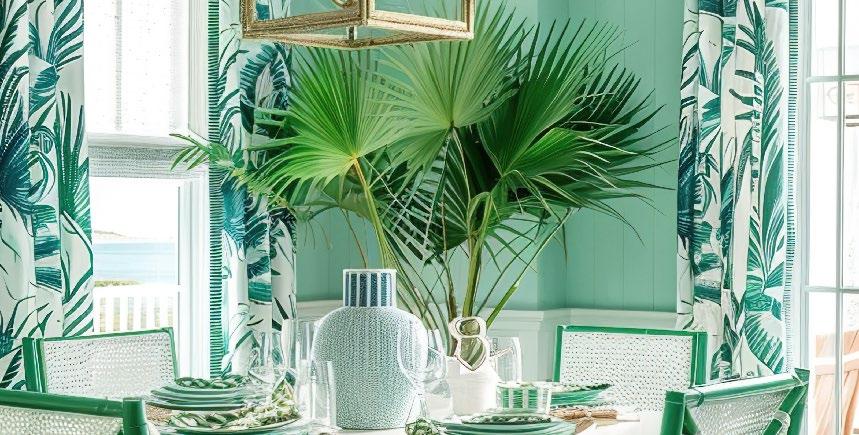
Revitalise your Springtime interiors
Winter will soon be behind us and suddenly everything feels lighter. Buds are blooming, days are stretching ahead of us. It is the perfect time to give your home an inspiring seasonal refresh. Kathleen North
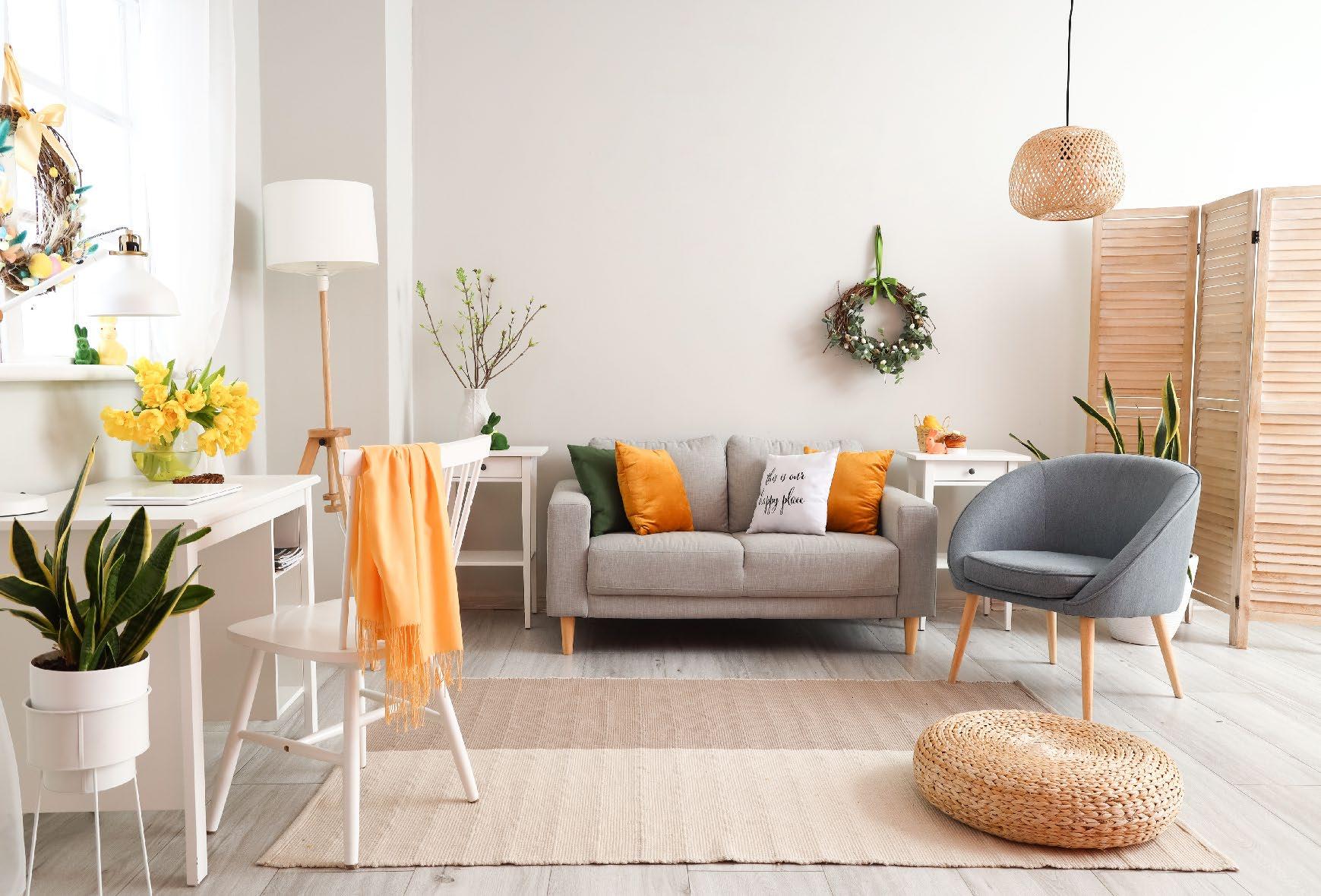
Spring interiors are all about joy, colour and bringing the outside in. It does not have to be a major upheaval. Just a few simple touches can make your space sing with spring.
Allow the light in
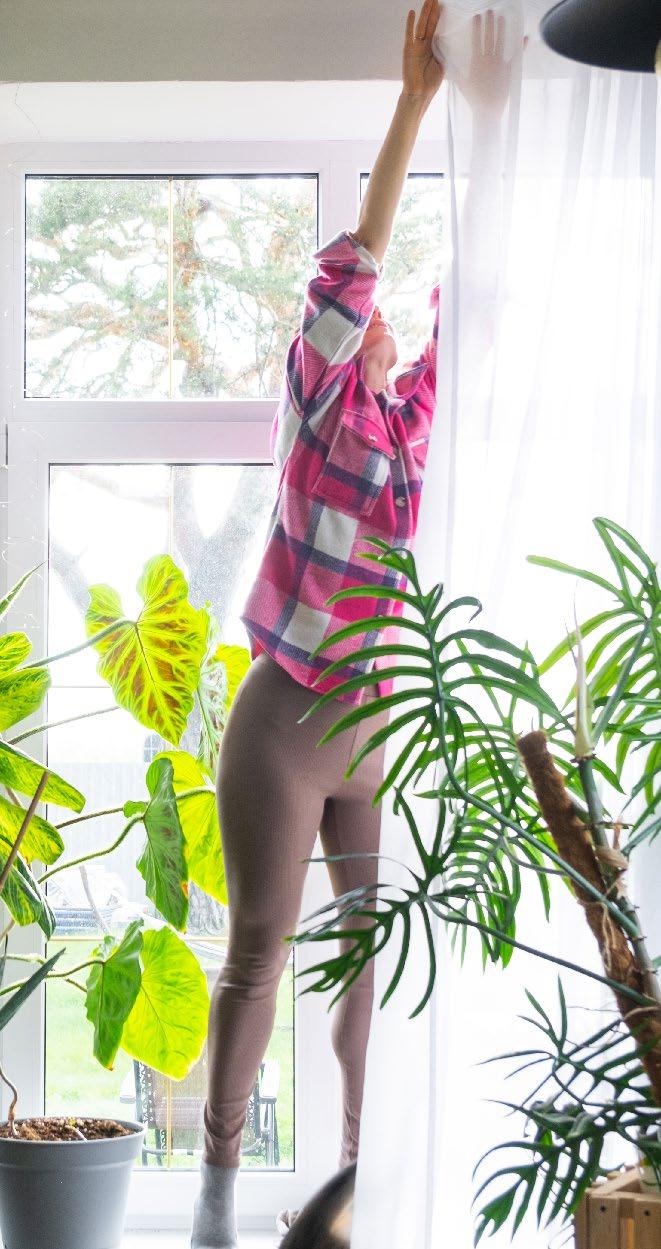
Spring means longer days. More opportunities to enjoy the lovely, natural light. Make the most of it. Swap heavy winter curtains for airy voiles, throw open the windows and let your rooms breathe. If you have a window that is not overlooked, consider leaving it bare to frame your view and flood the space with sunshine.
Regarding light, this is the perfect time to switch up your lampshades. Choose cheerful colours, playful patterns or soft florals to echo the season. Think blossom pinks, fresh greens, duck egg blues – joyful hues to reflect the season.
Bring the outdoors in
Spring flowers are nature’s own mood enhancers. Daffodils, tulips, hyacinths and narcissi. They are easy to find and even simple to arrange. A few bunches from your local supermarket or florist popped into a jug or vintage vase creates an instant spring style.
To a achieve a layer of scent, opt for fragranced varieties like hyacinths or plant bulbs in pretty pots and watch them unfurl day by day.
Add a splash of spring colour
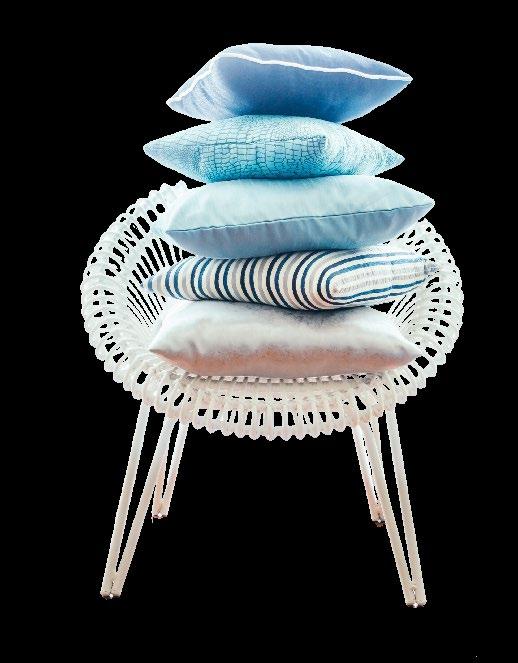
Spring has a unique colour palette: soft pastels, zingy greens, and sunny yellows. You do not need to repaint a whole room to bring it in. A cushion, a lampshade or a fresh throw on the sofa can offer splashed of colour that will lift a space.
If you are feeling brave, go bolder—an accent chair in leafy green or a piece of wall art in bright coral can give a room an instant spring awakening.
Refresh with texture and pattern
Spring is a time for lightness, not merely in colour but in feel. Swap out heavy winter textiles for breezier fabrics: linen table cloths, cotton throws, soft pleated lampshades. Look for botanical prints, ditsy florals and playful motifs. They will all produce a smile.
Embrace a spring clean
Realistically, there is no need for a full Marie Kondo overhaul. However, a little spring decluttering can do wonders for your home and your mood. Clear surfaces, put away the winter clutter, give all surfaces a good dust.
Then stand back and admire your newfound space. Light-filled, flower-filled, and fresh as a daisy.
Try a touch of Scandi spring
The Scandinavians are world leaders regarding their appreciation of light and freshness. After their long, dark winters, spring is practically a national celebration. Their interiors reflect that. Think pale woods, white walls, sheer curtains, a simplistic approach.
The ultimate fjord chic may be wonderful but not necessary. Undoubtedly, a little inspiration from Scandi style – like a simple pendant light, a touch of birch, or a softly pleated shade – can make your space feel bright and calm.
SPRING
Bring spring to the bathroom
It is easy to forget the bathroom when you are updating interiors, however, it is a wonderful space for a seasonal lift. Add a posy of scented narcissi to the windowsill, update your bath mat in spring tones or replace tired towels with inspiring new ones.
It is vital not to forget the lighting. Wall lights or a statement lampshade in the bathroom (safety permitting) can turn a functional space into a rather special sanctuary. Spring should feel good in every single room.
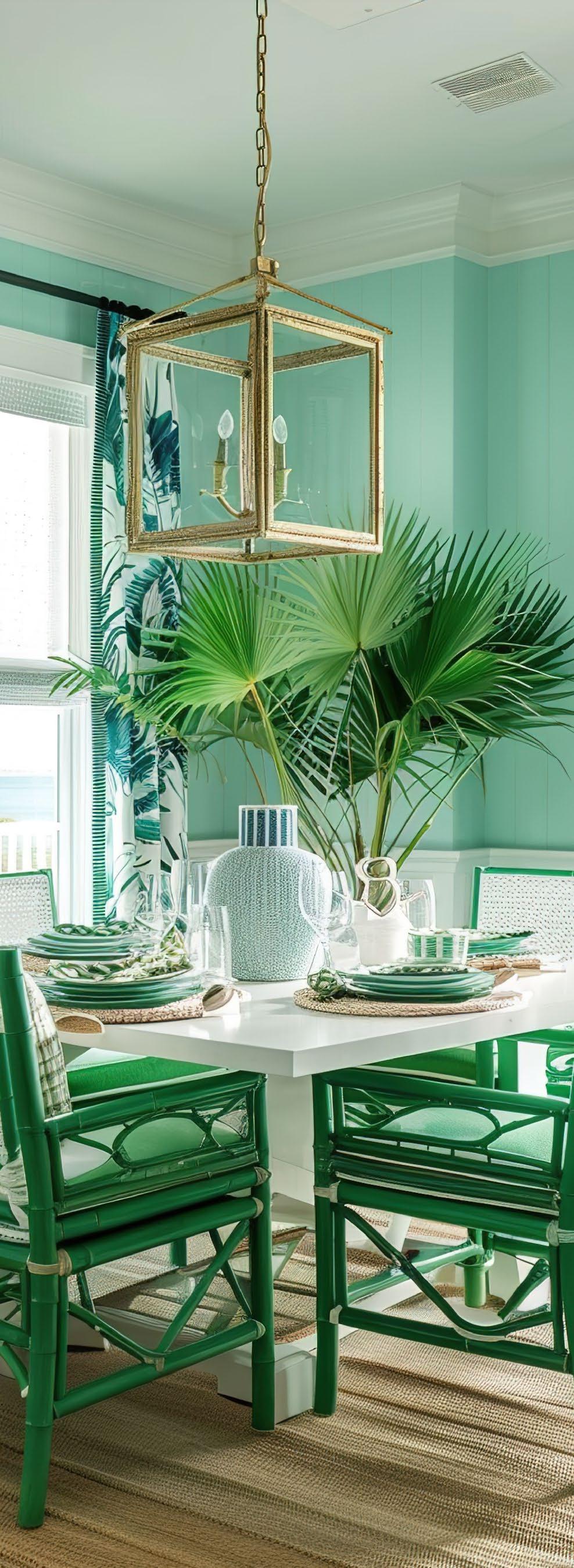
Flourishes of Green
The colour green is known for its ability to evoke a sense of peace and harmony and helps us feel more connected to nature.
Adding a sage green wall to your home office or olive green seating to your living room can help to transform your space into a tranquil oasis. Why not complement the green shade with neutral tones, perhaps pastel pinks or a pop of colour? It definitely adds a contemporary contemporary twist.
Adding plants to your home is not only a great way to add greenery to your home but can also help improve the air quality. The most effective plants for this include the Boston fern, the rubber tree, spider plant and a peace Lily.
Sustainable Soft Furnishings
As we transition from winter into spring, many people decide to overhaul their furnishings with a fresher approach. This year, why not choose to invest in more sustainable fabrics?
Breathable and chemical-free fabrics are kinder to the environment and have more durabili-
ty than synthetic materials. Consider purchasing timber, wool and linen soft furnishings, as well as reusing and repurposing existing furniture.
Multi-Functional Rooms
Many people now work from home, as a hybrid arrangement or full time. Multi- functional spaces continue to be a significant requirement in a number of UK households.
Spring is a great time to get rid of your clutter and create open plan spaces that can be used flexibly by all the family. If you have a guest room, consider swapping the bed for a convertible sleeping chair. You will not need to use it as a bed, you can utilise it as a chillout space or home office. Side tables that double up as seating and floating desks that pull down from the wall are incredible space savers and allow you to use the space in a convenient, multi-functional way.
Refresh your Walls with New Artwork
Renewal and rejuvenation are the predominant themes of spring, which makes it the perfect time to revamp your walls with inspiring artwork.
Brightly coloured graphics and uplifting quotes look incredible mounted on a muted living room wall, while landscape pieces, dusky pinks and soft sky-blues would add a calming element to any bedroom or home office. Art can transform a room and you can create a personal, vibrant statement in any area. There are a multitude of ways to bring Spring into your home, all of which will invigorate and brighten your living space.
SPRING
TEXTURES & YOUR HOME
EXPLORING
COLOUR
AND TEXTURE WITHIN THE HOME, OPENS UP A WORLD OF POSSIBILITIES.
Add depth and dimension to your home.
Textiles and color are an important part of of our home. Getting the balance right is pivotal to the success of your décor.
Colour
Colour is what makes our homes distinctive – brighten up any room by using colorful fabric for windows, sofas, chairs, cushions and throws.
Prints
Prints play a huge part in any home . fabrics can be used to inject style and fun into a room .If you want just a touch of color then colorful cushions can create comfort and interest to a plain sofa.
Every interior designer will tell you that adding texture is a fundamental aspect of good design. include touchable fabrics such as velvet and chenille These textural fabrics are soothing and visually relaxing.
Throws
Throws can also be used in any room, not purely as decoration but for warmth in the cooler months .A throw placed nonchalantly on a sofa or chair is an interiors statement. The look is casual chic and provides easy, artful charm.
Curtains
Curtains or drapes also provide the opportunity to create interest, Patterned Curtains are a great way to add an interesting look to a room
Rugs
Rugs also are wonderful accessory especially in the winter months to create that cozy feel. Whatever your taste in design experiment with layering fabrics. Combine prints, patterns and colours to create the home a you want to come home to.
Kitchen Essentials
ACCORDING TO TOP CHEFS
Whether you're a budding home cook or a seasoned pro, having the right tools in your kitchen can make all the difference. Professional chefs know the value of quality kitchen gadgets, and their recommendations are gold for those looking to elevate their cooking. We've consulted some of the top chefs to bring you the ultimate list of five essential kitchen gadgets that they simply can't live without. These tools not only streamline your process but also help you achieve restaurant-quality dishes at home.
and Flavor
Recommended by: Ina Garten
The Microplane grater is small but mighty, and it’s a favorite of Ina Garten, the beloved host of Barefoot Contessa. "It’s perfect for zesting citrus, grating garlic, ginger, and hard cheeses like Parmesan," she says. The Microplane allows you to finely grate ingredients that would otherwise be difficult to manage with a regular box grater. It brings a punch of flavor to your dishes with minimal effort, and its fine blades make sure you're extracting the most zest or cheese possible.
Pro Tip: Use a Microplane to grate nutmeg or chocolate for an extra touch of flavor in both savory and sweet dishes.
Wrapping Up
Chef’s Knife: The Heart of the Kitchen
Recommended by: Gordon Ramsay
Every top chef will tell you that a good-quality chef’s knife is the foundation of any kitchen. Gordon Ramsay, a Michelin-starred chef known for his expertise and no-nonsense attitude, says, “A sharp, well-balanced chef’s knife is the single most important tool in any kitchen.” This versatile knife is perfect for chopping, slicing, dicing, and mincing just about anything—whether it’s vegetables, meat, or herbs. Ramsay advises investing in a high-carbon stainless steel knife, which offers longevity and precision.
Pro Tip: Keep your knife sharp with a honing steel or whetstone. A dull knife is more dangerous than a sharp one!
Digital Thermometer: Perfect Doneness Every Time
Recommended by: Thomas Keller
Thomas Keller, the culinary genius behind The French Laundry, champions the digital thermometer as an essential tool. "Temperature control is everything in cooking, especially with proteins," Keller notes. Overcooking or undercooking can ruin a dish, but with a reliable digital thermometer, you can ensure your steak, poultry, or even fish is cooked to the perfect temperature. It’s also a critical tool for baking, where temperature precision is crucial for recipes like bread and custards.
Pro Tip: Look for an instant-read digital thermometer for quick and accurate results, particularly when grilling or roasting meat.
Cast Iron Skillet: The Workhorse of the Kitchen
Recommended by: Samin Nosrat
Samin Nosrat, author of Salt, Fat, Acid, Heat, swears by her cast iron skillet. “It’s incredibly versatile and lasts a lifetime,” she says. Cast iron skillets distribute heat evenly, making them perfect for everything from searing steaks to baking cornbread. Over time, they develop a natural non-stick surface when properly seasoned. What’s more, they can transition seamlessly from stovetop to oven, opening up a world of cooking possibilities.
Pro Tip: Season your skillet regularly to maintain its non-stick properties. Avoid and avoid using soap when cleaning
Mandoline Slicer: The Secret to Uniform Slices
Recommended by: Eric Ripert
Eric Ripert, head chef at Le Bernardin, recommends the mandoline slicer for perfectly even slices and julienne cuts. “Precision is key in fine dining, and a mandoline ensures every slice is uniform, whether you're preparing a salad, ratatouille, or gratin,” Ripert explains. The mandoline allows you to quickly and safely slice vegetables, fruits, and even cheeses with adjustable thickness settings, making it a time-saving tool when prepping large quantities of ingredients.
Pro Tip: Always use the safety guard that comes with the mandoline to protect your fingers from the razor-sharp blade.
Equipping your kitchen with these five gadgets will not only make your cooking more efficient but will also help you produce higher-quality dishes. As these top chefs have demonstrated, sometimes it's the simplest tools that make the biggest difference. Whether you're crafting a delicate dessert or preparing a hearty roast, having the right gadgets on hand can turn your kitchen into a professional-level workspace. So, invest in these essentials, and watch your culinary skills soar!
Elevate every meal with BRA Infinity Cast Aluminium. a passion for cooking
L i g h t i n g
G i b r a l t a r
s i n c e 2 0 1 0
However, during the winter months, shorter days and lower sun angles can significantly reduce the amount of daylight that reaches interiors. This effect varies depending on an apartment’s orientation as not all apartments in Gibraltar receive the same levels of natural light, and this largely depends on their position and outlook. Some may be situated in darker locations, such as those facing directly onto other apartment blocks or backed against the Rock, where sunlight can be limited even during brighter months. Others, however, benefit from more sunlit aspects, such as those overlooking the marina or the beach, where natural light can flood in for much of the day. This contrast makes it especially important to consider lighting carefully, as apartments with less favourable orientations may rely far more on well-designed artificial lighting to create a bright and comfortable living environment, so installing the right combination of ambient, task, and accent lighting in a new apartment can help compensate for seasonal changes, ensuring the space remains functional and inviting all year round.
Stepping into a brand-new apartment can feel like opening a blank canvas with its clean lines, neutral tones, and endless potential. While that fresh, untouched look is appealing, it can also feel a little impersonal at first. One of the most powerful (and often underestimated) ways to transform that space into something distinctly yours is through lighting.
Lighting isn’t just about visibility; it shapes mood, defines zones, and quietly tells the story of how you live, and well-planned artificial lighting becomes essential, not just for visibility, but for maintaining comfort and atmosphere.
START WITH LAYERS, NOT JUST LIGHTS
A common mistake in new apartments is relying solely on overhead lighting. Those built-in fixtures are practical, but they rarely create warmth or character on their own. If a room is just lit with one light source: just lamps, just pendants or just downlights, it will feel flat. But as soon as you begin layering, putting two or more elements together, it begins to shine: ambient lighting - your main source (ceiling lights, recessed lighting); task lighting - focused light for specific activities (reading lamps, under-cabinet kitchen lights); accent lighting - decorative touches that add personality such as LED strips, wall sconces, and feature lamps. By combining these, you move from a boring, one-note brightness to a space that feels dynamic and inviting.
MAKE A STATEMENT
New builds often come with restrictions such as no drilling and limited rewiring. The good news? Lighting can make a bold statement without permanent changes.
Floor lamps warm up rooms, give better lighting and can be placed wherever you want. Opt for floor lamps with sculptural designs to act as functional art pieces. Pendant lights with plug-in options let you create drama over dining tables or corners. Table lamps with textured shades or unique bases can add instant character. These pieces let you inject your taste without altering the structure of the apartment.
USE WARMTH TO SOFTEN MODERN SPACES
Contemporary apartments tend to lean toward sleek finishes, often incorporating glass, metal, and polished surfaces. Lighting is your tool to soften that look.
Opt for warm white bulbs instead of cool-toned lighting. This simple switch can make a space feel more relaxed and homely, especially in living rooms and bedrooms.
For an extra layer of comfort, consider lampshades in fabrics like linen or cotton, which diffuse light gently and reduce harsh shadows.
HOW TO LIGHT YOUR NEW GIBRALTAR APARTMENT PERFECTLY
Apartments in Gibraltar enjoy a clear advantage for much of the year thanks to abundant natural light and long hours of sunshine, which can make living spaces feel bright, open, and energy-efficient.
DEFINE SPACES IN OPEN-PLAN LIVING
Open-plan layouts are a hallmark of modern apartment living, but they can sometimes feel undefined. Lighting helps subtly carve out zones without walls. A floor lamp beside a sofa signals a relaxation area and a cluster of pendant lights over a dining table anchors that space, whilst under-cabinet lighting clearly marks the kitchen zone
Think of lighting as your invisible interior designer, guiding how each area is used.
ADD PERSONALITY THROUGH DETAIL
Lighting is one of the easiest ways to reflect your personal style. If you love minimalism, opt for clean lines and monochrome fixtures, or if you prefer something eclectic, then mix luxurious materials such as brass, ceramic, and smoked glass. If you’re looking for a cosy vibe use multiple small light sources instead of one bright overhead.
Be aware that bright lights can be overwhelming or even painful for some people. Some studies have shown that brighter light can intensify emotions, while low light doesn't remove emotions, but keeps them steady. At the same time, excessively dim lighting may contribute to feelings of sadness or depression in some individuals. Even small details, like the shape of a bulb or the colour of a shade, can subtly reinforce your aesthetic.
SMART LIGHTING FOR MODERN LIVING
If you want flexibility, smart bulbs are a game changer. They let you adjust brightness and colour temperature throughout the day. They can be set to bright and energising in the morning, soft and warm in the evening and dimmed for a relaxed, ambient feel at night
You can even set scenes for different moods, whether that is having friends round for dinner or for nights in front of the television or for reading time. Use a variety of lamps at different heights to create lovely, cosy lighting that can be customised to different feelings. Having lots of people over? Turn them all on! Looking for a more chilled/romantic vibe? Just turn on a few strategically placed up-lights for flattering, indirect low light.
ARCHITECTURAL LIGHTING
Architectural lighting has become a defining trend in modern new-build apartments, particularly in features like TV walls and built-in kitchen designs. Rather than relying on standalone fixtures, lighting is seamlessly integrated into the structure of the space, creating a sleek and contemporary look. In living areas, TV walls often incorporate concealed LED strips behind panels or shelving, producing a soft backlit glow that reduces screen glare while adding depth and a sense of sophistication. This type of lighting not only enhances the viewing experience but also turns the wall itself into a focal design feature.
In kitchens, built-in lighting is both practical and visually striking. Under-cabinet LEDs provide essential task lighting for food preparation, while integrated strip lighting within shelving or along plinths adds a subtle, ambient effect. Cabinets without handles often include recessed lighting channels that highlight clean lines and modern finishes. This layered approach ensures the space is functional while maintaining a polished, high-end aesthetic.
Installing LED lighting is generally simple, often requiring just peeling off adhesive backing for strip lights or screwing in new fixtures for a quick, low-voltage upgrade. Most kits include self-adhesive 3M backing, allowing them to be stuck under cabinets, behind TVs, or along walls without drilling or specialised tools
DON’T FORGET THE UNEXPECTED PLACES
Some of the most impactful lighting choices are the least obvious. Use LED strips behind headboards or shelves for a soft glow, and think about lighting inside wardrobes for both function and a touch of luxury. In the bathroom use accent lighting to elevate a purely practical space. These details make your apartment feel thoughtfully designed rather than simply furnished.
A new apartment may start as a blank slate, but lighting gives you the power to shape it into something personal, warm, and expressive. Without knocking down a single wall or making permanent changes, you can create atmosphere, highlight your style, and turn a standard space into a home that truly feels like yours.
Many people feel most inspired when they are travelling overseas on holiday. It is an ideal time to gather aesthetic ideas as the mind, body and soul are physically removed from work, endless to-do lists and mundane chores. It is considerably easier to reflect whilst watching the ocean rather than completing a shopping run. It is irrelevant whether you are an artist, a professional interior designer or you work outside the creative fields - we all need inspiration.
Although it would be wonderful to travel far and wide to pick up exotic colour inspiration, realistically, we often need to look closer to home to feel inspired and excited.
Here are a few ideas where to find inspiration for your home:
Social Media:
Be it Instagram or Pinterest, these are the influential platforms for visual inspiration. Use your keywords and hashtags to seek out whatever look you are after.
Every trend available is here to view and an unlimited supply of instaworthy images to motivate and inspire you. However, such platforms come with a health warning. Firstly, they are not all real. They are carefully curated images to achieve likes and followers. Secondly, they are very trend-led, so over time they can actually become totally uninspiring. Seeing the same looks repeated over and over again can actually be rather uninspiring. It is fine to have a glance but not to become overly invested in what you see. If not, you may well adopt the same design influences as everyone else viewing that site.
Property Insight
Hotels:
Now more than ever is the perfect time to visit British hotels. The wonderful thing about visiting British hotels is they are designed for the British climate. It is understandable to be seduced by hotel decor in Paris or Marrakesh. However, trying to recreate those looks in our homes with dreary weather is never going to work. It makes good design sense to adopt a look that has worked beautifully in a similar situation.
There are a number of online travel sites you can view on hat will offer room images. These can lead you to an inviting decor that resonates with you.
There are numerous country house hotels and chic B&B’s that offer a variety of colours, looks and ambiance. Inspiration can be found in major hotels as well as small, personal guesthouses.
All types of accommodation can be a great source of inspiration for paint colours, lighting and layout. They are all about creating a certain mood so are a good lesson in how to get the feeling of a space right.
Films and Television:
Major production companies spend a fortune on sourcing the right shoot locations to reflect the tone of the film and the characters who live in them.
When we watch programmes or films, we consciously or unconsciously note a considerable amount of details, about the plot but also the surroundings. A friend recently shared the fact that she loved All creatures great and small. The homely rooms, warm
impact on the atmosphere and the feeling it creates, whether you consciously notice it or not. The colour scheme will be designed to either stimulate you or relax you. Lighting is crucial. It may be soft and intimate, or contemporary or industrial. The seating can differ from luxurious to charming. The finishes may soften or heighten the acoustics. All these things will impact your overall dining experience and feelings about the space. So start observing and taking note. What makes you love a restaurant enough to keep returning. This will indicate what you want to copy or avoid in your own home.
Sartorial choices:
The catwalk effects pretty much everything so whether we like it or not we should take note of the trends parading down it. Look at how collections and outfits are put together, as well as colours, textures and patterns and how they are combined. And if you’re not sure what colours to decorate just look at your own wardrobe. If you look good in blues and greens then you won’t go far wrong putting it on your walls.
It is not merely in print that we gather ideas an d inspiration. Simply walking down the street, we can absorb and admire the colour and style choices of others. It is fascinating how we are influenced by the way others create an outfit or add a jaunty accessory. These colour references can easily be transferred to our homes and particular rooms.
Cultural locations inspire new ideas:
Art galleries can give you new ideas on how to create your artwork. Attending an art exhibit can bring out your artistic side and
WHAT IS YOUR HOME INFLUENCE?
Even the most creative individuals rarely wake up one day with their perfect new living room design in their head. We all need ideas and images to bounce off or unashamedly steal.
colours and subtle lighting proved to be a major inspiration for her home. Equally, the ornate decor of the Bridgerton series has inspired many individuals who are seeking a more sumptuous look for their rooms.
Nature:
If you are struggling to create a colour palette or unsure what colours go together, take a walk outside and discover what stimulates you. Perhaps it is a rugged coastline in winter or the inspiring colours of spring. The glorious colours of Autumn May give you a sense of excitement and anticipation.
The textures and arrangement of patterns in nature are another source of creativity. If you believe you need symmetry to create a well designed room, take a walk in the forest. This will prove symmetry is not necessary for beauty and balance.
Bars and Restaurants:
We all have a favourite restaurant. The reasons for our preference can vary enormously from sensational food to exemplary service. The decor of a space has a huge
give you several ideas such as creating your self-portrait, splashing colourful paints on the wall, painting your pots and rocks in the garden, or creating pop art like Andy Warhol’s Campbell’s Soup Cans. All manner of galleries and museums can offer creative ideas about lighting, how to display art we love and a flair for how we can mix traditional styles.
Inspiration that surrounds us:
The places, people and surroundings that excite us creatively are wide ranging. Be it a quaint cobbled path that we walk down daily or piece of street art we find thought provoking, many style influences emerge from what is around us - what we view daily. That is why it is important to absorb what is around us and incorporate it into our homes and how we live. As observers, we have the luxury of cherry picking the elements that will work for our individual style.
What influences our homes is extremely varied and can emerge from a variety of places. Our travel choices, clothes, films - the list is truly endless. The wonderful aspect of creating a look and feel for our homes is that inspiration can be found in the most unexpected areas of our lives.
Buying a new property is an exciting experience unlike any other. Once you have found your dream home and have secured it, the choices are endless as to how you can furnish it and create your own living environment and ambiance.
Below is an outline of some items that will prove practical in a new home environment:
Things
to
buy for your kitchen
This kitchen essentials checklist will ensure you are prepared for every occasion. A kitchen is undoubtedly the heart of the home.
Basic furniture:
• Kitchen table and chair
• Bin
• Kettle
• Toaster
• Microwave Eating and drinking:
• Placemats
• Selection of serving dishes
• Selection of bowls
• Selection of cutlery
• Selection of glasses e.g. drinking glasses and wine glasses
• Selection of cups and mugs
• Selection of plates
Things to buy for your bathroom
Most of the time, your bathroom in your new home will already be kitted out with all the home essentials furniture, like a shower/bath, sink and toilet. Aside from that, these are the things you need for a new house and its bathroom:
Bath/shower:
• Shower curtain and shower rings to hang it from, or a squeegee if you’ve got a shower screen
• Towels: bath towels, hand towels and flannels
•Towel rack
Things to buy for your living room
The living room is the perfect opportunity to create a practical yet stylish centre point to your home.
Whilst throws and cushions may not seem essential right now, you’ll soon miss the comfort they bring to your family and guests. The items below can create a practical and welcoming living room:
• Sofa
• Cushions
• Coffee table
• Curtains/blinds
• Light fixtures
• Television with stand/bracket
Things to buy for your bedroom
Naturally, the main item you will require is a bed. Organising your bedroom means you can sleep in peace knowing all your essentials are at hand for cosy night-time snoozing.
These are some household items needed for a new home:
• Mattress
• Bedlinen
• Duvet and pillows, plus duvet cover and pillowcases
• Bedside table and lamp
• Chest of drawers
• Wardrobe, clothes hangers
• Mirror
• Curtains/blinds, curtain rod/brackets
• Desk and chair (especially if you are working from home)
Extra special decorating touches
Here are some simple ideas to add to your new house shopping list:
• Scented and coloured candles are a prudent way of making your space look cosier and more ambient.
• Flowers have the ability to brighten up any room. They do not have to be costly and are visually impactful
• If pieces of furniture in your home need a little soul injecting into them –cushions and throws can assist
• Prints are a great alternative to expensive paintings/artwork.and Stylish and original designs can be found in many markets. They will help you put a personal stamp on your new home in an economical way.
• Up-lighting lamps can enhance a room that is on the smaller side, as they give the illusion of height.
• Create the illusion of a larger room by positioning mirrors around the property. Vintage and second-hand furniture shops can be an inspired source of unique mirrors.
The latest wave of connected home tech is less about gadgets and more about your house genuinely understanding how you live.
There was a time when a "smart home" meant remembering to turn the Wi-Fi-enabled kettle on from your phone before getting out of bed. Clever, sure but hardly transformative. Fast forward to 2026, and the conversation has shifted entirely. The connected home isn't just responding to your commands anymore. It's starting to anticipate them.
The numbers tell a compelling story closer to home. The European smart home market is valued at around $24.4 billion in 2026 and Britain is one of the region's biggest adopters. In the UK, 64% of people now report owning at least one smart device, with the most popular reasons for going smart being convenience, energy efficiency, and saving time. What's changed isn't just the quantity of devices, though. It's the quality of the experience and a lot of that comes down to two things: better Wi-Fi, and smarter AI.
The Network Underneath Everything
Before we talk about the fun stuff - music filling every room, lights dimming on cue, TVs that know when you've sat down it's worth appreciating the invisible backbone making it all work. Wi-Fi 6E and the emerging Wi-Fi 7 standard are quietly transforming home networks, promising higher throughput and lower latency and setting the stage for unified network and smart home orchestration. In plain terms: more devices, less lag, fewer frustrating drop-outs mid-movie.
Running alongside Wi-Fi is a protocol called Thread a low-power mesh network that keeps smart devices reliably connected even when one node drops. It's proving particularly useful in Europe, where thick-walled heritage buildings have always been a headache for wireless signals.
Thread's mesh approach helps overcome signal loss in older properties, which is one reason it's growing faster than almost any other smart home protocol on the continent.
One Language, Finally
For years, smart home gadgets suffered from a classic problem: everyone was speaking a different dialect. Your Philips bulbs wouldn't talk to your Samsung TV, your Google speaker had its own ideas, and Apple HomeKit lived in its own well-designed silo. The Matter connectivity standard is changing that, and Europe is pushing it forward. EU-wide energy performance mandates now include smart-readiness indicators, effectively turning home automation hardware into a compliance tool and financial institutions are already factoring these indicators into green mortgage assessments. Going smart, in other words, isn't just a lifestyle choice anymore. It may well add to the value of your home.
Entertainment That Reads the Room
This is where things get genuinely exciting. Multi-room entertainment scenes can now link audio, lighting, and TV settings so that a single command launches
Property Your Home is Listening and It's Getting Smarter
a movie-watching, gaming, or party environment. Say "movie night" to your voice assistant and the lights dim, the blinds drop, the TV wakes up, and your soundbar connects without you touching a single remote.
Multi-room audio has matured considerably too. Systems like Sonos now let you move music seamlessly from kitchen to living room to terrace, with sound following you rather than the other way around. Pair that with AI assistants becoming genuinely conversational platforms like JoshGPT deliver natural responses to complex requests and process everything locally in your home, keeping your conversations private and the old dream of a home that truly listens is starting to feel real.
Automation That Learns You
Perhaps the most significant shift is the move away from rigid schedules towards systems that adapt. Modern AI learns user habits and preferences, offering personalised automation that adjusts to lifestyle patterns without manual programming. Your home begins to understand that you work late on certain evenings, that you prefer the bedroom cooler on weekends, and that the playlist changes when guests arrive.
The smart home of 2026 isn't a showroom of blinking gadgets. Intelligence now lives in standards, networks, and software layers that sit quietly behind the walls. The best systems are the ones you stop noticing because your home is simply doing what you'd have asked for anyway, just before you got around to asking.
COLOUR IS BACK AND ‘NICE-BUT-BORING BEIGE’ IS OUT! FINALLY IT’S THE END OF THE BEIGE TREND THAT HAS DOMINATED INTERIORS FOR YEARS ALONG WITH GREY AND ULTRA-MINIMAL PALETTES WHICH WERE SAFE CHOICES THAT FELT CLEAN BUT OFTEN A BIT LIFELESS.
In 2026, designers are openly pushing back against that neutrality. One major shift is toward ‘colour confidence’, homes that feel personal, layered, and emotionally engaging rather than showroom-perfect. But here’s the nuance: it’s not just about going loud for the sake of it. The new approach blends rich base tones with strategic pops of colour, so spaces feel grounded and expressive.
Colour your Home
Before we even talk about bold accents, it’s important to understand what’s replacing beige. Instead of pale neutrals, 2026 homes are anchored by deep, warm and earthy base colours in the form of chocolate browns, caramel tones, clay and terracotta and mossy and olive greens.
These colours act like a ‘new neutral’, they’re still calming, but with far more depth and personality. Think of it this way, beige was background noise, whereas brown, olive, and clay are a mood. These deeper tones make it much easier to layer brighter colours on top without things feeling chaotic.
The new colour philosophy is bold, but smarter! In 2025, bold often meant loud - think bright yellows, electric blues, and high-contrast palettes - but in 2026, boldness is more refined. Designers are leaning into muted brights (like dusty pink instead of neon pink), gorgeous jewel tones (emerald, plum, teal) and nature-inspired vibrancy (apple green and terracotta orange). Vibrant colours are being used in a more thoughtful way to add energy without overwhelming a space. There’s also a strong move toward ‘joyful interiors’, spaces that feel uplifting and optimistic, often through fresh, energising shades like green.
Colour drenching is probably the boldest move you can make for 2026. This means using one colour across walls, ceiling, trims and
sometimes even furniture! It may sound a bit scary, but it creates a cocoon-like effect which is immersive and surprisingly calming and instead of contrast you get depth. It’s especially effective with: deep green; warm brown; rich plum; and soft terracotta. If that feels too intense, try a toned-down version of ‘double drenching’, using two closely related shades in the same space.
Adding colour to your home interiors with wallpaper is one of the easiest ways to transform a space without major renovations. From bold patterns to soft pastels, wallpaper lets you express personality and create mood in every room. Feature walls can introduce drama, while subtle textures add warmth and depth, but there is also a renewed trend for papering whole rooms, even extending the wallpaper up from the walls to cover the ceiling, (pattern drenching) which is a transformative design choice that can add luxury and character to your home. Modern peel-and-stick options make wallpaper application simple and flexible. Whether you prefer classic elegance or playful energy, wallpaper brings colour, character, and cohesion to your living spaces effortlessly. Consider lighting, furniture, and room size when choosing designs.
Now let’s get practical, because not everyone wants to paint their entire living room dark olive. The biggest shift in 2026 is how we add ‘colour pops’ in small, high-impact ways. So instead of colourful walls, people are choosing to add colour with furniture. Imagine a rust-coloured sofa, a deep green armchair or a cobalt blue cabinet. This gives you the flexibility to change it later without repainting the whole room.
Colour is also showing up where you wouldn’t expect it to. On kitchen islands, cupboard doors, window frames and interior doors. Even a small hit of something like apple green can completely energise a space.
Layered accessories are another way to add that ‘pop’ of colour to home interiors. Drop in cushions in mixed tones, bold rugs, lampshades in statement colours and artworks with contrasting palettes. The trick is layering, not matching. One of the smartest ways to add colour without chaos is sticking to one colour family. For example: pale terracotta walls, burnt orange cushions and a deep rust throw. This creates richness without visual overload.
In 2026 colour isn’t just about paint anymore, its materials that are taking centre stage. Natural wood tones and stone surfaces for floors and worktops. Tactile linen fabrics or rattan backed chairs can sit alongside architectural indoor plants to add interest. These add organic colour variation in a subtle but powerful way.
Now you are embracing colour, you will need to know what’s out! Cold greys and icy whites feel flat and impersonal, high-contrast
black and white make interiors feel too stark and that staple of homes for many years, plain beige, lacks personality. Designers are actively replacing these with warmer, more layered palettes.
Now is the time to be brave and go bold. Here’s how to do it without risk. Start with one ‘hero colour’. Pick one shade you love (olive, terracotta, plum) and build around it, using the 70–20–10 rule: 70% base (warm neutral), 20% secondary colour, 10% bold accent. Colours change massively depending on light, so test before you commit and always sample first. If your colour is strong, use soft lighting to moderate it.
More than anything, 2026 is about self-expression and adding personality to your homes which are becoming less perfect, more individual and emotionally driven. Co-
lour plays a huge role in that. It’s not just decoration, it’s how a space feels: a deep green room can feel grounding; a pop of orange can feel energising; and a layered palette can feel lived-in and real.
If the last decade was about playing it safe, 2026 is about taking thoughtful risks. You don’t need to turn your home into a rainbow, but adding even a few intentional colour moments, whether that’s a bold chair, a painted door, or a rich wall tone, can completely transform how your space feels.
So the real question isn’t: “Should I add colour?” It’s: “Where can I be a little braver?”
Using houseplants to create a calm environment is an inspired decision for many homeowners. They help us disconnect from the noise and demands of everyday life.
Studies have shown that being surrounded by plants can reduce anxiety, lower blood pressure and improve overall well-being.
This piece will highlight the positivity of incorporating greenery into our homes.
Wellbeing:
Many people search for how to make a home feel calm, create a relaxing living space or use indoor plants for wellbeing. The solution is surprisingly simple. Bring nature closer. Make your home a place that grows.
Creating a tranquil living space is more im portant than ever. As people explore ideas like wellbeing at home and how to make a room feel alive, plants are quietly becoming one of the most accessible and effective ways to change the way you feel in a space.
Embrace Diversity in Textures and Forms:
For a visually interesting composition of plants, mix and match different textures and forms.
For example, you could combine the bold, statement-making leaves of a Fiddle Leaf Fig with the delicate fronds of a Maidenhair Fern. The interplay of textures will add depth and character to your space.
How to use strategic placement:
Consider the unique needs of each plant and strategically place them to thrive in their preferred conditions. I would suggest placing high-maintenance plants in welllit areas and more resilient ones in corners with lower light. This not only ensures the well-being of your green companions but also optimises the visual impact of each plant.
THE POSITIVITY OF GREENERY
Inspirational space with Hanging Planters:
Add an extra dimension to your space by incorporating hanging planters. For those of us who are short on surfaces for display, this is a creative way to utilise vertical space and introduce an element of surprise to your interior. Cascading vines or lush greenery suspended from the ceiling can transform any room into a luxuriant oasis.
The dopamine effect: why plants make us feel good:
There is a reason so many people want to explore why do plants create happiness. Bringing home a plant gives you a genuine psychological lift - a soft dopamine hit that comes from caring for something living, seeing a new leaf unfurl, or simply making your home feel better.
This is not merely a trend. It positively impacts how we feel as humans. Plants offer a sense of progress and a feeling of control in a hectic world.
That emotional response is one of the reasons indoor plants are now widely linked to creating calm, improving mood and supporting mental wellbeing.
It can be quite simple to transform a home with plants. Often people want to discover the type of plants that are easy to care for. The reality is that you do not need rare or high-maintenance varieties to create a space that feels calm and beautiful. Just a few plants can completely change the tone of a room and create a wonderful living environment.
BILLY COUPER PHOTOGRAPHER &VISUAL ARTIST
Billy Couper is a photographer and visual artist whose experience spans more than 20 years of dedicated image-making. Renowned for his keen eye and distinctive style, he has built a body of work that effortlessly bridges artistic composition with emotional depth. His photography captures not just moments, but stories — whether through striking portraits, evocative landscapes, or compelling street images. Over the decades, he has continuously evolved his craft, embracing new techniques while staying true to his artistic vision. All images displayed are the exclusive property of William Couper and are protected under international copyright laws. No image may be reproduced, distributed, or used in any form without prior written permission from the artist.
IS A UNIVERSAL EXPERIENCE AND ROMANCE NOVELS FEATURE CHARACTERS THAT REFLECT OUR OWN EMOTIONAL JOURNEYS.
These stories tackle themes like personal growth and finding happiness, making them relatable and deeply engaging.
From Greek tragedy to Emily Brontë, epic romances are part of the human condition – and when imagined as films, we constantly crave them. There is no doubt, we need grand love stories. Most films contain some sort of romantic subplot. For some it is the main plot, however, that does not make them an epic love story.
A grand love story is a romance that heightens the emotions of life to vivid, huge, almost unbearable extremes. It shows people loving too hard, too fast. It shows incredible joy, and unbearable heartache. It lets us experience feelings that we try to avoid in our daily lives, even our own relationships.
A glorious cinema reimagining of “Wuthering Heights” has recently opened in cinemas. This is the latest of a long line of adapted novels where love, romance, torment and heartbreak are presented to us. Why are these sweeping tales of love so important? We love to read these evocative stories and love watching romantic stories on our screens.
Romance novels have long held a special place in the hearts of readers worldwide, transcending cultural and temporal boundaries. From classic tales like Jane Austen's Pride and Prejudice to contemporary bestsellers like Colleen Hoover's It ends with us, romance novels offer readers an array of emotional experiences, escapism, and reflections on love and relationships. The reasons why we read romance novels are diverse and deeply intertwined with human nature, the need for emotional connection, and the desire for hope and happiness.
Here are some poignant reasons why they are important:
EMOTIONAL ENGAGEMENT
At the heart of romance novels is the emotional journey of the characters, often leading to profound connections between the readers and the story. Readers are drawn to the intense emotions that romance novels evoke—passion, longing, heartbreak, and joy.
These novels provide a safe space to explore complex emotions, allowing readers to experience the highs and lows of love without facing real-life consequences. Through the characters' experiences, readers can reflect on their own emotions and relationships, finding solace, understanding, or even catharsis.
Romance novels also foster a sense of connection between readers and the characters. As readers follow the characters’ journey towards love, they often see parts of themselves reflected in their struggles, hopes, and dreams. This iden-
tification with characters can be particularly comforting, as it reassures readers that they are not alone in their experiences of love and desire. In this way, romance novels offer both emotional engagement and a sense of community, where readers feel understood and validated.
ESCAPISM AND FANTASY
One of the primary reasons people turn to romance novels is for escapism. Life can be challenging, stressful and disappointing. Romance novels provide a much needed escape from the pressures of everyday life, offering a world where love conquers all, conflicts are resolved, and happiness is attainable. The predict-
ability of the happy ending, a staple of the genre, is comforting to many readers who crave a sense of stability and assurance that the love story will end positively.
The fantasy element of romance novels is also a significant draw. Whether set in a historical era or a contemporary setting that is just a little more glamorous or idealised than real life, these stories allow readers to immerse themselves in a world that is often more romantic and exciting than their own.
The perfect partner, the grand gestures of love, and the thrilling adventures that
accompany many romance novels fulfil the readers' fantasies and desires, offering a taste of a world where love is always just around the corner.
EXPLORATION OF RELATIONSHIPS AND IDENTITY
Romance novels are not just about love between two people; they also explore relationships in a broader sense—friendships, family dynamics, and the connection between love and self- identity. Through the lens of romance, these novels examine how love can influence and shape a person’s sense of self and their relationships with others. They often address themes of personal growth and the balance between love and independence.
For many readers and viewers, romantic stories provide a space to explore the dynamics of power within relationships. The genre has evolved over the years to include diverse perspectives, reflecting the changing societal attitudes towards love, gender, and identity. We may turn to romance novels to see our own identities and experiences represented, or to gain insight into different ways of living and loving.
Perhaps one of the most compelling reasons we read romance novels is the hope they offer. In a world where pessimism and cynicism can often dominate, romance novels provide a much needed dose of optimism. They remind us that love is possible, that people can grow and change, and that happy endings are achievable. This message of hope is particularly powerful in difficult times, offering readers the reassurance that good things can and do happen.
The optimistic outlook inherent in romance novels is not simply about the romantic relationships themselves but also about the broader themes of resilience, forgiveness, even second chances. These stories often highlight the strength of the human spirit and the capacity for love and compassion, even in the face of adversity. For readers, this can be incredibly uplifting, offering a sense of renewal and positivity that carries over into their own lives.
In truth though, the reasons we read romance novels and watch romantic films are as varied as the readers themselves. Emotional engagement, escapism, reflection on relationships, identities, or simply a bit of hope and optimism.
Romantic stories meet a need for connection, love, and understanding. They offer a space where readers can explore their desires, fears, and dreams. They provide an emotional release whilst enjoying a good story. Our desire for romantic literature and films remains as popular and important, as ever.
THE LADIES THAT ROCK THE ROCK
Over 150 guests gathered at the Sunborn Yacht Hotel for the 2026 Ladies That Rock The Rock Gala Dinner, an annual event recognizing the achievements and contributions of women across Gibraltar’s community, business and public life.
Over 150 guests gathered at the Sunborn Yacht Hotel for the 2026 Ladies That Rock The Rock Gala Dinner, an annual event recognizing the achievements and contributions of women across Gibraltar’s community, business and public life.
The Gala, organized and led by businesswoman and author Ayelet Mamo Shay, brought together government representatives, business leaders, sponsors and members of the public for an evening inspired by the theme of London’s West End musicals, creating a unique theatrical atmosphere throughout the event.
Among the distinguished guests in attendance were Minister for Equality Christian Santos and Deputy Governor Marc Holland, both of whom participated in the official awards ceremony recognizing this year’s honorees.
The evening featured a dynamic programme of entertainment and interactive experiences designed around famous West End productions. Guests were welcomed with a signature green cocktail inspired by the musical Wicked, created by Scott from DrinkThink, before the programme unfolded through a series of themed acts inspired by musicals such as Mamma Mia, The Wizard of Oz, Aladdin, Matilda and Oliver!.
Entertainment during the evening included a live performance by Bradley the Mentalist, a captivating dance performance by Susan, free professional massages by Gil, and a special stage appearance by The Masks performers. Guests also enjoyed a
range of interactive activities, a fun photo-booth, raffles and prizes throughout the night.
Adding a special creative touch to the evening, a dedicated musical jingle about the “Ladies That Rock The Rock” initiative was composed and played during the event, reinforcing the celebratory and theatrical theme of the evening.
The awards ceremony itself was led by Chloe Loddo, who presented the honours recognising a number of women whose work and achievements have made a significant impact within Gibraltar’s community. The evening concluded with a panel discussion featuring several of the award recipients, who shared reflections and insights on leadership, perseverance and community engagement.
Commenting on the significance of the event, organiser Ayelet Mamo Shay emphasized the importance of celebrating and recognizing the achievements of women in Gibraltar:
"The purpose of the Ladies That Rock The Rock Awards is not only to honour the incredible women who are making a difference in our community today, but also to inspire the next generation. When young girls and young women see role models from their own community being rec-
ognised for their achievements, leadership and dedication, it sends a powerful message that they too can pursue their ambitions and make a meaningful impact," she said.
"Recognition plays a very important role in encouraging positive contribution. When we take the time to highlight the achievements of individuals who are giving back to our community, it motivates others to follow in their footsteps and continue doing good work. These awards are therefore not just about one evening of celebration — they are about creating a culture where the achievements of women are visible, valued and celebrated across Gibraltar."
She added that the continued success of the event reflects the strong support from the wider community and the many organizations that believe in promoting equality, leadership and opportunity. A number of local businesses and organizations contributed to the success of the event through sponsorship and support. Organizers extended thanks to partners and supporters including Anglo Hispano, Rettso, Sugar Sweet, the team at Sunborn Gibraltar, the judging committee, photographers, designers, and the many businesses that contributed prizes for the evening’s raffles.
The Ladies That Rock The Rock Gala Dinner continues to grow as a major community event, highlighting leadership, resilience and the positive contributions of women within Gibraltar’s society.
Back in 1986 a young musician called Adrian Pisarello was inspired by an acclaimed and powerful anti-war film called ‘Platoon’ (about a naïve US army volunteer who arrives in Vietnam in 1967). From the mid- sixties onwards, the best record albums that I remember were concept albums. Perhaps some of us have concept albums stuck in our music memory but we didn’t set out to create one of our own. Adrian did.
He started to work on the concept of a bunch of songs that would follow a young soldier caught in a war which he was reluctant to fight. Adrian’s new album called ‘The Purple Violet War’ has just been released on all digital platforms, forty years after it was conceived and it’s still relevant, and currently making waves across the local music scene. It sounds surprisingly fresh, musically accomplished and familiar in equal measures and worthy of chasing its creator to get a full measure of what Adrian Pisarello, our former cultural ambassador (2024) and enduring local music legend, is all about.
were no digital platforms like today which make it easier to publish your own music. That delayed the release of the album for many years. Another reason for delay was that I always had a visual concept which I haven’t given up on yet. I can’t tell you much more at this stage but let’s see if this can happen. It would complete my dream too If we could play this album live.”
Life and playing live music have also been other delaying factors, as Adrian has been in demand as a performing musician who has always been evolving as a composer and a progressive musician. A talented and down to earth creative guy who has fronted his own bands, always avoiding commercial covers to play his original songs. He holds himself to high standards when embarking on any musical project. ‘Purple Violet War’ is no exception and that is why this album has been so welcomed by the music fraternity and his many fans.
“Purple and violet are colours which represent countries. In the colour spectrum they are very close to each other but they’re not the same. Just like humanswe are all the same but not equal. This album stands for me and that is because
“I knew I wanted to make a concept album and a started to write songs like ‘Declaration of War’ and later, ‘Winds of Confrontation’ the one would open the album. I invented the main character Johnny Greenhill. Johnny was the soldier who soon wanted to go home.” We meet Johnny in Track 3, ‘The Arrival’ and Tr 4,‘Welcome to the Inferno.’ Also in Tr8 ‘Longing for Home,’ a song with a strong nod to Pink Floyd’s ‘Time’ from ‘Dark Side of the Moon’.”
The album is a treasure trove of good music well played and one which begs repeated listening. It has style, variety and a universal message advocating for peace and the futility of war. I told him I had enjoyed it a lot because it covered various musical styles.
“I didn’t want this album to be all one genre, I wanted it to be a tribute to music that had inspired me like ‘Pink Floyd’, Bob Marley and others. I wanted to incorporate Reggae, Prog Rock, Blues, Folk and other influences like Led Zeppelin. I had all these ideas and all the music recorded, but back in the day there
“I also want to do a Blues album and if I do, I will do my homework on it to see if something rubs off on me. I hope it does and I will not fight my style of doing music because my influences are a melting pot of many genres that have influenced me, to which I put my original spin”.
We spent a while talking about how different musical influences help make up our characters in ways which we may not be fully aware of and Adrian came up with a profound analysis. “I can put ‘Camaron de la Isla’ on the same pedestal as Janis Joplin. Bob Marley and John Lennon are both the same for me in the way that they have influenced music. I get emotional with Camaron and with Janis and that is something which I am grateful for. It doesn’t make me more Spanish or less English or less Yanito.”
A national treasure like Adrian Pisarello has to be free to be creative and give a voice to his concerns to make original music that reflects who we are as a people. This is a talented man who many years ago won the prestigious ‘John Lennon Songwriting Award’ in New York with a song called ‘Libertad’. Freedom, a universal brand that will always be at the
‘Purple and violet soldiers shedding the same blood
it’s the only way I have given it my heart. I don’t know what youngsters will make of it, but I haven’t changed anything from the original concept to fit in with today’s trends.”
Track 11 ‘The Day After’ is pure hip hop (Rap if you like) and Tr 6 ‘Ambush’ is spoken word in a low register (his gravelly voice is rich and quite unique). “The feedback I’ve had so far is very encouraging, especially from musicians and that matters to me and pushes me to continue to write songs which have meaning.”
I wanted to know whether the passage of time had ever diminished his focus to see the album finally published and Adrian was quick to respond that it had not. “I welcome that it has taken so long because it has allowed me to evolve as a person and a musician. I already have plans for another album and other projects too. I always have something going. There’s always something that isn’t quite finished. Although people say that you can get writer’s block, it hasn’t happened to me yet. I still have plans to write another album, perhaps in Spanish because it’s been a very long time since I did one.”
Purple and violet soldiers they were covered in the same mud
They didn’t look so different resting lifeless on the grass
They didn’t look so different once the end had come to pass’
core of his social conscience, that is why when our former cultural ambassador releases a well- conceived album, we have to sit up and take notice.
He recommends listening to it on headphones (I agree) from top to tail to get into the story and the music, made by some of our best musicians, who have given time and their skill to help Adrian breathe life into his creation. Dust off those headphones or put your Ipods to good use, there is still good local music out there which is worthy of your attention. No better way than diving into ‘The Violet Purple War’ which is available on digital platforms like Spotify and others.
Musicians involved: Peter Martinez, Eric Rowbottom, Charlie Moore, Brian Torres, Aaron Turner, Jason Belilo, Chris Cortez, Tony Galliano, Michael Martinez, Albert Gonzalez, Alba Pisarello, Eric Chipulina, Darrel Alman, Luis Vinet, Djamal Adib, Paul Riley, Nathan Conroy, Dennis Cortes.
SOUTH EAST ASIA
SOUTH EAST ASIA IS HOME TO SOME OF THE MOST BEAUTIFUL COUNTRIES IN THE WORLD THAT ARE FILLED WITH BREATHTAKING LANDSCAPES, FRIENDLY LOCALS AND OF COURSE, GREAT FOOD. FOR THOSE SEEKING A HONEYMOON WITH A MIX OF ADVENTURE, BEACHES, HISTORY AND CULTURE, THEN VISITING ONE (OR TWO) OF THESE FOR YOUR HONEYMOON WOULD BE THE PERFECT CHOICE.
THAILAND
Thailand is referred to as the ‘Land of Smiles’ and I am sure you will agree once you visit this great country, Whether you’re after rooftop dining and temple hopping in Bangkok, beach hopping between Koh Tao and Koh Samui or exploring the ancient temples and seeing elephants in Chiang Mai, Thailand is truly a great honeymoon destination.
Popular areas to visit include Bangkok, Chiang Mai, Phuket, Koh Samui, Koh Phi Phi and Pai.
Experiences:
• Take part in a Thai cooking class in Bangkok where you’ll make classics like pad thai and mango sticky rice.
• Visit an elephant sanctuary in Chiang Mai, make sure you do your research to find one that is ethical.
• Trek to the John Suwan viewpoint in Koh Tao.
• Visit the canyon in Pai & swim in the Pam Bok waterfall.
Food:
Thai food has to be one of the best cuisines in the world. When in Thailand, don’t miss out on an authentic pad thai, tom yum soup, khao soi (fried noodle soup found in the north) and mango sticky rice.
Best time to visit:
Thailand’s peak season is between November to February, with March to May being the shoulder season where prices are lower.
Avoid June to October as this is their monsoon period.
BALI, INDONESIA
Bali has been a popular honeymoon destination for decades, and it’s easy to see why. Many hotels and resorts cater for honeymooners (you can’t leave without a floating pool breakfast). The area has become quite westernised but there are still ways you can embrace Indonesian culture and history.
Popular areas to visit include Seminyak, Ubud, the Gilli islands and the Nusa Islands. It is very common in Bali to hire a driver to take you around all the points of interest during your stay.
Experiences:
• Hike Mount Batur at sunrise and have breakfast as you see the sun come up.
• Take part in a Balinese cooking class
• Experience the Bali swings and coffee tasting, where you can find the famous ‘cat poop’ coffee.
• Relax in a flower bath at The Udaya
• Visit Nusa Penida for that iconic photo
• Visit the monkey forest in Ubud
• Watch the sunset at the Campuhan Ridge Walk
Food:
Balinese cuisine is a delightful blend of spices and flavours. Popular dishes include Babi Guling (suckling pig) and Nasi Campur (mixed rice served with various small dishes).
Best time to visit: April to October is the dry season, whereas November to March is monsoon period, where you can expect high humidity and tropical showers.
VIETNAM
Vietnam is a country where you can experience everything. From the bustling
capital of Hanoi, to the beautiful beaches of Halong Bay and the rice terraces of Sapa. It is also relatively inexpensive, meaning that your money will go far if you plan to spend 2 to 3 weeks here.
Experiences:
• Cruise along Halong Bay
• Stay in a homestay in Sa Pa amongst the rice fields.
• See the famous lanterns at night in the Hoi Ann Ancient Town
• Have a coffee at Train Street in Hanoithis is a good place to try their famous egg coffee!a
• Take part in a vietnamese food cooking class
Food:
The first thing you need to try in Vietnam, is a classic banh mi. A toasted baguette filled with pork, cucumber, pickled carrots, daikon, coriander and chili. It might seem simple, but it’s absolutely delicious. Other local dishes include pho, goi cuon (spring rolls in rice paper), bun cha (meat with broth and rice) and a local delicacy, egg coffee.
Best time to visit:
March and April offers the sweet spot if you’re planning on travelling around the country. For Hanoi/ Halong Bay, October to December offers the clearest skies. For Hoi An, January to August. For Saigon, December to April is the dry season.
SINGAPORE
Singapore is the most expensive place on this list, but the good thing is you only need 3-5 days here to see the best the country has to offer. Which makes it a perfect choice to add to the start or end of your trip in South East Asia. The metro system is very to use here and each trip will cost you between 1-3 singapore dollars. Bear in mind that Singapore can get very humid, so it is best to do your activities early in the morning or in the evening.
Experiences:
• Visit Gardens By The Bay during the day and at night for their light show
• Visit the Art Science Museum
• Have a Singapore Sling at the Marina Bay Sands rooftop bar
• Explore Little India, China Town and Haji Lane
• Have fun at Sentosa Island by spending the day at Universal Studios
FOOD:
Hawker centres (food halls) are very popular in Singapore and you can find meals at half the price of what you’ll see at restaurants. Satay By The Bay is one of the largest and has a wide variety of stalls. Due to the range of cultures living here, you’ll find a variety of cuisines can be found. If you’re feeling brave, why don’t you try the ‘smelliest’ fruit in the world? The durian fruit.
Best time to visit:
Singapore is hot and humid year-round, but February to April fall between the monsoon seasons and sees the least amount of rain. November to January you can expect the most rainfall. For foodies, they host their annual Singapore Food Festival in June/July.
Honeymoon Destinations
One of the most exciting things about getting married is planning the honeymoon! In this series, we will be looking at honeymoon destinations to suit every vibe. Kicking off this month's article with the most popular type of honeymoon, paradise beaches and relaxation.
St
Lucia
When you think of St Lucia, the postcard picture you imagine is the twin volcanic spires known as the Pitons. It is the ultimate destination for couples who want a mix of high-adrenaline adventure and luxury seclusion.
Best Time to Go: The peak dry season is December to April. If you’re looking to go when there are fewer crowds and lower prices, aim for the shoulder months of May and June.British Airways usually have holiday sales that include flights and an all-inclusive stay in St Lucia. So make sure you keep an eye out.
Where to Stay:
Mid-range: Bel Jou is an adults-only all inclusive hotel and the closest beach is located a 15 min walk away (Vigie Beach). All-inclusive prices start at £125 per person per night.
Luxury: For a luxury stay, Jade Mountain is famous for its ‘threewalled’ suites where the fourth wall is entirely open to a private infinity pool and a direct view of the Pitons. Sugar Beach is nestled right between the two Pitons on a white sand beach and offers beautiful villas. These are both very popular hotels, so make sure to book early.
Things to Do: Take a mud bath at Sulphur Springs (the world’s only drive-in volcano), hike the Gros Piton, or take a private sunset catamaran cruise along the western coastline.
Mauritius
Located in the Indian Ocean, Mauritius is a melting pot of French, Indian, and African cultures and is home to some of the most beautiful beaches in the world. It is also generally a more affordable honeymoon destination than Mauritius.
Best Time to Go: May to December is the Mauritian winter/spring. The weather is dry and cool (mid-20s°C), making it perfect for exploring. Make sure to avoid January to March, as this is the cyclone season.
Where to Stay:
Mid-range: Tropical Attitude is an adults only hotel offering all-inclusive stays for £100 a night per person. It is located on the East side of the island and has access to the beach.
Luxury: One&Only Le Saint Géran is located on its own private peninsula and offers half board stays. Lux Grand Baie is a modern and boutique style resort with a spectacular rooftop infinity pool and a lively social scene. They offer stays with just breakfast to all-inclusive packages.
Things to Do: Visit the Seven Coloured Earths in Chamarel, go rum tasting at a local distillery, or take a boat trip to Ile aux Cerfs for world-class snorkeling.
The Maldives
The Maldives is one of the most popular destinations when it comes to honeymoons and although a week here can come with a hefty price tag, there are some more affordable options too. It is made up of nearly 1,200 coral islands and if you’re looking for tranquility and paradise beaches, then this is the place for you.
Best Time to Go: December to April offers the best weather, but If you are a surfer or looking for manta ray sightings, the wet season (May to October) offers better marine activity and significantly lower prices.
Where to Stay:
Mid-range: Arena Beach Hotel is located right by the beach, and offers stays from just £50 a night per person. The rooms are basic but clean and you still get access to those crystal clear beaches.
Luxury: Soneva Jani is known for its iconic overwater villas that feature retractable roofs for stargazing and private slides that drop you directly into the ocean. This is a very popular resort and often sells out a year in advance, so make sure you mark your calendar to check for reservations as soon as you can. Another luxury option is Gili Lankanfushi, an eco-luxury resort where you are assigned a private butler to cater to your every whim.
Things to Do: If you’re happy sun lounging and going for a swim, then you won’t need a long list of things to do in the Maldives. There are activities available such as swimming with sharks (not the deadly kind), dining at an underwater restaurant or watching a private cinema screening on the beach under the stars.
Greece
Greece is home to dozens of beautiful islands that would be perfect for a honeymoon. On this list, we are looking at Greece’s largest island, Crete. Famous for its pink sand lagoons and great landscapes.
Best Time to Go: May, June, and September are the Goldilocks months. The weather is warm enough for swimming and prices are
slightly lower, whilst also avoiding the overcrowded tourist months of July and August.
Where to Stay:
Mid-range: Zeus Village Resorts has lovely interiors and is a 10 minute drive from Chania old town. Prices start at £60 per person per night.
Luxury: Stella Island Luxury Resort & Spa is an adults-only resort and is often called a floating paradise. It features overwater bungalows and a massive lagoon pool that wraps around the entire property. Another popular choice is Domes Noruz Chania, a boutique hotel featuring resident DJs, pool parties, and a location right on the sand.
Things to Do: Watch the sunset from the Oia Castle, hike the trail from Fira to Oia, or rent a private yacht to explore the hidden coves and Lunar beaches of Milos.
The Philippines
With over 7,000 islands, the Philippines offers tons of beautiful beaches, adventure and delicious food. Some of the most popular islands include Palawan (El Nido), Boracay and Bohol.
Best Time to Go: December to February is the coolest and driest time to go. March to May is the summer season and is very hot, but the seas are exceptionally calm and clear for diving.
Where to Stay:
Mid-range: Happiness Boutique Resort has rooms available from £50 a night and is a slice of jungle paradise. If you want to upgrade for a night, their King Suite Rooms are beautiful and only set you back a bit more at £90 per person per night.
BY GIANA
Luxury: Four Points by Sheraton is a beautiful beachfront hotel in Palawan with a large swimming pool at the centre of the hotel. It is a 20 minute boat ride from the underground river.
Things to Do: Take a boat through the Puerto Princesa Underground River, go island-hopping in El Nido to find "Secret Lagoons," or swim with whale sharks in Leyte. There are also lots of opportunities to go canyoneering, waterfall hunting and firefly gazing.
MOTORING
MY FIRST CAR
SIR CHRISTOPHER DEAN
ROCK CLASSICS
A LOCAL ASTON MARTIN
TOYOTA
C-HR
TOYOTA PRIUS THIS MONTH
SIR CHRISTOPHER DEAN
Christopher Dean, now Sir Christopher The well-known British ice dancer, was born and raised in Nottingham, but recently moved to a village just south of Huddersfield.
He moved to West Yorkshire to be fairly central for travel and logistical reasons, after living for many years in Colorado
He recently received a Knighthood in the New Years Honour list, his long term ice-skating partner also received an Honour being made a Dame.
He remembers his first car, he bought when he was 17, with mixed emotions, it was an Austin 1100 in ‘petrol blue’ he paid £70 for it. He had to borrow the money from a local lender, and paid the loan back weekly. He says it was much needed personal transport, but not the best looking car for a teenager, think today we’d say it was lacking ‘street-cred’
His dad worked down the pit all his life, and latterly maintaining the pit electrics. He was clever with all things electrical and mechanical, and passed his skills onto his son. Chris tinkered with his cars, and could just about repair and fix anything.
CAR Austin 1100
The 1100 had plenty of rust on it, the sills were nearly non-existent, and had a hole in the drivers side floor, but Chris cured this by putting a rubber mat over it. He never knew in a morning whether he would be going to Police Cadet college in Calverton, six-miles from home in his Austin, or on the bus, the Austin wasn’t that reliable, but would always fix any problems.
Chris has, and still has a passion for cars, in 1984 after winning Gold at the Winter Olympics in Sarajevo, he treated himself to a twenty-two year old 1962 Jaguar E-Type, a car he still wishes he’d kept.
MY 1ST
Over the years he has had many cars, we asked him for his Dream Car, he asked if he could only have one as there were many he could choose. He was torn between a Porsche ‘Whale Tail’, Bentley & Aston Martin, but he said the Ultimate Dream Car would have to be a new McLaren P1.
TOYOTA C-HR
The original Toyota C-HR Hybrid was launched ten years ago in 2016, I remember going to the press event in Madrid, and the message Toyota was saying was very confusing. Their idea of the perfect customer for the car, in reality never happened. They wanted a young customer who lived in a city centre apartment and had lots of outdoor activities. This customer never really materialised, but has been bought and enjoyed bay many different ages who live in a variety of locations, their marketing department had been over-thinking too much
The second version was launched in 2023 still fitted with a ‘self-charging’ Hybrid system.
The latest version to be Launched of this ‘C-Sector’ small coupe SUV, now has either the Hybrid or PHEV powertrain (Plug-in Hybrid Electric Vehicle and is even more frugal than its predecessors, and is Toyotas Fifth Generation Hybrid System, with each one much improved over the previous one.
The car I had on test from Toyota GB press department was fitted with a 2.0-litre petrol
engine that produces 220bhp, and had the Plug-In option
You can charge to battery anywhere, at home or at a public charging station and with 100% maximum charge, it is capable of around 40 miles (65km) on pure electric. But it is also ‘Self-Charging’ so when braking, or going down hill it does put a bit of energy back into the battery. During the time I had the C-HR it was achieving around 73.3mpg (3.2L/100 km) which is pretty good.
The design is not what you’d expect from Toyota, some describe it as Funky, but it has modern styling with some sharp lines, and looks great from every angle, and definitely has the Coupe look. Toyota have certainly been brave, but it has payed off for them.
Rear legroom is not great, but adequate for two adults, three might be a bit of a squeeze, but generally the interior is well appointed with high quality materials fitted throughout the car.
But, it does have lots of buttons, switches and dials, and I do like buttons and dials, as so many cars these days rely solely on the
touchscreen, which are invariably difficult to operate and understand, you can’t beat a good old fashioned button.
The C-HR has ‘pop-out’ door handles, I know this makes it more aerodynamic and looks more aesthetically pleasing, but I don’t like these pop-out handles for a number of reasons. The Toyota ones are designed better. and not too bad for nipping little ones , little fingers. But others I have tried recently are like, for those who can remember, BBC TV comedy classic : Open All Hours,and the famous - ‘Arkwrights Till’... for those who do remember, you’ll know what I mean!!
Buy any Toyota, and it is rock-solid, and the new C-HR is no different. It looks good, and very frugal giving it low fuel consumption and low emissions
Back in 2016 we asked what C-HR meant, they said it was a ‘C’ Sector Car, with a High Roof, hence C-HR, but since that day, I’ve never heard that explanation mentioned again, so maybe someone just made that up? - the C-HR, in my opinion is really a Coupe with a High Roof.
GIBRALTAR LOCAL, MARTIN WIEGOLD'S
DBR1 ROCK CLASSICS
Martin Weigold is the proud owner of an Aston Martin DBR1 Recreation, and what a car it is too, and lives here on The Rock.
doesn’t have a fuel gauge, you have to dip a wooden ruler into the tank to see how much fuel you have.
There were only five original DBR1 cars made, and those cars were designed and built to compete in the World Sports Car Championships, a car that won the 1959 Le Mans race for Aston Martin.
The last original DBR1 that sold was in 2017, and it fetched $22.55m, but today the same car probably has a value of over $30m
Martin took extensive photos of all the existing original cars to ensure accuracy of the bodywork and interior.
He used all the data he had to have his very own DBR1 built from scratch using a specialist firm in the UK.
The body was hand-beaten from aluminium, like the originals, and took two craftsmen over three-months to produce the perfect shape.
Then a new 3.8-litre straight-six Engine was fitted that produces 240hp, and has triple Weber 45DCOE carburettors. It has Dunlop Cross Ply tyres, so it is as close to the original as possible. And like the 1959 model, it
It two years, from 2011 to 2013 to complete the project, but only using the finest materials, and the best professionals to make it the best possible.
The Aston Martin DBR1 Recreation is a real head-turner, and Martin recalls driving it back one morning from Marbella back to Gibraltar, and waiting in the queue, with many others getting out of their vehicles to take photographs and having a look at this Classic, which caused massive tailbacks in the rush hour. The Guardia Civil went to investigate what was going on and causing the delays, and did give Martin a bit of a lecture, but what could he do, if others were interested in his car.
This car is as near as you can get to an original, the craftsmanship is superb, with many thousands of hour spent to produce a fine recreation, that is probably better than an original ever was, just brilliant.
I recently had the latest Toyota Prius to test from Toyota GB Press Department, a car I have driven many times over the years but would this one be the best.
The first Prius was launched in 1997 and developed to be ‘The Car of the 21st Century’. It was back then described as ‘Futuristic’ others were less generous with its design, simply calling it Ugly. Many high profile people, including film stars, pop stars and billionaires couldn’t wait to be seen in a Prius, to be seen in the latest Green Motoring Technology.
In 1997 the Prius was the first mass-produced car to have a Hybrid drivetrain, combining a petrol engine with an electric motor, that was capable of selfcharging. Most people were very nervous of this new Technology, thinking it was highly susceptible to failures, but as it turned out it was extremely reliable, with just minimal failures.
The latest version is a Plug-In Electric Vehicle (PHEV) is powered by a 2.0-litre petrol engine that’s paired with an electric motor giving a combined output of 220bhp, and goes from 0-100kph in only 6.9 seconds, so pretty quick for a family five-door Hatch.
In Hybrid mode, the Prius sets off from standstill using the electric motor, so no petrol is used, the petrol engine then fires up when it reaches the right speed, then the two independent sources of power work in perfect harmony.
But not only is this Prius a very economical Hybrid, it also has the advantage of being a Plug-In. During the time I had the car I could charge it at home to 100% and put in around 43 miles ( 69km ) of Range. Meaning I could travel up to 69km on pure electric only, so you can do lots of local journeys without using any petrol, giving you clean and quiet
driving. But if you go on a long run, then you have the benefit of the frugal petrol engine, a win-win in my opinion.
The exterior styling is brilliant, for everything the designers got wrong in the past, they have got everything right with this version.
The interior is fresh and modern, with ample room for five-adults. The luggage area is just adequate, not a lot of room, but certainly enough for two large suitcases, or a lot of supermarket shopping.
It is so easy to drive, just put the automatic gear-shift into D-Drive, and it glides away effortlessly, and you don’t need to think about the Hybrid System, it’s all done for you. I really enjoyed the week I spent with latest Prius, nearly thirty-years after I drove the first one on the original Press Event
Gibraltar’s up and coming referees to wear armbands to signify they are youngsters and new match officials.
Under-18 Referee Armbands
From March 2026, all youth referees (those under the age of 18) will wear a yellow armband to clearly signify that they are not an adult. This initiative provides additional protection for our U18 referees by serving as a visible reminder to players, coaches, and spectators that these officials are young people who should be treated with an extra level of respect, patience, and understanding.
New Referee Armbands
From March 2026, all new category 3 referees will wear a white armband to clearly signify that they are a new referees over the age of 18. This initiative provides additional protection for our new referees by serving as a visible reminder to players, coaches, and spectators that these officials are in the early stages of their development and should be treated with an extra level of respect, patience, and understanding.
This initiative is designed to improve respect for young and new category 3 referees, support their development, and address poor behaviour towards match officials across grassroots football.
Why is this initiative being launched?
Visibility
The armbands will clearly identify a referee as being under 18 years old or a new category 3 Referee, making them easily recognisable to players, coaches, and spectators.
Protection
The armband acts as a visual reminder to treat young and new referees with respect, patience, and understanding.
Development
By reducing negative behaviour, our referees can focus on learning, improving their officiating skills, and enjoying their matchday experience.
The Implementation Phase
Armbands will be distributed to selected U18/new referees and grassroots match delegates in March 2026. All referees will wear their armband during every match they officiate as part of a wider effort to retain young and new referees by creating a positive and supportive environment for their development.
This initiative also forms part of the Association's Social and Environmental Sustainability Strategy, specifically under our commitments to Child and Youth Protection and the promotion of Respect across all levels of domestic football.
Gibraltar FA Referees Head Abroad!
The Gibraltar Football Association is delighted to announce that our Grassroots Referees will be supporting two prestigious international grassroots tournaments this April:
We are especially excited to see our young referees Jesus Cardenas and Adam Ketrani travel to Esbjerg. This is a fantastic opportunity for developing officials to experience football in a new environment, gain valuable expo-
sure, and continue their learning journey. They will be accompanied by coach Raymond Gomez, and we are all looking forward to seeing them grow and enjoy this experience.
Meanwhile, referees Blaise Cook and Shane Martinez will be in Athens to support the Elite Neon Cup. With top teams from across Europe taking part, this tournament provides the perfect platform for our referees to further develop as they continue progressing within senior football.
These opportunities are key to the growth of our officials, giving them international exposure and valuable experience at different levels of the game.
We wish all our referees the very best of luck and look forward to following their journey!
Refereeing is one of the most important careers any form of football! Are you interested in becoming a referee?
Get in touch with us by email: referee.recruitment@gibraltarfa.com or by phone on +35020042941.
Mons Calpe Women: From Community Dream to Champions of Gibraltar
Origins: A Different Kind of Club
The story begins in 2021 with the creation of Gibraltar Wave FC, a club founded with a clear mission: to build a community-first women’s football project in Gibraltar. Unlike traditional clubs, Gibraltar Wave was independent, inclusive, and designed to give opportunities to players who might otherwise have been overlooked.
From the outset, the club embraced a philosophy that blended participation, development, and ambition. Early involvement in futsal and grassroots competitions helped establish a foundation, even if results were initially modest. The focus was never solely on winning—it was on building something sustainable.
The Mons Calpe Partnership: A Strategic Evolution
A major turning point came in 2023, when Gibraltar Wave entered into a formal partnership with Mons Calpe S.C., becoming the club’s affiliated women’s team.
This alignment brought structural support, visibility, and a pathway into a more competitive environment. It also reflected a broader trend in women’s football: integration with established club ecosystems to accelerate growth.
By the 2024–25 season, the team was competing under the name Mons Calpe Gibraltar Wave, signaling both continuity and evolution.
On-Pitch Progress: From Underdogs to Contenders
Progress was rapid. Strategic recruitment—including international players and experienced figures—transformed the squad’s competitiveness. The team climbed the league standings and, crucially, secured its first major silverware by winning the Women’s Rock Cup in 2025.
This victory was more than a trophy - it was validation of a project built on belief and structure rather than resources alone.
2025–26: Champions of Gibraltar
The defining moment arrived in the 2025–26 season. Mons Calpe Women were crowned champions of the Gibraltar Women’s Football League, securing their first league title.
Their campaign was efficient and resilient: six wins from nine matches, finishing two points clear of rivals College 1975. Interestingly, the title was mathematically secured despite a heavy defeat in the final match - highlighting the consistency they had built throughout the season.
This triumph placed them among the elite of Gibraltar women’s football, breaking the dominance of more established clubs and marking a new era.
A Unique Squad: Experience Meets Opportunity
One of the most remarkable aspects of Mons Calpe Women is the diversity of their squad. From young talents to experienced players, the team reflects the inclusive ethos of its origins.
Perhaps the most inspiring figure is Sally Barton, who, at 68 years old, played a role in the title-winning season - symbolizing the club’s commitment to participation and lifelong involvement in football.
At the other end of the spectrum, players like Gianelle Hanglin, the team’s top scorer with 12 goals, represent the club’s competitive edge.
This blend of profiles is rare in modern football and speaks to a broader philosophy: football as a space for both excellence and inclusion.
Challenges Beyond the Pitch
Despite their success, Mons Calpe Women operate within a system that still presents structural limitations. The Gibraltar Women’s Football League remains a developing competition, with a small number of teams and limited resources.
Crucially, clubs from Gibraltar are not yet integrated into the UEFA Women’s Champions League pathway, limiting exposure and growth opportunities.
In just a few short years, Mons Calpe Women - formerly Gibraltar Wave - have become one of the most compelling stories in European grassroots football. Their journey is not simply about results on the pitch, but about identity, innovation, and the power of community-driven sport in a rapidly evolving women’s game.
For a club like Mons Calpe Women, this creates a paradox: success domestically does not yet translate into European competition.
Identity: More Than a Team
What sets Mons Calpe Women apart is not just their rise, but their identity. This is a club rooted in community, driven by purpose, and unafraid to challenge traditional football structures.
Their journey reflects broader shifts in women’s football:
- The importance of storytelling and identity
- The value of inclusive participation
- The potential of agile, innovative club models
In many ways, Mons Calpe Women represent a prototype for the future of the game - especially in smaller football nations.
The Gibraltar Context: A Growing Game
Women’s football in Gibraltar is still in its early stages, but it is growing. With only a handful of teams and a developmental structure, every success carries outsized importance.
Mons Calpe Women’s title is therefore not just a club achievement - it is a milestone for the entire ecosystem.
Their success sends a message: with the right vision, even small leagues can produce compelling football stories.
Looking Ahead: From Local Success to Global Vision
The next challenge for Mons Calpe Women is clear - sustainability and expansion.
Key questions include:
- Can they maintain dominance domestically?
- Will Gibraltar gain access to European competitions?
- How can the club leverage its identity to grow globally?
Given their trajectory, there is reason for optimism. The club has already demonstrated an ability to evolve, adapt, and succeed.
Powered by Innovation: GRVTi Creations Limited
As Mons Calpe Women look to the future, partnerships will play a critical role in scaling their impact. For the 2026/27 season, the club is proud to be supported by GRVTi Creations Limited, a forward-thinking digital services agency.
GRVTi Creations specializes in:
- Website audits to identify technical vulnerabilities
- Custom website development tailored to SMEs and startups
- AI-driven automation to streamline operations and improve efficiency
By integrating cybersecurity fundamentals with modern AI solutions, GRVTi helps organizations build reliable, high-performing digital ecosystems. Their focus on data-driven optimization aligns perfectly with the ambitions of a modern football club seeking growth beyond the pitch.
For Mons Calpe Women, this partnership represents more than sponsorship—it is a strategic alignment with a company that understands scalability, innovation, and long-term vision.
www.grvticreation.com/
Mons Calpe Women’s journey—from Gibraltar Wave to league champions—is a story of belief, structure, and opportunity. It shows what can happen when a club is built not just to compete, but to represent something bigger.
In a football world often dominated by money and history, Mons Calpe Women offer a refreshing alternative: a club where community matters, innovation drives progress, and success is shared.
Their rise is not the end of the story - it is only the beginning.
UNDERSTANDING SHAME.
Healthy shame exists and functions as a prosocial emotion that helps individuals recognize mistakes, set boundaries, and align behaviour with personal values. Healthy shame is temporary, proportional to a situation, and motivates repair, empathy, and personal growth. It helps individuals recognize when they have violated their own values or social boundaries
Toxic shame tells us “I am bad” while healthy shame tells us “I did something bad”. : While healthy shame says "I am human and made a mistake”. Toxic shame creates feelings of being deeply flawed or unlovable.
Healthy shame acts as a guide to take responsibility, apologize, and mend relationships. It helps individuals understand their limitations and conform to healthy social or ethical guidelines. Healthy shame is not meant to be persistent; it rises, informs, and then fades once the situation passes.
Toxic shame, on the other hand, attacks self-worth and destroys, from the inside out. It does not actually belong to us but was bequeathed from others who went before who carried their own shame and, often unknowingly, passed it on to us thus training us to have false beliefs about ourselves. This shame destroys, it perverts, denies, hides and lies to us about who we are and what we deserve.
Toxic shame has a very important purpose … to keep us safe. Misguided, it may be, but we need to understand that it is managed by a young child in who does not have the emotional maturity to understand what is happening and simply finds a way of surviving. That little child is still there and still panicking each time it perceives a threat. Shame is carried in the body and your body won’t let you heal because it still thinks you are in danger.
Imagine, as a child you parent or grandparent accuses you of lying when you are telling the truth. Maybe shouts at you and hits you when
What is shame? There are two basic types of shame... healthy shame and toxic shame.
you have done nothing wrong. Or slaps you and shuts you up when you are simply expressing something. As a child you believe them … so there must be something wrong with you that must be avoided, hidden, kept out of the way. The enormity of this cannot be underestimated.
A client I have been working with recently was working through deep layers of shame mostly connected to her mother who was, by all accounts, a deeply troubled and narcissistic parent. The client’s father had died when she was 10 years old. She adored her father and her abiding memory of the morning he died was knowing that she was no longer ‘safe’. She did not feel safe with her mother who was emotionally and physically cruel. She realised that she had never been allowed to grieve her father … she told me, “I was never allowed to grieve my dad. My grief was minimised, shamed and guilt tripped because hers was so much greater.”
We connected with the 10-year-old and allowed her to speak. We listened to this child, allowed her to feel and express her grief and pain and fear. It was as raw as it had been 60 years previously. She had been carrying it all this time, wrapped in shame and guilt, well hidden behind a confident, engaging and loving personality. We invited the child to be comfortable in the adult body. Allowed her to be there, reassured her that we loved her unconditionally and that she was safe now. That we understood. We practised forgiveness and gratitude and allowed her to just ‘be’ until she felt able to let go. Trauma affects all of us in different ways but a common factor is the way that we translate it into shame, as though we are somehow responsible for what happened to us.
Understanding what has happened is important (up to a point) but for us to heal we need to embody the experience before we can release it. Allow shame to be in your body. Get to know the part of you that carries shame. Listen to it. Own it. Accept it.
Understand it. Give thanks to it. And, when it is ready … let it go with love.
Kyle Cease teaches that when we find ourselves saying things like, “I need to get over this”, we are telling that small child “I need to get over you”. I love you is much better.
Searching for validation and approval from others is often a sign of deep shame within. We unwittingly seek from outside of ourselves what actually resides within but we were taught otherwise. Of course, this never works as the damaged ego will continue to create situations to prove our unworthiness. Which is why we attract emotional parasites. We know we have potential but we don’t know what it is and so we are terrified of trying to fulfill that potential as we know we are fundamentally flawed and therefore will fail. So, we find distractions, people who want from us only what feeds them and not who we are. If you have been parented by an emotional parasite then you have been trained to attract other emotional parasites in the guise of love. This is the false Promise of Love. And we search for it, in this way, again and again, until we realise that we must learn to love from the inside out. Then we will attract someone with whom we are in alignment. Someone who does not need ‘fixing’.
Meditative prayer is a great way to centre yourself and feel your body responding to the sensation of not having to search any longer. The trees don’t forget to flourish year after year, the flowers don’t forget to come back and thrill us every spring. The same essence that created them also created you... to perfection and you can find yourself in the same way that they do. By trusting. No less than the trees and the stars you have a right to be here... (Desiderata) Kate McHardy MA(Hons) PGCE MSPH Spiritual coach, teacher and healer.
Email: katemch@gmail.com
FB: The University of Light Group Tel: +44 7712889534
Married on the Rock Monika & Franz
Married in Gibraltar on 17 February 2026
Photographs by Jenna Brown
How does PACS help with:
School Readiness
Many children are starting school without being “school ready,” lacking vital social, emotional, and communication skills. Playgroups offer a powerful solution by giving parents the tools, support, and environments to prepare their children for the transition into formal education.
The Growing Challenge of School Readiness
Recent reports from the University of Bristol have highlighted a worrying trend: “hundreds of thousands of children are entering school without the skills needed to thrive”
School readiness is not just about knowing letters and numbers—it encompasses a child’s ability to:
• Communicate effectively
• Manage emotions and behaviour
• Socialise with peers
• Follow routines and instructions
The University link this to reduced access to quality early years provision, with many nurseries closing or families struggling to find affordable childcare, resulting in children missing out on crucial developmental experiences before starting school.
Without these foundational skills children are facing,
• Difficulty adapting to classroom routines
• Challenges in making friends and building confidence
• Slower progress in literacy and numeracy
• Greater risk of falling behind long-term
Teachers report that children who are not school ready require more support, which can strain resources and widen educational inequalities.
This is not just a UK problem, teachers here in Gibraltar are reporting the same issues. So how do the sessions provided by PACS help get your child ready for school.
How PACS can help bridge the gap
PACS provides a range of accessible, community-based solution to help families prepare children for school. Unlike formal childcare, our play sessions are free and we only charge a small fee for 2 of our sessions keeping the cost low for parents. Are sessions are flexible, with 7 sessions over 5 days each term time week we have a session for everyone. In additions, the playgroups are often parent-led, making them a time for both the parent and child to learn together.
Benefits for Children
• Social Skills: Children learn to share, cooperate, and resolve conflicts through play.
• Language Development: Songs, stories, and conversations in playgroups build vocabulary and communication.
• Confidence: Regular interaction in a safe environment helps children feel secure when meeting new peers and adults.
• Routine Practice: Playgroups introduce structured activities, preparing children for classroom expectations.
Benefits for Parents
• Guidance: Parents gain practical strategies to support learning at home.
What's On @ PACS
TOTALLY TODDLERS - MONDAYS 9.45AM - 11.45AM
All ages. Mid Harbours Family Centre. Come join us for Storytime, craft and play.
PLAY SENSE - TUESDAYS 9.45AM - 11.15AM*
All ages. Mid Harbours Family Centre. A quieter play session for those children who may find our other sessions overwhelming. To book, please email pacsgib@gmail.com.
BUMPS & BABIES - WEDNESDAYS 9.45AM - 12.00PM
Up to 18 months. The Methodist Church. Our regular social catch up for parents to be and babies. This is a relaxed session where parents can meet up with their young babies to enjoy a cup of tea, make friends and talk about the highs and lows of parenting.
*THESE ACTIVITIES MUST BE PREBOOKED, SEE FACEBOOK PAGE FOR DETAILS @ PACS GIBRALTAR
• Peer Support: Caregivers share experiences, reducing isolation and stress.
• Empowerment: Parents see themselves as active participants in their child’s education journey.
Experts emphasise that play-based learning is central to school readiness. Through imaginative play, sensory activitiesRock Classics, and group games, children develop Problem-solving skills, Emotional regulation and Creativity and curiosity. These skills are just as important as academic knowledge in ensuring a smooth transition to school.
Below is our timetable and we encourage you to come along to one of PACS sessions and see how much fun can be had while getting you child ready for the next big step in their journey.
COOKING CLUB – WEDNESDAY & FRIDAY 12.30 - 2.15PM*
The Methodist Church. A fun session aimed at toddlers aged from 2 yrs and above. Giving children the chance to make and try different foods. Booking required.
SONGS & STORIES – THURSDAYS 12.30 - 2PM 18 months and above. The Methodist Church. Different themes every week!
DIDDY DISCOVERERS – FRIDAYS 9.45 - 11.45AM
All ages. The Methodist Church. Come join us for free play, story time and song time fun!
VOLUNTEERS ALWAYS NEEDED!
If reading that inspired any of you, we are always on the lookout for new volunteers. Any help is always well received, and you’ll be working with a great bunch of people. There is never a dull moment! Please contact us through our Facebook Page if you’d like more information!
Contact Us for more information!
PHARMACY INSIGHT MEDICAL DIRECTORY
USING THE GHA APPOINTMENT SYSTEM
Same day appointments – Only when necessary:
If you need a same day appointment call 200 52441 between 8:15am and 11:00am
If you need an emergency evening clinic appointment call 200 52441 between 4:00pm and 6:00pm
Advanced Appointments:
Patients who wish to make an advanced appointment or a telephone consultation with their named or preferred GPs may do so for up to 4 weeks in advance by; Calling 200 52441 between 11:00am and 3:00pm
Booking online via Gov.gi: By using the Gov.gi eServices app
Other Services:
Patients who wish to use the following services,
• Over70’s Driving Medical
• Blood Clinic
• Well person or Sexual Health Clinic
• Smoke Cessation Clinic
May either
a) Call 200 52441 between 11:00am and 3:00pm,
b) Book online via Gov.gi
c) On the Gov.gi eServices app
Other Primary Care services:
Cancel an appointment - please call 200 72355 between 8:15am and 3:00pm or do so online via www.gha.gi
Repeat Prescriptions – please call 200 07909 between 11:00am and 3:00pm or do so online via Gov.gi or in the Gov.gi eServices app
Sick Note - please fill in the required form online via www.gha.gi or Gov.gi
General enquiries - please call 200 72355 between 8:15am and 3:00pm.
For urgent medical advice, patients can call 111 at any time.
Support Paul
FROM ACCIDENTAL MARATHON TO £10,000 MISSION FOR GIBSAMS
What started as a simple mistake has turned into a powerful fundraising effort for Gibraltar-based mental health charity GibSams, as local resident Paul Robinson prepares to take on the Leeds Marathon this May.
Paul only began running around 18 months ago. Inspired by his son completing a half-marathon, he decided to sign up for one himself. There was just one problem. He accidentally entered the full marathon.
“I showed my son my entry, and he said, ‘You’ve signed up for a marathon.’ I said, ‘No, no, a half-marathon.’ He said, ‘No… a full marathon!’”
At first, Paul considered changing his entry. But a simple offer changed everything. “My son said that if I kept the marathon entry, he would run it with me and be my pacesetter. That was it. I was committed.”
The Leeds Marathon will now mark a shared milestone, as both father and son take on their first full marathon together.
Now in his 70s, Paul is preparing for the full 26.2 miles. His training has taken him across Gibraltar and into Spain, often running alone and balancing the physical demands with the mental challenge of going the distance.
“This is as much a mental challenge as it is a physical one. Keeping going when your legs want to stop… that’s the real test.”
Paul is not running for a personal best. He is running to raise £10,000 for GibSams, supporting its work with individuals in distress and those affected by suicide.
To put that into context, the average amount raised for major UK marathons is between £2,000 and £3,000. In 2025, the average London Marathon donation stood at £2,809. Paul’s target is more than three times that figure.
“When someone dies by suicide, the impact goes far beyond one life. Families and friends are left trying to cope with something devastating. I wanted to aim high so GibSams can support those people.”
GibSams provides a free, confidential listening service in Gibraltar through its helpline, chat and WhatsApp services, as well as wider support initiatives in the community.
Brenda Cuby, CEO of GibSams, said:
“We are incredibly grateful to Paul for taking on this challenge in support of GibSams. What makes this story so powerful is its honesty. It reminds us that anyone can step forward and make a difference. Every donation helps us continue to provide a listening service to those who need it most.”
Despite the scale of the challenge, Paul remains grounded about what lies ahead. “I’m not starting with the elite runners… I’m starting way back. And you know what, that’s OK. At my age, just getting to the finish line is enough.”
And when he does reach that final stretch? “All I’ll be thinking is: where’s the finishing line?”
GibSams is encouraging the community to support Paul’s efforts and help him reach his £10,000 target.
2026 SUICIDE FIRST AID LITE COMMUNITY TRAINING PROGRAMME
GibSams is proud to announce the launch of its 2026 Suicide First Aid Lite (SFA Lite) Community Training Programme, continuing its commitment to strengthening suicide prevention awareness and skills across Gibraltar.
The half-day training course equips members of the public, workplaces, schools and community organisations with the knowledge and confidence to support someone who may be experiencing thoughts of suicide.
Running throughout 2026, the programme forms part of GibSams’ wider strategy to build a suicide-aware community and reduce stigma around conversations about mental health.
2026 Training Dates
Announced
The first four community sessions will take place on:
• 18th March 2026
• 18th April 2026
• 20th May 2026
• 20th June 2026
Each session runs from 9:30am to 1:00pm.
The cost is £25 per person, with proceeds supporting GibSams’ ongoing emotional support and suicide prevention services.
Building Confidence to Save Lives
Suicide First Aid Lite provides practical, evidence-informed guidance on:
• Recognising potential warning signs
• Starting a safe and supportive conversation about suicide
• Listening confidently and compassionately
• Connecting individuals to appropriate professional help
In a close-knit community such as Gibraltar, knowing how to respond appropriately when someone may be struggling can make a life-saving difference.
Delivered by Certified Instructor Sean Keating
The course is delivered by Sean Keating, a certified Suicide First Aid (SFA) Instructor and experienced mental health and wellbeing trainer.
Sean also facilitates GibSams’ Walking Together support group for those bereaved by suicide and brings both professional expertise and compas-
sionate insight to the training sessions.
Participants can expect a respectful, supportive learning environment where sensitive topics are handled with care and clarity.
GibSams hopes to train a significant number of community members during 2026, helping to create a growing network of suicide-aware individuals across workplaces, education settings and the wider community.
By increasing awareness and confidence, the charity aims to ensure that fewer people feel alone in crisis and more people feel able to reach out for help.
Booking Information
Spaces are limited and advance booking is required.
To book a place or enquire about private group training for organisations, please contact: admin@gibsams.gi
Weight Management
Weight management isn’t about weight loss, instead it focuses on long-term lifestyle habits including balanced nutrition, regular activity, and consistent routines that help you maintain a healthy weight and overall wellness.
Healthy weight management is about finding and maintaining a weight that supports your overall well-being, physically, mentally, and emotionally, rather than striving for a single number on the scale. It recognizes that health looks different for everyone and that no single approach works universally.
One of the most important things to understand is that not everybody has the same Body Mass Index (BMI), and even BMI itself has limitations. While BMI can provide a general guideline, it does not account for differences in muscle mass, bone density, genetics, or body composition. For example, a highly active person with significant muscle mass may have a higher BMI but still be in excellent health. Similarly, someone within a “normal” BMI range may still face health challenges. This is why focusing solely on BMI can be misleading; a more holistic view of health is essential.
Body composition measures the proteins, fats, minerals and water that make up your body, but in the diet and fitness world, the spotlight often falls on pounds, lost or gained, rather than what’s actually going on inside. Two people can weigh the same but have very different bodies. One may have more muscle, the other more fat. That’s why body composition is so important
Healthy weight management begins with sustainable lifestyle habits rather than quick fixes and this is where nutrition plays a central role. A balanced diet that includes whole foods such as fruits, vegetables, lean proteins, whole grains, and healthy fats, provides the body with the nutrients it needs to function properly. Instead of restrictive dieting, which can often lead to cycles of weight loss and regain, a more effective approach is mindful eating. This involves paying attention to hunger and fullness cues, eating slowly, and choosing foods that nourish both body and mind.
Adding protein powder to your diet for weight management helps increase satiety,
reduce hunger cravings, and maintain calorie-burning muscle mass while in a calorie deficit. Holland & Barrett sell whey protein powders which are a quick, effective, and super simple way of adding more protein to your diet.
Physical activity is another key component. Regular movement supports metabolism, improves cardiovascular health, and contributes to mental well-being. Importantly, exercise does not have to mean intense workouts or hours at the gym. Walking, swimming, cycling, dancing, or even gardening can all contribute to maintaining a healthy weight. The goal is to find activities that are enjoyable and sustainable over the long term. Stretching is the ultimate muscle lengthener, giving your ligaments, tendons and connective tissues a powerful workout. If you want to help keep your bones healthy, contribute to your muscles functioning and support your immune system, take max strength Holland & Barrett Vitamin D3 tablets. D3 is known as the sunshine vitamin, and is made when your skin meets sunlight, something many of us may miss out on. Or try Holland & Barrett Calcium and Vitamin Dtablets which provide an excellent source of calcium and vitamin D, suitable for vegetarians, to help maintain bone health.
Sleep and stress management are often overlooked but are equally important. Poor sleep can disrupt hormones that regulate hunger and appetite, leading to increased cravings and overeating. Chronic stress can have a similar effect, as it may trigger emotional eating or disrupt normal metabolic processes. Prioritising quality sleep and incorporating stress-reducing practices, such as meditation, deep breathing, or spending time in nature, can significantly support weight management efforts.
What about appetite suppressants? Fibre supplements, such as psyllium husk, can support digestive health and help individuals feel fuller for longer. This can be particularly
helpful for those who struggle to consume enough fibre through diet alone. Fibre also plays a role in regulating blood sugar levels, which can influence appetite and energy levels. Glucomannan is a highly viscous, soluble dietary fibre derived from the konjac plant that aids weight management by absorbing water to form a gel in the stomach, promoting extreme satiety (fullness) and slowing digestion. It acts as a natural appetite suppressant, reduces calorie intake, and inhibits fat absorption. Holland & Barrett Glucomannan Complex 90 Capsules can help support your weight management goals.
Perhaps the most important aspect of healthy weight management is recognising that everybody’s journey is different. Factors such as genetics, age, lifestyle, environment, and personal preferences all play a role. What works well for one person may not work for another, and comparing oneself to others can be discouraging and counterproductive
There are many different diets out there, one of which is the Keto Diet, with results for some people said to be rapid and significant weight loss, as well as increased energy. Some people report weight loss of unwanted fat in the abdomen area. The keto diet is a way of eating which turns the long-accepted rules of healthy eating on their head. Instead of being based, like most standard diets, around carbohydrates such as grains, legumes, starchy vegetables, fruit and minimal fat, the keto diet is based around a daily diet of 5% carbs, 20% protein and 75% fat.
Holland & Barrett offers a wide selection of keto-friendly foods designed for low-carb, high-fat diets, including snacks, baking essentials, and meal alternatives. Popular items include Keto Hana Granola, Fitbakes Keto Flaxseed Bread, low-carb pasta, and various nuts and oils.
ADVISORY INFORMATION:
Food supplements must not be used as a substitute for a varied and balanced diet and a healthy lifestyle. If you are pregnant, breastfeeding, taking any medications or are under medical supervision, please consult a doctor or healthcare professional and always read the label before use.
THE MESOLIMBIC REWARD SYSTEM:
THE BRAIN’S ENGINE OF DESIRE: AND HOW IT GETS HIJACKED
If you have ever found yourself reaching for your phone before you have properly woken up, craving pudding when you were supposedly full, or feeling pulled towards something you knew was not good for you, you have already met the mesolimbic reward system. It is often described as the brain’s “pleasure pathway”, but that nickname is a bit too neat. Pleasure is only part of the story. This system is less like a little happiness button and more like a relevance detector, motivation engine and learning machine rolled into one. Its job is to help you notice what matters, move towards it, and remember how to get it again.
At the centre of this system is a set of dopamine-producing neurones in the ventral tegmental area, or VTA, deep in the midbrain. These project forwards to the nucleus accumbens in the ventral striatum, and also to areas such as the prefrontal cortex, amygdala and hippocampus. Together, these regions help answer several linked questions: Is this important? Do I want it? What does it predict? Where did I encounter it before? And should I act on it now? In other words, the mesolimbic system does not simply give experiences a gold star. It helps turn experience into motivation and memory.
That is why reward, in neuroscience, does not just mean “something pleasant”. Reward refers to anything that teaches the organism that a cue, action or environment is worth approaching again. Food after hunger, water after thirst, social approval, sex, novelty and safety can all recruit this circuitry. The system evolved because animals that reliably moved towards life-supporting opportunities were more likely to survive. From an evolutionary point of view, reward is not indulgence. It is guidance.
The chemical most associated with this circuitry is dopamine, but dopamine is widely misunderstood. Popular culture often treats it as the brain’s pleasure molecule, as though a surge of dopamine simply means “this feels nice”. The evidence is more nuanced. Decades of work suggest dopamine is crucial for motivation, salience and learning, especially around rewards and reward-predicting cues. Wolfram Schultz’s influential research showed that many dopamine neurones fire in ways that resemble a “reward prediction error”: they respond strongly when a reward is better than expected, barely react when it is exactly as predicted, and reduce firing when an expected reward fails to arrive. That makes dopamine less a pure pleasure signal and more a teaching signal saying, in effect, “update your model of the world”.
This helps explain why dopamine is so bound up with anticipation. Often, the biggest jolt is not the reward itself but the moment just before it: the smell of chips on the way home, the ping of a message, the click of a betting app, the sight of a wine bottle being opened. As learning develops, dopamine responses can shift from the reward to the cue that predicts it. The brain starts firing not because the reward is here, but because it thinks it is coming. That is one reason craving can feel so powerful even before anything has actually been consumed.
There is another important distinction here: “wanting” is not the same thing as “liking”. Kent Berridge and colleagues have been especially important in making this point clear. Their work argues that mesolimbic dopamine is deeply involved in incentive salience, the motivational pull of a reward, or how much it is wanted, whereas the actual hedonic pleasure of consuming something, the “liking”, depends on smaller and more fragile neural systems and is not simply reducible to dopamine. That is a crucial insight, because it helps explain why people can compulsively pursue things they are not even enjoying very much any more. The wanting can become amplified even as the liking fades.
So what does it mean to say the reward system gets “hijacked”? The word is metaphorical, but useful. It points to the fact that addictive substances and behaviours can recruit a circuit that evolved for survival and learning, then drive it in ways that are unusually intense, fast, persistent or distorted. Classical work by Di Chiara and Imperato showed that drugs abused by humans preferentially increased dopamine in the mesolimbic system, especially the nucleus accumbens. Later imaging work in humans showed that the reinforcing effects of drugs are linked to large, rapid dopamine increases that mimic natural signalling but exceed it in intensity and duration. In plain English: the system that helps you learn that food, connection and safety matter can be pushed far beyond its usual operating range.
This matters because the brain is a plastic organ. What fires together, wires together. Repeated overstimulation of reward circuitry does not simply create a series of isolated highs; it reshapes learning. Cues associated with the substance or behaviour become unusually powerful. Attention narrows. Habits strengthen. The reward system starts to overvalue some targets and undervalue others. Nora Volkow and colleagues have described how chronic addiction is associated not only with changes in dopamine release, but also with reduced sensitivity to non-drug rewards and disrupted activity in frontal regions involved in salience, inhibition and self-control. In other words, hijacking is not just about getting more reward; it is about skewing the whole motivational landscape.
That is one reason addiction rarely looks like simple pleasure-seeking for very long. George Koob and Nora Volkow describe addiction as a dysregulation of motivational circuits involving exaggerated incentive salience, habit formation, reward deficits, stress overload and compromised executive function. Their model divides addiction into three interacting stages: binge or intoxication, withdrawal or negative affect, and preoccupation or anticipation. Early on, the system may be dominated by reward. Later, stress, discomfort and habit can take over. The person may end up taking the drug or repeating the behaviour not because it feels especially good, but because it briefly reduces distress, restores a sense of normality, or quietens craving.
This is why the phrase “chasing a high” can be misleading. In many cases, the later stages of addiction are less about euphoria and more about compulsion. Paradoxically, one review noted that in addicted individuals the actual consumption of the drug can become associated with a blunted dopamine increase in reward regions, even while cue-triggered wanting remains strong. That
creates a painful gap between expectation and experience: the person wants intensely, but enjoys less. The system has not stopped learning; it has learned too well in the wrong direction.
The nucleus accumbens is often treated as the star of this story, and it is certainly central, but it does not act alone. The hippocampus helps stamp in the context: where you were, who you were with, what time of day it was. The amygdala helps attach emotional significance. The prefrontal cortex is supposed to help with planning, weighing consequences and holding the long view. As compulsive patterns deepen, more dorsal striatal systems involved in habit and action selection can become increasingly important. That shift helps explain why someone can feel they are running a routine that is partly on autopilot, even when they consciously want to stop.
And substances are not the only things capable of exploiting the logic of this circuitry.
Gambling is the clearest behavioural example. Reviews of gambling disorder suggest dopaminergic dysfunction is linked with increased reward anticipation, sensitivity to uncertainty and impulsivity. Reward uncertainty itself appears to be especially potent: variable, unpredictable rewards — the logic of slot machines — can drive mesolimbic dopamine in ways that keep behaviour going. That does not mean every habit is an addiction, and it would be sloppy to equate ordinary phone-checking with substance dependence. But it does mean the architecture of reward is vulnerable wherever cues, anticipation and intermittent reinforcement are powerfully combined.
Seen this way, the mesolimbic system is not a moral weakness and not a design flaw. It is a brilliant evolutionary tool with a very modern problem. It evolved in environments where rewarding cues were relatively scarce, survival-linked and limited by effort. In much of contemporary life, especially where highly concentrated drugs, ultra-salient commercial cues and engineered uncertainty are involved, the system is exposed to signals it was never really built to manage gracefully. The problem is not that the brain wants things. The problem is that some things are exceptionally good at teaching the brain to keep wanting them.
That also means “hijacking” should not be taken to imply total loss of agency or a permanently broken brain. The same plasticity that allows maladaptive learning also allows change. Treatment approaches across addiction research often aim to reduce cue-triggered responding, strengthen executive control, rebuild engagement with non-drug rewards and create conditions in which healthier learning can compete again. Social connection, meaningful routine, sleep, exercise, psychological therapies and, in some conditions, medication can all matter not because they sprinkle magic dopamine dust over the brain, but because they help retune the wider system that dopamine participates in.
Perhaps the most important thing to understand is this: the mesolimbic reward system does not merely make life feel good. It helps decide what life is organised around. It tags some parts of the world as worth pursuing, teaches us what predicts them, energises behaviour towards them, and then stores the lesson. At its best, it underpins motivation, curiosity, attachment, pleasure and persistence. At its worst, under repeated artificial overstimulation, it can become narrowed, cue-bound and compulsive. The
same machinery that helps a child learn that a parent’s smile is meaningful can, under different circumstances, help a person learn that a packet, a bottle, a needle or a flashing reel is the fastest route to relief. So the mesolimbic reward system is neither hero nor villain. It is a powerful biological compromise: exquisitely tuned for learning what matters, but not always wise about what deserves that status. Understanding that changes the conversation. It moves us away from simplistic ideas of pleasure, weakness or bad choices, and towards a clearer picture of motivation, learning and vulnerability. And once you see the system in those terms, hijacking no longer looks mysterious. It looks like a predictable consequence of taking the brain’s machinery for wanting and teaching it, over and over again, to want the wrong thing.
Raven is a beautiful girl, around 5 years old, who has been waiting far too long for her chance. She is a gentle, affectionate girl who loves cuddles and being close to her people. Easy to walk, calm in daily life, doing well with male dogs, and already used to living in a home, Raven is a wonderful companion just waiting to belong.
www.spanishstraydogs.org.uk
Indio is a handsome, affectionate boy with a passion for hugs. Indio is calm and clean in his kennel and loves to play . He has that lovely balanced nature that dog lovers dream of: playful when it’s time for fun and calm when it’s time to relax. He is 6 years old and good with all other dogs, he is friendly with people and loves to meet new friends. He is looking for a stable home with people who enjoy walks and giving him the affection he deserves. Could you foster or adopt Indio to save him from spending any more time in a kennel?
More info: www.ainf.gi
Nagorno is a gorgeous boy, around 5 years old, who has endured so much but remains incredibly sweet and loving. He spends most of his time alone in a tiny cage at the pound, longing for affection, companionship, and the chance to simply be with people. When he goes out for walks or spends time with a friendly female dog in the patio, his joy is clear. He deserves a caring home where he can finally feel secure, happy, and cherished.
Noel is 9 years old and was abandoned at a shelter just before Christmas, but he is currently thriving in a foster home in Gibraltar. He was very underweight and scared when abandoned and he is still a little timid, but he is starting to trust people again now. He is still a spry boy; he gets on well with other dogs and loves snacks and snuggles on the couch as well as beach zoomies. He is looking for a quiet home where he can chill out and feel confident and safe. Could you give this boy a forever home?
More info: www.ainf.gi www.spanishstraydogs.org.uk
has sprung
Spring has already arrived and with it the warmer good weather will follow suite although after the desert rains and cold spell we have had it might be make it hard to believe.
With the onset of spring there are certain medical conditions and pests that come to the fore as the climate becomes warmer.
The Processionary Caterpillar, is an insect that can cause hives in people and even death for pets. The caterpillars are covered in very fine sting hairs that can cause nasty reactions and in pets that might try and eat them can cause nasty mouth lesions with tongue necrosis being the most common symptom.
The Processionary caterpillar has an annual cycle, so it will be seen every year. The cycle begins in summer, where eggs are laid. With the arrival of the cold, they build the nests in the pine forests. When the temperature begins to rise, it accelerates development until they become caterpillars that descend down the trunk to the earth in procession, one after another and forming long lines until they bury themselves and form a chrysalis.
N.B . they are insects, have 6 legs, might have prolegs or little hocks which may appear to be legs.
In addition, allergies are more frequent in spring (like humans, atopic allergies are increased by the presence of allergens in the environment such as pollen). In Gibraltar this combined with the perpetual cloud of builder’s pollution that has engulfed Gib for years leads to a massive increase in allergies in our pets. The most common symptoms are itching in dogs and asthma in cats.
Leishmaniasis is another warm weather illness that is spread by the bite of the Sand-fly and is more frequent during the spring and summer months. It is caused by a protozoa and once your dog has contracted this illness it is for life. It can be controlled and managed but rarely is it eliminated. Among the symptoms we find are weight loss, hair loss, long nails, nose bleeds and lethargy.
During the warmer months there are more insects that can cause result in a nasty bite like bees and wasps. Not much you can do to prevent this, they are always accidents where a pet is at the wrong place at the wrong time. If reaction is severe then seek veterinary assistance.
In addition, there are also more fleas and ticks that could affect the health of our pet, as they feed on blood they can cause itchiness and infections and can also spread disease. Proper ecto-parasite protection is essential, consult your veterinary surgeon for what works best for your pet. Prevention is always better than cure.
Grass seeds will also be a problem over the next few months, the aerodynamics of the seed make them easy for them to imbed in your pet’s coat and then migrate into the skin causing ulcers, abscesses and infection.
On a more positive note the weather is better, time to get out walk your companion animals, get some exercise, enjoy the sun and build up those Vitamin D levels.
For more
Male | approx. born Dec 2024. A true social butterfly (or should we say social tom?). Gaston adores other cats and would thrive in a home with a feline friend to cuddle and play with. With humans, he’s gentle, affectionate, and enjoys the perfect balance of playtime and snuggles.
Visit: www.kittycatrefugio.org
Tel: 0034 613 851 679
Email: refugekittycat@gmail.com
Female | approx. 10 months. Sweet, gentle, and wonderfully calm. Sia is struggling a little in our environment and would love a cuddle buddy. Be prepared to have a full on dog greeting every time you come home Sia
Female | approx. born March 2025 An absolutely stunning Snowshoe Siamese with beauty and brains! Luna is playful, clever, and full of curiosity. She’s the kind of cat who likes to be involved in everything (yes, even what you’re doing). She’s looking for a home that can give her plenty of attention, stimulation, and love, and she’ll repay you with endless entertainment.
Follow Us: facebook.com/kittycatrefugio
Kitty Luna Gaston
1. A single provision of a law. (9)
5. A business transaction. (4)
7. A state of great bodily or mental suffering; agony; misery. (7)
9. L _ _ h, Ness, famous Scottish lake. (2)
11. To act in response to an agent or influence. (5)
12. Part of the eye. (4)
13. Type of fruit. (4)
14. Involving abuse of confidence. (3)
15. To abound or swarm. (4)
16. _ _ _ _ Ali, English football international. (4)
1. A small whirlpool. (4)
2. Pl _ _ _ _ e, to appease or pacify. (4)
3. Adequate to accomplish a purpose. (9)
4. To tease or make frustrated, as by tormenting with the sight of something greatly desired but inaccessible. (9)
6. _ _ _ _ _ _ _ e, lonely or deserted in situation; remote, desolate, or isolated. (7)
8. To attack or treat with ridicule, contempt, or derision. (4)
10. A member of an ancient people of uncertain origin who inhabited parts of northern Britain, fought against the Romans. (4)
11. The starchy seeds or grain of an annual marsh grass, Oryza sativa. (4)
Email your completed entry along with your name and contact number to jeaninsight@gibtelecom.net.
Entries to be received on / before 24 September.
The winner will be drawn from all correct entries and will receive a £50 voucher to spend at Las Iguanas, Gibraltar.
Entrants must be 18 years or older. ENTER
TONY CARTER
Take the time to seek serious advice
BMI Group are an established and a leading real estate agency with a strong presence in Gibraltar. Over the past three decades we have successfully played a key role within the local property market and acted as consultants for major residential and commercial developments such as, Atlantic Suites, Kings Wharf, Buena Vista Park Villas, The Sanctuary and The Anchorage to name but a few.
BMI offers sales, lettings, commercial, management and consultancy services to a wide portfolio, including banks, law firms, accountancy firms, gaming, high net worth clients and private clients.