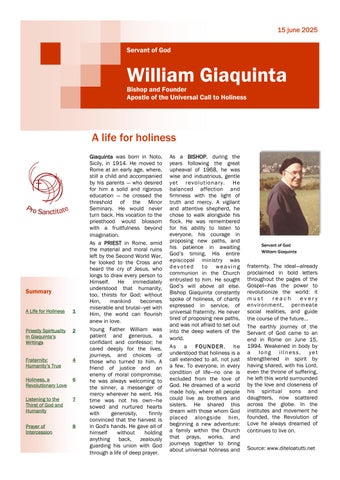
Servant of God
William Giaquinta
Bishop and Founder Apostle of the Universal Call to Holiness
A
life for holiness

Giaquinta was born in Noto, Sicily, in 1914. He moved to Rome at an early age, where, still a child and accompanied by his parents who desired for him a solid and rigorous education he crossed the threshold of the Minor Seminary. He would never turn back. His vocation to the priesthood would blossom with a fruitfulness beyond imagination.
As a PRIEST in Rome, amid the material and moral ruins left by the Second World War, he looked to the Cross and heard the cry of Jesus, who longs to draw every person to Himself. He immediately understood that humanity, too, thirsts for God; without Him, mankind becomes miserable and brutal yet with Him, the world can flourish anew in love.
Young Father William was patient and generous, a confidant and confessor; he cared deeply for the lives, journeys, and choices of those who turned to him. A friend of justice and an enemy of moral compromise, he was always welcoming to the sinner, a messenger of mercy wherever he went. His time was not his own he sowed and nurtured hearts with generosity, firmly convinced that the harvest is in God's hands. He gave all of himself without holding anything back, zealously guarding his union with God through a life of deep prayer.
As a BISHOP, during the years following the great upheaval of 1968, he was wise and industrious, gentle yet revolutionary. He balanced affection and firmness with the light of truth and mercy. A vigilant and attentive shepherd, he chose to walk alongside his flock. He was remembered for his ability to listen to everyone, his courage in proposing new paths, and his patience in awaiting God’s timing. His entire episcopal ministry was devoted to weaving communion in the Church entrusted to him. He sought God’s will above all else. Bishop Giaquinta constantly spoke of holiness, of charity expressed in service, of universal fraternity. He never tired of proposing new paths, and was not afraid to set out into the deep waters of the world.
As a FOUNDER, he understood that holiness is a call extended to all, not just a few. To everyone, in every condition of life no one is excluded from the love of God. He dreamed of a world made holy, where all people could live as brothers and sisters. He shared this dream with those whom God placed alongside him, beginning a new adventure: a family within the Church that prays, works, and journeys together to bring about universal holiness and

of God
fraternity. The ideal already proclaimed in bold letters throughout the pages of the Gospel has the power to revolutionize the world: it must reach every environment, permeate social realities, and guide the course of the future… The earthly journey of the Servant of God came to an end in Rome on June 15, 1994. Weakened in body by a long illness, yet strengthened in spirit by having shared, with his Lord, even the throne of suffering, he left this world surrounded by the love and closeness of his spiritual sons and daughters, now scattered across the globe. In the institutes and movement he founded, the Revolution of Love he always dreamed of continues to live on.
Source: www.diteloatutti.net
Servant
William Giaquinta

Priestly Spirituality in the Writings of Bishop William Giaquinta
Rev. Dr. Mathew Vellanickal
“The Cenacle is the great lesson of Jesus’ love “
I. Introduction
Bishop William Giaquinta, the Founder of the two Secular Institutes, Apostolic Oblates and Apostolic Sodales, and of the Ecclesial Association of Social Animators and Pro Sanctity Movement is really a specialist in priestly spirituality. The Institute of Apostolic Sodales was started in 1962 as a Pious Union, and on June 6, 1995, was erected as a Secular Institute of priests, in the Diocese of Rome. It has at present members from different Nations such as Italy, Malta, United States and India and also a few Aspirants from Mexico and Africa.
II. Spirituality Arising from the Cenacle
According to Bishop William Giaquinta, the Priestly Spirituality is the spirituality that arises from the Cenacle, which is the expression of “Apostolic Maximalism”, namely, it announces the infinite love of God, who wants to form a holy people in Christ, united in a fraternal bond. It aims at ongoing formation of Diocesan Priests who are able to create an authentic family of priests, gathered around their Bishop in docile availability, living ‘sacramental brotherhood’ among each other in every way possible, and seeking to form the People of God according to the spirituality of a “Church-Family”. It also aims at promoting in the Church the twofold universal vocation: the call to holiness and fraternity.
III. Cenacle: Home of Love
Great lessons of love emerge from the Cenacle. There Jesus Christ expresses His ‘Maximalism of Love’ to his own, by washing the feet of His twelve disciples (Jn 13:2130), by calling them friends (Jn 15:15), by requesting them to imitate His example (Jn 13:12-15), and by commanding then to repeat His example throughout the time (Lk 22:14-22). And also, Mary, Mother of Jesus, teaches a lesson of love by gathering the frightened disciples around her, giving them assurance that they are not left orphans (Acts 1:12-14). There is a lesson of love from the devout women who, in the Cenacle, take care of the practical needs of the Apostles. Finally there is a lesson of love from the Apostles and disciples, who filled with the Holy Spirit, go out into the world to communicate the message of love, as the legacy of Christ, sealed with His death and announced by His resurrection.

These lessons require a new appreciation and application. They need to be re-presented in words more suitable not only to the needs, but also to the mentality of our times. Therefore, although the lessons of the Cenacle are applicable to everyone, they are especially so for the priests.
IV. Cenacle and Priestly Spirituality
Without contemplating the mystery of the Cenacle, we will never come to an authentic understanding of the priesthood. The Fathers of Vatican II recognized this by including the Cenacle in the Council documents. Citations from chapters 13 through 17 of the Gospel of John are numerous and the image of the Cenacle is especially striking in the decrees on priestly formation (Optatam Totius), on the ministry of priests (Presbyterorum Ordinis), and on the ministry of bishops (Christus Dominus). Both Pope John XXIII and Pope Paul VI considered the Council itself to be an immense Cenacle from which, Christ, through the successors of the Apostles and in the light of the Holy Spirit, was again sending to the
William Giaquinta
Servant of God
William Giaquinta
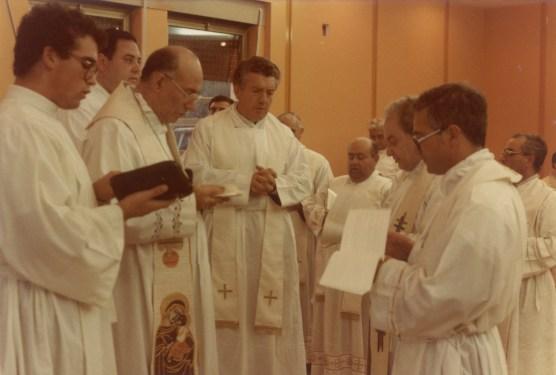
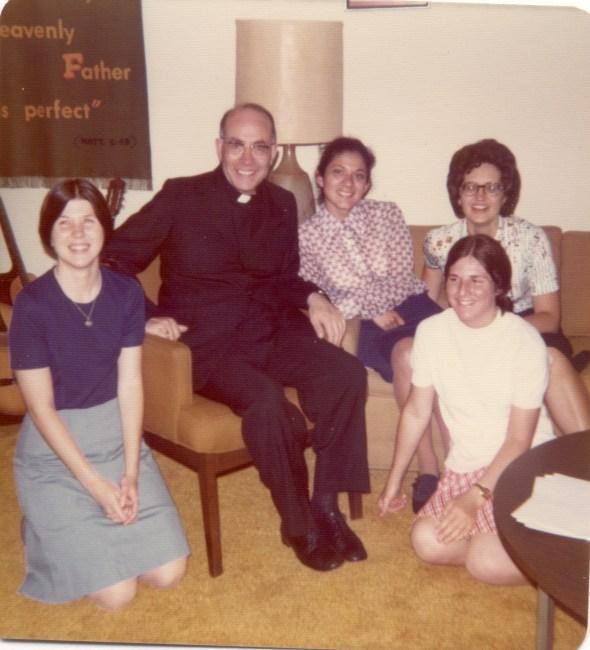
Mons. Giaquinta together with a group of Apostolic Sodales
world his message of service, love and unity (Cf. Introduction to the book, The Cenacle (‘Il Cenacolo’ in Italian) p.11).
According to Bishop Giaquinta, the Cenacle spirituality is essentially a spirit that each priest can and must live and effect personally, and try to spread it around himself and also among consecrated and lay persons (Cf. W. Giaquinta, The Gospel Maximalism of Love (Massimalismo Evangelico in Italian) p. 45).
V. Decalogue of the Priests of the Cenacle
Bishop Giaquinta proposes a Decalogue for the priests who wish to implement the spirituality of the Cenacle in their lives.
1. Love your Bishop as a Father; offer him your collaboration, and be available to whatever he may ask for.
2. Nourish fraternal affection towards all the members of the Presbyterium, and be generous and unassuming with offers of collaboration.
3. Provide fraternal assistance to priests who are sick or experience difficulties, especially moral ones.
4. Make friends, as far as possible, with all the priests of the Presbyterium, trying to express this friendship even with simple gestures.
5. Promote, in every way, the unity of the Presbyterium around the Bishop.
6. Do all the pastoral activities as a service rather than a source of income or authority.
7. Consider the Diocese as his extended family and the Parish as a family within the family.
8. Love the faithful as his own children, born from Christ through the administration of the Sacraments.
9. Train the faithful for loving, respecting, collaborating with and assisting the priest, who is their father in Christ.
10. Work for the creation of small Priestly Cenacles, the aim of which is prayer, mutual sharing and collaboration in all possible fields.
May there be among us love and fraternal unity, and faithfulness to those whom You have chosen as the foundation and pillars of Your Church. Grant us the joy and peace brought by Your Christ, and in times of sorrow and loneliness, teach us as You taught John to rest our heads upon the heart of the Master. Multiply around us souls who listen to Your word, and make of us all priests and faithful alike a family of love, eager to journey toward holiness.
May Mary, Mother of Christ and of the Church, be the one who binds us in unity of heart, and teach us to call upon her with the voice of true children. Mother of priests, pray for us.
(G. Giaquinta, “Priestly Elevation to the Father”)

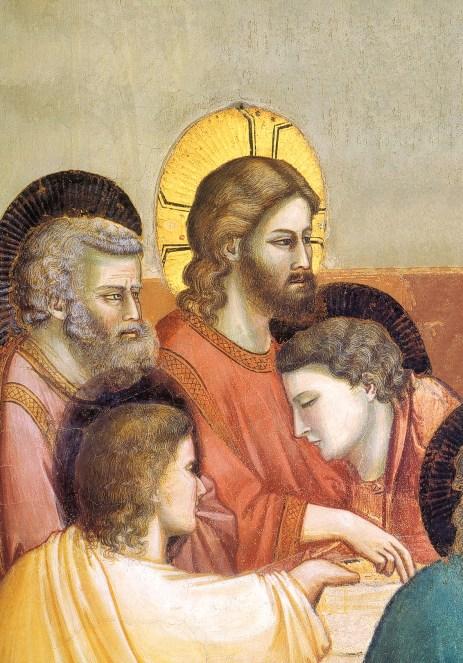
“Teach us, to rest our heads on the Master’s heart like John ”

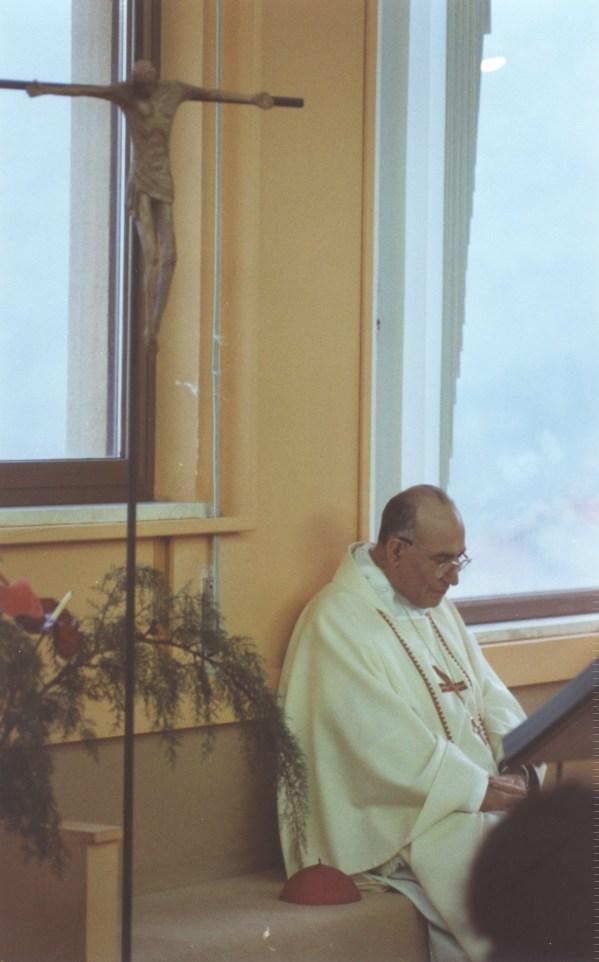
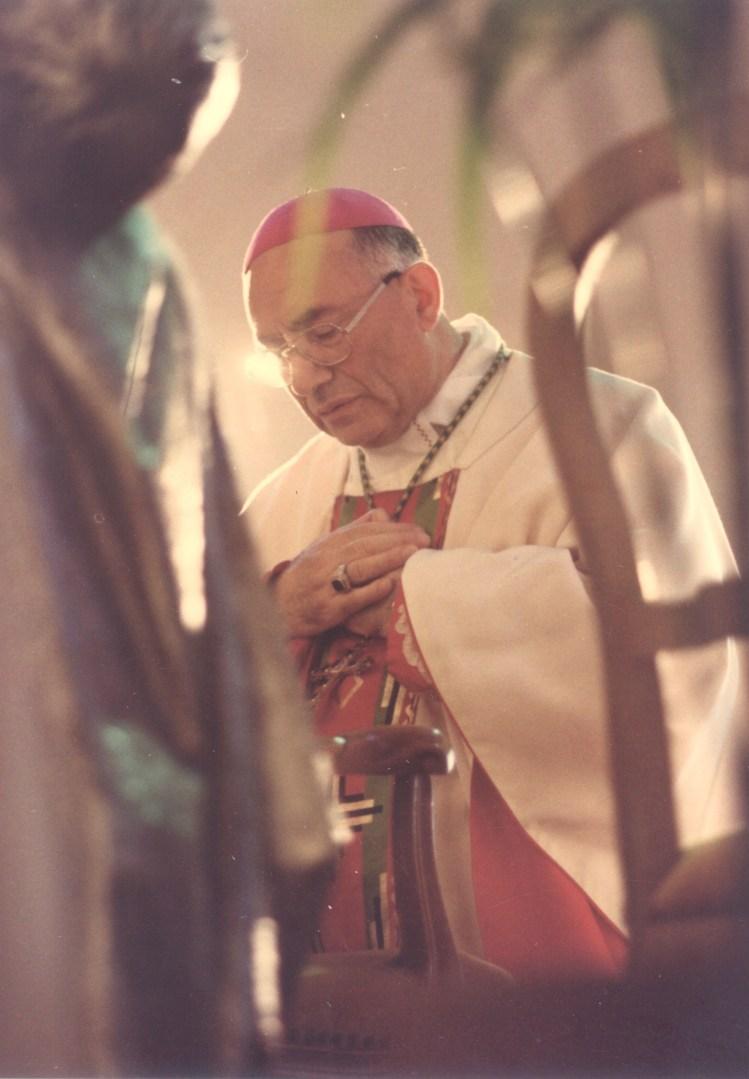
Mons. Giaquinta in paryer
Giotto, Last s
William Giaquinta
Fraternity: Humanity’s true strength *


“Humanity springs from God’s love and is called to live on love”
Franco Contino
March 2025 – A statement from one of the most influential figures in the economic sphere and more recently in social and political circles, possibly the wealthiest person in the world (who certainly needs no introduction) has been making the rounds online. He claims: "The fundamental weakness of Western civilization is empathy."
Empathy the innate ability to recognize others as our equals, to feel as if we were in their place is this really the fundamental weakness of today’s world?
In a world where nationalism resurges under the guise of defending national interests, where the global economy imposes a uniform cultural model based on consumerism and unchecked liberalism prioritizing individual gain while eroding the communal dimension of existence where a "throwaway culture" deems certain segments of humanity expendable for the sake of those deemed worthy of limitless prosperity, where walls are built both in hearts and on borders to block encounters with other cultures, where indifference reigns, and where even digital communication meant to bridge distances and foster dialogue paradoxically fuels isolation and the resurgence of fanaticism… in such a world, is empathy really the true problem?
It’s not enough to witness the atrocities and grave injustices that define our reality now we must also rationalize and ethically justify becoming crueler, more indifferent, more selfish to achieve "better results," to select the most "high-performing" humanity capable of advancing the technological challenges of the future. After all, technology is the true ruler of today’s world. This is the context we find ourselves in, and it is deeply disheartening, as it seems to lead us down an inevitable path where egoism becomes the norm.
Fortunately, there are voices in humanity that offer courage and point toward a different possibility.
Father William, reflecting on the parable of the Good Samaritan (Luke 10:30-37), invites us to follow his example of fraternal love, because a world of suffering without such a figure becomes hell.
The Good Samaritan shows that our existence is bound to others: life is a time for encounter, and the only way to rebuild this world is to become "neighbors" to one another.
In his book "The Revolt of the Samaritans," Father William starts from the awareness that humanity is born from the Love of God and is called to live in love especially in relational life and that no ideology can deny the demands of love. And yet, some dare to call empathy a "bug"!

If we were generated by God’s Love, it follows that all people are brothers and sisters, originating from the same love, and that the essential rule of human relationships must be love. The egoism instilled by original sin has prevailed, replacing Trinitarian love with calculation, ambition, exploitation, violence, and oppression.
Every attempt at a solution is doomed to fail if it only examines and treats the symptoms without addressing the root cause. Christ calls us to eliminate egoism and return to being brothers and sisters only then can we solve even the social and economic challenges we face.
Justice appears as the first great principle governing human relations, both individually and collectively. It is a beautiful and inspiring ideal, yet difficult to achieve and in some cases, even to define. How can we deny that even institutions meant to uphold justice can be tainted by egoism?
Human beings are, in fact, incapable of achieving justice by their natural strength alone. Thus, an alternative is needed: for those with faith, it means turning to supernatural principles; for those without, it means respecting a faith-based proposal that is undoubtedly the best possible.
Brothers * The proposed reflections are inspired by William Giaquinta’s text “ The Rivolt of the Samaritans”
History has shown how the infusion of Christian values into social and political life has had positive effects: human rights, individual freedoms, the emancipation of women. The Christian faith, recognizing the value of every person called to be a child of God, offers immense help in building fraternity and defending justice in society.
Reason alone can grasp equality among people and establish civic coexistence, but it cannot found fraternity, which requires a transcendent motivation. Without transcendent truth, there is no sure principle guaranteeing just relations among people. One of the causes of the modern world’s crisis is the abandonment of religious values and the dominance of individualism and materialistic philosophies.
For this reason, while respecting political autonomy, the Church does not relegate its mission to the private sphere. The Church has a public role that goes beyond assistance and education it actively promotes human dignity and universal fraternity.
Fraternity is not an alternative to justice but encompasses and surpasses it, offering a new solution to problems.
Father William explores the theme of fraternity in depth, identifying three levels:
A genetic-moral level, making fraternity recognizable by all humanity.
The fact that we are all brothers and sisters because we are united by the grace of Christ.
The true source of fraternity lies in the figure of Jesus.
Christ does not give us an example for mere display but so that we may "go and do likewise." Giving your cloak to one who takes your tunic, walking the extra mile with the burdensome, lending without demanding repayment, turning the other cheek these are humanly absurd acts, yet they become the goals of a new social order: that of fraternity and love.
In our society, it is rare to find anyone who takes the term fraternity seriously. Even Christians often claim the title without practicing authentic fraternity. The word is reduced to a mere sentiment, stripped of social efficacy. When fraternity becomes an awareness of the deep bonds uniting those called to total love for God, it transforms into generous selfgiving to others becoming spiritual holiness. The first task of spiritual fraternity is forming consciences toward Christian maximalism.
Just as there is a "right-duty" relationship, there must also be a "need-inner exigency" relationship meaning that the brother’s need corresponds to my ‘inner demand’to do everything possible to meet it.
The prevailing egoism cannot be overcome by external or coercive factors but only through the realization of a shared human and spiritual kinship with others a kinship that demands the overcoming of our negative instincts. Humanity can only be saved by generous, even heroic, efforts.
Universal fraternity may seem like a utopia, but history has always moved in the direction of great ideas. Utopia is neither ideology nor illusion. It is not ‘ideology’ because ideology is tied to a specific program and thus remains trapped in the temporal, subject to decay. It is not an ‘illusion’ a fantasy disconnected from human life. Instead, utopia is the "principle of hope" for a different tomorrow. Servant of God William Giaquinta placed these principles at the foundation of the spiritualityof the Social Animators’Association as the great ideal toward which we ‘must’ strive, hoping to bring it closer, even while painfully aware that we may never fully reach it. A world without utopias is, ultimately, a world without hope psychologically doomed to death.
Only by transforming fraternity from an "abstract utopia" into an "operative utopia" one that animates our daily actions can we truly and concretely walk toward a new world. Not one founded on mere justice, but on a love so full that it transforms human hearts and civilization itself.

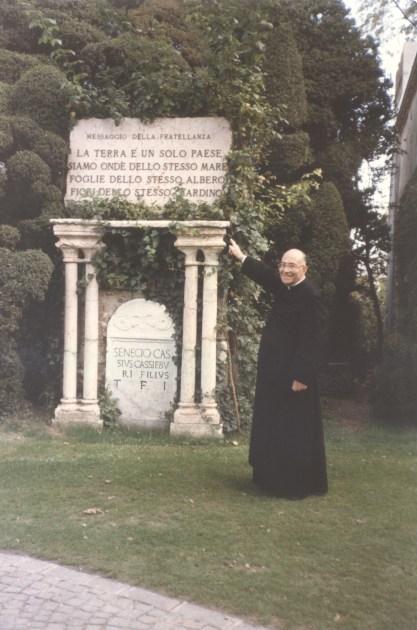
“Universal brotherhood appears as a utopia, it’s the hope for a different tomorrow ”

William Giaquinta, Parco della Sigurtà, Valeggio sul Mincio (VR) 1984
William Giaquinta
Holiness, a revolutionary love

Loretta Angelini
“ Becoming pilgrims of communion not only within our community but around us, in our environments ”
I felt the need to revisit the words of the Servant of God, William Giaquinta, in his work “Love is Revolution”. Reflecting on the introduction, I was moved to highlight some of his key passages:
“While Christ has proposed a maximalist ideal of love-holiness, humanity has found a way through spiritual minimalism to dilute the wine with much water, ultimately reducing the authentic message of Jesus to mere moralism and mediocrity.
We stand with Christ and for a utopian, revolutionary Christianity.
Jesus was the first, the greatest, the only revolutionary, and His revolution aims at an ‘Utopia’ not a dream, a chimera, or an absurdity, but a path toward a goal as lofty as heaven itself, far beyond human achievement. Christ is the great revolutionary who came to overturn the terms of history, to remind us that to live is to love love is life, and hatred is death.”
This is an invitation to rediscover the profound meaning of Christian life, a call to authenticity. This utopian and revolutionary vision is not an escape from reality; on the contrary, it is a full immersion into reality with a transformed heart one capable of seeing beyond appearances and perceiving the infinite in the ordinary.
The core of our spirituality lies in the awareness that every individual is infinitely loved by God. This discovery allows us to embrace our vocation to holiness, which unfolds in two dimensions:
A personal dimension, concerning our relationship with God and a communal dimension, calling us to proclaim that every person is infinitely loved by God and to live in fraternity.
The third dimension of holiness is a constant gaze upon the social, cultural, economic, and political context in which we live alongside our brothers and sisters. Here, we are called not to turn away but to engage, offering our contribution toward fulfilling the vocation to which we are summoned.
Our Founder showed us the path forward through “The Code of the Revolution of love.” Rereading it today, its relevance is more striking than ever: destroy the shame of being oneself: now is not the time to hide or disguise ourselves. Overcome the reluctance of the Spirit: we are called to be missionaries of holiness. Radicalize relationships with others: when we call our neighbor “brother,” it must be as a true brother one who is also infinitely loved by God.
Set our living environments ablaze and create a strategy for revolution: We cannot remain isolated but must unite, becoming pilgrims of communion not only within our own community but also in the world around us.

The time has come to reclaim the charism entrusted to us and to live as creatures striving sincerely and humbly to walk toward Him with the totality of our being.
Let us remind ourselves and everyone that the Saint is not a complete person, but one who aspires to completeness; hungry for a love they already possess yet only in part; a creature in need of their brothers and sisters, seeking to give not just the surplus of their abundance but all they possibly can; a person immersed in the present yet gazing upon eternity, striving within their means to anticipate it in the time they live.
Listening to the Thirst of God and of Humanity
Cristina Parasiliti
To Know, to Love, to Understand, to Help
With these four verbs, the Servant of God William Giaquinta describes the original vocation of the apostolic oblate using the biblical icon which narrates the encounter between Jesus and the Samaritan woman at the well of Sychar.
In Giaquinta’s interpretation, the woman represents humanity of all times humanity that, often without realizing it, is searching for someone or something to quench its thirst: for love, for justice, for meaning, for happiness. It longs to be freed from the burdens of a life that seeks fulfillment, yet struggles to find it. Jesus, seemingly by chance, allows himself to be found. He appears as one who is thirsty, but offers himself as the very source of water that quenches all thirst forever.
Giaquinta outlines the mission of the oblate beginning with this encounter with the Master, who asks for a drink in order to reveal his mystery of love, as expressed in one of his prayer-poems:
“But in your mystery of love you revealed to me that your thirst was for me and for other souls who, through me, were also meant to arrive at that well and quench the burning thirst of their attachment to earthly things.”
The mystery of love that the oblate is called to carry forth is the message that Jesus came so that all might have life in abundance. It is a call to holiness, to live in the fullness of his love.
Let us return, then, to the four verbs, in the light of the Gospel of the Samaritan woman:
To know the world, humanity, its desires and thirst, its fragilities and strengths, the wounds in need of healing and the seeds of goodness waiting to be nurtured.
To love : the present moment as the place of God’s loving action, but above all, to love our brothers and sisters, to whom we are called to announce the Gospel.
To understand : to have an open and merciful heart, like that of Jesus.
To help, by being instruments of God through a credible witness above all, through a generous presence of fraternity and friendship offering time, listening, and support to serve Christ present in the smallest and the poorest, and become, like Jesus at the well of Sychar, ready to share the living water of his love.
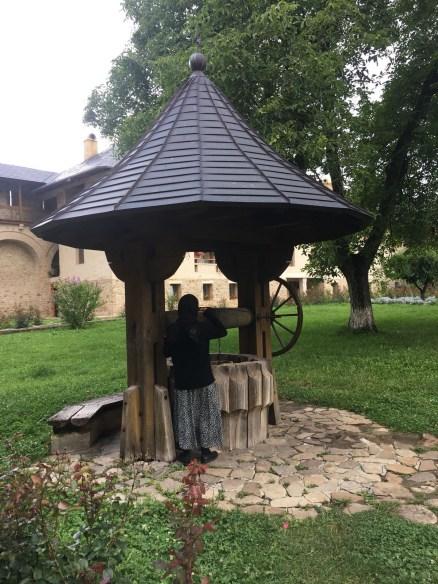
“Jesus came so that all may have life in abundance: it is the vocation to be saints”


FOR INFORMATION & MORE www.guglielmogiaquinta.org info@guglielmogiaquinta.org
Prayer of Intercession
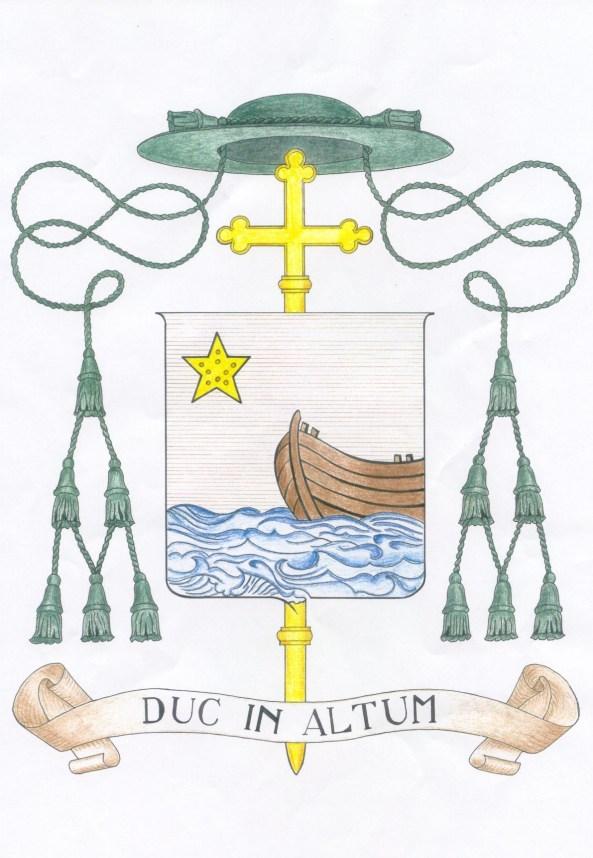
The coat of arms of the Servant of God William Giaquinta features a boat sailing on a rather stormy sea. In the sky, above the bow, a star shines brightly. Beneath the image is the motto: Duc in altum.
The symbolism draws on a well-known iconography: the boat represents the Church navigating through the waves, which symbolize the forces of evil yet the Church remains steadfast and secure on its journey. The star represents Mary, a radiant light guiding the Church, of which she is both a prefiguration and the Mother.
The motto Duc in altum explicitly refers to the many moments in the life and teaching of Jesus that speak of going further, giving more in love—what Monsignor Giaquinta succinctly called spiritual maximalism.
The Gospel expression, both in its literal translation and in the light of a more precise exegesis, conveys the invitation addressed to Peter to leave the shallow waters near the shore not to settle for what has already been done, but to venture into the deep, to discover the riches hidden there, to cast the nets further out and reach even the most distant fish, drawing them into the net of the fisherman of Galilee.
O loving God, Father of all goodness, Christ our Redeemer, Spirit of Holiness, in Your infinite and untiring love for us you never fail to invite us to holiness. we thank You because in Your servant William Giaquinta you have made your gifts shine forth. He contemplated the infinite love of Your Son and he was a tireless apostle of the universal call to Holiness. We pray to you, if it is Your will, to manifest in him Your glory and by his intercession to grant us the grace that we ask of You. Amen

William Giaquinta