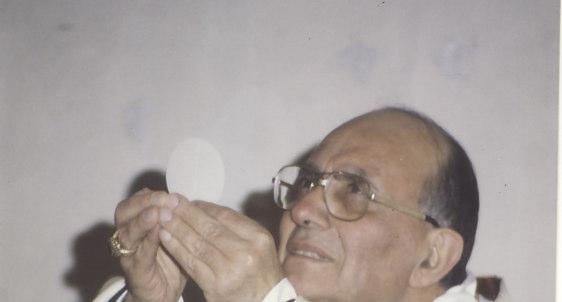
William Giaquinta Bishop and Founder Apostle of the Universal Call to Holiness
Who is today’s saint?
Each of us is called to be among the saints of today; let us, therefore, approach this thought free from the temptation to project these characteristics outside ourselves and, without thinking of seeking the same characteristics in others, determined to live them on our skin, on our flesh, in our time, in our space, so that each of us must say: I must be the saint of today. Who, then, is the saint of today? In the first place, a man who is open, who has the ability to grasp the jumble of goodness, anxieties, expectations, and hopes, who knows how to grasp in the movements that arise, flourish, and perhaps die around him, the imploring voice of the Spirit, that is, a creature open to all the suggestions of the Spirit.
[…]
The second element is joy. Nowadays, the world is ensnared by sadness, fear, terror, seeking gazes that are full of serenity and joy: happiness is the profound search of the human heart. If we really believe in Christ, if we have found our happiness in Him, we must radiate, inspire joy. How often we are sad, dejected, pessimistic, unable to bring sere-
nity to those around us, unable to bring joy! We must have the capacity to overcome the thousand little things that can sometimes arise in each of our lives in order to have more space to give that profound joy that comes from belonging to Christ. If we had all been more sowers of hope and joy, how many more people would have approached us: they would have found what they seek, namely, happiness and joy.
Another aspect is dynamism. We are in a time of dynamism and activity, the world around us is moving. […]
It is not possible to sit quietly and contemplate the goodness of the good God who dwells in us with his Trinitarian presence while the world around us collapses, content only to have the Lord with us, disregarding everything else.[...]
All this requires the loss of one's own space and time in order to give oneself. It is indispensable to come out of one's shell to give oneself to others, to come out of one's selfishness, self-sufficiency, self-pity, personal problems, and
any complexes that sometimes grip us, because others need us, our self-git, that God whose presence and possession we have been given by experience. But it is only in love for the Lord, God our Father, for Christ and the Spirit, and in authentic love for one's brothers and sisters, that it is possible to find the strength to give oneself to such an ideal by going out of oneself and thus find the motivation for one's own holiness.
This is the saint that the world needs today.
One wonders: am I such a person? If the answer is no, why not say: from today, I begin my new life of holiness, according to the needs of today's world?
(W. Giaquinta, The holiness)
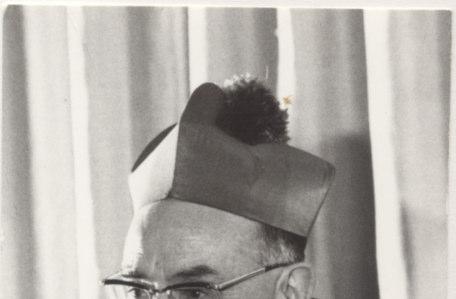
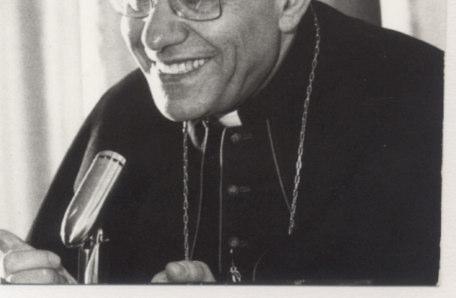
Servant of God William Giaquinta
The priestly witness of Bishop Giaquinta
“Mons. Giaquinta was filled with the Spirit and radiating spirituality through his life and words”
Mons. Tarcisio Camilleri
My first encounter with Monsignor Giaquinta was in the 1970s, when he was invited to the diocese of Gozo by our bishop. I immediately understood that Monsignor Giaquinta was a special man, gifted with a unique spirituality, yet with a humility that strikes and leaves a mark on the heart.
From the very first meeting with him, I felt a calling within me, that Monsignor had something to share with me. As time went by, I realized that this "something" was nothing more than an invitation to join the Institute of Apostolic Sodales. I was deeply struck by his charisma in the call to holiness, which, in the Institute of Sodales, is combined with priestly fraternity around the bishop.
From that time on, I participated in the annual meetings of the Sodales. Monsignor Giaquinta's presence was a treasure and a source of so much teaching. During those occasions, Monsignor Giaquinta spoke to me personally several times to help me understand more clearly the purpose and vocation of the members of the Institute of the Sodales, in particular, how to promote the Spirituality of the Cenacle.
For me, Monsignor Giaquinta was always a Father, a man of God, filled with the Spirit and radiating spirituality through his life and words. With his paternal character, he welcomed everyone, dedicating his time to listening to each person in silence and with great interest to those before him at that moment.
He insisted on the importance of prayer, being himself a man of prayer, through which he entered into deep connection with God. In his own words, prayer is a journey in the presence of God that leads to conversion and faithful following of His will.
As a true son of the Church, he always submitted his charism and all his work to the judgment of the Church. The Second Vatican Council confirmed his prophetic vision of the universal call to holiness.
He dedicated his life in service to the Church, enduring considerable physical and moral challenges. His composure during these periods demonstrated notable integrity and was regarded as holiness.
He earned the title "apostle of holiness" for his dedication to living and teaching holiness. He devoted his priesthood and episcopate to promoting the universal call to holiness, which many have followed.
Holiness is the surest path to fraternity. Monsignor Giaquinta's phrase, "all saints, all brothers," indicates his desire that all men be like brothers and sisters in the family of God the Father.
Every person is called to become a saint by aspiring to the fullness of love. In his life, Monsignor Giaquinta never lost courage, because he always had the support that came from his faith in Jesus in the Eucharist and the protection of the Mother of Trust, to whom he had a special devotion.
William Giaquinta
Servant of God
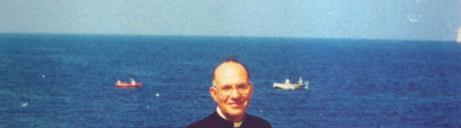
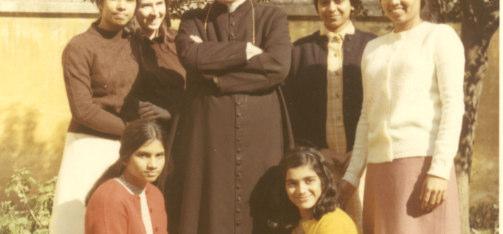
William Giaquinta Malta (1978)
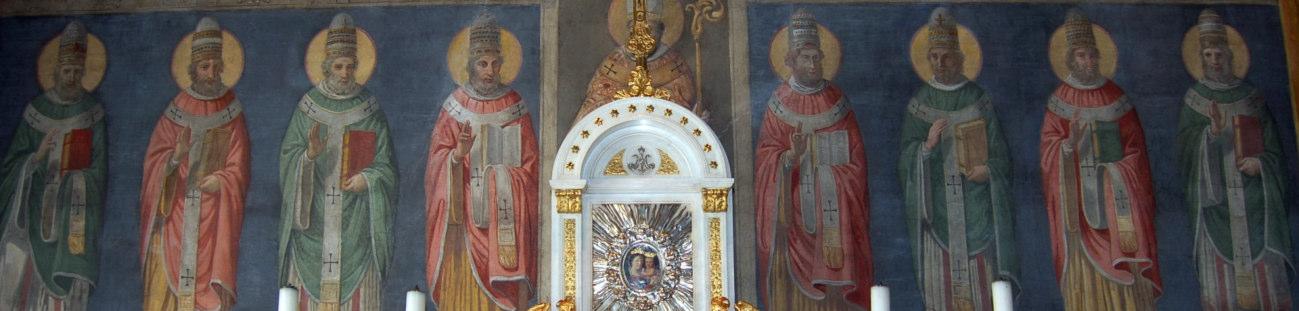
Roman Major Seminary, Chapel of Our Lady of Trust
Who is today’s saint?
Divine Master, Our Savior, by mysterious design, you call me to share in your priesthood an expression of love for the Father and a service of holiness for humanity. To accomplish your mission, you, rich and all powerful, came in our midst poor and humble. You spent yourself announcing the Good News of a Father who is waiting for us. You wearied yourself reaching out to those who shunned you. You abandoned yourself, exhausted, to the wood of the cross in full adherence to the divine plan.
Lord Jesus, I want my life to be a faithful reflection of your life. I wish to abandon myself to the Father’s will, detached from my whole being, offered to you, in order to be an instrument for the holiness of others.
Thus today I offer you without reserve my body, my time, whatever belongs to me, my will and my abilities. I make this pledge with the certainty that Mary, mother of the priesthood and model of holiness, will be by my side to bring it to completion.
Amen.
(G. Giaquinta, Priestly commitment)
“Lord Jesus, I want my life to be a faithful reflection of your life”
Guglielmo Giaquinta, Young priest
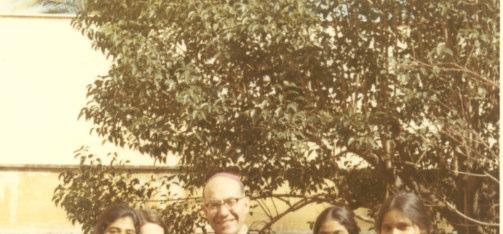
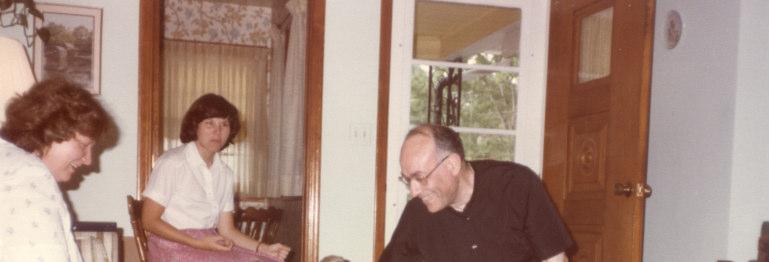
Guglielmo Giaquinta With a group of priests
Witness of love and tenderness
Rosamma Kunnel
“I saw countless virtues in him”
I got to know the Servant of God Guglielmo Giaquinta personally; I saw countless virtues in him, and I would like to mention a few here.
He was a man with a big heart, a welcoming heart, full of love, and greatness. In saying this, my thoughts return to September 1969, when, as the first Indian daughters of the Institute of the Apostolic Oblates, we met the Founding Father for the first time; he told us: "The Indian daughters must first carry out the apostolate of holiness in India, and only then in other places." At the time, I was unable to understand those words fully.
Since we all belonged to the Syro-Malabar Church, he was determined that we should exercise the apostolate of holiness in the Church where we were born and raised. Just a year after our vows, in 1975, he sent us back to Kerala.
This decision underscores his profound respect and affection for every individual Church within the universal Church, as well as his willingness to assume responsibilities despite potential risks. Many other religious institutes in Italy, in fact, despite having had numerous members from Kerala for years, had not yet founded a community there. If memory serves me correctly, it was Father who was the first to take such a bold step.
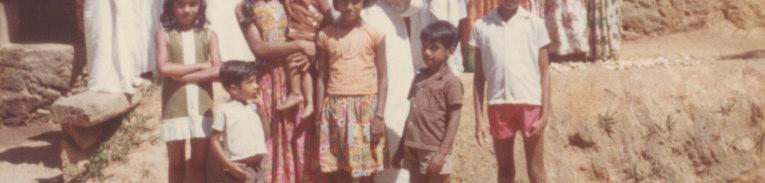
His commitment and consideration became apparent during his first trip to Kerala in 1973, when he acquired property to initiate our apostolic endeavors. During this visit, he met with each of us at our respective homes and extended his blessings to our families. Despite limited travel infrastructure and the significant distances between our residences, he ensured that every visit was completed without regard for fatigue or inconvenience.
I would like to recall another significant episode: in 1975, when the Founding Father personally went to Fiumicino airport to accompany us on our departure for Kerala.
As the boarding process was delayed, someone insisted that he have a cup of coffee. However, before he could return, we were escorted onto the plane. Deeply regretful that he had not been able to give his daughters a final blessing, he decided, according to what we were told, to give up coffee for a whole year as a sign of his sadness.
The humility and simplicity I experienced in him were touchingly evident during his 1978 visit on the occasion of the inauguration of Betania and the Spirituality Center. On that occasion, I accompanied him to visit the Archbishop of Changanacherry.
I still vividly remember that moment: as soon as he saw the Archbishop, the Founding Father knelt before him and said with deep respect, "Your Excellency, forgive me". I was completely taken aback, unable to understand the reason for such a request for forgiveness. I was deeply troubled by such request.
Only later did I understand the true meaning of that gesture. The Archbishop wore a simple cassock, while the Founding Father, as a bishop, wore a cassock adorned with the distinctive elements of episcopal dignity. That gesture taught me a profound lesson: every person deserves respect for their uniqueness and the role they play.
The faith and hope that the Founding Father placed in God and others were
William Giaquinta
William Giaquinta With first indian aspirant oblates
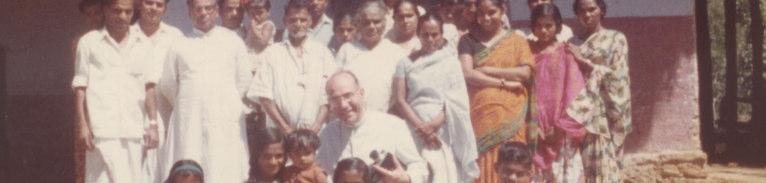
Guglielmo Giaquinta, Visiting Kerala (1973)
clearly evident during the construction of the building that would become a Spirituality Center, even amid various difficulties and shortcomings. All these issues were communicated to him by telegram and other means. However, he never blamed anyone or sought to find fault. His only response was: "My daughter, be a woman of faith and hope. The Lord sees every shortcoming, and He Himself will provide from above."
And so it was. While the work continued despite the shortcomings, the Lord Himself intervened: part of the building collapsed. This led to a re-examination of the shortcomings and to a subsequent reconstruction carried out with greater accuracy. All this can only be seen as an extraordinary event.
Father was truly a man of prayer. I experienced this personally when I had the opportunity to live in his home for a few months. Every morning he would rise at dawn to devoutly recite the Way of the Cross. Even during his brief stays in India, he fervently participated in canonical prayer, with admirable discipline and dedication.
His spirituality was deeply touching, permeated with devotion, love, and respect, with particular veneration and affection for the Blessed Virgin Mary and St. Joseph. He taught me that time is valuable, especially for those with less, and that it should be used to benefit others. He was precise and considerate, never keeping anyone waiting. He showed me to be disciplined with myself and compassionate towards others.
For me, he was also a prophet. Despite my health problems, he entrusted me with the responsibility for this project in India. At the time, it was a difficult decision for me to accept. Yet, through this assignment, he conveyed his trust and vision to me, far beyond what was noticeable.
When I confided my turmoil to Founder Father, he replied gently, "My daughter, the Lord has given you a cross. Now the Institute is entrusting you with another one. But you will not feel the weight of the first one too much."
At the time, I did not understand the profound meaning of these words. However, over time, I have come to live and recognize them in my concrete experience.
The Founding Father was also a poet. In 1973, during his first visit to India, he spent a few days in Kerala. In that short time, he got to know the people of Kerala, their religions, and their culture in depth. From that experience, a poem was born, which began with these words: "Kerala, land of palms, Kerala, pearl of India, rise up among your people, symbol of holiness."
This poem was then set to music, recorded, and released on cassette.
My Founder is, in my heart, the highest expression of God's love. Moreover, in proportion to that divine love, he also imprinted in my heart the greatest love that a human being can and must give to others.
“Kerala, land of palms, Kerala, pearl of India, rise up among your people, symbol of holiness ”
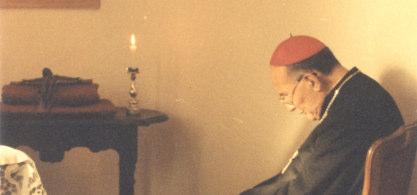
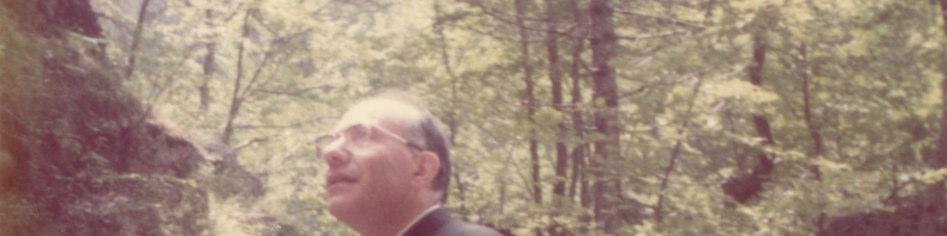
William Giaquinta, In prayer (1990)
William Giaquinta
Bishop Giaquinta in our family
Bishop Guglielmo Giaquinta has been part of our lives for over 40 years. We never met him in person in this life, but he has been a constant companion and shepherd for us and our children and now our grandchildren.
Rita’s parents, Win and Dorothy Redding, became friends of the Apostolic Oblates through Msgr. Peter Dunne and the parish of St. Margaret Mary in Omaha, Nebraska, USA. We were living far away in Kentucky at first but slowly got to know the Oblates when we came for visits. Once we moved to Omaha, our children grew up with Festivals of Faith and other wonderful events run by the Oblates. We learned about the great vision of Bishop Giaquinta to promote the universal call to holiness, and we were immediately attracted by the holiness, acceptance, and joy we received from the Oblates and the Pro Sanctity Movement.
“Bishop Giaquinta’s legacy continues to be an important part of our lives and the lives of our children and grandchildren”
In 1995, our family embarked on our first trip to Rome. Franca Salvo had prepared us well for our pilgrimage. She taught us all the Italian we could manage, gave us cultural tips, and saw us off from the Omaha airport with great confidence. We were met at the Rome airport by Oblates that we didn’t know and who didn’t know us, but we picked them out of the huge crowd because of their joy. They took us to Via dei Riari, and we got to know so many wonderful Oblates there. Not only did we meet the Oblates running the casa di hospitalità, but several Oblates from India, including Philomi, were visiting there, too. Father Vellanickal was also staying at our hostel, and Don Paolo stopped by as did many Oblates from different centers. We visited the Formation House where a youthful Loredana was leading the aspirants in their journey to holiness. General Coordinator Lisa Lissi came to greet us; General Administrator Graziella brought us to Largo Arbe; Mirella and Donatella guided us through one event after another.One and all welcomed us with loving heart and hugs, but there was more. Deep respect, genuine caring, and authentic living of the faith characterized them all. Like the Oblates we already knew in the United States, the Italian and Indian Oblates embodied the charism and spirituality of our Founder.
When we were asked by Vatican officials how we knew Bishop Giaquinta, we reported that we knew him well through the Apostolic Oblates, Sodales, and Animatori who brought his spirit alive for us. Bishop Giaquinta’s spiritual daughters and sons truly are sowers of hope. Although we have gotten to know and love Bishop Giaquinta through his books and talks – Love Is Revolution, many of his prayers, and The Cenacle stand out! -- the example of his spiritual children has made the deepest impression.
Bishop Giaquinta’s legacy continues to be an important part of our lives and the lives of our children and grandchildren. What a joy for us when our 5-year old granddaughter told us that her favorite song is “O Immaculate Heart of Mary, true model of every holiness, give us trust to become saints”.
Because of Bishop Giaquinta’s “offspring”, we have been attracted to maximalism! We have learned his message: Do not be idle or lukewarm but be on fire for the Gospel and strive to become saints! It is not an onerous call but a joyful, life-giving call. His spiritual children are authentic witnesses proclaiming the universal call to holiness and the joy to be experienced if only we will trust our good God, try to imitate our Blessed Mother of Trust, and never tire of starting over.
We thank all of you who help us on this journey toward holiness. Because you love and emulate our Founder, we have grown to love him and learn from him also.
Di Rita e Tom Hejkal
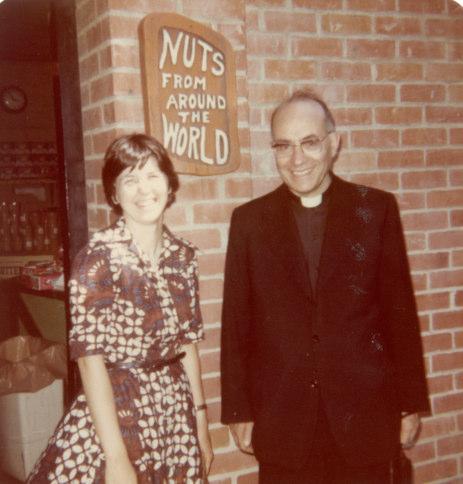
Guglielmo Giaquinta e Teresa Monaghen (1978)
Who is today’s saint?
An intimate dialogue with God
Nina Šukste
My name is Nina Šukste. I am 47 years old and have lived my whole life in the small Latvian city of Daugavpils (about 70,000 inhabitants).
I became acquainted with the Pro Sanctitate movement in 1999, when oblates Rita and Liliana led courses for catechists in our parish for the first time. Lately I got to know the founder of the Pro Sanctitate movement and the Institute — Bishop Guglielmo Giaquinta. In 2001 I became an associate member of the movement, and since May 9, 2015 I have been a cooperative of the secular institute of Apostolic Oblates.
I remember very well my feelings and thoughts when one of the prayers written by Bishop Giaquinta came into my hands (now, unfortunately, I cannot recall which prayer it was, but that is not the point). The first thing that struck me was the depth of the prayer. It seemed to me that it was not a prayer at all but a letter from a person in love. I was stunned by the depth of Bishop Giaquinta’s relationship with God. It was not a standard prayer from a prayer book, familiar from childhood. Rather, it was a very personal conversation, as if they (God and bishop Giaquinta) had known each other for so long and were such close friends that they simply could sit together in silence, because they had known one another so deeply that words are no longer needed — everything is understood. One can simply enjoy being together in the silence. Such a deep, genuine friendship can only grow when people spend decades together, and what they have lived through together (both sorrow and joy, moments of success and all the failures) allows that bond to strengthen so much that it no longer matters when or where — the main thing is that they are together, forever. Impressed by His deep reflections about God’s revolutionary love, the universal call to holiness, that all people are called to become saints, even me, and His deep relationship with the Lord, that you can feel while reading His books and especially “Prayers”, the idea to share these thoughts with all people and translate it into Russian appeared in my head. With love and in prayer it was made a reality in 2004.
And this is one more story from my relationship with Bishop Giaquinta. Not being a professional translator, in the process of translating I often found myself in situations where I felt Bishop Guglielmo’s thought in my soul but could not find the right words to translate it accurately. In such moments I would ask the bishop for help in prayer. It seemed to me that at those times God and Bishop Giaquinta would as if “seat me between them and explain what was meant.” During that prayerful conversation I received an answer to my question, an idea would come, and the words themselves flowed onto the paper. I could barely write them down. I deeply wanted to achieve the same union with God myself, to become His friend like Bishop Giaquinta — to come so close to God as to become His intimate friend.
In 2010 I visited Rome with the Pro Sanctitate group. Thanks to oblates Rita and Liliana I was lucky to visit the house where Bishop Giaquinta lived. For me it was like a personal meeting with him. I truly felt his presence there. Now I ask Bishop Giaquinta to pray for us every day. I am sure he is already in the Kingdom of God, because through this prayer I feel he accompanies us in his intercession. I consider him my spiritual friend and guide in the spiritual life. His books and spiritual reflections, full of deep insights, set a fairly high bar, but it is precisely this challenge that makes one follow Jesus’ call: “Go into depth!”.
I believe that someday I will meet Bishop Giaquinta in person and will be a meeting of true friends of God.
Page 7
“His prayer was an intimate and profound dialogue with God, like a conversation between friends”
William Giaquinta
FOR MORE INFORMATIONS www.guglielmogiaquinta.org info@guglielmogiaquinta.org
Jesus Divine Master
Jesus, Divine Master, who came down from heaven to give us the abundance of grace, increase it within us and make it become a river that overflows into eternal life. Of your free will, you chose the agony of your passion and death, and in the Eucharist you give yourself as food for all people: help us understand the greatness of such an example. May the fire of your love burn away the impurities of our human weakness, and give us the strength to follow your invitation to the infinite perfection of the Father. Of faith, give us firmness; of charity, zeal; of hope, unshakable certainty. Give us the desire to be heroic in every virtue, and the trust to attain holiness with the help of Mary, your mother and our mother. Amen.
Servant of God William Giaquinta
Prayer of Intercession
O loving God, Father of all goodness, Christ our Redeemer, Spirit of Holiness, in Your infinite and untiring love for us you never fail to invite us to holiness. we thank You because in Your servant William Giaquinta you have made your gifts shine forth. He contemplated the infinite love of Your Son and he was a tireless apostle of the universal call to Holiness. We pray to you, if it is Your will, to manifest in him Your glory and by his intercession to grant us the grace that we ask of You. Amen