Girls Outperform
Nationally, girls have started to pass their male counterparts in academics and leadership. Page 12

Muñoz Departs
Students to SXSW
Monsie Muñoz ’05 will
Graphic by Lylah Pouratian
Everything Greenhill

Nationally, girls have started to pass their male counterparts in academics and leadership. Page 12
After 14 years as an employee, Director of Equity and Inclusion Monsie Muñoz ’05 will depart Greenhill at the end of the school year to become assistant dean of students at a private school in Massachusetts.
In an email announcing the news, Head of School Lee Hark praised the contributions Muñoz has made to the Greenhill community over the years.
“In her 14 years as an employee, her authenticity and genuine curiosity have allowed her to build deep relationships with students, employees and alumni alike,” Hark wrote in his email to Greenhill students, families and employees.
Muñoz’s journey at Greenhill began in fall 2001, as a freshman in Upper School. It was a life-changing experience, she said.
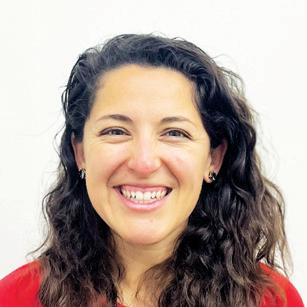
“I think it was probably the first time as an adolescent that I was having conversations that related to identity and prejudice,” Muñoz said.
After graduating, Muñoz attended Williams College, initially planning to pursue a career in medicine while studying at the Massachusetts school. However, after discovering the Latino and Latina Studies Department, Muñoz decided she wanted to become an educator.
Muñoz initially volunteered at a local elementary school in Williamstown, Mass., during college. Then, she studied abroad and taught both English and Spanish in Italy.
Upon returning to the United States, Muñoz applied for Greenhill’s Carter Associate Teachers Program, known at the time as the Carter Teaching Fellows Program. She says she was drawn to the opportunity because it provided her with a safe and familiar space to explore her passions.
“Before the end of the academic year, I was like, ‘This is what I want to do,’” Muñoz said.
After a few years of teaching history in Middle School, Muñoz moved to the Upper School and taught history, Spanish and English-related classes.
In the classroom, Muñoz says she was able to learn firsthand about student needs. This experience later helped her understand how to improve equity and inclusion.
“Even as a teacher, I recall her always trying to bring other perspectives into her class,” Upper School Spanish teacher Jacobo Luna-Cruz said.
Muñoz transitioned into the Equity and Inclusion Office after eight years of teaching, first becoming an associate director, after which she left Greenhill in 2019 for a year to teach in Austin at a Spanish language program. She then returned to Greenhill and became interim equity and inclusion director and, in 2024, director.
“I realized that I was [supporting students of color] in my own classroom, but it wasn’t necessarily something that we were all doing in our classrooms … and it seemed to me that those practices should be institutional,” Muñoz said.
This goal for an institution-wide strategic plan led Muñoz to formulate the Equity and Inclusion Blueprint, laying out a five-year process to improve Greenhill’s inclusiveness. The plan was presented to Greenhill’s Board of Trustees in the spring of 2025.
The blueprint consists of an action plan to strengthen schoolwide student connections, expand training development for faculty relating to inclusivity, broaden representation of admission acceptance and use data to guide accountability.
“No matter what classes you teach, you have to pause and think, ‘What am I doing to make our school more equitable from teaching my subject,’” Luna-Cruz said.
While the five-year blueprint process is still underway, Muñoz says she feels that Greenhill is headed in the right direction. This sense of having completed her strategic goal as a Greenhill administrator prompted her to seek out new administrative work elsewhere, Muñoz said.
Her search eventually led her to accept a position as assistant dean of students and III form dean for St. Mark’s School in Southborough, Mass. A III form dean is responsible for overseeing and guiding ninth graders.
I realized that I was [supporting students of color] in my own classroom, but it wasn’t necessarily something that we were all doing in our classrooms … and it seemed to me that those practices should be institutional.”
“I am so aligned on my values with Greenhill and that feels really good, but I don’t necessarily know that my values are currently aligned with our great state of Texas,” Muñoz said.
Her new job begins in August, creating a need for Greenhill to find a new director of equity and inclusion.
“I know that Greenhill is going to hire someone good for the role, but I just don’t know what my relationship is going to be like with that person, because [Ms.] Muñoz really does make the space feel inclusive and open for people to speak,” sophomore Srinidhi Mettu said. “I think it’s so clear that she puts so much effort and so much time into making people feel like they belong.”
Luna-Cruz says he attributes Greenhill’s inclusive environment to the work Muñoz has done by improving councils, leadership and spaces such as affinity groups and the Student Inclusion Council.
Muñoz says Greenhill has shaped her into the person she is now, and she will be forever grateful for the people she has met.
“I hope people think of me as someone who’s less of a school leader, and more of someone who served this community and who brought in positive change while doing their work with integrity,” Muñoz said. “I hope they just know how much I loved being a part of this community.”

The band Edge of the Desert, composed of four Greenhill freshmen, won the Private School Battle of the Bands competition as the youngest competitors on March 1. The competition included four other studentled private school bands from Dallas-Fort Worth and supported the North Texas After-School All Stars, an organization that provides youth with free, afterschool enrichment programs.
Southern Methodist University cosmologist Heidi Wu gave a lecture to Greenhill students about dark matter and dark energy on March 24. Her visit was hosted by the Aeronautics and Astronomy Club. Upper School students in attendance learned about galaxy clusters, Albert Einstein’s theory of gravity and the latest discoveries in cosmology.
Greenhill students presented their artwork at St. Mark’s School of Texas on April 9-11 for the Independent Schools Association of the Southwest Arts Festival. The festival included musical performances, film screenings and displays of students’ artwork. Students were also encouraged to watch performances by their peers from other area schools.
From March 30-April 1, members of the Independent Schools Association of the Southwest Visiting Committee were on campus as part of a 10-year accreditation process. This formal process is done to ensure that the 96 independent school member institutions meet established standards. While on campus the committee members attended classes and assessed campus lifestyle, using these observations to formulate their report.
Greenhill Goes Global will take place on May 1 and will include nationality-specific booths with different food and activities. During the event, there will also be cultural performances. Students will be able to walk around the floor of the exhibition hall and learn more about the various cultures on display.
Middle School band students will perform for their peers, families and friends at the May 5 Spring Fling festival at various locations on campus. The event features performances from students in band, choir, orchestra, improv and video production. There will also be visual arts works displayed around the Marshall Family Performing Arts Center.
The Blood Cancer Awareness Club will be hosting a stem cell swab drive on April 20. The drive, in partnership with Earl Young’s Team and its Youth Advisory Board, will be outside the Lecture Hall from 7 a.m.-5 p.m. accepting donations from people ages 18-55. Greenhill representatives from the club will be volunteering at the event to help with the cause and encourage members of the community to participate.
Greenhill administrators have created a protocol that details how faculty and other adults on campus should respond if Immigration and Customs Enforcement officers came onto campus, addressing a scenario that has grown increasingly salient for schools nationwide.
since Greenhill is a private school and the campus is private property.
According to a statement released by the Department of Homeland Security on Feb. 4, ICE considers warrants issued by
from a legal perspective to say, ‘Our campus is private property, but the ICE agents are still allowed to do certain things within the law, and we have to allow that,’” Grace said.
Parents, along with other community
wish they were more informed.
“I have no idea how it affects me in my community, even though I’ve heard a lot of how it affects airports and other public schools,” senior Dhiya Hemchand said.
Senior Yichen Stone adds that being informed about events like ICE activity is uniquely important, due to its potential impact on members of the community.

The plan, most recently revised last fall, was developed in response to President Donald Trump’s rollback of previous protections that limited ICE activity in sensitive locations, including schools, according to Head of School Lee Hark and Associate Head of School/Chief Financial Officer/ Chief Operating Officer Kendra Grace.
“These policies are intended to keep the campus safe and keep the people on this campus safe,” Hark said. “And that’s what we hope that we’ll do if we ever have to use them.”
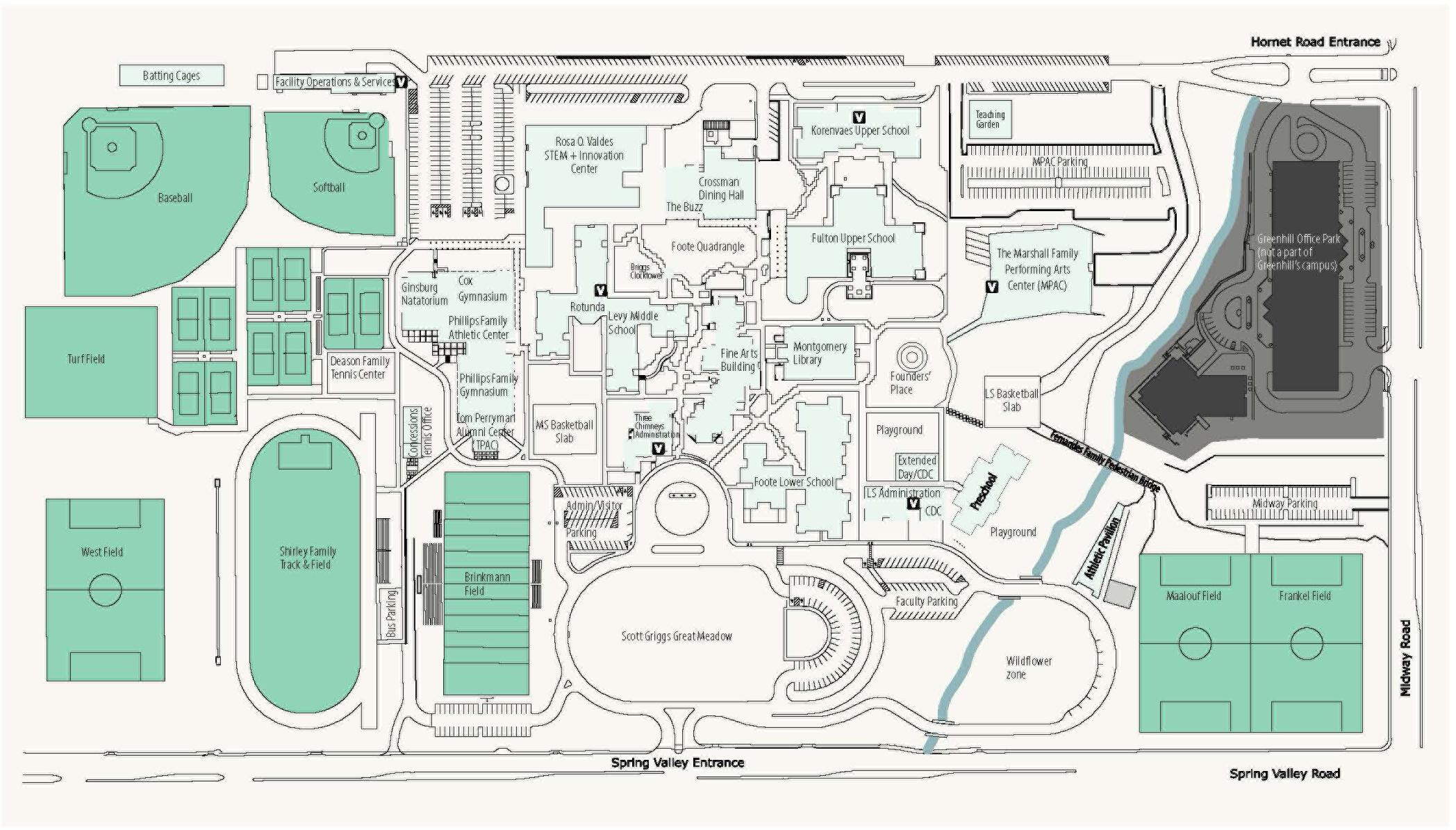
If ICE agents show up at Greenhill, campus security will direct them to the Three Chimneys Building, where the agents will be asked to present their warrant to either Hark or Grace.
If the warrant is an administrative warrant – one issued by the immigration enforcement agency – ICE agents will not be permitted to access other parts of campus,
an immigration judge sufficient to detain. However, warrants and subpoenas signed by or issued by an immigration judge are not considered judicial warrants or subpoenas, according to the National Immigration Law Center.
At Greenhill, officers must possess a judicial warrant to be granted access to campus.
“We’ve done the things we should do
members, would be notified of one of these events after the fact.
“The whole point of it is to streamline what happens to minimize the spillover effects,” Hark said. “It’s intended to simplify things and to keep more people from being involved in it than need to be.”
Hark and Grace both note that they want to provide emotional support for students. However, several Greenhill students say they
“Given the current economic and cultural state of the world right now, we need to learn about the way that our governance works and the way that our governance is going to impact our daily lives, including in our academic settings, which we almost think is a bubble away from the outside world,” Stone said.
While creating the plan, the school consulted its attorney to ensure communication protocols would be followed during an event.
“It’s very similar to our crisis management plan,” Grace said. “We have plans in place for when these things happen and what the resulting action is. It’s very similar to other incidents where we need to execute a thoughtful communication plan.”
According to Hark, one of the main hopes for this plan is to equip the community, especially faculty, with the knowledge of how to respond in unfamiliar situations and to instill a sense of legal precision.
“My hope is that people understand [our goal] and they appreciate that clarity and the limitations of that,” Hark said.
The Buddhist Affinity Group, founded earlier this semester by senior Justin Wu, held its inaugural meeting on March 12.
At the meeting, the six students who attended opened with introductions.
“We did a group discussion about ‘What does Buddhism mean to you? And how do you practice Buddhism,’” Wu said.
The event also featured traditional Southeast Asian and East Asian vegetarian snacks, reflecting the main cultures that practice the religion, according to Wu.
“Most Buddhists are vegetarian – not me, though, but it’s part of the culture,” Wu said prior to the meeting. “We just want our first meeting to be fun, to meet people, to bring the community together.”
Senior Ian Wu says he was at the meeting to connect with other people about the religion.
old.
“They taught me about Buddhism, and they taught me Chinese at the same time,” Justin Wu said. “I always wanted to share my culture and celebrate it as well with other people.”

“I have to do all these different traditions, and it’s always been something that I never talked to anyone else about,” Ian Wu said.
Justin Wu says he was inspired to start the group through his work with the Taiwanese Buddhist nonprofit Tzu Chi, which he joined when he was seven years
He says he viewed this year as his last chance to leave behind a legacy by
“I know I won’t be here next year, so I hope there can be more young leaders that can take my place and sort of be able to continue guiding the sort of Buddhist Affinity Group,” Justin Wu said.
After deciding to start the affinity group, Justin Wu talked to Director of Equity and Inclusion Monsie Muñoz ’05, who told him to find co-leaders and a club sponsor.
“The hardest part was finding people to form this group with me,” Justin Wu said.
By asking peers, he found coleaders, junior Alex Phu and freshman Grace Li, and a club sponsor, Upper School history teacher Judy Kingkaysone, all three of whom are Buddhist.
“When Justin came to me proposing to do the Buddhist affinity group, I just thought it would be a good idea to represent myself as both a Southeast Asian and a Buddhist,” Phu said.
The leadership group then began planning meetings and setting goals.
“We only have three or four meetings before the school year ends, and so really
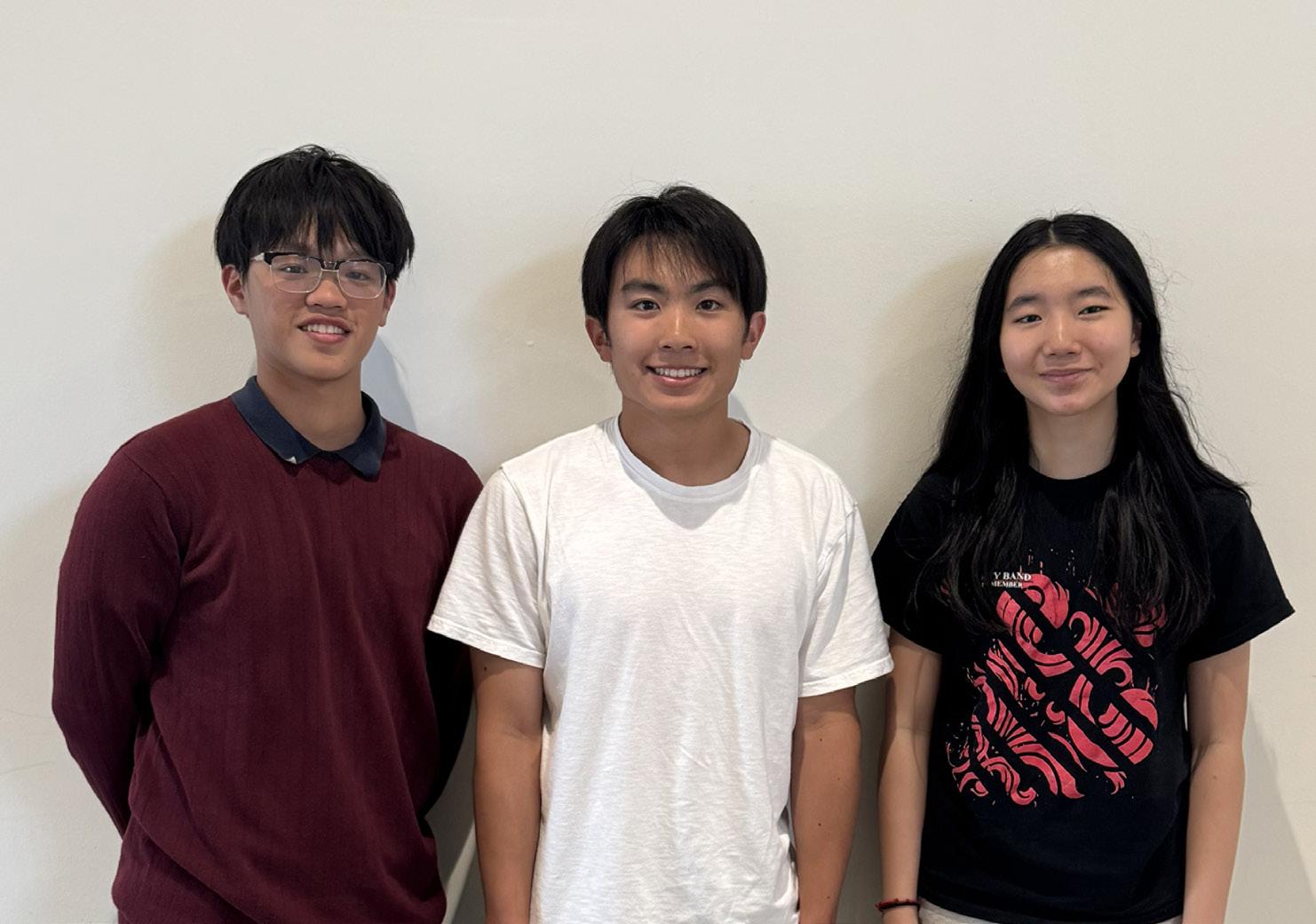
CREATING COMMUNITY: Senior Justin Wu, middle, founded the Buddhist A nity Group alongside junior Alex Phu, left, and freshman Grace Li.
our goal this year we decided was to get as many people as we could find to join,” Justin Wu said.
After finalizing the logistics of their first meeting, the leaders presented at gradelevel class meetings and at an Upper School assembly to spread awareness.
“It’s taken meetings with Ms. Muñoz, meetings with each other and talking about, ‘What do we want our affinity group to look like? How will we get our name or like our group out there?’” Justin Wu said.
In the future, Justin Wu says he hopes
to deliver a presentation on the history of Buddhism and have the group engage with the broader Dallas-Fort Worth community.
“We’ve talked about even bringing in a Laotian monk in the Dallas area to come talk to us, and going out and volunteering, because that’s a part of how I practice Buddhism,” Justin Wu said.
Phu says he wants to continue spreading awareness.
“I think our main goal is to just reach out to the community and let everyone know that we’re an affinity group,” Phu said. “I know we did that with the assembly, but we want to get more outreach.”
Rory Liu
Upper School history teacher Scott
Cotton had already outlined the syllabus for his Modern Middle East elective when his plans for the class were uprooted. Following large-scale U.S. and Israeli strikes on Feb. 28, Cotton decided to pivot focus to Iran’s current struggles amid a developing war.
The class has been tracking the events of the Iran war, discussing the ramifications and justifications for the U.S. and Israeli strikes, the history of U.S.-Iranian relations and what will happen afterward.
The strikes follow weeks of Trump threatening military action if Iran did not agree to a new deal over its nuclear program. It also follows the 12-day war and Operation Midnight Hammer, which were Israeli and U.S. strikes on Iranian nuclear facilities in June 2025.
Cotton says the rapid-fire development of foreign policy events such as the strikes on Iran has impacted his curriculum.
“The students are totally dialed in because they’re following this,” Cotton said. “It’s difficult to plan things ahead of time but it accentuates the teaching and learning.”
Since the initial attack, the Trump administration has increased deployment of bombers and fighters to target Iranian missile infrastructure, military sites and senior political figures, including leaders within the Islamic Revolutionary Guard Corps, an organization tasked with protecting Iran’s clerical regime.
Trump also stated the operation will take an estimated four to five weeks, but that he has the “capability to go far longer than that.” Iran has publicly rejected a 15-point peace plan offered by Trump, but the two countries announced a two-week ceasefire on April 7.
The prospect of U.S. ground forces entering the military campaign is a subject of concern among Greenhill students and faculty.
“It might lead to boots on the ground from America, which will also lead to the death of so many soldiers and military personnel, if past precedent is anything to go off of,” senior Maya Jagsi said.
In response, Iran and the Iranianbacked, Lebanese political party and militia group, Hezbollah, have responded with missile and drone launches across the region, targeting eight Middle Eastern states and ships passing through the Strait of Hormuz.
More than 3,600 people have been killed in Iran and more than 1,700 killed in Lebanon in U.S. and Israeli attacks against those two countries. More than 300,000 people have been displaced in Lebanon as a result of Israel’s airstrikes targeting Hezbollah. The deaths in Iran have included 175 people at a girl’s school that was likely struck by a U.S.-missile, reputable news organizations and human rights groups have reported.
“Civilians are caught in the crossfire,” senior Goni Wong said. “For people who have family or connections to the region, it’s important to just hold empathy and compassion for all those involved, regardless of your political beliefs.”
The U.S. and Israeli strikes have killed Iran’s supreme leader Ayatollah Ali Khamenei and at least 48 other senior leaders, according to Trump and other administration officials. Since then, top clerics have selected Mojtaba Khamenei, Ali Khamenei’s son, as the next supreme leader.
Trump has justified the strikes as efforts to destroy Iran’s ballistic missile supply and to ensure they could not obtain a nuclear weapon. He claimed to “force [Israel’s] hand” to strike first, contradicting Secretary

Feb. 28
U.S.-Israeli forces begin bombing Iran, prompting retaliation.
March 8
Mojtaba Khamenei selected as Iran’s next supreme leader.
March 24
U.S. sends a 15-point peace plan to Iran, which is rejected.
April 7
The U.S. and Iran announce a two-week ceasefire, mediated by Pakistan.
of State Marco Rubio’s earlier statement that it was Israel’s decision to attack that led to Trump’s decision.
The skepticism among many Americans about Trump’s motivations for attacking Iran extends to the Greenhill campus.
“Iran has been two weeks away from a nuclear bomb for the past 30 years,” Jagsi said. “They’re really doing this for money and other governments who want to see regime change in Iran.”
Senior Aytan Monet says Trump also likely felt emboldened after several diplomatic and personal events. Those include an Iran-backed assassination attempt on his life in 2024 and Trump’s 2018 withdrawal from the Joint Comprehensive Plan of Action that restricted Iran’s civilian nuclear enrichment program.
“The killing of [IRGC general Qasem] Soleimani told Trump he could pretty much attack Iran with impunity,” Monet said. “Operation Midnight Hammer then wiped out his perception of Iran’s nuclear infrastructure, and then [the U.S. attack on] Venezuela worked. So, he perceived that he was invincible in this context.”
The February strikes also come after a series of protests in Iran against the government that erupted in response to inflation, water resource mismanagement and decades of repression. Iranian authorities responded with deadly crackdowns and cutting internet access with an estimated death toll to be above 20,000, according to Amnesty International. Trump has urged the Iranian people to overthrow their government.
Another developing story is the reaction of the Iranian people to the deaths of longserving senior leaders in a deeply unpopular and repressive regime. Many Iranians have celebrated Khamenei’s death in hopes that the regime will finally change.
Junior Lylah Pouratian is one of these Iranians. She says her father has always hoped to be able to visit Iran again after fleeing the country during the Iranian revolution in 1979, a movement resulting in the establishment of an Islamic Republic that installed Ayatollah Ruhollah Khomeini as its leader.
“It’s really emotional for my family and everyone because [Ali Khamenei’s death] is what they’ve been waiting for,” Pouratian said. “They remember Iran as such an amazing place and to finally have this opportunity to go back hopefully with a regime change would be amazing for them.”
Other students expressed fear and uncertainty over the direction Iran will take amid the upheaval. Wong says Trump and United States Special Envoy to the
March 2
Iran announces closure of the Strait of Hormuz.
March 22
President Donald Trump issues 48hour ultimatum for Iran to open the Strait of Hormuz or have critical energy and infrastructure facilities attacked; deadline gets extended.
March 28
U.S. announces arrival of Marines and other forces for potential ground operation in Iran.
Middle East Steve Witkoff are treating Iran as a “real estate deal” while ignoring deeply entrenched anti-Western ideologies in Iran and other political obstacles.
“The [Iranian regime’s] entire legitimacy is tied to this authoritarian state and continual expenditure for a nuclear program and a proxy network,” Wong said. “If they were to give up officially in talks, they would have complete loss of legitimacy at home.”
The impact of the conflict has also stretched beyond Iran. Natural gas production is shut down in Qatar and Saudi Arabia and Iran has effectively closed the Strait of Hormuz, through which 20% of the world’s petroleum is transported. As a result, oil prices have spiked to record highs. Global financial markets across South Korea, Japan and China also face steep downturns over concerns about Middle East stability.
Iranian retaliation has also spurred joint condemnation by the United States, Gulf Arab states and European allies, with several states determining Iran’s action as a breach of international law.
“Since the 12-day war, there was speculation that because Iran is no longer this big threat, alignment within the Middle East with Gulf countries, Saudi Arabia, the United Arab Emirates and normalization with Israel would stop,” Wong said. “But we’ve seen that the Iranian retaliation has brought together a lot of the Gulf states, Israel and the United States.”
Jagsi says Iran’s continuous retaliation may foreshadow increasing casualties to come. Her perspective is shared by more than 50% of Americans who stated they opposed the war in Iran, according to polls by the Washington Post, CNN and Reuters.
The Iran war also comes as a stark contrast to Trump’s presidential campaign where he condemned the 2003 Iraq invasion and touted himself as the “only president in decades who did not start a new war.”
However, a war powers resolution aimed at restricting Trump’s military action in Iran failed in the Senate on March 4. The Trump administration has also not ruled out the possibility of committing ground troops and enacting a military draft. However, Trump has repeatedly declared that the war is winding down, assertions he repeated in a nationally broadcast White House address on April 1.
“Conversations about this usually lack nuance,” Jagsi said. “I can think that the protests and oppression going on Iran is horrible, but I can also believe that America should not have intervened. It is not America’s war to fight.”
“I just have a list of voice memo songs, but the ones I’ve completed, gotten produced and copyrighted is four.”
Growing up in Los Angeles, Greenhill eighth grader
Alex Gamble was exposed to the music world and entertainment industry from an early age.
“I’ve always been in love with music [since] I was small,” Gamble said. “It’s just been a thing that’s been in me forever.”
She began taking piano lessons at the age of 6 and then added guitar to her skill set when she saw that songwriters and performers she admired played both instruments.
“I started getting more into actually writing full songs when I was around 10 because I was actually being able to properly write stuff with more experiences and more inspiration to go off of,” said Gamble.
From those early beginnings, Gamble is now earning national and international recognition for her skills as a songwriter.
Her 2025 honors include being named Young Songwriter of the Year by the Dallas Songwriters Association for her original composition, “Back When We Were Young.” She was also first runner-up in the Young Songwriters Contest sponsored by the Dallas Songwriters Association for her composition “Like Me.”
I’ve always been in love with music [since] I was small; it’s just been a thing that’s been in me forever.”
In a competition that attracted about 13,000 entries from around the world, she was named a finalist in the 2025 International Songwriting Competition for her composition “Own Way.”
Gamble says she has dozens of other compositions in various stages of completion.
“I’ve technically written over 100 songs,” Gamble said.
Gamble’s breakthrough as a songwriter came in 2024, when she was first named on the “Ones to Watch” list announced annually by the Nashville Songwriters Association International. She was named to the list again in 2025.
“We didn’t even really know it was going to be anything related to a recognition, like an award,” Gamble said.
This recognition motivated Gamble to continue submitting her music to competitions and organizations like the International Songwriting Competition.
Recently, Gamble has been finishing a fifth song. The style and pace of the still-unnamed song is different from her previous work, according to Gamble.
“It’s about moving on,” Gamble said. “[It’s] got more of a hopeful and contemporary vibe.”
To develop her stage presence and recognition as an artist, Gamble finds performance opportunities through friends or by reaching out to coordinators for parties and galas. She appeared at the Greenhill Gala earlier this year in what was her biggest live performance to date.
“I feel like I was a little bit nervous, but not so much because I had practice performing in front of an audience,” Gamble said.
In addition to performing, Gamble says she uses her singing passion to give back to the community.

“She does a lot of charity work,” said one of Alex Gamble’s younger sisters, sixth grader Elsa Gamble. “She usually sings at galas, for charities and for kids.”
Elsa has watched many of Alex’s practice performances and says her older sister finds happiness in performing.
“She looks really good on stage,” Elsa Gamble said. “She flows really good with it. She seems comfortable on stage.”
Looking to the future, Alex Gamble says she wants to broaden her abilities as an artist. She says she plans to pursue acting and dancing in the Upper School, with the help of mentors such as Upper School Theater Director Valerie Hauss-Smith, Upper and Middle School visual art teacher Corbin Doyle and Upper and Middle School dance teacher Gypsy Ingram.
She looks really good on stage. She flows really good with it. She seems comfortable on stage.”
“I want to do dancing because I love art and dancing involves music,” Alex Gamble said. “If I want to be a singersongwriter, I also have to know how to dance, and it’s fun. I really enjoy it.”
To grow as a musician, Alex Gamble says she also wants to improve her acting skills.
“As I keep doing stuff, more opportunities will open,” she said.
Another step in her progression will be building an entire performance around her original compositions rather than cover songs.
“I just want to keep writing music,” Alex Gamble said. “Just as many performances and opportunities I can get, I want to do that.”
Eighth graders celebrated Greenhill’s 75th anniversary on March 12 by hosting an alumni panel examining the evolution of the eighth grade class trip to Washington, D.C. The event was organized by Associate Head of School for Mission, Community, and Culture Tom Perryman ’81 and the eighth grade faculty team. The panelists were alumni and teachers who had attended the Greenhill trip.
Students were divided into small groups to hear speakers reflect on experiences ranging from the former eighth grade camping trip to the current Washington, D.C., trip.
“We were trying to think of something that was unique to eighth grade,” Middle School math teacher Jaye Andrews said. “The D.C. trip is certainly unique, but it also goes back to earlier trips. We wanted to capture that history.”
The celebration focused on how the trip has changed over time. Before D.C, students visited places like Camp Champions in Marble Falls, Texas, or went on outdoor adventure trips. While students travel to the nation’s capital now, many of the core experiences remain the same, according to Andrews.
We were trying to think of something that was unique to eighth grade. The D.C. trip is certainly unique, but it also goes back to earlier trips. We wanted to capture that history.”
“I think they found some similarities,” Andrews said. “It was about being away from home and being with your friends 24/7. That hasn’t changed.”
Eighth grader Karthik Zeikus found the panel discussion interesting.
“It was cool to connect our experiences and compare the trips,” Zeikus said.
Students prepared questions and actively participated in discussions with the panel. Alumni joined virtually through Microsoft Teams, allowing for recorded conversations that will become part of the school’s digital archives.
The goal of the project was not just to celebrate the
anniversary, but to preserve these memories for future generations, according to Middle School English teacher Susan Bauman ’81.
Bauman said people in the future will be able to learn about the evolution of student life at Greenhill. Alumni and the current students were able to relate over learning new things about their peers through the trip.
“Even on the D.C. trip, some kids who don’t like history in class suddenly become really interested when they’re
there, which allowed us to learn new things about students we may not have known before,” Bauman said.
Overall, Andrews says students were given a new perspective on how the trip not only affected their peers but also how it impacted the school’s history by showing how a fond memory can connect decades of students.
“It was interesting to see how different graduating classes of students can share such a bond over one trip, and it shows how meaningful the eighth grade trip can be,” Andrews said.
Ella Sadka
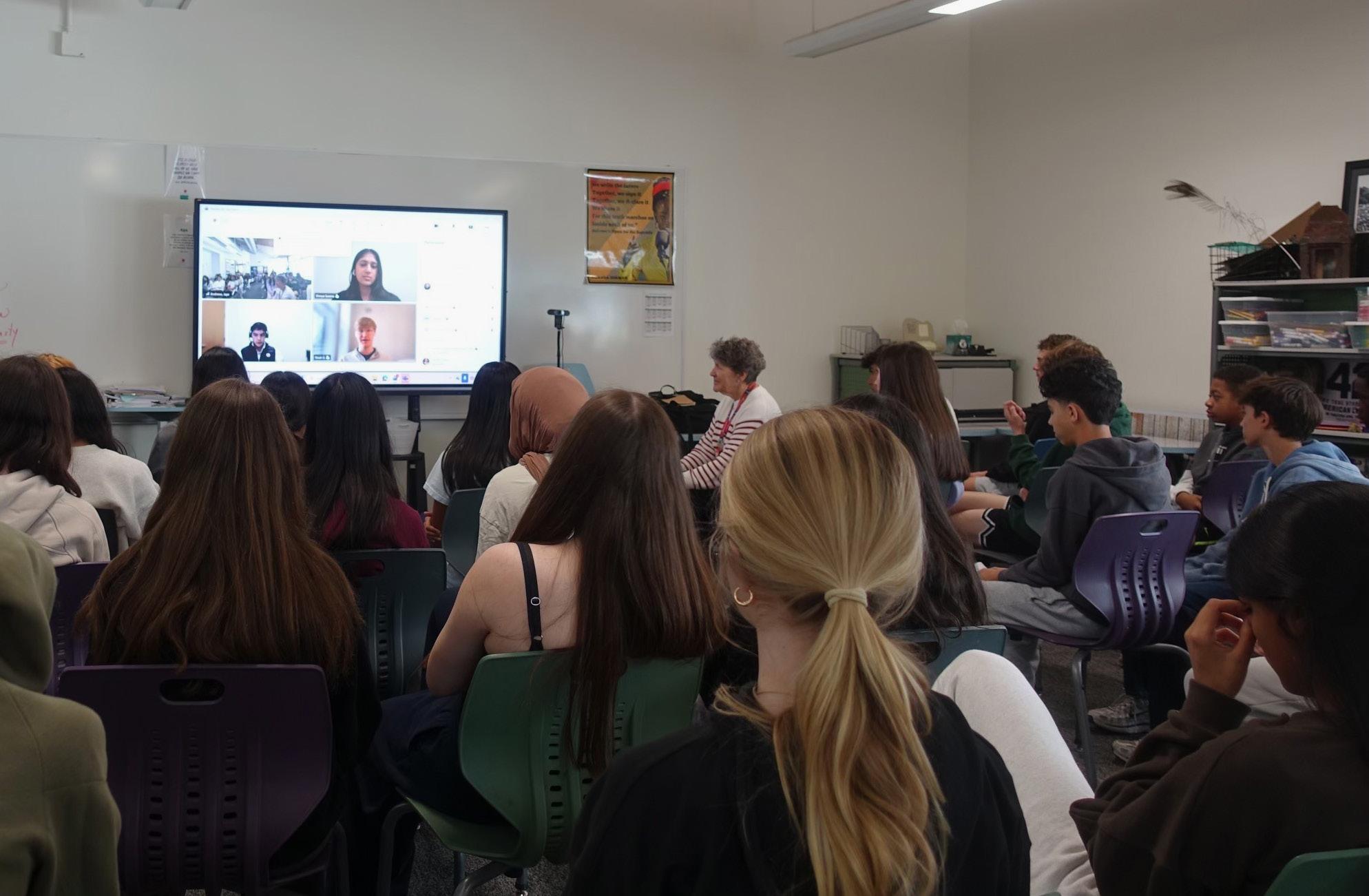
Head and Upper School Librarian Abby Harrison and Preschool/Lower School Librarian Carrie Martin are surrounded by books, but they don’t just sit around and read all day. From creating lessons plans, running Instagram accounts and serving on national committees, these librarians are booked and busy. Here’s a typical day in their lives.
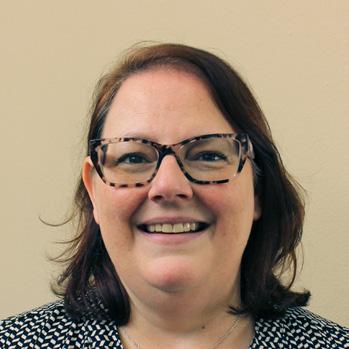
5:45 A.M.
I wake up at about 5:45 a.m. I need to be at school at 7:30 a.m. when the library opens and some mornings it’s a struggle to make sure my kids are in the car on time.
7:30 A.M.
The library opens and I love watching the younger kids run in happy to be here, checking out books.
8:00 A.M.
Once the library calms down, I head to the dining hall for a cup of coffee. Sometimes, I have a first period class in the library, but if not, I reply to emails, work on book orders, and


Often, teachers bring their classes to the library, and I help support their teaching. With English classes, I usually book talk and offer book recommendations. I support history classes with research, navigating databases, and using library resources. Students also come
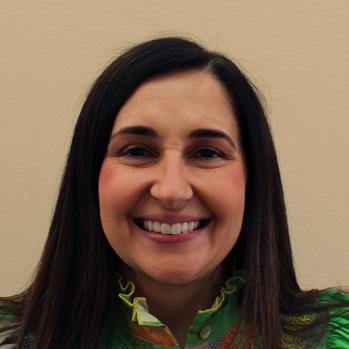
I get up at around 5:00 a.m. I like to get up, get ready and get my kids ready, and then we are typically out the door. I try to be at school by 7:30 a.m., since that is when the doors to the Montgomery Library open, so we can do open circulation, which mostly ends up being Lower and Middle school students. 5:00 A.M.
I go to the Pre-Kindergarten and Kindergarten wing to pick up their books. I like to get this done before 8:30 a.m., since that is when I teach my first Kindergarten class, and this makes it easier for them and us to run a report of who can check out a book.

I have my first class of the day, which is Kindergarten. My goal is to support their inclass reading instruction with variety, choice and reading for different purposes. Today, we talked about the parts of a fiction story called “Problem Solved.” We talked about who the characters were, what the setting was, what the problem in the story was and how it got solved.
I have second grade. They’re also bringing their books, so they’ll put their books on the cart at the door. [Library Assistant Vicki] Fraser checks them back in while I am doing my lesson. After our lesson, the students can check out new books.
On Green days, I spend time with the best advisory (shout out to the HarrBears). They are excellent at balloon volleyball, eating entire bags of Scandinavian Swimmers and mostly making me love my job. On Gold days, I sponsor the Heroes for Children, Book Nook and Books Without Borders clubs.
I try to eat lunch before Middle School because the dining hall gets crowded. I enjoy eating at the tables outside and chatting with my colleagues.
1:50 P.M.
Hornet Block is always a bit of a circus because a lot of Upper school students come to the library. Sometimes we have a Lower and Middle School class also in the mix. I spend my time managing the sound levels. One of my favorite things is getting to know the students who frequent the library. By their senior year, I’m excited for their next chapter, but I know I will
12:10 P.M. 2:30 P.M. 11:25 A.M.

The last part of the day is usually a quieter time. I am constantly looking for new books to add to the library that will support the curriculum or maybe a pleasure-read that students would like. I read book reviews and early copies of books to decide if I want to purchase them for the library.
4:30 P.M.
I close the library at 4:30 on Mondays. These days, I find myself staying later because my kids have yoga and track.
6:00 P.M.
My lovely husband cooks most of our meals. I highly recommend finding a partner who can cook. My family eats dinner together.
7:00 P.M.
I teach first grade. We do a lesson together and then the students check out afterward.
I typically eat lunch between 11:30 a.m. and 12:30 p.m., and on Mondays I am on first grade lunch duty. On other days, I will grab lunch and eat in my office. If I have time, I create content for my Instagram account @BookshelfChic.
Sometimes I am with Primer students, third grade, fourth grade, second Grade or Pre-Kindergarten, depending on the day or week. My third and fourth grade classes are 45 minutes. During class, they self-check-out books, which gives them more independence. A cool project that second through fourth grade is working on right now is called Reading Without Walls, which I started for students to challenge them to find books about people that don’t look like them, books about places they’ve never been to or a book about people from different countries.
Classes end for Lower School. I stay in the library if I don’t have carpool duty because sometimes there are parents that come with their kids to help them check out a book. Otherwise, I plan lessons for the next week or have meetings.

After dinner, I check on my kids and their homework and finish my own homework for a class I’m taking. My husband and I usually watch a show at night. Right now, my favorite show is “The Pitt,” which is a hospital drama set in Pittsburgh. I am on an American Library Association reading award committee. We are picking the best debut young adult novel for 2026, which is pretty cool.
10:00 P.M.
Finally, I have some time to read. I usually read an hour or so before I go to bed. I’m currently reading “Beth is Dead,” a modern retelling of “Little Women.”
If I am not closing the library on Thursday afternoons, I try to leave around 4:00 p.m. I pick up my kids from their schools and run them all over the place. My daughter dances, and my son is currently trying basketball and is not really a fan.
We try to eat dinner together as much as we can. However, with the kids’ sports, it makes it hard, so they usually eat before my husband and me. We usually watch a show in the evening together.
9:00 P.M.
I try to be in bed by 9:00 p.m. Since March is Women’s History Month, I have been checking out a lot of picture-book biographies at the public library that we don’t have so I can read them and see if we need to order them for our library. Most days I am wiped and usually asleep by 10:00 p.m.

In the Upper School Finance and Accounting class students learn financial skills by getting experience in running self-made companies while practicing business pitching, investing and budgeting.
The junior-senior elective, first offered in 2001, is taught by Upper School Math Department Chair Darryn Sandler ’95.
“The course is all the things that I wish I had known when I had graduated [from high school and college],” Sandler said.
The year-long course has three major units: investing, personal finance and entrepreneurship. Each topic culminates with a project to solidify student understanding.
During the first semester, students learn investing, including accounting principles and how to read financial statements. For their project, students decide which company to invest in out of three options in the same industry.
Throughout the second semester, students focus on personal finance, such as leasing an apartment, financing a car, understanding retirement and funding college. For their project, students are given a scenario and tasked with creating a budget for the year. These components use algebraic and precalculus concepts, including exponential and logarithmic functions, to calculate investments, loans and budgets.
The third component is
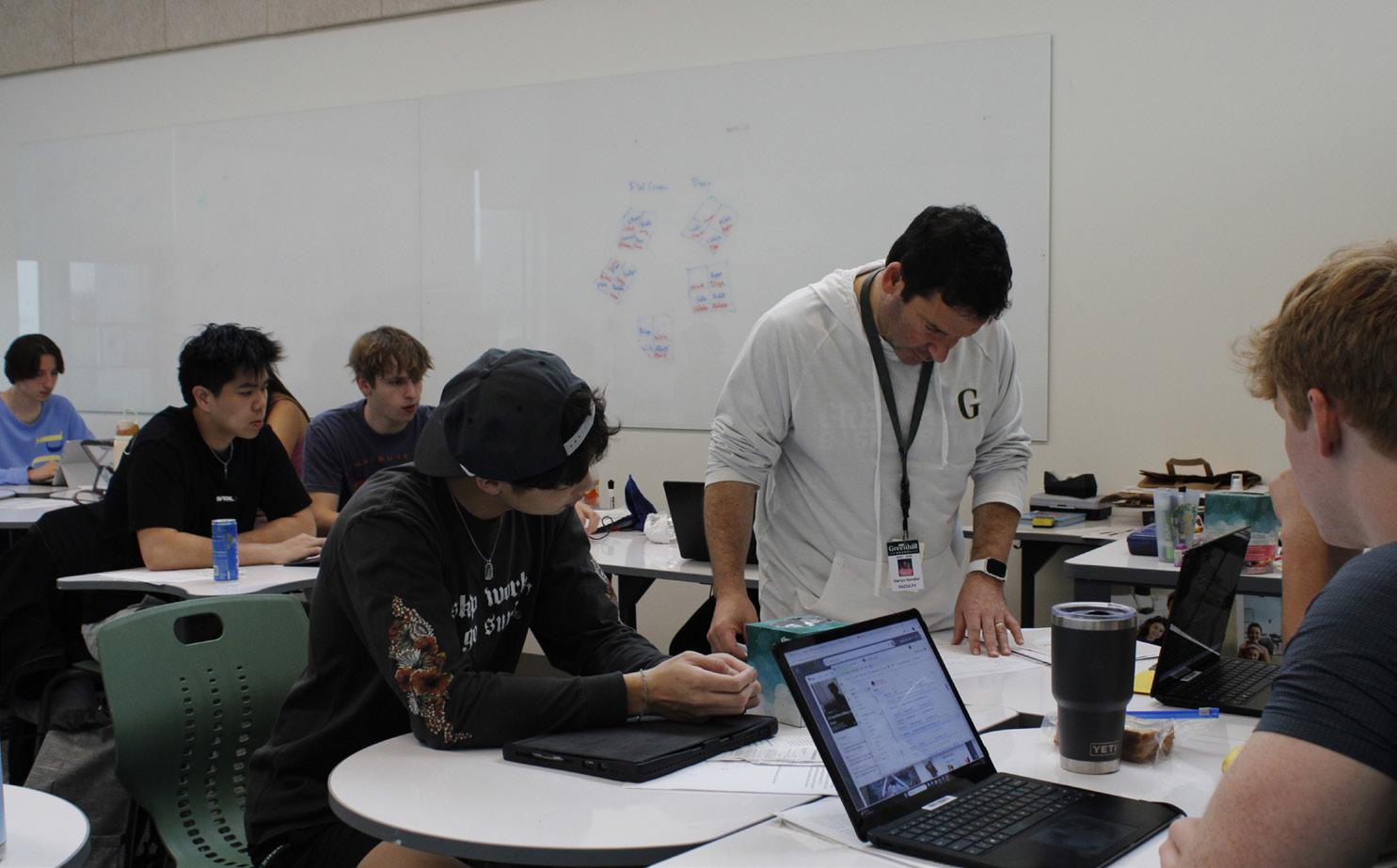
entrepreneurship, including a year-long project called Hornets’ Nest, based on the television show “Shark Tank.” The project asks students to use information they learn throughout the year to develop a business idea and pitch it to a group of Greenhill alumni.
“The environment in the class is very collaborative,” junior Sam Schultz said. “We work in groups most of the time, but Mr. Sandler is very helpful when you ask him questions.”
One of the chosen pitch groups provides more realistic estimates for auto repairs.
“I’m learning the finer details of managing a business like the liability costs and the lawyers you have to hire,” senior Parker Lynn said. “I’m following real world entrepreneurs and modelling our business after their tactics.”
The course is all the things that I wish I had known when I had graduated [from high school and college].”
Another group created a product called Reminder, which is a pocket-size device that reminds students about events beforehand.
“While working on my project, I realized how much work it takes to actually run a business,” Schultz said.
Sandler also matches each group with a mentor, usually a Greenhill alumnus, who has experience in the same field. Students and their mentors usually meet four times throughout the year to get feedback and advice for their projects. Although the project is primarily for the sake of learning
business skills, students and mentors can take their ideas into the real world to create a business, according to Lynn.
“I have full faith in the mentors, so I don’t need to approve the changes that they make,” Sandler said.

Darryn Sandler
Junior Carter MacMahon is working on his project about more ecofriendly Styrofoam insulation. His mentor, Omar Malik ’95, used a service from his hedge fund that connected MacMahon with an expert from the insulation industry, which allowed them to discuss the economics and production of their product.
“Mr. Malik has been incredible, and he has helped us a ton,” MacMahon said.
Students have the whole school year to refine their business model before presenting their pitch to all the mentors, who provide the students with more feedback that Sandler uses to determine their grades.
“The pitch is very nerve wracking,” Schultz said. “This isn’t something you really do in any other class. I’ve presented a project to my classmates, but I’ve never presented my own ideas to adults.”
Schultz says his project has helped prepare him for college.
“It has made me work on planning, time management and communication skills,” Schultz said.
These are exactly the sorts of skills that Sandler hoped students would acquire when he conceived the class.
“I’m trying to prepare them for things they’ll have to do beyond high school,” Sandler said.

remember painting the tower 27 years ago.”
Senior Dylan Considine has always watched her mom wear her Greenhill senior sweatshirt, imagining the day she’d have her own. Now, as a senior, Considine has seen that moment come full circle, demonstrating how tradition connects generations.
As Greenhill seniors prepare to leave the Hill, their final year is marked by traditions that have become defining parts of campus culture. From wearing class sweatshirts to spray painting the Water Tower, these rituals allow seniors to celebrate their time at Greenhill.
Some long standing rituals remain, even as generations pass through the school, while others disappear or emerge entirely. This shift reflects how the Greenhill community continues to adapt, according to Head of Upper School Trevor Worcester.
“I feel like there are very few senior traditions that have sort of stayed static over my time,” Worcester said. “At some point, if a tradition has to go away or change, I think you’ve got to have informed conversations.”
Activities such as the Senior Assassin game, wearing black and white on the first day of school, Senior Sunrise, receiving senior blankets and Senior Skip Day have become cherished traditions at Greenhill.
One of Greenhill’s most recognizable traditions is the annual painting of the Water Tower, where seniors spray paint their name onto the structure before the start of the school year. It began decades ago as an informal student activity.
“One of those things that started off as essentially an act of vandalism, spray painting the Water Tower, then became a tradition we’ve decided is important to showcase the seniors,” Worcester said. “Even though it’s now just this little rectangular piece of the Water Tower, it’s something where ‘That’s your mark.’”
Upper School science teacher Winfred Parnell ’99, a Greenhill alumnus, says the Water Tower tradition has remained remarkably consistent since being marked as an official tradition.
“The Water Tower is an unbelievable tradition,” Parnell said. “Just thinking about how many layers of seniors have painted that tower over the years is pretty incredible; I
During the 2024-25 school year, freshmen and sophomores were assigned to a locker room previously occupied by upperclassmen in Upper School South.
When juniors and seniors returned to campus last August, many expected the locker room to be viewed as an “upperclassmen only” space, at least unofficially. When some freshmen and sophomores entered the space, some upperclassmen confronted – and in a few cases, tried to discipline – the underclassmen.
Upper School Dean of Students George Heinrichs intervened, informing juniors and seniors that older students intimidating or shaming younger students would be treated as bullying under school policy.
Recently, junior Alex Meyer and Heinrichs sat down to discuss this matter. Here is a lightly edited transcript of their conversation:
My freshman year, there was an upperclassmen locker room, and I didn’t spend too much time in there. It always seemed like there were people in there. And I feel like part of that is because it is an upperclassmen space, and that’s part of the
Other traditions, such as receiving senior sweatshirts, have carried meaning long after graduation, said Parnell.
“I still wear my senior sweatshirt after all these years,” Parnell said. “That’s the kind of thing that makes you remember your senior year and your friends.”
While some traditions endure, others have disappeared. One example is Senior Prank Day, a tradition that is now discontinued.
“We had an unofficial Senior Prank Day,” Parnell said. “But because every class tried to top the class before it, it got a little wild.”
Worcester says traditions are regularly evaluated by administrators, senior leaders and faculty members to determine whether they still reflect the goals of the senior experience.
Over time, budgets and logistics have also played a role in shaping tradition.
“In terms of the amount of money that can go towards these events, that’s when you start to prioritize what seems to be of the most importance to the seniors,” Worcester said.
Worcester says events that may have been informal are now more carefully organized, such as Senior Sunrise and Water Tower painting.
After observing senior traditions during her first year at Greenhill, Upper School Dean of Student Life Kira Rivera gathered feedback from last year’s graduates and worked with Upper School administrators to adjust how traditions were scheduled.
“The more time I’m spending here, the more I’m understanding the goals and purpose behind each tradition,” Rivera said. “If I see a tradition isn’t meeting that goal or veering off and becoming something else, that’s when I go talk to the senior class.”
This year, traditions have been intentionally planned to spread throughout the school year.
“I think the more students are involved in any planning, it’s going to turn out better,” Rivera said. “I really believe that students need to be at the heart of these traditions.”
Several traditions have already been adjusted this year to improve efficiency and logistics. The Senior Walk at the Homecoming football game was
appeal. It’s an exclusive place where it feels like a privilege.
I think there’s a way of getting what you want, which is a sense of tradition or privilege, without necessarily needing to go to the old extremes. To me, it’s not about whether you can or can’t have your upperclassmen space. It’s more about what’s a better way of getting what you want.
I do also feel even just walking through [the locker room] from one side of the Upper School to the other is not really a necessary pathway. It does not save time. The tradition has been that you walk around the upperclassmen locker room.
I might disagree with you on having kids walk around because then I have to deal with students being late to class because they had to walk further. Adding a tradition might make
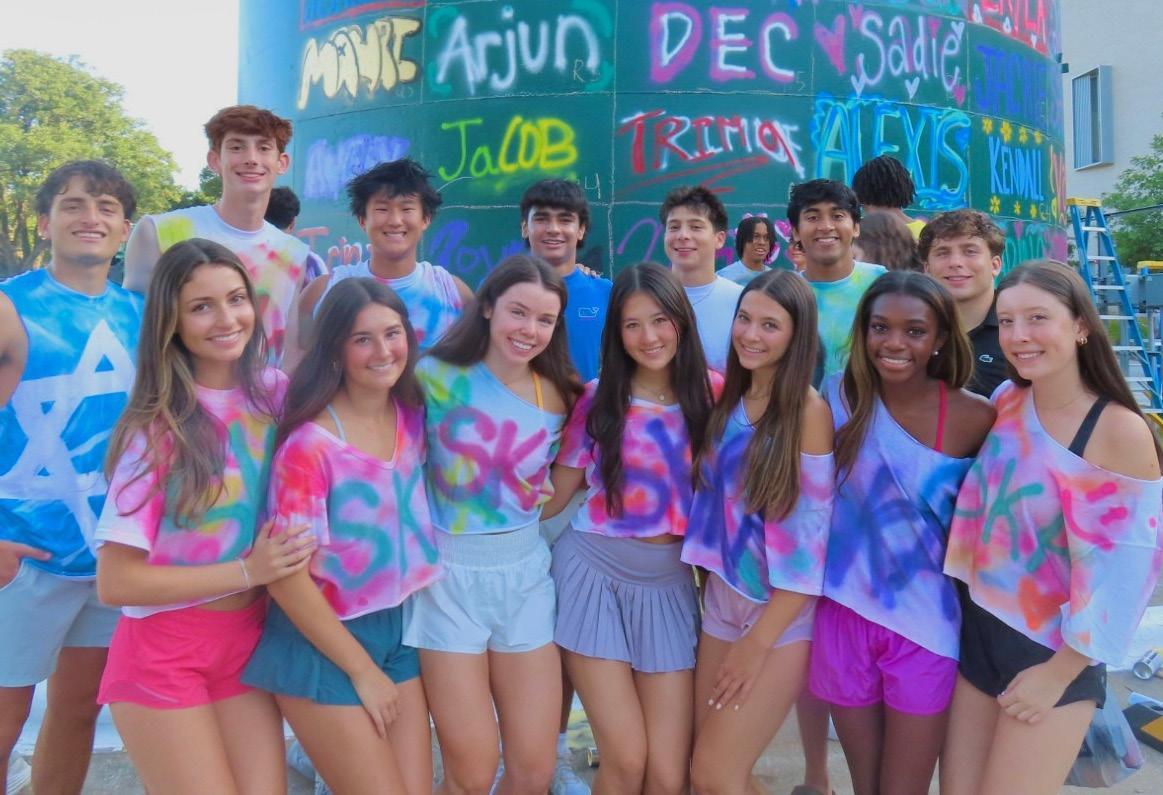
discontinued, the Senior Family Dinner was moved from the end of the year to March and the process of painting the Water Tower was modified to include earlier start times, rotating shifts and new lifting equipment.
Worcester says making changes to traditions can be challenging, especially at a school where students often witness events and activities for years before experiencing them.
“It’s tricky to keep something consistent across such a long timeline,” Worcester said. “Students may see a tradition when they’re younger and look forward to doing it themselves later.”
Despite changes, students say the traditions still hold meaning and remain significant to the senior experience.
Considine, who has attended the school since first grade, says tradition has been a key part of her senior year.
“Every year at the Homecoming pep rally I watched the Senior Dance, and it felt surreal to get to be in that position this year, knowing that someone younger could be looking up to me,” Considine said.
Along with the established traditions, new ones have emerged.
Events such as Senior Family Dinner and seniors wearing costumes at the Winter Formal have become popular additions to the senior experience within the last few years.
“I think each year new things get added to how senior year is done,” said senior Hazel Goes-Young, the Student Body president. “I think it’s a good way to show unity with seniors.”
Another recent addition is off-campus lunch privileges for seniors, a tradition that has become more flexible over time.
“You all have more open campus privileges,” Worcester said. “I think seniors have more independence these days than perhaps seniors 25 years ago.”
Traditionally, privileges have been a contract that the class officers draw up and present to the class dean, dean of students and head of Upper School. This year seniors were granted off-campus lunch privileges automatically.
As traditions evolve, Parnell says they still play a meaningful role in shaping a senior year while connecting students beyond graduation.
“I think tradition is important because it’s something you’ll remember and hold onto,” Parnell said. “It creates a connection between students now and students who were here years ago.”
that harder, even in small ways.
The sophomores had this space as freshmen. They didn’t have that kind of social agreement because that “you will have this space when you are a senior” piece was not there. So now, we have people coming into the locker room just because they know they are not supposed to.

In my opinion, this is more about rules and enforcement than the space itself. The best enforcement is not going to be enforced negatively, but rather by saying “this is a privilege.”
Well, at the start there were people that didn’t care about the rule because it wasn’t there last year. And then it evolved to just [entering the locker room] to break the rule. I feel like now, having this experience was successful in a way. I think we showed that this space matters to
us and underclassmen are somewhat more receptive of that now.
For me, it has never been about turning that locker room into a space for all students, because it does seem to be a tradition. It does seem to be something that was designed intentionally that way. But there needs to be a positive way of getting that outcome.
Yeah, and I think that when it felt like there was not a rule, students started making their own rules and that is where the problems happened because you then have upperclassmen kicking people out and being mean. So, I agree with you because that is where the problem lies. As upperclassmen though, we should take the initiative to establish the tradition, but also in a way that is respectful and positive.
I see your point, and the school clearly agrees with you that there should be a unique space for upperclassmen. I think that gives you some ground to build upon, and I think you will get a lot of goodwill from the underclassmen by expressing that to them in a positive and respectful way.
Senior Kendall Johnson always thought of Greenhill as a second home after joining the school in kindergarten. As she grew up and journeyed into Upper School, she says she became determined to give back to her community.
Inspired by her older brother, Aaron Johnson ’23, who served as Student Body vice president, Kendall Johnson became the class vice president in her freshman year. She says this opportunity allowed her to bring classmates closer together through events and shared experiences.
“I think it is really a moment to see my work have an important place in people’s lives and for them to treasure the memories,” Johnson said.
Going into her senior year, Johnson was inspired to run for Student Body vice president and won.
“Before summer, I really had that thought about in what way do I want to leave this campus, and what can I do to leave it better than I found it?” Johnson said.
“I thought the best step for me was vice president.”
Whether serving as vice president for her grade or the entire Upper School, Johnson says she wants to positively impact her community through everything she does.
“She’s been more vocal in our meetings, and she’s gotten more confident in her leadership skills,” said Goes-Young.
Dean of Student Life Kira Rivera works closely with the Student Council and praises Johnson for showing initiative, coming up with great ideas and being an overall asset to the team.
“It’s been good for the club leaders to hear from another student what’s the best practice for them,” Rivera said.
Another one of Johnson’s responsibilities is managing the budget, which is used to organize school dances and plan activities for the Student Body.

“I do feel like a commitment to leave Greenhill better than I found it, and to make a positive impact on those around me,” Johnson said.
As Student Body vice president, Johnson works closely with Student Body President Hazel Goes-Young to plan events for the Upper School. Johnson has also taken on the role of managing clubs.
Goes-Young says Johnson’s leadership style last year consisted primarily of behindthe-scenes work, but this year she has seen Johnson grow into her role and shift toward something more visible and direct.
For Homecoming Spirit Week activities, Johnson put together a full product list with estimated costs. She also organized the Homecoming Week assembly, where she set up a senior class Dance Battle and Family Feud game. Outside of major school events, Johnson says she helps studentled groups navigate things like reimbursement forms, budgeting events, organizing donation drives and figuring out how to use funds effectively.
“She takes initiative,” Rivera said. “She trusts herself, and she’s a very reliable person.”
Johnson also took on being a co-captain of the volleyball team alongside seniors Jacquelyn Dishman and Layla Esquenazi. Johnson first began playing volleyball in sixth grade with the club team MADFROG Volleyball.
She has played all four years of Upper School, expanding her skillset and reaching over 500 digs in her sophomore year, Johnson said.
In addition to growing her athleticism, volleyball has allowed Johnson to develop her best friends.
“It has taught me inner strength,” Johnson said. “And knowing that you can do something, really believe in yourself, I think that carries you a long way.”
Working with her in volleyball, Esquenazi says that some of Johnson’s best leadership qualities are her encouragement, uplifting nature and discipline.
“She’ll keep you accountable,” Esquenazi said. “She holds you to a standard, but she holds you to a standard that she knows that you’re capable of.”
During her freshman year, Johnson was introduced to TeenAge Communication Theater by a volleyball teammate, Kendall Poglitsch ’25.
TACT is a youth-led organization sponsored by Planned Parenthood that performs short skits to educate teenagers about topics such as mental health, sex education and substance abuse.
Though Johnson was apprehensive about auditioning at the time, she says Poglitsch encouraged her to try out. That same academic year Johnson was chosen to join the performing troupe.
“I didn’t really think I was going to like it,” Johnson said. “But once I started going to performances and seeing myself interact with the community in such a different way than sports or school, I really started to fall in love with it.”
Generally the troupe performs four skits that are rehearsed and scripted beforehand, Johnson said.
Johnson is a team leader for TACT, so she both performs and facilitates discussions between the audience and the troupe.
“As a team leader, that’s really where my personality comes out because I’m able to grow and really develop a personal connection with the audience,” Johnson said. “The way that I like making connections with people is through being myself.”
TACT brings out a positive and energetic side of Johnson, according to Esquenazi, who joined the troupe this year.
“She’s very funny; she will bring comedic relief to anything even when we’re talking about the most serious things,” said Esquenazi.
Throughout her time with the troupe, Johnson says she has grown a lot as both a person and a TACT member. More specifically, she has learned to become more aware of her audience members.
“Sometimes you have to meet people where they’re at,” said Johnson. “Performing at all of these different places you have to shift your content and the way in which you teach.”
Through contributing to the Greenhill community and attending to her obligations outside of school, Johnson says she has learned valuable lessons.
“Especially when the work starts piling up, I have to make sure I balance that out and find little slots between games, or events, and school to get that work done,” Johnson said.
Her busy schedule has also taught her the importance of leaning on others for help when necessary.
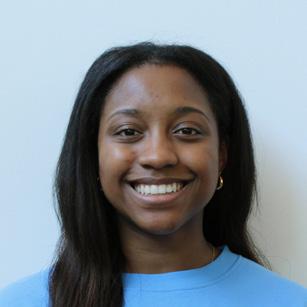
“Just seeing her grow as a person makes me happy,” said Esquenazi, who has been friends with Johnson since they met in Lower School. “She knows her worth, and she holds herself to a standard.”
Reflecting on everything Johnson has done during her time at Greenhill, Rivera says she believes the energetic senior’s positive spirit will carry her forward.
“Whatever Kendall does in the future, she’s going to be successful, and people are going to follow her because she does good things,” Rivera said.
With her time at Greenhill ending soon, Johnson offered a parting thought for younger students.
“If you’re going to do things and you’re going to do a lot of them, you have to remember who you are at the core,” Johnson said. “You have to remember the things and the people who are going to make you feel good about yourself.”
Khushi Punnam
Upper School students captured state titles in two debate formats at the Texas Forensic Association State Tournament, held March 12–14 at the University of North Texas in Denton and Rock Hill High School.
The Greenhill debaters placed 4th overall in the tournament.
Students competed in three divisions: Lincoln-Douglas, a one-on-one format; Policy, in which two partners compete; and World Schools, which features three-person teams.
Seniors Iliyan Ali and Soyam Kelifa won the Policy division while the Greenhill Platinum team finished 1st in World Schools. The Platinum team was composed of seniors Benjy Beckman, Vijay Naidu and Josephina Qiu and sophomores Arhaan Iyer and Marleigh Massoud.
“Seeing students on stage being recognized for their work is always the moment that sticks with me,” Director of Debate Aaron Timmons said. “This activity is different from most. There are not home games or performances where people see the process along the way.”
This year saw a record number of 47 Greenhill students qualify to compete at the tournament, an increase from past years. Twenty-nine debaters made it past the preliminary rounds and into the elimination portion of the tournament. One student, junior Sidrah Tarpeh, competed in a speech format called Dramatic Interpretation.
Additionally, senior Aaron Kuang
finished second in the Lincoln-Douglas competition. In the Policy format, the partnerships of seniors Hazel Goes-Young and Aytan Monet and seniors Rory Liu and Dhiya Hemchand made it to the semifinals. Senior Sarah Koshy reached the semifinals in Lincoln-Douglas.
“It’s a very challenging tournament,” said Koshy. “It is the biggest tournament of the year for the majority of the team, so it’s definitely a learning experience for everybody.”
Others finished high in individual speaker rankings. Sophomore Tim Csallner was named Top Speaker in the World Schools division.
“I’m really grateful for the recognition, but I wish my entire team could share the credit equally,” said Csallner, a member of the Greenhill Diamond team. Also, in World Schools, Iyer finished the tournament as the 2nd Speaker and Qiu finished as the 9th Speaker. In Lincoln Douglas, Koshy was the 7th Speaker, and Kuang finished as the 9th Speaker.
In Policy, junior Mahedhar Sunkara earned recognition as the 6th Speaker and junior Akash Bose as the 9th Speaker.
“It is one of the strongest overall years we have had,” Timmons wrote in an email.
To qualify for the TFA tournament, students competed at various local competitions and advanced far enough to earn the required 12 state points.
The qualifiers spent months preparing for the tournament.
In class, coaches simulated a tournament environment with practice debates. Students
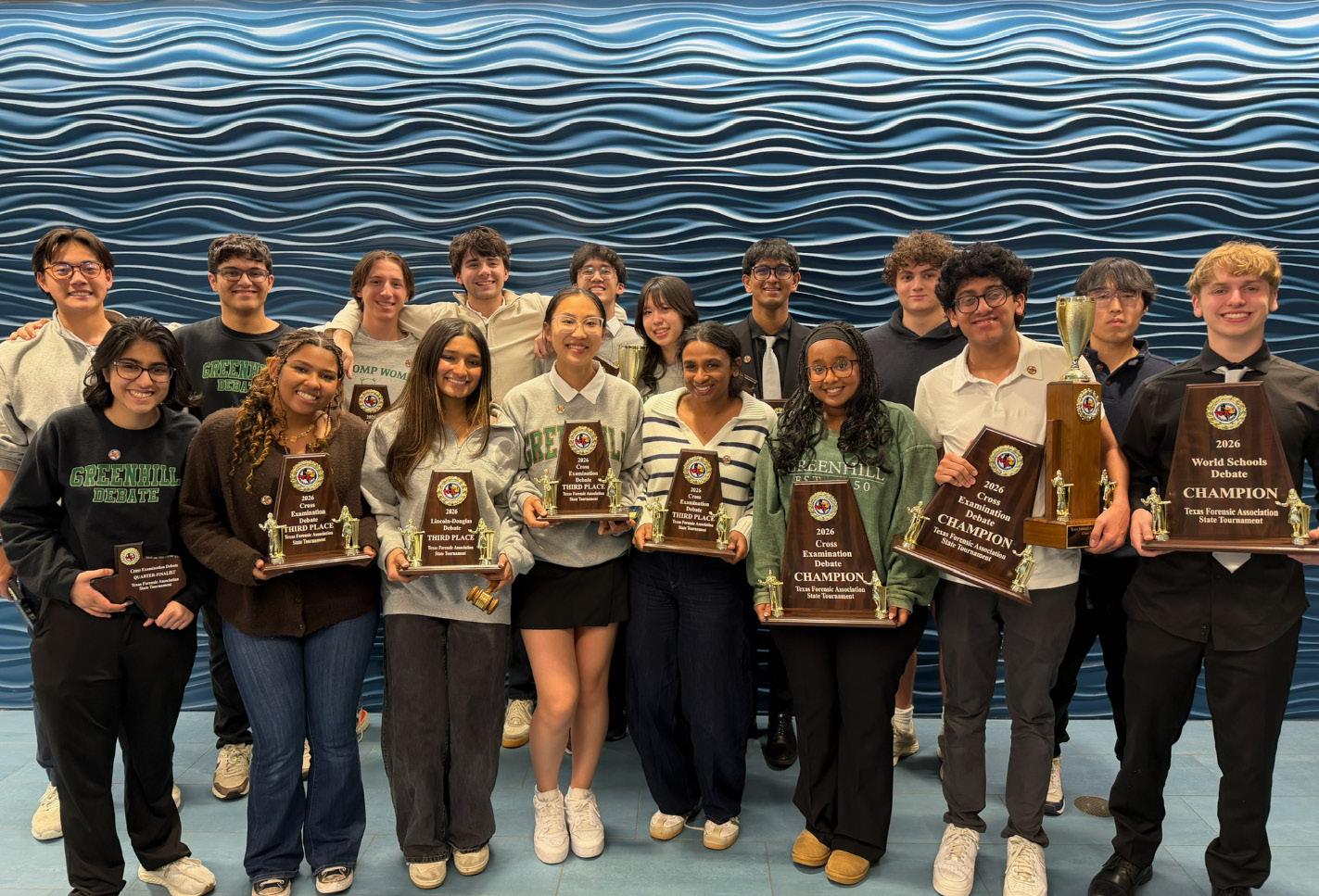
DEBATE MASTERS : Greenhill debate students in
after placing fourth overall at the Texas
also constructed and refined their arguments through hours of research and writing.
“We were really pushed to do our absolute best, and those rounds helped shape the way we debated at the tournament itself,” said Csallner. “The actual rounds at TFA felt relatively light and easy due to the work we put in beforehand.”
With midterm exams three weeks before the tournament, preparation was stressful for debaters, Hemchand said.
This, coupled with the significance of the tournament, led to heightened anxiety and pressure, she added.
For many seniors, the state tournament
served as one of their final appearances representing the Greenhill debate program.
“It really feels like a big culmination of everything that I’ve worked towards for the past four years,” Koshy said before the competition.
As the tournament drew to a close, Timmons expressed confidence in the future of the Greenhill debate program.
“With the support we have and the level of commitment from both students and coaches, I feel very good about where the program is headed,” Timmons said. “As LL Cool J said, ‘Don’t call it a comeback –we’ve been here for years.’”
Kaitlyn Yoo
Four years have passed since Harry Styles withdrew from the public eye. During his absence, the singer-songwriter spent at least some of his time running marathons and riding Lime Bikes and posting about it on social media.
The break gave Styles plenty of time to dwell on his next hit. Lucky for us, his new album – “Kiss All the Time. Disco, Occasionally.” – is nothing short of the Grammy winner’s typical masterful work.
The album released on Friday, March 7, features 12 synth-backed songs ready for any dance floor. While he created new sounds and lyrics through his use of instrumentals, Styles undoubtedly took guidance from his past works, including hits “Watermelon Sugar” and “As It Was.”
Starting off strong, the album’s lead single “Aperture” was released abruptly on Jan. 23, serving as a happy surprise to many of his fans.
With its debut at No. 1 on the Billboard’s Top 100 List, “Aperture” captures a fun, freeing theme, something new and surprising for Styles. And though it received mixed reviews, no one can argue that it evokes the urge to have a dance party.
“Aperture” also acts as a preview for fans, connecting itself well with the themes and feel of 11 more “disco-esque” tracks.
Most notably, Styles amplifies this feeling through “American Girls,” an ironic salute to the United States and his friends’ love lives.
“I’ve seen it in stages all over the world,” he sings. Funny enough, Styles’ “Love on Tour” adds irony to the song. On that tour, fans popularized chanting the lyrics “leave America” in retaliation of his many U.S. shows.
Next, Styles hits listeners with a major shift in tone, moving from typical pop songs like “Ready, Steady, Go!” to the dance-punk “Are You Listening Yet?” – a personal favorite of mine.
In the latter, Styles intones on his struggle to find himself – an underlying motif of the album. Even through the upbeat synths and guitar riffs, he never fails to highlight vulnerability and self-reflection.
contemplates his passivity in relationships: “You can romanticize your shortcomings, ignore your agency to stop // Write a ballad with the details while skimming off the top.”
And that self-critical imagery isn’t lost through the album, though it might seem to be as we dance to flamboyant melodies.
After becoming a superstar built on glitter and feathered boas, it was refreshing to see Styles take off his mask, showing a new level of vulnerability for the pop singer.
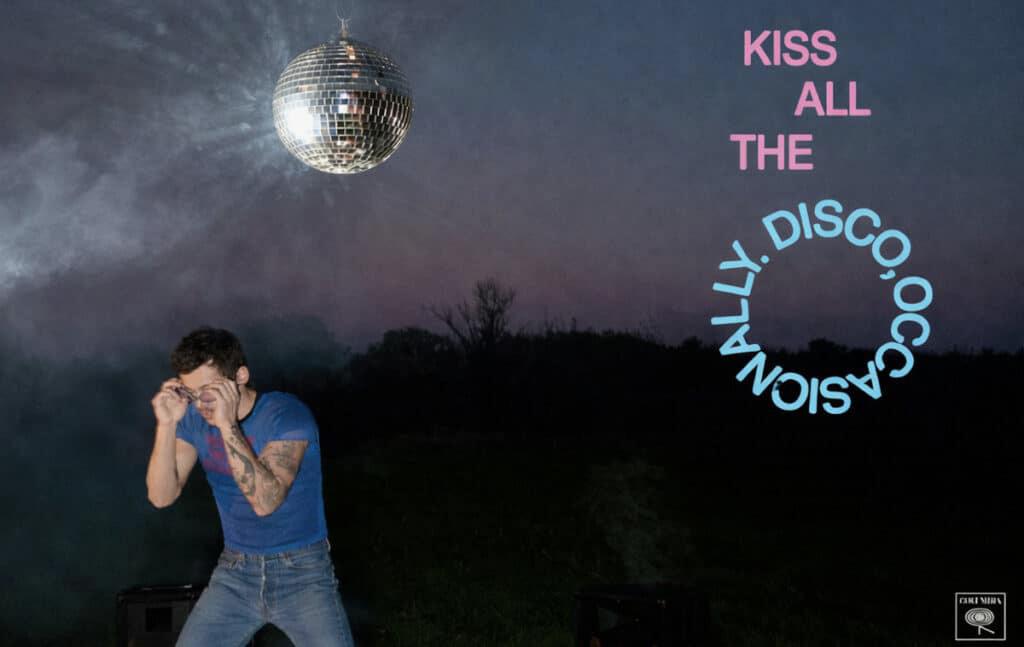
This is further shown through “The Waiting Game,” as Styles shifts tonality to a slow-paced, softer track. A strong contender for the album’s top song, I’d say Styles’ patience invoked a new level of introspection and honesty into his lyrics. Here, he
“Do you love me now?” and “Do I let you down?” became recurring questions in “Season 2 Weight Loss,” additionally emphasizing the pressure of public perception.
But the most thoughtful song has to be
“Paint By Numbers,” a title many believe is dedicated to the late Liam Payne, a member of the former band One Direction. For those of us still grieving the loss of Payne, these lyrics definitely paused the dance party.
“It’s a lifetime of picking from one or the other // Kids with water guns,” Styles reminisces in the track. Notably, the soft ballad adds a beautiful layer of intimacy to the otherwise pop-filled release.
He balances this piece with four other generic pop songs – one literally called “Pop” – and I can’t help but want something a little more original.
“I know I’ll do it again // It’s making me pop.” The chorus of the song perfectly highlights what’s missing: originality. Nevertheless, “Pop” and adjacent disco tracks still match Styles’ curated tone; I just wish they weren’t so repetitive.
Heavily inspired by LCD Soundsystem, with some hints of Keane and Matty Healy, Styles left us with an album divided. While you spend half the listening time entirely transported by his crafted lyrics and unique tonality, this greatness is muddled by the other tracks. Styles clearly got too attached to his first draft of the album, refusing to let go of the mediocre songs.
Ranging from perfectly curated tracks to ones filled with self-awareness and moving lyrics, to the tired radio hits, Styles sure fed us a variety of songs. And while only half of them are being added to my playlist, “Kiss All the Time. Disco, Occasionally.” is still another example of Styles’ eclectic nature. I truly believe only he could sell out 30 nights at Madison Square Garden, run a sub-three-hour marathon and then release another captivating album.
Marleigh Massoud
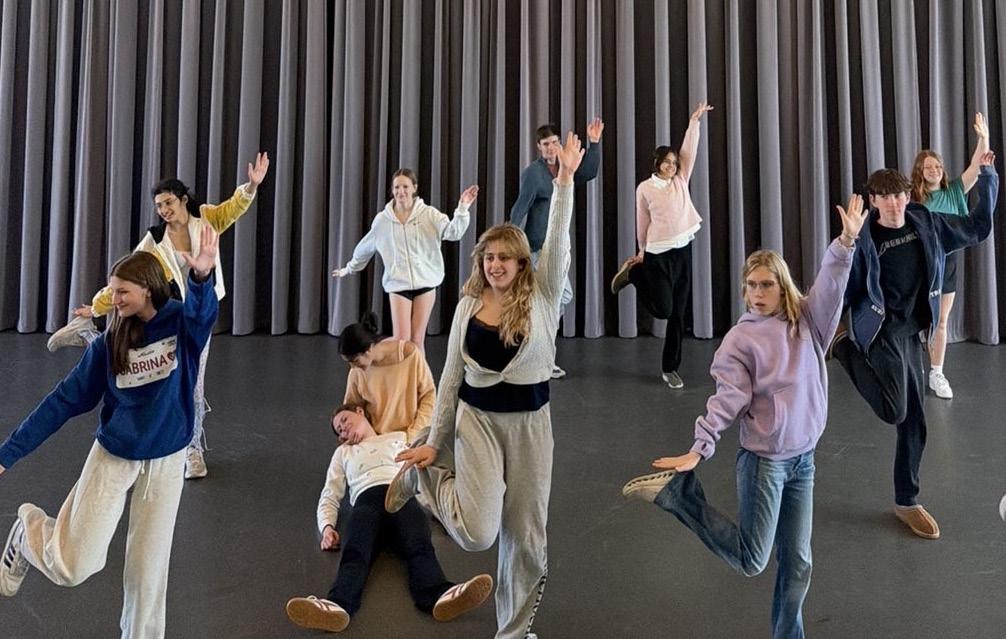
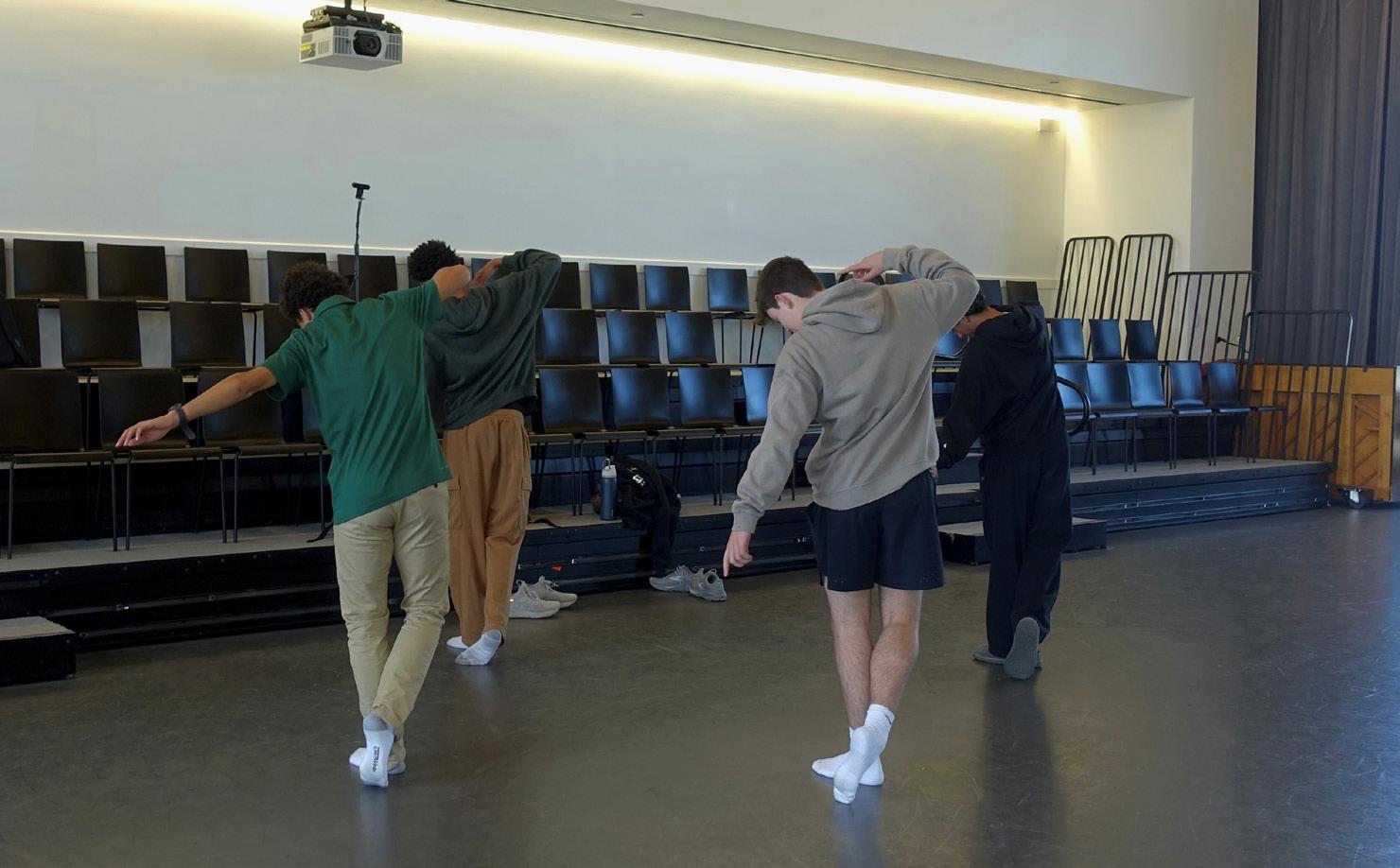
Dance for Athletes, a Greenhill course that connects movement and sports performance, has continued to evolve since its launch in spring 2023, offering students a way to train and improve in their sports by using dance techniques.
Rather than a typical dance elective that prepares choreographed performances, the fine arts course focuses on mobility, agility, flexibility and balance. This emphasis on movement control and body awareness offers athletes a different approach to strengthening skills that translate directly to their respective sports.
Upper and Middle School dance teacher and Dance Company Director Gypsy Ingram, who teaches the course, said the class is designed to shift how athletes’ think about movement.
“It’s a different kind of training,” Ingram said. “We’re not focused on performance, but on how athletes move and how they can use that to get better at their sport.”
Dance for Athletes was created to give student-athletes another option for earning an arts credit. The class was designed for students whose strengths are often physical and kinesthetic, helping them see how skills developed through dance can support what they do in competition.
The idea grew out of the success of a similar course at another school, where it created a strong connection between athletics and the arts. At Greenhill, the class builds coordination, balance and body awareness that directly translate to athletic performance, according to Head of Arts Terry Martin.
When Ingram arrived at Greenhill two years ago, she says she aimed to bring a new approach to the course. Having grown up playing soccer and dancing, Ingram said she
has seen firsthand how the two disciplines connect.
“I see a lot of connections,” Ingram said. “Both dancers and athletes are constantly pushing their bodies and working through challenges.”
Unlike many dance classes, Dance for Athletes does not require students to perform publicly. Instead, the goal is to create an environment where athletes, who may have never danced before, feel comfortable experimenting with movement, Ingram said.
Senior Marshall Clarke says the environment helped him become more confident stepping outside his comfort zone.
“At first, dancing felt kind of awkward,” Clarke said. “But over time, I got more comfortable just trying things and not worrying about getting it perfect.”
Each class begins with a check-in where students talk about how their bodies feel after practices, games or workouts.
“If it’s game day, we think about what their body needs,” Ingram said. “Sometimes that means stretching more or focusing on recovery.”
Students then move into warmups, stretching and learning choreography. Some days focus on creative exercises, while others center on building coordination and rhythm.
Clarke, who competes in cross country, soccer and lacrosse at Greenhill, says the class often feels very different from a typical sports practice.
“A lot of it has been focused on mobility,” Clarke said. “We usually don’t spend more than half of most class periods doing actual choreography.”
Clarke adds that the class also provides a break in the middle of his academic schedule.
“It’s right in the middle of my day where I have an Advanced Placement class before and another after,” Clarke said. “It’s a nice break and everyone in the class is fun to be around.”
Dance training can also help reduce the
risk of injury as intense sports can create imbalances within the body, according to Ingram.
“In sports, you often become one-sided dominant,” Ingram said. “But in dance we train the right side and then immediately train the left side, so the body is getting that evening out.”
This balanced training helps athletes identify weaker areas and strengthen them before the possibility of an injury.
Clarke says he has already noticed improvement during the semester, as his work in the class has made him more aware of how mobility affects athletic performance.
“A lot of people focus on pure strength and speed without thinking about how that actually translates to what you’re doing in a game,” Clarke said.
The class also changes the way many students view dance. Junior Briana Solomon, who took the course last year while participating in cheer and lacrosse, initially
signed up simply because it sounded fun.
However, the class quickly proved to be more physically demanding than she expected.
“The class pushes you in a different way than a normal practice, and it makes you more aware of how your body moves,” Solomon said.
Ingram says she hopes the class leaves students with more than just improved flexibility or balance, as she believes the resilience dancers develop can translate directly to athletics.
“The mental game is the same between dancers and athletes,” Ingram said.
The work of the Dance for Athletes class was recognized on Feb. 20, when all four students were named Artists of the Week.
For these athletes, Dance for Athletes offers a new perspective on movement and confidence.
“If these boys can do this, there’s literally nothing they can’t do,” Ingram said.
This story was reported, written and edited by Evergreen staff members Kate Ponnambalam, Nora Ahearn, Jordan Arbuckle, Aanya Bhoria, Cindy Chou, Vedant Subramanian, Sasha Wai, Justin Wu, Vivian White and Kaitlyn Yoo.
Last spring, Greenhill Upper School students did something unprecedented: They elected girls to fill every Student Council executive position. Coincidence? Or the harbinger of a new campus power and achievement dynamic that signals the ascendance of girls at Greenhill?
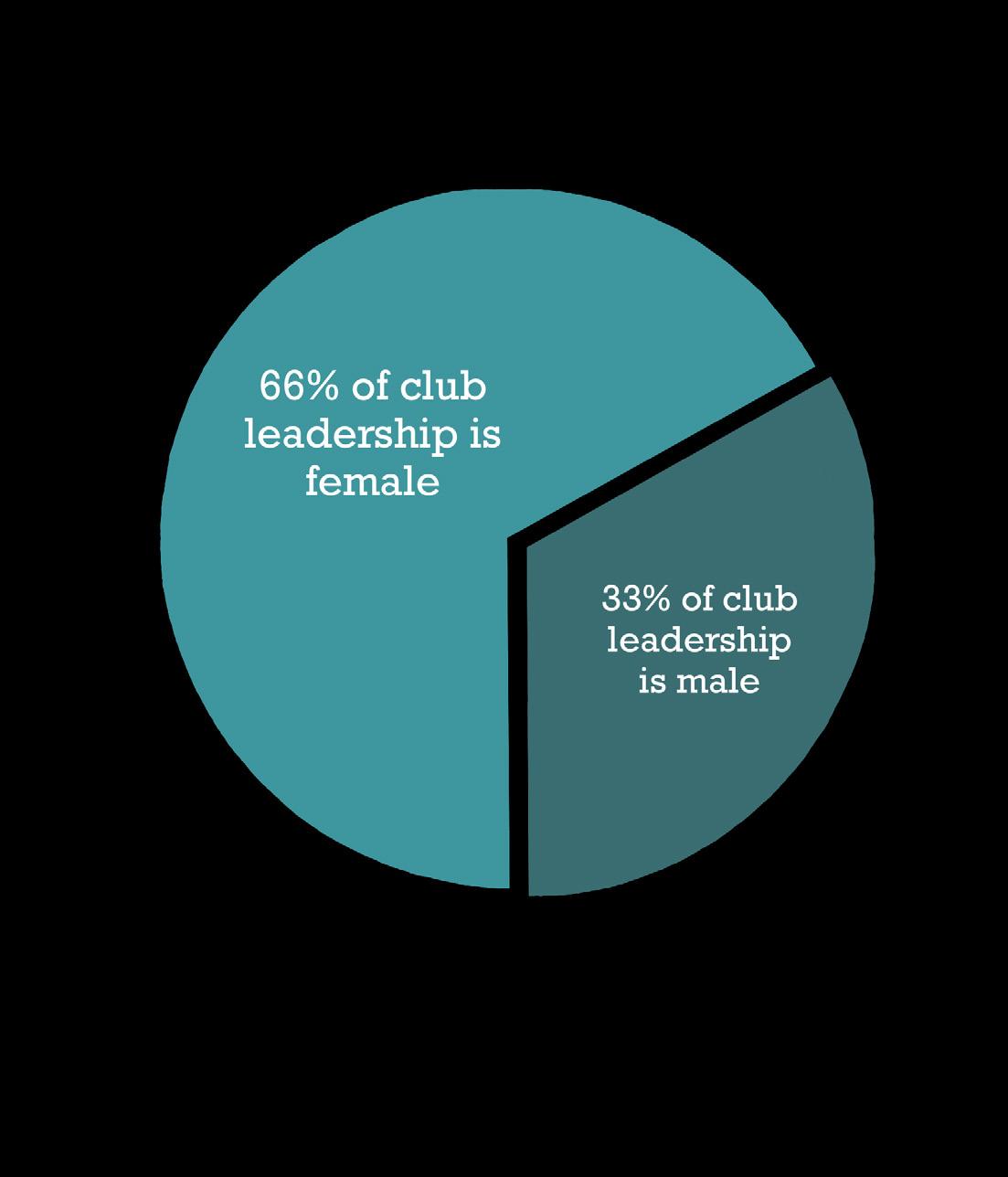
Consider other Upper School benchmarks: Since 2021, all five Greenhill valedictorians have been girls, while four of the five salutatorians have been girls. Exactly two-thirds of the Upper School club leaders during the first semester – 66 of 99 Upper School clubs – were girls.
These snapshots of student achievement in time may prove to be statistical outliers rather than hard evidence of a social and cultural shift. But Greenhill faculty members and current and former students say there is growing evidence – on campus and nationally – that these datapoints suggest enduring change.
Increasingly, literally and figuratively, girls rule – if not every Upper School space, a growing number of those spaces.
“As it turns out, when you give women equal opportunities, they shine and they rise,” said Upper School History Department Chair Amy Bresie ’96, who teaches a Women’s History elective course. “I think that’s kind of amazing.”
As historians have meticulously documented, the road to equal opportunity for women in America has been a long one. That road has been particularly winding in the educational realm.
One notable milestone occurred in 1837, when Oberlin College in Ohio became the first college to enroll women. But educational opportunities for women remained limited, and labels like “seminaries” or “academies” were commonly used to diminish the status of schools that opened their doors to girls and young women.
It took the rest of the 19th century and the first two decades of the 20th century for women to slowly work their way into professional and social spaces in a significant way. The pace of change accelerated during World War I, when women poured into the workplace to fill positions vacated by men who had entered military service. In


on the Greenhill campus.
At Greenhill, the achievements of girls in academics, student government, club leadership and other areas aren’t a matter of conjecture; the evidence lies in the results of student government elections, academic awards, and other school-related
Bresie says this surge by girls and young women at Greenhill has been unfolding in plain sight for a while.
“I think schools tend to reward traditionally female behaviors of buckling down, doing the thing and working hard,” Bresie said. “And that’s not to say we don’t have incredibly bright and gifted male students here, but for a while now, it has been very
Currently in the Upper School, girls hold 70 of 96 or 73% of positions on the Student Council and its boards, according to an Evergreen analysis. In the April Student Council elections that decided executive positions for the 2026-27 school year, each position was won by a girl, each running unopposed.
“Seeing girls in those higher positions, that makes other girls feel empowered to run for those positions and to actually try it out,” said senior Hazel Goes-Young, the current Student Body president. “Because it’s like, ‘Well, we have all women [Student Council executives], I can totally be president or vice president of my class.’”
Against the backdrop of the shifting balance of achievements at Greenhill lie distinctive patterns in the dominant behavioral and disciplinary themes in the Upper School, according to administrators, faculty and students.
“There tends to be a trend where girls are taught to be more selfcontrolled and disciplined,” Dean of Students George Heinrichs said. “I think that there is a paramount [emphasis] on a certain self-control that, sometimes in boys, is not necessarily prioritized.”
Especially at Greenhill, where overt disruption is relatively rare, these differences often appear through smaller distinctions in maturity and self-regulation rather than major disciplinary incidents, according to interviews with administrators, faculty and students.
National data reflects similar patterns in how behavior is perceived and regulated in school settings.
According to the Pew Research Center, boys are more likely to be seen as struggling with classroom selfregulation, with 63% of teens saying boys are more disruptive in class, with 4% who say the same of girls.
While Greenhill, like other schools, doesn’t publicly release disciplinary data, the Pew Research conclusions are in line with Upper School realities,
according to interviews with students and faculty.
“I certainly don’t think that boys are inherently more misbehaved, but they sometimes have more problems controlling impulses, and that can lead to disciplinary action,” Bresie said
The surging achievement of girls at Greenhill is accompanied by some warning signs, students and teachers noted in interviews.
Among the warning signs is the internalized pressure that some girls are putting on themselves – pressure to achieve perfection in the classroom and other aspects of their lives, and the resulting anxieties that accompany those pressures.
Differences in academic engagement between boys and girls are often shaped by societal expectations that influence how confidence, expression and motivation are perceived, and these expectations can influence how students act in the classroom, according to Bresie.
“I think there’s a model that women are just a work-in-progress,” Thomas said. “It’s like this perfectionism and anxiety, a belief that everything has to be right.”
At an academically rigorous environment like Greenhill, students say the sense of internalized pressure frequently reaches unhealthy levels.
“In an academic space, grades are treated as a reflection of the behaviors girls are socialized to embody,” junior Valentina Rojas said. “As a result, failure becomes something larger, serving as evidence that the girl herself is flawed.”
As a result, Rojas said it becomes easier to internalize expectations of perfection, as these traits tend to get rewarded rather than addressed.
Upper School faculty members and administrators shared that sentiment.
“I’ve talked to a student who shows signs of anxiety and perfectionism where adults will say, ‘I’m worried about you,’” Heinrichs said. “But then these same faculty will give them A’s and leadership positions, praising them for how good their work is.”
At the same time, some students say boys face a different set of societal and cultural expectations. Some of those expectations can discourage visible effort and reinforce detachment by boys.
Amid the pride and even euphoria over the growing success of girls at Greenhill, there is frustrating evidence of genderrelated inequities in the world that lies beyond the campus boundaries. According to the 2025 Fortune 500 list, only 55 of these companies – 11% – had a female CEO. And the pay gap between men and women in the workplace remains deeply entrenched, with women now earning 85% of what men do, according to Pew Research Center.
For all the valedictorians and salutatorians, Student Council executives and club presidents in the Upper School, several students said girls at Greenhill still live with the reality of a world that continues to discount their intelligence, work ethic and abilities.
“Though girls master the classroom, we’re still overwhelmingly denied the corner office,” Rojas said. “Truly rectifying the cards that have been dealt to women demands more than an initial conversation. Equality requires actual action and advocacy, and that must come from everyone.”
Across the country in February, high school students staged walkouts protesting often violent Immigration and Customs Enforcement actions. A group of seniors created a plan to organize a Greenhill walkout but ultimately dropped the effort when too few students agreed to participate.
Senior Ella Costabile, the lead organizer of the protest that never happened, said she faced unexpected opposition to a Greenhill walkout from peers, including many who identify as liberal. The opponents of a walkout dismissed the idea as “performative,” according to Costabile.
“That’s something that was really frustrating for me,” she said.
Other students supported the protest in principle but ultimately chose not to get involved, Costabile said.
The decision of Upper School students to not hold their own protest occurred amid
noticed a trend of political disengagement by Greenhill students. Upper School History Department Chair Amy Bresie ’96 noted that the Political Action Club was once a “huge club,” but participation dipped over the past several years.
Club attendance has surged this school year, according to Upper School history teacher Scott Cotton, who is the club sponsor.
But at the same time, Bresie says she used to see Greenhill students at political events and protests, but no longer does.
“I don’t know exactly what that says or why,” she said.
When vandals spray painted the words “FOR GAYS” on the signs at both Greenhill School entrances in November, many students brushed it off. Others laughed.
In the weeks that followed, the incident faded from discussion. For some students though, this revealed the harm of desensitization.
“A lot of people didn’t take it seriously because they didn’t realize that it was
at all, and then sometimes I’ve consumed it too much to where I’ve been stressed out,” Marshall said. “So, I don’t know what the proper amount is, because I don’t think it’s right to not pay any attention.”
Becoming numb to the news is not always what happens. Some individuals become increasingly stressed and depressed after constantly consuming news they perceive to be tragic, according to the Mayo Clinic website.
In the past, I’ve not really consumed it at all, and then sometimes I’ve consumed it too much to where I’ve been stressed out.”
The response to feeling overwhelmed is to stop following the news altogether for the sake of “protecting your peace,” senior Tara Alim said.
“I think people’s instinctive reaction is to disconnect and disengage so they don’t have to experience more trauma,” Alim said. Alim says this is dangerous though, because distance makes empathy more difficult.
flawed attitudes regarding when it is time to take action, or if they can make change at all.
Many maintain an attitude that they will be able to act once they have an established career, Alim said.
Alim further suggests that some Greenhill students – “especially people of color” – have consciously cultivated a goalong, get-along persona in which “Greenhill is just a passageway to get to the next event, the next chapter of your life. And so, they kind of view Greenhill as a ‘keep your head down, do the work’ kind of culture,” Alim said. “So, when problems arise, like societal problems or political problems, they’re less inclined to speak up about it.”
Both Alim and Upper School English and Language Arts Department Chair Karin Thomas take exception to that attitude.
“There’s this idea that your real life is somewhere out there, and that the thing you should focus on now is you, not realizing that you are in and of the world,” Thomas said. “I feel like we’re also in a fear-based culture that if you make the wrong move, if you have this opinion, it’s all over for you.”

During her second year of teaching history at Greenhill, Bresie says she began to implement current events presentations into her classes. She aimed to encourage students to inform themselves about the world and become active community members.
These individual presentations on isolated events have now become a core part of 10th grade students’ history curriculum, requiring students to read and learn about a
Bresie says that students are increasingly disengaged and uninterested in interacting with the topics at hand – perhaps out of fear
said. “And I definitely see less of that.”
Upper School Dean of Students George Heinrichs has seen the same phenomenon as the political environment has become increasingly divisive in the past decade.
This aversion to conflict extends beyond classroom discussions, as was evidenced by
Many students refused to participate because they would face detention for not being in class. The student organizers met with Heinrichs to gauge what would and
“I think Greenhill students often want to have permission to do something and, well, the point of a walkout is that you don’t have permission and that you actually do take a risk,” Heinrichs said. “If you get campus approval to walk out, you really have done nothing except performed. And I think real activism requires sacrifice and requires your willingness to accept the consequence for doing what you believe is right.”
Costabile says the walkout would have occurred with or without permission if enough people had agreed to participate. In her view, students called the protest “performative” as an excuse to remain silent and stay within their comfort zones.
“It’s really sad to watch people choose inaction,” Costabile said. “Not because they’re uneducated, but because they don’t
Seven Advanced Video Production students were selected to attend the Texas High School Student Shorts program at the South by Southwest EDU Conference and Festival on March 9-12.
Seniors Lucas Wang, Davis Knocke, Charlie Waldman, Derian Herrmann, Collin Cannon and Noor Zaman and sophomore Ansh Gandhi traveled to Austin for the prestigious annual event.
Their work was featured in Austin as part of a 13-film high school screening, placing Greenhill students in one of the country’s most visible spaces for young filmmakers.
For Upper and Middle School video production teacher Corbin Doyle, the moment represented more than just a strong year.
“[Greenhill students] being six of the 13 films that were in the screening was really beautiful,” Doyle said.

Doyle said he first began searching for juried opportunities for student filmmakers after former Head of School Scott Griggs encouraged him to identify clearer ways to demonstrate success in the arts. When Doyle discovered that few high school film festivals existed, he began submitting Greenhill films to larger competitions. Sixteen years ago, that search led him to South by Southwest, which later became one of the defining benchmarks of the Greenhill film program. After the COVID-19 pandemic disrupted the festival and forced significant cuts, the high school section disappeared for a few years.
Doyle was among those pushing for its return.
“Every year, I’ve sent emails,” Doyle said. “I basically just map out not only why this is so important, but then the empirical evidence.”
This year, the newly created SXSW EDU portion of the festival allowed selected high school students to screen their films at the gathering.
Herrmann and Cannon were selected for their comedy short “Uno,” a film about a card game gone off the rails after one player cheats with a magical blank Uno card.
“This is going to be the last time in my life where I’ll have free will to create
whatever I want,” Herrmann said.
Waldman’s film, “Lyle in Love,” follows a boy debating whether to ask out a girl while angel and devil figures crowd his shoulders, offering conflicting advice.
“I really enjoy writing more absurd comedic pieces,” Waldman said.
Knocke’s “Just Ask” is a dialogue-free short set in the New York subway about a boy imagining possible outcomes as he considers approaching a girl. Gandhi’s film, “Bear Bones,” tells a surreal story from the perspective of a teddy bear, while Wang’s animated short film “Eclipse” imagines an epic battle between the sun and moon inspired by the solar eclipse.
Zaman’s film, “The Cookie Quest,” follows a young baker who develops an illness that prevents her from doing what she loves. The film traces her gradual return to baking, culminating in a single cookie that signals the beginning of her recovery.
When the students arrived in Austin for SXSW EDU, the scale of the conference became immediately apparent, Gandhi said. The festival extended across multiple downtown locations, with screenings, panels and exhibitions taking place simultaneously for the students to explore.
“We didn’t really have much of a plan at first,” Knocke said. “We were just trying to take everything in and discover everything we could.”
After a few hours, attention shifted to the Texas High School Student Shorts screening. Before the showcase began, the student filmmakers were introduced and asked to stand.
“Everyone’s clapping,” Knocke said. “They’re celebrating you as filmmakers.”
As the screening started to take place, students said they focused on both their own films and audience reactions. It marked the first time that some of the students had seen their films shown to a larger audience.
“It was very interesting to see how the audience reacted to my film, and I was pleasantly surprised by how many laughs I got from the audience,” Gandhi said. “It made the experience far less nerve-wracking.”
Students also observed the diverse array of films presented during the screening.
“There was not one bad film,” Knocke said. “Everything was in there for a reason, and they all had something that stood out.”
Following the screening, student filmmakers participated in a Q&A session to
answer questions about their work.
“It’s fun to share what it means to you and hear how other people think,” Herrmann said.
After the Q&A, students connected with other filmmakers at the festival, building relationships with peers who shared similar interests. Many of these interactions revealed how intertwined the student film community was, according to Knocke.
“It’s like everyone knows someone,” Knocke said. “And you’re all connected somehow.”
Doyle said the atmosphere surrounding the screening stood out most.
“The joy in the room during the screening was amazing,” Doyle said. “It was just wholesome and caring and not
competitive. Every film was good, everyone was kind and the vibes were just great.”
Students also attended additional screenings and events during the conference, including a Q&A that featured professional directors and actors.
“It’s really cool seeing these actors that you’ve looked up to all your life just on stage, talking about how much passion they had for the art they were creating,” Herrmann said.
Students say the South by Southwest experience changed how they viewed filmmaking, creating a renewed sense of motivation for the craft.
“All I wanted to do was go back home and get a camera,” Knocke said.

When I read the Middle School course catalog in sixth grade, I remember being so excited about the possibility of taking Video Production. I’d been making short films on my parents’ phones since I was 6 years old, and I loved doing it.
I should add that I was so excited about taking Video Production until I read the course description and saw that I would have to work in a group.
As a Middle School girl who was very passionate about film and pop culture and loved talking about her ideas or favorite media, I was intensely worried I would be seen as bossy in my groups. I didn’t want to risk that perception or feel like I had to take a backseat in a group.
As a result, I didn’t end up taking Video Production until my last semester of Middle School. I stayed silent in class but talked
nonstop about what I learned when I got home.
This constant perception of women speaking up or contributing to groups and being seen as bossy or emotional is something that has set back many young girls and women from sharing their ideas. For men, it’s viewed as confidence or taking charge in situations. As a woman, talking constantly about your favorite movies can often be ignored in film spaces, but for men there is a designated community: the film bros.
Film bros are commonly regarded as arrogant people who view themselves as film know-it-alls while having a mostly surface-level knowledge of movies and only appreciating popular movies with visual panache. While most film bros I have encountered are nice people, they do tend to mansplain films, cinematic techniques and various elements of cinema to others.
And honestly, film bros aren’t inherently
problematic; they only become an issue when their opinions overshadow the voices of women in the industry. They believe they know more about film, setting the standard of excellence to cater exclusively to them.
Going to the South by Southwest Film Festival recently as the only girl from Greenhill was incredibly daunting. I was worried that the entire festival would be ostracizing and that I didn’t belong in a space with such confident and knowledgeable people. When I attended screenings, I was proven wrong.
Seeing films that were entirely produced and directed by women, specifically one of the headlining films, “Forbidden Fruits,” directed by Meredith Alloway, was incredibly empowering. It made me feel like I deserved a place among the film bros.
Within creative industries, it’s so important that everyone has a space and feels heard. Part of that is on the individual. In other words, you need to speak up and
share your ideas so they can be heard. But more importantly, responsibility for ensuring that everyone has a space and feels heard lies with the entire community.
It’s important to realize that a “good film” isn’t always popular or profound. Rom-coms, chick flicks and even music videos can be “good.” Even if the entire thing isn’t amazing, there can be skilled aspects of it – a unique shot or a cool score – and it’s not okay to minimize the knowledge of someone based on the movies they like or dislike.
There is room for everyone in the industry; we just have to work on making it more inclusive and acceptable. You can be good at film and have an unconventional favorite movie that isn’t perfect. Media you enjoy consuming doesn’t say anything about your skill, and we need to get used to that. Women deserve the opportunity to feel valued in the film space, alongside everyone else.
Growing up, Upper and Middle School 3D art teacher Erik Tosten was always drawn to artistic projects over academic subjects. As a child with dyslexia, he says he struggled to demonstrate his intelligence in the classroom, finding himself instead in his creativity.
“I’ve always gravitated towards making and building, creating,” Tosten said. “Because that was the language I understood very intuitively.”
As a result of his passion, Tosten became involved in many different forms of art, starting with drawing and painting, and later, inspired by his father, woodworking and sculpture.
“My dad always had a wood shop and had woodworking tools in the garage,” Tosten said. “We had a table saw and other things laying around the house, so I just started using those tools.”
As he practiced over time, Tosten says he became more aligned with functional and practical pieces.
Tosten’s work initially began with creating shapes out of different materials, eventually expanding to other objects such as furniture.
But his designs did not fit into artistic trends at the time, pushing him to grow independently.
“Even in the 1990s, the art was becoming very conceptual,” Tosten said. “I have never been drawn to creating conceptual art. When I want to make something, I always come up with the ‘what,’ and I really don’t concern myself with the ‘why.’ The ‘what’ is always the most important.”
Tosten retained his artistic interest throughout college at the University of Iowa, although he didn’t pursue an art major until later in his time there.
both teaching and art, Tosten received his master’s degree of Fine Arts degree in 2003 from the University of North Texas. Tosten then went on to teach college classes in art before deciding to switch to Middle and Upper School education.
After teaching in the Dallas Independent School District for eight years, Tosten decided he was ready for a change.
“I had never thought about teaching private school,” Tosten said. “But I was teaching in public school, and there was a struggle with the overlooking classes, and the lack of resources.”
While applying for new jobs, Tosten came across Greenhill and was immediately drawn to it. He was hired in 2021.
“Once I got here and saw the environment, I just realized what a paradise [Greenhill] is for teachers and students,” Tosten said.
Tosten teaches 3D art, ceramics and sculpture classes to Middle School and Upper School students. He says he loves teaching a wide range of students and discovering the qualities of each age group.
Middle Schoolers bring enthusiasm and energy to the classroom, while Upper School students have highly developed skills and can make exceptional work, Tosten said.
“They both have their really great attributes,” he said.

Once he realized that he had already taken all the required classes for a Bachelor of Fine Arts, he graduated with his degree and decided to pursue ceramics professionally.
Both his parents had been educators, and Tosten says he felt inclined to follow the same path. To follow his passions of
Tosten’s students reciprocate that feeling of appreciation for him.
“He is a really great teacher,” freshman Olivia Rosenfeldt said. “He is always encouraging us to push our artistic abilities and improve on the projects.”
Since joining the community, Tosten has attempted to improve and adjust the 3D art courses to create a better learning experience for his students.
“I hope that I broaden the amount of ceramics and sculpture that students can do and give them a lot more opportunities to focus on those materials,” Tosten said.
Fine arts colleagues described Tosten’s teaching style as enriching students’ learning.
“He teaches a technique and then wants the student to learn through doing it,” Upper School 2D art teacher Kendall Davis said.
In addition to teaching technical skills, Tosten says he encourages students to grow mentally. He pushes them to improve while
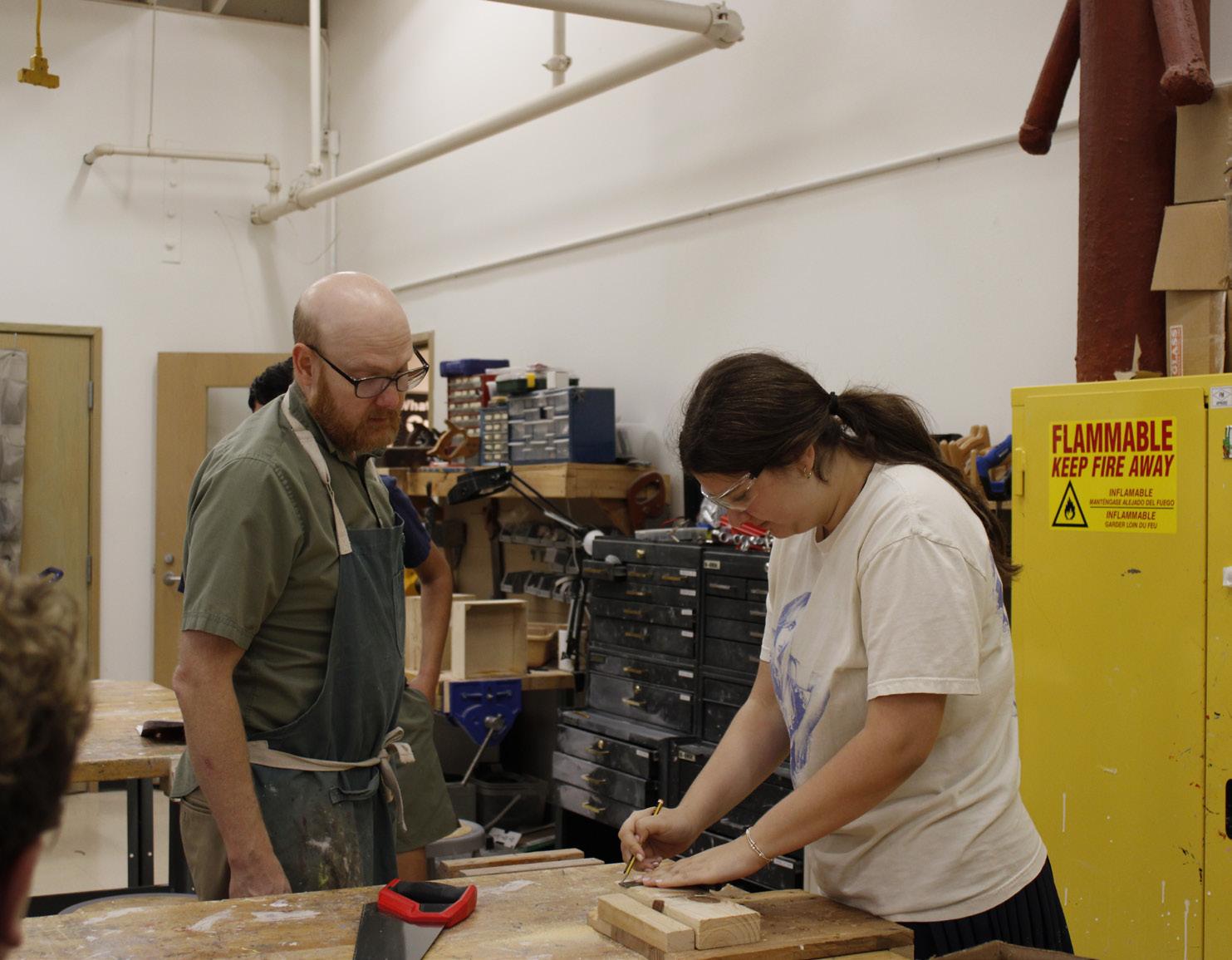
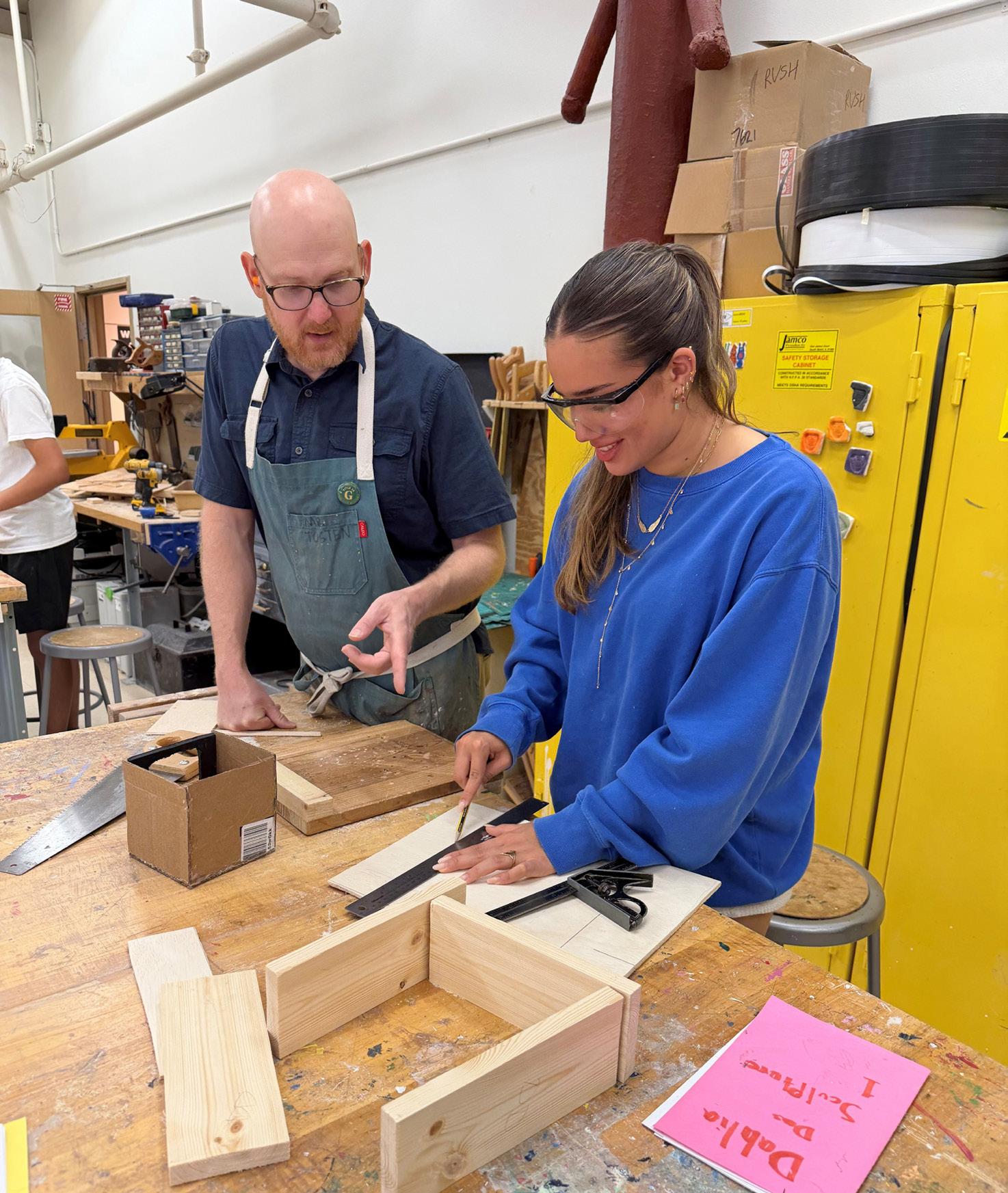
also helping them embrace their individual artistic styles, understanding that their work only needs to feel “perfect” to them.
“We have learned to stay positive throughout imperfection and learn that imperfection is really perfection,” Rosenfeldt said.
Tosten encourages students to see mistakes as a part of their creative process, according to Rosenfeldt. He tells them that mistakes and imperfections make their work more unique.
Students say Tosten’s classroom stands out as a space that encourages both creativity and confidence.
“His class is somewhere where you don’t feel pressure to be perfect,” freshman Ben Caplan said.

Although he is professionally taught, Tosten still considers himself mainly self-taught. Tosten says his instructors often left students to create work on their own with little guidance, so he was strongly influenced by his classmates and their work.
For Tosten, art is a way to express himself, and not something he does for
creating a guitar.
He read books and attended online classes and then began to practice. He says his experience with woodworking, sculpture and other art forms allowed him to pick up the craft quickly.
“I think all craft skills support other skills,” Tosten said. “One discipline is always going to help the other.”

“I’m really just doing it for my artwork,” Tosten said. “That’s all I really want to do.”
When he’s not teaching, Tosten says he finds joy in numerous projects, often making practical items for everyday use rather than profit. He works on crafts like dishes,
“I don’t actually think of myself as an artist,” Tosten said. “I think of myself as a person who makes art.”
Over the years, he says he recognized his creativity needed a different outlet. He eventually found it in guitar making.
After being introduced to the craft through a colleague in 1999 while working as a canoe outfitter in northern Minnesota, Tosten began to research the process of
Tosten’s guitars were recently displayed at the Greenhill Faculty Art Gallery and received many compliments.
“I saw his guitars in the faculty show and they were exquisite,” Davis said. “It was just exquisite craftsmanship.”
Through Oak Cliff Guitars, Tosten sells his hand-made guitars and offers repairs and restorations.
To help support a local charity, Tosten also partners with Swan Strings, a 501(c)(3) nonprofit organization that provides free music education through his business. He provides low-cost guitar repairs and restorations to help the organization save money on commercial repairs for donated instruments.
Although his business requires work, Tosten says he views it as a side project instead of a second job.
“I’m doing it for myself, and if I can help others out, that’s great,” Tosten said.
While Greenhill offers many sports options, not every athlete finds their outlet on campus.
For seniors Chloe LaGrone, Dylan Millimet and Caitri Zeikus, pursuing their passions has meant years of training outside of school – practices at off-campus natatoriums, ice rinks or barns, long commutes and the demands of balancing intense academics with demanding training schedules.
LaGrone’s off-campus passion was water polo until stepping away in the past year. Millimet plays ice hockey. And Zeikus competes in equestrian events.
“When you do a sport outside of Greenhill, I feel like so few people know,” Zeikus said. “I don’t think many people, besides people in my intimate friend group, know that I’ve been doing equestrian. And even fewer people know what it entails.”
Each of these seniors found these passions at an early age.
LaGrone began water polo in fourth grade after accidentally walking into a tryout.
“We thought we were going to a swimteam tryout for kids,” LaGrone said. “We were like, ‘Oh, this isn’t a swim-team tryout. They have goals out and they’re throwing balls around.’ It was a happy accident.”
Despite her surprise, she decided to try out for the team and begin playing. She played water polo for about nine years, competing at Junior Olympics and in the Olympic Development Program National Championships.
Zeikus started her equestrian journey even earlier, after watching the animated movie “Spirit.”
“I was very little, around 4 years old,” said Zeikus. “I like to say I watched the movie ‘Spirit,’ and I kind of fell in love with horses, but it was really spontaneous. I was just very intent on doing it from a young age.”
Throughout her journey, her parents encouraged her to learn the sport. Her mom had also participated in equestrian competitions when she was younger, so she was excited to support Zeikus’s interest.
“I remember when I told them I wanted to ride horses,” Zeikus said. “They got me a pair of pink, sparkling cowgirl boots, and I wore them every single day.”
Millimet started his ice hockey career at the age of 5. His parents similarly influenced his introduction to the sport.
I don’t think many people, besides people in my intimate friend group, know that I’ve been doing equestrian. And even fewer people know what it entails.”
“I have to say a pretty big part was my parents, and obviously the Dallas Stars,” Millimet said. “My parents had season tickets since basically before I was born, and so I was going to games, before I was able to actually recognize what was happening.”
Despite the challenges that come with participating in a sport outside of school, Zeikus says she persevered out of her love to
ride.
“I was never like, ‘I don’t want to ride anymore,’” Zeikus said. “I have always pushed myself or never even gave myself an option. I just always wanted to keep doing this. It’s always been a release.”
As each of these students grew up and continued to play their respective sports, they found it harder to balance schoolwork and the out-of-school time commitment. Practices could be as frequent as five times a week for several hours each day.
Even getting to their practices requires long drives reaching up to an hour after school, according to LaGrone and Zeikus. This reduced the time they had for homework.
“Practice was 40 minutes away from Greenhill,” LaGrone said. “So, my mom would pick me up from school, and then she would drive me up to a Starbucks that was in the area, and I would study there for two hours until I had practice for another two hours.”
For Zeikus, this time commitment became more difficult in Upper School as she encountered increasing pressure on her grades.
“Junior year was when it really hit the hardest,” said Zeikus. “Because there was so much pressure, not just the schoolwork and to maintain those good grades but also prepping for the SAT and the ACT. Instead of five days a week, I was riding three or even two, and I would just go during the weekend.”
Both LaGrone and Millimet also had to lower their commitments to their sports teams as they balanced increasing workloads and responsibilities as Upper School students.
LaGrone stopped playing water polo after her junior year due to looming college application deadlines and burnout from the sport. After his freshman year, Millimet decided to stop playing on a travel team and instead joined the local Plano West Senior High School team so he could focus more on other activities.
“Within my sophomore year, I really started to get into debate, so I kind of didn’t have as much time to focus on school, because I’d be going straight from school to hockey,” Millimet said. “I wouldn’t get home until 8 [p.m.] and then I would still have schoolwork.”
Despite the hardship of balancing school and sports, LaGrone says she appreciates the lessons water polo taught her.
“I learned time management for sure and how to be persistent with what you do and handle pressure,” LaGrone said.
While Greenhill doesn’t offer the sports these seniors are passionate about, the students say they found a unique sense of community and connection through their off-campus pursuits.
Each student chose to continue playing their sport in middle and high school. According to LaGrone, playing the sport brought consistency to her life, especially when moving from Dallas to California and then returning to Dallas.
“It became a social thing for me, even though I didn’t have a ton of friends on different teams at the time,” said LaGrone. “Because I moved back here in sixth grade, I was kind of floating around different friend groups. I didn’t have a set thing, so water
polo became the constant normalcy in my day.”
LaGrone’s club team included athletes from schools around the Dallas area such as Marcus High School and Flower Mound High School, both in Flower Mound. This allowed her to form connections with students she might not have crossed paths with.
Because I moved back here in sixth grade, I was kind of floating around different friend groups. I didn’t have a set thing, so water polo became the constant normalcy in my day.”
The friendships became the highlight of LaGrone’s water polo experience. Her memories of travel and team bonding often overshadow the matches themselves.
She met her best friend, a senior at Marcus High School, through the Texas Thunder Water Polo Club.
“Those little moments of downtime [between games] and true, genuine friendship are really what made my experience what it was,” LaGrone said.
For Zeikus, equestrian sports provided a similar sense of community despite being an individual sport.
At the barn, group lessons allowed her to connect with girls from various schools, and long days at horse shows created an environment where teammates supported one another.
“Everyone at my barn competes in different events at different times, so we all go and support each other and cheer each other on,” Zeikus said.
Similarly, Millimet formed strong bonds with his Plano West teammates and players from other schools who play on the team.
Hockey gave him the chance to connect with people he wouldn’t have met otherwise, and the locker room culture helped create relationships, according to Millimet.
“It’s a good opportunity outside of seeing the same people you see every day,” Millimet said.
Although Millimet and LaGrone say they don’t plan to compete seriously in their sports in the future, they agree the experience deepened their appreciation for the hard work required for competitive athletics.
LaGrone still loves water polo, although she stepped away from competition.
“I’m definitely still going to watch water polo whenever it’s on.” LaGrone said. “I’m still going to be the No. 1 watcher of the USA women’s team when the Olympics come on.”
Meanwhile, Zeikus plans to continue competing in equestrian events through club sports in college.
“I won’t be able to leave riding behind,” Zeikus said. “It’s become just such a big part of who I am, and it’s also a great outlet for me.”

John Hurley, Natalie Ledyard
Greenhill spring athletes are training and competing under the direction of multiple new coaches this season.
Girls lacrosse added two assistant coaches, while boys lacrosse and baseball each welcomed a new head coach. The softball program hired a new assistant coach.
The students and coaches of each of these teams are aiming for a strong finish to their seasons as they enter the back half of the spring schedule.
One of the most notable additions is new baseball Head Coach Mitchell Tolman, who brings a professional acumen to the Hornets. Tolman played three years at the University of Oregon’s NCAA Division I program before he was drafted by the Pittsburgh Pirates as a junior. He went on to compete as a Minor League professional player for four Major League Baseball organizations from 2015-2023.
“Having a coach with that level of knowledge is a huge advantage,” senior captain Connor Lee said. “He’s seen the game at some of its highest levels, and he’s been able to translate that through his coaching.”
The team opened Southwest Preparatory Conference play Tuesday, March 24, defeating Cistercian Preparatory School in a late 8-6 comeback, the team record was to 5-6-1 on the season as of April 6.
“We’re taking conference [play] one game at a time,” Lee said. “We don’t want to overlook any opponents.”
Although new to the high school team this season, Assistant Coach Jules Townsend is already a familiar face in the program after coaching the Greenhill Middle School team last year.
Now stepping into a larger role with the high school team, Townsend brings a strong background in pitching.
“It's great to have her on staff because she can work one-on-one with our pitchers and even make adjustments in the middle of the game,” said Head Coach Monica Stephens.
Townsend’s experience comes from playing at the University of Oklahoma and coaching at both the Episcopal School of Dallas and Parish Episcopal School.
Even while helping the high school team, she continues to work with younger players in the program.
“She runs all the Middle School practices and goes to whatever games she can when it doesn't conflict,” said Stephens.
The team held a 3-5 record as of April 6.
The retirement of boys lacrosse Head Coach Richard Moses after last season led to the hiring of Kyle Saggio, who played NCAA Division II lacrosse at the University of New Haven.
Saggio made an impression quickly, both through his coaching philosophy and his willingness to get on the field alongside his players, senior captain Arjun Bhatnagar said.
“He wouldn’t make us do anything he wouldn’t do,” Bhatnagar said. “He’s proven that when he does the workouts with us.”
His approach is focused on fundamentals and a short-term memory mentality. He even has a saying he often recites: “So what? Now what?”
“It means that even if you did something good, so what?” junior Mahedhar Sunkara said. “Move on. If you mess up, so what? Move on.”
The team held a 2-7 record as of April 6 while managing a roster that is significantly smaller than previous years. After losing over a dozen seniors to graduation last year and many rising seniors leaving lacrosse for yoga and other activities, the team is working with around 20 players.
Despite that, Bhatnagar expresses optimism about a potential postseason run to the SPC playoffs and the following Texas High School Lacross League Class C State
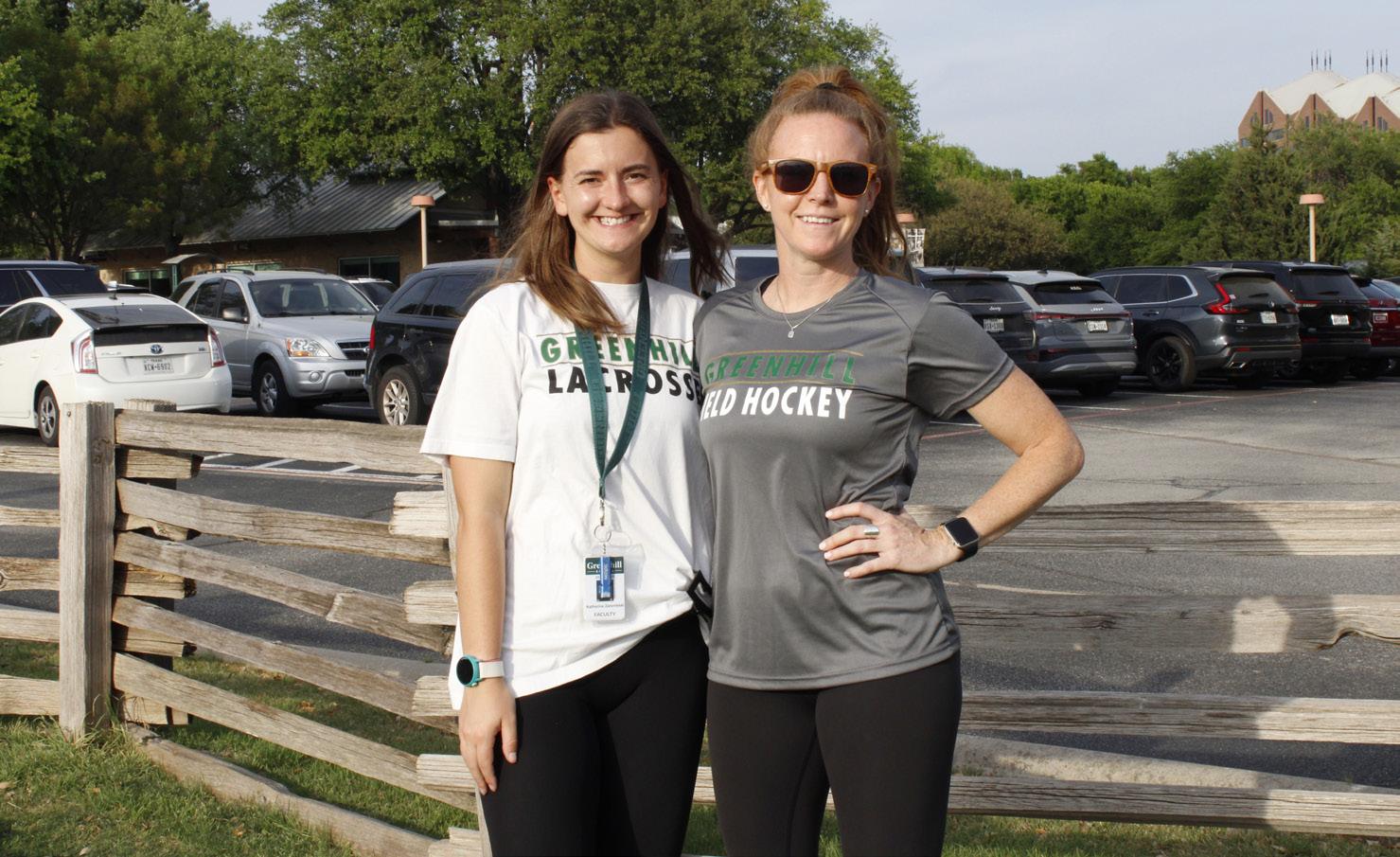
playoffs.
“I think we are one of the top two teams in SPC, alongside St. Andrew’s [Episcopal High School in Austin],” Bhatnagar said. “After that, I think we’ll have a good run in the state playoffs.
Girls lacrosse has added two assistant coaches this season: Coach Caitlin Rooney, and Lauren Harrington ’25, a former team captain and current Southern Methodist University freshman who has returned to Greenhill to coach part-time.
Having the extra staff has made a tangible difference on the field, according to senior captain Valentina Casas-Sayek.
“[Head] Coach [Katherine Zarembski] does a lot for us, but for lacrosse you have to divide [coaches] into offense and defense,” Casas-Sayek said. “When it was just Coach [Zarembski] Katie, it was harder for her to focus on both sides at once.”
Harrington’s presence has brought about a new dynamic for the team, players said. As a former captain and friend to many
of the upperclassmen, the line between authority and friendship has become increasingly blurred.
“We have to call her Coach Lauren or Coach Harrington because we have to set an example for the younger girls,” Casas-Sayek said.
The additions especially benefit younger players who previously had limited access to coaching support. Now, they have access to more direct feedback in and out of games.
“You can’t go up to the head coach while they’re stressed about a game and ask why you’re off,” Casas-Sayek said. “Now, [players] have other people they can talk to.”
The team had a 2-6 record as of April 6 and has been more focused on the Texas Girls High School Lacrosse League Division III state tournament rather than the SPC playoffs. The SPC schedule is especially tough, with Greenhill competing against rivals such as 2025 Division I state champion Hockaday School.
“State is what really matters for us,” Casas-Sayek said. “We’ve learned so much from our first few games, and I’m excited to see how much we keep improving.”

Nine seniors have committed to play collegiate athletics next year. The following list was provided by Head of Athletics and Physical Education Jarrett Shine.
Lylah Pouratian
Students sip shakes after workouts, tuck protein bars into backpacks and browse grocery store shelves filled with “high protein” snacks. It’s clear that what started as a nutrition strategy for athletes has quickly developed into a mainstream trend.
At Greenhill, protein snacks have become a staple. What was once aimed toward athletes now serves as a meal in many students’ days.
Much of this craze coincides with the Trump administration’s new dietary guidelines, released on Jan. 7. Notably, the guidelines stress “high quality” proteins, the proteins from whole sources such as chicken, pork, beans or legumes.
As awareness of protein’s role in the body grows, so has its popularity. Social media influencers have helped push all forms of protein to the center of many people’s eating habits, according to junior Alex Han.
“Processed proteins have turned into an obsession,” said Han. “I’ve seen protein bars but also popcorn and candy.”
For many, these new options are less about preference and more about practicality.
“Most of our student athletes’ schedules on campus are crazy,” Director of Sports Performance Jessen Houston said. “So, I don’t try to dismiss the fact that there are non-whole source ways to get protein.”
repair.
Many people are drawn to high-protein diets because they believe they can help with weight loss. Upper School science teacher
of putting people in the hospital? No,” Myhre said. “But is it bad in a long-term manner for your body to be constantly at a kind of heightened level of excretion and removal?
event, ‘You should not be consuming a lot of protein,’” Houston said. “Your body during an athletic event will use carbs.”

Protein supplements are particularly common. These often come in the form of powders, shakes or bars designed to increase daily protein intake for muscle growth and
harm. However, consistently excessive protein intake over time may be harmful, especially for individuals with preexisting kidney conditions, according to Myhre.
“So, do I think it’s damaging to the point
ingredients.
Houston says he tries to teach Greenhill athletes about the importance of proteins in diets.
“We tell athletes before an athletic
An inappropriate intake of protein contributes to poor athletic performance, according to Houston.
“The symptoms I see for poor protein intake and supplementation are crashes, which means an athlete can perform for a certain amount of time and then during that performance, you see a significant change in their ability to perform,” Houston said. “That tells me that their protein-to-carb ratio was off. It also tells me their supplementation had too much added sugar.”
To help student-athletes maintain nutritional balance, Houston recommends the consumption of four grams of carbs for every gram of protein.
“Never be an early adopter with things that you’re certainly putting in your body,” Houston said. “Ask more questions, do research, and then seek out the professionals who either have the education around it or who can at least point you in the right direction.”
Protein remains an important part of a healthy diet, but a balance of food is more important, according to Houston.
“Substrates don’t operate in a vacuum,” Houston said, referring to the essential nutrients that the body processes to produce energy. “They all complement and supplement each other. So, we should never just focus on one. We should focus on all of them.”
As Greenhill School celebrates its 75th anniversary, the Athletics Department has showcased a creative and visible tribute: throwback uniforms inspired by decades of campus history.
This idea originated with Associate Head of School for Mission, Community and Culture Tom Perryman ’81, who traced the concept of throwback uniforms back to professional sports leagues in the mid-1990s.

Perryman says he used this inspiration to suggest throwback jerseys for Greenhill’s 50th anniversary, but the idea was never implemented.
As the 75th anniversary approached, Perryman decided to revive the suggestion.
Perryman pitched the idea to Head of School Lee Hark, Head of Athletics and Physical Education Jarrett Shine, Associate Head of Athletics John Rortvedt, among others. This time the support was instant.
“Mr. Hark really liked the idea,” Perryman said. “He said ‘Keep digging around. Keep doing your research.’”
Perryman says he began poring over old Cavalcade yearbooks to find pictures of his favorite Greenhill throwback uniforms. He tried to find ones that were funky, outdated and different from the current ones.
Ultimately, throwback jerseys were chosen for cross country, track and field, girls soccer and baseball. These sports were chosen through a collaborative process that focused on budget, historical representation and equity, according to Rortvedt.
Once designs were chosen, Greenhill
partnered with the uniform vendor BSN Sports to bring these visions to life.
“There was a lot of back and forth,” Rortvedt said. “They came to campus, brought a laptop, and we designed everything digitally – the fabric color, piping, fonts, numbers, everything.”
Not every detail could be replicated, due to many of the original uniform elements being designed and manufactured decades ago, using materials, cuts and styles that are no longer produced today.
For the teams that did not receive throwback jerseys, the Athletics Department attached 75th anniversary patches to jerseys or helmets, depending on the sport.
“It just wasn’t financially sustainable for every team to get a new kit,” Rortvedt said. “So, the patches were a way to include everyone.”
Students across different athletic teams had mixed reactions when the jerseys were first introduced. But eventually, the uniforms helped make the season feel more memorable and connected to Greenhill’s traditions, according to junior Alex Han.
It just wasn’t financially sustainable for every team to get a new kit. So, the patches were a way to include everyone.”
For cross country runners, the jerseys were tied to long standing events such as the annual Luke’s Locker 6-Mile Relay.
“We’re based a lot on tradition,” junior Lilly Williams said. “The 6-mile relay has been going on for about 40 years, so wearing the jerseys there felt like stacking traditions with all the people who have come before us.”
Girls soccer players didn’t love their throwback uniforms at first.
“They were long-sleeved and mostly yellow,” Han said. “But when we actually wore them, they grew on us.”
The jerseys ended up being part of an important moment for girls soccer players when they wore them during their final home game.
“It was kind of a full circle,” Han said. “We got the win on Brinkmann Field in the 75th jerseys.”
For Rortvedt, the throwback uniforms were not just about the looks.
“It’s neat to look back and see who
paved the way,” Rortvedt said. “They wore these uniforms, represented the school and played with pride.”
Perryman underscored the importance of seeing the throwback uniforms as a window into 75 years of school history and traditions.
“As a current student, you can’t help but feel like Greenhill started the day you got here and ends the day you graduate,” Perryman said. “But Greenhill goes back in time, and it goes forward in time.”
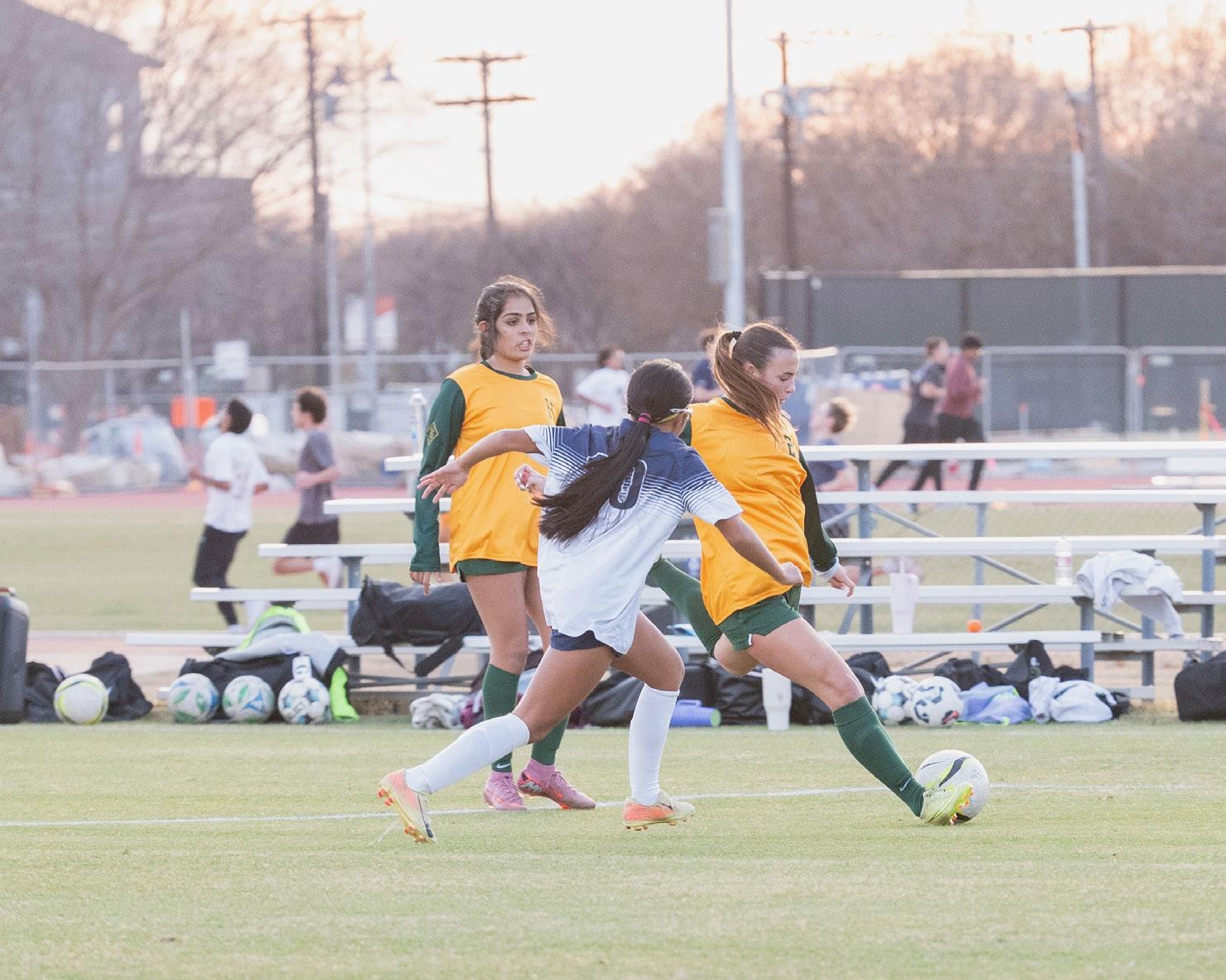
Penelope Stone, Nirvan Bhattacharya
The month of March is known for many things: St. Patrick’s Day, the beginning of spring. And college basketball.
The NCAA Division I men’s and women’s basketball tournaments, more commonly known as March Madness, are the end-of-season games that determine the collegiate national champions. The tournaments took place from March 17 to April 6 in different locations throughout the country, with this year’s championship games held in Indianapolis.
For some, March Madness serves as a means of connection between faculty and students. Through filling out tournament brackets that predict winners and losers and discussing exciting games where favored teams lose to lower-ranked opponents, the tournament can create friendly competition in student and faculty leagues.
On April 5, UCLA was crowned the women’s national champion after a 79-51 win over the University of South Carolina. The next day, the University of Michigan men’s team defeated the University of Connecticut Huskies, 69-63, earning its first championship since 1989.
Each tournament consists of 68 teams, with conference champions earning automatic bids. The selection committee determined the remainder of the bids and announced them on Selection Sunday, March 15.
Tournament play began on March 17 with the First Four, in which eight teams competed for the final spots for the No. 11 and No. 16 seeds in the main 64-team March Madness bracket.
One of the First Four teams, the University of Texas Longhorns, pulled off some big upsets early on. They defeated North Carolina State University 68-66, with a last-minute basket advancing Texas in the tournament.
The Longhorns went on to defeat No. 6 seed Brigham Young University and No. 3 seed Gonzaga University. At Greenhill and elsewhere, the Longhorns ruined many brackets with their unpredictable wins.
“In my family tournament bracket, I was really upset because I’ve won my tournament three years in a row and now, I'm the first one out,” junior Lucy Kim said.
“I really thought Gonzaga was going to win.”
The University of North Carolina Tar Heels were seeded No. 6 and lost in an upset against No. 11 seed Virginia Commonwealth University in the first round. The absence of freshman forward Caleb Wilson, out with a season ending hand injury, significantly contributed to the UNC loss.
“UNC always has the talent to make a run, but injuries can really change things during the tournament,” Middle School history teacher Parker Ainsworth said. “Sometimes it just comes down to which team gets hot at the right time.”
Another upset in the first round occurred between the No. 5 seed, the University of Wisconsin Badgers, and the No. 12 seed High Point University Panthers. The Panthers upset the Badgers 83-82.
“Watching it on TV after touring Wisconsin was so upsetting,” junior Brielle Kommer said.
said.
On April 4, the Final Four games were played. The Michigan Wolverines defeated the University of Arizona Wildcats in a decisive win, with a final score of 91-73. The Connecticut Huskies defeated the University of Illinois Urbana-Champaign Fighting Illini, 71-62.
“UConn was just the better team and more experienced,” freshman Nico Xavier said. “Their guards were solid and controlled the game.”
as well, creating leagues between themselves and their classmates.
“I love filling out my bracket and competing with my friends,” senior Kendall Johnson said. “It’s fun to see how everyone does and compare picks.”
The unpredictability of the tournament keeps people checking their brackets throughout the week, according to junior Eli Yaffe. With upsets and “Cinderella runs” by lower-ranked teams, brackets can fluctuate greatly in just one day.

While the Duke University Blue Devils survived a near-upset to Siena University in the first round, they lost in a big upset to the University of Connecticut Huskies in the Elite Eight. The Blue Devils led the game 4429 at half time and freshman guard Braylon Mullins scored the game-winning threepointer, with the final score of 73-72.
“It was the best game ever, my TV froze so I couldn't watch it at the end, but I watched the replay and it was amazing,” Kim
Director of Bands Brian Donnell.
“It was a thing, so several of us thought it would be fun to get together to have a contest for the entire faculty,” Donnell said.
The competition allows faculty members to connect with new people through basketball, according to Donnell.
“For the adults, it gives an excuse to have a conversation with someone you might not usually interact with,” Donnell said.
Many students take part in competitions
“Sometimes your bracket starts out cold, but the next day you check it and you could move from last place to first,” Yaffe
Many faculty members, like Upper School biology teacher Winfred Parnell ’99,
“We used to do written brackets, me and my friends,” Parnell said. “We would turn them in and follow it on paper.”
For many students and faculty, the most exciting moments come from close games, decided by last-second shots – the so-called “buzzer beaters.”
“My favorite parts are the close games and buzzer beaters,” Johnson said.
“Those moments make the tournament really
With its chaotic and engaging atmosphere, March Madness connects many people in the Greenhill community, even those who don’t regularly watch basketball, according to Ainsworth.
“No matter how much a kid watches basketball, you can [create a bracket] as a whole advisory and then see how things play out,” Ainsworth said.

Despite its promising title, the SAVE America Act backed by President Donald Trump will only add chaos to American elections. Whether targeting groups to limit opposing ballots, discouraging voters from going to the polls or enabling Trump supporters to claim election fraud, the far-right agenda is threatening voting access through this bill.
Since its proposal in the House of Representatives on Jan. 1, Congress has spent hours debating the Safeguard American Voter Eligibility Act, even amid a partial government shutdown and pressing global conflicts. And through it all, the legislation addresses an insignificant problem in the United States: noncitizen voting.
According to the federal U.S. Citizenship and Immigration Services Systematic Alien Verification of Entitlements program, 0.04% of voters were non-U.S. citizens as of August 2025. The small percentage raises a question about the importance of the bill, especially as Trump has pushed for it despite minimal support.
Noncitizen voting has been prohibited since 1996 with the Illegal Immigration Reform and Immigrant Responsibility Act. Even if noncitizen voter cases are enough to swing an election (and there is no evidence to support Trump’s claim), the U.S. Constitution empowers individual states to manage the voting process. The SAVE America legislation would potentially threaten the rights of the states, further tampering with the crucial 2026 midterm elections in November.
Additionally, the bill’s logistics are difficult to implement. The act lays out guidelines for registering to vote, requiring proof of citizenship in the form of a U.S. passport, birth certificate or Certificate of Naturalization. While in theory, all Americans should have access to these documents, 9% of eligible voters do not, according to the Bipartisan Policy Center, a think tank in Washington, D.C. Another potential barrier is the fact that 52% of registered voters in the United States don’t have valid passports.
Superficially, requiring documentation for voter registration is helpful in securing safe elections. But what many fail to see is the blatant targeting of the voting rights of women, transgender individuals and underresourced people. These groups frequently experience mismatches in the names that appear on their legal identity documentation. The SAVE America Act proposes that voters can only register if their current legal name matches the documents shown.
As of 2023, eight out of 10 U.S. women in opposite-sex marriages have their spouse’s last name, according to the Pew Research Center. Another think tank, the Center for American Progress, found that
44% of transgender Americans have changed their legal name but could not successfully alter their voting registration documents. While transgender people only account for 1.3% of American adults, this is still a larger amount than noncitizen voters.
Under the SAVE America Act, these individuals would be required to obtain U.S. passports, which cost $165, or work through a difficult process to verify citizenship. This creates a steep or even insurmountable paywall for many voters and brazenly discriminates against groups of people, offering real-life examples of the threat of disenfranchisement prohibited by the 15th Amendment.
Causing further harm is the SAVE America Act’s ban on mail-in ballots, with exceptions for illness, disability, military or travel. Whether out of convenience or necessity, nearly one in three Americans voted by mail in the 2024 presidential election, according to the States United Democracy Center, a nonpartisan electoral advocacy group in Washington, D.C.
Experts believe that some of the voters barred from casting mail-in ballots simply wouldn’t vote.
To say the SAVE America bill merely increases voting safety would be false, as it would have a chilling effect on voter participation for certain groups – namely ones the far-right has already targeted. And it’s impossible to forget the numerous instances of election interference already attributed to MAGA supporters.
The Jan. 6, 2021, attack on the U.S. Capitol by Trump supporters to prevent the certification of Joe Biden’s victory in the 2020 presidential election highlights the willingness of MAGA activists to challenge an outcome inconsistent with their beliefs. Infamously, the rallying cry of “stop the steal” has been amplified by these individuals, along with lawsuits aimed at invalidating unfavorable election results. The SAVE America Act would give such cases legal standing, allowing citizens to sue over an election they oppose.
Opposing the SAVE America Act shouldn’t be equated with support for voting by noncitizens. But an attempt to so dramatically change the way American elections are conducted just months before the midterm elections should be met with scrutiny and cynicism. This badfaith act addresses only minuscule voter fraud threats, but it introduces access barriers that could restrict voting rights for already vulnerable groups. The 15th Amendment promised to protect voting equality for all groups; plainly, the SAVE America Act is attempting to challenge this right, compromising the upcoming election and the future of democracy for all Americans.

Critics of the Safeguard American Voter Eligibility or SAVE America Act want you to believe that if the legislation passes, Democrats won’t win another election for decades. They want you to believe it is a suppression scheme layered in patriotic language to disenfranchise millions of Americans.
It is not. The SAVE America Act, passed by the House of Representatives in February, currently lies before the Senate, awaiting the necessary votes before it can be passed into law. The bill reiterates the right that only U.S. citizens are allowed to vote in federal elections by requiring individuals to show documentary proof of U.S. citizenship when voting.
The Bipartisan Policy Center has reported that the federal U.S. Citizenship and Immigration Services Systematic Alien Verification for Entitlements program, which states began using in 2025 to check voter rolls, flagged only 0.04% of cases as potential noncitizen.
Regardless of how small that number is, it is not irrelevant. The 2020 election was decided by fewer than 45,000 votes across Georgia, Arizona and Wisconsin. Even a small number of illegal votes could serve as a potential tipping point.
The question of voter confidence is an issue nearly as urgent as fraud concerns. According to a Pew Research Center poll taken before the 2024 presidential election, 90% of voters say it is very or somewhat important to stop noncitizens from voting. Yet only 57% of Americans said they were confident that presidential votes would be accurately cast and counted. Republican confidence has fallen to just 28%, down 16 points from 2020.
Confidence in election administration nationally remains eight points lower than it was during the 2018 midterms. There has been a marked shift in the minds of tens of millions of Americans as doubt has crept in about a system they are supposed to trust. The best way to regain voter trust is through what the SAVE America Act offers: transparency.
The Brennan Center for Justice, a nonpartisan law and policy institute based at the New York University School of Law in New York City, estimates that around 21 million Americans don’t have proof of citizenship readily available and that requiring such documentation would result in mass disenfranchisement. This figure has been the main point of conflict on the Senate floor as Republicans have tried to get the bill to pass.
To combat this, the bill accepts a
wide range of documents, including a U.S. passport, a birth certificate, a naturalization certificate, and a military ID with a service record or tribal identification, among others. The bill offers a circumstantial pathway for anyone unable to produce documentation where applicants may sign an attestation under penalty of perjury, with local officials authorized to make a follow-up determination. While some argue that this too closely resembles the previous system, under the SAVE America Act, attestation is only allowed for genuine hardship and not a default option.
What the disenfranchisement argument cannot fully account for is the harsh reality for tens of thousands of Americans on the Texas-Mexico border. These communities are known for traditional midwives, resulting in many births never being registered. Legally, these individuals are citizens, but documentation may not exist. No government document office can fix what was never created.
For these Americans, the path to documentation lies with the court system, a process that can take over a year and cost thousands of dollars. This is not an isolated problem either. Millions of alreadyregistered voters re-register every year for a multitude of reasons, subjecting them to the same documentary requirements as a first-time registrant.
These are predictable, widespread cases that the current bill does not solve. If Congress and the sitting Republican majority is serious about election integrity and equal access to the ballot box, they must pair this legislation with a coordinated effort to help these citizens obtain the legal recognition of their rights.
Other countries have found ways to make their elections free and fair. For example, India and Brazil tie voter ID to biometric databases. Germany, on the other hand, requires paper ballots. Denmark limits mail-in voting to those who physically cannot vote in person. These countries are all democratic in nature and no one could credibly label those nations as “authoritarian” or their voter registration systems as “disastrous.”
The United States, on the other hand, has a patchwork system of staterun verification offices, which can lead to problems and inconsistencies.
The SAVE America Act is a step toward creating a more reliable and federalized election infrastructure, if Congress can support the implementation needed to make it work. Individual states should be left alone to determine the rules for their state elections, but federal elections should be governed consistently across the country. By passing the SAVE America Act and implementing a more federalized system, we can ensure our elections are secure and that every vote counts.

Thank you for your Special Report, “Software Monitors Students.” Your reporting captured that many students experience device monitoring as intrusion and surveillance rather than support. I
governed and how transparently they are communicated.
Your article quoted students who worry that “anything can be seen at any time” and quoted adults who emphasized that access is limited and intended for legitimate school purposes. Both perspectives are important.
improve communication:
• Clearer explanations of what each tool does and does not do at device distribution, in the All-School Handbook, and on the Resource Page.

but it also creates the risk of exposure to harmful content, online harassment, predatory behavior, self-harm indicators and threats of violence, to name a few. Early visibility can allow adults to intervene and support a student before a situation escalates. When you zoom out, the question is not whether schools should take steps to safeguard students online, but rather what steps are reasonable, how they are
Violent coughs echo through the halls. Lunch tables that are normally full and rambunctious are half empty. Illness has once again infiltrated the student body.
You turn your head and your friend looks like a zombie with the life sucked out of them. You take a test and you cannot focus because your classmate sounds like they need to see a pulmonologist. By the end of the day, it does not feel like school; it feels like a waiting room.
That scene, while it sounds dramatic, is a reality of life at Greenhill. Every few months, a new set of symptoms consumes classrooms. The flu, a stomach bug, bronchitis, COVID-19 – you name it. Every time, the same pattern repeats itself: students who are clearly unwell continue to come to school.
The reasons are understandable. Students don’t want to fall behind in fast-paced classes. Missing a lesson in AP Biology or Honors Precalculus can feel catastrophic. Others have important presentations or tests that would be difficult to make up. People only stay home when they decide they can no longer “push through.”
In a high-achieving environment, showing up – no matter under what conditions – seems like the responsible choice. But in this case, it is not.
know basis and only for a legitimate school purpose (here, typically safety, well-being or fairness).
At the same time, I understand why students are uneasy. I understand why these tools can feel unsettling; in the absence of information, it’s tempting to create your own narrative.
Here are steps we will consider moving forward to increase transparency and
• Clearer norms for classroom management tools like Classwize so students know when and why it may be used.
Student forums (including the Evergreen staff and the Student Council) to surface concerns and improve practices.
Even with greater transparency, though, our duty of care remains, and when privacy and safety are in tension, our obligation is to put safety first. We will be as restrained and transparent as we can…and we will continue to intervene when there is a legitimate need to protect a student or the community.
Finally, keep in mind that the world of college or work you will soon enter often comes with similar guardrails and monitoring. This will not be the last time you operate in systems you don’t own and where expectations, boundaries, and oversight are part of the deal. Our job is to prepare you for that reality while still treating you with dignity and respect.
Lee J. Hark Head of School
effective to rest, recover and return ready to fully engage rather than sit through a day in a fog.
And here’s the thing: teachers understand. As long as communication is present, there are systems in place to make

First of all, coming to school sick is not usually productive for the student who made the effort to come. What is the point of being physically present if you are mentally absent anyway? It is often more
group work is left to a few.
But neither of those problems are the biggest issue with the “push through” mindset. The cultural aspect is the most revealing – and the most concerning.
At Greenhill, academic rigor and
achievement are so paramount that students are not placing value on their own health. Our immune systems are already weakened by widespread sleep-deprivation bandaged with caffeine addictions. Pushing through illness is seen as the price you pay to keep up and perform.
This is not universal, but nonetheless, it is a standard worth questioning. When recovery is an afterthought and seen as equivalent to falling behind in the minds of many, something has gone wrong.
Greenhill is certainly not the only place where this is the case. And administrators should not bear the blame, given there is ample policy in place regarding illness-related absences. That said, policies are only as effective as the culture that surrounds them.
Right now, that culture needs to be steered back on course before it is too late.
There is a long-term cost to letting the “push-through” mindset become normalized. The habits formed here follow students into college and then the workplace where burnout, chronic stress and neglect of personal health can become the norm. We should not let the belief that physical well-being is secondary to performance
This is not a call for less ambition; it is a call for a shift in perspective. Teachers should continue to offer support, but students must first take responsibility. Missing a day should not feel like academic self-sabotage, because frankly, it is not.
EDITORS-IN-CHIEF
Nora Ahearn
Kate
John Hurley
EXECUTIVE
Lylah
DEPUTY EXECUTIVE EDITOR
MANAGING EDITORS - PRINT
MANAGING
ASST.
is printed six times during the school year. Print circulation is 900 copies. Past issues are archived at issuu.com/ghevergreen. Our staff upholds a code of ethics that values honesty, integrity, accuracy and responsibility. Our mission is to help our community interpret campus, local, state and national events through content written and edited by students.
The Evergreen welcomes letters and emails from readers. We reserve the right to edit submissions for accuracy, grammar and length. The staff editorial represents the opinion of The Evergreen staff, not necessarily that of Greenhill School.
ADVERTISEMENTS
The Evergreen welcomes advertisements, but we reserve the right to refuse an ad. Business inquiries should be directed to Ella Sadka: sadkae26@greenhill.org
CORRECTIONS & CLARIFICATIONS
To request a correction or clarification, please email ahearnn26@greenhill.org, ponnambalamk26@ greenhill.org or wais26@greenhill.org
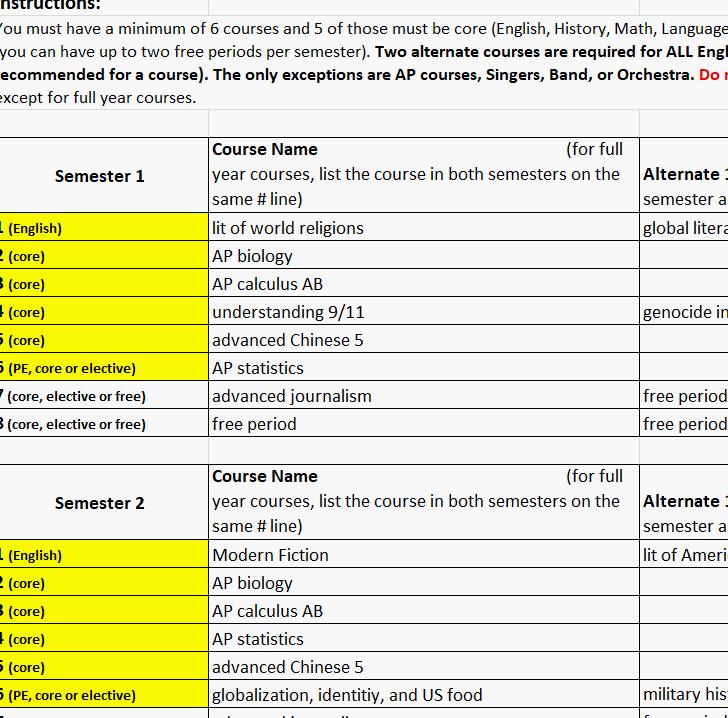
A RAVENT to the difficulty of scheduling courses. Planning out next year’s schedule can be intimidating, but once you’re done, you can start looking forward to your new classes and the year ahead.
A RANT to inflated ticket prices! While we love our seeing and hearing our favorite artists live, the prices are crazy. More than $1,000 for a Harry Styles show? Umm, no thanks.
A RAVENT to the comeback of NeeDohs. The stress toys are a perfect decompression tool. But the challenge of finding a store that has these fidgets in stock makes you wonder if it’s really worth it.

A RAVE to the New York Times’ new Midi Crossword. It’s the perfect middle ground between the Original and Mini Crosswords, giving students another fun brain break option during the day.
A RAVE to the influx of long weekends in April. Four-day school weeks feel so much shorter. And they give us more time to procrastinate, delaying the impending doom of homework to the evening before returning to school.
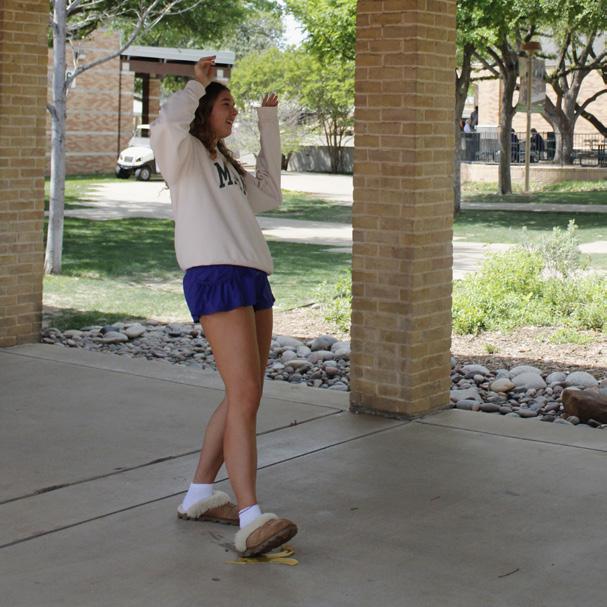
A RANT to an uneventful April Fools’ Day. When we were younger, we would bring toothpaste-filled Oreos for friends or see epic pranks on YouTube. Now, it seems like the fun of the first of the month has lost its spark. Let’s bring it back – but don’t prank us!
Kate Ponnambalam
Iwas not chosen as a graduation speaker. I was a bit relieved because, as wise as we think we are at 18, a small voice within us whispers that we are mostly borrowing profundity at this point.
In my recent search for hard-won wisdom, I looked for someone whose courage lifted them out of the rubble of human brokenness, whose intellect saw the world clearly and never failed to dream of how it could be more, how we could be more. One person emerged as this source of brutal wisdom: the spectacular James Baldwin. Baldwin, born in 1920s New York City, was the love child of a deeply religious upbringing and the Harlem Renaissance. Confronted with unrelenting violence due to the double crime of his Blackness and homosexuality, Baldwin moved to France in the 1940s and proceeded to write novels and essays that laid bare the ugliness of racism and homophobia.
During his years living abroad in France and Turkey, Baldwin corresponded with other Black creatives like Lorraine Hansberry, Maya Angelou, Ray Charles and Toni Morrison. His letters famously provided encouragement to Black voices who struggled to tell their stories through the arts during the turbulent Civil Rights era of the 1950s and 1960s.
and change the world.
In celebration of James Baldwin and the power of faithful friendship, I will elaborate on two qualities his correspondence revealed and how they can change lives: unrelenting curiosity and frightening vulnerability.
Deeply affected by the assassinations of Martin Luther King Jr. and Malcolm X, Baldwin wrote “No Name in the Street,” an outpouring of the sadness and anger he felt as he reflected on his childhood, the tragedies of the Civil Rights Movement, and the ongoing struggle of Blackness in America. Baldwin believed that much of racial injustice arose from the unsavory marriage of power and ignorance.

By the late 1950s, Baldwin had gained widespread recognition with novels like “Go Tell It on the Mountain” and “Giovanni’s Room.” He could have simply relished his fame and retreated into a quiet, unbothered existence living abroad in France. Yet in his unrelenting, vulnerable letters to his vast group of friends, Baldwin seemingly betrayed a core life principle: that individual relationships, rooted in curiosity, love and vulnerability, can fortify people to create
“It is certain, in any case, that ignorance, allied with power, is the most ferocious enemy justice can have,” he trenchantly observed. How is Baldwin’s admonition about power without wisdom relevant to us today?
Baldwin lived in a world, much like ours today, where people seldom tiptoed into the discomfort of understanding the lived experience of those of a different race, religion or sexuality. When ignorant people attain power – the power of wealth, the power of a racial identity, the power of a private school education –they can mistrust others’ intentions or even view those who are different as a threat that needs to be quieted. Amid the superficial engagement that defines our social mediadominated world, we need to do the revolutionary thing and listen closely to the complicated stories of others or perhaps, like Baldwin, be prepared to share our own unique story. When Baldwin penned letters to fellow Black writers about his sexuality or encouraged Robert F. Kennedy to continue the fight for civil rights after his brother’s assassination, he knew these influential voices required
knowledge beyond their own experiences to fuel their pursuit of justice. Baldwin understood the beautiful paradox of how, at different times, we can be both the powerful force for change and the vulnerable soul who needs an empathetic champion.
For much of his youth, Baldwin struggled with shame and fear about being a gay man. Only when he escaped the violence he faced in New York City and moved to Paris did he start to embrace the truth of his identity and pour this insight into his writing. In “The Fire Next Time,” a collection of essays about racial injustice and reckoning, Baldwin penned these famous words: “Love takes off masks that we fear we cannot live without and know we cannot live within.” As a deeply thoughtful man who faced violence both due to his Blackness and homosexuality, Baldwin understood the courage required to remove the masks of heteronormativity and Black invisibility and live unapologetically as his true self.
In high school, we often gaze around, determine which identities gain the most approval and paint our masks accordingly. Baldwin learned that telling our stories to combat ignorance and loving others fiercely requires each of us to lower the mask we think will protect us from harm. In this moment, we reveal our flawed, beautiful souls and hope we find authentic love and connection. Of course, this is high school and when we lift the mask, we might not always encounter love and acceptance. But, like James Baldwin, we lift the mask not simply to be known by others, but to remind ourselves that our unique truth matters and could possibly change the world.
We will all pursue some professional calling and may find great joy and success in it; but perhaps the subtle lesson of James Baldwin’s life whispers in his willingness to cultivate his vast garden of human connections where the blooms that emerged would match or even exceed his career accomplishments.

The NCAA holds March Madness every spring, with a bracket-style tournament culminating in the naming of Division I men’s and women’s champions. The Evergreen has its own tradition – Munch Madness, where students vote on the tastiest Buzz snack. The 2026 Greenhill snack champion has been crowned.