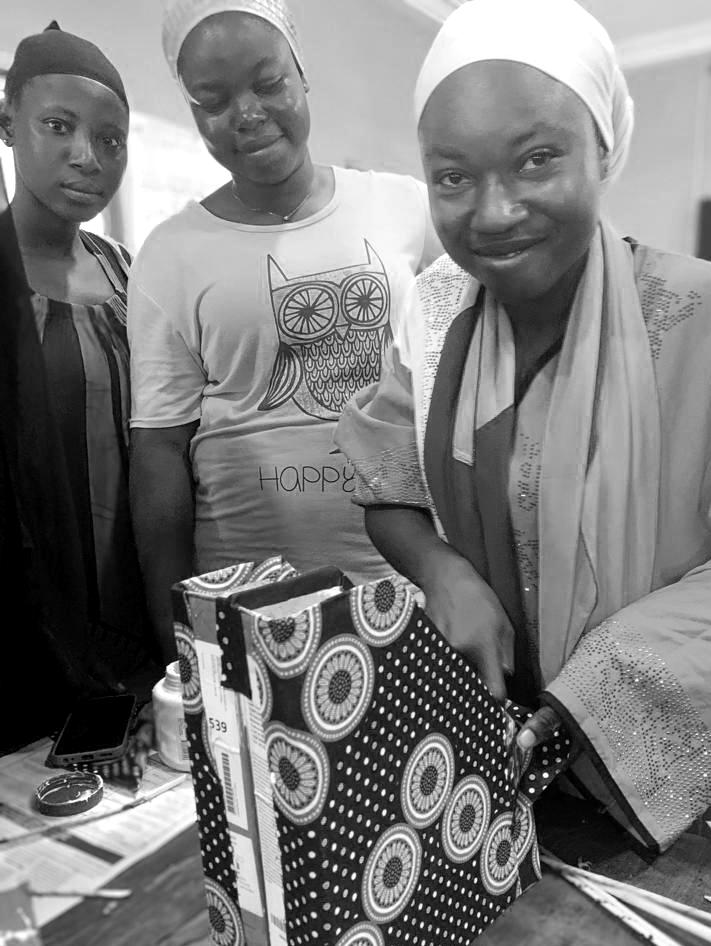
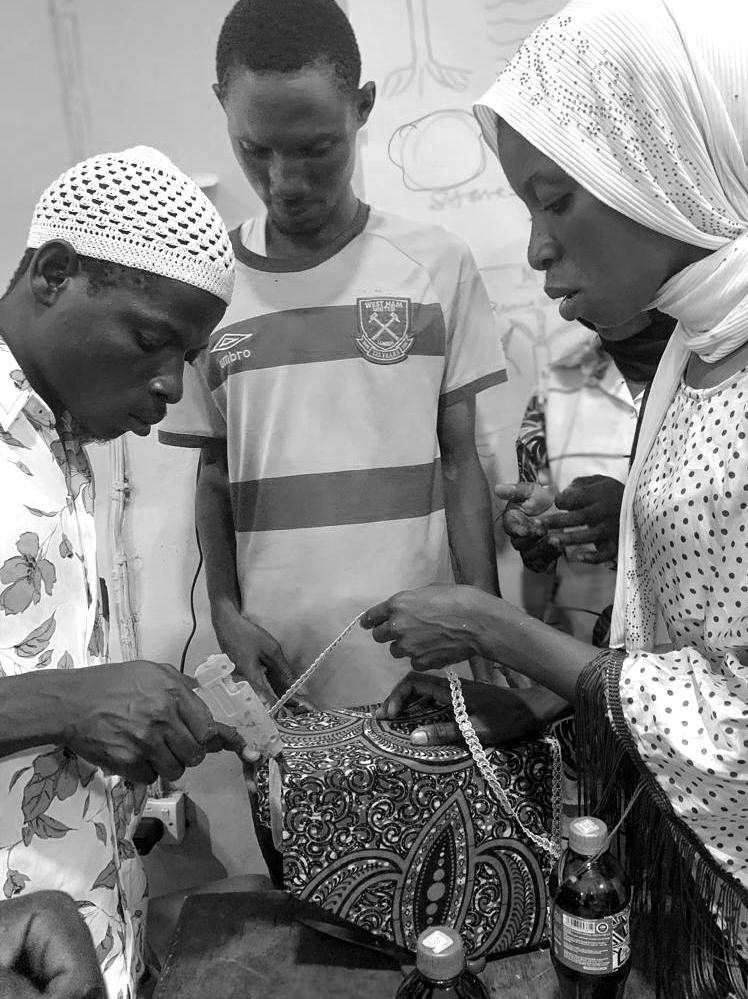
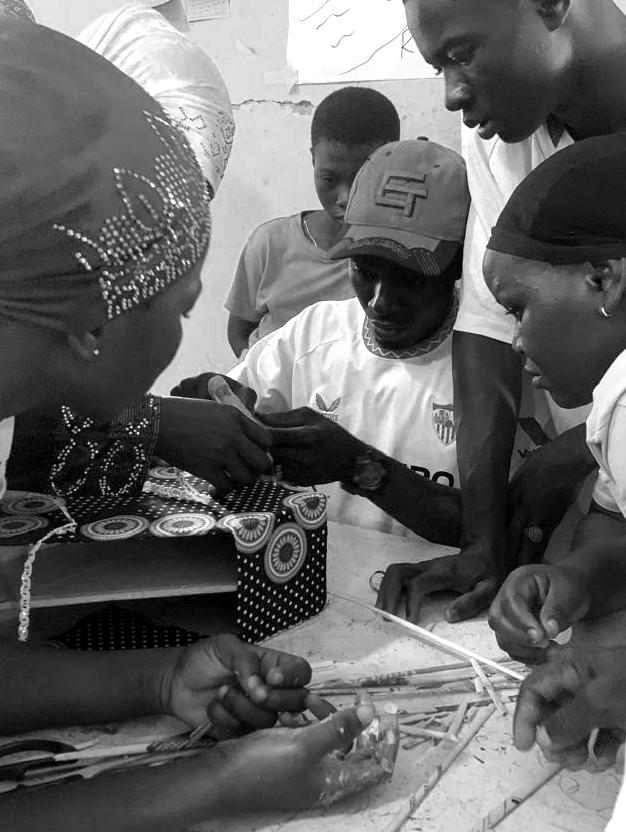
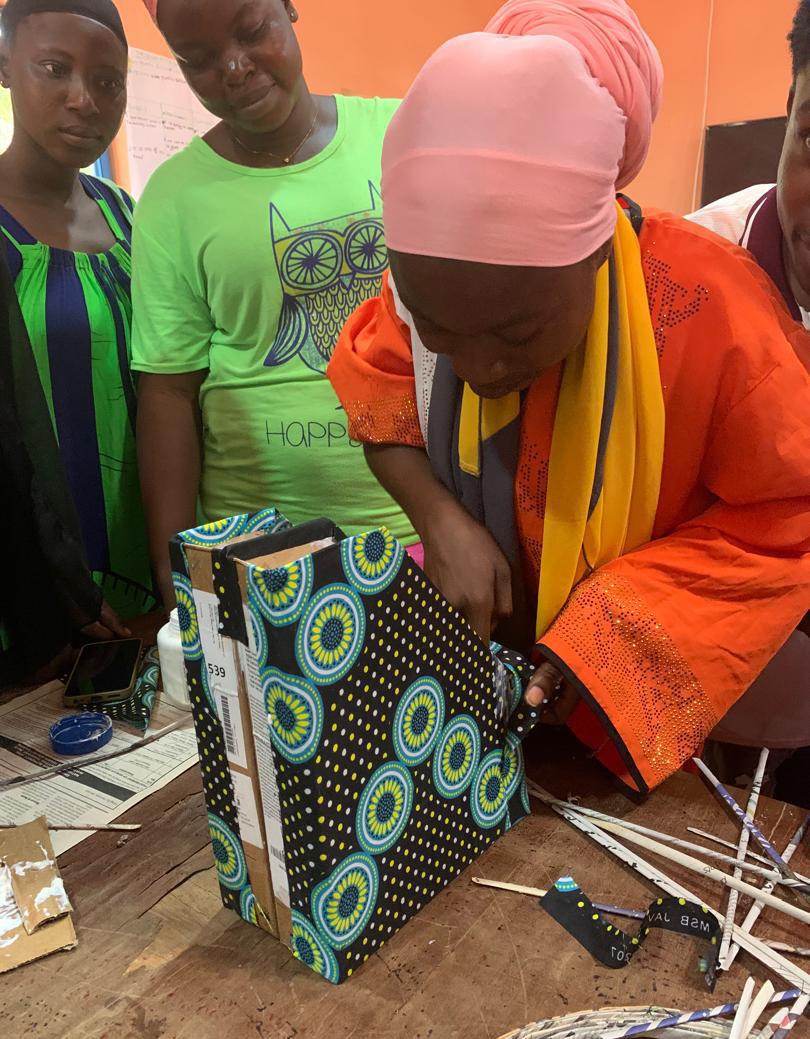
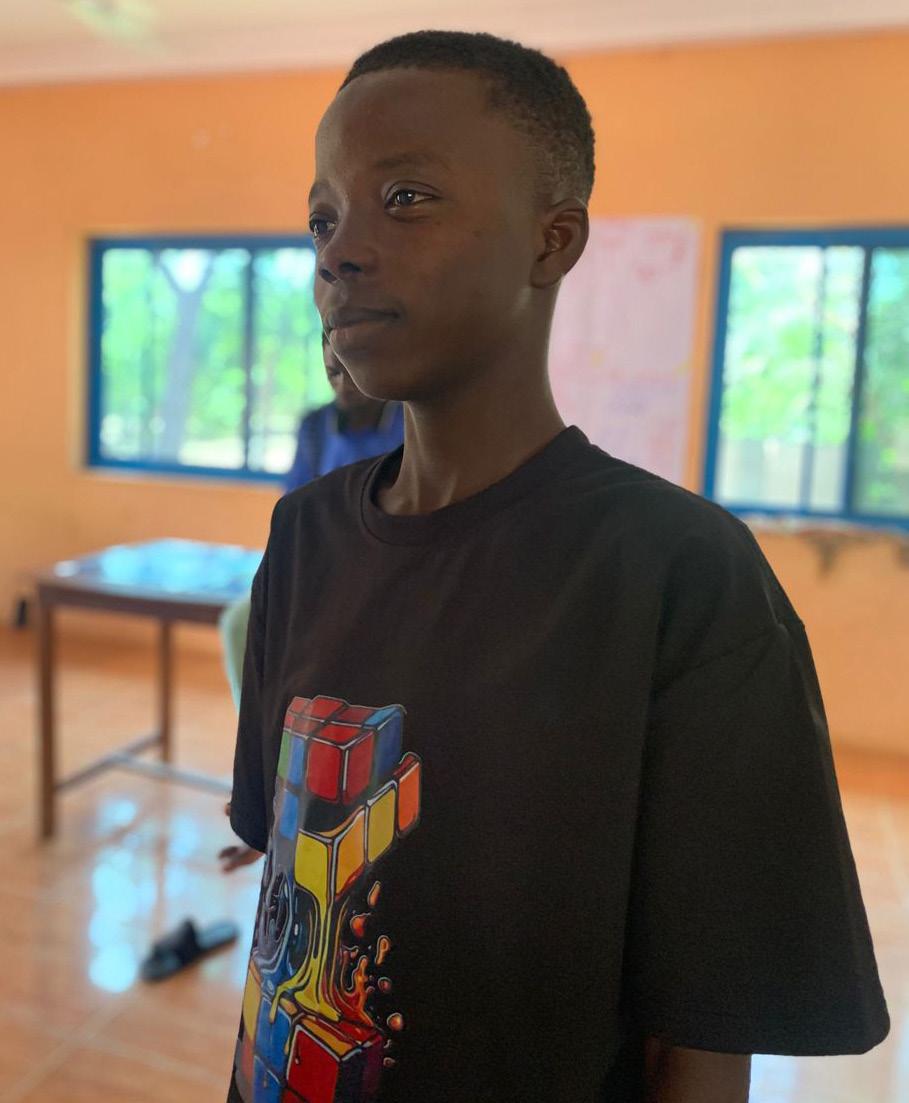
This is a training manual developed to support young ecopreneurs to start up sustainable businesses
The Ecopreneurship Eco-Camp Manual has been developed and published by:
Ghana Friends, Denmark www.ghanavenskab.dk
Youth Empowerment for Life, Ghana, www.yefl-ghana.org
The materials in this manual can be used by organisations, institutions and individuals if publishers are credited.
To access the full materials go to: www.yefl-ghana.org or www.ghanavenskab.dk
Design by Lise Grauenkær
PURpose OF THE MANUAL
The Ecopreneurship Bootcamp Manual is designed as a training guide for facilitators and organizations working with young people who want to start or grow sustainable businesses. It builds on years of entrepreneurship experience in Ghana — but adds a critical new dimension: the environment.
This manual introduces the concept of ecopreneurship — entrepreneurship that creates value for People, Planet, and Profit . It encourages participants to see themselves not just as business
creators, but as agents of environmental and social change. Through 12 hands-on modules, participants are guided from understanding themselves and their environment, to identifying opportunities, designing green solutions, building partnerships, and developing sustainable business plans.
THe ecopreneurship model
The model has 12 modules that are implemented over the course of a year. It has been developed based on the partners’ long experience with entrepreneurship trainings.
BEING AN ECOPRENEUR
Ecopreneurship (or eco-business) is entrepreneurship that seeks to solve environmental problems while also creating economic and social value.
An ecopreneur is someone who identifies opportunities in environmental challenges — such as waste, deforestation, pollution, or climate impacts — and turns them into viable, sustainable businesses.
Ecopreneurship is guided by the Triple Bottom Line:
1. People: Creating social value and improving lives.
2. Planet : Protecting and restoring the environment.
3. Profit : Ensuring the business is financially viable and sustainable.
Together, these three pillars form the foundation of every eco-business idea developed in this bootcamp.
Check out Sara Sarasvathy explaining her theory:
https://www.youtube.com/ watch?v=Ruvb_kGAMYw
https://www.youtube.com/watch?v=hCMpd7z4AbA
Effectuation: HOW ECOPRENEURS THINK AND ACT
The ecopreneurship model is inspired by effectuation theory developed by Professor Saras Sarasvathy.
Effectuation is an action-based logic used by successful entrepreneurs — including ecopreneurs — who start with what they already have and take small, meaningful steps to create change. Rather than waiting for perfect conditions or big investments, effectuation teaches participants to act with their existing means and shape the future themselves.
According to Sarasvathy expert entrepreneurs believe that
people shape the future. They believe that if they can make the future happen, they don’t need to worry about predicting the future. The focus is on using a set of evolving means to achieve new and different goals. Effectuation evokes creative and transformative tactics.
Effectual thinkers believe that if I can control the future - I do not need to predict it.
Effectuation encourages participants to think creatively, act responsibly, and design businesses that work with — not against — their environment.
CAUSAL VS. EFFECTUAL REASONING
Managerial thinking (Causal)
Distinguishing characteristics
Selecting between given means to achieve a pre-determined goal
Entrepreneurial Thinking (Effectual)
Distinguishing characteristics
Imagining a possible new end using a given set of means
THe five principles OF EFFECTUATION
BIRD IN HAND PRINCIPLE
Start with your means. Don’t wait for the perfect opportunity. Start taking action, based on what you have readily available: who you are, what you know, and who you know.
AFFORDABLE LOSS PRINCIPLE
Set affordable loss. Evaluate opportunities based on whether the downside is acceptable, rather than on the attractiveness of the predicted upside.
LEMONADE PRINCIPLE
Leverage contingencies and embrace surprises that arise from uncertain situations, remaining flexible rather than tethered to existing goals.
CRAZY-QUILT PRINCIPLE
Form partnerships with people and organizations willing to make a real commitment to jointly creating the future--product, firm, market--with you. Don’t worry so much about competitive analyses and strategic planning.
PILOT-IN-THE-PLANE
1
3 5 1 4
Control < > predict: By focusing on activities within their control, expert entrepreneurs know their actions will result in the desired outcomes. An effectual worldview is rooted in the belief that the future is neither found nor predicted, but rather made.
APPLYING DESIGN THINKING TO ECOPRENEURSHIP
To complement effectuation, the manual also draws on Design Thinking — a human-centered and problem-solving approach that helps participants:
• Empathize : Understand the real environmental and social needs of their communities.
• Define : Clearly describe the challenge or opportunity they want to address.
• Ideate : Generate creative ideas and eco-solutions.
• Prototype : Create small, testable versions of their ideas.
• Test and Improve: Gather feedback and make improvements.
Design Thinking is practical, participatory, and visual — it helps ecopreneurs develop ideas that are both innovative and relevant to their communities.
PREPARING FOR THE ECO-CAMP: SAVINGS THROUGH VSLA
Before joining the Ecopreneurship Eco-camp, the young people we work with are mobilized into entrepreneurship groups about 5–6 months in advance. These groups are trained in the Village Savings and Loans Association (VSLA)approach — a trusted, community-based savings system that helps members build financial discipline and access small loans.
Through the VSLA, group members begin saving together regularly. Over time, they can borrow from their collective fund to support personal or business needs. After about 12 months, the group conducts a “share-out,” where members receive their savings and earnings. Many groups continue saving together long after this first cycle.
For eco-entrepreneurs, the VSLA plays an important role. It not only provides access to start-up funds for new eco-businesses but also builds a financial safety net that helps sustain businesses through challenges such as market changes or environmental shocks.
The VSLA methodology is widely recognized and used across many countries. All the materials needed to establish and manage a VSLA group can be found at www.vsla.net.
For additional guidance, groups and facilitators are welcome to contact YEfL Ghana for consultation and support.
PREPARING FOR THE ECO-CAMP: PRE-CAMP MEETING
When the participants have been selected, they should be invited for a pre-ecocamp meeting. This meeting can be held at group/district/regional level depending on the current setup.
The purpose of the meeting is to brief and prepare the participants for the ecocamp and there are 2 main components in this pre-ecomcamp meeting:
1. Present the the participants to what will take place at the ecocamp and take them through the program, align expectations from our side and their side, and not least start to nudge the participants to consider and ideate what they could possibly work with or on at the ecocamp.
2. Facilitate the participants to take the VIA Character Strenght test (see next page).
This way we ensure that we have started the effectuation process and we will be off to a smooth start at the ecocamp.
PRE-ECOCAMP EXERCISE VIA CHARACTER STRENGHT TEST
To support the participants to discover their means and personal strenghts we use the online character test developed by VIA university in Denmark. The test takes approximately half an hour to complete online.
Facilitators: Before the eco-camp starts arrange that the participants can take the test, this could be done during a prepration session in the region or districts where the particpants are from.
TAKE THE CHARACTER TEST
Your Strengths
The VIA Classification of Character Strengths comprises 24 character strengths that fall under six broad virtue categories: wisdom, courage, humanity, justice, temperance and transcendence. Each one of us possesses all 24 of the character strengths that are used in the VIA test in varying degrees making up our own unique profiles. They are morally and universally valued, encompass our capacities for helping ourselves and others, and produce positive effects when we express them. Knowing your constellation of character strengths is the first step towards becoming aware of your means and using them.
The Good in You
Character Strengths are the positive parts of your personality that impact how you think, feel and behave and are the keys to you being your best self. When applied effectively, they are beneficial both to you and society as a whole. They are different from your other strengths, such as your unique skills, talents, interests and resources, because character strengths reflect the ”real” you — who you are at your core.
You can learn more about the character strengths and take the test here: www.viacharacter.org
how to USE THE MANUAL
This manual is divided into 12 modules.
• Module 1 is starting Village Savings and Loans Associations for the participants 6 months prior to the eco-camp.
• Modules 2 - 9 are designed for a 5–6 day intensive eco-camp, where participants stay and learn together through interactive exercises, teamwork, and reflection.
• Modules 10 – 12 are for follow-up training and business development support, focusing on refining eco-business ideas, branding, and financial management. Each module includes:
A short introduction explaining the concept.
• Exercises to guide reflection, creativity, and collaboration.
• Facilitator’s notes with tips and examples.
Facilitators are encouraged to:
Create an open, inclusive, and creative learning space.
• Use local examples and real environmental challenges. Encourage participants to share experiences and work together.
• Continuously connect discussions to the People–Planet–Profit framework.
INSPIRE CREATIVITY!
The model and training focuses on sparking creative thinking and providing the participants with a space to engage with new and known materials. The eco-camp is not an academic exercises, but planned to be engaging, hands-on and not least creative. Therefore, make sure to have a selection of relevant creative materials ready for the eco-camp. We suggest some or more or the following materials:
Paper
Flip charts
• Scissors
Post-its
Markers/crayons/pencils
• Tape in different colours
Wooden building blocks or LEGO
String in different colours
”Waste” materials such as: Plastic bottles
• Plastic bags
Natural materials
Cans
• Bottles
Welcome to THE ECO-CAMP!
PARTICIPANT INTRODUCTION
Welcome everyone! This bootcamp is about turning ideas into action — action that helps people, protects the planet, and creates profit. This manual will guide you step by step as you explore who you are, what you know, who you know, and the environment around you — and how all of these can become the foundation for your eco-business journey.
WHAT IS ECOPRENEURSHIP?
Ecopreneurship means starting a business that solves an environmental problem while also creating jobs and income. An ecopreneur looks at waste, pollution, or other challenges and says: “There’s an opportunity here to do good — and make it sustainable.”
Everything we do in this bootcamp builds on the three pillars of sustainability:
People – improving lives and supporting communities. Planet – protecting and restoring our environment. Profit – earning money in a fair and sustainable way.
HOW WE WORK - THE EFFECTUATION WAY
We use an approach called Effectuation — it’s how successful entrepreneurs think and act. It teaches us to start with what we have, take small, smart steps, and create our own future. Throughout the bootcamp, we use five simple principles:
1. Bird in Hand – Start with your means: who you are, what you know, who you know, and your environment.
2. Affordable Loss – Focus on what you can afford to lose, not on big risks.
3. Lemonade – Turn problems into opportunities.
4. Crazy Quilt – Build partnerships and collaborate.
5. Pilot in the Plane – Don’t wait for luck — create change with what’s in your control.
DESIGN THINKING
We also use Design Thinking, a creative process that helps us understand real problems, come up with new ideas, and test them fast. We will empathize, define, ideate, prototype, and test — over and over — until the ideas are ready to grow.
OUR GOAL
By the end of this bootcamp, you’ll have a clear eco-business idea, a simple plan to develop it, new partners and collaborators, and the confidence to take your first real step as an ecopreneur. Let’s begin— and turn our ideas into actions that make life better for People, Planet, and Profit.
ENJOY THE JOURNEY!
MODULE 1 MY BUSINESS ENVIRONMENT
Introduction
This first module lays the groundwork for the entire ecocamp. It opens participants’ eyes to the world around them — their business environment — and inspires them to think of ways their actions and ideas can help build a more sustainable future.
The objective of module 1 is to build participants’ understanding of ecopreneurship and climate change by linking environmental change, local livelihoods, and opportunities for sustainable business action.
The exercises will help participants understand the broader context in which their future eco-businesses will operate — the environmental, social, and economic systems that shape opportunities and challenges around them. Before becoming ecopreneurs, participants must first understand the changes happening in their environment, especially those related to climate change and sustainability.
This module introduces the foundation of ecopreneurship — creating businesses that contribute positively to People, Planet, and Profit. Participants will explore how human activities and natural systems are connected, how climate change affects livelihoods, and how eco-innovation can turn environmental challenges into opportunities. The module also introduces green skills and green jobs as pathways for youth empowerment and climate resilience.
Through discussions and participatory exercises, participants will learn the difference between weather and climate, identify local signs of climate change, and reflect on how these changes influence their communities and potential businesses. They will also begin to see that protecting the environment is not only a responsibility — it can also be a source of creativity, innovation, and income.
By the end of this module, participants will:
• Explain what ecopreneurship means and why it’s relevant in the context of climate change and sustainability. Differentiate between weather and climate and describe key causes and impacts of climate change. Reflect on and identify climate-related challenges in their communities and potential eco-business responses that can create value for people, the planet, and the economy.
PRE-EXERCISE SETTING THE ECOPRENEUR-FRAME
Before we embark on the first module in the ecopreneurship journey the participants will learn about two important guiding principle for ecopreneurship. People, Planet and Profit and the 5 Effectuation Principles.Present the principles to the participants (handouts available).
GUIDING PRINCIPLE #1 // PEOPLE, PLANET & PROFIT
PEOPLE (SOCIAL VALUE)
Your business should benefit people. That could mean creating jobs, making life easier, supporting health, or giving access to something that improves daily living. It also means treating employees, customers, and communities fairly and with respect.
Ask yourself: How does my business idea make life better for people?
PLANET (ENVIRONMENTAL VALUE)
Your business should protect and care for the environment. That could mean reducing waste, saving energy, reusing resources, or creating products and services that reduce harm to nature. Ecopreneurs take responsibility for the planet and make sure their solutions are part of the change.
Ask yourself: How does my business idea reduce harm and help the environment?
PROFIT (ECONOMIC VALUE)
Your business should also make enough money to survive and grow. Profit is what allows you to pay costs, reward your team, and reinvest in your idea. Without profit, your eco-business cannot continue to have a positive impact on people and the planet.
Ask yourself: How will my business earn money in a way that is fair and sustainable?
People, Planet, Profit together = Sustainable Business.
A good eco-opportunity always balances these three areas. If one is missing, the business is not sustainable.
Facilitator’s note
Give the participants the “People, Planet, Profit – The Triple Bottom Line ” handout. It is a Venn diagram illustrating the principles with guiding questions in each, so participants have a clear picture throughout the boot camp. Ask the participants to discuss it in groups and reflect on how it translates to their own reality and environment.
CASE EXAMPLE ZOOM LION LIMITED GHANA
Who they are
Zoomlion Ghana Limited began in April 2006 as a small waste management company. Over time, it has grown into one of the biggest environmental sanitation firms in Africa, known for its work collecting, transporting, and recycling waste in towns and cities across Ghana and beyond.
People (Social Impact)
Zoomlion has become a major employer in the sanitation sector. Along the sanitation value chain — from waste collection to recycling — the company has supported an estimated 200,000 jobs. These include:
• core staff at company offices and depots drivers and operators (including tricycle riders) workers in recycling centres and sorting facilities
For many young people and families, these jobs provide steady incomes and skills in environmental work. This shows how a business can create real opportunities for people while addressing a big community problem.
Planet (Environmental Impact)
Zoomlion’s core mission is to improve environmental health and sanitation. Its work helps the planet by: reducing waste on streets and in waterways collecting and disposing of refuse safely recycling materials to reduce landfill pressure controlling pollution and improving hygiene in urban areas
In Northern Ghana, where poor waste management increases flooding and health risks, effective sanitation services like those Zoomlion provides help protect communities and ecosystems.
Profit (Economic Performance)
Zoomlion doesn’t just create social and environmental value — it also runs a financially successful business. For example:
• In 2024, the company recorded a 28.% gross profit margin, improving year-on-year. In Q1 2025, Zoomlion reported a net profit of GHC 1.516 billion — nearly 49% higher than the same period in 2024 and well above industry averages.
This performance shows that a business focused on sustainability and public needs can be profitable and grow over time.
Turning climate & waste challenges into a major green business success
Why this case matters for you
In Northern Ghana, climate change and environmental issues are real every day:
Erratic rainfall disrupts farming and livelihoods.
Flooding damages crops, homes, and roads.
• Deforestation from fuelwood use increases heat and soil erosion.
Poor waste management fuels flooding and health problems in towns like Tamale.
Energy poverty pushes people toward unsustainable charcoal and firewood use.
These challenges are interconnected — but they are also opportunities for ecopreneurs to innovate. Zoomlion turned a major problem (waste and sanitation) into a successful business that benefits people, the planet, and profits.
Reflection questions (for group discussion)
1. What part of Zoomlion’s work do you think most benefits people in your community?
2. How does Zoomlion help the planet, especially in areas with climate risks?
3. Why is profit important for sustainability of environmental services?
4. What opportunity in your community could become a business like Zoomlion?
HANDOUT 1.1 // PEOPLE, PLANET & PROFIT
- THE TRIPLE BOTTOM LINE
A sustainable eco-business creates value in three ways: for People, for the Planet, and through Profit. Balancing these three areas ensures that your eco-business is good for communities, good for nature, and strong enough to survive and grow.
How does my business improve lives?
How does my business protect nature?
How will my business earn sustainably?
People + Planet + Profit = Sustainability. A strong eco-opportunity balances all three. If one is missing, the business is not truly sustainable.
HANDOUT 1.1 //
THE FIVE PRINCIPLES OF EFFECTUATION
We use an approach called Effectuation — it’s how successful entrepreneurs think and act. It teaches us to start with what we have, take small, smart steps, and create our own future. Throughout the bootcamp, we use five simple principles:
BIRD IN HAND PRINCIPLE
Start with your means. Don’t wait for the perfect opportunity. Start taking action, based on what you have readily available: who you are, what you know, and who you know.
Form partnerships with people and organizations willing to make a real commitment to jointly creating the future--product, firm, market--with you. Don’t worry so much about competitive analyses and strategic planning. 1 3 5 1 4
AFFORDABLE LOSS PRINCIPLE
Set affordable loss. Evaluate opportunities based on whether the downside is acceptable, rather than on the attractiveness of the predicted upside.
LEMONADE PRINCIPLE
Leverage contingencies and embrace surprises that arise from uncertain situations, remaining flexible rather than tethered to existing goals.
CRAZY-QUILT PRINCIPLE
PILOT-IN-THE-PLANE
Control < > predict: By focusing on activities within their control, expert entrepreneurs know their actions will result in the desired outcomes. An effectual worldview is rooted in the belief that the future is neither found nor predicted, but rather made.
EXERCISE 1 –
WHAT IS ECOPRENEURSHIP?
OBJECTIVE
The objective is to get the participants to reflect and define how they themselves understand ecopreneurship or what being an ecopreneur means.
description
1. Ask participants to reflect individually and write down how they define ecopreneurship on sticky notes.
2. Afterwards, all participants share their understanding and definitions and hang them on the wall.
3. Lead the discussion by reminding them of the triple bottom line: People, Planet and Profit and Effectuation introduced earlier.
WHAT IS... ?
Definition 1 – Simple and Practical
An ecopreneur is a person who starts and grows a business that protects or improves the environment while creating jobs and income. They see environmental challenges — like waste, pollution, or resource scarcity — as opportunities to build creative, sustainable solutions that benefit people, planet, and profit.
Definition 2 – Inspirational and Reflective
An ecopreneur is a changemaker who uses innovation and entrepreneurship to create positive environmental and social impact. Ecopreneurs believe that business can be a force for good — by turning environmental problems into opportunities for sustainable growth and community well-being.
*These are just inspirational definitions - the participants are allowed to determine their own definitions.
EXERCISE 2 // PART 1
WEATHER VS. CLIMATE CHANGE
OBJECTIVE
The objective of the exercise is to facilitate participants to understand and appreciate the difference between weather and climate. The exercise is in 3 parts: 2, 2.1 and 2.2
*See handout on the next page.
description
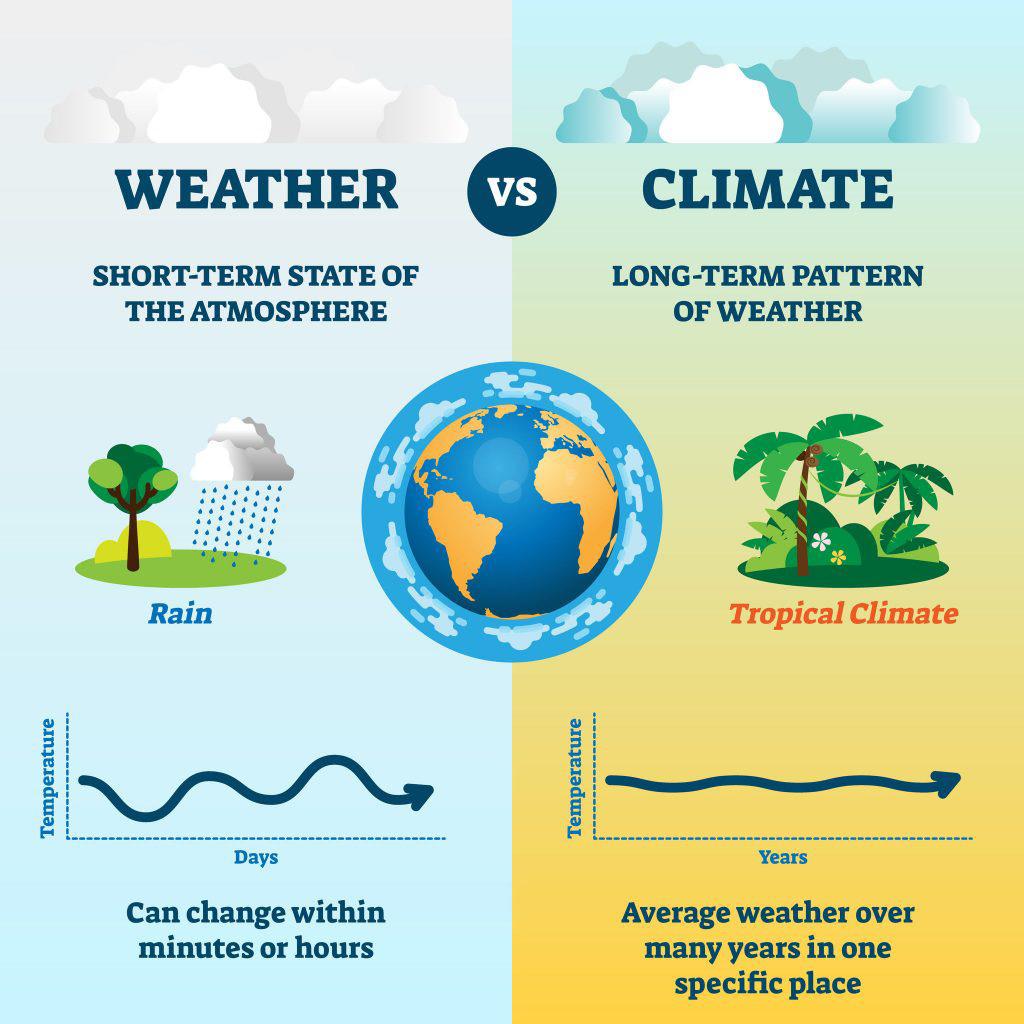
1. First give the participants an introduction to the definitions of weather and climate based on the below descriptions.
2. Weather: Discuss today’s temperature in Tamale, the chance of rain in Cape Coast, or the Harmattan winds in the north. Climate: Compare the tropical climate zones (Coastal, Forest, Savannah) of Ghana and their typical rainfall/temperature patterns.
3. Ask the participants: ”Is the ’rainy season’ weather or climate?”
Climate & Climate Change
Climate change refers to long-term shifts in temperatures and weather patterns, primarily caused by human activities such as the burning of fossil fuels, deforestation, and industrial processes. These activities increase greenhouse gas emissions, trapping heat in the atmosphere and altering global climate systems.
Climate is:
Long term (averagely 30 years) Averaged over a wide area
• Seasonal changes Measured over long spans of time
Weather
Day-to-day state/condition of the atmosphere in a particular place over a short or specified period of time (instantaneous, hourly, daily, weekly, etc).
Describes, e.g., the degree to which the atmosphere is hot or cold, wet or dry, calm or windy, clear or cloudy, moist or dry, etc.
Weather is:
Short term limited area
• Can vary rapidly in space and time Difficult to predict
HANDOUT 2.1 // WeATHER VErSUS CLIMATE
Weather is like your mood today; Climate is like your personality (average mood over time).
What is the difference between weather and climate in Ghana?
Accra’s daily sun/rain (weather) versus its consistent tropical warmth (climate). Weather is short-term (today’s rain) and climate is long-term averages (Ghana’s distinct wet/dry seasons),
Key Distinctions for Ghana
Weather : What’s happening now or today in a specific spot (e.g., ”It’s sunny in Kumasi today,” ”There’s a humid breeze near the coast” or ”It’s dry and dusty in Tamale today”).
Climate: The average weather patterns over many years (e.g., ”Ghana has a tropical climate with warm temperatures year-round and distinct wet/dry seasons”).
Learn more at: https://curriculumresources.edu.gh/wp-content/uploads/2025/01/Geography_Section-10-TV.pdf
EXERCISE 2.1 // PART 2 WEATHER
description
1. Place the 4 pieces of paper with - hot, cold, rainy & dry – on the floor with the following setup (see illustration). They should be far apart:
2. Answer with Your Feet
Explain to everyone the difference between weather and climate:
a. Weather - Refers to conditions like rain, temperature, and wind at a particular time and place.
b. Climate - What the weather is like over a long period of time (the “average”) in a specific area (more than 30 years).
2. Ask everyone to think about what the weather is like right
now. For example, is the weather?
a. Hot or Cold
b. Rainy or Dry
Demonstrate that if they think the weather today is “hot and dry,” then they should stand in the middle of the HOT and DRY cards.
Ask everyone to answer with their feet what they think today’s weather is like. They can stand anywhere between the 4 weather type cards.
EXERCISE 2.2 // PART 3
CLIMATE CHANGE
1. Introduce the piece of paper with “TODAY”.” Place it on the ground in the middle of where the youth are standing.
2. Ask everyone what the weather is normally like on their birthday. If it is normally hot and rainy, they stand between the HOT and RAINY cards. Ask them to think back as many birthdays as they can remember and to stand in the right spot.
3. Start with the current month. Check to see if everyone with a birthday that month is standing in the same place. If not, ask them to discuss and agree on what the weather is normally like that month.
4. Ask everyone to look at where the “TODAY” card is placed. Is it the same as the normal weather that month, or different?
5. Ask everyone if they can remember what the difference is between weather and climate
6. Explain The card of “TODAY” shows the weather; what it is like outside right now?
Where all of you are standing represents the climate in your birthday months. This is what the weather is normally like, going back as many birthdays as you can remember. description
EXERCISE 4 –
CAUSES OF CLIMATE CHANGE
OBJECTIVE
To promote discussion and reflection about changing climate risk and other related issues.
description
1. Select a film or video of general interest about climate change.
2. Prepare three questions that are relevant to the information contained in the video, these could cover three main questions:
1. what are the CAUSES of climate change?
2. what are the IMPACTS of climate change?
3. what can we DO about it?
3. Put participants into groups and ask them to brainstorm what they know about climate change (what causes climate change, what are the likely impacts of climate change, what can we do to reduce the impacts?)
4. Ask participants to think about impacts in their community and what they can do in their community
5. Ask participants to think about the opportunities these presents to them in their communities or as a business.
FACILITATORS’
NOTES
Facilitators can guide participants to consider the opportunities and threats of climate change on businesses. E.g.
Unpredictable weather patterns affecting agriculture and raw material supply
• Increased costs due to energy and resource scarcity
Damage to infrastructure from floods, storms, and rising sea levels
Shifts in market demand toward greener, sustainable products
Policy and regulatory pressures to adopt eco-friendly practices
Demand for green skills, green jobs, and youth empowerment.
Recommended documentaries to show the participants:
Bearing the Burden : https://youtu.be/p1XYT2YWCQM
The Other side of the soil : https://youtu.be/ads-Wc_uafE?si=cK10AjqfmQunjkrT
MODULE 2 MY MEANS
Introduction
Discovering and Using What You Already Have
The objective of this module is to enable participants to leverage what they already have — skills, knowledge, networks, and environment — to start building eco-business ideas. It is built on the Bird-in-Hand principle from the Effectuation Theory, which teaches that successful entrepreneurs don’t wait for perfect conditions or outside funding. Instead, they start with what they already possess — their skills, knowledge, relationships, and environment — and take small, achievable steps toward their goals.
Through this module, participants learn that means are about more than money. Ecopreneurs often begin their journey not with big capital, but with creativity, networks, and local opportunities. By recognizing and mobilizing their available means, they can turn everyday challenges into business possibilities.
Participants explore four key types of means:
1. Who I am – personal strengths, skills, and character traits.
2. What I know – knowledge, experience, and education.
3. Who I know – networks, relationships, and community connections.
4. My environment – natural and local resources such as land, waste materials, biodiversity, and climate conditions.
For ecopreneurs, the environment is both a responsibility and an opportunity. It provides inspiration, raw materials, and a reason for innovation. Recognizing what the local environment offers — and how to use it sustainably — is central to developing eco-friendly business ideas.
By the end of this module, participants will: Identify and reflect on their personal strengths, knowledge, and passions as resources for eco-business development.
• Map and evaluate their social networks and community connections to discover potential partnerships and support. Recognize that financial capital is only one part of what they already have. Begin to connect their strengths and surroundings to potential eco-business ideas.
EXERCISE
1 –
MY PERSONAL MEANS MAP
OBJECTIVE description
The objective of this activity is for the participants to get an overview of their means, skills, who they know and their seasonal resources.
1. Give an introduction explaining that:
”As an ecopreneur you need to be able to expand and maintain your personal network.”
First, you must be aware of who is actually part of your network.
2. Ask participants to use 15 minutes to write down who they know or make it as a sketch.
3. Ask participants to identify entrepreneurs, farmers, artisans, NGOs in their locality whose work can contribute sustainably in starting eco-friendly businesses.
4. Ask participants to identify and list natural seasonal resources that are found in their communities.
5. Ask participants to share in plenary.
FACILITATORS’ NOTES
Be sure they look wide in the search for skills, anddon’t be afraid to write down things that might not be very important - they can select later.
Tell the participants to focus on who they know and who these connections know of (more degrees of connection). It should be people they know of and they have to be able to get in contact with the person.
Six degrees of separation is the theory that any two people on Earth are connected through a chain of no more than five intermediaries, or six acquaintances. The theory suggests that if you know a person, who knows a person, and so on, you can connect to anyone in the world through a maximum of six ”friend of a friend” steps.
Facilitators guide participants to know that different natural resources have different uses during different seasons.
EXERCISE 2ENVIRONMENTAL BOARD
OBJECTIVE
The objective of this exercise is for participants to know their environment and identify natural bodies in their environment, how these natural bodies can affect their lives and how they can make living out of these natural bodies sustainably.
description
1. Ask participants to sketch/draw natural bodies (trees, water bodies, mountains) about their environment relative to where they live/work.
The participants can also use pictures which depict their environment to represent them in the environmental board.
2. From the sketch, ask participants to share with their colleagues:
How do these natural bodies help humans
What do humans get from these natural bodies
• How negatively can human lives be affected if these natural bodies are absent
3. Ask the participants to think about things that they can do, to ensure that these natural bodies are not used up completely or destroyed. This would be shared in subsequent models.
Facilitators guide participants to understand that natural bodies in the environment can be helpful to humans both economically and health wise.
Economically, humans can use these natural bodies to generate income. E.g rearing fishes in ponds, growing economic trees to sell the fruits for income etc.
Healthwise, natural bodies in the environment help humans to live healthy. Trees serve as medicine, provide clean air to breath, provide shade for resting, promote rainfall through evapotranspiration, and water bodies provide water for domestic and commercial/industrial use.
EXERCISE 3MY PERSONAL SWOT
OBJECTIVE
Ecopreneurs must understand themselves, not just the environment. Your strengths and weaknesses as a person will shape what kind of eco-business you can start. And your environment — with all its problems and possibilities — creates opportunities and threats. In this exercise, we will explore how you, personally, connect to the eco-opportunities around you.
description
1. Ask participants to draw a simple SWOT table or use the Eco-SWOT-handout.
Guide them with eco-focused prompts:
Strengths – What skills, values, or eco-knowledge do I already have? (e.g., creativity, farming knowledge, repair skills, eco-awareness, strong networks).
Weaknesses – What do I lack that could hold me back? (e.g., limited funds, lack of technical eco-skills, no experience in marketing).
Opportunities – What environmental problems could be turned into businesses around me? (e.g., plastic waste, lack of clean energy, polluted water, tree cutting).
Threats – What external risks could harm my eco-business idea? (e.g., climate shocks, market not valuing eco-products yet, competition).
2. In pairs, share one eco-opportunity and one eco-threat, and discuss how personal strengths and weaknesses connect to them.
3. Wrap-up
“Your SWOT is a mirror. It shows you where you are strong, where you need partners, what eco-problems you can work on, and what risks you need to prepare for. Ecopreneurs succeed not by having no weaknesses or threats, but by knowing them and planning around them.”
Begin by explaining SWOT in simple terms: Strengths, Weaknesses, Opportunities, Threats.
• Remind participants this SWOT is about themselves as ecopreneurs, not their business idea yet. Stress that weaknesses and threats are not failures — they are starting points for learning or partnership. Use the Eco-SWOT-handout or draw a 2×2 table on the board so participants can see the structure.
• Encourage them to write keywords, not long sentences.
You can also give the participants the ”Example handout - Mariama ” for inspiration
2.3 HANDOUT // ECO SWOT TEMPLATE
Use this table to reflect on yourself as an eco-preneur. Think about your personal skills and resources, and the environmental opportunities and threats around you. Write keywords or short phrases in each box.
Strenghts
What eco-skills, values or resources do I already have?
Weaknesses
What do I lack that could hold me back as an ecopreneur?
Opportunities
What environmental problems around me could become businesses?
Threaths
What external risks could harm my eco-business idea?
2.3 HANDOUT // eco swot example
MARIAMA, 23, TAMALE
This example shows Mariama’s personal SWOT as an eco-preneur. It focuses on her qualities, limitations, and the opportunities and threats in her environment, before choosing a specific eco-business idea.
Strenghts
What eco-skills, values or resources do I already have?
Creative and skilled with handcrafts.
• Passionate about protecting the environment and community wellbeing.
Strong social networks through youth group and church.
• Resilient and willing to start small with available resources.
Weaknesses
What do I lack that could hold me back as an ecopreneur?
Limited financial resources to invest in eco-business ideas.
• Lack of formal business management and marketing skills. Limited exposure to advanced eco-technologies. Sometimes hesitant to take risks without external support.
Opportunities
What environmental problems around me could become businesses?
Growing awareness in Ghana about climate change and plastic waste.
• Increasing demand for eco-friendly products and services. Supportive networks (NGOs, training programs, youth initiatives) that encourage eco-entrepreneurship.
• Access to local raw materials and traditional eco-knowledge (e.g., composting, repair, water-saving practices).
Threaths
What external risks could harm my eco-business idea?
• Risk of discouragement from community members who see eco-business as ’not profitable.’
• Competition from cheap, imported products that undercut eco-initiatives.
• Weak infrastructure for waste collection, recycling, and renewable energy.
• Climate shocks (floods, droughts, heat) that affect resources and business opportunities.
MODULE 3 MY ATTITUDE
Introduction
The objective of this third module is to help participants develop a proactive, eco-conscious entrepreneurial mindset by reflecting on risk, recognizing opportunities in challenges, and adopting creative, action-oriented attitudes for sustainable business.
Attitude can change situations. In ecopreneurship, attitude is even more important: it is not only about seeing opportunities and acting on them, but also about taking responsibility for how businesses affect the land, water, climate, and communities – or the environment in general.
According to the Ghana Entrepreneurship Monitor, entrepreneurship is a highly perceived career choice among youth in Ghana (GEM, 2014), and 80% of young Ghanaians see themselves as having the necessary skills to start a business. How ver, many still believe they need external help, grants, or favourable conditions before they can take action. Field research in Northern Ghana has also revealed a common “waiting for rain” attitude — a mindset of postponing action until outside circumstances change.
In the context of ecopreneurship, this waiting attitude has an even greater cost. Climate change and environmental degradation are already affecting agriculture, water, and livelihoods in Northern Ghana. If young people wait, opportunities to create solutions may be lost, and the environmental problems may worsen. Ecopreneurs must therefore embrace a proactive attitude: to see environmental problems as opportunities, to take small steps with what they already have, and to prove that it is possible to do business that creates value while also protecting the environment.
Exercises in module 3 challenge the waiting attitude and build an entrepreneurial mindset that is action-oriented, responsible, and eco-conscious. Participants will reflect on how their own choices and businesses can either harm or help the environment and how adopting a “do no harm” approach strengthens both their businesses and their communities.
This module also introduces two key principles that shape ecopreneurship: Pilot in the Plane – taking control of what you can influence, including your impact on the environment, instead of waiting for perfect conditions.
The Lemonade Principle – turning challenges (such as waste, drought, or limited resources) into opportunities for innovation and sustainable solutions.
By working with attitude in this way, participants learn that there will always be possible actions they can take — actions that not only move their business ideas forward but also contribute positively to people and the planet.
By the end of module 3, participants will be able to:
Reflect on their attitudes toward business and environmental risks and recognize opportunities in challenges. Analyze the advantages and disadvantages of eco-friendly businesses and their role in sustainable development. Apply creative problem-solving skills to start small, make the most of limited resources, and turn environmental challenges into business ideas.
EXERCISE 1ECOPRENEURSHIP: A RISKY BUSINESS?
OBJECTIVE description
To help participants reflect on their attitudes towards risk, and to consider both business risks and environmental risks. They should see that ecopreneurship is not only about avoiding harm, but also about turning risks (like waste or climate change) into opportunities.
1. Form groups of four and discuss:
• What is risky for you as an ecopreneur? What risks do you see in starting a business that is eco-friendly?
2. Watch the video with Saras Sarasvathy: https://www.youtube.com/watch?v=3IJlHfw43mQ
3. Ask the groups to reflect: Do you think ecopreneurs are special risk-takers?
• How does the environment itself create risks (e.g., drought, floods, waste problems)?
Could you make the future greener through your business?
FACILITATORS’ NOTES
Emphasize that ecopreneurship involves two types of risk:
1. Business risk (e.g., competition, financing, customer demand).
Floods destroying crops: business opportunity for improved drainage or rainwater harvesting.
• Plastic waste: risk for environment, but also a business opportunity in recycling/upcycling.
Charcoal burning: Introduce clean or more effective cooking methods.
Guide discussion toward the idea of making the future instead of waiting for perfect conditions.
Remind participants: risks can be transformed into opportunities if they are creative.
EXERCISE 2 - ECOPRENEURSHIP: ADVANTAGES AND DISADVANTAGES
OBJECTIVE
To make participants reflect on the specific advantages and disadvantages of ecopreneurship. They should recognize that eco-friendly businesses have challenges but also unique strengths and opportunities in today’s world.
A personal presentation
Give a max 2 minute presentation of who you are based on the strenghts and you identified in Module 2. What is your specific interests or passion in relation to ecopreneurship?
FACILITATORS’ NOTES
description
1. Ask the participants to work in groups of four people. Each participant makes a personal presentation to the group members before they start.
2. Discuss what kind of advantages and disadvantages they see in being a young ecopreneur.
Advantages: access to new green markets, creating solutions for the community, being seen as innovative, protecting the environment.
Disadvantages: limited awareness in the market, higher startup costs, lack of eco-knowledge or eco-friendly materials.
3. Write down all the advantages and disadvantages.
4. Each group presents their results.
Encourage participants to think about long-term benefits of eco-businesses: Competitive edge (green branding).
Attracting support from NGOs, government, and climate funds. Stronger community trust.
Also discuss short-term challenges:
• Higher costs for eco-materials (e.g., biodegradable packaging). Markets that may not yet be aware of eco-products.
Share examples: Farmers switching to organic crops may earn less at first but later access premium eco-markets. A waste-to-charcoal project might require high upfront effort but creates sustainable income.
Stress that ecopreneurship links to the triple bottom line: People, Planet, Profit!
3.2 HANDOUT: ECOPRENEURSHIP -
ADVANTAGES AND DISADVANTAGES
List the advantages and disadvantages identified in your group below.
Advantages: access to new green markets, creating solutions for the community, being seen as innovative, protecting the environment. Disadvantages: limited awareness in the market, higher start-up costs, lack of eco-knowledge or eco-friendly materials.
Advantages
Disadvantages
EXERCISE 3 –WAITING FOR THE RAIN?
OBJECTIVE description
To challenge the waiting attitude by showing that even without perfect conditions, eco-friendly businesses can start small and grow. Participants should begin to see themselves as active agents who can address environmental issues instead of waiting for change.
Data from survey in Northern Ghana
Data from Northern Region shows that between 52 % and 60 % of youth agree or strongly agree, that they are waiting for someone to help them start a business.
FACILITATORS’ NOTES
1. Share survey data on the “waiting attitude” among Ghanaian youth.
2. Ask participants to write down all the things they think they are waiting for to start a business.
• Money? Technology? Government support?
• Rain or other natural/environmental conditions?
23. Now ask:
• What are you waiting for in terms of eco-friendly opportunities?
Can you think of small eco-actions you could start now (e.g., re-using waste, starting a small compost system, planting drought-resistant crops)?
Highlight the danger of the “waiting attitude”: if youth wait, environmental problems worsen.
Use a metaphor: “The environment will not wait for us – droughts, floods, and plastic waste grow every day.”
Encourage participants to list small eco-actions they can start immediately:
• Turning organic waste into compost.
Selling reusable bags.
Planting trees or drought-resistant crops.
• Collecting and sorting plastics.
If possible, invite a guest eco-entrepreneur (local farmer using composting, someone making charcoal briquettes from waste) to share their story of starting small.
Link to the Pilot in the Plane principle: focus on what they can control.
EXERCISE 4BUILDING YOUR MEANS (BRICOLAGE)
OBJECTIVE
To illustrate how limited resources can inspire eco-friendly creativity, and how bricolage (making something valuable out of little or nothing) is a core ecopreneurship skill. Participants practice re-imagining waste as a business opportunity.
FACILITATORS’
NOTES
description
1. Divide participants into groups of 3–5. Provide creative materials such as waste (plastic bottles, cans, cardboard), wood blocks, and string etc.
2. Give these rules:
Build a product that has a function and could be useful to others.
• Try to use “waste” or eco-friendly solutions in your product. You have 30 minutes to build.
3. Afterward, each group presents: What did you build?
How could it reduce harm or improve the environment? Could this be made in real life with local materials?
4. Discuss:
Can having no money push you to be more eco-innovative?
• How can eco-bricolage (using “low-value” or waste materials) become a business opportunity?
Before the exercise, explain bricolage simply: “making something valuable out of waste or limited resources.”
Provide as many waste materials as possible (plastic bottles, cans, cardboard, sachet water bags). Encourage participants to see them as business resources.
After presentations, ask probing questions:
Could this idea reduce environmental harm?
• Who would buy or use this? How could it be scaled into a real eco-business?
Stress the point: ecopreneurs see value where others see waste. Optional add-on: show a short video or photo examples of Ghanaian youth recycling waste into useful products (bags, stoves, briquettes).
BRICOLAGE IN ACTION
MODULE 4 MY CONSTRAINTS
Introduction
The objective in module 4 is for participants to learn to identify personal and environmental constraints and how to creatively and responsibly transform these barriers into sustainable eco-business opportunities.
For young ecopreneurs in Northern Ghana, constraints are not only financial or social, but also environmental.
Field research in Northern Ghana shows that young people face challenges such as lack of start-up capital, a waiting attitude, unsupportive traditions, limited education, and low levels of trust. These remain real barriers, but in ecopreneurship we must also look at environmental constraints that affect daily life and business opportunities, such as:
Plastic waste and poor waste management – streets, markets, and communities oftenlack effective systems, leading to blocked drains, flooding, and health risks.
Air pollution – from burning waste, inefficient stoves, or vehicle emissions.
Deforestation and loss of trees – from charcoal production and firewood collection, which reduces shade, biodiversity, and local climate regulation.
Unreliable energy access – dependence on expensive or polluting energy sources like diesel generators instead of clean energy alternatives.
Water challenges – limited access to clean water, or contamination from waste and chemicals.
Fast fashion and low-quality imports – creating large volumes of textile waste.
Limited recycling and repair systems – very few opportunities to reuse or upcycle materials such as glass, metal, electronics, or packaging.
• Climate variability in farming – unpredictable rainfall, droughts, and flooding that affect food and raw material supply.
Ecopreneurs must overcome barriers like access to finance while designing businesses that do not cause environmental harm. A key principle is affordable loss: beyond financial risk, it also means avoiding practices that degrade land, pollute water, or create long-term environmental damage. Protecting nature is essential to protecting the future of the business.
By the end of this module, participants will be able to:
Identify personal, community, and environmental constraints that affect eco-business opportunities.
• Explore and apply creative strategies and personal strengths to overcome these constraints.
Assess how to take calculated, responsible risks that protect natural resources and community wellbeing while building viable and sustainable businesses.
EXERCISE 1FINDING CONSTRAINTS
OBJECTIVE
To make participants aware that constraints are not only about money or skills, but also about environmental conditions that shape their business.
description
1. In pairs, discuss: “What are your main constraints to starting a business?”
Each person should list three personal constraints (e.g., lack of finance, limited network, low trust).
• Then add three environmental constraints (e.g., plastic waste in the community, unreliable electricity, polluted water, flooding, or deforestation).
2. In plenary:
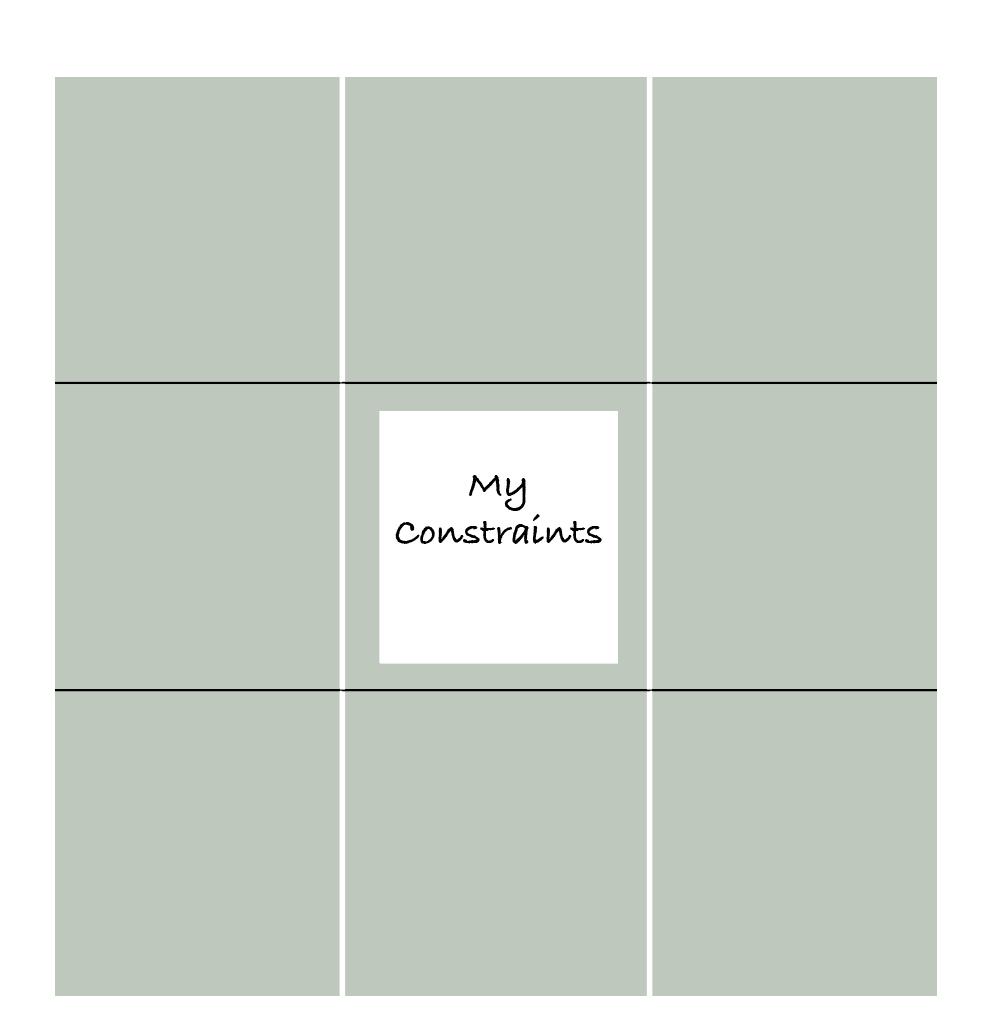
Draw a 9-square matrix on a flipchart. Write “constraints” in the centre. Fill the other squares with the constraints identified.
3. Discuss:
Do many people share the same constraints? Which are most urgent?
FACILITATORS’ NOTES
Start by explaining what “constraints” mean in ecopreneurship: things that make it harder to start or run a green business.
Encourage participants to think about personal constraints (lack of capital, low trust, few networks) and environmental constraints (waste, energy access, deforestation, flooding).
Use concrete local examples: sachet water waste, erratic electricity, or polluted drains.
Stress that many constraints can be turned into eco-opportunities.
You can distribute Ecopreneurship Handout: Environmental Constraints & Opportunities to inspire the participants.
4.1 HANDOUT // eco Constraints & Opportunities
As an eco-preneur, constraints are not just barriers — they can also be opportunities to create innovative, sustainable businesses. Below are common environmental constraints faced by young people in Northern Ghana, together with examples of eco-business opportunities they can inspire.
• Plastic waste & poor waste management: Start recycling or upcycling businesses (bags, sandals, building blocks, art products)
• Air pollution from waste burning or old stoves: Produce or sell improved cookstoves; start a charcoal briquette business from agricultural waste.
• Deforestation and loss of trees: Tree nurseries, eco-charcoal, bamboo products, or businesses offering alternatives to firewood.
• Unreliable and costly energy access: Solar phone-charging kiosks, solar lamps, solar irrigation pumps, biogas solutions.
• Water scarcity or polluted water: Rainwater harvesting, water filtration services, eco-friendly boreholes, water delivery solutions.
• Fast fashion & low-quality imports creating waste: Clothing repair, tailoring, upcycled fashion, second-hand clothes business with eco-branding.
Limited recycling and repair systems: Set up small collection hubs for glass, metal, or e-waste; repair shops for electronics or bicycles.
Tip: Always ask yourself – does my idea reduce harm or improve the environment? If yes, you arealready thinking like an ecopreneur!
EXERCISE 2 – HOW TO OVERCOME CONSTRAINTS?
To help participants explore practical ways of overcoming both personal and environmental constraints, using their means and creativity.
OBJECTIVE description
1. In groups of four, revisit the list of constraints. For each constraint, brainstorm:
• What eco-friendly or innovative solution could reduce this constraint?
What resources (personal, social, environmental) could we use to overcome it?
2. Present your strategies in plenary.
FACILITATORS’ NOTES
LOCAL PROVERB
”The death of someone’s goat becomes the meat for someone’s pot of soup”.
• Remind participants of their “means” from Module 1 and ask: How can these be used to overcome the constraints you listed?
Prompt them to look for eco-innovations: e.g., turning waste into a product, using solar instead of diesel.
Encourage use of storytelling or local proverbs about turning problems into opportunities
• Guide them to see that collaboration often makes it easier to overcome both financial and environmental barriers.
EXERCISE 3 –AFFORDABLE LOSS
To help participants see that “affordable loss” applies not only to money, but also to natural resources and community wellbeing.
OBJECTIVE description
1. Ask participants to think about a time when they lost something valuable (money, time, opportunity, or natural resources like land, trees, water).
2. Share their stories in small groups, reflecting on:
What did I lose, and why? What were the consequences?
• How can I prevent it from happening again?
What did I learn?
3. Discuss as a group: How much can you afford to lose when starting a business — financially and environmentally? What are the long-term costs of harming the environment?
FACILITATORS’
NOTES
Explain “affordable loss” in simple terms: risk only what you can afford to lose.
Expand it to ecopreneurship: Don’t risk damaging the environment, because that loss harms your community and your future business.
Use local examples: burning plastic waste may save money now but creates health costs later.
Ask reflective questions: What kind of financial risks can you take? What kind of environmental risks should you avoid completely?
EXERCISE 4 –
PLAYING MY CARDS RIGHT
OBJECTIVE description
To help participants visualize constraints and actively use their strengths to overcome them, especially by turning environmental problems into opportunities.
Examples:
Constraint = lack of capital Strength = strong network solution = start a group eco-business.
Constraint = too much waste in community; Strength = creativity
Solution = upcycling into products.
1. Each participant lists three constraints (personal and/or environmental).
2. Draw them as simple icons on cards.
3. In groups, put constraint cards on the table. Then use strength cards (from Module 1) to see how personal or shared strengths could overcome constraints.
FACILITATORS’ NOTES
Remind participants of their strength cards from Module 1.
Ask them to place their constraints on the table, then “play” their strength cards to see how they could overcome them. Encourage them to combine strengths with eco-opportunities: e.g., creativity + plastic waste = new products.
Highlight that working in teams allows them to pool their strengths, making it easier to tackle bigger constraints.
MODULE 5 MY INTERACTIONS
Introduction
The fifth module emphasizes interaction with other people, recognizing that ecopreneurship cannot be pursued in isolation. Motivations and actions are embedded in social and environmental contexts. Now is the time to reach out to seek advice, support, and collaboration that aligns with both social and eco-conscious values. The objective is to enable particpants to build trust-based relationships and collaborative networks that support eco-conscious entrepreneurship and the co-creation of sustainable business solutions.
African ecopreneurs often have fewer immediate resources and must therefore draw on the assets embedded within their social networks (Langevang, Namatovu, & Dawa, 2012). These networks, especially families, can act as both enabling and constraining forces. Family influences opportunity emergence and recognition, the decision to start a business, and longterm resource mobilization (Langevang, Namatovu, & Dawa, 2012). Participants are encouraged to critically assess their family dynamics and find ways to transform potential constraints into long-term support systems.
A key challenge facing young entrepreneurs is low trust, which affects collaboration and limits the ability to share resources or co-create ventures. This module therefore focuses on building trust through small mastermind groups, fostering mutual support and accountability.
Importantly, participants are also encouraged to adopt an eco-conscious mindset in their interactions and business models. This means considering the environmental impact of their ventures, promoting sustainable practices, and leveraging community networks to support green innovation. Whether through resource sharing, waste reduction, or climate-smart ecopreneurship, social interactions should also reflect a commitment to ecological responsibility.
By the end of this module, participants will be able to:
Build and participate in trust-based groups that support collaboration and shared responsibility in eco-entrepreneurship.
• Identify and leverage individual and collective strengths within networks to advance sustainable business ideas. Engage mentors, peers, and community actors to support eco-conscious business development and innovation.
EXERCISE 1ECO-TRUST BOX
OBJECTIVE description
To build trust, cooperation, and clear communication among participants — key values in eco-entrepreneurship where collaboration and transparency are essential for creating sustainable impact.
1. Prepare an open space and place 3 – 4 objects around (e.g., a bottle, cone, or chair) to mark pathways.
2. Divide participants into pairs. One participant (the “guide”) faces forward and can see the path; the other (the “explorer”) faces backward and cannot see.
3. The pair links hands. The guide must di- rect the explorer to move around the obstacles without speaking — only using eye movements, facial expressions, and gestures.
4. Once they complete the path, they switch roles.
5. Afterward, discuss as a group:
How did it feel to depend on non-verbal trust?
How does trust affect teamwork in eco-projects or community-based enterprises?
What can we learn about communication when managing shared environmental goals?
FACILITATORS’ NOTES
• Relate this to eco-collaboration — trust is needed when communities share resources like water, land, or waste systems.
• Sustainable ventures succeed when partners communicate clearly and act transparently.
EXERCISE 2SEEING THROUGH ECO-EYES
OBJECTIVE description
To strengthen mutual trust, empathy, and group responsibility — qualities needed to co-create environmental solutions and support one another in sustainable initiatives.
1. Form groups of 8–10 participants and mark a small, safe area where everyone can stand close together.
2. Ask participants to walk slowly around the space.
3. When ready, a participant says, “I’m falling,” and gently leans back.
4. The rest of the group must catch them before they hit the ground.
5. Continue until everyone has taken a turn (some may fall more than once).
6. Conclude with reflection questions: How did it feel to fall? To catch?
• How does trust build resilience in eco-ventures or climate action?
What happens when one person fails to act responsibly?
• How can we support each other to “catch” our shared environmental mission?
FACILITATORS’ NOTES
Link the discussion to ecosystem thinking: in nature, every element supports another.
Likewise, in sustainable businesses, partners must trust each other to play their part — when one fails, the whole system is affected.
EXERCISE 3 –SPOTTING ECO-OPPORTUNITIES AROUND ME
OBJECTIVE
The objective of this activity is to create collaborative mastermind groups focused on eco-conscious entrepreneurship themes, enabling participants to share ideas, identify challenges, and co-develop sustainable business solutions.
description
Step 1: Eco-Theme (15 mins)
1. Ask participants to reflect individually on areas of entrepreneurship that intersect with environmental sustainability. Provide guiding questions:
What eco-related problems do you care about solving?
• What green business ideas excite you? Where do you see opportunities for sustainable innovation?
2. Let them write down 2-3 themes they feel drawn to.
Examples:
Circular economy
Sustainable agriculture
• Green construction
Eco-mobility
Zero-waste product design
• Renewable energy solutions
Ethical fashion
Eco-friendly food services
Step 2: Theme grouping (20 mins)
1. The facilitator collects all themes and writes them on a flip chart.
2. Group similar themes together to form thematic clusters. For example:
• Zero-waste packaging and plastic alternatives Sustainable Packaging
Solar-powered kiosks and clean energy for homes
Renewable Energy Access
Step 3: Group Formation (10 mins)
1. Invite participants to join the cluster that resonates most with their interests or experience. Each cluster becomes a mastermind group.
2. Each group should:
Introduce themselves and share their motivation
• Choose a group name that reflects their eco-theme.
EXERCISE 4ECO SYNERGY LAB
OBJECTIVE
The objective of this activity is for participants to identify the unique and shared strengths within the mastermind group and develop a strategic plan to leverage these means for eco-entrepreneurial success.
description
Part 1: Personal Resource List (20 mins)
1. Each participant in the group completes a short worksheet (see handout) or shares aloud:
Tools and Resources (e.g., access to land, equipment,
networks, funding)
• Connections (e.g., NGOs, suppliers, local leaders) Experiences (e.g., past ventures, community projects, failures)
Part 2: Strengths Mapping (30 mins)
1. As a group, create a Shared Strengths Map on a large sheet: List similar strengths together (e.g., design and branding, Creative means)
Highlight unique strengths that no one else has Use color codes or icons to represent different categories (skills, tools, values, etc.)
Discussion Prompts:
• What strengths do we share? What gaps do we have? Which strengths are underutilized?
• How do our eco-values align?
Encourage openness and honesty in sharing. The goal is not to compete but to discover synergy — how diverse strengths complement one another.
Remind participants that sustainable success often depends on collaboration — no one can build a green business alone.
Link this activity to earlier modules on My Means and My Environment — participants are now learning to use those personal and environmental means collectively.
Guide them to think of shared eco-values as a foundation for trust and long-term partnerships.
(e.g., access to land, equipment, networks, funding)
Connections
(e.g., NGOs, suppliers, local leaders)
Experiences
(e.g., past ventures, community projects, failures)
EXERCISE 5 –ECO-INSPIRED MENTORSHIP MAPPING
OBJECTIVE
The objective of this activity is to help participants identify inspiring ecopreneurs, explore mentorship opportunities, and build strategic networks that support sustainable business development.
description
1. In Mastermind Groups
Participants should work in their mastermind groups based on shared ecopreneurship themes (e.g., green tech, sustainable agriculture, circular economy, sustainable farming).
2. Brainstorm Eco-Role Models (20 mins)
As a group, list all the entrepreneurs, changemakers, or businesses you know-especially those involved in:
• Sustainable farming
Clean energy
Waste management
Eco-friendly products
Green construction
Ethical fashion
For each role model, write a few words describing: Their business or initiative
What makes them eco-conscious
• What resources or wisdom they might offer
3. Mentor Matching (15 mins)
Discuss:
• Can you identify someone from your list who could be a mentor to one or more group members?
If not, reach out to other mastermind groups for suggestions.
Consider local leaders, alumni, or business owners with a sustainability focus.
4. Mentor Outreach Planning (20 mins)
Prepare a short pitch to approach your potential mentor. Include:
Who you are and what you are working on or your group is working on
• What you hope to learn from them (Mentor)
How often you would like to meet (e.g., monthly check-ins, one-time advice)
How you will persuade them (e.g. shared values, mutual goals, your commitment)
5. Facilitator Check-In (10 mins)
Share your mentor choice and pitch with the facilitator. Discuss whether this is a good match and refine your approach if needed.
6. Make the Call or Send the Message (Optional)
If ready, reach out to your chosen mentor. Be respectful, clear, and enthusiastic. If not ready, set a timeline for doing so.
HANDOUT 5.5 // MENTOR MAPPING TIPS
Welcome everyone! This bootcamp is about turning ideas into action — action that helps people, protects the planet, and creates profit. This manual will guide you step by step as you explore who you are, what you know, who you know, and the environment around you — and how all of these can become the foundation for your eco-business journey.
ECO-ROLE MODELS
As a group, list all the entrepreneurs, changemakers, or businesses you know-especially those involved in:
• Sustainable farming Clean energy Waste management
• Eco-friendly products
Green construction
Ethical fashion
For each role model, write a few words describing: Their business or initiative What makes them eco-conscious
• What resources or wisdom they might offer
MENTOR MATCHING
Discuss in your group:
Can you identify someone from your list who could be a mentor to one or more group members? If not, reach out to other mastermind groups for suggestions.
• Consider local leaders, alumni, or business owners with a sustainability focus.
MENTOR OUTREACH PLANNING
Prepare a short pitch to approach your potential mentor. Include: Who you are and what you are working on or your group is working on What you hope to learn from them (Mentor)
• How often you would like to meet (e.g., monthly check-ins, one-time advice) How you will persuade them (e.g. shared values, mutual goals, your commitment)
MAKE THE CALL OR SEND THE MESSAGE
If ready, reach out to your chosen mentor. Be respectful, clear, and enthusiastic. If not ready, set a timeline for doing so.
MODULE 6 MY VALUE
Introduction
In the previous modules, participants explored themselves, their environment, and their networks to understand how to act as proactive ecopreneurs. In this module, the focus shifts outward: from understanding means and mindset to creating real value for communities, customers, and the environment through eco-friendly business ideas.
The objective of this module is for participants understand that successful eco-businesses are not just about selling goods or services, but about creating sustainable value. It also enables participants to identify and create this value by matching their skills, resources and business ideas to community (costumers’) needs and environmental challenges.
In ecopreneurship, creating a business is not just about selling products or services — it is about creating meaningful and sustainable value. Customers today are increasingly conscious of their choices, and they prefer solutions that improve their lives while also protecting the planet. This means entrepreneurs must think beyond profits and consider how their business can reduce waste, conserve natural resources, and respond to community needs in an environmentally responsible way.
This module introduces participants to the concept of value creation from three perspectives:
1. Monetary value: Does it save or make money?
2. Non-monetary value: Does it bring satisfaction, convenience, or pride?
3. Environmental value: Does it help protect the environment and promote sustainability?
By exploring these dimensions, participants will learn how to identify eco-friendly opportunities around them, and how to turn their skills and resources into eco-business solutions that create value for people, the planet, and profit. This knowledge becomes the foundation for designing innovative eco-businesses that create long-lasting impact.
By the end of this module, participants will be able to:
Recognize and assess monetary, social, and environmental value in goods, services, and eco-business opportunities. Spot problems or disharmonies in daily life and the environment that could be turned into eco-friendly business opportunities.
• Suggest simple eco-friendly ideas that apply their own strengths and resources to real local challenges.
EXERCISE 1 –FINDING ECO PROBLEMS/GAPS
OBJECTIVE
Identify disharmonies in daily life that also have an environmental dimension.
3. Groups present findings, highlighting eco-friendly opportunities. Example:
Plastic waste = Recycling/upcycling business
• Firewood cooking = Clean cookstove enterprise
description
1. In mastermind groups, brainstorm areas where things don’t work well or harm the environment:
Household (e.g., too much plastic waste)
Community (e.g., poor waste collection leading to flooding)
Energy (e.g., reliance on expensive kerosene or firewood)
• Food (e.g., heavy chemical use in farming)
Lifestyle (e.g., fast fashion waste)
2. Create a poster listing eco-problems/disharmonies.
Save these problems for the next step, where they will become eco-opportunity seeds.
FACILITATORS’
NOTES
Always bring discussions back to the ecopreneurship perspective: How does solving this problem reduce waste, conserve energy, or protect the environment?
Share relatable eco-examples:
- Solar energy vs. kerosene lamps.
- Composting organic waste vs. dumping it.
- Local cloth (kente, batik) vs. imported fast fashion.
Encourage participants to see that eco-friendly businesses often create double value: solving people’s needs and improving the environment.
Reinforce the idea that sustainability itself is a value customers appreciate.
EXERCISE 2FINDING ECO-VALUE
OBJECTIVE
Learn how to recognize extended and environmental value in goods or services.
description
1. Facilitator gives examples of products with eco-friendly additional value:
Example: A reusable shopping bag costs money but saves repeated plastic use, reduces waste, and shows environmental responsibility.
2. Participants think about purchases they or their families made that gave eco-benefits.
Examples: Solar lantern, organic food, refillable bottles.
3. In pairs, participants share their examples and discuss:
Why was it valuable beyond price?
Did it also have environmental benefits?
Could the same value have been created in another eco-friendly way?
Emphasize that value in ecopreneurship goes beyond money — it includes environmental and social benefits. Encourage participants to share local examples of products or services that create eco-value (e.g., solar lamps, organic farming, recycling initiatives).
Use the People–Planet–Profit triangle or a Venn diagram to visualize how different values overlap. Prompt participants to explain why something has value — not just what it does.
• Keep the discussion grounded in participants’ realities; focus on small, relatable examples rather than abstract ones.
MODULE 7 MY OPPORTUNITY
Introduction
II the previous module, participants focused on creating value for communities, customers, and the environment using their skills and resources. In this module, the focus shifts to actively identifying and shaping eco-opportunities — ideas that address environmental problems while creating value for people, profit, and the planet. Participants will learn how to spot realistic opportunities that match their own means and explore ways to develop them into viable eco-business ideas.
Ecopreneurs ask:
Does this idea reduce harm or improve the environment?
• Can it create value for people and profit while also protecting the planet?
This module is about finding such realistic opportunities. The objective of module 7 is to enable participants to identify, develop, and evaluate eco-friendly opportunities that address environmental problems while creating value for people, profit, and the planet.
An opportunity is realistic when it matches the individual or shared means of the participants. The better the match between opportunity and means, the greater the chance of success in the long run. Environmental problems such as unmanaged waste, unreliable electricity, polluted water, deforestation, and climate change are not only constraints — they can also be turned into eco-friendly opportunities. The module is also a creative ideation process, designed to open participants’ mind to new possibilities. Through exercises with different peers, participants will spark ideas and explore their feasibility.
Ideation takes time, so participants will go through exercises with different people to spark ideas and develop new opportunities. There should be time to make some ideas practical and explore their feasibility. By working this way, participants begin to see that eco-opportunities are everywhere — in waste, water, energy, farming, and urban life — and that matching these opportunities with their own means gives them the best chance of building viable and sustainable eco-businesses.
By the end of this module, participants will be able to:
Generate multiple eco-opportunity ideas by recognizing environmental problems as potential business solutions. Develop and visualize eco-opportunities through teamwork, brainstorming, and creative exercises to make ideas tangible and understandable.
Evaluate and refine eco-opportunity ideas based on feasibility, attractiveness, and environmental sustainability, and identify potential collaborators or groups to strengthen implementation.
FACILITATORS’
NOTES
The “Million Dollar Idea”
Explain to participants that the aim of this module is not necessarily to find a “million-dollar idea” right away. Ecopreneurship is often about starting small and realistic, using what you already have. Encourage them to think of opportunities as seeds that can grow over time, especially when they solve environmental problems. The key is not size but fit — between the opportunity, the environment, and their means. Furthermore, an objective in the module is also mapping what business sectors the participants will work in and support them to form relevant business groups to qualify their opportunities in module 7.
EXERCISE 1THE BALL GAME
OBJECTIVE
To warm up participants’ creativity, get many eco-opportunity ideas flowing quickly, and make them realize that environmental problems can also be seen as business opportunities.
description
1. Ask all participants to stand in a circle. Use the eco-related problems or disharmonies that they have already identified. Pick one, say the problem out loud and throw a ball to one participant. Now they must come up with eco-friendly business solutions to the problem.
2. Instruct the participants to start their sentences with “We could…” or “I could…”.
3. The first participant gives their contribution and throws the ball to another participant. Ask them to be quick. If a problem seems to be difficult and stalls the game, give them a new problem to solve; otherwise choose a new problem when it seems exhausted.
4. After the game, ask the group to cluster the ideas on a flipchart into themes (waste, energy, water, etc.) so they see the range of eco-opportunities together.
FACILITATORS’ NOTES
Keep the pace fast — it’s about energy, not perfect answers.
• Encourage participants to think about different sectors: waste, energy, water, transport, housing, farming, fashion. Use prompts if they get stuck: “What makes you frustrated in your community? Could that be solved in a greener way? ” Stress that there are no wrong answers. Even “crazy” ideas can inspire real eco-businesses later.
EXERCISE 2BRAINSTORM & CONSTRUCTION
OBJECTIVE
To use creativity and teamwork to transform brainstormed eco-opportunity ideas into something visible and tangible, making the opportunities easier to understand and discuss.
description
1. Divide participants into groups of 4–6.
2. Give each group a set of creative materials (waste items like bottles, cans, cardboard, sachet bags; string; clay; markers; scissors).
3. Ask each group to brainstorm eco-opportunity ideas — simple businesses that can reduce harm or improve the environment.
EXAMPLES
Recycling waste into products, solar charging services, water filters, tree planting, eco-friendly packaging.
4. Choose one idea and construct a simple model or symbol of it using the materials. The goal is not a perfect product, but a quick prototype that shows the core idea.
5. After 20–30 minutes, each group presents:
• What is the idea? How does it help people and the environment? Could it realistically work with the means you already have?
6. After presentations, invite other groups to give eco-feedback: How could the idea be made greener? What would make it more realistic?
FACILITATORS’ NOTES
Emphasize that prototypes should show the eco-benefit clearly (e.g., “this reduces waste,” “this saves water”).
• Keep the focus on feasibility — participants should connect the prototype to their own means (skills, networks, resources).
Encourage groups to explain their prototype in simple words: “What problem does it solve? How does it protect the environment?”
EXERCISE 3 –SUSTAINABLE IDEAS
OBJECTIVE
To evaluate eco-opportunity ideas in a structured way, considering not only novelty, attractiveness, and feasibility, but also environmental sustainability.
1. Divide participants into groups of 4–6 preferably based on types of businesses/sectors. Each group chooses one eco-opportunity from the brainstorm and construction exercise.
2. Discuss the idea using the NAFE technique (see below), with a focus on ecopreneurship and give the participants the handout. Ask them to score their ideas from 1 – 5 (1 being lowest and 5 highest).
3. Present and compare the NAFE ratings in plenary.
FACILITATORS’ NOTES
Remind participants that a good eco-business must balance People, Planet, and Profit.
• Stress that environmental sustainability is not “extra” — it’s at the core of ecopreneurship.
Encourage honest discussion: some ideas may be attractive but not feasible, or feasible but not sustainable. That is fine — the goal is to learn how to evaluate ideas critically.
The NAFE TECHNIQUE
N = Novelty
Is the idea new or innovative in your community?
• Does it bring a fresh eco-solution to a local problem?
A = Attractiveness
• Is it appealing to customers, partners, or investors?
Would people support it because it is eco-friendly?
Does it have social value as well as business value?
F = Feasibility
Can you realistically start it with your current means (skills, networks, resources)?
Can it be run affordably and scaled up over time?
E = Environmental sustainability
Does it reduce harm to the environment or improve it?
Is it designed to use resources wisely (reduce, reuse, recycle)?
Could it stay eco-friendly as the business grows?
7.1 HANDOUT // NAFE SCORING CARD
EXERCISE 4 - THE IDEA FAIR // PARTNERING FOR ECO-OPPORTUNITIES
OBJECTIVE
To allow participants to present their eco-opportunity ideas, get feedback, and explore possibilities for partnerships that pool resources and strengthen sustainability.
description
1. Set up the room like a small fair or marketplace. The participants display their eco-opportunity idea on a poster, flipchart, or table.
2. Participants circulate around the room, visiting each “stall.” At each stall, the participants present their idea briefly (2–3 minutes).
3. Visitors ask questions and give feedback. But this time, they also think about partnerships:
Could I add value to this idea with my own means (skills, networks, resources)?
• Could we join forces to make this eco-opportunity stronger?
Would collaboration (internal and external) make the idea more eco-friendly, realistic, or sustainable?
4. After circulating, participants are asked to reflect:
• Did anyone offer to collaborate with me/us?
Which partnerships make sense for the idea?
Should we merge or adapt our opportunity to work together?
5. Prompt the participants to seek direct collaborations (this could also be a take home assignment for the evening).
EXERCISE 5 –FINDING MY ECO-TEAM
OBJECTIVE
To encourage participants to identify others with similar eco-business interests and to form collaboration groups, Mastermind groups, or mini-teams for continued support and development. This can be an alternative to exercise 4.
description
1. Ask each participant to write down their eco-business idea in one short sentence on a card or sticky note. Example: “Turning plastic waste into paving tiles.”
2. Stick all ideas on the wall or place them on tables.
3. Invite participants to walk around, read the ideas, and look for similarities.
Which ideas tackle the same environmental problem?
• Which use similar methods (e.g., recycling, clean energy, eco-agriculture, eco-fashion)?
4. Participants group themselves according to shared or related eco-opportunities.
5. Within the new groups, they introduce themselves and discuss:
• What is common in our ideas? How could we benefit from collaborating? Do we want to form a Mastermind group or eco-team to continue supporting each other?
FACILITATORS’ NOTES
1. Encourage openness: participants don’t have to merge ideas, but they can pool resources, share learning, and test together.
2. Explain the concept of Mastermind groups / Eco-team (small peer-support groups that meet regularly to share progress, challenges, and advice).
3. Highlight that eco-businesses often become stronger when people collaborate rather than compete.
4. End the exercise with each new group writing down: Their shared eco-theme (e.g., waste-to-products, clean energy, sustainable farming, eco-fashion).
• A first plan for how they will keep in touch after the boot camp.
EXERCISE 6PROTOTYPE AND TEST
To turn ideas into something visible and testable, showing how they solve an environmental problem. To test eco-opportunities with peers, see how others react, and improve the idea.
OBJECTIVE description
Now that you have identified some promising opportunities, it is time to make them more concrete. The best way to do this is by creating a prototype — a first, simple version of your idea. Prototyping helps you test if the idea can really work and lets you get feedback before investing too much time or money.
For ecopreneurs, prototypes should also answer: Does this reduce harm or improve the environment?
• Can this work in a simple and affordable way with what I already have?
Would people in the community accept or buy it?
FACILITATORS’ NOTES
1. In groups, pick one eco-opportunity from your list.
2. Build a simple prototype of the idea. This could be:
Drawing it on paper.
Making a quick model from waste materials, sticks, or clay.
Acting it out as a short role play (e.g., how a customer would use it).
Focus on showing how the eco-part works: If it reduces waste, how?
• If it saves energy or water, how?
If it is healthier for people or the community, how?
Now it is time to test your idea:
1. Present your prototype to another group, and invited mentors, or possible users/customers
2. The other group asks questions and gives feedback, focusing on:
Is it realistic with the means you have?
Does it clearly help the environment?
Would people use or buy it?
3. Switch roles so every group presents and gives feedback.
4. Adjust your idea based on what you learned.
Keep it playful — remind them prototypes are rough drafts, not final products. Encourage use of waste and recycled materials for models to strengthen the eco-link.
• Ask them to highlight what makes their prototype eco-friendly. Encourage groups to give honest but constructive feedback. Remind them to listen carefully — ecopreneurs learn from how others see their ideas.
• Close by asking: “What did you change in your idea after testing? ”
MODULE 8 QUALIFYING MY OPPORTUNITY
Introduction
In the earlier modules, participants generated many ideas and explored how to turn environmental problems into opportunities. In this module, the focus shifts to qualifying those ideas: testing which ones are realistic, impactful, and sustainable as eco-businesses.
The objective is to enable participants to evaluate, structure, and communicate eco-opportunities, transforming ideas into actionable and sustainable eco-business models. Participants will choose an eco-opportunity that not only creates value for customers but also improves the environment and benefits their community. They will learn how to analyse their ideas against external factors, adapt the Business Model Canvas with an eco-focus, and practice how to communicate their idea through pitching.
Qualifying an eco-opportunity means asking: Does this idea create value for people and for the environment?
• Is it realistic with the means and partnerships available? Can it grow into a sustainable business over time?
Participants will work with the Business Model Canvas and ensure that every part of their business plan considers environmental impact and sustainability.
Participants will also practice communicating their eco-opportunity clearly and convincingly, and therefore this module ends with a pitch exercise, where participants present their ideas to peers and receive constructive feedback. Pitching helps them build confidence, sharpen their message, and mobilize support for their eco-business.
By the end of this module, participants will be able to:
Structure and refine eco-business models using the Eco-Business Model Canvas, ensuring sustainability, feasibility, and value creation.
• Present and pitch their eco-business ideas effectively, collect feedback, and improve clarity, confidence, and market readiness.
EXERCISE 1ECO-BUSINESS SWOT
OBJECTIVE
To help participants qualify their opportunity by identifying the internal strengths and weaknesses of their idea/business, and the external opportunities and threats in the market environment. The exercise supports participants in making realistic decisions and defining next steps.
description
1. Introduce SWOT (5 min) and give the participants the handout. Explain that SWOT is a tool to analyse both the idea/business itself and the environment around it.
Strengths = What you/your business is good at Weaknesses = What you/your business struggles with Opportunities = Positive external trends/situations you can use Threats = External risks or challenges that could harm your business
Clarify that: Strengths & weaknesses are internal (inside your control). Opportunities & threats are external (outside your control)
FACILITATORS’
NOTES
Some participants will list “no money” as a weakness. Encourage them to be more specific: “What exactly do you need money for? Equipment? Raw materials? Transport?”
Or remind them that they might have other means to solve the problem.
Keep the focus on practical learning: SWOT is not just analysis — it should lead to decisions. If time is short, focus on Strengths + Opportunities, and identify one key Weakness and Threat. Remind participants that threats are not meant to discourage them — but to prepare them.
2. Individual SWOT work Participants work individually and write at least 3–5 points in each category. Encourage participants to focus on their ecopreneurship opportunity.
3. Pair sharing and feedback Participants pair up and present their SWOT to each other. Each partner should: Ask one clarifying question
Suggest one additional point that the person may have missed
Help identify the “most important” weakness and threat
4. Qualify the opportunity – choose priorities Ask participants to circle: their 2 most important strengths, their 2 biggest weaknesses, their 2 best opportunities, their 2 most serious threats.
5. Plenary reflection
Ask 2–3 participants to share: One strength they feel confident about One threat they want to prepare for
• One action they will take next.
8.1 HANDOUT // eco-business swot template
Use this SWOT temmplate to reflect on your ecopreneurship idea and make actions points that you can use after the eco-camp.
Strenghts
Ask yourself: What is already working in my idea/business?
Guiding questions:
What skills or experience do I have?
What resources do I already have? (tools, space, materials, contacts)
What makes my product/service better or unique?
What do customers like about my idea?
What advantages do I have over competitors?
• What networks support me? (youth group, community leaders, mentors)
Opportunities
Ask yourself: What outside trends or situations can I use to grow?
Guiding questions:
What problems in my community can my business solve?
• What is changing in the market that can support me? Are customers demanding greener/healthier/cheaper solutions?
• What partnerships can I build? (assemblies, NGOs, schools, businesses)
What groups could buy in bulk? (schools, salons, restaurants, churches)
Are there programmes, grants, competitions, or trainings I can join?
Weaknesses
Ask yourself: What inside the business may limit my success?
Guiding questions:
What do I struggle with or need help to do?
What is missing in my business (skills, equipment, knowledge)?
What part of production/service is weak or slow?
What is my biggest challenge as a young entrepreneur?
What do customers complain about?
• What do I still need to learn? (e.g. costing, sales, record keeping)
Threaths
Ask yourself: What risks outside the business could block my success?
Guiding questions:
Who are my competitors and what are they doing better/cheaper?
What can reduce customer interest or ability to buy? What external changes could increase my costs? (fuel, inflation, transport)
Are there seasonal risks? (rainy season, drought, supply shortages)
Could policies/regulations affect my business? What external risks could damage my reputation or safety?
8.1 HANDOUT // eco-business swot EXAMPLE
Ama’s SWOT Analysis (Refill & Reuse Hub)
Business idea: Selling refillable liquid soap, detergent, shampoo and other household products to reduce plastic waste.
Business name: Ama Refill Hub
Location: Tamale (urban/peri-urban community)
Target customers: Households, students, small shops, hair salons, and food vendors.
Background (short context)
Ama is 23 years old and recently completed a TVET programme. She noticed that sachet and plastic container waste is everywhere in her community. Many people buy small quantities of soap and detergent frequently, and most of the plastic ends up in drains or burning sites. Ama wants to provide a cheaper and eco-friendly option: refill products in customers’ own containers.
Strenghts
1. Ama understands customer needs because she lives in the community and is trusted by neighbours.
2. The business idea is simple and easy to start (small shop or kiosk).
3. Refill system reduces packaging costs, so prices can be lower for customers.
4. Ama has basic marketing skills and uses WhatsApp and Facebook to promote sales.
5. She can build repeat customers because people buy soap/detergent regularly.
Opportunities
1. Plastic waste is a growing problem—people and local leaders are looking for solutions.
2. Many households prefer cheaper options due to rising living costs.
3. Salons, schools, chop bars, and small businesses buy cleaning products frequently.
4. NGOs and youth programmes may support waste reduction and green enterprises.
5. Opportunity to expand product range (body wash, shampoo, liquid soap, disinfectant).
Weaknesses
1. Ama has limited start-up capital for bulk purchasing of products.
2. Poor storage space—bulk products need clean and safe storage.
3. Ama has limited knowledge on product safety standards and hygiene requirements.
4. Limited business records and stock management system.
5. Some customers do not have containers to refill into.
Threaths
1. Customers may not trust refill products (fear of being “fake” or low quality).
2. Competition from sachet products and big brands with strong marketing.
3. Changes in supplier prices can reduce Ama’s profit margin.
4. Risk of contamination/spoilage if products are poorly stored or handled.
5. Community misunderstandings (people may accuse her of “diluting products”).
FACILITATOR SHEET // THE ECO-BUSINESS MODEL CANVAS
INTRODUCING THE ECO-BUSINESS MODEL CANVAS
The Eco-Business Model Canvas is a simple and visual tool that helps participants turn their eco-opportunity into a clear and structured eco-business model. It builds on the well-known Business Model Canvas but adds a strong focus on environmental and social sustainability alongside financial viability.
Instead of writing a long business plan, participants work on one page that shows how their eco-business creates value, how it operates, and how it sustains itself over time.An eco-business model must always balance: People – How the business improves lives, creates jobs, or supports communities, Planet – How the business reduces environmental harm or creates positive environmental impact Profit – How the business earns income to survive and grow.
The canvas helps participants see how all these elements connect in a practical way.
THE 9 BLOCKS OF THE ECO-BUSINESS MODEL CANVAS
1. Value Proposition (The products and services that create value for a specific customer segment and solve their problem or fulfil their need) – What value do we create for customers AND the environment?
2. Customer Segments (The different groups of people or organizations that a business aims to serve and create value for) – Who are your main customer segments and how do they benefit - also socially and environmentally?
3. Channels (The ways in which a business delivers its value proposition to its customer segments, including communication, distribution, and sales channels) – What are the different channels you will need in your business and how do we deliver in eco-friendly ways?
4. Customer Relationships (The type of relationship a business establishes with its customers, such as personal assistance, self-service, communities, or loyalty programs) – What kind of customer relationships do you need to build and how do we build trust as ecopreneurs?
5. Revenue Streams (The cash a business generates from each customer segment (how the business earns money from delivering value) –Outline your different revenue streams and consider how do we earn money in a way that reflects environmental and social value?
6. Key Resources (The most important assets required to make the business model work (e.g., people, knowledge, materials, equipment, finance) – What resources do you need and which resources are sustainable and renewable?
7. Key Activities (The most important tasks and actions a business must perform to deliver its value proposition) – What are the key activities in your business and are they eco-friendly?
8. Key Partners (The network of suppliers and partners that help the business operate successfully) – Who do you need to partner or collaborate with? Who can help reduce negative environmental impact?
9. Cost Structure (All costs incurred to operate the business model, including resources, activities, and partnerships) – Are costs managed sustainably, including environmental costs?
FACILITATOR SHEET // THE ECO-BUSINESS MODEL CANVAS
HOW THE CANVAS IS USED IN THE TRAINING
The Eco-Business Model Canvas is used to help participants: Structure their ideas – Moving from a general idea to a clear business model
• See connections – Understanding how customers, activities, resources, and impact all depend on each other
• Test realism – Seeing whether the idea can actually work with their available means
Strengthen sustainability – Making sure environmental impact is built into the business, not added later Communicate clearly – Helping participants explain their eco-business to partners, customers, and supporters
Participants should work on the canvas step by step, starting with:
1. Value Proposition
2. Customer Segments
3. Key Activities
These blocks form the core of the eco-business. The remaining blocks help make the idea operational and financially realistic.
FACILITATOR TIPS
Remind participants: the canvas is not final. It is a working tool that can change as they learn more.
Encourage short keywords and simple phrases, not long explanations.
Constantly connect back to: How does this help people? How does this help the planet?
• How will this sustain itself financially?
Use examples from participants’ own communities to make the canvas feel practical and achievable.
8.2 Handout // ECO BUSINESS MODEL CANVAS
Cost Structure Are costs managed sustainably? Do they includeenvironmental costs?
Key Resources Which resources are sustainable, renewable, or recycled?
Revenue Streams How will we earn money in a way that reflects environmental and social value?
Channels How do we reach customers in eco-friendly ways?
Key Partners Who can help reduce environmental impact? Who supports eco-business?
Key activies Which eco-friendly activities must we do to deliver value?
Value propositions What value do we create for customers AND for the environment?
Customer Relationships How do we build trust and loyalty as ecopreneurs?
Customer Segments Who benefits socially and environmentally from our solution?
EXERCISE 2 –DEFINING MY ECO VALUE PROPOSITION
OBJECTIVE
To help participants clearly define the Value Proposition of their eco-business — how their product or service creates value for People, Planet, and Profit — and place it in the Eco-Business
description
1. Future Scenario
Ask participants to imagine that one year from now their eco-business is running successfully.
2. Visualising the Value Proposition
Using paper, drawings, or simple materials, participants create a small visual model showing:
The product or service
The environmental benefit
The customer benefit
3. Peer Feedback
Participants present their value proposition to a partner or small group and receive constructive questions and ideas.
4. Write and Place on Canvas
Each participant writes a short, clear value proposition statement and places it in the Value Proposition block of their Eco-Business Model Canvas.
Guiding Questions
Products/Services:
What eco-product or service are you offering? What makes it environmentally better than current solutions?
Pain Relievers: What problem does it solve for customers?
• How does it reduce environmental harm (waste, pollution, energy use)?
Gain Creators:
• How does it improve people’s lives? What positive environmental change does it create?
NOTES
• Encourage simple language: “We turn plastic waste into affordable school furniture” is better than technical descriptions. Always bring them back to: How is this good for people? How is it good for the planet? Why will someone pay for it?
• Remind them: the Value Proposition is the heart of the canvas — all other blocks must support it.
EXERCISE 3 –IDENTIFYING MY KEY ECO-ACTIVITIES
What eco-product
What makes it environmentally solutions?
Pain Relievers: What problem does it
How does it reduce environmental tion, energy use)?
Gain Creators: How does it improve
• What positive environmental
To help participants identify the most important activities their eco-business must carry out to deliver their Value Proposition and create positive impact for People, Planet, and Profit.
OBJECTIVE description
1. Connect to the Canvas
Explain that Key Activities are the most important things the business must do every day or regularly to make the eco-business work. Without these activities, the Value Proposition cannot be delivered.
Emphasize:
“Key Activities are not dreams or plans — they are the real work your eco-business must do.”
2. Link to Value Proposition and Customers
Ask participants to look at the Value Proposition and Customer Segments blocks they have already filled in.
Then ask:
• What must we do to create this value?
What must we do to serve these customers?
What must we do to make sure the business is environmentally responsible?
3. Group Work – List Key Activities
In pairs or small groups, participants list the 5–7 most important activities needed to run their eco-business.
Guide them using three activity areas:
A. Production / Creation
How do we produce or prepare the eco-product or service?
How do we ensure it is environmentally friendly?
B. Service / Delivery
How do we get the product or service to customers?
How do we support customers in using it properly?
C. Environmental Responsibility
What do we do to reduce waste, pollution, or resource use?
How do we ensure our process stays eco-friendly as we grow?
Eco-Check for Each Activity
For each activity, participants ask:
Does this activity help people?
Does it reduce environmental harm or improve the environment?
Is it realistic with our current means?
5. Prioritising
Participants circle the 3 most critical activities — the ones without which the business cannot function.
6. Place on the Canvas
Participants write their final list of Key Activities in the Key Activities block of their Eco-Business Model Canvas
service are you offering?
environmentally better than current
it solve for customers?
environmental harm (waste, pollu-
people’s lives? environmental change does it create?
EXERCISE 4 –DEFINING MY CUSTOMER SEGMENTS
To help participants identify and understand the Customer Segments for their eco-business and connect these clearly to their Value Proposition in the Eco-Business Model Canvas.
OBJECTIVE description
1. Identify Customer Groups
Ask participants:
Who benefits most from your eco-solution? They list possible groups, such as: Households Farmers
• Schools Market women Small businesses
• Institutions (NGOs, assemblies)
2. Primary vs. Secondary Customers
Participants decide: Who is the main paying customer?
Who else benefits, even if they don’t pay directly? (community, environment, future generations)
3. Understanding Customer Needs
Customer Jobs (What they are trying to do)
What problem are they trying to solve?
What need are they trying to meet?
Customer Pains
What frustrates them now?
What environmental or health problems affect them?
Customer Gains
What would make their life easier, cheaper, safer, or cleaner?
4. Match to Eco Value
Ask:
Why would this customer care that your solution is eco-friendly?
Does the environmental benefit also reduce their costs, risks, or effort?
5. Place on Canvas
Participants write their main customer segment(s) in the Customer Segments block of the Eco-Business Model Canvas.
FACILITATORS’ NOTES
• Many eco-businesses have dual value: one group pays, another benefits environmentally or socially. Help them see both. If participants say “everyone,” push them to be specific. A business cannot target everyone at once. Strong customer understanding makes the eco-value more realistic and market-driven, not just idealistic.
FACILITATOR SHEET // THE ECO PITCH
LAB
UNDERSTANDING AND WORKING WITH PITCH
OBJECTIVE
The session aims to help participants understand what a pitch is, why it matters, and how to develop and present a clear, convincing pitch. Participants or learners will study how to communicate their idea in a simple, structured way that highlights the problem, solution, value, and potential impact with the 3Ps (people, Planet & Profit) in mind.
To guide participants on how to understand and work with a pitch, including clear explanations of Minimum Viable Product (MVP) and Value Proposition (refer to business canvas). It is suitable for trainings, boot camps, climate entrepreneurship sessions, or innovation challenges.
WHAT IS A PITCH ?
A pitch is a short, focused presentation of an idea usually delivered in 5 - 8 minutes to convince an audience (judges, investors, partners, or decision-makers) that a problem is real and that the proposed solution is worth supporting. A good pitch answers three key questions:
1. What problem are you solving?
2. What solution are you offering?
3. Why does it matter (and why should we care)?
As a facilitator, emphasize that a pitch is not a long story or technical report. It is about clarity, relevance, and value.
KEY ELEMENTS OF A STRONG PITCH
Guide participants to structure their pitch around the following elements:
1. Problem; clearly describe the challenge being addressed (e.g., climate risk, sanitation gaps, energy poverty).
2. Solution; Explain what you are offering and how it addresses the problem.
3. Minimum Viable Product (MVP) – Describe the simplest version of the solution that can work.
4. Value Proposition; clearly state the benefit to users or customers.
5. Target Users/Customers; who will use or benefit from the solution?
6. Impact and Opportunity; Social, environmental, or economic value created (.
7. Next Steps; what support is needed (funding, partnerships, scaling)?
FACILITATOR SHEET // THE ECO PITCH LAB
UNDERSTANDING AND WORKING WITH PITCH
UNDERSTANDING THE MINIMUM VIABLE PRODUCT (MVP)
A Minimum Viable Product (MVP) is the simplest version of a product or service that can be used to test an idea and deliver value to users.
Key points to stress:
• An MVP is not the final product. It includes only the core features needed to solve the main problem.
• It allows quick learning with minimal cost and risk.
Example:
Instead of a full waste recycling plant, a MVP could be a pilot waste collection and sorting services in one community.
FACILITATOR TIPS
Encourage participants to use simple language, not technical jargon.
Remind them to focus on value and impact, not just activities.
• Use local examples participants can relate to. Allow practice sessions and constructive feedback.
Reinforce that pitching is a skill that improves with practice.
Key Takeaway
A successful pitch is clear, concise, and value-driven. Understanding the problem, defining a practical MVP, and clearly communicating the value proposition are essential for turning ideas into actionable solutions
Handout //
TIPS FOR PITCHING LIKE A PRO
PRO TIPS FOR DELIVERING AN EFFECTIVE PITCH
Lead with a hook – a fact, story, or question that grabs attention.
Be clear, not clever – simple language beats jargon.
Know your audience – tailor the message for who’s listening.
Be memorable – highlight what makes your idea unique.
Sell your team – people invest in passion and credibility.
Have a clear ask – end with what you need and why it matters.
Practice and time yourself - keep it short (1 - 3 minutes).
Problem: What pain point or environmental challenge are you solving?
Solution: What is your eco-product or service, and how does it solve the problem?
Market : Who are your customers or beneficiaries, and how many are there?
Business Model: How will your eco-business make money or sustain itself?
Traction: What progress have you made so far (research, prototype, test results)?
Team: Who are you, and why are you the right people for this?
Ask : What are you asking for — support, investment, partnership, or mentorship?
EXERCISE 4 - THE ECO PITCH LAB
BLIND
PITCHING
OBJECTIVE description
For participants to test the strength and clarity of their idea, display good communication skills, assess market readiness and appeal, improve confidence, collect unbiased feedback, and gain pitching experience.
1. Put participants into three-person groups.
2. Each member should present his or her business idea to the rest of the two members in the shortest time possible.
3. He or she should turn his or her back to the rest of the team and listen to their feedback on his or her idea.
4. After hearing either member’s inputs, he or she returns to them.
5. This should continue until all members have contributed their suggestions as inputs.
FACILITATORS’ NOTES
• These two pitching exercises help participants strengthen and refine their eco-business ideas while improving communication and confidence.
In the Blind Pitching activity, participants present their ideas to peers, then turn away to listen silently as others discuss and give honest feedback — helping them see how clearly their ideas are understood.
In the Carousel Pitching exercise, participants rotate through multiple short pitch rounds, improving their message with each interaction based on feedback. Together, these exercises build clarity, adaptability, and confidence in presenting business ideas effectively.
EXERCISE 5 - THE ECO PITCH LAB
CAROUSEL PITCHING
OBJECTIVE
The purpose of the exercise is to build confidence, clarity, and adaptability in presenting a business idea.
description
1. Preparations
• Arrange chairs in two circles: an inner circle facing outward and an outer circle facing inward, so participants face each other in pairs.
• Each participant should have a rough draft of their business idea.
2. Quick Pitch (3 minutes):
Inner circle participants pitch their idea to the person facing them in the outer circle (2 minutes).
• The outer circle gives quick feedback (1 minute). Rotate (1 minute): Outer circle moves one seat to the right, meeting a new partner.
3. Round 2 – Refined Pitch (3 minutes):
Participants pitch again, this time trying to incorporate feedback and make their pitch sharper. Repeat (3–4 rotations) Continue until each participant has pitched to several different partners.
4. Debrief (10 minutes): Gather everyone to reflect:
What got easier with each pitch? What feedback was most useful?
• How did your confidence change?
MODULE 9 MY WAY
Introduction
The focus in this manual has until now been on getting participants to find their biggest eco-opportunities. In the previous module participants have focused on qualifying and testing their eco-opportunity ideas, structuring them into viable eco-business models, and practicing pitching.
In this final module, the focus shifts from planning and evaluation to action. Long-term goals can kill any initiative because the effort required seems huge. Achievable goals are the small, concrete steps participants can manage within a short time frame. These steps builds confidence, energy, and momentum for the longer journey.
The objective of module 9 is to enable participants to identify and plan small, realistic, and achievable next steps to act on their eco-opportunities in the near future after the boot camp.
This connects closely to the Pilot in the Plane principle from effectuation methodology. Ecopreneurs should not wait for the future to happen — they can take the controls, like a pilot in the plane, by focusing on what they can do here and now with the means they already have. The future is not something to predict, but something to create step by step.
For eco-preneurs, these steps are especially important. Building a green business often requires trying new approaches, learning about sustainable practices, and finding partners who share environmental values. By moving in small steps, participants can learn, adapt, and steadily grow businesses that are both profitable and eco-friendly.
After the training, participants will need coaching and support to continue building their businesses and to strengthen the environmental impact of their opportunities. Explain to participants that ecopreneurs should not wait for perfect conditions before starting. Instead, they can take control of their journey with the resources and partners they already have; like a pilot in the plane.
By the end of this module, participants will be able to:
Identify small, realistic eco-steps within their control that move their business ideas forward. Prioritize the most important actions to grow their eco-opportunities sustainably in the near future. Apply the Pilot in the Plane principle to take ownership of their eco-business journey, using their skills, networks, and resources.
Use this metaphor:
“Imagine you are on a journey. You could wait at the roadside, hoping that a bus will come and take you where you want to go. Or you could take the controls yourself, like a pilot flying a plane. As the pilot, you may not control the weather or the wind, but you can decide your route, how to fly, and how to adjust along the way. The same is true for ecopreneurs — you cannot control everything, but you can take small steps now, using what you have, to move toward your eco-business.”
EXERCISE 1MY NEXT STEPS
OBJECTIVE
For participants to learn how to identify the next eco-steps for their business that are small, realistic, and within their control.
description
1. Ask participants to reflect on their eco-business canvas and stakeholder contacts.
2. Hand out the Pilot in the Plane handout. In pairs, discuss: Which eco-steps are in my control (skills, networks, resources)? Which factors are outside my control (policies, climate shocks, competitors)?
3. Share and refine: “What would be my next eco-step to take that is realistic and within my control? ”
FACILITATORS’ NOTES
Remind participants: like pilots, eco-preneurs cannot control everything, but they can steer with what they have.
Link back to the principle: “Don’t wait for perfect conditions — take action with what is in your hands.”
Encourage each participant to commit to one clear eco-step they will take in the next 4–6 weeks.
HANDout 9.1 //
MY NEXT STEPS - PILOT IN THE PLANE
Ecopreneurs do not wait for perfect conditions. Like a pilot flying a plane, they focus on what they can control and take small steps with the means they already have. The future is not to be predicted, but created step by step.
Things I Control
Things I Cannot Control
• My skills and creativity
• Who I choose to partner with
• How I use my resources
• The small steps I take today
• How I explain my eco-idea
•
Government policy
• • Market prices
• The weather and climate shocks
• What competitors do
• What other people think
Remember : As the pilot of your eco-business, you cannot control the weather, but you can control how you fly. Focus on small steps with your current means — this is how you create your own sustainable future.
EXERCISE 2 –MY NEXT 5 BEST STEPS
OBJECTIVE
For participants to choose the five most important eco-steps they can take in the near future to grow their opportunity sustainably.
description
1. Brainstorm possible actions that move their eco-opportunity forward. Examples: testing a product, meeting a partner, finding information on eco-certification.
2. Use the Pilot in the Plane handout as a filter: mark actions that are clearly within their control.
3. Choose the 5 best eco-steps and put them in order.
4. Fill them into the Annex 8 template (“My Next 5 Eco-Steps”), making sure to explain:
• What the action is. When they will do it. Why it matters for their eco-business.
• Who they can partner with.
FACILITATORS’ NOTES
Stress again: the best eco-steps are the ones they can actually do now with their current means.
Link to the handout: “This is your flight plan. You are the pilot. Focus on what you can steer.”
Encourage participants to share one of their 5 steps in plenary, inspiring others with their eco-action.