


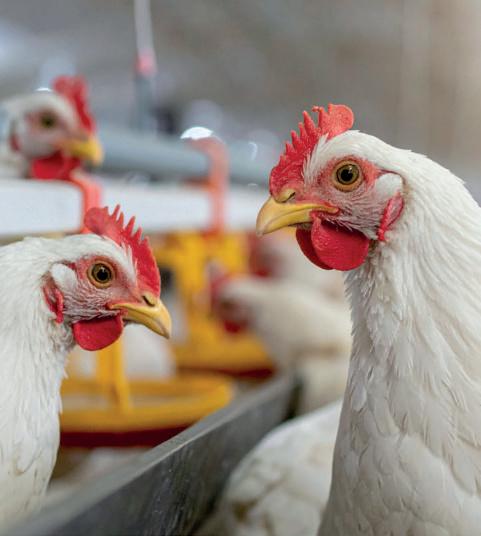
There have been numerous outbreaks of bird flu since October, both in the Netherlands and in neighbouring European countries. The clinical symptoms in commercial poultry vary greatly between flocks.
Laying hens and reproduction flocks
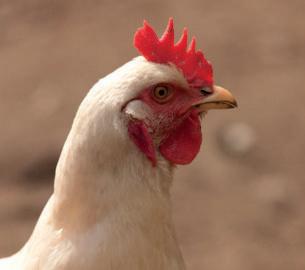
Among laying hens and reproduction flocks, there were cases of sudden increased mortality but few signs of disease, as well as farms with numerous sick birds. These animals are lethargic, have ruffled feathers, inflammation of the conjunctiva, blue discolouration of the comb and wattles, shortness of breath and/or watery, green diarrhoea. Necropsy findings ranged from no abnormalities to a reddened trachea, petechiae (on the serosal membranes, on the heart, under the sternum and sometimes in the proventriculus), a reactive spleen and acute peritonitis.
Layer pullets
Among layer pullets, mortality rose slowly and hardly any sick animals were observed. Dead hens had blue discoloration of the legs. Upon necropsy, bleeding in the gizzard and proventriculus were sometimes noted and some animals had an irritated trachea.
Broilers
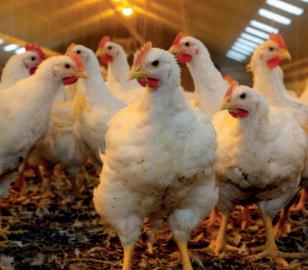
The clinical presentation varied widely among broiler chickens. Sometimes the flock was somewhat calmer with a few sluggish and feverish animals. In other cases, there was acute high mortality with few (if any) symptoms of illness. Blue discoloration of the comb and sometimes the legs was often observed, as were swollen heads, conjunctivitis and sometimes neurological symptoms, such as twisted necks or a limp neck. Necropsy findings included a wet or bloody appearance of the trachea, swelling of the spleen, fluid in the abdominal cavity, swelling of the liver and blood-rich chest muscles with a mottled appearance were all frequently observed. Additionally, petechiae in the heart or proventriculus and sporadic haemorrhages in the skin of the legs were noted.
Ducks
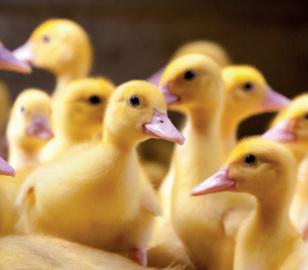
In ducks bred for consumption most cases consisted of mortality preceded by neurological symptoms. Mortality and disease symptoms were minimal to absent in ducks kept for breeding. In contrast, there were very sharp declines in both feed intake and egg production.
If you are uncertain about clinical signs, contact the Veekijker on (+31)88 2025555. In the Netherlands all suspicions of avian influenza must be reported to the Netherlands Food and Consumer Product Safety Authority.
Attention to biosecurity remains important for preventing the spread of the virus. There seem to be indications in some outbreaks that the virus was introduced through ventilation openings. Research carried out by GD for AVINED showed that using certain types of windbreak netting can help to reduce introduction by this route. Click this link for more information on the AVINED website about this study.
Royal GD has been responsible for animal health monitoring in the Netherlands since 2002, in close collaboration with the veterinary sectors, the business community, the Ministry of Agriculture, Fisheries, Food Security and Nature, veterinarians and farmers. The information used for the surveillance programme is gathered in various ways, whereby the initiative comes in part from vets and farmers, and partly from Royal GD. This information is fully interpreted to achieve the objectives of the surveillance programme – rapid identification of health issues on the one hand and monitoring trends and developments on the other. Together, we team up for animal health, in the interests of animals, their owners and society at large.
Increase in Salmonella Enteritidis infections in the laying sector
The number of Salmonella Enteritidis (SE) infections in the Netherlands has increased since 2023 both in flocks of laying hens and in humans. In 2025 a total of 94 flocks were declared positive for SE, making the level of infections higher than in 2023 or 2024 (see Figure 1). Outbreaks also occur on farms that have no history of previous salmonella contamination. Reducing the number of outbreaks is a priority for the poultry sector. At the end of October 2025, additional measures were imposed on laying farms participating in IKB Ei (the QC system for the egg production chain in the Netherlands) such as increased sampling frequencies. A hygiene protocol applies at egg packing stations that also comprises measures relating to transport from salmonellainfected farms.
Additional genetic studies
On behalf of AVINED, GD is carrying out sequence analysis of the Salmonella Enteritidis isolates that have been found. To date, this has shown that multiple genetically varied SE strains are circulating in the Dutch poultry sector, which suggests introduction from multiple sources. In a few cases, clusters of farms with genetically related SE strains have been observed. A search is being carried out to determine potential common underlying factors. In addition, research into the sources includes case-control analysis. The aim is to use questionnaires as a way of identifying potential sources of contamination. No trend suggesting a possible source of infection has been identified at this time. Extensive data collection, including surveying uninfected flocks through questionnaires, is currently under way.
Field trial verification study
It is no longer possible to participate in the salmonella field trial verification study that has been running since 2023, studying flocks of laying hens and parent stock. The target number of participating flocks has been reached, and the field trial is now closed to new farms. The results of the study are expected at the end of 2026, when they will be submitted to the European Commission, which authorised this field trial.
P.O. Box 9, 7400 AA Deventer
T. +31 (0)88 20 25 575
info@gdanimalhealth.com www.gdanimalhealth.com



The number of ILT outbreaks has been high since the third quarter of 2025. Despite efforts by the sector to contain the virus, new cases keep appearing. The disease may be accompanied by spiking mortality. For that reason, the early stages of some ILT outbreaks may be difficult to distinguish from avian influenza.
Early Warning: reports of ILT with clinical signs and/or wild-type virus
number of reports
Non-commercial poultry
Broilers
Reproduction sector – broilers
Layers
Layer pullets
Reproduction sector – layers
Figure 2. Number of ILT infections notified to GD combined with clinical signs or detection of wild-type virus in Dutch poultry and backyard poultry (20232025) (Source: GD-LIMS; EWS) NB: these were voluntarily reported to GD and do not constitute an overview of all outbreaks.
Gumboro remains widespread in the Dutch poultry sector, even in apparently healthy flocks, with an estimated prevalence of 20 to 30 percent of broiler flocks, as previously shown by the Veterinaire Monitor Pluimvee (VMP, Veterinary Monitor for Poultry).
GD research from 2025 confirmed that Gumboro has a relevant impact on the immune system. Infection leads to a reduced response to ND vaccination (significantly lower titres) and increased susceptibility to secondary bacterial infections (shown for Ornithobacterium rhinotracheale, ORT), resulting in significantly increased mortality. The results of the study were presented to Dutch poultry veterinarians in December, and further communication will follow shortly.
Considering these findings, prevention remains essential, with properly administered vaccinations, high maternal antibodies and – most importantly – good farm hygiene to protect young birds.
Early warning notifications: Gumboro in the Netherlands
number of reports period
Broilers – undefined
Broilers – slower- growing breed
Broilers – regular breed
Broiler breeder pullets
Layer pullets
Layer breeder pullets
Figure 3. Number of Gumboro infections in combination with symptoms among Dutch poultry reported to GD (2023Q1 to 17 December 2025) (Source: GD; EWS) NB: these were voluntarily reported to GD and do not constitute an overview of all outbreaks.


