
Effects of using calcidiol versus cholecalciferol as source of vitamin D in pig feed
K. Eenink1, T. Geudeke1 , B. Engel1 , M. Kanters2 , M. De Boer1 , M. Houben1 1 Royal GD, Pig Health department, Deventer, The Netherlands 2 VGTZ, The NetherlandsBackground and Objectives


Vitamin D plays an essential role in calcium metabolism as well as in immune response. Vitamin D in pig feed is mostly provided as cholecalciferol, which will be metabolised to calcidiol and subsequently to calcitriol (Fig. 1). In blood tests, calcidiol concentration is measured as an indicator of vitamin D status. By providing calcidiol (HyD®, DSM Nutritional Products NV) instead of cholecalciferol, the serum concentration of vitamin D in pigs can be elevated. In a pilot study, we investigated whether the use of calcidiol in the diet of finisher pigs is associated with bone metabolism and general health.
Material and Methods
In the study, 468 finisher pigs were included, housed in three compartments and six pens per compartment. In each compartment pens were allocated alternately to feed with either cholecalciferol or calcidiol. Pigs were fed this feed from 10 weeks until slaughter. The health status was assessed by recording clinical signs at a three-week interval. Blood samples were tested for relevant biomarkers at approximately 13 and 19 weeks of age.
Results
The Vitamin D serum concentration increased from 39 nmol/L in nursery piglets to 69 and 190 nmol/L respectively at slaughter in cholecalciferol or calcidiol groups (P<0.001) (Fig. 2). In young finisher pigs, 70 % showed SINS-like lesions. Later, this proportions decreased considerably, especially in pigs receiving calcidiol (P<0.05). The proportion of pigs with respiratory tract signs as well as the mortality rate, tended to be lower in the calcidiol group (P<0.10). An effect on bone metabolism could not be established.
During the first visit 70% of all pigs appeared to have small regions of ear tip and/or tail necrosis, in recent literature described as SINS (Reiner et al., 2021). During later visits the proportion of pigs with SINS-like lesions decreased considerably (Table 1). The decline was significantly larger in the calcidiol group. Halfway the finisher period, serum concentration of acute phase proteins wa

Discussion and conclusion
Supplementation of pig feed with calcidiol instead of cholecalciferol, results in a significant increase of serum concentrations of vitamin D. An effect on bone metabolism could not be established during this study.
Acknowledgements
DSM Nutritional Products NV is acknowledged for providing the different vitamin D premixes and sharing their knowledge of nutrition.

Figure 1 Metabolism of cholecalciferol via calcidiol to calcitriol (1,25(OH)2D3 Vitamin D3. Supplementation with calcidiol instead of cholecalciferol effectively skips the need for metabolization of cholecalciferol in the liver.
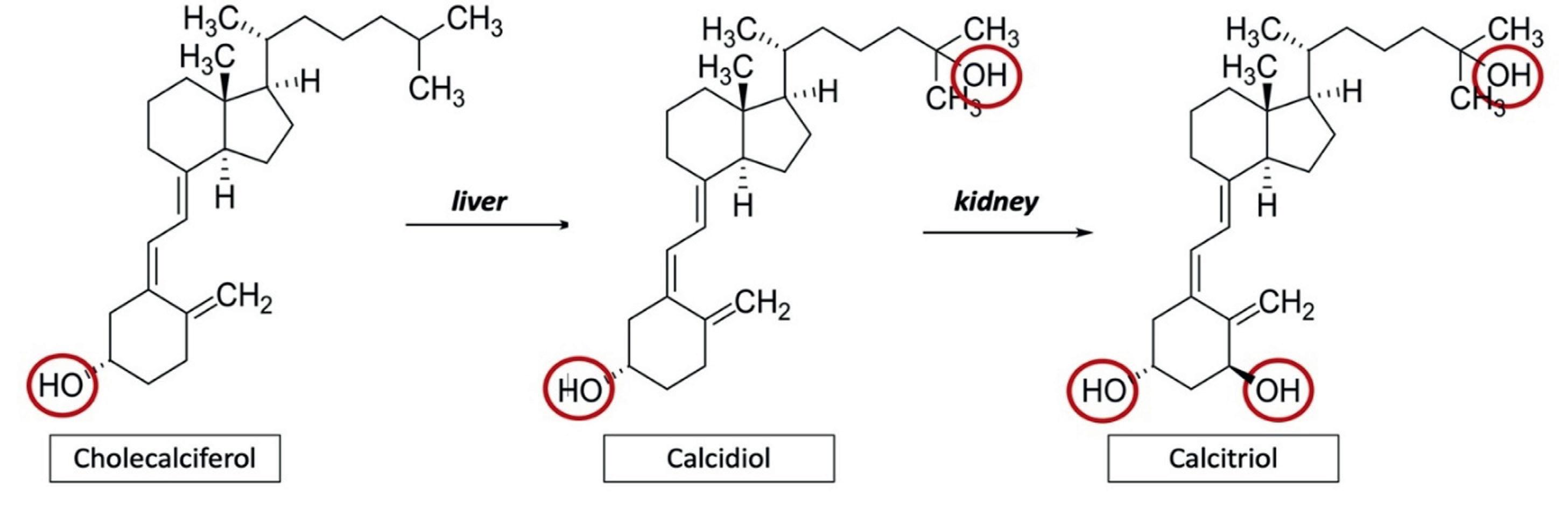
Figure 2 Distribution of measured vitamin D serum concentrations in cholecalciferol (n=20) and calcidiol groups (n=20), at 19 weeks of age
Table 1 Proportion of animals with SINS-like lesions at different observations in experimental (calcidiol) and control (cholecalciferol) group with 95% confidence intervals and χ2 test results.