


T.J. Tobias, S. Schrey-Boerwinkel, C. Sanderman, M. Gonggrijp, R. Buter, R. Dijkman, A. Heuvelink,
E. van Engelen Royal GD, Arnsbergstraat 7, Deventer, the Netherlands
Background and objectives
Actinobacillus pleuropneumoniae (App) is the most frequently diagnosed cause of respiratory disease in Dutch finishing pigs (Figure 1). Here we present the App serotype distribution and associations with antimicrobial susceptibility (AST) and region of origin in the Netherlands.
Results
• 98 isolates were obtained from 77 farms and 47% was identified as serotype (ST) 9 and 36% as ST2 (Figure 2).
• GS analysis revealed relevant results regarding cross reacting isolates in agglutination testing and an atypical A. pleuropneumoniae isolate with an insertion element in the apxIV gene (Figure 3).
• App isolates obtained from the north were significantly more frequently identified as ST2 and isolates from the south in the Netherlands as ST9, in line with historical anecdotal information (Figure 4).
• AST revealed most strains to be susceptible for first choice antibiotics (tiamulin, penicillin and florfenicol) (Table 1). 87% was resistant to tetracycline, of which ST9 isolates were more frequently resistant than ST2).
Discussion and Conclusion
• In line with historical data (1985 (Kamp, et al.) and 2008 (Duinhof, et al.), Dutch App strains are most frequently typed as ST9 and ST2.
• Slight differences in susceptibility between ST2 and ST9 strains were identified, without consequences for the first choice of antibiotic therapy.
• GS analysis revealed few atypical isolates with potential relevance for animal health and surveillance.
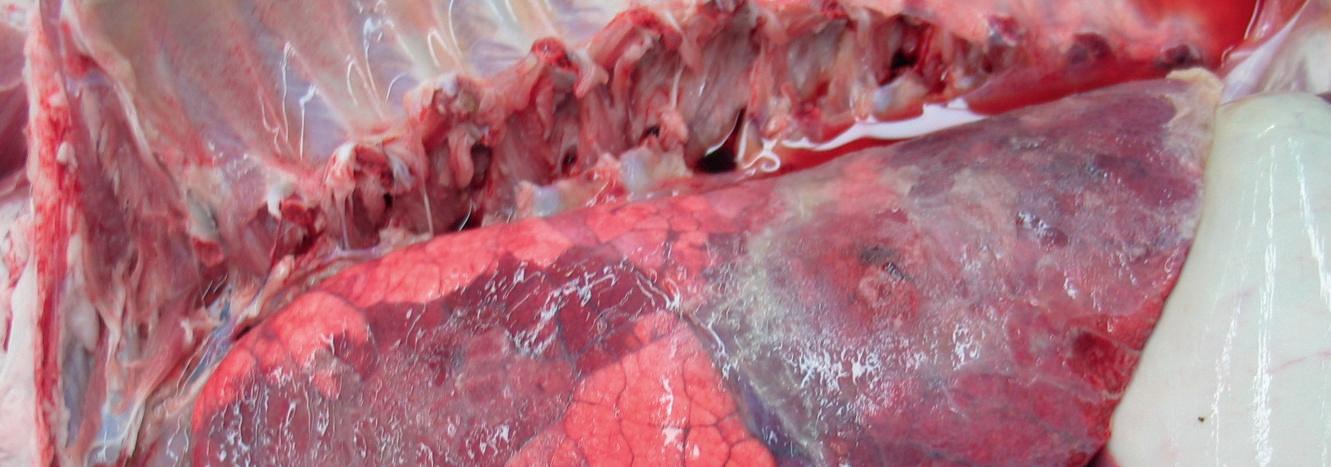
Haemorrhagic necrotizing fibrinous pleuropneumonia due to infection with Actinobacillus pleuropneumoniae
GS indicated that presumed ST13 isolates were genetically either ST7 or ST18. Two non-typeable isolates were identified as ST2 by GS.
One STt9 isolate had an insertion element in the apxIV gene that explains apxIV negative antibody ELISA testing on that farm.
Cross reacting isolates for ST3 and ST8 were genetically identified as ST4.
Table 1. Relevant results of antimicrobial susceptibility testing of App isolates (N=61) S = ‘Susceptible’, I = ‘Intermediately susceptible’, R = ‘Resistant’, NA= no clinical breakpoint available. MICxx = Minimal inhibitory inhibitie concentration at which growth of 50% or 90% of isolates was inhibited respectively. * ‘procaïnebenzylpenicillin’ is considered ‘first choice’ and it’s susceptibility is assumed to be equal to that for ampicillin. Susceptibility for amoxycillin is considered equal to that for ampicillin.
Material and methods
• All App isolates from routine submissions to GD were serotyped using microtube-agglutination-test.
• Non typeable or cross-reacting isolates or isolates of specific interest were subject to genetic analysis (GS).
• AST was performed using broth dilution.
• Strains were linked to region of origin, categorized as South or North in the Netherlands.
Acknowledgements
• Antisera for microtube agglutination test was kindly provided by MSD Animal Health.
• The study was commissioned by the animal health monitoring steering committee and funded by the Dutch ministry of Agriculture, Fisheries, Food security and Nature.
References
• Duinhof, T. et al., 2013. Actinobacillus pleuropneumoniae serotypes in The Netherlands: a survey based on serology and isolates from lung lesions, Tijdschrift voor Diergeneeskunde 138, 28-35.
• Kamp, E.M., Popma, J.K., van Leengoed, L.A., 1987. Serotyping of Haemophilus pleuropneumoniae in the Netherlands: with emphasis on heterogeneity within serotype 1 and (proposed) serotype 9. Vet Microbiol 13, 249-257.

t.tobias@gdanimalhealth.com www.gdanimalhealth.com
Figure 2. Results of genetic analysis of atypical and non-agglutinating strains of A. pleuropneumoniae in 2024
Results of genetic analysis of atypical and non-agglutinating strains of A pleuropneumoniae in 2024
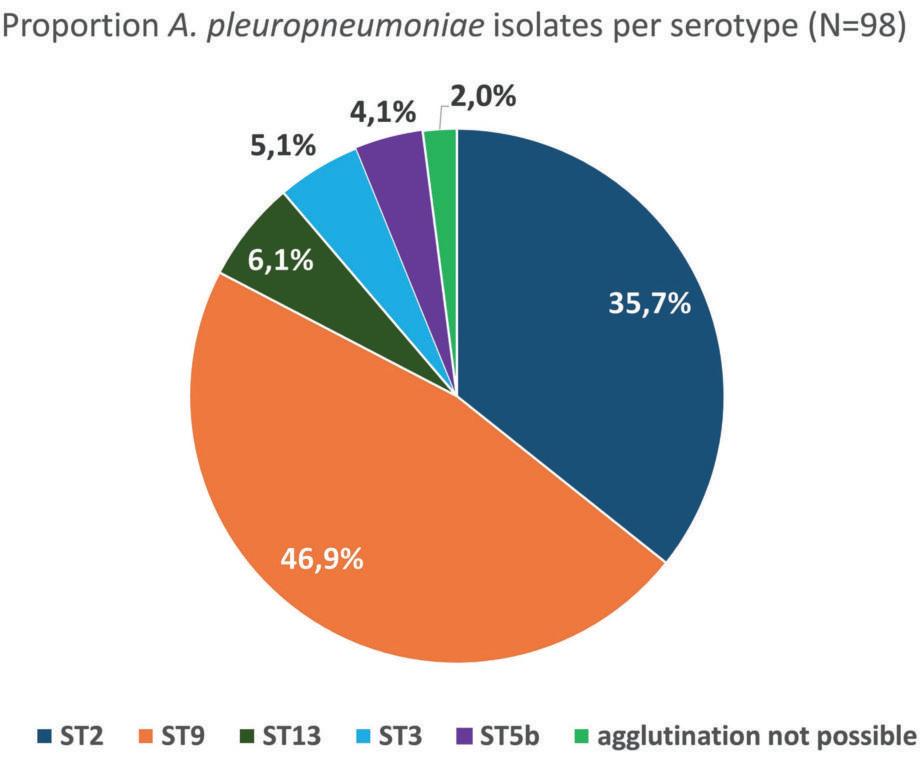
3. Results of serotyping of 98 Dutch App isolates by microtube agglutionation testing in 2024
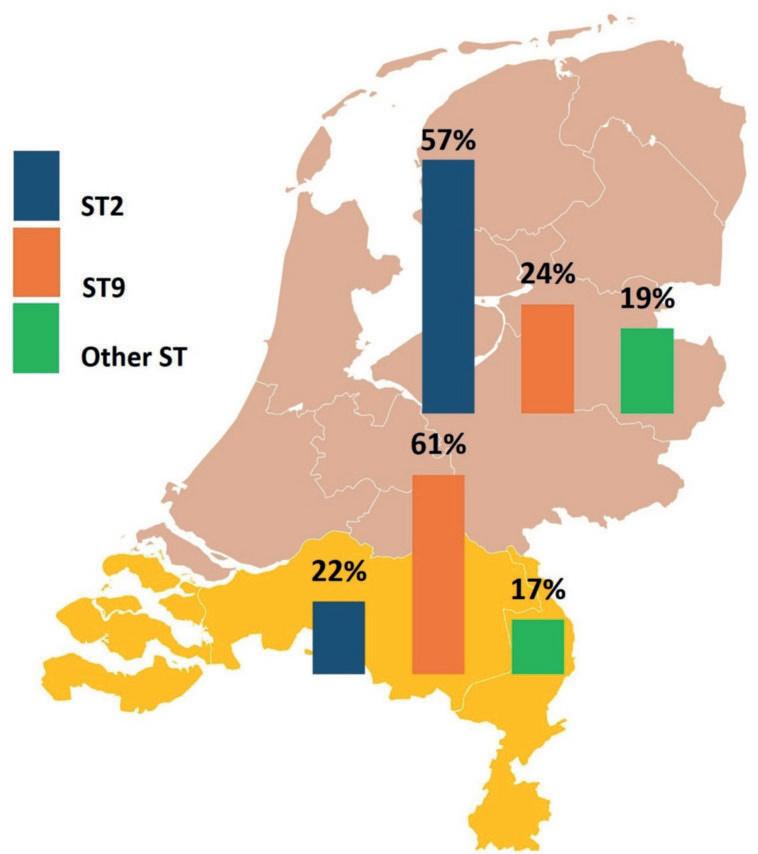
ST2 was more frequently found in north and App ST9 was more frequently found in the south of the Netherlands