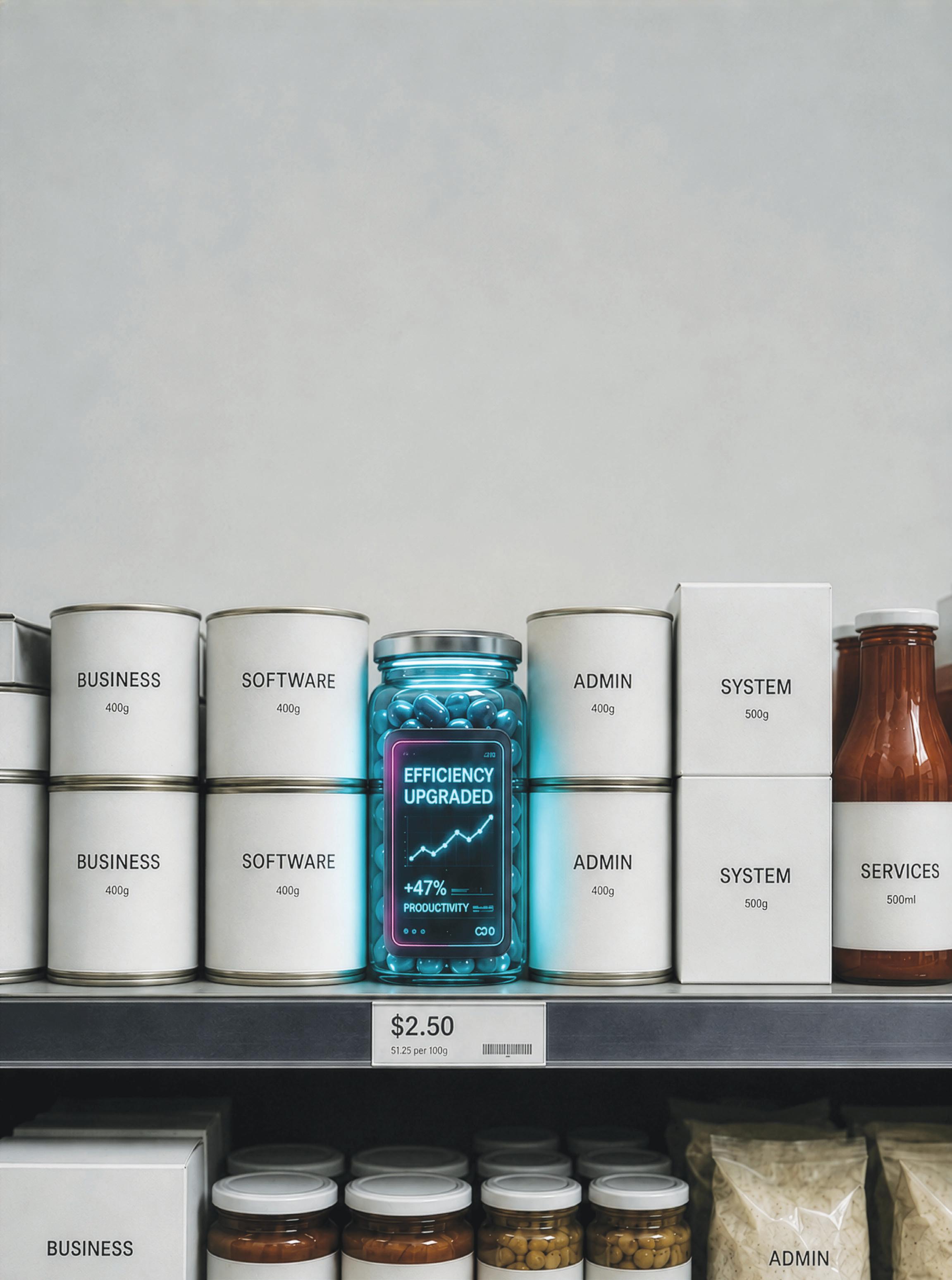
Beyond the basics
How East Auckland businesses are doing digital differently
‘Hi
’ to Highbrook Now every 15 min
7am to 7pm, 7 days Route
Highbrook Medical FP Ad Highbrook
Puhinui
Manurewa
Wiri










































Relationships Still Win Business
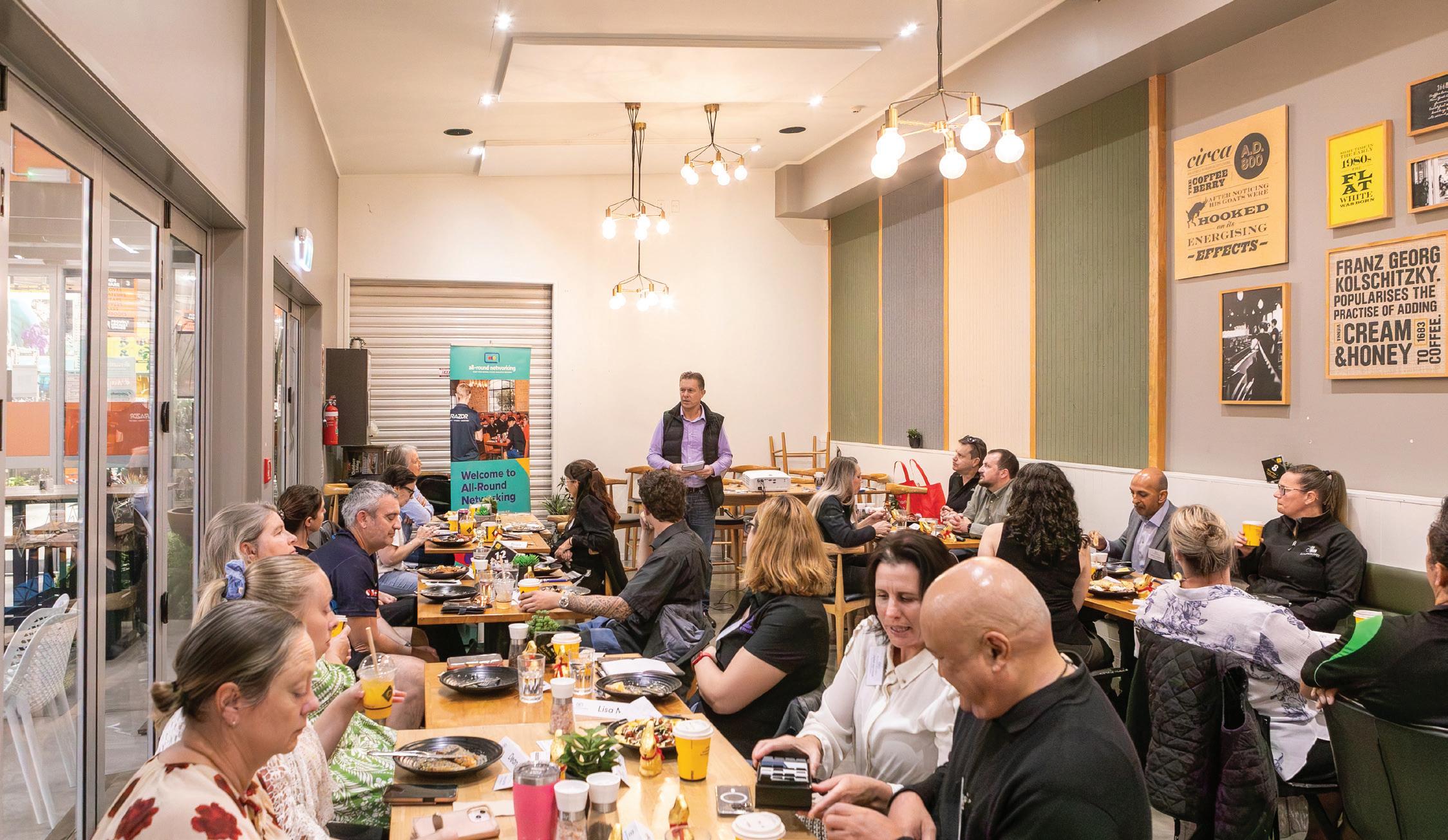
For 11 years, ARN NZ has built a reputation for creating meaningful business relationships that drive real commercial results.
In a world full of casual networking groups and “breakfast clubs,” ARN NZ has deliberately built something different. Our focus has always been business first.
Yes, our members enjoy the relationships, support, and community that come from being part of a strong business network — but ultimately, ARN exists to help good businesses grow.
And the results speak for themselves.
Across ARN’s current groups, members have generated more than $600,000 worth of business between each other in just the past three months alone. That is the power of trusted relationships, aligned values, and consistent collaboration between ambitious businesspeople.
Now, ARN NZ is bringing that proven model to East Tamaki, with a second group in Highbrook preparing to launch soon.
At the same time, the business world is changing rapidly. AI is transforming the way businesses operate, with administration, systems, automation, and even parts of marketing becoming increasingly technology-driven. But while technology continues to evolve, one thing remains unchanged: people still buy from people they know, like, and trust.
In fact, Nielsen research has consistently shown that people trust referrals from people they know more than any other form of advertising — reinforcing why genuine business relationships remain one of the most powerful growth drivers available to SMBs.
As automation increases, genuine human connection becomes even more valuable. The businesses that will thrive in the future are not just the ones with the best technology, but the ones with the strongest relationships, reputation, and networks.
That is where ARN NZ creates real value.
ARN is designed for business leaders who understand that longterm growth comes from building authentic, trusted relationships

with the right people. This is not transactional networking or surface-level conversations. It is a business-forward environment focused on creating genuine commercial opportunity.
Culture is everything to us.
We are intentional about building groups filled with positive, growth-focused people who are collaborative, accountable, and committed to supporting one another professionally. The environment is energetic, welcoming, and enjoyable — but never casual about business.
That balance is a large part of why ARN has continued to grow successfully for more than a decade.
Members benefit from weekly meetings, strategic introductions, referral opportunities, increased visibility within the local business community, and access to a network of trusted professionals across multiple industries.
For many members, ARN becomes an extension of their business development strategy- a place where relationships turn into referrals, partnerships, collaborations, and long-term clients.
As East Tamaki continues to grow and Highbrook prepares for launch, now is the ideal time for local business leaders to get involved early.
If you are serious about growth, relationships, and surrounding yourself with commercially minded people, we invite you to experience ARN for yourself.
Visit the East Tamaki group, meet the members, experience the culture, and see firsthand why ARN has continued to grow successfully for more than 11 years. Limited founding seats are still available, with expressions of interest now open for the upcoming Highbrook launch.
To book a visit or learn more, visit: https://www.arn.nz/group-listing-east-tamaki-morning/
Committee Elected Members
Lucy Hall
Henry Jansen
Cozy Tsui
Arjun Sandhu
Local Board Representatives
Howick Local Board - Damian Light
Ōtara-Papatoetoe Local Board - Sandeep Saini
Welcome from the Chair
Tēnā koutou katoa,
This quarter’s magazine highlights something we saw clearly through this year’s RSM East Auckland Business Awards — East Auckland businesses are continuing to innovate, evolve, and invest in their future.
While in the last edition I touched briefly on the Awards, it is again worth acknowledging the exceptional calibre of this year’s finalists and winners. One of the strongest themes to emerge from the judging process was the increasingly sophisticated way local businesses are embracing digital technology — not simply to keep up, but to solve real business challenges, improve customer experience, increase efficiency and reach new markets.
As explored in this edition’s feature article, many businesses are now building digital capability directly into the heart of their operations, whether through smarter systems, AI applications, online customer platforms or better workforce management. Importantly, the most successful examples are not about chasing trends, but about using technology with a clear purpose and measurable results.
Further ahead, confirmation of route protection for the Airport to Botany rapid transit corridor marks another significant milestone for Southeast Auckland. While delivery is still some years away, it is encouraging to see long-term investment finally gaining momentum.
Combined with the positive news that the Eastern Busway project is tracking ahead of schedule and under budget, there is a growing sense that the transport needs of our business community are beginning to receive the attention they deserve after many years of underinvestment.
Together, these developments reflect a business community that continues to adapt, innovate and look forward with confidence.
Warm regards,
Business East Tāmaki Team
Ruth White General Manager
Shanu Gounder Marketing, Communications and Events Manager
Andrea Crawford Membership Liaison
Julie Davies Office Manager
Editor Rachel Sturges rachelsturges@gmail.com
Graphic design
Chris Phillips | Design Distillery chris@designdistillery.co.nz
Advertising enquiries
Shanu Gounder p 027 527 9773 e comms@businesset.org.nz
There is also encouraging progress on the infrastructure front. The launch of the new 37 bus service in April is a positive step for East Tāmaki businesses and employees, improving public transport access into our area. Auckland Transport is also engaging directly with larger employers to help maximise the benefits of the new route.
Upcoming events

For more information and/or reserve your spot visit our website at businessET.org.nz/whats-on
Lucy Hall Chairperson, Business East Tāmaki

Kia ora and welcome to the Eastern Busway project update. The latest project images can be viewed at flickr.com/photos/easternbusway and easternbusway.nz/resources/videos.
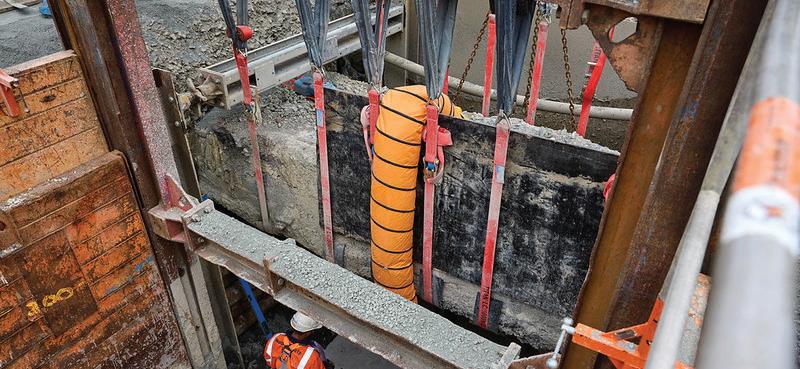
Below the surface: The hidden complexity beneath Tī Rākau Drive
Most people driving along Tī Rākau Drive are unaware of what's happening beneath the road. Six metres underground, our team is navigating one of the city's most complex construction environments, working carefully around the Transpower high-voltage transmission cable that keeps the lights on for much of Auckland.
The 220kV PAK–PEN–B transmission cable runs beneath the road, connecting the Pakūranga and Penrose substations and supplying power to much of the region. Working around it demands exacting care. Using specially engineered controls and temporary works, our team move above and below the concrete-encased cable, protecting people, critical infrastructure, and the everyday services that Auckland and Northland depend on.
Within these tight constraints, large stormwater pipes and box culverts ranging from 1.2 to 2m in diameter are being installed up to six metres deep between Mattson Road and Gossamer Drive. These upgrades will improve resilience, reduce flood risk, and support the long-term performance of the busway corridor.
It's the kind of careful, considered work that makes the Eastern Busway more than a transport project. A smarter city, built from the ground up.
Wheatley Avenue, Roseburn Place and Edgewater Drive East footpath & cycleway work underway
Across the project, we’re building 12km of dedicated walking and cycleways between Pakūranga Town Centre and Botany Town Centre.
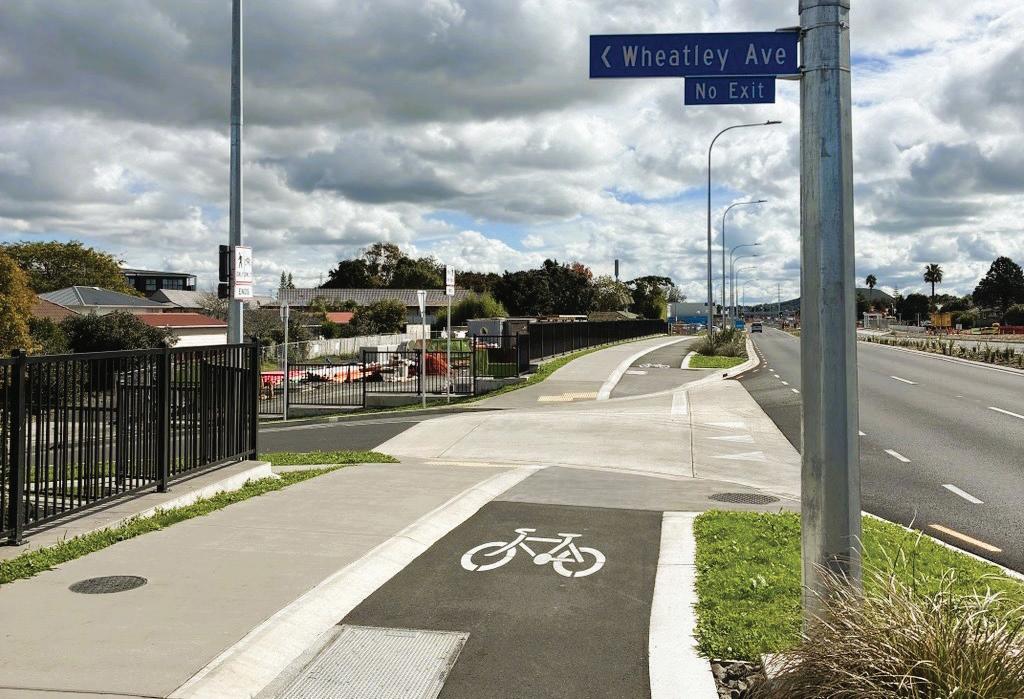
At the end of April, we returned to the entrance of Wheatley Avenue along Tī Rākau Drive to make improvements to the kerbs and pathways on both sides of the road. Roseburn Place and Edgewater East intersections will also be improved in May. This work is a direct response to user feedback about the steepness of the
footpath and cycleway in this area, thank you for letting us know.
We’ll be undertaking work on the existing kerbs, cycleway & footpath ramps at these intersections to create a smoother transition for pedestrian and cyclists crossing these streets by Tī Rākau Drive. Work began in late April and is expected to finish by July. If the works are completed ahead of schedule, the intersections will be fully operational as soon as it's safe to do so.
Hands-on conservation delivers big wins for native skinks

Wheatley Avenue before the work.
Copper skink capture and relocation
The busway delivers wide-ranging benefits including enabling urban development while preserving and enhancing ecological value for communities now and in the future. A range of environmental protection measures have been implemented across the project as part of the construction consent conditions.
Native lizard capture and relocation works have been carried out along the Whakamaumahara - Guys Reserve to Botany Town Centre section of the busway, and the results to date demonstrating the effectiveness of a careful, targeted approach. Despite the added challenge of stormy weather, which reduces skink activity during rainfall, the collection effort has been successful.
Since commencing in late March, we captured and relocated over 350 copper skinks, a protected and at-risk native species. This is significantly higher than numbers recorded in other locations and reflects the strong ecological value of the area.
Rather than using machinery, pampas tussocks were removed by hand, as most skinks are found sheltering within them. This careful approach was highly effective, allowing more skinks than anticipated to be captured and safely relocated.
All skinks are being captured and released into purpose -built habitat within Burswood Esplanade Reserve by the end of April, when the lizard hibernation season begins.
Out of sight, out of the ocean
You won't see them, but beneath the Eastern Busway, 14 underground traps are quietly keeping plastic out of our moana (ocean). Fourteen Gross Pollutant Traps (GPTs) now line the busway, forming a hidden defence between our roads and our waterways. Every time it rains, they intercept stormwater runoff and catch debris, including plastic bottles, chip packets, and anything else that finds its way onto the road, before it can reach a stream, harbour, or the sea.

Stormwater drains are one of the most common pathways for plastic to reach the ocean. It's an easy problem to overlook, and these GPTs are a simple but effective solution. You'd walk right over one without knowing it, but they're doing essential work around the clock.
As part of the busway's ongoing maintenance, the traps are cleaned regularly to keep them performing. It's a small detail in a large project, but one that reflects a bigger commitment. Alongside great transport

Construction updates
Information about work in progress and detours is available at www.easternbusway.nz/ construction
infrastructure, the busway is helping reduce emissions and improve environmental quality, delivering wide-ranging benefits for the area that go beyond getting people from A to B.
Working together: Eastern Busway and Botany Town Centre coordinate intersection improvements
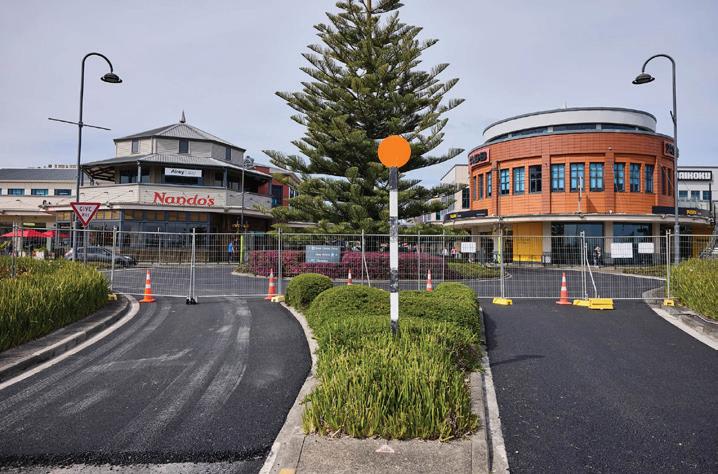
We are committed to putting people and places at the heart of how we deliver major projects. We do that by listening and responding to needs of our customers and communities. Botany Town Centre recently undertook improvement, and renewal works at their Town Centre Drive entrance, temporarily closing access via Te Irirangi Drive.
Recognising an opportunity to minimise long-term disruption to the community, we worked alongside Botany Town Centre during this period, operating 24/7 to carry out improvements to the same intersection as part of our programme of work.
By coordinating together, we’ve minimised the overall impact and disruption to community and visitors.
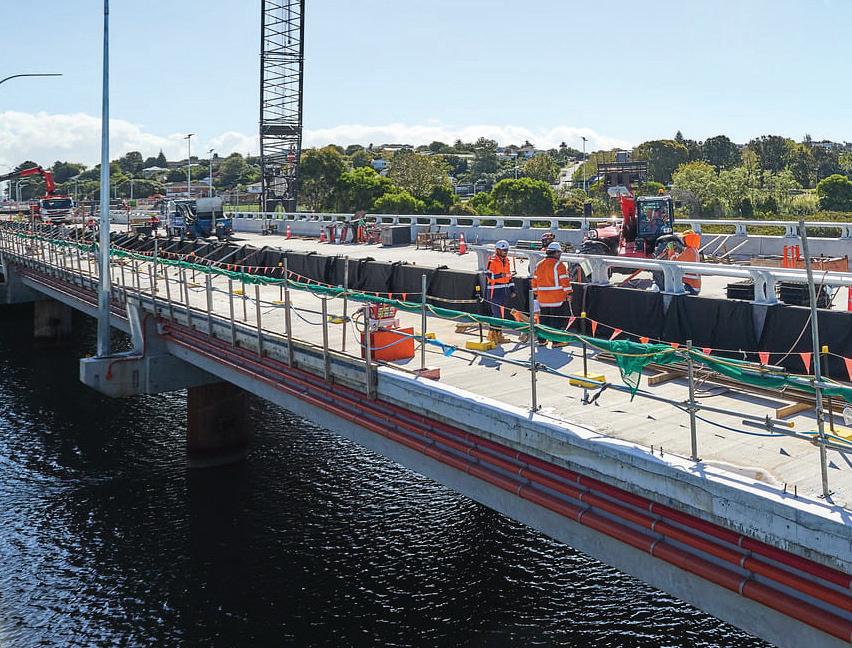
Thank you for your ongoing support while we build the Eastern Busway and shape a more connected, accessible future for East Auckland.
If you have any questions about this information or would like to talk to the team, please contact us by calling 0800 287 929 or emailing info@easternbusway.nz.
Nga mihi nui
The Eastern Busway Alliance

Underground gross pollutant traps catch debris like plastic bottles
Botany Town centre. Image credit: Mark Barber
Cycle path on
Tī Rākau Drive. Image credit: Mark Barber
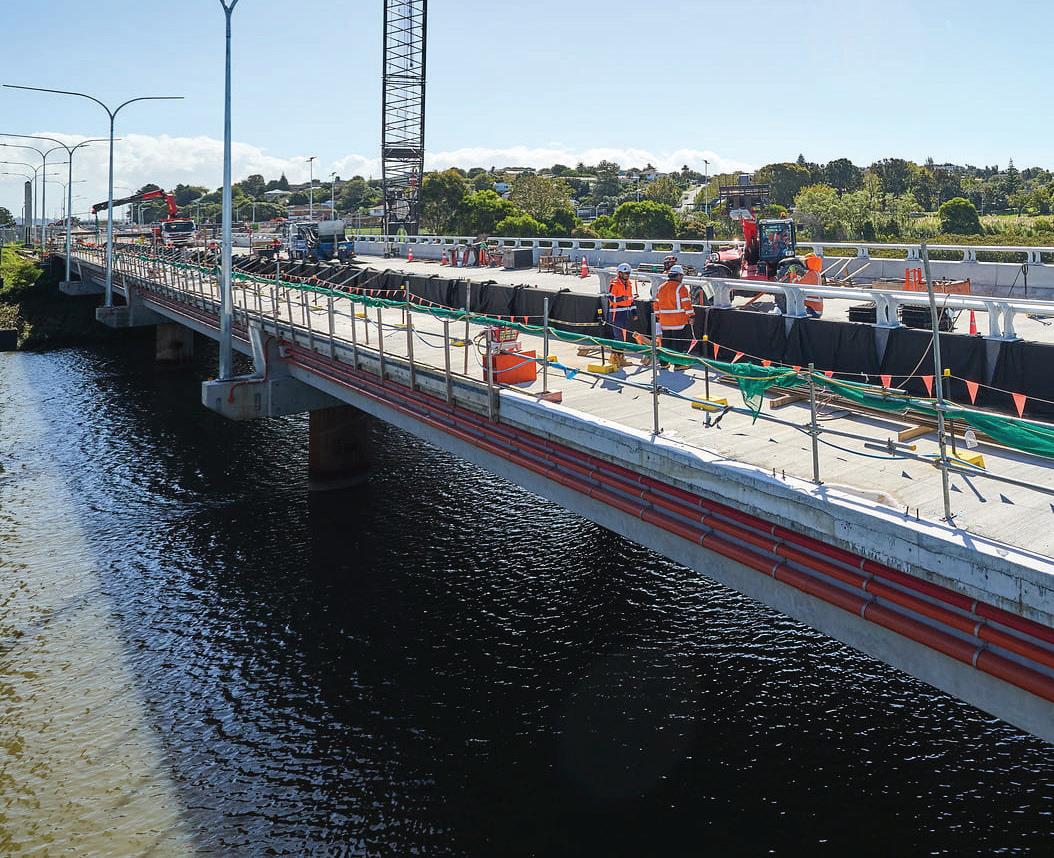
Tī Rākau Bridge – installing barriers and railing between the cycleway/footpath and the busway. Image credit: Mark Barber.







Is your business invisible to AI?
By James Smith & Andrew Newman | WebXC
Something changed quietly over the last year, and most business owners haven’t noticed it yet.
When your customers want to find a supplier, a service, or an answer to a problem, many of them aren’t typing into Google and scrolling through ten blue links anymore. They’re asking ChatGPT. They’re using Perplexity. They’re getting summaries from Google’s own AI Overview, a direct answer box that sits above every search result. The research happens inside the AI. And when the AI gives its answer, it names specific businesses.
Either yours is one of them, or it isn’t.
This is the shift we explored in our recent workshop for Business East Tāmaki members: the question is no longer “how do we rank higher?” It’s “how do we get mentioned?” And the answer is less about clever marketing tactics than most people expect.
Traffic is down. That’s not the whole story.
If your website traffic has been falling over the past 12–18 months, you’re in good company. Studies from SparkToro and Semrush put the share of Google searches that end without a single click to any website at around 58%. When an AI Overview appears in results, click-through rates on organic listings drop by roughly 60%. More than 80% of queries now end with the user getting their answer inside the AI, no website visit required.
The reflex response is to panic about traffic. But here’s the more interesting finding: the visitors who do arrive via AI-assisted search convert at significantly higher rates. The AI has already prequalified them. It has already done the comparison. By the time someone clicks through to your site, they’re close to a decision.
So the traffic model has changed. The new question is: when someone asks an AI to recommend a business like yours in East Tāmaki, what does that AI say, and why?

How AI decides who to recommend








We're used to traditional search algorithms that rely heavily on keywords and backlinks as proxies for authority. Generative AI bypasses that. Instead of pointing you to a list of web pages, AI synthesises its own answers based on the strength and context of entities: distinct, verifiable businesses, people, and concepts.


A business that’s easy for an AI to understand gets recommended.





A business that is hard to understand (vague service descriptions, contradictory information, no evidence of expertise) gets skipped in favour of a competitor whose signals are cleaner. That’s the whole game now. And it raises a question most business owners have never thought to ask.




Two ways AI can know your business

Something that most people haven’t considered: there are two distinct ways an AI system comes to know about a business, and most companies are invisible in both.


• Training data: Every major AI model (ChatGPT, Perplexity, Gemini) was built by training on vast amounts of internet content — news articles, directories, industry publications, and authoritative websites. If your business had a strong presence across those sources before the model was trained, it's already baked into the AI's understanding of the world. When someone asks about your category, the AI doesn't go looking — it already knows who you are.

This layer is fixed. The model's knowledge was formed during training and won't update until the next cycle, potentially years away. Getting into it requires a deep, consistent web presence built over time — not something you can achieve with a campaign next quarter.








• Real-time retrieval: When someone asks a question that requires current or specific information, the AI searches the web on the spot, retrieves relevant content, and uses what it finds to construct its answer. This is the more accessible layer.


















You can influence it today. A website with clear service descriptions, well-organised information, specific evidence of expertise, and proper technical structure gives AI retrieval systems something reliable to work with.
But here’s where most AI visibility advice stops, and it’s not enough. A business optimised only for real-time retrieval has to compete to be found in every single query. A business that the AI already knows has a persistent presence. It gets mentioned not because the AI found it, but because the AI considers it part of the established landscape of the industry.
The good news: the foundational work that makes you retrievable today is the same work that builds toward being known by future models. A clear, deep, authoritative digital presence does double duty: it serves real-time retrieval now, and it becomes the source material AI training systems absorb next time around.





















What to do about it















































The instinct when people hear “AI visibility” is to produce more content. That’s usually the wrong first move.
















Google itself is now actively rewarding original thinking, structural coherence, and real entity signals, and actively devaluing content volume, manufactured backlinks, and generic keyword-stuffed pages. The web is flooded with low-effort AI-generated material. Google’s response has been to look harder for evidence of real expertise and human effort, both on-site and from third parties.


For most established East Tāmaki businesses, the highestleverage work is fixing what already exists, not adding to it.



















Start by asking three questions:

















• Business clarity: Can a machine tell what you do, who you serve, and why you’re different? If your homepage leads with a product feature rather than a positioning statement, or if your “About” page doesn’t name your key people, certifications, or anchor clients in plain text, that’s where to start.

• Technical foundation: Is your site free of contradictions? Inconsistent team information, broken internal links, empty pages, and wrong metadata actively undermine AI confidence in your business.


“The AI Presentation was a wonderful insight into the ever-changing world of AI. I



• Content calibration: Does your content build authority, or is it interchangeable material that could have been written about any business in your category?







Once the foundation is solid, then original thinking compounds. A single well-researched article that only you could write (drawing on your operational experience, your client data, your industry relationships) is worth more than twenty generic posts. And the businesses that earn mentions in trade publications, industry body reports, and third-party directories are building the off-site corroboration that AI systems use to confirm what your own website claims.
The shift in one sentence


A wonderful



commend the East Tāmaki Business Association on this amazing event, not only did I walk away with so much more understanding because the presenters were so good and spoke my language but this 2-hour workshop was free.
event
– thank you team.”
The businesses that navigate this best won’t be the ones producing the most content. They’ll be the ones whose websites most clearly express who they help, why they’re credible, and how their expertise is structured.
That foundation becomes the source material that future AI systems learn from.


If you’d like to know how your business currently reads to an AI, for a fee we can run an AI visibility assessment for you. Start by searching for your business category in ChatGPT or Perplexity and noting what comes up, and what doesn’t.




























James Smith and Andrew Newman are the founders of WebXC, an Auckland-based digital strategy consultancy specialising in AI search visibility and content authority. webxc.com or email info@webxc.com





Andrea Martin from Allflex Packaging

Security alerts: how the Business East
Tāmaki network works
Arapid-response alert system developed in partnership with the Counties Manukau East Police community manager, is helping East Tāmaki businesses respond quickly when incidents occur nearby.
The premise is straightforward: when a crime is in progress or has just occurred — such as a break-in, vehicle theft, or suspicious incident — it should be reported immediately to Police by calling 111 or submitting a report online at police.govt.nz/use-105.
Business East Tāmaki will then be notified either by the affected business or directly by Police, along with the Police File Number reference. A Security Alert will subsequently be sent to members as soon as possible, encouraging anyone with relevant sightings or information to contact Police (dial 111) and quote the Police File Number. This helps keep the investigation active and increases the likelihood of timely leads.
Rounding out the system is a monthly security alert summary, giving members a clear picture of the incidents recorded across the area over the preceding weeks — useful both for situational awareness and for identifying any patterns worth monitoring.
Help prevent crime – and keep your business safe
Business East Tāmaki is encouraging all members to take a simple step that can make a real difference in preventing and solving crime across East Tāmaki.
If you have CCTV cameras at your premises, we strongly recommend registering them with Community Cam™. This allows NZ Police to quickly identify nearby cameras if an incident occurs, helping them respond faster and more effectively. Go to

What is Community Cam?
Community Cam™ - Communities working together to solve crime
Community
Why register?
Do
How does it work?
When
• Helps NZ Police locate relevant CCTV quickly
• Supports faster investigations and better outcomes
Your
• Reduces time spent door-knocking for footage
• Your details remain secure and confidential
Registration is quick and easy, and you’ll only ever be contacted if your cameras may assist with an investigation.
Register your cameras here: communitycam.co.nz
By working together, we can strengthen safety across East Tāmaki and better protect our businesses and community.
If you have any questions, feel free to get in touch with Andrea at membership@businesset.org.nz

What Business East Tāmaki can
East Tāmaki remains one of New Zealand’s most significant manufacturing and distribution hubs, home to over 3,300 businesses and strategically located near key transport routes — motorway, port and Auckland Airport. The area is a cornerstone of Auckland’s economy, known for its concentration of goods-producing industries and its exceptional industrial capacity.
Business East Tāmaki has officially landed on Instagram, and we’re bringing the best of our business community to your feed.
Think behind-the-scenes tours, local stories, and plenty of ‘Meet Your Neighbours’ moments—plus all the fun stuff happening in our backyard.
Follow us at: @businesseasttamaki
See you over on the Gram soon!
Thanks once again East Tāmaki!
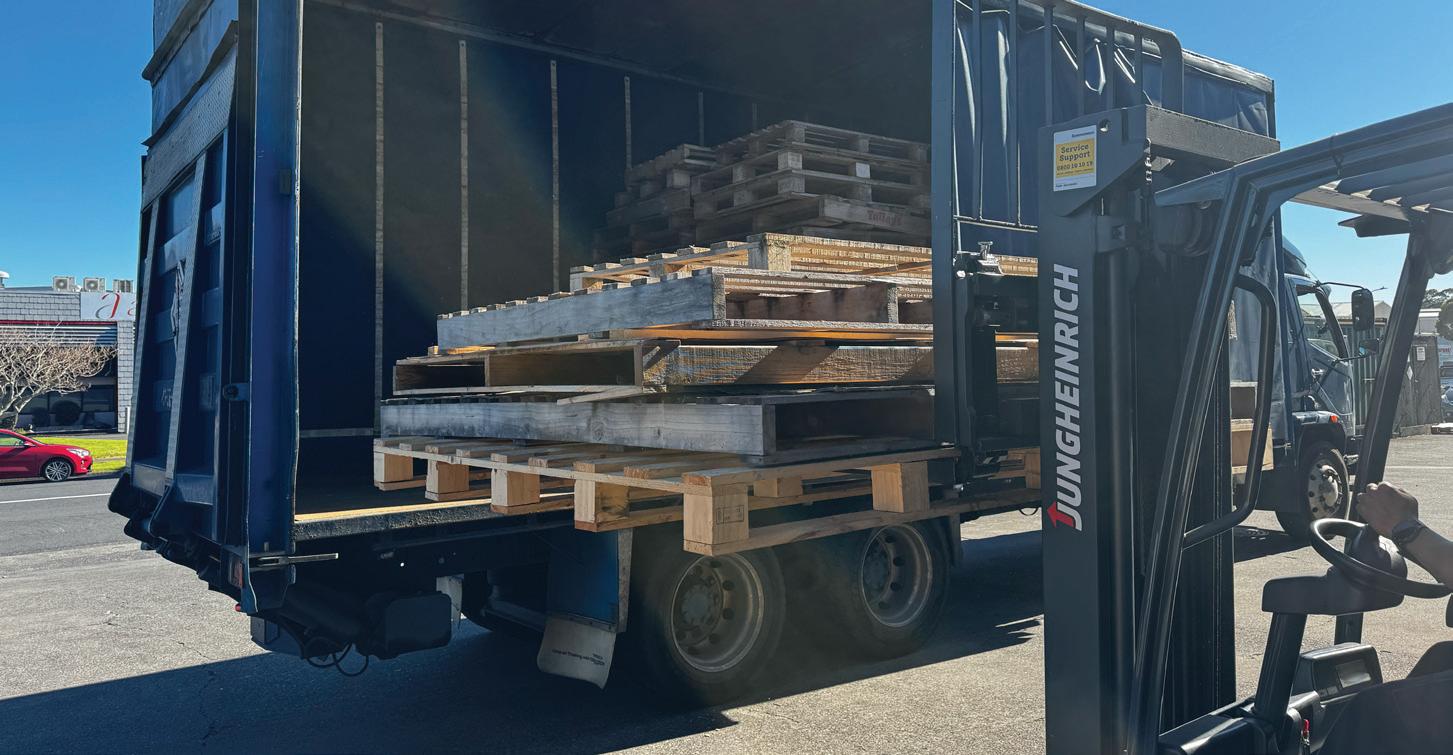
East Tāmaki businesses once again showed strong support for the free pallet collections in May, contributing to a collective effort to reduce waste and conserve resources across the area.
MetroPallets handles the recovery process with care, hand-sorting every pallet that arrives at their yard and recycling on average more than 90% of incoming material.
Each pallet is assessed on its condition and directed accordingly — whether that means reuse, repair, or repurposing into products such as garden mulch or biofuel pellets. MetroPallets’ focus is straightforward: keep reusable timber out of landfill and give it a second life wherever possible.
Beyond diverting waste, every pallet recovered also reduces demand for newly produced timber, easing pressure on natural resources further up the supply chain. The participation of local businesses makes that outcome possible, and it is what keeps the businesses in East Tāmaki moving in a more sustainable direction.
Businesses participated: 27 Total pallets collected: 638
As a thriving economic hub, East Tāmaki plays a crucial role in supporting Auckland’s and New Zealand’s broader business ecosystem, making it an attractive place for investment, employment, and long-term growth.
Business East Tāmaki is a not-for-profit business association supporting all the businesses and commercial property owners in East Tāmaki. Established in 1994, it operated as a voluntary membership organisation before adopting the Business Improvement District (BID) programme in 2009, funded by a targeted rate through Auckland Council. What
• Marketing & promotion opportunities
• Business resources at your fingertips
• Supporting your skills and employment needs
• Practical paths to a sustainable business


Built from the ground up
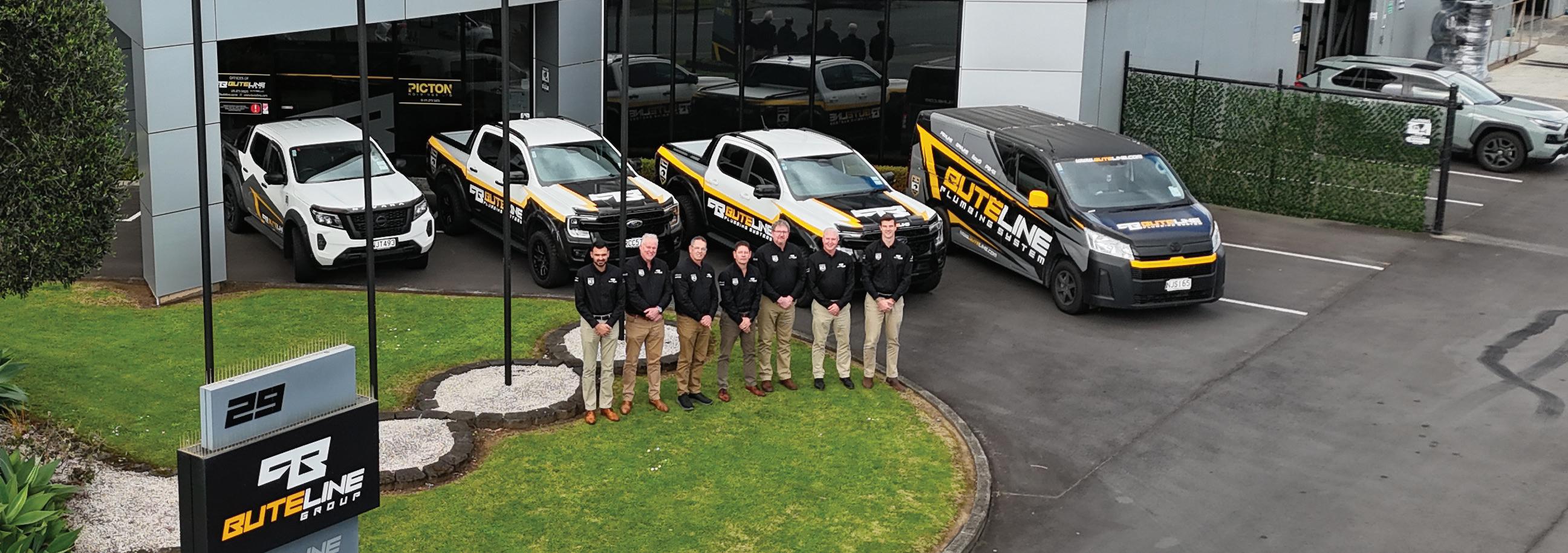
In 1980, Buteline Group founder, the late David Picton, borrowed tools from his plumber neighbour to fix a leak at his Manurewa home. Working with those tools, he was convinced he could design something better — and he did. The road was not easy for him and his family, but he would go on to build his own plumbing system around his innovation. And Buteline was born.
Five fittings and one tool to over 500
Forty-five years on, Buteline is still a New Zealand-owned business, headquartered in East Tāmaki with 42 staff, and a presence extending to the UK, Ireland, and a manufacturing facility in Malaysia. When David passed away in 2018, his son Llewellyn Picton, stepped into the role of managing director and expanded the product portfolio significantly. Where David had built the business around a single premium offering — Buteline, the polybutylene pipe and polymer fittings the company is named for — Llewellyn has since launched additional ranges: Pexline, Gasline, Mainline, and Adapt, each successfully targeting different market segments.
Made in New Zealand
Central to Buteline’s identity is local manufacturing and its own R&D facility. The premium Buteline pipe and all polymer fittings are made at the East Tāmaki facility, with brass components sourced internationally but assembled in-house. Having their own R&D facility means that a product can be researched, tested and turned into a market-ready product in record time.
Because the company holds a significant amount of its own raw materials on site, it has been largely insulated from supply chain disruptions and price hikes that have hit competitors dependent on overseas incoming stock.
Connecting with social media
The company is also the most active player in its sector on social media, with a media-trained representative delivering regular product updates on Facebook and Instagram (@buteline_plumbing_system) — an investment that’s increasingly paying off as a younger, tech-savvy generation of plumbers takes over from those heading into retirement.
Recession, resilience, and a persistent challenge
When a close competitor replaced one of its key products with a new offering, many of its customers turned to Buteline instead, which has worked out well for the business. Buteline remains the number one supplier for plumbing products but does not
take this position for granted; they make sure their sales force are highly visible, and service standards are as high as the product and manufacturing standards.
The most persistent challenge is cheap, uncertified products imported from overseas. These products offer no quality guarantee — and it is often the plumber who gets called back years later to deal with the consequences at the homeowner’s cost.
A people business

Internally, Buteline’s culture is defined by humility and stability. Staff turnover is minimal, with several factory workers having been with the company for three decades or more.
Additionally, David Picton made an early decision not to pursue 100% automation at the expense of his people, a philosophy that endures under Llewellyn.
The annual Butefest event, held at the factory and open to customers, also captures the spirit: an evening of watching products come to life, mingling with the team, and being thanked for their support. This year’s event hosted over 600 plumbers from around the country.
‘’Buteline – Manufactured locally - Reaching Global, and proud to be a foundation manufacturer of East Tāmaki Auckland’’
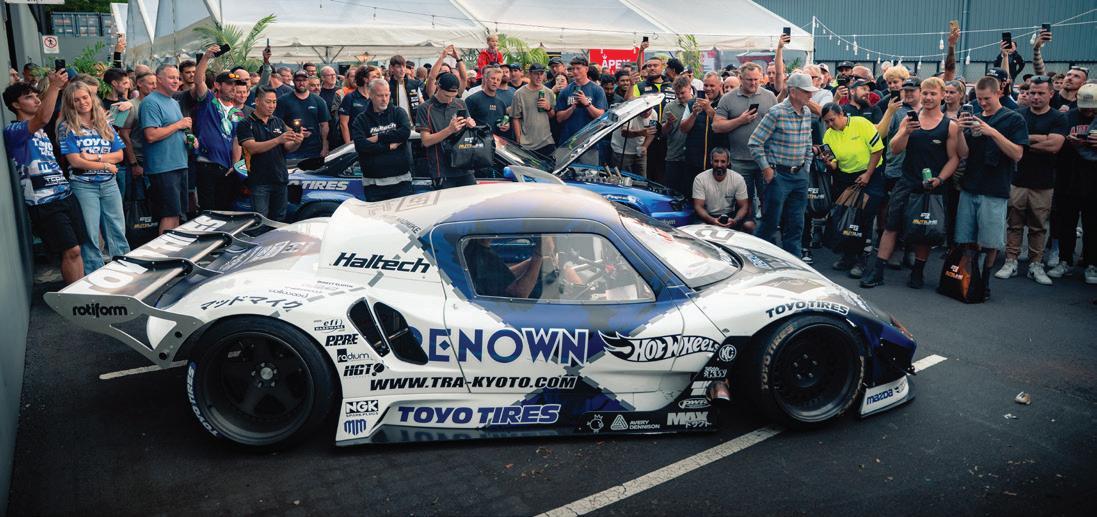
Llewellyn Picton, Managing Director
The Buteline customer event captures the spirit of the business
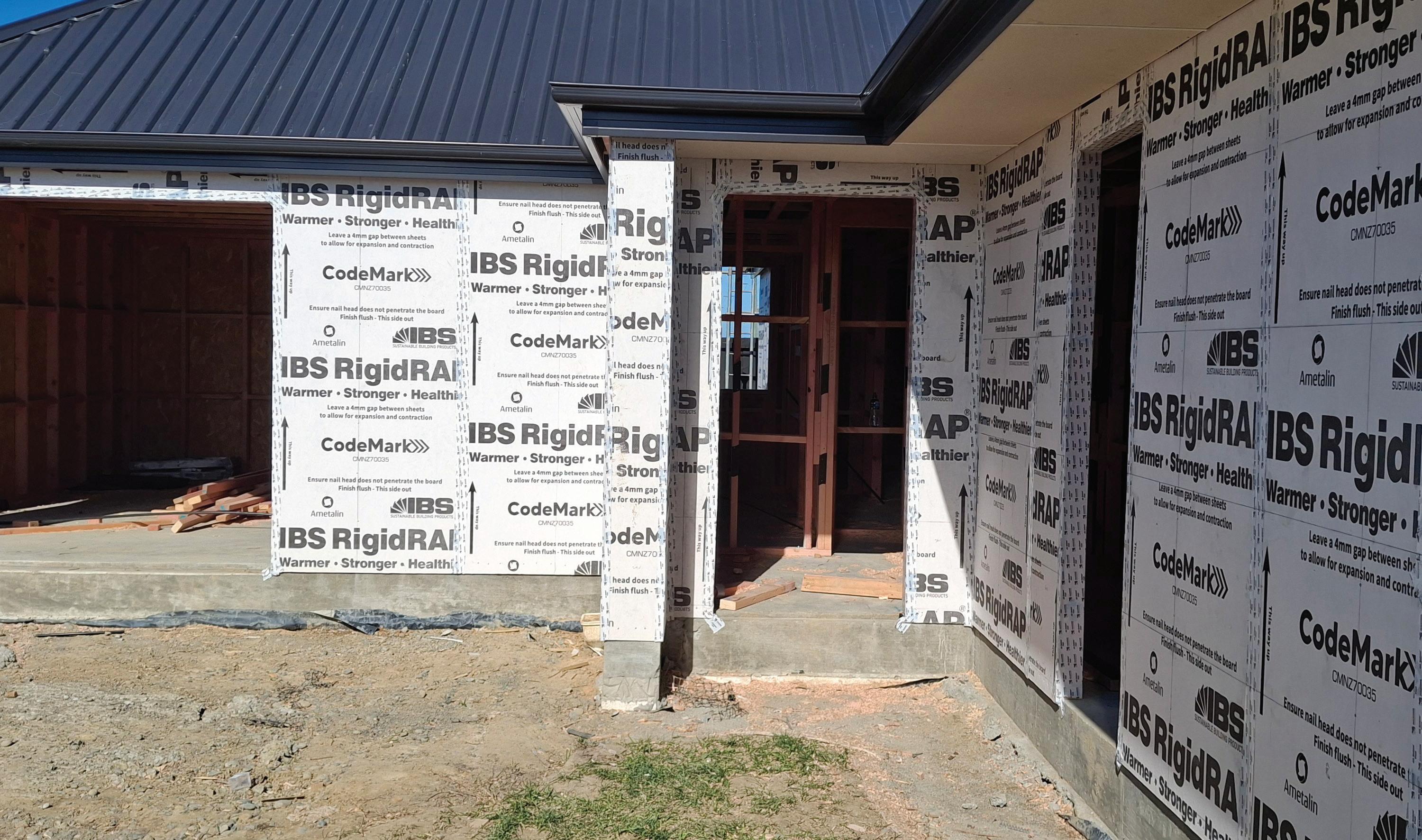
From the ground up – family business, long game
It began, as many family businesses do, with a father and son team launching their own venture. In the mid-1990s, Jason Bardell and his father, together with a few silent partners, launched Independent Building Supplies (IBS) — dad running retail and Jason running wholesale. Over time, Jason bought all the partners out, added some new active partners to the wider strategic team (including his son Josh and a key part of the team, Edmond), and built the business into what it is today: a multi-platform, East Tāmaki-based wholesale building supplies operation.
A new home in East Tāmaki
After three decades in Mount Wellington, in 2023, IBS made the move to a purpose-built facility in Zelanian Drive, East Tāmaki — and Jason says it has made a tangible difference to the business. Proximity to the motorway and the airport has improved logistics, and the location has given the business room to grow. What has surprised the team is the support network that came with it. “We’ve received really good support from Business East Tāmaki,” says Jason.
Nothing beats face-to-face and word of mouth
When it comes to marketing, IBS takes a deliberately broad view. The business runs across Facebook and Instagram, advertises in the New Zealand Herald, invests in radio and television, and keeps a fleet of sign-written vehicles on the road. “No one solution fits all, or created the position we are in today,” says Josh. Jason agrees, adding that some of the most effective marketing remains the hardest to measure: sales reps in the field, trade show appearances, and the accumulated weight of word-of-mouth built over 30 years. “You can’t underestimate the people out there talking,” he says.
Always looking forward
What has kept the business moving, though, is a guiding philosophy Jason has held since the beginning: behave as though you can only guarantee the next two months in business. "You've got to act as though you’re fighting for month three," he says. "Not only does it keep the team lean and focused, but it keeps you looking forward.”
The certification challenge
The most persistent structural challenge IBS faces is one shared across the industry: New Zealand’s building products certification process. It takes too long, Jason says, although the concern is less about pace and more about rigour. With the
government signalling potential changes to certification pathways, Jason is cautious. A product certified for use in Siberia, he notes, does not automatically meet New Zealand requirements. What matters is third-party verification, proper warranties, clear installation guidance, and a supplier who will stand behind what they sell. “Dealing with somebody that’s been in business for a while and does things properly — that’s the message,” he says.
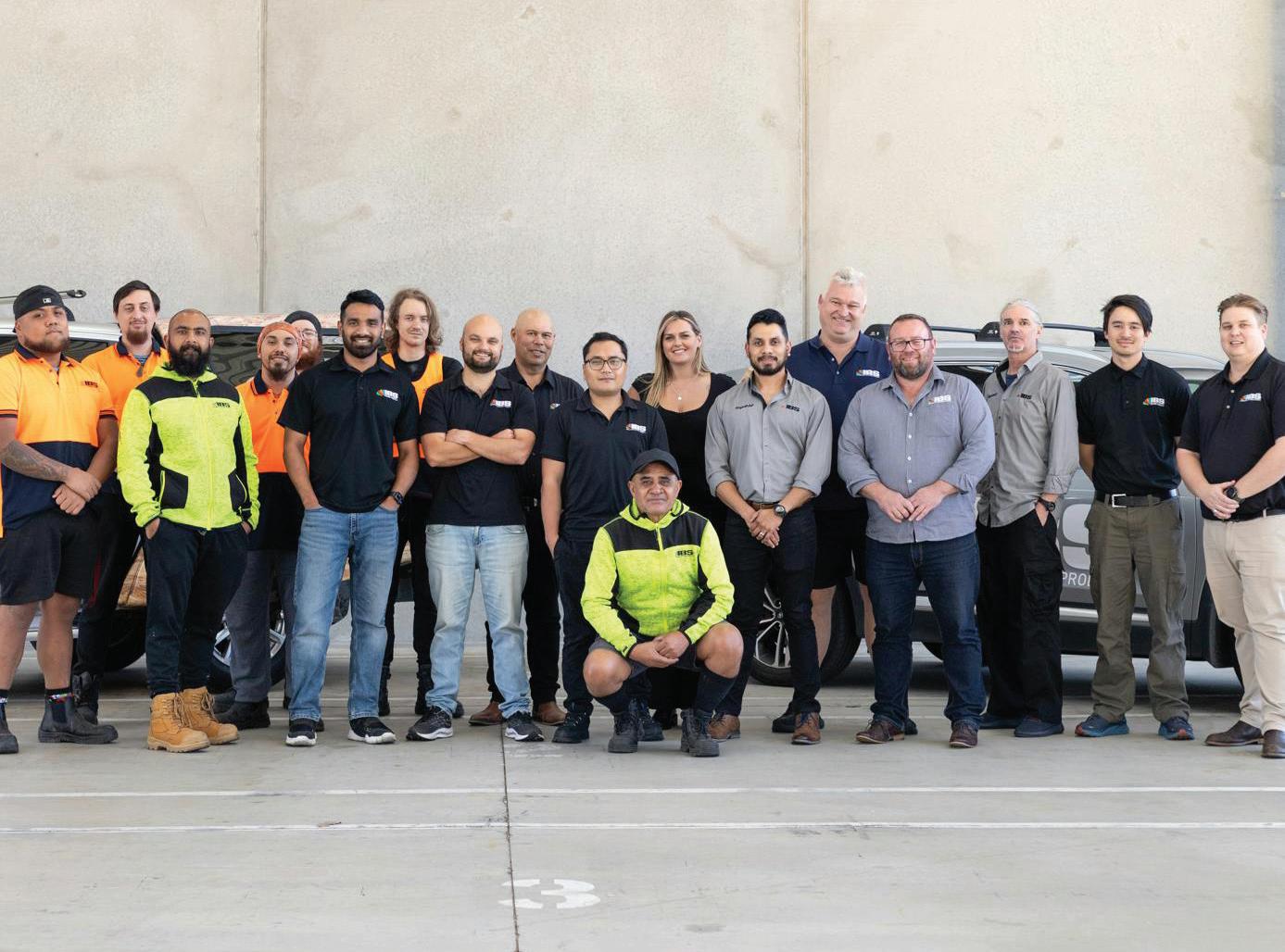
The best team in 33 years
Ask Jason about the culture at IBS and he doesn’t hesitate: it’s the best team he has had in 33 years of business. For a start, more than half the staff have been with the company for a decade or more. But Josh says it’s not just one thing. “It’s the right products, the right culture, and open conversations.” The result is a team with enough stability to carry institutional knowledge and enough energy to keep pushing forward.
When asked whether he ever imagined still being here 30 years on, Jason doesn't offer a reflection on resilience or strategy. 'I didn't have a plan B,' he says truthfully. With son Josh now in the business and the strongest team in three decades behind them, it turns out he never needed one.

The IBS team focuses on being the best in its industry
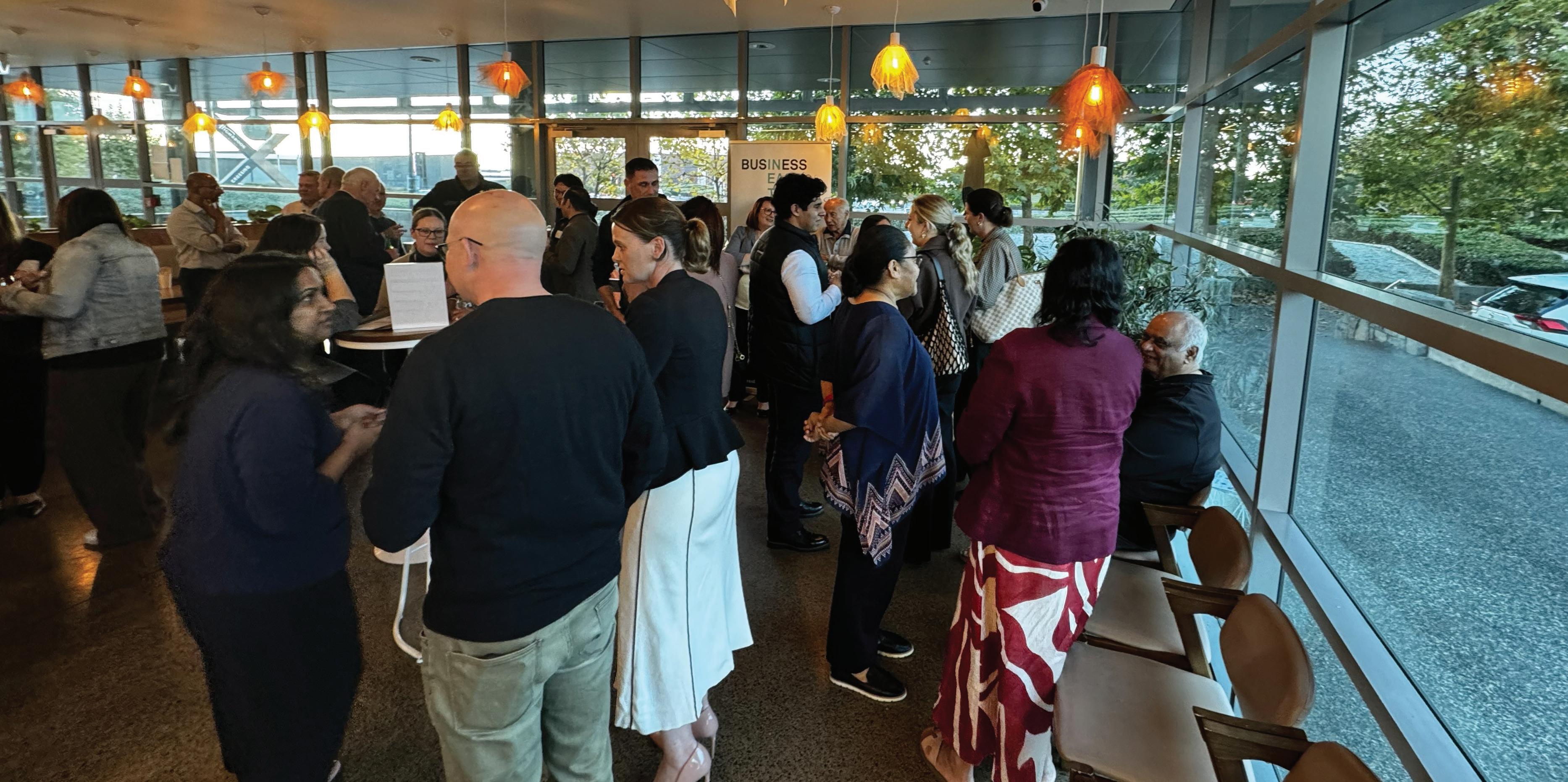






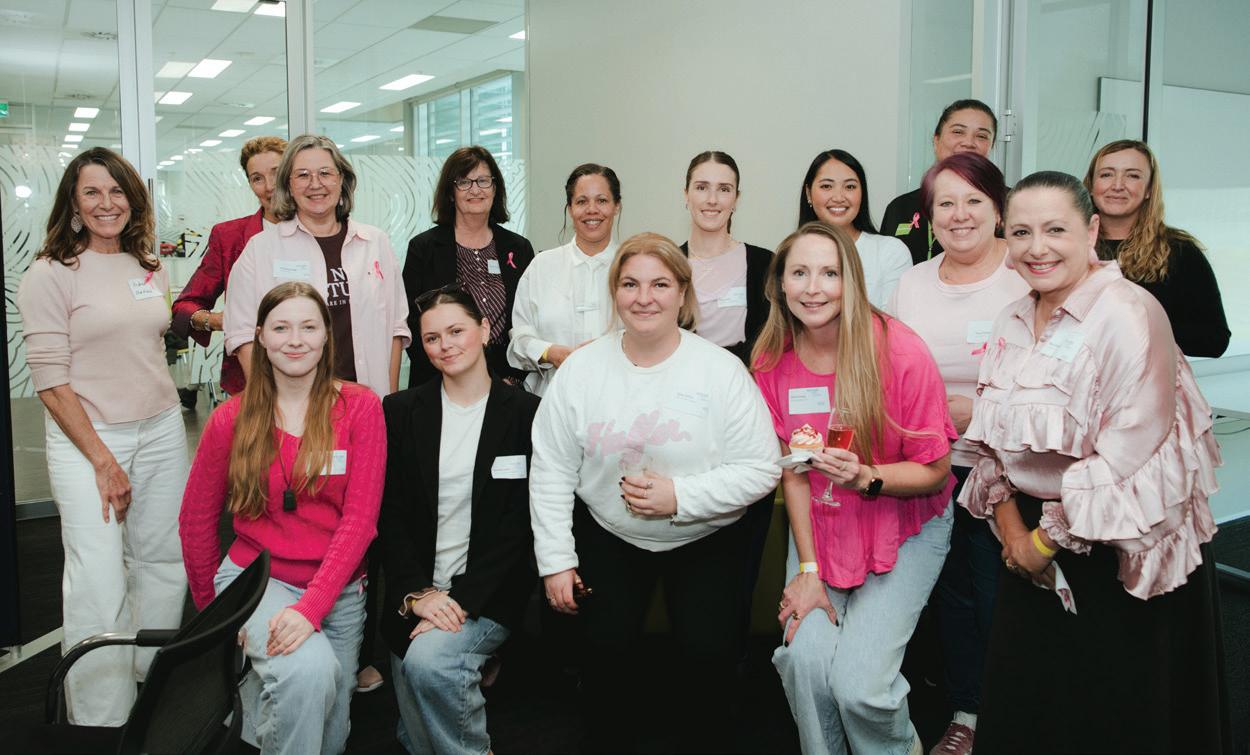
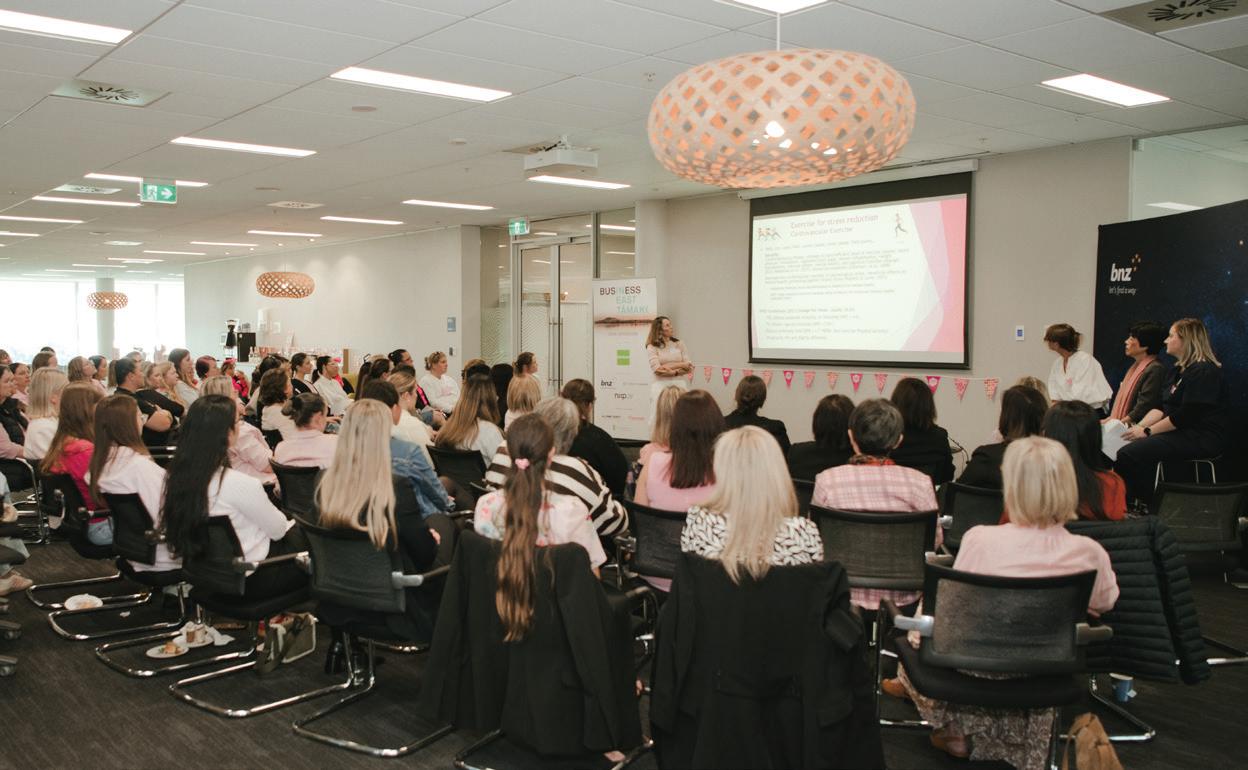


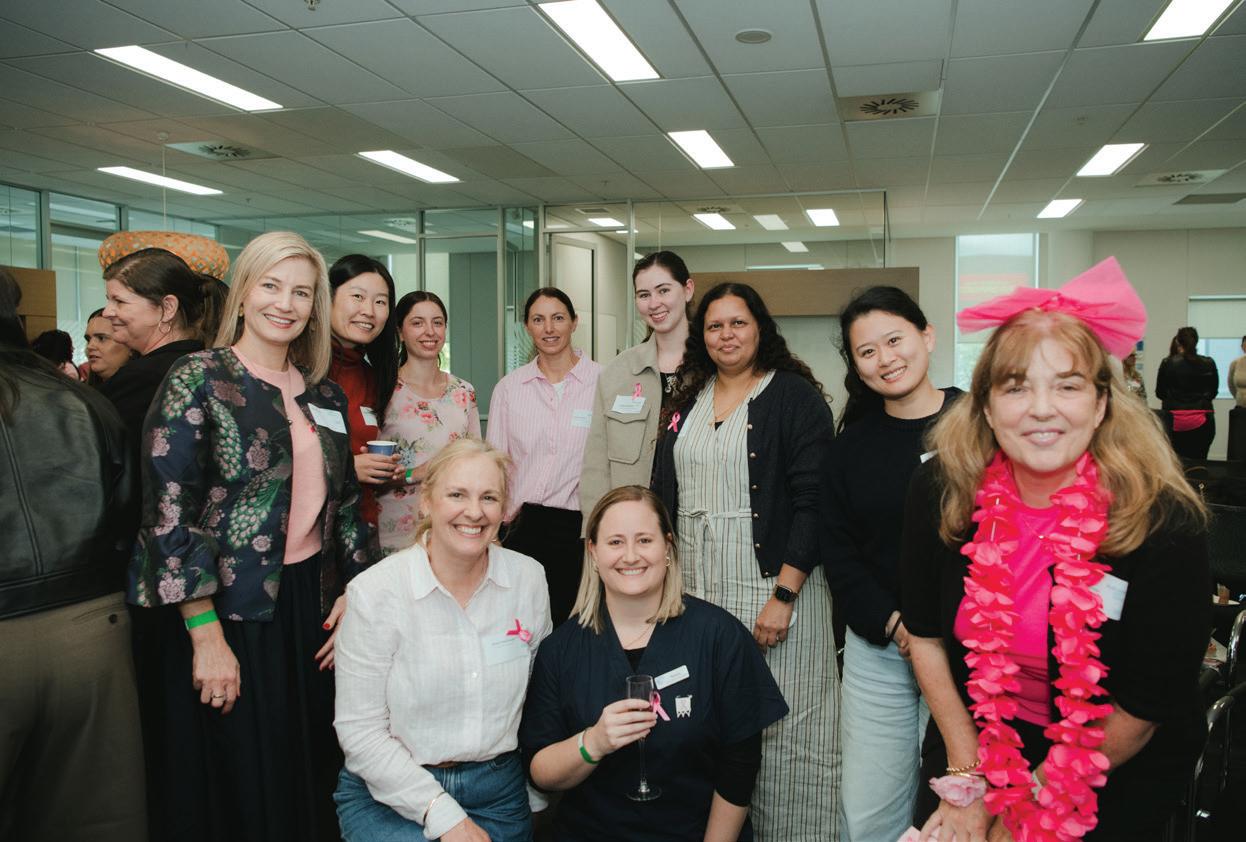
Pink Ribbon Lunch, 22 May, sponsored by BNZ & Highbrook Medical

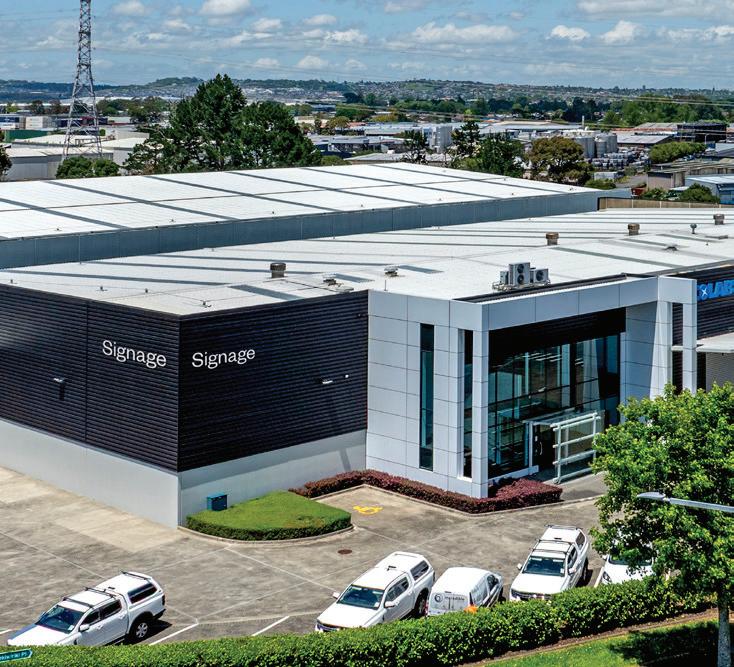

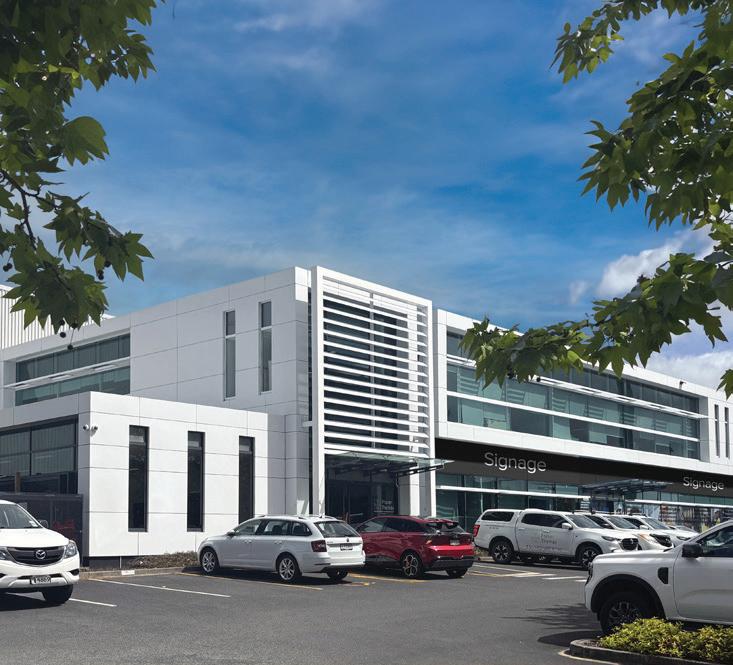
21 El Kobar Drive
+ 4,473 sqm warehouse
+ 1,521 sqm office (over 2 levels)
+ 772 sqm canopy
+ 710 sqm yard
+ Available Now
CONTACT
Thomas Papesch
Asset Manager 021 0334 267
Thomas.Papesch@goodman.com
Robyn Barfoot
Portfolio Manager 021 428 446
Robyn.Barfoot@goodman.com
Highbrook is home to over 140 businesses and 6,000 people, and is the smart choice for global and local businesses like yours. Strategically located right next to SH1 in Auckland, it is a prime hub for logistics, distribution, and connectivity.
Highbrook’s high-quality facilities include premium, high-stud warehouses with sustainable features such as sub-metering to measure and monitor energy use.
Explore warehouse, office and showroom spaces for lease, there’s a range of options to suit your needs.
HIGHBROOK.CO.NZ
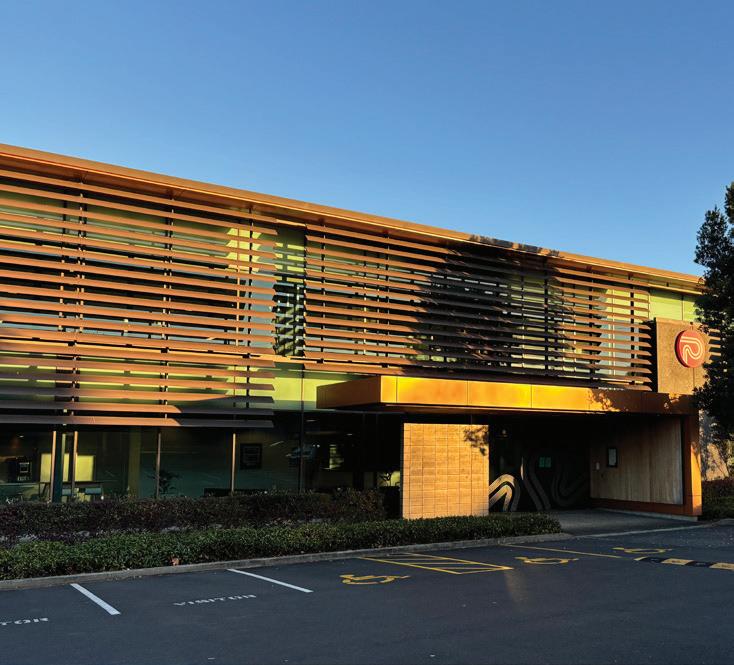
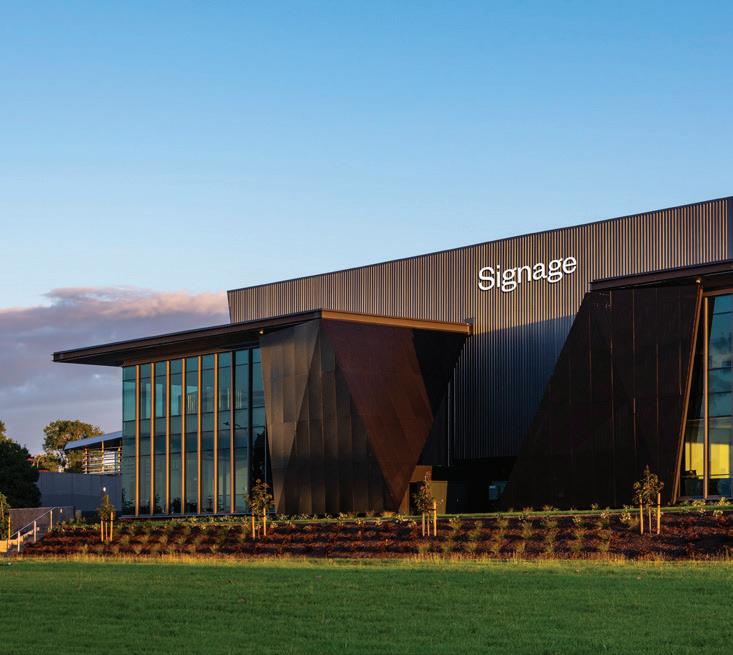
18 Pukekiwiriki Place
+ 4,746 sqm warehouse
+ 2,581 sqm office (over 2 levels)
+ 507 sqm canopy
+ Exclusive drive around yard
+ Available June 2026 (or earlier)
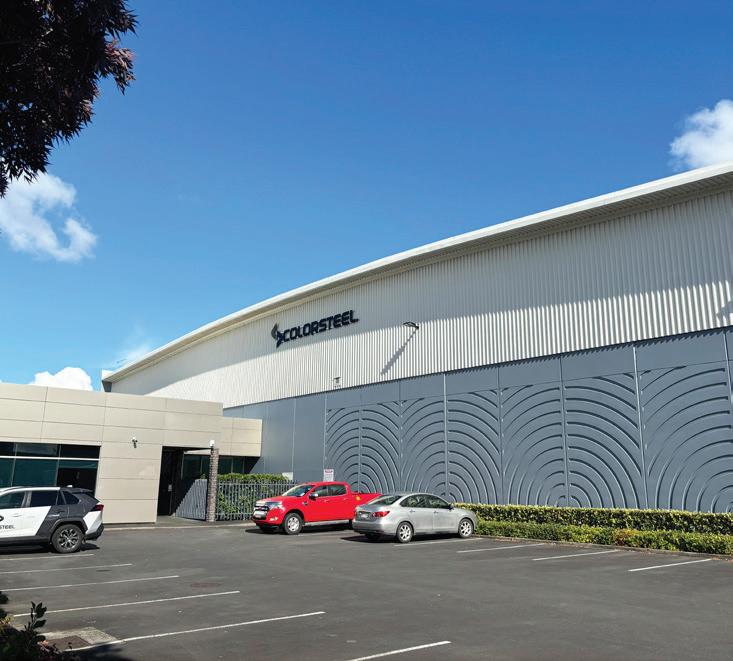
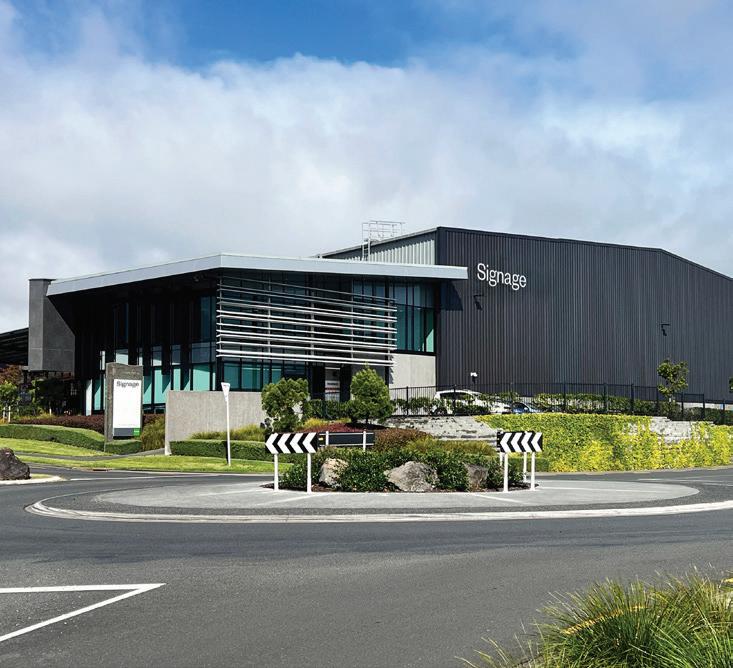
126 Kerwyn Avenue
+ 5,847 sqm warehouse
+ 419 sqm office
+ 983 sqm canopy
+ 1,658 sqm breezeway
+ Available mid 2026
the basics

How East Auckland businesses are doing digital differently
Most of us use technology every day without thinking too hard about it. We tap to pay, track our deliveries, and book appointments online. It's just part of life now.
This year’s RSM East Auckland Business Awards showed that many of our East Auckland businesses are using technology in ways that go far beyond the basics. For example, across all 20 award finalists, over half of the businesses demonstrated significant digital engagement, ranging from companies that have rebuilt their entire operating model around technology to those that have made substantial system investments with measurable commercial results.
Here's what stood out:
Building their own tools
The most striking thing about the most digitally advanced businesses in this year's field is that several of them didn't go looking for an off-the-shelf solution. They built their own.
In each case, the reason was straightforward: no existing software did quite what they needed. So rather than compromise, they invested the time and money to create platforms designed specifically around their own operations, their own customers, their own challenges.
Winners of the Creative and Digital Awards, United Flower Growers (UFG), are an excellent example of this. Category judge, Emma Fern, says what impressed her was their digital success was not invented from scratch, but is the product of ‘intelligent cross-category learning”.
The broader point Emma draws from this is that innovation in the digital space rarely means inventing something entirely new. "People are taking inspiration from other categories. Drawing on their own personal experiences if nothing else, to really understand how these things are working."
The businesses that have taken this path describe development timelines measured in years, and treat their platforms as living products with futures, not completed tasks to be ticked off.
Modernising the engine room
Not every business needs to build from scratch, of course. For many in this year's field, the significant step forward has been moving away from outdated, disconnected systems and getting onto modern platforms that share information, eliminate duplication and reduce administrative burden.
It sounds unglamorous, but the results speak for themselves. For example, if job tracking, financial data, and compliance information all live in the same place and talk to each other, a business runs differently and better. Decisions get made faster. Things stop falling through the cracks.
Reaching customers beyond the local area
New Zealand is a country with a geographically dispersed population that can limit how far a business can realistically reach without involving high costs.
Online selling changes that equation — and several businesses in this year's awards have made the most of it.
One reports a huge increase in revenue via online sales through a purpose-built website. Another has moved from selling purely through trade channels into selling direct to end customers, reaching people who would never have found them through traditional routes. A third has created an online ordering system for its major clients, making it easier for large organisations with multiple locations to manage consistent purchasing and brand standards.
The underlying logic in each case is the same: digital channels let you reach customers that geography or existing trade networks would otherwise put out of reach — without the overhead of opening new premises or hiring more sales staff.
“ ”
"Digital can help to build community and bring people together where they would not otherwise meet each other. SMEs often feel isolated, and people with the same challenges and the same kinds of businesses, doing things at opposite ends of the country — digital can be a way to bring them together.”
Emma Fern
Emma Fern notes UFG’s willingness to launch with the explicit intention of refining as they went. "They set something up from day one knowing that they would continue to evolve it and optimise it," she explains. "In that digital world, it's much easier to be a bit more agile, and test, learn and optimise at speed."
Emma regards this as one of the defining advantages of digital-first thinking for small and medium businesses.

Artificial intelligence: what's real and what isn't
Emma notes that although UFG handled the transition from a traditionally physical business — a flower auction where buyers turned up in person — to a primarily digital one, rather than simply replacing the physical with the digital, they thought carefully about the inperson too, in a world where most of the commercial work was now happening online.
"There were still customers that wanted to physically and tangibly see the flowers," says Emma. "Yes, you can create a digital platform for your business, but actually still think about what the physical aspect is, that's still really important."
She draws a parallel to the retail sector, where brands that sell heavily online often transform their physical stores into immersive spaces that do things a website simply cannot. "It's not necessarily one at the expense of the other," she says.
Artificial intelligence is everywhere in the conversation right now, and it can be hard to separate the substance from the noise. The picture that emerges from this year's awards field is useful — because it shows what AI looks like when it's working.
The businesses describing real AI use in their entries aren't talking in vague terms about the future. They're applying it to specific jobs:
• Handling customer queries around the clock, so staff don't have to.
• Analysing clinical data to support health professionals in making better decisions.
• Automating repetitive production tasks that previously required manual input each time.
What these examples have in common is that AI is solving a defined problem. The businesses in this year's field that are using AI well, tend to be the ones that can answer a simple question: what, exactly, does this do — and what would we have had to do instead?
Giving clients a window in
One of the quieter but more significant themes in this year's field is businesses using technology to give their clients real-time visibility of what's happening on their behalf.
In industries where it has historically been hard to prove that work is being done properly — think facilities management, professional services, or workforce staffing — this is a meaningful shift. Where a client used to have to take your word for it, now they can see a live dashboard showing completed tasks, attendance records, or performance data directly.
Several businesses in this year's field explicitly position this real-time transparency as something that sets them apart from competitors. In their sectors, where service quality has traditionally been difficult to verify, that's a credible claim.
Managing people across multiple locations
For businesses with teams working across different sites — whether that's cleaning crews, care workers, trade contractors, or retail staff — keeping track of everyone and maintaining consistent standards has always been a headache.
Digital tools are making real inroads here. Several businesses in this year's awards describe using:
• Location-verified attendance, so there's a clear record of who was where and when
• Digital health and safety records and incident reporting, replacing paper-based systems.
• Online training programmes that can be completed by staff regardless of where they're based.
That last point — online training — deserves a particular mention. Multiple businesses in the field now deliver substantial training programmes entirely through digital channels. Some of those programmes are specifically designed to help workers understand and use the very technologies that are changing their industries, including AI literacy and cybersecurity.
According to TEKsystems, 72 per cent of New Zealand organisations now offer some form of flexible or remote working. That has become a baseline employee expectation rather than a perk. Businesses that have built the digital infrastructure to manage a dispersed workforce are in a much
What it all adds up to
stronger position than those still relying on systems designed for when everyone was in the same building.
Continuous innovation and digital democracy
The real reason that UFG stays ahead of the game, says Emma, is that they never stop asking what comes next. "They are never sitting still," she says. "They've set this platform up, they've got all the key services, but they are just continuously looking for what the next leap is."
She also makes the equity case for digital: a shared platform gives small and large customers the same access, letting tiny growers reach markets they'd never have managed alone while offering large buyers a nimbler, more personalised service than the old model ever could.
"There's something democratising, maybe, about digital," she says. "Perhaps that's a thought." ” “
The good news from this year's awards field is that "done well" is exactly what the best entrants are achieving. Not buying technology for the sake of it. Not chasing trends. Identifying a real problem in how they sell, how they deliver, how they manage, or how they report — and finding a technology-led answer to it.
To find out more about the RSM East Auckland Awards and the finalists, go to businesset.awardsplatform.com

SUPPORTING LOCAL PEOPLE SINCE 1894
WHETHER
YOU’RE PROTECTING WHAT YOU’VE BUILT OR PLANNING AHEAD…
Preparing for your future calls for focus, foresight, pragmatism and compassion. Our legal experts can assist with Estate Planning, Wills and Enduring Powers of Attorney, Trust Formation and Administration, Relationship Property, Family Law, and Dispute Resolution. Together, we’ll help you protect what matters most—and ensure your legacy is managed with care and confidence.
What your business could be putting into our waterways —
and what to do about it
When a worker hoses down a truck after a delivery run, or a mechanic rinses out a parts bin at the end of the day, where does the water go? If you’re not sure, you’re not alone — and that uncertainty is at the heart of a pollution problem playing out across Auckland’s industrial areas every single day.
Simon Wilkinson of Wilkinson Environmental Ltd has spent decades working at the interface of industry and waterways. His company runs the East Tāmaki Pollution Prevention Programme for Auckland Council, and has visited more than 500 businesses in the area since 2022. His message is simple: most of what runs off an industrial site goes directly into a stream, creek, or estuary — completely untreated.
“People are busy making widgets and doing stuff,” he says. “They just forget about where those drains go.”
First, understand the three pipes
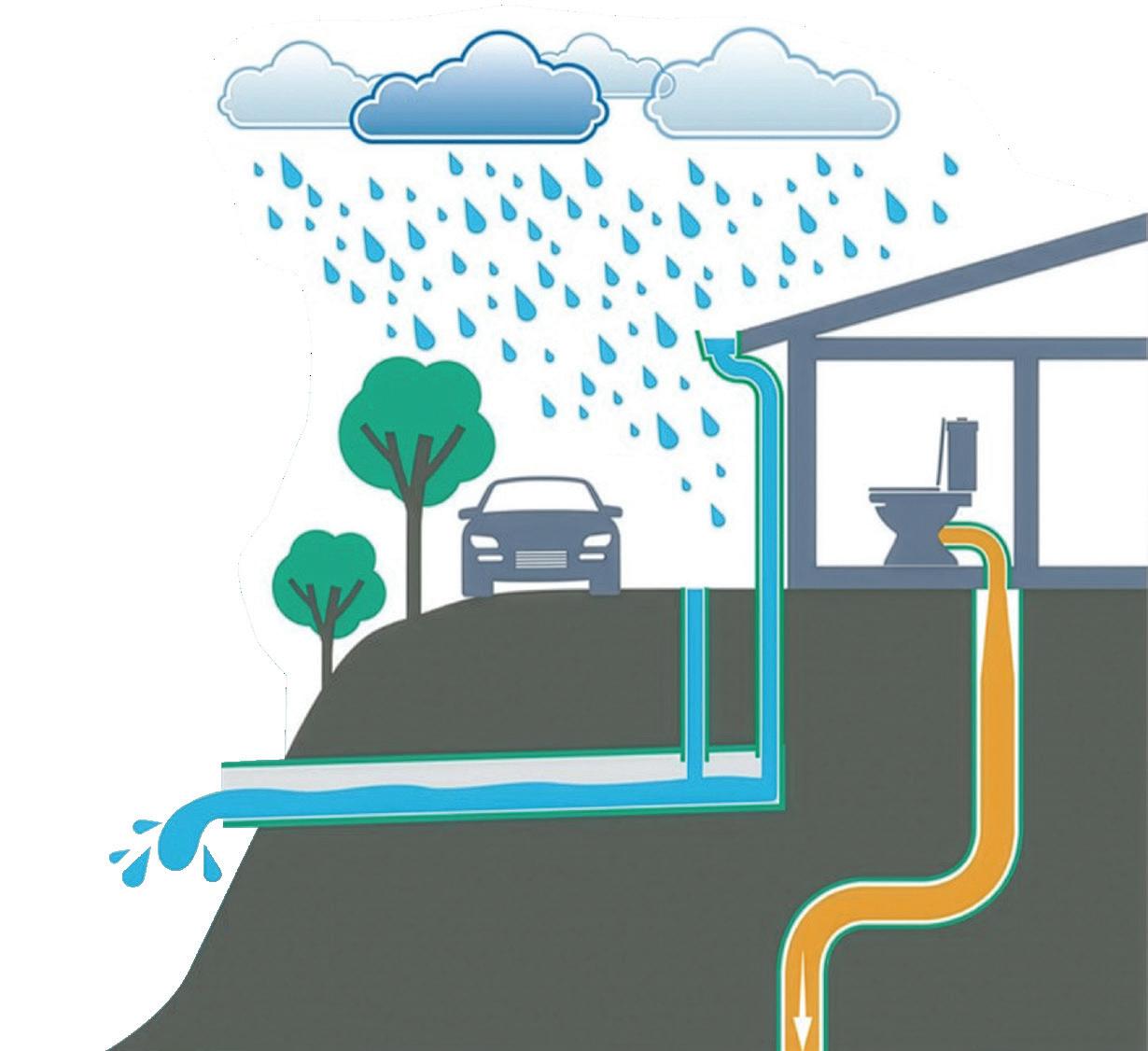
Beneath every industrial site run three separate pipe systems: one delivering drinking water in, one carrying wastewater to treatment, and one taking stormwater away. It’s that third pipe — stormwater — that most people misunderstand.
Unlike wastewater, which goes to a treatment plant, stormwater drains discharge directly to the nearest waterway without treatment. Whatever enters that drain ends up in the stream, the creek, the harbour.
Make sure everyone in your business — from the manager to the newest staff member — knows which drains on your site are stormwater and which are sewer. Label them.
“Storm water goes to our waterways often without any treatment. I think those are the main things that people don’t know.” “ ”
— Bianca Lilley, Healthy Waters, Auckland Council
Washing is one of the biggest culprits
Vehicle and equipment washing is one of the most commonly overlooked sources of stormwater pollution. What’s in the water is the problem.
The Healthy Waters team recently watched a worker at a chicken-processing factory water-blast the backs of trucks, detergent streaming straight into the stormwater drain. When a compliance officer asked him to stop, the worker kept going. “I’ve been told to wash the truck and I’m going to wash the truck,” he said.
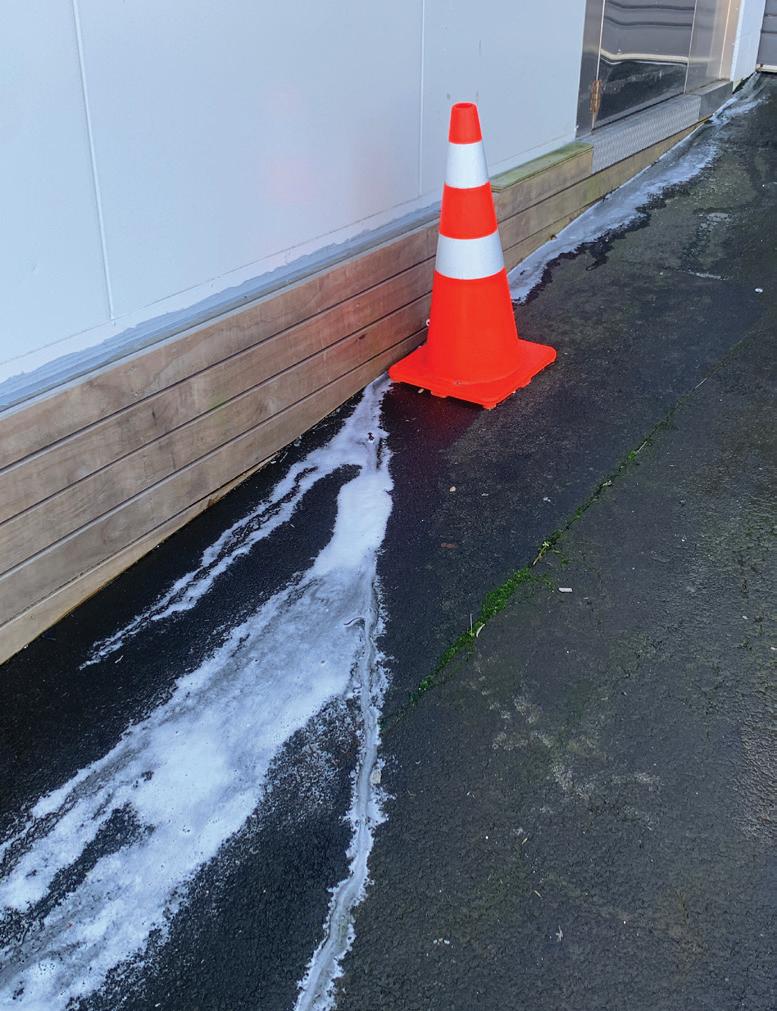
Rainwater
To wastewater treatment plant
Harbour
Image supplied by Wilkinson Environmental Ltd
Simon describes a mechanic washing engine parts outdoors with an eco-friendly degreaser. “The degreaser was lifting engine oil off that part,” Simon says. “So it’s not just the degreaser going down — it’s the engine oil.”
If your staff wash vehicles, equipment, or containers on site, make sure the wash area drains to the sewer — not to stormwater. If it doesn’t, the wash needs to move.
East Tāmaki: what the data shows
Of the more than 500 businesses visited in East Tāmaki since 2022, about one in three had issues that needed addressing — ranging from the absence of a spill plan through to active discharges into drains. The good news is that 65 per cent of those sites have since made the changes recommended to them.
Auckland Council has also installed water quality sensors in the area, which alert a response team when pollution parameters change. On a dry week — when rain can’t be blamed — the sensors still regularly trigger, helping to prioritise where the education programme focuses next.
Take the message to your staff
This is where many businesses fall short. The staff doing the washing, the spill cleanup, the end-of-day routine often haven’t been given the right training.
Skip the regulatory language. Show them photos of the local stream. Talk about the place they fish on weekends or where their children swim. “For staff, the main thing is doing the right thing and protecting the environment for their kids and for the future,” says Simon.
The Pollution Prevention Programme has also created educational videos (including in Mandarin) to help businesses understand common pollution risks and prevention strategies. Tools that businesses can download and use directly to make them aware of their pollution risks.
Practical steps to take right now:
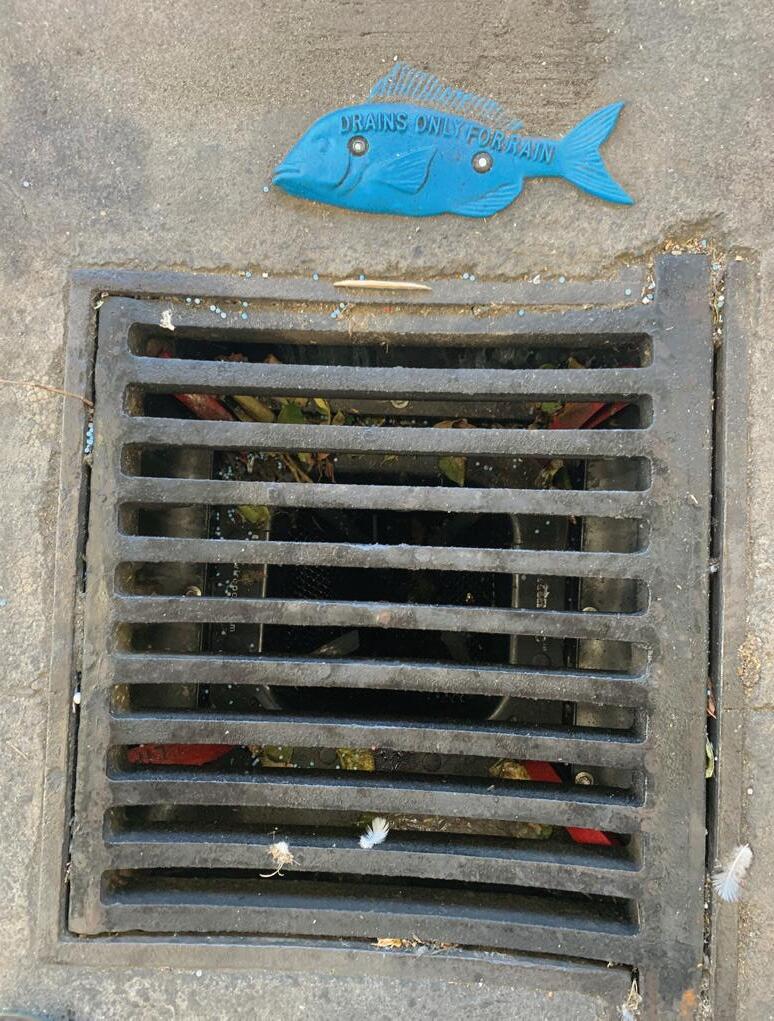
Label or colour all stormwater (blue) and sewer (red) drains on your site clearly.
Ensure all wash areas drain to sewer, not stormwater.
Have a written spill response plan and make sure staff know where it is.
Store all oils, chemicals, and bulk liquids under cover and with bunding.
Run a short induction with new staff on where the drains go and what not to put in them.
If you see pollution in a waterway, report it to Auckland Council on 09 377 3107. The Snap Send Solve app also lets you drop a pin on the map if you’re not sure of the address.
Want help? To find out more, go to:aucklandcouncil. govt.nz/en/environment/looking-after-aucklands- water/ industrial-trade-activity-business-stormwater or contact Wilkinson Environmental Ltd: simon@wenz.co.nz

Real examples of what shouldn’t go down the drain
Some of the most common pollution incidents come from everyday activities that nobody has ever stopped to question:
• A commercial Auckland butcher was washing wheelie bins with residual fat, blood, and offal directly into the stormwater drain. Organic matter like this depletes oxygen in waterways and suffocates aquatic life — just as a milk spill would.
• Plastics-handling and logistics sites regularly shed nurdles — tiny plastic pellets used in manufacturing — that turn up in mangroves and stream beds during clean-ups.Image of blue plastic pieces in drain
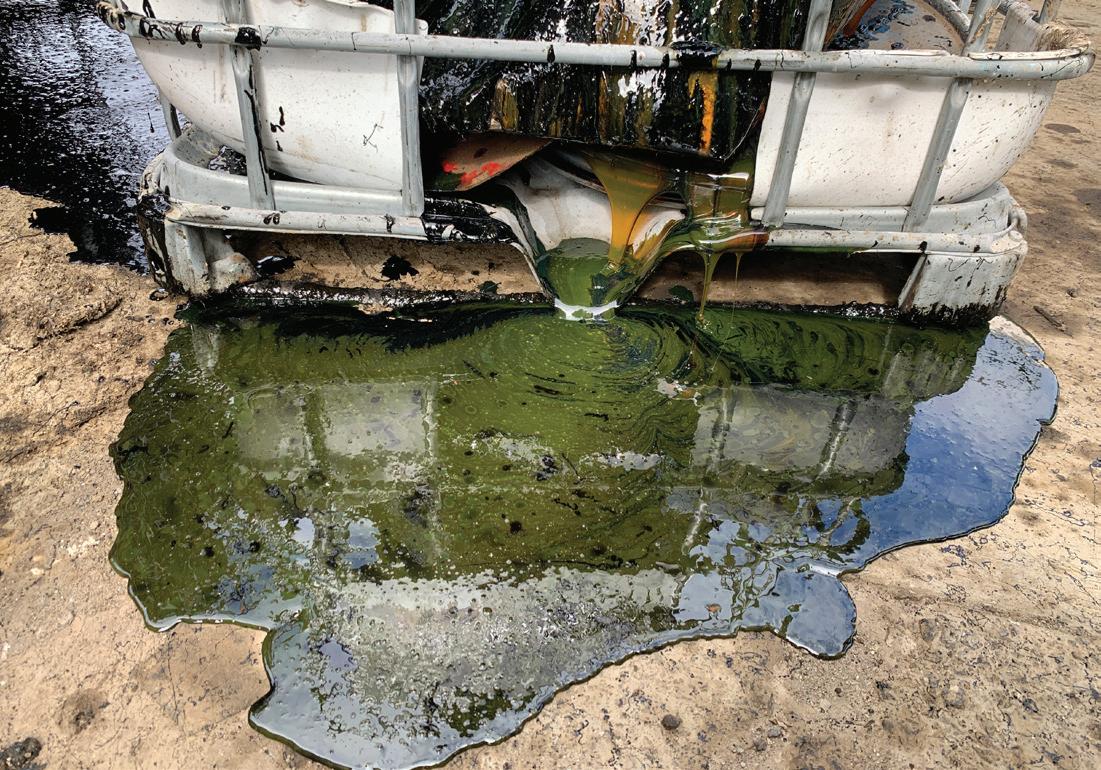
• Some businesses store large drums of oil or chemicals outside with no bunding. When a drum leaks — and they do — it can reach the nearest drain before anyone notices. Image of oil drum leaking oil
• Even ISO-certified companies with international environmental accreditation have sometimes been found to be poor performers.
Watch these pollution prevention videos on our website - businesset.org.nz/better-business--less-waste
• What is water pollution and how do you avoid it.
• Common causes of accidental water pollution.
• Being prepared for an accidental spill.
• Water pollution video in Mandarin

Know your normal
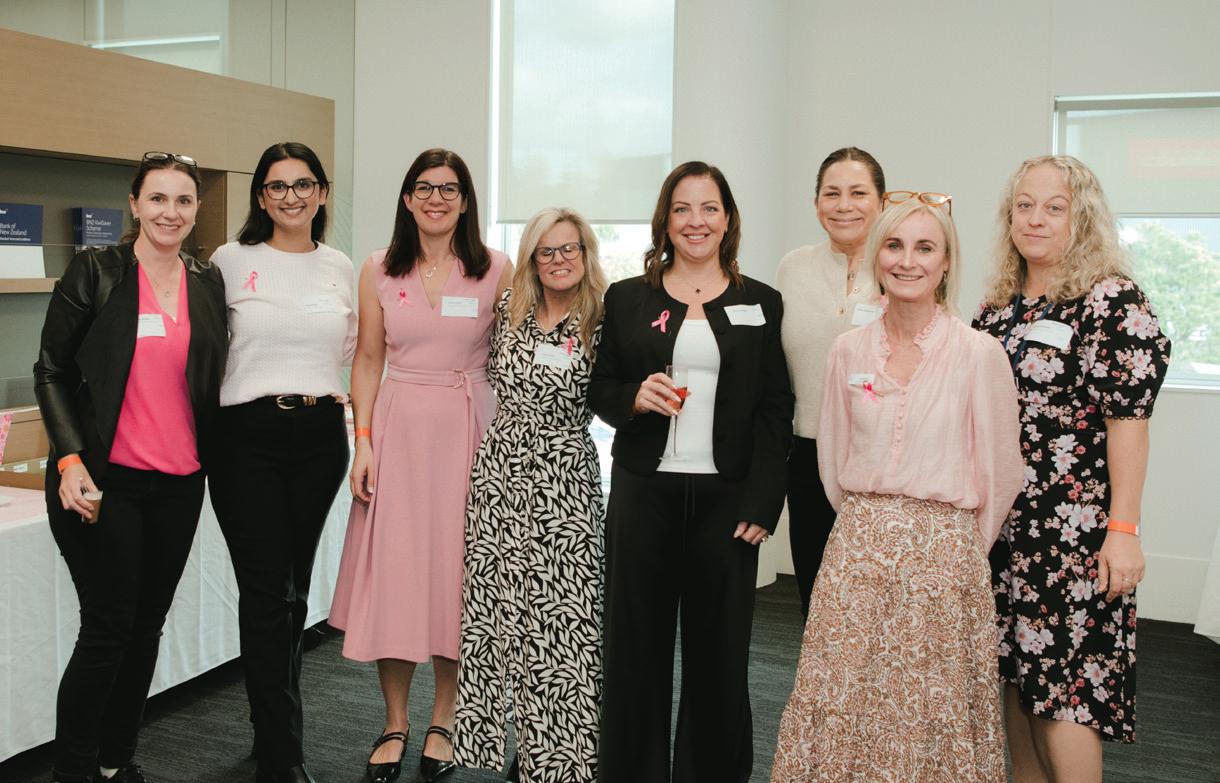
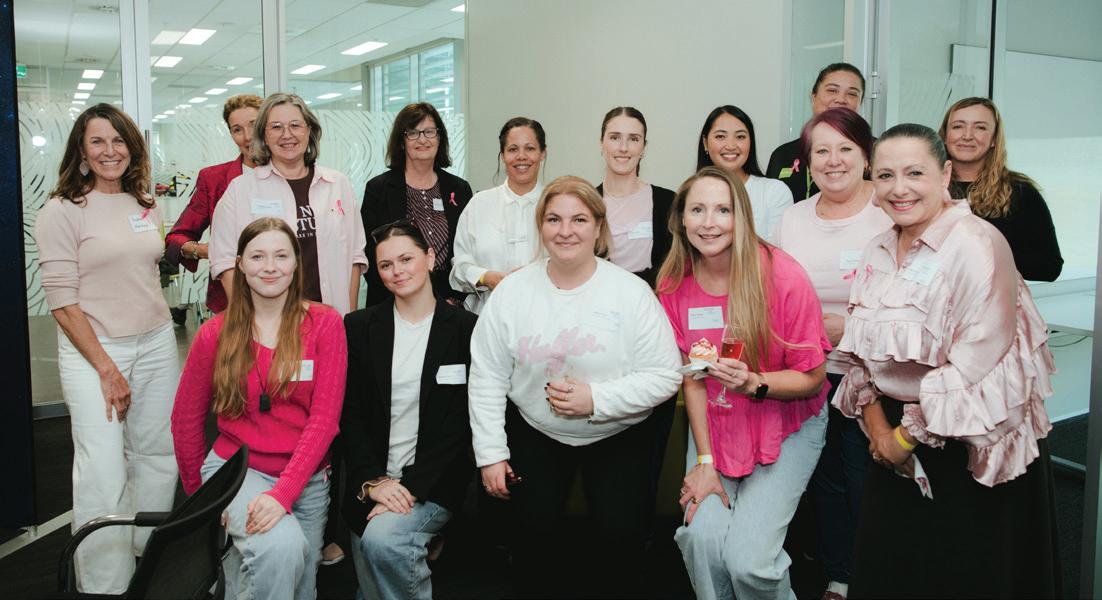
In May, more than 60 women gathered at a Business East Tāmaki EmpowHER networking lunch in support of Breast Cancer Foundation NZ, raising $1,481 for the charity — well above the $1,250 target.
Four health professionals took to the panel to cover the full spectrum of everyday wellbeing — sleep, movement, nutrition and breast cancer awareness. Their message was consistent and clear: small, sustained habits are what underpin a longer, healthier life.
Breast Cancer in New Zealand — the numbers
• Nine women in New Zealand are diagnosed with breast cancer every single day
• Around 3,700 new diagnoses every year
• Lifetime risk for New Zealand women: 1 in 9
• 89% of women diagnosed in New Zealand survive
• Free mammograms via BreastScreen Aotearoa for women aged 45–74. No referral needed. Call 0800 270 200
“Without realising it, we end up in a bit of a tussle with sleep — and the harder we chase it, the further it runs away from us.”
Karen Lucas: The sleep trap — and how to get out of it
Occupational therapist and health improvement practitioner Karen Lucas opened with a question: how many of you feel exhausted before the day has even started? It’s not about perfect sleep. It’s about stopping the fight.
• Get out of bed if you’re lying there frustrated. Go somewhere warm and dimly lit, avoid anything stimulating, and return only when drowsiness comes back. Research shows this can shift patterns within one to two weeks.
• Make the bed a friend, not a battlefield. Nice linen, a pillow spray, a made bed — small things, but the brain takes them seriously.
• Watch the narrative. “I’ve never been a good sleeper” is a thought, not a fact. Research shows poor sleepers consistently overestimate how much time they spend awake.
• Give your brain a worry window. A brain-dump earlier in the evening offloads the mental to-do list that otherwise surfaces at midnight.
• Breathe. Slow belly breaths in bed activate the parasympathetic nervous system and signal to your body that it is safe to rest.
Andrea Marchand: Why movement is the best stress medicine
Physiotherapist Andrea Marchand explained that stress is not simply a feeling — it is a biological state with consequences across hormones, immunity, cardiovascular health, and mood.
• Cardiovascular exercise: (running, swimming, dancing, team sport) strengthens the heart, regulates blood pressure and blood sugar, and directly improves stress response. WHO guidelines: 150 minutes of moderate intensity per week, accumulated in short bouts.
• Resistance training: (weights, bands, Pilates, bodyweight) protects muscle mass, bone density, and cognitive function. Aim for two sessions a week.
• Yoga and tai chi: reduce stress-reactivity and build emotional resilience over time.
• Dancing: combines physical exertion with social connection and dopamine release — and the research backs every bit of it.
• Exercise in nature: adds a further layer of psychological benefit beyond what indoor exercise alone provides.
“
“The most evidence-based remedy? Move!”
New Zealand-registered dietitian
Alda Lee: Prevention before crisis
1. Reduce refined and processed carbohydrates. Blood sugar spikes and crashes drive cravings, fat storage around the abdomen, and systemic inflammation.
2. Embrace healthy fats. Olive oil, avocado, nuts, seeds, and oily fish are anti-inflammatory. A tin of salmon provides two days’ worth of omega-3s.
3. Eat enough protein at every meal — not just dinner. Requirements increase with age as muscle mass naturally declines.
4. Fill half your plate with colour. Frozen vegetables retain full nutritional value and are often cheaper than fresh.
5. Feed your gut with fermented foods — sauerkraut, kefir, kombucha, Greek yoghurt — to support the bacteria that regulate digestion, immunity, and mood.
6. Drink water first. The brain mistakes thirst for hunger. Aim for 1.5–2 litres daily.
7. Allow a 12-hour overnight fast. Finish at seven, start again at seven. Late-night snacking undoes this entirely.
“We want to prevent problems from happening. Don't wait until there’s a crisis and then ask what to do.”
Nerice Fourie: What every woman needs to know
Nurse practitioner intern Nerice Fourie was informative about breast cancer symptoms without being alarming.
• Know your normal. Just be familiar enough with your body to notice change. Watch for skin dimpling, nipple changes, unusual discharge, or unexplained pain that doesn’t resolve.
• Alcohol. Even one drink a day measurably raises breast cancer risk. There is no completely safe level.
• Weight and exercise. Being overweight post-menopause raises oestrogen and therefore risk. Regular exercise is associated with a 10–20% lower risk.
• Breastfeeding reduces breast cancer risk by approximately 4.3% for every 12 months, with women who breastfeed for more than a year carrying around 26% lower lifetime risk.
• Book your mammogram. Free, every two years, for women aged 45–74. No referral needed. Call 0800 270 200. Breast implants do not cause breast cancer — but tell the clinic when you book.
“ ”

Questions from the floor
Q: Eating well sounds expensive. If money is tight, where do you start?
Cut refined and processed carbohydrates first — it costs nothing and delivers the most benefit. Remove the white bread, biscuits, and sugary snacks.
Q: I wake at two in the morning and my mind races. Should I get up or stay in bed?
If frustration is building, get up, write down what’s on your mind, then return to bed and focus on resting rather than sleeping. If it’s a calm but busy mind, stay put and breathe slowly.
Q: I read in bed until my eyes close. Is screen light a problem?
Reading is helpful — it slows brain waves. The blue light concern is overstated; what matters more is the content. Social media keeps you alert. A book doesn’t.
Q: I work full-time and have children — how do I fit in exercise?
Short bites done consistently are enough. Fast walking, stairs, a 15-minute YouTube session — it all counts. Schedule it like an appointment, or it won’t happen.
Q: Does a weights' session need to be a full gym session?
Fifteen to 20 minutes is enough. You don’t need a gym — bodyweight and resistance bands work perfectly well.
Q: Is long-term melatonin safe?
Speak to your GP or nurse practitioner. The behavioural strategies covered today — stimulus control, breathing, the worry window — produce lasting change without dependency questions.
“Think of one person who has been putting off being screened. Have that conversation. Offer to go with them. It’s free, and it saves lives.”
Thanks and Acknowledgements
Warm thanks to our speakers — Karen Lucas, Andrea Marchand of Active Plus Highbrook, Alda Lee of Total Wellness Group, and Nerice Fourie of Highbrook Medical — and to our generous event sponsors, BNZ and Highbrook Medical, whose support made the occasion possible.

2026 Workplace Law Update & Team Dynamics: Managing Risk from Both Sides
Workplace Law Update: What employers need to know in 2026
2026 is already shaping up to be a year of significant change in workplace law, with further reform expected ahead of the election. Employers are facing shifts across employment, privacy, health and safety, and immigration law that require proactive planning rather than a “wait and see” approach. Below is a snapshot of the most relevant developments - and what they mean in practice for employers.
Employment Law: Strategic implications for employers
In February 2026, key amendments to the Employment Relations Act 2000 came into force, with immediate implications for workforce strategy and risk management.
The introduction of the Contractor Gateway Test provides welcome clarity from the risk of challenge to status. Employers using contractors should review all existing arrangements to ensure they meet the test and can take advantage of the certainty now available.
Significant changes also apply to high earners (those earning over $200,000), excluded from raising personal grievances (for existing employees, there is a 12-month transition period). Employers need to think carefully about how they manage contractual protections, dispute resolution clauses, and termination risk for this group, balancing attraction and retention of senior talent.
Further, the exclusion of personal grievance remedies in serious misconduct dismissal cases is changing employer strategy to disciplinary processes, and to personal grievance defence. Documented definitions of this conduct also need review.
Privacy Law: New IPP and increasing exposure in employment disputes
From May 2026, a new Privacy Principle (IPP3A) requires businesses to notify individuals when personal information is collected indirectly. This applies to employers collecting information from third parties — for example, during investigations, recruitment checks, or restructures.
Privacy requests and complaints are increasingly being paired with personal grievances, heightening overall risk exposure.
Employers should ensure privacy policies are up to date, managers understand their obligations, and workplace processes align with the new transparency requirements.
Holidays Act Reform: A fundamental systems change
The long-awaited Employment Leave Bill proposes a complete redesign of how leave is earned, taken, and paid. If enacted, it will affect every employer.
Key proposed changes include leave accruing in hours (not days) from the start of employment, leave taken on an hourly basis aligned to standard working hours, and leave paid at the lowest applicable hourly rate for the day leave is taken. ‘Pay as you go’ holiday pay would be removed and replaced with a 12.5% leave compensation payment.
These changes will require payroll system upgrades, contract revisions, and careful planning. The Bill is currently open for submissions, and we anticipate a 24-month transition period once it is passed.
Health and Safety: Proportionate risk management
The Health and Safety at Work Amendment Bill proposes reforms to the Health and Safety at Work Act 2015 (HSWA), including:
• A new definition for “critical risks” across two categories - hazards that are already subject to specialist regulations and hazards likely to result in death, notifiable illness or injury, notifiable incident or occupational disease.
• Small PCBUs (fewer than 20 workers) would only need to manage critical risks (rather than all workplace risks), while all other PCBUs must prioritise critical risks.
• A carve out for earthquake-prone buildings. Where the building owner is complying with their Building Act 2004 obligations, the PCBU would not be required to take further steps to manage seismic risks associated with that building.
• Changing the scope of HSWA Officers’ due diligence obligations.
• Expanding the development of Approved Codes of Practice to industry participants and clarifying notification requirements for serious incidents.
Immigration: Planning for skilled workforce retention
Immigration New Zealand announced upcoming changes to the Skilled Migrant Category Resident Visa, which will be effective from August 2026. The changes are aimed at improving retention of skilled workers and supporting economic growth.
The changes intend to introduce two new residence pathways - one based on skilled work experience and another for trades and technicians - each with specific experience, qualification, and New Zealand work requirements. Additional changes include extended validity of English test results for registered professionals, stricter eligibility rules for occupations on the Amber and Red Lists, and revised wage settings tied to the SMC median wage. Migrants may also be able to extend their Accredited Employer Work Visa to complete experience requirements.
Overall, the changes simplify pathways to residency, including faster routes to reaching the eligibility threshold to apply for a Skilled Migrant Category Resident Visa, all while reinforcing experience, wage, and labour market alignment requirements.
In Summary
With multiple reforms already in force and others progressing, employers who take a proactive, strategic approach in 2026 will be best placed to manage risk, control costs, and maintain confidence when making people decisions. Now is the time to review systems, contracts, and practices — before these changes turn into disputes.
Disclaimer: This article provides commentary on workplace law topics and should not be used as a substitute for legal or professional advice for specific situations. Please seek legal advice for any questions specific to your workplace.
Workplace Law Experts. Practical. Strategic. People-Focused.
At Ashcroft Mitchell McGregor, we’re more than legal advisors—we’re partners in supporting workplace wellbeing and business success. As a specialist boutique firm, we focus on what matters most: people, clarity, and solutions that work in the real world.
We provide tailored legal support across employment law, workplace investigations, health and safety, immigration, privacy, and restructuring—working with businesses throughout Northland, Auckland, Tauranga, Hawke’s Bay and beyond.

Kate has specialised in employment and health and safety throughout her career, and is passionate about providing commercially pragmatic, tailored solutions to client issues. Kate acts for employers across a range of industries, giving strategic, compliance and best practice advice on non-contentious matters as well as providing representation in disputes.

Shoosh is an accomplished and respected New Zealand immigration lawyer with over nine years of experience in the New Zealand immigration space. Shoosh partners closely with employer and individual clients to provide strategic advice tailored to their specific needs.
Shi Sheng Cai (Shoosh), Partner, Ashcroft Mitchell McGregor
Kate Ashcroft, Partner, Ashcroft Mitchell McGregor Law
Sharing the load: How one App is tackling rising fuel costs and commuter congestion
For anyone who drives to work in East Tāmaki, the daily commute on congested roads has long been a source of frustration — but with high fuel costs showing no sign of easing, it has become a growing financial burden too.
The current fuel crisis has meant that petrol and diesel prices are biting hard into budgets, and, with few public transport options in Highbrook and around East Tāmaki, many commuters are just having to take the hit on their pockets.
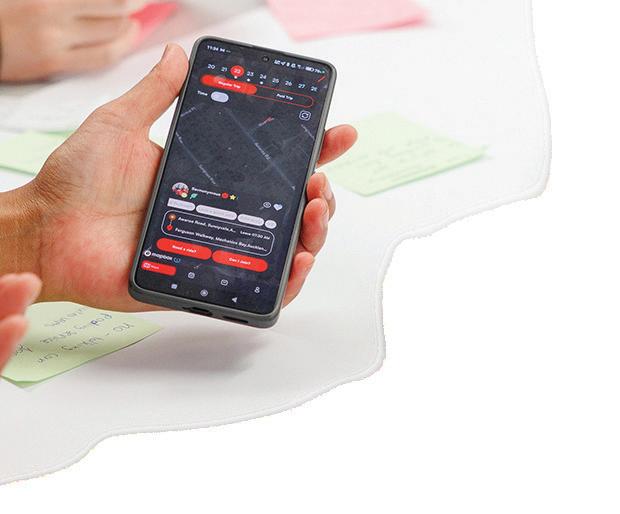
In steps Carpoolin, a New Zealand-built platform founded by Auckland entrepreneur Saveun Man. The App connects Drivers and Passengers for planned everyday journeys. can connect not just within their own organisation, but potentially with neighbouring businesses across East Tāmaki who are travelling similar routes at similar times. In a business-rich area like this, Carpoolin can increase carpooling viability — which is really important."
"We're trying to make it easier for people to share trips to reduce the cost of commuting, and take pressure off Auckland's roads," says Saveun.
“ ”
"The intention is to introduce an old but new, practical transport alternative for the area. Something lightweight, optional, and easy to adopt for staff and businesses who might be open to sharing a car ride or exploring alternatives with the recent rise in commuting costs.”
Carpooling has been discussed as a solution to urban congestion for decades, yet it has rarely translated into widespread practice.
"Carpooling sounds feasible; politicians and others will often refer to it," says Saveun. "But it's incredibly difficult for anyone to coordinate, especially if you don't know others at work well. Bringing it up doesn't seem common in many places."
Central to its approach is a feature called Groups. "Carpoolin is different because with Groups, we're promoting local, trusted networks," Saveun explains. "Employees
Four reasons why you should try Carpoolin
• The barrier to entry is low. "Creating a Profile and sharing or finding Trips is completely free," says Saveun. "We don't take any kind of commission on Trips."
• Add to that, average commuting patterns indicate that sharing trips could amount to roughly $2,500 per year in fuel savings alone. Imagine what you could put that towards.
• For businesses, the appeal extends further: less pressure on parking, eased congestion around work premises, and a measurable uplift in staff connectivity.
• For organisations with sustainability mandates, Carpoolin is also developing Scope 3 emissions measuring/reporting, due in mid-2027, giving employers a way to account for commuting-related emissions within their reporting frameworks.
“
Carpoolin is trying to make what already exists - the daily journey between home and work - a little less costly, a little less isolating, and a great deal more efficient.

Reduce commuting costs, minimise emissions, and foster stronger community connections while making your daily travel more enjoyable.
• Share the Ride.
• Save Costs.
• Build Community.
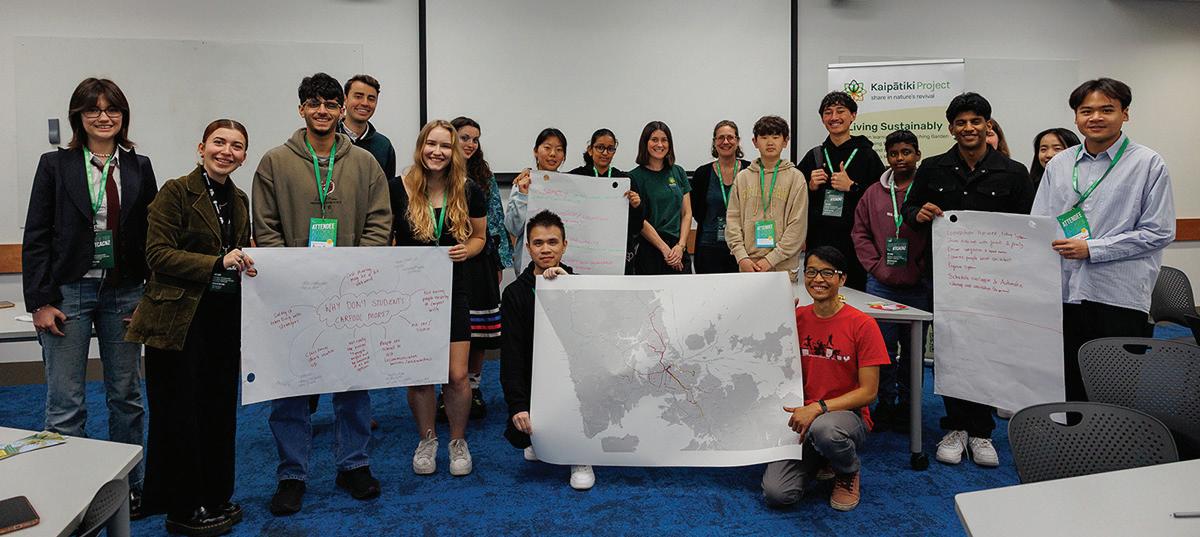
Students investigate carpooling at a Kaipātiki Project workshop
New Howick Local Board is in place
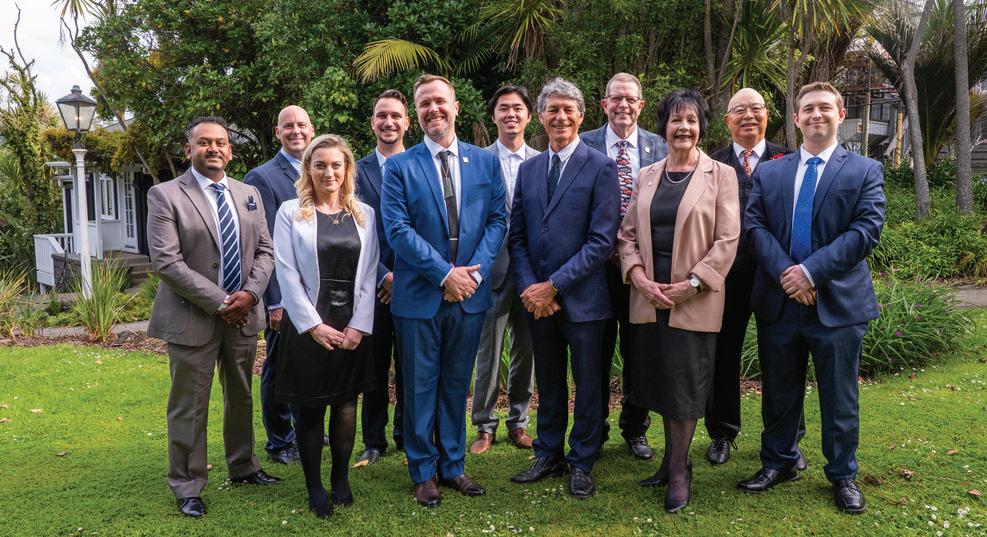
Following the elections last October, the new Howick Local Board has been sworn in, with new members joining our experienced team.
About Us
Part of Auckland Council, we’re responsible for the 300 parks, five libraries and numerous community centres across Howick, Pakūranga, Botany, and Flat Bush.
We also provide grants to organisations to deliver for our communities, such as the fantastic RSM East Auckland Business Awards. With 173,000 residents to serve, we value our partnerships with organisations like Business East Tāmaki.
New members
At our inaugural meeting, the Board elected Bruce Kendall MBE as our Chairperson for the three-year term, supported by three deputies (each serving one year) starting with Kai Zeng, Krish Naidu, and Jack Collins. They lead an experienced team of returning members – Adele White, Damian Light, John Spiller, Katrina Bungard, Mike Turinsky, and Peter Young – in addition to newcomer Luke Collings.
Meetings
We meet every Thursday, with formal decisions made in the fourth week and workshops in the other weeks. We
recently reconfirmed our commitment to transparency by continuing to make materials and meetings open to the public by default, unless there are specific reasons for confidentiality (such as commercial sensitivity).
Strategic plan refresh underway
We’re working on the refresh of our threeyear strategic Howick Local Board Plan, building on our successes and adapting to the changing needs of our communities. There are five core outcomes common across all local boards:
• Community
• Natural environment
• Built environment
• Transport
• Economic development.
The draft plan will be out for consultation in late June through to late July and we encourage everyone to have their say.
Transport reform coming soon
Parliament has recently passed legislation that will radically change how transport is governed in Auckland. This is the
most radical change for Auckland since the formation of the super city in 2010 with transport strategy, policy and planning moving to Auckland Council.
The law establishes a new Auckland Regional Transport Committee (ARTC), which will prepare a 30-year Transport Plan for Auckland and the Regional Land Transport Plan for Auckland. This creates a new joint council-government mechanism for longterm transport planning, and the intent is to improve alignment between Auckland Council and central government on strategic priorities, sequencing and investment.
A statutory CCO continues (Auckland Transport), which will focus on delivering public transport services, while Auckland Council will take on all other transport functions. Some of these will be shared or delegated to local boards.
We have a maximum of six months to implement the changes while continuing to deliver for Auckland, so work to support these changes is already well underway.
(Left to right): Krish Naidu, Mike Turinsky, Katrina Bungard, Damian Light, Kai Zeng, Bruce Kendall, John Spiller, Adele White, Peter Young, Luke Collings.

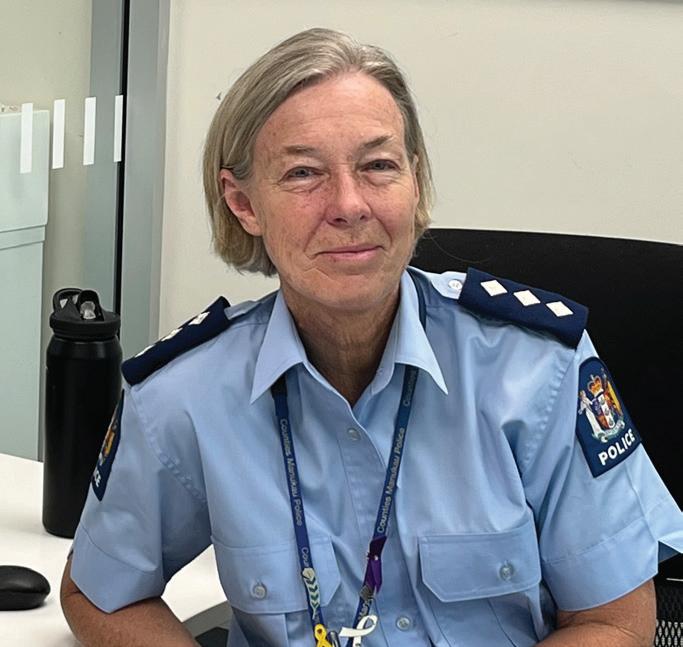
Update from Inspector Ann Wilkie
Area Prevention Manager for Counties Manukau East
Targeting the repeat offenders
The creation of the National Retail Crime Investigation Unit and the use of Auror have been the most impactful developments in tackling organised retail theft in our area. The unit focuses on recidivist offenders — and in East Auckland, the results are tangible.
Some
of the most prolific offenders we’ve been tracking were shoplifting across five different locations in a single day, stealing tens of thousands of dollars’ worth of goods a year, with much of it coordinated through social media. Several of those individuals are currently in custody, and retail crime in the area has dropped noticeably as a result.
The Auror platform has been central to this work. Rather than officers having to manually search through disparate records, CCTV footage and incident details from retailers are uploaded directly into the system, allowing us to link offending across multiple locations and identify patterns far more quickly than before. The more retailers use it, the more effective it becomes — so if you’re not already reporting through Auror, please do.
Real-time alerts and cameras that are making a difference
The ANPR cameras on the main thoroughfares through East Tāmaki are, quite simply, gold. Police are now responding to alerts from these cameras far more actively than in the past — and with the

Eagle helicopter available, our ability to intercept flagged vehicles has improved dramatically. Stolen vehicles, cars wanted in connection with offences: the chances of us catching them have never been better.
Working alongside this is an early-alert initiative developed between Simon our community manager and Business East Tāmaki. Every morning, as part of our operational start-up meeting, we review all volume crime from the past 24 hours. Where incidents fall within your catchment, Simon passes the relevant details — vehicle descriptions, CCTV stills, timeframes — to the business association, which immediately pushes them out to member businesses. We’re working in real time, and it’s working.
Watch for the alerts and check your footage when they come through — your cameras may hold exactly what we need. See more on Ps10-11 about Community Cam and the early alert system.
A burglary recently took place in which tools were stolen. The police advised Business East Tāmaki, who sent out an alert to all their members. A positive reply from a business gave police an avenue of enquiry, which they were able to follow up.
Trends to be aware of
Shoplifting and general theft continue to be the dominant crime type in the area, though the figures are heading in the right direction. Beyond retail, metal theft remains persistent — copper wiring, air conditioning units, and spouting are all being stripped for scrap value, so secure any exposed infrastructure where you can. On-site fuel storage is an increasingly attractive target, and theft of tools from commercial vehicles is on the rise. If your staff travel with equipment, treat vehicle security as a priority.
Please keep reporting
Everything you report helps us build the picture, even if it feels minor at the time. Suspicious behaviour around your premises, unfamiliar vehicles, anything that doesn’t look right — report it.
And one thing worth knowing: if you see dirt bikes on public roads, that is already reportable. They are unregistered, riders are typically unhelmeted, and many bikes are stolen. Do not confront the riders; capture what footage you can and let us know.

The days are shorter, the nights longer, and the rain has made up its mind. There is no better excuse to cancel plans, stay by the fire, and lose yourself in a good book. Poppies Howick has gathered six compelling reads— from sweeping historical fiction and gripping political memoir to stories of quiet lives transformed in unexpected ways. These titles promise to transport, move and absorb.

Calamity Club by
Kathryn Stockett
Kathryn Stockett's first novel since the global bestselling THE HELP - this is the sweeping story of a group of underestimated women and an 11-yearold orphan girl in Mississippi in 1933. Eleven-year-old Meg Lefleur has learned the hard way to rely on no one. Ever since her mother failed to come home last Christmas Eve, she's been one of the 'unadoptable' girls at the town's orphanage. But when she meets Birdie, a young woman who has come to Oxford determined to remind her socialite sister of the impoverished family she left behind, for the first time in a long while, it seems someone else might care about Meg's future

Aotearoa in bloom: A history, culture and practical uses of New Zealand's flowers
by
Rachel Clare and Tryphena Carroll
Lushly illustrated book about the history and uses of many of New Zealand's native flowering plants and trees, including their significance in te ao Māori. He puāwai, he kōrero. For every flower, a story. Did you know that Aotearoa has more than 2000 species of flowering plants, and that more than 80 per cent of them are found nowhere else on Earth? This book invites you on a botanical hīkoi through Aotearoa's flowers. Discover where they grow, when they bloom, the roles they play in their ecosystems, and which ones you can grow in your garden.

One last question, Prime Minister by
Barry Soper
From Muldoon to Luxon, Barry Soper has spent the best part of five decades reporting from New Zealand's corridors of power, telling untold stories from the House of Parliament. His working life can be measured in 12 prime ministers: from the larger-than-life characters of Rob Muldoon and David Lange, to the golden age of Helen Clark and John Key, to the post-Covid era of Ardern and Luxon - Soper's insight and nose for a story is second-to-none.

The breath of the Gods: The history and future of the wind by Simon Winchester
What is going on with our atmosphere? Headlines are filled with devastating hurricanes, murderous tornadoes, and cataclysmic fires, while atmospheric scientists warn that winds — the force at the centre of these dangerous events — are expected to steadily increase in power, speed, and frequency. The prediction alarmed governments, insurers, and scientists alike. For the energy industry, however, rising winds represent an unalloyed boon: a vital source of clean power.

The things we never say by
Elizabeth Strout
Artie Dam is a man with a secret. He goes about his days teaching American history to high schoolers, and he spends his free time sailing the beautiful Massachusetts Bay, or with his adult son and his wife of more than three decades. And as Artie does these things, he plans the event that will forever change the world he inhabits. But when a startling accident awakens a new perspective in Artie, and he realises that life has its own secret it's been keeping from him - he charts another course full of grief, hilarity and heart, to a place where the end marks the beginning.