LETTER FROM THE HEAD OF SCHOOL
Dear Friends,
I am excited to share Germantown Friends School’s five-year sustainability plan, which aligns with our school’s values and Quaker philosophy and is shaped by our community’s collective voice. GFS has demonstrated leadership in sustainability for many decades and this plan builds on and expands that work. As a holistic, whole-school plan, it outlines the strategies necessary to attain measurable targets and goals and considers the interconnectedness of our academic, economic, environmental, and human impacts.
Over the next five years, we will continue to infuse sustainability into GFS’ culture and academic programming while promoting a healthier, more energy-efficient campus. As a sustainable school, we will also focus our efforts on innovative ways to increase renewable energy sources on campus and enhance biodiversity while conserving our natural resources.
Through this plan, we seek to organize our collective efforts around clear goals that lead to meaningful progress. Some small, everyday actions are already underway. Others, including ambitious infrastructure updates, require longer time horizons and significant additional resources.
Our Sustainability Director will lead this work, and I am confident that our passionate community will rally behind the plan and push forward our progress. This will be tracked and shared on a routine basis through a dedicated website and progress reports. I encourage everyone’s participation in implementing the plan and will share meaningful opportunities for action as we move forward together.
Sincerely,

Dana Weeks Head of School
GFS’ DEFINITION OF SUSTAINABILITY:
Sustainability is our commitment to actively create a thriving world for current and future generations through responsible practices, planning, and stewardship. Guided by our Quaker values, we achieve this by educating and empowering our community to make responsible decisions, taking into consideration the conservation of economic and environmental resources, minimizing waste, transitioning to renewable energy, and fostering a healthy, ethical relationship with ecosystems, both within and beyond our campus.
INTRODUCTION
Through the actions set forth in this five-year plan, we aim to:
• Pursue carbon neutrality.
• Pursue zero waste.
• Promote and support human and ecosystem health through sustainable transportation.
• Infuse sustainability into our organizational culture.
• Increase the community’s awareness of the connectedness between health, wellbeing, and sustainability.
• Protect, restore, and ensure the sustainable use of GFS’ natural resources.
• Enhance GFS’ ability to withstand, adapt to, and recover from climate-related impacts.
The plan is organized into three focus areas where GFS will prioritize our sustainability work. In the following pages, we will outline these areas and specific goals, as well as share stories from the community that highlight our stewardship values in action.
WHY NOW?
According to the National Oceanic and Atmospheric Administration (NOAA), 2024 was the warmest year recorded on Earth. In 2025, the United States withdrew from the United Nations Climate Agreement for the second time since 2020. There is no more critical time than now to be part of the solution. Acting locally through this plan is our way of supporting global climate solutions.
Focus Area: Operations & Infrastructure
ENERGY AND EFFICIENCIES
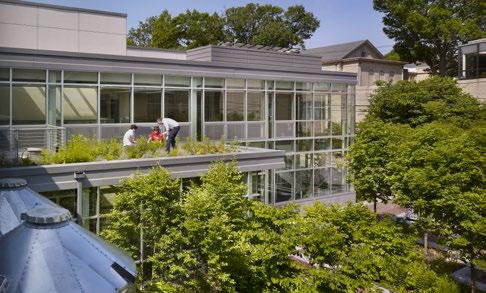
GFS maintains its commitment to Quaker philosophy through its physical campus’ design and operation. Quaker philosophy guides us to live within our means. We seek to design our buildings to be simple, modest, and sustainable. This is demonstrated through the campus-wide replacement of fluorescent lights with energy-efficient LEDs and the purchase of 100% of our school’s electricity with Renewable Energy Credits sourced from wind farms. The new All School Commons combines adaptive reuse design with innovative, sustainable features such as natural daylighting and two green roofs.
GOAL
Pursue carbon neutrality.
STRATEGIES
• Obtain baseline data for energy and water usage in campus buildings and begin benchmarking.
• Conduct energy audits of campus buildings and identify energy conservation measures.
• Pursue an increase of on-campus renewable energy infrastructure.
• Calculate emissions from scopes 1, 2, and 3 sources and the offset of emissions from renewable energy production sources and carbon sequestration from campus carbon sinks.
DID YOU KNOW?
GFS already has solar panels on campus. Atop the LEED® Gold Certified Wade Science Center, there is a solar array which helps provide energy to the building. The building’s other sustainability features include daylighting, a green roof, outdoor classroom, rain gardens, gray water recycling system, and a geothermal HVAC system. Wade was ahead of its time when it was constructed and is still used as a case study by architects when designing green schools today.
The Wade Science Center, built in 2009, was ahead of its time in terms of sustainable design.
Focus Area: Operations & Infrastructure
ZERO
WASTE
A zero waste approach aims to eliminate waste entirely by focusing on preventing waste generation rather than just managing what has already been produced. At GFS, we are creating systems where our resources are used more efficiently and effectively, but there is much more work to be done. We aspire to support a circular economy, one in which economic systems are based on the reuse and regeneration of materials and products.
GOAL
Pursue zero waste.
STRATEGIES
• Obtain baseline data on waste generated from campus operations and the associated carbon emissions.
• Conduct a waste stream characterization study.
• Develop and implement waste reduction initiatives.
• Develop sustainable procurement practices with a focus on economic circularity.
DID YOU KNOW?
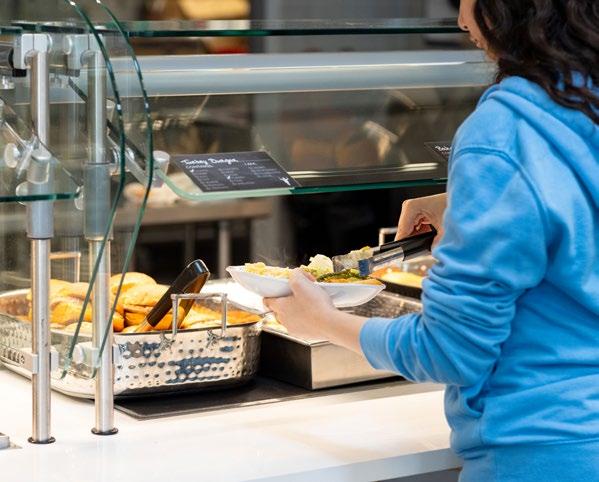
Since opening in October 2024, the kitchen in the GFS Dining Hall has been composting all organic food scraps and waste, like vegetable peels, coffee grounds, and eggshells. Working with our dining partner, Meriwether Godsey, we have already diverted nearly 49 tons of organic waste through Bennett Compost, an independent local business at the forefront of composting in Philadelphia. We hope to expand the composting program to other foodservice spaces and classrooms on campus in the future.
The Servery in GFS’ Dining Hall prioritizes reusable cookware, plates, bowls, and cutlery.
Focus Area: Operations & Infrastructure
TRANSPORTATION
Sustainable transportation focuses on reducing the environmental impact of how students, faculty, and staff get to and from school, often prioritizing walking, biking, carpooling, and public transit, as well as promoting the use of electric school buses. Through the actions in this plan, GFS will work with partners and the school community to find sustainable transportation solutions.
GOAL
Promote and support human and ecosystem health through sustainable transportation.
STRATEGIES
• Create a sustainable transportation strategy for our school community that includes walking, biking, using public transportation, and carpooling to and from school.
• Explore the expansion of our school’s electric vehicle fleet and prioritizing transportation vendors that use electric buses, as this technology becomes available and accessible.
DID YOU KNOW?
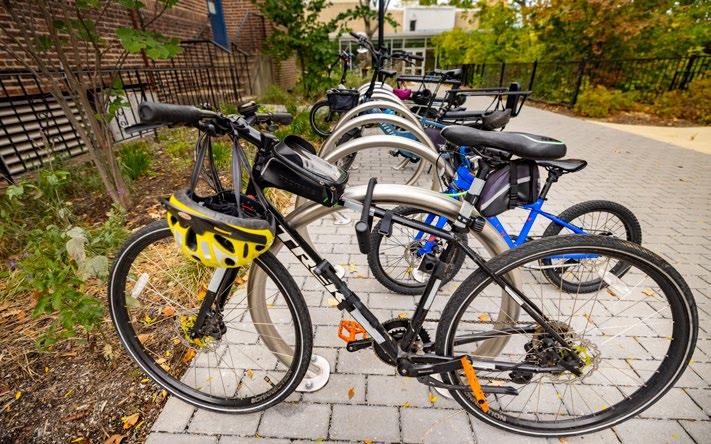
GFS students, faculty, and staff get to and from school in all kinds of ways. Some walk, some drive, some take public transportation, and increasingly, more are commuting via bicycle. Third grade teacher Hal Morra bikes to school almost every day with his two kids on an electric cargo bike. His route takes him a few miles down Schoolhouse Road, which he says is a breezy ride thanks to the e-bike assist. “I like getting fresh air, feeling active, and not being in the car,” he said of his family’s two-wheeled commute. “Plus, it’s easy parking!”
Focus Area: Education & Health
EDUCATION FOR SUSTAINABILITY
GFS’ academic programming is infused with interdisciplinary connections to sustainability and a deep respect and care for all living systems. GFS educates students on the science and systems related to a healthy planet, and fosters a culture of environmental stewardship across all divisions that extends into the local neighborhood. The goal and strategies set forth here expand upon the work that has already been underway for generations at GFS.
GOAL
Further infuse sustainability into our organizational culture.
STRATEGIES
• Catalog academic programs with sustainability connections and expand entry points for topics from this plan.
• Create an annual sustainability professional development series for teachers.
• Create a community Everyday Living Sustainability Action Program with opportunities to minimize individual environmental impact.
EDUCATION FOR SUSTAINABILITY IN ACTION:
“LITERATURE
AND THE ENVIRONMENT”
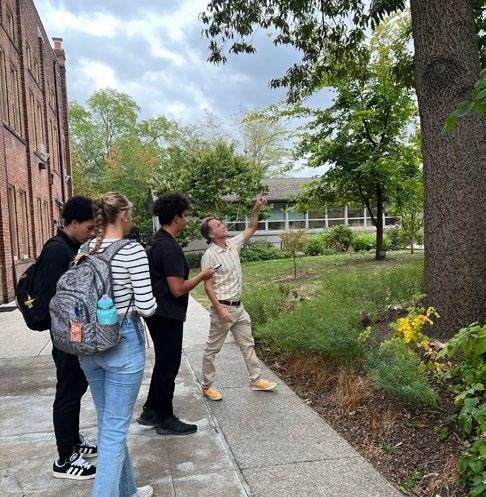
One of the many classes that intertwines sustainability throughout its coursework is Literature and the Environment, an Upper School English seminar open to eleventh and twelfth graders.
Through the readings and project assignments, students are presented with opportunities to connect their imagination with areas of climate change, nature, the environment, the built environment, and beyond. Multiple literary genres and modes are explored, from scientific treatise to utopian writing, pastoral elegy, lyric, and the novel.
This interdisciplinary class uses literature to ask: What are the consequences and stakes of depictions of nature and the environment? How does language invite us to think with categories such as natural vs. unnatural or human vs. animal? How does fiction in particular allow us access to nonhuman perspectives like the global, geological, or cosmic? How do our built environments support, alter, or disrupt our relationships with each other and the world around us?
Some of the texts that may be used in the course are: The Waves and short stories by Virginia Woolf, If Beale Street Could Talk and The Fire Next Time by James Baldwin, Song of Solomon and The Source of Self Regard by Toni Morrison, and One Hundred Years of Solitude and Collected Stories by Gabriel García Márquez.
Focus Area: Education & Health
HEALTH & WELLBEING
Schools that prioritize health and wellbeing are supportive environments that connect students with caring faculty and staff and encourage positive peer relationships. Green, natural settings at schools have been linked to improved attention, focus, academics, and overall wellbeing. Since its founding, GFS has committed to creating a campus that is filled with peace, simplicity, and natural features, and will continue that work.
GOAL
Increase community’s awareness of and access to the connectedness between health, wellbeing, and sustainability.
STRATEGIES
• Enhance programming for all community members that includes connections to sustainability, such as mindfulness, active movement, and outdoor education.
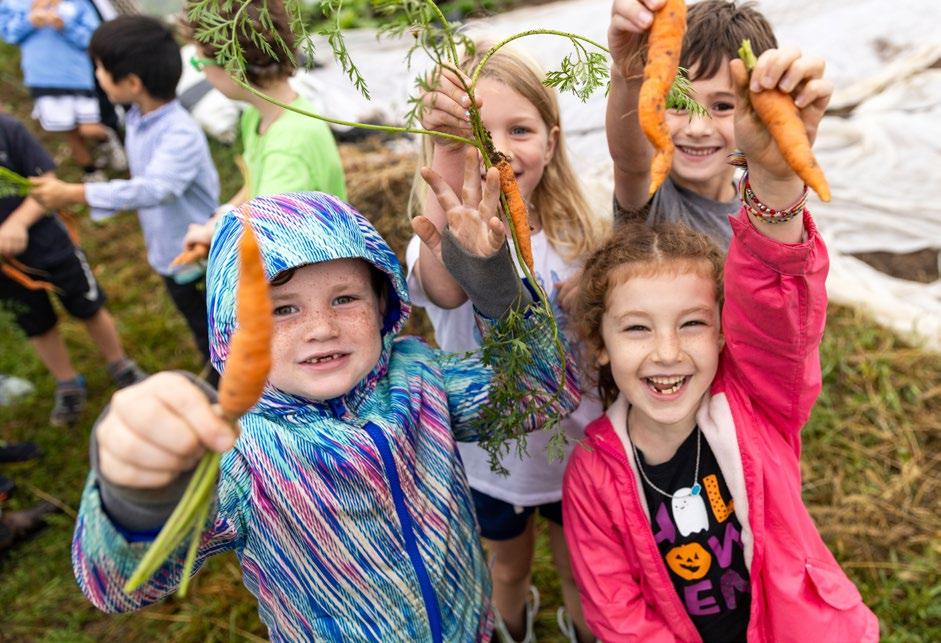
• Intentionally incorporate nature into spaces and programs that support health and wellbeing, such as bringing more plants into classrooms and developing outdoor garden spaces for Lower School classes.
• Develop a sustainable food procurement strategy and set goals for purchasing locally-sourced, fresh, nutritious foods.
HEALTH & WELLBEING IN ACTION
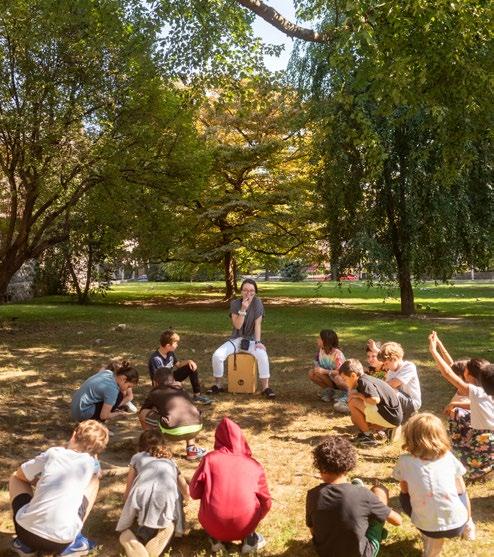
Germantown Friends School is a Level I accredited arboretum. The Betty Cary Arboretum is named after the late Betty Cary, who worked tirelessly at the school from 1945–2011, and took an active interest in caring for the trees and plants on campus. Our green campus enhances community health and wellbeing by offering opportunities for interacting with nature, physical activity, stress reduction, and social interaction. The arboretum is accredited by ArbNet, an international community of arboreta and tree-focused professionals. GFS’ arboretum features more than 230 unique species of trees and shrubs between GFS’ Main Campus and playing fields. The arboretum includes old and storied trees, like the American sycamore (Platanus occidentalis) in the Dead Graveyard, standing since sometime between 1750–1800; and Cornelian cherry dogwood (Cornus mas) next to the Friends Free Library, which is the largest of its species in Pennsylvania. It also includes new seedlings with an emphasis on native plantings, like the redbud trees adjacent to the Meetinghouse.
Focus Area: Environment and Climate
NATURAL RESOURCES
Natural resources such as air, water, soil, plants, and wildlife are valued and protected at GFS. Our Main Campus is a green space located in an urban neighborhood, with historic trees maintained since the time of the founding of Pennsylvania. Green stormwater infrastructure and biodiversity are visible, with the presence of intricate pollinator gardens, bioswales, green roofs, rain barrels, and buzzing insects and birds. This plan aims to assess, protect, and expand these features.
GOAL
Protect, restore, and ensure the sustainable use of GFS’ natural resources.
STRATEGIES
• Assess the health of campus’ natural resources through student research activities and GFS facilities and grounds management initiatives.
• Develop environmental restoration projects and collaborate with partners on implementation.
• Evaluate and expand the campus green stormwater infrastructure.
DID YOU KNOW?
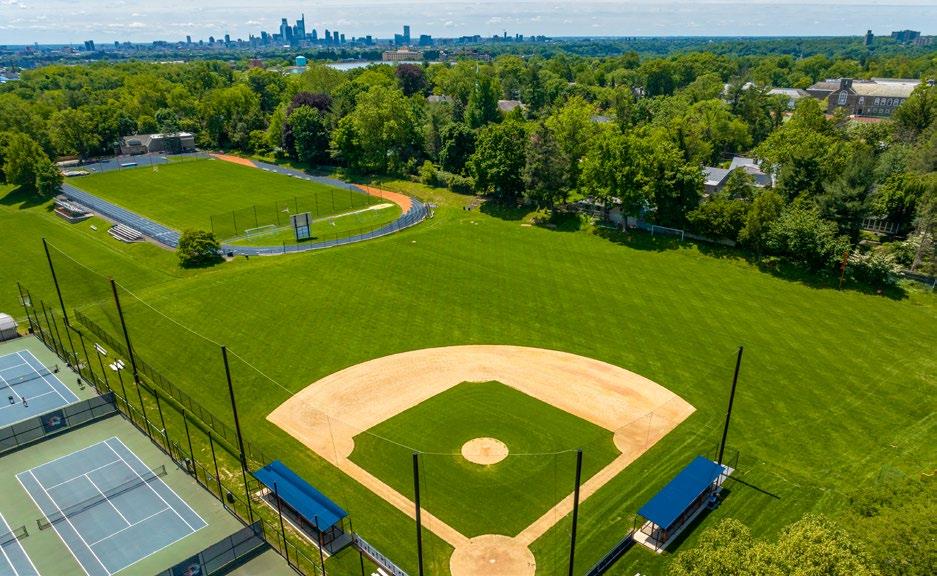
GFS’ athletic fields were intentionally designed with natural grass turf which allows for carbon sequestration and stormwater management. While many peer schools have switched to artificial turf, we maintain our commitment to natural grass at our playing fields to ensure the sustainability of our facilities for future generations.
Focus Area: Environment and Climate
CLIMATE RESILIENCE
GFS is doing its part to manage the effects of a rapidly changing climate, which includes extreme heat and weather conditions, excessive moisture, flooding, and the associated human health, economic, and physical infrastructure impacts. These impacts disproportionately affect our most vulnerable communities including the aging, sick, marginalized, and economically disadvantaged. GFS will work to adapt to these changes, while supporting our neighboring communities.
GOAL
Enhance GFS’ ability to withstand, adapt to, and recover from climate-related impacts.
STRATEGIES
• Identify climate risks and hazards for the Germantown Friends School community, including extreme weather that results in flooding and excessive heat and humidity.
• Develop a management strategy that aligns with Philadelphia County’s Climate Action Plan and supports our neighboring community in a meaningful way.
DID YOU KNOW?
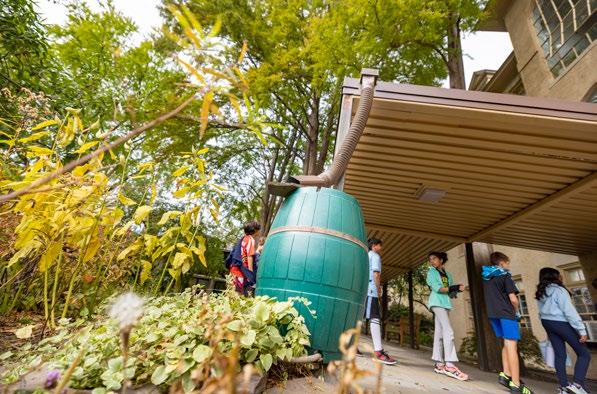
Philadelphia faces significant climate risks, primarily stemming from increased heat and precipitation. These risks include more frequent and intense heat waves, increased flooding due to heavier rainfall and stormwater runoff, and potential impacts from sea level rise. Green stormwater infrastructure (GSI) manages runoff using natural elements like plants, soil, and stone, which mimic nature to filter water, reduce sewer system strain, and protect waterways. GFS has an abundance of GSI features that retain water on site, preventing flooding to the campus and neighboring communities. This includes a mini-forest, three green roofs, pollinator gardens, and bioswales. Our campus also works to counteract the urban heat island effect with a rich and diverse tree inventory and new tree plantings every year.
MEET OUR DIRECTOR OF SUSTAINABILITY

Francine Locke is Germantown Friends School’s first Director of Sustainability. Through an innovative partnership with Westtown School, this is a shared role, with Locke working full time between both institutions.
Locke brings a wealth of experience and knowledge; she has a master’s degree in environmental health from Temple University, and previously served as Chief Sustainability Officer for Delaware County and as the Director of Sustainability and Green Schools for the School District of Philadelphia. At GFS, Locke has worked side-by-side with the community, including closely with students, to develop this comprehensive, data- and metricsdriven sustainability plan.
GLOSSARY
Glossary of Terms
REFERENCES
Arikan, Y., Carreño, C., & van Staden, M. (2020). ICLEI’s Climate Neutrality Framework. ICLEI. Green Climate Cities.
Barr, S. K., Cross, J. E., & Dunbar, B. H. (2014). The Whole-School Sustainability Framework. Center for Green Schools at U.S. Green Building Council. www.centerforgreenschools.org
Center for Corporate Climate Leadership. (2023). Greenhouse Gas Inventory Guidance. Direct Emissions from Stationary Combustion Sources. U.S. Environmental Protection Agency.
City of Philadelphia. (2021). Philadelphia Climate Action Playbook. City of Philadelphia, Office of Sustainability.
Division of Adolescent and School Health, National Center for Chronic Disease Prevention and Health Promotion, U.S. Centers for Disease Control and Prevention. (2023, December). Promoting mental health and well-being in schools: An action guide for school and district leaders.
Green Restaurant Association. Green Restaurant Association Certification Standards. (n.d.). https:// www.dinegreen.com/certification-standards
Harvard Office for Sustainability. (2024, June 25). Sustainability action plan https://sustainable. harvard.edu/our-plan/
Jimenez MP, DeVille NV, Elliott EG, Schiff JE, Wilt GE, Hart JE, James P. Associations between Nature Exposure and Health: A Review of the Evidence. Int J Environ Res Public Health. (2021, April 30);18(9):4790. doi: 10.3390/ijerph18094790. PMID: 33946197; PMCID: PMC8125471.
National Association of City Transportation Officials. (2017). Urban Street Stormwater Guide. Island Press.
National Oceanic and Atmospheric Administration. (2016, March 9). What’s the difference between climate and weather? https://www.noaa.gov/explainers/what-s-difference-between-climate-andweather
National Oceanic and Atmospheric Administration. (2025, January 10). 2024 was the world’s warmest year on record. https://www.noaa.govs/news/2024-was-worlds-warmest-year-on-record
Ross, Catherine; Yoo, Chisun; and Stiftel, Bruce (2020) Transport Sustainability in the United States: Leading from Below, Journal of Comparative Urban Lasw and Policy: Vol. 4: Iss. 1, Article 33, 625-656. https://readingroom.law.gsu.edu/jculp/vol4/iss1/33
World Business Council for Sustainable Development; World Resources Institute. (2004). The Greenhouse Gas Protocol: A Corporate Accounting and Reporting Standard. https://ghgprotocol.org/ sites/default/files/standards/ghg-protocol-revised.pdf
United Nations Development Programme. (n.d.). United Nations Sustainable Development Goals. UNDP. https://www.undp.org/sustainable-development-goals
United Nations Development Programme Climate Promise. (2025, February 3). What is sustainable transport and what role does it play in tackling climate change? https://climatepromise.undp.org/ news-and-stories/what-sustainable-transport-and-what-role-does-it-play-tackling-climate-change
U.S. Department of Energy. Geothermal heat pumps. Energy.gov. https://www.energy.gov/eere/ geothermal/geothermal-heat-pumps
U.S. Environmental Protection Agency. (n.d.). Benchmark your building with Portfolio Manager. ENERGY STAR. https://www.energystar.gov/buildings/benchmark
U.S. Environmental Protection Agency. (2024, November 21). What is a Circular Economy? https:// www.epa.gov/circulareconomy/what-circular-economy
U.S. Environmental Protection Agency. (2024). Global Greenhouse Gas Overview. https://www.epa. gov/ghgemissions/global-greenhouse-gas-overview
U.S. Environmental Protection Agency. (2024). Inventory of U.S. Greenhouse Gas Emissions and Sinks. (1990–2022). EPA 430-R-24-004. www.epa.gov/ghgemissions/inventory-us-greenhouse-gas-emissionsand-sinks-1990-2022
U.S. Environmental Protection Agency. (2025, March 21). Renewable Energy Certificates (RECs). https://www.epa.gov/green-power-markets/renewable-energy-certificates-recs
U.S. Environmental Protection Agency. (2025, June 13). How Communities Have Defined Zero Waste. https://www.epa.gov/transforming-waste-tool/how-communities-define#:~:text=Zero%20Waste%20 International%20Alliance,the%20environment%20or%20human%20health.%22
U.S. Green Building Council. (n.d.). Leadership in Environmental Design (LEED) rating system. https://www.usgbc.org/leed
Zero Waste International Alliance. (2025, June 23). Zero waste hierarchy of highest and best use 8.1. https://zwia.org/zwh/
ACKNOWLEDGMENTS
Stewardship Committee
Fi Abraham
Daisy Bidwell ’25
Mark Croxford
Geo Decas O’Donnell
Nick Dobrowolski
Walter Ellerbe
Page Fahrig-Pendse
Hannah Henderson ’91
John Henderson
Eryn Jelesiewicz
Emily Kovach
Rob Marcantuono
Neeta McCulloch
Sarah McMenamin
Emanuel Pirvulescu
John Pope
Matt Rainsford
Carol Rawlings Miller
Joe Stanzione
Liz Szot
Keino Terrell
Sam Thacker
Dana Weeks
Matthew Young
Zoe Levenstein ’26