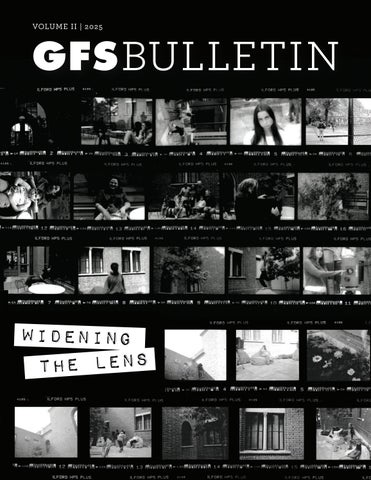
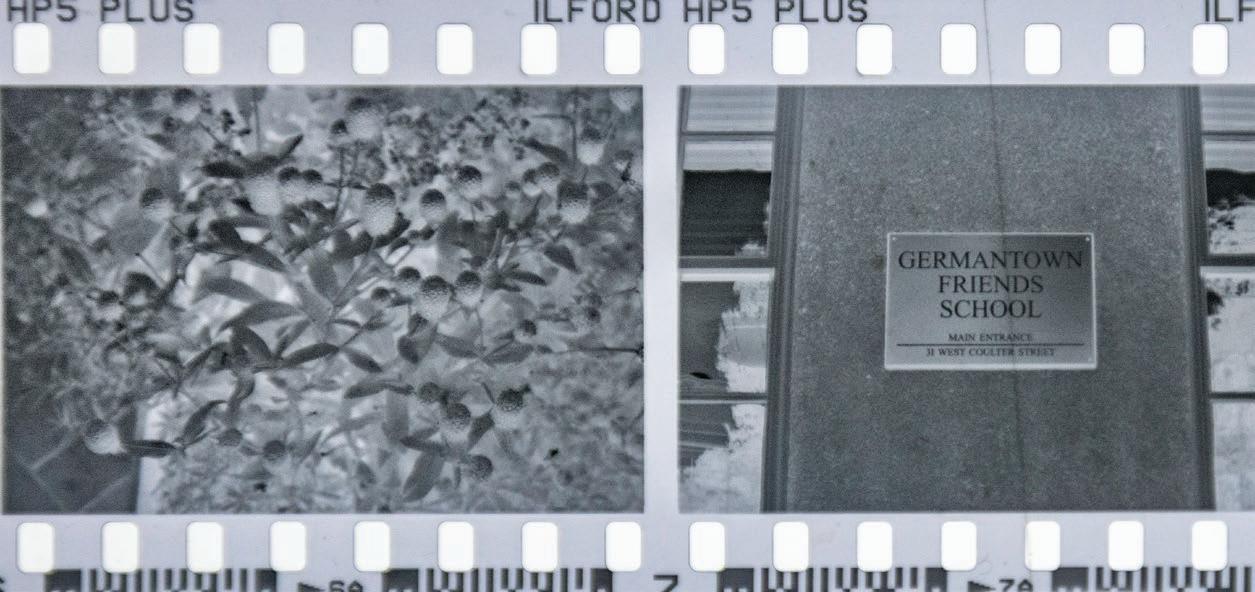
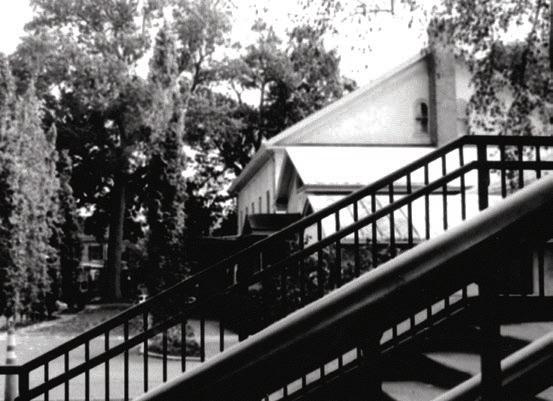
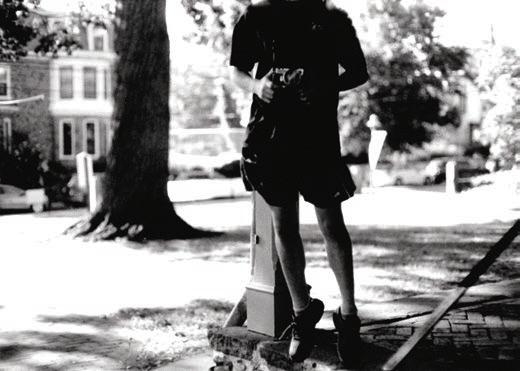
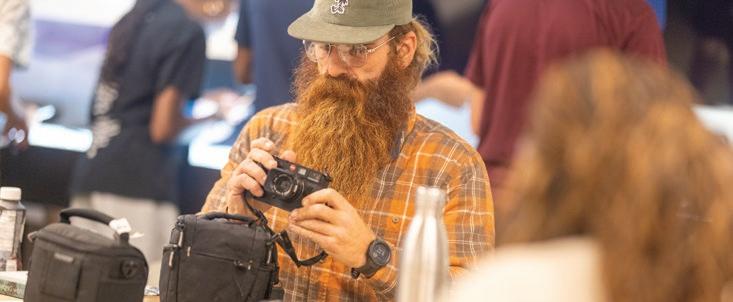
“IT’S A GROUNDING TRUTH IN PHOTOGRAPHY THAT THE PROCESS IS SO IMPORTANT—IT CAN’T BE ABOUT THE PURSUIT OF PERFECTION,” said GFS Photography teacher Michael Koehler.
Using the school’s collection of single-lens reflex and 35mm cameras— recently enhanced by 16 incredible vintage cameras donated by alumnus David Fischer ’64 (pg. 17)—Upper School photography students learn about content and composition, light and shadow, and the visual language of photographs.
But, perhaps more importantly, the step-by-step, labor intensive study of black-and-white photography in GFS’ new darkroom and photo studio teaches how to navigate trial and error.
“Even if my students don’t pursue photography later in life, learning to make pictures can help them approach any conundrum more like a puzzle than a problem,” Koehler noted.
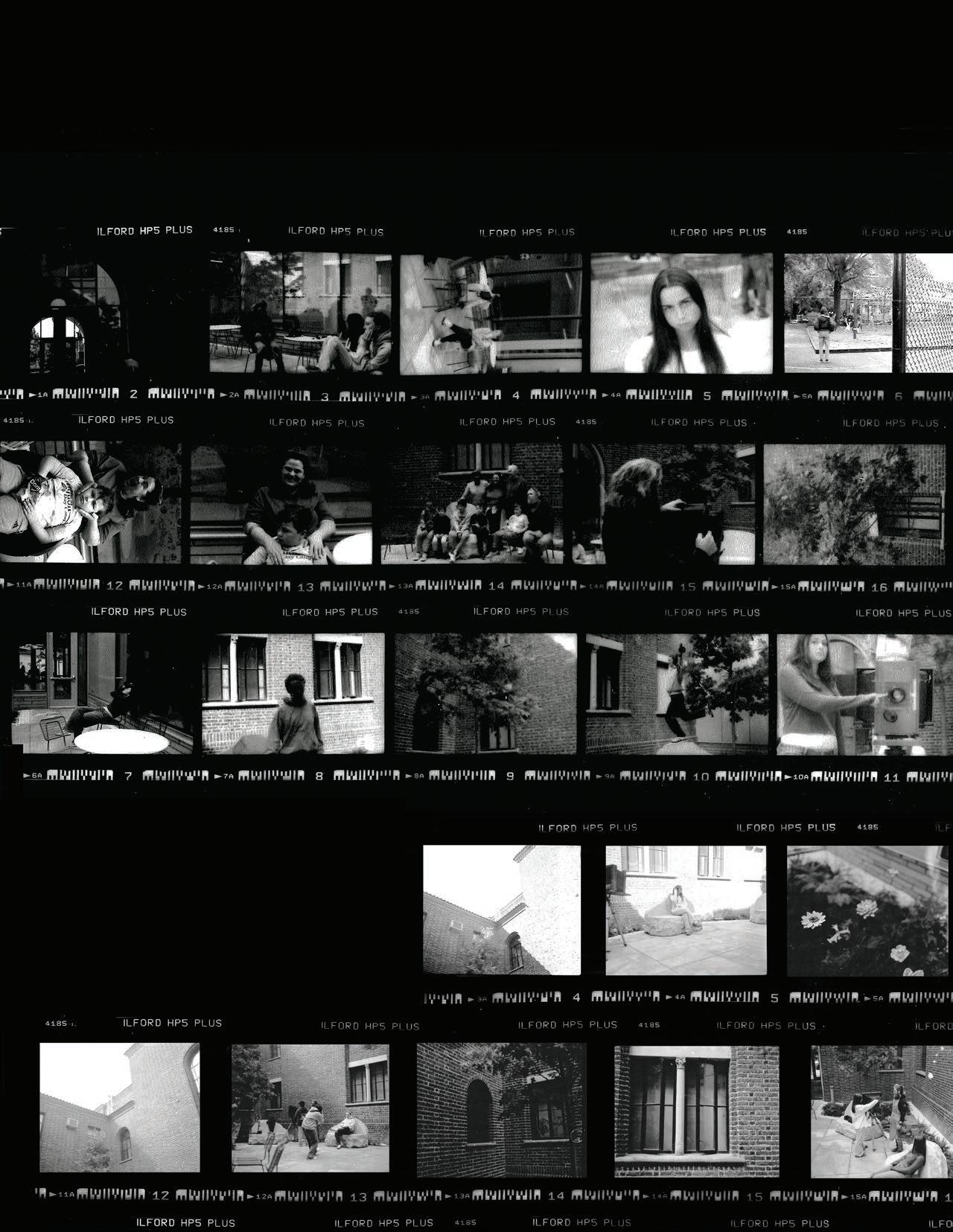
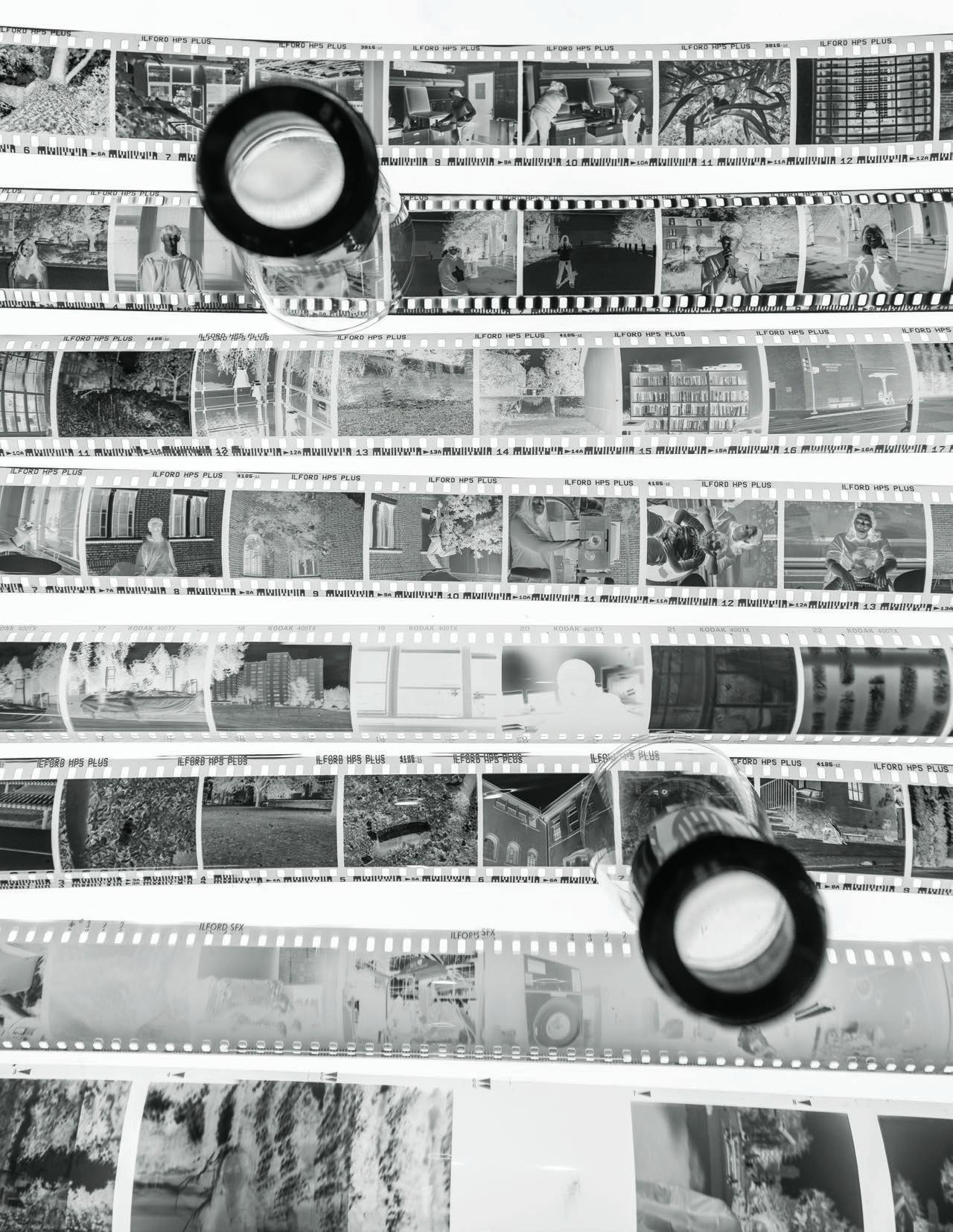
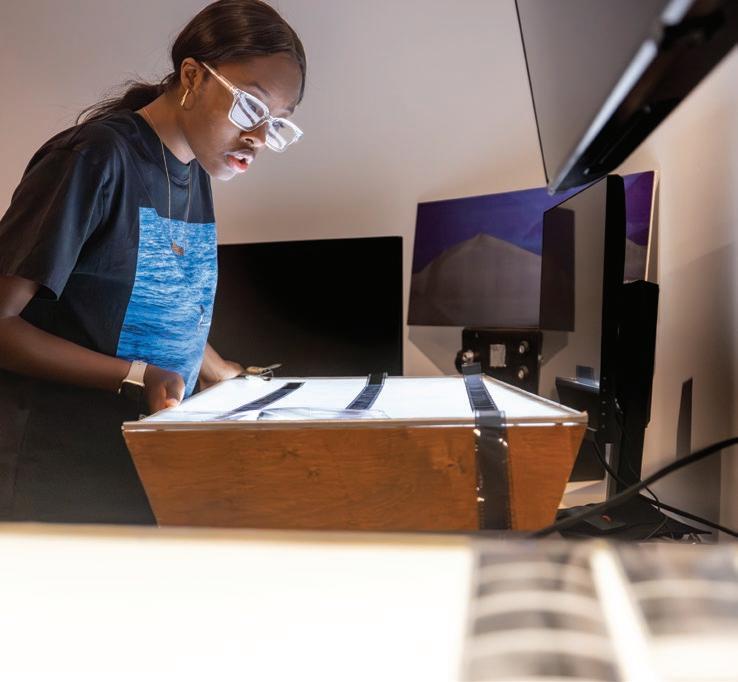
Pictured: After students develop their negatives, they lay them out on a light table for closer inspection. They then make contact sheets, small test prints of their negatives, which inform their selection of shots to enlarge.
IN THIS ISSUE
All In
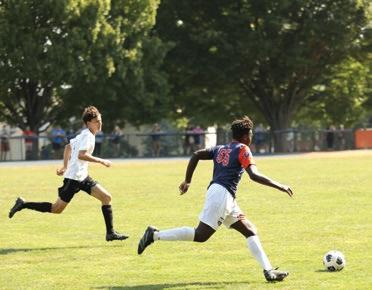
GFS Athletics’ Junior Varsity program meets student-athletes where they are: from brand new beginners to competitive athletes looking to advance to the varsity level.
Long Ago and Far Away
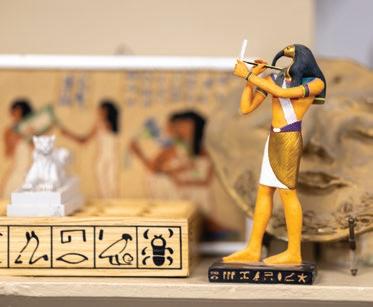
The year-long fourth grade ancient cultures curriculum takes students on a journey back in time and provides a taste of GFS’ Classics offerings in upper divisions.
Colorful,
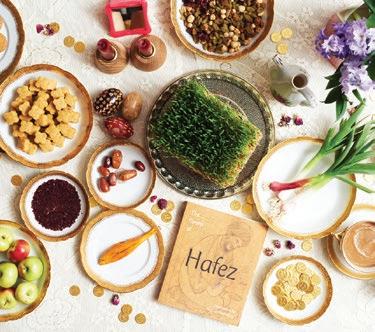
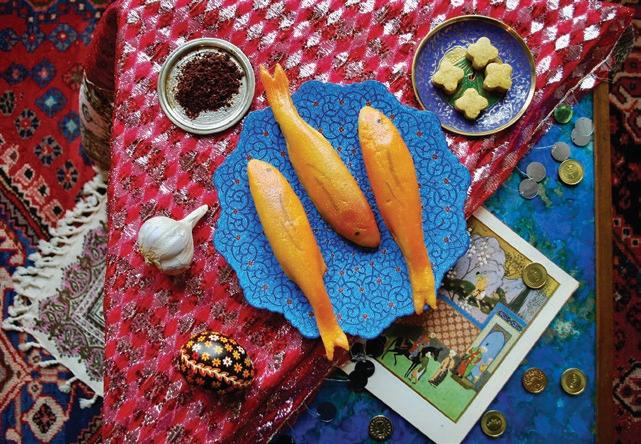
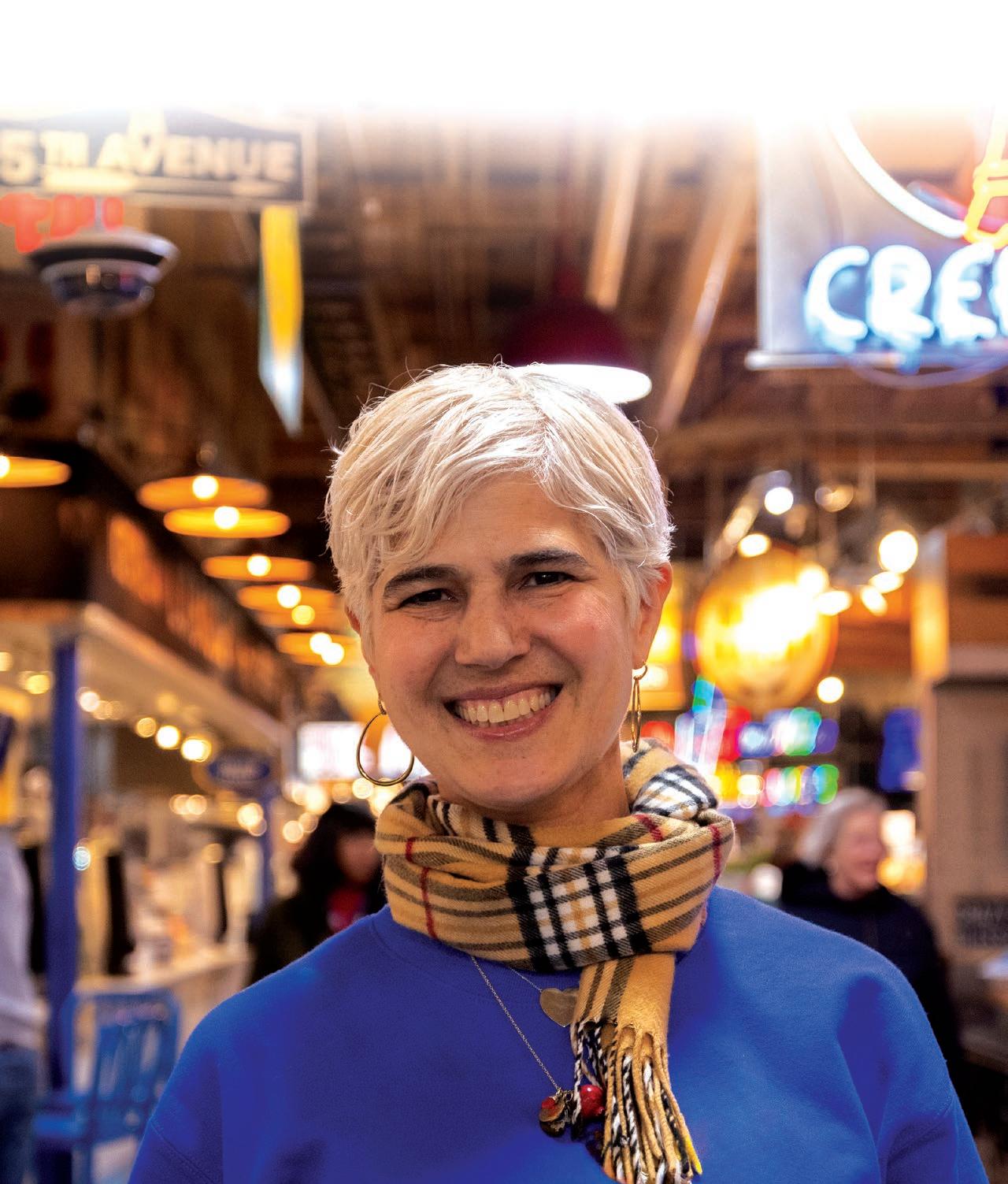
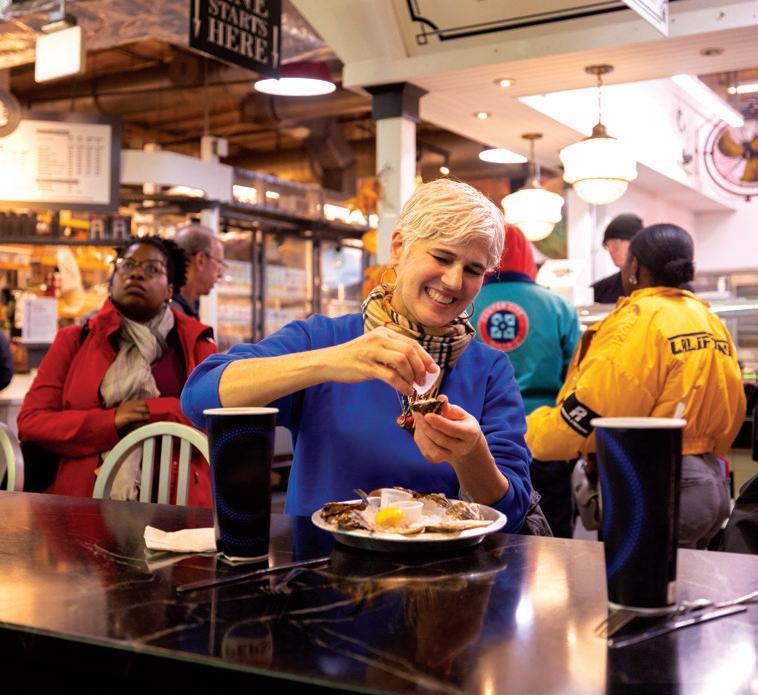
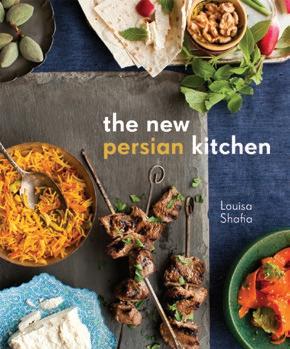
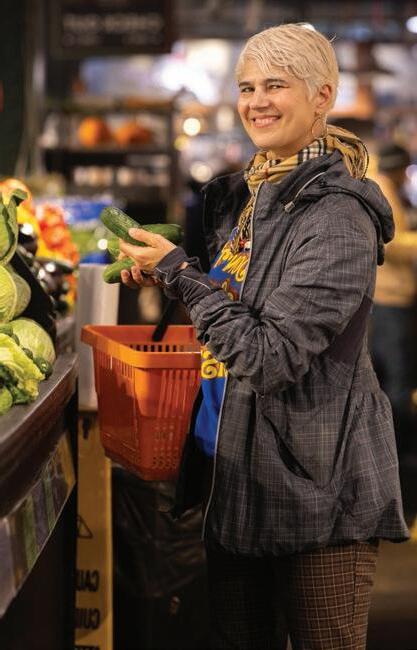
Meet Louisa Shafia ’88, an Iranian-American chef who reconnected with her family and her identity through Persian food.
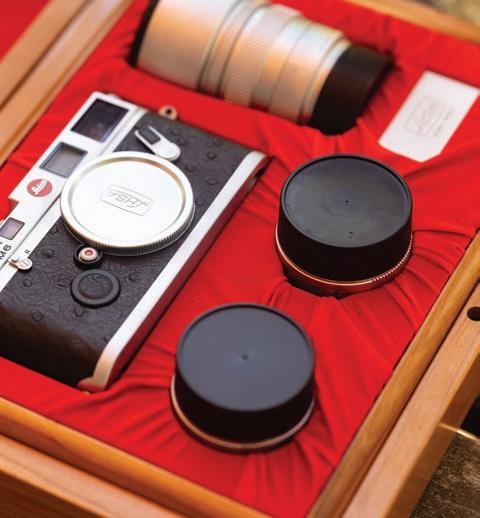
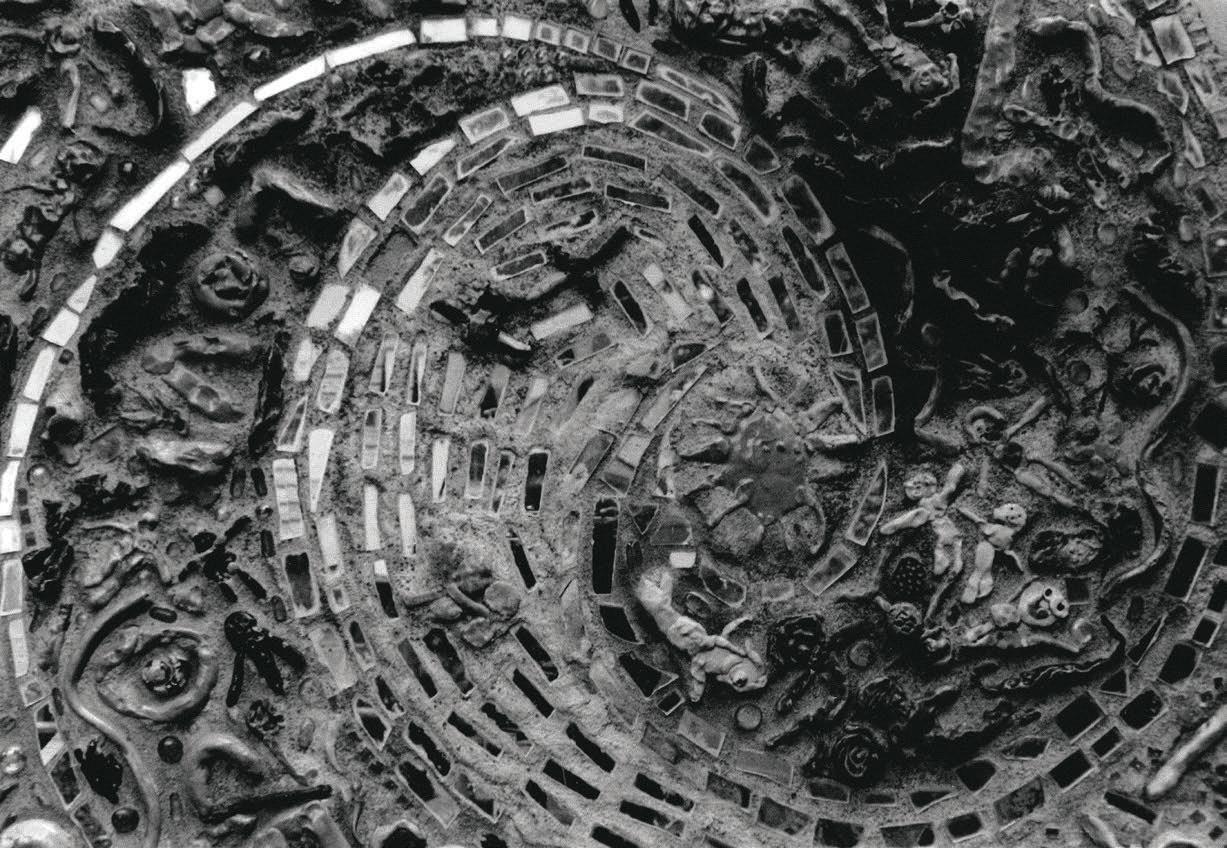
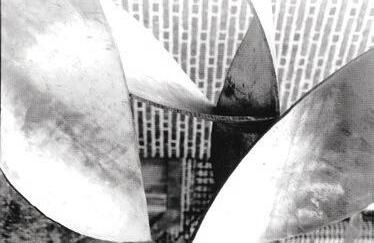
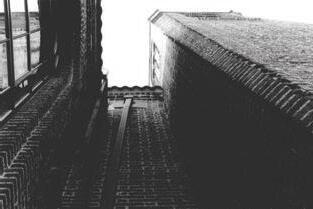
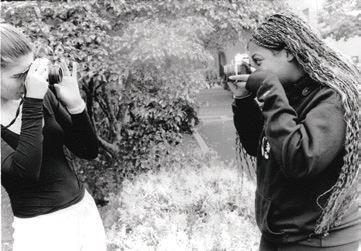
Student photography from Michael Koehler’s Fall 2025 Photography I class, taken with vintage cameras donated by David Fischer ’64.
EDITOR
Emily Kovach
DIRECTOR OF COMMUNICATIONS
Eryn Jelesiewicz
CONTRIBUTORS
Khaleel Adger, illustration
Kyle Bagenstose
Barbara Barnett, design
Lilly Dupuis ’17, photography
Fernando Gaxiola, photography/writing
Eryn Jelesiewicz
Emily Kovach
Lauren Scharf
Rachael Weissman, design
Timothy Wood, GFS Archivist
HEAD OF SCHOOL
Dana Weeks
CHIEF ADVANCEMENT OFFICER
Hannah Henderson ’91
SCHOOL COMMITTEE (2025–26)
Jeri Adams
Maureen Carr, Religious Life Committee Clerk
Hardin L.K. Coleman ’71
Joan Cannady Countryman ’58
Alice Chen-Plotkin
Ben Cushman ’72, Assistant Clerk and Nominating and Governance Committee Co-Clerk
Marc DiNardo ’80, Recording Clerk and Facilities and Campus Development Committee Clerk
David Feldman ’76, Clerk
Carmen E. Guerra
Alex Gurvich, Investment Committee Clerk
Mary Louise Hill
David Loder ’72 *
Takashi Moriuchi, Treasurer and Finance Committee Clerk
Zoë Samuel Rankin ’06
John Relman ’75
Jack Rhoads ’56
Anne B.K. Stassen
Anthony Stover
Elizabeth A.W. Williams, Assistant Clerk and Nominating and Governance Committee Co-Clerk
TRUSTEES EMERITI
Pat Macpherson
Christopher Nicholson*
Samuel V. Rhoads ’82
Pat Rose
F. Parvin Sharpless
David A. West ’49*
*deceased
The GFS Bulletin is published for the alumni, parents, faculty, and friends of Germantown Friends School. We welcome your comments to the editor at: ekovach@germantownfriends.org.
Dear
Friends,
Welcome to the Winter 2025 issue of the Bulletin, exploring the concept of “Widening the Lens,” or pushing beyond the familiar to find new, and sometimes surprising, ways of perceiving and engaging with the world.
GFS is fortunate to have a built-in practice for widening one’s lens. In Meeting for Worship, we collectively reflect on one another’s truths and often discover our hearts and minds changed. This search for Truth and openness to what Friends call “continuing revelation” is something we return to every week. And, it is one way we develop empathy, curiosity, and courage. To me, the willingness to change and be changed is at the heart of Quaker education, and is part of shaping resilient, integritydriven thinkers and citizens.
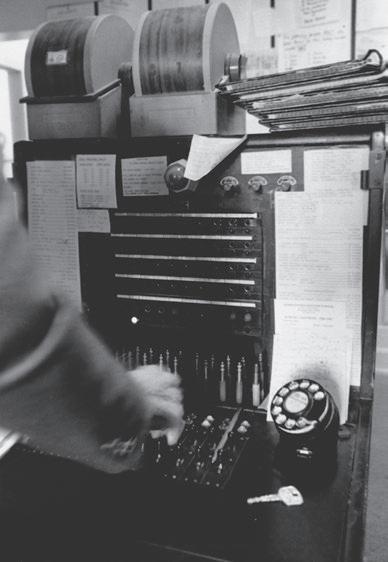
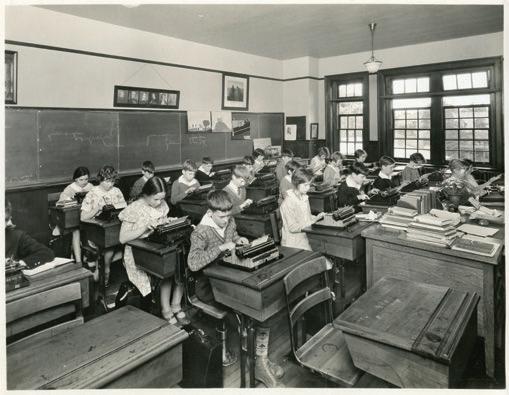
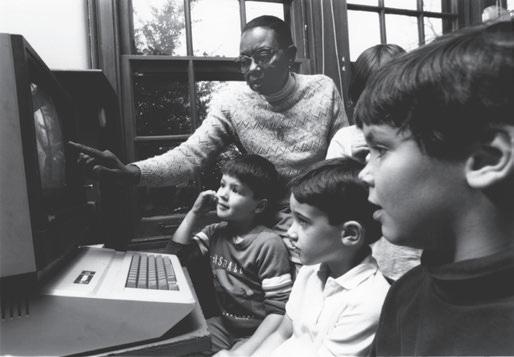
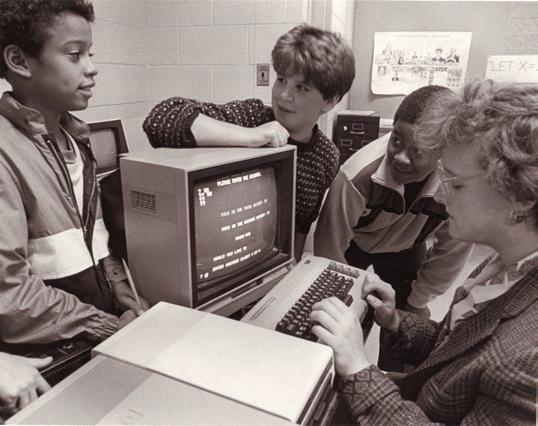
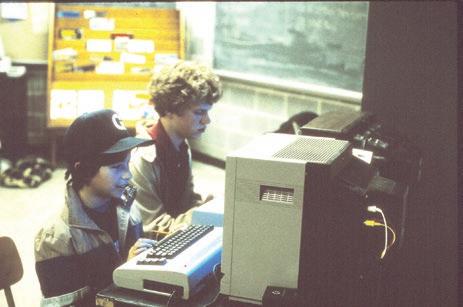
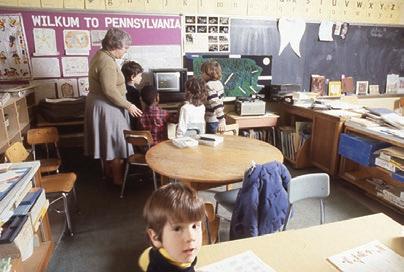
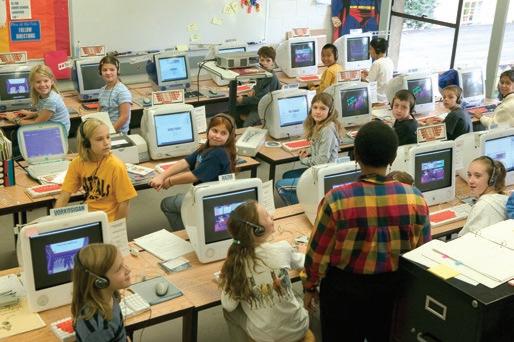
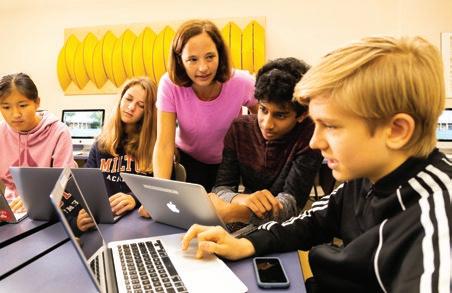
The stories in the pages ahead look at how GFS students gradually stretch their spheres of experience, from our Early Childhood learners visiting one another’s campuses (pg. 24) to Middle and Upper Schoolers living abroad on exchange programs (pg. 40). We chart how technology has influenced teaching and learning at GFS across the decades (pg. 36). And we meet an inspiring alumna whose global travels have led to profound insights about her heritage and identity (pg. 32).
Our historic Picture This campaign is entering its final months. This
ambitious undertaking is, in effect, a way of widening the lens of our school, empowering us to envision GFS’ future more clearly, and then collectively stepping forward to make that future a reality. The cover story celebrates David Fischer ’64 P’97 ’00, a career ophthalmologist whose recent gift to the GFS Photography program has inspired students to experiment with light, composition, and depth of field.
I hope these stories serve as a reminder that the pursuit of a greater, more profound Truth is most fertile— and most gratifying—when done in community. GFS has been that community for so many, and we draw inspiration from our generations of alumni, who continue to widen the lens in towns and cities near and far.
Warmly, Dana Weeks Head of School
NEWS & NOTEWORTHY
WHAT’S HAPPENING AT 31 W. COULTER STREET—AND BEYOND
A Global Meeting of the Minds
A WORLD ECONOMIC FORUM’S GLOBAL RISKS
REPORT RELEASED IN JANUARY 2025 CITED DIS- AND MISINFORMATION, AND THE TECHNOLOGY THAT ENABLES ITS SPREAD, A SIGNIFICANT THREAT TO POLITICAL, ECONOMIC, AND HEALTH SYSTEMS WORLDWIDE.
With today’s AI- and social media-fueled proliferation and speed of information, how does one sort out the truth? Answering this question is a mighty task, yet a group of 20 students from across the globe recently probed its depths as part of the 2025 Montgomery Bell International Symposium (MBIS) hosted by Germantown Friends School this October.
Now in its 15th year, MBIS brings together students, teachers, and heads of school from 10 member schools that take turns hosting. Following a six-month collaborative virtual investigation of a central theme—this year it was “The Future of Truth in a Digital Age”—students gather for a week to work in person and collectively explore their topic in depth.
The MBIS participants included two GFS students, Kate Mardeusz ’27 and Panyan Yan ’26, and several faculty members, including John Henderson, Director of IT and Head of Computer Science and Digital Media, Andrew Malkasian, History and Quakerism teacher, and Rob Goldberg, Head of the History Department.
“MBIS is designed for deep conversation and deep fellowship,” said Matthew Young, Director of the Upper
School at GFS and lead organizer of this year’s Symposium. “The topic of truth is something that many great thinkers and intellectuals are hashing out, and we were able to have relevant, fresh conversations.”
MBIS creator and former Head of School at Winchester College in the United Kingdom, Ralph Townsend, explained that the Symposium creates a platform for intensive, ongoing intellectual discussions for which the students have spent months preparing.
“The format fosters a considered and developed exchange of ideas on a particular theme, from different
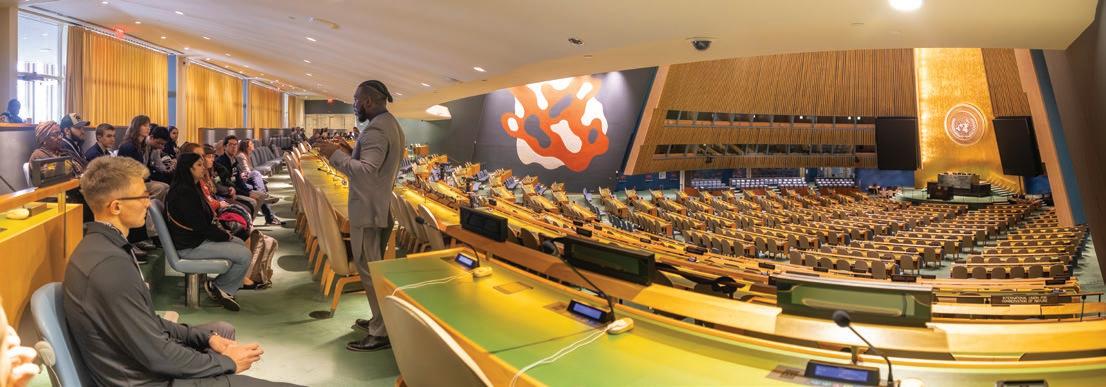
Students listened to a United Nations tour guide in the General Assembly Hall.
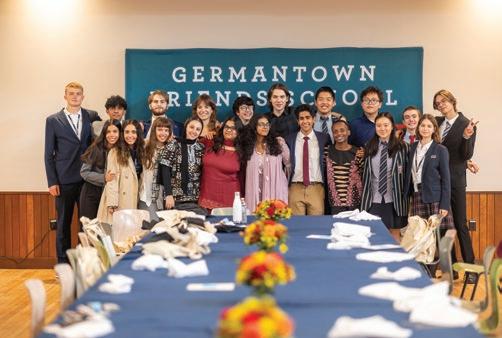
The 2025 MBIS cohort at the reading of their Accord.
cultural perspectives and across different languages,” said Townsend. “This helps students enter a new thought-world.”
CREATING A NEW THOUGHT-WORLD
MBIS MEMBER SCHOOLS
LEAF ACADEMY
Bratislava, Slovakia
AFRICAN LEADERSHIP ACADEMY
Johannesburg, South Africa
EBBA BRAHE GYMNASIUM Stockholm, Sweden
CANBERRA GRAMMAR SCHOOL
Canberra, Australia
GERMANTOWN FRIENDS SCHOOL Philadelphia, USA
MONTGOMERY BELL ACADEMY
Nashville, USA
GARODIA INTERNATIONAL CENTER FOR LEARNING
Mumbai, India
LSMU GYMNASIUM Kaunas, Lithuania
COLEGIO CLAUSTRO MODERNO
Bogotá, Colombia
GYMNÁZIUM JANA KEPLERA
Prague, Czech Republic
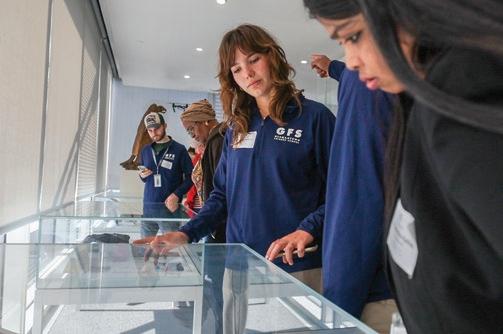
On excursions in Philadelphia and New York City, Symposium attendees met with experts in the field, debated issues, and worked together in small groups to hone their observations, often prompted by a query from MBIS Academic Director, Tim Parkinson. Following the public health panel discussion, for example, Parkinson asked, “What is the role of truth in optimizing public health outcomes, particularly considering social and individual determinants?”
Each host school tailors the symposium agenda to their particular school, location, and culture. Being a Quaker school, GFS organizers wove in threads around religion and philosophy, and each day was organized around topics such as Integrity and Quaker Truth-Seeking and Museums as Forums of Truth. There were carefully designed opportunities for students to examine various aspects of truth: the American news media at The New York Times; public health at the University of Pennsylvania; museum exhibits at The Barnes Foundation and Monument Lab; human rights at the United Nations; religion at the Arch Street Meetinghouse; and urban parks and Indigenous cultures in both Germantown and Philadelphia.
TRUTH IN NEWS MEDIA
Throughout the week, student teams took turns presenting their findings from personal projects that examined an aspect of truth and information in their home country. Those from Colegio Claustro Moderno in Bogotá, Colombia, and Gymnázium Jana Keplera in Prague, Czech Republic, took the stage on the first day to look at truth in the media.
Manuela Llinas and Manuela Ramirez, the students from Bogotá, Colombia, shared several news stories on páramos, unique ecosystems in the Andes Mountains of South America which supply 70% of the drinking water in Colombia, to practice discerning perspectives. Through careful reading—focused on the tone, what was and wasn’t included, and which sources were quoted—students surmised whether the viewpoint was that of a farmer, an environmentalist, or a tourist.
To determine whether information creators in the Czech Republic, including both satire writers and the news media, understand how their content is interpreted by consumers, the students from Gymnázium Jana Keplera in Prague conducted surveys. They found that most creators claim neutrality, even if they are crafting information with a point of view to appeal to a specific audience. The survey also revealed that, around certain topics, consumers often lack confidence in the truth of the information they are hearing and reading.
Kate Mardeusz ’27 (center) was one of two GFS students who participated in the 2025 MBIS at GFS.
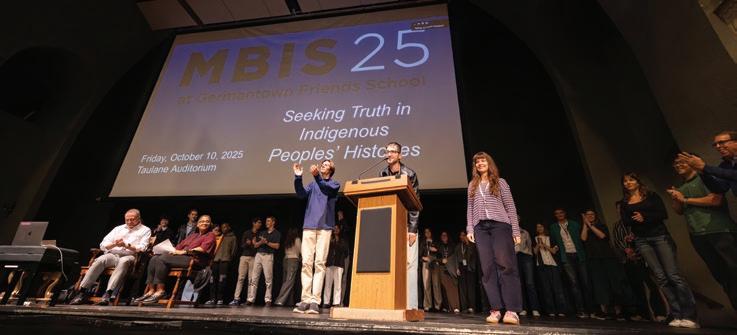
Members of the MBIS cohort presented at an Upper School Indigenous Peoples’ Day Assembly.
SOMETHING IN COMMON
Towards the end of the Symposium, students reflected on their “lightbulb moments” from the past week. Mardeusz and Yan, the GFS students, were surprised by how much various cultures overlap and how much students actually had in common.
“Those commonalities allowed us to connect and then explore our differences,” Mardeusz said. “That was really special.”
Hers was a common refrain as one student after another marvelled at the multitude of backgrounds and perspectives that coexist with the shared realities of being a teenager in 2025.
“Our countries are different, but we’re still kind of the same kids and we can talk even though we could
have nothing in common. That was very cool and surprising,” said Tai Wiesner from the LEAF Academy in Bratislava, Slovakia.
On the last day of the Symposium, students, teachers, and administrators gathered for the reading of the final Accord, the culmination of students’ time together and how they now see the future of truth after concluding their scholarship.
Key recommendations centered on exploring the greater use of AI in health diagnostics to expedite medical treatment; political figures taking more time to validate information sources before sharing with the public; individuals conducting their own verification of sources and utilizing multiple sources to ascertain truth; and establishing and relying on independent fact-checking bodies.
This isn’t the end for this year’s cohort however. Young, who has been involved with MBIS for 10 years, has seen students become lifelong friends both with their class and with those students who came before them. It’s because they all now share an incredible experience, one in which perspective creates possibility.
This is how Hatim Eltayeb, CEO and former Dean of the African Leadership Academy, sees it after also participating in MBIS for many years.
“When students from very different communities with very different experiences encounter each other around a shared purpose, a shared question, a shared sense of curiosity, they can discover new ways of seeing the world and through that, hopefully discover new ways of being themselves,” he said. —Eryn Jelesiewicz
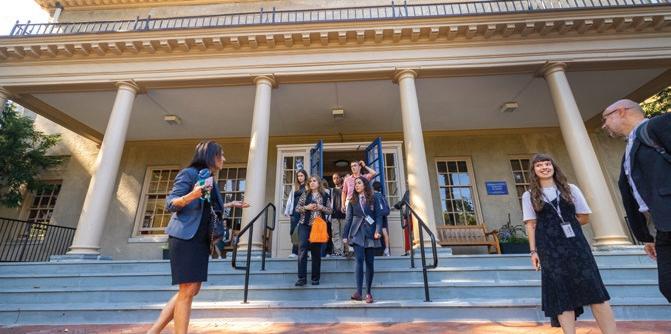
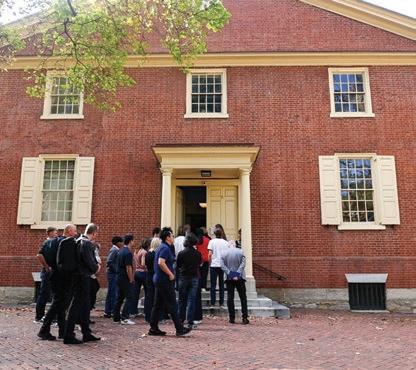
In Philadelphia, the cohort attended a Truth Seeking and Quakerism panel discussion and Meeting for Worship at the Arch Street Meetinghouse.
L to R: John Henderson, Matthew Young, Panyan Yan.
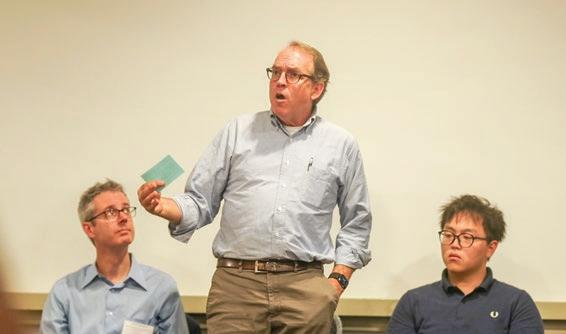
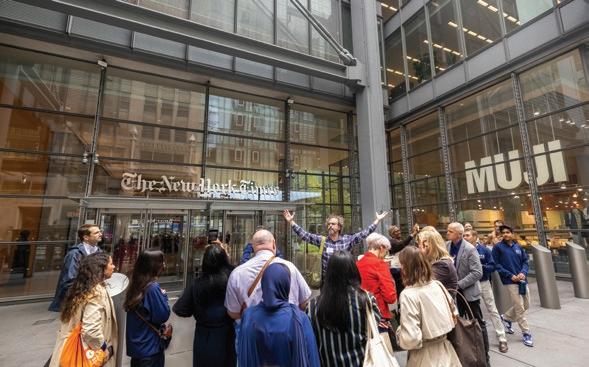
During a day-trip to NYC, MBIS participants visited The New York Times headquarters. GFS History Department Head Rob Goldberg (center) outlined their itinerary, including a panel discussion with the editor of The Daily podcast.
As the 2025 MBIS host, GFS welcomed a group of 20 students from across the globe to campus.
Interdisciplinary Arts Major Sparks Creativity and Collaboration
IN AN INCREASINGLY INTERCONNECTED WORLD, THE LINES BETWEEN TRADITIONAL DISCIPLINES ARE BLURRING— ESPECIALLY IN THE ARTS, where inspiration often flows across mediums. This is at the heart of GFS’ new Interdisciplinary Arts Major (IAM).
Launched in fall 2025, IAM is an Upper School program for students in Grades 10–12, designed to explore the creative process across visual arts, theatre, and music. Led by art, theatre, and music department heads—Megan Culp, Jake Miller, and Brian Bersh—the program combines traditional coursework with collaborative, real-world
learning opportunities. Students participate in three full-day symposia and a mentorship cohort that meets once every eight-day cycle, bringing together peers from all three modalities.
“I think one of the things we’ve realized is that many students take art classes across the three disciplines, but they don’t always know each other,” said Miller. “This cohort creates a shared community where they can see themselves, and each other, as artists in new ways.”
Abby Delgado ’27 was drawn to IAM because she wanted to dedicate more time to her passion for visual art—sometimes a challenge to fit into her busy schedule—and deepen her understanding of art by learning from her peers.
“I find it interesting how different art practices are connected, and I hope to learn more about that during the year,” she explained.
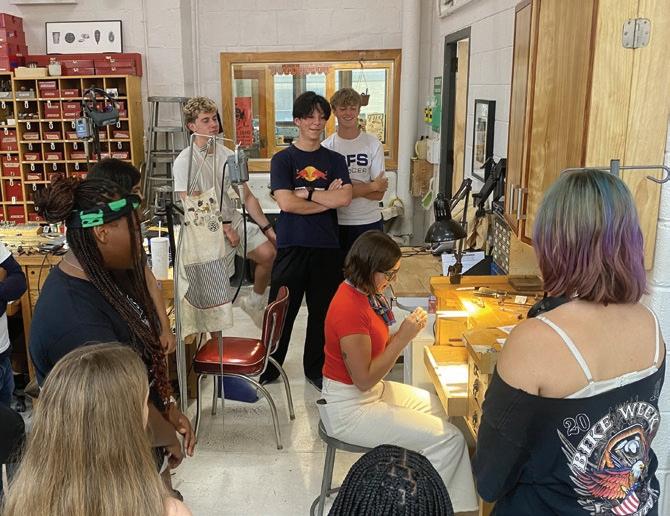
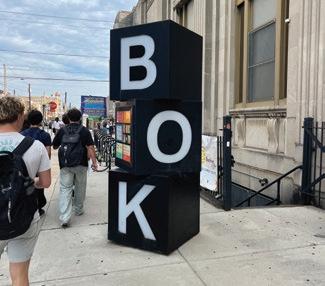
The inaugural IAM Symposium, held in late September at the Bok
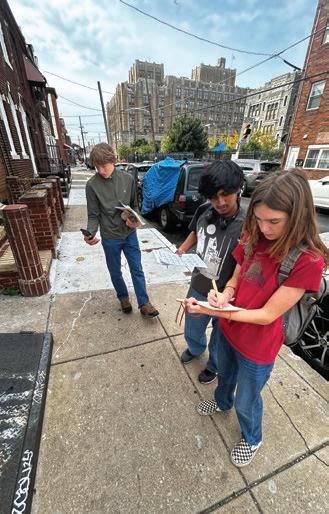
Building in South Philadelphia, immersed students in the city’s creative scene. In the morning, they explored the neighborhood in search of “art in the wild,” while reflecting on questions such as, “Does art have to be intentionally beautiful?” and “What is lost if we don’t cultivate art in a community?”
“The amount of times I saw art around South Philly when I wasn’t even really looking for it was very captivating,” said Pavan Mangalmurti ’28. “It can come in so many different forms and mediums.”
Delgado agreed that she gained a broadened understanding of art in the world, especially how to find color, texture, and beauty in unexpected places.
She shared, “While I saw traditional pieces like murals, posters, and stickers, I also observed abandoned houses, patterns, and the way the light hits different objects, all of which can be considered art.”
This page: IAM students visited the BOK Building this fall to connect with one another and meet local professional artists.
In the afternoon, students visited five resident artists in the Bok: illustrator and muralist Cindy Lozito, filmmaker Ben Kalina, fashion brand Lobo Mau, jewelry collective Alloy Atelier, and artists from Studio Incamminati. These studio tours expanded students’ understanding of what art can be and offered insights into potential future career pathways.
“I asked my mentor group if the symposium changed how they think about art in the world, in the community, or personally,” said Culp. “Many realized they’d never noticed certain forms of art before, and the studio visits expanded ideas of what they could do with their own art.”
Culp continued, “Already, we’re seeing an expanded understanding of the art world and how it connects with students’ classroom experiences.”
IAM was developed over the past two years with support from the Maguire Innovation Fund for Progressive Education. In designing the curriculum, Culp, Miller, and Bersh examined external programs such as YoungArts—which supports visual, performing, and literary artists aged 15–18—but found very few K-12 programs focused on interdisciplinary arts.
The first-year response has been enthusiastic, with 46 students enrolled—about one-eighth of the Upper School student body—far exceeding expectations. Participants range from those with significant arts experience to those just beginning to explore the arts, allowing for collaboration across skill level and perspectives. The faculty hope IAM continues to grow in response to student interest, with expansive opportunities to merge classroom learning with real-world practice and innovative approaches to the creative process. The program exemplifies how curiosity, collaboration, and community can shape a new generation of artists.
—Lauren Scharf
All School Commons Earns Gold AIA Philadelphia Design Award
COMMENDED FOR ITS DESIGN AND SUSTAINABILITY FEATURES, THE ALL SCHOOL COMMONS WAS NAMED THE GOLD MEDAL WINNER OF THE AMERICAN INSTITUTE OF ARCHITECTS (AIA) PHILADELPHIA 2025 DESIGN AWARDS COMPETITION IN NOVEMBER. It also received two commendations: the Reimagined Masonry Award and Committee on the Environment Award.
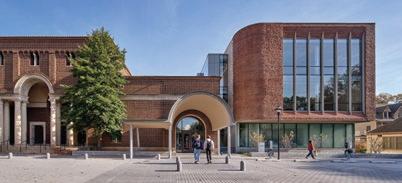
In bestowing its highest honor on the new 40,000-square-foot facility, the jury noted: “This design reimagines a new Commons that links and reuses two historic buildings with elegance, restraint, and stewardship. Situated at the heart of a dense campus, the multi-use project stood out as an exceptional project to the jury.”
The All School Commons was selected for the gold medal by a jury of esteemed architects from across the country out of approximately 125 submissions.
Designed by DIGSAU and Leslie Gill Architect, the facility was born out of a vigorous strategic visioning process that informed GFS’ Sustainable Campus Plan, of which the All School Commons is part. The plan centers on core tenets to honor the school’s history, strengthen connections both within the campus and with the surrounding community of Germantown, enhance the student experience, and promote environmental responsibility.
“DIGSAU and Leslie Gill fully embodied GFS’ mission and values in their thoughtful and ingenious design,” said Head of School Dana Weeks. “They brilliantly married our commitment to stewardship and community with our desire to advance exceptional teaching and learning.”
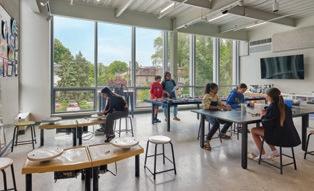
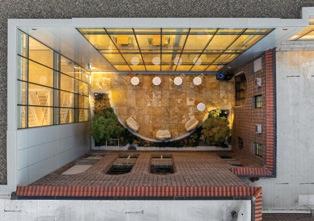
Completed in fall 2024, the lightfilled, ADA-accessible, and sustain-
ably-designed three-level complex reimagines the student experience by centering creativity and enhancing collaboration across the arts, engineering, film, and theatre, while fostering community and wellbeing in a new state-of-the-art kitchen and servery. The building connects the new Dining Hall, an adaptive reuse of the old Smith Gym, to the existing Barbara & David Loeb Performing Arts Center. On Greene Street, it features a new additional gateway to and from campus.
Students, teachers, families, and alumni are making it their own and, as always, leaving the door open for all those to come. —E.J.
Top to bottom: The All School Commons entrance facing Greene St.; a light-filled art classroom; an overhead view of the courtyard between the All School Commons and Loeb.
Essentially GFS Launched This Fall
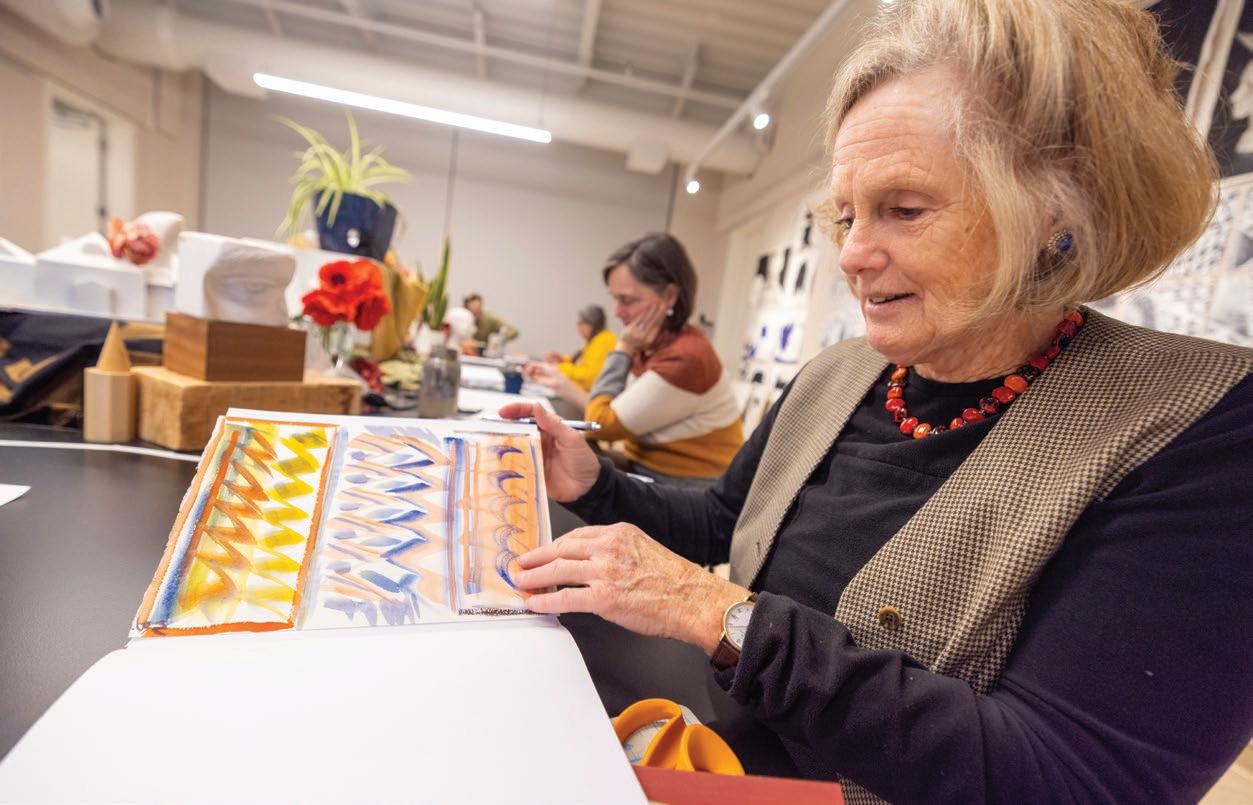
THIS OCTOBER, A SERIES OF INTERDISCIPLINARY, INTERGENERATIONAL EVENING CLASSES TOOK PLACE AT GFS UNDER THE NAME ESSENTIALLY GFS A spiritual successor to the school’s Essentially English program, these classes met on Wednesday evenings from October 29 through December 10, in the Abigail R. Cohen Center for the Arts in the All School Commons.
The courses included: ArtWrite Workshop with Anne Gerbner (former Head of Upper School English) and Caroline Santa (Upper School Art teacher); Learning from Alligators: How to Live through Global Change with Adam Rosenblatt ’02 (Upper School Science teacher); Self-Invention in America: From Ben Franklin to Beyoncé to Donald Trump with Rob Goldberg (History Department Head) and Adam Hotek (Upper School English teacher); and Quakerism and Why it Matters: History, Faith, Practice with Andrew Malkasian (Upper School History and Quakerism teacher) and Dorothy Cary ’75 (former Middle School History teacher).
Essentially English was founded at GFS in 1978 out of a desire to bring learners of different ages together. In the last quarter of every year, sophomores, juniors, and seniors would meet for their English classes in the evenings, often
accompanied by their parents, grandparents, and other community members. The program was sunsetted in 2022, but there remained a desire to provide a platform for similar learning experiences.
“I love the concept of people in different stages of their lives—students, alumni, former teachers, former and current parents—coming together to experience the caliber of the faculty and the education that we offer here,” said GFS Director of Academic Program Carol Rawlings Miller.
The courses were collaboratively developed between Rawlings Miller and the faculty. In planning, they wanted to establish a diverse array of disciplines that reflect GFS’ ongoing practice of engaging with current events and emergent topics in a critical, nuanced way.
“Essentially GFS is a way for people to get to know who GFS is right now, and to learn together with teachers who are thoughtfully shepherding the class to encounter relevant—and sometimes urgent—issues, questions, and art forms,” Rawlings Miller noted.
GFS plans to continue Essentially GFS courses in future semesters; keep an eye on the school’s social media and website for more information. E.K.
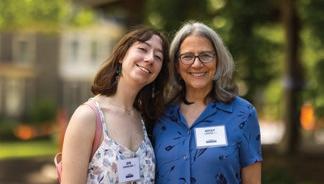
Barbara Wybar P’94 ’98 in the ArtWrite Workshop , held in the All School Commons.
Leveling Up
GFS’ investment in upgrading Athletics facilities continues at Fields.
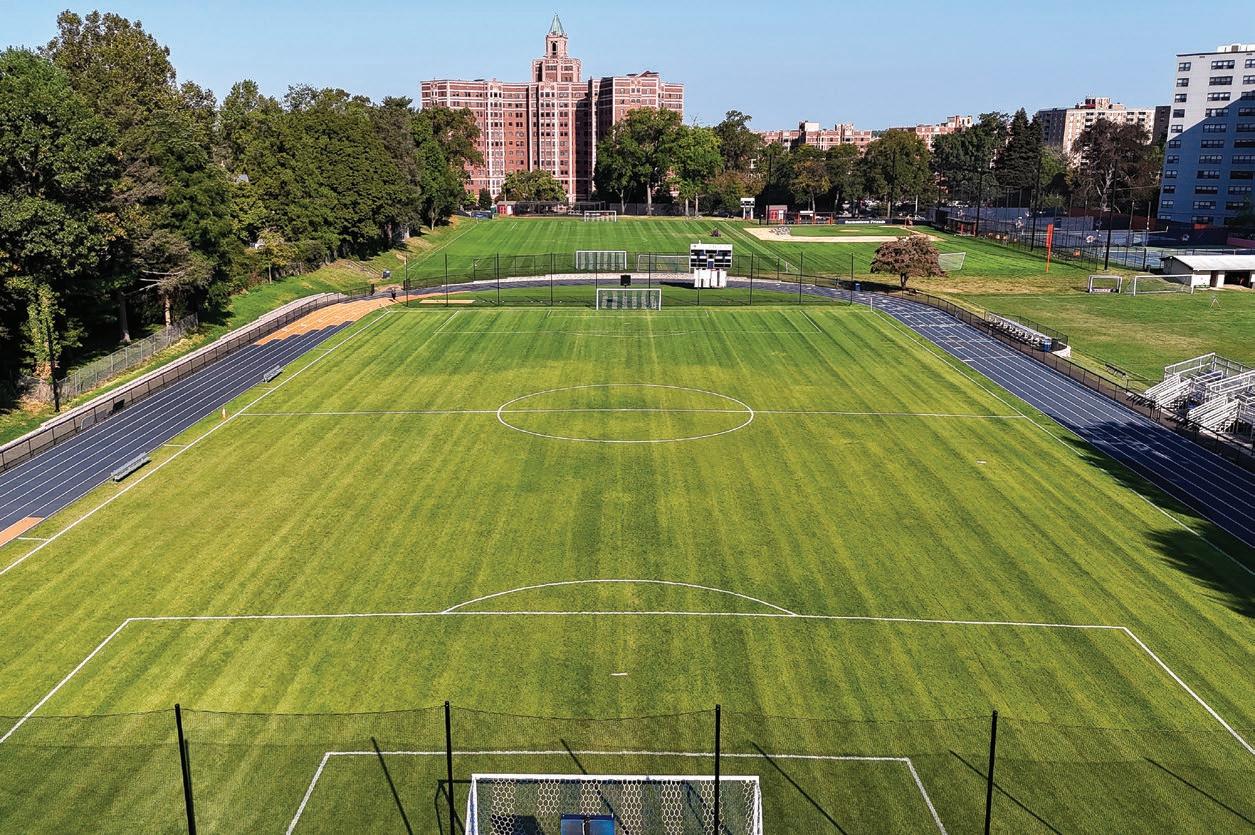
WHEN THE GFS GIRLS VARSITY SOCCER TEAM SHOWED UP TO THEIR SOCCER FIELD FOR THE FIRST TIME DURING PRESEASON, NATALIJA WHITMAN ’28 IMMEDIATELY NOTICED TWO THINGS: HOW SMOOTH AND FLAT THE FIELD WAS, AND THE INCREDIBLY LUSH AND GREEN GRASS. Earlier that summer, the Girls Soccer Field (sometimes called the Track Field) was planted with low-mow, climate-resilient Kentucky bluegrass, complete with irrigation and drainage upgrades.
Whitman, who has played soccer for 12 years, knows a good field when she steps onto one.
“The new field is the type of grass that I personally feel privileged to play on,” she said. “I’m so glad that GFS Athletics focused on elevating
girls soccer at GFS—that means a lot to the whole program.”
Center midfielder Jojo Lintulahti ’28, another seasoned player, noted that the quality of the field means the whole team’s play is leveled up.
“The new field makes every touch and pass feel smoother and more controlled, and this gives us the freedom to just play and not have to worry about bad bounces or patchy areas,” she said. “Compared to other, rougher fields, it almost feels like a different game.”
Head coach Manolo Sanchez ’10 agrees. As a former professional soccer player, he values natural grass for its playability and safety as well as its environmental sustainability versus artificial turf.
“Having seen a lot of soccer fields at area schools, I can say that GFS’ is now the best around,” Sanchez said. “And this shows that we really care about our Athletics teams and want to give our students top-class facilities. That creates energy, excitement, and momentum that gives our players a boost.”
In addition to the Girls Soccer Field upgrade, there are also improved walkways around the track, new foundations for shot put, discus, and pole vault, and an updated sandpit. This summer also saw a renovation of the Middle House at Fields, with a new concession stand called the Roar Shack, a meeting space for coaches, a back patio for crew erging and team events, and two all-gender bathrooms. E.K.
Two Hats, One Goal
On the playing fields and in the classroom, teacher-coaches build a culture of trust with their students.
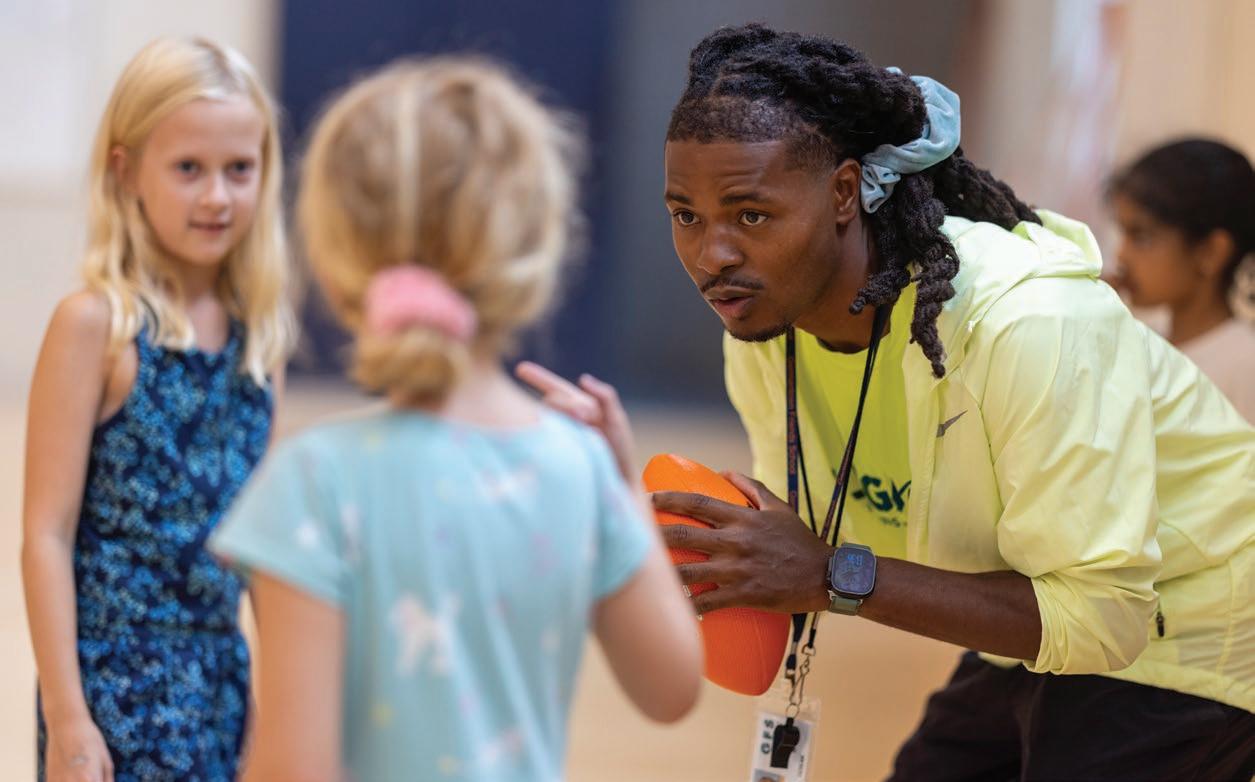
DE-SEAN FENNELL TURNED HIS BACK ON THE OPPOSING TEAM, KNEELING DOWN AND DRAWING A ROUTE ON THE FOOTBALL WITH HIS INDEX FINGER. He waited for the nods of understanding before whispering “Go!”, spinning on his heels and sending the football spiraling in a high arc across the Field House gym, catching the light from the massive windows as it soared. A jumble of reaching arms and wide-open eyes tracked its trajectory, and just before it reached its terminus, one of the players seemed to leap impossibly high to snatch it out of the air. Her team whooped in celebration together. On the last day of their football unit, the third graders in Fennell’s P.E. class were pushing themselves to their limits.
Fennell smiled as he looked over the small teams he’d divided up across the gym. After starting as a tennis coach in 2016, then moving through various roles as a lead Lower School classroom teacher and back into the Athletics and Physical Education Department, he has seen his fair share of driven Lower Schoolers blossom into honed athletes.
He can recall his own experiences as a studentathlete at Roman Catholic High School, where he was inducted into its Hall of Fame following his stellar tennis singles record of 61–0. He went on to play tennis for LaSalle University, securing the number one singles position during his first year and leading the team in wins. His passion for athletics and education eventually elevated him to head coach of GFS’ varsity tennis program in fall 2025.
One of Fennell’s favorite parts of the dual role of teacher-coach is that it allows him to apply the Quaker SPICES to various-aged students in different contexts. Lately, he’s been specifically upholding and encouraging Integrity among his students.
“Integrity is a really big word in the Lower School— it’s just asking, ‘How can I compete honestly when things get heated in the moment? Can I be fair and non-judgmental to my opponent and can I respect their line calls? Can I respect them?’”
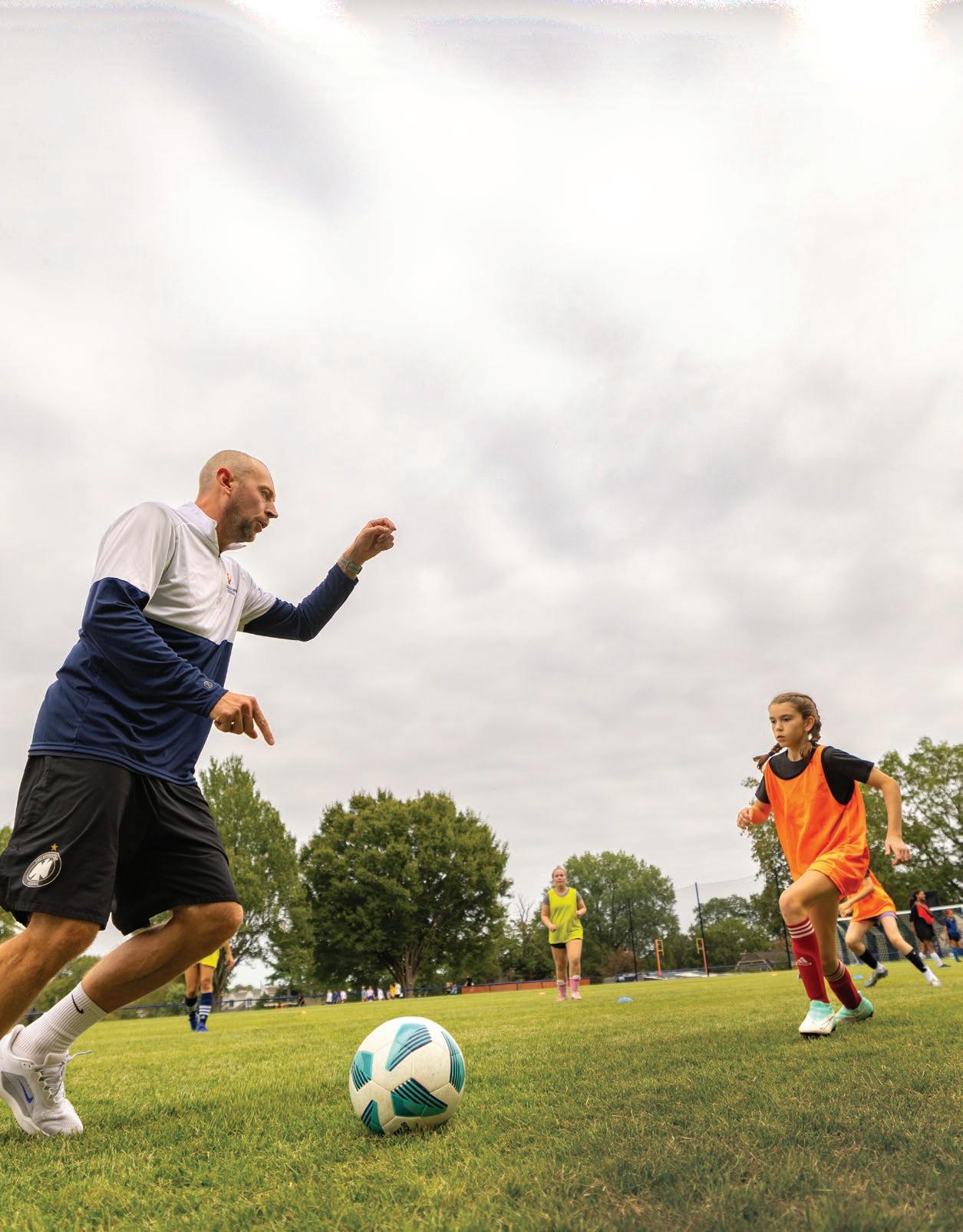
Later that day, a mile away from campus on the green expanse of Fields, teacher-coach Alex Shuptar
was leading Middle School soccer practice. The students concentrated as they moved through footwork drills, and Shuptar watched intently, calling out encouragement and stepping in to offer support when needed.
Shuptar has a long history as an athlete, as well as a coach and educator. After playing for Reading United AC in the early 2000s, and as a collegiate athlete and captain at Franklin & Marshall College in the mid-00s, he went on to mentor youth for almost two decades across different institutions. In 2022, he came to GFS as a Middle School boys soccer coach and began working as a part-time P.E. teacher. This year, after departing the well-regarded club, FC Delco, where he directed over 30 boys teams and was the MLS Next Academy Coach, he’s also stepped up to become GFS’ Middle School girls coach and varsity boys assistant coach.
Now working full-time as both coach and P.E. teacher he’s obtained a more holistic perspective of his students, going to class or practice with a better understanding not just of those he coaches, but of the school’s culture as a whole.
Integrity is also of paramount value for Shuptar.
“To me, it’s about your relationship with yourself when it comes to sports and P.E.,” he said. “Are you really emptying the tank when you take the field? Are you trying your hardest? Unless that boundary is pushed, you might never really understand your potential.”
The hybrid teacher-coach role is a foundational component of GFS’ Athletics and P.E. models. It strengthens the community and creates trusting relationships when leaders like Fennell and Shuptar are able to teach young Tigers during P.E. classes, and then become their coaches as they move up into the Middle and Upper School Athletics programs.
This trust between student-athletes and their teachercoaches is cultivated day by day, year by year. It all adds up to create an environment where standards are high, expectations are clear, and students are willing to strive.
“We work to foster a culture where students feel safe taking risks, knowing that if they fail, that’s okay because they’ll be afforded opportunities to try again and not be judged,” Shuptar said. “That’s at the root of what I think being a teacher-coach is about at Germantown Friends. It’s creating environments where kids want to try their hardest because that is what’s celebrated.”
—Fernando Gaxiola
Opposite page: De-Sean Fennell teaches Lower School P.E. and heads up the GFS varsity tennis program; this page: Alex Shuptar brings his decades of soccer experience to GFS’ Middle and Upper School soccer teams and his love of movement to P.E. classes.
All In
How GFS’ Junior Varsity program creates opportunities for all levels of Upper School athletes.
EVERY YEAR ON THE FIRST DAY OF FALL PRE-SEASON, TWO DOZEN OR SO BOYS ARRIVE FOR JUNIOR VARSITY SOCCER PRACTICE. For JV boys soccer head coach (and 12th-grade dean) Rob Goodman, each new grouping of players is somewhat of a puzzle. Because of GFS’ ninth- and tenth-grade sports requirements and the school’s no-cut policy, most JV teams include a wide range of skill levels: a mix of newbies, moderately experienced players, and competitive athletes itching to move up to the varsity level.
It creates an exciting—and sometimes challenging—coaching environment.
“Some of our players haven’t played soccer before and need the fundamentals, while others have played for years on club teams,” Goodman noted. “JV soccer is an inclusive space where we have to meet and balance all of those backgrounds.”
GFS’ investment in the JV development model includes hiring
experienced coaches who are deeply committed to their roles, and facilitating JV teams for every sport the school offers. In fact, GFS is the only school in the Friends Schools League that has a JV level in every league sport, including golf.
The program embodies the school’s athletics philosophy, which gives each student the opportunity to take a chance on a new sport. This is in direct contrast to what Senior Director of Athletics & Physical Education Katie Bergstrom Mark sees as the norm in mainstream youth sports.
“Youth sports often do not value, nor leave room for, late bloomers in their youth development models, but at GFS I’ve seen time and time again students that had an alternate view of their athletic talent flourish into highly competitive team members,” Bergstrom Mark said.
As the season progresses during after-school practices at Fields,
Goodman works to help all his JV athletes achieve their goals, whether that’s learning to pass accurately or prepping for varsity next year. Part of his approach is being upfront and clear with the players when they have questions about why they’re doing what may seem to some like easy drills, or why some players get more minutes on the pitch during close games.
While this takes some finesse, he ultimately believes that GFS’ no-cut policy strengthens the JV program. For one, it exposes more seasoned athletes to playing on a mixed-level team, which can promote personal growth.
“They almost become minicoaches, helping to teach some of the newer players,” Goodman observed. “It allows me to coach those soft skills, like being a good teammate and encouraging each other.”
Without the no-cut policy, he also believes that teams would miss out
on those who are newer to the sport, but have the potential to evolve into strong players over time.
“I think the policy opens the door in a way for many that wouldn’t get on the soccer team otherwise,” he noted.
“Some kids may come out freshman year just to try it, but two years in they have developed in such a way that their vision has shifted, and now their sights are set on varsity.”
Some players enjoy the culture of JV teams so much that they choose to stay at that level, even if varsity may be within their reach.
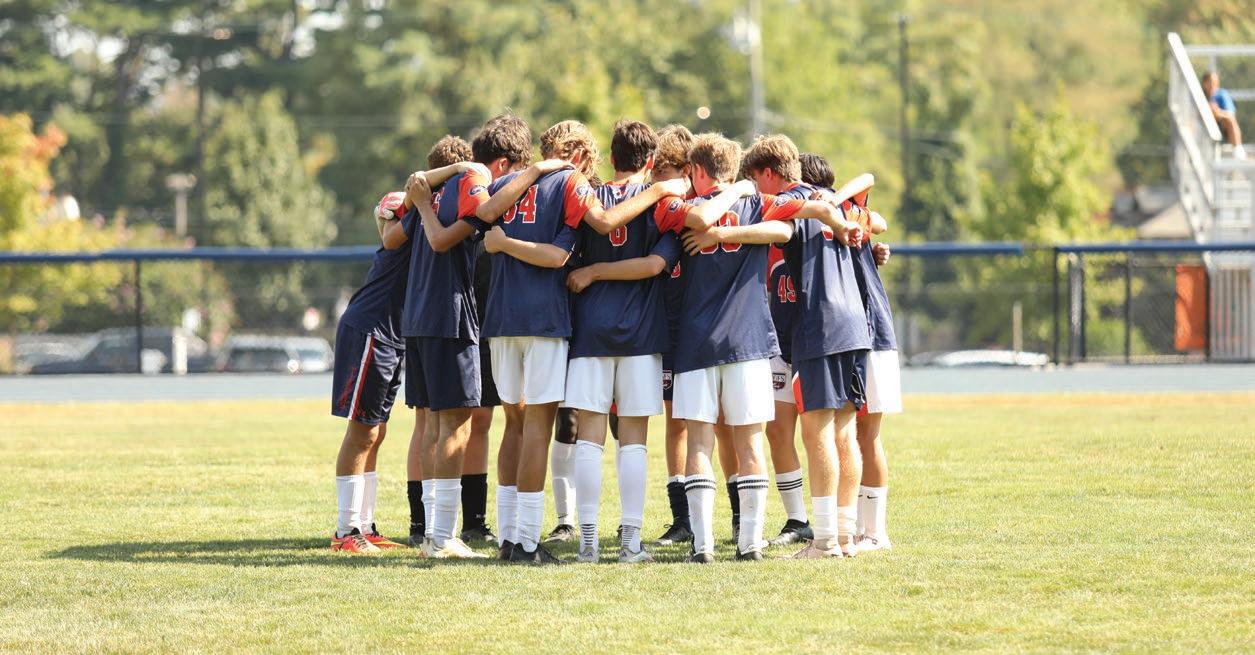
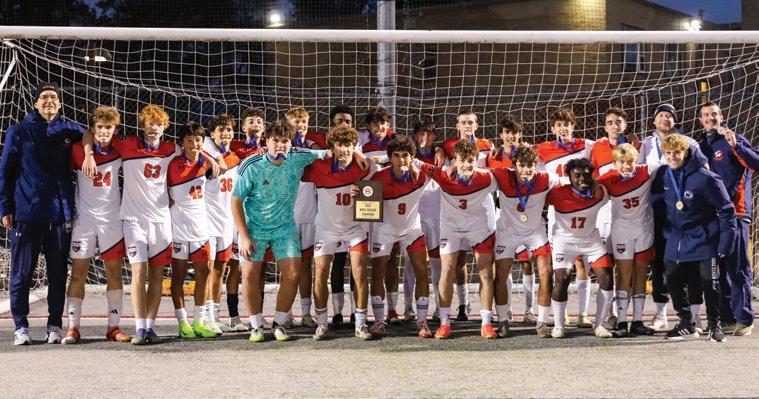
BOYS SOCCER WINS FSL CHAMPS & ALL GFS TEAMS MAKE POST-SEASON PLAY
It was an exciting fall Athletics season at GFS! For the first time in over a decade, every varsity team went to the Friends Schools League (FSL) play-offs. The FSL, which was founded in 1981, is a competitive league that consists of nine Philadelphia-area independent schools; because of the GFS student-athletes’ and coaches’ hard work and dedication, all the Tigers had a strong showing this fall.
On Thursday, October 28, under the lights at Rosemont College, the varsity boys soccer team won the FSL Final game against defending champions, Westtown. The match included 100 minutes of gameplay,
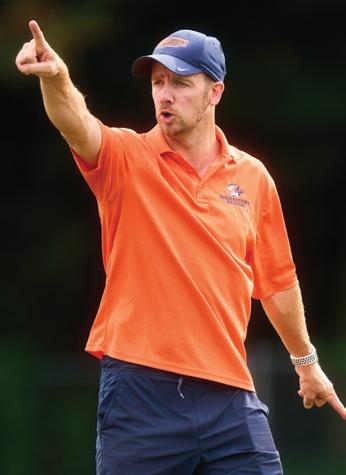
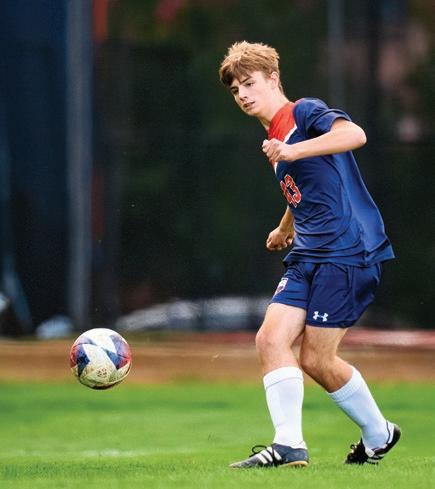
Aydin Lember ’26 has always loved soccer. He was introduced to the sport as a kid, sharpening his skills as a defender and a midfielder playing for club teams. As a ninth grader at GFS, he played on the boys JV soccer team, and now, as a senior, he’s the team captain. He might have had a chance at making varsity this year—in fact, he ended up playing in a handful of varsity games this fall—but he chose to primarily stick with JV.
“I get a lot more minutes playing JV; I basically play the whole game,”
Lember said. “And I still work on increasing my skills and getting better, but it’s more like playing for fun.”
He also values his leadership role as captain, helping keep the younger players focused at practice and sharing his deep knowledge of the game with newer players who are still learning the basics.
“Sometimes the other defenders will ask me if there’s anything they should be doing differently in the games,” he said. “I feel like they look up to me, as a senior and a captain.”
Lember also enjoys the infectious camaraderie of the JV team.
“Everyone’s celebrating with the newer players when they do well, like if they score a goal. I think they feel really good about themselves when we do that,” he said.
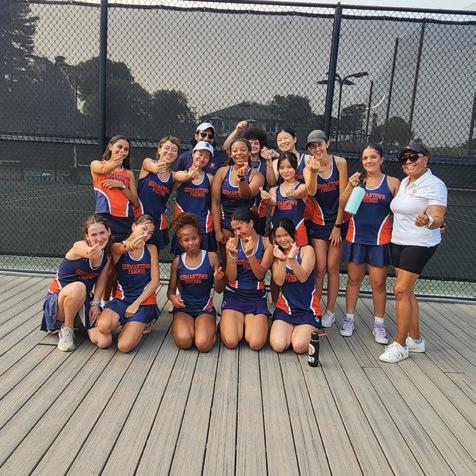
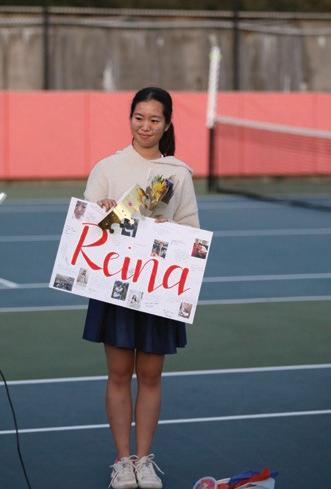
Reina Yagawara ’26 is the captain of the JV girls tennis team. Similar to Lember, she is content with her situation, and feels empowered to use her leadership role to create an atmosphere of inclusivity.
“To me, being a captain means being there for the rest of the JV
and ended in a penalty kick shootout, where the Tigers triumphed 4–2.
This is the seventh FSL Championship GFS boys soccer has won in 40 years.
Congrats to varsity girls soccer and field hockey, who both advanced to the FSL semi-finals (the first time
field hockey has made the playoffs since 2013!). Girls tennis took second place in the FSL Championship match, and boys and girls cross country came in second place in the final race. While not affiliated with the FSL, GFS crew performed well at the Head of the Schuylkill regatta . —E.K.
JV boys soccer coach, Rob Goodman
team—to make sure no one is ignored and everyone feels supported,” she said.
She came to tennis in ninth grade with limited experience, and has built her skills over the last four years. The close instruction from the coaches and the time allocated during practice for friendly matches were big factors in her improvement.
And she noted that while GFS’ no-cut policy and sports credit requirement mean that some students have varying commitment levels, she thinks the benefits outweigh any downsides.
“I certainly would not have done a sport if there was a cut policy,” Yagawara said. “This policy encourages growth and development without the pressure of being ‘varsity level.’ You can play just because you enjoy it!”
Stephanie Daniel, the head coach of the JV girls tennis team, sees enjoyment of the game as one of the top benefits of learning tennis.
“I tell all my players: tennis is a lifelong sport. You can play until you’re 80 years old! You make friends, it’s social, and it keeps you in shape,” she said.
GFS’ JV TEAMS are both supportive environments for student-athletes to grow, and quite competitive in their own right!
In the Fall 2025 season, both the JV girls cross country and JV field hockey teams won their division at the Friends Schools League JV Tournament, a hallmark of the league and a 40-year tradition.
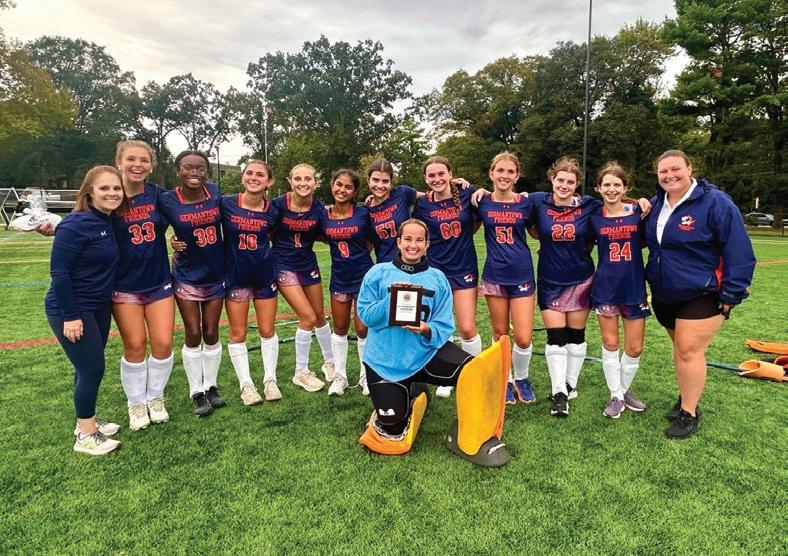
In the field hockey final, the Tigers faced defending JV champs, Academy of the New Church. GFS goalkeeper Sarah Hogea ’29 had an incredible game, saving shot after shot. In the final minutes, GFS scored a goal; moments after, Hogea answered with a last-second save to preserve the championship for the Tigers.
Regardless of existing skill level, Daniel and the assistant coaches drill the fundamentals and proper strokes for all the JV players. With brand new players, assistant coach Stef Parisi asks them not to compare themselves to anyone else on the court and to embrace being beginners.
“First, they have to get comfortable with where they are with the game—if you’ve never picked up a racket, you have to accept that, and now that’s a new mindset to go forward and learn,” he said.
For Parisi, part of the magic of coaching JV sports happens when, after consistent hard work and practice, players start to improve and begin to perceive themselves and the game differently.
“When you teach someone a real tennis stroke and it clicks, it’s a revelation,” he said. “It’s like a lightbulb goes off: Oh, I can really play this game! That’s what we’re looking for.”
At GFS, JV teams aren’t just training grounds for future varsity athletes. They’re places where confidence grows, community bonds strengthen, and every student gets the chance to learn—and play—the game. —E.K.
Reina Yagawara ’26, captain of the JV girls tennis team (left) and Aydin Lember ’26, captain of JV boys soccer team (right), both chose to stick with JV in their senior year.
The JV field hockey team (pictured) won their division in a close, exciting game.
REMEMBERING A BELOVED FRIEND AND COLLEAGUE
The Michael D. Epstein Fund for Civic Engagement and U.S. History Education
EARLY THIS JUNE, THE GERMANTOWN FRIENDS SCHOOL COMMUNITY LEARNED THE DIFFICULT NEWS THAT MICHAEL D. EPSTEIN HAD PASSED AWAY AFTER AN EXTENDED ILLNESS. Epstein served as GFS’ in-house counsel and was a member of the History Department faculty from 2023 through 2024. Hundreds gathered at GFS for his memorial service, sharing stories and reflecting on his life as a beloved father, husband, teacher, historian, lawyer, and friend.
Thanks to the partnership of Mike’s family and the tremendous outpouring of generosity from his community of friends and colleagues, Epstein’s legacy at GFS will live on through the Michael D. Epstein Fund for Civic Engagement and U.S. History Education. This newly endowed fund promotes student civics education and engagement, with the goal of preparing individuals to be active and responsible members of their local and national communities and to contribute to a thriving democracy.
“Losing Mike was devastating for our community. He made an outsized impact in the short time he was with us at GFS,” said Head of School Dana Weeks. “Mike’s memory will guide us as we further the school’s longstanding tradition of educating critical thinkers and engaged citizens.”
This includes field trips to government institutions and history museums, like the annual fifth grade trip to Ellis Island and the Lower East Side Tenement Museum in New York; bringing speakers and special guests
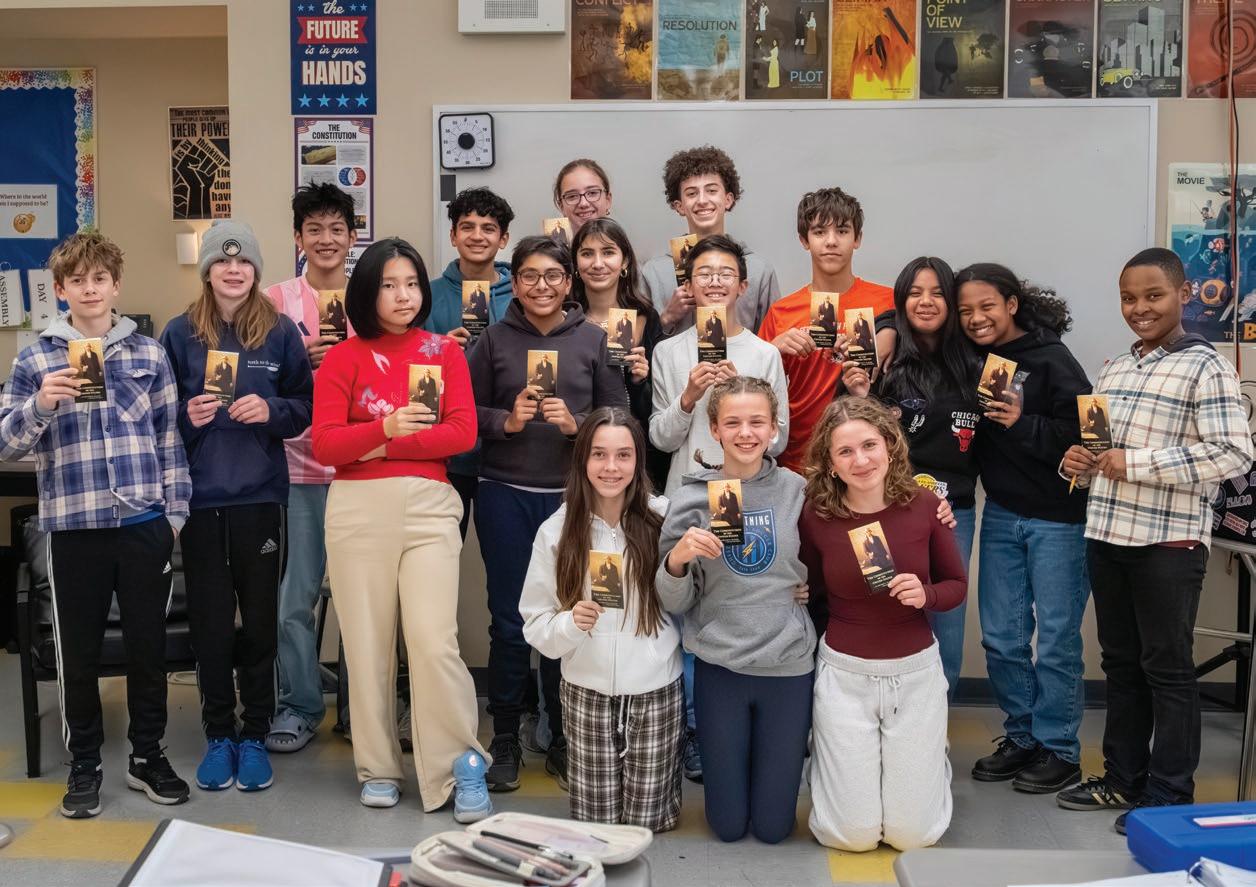
to campus, like Bradford Pearson, the editor of Philadelphia Magazine, who spoke at an Upper School assembly in October about his new book, The Eagles of Heart Mountain, which covers an undefeated high school football team formed by Japanese American teens incarcerated at Heart Mountain in 1943; and providing pocket-sized copies of the U.S. Constitution to all eighth graders in Civics class.
The majority of Epstein’s career was spent in corporate law, but he had always harbored a desire to teach. After being hired as GFS’ in-house counsel in the winter of 2023, Epstein began shadowing seasoned Middle School History teacher Hannah Jacoby-Rupp in her classroom in the Sharpless building. Right away, she could sense that his enthusiasm for teaching and respect for the craft were genuine.
“We first met through a phone call, and just a few minutes into it, I could tell that he was so excited about and energized by the idea of teaching,” she remembered.
What was supposed to be a 15-minute call stretched into an hour. They began talking about the teachers he’d loved growing up, and soon, they were going over lesson plans and slides in Jacoby-Rupp’s Google Drive.
Once he was stationed in her classroom, she observed how his easygoing, personable nature resonated with Middle School students.
“He quickly picked up on how important it is to be relational with
students: he learned their names and noticed details about them, and the kids immediately took to him,” said JacobyRupp. “It wasn’t long before students were stopping the class and saying, ‘We need to know what Mike thinks.’”
Throughout that semester, she gradually gave Epstein the reins on some projects and lessons, and trusted him to cover her classes if she was out. As he took on a few of his own sections that fall, she marveled at how intuitively he connected with his students. He dressed up during spirit days—including a memorable Bruce Springsteen costume on Halloween— chaperoned events and trips, canceled his lunches to meet with students one-on-one, and wove his real-life experiences and anecdotes into his teaching. He also always found ways to affirm and encourage students.
“He would email kids a lot to give them something to hang their hat on, even something simple like, ‘I really valued your participation in class today,’” Jacoby-Rupp said. “He was the warmest person.”
Epstein also carried an unshakable conviction that students needed and
Michael Epstein (above) was a beloved member of the GFS community.
deserved a close understanding of the U.S. Constitution. He saw teaching history as a way to empower the next generation of engaged citizens and voters.
“He insisted every student have a pocket Constitution,” said Andrew Malkasian, a History and Quakerism teacher who was also friends with Epstein. “One of the successes he shared with us was when he asked a question and a student whipped out their copy with enthusiasm and properly identified the answer to the question.”
Epstein’s passion for teaching was palpable to everyone who encountered him during his time at GFS.
His wife Kaethe Schumacher said that for as long as she could remember, teaching had been one of his dreams, and that seeing him fulfill that dream was remarkable.
“I honestly had never seen him as happy and energized as he was when he started teaching at GFS—he threw himself into it with such gusto and he was working really hard, sometimes harder than he had been at his corporate law job,” Schumacher remembered. “And he really loved the people there, too.”
For many experienced faculty, years or even decades into their career, watching someone fall in love with teaching for the first time was revelatory.
“He mirrored back to us why it matters so much that our students learn about the Constitution and understand U.S. history,” said Rob Goldberg, Head of the History Department. “He would tell us, ‘It’s so important that this is your job every day,’ and made us all more excited about what we’re doing.”
Epstein will be remembered at GFS for so many reasons, including the endowed fund established in his memory. Schumacher said that while Epstein was still alive, he was made aware of the plans to establish the fund, and had given it his full stamp of approval. The groundswell of support behind the fund is something that brings Schumacher and her family some comfort.
“I’ve been writing thank-you notes to people who gave to the fund with tears streaming down my face; I just feel so thankful that they’ve been there for us in so many ways, knowing how much this meant to Mike,” she said. “It means the world to us to keep his spirit alive at GFS, a place he came to love so much in his short time there.” —E.K.
Epstein insisted that every eighth grader receive a pocket Constitution in Civics class.
Widening the Lens
An alumnus’ donation of rare vintage cameras is expanding creative possibilities in GFS’ photography classes.
By Emily Kovach
RETIRED RETINAL SPECIALIST DR. DAVID FISCHER ’64 STILL HAS A PRINT OF ONE OF HIS FIRST PHOTOS FROM HIS EARLY DAYS DABBLING IN BLACK-AND-WHITE PHOTOGRAPHY. The image was taken in 1974 in Durham, North Carolina, where he lived while completing his residency at Duke Department of Ophthalmology. It captures a series of steps in a public park zig-zagging through a forested area. Fischer’s late wife, Paula, who passed away in 2016, stands on the steps in the lower right corner of the frame, facing the staircase.
“It looks like she is setting off on a journey,” Fischer noted.
Fischer embarked on his own journey as a serious hobbyist photographer by experimenting with a Pentax camera that belonged to Paula, though he soon upgraded to a large-format view camera, after learning that’s what Ansel Adams used. Amidst his rigorous ophthalmology training schedule, he would go for walks when the lighting was good to take photos. Before long, Fischer had installed a small darkroom in one of the bathrooms of his Durham home.
“You learn that in life you need to make time for passion and to figure out what you’re good at,” Fischer remarked. “In my line of work I had to master unique machines—that was the fun part for me—and cameras were an extension of that.”
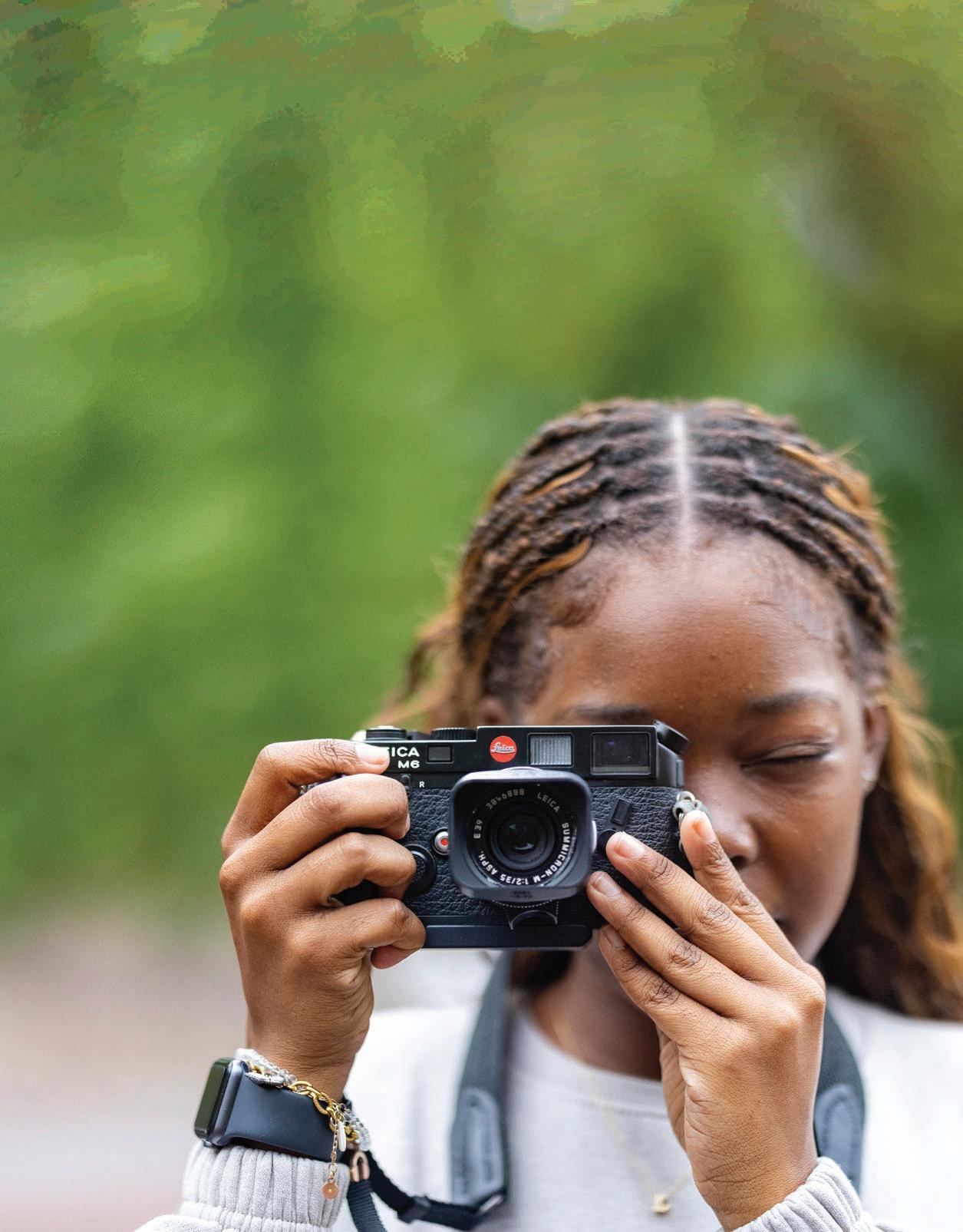
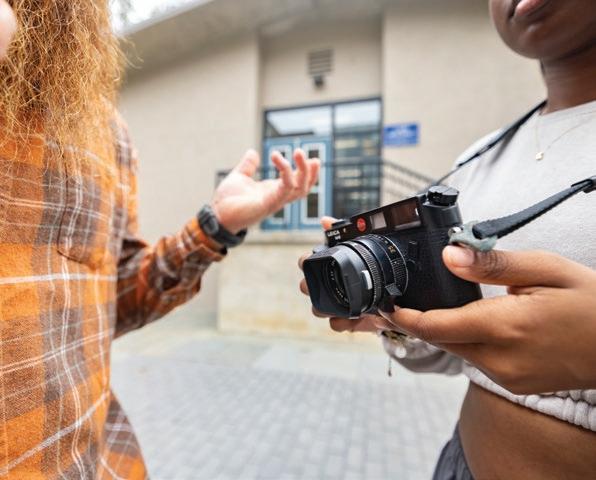
Lailah Banks ’26 uses one of David Fischer’s vintage cameras, a Leica M6, in a Photo II class.
A collector at heart, Fischer has been acquiring unique, and sometimes rare, cameras for decades. Last year, in addition to a generous capital gift to the All School Commons as part of GFS’ Picture This campaign, Fischer donated 16 of these cameras, all in pristine condition and in their original cases, to the school’s photography department. He said that after interacting with some Upper School students in the photo classes, he knew his treasured cameras would be appreciated.
“These are special machines with special abilities, and I was really happy to be able to give them to GFS,” he said. “I could tell those kids had passion.”
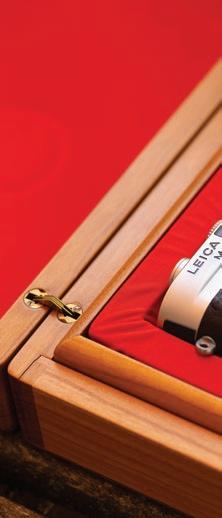
In building his camera collection, Fischer was often drawn to unusual cameras, some of which made their way to GFS. There’s a Minox spy camera, hardly larger than a pack of gum, said to have been used by Cold War intelligence services. A special edition Leica M6, covered in ostrich skin and tucked into a red, velvet-lined box, is a precious artifact; Koehler says he plans to occasionally allow each student to take one photo with it on a shared roll of film.
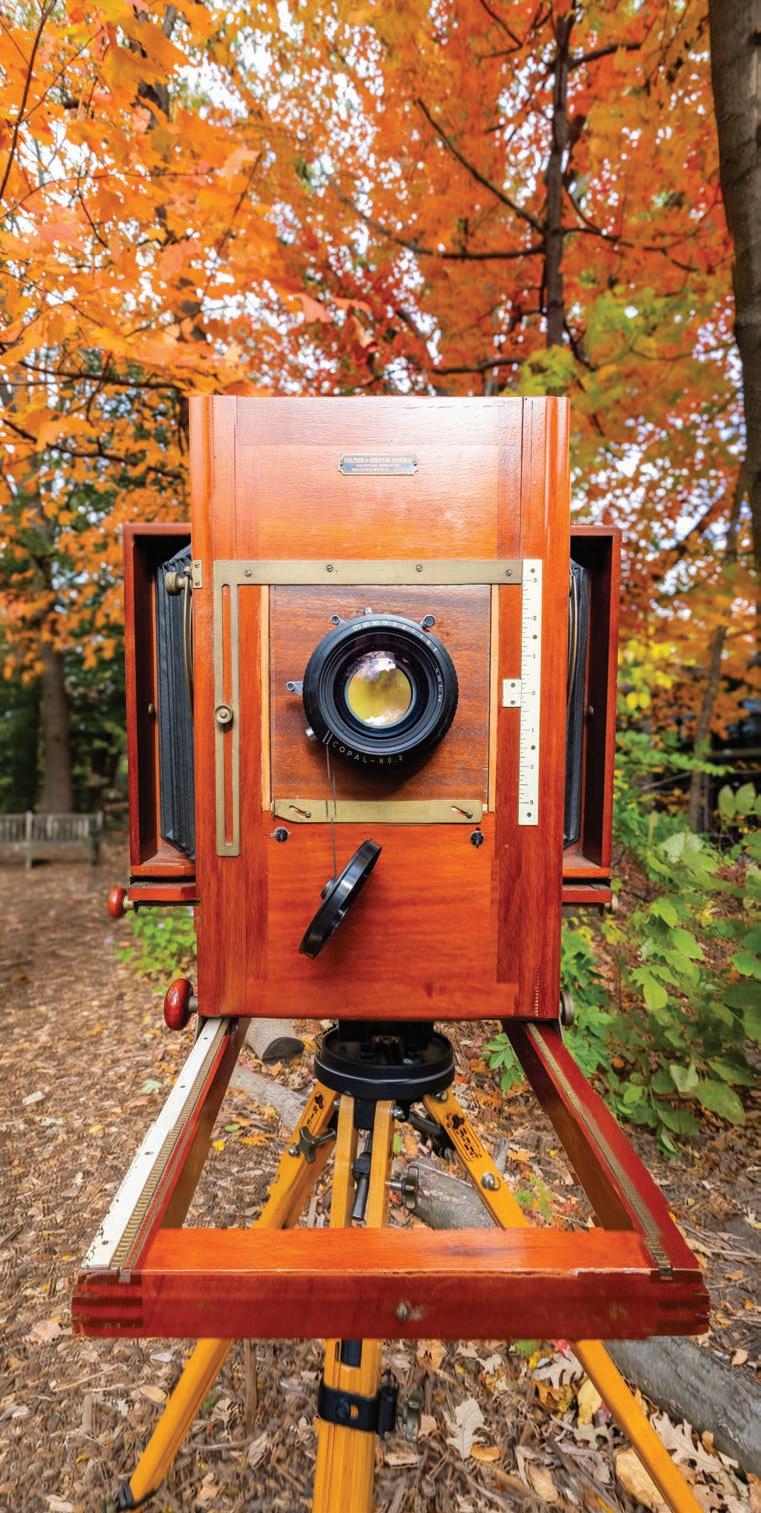
There are three large format cameras, as well: a Linhof panoramic camera; a 4x5-inch Wista Field Camera, and a 16x24-inch Eastman Land Camera that’s likely 125 years old (see pg. 20 for more info).
“These cameras, the way they function and their unique quirks and features, will allow students to expand on their understanding of light and exposure,” Koehler said. “I am unbelievably stoked that they can have access to resources like these.”
This page: Students’ negatives and prints from one of Michael Koehler’s photo classes. Top photo by Tobias Detwiler ’26; bottom photo by Luke Stoneman ’27.
Opposite page, clockwise from upper right: David Fischer donated 16 cameras, all in impeccable condition, to GFS’ photography program; Jordan Abney ’26 reviews her negatives on the light table; teacher Michael Koehler is an avid black-and-white photographer.
But before they even pick up a camera, GFS students in Photography I learn to consider light as a medium. They start by taking photos with a pinhole camera made from a paint can.
“The pinhole camera is the simplest way of making a picture, and we do that first so they can really grasp that photography is painting with light,” Koehler noted. “I don’t grade my students on their final print, but on their understanding of taking a reading of light, developing the photos, and being able to build off that information.”
Students learn to develop negatives and print positive images in the new All School Commons darkroom. This 20-bay darkroom, one of the largest on the East Coast, allows more students to take part in the photography program, which has experienced an increasingly higher demand for years.
From there, students begin using standard Pentax 35mm cameras, similar to the one Fischer had back in the 70s, before moving on to experimenting with other types of film cameras and darkroom techniques. Sometimes, they take photos on campus or go on what Koehler calls “photo walks” around Germantown, observing the light, shapes, and architecture in the neighborhood. Students are allowed to check Fischer’s cameras out overnight or on the weekends to continue their exploration at home.
While Koehler does incorporate digital photography into his curriculum, he believes that working with film provides a critical foundation for young artists. It helps build a practice where each decision, each adjustment, and each eye’s singular perspective are all at play at the moment of creation.
“The film side of photography teaches that the light hits the Earth brand new every day—today’s light will never happen again,” he said. “A photographer’s job is to appreciate objects or subjects by seeing how the light is falling and capturing that beauty.”
The mechanics of the eye and the nuances of vision were, of course, a persistent topic of research and exploration throughout Fischer’s 40-year career at Wills Eye Hospital. This has parlayed beautifully into his interest in film photography, which he celebrates for its ability to help artists develop their point of view.
“Photography is what you think about—it’s how you see,” Fischer said. “With black-and-white photography, you have
FOUR VERY COOL CAMERAS FROM DAVID FISCHER’S COLLECTION
1 Folmer & Schwing Division Eastman Kodak Co. Land Camera
This circa-1910 16x24-inch large format camera with a wooden frame and tripod is a showstopper. In one Photo II project, students use this camera to take portraits of each other, employing a collaborative fire brigade-style workflow: three people work the camera, one person runs the negative to the darkroom where three more people develop the image, then send the runner back upstairs to give feedback on focus and lighting. “It becomes about discovery-based learning, less about me being the expert, but instead urging them to keep asking, ‘How can we do better?’ That’s really affected and refreshed how I teach across the board,” Koehler said.
Originally created for travel and adventure photography, this panoramic German camera from 1976 features fully manual shutter speed, aperture, and focus settings. It shoots large format film (6x17cm, about 2.35x 6.7 inches) that creates long rectangular negatives and prints. The rugged camera body houses a Schneider-Kreuznach lens, specifically designed for large-format photography. 2 3
2 Leica M6
Leica is a legendary German camera manufacturer; its cameras are coveted for their responsive features and the fine quality of the glass used in the lenses. The M6, which Koehler calls “my favorite camera on Earth,” is a 35mm camera with unique features, including a splitscreen focusing apparatus and a curtain shutter, which makes for even, sharp exposures, especially in low-light situations.
3 Canon M7
The 50mm f0.95 lens is the star of the show on this camera. The aperture in the lens can open very wide, to the point where it can “see” in the dark better than the human eye. It also allows for an incredibly precise depth of field, so that the lens can focus in on one pinpoint.
4 Linhof Technorama 617S
to train your brain to be able to look in that camera and see what the film is looking at, and imagine what it will do.”
Every once in a while, after a photo walk, a student will open their camera only to realize that the film was loaded incorrectly and the images they thought they had captured are not actually there. Even though this can be disappointing, Koehler is quick to remind them that their time has not been wasted.
“They have still benefitted from walking around and looking through the viewfinder,” he said. “No one is seeing the moment the same as another person. That is your perspective, and it’s made up of all the stories that have gone into your life.”
The GFS Annual Fund in Action
THE ENERGY OF THE GFS EXPERIENCE CAN BE FELT ACROSS CAMPUS—IN THE SCIENCE LABS, ART STUDIOS, ON THE PLAYING FIELDS, AND ALONG THE STORIED FRONT STEPS WHERE STUDENTS AND ALUMNI GATHER.
As our historic Picture This campaign enters its final months, we are highlighting the GFS Annual Fund. This vital, unrestricted source of funding is one of the campaign’s four priorities and an essential part of the annual budget, acting as a direct investment in the school.
Every day, Annual Fund contributions empower our students, faculty, and staff to move beyond the expected and embrace extraordinary opportunities. These critical resources are immediately put to use, supporting our thoughtful program and the talented faculty, coaches, and staff who cultivate this thriving learning community.
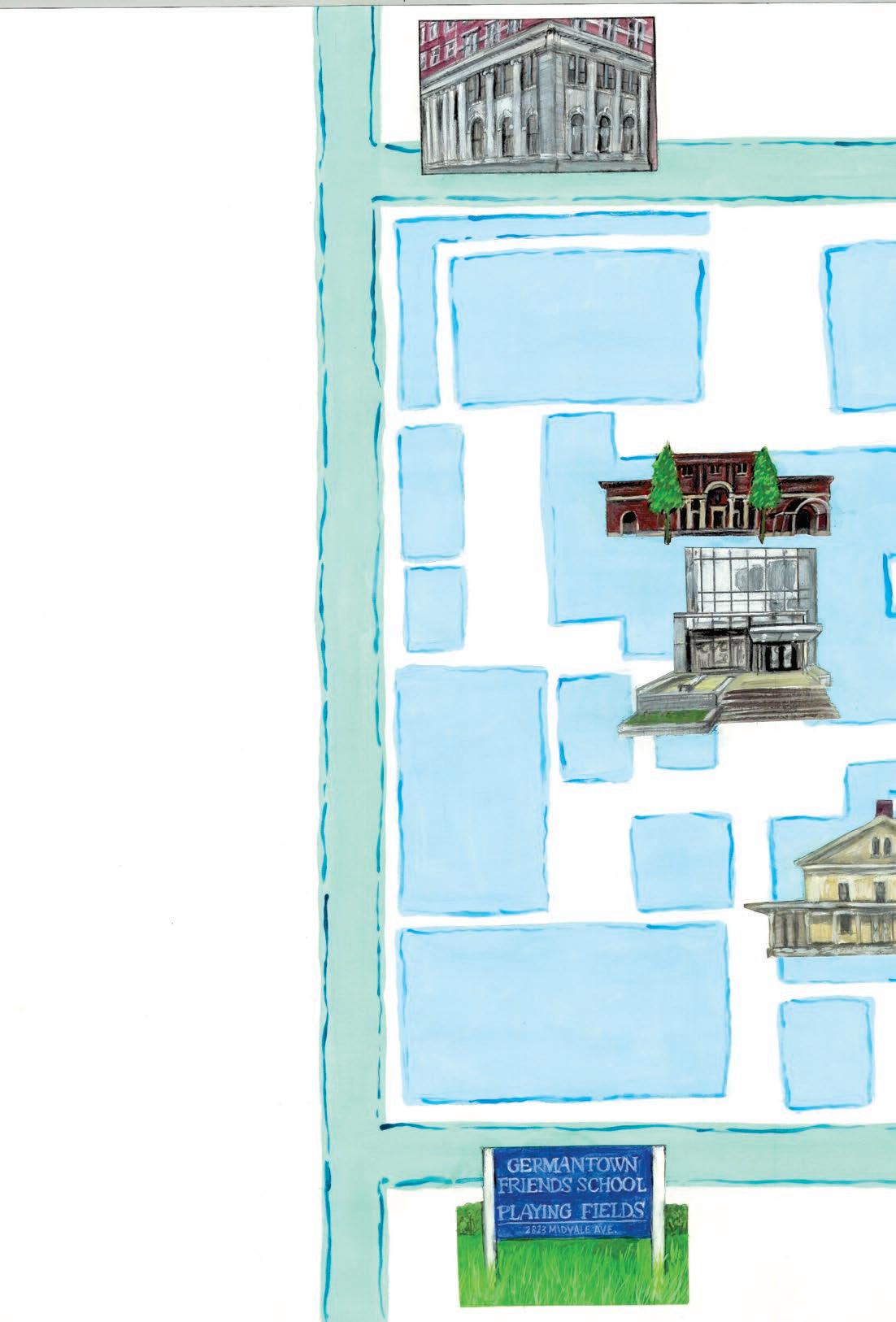
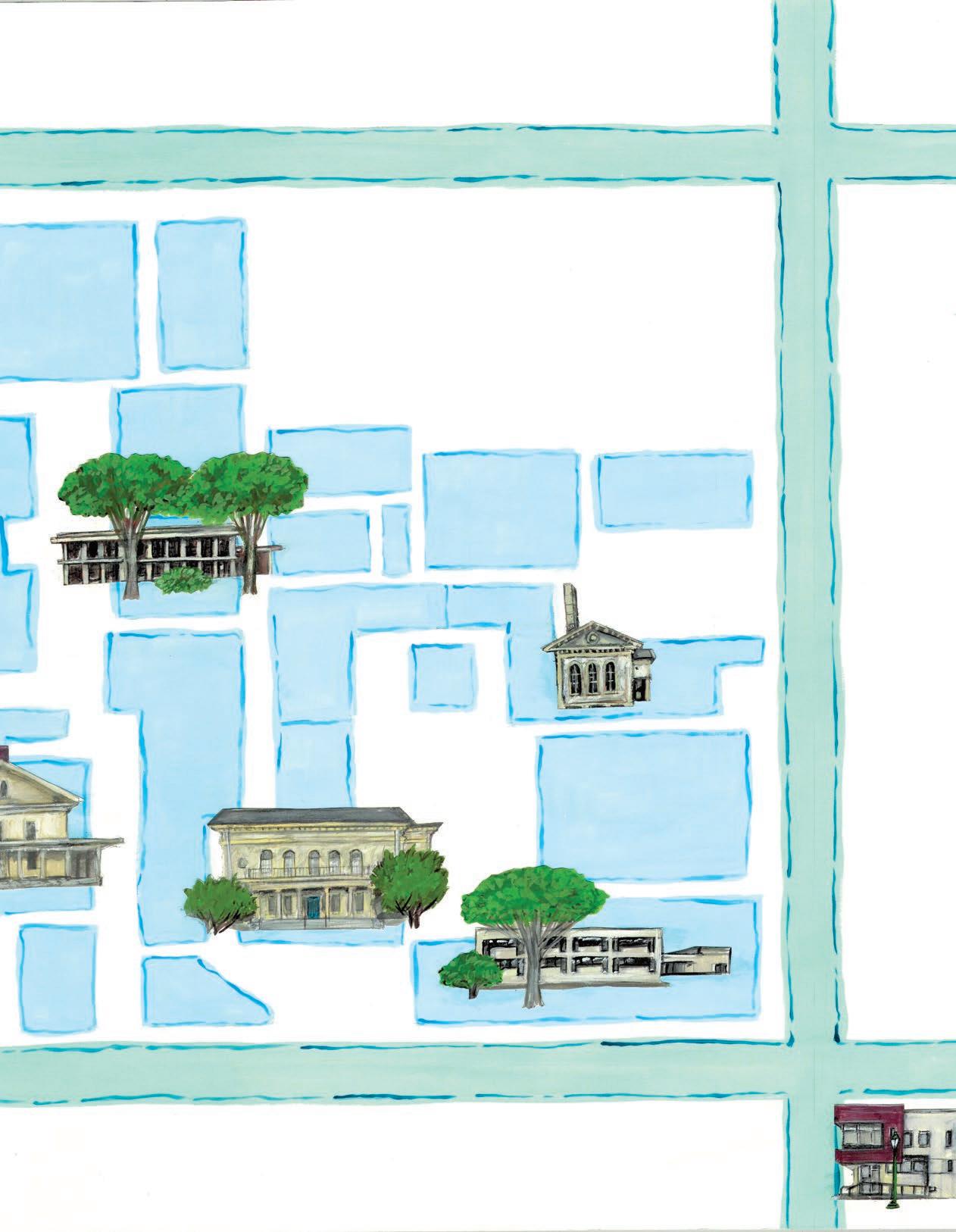
By continuing to make the GFS Annual Fund our community’s top philanthropic priority, we secure the school’s foundation. This ensures that exceptional teaching and learning will flourish across every point on the map (and more!) for generations to come, preparing students to lead fulfilling and purposeful lives. —E.K.
Here are some important ways the GFS Annual Fund is making an impact throughout the school:
CURTIS CENTER: Preschool students at GFS’ Center City Early Childhood Campus board the school bus for their monthly exchange to visit Main Campus, where they’ll make new friends in the play yard, create in the classroom, and attend Meeting for Worship (see pg. 24).
BARBARA & DAVID LOEB PERFORMING ARTS CENTER: Faculty and staff meet for a special professional development workshop with pediatrician and youth advocate Dr. Ken Ginsburg. His presentation, which will later be shared with GFS families, explores how to provide students with safe and secure relationships that enable them to overcome challenges and build resilience.
FIELDS: JV Crew works on their form, using the erg machines set up on the patio outside the newly renovated Middle House. This is just one of the many investments GFS is making in our Athletics infrastructure.
ALL SCHOOL COMMONS:
In the new ceramics studio, a fifth-grade art class learns the foundations of working with clay, while a few classrooms over, Upper Schoolers experiment with the laser cutter in the Fab Lab. The ceramics studio, complete with pottery wheels and kilns, and the Fabrication Lab, outfitted with state-of-theart equipment, are just two of the highlights of the Abigail R. Cohen Center for the Arts.
CARY BUILDING: A first-grade class gathers on the rug for Meeting for Worship prep. These 30-minute lessons use stories and visual aids to help illuminate queries about the Quaker testimonies and guide young students in how, when, and why one shares during a Meeting. This curriculum is developed by the Lower School Quakerism Committee.
MAIN BUILDING: Upper Schoolers meet on the second floor of Main for the Peace Cranes workshop, part of the DEI Office’s annual Diversity Dialogue Day. They reflect on the Quaker Peace testimony, the collective struggle for peace in the world, and how mindful practices can keep us grounded and connected. Each student folds paper cranes which they will send around the globe through the Peace Crane Project.
POLEY AUDITORIUM: ASPIRE, GFS’ after-school program for Early Childhood through Grade 5, offers enriching activities throughout the year focused on creative and performing arts, STEM, and cooking projects. Non-Tuition Financial Aid is available for this program, making it more accessible for many families.
FRIENDS FREE LIBRARY CLASSROOM:
Dr. Zarah Adams, Director of Community Engagement, meets with students in the Community Engagement Club to plan their project entry for The Philly Service Award, an annual city-wide service competition. This year, they will collaborate with Whosoever Gospel Mission and GFS’ dining services team to provide workshops for unhoused men about shopping for, preparing, and cooking healthy, affordable food.
SHARPLESS
BUILDING: Eighth graders work on their Capstones, independent long-term projects that represent the culmination of their Middle School years. Faculty provide guidance and support, but the projects are completely studentdesigned and led. Students are empowered to utilize the resources available at school, preparing them for increased independence in Upper School.
5317 GERMANTOWN AVE.: In an Upper School English class, students receive their copies of Hamlet. Each year, the entire eleventh and twelfth grades read the same book—this year, it’s Shakespeare’s classic tragedy; last year, they read Their Eyes Were Watching God by Zora Neale Hurston. These books are provided for students, as are all required textbooks and materials at GFS.
Illustration by Khaleel Adger, GFS Lower School Art Teacher
page:
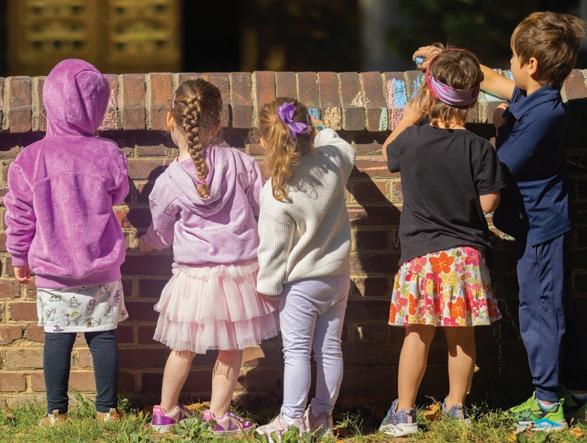
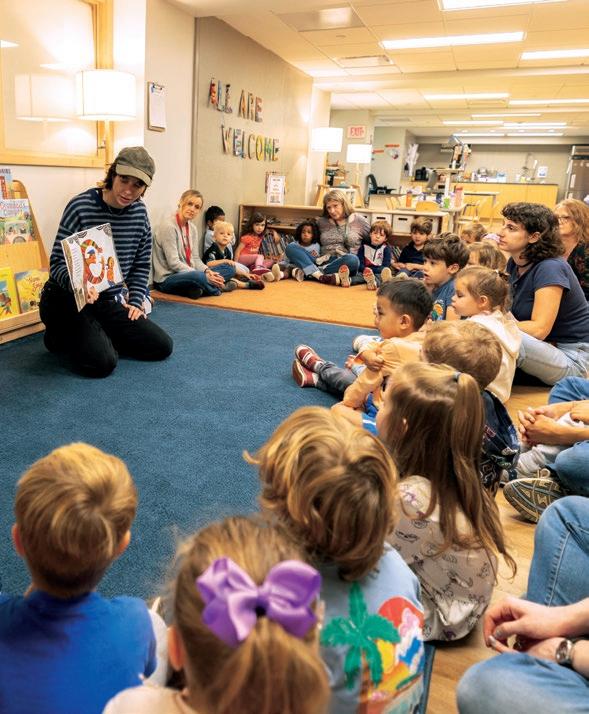
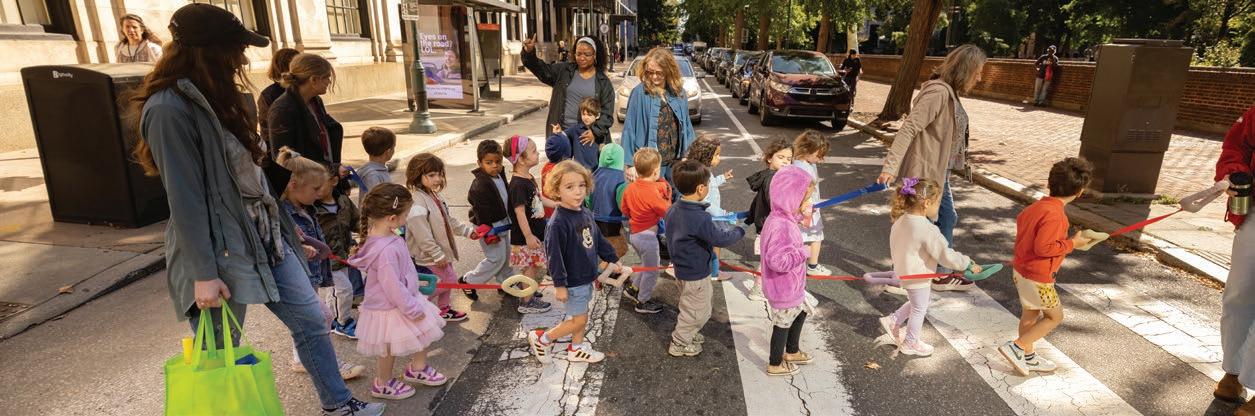
Opposite page, top to bottom: EC students created a chalk mural in Washington Square Park; teacher Shar Heck shared a story before Meeting for Worship; with the help of teachers, students carefully navigated the short (but exciting) trek across Walnut Street.
Cross-Town Express
Campus Swaps between Center City and Main Campuses build relationships among GFS’ youngest learners and their teachers.
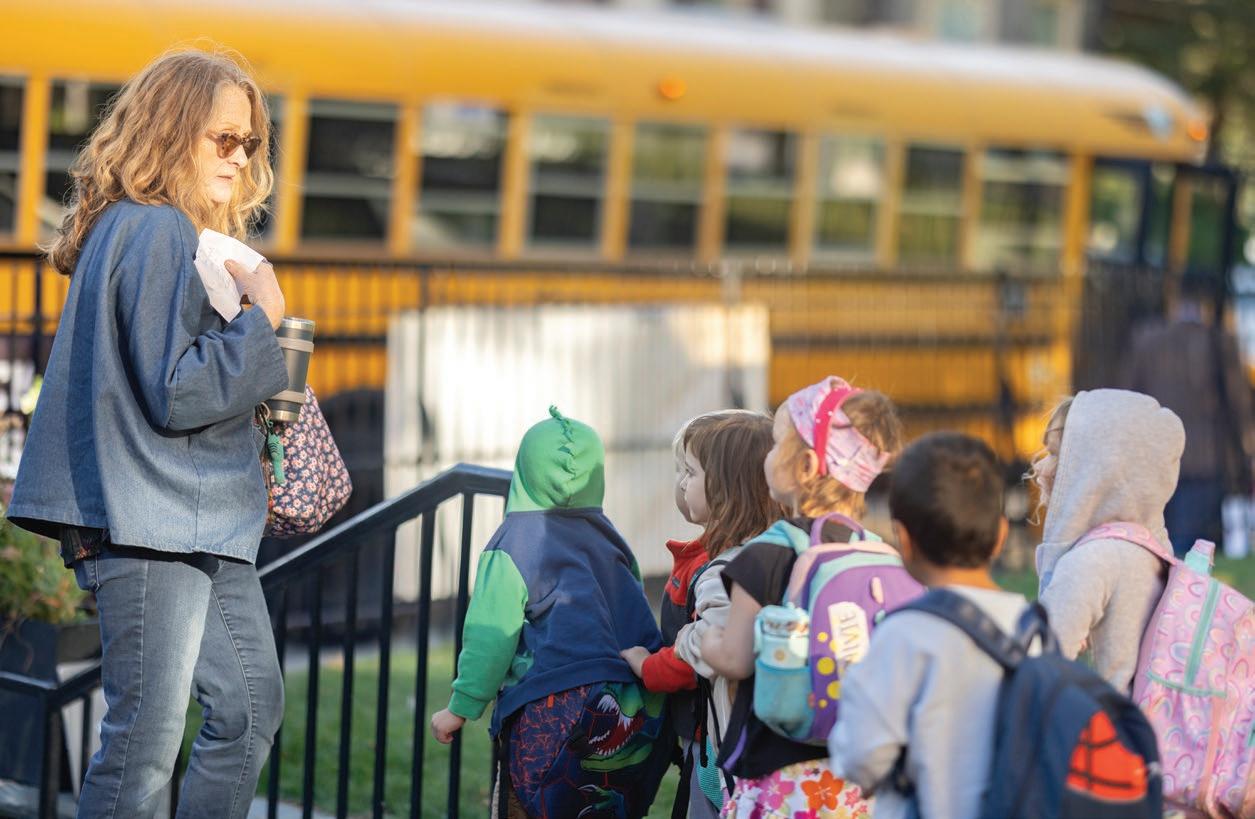
AS THE YELLOW SCHOOL BUS RUMBLED TO A STOP AT THE FRONT STEPS OF GFS’ MAIN CAMPUS, THE PRESCHOOLERS IN LINE WERE EXCITED, AND A LITTLE NERVOUS For some of these three-year-olds, this trip to GFS’ Early Childhood Center City Campus in the Curtis Center would be their first time riding a school bus. With the gentle guidance of the teachers, the students filed on and buckled up, preparing for the 10-mile drive from Coulter Street to 601 Walnut Street through the clear October morning.
Community Day Campus Swaps allow GFS preschoolers and PreK students to spend time with their partner classrooms. Each month, one grade from Main Campus buses into the city, and the other grade comes to Germantown. Different versions of this exchange have existed since GFS’s Center City campus opened in 2017.
“We started out bringing the Center City students to Main Campus, because we know it’s important for these children and their families to feel a part of GFS, but we didn’t want it to be just a one-way trip,” said Director of Early Childhood Sarah McMenamin. “Our campus in
the Curtis Center is a lovely space and there are so many opportunities downtown, so two years ago, we switched it up and started completely exchanging.”
During this Campus Swap, the first one of the year, the preschoolers gathered for singing time, snack, and free play with blocks and toys. While some students felt shy or stuck to familiar faces, others branched out to make new friends.
Jenny Taylor, a preschool teacher at Main Campus says that over the year the students always warm up to each other, and by the spring, bonds form between the children.
“They’re often more timid on this initial visit because we don’t know the space and we don’t know the other children, but the more we go, the more we forge our community,” she said. “We also pair up students as pen pals, and they do projects together when they visit each other’s classrooms.”
Center City teacher Shar Heck adds that the Campus Swaps pave the way for the students’ friendships when they begin Kindergarten together.
This
Students waited for the bus to transport them to GFS’ EC Center City Campus in the Curtis Center.
“It’s meaningful and special to have the opportunity to see and meet friends in our partner classes that the children will eventually blend with as they enter Lower School,” she said. “We want to start the relationships now, so building on them later is a smooth transition.”
Mid-morning, the preschoolers took seats on the fuzzy rug in EC Center City’s library area for Meeting for Worship. Heck read Maybe Something Beautiful, a colorful book about a community creating a mural together. The students quietly listened, then settled into a few minutes of silence, a skill they continue building throughout their time in GFS’ Early Childhood program.
When the Center City students visit Main Campus, they have Meeting for Worship in the Meetinghouse. It’s just one of the ways that these visits help acquaint them with the school’s bigger, bustling campus in Germantown. In just a few short months, McMenamin has observed, the Center City students start to know the lay of the land.
“By the time the Early Childhood Spring Performance is here, the Center City kids can show their parents around,” she noted.
By contrast, when the Main Campus students visit the city, they get to practice skills like holding onto the walking rope and safely crossing the street, and enjoy playing in some of Philadelphia’s historic parks like the Rose Garden, Magnolia Garden, and Independence Square Park.
The experience is enriching for the EC faculty, as well, Heck noted.
“Coming together reminds us that we aren’t alone on our respective campuses, and provides a time for us to reconnect with each other, laugh, and form relationships,” she said.
The day of this visit, the students and teachers headed across the street to Washington Square Park after Meeting for Worship. In a sunny rectangle of grass, delineated by boundaries set up by the teachers, students blew bubbles, played tag, and took turns looking at birds and squirrels through binoculars. Others, inspired by the book they’d read, made a colorful chalk mural on the brick wall along 7th Street.
“We worked together to add color to our own community here in Center City,” Heck said. “The mural was still there a week later!” —E.K.
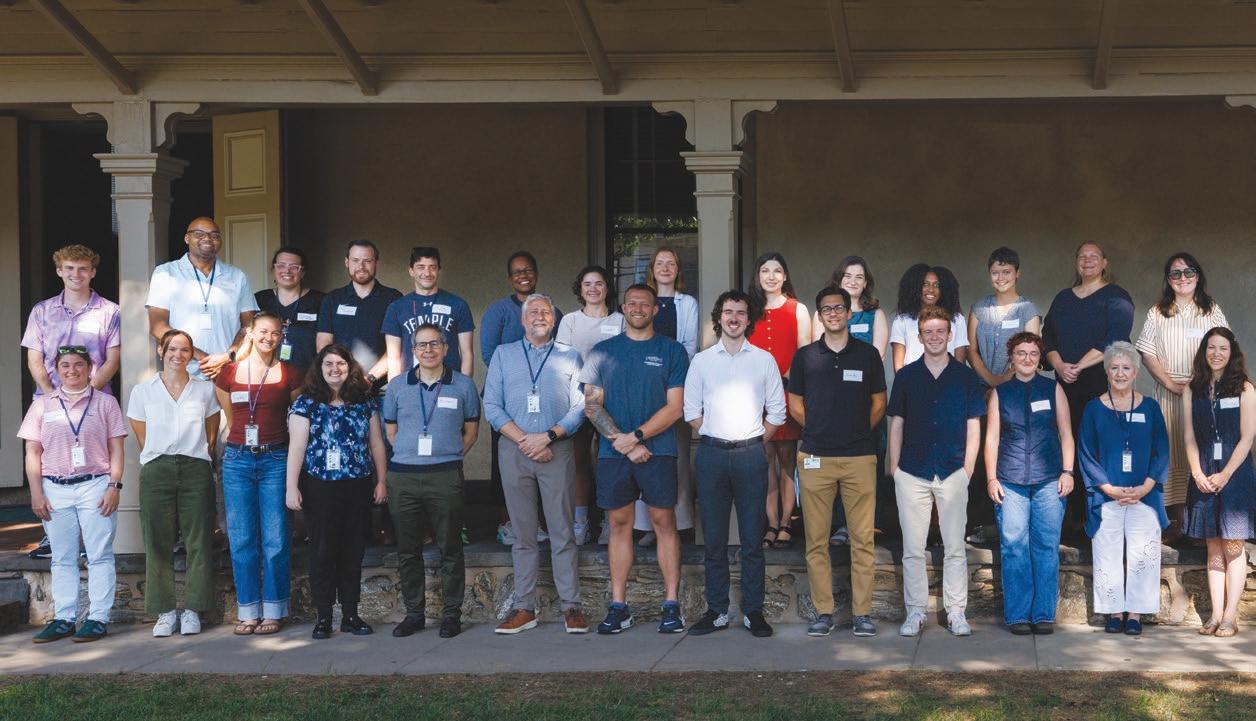
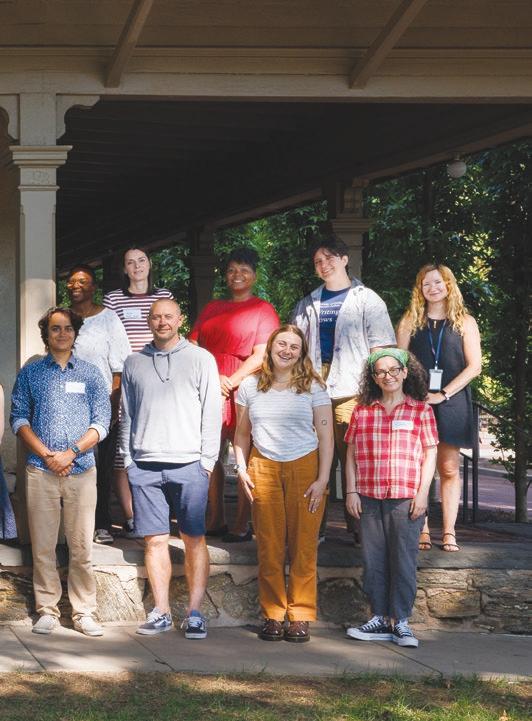
Please join us in welcoming our newest group of faculty and staff! Together, they’ll bring a wealth of passion and expertise to the GFS community.
GFS Faculty and Staff Lead Two New International Student Travel Experiences
THE GFS EDUCATION EXTENDS FAR BEYOND THE CAMPUS ON COULTER STREET, AS STUDENTS LEARN ABOUT AND ENGAGE IN ISSUES WITHIN THE BROADER COMMUNITY—AND EVEN THE WORLD. Building on this mission, in the 2025–2026 academic year, GFS launched two new global travel experiences for Upper School students.
Under the leadership of Rachel Bradburd, Global Programs Coordinator, these mark an intentional post-pandemic reinvestment in GFS’ global travel programs in a way that is strategic, sustainable, and supports the school’s overall mission.
The first trip was a weeklong excursion to the annual United Nations Climate Change Conference (COP30) in Belém, Brazil, organized by Francine Locke, Director of Sustainability at GFS and Westtown School. GFS Upper School students Tarak Nirmul ’27, Isla Smoger ’27, Nevaeh Tice ’28, and Jeremy Turner ’26 attended alongside Locke and one student from Westtown.
At COP30, students engaged in climate conversations with global participants, including a strong attendance by Indigenous community
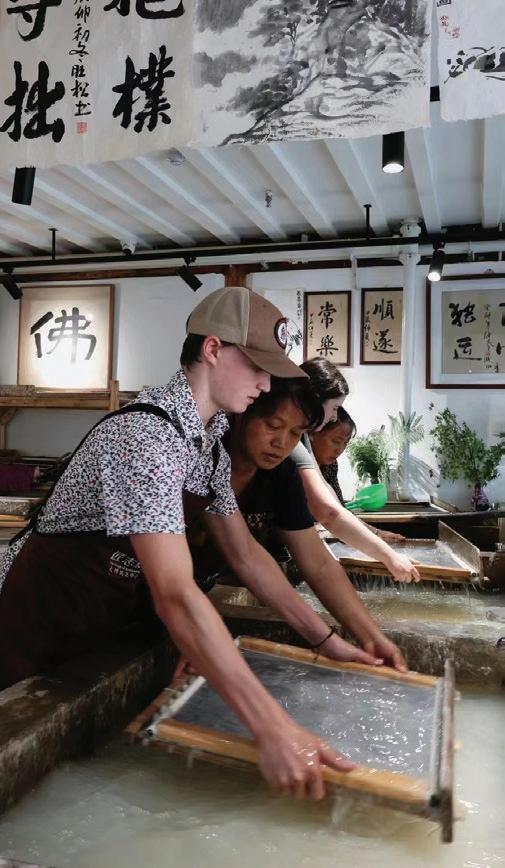
Levi Yeomans ’27 learned traditional Chinese paper-making during a trip to China in 2024. In January 2026, 15 students will travel to China for three weeks.
members from Belém. They met with Lindsey Fielder Cook from the Quaker United Nations Office (QUNO), who shared insights on QUNO’s operations and its distinctive Quaker approach to advocacy. Students immersed themselves in the local culture, participating in an Indigenous artist’s clay-making session, exploring the Amazon via riverboat, and hiking in the rainforest with an Indigenous guide who spoke about its complex ecosystems.
As the conference wrapped up, students shared their reflections on the experience:
“One of my biggest takeaways is that the future of climate progress depends less on inventing brand-new technology and more on building the systems for financing, policy, and collaboration to deploy what we already have at scale,” Jeremy Turner said.
“As a person who cares deeply about the ocean and the planet, COP30 showed me that my voice matters, and that change doesn’t have to wait,” reflected Isla Smoger. “The work begins now—with me, with my community, and with every person who is willing to act.”
Back row, L to R: James Hobbs-Pifer ’20; Raymond BurtonSmith; Stephanie Petro-McClellan; Matt Rainsford; Rob Krauss Aisha Bryant ’00; Claire Friedlander; Kate Henderson; Jessica Richardson; Lauren Scharf; Takiyah Bethea; Sona Wink ’21; Susannah Hunter ’94; Celine Bonnemaiso; Robyn Fullum; Beth Quinn; Syidah Abdullah; Noah Mummert; Laurie Hammette.
Front row, L to R: Caroline Feldman; Annabel Gorman; Samantha Walsh; Katie Dress; Michael Rosenthal; Matt Winship; Ross Weyandt; Fernando Gaxiola; Brenden Livinghouse; Bobby Lynam ’21; Jane Schmucki; Val Houser; Jenna Schieber; Kiran McCulloch ’18; Alex Shuptar; Sophia Nicholson.
Not pictured: Caitlin Estlow; Angela Jones-OBrien; Andy Snover; Tommy Talty.
Locke hopes the COP30 trip will become an annual tradition, ideally in collaboration with other local Quaker schools.
“Given GFS’ commitment to sustainability, we want to help our students become global leaders and changemakers,” Locked said. “This trip supports our mission.”
In that same spirit of global learning, Middle and Upper School Mandarin teacher Yi Li will lead a three-week trip to China in January 2026—part of GFS’ January Term— offering students an immersive cultural and linguistic experience.
“I think learning a language just in the classroom is not enough,” emphasized Li. “I’m a second language learner and have been learning English for a long time, but when I came to the United States, most of what I’ve learned hasn’t come from a classroom or a textbook.”
The trip was developed in collaboration with the China Folk House Retreat—co-founded by retired Sidwell Friends teacher Dr. John Flower and his wife Dr. Pam Leonard, who reconstructed a
Yunnan farmhouse in Harpers Ferry, West Virginia, as a hub for cultural education and experiential global travel. In 2024, Li joined their first post-pandemic trip to China, which allowed her to explore bringing a similar program to GFS. One GFS student, Levi Yeomans ’27, joined Li on the trip.
During the upcoming J-Term trip, 15 GFS students will travel to Shanghai, the Yunnan Province, and Shangri-La. They’ll learn traditional crafts such as silverwork and instrument-making, while exploring Chinese architecture, language, and daily life. Although most participants are current Mandarin students, the trip welcomes learners from all backgrounds. To ensure accessibility, Li plans to pair students without Mandarin experience with peer mentors.
These two programs reflect GFS’ commitment to experiential education—empowering students to engage with the world not just as observers, but as active, informed participants in a global community. —L.S.
Long Ago and Far Away
Fourth grade teachers guide students as they embark on a year-long, eye-opening exploration of ancient cultures.
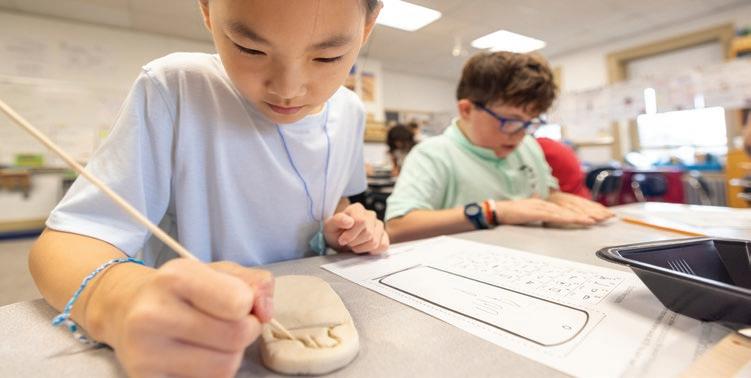
WHEN SARAH GOLDBERG ’26 WAS IN FOURTH GRADE AT GFS, HER IMAGINATION WOULD SPARKLE DURING IMMERSIVE SOCIAL STUDIES LESSONS ABOUT ANCIENT CULTURES. Learning about millennia-old civilizations activated her curiosity as her teachers brought these stories to life through lessons and literature.
“This discovery of different worlds came at an age when I was very creative and full of wonder,” Goldberg said. “Hearing Greek myths and learning about how people believed in them, and how that was their reality, was such a cool realization for me.”
The ability to conceptualize “long ago and far away” is a developmental milestone in fourth grade. And it’s exactly why the study of ancient culture is the cornerstone of the fourth grade social studies curriculum. For young learners like Goldberg, these lessons come at the optimal moment
to unlock their understanding of the depth of human history. The teachers also make it fun, incorporating handson crafts, guest speakers, field trips, and interactive activities.
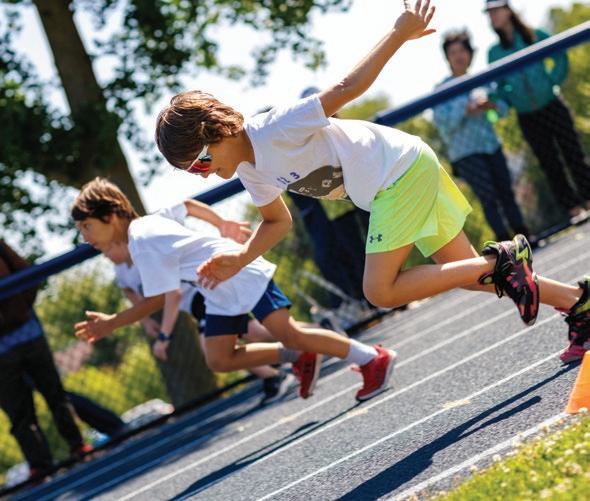
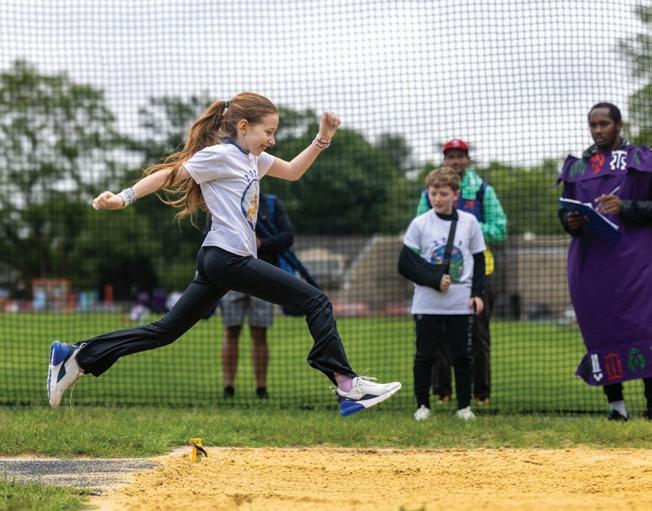
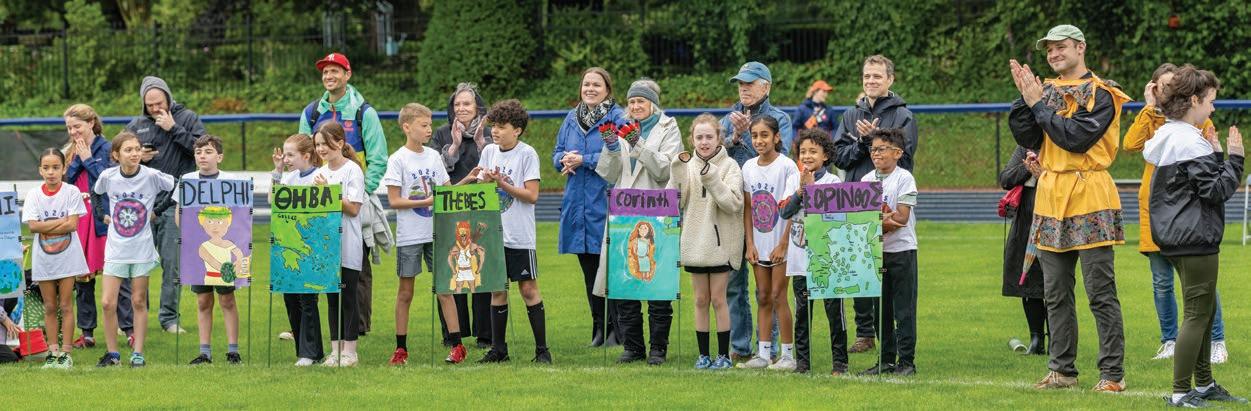
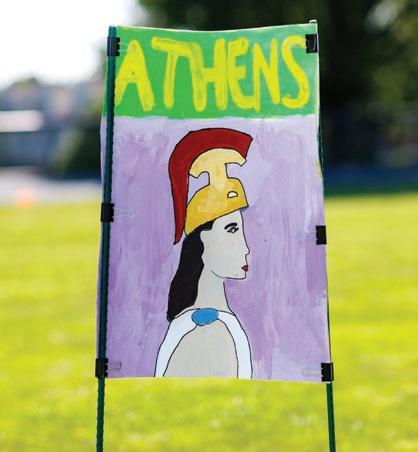
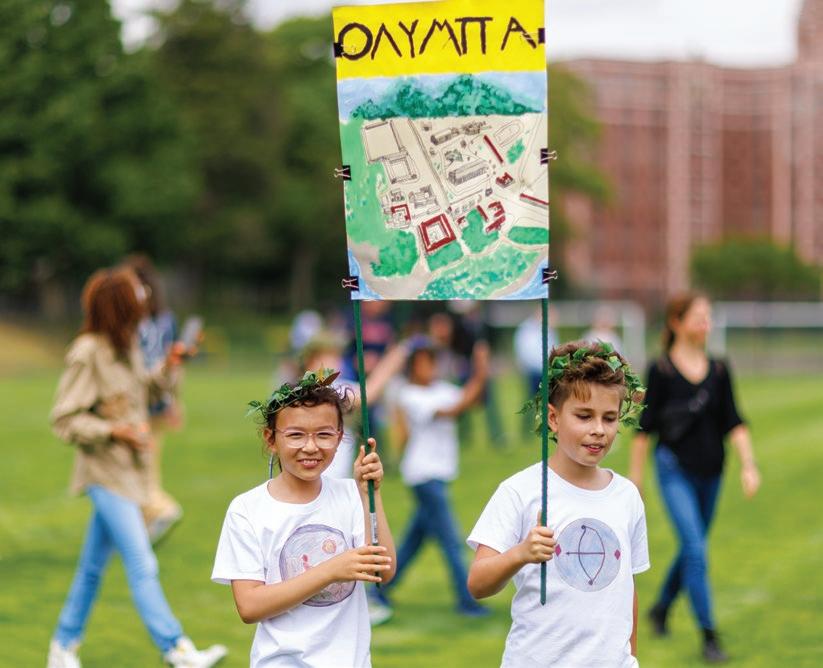
Goldberg’s favorite part of the ancient cultures unit was Greek Day— now called Olympics Day—when the entire fourth grade dressed in chitons (Greek tunics), donned laurel wreaths, carried handmade signs representing different Greek city-states, and participated in athletic competitions at the GFS playing fields. This tradition, which is still the culmination of the year for the fourth graders, is a treasured memory from her Lower School days.
“I was a super-competitive kid and really looked forward to participating in those events,” she said. “I still remember that I did two running races and the long jump, and that during the relay, I was really locked in trying to beat the other team.”
Now a senior, Goldberg has taken Latin since seventh grade and is currently in the highest level Latin class that the GFS Classics Department offers. She originally chose Latin because she was looking for a challenge, and has stuck with it because, “I’ve gotten to discover a whole different world, and their society and politics, that I never would’ve learned about.”
As her Latin coursework incorporates more nuanced and advanced translations, Goldberg’s teachers draw on the same inquiry-based principles that her fourth grade teachers employed to engage their students in ancient cultural studies.
“It’s not just about following a specific recipe for Latin translations,” she noted. “My teachers ask: ‘Can you understand the context? What’s the larger meaning? What does this suggest about Roman life, or the world in general?’”
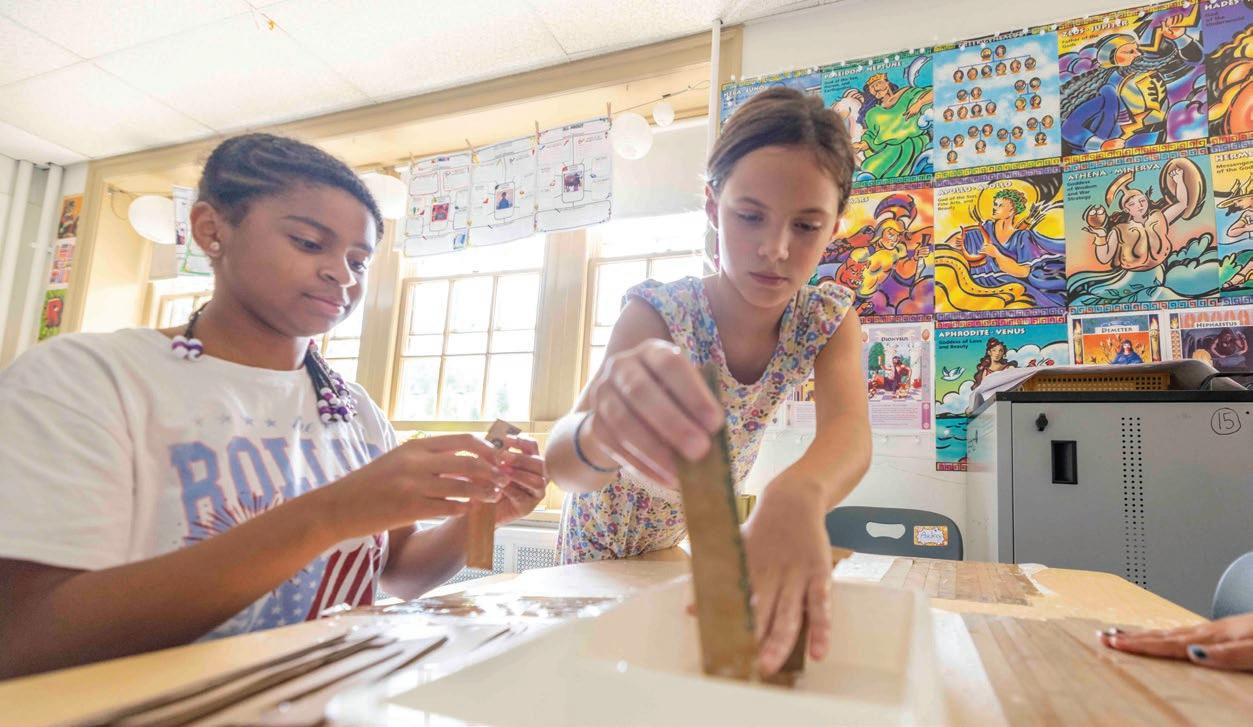
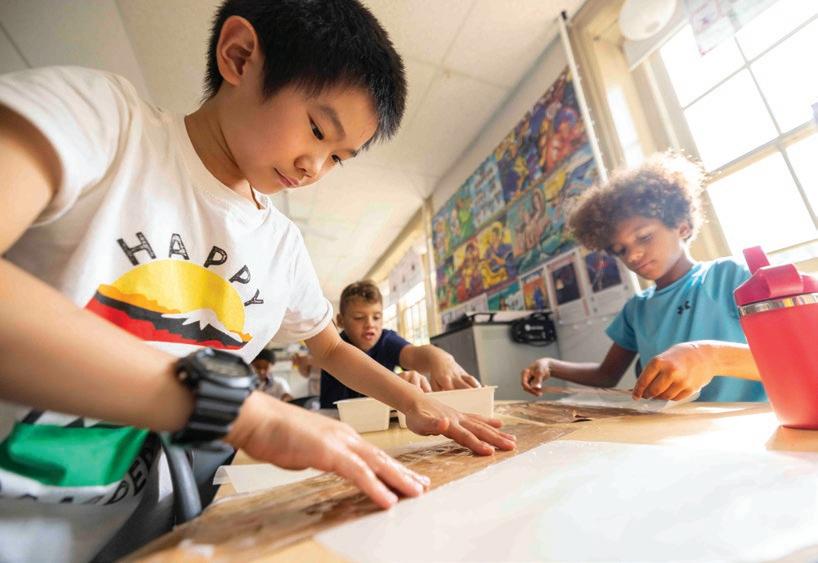
Fourth graders make papyrus as a hands-on lesson in their social studies unit on ancient Egypt.
INTERDISCIPLINARY ILLUMINATION
The current fourth grade social studies curriculum is a year-long exploration of ancient Egypt and ancient Greece. Teachers Maddie Perlmutter, Sarah Pacifico, and Yasmin Yousof kick off the fall semester by introducing archaeology and the study of artifacts.
“We look at how objects can tell a story and teach us about a person or civilization,” Perlmutter said. “This creates the backbone for understanding when we take our big field trip in January to the Metropolitan Museum
of Art to see its collection of art and artifacts up close.”
The teachers also use geography as a lens through which to examine ancient cultures. In third grade, GFS students engage in an in-depth river study, which fourth grade builds and expands upon as they compare how waterways and soils affected how people lived, traded, and developed transportation in ancient times.
Art projects and experiential learning help drive the concepts home. For instance, during lessons about the tombs of Egyptian kings, the students visited the Penn Museum; welcomed
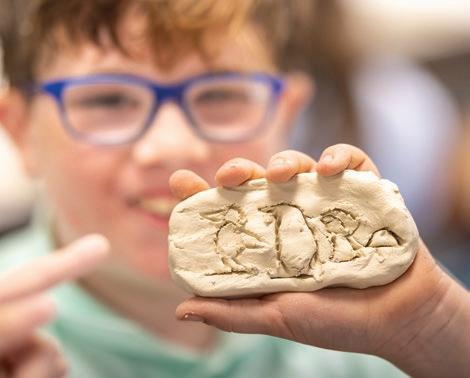
guest speaker Dr. Stephen R. Phillips, an Egyptologist from the University of Pennsylvania Department of Anthropology; and practiced carving hieroglyphics in clay cartouches. During the geography unit, the classes made papyrus.
“The papyrus project is part of focusing on the gifts of the Nile,” said Pacifico. “We want the students to grasp that ancient peoples settled in these areas because of the river, the flooding, and the fertile land. Because they experienced laying the strips out, they’re going to remember that better.”
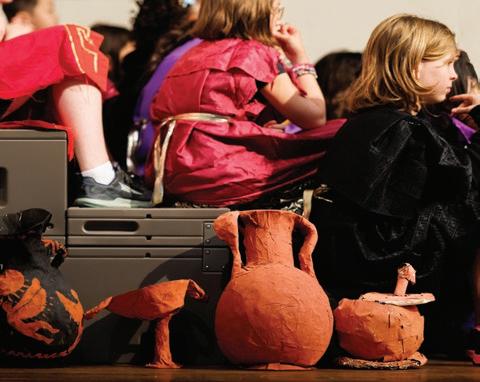
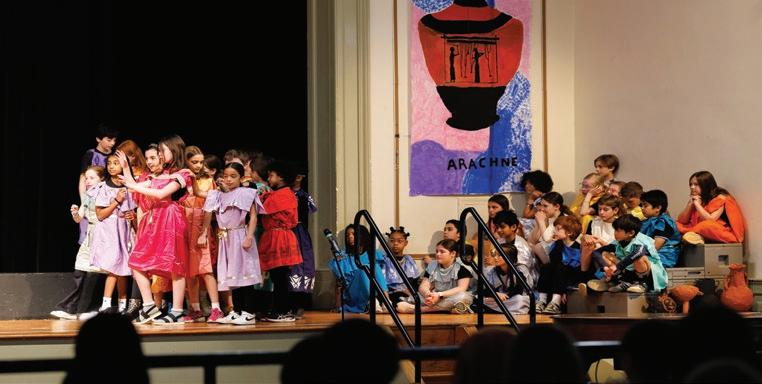
In the latter half of the year, when the focus turns to ancient Greece, the fourth graders learn about the power structures of early democracies and consider the culture’s worship of gods and the Olympics. In reading classes, they dive into the hugely popular Greek mythology unit, which culminates with a grade-wide play in the spring. The young actors use tableaux (frozen poses) to depict the cautionary tales of characters like Orpheus, Icarus, and Arachne, and their struggles with human limitations, pride, and ambition.
“Fourth grade is such a year of meaning-making, and myths help make sense of the world around us,” said Perlmutter. “I think that’s part of the reason why kids this age are so into Greek mythology.”
In May, the fourth graders descend on Fields for Olympics Day after
The fourth grade mythology play brings ancient stories to life with handmade costumes, props, and set pieces.
Making papyrus paper in Yasmin Yousof’s fourth grade classroom.
Olympics Day (formerly Greek Day) has been a favorite Lower School tradition for generations; it was started by
Lower School teachers Sally Scattergood and Reba Magaziner in 1965.
spending weeks prepping for it, designing their city-state signs, creating customized t-shirts emblazoned with their own personal seals, and memorizing opening lines for the ceremony. In P.E., they learn about the athletic events they’ll be participating in and discuss how to be competitive while also practicing good sportsmanship.
“In social studies, we cover how for the Greeks, there were truces during the Olympics, and no wars would happen during that period,” Pacifico said. “We talk a lot about the ‘Olympic spirit’ and how we can embody it.”
After the Olympics Day athletic competitions, which are organized and run by the P.E. faculty, the students return to campus for a Greek feast. The day is as much about community as it is about academics, and the memory of it is vivid for many alumni.
“Students’ grandparents who went to GFS still talk about Greek Day!” Pacifico noted. “In fact, we had several alumni donate their old chitons back to us that they’ve kept since fourth grade.”
CROSS-DIVISIONAL CONNECTIONS
For many GFS students, the fourth grade ancient cultures study is their first introduction to the school’s robust Classics program. Students in Lower School begin their study of languages with Spanish, and then
have the opportunity to build on these skills through Latin and Greek language classes in Middle School.
There are also plenty of ways that the Lower School students can envision how to pursue Classics later in their GFS career. During the ancient Greece unit, Greta Ham, an Upper School Classics teacher, visits the fourth grade classrooms a few different times to teach the Greek alphabet.
“Greta is such an expert,” Pacifico said. “She can answer all of their questions about Greek, no matter how specific or random.”
In 2024, Lower and Upper School teachers began collaborating on a program they called Mythology Lunch, where different Classics teachers come to a fourth grade classroom at lunchtime to read Greek myths aloud.
Julie Marren, Head of the Classics Department, remarked how well the young students are able to keep up with the complex plots and character arcs.
“Their brains are expanding and they can keep track of characters and storylines, even different versions of the same myths,” Marren said. “They get that the myths are explaining things about the world and human nature.”
Marren and her Classics colleagues also invite the fourth grade to cheer along the Middle and Upper Schoolers during their Classics Day parade each March. Some years, they watch the Greek students’ play and
Students carve hieroglyphics into clay cartouches to enhance their learning of ancient Egyptian artifacts.
attend the Aloysius B. McCabe ’45 Classics Day lecture, as well.
Marren noted that while some middle and high schools still offer Latin, GFS is rare in that it offers Latin and Greek to the advanced level. She thinks students are drawn to these ancient studies because they’re looking for a substantial challenge and the experience of being part of a cohort, and, because for many young writers, Latin and Greek provide linguistic clarification on how words work.
“It’s pretty remarkable how many of the Middle and Upper Schoolers who take Greek and Latin are such good writers,” she said.
There’s also, Marren believes, an enigmatic allure to ancient languages and the study of their cultures. As her advanced Latin students delve into The Aeneid this year, they’ve been taught that there are so few existing manuscripts that different editors’ interpretations can conflict. Editors of Latin texts have to choose the form they think makes the most sense, if, for instance, there is a smudge on the manuscript.
“It’s so exciting working with materials that are so old and you don’t always have all the answers,” Marren said.
Pacifico has observed the same thrill among her fourth grade students.
“It’s unfathomable how long ago this history was, and yet it’s still relevant in our modern times,” she said. “When you learn about these ancient cultures and their influences, you start seeing them everywhere.” —E.K.
COLORFUL, BEAUTIFUL, DELICIOUS
For Iranian-American chef Louisa Shafia ’88, learning to cook Persian cuisine opened a pathway to her family, identity, and heritage.
By Emily Kovach
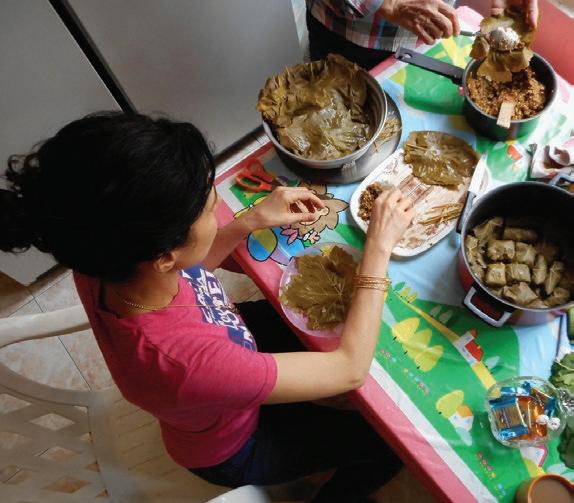
IN A PATCH OF LATE AFTERNOON SUNLIGHT IN AN APARTMENT IN TEHRAN, LOUISA SHAFIA ’88 SAT AT THE BREAKFAST TABLE ELBOW-TO-ELBOW WITH HER COUSINS. With the dinner hour approaching and more family on the way, they patiently showed her how to wrap dolmas, or stuffed grape leaves, in tidy rectangular packages, the Persian way.
She started to get the hang of it, methodically rolling up a pinch of spiced lamb filling in the fresh grape leaves, and placing the finished ones on a plate. As she worked, Shafia’s cousin poured little cups of hot black tea from a samovar on the stove, and everyone snacked on Persian flatbread and rosewater and saffron cookies.
During Shafia’s first trip to Iran in 2014, she traveled across the country, walking the gardens of Shiraz, touring 17th-century mosques in Isfahan, and swimming in the Caspian Sea. And yet, it was this everyday domestic scene—a warm kitchen filled with women chatting, laughing, and preparing food—that was the highlight. It was a feeling she’d been searching for.
“I was high on joy,” Shafia remembered. “Being with my family in my dad’s homeland, where I’d wanted to go for decades, and learning from my cousins how to make Persian food here at its source, was a dream.”
MISE EN PLACE
Shafia’s father was born in Tehran into a large, traditional Muslim family. He came to Philadelphia in 1961 to finish medical school, and there he met her American, Jewish mother. They married and raised their two daughters.
Shafia’s mother was a passionate home cook, and as an American kid growing up in Philly, one of Shafia’s only threads to her father’s Iranian upbringing were the Persian dishes her mother would occasionally prepare. One time, when an aunt visited from Tehran, she was able to taste authentic Persian flavors, though it would be years until she sought them out again.
From Kindergarten through twelfth grade, Shafia attended Germantown Friends School, where she discovered her love of French, writing, and political activism. After graduating from high school, she studied at the University of Pennsylvania, then worked briefly in public broadcasting before moving to New York City to pursue acting. When her passion for acting waned, she turned to cooking, which had always brought her joy and comfort.
“I worked as a chef at a yoga retreat in Maine one summer and it felt so right that afterward, I went to cooking school,” she said. “For a few years, I worked in restaurants in San Francisco and I learned so much, but it was really intense and I burned out.”
Shafia pivoted to private cheffing and catering, and began to toy with the idea of writing a cookbook. The farm-to-table movement and vegetarian, eco-conscious cuisine were exploding in the Bay Area and Shafia felt called to share that with a wider audience.
“I felt like there’s no way I could just cook this food—I had to also write about it,” she said. “At the time, farm-totable was almost an unknown thing on the East Coast, and I wanted to show people that this is a way you can cook.”
Lucid Food: Cooking for an EcoConscious Life was published in 2009 by Ten Speed Press. It focused on organic and seasonal cooking, and included a few Persian recipes, which Shafia had started to explore while living in San Francisco. There is a sizable Iranian population in California, and she rediscovered ingredients her mom used when she cooked Persian food: persimmons, pomegranate, quince, dried lime, and saffron.
“Food was my way into getting in touch with my identity. I realized that this colorful, beautiful, delicious food is my personal history—it’s in my DNA,” she said.
She focused her second cookbook entirely on Persian food, and used her research as an excuse to visit extended family from Iran who’d immigrated to Los Angeles (LA is
Louisa Shafia at Reading Terminal Market in Philadelphia, which she calls, “One of my happy places in the world.”
Left: Shafia rolling dolmas in Tehran.
Below: Shafia’s online marketplace, Feast by Louisa, sells Persian spices, sweets, pantry essentials, and kitchen tools.
home to the largest Iranian community outside of Iran). From 2010 to 2012, she traveled to Southern California a number of times; during those visits, she and her relatives shopped at Persian markets, cooked together, and dined at Persian restaurants. The experiences created a connection and a kinship to the Iranian family she wasn’t in touch with throughout her childhood. She also felt a deeper sense of belonging within the Iranian community at large.
One small moment, sitting in the dining area of a Persian supermarket in Orange County was particularly striking—and surprising.
“I was eating pomegranate soup and looking around, and literally, for the first time in my life, I realized
that I looked like everyone else in the room. I was bowled over,” Shafia remembered. “It’s so different to feel like part of the majority versus always standing out and being different.”
FLAVOR INFUSION
Shafia’s second cookbook, The New Persian Kitchen, was released in 2013, again through Ten Speed Press. Across its vibrant pages, she shared 80 recipes, a deep dive into the flavors, ingredients, and techniques that she’d become enamoured with while delving into her Iranian identity. The dishes, like cold pistachio soup with leeks and grilled shrimp with lime powder and parsley-olive oil, brought her seasonally-driven cooking style to the table.
“It’s my take on Persian food; I was inspired by the sensuous ingredients of this ancient cuisine, and filtered that through my own very healthy way of eating,” she said.
The book received critical acclaim, and positioned Shafia as a spokesperson for Persian cuisine. She published essays and recipes in The New York Times, The Wall Street Journal, The New Yorker, and New York Magazine, appeared on National Public Radio,
and was invited to speak about Iranian food at Harvard, Google, and The Museum of Food and Drink.
Soon after came her trip to Iran, the logistics of which took nearly two years to iron out. Despite the challenges in bringing the trip to fruition, it was a transformative journey for Shafia.
“When I arrived in Tehran, my whole extended family was waiting for me at the airport gate,” she said. “It was an incredibly moving experience, and I just felt like I was home.”
Throughout her month-long visit in Iran, she traveled across the country, marveling at the changes in climate and cuisine in each region. In addition to the dolmas-rolling experience, she vividly remembers eating mast-o khia, a dish made with fresh yogurt, shredded cucumber, garlic, salt, and mint, and sangak, flatbread cooked on hot river stones in long sheets. Each sensory experience further aligned Shafia with her ancestry.
“I don’t know what was more powerful: getting to taste this food where it’s from, or being with my family and feeling those blood connections with my tribe.”
SOUL FOOD
These days, Shafia lives in Nashville, Tennessee, where she works as a cook, author, recipe developer, and food entrepreneur. In 2020, she founded Feast by Louisa, an online Persian marketplace that sells spices, sweets, coffees and teas, kitchenwares, and textiles from Sew For Hope, a non-profit that provides professional training and sewing supplies to refugee women as a route to financial independence.
Shafia has found a strong sense of community in Nashville, in large part due to her work with the Tennessee Immigrant and Refugee Rights Coalition (TIRRC), an immigrant rights organization. She got involved with TIRRC in early 2017, after the “Muslim travel ban” executive order was announced.
“I was profoundly upset because Iran was prominently mentioned on
Shafia’s second cookbook, The New Persian Kitchen , was published in 2013.
the list of countries they wanted to ban people coming from,” Shafia said. “I was looking for a way to contribute to the dialogue in a productive way and reached out to TIRRC, offering to organize fundraising dinners.”
What followed was a series of wellattended events, where Shafia cooked a meal, representatives from TIRRC spoke about their mission, and guests engaged in conversation with each other. She also used the dinners as platforms to share Persian food with her neighbors, encouraging them to consider Iranian culture through a culinary lens.
“When you taste a dish like shirin polo, sweet rice with pistachios, almonds, candied orange zest, and saffron, and it’s so delicate, so sweet and savory, you stop and say,
‘Wait a minute, I need to know more about this culture, and this nuanced, thoughtful food,’” Shafia said. “Some space opens up to learn about these people’s humanity.”
She’s continued to work with TIRRC ever since, volunteering so much of her time that the organization named her its Culinary Liaison. Shafia sees a clear connection between her education at GFS and her commitment to social justice as an adult.
“My political activism is a direct product of going to GFS and being shown that activism is really important,” she noted. “My worldview is about accepting everyone as equals and aiming for peace and quality of life for everyone. That was instilled in me in GFS. I’m so grateful for that moral compass.”
SWEET AND SMOKY BEET BURGERS
makes 8 burgers
1 yellow onion
3 tablespoons grapeseed oil, plus extra for searing
1 cup peeled and grated beets (approximately 1 small beet)
3 cloves garlic, crushed
1 cup walnuts
1/2 cup golden raisins
2 teaspoons sweet smoked paprika
1/2 cup cooked green lentils, rinsed and drained
Sea salt and freshly ground black pepper
2 cups cooked short-grain, brown rice or white sushi rice, at room temperature
1 egg
Growing up, we loved eating at the innovative cafeteria-style restaurant The Commissary at 17th and Sansom. They also had a fine dining restaurant, The Frog. There was an amazing veggie burger on the menu called the Eden Burger. The recipe is in the excellent 1985 cookbook The Frog Commissary Cookbook by Steven Poses, Anne Clark, and Becky Roller. It has always been my platonic ideal of a veggie burger, and helped inspire my beet burger recipe. —Louisa Shafia ’88
Slice the onion to a thickness of 1/4inch. In a medium skillet, sauté the onion in the oil over medium-high heat for 10 to 15 minutes, until it starts to darken and caramelize. Turn down the heat slightly and add the beets along with the garlic, walnuts, raisins, and paprika, and cook for 10 minutes, stirring often.
Transfer the contents of the skillet to a food processor and pulse several times until chunky. In a large bowl, combine the onion mixture with the lentils, 2 teaspoons salt, and 1 teaspoon pepper. Replace the food processor without washing and add the rice and egg, and pulse to form a coarse puree. Add the rice mixture to the onion-lentil mixture and mix well with your hands.
Lightly oil your hands and divide the mixture into 8 portions. Shape each portion into a patty just under 1 inch thick.
Heat a heavy-bottomed skillet over medium-high heat and add oil to coat the bottom. Place the burgers in the skillet and cook undisturbed for 5 minutes. Gently flip the burgers and turn down the heat to low. Cover and cook for 10 minutes, until the burgers have a firm, brown crust. Serve hot with your favorite condiments.
THE TURTLE & THE MACHINE: A CENTURY OF TECHNOLOGY AT GFS
By Fernando Gaxiola
ALMOST A HUNDRED YEARS AGO IN THE FALL OF 1930, A GROUP OF LOWER SCHOOL STUDENTS ON THE SECOND FLOOR OF THE MAIN BUILDING SHIFTED EXCITEDLY IN THEIR SEATS AS BLOCKY MACHINES WERE BROUGHT INTO THEIR CLASSROOM . These contraptions were the focus of great anticipation—even some of the teachers had been whispering to each other about them. It was a set of new, portable SmithCorona typewriters.
Despite the deviation from the preceding 85 years of handwritten classroom work at GFS, Lower School Principal Marjorie Hardy felt that in the 20th century, penmanship skills alone weren’t going to cut it. Her students needed to learn to type.
Luckily, the Smith-Corona company was advertising a free trialrun for their newest line of typewriters. Hardy took the offer and started the “typewriter experiment,” as it would come to be known.
The experiment that resulted in “rooms full of little typists,” as secondgrade teacher Margaret Bockius Williams put it, had some unexpected— though not unwelcomed—results. In follow-up interviews at the end of the school year, faculty shared that students developed a greater interest in schoolwork if they got to tackle it with their trusty typewriters. They’d also become expert problem-solvers with the sometimes temperamental devices.
Fifth-grade teacher Kathrine E. Dobson observed: “When a hand is raised asking for help with the mechanism of a machine, I can never reach the pupil’s side in time to help. At least three or four schoolmates with
the necessary knowledge go instantly and quietly and efficiently to give the needed help.”
There were accessibility benefits, too. Teachers reported that this new way to work aided students who may have been dyslexic, and served as a more comfortable system for lefthanded students.
Ultimately, GFS saw enough potential in the typewriters that they purchased 62 of them from Smith-Corona to include as part of the curriculum. It was this purposeful weighing of a new technology, balanced against the increasing standardization of it in society, that would come to be a remarkably consistent stance for the school in the decades to come.
This same story has played out over the school’s many eras—the installation of a switchboard on campus, the adoption of calcu-
1910s
A switchboard was installed on campus in the late 1910s.
lators and projectors in classrooms, a phone booth by the Main Building arch, and more recently, the spread of computers and digital learning.
Ann Brachwitz Perrone had always been an early adopter of new technology. As a second-grade teacher at GFS in the 1970s, she was a pioneer in computer science education at the school. She introduced computers to her students with help from a little green turtle.
Via an early computer program called Logo, Perrone taught students to draw shapes by programming an on-screen turtle. Much like the typewriter added a layer of novelty and excitement to students’ learning in the 1930s, so did Logo in math and problem-solving activities.
Perrone attended workshops and trainings, and even went back to school, to learn how best to teach the newest technologies. During the second half of her career at GFS, she equipped generations of students with the skills needed to keep up with a rapidly changing technological world. And regardless of what the new invention of the day was, her attitude was unchanging: “I wanted them to know that the humans were still in charge.”
By the time Perrone retired in 2019, mobile phones, social media, video games, and other digital technologies were prevalent in the lives of students in a way they hadn’t been even just a decade before. Her curriculum had evolved from the 70s turtle, keyboard, and mouse maneuvers to such contemporary topics as online responsibility and ethics, and the effects of propaganda and misinformation.
Jason Schogel ’91 spent lots of time in the 1980s as a student tinkering with computers in the basement of the Sharpless building. He had grown up on the edge of this new technological era. He remembers the release of exciting new Atari gaming consoles
and when computers first entered the classroom.
“It was a new way to express yourself,” said Schogel.
He dove head-first into programming with faculty member Matt Zipin and a small group of other students; his interest in computers led him to a career in engineering and IT consulting. Schogel went on to work for tech heavy-hitters such as Oracle and NetApp, and co-founded a small video game company, OneNine Studios. He would eventually return to GFS in the new millennium to install the school’s first WiFi system in 2005.
This increasingly digital world was a topic of great discussion at GFS starting in the 1990s. One GFS report from 1998 outlined how the school was planning for a massive technological leap forward to meet what were becoming increasingly baseline and expected technologies in schools. Among these were internet connectivity capabilities across campus, an email server, online library services, computers in classrooms, and dedicated tech labs.
1930s
The school did not take this shift lightly. In true Quaker practice, committees were formed and options were carefully considered. The report was exceedingly purposeful in its conclusions. “The future is now,” it read. “We believe that even in a networked world, our school is a far more powerful real community than a virtual one.”
The school never adopted the newest technology out of the institutional equivalent of “peer pressure.” Time after time, it was through careful deliberation on the potential impact on the school community that dictated whether or not a new machine would be brought to campus. This was the measured pace of GFS’ technological evolution—that is, until 2020 and the COVID-19 pandemic.
By the time the White House declared a national emergency in midMarch, school leaders and faculty had already been in discussion about the possibility of enacting the school’s remote learning plan in the event of a prolonged closure. GFS’ beloved community was preparing to become a virtual one.
1970s
GFS Kindergarten teacher Betty Ann Workman helped acclimate students to computers in the 1970s.
Lower School students first learned to type using Smith-Corona typewriters in the mid-1930s.
Despite the exceptional circumstances, GFS was doing everything in its power—which now depended almost entirely on technology—to support its students. Weeks before the shutdown, administrators had been ensuring that students had laptops with WiFi, cameras, and microphones, and that all classrooms had established digital forums. GFS’ remote learning initiative, Colloquia, was rapidly unfolding. The name, brainstormed by the school’s Classics Department, means “conversations” in Latin.
Throughout the spring, the campus sat quiet and idle for weeks on end, for the first time since the influenza pandemic of a hundred years prior. Coursework and final projects were turned in through online portals, platforms, and workspaces. School events and traditions were either canceled or reimagined as virtual versions. The connective tissue of community life, like extracurriculars, championship games, conversations in the hallways, lunches in the cafeteria, games in the Dead Graveyard, and worship
in the Meetinghouse, all came to a grinding halt.
The Class of 2020 marked its commencement with a socially distanced drive-thru style graduation, and prepared to move on to the next stage of their lives. Even as the community mourned the loss of everyday interactions and big milestones alike, there remained a sense of camaraderie in online interactions. Assistant Head of Upper School for Student Life and Modern Languages teacher Behnaz Varamini—at the time the 11th-grade dean—noticed how the community kept showing up for one another despite all the challenges.
“It was lovely to have built a relationship with students that whole school year until March,” she remembered. “Trust was there, and we knew we could weather this together.”
She saw it in the way her graduated Upper Schoolers were still popping into Zoom “office hours” over the summer, supporting each other through the uncertainty of the pandemic. It was through technology that
1980s
the essence of the school community managed to stay connected even in a time of physical isolation.
“I think one of the things that GFS did really successfully during COVID was put our core values and our Community testimony first,” Varamini noted. “We trusted that it would all be okay, we trusted we’d be together again, and we trusted that we were all doing the best we could with what we had, which was often just a computer.”
As in-person classes gingerly returned to campus that fall, Liam MorrisThompson ’26 recalls one paradoxical, if temporary, effect of the pandemic. Despite having been conditioned to digital learning, students were desperate to connect in person when finally given the opportunity. For a moment, it seemed like perhaps smartphones and social media would fade back into the functional background as “in real life” interactions resumed.
“We were all really addicted to our phones, especially during the pandemic when everything was online,” Morris-Thompson said. “But when
Lower School students share the computer in Sue classroom,Sauerman’s 1984.
The computer room in Sharpless was a popular spot in the 1980s for aspiring computer whizzes.
By the 1980s, computers were a common resource at GFS.
we started having in-person classes again, we were really happy to be together face-to-face instead.”
However, as society continued its ascent out of the pandemic’s depths, the mountain of new technology adopted out of necessity during COVID-19 did not retire on its own. The fusion of virtual and physical life appeared as if it were here to stay. The data showed that young people were spending more and more time on screens and on social media. And the positive effects of technology in school were no longer as evident as they had been at the height of the pandemic, when synchronous remote learning was a safe option.
Once full-time in-person learning resumed, GFS began scrutinizing the necessity of existing technologies on campus. Was it really better to have students accomplish tasks on laptops while in the classroom? Was it okay for students to use their phones in school? Based on the leading research, the answer for Carol Rawlings Miller, Director of Academic Program, was a resounding “No.” Technology had overstepped its bounds.
“We realized how overexposure [to screens] impacts students’ learning
negatively,” said Rawlings Miller. “If we’re using tech, fine. But, is there a purpose? We can’t use it as a default.”
With technology so integrated into nearly every facet of life, it had become difficult to draw the line. Now, GFS is returning to the practice of cautious integration of tech in the classroom. It’s not about a binary of “good” and “bad,” Rawlings Miller clarified, but about a thoughtful, community-centered approach.
“We spend a lot of time working in a very Quakerly way to discern what is actually in the best interest of the students and the institution,” she said.
Five years since the pandemic, examples of this can be seen around campus. In Early Childhood and Lower School classrooms, screens and smart boards are sparingly used. Every morning, Middle School students stow their devices away for the day in locked pouches during homeroom. Faculty and Upper Schoolers are expected to keep their phones tucked in their bags or leave them at home. A recently updated Community Compact outlines the most current stance on technology use at GFS, including clear guidance on social media usage for students in
each academic division.
At the same time, students aren’t sheltered from ideas and conversations around new tech. Cutting-edge classes on machine learning, robotics, 3D printing, and coding are part of the curriculum. One of these classes, taught by Upper School Computer Science teacher Avery Nortonsmith, focuses on AI ethics.
“When I think about AI and especially generative AI, there’s one part of me that feels like, This is new, this is scary and I don’t want it anywhere near my classroom ,” said Nortonsmith. “But then I also think, ‘Okay, what if it was 2005 and my teacher was saying that about the internet?’ I want students to be learning about the technologies that will affect their lives.”
New—and sometimes, daunting— technologies are a fact of modern life. Whether they’re clunky typewriters and calculators or sleek phones and AI chatbots, they will continue to exist and impact our society in countless ways. Nonetheless, GFS has been, and always will be, methodical in its review of exactly what new invention attempts to pass through its characteristically open door.
days, Computer
Ma (right) introduce cutting edge tech to students in thoughtful ways.
Perrone with a computer lab class using the newest exciting tech at the time, the Apple iMac.
These
Science teachers like Laura Jamieson (above) and Jillian
EXCHANGE OF HEART
For 50 years, GFS Middle and Upper School students have had life-changing experiences on international exchanges.
By Kyle Bagenstose
AS A SENIOR IN HIGH SCHOOL, LILA STERNBERG-SHER ’17 HAD SOME TRAVEL EXPERIENCE UNDER HER BELT: SHE’D BEEN TO THE UK TO VISIT EXTENDED FAMILY, AND HAD GONE ON GFS EXCHANGE PROGRAMS TO SCOTLAND AND MEXICO IN EIGHTH AND NINTH GRADES, RESPECTIVELY.
But the three-week GFS exchange program to Winchester College, a boarding school 3,500 miles from home in southern England, felt different. There was no host family and much more independence, a “precollege” experience that included navigating cultural and educational differences. During her stay, Sternberg-Sher befriended a group of international students who’d hang out and do teenage things, including stealing away to the local McDonald’s for “chips.”
When they got to talking politics, she was surprised to find a student from Russia on the opposite side of of the spectrum from her.
“Here was this person who’s so smart, and knows more about politics than I do, but he’s supporting different politicians,” Sternberg-Sher said. “That really opened my eyes. It helped me gain a lot of empathy for people who think differently than I do.”
Students who have these immersive exchange experiences often come back transformed, says Rachel Bradburd, GFS’ Global Programs Coordinator, ninth-grade dean, and Spanish teacher.
L to R: Lila Sternberg-Sher ’17, Claire Saint-Amour ’17, and Griffin Kaulbach ’17 at Stonehenge during their Winchester exchange.
“It wakes up your sense of possibility,” Bradburd noted. “Philadelphia—and GFS—are amazing places. But sometimes we only see one way to live. To have the chance to go somewhere else, meet someone different, and gain an appreciation for the way something else is, is an invaluable experience.”
The Winchester College program, which takes place every year during January Term, is one of four exchanges that GFS offers to Upper School students, in addition to numerous other travel opportunities. A three-week intensive French language course at the Institut de Touraine and a homestay experience with local families brings students to Tours, France. There is an exchange with the St. George’s School for Girls in Edinburgh, Scotland for Middle School girls; another Scotland exchange program for Middle School boys is currently in the works. A second Upper School exchange with a school in Tlaxcala, Mexico, about 75 miles east of Mexico City, also takes place in January. Both of these have long histories at GFS; the Scotland exchange was founded in 1972, and the Mexico exchange began in 1986.
There’s buy-in at all levels at GFS, Bradburd noted, from senior administrators who contribute to logistical planning, to teachers stepping forward to chaperone and even propose new trips. And while travel experiences can add pressure to the school’s budget, philanthropic support from the wider community helps to facilitate international travel for students and chaperones. There is also NonTuition Financial Aid and a number of endowed funds specifically designated to provide financial assistance for students who wish to pursue travel opportunities.
The Winchester College Exchange was established thanks to the support of a GFS alumni parent, Dan Gordon. In the late 1960s, he took a post-graduate year at Winchester College; years later, his son Patrick ’04 studied there during his sophomore year at GFS. Gordon always had in mind how dynamic an exchange could be between the centuries-old boarding school and GFS.
“Both are so academically oriented, but they’re different,” Gordon said. “One is a posh British boarding school and the other is an inner city private school, so it would be a really different experience for both students.”
In 2012, Gordon pitched in by connecting Winchester Head Teacher Ralph Townsend with then-Head of Development, Sally West Williams ’72 and Anne Gerbner, Head of the English Department. He also supported the exchange with a meaningful financial contribution, which he continues to this day. Gordon’s commitment to the exchange is a reflection of his fond memories of his time at Winchester, and his belief that travel is an important part of education.
“Living in another country is something that I think is beneficial—I believe that learning is partially about developing skills, but it’s also about developing curiosity and creating a sense of adventure.”
UNA TRANSFORMACIÓN MEXICANA
“Definitely intense.” And also, “My favorite of the exchanges.”
These are the superlatives Sternberg-Sher uses to describe her January 2014 exchange to Tlaxcala, Mexico, a city of about one million people where she and five fellow GFS ninth graders spent three weeks in total Spanish immersion. Her host family was extremely welcoming, but they spoke little English. All of her coursework at La Escuela Secundaria Técnica No.1—including math, history, and art—was also in Spanish.
Though Sternberg-Sher had taken Spanish at GFS for nearly three years, this was another level.
“I remember wanting to say so many things, but I really just did not know how to communicate,” SternbergSher said, adding this was a time before the ubiquity of language translation smartphone apps.
But the challenge paid off. The immersive experience helped cement Sternberg-Sher’s budding interest in Spanish, later her major at Middlebury College. In her current job providing social work services as a site coordinator for an educational organization in Seattle, she routinely leans on her fluency to communicate with her Spanish-speaking clients.
The exchanges in Scotland and Mexico also opened her eyes to international travel. After high school, Sternberg-Sher spent four months as a youth instructor in Honduras, and later took a post-college gap year as an oral skills specialist at a kindergarten in Bogotá, Colombia.
“I pushed myself to do those things, which were very challenging experiences, because I had the confidence,” Sternberg-Sher said. “I felt like, ‘If I could do this when I was in eighth grade, I can handle this now.’”
Josiah Yeomans ’26 also participated in the Mexico exchange trip when he was in ninth grade. Though he had been away from home at summer camps, he had
Josiah Yeomans ’26 (left) with his host family in Mexico.
never spent so much time in another country. Like Sternberg-Sher, the experience helped broaden his view of the world and strengthen his social connections to his peers.
“Being able to be immersed in a very different culture and community definitely opened my eyes to what life was like in these environments,” he said. “One of my favorite memories is from when all of the students on the exchange went on a field trip to some ancient ruins, which was really cool because we all got to know each other and bond.”
Of course, not every student who participates in an exchange program immediately loves it, Bradburd noted. But a teacher from GFS is on-site on every trip, and especially during the first week, privately checks in with the students every day. Usually, any hiccups are small and predictable: frustration with the language barrier, aversion to the food, or just homesickness.
“We reassure the students that this is totally normal, it happens every year,” Bradburd said.
The solution is almost always to lean in further, Bradburd believes, and a student has never come home early. Instead, they develop resiliency. Once, a student had a minor health issue
and the parents were on the verge of asking to bring them back home. But Bradburd urged giving it a few more days and found local care. The student stuck it out—and wanted more.
“I’ll never forget the day before they came home, the mom sent me a series of text messages, saying they had an amazing time,” Bradburd said, adding the same student later went back to Mexico for their Junior Project. “The fact that these experiences live so strongly in these students that some of them want to go back two years later—I think that’s pretty telling.”
FIFTY YEARS OF TRANSFORMATION
For Dorothy Cary ’75, ninth grade was a difficult time, early teenage years when familial struggles and social dynamics often blended together, as her parents both worked at or were involved with GFS. At one point, she asked her parents if she could transfer to a boarding school. But they presented an alternative: why didn’t she join the first GFS exchange cohort to study abroad at St. George’s in Edinburgh?
That turned out to be the right prescription. In many ways, this Scottish private girls school was stricter than GFS: students were required to wear uniforms and stand up whenever a teacher entered a room, and they weren’t even allowed to wear trousers into town or walk across playing fields. But Cary and her newfound friends literally cut corners: across the playing fields, in their trousers, on the way into town. The “little mischief” she says, was “very liberating.”
When she returned to the States, Cary felt a weight had been lifted. She had seen the world, realized its scale, and that seemed to make it a little easier to engage with the people in her usual circle.
“I reconnected with people in a better way, and I think it was because I wasn’t as worried about it anymore,” said Cary, who went on to a career in education, including as a teacher and dean at GFS.
Etta Palley ’29 was similarly transformed during her exchange to St. George’s last year. Palley had previously visited Europe on tourist-y family vacations, but felt that the ordinary nature of the Scotland exchange was actually its most endearing attribute. She spent more time living the life of a typical Scottish teenager—“so similar, but so different”—than she did zipping around to see the sights. Like Cary, she found the school’s rules stricter than at GFS, but says the whole experience enabled her to see the world differently and seek out interesting experiences, even in routine environments.
“Right when I got home I realized everything that I had missed and everything that I took for granted,” Palley said. “It’s a really cool perspective to have, feeling like a tourist in my home city.”
Now, she dreams of spending a year in Europe, and offers the same advice for younger students considering the exchange that older students gave to her.
“I just can’t recommend it enough… you won’t understand until you go.”
SAVE THE DATE: On April 12, 2026, GFS will host a 40th anniversary celebration of the Tlaxcala, Mexico Exchange program with our long-standing partner school Escuela Secundaria Técnica No.1 “Xicohtencatl Axayacatzin.” Stay tuned for more info!
Dorothy Cary ’75 in high school.
Etta Palley ’29 (left) with her Scottish host student Amelia McGeough (right) in downtown Edinburgh.
CLASS NOTES
What have you been up to? Please visit germantownfriends.org/alumni/submit-a-class-note to share life updates, career news, or anything else you want the community to know!
JOIN THE GFS COMMUNITY ON SOCIAL MEDIA!
1950
GEORGE SPAETH reflects, “Since I graduated from GFS in 1950, I have become increasingly aware of the seminal role Meeting for Worship played in my life. I am profoundly grateful! Thank you, G Friends!”
1952
PATRICIA BONSALL says, “I still live in Lafayette Hill, Pennsylvania and enjoy seeing my three daughters who live nearby, and visiting Nevis in the West Indies where my son, his wife, and their baby girl live on their beautiful farm with tropical fruit trees and other unique plantings. It’s very special that three generations in my family graduated from GFS: my mother, JANE KIRK ZIEGLER , Class of 1924, my daughter SUZANNE KAHN ’80, and me in 1952.”
1954
MORRIS WOLFF ’s fourth book, History’s Right-Hand Man is now available through Amazon, Kindle, Barnes and Noble, and was also released in France, Italy, and Germany.
KATHARINE YOUNG writes, “Bob and I are still in our California home, living with our son Nick. We welcomed a great grandson in July!”
1956
JOY MONTGOMERY says, “Andy and I made a big move to be nearer our families. After living in the Minneapolis area for 50 years, we downsized and moved to an independent senior living residence in Alpharetta, Georgia, outside of Atlanta. We have 11 family members nearby. It has been fun (and a lot of work)!”
1957
MARILYN FRICKER shares, “Sadly, I sold my house in London after 50+ years.”
1965
WILLIAM THODE wrote, “I enjoyed my 60th class reunion.”
1960
JOHN CLARK shares, “Still in Kyrgyzstan. Find me at www.luca. kg.” [Please note that this is an international domain; a VPN, proxy server or DNS service are required to access the link.]
1965
WENDY LEVIN reports that she has been doing recovery work in the community of Montgomery County, PA. She is also the Democratic Inspector for Whitemarsh-3 working at the polls for all elections.
1945
JOHN BAXTER July 24, 2025
CYNTHIA COLLINS LUDEN October 16, 2025
1952
ELEANOR SMITH MORRIS August 16, 2025
1953
GERALD A. DENISOF August 3, 2025
1955
JOHN G. GIESS October 31, 2025
WALTER M. STOKES October 25, 2025
1956
JUDITH FRAZIER BILBREW August 10, 2025
1957
SUZANNE TINGHASTBULKELEY September 9, 2025
1958
LYNN SCHAEFER LEONARD August 28, 2025
1959
LAURA JANE THOMAS STEVENSON July 29, 2024
1960
STEPHEN S. LARGE June 24, 2025
1961
RICHARD A. LUTMAN
July 30, 2025
MARJORIE SCHWARTZ NELSON
June 23, 2025
1963
THOMAS LARGE
November 22, 2025
BRONWEN TAYLOR TUDOR
November 12, 2025
1965
JEFFREY P. MINEHART
September 9, 2025
1966
ELIZABETH BUCHER COYNE
May 9, 2025
1968
WOODY (ALISON) ROOT
August 19, 2025
1969
MARGARET FREEMAN CABOT
June 3, 2025
1972
DAVID E. LODER
October 23, 2025
1974
LAURIE BOYNTON
July 2025
2018
OLIVIA BRIDGET TROTTO
July 25, 2025
1966
THEO COXE says, “This fall, my brother LARRY COXE ’73 and I took a 700-mile cycle tour through the Provence Alps, including an ascent of the iconic Tour de France climb of Mont Ventoux. I’ve now dragged my weary bones over the four most storied Tour climbs, plus another 20 or so climbs in the Alps and Pyrenees.”
Theo
MARIANIK PERROTTE is already looking forward to the next class reunion at the 2026 Alumni Weekend!
1973
DAVID RELMAN reports that he “met many unsung heroes and saw first hand the immense good that the United States government can provide the people by serving as a senior advisor in the Office of Pandemic Preparedness and Response in The White House in 2024.”
TED ROBINETTE sends “Best wishes to the Class of 1973!”
1975
JONATHAN BANNETT wishes a “Happy 50th!!” to all his fellow classmates who celebrated the milestone in the summer of 2025.
ANDREA FRIEDBERG shares, “Enjoying a wonderful life of being an eye surgeon and a grandmother of three amazing boys!”
BETSY LUKENS notes, “It is impossible that we had our 50th reunion this year! Just sayin’. And yet, my daughters are already having reunions!”
Eve Lukens-Day ‘17 (left) and her mom Betsy (right) at the 2025 Alumni Weekend.
1976
MITCHELL GOLDBURGH says, “All good here in Connecticut. Wishing all a safe and healthy year.”
1977
GWYNETH LEECH is a visual artist based in New York City, working from a painting studio in Manhattan’s Garment District. She says: “Visitors are always welcome! Contact me and see my most recent artwork at www.gwynethleech.com.”
1978
MARKO MAGLICH writes, “I moved to Boston two years ago with my wife, Brenda Daly. Our dog Appa followed as well. We see THERESE SELLERS and her family, and I owe CAROL RUFF WILHELM a call. We live in the North End and can’t wait until ABBY MAXMAN ’84 does another GFS Alumni event nearby. We missed the last one because we had neglected to tell anyone we were in Boston now! I hope to finally make the Alumni Baseball Game this spring, if the schedule works out.”
Larry (left) and
(right) at the summit of Mont Ventoux in the Provence region of southern France.
L to R: Class of ’82 at the Cape: Sam Rhoads, Nick Ruth, David Bank, Michael Cohen, Dan Brown, Don Chomsky, Willi Bank, Dan Taylor, and Michael Stern.
1982
MICHAEL COHEN shares that this fall, he and SAM RHOADS , NICK RUTH , DAN BROWN, DAN TAYLOR , DON CHOMSKY, and MICHAEL STERN traveled from afar (Philadelphia, Rochester, San Francisco, Nashville, and Atlanta) to Cape Cod to visit DAVID BANK and WILLI BANK . One highlight of the trip was a fishing expedition on the Vineyard Sound; the group was in good hands with the Bank brothers—two licensed sea captains—aboard. Cohen says, “The two Dans were the most successful fishermen: reeling in a striped bass, a bunch of taug, a scup, and a black sea bass. The rest of us caught a whole lot of nothing, but the weather and scenery were beautiful.”
SALLY WEBSTER is living in Moorestown and working as an early intervention occupational therapist. She says: “My oldest son just started his junior year at FSU, and the younger one is a high school senior, working hard to get all his college applications done. My husband bought a boat last spring, so we were fishing off LBI all summer! Because of the size restrictions, this was the only keeper we got…it was delicious!”
1983
WILLIAM FORMAN reports, “After 35 years of practicing law in Los Angeles, I’m moving on to a new career. Governor Gavin Newsom has appointed me to be a judge on the Los Angeles County Superior Court. I’m excited for this new phase in my life, and grateful to classmates who’ve suggested some inspired—and very extravagant— choices for robes.”
1984
JESSICA BROWN is thrilled to be part of expanding public schools in Aurora, Colorado. “There are some new and progressive schools being built that address career pathways like health sciences, nursing, EMT, and behavioral health. In addition, we are creating a Spanish dual language school. I am fortunate enough to be a part of designing these programs and collaborating with terrific educators.”
ROBIN CARA GOUBAULT is empty nesting in Nantes, France. “I just celebrated 37 years of marriage to my husband Philippe! I am finishing my training with the Paris Psychoanalytic Society and have a private practice in Nantes. We love it here, and love visits if you want to see places other than Paris.”
1986
JAMES HAZELTINE-SHEDD reports, “I retired from the U.S. State Department in March. After a few months of sleeping late, I accepted a position as an admissions counselor at Hood College, which is a very nice 10-minute walk from my house in Frederick, Maryland. I am very much enjoying leading nothing, overseeing no one, and being responsible for nothing, save myself. I enjoy gardening with my beloved wife Jessamyn, and we spend our time and money on planting trees and adding wine to our cellar. I enjoy trading pungent political memes with BETSY CUTLER , and Jessamyn and I are in relatively-frequent but not-asoften-as-we-would-like touch with MIKE LEVIN, SARAH MATHER PETERSON, NEIL SWENSON, BRIAN HALL , and TOBI ZEMSKY. I look forward to seeing everyone at reunion in 2026!
Sally with her catch of the summer.
L to R: Phillipe, Robin, and their son, Pascal, who is an architecture student studying in Barcelona.
Jessamyn (left) and James (right) at a Moldovan wine tasting.
1995
NICOLE FISHER shares, “The pandemic left me emotionally drained, but it also reignited my passion for art. In 2022, after a 20-plus-year hiatus from painting, I picked up my paints and tools once more. It felt as if I had never stopped. Fast forward to the present, I am an abstract painter living in Virginia, working primarily with acrylic and mixed media. I invite the GFS community to delve deeper into my art and the stories behind each piece at NicoleMFisherArt. com.”
1997
ARIELLE SERVETTER writes, “I have a private practice, nine kids, two cats, and a dog. I hike, play the harp, make art, and volunteer.”
2001
LARRY KRAUT reports, “After a stretch in London, we made the move to Dubai a few years ago. We love it here so far; it’s a fascinating mix of cultures and influences, and a remarkably safe place to raise a young family (although the summers are intense!). Coming up on two decades in creative advertising, currently working with the largest property developer in Abu Dhabi. And still chatting frequently with my guys from the Class of ’01!”
2007
SARAH MOOAR reports that she recently completed psychiatry residency and is heading to South Carolina with her husband to start her fellowship.
2010
BETSY SACHS GEMAN and her husband Jeff recently traveled home to Philadelphia for the Eagles versus Broncos game. “This was the first ever Eagles game that the whole Sachs family attended together, so even though the Eagles lost, we all had a great time!”
L to R: Rob Sachs, Terry Sachs, Bradley Sachs ’15, Jeff Geman, Betsy Sachs Geman, and Brian Sachs (Class of 2012 for K–8).
2020
2002
community outreach, gross anatomy lab, shadowing and research experiences, and spending time with friends. I am excited to spend the years ahead growing and making meaningful contributions to patient care.”
2021
BENJAMIN ISTVAN competed in the Philadelphia Distance Run in September. “I completed the halfmarathon in 1:27:45, and finished 248th out of 3,700+ runners, and 19th out of 149 runners in my age group (Male 20–24). My coach, MIGUEL SANTOS ’21 cheered me on along the way!”
2023
SYDNEY DIXON says, “Currently, I am working with the UVA branch of the CMS experiment to assemble and test a new precision timing device for the next run of the Large Hadron Collider at CERN [The European Organization for Nuclear Research]. This device will hopefully allow us to better understand the world of high energy physics and learn new things about the nature of the universe!” ’01!”
WILL KESSLER ( pictured left) says, “I completed my first bridge design as the Engineer of Record. The bridge is a fourspan, 300-footlong prestressed concrete girder bridge, located in Springer, New Mexico. It will be constructed in spring of 2026.”
MEGAN HUA (pictured below) is currently a second-year medical student at Drexel University College of Medicine. “I have truly loved this journey and am so grateful for the opportunities I have had so far, including
CERN
Ben (left) and Miguel (right) celebrate at the finish line of the race.
2024
JULIETTE KANG worked over the summer on a goat farm in Mula, a small town in the southeast region of Spain. “We would hang out with the goats in the morning and explore Spain for the rest of the day! I was granted this opportunity through the Anne Saxelby Legacy Fund’s legacy apprenticeship program, which I was introduced to by Robin Friedman at GFS!”
2025
GRAYSON GRAHAM is a first year student in Victoria College at the University of Toronto. “Classes can be difficult at times, but GFS definitely prepared me well. I’ve settled into student life, serving on Student Council and singing in a capella. I recently took a trip to London and visited some other Class of 2025 grads as well! Cheers!”
Alumni Weekend
May
14–17, 2026
Four days of lively events, community connections, and strolls down memory lane. Classes with graduation years ending in 1 and 6 will be celebrating milestone reunions, and the Class of 1976 will be celebrating their 50th reunion.
Juliette (right) with her apprentice partner, Haydee.
L to R: Joseph Helfrich ’25, Grayson Graham ’25, Zara Clark-Schecter ’25, and Rhea Malakar ’25 on holiday in London.
Henry Bushnell ’13
Henry Bushnell is a senior sports writer for The Athletic , covering soccer. He is spending his first year with the publication telling stories leading up to the 2026 Men’s World Cup, which will take place this June and July all across the U.S.
Bushnell joined The Athletic last summer (he formerly worked at Yahoo Sports), and introduced himself to its readership through an article outlining his ambition to, “tell stories about the sport’s raw beauty, about the feelings and community it inspires.” We spoke with Bushnell, not long after that first post went live, about his background in both athletics and journalism, and his conviction that soccer is a lens through which to grapple with complex topics, like inequity, power, and politics.
WHAT WAS YOUR RELATIONSHIP TO SPORTS GROWING UP?
My childhood was: playing soccer in fall, basketball in winter, and baseball in spring. And I watched a ton of all those sports, plus American football. But I didn’t really consume sports journalism; I was more into statistics, not stories.
It wasn’t until college, when I began investing my time and energy in the craft of writing, that I started reading the best sports journalism I could find. During my freshman year, I wrote for a student-run website that covered sports. As I got into it, I began to understand the power of journalism more broadly—what it can be, and what it can do.
DID YOU DABBLE IN JOURNALISM OR SPORTS WRITING AT GFS? WERE THERE ANY MEMORABLE TEACHERS WHO HELPED SHAPE YOUR PERCEPTION OF YOURSELF AS A WRITER?
I didn’t do too much journalism or writing about sports at GFS, but I took an Essentially English class in eleventh grade, Autobiographical Writing with Connie Thompson, who is retired now. I vividly remember that she wrote in the margin of one of
and segments of society. Through soccer, I’ve had the opportunity to write about geopolitics, science, race, class, gender, human rights, and labor rights.
my stories, “Have you thought about becoming a sports writer or a journalist?” I didn’t know what I wanted to do with my life at that time, but soon after that, I decided to apply to journalism school. That shows the power of teachers believing in kids. I think GFS teachers are really great at doing that.
WHEN DID YOU FIRST REALIZE THAT SPORTS WRITING CAN BE A POWERFUL PLATFORM FOR STORYTELLING?
I wrote a story in college, an oral history about the Northwestern football team’s famous 1995 season. They’d never been good, but that year they had this magical season. The story ended up being about faith, hope, and camaraderie—all these things that are important in life beyond sports. Probably only a few thousand people read it, but some of the people who did reached out to me and thanked me. It impressed upon me that when you do this job well, it really can be meaningful for people.
WHY IS SOCCER YOUR PRIMARY FOCUS NOW?
The universality and diversity of soccer are really appealing to me. It touches so many corners of the world
And on a human level, a soccer team is a group of people from all sorts of backgrounds, families, and situations who have to forge relationships with one another. That makes for a lot of compelling stories about them as individuals, the interpersonal dynamics between them, and the world they live in.
There’s also the community aspect. Teams and clubs become institutions that have these followings all over the world. Communities get built around teams, and the fans develop relationships and friendships that go way beyond cheering for the team.
WHAT KINDS OF STORIES DO YOU HOPE TO TELL AROUND THE 2026 MEN’S WORLD CUP?
I think the biggest stories of this World Cup will be about things like transportation and immigration policy. It’s going to be difficult for some fans from other countries, like Egypt or Colombia, to get visas to follow their teams to the U.S. Some Americans might not even realize how much the U.S. restricts travel here, and how difficult the process is. When stories are told about issues like this, it naturally opens readers’ minds to different aspects of the world. —E.K.
MAKE A LASTING IMPACT WITH A PLANNED GIFT
In the final stretch of our Picture This campaign, we invite you to join the Open Door Society by making a planned gift to GFS, contributing to a thriving future beyond your lifetime. Alumni, parents, faculty, staff, and friends who have provided for GFS through their estate plans are included as members.
There are many meaningful ways to participate, including bequests, charitable gift annuities, and naming GFS as a beneficiary of a retirement or life insurance account.
To have a conversation or for more information, please contact the Advancement Office at 215-951-2340 or email Hannah Henderson ’91, Chief Advancement Officer (hhenderson@germantownfriends.org).
“The GFS Lower School was so much a part of my life, and I’d like to give back in ways that will have the most benefit after I’m gone.”
– TERESA MAEBORI, LOWER SCHOOL TEACHER FROM 1976–2012
“When it comes to our estate planning, my wife and I are getting to the age where these things are starting to come to the forefront of our conversations. We’ve decided to put GFS in the beneficiaries of one of my retirement accounts. It wasn’t a hard decision!”
Our Picture This campaign is entering its final months! Just as our students’ photography captures familiar sights on campus in compelling new ways, the campaign has sparked a bold collective envisioning of GFS’ thriving future. The remaining months are pivotal—we’re calling on our entire community to get involved and give back as we sprint toward the finish line on June 30, 2026. Please visit germantownfriends. org/support-us/campaign to learn how you can make a difference.
Mosaic photo by Chimere Nze ’26; top right photo by Abby Mahler ’26; center photo by Luca Farrell ’27; bottom right photo by Jordan Abney ’26.