GTCC UPDATE e-Magazine Q2/2026: Financial Services Industry
Dear readers,
The financial services sector across Southeast Asia is navigating a period of significant transition, driven by converging structural, technological, and geopolitical forces. Thailand, Indonesia, Vietnam, Malaysia, and the Philippines are all witnessing mobile-first consumers increasingly bypassing conventional banking channels. In Thailand, this shift is reflected in 92 per cent of Thai people now using digital payments. Online payments surged 13.5 per cent year-on-year as of June 2025, according to Bank of Thailand (BOT), as credit and debit card usage declined.
Thailand's financial services sector remains a cornerstone of the economy, maintaining robust capital and liquidity, though overall loan growth has contracted due to high household debts, weak demand, and cautious lending. According to the Bank of Thailand, the banking market contracted throughout 2024–2025, and the outlook for 2026 remains subdued, with continued credit contraction pressure and GDP growth projected at just 1.5%.
However, the factors that could support financial sector growth include continued FDI inflows driven by supply chain diversification, the Environmental, Social, and Governance (ESG) transition unlocking new green and sustainability-linked finance opportunities, and the rollout of virtual banking which is set to launch in the middle of this year. The virtual banks – featuring collaborations between Thai banking/fintech companies and foreign technology/digital banking partners – are designed to target the underbanked segment and SMEs, injecting fresh competition and innovation into a sector that is overdue for structural renewal.
In parallel, international financial institutions are playing an increasingly pivotal role in supporting Thailand's transition toward a more resilient and sustainable financial system. Deutsche Bank and Commerzbank bring global expertise in corporate and trade finance to a region where cross-border capital flows are increasingly vital. DEG, the German Investment and Development Corporation, channels long-term development finance into markets where private capital remains cautious, supporting businesses building the foundations of a more resilient economy.
Among the local institutions, Bangkok Bank – Thailand's largest commercial bank by total assets – stands as a compelling example of how an industry pillar navigates decades of economic cycles, technological disruption, and shifting consumer behaviour, reflecting the broader challenges and opportunities facing the Thai financial sector as a whole.
I trust you will enjoy informative and interesting reads.
Dr. Roland Wein
UPDATE is published quarterly by the German-Thai Chamber of Commerce (GTCC) and distributed through an electronic platform to members and qualified non-members in Thailand and abroad. It is also available on our website: thailand.ahk.de/en/publications.
Any opinions expressed in articles in this e-magazine do not necessarily reflect the views of the Chamber. UPDATE welcomes story and photo contributions from members and non-members alike. Articles may be reproduced with acknowledgement, except for those taken from other sources.
For inquiries, please contact: communications@gtcc.org.
Publisher/Editor-in-Chief: Editor & Communications Director: Design & Layout: Sub-Editor: Dr. Roland Wein Chadaphan Maliphan Sorapol Liengboonlertchai Bruce Scott
04 Digital technologies are reshaping Thailand’s financial sector 07 From global finance to local impact: DEG's vision for Southeast Asia 10 Bangkok Bank on the future of banking in Thailand
How AI is transforming cash management across borders 14 The Big Picture | Thailand & Southeast Asia: Where finance meets fast forward
21 First GTCC Young Professionals of 2026
23 GTCC Ordinary General Meeting (OGM) 2026
BUSINESS BRIEFS
24 BMW Group appoints Yangye Kris Joo as President and CEO of BMW Group Thailand
24 Mercedes-Benz (Thailand) Limited welcomes Christian Schell as new President & CEO
25 Thaddaeus Weiss returns to lead Sindhorn Kempinski Hotel Bangkok as General Manager
16 Opening of the Bavarian Trade and Investment Office Southeast Asia at GTCC
16 AHK Asia-Pacific Coordination Meeting 2026
17 GTCC get-together in Chiang Mai 17 First GTCC New Members Meet-up 2026
18 First GTCC AFTERWORK of 2026
19 GTCC Business Luncheon: Thailand Economic Outlook 2026
20 Thai-German Conference “Sustainability & Innovations in Personal Care and Detergents” 21 GTCC Member Exclusive Site Visit to Beiersdorf Thailand
26 JacksonGrant Executive receives AESC Future of the Profession Award
27 Jungheinrich launched “AntOn by Jungheinrich” in Thailand GTDEE INSIGHT
31 Final examination in mechatronics for Robert Bosch Automotive Technologies Thailand (Hemaraj)
32 AdA International (train the trainer) batch 1/2026
32 Final examination part 2 for automotive mechatronics
MEMBERS’ CORNER
34 New GTCC members
tools are transforming how financial services operate
Digital technologies are reshaping Thailand’s financial sector
Frank Malerius
Thailand has a generally well-developed and robust financial industry. However, banks and service providers are facing difficult times. The kingdom's economic development is the weakest in ASEAN. Many forecasts predict economic growth of well below 2.0 per cent for 2026, and the situation is unlikely to improve much in the following years. Businesses and households are heavily in debt, with household debt amounting to 87 per cent of Thailand's economic output, making it among the highest in Asia. A total of 4.3 million accounts at banks and financial service providers, with a combined loan volume of 2.5 trillion baht (approximately US$80 billion), receive government support for repayment.
In this market environment, banks are becoming increasingly cautious about lending. Auto loan defaults have become such a widespread phenomenon that a major German insurance group has developed a novel product insuring the transfer of impounded cars to auction houses. This reluctance to lend is also having
a significant impact on the real economy. New car sales have plummeted, plunging the automotive industry, the crown jewel of Thai industry, into a deep crisis. Many banks now have to compensate for the collapse of their loan-driven cash flow with revenue from fee-based services.
EVERYDAY PURCHASES ARE PAID FOR DIGITALLY
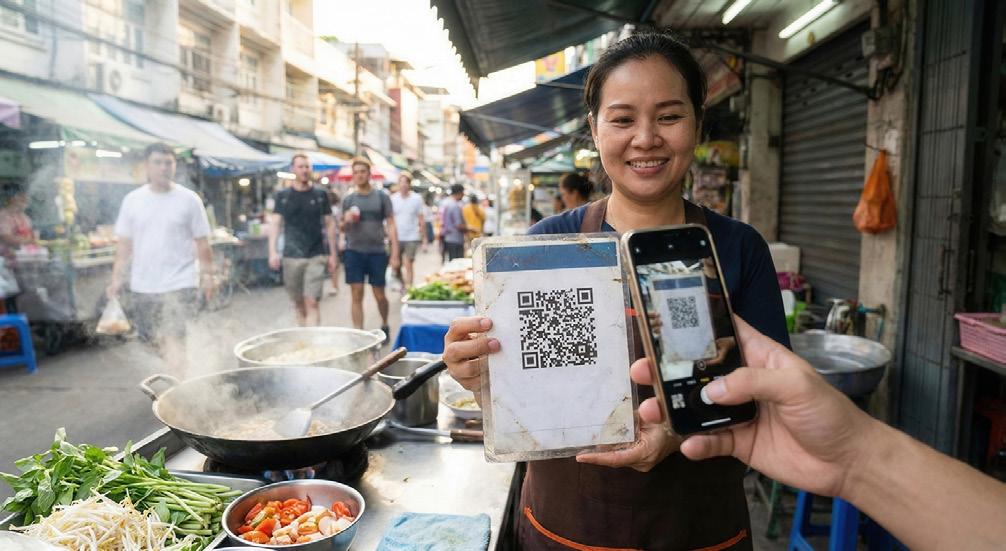
For the financial industry, meanwhile, there are not only cyclical but also major structural changes taking place. Cash is declining in everyday Thai life, and faster than in many other parts of the world. A bottle of water from the roadside or a cappuccino in a café is increasingly paid for by scanning a QR code. In some places, cash is no longer accepted at all. Even in traditional markets, small amounts of money are sometimes transferred digitally instead of being paid in cash when buying vegetables.
Every day in Thailand, millions of motorcycle taxi rides are paid for using digital wallets. Paying monthly bills for electricity or home internet is also done not via direct debit, but with a tap on a mobile phone. More than 90 per cent of Thais own a smartphone, and the vast majority use it to pay for goods and services. In Thailand, the digitalisation of payments is significantly more advanced than, for example, in Germany. However, awareness of the potential for government misuse of digital money and the loss of individual freedom is also less pronounced there.
The digital payments revolution has brought a multitude of new providers to the market, putting traditional banks and service providers under pressure. In the digital world, success is no longer determined by a good reputation or personal contact, but by the effective use of technology, be it artificial intelligence or blockchain.
Digital
in Thailand.
NEW VIRTUAL BANKS USE PERSONAL DATA
A milestone on the path to the digital financial world is the awarding of three licences for virtual banks by the Bank of Thailand in June 2025. However, in this regard the kingdom lags behind many parts of the world, where virtual banks have been operating for many years.
The licences were awarded to the fintech company ACM Holding, the Krungthai Bank Group in cooperation with AIS and PTT Oil, and the SCBX Group in a partnership with WeBank Technology Services and KakaoBank. They can now offer their services without a physical presence in the market, thus keeping operating costs low. Customers can expect lower fees and higher interest rates on savings. For traditional banks, on the other hand, this intensifies the competitive landscape.
Analysts at Krungsri Research predict that virtual banks will initially focus on personal lending. They will utilise new technologies to assess their customers' creditworthiness, such as payment histories for utilities, telephone, or retail. This financial data will also be linked to other personal information
to evaluate the viability of their products. Essentially, virtual bank loans must be easily accessible, require minimal documentation, offer short approval times, and allow for 24/7 application via an app.
“ Cash is declining in everyday Thai life, and faster than in many other parts of the world.”
RISKS IN DIGITAL BUSINESS
Krungsri estimates that virtual banks will focus on diversifying their revenue streams and differentiating themselves from competitors in the next step. This would involve, in particular, offering simplified versions of more complex products in areas such as investments and insurance. These areas are still relatively unexplored in Thai households compared to traditional banking services.
However, international experience shows that many virtual banks risk remaining unprofitable for extended periods or even failing. In Thailand, business risks include not only a highly competitive environment and strict financial regulation, but also the associated prevalence of cybercrime and money laundering activities, not only within the kingdom itself, but especially in neighbouring countries like Cambodia and Myanmar.
Beyond the traditional banking system, Thailand has seen the development of successful fintech companies offering services in numerous market niches, such as the booming e-commerce sector. One of the most prominent examples of a successful Thai fintech is the payment system provider Omise. Of course, Thailand is not considered a leading start-up or FinTech hub in ASEAN, as better ecosystems have emerged elsewhere, producing larger, more valuable, and more efficient digital financial companies.
Cashless payments are now part of everyday life
WELL-DEVELOPED INFRASTRUCTURE
Thailand offers excellent infrastructure for digital transformation, and its telecommunications network is well developed across virtually the entire country. The greater Bangkok area boasts comprehensive 5G coverage, making it better equipped than any German city. In the coming years, international digital corporations will invest billions of US dollars in new data centres.
According to the Board of Investment (BOI), 36 data centre projects were submitted for investment promotion in 2025, with a total volume of 728 billion baht (approximately US$23 billion). Most are targeted at the key industrial regions of Rayong, Chonburi, and Samut Prakan. Amazon Web Services (AWS) alone has announced plans to invest approximately US$5 billion in Thailand over 15 years.
Selected digital banking projects under development (Thailand) Project
SCBX, KakaoBank &
Contact details: Frank Malerius Director
Thailand, Cambodia, Myanmar and Laos German Trade & Invest (GTAI) https://www.gtai.de/en/invest
Licensed by the Bank of Thailand; This consortium is developing a digital-first banking WeBank Technology Services in pre-operational development. platform aimed at narrowing the credit gap for underserved SMEs. By leveraging regional fintech expertise, the project seeks to broaden access to formal financial services.
CLIX (Krungthai, AIS, OR) Approved by the Ministry of Finance; This collaboration integrates banking, telecoms and expected to launch in 2026. retail networks to establish a data-driven virtual bank. Digital lending is expected to play a central role in its nationwide rollout.
Ascend Money (TrueMoney)
Licensed by the Bank of Thailand;
Building on its established digital payments base, currently in pre-launch stage. Ascend Money is moving towards a full virtual banking model, with a focus on technology-led retail banking for mass-market customers.
Data-center investment strengthens Thailand’s digital growth.
From global finance to local impact: DEG's vision for Southeast Asia
Benjamin Brink
In today's rapidly evolving global economy, emerging markets face a complex mix of opportunities and challenges: shifting supply chains, geopolitical uncertainty, and the urgent need for sustainable development. Increasingly, development finance institutions are stepping in not just as providers of capital, but as strategic partners that catalyse private-sector growth, support market entry, and ensure investments meet environmental, social, and governance standards.
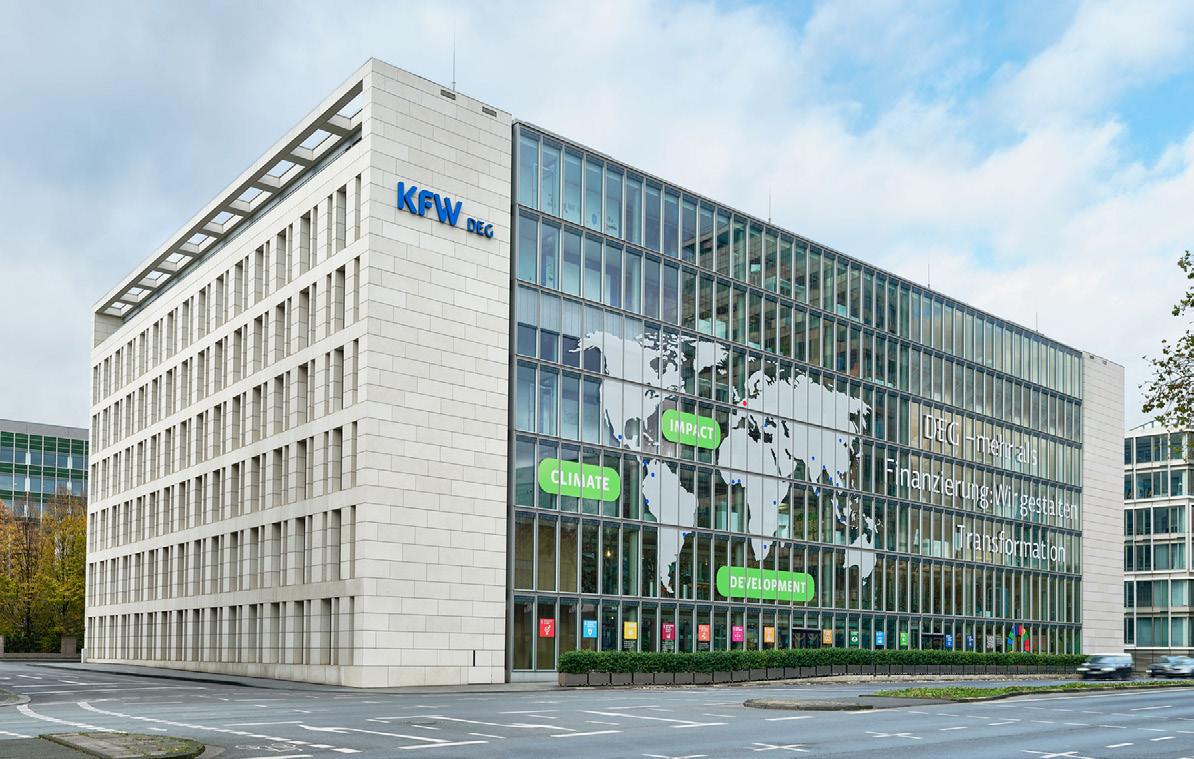
One such institution is DEG, the German development finance institution and part of KfW Group. For more than six decades, DEG has focused on financing private-sector investments in developing countries, operating primarily at market rates without relying on subsidies or concessional financing. It combines financial discipline with a clear mission – supporting sustainable, private-sector-led development.
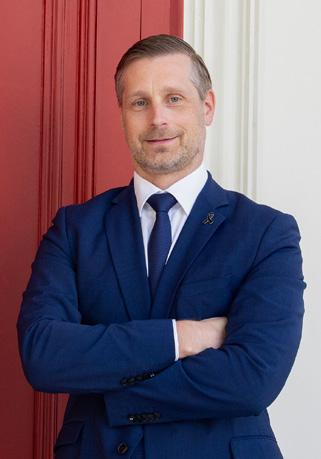
GTCC UPDATE Magazine interviewed Benjamin Brink, who joined DEG in 2010 and has been the head of the Bangkok office – DEG's regional hub for Asia – since 2023. Under his oversight, the office operates across three divisions: Financial institutions, covering banks, non-bank financial institutions, insurance companies, and leasing firms; Infrastructure and energy, spanning airports, toll roads, ports, renewable energy, and data centres; and manufacturing, agriculture, and industry, with a diverse portfolio ranging from textile companies in Bangladesh to sugar refineries in Vietnam and basic materials projects in the Philippines.
DEG operates in more than 80 countries. What role does Thailand play in your ASEAN strategy?
DEG operates as part of KfW Group, and focuses on private-sector investments at market
rates. It supports private-sector development through long-term debt and equity financing, while actively working to establish and disseminate international labour, environmental, and governance standards.
Southeast Asia has become a key focus for DEG, driven by its dynamic economies and growing consumer markets. Within ASEAN, Thailand stands out as a mature economy offering strong infrastructure, logistics efficiency, and a stable investment environment.
Thailand is a very important market for us. Historically, it was the primary entry point for German companies entering ASEAN, and DEG has been a long-term partner to many leading Thai companies with regional operations.
Over the past decade, however, German investment has become more cautious, with Thailand evolving into a strong sales and distribution hub rather than a primary manufacturing location. Meanwhile, Thailand has made remarkable progress in infrastructure, including renewable energy, ports, and digital infrastructure such as data centres. Despite growing competition from Vietnam, logistics costs in Thailand remain lower than in Vietnam and China, keeping the country an attractive regional hub.
Germany's economy is driven primarily by SMEs, which are generally conservative in expansion strategies. While China has historically attracted significant German investment, geopolitical developments have prompted companies to diversify. Thailand remains attractive compared to markets like Indonesia and Vietnam by offering a stable business environment, cultural openness, a growing middle class, and strong consumer demand – creating opportunities particularly in infrastructure, digital services, consumer goods, and environmental technologies.
DEG supports companies through long-term financing, technical assistance, and advisory programmes funded by German ministries, including funds for feasibility studies, carbon accounting, sustainability transformation, and interest-reduced loans tied to ESG performance. Every project is rigorously assessed against international standards, including the IFC Performance Standards.
DEG also strengthens local financial systems by partnering with banks and private equity funds to support SMEs, providing market access and cultural understanding that
DEG alone could not replicate. Key investment themes include climate transition, digital infrastructure, waste management, and carbon neutrality.
In Thailand, opportunities are strongest in equity and mezzanine financing, large-scale infrastructure, climate transition initiatives, and support for non-bank financial institutions and SMEs. Thailand remains open for business, offering a stable, highquality environment where DEG stands ready to facilitate long-term growth.
Why have German companies become more conservative?
This is largely due to the structure of the German economy. German SMEs, many which have been family-owned for generations, tend to be risk-conscious and selective in their investment strategies. Germany excels at exports but is less investment-driven abroad. Geopolitical developments, including shifts in China, have also prompted companies to diversify and reconsider their global footprint.
What makes Thailand attractive compared to other Southeast Asian markets, such as Vietnam and Indonesia?
There are several factors. First, logistics costs are comparatively low: 13.9 per cent of GDP in Thailand, versus 18.5 per cent in Vietnam
and 22 per cent in Indonesia. Transport and infrastructure are very efficient here, and business relocation is easy for expatriates.
Second, Thailand offers a stable, secular, and predictable environment for business. Even with political changes, economic policies remain consistent. Finally, Thailand’s quality workforce, cultural openness, and strong track record in supporting foreign investment make it a preferred choice for German companies entering the region.
How does DEG support companies operating in Thailand?
We provide long-term financing through debt and equity instruments, often combined with technical assistance and advisory services funded by German ministries. This includes co-financing feasibility studies, market-entry programmes, and supporting sustainability initiatives.
Our role is not limited to financing, however. With more than two decades in Thailand, we also offer strategic advice, local networks, and guidance across regulatory and operational challenges.
How does DEG integrate sustainability into its work?
Sustainability has been central to DEG since decades. Every project is evaluated not only
“ Over the past decade, however, German investment has become more cautious, with Thailand evolving into a strong sales and distribution hub rather than a primary manufacturing location.”
for financial risk, but also for environmental, social, and governance risks. We work with clients to develop action plans that align with international ESG standards, including the IFC Performance Standards.
This approach is both a risk mitigation strategy and a way to strengthen companies for future growth. ESG compliance protects reputations, ensures regulatory alignment, and can prevent costly crises.
What role does DEG play in supporting SMEs?
We finance SMEs indirectly by partnering with local banks and private equity funds that on-lend or invest in smaller businesses. This strengthens local financial systems, builds local expertise in risk assessment, and ensures culturally appropriate engagement.
For example, we helped finance a US$220 million gender-focused SME initiative with a local bank and the IFC, specifically supporting female entrepreneurs in Thailand.
What trends will shape Thailand’s investment landscape in the coming years?
Three major trends stand out:
1. Climate transition: Thailand aims to be carbon neutral by 2050, requiring significant investment in energy and circular economy solutions.
2. Digital infrastructure: Rising data consumption drives demand for data centres and secure, local storage.
3. Waste management: Innovative solutions are needed to address plastic and industrial waste, reflecting a broader push toward sustainability.
On the other hand, a key risk is household debt, which is relatively high and must be monitored to safeguard financial stability.
What message would you give to German investors?
Thailand is open for business, and DEG is ready to support feasibility studies, advisory
services, and financing. Importantly, we offer objective guidance, even if that means concluding that an investment may not be the most suitable option.
German companies enjoy an excellent reputation in Thailand for quality, reliability, and engineering excellence. Leveraging these strengths presents substantial opportunities in consumer goods, environmental technology, and infrastructure, as well as emerging sectors aligned with population growth and regional demand.
How does DEG manage risk amid regional geopolitical shifts?
We closely monitor all projects, leveraging local experts and industry specialists. Our Bangkok office includes teams dedicated to infrastructure, financial institutions, and environmental/social risk. Combined with the AAA-rated backing of KfW, we can grow our commitments even during challenging times, with nearly US$3 billion in commitments last year alone – a record for DEG in Asia.
Which sectors show the most promise for future investment?
Equity and mezzanine financing, large-scale infrastructure, climate transition projects, and non-bank financial institutions all present opportunities. While Thai banks handle conventional debt efficiently, there remains a role for DEG in supporting innovative, high-impact investments that align with ESG goals.
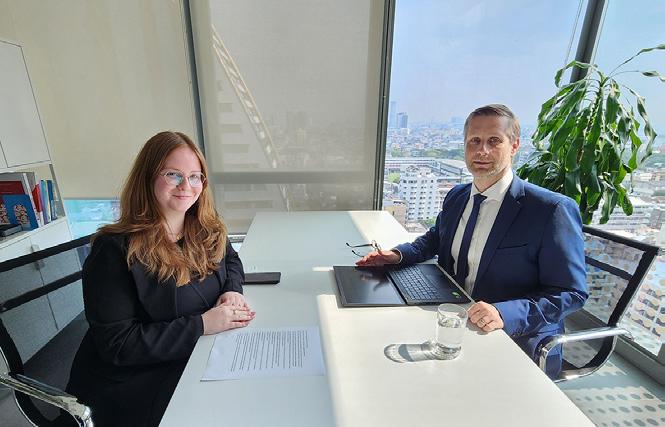
Interview by Lea Eickhoff, Trainee, GTCC Membership, Events and Communications Department
Contact details: Benjamin
Brink Head of DEG Representative Office
Bangkok
DEG - Deutsche Investitions- und Entwicklungsgesellschaft mbH
Bangkok Bank is Thailand's largest commercial bank by total assets and the seventhlargest bank in Southeast Asia (The Banker, Top 20 ASEAN banks 2025), with a branch network spanning over 700 domestic locations and 225 international locations (includes 200 branches of its Indonesian subsidiary Permata Bank) across 14 economies.
Amid a slowing Thai economy Bangkok Bank is supporting its customers to adapt to the changing business landscape and embrace new opportunities. Meanwhile the financial sector is also changing rapidly and competition is expected to increase this year with the entry into the market of three fully digital virtual banks.
GTCC interviewed Kanoksak Mokkamakkul, Executive Vice President and Head of Metropolitan Commercial Banking, to understand how the bank can stay relevant in the face of fast-changing technological transformation, respond to new technologydriven competitors, and help shape the future of banking in Thailand.
Thailand's financial services sector is navigating a complex moment — from slowing economic growth and geopolitical threats, to household debt at near-record levels and shifting demographics. From your viewpoint at Bangkok Bank, what is the current state of the industry, and what is your outlook for growth in 2026?
Thailand has indeed been facing significant challenges, and the financial service industry is very much caught up in all of it — as a major bank, our customer base spans most sectors of the economy, so we, along with our customers, are feeling the impact from the complexities that you mentioned.
On geopolitics, the risks have become more tangible than many anticipated. Few of us had events like the conflict in the Middle East in mind when we first started talking about geopolitical threats — and yet here we are. The uncertainty is real, and the operating environment could become even more volatile, depending on how things unfold.
That said, I see this as a genuine turning
point for Thai businesses. The economic engines that have powered Thailand for decades — traditional manufacturing, assembly within global supply chains — are under pressure and need to evolve. The automotive sector is a clear example. The rapid rise of EVs is reshaping the industry, and players across the value chain must adapt.
But there are real opportunities too. Digital innovation is reshaping how we work and opening up new business models. The growing emphasis on ESG is creating changes in demand, and with geopolitical tensions driving production diversification, Southeast Asia — Thailand included — has become a preferred destination for FDI. The Board of Investment continues to report record inflows. The opportunities are there for businesses willing to transform themselves and move up the value chain.
How can Bangkok Bank support the SME segment in transforming themselves?
As a bank, we work closely with our customers and support them in this journey in many ways. At the broader level, we create awareness of new trends and share our knowledge base, through holding seminars and conferences where we bring in industry leaders and thought leaders — and even customers who have successfully transformed themselves — to share their experiences.
Beyond that, we run more intensive programmes. Big Blue Ocean is a deep-dive course on digital transformation, where participants work together on actual transformation projects. Our Green Transition Academy covers the ESG trend in detail — how to measure carbon footprints, how to plan a roadmap toward net zero. And
our AEC Business Leader programme helps customers explore expansion opportunities in neighboring markets, leveraging Bangkok Bank's long-established presence across the region.
The opportunities in ASEAN are particularly relevant given that Thailand has been growing at a slower pace comparing to our regional peers like Vietnam and Indonesia whose economies are growing at 5–7%. The experience Thai businesses have built up here can be very valuable there — though it takes dedicated efforts and deep market understanding to operate in a different environment.
Virtual banks are expected to launch in Thailand this year, targeting underserved segments with branchless, AI-driven models. We understand that Bangkok Bank is also exploring virtual banking opportunities. Please share where the bank stands today.
A number of banks including Bangkok Bank submitted bids but the central bank just issued three licenses. These new banks are due to launch around the middle of this year and we will see how they go about penetrating the market without branches. The challenge is not really about access to digital banking — Thais are already very comfortable with mobile banking and QR code payments via PromptPay — but how to reach people who cannot access financing.
“ AI capabilities will provide tools that allow us to do things more effectively”
Given Thailand's high household debt levels, the question is how would a virtual bank be able to make use of alternative data and support the financing demand of such a customer base, while ensuring those customers maintain a healthy financial standing. That is not a simple problem to solve.
AI is increasingly central to financial institutions. Where is Bangkok Bank in its AI adoption journey, and which use cases will be most transformative?
It's an exciting area, and one we are very much enthusiastic about. Bangkok Bank has been working on digital transformation and making use of data for several years now, and we have also been engaging with tech startups to explore how new technologies can benefit the bank.
That said, we are approaching AI carefully, in order to maintain sound credit quality, as expected by our customers and shareholders. AI capabilities will provide tools that allow us to do things more effectively, while its adoption will go hand-in-hand with the sound judgement based on our expertise.
Within that framework, there are already several use cases we are actively exploring. Credit assessment is one — using AI models to help our teams analyse data and flag areas that warrant closer attention, though the final judgment rests with our people. AI can also help managers stay on top of industry developments, so they are better equipped when talking to customers, or give personal investment advisors timely insights on customer portfolios, potential needs, and trends.
There is a lot of potential. It will be exciting to see how business models could transform beyond such immediate use cases.
How does Bangkok Bank intend to remain relevant in the future?
We embrace new technology and see it as an opportunity to improve what we do. But the cornerstone of Bangkok Bank has always been customer relationships, a deep understanding of our customers, and the sound way that we work with and support them — and that will not change.
In my area, working with SMEs, we always come back to the same principle: stay close to our customers. In volatile times like now, the situations can shift quickly — their needs can change, the risks facing them can change. Being present and genuinely understanding their business is what would allow us to support them on both the financial front and broader business area.
Technology will evolve, but that core value of being close to customers and helping them navigate uncertainty — that remains our competitive advantage.
As Bangkok Bank accelerates its digital transformation, what does that mean for your workforce?
We can see that the global trend is for banks to reduce branches and headcount, as online banking reduces the need for physical branches and Thailand is well advanced in terms of online banking with more than 90 percent of financial transactions now taking place on mobile devices. At Bangkok Bank we have been streamlining our domestic network by merging smaller branches into larger ones for better operating efficiency. Rather than simply cutting staff, our focus has been on redeployment and retraining — helping our people grow into new roles rather than just letting them go.
Where does Bangkok Bank stand on sustainability and ESG?
We are fully committed to the sustainability journey — both as an institution and in how we support our customers. The bank is actively working to understand and manage
our own carbon footprint across all scopes, and we encourage our clients to do the same.
On the financing side, we have developed products specifically to support this direction. Green loans are available for environmentally friendly projects, and for companies working to reduce emissions, we offer transition finance. Not every business can meet the high ESG standards immediately, and we recognise that — what matters is that they are moving in the right direction, and we want to support that journey.
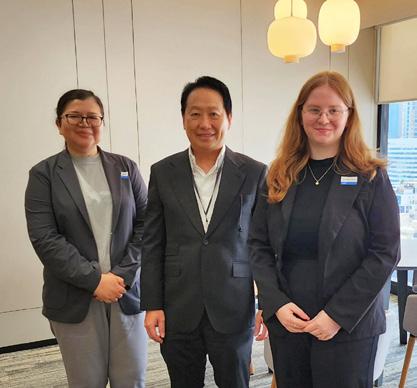
Interviewed by Chadaphan Maliphan and Lea Eickhoff, GTCC Membership, Events and Communications Department
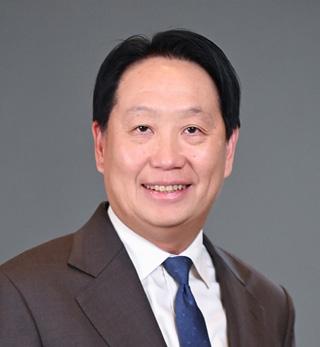
Kanoksak Mokkamakkul
Executive Vice President and Head of Metropolitan Commercial Banking Bangkok Bank
How AI is transforming cash management across borders
The global banking landscape is undergoing rapid transformation, driven by advancements in artificial intelligence (AI), virtual banking models, financial technology, and increasingly sophisticated data analytics. For corporates – whether Thai companies expanding into Europe, or European multinationals operating in Thailand – these developments promise greater efficiency, stronger risk management, improved cybersecurity, and more confident decisionmaking for treasury needs.
AI is now one of the most powerful forces reshaping banking. AI enables banks to enhance data analysis, forecast trends and fraud risks, automate routine processing, and improve client engagement through insights generated at scale. This has direct implications for treasurers who increasingly expect real-time visibility, smoother crossborder flows, and tailored advisory services.
AI’s ability to detect anomalies, flag suspicious activity, and improve reconciliation is redefining operational accuracy in high-volume treasury environments.
For corporates, these technological shifts translate into more transparent, faster, and cost-effective regional and cross-border cash-management solutions. Data-driven analytics make it possible to forecast cashflows across geographies with far greater precision, while automated processes significantly reduce the manual workload associated with accounts payable, accounts receivable, and liquidity consolidation.
DEPLOYING AI AT SCALE
Cloud computing, in particular, is redefining how banks deploy AI at scale. Deutsche Bank’s multi-year strategic partnership with Google Cloud demonstrates how cloud infrastructure can accelerate both innovation and operational efficiency. The bank has migrated around 260 applications to Google Cloud, achieving up to a 50 per cent improvement in dataprocessing times and reducing recovery times by a factor of 16 to 20. This foundation has enabled rapid integration of generative-AI tools into core workflows, such as document processing, report production, and research analysis, boosting accuracy and cutting processing times by up to 40 per cent.
These enhancements translate directly into client benefits. With stronger processing power and AI-enabled systems, banks can provide more reliable cash-flow forecasts, quicker
turnaround for cross-border payments, and more responsive digital channels. Generative-AI models can summarise transactional patterns, identify risks earlier and uncover opportunities to optimise liquidity across markets – capabilities especially valuable for corporates operating in diverse regulatory environments across Europe and Asia.
Fintech partnerships also play a critical role. Many fintechs specialise in flexible, API-driven services that help corporates reconcile payments faster, access real -time balances, automate treasury workflows, and integrate banking data directly into enterprise systems. For corporates that operate in both Thailand and Germany, or across Southeast Asia and Europe, these collaborative solutions create more seamless cross-border treasury environments. By partnering with fintechs, global banks can harmonise processes across regions that traditionally differ in formats, standards, and market conventions.
Deutsche Bank is committed to partnering with fintechs around the world to innovate and broaden payment and treasury offerings for both parties. For example, Deutsche Bank partners with Ant International on a range of global treasury management and cross-border payment innovations, including tokenised deposits and stable coin, in order to reduce FX related costs and risks. The bank also partners with PayPal to scale up its merchant settlement and payouts, and provide withdrawal and collection solutions.
Cybersecurity, however, remains an essential pillar of digital transformation. As cross-border flows increase, so do associated risks. AI-enabled defences can automate threat detection, monitor anomalous behaviour, and intervene earlier in the event of fraud attempts. Cloud platforms such as Google Cloud offer robust security infrastructure that strengthens resilience for institutions like Deutsche Bank, which operates extensive networks across global markets. These protections help corporates feel confident that their data and high-value transactions are secure as they expand their international footprint.
“ By integrating AI into their strategic risk management systems, banks can anticipate pressures before they escalate and advise clients proactively.”
DEVELOPING STRATEGIC RISK MANAGEMENT SYSTEMS
Risk management is also rapidly evolving, and AI systems can now analyse large datasets to model credit exposure, evaluate counterparty risk, and identify early signs of stress linked to supply chains or currency movements. With global trade still subject to regulatory and geopolitical shifts, corporates operating between Thailand and Europe increasingly rely on banks that can deliver timely, data-driven insights. By integrating AI into their strategic risk management systems, banks can anticipate pressures before they escalate and advise clients proactively.
Effective decision-making is another major beneficiary of AI-enabled transformation. Corporate treasurers need accurate information at the right moment, particularly when managing liquidity across multiple jurisdictions. AI can instantly surface insights – from liquidity projections to stress -scenario analysis – enabling treasurers to act decisively. In regional treasury centres such as Bangkok or Singapore, this allows for faster capital redeployment and smoother intercompany flows, while maintaining the precision required for global treasury operations.
For corporates expanding between Thailand and Europe, particularly between Thailand and Germany, technological innovation reduces friction that historically complicated cross-border treasury operations. Through real - time data, improved connectivity between systems, and automation throughout the transaction lifecycle, banks like Deutsche Bank help corporates manage currency exposure, accelerate settlements, and navigate complex regulatory regimes more effectively.
TOOLS TO STREAMLINE WORKFLOWS
Generative AI further amplifies these advantages. After modernising core systems and migrating its SAP S4/HANA finance platform to Google Cloud, Deutsche Bank now uses advanced language models –including Google’s Gemini – to enhance document processing, risk analytics, and employee productivity. These tools streamline workflows and free banking teams to focus on value-added advisory, which is particularly important for corporates facing multi-market regulatory obligations and operational complexity.
As both Thai and European corporates seek growth beyond their home markets, the importance of a globally connected, digitally mature bank has never been greater. With deep experience across both regions and a strong commitment to AI-driven innovation, Deutsche Bank is positioned to support corporates with next - generation cash management solutions that enhance resilience, support expansion, and enable smarter, faster and more secure financial decisions.
Contact details: Bastian
Ilgert
Vice President Corporate Coverage Deutsche Bank AG, Bangkok Branch Tel. +66 63 823 5247 bastian.ilgert@db.com
The Big Picture Thailand & Southeast Asia: Where finance meets fast forward
Thira Nuntametha
Welcome to the energetic, ambitious, and increasingly sophisticated financial industry of Thailand and its ASEAN neighbours. From the skyscrapers of Bangkok to the fintech towers of Singapore, Southeast Asia’s financial sector is evolving at the speed of a tap-to-pay transaction. But beneath the surface buzz lie two powerful storylines shaping the region’s future: financial inclusion and governance.
Let’s take a stroll through each.
1. FINANCIAL INCLUSION: THE GREAT DIGITAL LEAP
Here’s the exciting part.
Not long ago, millions across Southeast Asia operated entirely in cash. No bank account. No formal credit history. No access to insurance.
Enter smartphones.
From Bangkok’s street food stalls to rural Indonesia’s fishing villages, QR payments and
mobile wallets have exploded. Thailand’s national QR payment system has made it normal for a coconut vendor to accept digital transfers. Small businesses are building transaction histories simply by getting paid electronically. In places like Jakarta, Ho Chi Minh City, and Manila, fintech startups are tackling lending gaps for micro and small enterprises – the backbone of ASEAN economies.
But it’s not a fairy tale just yet.
Hundreds of millions across the region remain underbanked, and many small businesses still struggle to access affordable loans. Digital literacy also varies widely, and while opening a wallet is easy, building long-term financial security is harder. The Bank of Thailand’s latest effort is the granting of three virtual bank licences – the first ever in Thailand. The primary goal here is financial inclusion to the unserved/underserved individuals and SMEs. They are expected to begin operation in 2026.
2. GOVERNANCE: THE REFEREE GETS DIGITAL
If finance is a football match, regulators are the referees, and lately, they’ve upgraded from whistles to tablets.
In Thailand, the Bank of Thailand has been busy designing guardrails for digital banking, open data frameworks, and virtual banks. Instead of resisting innovation, regulators are experimenting with sandboxes – controlled spaces where fintech startups can test ideas without breaking the system.
Meanwhile, the Securities and Exchange Commission Thailand is tightening oversight of digital assets and online investment platforms. The goal? Encourage innovation, yes, but
“ Debt levels, global shocks, and financial risks are real challenges. But with prudent regulation and increasing digital innovation, Thailand and ASEAN will continue to build resilience.”
without letting scams and volatility turn the market into a casino. Across ASEAN, regulators are increasingly coordinating, because financial crime, cyber risk, and digital fraud doesn’t respect borders – thus neither can oversight.
FUELING DREAMS, FUNDING FUTURES
Banks in Thailand and ASEAN don’t just move money, they multiply possibility. In fact, they:
• Turn savings into business expansion
• Help families buy homes
• Support entrepreneurs launching new ideas
• Finance renewable energy and sustainable projects
• Connect local markets to the global economy
When banks function well, economies grow stronger. Jobs are created, innovation accelerates, and trade flourishes. Of course, like any powerful engine, banking systems must be carefully managed. Debt levels, global shocks, and financial risks are real challenges. But with prudent regulation and increasing digital innovation, Thailand and ASEAN will continue to build resilience.
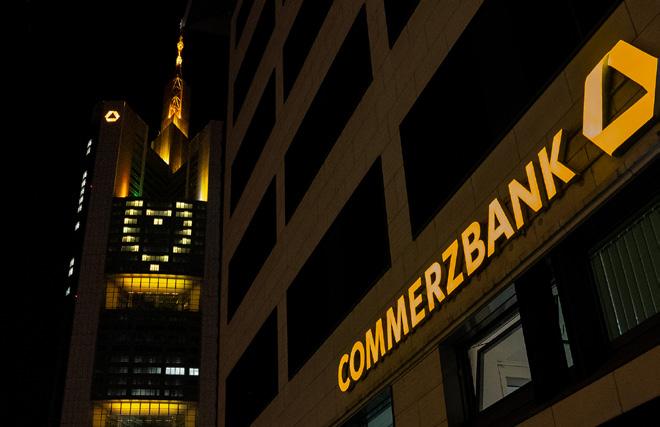
AT COMMERZBANK, AI PRESENTS BOTH CHALLENGES AND OPPORTUNITIES
AI is increasingly being integrated into various areas within Commerzbank. It helps from the simplest task, like summarising meetings and translating languages, to more complex ones like preventing fraud, supporting KYC processes, and even suggesting solutions. It’s almost like having a smart digital advisor sitting right next to you.
But that doesn’t mean everything gets thrown into the AI basket. As exciting as it is, AI comes with its own risks and costs. So the first question that needs to be asked is simple: Does it actually make things faster, better, and more efficient?
The second point is just as important: Responsibility still lies with humans. No matter how disruptive AI may be, human intelligence remains at the heart of Commerzbank, and people still decide where AI should be used and how much autonomy it should have. You can think of AI as a powerful co-pilot, but humans are still firmly in the captain’s seat.
GEOPOLITICS IS REAL: HELPING CLIENTS STAY CONNECTED AND MANAGE RISK
In normal times, companies – from large corporates to SMEs – often turn to banks as their financial partners. Banks provide liquidity through overdrafts, working capital facilities, and term loans. They also act as hedging partners for risks, ranging from commodities like oil and gas to foreign exchange and interest rates.
But when the world becomes more uncertain, banks can step up even further. For example, international trade protection tools such as Letters of Credit confirmation and discounting can help ensure exporters receive their payments on time. Banks can also provide valuable insights about local market conditions, offering on-the-ground perspectives about what’s really happening in different countries.
To provide this level of support, banks need deep knowledge of the regions where their clients operate. Fortunately, Commerzbank has built a strong international network over the years. In addition to their home markets of Germany, Switzerland, and Austria, Commerzbank has a presence in more than 40 international locations outside Germany. These include representative offices across the globe – from Australia and Korea, to ASEAN markets such as Thailand and Vietnam, plus other parts of Asia including India, Bangladesh, Pakistan, and Central Asia, and extending further into the Middle East, Africa, and Latin America as well.
These representative offices serve as “eyes and ears on the ground”. They help the company to understand local developments and support not only Commerzbank but also Commerzbank’s clients around the world.
Contact details:
Thira Nuntametha Senior Representative Commerzbank AG
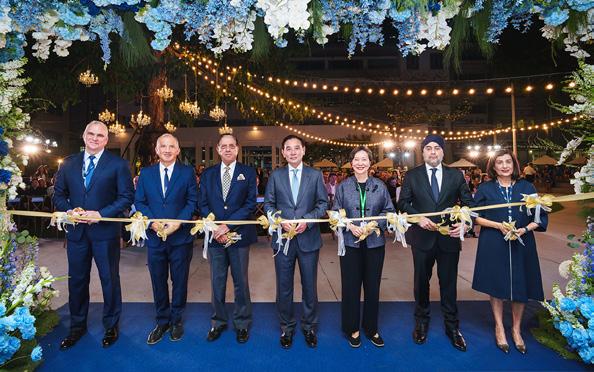
Opening of the Bavarian Trade and Investment Office Southeast Asia at GTCC
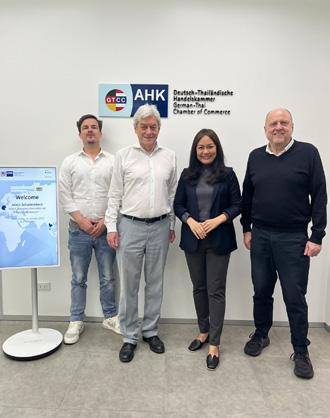
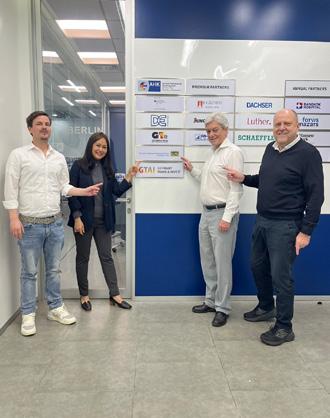
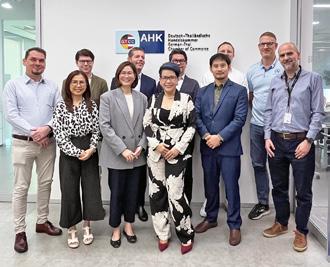
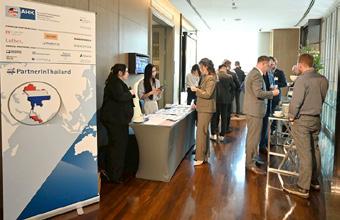
On 12 January 2026, GTCC welcomed Armin Schwimmbeck, Head of Division for Asia, Bayern International and International Fairs at the Bavarian State Ministry of Economic Affairs, Regional Development and Energy (StMWi), on the occasion of the opening of the Bavarian Trade and Investment Office Southeast Asia at GTCC.
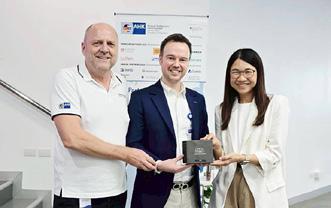
Wilaiwan Schroeder joined the GTCC team on January 15 as the Representative of the Bavarian Trade and Investment Office Southeast Asia, promoting economic ties by connecting Bavarian companies with business opportunities across the region.
AHK Asia-Pacific Coordination Meeting 2026
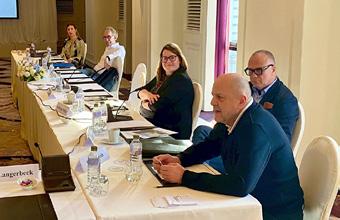
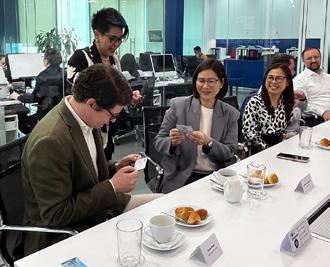
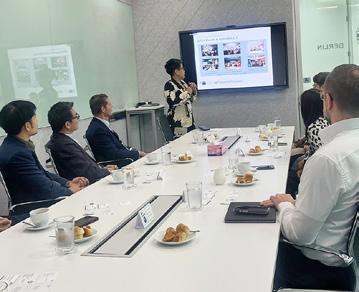
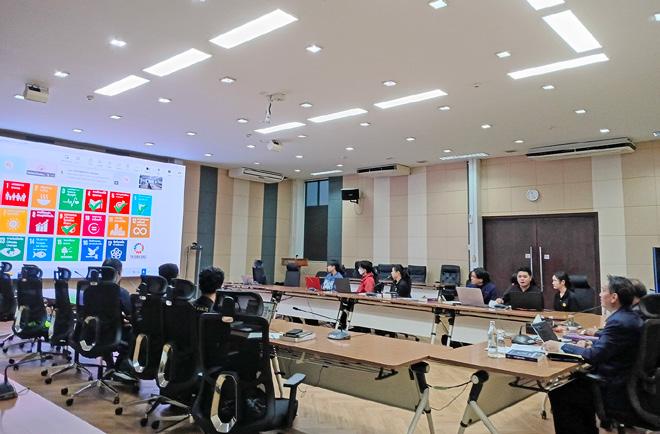
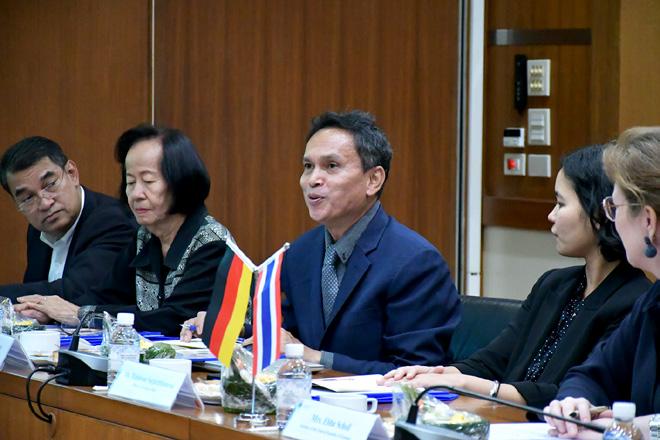
GTCC welcomed the delegations of the AHK Asia-Pacific Coordination Meeting 2026, comprising Executive Directors and Chief Representatives of German Chambers of Commerce (AHKs) in the Asia-Pacific region as well as key DIHK representatives including Benjamin Leipold, Managing Director, AHK Network, DIHK.
They discussed several topics important to the positive development of AHKs including the use of AI, diversification, security, risk management, and the preparation for the APK 2026 taking place in October this year in Seoul, Korea.
The meeting was organised by GTCC (AHK Thailand) at the lebua hotels and resorts during 21-22 January 2026.
GTCC get-together in Chiang Mai
GTCC hosted a get-together in Chiang Mai on 27 January 2026, bringing together representatives from GTCC members and partners including Enapter, Buzzwoo Asia, Bluechips Microhouse, Ennova Partners, Advanced ID Asia, as well as Christian German School Chiang Mai, Sanpatong, Excel Conex Exhibition Stand Design & Build, Concept Immobilien, Technomix IV, KORA Climate, and Interactive-Asia. The event provided an excellent opportunity for networking and exchanging ideas among GTCC members and partners.
First GTCC New Members Meet-up 2026
The first GTCC New Members Meet-Up of 2026 was hosted on 27 January 2026. GTCC Head of Membership, Events & Communications, Jantarath Korbuakesorn, welcomed representatives from our new member companies and new representatives of established members, including Klaus Schneider, Austro Thai Gourmet Co., Ltd.; Yotin Suanmalee and Soravit Phanasomburna, Airborne Support Co., Ltd.; Siriporn Panyamanee, Zschimmer &
Meeting with Thai Ambassador H.E. Chittipat Tongprasroeth
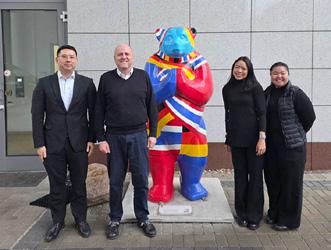
GTCC Executive Director Dr. Roland Wein had a meeting with H.E. Chittipat Tongprasroeth, Ambassador of Thailand to Germany, at the Royal Thai Embassy in Berlin on 9 February 2026. They discussed potential collaborations and activities planned for 2026.
Schwarz (Thailand) Co., Ltd; Yuphaphorn Anuchithchanchai, TÜV SÜD (Thailand) Limited; Christian Schell, Mercedes-Benz (Thailand) Ltd.; Florian Beuge, Deufol Doehle Projects Ltd.. and René Altmann.
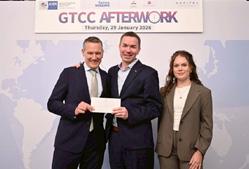
First GTCC AFTERWORK of 2026 A dynamic start to the year
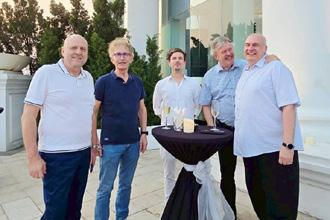
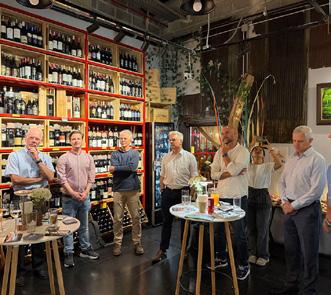
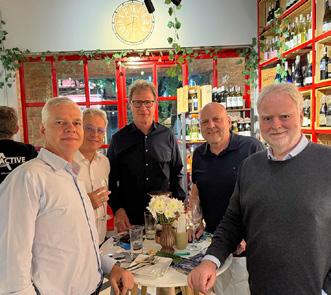
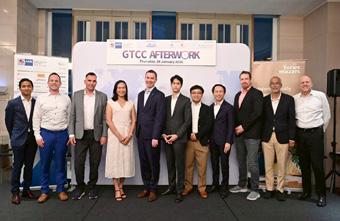
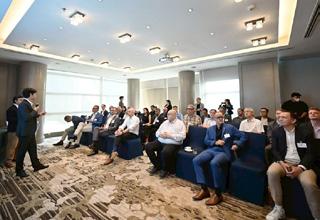
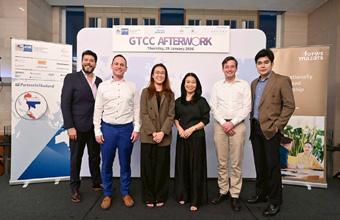
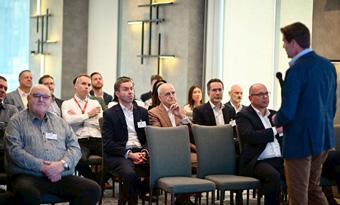
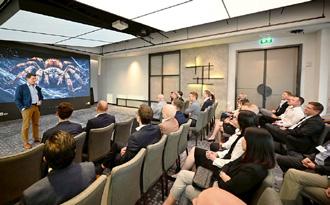
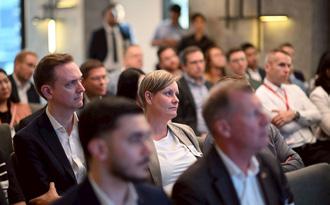
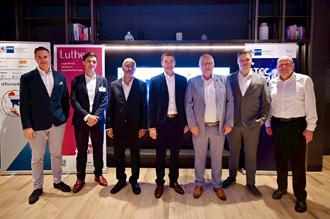
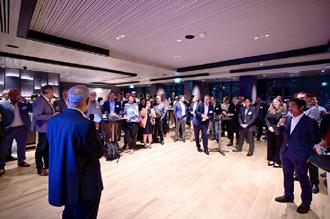
The first GTCC AFTERWORK of the year kicked off on 29 January 2026 at the Sofitel Bangkok Sukhumvit, setting a high-energy momentum for the year ahead.
GTCC
AFTERWORK BRIEFING WITH FORVIS MAZARS
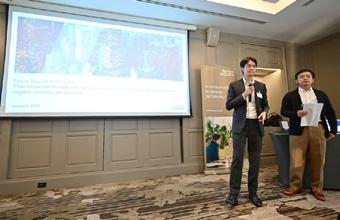
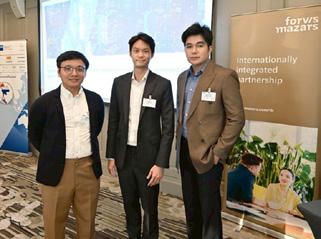
The evening began with a highly successful briefing organised in collaboration with Forvis Mazars. We would like to thank all participants for their engagement, as well as tax experts Narong Prayoonrut, Parin Supsavaipol, and Vachirawit Kaew-udom for sharing critical updates on Personal Income Tax implications and the Special Regime/Pillar 2.
GTCC AFTERWORK NETWORKING – JANUARY 2026
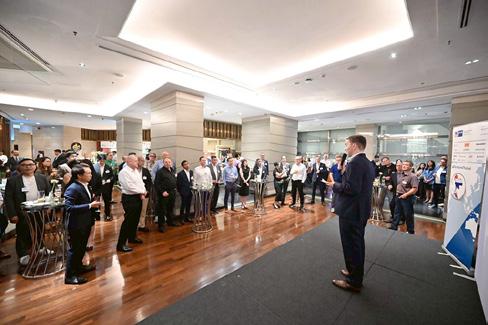
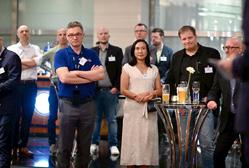
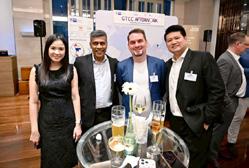
Following the briefing, GTCC Acting President Oliver Schnatz officially opened the networking session with his welcoming remarks. The evening was filled with friendly business connections and productive exchanges.
A special thanks to our partners:
• Event Partner: Forvis Mazars in Thailand
• Beverage Partners: Arcobräu by Flow Inter and Global Wines and More
• Venue Partner: Sofitel Bangkok Sukhumvit
GTCC Business Luncheon Thailand Economic Outlook 2026
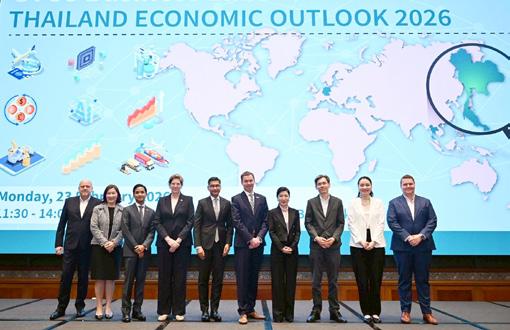
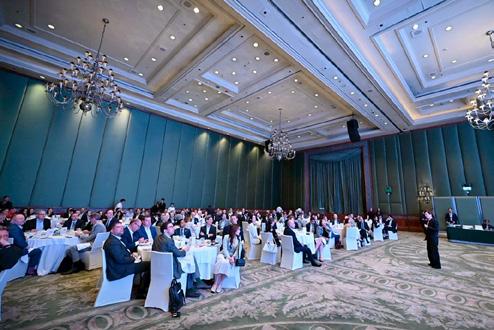
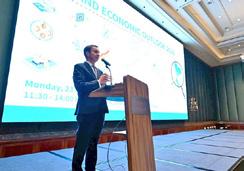
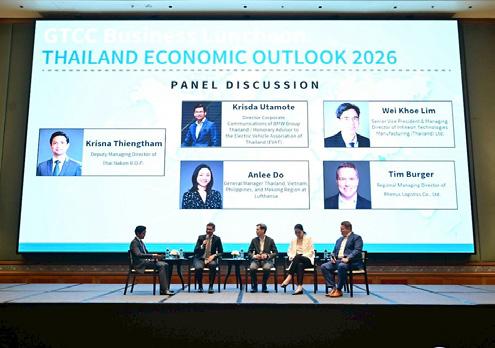
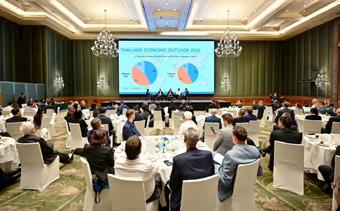
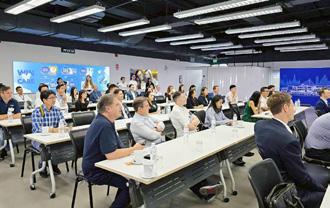
The GTCC Business Luncheon: Thailand Economic Outlook 2026 welcomed over 130 guests, including guest of honour Ebba Scholl, Deputy Chief of Mission at the German Embassy Bangkok. Held on 23 February 2026 at the Grand Hyatt Erawan, the event was opened by Oliver Schnatz, GTCC Acting President.
GTCC would like to express sincere appreciation to keynote speaker Juliana Lee, Managing Director and Chief Economist for Asia at Deutsche Bank AG, for her insightful presentation on the global and regional economic outlook, key risks and opportunities for Thailand, and navigating today's complex economic environment.
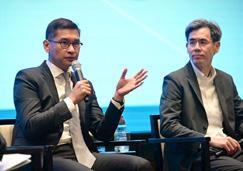
We are thankful to our esteemed panellists for sharing valuable industry insights and engaging in an in-depth discussion on competitiveness, sustainability, and the challenges and opportunities ahead for businesses in Thailand:
• Krisda Utamote, Director Corporate Communications, BMW Group Thailand / Honorary Advisor, Electric Vehicle Association of Thailand (EVAT)
• Tim Burger, Regional Managing Director, Rhenus Logistics Co., Ltd.
Special thanks to moderator Krisna Thiengtham, Deputy Managing Director of Thai Nakon R.O.P., for guiding a dynamic and engaging discussion. We look forward to continued collaboration and dialogue as we navigate 2026 together.
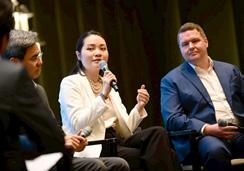
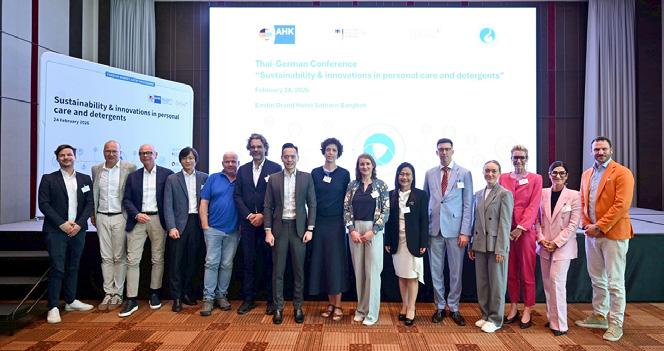
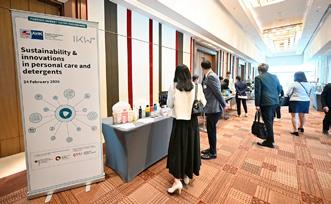
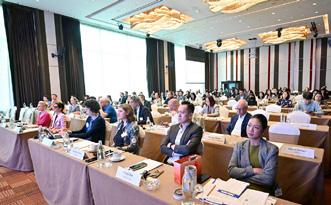
Thai-German Conference “ Sustainability & Innovations in Personal Care and Detergents”
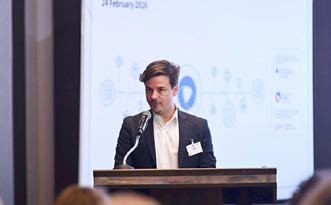
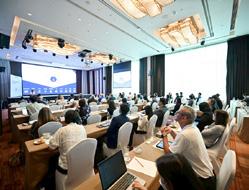
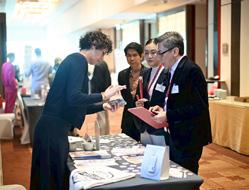
On 24 February 2026, GTCC organised the Thai-German Conference “Sustainability & Innovations in Personal Care and Detergents” at the Eastin Grand Hotel Sathorn Bangkok.
The conference was supported by the Thai Spa Association (TSPA) and held in cooperation with the German Cosmetic, Toiletry, Perfumery and Detergent Association (IKW), within the framework of the Market Entry Programme supported by the German Federal Ministry for Economic Affairs and Energy (BMWE).
Marius Mehner, GTCC Deputy Executive Director, delivered opening remarks, welcoming approximately 100 participants. The opening was followed by welcome remarks by Johannes Kerner, Economic and Commercial Counsellor at the German Embassy Bangkok; and a keynote speech by Dr. Neeranard Jinachai, President of the Thai Personal Care and Household Products Industry Trade Association (TPHIA).
The conference featured presentations by representatives from the following German companies:
• Burnus Care GmbH
• Nutracosmetic GmbH
• MedSkin Solutions Dr. Suwelack AG
• Messing & Keppler Abfüllbetrieb GmbH
• Straub GmbH
• Dr. Miele Cosmed GmbH
• Methode Brigitte Kettner GmbH
• Dermatest GmbH
It was concluded with a panel discussion on "Navigating Market Entry and Positioning: How Foreign Brands Can Succeed in Thailand's Beauty and Personal Care Market" featuring:
• Dr. Neeranard Jinachai, President, Thai Personal Care and Household Products Industry Trade Association (TPHIA).
• Sunai Wachairawarak, President, Thai Spa Association (TSPA)
• Nattinee Netraumpai, Committee Member, Thai Cosmetic Manufacturers Association (TCMA)
The conference provided a dynamic platform for exchange, collaboration, and strengthening business relations between Thai and German companies in the personal care and detergents sector.
GTCC Member Exclusive Site Visit to Beiersdorf Thailand
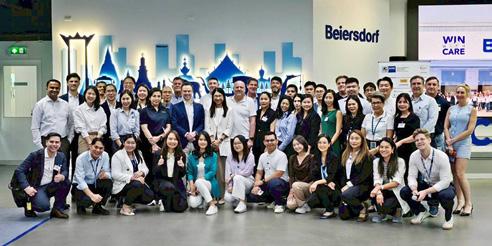
On 26 February 2026, GTCC members had the opportunity to visit Beiersdorf Thailand's production facility in Bangplee, Samutprakarn.
With over 130 years of global skincare expertise, Beiersdorf Thailand is not just home to beloved brands like NIVEA and Eucerin, but also a proud regional export hub serving over 40 countries.
GTCC members gained a rare first-hand glimpse into the precision, innovation, and dedication that go into every product produced by Beiersdorf. Seeing their world-class, ISO 22716 and ASEAN GMPcertified facility up close was truly inspiring.
A heartfelt thank you to Kevin Doak, Senior Vice President ASEAN; Surakha Wanphen, Production Center Director; and the entire Beiersdorf Thailand team for their generous hospitality and for making this visit such a memorable and enriching experience for our members.
First GTCC Young Professionals of 2026
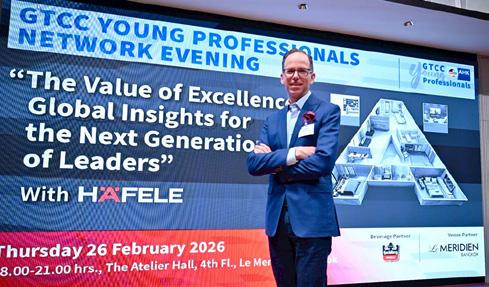
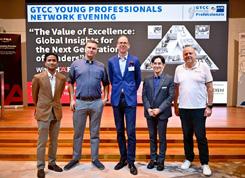
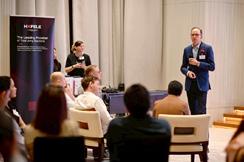
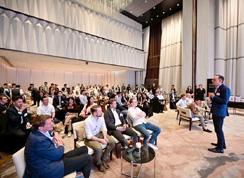
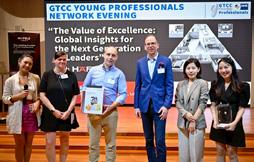
GTCC Young Professionals Network Evening kicked off the first event with Häfele Thailand on 26 February 2026 at the Le Meridien Bangkok. The gathering brought together the next generation of business leaders for a thought-provoking conversation on "The Value of Excellence: Global Insights for the Next Generation of Leaders" by our speaker, John Clare, Managing Director of Häfele (Thailand) Ltd. We would like to thank him for sharing such useful insights.
Drawing on Häfele's extraordinary legacy — over 100 years of global innovation and 32 years of excellence in Thailand across smart technology, lighting, and luxury design — John Clare delivered a masterclass in translating vision into leadership. His candid reflections on building a globally respected brand resonated deeply with the audience, leaving members with both practical takeaways and inspiration for their career paths.
We are also grateful to our wonderful partners who made the evening truly special:
• Beverage Partner: Hacklberg by Bavarian Craft Trading
• Venue Partner: Le Meridien Bangkok
GTCC AFTERWORK Briefing with Hansen Beck
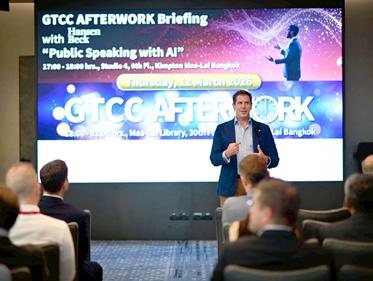
GTCC AFTERWORK Briefing with Hansen Beck brought together GTCC members and professionals from various industries to gain insights on the topic of “Public Speaking with AI” and exchange their perspectives in an engaging atmosphere.
We would like to thank our speaker Mathias Reindl, Managing Director at Hansen Beck (Thailand) Co. Limited, for sharing his valuable perspectives and leading an insightful discussion.
Organised at the Kimpton Maa-Lai Bangkok, the event created a space for a deeper understanding of AI applications across different fields and fostered knowledge sharing within the German-Thai business network.
GTCC AFTERWORK Networking - March 2026
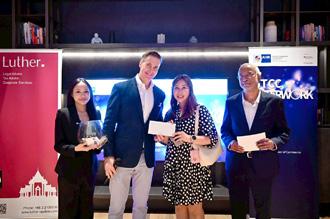
Thank you for making GTCC AFTERWORK Networking – March 2026 a wonderful evening!
Hosted at Kimpton Maa-Lai Bangkok, the evening brought together almost 110 guests including GTCC members, partners for engaging conversations, valuable connections, and a relaxed afterwork atmosphere.
We would like to extend our sincere appreciation to our partners who made this event possible and successful:
• Event Partner: Luther
• Beverage Partners: Hacklberg by Bavarian Craft Trading and Hofbräu München by Janhom Classic
• Venue Partner: Kimpton Maa-Lai Bangkok
A big thank you to everyone who joined us and contributed to the success of this event. We look forward to welcoming you again at our upcoming GTCC events.
GTCC Ordinary General Meeting (OGM) 2026
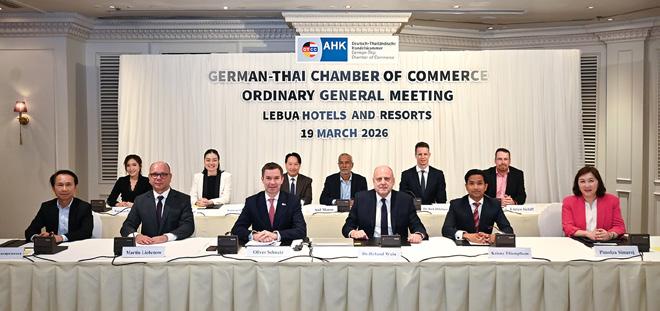
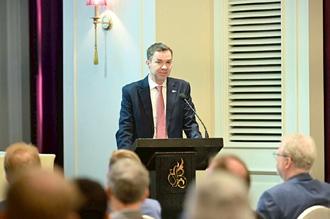
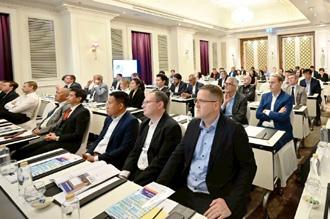
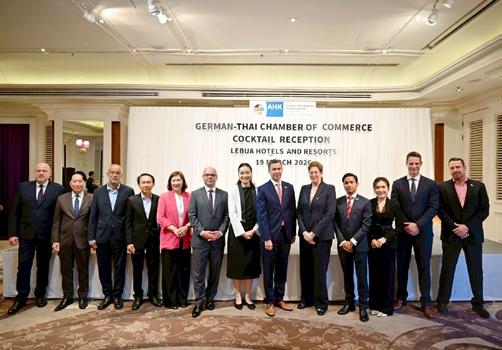
GTCC is pleased to announce that the GTCC Ordinary General Meeting (OGM) 2026 was conducted on 19 March 2026 at the lebua Hotels & Resorts Bangkok.
The meeting was attended by 90 representatives of our German and Thai member companies from various industries. Ebba Scholl, Chargé d' affaires of the German Embassy Bangkok, also joined our event as a guest of honor. The election of five Board Members was conducted successfully using the Election Runner tool. The election of the President and Vice President was conducted at the OGM 2026.
GTCC congratulates the newly elected Board Members, listed in alphabetic order of the member companies as follows:
• Enrico Sielaff, Managing Director, gerenga Service (Thailand) Co., Ltd.
• Martin Liebenow, Head of Tax, Luther Law Firm (Thailand) Co., Ltd.
• Jan Wittenstein, Vice President Sales Powertrain and Chassis Asia-Pacific, Schaeffler Manufacturing (Thailand) Co., Ltd.
• Krisna Thiengtham, Deputy Managing Director, Thai Nakon R.O.P.
• Waranya Pratumtin, Sales Director, Thai Switchboard and Metal Work Co., Ltd.
Congratulations to newly elected GTCC President Oliver Schnatz, Cluster General
Manager, Sofitel Bangkok Sukhumvit, and newly elected GTCC Vice President Krisna Thiengtham, Deputy Managing Director, Thai Nakon R.O.P.
We wish to take this opportunity to express our sincere gratitude to the retired President and Directors as below for their great support and consistent contribution to GTCC.
• Alexander Donau, Regional Head Asia Pacific and Director of the Board, Leschaco (Thailand) Ltd.
• Martin Schwenk, President & CEO, Mercedes-Benz (Thailand) Ltd.
• Tomasz Marian Mazur, CEO, Siemens Mobility Ltd.
BMW Group appoints Yangye Kris Joo as President and CEO of BMW Group Thailand
BMW Group announced the appointment of Yangye Kris Joo as the new President & CEO of BMW Group Thailand, effective 1 February 2026. She has succeeded Rene Gerhard, who moved to a new position as Managing Director, BMW Group Asia, based in Singapore.
Yangye Kris Joo has more than 18 years of experience in brand management, sales, corporate communications, and sales channel development at BMW Group Korea for both BMW and MINI brands. Currently serving as the Head of Brand Management, she is responsible for marketing communication, product management, CRM, and the BMW Driving Center, focused on promoting brand excellence and enhancing customer engagement.
“Kris brings a wealth of experience from her diverse experience with BMW Group Korea,” said Ms. Ritu Chandy, Senior Vice President, Sales Region Asia Pacific, Eastern Europe, Middle East, and Africa, BMW Group. “Her extensive knowledge of the automotive market, coupled with her robust background in brand management, sales, and customer engagement, will further enhance our position as Thailand’s leading premium automotive brand.
Mercedes-Benz (Thailand) Limited welcomes Christian Schell as new President & CEO
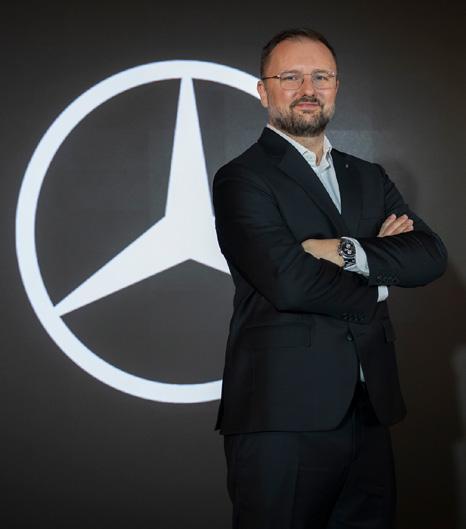
Mercedes-Benz (Thailand) Limited announced the appointment of Christian Schell as the new President & CEO. Effective February 1, 2026, he succeeds Martin Schwenk, bringing his expertise to lead the company into its next chapter.
“As the new leader of Mercedes-Benz Thailand, I am pleased to continue Martin Schwenk’s pioneering vision of the Retail of the Future business model in Thailand and to introduce new vehicles and technologies to Thai customers continuously. This year marks Mercedes-Benz Thailand’s celebration of 140 Years of Innovation and advances automotive technology with the all-new electric CLA, featuring the latest innovations and recognised as Car of the Year 2026. Its upcoming launch in Thailand will be supported by a comprehensive marketing campaign integrating all lifestyle aspects, fostering the creation of a CLA Community in Thailand, and enabling the brand to build long-term relationships with diverse customer groups, especially the new generation with varying lifestyles and needs,” said Christian Schell.
Thaddaeus Weiss returns to lead Sindhorn Kempinski Hotel Bangkok as General Manager
Sindhorn Kempinski Hotel Bangkok has appointed Thaddaeus Weiss as General Manager, overseeing both the hotel and The Residences at Sindhorn Kempinski.
A familiar and respected figure within the property, Thaddaeus previously served as Hotel Manager at Sindhorn Kempinski Hotel Bangkok from 2021 to 2024. Having joined the pre-opening team in February 2020, he played an integral role in shaping the hotel’s early success. During his tenure, he guided the team through the critical pre- and post-opening phases, driving strong STR performance and leading guest satisfaction rankings. His return marks a natural leadership progression and a continuation of the vision that shaped the hotel from its earliest days.
A German national, Thaddaeus brings more than 17 years of experience with Kempinski Hotels, having joined the group in 2008. His international career spans Europe, Africa, China, and Southeast Asia, reflecting broad cultural insight and operational expertise across diverse markets.
Most recently, he served as Hotel Manager at The Apurva Kempinski Bali, a role he assumed in April 2024. There, he oversaw multiple divisions and delivered measurable improvements in service quality, revenue performance, and engineering operations, further reinforcing the brand’s commitment to excellence.
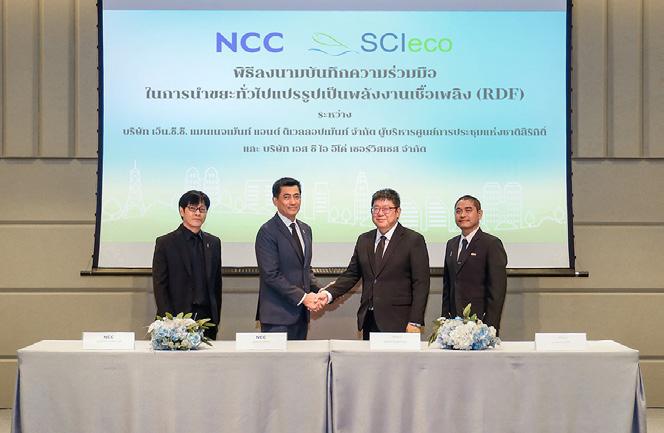
Turning waste into value - QSNCC partners with SCIeco by SCG
The Queen Sirikit National Convention Center (QSNCC) has signed a Memorandum of Understanding (MOU) with SCIeco Services Co., Ltd., under SCG, to elevate its internal waste management through a comprehensive “Waste-to-Value” model. This collaboration introduces advanced technology that transformsgeneral waste into Refuse-Derived Fuel (RDF), significantly reducing landfill waste and accelerating QSNCC’s journey toward its Net Zero 2050 goal.
Announced during Thailand Environment Month, the partnership underscores QSNCC’s commitment to advancing the circular economy within Thailand’s MICE industry. It will also make QSNCC the first convention center in the country to implement a fullscale RDF system, setting a new national benchmark for environmental responsibility and sustainable event operations.
Over the past three years, QSNCC has strengthened its sustainability framework both within the organisation and across its
ecosystem — from achieving ISO 14064-1 and Carbon Footprint for Organisation (CFO) certification, to implementing the Zero Food Waste Initiative, to pioneering Thailand’s first real-time Carbon Footprint of Event (CFE) dashboard for MICE events. These collective efforts have earned QSNCC both national and international sustainability accolades, laying a strong foundation for its path to Net Zero by 2050.
NIST International School opens three new facilities
NIST International School has completed three major facilities: Innovation Building, Pavilion Building, and Elementary Buildings, marking a significant expansion of its city centre campus and reinforcing its not for profit commitment to holistic education.
The Elementary complex features a two - storey library, science laboratories, a purpose - built gymnasium with a climbing wall, makerspaces, and a learning kitchen designed to foster exploration, collaboration and connection. The Innovation Building serves as a hub for collaboration and design thinking, while the Pavilion Building, opened in February 2025, brings learning and community together through its lecture hall, lounge and community spaces.
On 22 January 2026, the school hosted “Building NIST Together: Honouring Our Legacy and Shaping Our Future”, bringing donors, alumni and esteemed community members onto campus to see how a vision that began in 1992 continues to evolve.
The expansion coincides with continued academic success. In 2025, NIST students achieved an average IB Diploma score of 37, with a 100 per cent pass rate. These outcomes reflect a culture in which students flourish academically, socially, and emotionally, underpinned by creativity and a commitment to service.
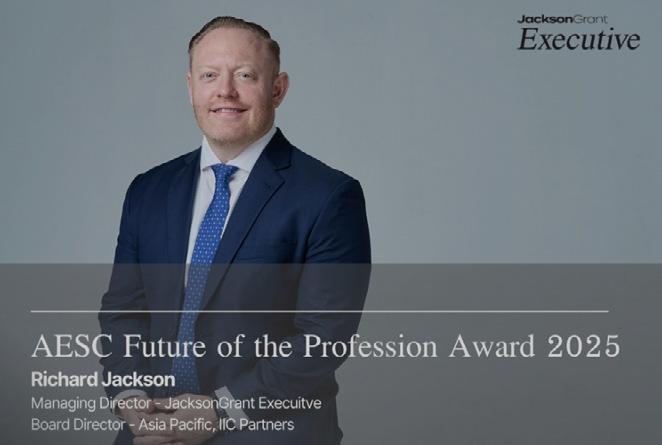
JacksonGrant Executive receives AESC Future of the Profession Award
The honour was awarded to Managing Director and Co Founder Richard Jackson, reflecting both his leadership and the collective work of the firm.
The AESC is the global authority on excellence in senior leadership appointments, representing firms that uphold the highest standards of ethics, quality and professional discipline.
The Future of the Profession Award honours organisations and individuals who are shaping the next era of executive search through innovation, cultural intelligence and responsible leadership. The recognition reflects JacksonGrant Executive’s continued commitment to elevatingleadership standards across Thailand and Asia Pacific, and its contribution to strengthening the global profession.
JacksonGrant Executive, a leading executive search and leadership advisory firm, has been recognised by AESC (The Association of Executive Search and Leadership Consultants) with the Future of the Profession Award.
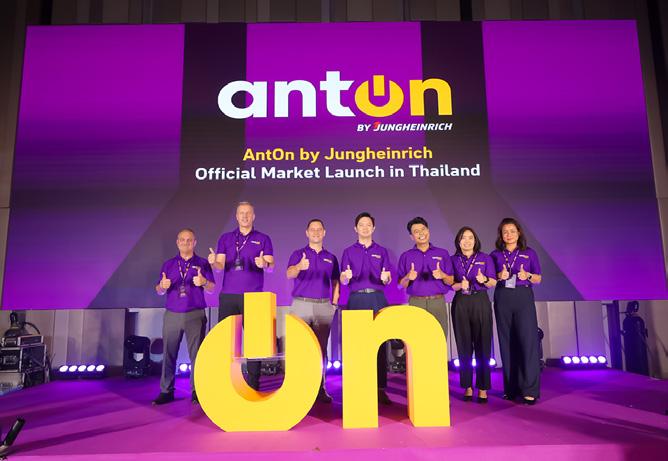
Jungheinrich launched “AntOn by Jungheinrich” in Thailand
Jungheinrich Lift Truck Ltd. (Jungheinrich Thailand) announced the official Thai debut of AntOn by Jungheinrich, a brand-new value-focused brand designed to meet the evolving needs of the Asia-Pacific material handling market.
The launch event showcased a versatile lineup of forklift trucks with capacities of 1.5, 2.0, 3.0, and 3.5 tons. These models are specifically engineered to bridge the gap in the industrial truck segment, offering businesses a solution that is reliable, straightforward, and cost-effective without compromising on the quality of truck or the customer service.
The introduction of AntOn is a direct response to the intensifying competition within the Thai and Southeast Asian markets. As businesses face fluctuating economic conditions, the demand for "Cost effective or Economic or Lower priced" forklifts— equipment that is robust and easy to maintain—has never been higher.
“AntOn by Jungheinrich was developed to provide cost-effective, robust and reliable equipment backed by Jungheinrich service and parts. It provides our customers with more options without compromising on quality or service,” stated Bart Sprangers, Managing Director of Jungheinrich Lift Truck Ltd.
Le Méridien Bangkok celebrates culture with purpose through
THB 500,000
Le Méridien Bangkok has strengthened its commitment to community wellbeing with a THB 500,000 contribution to Operation Smile Thailand, supporting free, life-changing cleft surgeries and comprehensive care nationwide.
donation
The funds were raised in partnership with the Thai-Austrian Society during the final edition of the Austrian Folk Music & Food Festival. The donation continues the hotel’s support for Operation Smile Thailand’s mission, which includes surgery, nutrition support, dental care, speech therapy, psychosocial assistance, and medical training.
Throughout 2025, the hotel also engaged in several CSR initiatives:
• Marriott World Food Awareness (October): Providing warm meals to the Klong Toey community at the Center of Dreams.
• Flea for a Cause (March): Selling pre-loved clothing to support Save the Children.
• CBD We Run 2025 (January): Supplying more than 150 food boxes for participants to promote wellness and sustainability.
These initiatives reflect Le Méridien Bangkok’s ongoing dedication to cultural connection, responsible engagement, and uplifting communities throughout the year.
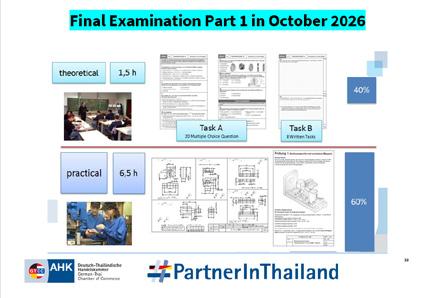
Final examination part 1 in mechatronics
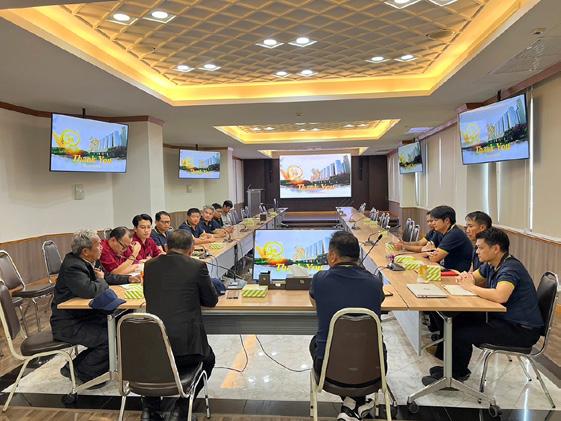
Between 2 and 3 December 2025, the GTCC/ GTDEE organised the final examination part 1 in mechatronics for the Chiangmai Beverage Mechatronics Apprentice Programme batch 2024 at Chiangmai Beverage Co., Ltd. This is the first batch of apprentices to join the GTDEE programme. The independent examiners were experts in mechatronics engineering, comprising representatives from industry, the College of Industry at KMUTNB, and an expert from GTCC. This is also the first batch of apprentices studying at the Faculty of Engineering, RMUTT Tak Campus.
Visit to the Thai-German Institute, Chonburi
On 8 December 2025, Prachya Intranupakorn, President of the Thai-German Institute, welcomed Ebba Scholl, Deputy Head of Mission at the German Embassy in Bangkok. Dr. Kamonsak Suradom, GTDEE Senior Manager of the German-Thai Chamber of Commerce, introduced the GTDEE programme. The Council President of the Institute of Vocational Education, Bangkok, Office of the Vocational Education Commission (OVEC), also joined the meeting. The discussions aimed to promote and strengthen cooperation between Thailand and Germany, particularly in the areas of human resource development, industrial technology, and research and development (R&D), in order to prepare for sustainable future collaboration.
German teachers and students visit GTCC
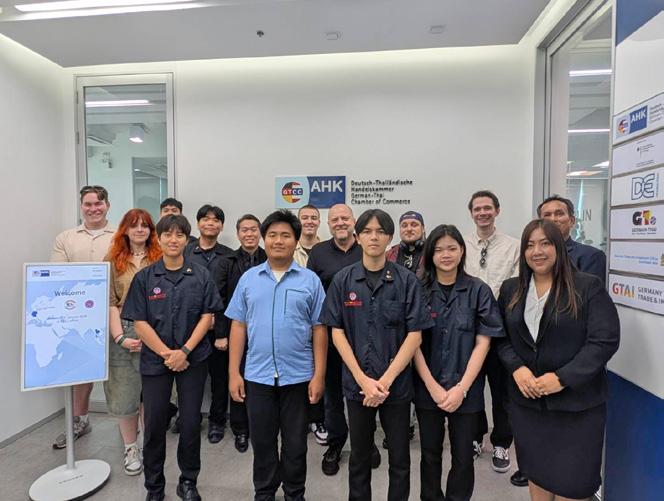
On 19 January 2026, GTCC welcomed the delegation under the German–Thai Students and Teachers Exchange Programme between Mönchengladbach, Germany, and Eastern Technological College, together with teachers from both colleges. GTCC Executive Director Dr. Roland Wein welcomed the delegation and explained the role of GTCC. In addition, the GTDEE Senior Manager introduced GTDEE's implementation of the dual vocational education and training programme. The students from Mönchengladbach specialised in smart factory and information technology, whilst the Thai students were enrolled in the mechatronics programme. This initiative aims to support the younger generation in building friendship and cooperation between German and Thai participants.
Pre-selection for Robert Bosch (Hemaraj) batch 2026 in mechatronics
On 21 January 2026, GTCC/GTDEE organised a pre-selection through an aptitude test for students in the mechatronics programme (Por Wor Chor 3). Held at the Mechatronics Department of Sattahip Technical College, this pre-selection was conducted under collaboration between Robert Bosch (Hemaraj), Sattahip Technical College (TATC), and the GTDEE programme. It serves as an example of strong collaboration in implementing the dual vocational education and training (DVET) system under the Robert Bosch Hemaraj Automotive Technologies Thailand Limited (Hemaraj) Apprenticeship Programme for the mechatronics programme. The new batch of apprentices is planned to begin their studies at the college from May 2026, with graduation in March 2028.
Meeting for technical teachers
On 10 February 2026, the GTDEE Senior Manager led an online meeting with trainers and heads of the Mechatronics Department from Sattahip Technical College, Eastern Technological College, and Bangkaewfa Industrial and Community Education College, under collaboration in the dual vocational education of the Pathumthani Brewery (PTB)’s Mechatronics Apprentice Programme batch 2025. The meeting discussed the training plan and the desired competencies to meet the minimum requirements for the mechatronics profession before undertaking training at PTB from 3 March 2026. They also indicated the start and end dates of the training, the number of hours, and the minimum training duration (according to German standards, at least 90% of the total training time), as well as competencies for mechatronics technicians according to German standards, including the schedule for final examination part 1 and final examination part 2.
Pre-selection for BMW Service Apprentice Programme batch 2026
Between November 2025 and January 2026, GTCC/GTDEE organised a pre-selection for the BMW Service Apprentice Programme batch 2026. The examination comprised both theoretical and practical assessments through aptitude tests at four partner colleges: Don Bosco Technological College, Banphai College, Eastern Technological College, and Bangkaewfa College. In midMarch 2026, the final selection by BMW dealerships was completed. The new batch of apprentices is planned to begin their training in BMW basic technology at the BMW Training Centre in May 2026. The programme empowers Thai youth to become professional technicians and supports the development of highly skilled technicians in Thailand.
Final examination in mechatronics for Robert Bosch Automotive Technologies Thailand (Hemaraj)
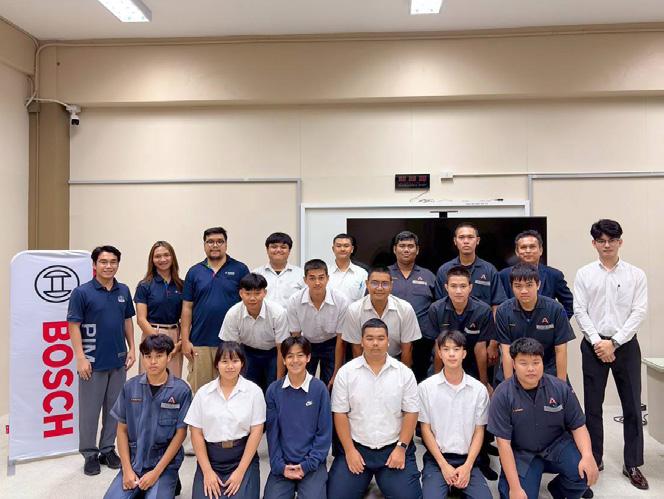
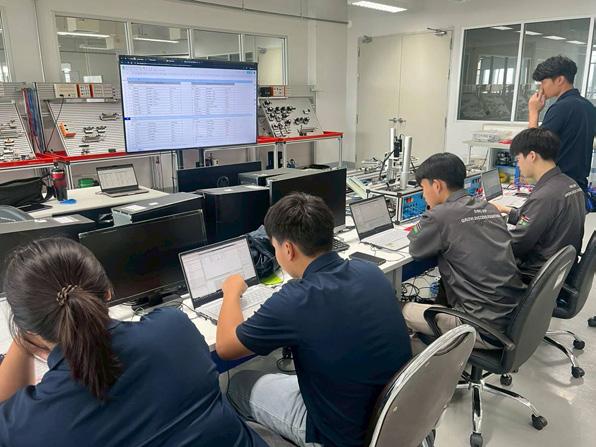
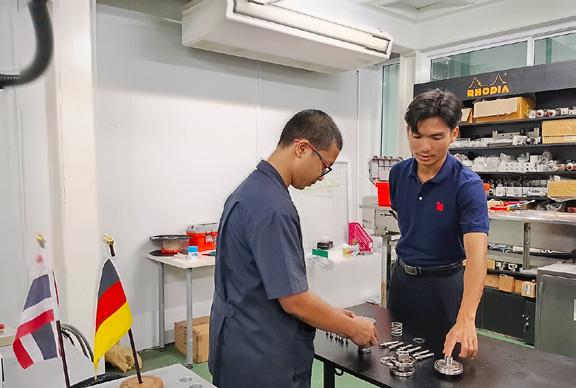
Between 23 and 24 February 2026, GTCC/GTDEE organised a final examination in mechatronics for the Robert Bosch Automotive Technologies Thailand Limited (Hemaraj) Apprenticeship Programme batch 2024 at the Faculty of Engineering and Technology, King Mongkut's University of Technology North Bangkok (KMUTNB), Rayong Campus. The examination tasks were related to technical planning in accordance with international standards, time management, mechanical production of mechatronics components, PLC programming and automation control systems, diagnostics of mechatronics systems, quality control, and an economics component related to the sustainability concept. The examiners comprised experts from the industrial sector, the Faculty of Engineering and Technology, KMUTNB Rayong, and GTCC. These are the key professional fields in which Robert Bosch (Hemaraj) has continuously collaborated with GTCC/GTDEE and Sattahip Technical College for more than nine batches. The collaboration has successfully produced qualified technicians in the mechatronics programme.
Final examination in production techniques for Robert Bosch (Amata City)
On 24 February 2026, GTCC/GTDEE organised a final examination in production techniques for students from Robert Bosch Automotive Technologies Thailand Limited (Amata City) at the Faculty of Engineering and Technology, KMUTNB Rayong. The examination tasks, designed by the examiner board, related to technical planning and the production of mechanical products through individual and group work. The examinees produced mechanical parts, assembled components, managed time, conducted quality control, and implemented quality improvements through group discussion, brainstorming, and presentations. The examiners comprised experts from the Industrial Engineering Programme and the Automation Engineering Faculty at the Faculty of Engineering and Technology, KMUTNB Rayong, and GTCC.
AdA International (train the trainer) batch 1/2026
Between 11 February and 17 March 2026, a workshop on the AdA International (train-the-trainer) programme was organised by GTCC/GTDEE at Wangnoi Beverage Co., Ltd., Ayutthaya (days 1–3), and at the Mechatronics Department, Don Bosco Technological College, Bangkok (days 4–11), with six trainers from the maintenance and production sections of their companies, each with over five years of technical experience. This initiative supports lifelong learning for technicians and staff development to international standards through German-model apprenticeship programmes. The final examination, comprising theoretical and practical components, was organised on 12 March 2026, with examiners from the Thai-German Pre-Engineering School, the Faculty of Engineering and Technology at KMUTNB Rayong, and GTCC, with a German Meister in electronics joining online from Germany.
Final examination part 2 for automotive mechatronics
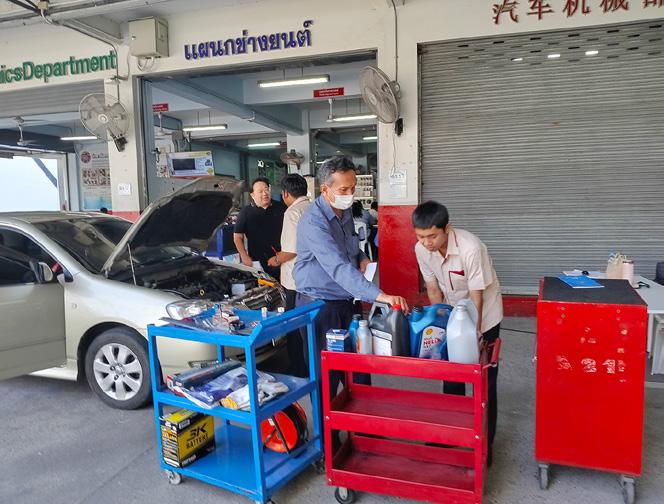
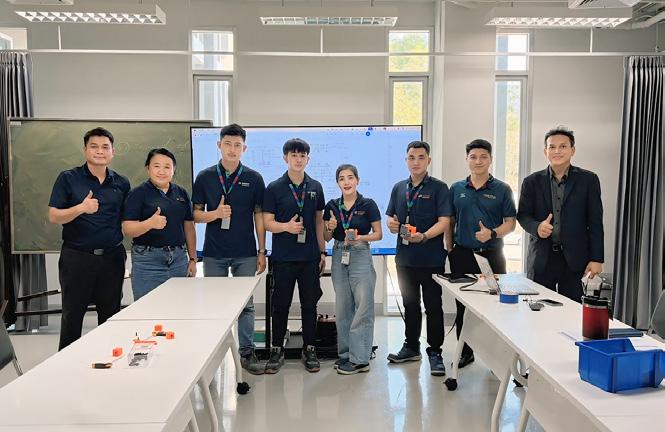
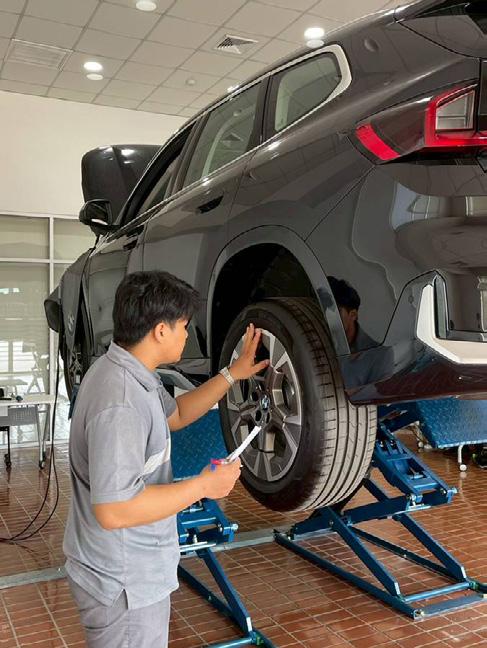
Between 23 and 27 March 2026, GTCC/GTDEE organised the final examination part 2 for automotive mechatronics at the BMW Training Centre, Pathum Thani, comprising a theoretical examination on 23 March 2026 and a practical examination between 24 and 27 March 2026. The examinees were trained apprentices from the BMW Service Apprentice Programme batch 2024, who came from five vocational colleges and trained at ten BMW dealers. The independent examiners were experts in automotive mechatronics, comprising representatives from the automotive industry, experts from the College of Industrial Technology at KMUTNB, and GTCC.
Keynote speech on dual vocational education and training at E.Tech
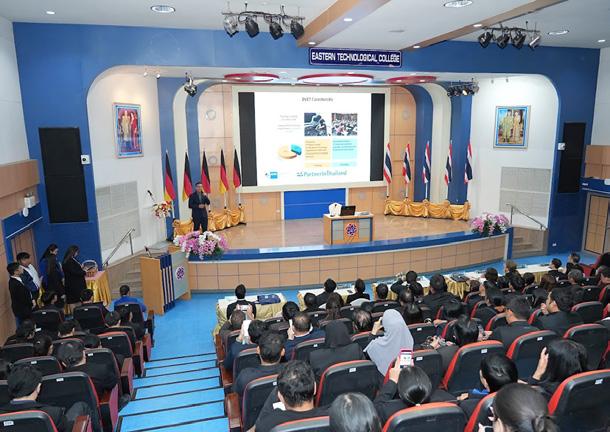
On 25 March 2026, the GTDEE Senior Manager was invited by the Department of European Affairs, Ministry of Foreign Affairs of Thailand, to deliver a keynote speech on the "Overview of the German dual vocational education system" at Eastern Technological College (E.Tech). The event was officially opened by Ebba Scholl, Deputy Head of Mission at the German Embassy in Bangkok. This activity is part of the programme "Promoting cooperation in vocational education with Germany through the train-the-trainer workshop on AI for vocational teaching in the 21st century." The workshop organised by Eastern Technological College took place from 25 to 27 March 2026. The opening ceremony on 25 March 2026 welcomed approximately 320 participants, comprising teachers from Eastern Technological College as well as public and private vocational colleges across the Eastern Economic Corridor (EEC).
Certificate handover for graduating apprentices and trainers to German standards
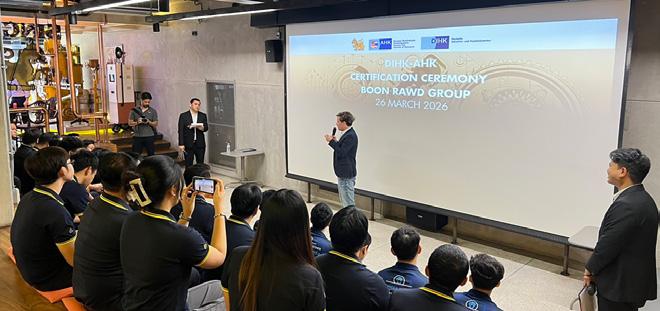
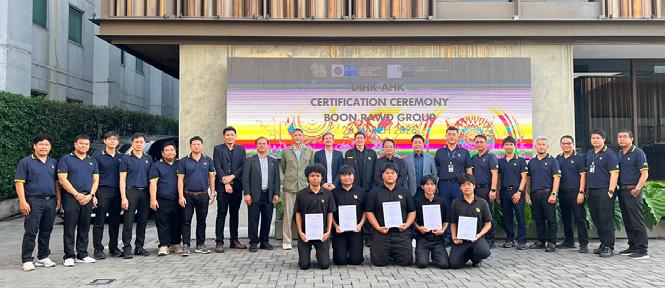
On 26 March 2026, GTCC Deputy Executive Director Marius Mehner, together with GTDEE Senior Manager attended the GTCC certificate handover ceremony at the Singha Museum. The event began with a welcome speech by Cholawit Suk-Udom, Group Director – Corporate Capability Development, Boonrawd Brewery, followed by a congratulatory speech by the GTCC Deputy Executive Director. The Managing Director of Pathumthani Brewery Co., Ltd., handed certificates to five graduates from the Pathumthani Brewery Apprenticeship Programme batch 2023. This was followed by the handover of AdA International certificates by the Managing Director of Wangnoi Beverage to six trainers who passed the AdA International examination from GTCC.
New GTCC members up to 31
March 2026
German-Thai Chamber of Commerce warmly welcomes 9 new members
Mr. Dominik Ralph Vater dominik@lab46.de
Hafner Group Co., Ltd.
Mrs. Supaporn Hafner CEO info@hafnergroup.co.th https://www.hafnergroup.co.th/ Manufacture of basic pharmaceutical products and pharmaceutical preparations | Wholesale of pharmaceutical goods
MPS ARCHONIC GmbH
Mr. Roger Schutz CEO
Mr. Steven Clint Lux Partner mail@mps-archonic.com https://www.mps-archonic.com/en/ Architectural and engineering activities; technical testing and analysis
Piyavate Hospital
Ms. Tipvarin Intratat Marketing Director info@piyavate.com https://piyavate.com/en/ Hospital activities
Handtmann (Thailand) Co., Ltd
Mr. Pongthep Attagorn General Manager pongthep.attagorn@handtmann.co.th https://www.th.processing.handtmann.com/en Manufacture of machinery and equipment n.e.c. | Repair and installation of machinery and equipment
IDEAL Automotive GmbH Oelsnitz
Mr. Mike Werschke Head of Technology info@ideal-automotive.com https://www.ideal-automotive.com/en/ Manufacture of parts and accessories for motor vehicles
Mr. Khaled Thomas Shukri khaledshukri@posteo.com
Siam Kempinski Hotel Bangkok
Mr. Stefano A. Ruzza
Managing Director
Ms. Chanidapa Buranasilpin Director of Sales & Marketing, South East Asia info.siambangkok@kempinski.com https://www.kempinski.com/en/siam-hotel Hotels and similar accommodation
Zschimmer & Schwarz (Thailand) Co., Ltd
Mr. Marco Andreoni
Managing Director
Mr. Michael Waidelich Director Info.zsth@zschimmer-schwarz.co.th https://www.zschimmer-schwarz.com/en/ Manufacture of chemicals and chemical products