
Annual Icahn School of Medicine
Mount Sinai Morningside/West Internal Medicine Residency Research Week

Annual Icahn School of Medicine
Mount Sinai Morningside/West Internal Medicine Residency Research Week
May 20-21, 2026

List of Abstracts with Posters 8-28
Abstracts with Posters
List of Abstracts 2025-2026
Abstracts 2025-2026
List of Publications 2025-2026
Mount Sinai Morningside/West Internal Medicine Residency
Annual Research Week
May 20-21, 2026
Welcome to the Mount Sinai Morningside/West Internal Medicine Residency’s Annual Research Week. Residents in the program have been able to submit their best scholarly work from five categories: Basic Science, Case Report, Clinical Research, Medical Education, and Quality Improvement.
All abstracts and posters will be available to view in-person on Thursday, May 21, 2026, at Mount Sinai Morningside during Research Day. Attendees will be able to visit each poster and chat with authors to discuss their poster throughout the night.
All accepted abstracts were reviewed by the Scholar’s Day selection committee. The abstracts were blinded and evaluated based on updated criteria relevant to the submissions including: presentation, appropriate methods, significance, case description, discussion/conclusion of case and innovation/scientific rigor.
For our Annual Research Week, five abstracts out of 131 received have been selected to be presented as Oral Presentations. These Oral Presentations will be shown via hybrid meeting on Wednesday, May 20, 2026, at the Annual Department of Medicine Grand Rounds Scholar’s Day.
We wish to thank the Selection Committee, the authors who submitted their work, and each faculty mentor that has provided invaluable guidance and support throughout the year Congratulations to all of our authors for their dedication to research and for sharing their innovative work with our community.

I also want to thank Dr. Georgina Osorio (Associate Program Director for Research), Dr. Sara Diaz Saravia, Dr. Samuel Johnson, and Dr. Alexandria Markley (Research Chief Residents 2025-2026), Denny Ayala Reyes, Lizbeth Quilson, and Eric Wu (Program Coordinators), and Jose Cabral (Senior Program Coordinator) for their continuing dedication to our residents and program.

John A. Andrilli, MD, FACP
Program Director
Internal Medicine Residency
Mount Sinai Morningside/West
COMMITTEE MEMBERS
Mount Sinai Morningside/West Internal Medicine Residency Research Week
Selection Committee 2025-2026
Selection committee members did not participate in the discussion or voting for abstracts in which they were involved or with which they had any additional conflict of interest.


Georgina Osorio, MD, MPH, Chair
Nikita Agrawal, MD
John Andrilli, MD, FACP
Martin Arron, MD
Valida Bajrovic, MD
Ruchika Batwara, MD
Stephanie Behringer-Massera, MD
Alfred Burger, MD
Presenters were selected using a double-blind review process. 4
Abel Casso Dominguez, MD
Natalie Cedeno, MD
Christina Cruz, MD
Jake Debroff, MD
Deborah Edelman, MD
Evelyn Elias, MD
Maya Fakhoury, MD
Jason Filopei, MD
Lindsey Fox, MD
Jennifer Fung, MD
Rahul Gaikwad, MD
Justin Gasper, MD
Tamara Goldberg, MD
Katherine Hawkins, MD, JD
Krystle Hernandez, MD
Mariam Khandaker, MD
Yuying Luo, MD
Kiran Mahmood, MD
Saloni Mitchell, MD
Christopher Perez Lizardo, MD
Alejandro Prigollini, MD
Corinna Psomadakis, MD
Adam Rothman, MD
Shabari Shenoy, MD
Avinash Singh, MD
Vasundhara Singh, MD
Marni Wilkoff, DO
Melissa Wiener, MD, MS
Irina Zaretsky, MD

Abstracts selected to be oral presentations on Wednesday, May 20, 2026 at 8AM.



BASIC SCIENCE
Kyle Wiatrowski, PGY3
ABSTRACT 126: BONE MARROW-DERIVED CD57+ NK AND NKLIKE T-CELLS EXPAND IN LOWER-RISK MDS AND ARE IMPLICATED IN DRIVING BONE MARROW FAILURE
CASE REPORT/CLINICAL REVIEW
Andrea Ouyang, PGY1
ABSTRACT #88: UNCOMMON TERRITORY: A CASE OF ESOPHAGITIS
CLINICAL RESEARCH
Rodrigo Paredes de la Fuente, PGY3
ABSTRACT #92: CONCURRENT LOCOREGIONAL THERAPY WITH FIRST-LINE CHEMOIMMUNOTHERAPY FOR ADVANCED BILIARY TRACT CANCER, A MULTICENTER PROPENSITY SCORE–MATCHED STUDY

MEDICAL EDUCATION
Lucy Zheng, PGY3
ABSTRACT #131: ASSOCIATION NEW YORK CITY CARE BRIDGE: A LOGIC-GATED ARTIFICIAL INTELLIGENCE TOOL FOR JUST-INTIME TEACHING OF SYSTEMS-BASED PRACTICE AND IMPROVED RESIDENT–SOCIAL WORK HANDOFFS

QUALITY IMPROVEMENT
Melissa Akselrad, PGY3
ABSTRACT #6: ADDRESSING THE PREVENTABLE CARDIOVASCULAR RISK BURDEN IN RHEUMATIC DISEASE
Annual Icahn School of Medicine at Mount Sinai Morningside/West Internal Medicine Residency Research Week
May 21, 2026



































BLURRY LINES: A CASE OF REFRACTORY VOGT-KOYANAGI-HARADA DISEASE AND THE ROLE OF RHEUMATOLOGY IN VISION PRESERVATION
Priscilla Abate Namnum1, Diana Shalamov2, Michael Kaplan1,3 Deep Parikh4
1
1Mount Sinai Morningside-West Hospitals, Icahn School of Medicine at Mount Sinai, New York, NY, United States; 2SUNY College of Optometry, New York, NY, United States 3Mount Sinai Hospital, Icahn School of Medicine at Mount Sinai, New York, NY, United States; 4New York Eye and Ear Infirmary of Mount Sinai, Icahn School of Medicine at Mount Sinai, New York, NY, United States
Presented at Congress of Clinical Rheumatology East Annual Meeting held in Destin, Florida, United States from April 30, 2025 to May 2, 2025.
2
3
PARANEOPLASTIC MYOSITIS AND NEURITIS IN RELAPSED HAIRY CELL LEUKEMIA: A RARE MANIFESTATION
Adal Abonamah1, Niurka Liranzo Tejera1, Kristaq Koci1
1Mount Sinai Morningside/West Hospitals, Icahn School of Medicine at Mount Sinai, New York, NY, United States
IMPROVED PARACENTESIS TIMELINESS AND SECONDARY CLINICAL OUTCOMES
FOLLOWING AN ELECTRONIC MEDICAL RECORD-BASED COORDINATION INTERVENTION
Joseph Abraham1, Isabelle Hartfield Moseley1, Frank Nelson1, Vasundhara Singh1, Lance Maresky2
1Mount Sinai Morningside-West Hospitals, Icahn School of Medicine at Mount Sinai, New York, NY, United States ;
2HCA Florida JFK North Hospital, Atlantis, FL, United States
Presented at the Mount Sinai Health System Department of Medicine Research Day that was held in New York, New York, United States from May 4-5, 2026.
A RARE CASE OF PANHYPOPITUITARISM SECONDARY TO SUPRASELLAR METASTASES OF CERVICAL ADENOCARCINOMA
4
5
Arushi Agarwal1, Erica Jalal2, Alice C. Levine2
1Mount Sinai Morningside-West Hospitals, Icahn School of Medicine at Mount Sinai, New York, NY, United States;
2Mount Sinai Hospital, Icahn School of Medicine at Mount Sinai, New York, NY, United States
Presented at the Endocrine Society Annual Meeting that was held in San Francisco, California, United States from July 12-15, 2025.
CHRONIC MYELOMONOCYTIC LEUKEMIA BEYOND THE MARROW: BIOLOGY, PATTERNS, AND MANAGEMENT OF EXTRAMEDULLARY DISEASE
Manal Ahmidouch1, Priya Deshpande2 , Christian Salib2 , Patrick Brunner2 , Patricia Heller2, Dalia Abdel Azim2 , Somedeb Ball3 , Douglas Tremblay2
1Mount Sinai Morningside-West Hospitals, Icahn School of Medicine at Mount Sinai, New York, NY, United States; 2Mount Sinai Hospital, Icahn School of Medicine at Mount Sinai, New York, NY, United States; 3Vanderbilt University of School of Medicine, Nashville, TN, United States
Published in Leukemia, 2026 PMID: 42045559
6
7
ADDRESSING THE PREVENTABLE CARDIOVASCULAR RISK BURDEN IN RHEUMATIC DISEASE
Melissa Akselrad1, Saloni Mitchell1, Kristaq Koci1
1Mount Sinai Morningside-West Hospitals, Icahn School of Medicine at Mount Sinai, New York, NY, United States
SOCIOECONOMIC BARRIERS TO INITIATION OF SECOND-LINE THERAPY IN PRIMARY BILIARY CHOLANGITIS PATIENTS WITH INCOMPLETE RESPONSE TO URSODEOXYCHOLIC ACID
Lital Aliasi-Sinai1, Christopher Kim2, Liliana Vittini Hernandez1 , Francina Collado2, Xiaotao Zhang2 , Doug Dieterich2, Anna Mageras2, Frances Lee2
1Mount Sinai Morningside-West Hospitals, Icahn School of Medicine at Mount Sinai, New York, United States; 2Mount Sinai Hospital, Icahn School of Medicine at Mount Sinai, New York, United States
ENDOBRONCHIAL BENIGN METASTASIZING LEIOMYOMA MIMICKING MALIGNANCY IN A POSTMENOPAUSAL WOMAN WITH PRIOR HYSTERECTOMY
8
Mohammed I. Alsaud1, Mrittika Deb1, Maria Athena Riego1, Andrea Monfasani1, Udit Chaddha1 , David J. Steiger1
1Mount Sinai Morningside-West Hospitals, Icahn School of Medicine at Mount Sinai, New York, NY, United States Presented at the American College of Chest Physicians Annual Meeting that was held in Chicago, Illinois, United States from October 19-22, 2025.
PRE-OPERATIVE MANAGEMENT OF A PATIENT WITH ALPHA-GAL SYNDROME REQUIRING HIGH-DOSE HEPARIN FOR CABG
Shubhankar Anand1, Neil Patel2, Rachel Miller2
9
10
1Mount Sinai Morningside-West Hospitals, Icahn School of Medicine at Mount Sinai, New York, NY, United States;
2Mount Sinai Hospital, Icahn School of Medicine at Mount Sinai, New York, NY, United States
Presented at the American Academy of Allergy Asthma and Immunology and World Allergy Organization Joint Conference in San Diego, California, United States from February 27, 2025 to March 3, 2025.
DEVELOPING A CONTINUOUS GLUCOSE MONITOR WORKFLOW AT A FEDERALLY QUALIFIED HEALTH CENTER-BASED RESIDENCY CLINIC
Brent Arcayan1, Sruthi Athota1, Sabina Deovic1, Kristen Rockwell1, Avia Muller1, Tamara Goldberg1
1Mount Sinai Morningside-West Hospitals, Icahn School of Medicine at Mount Sinai, New York, NY, United States
Presented at the Society of General Internal Medicine (SGIM) Annual Meeting that was held in Washington, DC, United States from May 6-9, 2026.
11 A BENIGN IMPERSONATOR: BREAST SARCOIDOSIS
Sruthi Athota1 and Tamara Goldberg1
1Mount Sinai Morningside-West Hospitals, Icahn School of Medicine at Mount Sinai, New York, NY, United States Presented at the Society of General Internal Medicine (SGIM) Annual Meeting that was held in Washington, DC, United States from May 6-9, 2026.
HIGH HIGHS AND LOW LOWS: A CHALLENGING CASE OF HYPERTENSIVE CRISIS AND LOWPRESSURE PERICARDIAL TAMPONADE
12
Eric Hirsch1 , Amirhossein Balazadeh2, Jared Leventhal1
¹Mount Sinai Morningside-West Hospitals, Icahn School of Medicine at Mount Sinai, New York, NY, United States Presented at the American College of Cardiology (ACC) Annual Meeting that was held in Chicago, Illinois, United States from March 29–31, 2025. 13
NEPHROTIC CXCL9 IS A PREDICTIVE BIOMARKER OF SURVIVAL WITH IFNγ -TARGETED THERAPY IN ADULT HEMOPHAGOCYTIC LYMPHOHISTIOCYTOSIS PATIENTS
WilliamJohnson1, Joseph Rocco2, Rikita Patel3, Adrianna Herskovits1, Elena Mead1, JaePark1, Alison Moskowitz1, Zachary Epstein Peterson1, Robert Stuver1, Neil Bapodra4, Rabeya Molla1, Andrew Intlekofer1, Jennifer Lue1, Lia Palomba1, Ariela Noy1, Jasmine Zain1, Colette Owens1, Lynnette Henshaw1, Paola Ghione1, Efrat Luttwak1, Pallawi Tork, Andrew Zelenetz1, Philip Caron1, Anita Kumar1, Lorenzo Falchi1, Natasha Galasso1, Paul Hamlin1, Alexander Boardman1, Kevin David1, Raphael Steiner1, Nivetha Ganesan1, Tiffany Chang1, Zainab Shahid1, Wenbin Xiao1, Annamaria Ballweg1, Alina Markova1, Mark Geyer1, Lauren Banaszak1, Roni Shouval1, Sergio Giralt1, Gregory Goldgof1, Jodi Mones1, Jeffrey Zwicker1, Rekha Parameswaran1, Avi Leader1, Cy R. Wilkins1, Simon Mantha1, Jeffrey Cohen2, Jessica Durkee-Shock2, Matthew Sedlock2, Bita Shakoory2, Irini Sereti2, Miguel-Angel Perales1, Gilles Salles1, Santosha Vardhana1, Joseph Oved1, Steven Horwitz1 1Memorial Sloan Kettering Cancer Center, New York, NY, United States, 2National Institute of Allergy and Infectious Diseases, Bethesda, MD, United States, 3New York-Presbyterian Brooklyn Methodist Hospital, Brooklyn, NY, United States, 4Mount Sinai Morningside-West Hospitals, Icahn School of Medicine at Mount Sinai, New York, NY, United States
Presented at the American Society of Hematology (ASH) Annual Meeting that was held in Orlando, Florida, United States from December 6-9, 2025.
EXPOSING THE IMPOSTOR: SEVERE B12 DEFICIENCY PRESENTING AS PSEUDOTHROMBOTIC MICROANGIOPATHY
14
15
Kaitlyn Bartholomew1 and Forough Hakimzada1
1Mount Sinai Morningside-West Hospitals, Icahn School of Medicine at Mount Sinai, New York, NY, United States
Presented at the Society of Hospital Medicine (SHM) Annual Meeting that was held in Nashville, Tennessee, United States from March 29, 2026 to April 1, 2026.
IMPACT OF LEAFLET-SPECIFIC AORTIC VALVE CALCIFICATION DISTRIBUTION AND ASYMMETRY ON PARAVALVULAR REGURGITATION AFTER TRANSCATHETER AORTIC VALVE REPLACEMENT
Pragati Basera1, Roya A. Mousavi2, Chisom Enwere2, Minel Soroa2, Edgar Argulian1, Marcos Ferrandez-Escarabajal2, Leila Alizadeh2, George D. Dangas2, Lucy M. Safi2, Sahil Khera2 , Gilbert H.L. Tang2, Samin K. Sharma2, Annapoorna S. Kini2, Stamatios Lerakis2
1Mount Sinai Morningside-West Hospitals, Icahn School of Medicine at Mount Sinai, New York, NY, United States;
2Mount Sinai Hospital, Icahn School of Medicine at Mount Sinai, New York, NY, United States
To be presented at the American Society of Echocardiography Annual Meeting that will be held in Aurora, Colorado, United States from June 26-28, 2026.
PROGNOSTIC IMPACT OF BASELINE FRAILTY, MALNUTRITION, OR BOTH ON MORTALITY FOR PATIENTS ADMITTED WITH ACUTE DECOMPENSATED HEART FAILURE
16
17
Brandon Berman1 , Harrison Bonilla1, Komail Jafri1, Usman Saeedullah1, Hans Reyes Garay1, Kiran Mahmood1
1Mount Sinai Morningside-West Hospitals, Icahn School of Medicine at Mount Sinai, New York, NY, United States Presented at the American Heart Association (AHA) Annual Meeting that was held in New Orleans, Louisiana, United States from November 7-10, 2025.
PROGRESS OF INVESTIGATIONAL BROMODOMAIN AND EXTRA-TERMINAL DOMAIN INHIBITORS FOR MYELOFIBROSIS THERAPY
Nooshin C. Beygui1, Michael Rogers2, Veer Shah2, Megan Metzger2, John Mascarenhas2
1Mount Sinai Morningside-West Hospitals, Icahn School of Medicine at Mount Sinai, New York, NY, United States;
2Mount Sinai Hospital, Icahn School of Medicine at Mount Sinai, New York, NY, United States
Published in Expert Opinion on Investigational Drugs, 2026. PMID: 41631564
EUGLYCEMIC DIABETIC KETOACIDOSIS DURING GLP-1 RECEPTOR AGONIST UPTITRATION IN A PATIENT WITH LOWER BODY MASS INDEX ON SGLT2 INHIBITOR THERAPY
18
19
Harsimran Bhatia1, Faryal Rizvi1, Ilana Ramer Bass1
1Mount Sinai Morningside-West Hospitals, Icahn School of Medicine at Mount Sinai, New York, NY, United States
To be presented at the Endocrine Society’s (ENDO) Annual Meeting that will be held in Chicago, Illinois, United States from June 13-16, 2026.
AORTIC STENOSIS IN ACUTE CORONARY SYNDROME: DISTINGUISHING INDEPENDENT RISK FROM COMORBIDITY BURDEN IN A MULTI-YEAR PROPENSITY-MATCHED COHORT
Harrison Bonilla1 , Joshua Guardia1, Komail Jafri1, Usman Saeedullah1, James Choi1, Abel Casso Dominguez1
1Mount Sinai Morningside-West Hospitals, Icahn School of Medicine at Mount Sinai, New York, NY, United States
CHEMOTHERAPY-ASSOCIATED TINEA VERSICOLOR MIMICKING ALLERGIC REACTION
Sohini Shah Kamdar1 , Sneha Bupathi2 , Brittany Trogen1
20
1Mount Sinai Morningside-West Hospital, Icahn School of Medicine at Mount Sinai, New York, NY, United States
Presented at the American Academy of Asthma, Allergy, and Immunology (AAAAI) Annual Meeting that was held in Philadelphia, Pennsylvania, United States from February 27, 2026 to March 2, 2026.
MACHINE LEARNING/DEEP LEARNING ECG PREDICTS DRUG-INDUCED QT PROLONGATION
21
22
Hsiao-Man (Schumann) Chang1, Joshua Lampert2, Esther Tsyngauz1, Vivek Y. Reddy2, Stamatios Lerakis2, Martin Goldman2, Edgar Argulian1, Girish Nadkarni2, Akhil Vaid1
1Mount Sinai Morningside-West Hospitals, Icahn School of Medicine at Mount Sinai, New York, NY, United States;
2Mount Sinai Hospital, Icahn School of Medicine at Mount Sinai, New York, NY, United States
Presented at the Heart Rhythm Society Annual Meeting that was held in Chicago, Illinois, United States from April 23-26, 2026.
A POTENT MAPK13-14 INHIBITOR PREVENTS AIRWAY INFLAMMATION AND MUCUS PRODUCTION
Shamus P. Keeler1, Kangyun Wu1, Yong Zhang1, Dailing Mao1, Ming Li, Courtney A. Iberg1, Stephen R. Austin2, Samuel A. Glaser1, Jennifer Yantis1, Stephanie Podgorny1, Steven L. Brody1, Joshua R. Chartock3, Zhenfu Han1, Derek E. Byers1, Arthur G. Romero1, Michael J. Holtzman1,2
1Washington University School of Medicine, St. Louis, Missouri, United States; 2NuPeak Therapeutics Inc., St. Louis, Missouri, United States; 3Mount Sinai Morningside-West Hospitals, Icahn School of Medicine at Mount Sinai, New York, NY, United States
Published in the American Journal of Physiology: Lung Cellular and Molecular Physiology, 2023. PMID: 37847710
RARE AND INSIDIOUS CAUSE OF CHRONIC DYSPNEA: CLASSIC HODGKIN LYMPHOMA
Changwoong Cho1 and Tamara Goldberg 1
23
24
1Mount Sinai Morningside-West Hospitals, Icahn School of Medicine at Mount Sinai, New York, NY, United States Presented at the Society of General Internal Medicine (SGIM) Annual Meeting that was held in Washington, DC, United States from May 6-9, 2026.
A 2-YEAR ANALYSIS OF FACTORS ASSOCIATED WITH 30-DAY READMISSION POST SEPSIS
Christiana Choi1, Serene Mirza1, Yoshihiro Sawaguchi1, Andrea Ramirez Cazares1, Madelin Fenianos1, Raymonde Jean1
1Mount Sinai Morningside-West Hospitals, Icahn School of Medicine at Mount Sinai, New York, NY, United States Presented at the American College of Chest Physicians Annual Meeting held in Chicago, Illinois, United States from October 19-22, 2025.
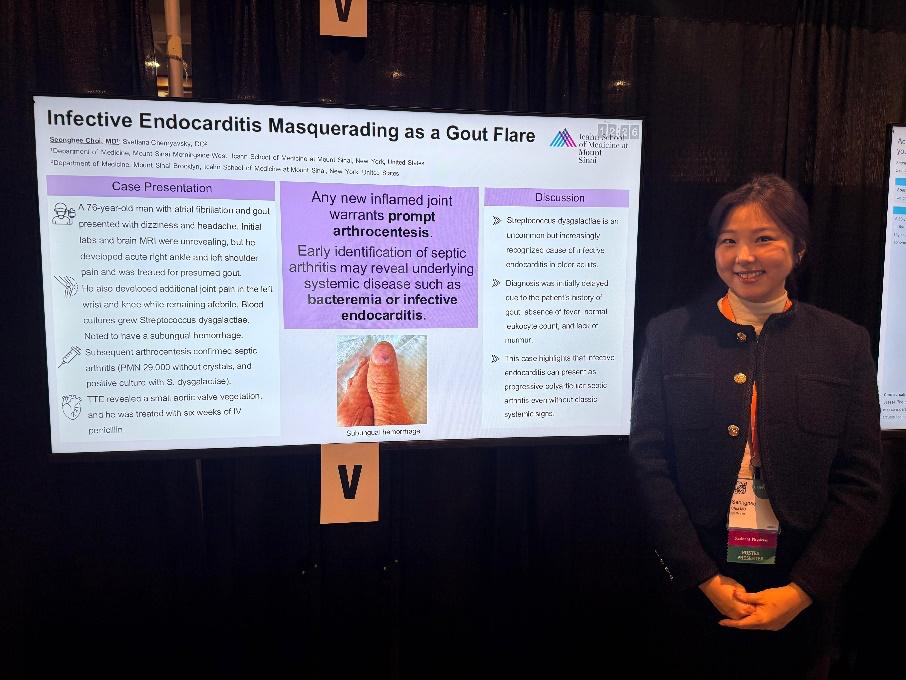
INTRACTABLE INFECTIVE ENDOCARDITIS MASQUERADING AS A GOUT FLARE
Seonghee Choi1 and Svetlana Chernyavsky2
1Mount Sinai Morningside/West Hospitals, Icahn School of Medicine at Mount Sinai, New York, NY, United States;
2Mount Sinai Brooklyn, Icahn School of Medicine at Mount Sinai, Brooklyn, NY, United States Presented at the Society of Hospital Medicine (SHM) Annual Meeting that was held in Nashville, Tennessee, United States from April 16-18, 2026.
SEVERE INVASIVE PNEUMOCOCCAL DISEASE IN A YOUNG IMMUNOCOMPETENT ADULT MALE
Hanna Cholerzynska1, Joshua Chartock1, Vasundhara Singh1
1Mount Sinai Morningside-West Hospitals, Icahn School of Medicine at Mount Sinai, New York, NY, United States
IMPACT OF IMMUNOSUPPRESSIVE REGIMENS ON MAJOR CARDIAC EVENTS IN PATIENTS WITH SYSTEMIC LUPUS ERYTHEMATOSUS
Emily Cosentino1, Melissa Akselrad1, Niurka Liranzo Tejera1, Christine Lenchur1, Takemichi Matsui1, Adal Abonamah1, Priscilla Abate Namnum1, Olga Marushchak1, Martin John2, Sophia Lutgen1, Celestine He2, Nicole Bogdan2, Boluwatito Oladeinde2, Harleen Sidhu3, Chrisanna Dobrowolski1
1Mount Sinai Morningside-West Hospitals, Icahn School of Medicine at Mount Sinai, New York, NY, United States;
2Mount Sinai Hospital, Icahn School of Medicine at Mount Sinai, New York, NY, United States; 3NYC Health + Hospitals/Elmhurst, Icahn School of Medicine at Mount Sinai, Queens, NY, United States
Presented at the American College of Rheumatology (ACR) Annual Meeting that was held in Chicago, Illinois, United States from October 24-29, 2025.
EARLY PALLIATIVE CARE REMAINS UNDERUSED AFTER HEPATIC DECOMPENSATION IN PATIENTS WITH CIRRHOSIS: A MULTINATIONAL MULTICENTER STUDY
Denisa Costea1 , Do Han Kim1 , Donghyun Ko2, Sonaal Singla3, Paul T. Kröner4, Frank J. Lukens5
28
29
1Mount Sinai Morningside-West Hospitals, Icahn School of Medicine at Mount Sinai, New York, NY, United States; 2Bridgeport Hospital, Yale New Haven Health, Bridgeport, CT, United States; 3University of California Riverside, Riverside, CA, United States; Riverside Health Gastroenterology, Hampton, VA, United States; 5Mayo Clinic Florida, Jacksonville, FL, United States Presented at the Digestive Disease Week (DDW) Annual Meeting that was held in Chicago, Illinois, United States from May 2-5, 2026.
SEIZURE DURING EMERGENCE FROM PROPOFOL SEDATION IN A PATIENT WITH REMOTE EPILEPSY
Mrittika Deb1, Priyanka Sridhar1, Yoshihiro Sawaguchi 1, E. Mirna Mohanraj1
1Mount Sinai Morningside-West Hospitals, Icahn School of Medicine at Mount Sinai, New York, NY, United States
30 A RARE CASE OF BABESIOSIS IN AN ASPLENIC PATIENT REQUIRING PROLONGED TREATMENT
Sabina Deovic1, Teena Thomas1, Christian Stephens1, Sirin Atay1 , Vince Ian Martinez1, Logan Bartam1, Georgina Osorio1, David Perlman1
1Mount Sinai Morningside-West Hospitals, Icahn School of Medicine at Mount Sinai, New York, NY, United States 31
EVALUATING MANOMETRIC BOLUS CLEARANCE AS A DIAGNOSTIC TOOL FOR ESOPHAGOGASTRIC JUNCTION OUTLET OBSTRUCTION
Binoy Desai1, Emily Seltzer1, Do Han Kim1, Michael Smith1, Kimberly Cavaliere1, Daniela Jodorkovsky1
1Mount Sinai Morningside-West Hospitals, Icahn School of Medicine at Mount Sinai, New York, New York, United States Presented at the Digestive Disease Week (DDW) Annual Meeting that was held in San Diego, California, United States from May 3-6, 2025.
LOW RATES OF GASTRIC FOOD RETENTION DURING ENDOSCOPY IN PATIENTS ON GLUCAGON-LIKE-PEPTIDE-1 RECEPTOR AGONISTS AT A LARGE ACADEMIC CENTER
32
Bharati Dev1, Brian Horwich2, Yousaf Hadi2, Haley Waite 2, Christopher Cao2, Nicholas Hoerter2
1Mount Sinai Morningside-West Hospitals, Icahn School of Medicine at Mount Sinai, New York, NY, United States
2Mount Sinai Hospital, Icahn School of Medicine at Mount Sinai, New York, NY, United States Published in Digestive Diseases and Sciences, 2025. PMID: 40021603
A CYTOKINE STORM UNMASKED: EPSTEIN-BARR VIRUS-ASSOCIATED HEMOPHAGOCYTIC LYMPHOHISTIOCYTOSIS IN A PREVIOUSLY HEALTHY ADULT
Deepthi Devireddy1 , Benjamin Oseroff2, Alexander B. Karol2, Regina Longley2, Leonard Naymagon2 , Nikolaos Spyrou2
1Mount Sinai Morningside-West Hospitals, Icahn School of Medicine at Mount Sinai, New York, NY, United States;2Mount Sinai Hospital, Icahn School of Medicine at Mount Sinai, New York, NY, United States
IMPROVING TDAP VACCINATION RATES THROUGH AUTOMATED PATIENT OUTREACH: A MULTI-PRACTICE QUALITY INITIATIVE
Arshdeep Dhaliwal1 and Stephanie Wang1
1Mount Sinai Morningside-West Hospitals, Icahn School of Medicine at Mount Sinai, New York, NY, United States
Presented at the Society of General Internal Medicine (SGIM) Annual Meeting that was held in Washington, DC, United States from May 6-9, 2026.
BEYOND MALABSORPTION: METABOLIC AND HEPATIC CONSEQUENCES OF OVERLAPPING CELIAC DISEASE AND INFLAMMATORY BOWEL DISEASE, A COMPARATIVE COHORT ANALYSIS
35
36
Carlos G. Diola1, Jessica Lim1, Bharati Dev1, Yoni Israel2, Alexandria Markley1, Christopher Cao3
1Mount Sinai Morningside-West Hospitals, Icahn School of Medicine at Mount Sinai, New York, NY, United States ; 2Icahn School of Medicine at Mount Sinai, New York, NY, United States; 3Mount Sinai Hospital, Icahn School of Medicine at Mount Sinai, New York, NY, United States
Presented at the Digestive Disease Week (DDW) Annual Meeting that was held in Chicago, Illinois, United States from May 2-5, 2026.
PREDICTIVE EQUITABLE ACCESS TO TYPE 1 DIABETES TECHNOLOGY ACROSS A HEALTH SYSTEM
Suma Gondi1 , Paige Dixon2 , Madeleine Rouviere1 , Camilla Levister1, Nirali A. Shah1, Carol J. Levy1 , Grenye O’Malley1
1Mount Sinai Hospital, Icahn School of Medicine at Mount Sinai, New York, New York, United States; 2Mount Sinai MorningsideWest Hospitals, Icahn School of Medicine at Mount Sinai, New York, NY, United States
Presented at the American Diabetes Association (ADA) Scientific Sessions that was held in Chicago, Illinois, United States from June 20-23, 2025.
THROUGH THE HIATUS: A RARE ETIOLOGY OF UPPER GI BLEEDING
37
38
Max Edeson1 , Meghana Pandit1 , Teresa Brown1
1Mount Sinai Morningside-West Hospitals, Icahn School of Medicine at Mount Sinai, New York, NY, United States
WHEN THE SMEAR SENDS MIXED SIGNALS
Tansu Eris1 and Gyuhee Seong2
1Mount Sinai Morningside-West Hospitals, Icahn School of Medicine at Mount Sinai, New York, NY, United States;
2UCLA Health, David Geffen School of Medicine at UCLA, Los Angeles, CA
Presented at the Society of General Internal Medicine (SGIM) Annual Meeting that was held in Washington, DC, United States from May 6-9, 2026.
39 A WOLF IN MYXOMA’S CLOTHING: LEFT ATRIAL SARCOMA DISGUISED AS MYXOMA
Mawwra Faryad1 , Dua Noor Butt1, Shaharyar Ali2, Ali Aldamen4
1Mount Sinai Morningside-West Hospitals, Icahn School of Medicine at Mount Sinai, New York, NY, United States; 2Jefferson Health Medical Education/Jefferson Einstein Philadelphia Hospital, Philadelphia, PA, Unites States; 3Great Plains Health, North Platte, NE, United States
Presented at the American College of Cardiology (ACC) Annual Scientific Session that was held in New Orleans, Louisiana, United States from March 28-30, 2026.
EARLY, OFTEN, AND OUTPATIENT: TEACHING GOALS OF CARE DISCUSSIONS FOR RESIDENTS
40
Kimberly Fasciglione1 and Winston Wey2
1Mount Sinai Morningside-West Hospitals, Icahn School of Medicine at Mount Sinai, New York, NY, United States ;
2Mount Sinai Hospital, Icahn School of Medicine at Mount Sinai, New York, NY, United States
RENAL POTASSIUM WASTING FROM ABIRATERONE-INDUCED MINERALOCORTICOID EXCESS SYNDROME
Triana Fernandez1, Tamara Morduchowitz1, Maya Fakhoury1, Ruchika Batwara1
1Mount Sinai Morningside-West Hospitals, Icahn School of Medicine at Mount Sinai, New York, NY, United States
Presented at the American Society of Nephrology (ASN) Kidney Week that was held in Houston, Texas, United States from November 6-9, 2025.
COMPARING THE ACCURACY OF NATURAL LANGUAGE PROCESSING LABELLING VERSUS MANUAL CHART REVIEW AND ICD-10 CODES TO IDENTIFY BLEEDING EVENTS IN PATIENTS WITH CANCER
42
43
Thomas F. Fusillo1,2, Avi Leader2, Rohan Singh2, Andriy Derkach2, Kayan Irani2, Bhaskar Bose2 , Helen Ajufo3, Adam Schoenfeld2, Simon Mantha2, Jeffrey I. Zwicker2
1Mount Sinai Morningside-West Hospitals, Icahn School of Medicine at Mount Sinai, New York, NY, United States;
2Memorial Sloan Kettering Cancer Center, New York, NY, United States; 3Washington University, St. Louis, MO, United States Presented at the American Society of Hematology (ASH) Annual Meeting that was held in Orlando, Florida, United States from December 6-9, 2025.
AUTILIZING PATIENT PORTAL CHECK-IN TO AUTOMATE ASTHMA CONTROL TEST SCORING AND ENHANCE PROVIDER ENGAGEMENT
Vincent Gallub1, Lloyd Muzangwa1, Linda Rogers2 , Boram Kim1
1Mount Sinai Morningside-West Hospitals, Icahn School of Medicine at Mount Sinai, New York, NY, United States;
2Mount Sinai Hospital, Icahn School of Medicine at Mount Sinai, New York, NY, United States
Presented at the American Thoracic Society (ATS) Annual Meeting that was held in Orlando, Florida, United States from May 15-20, 2026.
A CASE OF APICAL HYPERTROPHIC CARDIOMYOPATHY IN A YOUNG HEALTHY ADULT
44
45
Allen Gee1, Komail Jafri1, Abel Casso Dominguez1
Mount Sinai Morningside-West Hospitals, Icahn School of Medicine at Mount Sinai, New York, NY, United States
INCORPORATING DELIBERATE PRACTICE INTO THORACIC POINT OF CARE ULTRASONOGRAPHY CURRICULUM
Karen Go1, Kyle Reichard1, Akhil Vaid1, Adam Rothman1
1Mount Sinai Morningside-West Hospitals, Icahn School of Medicine at Mount Sinai, New York, NY, United States
Presented at the Institute for Medical Education (IME) Annual Education Research Day that was held in New York, New York, United States on April 21, 2026.
THE ASSOCIATION BETWEEN TELOMERE LENGTH AND PROGNOSIS IN INTERSTITIAL LUNG DISEASE: A SYSTEMATIC REVIEW AND META-ANALYSIS
46
47
Toshiro Goto1, Eriya Imai2,4, Jun Watanabe3,4 , Vincent Gallub1, Mia Bolton1, Maria Padilla5 , Nicole Ng5
1Mount Sinai Morningside-West Hospitals, Icahn School of Medicine at Mount Sinai, New York, NY, United States; 2Mitsui Memorial Hospital, Tokyo, Japan; 3Jichi Medical University, Tochigi, Japan; 4Scientific Research Works Peer Support Group, Osaka, Japan; 5Mount Sinai Hospital, Icahn School of Medicine at Mount Sinai, New York, NY, United States
Presented at the American Thoracic Society (ATS) Annual Meeting that was held in Orlando, Florida, United States from May 15-20, 2026.
DIFFERENTIAL IMPACT OF COVID-19 VERSUS INFLUENZA IN HEART FAILURE WITH PRESERVED EJECTION FRACTION: ADVERSE OUTCOMES IN A SINGLE-CENTER RETROSPECTIVE COHORT STUDY
Joshua Guardia1, Harrison Bonilla1, Esther Tsyngauz1, Komail Jafri1, Usman Saeedullah1 , Kiran Mahmood1
1Mount Sinai Morningside-West Hospitals, Icahn School of Medicine at Mount Sinai, New York, NY, United States
Presented at the Society for Cardiovascular Angiography and Interventions Annual Meeting that was held in Montreal, Canada from April 23-25, 2026.
48
ELECTROLYTE VARIABILITY IN THE FIRST 24 HOURS OF INTENSIVE CARE UNIT ADMISSION AND RISK OF VENTRICULAR ARRHYTHMIAS
Isabelle Hartfield-Moseley1 and Ashish Correa1
1Mount Sinai Morningside-West Hospitals, Icahn School of Medicine at Mount Sinai, New York, NY, United States
49
50
THE ROLE OF SYSTEMIC INFLAMMATORY RESPONSE SYNDROME IN IMMUNOCOMPROMISED ADULTS ADMITTED FOR MANAGEMENT OF SEPSIS WITH A POSITIVE BLOOD CULTURE RESULT
William He1, Richard Vaca1, Benjamin Felder1
1Mount Sinai Morningside-West Hospitals, Icahn School of Medicine, New York, NY, United States
FATAL RESPIRATORY DIAPHRAGMATIC INVOLVEMENT IN SERONEGATIVE IMMUNEMEDIATED NECROTIZING MYOPATHY
Chad Henry1 , Benjamin Samuel1, Adam Rothman1
1Mount Sinai Morningside/West Hospitals, New York, NY, United States
PRESUMED DONOR-DERIVED MEDULLARY THYROID CARCINOMA PRESENTING AS MULTIFOCAL HEPATIC NEUROENDOCRINE TUMOR IN A LIVER TRANSPLANT RECIPIENT
51
52
Jing Huang1, Kari Brown2, Krzysztof Misiukiewicz2
1Mount Sinai Morningside-West Hospitals, Icahn School of Medicine at Mount Sinai, New York, NY, United States;
2Mount Sinai Hospital, Icahn School of Medicine at Mount Sinai, New York, NY, United States
INCREASING H. PYLORI TREATMENT ADHERENCE AND ERADICATION THROUGH PHYSICIAN-PATIENT EDUCATION
Rama Hussein1 , Stephanie Marull1, Alyson Wolf1, Astitva Soni1 , Kevin Yan2, Zoe Lawrence1
1Mount Sinai Morningside-West Hospitals, Icahn School of Medicine at Mount Sinai, New York, NY, United States ;
2Ryan Chelsea Health Center, New York, NY, United States
Presented at the Digestive Disease Week (DDW) Annual Meeting that was held in Chicago, Illinois, United States from May 2-5, 2026.
BASELINE FRAILTY AND MALNUTRITION AS INDEPENDENT PREDICTORS OF MORTALITY IN PATIENTS WITH CHRONIC TOTAL OCCLUSIONS
53
54
Komail Jafri1 , Usman Saeedullah1, Harrison Bonilla1 , Sameer Jafri2, Syed Zaidi1, Joshua Guardia1 , Vincent Torelli1 , Abel Casso Dominguez1
1Mount Sinai Morningside-West Hospitals, Icahn School of Medicine at Mount Sinai, New York, NY, United States ;
2Touro College of Osteopathic Medicine, Middletown, NY, United States
Presented at the Cardiovascular Research Technologies Annual Meeting that was held in Washington, D.C., United States from March 7-10, 2026.
IDENTIFICATION AND MANAGEMENT OF MALE BREAST CANCER IN A FEDERALLY QUALIFIED HEALTH CENTER
Suraj Kevin Jaladanki1, Adithya Kumar1, Tamara Goldberg1
1Mount Sinai Morningside-West Hospitals, Icahn School of Medicine at Mount Sinai, New York, NY, United States 55
DOXORUBICIN-INDUCED CARDIOMYOPATHY DESPITE NORMAL BASELINE ECHOCARDIOGRAPHY AND BIOMARKERS: WHEN PULMONARY DISEASE MASKS A CARDIAC DIAGNOSIS
Nicholas James1, Kana Satake1, Denisa Costea1, Mark Alon1
1Mount Sinai Morningside-West Hospitals, Icahn School of Medicine at Mount Sinai, New York, NY, United States
DEMOGRAPHIC AND CLINICAL FACTORS ASSOCIATED WITH YOUNG-ONSET RECTAL CANCER: IS THE LATINX POPULATION AT HIGHER RISK?
56
Antoine Jeri-Yabar1, Liliana Vittini-Hernandez1, Marcos Rosa Santana2, Sirish Dharmapuri3
1Mount Sinai Morningside-West Hospitals, Icahn School of Medicine at Mount Sinai, New York, NY, United States;
2Lenox Hill Hospital, New York, NY, United States; 3Rutgers Cancer Institute, New Brunswick, NJ, United States
Presented at the American Society of Clinical Oncology (ASCO) Annual Meeting that was held in Chicago, Illinois, United States from May 30, 2026-June 3, 2025.
GOALS-CENTERED MEDICATION SIMPLIFICATION IN A PERCUTANEOUS ENDOSCOPIC GASTROSTOMY-DEPENDENT OLDER ADULT
Adham Kamr Aldin1* , Zachary Salomon1*, Sophia Zhitomirsky2
57
58
1Mount Sinai Morningside-West Hospitals, Icahn School of Medicine at Mount Sinai, New York, NY, United States;
2Ryan Health-West 97th Street Clinic, William F. Ryan Community Health Center, New York, NY, United States
Presented at the American Geriatrics Society (AGS) Annual Meeting that was held virtually from April 27-29, 2025.
*These authors contributed equally to this work
THE HOAX OF HIGH-OUTPUT HEART FAILURE MIMICKING BIOPROSTHETIC MITRAL VALVE FAILURE
Sharan Kapadia1, Sanjay Sivalokanathan1, Edgar Argulian1, Anton Camaj1, Abel Casso Dominguez1
1Mount Sinai Morningside-West Hospitals, Icahn School of Medicine at Mount Sinai, New York, NY, United States
Presented at the American College of Cardiology (ACC) Annual Scientific Session that was held in New Orleans, Louisiana, United States from March 28-30, 2026.
A COMPARATIVE ANALYSIS OF CARDIAC AMYLOIDOSIS AND CARDIAC SARCOIDOSIS: A SINGLE-CENTER EXPERIENCE
59
60
Luka Katic1, Sanjay Sivalokanathan2, James Choi2, Darren Kong2, Vincent A. Torelli1, Alexander Silverman1, Alexander Nagourney1, Usman Saeedullah1 , Komail Jafri1, Syed Zaidi1, Serdar Farhan2 , Ashish Correa1
1Mount Sinai Morningside-West Hospitals, Icahn School of Medicine at Mount Sinai, New York, NY, United States;
2Lenox Hill Hospital, New York, NY, United States
Published in Journal of Clinical Medicine, 2025. PMID: 40943826
EVERY END IS A NEW BEGINNING: DISCHARGE MEDICATION RECONCILIATION IN HOSPITAL MEDICINE
Madison Kennedy1 and Krystle Hernandez 1
1Mount Sinai Morningside-West Hospitals, Icahn School of Medicine at Mount Sinai, New York, NY, United States
Presented at both the Institute for Medical Education (IME) Annual Education Research Day that was held in New York, New York, United States on April 21, 2026
BIOMARKER THRESHOLDS FOR PREDICTING CARCINOID HEART DISEASE: INSIGHTS FROM A HIGH-VOLUME CARDIO-ONCOLOGY CENTER
61
62
Sara Diaz Saravia1, Lucy Zheng1 , Zara Khan1, Gagan Sahni2
1Mount Sinai Morningside-West Hospitals, Icahn School of Medicine at Mount Sinai, New York, NY, United States;
2Mount Sinai Hospital, Icahn School of Medicine at Mount Sinai, New York, NY, United States
Presented at the American College of Cardiology (ACC) Annual Scientific Session that was held in New Orleans, Louisiana, United States from March 28-30, 2026
DISPARITIES IN REPEAT VARICEAL ERADICATION THERAPY AMONG SPANISH-SPEAKING PATIENTS AFTER ESOPHAGEAL VARICEAL BLEEDING
Do Han Kim1, Denisa M. Costea1, Donghyun Ko2, Sonaal Singla3, Sharon I. Narvaez4, Luis M. Nieto5 , Pedro Palacios Argueta6, Paul T. Kröner7, Frank J. Lukens8
1Mount Sinai Morningside-West Hospitals, Icahn School of Medicine at Mount Sinai, New York, NY, United States; 2Bridgeport Hospital, Yale New Haven Health, Bridgeport, CT, United States; 3University of California Riverside, Riverside, CA, United States; 4Piedmont Athens Regional Hospital, Athens, GA, United States; 5Emory University School of Medicine, Atlanta, GA, United States; 6Mayo Clinic Health System, Northwest Wisconsin, Eau Claire, WI, United States; 7Riverside Health System, Newport News, VA, United States; 8Mayo Clinic Florida, Jacksonville, FL, United States
Presented at the Digestive Disease Week (DDW) Annual Meeting that was held in Chicago, Illinois, United States from May 2-5, 2026.
SERIAL MULTIMODAL IMAGING UNMASKS APICAL HYPERTROPHIC CARDIOMYOPATHY FOLLOWING TAKOTSUBO CARDIOMYOPATHY
63
Hyunwoo Kim1, Tansu Eris1, Harrison Bonilla1, Basera Sabharwal1
1Mount Sinai Morningside-West Hospitals, Icahn School of Medicine at Mount Sinai, New York, NY, United States
To be presented at the American Society of Echocardiography Annual Meeting that will be held in Aurora, Colorado, United States from June 26-28, 2026. 64
ANTICOAGULATION NONADHERENCE OR TREATMENT FAILURE? MANAGEMENT OF LEFT VENTRICULAR THROMBUS IN A COMPLEX PATIENT: REVIEW OF CURRENT GUIDELINES
Matthew Kolansky1 , Zara Khan1, Paul Ippolito1, Foram Parikh1, Abel Casso Dominguez1
1Mount Sinai Morningside-West Hospitals, Icahn School of Medicine at Mount Sinai, New York, NY 65
TEACHING COST-CONSCIOUS CARE: A NEEDS-BASED CURRICULUM TO IMPROVE INTERN UNDERSTANDING OF INPATIENT VERSUS OUTPATIENT COSTS
Sarah Kosse¹, Ann Mercurio¹, Sara Luby¹, Lindsey Fox¹, Vasundhara Singh¹
¹Mount Sinai Morningside-West Hospitals, Icahn School of Medicine at Mount Sinai, New York, NY, United States Presented at the Society of Hospital Medicine (SHM) Annual Meeting that was held in Nashville, Tennessee, United States from March 29, 2026 to April 1, 2026.
A QUALITY IMPROVEMENT INITIATIVE TO INCLUDE OF PATIENT PHOTOGRAPHS IN ELECTRONIC MEDICAL RECORDS
Hyuck-Jin Kwon1, Erika Ortiz1, Renee Slon1, Mary Ahearn1, Nisha A. Rughwani1
1Mount Sinai Morningside-West Hospitals, Icahn School of Medicine Mt. Sinai, New York, New York, United States Presented at the American Geriatrics Society (AGS) Annual Meeting that was held virtually from April 27-29, 2025.
67
MONITORING HYDROXYCHLOROQUINE BLOOD LEVELS IN SYSTEMATIC LUPUS ERYTHEMATOUS
Emily Cosentino1 , Leore Lavin1, Tatsunori Shizuku1, Saloni Mitchell1, Kristaq Koci1
1Mount Sinai Morningside-West Hospitals, Icahn School of Medicine at Mount Sinai, New York, New York, United States
68
69
AMIODARONE’S LONG GOODBYE: DIGOXIN TOXICITY, THYROID DYSFUNCTION, AND VOLUME CONFUSION IN MIXED SHOCK
Gabrielle Leavitt1, Uchenna Ajulu1, Basera Sabharwal1
1Mount Sinai Morningside/West Residency, Icahn School of Medicine at Mount Sinai, New York, NY, United States
TIME-TO-EVENT ANALYSIS OF STATIN USE AND THROMBOTIC RISK IN PATIENTS WITH SYSTEMIC LUPUS ERYTHEMATOSUS: A SINGLE-CENTER RETROSPECTIVE STUDY
Christine Lenchur1 , Niurka Liranzo Tejera1, Adal Abonamah1, Takemichi Matsui1, Emily Cosentino1, Priscilla Abate Namnum1, Olga Marushchak2, Melissa Akselrad1, Martin John3, Sophia Lutgen2, Celestine He4, Boluwatito Oladeinde2, Harleen Sidhu5, Emilia Bagiella2, Ian Wright2 , Chrisanna Dobrowolski2
1Mount Sinai Morningside/West Hospitals, Icahn School of Medicine at Mount Sinai, New York, NY, United States; 2Mount Sinai Hospital, Icahn School of Medicine at Mount Sinai, New York, NY, United States; 3Columbia Presbyterian, New York, NY, United States; 4Beth Israel Deaconess Medical Center, Boston, MA, United States; 5Mount Sinai NYC H+H- Elmhurst, Icahn School of Medicine at Mount Sinai, Queens, NY, United States
Presented at the American College of Rheumatology (ACR) Annual Meeting that was held in Chicago, Illinois, United States from October 24-29, 2025.
*These authors contributed equally to this work.
70
71
CAN A MULTIPLE RAPID SWALLOW CHALLENGE DISCRIMINATE THE PRESENTATION OF INEFFECTIVE ESOPHAGEAL MOTILITY?
Jessica Lim1 and Daniela Jodorkovsky1
1Mount Sinai Morningside/West Hospitals, Icahn School of Medicine at Mount Sinai, New York, NY, United States
A RARE CASE OF MYCOBACTERIUM AFRICANUM TUBERCULOSIS WITH EARLY IMMUNE RECONSTRUCTION INFLAMMATORY SYNDROME IN AN IMMUNOCOMPETENT ADULT
Stephanie Marull1, Vince Martinez1, Nicholas Sells1
1Mount Sinai Morningside-West Hospitals, Icahn School of Medicine at Mount Sinai, New York, NY, United States
72 A CASE OF ARRHYTHMOGENIC RIGHT VENTRICULAR CARDIOMYOPATHY STATUS POST OUT-OF-HOSPITAL CARDIAC ARREST
Kevin Mathew1 and Jaskirat Gill1
1Mount Sinai Morningside-West Hospitals, Icahn School of Medicine at Mount Sinai, New York, NY, United
DEMOGRAPHICS AND CLINICAL CHARACTERISTICS OF GIANT CELL ARTERITIS CARE IN A DIVERSE URBAN HEALTH SYSTEM
73
74
Sophia Lutgen1 , Takemichi Matsui2, Christine Lenchur2, Niurka Liranzo Tejera2, Melissa Akselrad2 , Emily Cosentino2, Sabina Deovic2, Harleen Sidhu3, Nataliya Melnyk2, Priscilla Abate Namnum2 , Celestine He4, Yousaf Ali1
1Mount Sinai Hospital, Icahn School of Medicine at Mount Sinai, New York, NY, United States; 2Mount Sinai Morningside-West Hospitals, Icahn School of Medicine at Mount Sinai, New York, NY, United States; 3NYC Health + Hospitals/ Elmhurst, Icahn School of Medicine at Mount Sinai, Queens, NY, United States; 4Beth Israel Deaconess Medical Center, Boston, MA, United States
MOVING ALONG: THE USE OF GLP-1 RECEPTOR AGONIST DOES NOT REDUCE ESOPHAGEAL MOTILITY
Sonia Mehra1, Astitva Soni1, Meghana Pandit1, Kimberly Cavaliere1, Yuying Luo1 , Daniela Jodorkovsky1
1Mount Sinai Morningside-West Hospitals, Icahn School of Medicine at Mount Sinai, New York, NY, United States Presented at the Digestive Disease Week (DDW) Annual Meeting that was held in Chicago, Illinois, United States from May 2-5, 2026.
DISTANCE TRAVELED TO TREATMENT CENTER DOES NOT INDEPENDENTLY IMPACT SURVIVAL IN ACUTE MYELOID LEUKEMIA: A NATIONAL CANCER DATABASE ANALYSIS
75
76
Ann Mercurio1, Thomas Chen2, Dahniel Sastow2, Grace Van Hyfte2, Khadiza Bhuiyan2 , Hannah Levavi2, Douglas Tremblay2
1Mount Sinai Morningside/West Hospitals, Icahn School of Medicine at Mount Sinai, New York, NY, United States; 2Mount Sinai Hospital, Icahn School of Medicine at Mount Sinai, New York, NY, United States Presented at the American Society of Hematology (ASH) Annual Meeting that was held in Orlando, Florida, United States from December 6-9, 2025.
LATE PRESENTATION MYOCARDIAL INFARCTION WITH DUELING MECHANICAL COMPLICATIONS: DYNAMIC LEFT VENTRICULAR OUTFLOW TRACT OBSTRUCTION AND VENTRICULAR SEPTAL RUPTURE
Jacqueline Mirza1, Michael Bourne1, Amirali Ahmadi1
1Mount Sinai Morningside-West Hospitals, Icahn School of Medicine at Mount Sinai, New York, NY, United States Presented at the American Heart Association (AHA) Annual Meeting that was held in New Orleans, Louisiana, United States from November 7-10, 2025.
PREDICTORS OF 30-DAY READMISSION AMONG SEPSIS SURVIVORS: CHRONIC COMORBIDITY BURDEN OUTWEIGHS ACUTE ILLNESS SEVERITY
77
78
Serene Mirza1, Christiana Choi1, Yoshihiro Sawaguchi1, Andrea Ramierz1, Ian Wright1, Raymonde
Jean1
1Mount Sinai Morningside-West Hospitals, Ichan School of Medicine at Mount Sinai, New York, NY, United States
NEAR AND FAR: RAPID ACCUMULATION OF PLEURAL EFFUSION IN PSEUDO-MEIGS’ SYNDROME CAUSING RESPIRATORY FAILURE
Sonja Mittag1, Destiny Nguyen1, Antoine Abed1
1Mount Sinai Morningside/West Hospitals, Icahn School of Medicine at Mount Sinai, New York, NY, United States Presented at the American Thoracic Society (ATS) Annual Meeting that was held in Orlando, Florida, United States from May 15-20, 2026.
CLINICAL SIGNIFICANCE OF PERSISTENTLY ELEVATED DONOR-DERIVED CELL-FREE DNA
79
80
Cathrine M. Moeller1 , Daniel Oren2, Andrea Fernandez Valledor2, Adi Hertz2, Julia Baranowska2 , Adil Yunis2, Ersilia DeFilippis2, Jay Raikhelkar2, Justin Fried2, David Majure3, Kevin Clerkin2, Farhana Latif2, Gabriel Sayer2, Nir Uriel2
1Mount Sinai Morningside-West Hospitals, Icahn School of Medicine at Mount Sinai, New York, NY, United States; 2Columbia University Irving Medical Center, New York, NY, United States; 3Weill Cornell Medical College, New York, NY, United States Presented at the International Society of Heart and Lung Transplantation (ISHLT) Annual Meeting that was held in Toronto, Ontario, Canada from April 22-25, 2026.
CARDIOGENIC SHOCK IN SEVERE THYROTOXICOSIS WITH RECENT COCAINE USE: DIAGNOSTIC AND THERAPEUTIC CHALLENGES
Avia Muller1, Julia Ferreira de Carvalho1 , Nataliya Melnyk1, Peter Goulden1
1Mount Sinai Morningside-West Hospitals, Icahn School of Medicine at Mount Sinai, New York, NY, United States
To be presented at the Annual Endocrine Society Meeting that will be held in Chicago, Illinois, United States from June 13-16, 2026.
*These authors contributed equally to this work.
A RESIDENT-LED QUALITY IMPROVEMENT PROJECT TO IMPROVE DOCUMENTATION, AND MANAGEMENT OF OBESITY IN A FEDERALLY QUALIFIED HEALTH CENTER
81
Fahema Nadira1 and Rebecca Shafer 1
1Mount Sinai Morningside-West Hospitals, Icahn School of Medicine at Mount Sinai, New York, NY, United States
Presented at the Society of General Internal Medicine (SGIM) Annual Meeting that was held in Washington, DC, United States from May 6-9, 2026.
ACUTE CORONARY SYNDROME DUE TO TYPE 1 SPONTANEOUS CORONARY ARTERY DISSECTION IN A YOUNG WOMAN FOLLOWING RECENT PREGNANCY TERMINATION
82
83
Sharan Kapadia1, Oumaima Outani1, Shahe Tchillingirian1, Riddhi Patel1, Matthew Kolansky1 , Hyunwoo Kim1, Hsiao-Man Chang1 , Dipika Nagliya1, Dayita Wable1, Thomas Fusillo1, Abel Casso Dominguez1
1Mount Sinai Morningside-West Hospital, Icahn School of Medicine at Mount Sinai, New York, NY, United States
Presented at the Society of Hospital Medicine (SHM) Annual Meeting that was held in Nashville, Tennessee, United States from March 29, 2026 to April 1, 2026.
A SILENT INTRUDER CAUSING TROUBLE
Alexander Nagourney1 , Hans Reyes Garay1 , Tia Bimal1, Lakshay Chopra1, Daein Choi1, Luka
Katic1, Usman Saeedullah1 , Michelle Chen1 , Vikram Agarwal1
1Mount Sinai Morningside-West Hospitals, Icahn School of Medicine at Mount Sinai, New York, NY, United States
Presented at the American College of Cardiology (ACC) Annual Scientific Session that was held in New Orleans, Louisiana, United States from March 28-30, 2026.
BRAIN-GUT BEHAVIORAL THERAPY PROGRAM FOR IBS BENEFITS PATIENTS WITH CONCURRENT UPPER GASTROINTESTINAL SYMPTOMS
84
85
86
Soha Noorani1, David Brand1, Chris Naoumidis2, Claire Hall2, Michael S. Smith1, Daniela Jodorkovsky1, Yuying Luo1
1Mount Sinai Morningside-West Hospitals, Icahn School of Medicine at Mount Sinai, New York, NY, United States
2Mindset Health, Melbourne, VIC, Australia
Presented at the Digestive Disease Week (DDW) Annual Meeting that was held in Chicago, Illinois, United States from May 2-5, 2026.
THORACIC ENDOMETRIOSIS PRESENTING AS CATAMENIAL PNEUMOTHORAX
Caroline O’Ferrall1, Meghana Pandit1, John Greely1
1Mount Sinai Morningside/West Hospitals, Icahn School of Medicine at Mount Sinai, New York, NY, United States
WHEN INFECTION CONCEALS MALIGNANCY: LIVER ABSCESS AS INITIAL PRESENTATION OF METASTATIC GALLBLADDER ADENOCARCINOMA
Luis Oller Payano1 , Matthew Kolansky1, Natalie Cedeno1
1Mount Sinai Morningside-West Hospitals, Icahn School of Medicine at Mount Sinai, New York, NY, United States
PROGRESSIVE BACK PAIN AND DIFFUSE OSTEOLYTIC LESIONS IN A PATIENT WITH PRIOR BREAST CANCER: BEYOND METASTATIC DISEASE
87
88
Oumaima Outani1 , Deepthi Devireddy1, Taiga Komatsu1, Matthew Vetrano1, Thomas Fusillo1 , Fili Bogdanic1
1Mount Sinai Morningside-West Hospitals, Icahn School of Medicine at Mount Sinai, New York, NY, United States
UNCOMMON TERRITORY: A CASE OF ESOPHAGITIS
Andrea Ouyang1, Carlos G. Diola1, Priscilla Abate1, Raagni Kumar2, Dina Zaret2
1Mount Sinai Morningside-West Hospitals, Icahn School of Medicine at Mount Sinai, New York, NY, United States; 2Mount Sinai Hospital, Icahn School of Medicine at Mount Sinai, New York, NY, United States Presented at the American College of Physicians (ACP) Annual Meeting that was held in San Francisco, California, United States from April 16-28, 2026.
89
90
WILL SCHEDULING OUTPATIENT NEPHROLOGY APPOINTMENTS BEFORE DISCHARGE INCREASE ATTENDANCE?
Claire Schretlen1 , Kevin Pak1, Juan M. Tellez Garcia1, Alexandra Schwarz1
1Mount Sinai Morningside-West Hospitals, Icahn School of Medicine at Mount Sinai, New York, NY, United States
RISING BILIRUBIN DESPITE CLINICAL RECOVERY: A CASE OF ICTERIC LEPTOSPIROSIS
Meghana Pandit1 , Max Edeson1, Neil Chen1
1Mount Sinai Morningside-West Hospitals, Icahn School of Medicine at Mount Sinai, New York, NY, United States
EVALUATING THE TOLERABILITY OF THE COMBINATION OF ADJUVANT PEMBROLIZUMAB AND CAPECITABINE IN A DIVERSE REAL-WORLD COHORT OF PATIENTS WITH EARLYSTAGE TRIPLE-NEGATIVE BREAST CANCER
91
Prathyusha Pandu1 , Justine Anderson2, Elena Baldwin2, Javier Dejesus2, Grace Van Hyfte2 , Nithya Krishnamurthy2, Mohammad Rattu2, Rebecca Farley2, Amy Tiersten2, Rima Patel2
1Mount Sinai Morningside-West Hospitals, Icahn School of Medicine at Mount Sinai, New York, NY, United States;
2Mount Sinai Hospital, Icahn School of Medicine at Mount Sinai, New York, NY, United States
Presented at the San Antonio Breast Cancer Annual Meeting that was held in San Antonio, Texas, United States from December 9-12, 2025.
CONCURRENT LOCOREGIONAL THERAPY WITH FIRST-LINE CHEMOIMMUNOTHERAPY FOR ADVANCED BILIARY TRACT CANCER, A MULTICENTER PROPENSITY SCORE–MATCHED STUDY
Rodrigo Paredes1,2, Soravis Osataphan3,4, Manasawee Tanariyakul5,6, Riya Patel7,8, Hamzah AbulSbeih9, Ben Ponvilawan10, Ibrahim Omore2, Mrinalini Ramesh7, Seohyuk Lee3, Juan Jose Juarez3 , Sakditad Saowapa5, Edward Nguyen6, Chalothorn Wannaphut6, Marc Roth12, Naomi Fei5, Arjun Mittra9, Jared Acoba11, Kannan Thanikachalam7, Deirdre Cohen2, Mary Linton Peters12
92
1Mount Sinai Morningside-West Hospitals, Icahn School of Medicine at Mount Sinai, New York, NY, United States
2Mount Sinai Hospital, Icahn School of Medicine at Mount Sinai, New York, NY, United States; 3Beth Israel Deaconess Medical Center, Harvard Medical School, Boston, MA, United States; 4Dana-Farber Cancer Institute, Harvard Medical School, Boston, MA, United States; 5University of Iowa, Iowa City, IA, United States; 6Queen Medical Center, University of Hawaii, Honolulu, United States; 7Roswell Park Comprehensive Cancer Center, Buffalo, NY, United States; 8Northwell Health, New Hyde Park, NY, United States; 9Ohio State University, Columbus, OH, United States; 10University of Missouri-Kansas City School of Medicine, Kansas City, MO, United States; 11University of Hawai’i Cancer Center, Honolulu, United States; 12Mass General Brigham Cancer Institute, Harvard Medical School, Boston, MA, United States
To be presented at the American Society of Clinical Oncology (ASCO) Annual Meeting that will be held in Chicago, Illinois, United States from May 29, 2026 to June 2, 2026.
FENTANYL-INDUCED SEROTONIN SYNDROME: A CASE OF OPIOID-ASSOCIATED SEROTONERGIC TOXICITY
93
94
Riddhi Patel1 , Dayita Wable1, Angelica Rozenfeld1, Hanna Cholerzynska1, Thomas F. Fusillo1 , Neil E, Chen1
1Mount Sinai Morningside-West Hospitals, Icahn School of Medicine at Mount Sinai, New York, NY, United States
Presented at the Society of Hospital Medicine (SHM) Annual Meeting that was held in Nashville, Tennessee, United States from March 29, 2026 to April 1, 2026.
A1C REDUCTION IN PATIENTS WITH TYPE 2 DIABETES: A RETROSPECTIVE OBSERVATIONAL STUDY
Sonya Prasad1 and Rebecca Shafer1
1Mount Sinai Morningside-West Hospitals, Icahn School of Medicine at Mount Sinai, New York, NY, United States Presented at the Endocrine Society Annual Meeting that was held in San Francisco, California, United States from July 12-15, 2025.
MENACING METASTATIC PHEOCHROMOCYTOMA AND FORSAKEN FOLLOW-UP
Ankitha Dindigal Rajesh1, Matthew Widlus1,2, Ilana Ramer-Bass1
95
96
1Mount Sinai Morningside-West Hospitals, Icahn School of Medicine at Mount Sinai, New York, NY, United States;
2Mount Sinai Hospital, Icahn School of Medicine at Mount Sinai, New York, NY, United States
To be presented at the Endocrine Society Annual Meeting that will be held in Chicago, Illinois, United States from June 13-16, 2026.
RUNNING A CODE: CARDIAC ARREST FOR THE RISING SENIOR
Shruti D. Ramachandra1 and Adam Rothman1
1Mount Sinai Morningside-West Hospitals, Icahn School of Medicine at Mount Sinai, New York, NY, United States
Presented at the New York Chapter of the American College of Physicians (ACP) Annual Meeting that was held in Albany, New York, United States on October 11, 2025 and at the Society of Hospital Medicine (SHM) Annual Meeting that was held in Nashville, Tennessee, United States from March 29, 2026 to April 1, 2026.
A FRIENDLY DOG, AN UNFRIENDLY PATHOGEN: NON-TRAUMATIC DOG EXPOSURE LEADING TO CAPNOCYTOPHAGA CANIMORSUS SEPSIS IN A PATIENT WITH WELLCONTROLLED HIV INFECTION
97
98
Andrea Ramirez Cazares1 , Sara Khandani1, Jeremy Quentzel1
1Mount Sinai Morningside-West Hospitals, Icahn School of Medicine at Mount Sinai, New York, NY, United States Presented at the Society of Hospital Medicine (SHM) Annual Meeting that was held in Nashville, Tennessee, United States from March 29, 2026 to April 1, 2026.
UNILATERAL PLEURAL EFFUSION AS THE INITIAL MANIFESTATION OF COXSACKIE B PERICARDITIS
Kyle Reichard1, Mohammed Alsaud1, Maria Athena Riego1, Avinash Singh1
1Mount Sinai Morningside-West Hospitals, Icahn School of Medicine at Mount Sinai, New York, NY, United States Presented at the American Thoracic Society (ATS) Annual Meeting that was held in Orlando, Florida, United States from May 15-20, 2026.
RAPIDLY PROGRESSIVE PULMONARY NODULES AND MASS-LIKE OPACITIES: A CASE REPORT OF PULMONARY T-CELL LYMPHOMA
99
100
Rachel Retsky1, Hammad Sheikh1, Meagan Murphy1, Bruce Petersen2, Nikita Desai1
1Mount Sinai Morningside-West Hospitals, Icahn School of Medicine at Mount Sinai, New York, NY, United States;
2Mount Sinai Hospital, Icahn School of Medicine at Mount Sinai, New York, NY, United States
THE GREAT PRETENDER: VITAMIN B12 DEFICIENCY-RELATED PSEUDO-THROMBOTIC MICROANGIOPATHY
Madeleine Reznik1 , Hirohide Matsumoto1, Karishma Vijay Rupani2
1Mount Sinai Morningside-West Hospitals, Icahn School of Medicine at Mount Sinai, New York, NY, United States;
2Mount Sinai Hospital, Icahn School of Medicine at Mount Sinai, New York, NY, United States
Presented both at the Mount Sinai Health System Department of Medicine Research Day that was held in New York, New York, United States from May 4-5, 2026 and Society of Hospital Medicine (SHM) Annual Meeting that was held in Nashville, Tennessee, United States from March 29, 2026 to April 1, 2026.
OUTCOMES OF LEFT ATRIAL APPENDAGE OCCLUSION AFTER TRANSCATHETER EDGETO-EDGE MITRAL VALVE REPAIR: A SYSTEM-LEVEL RETROSPECTIVE ANALYSIS
101
102
Usman Saeedullah1 , Mandeep Singh1, Komail Jafri1, Harrison Bonilla1, Syed Zaidi1, Sabrina Daoui1 , Anton Camaj1 , Edgar Argulian1, Abel Casso Dominguez1
1Mount Sinai Morningside-West Hospitals, Icahn School of Medicine at Mount Sinai, New York, NY, United States Presented at the American College of Cardiology (ACC) Annual Scientific Session that was held in New Orleans, Louisiana, United States from March 28-30, 2026.
MALIGNANCY MASQUERADING AS EOSINOPHILIC PNEUMONIA: A CASE OF PARANEOPLASTIC EOSINOPHILIA FROM METASTATIC LUNG ADENOCARCINOMA
Benjamin Samuel1, Chad Henry1, Adam Rothman1
1Mount Sinai Morningside-West Hospitals, Icahn School of Medicine at Mount Sinai, New York, NY, United States 103
“LET ME GO!”: ARE WE MISSING KEY ELEMENTS IN CAPACITY EVALUATIONS FOR PATIENTS LEAVING AGAINST MEDICAL ADVICE?
Vishmayaa Saravanan1, Cleo Fleming1, Emma Garry1, Evelyn Elias1, Emily Rivadeneira Cabezas1 , Shantheri Shenoy1, Zhuoran Yang1, Irina Zaretsky1
1Mount Sinai Morningside-West Hospitals, Icahn School of Medicine at Mount Sinai, New York, NY, United States
Presented at both the Institute for Medical Education (IME) Annual Education Research Day that was held in New York, New York, United States on April 21, 2026 and the Society of Hospital Medicine (SHM) Annual Meeting that was held in Nashville, Tennessee, United States from March 29, 2026 to April 1, 2026.
NOROVIRUS GASTROENTERITIS COMPLICATED BY POLYMICROBIAL BACTEREMIA AND LIVER ABSCESS
104
Kana Satake¹, Sanah Siddiqui1, Genevieve Hughes1, Mark Alon¹, David Perlman1
¹Mount Sinai Morningside-West Hospitals, Icahn School of Medicine at Mount Sinai, New York, NY, United States
Published in IDCases, 2026. PMID: 42094924 105
IMPROVING DAILY SPONTANEOUS AWAKENING AND BREATHING TRIAL COMPLIANCE THROUGH MULTIDISCIPLINARY RESPIRATORY THERAPY ROUNDS IN THE MEDICAL INTENSIVE CARE UNIT
Yoshihiro Sawaguchi1 , Meagan Murphy1, Sanam Ahmed 1, Nikita Desai 1
1Mount Sinai Morningside-West Hospitals, Icahn School of Medicine at Mount Sinai, New York, NY, United States
Presented at the American Thoracic Society (ATS) Annual Meeting that was held in Orlando, Florida, United States from May 15-20, 2026.
FUNCTIONALLY HIGH-RISK DISEASE IS ASSOCIATED WITH INFERIOR OUTCOMES AFTER CHIMERIC ANTIGEN RECEPTOR T-CELL THERAPY FOR RELAPSED REFRACTORY MULTIPLE MYELOMA
106
107
Hamza Hashmi1*, Tara Sebastian2*, Sridevi Rajeeve1*, Tasmin Farzana1, Ross S, Firestone1, Eric M. Jurgens1, Kevin C. Miller1, Francesco Maura1, Alexander M. Lesokhin1, Carlyn R. Tan1, Gunjan L. Shah1, Neha Korde1, Heather J. Landau1, Maximillian Merz1, Michael Scordo1, Hani Hassoun1, Kylee H. Maclachlan1, Urvi A. Shah1, Malin L. Hultcrantz1, Andriy Derkach3, David Nemirovsky3, Sergio Giralt1, Sham Mailankody1**, Saad Z. Usmani1**
1Memorial Sloan Kettering Cancer Center, New York, NY, United States; 2Mount Sinai Morningside/West Hospitals, Icahn School of Medicine at Mount Sinai, New York, NY, United States
Presented at the American Society of Hematology (ASH) Annual Meeting that was held in Orlando, Florida, United States from December 6-9, 2025.
*These authors contributed equally as first authors.
**These authors contributed equally as senior authors.
FROM AMITRIPTYLINE TO ACUTE RESPIRATORY DISTRESS SYNDROME: COMPLICATIONS OF OVERDOSE
Brett Sherman1, Fahema Nadira1, Nikita Desai1, Meagan Murphy1
1Mount Sinai Morningside-West Hospitals, Icahn School of Medicine at Mount Sinai, New York, NY, United States
Presented at the American Thoracic Society (ATS) Annual Meeting that was held in Orlando, Florida, United States from May 15-20, 2026.
ASSOCIATIONS BETWEEN DISEASE ACTIVITY AND DEPRESSION IN RHEUMATOID ARTHRITIS: A CROSS-SECTIONAL STUDY OF A JAPANESE NATIONAL DATABASE
Tatsunori Shizuku1,2,3, Ryosuke Yamamuro1, Shuhei Hattori1, Shigeto Tohma4, 5, Toshihiro Matsui5 , Noboru Hagino5
108
109
1Teikyo University Medical Center in Chiba, Chiba, Japan; 2Mount Sinai Morningside-West Hospitals, Icahn School of Medicine at Mount Sinai, New York, NY, United States; 3London School of Hygiene & Tropical Medicine, Master of Science in Epidemiology Programme, London, United Kingdom; 4National Hospital Organization Tokyo National Hospital, Tokyo, Japan; 5Hospital Organization Sagamihara National Hospital, Kanagawa, Japan
Presented at the Association of American Physicians, American Society for Clinical Investigation, and American Physician Scientists Association (AAP/ASCI/APSA) Annual Meeting that was held in Chicago, Illinois, United States from April 17-19, 2026.
CALCIUM PYROPHOSPHATE DEPOSITION DISEASE FLARE AS A PARANEOPLASTIC MANIFESTATION OF MYELODYSPLASTIC SYNDROME
Alexander Silverman1 and Fatma Abdelqader1
1Mount Sinai Morningside-West Hospitals, Icahn School of Medicine at Mount Sinai, New York, NY, United States
CLINICAL FRAILTY SCALE REFINES PROGNOSIS IN ACUTE PULMONARY EMBOLISM
BEYOND TRADITIONAL RISK SCORES
110
111
Jorge Sinclair De Frias1, Agostina Velo1, Abdul Rehman2, Avinash Singh1, Madeline Ehrlich1 , David J. Steiger1
1Mount Sinai Morningside–West Hospitals, Icahn School of Medicine at Mount Sinai, New York, NY, United States; 2TidalHealth Peninsula Regional, Salisbury, MD, United States
Published in the American Journal of Medicine, 2026. PMID: 40998188
A GUT REACTION: ADDERALL-ASSOCIATED ISCHEMIC COLITIS IN A MIDDLE-AGED WOMAN
Astitva Soni1, David Brand1, Bruce Gelman1
1Mount Sinai Morningside and West Hospitals, Icahn School of Medicine at Mount Sinai, New York, NY, United States
TIRZEPATIDE: FAILING THE ACID TEST
Wenchy Tan1, Noor Shahin2, Melissa Notis2, Jonathan Himmelfarb2
112
1Mount Sinai Morningside and West Hospitals, Icahn School of Medicine at Mount Sinai, New York, NY, United States; 2Mount Sinai Hospital, Icahn School of Medicine at Mount Sinai, New York, NY, United States
Presented at the American Society of Nephrology Annual Meeting that was held in Houston, Texas, United States from November 5-9, 2025.
THE SEVERE QT PROLONGATION AND TORSADES DE POINTE IN PANHYPOPITUITARISM: A REVERSIBLE ENDOCRINE CRISIS
113
114
Shahe Tchillingirian1 , Amu Nuney1, Hsiao-Man Chang1, Hanna Cholerzynska1, Swarnima Das1 , Pardeep Guru1, Hyunwoo Kim1, Riddhi Patel1, Ankitha Dindigal Rajesh1, Dayita Wable1, Thomas Fusillo1, Amir Ahmadi1
1Mount Sinai Morningside-West Hospital, Icahn School of Medicine at Mount Sinai, New York, NY, United States Presented at the Society of Hospital Medicine (SHM) Annual Meeting that was held in Nashville, Tennessee, United States from March 29, 2026 to April 1, 2026.
IDENTIFICATION AND MANAGEMENT OF SEVERE SUBCUTANEOUS EMPHYSEMA
Teena Thomas1, Christiana Choi1, Krystle Hernandez1
1Mount Sinai Morningside-West Hospitals, Icahn School of Medicine at Mount Sinai, New York, NY, United States
Presented at the Society of General Internal Medicine (SGIM) Annual Meeting that was held in Boston, Massachusetts, United States from May 15-18, 2024.
HYPERSOMNIA GENDER-STRATIFIED OUTCOMES OF P2Y₁₂ INHIBITORS AFTER PCI: COMPARATIVE EFFECTIVENESS OF CLOPIDOGREL, TICAGRELOR, AND PRASUGREL IN A LARGE REAL-WORLD COHORT
115
116
Komail Jafri1 , Harrison Bonilla1, Usman Saeedullah1, Sameer Jafri2, Syed Zaidi1, Joshua Guardia1 , Vincent Torelli1, Abel Casso Dominguez1
1Mount Sinai Morningside-West Hospitals, Icahn School of Medicine at Mount Sinai, New York, NY, United States;
2Touro College of Osteopathic Medicine, Middletown, NY, United States
Presented at the Cardiovascular Research Technologies (CRT) Annual Meeting that was held in Washington, DC, United States from March 7-10, 2026.
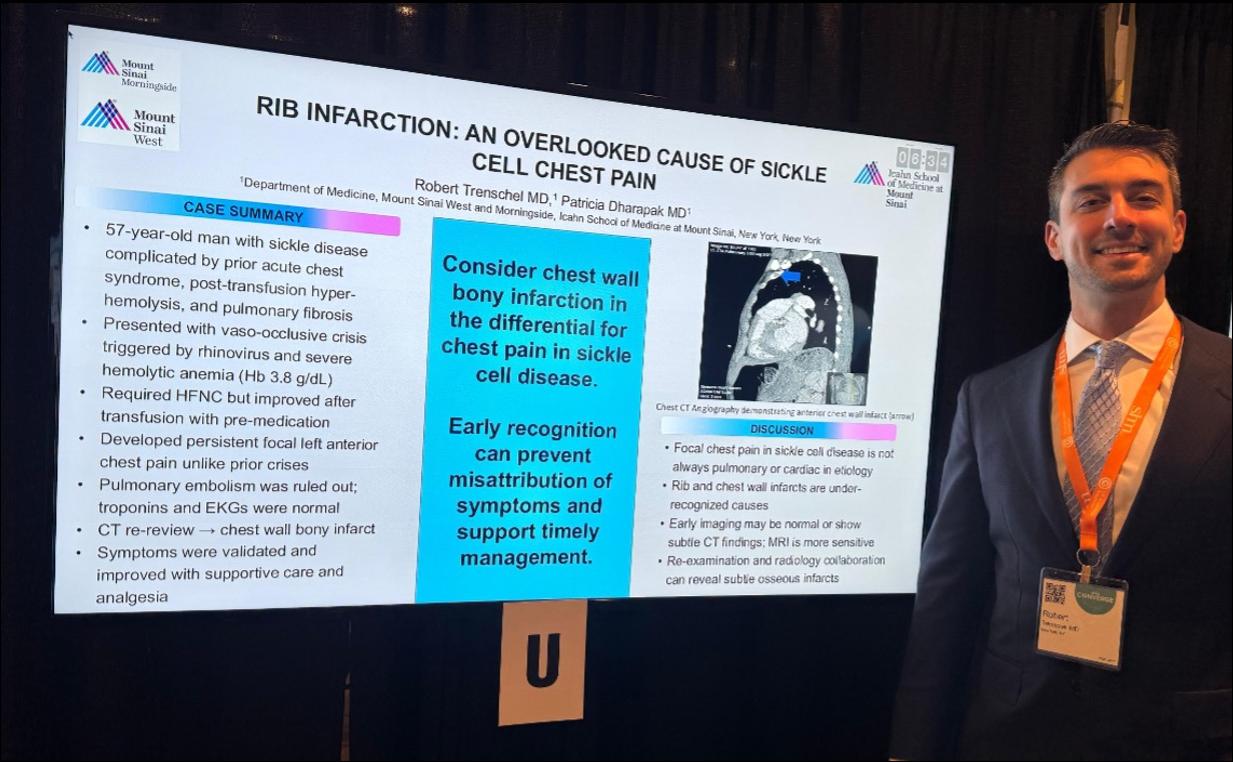
RIB INFARCTION: AN OVERLOOKED CAUSE OF SICKLE CELL CHEST PAIN
Robert Trenschel1 and Patricia Dharapak1
1Mount Sinai Morningside-West Hospitals, Icahn School of Medicine at Mount Sinai, New York, NY, United States
Presented at the Society of Hospital Medicine (SHM) Annual Meeting that was held in Nashville, Tennessee, United States from March 29, 2026 to April 1, 2026.
EFFECT OF GLP-1 RECEPTORS AGONISTS ON PROGRESSION FREE SURVIVAL IN PATIENTS WITH WELL DIFFERENTIATED NEUROENDOCRINE TUMORS TREATED WITH LANREOTIDE
117
Richard Vaca1, Marissa Contento2, Edward Wolin2, Emily Gallagher2, Virginia Corbett2
1Mount Sinai Morningside-West Hospitals, Icahn School of Medicine at Mount Sinai, New York, NY, United States;
2Mount Sinai Hospital, Icahn School of Medicine, New York, NY, United States
Presented in at the North American Neuroendocrine Tumor Society (NANETS) Multidisciplinary NET Medical Symposium that was held in Austin, Texas, United States from October 23-25, 2025.
AUTOMATION OF INPATIENT MEDICINE WITH LARGE LANGUAGE MODEL DRIVEN AGENTS
Akhil Vaid1,2, Sarah Kosse1, Madison Kennedy1, Ashwin Sawant1,2, Girish Nadkarni1,2
118
119
1Mount Sinai Morningside-West Hospitals, Icahn School of Medicine at Mount Sinai, New York, NY, United States ; 2Windreich Department of AI and Human Health, Icahn School of Medicine at Mount Sinai, New York, NY, United States
Presented at the New York Chapter of the American College of Physicians (ACP) Annual Meeting that was held in Albany, New York, United States on October 11, 2025 and Symposium on Artificial Intelligence for Learning Health Systems (SAIL) that was held in Rio Grande, Puerto Rico from May 5-8, 2026.
NEUTROPHILS-LYMPHOCYTE RATIO IN PATIENTS WITH LOW FLOW AORTIC STENOSIS UNDERGOING TRANSCATHETER AORTIC VALVE REPLACEMENT
Carlo Mannina1,2 , Esha Vaish1, Lakshay Chopra1, Yash Prakash1, Akarsh Sharma3 , Oludamilola Akinmolayemi3, Andreina Carbone4, Eduardo Bossone5, Antonino Tuttolomondo2, Edgar Argulian1 , Jonathan Halperin3, Samin Sharma3, Annapoorna Kini3, Stamatios Lerakis3
1Mount Sinai Morningside-West Hospital, Icahn School of Medicine at Mount Sinai, New York, NY, United States; 2University of Palermo, Palermo, Italy; 3Mount Sinai Hospital, Icahn School of Medicine at Mount Sinai, New York City, NY, United States; 4University Hospital "Luigi Vanvitelli", Naples, Italy; 5Department of Public Health, Federico II University, Naples, Italy Presented at the New York Valves: The Structural Heart Summit that was held in New York, New York, United States from June 25-27, 2025.
FACTORS ASSOCIATED WITH PROVIDER DECISION-MAKING OF EARLY-STAGE LUNG CANCER PATIENTS TREATED WITH STEREOTACTIC BODY RADIATION THERAPY OR SUBLOBAR RESECTION
Agostina E. Velo1, Jeremy Mudd2, Christopher G. Slatore3,4 , Raja Flores2, Scott Swanson5 , Cardinale B. Smith6, Mark Chidel7, Kenneth E. Rosenzweig2, Jeffrey A. Kern8, Juan Wisnivesky2
1Mount Sinai Morningside-West Hospitals, Icahn School of Medicine at Mount Sinai, New York, NY, United States;
2Mount Sinai Hospital, Icahn School of Medicine at Mount Sinai, New York, NY, United States; 3Center to Improve Veteran Involvement in Care, Veterans Affairs Portland Health Care System, Portland, OR, United States; 4Oregon Health & Science University, Portland, OR, United States; 5Brigham and Women’s Hospital, Boston, MA, United States; 6Memorial Sloan Kettering Cancer Center, New York, NY, United States; 7Colorado Permanente Medical Group, Denver, CO, United States;
8National Jewish Health, Denver, CO, United States
Published in Clinical Lung Cancer, 2026. PMID: 41349182
121 A YOUNG FEMALE WITH VAPING-INDUCED DIFFUSE ALVEOLAR HEMORRHAGE
Harsimran Kaur Bhatia1, Daniel O’Connor2, Bhavinkumar Dalal2 , Megha Verma1
1Mount Sinai Morningside-West Hospitals, Icahn School of Medicine at Mount Sinai, New York, NY, United States
2Beaumont Health and OWUB, Royal Oak, MI, United States
122
REVISITING TETRACYCLINES IN LEGIONNAIRES’ DISEASE: A CASE REPORT ON THE SUCCESSFUL USE OF TIGECYCLINE IN SEVERE ACUTE RESPIRATORY DISTRESS SYNDROME
Fernando A. Viera Ramírez1 and Nicholas Sells1
1Mount Sinai Morningside-West Hospitals, Icahn School of Medicine at Mount Sinai, New York, NY, United States
CAUSE-SPECIFIC SURVIVAL ANALYSIS AND RACIAL DISPARITIES IN YOUNG-ONSET VERSUS AVERAGE-ONSET ESOPHAGEAL CANCER
123
124
Liliana Vittini Hernandez1 , Antoine Jeri Yabar1, Luis Oller Payano1, Jason Piersaint1, Sirish Dharmapuri2
1Mount Sinai Morningside-West Hospitals, Icahn School of Medicine at Mount Sinai, New York, NY, United States;
2Rutgers Cancer Institute of New Jersey, New Brunswick, NJ, United States
Presented at the Digestive Disease Week (DDW) Annual Meeting that was held in San Diego, California, United States from May 3-6, 2025.
WHERE GUIDELINES FALL SHORT: CATASTROPHIC BIOPROSTHETIC VALVE DEGENERATION PRESENTING WITH SPLENIC INFARCTION
Dayita Wable1, Jacqueline Mirza1, Harsimran Bhatia1, Krystle Hernandez1
1Mount Sinai Morningside-West Hospitals, Icahn School of Medicine at Mount Sinai, New York, NY, United States
UPTAKE, GEOGRAPHIC ACCESS, AND OUTCOMES OF TRANSCATHETER MITRAL VALVE REPAIR IN THE UNITED STATES
125
126
Atsuyuki Watanabe1, Hiroki A Ueyama2, Yoshihisa Miyamoto3 , Hiroshi Gotanda4 Tsuyoshi Kaneko5 , Azeem Latib6, Dhaval Kolte7, Suzanne J Baron7, Eric Secemsky8, Roger J. Laham8, Yusuke Tsugawa9, Toshiki Kuno8
1Mount Sinai Morningside-West Hospitals, Icahn School of Medicine at Mount Sinai, New York, NY, United States; 2Emory University School of Medicine, Atlanta, GA, United States; 3University of Tokyo, Tokyo, Japan; 4Cedars-Sinai Medical Center, Los Angeles, CA, United States; 5Washington University School of Medicine, St. Louis, MO, United States; 6Montefiore Medical Center, Albert Einstein College of Medicine, Bronx, NY, United States; 7Massachusetts General Hospital, Harvard Medical School, Boston, MA, United States; 8Beth Israel Deaconess Medical Center, Harvard Medical School, Boston, Massachusetts, United States; 9University of California, Los Angeles, David Geffen School of Medicine, Los Angeles, CA, United States Published in Circulation, Cardiovascular Quality and Outcomes, 2025. PMID: 41170563
BONE MARROW-DERIVED CD57+ NK AND NK-LIKE T-CELLS EXPAND IN LOWER-RISK MDS AND ARE IMPLICATED IN DRIVING BONE MARROW FAILURE
Jonathan Feld1 , Richa Rai1 , Kyle Wiatrowski2, Richard Sheppard1, Haocheng Yu1, Erin P. Demakos1 , Deigo Chowell1, Jane Houldsworth1 , Shanaz Hussein1 , Amir Horowitz1 , Lewis R. Silverman1
1Mount Sinai Hospital, Icahn School of Medicine at Mount Sinai, New York, NY, United States; 2Mount Sinai Morningside-West Hospitals, Icahn School of Medicine at Mount Sinai, New York, NY, United States Presented at the American Society of Hematology (ASH) Annual Meeting that was held in Orlando, Florida, United States from December 6-9, 2025.
127
128
THE NODE THAT WOULDN’T TELL: PROLONGED SYSTEMIC SYMPTOMS WITH REPEATED NON-DIAGNOSTIC LYMPH NODE EVALUATION
Alyson Wolf¹, Thomas Fusillo¹, Madeleine Reznik¹, Laura Bock1 ¹Mount Sinai Morningside–West Hospitals, Icahn School of Medicine at Mount Sinai, New York, NY, United States
FLARE INCIDENCES OF PRE-EXISTING RHEUMATOLOGIC DISEASES IN PATIENTS WITH SOLID TUMORS RECEIVING IMMUNE CHECKPOINT INHIBITORS: A SYSTEMATIC REVIEW AND META-ANALYSIS
Kenji Yamada1, Takemichi Matsui1, Toshiaki Takahashi2, Yoshito Nishimura3 , Yu Fujiwara4,5
1Mount Sinai Morningside-West Hospitals, Icahn School of Medicine at Mount Sinai, New York, NY, United States;
2John A. Burns School of Medicine, University of Hawaii, Honolulu, HI, United States; 3Mayo Clinic, Rochester, MN, United States; 4Roswell Park Comprehensive Cancer Center, Buffalo, NY, United States; 5Institute of Science Tokyo, Tokyo, Japan Published in Seminars in Arthritis and Rheumatism, 2026. PMID: 41643573
COMPREHENSIVE ANALYSIS OF COMPLICATIONS OF LUNG BIOPSIES IN AN NLP-BASED LUNG NODULE PROGRAM: ARE WE DOING MORE HARM THAN GOOD?
129
Alvin Yang¹, Aesha Patel¹, Junyu Qi¹, Catherine Zaw¹, Nicolette Lam¹, Oluwatumilara Akeke¹, Sacha Adler¹, Javier Zulueta¹
¹Mount Sinai Morningside–West Hospitals, Icahn School of Medicine at Mount Sinai, New York, NY, United States
Presented at the American College of Chest Physicians Annual Meeting that was held in Chicago, Illinois, United States from October 19-22, 2025.
SYSTEMIC MASTOCYTOSIS MASKED BY ACUTE MYELOID LEUKEMIA WITH T(8;21)(Q22;Q22)
130
131
Youssef Zaki¹, Michele Yadush², Ashley Vogel², Zachary Wolfe²
1Mount Sinai Morningside-West Hospitals, Icahn School of Medicine at Mount Sinai, New York, NY, United States;
²Lehigh Valley Health Network, Allentown, PA, United States
Presented at the Mount Sinai Health System Department of Medicine Research Day that was held in New York, New York, United States from May 4-5, 2026.
ASSOCIATION NEW YORK CITY CARE BRIDGE: A LOGIC-GATED ARTIFICIAL INTELLIGENCE
TOOL FOR JUST-IN-TIME TEACHING OF SYSTEMS-BASED PRACTICE AND IMPROVED RESIDENT–SOCIAL WORK HANDOFFS
Lucy Zheng1, Jacob Zheng2, Mrittika Deb1, Samuel Tan1, Wenchy Tan1, Maximillion Lee3 , Alfred Burger1
1Mount Sinai Morningside-West Hospitals, Icahn School of Medicine at Mount Sinai, New York, NY, United States;
2Skyline High School, Ann Arbor, MI, United States; 3University of Pittsburgh Medical Center, Pittsburgh, PA, United States

ABSTRACT #1
CASE REPORT/CLINICAL REVIEW RHEUMATOLOGY
BLURRY LINES: A CASE OF REFRACTORY VOGT-KOYANAGI-HARADA DISEASE AND THE ROLE OF RHEUMATOLOGY IN VISION PRESERVATION
Priscilla Abate Namnum1 , Diana Shalamov2, Michael Kaplan1,3 , Deep Parikh4
1Mount Sinai Morningside-West Hospitals, Icahn School of Medicine at Mount Sinai, New York, NY, United States; 2SUNY College of Optometry, New York, NY, United States 3Mount Sinai Hospital, Icahn School of Medicine at Mount Sinai, New York, NY, United States; 4New York Eye and Ear Infirmary of Mount Sinai, Icahn School of Medicine at Mount Sinai, New York, NY, United States
Presented at Congress of Clinical Rheumatology East Annual Meeting held in Destin, Florida, United States from April 30, 2025 to May 2, 2025
BACKGROUND/INTRODUCTION: Autoimmune ocular diseases (AIOD), particularly uveitis, are significant causes of vision loss. There are approximately 30,000 new cases of legal blindness each year in the United States due to uveitis. Vogt-Koyanagi-Harada disease (VKH) is a multi-systemic autoimmune inflammatory disorder that primarily targets melanocyte-rich tissues, including the eyes, inner ears, meninges, skin, and hair. It is characterized by panuveitis and often presents with systemic manifestations such as headache, hearing loss, vitiligo, and poliosis. The mainstay of VKH treatment is high-dose systemic corticosteroids to control severe inflammation immediately to prevent further vision loss. Previously, this was always followed by a slow taper of corticosteroids over at least six months. With the development of better and safer immunosuppressive agents over the last couple of decades, the treatment recommendations have shifted toward earlier initiation of immunosuppression, typically Anti-TNF agents, to help decrease prolonged steroid exposure and steroid side effects. Due to severity of vision loss in cases of VKH, the role for earlier initiation of Anti-TNF agents, and the multisystemic nature of the disease, active collaboration with rheumatology and ophthalmology can be vision and lifesaving. We describe a case of refractory panuveitis with rapid progressive vision loss in the setting of Vogt-Koyanagi-Harada disease. Improved only with pulse dose glucocorticoids and infliximab.
CASE PRESENTATION: A 35-year-old woman presented to her Ophthalmologist with one week history of bilateral vision loss, first involving the right eye, and then progressing to involve the left eye. Visual acuity at the time of presentation was 20/70 in the right eye and 20/60 in the left eye. Examination was consistent with severe bilateral panuveitis with 3+ anterior chamber cells, vitreous cells, significant optic nerve edema, and large serous retinal detachments in both eyes. Retinal fluorescein angiogram demonstrated fluorescein dye leakage of bilateral optic nerves and leakage into the subretinal space, suggestive of serous retinal detachments in both eyes. The presumed diagnosis of VKH was made based on clinical and angiographic findings. The patient was started on 60 mg of prednisone daily. At this time her visual acuity had decreased to 20/300 in each eye, rendering her legally. The exam showed worsening clinical findings. Optical Coherence Tomography(OCT) done at follow up showed significant optic nerve edema, and worsening subretinal fluid and subretinal fibrin deposition. In addition, when prompted, she endorsed that she had headaches that started shortly prior to her vision loss.
Review of prior testing showed negative QuantiFERON® Gold, Treponema pallidum, Chest X-ray, and ACE. Clinically, the diagnosis of VKH was agreed upon and a Rheumatology consultant was contacted immediately. Joint decision was made for hospital admission for expedited evaluation and treatment in the setting of rapidly progressive vision loss and therefore organ threatening rheumatologic disease. MRI brain and orbits was done per Neurology recommendations which were negative. Patients were admitted and received intravenous methylprednisolone 1 grams daily for 3 days.
Upon re-evaluation after just 3 days of intravenous methylprednisolone, the patient demonstrated significant vision gain and visual acuity improved to 20/70 in the right eye and 20/50 in the left eye. Given the severity of end-organ-dysfunction with permanent vision loss and goal of minimizing long term steroid toxicity,
Rheumatology induced the patient with Infliximab 5 mg/kg in the hospital followed by additional doses at 2 and 6 weeks. On Ophthalmology follow up, 2 weeks after first dose of infliximab, her visual acuity continued to improve to 20/25 in the right eye and 20/30 in the left eye. Upon following up with Rheumatology, the patient was tolerating infliximab therapy well with continued improvement in vision, functional status, and quality of life. She is currently tapering oral steroids and is receiving maintenance infliximab therapy every 6 weeks.
CONCLUSION: The management of Vogt-Koyanagi-Harada disease (VKH) benefits significantly from a multidisciplinary approach, integrating Ophthalmologists and Rheumatologists to optimize patient outcomes. While Ophthalmologists play a central role in diagnosing and monitoring ocular involvement, Rheumatologists provide expertise in systemic immunosuppression and monitoring thereof over time. This collaboration is critical, as most Ophthalmologists lack training and experience with prescribing biologics or other immunosuppressive agents. Variations in prescribing practices between specialties, influenced by costs, sub-specialization, and institutional policies, further highlight the necessity of interdisciplinary coordination and the importance of Rheumatology consultation for urgent immunomodulatory treatment for vision threatening or organ threatening disease.
Guidelines emphasize the need for early Rheumatology involvement to enhance underlying systemic disease recognition, guide immunosuppressive therapy, and facilitate corticosteroid tapering, thereby reducing the risks of prolonged glucocorticoid exposure. As systemic diseases contribute up to 50% of AIOD cases, an integrated approach supports earlier detection and targeted management. Furthermore, Rheumatologists’ expertise and access to disease-modifying antirheumatic drugs (DMARDs) and biologic therapies, such as TNF inhibitors as in this case, helps in achieving remission while minimizing corticosteroid-related toxicity. The importance of communication and coordination of care between specialists in the outpatient setting, and establishing readily accessible multidisciplinary support ensures a streamlined, evidence-based approach to complex multisystemic disease management, ultimately saving vision and improving patient outcomes.
ABSTRACT #2
CASE REPORT/CLINICAL REVIEW HEMATOLOGY/ONCOLOGY
PARANEOPLASTIC MYOSITIS AND NEURITIS IN RELAPSED HAIRY CELL LEUKEMIA: A RARE MANIFESTATION
Adal Abonamah1, Niurka Liranzo Tejera1, Kristaq Koci1
1
Mount Sinai Morningside/West
Hospitals, Icahn School of Medicine at Mount Sinai, New York, NY, United States
BACKGROUND/INTRODUCTION: Paraneoplastic neuritis and myositis are rare complications of hairy cell leukemia (HCL), driven by immune mediated mechanisms. We present a unique case of a patient with HCL in remission who developed rapid, generalized neuromuscular symptoms, likely due to an autoimmune process associated with HCL. This case highlights the importance of early recognition of paraneoplastic syndromes, particularly in end-organ failure requiring dialysis, to ensure timely diagnosis and appropriate management for optimal outcomes.
CASE PRESENTATION: A 66-year-old male with a history of HCL in remission, villous adenoma status post polypectomy, cytomegalovirus, Epstein-Barr virus and parvovirus presented with rapidly progressive, asymmetrical proximal and distal muscle weakness. His clinical course was complicated by undifferentiated shock, encephalopathy, acute renal failure requiring emergent dialysis, neutropenic fever, and tachycardiainduced troponin elevation, due to end-organ failure.
The patient was empirically started on methylprednisolone, Caspofungin, TMP-SMX, and Acyclovir for neutropenia prophylaxis, demonstrating a favorable response to steroids. A muscle biopsy could not be performed due to thrombocytopenia, limiting further diagnostic evaluation. Future management will include a steroid taper and initiation of chemotherapy with cladribine and rituximab to target both the underlying malignancy and associated myositis.
CONCLUSION: Paraneoplastic disorders arise from underlying malignancies and can present with rare and unpredictable manifestations. This case highlights the need for a broad differential diagnosis, including cryoglobulinemia, and a multidisciplinary approach to management and treatment. Given the rarity of certain paraneoplastic syndromes, documenting cases is crucial for improving recognition. Limited knowledge of these conditions can delay diagnosis, emphasizing the importance of early consideration in malignancy patients with unexplained neuromuscular symptoms. Two reports describe HCL-associated paraneoplastic syndromes: one with scleroderma/myositis overlap and another with polymyositis. These cases highlight the diverse autoimmune manifestations of HCL and the importance of early recognition.
Parameter
Pancytopenia
Result/Interpretation
Severe acute-on-chronic (significant cytopenia)
CPK ~3000 U/L (recurrent elevations)
CRP/ESR
Rheumatoid factor
Anti-cardiolipin/Lupus anticoagulant
Autoimmune Markers:
ANA, anti-dsDNA, Smith antibody, SSA, SSB, RNP, anti-SCL-70, centromere antibody
Vasculitis Markers:
ANCA panel, atypical pANCA, MPO/PR3 antibody
Myositis Markers:
Anti-Jo-1, anti-HMGCR
Paraneoplastic Markers:
HU, RI, YO nuclear antibody
Significantly elevated
Mildly elevated
Initially positive
Negative
Negative
Negative
Negative
Myomarker Panel (+) ANTI-PM/SCL-100 AB
Others:
Anti-CCP, anti-GBM, cryoglubulins, beta-2 microglobulin
Infectious Work Up: (bacterial, fungal, parasitic and viral)
Study Result
EMG
Negative
Negative
Generalized myopathic process with muscle membrane irritability
MRI Femur Diffuse muscle edema with small multiloculated collection of proximal right rectus femoris suggestive of nonspecific myositis (see Figure 1)
Bone marrow biopsy Abnormal mononuclear cells positive for CD20/25 and BRAF with focal moderate fibrosis (MF2)
Flow cytometry Monoclonal B-cell population, consistent with a history of HCL
Table 1 and 2. Results of Diagnostic Studies
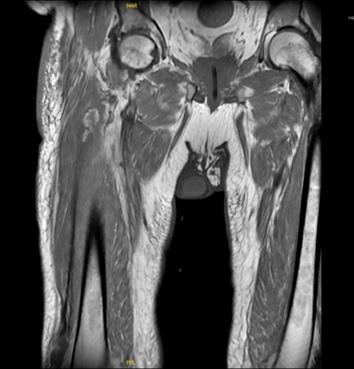
ABSTRACT #3
QUALITY IMPROVEMENT
GASTROENTEROLOGY
IMPROVED PARACENTESIS TIMELINESS AND SECONDARY CLINICAL OUTCOMES FOLLOWING AN ELECTRONIC MEDICAL RECORD-BASED COORDINATION INTERVENTION
Joseph Abraham1, Isabelle Hartfield Moseley1, Frank Nelson1 , Vasundhara Singh1, Lance Maresky2
1Mount Sinai Morningside-West Hospitals, Icahn School of Medicine at Mount Sinai, New York, NY, United States; 2HCA Florida JFK North Hospital, Atlantis, FL, United States
Presented at the Mount Sinai Health System Department of Medicine Research Day that was held in New York, New York, United States from May 4-5, 2026.
BACKGROUND/INTRODUCTION: Abdominal paracentesis is essential in the care of hospitalized patients with cirrhosis and ascites, with early performance associated with lower mortality, shorter hospital stays, and earlier detection of complications. Despite strong guideline recommendations to perform paracentesis within 12–24 hours of admission, timely completion remains inconsistent due to system-level barriers such as limited certified proceduralists, fragmented communication, and reliance on consult-based workflows. Although prior interventions including order sets, educational initiatives, electronic medical record (EMR) decision support, and dedicated procedure services have shown variable benefit, many require substantial resources, limiting scalability. We identified secure, real-time communication tools embedded within modern EMRs as an underutilized opportunity to address delays by improving coordination rather than expanding staffing. We implemented a system-wide quality improvement initiative establishing a dedicated secure EMR chat group, connecting primary teams with trainees and supervising proceduralists to facilitate rapid paracentesis requests and responses. This study evaluates the impact of this communication-centered intervention on time to paracentesis, hospital length of stay, and clinical outcomes, positioning EMR-based secure messaging as a highly scalable strategy to vastly improve care for patients with decompensated cirrhosis.
METHODS: We conducted a quality improvement intervention at two academic hospitals, Mount Sinai Morningside and Mount Sinai West, by creating a dedicated secure chat group within the Epic electronic health record in collaboration with institutional information technology services. The intervention consisted of a secure EMR-based paracentesis coordination group composed of internal medicine residents and hospitalists across two hospital sites who were either certified or pursuing certification, with oversight by a supervising attending and resident lead. Admitting teams initiated requests by posting patient location and clinical indication in the secure chat, enabling rapid pairing of trainees with certified supervisors and expediting procedure completion within a standardized framework supported by formal protocols and educational modules. Primary outcomes included time from admission to paracentesis (approximated by procedure note filing time) and proportion of paracenteses completed within 48 hours, while secondary outcomes included hospital length of stay, antibiotic duration, procedural volume, discharge disposition, and downstream clinical outcomes such as ICU admission, in-hospital mortality, and 30-day readmissions; metrics were assessed using pre–post comparisons, interrupted time-series analyses, and multivariable regression models. The control comparator was the number of paracenteses completed during the same calendar period one year prior to intervention implementation, with data extracted by the Mount Sinai Quality Improvement analytics team. Procedure note filing time was used as a close approximation for the relative completion time of the procedure itself. Statistical analyses included t-tests, interrupted time-series models, and generalized linear models to evaluate changes in procedural volume and performance metrics.
RESULTS: The results below are tentative based on preliminary data; further results should be forthcoming, including but not limited to ICU admission, in-hospital mortality, and 30-day readmissions. With more detailed data, we will further stratify by indication for paracentesis (diagnostic versus therapeutic), spontaneous bacterial peritonitis (SBP) diagnosis, and other key demographics.
In unadjusted analyses, implementation of the intervention was associated with a statistically significant reduction in time from admission to paracentesis note filing, with documentation occurring an average of 3.5 days earlier in the post-intervention period. When accounting for patient and clinical characteristics, including age, sex, race, admitting department, weekday of admission, and ceftriaxone use, the magnitude of improvement was attenuated but remained directionally consistent. In an ordinary least squares model using a log-transformed outcome, the intervention was associated with an approximately 8% shorter time to documentation, though this did not reach statistical significance. Similarly, a generalized linear model with a gamma distribution and log link demonstrated an estimated 9-10% reduction in time to note filing following implementation, with confidence intervals crossing the null. Across all adjusted models, the effect estimates favored faster documentation in the post-intervention period despite loss of statistical significance. Overall, these findings suggest a sustained improvement in timeliness following the intervention, with the strongest effect observed in unadjusted analyses. Secondary outcomes demonstrated a significant reduction in hospital length of stay following the intervention, with mean length of stay (LOS) decreasing from 22.9 to 18.3 days and median LOS from 15.3 to 13.7 days (ttest, p=0.028; Mann–Whitney p=0.014). Antibiotic duration also decreased in the post-intervention period (mean 216.4 versus 143.8 hours), reaching statistical significance by t-test (p=0.047) but not by nonparametric testing, with a consistent directional improvement.
Table 1. Covariate-Adjusted Predictors of Time from Admission to Note Filing (GLM, Gamma Log-Link)
Interpretation: Adjusted regression models suggest approximately a 10% faster documentation time post-intervention. While not statistically significant, the improvement trend remained consistent across demographic and clinical covariates.
Table 2. Secondary Outcomes Pre/Post Comparison
Interpretation: Following the intervention, both length of stay and antibiotic duration demonstrated reductions. Length of stay decreased significantly, with both parametric and nonparametric testing confirming that this improvement is unlikely due to random variation. Antibiotic duration also declined in the post-intervention period; while the t-test indicates statistical significance, the Mann–Whitney test does not, suggesting possibleskewness in the distribution. Nonetheless, the consistent directional improvement across both secondary outcomes supports a beneficial effect of the intervention.
CONCLUSION: Implementation of a secure, EMR-based paracentesis coordination chat across two academic hospitals was associated with meaningful improvements in procedural timeliness and vital downstream clinical metrics. The intervention produced a substantial unadjusted reduction in time from admission to paracentesis documentation, with adjusted analyses demonstrating a consistent direction of benefit across multiple modeling approaches. Overall, secure EMR-based communication represents a scalable, low-cost strategy to improve delivery of high-value bedside procedures. This model may be generalizable to other time-sensitive inpatient interventions in resource-constrained health systems and indeed is in the early stages of implementation for other procedures within our health system.
ABSTRACT #4
CASE REPORT/CLINICAL REVIEW
ENDOCRINOLOGY/HEMATOLOGY/ONCOLOGY
Arushi Agarwal1, Erica Jalal2, Alice C. Levine2
1Mount Sinai Morningside-West Hospitals, Icahn School of Medicine at Mount Sinai, New York, NY, United States; 2Mount Sinai Hospital, Icahn School of Medicine at Mount Sinai, New York, NY, United States Presented at the Endocrine Society Annual Meeting that was held in San Francisco, California, United States from July 12-15, 2025.
BACKGROUND/INTRODUCTION: Cervical adenocarcinoma accounts for 10–15% of cervical cancers worldwide, with limited literature describing brain metastases. We present a rare case of panhypopituitarism secondary to suprasellar metastases of cervical adenocarcinoma.
CASE PRESENTATION: A 43-year-old female with endocervical adenocarcinoma status post chemoradiation 2 years prior presented with 3 months of worsening headaches, peripheral vision loss, unintentional 20-pound weight gain, polyuria, and polydipsia and was admitted for brain mass workup. Initial labs showed cortisol <1 mcg/dL (6.2-19.4 mcg/dL) after dexamethasone administration, low FSH of 1.4 mIU/mL, LH of <0.5 mIU/mL, prolactin of 57.7 ng/mL (1.4–24 ng/mL), IGF-1 of 57 ng/mL (74–239 ng/mL), TSH of 0.119 µIU/mL (0.400–4.2 µIU/mL), free T4 of 0.53 ng/dL (0.80–1.50 ng/dL), and free T3 <1.5 ng/dL (1.6–3.0 ng/dL). Suppressed gonadal and thyroidal axes suggested panhypopituitarism. A pituitary MRI revealed a 2.3 cm suprasellar mass causing bilateral splaying of the optic nerves along with smaller masses in the left occipital lobe and parietal base. The patient underwent a bifrontal craniotomy and mass resection in the third ventricle and was started on appropriate pituitary hormone replacement therapies. Pathology report found undifferentiated metastatic carcinoma, showing p53 in >90% of tumor cell nuclei, MIB1/ki-67 proliferation index of 75%. Strong nuclear PAX8 staining was consistent with endocervical adenocarcinoma metastases to the brain. Her post-operative hospital course was complicated by severe central diabetes insipidus (DI) with sodium lability from 129-163 mEq/L (135-145 mEq/L) due to variable intake and output in the setting of delirium and impaired thirst mechanism. Given the cancer’s aggressive nature, as evidenced by the high proliferation index and initial undifferentiated pathology, and limited treatment options, the patient was transitioned to hospice care.
CONCLUSION: This case highlights a novel presentation of severe panhypopituitarism secondary to suprasellar metastases of cervical adenocarcinoma, aiming to contribute to the limited literature on this subject. One 2024 retrospective study of cervical adenocarcinomas (n=469) showed that brain metastases were found in only 3.4% of cases. Given the endocrinologic implications of the mass location, management of post-operative DI was challenging. While our patient’s cause of panhypopituitarism is an extremely atypical etiology, brain metastases is a diagnosis to keep in the differential in patients with a history of endocervical carcinoma.
ABSTRACT #5
CLINICAL REVIEW/VIGNETTE HEMATOLOGY/ONCOLOGY
CHRONIC MYELOMONOCYTIC LEUKEMIA BEYOND THE MARROW: BIOLOGY, PATTERNS, AND MANAGEMENT OF EXTRAMEDULLARY DISEASE
Manal Ahmidouch1 , Priya Deshpande2 , Christian Salib2 , Patrick Brunner2 , Patricia Heller2, Dalia Abdel Azim2 , Somedeb Ball3, Douglas Tremblay2
1Mount Sinai Morningside-West Hospitals, Icahn School of Medicine at Mount Sinai, New York, NY, United States; 2Mount Sinai Hospital, Icahn School of Medicine at Mount Sinai, New York, NY, United States; 3Vanderbilt University of School of Medicine, Nashville, TN, United States
Published in Leukemia, 2026. PMID: 42045559
BACKGROUND: Chronic myelomonocytic leukemia (CMML) is an MDS/MPN overlap neoplasm defined by monocytosis, clonal hematopoiesis, and marrow dysplasia, with outcomes ranging from indolent cytopenic disease to aggressive proliferative phenotypes with early AML transformation. Extramedullary disease (EMD) refers to clonal myelomonocytic infiltration outside the bone marrow and is an underrecognized, consequential manifestation that can dominate presentation, drive morbidity, and identify adverse disease biology.
EPIDEMIOLOGY AND BIOLOGY: While hepatosplenic involvement, often reflecting extramedullary hematopoiesis, is common, biopsy proven non-hepatosplenic EMD occurs in a subset of patients, 10 to 15 percent, and most frequently involves skin, lymph nodes, serosal fluids, and soft tissue, with visceral sites including lung, kidney, and central nervous system. Importantly, EMD is enriched in proliferative and higher grade CMML and is associated with inferior outcomes, including shorter overall survival and increased AML transformation, with poor prognosis after EMD onset. Biologically, EMD appears linked to mutation-driven proliferative signaling, enrichment of RAS MAPK pathway alterations, co-occurring with adverse epigenetic lesions such as ASXL1, together with cytokine-mediated inflammation and dysregulated trafficking and retention programs that facilitate tissue homing and persistence.
DIAGNOSIS AND PROGNOSTIC IMPACT: Because EMD frequently mimics infection, autoimmune and inflammatory syndromes common in CMML, or second malignancy, diagnosis requires an integrated strategy incorporating cross sectional imaging, PET-CT to localize and prioritize biopsy targets, and tissue confirmation with immunophenotyping including CD68, CD163, and lysozyme and selective molecular profiling to establish clonality.
MANAGEMENT AND CONCLUSIONS: Management is primarily systemic, with hypomethylating agents as the backbone, cytoreduction for proliferative disease, local radiotherapy for symptomatic lesions, and early consideration of allogeneic transplantation in eligible high risk or refractory cases. This review synthesizes current evidence on the epidemiology, biology, diagnostic approach, prognostic implications, and treatment of EMD in CMML and highlights the need for standardized definitions and prospective, genomics-informed studies to improve detection and outcomes.
ABSTRACT #6
QUALITY IMPROVEMENT
CARDIOLOGY/RHEUMATOLOGY
Melissa Akselrad1, Saloni Mitchell1, Kristaq Koci1
1
Mount
Sinai
Morningside-West Hospitals,
Icahn School of Medicine at Mount Sinai, New York, NY, United States
BACKGROUND/INTRODUCTION: Patients with rheumatic diseases experience heightened cardiovascular risk driven by both traditional risk factors and persistent systemic inflammation. Inflammatory autoimmunity accelerates endothelial dysfunction, lipid oxidation, and atherosclerotic plaque formation, leading to premature cardiovascular morbidity and mortality. Despite this, no standardized system exists to identify high-risk rheumatology patients early in their disease course, nor to guide coordinated management across rheumatology, cardiology, and primary care. Early detection and treatment of modifiable risk factors including LDL >100 mg/dL and HbA1c >5.5% represent a major but underutilized opportunity for prevention.
OBJECTIVES: To quantify cardiovascular screening practices in a Rheumatology clinic population, identify care gaps in management, and define an intervention framework for multidisciplinary risk mitigation.
METHODS: A retrospective review was conducted of 365 patients evaluated in a faculty Rheumatology practice. Screening adherence was assessed for annual hemoglobin A1c and LDL cholesterol testing, with further analysis of abnormal results and subsequent clinical interventions. Provider practice patterns were surveyed across Mount Sinai Health System’s Rheumatology sites to assess awareness, screening behaviors, and barriers to intervention. Educational and systems-level interventions were subsequently implemented, including resident teaching, mass patient education messaging, and collaboration with primary care.
RESULTS: Screening rates were suboptimal: only 47% received HbA1c testing, 48% LDL testing, and just 40% received both within the prior year. Notably, 43% received neither test, exposing a major detection gap. Among screened patients, elevated markers were common: 23% had LDL >100 mg/dL, 17% had HbA1c elevation alone, and 7% exhibited dual elevation a subgroup at highest risk for adverse cardiovascular events. Of high-risk individuals, interventions were limited primarily to repeat laboratory ordering rather than treatment initiation, risk factor modification counseling, or Cardiology referral, demonstrating an intervention void despite risk awareness. A secondary retrospective review of 362 patients from the same cohort conducted following implementation of targeted interventions including enhanced patient and provider education, and continued mass-messaging outreach demonstrated measurable improvements in cardiovascular risk evaluation and management. Within six months of outreach, 29% of patients completed HbA1c testing and 34% completed LDL testing, with laboratory completion closely mirroring ordering rates. Importantly, 45% of patients had at least one documented clinical action within six months of risk identification, representing a shift from passive reassessment toward active management. Interventions included statin initiation or intensification in 8% of patients and initiation or escalation of antihyperglycemic therapy when indicated. Dual risk factor elevation (concurrent HbA1c ≥5.7% and LDL ≥100 mg/dL) was identified in 8% of patients, highlighting a persistently high-risk subgroup. These findings support the effectiveness of structured, system-level reinforcement in improving screening follow-through and catalyzing downstream risk-modifying interventions, with potential implications for long-term reduction in major adverse cardiovascular events
CONCLUSION: Cardiovascular prevention in rheumatic disease is a recognized but unrealized priority. This study demonstrates substantial gaps in screening, treatment, and cross-specialty coordination, underscoring the need for structured algorithms, electronic health record (EHR)-embedded prompts, and universal annual screening. Integrating risk management into rheumatology care pathways offers a scalable strategy to reduce morbidity and mortality in a growing patient population with systemic inflammation-driven cardiovascular vulnerability.
ABSTRACT #7
CLINICAL RESEARCH
GASTROENTEROLOGY
SOCIOECONOMIC BARRIERS TO INITIATION OF SECOND-LINE THERAPY IN PRIMARY BILIARY CHOLANGITIS PATIENTS WITH INCOMPLETE RESPONSE TO URSODEOXYCHOLIC ACID
Lital Aliasi-Sinai1 , Christopher Kim2 , Liliana Vittini Hernandez1 , Francina Collado2 , Xiaotao Zhang2 , Douglas Dieterich2 , Anna Mageras2, Frances Lee2
1Mount Sinai Morningside-West Hospitals, Icahn School of Medicine at Mount Sinai, New York, United States; 2Mount Sinai Hospital, Icahn School of Medicine at Mount Sinai, New York, United States
BACKGROUND/INTRODUCTION: Second-line treatment for primary biliary cholangitis (PBC), including seladelpar, elafibranor, off-label fenofibrate, and obeticholic acid (OCA, withdrawn from market) should be offered when there is intolerance or incomplete response to ursodeoxycholic acid (UDCA). We sought to characterize the use of second line (2L) therapies and identify demographic factors associated with second-line therapy initiation.
METHODS: This single center retrospective observational study from 2000-2025 identified adults with PBC ICD-10 code, ALP >200, and active UDCA prescription verified by chart review. Patients on UDCA for at least 12 months with ALP >200 were considered eligible for 2L therapy. Primary outcome was prescription of 2L therapy; secondary outcomes included reasons for lack of 2L therapy initiation. Covariates included age, sex, race, preferred language, marital status, and insurance type. Univariable and multivariable analyses were performed using R.
RESULTS: Among 356 patients with PBC with ALP >200, 331 (93.0%) were receiving UDCA and 296 (89.4%) met criteria for treatment escalation. In this cohort, the mean age was 64.3 years, 88.5% were female, 50.3% were White, 11.5% Hispanic/Latino and 8.1% Black. 11.1% were uninsured. 81 (27.4%) received 2L therapy, and 215 (72.6%) did not, of whom 99 (46.0%) had no documented discussion of escalation. OCA was the most frequently prescribed 2L therapy (12.1%), followed by seladelpar (10.0%), fenofibrate (5.4%), and elafibranor (2.7%). While 35.3% of Hispanic patients and 31.5% of White patients received 2L therapy, 0% of Black patients received 2L therapy, though there was no significance in documented offering of 2L therapy (OR, 2.08; 95%CI, 0.85-6.27; p=0.11).
In univariable analysis, older age was associated with lower odds of escalation to second line therapy (OR, 0.97; 95%C, 0.95-0.99; p=0.008), as was uninsured status (OR, 0.05; 95%CI, 0.003-0.24; p=0.004). In multivariable analysis, only uninsured status was associated with lack of initiation of 2L therapy (OR, 0.08; 95%CI, 0.004-0.40; p=0.02).
CONCLUSION: Despite meeting treatment criteria, 72.6% of eligible patients have not received 2L PBC therapy, and over half of these patients lack documented discussion or offering of 2L therapy. Race and insurance status influence treatment escalation. Future studies should investigate system and patient-level barriers to treatment escalation and assess if addressing these gaps improves downstream clinical outcomes.
ABSTRACT #8
CASE REPORT/CLINICAL REVIEW PULMONARY/CRITICAL CARE
ENDOBRONCHIAL BENIGN METASTASIZING LEIOMYOMA MIMICKING MALIGNANCY IN A POSTMENOPAUSAL WOMAN WITH PRIOR HYSTERECTOMY
Mohammed I. Alsaud1, Mrittika Deb1, Maria Athena Riego1, Andrea Monfasani1, Udit Chaddha1 , David J Steiger1
1Mount Sinai Morningside-West Hospitals, Icahn School of Medicine at Mount Sinai, New York, NY, United States Presented at the American College of Chest Physicians Annual Meeting that was held in Chicago, Illinois, United States from October 19-22, 2025.
BACKGROUND/INTRODUCTION: Pulmonary benign metastasizing leiomyoma (PBML) is a rare entity characterized by benign smooth muscle tumors in the lungs, typically occurring in women with a history of uterine leiomyomas, often following hysterectomy or myomectomy. The pathogenesis remains incompletely understood, but hematogenous spread of benign uterine smooth muscle cells is the prevailing hypothesis. PBML often presents a diagnostic challenge, mimicking other pulmonary conditions, including malignancy, and can manifest many years after gynecological surgery. This case highlights these diagnostic complexities.
CASE PRESENTATION: A 78-year-old female with a history of cystic bronchiectasis, untreated Mycobacterium avium complex (MAC) infection dating 8 years ago, and a total hysterectomy for symptomatic fibroids performed 15 years prior presented with an eight-year history of exertional dyspnea and chronic cough, worsened over the prior three months. She reported a 10 kg weight loss and white sputum. Chest CT revealed severe left lung bronchiectasis and scarring with volume loss and no aerated tissue. The right lung showed multiple small, centrilobular nodules (consistent with MAC). A 2.3 cm, stable, indeterminate endobronchial lesion was identified in the left mainstem bronchus. Bronchoscopy revealed a near-completely obstructive endobronchial lesion in the distal left main bronchus. Electrocautery snare was used to cut the lesion, and the airway was 100% open after removal. Biopsy demonstrated bland spindle cells without atypia, mitotic activity, or necrosis, consistent with leiomyoma. Bronchoalveolar lavage was positive for MAC infection. The patient was initiated with triple therapy for MAC and supplemental oxygen. Follow-up imaging showed stable bronchiectasis. Her cough resolved, weight loss ceased, and dyspnea stabilized. This case exemplifies the diagnostic challenges associated with PBML, particularly in the context of co-existing pulmonary disease. The endobronchial presentation of PBML is unusual, and the initial clinical and radiographic findings raised strong concern for an endobronchial malignancy, given the size and obstructive nature of the lesion. The significant latency period between hysterectomy and the development of pulmonary manifestations, as seen in this case, is well-documented. Uterine leiomyomas (fibroids) are very common, with a cumulative incidence of over 70% by age 50 in women. However, PBML is a very rare complication. Endobronchial tumors are relatively rare, and benign tumors account for approximately 2% of all lung tumors. Of these benign endobronchial tumors, leiomyomas are exceedingly rare, representing approximately 3%. The differential diagnosis for a solitary pulmonary nodule or endobronchial lesion in a postmenopausal woman includes malignancy, infectious etiologies (including MAC and other granulomatous diseases), sarcoidosis, and other benign tumors. The history of hysterectomy, although remote, was a crucial piece of clinical information. Histopathological confirmation is essential to differentiate PBML from other conditions, particularly malignancy. A thorough clinical history, including prior gynecological procedures, is essential for accurate diagnosis and appropriate management. The management of PBML is individualized, ranging from observation in asymptomatic patients to hormonal therapy.
CONCLUSION: Pulmonary benign metastasizing leiomyoma should be considered in the differential diagnosis of pulmonary nodules or endobronchial lesions in women with a history of uterine leiomyomas, even many years after gynecological surgery. This case highlights the importance of comprehensive history and a multidisciplinary approach.
ABSTRACT #9
CASE REPORT/CLINICAL REVIEW ALLERGY/IMMUNOLOGY
PRE-OPERATIVE MANAGEMENT OF A PATIENT WITH ALPHA-GAL SYNDROME REQUIRING HIGHDOSE HEPARIN FOR CORONARY ARTERY BYPASS GRAFT
Shubhankar Anand1 , Neil Patel2, Rachel Miller2
1Mount Sinai Morningside-West Hospitals, Icahn School of Medicine at Mount Sinai, New York, NY, United States; 2Mount Sinai Hospital, Icahn School of Medicine at Mount Sinai, New York, NY, United States Presented at the American Academy of Allergy Asthma and Immunology and World Allergy Organization Joint Conference in San Diego, California, United States from February 27, 2025 to March 3, 2025.
BACKGROUND/INTRODUCTION: Alpha-gal syndrome is an IgE-mediated allergy to galactose-alpha-1,3galactose, an oligosaccharide in non-primate mammalian meat. Some alpha-gal allergic patients react to medications containing galactose-alpha-1,3-galactose, such as porcine-derived heparin. The likelihood of reaction increases with higher doses of heparin, resulting in a challenging pre-operative risk-analysis for patients undergoing cardiac procedures.
CASE PRESENTATION: A 52-year-old male with alpha-gal syndrome for 5 years and multi-vessel coronary artery disease required high-dose heparin administration for coronary artery bypass grafting (CABG). Evaluation revealed negative skin prick testing and intradermal testing (1:1000, 1:100, 1:10 dilutions) to heparin (10,000U/mL). Serum alpha-gal IgE was 0.59kU/L, and serum-IgE to beef, pork, and lamb were 0.31kU/L, 6.85kU/l, and 1.09kU/L respectively. Total IgE was 502kU/L (alpha-gal/total IgE ratio = 0.12). The patient was deemed low risk for peri-operative heparin reaction. He received a three-day premedication regimen of daily prednisone/montelukast and twice-daily cetirizine plus standard 13, 7, 1 hour protocol, tolerated a challenge of 100U IV heparin, and underwent successful CABG. Subsequently, the patient received 5,000U heparin every 12 hours until post-operative day three when he developed urticaria and heparin was discontinued. Several weeks after discharge, the patient experienced a severe allergic reaction to bacon.
CONCLUSION: A thorough pre-operative evaluation of patients with alpha-gal syndrome requiring high-dose heparin is important. Utilizing heparin during cardiac surgery is preferred due to its effectiveness, short half-life, and reversibility and may be tolerated even in the presence of alpha gal, with reactions potentially minimized through pre-medication. Allergists should strive to safely evaluate patients with alpha-gal for cardiac surgery wherever possible.
ABSTRACT #10
QUALITY IMPROVEMENT
ENDOCRINOLOGY/GENERAL INTERNAL MEDICINE
DEVELOPING A CONTINUOUS GLUCOSE MONITOR WORKFLOW AT A FEDERALLY QUALIFIED HEALTH CENTER-BASED RESIDENCY CLINIC
Brent Arcayan1, Sruthi Athota1, Sabina Deovic1, Kristen Rockwell1, Avia Muller1, Tamara Goldberg1 1Mount Sinai Morningside-West Hospitals, Icahn School of Medicine at Mount Sinai, New York, NY, United States Presented at the Society of General Internal Medicine (SGIM) Annual Meeting that was held in Washington, DC, United States from May 6-9, 2026.
BACKGROUND/INTRODUCTION: Continuous glucose monitor (CGMs) are emerging as a standard of care tool for diabetes management, yet utilization of this technology remains low at our resident-based primary care practice, with only 17% of eligible patients having been prescribed a CGM.
OBJECTIVES: Recognize the indications for CGM use and its importance in delivering high-quality diabetic care. (Medical Knowledge). Identify potential provider, patient, and systems-based barriers to the utilization of CGMs, and how to effectively address them. (Systems Based Practice)
METHODS: Over 24% of patients at our urban, federally qualified health center (FQHC) have poor diabetes control with a hemoglobin A1c >9%. According to the 2025 ADA Standards of Care, using CGM’s for glucose monitoring is a class A recommendation for insulin-treated patients to improve glycemic control. Yet despite Medicaid coverage for these devices for patients on insulin, only 17% (N=14) of eligible patients at our FQHCbased resident clinic were prescribed one. Furthermore, a baseline survey of Internal Medicine residents at our practice showed that only 55% felt comfortable with the indications for CGM use, 45% of residents did not feel confident in how to order a CGM in our electronic medical record (EMR), and only 25% of residents felt comfortable gathering and interpreting CGM data. To address the high rates of diabetes at our clinic, we aim to implement best practices with a focus on increasing CGM utilization. Beginning in November 2025, we used PDSA methodology to first target provider education though posting infographics at each physician workstation which includes indications for CGM use, ordering instructions, and next steps for patient setup. In the second stage, we will design a standardized workflow within our clinic where CGM data is gathered by nursing/MAs during the intake process and provided to residents. By streamlining the processes surrounding CGM prescription and data gathering, we hope to enhance resident confidence, increase rates of appropriate CGM use, and consequently improve patient outcomes.
RESULTS: QI Council approval was obtained in Fall 2025, and our project was implemented in the clinic beginning November 2025. To date, we have targeted 36 physicians through tailored infographics. Data will be collected at the end of our 8-week resident cycle in early February of 2026. Measures of Success:
1. Reduction of patients with A1c >9% from current rate of 24.5% to network goal of <20%.
2. Improve resident-reported confidence by 50% in the following areas: CGM indications, CGM interpretation, and how to prescribe through our EMR.
3. Process measure: increase CGM prescribing among eligible insulin-using patients from 17% to 30%.
CONCLUSIONS: Barriers to the utilization of CGMs are often multifactorial and can feel challenging to address in any care setting. By standardizing the approach to prescription and interpretation of CGMs, we hope to demonstrate improvement in learner confidence surrounding CGMs and consequently improved patient outcomes.
ABSTRACT #11
CASE REPORT/CLINICAL REVIEW
GENERAL INTERNAL MEDICINE
Sruthi Athota1 and Tamara Goldberg1
1Mount Sinai Morningside-West Hospitals, Icahn School of Medicine at Mount Sinai, New York, NY, United States Presented at the Society of General Internal Medicine (SGIM) Annual Meeting that was held in Washington, DC, United States from May 6-9, 2026.
BACKGROUND/INTRODUCTION: Sarcoidosis is a granulomatous disease affecting multiple organ systems, but breast involvement is exceedingly rare. Breast sarcoidosis can present in multiple ways such as skin changes, palpable masses, and imaging abnormalities which can closely resemble breast cancer. Inflammatory breast cancer presents with very similar findings and has features that can significantly overlap with granulomatous disease and other benign inflammatory conditions. As a result, distinguishing between these two conditions can be challenging. Timely and accurate differentiation between these two conditions is important since prognosis and management vary significantly. This case highlights the importance of keeping a broad differential for breast abnormalities, especially in patients with a history of sarcoidosis.
CASE PRESENTATION: A 58-year-old female with a past medical history of sarcoidosis, hypertension, asthma, and anxiety/depression presented with a 6-week history of a tender left breast lump. Patient noted that a few weeks earlier the skin overlying the lump and left breast was red, warm to the touch and slightly pitted- all of which had resolved by the visit Photos taken at that time confirmed erythema of the entire left breast. She denied any nipple discharge, fevers, chills, night sweats, or unintentional weight loss. Breast exam was notable for a tender, small 1cm mass in the upper outer quadrant of the left breast that had smooth margins and felt fixed. The left breast was larger than the right, but without erythema or other skin changes. There were no palpable lymph nodes in the supraclavicular or axillary regions. Patient’s last mammogram was a BIRADS0 from 11 years prior for which additional imaging was never obtained. She had no personal or family history of breast cancer. The patient reported her sarcoid had been well controlled, and she had been transitioned from methotrexate a year prior.
Given her age, timeline of symptoms, and exam findings, a concern for possible inflammatory breast cancer was high and she was sent for diagnostic mammogram and ultrasound. Diagnostic mammogram showed BIRADS 5-lesion with architectural distortion at the 1 o’clock axis and a suspicious mass with extensive intraductal debris, concerning for inflammatory breast cancer. Ultrasound demonstrated a 1.3 × 1.2 × 1.4 cm isoechoic mass at 1 o’clock, 6 cm from the nipple. She promptly underwent an ultrasound-guided biopsy which showed benign nodular reactive histiocytic infiltration with giant cell reaction, consistent with sarcoidosis.
CONCLUSION: This case illustrates the difficulty of distinguishing inflammatory breast cancer from benign breast changes caused by sarcoidosis. Although breast involvement is extremely rare in sarcoidosis (an incidence of only 1%), it can mimic malignancy both clinically and radiographically. Findings such as breast tenderness, palpable mass, skin erythema, hyperechoic masses, and even enlarged lymph nodes are common features of both conditions. As a result, histopathology is the gold-standard for differentiation. In this case, granulomatous histopathology, such as reactive histiocytic infiltration and giant cell reaction, was diagnostic for sarcoid involvement. Our patient’s case underscores the need to consider both breast cancer and breast sarcoidosis when assessing breast abnormalities, particularly in those with a prior diagnosis of sarcoidosis.
ABSTRACT #12
CASE REPORT/CLINICAL REVIEW
CARDIOLOGY
HIGH HIGHS AND LOW LOWS: A CHALLENGING CASE OF HYPERTENSIVE CRISIS AND LOWPRESSURE PERICARDIAL TAMPONADE.
Eric Hirsch1 , Amirhossein Balazadeh2, Jared Leventhal1
¹Mount Sinai Morningside-West Hospitals, Icahn School of Medicine at Mount Sinai, New York, NY, United States Presented at the American College of Cardiology (ACC) Annual Meeting that was held in Chicago, Illinois, United States from March 29–31, 2025.
BACKGROUND/INTRODUCTION: Low-pressure pericardial tamponade refers to clinically significant cardiac chamber compression in the setting of low central venous pressure. Management becomes challenging when this physiology coexists with severe hypertension.
CASE PRESENTATION: A 53-year-old man with heart failure with mildly reduced ejection fraction and nephrotic syndrome presented with progressive dyspnea. He was found to have a large circumferential pericardial effusion with echocardiographic features of tamponade despite normal jugular venous pressure and marked hypertension. Initial blood pressure control with Clevidipine followed by cautious fluid resuscitation led to resolution of tamponade physiology. He subsequently underwent a pericardial window.
CONCLUSION: Careful attention to preload and afterload management is essential when treating patients with concurrent hypertensive crisis and low-pressure tamponade physiology.
ABSTRACT #13
CLINICAL RESEARCH
HEMATOLOGY/ONCOLOGY
CXCL9 IS A PREDICTIVE BIOMARKER OF SURVIVAL WITH IFNγ -TARGETED THERAPY IN ADULT HEMOPHAGOCYTIC LYMPHOHISTIOCYTOSIS PATIENTS
WilliamJohnson1 , Joseph Rocco2 , Rikita Patel3 , Adrianna Herskovits1 , Elena Mead1 , JaePark1 , Alison Moskowitz1 , Zachary Epstein Peterson1 , Robert Stuver1 , Neil Bapodra4 , Rabeya Molla1 , Andrew Intlekofer1 , Jennifer Lue1 , Lia Palomba1 , Ariela Noy1 , Jasmine Zain1 , Colette Owens1 , Lynnette Henshaw1 , Paola Ghione1 , Efrat Luttwak1 , Pallawi Tork, Andrew Zelenetz1 , Philip Caron1 , Anita Kumar1 , Lorenzo Falchi1 , Natasha Galasso1 , Paul Hamlin1 , Alexander Boardman1 , Kevin David1 , Raphael Steiner1 , Nivetha Ganesan1 , Tiffany Chang1 , Zainab Shahid1 , Wenbin Xiao1 , Annamaria Ballweg1 , Alina Markova1 , Mark Geyer1 , Lauren Banaszak1 , Roni Shouval1 , Sergio Giralt1 , Gregory Goldgof1 , Jodi Mones1 , Jeffrey Zwicker1 , Rekha Parameswaran1 , Avi Leader1 , Cy R. Wilkins1 , Simon Mantha1 , Jeffrey Cohen2 , Jessica Durkee-Shock2 , Matthew Sedlock2 , Bita Shakoory2 , Irini Sereti2 , Miguel-Angel Perales1 , Gilles Salles1 , Santosha Vardhana1 , Joseph Oved1 , Steven Horwitz1 1Memorial Sloan Kettering Cancer Center, New York, NY, United States, 2National Institute of Allergy and Infectious Diseases, Bethesda, MD, United States, 3New York-Presbyterian Brooklyn Methodist Hospital, Brooklyn, NY, United States, 4Mount Sinai Morningside-West Hospitals, Icahn School of Medicine at Mount Sinai, New York, NY, United States Presented at the American Society of Hematology (ASH) Annual Meeting that was held in Orlando, Florida, United States from December 6-9, 2025.
INTRODUCTION: Hemophagocytic lymphohistiocytosis (HLH) is a life-threatening hyperinflammatory state triggered by diverse conditions including malignancy, infection, and autoimmunity. HLH is fueled by interferon-γ (IFNγ) hyper-activity, resulting in its hallmark clinical and biochemical manifestations. CXCL9, a sensitive and specific peripheral blood surrogate of systemic IFNγ activity, is an emerging biomarker for diagnosing and monitoring HLH. Adult HLH patients with elevated CXCL9 levels may be candidates for IFNγ-targeted therapeutics.
METHODS: This was a retrospective study of hospitalized adults with HLH treated with emapalumab (directly neutralizes IFNγ ) or ruxolitinib (inhibitor of IFNγ downstream signaling) at Memorial Sloan Kettering Cancer Center or the National Institutes of Health between January 2022–May 2025. Recipients of CAR-T cells within 30 days were excluded. All patients met HLH-2004 criteria and/or had an HScore ≥168 on the day of initiating IFNγ-targeted therapy. Serum CXCL9 and soluble CD25 (sCD25) levels were quantified in CLIA-certified laboratories via Ella microfluidic platforms. Overall survival (OS) was calculated from the first dose of IFNγtargeted therapy. Medians with interquartile ranges are reported.
RESULTS: Seventy-seven patients were identified. Median age was 49 years (39–60 years); 42% were female and 69% were White, non-Hispanic. HLH triggers included malignancy (52%), infection (12%), transplantassociated (8%), rheumatologic (5%), and other (23%). Therapies included emapalumab (n=54), ruxolitinib (n=18), or both (n=5). Sixteen patients received therapy without any CXCL9 testing. All patients received prior corticosteroids and 39% received prior etoposide. ICU admission was required in 62%. Ferritin, sCD25, and CXCL9 levels were measured within 72-hours of IFNγ -targeted therapy in 100%, 84%, and 88% of patients, with median values of 12283 ng/mL (4302–30425 ng/mL), 15636 pg/mL (8795–22888 pg/mL), and 23858 pg/mL (10637–72148 pg/mL), respectively. Median OS following IFNγ -targeted therapy was 37 days (9–180 days), with 30- and 60-day OS rates of 66% and 46%. Decision-tree analysis incorporating HScore, ferritin, sCD25, and CXCL9 identified a CXCL9 level ≥3500 pg/mL (n=54) as predictive of improved OS with emapalumab and/or ruxolitinib treatment (p=0.03), while all other variables were non-significant. Excluding those without CXCL9 testing, median OS was 79 days (26–180 days) in patients with high (≥3500) levels versus 8 days (8–99 days) in patients with low (<3500) levels (HR, 0.34; 95%CI, 0.13–0.90; p=0.01). Patients with malignancy-associated HLH (mHLH) had worse 60-day OS (30%) compared to patients with HLH not triggered by malignancy (64%, p<0.001). Only three mHLH patients received ruxolitinib monotherapy. Therefore, a sensitivity analysis excluding
ruxolitinib monotherapy patients was performed. Results were consistent, confirming improved 60-day OS in patients with high CXCL9 levels (57% versus 16%; HR, 0.23; 95%CI, 0.08–0.65; p<0.001). Multivariate Cox regression adjusting for demographics, HLH etiology, ICU admission, and etoposide exposure confirmed improved OS in patients with high CXCL9 levels. Notably, the absence of assessing pre-treatment CXCL9 levels prior to initiating IFNγ -targeted therapy associated with markedly poor outcomes, with a median OS of 4 days (3–12 days) versus 60 days (17–180 days) in patients with pre-treatment CXCL9 testing (p<0.001). Time from admission to initiation of IFNγ-targeted therapy was similar between patients with no CXCL9 testing (13 days), low CXCL9 (17 days), and high CXCL9 (10 days).
CONCLUSION: Adult HLH patients with high CXCL9 levels indicative of IFNγ-driven hyperinflammation demonstrated improved OS with emapalumab and/or ruxolitinib compared to those with low CXCL9 levels or without CXCL9 testing. These findings support CXCL9 as a clinically relevant biomarker in adult HLH when considering IFNγ -targeted therapy.
ABSTRACT #14
CASE REPORT/CLINICAL REVIEW
GENERAL INTERNAL MEDICINE/HEMATOLOGY/ONCOLOGY
EXPOSING THE IMPOSTOR: SEVERE B12 DEFICIENCY PRESENTING AS PSEUDO-THROMBOTIC MICROANGIOPATHY
Kaitlyn Bartholomew1 and Forough Hakimzada1
1Mount Sinai Morningside-West Hospitals, Icahn School of Medicine at Mount Sinai, New York, NY, United States Presented at the Society of Hospital Medicine (SHM) Annual Meeting that was held in Nashville, Tennessee, United States from March 29, 2026 to April 1, 2026.
BACKGROUND/INTRODUCTION: Vitamin B12 deficiency rarely presents as pseudo-thrombotic microangiopathy (pseudo-TMA), mimicking thrombotic thrombocytopenic purpura (TTP) with hemolytic anemia and thrombocytopenia. Distinguishing these entities is critical, as pseudo-TMA responds to vitamin replacement while TTP requires urgent plasma exchange.
CASE PRESENTATION: A 40-year-old woman reported six weeks of progressive fatigue and dyspnea. She had a history of severe anemia of unclear etiology despite an extensive workup ten years earlier. She was referred to the emergency department after outpatient labs found a hemoglobin of 5.5 g/dL (hemoglobin 10 g/dL two months earlier). On arrival, she was tachypneic and tachycardic without neurologic deficits, gait abnormalities, or signs of bleeding. Blood work revealed macrocytic anemia with hemoglobin 5.5 g/dL and MCV 121 fL, thrombocytopenia with platelets 79 ×10³/µL, and inadequate bone marrow response (reticulocyte count 5.3%, reticulocyte index 1.1). Hemolysis markers were notable for LDH 6,483 U/L, haptoglobin <8, and mildly elevated indirect bilirubin, while coagulation studies showed elevated D-dimer of 11.31 µg/mL with normal fibrinogen level. Peripheral smear showed macrocytosis, slight schistocytes, and moderate tear drop cells. The combination of hemolysis, thrombocytopenia, and schistocytes raised concern for a type of thrombotic microangiopathy known as TTP, prompting urgent hematology consultation. The PLASMIC score was 5 (intermediate risk for TTP); however, several features were atypical for TTP, notably the undetectable B12 level, markedly elevated LDH disproportionate to the degree of thrombocytopenia, and inadequate marrow response. These findings pointed toward pseudo-TMA, an uncommon manifestation of severe B12 deficiency. Further evaluation confirmed B12 deficiency with elevated homocysteine and methylmalonic acid, and positive intrinsic factor and anti–parietal cell antibodies, consistent with pernicious anemia. Her hemoglobin appropriately responded to transfusion; her tachypnea and tachycardia resolved, and intramuscular vitamin B12 was given. By day three, laboratory values improved with vitamin B12 replacement: platelets increased to 115 × 10³/µL, LDH decreased to 3,696 U/L, and the reticulocyte index rose to 4.4. She was discharged with follow up for routine intramuscular B12 supplementation. After discharge, ADAMTS13 activity resulted normal, definitively excluding TTP. Discussion Pseudo-TMA is an uncommon but important manifestation of severe vitamin B12 deficiency, occurring in approximately 2.5% of patients with B12 deficiency. It closely mimics TTP due to the presence of hemolytic anemia, thrombocytopenia, and slight schistocytes. However, several laboratory features help differentiate pseudo-TMA from true TTP. Ineffective erythropoiesis and intramedullary hemolysis in B12 deficiency result in markedly elevated LDH levels and reticulocytopenia, findings that are typically absent or less prominent in TTP. In this case, the combination of undetectable B12, very high LDH, and inadequate reticulocyte response supported pseudo-TMA, leading to appropriate deferral of plasma exchange and initiation of vitamin B12 therapy.
CONCLUSION: Pseudo-TMA should be considered in patients presenting with macrocytic anemia, thrombocytopenia, and evidence of hemolysis, particularly when LDH is significantly elevated and the reticulocyte response is low. Early recognition allows for prompt and effective treatment with vitamin B12 while preventing unnecessary, invasive, and potentially harmful plasma exchange therapy. This case highlights the importance of distinguishing pseudo-TMA from true TTP to reduce healthcare utilization and improve patient outcomes.
ABSTRACT #15
CLINICAL RESEARCH
CARDIOLOGY
IMPACT OF LEAFLET-SPECIFIC AORTIC VALVE CALCIFICATION DISTRIBUTION AND ASYMMETRY ON PARAVALVULAR REGURGITATION AFTER TRANSCATHETER AORTIC VALVE REPLACEMENT
Pragati Basera1, Roya A. Mousavi2, Chisom Enwere2 , Minel Soroa2, Edgar Argulian1, Marcos FerrandezEscarabajal2, Leila Alizadeh2, George D. Dangas2, Lucy M. Safi2, Sahil Khera2, Gilbert H.L. Tang2, Samin K. Sharma2, Annapoorna S. Kini2, Stamatios Lerakis2
1Mount Sinai Morningside-West Hospitals, Icahn School of Medicine at Mount Sinai, New York, NY, United States; 2Mount Sinai Hospital, Icahn School of Medicine at Mount Sinai, New York, NY, United States
To be presented at the American Society of Echocardiography Annual Meeting that will be held in Aurora, Colorado, United States from June 26-28, 2026.
BACKGROUND/INTRODUCTION: Paravalvular leak (PVL) is a frequent complication following transcatheter aortic valve replacement (TAVR). Although total aortic valve calcification (AVC) burden is a recognized predictor of PVL, the prognostic significance of AVC leaflet distribution and asymmetry remains incompletely understood. This study aimed to evaluate whether AVC leaflet distribution and asymmetry are associated with PVL after TAVR.
METHODS: We retrospectively screened 1,072 patients with severe aortic stenosis who underwent TAVR. Patients were eligible for inclusion if they underwent AVC scoring by cardiac computed tomography and had follow-up echocardiography at 1 year after TAVR. Total and cusp-specific AVC burden [non-coronary (NC), rightcoronary (RC), and left-coronary (LC) cusps] were measured. An AVC asymmetry index was calculated by dividing the highest cusp-specific AVC score by the total Agatston score. Symmetric AVC distribution was defined as an asymmetry index ≤50%, and asymmetric distribution as >50%. The primary outcome was the presence of ≥ mild PVL at 1 year after TAVR.
RESULTS: In total, 431 patients (mean age 79 ± 8 years; 45% female) were included in the study. The median total Agatston score was 2092 [1463–2872] in men and 1189 [800–1862] in women. In females, leaflet-specific AVC was 478 [283–844] on NC, 323 [136–527] on RC, and 349 [203–560] on LC. The corresponding cuspspecific AVC in males was 828 [516–1159] on NC, 629 [371–916] on RC, and 525 [354–843] on LC. Overall, 177 patients (41%) demonstrated asymmetric AVC distribution. At 1-year follow-up, 103 patients (24%) were found to have ≥ mild PVL. Patients with ≥ mild PVL had higher baseline mean transvalvular gradients (p=0.034) and higher stroke volume index (p=0.029). Asymmetric AVC distribution was less common in patients with ≥ mild PVL than in those without PVL (33% versus 44%, p=0.044). Although AVC asymmetry was associated with lower odds of ≥ mild PVL in unadjusted analysis (OR, 0.62; p=0.045), this association was no longer significant after adjustment for age and sex (OR, 0.65; p=0.07). However, higher total AVC burden remained independently associated with ≥ mild PVL, with a 3.2% increase in risk for every 100-unit increase in Agatston score (adjusted OR, 1.03; p=0.002).
CONCLUSION: Total AVC burden is independently associated with ≥ mild PVL at 1 year, however, AVC distribution and asymmetry are not. These findings suggest that overall calcium load, rather than asymmetric cusp involvement, is a risk factor for PVL which may have implications for procedural planning and imagingbased risk stratification.
ABSTRACT #16
CLINICAL RESEARCH
CARDIOLOGY
PROGNOSTIC IMPACT OF BASELINE FRAILTY, MALNUTRITION, OR BOTH ON MORTALITY FOR PATIENTS ADMITTED WITH ACUTE DECOMPENSATED HEART FAILURE
Brandon Berman1 , Harrison Bonilla1, Komail Jafri1 , Usman Saeedullah1 , Hans Reyes Garay1 , Kiran Mahmood1 1Mount Sinai Morningside-West Hospitals, Icahn School of Medicine at Mount Sinai, New York, NY, United States Presented at the American Heart Association (AHA) Annual Meeting that was held in New Orleans, Louisiana, United States from November 7-10, 2025.
BACKGROUND/INTRODUCTION: Malnutrition and frailty are highly prevalent among heart failure (HF) patients and have been shown to independently affect outcomes. However, these diagnoses are often overlooked during an acute decompensate HF (ADHF) hospitalization. In this retrospective analysis, we use data from a large, cardiac focused health system to assess the prognostic impact of baseline frailty and/or malnutrition on all-cause mortality at 30 days, 90 days, and 1 year following an ADHF hospitalization
METHODS: All Icahn Mount Sinai Health System patients were searched using TriNetX from 1/1/2005 through 4/30/2025. Patients aged >18 years with pre-existing HF admitted for ADHF were included. Patients who did not meet the inclusion criteria or who died during the index event were excluded. The control HF cohort was composed of included patients who did not have either malnutrition or frailty. The cohorts were propensity matched and balanced for baseline characteristics (i.e. BMI, age, sex, etc.). Statistical analysis was performed via Cox regression using the built-in TriNetX calculator. Outcomes are reported as hazard ratios (HR) with 95% confidence intervals (CI).
RESULTS: A total of 24,860 patients admitted for ADHF were included (frailty, n=2,770; malnutrition, n=8,310; frailty + malnutrition, n=1,350; control HF, n=12,340). Baseline characteristics of the cohorts are reported in Table 1. There was a significant increase in the risk of all-cause mortality at 30 days, 90 days, and 1 year postdischarge seen with baseline frailty (Figure 1) (30 days: HR,6.423; 95%CI , 5.487-7.518; p<0.0001, 90 days: HR, 5.783; 95%CI, 5.037-6.339, p=0.0002; 1 year: HR, 4.856, 95%CI, 4.312-5.64; p<0.0001), malnutrition (30 days: HR, 3.231; 95%CI, 2.861-3.65; p<0.0001; 90 days: HR, 1.612; 95%CI, 1.345 - 1.933, p<0.001; 1 year: HR, 3.947; 95%CI, 3.617-4.308; p<0.0001), or both (30 days: HR, 9.826; 95%CI, 7.538-12.808; p<0.0001; 90 days: HR, 8.638; 95%CI 6.91-10.799; p=0.0349; 1 year: HR, 8.036; 95%CI, 6.612-9.766; p<0.001).
CONCLUSION: Frailty and malnutrition are significant independent risk factors for mortality post-discharge for ADHF, with as high as a 9-fold increased risk when both are present. Future prospective studies looking at early assessment and interventions for ADHF patients with frailty and malnutrition are needed to address this vulnerable population with high morbidity and mortality.
Characteristic
Table 1. Baseline characteristics of the patients included in the cohort divided between the frailty group, the malnutrition group, the mixed frailty plus malnutrition group and the baseline group, along with the p-values calculated for the differences between the groups.
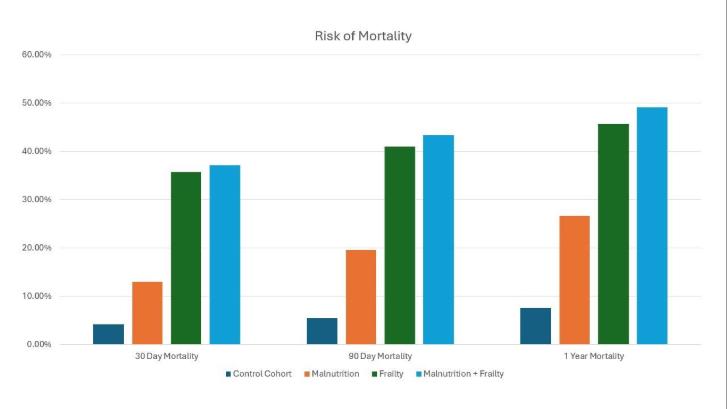
Figure 1. Graph demonstrating the 30-day, 90-day, and 1-year mortality rates reported as percentages for each of the four cohorts: control HF (blue bar), malnutrition (orange bar), frailty (green bar), and the mixed malnutrition + frailty cohort (aqua bar).
ABSTRACT #17
CLINICAL RESEARCH
HEMATOLOGY/ONCOLOGY
PROGRESS OF INVESTIGATIONAL BROMODOMAIN AND EXTRA-TERMINAL DOMAIN INHIBITORS FOR MYELOFIBROSIS THERAPY
Nooshin C. Beygui1, Michael Rogers2, Veer Shah2, Megan Metzger2, John Mascarenhas2
1Mount Sinai Morningside-West Hospitals, Icahn School of Medicine at Mount Sinai, New York, NY, United States; 2Mount Sinai Hospital, Icahn School of Medicine at Mount Sinai, New York, NY, United States
Published in Expert Opinion on Investigational Drugs, 2026. PMID: 41631564
BACKGROUND/INTRODUCTION: Myelofibrosis (MF) is a BCR-ABL1-negative myeloproliferative neoplasm (MPN) driven by recurrent acquired somatic mutations in hematopoietic stem cells and characterized by progressive bone marrow fibrosis, cytopenias, and extramedullary hematopoiesis with a median overall survival of 5-6 years. Janus kinase inhibitors (JAKis) improve splenomegaly and MF symptom burden but fail to achieve long-term molecular remission or promote lasting modifications in overall disease course. Given the limitations in JAKi therapy, novel therapies targeting epigenetic dysregulation through bromodomain and extra-terminal domain (BET) proteins have emerged as a key therapeutic approach. BET inhibitors (BETis) aim at reducing pro-inflammatory and oncogenic transcription to deepen clinical responses as potential monotherapeutic options or in combination with JAKi therapy.
METHODS: A literature review was conducted using PubMed databases as well as clinical research data from ClinicalTrials.gov to compare and contextualize data from clinical trials related to JAKi development as well as novel BETi development. Early clinical trial data presented/published in recent academic conferences and peerreviewed journals were also reviewed; relevant patient outcomes for various BETis used both as monotherapy and in-combination with JAKis were compared in order to synthesize a comprehensive overview of the available therapies for treating MF as well as novel agents in early phase clinical trials.
RESULTS: This review outlines the role of established JAKis specifically ruxolitinib, an equipotent JAK1/2 inhibitor as first-line therapies for the treatment of MF, as well as catalogues next generation JAKis developed after ruxolitinib in order to fill clinical niches and allow for therapeutic sequencing. Furthermore, the biology, preclinical data, and emerging clinical data in the development of novel BET inhibitors (BETi) was reviewed and summarized herein. Trials assessing the efficacy of pelabresib, ABBV-744, INCB057643, BMS-986158, and OPN-2853 specifically were compared with regard to their ability to meet primary and secondary trial endpoints. Pelabresib is a pan-BETi most advanced in clinical trials, with ongoing phase 3 studies and initial data supporting superior clinical outcomes with pelabresib in combination with ruxolitinib in JAKi naïve MF compared to ruxolitinib monotherapy. While still early in clinical trials, other BETis in development have also shown promise as possible therapeutic options for the treatment of MF both as monotherapy options and in combination with JAKi in treatment naïve and experienced patients.
CONCLUSION: BET protein inhibition is a promising therapeutic target complementing JAK inhibition by cotargeting inflammatory pathways, fibrosis, and clonal proliferation. Pelabresib is a pan-BETi furthest in development demonstrating clinical benefit in global ongoing randomized clinical trials. Translational research into novel pan-and BD2-selective-BETis both as monotherapy and in combination with JAKis or other mechanism-based therapies are ongoing. Whether BETi therapy in MF will ultimately deliver substantial anticlonal activity to modify disease biology and meaningfully impact longer term clinical outcomes such as event free and overall survival is yet to be determined.
Drug Name Company Trial
Pan-BET Inhibitors: Pelabresib (CPI-0610) Constellation Pharmaceuticals/ MorphoSys/ Novartis Pharmaceuticals
OPN-2853 (PLX2853)
Opna Bio
INCB057643 Incyte Corporation
BMS986158 Bristol Myers Squibb (BMS)
BD2-selective BET inhibitor
ABBV-744 AbbVie
MANIFEST – Phase 1/2 (NCT02158858)
MANIFEST-2 – Phase 3 (NCT04603495)
PROMise Study – Phase 1/2 (EudraCT 2019-000916-27)
LIMBER-103 – Phase 1 (NCT04279847)
*N/A – Phase 1/2 (NCT04817007)
*N/A – Phase 1b (NCT04454658)
Table 1. BET inhibitors and respective clinical trials. *No associated “Trial Name” with study; associated
Phase 3 ongoing, follow-up 96-week data presented
Discontinued, data presented 54
Discontinued, data presented55 55
Discontinued, data presented50 50
Discontinued, data not yet public
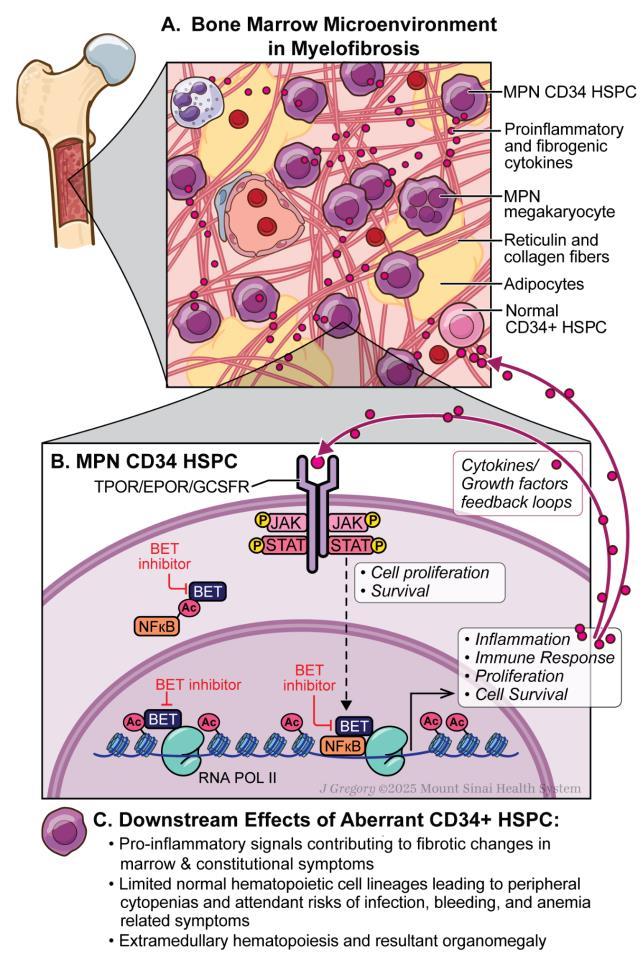
Bone Marrow Microenvironment in Myelofibrosis
In MF, clonal myeloproliferation and the expansion of proinflammatory and fibrogenic cytokines alter the bone marrow microenvironment, and this results in architectural and cellular changes. Within the marrow itself, inflammatory signals shift normal tissue architecture by increasing reticulin and collagen fibers as well as changing distribution and content of adipose tissue. Over-proliferation of MPN CD34+ HSPCs and megakaryocytes outcompetes the normal hematopoietic cell lineages, ultimately progressing to a hypocellular marrow with limited function.
B) MPN CD34+ HSPC
BET inhibitors disrupt aberrant BET protein functions contributing to MF as highlighted here within an MPN CD34+ HSPC. Downstream of overactive JAK-STAT signaling, BET proteins are involved in NFkB-regulated transcription responsible for driving pathologic myelofibrotic processes. Furthermore, this signaling feeds back via proinflammatory and fibrogenic cytokines on CD34+ HPSCs and other cells in the marrow, such as monocytes. Pharmacological BET inhibition significantly disrupts these pathologic pathways. Turnover of NFkB protein itself, which is regulated by acetylation and subsequent BET protein interactions, is another mechanism impacted by BET inhibition. Importantly, BET proteins, particularly BRD4, are ubiquitously involved in general transcription across cells. Thus, BET inhibition will also have an impact on physiologic gene expression across cell types, but this effect is most profound in MF cells featuring JAK-STAT overactivation.
C) Downstream effects of NFkB signaling in MF that are impacted by BET inhibition MF processes impact both intra-bone marrow and peripheral phenotypes. Inflammatory signaling drives the marrow changes highlighted in (A) and can manifest as constitutional symptoms of fevers, chills, night sweats, fatigue, and weight loss. Competition with normal hematopoiesis in the marrow results in peripheral cytopenias and related complications. This competition also displaces hematopoiesis to occur in organs such as the spleen and liver, producing organomegaly. Both the primary processes in the bone marrow and these peripheral complications are MF disease processes improved with treatment via BET protein inhibitors
ABSTRACT #18
CASE REPORT/CLINICAL REVIEW
ENDOCRINOLOGY
EUGLYCEMIC DIABETIC KETOACIDOSIS DURING GLP-1 RECEPTOR AGONIST UP-TITRATION IN A PATIENT WITH LOWER BODY MASS INDEX ON SGLT2 INHIBITOR THERAPY
Harsimran Bhatia1, Faryal Rizvi1, Ilana Ramer Bass1
1Mount Sinai Morningside-West Hospitals, Icahn School of Medicine at Mount Sinai, New York, NY, United States
To be presented at the Endocrine Society’s (ENDO) Annual Meeting that will be held in Chicago, Illinois, United States from June 13-16, 2026
BACKGROUND/INTRODUCTION: Sodium–glucose cotransporter-2 inhibitors (SGLT2i) and glucagon-like peptide-1 (GLP-1) receptor agonists are commonly prescribed together in patients with type 2 diabetes (T2DM) due to benefits in glycemic control, cardiovascular risk reduction, and weight loss. Euglycemic diabetic ketoacidosis (euDKA) is a rare but serious complication of SGLT2 inhibitor therapy and may be overlooked as glucose levels are often normal or only mildly elevated. GLP-1 receptor agonists frequently cause gastrointestinal side effects such as nausea, vomiting, and reduced oral intake, particularly during dose escalation. In patients with lower body mass index (BMI), reduced intake while on an SGLT2 inhibitor may increase the risk of ketosis and euDKA.
CASE PRESENTATION: A 57-year-old woman with T2DM, hypertension, and hyperlipidemia presented with one day of epigastric pain, intractable nausea and vomiting, and syncope. Her medications included empagliflozin and oral semaglutide, which had been initiated three months earlier with dose escalation approximately six weeks prior. She had a BMI of 18.6 kg/m². Her hemoglobin A1c at presentation was 16.1%. Labs demonstrated serum glucose of 241 mg/dL, an anion gap metabolic acidosis (anion gap=21.1), elevated beta-hydroxybutyrate of 7.33 mmol/L, and serum lactate of 1.60 mmol/L. She was treated with intravenous fluids, electrolyte repletion, and insulin therapy for euDKA, with resolution of acidosis.
CONCLUSION: This case highlights important risk factors for euglycemic diabetic ketoacidosis in patients treated with combined GLP-1 receptor agonist and SGLT2 inhibitor therapy. In this patient, euDKA developed shortly after GLP-1 dose escalation, suggesting this may be a higher-risk period. Patients with lower body mass index may have less metabolic reserve and may be more vulnerable when GLP-1–related gastrointestinal side effects lead to reduced oral intake. Clinicians may consider temporarily holding SGLT2 inhibitors during GLP-1 dose escalation or during periods of poor oral intake, particularly in patients with lower BMI or significant recent weight loss. Early ketone testing in symptomatic patients may help prevent delayed diagnosis and severe metabolic acidosis.
ABSTRACT #19
CLINICAL RESEARCH
CARDIOLOGY
AORTIC STENOSIS IN ACUTE CORONARY SYNDROME: DISTINGUISHING INDEPENDENT RISK FROM COMORBIDITY BURDEN IN A MULTI-YEAR PROPENSITY-MATCHED COHORT
Harrison Bonilla1, Joshua Guardia1, Komail Jafri1, Usman Saeedullah1, James Choi1, Abel Casso Dominguez1 1Mount Sinai Morningside-West Hospitals, Icahn School of Medicine at Mount Sinai, New York, NY, United States
BACKGROUND:Prior observational studies report worse outcomes in acute coronary syndrome (ACS) patients with aortic stenosis (AS), but these analyses often lack full comorbidity balancing, AS severity stratification, and longer-term follow-up. As a result, it remains unclear whether AS itself independently worsens post-ACS prognosis, or whether previously observed hazards primarily reflect the heavy comorbidity burden typical of AS patients.
METHODS: Using the Mount Sinai TriNetX network (2010–2025), we identified adults with ACS with or without pre-existing non-rheumatic AS. To isolate the independent effect of AS, we performed 1:1 propensity score matching on demographics and major cardiovascular comorbidities, resulting in 1,480 matched pairs with excellent covariate balance. Outcomes were evaluated at 1-, 3-, and 5-year follow-up after the indexACS event. The primary endpoint was a composite of all-cause mortality, recurrent myocardial infarction, heart failure hospitalization, ischemic stroke, intracranial hemorrhage, transient ischemic attack, or cardiogenic shock. Kaplan–Meier estimates, log-rank testing, and Cox proportional hazards models were used.
RESULTS: Before matching, patients with AS were older and more comorbid. After matching, groups were well balanced across all measured variables. Across all follow-up intervals, pre-existing AS was not independently associated with increased risk. At one year, hazard ratios for composite and mortality outcomes were approximately 1.00 with non-significant p-values. At three years, the composite hazard ratio was 0.99 (95%CI, 0.90–1.08; p=0.77) and mortality hazard ratio was 0.99 (95%CI, 0.84–1.16; p=0.90).At five years, the composite hazard ratio was 0.99 (95%CI, 0.90–1.08; p=0.72) and mortality hazard ratio was 1.00 (95%CI, 0.85–1.16; p=0.95). Kaplan–Meier survival curves remained fully overlapping through five-year follow-up. Interpretation is limited by the absence of AS severity data, lack of echocardiographic parameters, potential overadjustment for downstream mediators such as heart failure, chronic kidney disease, and atrial fibrillation, and inability to assess timing of valve intervention.
CONCLUSION: In this large, rigorously matchedACS cohort, pre-existing aortic stenosis was not independently associated with adverse outcomes at one, three, or five years. These findings do not contradict the known total clinical burden of moderate or severe AS; rather, they suggest that the excess risk reported in earlier ACS–AS studies likely reflects underlying age and comorbidity burden rather than the valve lesion alone. Incorporating AS severity, valve intervention timing, and echocardiographic data in future analyses will be essential to distinguish the total versus independent effects of AS on post-ACS prognosis.
ABSTRACT #20
CASE REPORT/CLINICAL REVIEW
ALLERGY/IMMUNOLOGY/DERMATOLOGY/HEMATOLOGY/ONCOLOGY
CHEMOTHERAPY-ASSOCIATED TINEA
Sohini Shah Kamdar1 , Sneha Bupathi2 , Brittany Trogen1
1Mount Sinai Morningside-West Hospital, Icahn School of Medicine at Mount Sinai, New York, NY, United States Presented at the American Academy of Asthma, Allergy, and Immunology (AAAAI) Annual Meeting that was held in Philadelphia, Pennsylvania, United States from February 27, 2026 to March 2, 2026.
BACKGROUND/INTRODUCTION: Cutaneous eruptions during chemotherapy are often attributed to drug hypersensitivity, particularly with oxaliplatin and 5-fluorouracil (5FU). However, immunosuppression from chemotherapy predisposes patients to opportunistic infections, including Malassezia-related dermatoses. Tinea versicolor, a superficial fungal infection, may be mistaken for urticaria or drug rash.
CASE PRESENTATION: A 48-year-old woman with HR+ breast cancer and colorectal adenocarcinoma received 9 cycles of FOLFOX (oxaliplatin, 5FU, leucovorin). Early cycles caused only mild pruritus during infusion. After the ninth cycle, she developed a persistent pruritic rash on the back, neck, and right face. She denied urticaria, angioedema, or respiratory symptoms. Urgent care prescribed a prednisone taper, cetirizine, and diphenhydramine with minimal benefit. The eruption continued to worsen over the next month despite no further FOLFOX exposure and repeated steroid courses, prompting dermatology biopsy, which confirmed tinea versicolor.
CONCLUSION: This case showcases how Malassezia infections can mimic chemotherapy-associated hypersensitivity. Reports describe Malassezia as an underrecognized contributor to urticaria-like eruptions, and cases of Malassezia folliculitis and fungemia have been documented in chemotherapy recipients. Immunosuppression, corticosteroid use, and altered skin barrier function likely contribute to susceptibility. Because rashes in oncology patients are often attributed to drug allergy, fungal etiologies may be overlooked, delaying correct treatment.
Accordingly, tinea versicolor should remain in the differential diagnosis of persistent rash in patients receiving chemotherapy, particularly when lesions fail to respond to antihistamines or corticosteroids. Early recognition through clinical evaluation and biopsy allows for timely antifungal therapy, prevents unnecessary discontinuation of essential chemotherapeutics, and highlights the importance of considering infectious mimics of allergic reactions in immunocompromised hosts.
ABSTRACT #21
CLINICAL RESEARCH
CARDIOLOGY
MACHINE LEARNING/DEEP LEARNING ECG PREDICTS DRUG-INDUCED QT PROLONGATION
Hsiao-Man (Schumann) Chang1 , Joshua Lampert2, Esther Tsyngauz1, Vivek Y. Reddy2, Stamatios Lerakis2 , Martin Goldman2, Edgar Argulian1, Girish Nadkarni2 , Akhil Vaid1
1Mount Sinai Morningside-West Hospitals, Icahn School of Medicine at Mount Sinai, New York, NY, United States; 2Mount Sinai Hospital, Icahn School of Medicine at Mount Sinai, New York, NY, United States Presented at the Heart Rhythm Society Annual Meeting that was held in Chicago, Illinois, United States from April 23-26, 2026.
BACKGROUND/INTRODUCTION: Drug-induced QT prolongation is a preventable contributor to Torsades de Pointes and sudden cardiac death. Conventional predictors, such as baseline QTc and clinical risk scores, have limited accuracy in identifying who will develop significant QT prolongation. Deep learning applied to ECG waveforms may enable more accurate individualized risk stratification.
METHODS: All medications on CredibleMeds with any QT-prolongation risk category were included. Among these 216 unique medications were detected in the electronic health record. 5,882,196 unique medication exposure vents were identified from October 2010 to October 2024. For each event, the most recent nonprolonged ECG within 14 days prior to medication administration was selected as the baseline. Follow-up ECGs were obtained 1-14 days after exposure. QT prolongation was defined as QTc greater than or equal to 500 ms or an increase of at least 60 ms from baseline. Deep-learning models were trained using ECG image representations with a ConvNeXt Large architecture.
RESULTS: Training and internal validation included 511,467 baseline ECGs from 112,233 patients across four Mount Sinai facilities. External validation consisted of 41,661 ECGs from 12,923 patients at Mount Sinai Morningside. The overall QT prolongation event rate was 28.3%. Model performance was evaluated using stratified train, validation, and test splits. The deep-learning model achieved an area under the receiver operating characteristic curve of 0.78 and an area under the precision recall curve of 0.58 on the internal test set. On external validation, the area under the receiver operating characteristic curve was 0.74, and the area under the precision recall curve was 0.51. On the internal test set, sensitivity was 85% while specificity was 51.3%. Overall, model performance outperformed baseline QTc and established clinical risk scores in discriminating druginduced QT prolongation.
CONCLUSION: A deep-learning model trained on baseline ECGs accurately predicts drug-induced QT prolongation across a broad range of QT-prolonging medications and demonstrates strong external generalizability. Future work will incorporate multimodal clinical features to improve model performance, incorporate model explainability, and identify associated with disproportionately higher QT-prolongation risk to inform safer prescribing.
ABSTRACT #22
BASIC SCIENCE
PULMONARY/CRITICAL CARE
A POTENT MAPK13-14 INHIBITOR PREVENTS AIRWAY INFLAMMATION AND MUCUS PRODUCTION
Shamus P. Keeler1, Kangyun Wu1 , Yong Zhang1 , Dailing Mao1 , Ming Li, Courtney A. Iberg1 , Stephen R. Austin2 , Samuel A. Glaser1 , Jennifer Yantis1 , Stephanie Podgorny1 , Steven L. Brody1 , Joshua R. Chartock3 , Zhenfu Han1 , Derek E. Byers1 , Arthur G. Romero1 , Michael J. Holtzman1,2
1Washington University School of Medicine, St. Louis, Missouri, United States; 2NuPeak Therapeutics Inc., St. Louis, Missouri, United States; 3Mount Sinai Morningside-West Hospitals, Icahn School of Medicine at Mount Sinai, New York, NY, United States
Published in the American Journal of Physiology: Lung Cellular and Molecular Physiology, 2023. PMID: 37847710
BACKGROUND/INTRODUCTION: Common respiratory diseases are major public health burdens, with morbidity and mortality driven largely by airway inflammation and mucus overproduction. Prior studies implicated mitogen activated protein kinase 14 (MAPK14) in these processes, but MAPK14 directed clinical trials have not been successful. Our earlier work identified MAPK13 as a related but distinct kinase activated in respiratory airway diseases andrequired for mucus production in human airway epithelial models. Initial support for MAPK13 function came from gene knockdown experiments and first generation dual MAPK13 14 inhibitors; however, these compounds were incompletely optimized and had not been evaluated in vivo.
METHODS: We developed and screened a next generation series of MAPK13 14 inhibitors to identify a potent candidate with improved activity. The lead molecule, designated NuP‑3, was evaluated in human airway epithelial cell cultures, including air liquid interface and organoid systems stimulated with type 2 cytokines. To assess in vivo relevance, NuP 3 was tested in newly developed minipig models of airway disease triggered by type 2 cytokine challenge or respiratory viral infection.
RESULTS: NuP 3 demonstrated superior potency compared to first generation inhibitors, effectively downregulating type 2 cytokine–induced mucus production in both air liquid interface and organoid cultures. In vivo, NuP 3 treatment prevented airway inflammation and mucus hypersecretion in minipig models of type 2 cytokine–driven disease and respiratory viral infection. These findings establish NuP 3 as a robust inhibitor of MAPK13 14 signaling with significant functional impact on key pathologic features of respiratory disease.
CONCLUSION: This work identifies NuP 3 as a next generation MAPK13 14 inhibitor with broad activity across human airway epithelial systems and in vivo respiratory disease models. The findings advance development of a small molecule therapeutic targeting mucus production and inflammation, with implications for asthma, COPD, COVID‑19, post‑viral syndromes, allergic respiratory disease, and related conditions. Moreover, the results refine a mechanistic hypothesis positioning MAPK13 as a key component in epithelial and immune mediated airway pathology.
ABSTRACT #23
CASE REPORT/CLINICAL REVIEW
HEMATOLOGY/ONCOLOGY
AND INSIDIOUS
Changwoong Cho1 and Tamara Goldberg 1
1Mount Sinai Morningside-West Hospitals, Icahn School of Medicine at Mount Sinai, New York, NY, United States Presented at the Society of General Internal Medicine (SGIM) Annual Meeting that was held in Washington, DC, United States from May 6-9, 2026.
BACKGROUND/INTRODUCTION: Most patients with classical Hodgkin’s lymphoma (cHL) present with painless cervical or supraclavicular lymphadenopathy often accompanied by a mediastinal mass on chest imaging. Lymphadenopathy is found on presentation in more than two-thirds of patients with cHL. 60 to 80 percent of patients have enlarged cervical and/or supraclavicular nodes, 30% have enlarged axillary nodes, and 10 percent have inguinal lymphadenopathy. While constitutional "B" symptoms (fever, night sweats, and/or unintended weight loss) are present in approximately 40 percent of cases, they are rarely the sole presenting feature, as with our patient. The age and sex distribution of cHL varies with the subtype and nodular sclerosis cHL has a peak incidence between the ages of 15 and 35 years.
Staging is based on the Lugano criteria, which describes the sites of involvement (stages I to IV), presence of B symptoms (fever, sweats, weight loss), bulky disease, and extranodal extension. International Prognostic Score (IPS) includes Serum albumin (<4 g/dL), Hemoglobin (<10.5 g/dL), sex (male), age (>45 years), stage IV disease, white blood cell count (≥15,000/mL), absolute lymphocyte count (<600/mL and/or <8 percent of the total white blood cell count). Standard treatment for most patients with unfavorable prognosis early-stage cHL is responseguided therapy with ABVD (doxorubicin, bleomycin, vinblastine, and dacarbazine), however, according to recent SWOG trial Nivolumab + AVD showed superior progression - free survival. Patients with childbearing potential should receive counseling about the potential side effects of chemotherapy on fertility and options for fertility preservation
CASE PRESENTATION: 34-year-old male with asthma presented to the ED with dyspnea of 3 months, followed by 1 month of fatigue/weight loss and one week of low-grade fevers. The patient was initially seen by his PCP and was prescribed albuterol and Symbicort with minimal relief. A chest x-ray showed a large mediastinal mass, and he was sent to the ED. In the ED, a CT chest showed a large, lobulated, heterogeneous soft tissue mediastinal mass measuring 15.1 x 12.2 x 13.9 cm encasing the SVC, brachiocephalic vein with peritracheal lymphadenopathy, moderate pericardial effusion and minor pleural effusion. On physical exam, there were no cervical, supraclavicular, axillary or inguinal lymphadenopathies. After EBUS with biopsy, histologic examination and immunohistochemical analysis showed atypical lymphocytic infiltrate with large atypical lymphoid cells morphologically compatible with the Reed-Sternberg cells, CD30 positive, confirming a diagnosis of classical Hodgkin’s lymphoma (nodular sclerosis subtype). He was stratified as Stage II unfavorable given the size of bulky mediastinal disease, B-symptoms, and elevated ESR (55). He was started on Nivolumab + AVD (doxorubicin, vinblastine, dacarbazine) and repeat PET/CT showed an interval significant reduction in size and radiotracer avidity of the large anterior mediastinal mass measuring 6.6 x 5.3 x 9.8 cm.
CONCLUSION: In conclusion, recognizing constitutional B symptoms in a young male as a potential presentation of Hodgkin lymphoma can prompt early diagnosis, staging, and risk stratification of Hodgkin's disease in primary care settings to improve the survival rate of patients.
ABSTRACT #24
CLINICAL RESEARCH
PULMONARY/CRITICAL CARE
A TWO-YEAR ANALYSIS OF FACTORS ASSOCIATED WITH 30-DAY READMISSION POST SEPSIS
Christiana Choi1 , Serene Mirza1, Yoshihiro Sawaguchi1, Andrea Ramirez Cazares1, Madelin Fenianos1 , Raymonde Jean1
1Mount Sinai Morningside-West Hospitals, Icahn School of Medicine at Mount Sinai, New York, NY, United States Presented at the American College of Chest Physicians Annual Meeting held in Chicago, Illinois, United States from October 19-22, 2025.
BACKGROUND/INTRODUCTION: Readmission after sepsis poses a significant burden on patients and the healthcare system. Some studies report that all-cause readmission after sepsis is 21.4% and suggest that the annual cost of 30-day readmission for sepsis is double that of congestive heart failure and three times higher than that of myocardial infarction. This study aims to identify potential factors associated with 30-day readmission post-sepsis among 2,102 patients admitted to a large urban hospital system from 2022 to 2023.
METHODS: A retrospective cohort analysis was conducted on adult patients who presented to the emergency departments in two urban hospitals and were subsequently admitted. Eligible patients were managed under the sepsis bundle pathway. Data on patient demographics, clinical characteristics, and outcomes were extracted from the hospital sepsis database and the Department of Health sepsis database from January 2022 to December 2023. Student’s t-test and Chi-square tests were used to analyze the association of variables, including age, sex, race, BMI, comorbidities, insurance payors, ICU admission, ICU length of stay, and disposition, with 30-day readmission post-sepsis.
RESULTS: Of the 2,102 patients, 187 were readmitted to the hospital within 30 days of discharge. A p-value <0.05 was considered statistically significant. 30-day readmission post-sepsis was significantly associated with older age (73.3 versus 70.2 years; p=0.005), hypertension (74.33% versus 64.13%; p=0.0096), chronic liver disease (16.04% versus 10.29%; p=0.02396), and chronic kidney disease (31.02% versus 23.97%; p= 0.046). Patients with Medicare had a significantly higher rate of 30-day readmission compared to those with other insurance plans (p=0.0022). Additionally, patients discharged home without any services had a higher readmission rate compared to those discharged home with services or to a facility (p<0.001). Other variables, including race (p=0.456), sex (p=0.44), immunocompromised status (p=0.403), obesity (p=0.928), dementia (p=0.561), COPD (p=0.65), ICU admission (p=0.226), and ICU length of stay (p=0.917) were not significantly associated with 30-day readmission post-sepsis.
CONCLUSION: This study demonstrates that older age, discharge to home without any services, and Medicare insurance were associated with higher 30-day readmission rates post-sepsis. Additionally, comorbidities such as hypertension, chronic liver disease, and chronic kidney disease were significantly associated with readmission. Although this study is limited to a single hospital system, these findings suggest that certain factors place patients at higher risk for readmission after sepsis. Further investigation is warranted to identify modifiable factors that could minimize this risk as post-sepsis readmission poses a substantial burden on both patients and the healthcare system.
ABSTRACT #25
CASE REPORT/CLINICAL REVIEW
CARDIOLOGY/INFECTIOUS DISEASES/RHEUMATOLOGY
INFECTIVE
Seonghee Choi1 and Svetlana Chernyavsky2
1Mount Sinai Morningside/West Hospitals, Icahn School of Medicine at Mount Sinai, New York, NY, United States; 2Mount Sinai Brooklyn, Icahn School of Medicine at Mount Sinai, Brooklyn, NY, United States Presented at the Society of Hospital Medicine (SHM) Annual Meeting that was held in Nashville, Tennessee, United States from April 16-18, 2026.
BACKGROUND/INTRODUCTION: Streptococcus dysgalactiae is a beta-hemolytic streptococcus most commonly associated with skin and soft tissue infections. Although an uncommon cause of infective endocarditis (IE), it has been increasingly reported in older and immunocompromised adults. IE may present atypically, and multifocal septic arthritis can be an initial manifestation. This case highlights a delayed diagnosis of S. dysgalactiae IE presenting as progressive polyarticular pain without classic systemic signs of infection.
CASE PRESENTATION: A 76-year-old man with atrial fibrillation and gout presented with worsening dizziness and headache that began one week prior. On arrival, vital signs were normal. Laboratory studies showed a normal leukocyte count and comprehensive metabolic panel, and brain MRI revealed no acute infarct. Overnight, the patient developed new left shoulder pain and right ankle pain. The right ankle was swollen, erythematous, and tender, while the left shoulder had limited mobility without swelling. Colchicine and an NSAID were initiated for a presumed gout flare. However, by hospital day 3 he developed left wrist pain and by day 4 left knee pain. He remained afebrile throughout his hospital course. His headaches remained severe and refractory to acetaminophen and NSAIDs, prompting concern for meningitis. Lumbar puncture was deferred because he was on anticoagulation. Blood cultures drawn on hospital day 3 grew Streptococcus dysgalactiae subspecies equisimilis, and empiric vancomycin was initiated. He subsequently had anarthrocentesis of the left knee yielding 29,000 PMNs without crystals. Right ankle aspirate culture also grew S. dysgalactiae. The presence of polyarticular septic arthritis combined with a newly noted subungual hemorrhage raised concern for IE. A transthoracic echocardiogram was unremarkable, but a transesophageal echocardiogram on hospital day 6 demonstrated a 3 mm aortic valve vegetation. Antibiotics were narrowed to intravenous penicillin and continued for a six-week course. His persistent headaches ultimately responded to intravenous magnesium and valproate and were attributed to status migrainosus.
CONCLUSION: This case highlights an atypical presentation of Streptococcus dysgalactiae IE manifesting as progressive polyarticular septic arthritis. Diagnostic suspicion was initially low due to a history of gout, absence of fever or leukocytosis, lack of a murmur, and confounding migraine symptoms, resulting in delayed recognition of septic arthritis and bacteremia. Clinicians should maintain a high index of suspicion for underlying bacteremia or endocarditis in patients with new polyarthritis even in the absence of classic systemic signs. Prompt joint aspiration is essential for early diagnosis and timely management of serious systemic infection.
ABSTRACT #26
CASE REPORT/CLINICAL REVIEW
GENERAL INTERNAL MEDICINE/INFECTIOUS DISEASE/PULMONARY/CRITICAL CARE
Hanna Cholerzynska1, Joshua Chartock1 , Vasundhara Singh1
1Mount Sinai Morningside-West Hospitals, Icahn School of Medicine at Mount Sinai, New York, NY, United States
BACKGROUND/INTRODUCTION: According to World Health Organization (WHO) estimates from 2021, lower respiratory infections (LRI) remain a major global health burden, ranking as the fifth leading cause of death worldwide, despite a substantial decline in mortality between 2000 and 2021. LRI constitute the leading cause of death in low-income countries, the eighth leading cause in high-income countries, and the eighteenth leading cause of death in the United States, where the mortality rate is estimated at 12.67 deaths per 100,000 population (compared with 146 deaths per 100,000 attributable to ischemic heart disease, the leading cause of death).
Community-acquired pneumonia (CAP) remains a predominant contributor to LRI-associated morbidity and mortality. A large study published in 2015 examining adults hospitalized with CAP identified viral pathogens as the most frequent etiologic agents (23%), followed by bacterial pathogens (11%) and mixed viral–bacterial infections (3%). Among bacterial causes, Streptococcus pneumoniae was the most commonly detected organism, with an incidence nearly five-fold higher in adults aged ≥65 years compared with younger populations. In this cohort, 30% of patients were aged 18–49 years, 34% were aged 50–64 years, and 36% were ≥65 years, underscoring the substantial disease burden in elderly patient group. A recognized complication of pneumococcal pneumonia is invasive pneumococcal disease (IPD), which includes bacteremic pneumonia, meningitis, osteomyelitis, septic arthritis, and pericarditis.
Immunization remains the most effective strategy for preventing pneumococcal infection-related morbidity and mortality. In 2024, global pneumococcal conjugate vaccine (PCV) coverage among 1-year-old children was estimated at 87% in high-income countries, 59% in low-income countries, and 84% in the United States. While PCV have demonstrated sustained effectiveness in reducing the incidence of IPD, their protective effect against non-bacteremic pneumococcal pneumonia is less pronounced. Consequently, recent literature has focused predominantly on antimicrobial-resistant pneumococcal infections, hospital-acquired pneumonias, or disease in elderly and immunocompromised populations.
We present a case of community-acquired pneumococcal pneumonia complicated by invasive pneumococcal disease in a previously healthy 33-year-old male. This case highlights the potential severity of pneumococcal lower respiratory tract infection in young adults without traditional risk factors and underscores the importance of proactive vaccination strategies especially in conventionally defined high-risk groups.
CASE PRESENTATION: A 33-year-old previously healthy male presented to the hospital with fever, fatigue, cough, and progressive dyspnea. On admission, he was diagnosed with septic shock and acute hypoxic respiratory failure secondary to respiratory syncytial virus (RSV) pneumonia complicated by Streptococcus pneumoniae bacteremia, necessitating admission to the intensive care unit (ICU). During the initial ICU stay, he developed perimyocarditis, for which treatment with colchicine and aspirin was initiated.
Following transfer from the ICU to the general medicine ward, the patient remained tachycardic with persistently elevated inflammatory markers. Repeat imaging demonstrated progressive pulmonary infiltrates with a left-sided pleural effusion, later raising concern for necrotizing pneumonia. On hospital day 7, a chest tube was placed for pleural drainage. Initially repeated transthoracic echocardiograms remained unchanged; however, on hospital day 13, he was found to have a moderate-to-large pericardial effusion, prompting readmission to the ICU.
The patient subsequently underwent thoracoscopy with drainage of the loculated pleural effusion, decortication, and creation of a pericardial window. Throughout his hospitalization, he received broad-spectrum antimicrobial therapy, initially with ceftriaxone, later combined with metronidazole, and ultimately transitioned to oral levofloxacin. His clinical status gradually improved following surgical and medical management.
CONCLUSION: The introduction of the 7-valent pneumococcal conjugate vaccine (PCV7) in 2000, followed by the 13-valent pneumococcal conjugate vaccine (PCV13) in 2010 for routine infant immunization, has led to a substantial reduction in the incidence of invasive pneumococcal disease in both pediatric and adult populations. Although Streptococcus pneumoniae remains a leading cause of community-acquired pneumonia, IPD is now most frequently observed among elderly or immunocompromised individuals. Nevertheless, severe and lifethreatening pneumococcal infections continue to occur in young, immunocompetent adults, as illustrated by this case. Complications such as pneumococcal pericarditis and myocarditis, secondary to bacteremia, represent rare but critical manifestations that require prompt recognition, intensive monitoring, and multidisciplinary management. This case underscores the ongoing clinical relevance of pneumococcal disease and reinforces the importance of vaccination strategies aimed at reducing the risk of invasive disease, even in populations traditionally considered low risk.
ABSTRACT #27
CLINICAL RESEARCH
RHEUMATOLOGY
IMPACT OF IMMUNOSUPPRESSIVE REGIMENS ON MAJOR CARDIAC EVENTS IN PATIENTS WITH SYSTEMIC LUPUS ERYTHEMATOSUS
Emily Cosentino1, Melissa Akselrad1, Niurka Liranzo Tejera1, Christine Lenchur1 , Takemichi Matsui1 , Adal Abonamah1 , Priscilla Abate Namnum1, Olga Marushchak1, Martin John2 , Sophia Lutgen1 , Celestine He2 , Nicole Bogdan2 , Boluwatito Oladeinde2, Harleen Sidhu3, Chrisanna Dobrowolski1 1Mount Sinai Morningside-West Hospitals, Icahn School of Medicine at Mount Sinai, New York, NY, United States; 2Mount Sinai Hospital, Icahn School of Medicine at Mount Sinai, New York, NY, United States; 3NYC Health + Hospitals/Elmhurst, Icahn School of Medicine at Mount Sinai, Queens, NY, United States Presented at the American College of Rheumatology (ACR) Annual Meeting that was held in Chicago, Illinois, United States from October 24-29, 2025.
BACKGROUND/INTRODUCTION: Cardiovascular events are a significant source of morbidity and mortality in systemic lupus erythematosus (SLE) patients, occurring more frequently than in the general population owing to immune dysregulation and chronic inflammation. While certain medications such as glucocorticoids may inherently increase cardiovascular risk, we hypothesize that non-glucocorticoid medications could potentially be associated with reduced cardiovascular risk.
METHODS: This is a retrospective cohort study utilizing data from a diverse, single health system in a major urban center in North America. We completed a survival analysis examining risk of major adverse cardiac events (MACE) defined by a 5-point MACE scale, with respect to immunosuppressant use. Survival time was measured from SLE diagnosis to event or last follow-up. Kaplan-Meier, log-rank test, and Cox proportional hazards models were used to compare survival curves. Model fit and assumptions were evaluated using Schoenfeld residuals and likelihood ratio tests. A final multivariable Cox regression analysis was developed using a backward regression approach including 7 final variables. Immunosuppressant medications were tested in individual models and statistically significant regimens were included in the final analyses.
RESULTS: 393 patients were included. Demographics are listed in Table 1. Nineteen percent of participants experienced ≥1 MACE. These included stroke (42%), myocardial infarction (26%), heart failure hospitalization (21%), unstable angina requiring cardiac revascularization (11%), cardiovascular death (0%). Kaplan-Meier curves demonstrated a lower time to event in patients taking corticosteroids and mycophenolate (MMF), while patients taking hydroxychloroquine (HCQ) had a higher survival probability Table 2. Log-rank test demonstrated statistical significance (p=0.03, 0.03, 0.03, respectively). Corticosteroid and MMF use were independently associated with increased risk of MACE (HR, 2.02; 95%CI, 1.21–3.37; p<0.01, and HR, 1.82; 95%CI, 1.14–2.92; p=0.01). Use of HCQ was associated with a reduced risk of MACE (HR, 0.47; 95%CI, 0.25–0.88; p=0.02) (Table 2, Figure 1). Other disease modifying anti-rheumatic drugs and biologic medications tested did not reach statistically significant conclusions.
CONCLUSION: Given the increased risk of cardiovascular events in SLE patients, identifying modifiable risk factors is crucial for pinpointing high-risk patients. While we expected non-corticosteroid immunosuppressants to be associated with reduced MACE, the opposite was true, except for HCQ. A major limitation of this study is unaccounted-for confounding variables including indication bias (i.e. patients with more severe SLE may receive stronger immunosuppression). Additionally, statistical power was limited for several classes of medications due to smaller numbers of patients using these treatments. As longitudinal databases expand, and biologics become more widely available, future studies should focus on evaluating the effects of specific biologic and DMARD therapies. Ultimately, developing models to assess cardiovascular risk in SLE patients will enhance outcomes and personalized care in the future.
Table 1. Patient Demographics
Data are expressed as the median and interquartile range (Mdn [IQR]) or number and percent [n (%]). All participants meet ACR-EULAR 2019 Classification Criteria as determined by a Rheumatologist.
MACE: Major Adverse Cardiac Event (non-fatal myocardial infarction (MI), non-fatal stroke, unstable angina, hospitalization for heart failure, and/or all-cause death)
HTN: Hypertension
HLD: Hyperlipidemia
SLE: Systemic Lupus Erythematosus
Table 2. Hazard Ratios of Cox Regression Models
Cox regression with Breslow method for ties with reported hazard ratios and 95% Confidence Intervals of multiple medications and risk factors.
HLD: Hyperlipidemia
CI: Confidence Interval
HCQ: hydroxychloroquine
ABSTRACT # 28
CLINICAL RESEARCH
GASTROENTEROLOGY
EARLY PALLIATIVE CARE REMAINS UNDERUSED AFTER HEPATIC DECOMPENSATION IN PATIENTS WITH CIRRHOSIS: A MULTINATIONAL MULTICENTER STUDY
Denisa Costea1, Do Han Kim1 , Donghyun Ko2, Sonaal Singla3, Paul T. Kröner4, Frank J. Lukens5
1Mount Sinai Morningside-West Hospitals, Icahn School of Medicine at Mount Sinai, New York, NY, United States; 2Bridgeport Hospital, Yale New Haven Health, Bridgeport, CT, United States; 3University of California Riverside, Riverside, CA, United States; Riverside Health Gastroenterology, Hampton, VA, United States; 5Mayo Clinic Florida, Jacksonville, FL, United States
Presented at the Digestive Disease Week (DDW) Annual Meeting that was held in Chicago, Illinois, United States from May 2-5, 2026.
BACKGROUND/INTRODUCTION: Mortality after the first episode of hepatic decompensation is high. Previous studies have found 1-year mortality rates ranging from 8-28%, depending on the type of decompensation and associated complications. Given this substantial risk, early involvement of palliative care services is imperative. The American Association for the Study of Liver Diseases (AASLD) recommends that palliative care consultation be part of the management of patients with cirrhosis. Palliative care can benefit this patient population through improved symptom management, advance care planning, and reduced healthcare burden associated with frequent hospitalizations. Despite these advantages, palliative care remains underutilized in this population. This study aims to quantify the rate at which palliative care is consulted for patients following their first episode of hepatic decompensation at 30, 90, 180, and 365 days.
METHODS: A retrospective cohort study was performed using large population-based data from the TriNetX Global Collaborative Network. We identified patients with cirrhosis with their first episode of hepatic decompensation event through December 31, 2020. Hepatic decompensation was defined as ascites, variceal hemorrhage, and hepatic encephalopathy. Outcomes included rates of palliative care encounters and survival probability at 30, 90, 180, and 365 days. Kaplan-Meier analysis was used to estimate time-to-event probabilities.
RESULTS: A total of 229,920 adult patients with their first episode of hepatic decompensation were identified. Among these, the mean [SD] age was 60.1 [12.5] years and 90,467 [39%] were female. The cohort was racially and ethnically heterogeneous, with 66% White (n=152,073), 10% Hispanic or Latino (n=23,744), 9% Black or African American (n=20,624), and 3% Asian (n=7,973) patients. The most prevalent comorbidities were hypertension (18%) and type 2 diabetes mellitus (14%). Rates of palliative care encounters were 2.0%, 3.7%, 4.9%, and 6.5% at 30, 90, 180, and 365 days, respectively, following the first episode of hepatic decompensation. Corresponding survival probabilities were 90.7%, 84.7%, 80.0%, and 73.8% at the same time points.
CONCLUSION: In this multicenter, multinational retrospective study, our findings highlight the persistent underutilization of palliative care in this high-risk population after their first episode of hepatic decompensation. Although palliative care involvement rates increased over time, they remained below 7% even at 365 days. Given the high one-year mortality, early incorporation of palliative care into multidisciplinary management is essential. These results highlight an important care-gap and support the need for guideline-directed integration of palliative services in the longitudinal management of patients with hepatic decompensation.
ABSTRACT #29
CASE REPORT/CLINICAL REVIEW
GENERAL INTERNAL MEDICINE/PULMONARY/CRITICAL CARE
SEIZURE DURING EMERGENCE FROM PROPOFOL SEDATION IN A PATIENT WITH REMOTE EPILEPSY
Mrittika Deb1, Priyanka Sridhar1, Yoshihiro Sawaguchi1, E. Mirna Mohanraj1
1Mount Sinai Morningside-West Hospitals, Icahn School of Medicine at Mount Sinai, New York, NY, United States
BACKGROUND: Propofol is widely used for procedural sedation due to its rapid onset and short duration of action. While generally considered safe, seizure-like phenomena (SLP) have been reported during anesthesia induction and emergence phases. Patients with a history of epilepsy may be at increased risk, even if seizurefree for years. Prior episodes of seizure following propofol exposure may heighten susceptibility.
CASE PRESENTATION: A 50-year-old woman with a remote history of epilepsy, not on anti-epileptic drugs (AEDs) for the past seven years, underwent upper endoscopy and colonoscopy under propofol sedation. Fourteen years prior, she had developed seizure-like activity following a breast biopsy where she received propofol anesthesia.
During the procedures, propofol was administered intravenously without complication. Shortly after sedation was discontinued, the patient experienced two brief, generalized, tonic-clonic seizures approximately 10 minutes apart. Seizure activity aborted with the administration of intravenous (IV) midazalom. Fingerstick glucose was 94 mg/dL.
After the second seizure, the patient received 4.5 g IV levetiracetam and an additional 4 mg midazolam. No further seizures occurred, and mental status returned to baseline. EEG demonstrated no epileptiform activity. Brain imaging revealed no acute infarct, hemorrhage, or mass. Labs demonstrated an elevated lactate consistent with postictal physiology. The patient was discharged on levetiracetam 750 mg twice daily with outpatient Neurology follow-up.
CONCLUSION: This case highlights seizure provocation during emergence from propofol sedation in a patient with remote epilepsy who had been seizure-free for seven years. Walder et al (Neurology, 2002) reviewed eightyone cases of SLP linked to sedation with propofol, with most events occurring during induction or emergence and 25% of events occurring post-emergence. These induction and emergence phases of sedative administration involve rapid changes in consciousness and fluctuating propofol concentrations, which may increase cortical excitability and lower seizure threshold. In contrast, the sedation maintenance phase features steady drug levels and reduced muscle tone, reducing seizure risk and masking motor activity. Clinical guidance emphasizes the importance of individualized anesthetic planning in patients with epilepsy, including the consideration of preemptive AED coverage and careful anesthetic selection (Kofke 2010). Given this patient’s history and recurrence of seizures in procedural contexts, prophylactic AED therapy should be considered for future anesthetic exposures. Patients with epilepsy may be vulnerable to seizures during emergence from propofol sedation. Preemptive AED therapy and individualized anesthetic planning should be considered to reduce recurrence risk.
ABSTRACT #30
CASE REPORT/CLINICAL VIGNETTE
GENERAL INTERNAL MEDICINE/HEMATOLOGY/ONCOLOGY/INFECTIOUS DISEASE
Sabina Deovic1, Teena Thomas1 , Christian Stephens1 , Sirin Atay1, Vince Ian Martinez1, Logan Bartam1 , Georgina Osorio1, David Perlman1 1Mount Sinai Morningside-West Hospitals, Icahn School of Medicine at Mount Sinai, New York, NY, United States
BACKGROUND: Babesiosis is an intraerythrocytic parasitic infection transmitted typically by tick vectors to mammalian hosts. The species Babesia microti is endemic to the Northeastern and Midwestern regions of the United States. Manifestations of babesiosis can range from asymptomatic to severe disease characterized by hemolytic anemia and multi-organ dysfunction. The standard treatment of babesiosis is typically a 7-to-10day course of atovaquone and azithromycin in immunocompetent patients. Although the same regimen is generally recommended for most immunocompromised patients, individuals with impaired splenic function are at increased risk for persistent parasitemia and treatment failure. In such cases, an extended course of antimicrobial therapy and close monitoring may be required to achieve complete eradication of the parasitemia.
CASE PRESENTATION: We present a case of a 71-year-old male with a history of Hashimoto's thyroiditis and immune thrombocytopenic purpura requiring splenectomy, who presented with a one-month history of persistent fevers, night sweats, and unintentional 10-pound weight loss. Prior to symptom onset, history was notable for travel to upstate New York where he experienced multiple insect bites while gardening. Initial laboratory evaluation was notable for babesiosis with 11% parasitemia on peripheral smear as well as evidence of hemolytic anemia, including: hemoglobin of 7.6 g/dL, reticulocyte count of 14.6%, LDH at 1404 U/L, bilirubin at 2.5 mg/dL, and a positive Coombs test. These findings suggested the presence of autoimmune hemolytic anemia (AIHA). The patient was then promptly initiated on triple therapy with azithromycin, atovaquone, and clindamycin secondary to severe parasitemia (classified as greater than 4% on peripheral smear) and his immunocompromised status due to prior splenectomy. Although the patient did meet criteria for exchange transfusion with the high grade parasitemia alone, it was decided to pursue the above triple therapy plus prednisone initially. Over the course of his hospital stay, peripheral smears were monitored daily and showed a gradual improvement. Ultimately, the patient did not require an exchange transfusion. After 10 days of triple therapy with prednisone, he was transitioned to dual therapy with azithromycin and atovaquone only At hospital discharge, his peripheral smear showed a parasitemia of less than 1% and plans were made to continue with dual therapy for 6 weeks with close monitoring in the form of weekly blood smears and PCR testing A week following discharge, patient became symptomatic again and repeat blood smear showed an increase in parasitemia to 7%. This prompted temporary re-initiation of clindamycin until repeat blood smears subsequently showed less than 1% parasitemia. He was once again discharged on dual therapy with close outpatient monitoring Treatment was ultimately discontinued after two peripheral smears one month apart were found to be negative along with negative Babesia PCR testing, and hemolysis markers normalized. In total, this patient required 145 days of antimicrobial therapy to achieve complete eradication of babesiosis.
CONCLUSION: This case highlights the importance of recognizing that babesiosis in immunocompromised individuals, particularly those with asplenia, may require substantially more prolonged therapy and close laboratory monitoring to achieve complete parasitologic clearance. Despite initial clinical improvement and reduction in parasitemia, immunocompromised patients can experience early recrudescence, illustrating how standard treatment durations may be insufficient in hosts with impaired splenic function or underlying immune dysregulation. The prolonged treatment course ultimately required to eradicate this parasitemia highlights the need for individualized management strategies, vigilant follow-up with serial blood smears and PCR testing, and a high index of suspicion for relapse in vulnerable populations. This case reinforces that prolonged and carefully monitored therapy is often essential to prevent persistent or recurrent babesiosis in immunocompromised patients.
ABSTRACT #31
CLINICAL RESEARCH
GASTROENTEROLOGY
EVALUATING MANOMETRIC BOLUS CLEARANCE AS A DIAGNOSTIC TOOL FOR ESOPHAGOGASTRIC JUNCTION OUTLET OBSTRUCTION
Binoy Desai1 , Emily Seltzer1 , Do Han Kim1 , Michael Smith1, Kimberly Cavaliere1 , Daniela Jodorkovsky1
1Mount Sinai Morningside-West Hospitals, Icahn School of Medicine at Mount Sinai, New York, New York, United States Presented at the Digestive Disease Week (DDW) Annual Meeting that was held in San Diego, California, United States from May 3-6, 2025.
BACKGROUND/INTRODUCTION: According to the Chicago Classification v4.0, a diagnosis of Esophagogastric Junction Outlet Obstruction (EGJOO) suspected on high-resolution manometry (HRM) requires corresponding symptoms and confirmation through either a timed barium esophagram (TBE) or upper endoscopy with impedance planimetry (FLIP). This study aimed to investigate whether the HRM parameter of incomplete bolus clearance (IBC) could serve as an additional tool for confirming EGJOO.
METHODS: A total of 160 patients with EGJOO suspected on HRM performed at a single high-volume motility center between 3/2020 and 5/2024 were considered for inclusion. 86 patients were excluded due to a history of prior foregut surgery, achalasia, or lack of confirmatory testing. HRM studies were manually reviewed to determine percent total IBC and percent distal esophageal IBC during supine swallows. HRM studies were defined as having IBC if at least 50% of swallows demonstrated bolus retention. Bolus retention isolated to transition zone was not included in distal esophageal IBC. EGJOO was considered confirmed if FLIP showed reduced distensibility index (DI) or if TBE showed either delayed contrast or tablet clearance. When an 8 cm long FLIP bag was used, DI measurements were evaluated during distention to 40 mL and 50 mL. With a 16 cm long FLIP bag, DI measurements were evaluated at volumes of 60 mL and 70 mL. Pearson correlation was used to determine the relationship between IBC and DI on FLIP. Independent t-test and Fisher’s exact test were used to compare patients with confirmed and unconfirmed EGJOO.
RESULTS: When comparing patients with confirmed EGJOO to those without, there were no significant differences between the two groups in terms of age, body mass index, gender, or presence of hiatal hernia (Table 1). Patients with confirmed EGJOO tended to have more IBC but without statistical significance (total: 73.08% versus 52.08%, p=0.09; distal: 53.85% versus 33.33%, p=0.14). Neither total nor distal IBC on HRM correlated with DI at smaller (total: r= -0.1619, p=0.2612; distal: r= -0.1661, p=0.2489) or larger FLIP bag volumes (total: r= -0.1488, p=0.3349; distal: r= -0.077, p=0.6195, respectively) (Table 2)
CONCLUSION: IBC during supine swallows showed no significant correlation with established confirmatory tests for EGJOO, indicating that percent bolus clearance on HRM cannot currently be relied upon as a predictive parameter for EGJOO confirmation. However, the small sample size and a noticeable trend toward higher IBC in EGJOO-confirmed patients suggest the need for further investigation using a larger cohort.
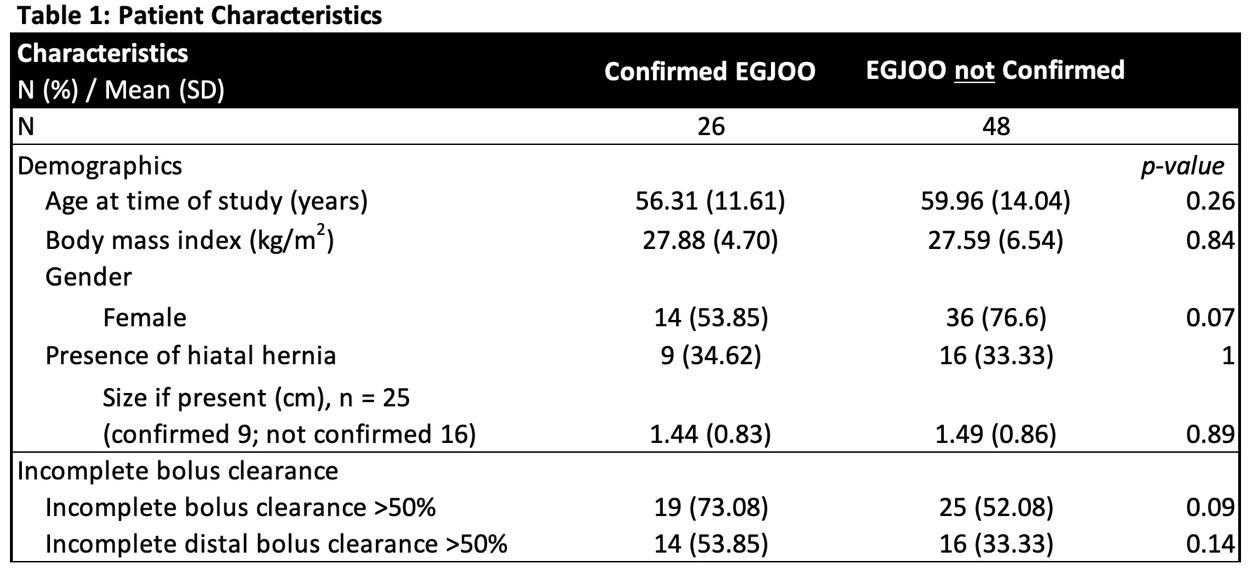
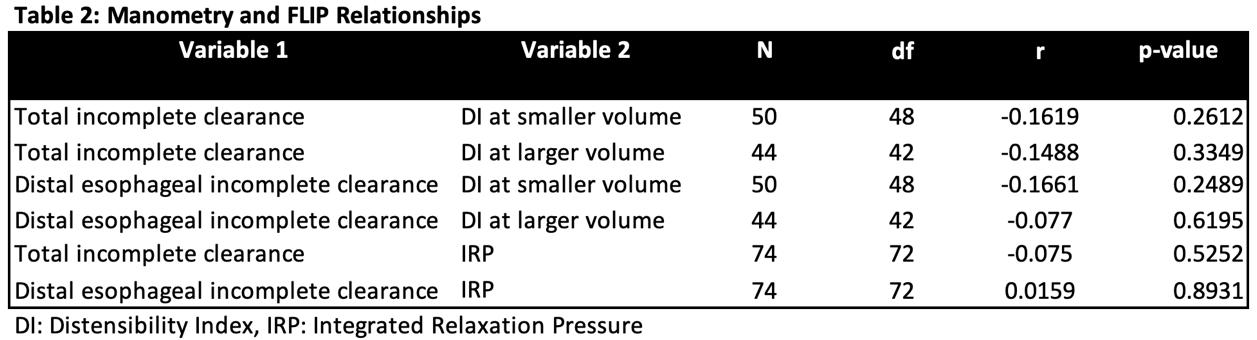
ABSTRACT #32
CLINICAL RESEARCH
GASTROENTEROLOGY
LOW RATES OF GASTRIC FOOD RETENTION DURING ENDOSCOPY IN PATIENTS ON GLUCAGONLIKE-PEPTIDE-1 RECEPTOR AGONISTS AT A LARGE ACADEMIC CENTER
Bharati Dev1, Brian Horwich2 , Yousaf Hadi2, Haley Waite 2 , Christopher Cao2 , Nicholas Hoerter2
1Mount Sinai Morningside-West Hospitals, Icahn School of Medicine at Mount Sinai, New York, NY, United States
2Mount Sinai Hospital, Icahn School of Medicine at Mount Sinai, New York, NY, United States
Published in Digestive Diseases and Sciences, 2025. PMID: 40021603
BACKGROUND/INTRODUCTION: Glucagon-like peptide-1 receptor agonist (GLP-1 RA) use has increased dramatically with indications for weight loss. This effect is partially due to delayed gastric emptying. This can lead to residual food in the stomach, which could increase the risk of aspiration during endoscopy. Because of this, societal and institutional guidelines recommend holding these medications or modifying diet preprocedurally. Failure to comply results in cancellations which delay care. The aim of this study is to document rates of gastric food retention during upper endoscopy in patients on GLP-1 RAs and to identify modifiable risk factors for food retention.
METHODS: A retrospective cohort study was performed at Mount Sinai Health System, New York, NY. Patients who underwent upper endoscopic procedures at 2 hospitals during 2018-2023 were divided into cohorts based on GLP-1 RA use. The primary endpoint was the rate of procedure abortion due to presence of food. Secondary endpoint was aspiration in patients with retainedfood. T-tests and chi square tests were performedfor continuous and categorical variables respectively. Stepwise binary logistic regression was performed with procedure abortion due to presence of food as a binary outcome to assess for any independent associations.
RESULTS: A total of 32,225 total upper endoscopic procedures were performed during the study period; 1023 procedures in patients taking GLP-1 RA’s (GLP-1 cohort). In total, 38 endoscopies (0.12%) were aborted due to retained gastric food; 8 patients (0.78%) in the GLP-1 cohort and 30 patients in the non GLP-1 cohort (0.10%). On univariate analysis, significantly higher proportion of patients with GLP-1 agent use were noted to have retained food (p<0.01). There was no significant difference in gastric food retention between the specific GLP-1 RA agents (p=0.73). There were no episodes of aspiration in GLP-1 patients with retained food. Among the GLP1 agent cohort, univariate tests revealed no association of gastric food retention with patient age (p=0.99), sex (p=0.69), BMI (p=0.17), inpatient versus outpatient procedure (p=0.93), presence of diabetes (p=0.24), procedure type (p=0.59), last HbA1C value (p=0.74), and prior day clear liquid diet and preparation for same day colonoscopy (p=0.93). Stepwise binary logistic regression with above variables as covariates did not reveal any independent significant associations.
CONCLUSION: In a large retrospective cohort, GLP-1 RA use did increase rates of gastric food retention during upper endoscopy, but the absolute risk was minimal. There were no aspiration events related to gastric food retention. There were no clear modifiable risk factors for gastric food retention. This study supports the practice of individualized peri-procedural management in patients on GLP-1 RA’s, and avoidance of onerous preprocedural guidelines.
ABSTRACT #33
CASE REPORT/CLINICAL REVIEW HEMATOLOGY/ONCOLOGY
A CYTOKINE STORM UNMASKED: EPSTEIN-BARR VIRUS-ASSOCIATED HEMOPHAGOCYTIC LYMPHOHISTIOCYTOSIS IN A PREVIOUSLY HEALTHY ADULT
Deepthi Devireddy1 , Benjamin Oseroff2, Alexander B. Karol2 , Regina Longley2, Leonard Naymagon2 , Nikolaos Spyrou2
1Mount Sinai Morningside-West Hospitals, Icahn School of Medicine at Mount Sinai, New York, NY, United States; 2Mount Sinai Hospital, Icahn School of Medicine at Mount Sinai, New York, NY, United States
BACKGROUND/INTRODUCTION: Hemophagocytic lymphohistiocytosis (HLH) is a rare, life-threatening syndrome of immune dysregulation caused by uncontrolled activation of cytotoxic lymphocytes and macrophages, leading to a hyperinflammatory state and multiorgan dysfunction. Epstein-Barr virus (EBV) is classically associated with infection of B lymphocytes in infectious mononucleosis but is also a rare but documented trigger of HLH, particularly in adults.
CASE PRESENTATION: A 37-year-old woman presented with three weeks of nausea, vomiting, and diarrhea. She was initially admitted for hyponatremia and acute kidney injury, but her status did not improve with IV fluids. She developed fever and sepsis, leading to acute tubular necrosis. Despite broad-spectrum IV antibiotics, she developed progressive renal failure requiring hemodialysis. She also developed worsening respiratory distress and encephalopathy and was intubated for airway protection.
During her ICU course, sedation was weaned in anticipation of extubation, but she remained comatose. Her course was further complicated by hemodynamic instability, with TTE showing a newly reduced ejection fraction of 25–30%. Labs showed elevated ferritin, triglycerides, and liver enzymes, as well as pancytopenia (HScore of 236, indicating a 98% probability of hemophagocytic syndrome). Body imaging revealed pulmonary edema, bulky lymphadenopathy, and hepatosplenomegaly. MRI brain showed minimal dural enhancement and her lumbar puncture was without evidence of infection or malignancy; her altered mental status was attributed to a possible cytokine storm. Infectious workup was notable for a positive EBV PCR (2150 IU/mL). Lymph node biopsy revealed EBV-infected cells without evidence of lymphoma, consistent with EBV-driven HLH. She was started on high-dose IV anakinra, high-dose steroids, and weekly rituximab. Her mental status improved after five days, allowing for extubation. With immunosuppressive therapy, her ferritin and liver function tests downtrended. She had partial renal recovery but remained dialysis-dependent at discharge.
CONCLUSION: This case illustrates the fulminant course of EBV-associated HLH, which may mimic sepsis or lymphoma, and can rapidly progress to multiorgan failure even in previously healthy adults. Unlike classic infectious mononucleosis, where EBV affects B cells, EBV-HLH may be driven by infection of T or NK cells, resulting in a severe cytokine storm. High EBV DNA loads in T cells, particularly above 1.5 × 10⁴ copies/106 cells, are correlated with viral sepsis and organ dysfunction. Neurologic involvement occurs in about one-third of HLH cases and often signals severe disease, while cardiac complications like myocardial stunning and heart failure may arise secondary to cytokine-mediated capillary leak. Defining features include severe systemic inflammation, multiorgan failure, and elevated inflammatory markers (ferritin, triglycerides, and inflammatory cytokines), but predictive factors remain poorly defined. The clinical presentation of HLH can closely mimic lymphoma, particularly when bulky lymphadenopathy is present, making tissue sampling essential for accurate differentiation. Neoplasia-associated HLH is correlated with high mortality, but non-neoplastic EBV-HLH can respond well to immunosuppressive therapy. An HScore can help quantify the diagnostic likelihood of secondary HLH, as in this patient. This case highlights the importance of early recognition and prompt initiation of immunosuppressive therapy, such as anakinra, rituximab, and steroids, which can lead to favorable outcomes even in critically ill patients.
ABSTRACT #34
QUALITY IMPROVEMENT
GENERAL INTERNAL MEDICINE
IMPROVING TDAP VACCINATION RATES THROUGH AUTOMATED PATIENT OUTREACH: A MULTIPRACTICE QUALITY INITIATIVE
Arshdeep Dhaliwal1 and Stephanie Wang1
1Mount Sinai Morningside-West Hospitals, Icahn School of Medicine at Mount Sinai, New York, NY, United States Presented at the Society of General Internal Medicine (SGIM) Annual Meeting that was held in Washington, DC, United States from May 6-9, 2026.
BACKGROUND: National pertussis incidence rose nearly fivefold from 2023 to 2024 with parallel increases in mortality, despite the disease being almost entirely vaccine preventable. Adult Tdap coverage remains low even with ACIP recommendations, and immunity to pertussis wanes within a few years, leaving large gaps in adult protection until the routine 10-year Td/Tdap booster is given. At three Mount Sinai Faculty Practices, baseline electronic health record (EHR) review showed 15,304 unvaccinated adults (51.5%) of 29,721 patients. Persistent structural, cultural, and system-level barriers continue to limit adult vaccination uptake, underscoring the need for scalable interventions in diverse urban populations.
METHODS: We conducted a multi-site quality improvement intervention using a population-based outreach strategy. The intervention consisted of two digital patient portal messages sent 3 months apart and mailed letters for patients without portal access, highlighting rising pertussis incidence, the importance of adult Tdap vaccination, and insurance-specific guidance. We also added Tdap reminder to the EHR Health Maintenance module. The predefined goals were a 3% increase in vaccination rates at 6 months and 6% at 12 months. Preand post-intervention vaccination rates were compared using a chi-square test of independence.
RESULTS: Tdap vaccination data from October 2025 were compared with baseline rates from March 2025 (n=62,373). Overall, the number of vaccinated adults increased from 14,417 to 17,081 (3.8%, p<0.05). Significant improvements were observed across all major demographic groups. Among white patients, vaccinated counts increased from 7,109 to 8,303 (3.6%, p<0.05), and among black patients from 1,996 to 2,343 (5%, p<0.05). English-speaking patients showed a substantial increase from 13,927 to 16,516 (3.79%, p<0.05), with similar gains among Spanish-speaking patients (405 to 465, 4.67%, p<0.05). Vaccination also increased among females (6,763 to 7,797, 4.36%, p<0.05) and males (3,486 to 4,152, 4.73%, p<0.05). Agestratified analyses demonstrated increases in adults 18–49 (7,018 to 7,980, 2.37%, p<0.05), adults 50–64 years (4,748 to 6,000, 4.35% p<0.05), and adults ≥65 years (3,951 to 4,693, 4.03% p<0.05). Across all groups, the intervention was associated with meaningful improvements in Tdap vaccination uptake
CONCLUSION: This multi-site QI initiative showed that population-based digital outreach supplemented by mailed letters and EHR reminders produced a meaningful 3.8% absolute increase in adult Tdap vaccination within seven months across all demographic groups. These low-cost, scalable interventions were well-received by patients and may inform similar efforts to improve uptake of other adult vaccines.
ABSTRACT #35
CLINICAL RESEARCH
GASTROENTEROLOGY
BEYOND MALABSORPTION: METABOLIC AND HEPATIC CONSEQUENCES OF OVERLAPPING CELIAC DISEASE AND INFLAMMATORY BOWEL DISEASE, A COMPARATIVE COHORT ANALYSIS
Carlos G. Diola1, Jessica Lim1, Bharati Dev1 , Yoni Israel2, Alexandria Markley1, Christopher Cao3
1Mount Sinai Morningside-West Hospitals, Icahn School of Medicine at Mount Sinai, New York, NY, United States; 2Icahn School of Medicine at Mount Sinai, New York, NY, United States; 3Mount Sinai Hospital, Icahn School of Medicine at Mount Sinai, New York, NY, United States
Submitted to Digestive Disease Week (DDW) Annual Meeting that was held in Chicago, Illinois, United States from May 2-5, 2026.
BACKGROUND/INTRODUCTION: Celiac disease (CeD) and inflammatory bowel disease (IBD), including Crohn’s disease (CD) and ulcerative colitis (UC), share overlapping immune-mediated pathways, chronic inflammation, and malabsorption that predispose patients to metabolic complications. Although CeD was historically associated with low BMI and malnutrition, contemporary cohorts show a shifting phenotype, with 11–19% presenting overweight and 6–18% with obesity, while underweight status has fallen to ~5% (Reidy et al., 2025). Adherence to a gluten-free diet, the cornerstone of CeD therapy, has also been linked to increased intake of saturated fats and refined carbohydrates, contributing to rising rates of metabolic syndrome, which may increase from 4.3% to 21.3% after diet initiation. CeD additionally confers increased risk for metabolic dysfunction–associated fatty liver disease, with prevalence rising from 18.2% to 28.2% after gluten-free initiation (Aggarwal et al., 2024). Given that IBD independently contributes to metabolic dysfunction through systemic inflammation and nutrient malabsorption, it is unclear whether individuals with dual CeD+IBD experience a synergistic risk for metabolic disease. Elucidating this relationship is essential for optimizing screening strategies and long-term management.
METHODS: We conducted a retrospective cohort study across the Mount Sinai Health System (New York City), including 340 adults, stratified into four groups: CeD (n=85), CD (n=85), UC (n=85), and dual CeD+IBD (n=85). Extracted variables included demographics; hemoglobin A1c; micronutrients; albumin; aspartate aminotransferase and alanine aminotransferase levels; high-density and low-density lipoprotein concentrations; hematologic indices; and hepatic outcomes, including steatosis, and the fibrosis-4 index. Rates of comorbid primary hypertension were also recorded. Group differences were assessed using one-way analysis of variance (ANOVA)
RESULTS: Across groups, the one-way ANOVA demonstrated significant differences in metabolic and hepatic parameters. BMI differed by group (p=0.006), with isolated CeD demonstrating higher BMI than dual CeD+IBD, suggesting greater inflammatory and malabsorptive burden in the dual-diagnosis cohort. Albumin also differed significantly (p<0.0001), with lower levels in IBD and CeD+IBD compared with CeD alone. Fibrosis-4 index scores also differed across groups (p=0.003), underscoring the increased risk for hepatic fibrosis
CONCLUSION: Significant differences in metabolic and hepatic parameters indicate that patients with dual CeD+IBD may experience heightened susceptibility to hepatic fibrosis and metabolic disruption, despite lower BMI. This supports a possible synergistic inflammatory effect leading to greater malabsorption and hepatic vulnerability and highlights the need for targeted screening in this group
ABSTRACT #36
QUALITY IMPROVEMENT
ENDOCRINOLOGY/GENERAL INTERNAL MEDICINE
EQUITABLE
Suma Gondi1 , Paige Dixon2 , Madeleine Rouviere1 , Camilla Levister1, Nirali A. Shah1 , Carol J. Levy1 , Grenye O’Malley1
1Mount Sinai Hospital, Icahn School of Medicine at Mount Sinai, New York, New York, United States; 2Mount Sinai Morningside-West Hospitals, Icahn School of Medicine at Mount Sinai, New York, NY, United States Presented at the American Diabetes Association (ADA) Scientific Sessions that was held in Chicago, Illinois, United States from June 20-23, 2025.
BACKGROUND/INTRODUCTION: Inequity in access to diabetes technology such as continuous glucose monitors (CGM) and automated insulin deliverysystems (AID) leadsto lower adoption inminority andlow-income groups. In our urban academic health system, some sites integrate all payors while others have separate clinics for private versus public insurance. We aim to compare tech use between these two models and track responses to quality improvement interventions.
METHODS: We reviewed EHR data from July 2023-2024 and identified barriers with provider surveys and patient interviews. We implemented four QI cycles using Plan, Do, Study, Act focusing on endocrine fellows, certified diabetes care educator specialists (CDCES), patients, and preceptors including shared prescriber resources, lectures, patient-friendly handouts, CDCES referrals for tech conversations, preceptor flags for tech use, and automated outreach to non-tech users.
RESULTS: Baseline data showed tech use was higher at the combined site for all payors (CGM 87% versus 74%; AID 58% versus 46%), with more inequity between payors at the split site (split AID Medicaid 41% versus commercial 55%; combined Medicaid 61% versus commercial 64%). Odds of CGM were significantly lower for Black race (OR, 0.5), Medicaid (OR, 0.38), and Medicare (OR, 0.42); for AID lower for Black race (OR, 0.45), Medicaid (OR, 0.58), and age >65 years (OR, 0.38). Odds of A1C >8 were significantly higher with Black race (OR, 1.6) and Medicaid (OR, 2.2) and lower with White race (OR, 0.39), CGM (OR, 0.42), and AID (OR, 0.54). Barriers included low provider comfort in prescribing tech, short visits, and variable continuity. After quality improvement interventions, fellow prescribing comfort and CDCES referrals increased, with patient education materials driving prescribing conversations.
CONCLUSION: Tech usage differed between sites, most notably for patients with public insurance. After identifying barriers to usage, we have implemented interventions to address bias and education with uptake in CDCES referrals and prescribing patterns.
ABSTRACT #37
CASE REPORT/CLINICAL REVIEW GASTROENTEROLOGY
Max Edeson1 , Meghana Pandit1 , Teresa Brown1
1Mount Sinai Morningside-West Hospitals, Icahn School of Medicine at Mount Sinai, New York, NY, United States
BACKGROUND/INTRODUCTION: Upper gastrointestinal bleeding (UGIB) is defined as bleeding proximal to the ligament of Treitz causing hematemesis, melena, or hematochezia in massive bleeding. Some patients may present with occult bleeding and symptomatic anemia without overt signs bleeding. UGIB is a common cause of hospitalization in the United States, with an incidence of roughly 65 per 100,000 people per year, more commonly affecting the elderly and males. Most UGIB arise from ulcerative or erosive, while vascular (including portal hypertension/varices, angioectesia, and dieulafoy lesions), mass-related, or traumatic causes (hiatal hernia, Mallory-Weiss tear, post-surgical) are far less common. In 10–15% of patients, no definitive bleeding source is identified on endoscopy.
Initial evaluation emphasizes assessment of hemodynamic stability, bleeding severity, comorbidities, and medication use. A detailed history should address risk factors such as liver disease, NSAID use, prior GIB, and alcohol/drug use, as well as anticoagulant or antiplatelet therapy. Overall, the etiology of UGIB is diverse, and clinical features alone are often insufficient to determine the cause. Endoscopy remains the diagnostic modality of choice and guides management in most patients, assuming hemodynamic stability is established.
CASE PRESENTATION: A 63-year-old-female with a past medical history of hypertension, hyperlipidemia, diverticulitis status post resection, osteoarthritis status post bilateral hip replacement presenting with complaints of dark tarry stools (10 times including once in the ED) for the past 2 days associated with abdominal pain. She described the pain as epigastric and non-radiating. The patient reported feeling palpitations, fatigue, shortnessof-breath and light-headedness when standing which prompted her to present to the ED. She denied having fever/chills, chest pain, nausea/vomiting, dysphagia, hematemesis or coffee ground emesis, diarrhea, constipation, hematochezia, other change in bowel habits or urinary symptoms. She reported having dark stool (melena) in the past which never lasted longer than a day and had never been evaluated for this complaint prior to this presentation. Notes she has a history of chronic NSAID use for osteoarthritis - uses minimum 2-3x/w. She denies recent travel and has never been tested for H Pylori; denies recent weight loss or appetite changes; denies history of anticoagulation/antiplatelet, oral iron, or Pepto-Bismol use. She vapes marijuana nightly but denies smoking, alcohol or other recreational drug use. She was scheduled for a colonoscopy in 1 month with normal scopes in the past and had no prior EGD.
In the ED, the patient was hemodynamically stable; on exam she had pallor, epigastric tenderness, and her DRE was positive for melena and 2 external, non-bleeding hemorrhoids. Hgb was 8.6 from baseline ~13, and other basic labs were grossly normal; CTA was without active contrast extravasation but showed an extremely large paraoesophageal hiatal hernia with almost the entirety of her stomach in the chest cavity. She was given high dose intravenous PPI, her Hgb remained stable without need for transfusion, and she was kept NPO in preparation for EGD.
During the procedure, a standard upper endosope had to be replaced with a PCF TL scope to complete the exam due to the altered anatomy as a result of the large hiatal hernia. Her esophagus was extremely tortuous, and the Z-line was found 32 cm from the incisors. Multiple dispersed erosions with no stigmata of recent bleeding were found in the gastric body and one non-bleeding cratered gastric ulcer with a clean ulcer base (Forrest Class III) was found in the distal stomach. Due to the altered anatomy because of the large hiatal hernia, only a fleeting glimpse was obtained, and no interventions/biopsies were attempted. The remainder of the exam, including the ampulla, duodenal bulb, and first and second portions of the duodenum, was normal. She continued to have no
further melena or bleeding, and her vitals and hemoglobin remained stable. She was discharged with iron supplementation, PPI, and she was scheduled for outpatient GI follow up as well as surgical evaluation for hiatal hernia repair.
CONCLUSION: Hiatus hernia, or herniation of abdominal contents through the esophageal hiatus, is classified into sliding (type I) and paraesophageal (types II–IV) hernias. Type I hernias, which account for over 95% of cases, involve upward displacement of the esophagogastric junction, while paraesophageal hernias are true hernias with a peritoneal sac and may include the gastric fundus or other organs. Clinically hernias typically present with esophageal symptoms such as reflux, esophagitis, dysphagia, and regurgitation; more significant hernias can present with obstructive or other mechanical complications and rarely with bleeding from a Cameron's ulcer likely seen in this case. A Cameron's ulcer is an erosion from the mechanical friction of the hiatus putting pressure on the gastric mucosa as slides. This case is relevant not just for the severity of the defect but the rare manifestation of an ulcer especially for a defect of this size. Beyond preventing recurrent bleeding, cases such as this should always be referred to surgery to prevent obstruction or volvulus from occurring. There are very few documented cases of such a large defect and almost no discussions on the diagnostic complications that are posed by a large hiatal hernia like we found in this case. While the utility of CTA is still being discussed for UGIB, they can be useful in diagnosing rare causes of UGIB for patients with difficult anatomy, are not stable enough for an EGD, or had no identifiable bleed on EGD; this would allow for surgical consultation earlier in the clinical course and possibly prevent unnecessary complications.
ABSTRACT #38
CASE REPORT/CLINICAL REVIEW
HEMATOLOGY/ONCOLOGY
Tansu Eris1 and Gyuhee Seong2
1Mount Sinai Morningside-West Hospitals, Icahn School of Medicine at Mount Sinai, New York, NY, United States; 2UCLA Health, David Geffen School of Medicine at UCLA, Los Angeles, CA Presented at the Society of General Internal Medicine (SGIM) Annual Meeting that was held in Washington, DC, United States from May 6-9, 2026.
BACKGROUND: Pseudo-TMA is a rare manifestation of B12 deficiency characterized by hemolytic anemia, thrombocytopenia, and schistocytes. Proposed mechanisms include intramedullary hemolysis from fragile erythrocytes and homocysteine-mediated injury to hematopoietic cells. Pernicious anemia can present with severe pancytopenia, hemolysis, and schistocytes, closely mimicking acute leukemia, myelofibrosis, autoimmune hemolytic anemia, or true TMA.
CASE PRESENTATION: A 25-year-old man with a history of vitiligo presented with two weeks of fatigue, exertional dyspnea, and lightheadedness. He was tachycardic but otherwise hemodynamically stable, with conjunctival pallor and no hepatosplenomegaly, lymphadenopathy, jaundice, or bleeding stigmata. Laboratory evaluation revealed macrocytic anemia with pancytopenia, indirect hyperbilirubinemia, markedly elevated LDH, low haptoglobin, and normal coagulation studies. Vitamin B12 was <148 pg/mL with normal folate. The infectious workup was negative. Peripheral smear demonstrated hypersegmented neutrophils, RBC agglutination, rare schistocytes, and teardrop cells, raising concern for marrow infiltration or thrombotic microangiopathy. Given the patient’s history of vitiligo, autoimmune etiologies were considered, and anti-intrinsic factor and anti-parietal cell antibodies were sent. Bone marrow biopsy showed no evidence of hematologic malignancy. The autoantibodies later returned positive, confirming pernicious anemia. He received transfusions and initiated B12 therapy with clinical improvement.
CONCLUSION: Pancytopenia in a young adult warrants a broad differential, including nutritional deficiencies, autoimmune disease, infection, marrow infiltration, and hematologic malignancy. Severe vitamin B12 deficiency can closely mimic bone marrow failure syndromes and thrombotic microangiopathy, creating diagnostic uncertainty. Clinicians should maintain a high index of suspicion for B12 deficiency in young adults presenting with pancytopenia and apparent TMA.
ABSTRACT #39
CASE REPORT/CLINICAL REVIEW
CARDIOLOGY/HEMATOLOGY/ONCOLOGY
Mawwra Faryad1 , Dua Noor Butt1 , Shaharyar Ali2, Ali Aldamen4
1Mount Sinai Morningside-West Hospitals, Icahn School of Medicine at Mount Sinai, New York, NY, United States;
2Jefferson Health Medical Education/Jefferson Einstein Philadelphia Hospital, Philadelphia, PA, Unites States;
3Great Plains Health, North Platte, NE, United States
Presented at the American College of Cardiology (ACC) Annual Scientific Session that was held in New Orleans, Louisiana, United States from March 28-30, 2026.
BACKGROUND/INTRODUCTION: Primary cardiac sarcomas are rare and can be misdiagnosed as myxomas or intracardiac thrombi when tissue diagnosis is not obtained, leading to delays in definitive treatment. We report a case of a 24 year old pregnant woman with a left atrial mass initially presumed to be a left atrial myxoma.
CASE PRESENTATION: A 24-year-old female, G3P1, in her second trimester, was persistently tachycardiac while she was hospitalized for acute cough and fever. Transthoracic echocardiogram showed a 5.3 x 4.3 x 3.8 cm left atrial mass, arising from the interatrial septum. The patient underwent a lower segment cesarean section at 35 weeks for an enlarging atrial mass followed by mass resection. Pathology revealed undifferentiated, spindle-shaped cells, positive for actin, desmin, and CDK4, confirming high-grade sarcoma. The patient was readmitted a month later with vomiting and occipital headache; brain MRI showed a right cerebellar lesion with mass effect and multiple smaller lesions concerning metastasis. The larger mass was resected, confirming sarcoma on pathology. The patient was subsequently planned for chemotherapy and WBRT in outpatient settings.
CONCLUSION: Primary cardiac sarcomas are the second most common primary cardiac malignancy after myxomas and frequently involve the left atrium, making distinction between the two challenging on imaging alone. Nearly half of primary cardiac tumors are located in the left atrium, and malignant lesions can closely mimic atrial myxomas in echocardiographic appearance. Prompt recognition and histologic confirmation are crucial, as reported median survival remains poor, typically ranging from approximately 5 to 11 months even with combined surgery, chemotherapy, and radiotherapy.
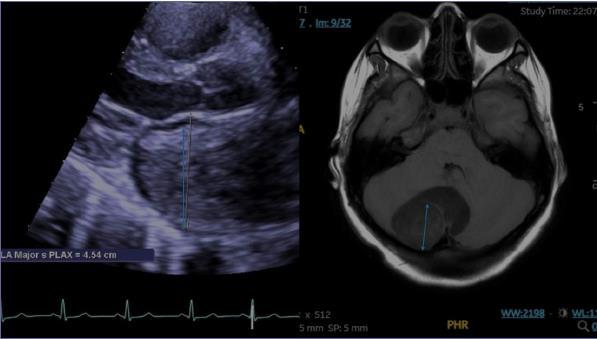
ABSTRACT #40
MEDICAL EDUCATION
GENERAL INTERNAL MEDICINE/PALLIATIVE CARE
Kimberly Fasciglione1 and Winston Wey2
1Mount Sinai Morningside-West Hospitals, Icahn School of Medicine at Mount Sinai, New York, NY, United States; 2Mount Sinai Hospital, Icahn School of Medicine at Mount Sinai, New York, NY, United States
BACKGROUND/INTRODUCTION: A Goals of Care (GOC) discussion is defined by the Ariadne Labs as, “A compassionate, clear conversation about patients’ priorities, values, and goals for care.” GOC discussions in the inpatient setting often happen at dire times during hospitalizations, often when the patient is unable to participate meaningfully in the discussions being held about their care. The ability to lead an effective GOC discussion is an important skill for residents to develop during their training. Earlier goals of care conversations, such as in the outpatient setting, can allow patients to have more input into the decisions made about their care. Increased comfortability in having these discussions may empower residents to have these conversations outpatient with their patients, prior to or following hospitalizations, to establish the patient’s wishes before it needs to be assumed in an emergency.
METHODS: A fifty-minute didactic session was created with a focus on outpatient GOC discussions. This session was given to PGY-2s and PGY-3s during their clinic block. Topics discussed included when to consider having outpatient goals of care discussions; which patients it may be most important in, such as those with progressive conditions; how to create a “headline,” which is a brief summary of medical issues and what those issues may mean for the patient; providing a framework for having these discussions utilizing the Reframe, Expect emotion, Map out goals, Align with goals, and Propose plan (REMAP) acronym; how to document and bill for goals of care discussions; how to properly complete Healthcare Proxy (HCP) and Medical Orders for Life Sustaining Treatment (MOLST) forms. Fifteen minutes were allotted for practice during the session using sample cases, in which residents joined in groups of three, each alternating acting as the patient, provider, and observer. At the conclusion of the didactic session, a survey was given to residents.
RESULTS: 80 residents completed the post-session survey. Residents reported that prior to this session, 31.3% had previous formal goals of care training, 46.3% had limited goals of care training, and 22.5% had not had prior goals of care training. Residents reported prior to receiving the training, only 25% felt comfortable or very comfortable performing GOC discussions in the outpatient setting. Following the training, 75% of residents reported feeling comfortable or very comfortable in their ability to perform outpatient GOC discussions. Following the session, 99% of residents responded that they would consider incorporating advanced care planning into their outpatient visits. Residents reported the largest barriers they faced to having GOC discussions in the outpatient setting included lack of time, language barrier, their personal relationship with the patient, and their own personal comfort.
CONCLUSION: Formal goals of care training is imperative in medical residency. Providing a framework and practicing these discussions can increase resident comfortability and thus, the subjective likelihood that residents can perform these conversations on their own. Completion of healthcare proxy forms and/or MOLST forms helps ensure a trusted person can help make medical decisions for patients, in the case they are unable to. This is a fast but important intervention that can be completed in the outpatient setting to help improve patient outcomes in critical illness and at end of life. Lack of adequate time to have serious discussions is a significant barrier to the initiation of these conversations in the outpatient setting.
ABSTRACT #41
CASE REPORT/CLINICAL REVIEW NEPHROLOGY
RENAL POTASSIUM WASTING FROM ABIRATERONE-INDUCED MINERALOCORTICOID EXCESS SYNDROME
Triana Fernandez1, Tamara Morduchowitz1, Maya Fakhoury1, Ruchika Batwara1 1Mount Sinai Morningside-West Hospitals, Icahn School of Medicine at Mount Sinai, New York, NY, United States Presented at the American Society of Nephrology (ASN) Kidney Week that was held in Houston, Texas, United States from November 6-9, 2025.
BACKGROUND/INTRODUCTION: Abiraterone, a CYP17A1 inhibitor used to treat metastatic prostate cancer, suppresses cortisol and androgen synthesis while increasing mineralocorticoid precursors such as deoxycorticosterone, leading to features of mineralocorticoid excess like hypertension and renal potassium wasting. Glucocorticoids are co administered to suppress ACTH and mitigate these effects. We present a case of severe, persistent hypokalemia due to inadequate steroid replacement in a patient on chronic abiraterone therapy.
CASE PRESENTATION: A 78-year-old male with metastatic prostate cancer on androgen deprivation therapy since 2020, was admitted for severe hypokalemia. His medications included abiraterone and prednisone 5 mg daily. His BP was 160/75, and physical examination was unremarkable. Labs showed potassium 2.2 mEq/L, magnesium 1.6 mg/dL, phosphorus 1.4 mg/dL, and metabolic alkalosis (pH 7.46, HCO3- 30 mEq/L). The hypokalemia was initially attributed to refeeding syndrome, but it persisted despite aggressive potassium repletion and correction of other abnormalities. Historical labs revealed recurrent hypokalemia (nadir 3.0 mEq/L). Hormonal evaluation showed suppressed AM cortisol (2.6 mcg/dL), with normal ACTH (16 pg/mL), renin (0.176 ng/mL/hr), and aldosterone (9.7 ng/dL). Urine potassium was 36.9 mEq/L with concurrent serum potassium of 3.6 mEq/L, yielding a TTKG of 6, consistent with renal potassium wasting. Increasing the prednisone dose to 5 mg twice daily led to normalization of serum potassium without further need for potassium supplementation.
CONCLUSION: This case highlights the importance of recognizing abiraterone-induced mineralocorticoid excess as a cause of persistent hypokalemia. In our patient, although ACTH was not elevated as would be expected with low serum cortisol, its suppression was likely due to chronic steroid therapy. The initial prednisone dose was inadequate, and a higher dose was needed to fully suppress ACTH and downstream mineralocorticoid production. Clinicians should maintain a high index of suspicion for this syndrome and routinely evaluate the adequacy of steroid co-administration in patients receiving abiraterone.
ABSTRACT #42
CLINICAL RESEARCH
HEMATOLOGY/ONCOLOGY
COMPARING THE ACCURACY OF NATURAL LANGUAGE PROCESSING LABELLING VERSUS MANUAL CHART REVIEW AND ICD-10 CODES TO IDENTIFY BLEEDING EVENTS IN PATIENTS WITH CANCER
Thomas F. Fusillo1,2, Avi Leader2 , Rohan Singh2, Andriy Derkach2, Kayan Irani2, Bhaskar Bose2, Helen Ajufo3 , Adam Schoenfeld2, Simon Mantha2, Jeffrey I Zwicker2
1Mount Sinai Morningside-West Hospitals, Icahn School of Medicine at Mount Sinai, New York, NY, United States; 2Memorial Sloan Kettering Cancer Center, New York, NY, United States; 3Washington University, St. Louis, MO, United States
Presented at the American Society of Hematology (ASH) Annual Meeting that was held in Orlando, Florida, United States from December 6-9, 2025.
BACKGROUND/INTRODUCTION: Identifying bleeding events in the electronic health record (EHR) is challenging and often requires laborious manual chart review. While natural language processing (NLP) models are commonly utilized to identify thrombotic events, these models are less frequently employed to identify major bleeding (MB) or clinically relevant non-major bleeding (CRNMB) events. We sought to compare the sensitivity and specificity of an NLP pipeline and graphical user interface, Clinical Event Detection and Recording System (CEDARS), with those of manual chart review and International Classification of Diseases (ICD) 10 codes for the identification of bleeding events in patients with cancer.
METHODS: CEDARS is an NLP pipeline and interface that uses predetermined keywords to identify potential clinical events in the EHR. In the case of a bleeding endpoint, the user first uploads an EHR corpus into the web interface and enters a Boolean query containing relevant keywords (e.g. “bleed* OR hemorrhage OR epistaxis, …” etc.). CEDARS automatically processes individual patient records by splitting documents into sentences and presents only documents with at least one sentence matching the query. Sentences where keywords are negated are also removed. The user then reviews the selected documents from within the interface and enters required labels (i.e. bleeding type, bleeding site, and date of occurrence).
This study included a subgroup of patients from a retrospective cohort study on bleeding events in lung cancer patients receiving therapeutic anticoagulation (AC) and chemotherapy, EGFR inhibitors, or VEGF inhibitors at Memorial Sloan Kettering Cancer Center (MSKCC) from 2012 to 2022. Patients were indexed on the first day of concurrent AC and anti-neoplastic therapy and were censored for MB, discontinuation of AC or antineoplastic therapy (60 days after last prescription), end of 12-month follow-up, or death.
All documentation in the EHR within the index period was manually reviewed by a physician to identify MBs and CRNMBs, as defined by the International Society on Thrombosis and Haemostasis (ISTH). All patients were then reviewed by a second physician using CEDARS to identify MBs and CRNMBs. Finally, a third physician was blinded to the previous event determinations and was only given the dates of bleeding events identified by both the manual and CEDARS methods and reviewed each chart to adjudicate each bleeding event and create a “gold standard” record of bleeding events. ICD codes indicative of bleeding events (not stratified for MB or CRNMB) and previously validated were also extracted from the EHR (Joos et al., 2019).
RESULTS: The study included 293 patients with an average follow-up of 8.2 months and an average of 112 notes per patient. CEDARS flagged an average of 43 sentences containing keywords per patient. The gold standard identified 64 (22%) total bleeding events, including 33 (11%) MBs and 31 (11%) CRNMBs, and 229 (78%) patients experienced no bleeding events. ICD-10 codes identified a total of 30 bleeding events for a sensitivity of 47% (95%CI, 34-60%) and specificity of 90% (95%CI, 85-94%).
Manual review identified a total of 40 bleeding events for a sensitivity of 63% (95%CI, 50-93%) and specificity of 96% (95%CI, 93-98%). The manual review correctly identified 9 MBs for a sensitivity of 27% (95%CI, 13-46%) and specificity of 100% and correctly identified 23 CRNMBs for a sensitivity of 74% (95%CI, 55-88%) and specificity of 94% (95%CI, 90-96%). The NLP-assisted review identified a total of 53 bleeding events for a sensitivity of 83% (95%CI, 71-91%) and specificity of 97% (95%CI, 93-99%). NLP review correctly identified 23 MBs for a sensitivity of 70% (95%CI, 51-84%) and specificity of 99% (95%CI, 96-100%) and correctly identified 20 CRNMBs for a sensitivity of 65% (95%CI, 45-81%) and specificity of 95% (95%CI, 91-97%).
CONCLUSION: Processing EHR corpora with NLP has the potential to improve the accuracy of chart extraction to identify hemorrhagic events. This NLP-assisted review was effective in identifying overall bleeding events and major bleeding events, as well as in reducing the amount of research labor required. The NLP-assisted review also was superior to ICD-10 codes alone. However, identification of clinically relevant non-major bleeding events by retrospective chart review remains challenging regardless of modality.
ABSTRACT #43
QUALITY IMPROVEMENT
PULMONARY/CRITICAL CARE
UTILIZING PATIENT PORTAL CHECK-IN TO AUTOMATE
ENHANCE PROVIDER ENGAGEMENT
Vincent Gallub1, Lloyd Muzangwa1, Linda Rogers2 , Boram Kim1
1Mount Sinai Morningside-West Hospitals, Icahn School of Medicine at Mount Sinai, New York, NY, United States; 2Mount Sinai Hospital, Icahn School of Medicine at Mount Sinai, New York, NY, United States Presented at the American Thoracic Society (ATS) Annual Meeting that was held in Orlando, Florida, United States from May 15-20, 2026.
BACKGROUND/INTRODUCTION: Patient-reported measures are guideline-recommended for assessing asthma control. The Asthma Control Test (ACT) is a validated, self-administered questionnaire assessing asthma control over the prior four weeks but remains underused in ambulatory care. This quality improvement initiative aimed to increase pre-visit ACT completion by embedding an automated questionnaire in the patient portal check-in with structured capture and real-time use by providers in the electronic medical record (EMR).
METHODS: We implemented an EMR-integrated, portal-based ACT for pre-visit online check-in across multiple outpatient pulmonary clinics within a large urban health system. Responses were written to a structured flowsheet and were retrievable in notes via a smart phrase. All providers were notified of this process and advised to incorporate the ACT into their workflow and documentation. We conducted a pre- and post-intervention chart review of adult asthma visits to evaluate the utility of the ACT in the clinical encounter. The primary outcome was ACT completion with clinician documentation. We also summarized patient portal (MyChart) activation and sociodemographic characteristics (age, sex, race/ethnicity, insurance).
RESULTS: A total of 114 adult asthma visits were analyzed. ACT documentation increased from 12% preintervention to 29% post-intervention, an absolute increase of 17% and a 2.4-fold relative improvement. Patient portal (MyChart) activation was high (89%). The cohort was older (mean age 64 ± 15 years; median 65 years, IQR 57.5-72.5) with 9% aged <40 years, 39% aged 40-64 years, and 52% aged ≥65 years. Women comprised 70% and men 30%. Insurance coverage was 46% Medicare, 32% Medicaid, and 22% Commercial/Private. By race/ethnicity, the cohort was 28% White, 25% Black/African American, 6% Asian, 1% Native Hawaiian/Other Pacific Islander, 35% Other/Hispanic or Latino, and 5% Unknown/Declined.
CONCLUSION: Embedding an automated, portal-based ACT into pre-visit check-in across multiple outpatient Pulmonary clinics was associated with a meaningful early improvement in ACT documentation within a socioeconomically disadvantaged population with variable clinic attendance. Portal enablement was a principal driver of reach. Although capture remained below guideline targets, this early-phase evaluation establishes a scalable, low-burden process via structured flowsheet capture, smart-phrase retrieval, and operational patient reminders that can be deployed system-wide and adapted as guideline-oriented quality metrics evolve. Future interventions include targeted provider education on the importance of patient-reported questionnaires for symptom assessment and driving guideline-concordant care. Next steps include multilingual prompts, point-ofcare portal activation, text-message/kiosk fallbacks for non-portal users, and prospective linkage of ACT completion to treatment adjustments and outcomes to drive sustained, equitable improvements in asthma care quality.
ABSTRACT #44
CASE REPORT/CLINICAL REVIEW
CARDIOLOGY
Allen Gee1, Komail Jafri1 , Abel Casso Dominguez1
Mount
Sinai Morningside-West Hospitals, Icahn School
of Medicine at Mount Sinai, New York, NY, United States
BACKGROUND/INTRODUCTION: Apical hypertrophic cardiomyopathy (ApHCM) is an uncommon variant of hypertrophic cardiomyopathy (HCM), accounting for approximately 3–10% of cases in the population. ApHCM can be classified into three groups: isolated (apex only), mixed (apical and septal hypertrophy), or relative forms, which is characterized by precordial T-wave inversions and loss of normal apical tapering due to disproportionate apical hypertrophy. Compared to classic HCM, ApHCM is often more sporadic, having fewer associated sarcomere gene mutations and a greater incidence of atrial fibrillation. While ApHCM was typically thought to have fewer adverse outcomes compared to ApHCM, more recent studies have found worse long-term prognosis in ApHCM patients, especially with underlying coronary artery disease or poor hypertrophy distribution.
CASE PRESENTATION: A 24-year-old male graduate student with no significant past medical history presents with 2 days of substernal chest pain. He recently had a 16-hr non-stop car drive from Georgia to New York. Chest pain was sharp, pleuritic in nature, centrally located and non-radiating, but he did not endorse any additional symptoms. Patient denied recent hospitalizations, surgical history, or medication use. Patient denied alcohol, tobacco, and illicit drug use. Family history was significant for extensive cardiovascular disease, including coronary artery disease requiring coronary artery bypass grafting in multiple relatives, and a remote history of sudden cardiac death in his great grandmother. In the emergency department, vital signs were stable, D-Dimer negative, CBC, CMP, VBG were normal, Flu, COVID and RPP were negative, and troponins peaked at 75. EKG was performed and exhibited Precordial and Lead I and II T wave inversions and left ventricular hypertrophy (Sokolow Lyon and Cornell Product) Patient was loaded with 325mg of ASA and admitted to the hospital for further cardiac work up. While inpatient, he underwent a transthoracic echocardiogram that demonstrated apical hypertrophy, with a maximal wall thickness in mid septum of 1.8 cm. His chest pain also resolved on the first night of admission; however, he continued to have intermittent episodes of chest discomfort without objective laboratory changes. By hospital day two, the patient was considered stable for discharge with recommendation to undergo a cardiac magnetic resonance imaging (cMRI) and was arranged for close follow-up with an outpatient cardiologist.
Outpatient, the cMRI demonstrated a maximum wall thickness 2.5 cm in the mid septum, a large amount of transmural patchy Late Gadolinium Enhancement (LGE) of the left ventricle in the basal septum and throughout all the mid and apical segments with LGE burden >25% of the myocardium. Subendocardial LGE was also noted in the mid to apical segments. Additionally, there is evidence of flow acceleration in the outflow tract with systolic anterior motion (SAM) of the mitral valve, a key finding seen in HCM. Following the imaging study, the patient was initiated on atenolol.
The patient was then referred to an electrophysiologist who recommended a Holter monitor, which did not show any significant events. Using the data collected, the patient’s AHA cardiomyopathy 5-year risk calculator resulted in a 4.37% risk for mortality. After shared decision-making between the patient and medical team, the patient underwent placement of an implantable cardioverted defibrillator (ICD) for secondary prevention.
CONCLUSION: This case underscores the diagnostic and prognostic significance of apical hypertrophic cardiomyopathy in young adults presenting with chest pain, electrocardiographic abnormalities, and low-level troponin elevation in the absence of acute coronary syndrome. Cardiac magnetic resonance imaging played a pivotal role in phenotypic characterization and risk stratification by demonstrating extensive late gadolinium
enhancement, a marker of adverse myocardial remodeling and increased arrhythmic risk. Long-term management of ApHCM focuses on symptom control with beta-blockers or non-dihydropyridine calcium channel blockers, routine rhythm surveillance, and individualized assessment of sudden cardiac death risk. In patients with high-risk imaging features or elevated calculated risk, shared decision-making regarding implantable cardioverter-defibrillator placement is essential for secondary prevention, in conjunction with lifestyle counseling and close longitudinal follow-up.
ABSTRACT #45
MEDICAL EDUCATION
PULMONARY/CRITICAL CARE
INCORPORATING DELIBERATE PRACTICE INTO THORACIC POINT OF CARE ULTRASONOGRAPHY CURRICULUM
Karen Go1, Kyle Reichard1, Akhil Vaid1, Adam Rothman1
1Mount Sinai Morningside-West Hospitals, Icahn School of Medicine at Mount Sinai, New York, NY, United States Presented at the Institute for Medical Education (IME) Annual Education Research Day that was held in New York, New York, United States on April 21, 2026.
BACKGROUND/INTRODUCTION: Deliberate practice is a well-established educational strategy using systematic repetition with immediate feedback shown to promote mastery in point-of-care ultrasonography (POCUS). Despite the clinical utility of POCUS, resident education is limited by time constraints, curricular demands, and lack of expert instructors. This project aimed to integrate deliberate practice into a thoracic POCUS curriculum to improve resident image interpretation competency and confidence via a large group didactic session.
METHODS: We delivered separate 1-hour thoracic POCUS seminars to internal medicine interns and senior residents. Each session included a brief review of thoracic ultrasound fundamentals followed by a deliberate practice exercise in which learners interpreted ultrasound clips in real time across three domains: A-line versus B-line patterns, simple versus complex pleural effusions, and presence or absence of lung sliding (including lung point identification). Immediate feedback was provided after each clip, and learners self-graded their performance. Participants completed pre- and post-session surveys linked by unique identifiers for paired analysis. Surveys assessed confidence using Likert-scale items aligned with core thoracic ultrasound competencies, and collected knowledge-based responses, trainee level, and prior POCUS experience.
Likert responses were converted to numeric values, and a composite confidence score was calculated as the mean of all domain items. Internal consistency was assessed using Cronbach’s alpha. The primary outcome was learner change in composite confidence score, analyzed using the Wilcoxon signed-rank test, with paired ttests conducted for completeness. Effect size was estimated using Cohen’s dz. Domain-level changes were analyzed with Holm-adjusted p-values to account for multiple comparisons. Exploratory analyses evaluated whether confidence gains differed by post-graduate year (PGY) or prior POCUS experience.
RESULTS: 61 participants completed both surveys. Composite confidence increased from a mean of 2.96 to 3.82 (+0.86 on a 5-point scale; p<0.001), with a large effect size (Cohen’s dz=1.22). All thoracic ultrasound domains showed significant improvement, with the largest gains observed in identification of A-lines, effusions, and overall image interpretation. Interns demonstrated greater gains than senior trainees, and learners without prior POCUS experience showed larger improvements than those with prior exposure (Cohen’s d=1.44).
CONCLUSION: Deliberate practice can be effectively integrated into a brief, large-group POCUS session and significantly improve learner confidence, with the greatest gains among novice learners. Limitations include reliance on self-reported confidence rather than objective performance outcomes. Further analysis is underway to determine the number of clips needed to ensure learner competency.
ABSTRACT #46
CLINICAL RESEARCH
PULMONARY/CRITICAL CARE
THE ASSOCIATION BETWEEN TELOMERE LENGTH AND PROGNOSIS IN INTERSTITIAL LUNG DISEASE: A SYSTEMATIC REVIEW AND META-ANALYSIS
Toshiro Goto1, Eriya Imai2,4, Jun Watanabe3,4, Vincent Gallub1, Mia Bolton1, Maria Padilla5, Nicole Ng5 1Mount Sinai Morningside-West Hospitals, Icahn School of Medicine at Mount Sinai, New York, NY, United States; 2Mitsui Memorial Hospital, Tokyo, Japan; 3Jichi Medical University, Tochigi, Japan; 4Scientific Research Works Peer Support Group, Osaka, Japan; 5Mount Sinai Hospital, Icahn School of Medicine at Mount Sinai, New York, NY, United States Presented at the American Thoracic Society (ATS) Annual Meeting that was held in Orlando, Florida, United States from May 15-20, 2026.
BACKGROUND: Telomere shortening is a proposed biomarker of accelerated lung aging and adverse outcomes across ILD subtypes. We synthesized the association between telomere length (TL) and outcomes in ILD.
METHODS: We conducted a comprehensive search of MEDLINE, EMBASE, CENTRAL, ClinicalTrials.gov, and ICTRP from inception through April 4, 2025. We included adults aged 18 years and older with ILD defined by ATS/ERS criteria with leukocyte or tissue TL measurement (primarily qPCR) and time-to-event outcomes. Two reviewers independently screened articles, extracted data, and assessed risk of bias with QUIPS. The primary outcome was overall survival (OS). The secondary outcomes were transplant-free survival (TFS) and forced vital capacity (FVC) change (mL/year). Hazard ratios (HRs) were reported. TL was analyzed as short versus reference (short TL typically <10th percentile). Random-effects models were used in analysis, and heterogeneity was quantified with I². HRs were reconstructed from Kaplan–Meier curves using Tierney methods when needed. Results reported as % predicted per year were standardized to mL/year, assuming predicted FVC of 3.0 L (1% predicted=30 mL). Subgroup and sensitivity analyses were performed. Methods adhered to PRISMA guidance and were prospectively registered. Protocol: OSF (DOI: 10.17605/OSF.IO/FDR48).
RESULTS: We included 17 studies comprising 6290 patients (OS: n=2593, TFS: n=3177, FVC change: n=2494). The meta-analysis showed that shorter TL was associated with higher mortality (OS: pooled HR, 2.51; 95%CI, 1.62–3.89; p<0.001; I²=70 %), worse TFS (HR, 2.72; 95%CI, 1.98–3.74; p<0.001; I²= 72%), and more rapid FVC decline (difference −67.36 mL/year; 95%CI, −111.47 to −63.25; p<0.001; I²= 33%).
DISCUSSION: Shorter TL is independently and consistently associated with worse survival and accelerated physiological decline across ILD subtypes. The heterogeneity likely reflects differences in ILD subtypes, transplant status, TL assays, and TL thresholds. Incorporating TL into risk stratification may refine prognostication, enrich clinical trial cohorts, and inform management. Alongside imaging and functional biomarkers, TL serves as a key molecular biomarker in ILDs.
CONCLUSION: Across IPF and non-IPF ILD, short telomeres can identify patients at increased risk of death, transplant, and faster disease progression, supporting TL testing as a pragmatic biomarker to guide individualized care.
ABSTRACT #47
CLINICAL RESEARCH
CARDIOLOGY/INFECTIOUS DISEASES
DIFFERENTIAL IMPACT OF COVID-19 VERSUS INFLUENZA IN HEART FAILURE WITH PRESERVED EJECTION FRACTION: ADVERSE OUTCOMES IN A SINGLE-CENTER RETROSPECTIVE COHORT STUDY
Joshua Guardia1 , Harrison Bonilla1, Esther Tsyngauz1, Komail Jafri1, Usman Saeedullah1 , Kiran Mahmood1 1Mount Sinai Morningside-West Hospitals, Icahn School of Medicine at Mount Sinai, New York, NY, United States Presented at the Society for Cardiovascular Angiography and Interventions Annual Meeting that was held in Montreal, Canada from April 23-25, 2026.
BACKGROUND/INTRODUCTION: In early December 2025, Influenza cases in New York (NY) showed an alltime high ever recorded in one week since Influenza was made reportable in 2004. At the same time, few cases of COVID-19 (COVID) hospitalizations were reported throughout NY. Most of the literature focuses on cardiovascular (CV) outcomes from COVID in heart failure with preserved ejection fraction (HFrEF) patients. Furthermore, there is minimal existing data directly comparing COVID and Influenza in HFpEF patients. With HFpEF prevalence increasing, respiratory viral infections warrant awareness of their severe CV outcomes.
METHODS: We conducted a retrospective cohort study using the TriNetX Research Network of Mount Sinai. Adult co-ed patients with established HFpEF were identified and stratified into two cohorts based on diagnosis of COVID-19 or influenza from January 2020 to December 2025. The index event was the date of viral infection. Patients were followed for clinical outcomes after infection. Primary outcomes included all-cause mortality and heart failure hospitalization. Secondary outcomes included ICU admission, cardiogenic shock, and arrhythmias. Propensity score matching was performed to balance baseline demographics and comorbidities. Outcomes were assessed within pre-specified post-infection time windows.
RESULTS: Among 1,080 patients, older patients with a mean age of 72 years old were more likely to be infected with COVID than influenza. Compared with influenza, COVID patients with HFpEF showed a significant higher risk of all-cause mortality (RR, 3.129; OR 4.710; p<0.007). COVID patients had a higher risk of heart failure exacerbation (RR, 3.833; OR, 5.935; p<0.0001). Also, COVID patients had higher risk of ventricular arrhythmias (RR, 2.5; OR, 2.573, p=0.0003). ICU admission and cardiogenic shock were higher in the COVID-19 cohort compared with the influenza cohort but non-significant.
CONCLUSION: Among patients with HFpEF, COVID-19 infection is associated with worse CV outcomes compared with influenza, including higher risks of mortality, heart failure exacerbation, and clinically significant arrhythmias. These findings highlight the disproportionate cardiovascular impact of COVID-19 in the growing HFpEF population.
ABSTRACT #48
CLINICAL RESEARCH
CARDIOLOGY
ELECTROLYTE VARIABILITY IN THE FIRST 24 HOURS OF INTENSIVE CARE UNIT ADMISSION AND RISK OF VENTRICULAR ARRHYTHMIAS
Isabelle Hartfield Moseley1 and Ashish Correa1
1Mount Sinai Morningside-West Hospitals, Icahn School of Medicine at Mount Sinai, New York, NY, United States
BACKGROUND/INTRODUCTION: While absolute potassium and magnesium levels are known arrhythmogenic triggers, electrolyte variability may be a stronger physiologic stressor. Fluctuations in serum electrolytes can destabilize myocyte membrane potentials, but the relationship between early electrolyte variability and ventricular arrhythmias (VA) remains unclear.
METHODS: To determine whether potassium or magnesium variability (range of measured values within the first 24 hours of ICU admission) is associated with incident VA during hospitalization, we used the MIMIC-IV database to identify adult ICU stays with ≥2 potassium and ≥2 magnesium measurements within the first 24 hours. Variability was defined as: Potassium variability: max K – min K; Magnesium variability: max Mg – min Mg; High variability thresholds were prespecified as: K variability >0.7 mEq/L; Mg variability >0.3 mg/dL. VA was defined using ICD-9/10 diagnosis codesfor ventricular tachycardia, ventricular fibrillation/flutter, or cardiac arrest. Logistic regression evaluated associations between variability and VA.
RESULTS: Among 8,912 eligible ICU stays, 2.7% developed ventricular arrhythmia (VA). High potassium (K) variability was observed in 29% of stays, while high magnesium (Mg) variability occurred in 24%. The crude incidence of VA was higher among patients with high electrolyte variability compared to those with low variability: 4.8% versus 1.9% for K variability and 4.1% versus 2.0% for Mg variability.
In multivariable logistic regression analyses, high K variability was independently associated with VA (adjusted odds ratio [aOR], 2.21; 95%CI, 1.69–2.94), as was high Mg variability (aOR, 1.74; 95%CI, 1.28–2.34). Models were adjusted for clinically relevant covariates that could influence both electrolyte homeostasis and arrhythmia risk, including age, sex, admission type (medical vs surgical), chronic kidney disease (CKD), end-stage renal disease (ESRD), baseline renal function, heart failure, coronary artery disease, diabetes mellitus, use of diuretics, and severity of illness. Notably, additional adjustment for age, sex, and admission type did not substantially alter the magnitude of effect, suggesting a robust association between electrolyte variability and VA risk independent of these demographic and clinical factors.
CONCLUSION: Electrolyte variability in the first 24 hours of ICU admission is strongly associated with ventricular arrhythmias. These findings suggest that dynamic changes not just single electrolyte values may serve as an early electrophysiologic stress signal. Continuous electrolyte monitoring could represent a novel arrhythmia riskstratification strategy.
Table 1. Baseline characteristics of ICU encounters by potassium variability.
Table 2. Association between electrolyte variability and ventricular arrhythmia or cardiac arrest.
ABSTRACT #49
CLINICAL RESEARCH
INFECTIOUS DISEASES/PULMONARY/CRITICAL
THE ROLE OF SYSTEMIC INFLAMMATORY RESPONSE SYNDROME IN IMMUNOCOMPROMISED ADULTS ADMITTED FOR MANAGEMENT OF SEPSIS WITH A POSITIVE BLOOD CULTURE RESULT
William He1, Richard Vaca1, Benjamin Felder1 1Mount Sinai Morningside-West Hospitals, Icahn School of Medicine, New York, NY, United States
BACKGROUND: Sepsis is characterized by a heterogeneity of severe infections and comorbid patient populations. Timely initiation of treatment for sepsis including early antibiotics, source control, and vasopressors if necessary are all essential. Thus, the appropriate recognition and diagnosis of sepsis is paramount in order to guide management. The objective of this study is to demonstrate that using the systemic inflammatory response syndrome (SIRS) criteria remains an appropriate tool in immunocompromised adult patients who are admitted with sepsis secondary to bacteremia.
METHODS:Aretrospective cohort study was created that included all adults, age 18 and older, male and female, who were admitted to a medicine service in hospital. Only patients who had a positive blood culture result were included, and individuals had to be admitted under internal medicine. Excluded patients were individuals with contaminated cultures, individuals managed under surgery, psychiatry, or other services, and individuals who had cultures positive for fungal species. Patients included were from 4 Mount Sinai Health System hospitals in Manhattan, NY, during the time period of January 1, 2023 to June 30, 2023 This study was approved by The Mount Sinai IRB review board.
Two separate cohorts were created based off of patient comorbidities related to their underlying immune status. Immunocompromised individuals were defined by having a history of primary immunodeficiency disorder, HIV infection, hematological malignancy, solid organ transplantation, or solid organ malignancy on chemotherapy. Non-immunocompromised patients were the included individuals without any of these listed conditions. We then evaluated percentages of patients who met SIRS criteria (defined by Temp < 96.8 or > 100.4, HR > 90, RR > 20, or WBC < 4k or > 12k or 10% bands). Patients were determined to have sepsis in this study if they had SOFA scores of 2 or higher. Additional therapies relevant to sepsis management including administration of antibiotics within 1 hour, IV fluids within 3 hours, and at least 30 cc’s per kgs of fluid were incorporated in the data collection for each patient. Multivariable logistic regression was conducted to determine associations between immunocompromised status and SIRS, and subsequently SIRS with different therapies for sepsis. Data analysis was performed using SAS Studio software.
RESULTS: 215 patients met study inclusion and exclusion criteria. 66 were found to have immunocompromising conditions (mean age=64.9 years, 60.6% male), while 149 patients were not immunocompromised (mean age=65.4 years, 59.1% male)
Ahigher number of patients who were immunocompromised met SIRS criteria versus non-immunocompromised patients (Table 1). The adjusted odds of SIRS in immunocompromised patients versus non-immunocompromised was 24% higher, although this was not statistically significant (AOR, 1.24; 95%CI, 0.67-2.31). Additionally, individuals who were SIRS positive and were immunocompromised had significantly higher odds of sepsis (AOR, 4.11; 95% CI,1.21-13.93).
In terms of the management of sepsis, only in the non-immunocompromised cohort was the SIRS criteria associated with administration of antibiotics and intravenous fluids. Individuals without immunocompromise and who met SIRS criteria had 170% higher odds of antibiotics within 1 hour (AOR, 2.70; 95%CI, 1.29-5.65) and 212% higher odds of fluids within 3 hours (AOR, 3.12; 95%CI, 1.54-6.34). Similar associations were also present in the immunocompromised cohort, although none were statistically significant.
CONCLUSION: Individuals who are SIRS criteria positive remain very prevalent including in immunocompromised patients admitted to hospital with bacteremia. Also in this immunocompromised cohort, the SIRS criteria was associated with the progression to sepsis, although this was not fully indicative of receiving treatment timely, including antibiotics and IV fluids
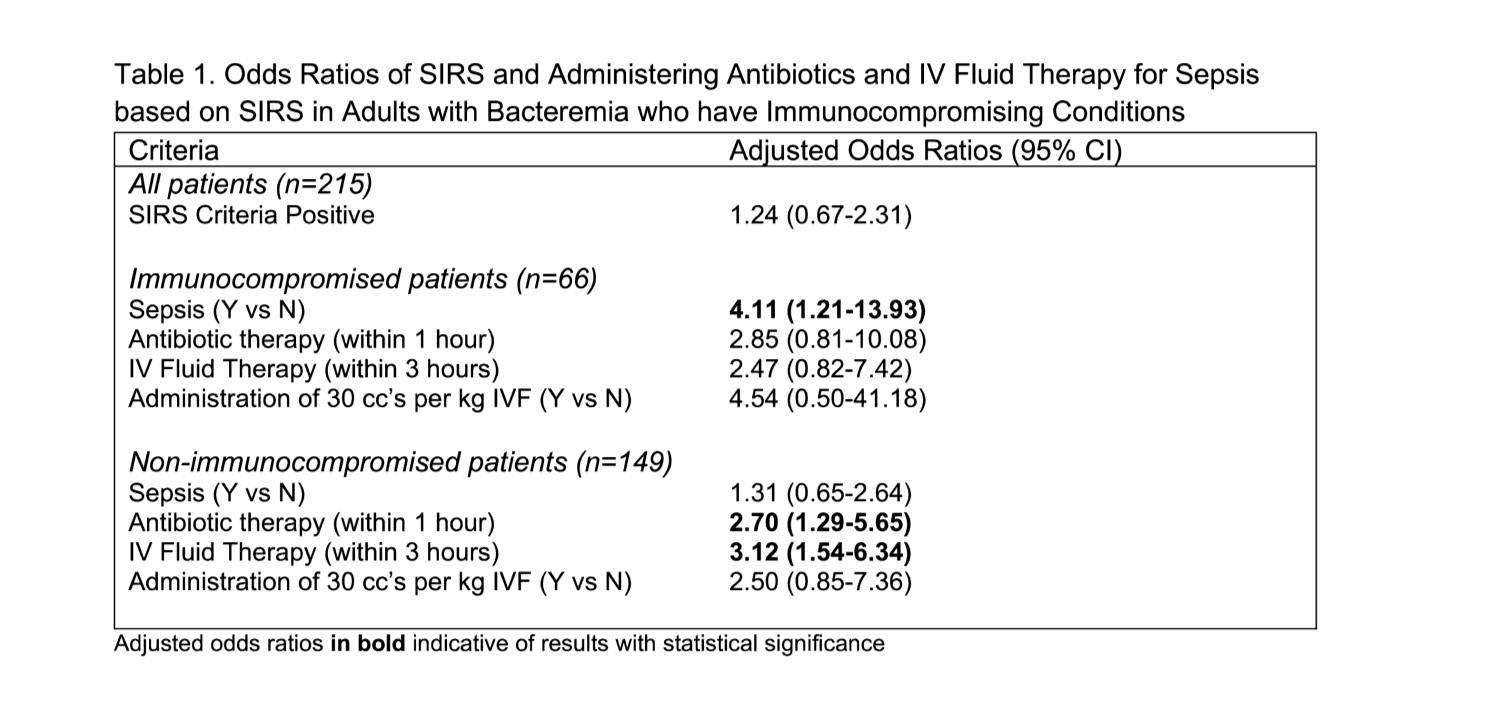
ABSTRACT #50
CASE REPORT/CLINICAL REVIEW
PULMONARY/CRITICAL CARE
FATAL RESPIRATORY DIAPHRAGMATIC INVOLVEMENT IN SERONEGATIVE IMMUNE-MEDIATED NECROTIZING MYOPATHY
Chad Henry1 , Benjamin Samuel1 , Adam Rothman1
1Mount Sinai Morningside/West Hospitals, New York, NY, United States
INTRODUCTION: Immune-mediated necrotizing myopathy (IMNM) is an autoimmune myopathy characterized by severe proximal muscle weakness, markedly elevated creatine kinase (CK) and myofiber necrosis with minimal inflammatory cell infiltrate on muscle biopsy. IMNM is classified into three subtypes of varying clinical severity: anti-signal recognition particle (SRP), anti-3-hydroxy-3-methylglutaryl-coenzyme A reductase (HMGCR), and seronegative immune-mediated necrotizing myopathy (SIMNM). Evidence-based treatment strategies remain limited, however, favorable responses to combination immunotherapy (corticosteroids, IVIG and other immunosuppressants) have been reported. Presented here is a rare case of severe SIMNM, highlighting its diagnostic and therapeutic challenges.
CASE PRESENTATION: A 72-year-old man with extensive cardiac history, peripheral vascular disease, hyperlipidemia reportedly on dual statin therapy, and prior cerebrovascular accident with residual right-sided weakness presented with progressive bilateral lower extremity weakness over several weeks leading to bedbound status, bladder dysfunction, constipation, and a pruritic leg rash. Examination revealed profound ascending weakness with areflexia and markedly elevated creatinine kinase (>40,000 U/L). MRI of the spine showed no cord compression or demyelinating lesions, while MRI of the thighs demonstrated diffuse muscle edema and fatty atrophy. Rheumatologic and myositis-associated antibody panels, including anti-HMG-CoA reductase and anti-SRP, were negative. Quadriceps biopsy confirmed immune-mediated necrotizing myopathy. Despite IVIG and pulse-dose corticosteroids, the patient developed worsening respiratory muscle weakness, hypoxic respiratory failure, and a cardiac arrest necessitating mechanical ventilation and vasopressors. Given poor neurologic recovery and persistent encephalopathy, care was transitioned to comfort measures, and the patient passed away while in inpatient hospice.
DISCUSSION: SIMNM is a rare and diagnostically challenging subset of autoimmune myopathies, often lacking myositis-specific antibodies that guide management. Our differential diagnosis initially included statin-induced necrotizing myopathy, dermatomyositis given proximal muscle weakness and lower extremity rash, and GuillainBarré syndrome given the ascending weakness, areflexia, and respiratory compromise. The absence of HMGCR antibodies, however, and the biopsy findings of myofiber necrosis with minimal inflammation supported our diagnosis of SIMNM. This case highlights the diagnostic challenge posed by antibody-negative presentations and the critical role of biopsy in establishing a diagnosis. Additionally, early ICU monitoring was instrumental given severe diaphragmatic involvement manifested by hypoxic respiratory failure. Nonetheless, the patient subsequently experienced cardiac arrest necessitating mechanical ventilation and use of vasopressors.
CONCLUSION: This case underscores the diagnostic complexity and therapeutic challenges of SIMNM, emphasizing that delay in treatment can lead to rapid, catastrophic deterioration, making early biopsy, aggressive immunotherapy, and close interdisciplinary collaboration critical to mitigating respiratory compromise and improving outcomes.
ABSTRACT #51
CASE REPORT/CLINICAL REVIEW HEMATOLOGY/ONCOLOGY
PRESUMED DONOR-DERIVED MEDULLARY THYROID CARCINOMA PRESENTING AS MULTIFOCAL HEPATIC NEUROENDOCRINE TUMOR IN A
Jing Huang1, Kari Brown2, Krzysztof Misiukiewicz2
1Mount Sinai Morningside-West Hospitals, Icahn School of Medicine at Mount Sinai, New York, NY, United States; 2Mount Sinai Hospital, Icahn School of Medicine at Mount Sinai, New York, NY, United States
BACKGROUND/INTRODUCTION: Donor-derived malignancy occurs in only 0.02–0.2% of solid-organ recipients, yet it presents a significant diagnostic and therapeutic dilemma because the tumor is not host-derived, and the graft is exposed to immunosuppression. While hepatic neuroendocrine tumors (NETs) typically arise from gastrointestinal or pancreatic primaries, medullary thyroid carcinoma (MTC) can mimic hepatic NET and may be donor-transmitted in rare cases Early recognition and molecular profiling are key, enabling RET-targeted therapy while preserving graft function
CASE PRESENTATION: A 61-year-old man with decompensated alcohol-related cirrhosis underwent orthotopic liver transplantation. Three years post-transplant, he developed persistent profuse watery diarrhea with subsequent jaundice and elevated liver function tests; biopsy confirmed acute cellular rejection. Concurrent CT abdomen/pelvis revealed multiple ill-defined hypo-enhancing lesions throughout the graft concerning for malignancy. Percutaneous biopsy of a lesion showed a well-differentiated NET (Ki-67 7%). Serum calcitonin and carcinoembryonic antigen (CEA) were elevated. Circulating tumor DNA analysis (Guardant360) identified a pathogenic RET M918T mutation, consistent with an MTC phenotype. Comprehensive thyroid evaluation, including neck ultrasound and FDG PET/CT, revealed no evidence of a primary thyroid lesion, making a recipient-origin tumor unlikely. In the setting of a graft-confined NET and a pathogenic RET mutation, the findings were most consistent with presumed donor-derived metastatic MTC. The patient subsequently underwent repeat liver transplantation and was maintained on entecavir, everolimus, and tacrolimus, however follow-up imaging demonstrated persistent hepatic neuroendocrine disease. He was initially treated with lantreotide (somatostatin analogue) but was transitioned to pralsetinib (RET inhibitor) after radiographic progression, resulting in improvement in diarrhea and decline in serum calcitonin levels, both of which worsened with interruptions in RET inhibitor therapy.
CONCLUSION: This case highlights a rare donor-derived medullary thyroid carcinoma presenting as multifocal hepatic neuroendocrine tumor in a liver transplant recipient. It underscores three critical points: (1) donor-derived malignancy must be considered when a post-transplant tumor exhibits atypical biomarkers or an unexpected immunophenotype; (2) molecular profiling, including ctDNA detection of RET mutations, can rapidly clarify tumor origin and enable targeted therapy; and (3) management in immunocompromised transplant recipients requires balancing oncologic control with graft preservation, including careful immunosuppression selection (eg, everolimus has anti-NET activity) and use of targeted agents with acceptable safety profiles. Finally, this case raises the question of whether emerging molecular tools such as ctDNA may have a future role in donor risk stratification prior to organ transplantation, an area warranting further study.
ABSTRACT #52
QUALITY IMPROVEMENT
GASTROENTEROLOGY/GENERAL
INCREASING H. PYLORI TREATMENT ADHERENCE AND ERADICATION THROUGH PHYSICIANPATIENT EDUCATION
Rama Hussein1 , Stephanie Marull1 , Alyson Wolf1 , Astitva Soni1 ,Kevin Yan2 , Zoe Lawrence1
1Mount Sinai Morningside-West Hospitals, Icahn School of Medicine at Mount Sinai, New York, NY, United States; 2Ryan Chelsea Health Center, New York, NY, United States
Presented at the Digestive Disease Week (DDW) Annual Meeting that was held in Chicago, Illinois, United States from May 2-5, 2026.
BACKGROUND/INTRODUCTION: Helicobacter pylori (H. pylori) accounts for the majority of gastric cancers, and 6.2% of all cancers worldwide annually. While testing for H. pylori in the primary care setting is performed diagnostically, it is important to recognize the cruciality of testing, treating and eradicating H. pylori to prevent further gastric mucosal changes. While quadruple therapy is the recommended treatment regimen, prescribing four different medications with varying dosing and frequencies can be daunting, not only for the patient, but also for medical providers. Our quality improvement initiative focuses on the use of visual aid (Figure. 1) to improve medication adherence as well as increase resident education on navigating H. pylori in the outpatient setting from a preventative medicine lens.
METHODS: InternalMedicine faculty in person visits at one urban, New York City (NYC) Federal Qualified Health Center (FQHC) were examined from May to December 2024. 106 patients who tested positive for H. pylori via breath test were reviewed for pre-intervention data. Our intervention included the creation of a visual aid in English and Spanish for patients starting quadruple therapy, expanding the initiative to a second NYC FHQC site and providing resident education through surveys, knowledge assessments, and lectures. Patients were reviewed for which treatment regimen they were prescribed, duration of follow-up and rates of eradication testing.
RESULTS: Pre-intervention, only 51.0% of H. pylori positive patients were prescribed quadruple therapy and 26.0% of patients who tested positive for H. pylori were not scheduled for any follow-up appointment after diagnosis. As a result, only 46.0% of patients had eradication testing performed. Post-intervention data were notable for 21 out of 23 H. pylori positive patients being prescribed quadruple therapy. 83% of patients were scheduled for follow up. 70% of the patients who followed up reported completion of quadruple therapy. 86% of patients who completed quadruple therapy had eradication testing ordered, and 57% of patients completed eradication testing.
CONCLUSION: By introducing standardized visual aid, we have been able to significantly increase adherence to guideline-based therapy among residents in our primary care clinic in terms of the type of therapy and the inclusion of follow up for eradication testing. Although our project is ongoing and there remains room for further improvement, this data is promising as we have found a significant improvement in the percentage of patients prescribed quadruple therapy (p=0.001). We hope that our quality improvement project increases resident confidence navigating H. pylori from a preventive medicine lens and improves patient understanding of and adherence to treatment, achieving eradication now to reduce the risk of gastric cancer in the future.
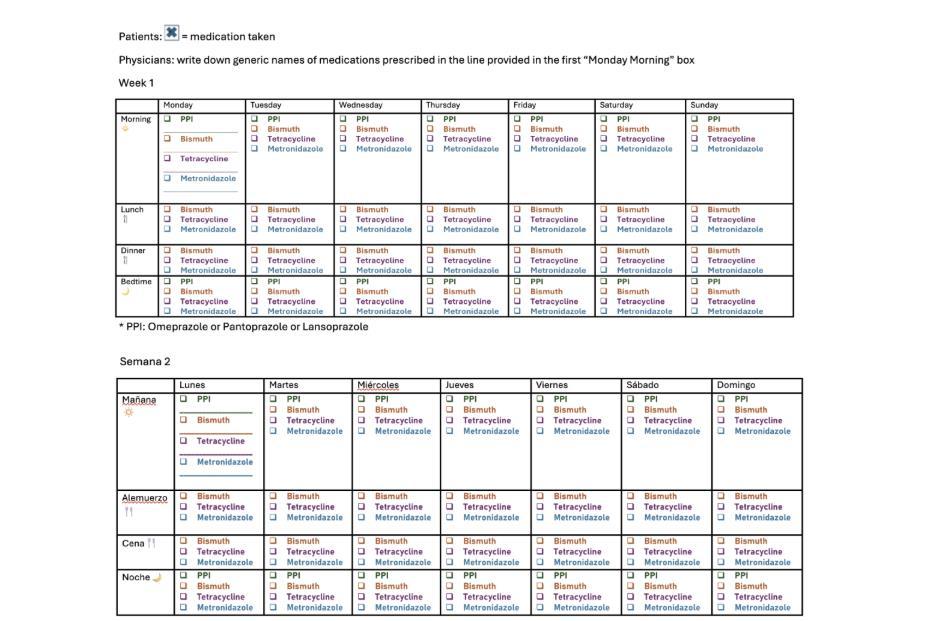
Figure 1. Visual aid listing quadruple therapy that serves as a checklist for patients in English and Spanish
Total # of patients H. pylori positive 106 Total # of patients H. pylori positive 23
Total
Table 1. Pre- and post-intervention data collection following initiation of quality improvement project at New York City Federally Health Qualified Centers.
ABSTRACT #53
CLINICAL RESEARCH
CARDIOLOGY
BASELINE FRAILTY AND MALNUTRITION AS INDEPENDENT PREDICTORS OF MORTALITY IN PATIENTS WITH CHRONIC TOTAL OCCLUSIONS
Komail Jafri1 , Usman Saeedullah1, Harrison Bonilla1, Sameer Jafri2, Syed Zaidi1, Joshua Guardia1, Vincent Torelli1 ,Abel Casso Dominguez1
1Mount Sinai Morningside-West Hospitals, Icahn School of Medicine at Mount Sinai, New York, NY, United States; 2Touro College of Osteopathic Medicine, Middletown, NY, United States
Presented at the Cardiovascular Research Technologies Annual Meeting that was held in Washington, D.C., United States from March 7-10, 2026.
BACKGROUND/INTRODUCTION: Frailty and malnutrition are critical determinants of cardiovascular outcomes, yet their prognostic value in patients with chronic total occlusions (CTO) remains underexplored. This study evaluated the independent and combined impact of baseline frailty and malnutrition on all-cause mortality among patients with CTO using a large, real-world dataset.
METHODS: Using the TriNetX Network, we identified adults with CTOs from 2015–2024 in a single hospital system. Frailty and malnutrition were defined using validated ICD-10 codes. The cohorts were propensity matched for baseline characteristics. Patients were grouped as Frailty, Malnutrition, Frailty + Malnutrition, or Neither. Mortality was measured at 30 days, 90 days, and 1 year, as an outcome.
RESULTS: Among 6,400 patients, 340 patients had Frailty, 980 patients had Malnutrition, 170 patients had Both, and 4,910 patients had Neither. One-year mortality was highest in the Frailty + Malnutrition group (18.0%), followed by Malnutrition (10.0%), Frailty (8.0%), and Neither (6.0%) (p<0.001). Frailty (HR, 1.42) and Malnutrition (HR, 1.31) independently predicted higher mortality, with the combined group showing the greatest risk (HR, 1.83).
CONCLUSION: Frailty and malnutrition are factors that act as independent predictors of mortality in chronic total occlusions cases, and their coexistence markedly elevates risk. Integrating frailty and nutritional assessment into CTO PCI evaluation may improve risk stratification and guide clinical decision-making.
ABSTRACT #54
CASE REPORT/CLINICAL REVIEW
GENERAL INTERNAL MEDICINE/HEMATOLOGY/ONCOLOGY
IDENTIFICATION AND MANAGEMENT OF MALE BREAST CANCER IN A FEDERALLY QUALIFIED HEALTH CENTER
Suraj Kevin Jaladanki1* , Adithya Kumar1* , Tamara Goldberg1
1Mount Sinai Morningside-West Hospitals, Icahn School of Medicine at Mount Sinai, New York, NY, United States
*These authors contributed equally to this work.
INTRODUCTION: Breast cancer in males (MBC) is rare, attributed to 1% of all breast cancer diagnoses worldwide, with risk factors including BRCA2 mutations, family history, testicular diseases, prior cancer treatments, and obesity among others. Routine screening for MBC is not indicated given its low prevalence. However, it is more likely to be diagnosed at advanced stages than female breast cancer.
CASE PRESENTATION: A 69-year-old male with history of obesity, benign neoplasia of rectum & colon, and breast lipoma status-post resection 20 years ago presented with a palpable lump in the left breast for several days. He denied fevers, weight loss, fatigue, or breast pain. His family history was remarkable for breast cancer in his mother (diagnosed age 59). On exam, a firm, mobile, and non-tender mass in the left upper outer quadrant was noted without nipple retraction, breast discharge, skin changes, or ulceration. A diagnostic left mammogram was classified as BIRADS 4 with a round high-density mass in the subareolar region, and breast ultrasound revealed a hypoechoic 2 x 1.4 x 2.2cm mass, with recommendation for ultrasound guided biopsy. A right breast mammogram was unremarkable. Biopsy showed invasive ductal carcinoma, ER/PR(+)/HER2(-), and he was referred to breast surgery, who completed a left mastectomy with sentinel lymph node biopsy. Genetic testing was unremarkable. Surgical pathology demonstrated ER/PR(+)/HER2(-) micropapillary carcinoma, and his cancer staging was designated as pT2pN0 without lymph node involvement He was referred to medical oncology who started the patient on tamoxifen
CONCLUSION: This case highlights the importance of prompt workup in a male patient with a breast mass. Despite his history of a benign soft tissue mass, having a first degree relative with breast cancer as well as personal history of obesity increase his risk. Other risks for breast cancer in men include: age, germline genetic mutations, orchitis, use of exogenous estrogen, and prior chest radiation for cancer Male patients with breast mass should undergo similar workup as female patients with mammography with or without ultrasound, and patients diagnosed with breast cancer should undergo genetic testing. MBC is also associated with a higher mortality rate than female breast cancer as it is often diagnosed at more advanced stages than female breast cancers.These disparities in MBC diagnosis and outcomes are likely attributed to lack of patient awareness and absence of screening programs for men leading to delayed diagnoses. The National Comprehensive Cancer Network (NCCN) indicates routine male breast cancer screening in BRCA (+) patients, but there are no consensus guidelines in other male patients.6 Male patients should be educated in annual physical visits on the importance of self-breast exams and alarm breast symptoms of nipple retraction, skin changes, and ulceration.
ABSTRACT #55
CASE REPORT/CLINICAL VIGNETTE CARDIOLOGY/HEMATOLOGY/ONCOLOGY
DOXORUBICIN-INDUCED CARDIOMYOPATHY
AND BIOMARKERS: WHEN
Nicholas James1, Kana Satake1 , Denisa Costea1, Mark Alon1 1Mount Sinai Morningside-West Hospitals, Icahn School of Medicine at Mount Sinai, New York, NY, United States
INTRODUCTION: Anthracyclines such as doxorubicin are widely used in the treatment of solid and hematologic malignancies but are associated with dose-dependent cardiotoxicity that may lead to cardiomyopathy. In hospitalized oncology patients presenting with dyspnea, recognition of chemotherapy-related cardiotoxicity can be challenging, particularly when symptoms overlap with pulmonary disease and initial laboratory or imaging findings are not overtly suggestive of heart failure.
CASE PRESENTATION: A 53-year-old woman with metastatic estrogen receptor–positive uterine leiomyosarcoma with pulmonary and pleural involvement presented with progressive dyspnea, nonproductive cough, and pleuritic chest discomfort. Her oncologic treatment history included pulmonary wedge resection, stereotactic body radiation therapy, and eight cycles of doxorubicin administered between January and July 2025 (75 mg/m² per cycle; cumulative dose 600 mg/m²). A baseline transthoracic echocardiogram obtained prior to chemotherapy demonstrated normal left ventricular systolic function (ejection fraction 65%) with preserved global longitudinal strain (–20.7%). On presentation, serum pro-BNP was within normal limits. Computed tomography of the chest demonstrated diffuse right-sided airspace opacities, a small right pleural effusion, and a stable 8mm right upper lobe pulmonary nodule with newly developed surrounding cystic change. No pulmonary embolism was identified. Formal transthoracic echocardiography revealed new onset left ventricular systolic dysfunction with an ejection fraction of 30–35%. Left heart catheterization demonstrated normal coronary arteries and normal left ventricular filling pressures. In the absence of ischemic heart disease, these findings supported a diagnosis of doxorubicin-induced cardiomyopathy.
DISCUSSION: Anthracycline-induced cardiomyopathy is a well-recognized complication of cancer therapy and remains an important cause of nonischemic heart failure in oncology patients, with increasing risk at higher cumulative doses This case highlights the complexity of inpatient dyspnea evaluation in patients with advanced malignancy, where overlapping cardiopulmonary pathology may obscure cardiac decompensation. In this patient, pulmonary opacities, pleural disease, and evolving lung imaging findings reasonably directed initial diagnostic consideration toward infectious or radiation-related etiologies. For hospitalists, this case underscores the importance of maintaining a broad differential diagnosis when evaluating dyspnea in oncology patients, even in the presence of reassuring biomarkers or recent normal cardiac studies. Surveillance imaging facilitates longitudinal comparison but does not alter underlying cardiotoxic risk Early recognition of chemotherapy-related cardiomyopathy and prompt initiation of guideline-directed medical therapy may allow for stabilization and partial recovery of left ventricular function, emphasizing the value of timely diagnosis and multidisciplinary collaboration.
CONCLUSION: In hospitalized oncology patients presenting with dyspnea, anthracycline-induced cardiomyopathy should remain on the differential diagnosis despite competing pulmonary pathology and initially reassuring cardiac biomarkers. Awareness of dose-dependent cardiotoxicity and systematic evaluation are essential to avoid delayed diagnosis and optimize patient outcomes. Dyspnea in oncology patients is frequently multifactorial, and chemotherapy-related cardiotoxicity should be considered even when pulmonary findings and cardiac biomarkers appear reassuring.
ABSTRACT #56
CLINICAL RESEARCH
GASTROENTEROLOGY/HEMATOLOGY/ONCOLOGY
DEMOGRAPHIC AND CLINICAL FACTORS ASSOCIATED WITH YOUNG-ONSET RECTAL CANCER: IS THE LATINX POPULATION AT HIGHER RISK?
Antoine Jeri-Yabar1, Liliana Vittini-Hernandez1 , Marcos Rosa Santana2, Sirish Dharmapuri3
1Mount Sinai Morningside-West Hospitals, Icahn School of Medicine at Mount Sinai, New York, NY, United States; 2Lenox Hill Hospital, New York, NY, United States; 3Rutgers Cancer Institute, New Brunswick, NJ, United States Presented at the American Society of Clinical Oncology (ASCO) Annual Meeting that was held in Chicago, Illinois, United States from May 30, 2026-June 3, 2025
BACKGROUND/INTRODUCTION: The incidence of colorectal cancer is rising among younger adults, with some studies indicating a disproportionate increase in the Hispanic population. As one of the fastest-growing demographics in the United States, Hispanic individuals face unique barriers to cancer prevention and care. However, data specifically addressing disparities in rectal cancer within this group remain limited. The aim of our study is to elucidate demographic and clinical factors associated with young-onset rectal cancer (YO-RC) and evaluate if the Latinx population is at higher risk compared to other races.
METHODS: We evaluated patients ≥18 years of age with rectal cancer from the Surveillance, Epidemiology, and End Results (SEER) database, with a study period from 2018 to 2021. The study population included adult patients diagnosed with RC as first primary, histologically confirmed diagnoses, complete data on race, MSI status, stage, and known cause of death. A retrospective cohort study was done. Individuals were divided into two groups: young onset (diagnosed <50 years old) and average-onset (diagnosed at ≥50 years old). Univariate and multivariate logistic regression was done, adjusted logistic regression to race, sex, area of living, MSI status and stage.
RESULTS: A total of 13,768 individuals were analyzed, with 2,661 (19.33%) classified as YO-RC and 11,107 (80.67%) as AO-RC. In the YO-RC group, 60.28% were Non-Hispanic White (NHW), 21.20% Hispanic (H), 7.22% Non-Hispanic Black (NHB), 10.54% Non-Hispanic Asian or Pacific Islander (NHAPI), and 0.76% NonHispanic American Indian (NHAI). Most were male (58.51%) and diagnosed at advanced stages (43.03% stage III and 27.58% stage IV), with 93.24% having MSI-stable tumors. In the AO-RC group, NHW accounted for 68.46%, followed by H (12.52%), NHB (7.70%), NHAPI (10.46%), and NHAI (0.86%). Stage III (32.86%) and stage I (24.45%) were the most common stages, and 94.97% had MSI-stable tumors. H individuals were nearly twice as likely to have YO-RC compared to NHW (aOR. 1.87; 95%CI, 1.67–2.10; p<0.001). Females had a higher likelihood of YO-RC than males (aO, 1.14; 95%CI, 1.04–1.24; p=0.002). MSI-high tumors were associated with YO-RC (aOR, 1.57; 95%CI, 1.27–1.94; p<0.001). Patients diagnosed at later stages were also more likely to have YO-RC (stage III aOR, 1.99; 95%CI, 1.76–2.25; p<0.001 and stage IV aOR, 1.98; 95%CI, 1.73–2.26; p<0.001).
CONCLUSION: Hispanic individuals are more likely to have YO-RC, which suggests the critical need for targeted outreach and earlier screening efforts within the young Latinx population. Female patients and those with MSIhigh tumors were also more likely to have YO-RC suggesting possible biological and genetic influences, including Lynch syndrome. The strong correlation of advanced-stage diagnoses and YO-RC demonstrates the need to improve early detection efforts.
ABSTRACT #57
CASE REPORT/CLINICAL REVIEW
GERIATRIC MEDICINE
GOALS-CENTERED MEDICATION SIMPLIFICATION IN A PERCUTANEOUS ENDOSCOPIC GASTROSTOMY-DEPENDENT OLDER ADULT
Adham Kamr Aldin1* , Zachary Salomon1*, Sophia Zhitomirsky2
1Mount Sinai Morningside-West Hospitals, Icahn School of Medicine at Mount Sinai, New York, NY, United States;
2Ryan Health-West 97th Street Clinic, William F. Ryan Community Health Center, New York, NY, United States
Presented at the American Geriatrics Society (AGS) Annual Meeting that was held virtually from April 30, 2026 to May 2, 2026.
*These authors contributed equally to this work
INTRODUCTION: Polypharmacy is common in older adults with multimorbidity. In patients who rely on percutaneous endoscopic gastrostomy (PEG) tubes for medication administration it carries increased risks such as drug incompatibility with enteral nutrition or inappropriate dosage form selection. Transitions of care, fragmented prescribing practices, and limited oral intake further complicate management. This case highlights a creative, goals-centered deprescribing strategy in an older adult with severe dementia and PEG-dependence.
CASE PRESENTATION: Mr. A is a 90-year-old man with severe dementia, prior subdural hematoma, insulindependent diabetes with microvascular complications, and PEG-tube dependence after multiple hospitalizations in 2024. He remained minimally mobile, responsive to simple commands, and lived at home with 24-hour caregiving.
At the July 2025 visit, his regimen included over 20 medications, many given through the PEG despite inappropriate formulations. The family reported repeated tube clogging, difficulty crushing pills, inconsistent administration of medications and unpredictable glucose and bowel patterns. They strongly prioritized care at home and wished to maintain medications they perceived as beneficial while avoiding hospitalization and burdensome interventions.
A structured medication review led to deprescribing of low-benefit agents, simplification of the pain regimen, and identification of medications requiring compounding. By September 2025, nearly all medications had been converted to liquid or powder form. The family reported less PEG-clogging events, better control of pain and constipation, and improved alertness and oral intake.
DISCUSSION: This underscores the value of a collaborative, patient-centered strategy in which deprescribing was driven not only by clinical appropriateness but also by the family’s cultural expectations, goals of care, and preference for stability. A major limitation is that the approach taken was not guided by existing studies or established evidence and was constrained by the limited availability of medication formulations and administration methods suitable for PEG use. The patient’s improvement illustrates how excessive pill burden and inappropriate formulations can significantly impair functional status in advanced dementia, while also demonstrating the importance and the challenge of employing creative, individualized approaches in a landscape where practices often vary widely between clinicians.
ABSTRACT #58
CASE REPORT/CLINICAL VIGNETTE
CARDIOLOGY
THE HOAX OF HIGH-OUTPUT HEART FAILURE MIMICKING BIOPROSTHETIC MITRAL VALVE FAILURE Sharan Kapadia1 , Sanjay Sivalokanathan1 , Edgar Argulian1 , Anton Camaj1 , Abel Casso Dominguez1 1Mount Sinai Morningside-West Hospitals, Icahn School of Medicine at Mount Sinai, New York, NY, United States Presented at the American College of Cardiology (ACC) Annual Scientific Session that was held in New Orleans, Louisiana, United States from March 28-30, 2026.
BACKGROUND/INTRODUCTION: Bioprosthetic valve dysfunction often presents with elevated transprosthetic gradients and may be attributable to structural and non-structural mechanisms. A reversible etiology linked to high-output heart failure is a rare phenomenon.
CASE PRESENTATION: A 35-year-old female with end-stage renal disease (ESRD) on hemodialysis underwent uncomplicated bioprosthetic mitral replacement with a 27mm Mitris in the setting of symptomatic and progressive calcific mitral valve disease (for mild-moderate mitral stenosis and severe mitral regurgitation). Post-operative transmitral gradient was 5 mmHg, with a peak velocity of 1.65 ms-1. During follow up, she had dyspnea and angina; stress echocardiography showed a raised transmitral gradient of 10 mmHg and ejection fraction (EF) of 45-50%. She was referred for a potential valve-in-valve procedure for suspected bioprosthetic degeneration, but transesophageal echocardiography (TEE) and right heart catheterization revealed that the high transmitral gradient was due to a high-output state; bioprosthetic function was preserved. Notably, she had an aneurysmal arteriovenous (AV) fistula; after aneurysmorraphy, transmitral gradient improved to 4 mmHg and EF improved to 65%.
CONCLUSION: Mean gradients for mitral valve bioprostheses are usually less than 6 mmHg. Elevated transprosthetic mitral gradients often raise concern for intrinsic pathology such as structural valve deterioration, thrombosis, pannus, or patient-prosthesis mismatch. However, our case demonstrates the need to consider alternative causes such as high-output states, for example in ESRD patients whose AV fistulae create a lowresistance shunt for blood flow. Our case also highlights the importance of timely workup of elevated transprosthetic gradients; early TEE with catheterization provided important data that clinched the diagnosis of high-output state, guiding appropriate management. Overall, high-output state leading to raised transprosthetic gradients is an important phenomenon to consider in ESRD patients, who often have AV fistulae and often receive valve interventions
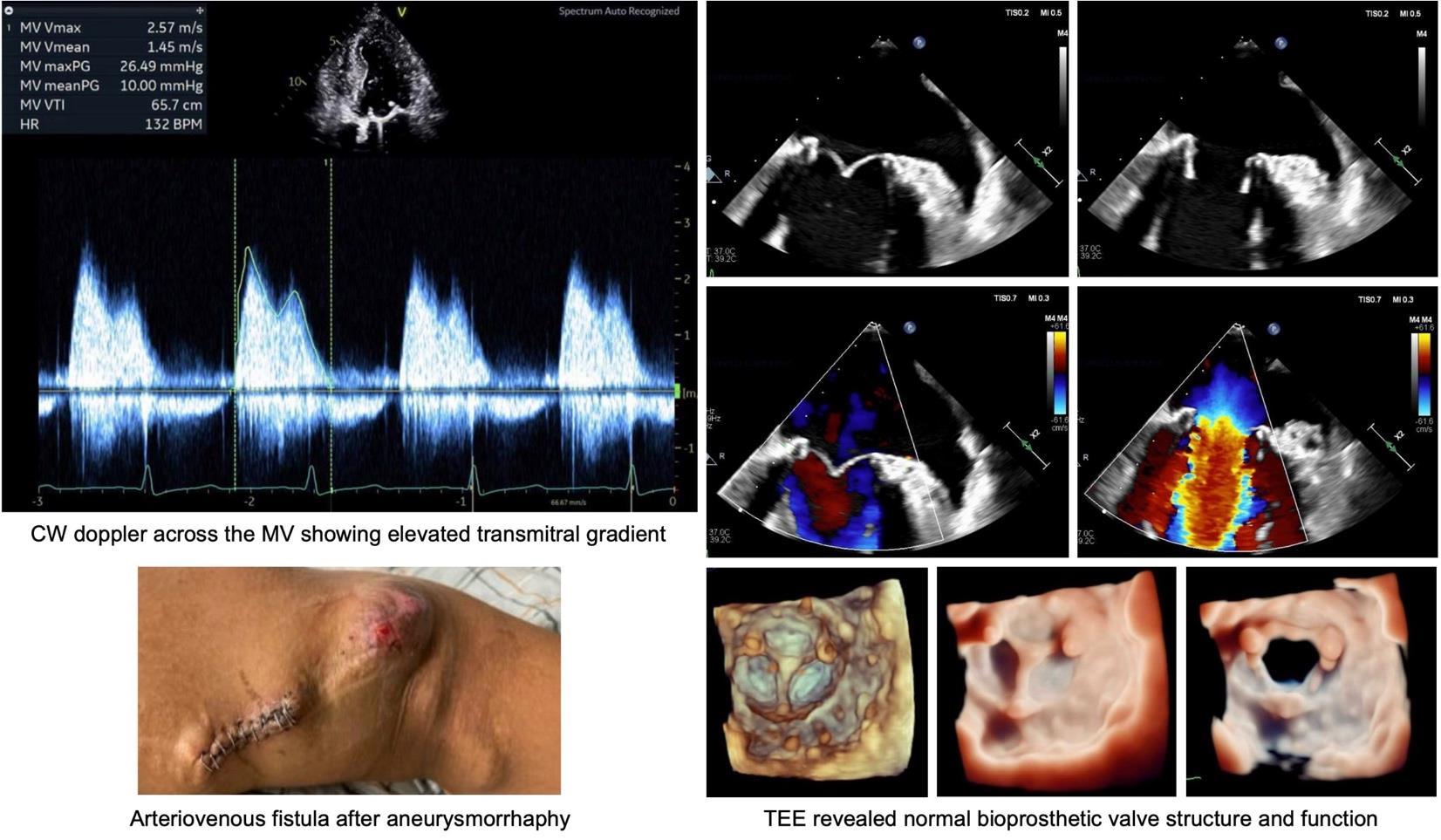
ABSTRACT #59
CLINICAL RESEARCH
CARDIOLOGY
A COMPARATIVE ANALYSIS OF CARDIAC AMYLOIDOSIS AND CARDIAC SARCOIDOSIS: A SINGLECENTER EXPERIENCE
Luka Katic1, Sanjay Sivalokanathan2, James Choi2 , Darren Kong2, Vincent A. Torelli1, Alexander Silverman1 , Alexander Nagourney1, Usman Saeedullah1, Komail Jafri1, Syed Zaidi1, Serdar Farhan2 , Ashish Correa1
1Mount Sinai Morningside-West Hospitals, Icahn School of Medicine at Mount Sinai, New York, NY, United States; 2Lenox Hill Hospital, New York, NY, United States
Published in Journal of Clinical Medicine, 2025 PMID: 40943826
BACKGROUND/INTRODUCTION: Cardiac amyloidosis (CA) and cardiac sarcoidosis (CS) are two distinct infiltrative cardiomyopathies that can present with overlapping clinical features, including heart failure and arrhythmias. However, they arise from fundamentally different pathophysiological mechanisms: amyloid protein deposition in CA versus granulomatous inflammation in CS. These differing pathophysiologies result in divergent imaging patterns, clinical trajectories, and treatment strategies. This study aims to compare the clinical presentations, imaging characteristics, and outcomes of patients with CA and CS to identify key differentiating factors that can improve diagnostic precision and guide therapy.
METHODS: This single-center, retrospective, cross-sectional study analyzed electronic medical records of patients diagnosed with CA (limited to transthyretin CA) or CS at Mount Sinai Morningside system from January 2017 until October 2023. Patients were identified using diagnostic codes and confirmed by histology or diseasespecific imaging criteria. Clinical data, transthoracic echocardiography (TTE), cardiac magnetic resonance (CMR) imaging, pyrophosphate scintigraphy (PYP), and fluorodeoxyglucose positron emission tomography (FDG-PET) findings were collected. Statistical comparisons between groups were performed using chi-square tests and independent t-tests, with p<0.05 considered statistically significant.
RESULTS: A total of 16,834 patients were screened, and 216 patients were included in the analysis (125 CA, 92 CS). CA patients were older (78.2 years versus 62.0 years, p=0.01), had greater interventricular septal thickness (1.57 cm versus 1.10 cm, p=0.01), and exhibited diffuse late gadolinium enhancement (LGE) and elevated extracellular volume (ECV) on CMR. CS patients had higher rates of ventricular tachycardia (53.3% versus 10.7%, p=0.01), increased myocardial fluorodeoxyglucose (FDG) uptake on positron emission tomography (PET) (90%), and more frequent implantable cardioverter-defibrillator (ICD) placement (66.3% versus 13.0%, p=0.01).
CONCLUSION: CA and CS demonstrate distinct imaging profiles, arrhythmic risks, and treatment patterns. Early differentiation using advanced imaging is crucial for implementing disease-modifying therapies in CA and for immunosuppression and ICD implantation in CS, thereby improving patient outcomes.
ABSTRACT #60
MEDICAL EDUCATION
GENERAL INTERNAL MEDICINE
Madison Kennedy1 and Krystle Hernandez 1
1Mount Sinai Morningside-West Hospitals, Icahn School of Medicine at Mount Sinai, New York, NY, United States Presented at both the Institute for Medical Education (IME) Annual Education Research Day that was held in New York, New York, United States on April 21, 2026.
BACKGROUND/INTRODUCTION: Medication reconciliation is the process of building an accurate list of medications for patients, which is then used during transitions of care to ensure accurate and safe medication prescribing. Inaccurate medication reconciliation upon hospital discharge can result in patient harm. Such transition points in care are the most common points of medication reconciliation errors and should therefore be addressed during residency training. Previous studies have shown that formal education for internal medicine residents has decreased the number of errors on medication reconciliations. The project aimed to reduce errors by senior internal medicine residents completing discharge medication reconciliation on the electronic medical record. It also aimed to increase resident awareness of the importance of completing accurate discharge medication reconciliations and their confidence in doing so. Ultimately, the project aimed to improve patient care by facilitating smooth transitions of care from hospital to community.
METHODS: Interventions included 1) an annual lecture to interns introducing discharge medication reconciliation, 2) an annual lecture for senior residents regarding discharge medication reconciliation, and 3) a standardized discharge summary template with a checklist of complete steps to accurate discharge medication reconciliation The annual lecture for senior residents reviewed the steps for complete and accurate discharge medication reconciliation, as well as common pitfalls documented in previous research. The lecture reviewed high-risk medications that warrant particular attention on discharge through a case-based format that has proven pedagogically effective. To measure the impact of the lectures, post-lecture resident surveys were conducted along with an audit of the internal medicine teaching teams between 2024 and 2025. A “complete” discharge medication reconciliation was quantified by reviewing daily discharged patient charts for the internal medicine resident teams and recording if the admission medication reconciliation was completed (a crucial step in the discharge medication reconciliation process in the electronic medical record) before discharge orders were placed.
RESULTS: Prior to intervention, the discharge medication reconciliation completion rate was 60%. After the initial resident and intern interactive workshops in 2024, the team audit showed an 82% completion rate for discharge medication reconciliation steps by medicine residents. After implementation of the checklist within the discharge summary template and the second cycle of education, the team audit showed a 93% completion rate. Resident post-lecture surveys showed that every resident who attended the lecture felt their understanding of the importance of discharge medication reconciliation increased due to the lecture series and checklist intervention. 87% of residents felt the discharge summary checklist helped remind the team to complete all steps of the discharge medication reconciliation process. We also surveyed residents on their perceived barriers to accurate discharge medication reconciliation, finding that the top barrier was inaccurate admission medication lists.
CONCLUSION: Successful strategies to improve discharge medication reconciliation completion by internal medicine residents included educating providers through annual interactive case-based lectures and implementing a checklist within a discharge summary template. Future research should study the impact of such improvements on patient outcomes. Improvements in the discharge medication reconciliation process for
inpatient hospital medicine teams may benefit residents and their patients while laying the foundation for longterm improvements in care as residents become leaders in their fields.

Included in the Discharge Summary Template for the Internal Medicine Residency Program
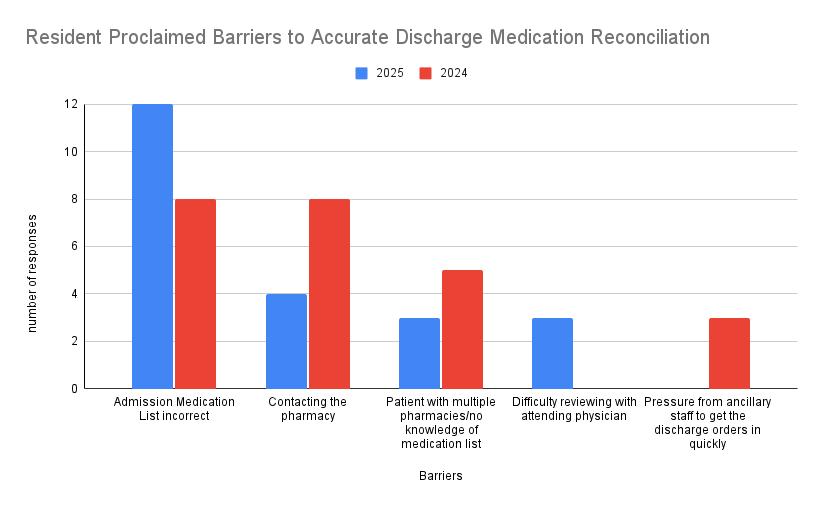
ABSTRACT #61
CASE REPORT/CLINICAL VIGNETTE CARDIOLOGY/HEMATOLOGY/ONCOLOGY
BIOMARKER THRESHOLDS FOR PREDICTING CARCINOID HEART DISEASE: INSIGHTS FROM A HIGHVOLUME CARDIO-ONCOLOGY CENTER
Sara Diaz Saravia1, Lucy Zheng1 , Zara Khan1, Gagan Sahni2
1Mount Sinai Morningside-West Hospitals, Icahn School of Medicine at Mount Sinai, New York, NY, United States; 2Mount Sinai Hospital, Icahn School of Medicine at Mount Sinai, New York, NY, United States Presented at the American College of Cardiology (ACC) Annual Scientific Session that was held in New Orleans, Louisiana, United States from March 28-30, 2026
BACKGROUND: Carcinoid heart disease (CHD) is a major cause of morbidity and mortality in patients with secretory, metastatic neuroendocrine tumors (NET). Optimal cardiac and neuroendocrine biomarkers and their actionable thresholds for CHD surveillance remain undefined. We evaluated the diagnostic performance of natriuretic peptides and serotonin pathway biomarkers for identifying CHD at a high-volume NET/CardioOncology center.
METHODS: We conducted a retrospective cohort study of 220 patients with metastatic secretory NET referred to Cardio-Oncology between 2018- 2025. CHD was defined by echocardiographic features of carcinoid valvulopathy adjudicated by cardiologists. Patients were categorized as CHD or non-CHD. Biomarker thresholds were plasma 5-HIAA >100 ng/ml, serotonin >500 ng/ml, BNP >150 pg/ml, and ProBNP >260 pg/ml. Odds ratios (OR) for CHD were calculated for individual biomarkers and combinations.
RESULTS: Overall CHD prevalence was 18.18% (n=40/220). ProBNP >260 pg/mL was the strongest single predictor (OR. 3.16; 95%CI, 1.54–6.47; p=0.002) with NPV 81.9%. ProBNP + 5-HIAA above thresholds yielded the highest discriminatory signal among combinations (OR, 3.93; 95%CI, 1.82–8.48; p=0.001). Adding serotonin to this pair remained significant (OR, 3.64; 95%C, 1.60–8.35; p=0.002) but did not improve performance versus ProBNP + 5-HIAA alone. BNP >150 pg/mL was less informative (OR, 1.64; 95%CI, 0.82–3.25; p=0.161), and serotonin alone was non-discriminatory (OR, 1.21; 95%CI, 0.61–2.40; p=0.590).
CONCLUSION: ProBNP was the most reliable single biomarker for identifying CHD in metastatic secretory NET, with combination ProBNP + 5-HIAA providing the strongest discriminatory value. A tiered, biomarker-guided surveillance strategy using NT-proBNP + 5-HIAA to identify CHD promptly, warrants prospective validation. Alternatively, ProBNP<260 pg/ml may help defer the need for expedited imaging in low risk, asymptomatic patients.
ProBNP + 5HIAA + Serotonin
ABSTRACT #62
CLINICAL RESEARCH
GASTROENTEROLOGY
DISPARITIES IN REPEAT VARICEAL ERADICATION THERAPY AMONG SPANISH-SPEAKING PATIENTS AFTER ESOPHAGEAL VARICEAL BLEEDING
Do Han Kim1, Denisa M. Costea1, Donghyun Ko2, Sonaal Singla3, Sharon I. Narvaez4 , Luis M. Nieto5, Pedro Palacios Argueta6, Paul T. Kröner7, Frank J. Lukens8
1Mount Sinai Morningside-West Hospitals, Icahn School of Medicine at Mount Sinai, New York, NY, United States; 2Bridgeport Hospital, Yale New Haven Health, Bridgeport, CT, United States; 3University of California Riverside, Riverside, CA, United States; 4Piedmont Athens Regional Hospital, Athens, GA, United States; 5Emory University School of Medicine, Atlanta, GA, United States; 6Mayo Clinic Health System, Northwest Wisconsin, Eau Claire, WI, United States; 7Riverside Health System, Newport News, VA, United States; 8Mayo Clinic Florida, Jacksonville, FL, United States Presented at the Digestive Disease Week (DDW) Annual Meeting that was held in Chicago, Illinois, United States from May 2-5, 2026.
BACKGROUND/INTRODUCTION: Upper gastrointestinal bleeding (UGIB) is the leading gastrointestinal diagnosis requiring hospitalization in the United States with more than 400,000 annual admissions. Esophageal variceal bleeding (EVB) is a life-threatening complication of portal hypertension, most commonly due to liver cirrhosis. Endoscopic variceal ligation (EVL) is the cornerstone therapy for esophageal varices. Mortality rates up to 20% have been reported despite optimal treatment. EVL should be repeated until all varices are eradicated, with interval endoscopies ranging from 2 to 4 weeks. There are limited studies exploring EVL rates by primary language, specifically in the non-white Hispanic population. The aim of this study is to determine the rates of EVL therapy within 30-days in Hispanic patients with Spanish as their primary language (SPL) compared to those with English as their primary language (EPL).
METHODS: A retrospective cohort study was performed using large population-based data from the TriNetX Global Collaborative Network. We identified patients with EVB between January 1, 2015, and June 30, 2025, and stratified based on SPL or EPL. This cohort was matched 1:1 using propensity matching based on age, gender, and comorbidities. Outcomes included risk of subsequent EVL, rehospitalization, hepatic decompensation, major adverse liver outcomes (MALO), TIPS, and all-cause mortality. Outcomes were evaluated at 30 days. Cox-proportional hazards models were used to estimate hazard ratios (HRs) with 95% confidence interval (CI).
RESULTS: A total of 9,712 SPL or EPL adult patients with EVB were identified, of whom 906 were SPL. Among these, 893 patients with SPL (mean [SD] age, 56. 2 [12.7] years; 239 [32.8%] female) were matched with 893 individuals with EPL (mean [SD] age, 55.6 [12.9] years; 283 [31.7%] female). Patients with SPL had a significantly lower risk subsequent EVL (HR, 0.59; 95%CI, 0.43-0.82), rehospitalization (HR, 0.76; 95%CI, 0.680.86), and TIPS (HR, 0.55; 95%CI, 0.31-0.99). There were no significant differences in the risk of all-cause mortality, hepatic decompensation, or MALO.
CONCLUSION: In this study, we demonstrate that Hispanic patients with SPL had significantly lower rates of repeat EVL within 30 days following EVB, as well as lower rehospitalization and TIPS utilization. Primary language likely reflects broader social determinants of health, including access to care, health literacy, and care coordination. These findings underscore the importance of culturally and linguistically concordant care to ensure guideline-directed variceal eradication. Further studies are required to better define and address language-based disparities after EVB.
Table 1. Thirty-Day Repeat EVL Rates and Clinical Outcomes in Spanish- versus English-Speaking Patients with Esophageal Variceal Bleeding
Abbreviations: EVL, Esophageal Varices Ligation; HR, Hazard Ratio; CI, Confidence Interval.
ABSTRACT #63
CASE REPORT/CLINICAL REVIEW
CARDIOLOGY
SERIAL MULTIMODAL IMAGING UNMASKS APICAL HYPERTROPHIC CARDIOMYOPATHY FOLLOWING TAKOTSUBO CARDIOMYOPATHY
Hyunwoo Kim1, Tansu Eris1, Harrison Bonilla1, Basera Sabharwal1
1Mount Sinai Morningside-West Hospitals, Icahn School of Medicine at Mount Sinai, New York, NY, United States
To be presented at the American Society of Echocardiography Annual Meeting that will be held in Aurora, Colorado, United States from June 26-28, 2026.
BACKGROUND/INTRODUCTION: Takotsubo cardiomyopathy (TCM) and apical hypertrophic cardiomyopathy (ApHCM) can present with overlapping features. Differentiation is crucial, as ApHCM requires specific management and family screening.
CASE PRESENTATION: A 46-year-old man with a recent suicide attempt presented with acute-onset chest pain. Initial evaluation revealed a peak troponin of 1,451 ng/L and electrocardiography (ECG) demonstrating STsegment elevations in the anterior and inferior leads. Transthoracic echocardiography (TTE) showed apical akinesis with ballooning, raising concern for acute coronary syndrome versus TCM. Urgent coronary angiography demonstrated non-obstructive coronary arteries, supporting the diagnosis of TCM. Subsequent ECGs upon recurrent chest pain episodes evolved to show diffuse, deep T-wave inversions and QT prolongation in the affected leads, consistent with a Yamaguchi pattern.
Repeat TTE showed recovery of apical contractility with normalization of left ventricular ejection fraction; however, new apical thickening measuring 13 mm was noted. Cardiac magnetic resonance imaging (CMR) confirmed apical hypertrophy with associated myocardial edema on T2-weighted imaging and patchy mid-myocardial late gadolinium enhancement. Follow-up CMR at two months demonstrated complete resolution of myocardial edema, while persistent apical hypertrophy and fixed late gadolinium enhancement confirmed the diagnosis of ApHCM.
CONCLUSION: Serial imaging in this case unmasked apical hypertrophy that had been obscured by the acute apical ballooning and myocardial stunning of TCM. Conversely, marked myocardial edema during the acute phase of TCM may transiently increase apparent apical wall thickness, mimicking apical hypertrophic cardiomyopathy. Cardiac magnetic resonance imaging was essential for temporal tissue characterization, distinguishing transient TCM-related edema from persistent apical hypertrophy and fibrosis, confirming underlying apical hypertrophic cardiomyopathy. Accurate identification of the underlying pathology requires serial imaging with TTE and cardiac magnetic resonance imaging, particularly after resolution of the acute phase and myocardial edema. Clinicians should be aware of these overlapping phenotypes and employ multimodality imaging to guide diagnosis, prognosis, and treatment decisions.
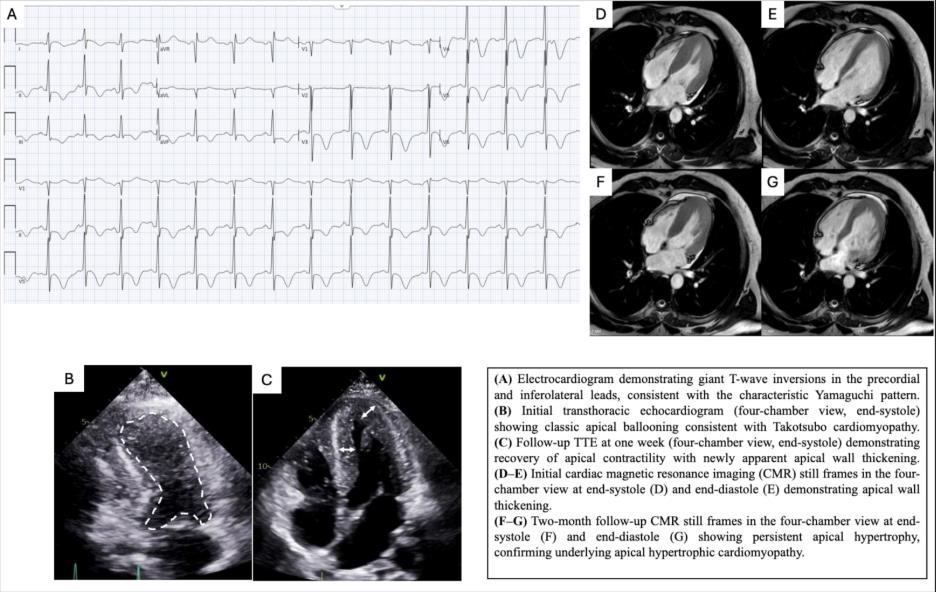
ABSTRACT #64
CASE REPORT/CLINICAL REVIEW
CARDIOLOGY/HEMATOLOGY/ONCOLOGY
ANTICOAGULATION NONADHERENCE OR TREATMENT FAILURE? MANAGEMENT OF LEFT VENTRICULAR THROMBUS IN A COMPLEX PATIENT: REVIEW OF CURRENT GUIDELINES
Matthew Kolansky1 , Zara Khan1, Paul Ippolito1, Foram Parikh1, Abel Casso Dominguez1 1Mount Sinai Morningside-West Hospitals, Icahn School of Medicine at Mount Sinai, New York, NY
BACKGROUND/INTRODUCTION: Left ventricular (LV) thrombus is a clinically significant complication in patients with ischemic cardiomyopathy, particularly following myocardial infarction (MI) and in the setting of severely reduced left ventricular systolic function. The presence of LV thrombus increases the risk of systemic embolization, including ischemic stroke, and is associated with a 37% risk of major adverse cardiovascular events (MACE). Prompt diagnosis and effective anticoagulation are therefore essential to mitigate morbidity and mortality.
Cardiac magnetic resonance imaging (CMR) is the most sensitive modality for detection of LV thrombus; however, transthoracic echocardiography (TTE) remains the most commonly utilized diagnostic tool in routine clinical practice. Current guidelines recommend oral anticoagulation for patients with confirmed LV thrombus for a minimum of three months. Repeat imaging is advised to assess thrombus resolution and guide the duration of therapy.
Vitamin K antagonists (VKAs) have traditionally served as first-line therapy for treatment of LV thrombus.2 However, direct oral anticoagulants (DOACs) are increasingly used in clinical practice as recent studies have shown DOACs to be non-inferior to VKAs in treatment of LV thrombus.2-6 Current guidelines do not universally support the empiric use of anticoagulation in patients at high risk of developing LV thrombus, such as those with severely reduced left ventricular ejection fraction (LVEF) or apical hypokinesis. In such cases, the 2022 American Heart Association (AHA) guidelines note uncertainty in the benefits of prophylactic oral anticoagulation in these high-risk populations and suggest individualized risk-benefit assessment. This nuanced decision-making is particularly important in patients with complex comorbidities, higher bleeding risks, prior anticoagulation challenges, or uncertain medication adherence. In this context, distinguishing true anticoagulant treatment failure from nonadherence is a common and clinically consequential challenge, with direct implications for anticoagulant selection and long-term management.
CASE PRESENTATION: A 74-year-old man with history of hypertension, diabetes mellitus, atrial fibrillation/flutter (AF), heart failure with reduced ejection fraction, and coronary artery disease status post percutaneous coronary intervention (PCI) with drug-eluting stent placement to mid-left anterior descending artery presented for management of LV thrombus. An outpatient TTE obtained one day prior to presentation demonstrated a severely reduced LVEF (<20%), diffuse moderate LV hypokinesis, LV apical akinesis with aneurysm formation, and a mobile thrombus extending from the LV apex toward the mid-ventricular cavity.
Review of prior echocardiographic studies revealed no evidence of LV thrombus before this presentation. However, following a prior MI complicated by apical akinesis, the patient had been started on warfarin for LV thrombus prevention. Warfarin was continued for several years but ultimately discontinued due to recurrent supratherapeutic international normalized ratio (INR) values. Anticoagulation was transitioned to apixaban.
Notably, the patient was diagnosed with AF while on apixaban. Approximately two years after the transition to apixaban, surveillance TTE revealed the newly identified mobile LV thrombus described above. Further history revealed intermittent nonadherence to apixaban, with missed doses occurring several days per month. Objective workup of anticoagulant exposure, such as with a DOAC-specific anti-factor Xa assay, was not performed.
During hospitalization, apixaban was initially continued given concern that thrombus formation may have been driven by suboptimal adherence rather than true anticoagulant failure. Additional factors favoring DOAC therapy included the patient’s concomitant AF, guideline preference for DOACs over VKAs in AF, and prior difficulty maintaining therapeutic INR on warfarin. Following a multidisciplinary discussion, anticoagulation was transitioned back to warfarin. Factors favoring this decision included the presence of a mobile LV thrombus during apixaban use, the historical evidence base supporting VKAs for LV thrombus treatment, and the ability to objectively monitor anticoagulation with INR testing. Ultimately, warfarin was selected in the setting of unresolved uncertainty regarding anticoagulant adherence versus treatment failure. CMR was not pursued due to clear visualization of LV thrombus on TTE, which was felt to be sufficient to guide management.
CONCLUSION: Management of LV thrombus in medically complex patients requires careful review of thrombus chronicity, prior MI, ventricular function, concurrent antiplatelet therapy, bleeding and thromboembolic risk, comorbidities, and medication adherence. In this case, differentiating anticoagulant failure from nonadherence was central to clinical decision-making. Additional considerations, including presence of AF, prior PCI on antiplatelet therapy, and prior challenges with warfarin management, further guided anticoagulation selection. This case highlights the uncertainty surrounding prophylactic anticoagulation after MI with LV/apical akinesis. Observational studies suggest that the addition of anticoagulation to those patients on dual antiplatelet therapy after PCI to prevent LV thrombus does not reduce MACE and may increase bleeding risk. The 2013 ACC/AHA STEMI guidelines provide a Class IIb recommendation for prophylactic anticoagulation among patients with STEMI and apical akinesis at risk for LV thrombus. More recently, the 2022 AHA guidelines on management of LV thrombus report limited data to support routine or even temporary anticoagulation in the current era of coronary revascularization followed by antiplatelet therapy. While acknowledging the utility of individualized case-by-case basis medical decision-making, the AHA recommends just 1-3 months of prophylactic anticoagulation as the risk for LV thrombus post-MI significantly decreases after this period. The prolonged use of warfarin in this patient without confirmation of LV thrombus may reflect broader practice drift and underscores the importance of guideline-aligned reassessment and follow-up imaging.
Furthermore, the incidental development of AF complicates anticoagulant selection. While the patient was initially on apixaban at the time of diagnosis of arrhythmia, the eventual switch to warfarin highlights the tension between managing AF and LV thrombus, and which condition should be prioritized. While either DOAC or VKA could be selected, the 2023 ACC/AHA guidelines support DOACs over VKAs for anticoagulation in the setting of AF, and perhaps this would have been the agent of choice.
This case demonstrates the challenges in the management of LV thrombusin patients with competing indications for anticoagulation, uncertain adherence, and evolving guideline recommendations. Late presentation of LV thrombus while prescribed a DOAC, combined with intermittent nonadherence and a concurrent AF indication, represents a clinically relevant and increasingly encountered scenario. Individualized risk assessment remains essential, and further high-quality evidence is needed to define optimal anticoagulant selection and duration in varied LV thrombus presentations.
ABSTRACT #65
MEDICAL EDUCATION
GENERAL INTERNAL MEDICINE
TEACHING COST-CONSCIOUS CARE: A NEEDS-BASED CURRICULUM TO IMPROVE INTERN UNDERSTANDING OF INPATIENT VERSUS OUTPATIENT COSTS
Sarah Kosse¹, Ann Mercurio¹, Sara Luby¹, Lindsey Fox¹, Vasundhara Singh¹ ¹Mount Sinai Morningside-West Hospitals, Icahn School of Medicine at Mount Sinai, New York, NY, United States Presented at the Society of Hospital Medicine (SHM) Annual Meeting that was held in Nashville, Tennessee, United States from March 29, 2026 to April 1, 2026.
BACKGROUND: A residency-wide needs assessment (48 respondents of 285; 31.3% PGY-1, 45.8% PGY-2, 22.9% PGY-3) revealed significant gaps in cost-effective care knowledge and confidence. While outpatient resources (72.9%) and logistical factors (64.6%) commonly influenced decision-making, only 33.3% considered cost. Confidence was low, with 54.2% “not very confident” and 12.5% “not at all confident.” Residents expressed interest in discharge costs (85%), barriers to high-value care (77%), and core high-value care concepts (51%). To address these findings, we developed an interactive, needs-based curriculum aimed at improving early high-value care decision-making among interns.
METHODS: Three one-hour sessions were delivered during academic half-days over three months. Session topics included: (1) introduction to high-value care and ethical dilemmas, including discussion of The High-Value Care Considerations of Inpatient versus Outpatient Testing; (2) inpatient versus outpatient costs and discharge planning; and (3) barriers to high-value care and the cost of diagnostic imaging. Teaching methods incorporated “chooseyour-own-adventure” clinical cases, breakout discussions, and didactic presentations. Content was adapted from the ACP high-value care curriculum and informed by needs-assessment findings. Interns completed post-session surveys evaluating confidence, knowledge, and perceived effectiveness.
RESULTS: Twenty-one interns participated in reflections and post-session 2 surveys, and sixteen completed postsession 3 surveys. After the curriculum, 94% of interns reported feeling “somewhat” or “very” confident in applying cost-conscious principles, with none reporting low confidence. Knowledge improved across multiple domains: correct identification that inpatient CBCs cost approximately three times morethan outpatient CBCs increased from 56% to 63%. Understanding of Medicare SNF coverage rose from 33% to 63%, reflecting a 29% gain in clinically relevant knowledge. Sixty-nine percent reported the sessions were “very” or “extremely” effective in helping them overcome barriers to implementing high-value care. Qualitative reflections highlighted challenges in balancing patient-centered care with resource stewardship, especially around prolonged admissions, outpatient follow-up, transportation barriers, and insurance limitations.
CONCLUSION: This needs-based, interactive curriculum effectively addressed knowledge and confidence gaps in cost-conscious care. Interns demonstrated improved cost awareness, enhanced ethical reasoning, and greater readiness to incorporate high-value, patient-centered decision-making into clinical practice. This model provides a scalable approach to early high-value care education within Internal Medicine Residency training.
ABSTRACT #66
QUALITY IMPROVEMENT
GENERAL INTERNAL MEDICINE
QUALITY IMPROVEMENT INITIATIVE
Hyuck-Jin Kwon
1,
Erika Ortiz
1 ,
Renee Slon
1
, Mary Ahearn1 , Nisha A. Rughwani1
1Mount Sinai Morningside-West Hospitals, Icahn School of Medicine Mt. Sinai, New York, New York, United States Presented at the American Geriatrics Society (AGS) Annual Meeting that was held virtually from April 27-29, 2025.
BACKGROUND: Accurate patient identification is vital to ensure patient safety, reduce errors, and provide quality care. Our geriatrics practice included patient photos in the electronic medical record and assessed the impact the intervention had on providers in our practice. The goal was to determine whether this could enhance provider satisfaction, patient safety, and contribute to efficient, patient-centered care
METHODS: Our clinic team introduced a Quality Improvement (QI) initiative to add patient photographs to their EMR. Staff were trained in the check-in workflow, photo-taking, and EMR entry during routine visits and included the photos. A survey was conducted among 24 interdisciplinary team members to assess their experiences and attitudes toward the initiative. The survey, which used a Likert scale and free-response section, gathered feedback on patient identification, care plan recall, patient safety, and any challenges or preferences regarding photo integration. The responses were analyzed to evaluate staff attitudes toward the QI intervention
RESULTS: In January 2024, the inclusion of patient photos in the electronic medical record was implemented, by October 2024, 82.3% of patients had a photo in their EMR, a significant increase from less than 7%. A survey of the clinic team revealed strong agreement that patient photos improved accurate identification and that all patients should have a photo in their EMR. ANOVA analysis showed statistically significant differences in survey responses, highlighting that the most impactful aspect of the initiative was the improvement in patient identification. Overall, the intervention received positive feedback for enhancing patient recognition and supporting the preference for universal photo inclusion in the EMR
CONCLUSION: Providers surveyed indicated that the quality improvement project was helpful in improving patient identification within the practice and believed that having photos in the EMR would be beneficial for all patients. The intervention proved to be an effective and economical method for implementing patient-centered care in patient charts. With participation from the interdisciplinary team, this intervention can help improve patient safety, identification accuracy, and provider satisfaction
ABSTRACT #67
QUALITY IMPROVEMENT
RHEUMATOLOGY
MONITORING HYDROXYCHLOROQUINE BLOOD LEVELS IN SYSTEMATIC
ERYTHEMATOUS Emily Cosentino1 , Leore Lavin1, Tatsunori Shizuku1, Saloni Mitchell1, Kristaq Koci1 1Mount Sinai Morningside-West Hospitals, Icahn School of Medicine at Mount Sinai, New York, New York, United States
BACKGROUND/ INTRODUCTION: Hydroxychloroquine (HCQ) is recommended for nearly all systemic lupus erythematosus (SLE) patients as a cornerstone therapy. Therapeutic HCQ blood levels (750–1,200 ng/mL) correlate with improved disease control, whereas sub-therapeutic levels are associated with nonadherence and increased flare risk. However, routine HCQ level monitoring is not standard practice, and testing only recently became available at our institution (MSMW), prompting this quality improvement (QI) project. Our aim is to achieve a 10–25% increase in the proportion of SLE patients on HCQ who have HCQ blood levels checked and optimized to the therapeutic range within one year. In addition, we aim to examine variation in HCQ monitoring across providers and insurance groups, as testing practices may differ and warrant standardization to ensure equitable care.
METHODS: Using Epic, SLE patients seen at MSMW rheumatology clinics over the past year were identified. Inclusion criteria included confirmed SLE, active HCQ therapy, and planned rheumatology follow-up. Records were reviewed to determine eligibility, demographic, and provider characteristics, whether HCQ blood levels were checked, and whether levels were within the target range. The intervention consists of adding electronic reminders (blue sticky note alerts) to prompt providers to order HCQ levels and adjust dosing for patients with unchecked or subtherapeutic levels. Key outcomes include the percentage of HCQ-treated patients with a level checked and the percentage achieving therapeutic levels. Statistical analyses were performed in R. We additionally examined variation in HCQ level testing across providers and insurance groups to identify potential practice and access disparities that could inform standardization efforts.
RESULTS (INTERIM): Analysis thus far has identified 164 eligible SLE patients receiving HCQ therapy, with additional charts still under review to determine eligibility. Among these, 94 (57.3%) had an HCQ level checked. Of patients with available drug levels, 22.8% achieved therapeutic HCQ levels (750–1,200 ng/mL), while 75.9% had subtherapeutic levels and 1.3% had supratherapeutic levels, suggesting frequent nonadherence or underdosing.
Testing practices varied across providers. Amongproviders with more than10 eligible patients, HCQ level testing rates ranged from approximately 40% to over 80%, demonstrating substantial variability in monitoring practices. Testing rates also differed by insurance status, with Medicare patients more frequently tested than privately insured patients (70.4% versus 53.1%, respectively).
Full analysis examining demographic, SLE medication burden, and provider-level differences is ongoing.
CONCLUSIONS (INTERIM): These interim findings demonstrate that HCQ level monitoring is inconsistently used and that most tested patients do not achieve therapeutic drug levels. Together, these findings support the need for interventions to standardize HCQ monitoring and optimize therapy in SLE.
Our ongoing QI initiative, incorporating provider alerts and education, aims to improve HCQ monitoring and adherence assessment to ultimately reduce lupus disease activity and complications. Follow-up analyses at 6 and 12 months will evaluate the impact of this intervention and complete the full planned analysis.
ABSTRACT #68
CASE REPORT/CLINICAL REVIEW
CARDIOLOGY
AMIODARONE’S LONG GOODBYE: DIGOXIN TOXICITY, THYROID DYSFUNCTION, AND VOLUME CONFUSION IN MIXED SHOCK
Gabrielle Leavitt1 , Uchenna Ajulu1 , Basera Sabharwal1
1Mount Sinai Morningside/West Residency, Icahn School of Medicine at Mount Sinai, New York, NY, United States
BACKGROUND: Amiodarone is a widely prescribed antiarrhythmic agent with a narrow therapeutic window associated with significant multisystem toxicity. Amiodarone inhibits P-glycoprotein-mediated efflux of digoxin, potentially doubling serum concentrations; critically. This interaction persists even after amiodarone discontinuation due to its long half-life and the persistent effects of its active metabolite, N-desethylamiodarone. The concurrent presentation of amiodarone-induced adverse thyroid effects and digoxin toxicity in critically ill patients is rarely documented, and management becomes particularly challenging in mixed septic-cardiogenic shock, where therapeutic goals of fluid resuscitation and diuresis are contradictory. Digoxin inhibits the Na⁺/K⁺ATPase, leading to increased intracellular calcium and delayed afterdepolarizations that enhance automaticity in the AV junction, resulting in an accelerated junctional rhythm. Simultaneously, digoxin increases vagal tone at the AV node, slowing conduction and prolonging refractoriness, which can cause AV block. The combination of increased junctional automaticity with impaired AV conduction is characteristic of digoxin toxicity.
CASE PRESENTATION: MF is an 88-year-old female with a past medical history of asthma, sacral wound, hypothyroidism, remote lung cancer status post left lobectomy, atrial fibrillation/flutter status post ablation on apixaban and amiodarone, and chronic lower extremity edema who was admitted to the cardiac intensive care unit for management of mixed septic and cardiogenic shock. The patient presented with atrial fibrillation with rapid ventricular response and acute hypoxemic respiratory failure secondary to influenza A and multifocal pneumonia on imaging. She was placed on BiPAP, milrinone, and intravenous Vancomycin and Cefepime. Amiodarone was held in the setting of cardiogenic shock and multiple electrolyte abnormalities. However, due to persistent tachycardia from atrial fibrillation, digoxin was initiated for rate control. Metoprolol was considered but deferred given borderline hypotension and ongoing requirement for milrinone to maintain mean arterial pressure. The patient's hospital course was complicated by supratherapeutic digoxin levels (3.6 ng/ml) after only three doses. The electrocardiogram demonstrated accelerated junctional rhythm with new deep T-wave inversions (Salvador Dali pattern). Digoxin was discontinued, and aggressive electrolyte repletion was initiated. Given concern for amiodarone-digoxin interaction (amiodarone's long half-life inhibiting digoxin clearance via Glycoprotein), and amiodarone's known thyroid effects in the setting of the patient's hypothyroidism history, thyroid function was reassessed and revealed subclinical hyperthyroidism. Levothyroxine dose was reduced per Endocrinology recommendation. After resolution of shock and discontinuation of milrinone, volume status assessment remained challenging with limited response to diuresis, confounded by tricuspid regurgitation. The course was further complicated by suspected T10–11 discitis/osteomyelitis with leukocytosis and encephalopathy, which improved on broad-spectrum antibiotics, allowing downgrade from the CCU.
CONCLUSION: This case highlights the critical importance of recognizing amiodarone-induced multisystem toxicity in critically ill patients, particularly the paradoxical development of digoxin toxicity despite amiodarone discontinuation due to persistent P-glycoprotein inhibition by the long-acting metabolite N-desethylamiodarone. The concurrent presentation of subclinical hyperthyroidism and digoxin toxicity in the setting of mixed septiccardiogenic shock exemplifies the diagnostic complexity and therapeutic challenges inherent in managing elderly patients with multiple comorbidities. Routine thyroid function and digoxin level monitoring in patients on chronic amiodarone is essential, with preemptive dose reduction (30-50%) when initiating digoxin even after amiodarone discontinuation.
ABSTRACT #69
CLINICAL RESEARCH
RHEUMATOLOGY
TIME-TO-EVENT ANALYSIS OF STATIN USE AND THROMBOTIC RISK IN PATIENTS WITH SYSTEMIC LUPUS ERYTHEMATOSUS: A SINGLE-CENTER RETROSPECTIVE STUDY
Christine Lenchur1* , Niurka Liranzo Tejera1*, Adal Abonamah1 , Takemichi Matsui1, Emily Cosentino1, Priscilla Abate Namnum1, Olga Marushchak2, Melissa Akselrad1, Martin John3, Sophia Lutgen2, Celestine He4, Boluwatito Oladeinde2, Harleen Sidhu5, Emilia Bagiella2, Ian Wright2 , Chrisanna Dobrowolski2
1Mount Sinai Morningside/West Hospitals, Icahn School of Medicine at Mount Sinai, New York, NY, United States; 2Mount Sinai Hospital, Icahn School of Medicine at Mount Sinai, New York, NY, United States; 3Columbia Presbyterian, New York, NY, United States; 4Beth Israel Deaconess Medical Center, Boston, MA, United States; 5Mount Sinai NYC H+H- Elmhurst, Icahn School of Medicine at Mount Sinai, Queens, NY, United States Presented attheAmerican College of Rheumatology (ACR) Annual Meeting that was held in Chicago, Illinois, United States from October 24-29, 2025.
*These authors contributed equally to this work.
BACKGROUND/INTRODUCTION: Patients with systemic lupus erythematosus (SLE) face elevated risk of thrombotic events (TEs) due to traditional cardiovascular factors and chronic inflammation. Statins may offer anti-inflammatory effects beyond lipid lowering, making them potentially valuable in this population. This retrospective cohort study examines the association between statin use and TEs in SLE patients, aiming to clarify inconsistent findings in prior research and optimize further management strategies.
METHODS: We conducted a retrospective cohort study using the Mount Sinai Health System’s Epic-linked electronic medical record to identify patients >18 years old diagnosed with SLE via ICD-10 codes between January 2000 and March 2024. Patients not meeting the 2019 ACR/EULAR classification criteria for SLE were excluded. The primary outcome of the study was the occurrence of a TE (arterial or venous), assessed using time to event analysis from the time of SLE diagnosis to the TE event or last follow-up. Patients free of a TE by the time of the last follow-up were censored. Statin use was the primary predictor variable. Univariate extended Cox models were utilized to explore the role of seven independent variables, including the primary exposure of interest as a time-dependent variable, on the risk of thrombotic events. P-values<0.05 were considered statistically significant.
RESULTS: A total of 376 patients with SLE were included in the study. Patient demographics, hydroxychloroquine use, as well as concomitant comorbidities of smoking, hypertension, diabetes mellitus, secondary antiphospholipid syndrome (APS) and lupus nephritis are detailed in Table 1. Of the 376 patients, 6.4% experienced thrombotic events during follow-up; 35.6% of these patients had a diagnosis of secondary APS. In univariate analyses, statin use, and secondary antiphospholipid syndrome (APS) showed significant associations with TEs. However, due to sparse data and wide confidence intervals, particularly among patients without APS, APS variable was excluded from the final model. Statin exposure was unexpectedly associated with an increased hazard of thrombotic events (HR, 6.62; 95%CI, 2.44–17.93; p<0.001; Table 2, Table 3).
CONCLUSION: While these results were statistically significant, the wide confidence interval suggests variability in the estimate, likely reflecting the limited number of events among non-statin users and heterogeneous exposure timing. These findings should be interpreted in the context of an exploratory analysis and warrant further investigation in a larger study. Results likely also reflect residual confounding, such as the preferential use of statins in higher-risk patients. Similar findings have been reported in other chronic inflammatory conditions, suggesting that statins alone do not sufficiently address thrombotic risk in people living with SLE.
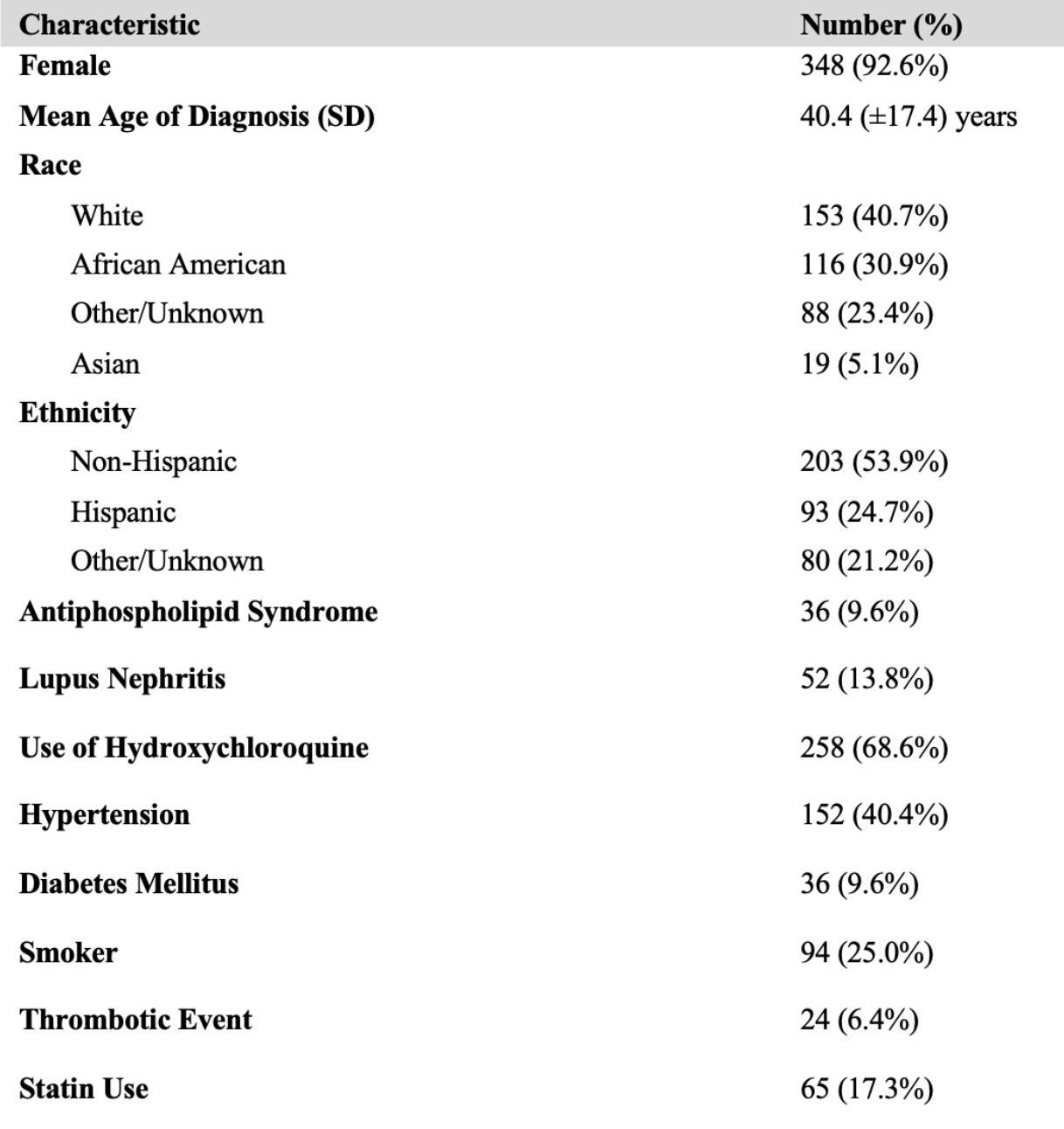
1. Patient demographics and demographics
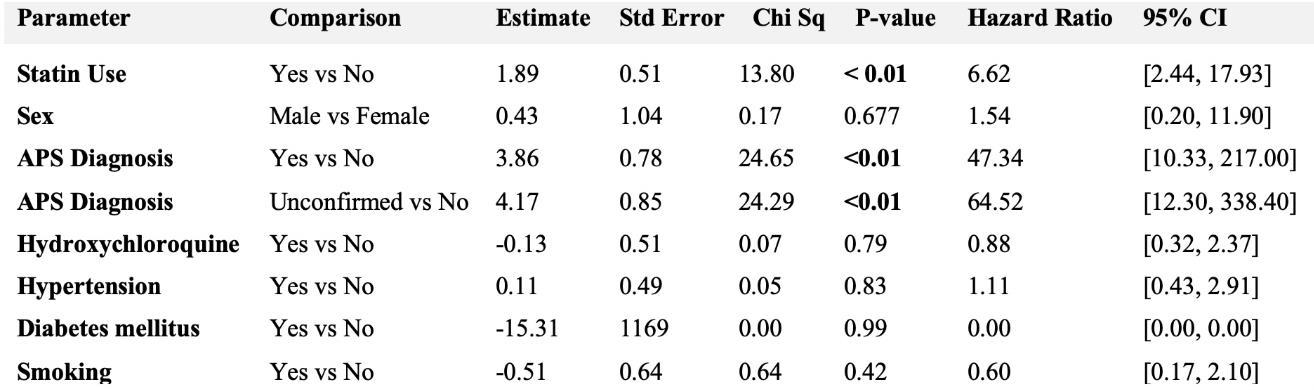
Table 2. Univariate extended Cox models of thrombotic risk by demographics, comorbidities, and treatment variables
Table 3. Final extended Cox model assessing the association between time-dependent statin use and thrombotic events
ABSTRACT #70
CLINICAL RESEARCH
GASTROENTEROLOGY
CAN A MULTIPLE RAPID SWALLOW CHALLENGE DISCRIMINATE THE PRESENTATION OF INEFFECTIVE ESOPHAGEAL MOTILITY?
Jessica Lim1 and Daniela Jodorkovsky1 1Mount Sinai Morningside/West Hospitals, Icahn School of Medicine at Mount Sinai, New York, NY, United States
INTRODUCTION: Ineffective esophageal motility (IEM) is one of the most frequently diagnosed esophageal motility abnormalities on high resolution manometry (HRM). However, it remains a diagnostically challenging disorder, with heterogeneous clinical associations, patient presentations, and management plans. The Multiple rapid swallow (MRS) challenge is a provocative maneuver that can indicate peristaltic reserve by the presence of an augmented peristaltic contraction. The aim of this study is to determine whether an augmented MRS challenge can discriminate the clinical presentation of IEM.
METHODS: A total of 158 patients with IEM, defined as >70% weak or failed peristalsis or >50% failed peristalsis on HRM, between January 1, 2016 to September 20, 2023 were considered for inclusion. 10 patients excluded due to a history of fundoplication and 19 patients were excluded due to inability to complete a MRS challenge. A successful MRS challenge was defined as the distal contractile integral (DCI) of the MRS greater than the mean DCI of 10 supine swallows. Demographic and clinical characteristics were compared in patients with an inadequate versus augmented MRS challenge. Chi squared test, Mann-Whitney test, and logistic regression were used for analysis.
RESULTS: Of 158 patients analyzed, 65 patients had augmented peristalsis on MRS challenge, and 93 patients had inadequate MRS challenge. Patients with inadequate MRS were older (54.23 years, p=0.015). However, there was no significant difference in the main indication/symptom presentation between the two groups (dysphagia alone, 26% for augmented MRS versus 19% for inadequate, p=0.311; dysphagia + GERD, 35% for augmented MRS versus 33% for inadequate, p=0.789; GERD alone, 43% for augmented MRS versus 45% for inadequate, p=0.68; other symptoms, 22% for augmented MRS versus 22% for inadequate, p=0.996). There were no significant differences in HRM metrics between the two groups (mean DCI p=0.049), basal LES (p=0.251), HH size (p=0.319), IRP (p=0.430), % failed (p=0.297), and % intact, (p=0.046).
CONCLUSION: The presence of peristaltic reserve as measured by an augmented peristalsis during MRS challenge did not help discriminate clinical presentation of dysphagia in patients with IEM on high resolution manometry. IEM continues to be a clinically heterogeneous condition with unclear clinical outcomes. Further studies should be performed to explore the utility of other provocative maneuvers or additional manometry metrics to more clearly define this condition.
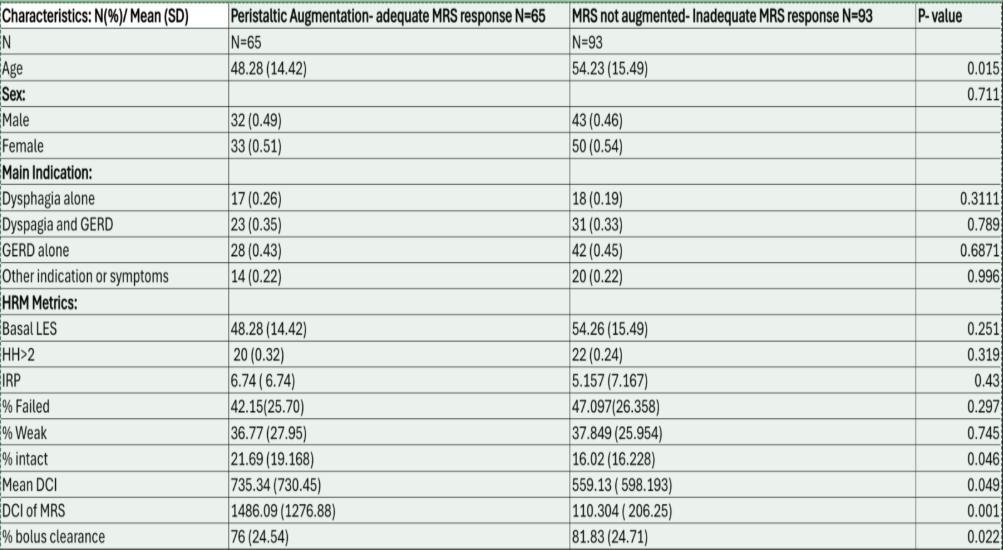
1. Patient Characteristics and symptom presentation
ABSTRACT #71
CASE REPORT/CLINICAL VIGNETTE INFECTIOUS DISEASE/PULMONARY/CRITICAL CARE
Stephanie Marull1 , Vince Martinez1 , Nicholas Sells1 1Mount Sinai Morningside-West Hospitals, Icahn School of Medicine at Mount
Sinai, New York, NY, United States
BACKGROUND/INTRODUCTION: Since 2020, the United States has seen a resurgence in Mycobacterium tuberculosis (MTB) infections, with TB-related deaths increasing by 5.1% from 2015 to 2023. Globally, MTB remains a priority with the Mycobacterium tuberculosis Complex (MTBC) consisting of several distinct lineages that vary in terms of geographic distributions and clinical manifestation. The Mycobacterium africanum lineage is common in West Africa, accounting for a large portion of up to 50% of the TB cases in this region. However, the M. africanum lineage is exceedingly rare in North America. Unlike other lineages, M. africanum is often associated with slower progression, yet can progress into a severe extrapulmonary disease as identified in this report. In addition, Immune Reconstitution Inflammatory Syndrome (IRIS), a state of hyperinflammatory reactions of a known condition or appearance of a new condition after therapy initiation, is often seen in patients living with HIV infection following initiation of antiretroviral therapy. This report identifies a case of paradoxical TB-IRIS occurring in an HIV-negative, immunocompetent individual following the initiation of RIPE therapy. This disease and its manifestation can be diagnostically challenging and lead to a delay in appropriate adjunctive therapy. The goal of this report is to document a rare TB case of M. africanum in New York City, complicated by TB-IRIS and an atypical extrapulmonary clinical manifestation that included severe neurological deficits. The case spanned across three months with three separate hospitalizations utilized multidisciplinary approaches, requiring urgent neurosurgical intervention with high dose corticosteroids that resulted in preservation of neurological function and optimization of clinical outcome for this immunocompetent adult.
CASE PRESENTATION: A 26-year-old immunocompetent U.S. residing male with a history of five years of residency in Mali, a country of located in West Africa, initially presented with two weeks of fever, generalized weakness, and a 10-pound weight loss. At time of symptom onset, he presented to an outside hospital (OSH) where he was diagnosed with a viral upper respiratory infection; however, the progression and worsening of his symptoms prompted his medical re-evaluation during his first hospitalization. He was discharged from the first hospitalization after being diagnosed with extrapulmonary tuberculosis (lymphadenitis) and initiated on a standard RIPE therapy (Rifampin, Isoniazid, Pyrazinamide + B6, Ethambutol), with outpatient follow up Infectious Disease arranged. The patient adhered well to the treatment, yet the patient experienced a paradoxical clinical decline. By Month 2, he had persistent and recurrent fevers and newly developed lower back pain, prompting his second hospitalization. Imaging revealed necrotic retroperitoneal lymph nodes, a multiloculated right psoas abscess, and L5-S1 discitis with osteomyelitis. The right psoas abscess was biopsied and revealed Mycobacterium tuberculosis. The patient was discharged from the second hospitalization with a diagnosis of TBIRIS and advised to continue RIPE + Vitamin B6 and arranged for follow up. By Month 3, his symptoms progressed to left lower extremity pain, weakness, and inability to ambulate, which led in a third hospitalization. During the third admission, repeat imaging revealed a new epidural abscess and advancing discitis. The patient underwent urgent L5/S1 laminectomy, foraminotomy, and epidural abscess evacuation. In addition, he was started on prednisone daily with a scheduled taper alongside RIPE and Pneumocystis jirovecci pneumonia prophylaxis. Following medical and surgical interventions, the patient showed clinical improvement. Most significantly, he regained full lower extremity strength and resumed independent ambulation.
CONCLUSION: The management of rare MTBC lineages, specifically Mycobacterium africanum, requires a heightened index of suspicion and an integrated, multidisciplinary approach. While literature often suggests that M. africanum is associated with lower virulence, this case illustrates its potential for aggressive extrapulmonary
destruction in immunocompetent hosts. This case also challenges the conventional clinical paradigm of Immune Reconstitution Inflammatory Syndrome (IRIS), an entity atypical in tuberculosis patients and more prevalent in patients living with HIV infection. In these circumstances, TB-IRIS presents a significant diagnostic pitfall that may be misattributed to treatment failure, poor adherence, or drug-resistant tuberculosis. Ultimately, early recognition of paradoxical inflammatory response and prompt initiation of adjunctive therapies are crucial for optimizing functional recovery and mitigating permanent disability, as shown by this patient’s recovery of strength and regaining independent ambulatory ability. Finally, for public health surveillance in hyper-diverse urban cities like New York City, the involvement of the Department of Health for precise lineage identification and wholegenome sequencing is critical. Documenting these rare presentations is essential for expanding our understanding of MTBC molecular epidemiology.
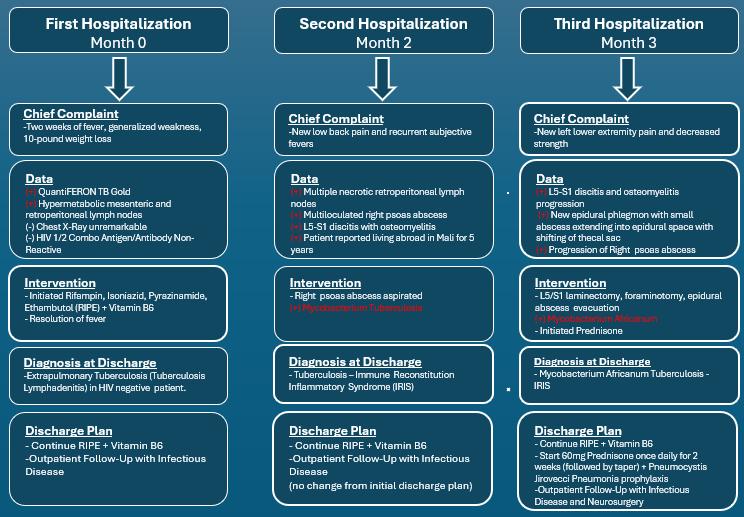
ABSTRACT #72
CASE REPORT/CLINICAL REVIEW
CARDIOLOGY
A CASE OF ARRHYTHMOGENIC RIGHT VENTRICULAR CARDIOMYOPATHY STATUS POST OUT-OFHOSPITAL CARDIAC ARREST
Kevin
Mathew
1 and Jaskirat Gill1
1Mount Sinai Morningside-West Hospitals, Icahn School of Medicine at Mount Sinai, New York, NY, United States
BACKGROUND/INTRODUCTION: ARVC, formerly known as ARVD (arrhythmogenic right ventricular dysplasia) is defined by a clinical presentation with documented or symptomatic arrhythmia with myocardial structural and functional abnormalities. Given its rarity, it is an underrecognized condition that is characterized by ventricular arrhythmias originating from the right ventricle. Structurally and histologically, there are also telltale signs associated with the condition, including RV dilation, myocardial thinning, fibrosis and fibrofatty infiltration of the myocardium, respectively. ARVC is a significant cause of sudden cardiac death (SCD) in younger patients, as it accounts for 11 percent of cases overall. It is an inherited cardiomyopathy and affects a significant number of first-degree relatives of the individual identified with the condition. Given that it is more common in males, and is largely diagnosed in adolescence to mid-adulthood, there should be suspicion for this disease in young to middle-aged males who present with symptomatic ventricular arrhythmias, syncopal episodes and cardiac arrest with otherwise healthy/lack of co-morbid conditions.
CASE PRESENTATION: A 22-year-old male was brought to the Emergency Department after a witnessed cardiac arrest outside of the hospital, taking place while the patient was participating in a basketball game. The patient's initial cardiac rhythm was ventricular fibrillation (Vfib), followed by pulseless ventricular tachycardia (pVT) and then shortly after ROSC was achieved. Upon arrival to the ED, he arrived as a STEMI alert and suffered another cardiac arrest with ROSC achieved after 1 round of CPR. He was intubated and sedated. EKG showed ST elevations in anterior leads. Emergent left heart catheterization (LHC) revealed no coronary artery disease (CAD) and a mildly reduced EF (~45%). Initial imaging/workup was revealing for dense lower lobe opacities on CT Chest. Repeat EKG upon arrival to CCU had no evidence of Brugada’s sign, delta, epsilon waves or prolonged QTc. Telemetry throughout the CCU course showed isolated premature ventricular contractions (PVCs). Bedside cardiac ultrasound was suspicious for right ventricular hypokinesis. Neurology was consulted as the patient was noted w/ retrograde amnesia regarding events surrounding his hospitalization. MRI Brain was obtained, showing recent small infarctions at the right thalamus and cerebellar region, concerning for embolic events. Further work-up included TEE, which revealed a small PFO and Cardiac MRI, which revealed moderate dilation of the right ventricle (RV) with systolic dysfunction (RVEF 34%), akinesis of mid-right ventricular free wall and micro-aneurysms of the mid to apical RV free wall. Late gadolinium enhancement of the RV inferior wall and free lateral wall was also seen. Finally, interatrial septum thinning was noted. Cardiac MRI was consistent with the diagnosis of ARVC, and the patient was started on a low-dose beta blocker. Prior to discharge, he also had a S-ICD placed and was planned for PFO closure after further discussion in clinic. In the outpatient setting, he underwent genetic testing, revealing a pathologic variant in the PKP2 gene, which is associated with autosomal dominant ARVC.
DISCUSSION/CONCLUSION: ARVC is a predominantly autosomal dominant disorder of the right ventricle, with a prevalence of 1:2000 to 1:5000 in the adult population. It is a devastating and clinically significant cause of sudden cardiac death in younger populations, accounting for about ~11 % of cases overall. Notably, the disorder affects young males more so than females, thought to be related to interaction between pathophysiology and sex hormones, and the former’s involvement in more physically demanding activity (i.e. contact sports). While ARVC is recognized as a progressive disease with substantial variability among patients, there have been few studies that have looked into defining the extent and rate of structural progression over time. One study examined structural progression by using RV-FAC (RV fractional area change) as a surrogate for RV systolic function, and used LVEF to determine LV systolic function, and also measured RVOT dimension between baseline and follow-
up (4-8 years) for patients. 28% of patients met criteria for significant RV structural progression (defined as an absolute decrease in RV-FAC >10%). Another 29% showed structural progressive LV disease (defined as an absolute decrease in LVEF >7%). Patients involved in this study ranged from ages 28 to 56, with about 55% being male. The main area of clinical significance is the evolution of electrical abnormalities associated with structural progression in these patients. While the statistical power of this study was limited due to size, it showed that there was no obvious association between rapid structural disease progression and newly developing arrhythmias, meaning that even if patients were noted with stable structural disease, they are still susceptible to developing repolarization, depolarization and arrhythmic criteria (as per 2010 TFC guidelines), and should be monitored carefully with both ECG and echocardiography for disease progression. The pathogenesis of ARVC has been tied to five disease-causing genes encoding desmosomal proteins (plakoglobin, desmoplakin, plakophiin-2, desmoglein and desmocollin), and many of the key features of ARVC support this impaired cell adhesion hypothesis. When the desmosomes' function is consequently impaired in the setting of mechanical stress, this leads to myocyte detachment, cell death and inflammation, ultimately resulting in the fibrofatty replacement of damaged myocytes. In those with increased mechanical stress (i.e. athletes), structurally severe disease has been noted compared to non-athletes. Management of ARVC mainly focuses on prevention of SCD and slowing the rate of disease progression. In those with definite ARVC, endurance and competitive sports should be restricted, as there is a strong association between exercise and higher risk of ventricular arrhythmias, along with heart failure development/progression. Beta-blockers are prescribed for patients with definite ARVC, regardless of past history of ventricular arrhythmias (as they can serve as a prophylactic measure). Another mainstay of ARVC management is ICD placement in those that have an indication, including survivors of sudden cardiac arrest, those with symptomatic ventricular tachycardia or fibrillation, reduced EF (<35%), and syncope suspected to be of arrhythmic origin. In a subset of patients that suffer from refractory ventricular arrhythmias post-ICD placement and beta-blocker therapy, anti-arrhythmic drugs (i.e. sotalol, flecainide, amiodarone), radiofrequency catheter ablation and even cardiac sympathetic denervation are available therapies. In those with heart failure with reduced ejection fraction from RV systolic dysfunction, treatment is similar to those with heart failure without ARVC, including ACE inhibitors, and mineralocorticoid receptor antagonists (MRA). Lastly, for patients with refractory disease to all the above therapies, cardiac transplantation may be considered. Prognosis of ARVC and clinical course may be impacted by the number/type of mutations, and studies have shown that patients with multiple mutations had earlier occurrence of malignant arrhythmias and systolic dysfunction compared to those with a single mutation. Avoidance of high-intensity sports also seems to be related to a reduced disease penetrance. While ARVC is a devastating and underrecognized condition, as more young patients present with symptoms suspicious of cardiac origin (i.e. palpitations, malignant arrhythmias, syncope), it is of the utmost significance to keep rare cardiomyopathies in the differential and recognizing subtle echocardiographic and ECG abnormalities will be key to pursuing further work-up and preventing sudden cardiac death.
ABSTRACT #73
CLINICAL RESEARCH
RHEUMATOLOGY
DEMOGRAPHICS AND CLINICAL
Sophia Lutgen1 , Takemichi Matsui2, Christine Lenchur2, Niurka Liranzo Tejera2, Melissa Akselrad2 , Emily Cosentino2 , Sabina Deovic2, Harleen Sidhu3, Nataliya Melnyk2, Priscilla Abate Namnum2, Celestine He4, Yousaf Ali1
1Mount Sinai Hospital, Icahn School of Medicine at Mount Sinai, New York, NY, United States; 2Mount Sinai MorningsideWest Hospitals, Icahn School of Medicine at Mount Sinai, New York, NY, United States; 3NYC Health + Hospitals/ Elmhurst, Icahn School of Medicine at Mount Sinai, Queens, NY, United States; 4Beth Israel Deaconess Medical Center, Boston, MA, United States
BACKGROUND/INTRODUCTION: Giant Cell Arteritis (GCA) is the most common vasculitis in older adults. The incidence in the United States is of 18 to 29 cases per 100,000 people above 50 years old. Permanent visual impairment due to ischemic optic neuropathy is one of the most feared complications. Clinical suspicion is very important in this condition, given that there is no quick and highly sensitive diagnostic method. The incidence of GCA is poorly studied in urban centers. We conducted a hospital database study to assess the overall and regional incidence rates of GCA in a busy New York hospital. Given the significant gap in knowledge of our patient population, this proposed research sought to further understand the demographics, biopsy results and therapeutic management in a diverse inner-city population. Our ultimate goal includes implementing strategies for earlier diagnosis including fast track clinics, as well as introducing new diagnostic methods such as the temporal artery ultrasound (TA US)
METHODS: This is a retrospective, observational cohort study of patients with GCA from a major urban healthcare system (Mount Sinai Morningside and West Hospitals) in New York City, United States of America. Patients were identified through the electronic medical record using International Classification of Diseases-10 codes for GCA. Data was collected from January 1, 2023 to January 15, 2024. The study design was approved by the Institutional Review Board. Temporal artery biopsy (TAB) results were categorized as positive or negative for primary analyses. Categorical variables were compared using Fisher-Freeman-Halton exact tests or Fisher’s exact tests. Continuous variables were compared using the Wilcoxon rank-sum test. A two-sided p-value was considered statistically significant.
RESULTS: A total of 108 patients were included in the analysis. The mean age at diagnosis was 75 years (range, 48–94), and 87% were women. Most patients were insured through Medicare or Medicaid (75%), followed by private insurance (24%) and uninsured status (1%). The majority of participants self-identified as White (63%), followed by Black (11%), Asian (3%), and “other or unknown” race (23%). Ethnicity was reported as non-Hispanic in 65% of participants, Hispanic in 20%, and “other or unknown” in 15%. English was the most reported language (84%), followed by Spanish (16%). Baseline demographic characteristics were not significantly associated with TAB results. Presenting clinical features included new-onset headache (88%), temporal artery abnormalities on exam (75%), scalp tenderness (65%), visual symptoms (amaurosis fugax, vision loss, diplopia) (49%), jaw claudication (44%), polymyalgia rheumatica (31%), and constitutional symptoms (24%). 14 patients experienced ischemic complications (14%). Jaw claudication was more frequent in TAB-positive than TAB-negative patients (58% versus 30%; OR, 3.19; p=0.018). Temporal tenderness was also more common in TAB-positive (83% versus 47%; OR, 5.71; p=0.002). No statistically significant associations were observed between TAB status and other clinical symptoms (Figure 1). While ESR did not differ significantly between individuals with biopsy positive or negative, CRP was significantly higher in biopsy-positive patients (79.5 mg/L [IQR 34.5–184.5] versus 32 mg/L [IQR 13–97]; p=0.047). Of the 108 patients in the cohort, 102 met the 2022 ACR/EULAR classification criteria for GCA, while 6 were diagnosed clinically by a rheumatologist despite not meeting criteria. All six of these patients had negative TAB results. Of the 92 patients who underwent TAB (85% of the cohort), 47 (51%) had pathologic findings consistent with GCA, 32 (35%) had negative biopsy results, and 13 (14%) had
indeterminate findings. Indeterminate biopsies were characterized by chronic histologic changes or nonspecific inflammation. Prolonged glucocorticoid therapy was frequently prescribed regardless of TAB results. At 6 months, 39 of 47 biopsy-positive patients (83%) and 20 of 32 biopsy-negative patients (63%) remained on glucocorticoids. Although this difference was not statistically significant, a substantial proportion of biopsynegative patients continued long-term therapy. Similarly, at 12 months, glucocorticoid use remained common in both groups (66% versus 50%), without statistical significance. TA US was performed in 5 of 108 patients. Two studies were positive and three were negative. Of the two positive US studies, one was associated with a negative TAB, the other patient did not undergo biopsy. Among the negative US results, two correlated with a negative biopsy, but one had a positive TAB result.
CONCLUSION: Although GCA is considered primarily a disease of Caucasians, 30% of our patients identified as Hispanic or Black. We also noted that a large proportion of our patients with GCA are on federally insured health plans (Medicare/Medicaid). In this real-world retrospective cohort, prolonged glucocorticoid therapy was frequently continued regardless of TAB results. Surprisingly, patients with a negative TAB had the same corticosteroid exposure at six months. While certain cranial symptoms were associated with biopsy positivity, negative or indeterminate results did not consistently alter management. These findings highlight the persistent diagnostic uncertainty in GCA and underscore that treatment decisions are largely driven by integrated clinical assessment rather than biopsy results alone. Unlike our European counterparts, TA US was only utilized in 5% of suspected cases and showed inconsistent results. While this has become standard of care in other centers, it has not been widely accepted in the USA. Although clinical judgement appeared to supersede pathology and US results, our center is clearly underutilizing non-invasive imaging. We plan on establishing a fast track GCA center and incorporate standardized training for GCA US to ensure consistency and proficiency. Whether or not this can replace the gold standard, TAB remains to be determined.
ABSTRACT #74
CLINICAL RESEARCH GASTROENTEROLOGY
MOVING ALONG: THE USE OF GLP-1 RECEPTOR AGONIST DOES NOT REDUCE ESOPHAGEAL MOTILITY
Sonia Mehra1, Astitva Soni1, Meghana Pandit1, Kimberly Cavaliere1, Yuying Luo1 , Daniela Jodorkovsky1
1Mount Sinai Morningside-West Hospitals, Icahn School of Medicine at Mount Sinai, New York, NY, United States Presented at the Digestive Disease Week (DDW) Annual Meeting that was held in Chicago, Illinois, United States from May 2-5, 2026.
INTRODUCTION: The effects of glucagon-like peptide-1 receptor agonists (GLP-1RAs) on esophageal motility, and how such effects may alter reflux physiology, are not well understood. The aim of this study is to evaluate if GLP-1RA use impacts esophageal motility as assessed by high-resolution manometry (HRM) among patients presenting with symptoms of gastroesophageal reflux disease (GERD).
METHODS: All patients undergoing ambulatory reflux testing at a single high-volume motility center fromAugust 2024 to August 2025 were reviewed and GLP-1RA users were identified. Patients were included if HRM was performed and excluded if there was a history of achalasia or prior fundoplication. GERD was defined as esophageal acid exposure time (AET) >4% or >6% depending on whether testing was performed while on or off a proton pump inhibitor, respectively. The primary outcomes were differences in baseline lower esophageal sphincter (LES) pressure, integrated relaxation pressure (IRP), % failed, weak, premature, hypercontractile, or normal peristalsis, and Chicago classification. Chi square and multiple linear regression analysis were used to evaluate variables of interest, adjusting for age, sex, race, BMI, substance use, and diabetes.
RESULTS: Of 430 charts reviewed (36.3% male, average age 51.8 ±15.9 years), 292 (67.9%) completed HRM testing, of which 28 (9.6%) were GLP-1RAusers.Among GLP1-RAusers, 18 (64.3%) had a normal HRM. There was no significant difference in GLP-1RA use by % peristalsis type or across Chicago classification diagnoses, including normal motility, disorders of peristalsis (absent contractility, distal esophageal spasm, hypercontractile esophagus, ineffective esophageal motility) or by disorders of esophageal-gastric junction outflow obstruction (p=0.37). GLP1-RAusewas not significantly associated with differences in baseline LES tone (23.4mmHg versus 19.6mmHg, p=0.67), IRP (6.3cm versus 9.1 cm p=0.83), or presence of hernia (p= 0.75) [Table 1]. On subanalysis stratifying by presence or absence of objective GERD among GLP-1RA users only, there was also no significant difference by % peristalsis type, Chicago Classification (p=0.08), baseline LES (20.3mmHg with reflux versus 19.1mmHg without, p=0.36), IRP (6.1mmHg with reflux versus 6.4 without, p=0.88) or by presence of hernia (p=0.62) [Table 2].
CONCLUSION: In patients presenting with GERD-like symptoms, GLP-1RA use was not associated with esophageal motility dysfunction, even in those with objective evidence of GERD. This suggests that GLP-1RA may not contribute to the pathogenesis of reflux physiology. While this is one of the first studies evaluating the role of GLP-1RAs on esophageal motility in the context of reflux, our study was limited by the relatively few numbers of GLP-1RA users in our cohort. Additional studies with larger GLP-1RA cohorts are needed to further clarify these early observations.
Table 1: Demographic and esophageal manometry by GLP-1RA use
Classification
Table 2 Demographic and esophageal manometry by presence of objective acid reflux among patients on GLP-1RA
Race
High Resolution Manometry testing
ABSTRACT #75
CLINICAL RESEARCH
HEMATOLOGY/ONCOLOGY
DISTANCE TRAVELED TO TREATMENT CENTER DOES NOT INDEPENDENTLY IMPACT SURVIVAL IN ACUTE MYELOID LEUKEMIA: A NATIONAL CANCER DATABASE ANALYSIS
Ann Mercurio1, Thomas Chen2, Dahniel Sastow2, Grace Van Hyfte2, Khadiza Bhuiyan2, Hannah Levavi2 , Douglas Tremblay2
1Mount Sinai Morningside/West Hospitals, Icahn School of Medicine at Mount Sinai, New York, NY, United States; 2Mount Sinai Hospital, Icahn School of Medicine at Mount Sinai, New York, NY, United States Presented at the American Society of Hematology (ASH) Annual Meeting that was held in Orlando, Florida, United States from December 6-9, 2025.
BACKGROUND/INTRODUCTION: AML is an aggressive hematologic malignancy that requires frequent hospitalization, close monitoring, and complex supportive care. Studies utilizing the NCDB have somewhat counterintuitively observed improved survival among patients with certain solid cancers living further away from hospitals. Comparable analyses on AML patients from countries with single-payer healthcare systems have found that distance does not impact access to care, choice of therapy, or survival. How distance to center impacts overall survival (OS) in patients with AML in the United States is unexplored.
METHODS: Demographic, diagnostic and clinical data on patients diagnosed with AML from 2004-2019 were obtained from the NCDB. Cases where diagnostic, treatment, and location data were unavailable were excluded. Crowfly distance was stratified by quartile and examined as a categorical variable. The primary outcome was OS in months. Patients without reported death dates were censored at time of last follow-up. Statistical analysis included Cox proportional hazard regression and Kaplan-Meier analysis. All multivariable models were adjusted for demographics (age, sex, race, ethnicity), socioeconomic status (median income, insurance status), geographic location of care center (urban/rural, US Census region), and clinical features (diagnosis year, Charlson Deyo comorbidity index, APL status, Core-binding factor status, chemotherapy, transplant status, multiagent therapy, palliative care).
RESULTS: A total of 131,758 patients were identified. Adults aged 18-59 years accounted for 33.8% of the cohort and 45.5% patients were female. The median crowfly distance was 12.9 mi, with an interquartile range (IQR) of 5.3 to 35.9 mi. Among cases reporting the type of treatment facility (n=118,606), 48.8% were treated at academic centers. In a univariable Cox regression analysis of quartiled crowfly distance using the first quartile (shortest distance) as the reference, greater distances were significantly associated with better OS (p<0.001 for all 3 quartiles). After multivariable adjustment, only the second and third crowfly quartiles demonstrated a significantly lower hazard ratio (HR): Quartile 2 HR 0.97 (95%CI, 0.96-0.99, p =0.005), Quartile 3 HR 0.96 (95% CI 0.95 - 0.98 p<0.001). Quartile 4 did not significantly differ from Quartile 1 (HR, 1.00; 95%CI, 0.97-1.02; p=0.717). A subgroup analysis of only academic centers (n=50,824) reflected this pattern but was not significant: Quartile 2 HR, 0.99 (95%CI, 0.96 - 1.0), Quartile 3 HR, 0.98 (95%CI, 0.95-1.0), Quartile 4 HR, 0.97 (95%CI, 0.94-1.0). The median elapsed time between diagnosis and initiation of treatment (5.0 days) did not vary with statistical significance across crowfly quartiles overall (p=0.192), nor among academic centers (5.0 days, p=0.758). Stratified analysis of median income ranges examined the relationship between SES and crowfly travel quartiles as it impacts survival outcomes. With distances held constant, there was no evidence that patients of the lowest median income tier (<$30,000) experienced worse survival: Quartile 2 HR, 0.99 (95%CI, 0.93-1.06), Quartile 3 HR, 1.04 (95%CI, 0.98-1.11), Quartile 4 HR, 0.93 (95%CI, 0.89-0.97). Conversely, a survival benefit was seen among patients of higher SES at the furthest distances from treatment centers (Quartile 4): median income of $35,000-$45,999 had a HR, 0.91 (95%CI, 0.87-0.95); median income of $46,000+ had a HR, 0.82 (95%CI, 0.78-0.86), when compared to median income <$30,000. Multivariable Cox model interaction analysis showed this interaction was statistically significant (p<0.001).
CONCLUSION: Our NCDB analysis suggests that greater distance to treatment center was not associated with worse survival in AML. Our assessment of SES as a risk factor by subgroup stratification showed that patients with lower SES did not experience worse outcomes despite longer travel distances. Notably, higher-income patients living farther from care had better survival, suggesting that belonging to higher SES may help overcome any challenges related to travel distances. Our findings raise the question of whether efforts to minimize the burden of travel throughout the course of AML treatment could help patients overcome other known barriers to care, including socioeconomic, institutional, and geographic factors in such a way that prolongs survival.
ABSTRACT #76
CASE REPORT/CLINICAL VIGNETTE CARDIOLOGY
LATE PRESENTATION MYOCARDIAL INFARCTION WITH DUELING MECHANICAL COMPLICATIONS: DYNAMIC LEFT VENTRICULAR OUTFLOW TRACT OBSTRUCTION AND VENTRICULAR SEPTAL RUPTURE
Jacqueline Mirza1 , Michael Bourne1, Amirali Ahmadi1
1Mount Sinai Morningside-West Hospitals, Icahn School of Medicine at Mount Sinai, New York, NY, United States Presented at the American Heart Association (AHA) Annual Meeting that was held in New Orleans, Louisiana, United States from November 7-10, 2025.
BACKGROUND/INTRODUCTION: Post-myocardial infarction ventricular septal defect (MI-VSD) is a rare, often fatal complication of myocardial infarction, regardless of treatment approach. Presentations vary from new murmurs to acute cardiogenic shock. This case describes a patient with delayed myocardial infarction presentation complicated by ventricular rupture.
CASE PRESENTATION: An 81-year-old woman with B-cell lymphoma, emphysema, and autoimmune hepatitis presented with progressive dyspnea and cough. Initially treated for an upper respiratory infection, she deteriorated and arrived in SCAI C cardiogenic shock. She was hypoxemic on high-flow nasal cannula; blood gas showed severe acidosis and lactate of 13.9 mmol/L. Exam revealed bibasilar rales, cool mottled extremities, and no murmur. ECG showed tachycardia with new anterolateral Q waves and ST elevation in V2–V5, prompting STEMI activation. Bedside echocardiogram showed apical and inferoseptal akinesis. Coronary angiography was deferred due to delayed presentation and down-trending high-sensitivity troponin (618 ng/L). She was admitted to the CCU, where shock improved with norepinephrine, milrinone, and IV diuresis. Her course was complicated by new-onset atrial fibrillation with RVR. Despite IV amiodarone, RVR persisted, along with worsening respiratory status and increasing vasopressors needs. Limited echocardiography revealed basal hypercontractility and dynamic LV outflow tract obstruction (LVOTO). Esmolol was considered to reduce the gradient. Simultaneously, pulmonary artery catheter readings suggested new left-to-right shunting. A new loud holosystolic murmur was heard and repeat echocardiogram confirmed a large ventricular septal rupture (VSR). Per the patient’s prior wishes, surgical intervention was deferred. Palliative care was initiated, and the patient passed away comfortably.
CONCLUSION: This case underscores the importance of vigilance for both arrhythmogenic and mechanical complications in late-presenting, un-revascularized MI. The presence of dual complications dynamic LVOTO and VSR illustrates the clinical complexity. This case also highlights key decision points regarding temporary mechanical circulatory support and the need to weigh aggressive interventions against patient goals in frail, multi-morbid individuals, where benefit to quality of life and survival may be limited.
ABSTRACT #77
CLINICAL REASEARCH
PULMONARY/CRITICAL CARE
PREDICTORS OF 30-DAY READMISSION AMONG SEPSIS SURVIVORS: CHRONIC COMORBIDITY BURDEN OUTWEIGHS ACUTE ILLNESS SEVERITY
Serene Mirza1, Christiana Choi1, Yoshihiro Sawaguchi1, Andrea Ramierz1, Ian Wright1 , Raymonde Jean1 1Mount Sinai Morningside-West Hospitals, Ichan School of Medicine at Mount Sinai, New York, NY, United States
BACKGROUND/INTRODUCTION: Hospital readmission following sepsis remains common and contributes substantially to morbidity and healthcare utilization. Prior studies suggest that baseline patient comorbidities may play a greater role in readmission risk than acute illness severity, but current data remain limited.
METHODS: We conducted a retrospective cohort study of adult patients hospitalized with severe sepsis or septic shock at a large academic health system. The primary outcome was 30-day readmission. Demographic characteristics, comorbidities, illness severity markers, and hospitalization factors were compared between readmitted and non-readmitted patients. Univariable logistic regression models were conducted on pre-specified candidate predictors. Variables that demonstrated a univariable association with 30-day readmission were included in a multivariable model using a backwards selection approach to identify significant risk factors.
RESULTS: Among 1,558 sepsis survivors, 147 (9.4%) were readmitted within 30 days. Readmitted patients were significantly older and had a higher burden of chronic comorbid disease. In univariable analyses, chronic liver disease, chronic kidney disease, hypertension, higher Charlson Comorbidity Index (CCI), septic shock, and discharge to hospice were associated with increased readmission risk. In contrast, markers of acute illness severity including ICU admission, vasopressor use, mechanical ventilation, initial lactate level, and ICU length of stay were not associated with readmission. In multivariable models, age and CCI were independent risk factors for 30-day readmission, with each one-point increase in CCI conferring an 11% increase in odds of readmission.
CONCLUSIONS: Among sepsis survivors, 30-day readmission risk is driven primarily by baseline chronic comorbidity burden and advanced age, rather than acute illness severity during the index hospitalization. These findings highlight the need for targeted post-discharge interventions focused on medically complex sepsis survivors rather than reliance on traditional severity markers alone.
ABSTRACT #78
CASE REPORT/CLINICAL VIGNETTE INFECTIOUS DISEASES/PULMONARY/CRITICAL CARE
NEAR AND FAR: RAPID ACCUMULATION OF PLEURAL EFFUSION IN PSEUDO-MEIGS’ SYNDROME CAUSING RESPIRATORY FAILURE
Sonja Mittag1, Destiny Nguyen1, Antoine Abed1
1Mount Sinai Morningside-West Hospitals, Icahn School of Medicine at Mount Sinai, New York, NY, United States Presented at the American Thoracic Society (ATS) Annual Meeting that was held in Orlando, Florida, United States from May 15-20, 2026.
BACKGROUND/INTRODUCTION: Pseudo-Meigs’syndrome is defined as the triad of a gynecologic tumor other than ovarian fibroma, pleural effusion and ascites which resolves after tumor removal. The proposed pathogenic mechanism is peritoneal irritation or fluid secretion from the pelvic tumor with transdiaphragmatic migration of fluid into the pleural space. Rarely, sudden death due to respiratory compromise has been reported. Here we describe the case of a patient who rapidly developed a complicated pleural effusion and respiratory failure in the setting of infected leiomyoma.
CASE PRESENTATION: A 46-year-old female with past medical history of iron-deficiency anemia and uterine fibroids presented to the hospital for lower abdominal pain. She was ill-appearing with abdominal tenderness and tachycardia. Labs were significant for mild leukocytosis. Computer-tomography scan of the abdomen/pelvis revealed a 14.5 x 17.2 x 16.7 cm heterogenous mass containing solid and cystic components arising from the posterior uterus, moderate ascites and small right pleural effusion. She was admitted for pain control and work up of uterine mass. Two days later, she developed hypoxic respiratory failure requiring intensive care monitoring. Computer-tomography of the chest showed a large right pleural effusion with adjacent atelectasis. Leukocytosis worsened and antibiotics were started. Pseudo-Meigs’ syndrome and uterine infection were assumed, and a chest tube was placed. Pleural fluid analysis was consistent with exudative effusion. The next day she underwent total abdominal hysterectomy with bilateral salpingectomy. Pathology of the abdominal mass showed leiomyoma without malignancy and a cyst with features of endometriosis. Tissue cultures grew Streptococcus agalactiae Blood cultures from admission and pleural cultures remained negative. Her post-operative course was without abdominal complications and the pleural effusion resolved within a week.
CONCLUSIONS: Though usually benign, pseudo-Meigs’ syndrome can have detrimental consequences when left untreated. Few instances of rapidly accumulating pleural effusions have been documented in this clinical context. This case describes a young patient who quickly developed respiratory failure in the setting of pseudoMeigs’ syndrome caused by a large, infected leiomyoma. Her hospital course highlights the need for close monitoring of patients with large abdominal mass and aggressive management in those developing signs of respiratory failure.
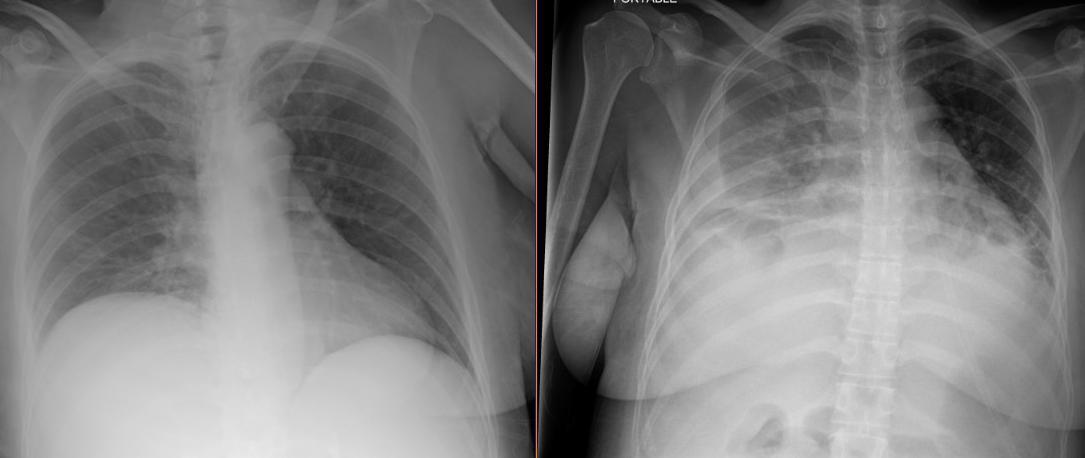
Figure 1. Chest x-ray on admission and 39 hours later with interval development of right-sided pleural effusion
ABSTRACT #79
CLINICAL RESEARCH
CARDIOLOGY
CLINICAL SIGNIFICANCE OF PERSISTENTLY ELEVATED DONOR-DERIVED CELL-FREE DNA
Cathrine M. Moeller1 , Daniel Oren2, Andrea Fernandez Valledor2, Adi Hertz2, Julia Baranowska2, Adil Yunis2 , Ersilia DeFilippis2, Jay Raikhelkar2, Justin Fried2, David Majure3, Kevin Clerkin2, Farhana Latif2, Gabriel Sayer2 , Nir Uriel2
1Mount Sinai Morningside-West Hospitals, Icahn School of Medicine at Mount Sinai, New York, NY, United States; 2Columbia University Irving Medical Center, New York, NY, United States; 3Weill Cornell Medical College, New York, NY, United States
Presented at the International Society of Heart and Lung Transplantation (ISHLT) Annual Meeting that was held in Toronto, Ontario, Canada from April 22-25, 2026.
BACKGROUND/INTRODUCTION: Donor-derived cell-free DNA (dd-cfDNA) is an established non-invasive biomarker of allograft injury after heart transplantation (HT). However, the prognostic implications of persistent dd-cfDNA elevation remain unclear.
METHODS: We conducted a retrospective cohort study of adult HT recipients from 2019–2024 with ≥ 3 paired dd-cfDNA and gene expression profiling (GEP) measurements. Persistent dd-cfDNA elevation was defined as dd-cfDNA levels (≥ 0.20% on ≥ 3 consecutive assays). Associations with clinical outcomes were evaluated using generalized estimating equations (GEE) for repeated measures and mixed-effects Cox models for time-to-event outcomes.
RESULTS: Among 314 HT recipients, 33 (10.5%) met criteria for persistent dd-cfDNA elevation Median age at transplant was 55 years (IQR 46-64); 62% were male and 40% were of White race Patients with persistent ddcfDNA elevation had higher rates of prior antibody-mediated rejection (20.3% versus 5.7%, p=0.025) and cellular rejection (44.6% versus 21.5%, p=0.025) and were more likely to have at least one dd-cfDNA value >1% (26.6% versus 1.9%, p=0.032); Figure 1A In mixed-effects Cox analyses, persistent dd-cfDNA elevation was independently associated with increased mortality (HR, 5.86; 95%CI, 2.55–13.45; p<0.001; Figure 1B) and graft dysfunction (HR, 4.26; 95%CI, 0.37–38 8; p<0.001).
CONCLUSION: Persistent dd-cfDNA elevation after HT identifies a distinct high-risk phenotype characterized by prior rejection and markedly worse long-term outcomes, including mortality and graft dysfunction. These findings support the use of longitudinal dd-cfDNA trajectories for risk stratification and may justify intensified surveillance and mechanistic evaluation for ongoing subclinical allograft injury
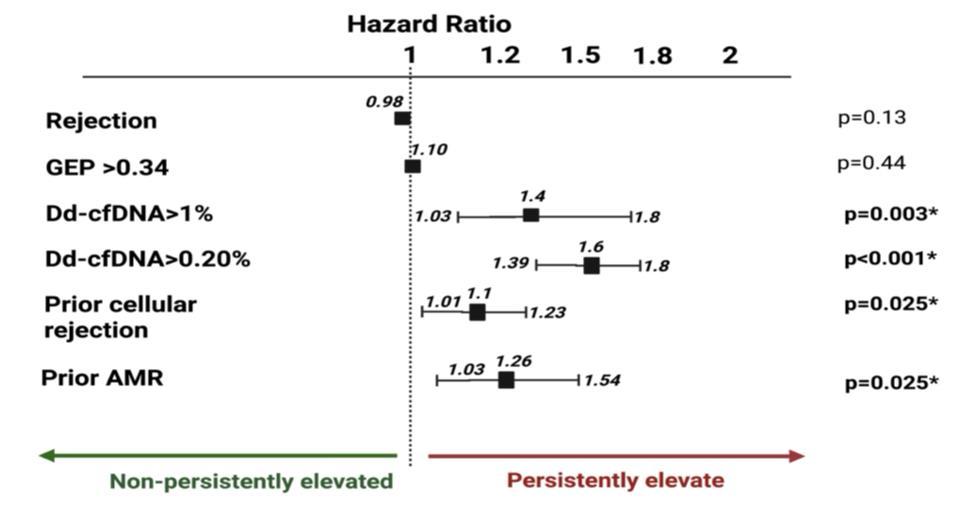
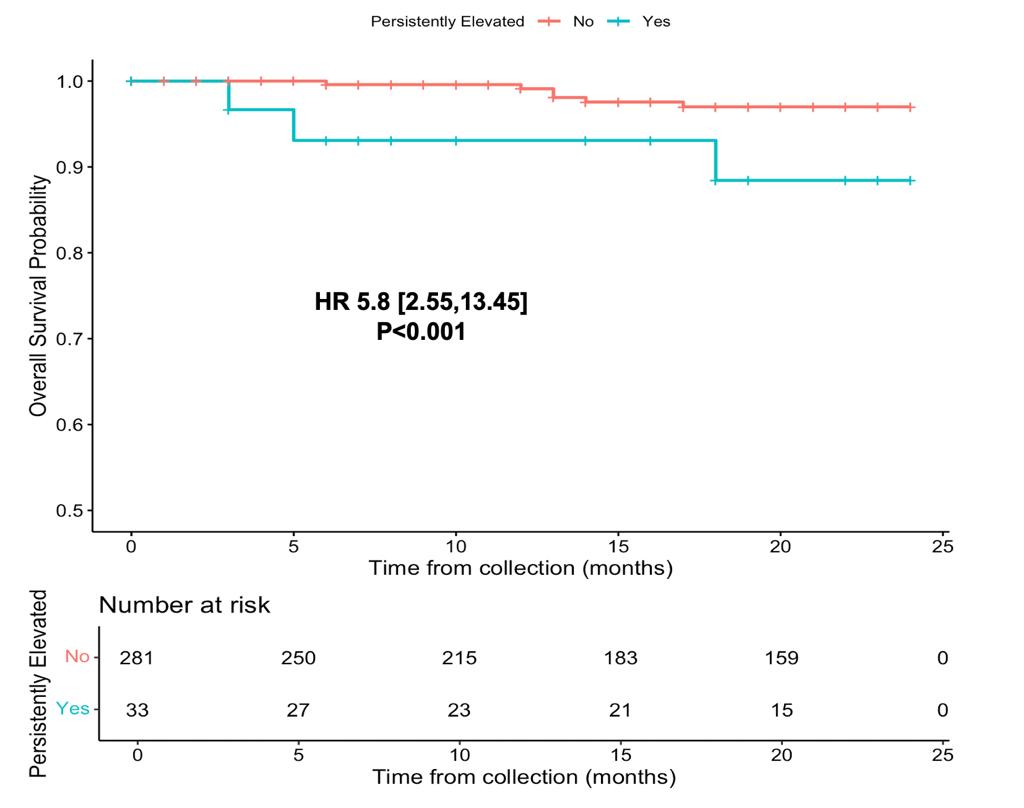
ABSTRACT #80
CASE REPORT/CLINICAL REVIEW
ENDOCRINOLOGY
CARDIOGENIC SHOCK IN SEVERE THYROTOXICOSIS WITH RECENT COCAINE USE: DIAGNOSTIC AND THERAPEUTIC CHALLENGES
Avia Muller1*, Julia Ferreira de Carvalho1 , Nataliya Melnyk1*, Peter Goulden1
1Mount Sinai Morningside-West Hospitals, Icahn School of Medicine at Mount Sinai, New York, NY, United States
To be presented at the Annual Endocrine Society Meeting that will be held in Chicago, Illinois, United States from June 13-16, 2026.
*These authors contributed equally to this work.
BACKGROUND/INTRODUCTION: Thyrotoxicosis and cocaine exposure can both produce sympathomimetic physiology and cardiovascular decompensation. In patients with advanced cardiomyopathy, thyroid storm may present atypically, and beta-blockade may worsen cardiogenic shock. We describe a case of severe thyrotoxicosis with cardiogenic shock in the setting of recent cocaine use and highlight management considerations.
CASE PRESENTATION: A 50-year-old woman with Graves disease, prior contrast-associated thyroid storm complicated by pulseless electrical activity arrest, heart failure with reduced ejection fraction (baseline LVEF 40%), severe mitral regurgitation, and atrial fibrillation with nonadherence to antithyroid therapy, presented with two days of progressive dyspnea. Initial evaluation revealed severe lactic acidosis (pH 7.26, lactate 9.5 mmol/L), NT-proBNP 1,577 pg/mL, suppressed thyroid-stimulating hormone (<0.010 µIU/mL), elevated free thyroxine (2.86 ng/dL), and elevated free triiodothyronine (4.19 pg/ml), with urine drug screen positive for cocaine. Electrocardiogram demonstrated atrial fibrillation. She rapidly developed respiratory failure and cardiogenic shock requiring intubation and vasoactive support, including norepinephrine, vasopressin, and inotropic therapy. Transthoracic echocardiography demonstrated severe biventricular systolic dysfunction with left ventricular ejection fraction of 25-30%. Given severe decompensated heart failure and concern for impending or atypical thyroid storm, as supported by a Burch-Wartofsky score of 40 driven by severe heart failure, atrial fibrillation, and a clear precipitating factor, she was treated with propylthiouracil followed by Lugol’s iodine 5% solution after thionamide therapy, dexamethasone, and cholestyramine. Beta-blockade was deferred due to cardiogenic shock. Thyroid function improved, with free thyroxine decreasing to 1.14 ng/dL by hospital day 5 with concurrent hemodynamic stabilization and transition to methimazole. At outpatient follow-up, free thyroxine and triiodothyronine remained within reference range on methimazole. Definitive therapy with radioactive iodine ablation is planned following cardiac valve intervention.
CONCLUSION: Severe thyrotoxicosis with cardiogenic shock in the setting of recent cocaine use presents diagnostic overlap and therapeutic risk, particularly with respect to betablockade. In patients with shock and biventricular failure, prioritizing hemodynamic stabilization and definitive antithyroid therapy while individualizing beta-blocker use may reduce the risk of hemodynamic deterioration.
ABSTRACT #81
QUALITY IMPROVEMENT
GENERAL INTERNAL MEDICINE
Fahema Nadira1 and Rebecca Shafer 1
1Mount Sinai Morningside-West Hospitals, Icahn School of Medicine at Mount Sinai, New York, NY, United States Presented at the Society of General Internal Medicine (SGIM) Annual Meeting that was held in Washington, DC, United States from May 6-9, 2026.
BACKGROUND/INTRODUCTION: Obesity affects over 40% of U.S. adults yet remains frequently undocumented and undertreated in primary care, especially within federally qualified health centers (FQHCs) serving socioeconomically disadvantaged and minority populations. Under-documentation limits recognition, counseling, referral, and initiation of evidence-based therapies, perpetuating obesity-related disparities. Prior work shows that resident-led quality improvement (QI) interventions can improve documentation and management through focused education and electronic health record (EHR)-based prompts.
METHODS: We conducted a resident-led pre–post quality improvement study at an FQHC-affiliated primary care clinic within a large urban Internal Medicine Residency program, serving a predominantly minority, lowincome population. Adult patients aged 21–65 years with body mass index (BMI) greater than or equal to 30 kilograms per square meter were included. The intervention consisted of a 5-minute pre-clinic tutorial on accessing BMI data and documenting obesity in eClinicalWorks, supplemented by six-weekly reminder emails reinforcing guideline-based management. Obesity documentation was defined as an active diagnosis in the problem list or encounter diagnoses. Pre-intervention (July–December 2024) and post-intervention (January–May 2025) EHR data were compared. Primary outcomes were rates of obesity documentation and evidencebased management actions (i.e. anti-obesity pharmacotherapy or referral to nutrition, bariatric surgery, or healthy-weight management programs).
RESULTS: We reviewed 239 pre-intervention and 120 post-intervention encounters. Obesity documentation increased from 31.8% to 65% after the intervention. Significant gains were also observed across management domains: referrals to the healthy weight management clinic increased from 7.1% to 25.8%, bariatric surgery referrals from 2.1% to 24.2%, and nutrition referrals from 11.7% to 50%. Initiation of anti-obesity pharmacotherapy rose from 14.6% to 46.7%. These findings demonstrate marked improvements in both recognition and evidence-based management of obesity within the FQHC setting.
CONCLUSION: This resident-led QI initiative produced substantial improvements in obesity documentation and evidence-based management within an underserved FQHC, demonstrating that brief, low-burden interventions anchored in EHR optimization and targeted education can rapidly shift provider behavior and expand access to appropriate treatment pathways. Although limited by a modest post-intervention sample, short follow-up, and unmeasured durability of practice change, the findings highlight documentation as a critical catalyst for initiating comprehensive obesity care. This scalable model offers a practical approach for strengthening chronic disease management and advancing health equity across safety-net primary care systems.
ABSTRACT #82
CASE REPORT/CLINICAL REVIEW
CARDIOLOGY
ACUTE CORONARY SYNDROME DUE TO TYPE 1 SPONTANEOUS CORONARY ARTERY DISSECTION IN A YOUNG WOMAN FOLLOWING RECENT PREGNANCY TERMINATION
Sharan Kapadia1, Oumaima Outani1, Shahe Tchillingirian1 , Riddhi Patel1, Matthew Kolansky1, Hyunwoo Kim1 , Hsiao-Man Chang1 , Dipika Nagliya1, Dayita Wable1, Thomas Fusillo1, Abel Casso Dominguez1 1Mount Sinai Morningside-West Hospital, Icahn School of Medicine at Mount Sinai, New York, NY, United States Presented at the Society of Hospital Medicine (SHM) Annual Meeting that was held in Nashville, Tennessee, United States from March 29, 2026 to April 1, 2026.
BACKGROUND/INTRODUCTION: Spontaneous coronary artery dissection (SCAD) accounts for up to 25–30% of myocardial infarctions in women under the age of 50, becoming one of the leading causes of nonatherosclerotic acute coronary syndrome (ACS). The condition results from separation of the coronary arterial wall layers, either due to an intimal tear or spontaneous intramural hematoma formation. SCAD predominantly affects young to middle-aged women and has been linked to pregnancy, emotional stress, and arteriopathies such as fibromuscular dysplasia (FMD). Coronary angiography leads to diagnosis and usually conservative management is favored in stable patients due to higher risks of procedural complications in fragile vessels. We report a case of a 30-year-old woman presenting with non-ST elevation myocardial infarction (NSTEMI) secondary to multivessel SCAD following recent pregnancy termination and emotional stress, emphasizing the diverse clinical spectrum and need for vigilance in young women presenting with ACS.
CASE PRESENTATION: A 30-year-old G2P1A1 woman with a history of gestational diabetes, pre-eclampsia, hypertension, and recent medical termination of pregnancy at around 8 weeks with mifepristone and misoprostol presented to the emergency department for pressure-like, non-radiating midsternal chest discomfort and dyspnea. Blood pressure was 135/105 mm Hg. Family history included myocardial infarction in her grandfather at age 50-60 years, and heart failure in her father at age 70 years. She denied drug use or smoking. Initial EKG showed sinus rhythm with nonspecific ST-T changes and poor R-wave progression. High-sensitivity troponin was 32, rising to 5,392. Bedside ultrasound showed preserved ejection fraction with no obvious regional wall motion abnormalities. Repeat EKGs showed T-wave inversions in leads III and V2, suggesting dynamic changes. Cardiac catheterization showed type I SCAD in the mid-distal LAD and LCx-OM1, with TIMI 3 flow in the distal vessel. The patient was treated medically with metoprolol succinate, statin, 1 month of dual antiplatelet therapy (aspirin and clopidogrel), followed by 11 months of aspirin alone. Transthoracic echocardiogram showed preserved LVEF 60% and hypokinetic apical and mid-lateral walls. The patient was counselled to avoid future pregnancy. Fibromuscular dysplasia (FMD) was considered; MRA abdomen showed a questionable irregularity of the left renal artery (but no beading) and incidentally, median arcuate ligament syndrome (MALS). During follow up, the patient had two emergency department visits for chest pain without evidence of ischemia. Referrals were made to FMD and cardiovascular genetics clinics.
CONCLUSION: Spontaneous coronary artery dissection (SCAD) results from separation of coronary arterial wall layers due to intimal tearing or spontaneous intramural hematoma; it causes up to 25–30% of myocardial infarctions in women under 50 years and has been linked to pregnancy, stress, and arteriopathies such as FMD. This case highlights the need to be vigilant for SCAD in young women with angina, particularly near pregnancy. While pregnancy-associated SCAD (P-SCAD) is well described and is the leading cause of pregnancy-related myocardial infarction, SCAD post pregnancy termination is unusual, with sparse reports of SCAD after abortion, stillbirth, or misoprostol. During pregnancy, estrogen and progesterone can reduce intramural collagen and vasa vasorum strength, and there is increased shear stress from a hyperdynamic circulation and stressor-induced wall tension changes. Misoprostol may cause vasospasm and inhibit platelet aggregation. SCAD without complex anatomy, multiple lesions, ongoing ischemia, or hemodynamic instability is managed medically, as serial angiography has shown spontaneous healing, and stents may propagate dissection. Evidence for or
against antiplatelets in SCAD patients not receiving PCI is limited; practice varies by expert preference. Reducing recurrence risk by avoiding intense exertion, Valsalva-like maneuvers, and repeat pregnancy, is important. Although a recent study did not show an increased risk of SCAD recurrence with repeat pregnancy, the sample was small. Screening for vasculopathies often occurs concomitantly; our patient did not have classical FMD findings, but the renal artery irregularity and MALS signaled potential arteriopathy; interestingly, co-existing MALS in SCAD has been reported. Overall, SCAD is a ‘can’t miss’ diagnosis with a complex interplayof hormonal and arteriopathic risk factors. Management is usually medical but should be individualized.
ABSTRACT #83
CASE REPORT/CLINICAL REVIEW
CARDIOLOGY
A SILENT INTRUDER CAUSING TROUBLE: A DELAYED DIAGNOSIS OF A “FROND-LIKE MASS"
Alexander Nagourney1, Hans Reyes Garay1, Tia Bimal1, Lakshay Chopra1, Daein Choi1, Luka Katic1, Usman Saeedullah1 , Michelle Chen1, Vikram Agarwal1
1Mount Sinai Morningside-West Hospitals, Icahn School of Medicine at Mount Sinai, New York, NY, United States Presented at the American College of Cardiology (ACC) Annual Scientific Session that was held in New Orleans, Louisiana, United States from March 28-30, 2026.
BACKGROUND/INTRODUCTION: Atrial myxomas are rare benign cardiac tumors with very low annual incidence. While syncope and coronary artery embolization are unusual presentations of myxomas, they have potentially devastating consequences and should be part of the differential diagnosis.
CASE PRESENTATION: An 18-year-old man with a history of exertional syncope (previously attributed to dehydration) presented to the ED with chest pain. Exam revealed sinus tachycardia and a diastolic murmur. ECG showed inferior Q waves and elevated troponin. TTE revealed a large (5.5×2.8 cm) frond-like mass attached to the interatrial septum prolapsing into the left ventricle (LV), and a second smaller (1.5×1.2 cm) globular mass on the apical inferior wall. CMR revealed striking heterogeneity: the left atrial mass demonstrated high T2 signal intensity consistent with myxoid, gelatinous composition, while the LV mass appeared relatively isointense on T1 and T2 weighted images, with no LGE, suggestive of a fresh thrombus. Additionally, a prior transmural infraction of the apex and the base to mid inferior wall was seen. Cardiac CT confirmed the presence of the 2 cardiac masses and demonstrated a small stalk attaching the LV mass to the apical inferior wall. There was no evidence of coronary atherosclerosis or stenosis. The patient underwent successful surgical excision; intraoperative pathology confirmed both as myxomas, with hemorrhage noted in the LV mass.
DECISION-MAKING: This young patient had chest pain, biochemical, and ECG results consistent with myocardial infarction likely as a result of embolization of small fragments of the myxoma. Multimodality imaging including cardiac CT and MRI play a vital role in reliably diagnosing cardiac myxomas preoperatively and its associated complications. Coronary artery embolization is a rare but described complication of atrial myxomas. This case also emphasizes the diagnostic challenges posed by morphologically distinct myxomas in a single patient.
CONCLUSION: This case highlights the importance of formulating a broad differential and appropriately working up atypical episodes of syncope.
ABSTRACT #84
CLINCIAL RESEARCH
GASTROENTEROLOGY
BRAIN-GUT BEHAVIORAL THERAPY PROGRAM FOR IBS BENEFITS PATIENTS WITH CONCURRENT UPPER GASTROINTESTINAL SYMPTOMS
Soha Noorani1 , David Brand1, Chris Naoumidis2, Claire Hall2, Michael S. Smith1, Daniela Jodorkovsky1, Yuying Luo1
1Mount Sinai Morningside-West Hospitals, Icahn School of Medicine at Mount Sinai, New York, NY, United States
2Mindset Health, Melbourne, VIC, Australia
Presented at the Digestive Disease Week (DDW) Annual Meeting that was held in Chicago, Illinois, United States from May 2-5, 2026.
BACKGROUND/INTRODUCTION: Patients with Irritable Bowel Syndrome (IBS) often have concomitant foregut symptoms that may make this population more difficult to treat. We aim to study whether Nerva, a mobile IBSfocused brain-gut behavioral therapy (BGBT) program application, benefits patients with IBS and concurrent upper gastrointestinal (UGI) symptoms.
METHODS: Demographic data along with baseline anxiety and depression scores were collected using the Patient Health Questionnaire-4 (PHQ-4). Users completed a baseline and post-program survey focused on IBS symptoms as well as UGI symptoms including dyspepsia, reflux, heartburn, regurgitation, and bothersome belching (all rated on a Visual Analog Scale [VAS]). Users with concurrent symptoms (IBS+/UGI+) were compared with IBS-only users (IBS+/UGI-) in prospective analyses.
Two-sample t-tests were used to compare users’ IBS and UGI symptoms before and after the completion of Nerva sessions. Users completing ≥30 sessions over a six-week period were defined as “persisters” (versus “non-persisters”).
RESULTS: Our cohort included 628 users with 58.2% experiencing concurrent IBS and UGI symptoms. Demographics were similar between the two groups (Table 1), though IBS+/UGI+ users reported higher average PHQ-4 and baseline IBS symptom scores than IBS-only users. Comparative analyses between the two groups were not conducted as this was not a randomized trial.
With regard to IBS symptoms, IBS+/UGI+ persisters (n=198) experienced a significantly greater reduction in their IBS-VAS scores (mean reduction = -35.1) compared to IBS+/UGI- persisters (mean reduction = -27.9) (n=162, p=.009). In IBS+/UGI+ users, there was a significantly greater reduction in IBS VAS scores for all persisters versus non-persisters (p=0.004); this was also true for users with reflux (p=0.021), heartburn (p=0.020), and bothersome belching (p=0.048) (Figure 1A).
With regard to UGI symptoms, IBS+/UGI+ persisters and non-persisters experienced symptom reduction across all UGI symptom phenotypes (Figure 1B), though this reduction was smaller in magnitude compared to the reduction in IBS symptoms.
CONCLUSION: Despite their more severe baseline IBS-VAS scores, users with IBS and concurrent UGI symptoms actually saw a similar or greater reduction in IBS symptoms than users with IBS alone after using a mobile IBS-directed BGBT application. Those who completed ≥30 sessions over a six-week period (persisters) saw greater reduction in IBS-VAS scores compared to those who did not (non-persisters).
Users with IBS and concurrent UGI symptoms also saw a reduction in UGI symptoms with an IBS-directed BGBT protocol, suggesting a potential shared treatment pathway between IBS and UGI symptoms.
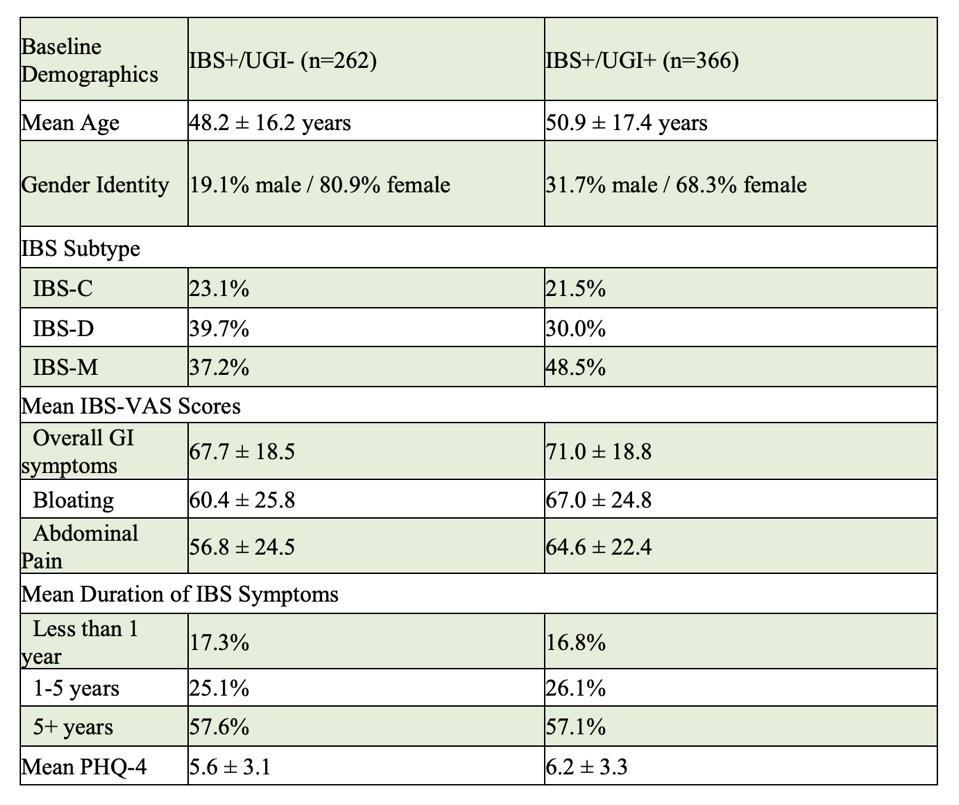
Table 1. Baseline user demographics
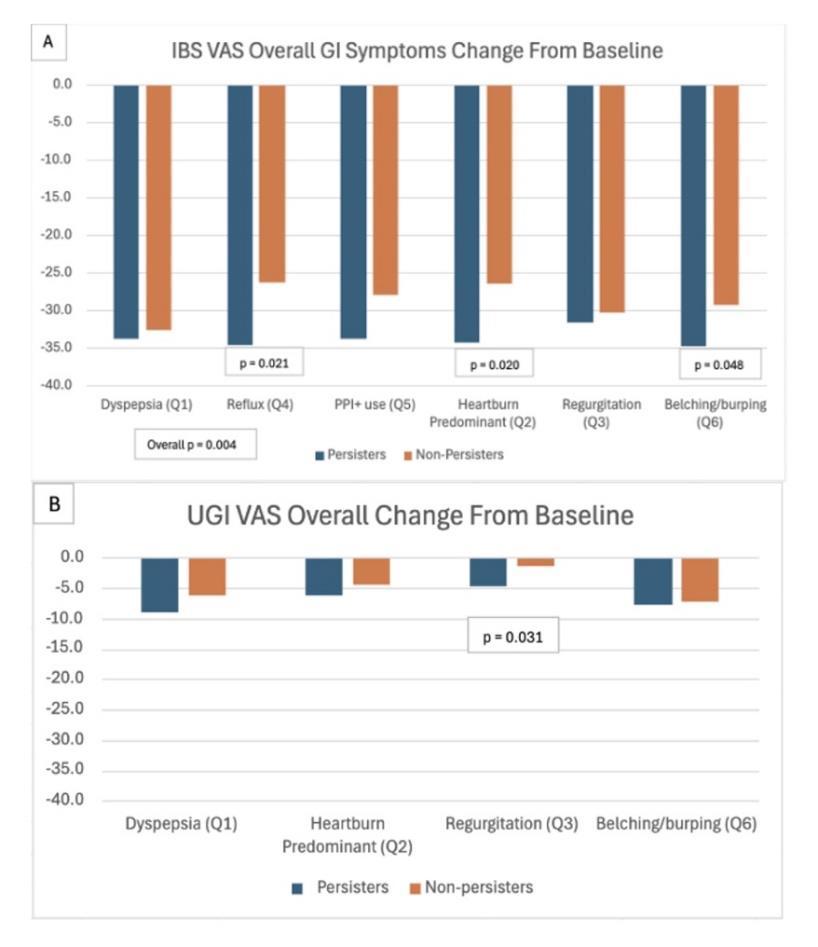
Figure 1. A - Comparison of the change in VAS scores for Overall GI symptoms in IBS+/UGI+ persisters versus non-persisters. B - Comparison of the change in VAS scores for UGI symptoms in persisters versus nonpersisters. Significant p-values are shown.
ABSTRACT #85
CASE REPORT/CLINICAL REVIEW
GENERAL INTERNAL MEDICINE
Caroline O’Ferrall1 , Meghana Pandit1, John Greely1
1
Mount Sinai Morningside/West Hospitals, Icahn School of Medicine at Mount Sinai, New York, NY, United States
BACKGROUND/INTRODUCTION: Endometriosis is defined as ectopic endometrial tissue outside the uterus and most commonly involves the pelvis; however, extrapelvic involvement may occur, most frequently affecting the thorax. The pathogenesis of thoracic endometriosis remains unclear, with proposed mechanisms including coelomic metaplasia, lymphatic or hematogenous spread, and retrograde menstruation with transdiaphragmatic migration through diaphragmatic defects. The most common clinical manifestation of thoracic endometriosis is catamenial pneumothorax, typically occurring just before or within 72 hours of menstruation. Here, we present a case of thoracic endometriosis presenting as a right-sided pneumothorax occurring just before menstruation.
CASE PRESENTATION: A 44-year-old woman presented to the emergency department with 9 days of progressively worsening shortness of breath, congestion, and cough which failed to improve with a 5-day course of azithromycin. Past medical history notable for pelvic endometriosis was diagnosed 10 years prior and managed with a daily combined oral contraceptive pill. Last menstrual period was about one month ago, with her next menstrual period estimated to start in the next few days. She also noted intermittent right-sided shoulder pain which typically occurs monthly around the time of menstruation. She denied alcohol use, tobacco use, but endorsed occasional marijuana use. No recent trauma or prolonged period of immobilization. Hemodynamically stable on arrival with decreased breath sounds overlying the right lung. Respiratory viral panel negative. Chest X-ray revealed a large right pneumothorax with no evidence of tracheal deviation. She was placed on a nonrebreather and a right-sided chest tube was placed immediately. CT chest without contrast obtained after chest tube placement revealed correct positioning of the right pigtail catheter along with improvement in the size of the right-sided pneumothorax, along with scattered small nodules along the pleura, suspicious for endometriosis with catamenial pneumothorax. The patient remained on non-rebreather to facilitate absorption of the pneumothorax with removal of the chest tube a few days later. However, interval imaging revealed recurrence of the right-sided pneumothorax a few hours after chest tube removal, requiring replacement of the chest tube. The patient underwent mechanical and chemical pleurodesis and video assisted thoracoscopy (VAT). Tissue biopsies from the diaphragm and parietal pleura were obtained. Diaphragm tissue stained positive for estrogen receptor and CD10, consistent with endometriosis. Parietal pleural biopsy immunostaining was equivocal. She was continued on a daily combined oral contraceptive per Gynecology’s recommendation
CONCLUSION: Thoracic endometriosis should be suspected in young women presenting with recurrent, right sided pneumothorax temporally related to menstruation. Delayed diagnosis is common and contributes to the high rate of recurrence. Contrast-enhanced chest CT obtained during symptomatic periods may aid evaluation; however, video-assisted thoracoscopy remains the diagnostic gold standard, allowing direct visualization and biopsy of pleural and diaphragmatic implants. Management is challenging due to frequent recurrence, even with treatment. Surgical intervention, optimally performed during menstruation to enhance lesion detection, combined with postoperative hormonal suppression appears to offer the best long-term outcomes. Secondary preventive strategies include pleurodesis and ongoing hormonotherapy, though recurrence rates of 8–40% have been reported despite combined therapy. A multidisciplinary approach involving pulmonology, thoracic surgery, and gynecology is essential to optimize management and reduce recurrence in patients with thoracic endometriosis.
ABSTRACT #86
CASE REPORT/CLINICAL REVIEW
GASTROENTEROLOGY/HEMATOLOGY/ONCOLOGY/INFECTIOUS DISEASES
Luis Oller Payano1 , Matthew Kolansky1, Natalie Cedeno1 1Mount Sinai Morningside-West Hospitals, Icahn School of Medicine at Mount Sinai, New York, NY, United States
BACKGROUND/INTRODUCTION: Gallbladder carcinoma is a rare but highly aggressive malignancy with a poor prognosis, largely attributable to delayed diagnosis and advanced disease at presentation. Early-stage disease is frequently asymptomatic or presents with nonspecific gastrointestinal symptoms such as abdominal pain, nausea, and vomiting, limiting opportunities for timely detection. As a result, gallbladder carcinoma is often discovered incidentally during or after cholecystectomy in approximately 50% of cases.
Although pyogenic liver abscesses are most commonly infectious in origin, rare cases may arise secondary to underlying hepatobiliary malignancy. Distinguishing between primary infection and malignancy-associated abscesses can be particularly challenging, as clinical presentation, laboratory findings, and imaging characteristics may significantly overlap. Features such as thick walls, septal lobulation, portal thrombophlebitis, mixed bacterial growth, lack of response to treatment, and risk factors such as hepatobiliary procedures or bile duct dilatation, should raise suspicion for underlying malignancy in cases of liver abscesses. This diagnostic ambiguity is further compounded when patients demonstrate transient clinical improvement with antimicrobial therapy and percutaneous drainage.
We present a case of metastatic gallbladder adenocarcinoma that initially presented as a pyogenic liver abscess, highlighting the diagnostic challenges and clinical implications of concurrent infection and malignancy.
CASE PRESENTATION: A 59-year-old woman with a history of hypertension, bilateral osteoarthritis, gastroesophageal reflux disease, and iron-deficiency anemia presented after being found unresponsive at home for an unknown duration. She reported a one-week history of diffuse abdominal pain and diarrhea. She denied recent travel, alcohol use, or known hepatobiliary disease.
On examination, she was ill-appearing with diffuse abdominal tenderness but most pronounced in the right upper quadrant (RUQ). There was no scleral icterus or jaundice, and Murphy’s sign was negative. Pressure ulcers were noted over both gluteal regions.
Initial laboratory studies revealed severe lactic acidosis, acute kidney injury, marked thrombocytopenia, and elevated creatinine phosphokinase. Liver chemistries showed elevated transaminases, alkaline phosphatase, and bilirubin. Blood cultures grew Escherichia coli and Streptococcus constellatus
Contrast-enhanced CT of the abdomen demonstrated multiple indeterminate hepatic lesions measuring up to 6.4 × 4.5 cm. The gallbladder was poorly visualized; however, an enhancing soft-tissue irregularity near the gallbladder fossa raised concern for a biliary process, prompting further evaluation with magnetic resonance cholangiopancreatography (MRCP). MRCP confirmed a multiloculated liver lesion most consistent with hepatic abscess. The enhancement near the gallbladder fossa could not be clearly delineated due to its proximity to the abscess. In the absence of biliary ductal dilation, significant cholestasis, or a discrete mass, malignancy was considered unlikely at that time and management focused on treatment of the infectious process. The patient was admitted to the intensive care unit for septic shock requiring vasopressor support and intravenous antibiotics. Image-guided percutaneous drainage of the hepatic abscess yielded purulent material, with cultures growing Escherichia coli, Streptococcus constellatus, and Bacteroides ovatus. Following clinical improvement,
she completed a course of antibiotics and was discharged to a subacute rehabilitation facility with the drain in place and close interventional radiology follow-up.
Four months later, she re-presented with worsening right upper quadrant abdominal pain, nausea, and vomiting. Repeat CT imaging revealed marked interval enlargement of a multiloculated hepatic abscess and numerous new hypodense hepatic lesions raising concern for metastatic disease. The gallbladder was again not visualized. Core needle biopsy of a hepatic lesion demonstrated moderately differentiated adenocarcinoma. Immunohistochemical staining was positive for CK7 and CK19, consistent with metastatic gallbladder adenocarcinoma.
Subsequent staging confirmed locally advanced gallbladder cancer with hepatic and peritoneal metastases. Although she was referred for palliative systemic therapy, the patient declined further treatment and transitioned to hospice care.
CONCLUSION: Gallbladder adenocarcinoma is a rare but highly aggressive malignancy. It is often diagnosed incidentally or at an advanced stage because of its vague clinical presentation and anatomical proximity to the liver, which facilitates early local invasion. While biliary obstruction, jaundice, and weight loss are classic presenting features, atypical presentations continue to challenge timely diagnosis. Hepatic abscess as an initial manifestation of gallbladder carcinoma is rare but clinically significant, as infectious and malignant processes may coexist or radiographically overlap, leading to diagnostic delay.
In this case, the initial presentation of septic shock with polymicrobial bacteremia and imaging findings consistent with a pyogenic liver abscess directed early management toward source control and antimicrobial therapy. The absence of biliary ductal dilation, only mild cholestatic enzyme elevation, and transient clinical improvement further obscured the underlying malignancy. However, gallbladder carcinoma can infiltrate the liver directly and undergo necrosis, creating abscess-like lesions that are difficult to distinguish from primary infection on crosssectional imaging alone.
Several features in retrospect should prompt heightened suspicion for malignancy in similar presentations, including failure to visualize the gallbladder, large or multiloculated hepatic lesions adjacent to the gallbladder fossa, and lack of sustained radiographic resolution despite adequate drainage and antimicrobial therapy. Persistent or progressive hepatic lesions following appropriate treatment require careful review and should not be attributed solely to refractory infection without reconsideration of the differential diagnosis.
Early multidisciplinary reassessment and consideration of tissue diagnosis may be warranted when the clinical trajectory deviates from the expected course, as delayed recognition of gallbladder carcinoma significantly limits therapeutic options and worsens prognosis.
This case highlights hepatic abscess as a rare but important initial manifestation of gallbladder adenocarcinoma, illustrating how infectious and malignant processes can closely mimic one another. Initial clinical stabilization and radiographic improvement may mask an underlying neoplasm, particularly when lesions arise near the gallbladder fossa and the gallbladder itself is not clearly visualized. Failure of durable clinical or radiologic resolution despite appropriate source control should prompt reconsideration of the diagnosis and early pursuit of tissue sampling. Maintaining a high index of suspicion in atypical or refractory cases is essential, as earlier recognition of gallbladder carcinoma may allow more timely prognostication and management discussions, even when curative options are limited.
ABSTRACT #87
CASE REPORT/CLINICAL REVIEW
HEMATOLOGY/ONCOLOGY
PROGRESSIVE BACK PAIN AND DIFFUSE OSTEOLYTIC LESIONS IN A PATIENT WITH PRIOR BREAST CANCER: BEYOND METASTATIC DISEASE
Oumaima Outani1 , Deepthi Devireddy1, Taiga Komatsu1, Matthew Vetrano1 , Thomas Fusillo1, Fili Bogdanic1 1Mount Sinai Morningside-West Hospitals, Icahn School of Medicine at Mount Sinai, New York, NY, United States
BACKGROUND/INTRODUCTION: Multiple myeloma (MM) and breast cancer are very different diseases, but both can produce osteolytic bone lesions, complicating evaluation in patients with a previous cancer history. MM typically presents with hypercalcemia, bone pain,anemia, and renal dysfunction. Spinal cord compression, which occurs in only about 5% of MM cases due to extramedullary plasmacytomas or vertebral collapse, is an oncologic emergency requiring prompt recognition to prevent permanent neurologic injury. In the following case, avoiding diagnostic anchoring allowed for early recognition of MM and initiation of systemic therapy.
CASE PRESENTATION: A 60-year-old woman with a remote history of breast cancer presented with one month of worsening back pain, most severe on the right and radiating down her right leg. She also reported paresthesia, night sweats, and several episodes of vomiting in the week prior to admission. Nine days prior, she had presented to the ED with similar complaints and was discharged with analgesics and instructions for outpatient MRI, which she was unable to complete due to pain.
On arrival, vitals were stable. Physical exam showed right thoracic paraspinal tenderness and pain with rightsided straight leg raise, but no focal neurologic deficits. Initial labs were notable for anemia (hemoglobin 9.1 g/dL) and a protein gap (serum protein 10.4 g/dL, albumin 3.3 g/dL). MRI demonstrated numerous lytic lesions in the thoracic and lumbar spine, a pathologic compression fracture at T7, and epidural masses at T4, T7, T11, and L5, with flattening of the right anterolateral spinal cord at T7 but no cord edema.
Because of her history of breast cancer, she underwent a bilateral mammogram and ultrasound revealing a mass in her right breast. Biopsy confirmed ER+/PR-/HER2- invasive carcinoma, measuring <2cm without nodal involvement. Tumor markers (CEA and CA 27-29) were normal.
Given the extent of her lytic bone disease, additional work up was completed. Studies showed an M-spike, elevated IgG, and a markedly increased kappa/lambda free light chain ratio. Bone marrow biopsy confirmed 90% kappa-restricted, CD138+/CD56+ plasma cells, consistent with IgG kappa MM.
She was started on pulse-dose dexamethasone, received local radiation to L5, and began systemic therapy for multiple myeloma. Her pain improved, and she was discharged without neurologic deficits.
CONCLUSION: Distinguishing metastatic breast cancer from a new hematologic malignancy like multiple myeloma can be challenging, especially when both can present with diffuse osteolytic lesions and even spinal cord compression. Although breast cancer can cause osteolytic lesions, they are often heterogenous, ill-defined, and associated with perilesional sclerosis. In contrast, multiple myeloma typically causes purely lytic lesions, and they are often sharply defined and "punched out”, with uniform effacement of cortical and trabecular bone. This patient’s new breast lesion raised concern for metastatic recurrence, but its small size and lack of nodal involvement made it an unlikely explanation for the extent of her skeletal disease. Her protein gap, abnormal free light chain ratio, and bone marrow findings ultimately helped clarify the diagnosis. Avoiding diagnostic anchoring allowed for prompt recognition of spinal cord compression secondary to multiple myeloma and early initiation of corticosteroids, radiation, and systemic therapy, likely preventing neurologic decline.
ABSTRACT #88
CASE REPORT/CLINICAL REVIEW GASTROENTEROLOGY
UNCOMMON TERRITORY: A CASE OF ESOPHAGITIS
Andrea Ouyang1 , Carlos G. Diola1, Priscilla Abate1, Raagni Kumar2, Dina Zaret2
1Mount Sinai Morningside-West Hospitals, Icahn School of Medicine at Mount Sinai, New York, NY, United States; 2Mount Sinai Hospital, Icahn School of Medicine at Mount Sinai, New York, NY, United States Presented at the American College of Physicians (ACP) Annual Meeting that was held in San Francisco, California, United States from April 16-28, 2026.
BACKGROUND/INTRODUCTION: Differentiating intestinal Behçet’s disease (BD) from Crohn’s disease (CD) is a rare diagnostic challenge for Internists, Rheumatologists, and Gastroenterologists, particularly when patients with autoimmune histories present with non-specific gastrointestinal (GI) symptoms. Odynophagia and mucosal ulceration are non-specific findings that may occur in both conditions. Histologic features often overlap, typically demonstrating chronic inflammation with lymphocytic or neutrophilic infiltrates. BD involves the ileocecal region in approximately 10–15% of cases. Although the absence of non-caseating granulomas may favor BD, granulomas are detected in only 15–36% of patients with CD. Because both diseases share similar clinical features, extra-intestinal manifestations, and non-specific GI symptoms, distinguishing between them can be difficult. This case highlights a unique and uncommon presentation of esophagitis that can be mistaken for either condition.
CASE PRESENTATION: A 27-year-old woman with a history of psoriasis, chronic back pain, attention-deficit hyperactivity disorder (ADHD), and anxiety presented to the emergency department with odynophagia and decreased oral intake. She had recently undergone outpatient evaluation for throat pain, including esophagogastroduodenoscopy (EGD) and colonoscopy, which revealed several cratered ulcers in the lower third of the esophagus and active ileitis; pathology was pending at the time of presentation. She was referred to the emergency department for further evaluation, including a rheumatology consultation. On arrival, she was resting comfortably but reported persistent odynophagia with both solids and liquids. She described several months of diarrhea, abdominal pain, polyarthralgia, skin rash, and recurrent oral ulcers. She denied a history of genital ulceration. Physical examination demonstrated diffuse alopecia, multiple aphthous ulcers on the uvula, palate, and posterior pharynx, and tender erythematous nodules over the bilateral pretibial regions.
Recent outpatient laboratory testing obtained by Orthopedics for chronic back pain had shown a positive ANA (1:80 speckled), anti–dsDNA, and HLA-B27. On admission, inflammatory markers were elevated, and an infectious workup for esophagitis was negative. Rheumatology performed a pathergy test and HLA-B51 testing for Behçet’s disease, both of which were negative. Given her HLA-B27 positivity and chronic back pain, sacroiliac radiographs were obtained and demonstrated bilateral sacroiliitis with erosions consistent with axial spondyloarthritis. Pathology results from the outpatient EGD and colonoscopy later became available, showing active chronic nonspecific esophagitis and non-caseating granulomas in the sigmoid colon, descending colon, and rectum. The patient was ultimately diagnosed with Crohn’s disease esophagitis and initiated on corticosteroids and induction of infliximab (10 mg/kg), with rapid clinical improvement.
DISCUSSION: Behçet’s disease and Crohn’s disease share overlapping gastrointestinal manifestations, making accurate diagnosis challenging without careful endoscopic and histologic correlation. This case underscores the importance of a thorough history, physical examination, and targeted diagnostic testing, including HLA typing and identification of granulomas on pathology, to identify features that help distinguish between the two conditions. Crohn’s esophagitis is rare, with an estimated incidence of 1.2–1.8%. A multidisciplinary approach involving Rheumatology, Gastroenterology, and Pathology is essential to expedite diagnosis and optimize outcomes in complex autoimmune presentations.
ABSTRACT #89
QUALITY IMPROVEMENT NEPHROLOGY
WILL SCHEDULING OUTPATIENT NEPHROLOGY APPOINTMENTS BEFORE DISCHARGE INCREASE ATTENDANCE?
Claire Schretlen1 , Kevin Pak1, Juan M. Tellez Garcia1 , Alexandra Schwarz1 1Mount Sinai Morningside-West Hospitals, Icahn School of Medicine at Mount Sinai, New York, NY, United States
BACKGROUND/INTRODUCTION: Timely outpatient follow-up after hospital discharge is a critical component of effective care transitions and is associated with improved continuity of care and patient outcomes. Across multiple specialties, interventions that schedule outpatient appointments prior to discharge have been shown to significantly increase follow-up attendance and successful transitions to ambulatory care. Similar system-level scheduling interventions, including electronic medical record–based appointment orders, have been associated with higher rates of outpatient follow-up after hospitalization, which are currently being utilized at Mount Sinai Morningside
and
West
Hospitals
In nephrology, timely post-discharge follow-up is particularly important given the high morbidity and mortality associated with kidney disease. Among patients of severe acute kidney injury, outpatient nephrology follow-up has been associated with improved all-cause mortality, highlighting the clinical importance of structured transitions of care for patients. Despite this evidence, outpatient nephrology follow-up after hospitalization remains inconsistent at our institution.
Given the demonstrated effectiveness of pre-discharge appointment scheduling and the persistent inequities in outpatient specialty access, system-based interventions targeting the discharge process may represent an important opportunity to improve continuity of nephrology care. This quality improvement project evaluates whether scheduling outpatient nephrology appointments prior to hospital discharge for patients evaluated by the inpatient nephrology consult service increases outpatient follow-up attendance. This will be implemented by providing an educational bulletin for the Internal Medicine residents and the social work/discharge teams. Additionally, the creation and utilization of a “dot phrase” for the inpatient consult service team.
METHODS: Baseline data will be obtained from the Patient Care Liaison team on all orders placed by a provider for an outpatient Nephrology follow up from the dates of 10/15/2025-11/04/2025. These dates were chosen to obtain documentation data from 5 different nephrology attendings to perform a chart review to determine need for outpatient follow up and the language associated in their notes regarding follow up.
After these patients are identified, additional chart review will be conducted to determine how many patients attended their outpatient follow up appointments at 36 West 60th Street (FPA) and 440 West 114th Street (ACC6) and whether their appointment was made prior to or after their discharge.
After accumulation of the baseline data, creation of the “dot phrase” and bulletin will be commenced. The data will then be accumulated over 1 year with the primary measured outcome being 90-day outpatient Nephrology follow-up, and secondary being the frequency of outpatient Nephrology appointments scheduled by time of discharge.
RESULTS: Project is still in process, and no results or conclusions have been obtained.
CONCLUSION: Project is still in process, and no results or conclusions have been obtained.
ABSTRACT #90
CASE REPORT/CLINICAL REVIEW GASTROENTEROLOGY
RISING BILIRUBIN DESPITE CLINICAL RECOVERY: A CASE OF ICTERIC
Meghana Pandit1 , Max Edeson1, Neil Chen1, Aimee Lucas1
1Mount Sinai Morningside-West Hospitals, Icahn School of Medicine at Mount Sinai, New York, NY, United States
BACKGROUND/INTRODUCTION: Leptospirosis is a zoonotic infection caused by the spirochete Leptospira. It is most transmitted in South and Southeast Asia and the Caribbean, with human infection typically occurring through contact with water or soil contaminated with infected animal urine – typically farm animals or rodents. While the majority of cases are mild and self-limited, leptospirosis can have a highly variable clinical course and may be fatal. Early symptoms are often nonspecific and include fever, myalgias, and gastrointestinal complaints, which can make initial diagnosis challenging. Approximately 5–10% of infected patients develop severe disease, known as Weil’s disease, characterized by multiorgan involvement including acute kidney injury, jaundice, and hemorrhagic complications. Pulmonary manifestations such as acute respiratory distress syndrome, as well as cardiovascular involvement, have also been reported. Given the potential for rapid progression, multiorgan failure, and significant mortality, maintaining a high clinical suspicion for leptospirosis, especially in patients with relevant epidemiologic exposures, is critical for early diagnosis and timely management.
CASE PRESENTATION: A 41-year-old man with a history of bipolar disorder and alcohol use disorder presented with one week of progressive bilateral lower extremity weakness and pain, diffuse myalgias, and abdominal discomfort. He reported nausea, vomiting, and decreased urine output over the preceding week, and was minimally ambulatory on arrival. Family members noted progressive yellowing of his skin and sclera. The patient reported consuming five to six alcoholic beverages daily for approximately ten years but had abstained for one week prior to admission. Notably, he had traveled to the Czech Republic one month before presentation, where he participated in a triathlon involving freshwater exposure.
On admission, laboratory evaluation revealed hyponatremia (sodium 125 mEq/L), hypokalemia (potassium 3.0 mEq/L), and acute kidney injury with a creatinine of 5.89 mg/dL. Liver chemistries demonstrated hyperbilirubinemia with a total bilirubin of 12.9 mg/dL (direct bilirubin 9.8 mg/dL) and mildly elevated transaminases (AST 238 U/L, ALT 220 U/L). Creatine kinase was markedly elevated, consistent with rhabdomyolysis. He was admitted for further evaluation and management of rhabdomyolysis, systemic symptoms, and other lab abnormalities.
The Gastroenterology service was consulted for evaluation of his elevated liver enzymes and conjugated hyperbilirubinemia. Abdominal ultrasound and computed tomography of the abdomen and pelvis revealed no evidence of biliary obstruction or dilation. His only medication was varenicline; he denied use of herbal supplements or other hepatotoxic agents.
With aggressive fluid resuscitation, his renal function improved rapidly: creatinine decreased from 5.89 mg/dL to 3.88 mg/dL on hospital day one, 1.5 mg/dL by day two, and normalized to 1.1 mg/dL by day four. Electrolyte abnormalities also rapidly corrected in that time. However, despite clinical improvement, his total bilirubin continued to rise from 12.9 mg/dL on admission to 24.0 mg/dL by day two and peaking at 24.7 mg/dL on day three before gradually declining to 18.0, 15.0, and ultimately 7.2 mg/dL at discharge on hospital day seven.
An extensive workup for the etiology of his liver injury was unrevealing. Serologies for hepatitis A, B, and C, cytomegalovirus, celiac disease, alpha-1-antitrypsin deficiency, Wilson disease, anti-smooth muscle antibody, and anti-liver-kidney microsomal antibody were all negative. Given his travel history, freshwater exposure during the triathlon, characteristic myalgias, acute kidney injury, and the pattern of conjugated hyperbilirubinemia with
only mild transaminase elevation, leptospirosis was suspected. Serologic testing for Leptospira (Leptospira IgM) was sent early in the course of hospitalization but did not result until after discharge.
By discharge, the patient's muscle weakness had significantly improved, and he was able to ambulate with physical therapy. His jaundice had visibly improved, though mild hyperbilirubinemia persisted. He continued to follow with GI outpatient and was referred to Infectious Diseases who recommended a 7-day course of doxycycline. Following antibiotics the patient had complete resolution of symptoms and lab abnormalities.
CONCLUSION: This case illustrates a characteristic presentation of icteric leptospirosis, marked by severe hyperbilirubinemia and acute kidney dysfunction. In leptospirosis, bilirubin levels can be markedly elevated and may remain elevated for several weeks after exposure, often accompanied by aminotransferase elevations that are disproportionally mild. The pattern of kidney injury observed in this patient, in conjunction with prominent myalgias, further reflects the typical clinical progression of leptospirosis. Given the significant mortality associated with severe disease, early clinical suspicion and prompt initiation of antimicrobial therapy such as doxycycline, penicillin, or cephalosporins are essential.
ABSTRACT #91
CLINICAL RESEARCH
HEMATOLOGY/ONCOLOGY
EVALUATING THE TOLERABILITY OF THE COMBINATION OF ADJUVANT PEMBROLIZUMAB AND CAPECITABINE IN A DIVERSE REAL-WORLD COHORT OF PATIENTS WITH EARLY-STAGE TRIPLENEGATIVE BREAST CANCER
Prathyusha Pandu1 , Justine Anderson2 , Elena Baldwin2 , Javier Dejesus2 , Grace Van Hyfte2 , Nithya Krishnamurthy2 , Mohammad Rattu2 , Rebecca Farley2 , Amy Tiersten2 , Rima Patel2
1Mount Sinai Morningside-West Hospitals, Icahn School of Medicine at Mount Sinai, New York, NY, United States; 2Mount Sinai Hospital, Icahn School of Medicine at Mount Sinai, New York, NY, United States Presented at the San Antonio Breast Cancer Annual Meeting that was held in San Antonio, Texas, United States from December 9-12, 2025.
BACKGROUND/INTRODUCTION: Although the KEYNOTE-522 trial demonstrated a significant pCR following neoadjuvant chemoimmunotherapy, 35.2% of patients had evidence of residual disease following surgery, a population who may be recommended to receive adjuvant capecitabine per the CREATE-X trial. However, there is a paucity of real-world data evaluating the tolerability of adjuvant pembrolizumab, per KEYNOTE-522, when combined with adjuvant capecitabine, per CREATE-X. Our study examines the tolerability of the adjuvant combination in a real-world, diverse, urban population at a large tertiary referral center with triple-negative breast cancer (TNBC)
METHODS: We performed a retrospective chart review of patients with stage II-III TNBC who received the KEYNOTE-522 regimen within our institution’s health system from August 2021 to February 2025. Patients who received 1 cycle of adjuvant pembrolizumab were included in our analysis. Patients were stratified based on receipt of adjuvant pembrolizumab alone versus combination of pembrolizumab and capecitabine. Demographics, adjuvant toxicity data including rates of treatment delays, dose holds, and treatment discontinuations were extracted from the medical record. Descriptive statistics were used to describe patient data, and non-parametric tests were utilized in the stratified analyses.
RESULTS: 83 patientsreceived adjuvant pembrolizumab and were included in this analysis. Overall, 64%(n=53) were on adjuvant pembrolizumab alone and 36% (n=30) on the combination of adjuvant pembrolizumab and capecitabine. Overall, 83% had Stage II disease and 45% with lymph node involvement. 28% of patients (n=23) identified as White, 28% (N=23) Black, 16% (N=13) Asian, 19% (N=16) Hispanic, and 9% (N=8) as Other. The early discontinuation rates (prior to 9 cycles) of adjuvant pembrolizumab in the pembrolizumab cohort and combination cohort were 17% (n=9) and 13% (n=4), respectively (p=0.761). Pembrolizumab was discontinued most frequently due to irAEs including thyroiditis, colitis, pneumonitis, and myocarditis. In the combination cohort of 30 patients, 47% (n=14) required a capecitabine dose reduction, 27% (n=8) required a dose hold, and 30% (n=9) discontinued capecitabine prior to 6 cycles. Capecitabine was dose-reduced or held most frequently for non-hematologic reasons including hand-foot syndrome, GI toxicity, and mucositis.
CONCLUSION: The adjuvant combination of capecitabine and pembrolizumab appeared to be well tolerated. Treatment was held, dose reduced or discontinued more commonly from known side effects of capecitabine or pembrolizumab, but not as the result of worsening toxicity from combination therapy. Overall, the combination of capecitabine and pembrolizumab warrants further study for pts with residual disease after neoadjuvant KEYNOTE-522.
ABSTRACT #92
CLINICAL RESEARCH
HEMATOLOGY/ONCOLOGY
CONCURRENT LOCOREGIONAL THERAPY WITH FIRST-LINE CHEMOIMMUNOTHERAPY FOR ADVANCED BILIARY TRACT CANCER, A MULTICENTER PROPENSITY SCORE–MATCHED STUDY
Rodrigo Paredes1,2 , Soravis Osataphan3,4 , Manasawee Tanariyakul5,6, Riya Patel7,8, Hamzah Abul-Sbeih9, Ben Ponvilawan10, Ibrahim Omore2, Mrinalini Ramesh7, Seohyuk Lee3, Juan Jose Juarez3, Sakditad Saowapa5 , Edward Nguyen6, Chalothorn Wannaphut6, Marc Roth12, Naomi Fei5, Arjun Mittra9, Jared Acoba11, Kannan Thanikachalam7, Deirdre Cohen2, Mary Linton Peters12
1Mount Sinai Morningside-West Hospitals, Icahn School of Medicine at Mount Sinai, New York, NY, United States
2Mount Sinai Hospital, Icahn School of Medicine at Mount Sinai, New York, NY, United States; 3Beth Israel Deaconess Medical Center, Harvard Medical School, Boston, MA, United States; 4Dana-Farber Cancer Institute, Harvard Medical School, Boston, MA, United States; 5University of Iowa, Iowa City, IA, United States; 6Queen Medical Center, University of Hawaii, Honolulu, United States; 7Roswell Park Comprehensive Cancer Center, Buffalo, NY, United States; 8Northwell Health, New Hyde Park, NY, United States; 9Ohio State University, Columbus, OH, United States; 10University of MissouriKansas City School of Medicine, Kansas City, MO, United States; 11University of Hawai’i Cancer Center, Honolulu, United States; 12Mass General Brigham Cancer Institute, Harvard Medical School, Boston, MA, United States To be presented at the American Society of Clinical Oncology (ASCO) Annual Meeting that will be held in Chicago, Illinois, United States from May 29, 2026 to June 2, 2026.
BACKGROUND/INTRODUCTION: Phase II studies such as MISPHEC and ABC-07 suggest that selected patients with intrahepatic cholangiocarcinoma may benefit from the addition of locoregional therapies, including yttrium-90 (Y-90) radioembolization and external beam radiotherapy, to gemcitabine-cisplatin1,2. However, the role of locoregional therapy in the era of first-line chemoimmunotherapy across biliary tract cancer (BTC) subtypes remains unclear. Notably, concurrent locoregional therapy was not permitted in the TOPAZ-1 or KEYNOTE-966 trials3,4. We evaluated the association between concurrent locoregional therapy and survival outcomes in patients receiving first-line chemoimmunotherapy for advanced BTC.
METHODS: We conducted a multicenter retrospective cohort study of patients with unresectable or metastatic BTC treated with first-line chemoimmunotherapy. Patients were categorized by receipt of concurrent locoregional therapy, including yttrium-90 selective internal radiation therapy, external beam radiotherapy, transarterial chemoembolization, or ablation, versus chemoimmunotherapy alone. Propensity scores were estimated using logistic regression and 1:1 nearest-neighbor matching was performed based on age, sex, Charlson comorbidity index, ECOG performance status, BTC subtype, and tumor burden. Progression-free survival (PFS) and overall survival (OS) were estimated using Kaplan–Meier methods and compared using Cox proportional hazards models.
RESULTS: Among 294 patients with advanced BTC, 31 received concurrent locoregional therapy. First-line treatment consisted predominantly of gemcitabine-cisplatin chemotherapy (97%) and durvalumab immunotherapy (98.6%). Median follow-up was 18 months. Propensity score matching yielded 62 well-balanced patients, 31 patients per group, with standardized mean differences below 0.1 across matched covariates. Concurrent locoregional therapy was associated with significantly improved PFS compared with chemoimmunotherapy alone (median PFS 14.1 versus 7.8 months; HR, 0.45; 95%CI, 0.24–0.87; p=0.017) and improved OS (median OS 32.0 versus 14.8 months; HR, 0.38; 95%CI, 0.18–0.81; p=0.013). These associations remained consistent in post-matching multivariable analyses adjusting for BTC subtype.
CONCLUSION: In this multicenter propensity score–matched study, the addition of concurrent locoregional therapy to first-line chemoimmunotherapy was associated with substantial and clinically meaningful improvements in both PFS and OS in patients with advanced biliary tract cancer. These findings provide early evidence supporting treatment intensification strategies incorporating locoregional therapy in the modern
chemoimmunotherapy era and highlight the need for prospective studies to define optimal patient selection, modality, and timing. Before
(n=294)
Table 1. Baseline patient and disease characteristics before and after propensity score matching by receipt of concurrent locoregional therapy
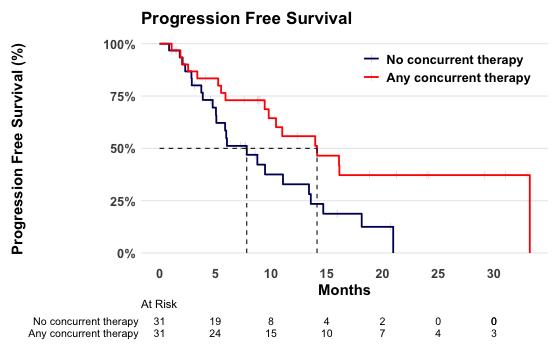
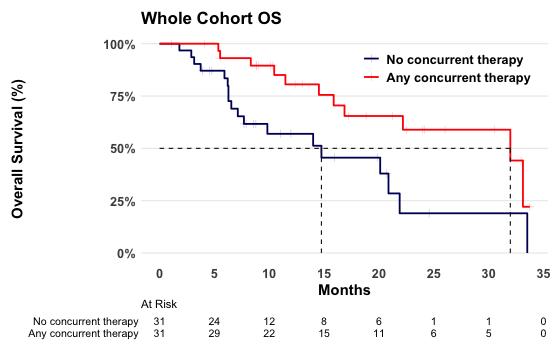
1. (A) Progression-free survival and (B) Overall survival in propensity score–matched patients receiving chemoimmunotherapy with or without concurrent locoregional therapy.
ABSTRACT #93
CASE REPORT/CLINICAL REVIEW
GENERAL INTERNAL MEDICINE
FENTANYL-INDUCED SEROTONIN SYNDROME: A CASE OF OPIOID-ASSOCIATED SEROTONERGIC TOXICITY
Riddhi Patel1 , Dayita Wable1 , Angelica Rozenfeld1 , Hanna Cholerzynska1 , Thomas F. Fusillo1 , Neil E Chen1 1Mount Sinai Morningside-West Hospitals, Icahn School of Medicine at Mount Sinai, New York, NY, United States Presented at the Society of Hospital Medicine (SHM) Annual Meeting that was held in Nashville, Tennessee, United States from March 29, 2026 to April 1, 2026.
BACKGROUND/INTRODUCTION: Serotonin syndrome (SS) results from overstimulation of serotonin receptors or elevated serotonin levels due to drug interactions, overdose, or, in some cases, therapeutic dosing. Fentanyl use overlapping with serotonergic agents is a rarely reported cause of SS. There are a range of clinical manifestations generally including tachycardia, diaphoresis, mydriasis, hyperthermia, clonus, agitation, and hypervigilance). Severe cases may progress to shock with marked rigidity and hypertonicity, leading to rhabdomyolysis, seizures, renal failure, and disseminated intravascular coagulation. We present the case of a 36-year-old male with opioid use disorder who initially presented with altered mental status and generalized weakness, and was ultimately diagnosed with SS. This case illustrates fentanyl-induced SS and highlights the need for clinician awareness of the serotonergic potential of commonly used opioids.
CASE PRESENTATION: 36-year-old male with past medical history of opioid use disorder who presented to the ED the morning after fentanyl use for opioid overdose and first-time generalized tonic-clonic movements. As he returned to baseline during observation, the symptoms were considered secondary to fentanyl induced hypoxia, and he was given a dose of suboxone in the ED for a COWS score of 8, and discharged home with a prescription of suboxone for maintenance therapy. In the subsequent 24 hours at home, family found patient to have continued weakness, shakiness and mental slowing, so he was brought to our emergency department for reevaluation. He did not take suboxone in the interim time. He was tachycardic, hypertensive, afebrile, and maintained adequate oxygenation. He could provide history which corroborated above information. Noncontrast head CT and chest radiograph were unremarkable. Examination revealed tongue fasciculations, a mild bilateral resting tremor, inducible clonus and slowed, depressed speech. Laboratory evaluation showed marked rhabdomyolysis (CPK >40,000) and leukocytosis. Empiric therapy for possible central nervous system infection was initiated, but cerebrospinal fluid and infectious studies were unremarkable. The patient met Hunter’s criteria by having received fentanyl and presenting with tremor and inducible clonus. The patient’s symptoms improved with benzodiazepine taper, cyproheptadine, aggressive hydration, and electrolyte repletion.
CONCLUSION: The broad clinical spectrum of serotonin syndrome complicates diagnosis, as its manifestations often obscure underlying mechanisms and overlap with other syndromes. When initiating pharmacologic therapy, it is essential to assess potential drug–drug interactions and risks associated with polypharmacy. The most frequently implicated combinations involve selective serotonin or serotonin–norepinephrine reuptake inhibitors with monoamine oxidase inhibitors. Analgesics including meperidine, tramadol, and, less commonly, fentanyl have been associated with serotonergic toxicity. In a large retrospective study on patients who received both fentanyl and a serotonergic agent, only 0.09% met criteria for serotonin syndrome Meperidine and tramadol inhibit serotonin reuptake at the neuromuscular junction, whereas fentanyl, though not a serotonin transporter inhibitor, may directly activate 5-HT₁A and 5-HT₂A receptors, causing widespread serotonergic stimulation. Transition from a full μ-opioid agonist (fentanyl) to a partial agonist (buprenorphine/naloxone) likely produced additive serotonergic effects. Early recognition of serotonergic toxicity from opioids is critical, particularly in patients with opioid use disorder, where it is often mistaken for withdrawal. Overlapping features such as tremor, agitation, and hyperreflexia complicate diagnosis. This case emphasizes maintaining a high index of suspicion when neuropsychiatric or autonomic symptoms occur following opioid transitions. Prompt identification and discontinuation of serotonergic agents remain key to recovery.
ABSTRACT #94
CLINICAL RESEARCH
ENDOCRINOLOGY
Sonya Prasad1 and Rebecca Shafer1
1Mount Sinai Morningside-West Hospitals, Icahn School of Medicine at Mount Sinai, New York, NY, United States Presented at the Endocrine Society Annual Meeting that was held in San Francisco, California, United States from July 12-15, 2025.
BACKGROUND/INTRODUCTION: Type 2 diabetes mellitus (T2DM) is a prevalent metabolic disorder of increasing importance in the United States, characterized by chronic hyperglycemia. Effective management strategies, including weight loss, pharmacologic interventions, and lifestyle modifications, can significantly improve glycemic control. This study aims to evaluate changes in A1c levels over time in patients with obesity and T2DM who received treatment in a Federally Qualified Health Center (FQHC) weight management clinic in New York.
METHODS: In 2023, the FQHC launched a Center for Healthy Weight Management Program resident clinic, supervised by an obesity fellowship trained physician and designed to expand access to obesity medicine care to underserved populations in the Medicaid space. A retrospective review of all clinic patients with obesity was conducted with a focus on those diagnosed with T2DM (n=42). Clinical parameters analyzed included baseline and follow-up A1c measurements (6–12 months), weight changes, pharmacologic treatment, and comorbidities. Descriptive statistics were used to assess mean A1c reduction.
RESULTS: Of the total cohort (n=177 patients), 24 patients (13.56%) had both an initial and follow-up A1c measurement, allowing for longitudinal assessment of glycemic improvement. At baseline, the mean A1c for patients with T2DM was 7.2%, with 45% of patients having an A1c ≥7.0%, indicating poor glycemic control. Among patients with recorded follow-up data at 6–12 months (n=24), the mean A1c reduction was 0.6% (p<0.05) Notably, patients who achieved at least 5% weight loss experienced a greater mean A1c reduction of 0.9%, whereas those with minimal weight change showed a modest decline of 0.3%. Despite these improvements, only 13.56% of the total study population had a documented follow-up A1c measurement, highlighting a potential gap in long-term monitoring.
CONCLUSION: In this clinical cohort, patients participating in a weight loss clinic based in a FQHC had significantly improved glycemic control. However, given the limited sample size of patients with follow up A1c values, the findings highlight the need for sustained follow-up and individualized treatment strategies to optimize metabolic outcomes in this population.
ABSTRACT #95
CASE REPORT/CLINICAL REIVEW ENDOCRINOLOGY
MENACING METASTATIC PHEOCHROMOCYTOMA AND FORSAKEN FOLLOW-UP
Ankitha Dindigal Rajesh1, Matthew Widlus1,2 , Ilana Ramer-Bass1
1Mount Sinai Morningside-West Hospitals, Icahn School of Medicine at Mount Sinai, New York, NY, United States; 2Mount Sinai Hospital, Icahn School of Medicine at Mount Sinai, New York, NY, United States To be presented at the Endocrine Society Annual Meeting that will be held in Chicago, Illinois, United States from June 13-16, 2026.
BACKGROUND/INTRODUCTION: Pheochromocytomas (PCC) are rare catecholamine-secreting tumors that originate from adrenal medulla chromaffin cells. 10 to 15% of PCC cases are metastatic and present similarly with identical histology. Their treatment depends on whether metastasis is diffuse or limited. This case demonstrates metastatic PCC in an elderly male with significant social barriers.
CASE PRESENTATION: A 76-year-old male with history of hypertension presented with altered mentation and hypertensive urgency after 8 years without care, reporting a 15-lb weight loss in 3 weeks. Imaging showed a 4.9 x 5.3 cm right adrenal mass with mild thickening of the left adrenal gland. The patient stabilized with alpha and beta blockade and was discharged. Plasma metanephrines (MN) were 4.89 nmol/L (0-0.49 nmol/L) and normetanephrines (NM) 27.80 nmol/L (0-0.89 nmol/L). After weekly BP checks and medication titration, he underwent right adrenalectomy. Repeat MN and NM decreased to 0.16 and 2.68 nmol/L, respectively. Pathology was reported as benign with a PASS score of 2, indicating very little concern for malignant potential. He was lost to follow up.
Two years later, now undomiciled, he returned with hypertensive urgency with elevated plasma MN and NM to 9.00 nmol/L and 46.41 nmol/L. Liver ultrasound revealed multiple hepatic lesions; CT showed bilobar hypoattenuating lesions concerning for metastasis and recurrent PCC. He was restarted on doxazosin with biopsy deferral until appropriate blockade. Ga-68 dotatate PET scan was advised on discharge but not completed.
Two months later he returned after a fall with hypertension. He frequently left against medical advice and was non-adherent to BP checks and medications. An I-123 MIBG/SPECT scan was done inpatient which found innumerable skeletal metastases in the spine, pelvis, femur, and ribs, and liver lesions. MN and NM remained elevated to 2.68 nmol/L and 46.10 nmol/L. Liver biopsy one month after alpha blockade confirmed metastatic PCC. Multidisciplinary discussions led to a plan of initiating outpatient belzutifan. He was discharged to a subacute rehabilitation facility (SAR) and was lost to follow-up.
CONCLUSION: This case highlights the discovery of recurrent metastatic pheochromocytoma along a multiyear course, complicated by significant social challenges. Between the initial PCC discovery and the next admissions, the patient became undomiciled and could not adequately adhere to diagnostic testing. He was deemed to have no capacity to refuse treatment and SAR placement. These factors together contributed to delay in his eventual diagnosis. In such cases, engaging multidisciplinary teams and incorporating early screening for social determinants of health are essential to achieving timely diagnosis. Medical complexity combined with social barriers hinder the recognition of high-risk conditions, such as PCC.
ABSTRACT #96
MEDICAL EDUCATION
GENERAL INTERNAL MEDICINE/PULMONARY/CRITICAL CARE
Shruti D. Ramachandra1 and Adam Rothman1
1Mount Sinai Morningside-West Hospitals, Icahn School of Medicine at Mount Sinai, New York, NY, United States Presented at the New York Chapter of the American College of Physicians (ACP) Annual Meeting that was held in Albany, New York, United States on October 11, 2025 and at the Society of Hospital Medicine (SHM) Annual Meeting that was held in Nashville, Tennessee, United States from March 29, 2026 to April 1, 2026.
BACKGROUND/INTRODUCTION: In-hospital cardiac arrests are often identified, led, and coordinated by internal medicine residents, making effective code leadership a core competency. Despite completing a full year of medical training, individual resident confidence in ACLS and cardiac resuscitation remains low. This project utilizes an interactive lecture series to improve the confidence and skills needed for a rising PGY-2 to responsibly run a medical code (ACLS), recognize cardiac rhythms and execute appropriate interventions
METHODS: Pre-intervention confidence in organizing, leading, recognizing, and managing cardiac arrest was assessed using a 5-point Likert scale, and knowledge of ACLS and institutional protocols was evaluated through multiple-choice questions. A 60-minute interactive, small-group lecture was conducted, where residents worked in teams to work through cases that progressed into cardiac arrest. This approach offered a controlled, lowacuity environment for residents to develop and refine clinical reasoning and decision-making skills. A post-test was administered after the session to evaluate an improvement in both knowledge and confidence. 6-month retention data was collected with a post-test. This lecture has also been incorporated as a resource for the ICU consult elective, which will include high-fidelity simulation training and real-time RRT/Code experience to improve cardiac resuscitation efficacy and experience.
RESULTS: 30 rising PGY-2 residents participated in this lecture, 14 identified as female, 13 identified as male, and 3 did not report gender. Results showed a statistically significant increase in both overall confidence (p<0.001) and knowledge (p<0.001) following the session. Post-lecture confidence was notably higher in male residents (p<0.005), despite no significant differences in knowledge scores between genders at either the pretest (p=0.851) or post-test (p=0.764). 8 PGY-2 residents completed the 6-month follow-up survey. Confidence remained significantly higher than baseline (p<0.01) but declined compared with immediate post-session levels (p<0.005). Average knowledge scores increased from baseline to 6 months but did not reach statistical significance (p=0.07).
CONCLUSION: A structured, interactive educational session significantly improved both knowledge and selfreported confidence in cardiac arrest management among rising senior residents. The persistence of a genderbased confidence gap despite comparable knowledge underscores a need for training approaches that intentionally address confidence development in clinical leadership. Although confidence declined over time, levels remained higher than baseline at 6 months, indicating partial retention and supporting the potential value of periodic reinforcement sessions. Interpretation of long-term knowledge retention is limited by low participation in the 6-month survey, a small follow-up sample size, and differences in survey length between assessments. Embedding this module within a longitudinal ICU elective, supported by simulation and real-time code experience, may help bridge the confidence gap and further prepare internal medicine residents to lead lifesaving interventions with competence and clarity.
ABSTRACT #97
CASE REPORT/CLINICAL REVIEW
GENERAL INTERNAL MEDICINE/INFECTIOUS DISEASES
A FRIENDLY DOG, AN UNFRIENDLY PATHOGEN: NON-TRAUMATIC DOG EXPOSURE LEADING TO CAPNOCYTOPHAGA CANIMORSUS SEPSIS IN A PATIENT WITH WELL-CONTROLLED HIV INFECTION
Andrea Ramirez Cazares1 , Sara Khandani1, Jeremy Quentzel1 1Mount Sinai Morningside-West Hospitals, Icahn School of Medicine at Mount Sinai, New York, NY, United States Presented at the Society of Hospital Medicine (SHM) Annual Meeting that was held in Nashville, Tennessee, United States from March 29, 2026 to April 1, 2026.
CASE PRESENTATION: A 67-year-old man with a history of well-controlled HIV (undetectable viral load, CD4 509 cells/µL) presented with two days of progressive weakness and malaise. He was walking his dog when the weakness worsened, leading to a fall. On arrival to the emergency department, his vital signs were notable for SpO₂ 89%, heart rate 133/min, temperature 101.9°F, respiratory rate 35/min, and blood pressure 89/53 mm Hg. He was ill-appearing and diaphoretic. Labs showed WBC 14.8 × 10⁹/L, creatinine 1.97 mg/dL, lactate 6.7 mmol/L, CPK 8,651 U/L, and urinalysis noted pyuria and hematuria. CT abdomen/pelvis showed a fluid-filled bladder and mild bilateral hydronephrosis. He received IV fluids, cefepime and vancomycin with improvement in hemodynamics and was admitted with severe sepsis, suspected to be of urinary source. By day 3 of hospitalization, urine culture was negative and blood cultures grew gram-negative rods in two anaerobic bottles at 61 hours of incubation. Fevers continued, but the patient remained otherwise clinically stable. On day 7, Capnocytophagia canimorsus was identified on blood cultures and antibiotics were adjusted to Ampicillin/Sulbactam. Transthoracic echocardiography showed no valvular abnormalities and repeat blood cultures were negative. The patient was slow to improve but ultimately defervesced and was discharged home on Amoxicillin/clavulanate to complete a 14-day course.
DISCUSSION: C. canimorsus is a gram-negative rod found in dog and cat oral flora. Though human infection is rare, with an incidence of 0.67 cases per million population, it has a mortality rate of 10-30% following animal bites or scratches. Infections can present with severe sepsis, coagulopathies, multi-organ failure, meningitis, or cellulitis. Risk factors include asplenia, alcoholism, immunosuppression, male sex, and age >50 years. This patient with well-controlled HIV infection presented with severe sepsis from C. canimorsus complicated by rhabdomyolysis and acute kidney injury.
This case shows that C. canimorsus infection can occur despite limited risk factors. The patient denied dog bites or scratches, indicating that routine or close contact with a dog may be enough for transmission. Acute kidney injury is common in reported cases; however, rhabdomyolysis has not been described. Only one prior case in a patient living with HIV infection has been reported (with aortitis), making the degree of vulnerability in this population unclear.
The patient’s clinical course illustrates the importance in maintaining a broad differential. Imaging and urinalysis indicated a urinary source, but the negative urine culture and persistent fevers suggested an alternative diagnosis. Frequent reassessment, early broad-spectrum antibiotics, and prompt adjustment to treatment were key. These steps may have prevented further deterioration and avoided an ICU course. Given the slow growth and high mortality associated with C. canimorsus bacteremia, clinicians should maintain suspicion with any dog exposure.
CONCLUSION: Capnocytophagia canimorsus infection should be considered in those with close contact with dogs, even without other significant risk factors. This case demonstrates the wide spectrum of clinical manifestations, with rhabdomyolysis not previously recognized. Early broad-spectrum antibiotics are critical given the bacteria's slow growth and high mortality rate. Careful avoidance of diagnostic anchoring and routine reassessment were key in preventing clinical deterioration in this patient.
ABSTRACT #98
CASE REPORT/CLINICAL REVIEW
INFECTIOUS DISEASES/PULMONARY/CRITICAL CARE
UNILATERAL PLEURAL EFFUSION AS THE INITIAL
Kyle Reichard1, Mohammed Alsaud1 , Maria Athena Riego1, Avinash Singh1
1Mount Sinai Morningside-West Hospitals, Icahn School of Medicine at Mount Sinai, New York, NY, United States Presented at the American Thoracic Society (ATS) Annual Meeting that was held in Orlando, Florida, United States from May 15-20, 2026.
BACKGROUND/INTRODUCTION: Pericarditis is characterized by inflammation of the pericardial sac, most commonly due to viral infection, with Coxsackie B virus among the leading etiologies. Although pericardial effusion frequently complicates pericarditis, pleural involvement is rare, and previously documented cases note bilateral involvement. Unilateral pleural effusions, particularly when large, may obscure diagnosis and misdirect clinicians toward pulmonary pathology. This case describes Coxsackie B pericarditis presenting with a large unilateral pleural effusion, an exceedingly uncommon manifestation that led to delayed diagnosis and eventual hemodynamic compromise.
CASE PRESENTATION: A 22-year-old woman with no past medical history presented with one week of fever, pleuritic chest pain, dyspnea, and dry cough. Shedenied recent travel, oral contraceptive use, or thromboembolic history. On admission, she was tachycardic and tachypneic but with normal blood pressure and oxygen saturation. Point-of-care ultrasound demonstrated a small pericardial effusion with mild right ventricular dilation. C-reactive protein and erythrocyte sedimentation rate were elevated, while troponin was normal. CT Chest revealed a large, left-sided pleural effusion. Empiric therapy for community-acquired pneumonia was initiated.
Thoracostomy drained 160 mL of orange, exudative (cell count 369) fluid with neutrophilic predominance (43%) and elevated red blood cells (2,850). Total chest tube output was 1.2 liters over four days. Cytologic analysis, bacterial and fungal cultures, mycobacterial smear, and autoimmune studies (including anti-nuclear, antiDsDNA/smith antibodies, and rheumatoid factor) were negative. On hospital day six, the patient developed recurrent fever, leukocytosis, and tachycardia. Repeat imaging showed interval enlargement of the pericardial effusion. On echocardiography, no tamponade was initially noted, but progressive hypotension prompted transfer to the Cardiac ICU and repeat echocardiography, which demonstrated right ventricular diastolic collapse and pulsus paradoxus.
Urgent pericardiocentesis yielded 360 mL of serous fluid, with rapid hemodynamic improvement. Serum and pericardial fluid studies showed elevated Coxsackie B antibody titers, confirming viral pericarditis. Follow-up echocardiography revealed mild constrictive physiology, and she was discharged on colchicine and ibuprofen. At Rheumatology follow-up, rilonacept and a prednisone taper were initiated, resulting in full clinical recovery. Cardiac MRI confirmed pericarditis without myocarditis.
CONCLUSION: Coxsackie B infection is a common cause of pericarditis, and can rarely cause pleural effusions, which are often small and bilateral. This case demonstrates that large unilateral pleural effusion can represent an atypical manifestation of viral pericarditis. Recognition of this presentation is essential, as in this case, diagnostic delay may allow progression to tamponade physiology. Viral pleural effusion, although rare, should be considered in an otherwise healthy patient presenting with polyserositis.
ABSTRACT #99
CASE REPORT/CLINICAL REVIEW
HEMATOLOGY/ONCOLOGY/PULMONARY/CRITICAL CARE
RAPIDLY PROGRESSIVE PULMONARY NODULES AND MASS-LIKE OPACITIES: A CASE REPORT OF PULMONARY T-CELL LYMPHOMA
Rachel Retsky1, Hammad Sheikh1, Meagan Murphy1 , Bruce Petersen2 , Nikita Desai1
1Mount Sinai Morningside-West Hospitals, Icahn School of Medicine at Mount Sinai, New York, NY, United States; 2Mount Sinai Hospital, Icahn School of Medicine at Mount Sinai, New York, NY, United States
BACKGROUND/INTRODUCTION: T-cell lymphoma involvement of the lungs is rare. Lymphoma with pulmonary involvement is more often of the B-cell type. The rapid progression of pulmonary nodules and mass-like opacities over days to weeks typically suggest infectious etiology, often leading to delayed diagnosis. We review a case of an immunocompetent patient who developed progressive dyspnea and hypoxia and rapidly progressive radiographic abnormalities without improvement on antibiotics with an ultimate diagnosis of pulmonary T-cell lymphoma.
CASE PRESENTATION: A 62-year-old female with no significant past medical history. The patient was referred to the Emergency Department (ED) from urgent care for tachycardia after being diagnosed with communityacquired pneumonia. She presented to the ED with a productive cough with white sputum for 3 weeks. She denied fever, chills, hemoptysis, pleuritic chest pain, or lower extremity swelling. Initial vitals were notable for tachycardia to 130. She was afebrile and without hypoxia. Physical exam revealed right lower lung inspiratory crackles and the rest of exam was unremarkable. CT chest imaging found a dense right lower lobe consolidation with surrounding ground glass in addition to multiple bilateral mixed density nodules measuring up to 1.7 cm, and a moderate right pleural effusion. The patient was admitted for treatment of presumed community acquired pneumonia. She received several days of intravenous antibiotics with Ceftriaxone and Vancomycin and was sent home to complete a 10 day course of antibiotics with oral Augmentin. The Pulmonary team was consulted and arranged a follow up appointment outpatient.
The patient returned to the ED 9 days post-discharge with progressive worsening shortness of breath and productive cough, and new hypoxia requiring high flow nasal cannula (HFNC). The patient reported completing the full course of oral antibiotics and was unable to make it to her outpatient Pulmonary appointment. Repeat CT chest showed significantly progressed multiple extensive mixed density mass like opacities throughout both lungs, significant progression of the right lower lobe opacity with extensive lucency and less air bronchograms, and mediastinal and right hilar adenopathy which appeared more prominent and more densely enhancing than 12 days prior. A broad infectious workup was sent. Infectious workup included galactomannan, fungitell, Interferon Gamma Release Assay, HIV antigen/antibody test and HIV viral load, Haemophilus influenza B IgG, Mycoplasma pneumoniae IgM/IgG, Chlyamydia psitacci IgM/IgG, Brucella IgG, Coxiella IgM/IgG, Bartonella henselae and Bartonella quintana IgM/IgG, EBV, coccidioides IgM/IgG, hepatitis B and C - all which resulted as negative. Autoimmune work-up for vasculitis with C-ANCA and P-ANCA were both negative. Empiric antibiotics were started with Vancomycin, Piperacillin/Tazobactam, and Azithromycin and a steroid course of 6 days of methylprednisolone 60 mg followed by 2 days of prednisone 30 mg for treatment of severe pneumonia vs organizing pneumonia. Thoracentesis was performed and revealed an exudative pleural effusion, with cytology and culture resulting negative. The patient continued to have increasing oxygen requirements on HFNC. Repeat CT chest was obtained on day 8 of hospitalization. CT revealed worsening bilateral nodular and ground glass opacities throughout the lungs with persistent right lower lobe consolidation. She was transferred to the Medical Intensive Care Unit and intubated in preparation for robotic assisted bronchoscopy with transbronchial biopsy. Bronchoalveolar lavage (BAL) was performed and biopsy was taken from a mass in the posterior right upper lobe. BAL revealed T-cell or Natural Killer cell lymphoproliferative disorder. Final results from the tissue biopsy
resulted as T-cell lymphoma. Further testing revealed CD30+ Peripheral T-cell lymphoma. Human T Lymphocyte Virus 1 and 2 testing were both negative. The patient was transferred to a higher-level care facility within the hospital system for initiation of chemotherapy. On day 18 of hospitalization, the patient initiated chemotherapy with Brentuximab, Vedotin, Cyclophosphamide, Doxorubicin, and Prednisone (BV-CHP). A tracheostomy was placed on day 19 of hospitalization and rapid ventilator weaning to trach collar was initiated on day 24.
The hospital course was complicated by focal status epilepticus. CT head and MRI imaging revealed T2 FLAIR hyperintensities bilaterally in frontal, parietal, and occipital lobes. Neurology consulted, repeat MRI brain 4 days after initial MRI found a significant decrease in size of areas with T2 Flair on prior MRI, presumed to reflect resolving post-seizure changes. No pathological enhancement to suggest lymphoma involvement of the CNS. Follow up CT chest imaging nearing hospital discharge was notable for a decrease in the size and number of mixed solid and ground glass opacities throughout the bilateral lungs. These imaging findings correlated with clinical improvement as the patient was able to be weaned rapidly from the ventilator and the tracheostomy was de-cannulated prior to hospital discharge to acute rehabilitation.
CONCLUSION: Because of the broad differential for pulmonary nodules and opacifications, lymphoma should remain an important diagnostic consideration in patients with persistent respiratory symptoms and progressive pulmonary opacities despite appropriate antimicrobial therapy. Several reports describe similar presentations in which delayed recognition contributed to clinical deterioration, and some patients died before receiving definitive treatment. In contrast, our case illustrates that pulmonary involvement from PTCL can demonstrate marked radiographic improvement and rapid resolution of respiratory failure with prompt initiation of lymphoma-directed chemotherapy. Early identification of suspected T-cell lymphoma and timely pursuit of biopsy are critical, as pulmonary T-cell lymphoma may respond favorably to treatment when diagnosed without delay.
ABSTRACT #100
CASE REPORT/CLINICAL REVIEW
GENERAL INTERNAL MEDICINE/HEMATOLOGY/ONCOLOGY
THE GREAT PRETENDER: VITAMIN B12 DEFICIENCY-RELATED PSEUDO-THROMBOTIC MICROANGIOPATHY
Madeleine Reznik1 , Hirohide Matsumoto1, Karishma Vijay Rupani2
1Mount Sinai Morningside-West Hospitals, Icahn School of Medicine at Mount Sinai, New York, NY, United States; 2Mount Sinai Hospital, Icahn School of Medicine at Mount Sinai, New York, NY, United States Presented both at the Mount Sinai Health System Department of Medicine Research Day that was held in New York, New York, United States from May 4-5, 2026 and Society of Hospital Medicine (SHM) Annual Meeting that was held in Nashville, Tennessee, United States from March 29, 2026 to April 1, 2026.
CASE PRESENTATION: A 40-year-old woman with a lifelong vegetarian diet presented to the emergency department (ED) with six weeks of progressive fatigue, exertional dyspnea, and anorexia. On arrival, she was tachycardic to 115 beats/minute but normotensive and well-appearing. Laboratory studies revealed severe macrocytic anemia (Hgb 5.5 g/dL, MCV 121.1 fL), thrombocytopenia (platelets 79×10⁹/L), indirect hyperbilirubinemia (1.3 mg/dL), markedly elevated lactate dehydrogenase (LDH 6500 IU/L), undetectable haptoglobin, and a low reticulocyte index (0.9). Peripheral smear showed very rare schistocytes (Figure 1). During her ED course, she developed an isolated fever to 103.5°F without infectious symptoms. Initial concern was for thrombotic microangiopathy (TMA), specifically thrombotic thrombocytopenic purpura (TTP). However, she was clinically well-appearing, unlike most patients with TTP, and workup revealed undetectable vitamin B12, raising the possibility of pseudo-TMA as an alternative diagnosis. Vitamin B12 supplementation was initiated at admission and led to rapid hematologic improvement and avoidance of plasmapheresis. Further workup revealed positive intrinsic factor and parietal cell antibodies, confirming pernicious anemia as the underlying etiology, with her lifelong vegetarian diet further exacerbating the deficiency.
DISCUSSION: TTP is a medical emergency that requires rapid initiation of plasmapheresis, as it carries a 90% mortality rate when left untreated. However, clinicians should bear in mind that, though rare, severe vitamin B12 deficiency can present with clinical and laboratory signs that mimic TTP, but key differences help distinguish them. In pseudo-TMA, macrocytosis is present and the reticulocyte index is low, reflecting ineffective erythropoiesis. Platelet counts are typically higher than in TTP, and bilirubin is only mildly elevated. LDH levels are often more markedly elevated in pseudo-TMA due to intramedullary hemolysis of LDH-rich nucleated erythroid precursor cells, whereas TTP primarily involves intravascular hemolysis of non-nucleated mature erythrocytes, which contain less LDH. In this case, pernicious anemia exacerbated by vegetarianism was determined to be the underlying cause of profound vitamin B12 deficiency. Pernicious anemia is an autoimmune disorder characterized by destruction of gastric parietal cells and loss of intrinsic factor, resulting in impaired vitamin B12 absorption and megaloblastic anemia. The patient's lifelong vegetarian diet further exacerbated her risk, as vitamin B12 is found almost exclusively in animal-derived foods, and deficiency is common among vegetarians, especially lifelong adherents.
CONCLUSION: This case illustrates that very high LDH, low reticulocyte index, and macrocytosis in the setting of hemolytic anemia and thrombocytopenia should prompt consideration of pseudo-TMA from vitamin B12 deficiency, especially when supported by dietary and autoimmune risk factors. This distinction is critical, as plasmapheresis is not indicated and may expose patients to unnecessary risk. Another clinical teaching point is that fever is a recognized but under-appreciated manifestation of severe megaloblastic anemia, occurring in up to 40% of cases and typically resolving with vitamin therapy. In the absence of infectious symptoms, fever should be considered a potential presentation of severe B12 deficiency and included in the differential for fever of unknown origin.
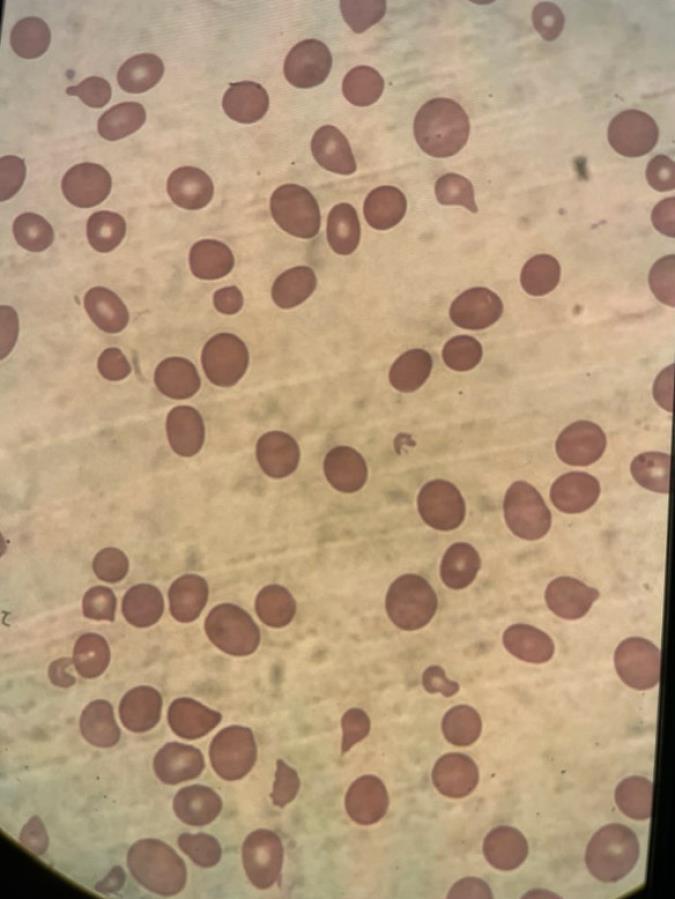
ABSTRACT #101
CLINICAL RESEARCH
CARDIOLOGY
OUTCOMES OF LEFT ATRIAL APPENDAGE OCCLUSION AFTER TRANSCATHETER EDGE-TO-EDGE MITRAL VALVE REPAIR: A SYSTEM-LEVEL RETROSPECTIVE ANALYSIS
Usman Saeedullah1 , Mandeep Singh1, Komail Jafri1, Harrison Bonilla1, Syed Zaidi1, Sabrina Daoui1 , Anton Camaj1 , Edgar Argulian1, Abel Casso Dominguez1
1Mount Sinai Morningside-West Hospitals, Icahn School of Medicine at Mount Sinai, New York, NY, United States Presented at the American College of Cardiology (ACC) Annual Scientific Session that was held in New Orleans, Louisiana, United States from March 28-30, 2026.
BACKGROUND: Patients with atrial fibrillation (AF) and mitral regurgitation often undergo mitral transcatheter edge-to-edge repair (MTEER) but may remain at thromboembolic risk. Outcomes of subsequent left atrial appendage occlusion (LAAO) are not well defined.
METHODS: We retrospectively analyzed systemwide datasets (2016-2024) of patients undergoing LAAO, stratified by prior MTEER versus control. The primary endpoint was procedural success, defined as device implantation without intra-procedural complications. Secondary outcomes included mortality, major bleeding, pericardial effusion, ischemic stroke, and 90-day readmission. Multivariable logistic regression adjusted for age, heart failure with reduced ejection fraction (HFrEF), and chronic kidney disease (CKD).
RESULTS: Among 412 patients, 54 (13.1%) had prior MTEER. MTEER patients were older (77 versus 73 years, p=0.02) with more HFrEF (61% versus 34%, p<0.01) and CKD (48% versus 26%, p<0.01). After adjustment, procedural success was similar (96% versus 97%; OR, 0.82; p=0.74). In-hospital mortality (1.9% versus 1.6%), pericardial effusion (3.7% versus 2.9%), major bleeding (5.6% versus 4.3%), and stroke (1.9% versus 1.4%) were not significantly different. Ninety-day readmission was higher with MTEER (22% versus 14%; OR, 1.72, p=0.04).
CONCLUSION: LAAO after MTEER was safe and feasible, with procedural success and complication rates comparable to controls, but higher 90-day readmission rates underscore the need for closer follow-up in this high-risk population.
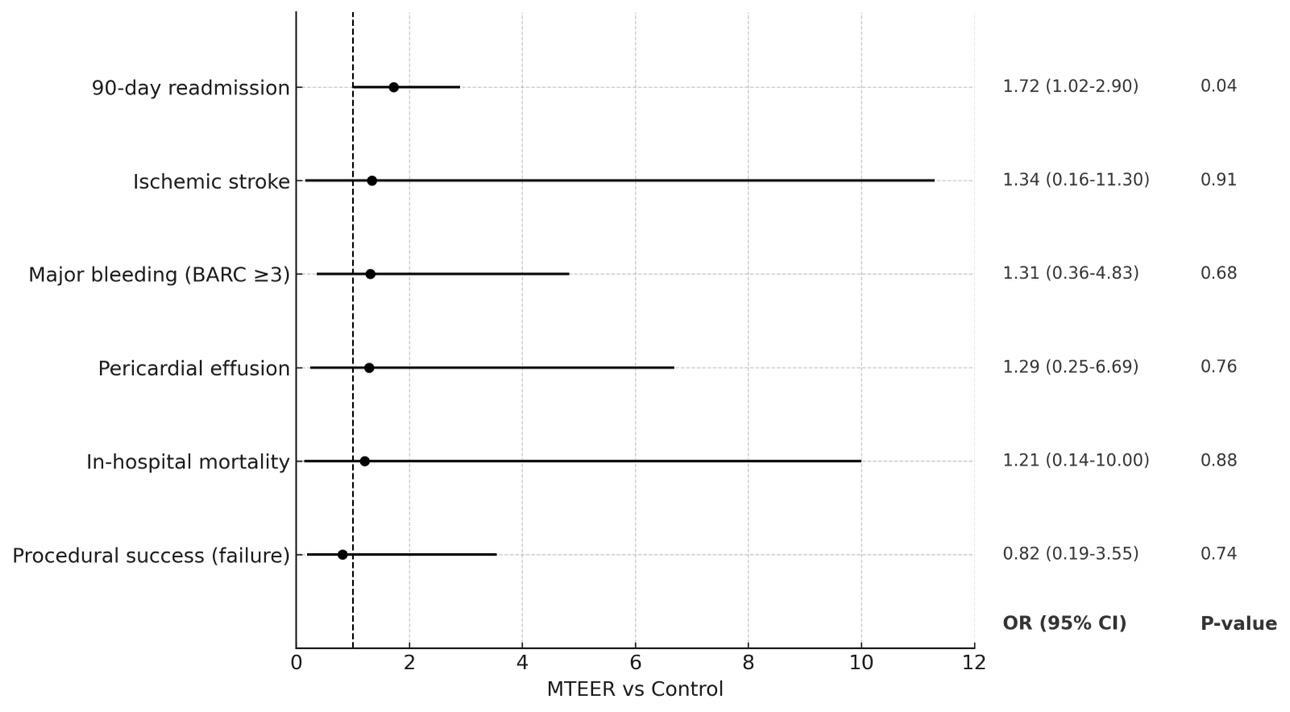
ABSTRACT #102
CASE REPORT/CLINICAL REVIEW
HEMATOLOGY/ONCOLOGY
MALIGNANCY MASQUERADING AS
Benjamin Samuel1, Chad Henry1, Adam Rothman1
1Mount Sinai Morningside-West Hospitals, Icahn School of Medicine at Mount Sinai, New York, NY, United States
BACKGROUND/INTRODUCTION: Pulmonary eosinophilia can result from a variety of causes, including allergic, infectious, vasculitis, malignant, and drug-induced processes. Paraneoplastic eosinophilia, though rare, can mimic pulmonary eosinophilia and can confound an early diagnosis. We present an interesting case of a patient with marked eosinophilia and pulmonary infiltrates suggestive of eosinophilic pneumonia who was ultimately found to have metastatic lung adenocarcinoma.
CASE PRESENTATION: A 55-year-old man with well-controlled HIV infection, 60 pack-year smoking history, and intermittent crack cocaine use, presented with progressive dyspnea and hypoxic respiratory failure following outpatient treatment for suspected pneumonia. CT chest revealed multifocal opacities consistent with multifocal pneumonia. Laboratory results showed leukocytosis (WBC 17) with marked eosinophilia (19% eosinophils). Peripheral smear confirmed mature eosinophilia. The initial differential included acute eosinophilic pneumonia, hypereosinophilic syndrome, infection, and malignancy. Hematology workup for myeloproliferative neoplasm (BCR-ABL, JAK2, CALR) was negative. Solumedrol was given for presumed eosinophilic pneumonia, with improvement in eosinophilia; however, repeat imaging showed persistent consolidations, and eosinophilia recurred during a steroid taper. Hospital course was complicated by multifocal embolic infarcts related to a probable patent foramen ovule seen on transesophageal echocardiography. Infectious, autoimmune, and hematologic work-up were unrevealing. A bronchoscopy was eventually performed, with cytology revealing poorly differentiated adenocarcinoma. Additional imaging later showed lymphangitic carcinomatosis, necrotizing pneumonia, osteolytic lesions, and adrenal metastases – consistent with stage IV lung adenocarcinoma.
CONCLUSION: Malignancy-associated eosinophilia is a rare but recognized paraneoplastic manifestation most often seen with solid tumors. Tumor-derived cytokines such as IL-5, IL-3, and GM-CSF drive eosinophil proliferation and tissue infiltration. In the lungs, this process can mimic the presentation of eosinophilic pneumonia or vasculitis. Diagnostic complexity was heightened in this case as eosinophilia can also reflect drug reactions, parasitic infections, or inflammatory pneumonitis. The patient’s HIV status, polysubstance use (including cocaine), and initial steroid responsiveness further confounded the clinical picture and delayed recognition of an underlying malignant process despite appropriate initial management. Persistent pulmonary opacities despite eosinophil resolution should prompt tissue diagnosis, as radiographic improvement in eosinophilic pneumonia typically occurs within days of corticosteroid initiation. Reported cases of adenocarcinoma presenting as eosinophilic pneumonia are rare but clinically significant, as early recognition can alter management and prognosis. This case underscores the importance of maintaining a broad differential and integrating serial imaging, laboratory data, and tissue sampling when findings are refractory to standard therapy.
ABSTRACT #103
QUALITY IMPROVEMENT
GENERAL INTERNAL MEDICINE
“LET ME GO!”: ARE WE MISSING KEY ELEMENTS IN CAPACITY EVALUATIONS FOR PATIENTS LEAVING AGAINST MEDICAL ADVICE?
Vishmayaa Saravanan1 , Cleo Fleming1, Emma Garry1, Evelyn Elias1 , Emily Rivadeneira Cabezas1 , Shantheri Shenoy1, Zhuoran Yang1, Irina Zaretsky1
1Mount Sinai Morningside-West Hospitals, Icahn School of Medicine at Mount Sinai, New York, NY, United States Presented at both the Institute for Medical Education (IME) Annual Education Research Day that was held in New York, New York, United States on April 21, 2026 and the Society of Hospital Medicine (SHM) Annual Meeting that was held in Nashville, Tennessee, United States from March 29, 2026 to April 1, 2026.
BACKGROUND/INTRODUCTION: Discharges against medical advice (AMA) carry substantially higher risks of adverse outcomes, including a 2-fold higher 30-day readmission and 2–2.5-fold higher short-term mortality compared with planned discharges. Accurate assessment of decision-making capacity in these patients is essential, as inadequate evaluation or documentation can compromise patient safety and pose medicolegal and ethical risks. Capacity evaluations should include the four widely recognized Applebaum criteria: communicating a choice, understanding the relevant information, appreciating the medical consequences of the situation, and reasoning about treatment choices. In practice, however, capacity assessment and documentation are often incomplete or inconsistent, motivating us to examine current processes at our institution. We also sought to assess clinician attitudes towards capacity evaluations, perceived sufficiency of training, and interest in a standardized electronic medical record (EMR) tool to guide capacity documentation.
METHODS: We retrospectively reviewed 100 randomly selected charts of patients on the general medicine service with AMA discharge orders from July 2024 through June 2025. Eight charts were excluded: four elopements, two patients who left AMA from the ED before admission, one inter-hospital transfer, and one routine discharge, leaving 92 charts for final analysis. Documentation of capacity was reviewed for the four Applebaum criteria. When the primary note was attested by an attending, their documentation was included in the review. Charts with questions or discrepancies were adjudicated by consensus among study reviewers. Additionally, internal medicine residents, advanced practice providers (APPs), and attendings were surveyed regarding their comfort with performing and documenting capacity assessments, perceived sufficiency of training, and interest in an EMR-based support tool. Responses were recorded on a 5-point Likert scale (1=low, 5=high).
RESULTS: Documentation of all four Applebaum criteria was complete in only 7.6% of the 92 charts reviewed; 20.7% included 3 criteria, 44.6% included 2, and 15.2% included 1. Expression of choice and appreciation of risks were most frequently documented (84.8% and 64.1%, respectively), while reasoning in support of the decision to leave AMA and understanding of the medical condition were less consistently recorded (39.1% and 12.0%, respectively). Survey responses were received from 70 of 230 residents (30%), 14 of 22 APPs (64%), and 20 of 36 attendings (56%), for a total of 104 clinicians. Residents and APPs reported moderate confidence in bedside assessments (residents 3.4, APPs 3.0) and documentation (residents 3.0, APPs 3.3), whereas attendings reported higher confidence in both (4.3 and 4.0, respectively). Perceived sufficiency of training was low among residents and APPs (2.5 each) but higher for attendings (3.4). Interest in an EMR-based template to guide capacity evaluations was high across all groups (residents 4.5, APPs 4.8, attendings 4.5).
CONCLUSION: Our study demonstrated that documentation of patient capacity in AMA discharge cases is properly completed in only a minority of encounters. This finding aligns with APPs’ and residents’ only moderate confidence in documenting capacity assessments and their perceived insufficient training in this area. High interest in an EMR-based support tool suggests that such a resource could be valuable in standardizing and improving documentation practices
ABSTRACT #104
CASE REPORT/CLINICAL REVIEW
INFECTIOUS DISEASES
NOROVIRUS GASTROENTERITIS COMPLICATED BY POLYMICROBIAL BACTEREMIA AND LIVER ABSCESS
Kana Satake¹, Sanah Siddiqui1, Genevieve Hughes1, Mark Alon¹, David Perlman1 ¹Mount Sinai Morningside-West Hospitals, Icahn School of Medicine at Mount Sinai, New York, NY, United States
Published in IDCases, 2026. PMID: 42094924
BACKGROUND/INTRODUCTION: Norovirus is one of the most common causes of acute viral gastroenteritis worldwide and is typically a self-limited illness. In rare cases, viral disruption of the intestinal mucosal barrier may facilitate bacterial translocation, leading to severe secondary infections, including bacteremia and, uncommonly, pyogenic liver abscess. Previous studies have reported a median time to diagnosis of pyogenic liver abscess of 10–11.5 days. Here, we present a rare case of norovirus gastroenteritis complicated by polymicrobial bacteremia and subsequent liver abscess formation occurring within six days of symptom onset.
CASE PRESENTATION: A 63-year-old man with a history of coronary artery disease, type 2 diabetes mellitus, hypertension, benign prostatic hyperplasia, and gastroesophageal reflux disease presented on day 0 with acute epigastric pain, vomiting, diarrhea, fever, and weakness shortly after food intake. He was evaluated in an emergency department, where blood cultures were obtained, and was discharged with symptomatic management. However, gastrointestinal symptoms and fever persisted over the subsequent several days.
On day 4, the patient presented to another hospital due to ongoing symptoms, where blood cultures grew Klebsiella pneumoniae and Clostridium perfringens. He was subsequently transferred to our institution for further management. On admission, he was febrile but hemodynamically stable. Laboratory studies demonstrated mild thrombocytopenia, transaminitis, and elevated inflammatory markers. Stool multiplex PCR was positive for norovirus and negative for other bacterial, parasitic, and viral pathogens.
On day 6, contrast-enhanced CT, abdominal ultrasound, and MRI revealed multiple small hepatic abscesses involving multiple lobes, with the largest measuring 2.7 × 1.3 cm. Given the size and distribution of the abscesses, percutaneous drainage was not feasible.
The patient was treated with intravenous broad-spectrum antibiotics, later narrowed to ceftriaxone and metronidazole based on clinical stability and microbiologic data. Despite the presence of C. perfringens bacteremia, he did not develop intravascular hemolysis or hemodynamic instability. He completed a six-week course of antibiotic therapy, with follow-up imaging demonstrating complete resolution of the hepatic abscesses and full clinical recovery.
CONCLUSION: This case highlights a rare but serious complication of norovirus gastroenteritis, complicated by polymicrobial bacteremia and liver abscess formation. Although a definitive causal relationship cannot be established, the temporal sequence suggests that norovirus-associated mucosal disruption may facilitate bacterial translocation.
In this case, liver abscesses were identified six days after symptom onset, earlier than the reported median time to diagnosis of 10–11.5 days in prior studies. This relatively rapid progression is consistent with a plausible mechanism of bacterial translocation following norovirus infection.
Clinicians should remain vigilant for systemic infections following viral gastroenteritis, as timely intervention can lead to favorable outcomes even in potentially fatal conditions.
ABSTRACT #105
QUALITY IMPROVEMENT
PULMONARY/CRITICAL CARE
IMPROVING DAILY SPONTANEOUS AWAKENING AND BREATHING TRIAL COMPLIANCE THROUGH MULTIDISCIPLINARY RESPIRATORY THERAPY ROUNDS IN THE MEDICAL INTENSIVE CARE UNIT
Yoshihiro Sawaguchi1 , Meagan Murphy1, Sanam Ahmed 1, Nikita Desai 1
1Mount Sinai Morningside-West Hospitals, Icahn School of Medicine at Mount Sinai, New York, NY, United States Presented at the American Thoracic Society (ATS) Annual Meeting that was held in Orlando, Florida, United States from May 15-20, 2026.
BACKGROUND/INTRODUCTION: Daily spontaneous awakening trials (SAT) and spontaneous breathing trials (SBT) are evidence-based interventions that shorten ventilator duration and ICU length of stay. Despite strong supporting data, adherence to these protocols often remains suboptimal due to workflow fragmentation and limited interdisciplinary communication. At Mount Sinai Morningside (MSM), SAT and SBT compliance averaged 46 % and 75 %, respectively, in 2024, prompting a unit-based quality-improvement (QI) initiative to enhance multidisciplinary coordination and engagement.
METHODS: This single-center QI initiative was conducted in the MSM Medical ICU and included all mechanically ventilated adult patients between January and September 2025. Baseline compliance in January 2025 was 34% for SAT and 77% for SBT. Three key interventions were introduced: (1) Respiratory therapy (RT) multidisciplinary rounds beginning March 2025, held daily at 8 AM and attended by the ICU attending or fellow, RT, and charge nurse; (2) Standardization of SAT/SBT timing, designating 8 AM for SAT initiation and 8:30 AM for SBT, to improve coordination and minimize overnight variability; and (3) Nursing education and reinforcement, initiated June 2025 through a one-hour unit-council session and ongoing reminders during morning huddles. Compliance was defined as the proportion of ventilated ICU episodes (≥ 1 full day on mechanical ventilation) with daily SAT or SBT documentation either performed or with an appropriate reason for deferral on all but the first ventilator day. Data was collected retrospectively via electronic chart review.
RESULTS: Following implementation, SAT compliance improved from 34 % (January 2025) to 69 % (September 2025), while SBT compliance increased from 77% to 86 %. Improvements were temporally associated with the initiation of multidisciplinary rounds and reinforced nursing education.
CONCLUSION: Structured multidisciplinary RT rounds with standardized timing and focused nursing engagement were associated with marked improvement in daily SAT/SBT compliance in a single medical ICU. These results highlight the importance of coordinated team-based communication in implementing ventilatorliberation protocols and lay the groundwork for evaluating downstream outcomes such as ventilator days, tracheostomy rates, and ICU length of stay.
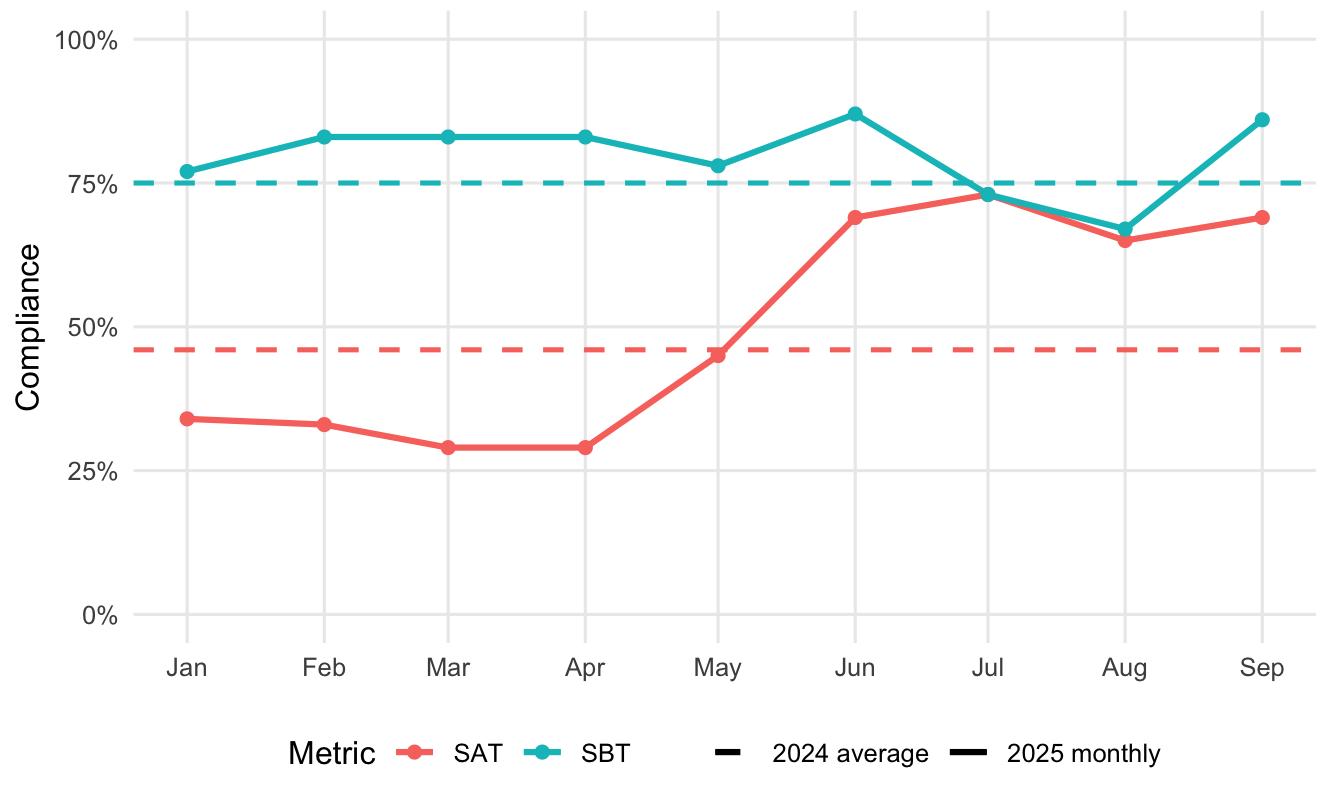
Figure 1. Monthly trend (2025) with 2024 averages of SAT/SBT Compliance
ABSTRACT #106
CLINICAL RESEARCH
HEMATOLOGY/ONCOLOGY
FUNCTIONALLY HIGH-RISK DISEASE IS ASSOCIATED WITH INFERIOR OUTCOMES AFTER CHIMERIC ANTIGEN RECEPTOR T-CELL THERAPY FOR RELAPSED REFRACTORY MULTIPLE MYELOMA
Hamza Hashmi1* , Tara Sebastian2*, Sridevi Rajeeve1*, Tasmin Farzana1, Ross S, Firestone1, Eric M. Jurgens1 , Kevin C. Miller1, Francesco Maura1, Alexander M. Lesokhin1, Carlyn R. Tan1, Gunjan L. Shah1, Neha Korde1 , Heather J. Landau1, Maximillian Merz1, Michael Scordo1, Hani Hassoun1, Kylee H. Maclachlan1, Urvi A. Shah1 , Malin L. Hultcrantz1 , Andriy Derkach3, David Nemirovsky3, Sergio Giralt1, Sham Mailankody1**, Saad Z. Usmani1** 1Memorial Sloan Kettering Cancer Center, New York, NY, United States; 2Mount Sinai Morningside/West Hospitals, Icahn School of Medicine at Mount Sinai, New York, NY, United States
Presented at the American Society of Hematology (ASH) Annual Meeting that was held in Orlando, Florida, United States from December 6-9, 2025.
*These authors contributed equally as first authors
**These authors contributed equally as senior authors
BACKGROUND/INTRODUCTION: Functional high-risk multiple myeloma (FHRMM) is defined through dynamic assessment of disease kinetics after treatment initiation and is generally associated with poor prognosis. When compared to traditional salvage chemotherapy, CAR T has shown superior efficacy as earlier line of therapy (LOT) (1-2) for FHRMM (CARTITUDE-4). However, outcomes with its use in later lines (3+) for FHR disease remain unknown. Here, we describe a single center experience of FHRMM patients receiving CAR T-cell therapy.
METHODS: FHRMM was defined as with progressive disease (PD) <24 months of frontline therapy. Primary objective was to determine efficacy outcomes including best overall response (ORR), progression free survival (PFS), and overall survival (OS). Secondary objective was to determine safety outcomes including cytokine release syndrome (CRS), Immune effector associated neurotoxicity syndrome (ICANS), cytopenias, and infection rates within 90 days post CAR T. Cox regression analyses were performed to determine predictors of efficacy in multivariable analyses (MVA).
RESULTS: The study included 177 patients treated with CAR T from 3/2018 until 10/2024 with 103 (58%) FHR and 74 (42%) non-FHR patients. Of these 103 FHR patients, 49 (48%) had PD <12 months of frontline therapy. Median patient age was 65 (range 39-86) years with 63 (36%) patients >70 years of age at time of CAR T infusion. A total of 102 (58%), 47 (27%), and 28 (16%) patients had received ciltacabtagene autoleucel (ciltacel), idecabtagene viculeucel (ide-cel), and investigational B-cell maturation antigen (BCMA) directed autologous CAR T product, respectively. A total of 64 (36%) patients had extramedullary disease (EMD), 34 (19%) had high disease burden (>50% bone marrow involvement), and 94 (54%) had high-risk cytogenetics (HRCG) defined as presence of deletion 17p, t(4;14), t(14;16) on FISH at the time of CAR T. Median prior LOT was 5 (2-14) with 97% of patients having received 3+ LOT, all patients were triple class exposed, 150 (85%) were anti CD38 monoclonal antibody refractory, and 31 (18%) patients had received prior BCMA directed therapy.
Baseline characteristics were balanced between the two groups except FHR patients had higher rates of EMD (42% versus 28%) and HRCG (58% versus 47) and shorter median time from autologous transplant to CAR T (31 versus 70 months) compared to the non-FHR patients. With the median follow-up of 16 (95% CI 15-20) months, no differences were seen in the best ORR (84% versus 80%, p=0.40) or CR or better rates (42% versus 47%, p=0.30) between the FHR and non-FHR groups, respectively. The median PFS were 9.2 and 13 months (p=0.30), with 12-month PFS of 42% and 52% in the FHR and non-FHR groups, respectively. Within the FHR group, patients with PD <12 months of frontline therapy had median PFS of 8.3 months versus 12 months in patients with PD 12-24 months post frontline therapy (p=0.5). On MVA stratified by CAR-T product, EMD (HR, 2.38; 95%CI, 1.52-3.74; p=<0.001), high disease burden (HR, 2.35; 95%CI, 1.47-3.75; p=<0.001), and prior BCMA therapy (HR, 2.21; 95%CI, 1.24-3.95; p=0.008) were associated with inferior PFS.
At data cutoff, median OS were 29 and 55 months (p=0.038), with 12-month OS of 78% and 87% in the FHR and non-FHR groups, respectively. Within the FHR group, patients with PD <12 months of frontline therapy had median OS of 29 months versus 26 months in patients with PD 12-24 months post frontline therapy (p=0.10). On MVA stratified by CAR-T product, after adjusting for all significant covariates, only EMD (HR, 2.41; 95%CI, 1.32-4.42; p=0.004) andhigh disease burden (HR 2.57, 95% CI 1.39-4.74, p=0.003) were associated with inferior OS.There were no significant differences in the rates of CRS (all grade 76% versus 74%, grade 3+ 5% versus 3.6%), ICANS (all grade 12% versus 11%), cytopenias (all grade 51% versus 57%, grade 3+ 26% versus 19%) and infections within 90 days (all grade 43% versus 47%, grade 3+ 16% versus 15%) between FHR and nonFHR patients, respectively. However, patients with FHR disease had higher rates of grade 3 ICANS (5% versus 0%, p=0.032).
CONCLUSION: FHRMM patients receiving CAR T as later LOT have inferior survival outcomes compared to those with non-FHR disease, underscoring the poor prognostic impact of PD <24 months from frontline therapy. This association was largely driven by active EMD and high disease burden at the time of CAR T, highlighting the potential benefit of utilizing CAR T as an early LOT for FHRMM. Our findings need to be confirmed with focus on outcomes of FHRMM with CAR T in clinical trials and real-world evidence.
ABSTRACT #107
CASE REPORT/CLINICAL REVIEW
GENERAL INTERNAL MEDICINE/PULMONARY/CRITICAL CARE
FROM AMITRIPTYLINE TO ACUTE RESPIRATORY DISTRESS SYNDROME: COMPLICATIONS OF OVERDOSE
Brett Sherman1, Fahema Nadira1 , Nikita Desai1 , Meagan Murphy1
1Mount Sinai Morningside-West Hospitals, Icahn School of Medicine at Mount Sinai, New York, NY, United States Presented at the American Thoracic Society (ATS) Annual Meeting that was held in Orlando, Florida, United States from May 15-20, 2026.
BACKGROUND/INTRODUCTION: We present here a case highlighting the amitriptyline toxidrome, further complicated by aspiration pneumonia and progression to acute respiratory distress syndrome (ARDS).
CASE PRESENTATION: A 25-year-old female with medical history of seizures, alcohol use, cyclic vomiting syndrome, hypothyroidism, tachycardia, migraines, and anxiety, presented to the hospital following a suspected overdose. Home medications included amitriptyline, lamotrigine, mirtazapine, sertraline, ondansetron, norethindrone, metoprolol, and levothyroxine. On arrival the patient was unresponsive with muscle spasms concerning for seizure, prompting intubation, levetiracetam load, and continuous midazolam infusion. ECG demonstrated wide-complex tachycardia with prolonged QT interval; chest x-ray identified a dense left lower lung consolidation, with bedside bronchoscopy notable for copious thick, white secretions that were therapeutically aspirated. The patient was admitted to the ICU on continuous EEG.
Midazolam was continued for possible seizures or serotonin syndrome, and sodium bicarbonate was administered for suspected amitriptyline overdose (later confirmed by blood amitriptyline level). Empiric antibiotics were started for aspiration pneumonia and adjusted appropriately when respiratory cultures resulted positive for Haemophilus influenzae. Repeat chest imaging indicated progression to ARDS and lung protective strategies were initiated, including lower tidal volumes, high PEEP, inhaled nitric oxide, and paralysis. Prone positioning and VV ECMO cannulation were considered for refractory hypoxemia but were ultimately not required. The patient was extubated on hospital day 12 and discharged to a subacute rehabilitation facility.
CONCLUSION: Tricyclic antidepressant (TCA) use has fallen out of favor, largely due to the lethality of TCA overdose. The TCA toxidrome may include prolongation of the PR, QRS, and QT intervals mediated by interference with cardiac sodium channels and either bradyarrhythmia from sinus node blockage or tachyarrhythmia triggered by anticholinergic effects. As TCA poisoning is variable in presentation, it should be considered in all patients presenting post-overdose with arrhythmia. Treatment is sodium bicarbonate: the additional sodium maximizes remaining function of cardiac ion channels, while bicarbonate-induced serum alkalinization converts TCAs to their less-active, nonionic form.
As in this case, a common complication of overdose is aspiration, often leading to pneumonia. Patients postaspiration are comparatively high risk for progression to ARDS in addition to the infectious exposure, chemical pneumonitis from gastric acid aspiration promotes development of ARDS. Treatment for ARDS varies by cause, but a commonality is lung protective ventilation strategy, with adjuncts including inhaled nitric oxide and paralysis. Appropriate respiratory support is paramount in temporizing the patient while interventions such as antibiotics help resolve the underlying cause of ARDS.
ABSTRACT #108
CLINICAL RESEARCH
RHEUMATOLOGY
ASSOCIATIONS BETWEEN DISEASE ACTIVITY AND DEPRESSION IN RHEUMATOID ARTHRITIS: A CROSS-SECTIONAL STUDY OF A JAPANESE NATIONAL DATABASE
Tatsunori Shizuku1,2,3, Ryosuke Yamamuro1, Shuhei Hattori1, Shigeto Tohma4, 5, Toshihiro Matsui5 , Noboru Hagino5
1Teikyo University Medical Center in Chiba, Chiba, Japan; 2Mount Sinai Morningside-West Hospitals, Icahn School of Medicine at Mount Sinai, New York, NY, United States; 3London School of Hygiene & Tropical Medicine, Master of Science in Epidemiology Programme, London, United Kingdom; 4National Hospital Organization Tokyo National Hospital, Tokyo, Japan; 5Hospital Organization Sagamihara National Hospital, Kanagawa, Japan
Presented at the Association of American Physicians, American Society for Clinical Investigation, and American Physician Scientists Association (AAP/ASCI/APSA) Annual Meeting that was held in Chicago, Illinois, United States from April 17-19, 2026.
BACKGROUND: Depression is a well-recognized comorbidity in rheumatoid arthritis (RA), affecting approximately 15–30% of patients. In RA, depressive symptoms are associated with greater disease activity, increased disability, and poorer quality of life Although the association between RA and depression has been reported in several studies, large-scale epidemiological data from nationwide registries remain limited. This study therefore aimed to examine the relationship between RA and depressive symptoms using data from a national RA cohort, providing further evidence to support mental health assessment in RA management.
METHODS: We performed a cross-sectional analysis using data from the 2022 cohort of a nationwide Japanese RA registry (National Database of Rheumatic Diseases in Japan, NinJa). The NinJa registry is an annual multicenter survey of RA patients across Japan, collecting standardized clinical, laboratory, and patient-reported data. All registry participants who completed the Hospital Anxiety and Depression Scale – Depression subscale (HADS-D) were included. The HADS-D is a validated 7-item self-report questionnaire for depressive symptoms (score range 0–21), with higher scores indicating more severe symptoms. Depression was defined as HADS-D ≥8, a threshold for relevant depressive symptoms. Clinical factors (age, sex, disease duration, smoking status, SDAI, DAS28-CRP, ESR, RF, CRP, CDAI, ACPA, tender joint counts and swollen joint counts) were compared using Wilcoxon rank-sum tests. Multivariable logistic regression models were then used to identify factors associated with depression status.
RESULTS: Of 17,504 RA patients in the NinJa 2022 registry, HADS-D data were available for 9,791 (55.9%). Among these, 2,597 patients (26.5%) met the criterion for depression. In the cohort, the mean age is 67.6 years old and the average disease duration was 13.8 years. The median SDAI was 5.26 (IQR, 2.22–9.57) in the depression group versus 3.08 (IQR, 1.25–6.70) in the non-depression group. This findings indicate that patients with depressive symptoms tend to have higher overall disease activity and worse clinical profiles. Patients with depression were more likely to be male and current smokers. In the multivariable analysis, it showed that one of the most strongest factor for depression is current smoking independently increased the odds of depression by 67% (p<0.001).
CONCLUSION: In this large cross-sectional study, depressive symptoms were common, affecting roughly onequarter of the cohort. Higher RA disease activity and current smoking were significantly associated with the presence of depression. Although causality cannot be inferred from cross-sectional data, the strong association of RA with depression underscores a likely bidirectional interaction between disease activity and mental health. Clinically, these findings reinforce the importance of routine depression screening and integrated management in RA care, as addressing comorbid depression may improve both mental health and overall RA outcomes.
ABSTRACT #109
CASE REPORT/CLINICAL REVIEW
HEMATOLOGY/ONCOLOGY/RHEUMATOLOGY
PYROPHOSPHATE
Alexander Silverman1 and Fatma Abdelqader1
1
Mount Sinai Morningside-West Hospitals, Icahn School
of Medicine at Mount Sinai, New York, NY, United States
BACKGROUND/INTRODUCTION: Calcium pyrophosphate deposition disease (CPPD) is a common crystalinduced arthropathy in older adults, typically associated with metabolic or degenerative conditions. Paraneoplastic CPPD flares are rare. We report the case of an 80-year-old patient who presented with severe body aches and acute onset right knee pain and swelling on low dose immunosuppression, ultimately found to be associated with underlying myelodysplastic syndrome with increased blasts (MDS-IB2). This case highlights the importance of considering occult malignancy or hematologic disorders in atypical or treatment-resistant CPPD presentations.
Calcium pyrophosphate deposition disease is characterized by deposition of calcium pyrophosphate crystals in articular and periarticular tissues, leading to acute or chronic inflammatory arthritis. Known risk factors include advanced age, osteoarthritis, hyperparathyroidism, hemochromatosis, and hypomagnesemia.
Paraneoplastic rheumatic syndromes are immune-mediated or inflammatory conditions associated with malignancy, often preceding or coinciding with cancer diagnosis. While gout has been more frequently described in association with hematologic malignancies, CPPD as a paraneoplastic phenomenon remains uncommon. Myelodysplastic syndrome, a clonal hematopoietic disorder prevalent in the elderly, has been linked to various autoimmune and inflammatory manifestations.
CASE PRESENTATION: An 80-year-old patient with a history of osteoarthritis, chronic diastolic heart failure, presented with acute onset of low back and right knee pain associated with swelling and warmth. There was no history of trauma, recent surgery, or infection. The patient reported similar intermittent episodes over the preceding year, treated empirically as CPPD with prednisone tapers for which she remained on 5mg daily.
On examination, the right knee was warm, swollen, and tender with a limited range of motion. The patient was afebrile. Laboratory studies revealed progressively elevated inflammatory markers (C-reactive protein 165.5 mg/L, erythrocyte sedimentation rate 48 mm/hr). Complete blood count showed severe pancytopenia (Hg 7.4, WBC 2.4, Plt 20).
X-ray of the right knee revealed moderate joint chondrocalcinosis as well as evidence of moderate OA (shown above). Joint aspiration of the right knee yielded clear, dark yellow synovial fluid with elevated leukocyte count (21,000 cells/µL, predominantly neutrophils). Polarized light microscopy demonstrated no evidence of gout, nor calcium pyrophosphate crystals. Gram stains and cultures were negative.
Despite treatment with nonsteroidal anti-inflammatory drugs and colchicine, the patient experienced only transient improvement, with rapid recurrence and involvement of the left knee. Pain relief only achieved after initiation of high dose systemic steroids (Medrol 32mg daily). Given the refractory nature or her pain and systemic features, further evaluation was pursued. Repeat laboratory testing re-demonstrated progressive pancytopenia. A comprehensive inflammatory arthritis serologic workup revealed repeated ANA positivity (1:320) with a centromere pattern, positive lupus anticoagulant, and anti-centromere antibody positivity (2.2).All other serologic workups returned within normal limits. Peripheral blood smear revealed dysplastic changes, and bone marrow biopsy performed inpatient later confirmed myelodysplastic syndrome with increased blasts without monoclonal B or T-cells. No evidence of acute leukemia or solid malignancy was identified.
CONCLUSION: This case illustrates an atypical presentation of CPPD as a paraneoplastic manifestation of myelodysplastic syndrome. The recurrent, polyarticular, and treatment-resistant nature of the flares, along with systemic inflammatory features, raised suspicion for an underlying trigger beyond idiopathic CPPD. Hematologic malignancies, including MDS, are known to be associated with immune dysregulation, cytokine overproduction, and inflammatory syndromes. These mechanisms may promote crystal-induced inflammation or lower the threshold for acute CPPD flares. Similar associations have been described with vasculitis, relapsing polychondritis, and inflammatory arthritis in patients with MDS. Recognition of CPPD as a potential paraneoplastic syndrome is clinically important, asit may precede the diagnosis of malignancy and prompt earlier investigation. In elderly patients presenting with severe or refractory CPPD, particularly in the presence of unexplained cytopenia or systemic symptoms, evaluation for hematologic disorders should be considered.
CPPD flares may rarely represent a paraneoplastic manifestation of myelodysplastic syndrome. This case underscores the need for heightened clinical suspicion for underlying malignancy in elderly patients with atypical, recurrent, or treatment-resistant CPPD. Early recognition and management of the underlying hematologic disorder may lead to improved control of inflammatory arthritis and overall patient outcomes.
ABSTRACT #110
CLINICAL RESEARCH
PULMONARY/CRITICAL CARE
CLINICAL FRAILTY SCALE REFINES PROGNOSIS IN ACUTE PULMONARY EMBOLISM BEYOND TRADITIONAL RISK SCORES
Jorge Sinclair De Frias1, Agostina Velo1, Abdul Rehman2, Avinash Singh1, Madeline Ehrlich1, David J. Steiger1
1Mount Sinai Morningside–West Hospitals, Icahn School of Medicine at Mount Sinai, New York, NY, United States; 2TidalHealth Peninsula Regional, Salisbury, MD, United States
Published in the American Journal of Medicine, 2026. PMID: 40998188
BACKGROUND/INTRODUCTION: The European Society of Cardiology (ESC) Pulmonary Embolism (PE) risk class and PE Severity Index (PESI) score can predict outcomes of patients with acute pulmonary embolism. However, whether the Clinical Frailty Scale (CFS) improves risk prediction in acute pulmonary embolism remains uncertain.
METHODS: We retrospectively reviewed patients aged ≥50 years with acute PE managed by the Pulmonary Embolism Response Team (PERT) at three hospitals within the Mount Sinai Health System (New York, NY) from January 2020 to June 2024. Frailty was defined as CFS >4. Multivariable regression assessed association between outcomes (mortality, bleeding, 30-day readmission and hospital length of stay and risk scores (ESC, PESI and CFS).
RESULTS: Among 291 patients (median age: 69 years; 153 female), 99 (34.0%) were frail. Frailty was associated with higher odds of in-hospital mortality (odds ratio [OR], 2.50), 30-day mortality (OR, 2.39), 30-day readmission (OR, 1.77) and longer length of stay (incidence rate ratio, 1.21). Incorporating CFS to models with ESC and PESI scores improved prediction of 30-day mortality (net reclassification improvement [NRI], 8.2%), 30-day major bleeding (NRI, 29.3%) and 30-day readmission (NRI, 29.3%).
CONCLUSION: Frailty was independently associated with adverse outcomes in acute pulmonary embolism. Incorporating CFS improved the predictive performance of existing outcomes scores in patients with acute pulmonary embolism.
ABSTRACT #111
CASE REPORT/CLINICAL REVIEW GASTROENTEROLOGY
Astitva Soni1 , David Brand1, Bruce Gelman1
1Mount Sinai Morningside and West Hospitals, Icahn School of Medicine at Mount Sinai, New York, NY, United States
BACKGROUND/INTRODUCTION: Ischemic colitis is usually seen in older adults with underlying vascular disease or low-flow states. However, many medications have been implicated in the development of colonic ischemia. Prescription stimulant-associated ischemic colitis remains rare and underrecognized, particularly in younger patients without traditional risk factors. This case highlights prescription amphetamine use as a potential precipitant and underscores the importance of medication review in cases of unexplained segmental colitis and hematochezia.
CASE PRESENTATION: A 49-year-old woman with ADHD on amphetamine/dextroamphetamine ER (Adderall XR 15 mg daily), endometriosis, PVCs status post ablation, and hyperlipidemia presented to the emergency room with two days of large-volume hematochezia following several weeks of severe crampy left lower quadrant abdominal pain. She denied NSAID and illicit drug use. She had been stable on injectable semaglutide and escitalopram for over one year and was not taking other medications. Vital signs were significant for mild tachycardia but were otherwise unremarkable. Exam was notable for left lower quadrant tenderness to palpation with an otherwise soft, nontender, and nondistended abdomen. Laboratory studies demonstrated leukocytosis (WBC 15.6 ×10³/µL) with stable hemoglobin (12.7 g/dL) and an elevated C-reactive protein (61.9 mg/L) Stool GI PCR testing was negative. CTA of the abdomen and pelvis showed marked wall thickening and submucosal edema in the descending colon with pericolonic fat stranding suggestive of colitis, without active extravasation or vascular occlusion.
The patient was admitted for observation and colonoscopy, which revealed severe segmental inflammation extending from the descending colon to the sigmoid colon with associated friability, erosions, granularity, and loss of vascularity, consistent with ischemic colitis (Figure 1). The colonic single stripe sign, also suggestive of ischemic colitis, was present as well (Figure1, Photograph 8). Biopsies revealed lamina propria hyalinization, surface necrosis, withered crypts, and focal pseudomembranous exudates, consistent with ischemic-type injury. Pathology did not reveal any features of inflammatory bowel disease or microscopic colitis
According to the ACG clinical practice guidelines, the patient met criteria for moderate ischemic colitis and was started on IV ceftriaxone and metronidazole. She was placed on bowel rest and Adderall was discontinued. Her symptoms improved and she was discharged on a seven-day course of antibiotics with planned gastroenterology and psychiatry follow-up. Symptoms had resolved as of her post-discharge gastroenterology appointment three weeks after symptom onset.
CONCLUSION: This case posed a diagnostic challenge because the patient lacked traditional risk factors for ischemic colitis. Additionally, infectious etiologies were excluded through negative stool testing, and histopathology did not demonstrate features of inflammatory bowel disease or microscopic colitis. However, the segmental left-sided distribution with rectal sparing, biopsy-confirmed ischemic injury, and clinical improvement following discontinuation of Adderall strongly supported a stimulant-induced mechanism. While semaglutide was considered as another potential culprit, ischemic colitis related to GLP-1 receptor agonists is uncommon and is typically linked to severe constipation or reduced oral intake. These features were not present in this patient, making Adderall the more plausible precipitant.
This case underscores the importance of considering prescription stimulants in the differential diagnosis of segmental colitis and hematochezia, particularly in younger patients without other clear risk factors. In this case, early recognition and prompt cessation of Adderall led to clinical improvement Coordination between hospitalists, gastroenterologists, and psychiatrists is essential to ensure safe transition to non-stimulant ADHD therapies.
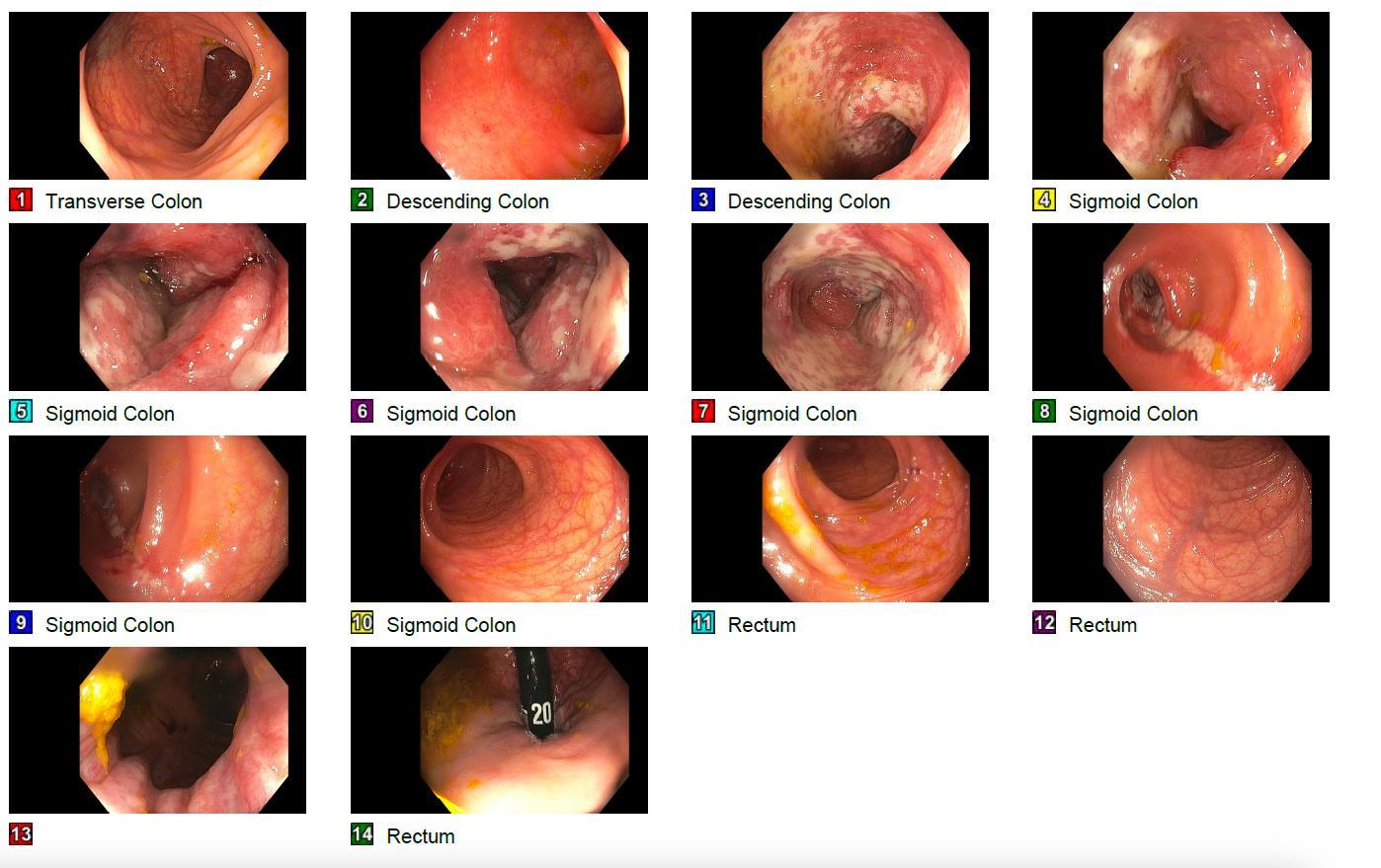
ABSTRACT #112
CASE REPORT/CLINICAL REVIEW NEPHROLOGY
TIRZEPATIDE: FAILING THE ACID TEST
Wenchy Tan1, Noor Shahin2, Melissa Notis2, Jonathan Himmelfarb2
1Mount Sinai Morningside and West Hospitals, Icahn School of Medicine at Mount Sinai, New York, NY, United States; 2Mount Sinai Hospital, Icahn School of Medicine at Mount Sinai, New York, NY, United States Presented at the American Society of Nephrology Annual Meeting that was held in Houston, Texas, United States from November 5-9, 2025.
BACKGROUND/INTRODUCTION: High anion gap metabolic acidosis (HAGMA) is defined by a pathophysiological reduction in blood bicarbonateconcentration, a blood pH <7.35, and an anion gap >12 mEq/L. Ketoacidosis is a common cause of HAGMA. Tirzepatide is a glucagon-like peptide1/glucose-dependent insulinotropic peptide receptor agonist, approved for weight management. We report a rare case of lifethreatening trizepatide induced euglycemic ketoacidosis that was rapidly followed by refeeding syndrome.
CASE PRESENTATION: A 34-year-old female with class 3 obesity presented with multiple episodes of nonbloody vomiting and nausea for 4 days. She denied illicit drug use, alcohol consumption, fever, chills, abdominal pain, muscle aches, foreign toxic ingestion, sick contacts, or travel. All her close contacts were asymptomatic. Four months ago, she was started on and gradually increased to 10 mg Tirzepatide. She lost 35 pounds with minimal gastrointestinal symptoms. Physical exam showed a clinically well patient with no abdominal pain on palpation. Initial labs were notable for an anion gap of 26.3, bicarbonate of 6.7, pH of 7.01, pCO2 of 21, Bhydroxybutyrate 9.45, lactate of 0.9, and a normal osmolar gap. She was hospitalized for HAGMA and given 2 liters isolyte,150mEq of sodium bicarbonate, and Dextrose 5% with NaHCO3 for 12 hours. She was started on metoclopramide and required multiple substantial potassium and phosphorous repletion. Her anion gap and symptoms resolved by day 3. On discharge, she still had metabolic acidosis, but her pH normalized and Tirzepatide was discontinued.
CONCLUSION: Glucose is the primary energy source and when glucose availability is limited, the liver produces ketone bodies by breaking down free fatty acids mobilized from adipose tissue. This process is stimulated by the combination of low insulin levels and high glucagon levels; which is common in type 1 diabetics, insulin-resistant type 2 diabetics and with malnutrition. Tirzepatide is approved for chronic weight loss management in nondiabetic obese patients and HAGMA secondary to ketoacidosis has been a reported adverse event, but rarely with life threating acidemia. In this healthy young patient, just four days of symptoms resulted in life-threatening metabolic derangements. She was profoundly malnourished with lab values indicating refeeding syndrome only 12 hours after treatment. This case highlights the potential of life-threatening starvation ketoacidosis induced by the tirzepatide.
ABSTRACT #113
CASE REPORT/CLINICAL REVIEW
CARDIOLOGY/ENDOCRINOLOGY
SEVERE QT PROLONGATION AND TORSADES DE POINTE IN PANHYPOPITUITARISM: A REVERSIBLE ENDOCRINE CRISIS
Shahe Tchillingirian1 , Amu Nuney1 , Hsiao-Man Chang1 , Hanna Cholerzynska1 , Swarnima Das1 , Pardeep Guru1 , Hyunwoo Kim1 , Riddhi Patel1 , Ankitha Dindigal Rajesh1 , Dayita Wable1 , Tom Fusillo1 , Amir Ahmadi1 1Mount Sinai Morningside-West Hospital, Icahn School of Medicine at Mount Sinai, New York, NY, United States Presented at the Society of Hospital Medicine (SHM) Annual Meeting that was held in Nashville, Tennessee, United States from March 29, 2026 to April 1, 2026.
BACKGROUND/INTRODUCTION: Torsades de Pointe (TdP) is a fatal arrhythmia that is a potential sequela of a prolonged QT interval. Most cases of TdP arise from medication-induced or congenital prolonged QT1. This case highlights an underrecognized association between panhypopituitarism and TdP, demonstrating that severe endocrine dysfunction can masquerade as primary cardiac disease. Early recognition and hormone replacement can transform a fatal arrhythmia into a fully preventable event.
CASE PRESENTATION: A 27-year-old female with a history of craniopharyngioma status post resection with panhypopituitarism presented with intractable vomiting despite doubling her home hydrocortisone per sick-day protocol. At an outside hospital, she was given stress-dose hydrocortisone and IV levothyroxine. After receiving ondansetron for nausea, she developed TdP. She converted to sinus bradycardia following intravenous magnesium. A dopamine infusion was initiated for bradycardia and she was transferred to the cardiac critical care unit. Lab findings demonstrated severe central hypothyroidism, TSH 0.103 mlU/L (0.4 - 4.2 mlU/L) and acute adrenal crisis, ACTH 2.1 pg/ml (7.2 - 63.3 pg/ml) causing severe electrolyte derangements, including hypokalemia, 2.4 mEq/L (3.5 - 5.2 mEq/L). With prior laboratory work-up including low FSH, LH, and IGF-1, the cause of TdP was ultimately panhypopituitarism. Following electrolyte repletion and hormone replacement, symptoms resolved and QTc normalized.
CONCLUSION: Cardiovascular manifestations of panhypopituitarism include TdP and bradycardia due to secondary adrenal insufficiency and central hypothyroidism. Paired with increased occurrence of electrolyte abnormalities such as hypokalemia, hypomagnesemia, and hypocalcemia, as seen in this case, there is increased risk for further prolongation of QT interval and progression into florid TdP4. While TdP is a complication in panhypopituitarism, it is not well-quantified in medical literature and may not prompt close QT and electrolyte monitoring until a patient is symptomatic, at which point there is a heightened risk of an unstable arrhythmia The most common association between endocrine disorders and TdP is hypothyroidism which prolongs the potassium repolarization currents in cardiac myocytes. Glucocorticoid deficiency alters calcium homeostasis within the cardiac myocytes, leading to prolonged repolarization and a higher possibility of developing TdP6. As discussed in the endocrine society clinical practice guidelines, prompt glucocorticoid replacement prior to levothyroxine administration is imperative in reducing risk of adrenal crisis and earlier initiation of hormone therapy increases likelihood of reversing cardiac sequelae and preventing further arrhythmias. There are a multitude of well-studied TdP etiologies, including drug-induced or congenital long QT and electrolyte imbalance, but panhypopituitarism is not listed by the AHA. Case reports of TdP in the context of endocrinopathies without electrolyte abnormalities provide evidence that panhypopituitarism can independently cause QT prolongation and TdP. In patients with panhypopituitarism, sudden cardiac events are often the end result of an unchecked endocrine crisis. Panhypopituitarism causing profound bradycardia, electrolyte disturbances, and altered repolarization sets the stage for QT prolongation long before TdP occurs. Despite the rarity of presentation, it is crucial that patients at risk for panhypopituitarism such as those with neurological tumors, pituitary apoplexy, autoimmune hypophysitis, and traumatic brain injury have regular electrolyte and QT monitoring with prompt steroid and thyroid hormone replacement to prevent life-threatening TdP.
ABSTRACT #114
CASE REPORT/CLINICAL REVIEW
GENERAL INTERNAL MEDICINE/PULMONARY/CRITICAL CARE
Teena Thomas1, Christiana Choi1, Krystle Hernandez1
1Mount Sinai Morningside-West Hospitals, Icahn School of Medicine at Mount Sinai, New York, NY, United States Presented at the Society of General Internal Medicine (SGIM) Annual Meeting that was held in Boston, Massachusetts, United States from May 15-18, 2024.
CASE PRESENTATION: A 68-year-old male with a recent history of pneumonia presented to the ED with shortness of breath. Chest x-ray (CXR) revealed complete opacification of the right hemithorax with left tracheal deviation. CTscan showed large right pleural effusion, right lung collapse, and mediastinal shift. He subsequently underwent thoracoscopy and pleural biopsy; an intrapleural catheter was placed to remove 4.8L fluid.Afterward, patient became hypoxic to 84%- repeat CXR showed infiltrates in the right lung and subcutaneous emphysema of the right chest wall. Patient was then transferred to the ICU for respiratory stabilization while on BiPAP. The next day, patient developed acute facial swelling with voice changes upon eating. With concern for anaphylaxis, a macintosh blade was used to assess the airway, which revealed no mucosal swelling. Oxygen saturation remained above 95% but physical exam revealed palpable crepitus throughout the chest wall, bilateral upper extremities, neck, and face. CXR confirmed extensive subcutaneous emphysema. With concern for possible respiratory compromise, chest tube was placed on suction and bilateral infraclavicular incisions were made. He improved soon after intervention. Pleural biopsy later resulted with concerns for malignancy, and he was discharged with oncology follow-up
DISCUSSION: Subcutaneous emphysema is the entrapment of air in the subcutaneous layer of the skin. Common etiologies include thoracic/sinus injuries, rupture of pulmonary blebs, esophageal or tracheal damage, and barotrauma. It presents with soft tissue swelling and crepitus on palpation. As swelling worsens, vocal cord compression and compartment syndrome can also occur.
Mild/moderate presentations of subcutaneous emphysema are often self-limited; air is gradually reabsorbed over time, sometimes facilitated by supplemental oxygen. Severe presentations may require decompression in the form of subcutaneous incisions (blowhole incision). However, complete resolution can only be achieved with adequate source control. In our patient who developed acute swelling of the face with voice changes, it was appropriate to favor procedural therapy.
With rapidly progressing subcutaneous emphysema, it can often mimic anaphylaxis. It was especially concerning in our patient who developed the swelling acutely after eating.An important way to distinguish is through physical exam and close monitoring of vital signs. In anaphylaxis, multi-system involvement is often noted, including the skin (urticaria), respiratory (laryngeal edema, worsening hypoxia), cardiovascular (hypotension, tachycardia), and gastrointestinal (nausea, vomiting, diarrhea).
CONCLUSION: Subcutaneous emphysema can occur with injuries to the respiratory tract or thoracic cavity. Mild to moderate presentation can often be treated conservatively while severe presentations may require more invasive intervention with blowhole incisions. As subcutaneous emphysema progresses, it can mimic severe allergic reactions such as anaphylaxis. Thorough physical exams and history can narrow the differential and prevent delays in treatment.
ABSTRACT #115
CLINICAL RESEARCH
CARDIOLOGY
GENDER-STRATIFIED OUTCOMES OF P2Y₁₂ INHIBITORS AFTER PCI: COMPARATIVE EFFECTIVENESS OF CLOPIDOGREL, TICAGRELOR, AND PRASUGREL IN A LARGE REAL-WORLD COHORT
Komail Jafri1 , Harrison Bonilla1, Usman Saeedullah1, Sameer Jafri2, Syed Zaidi1, Joshua Guardia1 , Vincent Torelli1, Abel Casso Dominguez1
1Mount Sinai Morningside-West Hospitals, Icahn School of Medicine at Mount Sinai, New York, NY, United States; 2Touro College of Osteopathic Medicine, Middletown, NY, United States
Presented at the Cardiovascular Research Technologies (CRT) Annual Meeting that was held in Washington, DC, United States from March 7-10, 2026.
BACKGROUND/INTRODUCTION: Differences in patient gender may play a role in varied responses with the use of P2Y₁₂ inhibitors after percutaneous coronary intervention (PCI). While clopidogrel, ticagrelor, and prasugrel are commonly used antiplatelet agents, real-world comparisons of their use by gender are limited.
METHODS: Using the TriNetX Network, we identified adults undergoing PCI who received either clopidogrel, ticagrelor, or prasugrel within 24 hours, from 2015–2024 in a single hospital system. Patients were stratified by sex and propensity matched 1:1:1 for demographics and comorbidities. The primary outcome was 1-year allcause mortality; secondary outcomes included MACE (death, MI, stroke) and major bleeding.
RESULTS: More than 21,000 patients met criteria. After matching, baseline characteristics were balanced. In men, ticagrelor and prasugrel were associated with lower all-cause mortality and lower risk of bleeding when compared with clopidogrel. In women, ticagrelor was associated with higher risk of MACE, as compared to clopidogrel and prasugrel. Overall, men had a lower risk of all-cause mortality and bleeding with any of the P2Y₁₂ inhibitors, when compared to women.
CONCLUSION: These potent P2Y₁₂ inhibitors had less harmful impacts in men than in women, who experienced higher bleeding risk without clear ischemic advantage. However, the overall MACE difference between each gender was negligible, highlight the cardioprotective benefit of these antiplatelet agents. These findings support incorporating gender-specific considerations when selecting antiplatelet therapy after PCI.
ABSTRACT #116
CASE REPORT/CLINICAL REVIEW
GENERAL INTERNAL MEDICINE
INFARCTION:
Robert Trenschel1 and Patricia Dharapak1
1Mount Sinai Morningside-West Hospitals, Icahn School of Medicine at Mount Sinai, New York, NY, United States Presented at the Society of Hospital Medicine (SHM) Annual Meeting that was held in Nashville, Tennessee, United States from March 29, 2026 to April 1, 2026.
BACKGROUND/INTRODUCTION: Rib and chest wall infarction are under-recognized causes of acute pain in adults with sickle cell disease. Infarction may present with focal, severe, reproducible chest wall tenderness that can be mistaken for musculoskeletal strain, pneumonia, acute chest syndrome, or opioid-related behavior, particularly when no new infiltrate is visible on initial imaging. Reported incidence varies, but rib infarcts are thought to occur in a substantial minority of vaso-occlusive crises and may contribute to the development of acute chest syndrome through splinting, hypoventilation, and atelectasis.
CASE PRESENTATION: A 57-year-old man with sickle cell disease complicated by post-transfusion hyperhemolysis, bilateral avascular necrosis, prior acute chest syndrome, and pulmonary fibrosis on home oxygen presented with a vaso-occlusive pain crisis in the setting of rhinovirus infection. His course was notable for severe hemolytic anemia (Hb 3.8 g/dL) and acute hypoxic respiratory failure requiring high-flow nasal cannula. After transfusions with steroid and IVIG pre-medication, he demonstrated prompt hematologic recovery and was weaned to baseline oxygen needs.
Despite these improvements, he developed persistent and escalating focal left anterior chest pain that differed from his typical pain. Pulmonary embolism was ruled out by CT angiogram, serial high sensitivity troponins were normal, and EKGs remained unchanged. The discordance between his objective recovery and worsening pain was initially attributed by some to behavioral or psychosocial factors, a common bias in the care of patients with sickle cell disease. On re-examination, the localized and severe nature of the pain prompted reconsideration of the differential, and chest wall bony infarction was suspected. In consultation with radiology, his CT was rereviewed and revealed subtle features consistent with an acute anterior chest wall osseous infarct. The patient’s symptoms were validated, targeted analgesic strategies were continued, and his pain improved gradually with supportive care.
CONCLUSION: Diagnosis is challenging as chest radiography is often normal early in the course, and CT findings may be subtle and easily overlooked without directed review. MRI is more sensitive for marrow changes but not always readily performed. Management is supportive and includes aggressive analgesia, hydration, incentive spirometry, and close monitoring for respiratory compromise. While symptoms generally improve with time, recognition is important to avoid unnecessary diagnostic delays, inappropriate judgments about patient behavior, and inadvertent undertreatment of pain.
Chest wall bony infarction should be included in the differential for focal chest pain in patients with sickle cell disease, even when initial imaging is unrevealing. Early recognition prevents misattribution of symptoms and supports timely, appropriate management.
ABSTRACT #117
CLINICAL RESEARCH
ENDOCRINOLOGY
EFFECT OF GLP-1 RECEPTORS AGONISTS ON PROGRESSION FREE SURVIVAL IN PATIENTS WITH WELL DIFFERENTIATED NEUROENDOCRINE TUMORS TREATED WITH LANREOTIDE
Richard Vaca1 , Marissa Contento2 , Edward Wolin2 , Emily Gallagher2 , Virginia Corbett2
1Mount Sinai Morningside-West Hospitals, Icahn School of Medicine at Mount Sinai, New York, NY, United States; 2Mount Sinai Hospital, Icahn School of Medicine, New York, NY, United States Presented in at the North American Neuroendocrine Tumor Society (NANETS) Multidisciplinary NET Medical Symposium that was held in Austin, Texas, United States from October 23-25, 2025
BACKGROUND/INTRODUCTION: The use of GLP-1 receptor agonists (GLP-RA) is steadily increasing in the US, especially for diabetes and weight loss management, yet their effects on neuroendocrine tumors (NET) remain unclear. Considering that diabetes and cancer become more prevalent in older population, understanding the relationship between GLP-RA with NET also becomes more relevant given multiple potential biochemical interactions. While GLP-RA are currently contraindicated patients with medullary carcinoma of the thyroid, preclinical studies have suggested that other primary NETs with high GLP1R expression may have increased growth in response to GLP-RA. This study explores GLP-RA use amongst patients with NETs in a retrospective data set.
METHODS: A retrospective cohort study was conducted at a large cancer center in New York City to evaluate NET patients with and without GLP-RA exposure. The study was IRB-approved, and patients were identified by chart review between January 2023 and March 2024. Exclusion criteria included high-grade neuroendocrine carcinoma, poorly differentiated neuroendocrine carcinoma, pheochromocytoma, and paragangliomas.
RESULTS: A total of 588 patients were included. 58.5% were females and 62% identified as White race. The mean age was 62.19 ± 13.60 years. Of the 48 individuals (8.16%) exposed to GLP-RA, 63% initiated treatment after their NET diagnosis. 57% of the patients on GLP-RA had localized disease with grade 1 tumors and 72% did not have functional hormonal syndrome. They were started on GLP-RA mostly for diabetes control (67%). 29 individuals (59%) in the exposed group were treated with lanreotide and had a median [95% CI] progression free survival of 781 days [357; 1218].
CONCLUSION: Of our total 588 patients with NET in this study, only a small percentage (8.16%) had been treated with GLP-RA, which is likely due to the lack of data in its use in these patients. More research needs to be done in the safety and efficacy of GLP-RA use in this patient population.
ABSTRACT #118
QUALITY IMPROVEMENT
GENERAL INTERNAL MEDICINE
Akhil Vaid1,2, Sarah Kosse1, Madison Kennedy1, Ashwin Sawant1,2, Girish Nadkarni1,2
1Mount Sinai Morningside-West Hospitals, Icahn School of Medicine at Mount Sinai, New York, NY, United States; 2Windreich Department of AI and Human Health, Icahn School of Medicine at Mount Sinai, New York, NY, United States Presented at the New York Chapter of the American College of Physicians (ACP) Annual Meeting that was held in Albany, New York, United States on October 11, 2025 and Symposium on Artificial Intelligence for Learning Health Systems (SAIL) that was held in Rio Grande, Puerto Rico from May 5-8, 2026.
BACKGROUND/INTRODUCTION: Inpatient Medicine requires rapid synthesis of complex patient data, interpretation of evolving guidelines, and decision-making under pressure. This cognitive load, intensified by fragmented digital systems and high patient volumes, contributes to diagnostic error and clinician burnout. Alleviating this burden without compromising clinical accuracy stands to benefit both clinicians and patients. Generative Large Language Models (LLMs) offer the potential to function not merely as static chatbots, but as autonomous agents, i.e. systems that reason, utilize embedded clinical knowledge supplemented by verified external knowledgebases, and interact with real-world effector tools all in pursuit of a defined goal. In this work, we create a framework that allows an LLM to function as a medical agent capable of autonomous navigation through real-world inpatient cases.
METHODS: We curated 25 representative clinical cases across Cardiology, Critical care, Emergency Medicine, Internal Medicine, and Genetics. Each was converted into a structured file containing patient history, labs, imaging, and clinical guidelines. The LLM agent was equipped with tools simulating clinical capabilities such as lab retrieval, ordering new imaging and investigations, ECG review, and access to evidence-based guidelines. The agent operated via iterative creation of an internal case narrative and interacted with tools through structured text interfaces. We incorporated a Retrieval-Augmented Generation (RAG) mechanism which allowed the agent to retrieve relevant, up-to-date clinical guidance once a working diagnosis was proposed. RAG helps mitigate LLM limitations like stale training data and improves alignment with current standards of care. Two expert clinicians per specialty reviewed the model's outputs using four metrics: final-answer correctness, tool use, guideline adherence, and hallucination resistance.
RESULTS: GPT-4o performed well across all domains. Average tool use scored 8.6/10, guideline adherence 8.2/10, and final-answer correctness ranged from 7.6 (emergency medicine) to 10.0 (critical care). RAG integration improved guideline adherence by an average of 20%, including a 52% increase in internal medicine cases (from 5.4 to 7.2). No hallucinations or unsafe recommendations were noted.
The agent demonstrated behavior that closely mimicked clinical reasoning: using ECGs early, ordering targeted labs, and querying guidelines only when appropriate. This structured, iterative workflow contributed to accurate, guideline-concordant decisions while reducing the need for exhaustive prompt engineering.
CONCLUSION: LLM driven agents can autonomously execute key elements of inpatient clinical workflows with expert-level performance, thereby offering a generalizable framework for clinical automation. Such systems may relieve cognitive burden, improve decision reliability, and serve as a foundation for scalable, adaptive decision support in modern healthcare.
ABSTRACT #119
CLINICAL RESEARCH
CARDIOLOGY
NEUTROPHILS-LYMPHOCYTE RATIO IN PATIENTS WITH LOW FLOW AORTIC STENOSIS UNDERGOING TRANSCATHETER AORTIC VALVE REPLACEMENT
Carlo Mannina1,2 , Esha Vaish1, Lakshay Chopra1 , Yash Prakash1,Akarsh Sharma3 , OludamilolaAkinmolayemi3 , Andreina Carbone4, Eduardo Bossone5, Antonino Tuttolomondo2, Edgar Argulian1, Jonathan Halperin3 , Samin Sharma3, Annapoorna Kini3, Stamatios Lerakis3
1Mount Sinai Morningside-West Hospital, Icahn School of Medicine at Mount Sinai, New York, NY, United States; 2University of Palermo, Palermo, Italy; 3Mount Sinai Hospital, Icahn School of Medicine at Mount Sinai, New York City, NY, United States; 4University Hospital "Luigi Vanvitelli", Naples, Italy; 5Department of Public Health, Federico II University, Naples, Italy
Presented at the New York Valves: The Structural Heart Summit that was held in New York, New York, United States from June 25-27, 2025.
BACKGROUND: The neutrophil-to-lymphocyte ratio (NLR) is a novel marker of cardiovascular risk. Low flow (LF) severe aortic stenosis (AS) is associated with worse prognosis. It is unknown whether NLR identifies patients with LFAS at higher risk of complications.
OBJECTIVES: To investigate the impact of NLR in patients with severe LFAS undergoing transcatheter aortic valve replacement (TAVR).
METHODS: A total of 839 consecutive patients with severe LF AS referred for TAVR were evaluated. Primary endpoint was all-cause mortality.
RESULTS: Mean age was 79.8 ± 9.3 years, and 291 (39.0%) patients were female. During a mean (SD) followup of 2.1 (1.6) years, death occurred in 221 (26.3%). In the multivariable analysis, the highest baseline quartile versus all other quartiles of NLR was associated with increased risk of death at 2 years (39% versus 24%; adjusted hazard ratio [aHR] 1.80; 95% CI, 1.22-2.65; p=0.003). Among patients who underwent TAVR, those with the highest NLR experienced over a 3-fold increased risk of death (HR, 3.18; 95%CI, 1.93–5.24; p<0.001), and TAVR’s survival benefit was attenuated by ~57% (interaction term p=0.002) compared with the other quartiles.
CONCLUSION: In patients with severe LFAS, baseline high NLR was associated with independent risk of death and lower survival benefit from TAVR.
ABSTRACT #120
CLINICAL RESEARCH
HEMATOLOGY/ONCOLOGY/PULMONARY/CRITICAL CARE
FACTORS ASSOCIATED WITH PROVIDER DECISION-MAKING OF EARLY-STAGE LUNG CANCER PATIENTS TREATED WITH STEREOTACTIC BODY RADIATION THERAPY OR SUBLOBAR RESECTION
Agostina E. Velo1 , Jeremy Mudd2 , Christopher G. Slatore3,4,Raja Flores2 , Scott Swanson5 , Cardinale B. Smith6 , Mark Chidel7 , Kenneth E. Rosenzweig2 , Jeffrey A. Kern8 , Juan Wisnivesky2
1Mount Sinai Morningside-West Hospitals, Icahn School of Medicine at Mount Sinai, New York, NY, United States; 2Mount Sinai Hospital, Icahn School of Medicine at Mount Sinai, New York, NY, United States; 3Center to Improve Veteran Involvement in Care, Veterans Affairs Portland Health Care System, Portland, OR, United States; 4Oregon Health & Science University, Portland, OR, United States; 5Brigham and Women’s Hospital, Boston, MA, United States; 6Memorial Sloan Kettering Cancer Center, New York, NY, United States; 7Colorado Permanente Medical Group, Denver, CO, United States; 8National Jewish Health, Denver, CO, United States Published in Clinical Lung Cancer, 2026. PMID: 41349182
BACKGROUND/INTRODUCTION: Treatment decision-making for early-stage non-small cell lung cancer (NSCLC) in patients who have high-operative risk is complex. Identifying patient factors that influence physicians’ choices between sublobar resection and stereotactic body radiotherapy (SBRT) is important for guiding cancer care.
METHODS: In this multicenter prospective study, patients with stage I NSCLC at high surgical risk were treated with either sublobar resection or SBRT. We collected data on demographics, comorbidities, lung function, functional status, and tumor characteristics. Before treatment, the primary physician rated each patient’s candidacy for SBRT versus sublobar resection on a 0–100 scale. Linear regression was used to identify factors influencing treatment recommendations.
RESULTS: Among 331 patients, 62% received SBRT. Older age (mean difference [MD], 0.66 per year; 95% confidence interval [CI], 0.18 to 1.14) and chronic obstructive pulmonary disease (MD, 9.77; 95%CI, 0.54 to 18.99) were associated with higher likelihood of SBRT candidacy. In contrast, higher forced expiratory volume (MD, -0.23 per % increase; 95%CI, -0.42 to -0.04), larger tumor size (MD, -4.13 per cm increase; 95%CI, -8.13 to -0.12), and better functional scores (MD, -0.99; 95%CI, -1.64 to -0.35) decreased the likelihood of being considered for SBRT.
CONCLUSION: In patients with early-stage NSCLC with high-operative risk, treatment decisions are influenced by age, comorbidities, lung function, and tumor features. These findings can guide clinicians in evaluating treatment options and support shared decision-making.
ABSTRACT #121
CASE REPORT/CLINICAL REVIEW
PULMONARY/CRITICAL CARE
Harsimran Kaur Bhatia1, Daniel O’Connor2, Bhavinkumar Dalal2 , Megha Verma1
1Mount Sinai Morningside-West Hospitals, Icahn School of Medicine at Mount Sinai, New York, NY, United States
2Beaumont Health and OWUB, Royal Oak, MI, United States
BACKGROUND/INTRODUCTION: The use of e-cigarettes also known as ‘vaping’ has witnessed a significant surge among teenagers and young adults in recent years, particularly during the 2017-2018 period. These devices, introduced in the US marketplace in 2007, are commonly used for delivering nicotine, tetrahydrocannabinol (THC), and other substances in aerosolized form to the respiratory pathway, thereby giving rise to a distinct form of lung injury known as e-cigarette or vaping product use associated lung injury (EVALI). These products, obtained either through authorized retailers or illicit sources, contain formulations that are poorly understood. The wide spectrum of lung injuries associated with EVALI presents a diagnostic challenge with a number of differentials such as acute eosinophilic pneumonia, organizing pneumonia, lipoid pneumonia, diffuse alveolar damage, and hypersensitivity pneumonitis. Reported symptoms include but are not limited to dyspnea, chest pain, hemoptysis, nausea, and diarrhea. Computed tomography (CT) plays a crucial role in the diagnosis and assessment of lung damage. This case report describes an instance of EVALI in a previously healthy teenager who presented with acute hypoxemia and a new-onset seizure, ultimately diagnosed with diffuse alveolar hemorrhage (DAH).
CASE PRESENTATION: We present the case of a 18-year-old female with a history of extensive cigarette smoking and vaping commercial and homemade nicotine and marijuana products. She presented to the emergency department after an episode of hemoptysis and a witnessed generalized tonic-clonic seizure. On arrival to the emergencydepartment, she was afebrile but encephalopathic, tachypneic with an oxygen saturation of 78% on room air and had diminished breath sounds bilaterally. Oxygen supplementation via high flow nasal cannula was provided and she was quickly weaned to 4L/min via nasal cannula with improvement in saturation. Laboratory workup was significant for leukocytosis (34.9x10³/L), thrombocytosis (453 x109/L), and a hemoglobin level of 15.1 g/dL. Electrolytes, renal function, liver enzymes, and coagulation studies were all within normal limits. Urine drug screen was positive for cannabinoids. A non-contrast CT head was negative for any acute intracranial hemorrhage, stroke or mass. The patient was started on levitiracetam for seizures and ampicillinsulbactam for aspiration pneumonia.
Contrast-enhanced CT of the chest revealed extensive bilateral diffuse ground-glass opacities with peripheral sparing. A bronchoscopy was performed, and demonstrated worsening hemorrhagic aspirate with serial aliquots of bronchioalveolar lavage (BAL). These findings were consistent with a diagnosis of DAH. BAL fluid culture, infectious workup, and autoimmune studies were unrevealing. Given the positive history of heavy vaping and exclusion of other potential causes of DAH, our patient was diagnosed with EVALI-induced DAH. The patient was initiated on prednisone and showed progressive improvement in oxygen saturation, which remained at 99% on room air at the time of discharge, six days after initial presentation. She was discharged with a four week taper of corticosteroids and trimethoprim-sulphamethoxazole for Pneumocystis jirovecii pneumonia prophylaxis. During a follow-up visit 2 weeks after, at the pulmonary outpatient clinic, the patient demonstrated full recovery and was strongly advised against vaping, smoking, and any form of inhaled substance use.
CONCLUSION: DAH is a rare syndrome with in-hospital mortality rate ranging between 20-50%. It presents a diagnostic challenge due to its heterogeneous and nonspecific clinical manifestations. Patients most commonly present with fever, cough, hemoptysis, anemia, and new diffuse infiltrates on chest imaging. However absence of hemoptysis does not rule out the possibility of DAH, as one-third of patients may present without any hemoptysis. Bronchoscopy with BAL remains the key to establishing a diagnosis, although it does not always
provide information about the underlying etiology. The etiology of DAH is indeed multifactorial and can be categorized into three main categories: pulmonary capillaritis, bland alveolar hemorrhage, and diffuse alveolar damage.
Our patient was a previously healthy teenager who presented with new onset generalized tonic clonic seizure and DAH with an extensive history of vaping nicotine and marijuana products. Her infectious and auto-immune workup was negative. Her findings fulfilled the recent Centers for Disease Control and Prevention (CDC) definition for a confirmed case of EVALI, defined by the use of an e-cigarette within 90 days before symptom onset, pulmonary infiltrates on chest CT, absence of viral, bacterial, or fungal infection, and no evidence of a cardiac or rheumatologic cause. In this patient’s case, the initial diagnosis was confounded by her presentation with a generalized tonic-clonic seizure. Hemoptysis was suspected as a consequence of tongue injury during the seizure, with aspiration pneumonia as the cause of acute hypoxemia and bilateral diffuse ground glass opacities. Bronchoalveolar lavage was eventually performed when the hemoptysis did not resolve. The presence of sequential hemorrhagic fluid and bilateral ground glass opacities along with the patient's extensive vaping history, lead to the diagnosis of DAH and possibly seizure induced by vaping. The sequence of events was then established as EVALI-induced DAH and seizure leading to hypoxemia and hypoxic ischemic encephalopathy respectively. After the diagnosis was reached, the patient was effectively treated with high-dose steroids followed by four-week taper and complete discontinuation of vaping, resulting in successful symptom resolution.
A recent metanalysis conducted by Carmen et al showed a seven fold increase in vaping from 2013 to 2020 among adolescents, especially in the US and Canada with a noticeable shift to vaping cannabis oil. According to a recent survey by the CDC, 3.7% of adults and 14.1% of high schoolers in the US reported using tobacco products in the form of e-cigarettes in 2020. This indicates a growing trend of vaping among young, otherwise healthy adults. Given the recent increase in reports of similar cases in this demographic, there is a need for clinicians to have a lower threshold for considering EVALI and EVALI-induced DAH as a differential diagnosis for various presentations. The correlation appears to be with vaping, as the products used can reach temperatures high enough to damage the respiratory epithelium when delivered in aerosolized forms, leading to a range of presentations, including alveolar hemorrhage. Although exact mechanism remains elusive, a study conducted by Blount et al. in 2020 found vitamin E acetate a known additive in tetrahydrocannabinol products, in BAL samples of majority of patients with EVALI. However, since patients use different products from illicit sources, there is limited information regarding which specific toxicants could be responsible for the heterogenous presentation seen in EVALI. The classic treatment regimens for EVALI-induced DAH include corticosteroids and immunosuppressive agents. Usually symptom resolve with return to baseline seen with complete abstinence from vaping and smoking in any form. Our patient also had new onset seizures on presentation. Recent reports have raised concerns for a possible association of vaping with new onset seizures among young adults. Between December 2010 to June 2019 the FDA received reports of 122 seizures in adults who were active vaping. Majority of the events occurred between the age of 14-24 years with 85% reported having used a vape within 24 hours of their seizure onset. Although currently no definite causal link has been established between vaping and new onset seizures among young adults, vaping use should be considered as a potential trigger and patients should be advised to abstain from further use. Additional research to elucidate the underlying pathophysiology regarding whether certain products could be responsible for this presentation is imperative.
ABSTRACT #122
CASE REPORT/CLINICAL REVIEW
INFECTIOUS DISEASES/PULMONARY/CRITICAL CARE
REVISITING TETRACYCLINES IN LEGIONNAIRES’ DISEASE: A CASE REPORT ON THE SUCCESSFUL USE OF TIGECYCLINE IN SEVERE ACUTE RESPIRATORY DISTRESS SYNDROME
Fernando A. Viera Ramírez1 and Nicholas Sells1 1Mount Sinai Morningside-West Hospitals, Icahn School of Medicine at Mount Sinai, New
York, NY, United States
BACKGROUND/INTRODUCTION: Legionella pneumophila is a known cause of community acquired pneumonia and Acute Respiratory Distress Syndrome (ARDS). Although fluoroquinolones and macrolides remain standard of care for Legionnaires’ disease, tetracyclines have been shown to have intracellular activity against Legionella but are not routinely used in severe cases.
CASE PRESENTATION: A 58-year-old female with hypertension and left subdural hematoma with middle meningeal artery embolization presented with dysarthria, an episode of “shaking”, and four days of cough. CT of the head was unrevealing for an acute stroke, and chest radiography demonstrated bilateral pulmonary interstitial prominence. Further evaluation of the chest with CT revealed dense consolidations in the bilateral lung fields, more pronounced on the right, concerning for severe multifocal pneumonia. While in the emergency department, she became febrile and hypoxic, requiring intubation and mechanical ventilation. She was admitted to the ICU for hypoxemic respiratory failure and ARDS and workup revealed positive urine Legionella antigen. She was immediately started on levofloxacin, yet her course was complicated by atrial fibrillation, cardiac arrest with return of spontaneous circulation after 11 minutes, and an acute kidney injury requiring renal replacement therapy. Given severity of disease and multiorgan failure, it was decided to add tigecycline for its intracellular activity against Legionella She completed a 14-day course, during which she also developed a new bilateral frontal lobe ischemic stroke seen on MRI. She required both tracheostomy and gastrostomy tubes but was successfully liberated of both and discharged to an acute rehabilitation facility after a 41-day stay in the hospital.
CONCLUSION: In critically ill patients with multiorgan failure, the addition of a tigecycline can be considered as adjunctive therapy for Legionnaires’ when standard therapies are not sufficient
ABSTRACT #123
CLINICAL RESEARCH
GASTROENTEROLOGY/HEMATOLOGY/ONCOLOGY
CAUSE-SPECIFIC SURVIVAL ANALYSIS AND RACIAL DISPARITIES IN YOUNG-ONSET VERSUS AVERAGE-ONSET ESOPHAGEAL CANCER
Liliana Vittini Hernandez1 , Antoine Jeri Yabar1, Luis Oller Payano1 , Jason Piersaint1, Sirish Dharmapuri2
1Mount Sinai Morningside-West Hospitals, Icahn School of Medicine at Mount Sinai, New York, NY, United States; 2Rutgers Cancer Institute of New Jersey, New Brunswick, NJ, United States
Presented at the Digestive Disease Week (DDW) Annual Meeting that was held in San Diego, California, United States from May 3-6, 2025.
BACKGROUND/INTRODUCTION: The incidence of esophageal cancer (EC) has been rising, posing significant public health concerns. Recent studies suggest a concerning increase in young-onset esophageal cancer (YOEC), defined as esophageal cancer diagnosed before 50 years of age. Despite this trend, the survival outcomes and prognostic factors for YO-EC remain poorly understood compared to average-onset esophageal cancer (AO-EC). Furthermore, racial disparities in esophageal cancer outcomes are well-documented but inadequately explored in the context of YO-EC. This study aims to evaluate differences in survival outcomes between YO-EC and AO-EC, and the role of racial disparities in cause-specific survival.
METHODS: We evaluated patients aged≥18 years with esophageal cancer fromthe Surveillance, Epidemiology, and End Results (SEER) database from 2018 to 2021. The study population included patients with histologically confirmed, first primary diagnoses of esophageal cancer, complete data on staging, and known cause of death. This was a retrospective cohort study. Categorical variables were described as frequencies and percentages and compared using the chi-squared test. Univariate and multivariate Cox regression models were used to assess the association between the exposure variables and cause-specific survival. The Kaplan-Meier method was used to estimate survival or event-free status, and the log-rank test was used to assess differences between groups.
RESULTS: A total of 997 individuals were included in the study. AO-EC comprised 94.88% of cases, while 5.12% were YO-EC. In the cause-specific survival analysis, YO-EC was associated with a significantly lower risk of mortality compared to AO-EC (aHR 0.63 (0.40-0.98), p=0.04). Among racial groups, Non-Hispanic Black patients had a significantly higher risk of mortality compared to Non-Hispanic White patients (aHR 1.35 (1.041.83), p=0.04), while no significant differences were observed for other racial groups. Disease stage was a strong predictor of survival, with advanced stages demonstrating markedly increased mortality risks (Stage III: aHR 1.82 (1.26-2.62), p=0.001; Stage IV: aHR 4.68 (3.53–6.22), p< 0.001).
CONCLUSION: Young-onset esophageal cancer is associated with significantly improved survival compared to average-onset esophageal cancer. Racial disparities were evident, with Non-Hispanic Black patients exhibiting higher mortality risks when compared to Non-Hispanic White patients, suggesting the need for equitable access to care and targeted interventions. Advanced disease stage was the strongest predictor of mortality, highlighting the importance of early diagnosis and treatment. These findings emphasize the need for further research to better understand the biological and social factors influencing survival in young-onset esophageal cancer and to address disparities in outcomes across different racial groups.
ABSTRACT #124
CASE REPORT/CLINICAL REVIEW
CARDIOLOGY
WHERE GUIDELINES FALL SHORT: CATASTROPHIC BIOPROSTHETIC VALVE DEGENERATION PRESENTING WITH SPLENIC INFARCTION
Dayita Wable1 , Jacqueline Mirza1, Harsimran Bhatia1, Krystle Hernandez1
1Mount Sinai Morningside-West Hospitals, Icahn School of Medicine at Mount Sinai, New York, NY, United States Presented at the American College of Cardiology (ACC) Annual Scientific Session that was held in New Orleans, Louisiana, United States from March 28-30, 2026.
BACKGROUND/INTRODUCTION: Thromboembolism is a known complication of bioprosthetic valve replacement (bAVR), with an incidence of 0.2- 2.6% annually. While cerebral circulation is the most affected (7580%), systemic embolism is less common (20-25%). We present a rare case of a young woman, not on chronic anticoagulation (AC), who developed splenic infarct as a first sign of prosthetic aortic valve (bAV) degeneration.
CASE PRESENTATION: A 35-year-old woman with end-stage renal disease, drug-induced lupus, and bivalvular disease requiring bAVR 7 months earlier, presented with exertional dyspnea and abdominal pain. Despite negative initial workup, serial imaging identified splenic infarction. Echocardiography showed severe, calcific bAV degeneration (Fig. 1). She was started on systemic AC, evaluated for advanced therapy, and ultimately successfully underwent dual heart-kidney transplantation.
CONCLUSION: Unlike mechanical valves, guidelines do not support the use of long-term AC for bAV, absent of another indication. However, valve thrombosis may occur late. This case highlights splenic infarction as a rare first sign of bAV degeneration and challenges current AC guidelines which may underestimate risk in high-risk patients. Earlier recognition and tailored strategies for prevention of valve degeneration may prevent catastrophic complications and decrease the need for transplantation.
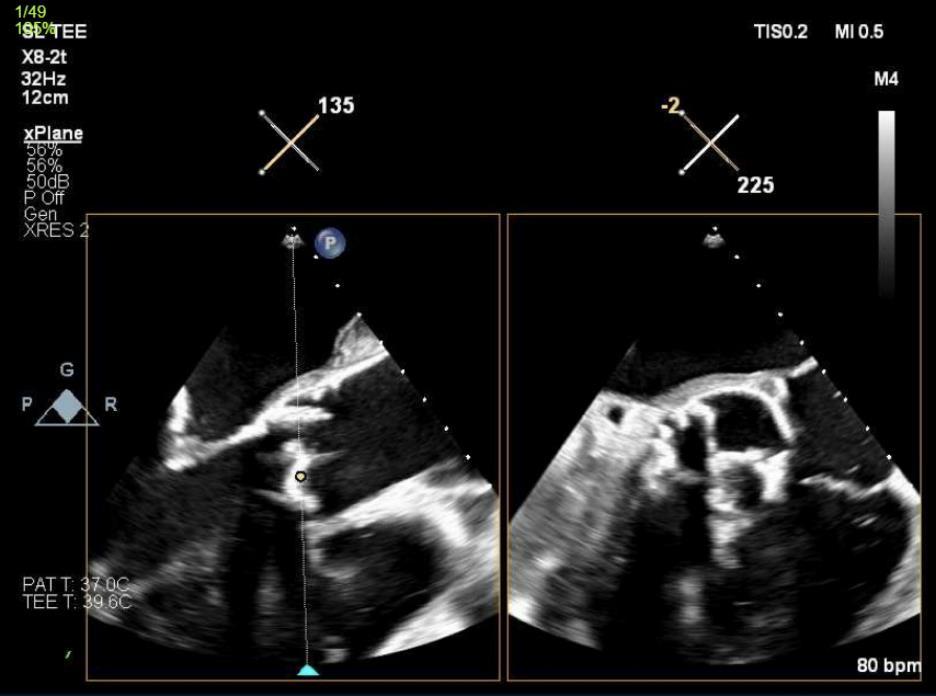
ABSTRACT #125
CLINICAL RESEARCH
CARDIOLOGY
UPTAKE, GEOGRAPHIC ACCESS, AND OUTCOMES OF TRANSCATHETER MITRAL
REPAIR IN THE UNITED STATES
Atsuyuki Watanabe1, Hiroki A Ueyama2, Yoshihisa Miyamoto3 , Hiroshi Gotanda4 Tsuyoshi Kaneko5, Azeem Latib6, Dhaval Kolte7 , Suzanne J Baron7, Eric Secemsky8, Roger J. Laham8, Yusuke Tsugawa9, Toshiki Kuno8 1Mount Sinai Morningside-West Hospitals, Icahn School of Medicine at Mount Sinai, New York, NY, United States; 2Emory University School of Medicine, Atlanta, GA, United States; 3University of Tokyo, Tokyo, Japan; 4Cedars-Sinai Medical Center, Los Angeles, CA, United States; 5Washington University School of Medicine, St. Louis, MO, United States; 6Montefiore Medical Center, Albert Einstein College of Medicine, Bronx, NY, United States; 7Massachusetts General Hospital, Harvard Medical School, Boston, MA, United States; 8Beth Israel Deaconess Medical Center, Harvard Medical School, Boston, Massachusetts, United States; 9University of California, Los Angeles, David Geffen School of Medicine, Los Angeles, CA, United States
Published in Circulation, Cardiovascular Quality and Outcomes, 2025. PMID: 41170563
BACKGROUND/INTRODUCTION: The dissemination of novel procedures should attempt to strike a balance between access and procedure quality. This study aimed to evaluate the temporal trends and geographical dispersion of mitral transcatheter edge-to-edge repair (M-TEER) sites and to examine the associations of site volume and site-to-population density with patient outcomes.
METHODS: We used the Medicare administrative databases in the U.S. to identify sites performing M-TEER in patients aged 65–99 years from 2017 to 2020 and examined the annualized volume and site-to-population density (per million beneficiaries in each corresponding hospital referral region). A hierarchical Cox regression analysis accounting for site-level clustering was performed to assess the association of site volume and density with 30-day and 1-year all-cause mortality.
RESULTS: We identified 456 sites performing M-TEER in 16,810 patients (median [interquartile range] age, 81 [75–86] years; female, 47%). The case number of M-TEER increased by 54% from 3,125 in 2017 to 4,820 in 2020, while sites performing M-TEER increased by 71% from 252 in 2017 to 432 in 2020, corresponding to decline in the median patient-to-site distances from 37.1 kilometers (interquartile range [IQR], 14.4–105.0) to 28.6 kilometers (IQR, 12.8–74.9). Higher site volume (every 10 cases/year) was associated with lower 30-day (adjusted hazard ratio [aHR], 0.94; 95% confidence interval [CI], 0.91–0.99) and 1-year (aHR, 0.98; 95%CI, 0.96–1.00) mortality, while there was insufficient evidence to determine the association between higher site density (every 1 site/million-beneficiaries) and 30-day (aHR, 1.00; 95%CI, 0.99–1.02) and 1-year (aHR, 1.00; 95%CI, 0.99–1.01) mortality.
CONCLUSION: While sites performing M-TEER have been rapidly expanding, we did not find associations between higher regional site density and patient mortality. Continuous careful planning in disseminating M-TEER while ensuring adequate procedure volume per site may optimize patient outcomes.
ABSTRACT #126
BASIC SCIENCE
HEMATOLOGY/ONCOLOGY
BONE MARROW-DERIVED CD57+ NK AND NK-LIKE T-CELLS EXPAND IN LOWER-RISK MDS AND ARE IMPLICATED IN DRIVING BONE MARROW FAILURE
Jonathan Feld1, Richa Rai1, Kyle Wiatrowski2, Richard Sheppard1, Haocheng Yu1, Erin P. Demakos1, Deigo Chowell1, Jane Houldsworth1, Shanaz Hussein1, Amir Horowitz1, Lewis R. Silverman1
1Mount Sinai Hospital, Icahn School of Medicine at Mount Sinai, New York, NY, United States; 2Mount Sinai MorningsideWest Hospitals, Icahn School of Medicine at Mount Sinai, New York, NY, United States
Presented at the American Society of Hematology (ASH) Annual Meeting that was held in Orlando, Florida, United States from December 6-9, 2025.
BACKGROUND: Myelodysplastic syndromes (MDS) are marked by clonally expanded hematopoietic stem cells (HSC), impaired hematopoiesis, and concurrent cytopenia(s). Hematopoietic dysfunction and bone marrow (BM) failure (BMF) are the leading causes of morbidity and mortality in MDS patients (pts). Therapies aimed at restoring hematopoiesis are urgently needed. Approximately 30% of MDS pts present with autoimmune diseases (Fozza et al, 2022). The immune-mediated mechanisms underlying BMF in MDS are not well understood. Impairments in immune cell function have been documented, including abnormalities in natural killer (NK) cells, T cells, regulatory T cells (Treg), and B cells (Tao et al, 2020). Further, it has been established that large granular lymphocyte (LGL) leukemia can co-exist in a BMF spectrum with MDS, Aplastic Anemia, and Paroxysmal Nocturnal Hemoglobinuria (Zhang et al., 2017). Our data conrm that LGLs comprise both NK and T cells. NK cells, "educated" through interactions between NK cell receptors and HLA class I ligands participate in immune surveillance and target cells with loss of HLA class as "missing self". Activated NK cells expressing CD16a+ engage autoantibodies targeting specific cells or AntibodyDependent Cell-Mediated Cytotoxicity (ADCC) (Horowitz et al, 2016). We used clinical flow data to establish correlations between CD57+ cells and clinical cytopenias in lower-risk MDS (LR-MDS) to guide deeper exploration of the immune environment in MDS.
METHODS: A random cohort of 50 MDS pts treated at our institution were studied. We analyzed BM clinical ow cytometry (CFC) data and their banked BM samples taken at different clinical time points. CFC data included characterization of NK cells and T cells using a panel of antibodies comprising CD45, CD3, CD8, CD57, CD56, and CD16/56. We re-analyzed the CFC data using CytobankTM. We categorized each pt based on international prognostic scoring system - mutation (IPSS-M), demographic, diagnostic, laboratory, mutational, and other clinical features of the pts and conducted correlative analyses of these parameters with NK cell and T cell subsets observed by CFC. We performed single-cell RNA sequencing (scRNA-seq), including matched T-cell receptor (TCR) and B-cell receptor (BCR) sequencing, as well as single-nucleotide ATAC seq on BM mononuclear cells (BMMCs) from a separate cohort of six low-risk MDS (LR-MDS) pts and three healthy individuals. We also conducted similar analyses on sorted CD57+ cell populations from three LR-MDS pts and three healthy individuals.
RESULTS: We observed a significantly higher frequency of NK cells in the BM of pts with LR- and Int risk MDS compared to very LR disease (p<0.01) among the cohort. Increased abundance of NK cells was associated with more severe neutropenia (p<0.05) and thrombocytopenia (p<0.001). Transcriptional sc-RNA-seq and CyTOF analyses of BMMCs showed various immune subsets that are expanded or contracted in MDS pts. We profiled the functional states and clonality of CD57+ LGLs, which were uniquely composed of CD8 and gd T cells, and NK cells. The gd T and CD8 T cells expressed a dominant array of inhibitory (e.g. NKG2A, KIR) or activating (e.g. NKG2C, NKG2D) receptors traditionally ascribed to NK cells, affording them “NK innate-like” TCR-independent functions including ADCC and capacity to target cells which have lost class I HLA. In addition to these putative dysregulated immune effector mechanisms, we identified a strong loss of HLA class I in developing hematopoietic cells in timepoint-matched BM from pts with LR/Int Risk MDS. In addition, to dysregulated immune surveillance, MDS pts demonstrated expanded BM NK and innate NK-like CD57+ cells and elevated abundance of autoantibodies in their serum.
CONCLUSION: Our data uniquely profiles a CD57+(LGL) population in the BM of MDS pts, revealing it to be comprised predominantly of NK cells and NK like T cells. These NK cells may play a pathogenic role in MDS by dysregulating “immune surveillance” mechanisms, via dual mechanism of killing “missing-self” or auto-antibodies targeting HSC and hematopoietic progenitors via “ADCC”. Our observations identify this NK phenotype as a potential target for future therapeutic intervention in MDS that can reverse BMF and improve pt outcomes. Expanded and more detailed data on LGL (NK, gd T and CD8 T cells) function that correlates with HSC targeting will be presented.
ABSTRACT #127
CASE REPORT/CLINICAL REVIEW RHEUMATOLOGY
THE NODE THAT WOULDN’T TELL: PROLONGED SYSTEMIC SYMPTOMS WITH REPEATED NONDIAGNOSTIC LYMPH NODE EVALUATION
Alyson Wolf¹, Thomas Fusillo¹, Madeleine Reznik¹, Laura Bock1
¹Mount Sinai Morningside–West Hospitals, Icahn School of Medicine at Mount Sinai, New York, NY, United States
BACKGROUND/INTRODUCTION: Diffuse lymphadenopathy with constitutional symptoms such as fever, weight loss, and night sweats often prompts expedited evaluation for malignancy or infection. While diagnostic algorithms emphasize tissue sampling and targeted laboratory evaluation, some patients experience prolonged symptoms despite extensive and appropriate workup. Adult-onset Still’s disease (AOSD) and indolent lymphomas may both present with systemic inflammation and lymphadenopathy, yet diagnostic confirmation can remain elusive when clinical features are atypical and pathology is repeatedly non-diagnostic. This case highlights the challenges of managing persistent symptoms, prolonged uncertainty, and longitudinal care when a unifying diagnosis cannot be established.
CASE PRESENTATION: A 29-year-old woman with a history of asthma and diet-controlled irritable bowel syndrome presented with four months of cyclic fevers (maximum temperature 102°F), profound fatigue, diffuse myalgias and arthralgias, night sweats, unintentional 20-pound weight loss over six months, and progressive generalized lymphadenopathy involving the cervical, supraclavicular, axillary, and inguinal regions. Initial laboratory studies demonstrated leukopenia, microcytic anemia with severe iron deficiency, mild transaminitis, elevated C-reactive protein, and markedly elevated lactate dehydrogenase, with a normal erythrocyte sedimentation rate. Extensive infectious testing was negative. Cross-sectional imaging revealed diffuse lymphadenopathy and mild splenomegaly, and PET/CT demonstrated FDG-avid lymph nodes above and below the diaphragm, concerning for lymphoma. The patient subsequently underwent cervical lymph node fine-needle aspiration, excisional inguinal lymph node biopsy, bone marrow biopsy, and axillary lymph node fine-needle aspiration, all of which demonstrated reactive or benign findings without evidence of malignancy. Given persistent symptoms and unrevealing oncologic evaluation, rheumatologic assessment was pursued. Autoimmune serologies were negative. Adult-onset Still’s disease remained a diagnostic consideration based on cyclic fevers, arthralgias, lymphadenopathy, and transaminitis. However, several features were atypical for this diagnosis, including leukopenia rather than leukocytosis, normal ferritin levels, absence of characteristic rash, and relatively mild clinical course. Indolent hematologic malignancy, including splenic marginal zone lymphoma, remained a consideration given persistent lymphadenopathy and constitutional symptoms, despite repeatedly negative pathology. One year after initial presentation, the patient continues to experience fatigue, night sweats, and diffuse lymphadenopathy without a definitive diagnosis.
CONCLUSION: This case illustrates the limitations of extensive diagnostic evaluation in patients with prolonged systemic symptoms and emphasizes that diagnostic uncertainty remains an inherent part of clinical medicine. Despite appropriate multidisciplinary involvement and repeated tissue sampling, a unifying diagnosis was not identified. In this setting, continued longitudinal engagement, transparency with the patient regarding diagnostic uncertainty, and supportive symptom-directed care remained essential. This case highlights that even when diagnostic clarity cannot be achieved, clinicians can maintain a meaningful impact by monitoring disease evolution, providing reassurance, and walking alongside patients through uncertainty.
ABSTRACT #128
CLINICAL RESEARCH
RHEUMATOLOGY
FLARE INCIDENCES OF PRE-EXISTING RHEUMATOLOGIC DISEASES IN PATIENTS WITH SOLID TUMORS RECEIVING IMMUNE CHECKPOINT INHIBITORS: A SYSTEMATIC REVIEW AND METAANALYSIS
Kenji Yamada1, Takemichi Matsui1, Toshiaki Takahashi2, Yoshito Nishimura3 , Yu Fujiwara4,5
1Mount Sinai Morningside-West Hospitals, Icahn School of Medicine at Mount Sinai, New York, NY, United States; 2John A. Burns School of Medicine, University of Hawaii, Honolulu, HI, United States; 3Mayo Clinic, Rochester, MN, United States; 4Roswell Park Comprehensive Cancer Center, Buffalo, NY, United States; 5Institute of Science Tokyo, Tokyo, Japan Published in Seminars in Arthritis and Rheumatism, 2026. PMID: 41643573
BACKGROUND/INTRODUCTION: Immune checkpoint inhibitors (ICIs) are increasingly used in oncology, but concerns persist regarding flare risks of pre-existing rheumatologic diseases in patients receiving ICIs. This meta-analysis study aims to evaluate the incidence and severity of rheumatologic disease flares in patients with solid tumors treated with ICIs.
METHODS: We searched PubMed and Embase through May 2024 to identify studies reporting the incidences of pre-existing rheumatologic disease flare due to ICIs for their cancer. A random-effects proportional metaanalysis was conducted to pool the incidence of grade 1-5 and grade 3-5 flares, stratified by rheumatologic disease types and ICI subtypes.
RESULTS: In total, 31 studies comprising more than 700 patients were identified for meta-analyses. The pooled incidence off grade 1-5 flare was 33.8% (95% confidence interval [CI], 25.8–42.2%), with a median onset of 38.5 days (IQR, 30.0–52.6) after ICI initiation. Grade 3-5 flare incidence rate was 4.2% (95%CI, 0.6–9.6). Flare incidences varied among rheumatologic diseases: 40.9% in rheumatoid arthritis, 46.4% in psoriatic arthritis, 11.3% in systemic sclerosis, and 3.8% in systemic lupus erythematosus, respectively. For disease flares, 83% (n=134/161) received systemic corticosteroids, and 81% (n=30/37) of such cases had clinical improvement. ICIs were permanently discontinued in 17% of flare cases.
CONCLUSION: Incidences of rheumatologic disease flare from ICIs vary depending on the underlying rheumatologic condition. This underscores the need for close communication between rheumatologists and oncologists to assess risk of flares prior to ICI initiation and manage both rheumatologic disease and cancer after the incidences of disease flares.
ABSTRACT #129
CLINICAL RESEARCH
PULMONARY/CRITICAL CARE
COMPREHENSIVE ANALYSIS OF COMPLICATIONS OF LUNG BIOPSIES IN AN NLP-BASED LUNG NODULE PROGRAM: ARE WE DOING MORE HARM THAN GOOD?
Alvin Yang¹, Aesha Patel¹, Junyu Qi¹, Catherine Zaw¹, Nicolette Lam¹, Oluwatumilara Akeke¹, Sacha Adler¹, Javier Zulueta¹
¹Mount Sinai Morningside–West Hospitals, Icahn School of Medicine at Mount Sinai, New York, NY, United States Presented at the American College of Chest Physicians Annual Meeting that was held in Chicago, Illinois, United States from October 19-22, 2025.
BACKGROUND: Lung nodule (LN) management is critical for early lung cancer detection; however, follow-up rates for surveillance imaging and diagnostic biopsies remain suboptimal in the United States. The Lung Nodule Program (LNP) at the Mount Sinai Health System utilizes natural language processing to enhance nodule identification, monitoring, and follow-up. While LNP participation has been shown to improve adherence tofollowup, it may also increase biopsy utilization, each carrying inherent procedural risks. Prior data demonstrated a lower incidence of pneumothorax among LNP-engaged patients compared with controls. This study evaluates biopsy-related complications and cancer detection rates, hypothesizing that LNP engagement is associated with fewer complications due to differences in biopsy modality selection.
METHODS: This multicenter retrospective study included patients enrolled in the LNP who underwent lung biopsy for suspected malignancy. Patients were categorized into two groups: an engaged group, receiving active LNP management, and a track-only group, with established follow-up but without active LNP intervention. Biopsies were stratified by modality, including bronchoscopy, CT-guided transthoracic biopsy, and other procedures (e.g., surgical biopsy, pleuroscopy). Complication rates and cancer detection outcomes were compared across groups and biopsy types.
A total of 176 patients underwent 236 biopsy procedures, resulting in 97 cancer diagnoses and 49 complications. The engaged group accounted for 81 procedures, including 51 bronchoscopies (62.96%), 21 CT-guided biopsies (25.93%), and 7 surgical biopsies (8.64%). The track-only group underwent 155 procedures, including 79 bronchoscopies (50.97%) and 41 CT-guided biopsies (26.45%).
RESULTS: Among bronchoscopic procedures, the complication rate was 11.76% (6/51) in the engaged group, with two pneumothoraces, and 10.12% (8/79) in the track-only group, with five pneumothoraces. For CT-guided biopsies, the engaged group experienced complications in 9.52% (2/21) of cases, both pneumothoraces, compared with 34.15% (14/41) in the track-only group, including 13 pneumothoraces (31.7%).
Overall, bronchoscopy was associated with a complication rate of 10.77% across 130 procedures, whereas CTguided biopsy demonstrated a higher complication rate of 25.80% across 62 procedures. Surgical and other biopsy methods were excluded from comparative complication analysis.
CONCLUSION: Patients actively engaged in the LNP underwent a higher proportion of bronchoscopic biopsies and fewer CT-guided or surgical procedures compared with the track-only group. Bronchoscopic biopsy was associated with lower complication rates relative to CT-guided approaches. Notably, CT-guided biopsies in the track-only group demonstrated substantially higher pneumothorax rates, potentially reflecting a higher prevalence of underlying emphysema in this population. These findings suggest that structured LNP engagement may reduce biopsy-related complications through optimized procedural selection, though further studies are needed to validate these observations.
ABSTRACT #130
CASE REPORT/CLINICAL REVIEW
HEMATOLOGY/ONCOLOGY
SYSTEMIC MASTOCYTOSIS MASKED BY ACUTE MYELOID LEUKEMIA WITH T(8;21)(Q22;Q22)
Youssef Zaki¹, Michele Yadush², Ashley Vogel², Zachary Wolfe²
1Mount Sinai Morningside-West Hospitals, Icahn School of Medicine at Mount Sinai, New York, NY, United States; ²Lehigh Valley Health Network, Allentown, PA, United States
Presented at the Mount Sinai Health System Department of Medicine Research Day that was held in New York, New York, United States from May 4-5, 2026.
BACKGROUND/INTRODUCTION: Systemic mastocytosis (SM) is a myeloid neoplasm characterized by clonal proliferation of aberrant mast cells. SM with an associated hematologic neoplasm (SM-AHN) is a recognized World Health Organization entity, most commonlyassociated with myeloid malignancies. Although acute myeloid leukemia (AML) with t(8;21)(q22;q22) is typically considered a favorable-risk leukemia, its association with SM represents a rare subset with poor prognosis.
CASE PRESENTATION: We report a man in his 60s who presented with constitutional symptoms and was diagnosed with AML harboring t(8;21)(q22;q22) and a KIT p.D816V mutation. Following induction chemotherapy, bone marrow evaluation demonstrated complete remission of AML but revealed extensive mast cell infiltration consistent with systemic mastocytosis. Molecular studies confirmed persistence of KIT p.D816V and RUNX1::RUNX1T1 fusion, establishing the diagnosis of SM-AHN. The patient was treated with avapritinib followed by allogeneic stem cell transplantation and remains in remission 26 months after diagnosis.
CONCLUSION: This case highlights the importance of recognizing occult SM in AML with t(8;21), particularly in the presence of KIT mutations. The case also uniquely offers long-term follow-up data of a patient who achieved remission on post-transplant avapritinib maintenance therapy.
ABSTRACT #131
MEDICAL EDUCATION
GENERAL INTERNAL MEDICINE
NEW YORK CITY CARE BRIDGE: A LOGIC-GATED ARTIFICIAL INTELLIGENCE TOOL FOR JUST-IN-TIME TEACHING OF SYSTEMS-BASED PRACTICE AND IMPROVED RESIDENT–SOCIAL WORK HANDOFFS
Lucy Zheng1 , Jacob Zheng2 , Mrittika Deb1 , Samuel Tan1 , Wenchy Tan1 , Maximillion Lee3 , Alfred Burger1
1Mount Sinai Morningside-West Hospitals, Icahn School of Medicine at Mount Sinai, New York, NY, United States; 2Skyline High School, Ann Arbor, MI, United States; 3University of Pittsburgh Medical Center, Pittsburgh, PA, United States
BACKGROUND/INTRODUCTION: In the outpatient primary care setting, resident physicians frequently serve as the primary point of contact for patients with complex Social Determinants of Health (SDOH). Unlike the inpatient setting where interdisciplinary teams often round synchronously, outpatient Social Work (SW) support is frequently asynchronous, creating a temporal disconnect between the medical encounter and social intervention. Compounding this structural challenge, residents typically acquire safety-net knowledge through the "hidden curriculum”-relying on informal, often idiosyncratic advice from senior peers rather than standardized, verified protocols. This reliance on oral tradition creates variability in care, resulting in fragmented referrals where patients leave the clinic without immediate, actionable resources. We aimed to address these dual gaps by developing a tool designed to facilitate a "warm handoff," enabling residents to bypass the hidden curriculum and provide verified logistical bridges until formal SW engagement occurs.
METHODS: We developed "NYC Care Bridge," a logic-gated artificial intelligence (AI) decision support tool, to standardize safety-net navigation at the point of care. The tool utilizes custom GPT architecture grounded in a verified "Anchor Directory" of validated institutions (e.g., 24/7 Drop-in Centers, FQHCs) and constrained "Trusted Domain Search" protocols (e.g., site:foodhelp.nyc.gov). The system employs three logic gates to ensure safety during the referral latency period:
1. Demographic Risk Stratification: An automated safety scan proactively flags high-risk populations (e.g., unaccompanied youth, domestic violence) to prevent unsafe routing before the social worker can intervene.
2. Context-Sensitive Treatment Planning: The tool aligns medical plans with immediate social constraints (e.g., prioritizing insulin pens over vials for undomiciled patients), ensuring therapeutic adherence is feasible between visits.
3. Systemic Integration Protocol: By routing non-clinical needs to official portals (e.g., ACCESS NYC) rather than static lists, the tool connects patients to the specific systemic pipelines monitored by SW teams.
RESULTS: In pilot testing using sentinel outpatient vignettes, "NYC Care Bridge" successfully generated structured "Resource Matrices" (Immediate/Next Day/Long Term) in under 30 seconds per case. The tool demonstrated the ability to discriminate between standard and high-vulnerability pathways, correctly triggering safety overrides (e.g., routing 19-year-olds to youth-specific services versus adult systems) that are frequently missed in manual resident workflows. Qualitative feedback indicates that the tool mitigates the uncertainty regarding referral efficacy, transforming the After Visit Summary (AVS) from a generic document into a verified continuity plan that empowers the patient pending SW follow-up.
CONCLUSION: "NYC Care Bridge" demonstrates that logic-gated AI can effectively bridge the operational gap between the primary care visit and outpatient Social Work engagement. By standardizing the logisticsof resource navigation, the tool converts a discontinuous referral into a cohesive care plan. This intervention supports Systems-Based Practice education by shifting learning from the "hidden curriculum" to a standardized framework, training residents to construct safety nets that withstand the asynchronous nature of outpatient care.
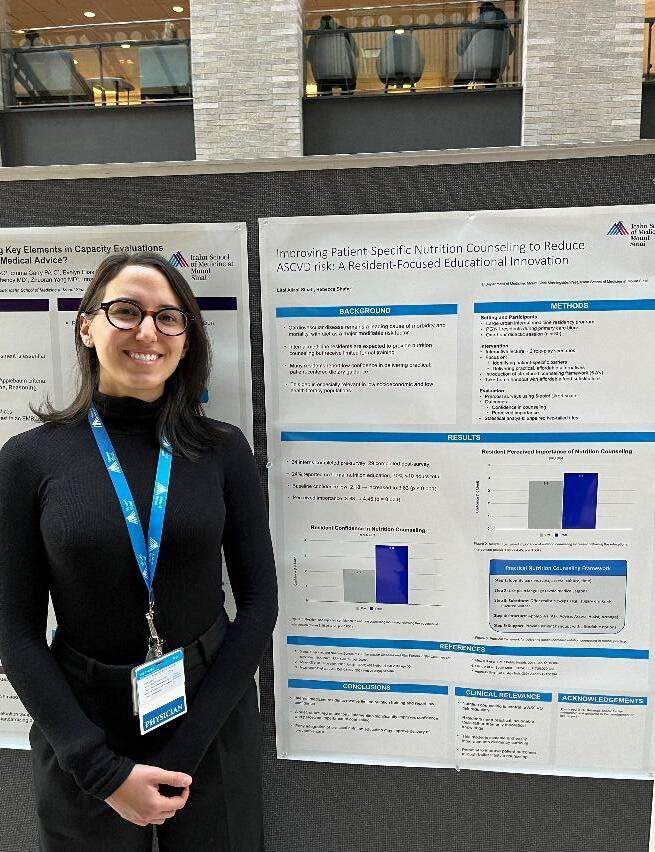
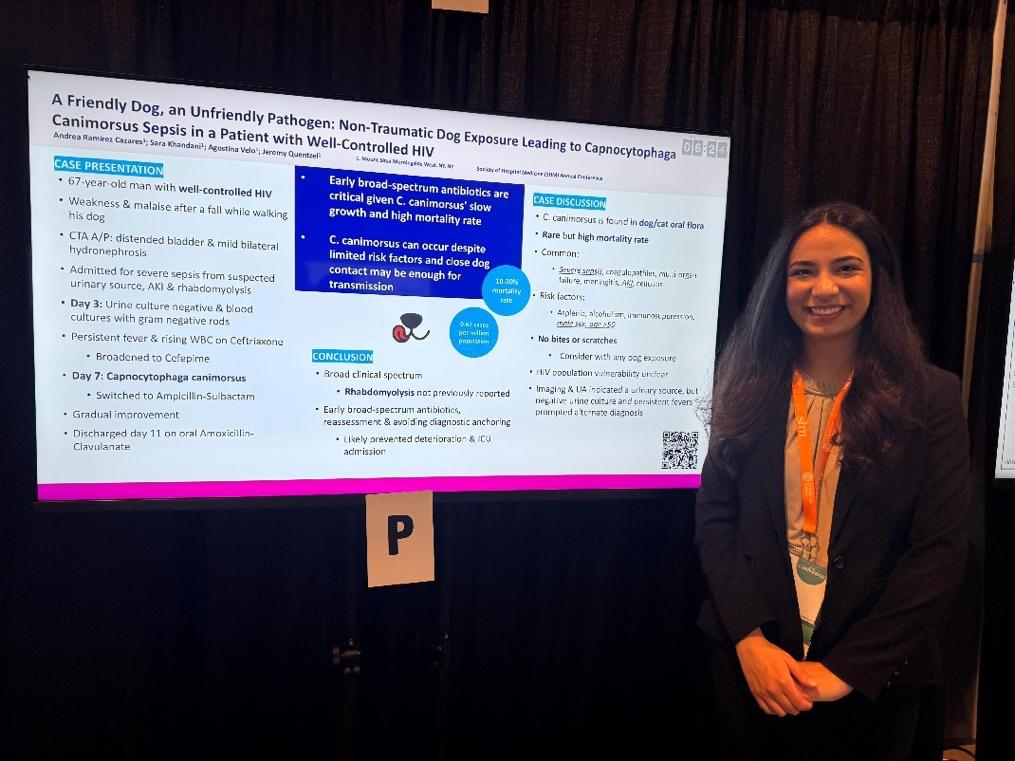

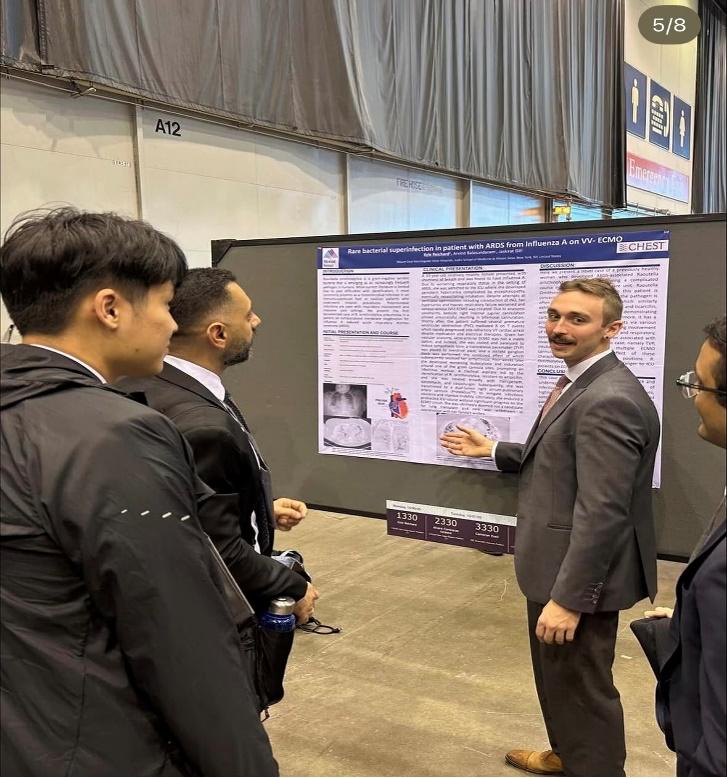
EFFUSION CONFUSION: CANAKINUMAB-INDUCED REMISSION IN REFRACTORY IDIOPATHIC RECURRENT PERICARDIAL EFFUSIONS
132
Melissa Akselrad1 and Michael Kaplan1
1Mount Sinai Morningside-West Hospitals, Icahn School of Medicine at Mount Sinai, New York, NY, United States Presented at the New York State Rheumatology Society Fall Meeting that was held in Saratoga Springs, New York, United States from September 19-21, 2025.
EARLY DUODENAL PERFORATION FOLLOWING BILIARY STENT PLACEMENT IN CHOLANGIOCARCINOMA: A RARE AND IMPORTANT COMPLICATION
133
134
Swati Patel1 , Lital Aliasi-Sinai2, Edward Lung2
1Memorial Sloan Kettering Cancer Center, Icahn School of Medicine at Mount Sinai, New York, NY, United States; 2Mount Sinai Morningside-West Hospitals, Icahn School of Medicine at Mount Sinai, New York, NY, United States Presented at the American College of Gastroenterology (ACG) Annual Meeting that was held in Phoenix, Arizona, United States from October 24-29, 2025.
HYPERAMMONEMIA FOLLOWING ROUX-EN-Y GASTRIC BYPASS
Lital Aliasi-Sinai1, Destiny Nguyen1, Bruce Gelman1
1Mount Sinai Morningside-West Hospitals, Icahn School of Medicine at Mount Sinai, New York, NY, United States Presented at the American College of Gastroenterology (ACG) Annual Meeting that was held in Phoenix, Arizona, United States from October 24-29, 2025.
IMPROVING PATIENT-SPECIFIC NUTRITION COUNSELING TO REDUCE ATHEROSCLEROTIC CARDIOVASCULAR DISEASE RISK: A RESIDENT-FOCUSED EDUCATIONAL INNOVATION
135
136
Lital Aliasi-Sinai1
1Mount Sinai Morningside-West Hospitals, Icahn School of Medicine at Mount Sinai, New York, NY, United States Presented at the Institute for Medical Education (IME) Annual Education Research Day that was held in New York, New York, United States on April 21, 2026.
ENDOBRONCHIAL BENIGN METASTASIZING LEIOMYOMA MIMICKING MALIGNANCY IN A POSTMENOPAUSAL WOMAN WITH PRIOR HYSTERECTOMY
Mohammed I. Alsaud1, Mrittika Deb1, Maria Athena Riego1 , Andrea Monfasani1, Udit Chaddha1 , David J. Steiger1
WHEN COMMON SYMPTOMS CONCEAL A RARE DIAGNOSIS: A CASE OF CECAL BASCULE
Alexandria Markley1, Saro Aprikan1 , Jordan Arabian1, Emmanuel Rodriguez Rivera , Steven Rodriguez1 , Frank Nelson1
1Mount Sinai Morningside-West Hospitals, Icahn School of Medicine at Mount Sinai, New York, NY, United States Presented at the American College of Chest Physicians Annual Meeting held in Chicago, Illinois, United States from October 19-22, 2025. 137
1Mount Sinai Morningside-West Hospitals, Icahn School of Medicine at Mount Sinai, New York, NY, United States
Presented at the American College of Gastroenterology (ACG) Annual Meeting that was held in Phoenix, Arizona, United States from October 24-29, 2025.
FLOW-DEPENDENT DIFFERENCES IN AORTIC VALVE CALCIFICATION AMONG PATIENTS WITH SEVERE AORTIC STENOSIS
Roya Anahita Mousavi1, Pragati Basera2, Minel Soroa1, Leila Alizadeh1, Marina Castelltort1, Marcos FerrándezEscarabajal1, Takayuki Onishi1, Yoav Niv Granot1, Lucy M. Safi1, Sahil Khera1, George D. Dangas1, Gilbert HinLung Tang1, Samin K. Sharma1, Annapoorna Subhash Kini1, Stamatios Lerakis1
1Mount Sinai Hospital, Icahn School of Medicine at Mount Sinai, New York, NY, United States; 2Mount Sinai Morningside-West Hospitals, Icahn School of Medicine at Mount Sinai, New York, NY, United States
Presented at the American College of Cardiology (ACC) Annual Scientific Session that was held in New Orleans, Louisiana, United States from March 28-30, 2026.
LEAFLET-SPECIFIC AORTIC VALVE CALCIFICATION AND PERMANENT PACEMAKER IMPLANTATION AFTER TAVR IN CLASSICAL AND PARADOXICAL LOW-FLOW, LOWGRADIENT AORTIC STENOSIS
139
140
Pragati Basera1, Roya Anahita Mousavi2, Minel Soroa2, Leila Alizadeh2, Marina Castelltort2, Marcos Ferrández-Escarabajal2, Takayuki Onishi2, Yoav Niv Granot2, Lucy M. Safi2, Sahil Khera2, George D. Dangas2, Gilbert Hin-Lung Tang2, Samin K. Sharma2, Annapoorna Subhash Kini2, Stamatios Lerakis2
1Mount Sinai Morningside-West Hospitals, Icahn School of Medicine at Mount Sinai, New York, NY, United States Presented at the American College of Cardiology (ACC) Annual Scientific Session that was held in New Orleans, Louisiana, United States from March 28-30, 2026.
GLP1 RECEPTOR AGONIST USE IN OBSTRUCTIVE SLEEP APNEA AND THE RISK OF DEVELOPING ATRIAL FIBRILLATION
Brandon Berman1, Harrison Bonilla1, Komail Jafri1 , Usman Saeedullah1, Shailesh Niroula1
1Mount Sinai Morningside-West Hospitals, Icahn School of Medicine at Mount Sinai, New York, NY, United States Presented at the American Heart Association (AHA) Annual Meeting that was held in New Orleans, Louisiana, United States from November 8-9, 2025.
OUTCOMES ASSOCIATED WITH GLP1 RECEPTOR AGONIST USE IN HYPERTROPHIC CARDIOMYOPATHY
141
142
Brandon Berman1, Harrison Bonilla1, Joshua Guardia1, Esther Tsyngauz1
1Mount Sinai Morningside-West Hospitals, Icahn School of Medicine at Mount Sinai, New York, NY, United States Presented at the American Heart Association (AHA) Annual Meeting that was held in New Orleans, Louisiana, United States from November 8-9, 2025.
SUDDEN CARDIAC ARREST IN MALIGNANT MITRAL VALVE PROLAPSE
Brandon Berman1, Pragati Basera1, Joshua J. Guardia1, Eric Shalmon1
1Mount Sinai Morningside-West Hospitals, Icahn School of Medicine at Mount Sinai, New York, NY, United States Presented at the American College of Cardiology (ACC) Annual Scientific Session that was held in New Orleans, Louisiana, United States from March 28-30, 2026.
DEVELOPING A TRAUMA-INFORMED CARE CURRICULUM FOR INTERNAL MEDICINE RESIDENT
143
144
Nooshin C. Beygui1 and Tamara Goldberg1
1Mount Sinai Morningside-West Hospitals, Icahn School of Medicine at Mount Sinai, New York, NY, United States
Presented at the Institute for Medical Education (IME) Annual Education Research Day that was held in New York, New York, United States on April 21, 2026.
RUXOLITINIB-INDUCED COMPLETE MOLECULAR REMISSION IN POLYCYTHEMIA VERA
Nooshin Beygui1 and John Mascarenhas2
1Mount Sinai Morningside-West Hospitals, Icahn School of Medicine at Mount Sinai, New York, NY, United States ;
2Mount Sinai Hospital, Icahn School of Medicine at Mount Sinai, New York, NY, United States
Presented at the Mount Sinai Health System Department of Medicine Research Day that was held in New York, New York, United States from May 4-5, 2026.
ANCA-NEGATIVE EOSINOPHILIC MYOCARDITIS MASQUERADING AS STEMI: A CASE OF FULMINANT CARDIOGENIC SHOCK
145
Harrison Bonilla1, Joshua Guardia1, Shailesh Niroula1, Niurka Liranzo1, Esther Tsyngauz1
1Mount Sinai Morningside-West Hospitals, Icahn School of Medicine at Mount Sinai, New York, NY, United States
Presented at the American Heart Association (AHA) Annual Meeting that was held in New Orleans, Louisiana, United States from November 8-9, 2025.
BEYOND THE HEURISTIC: ADENOSINE FAILURE AND AV-NODAL BLOCKER TERMINATION DO NOT EXCLUDE SUPRAVENTRICULAR TACHYCARDIA
146
147
Harrison Bonilla1, Joshua J. Guardia1, Usman Saeedullah1, Komail Jafri1, Esther Tsyngauz1 , Matthew Kolansky1, Robert Leber1
1Mount Sinai Morningside-West Hospitals, Icahn School of Medicine at Mount Sinai, New York, NY, United States Presented at the American College of Cardiology (ACC) Annual Scientific Session that was held in New Orleans, Louisiana, United States from March 28-30, 2026.
RISING BURDEN OF HYPERTENSIVE EMERGENCY HOSPITALIZATIONS IN YOUNG ADULTS
Harrison Bonilla1, Joshua Guardia1 , Komail Jafri1, Usman Saeedullah1, Kiran Mahmood1
1Mount Sinai Morningside-West Hospitals, Icahn School of Medicine at Mount Sinai, New York, NY, United States Presented at the American Heart Association (AHA) Annual Meeting that was held in New Orleans, Louisiana, United States from November 8-9, 2025.
148 A MIXED PICTURE OF SARCOIDOSIS
Bridget Dolan1 , Christiana Choi1, Vincent Gallub1, Avinash Singh1
1Mount Sinai Morningside-West Hospitals, Icahn School of Medicine at Mount Sinai, New York, NY, United States Presented at the American Thoracic Society (ATS) Annual Meeting that was held in Orlando, Florida, United States from May 15-20, 2026.
THE IMPACT OF RENAL REPLACEMENT THERAPY ON MORTALITY FOR ACUTE RESPIRATORY DISTRESS SYNDROME FROM COVID-19
149
Adrian Chernyk1, Madelin Fenianos1 , Christiana Choi1 , Benjamin Samuel1, Raymond A. Jean1 , Raymonde Jean1
1Mount Sinai Morningside-West Hospitals, Icahn School of Medicine at Mount Sinai, New York, NY, United States Presented at the American College of Chest Physicians Annual Meeting held in Chicago, Illinois, United States from October 19-22, 2025.
150 A RARE CASE OF BIDIRECTIONAL VENTRICULAR TACHYCARDIA IN A YOUNG PATIENT WITH BIVENTRICULAR ARRHYTHMOGENIC CARDIOMYOPATHY
Sabrina Daoui1, Maria Riasat1, Lakshay Chopra1 , Lathan Liou1, Basera Sabharwal1, Davendra Mehta1
1Mount Sinai Morningside-West Hospitals, Icahn School of Medicine at Mount Sinai, New York, NY, United States
Presented at the American College of Cardiology (ACC) Annual Scientific Session that was held in New Orleans, Louisiana, United States from March 28-30, 2026. 151
152
ALLERGIC BRONCHOPULMONARY ASPERGILLOSIS UNMASKING CYSTIC FIBROSIS IN A 40YEAR-OLD MALE
Mrittika Deb1, Mohammed I. Alsaud1, Edith T. Robin1, Maria Shtessel1 , Javier J. Zulueta1
1Mount Sinai Morningside-West Hospitals, Icahn School of Medicine at Mount Sinai, New York, NY, United States
Presented at the American College of Chest Physicians Annual Meeting held in Chicago, Illinois, United States from October 19-22, 2025.
BEYOND MALABSORPTION: METABOLIC AND HEPATIC CONSEQUENCES OF OVERLAPPING CELIAC DISEASE AND INFLAMMATORY BOWEL DISEASE A COMPARATIVE COHORT ANALYSIS
Carlos G. Diola1, Jessica Lim1 , Bharati Dev1, Yonatan Israel2, Alexandria R. Markley1, Do Han Kim1 , Christopher Cao2
1Mount Sinai Morningside-West Hospitals, Icahn School of Medicine at Mount Sinai, New York, NY, United States; 2Mount Sinai Hospital, Icahn School of Medicine at Mount Sinai, New York, NY, United States
Presented at the Digestive Disease Week (DDW) Annual Meeting that was held in Chicago, Illinois, United States from May 3-5, 2026.
HIDDEN IN PLAIN SIGHT: EXPLORING DIAGNOSTIC BIASES IN CELIAC DISEASE
Carlos G. Diola1 and Christopher Cao2
153
1Mount Sinai Morningside-West Hospitals, Icahn School of Medicine at Mount Sinai, New York, NY, United States; 2Mount Sinai Hospital, Icahn School of Medicine at Mount Sinai, New York, NY, United States
Presented at the American College of Gastroenterology (ACG) Annual Meeting that was held in Phoenix, Arizona, United States from October 24-29, 2025.
OSTEOPOROSIS SCREENING IN PATIENTS WITH CELIAC DISEASE, INFLAMMATORY BOWEL DISEASE, AND DUAL DIAGNOSIS: A RETROSPECTIVE CHART REVIEW
154
155
Alexandria Markley1, Luis Rendon Rodriguez1, Swati Patel2 , Carlos G. Diola1, Yontan Israel1 , Christopher Cao2
1Mount Sinai Morningside-West Hospitals, Icahn School of Medicine at Mount Sinai, New York, NY, United States;
2Memorial Sloan Kettering Cancer Center, New York, NY, United States; 3Mount Sinai Hospital, Ichan School of Medicine at Mount Sinai, New York, NY, United States
Presented at the American College of Gastroenterology (ACG) Annual Meeting that was held in Phoenix, Arizona, United States from October 24-29, 2025.
RAPIDLY PROGRESSIVE MULTISYSTEM ORGAN FAILURE DUE TO EBV+ PRIMARY HEPATIC PERIPHERAL T-CELL LYMPHOMA
Max E. Edeson1, Aneesh Bhave2, Ethan Bur2, Gabrielle Sharbin2, Davood Karimi Hosseini2, Chinmay Trivedi2, Shalom Frager2, Shil Patel2, Jonathan Weinberger2, Rosario Ligresti2
1Mount Sinai Morningside-West Hospitals, Icahn School of Medicine at Mount Sinai, New York, NY, United States; 2Hackensack University Medical Center, Hackensack, NJ, United States
Presented at the American College of Gastroenterology (ACG) Annual Meeting that was held in Phoenix, Arizona, United States from October 24-29, 2025.
ASSOCIATION BETWEEN PET OWNERSHIP AND INCIDENT DEMENTIA: A SYSTEMATIC REVIEW
156
158
Fumitoshi Fukuzawa1, Koto Minami2, Fred Ko2. Yuji Yamada1
1Mount Sinai Morningside-West Hospitals, Icahn School of Medicine at Mount Sinai, New York, NY, United States;
2Mount Sinai Hospital, Icahn School of Medicine at Mount Sinai, New York, NY, United States
Presented at the American Geriatrics Society (AGS) Annual Meeting that was held in virtually from April 30, 2026 to May 2, 2026.
CNS POLYPHARMACY IN ADVANCED HEART FAILURE: A WAKE-UP CALL FOR EARLY, MULTIDISCIPLINARY DEPRESCRIBING
Fumitoshi Fukuzawa1, Stephanie Tse2, Kazuki Horiuchi2, Sara Radparvar2, Koto Minami2, Noelle Javier2
1Mount Sinai Morningside-West Hospitals, Icahn School of Medicine at Mount Sinai, New York, NY, United States;
2Mount Sinai Hospital, Icahn School of Medicine at Mount Sinai, New York, NY, United States
Presented at the American Geriatrics Society (AGS) Annual Meeting that was held in virtually from April 30, 2026 to May 2, 2026.
IGNITING THE 4MS AT THE FRONTLINE: AN AGE-FRIENDLY BOOTCAMP ENHANCES READINESS WITHIN 210 MINUTES
Benzy Babykutty1 , Fumitoshi Fukuzawa1, Fahema Nadira1, Emily Chai1, Howard Arabelo1, Helen Ong Hai1, Susan Levy1, Michelle Dunn1, Precious Ekeh1, T. Williams1, Katherine Reina1, Yuji Yamada1
1Mount Sinai Morningside-West Hospitals, Icahn School of Medicine at Mount Sinai, New York, NY, United States
Presented at the American Geriatrics Society (AGS) Annual Meeting that was held in virtually from April 30, 2026 to May 2, 2026.
POST-OPERATIVE THROMBOCYTOPENIA IN ON- VERSUS OFF-PUMP CORONARY ARTERY BYPASS GRAFTING
159
Thomas Fusillo1, Kyle Reichard1, Brett Sherman1, Jaskirat Gill1
1Mount Sinai Morningside-West Hospitals, Icahn School of Medicine at Mount Sinai, New York, NY, United States Presented at the American Society of Hematology (ASH) Annual Meeting that was held in Orlando, Florida, United States from December 6-9, 2025.
160 A DIAGNOSTIC MASQUERADE: FULMINANT CLOSTRIDIOIDES DIFFICILE COLITIS MIMICKING LARGE-BOWEL OBSTRUCTION IN THE INTENSIVE CARE UNIT
Vincent Gallub1, Hammad Sheikh1, Nikita Desai1
1Mount Sinai Morningside-West Hospitals, Icahn School of Medicine at Mount Sinai, New York, NY, United States Presented at the American Thoracic Society (ATS) Annual Meeting that was held in Orlando, Florida, United States from May 15-20, 2026.
161 A SILENT DANGER: INTENSIVE CARE UNIT-ACQUIRED DYSPHAGIA IN SPORADIC CREUTZFELDT-JAKOB DISEASE LEADING TO ASPIRATION PNEUMONIA
Vincent Gallub1 and Foram Parikh1
1Mount Sinai Morningside-West Hospitals, Icahn School of Medicine at Mount Sinai, New York, NY, United States Presented at the American Thoracic Society (ATS) Annual Meeting that was held in Orlando, Florida, United States from May 15-20, 2026.
CLOSING THE GAP: POST-IMAGING FOLLOW-UP DISPARITIES IN NEVER-SMOKERS WITH INCIDENTAL LUNG NODULES
162
163
Vincent Gallub1, Hong Yu Wang1, Junyu Qi1, Nicolette Lam1 , Sascha Adler1, Javier J. Zulueta1, David Steiger1, Christian M. Lo Cascio1
1Mount Sinai Morningside-West Hospitals, Icahn School of Medicine at Mount Sinai, New York, NY, United States
Presented at the American Thoracic Society (ATS) Annual Meeting that was held in Orlando, Florida, United States from May 15-20, 2026.
COSMETIC TO CRITICAL: A RARE CASE OF SEVERE SYNDROME OF INAPPROPRIATE ANTIDIURETIC HORMONE SECRETION FOLLOWING AN ELECTIVE FACELIFT
Vincent Gallub1 and Raymonde E. Jean1
1Mount Sinai Morningside-West Hospitals, Icahn School of Medicine at Mount Sinai, New York, NY, United States Presented at the American Thoracic Society (ATS) Annual Meeting that was held in Orlando, Florida, United States from May 15-20, 2026.
LUNG FUNCTION PHENOTYPES AND 24-MONTH HEALTHCARE UTILIZATION AND OUTCOMES IN LONG COVID
Toshiro Goto1, Vincent Gallub1, Abdul Rehman1, David Steiger1
1Mount Sinai Morningside-West Hospitals, Icahn School of Medicine at Mount Sinai, New York, NY, United States Presented at the American Thoracic Society (ATS) Annual Meeting that was held in Orlando, Florida, United States from May 15-20, 2026.
SOCIAL DETERMINANTS OF LONG COVID CARE: 24-MONTH FOLLOW-UP LOSS AND HEALTHCARE UTILIZATION
Toshiro Goto1, Vincent Gallub1, Abdul Rehman1, David Steiger1
1Mount Sinai Morningside-West Hospitals, Icahn School of Medicine at Mount Sinai, New York, NY, United States
Presented at the American Thoracic Society (ATS) Annual Meeting that was held in Orlando, Florida, United States from May 15-20, 2026.
ADMISSION CONGESTION PHENOTYPES AND 6-MONTH OUTCOMES AFTER HEART FAILURE HOSPITALISATION
166
Isabelle Hartfield Moseley1 and Ashish Correa1
1Mount Sinai Morningside-West Hospitals, Icahn School of Medicine at Mount Sinai, New York, NY, United States Presented at the European Society of Cardiology Heart Failure Congress Annual Meeting that was held in Barcelona, Spain from May 9-12, 2026.
CRITICAL GAPS: ACUTE CORONARY AND SECONDARY PREVENTION TRIALS LAG SIGNIFICANTLY IN WOMEN’S ENROLLMENT IN ACC LATE-BREAKING SCIENCE (2016-2024)
167
168
Isabelle Hartfield Moseley1, Leslee J. Shaw1 , Magdalena Strzeciwilk1, Ashish Correa1
1Mount Sinai Morningside-West Hospitals, Icahn School of Medicine at Mount Sinai, New York, NY, United States Presented at the American College of Cardiology (ACC) Annual Meeting that was held in New Orleans, Louisiana, United States from May 28-30, 2026.
DISTRIBUTION AND CLINICAL CORRELATES OF ELEVATED NT-PROBNP AMONG U.S. ADULTS
Isabelle Hartfield Moseley1
1Mount Sinai Morningside-West Hospitals, Icahn School of Medicine at Mount Sinai, New York, NY, United States Presented at the European Society of Cardiology’s CardioVascular Care Annual Meeting that was held in Lisbon, Portugal from March 20-21, 2026.
EARLY PLATELET TRAJECTORY PATTERNS DURING THE FIRST 48 HOURS OF CRITICAL ILLNESS AND IN-HOSPITAL MORTALITY
169
170
Isabelle Hartfield Moseley1 and Amukta Nuney1
1Mount Sinai Morningside-West Hospitals, Icahn School of Medicine at Mount Sinai, New York, NY, United States Presented at the American Heart Association (AHA) Vascular Discoveries Annual Meeting that was held in Bellevue, Washington, United States from May 13-16, 2026.
EARLY THROMBOCYTOPENIA IS INDEPENDENTLY ASSOCIATED WITH IN-HOSPITAL MORTALITY IN A MULTICENTER INTENSIVE CARE COHORT
Isabelle Hartfield Moseley1 and Amukta Nuney1
1Mount Sinai Morningside-West Hospitals, Icahn School of Medicine at Mount Sinai, New York, NY, United States
Presented at the American Heart Association (AHA) Vascular Discoveries Annual Meeting that was held in Bellevue, Washington, United States from May 13-16, 2026.
LACTATE AND ATRIAL FIBRILLATION RISK IN ICU PATIENTS
171
172
Isabelle Hartfield Moseley1 and Ashish Correa1
1Mount Sinai Morningside-West Hospitals, Icahn School of Medicine at Mount Sinai, New York, NY, United States
Presented at the European Heart Rhythm Association (EHRA) Annual Meeting that was held in Paris, France from April 12-14, 2026.
REFLEX APOLIPOPROTEIN B TESTING IDENTIFIES MISSED OPPORTUNITIES FOR LIPID THERAPY INTENSIFICATION IN UNITED STATES ADULTS
Isabelle Hartfield Moseley1 and Amukta Nuney1
1Mount Sinai Morningside-West Hospitals, Icahn School of Medicine at Mount Sinai, New York, NY, United States
Presented at the American Heart Association (AHA) Vascular Discoveries Annual Meeting that was held in Bellevue, Washington, United States from May 13-16, 2026.
TEMPORAL DISTRIBUTION OF 6-MONTH ADVERSE EVENTS FOLLOWING HOSPITAL DISCHARGE FOR HEART FAILURE
173
174
Isabelle Hartfield Moseley1 and Ashish Correa1
1Mount Sinai Morningside-West Hospitals, Icahn School of Medicine at Mount Sinai, New York, NY, United States Presented at the European Society of Cardiology Heart Failure Congress Annual Meeting that was held in Barcelona, Spain from May 9-12, 2026.
TIME TO FIRST INTRAVENOUS LOOP DIURETIC AND OUTCOMES IN ACUTE DECOMPENSATED HEART FAILURE: A RETROSPECTIVE COHORT STUDY
Isabelle Hartfield Moseley1 and Ashish Correa1
1Mount Sinai Morningside-West Hospitals, Icahn School of Medicine at Mount Sinai, New York, NY, United States Presented at the European Society of Cardiology Heart Failure Congress Annual Meeting that was held in Barcelona, Spain from May 9-12, 2026.
WHEN A ROUTINE INFECTION UNRAVELS: INFLUENZA COMPLICATED BY RHABDOMYOLYSIS AND MESENTERIC ISCHEMIA
175
176
Ariel Henig1, Christiana Choi1, Krystle Hernandez1
1Mount Sinai Morningside-West Hospitals, Icahn School of Medicine at Mount Sinai, New York, NY, United States Presented at the Society of General Internal Medicine (SGIM) Annual Meeting that was held in Washington, DC, United States from May 6-9, 2026.
ONE PATIENT, TWO LYMPHOMAS: SEQUENTIAL POLY LYMPHOMATOUS SYNDROME
Jing Huang1, Kari Brown2, Ilan Shapira2
1Mount Sinai Morningside-West Hospitals, Icahn School of Medicine at Mount Sinai, New York, NY, United States ; 2Mount Sinai Hospital, Icahn School of Medicine at Mount Sinai, New York, NY, United States Presented at the Mount Sinai Health System Department of Medicine Research Day that was held in New York, New York, United States from May 4-5, 2026.
A DARK CLUE TO AN UNUSUAL LINK - RENO-DUODENAL FISTULA PRESENTING AS MELENA
177
Rama Hussein1 and Zoe Lawrence1
1Mount Sinai Morningside-West Hospitals, Icahn School of Medicine at Mount Sinai, New York, NY, United States Presented at the American College of Gastroenterology (ACG) Annual Meeting that was held in Phoenix, Arizona, United States from October 24-29, 2025.
EDUCATING INTERNAL MEDICINE RESIDENTS AND PATIENTS ON STOOL-BASED COLORECTAL CANCER SCREENING GUIDELINES TO IMPROVE SCREENING RATES
178
179
Marni H. Wilkoff1, Allison E. Wang1 , Alexandria R. Markley1 , Rama Hussein1, Swati Patel1, Nicholas R. Piniella1, Kevin Yan1, Priya K. Simoes1
1Mount Sinai Morningside-West Hospitals, Icahn School of Medicine at Mount Sinai, New York, NY, United States
Presented at the Digestive Disease Week (DDW) Annual Meeting that was held in Chicago, Illinois, United States from May 3-5, 2026.
LOS ANGELES GRADE B ESOPHAGITIS AS ACTIONABLE GASTROESOPHAGEAL REFLUX DISEASE - DOES THE SUBSPECIALIST MATTER?
Rama Hussein1, Soha Noorani1 , Yuying Luo1, Daniela Jodorkovsky1
1Mount Sinai Morningside-West Hospitals, Icahn School of Medicine at Mount Sinai, New York, NY, United States
Presented at the American College of Gastroenterology (ACG) Annual Meeting that was held in Phoenix, Arizona, United States from October 24-29, 2025.
UNDERREPRESENTATION OF OSTEOPATHIC MEDICAL GRADUATE DEGREES AMONG GASTROENTEROLOGY FACULTY AND LEADERSHIP IN THE UNITED STATES
Marni H. Wilkoff1, Alexandria Markley1 , Rama Hussein1, Nivita Sharma2, Mako Koseki1, Rashmi Advani3, Yuying Luo1, Loren Rabinowitz5, Haley Zylberberg6
180
181
1Mount Sinai Morningside-West Hospitals, Icahn School of Medicine at Mount Sinai, New York, NY, United States; 2University of California, San Diego, California, United State; 3Mount Sinai South Nassau, Icahn School of Medicine at Mount Sinai, New York, NY, United States; Beth Israel Deaconess Medical Center, Boston, MA, United States; 6Weill Cornell Medicine, New York, NY, United States
Presented at the American College of Gastroenterology (ACG) Annual Meeting that was held in Phoenix, Arizona, United States from October 24-29, 2025.
DEVELOPMENT AND VALIDATION OF AN ELECTRONIC HEALTH RECORD MACHINE LEARNING MODEL FOR CUMULATIVE UPPER GASTROINTESTINAL CANCER RISK PREDICTION
Alyssa Y. Chen1 , Suraj K. Jaladanki2, Pushkala Jayaraman1, Ji Yoon Yoon1, Chin Hur3, Nicholas Tatonetti4, Girish Nadkarni1, Julian A. Abrams3, Ali Soroush1
1Mount Sinai Hospital, Icahn School of Medicine at Mount Sinai, New York, NY, United States; 2Mount Sinai Morningside-West Hospitals, Icahn School of Medicine at Mount Sinai, New York, NY, United States; 3Columbia University Irving Medical Center, New York, NY, United States; 4Cedars-Sinai Medical Center, Los Angeles, CA, United States
Presented at the American College of Gastroenterology (ACG) Annual Meeting that was held in Phoenix, Arizona, United States from October 24-29, 2025.
IMMUNOTHERAPY MAY BE SUPERIOR TO MULTIKINASE THERAPY AS SECOND LINE THERAPY FOR HEPATOCELLULAR CARCINOMA
182
183
Jacob Lowy1, Noah Gavil1, Michael Rogers1, Norah Sadek1, Fionnuala Crowley1, Varun Devraj1 , Antoine Jeri1, Dan Feng1
1Mount Sinai Morningside-West Hospitals, Icahn School of Medicine at Mount Sinai, New York, NY, United States;
2Mount Sinai Hospital, Icahn School of Medicine at Mount Sinai, New York, NY, United States Presented at the Mount Sinai Health System Department of Medicine Research Day that was held in New York, New York, United States from May 4-5, 2026.
NAVIGATING UNCHARTED WATERS: APICAL BALLOONING SYNDROME WHILST ON AFICAMTEN
Sanjay Sivalokanathan1, Bette Kim1 , Sharan Kapadia1, Edgar Argulian1
1Mount Sinai Morningside-West Hospitals, Icahn School of Medicine at Mount Sinai, New York, NY, United States
Presented at the American College of Cardiology (ACC) Annual Scientific Session that was held in New Orleans, Louisiana, United States from March 28-30, 2026.
VONOPRAZAN USE IS ASSOCIATED WITH LOWER HOSPITALIZATION AND BLEEDING RATES IN PATIENTS WITH EROSIVE ESOPHAGITIS COMPARED TO PROTON PUMP INHIBITORS
Do Han Kim1 , Donghyun Ko, MD, MSc2, Carlos G. Diola1, Jose A. Porres3, Carlos Elizondo Alatorre4 , Paul T. Kroner5, Pedro Palacios Argueta6, Frank J. Lukens7, Juan E. Corral8
184
1Mount Sinai Morningside-West Hospitals, Icahn School of Medicine at Mount Sinai, New York, NY, United States; 2Bridgeport Hospital, Yale New Haven Health, Bridgeport, CT, United States; 3Universidad Francisco Marroquin, School of Medicine, Guatemala City, Guatemala; 4NYC Health + Hospitals/Metropolitan, New York, NY, United States; 5Riverside Health System, Newport News, VA, United States, Newport News, VA; 6Thomas Jefferson University Hospital, Philadelphia, PA, United States; 7Mayo Clinic, Jacksonville, FL; 8Prisma Health, Greenville, SC, United States
Presented at the American College of Gastroenterology (ACG) Annual Meeting that was held in Phoenix, Arizona, United States from October 24-29, 2025.
DEVELOPMENT OF A NOVEL ADDICTION MEDICINE EDUCATION TRACK WITHIN INTERNAL MEDICINE RESIDENCY TRAINING
185
Maxwell Leonhardt1, Kaityln Clausell1, Justin Gasper1
1Mount Sinai Morningside-West Hospitals, Icahn School of Medicine at Mount Sinai, New York, NY, United States Presented at the Mount Sinai Health System Department of Medicine Research Day that was held in New York, New York, United States from May 4-5, 2026.
MIND THE GENDER GAP: A PILOT INITIATIVE TO MATCH PATIENT PREFERENCES FOR ENDOSCOPIST GENDER
186
187
Sonia Mehra1, Lauren Alpert1, Lina Jandorf1, Marin Gonzalez1, Yuying Luo1
1Mount Sinai Morningside-West Hospitals, Icahn School of Medicine at Mount Sinai, New York, NY, United States Presented at the American College of Gastroenterology (ACG) Annual Meeting that was held in Phoenix, Arizona, United States from October 24-29, 2025.
THE CONUNDRUM OF MANAGING FORREST CLASS IIB ULCERS: REAL-WORLD FINDINGS FROM 2 LARGE URBAN MEDICAL CENTERS
Sonia Mehra1, Soha Noorani1, Bharati Dev1, Michael S. Smith1,2
1Mount Sinai Morningside-West Hospitals, Icahn School of Medicine at Mount Sinai, New York, NY, United States;
2Mount Sinai Hospital, Icahn School of Medicine at Mount Sinai, New York, NY, United States Presented at the American College of Gastroenterology (ACG) Annual Meeting that was held in Phoenix, Arizona, United States from October 24-29, 2025.
BARRIERS TO RESEARCH PARTICIPATION: THE IMPACT OF RACE, EDUCATION, AND SOCIOECONOMIC STATUS IN A DIVERSE URBAN POPULATION
188
189
Anna Sophie Mueller1 , Brandon Berman1, Komail Jafri1, Harrison Bonilla1, Johanna Contreras1
1Mount Sinai Morningside-West Hospitals, Icahn School of Medicine at Mount Sinai, New York, NY, United States;
2Mount Sinai Hospital, Icahn School of Medicine at Mount Sinai, New York, NY, United States
Presented at the American Heart Association (AHA) Annual Meeting that was held in New Orleans, Louisiana, United States from November 8-9, 2025.
BEYOND UNDERSTANDING: TRUST AND CLINICIAN ENGAGEMENT DRIVE WILLINGNESS TO PARTICIPATE IN RESEARCH
Anna Sophie Mueller1 , Brandon Berman1 , Harrison Bonilla1, Komail Jafri1, Johanna Contreras1
1Mount Sinai Morningside-West Hospitals, Icahn School of Medicine at Mount Sinai, New York, NY, United States;
2Mount Sinai Hospital, Icahn School of Medicine at Mount Sinai, New York, NY, United States
Presented at the American Heart Association (AHA) Annual Meeting that was held in New Orleans, Louisiana, United States from November 8-9, 2025.
A SURVEY OF INTERNAL MEDICINE RESIDENTS REVEALS STRONG KNOWLEDGE AND INTEREST IN POLYCYSTIC OVARY SYNDROME
190
191
Rebecca McGinnis1, Andrea Dunaif1, Nina Faynshtayn1 , Avia Muller2
1Mount Sinai Hospital, Icahn School of Medicine at Mount Sinai, New York, NY, United States; 2Mount Sinai Morningside-West Hospitals, Icahn School of Medicine at Mount Sinai, New York, NY, United States
Presented at the Mount Sinai Health System Department of Medicine Research Day that was held in New York, New York, United States from May 4-5, 2026.
THE DIZZYING DIAGNOSIS: HSV ENCEPHALITIS AS THE FIRST SIGN OF HIV
Fahema Nadira1, Rubashruti Kanna1, Christopher Musial1, Amy Jacob1 , Vanessa Weir1, Christopher Perez Lizardo1
1Mount Sinai Morningside-West Hospitals, Icahn School of Medicine at Mount Sinai, New York, NY, United States
Presented at the Society of General Internal Medicine (SGIM) Annual Meeting that was held in Washington, DC, United States from May 6-9, 2026.
CURRICULAR MODIFICATIONS TO A POINT-OF-CARE ULTRASOUND COURSE FOR INTERNAL MEDICINE RESIDENTS
192
193
Kyle Reichard1, Sanjar Sanoatov1, Tharun Shyam1, Jorge Sinclair De Frias1, Keshav Dixit1, Adam Rothman1
1Mount Sinai Morningside-West Hospitals, Icahn School of Medicine at Mount Sinai, New York, NY, United States Presented at the Institute for Medical Education (IME) Annual Education Research Day that was held in New York, New York, United States on April 21, 2026.
RARE BACTERIAL SUPERINFECTION IN PATIENT WITH ACUTE RESPIRATORY DISTRESS SYNDROME FROM INFLUENZA A ON VENOUS-VENOUS EXTRACORPOREAL MEMBRANE OXYGENATION
Kyle Reichard1 , Jaskirat Gill1, Arvind Balasundaram1
1Mount Sinai Morningside-West Hospitals, Icahn School of Medicine at Mount Sinai, New York, NY, United States Presented at the American College of Chest Physicians Annual Meeting held in Chicago, Illinois, United States from October 19-22, 2025.
194 A RESIDENT-LED ULTRASOUND-GUIDED PERIPHERAL INTRAVENOUS TEAM TO IMPROVE RESIDENT WORK-RELATED QUALITY OF LIFE
Madeleine Reznik1, Agostina Velo1, Patricia Dharapak1
1Mount Sinai Morningside-West Hospitals, Icahn School of Medicine at Mount Sinai, New York, NY, United States
Presented at the Mount Sinai Health System Department of Medicine Research Day that was held in New York, New York, United States from May 4-5, 2026.
TACHYCARDIA A RARE CASE OF MYOCARDIAL INFARCTION UNVEILED BY CONCURRENT LEFT VENTRICULAR ANEURYSM, THROMBUS, DRESSLER SYNDROME, AND HEMORRHAGIC PERICARDIAL EFFUSION
195
196
Usman Saeedullah1, Sanjay Sivalokanathan1, Luka Katic1 , Komail Jafri1, Edgar Argulian1
1Mount Sinai Morningside-West Hospitals, Icahn School of Medicine at Mount Sinai, New York, NY, United States Presented at the American College of Cardiology (ACC) Annual Scientific Session that was held in New Orleans, Louisiana, United States from March 28-30, 2026.
PRACTICE ADVISORY TO REDUCE MORPHINE USE INPATIENTS WITH RENAL IMPAIRMENT
Jennifer Hui1, Patricia Dharapak1, Ashwin Sawant1, Shantheri Shenoy1 , Vishmayaa Saravanan1 , Alissa Silverstein1, Steve Levy1, Simone Muller1 , Vladislav Yashaev1, Christopher Sikorski1, Irina Zaretsk1
1Mount Sinai Morningside-West Hospitals, Icahn School of Medicine at Mount Sinai, New York, NY, United States
Presented at the Society of Hospital Medicine (SHM) Annual Meeting that was held in Nashville, Tennessee, United States from March 29 to April 1, 2026.
TRAINING BEYOND THE HOSPITAL WALLS: DEVELOPMENT AND EVALUATION OF A HOSPITAL AT HOME ELECTIVE
197
198
Vishmayaa Saravanan1, Irina Zaretsky1, Jeffrey Epstein2, Sanaa Zafar1, Tuyet-Trinh Truong2
1Mount Sinai Morningside-West Hospitals, Icahn School of Medicine at Mount Sinai, New York, NY, United States; 2Mount Sinai Hospital, Icahn School of Medicine at Mount Sinai, New York, NY, United States
Presented at the Institute for Medical Education (IME) Annual Education Research Day that was held in New York, New York, United States on April 21, 2026.
IDENTIFYING PROVIDER GAPS IN OPTIMIZING LUNG TRANSPLANT REFERRAL IN FELLOWSHIP CLINIC: A QUALITY IMPROVEMENT INITIATIVE
Shasha X. Chen1, Hong Yu Wang1 , Yoshihiro Sawaguchi1, Boram Kim1, Avinash Singh1
1Mount Sinai Morningside-West Hospitals, Icahn School of Medicine at Mount Sinai, New York, NY, United States
Presented at the American College of Chest Physicians Annual Meeting held in Chicago, Illinois, United States from October 19-22, 2025.
MOUNT SINAI ACUTE GRAFT-VERSUS-HOST INTERNATIONAL CONSORTIUM COMPOSITE SCORE COMBINING CLINICAL SYMPTOMS AND BIOMARKERS PREDICTS OUTCOMES OF SECOND LINE THERAPY FOR ACUTE GRAFT-VERSUS-HOST DISEASE
199
200
Tara Sebastian1, Ioannis Evangelos Louloudis2, George Morales2, Rachel Young2, Janna Baez2 , Gilbert Eng2, Aaron Etra2, John Levine2, James Ferrara2
1Mount Sinai Morningside-West Hospitals, Icahn School of Medicine at Mount Sinai, New York, NY, United States; 2Mount Sinai Hospital, Icahn School of Medicine at Mount Sinai, New York, NY, United States
Presented at the Mount Sinai Health System Department of Medicine Research Day that was held in New York, New York, United States from May 4-5, 2026
THROMBOCYTOPENIA IN A RETURNING TRAVELER: A DIAGNOSTIC CHALLENGE
Brett Sherman1, Jing Huang1, Joel Grimaldo Ochoa1, Tessa Gomez1.2
1Mount Sinai Morningside-West Hospitals, Icahn School of Medicine at Mount Sinai, New York, NY, United States; 2Mount Sinai Downtown Union Square, Icahn School of Medicine at Mount Sinai, New York, NY, United States
Presented at the Society of General Internal Medicine (SGIM) Annual Meeting that was held in Washington, DC, United States from May 6-9, 2026.
ENHANCED TRAINEE UNDERSTANDING OF APPROPRIATE STRESS ULCER PROPHYLAXIS USING AN EVIDENCE-BASED PRACTICE TOOL
201
202
Alexandria Markley1 , Astitva Soni1 , Luis Rendon Rodriguez1, Saro Aprikan1, Alexander Davidovich1 , Michael S. Smith1,2
1Mount Sinai Morningside-West Hospitals, Icahn School of Medicine at Mount Sinai, New York, NY, United States;
2Mount Sinai Hospital, Icahn School of Medicine at Mount Sinai, New York, NY, United States Presented at the American College of Gastroenterology (ACG) Annual Meeting that was held in Phoenix, Arizona, United States from October 24-29, 2025.
EARLY CARDIOVERSION IN PATIENTS WITH BOTH CARDIOGENIC SHOCK AND ATRIAL FIBRILLATION IS ASSOCIATED WITH REDUCED HOSPITAL STAY BUT INCREASED ODDS OF ACUTE MYOCARDIAL INFARCTION AND USE OF MECHANICAL CIRCULATORY SUPPORT
Esther Tsyngauz1, Harrison Bonilla1, Joshua Guardia1
1Mount Sinai Morningside-West Hospitals, Icahn School of Medicine at Mount Sinai, New York, NY, United States
Presented at the American Heart Association (AHA) Annual Meeting that was held in New Orleans, Louisiana, United States from November 8-9, 2025.
UNDER PRESSURE: PULMONARY ARTERY ANEURYSM CAUSING LEFT MAIN CORONARY COMPRESSION
203
204
Esther Tsyngauz1, Devika Aggarwal1, Abel Casso Dominguez1, Ali N. Zaidi1, Kali Hopkins1, Ahmed El-Eshmawi1
1Mount Sinai Morningside-West Hospitals, Icahn School of Medicine at Mount Sinai, New York, NY, United States
Presented at the American College of Cardiology (ACC) Annual Scientific Session that was held in New Orleans, Louisiana, United States from March 28-30, 2026.
RECURRENT TNF-INHIBITOR-INDUCED THYROIDITIS IN A PATIENT WITH CROHN’S DISEASE
Richard Vaca1 and Ayanna Lewis1
1Mount Sinai Morningside-West Hospitals, Icahn School of Medicine at Mount Sinai, New York, NY, United States
Presented at the American College of Gastroenterology (ACG) Annual Meeting that was held in Phoenix, Arizona, United States from October 24-29, 2025.
AUTOMATED DIAGNOSIS OF CHRONIC OBSTRUCTIVE PULMONARY DISEASE USING DEEP LEARNING APPLIED TO ELECTROCARDIOGRAMS
205
206
Akhil Vaid1, Joshua Lampert2, Stamatios Lerakis2, Edgar Argulian1, Charles B. Cairns2, Girish Nadkarni2
1Mount Sinai Morningside-West Hospitals, Icahn School of Medicine at Mount Sinai, New York, NY, United States;
2Mount Sinai Hospital, Icahn School of Medicine at Mount Sinai, New York, NY, United States
Presented at the American College of Cardiology (ACC) Annual Scientific Session that was held in New Orleans, Louisiana, United States from March 28-30, 2026.
AUTOMATION OF INPATIENT CARDIOVASCULAR CARE WITH LARGE LANGUAGE MODEL DRIVEN AGENTS
Akhil Vaid1, Joshua Lampert2, Martin Goldman2, Edgar Argulian1, Stamatios Lerakis2, Girish Nadkarni2
1Mount Sinai Morningside-West Hospitals, Icahn School of Medicine at Mount Sinai, New York, NY, United States;
2Mount Sinai Hospital, Icahn School of Medicine at Mount Sinai, New York, NY, United States
Presented at the American College of Cardiology (ACC) Annual Scientific Session that was held in New Orleans, Louisiana, United States from March 28-30, 2026.
AVERAGE METRICS OBSCURE THRESHOLD OPERATING-POINT DRIFT IN AI-ECG DETECTION OF HFREF
207
208
Akhil Vaid1, Joshua Lampert2, Martin E. Goldman2, Stamatios Lerakis2, Girish Nadkarni2 , Edgar Argulian1
1Mount Sinai Morningside-West Hospitals, Icahn School of Medicine at Mount Sinai, New York, NY, United States; 1Mount Sinai Hospital, Icahn School of Medicine at Mount Sinai, New York, NY, United States
Presented at the American College of Cardiology (ACC) Annual Scientific Session that was held in New Orleans, Louisiana, United States from March 28-30, 2026.
PHENOTYPE PROGRESSION FOR ARTIFICIAL INTELLIGENCE POSITIVE, PHENOTYPE NEGATIVE ELECTROCARDIOGRAM DIAGNOSIS IN PATIENTS WITH HYPERTROPHIC CARDIOMYOPATHY
Joshua Lampert1, Deepak L. Bhatt1 , Akhil Vaid2, Jason Feinman1, Usha Sita Govindarajulu1, Girish Nadkarni1, Vivek Yerrapu Reddy1
1Mount Sinai Hospital, Icahn School of Medicine at Mount Sinai, New York, NY, United States; 2Mount Sinai Morningside-West Hospitals, Icahn School of Medicine at Mount Sinai, New York, NY, United States Presented at the American College of Cardiology (ACC) Annual Scientific Session that was held in New Orleans, Louisiana, United States from March 28-30, 2026.
BRINGING STRUCTURE TO THE MEDICINE CONSULT ROTATION: A HYBRID CURRICULUM
209
210
Agostina E. Velo1, Natalie Cedeno1, Shabari Shenoy1, Neil Chen1, Fatma Alzahraa Abdel Qader1 , Anahi McIntyre1, Krystle Hernandez1, Alfred Burger1, Brian Markoff1, John A. Andrilli1, Vasundhara Singh1
1Mount Sinai Morningside-West Hospitals, Icahn School of Medicine at Mount Sinai, New York, NY, United States
Presented at the Institute for Medical Education (IME) Annual Education Research Day that was held in New York, New York, United States on April 21, 2026 and at the Society of Hospital Medicine (SHM) Annual Meeting that was held in Nashville, Tennessee, United States from March 29 to April 1, 2026.
DEVELOPING A CURRICULUM FOR RESPIRATORY FAILURE AND OXYGEN THERAPIES FOR INTERNAL MEDICINE INTERNS
Agostina E. Velo1, Sonja Mittag1, Adam Rothman1
1Mount Sinai Morningside-West Hospitals, Icahn School of Medicine at Mount Sinai, New York, NY, United States
Presented at the Institute for Medical Education (IME) Annual Education Research Day that was held in New York, New York, United States on April 21, 2026.
CLINICAL IMPLICATIONS OF APICAL ANEURYSM IN APICAL HYPERTROPHIC CARDIOMYOPATHY
211
212
Hassaan Wajeeh1, Florencia Anzivino2, Raghavee Neupane3, Tarec Elajami2, Christos Mihos2
1Mount Sinai Morningside-West Hospitals, Icahn School of Medicine at Mount Sinai, New York, NY, United States; 2Mount Sinai Medical Center, Miami, FL, United States; 3Nova Southeastern University, Fort Lauderdale, FL, United States Presented at the Mount Sinai Health System Department of Medicine Research Day that was held in New York, New York, United States from May 4-5, 2026.
MISMATCHED UNRELATED AND HAPLOIDENTICAL TRANSPLANT WITH POSTTRANSPLANTCYCLOPHOSPHAMIDE-BASED GRAFT VERSUS HOST DISEASE PROPHYLAXIS ARE EFFECTIVE FOR MYELOFIBROSIS
Richard Sheppard1, 2, Noa Rippel1, Hulya Kocyigit1,3, Erin Moshier1 , Kyle Wiatrowski4, John Levine1 , John Mascarenhas1, Ronald Hoffman1, Alla Keyzner1
1Mount Sinai Hospital, Icahn School of Medicine at Mount Sinai, New York, NY, United States; 2Sanford Roger Maris Cancer Center, Faro, ND, United States; 3Karamanoğlu Mehmetbey University, Karaman, Turkey; 4Mount Sinai Morningside-West Hospitals, Icahn School of Medicine at Mount Sinai, New York, NY, United States Presented at the American Society of Hematology (ASH) Annual Meeting that was held in Orlando, Florida, United States from December 6-9, 2025.
LUNG NODULES IDENTIFIED BY NATURAL LANGUAGE PROCESSING: DO TRAITS DETERMINE THE TRAJECTORY?
213
Aesha Patel1 , Alvin Yang1, Junyu Qi1, Catherine Zaw1, Oluwatumilara Akeke1, Nicolette Lam1 , Sascha Adler1, Javier J. Zulueta1
1Mount Sinai Morningside-West Hospitals, Icahn School of Medicine at Mount Sinai, New York, NY, United States Presented at the American College of Chest Physicians Annual Meeting held in Chicago, Illinois, United States from October 19-22, 2025.


ABSTRACT #132
CASE REPORT/CLINICAL REVIEW
RHEUMATOLOGY
EFFUSION CONFUSION: CANAKINUMAB-INDUCED REMISSION IN REFRACTORY IDIOPATHIC RECURRENT PERICARDIAL EFFUSIONS
Melissa Akselrad1 and Michael Kaplan1
1Mount Sinai Morningside-West Hospitals, Icahn School of Medicine at Mount Sinai, New York, NY, United States Presented at the New York State Rheumatology Society Fall Meeting that was held in Saratoga Springs, New York, United States from September 19-21, 2025.
BACKGROUND: Recurrent pericarditis (RP) is a challenging inflammatory condition often refractory to conventional therapies including NSAIDs, colchicine, and glucocorticoids. Interleukin-1 (IL-1) inhibition has emerged as an important treatment strategy in steroid-dependent and colchicine-resistant disease. Rilonacept, a dual IL-1α/IL-1β inhibitor, received FDA approval for RP in 2021 and carries the strongest evidence base. However, real-world barriers such as needle aversion may limit its use, necessitating exploration of alternative IL-1 pathway agents.
CASE PRESENTATION: The A 54-year-old West African man with a history of latent hepatitis B (on entecavir prophylaxis), atrial fibrillation, hypertension, obesity, and Graves’ disease (status post radioactive iodine ablation 2014) presented with progressive shortness of breath and dyspnea on exertion accompanied by chest pain and recent sick contact. Physical examination revealed distant heart sounds and an irregular rate and rhythm without murmurs, rubs, or gallops. An ECG demonstrated atrial fibrillation with low-voltage complexes. Chest radiograph showed cardiomegaly with a rounded cardiac contour suspicious for pericardial effusion. Transthoracic echocardiography and CT chest confirmed a significant pericardial effusion. Pericardiocentesis was performed; fluid analysis revealed an exudative profile with rare plasma cells and macrophages with rare dark-staining granules. Extensive laboratory evaluation, including ANA (1:160, speckled), elevated CRP and ESR, positive TPO antibody, and elevated SAE1, was notable, while comprehensive serologic, infectious, and malignant workup was otherwise negative. A diagnosis of idiopathic recurrent pericardial effusion was established.
• ECG: Atrial fibrillation, rate 75 bpm, low-voltage complexes; Chest X-ray: Cardiomegaly with rounded contour, no consolidation; TTE and CT-Chest: Large pericardial effusion confirmed
• Pericardial fluid: Exudative; cytology with rare plasma cells and macrophages with rare dark-staining granules
• Key positive labs: ANA 1:160 (speckled), CRP and ESR elevated, TPO antibody 11%, SAE1 51; Key negative labs: ANCA, anti-dsDNA, anti-Sm, anti-SSA/SSB, cryoglobulins, QuantiFERONDespite sequential escalation through NSAIDs, colchicine, glucocorticoids, and azathioprine, the patient experienced multiple relapses requiring hospitalization. Rilonacept was declined due to needle aversion. Given the refractory course and patient preference for less frequent dosing, canakinumab a selective monthly subcutaneous IL-1β monoclonal antibody was initiated. Following canakinumab initiation, azathioprine, colchicine, and hydroxychloroquine were successfully tapered and discontinued. The patient achieved complete clinical remission. No recurrence of pericarditis or pericardial effusion requiring drainage has occurred since canakinumab initiation.
CONCLUSION: This case illustrates a novel application of canakinumab in the management of refractory idiopathic recurrent pericardial effusions. While canakinumab selectively inhibits IL-1β unlike rilonacept and anakinra, which inhibit both IL-1α and IL-1β this case, consistent with emerging anecdotal evidence, suggests that selective IL-1β blockade may be sufficient to achieve durable, steroid-free remission in certain patients with RP. The monthly subcutaneous dosing schedule offers a clinically meaningful alternative for patients who decline weekly injections. This report expands the evidence base supporting canakinumab as a viable alternative to approved IL-1 inhibitors in treatment-resistant recurrent pericarditis and underscores the need for prospective study.
ABSTRACT #133
CASE REPORT/CLINICAL REVIEW GASTROENTEROLOGY
EARLY DUODENAL PERFORATION FOLLOWING BILIARY STENT PLACEMENT IN CHOLANGIOCARCINOMA: A RARE AND IMPORTANT COMPLICATION
Swati Patel1 , Lital Aliasi-Sinai2, Edward Lung2
1Memorial Sloan Kettering Cancer Center, Icahn School of Medicine at Mount Sinai, New York, NY, United States; 2Mount Sinai Morningside-West Hospitals, Icahn School of Medicine at Mount Sinai, New York, NY, United States Presented at the American College of Gastroenterology (ACG) Annual Meeting that was held in Phoenix, Arizona, United States from October 24-29, 2025.
BACKGROUND: Endoscopic biliary drainage (EBD) is widely used for malignant biliary obstruction. Early complications such as stent migration occur in approximately 5% of cases. Most complications involve infection, pancreatitis, or bleeding, while duodenal perforation due to stent migration remains exceedingly rare, especially within the first month after the procedure. We present a case of duodenal perforation 48 hours after plastic biliary stent placement in a patient with metastatic cholangiocarcinoma (CCA), highlighting an under-recognized risk in this vulnerable population.
CASE PRESENTATION: A 63-year-old woman with type 2 diabetes and hypertension presented with 10 days of jaundice and decreased appetite. On exam, she was found to have scleral icterus and abdominal distention. Laboratory studies demonstrated a total bilirubin of 28.1 mg/dL, Alkaline Phos 1718 U/L, AST 466 U/L, and ALT 621 U/L. CT imaging notable for a hilar mass with multiple hepatic lesions, consistent with metastatic CCA. She underwent EUS and ERCP with biliary sphincterotomy and placement of two plastic stents (10 Fr × 10 cm and 7 Fr × 15 cm). The patient was discharged the next day. Within 48 hours, she returned with abdominal pain and leukocytosis. CT imaging revealed stent migration with duodenal perforation. Urgent endoscopy confirmed a stent eroding through the posterior duodenal wall, which was subsequently removed, and the 4 mm perforation was closed with hemostatic clips. One week later, a repeat ERCP was performed with placement of an uncovered metal stent. The patient was discharged on antibiotics.
CONCLUSION: Duodenal perforation from biliary stent migration in patients with CCA is extremely uncommon, with only nine cases described in the literature to date. Among these, most occurred within the first month of stent placement, and five, including this case, developed perforation within just 48 hours. Tumor-related fixation of the proximal stent segment may predispose to distal trauma and perforation, while malignant infiltration and altered mucosal integrity further increase patient vulnerability. This case emphasizes the importance of individualized stent selection and early post-procedural monitoring in patients with cholangiocarcinoma. Given the increased risk of early, severe complications in this group, clinicians should consider prolonged observation or early follow-up imaging after stent placement, particularly when using plastic stents in patients with extensive hilar or perihilar disease.
ABSTRACT #134
CASE REPORT/CLINICAL REVIEW GASTROENTEROLOGY
HYPERAMMONEMIA FOLLOWING ROUX-EN-Y GASTRIC BYPASS: A LIFE-THREATENING COMPLICATION
Lital Aliasi-Sinai1, Destiny Nguyen1, Bruce Gelman1
1Mount Sinai Morningside-West Hospitals, Icahn School of Medicine at Mount Sinai, New York, NY, United States Presented at the American College of Gastroenterology (ACG) Annual Meeting that was held in Phoenix, Arizona, United States from October 24-29, 2025.
BACKGROUND: Hyperammonemia is a rare but potentially fatal complication following Roux-en-Y gastric bypass (RYGB), often presenting with altered mental status (AMS) and rapid neurological decline. Early recognition is critical, as delayed diagnosis can result in cerebral edema, coma, and death. Although mechanisms remain unclear, proposed contributors include altered gut microbiota, nutritional deficiencies, and unmasked or acquired urea cycle disorders.
CASE PRESENTATION: A 55-year-old woman with a history of obesity, chronic back pain, depression and prior RYGB 19 years ago with revision and distalization 3 years ago presented with subacute weakness, anorexia and depressed mental status. On presentation, she had anasarca, hypoalbuminemia (1.3 g/dL) and hepatic steatosis without cirrhosis. Initial work up for AMS was unrevealing, without evidence of infection, stroke or significant metabolic derangement. She developed worsening encephalopathy with myoclonus and asterixis. Additional labs revealed zinc deficiency (26 µg/dL), elevated ammonia (initially 84.9 µmol/L, peaking at 220 µmol/L), normal glutamine (379 µmol/L) and citrulline (19.6 µmol/L). Despite rectal lactulose, encephalopathy progressed, with development of acute hypoxic respiratory failure leading to ICU admission. MRI was consistent with hepatic encephalopathy; vEEG revealed diffuse cortical hyperexcitability. She was treated with lactulose, rifaximin, L-carnitine, continuous venovenous hemofiltration, and aggressive nutritional repletion including zinc. Her course was complicated by ARDS, ventilator-associated pneumonia and suspected cerebral edema requiring hypertonic saline. She eventually improved, was weaned to tracheostomy collar, and discharged to subacute rehabilitation.
CONCLUSION: Post-RYGB related hyperammonemia is under-recognized, with less than 30 cases reported. Onset ranges from 1 month to 28 years post-operation, with a reported 50% mortality. Common features include AMS, signs of severe malnutrition, elevated ammonia and often glutamine, hypoalbuminemia, and zinc deficiency. Management includes ammonia-lowering therapies, acute protein restriction with adequate caloric support, and nutritional repletion, especially zinc, to restore urea cycle function. This case highlights the need to consider hyperammonemia in the differential for AMS in post-RYGB patients and underscores the importance of early recognition and intervention in this potentially reversible condition.
ABSTRACT #135
MEDICAL EDUCATION
CARDIOLOGY/GENERAL INTERNAL MEDICINE
IMPROVING PATIENT-SPECIFIC NUTRITION COUNSELING TO REDUCE ATHEROSCLEROTIC
CARDIOVASCULAR DISEASE RISK: A RESIDENT-FOCUSED EDUCATIONAL INNOVATION
Lital Aliasi-Sinai1
1Mount Sinai Morningside-West Hospitals, Icahn School of Medicine at Mount Sinai, New York, NY, United States Presented at the Institute for Medical Education (IME) Annual Education Research Day that was held in New York, New York, United States on April 21, 2026.
BACKGROUND: The purpose of this medical education innovation is to improve resident confidence in addressing nutrition counseling in primary care clinics, particularly related to the reduction of atherosclerotic cardiovascular disease (ASCVD) risk. Lifestyle modification plays a central role in ASCVD risk reduction, yet many residents receive limited formal nutrition education and report low confidence addressing dietary change. The educational intervention aims to equip residents with the tools to deliver effective and personalized nutrition counseling to their patients.
METHODS: This intervention was conducted at a large urban internal medicine residency program and delivered as a one-hour interactive didactic session during the primary care block for interns. The session included a lecture with two role-play scenarios focused on common outpatient counseling challenges. Residents were taught how to identify structural and socioeconomic barriers to healthy eating, provide education on affordable alternatives, and guide conversations using the 5 A’s framework. A handout on affordable, healthy food alternatives was created for residents to share with patients in the clinic. The impact of the intervention was assessed using pre- and post-intervention surveys administered on five-point Likert scales. Surveys evaluated prior nutrition education exposure, nutrition counseling frequency, perceived importance, and counseling confidence. Means were compared using unpaired two-tailed t tests. A six- month follow-up survey is planned to reassess confidence, counseling frequency, and nutrition handout use, with comparison to non-participants.
RESULTS: Thirty-four interns completed the pre-intervention survey and 29 completed the post-intervention survey. Twenty-four percent reported no formal nutrition education during medical school, and 70 percent reported fewer than ten total hours. Interns reported counseling patients on nutrition with moderate frequency at baseline (mean 3.32). Baseline confidence in providing nutrition counseling was low (mean 2.18 ± 0.87) and increased significantly after the intervention (mean=3.83 ± 0.71; p< 0.001). Perceived importance of nutrition counseling was high at baseline (mean 3.88 ± 0.91) and increased further post-intervention (mean=4.45 ± 0.51; p=0.004).
CONCLUSION: Our findings highlight a gap in medical training. Despite the expectation that residents counsel patients on lifestyle changes to reduce ASCVD risk, most internal medicine residents reported limited formal nutrition education and low confidence navigating such counseling. This educational intervention significantly improved interns’ self-reported confidence in providing nutrition counseling and increased recognition of its importance in managing non-communicable diseases. Improving confidence may support more frequent and higher-quality lifestyle counseling. Introducing structured nutrition education early in residency may help integrate nutrition counseling into routine practice.
ABSTRACT #136
CASE REPORT/CLINICAL REVIEW
PULMONARY/CRITICAL CARE
ENDOBRONCHIAL BENIGN METASTASIZING LEIOMYOMA MIMICKING MALIGNANCY IN A POSTMENOPAUSAL WOMAN WITH PRIOR HYSTERECTOMY
Mohammed I. Alsaud1, Mrittika Deb1, Maria Athena Riego1, Andrea Monfasani1, Udit Chaddha1 , David J. Steiger1
1Mount Sinai Morningside-West Hospitals, Icahn School of Medicine at Mount Sinai, New York, NY, United States Presented at the American College of Chest Physicians Annual Meeting held in Chicago, Illinois, United States from October 19-22, 2025.
BACKGROUND: Allergic Pulmonary benign metastasizing leiomyoma (PBML) is a rare entity characterized by benign smooth muscle tumors in the lungs, typically occurring in women with a history of uterine leiomyomas, often following hysterectomy or myomectomy. The pathogenesis remains incompletely understood, but hematogenous spread of benign uterine smooth muscle cells is the prevailing hypothesis. PBML often presents a diagnostic challenge, mimicking other pulmonary conditions, including malignancy, and can manifest many years after gynecological surgery. This case highlights these diagnostic complexities.
CASE PRESENTATION: The A 78-year-old female with a history of cystic bronchiectasis, untreated Mycobacterium avium complex (MAC) infection dating 8 years ago, and a total hysterectomy for symptomatic fibroids performed 15 years prior presented with an eight-year history of exertional dyspnea and chronic cough, worsened over the prior three months. She reported a 10 kg weight loss and white sputum. Chest CT revealed severe left lung bronchiectasis and scarring with volume loss and no aerated tissue. The right lung showed multiple small, centrilobular nodules (consistent with MAC). A 2.3 cm, stable, indeterminate endobronchial lesion was identified in the left mainstem bronchus. Bronchoscopy revealed a near-completely obstructive endobronchial lesion in the distal left main bronchus. Electrocautery snare was used to cut the lesion and the airway was 100% open after removal. Biopsy demonstrated bland spindle cells without atypia, mitotic activity, or necrosis, consistent with leiomyoma. Bronchoalveolar lavage was positive for MAC infection. The patient was initiated with triple therapy for MAC and supplemental oxygen. Follow-up imaging showed stable bronchiectasis. Her cough resolved, weight loss ceased, and dyspnea stabilized.
CONCLUSION: This case exemplifies the diagnostic challenges associated with PBML, particularly in the context of co-existing pulmonary disease. The endobronchial presentation of PBML is unusual, and the initial clinical and radiographic findings raised strong concern for an endobronchial malignancy, given the size and obstructive nature of the lesion. The significant latency period between hysterectomy and the development of pulmonary manifestations, as seen in this case, is well-documented. Uterine leiomyomas (fibroids) are very common, with a cumulative incidence of over 70% by age 50 in women. However, PBML is a very rare complication. Endobronchial tumors are relatively rare, and benign tumors account for approximately 2% of all lung tumors. Of these benign endobronchial tumors, leiomyomas are exceedingly rare, representing approximately 3%. The differential diagnosis for a solitary pulmonary nodule or endobronchial lesion in a postmenopausal woman includes malignancy, infectious etiologies (including MAC and other granulomatous diseases), sarcoidosis, and other benign tumors. The history of hysterectomy, although remote, was a crucial piece of clinical information. Histopathological confirmation is essential to differentiate PBML from other conditions, particularly malignancy. A thorough clinical history, including prior gynecological procedures, is essential for accurate diagnosis and appropriate management. The management of PBML is individualized, ranging from observation in asymptomatic patients to hormonal therapy. Pulmonary benign metastasizing leiomyoma should be considered in the differential diagnosis of pulmonary nodules or endobronchial lesions in women with a history of uterine leiomyomas, even many years after gynecological surgery. This case highlights the importance of comprehensive history and a multidisciplinary approach.
ABSTRACT #137
CASE REPORT/CLINICAL REVIEW GASTROENTEROLOGY
Alexandria Markley1 , Saro Aprikan1 , Jordan Arabian1, Emmanuel Rodriguez Rivera , Steven Rodriguez1 , Frank Nelson1
1Mount Sinai Morningside-West Hospitals, Icahn School of Medicine at Mount Sinai, New York, NY, United States Presented at the American College of Gastroenterology (ACG) Annual Meeting that was held in Phoenix, Arizona, United States from October 24-29, 2025.
BACKGROUND: Cecal bascule is a rare form of intestinal obstruction in which the cecum folds antero-superiorly over the ascending colon, potentially leading to obstruction. The nonspecific symptoms, including abdominal pain, distention, constipation, nausea, and vomiting, make diagnosis challenging. We present a rare case of cecal bascule located just beyond the hepatic flexure.
CASE PRESENTATION: A 35-year-old female with a medical history of hypothyroidism presented with a 7-year history of chronic abdominal pain associated with bloating and constipation. Symptoms improved with defecation and worsened after eating. Physical exam was unremarkable and thyroid stimulating hormone, tissue transglutaminase, and H. pylori stool antigen were negative. She was prescribed daily Miralax for presumed irritable bowel syndrome, which initially resolved her symptoms. Three years later, she returned to the clinic with epigastric abdominal pain, bloating, and constipation despite continued daily laxative use. Colonoscopy revealed internal hemorrhoids but was aborted at the hepatic flexure due to a significantly tortuous colon. A subsequent CT colonography showed a redundant and dilated colon with a cecal bascule at the hepatic flexure. She was referred for surgical evaluation, which she deferred. She later developed worsening abdominal pain, bloating, and constipation, with significant weight loss secondary to poor oral intake. During this time, she also tested positive for small intestinal bacterial overgrowth (SIBO). Given her progressive symptoms, she opted for right hemicolectomy, with improvement of her symptoms post-operatively.
CONCLUSION: Cecal bascule is a rare cause of obstruction, and its nonspecific symptoms often delay diagnosis. Unlike cecal volvulus, which presents acutely, cecal bascule may cause chronic or intermittent symptoms, as seen in our patient. She also tested positive for SIBO, likely secondary to delayed gastric transit due to functional colonic obstruction and stasis. Definitive treatment is surgical, with right hemicolectomy offering the most symptom resolution and lowest recurrence risk. Non-operative alternatives are less effective and typically reserved for high-risk patients. This case highlights the diagnostic challenges of cecal bascule, particularly in patients without classic risk factors such as prior abdominal surgery, or neurogenic bowel dysfunction and the importance of maintaining a broad differential diagnosis in patients with chronic gastrointestinal symptoms.
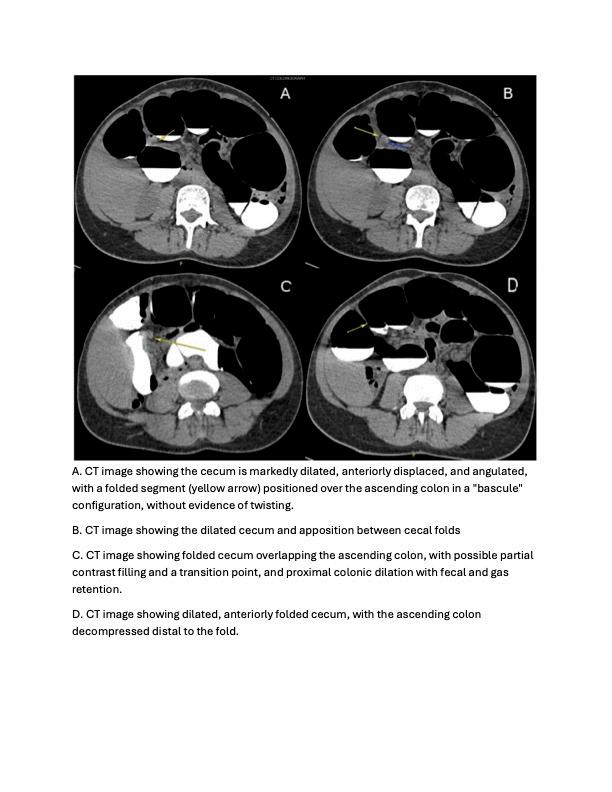
ABSTRACT #138
CLINICAL RESEARCH
CARDIOLOGY
FLOW-DEPENDENT DIFFERENCES IN AORTIC VALVE CALCIFICATION AMONG PATIENTS WITH SEVERE AORTIC STENOSIS
Roya Anahita Mousavi1 , Pragati Basera2, Minel Soroa1, Leila Alizadeh1, Marina Castelltort1, Marcos FerrándezEscarabajal1, Takayuki Onishi, Yoav Niv Granot1, Lucy M. Safi1, Sahil Khera1, George D. Dangas1, Gilbert HinLung Tang1, Samin K. Sharma1, Annapoorna Subhash Kini1, Stamatios Lerakis1
1Mount Sinai Hospital, Icahn School of Medicine at Mount Sinai, New York, NY, United States; 2Mount Sinai MorningsideWest Hospitals, Icahn School of Medicine at Mount Sinai, New York, NY, United States Presented at the American College of Cardiology (ACC) Annual Scientific Session that was held in New Orleans, Louisiana, United States from March 28-30, 2026.
BACKGROUND: Current aortic valve calcification (AVC) cut-offs used to diagnose severe aortic stenosis (AS) in low-flow, low-gradient (LFLG) AS were developed in high-gradient (HG) AS cohorts. These thresholds show limited accuracy in LFLG patients and may not reflect their distinct calcification profile. We aimed to compare AVC burden between patients with HG and LFLG AS.
METHODS: AVC was measured by cardiac computed tomography in patients with severe HG and LFLG AS as defined by the ACC/AHA guidelines. AVC burden was compared between the two groups.
RESULTS: During A total of 495 patients with severe AS were included. Of those 220 had LFLG AS (mean age 80 ± 8 years, 40% female) and 275 HG AS (mean age 78 ± 8 years, 48% female). There were no significant differences between groups in hypertension (92% versus 91%, p=0.59), dyslipidemia (87% versus 83%, p=0.29) and diabetes (37% versus. 33%, p=0.67). Median AVC scores were significantly lower in LFLG AS compared to HG AS [1507 (923-2149) versus 2281 (1420-3306) AU; p<0.001]. This difference was observed in both women [1158 (673-1701) versus 1738 (1048-2548), p<0.001) and men [1638 (1203-2442) versus 2733 (2102-3685), p<0.001, Figure 1). In multivariate regression analysis adjusted for age and sex, HG AS was significantly associated with higher AVC values (β = 914.4, p<0.001).
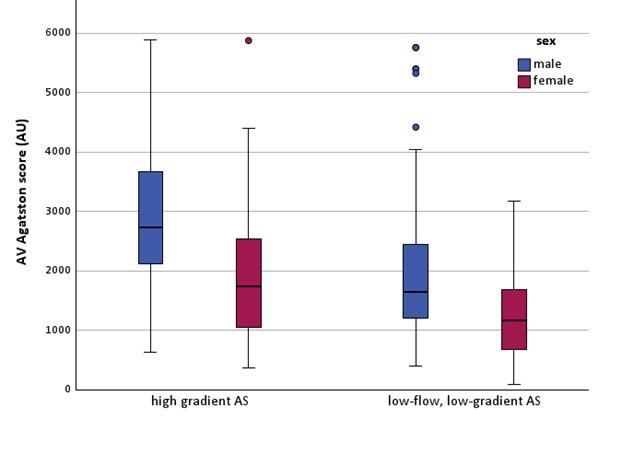
CONCLUSION: AVC burden differs significantly between LFLG and HG AS in both sexes. These findings support the need for AVC cut-offs specifically derived from LFLG AS cohorts to improve diagnostic accuracy in this subgroup.
ABSTRACT #139
CLINICAL RESEARCH
CARDIOLOGY
LEAFLET-SPECIFIC AORTIC VALVE CALCIFICATION AND PERMANENT PACEMAKER IMPLANTATION AFTER TAVR IN CLASSICAL AND PARADOXICAL LOW-FLOW, LOW-GRADIENT AORTIC STENOSIS
Pragati Basera1, Roya Anahita Mousavi2, Minel Soroa2, Leila Alizadeh2, Marina Castelltort2, Marcos FerrándezEscarabajal2, Takayuki Onishi2, Yoav Niv Granot2, Lucy M. Safi2, Sahil Khera2, George D. Dangas2, Gilbert HinLung Tang2, Samin K. Sharma2, Annapoorna Subhash Kini2, Stamatios Lerakis2 1Mount Sinai Morningside-West Hospitals, Icahn School of Medicine at Mount Sinai, New York, NY, United States Presented at the American College of Cardiology (ACC) Annual Scientific Session that was held in New Orleans, Louisiana, United States from March 28-30, 2026.
BACKGROUND: Permanent pacemaker implantation (PPI) is a significant complication following transcatheter aortic valve replacement (TAVR). Patients with low-flow, low-gradient (LFLG) severe aortic stenosis (AS) represent a high-risk cohort with impaired hemodynamics and worse prognosis compared to those with highgradient AS. The predictive value of leaflet-specific aortic valve calcification (AVC) for PPI risk in this population remains unclear.
METHODS: We retrospectively analyzed 220 patients with LFLG AS who underwent TAVR. Cardiac computed tomography angiography was used to quantify AVC scores for the non-coronary (NC), right-coronary (RC), and left-coronary (LC) cusps. The primary outcome was new PPI post-TAVR. Baseline clinical characteristics were compared between patients who did and did not require PPI. Associations between AVC and PPI were assessed using logistic regression.
RESULTS: Among 220 patients (mean age 80±8 years, 40% female), median AVC scores were 572 [IQR 339961] for NC, 370 [IQR 216-661] for RC, and 419 [IQR 243-599] for LC. 24 patients (11%) required new PPI. There were no significant differences between PPI and non-PPI groups in prevalence of dyslipidemia (82% versus 88%, p=0.44), diabetes (33% versus 37%, p=0.71), or chronic kidney disease (33% versus 24%, p=0.32). In univariate logistic regression analysis each 100-unit increase of AVC showed a trend toward 3.4% higher odds of PPI (OR=1.034, p=0.05). Leaflet specific AVC was not associated with higher PPI risk (NC: OR=1.01, p=0.67, RC: OR=1.03, p=0.4; LC: OR=0.53, p=0.19).
CONCLUSION: While we observed a trend towards higher risk of PPI with increased total AVC in patients with classical and paradoxical LFLG AS undergoing TAVR, leaflet-specific AVC was not associated with new PPI. These findings suggest that calcification distribution does not predict PPI risk in this high-risk cohort. Larger studies are needed to improve conduction disturbance risk stratification following TAVR.
ABSTRACT #140
CLINICAL RESEARCH
CARDIOLOGY
RECEPTOR
Brandon Berman1, Harrison Bonilla1, Komail Jafri1, Usman Saeedullah1, Shailesh Niroula1
1Mount Sinai Morningside-West Hospitals, Icahn School of Medicine at Mount Sinai, New York, NY, United States Presented at the American Heart Association (AHA) Annual Meeting that was held in New Orleans, Louisiana, United States from November 8-9, 2025.
BACKGROUND: GLP1 receptor agonists (GLP1-RA) are increasingly prescribed, with many of their potential benefits elucidated in recent studies. Consequently, GLP1-RAs were recently approved for the treatment of obstructive sleep apnea (OSA). There is a known strong association between OSA and atrial fibrillation (AF), with up to 5% of OSA patients developing AF and as many as 50% of AF patients having OSA. In this retrospective study, we analyze a cohort of patients with OSA prescribed GLP1-RAs and assess their risk of developing AF as compared to OSA patients who were not prescribed GLP1-RAs.
METHODS: All Icahn Mount Sinai Health System patients were searched using TriNetX from 1/1/20055/31/2025. Patients with OSA, BMI >25, and age >18 years were included. Patients who did not meet the inclusion criteria, those with any arrhythmias prior to the index event, those with central sleep apnea, or those with baseline structural heart disease or heart failure were excluded. The control cohort was composed of included patients who were not prescribed a GLP1-RA. The cohorts were propensity matched and balanced for baseline characteristics (i.e. BMI, hypertension, CPAP device use, age, etc.). Statistical analysis was performed via the Cox regression method using the built-in TriNetX calculator. Outcomes are reported as risk ratios (RR) and 95% confidence intervals (CI).
RESULTS: A total of 9,370 patients with OSA were included in the analysis (GLP1 n=4,690; no GLP1 n=4,680). Baseline characteristics of the cohorts are reported in Table 1. The median follow-up from diagnosis of OSA for the non-GLP1-RA group was 958 days. The median follow-up for the GLP1-RA group was 491 days, with a median time from diagnosis of OSA to prescription of GLP1-RA of 380 days (total median follow-up from diagnosis of OSA 871 days). There was a significant 50.1% reduction in the risk ratio of developing AF for OSA patients prescribed GLP1-RAs (RR=0.499; 95%CI, 0.342-0.728; p=0.0002) as compared to those who were not.
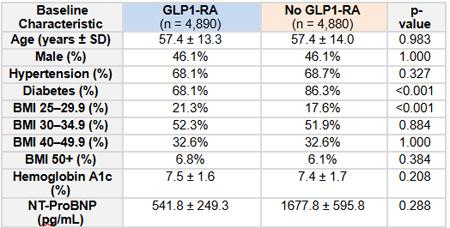
Table 1. Baseline Characteristics of the Cohorts.
CONCLUSION: GLP1-RAs may confer a significant protective effect on patients with OSA in reducing the risk of developing AF. Further research, including prospective randomized-controlled trials, is needed to elucidate the mechanism of this effect and to determine whether the effect of GLP1-RAs is in proportion to the effect of weight loss experienced by the patients.
ABSTRACT #141
CLINICAL RESEARCH
CARDIOLOGY
OUTCOMES ASSOCIATED WITH GLP1 RECEPTOR AGONIST USE IN HYPERTROPHIC CARDIOMYOPATHY
Brandon Berman1, Harrison Bonilla1, Joshua Guardia1, Esther Tsyngauz1
1Mount Sinai Morningside-West Hospitals, Icahn School of Medicine at Mount Sinai, New York, NY, United States Presented at the American Heart Association (AHA) Annual Meeting that was held in New Orleans, Louisiana, United States from November 8-9, 2025.
BACKGROUND: Recent studies have demonstrated the potential cardiac benefits of GLP1 receptor agonists (GLP1-RA). Specifically, these drugs have been shown to improve patient symptoms and reduce both mortality and heart failure hospitalizations (HFH) in patients with heart failure with preserved ejection fraction. However, little is known about their effects on hypertrophic cardiomyopathy (HCM). In this retrospective study, we analyze a cohort of patients with HCM prescribed GLP1-RAs and assess their relative risk of all-cause mortality, HFH, major adverse cardiac events (MACE), and myocardial infarction (MI).
METHODS: All Icahn Mount Sinai Health System patients were searched using TriNetX from 1/1/2005-6/1/2025. Patients with HCM, BMI >25, and age >18 years were included. Patients who did not meet the inclusion criteria or who had any of the outcomes of interest prior to indexing were excluded. The control cohort was composed of included patients who were not prescribed a GLP1-RA. The cohorts were propensity matched and balanced for baseline characteristics (i.e. BMI, hypertension, age, sex, etc.). Statistical analysis was performed via Cox regression using the built-in TriNetX calculator. Outcomes are reported as risk ratios (HR) and 95% confidence intervals (CI).
RESULTS: A total of 2,940 patients with HCM were included in the analysis after propensity matching (GLP1 n=;1470 no GLP1 n=1,470). Baseline characteristics of the cohorts did not differ significantly between the groups. There was a significant 30.5% reduction in the risk of all-cause mortality (HR, 0.695; 95%CI, 0.552-0.874; p=0.0019), 19.3% reduction in risk of MI (HR, 0.807; 95%CI, 0.651-0.999; p=0.0494), and 24.1% reduction in risk of MACE (HR, 0.759; 95%CI, 0.661-0.871; p<0.0001) for HCM patients prescribed GLP1-RAs as compared to those who were not. There was a small, non-significant decrease in the risk of HFH in the GLP1-RA cohort (HR, 0.96; 95%CI, 0.867-1.081; p=0.5642).
CONCLUSION: In the present analysis of a large, real-life cohort, GLP1-RAs were shown to reduce the risk of adverse cardiovascular events and all-cause mortality in patients with HCM. Surprisingly, however, there were no significant effects on HFH. Further research, including prospective randomized-controlled trials, is needed to better qualify the effects of GLP1-RAs in HCM and to elucidate the underlying mechanism of the beneficial effects that were seen in this retrospective study.
ABSTRACT #142
CASE REPORT/CLINICAL REVIEW
CARDIOLOGY
SUDDEN CARDIAC ARREST IN MALIGNANT MITRAL VALVE PROLAPSE
Brandon Berman1, Pragati Basera1, Joshua J. Guardia1, Eric Shalmon1
1Mount Sinai Morningside-West Hospitals, Icahn School of Medicine at Mount Sinai, New York, NY, United States Presented at the American College of Cardiology (ACC) Annual Scientific Session that was held in New Orleans, Louisiana, United States from March 28-30, 2026.
BACKGROUND: Malignant mitral valve prolapse (MVP) is rare, characterized by ventricular arrhythmias and/or sudden cardiac death (SCD) due to myocardial scar secondary to mechanical forces by the prolapsing valve leaflet.
CASE PRESENTATION: A 55-year-old woman with a history of MVP and premature ventricular contractions (PVCs) presented after a monomorphic ventricular tachycardia arrest defibrillated in the field. She denied any prodromal symptoms, palpitations, chest pain, or dyspnea, or any family history of arrhythmia or SCD. On exam, she was hemodynamically stable and alert, with a noted blowing holosystolic murmur. Labs were significant for normal electrolytes and a troponin peak of 237ng/L. ECG showed isolated PVCs without ischemic changes, QT prolongation, or Brugada-type waves. Transthoracic echocardiogram revealed severe mitral regurgitation (MR), and a spiked lateral annular systolic velocity (LASV) of 18cm/s. Transesophageal echocardiogram showed a flail posterior leaflet, a ruptured chordae and severe anteriorly directed MR. Cardiac PET/MRI revealed late gadolinium enhancement in the posteromedial papillary muscle. She underwent successful mitral valve repair and ICD placement for secondary prevention.
CONCLUSION: While a classic presentation of arrhythmogenic MVP, this patient’s chronic follow-up provided insight into disease progression and the risk of SCD. The spiked LASV on her tissue doppler was consistent with the "Pickelhaube sign," defined by Muthukumar et al as a LASV of ≥16cm/s having significant predictive value for arrhythmia in MVP. Notably, her echocardiogram one year prior had shown a borderline LASV of 15.5cm/s, suggesting an increased risk for arrhythmia, and her known PVCs may have reflected developing myocardial scar as a substrate for arrhythmia. Therefore, warning signs were evident before the arrest which could have justified earlier intervention, such as ICD placement; recognizing these early indicators may help prevent SCD in similar patients. Early recognition of patients with MVP at risk for arrhythmia using novel echocardiographic techniques may allow for closer monitoring and timely interventions that can improve patient outcomes.
ABSTRACT #143
MEDICAL EDUCATION
GENERAL INTERNAL MEDICINE
DEVELOPING
Nooshin C. Beygui1 and Tamara Goldberg1
1Mount Sinai Morningside-West Hospitals, Icahn School of Medicine at Mount Sinai, New York, NY, United States Presented at the Institute for Medical Education (IME) Annual Education Research Day that was held in New York, New York, United States on April 21, 2026.
BACKGROUND: To implement a classroom-based learning session into the formal internal medicine curriculum to improve resident comfort and communication skills in caring for patients with a history of trauma including intimate partner violence (IPV) utilizing a trauma-informed approach. Objectives for learners at the end of the session include: 1. Identify long-term health complications associated with prior trauma 2. Recognize populations at risk for IPV, 3. Describe IPV screening tools and guideline recommendations, and 4. Effectively communicate with patients who disclose a history of trauma.
METHODS: An anonymous needs-assessment survey was conducted among internal medicine (IM) residents at a large urban IM program to determine baseline knowledge and experience in discussing trauma. Results of the assessment informed the development of a 1-hour classroom-based pilot curriculum for residents. The session consists of a lecture-based introduction followed by paired interactive practice scenarios. Four sessions will be conducted in total to accommodate all residents during their outpatient blocks, with anticipated completion by Spring 2026.
RESULTS: To evaluate the effectiveness of the curriculum, participants will complete pre- and post-session surveys (5-point Likert scale) to assess comfort level regarding screening patients for IPV and counseling patients who have disclosed a history of trauma. Thirty (30) residents responded to the needs-assessment survey; respondents were 70% PGY1s (n=21), 26.67% PGY2’s (n=8), and 3.33% PGY3s (n=1). While 90% of responders reported having a patient disclose trauma to them, more than 50% reported no prior trauma-informed care training and were mostly unfamiliar with the concept of “trauma-informed care” (TIC). After one session, survey results revealed increased familiarity with TIC; 35.0% (n=7) of respondents felt extremely comfortable with the concept of TIC compared with none (n=0) pre- session. Comfort in screening for IPV also improved from 23.81% (n=5) of participants reporting feeling somewhat comfortable and no participants feeling very comfortable screening pre-session to 75.0% (n=15) reporting feeling either somewhat or very comfortable post-session. Familiarity with identifying factors associated with increased risk of IPV also increased after the session. Pre-session, no respondents (n=0) reported feeling very familiar identifying factors associated with increased risk of IPV as compared to 45.0% (n=9) of respondents feeling extremely familiar identifying these factors in post-session survey results.
CONCLUSION: The data suggest that inclusion of a TIC session for residents can improve comfort in screening patients for a history of IPV and increase familiarity with both risk factors for IPV and principles of TIC. However, the feasibility of covering a wide variety of topics and screening tools within a 1-hour session remains challenging. Future sessions will condense lecture components to allow more time for practicing patient conversations.
ABSTRACT #144
CASE REPORT/CLINICAL REVIEW
HEMATOLOGY/ONCOLOGY
RUXOLITINIB-INDUCED COMPLETE MOLECULAR REMISSION IN POLYCYTHEMIA
Nooshin Beygui1 and John Mascarenhas2
1Mount Sinai Morningside-West Hospitals, Icahn School of Medicine at Mount Sinai, New York, NY, United States; 2Mount Sinai Hospital, Icahn School of Medicine at Mount Sinai, New York, NY, United States Presented at the Mount Sinai Health System Department of Medicine Research Day that was held in New York, New York, United States from May 4-5, 2026.
BACKGROUND: Polycythemia vera (PV) is a type of BCR-ABL1-negative myeloproliferative neoplasm (MPN), characterized by bone marrow hypercellularity and erythrocytosis. The JAK2V617F mutation discovered in 2005 was found to be a prominent driver of JAK-STAT pathway activation. This acquired mutation in PV hematopoietic stem cells (HSCs) is present in about 95% of patients with PV. PV treatment aims at controlling the hematocrit (HCT) in order to reduce thrombotic complications and reduce disease burden by controlling inflammatory-driven symptoms such as pruritis, night sweats, and splenomegaly. Ruxolitinib (RUX) is a JAKinhibitor (JAKi) approved to treat patients with PV nonresponsive to or intolerant of other cytoreductive agents, such as hydroxyurea (HU). Clinical trials of RUX treatment for PV demonstrated superior HCT control, reduction of symptom burden and spleen size when compared to best available therapy (BAT) establishing RUX as an impactful second-line cytoreductive agent for PV.
CASE PRESENTATION: A 64-year-old female with past medical history of Parkinson’s and high-risk JAK2V617Fpositive PV presented with symptoms of malaise, fatigue, and intermittent pruritis. JAK2V617F variant allele fraction (VAF) at time of diagnosis was 36.84%. Aspirin (ASA) 81 mg daily was started and HCT was maintained under 45% with intermittent phlebotomy; she was trialed on cytoreductive therapy with HU, but was not tolerated. She continued to experience PV-related symptoms and had a rise in JAK2V617F VAF to 57.76%. JAKi therapy with RUX was started. She attained HCT control and therapeutic phlebotomy freedom as well as a nondetectable JAK2V617F mutation by polymerase chain reaction (PCR) in the peripheral blood after 5 years of therapy. A bone marrow biopsy performed demonstrated the absence of any PV related histopathological features. Next generation sequencing and cytogenetics demonstrated no evidence of clonality.
CONCLUSION: Phase 3 clinical trial data demonstrated superior HCT control, spleen volume reduction, and improved symptom burden in RUX-treated PV patients intolerant or nonresponsive to HU when compared to BAT. This case highlights a unique response to JAKi therapy in a patient who achieved both CMR and bone marrow histomorphological remission. Early data from studies of PV and essential thrombocythemia (ET) patients treated with RUX for a median of 8 years have demonstrated that complete MR, defined as undetectable mutation to a level of 0.01%, occurs in <4% of patients. This patient with JAK2V617F PV achieving CMR within 5 years of RUX therapy questions whether genotypic or phenotypic factors may predict potential for cure with JAKi therapy. While CMR is demonstrated in rare cases, it is unproven that malignant HSC eradication is achieved and whether this is necessary to achieve cure.6 Further research to elucidate mechanistic understanding of JAKitargeted clearance of PV HSCs and whether continued RUX treatment is required to maintain CMR is yet to be determined.
ABSTRACT #145
CASE REPORT/CLINICAL REVIEW
CARDIOLOGY/RHEUMATOLOGY
ANCA-NEGATIVE EOSINOPHILIC MYOCARDITIS MASQUERADING AS STEMI: A CASE OF FULMINANT CARDIOGENIC SHOCK
Harrison Bonilla1, Joshua Guardia1, Shailesh Niroula1, Niurka Liranzo1 , Esther Tsyngauz1
1Mount Sinai Morningside-West Hospitals, Icahn School of Medicine at Mount Sinai, New York, NY, United States Presented at the American Heart Association (AHA) Annual Meeting that was held in New Orleans, Louisiana, United States from November 8-9, 2025.
CASE PRESENTATION: A 79-year-old man with hypertension, diabetes, and mild asthma presented after three days of weakness, abdominal discomfort, and dyspnea without chest pain. Initial evaluation showed a troponin of 45,044 ng/L (normal < 14) and ST-elevations in V1–V5 with reciprocal depressions in II and III, prompting STEMI protocol activation. Emergent catheterization revealed nonobstructive coronary disease and an elevated left ventricular end-diastolic pressure of 28 mmHg. Echocardiography demonstrated severe left ventricular systolic dysfunction (EF 30 percent), mid-septal akinesis, and severe mitral regurgitation. Labs revealed relative eosinophilia with a normal absolute count, lymphopenia, and negative ANCA. Cardiac MRI showed heterogeneous mid-wall late gadolinium enhancement in the basal to mid-septum with elevated T1 and extracellular volume, suggesting nonischemic cardiomyopathy. After MRI, he developed fulminant cardiogenic shock with tachycardia, respiratory failure, and altered mental status requiring intubation, mechanical ventilation, norepinephrine, and vasopressin. Continuous venovenous hemofiltration was started for acute kidney injury. Endomyocardial biopsy confirmed eosinophilic myocarditis with extensive eosinophilic infiltration. Infectious workup including blood cultures, respiratory viral panel, and serologies for Trichinella and Strongyloides was negative. High-dose IV methylprednisolone (1 g daily) led to rapid improvement: extubation on day 5, vasopressor weaning, and transition to oral prednisone.
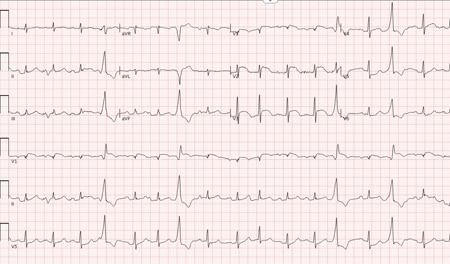
CONCLUSION: This case illustrates the diagnostic challenge of ANCA-negative eosinophilic myocarditis presenting as STEMI. Massive troponin elevation and classic ST elevations suggested myocardial infarction with nonobstructive coronary arteries (MINOCA). Rapid deterioration and definitive biopsy revealed eosinophilic myocarditis. The absence of peripheral eosinophilia and negative ANCA delayed diagnosis, highlighting the necessity of endomyocardial biopsy in unexplained acute myocarditis with shock. Early recognition and prompt high-dose steroids are critical, as patients can deteriorate quickly but recover dramatically with treatment. Clinicians should suspect eosinophilic myocarditis in elderly patients with STEMI-like presentations and negative angiography, even if ANCA and absolute eosinophil counts are normal.
ABSTRACT #146
CASE REPORT/CLINICAL REVIEW
CARDIOLOGY
BEYOND THE HEURISTIC: ADENOSINE FAILURE AND AV-NODAL BLOCKER TERMINATION DO NOT EXCLUDE SUPRAVENTRICULAR TACHYCARDIA
Harrison Bonilla1, Joshua J. Guardia1, Usman Saeedullah1, Komail Jafri1 , Esther Tsyngauz1, Matthew Kolansky1, Robert Leber1
1Mount Sinai Morningside-West Hospitals, Icahn School of Medicine at Mount Sinai, New York, NY, United States Presented at the American College of Cardiology (ACC) Annual Scientific Session that was held in New Orleans, Louisiana, United States from March 28-30, 2026.
BACKGROUND: Wide-complex tachycardia (WCT) in structural heart disease is usually presumed ventricular tachycardia (VT). Reliance on drug response to guide diagnosis can mislead.
CASE PRESENTATION: A 58-year-old man with nonischemic cardiomyopathy (EF 25-30%), baseline right bundle branch block (RBBB) with left posterior fascicular block, COPD, diabetes, and cocaine use was admitted with decompensated heart failure and pneumonia. He developed chest pressure with regular WCT at 180 bpm. Adenosine 12 mg×2 produced no AV block or termination. Intravenous diltiazem restored sinus rhythm; a second episode terminated after metoprolol 5 mg. Troponin peaked at 36 ng/L without ischemic changes; BNP was 1,357 pg/mL. Echocardiography showed EF 25% with lateral akinesis and moderate mitral regurgitation.
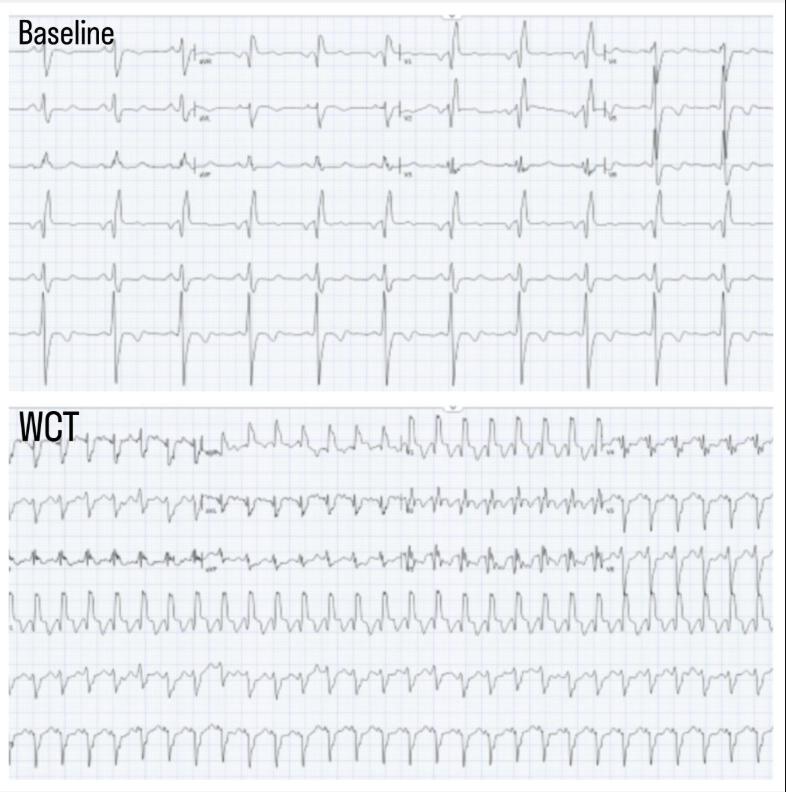
CONCLUSION: Adenosine-refractory WCT that terminates with AV-nodal blockade does not confirm fascicular VT. In patients with conduction disease, atrial tachycardia with aberrancy can mimic VT. EP study is essential before committing to device therapy.
ABSTRACT #147
CLINICAL RESEARCH
CARDIOLOGY
RISING BURDEN OF HYPERTENSIVE EMERGENCY HOSPITALIZATIONS
Harrison Bonilla1, Joshua Guardia1, Komail Jafri1, Usman Saeedullah1, Kiran Mahmood1
1Mount Sinai Morningside-West Hospitals, Icahn School of Medicine at Mount Sinai, New York, NY, United States Presented at the American Heart Association (AHA) Annual Meeting that was held in New Orleans, Louisiana, United States from November 8-9, 2025.
BACKGROUND: Hypertensive emergency burden in young adults is poorly characterized despite rising risk factors. We evaluated trends, characteristics, and mortality predictors in adults 18–49 years of age hospitalized with hypertensive emergency.
METHODS: We used the 2017–2019 NIS to identify hospitalizations with ICD-10 I16.1 in patients 18–49 years of age. Survey-weighted analyses yielded national estimates. Annual trends were examined overall and by age (18–29, 30–39, 40–49 years) and outcomes compared when hypertensive emergency was primary versus secondary. Logistic regression assessed mortality predictors including demographics, comorbidities, and hospital factors. Sensitivity analyses of I16.0, I16.9, and essential hypertension trends addressed coding artifacts.
RESULTS: From 29,711 unweighted hospitalizations, we estimated 148,555 hypertensive emergency admissions (2017–2019). Annual admissions rose from 40,835 to 57,335 (40.4% increase; p<0.001), most in 30–39 (44.7%) and 40–49 (42.6%) versus 18–29 (18.0%). All hypertensive crisis codes rose 24.9% while essential hypertension admissions fell 4.8%, indicating a true rise. Hypertensive emergency was primary in 34.1%. Mean age was 39.9 years; 56.8% male; racial distribution was 50.7% Black, 26.8% White, 13.6% Hispanic, and 3.1% Asian/Pacific Islander. In-hospital mortality was 1.56%, markedly lower when primary (0.16%) versus secondary (2.28%; 14-fold difference; p<0.001). Primary diagnosis predicted lower mortality (OR, 0.12; 95%CI, 0.06–0.24; p<0.001). Each year of age increased risk (OR, 1.04; 95%CI, 1.02–1.07; p=0.001). Black race was linked to lower mortality versus White (OR, 0.65; 95%CI, 0.44–0.96; p=0.03) despite younger age (39.7 versus 40.5 years) and higher primary diagnosis proportion (36.7% versus 32.2%).
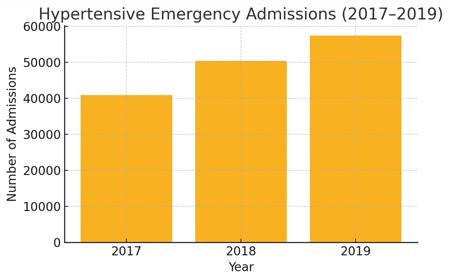
CONCLUSION: Young adult hypertensive emergency hospitalizations rose 40% (2017–2019), especially ages 30–49. The 14-fold mortality disparity between primary and secondary diagnoses suggests distinct phenotypes acute crisis versus complication. Paradoxical lower mortality in Black patients despite higher acuity warrants further study. These findings underscore a growing public health crisis necessitating prevention and early intervention.
ABSTRACT #148
CASE REPORT/CLINICAL REVIEW
PULMONARY/CRITICAL CARE
Bridget Dolan1 , Christiana Choi1, Vincent Gallub1, Avinash Singh1
1Mount Sinai Morningside-West Hospitals, Icahn School of Medicine at Mount Sinai, New York, NY, United States Presented at the American Thoracic Society (ATS) Annual Meeting that was held in Orlando, Florida, United States from May 15-20, 2026.
BACKGROUND: Sarcoidosis is a multisystem granulomatous disease of unknown etiology, characterized by noncaseating granulomas in affected organs. Necrotizing sarcoid granulomatosis (NSG) is a rare variant of sarcoidosis characterized by sarcoid-like noncaseating granulomas with areas of necrosis and granulomatous vasculitis, most often involving the lungs. Its histologic necrosis and radiologic findings can mimic infection, vasculitis, or malignancy, leading to diagnostic delay and extensive exclusion of alternative causes before confirmation. Our case exemplifies a rare form of extra-pulmonary necrotizing sarcoidosis.
CASE PRESENTATION: A 46-year-old female with no significant past medical history presented with acute dyspnea. She was found to have new acute diastolic heart failure with pericardial and lymphocytic predominant exudative pleural effusions on thoracentesis. Computed tomography (CT) noted multiorgan calcification of hilar and mediastinal lymph nodes, spleen, and liver. Interferon gamma release assay, ANCA, rheumatoid factor, antibodies to double stranded DNA were negative while ANA was positive, ESR 121 and CRP 143. Pleuroscopy with pleural biopsy confirmed non-necrotizing granulomas. Positron emission tomography further denoted tracer avid hilar and mediastinal lymph nodes most suspicious for multi-system sarcoid. Upon discharge, the patient was initiated on goal directed therapy for heart failure as well as prednisone for sarcoidosis. On her 4-month follow up, the patient reported a painless supraclavicular lump with no associated fevers, chills, weight loss or night sweats. Magnetic resonance imaging of the neck highlighted a hypodense and irregular 3cm by 3cm mass concerning for necrosis. Biopsy of the mass noted necrotizing granulomas with CD45+ staining indicating necrotic lymphoid population, with sterile cultures, including for acid-fast bacteria. Flow cytometry was negative for lymphoma. The patient was transitioned from prednisone to methotrexate, with interval improvement in her dyspnea. Diffusion capacity on pulmonary function test and ejection fraction on echocardiogram both demonstrated recovery
CONCLUSION: Necrotizing lymphadenopathy in young females with sarcoidosis has been previously described in literature. The coexistence of both necrotizing and non-necrotizing granulomatous sarcoidosis across two anatomical locations in the same patient is exceptionally rare. This case highlights the diversity in radiologic findings that can be seen in the same patient with multisystem sarcoid. Serial or multisite biopsies may reveal variable histologic patterns within the same patient, and infections such as tuberculosis, and malignancy such as lymphoma should be ruled out.
ABSTRACT #149
CLINICAL RESEARCH
PULMONARY/CRITICAL CARE
THE IMPACT OF RENAL REPLACEMENT THERAPY ON MORTALITY FOR ACUTE RESPIRATORY DISTRESS SYNDROME FROM COVID-19
Adrian Chernyk1 , Madelin Fenianos1 , Christiana Choi1, Benjamin Samuel1 , Raymond A. Jean1 , Raymonde Jean1
1Mount Sinai Morningside-West Hospitals, Icahn School of Medicine at Mount Sinai, New York, NY, United States Presented at the American College of Chest Physicians Annual Meeting held in Chicago, Illinois, United States from October 19-22, 2025.
BACKGROUND: The COVID-19 pandemic resulted in a large increase in the number of hospitalized patients with acute respiratory distress syndrome (ARDS), many of whom had pre-existing comorbidities such as chronic kidney disease (CKD). As these patients often developed acute renal failure requiring continuous (CRRT) or intermittent renal replacement therapy (IHD), it remains unclear to what extent this impacted overall in-hospital mortality.
METHODS: We queried the NIS between 2020 and 2021 for discharges with a diagnosis of ARDS and CKD, with or without a concurrent diagnosis of COVID-19. Using adjusted logistic regression controlling for age, sex, race, comorbidity burden, income, and year of diagnosis, we compared inpatient mortality over the study period among patients required CRRT or IHD.
RESULTS: There were 71005 discharges over the study period, of which 55155 had COVID-19. In total 8475 patients required CRRT and 17450 required IHD. Baseline mortality for the cohort was47.7% for the non-COVID ARDS patients and 64.9% for the COVID ARDS patients. Among patients requiring CRRT this increased to 78.0% in patients with COVID ARDS, compared to 65.5% in patients with non-COVID ARDS. Patients requiring IHD had a slightly higher than baseline mortality of 67.8%in COVID ARDS and 44.3% in Non-COVID ARDS. In an adjusted regression among patients with COVID ARDS, CRRT was associated with 2.37 times increase in the odds of mortality. In contrast, IHD was associated with 1.28 times increase in the odds of mortality. (all p<0.01)
CONCLUSION: Our Among hospitalized patients with CKD and COVID-19 ARDS, the need for CRRT was associated with a significant increase in mortality from baseline, even compared to patients requiring IHD. These findings can be used to help guide discussions and expectations when encountering the need for renal replacement therapy in critical illness. Discussing need for renal replacement therapy in this patient population can help family members make informed decisions regarding goals of care.
ABSTRACT #150
CASE REPORT/CLINICAL REVIEW
CARDIOLOGY
A RARE CASE OF BIDIRECTIONAL VENTRICULAR TACHYCARDIA IN A YOUNG PATIENT WITH BIVENTRICULAR ARRHYTHMOGENIC CARDIOMYOPATHY
Sabrina Daoui1, Maria Riasat1, Lakshay Chopra1, Lathan Liou1, Basera Sabharwal1, Davendra Mehta1
1Mount Sinai Morningside-West Hospitals, Icahn School of Medicine at Mount Sinai, New York, NY, United States Presented at the American College of Cardiology (ACC) Annual Scientific Session that was held in New Orleans, Louisiana, United States from March 28-30, 2026.
BACKGROUND: Arrhythmogenic cardiomyopathy (ACM) is a rare genetic disorder with fibrofatty myocardial replacement and high risk of ventricular arrhythmias. While monomorphic ventricular tachycardia (VT) is the typical arrhythmic phenotype, bidirectional VT is uncommon, particularly among Black patients.
CASE PRESENTATION: A 24-year-old Black male presented with dyspnea after Holter monitor captured a 9minute exercise-induced bidirectional VT. Electrocardiogram and coronary anatomy were normal. Echocardiography showed biventricular systolic dysfunction. Cardiac magnetic resonance imaging (cMRI) revealed extensive subepicardial late gadolinium enhancement in both ventricles and atria, fulfilling criteria for biventricular ACM. Guideline directed heart failure therapy was initiated, and a cardioverter-defibrillator implanted for prevention of sudden cardiac death (SCD). The patient was counseled to limit physical activity.
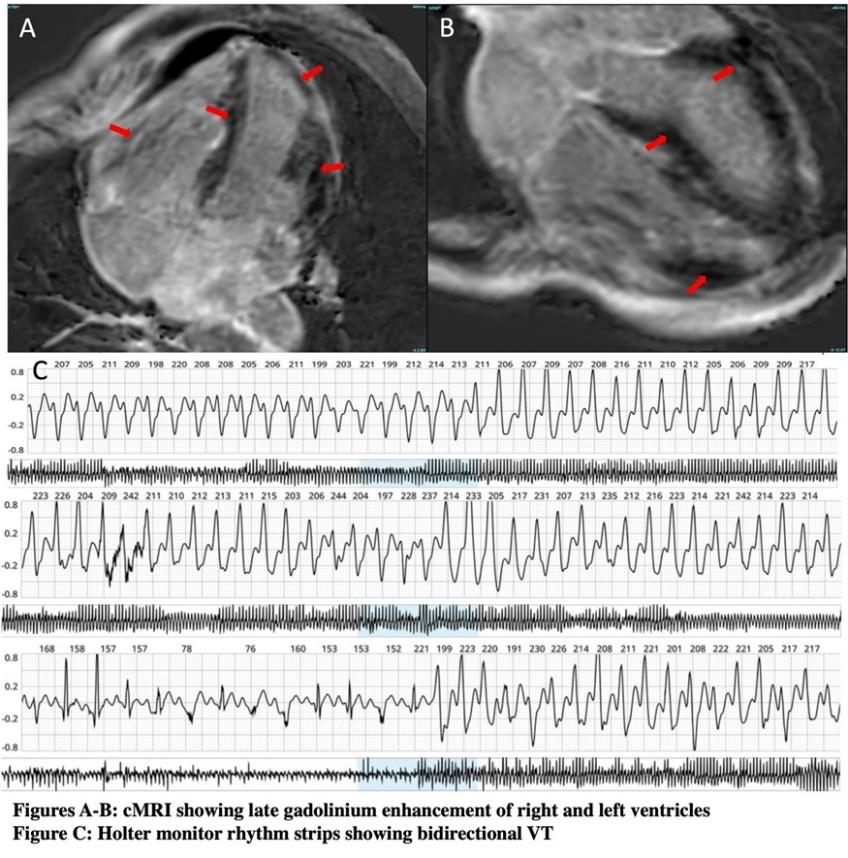
CONCLUSION: Our case underscores recognition of atypical manifestations of ACM. Catecholaminergic polymorphic VT was considered, however, cMRI was essential in establishing diagnosis of ACM. Occurrence of bidirectional VT, a rarely reported phenotype, reflects a highly arrhythmogenic substrate. While ACM is uncommon in Black patients, its clinical and genetic heterogeneity emphasizes equitable diagnostic consideration. Bidirectional VT is a rare presentation of ACM. Advanced imaging and early risk stratification are needed to prevent SCD.
ABSTRACT #151
CASE REPORT/CLINICAL REVIEW
INFECTIOUS DISEASES/PULMONARY/CRITICAL CARE
ALLERGIC BRONCHOPULMONARY ASPERGILLOSIS UNMASKING CYSTIC FIBROSIS IN A 40YEAR-OLD MALE
Mrittika Deb1, Mohammed I. Alsaud1, Edith T. Robin1, Maria Shtessel1, Javier J. Zulueta1
1Mount Sinai Morningside-West Hospitals, Icahn School of Medicine at Mount Sinai, New York, NY, United States Presented at the American College of Chest Physicians Annual Meeting held in Chicago, Illinois, United States from October 19-22, 2025.
BACKGROUND: Allergic bronchopulmonary aspergillosis (ABPA) is a hypersensitivity reaction to Aspergillus species, typically occurring in patients with asthma or cystic fibrosis (CF). While CF is usually diagnosed in childhood, adult diagnoses with milder or atypical presentations are increasingly recognized. We present a case of ABPA leading to the unexpected diagnosis of CF in a 40-year-old male, highlighting the importance of considering CF in adults with atypical respiratory presentations.
CASE PRESENTATION: A 40-year-old, non-smoking male presented with acute onset shortness of breath. Initial treatment for presumed asthma provided only partial relief. He had no prior asthma history but reported a history of chronic cough resolving with dietary changes, suggestive of GERD. He also reported a mild allergy to cats. Symptom onset coincided with a mulch delivery near his bedroom. Initial chest X-ray findings showed mild bronchial wall thickening, with subsequent imaging revealing patchy reticular changes. Allergy testing revealed significantly elevated Immunoglobulin E (IgE) (>6,000 IU/ml) and eosinophilia (1.5 x 10³ cells/uL). A chest Computed Tomography (CT) showed scattered nodular opacities and bronchiectasis. Bronchoscopy with bronchoalveolar lavage (BAL) grew Pseudomonas aeruginosa, Stenotrophomonas maltophilia and Aspergillus fumigatus, confirming ABPA. BAL fluid showed polymorphonuclear neutrophils with no eosinophilia; fungal and Acid-Fast Bacilli stains were negative. A CF screen was initiated due to the ABPA diagnosis and CT findings. The pulmonary function test showed a moderately reduced Forced Expiratory Volume in 1 second (FEV1) that was unresponsive to bronchodilators. Exhaled nitric oxide was elevated (47ppb), suggesting active eosinophilic airway inflammation. Subsequent genetic testing revealed the presence of the c.3454G>C (p.Asp1152His) and c.3846G>A (p.Trp1282*) CFTR pathogenic variants, confirming the diagnosis of CF. Despite harboring two mutations, the patient was heterozygous, which correlated with the manifestation of milder symptoms. The patient was referred to a cystic fibrosis specialist for further evaluation and management.
CONCLUSION: This case demonstrates an atypical presentation of CF diagnosed in adulthood, triggered by acute onset of ABPA potentially due to environmental exposure (mulch). High IgE levels, eosinophilia, CT findings, and positive Aspergillus cultures were crucial in establishing the ABPA diagnosis. The case underscores the strong association between ABPA and CF. The presence of bronchiectasis and Pseudomonas aeruginosa in the BAL, coupled with the severity of the presentation, should raise suspicion for CF, even without classic childhood symptoms. Elevated serum eosinophils, despite the absence of eosinophilia in the BAL, support the diagnosis. Additionally, this case highlights the importance of CFTR genetic testing in adults with suspected CF, even with atypical presentations. Adult-diagnosed CF often involves milder mutations or variants that may not present with the classic symptoms seen in childhood-onset CF. This case illustrates a rare instance of ABPA unmasking a late diagnosis of CF. It reinforces two crucial points: the need for clinicians to consider ABPA in patients even without a prior diagnosis of asthma, and the need to consider CF in adults presenting with ABPA, even in the absence of a classic CF history. Early diagnosis allows for appropriate management, potentially slowing disease progression and improving quality of life.
ABSTRACT #152
CLINICAL RESEARCH
GASTROENTEROLOGY
BEYOND MALABSORPTION: METABOLIC AND HEPATIC CONSEQUENCES OF OVERLAPPING CELIAC DISEASE AND INFLAMMATORY BOWEL DISEASE A COMPARATIVE COHORT ANALYSIS
Carlos G. Diola1, Jessica Lim1, Bharati Dev1, Yonatan Israel2, Alexandria R. Markley1, Do Han Kim1, Christopher Cao2
1Mount Sinai Morningside-West Hospitals, Icahn School of Medicine at Mount Sinai, New York, NY, United States; 2Mount Sinai Hospital, Icahn School of Medicine at Mount Sinai, New York, NY, United States Presented at the Digestive Disease Week (DDW) Annual Meeting that was held in Chicago, Illinois, United States from May 3-5, 2026.
BACKGROUND: Celiac disease (CeD) and inflammatory bowel disease (IBD), including Crohn’s disease (CD) and ulcerative colitis (UC), share overlapping immune-mediated pathways, chronic inflammation, and malabsorption that predispose patients to metabolic complications. Although CeD was historically associated with low BMI and malnutrition, contemporary cohorts show a shifting phenotype, with 11–19% presenting overweight and 6–18% with obesity, while underweight status has fallen to ~5% (Reidy et al., 2025). Adherence to a gluten-free diet, the cornerstone of CeD therapy, has also been linked to increased intake of saturated fats and refined carbohydrates, contributing to rising rates of metabolic syndrome, which may increase from 4.3% to 21.3% after diet initiation. CeD additionally confers increased risk for metabolic dysfunction–associated fatty liver disease, with prevalence rising from 18.2% to 28.2% after gluten-free initiation (Aggarwal et al., 2024). Given that IBD independently contributes to metabolic dysfunction through systemic inflammation and nutrient malabsorption, it is unclear whether individuals with dual CeD+IBD experience a synergistic risk for metabolic disease. Elucidating this relationship is essential for optimizing screening strategies and long-term management.
RESULTS: We conducted a retrospective cohort study across the Mount Sinai Health System (New York City), including 340 adults, stratified into four groups: CeD (n=85), CD (n=85), UC (n=85), and dual CeD+IBD (n=85). Extracted variables included demographics; hemoglobin A1c; micronutrients; albumin; aspartate aminotransferase and alanine aminotransferase levels; high-density and low-density lipoprotein concentrations; hematologic indices; and hepatic outcomes, including steatosis, and the fibrosis-4 index. Rates of comorbid primary hypertension were also recorded. Group differences were assessed using one-way analysis of variance (ANOVA). Across groups, the one-way ANOVA demonstrated significant differences in metabolic and hepatic parameters. BMI differed by group (p=0.006), with isolated CeD demonstrating higher BMI than dual CeD+IBD, suggesting greater inflammatory and malabsorptive burden in the dual-diagnosis cohort. Albumin also differed significantly (p<0.0001), with lower levels in IBD and CeD+IBD compared with CeD alone. Fibrosis-4 index scores also differed across groups (p=0.003), underscoring the increased risk for hepatic fibrosis.
CONCLUSION: Significant differences in metabolic and hepatic parameters indicate that patients with dual CeD+IBD may experience heightened susceptibility to hepatic fibrosis and metabolic disruption, despite lower BMI. This supports a possible synergistic inflammatory effect leading to greater malabsorption and hepatic vulnerability and highlights the need for targeted screening in this group.
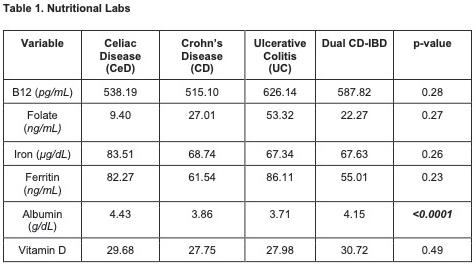
Table 1. Nutritional parameters across CeD, CD, UC, and dual CeD-IBD cohorts. Albumin differed significantly across groups (p<0.0001), with IBD and dual diagnosis individuals demonstrating lower levels. No significant differences were observed in other micronutrient values.
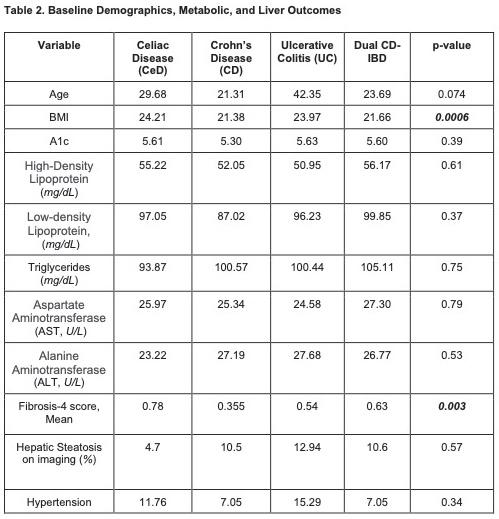
Table 2. Baseline demographics, metabolic indices, and hepatic outcomes in CeD, CD, UC and dual CeD-IBD cohorts. BMI and Fibrosis-4 scores differed significantly across groups (p=0.0006 and p=0.003). Other metabolic and hepatic parameters were not observed to be significantly different.
ABSTRACT #153
CLINICAL RESEARCH
GASTROENTEROLOGY
HIDDEN IN PLAIN
Carlos G. Diola1 and Christopher Cao2
1Mount Sinai Morningside-West Hospitals, Icahn School of Medicine at Mount Sinai, New York, NY, United States; 2Mount Sinai Hospital, Icahn School of Medicine at Mount Sinai, New York, NY, United States Presented at the American College of Gastroenterology (ACG) Annual Meeting that was held in Phoenix, Arizona, United States from October 24-29, 2025.
BACKGROUND: Celiac disease (CD) is a chronic autoimmune disorder triggered by gluten ingestion, resulting in enteropathy. Its highly variable clinical presentation often complicates diagnosis, especially in cases with nonclassical or extraintestinal symptoms. Globally, the prevalence of CD is approximately 1.4%, and CD can be seen in all individuals irrespective of age, ethnicity or sex. Classically, CD has been felt to affect younger Caucasian patients with gastrointestinal symptoms, which may contribute to missed diagnoses in other populations.
METHODS: This survey study evaluated whether internal medicine residents at an urban tertiary care program in New York City considered CD in their differential given a series of question stems that varied based on patient age, ethnicity, and symptomatology. A 13-item questionnaire was developed to present a range of clinical vignettes reflecting diverse symptom types (gastrointestinal vs. extraintestinal) and patient demographics (Caucasian, Asian, Hispanic, Black) and patient age (older or younger than 30 years old). Associations between screening decisions and patient variables were analyzed using the Pearson Chi-squared test.
RESULTS: Among 58 resident responses, screening was significantly more likely for individuals with intestinal symptoms (59.77%) such as bloating, abdominal pain, and cramping than for extraintestinal symptoms (37.43%) like neuropathy or iron deficiency anemia, with the exception of pruritic rash (p≤0.01). Patients under the age of 30 were also significantly more likely to be screened (p<0.01). Screening rates were slightly higher for Caucasian patients (49.13%), compared to non-Caucasian patients (46.55%), although this difference was not statistically significant (p=0.48).
CONCLUSION: These findings suggest that CD may be underrecognized in patients with atypical or extraintestinal presentations and in older patients. Although no significant disparities were found by ethnicity, the trend highlights the need for continued awareness of CD's varied manifestations across populations. In a diverse urban setting like New York City, it is encouraging that resident physicians consider screening across varying ethnicities. Larger studies are needed to further characterize potential screening biases and to inform educational efforts that promote broader recognition of CD.
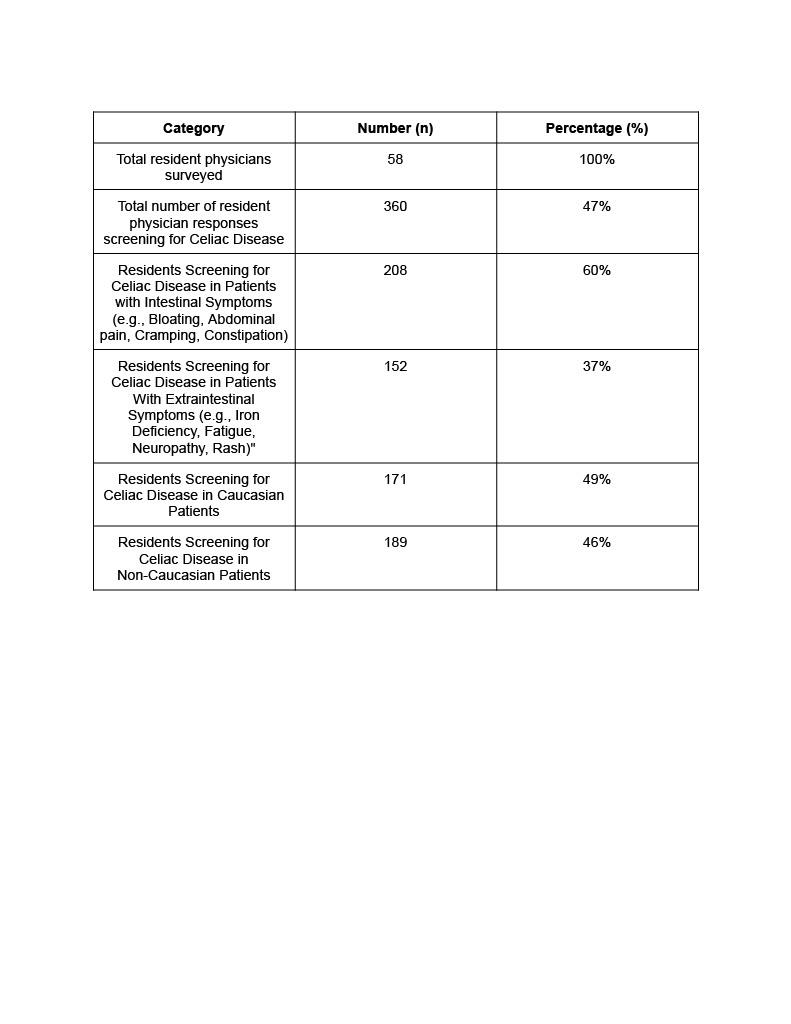
Table 2. Association between Celiac Disease screening rates and patient characteristics based on Analysis
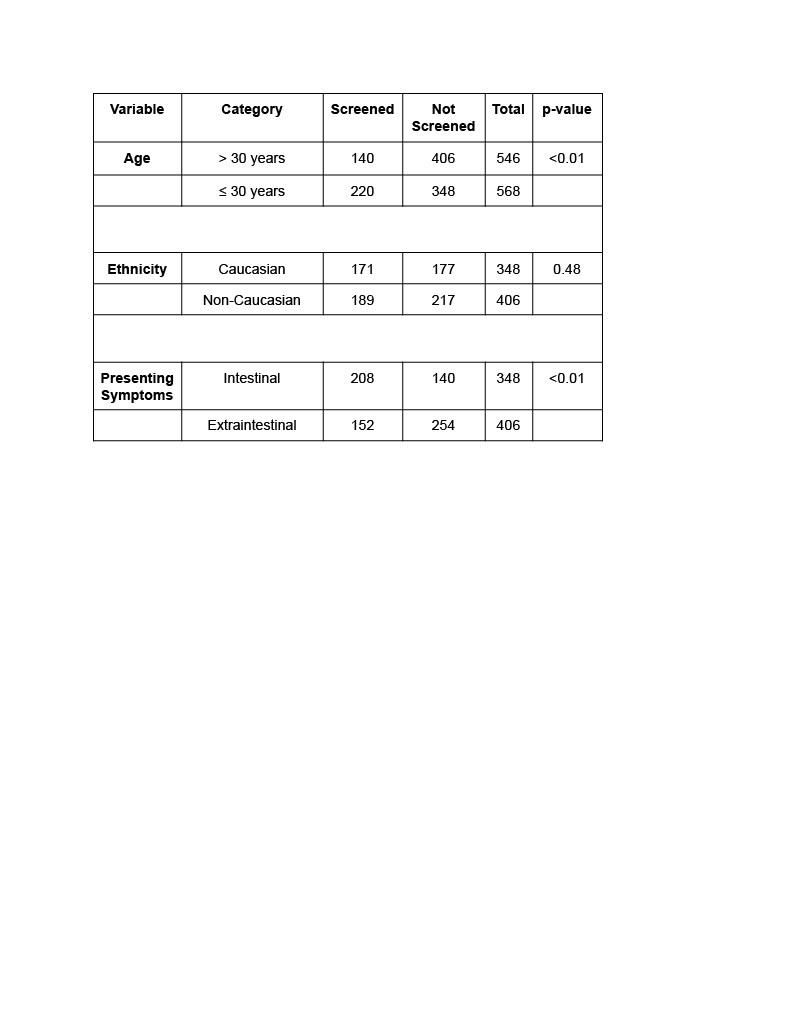
ABSTRACT #154
CLINICAL RESEARCH
GASTROENTEROLOGY
OSTEOPOROSIS SCREENING IN PATIENTS WITH CELIAC DISEASE, INFLAMMATORY BOWEL DISEASE, AND DUAL DIAGNOSIS: A RETROSPECTIVE CHART REVIEW
Alexandria Markley1, Luis Rendon Rodriguez1, Swati Patel2 , Carlos G. Diola1, Yontan Israel1, Christopher Cao2 1Mount Sinai Morningside-West Hospitals, Icahn School of Medicine at Mount Sinai, New York, NY, United States; 2Memorial Sloan Kettering Cancer Center, New York, NY, United States; 3Mount Sinai Hospital, Ichan School of Medicine at Mount Sinai, New York, NY, United States Presented at the American College of Gastroenterology (ACG) Annual Meeting that was held in Phoenix, Arizona, United States from October 24-29, 2025.
BACKGROUND: Patients with celiac disease (CeD) and inflammatory bowel disease (IBD), including Crohn’s disease (CD) and ulcerative colitis (UC), are at increased risk for low bone mineral density (BMD) and osteoporosis due to chronic inflammation, malabsorption, and corticosteroid use. Current guidelines recommend BMD screening in celiac patients and certain IBD patients, but adherence to screening practices remains suboptimal. It is unclear whether a dual diagnosis of CeD+IBD further compounds osteoporosis risk, and screening practices in this subgroup are not well characterized.
METHODS: We conducted a retrospective chart review of patients with CeD, IBD (CD or UC), or both, who received care at a tertiary care center. Collected data included demographics, diagnosis type, and dual-energy X-ray absorptiometry (DEXA) scan history. The primary outcomes were DEXA screening rates and prevalence of osteoporosis and osteopenia among those screened.
RESULTS: During A total of 336 patients were included (n=84 per group). Mean age differed significantly (p=0.0004), with UC patients being the oldest (mean 43.3 years) and those with a dual diagnosis of CeD+IBD being the youngest (mean 32.2 years). Sex distribution also varied (p=0.005), with CD and UC groups having more males (56% and 54%), and CeD and CeD+IBD groups having more females (68% and 60%). Racial distribution had a predominance of white individuals in all groups. BMI differed by group (p=0.0008), CeD group had the highest mean BMI (24.3) and the CD group the lowest (21.1). Overall, DEXA screening rates were low, ranging from 14% to 32%, with significant differences between groups (p=0.0038). Patients with CeD were more likely to have screening compared to those with IBD or a dual diagnosis. Among those screened, rates of decreased bone mineral density were comparable between the CeD cohort (48%) and dual diagnosis CeD+IBD cohort (46%) (p=0.92).
CONCLUSION: Rates of osteoporosis screening were low in all cohorts. While DEXA is recommended in certain IBD patients with specific risk factors, corticosteroid use, chronic active inflammation, or malnutrition, bone density scanning is recommended for all patients with celiac disease. Patients with a dual diagnosis of CeD+IBD have similar rates of decreased BMD compared to patients with a sole diagnosis of CeD. Given the high prevalence of low bone mineral density in these populations, timely screening and intervention are essential to reduce fracture risk and improve long-term outcomes.
ABSTRACT #155
CASE REPORT/CLINICAL REVIEW GASTROENTEROLOGY
RAPIDLY PROGRESSIVE MULTISYSTEM ORGAN FAILURE DUE TO EBV+ PRIMARY HEPATIC PERIPHERAL T-CELL LYMPHOMA
Max E. Edeson1, Aneesh Bhave2, Ethan Bur2, Gabrielle Sharbin2, Davood Karimi Hosseini2 , Chinmay Trivedi2 , Shalom Frager2, Shil Patel2, Jonathan Weinberger2, Rosario Ligresti2
1Mount Sinai Morningside-West Hospitals, Icahn School of Medicine at Mount Sinai, New York, NY, United States; 2Hackensack University Medical Center, Hackensack, NJ, United States
Presented at the American College of Gastroenterology (ACG) Annual Meeting that was held in Phoenix, Arizona, United States from October 24-29, 2025.
BACKGROUND: Peripheral T-Cell Lymphoma (PTCL) is a rare, aggressive form of Non-Hodgkin Lymphoma. Hepatosplenic/primary hepatic PTCL (HSPTCL) is a rarer subtype, < 1% of cases. It typically occurs in males aged 35 on immunosuppression, with no clear etiology, although associated with infections like EBV and other mutagens. Liver biopsy is vital for diagnosis. Rapid progression is common, especially if complicated by HLH. We present a case of EBV-driven HSPTCL causing multi-organ failure in a previously healthy man to increase awareness of a rare, acute, severe pathology.
CASE PRESENTATION: A 35-year-old African American male with no medical history presented with 4 days of abdominal pain, nausea/vomiting, constipation, dark urine, and poor appetite - denied fever, travel, substance use, or family history. He was ill appearing, oriented, tachycardic, jaundiced, with epigastric tenderness and hepatomegaly. Labs showed leukocytosis, AKI, lactic acidosis (14.8 mmol/L), hyperbilirubinemia (12.2 mg/dL), transaminemia. RUQ ultrasound found hepatomegaly (21.3 cm) and gallbladder wall thickening with biliary sludge (Figure 1). Emergent ERCP for suspected cholangitis found sludge, no purulence or obstruction - stent was placed. Patient deteriorated rapidly - admitted to ICU with severe acidosis, renal and respiratory failure requiring intubation and continuous dialysis. During liver biopsy, he suffered a cardiac arrest and was resuscitated - required vasopressors and ECMO. Liver biopsy and blood revealed atypical lymphocytes with vacuolated cytoplasm, irregular nuclear contours, prominent nucleoli, and immature features (Figure 2); EBV DNA was elevated (89x10^6), flow cytometry and other serum studies were negative; he was diagnosed with EBV-driven HSPTCL. Renal function and oxygenation improved with high-dose steroids. Symptoms and LFTs further improved with cyclophosphamide and EPOCH chemotherapy - treatment was deescalated, and he was discharged with outpatient follow-up to Oncology.
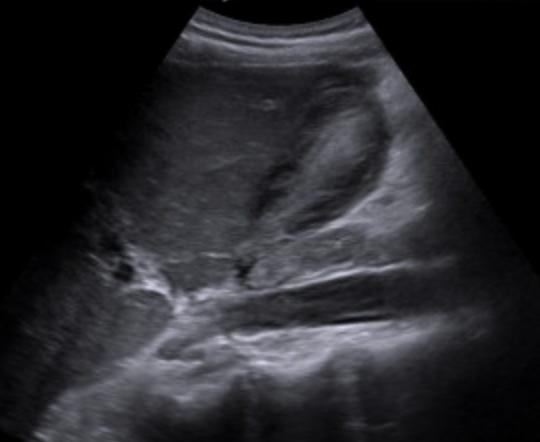
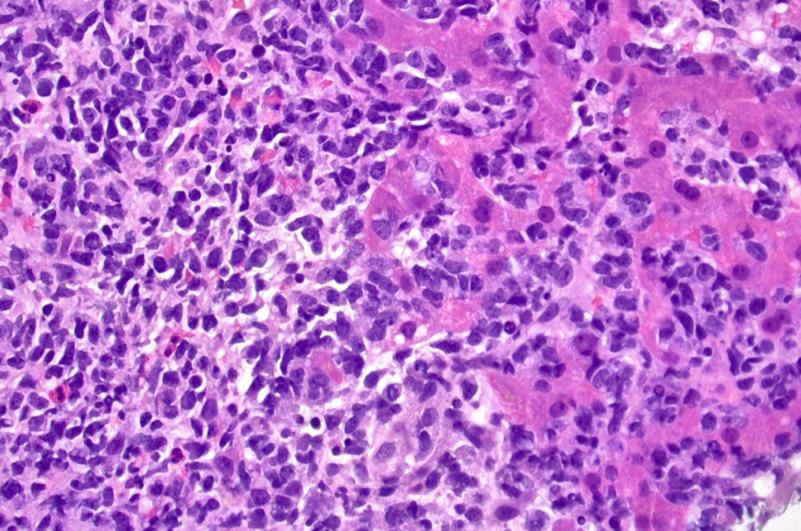
CONCLUSION: EBV-associated HSPTCL is a rare and aggressive malignancy that can present with multiorgan failure. Diagnosis is delayed due to nonspecific symptoms and overlap with other hepatic/infectious causes. Organ failure can occur even without HLH due to liver failure causing a systemic response. Early identification is critical given its rapid progression and poor prognosis even with early and aggressive treatment. This is true even for patients with no family or past medical history as seen here.
ABSTRACT #156
CLINICAL RESEARCH
GENERAL INTERNAL MEDICINE/GERIATRICS
ASSOCIATION BETWEEN PET OWNERSHIP AND INCIDENT DEMENTIA: A SYSTEMATIC
Fumitoshi Fukuzawa1, Koto Minami2 , Fred Ko2 Yuji Yamada1
1Mount Sinai Morningside-West Hospitals, Icahn School of Medicine at Mount Sinai, New York, NY, United States; 2Mount Sinai Hospital, Icahn School of Medicine at Mount Sinai, New York, NY, United States Presented at the American Geriatrics Society (AGS) Annual Meeting that was held in virtually from April 30, 2026 to May 2, 2026.
BACKGROUND: Dementia affects more than 55 million people worldwide, and prevention remains a global priority. Pet ownership is a modifiable factor hypothesized to improve cognitive health, but longitudinal evidence is mixed. We planned a systematic review and meta-analysis to synthesize evidence on the association between pet ownership and incident dementia
METHODS: We searched PubMed, Embase, CINA+L, and PsycINFO. Eligible designs were prospective cohort, case-control, or nested case-control studies in adults without dementia. We included studies reporting on our primary outcome of incident dementia and/or dementia-related secondary outcomes. Two reviewers independently screened, extracted data, and assessed risk of bias. Since studies reporting incident dementia were too few (n=3) and too heterogeneous, we decided to conduct a narrative synthesis rather than a metaanalysis.
RESULTS: We included six studies. Exposures were heterogeneous, including the type of animals and interactions with them. Outcomes spanned conversion from normal cognition to mild cognitive impairment or dementia and worsening neuropsychological trajectories. For the primary outcome, two studies suggested a protective association between pet ownership, especially dogs, and incident dementia, while one study found no significant association. For the secondary outcomes, three studies found that dog or cat ownership, especially with dog walking, was associated with slower cognitive decline, whereas one study reported increased risk of cognitive impairment associated with a broad or non-companion “domestic animal” exposure. Overall risk of bias was moderate to high.
CONCLUSION: The type of pets and related behaviors may be more critical than ownership alone for preserved cognitive function. Current evidence, though heterogeneous, suggests that while pet ownership, particularly contact with dogs and dog walking, may be associated with healthier cognitive aging, broad or non-companion animal exposure may not confer the same benefit. For clinicians, promoting pet ownership for dementia prevention is premature based on this evidence. Future studies should separate species and behaviors and account for competing risks to clarify when and for whom pet ownership supports healthy cognitive aging.
ABSTRACT #157
CASE REPORT/CLINICAL REVIEW
GENERAL INTERNAL MEDICINE/GERIATRICS
CNS POLYPHARMACY IN ADVANCED HEART FAILURE: A WAKE-UP CALL FOR EARLY, MULTIDISCIPLINARY DEPRESCRIBING
Fumitoshi Fukuzawa1, Stephanie Tse2, Kazuki Horiuchi2, Sara Radparvar2, Koto Minami2, Noelle Javier2
1Mount Sinai Morningside-West Hospitals, Icahn School of Medicine at Mount Sinai, New York, NY, United States; 2Mount Sinai Hospital, Icahn School of Medicine at Mount Sinai, New York, NY, United States
Presented at the American Geriatrics Society (AGS) Annual Meeting that was held in virtually from April 30, 2026 to May 2, 2026.
BACKGROUND: Polypharmacy involving central nervous system (CNS) medications in older adults increases the risk of adverse events, particularly in those with heart failure, where oversedation and delirium may be misinterpreted as decompensation. Deprescribing guidelines provide medication-specific recommendations but do not address the complexity of simultaneously tapering or discontinuing these medications
CASE PRESENTATION: A 90-year-old male with heart failure, depression, anxiety, and insomnia was admitted with altered mental status. He was obtunded on arrival, and the geriatrics team was consulted for delirium. Medication review revealed polypharmacy: alprazolam, zolpidem, tizanidine, mirtazapine, gabapentin, and intermittent unsupervised clonazepam use. He had been self-managing medications but was unable to confirm regimen, raising concern for mismanagement. Evaluation was negative for other causes, supporting suspicion for polypharmacy induced encephalopathy. Chart review showed recurrent admissions for heart failure exacerbation complicated by delirium, yet no previous attempts at deprescribing high-risk medications. Geriatrics, Psychiatry, Pharmacy, and Primary teams collaborated. Benzodiazepines were tapered to prevent withdrawal seizures. Tizanidine was continued as-needed given concerns for rebound hypertension and impact on cardiac output. Zolpidem and gabapentin were held. Mirtazapine was continued with plans for close psychiatric follow-up. His mental status improved, and he was discharged to subacute rehabilitation.
CONCLUSION: This case illustrates how unsupervised CNS depressant use can drive recurrent delirium and complicate heart failure management. It also underscores the importance of early Geriatric involvement, through timely identification of polypharmacy, and a multidisciplinary, evidence-based deprescribing strategy to reduce preventable delirium and rehospitalizations among frail older adults with multimorbidity.
ABSTRACT #158
CLINICAL RESEARCH
GENERAL INTERNAL MEDICINE/GERIATRICS
IGNITING THE 4MS AT THE FRONTLINE: AN AGE-FRIENDLY BOOTCAMP ENHANCES READINESS WITHIN 210 MINUTES
Benzy Babykutty1 , Fumitoshi Fukuzawa1, Fahema Nadira1 , Emily Chai1, Howard Arabelo1, Helen Ong Hai1 , Susan Levy1, Michelle Dunn1, Precious Ekeh1, T. Williams1, Katherine Reina1, Yuji Yamada1
1Mount Sinai Morningside-West Hospitals, Icahn School of Medicine at Mount Sinai, New York, NY, United States Presented at the American Geriatrics Society (AGS) Annual Meeting that was held in virtually from April 30, 2026 to May 2, 2026.
BACKGROUND: Despite Structured education on geriatric principles remains limited in many hospital settings. The “4Ms framework” (What Matters, Medication, Mentation, Mobility) offers an evidence-based model for person-centered, age-friendly care. While the framework improves patient outcomes, studies evaluating educational initiatives to operationalize the 4Ms in clinical practice are scarce. This project implemented a concise, interactive “Age-Friendly Bootcamp” for inpatient staff and assessed its immediate impact on knowledge, confidence, and readiness to incorporate 4Ms into daily care.
METHODS: Residents We conducted a single-site pre-post evaluation among interdisciplinary inpatient staff at an academic teaching hospital in New York. The 210-minute bootcamp, designed by an interdisciplinary team, led by nursing leaders, utilized didactic content and case-based discussions to operationalize each of the 4Ms. Anonymous surveys evaluated self-rated knowledge and confidence using five-point Likert scales (1=Low, 5=High). Pre- and post-intervention scores were compared using t-tests.
RESULTS: Out of 35 participants, 30 completed the pre-survey, and 31 completed the post-survey. Statistically significant improvements were observed across all domains. Mean self-rated knowledge increased from 3.73 to 4.81 (p<0.001), and confidence increased from 3.91 to 4.81 (p<0.001). Ninety-four percent (29/31) of participants reported an intent to change their clinical practice based on the session. Qualitative feedback highlighted satisfaction with the case-based format and a desire for ongoing training.
CONCLUSION: A brief, structured 4Ms-based educational session was associated with significant immediate improvements in geriatric knowledge, confidence, and readiness to implement age-friendly practices. This intervention demonstrates that a focused 210-minute encounter can effectively enhance awareness of personcentered care. Future work will evaluate the long-term sustainability of these educational gains and their impact on patient outcomes.
ABSTRACT #159
CLINICAL RESEARCH
HEMATOLOGY/ONCOLOGY
POST-OPERATIVE THROMBOCYTOPENIA IN ON- VERSUS OFF-PUMP CORONARY ARTERY BYPASS GRAFTING
Thomas Fusillo1, Kyle Reichard1, Brett Sherman1, Jaskirat Gill1
1Mount Sinai Morningside-West Hospitals, Icahn School of Medicine at Mount Sinai, New York, NY, United States Presented at the American Society of Hematology (ASH) Annual Meeting that was held in Orlando, Florida, United States from December 6-9, 2025.
BACKGROUND: Thrombocytopenia is a common post-operative finding in major surgeries including coronary artery bypass grafting (CABG). Thrombocytopenia is also frequently observed in intensive care unit patients supported by extracorporeal circuits such as extracorporeal membrane oxygenation (ECMO) and renal replacement therapy (RRT). CABG can be performed while the patient is on cardiopulmonary bypass (CBP) known as “on-pump,” or without CBP, known as “off-pump” or OPCAB. Purportedly, off-pump CABG is associated with less coagulopathy. However, there is limited long term benefit over on-pump CABG. Although thrombocytopenia is often reported in these populations, there is a paucity of data on the relative risk between modalities. Our aim was to compare the changes in platelet count among patients who underwent on- and offpump CABG.
METHODS: This is a retrospective cohort study including patients undergoing elective CABG at Mount Sinai Morningside Hospital from 2022 to 2025. Patients were excluded if they underwent a concomitant non-CABG procedure. The study exposure was use of CPB during CABG, dividing patients into on- and off-pump groups. Platelet counts (per microliter) were obtained from the most recent pre-operative complete blood count (CBC) and the first post-operative CBC. The differences in pre- and post-operative platelet counts were calculated and compared between on-pump and off-pump patients.
RESULTS: The study included 235 patients with a median age of 65.6 years (IQR, 59.6-72.7), including 194 (83%) males and 41 (17%) females. A total of 58 (25%) patients underwent on-pump CABG and 177 (75%) underwent off-pump CABG. The median pre-operative platelet count was 212 (IQR 177-269) for the on-pump group and 212 (IQR, 182-257) for the off-pump group (p=0.996 for differences between the groups). The median drop in platelet count post-operatively was -71 (IQR, -100 to -47) for the on-pump group and -57 (IQR, -85 to35) for the off-pump group. The Wilcoxon rank sum test with continuity correction revealed an estimated difference of -17 in platelet drops between groups (p=0.01; 95%CI, -29 to -4). Across the 58 patients who underwent on-pump CABG, the mean bypass time was 107 minutes (95%CI, 100-115) and the mean aortic cross clamp time was 87 minutes (95%CI, 81-93). Pearson’s correlation coefficient for post-operative platelet count and bypass time was -0.09 (p=0.46; 95%CI, -0.35 to 0.16) and -0.13 (p=0.35; 95%CI, -.37 to 0.14) for post-operative platelet count and aortic cross clamp time.
CONCLUSION: We observed that patients who underwent CABG with the use of cardiopulmonary bypass had a significantly larger drop in platelet count compared to those who underwent CABG without cardiopulmonary bypass. We continue to research the clinical impact of this difference and future work includes gathering data on bleeding events and transfusion needs in this cohort.
ABSTRACT #160
CASE REPORT/CLINICAL REVIEW
PULMONARY/CRITICAL CARE
A DIAGNOSTIC MASQUERADE: FULMINANT CLOSTRIDIOIDES DIFFICILE COLITIS MIMICKING LARGEBOWEL OBSTRUCTION IN THE INTENSIVE CARE UNIT
Vincent Gallub1, Hammad Sheikh1, Nikita Desai1
1Mount Sinai Morningside-West Hospitals, Icahn School of Medicine at Mount Sinai, New York, NY, United States Presented at the American Thoracic Society (ATS) Annual Meeting that was held in Orlando, Florida, United States from May 15-20, 2026.
BACKGROUND: Fulminant Clostridioides difficile (C. diff) colitis is a relative contraindication to lower endoscopy, as colonic insufflation can precipitate perforation in a distended colon. When computed tomography (CT) demonstrates large-bowel obstruction with a discrete transition point, urgent colonoscopy for decompression and/or stent placement is warranted. We report a case in which fulminant C. diff colitis radiographically mimicked large-bowel obstruction, altering management.
CASE PRESENTATION: A 70-year-old man with chronic lymphocytic leukemia, chronic kidney disease, and recent acute cholecystitis treated with cholecystostomy tube placement and prolonged intravenous antibiotics presented from a nursing facility after being found unresponsive and pulseless. Cardiopulmonary resuscitation achieved return of spontaneous circulation, and he was intubated in the field. In the emergency department, he had no diarrhea, and initial laboratory studies showed a white blood cell (WBC) count of 21,000/μL. CT abdomen and pelvis revealed a large-bowel obstruction with a transition point at the splenic flexure and proximal colonic dilation. Surgery and gastroenterology were consulted, and he was admitted to the intensive care unit on lowdose vasopressors for hypotension. Colonoscopy the following day showed no obstruction but uncovered pseudomembranes and friable mucosa consistent with fulminant C. diff colitis. Stool toxin testing confirmed C. diff, and he was started on oral and rectal vancomycin plus intravenous metronidazole. He rapidly progressed to septic shock from Staphylococcus simulans bacteremia, likely from bacterial translocation, with a lactate of 18.4 and a WBC of 77,000/μL concerning for bowel perforation, requiring maximal vasopressor support. Given severe comorbidities, shock, and multiorgan failure, he was deemed a poor surgical candidate. After goals-of-care discussions, his family elected palliative extubation, and he died shortly thereafter.
CONCLUSION: This case illustrates a diagnostic dilemma when fulminant C. diff colitis mimics large-bowel obstruction on CT. A discrete transition point typically prompts urgent colonoscopy for decompression and/or stent placement, yet fulminant C. diff is a contraindication to lower endoscopy because of high perforation risk. Fulminant C. diff infection may present with abdominal distention, pain, and obstipation from ileus or toxic megacolon, clinically and radiographically resembling obstruction. In patients with recent broad-spectrum antibiotic exposure, nursing facility residence, and septic shock, C. diff should remain high on the differential even when imaging suggests obstruction. When feasible, stool testing and careful review of CT for colitis features may help distinguish infectious from mechanical etiologies. This case highlights a safety pitfall, urging clinicians to reassess for fulminant C. diff before pursuing lower endoscopy in unstable patients.
ABSTRACT #161
CASE REPORT/CLINICAL REVIEW
PULMONARY/CRITICAL CARE
Vincent Gallub1 and Foram Parikh1
1Mount Sinai Morningside-West Hospitals, Icahn School of Medicine at Mount Sinai, New York, NY, United States Presented at the American Thoracic Society (ATS) Annual Meeting that was held in Orlando, Florida, United States from May 15-20, 2026.
BACKGROUND: Aspiration pneumonia is a major cause of morbidity among intensive care unit (ICU) patients, particularly those with neurologic deficits. Post-extubation dysphagia from ICU acquired weakness and encephalopathy often persists and may be underrecognized during ICU toward transitions. Superimposed neurodegeneration, such as sporadic Creutzfeldt-Jakob disease (sCJD), further heightens this risk. We report a case of aspiration pneumonia occurring shortly after percutaneous endoscopic gastrostomy (PEG) feeding in a patient with prolonged critical illness and probable sCJD.
CASE PRESENTATION: A 77-year-old man with atrial fibrillation, hypertension, and obstructive sleep apnea presented with four days of hematochezia after resuming apixaban following surveillance colonoscopy. Colonoscopy revealed multiple ulcerated masses; biopsy confirmed adenocarcinoma, and he underwent a partial colectomy with terminal ileum resection and ileocolostomy. The postoperative course was complicated by an anastomotic leak with septic shock requiring emergent surgical repair. He developed rapidly progressive encephalopathy and hypotension necessitating ICU admission, norepinephrine support, and hemodialysis. Blood cultures grew Enterococcus faecium; he received intravenous piperacillin-tazobactam and daptomycin. After 11 days in the ICU, vasopressors were discontinued, and he was hemodynamically stable for transfer to the medical ward. On the ward, encephalopathy and severe dysphagia persisted. He remained on a nothing by mouth diet, and Neurology was consulted. Brain MRI showed asymmetric restricted diffusion in the caudate, putamen, and parietal cortex, highly suggestive of sCJD. Cerebrospinal fluid studies were nondiagnostic, and 14-3-3 protein testing was unavailable; however, based on clinical and imaging findings, he met diagnostic criteria for probable sCJD. Given sustained dysphagia, a PEG was placed for nutrition. Within 48 hours of starting PEG feeds, he developed fever, tachypnea, leukocytosis, and new chest-radiograph infiltrates consistent with aspiration pneumonia. Amid poor neurologic prognosis and progressive multiorgan failure, he was transitioned to hospice care and passed away.
CONCLUSION: To our knowledge, aspiration pneumonia after PEG initiation in probable sCJD during ICU-toward transition is exceedingly rare and underreported. This case illustrates a compounded risk in which ICUacquired dysphagia, weakness, and encephalopathy impair swallow coordination and airway reflexes, while sCJD accelerates neurologic decline. When airway reflexes are not restored, especially in profoundly encephalopathic patients, PEG feeding does not mitigate aspiration risk; any enteral feeding route can precipitate aspiration. Accordingly, meticulous multidisciplinary swallow reassessment before PEG placement and explicit ICU-to-ward handoffs emphasizing ongoing aspiration precautions are essential. We aim to raise awareness of this complex interplay and encourage proactive strategies to reduce aspiration-related complications in this vulnerable population.
ABSTRACT #162
CLINICAL RESEARCH
PULMONARY/CRITICAL CARE
CLOSING THE GAP: POST-IMAGING FOLLOW-UP DISPARITIES IN NEVER-SMOKERS WITH INCIDENTAL LUNG NODULES
Vincent Gallub1, Hong Yu Wang1, Junyu Qi1, Nicolette Lam1, Sascha Adler1, Javier J. Zulueta1 , David Steiger1 , Christian M. Lo Cascio1
1Mount Sinai Morningside-West Hospitals, Icahn School of Medicine at Mount Sinai, New York, NY, United States Presented at the American Thoracic Society (ATS) Annual Meeting that was held in Orlando, Florida, United States from May 15-20, 2026.
BACKGROUND: Incidentally detected lung nodules (ILNs) are increasingly identified in never-smokers as imaging utilization rises, yet subsequent management remains inconsistent and may contribute to missed or delayed diagnoses. Variation in follow-up and diagnostic evaluation reflects both nodule characteristics and social determinants of health, including race/ethnicity and insurance status, which shape access, timeliness, and completion of care. We examined whether, among never-smokers with ILNs, race/ethnicity and insurance status are associated with outpatient follow-up, completion of diagnostic procedures, and cancer detection.
METHODS: We conducted a retrospective cohort study of adults with ILNs identified via Natural Language Processing of radiology reports from January 2023 through October 2025. Only never-smokers were included. Demographic data, nodule characteristics, personal and first-degree family cancer histories, and clinical outcomes were abstracted from the electronic health record. Exclusion criteria included any history of smoking, imaging for suspected or active malignancy, false-positive or stable nodules, imaging not requiring follow-up, or reports lacking follow-up recommendations.
RESULTS: The study included 1,081 never-smokers with ILNs; the mean age was 65.2 ± 15.2 years (median 66.0; interquartile range [IQR] 21.0). The mean nodule size was 6.2 ± 5.4 mm (median 4.5 mm; IQR 4.0 mm). The majority of patients were female (64.9%). Regarding racial/ethnic distribution, 40.1% identified as White, 17.2% as Black or African American, 9.8% as Asian, and 27.2% as Other/Hispanic or Latino; race/ethnicity was not reported for 5.7% of participants. Most patients were covered by insurance categorized as “Other” (93.4%), while 2.3% were covered by Medicaid and 4.3% were uninsured. Completion of follow-up differed significantly by race/ethnicity (overall p=0.004), with Black patients less likely to complete follow-up compared to White patients (19.9% versus 30.3%; p=0.01). No statistically significant difference in follow-up completion was observed by gender (p=0.12). A significant association was identified between insurance type and follow-up completion (p=0.042). Follow-up completion rates were comparable between patients with Medicaid and those with “Other” insurance (24.0% versus 25.0%; p=1.00; odds ratio [OR] 0.95; 95% confidence interval [CI] 0.32.51). However, uninsured patients exhibited significantly lower follow-up completion compared to those with “Other” insurance (8.7% versus 25.0%; p=0.013; OR 0.29; 95% CI 0.07-0.80).
CONCLUSION: Disparities in the management of ILNs among never-smokers indicate inequities in care that may contribute to delayed diagnosis and adversely affect clinical outcomes. Targeted interventions aimed at standardizing follow-up protocols and mitigating systemic bias may help address these disparities and improve patient outcomes.
ABSTRACT #163
CASE REPORT/CLINICAL REVIEW
NEPHROLOGY/PULMONARY/CRITICAL CARE
COSMETIC TO CRITICAL: A RARE CASE OF SEVERE SYNDROME OF INAPPROPRIATE ANTIDIURETIC HORMONE SECRETION FOLLOWING AN ELECTIVE FACELIFT
Vincent Gallub1 and Raymonde E. Jean1
1Mount Sinai Morningside-West Hospitals, Icahn School of Medicine at Mount Sinai, New York, NY, United States Presented at the American Thoracic Society (ATS) Annual Meeting that was held in Orlando, Florida, United States from May 15-20, 2026.
BACKGROUND: Syndrome of inappropriate antidiuretic hormone secretion (SIADH) is an uncommon postoperative complication and is exceptionally rare after ambulatory facial cosmetic procedures. When unrecognized, it can progress to profound hyponatremia and neurologic injury. We report a case of severe postrhytidectomy SIADH requiring intensive care unit (ICU) admission and treatment with 3% hypertonic saline (HTS)
CASE PRESENTATION: A 76-year-old female with irritable bowel syndrome, prior diverticulitis status-post laparoscopic rectosigmoid resection, and major depressive disorder on chronic escitalopram underwent an uncomplicated elective rhytidectomy. Four hours postoperatively, she developed lethargy, persistent nausea, nonbloody nonbilious emesis, and severe headache, prompting emergency department (ED) evaluation. Despite multimodal antiemetics (ondansetron, metoclopramide, prochlorperazine, droperidol), multiple doses of ketorolac, and a 1-liter normal saline (NS) bolus, symptoms persisted. Initial serum sodium was 133 mmol/L, declining to 126 and then 119 mmol/L with ongoing emesis. Urine studies showed inappropriately concentrated, sodium-rich urine (urine osmolality 597 mOsm/kg; urine sodium 224 mmol/L). She was transferred to the ICU for severe symptomatic acute hyponatremia and started on continuous HTS with close electrolyte monitoring, nephrology consultation, aggressive antiemetics, cessation of nonsteroidal anti-inflammatory drugs (NSAIDs), withholding escitalopram, and serial serum/urine studies. After 24 hours in the ICU receiving HTS, serum sodium increased to 122 mmol/L; repeat urine studies remained consistent with antidiuresis (urine osmolality 546 mOsm/kg; urine sodium 172 mmol/L; urine potassium 37 mmol/L). After a total of 48 hours in the ICU, serum sodium increased to 127 mmol/L and symptoms resolved. HTS was discontinued, and the patient was transferred to the medical ward.
CONCLUSION: To our knowledge, only two isolated cases of severe postoperative SIADH after elective rhytidectomy are documented, underscoring this presentation’s rarity. As in those reports, this patient had refractory emesis, progressive hyponatremia, and clinical deterioration after isotonic saline; early paired serum and urine studies demonstrated markedly negative electrolyte-free water clearance, providing a physiologic explanation for the paradoxical sodium decline after NS administration. The most plausible mechanism was nonosmotic antidiuretic hormone release triggered by anesthesia and refractory nausea, likely potentiated by NSAID exposure with a possible contribution from chronic selective serotonin reuptake inhibitor use; all of which are recognized precipitants of SIADH. This case highlights a practical, implementable approach: recognize persistent postoperative emesis with hyponatremia; obtain early serum and urine studies; avoid isotonic saline when urine remains concentrated and sodium-rich; and, when indicated, initiate goal-directed HTS with nephrology involvement, strict fluid restriction, and removal of SIADH-inducing medications to prevent neurologic complications.
ABSTRACT #164
CLINICAL RESEARCH
PULMONARY/CRITICAL CARE
Toshiro Goto1, Vincent Gallub1, Abdul Rehman1, David Steiger1
1Mount Sinai Morningside-West Hospitals, Icahn School of Medicine at Mount Sinai, New York, NY, United States Presented at the American Thoracic Society (ATS) Annual Meeting that was held in Orlando, Florida, United States from May 15-20, 2026.
BACKGROUND: Pulmonary function Test (PFT) abnormalities are frequent after SARS-CoV-2 infection, yet their prognostic value for long-term utilization of health resources and severe outcomes is unclear. We evaluated whether baseline PFT phenotypes (preserved ratio impaired spirometry (PRISm), obstructive, or normal) predict 24-month healthcare utilization and clinical outcomes among adults with long COVID.
METHODS: We conducted a retrospective cohort study across the Mount Sinai Health System, including adults who met long COVID diagnostic criteria and completed baseline PFTs at diagnosis. Phenotypes were prespecified: obstructive (FEV₁/FVC<0.70), PRISm (FEV₁ <80% predicted with FEV₁/FVC ≥0.70), and normal. Primary outcomes were urgent care (UC) visit, emergency department (ED) visit and hospitalization counts by 24 months. Secondary outcomes were ICU admission and initiation of supplemental oxygen by 24 months. Negative binomial regression models were used to estimate incidence rate ratios (IRRs) for UC, ED and hospitalization counts by 24 months. Logistic regression models were used to estimate odds ratios (ORs) for ICU admission and initiation of supplemental oxygen by 24 months. Regression models adjusted for age, sex, race, ethnicity, obesity, smoking status, Charlson Comorbidity Index (CCI), COVID vaccination status, baseline dyspnea (mMRC scale) and insurance status. P-values were adjusted for multiple comparisons using the Benjamini-Hochberg procedure.
RESULTS: Among 241 patients (median age 54 years; 61% female; 32.4% ever-smokers), phenotypes were normal, PRISm and obstructive in 161 (66.8%), 44 (18.3%) and 36 (14.9%) cases respectively. Median followup was 24 months. Compared with normal phenotype, PRISm phenotype was associated with higher counts of hospitalization at 24 months (IRR: 5.64; p=0.029) but unchanged counts of 24-month UC visits (IRR: 0.864; p=0.711) or 24-month ED visits (IRR: 1.090; p=0.837). The obstructive phenotype was not associated with 24month counts of UC visits (IRR: 0.920; p=0.862), ED visits (IRR: 1.090; p=0.858) or hospitalization (IRR: 0.451; p=0.999). Additionally, dyspnea at baseline as measured by the mMRC scale was associated with higher counts of 24-month UC visits (IRR: 1.480; p=0.022) and 24-month ED visits (IRR: 1.436; p=0.020). Obstructive or PRISm phenotypes were not associated with odds of 24-month hospitalization, 24-month ICU admission or 24month initiation of supplemental oxygen therapy.
CONCLUSION: In adults with long COVID, baseline PRISm and baseline dyspnea (as measured by mMRC scale) independently predicted greater healthcare utilization and clinically important 24-month outcomes. Simple PFT-based phenotyping may aid post-COVID risk stratification and guide follow-up intensity.
ABSTRACT #165
CLINICAL RESEARCH
PULMONARY/CRITICAL CARE
SOCIAL DETERMINANTS OF LONG COVID CARE: 24-MONTH FOLLOW-UP LOSS AND HEALTHCARE UTILIZATION
Toshiro Goto1, Vincent Gallub1, Abdul Rehman1, David Steiger1
1Mount Sinai Morningside-West Hospitals, Icahn School of Medicine at Mount Sinai, New York, NY, United States Presented at the American Thoracic Society (ATS) Annual Meeting that was held in Orlando, Florida, United States from May 15-20, 2026.
BACKGROUND: Socioeconomic and racial factors may significantly determine long COVID care, but their impact on healthcare utilization remains unclear. We evaluated the associations of insurance, income, employment, race, and ethnicity with healthcare utilization over 24 months among patients with long COVID.
METHODS: We conducted a retrospective cohort study across the Mount Sinai Health System, including adults who met long COVID diagnostic criteria who had ≥1 ambulatory visit between 9/2020 and 1/2025. We collected insurance status (commercial, Medicare, Medicaid or uninsured), employment status (employed, unemployed, or disability), race/ethnicity (self-reported), and household income. Primary outcomes: number of urgent care (UC) and emergency department (ED) visits at 6/12/24 months. Secondary outcomes: hospitalization counts, ICU admission, and initiation of supplemental oxygen therapy within 24 months. Analysis: Negative binomial regression estimated incidence rate ratios (IRRs) for UC, ED, and hospitalization counts. Logistic regression estimated adjusted odds ratios (ORs) for 24-month ICU admission and 24-month supplemental oxygen therapy. Models adjusted for age, sex, race/ethnicity (where not the exposure), BMI, smoking, Charlson Comorbidity Index (CCI), vaccination status and baseline dyspnea (mMRC). P-values were adjusted for multiple comparisons using the Benjamini-Hochberg procedure.
RESULTS: During A total of 1617 patients were included (median age: 54 years; 62.1% female; 31.0% eversmokers; 32.7% obese), race: 54.5% White, 19.8% Black, 19.8% Asian, 4.8% multiracial, and 14.0% other, ethnicity: 21.8% Hispanic. Most patients (92.0%) were insured: 61.1% private insurance, 17.2% Medicare, and 18.4% Medicaid. Median income distribution: under $25,000: 19.3%, between $25,000-$60,000: 14.7%, between $60,000-$150,000: 28.1%, and over $150,000: 20.5%, and 59.6% were employed. Compared with uninsured patients, insured patients had higher counts of UC visits by 24 months (IRR: 4.517; p=0.023) but no significant increase in ED visits (IRR: 1.734; p=0.458) or hospitalizations (IRR: 1.498; p=0.999) by 24 months. Moreover, higher-income quintiles were associated with lower counts of ED visits by 24 months (IRR: 0.606; p=0.040) but unchanged counts of UC visits (IRR: 1.003; p=0.998) or hospitalizations (IRR: 0.551; p=0.232) by 24 months. Race, ethnicity, employment status and type of insurance were not associated with any of the primary or secondary outcomes.
CONCLUSION: Th Uninsured and low-income status were independently associated with higher ED visits and acute care utilization over a 24-month period in patients with long COVID. Targeted outreach, insurance navigation, and community-aligned care pathways are warranted to prevent avoidable acute care use.
ABSTRACT #166
CLINICAL RESEARCH
CARDIOLOGY
ADMISSION CONGESTION PHENOTYPES AND 6-MONTH OUTCOMES AFTER HEART FAILURE HOSPITALISATION
Isabelle
Hartfield Moseley1 and Ashish Correa1
1Mount Sinai Morningside-West Hospitals, Icahn School of Medicine at Mount Sinai, New York, NY, United States Presented at the European Society of Cardiology Heart Failure Congress Annual Meeting that was held in Barcelona, Spain from May 9-12, 2026.
BACKGROUND: Residual congestion is a key determinant of outcomes in heart failure, yet congestion severity at hospital admission is variably defined and its prognostic relevance independent of renal dysfunction remains uncertain. To evaluate the association between admission congestion phenotypes and 6-month death or heart failure readmission after hospitalisation.
METHODS: We analysed 1,959 hospitalised heart failure admissions from the MIMIC-IV database, a publicly available, de-identified electronic health record dataset with longitudinal follow-up. Congestion phenotypes were defined a priori using tertiles of admission brain natriuretic peptide (BNP): low, moderate, and severe congestion. The primary outcome was a composite of all-cause death or heart failure readmission within 6 months, with secondary analysis of each component. Multivariable logistic regression assessed associations between congestion phenotype and outcomes, adjusting for renal phenotype (creatinine tertiles), age group, sex, New York Heart Association functional class, Killip grade, and multi-class guideline-directed medical therapy (≥2 classes)
RESULTS: The 6-month composite event rate was 40.9%. Event rates increased with congestion severity (low 39.8%, moderate 37.7%, severe 45.9%). Heart failure readmission accounted for the majority of events across congestion phenotypes, while the proportion of all cause death increased stepwise with congestion severity. In unadjusted analyses, severe congestion was associated with increased 6-month risk (odds ratio 1.29, 95% confidence interval 1.06–1.56). After multivariable adjustment, congestion phenotype was no longer independently associated with outcomes (severe versus low adjusted odds ratio 1.00, 95% confidence interval 0.79–1.27), whereas renal dysfunction remained strongly predictive of both composite events and mortality.
CONCLUSION: Admission congestion severity is associated with higher unadjusted 6-month rates of death or heart failure readmission after hospitalisation, driven in part by increased mortality among patients with severe congestion. However, this association is attenuated after accounting for renal dysfunction and clinical severity, suggesting that renal phenotype may dominate medium term risk stratification and supporting an integrated cardiorenal assessment in hospitalised heart failure.
ABSTRACT #167
CLINICAL RESEARCH
CARDIOLOGY
CRITICAL GAPS: ACUTE CORONARY AND SECONDARY PREVENTION TRIALS LAG SIGNIFICANTLY IN WOMEN’S ENROLLMENT IN ACC LATE-BREAKING SCIENCE (2016-2024)
Isabelle Hartfield Moseley1, Leslee J. Shaw1, Magdalena Strzeciwilk1, Ashish Correa1
1Mount Sinai Morningside-West Hospitals, Icahn School of Medicine at Mount Sinai, New York, NY, United States Presented at the American College of Cardiology (ACC) Annual Meeting that was held in New Orleans, Louisiana, United States from May 28-30, 2026.
BACKGROUND: Despite national mandates, women remain critically under-represented in cardiovascular trials. We performed a longitudinal meta-analysis to assess women’s enrollment and Representation Ratios (RR) across ACC Late-Breaking Clinical Trials (LBCT) domains from 2016-2024.
METHODS: We curated 2016-2024 LBCTs, excluded sex-specific studies, extracted total enrollment and women counts, and grouped trials by domain. Outcomes were domain weighted % women and RR (Observed % Women /Expected % Women) using prespecified disease-area targets.
RESULTS: 129 LBCTs (N=278,148) were included; weighted overall % women=27.4%. We found marked domain variability: Valvular/Structural (43.4%; RR 0.98) and Primary prevention (46.2%; RR 0.89) approached expected parity. The lowest-performing domains were EP/Arrhythmia (28.0%; RR 0.66), Interventional (25.6%; RR 0.69), HF chronic (24.9%; RR 0.62), Secondary prevention/ASCVD (24.6%; RR 0.56), and Acute coronary/AMI (6.7%; RR 0.40). Median RR overall was 0.66.
CONCLUSION: Women comprised about one-quarter (27.4%) of ACC LBCT participants with dramatic variability across domains. While Valvular/Structural trials met expectations (RR 0.98), those in Acute Coronary/AMI (RR 0.40) and Secondary Prevention (RR 0.56) demonstrate a failure to enroll and a critical knowledge gap. These data provide an essential evidence base for the ACC to set domain-specific mandates and prospective accountability measures to ensure scientific generalizability.
ABSTRACT #168
CLINICAL RESEARCH
CARDIOLOGY
DISTRIBUTION AND CLINICAL CORRELATES OF ELEVATED NT-PROBNP
Isabelle Hartfield Moseley1
1Mount Sinai Morningside-West Hospitals, Icahn School of Medicine at Mount Sinai, New York, NY, United States Presented at the European Society of Cardiology’s Cardiovascular Care Annual Meeting that was held in Lisbon, Portugal from March 20-21, 2026.
BACKGROUND: NT-proBNP supports rapid triage for acute dyspnoea; however, its population distribution and clinical correlates outside heart failure are incompletely characterised in nationally representative data.
METHODS: NHANES 1999–2004 adults aged 20–75 years were analysed excluding self-reported heart failure. NT-proBNP elevation was defined as ≥100 pg/mL in men and ≥125 pg/mL in women. Survey weights (surplussera) yielded nationally representative estimates. Predictors were evaluated with survey-weighted logistic regression (female sex, age ≥60 years, eGFR <60 mL/min/1.73 m², hypertension, diabetes, obesity, smoking).
RESULTS: Elevated NT-proBNP was present in 15.1% overall, higher in women (19.3%) than men (10.7%). Elevation clustered among chronic kidney disease and obesity strata. In adjusted models, female sex, older age, and reduced eGFR were strongest predictors.
CONCLUSION: Among Sex-specific thresholds reveal a substantial burden of elevated NT-proBNP among U.S. adults without heart failure, concentrated in older women and those with impaired kidney function. Targeted testing may enhance early risk stratification and help avert acute decompensation
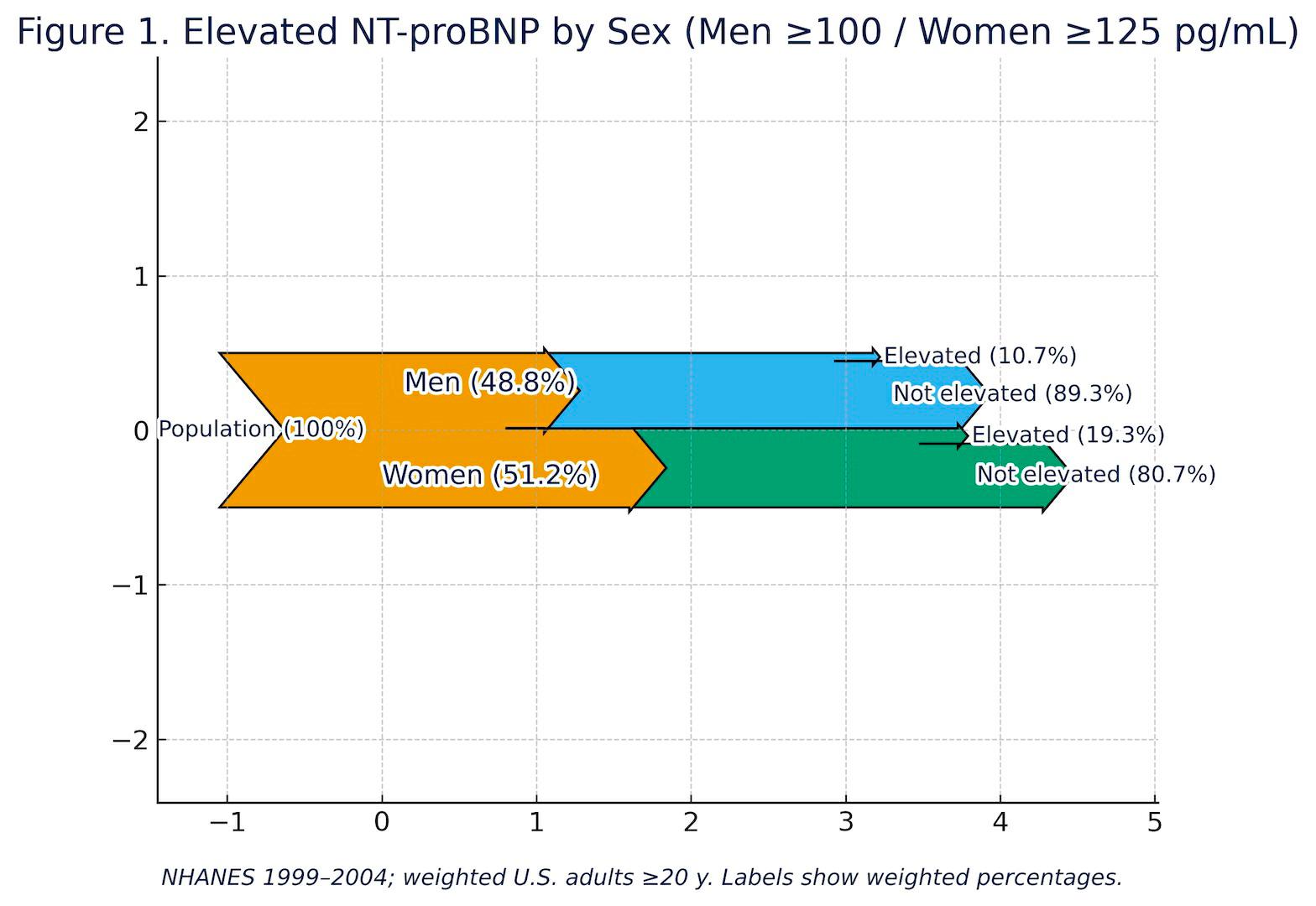
ABSTRACT #169
CLINICAL RESEARCH
CARDIOLOGY
Isabelle Hartfield Moseley1 and Amukta Nuney1
1Mount Sinai Morningside-West Hospitals, Icahn School of Medicine at Mount Sinai, New York, NY, United States Presented at the American Heart Association (AHA) Vascular Discoveries Annual Meeting that was held in Bellevue, Washington, United States from May 13-16, 2026.
BACKGROUND: Platelet counts reflect dynamic interactions between thrombosis, inflammation, and hemostasis during critical illness. Although early thrombocytopenia is associated with adverse outcomes, the prognostic importance of early platelet trajectory patterns has not been well defined in large multicenter intensive care cohorts. The objective of this study was to evaluate the association between early platelet trajectory patterns during the first 48 hours of intensive care unit admission and in-hospital mortality.
METHODS: Data from the eICU Collaborative Research Database (version 2.0) were analyzed. Adult first intensive care unit admissions with at least two platelet measurements within the first 48 hours were included. Platelet trajectories were classified into clinically interpretable groups based on change over time, including stable normal platelet counts, recovering thrombocytopenia, progressive thrombocytopenia, and persistent thrombocytopenia. The primary outcome was in-hospital mortality. Multivariable logistic regression models adjusted for age, sex, intensive care unit type, and Acute Physiology and Chronic Health Evaluation physiologic variables were used to assess associations.
RESULTS: Distinct platelet trajectory patterns were observed during the first 48 hours of intensive care. Inhospital mortality differed across trajectory groups. Compared with patients with stable platelet trajectories, patients with progressive thrombocytopenia and persistent thrombocytopenia demonstrated higher odds of inhospital mortality after multivariable adjustment. Patients with recovering thrombocytopenia demonstrated intermediate risk.
CONCLUSION: In a large multicenter intensive care cohort, early platelet trajectory patterns were independently associated with in-hospital mortality. Progressive and persistent thrombocytopenia identified patients at particularly high-risk, underscoring the importance of dynamic platelet assessment as a marker of dysregulated hemostasis and thrombo-inflammatory biology in critical illness.
ABSTRACT #170
CLINICAL RESEARCH
CARDIOLOGY
EARLY THROMBOCYTOPENIA IS INDEPENDENTLY ASSOCIATED WITH IN-HOSPITAL MORTALITY IN A MULTICENTER INTENSIVE CARE COHORT
Isabelle Hartfield Moseley1 and Amukta Nuney1
1Mount Sinai Morningside-West Hospitals, Icahn School of Medicine at Mount Sinai, New York, NY, United States Presented at the American Heart Association (AHA) Vascular Discoveries Annual Meeting that was held in Bellevue, Washington, United States from May 13-16, 2026.
BACKGROUND: Platelets play a central role in thrombosis and hemostasis and are dynamically altered during critical illness through consumption, inflammation, and dysregulated coagulation. However, the prognostic significance of early thrombocytopenia across diverse intensive care settings remains incompletely characterized. The objective of this study was to evaluate the association between early platelet count abnormalities and in-hospital mortality in a large multicenter intensive care cohort.
METHODS: Data from the eICU Collaborative Research Database (version 2.0) were analyzed. Adult first intensive care unit admissions were included. The exposure was the minimum platelet count within the first 24 hours of intensive care unit admission, categorized as less than 100 x10^3 per microliter, 100 to 149 x10^3 per microliter, and 150 x10^3 per microliter or greater. The primary outcome was in-hospital mortality. Multivariable logistic regression models adjusted for age, sex, intensive care unit type, and Acute Physiology and Chronic Health Evaluation physiologic variables were used to assess associations.
RESULTS: The cohort included 152,413 adult first intensive care unit admissions, with first 24-hour platelet values available in 125,705 patients. In-hospital mortality occurred in 7.4 percent (6,471 of 87,410) of patients with platelet counts 150 x10^3 per microliter or greater, 8.6 percent (2,093 of 24,321) of patients with platelet counts100 to 149 x10^3 per microliter, and 18.1 percent (2,530 of 13,974) of patients with platelet counts less than100 x10^3 per microliter. After multivariable adjustment, platelet counts less than 100 x10^3 per microliter were independently associated with higher odds of in-hospital mortality compared with platelet counts 150 x10^3 per microliter or greater (adjusted odds ratio 1.89, 95 percent confidence interval 1.77 to 2.01; p less than 0.001). Platelet counts 100 to 149 x10^3 per microliter were not independently associated with mortality after adjustment.
CONCLUSION: In a large multicenter intensive care cohort, early thrombocytopenia was independently associated with nearly two-fold higher odds of in-hospital mortality. These findings underscore the importance of early platelet abnormalities as markers of dysregulated hemostasis and thrombo-inflammatory biology in critical illness.
ABSTRACT #171
CLINICAL RESEARCH
CARDIOLOGY
Isabelle Hartfield Moseley1 and Ashish Correa1
1Mount Sinai Morningside-West Hospitals, Icahn School of Medicine at Mount Sinai, New York, NY, United States Presented at the European Heart Rhythm Association (EHRA) Annual Meeting that was held in Paris, France from April 12-14, 2026.
BACKGROUND: Atrial fibrillation (AF) is highly prevalent among critically ill patients and frequently coexists with systemic hypoperfusion, shock states, and metabolic derangements. Lactate is a widely available biomarker of global tissue stress, yet its ability to refine early risk stratification in ICU patients with AF remains underexplored. Understanding how lactate integrates into early prognostication may improve triage decisions, rhythmmanagement strategies, and the identification of patients at highest mortality risk. To quantify the relationship between early lactate levels and in-hospital mortality, and to describe how AF prevalence varies across lactate strata in a large, real-world ICU population.
METHODS: Using MIMIC-IV, we identified 94,458 adult ICU admissions with a blood lactate measured within the first 24 hours of ICU arrival. For each admission, we captured the first lactate and 24-hour maximum lactate and restricted analyses to each patient’s first ICU stay. AF was identified using validated ICD-9/10 codes (ICD9 42731/42732; ICD-10 I48*). Lactate values were grouped into clinically relevant bins (≤1.0, 1.01–2.0, 2.01–3.0, 3.01–5.0, 5.01–10.0, >10.0 mmol/L). The primary outcome was in-hospital mortality, assessed overall and across lactate subgroups. Crude AF prevalence was evaluated within each lactate bin to characterize arrhythmia burden relative to physiologic stress.
RESULTS: The final cohort included 94,458 ICU admissions, of which 18,492 (19.6%) had AF. Overall, inhospital mortality was 11.2% (10,543 deaths). Median first lactate was 1.8 mmol/L (IQR 1.2–3.1), and median 24-hour maximum was 2.4 mmol/L (IQR 1.6–4.5). Mortality increased stepwise across lactate bins, from 4.2% (≤1.0 mmol/L) to 38.9% (>10 mmol/L). AF prevalence was substantial across all strata, ranging from 15.7% in the lowest lactate bin to 28.4% at lactate >10 mmol/L. Similar monotonic patterns were observed when using 24-hour maximum lactate. Together, these findings demonstrate that even modest lactate elevations meaningfully stratify mortality risk and identify a physiologic phenotype in which AF is common.
CONCLUSION: Among ICU patients with early lactate measurement, rising lactate values were strongly associated with increasing in-hospital mortality and higher AF prevalence. These results suggest that early lactate provides immediate, clinically actionable prognostic information that may enhance rhythm-specific management and early risk stratification. Incorporating lactate into AF-focused ICU decision pathways and evaluating its incremental value over established scores represent important next steps.
ABSTRACT #172
CLINICAL RESEARCH
CARDIOLOGY
REFLEX APOLIPOPROTEIN B TESTING IDENTIFIES MISSED OPPORTUNITIES FOR LIPID THERAPY INTENSIFICATION IN UNITED STATES ADULTS
Isabelle Hartfield Moseley1 and Amukta Nuney1
1Mount Sinai Morningside-West Hospitals, Icahn School of Medicine at Mount Sinai, New York, NY, United States Presented at the American Heart Association (AHA) Vascular Discoveries Annual Meeting that was held in Bellevue, Washington, United States from May 13-16, 2026.
BACKGROUND: Cholesterol-based lipid measures are widely used to guide lipid-lowering therapy, yet they do not directly quantify atherogenic lipoprotein particle number. Low-density lipoprotein cholesterol (LDL-C) and non–high-density lipoprotein cholesterol (non–HDL-C) may therefore appear controlled despite persistently elevated atherogenic burden. Apolipoprotein B (apoB) directly reflects circulating atherogenic lipoprotein particle number and may identify residual vascular risk not captured by cholesterol-based measures. The objective of this study was to assess the prevalence of discordance between cholesterol-based lipid goals and elevated apoB levels in a nationally representative United States population.
METHODS: We analyzed data from the National Health and Nutrition Examination Survey (NHANES) cycles spanning2007–2008 through 2015–2016, the survey years in which apoB was measured. Adults with available fasting apoB, LDL-C, high-density lipoprotein cholesterol, triglycerides, and total cholesterol were included. Survey design variables and fasting weights were applied with multi-cycle weights calculated according to NHANES analytic guidance. Primary outcomes included the proportion of adults meeting cholesterol-based lipid goals and the prevalence of discordance, defined as apoB ≥90 mg/dL among individuals meeting LDL-C <100 mg/dL or non–HDL-C<130 mg/dL.
RESULTS: The analytic sample included 15,311 adults. Nationally, 40.0% met LDL-C <100 mg/dL and 49.2% met non–HDL-C <130 mg/dL. Despite appearing at goal, discordance was common. Elevated apoB levels were present in 5.7% of adults meeting LDL-C goals and 5.0% of those meeting non–HDL-C goals. These individuals would be reclassified as candidates for lipid therapy intensification under an apoB-informed strategy.
CONCLUSION: In a nationally representative United States population, approximately one in twenty adults who appear to meet cholesterol-based lipid goals have elevated apoB, indicating excess atherogenic lipoprotein particle burden despite apparently controlled cholesterol levels. Reflex apoB testing may improve identification of undertreated individuals and support more precise lipid management strategies at the population level.
ABSTRACT #173
CLINICAL RESEARCH
CARDIOLOGY
Isabelle Hartfield Moseley1 and Ashish Correa1
1Mount Sinai Morningside-West Hospitals, Icahn School of Medicine at Mount Sinai, New York, NY, United States Presented at the European Society of Cardiology Heart Failure Congress Annual Meeting that was held in Barcelona, Spain from May 9-12, 2026.
BACKGROUND: The period immediately after discharge from a hospital admission for heart failure is considered a vulnerable phase of care. However, the relative contribution of early versus later post-discharge events to overall medium-term risk has not been well described. To quantify the proportion of 6-month post-discharge adverse events attributable to the first 30 days after hospital discharge for heart failure
METHODS: Hospital admissions with a primary diagnosis of heart failure were identified from the Medical Information Mart for Intensive Care IV (MIMIC-IV) database, a publicly available, de-identified electronic health record resource. Adult patients with an index admission for heart failure and discharge alive were included, and repeat admissions were excluded from index designation. Heart failure diagnoses were identified using International Classification of Diseases coding. The primary outcome was a composite of all-cause death or heart failure readmission within 180 days after discharge. Events were classified as early (0–30 days) or later (31–180 days). The cumulative incidence of early and later events and the proportion of total 6-month events occurring in each period were calculated.
RESULTS: A total of 2 008 index hospitalizations for heart failure met inclusion criteria. The composite outcome occurred in 41.3% of patients within 6 months. Early events occurred in 172 patients (8.8%), while an additional 639 (32.7%) experienced events between 31 and 180 days. Overall, 21.3% of all composite events within 6 months occurred during the first 30 days after discharge, indicating a concentrated early period of vulnerability for adverse outcomes.
CONCLUSION: More than one-fifth of adverse events within 6 months of discharge following hospitalization for heart failure occurred in the first 30 days. These findings support the concept of an intensified early vulnerability period and underscore the potential value of structured transitional care, early follow-up strategies, and mediumterm risk mitigation beyond conventional 30-day metrics. A focus solely on early readmissions may underestimate the broader burden of post-discharge adverse events.
ABSTRACT #174
CLINICAL RESEARCH
CARDIOLOGY
TIME TO FIRST INTRAVENOUS LOOP DIURETIC AND OUTCOMES IN ACUTE DECOMPENSATED HEART FAILURE: A RETROSPECTIVE COHORT STUDY
Isabelle Hartfield Moseley1 and Ashish Correa1
1Mount Sinai Morningside-West Hospitals, Icahn School of Medicine at Mount Sinai, New York, NY, United States Presented at the European Society of Cardiology Heart Failure Congress Annual Meeting that was held in Barcelona, Spain from May 9-12, 2026.
BACKGROUND: Intravenous loop diuretics are foundational therapy for acute decompensated heart failure (ADHF) yet delays in treatment may reflect modifiable system-level factors. To evaluate the association between time to first intravenous loop diuretic administration and in-hospital outcomes among adults admitted with ADHF.
METHODS: We conducted a retrospective cohort study using the MIMIC-IV v3.1 database (PhysioNet). Adult hospital admissions with ADHF, identified using ICD-9 (428.x) or ICD-10 (I50.x) diagnosis codes, were included if an intravenous loop diuretic was administered within 24 hours of admission. The exposure was time from admission to first intravenous loop diuretic, analysed in prespecified strata (≤2 h, 2–6 h, 6–12 h, >12 h). The primary outcome was in-hospital mortality. The secondary outcome was hospital length of stay. Multivariable regression models adjusted for age and sex.
RESULTS: The cohort included 23,232 admissions. Median time to first intravenous loop diuretic was 350 minutes (interquartile range 205–794). Overall in-hospital mortality was 5.9%. Compared with initiation within ≤2 hours, initiation after >12 hours was not associated with in-hospital mortality (adjusted odds ratio 1.03, 95% confidence interval 0.82–1.29). Longer time to treatment was associated with increased hospital length of stay: adjusted length-of-stay ratios versus ≤2 hours were 1.12 (95% confidence interval 1.08–1.17) for 2–6 hours, 1.18 (95% confidence interval 1.13–1.23) for 6–12 hours, and 1.20 (95% confidence interval 1.15–1.25) for >12 hours.
CONCLUSION: More In a large real-world cohort of adults hospitalised with ADHF, delayed initiation of intravenous loop diuretics was associated with longer hospital length of stay but not higher in-hospital mortality after adjustment. These findings support time to diuretic initiation as a potential quality-of-care metric and motivate further evaluation of strategies to reduce treatment delays.
ABSTRACT #175
CASE REPORT/CLINICAL REVIEW
INFECTIOUS DISEASES/PULMONARY/CRITICAL CARE
WHEN A ROUTINE INFECTION UNRAVELS: INFLUENZA COMPLICATED BY RHABDOMYOLYSIS AND MESENTERIC ISCHEMIA
Ariel Henig1, Christiana Choi1, Krystle Hernandez1
1Mount Sinai Morningside-West Hospitals, Icahn School of Medicine at Mount Sinai, New York, NY, United States Presented at the Society of General Internal Medicine (SGIM) Annual Meeting that was held in Washington, DC, United States from May 6-9, 2026.
CASE PRESENTATION: A 74-year-old woman with hypertension presented to the ED with 5 days of cough, sore throat, nausea, and malaise. She had tested positive for influenza two days prior and was given Tamiflu. Initial labs showed sodium of 125 mEq/L, and she was admitted for mild, symptomatic euvolemic hyponatremia. Differential diagnosis included home hydrochlorothiazide, SIADH, and influenza-related hyponatremia. Hydrochlorothiazide was held and fluid restriction initiated. By hospital day 3, she had refractory hyponatremia to 125 mEq/L, acute kidney injury, leukocytosis, and CPK of 2119. She was started on sodium tablets and halfnormal saline fluid resuscitation. The next day, her CPK rose to 40000 with worsening renal function and oliguria. She also had brief, self-resolving dysarthria but otherwise reported only persistent myalgia without gastrointestinal symptoms. While being transported to CT for dysarthria, she experienced large-volume emesis with subsequent hypoxia/hypotension, requiring emergent intubation. CTA abdomen revealed pneumatosis intestinalis and severe distal SMA narrowing with occlusion, without evidence of thromboembolism. Exploratory laparotomy showed diffuse bowel gangrene distal to the ligament of Treitz, consistent with non-occlusive mesenteric ischemia. No resection was performed. Following goals-of-care discussions, she was transitioned to comfort focused care and passed away that evening.
CONCLUSION: This patient had rhabdomyolysis in the setting of influenza and hyponatremia, and subsequently developed acute mesenteric ischemia (AMI), resulting in rapid decompensation and death. AMI is most commonly caused by an arterial embolus/thrombus. Here, imaging was not consistent with either, suggesting non-occlusive AMI. Non-occlusive AMI can present without acute abdominal pain, which aligns with our patient’s case. It is typically associated with shock or vasculitis, neither of which were evident prior to her acute decompensation. It is possible that she developed increased intra-abdominal pressure secondary to visceral and/or abdominal wall edema from rhabdomyolysis. If she had a narrower aorto-mesenteric angle caused by a short ligament of Treitz a variant known to rarely predispose individuals to SMA syndrome this increased pressure could have led to SMA compression and subsequent AMI, which is consistent with the surgical findings of diffuse bowel gangrene distal to the ligament of Treitz.
ABSTRACT #176
CASE REPORT/CLINICAL REVIEW
HEMATOLOGY/ONCOLOGY
Jing Huang1, Kari Brown2, Ilan Shapira2
1Mount Sinai Morningside-West Hospitals, Icahn School of Medicine at Mount Sinai, New York, NY, United States; 2Mount Sinai Hospital, Icahn School of Medicine at Mount Sinai, New York, NY, United States Presented at the Mount Sinai Health System Department of Medicine Research Day that was held in New York, New York, United States from May 4-5, 2026.
BACKGROUND: Poly lymphomatous syndrome (PLS) describes the occurrence of Hodgkin lymphoma (HL) and non-Hodgkin lymphoma (NHL) in the same patient, either concurrently (termed composite or discordant) or sequentially, and is likely underrecognized. A recent Mayo Clinic series identified four patterns: HL following NHL, NHL following HL, composite HL/NHL, and mixed sequential or concurrent presentations. Germinal center–derived B-cell lymphomas, including follicular lymphoma, diffuse large B-cell lymphoma, and mantle cell lymphoma, are observed across several of these patterns, particularly in sequential, composite, and mixed cases. Outcomes were generally favorable when treatment was directed toward the most aggressive component, with autologous hematopoietic cell transplantation commonly employed for relapsed classical HL (cHL) or aggressive NHL.
CASE PRESENTATION: A 70-year-old man presented with a painless enlarging cervical mass. Imaging demonstrated bilateral parotid nodules and cervical lymphadenopathy, and excisional biopsy confirmed DLBCL (activated B cell type) with extensive necrosis. Staging PET/CT showed Ann Arbor stage II disease with low risk revised International Prognostic Index, and he received frontline rituximab based chemoimmunotherapy including polatuzumab vedotin. 13.5 months after completion of initial therapy, he developed recurrent lymphadenopathy, and biopsy confirmed relapsed B-cell lymphoma with disseminated PET uptake. Salvage therapy with planned autologous stem cell transplantation was initiated. During this period, he was diagnosed with advanced HIV infection and started on antiretroviral therapy. Radiographic disease progression during salvage therapy prompted reevaluation by the bone marrow transplant team, who favored anti-CD19 CAR-T cell therapy over autologous transplantation. He subsequently underwent CAR-T infusion and achieved a favorable metabolic response. He later developed axillary disease, with biopsy confirming DLBCL, and was treated with epcoritamab. After four cycles, PET/CT demonstrated progression with enlargement of the right axillary lymph node, prompting repeat biopsy. Histopathology revealed classical Hodgkin lymphoma, mixed cellularity subtype, establishing sequential poly-lymphomatous syndrome. He was started on Hodgkin lymphoma–directed therapy with curative intent, and response is pending.
CONCLUSION: Molecular studies demonstrate that many composite or sequential HL and NHL cases share a B cell clone, supporting clonal evolution from a germinal center precursor. HL and B cell NHL co-occur more often than expected and may be associated with immune dysregulation or Epstein Barr virus related transformation. This case highlights cHL emerging after multiply relapsed DLBCL in the setting of advanced HIV and novel immunotherapies. It emphasizes repeat biopsy at relapse and treatment directed at the most clinically relevant disease component.
ABSTRACT #177
CASE REPORT/CLINICAL REVIEW GASTROENTEROLOGY
Rama Hussein1 and Zoe Lawrence1
1Mount Sinai Morningside-West Hospitals, Icahn School of Medicine at Mount Sinai, New York, NY, United States Presented at the American College of Gastroenterology (ACG) Annual Meeting that was held in Phoenix, Arizona, United States from October 24-29, 2025.
BACKGROUND: The prevalence of duodenal fistulas is rare and causes are limited. Perforation of peptic ulcers, severe pancreatitis, complications of intervention such as gastrectomy and endoscopic retrograde cholangiopancreatography (ERCP) as well as some malignancies have been found to be the causes of duodenal fistulas1. Reno-duodenal fistulas are especially rare and account for < 1.0% of fistulas found between the gastrointestinal and urinary tracts2. Chronic inflammation in the kidneys may lend to fistulization with the duodenum due to their close proximity. We present a rare care of reno-duodenal fistula causing gastrointestinal bleeding.
CASE PRESENTATION: An 86-year-old male with history of hypertension, hyperlipidemia, diabetes, H. pylori gastritis and anemia initially presented for generalized weakness, lower abdominal pain and four days of melena. On arrival, the patient's lab work was notable for acute anemia and leukocytosis. Computerized tomography (CT) Abdomen and Pelvis scan was notable for complete cystic and solid irregular degeneration of the right kidney with associated focal emphysema. He was admitted and his hospital course was notable for multiple episodes of melena requiring blood transfusions. Inpatient esophagogastroduodenoscopy (EGD) performed for the evaluation of melena revealed a 15mm fistula in the second portion of the duodenum surrounded by clotted blood (Figure 1.). Biopsies of the surrounding abnormal mucosa were consistent with metastatic carcinoma, consistent with renal origin and kidney biopsy confirmed the diagnosis of renal cell carcinoma. Following goals of care discussion, the patient was discharged to hospice.
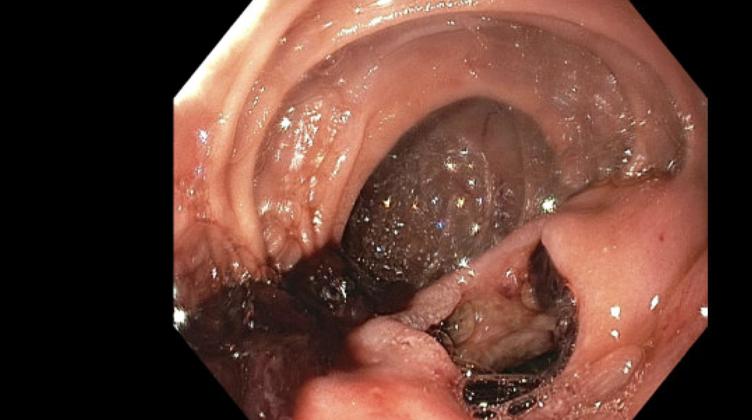
CONCLUSION: The presentation of melena in our patient with newly diagnosed renal cell carcinoma secondary to a reno-duodenal fistula emphasizes the need to include fistula formation on the differential when investigating gastrointestinal bleeding. Our case also highlights that although CT imaging did not indicate the presence of a fistula, emphysematous changes should prompt concerns not only of local inflammatory process but also of involvement of nearby air containing structures such as the luminal gastrointestinaI tract as well. This case draws to light the need to maintain a broad differential including rare presentations, particularly when patients are presenting with atypical symptoms for upper gastrointestinal bleeding.
ABSTRACT #178
QUALITY IMPROVEMENT
GASTROENTEROLOGY
EDUCATING INTERNAL MEDICINE RESIDENTS AND PATIENTS ON STOOL-BASED COLORECTAL CANCER SCREENING GUIDELINES TO IMPROVE SCREENING RATES
Marni H. Wilkoff1, Allison E. Wang1, Alexandria R. Markley1 , Rama Hussein1, Swati Patel1, Nicholas R. Piniella1 , Kevin Yan1, Priya K. Simoes1
1Mount Sinai Morningside-West Hospitals, Icahn School of Medicine at Mount Sinai, New York, NY, United States Presented at the Digestive Disease Week (DDW) Annual Meeting that was held in Chicago, Illinois, United States from May 3-5, 2026.
BACKGROUND: Screening rates for colorectal cancer (CRC) are suboptimal, especially among resident physicians. The national average CRC screening rate was 40% in all Federally Qualified Health Centers (FQHC)s, but was only 19% among resident physicians at our New York City (NYC) FQHC, with only 50% of patients completing tests. These low screening order and completion rates highlight the need for increased awareness of CRC screening guidelines among both resident physicians and patients.
METHODS: We conducted a quality improvement project to increase CRC screening rates at a single FQHC in NYC. We implemented interventions for increasing awareness and education of CRC screening among both physicians and patients. Practitioners were internal medicine residents (PGY-1 to 3), and patients were individuals aged 45–75 years old who were eligible for CRC screening and were seen by a resident physician at the FQHC for their primary medical care. Interventions: A pre-intervention survey was distributed to practitioners to identify knowledge gaps and barriers to CRC screening. They then received education via an in-person lecture or pre-recorded video on appropriate CRC screening modalities, including tier one and two tests, and appropriate screening intervals. A follow-up survey was completed to assess knowledge retention one month after the educational intervention. For patients, an informational poster with CRC screening modalities was displayed in all patient rooms encouraging patients to ask their providers about CRC screening. Patients who opted for stoolbased testing watched a 2-minute video which demonstrated how to properly collect and return the stool-based screening test during the clinical encounter. The outcomes at 3 months included the number of CRC screening tests ordered and successfully completed after resident and patient education.
RESULTS: Overall screening test orders increased post-intervention (18% from 15% pre-intervention, p=0.28), however completion rates did not significantly improve with only 3% of colonoscopies and 19% of stool-based tests being completed. Although over 90% of residents reported feeling “somewhat confident” or “very confident” with CRC screening guidelines both pre- and post-intervention, their knowledge assessments consistently demonstrated lack of understanding screening guidelines. Residents improved their knowledge on colonoscopy screening intervals (90% to 100%, p=0.05) but showed no significant improvement in identification of average and above average risk patients for developing CRC.
CONCLUSION: CRC screening rates did not significantly improve 3 months post-intervention. Further resident education dedicated to proper CRC screening modalities and intervals and increased patient outreach efforts should be tested to improve screening rates.
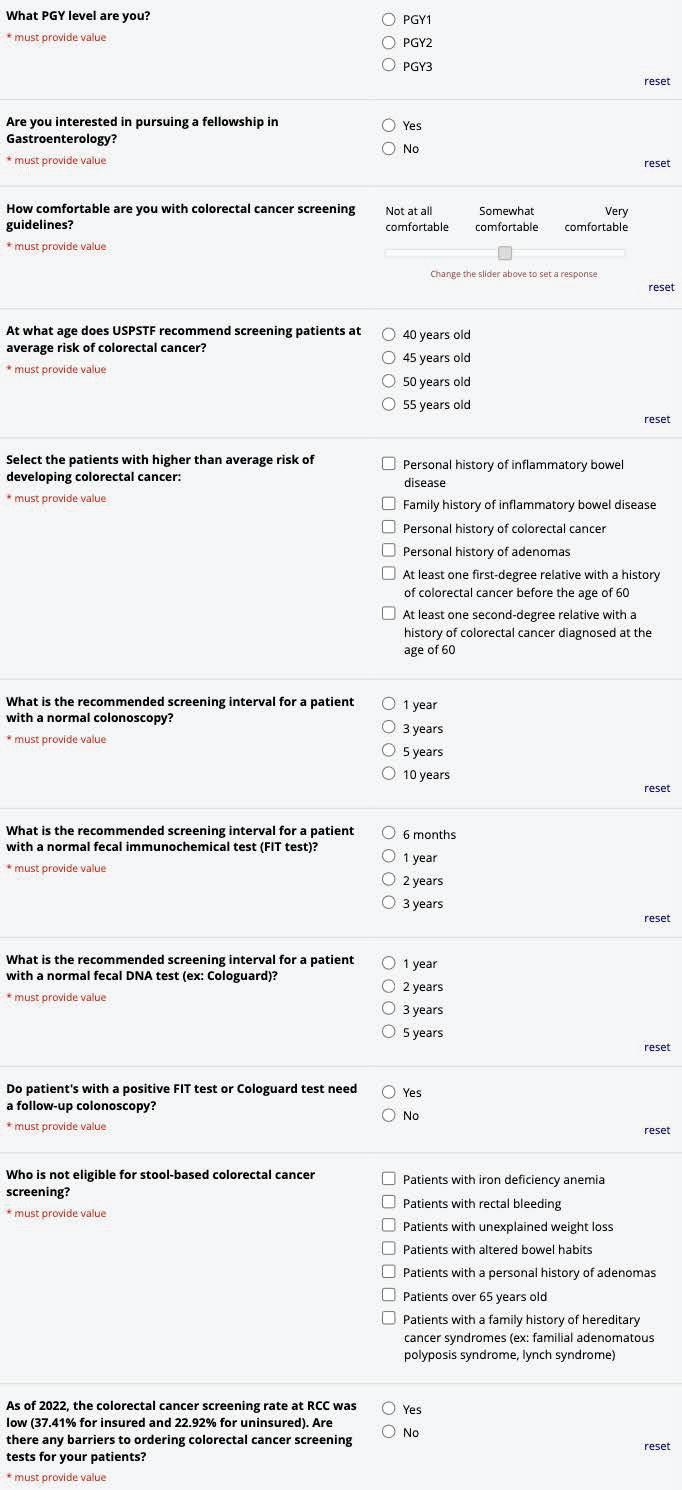
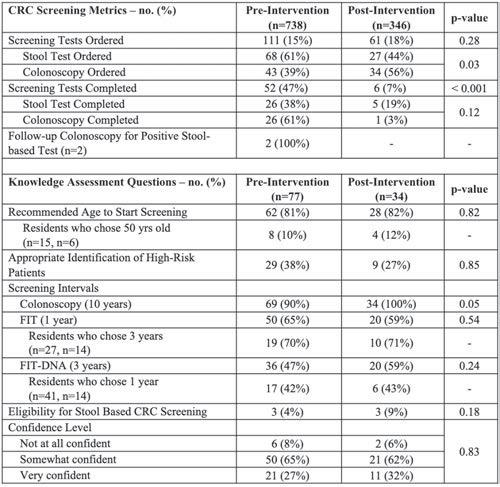
Table 1. CRC Screening Metrics and Resident Performance Analysis Pre- and Post-Intervention
ABSTRACT #179
CLINICAL RESEARCH
GASTROENTEROLOGY
LOS ANGELES GRADE B ESOPHAGITIS AS ACTIONABLE GASTROESOPHAGEAL REFLUX DISEASEDOES THE SUBSPECIALIST MATTER?
Rama Hussein1, Soha Noorani1, Yuying Luo1, Daniela Jodorkovsky1
1Mount Sinai Morningside-West Hospitals, Icahn School of Medicine at Mount Sinai, New York, NY, United States Presented at the American College of Gastroenterology (ACG) Annual Meeting that was held in Phoenix, Arizona, United States from October 24-29, 2025.
BACKGROUND: According to the updated Lyon Consensus 2.0, Los Angeles (LA) grade B esophagitis is now considered a gastroesophageal reflux disease (GERD) equivalent. This change represents an important update in clinical guidance but may have variable adherence and applicability by gastroenterologists depending on subspecialty. We aimed to evaluate if the management of LA grade B esophagitis was dependent on provider subspecialty.
METHODS: A retrospective comparative analysis of patients with LA grade B esophagitis on esophagogastroduodenoscopy (EGD) between October 2022 and September 2023 at two hospital sites within one health system was performed. Outcomes included differences in patient demographics, escalation of medical management and referral for quantitative reflux testing, repeat endoscopy and fundoplication following detection of LA grade B between the two sites varying in subspecialist access. Escalation of medical management was defined as initiation of antisecretory therapy, or increase in dose, potency, or frequency of acid suppression medication.
RESULTS: 66% of the providers at Hospital A are considered esophageal or motility specialists while none of the gastroenterologists at Hospital B are within this subspecialty. Patient demographic variables did not differ between the two sites. 15.6% of patients at Hospital A versus 2.5% at Hospital B were referred to quantitative reflux testing following LA grade B esophagitis detection (p=0.003). 52.2% of patients at Hospital A received medical management escalation compared to 55.7% of patients at Hospital B (p=0.65). 17.8% of patients at Hospital A were referred for repeat EGD compared to 12.7% at Hospital B (p=0.39). Of the 17 patients who underwent repeat EGD, 80% showed improvement in esophagitis grade at Hospital A compared to 57% showed improvement in Hospital B (p=0.36). 11.1% of patients at Hospital A were referred for fundoplication while 0% were referred at Hospital B (p=0.002).
CONCLUSION: Patients with LA grade B esophagitis managed by esophagus or motility specialists were more likely to be referred for reflux testing or fundoplication compared to general gastroenterologists. However, there was no significant difference in plan for medical escalation of LA grade B esophagitis that was dependent on provider subspecialty. Increased provider education regarding recent inclusion of LA grade B esophagitis as conclusive gastroesophageal reflux disease (GERD) is important to provide uniform and personalized management for patients with esophagitis.
ABSTRACT #180
CLINICAL RESEARCH
GASTROENTEROLOGY
UNDERREPRESENTATION OF OSTEOPATHIC MEDICAL GRADUATE DEGREES AMONG GASTROENTEROLOGY FACULTY AND LEADERSHIP IN THE UNITED STATES
Marni H. Wilkoff1, Alexandria Markley1 , Rama Hussein1, Nivita Sharma2 , Mako Koseki1, Rashmi Advani3, Yuying Luo1, Loren Rabinowitz5, Haley Zylberberg6
1Mount Sinai Morningside-West Hospitals, Icahn School of Medicine at Mount Sinai, New York, NY, United States; 2University of California, San Diego, California, United State; 3Mount Sinai South Nassau, Icahn School of Medicine at Mount Sinai, New York, NY, United States; Beth Israel Deaconess Medical Center, Boston, MA, United States; 6Weill Cornell Medicine, New York, NY, United States
Presented at the American College of Gastroenterology (ACG) Annual Meeting that was held in Phoenix, Arizona, United States from October 24-29, 2025.
BACKGROUND: Osteopathic physicians (DOs) and international medical graduates (IMGs) are underrepresented in gastroenterology (GI) when compared to Doctors of Medicine (MD), making up 6.6% and 29.7% of the workforce, respectively. The aim of this study was to evaluate the representation of DOs among GI faculty across the United States (US) and to assess factors associated with increased representation.
METHODS: We conducted a cross-sectional study of all American College of Graduate Medical Education accredited GI fellowship programs in the US in 2023. Program characteristics were collected from websites and through direct contact. Among 224 programs, 194 had all faculty listed. We collected US region, institution type, number of faculty members, type of medical degree, and presence of a DO in leadership. We evaluated for presence of DO in univariate analyses using Wilcoxon signed-rank and chi-squared tests and a multivariable logistic regression model.
RESULTS: Of 194 programs, there were 3,900 faculty members of which 93.6% had MDs, 0.9% had DOs, and 2.5% had IMGs (p<0.001). Only 9.8% of programs had representation of all degree types (Figure 1). When evaluating faculty composition, MDs made up a higher median percentage of faculty compared to DOs (n=78 programs, 89.7% versus 7.7%, p<0.001). Among 183 programs with leadership roles available (Table 1), DOs made up 12% of leadership positions. On univariate analyses, presence of a DO on faculty was associated with increased DOs among leadership positions (25% versus 2.8%, p<0.001) and non-university-based programs (20% versus 7.1%, p=0.008), but not with region. These associations remained significant in a multivariable logistic regression model adjusted for region and faculty size (p< 0.01).
CONCLUSION: Overall, DOs remain underrepresented among GI faculty. Given that DOs emphasize a holistic, patient-centered approach and usually have experience with community-based care, ensuring their inclusion on academic faculty can help enrich the field of GI. We found that the presence of a DO on faculty was linked to increased DOs in leadership. This suggests that representation at senior levels may foster greater inclusion and opportunity for DOs.
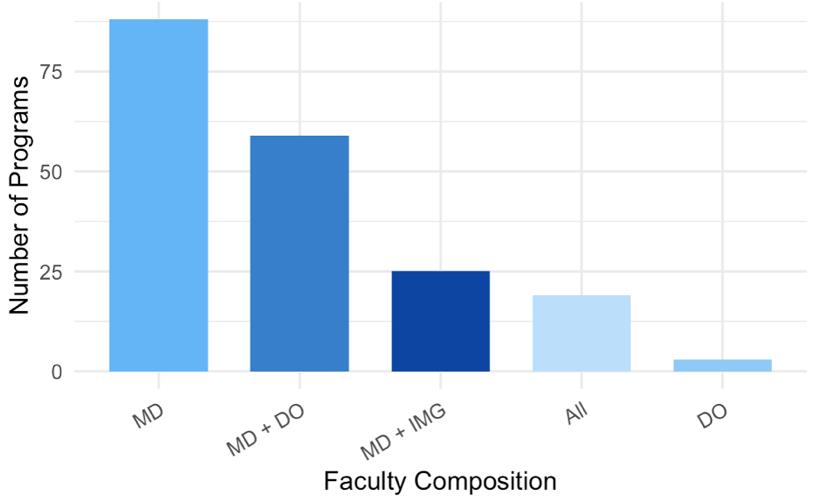
Distribution of Programs by Faculty Composition
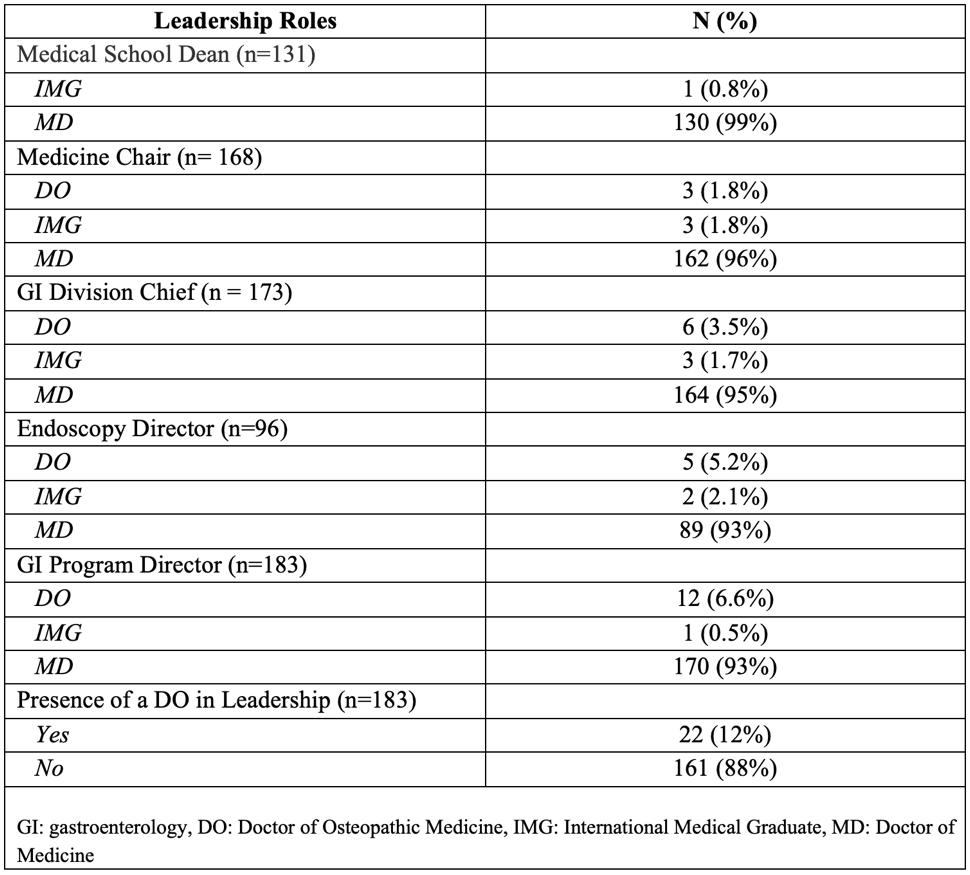
1. Distribution of Leadership Roles Per Program by Medical Degree Type
ABSTRACT #181
CLINICAL RESEARCH
GASTROENTEROLOGY
DEVELOPMENT AND VALIDATION OF AN ELECTRONIC HEALTH RECORD MACHINE LEARNING MODEL FOR CUMULATIVE UPPER GASTROINTESTINAL CANCER RISK PREDICTION
Alyssa Y. Chen1 , Suraj K. Jaladanki2, Pushkala Jayaraman1, Ji Yoon Yoon1, Chin Hur3, Nicholas Tatonetti4 , Girish Nadkarni1, Julian A. Abrams3, Ali Soroush1
1Mount Sinai Hospital, Icahn School of Medicine at Mount Sinai, New York, NY, United States; 2Mount Sinai MorningsideWest Hospitals, Icahn School of Medicine at Mount Sinai, New York, NY, United States; 3Columbia University Irving Medical Center, New York, NY, United States; 4Cedars-Sinai Medical Center, Los Angeles, CA, United States
Presented at the American College of Gastroenterology (ACG) Annual Meeting that was held in Phoenix, Arizona, United States from October 24-29, 2025.
BACKGROUND: Upper gastrointestinal (UGI) cancers are predominantly diagnosed at advanced stages and disproportionately impact minority and immigrant populations. Existing cancer-specific prevention strategies underestimate the potential benefits of a unified endoscopic screening for all UGI cancers. We evaluated the viability of a novel UGI cancer risk assessment model using routinely collected electronic health record (EHR) variables.
METHODS: We conducted a large-scale retrospective cohort study of adults 40-85 years old with at least one outpatient or inpatient encounter in the Mount Sinai Health System (MSHS) between 2011 and 2022. Patients with a cancer registry confirmed UGI cancer diagnosis within 1 year of their initial encounter or without histological confirmation were excluded. Routinely collected demographic, social, clinical and laboratory data were extracted from structured EHR fields. Time-dependent variables were extracted from the first encounter. Cox proportional hazards (CoxPH), logistic regression, and XGBoost models were developed for 3-, 5-, and 10year risk horizons using an 80/20 train-validation split stratified by cancer diagnosis. In each model, features were selected based on univariate analysis, with significance defined as a p<0.05. The best model was selected based on AUROC on the validation set. Performance metrics were calculated from the optimal risk percentile defined by the Youden index.
RESULTS: Our final cohort consisted of 1,745,288 patients, of which 313 developed UGI cancer after a median follow-up time of 10 years. Cohort demographics are shown in Table 1. The best performing model was a CoxPH model and achieved an AUROC of 0.929 for a 5-year horizon (Table 2). The strongest predictors were PPI use, peptic ulcer disease, head and neck cancer, and male sex. At the optimal 92nd risk percentile, the model achieved a sensitivity of 81.8%, specificity of 92.4%, and number needed to screen of 754 patients.
CONCLUSION: We internally validated a UGI cancer risk model that uses 15 readily available predictors from the initial patient encounter. The model demonstrated acceptable discrimination performance and has potential to inform unified screening strategies. Further work is needed to externally validate the model.
Table 1. Demographics.
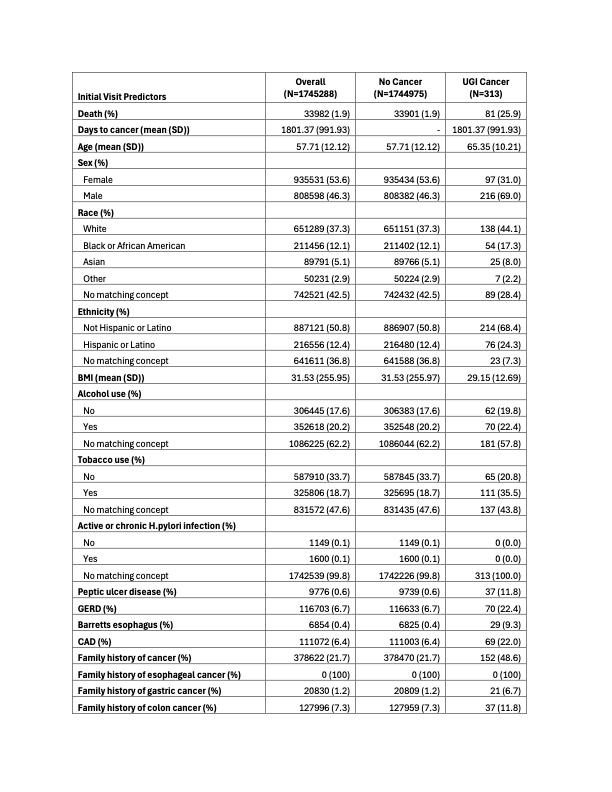
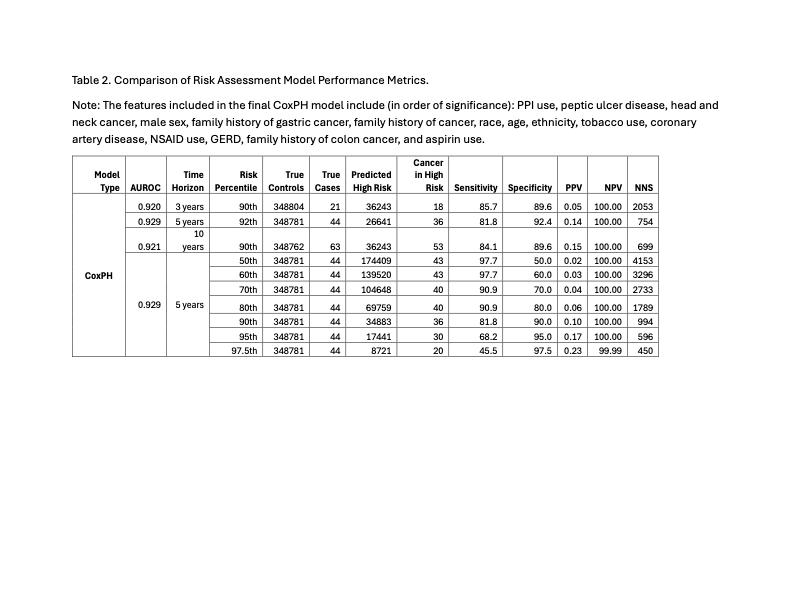
ABSTRACT #182
MEDICAL EDUCATION
HEMATOLOGY/ONCOLOGY
IMMUNOTHERAPY MAY BE SUPERIOR TO MULTIKINASE THERAPY AS SECOND LINE THERAPY FOR HEPATOCELLULAR CARCINOMA
Jacob Lowy1 , Noah Gavil1 , Michael Rogers1 , Norah Sadek1 , Fionnuala Crowley1 , Varun Devraj1 , Antoine Jeri1, Dan Feng1
1Mount Sinai Morningside-West Hospitals, Icahn School of Medicine at Mount Sinai, New York, NY, United States; 2Mount Sinai Hospital, Icahn School of Medicine at Mount Sinai, New York, NY, United States Presented at the Mount Sinai Health System Department of Medicine Research Day that was held in New York, New York, United States from May 4-5, 2026.
BACKGROUND: Combination immunotherapy with atezolizumab (aPD-L1) and bevacizumab (aVEGF) (i.e. “atezo/bev”) or single-agent nivolumab (aPD-1) is the first line treatment for unresectable, advanced hepatocellular carcinoma (HCC; BCLC stage C). If contraindicated durvalumab (aPD-L1) and tremelimumab (aCTLA-4) are given. If patients progress, second line agents includ immunotherapy versus tyrosine kinase inhibitors (TKIs), such as sorafenib or lenvatinib. We evaluated outcomes of second-line aPD-1/aCTLA-4 therapy versus TKIs following atezo/bev or PD-1 monotherapy for HCC BCLC stage C patients in a single-center retrospective study.
METHODS: We retrospectively reviewed patients with unresectable or metastatic HCC who received secondline systemic therapy after progression on or intolerance to first-line immunotherapy therapy. Baseline variables included demographics, HCC risk factors, race/ethnicity, BCLC stage, Child-Pugh class, tumor characteristics, and prior treatments. Patients who received immunotherapy in conjunction with multikinase therapy as well as patients who received multikinase therapy prior to immunotherapy were excluded.
RESULTS: 605 HCC patients at Mount Sinai Hospital were reviewed. Mean age was 62.9±10.6 years and BMI 26.9±5.2; most were male (504:101). Common risk factors included HCV (n=269), HBV (n=147), alcohol use (n=159), NASH (n=94), diabetes (n=202), hyperlipidemia (n=160), and cirrhosis (n=484). Race included White (n=168), Asian (140), Hispanic/Latino (n=135), and Black (n=97). At diagnosis, BCLC stages were A (n=199), B (n=160), and C (n=214); most patients were Child-Pugh A (n=446). Front-line immunotherapy was received by 520 patients. Of these, 81 received second-line therapy and were eligible for inclusion in the analysis: lenvatinib (n=53), sorafenib (n=13), or aPD-1/aCTLA-4 therapy (n=15). Kaplan-Meier analysis demonstrated a trend toward improved overall survival (OS) with aPD-1/aCTLA-4 therapy compared with multikinase inhibitors (Figure 1). Median OS from second-line initiation was 1.06 years (0.6593 to 2.933) for aPD-1/aCTLA-4 therapy versus 0.764 years (95%CI, 0.3409-1.517) for multikinase inhibitors (p=0.0550) with a HR of 0.4936 (95%CI, 0.2713 to 0.8980).
CONCLUSION: Second-line aPD-1/aCTLA-4 therapy demonstrated a trend toward improved overall survival compared with multikinase inhibitors in patients with unresectable HCC following first-line immunotherapy. Further prospective, multi-center studies are needed to better understand outcomes and efficacy of second line treatment options for patients with unresectable HCC.
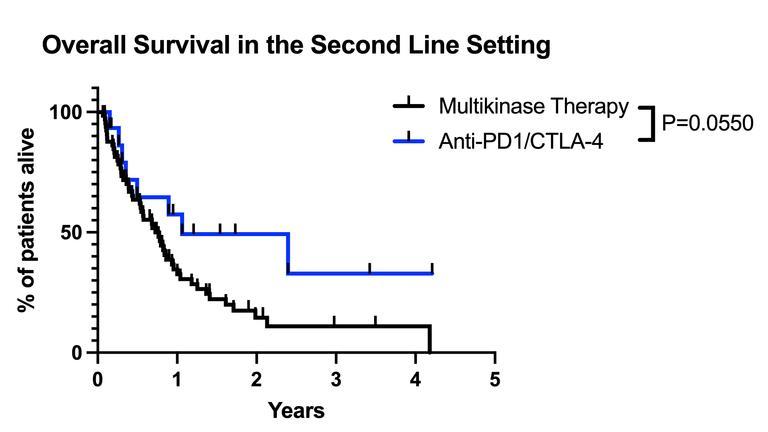
ABSTRACT #183
CASE REPORT/CLINICAL REVIEW
CARDIOLOGY
NAVIGATING UNCHARTED WATERS: APICAL BALLOONING SYNDROME WHILST ON AFICAMTEN
Sanjay Sivalokanathan1, Bette Kim1 , Sharan Kapadia1, Edgar Argulian1
1Mount Sinai Morningside-West Hospitals, Icahn School of Medicine at Mount Sinai, New York, NY, United States Presented at the American College of Cardiology (ACC) Annual Scientific Session that was held in New Orleans, Louisiana, United States from March 28-30, 2026.
CASE PRESENTATION: A 59-year-old lady with HCM presented with chest pain. ECG revealed ST-segment elevation, raising concern for an MI. She was diagnosed with HCM in 2023, during which her LVEF was 68%. In addition, there was SAM, moderate to severe mitral regurgitation, and a peak LVOT gradient of 67mmHg. Despite being on maximally tolerated beta-blocker therapy, she continued to exhibit symptoms. Consequently, she was enrolled in the FOREST-HCM study and began aficamten. Follow-up TTE demonstrated resolution of her LVOT gradients. Upon arrival, the patient was in cardiogenic shock, which necessitated the activation of the catheterization lab. Subsequent evaluation revealed non-obstructive CAD and apical ballooning, alongside an LVOT gradient of 53 mmHg. Bedside TTE revealed an EF of 35%, SAM, and moderate-to-severe mitral regurgitation. The patient was initiated on phenylephrine and intravenous beta-blocker therapy. Further history suggested an emotional event had occurred prior to her presentation. With supportive management and uptitration of beta-blockade, the EF improved to 55%, with no significant LVOT gradients being observed on discharge. During her follow-up outpatient visit, she was reinitiated on aficamten and continues to exhibit preserved ejection fraction without any LVOT gradients.
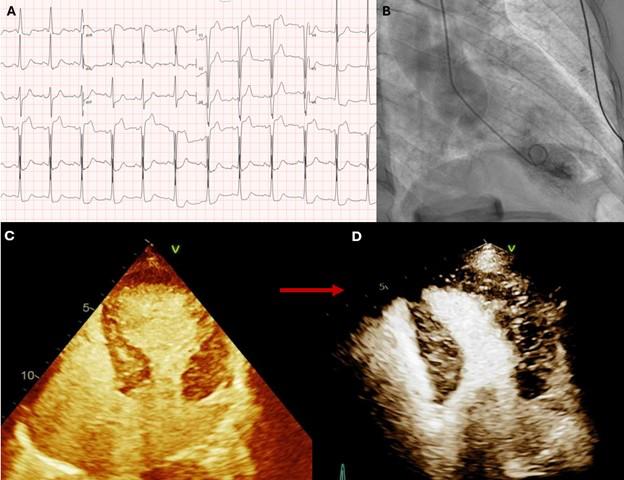
CONCLUSION: Adenosine- We present a case of acute LVOT obstruction in an HCM patient receiving aficamten, emphasizing that the phenotypic expression of HCM remains complex and heterogeneous.
ABSTRACT #184
CLINICAL RESEARCH
GASTROENTEROLOGY
VONOPRAZAN USE IS ASSOCIATED WITH LOWER HOSPITALIZATION AND BLEEDING RATES IN PATIENTS WITH EROSIVE ESOPHAGITIS COMPARED TO PROTON PUMP INHIBITORS
Do Han Kim1, Donghyun Ko, MD, MSc2, Carlos G. Diola1 , Jose A. Porres3, Carlos Elizondo Alatorre4, Paul T. Kroner5, Pedro Palacios Argueta6, Frank J. Lukens7, Juan E. Corral8
1Mount Sinai Morningside-West Hospitals, Icahn School of Medicine at Mount Sinai, New York, NY, United States ; 2Bridgeport Hospital, Yale New Haven Health, Bridgeport, CT, United States; 3Universidad Francisco Marroquin, School of Medicine, Guatemala City, Guatemala; 4NYC Health + Hospitals/Metropolitan, New York, NY, United States; 5Riverside Health System, Newport News, VA, United States, Newport News, VA; 6Thomas Jefferson University Hospital, Philadelphia, PA, United States; 7Mayo Clinic, Jacksonville, FL; 8Prisma Health, Greenville, SC, United States
Presented at the American College of Gastroenterology (ACG) Annual Meeting that was held in Phoenix, Arizona, United States from October 24-29, 2025.
BACKGROUND: Prior studies have found vonoprazan, a potassium-competitive acid blocker, is non-inferior compared to standard-dose proton pump inhibitors (PPIs) for the management of erosive esophagitis. Erosive esophagitis is a common gastroesophageal condition traditionally managed with proton pump inhibitors (PPIs), which carry well-documented risks including increased hospitalization and bleeding rates. However, large-scale comparative data on clinical outcomes between vonoprazan and PPIs in erosive esophagitis patients remain limited. This study evaluates clinical outcomes in patients with erosive esophagitis treated with either vonoprazan or PPI.
METHODS: We conducted a retrospective cohort study using the TriNetX Global Research Network. Adult patients with erosive esophagitis were identified and stratified based on vonoprazan or PPI use. Propensity score matching (1:1) was performed, balancing for demographics, comorbidities, and concomitant medications. Outcomes included hospitalization, bleeding, acute kidney injury (AKI), infection by Clostridium difficile, pneumonia, dysphagia, and diarrhea. Hazard ratio (HR) and 95% confidence intervals (95%CI) were calculated to quantify the associations between variables.
RESULTS: A total of 103,945 adult patients with erosive esophagitis were identified, of whom 1,452 (1.4%) were on vonoprazan. After matching, 1,448 patients on vonoprazan (mean age 63.0 years, 55.2% female) were compared to 1,448 on PPI (mean age 63.1 years, 54.1% female). Vonoprazan therapy was associated with significantly lower risk of hospitalization (HR:0.28, 95%CI: 0.20-0.38), bleeding (HR:0.36, 95%CI: 0.17-0.78), and AKI (HR:0.17, 95%CI: 0.07-0.45) at 90 days. Similar trends were observed over 30 days. No significant differences were observed in infection by Clostridium difficile, pneumonia, dysphagia, and diarrhea.
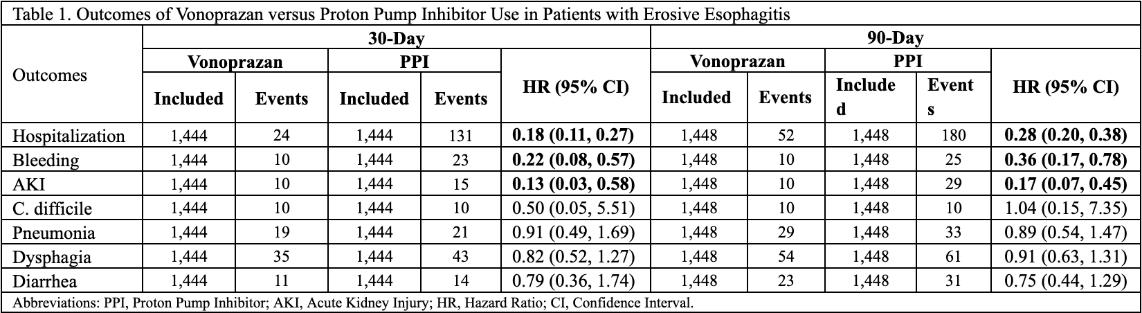
CONCLUSION: In patients with erosive esophagitis, vonoprazan was associated with substantially reduced risk of hospitalization, bleeding, and AKI in the short- and long-term compared to PPI therapy. These findings suggest vonoprazan may offer superior clinical outcomes with similar tolerability than traditional PPI therapy. Nonetheless, clinical decision-making should remain individualized and further prospective studies are needed to confirm these findings.
ABSTRACT #185
MEDICAL EDUCATION
GENERAL INTERNAL MEDICINE
Maxwell Leonhardt1, Kaityln Clausell1, Justin Gasper1
1Mount Sinai Morningside-West Hospitals, Icahn School of Medicine at Mount Sinai, New York, NY, United States Presented at the Mount Sinai Health System Department of Medicine Research Day that was held in New York, New York, United States from May 4-5, 2026.
BACKGROUND: Despite advances in the field of addiction medicine (AM), people with substance use disorders (SUD) continue to be undertreated. In 2023, 17% of Americans met diagnostic criteria of SUD, though only a quarter are offered treatment. There is a need for educated providers, and most US residency programs do not offer more than cursory non-clinical didactic in AM curricula. For doctors, skill acquisition mainly comes through an “apprenticeship” model in supervised clinical experiences, and the development of a novel AM curricula within internal medicine residency education aims to meet this need.
METHODS: Residents participated in a novel AM educational track embedded within the existing internal medicine curriculum based on clinical, medical education, and public health experiences.
Clinical:
• Asynchronous SUD core curriculum
• Protected clinical time with a PCP preceptor caring for patients with SUD
• Staffing detox and rehab inpatient unit
• AM inpatient consults
• Direct observation of novel standardized patient case focused on motivational interviewing with immediate feedback Medical education:
• Prepared didactics on stigmatizing language, MOUD, acute opioid withdrawal and site-specific resources
• Developed educational materials on the basics of managing opioid and stimulant withdrawal inpatient for co-residents Public health:
• Weekly journal sharing
• Met with physicians, data scientists, program directors and public servants to discuss the role of clinicians in context of current state policies, programming, harm reduction and population health at the Office of Addiction Services and Supports and the Office of Drug User Health
• Visited overdose prevention site with onsite clinic management of acute and chronic conditions
RESULTS: During the first year of an integrated AM track, residents completed online modules, applying new skills to all regularly scheduled clinical activities, including precepting with PCP in a clinic treating patients with SUD. The same preceptor directly observed the mock motivational interview, allowing residents to build skills in a graduated manner. Residents led didactic lectures; impact measured via pre- and post-surveys using a Likert scale. Responses showed 94% of participants reporting at least some improvement in their knowledge base and/or comfort on the topics. The track strengthened residents' patient-centered clinical skills through working and meeting with AM prescribers and public health workers. 100% of participants completed 8-hour DEA education requirement. 50% of participants plan to pursue AM fellowship training. 100% of participants plan to incorporate evidence-based addiction practices as future PCPs.
CONCLUSION: This novel education track provides an opportunity to address the gap among the addiction physician work force, providing residents with exposure to AM services to build empathetic, evidence-based practices.
ABSTRACT #186
CLINICAL RESEARCH
GASTROENTEROLOGY
MIND THE GENDER
Sonia Mehra1, Lauren Alpert1, Lina Jandorf1, Marin Gonzalez1, Yuying Luo1
1Mount Sinai Morningside-West Hospitals, Icahn School of Medicine at Mount Sinai, New York, NY, United States Presented at the American College of Gastroenterology (ACG) Annual Meeting that was held in Phoenix, Arizona, United States from October 24-29, 2025.
BACKGROUND: Patient preference towards the gender of their endoscopist may serve as a potential barrier for colorectal cancer screening adherence based on previous studies. The aim of this pilot study is to assess if honoring endoscopist gender preference impacts patient satisfaction outcomes.
METHODS: We conducted a mixed-methods study over a two-week period. Patients referred for direct access colonoscopy at a tertiary care center were asked about gender preferences prior to scheduling. A voluntary postprocedure patient survey was conducted to assess satisfaction with a 5-point Likert scale and qualitative questions. Demographic data were obtained via chart review. Qualitative and quantitative analysis was performed.
RESULTS: Of the 49 patients asked about gender preferences (25 female, mean age 55.8 ± 11.1 years), 9 patients (18.4%) expressed a preference; all female and 50% of male patients preferred a female endoscopist. 16 patients (32.7%) were excluded as their procedures were scheduled beyond the study time frame (including 5 patients with gender preferences); the remaining 33 patients were contacted. Of this cohort, 22 patients (12 female, mean age 57.6 ± 10.2 years) completed the survey, with 10 patients (45.5%) undergoing their first colonoscopy (Table 1). Only 50% of patients recalled being asked about preference; there was no significant difference in satisfaction ratings between patients matched with their preference (4.72/5) compared to patients without preference (4.70/5). Qualitative patient responses are listed in Table 2. Patients who initially had a gender preference for their endoscopist were more likely to have a preference for future colonoscopies compared to those without an initial preference (75% versus 22%, p<0.05). Among those who had undergone a prior colonoscopy, including both patients with (n=2) and without a gender preference (n=8), 66.7% reported their current procedure to be more satisfying compared to previous.
CONCLUSION: Fewer than 20% of patients expressed a gender preference for their endoscopist; however, amongst those matched with their preference, 75% expressed a gender preference for future colonoscopies and almost a quarter of patients without an initial gender preference expressed a preference for future procedures. Over two-thirds of patients who had a previous colonoscopy reported increased satisfaction. Inquiring about patients’ gender preferences for endoscopist may improve overall satisfaction, even if patients do not express a preference.
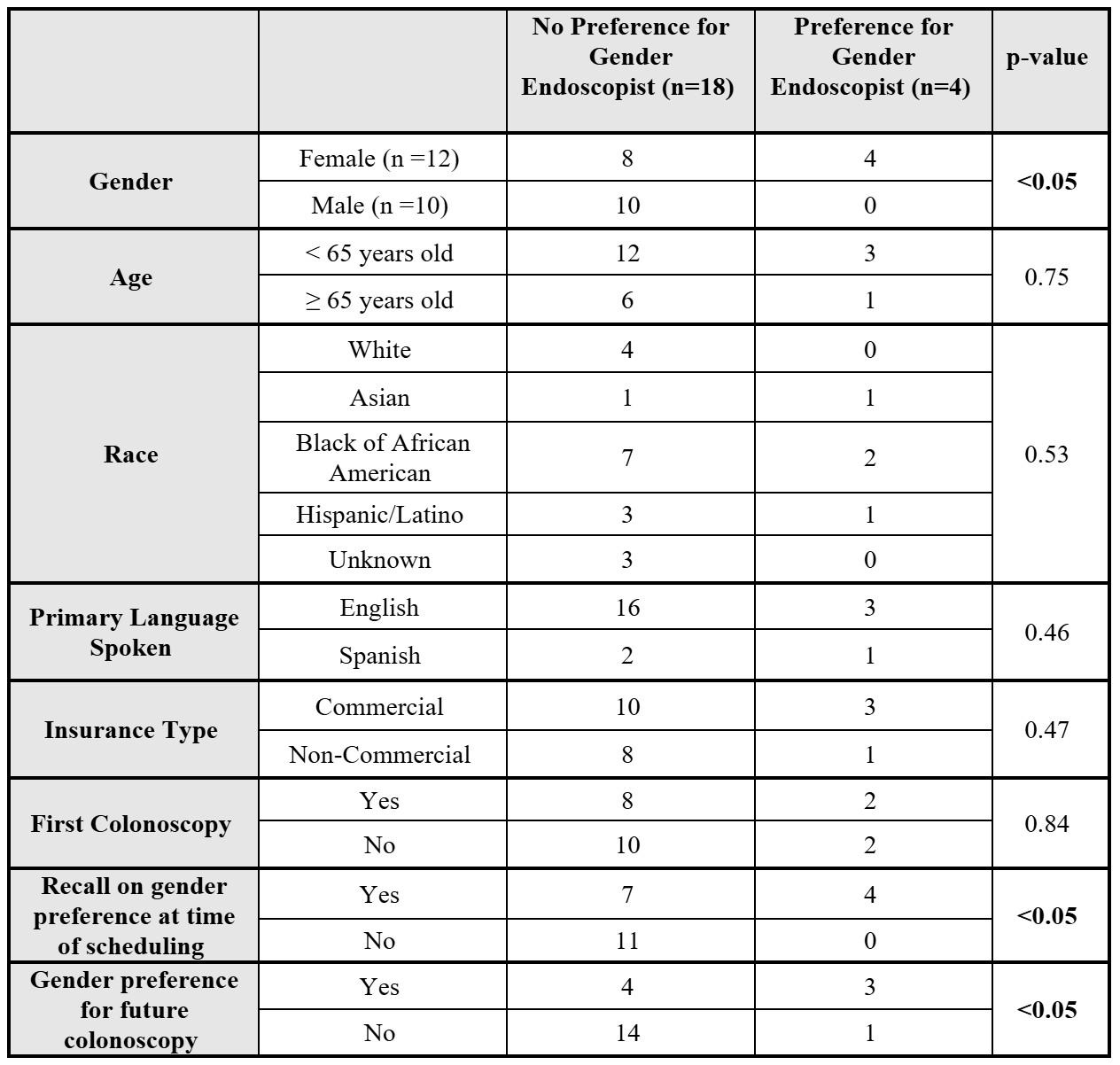
Table 1 Gender Preferences by demographic and variables of interest
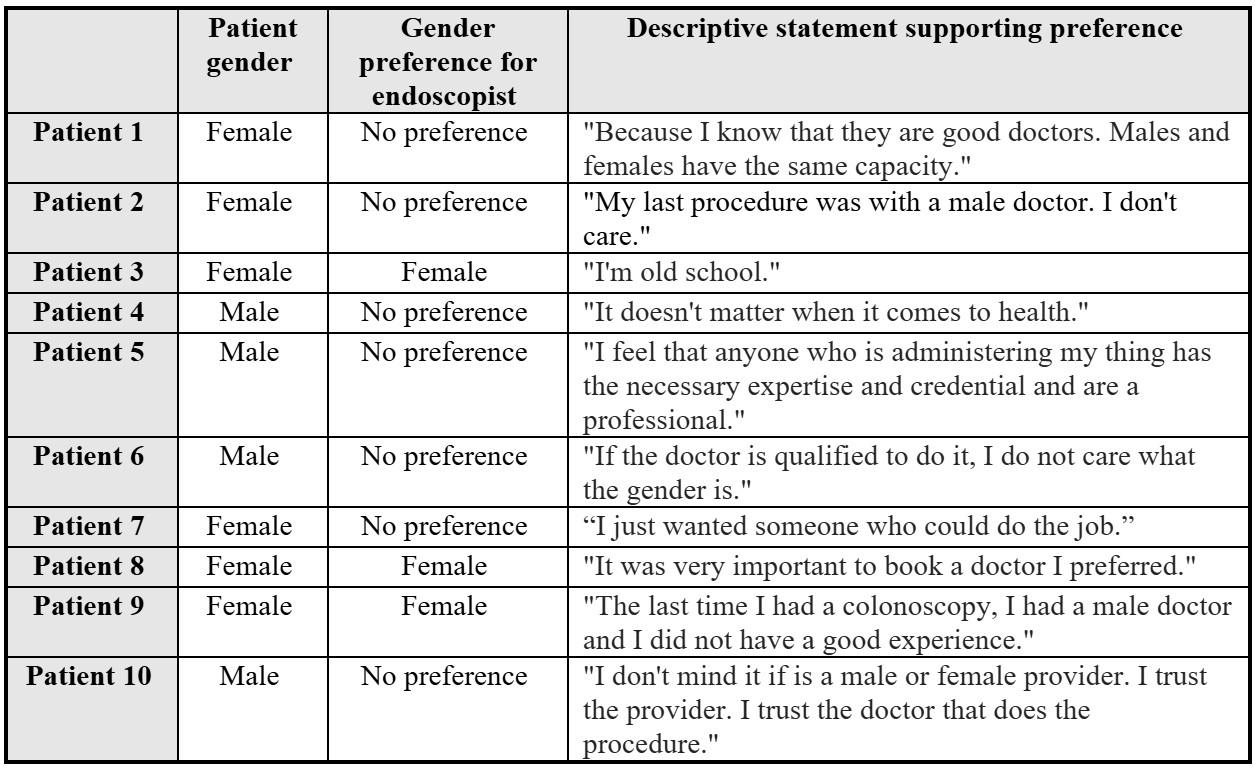
Table 2 Sample patient descriptive statements supporting preference
ABSTRACT #187
CLINICAL RESEARCH
GASTROENTEROLOGY
THE CONUNDRUM OF MANAGING FORREST CLASS IIB ULCERS: REAL-WORLD FINDINGS FROM 2 LARGE URBAN MEDICAL CENTERS
Sonia Mehra1, Soha Noorani1, Bharati Dev1, Michael S. Smith1,2
1Mount Sinai Morningside-West Hospitals, Icahn School of Medicine at Mount Sinai, New York, NY, United States; 2Mount Sinai Hospital, Icahn School of Medicine at Mount Sinai, New York, NY, United States Presented at the American College of Gastroenterology (ACG) Annual Meeting that was held in Phoenix, Arizona, United States from October 24-29, 2025.
BACKGROUND: Management of Forrest II ulcers varies based on endoscopic appearance. Although IIa (nonbleeding visible vessel) and IIc (flat pigmented spot) ulcers have clear guidance on endoscopic hemostatic intervention, recommendations for IIb ulcers (adherent clot) are not well defined. Our aim is to evaluate realworld adherence to guidelines for Forrest II ulcers and to assess rebleeding risk based on guideline-appropriate intervention, including IIb ulcers where intervention is indeterminate.
METHODS: A retrospective chart analysis was conducted on patients with Forrest II ulcers from 2019-2024 at two urban academic centers. Patient demographic characteristics and history of prior proton pump inhibitor (PPI) use were collected from electronic records. Ulcer class, site, and endoscopic intervention were obtained from procedure reports. The primary outcome was to assess 30-day rebleeding rate based on hemostatic intervention. Chi-square analysis was conducted to evaluate variables of interest.
RESULTS: Of 172 patients with fully available data (65.7% male, mean age 67.6 years), the majority of patients had Forrest IIc ulcers (55.8%), with most located in the stomach (51.2%) or duodenum (46.5%) (Table 1). As per guidelines, endoscopic intervention was performed in 96.6% of Forrest IIa ulcers, while 80.2% of Forrest IIc ulcers had no intervention. Although most (61.1%) IIb ulcers were managed endoscopically, there was a higher relative overall 30-day post-endoscopy rebleeding risk (27.8%) in this group than observed in Forrest IIa (12.1%) or IIc (13.5%) ulcers. There was a lower 30-day rate of rebleeding in patients with Forrest IIb ulcers receiving intervention (18.2%) compared to IIb patients without intervention (42.9%) (Table 2). Of note, 30-day rebleeding rates for Forrest IIc ulcers were similar to those of IIa ulcers, regardless of intervention.
CONCLUSION: Treatment of Forrest IIa and IIc ulcers generally followed current guidelines. Forrest IIb ulcers were much less commonly identified and provided a management dilemma, as there are no strict guidelines on the use of hemostatic therapy. These results suggest that intervention may decrease 30-day Class IIb rebleeding rates to around those seen with other Forrest II lesions. When feasible, unroofing adherent clot to expose the ulcer bed and any visible vessel may permit reclassification to IIa or IIc, and therefore provide better guidance on appropriate management with an increased risk of rebleeding.
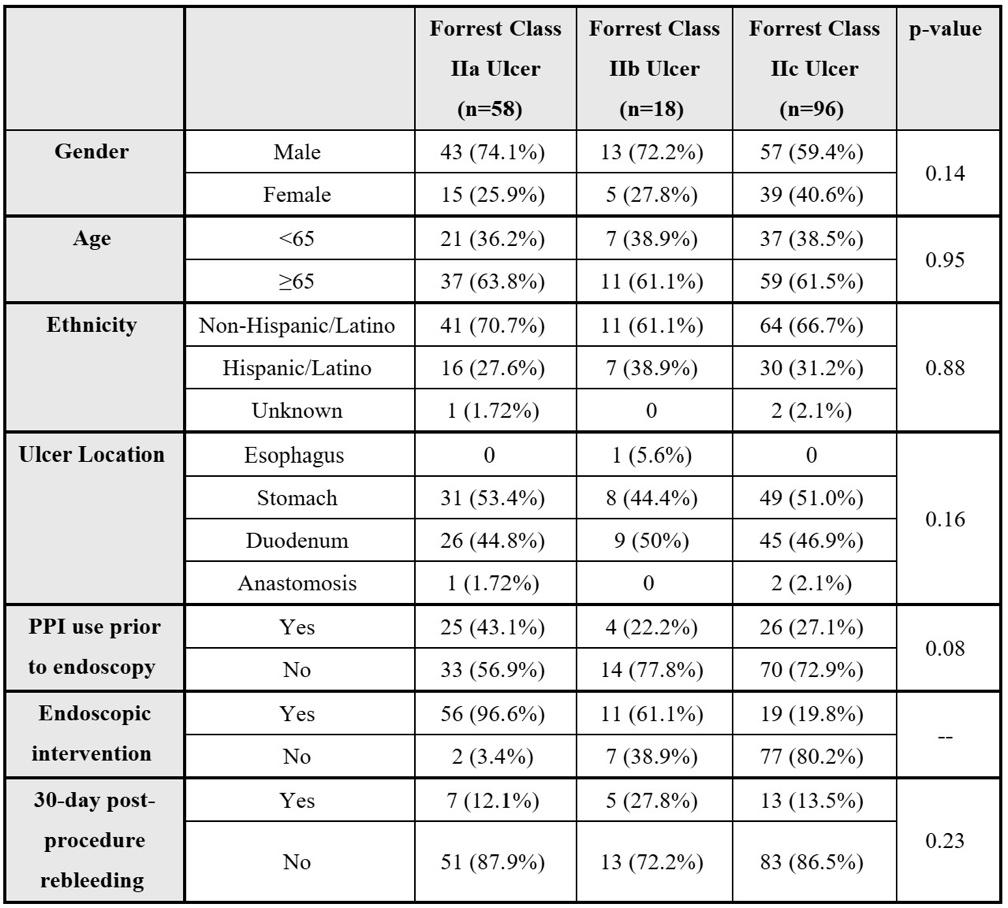
Table 1 Patient Characteristics Based on Forrest Classification
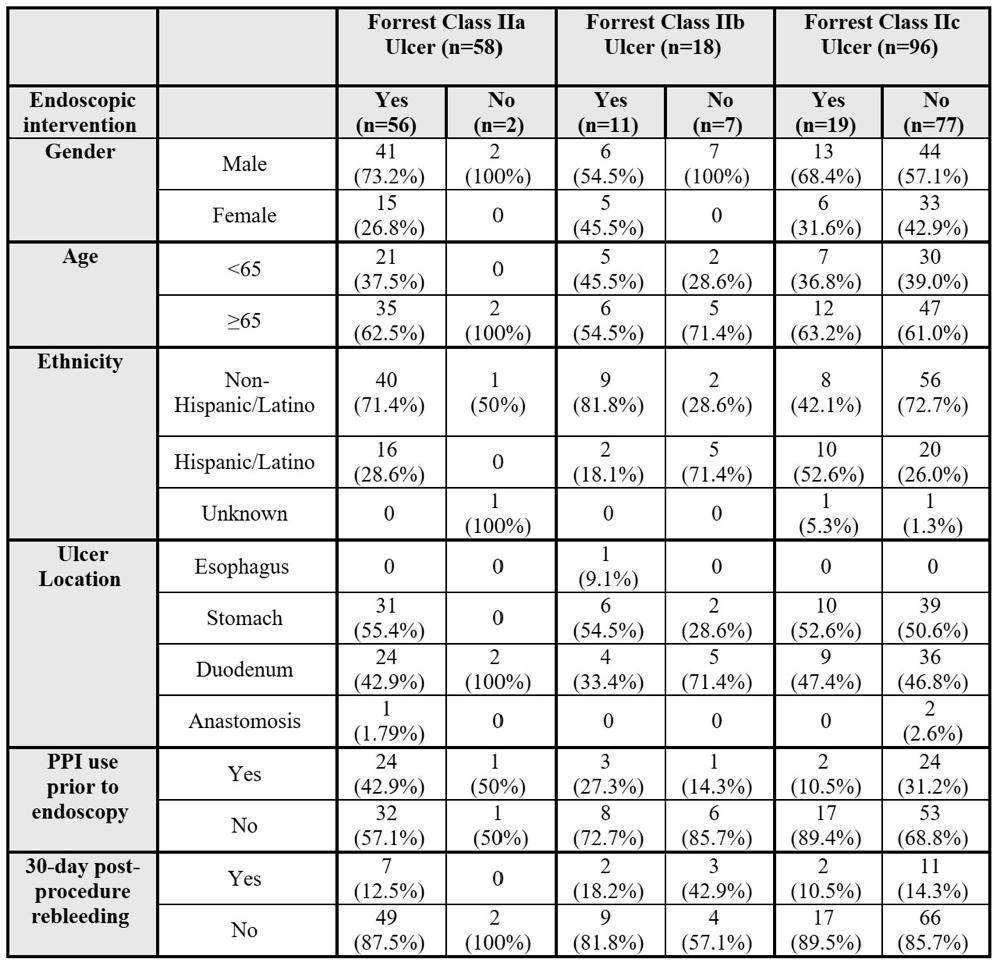
Table 2 Endoscopic Intervention and Rebleeding Rates Based on Forrest Classification
ABSTRACT #188
CLINICAL RESEARCH
CARDIOLOGY
BARRIERS TO RESEARCH PARTICIPATION: THE IMPACT OF RACE, EDUCATION, AND SOCIOECONOMIC STATUS IN A DIVERSE
Anna Sophie Mueller1 , Brandon Berman1, Komail Jafri1 , Harrison Bonilla1, Johanna Contreras1
1Mount Sinai Morningside-West Hospitals, Icahn School of Medicine at Mount Sinai, New York, NY, United States; 2Mount Sinai Hospital, Icahn School of Medicine at Mount Sinai, New York, NY, United States Presented at the American Heart Association (AHA) Annual Meeting that was held in New Orleans, Louisiana, United States from November 8-9, 2025.
BACKGROUND: Despite national efforts to diversify clinical trial populations, participation remains disproportionately low among racial and ethnic minorities. This underrepresentation undermines both the generalizability of findings and equity in evidence-based care.
METHODS: We surveyed 400 adults at Mount Sinai clinics and hospitals across New York City. Participants self-reported willingness to participate in research using a 1–5 Likert scale. Demographics included race/ethnicity, education level, and prior invitations to participate in research. ZIP code was used as a proxy for socioeconomic status (SES). Participants also identified their strongest motivators. Logistic regression identified predictors of low willingness (score ≤3).
RESULTS: Among participants (31% White, 26% Black, 24% Hispanic, 16% Asian, 3% Other), low education, low SES, and minority race were associated with lower willingness to participate in research (OR 1.90, 2.74, and 2.11; p<0.01). Prior invitations were less frequent among Black (18%), Hispanic (22%), and Asian (25%) participants, compared to White participants (41%). Disparities were most pronounced in individuals with both low SES and limited education, where invitation rates were 22%, compared to 41% among participants with higher SES or education. Motivational factors varied: White and Asian participants most often cited improved understanding and perceived health benefit. Black and Hispanic participants emphasized institutional trust, communication, and safety. Among low-SES individuals, financial compensation and transportation access were the most commonly reported concerns.
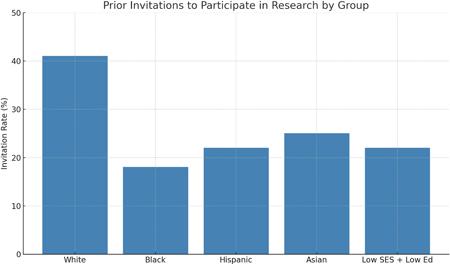
CONCLUSION: To improve participation of underrepresented populations in clinical research, structural changes are essential to ensure equitable inclusion. Initiatives that prioritize outreach to diverse communities, culturally tailored education, trust-building, and removal of practical barriers such as transportation and compensation are critical for meaningful engagement.
ABSTRACT #189
CLINICAL RESEARCH
CARDIOLOGY
BEYOND UNDERSTANDING: TRUST AND CLINICIAN ENGAGEMENT
TO PARTICIPATE IN RESEARCH
Anna Sophie Mueller1 , Brandon Berman1, Harrison Bonilla1, Komail Jafri1, Johanna Contreras1
1Mount Sinai Morningside-West Hospitals, Icahn School of Medicine at Mount Sinai, New York, NY, United States; 2Mount Sinai Hospital, Icahn School of Medicine at Mount Sinai, New York, NY, United States Presented at the American Heart Association (AHA) Annual Meeting that was held in New Orleans, Louisiana, United States from November 8-9, 2025.
BACKGROUND: Despite national efforts to diversify clinical trial populations, participation remains low, particularly among historically underrepresented groups. While educational strategies are often used to address this gap, their impact on actual willingness to participate is not well understood. To assess whether a brief educational flyer improved understanding, interest, and willingness to participate in clinical trials among 400 adult patients.
METHODS: We surveyed 400 adults at Mount Sinai clinics and hospitals across New York City. Participants completed questionnaires before and after reviewing an educational flyer about clinical trials. Outcomes included self-reported understanding, willingness, and interest on a 1–5 Likert scale. Demographics included race/ethnicity and education level; ZIP code served as a proxy for socioeconomic status (SES). Logistic regression identified predictors of low willingness (score ≤3).
RESULTS: Among participants (31% White, 26% Black, 24% Hispanic, 16% Asian, 3% Other), understanding (+0.84), interest (+0.78), and willingness (+1.20) improved significantly (p<0.001). Low education (OR=1.90, p<0.001), low SES (OR=2.74, p<0.001), and minority race (OR=2.11, p<0.001) were independent predictors of lower baseline willingness. At baseline, mean willingness scores were lower among Black (2.3) and Hispanic (2.1) participants compared to White (3.4) and Asian (3.3) participants. However, willingness increased most among Black (+1.35) and Hispanic (+1.28) participants.
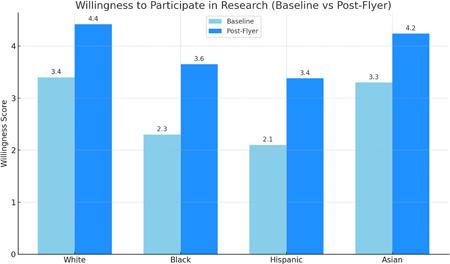
CONCLUSION: An educational flyer is a simple, low-cost intervention that was associated with significant improvements in participants’ willingness to engage in research. Interestingly, the greater increase in willingness suggests that the clinical setting and potential provider endorsement may have amplified its effect. These findings suggest that beyond providing information, fostering trust, particularly through clinician engagement, may play a meaningful role in encouraging participation among underrepresented populations.
ABSTRACT #190
MEDICAL EDUCATION
GENERAL INTERNAL MEDICINE
Rebecca McGinnis1, Andrea Dunaif1, Nina Faynshtayn1 , Avia Muller2
1Mount Sinai Hospital, Icahn School of Medicine at Mount Sinai, New York, NY, United States; 2Mount Sinai MorningsideWest Hospitals, Icahn School of Medicine at Mount Sinai, New York, NY, United States
Presented at the Mount Sinai Health System Department of Medicine Research Day that was held in New York, New York, United States from May 4-5, 2026.
BACKGROUND: Polycystic ovary syndrome (PCOS) is a common endocrine disorder and a major risk factor for type 2 diabetes in young women. Despite its cardiometabolic sequela, gaps in clinician knowledge contribute to diagnostic delays and patient dissatisfaction. We evaluated internal medicine residents’ education and knowledge related to PCOS.
METHODS: We conducted a survey of internal medicine residents at two large urban residency programs at the end of the 2024-2025 academic year. The survey assessed demographics, prior PCOS training, knowledge, and intended diagnostic and management practices for patients with PCOS using previously validated questions.
RESULTS: The response rate was 16% (64/386). Seventy percent of respondents were women, compared with 50% women in the surveyed residency programs. Postgraduate years 1–3 were equally represented. Most participants reported PCOS training during medical school (90%). Of the 21 graduating respondents, only 13 (62%) reported training during residency. The majority sometimes or often (as opposed to rarely or never) would use menstrual cycle disturbances (97%), hirsutism (94%), biochemical hyperandrogenism (75%), and pelvic ultrasonography (81%) to diagnose PCOS. For assessment of biochemical androgen excess, 75% selected total testosterone, and 64% selected free testosterone from a list of options. Most recognized reduced fertility (92%), type 2 diabetes (90%), pregnancy complications (78%), depression (69%), increased cardiovascular risk (59%), and fatty liver disease (52%) as related conditions from a list of 19 items. However, 81% incorrectly associated PCOS with ovarian cysts. Obesity and type 2 diabetes (listed as a combined option) were identified as the primary long-term concern by 64%, selected over infertility, cardiovascular disease, endometrial cancer, and psychosocial concerns. Most residents would recommend oral contraceptives (78%), lifestyle modifications (73%), and metformin (70%) for treatment. However, 70% reported rarely or never serving as the primary physician managing PCOS. Over 90% requested additional training on PCOS.
CONCLUSION: While knowledge gaps exist, internal medicine residents demonstrated overall competence in PCOS diagnosis. They also showed a heartening awareness of the associated type 2 diabetes and cardiovascular risks of PCOS, which are recognized by the American Diabetes Association and the American College of Cardiology, respectively. As future primary care providers and specialists, internal medicine residents’ lack of ownership over PCOS management may contribute to the known delays in diagnosis and treatment. Our results may have overestimated the PCOS-specific knowledge among trainees due to a participation bias and limited survey complexity. Future research should explore PCOS training in additional cohorts and barriers to diagnosis and treatment.
ABSTRACT #191
CASE REPORT/CLINICAL REVIEW
INFECTIOUS DISEASES
THE DIZZYING DIAGNOSIS: HSV ENCEPHALITIS AS THE FIRST SIGN OF HIV
Fahema Nadira1, Rubashruti Kanna1, Christopher Musial1, Amy Jacob1 , Vanessa Weir1, Christopher Perez Lizardo1
1Mount Sinai Morningside-West Hospitals, Icahn School of Medicine at Mount Sinai, New York, NY, United States Presented at the Society of General Internal Medicine (SGIM) Annual Meeting that was held in Washington, DC, United States from May 6-9, 2026.
CASE PRESENTATION: A 63-year-old man with dilated non-ischemic cardiomyopathy, PE on rivaroxaban, severe obesity with OSA, and chronic leukopenia presented with acute dizziness, headache, nausea, and multiple episodes of emesis following a recent flu-like illness. His neurologic examination was nonfocal, and initial CT head, CTA head/neck, and MRI brain were unremarkable. CTA chest, abdomen, and pelvis revealed mild hepatosplenomegaly and pelvic/inguinal lymphadenopathy. During hospitalization, he developed sudden, transient neurologic deficits encephalopathy, dysarthria, left facial droop and weakness, facial and neck twitching, and rhythmic left-hand jerking which prompted two stroke evaluations. Repeat CT/CTA imaging remained normal. Continuous EEG monitoring demonstrated frequent right-hemispheric focal seizures occurring every 5–10 minutes, and he was started on levetiracetam and lacosamide. A follow-up MRI showed evolving signal abnormalities in the right insular cortex and temporal lobe. By hospital day seven, his focal seizures escalated into generalized convulsive status epilepticus, necessitating intubation for airway protection. Soon after ICU admission, he developed a fever. Lumbar puncture was precluded due to patient body habitus. An expanded infectious and immunologic workup revealed newly diagnosed HIV infection (viral load 21,300 copies/mL; CD4 count 170 cells/µL) and positive HSV-1 IgG. Given the clinical trajectory, MRI and EEG findings, and new evidence of immunocompromise, HSV encephalitis was strongly suspected. Empiric therapy with acyclovir was initiated. Following initiation of antiviral therapy, seizures resolved, his neurologic status improved, and he was successfully extubated with a return to his cognitive baseline.
CONCLUSION: This case illustrates the diagnostic challenge of recurrent focal neurologic events in adults when early imaging is unrevealing. Importantly, HSV encephalitis can mimic stroke. In immunocompromised patients, HSV encephalitis is often presented atypically and may progress rapidly. These patients frequently exhibit nonclassic presentations and experience worse in-hospital outcomes compared with immunocompetent patients (Kolchinski et al., 2025). EEG is pivotal when stroke evaluations are nondiagnostic. Continuous monitoring can distinguish seizure activity from transient ischemia, a common mimic in HSV encephalitis, but supporting data are mostly single-center and retrospective (Abdelmalik et al., 2015). Likewise, a normal early MRI does not exclude HSV encephalitis; temporal or insular abnormalities may evolve over days, emphasizing the need for repeat imaging when suspicion remains high (Tedyanto et al., 2021). This case underscores the importance of considering occult immunosuppression in adults with new-onset focal seizures and highlights the need for early EEG monitoring, serial imaging, and prompt empiric antiviral therapy when HSV encephalitis remains a diagnostic possibility despite initially unrevealing studies.
ABSTRACT #192
MEDICAL EDUCATION
GENERAL INTERNAL MEDICINE
Kyle Reichard1, Sanjar Sanoatov1, Tharun Shyam1, Jorge Sinclair De Frias1 , Keshav Dixit1, Adam Rothman1
1Mount Sinai Morningside-West Hospitals, Icahn School of Medicine at Mount Sinai, New York, NY, United States Presented at the Institute for Medical Education (IME) Annual Education Research Day that was held in New York, New York, United States on April 21, 2026.
BACKGROUND: Point of care ultrasound (POCUS) is a widely utilized, robustly validated clinical technique for non-invasively gathering vital information to aid in the evaluation of a wide array of clinical conditions. It has been widely adopted by several disciplines and is part of ACGME competency requirements for Emergency Medicine training. However, despite frequent use in both general Internal Medicine and various subspecialties, concrete POCUS training curricula are lacking for Internal Medicine residents, and the optimal modalities of content delivery and knowledge solidification remain incompletely understood.
METHODS: Starting this academic year, several modifications to the curriculum were implemented, with changes including a reduction in group size to increase active engagement with skill-building and concepts, addition of a hands-on skills assessment at the conclusion of the course, and a new requirement for learners to develop a personal portfolio of self-acquired POCUS images and clips. As in prior years, learners also completed pretests and post-tests at the start and conclusion of the elective. Analyses were performed to assess knowledge retention and technical proficiency and were compared to data from prior academic years. Data analysis centered around comparison of pre- and post-test knowledge scores across academic years, posttest response rate, hands-on skills assessment, and anecdotal feedback from course participants. Looking forward, we will attempt to draw conclusions surrounding optimal content delivery and knowledge assessment.
RESULTS: After this academic year’s implementation of the above modifications, post-course knowledge assessment scores improved on average by 32% (up from 26% in prior years), for an overall average of 91% correct (compared to 89% in previous years). Pre-course self-reported learner POCUS experience was reduced compared to prior years, coinciding with reduced pre-course knowledge assessment (59% versus 67%). These findings suggest effective content delivery, despite a subjectively less experienced learner cohort. Importantly, post-test response rate improved to 91%, an increase from 76% in the past. As part of the post-course assessment, learners were given the opportunity to provide feedback on the course, with several responses specifically pointing out independent image acquisition/interpretation and small group sizes as major course strengths and citing the summative hands-on assessment as an effective motivator to ensure optimal engagement with course materials.
CONCLUSION: Our findings show that the above modifications to our POCUS curriculum were associated with sizable improvements in post-course assessment completion rates and scores from prior years, despite a subjectively less experienced learner cohort. Qualitatively, we also found that these modifications were perceived by participants as effective ways to augment engagement and retention of curricular content.
ABSTRACT #193
CASE REPORT/CLINICAL REVIEW
PULMONARY/CRITICAL CARE
RARE BACTERIAL SUPERINFECTION IN PATIENT WITH ACUTE RESPIRATORY DISTRESS SYNDROME FROM INFLUENZA A ON VENOUS-VENOUS EXTRACORPOREAL MEMBRANE OXYGENATION
Kyle Reichard1, Jaskirat Gill1, Arvind Balasundaram1
1Mount Sinai Morningside-West Hospitals, Icahn School of Medicine at Mount Sinai, New York, NY, United States Presented at the American College of Chest Physicians Annual Meeting held in Chicago, Illinois, United States from October 19-22, 2025.
BACKGROUND: Raoultella ornithinolytica is a gram-negative aerobic bacterium that is emerging as an increasingly frequent pathogen in humans. While current literature is limited due to difficulties with identification, it most commonly presents as a monomicrobial infection in an immunosuppressed host or involves patients who have undergone invasive procedures. Polymicrobial infections are most often seen with respiratory involvement and intensive care settings. We present the first documented case of R. ornithinolytica pneumonia in a patient on extracorporeal membrane oxygenation for Influenza induced acute respiratory distress syndrome (ARDS).
CASE PRESENTATION: A 65-year-old relatively healthy female presented with shortness of breath and was found to have Influenza A. Due to worsening respiratory status in the setting of ARDS, she was admitted to the ICU where she developed persistent hypercarbia complicated by encephalopathy, eventually necessitating intubation. Despite attempts at ventilator optimization, her hypercarbic and hypoxic respiratory failure worsened and venous-venous (VV) extracorporeal membrane oxygenation (ECMO) was initiated. Due to anatomic constraints, bedside right internal jugular cannulation proved unsuccessful resulting in bifemoral cannulation. Shortly after, the patient suffered several premature ventricular contraction (PVC) mediated R on T events which rapidly progressed into refractory VT cardiac arrest despite medication and electrical therapies. Given her vascular anatomy, veno-arterial ECMO was not a viable option, and instead, she was cooled and paralyzed to reduce sympathetic tone, a transvenous pacemaker (TVP) was placed to overdrive pace, and a stellate ganglion block was performed, the combined effect of which subsequently resolved her arrhythmias. Four weeks later she developed worsening leukocytosis and induration around one of the groin cannula sites, prompting an infectious workup. A tracheal aspirate led to the identification of R. ornithinolytica, resistant to ampicillin, and she was treated broadly with meropenem, vancomycin, and caspofungin. Subsequently, she was transitioned to a duallumen right atrium-pulmonary artery cannula (ProtekDuoTM) under fluoroscopy to mitigate infectious concerns and improve mobility.
CONCLUSION: Here we present a novel case of a previously healthy woman who developed ARDS-associated R. ornithinolytica pneumonia following a complicated course in the cardiac intensive care unit. R. ornithinolytica infection as seen in this patient is concerning for several reasons. First, the pathogen is often misidentified as Klebsiella, while similarly exhibiting intrinsic resistance to ampicillin and ticarcillin, with several documented cases demonstrating carbapenem resistance as well. Furthermore, it has a propensity to affect critically ill patients via various routes ranging from skin, gastrointestinal, respiratory, and more. Finally, R. ornithinolytica infection is also associated with invasive procedures, as seen in this case, namely TVP, intubation, tracheostomy, and multiple cannulations. The aggregated effect of these characteristics and risk factors positions R.ornithinolytica as a significant potential danger to ICU patients on ECMO. This case demonstrates the occurrence of a rare and underreported pathogen, with varying sites of infection and differing antibiotic susceptibilities, highlighting the importance of awareness and consideration of respiratory superinfections in ECMO patients.
ABSTRACT #194
MEDICAL EDUCATION
GENERAL INTERNAL MEDICINE
Madeleine
Reznik1, Agostina Velo1, Patricia Dharapak1
1Mount Sinai Morningside-West Hospitals, Icahn School of Medicine at Mount Sinai, New York, NY, United States Presented at the Mount Sinai Health System Department of Medicine Research Day that was held in New York, New York, United States from May 4-5, 2026.
BACKGROUND: Patients with difficult vascular access frequently require ultrasound-guided peripheral intravenous catheter (USGPIV) placement. In many hospitals, this responsibility falls to internal medicine residents with variable training and comfort, disrupting workflow and detracting from patient care and education. Prior studies suggest resident-led procedure teams are feasible and safe in academic settings. The objective of this study is to improve resident quality of life (QOL) related to peripheral IV (PIV) access through creation of a resident-led USGPIV support team.
METHODS: We conducted a quality improvement initiative at a large urban academic medical center using the Institute for Healthcare Improvement's Plan-Do-Study-Act model. A baseline survey was distributed to 236 internal medicine residents (PGY1–3) in July 2025 (n=47). Interventions included establishment of a residentled USGPIV team, an Epic Chat group for real-time requests and consultation, standardized procedure documentation, and simulation-based training. A follow-up survey was administered in February 2026 after the first PDSA cycle (n=35). Process measures included consult volume, success rate, and time to placement. The primary outcome was resident-reported QOL impact related to PIV access.
RESULTS: At baseline, 76.6% of residents reported that difficulty obtaining PIV access negatively impacted their QOL at work. During the 3-month intervention period (Nov 2025–Feb 2026), the USGPIV team received 32 consults. Nineteen resulted in attempted placement, with a 94.7% success rate and no documented complications. Median time from request to placement was 68 minutes. In the follow-up survey, 60% of respondents reported engaging with the team. Among users, 76.2% reported a significant positive impact on QOL. The proportion of residents reporting negative QOL impact from PIV access issues decreased from 76.6% to 60% after the first PDSA cycle.
CONCLUSION: A resident-led USGPIV team supported by an Epic Chat consultation system is feasible and associated with improved resident work-related QOL. Early results suggest such models can enhance procedural training while reducing workflow disruptions. Future cycles will focus on expanding awareness, improving offhours coverage, and evaluating downstream effects on vascular access utilization.
ABSTRACT #195
CASE REPORT/CLINICAL REVIEW
CARDIOLOGY
TACHYCARDIA A RARE CASE OF MYOCARDIAL INFARCTION UNVEILED BY CONCURRENT LEFT VENTRICULAR ANEURYSM, THROMBUS, DRESSLER SYNDROME, AND HEMORRHAGIC PERICARDIAL EFFUSION
Usman Saeedullah1, Sanjay Sivalokanathan1, Luka Katic1 , Komail Jafri1, Edgar Argulian1 1Mount Sinai Morningside-West Hospitals, Icahn School of Medicine at Mount Sinai, New York, NY, United States Presented at the American College of Cardiology (ACC) Annual Scientific Session that was held in New Orleans, Louisiana, United States from March 28-30, 2026.
BACKGROUND: Left ventricular (LV) aneurysm occurs in <0.2% of myocardial infarctions (MI) and Dressler syndrome in <1%. Their concurrence with thrombus and hemorrhagic pericardial effusion has not been previously reported.
CASE PRESENTATION: A 51-year-old man presented with one month of dyspnea, cough, and edema. Echocardiography demonstrated an LV ejection fraction <25%, a large apical aneurysm, LV thrombus, and a significant pericardial effusion. Coronary angiography revealed a subtotal mid-left anterior descending (LAD) artery occlusion without a revascularization target. Cardiovascular magnetic resonance (CMR) confirmed an 8 × 7.6 cm aneurysm containing a 5.1 × 4.2 cm thrombus, a posterior effusion measuring 4.6 cm, and pericardial enhancement consistent with Dressler syndrome. The patient underwent surgery with drainage of 1 L of hemorrhagic effusion, aneurysmectomy, and Dor patch repair, supported with an intra-aortic balloon pump (IABP). He recovered without complications and was initiated on guideline-directed therapy for new LV dysfunction.
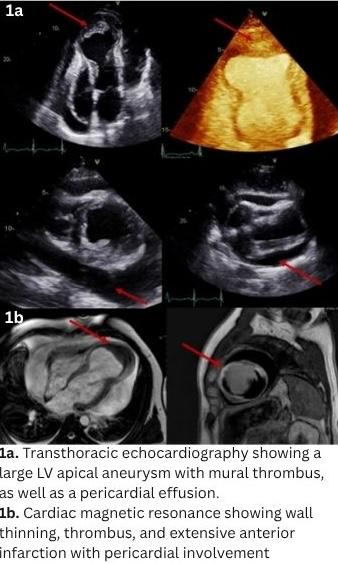
CONCLUSION: Multimodality imaging was essential to differentiate contained rupture from inflammatory effusion, characterize the extent of myocardial damage, and guide surgical planning. We report an extremely rare case of concurrent LV aneurysm, LV thrombus, Dressler syndrome, and hemorrhagic pericardial effusion. This case highlights the role of imaging and the need for individualized management in rare post-MI complications.
ABSTRACT #196
CLINICAL RESEARCH
GENERAL INTERNAL MEDICINE
PRACTICE ADVISORY TO REDUCE MORPHINE USE INPATIENTS
Jennifer Hui1, Patricia Dharapak1 , Ashwin Sawant1, Shantheri Shenoy1 , Vishmayaa Saravanan1, Alissa Silverstein1, Steve Levy1, Simone Muller1, Vladislav Yashaev1, Christopher Sikorski1 , Irina Zaretsk1 1Mount Sinai Morningside-West Hospitals, Icahn School of Medicine at Mount Sinai, New York, NY, United States Presented at the Society of Hospital Medicine (SHM) Annual Meeting that was held in Nashville, Tennessee, United States from March 29 to April 1, 2026.
BACKGROUND: Patients with impaired renal function are at an increased for adverse drug events (ADE) due to challenges in medication selection and dose adjustment. Morphine, while frequently used for rapid analgesia in the acute setting, poses a distinct risk in patients with an estimated glomerular filtration rate (eGFR) < 30 mL/min, as its active metabolites can accumulate and cause central nervous system and respiratory depression, as well as neurotoxicity. At our institution, two consecutive morphine-related ADEs in patients with impaired renal function underscored the imperative for a sustainable safety intervention beyond education alone. To reduce inappropriate morphine use in admitted patients with an eGFR < 30 mL/min through implementation of an ITbased system-level safety intervention that guides clinicians away from high-risk prescribing.
METHODS: We conducted a retrospective review of morphine orders placed in adult inpatients with an eGFR < 30 mL/min across five hospitals within our health system from January to October 2024.
RESULTS: During this baseline period, an average of 172.3 inappropriate morphine orders were placed per month (184.2 orders per month per 10,000 discharges when adjusted for discharge volume). In response, a collaborative effort between hospital medicine, pharmacy, and IT led to the development of a best practice advisory (BPA) alert. This initial BPA was a passive alert triggered whenever morphine was ordered for patients with an eGFR < 30 mL/min, reminding prescribers of renal impairment and recommending alternative opioids with lower renal clearance, such as fentanyl or hydromorphone. From implementation in November 2024through August 2025, the BPA reduced inappropriate morphine orders to101.9 per month (109.4 per month when discharge-adjusted), representing a 41% decrease. Although effective, frequent bypasses still limited the BPA's full impact, prompting revision to an actionable alert with a soft stop requiring prescribers to either cancel the order or to acknowledge and provide a justification for proceeding. Acknowledgment options included single dose with close monitoring, intolerance or failure of alternatives, patient on comfort care, and “other,” with a mandatory free-text explanation. Since implementation of the actionable BPA in September 2025, inappropriate morphine orders have decreased to an average of 59 orders per month (59.5 discharged-adjusted), representing an additional 42% reduction and a total decrease of 66% from baseline. Preliminary analysis revealed that 48.3% of triggered BPAs were by-passed, with 75.2% citing single dose with close monitoring, 4.0%intolerance or failure of alternatives, 10.9% comfort care, and 9.9%selecting “other” as reasons for override.
CONCLUSION: Implementation of a passive BPA reduced inappropriate morphine orders in patients with severe renal impairment. Converting the BPA to an actionable alert further enhanced its effectiveness, resulting in a substantial decrease in morphine orders to less than half of the baseline. Next steps include ongoing review of override patterns and evaluation of associated changes in adverse clinical outcomes. As we continue to monitor ordering and alert trends to fine tune our BPA, we anticipate that this intervention may foster sustained prescribing behavior change across all sites within our health system.
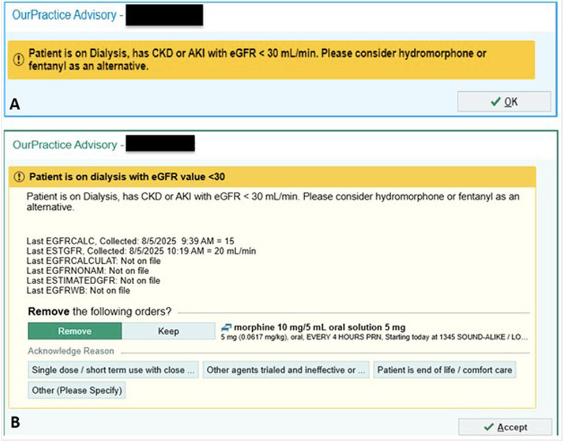
Figure 1. Best practice advisory for morphine orders in patients with renal impairment. (A) Passive alert. (B) Actionable alert.
ABSTRACT #197
MEDICAL EDUCATION
GENERAL INTERNAL MEDICINE
TRAINING BEYOND THE HOSPITAL WALLS: DEVELOPMENT AND EVALUATION OF A HOSPITAL AT HOME ELECTIVE
Vishmayaa Saravanan1, Irina Zaretsky1, Jeffrey Epstein2, Sanaa Zafar1, Tuyet-Trinh Truong2
1Mount Sinai Morningside-West Hospitals, Icahn School of Medicine at Mount Sinai, New York, NY, United States; 2Mount Sinai Hospital, Icahn School of Medicine at Mount Sinai, New York, NY, United States
Presented at the Institute for Medical Education (IME) Annual Education Research Day that was held in New York, New York, United States on April 21, 2026.
BACKGROUND: Hospital at Home (HaH) is an expanding patient-centered clinical model that delivers acute inpatient-level care in patients’ homes. Integrating house staff into HaH helps support appropriate patient referrals, develop skills in telehealth, virtual technology, and decentralized team-based care, and foster interest in HaH as a career pathway. Because few standardized curricula exist, our goal was to design a structured HaH elective to provide trainees with hands-on experience and evaluate the impact of the elective on understanding core aspects of HaH delivery, confidence in providing home-based care, and acquisition of core HaH skills.
METHODS: A standardized HaH elective was introduced in July 2024 for internal medicine residents and expanded in August 2025 to include geriatrics and palliative care fellows. Over a two-week block, trainees gain hands-on experience across all aspects of HaH, including patient screening, admissions, virtual rounding, home visits, and coordination of care with decentralized clinical and administrative teams. Each trainee is paired with an attending for one-on-one supervision and feedback. Educational support is provided through a lecture series led by program leadership, including an introductory session on HaH operations, a case-based discussion of common clinical scenarios, and a session on financial aspects of HaH care. A web-based platform supplements learning with rotation instructions, educational materials, and references to seminal HaH literature. Trainees completed anonymous pre- and post-rotation surveys assessing familiarity with the HaH model, comfort with core HaH skills, and confidence in delivering HaH care. Survey items were rated on a 1–5 Likert scale, with higher scores indicating more favorable responses.
RESULTS: Between July 2024 and November 2025, 26 trainees enrolled in the elective, including 20 internal medicine residents, 4 geriatrics fellows, and 2 palliative care fellows. Fifteen trainees completed pre- and postrotation surveys. Substantial improvements were observed across all domains. Average familiarity with HaH services increased from 2.4 to 4.5, and familiarity with eligibility criteria from 2.2 to 4.1. Confidence performing in-person home visits increased from 2.0 to 4.0, and comfort with video visits from 2.0 to 4.1. Comfort working within an interdisciplinary team rose from 2.9 to 4.0, and interest in future HaH participation increased from 3.2 to 3.7.
CONCLUSION: Participation in the HaH elective enhanced trainees’ readiness to deliver care within the Hospital at Home model. As telehealth becomes a standard part of clinical practice, skills gained through HaH are likely to benefit trainees across various medical specialties. Evaluating patients in their homes further enhances learners’ understanding of social determinants of health and how these factors inform clinical decision-making. These findings support continued expansion of the elective to prepare future trainees for evolving models of healthcare delivery.
ABSTRACT #198
QUALITY IMPROVEMENT
PULMONARY/CRITICAL CARE
IDENTIFYING PROVIDER GAPS IN OPTIMIZING LUNG TRANSPLANT REFERRAL IN FELLOWSHIP CLINIC: A QUALITY IMPROVEMENT INITIATIVE
Shasha X. Chen1, Hong Yu Wang1 , Yoshihiro Sawaguchi1, Boram Kim1, Avinash Singh1
1Mount Sinai Morningside-West Hospitals, Icahn School of Medicine at Mount Sinai, New York, NY, United States Presented at the American College of Chest Physicians Annual Meeting held in Chicago, Illinois, United States from October 19-22, 2025.
BACKGROUND: Lung transplant referral rates have historically been lower than expected owing to healthcare disparities including age, socioeconomic status, health literacy, and patient resistance. Additionally, providers’ lack of knowledge of eligibility criteria also play a role. In the initial phase of this quality improvement (QI) project, an educational intervention was implemented and a post-intervention survey demonstrated improved fellow knowledge and confidence. In the second phase, a post-intervention analysis of patients seen in the fellow’s clinic was conducted to further elucidate persistent provider gaps that continue to serve as barriers to lung transplant referral.
METHODS: In August 2023, a detailed needs assessment chart review was completed over the two clinics staffed by 18 fellows in the Mount Sinai West/Morningside Pulmonary and Critical Care Fellowship Program. Of the 156 patients reviewed, 2 out of 8 eligible patients (25%) were included in a discussion about, and 1 (12.5%) was referred for lung transplant evaluation. Subsequently, an educational lecture was provided, focusing on disease specific criteria for lung transplant referral as well as elucidation of the referral process. We then retrospectively reviewed patient records over a three-month period (April–June 2024) to assess changes in postintervention referral patterns and identify provider-centered barriers. Charts were reviewed to determine transplant candidate eligibility, document patient characteristics, and calculate referral rates. Any reference to transplant referral in the fellow’s note was categorized as “discussed”.
RESULTS: In August 2023, a detailed needs assessment chart review was completed over the two clinics staffed by 18 fellows in the Mount Sinai West/Morningside Pulmonary and Critical Care Fellowship Program. Of the 156 patients reviewed, 2 out of 8 eligible patients (25%) were included in a discussion about, and 1 (12.5%) was referred for lung transplant evaluation. Subsequently, an educational lecture was provided, focusing on disease specific criteria for lung transplant referral as well as elucidation of the referral process. We then retrospectively reviewed patient records over a three-month period (April–June 2024) to assess changes in post-intervention referral patterns and identify provider-centered barriers. Charts were reviewed to determine transplant candidate eligibility, document patient characteristics, and calculate referral rates. Any reference to transplant referral in the fellow’s note was categorized as “discussed”.
CONCLUSION: Our study demonstrated that our educational intervention significantly improved lung transplant discussion and referral rates among eligible patients in a fellow’s clinic, with post-intervention discussion rates more than doubling. However, persistent provider gaps remain in recognizing stable candidates for referral, particularly among patients with pulmonary fibrosis and probable or definitive usual interstitial pneumonia (UIP) pattern on radiography and those with COPD and high BODE scores. These findings underscore the need for continued provider education and standardized referral criteria to ensure timely referral to lung transplant. Further targeted education should emphasize the importance of calculating BODE scores for risk stratification in patients with COPD to identify referral eligibility. Additionally, clearer guidance on referral indications for patients with pulmonary fibrosis is necessary, as the threshold for referral in those patients is lower than commonly perceived. Lastly, education regarding lung transplant referrals should be introduced with greater emphasis and frequency to first-year fellows to improve their ability to identify eligible patients.
ABSTRACT #199
HEMATOLOGY/ONCOLOGY
CLINICAL RESEARCH
MOUNT SINAI ACUTE GRAFT-VERSUS-HOST INTERNATIONAL CONSORTIUM COMPOSITE SCORE COMBINING CLINICAL SYMPTOMS AND BIOMARKERS PREDICTS OUTCOMES OF SECOND LINE THERAPY FOR ACUTE GRAFT-VERSUS-HOST DISEASE
Tara Sebastian1, Ioannis Evangelos Louloudis2 , George Morales2 , Rachel Young2 , Janna Baez2 , Gilbert Eng2 , Aaron Etra2 , John Levine2 , James Ferrara2
1Mount Sinai Morningside-West Hospitals, Icahn School of Medicine at Mount Sinai, New York, NY, United States; 2Mount Sinai Hospital, Icahn School of Medicine at Mount Sinai, New York, NY, United States Presented at the Mount Sinai Health System Department of Medicine Research Day that was held in New York, New York, United States from May 4-5, 2026.
BACKGROUND: Acute graft-versus-host disease (GVHD) is a potentially lethal complication of hematopoietic cell transplantation (HCT)1. Standard first-line therapy is high-dose corticosteroids, but around 20% of patients develop steroid-refractory GVHD. In 2019, the FDA approved ruxolitinib, a Janus kinase (JAK) 1/2 inhibitor, for the treatment of steroid-refractory GVHD, though its impact on mortality remains uncertain. Traditional GVHD risk stratification (MAGIC grade) is based on clinical criteria alone. Akahoshi et al. demonstrated that a MAGIC composite score (MCS) which integrates clinical severity with serum biomarkers (ST2 and REG3a) at first-line treatment predicts outcomes more accurately than clinical symptoms alone3. The utility of MCS at second-line treatment has not been evaluated.
METHODS: We analyzed clinical data and biomarker samples of patients diagnosed with GVHD between 1/2016 and 12/2025 in the Mount Sinai Acute GVHD International Consortium (MAGIC) database. Eligible patients had grade II-IV GVHD and were refractory to first-line steroid treatment. The MCS was calculated according to the methods of Akahoshi et al., integrating clinical severity with biomarker concentrations to assign composite scores of 1-3 (low to high risk)3. Primary outcomes included the day 28 overall response rate (D28 ORR), non-relapse mortality (NRM), and overall survival (OS).
RESULTS: A total of 284 patients met inclusion criteria. Second-line treatment included ruxolitinib for 146 (51%) patients while 138 (48%) received other therapies. Based on clinical criteria, 96 patients (34%) had grade II (moderate) and 188 (66%) had grade III/IV (severe) disease. With the integration of biomarkers, 34 (12%) patients were classified as MCS 1, 147 (50%) as MCS 2, and 103 (35%) as MCS 3. Higher MCS predicted for lower D28 treatment response (MCS 1: 68%, MCS 2: 58%, and MCS 3: 40%; p=0.005). Increasing MCS score also predicted for higher 6-month NRM (15%, 32%, and 63%, respectively; p<0.01) and worse OS (6-month OS 85%, 66%, and 33%, respectively; p<0.01). The MCS predictive model for 6-month NRM demonstrated superior discrimination compared with clinical grading alone (area under the receiver operating characteristic curve (AUC) 0.681 versus 0.625; p=0.04).
CONCLUSION: At second-line treatment for steroid-refractory acute GVHD, the MCS which combines clinical severity and biomarkers, stratifies patients into three groups with significantly different response rates, NRM, and survival outcomes. The MCS provides more accurate prediction of NRM than clinical criteria alone and may help guide therapeutic decision-making.
ABSTRACT #200
CASE REPORT/CLINICAL REVIEW
INFECTIOUS DISEASES
THROMBOCYTOPENIA
Brett Sherman1, Jing Huang1, Joel Grimaldo Ochoa1, Tessa Gomez1.2
1Mount Sinai Morningside-West Hospitals, Icahn School of Medicine at Mount Sinai, New York, NY, United States; 2Mount Sinai Downtown Union Square, Icahn School of Medicine at Mount Sinai, New York, NY, United States Presented at the Society of General Internal Medicine (SGIM) Annual Meeting that was held in Washington, DC, United States from May 6-9, 2026.
CASE PRESENTATION: A 78-year-old male presented with severe fatigue and weakness on return from vacation in Senegal. His symptoms began in Senegal and consisted of 6 days of bloody diarrhea, nausea, nonbloody vomiting, and fever, all of which had resolved by the time of hospital presentation. Exam showed no rash, petechiae, arthralgia, or abdominal tenderness. Laboratory studies demonstrated mild leukopenia and severe thrombocytopenia, with normal hemoglobin, negative hemolysis markers, and slightly elevated transaminases. Peripheral smear was unremarkable. A broad infectious workup was performed, including evaluation for malaria, zika, chikungunya, dengue, tick-borne illness, and gastroenteritis. Empiric doxycycline and cephalosporin therapy were initiated to cover both vector-borne and salmonella infection, along with supportive care. Stool PCR was negative for salmonella but positive for enterohemorrhagic E. coli (EHEC), possibly explaining the patient’s pre-admission hematochezia. Platelet counts recovered without transfusion. Concern remained for a partiallytreated vector-borne illness, and the patient was discharged with a 7-day course of doxycycline.
Post-discharge laboratory results later identified dengue as the etiology of illness.
CONCLUSION: Dengue is a mosquito-borne viral illness endemic to tropical and subtropical climates. A member of the Flaviviridae family, dengue virus (DENV) has four serotypes (DENV1-4) that all produce the syndrome known as Dengue Fever (DF). DF consists of three phases: infection begins with nonspecific symptoms and lowgrade fever that progresses over 3-5 days to a second, critical phase of high fever with symptoms including weakness, gastrointestinal upset, interstitial accumulation of fluid, and a diffuse erythematous rash, eventually culminating in a recovery phase of diuresis and resorption of any extravasated fluid--this patient was admitted during recovery. Thrombocytopenia occurs in 34% of cases and may progress to hemorrhagic fever; time-limited neutropenia is also common.
For travelers returning from West Africa with infectious symptoms and thrombocytopenia, the differential diagnosis is broad. A characteristic symptom may point to a specific infection--cyclic fevers in malaria, conjunctivitis in zika, severe back pain in yellow fever, or polyarthralgia in chikungunya but in a patient with nonspecific complaint, diagnosis may be challenging. In this patient, absence of an active fever complicated DF diagnosis, as did the patient’s concurrent finding of EHEC.
Treatment of DF is supportive. Thrombocytopenia will resolve as DF infection improves, and platelet transfusion is not recommended unless the patient is actively hemorrhaging.
ABSTRACT #201
CLINICAL RESEARCH
GASTROENTEROLOGY
ENHANCED TRAINEE UNDERSTANDING OF APPROPRIATE STRESS ULCER PROPHYLAXIS USING AN EVIDENCE-BASED PRACTICE TOOL
Alexandria Markley1 , Astitva Soni1, Luis Rendon Rodriguez1, Saro Aprikan1, Alexander Davidovich1 , Michael S. Smith1,2
1Mount Sinai Morningside-West Hospitals, Icahn School of Medicine at Mount Sinai, New York, NY, United States; 2Mount Sinai Hospital, Icahn School of Medicine at Mount Sinai, New York, NY, United States Presented at the American College of Gastroenterology (ACG) Annual Meeting that was held in Phoenix, Arizona, United States from October 24-29, 2025.
BACKGROUND: Proton pump inhibitors (PPIs) are commonly prescribed for stress ulcer prophylaxis (SUP) in critically ill patients. Inappropriate initiation of inpatient PPI therapy can contribute to unnecessary polypharmacy and increases the potential risk of complications, including pneumonia and C. difficile infection. This study evaluates the impact of a targeted evidence-based practice tool (EBPT) educational intervention on knowledge and appropriate usage of PPIs for SUP among residents rotating through a medical intensive care unit (ICU).
METHODS: A prospective cohort study was performed, including internal medicine residents rotating through the ICU of a large urban medical center. A simple yet comprehensive EBPT summarizing the key indications for SUP in ICU patients was distributed to all trainees. An internally validated survey assessing baseline medical knowledge, confidence, and practice-based understanding of the appropriate indications of SUP was circulated to participants before and after the EBPT, with the post-intervention questionnaire being completed two weeks after the intervention. Survey responses were analyzed to assess changes in understanding of and reported clinical behavior for SUP.
RESULTS: A total of 43 residents completed the study (24 first-years, 6 second-years, 13 third-years). Majority had at least four weeks experience rotating in an ICU during residency, with many having 12 weeks or more prior to completing the study. From the first to the second survey, self-reported familiarity with indications for SUP initiation improved from a mean 5-point Likert scale score of 3.18 to 3.63 (p=0.008). Participants answered four knowledge-based questions assessing appropriate PPI use in SUP, including two clinical vignettes, one multiple-choice, and one multi-select question. Knowledge assessment showed marked improvement between surveys: correct responses increased from 34% to 56% (Q1) (p=0.02), 70% to 88% (Q2) (p=0.02), and 22% to 47% (Q3) (p=0.003). For the multi-select question, correct selections increased from 19% to 81% (p<0.0001), indicating improved accuracy in identifying appropriate SUP indications following use of the EBPT.
CONCLUSION: Following EBPT-based education, residents demonstrated an increased understanding of the indications for initiation PPI use for SUP in ICU patients as well as greater confidence in their knowledge of SUP protocols. These findings demonstrate the benefit of utilizing a targeted EBPT to promote appropriate SUP management in the ICU setting.
ABSTRACT #202
CLINICAL RESEARCH
CARDIOLOGY
EARLY CARDIOVERSION IN PATIENTS WITH BOTH CARDIOGENIC SHOCK AND ATRIAL FIBRILLATION IS ASSOCIATED WITH REDUCED HOSPITAL STAY BUT INCREASED ODDS OF ACUTE MYOCARDIAL INFARCTION AND USE OF MECHANICAL CIRCULATORY SUPPORT
Esther Tsyngauz1, Harrison Bonilla1, Joshua Guardia1
1Mount Sinai Morningside-West Hospitals, Icahn School of Medicine at Mount Sinai, New York, NY, United States Presented at the American Heart Association (AHA) Annual Meeting that was held in New Orleans, Louisiana, United States from November 8-9, 2025.
BACKGROUND: Atrial fibrillation frequently complicates cardiogenic shock, yet optimal rhythm management remains unclear. Early cardioversion aims to restore sinus rhythm and improve hemodynamics, but its effect on outcomes in cardiogenic shock is not well defined. We evaluated the association between early cardioversion and clinical outcomes in patients hospitalized with concurrent atrial fibrillation and cardiogenic shock.
METHODS: We analyzed National Inpatient Sample data identifying adults with atrial fibrillation and cardiogenic shock using ICD-10 codes. Early cardioversion was defined as cardioversion within 2 days of admission. Surveyweighted multivariable logistic and linear regression models adjusted for demographics (age, sex, race) and hospital factors (region, teaching status, bed size) assessed associations with mortality, acute myocardial infarction, stroke, acute kidney injury, use of mechanical circulatory support, length of stay and hospital charges.
RESULTS: Among 23,703 patients with both cardiogenic shock and atrial fibrillation, 7.03% underwent early cardioversion. Compared to those without early cardioversion, these patients had shorter length of stay (mean 7.75 versus 11.00 days, p<0.001) and lower charges (mean $195,062 versus $251,742, p<0.001). Adjusted analyses showed no significant association with in-hospital mortality (OR, 1.1; 95%CI, 0.98–1.23; p=0.094). Early cardioversion was associated with higher odds of acute myocardial infarction (OR,1.16; p=0.005) and higher odds of use of mechanical circulatory support (OR, 1.70; p<0.001) but lower odds of stroke (OR, 0.73; p=0.028) and acute kidney injury (OR, 0.87; p=0.011).
CONCLUSION: Early cardioversion in cardiogenic shock patients with atrial fibrillation is associated with shorter hospitalizations, lower odds of stroke and acute kidney injury but higher odds of acute myocardial infarction and use of mechanical circulatory support. This suggests there may be increased risks in cardioverting patients early in cardiogenic shock. Prospective studies are needed to optimize rhythm management and identify appropriate patients for early cardioversion to improve outcomes in this high-risk population.
ABSTRACT #203
CASE REPORT/CLINICAL REVIEW CARDIOLOGY
UNDER PRESSURE: PULMONARY ARTERY ANEURYSM CAUSING LEFT MAIN CORONARY COMPRESSION
Esther Tsyngauz1, Devika Aggarwal1, Abel Casso Dominguez1, Ali N. Zaidi1, Kali Hopkins1 , Ahmed El-Eshmawi1
1Mount Sinai Morningside-West Hospitals, Icahn School of Medicine at Mount Sinai, New York, NY, United States Presented at the American College of Cardiology (ACC) Annual Scientific Session that was held in New Orleans, Louisiana, United States from March 28-30, 2026.
CASE PRESENTATION: A 39-year-old woman with prior smoking history presented with three days of exertional chest pain. ECG and serial troponins were unremarkable. Chest X-ray showed an enlarged hilum. Non-invasive imaging revealed mild pulmonary valvular stenosis with a main pulmonary artery (MPA) aneurysm measuring 5.6 cm. Stress echo showed segmental left ventricular (LV) motion abnormalities in the left anterior descending (LAD) distribution with LV dilatation. Coronary angiography revealed ostial narrowing of the left main coronary artery. Intravascular ultrasound showed the minimal lumen of the left main (LM) coronary artery to be 2.53 mm². Coronary CT angiography revealed dynamic calibre change of the left main ostium consistent with extrinsic compression by the PA aneurysm. After multidisciplinary discussion, the patient had valve-sparing PA aneurysm resection with left internal mammary artery-to-LAD bypass graft.
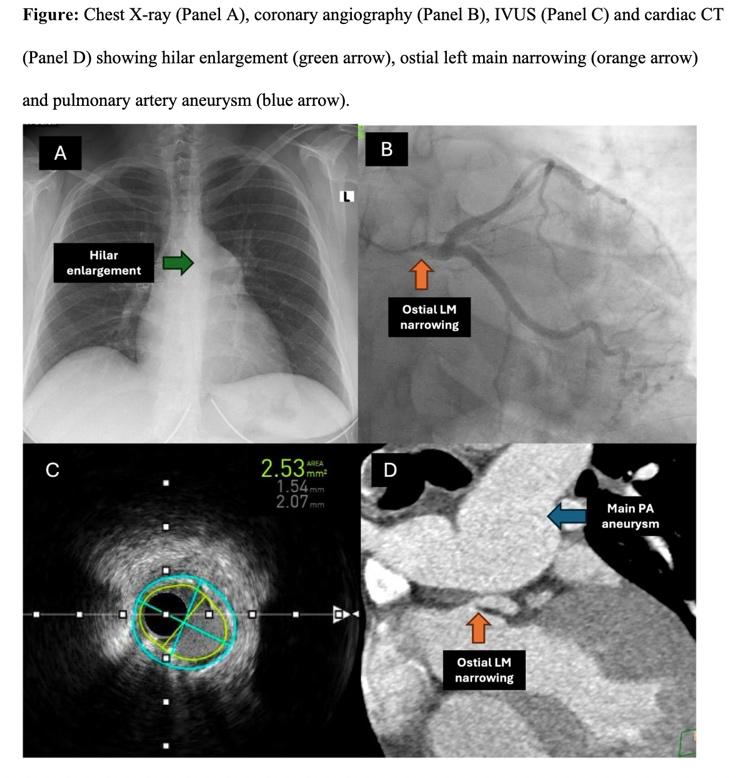
CONCLUSION: In this case, the MPA aneurysm caused dynamic LM coronary compression with angina. Cardiac CT was key in revealing the dynamic compression, which may not be evident on conventional angiography. Extrinsic compression of the left main coronary artery by a PA aneurysm is rare. Multimodality imaging and a multidisciplinary approach are essential for timely diagnosis and effective management.
ABSTRACT #204
CASE REPORT/CLINICAL REVIEW GASTROENTEROLOGY
TNF-INHIBITOR-INDUCED THYROIDITIS IN A PATIENT WITH CROHN’S DISEASE
Richard Vaca1 and Ayanna Lewis1
1Mount Sinai Morningside-West Hospitals, Icahn School of Medicine at Mount Sinai, New York, NY, United States Presented at the American College of Gastroenterology (ACG) Annual Meeting that was held in Phoenix, Arizona, United States from October 24-29, 2025.
BACKGROUND: TNF-inhibitors (TNFi) are widely-used for immune-mediated diseases such as Crohn’s disease. Thyroiditis is a rare complication of TNFi use in patients with Crohn’s disease without primary thyroid disease.
CASE PRESENTATION: A Crohn’s patient on six months of adalimumab, with no known history of thyroid disease, presented to the emergency room with new-onset palpitations. Work up revealed supraventricular tachycardia, a suppressed TSH (<0.01 uIU/mL, nl:0.4 – 4.2), and high free t4 (2.64 ng/dL, nl:0.82 – 1.77). Thyroid antibodies (TSI, TRAb, and anti TPO) were negative and a thyroid ultrasound was normal. Adalimumab was held and methimazole was started for a total of 18 months due to concern for drug-induced thyroiditis. Thyroid function tests (TFTs) normalized in 4 months with resolution of palpitations. Four years later, due to poorly controlled Crohn’s disease on upadacitinib, he was started on infliximab. His abdominal pain and diarrhea improved, however after 3 months of therapy he developed palpitations, anxiety and insomnia. TFTs again showed a suppressed TSH (<0.01 uIU/mL, nl:0.4 – 4.2) and high free t4 (2.11 ng/dL, nl:0.80 – 1.5). Thyroid antibodies were again negative. He was advised to stop infliximab and methimazole was re-started. His TFTs normalized within 2 weeks and all other symptoms of hyperthyroidism resolved.
CONCLUSION: TNFi can have unpredictable effects on thyroid function (1). We report a case of recurrent thyroiditis resulting in symptomatic hyperthyroidism in a patient treated with 2 different TNFi, suggesting a class effect. In both instances, TNFi cessation and use of methimazole resolved the hyperthyroidism. Although no evidence of autoimmune thyroid disease was found, it has been reported that antibodies against TNFi may cause thyroid gland damage, usually after 3 to 6 months of treatment, suggesting a drug-antibody mechanism (2). Absence of viral prodrome and recurrence after re-exposure made viral thyroiditis unlikely. Thyroid disease while on TNFi drugs should not delay treatment with these agents, but rather result in clinicians having a low threshold for suspecting drug-induced thyroiditis if there is an acute worsening.
ABSTRACT #205
CLINICAL RESEARCH
CARDIOLOGY
AUTOMATED DIAGNOSIS OF CHRONIC OBSTRUCTIVE PULMONARY DISEASE USING DEEP LEARNING APPLIED TO ELECTROCARDIOGRAMS
Akhil Vaid1, Joshua Lampert2, Stamatios Lerakis2, Edgar Argulian1, Charles B. Cairns2, Girish Nadkarni2
1Mount Sinai Morningside-West Hospitals, Icahn School of Medicine at Mount Sinai, New York, NY, United States; 2Mount Sinai Hospital, Icahn School of Medicine at Mount Sinai, New York, NY, United States Presented at the American College of Cardiology (ACC) Annual Scientific Session that was held in New Orleans, Louisiana, United States from March 28-30, 2026.
BACKGROUND: Chronic Obstructive Pulmonary Disease (COPD) is strongly linked to cardiovascular morbidity and mortality. Pulmonary vascular remodeling and hypoxemia lead to right ventricular strain, hypertrophy, and ultimately cor pulmonale, which manifest as subtle ECG changes often overlooked in routine care. Despite the ubiquity of the ECG in cardiology practice, no large-scale studies have leveraged artificial intelligence (AI) to detect COPD-related signatures from standard 12-lead ECGs.
METHODS: We trained a convolutional neural network (ConvNeXt Large) on 761,002 ECGs from 67,581 patients across the Mount Sinai Health System (2006-2023). Performance was assessed in an internal test set, an external hospital cohort, and the UK Biobank. Subgroup analyses included arrhythmia categories and patients with >=10 pack-year smoking history. Cox proportional hazards modeling tested the predictive value of ECGbased risk scores, and spirometry was used to evaluate physiologic correlation.
RESULTS: The model achieved robust discrimination of COPD: AUROC 0.80 (95% CI 0.80-0.80) internally, 0.82 (0.81-0.82) externally, and 0.75 (0.71-0.78) in the UK Biobank. Results were stable across arrhythmia subgroups and in patients with documented smoking history (AUROC 0.80). ECG-derived risk rose progressively as diagnosis approached, with hazard ratios for COPD prediction exceeding those of smoking history (HR 10.79 versus 3.96). Model predictions negatively correlated with spirometry indices (FEV1, FVC, FEV1/FVC), linking ECG signatures to respiratory physiology. Saliency mapping consistently highlighted atrial depolarization (Pwave morphology) as an informative region.
CONCLUSION: Deep learning applied to routine ECGs uncovers cardiopulmonary signatures of COPD, enabling earlier diagnosis than current clinical practice. By exploiting the interplay between pulmonary disease and cardiac strain, this approach transforms the ECG into a non-invasive, low-cost screening modality for COPD. Integration of AI-ECG into clinical workflows could expand opportunities for early intervention, particularly in populations at high cardiopulmonary risk.
ABSTRACT #206
CLINICAL RESEARCH
CARDIOLOGY
Akhil Vaid1, Joshua Lampert2, Martin Goldman2, Edgar Argulian1, Stamatios Lerakis2, Girish Nadkarni2
1Mount Sinai Morningside-West Hospitals, Icahn School of Medicine at Mount Sinai, New York, NY, United States; 2Mount Sinai Hospital, Icahn School of Medicine at Mount Sinai, New York, NY, United States Presented at the American College of Cardiology (ACC) Annual Scientific Session that was held in New Orleans, Louisiana, United States from March 28-30, 2026.
BACKGROUND: Inpatient cardiovascular care requires rapid synthesis of complex data, real-time application of guideline-directed therapy, and communication across high-turnover CCU environments. Cognitive overload and fragmented systems contribute to variation in care and clinician fatigue. Generative large language models (LLMs), such as GPT-4o, have potential to function as autonomous agents, reasoning through complex cases while maintaining adherence to current guidelines.
METHODS: We developed a simulation framework to test an LLM-based agent across five representative cardiovascular cases: AFib with RVR, cardiogenic shock, cardiac amyloidosis with decompensated heart failure, ventricular tachycardia, and acute coronary syndrome. Each case contained structured data (labs, imaging, ECGs, history, and guidelines). The agent operated iteratively, generating case narratives, ordering simulated diagnostics, and querying updated guidelines through a retrieval-augmented generation (RAG) system. Two faculty cardiologists independently evaluated each case on diagnostic accuracy, guideline adherence, appropriate tool use, and resistance to hallucinations. Results were scored out of 10 and averaged out across all cases.
RESULTS: The LLM agent achieved 8.3 on overall diagnostic accuracy, with 7.2 on concordance with the latest guidelines, with an improvement to 8.1 with RAG integration. In terms of correct investigations, the agent achieved an average score of 8.2. Both cardiologists agreed that no hallucinations were seen in any of the evaluated cases. Overall, the agent produced structured narratives that preserved continuity across simulated handoffs.
CONCLUSION: An LLM-driven agent demonstrated expert-level reasoning across diverse inpatient cardiovascular cases, aligning with guideline-directed care and supporting continuity during CCU turnover. These findings suggest potential for scalable decision support that reduces cognitive burden while maintaining accuracy in high-acuity cardiovascular care settings. Future work will assess versatility of this framework against a larger set of inpatient cases and in real-world prospective evaluations.
ABSTRACT #207
CLINICAL RESEARCH
CARDIOLOGY
AVERAGE METRICS OBSCURE THRESHOLD OPERATING-POINT DRIFT IN AI-ECG DETECTION OF HFREF
Akhil Vaid1, Joshua Lampert2, Martin E. Goldman2, Stamatios Lerakis2, Girish Nadkarni2, Edgar Argulian1
1Mount Sinai Morningside-West Hospitals, Icahn School of Medicine at Mount Sinai, New York, NY, United States; 1Mount Sinai Hospital, Icahn School of Medicine at Mount Sinai, New York, NY, United States
Presented at the American College of Cardiology (ACC) Annual Scientific Session that was held in New Orleans, Louisiana, United States from March 28-30, 2026.
BACKGROUND: AI ECG models for HFrEF are often judged by metrics such as Area Under the Receiver Operating Characteristic Curve (AUROC) over the entire dataset. However, clinical use often requires fixing a decision threshold to meet a target sensitivity so missed cases stay low and alert volume is predictable. Whether that operating point holds when the same model is assessed longitudinally, especially in external validation, is unclear.
METHODS: Internal development and validation used four facilities in the Mount Sinai Healthcare System: Main, Beth Israel, Queens, and West. External validation used Morningside. The outcome was LVEF less than 40 percent, derived from echocardiograms paired to ECGs within 15 days. Across 128 model and training combinations spanning 2009 to 2024, we set the internal threshold to achieve sensitivity 0.90 at the cutoff year, then evaluated yearly external performance at the unchanged threshold. We summarized t arget sensitivity deviation, defined as sensitivity minus 0.90; specificity drift at the fixed threshold, defined as external minus internal specificity; and AUROC gap, defined as external minus internal AUROC. We also reported external target coverage, defined as whether 0.90 lies inside the external sensitivity 95 percent CI at the fixed threshold.
RESULTS: Averaged across combinations, external target coverage was 58 percent, indicating the internally tuned operating point was not consistently retained. Mean external target sensitivity deviation was plus 0.033, an overshoot of about 3.3 sensitivity points, paired with a mean specificity drift of minus 0.015. Discrimination was maintained or slightly higher externally, with a mean AUROC gap of 0.024. Some errors were amplified by hyperparameter choices.
CONCLUSION: Within one health system, preserved AUROC did not reflect operating point stability. Fixed internal thresholds missed the target in about 42 percent of years and increased the false positive burden. Because thresholds translate scores into clinical action, deployment should include simple external rethresholding or calibration. Future work will identify which data, domain, and hyperparameter factors make transfer better or worse.
ABSTRACT #208
CLINICAL RESEARCH
CARDIOLOGY
PHENOTYPE PROGRESSION FOR ARTIFICIAL INTELLIGENCE POSITIVE, PHENOTYPE NEGATIVE ELECTROCARDIOGRAM DIAGNOSIS IN PATIENTS WITH HYPERTROPHIC CARDIOMYOPATHY
Joshua Lampert1, Deepak L. Bhatt1 , Akhil Vaid2, Jason Feinman1, Usha Sita Govindarajulu1, Girish Nadkarni1 , Vivek Yerrapu Reddy1
1Mount Sinai Hospital, Icahn School of Medicine at Mount Sinai, New York, NY, United States; 2Mount Sinai MorningsideWest Hospitals, Icahn School of Medicine at Mount Sinai, New York, NY, United States Presented at the American College of Cardiology (ACC) Annual Scientific Session that was held in New Orleans, Louisiana, United States from March 28-30, 2026.
BACKGROUND: Patients with initial “false positive” (FP) designations related to artificial intelligence electrocardiogram (AI-ECG) models have a higher cumulative incidence of disease at follow up. Clinical guidance is unclear for how to manage “FP” patients-those classified as having disease by AI-ECG without disease phenotype at the time of model classification (AI+, Phenotype-).
METHODS: We conducted a retrospective review of 100 patients with known hypertrophic cardiomyopathy (HCM) at Mount Sinai Health System (NY, NY). An FDA approved AI-ECG model (VizHCM, Viz.ai) was applied to all available ECGs for each patient. Time for phenotype progression was defined from the first positive AIECG to when echocardiographic or MRI criteria for HCM were met. In a separate cohort of 50,000 patients without chest imaging, we performed 100 Monte Carlo simulations per patient using calibrated probabilities to estimate the prevalence of HCM.
RESULTS: Among 100 HCM patients, 44% were female and 55% were white. “FP” alerts accounted for 13% of cases. The mean time to phenotype progression to HCM was 2.74 years. The estimated prevalence of HCM among patients without chest imaging is 1:143 people (0.7%).
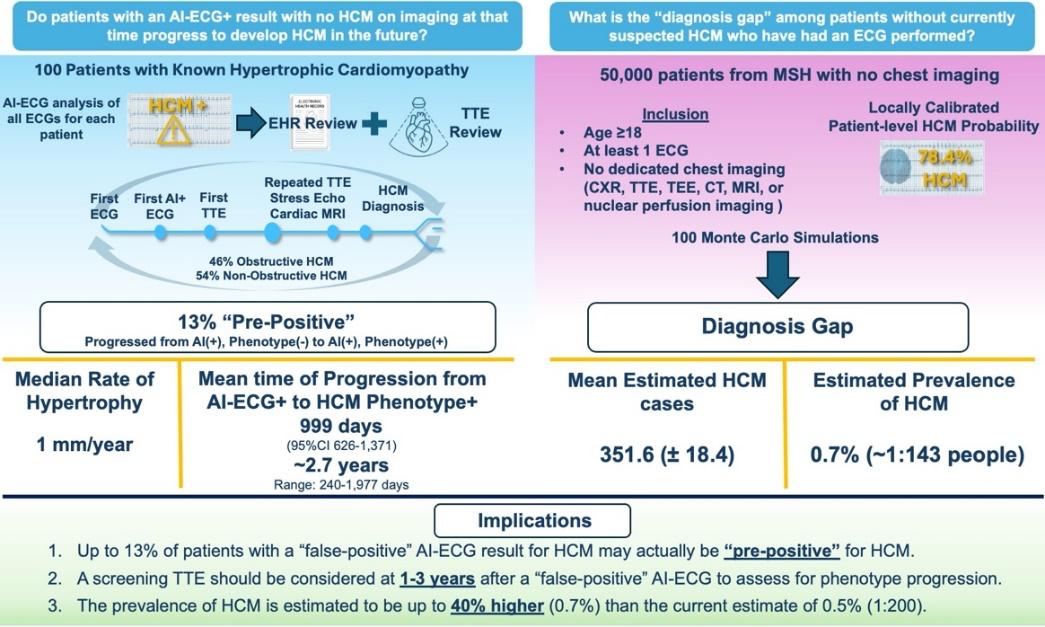
CONCLUSION: Among patients with known HCM, 13% of “false positives” at first AI-ECG progressed to developing HCM - patients we propose calling “pre-positive.” These data support repeat echocardiography between 1 and 3 years after a “false positive” AI-ECG. The prevalence of HCM may be higher than currently estimated.
ABSTRACT #209
MEDICAL EDUCATION
GENERAL INTERNAL MEDICINE
BRINGING STRUCTURE TO THE MEDICINE CONSULT ROTATION: A HYBRID
Agostina E. Velo1, Natalie Cedeno1, Shabari Shenoy1, Neil Chen1, Fatma Alzahraa Abdel Qader1, Anahi McIntyre1, Krystle Hernandez1, Alfred Burger1, Brian Markoff1, John A. Andrilli1, Vasundhara Singh1 1Mount Sinai Morningside-West Hospitals, Icahn School of Medicine at Mount Sinai, New York, NY, United States Presented at the Institute for Medical Education (IME) Annual Education Research Day that was held in New York, New York, United States on April 21, 2026 and at the Society of Hospital Medicine (SHM) Annual Meeting that was held in Nashville, Tennessee, United States from March 29 to April 1, 2026.
BACKGROUND: Medicine consult rotations are essential to internal medicine training but often lack a structured curriculum, resulting in variable expectations, inconsistent teaching, and limited continuity due to frequent attending turnover. At our institution, both residents and faculty identified this gap. The goal of this project was to develop and implement a structured perioperative and medicine consult curriculum using a mixed synchronous and asynchronous model to support consistent teaching for senior internal medicine residents.
METHODS: In January 2025, a hybrid curriculum was introduced that combined eight asynchronous Society of Hospital Medicine (SHM) modules with weekly faculty-led chalk talks. SHM modules focused on cardiac risk assessment and anticoagulation management and were supplemented with six high-yield topics relevant to perioperative medicine: delirium, diabetes and hyperglycemia, perioperative kidney injury, postoperative pain management, anemia, and perioperative fever and infectious disease. Faculty with perioperative medicine expertise delivered 30-minute interactive chalk talks covering cardiac risk assessment, medication management, and gender-affirming surgery. Educational materials and schedules were distributed to residents rotating across two hospital sites to ensure standardization despite frequent attending changes. Residents completing the rotation between July and October 2025 were invited to complete a post- rotation survey assessing curriculum engagement, perceived educational value, impact on clinical duties, and applicability to patient care.
RESULTS: Twenty third-year residents completed the rotation, and 15 (75%) completed the survey. Fifty- three percent completed at least one SHM module (median 2; interquartile range 0–4), with time constraints, module length, and volume cited as barriers. All residents attended the faculty-led chalk talks and reported increased engagement without significant disruption to clinical responsibilities. Residents noted improved application of evidence-based perioperative principles, particularly in anticoagulation and medication management. Most recommended continuing the curriculum due to its relevance and role in standardizing the rotation.
CONCLUSION: This structured perioperative and medicine consult curriculum was well received and addressed a key educational gap in residency training. While asynchronous module engagement was variable, the blended model promoted consistent teaching and practical learning. Ongoing refinement based on resident feedback will further enhance effectiveness and adaptability, reinforcing the value of a standardized, evidence-based consult education model. This structured perioperative and medicine consult curriculum was well received and addressed a key educational gap in residency training. While asynchronous module engagement was variable, the blended model promoted consistent teaching and practical learning. Ongoing refinement based on resident feedback will further enhance effectiveness and adaptability, reinforcing the value of a standardized, evidence-based consult education model.
ABSTRACT #210
MEDICAL EDUCATION
PULMONARY/CRITICAL CARE
DEVELOPING
Agostina E. Velo1, Sonja Mittag1, Adam Rothman1
1Mount Sinai Morningside-West Hospitals, Icahn School of Medicine at Mount Sinai, New York, NY, United States Presented at the Institute for Medical Education (IME) Annual Education Research Day that was held in New York, New York, United States on April 21, 2026.
BACKGROUND: To develop and implement a structured curriculum aimed at improving knowledge of respiratory failure and confidence in applying oxygen therapies among internal medicine interns at an academic medical center in New York.
METHODS: As part of a longitudinal medical education initiative, we delivered a one-hour large-group didactic session for internal medicine interns covering definitions of respiratory failure, interpretation of arterial blood gases, and indications and contraindications of oxygen delivery devices (nasal cannula, simple face mask, Venturi mask, non- rebreather mask). Pre- and post-session 10-question surveys were distributed and responses were linked using an anonymized code. Four self-reported comfort and agreement items were assessed on a 5point Likert scale and analyzed with the Wilcoxon signed-rank test. Six knowledge-focused multiple-choice questions were scored as correct or incorrect using a predefined answer key and were compared using McNemar’s exact test. A two-sided α=0.05 was applied with Bonferroni correction within outcome families.
RESULTS: Forty interns attended the session, and 34 completed matched pre- and post-session surveys. Among respondents, 12 of 32 (38%) reported no prior formal education on oxygen delivery devices, highlighting a baseline training gap. Significant improvements were observed across all four self-reported confidence domains. Median Likert scores increased from 3 (“neutral”) pre-lecture to 4 (“comfortable” or “agree”) post-lecture for understanding respiratory failure, interpreting arterial blood gases, familiarity with oxygen delivery devices, and confidence in managing acute respiratory failure (all p<0.0001). Objective knowledge also improved, with correct responses increasing from an average of 61% to 87%. Significant gains were observed in recognition of type 1 respiratory failure (53% to 88%, p=0.004), appropriate use of Venturi masks (44% to 76%, p=0.019), and correct use of non-rebreather masks (53% to 92%, p=0.002). Other knowledge items showed upward trends but did not reach statistical significance. Overall, 85% of participants “highly recommended” the lecture for future interns. Objective knowledge also improved, with correct responses increasing from an average of 61% to 87%. Significant gains were observed in recognition of type 1 respiratory failure (53% to 88%, p=0.004), appropriate use of Venturi masks (44% to 76%, p=0.019), and correct use of non-rebreather masks (53% to 92%, p=0.002). Other knowledge items showed upward trends but did not reach statistical significance. Overall, 85% of participants “highly recommended” the lecture for future interns.
CONCLUSION: A focused educational intervention significantly improved both confidence and objective knowledge related to respiratory failure and oxygen delivery devices among internal medicine interns. A key limitation of this project is the absence of patient-level outcome measures, a common constraint in educational interventions of this nature. Additionally, outcomes were limited to short-term knowledge acquisition and selfreported confidence, without assessment of long-term retention or clinical behavior change. To further enhance the educational impact, this curriculum is ongoing and will incorporate an additional one-hour session focused on non-invasive ventilation, as well as a simulation-based session designed to allow learners to apply these concepts in a clinically realistic setting.
ABSTRACT #211
CLINICAL RESEARCH
CARDIOLOGY
CLINICAL IMPLICATIONS OF APICAL ANEURYSM IN APICAL HYPERTROPHIC CARDIOMYOPATHY
Hassaan Wajeeh1, Florencia Anzivino2 , Raghavee Neupane3 , Tarec Elajami2 , Christos Mihos2
1Mount Sinai Morningside-West Hospitals, Icahn School of Medicine at Mount Sinai, New York, NY, United States; 2Mount Sinai Medical Center, Miami, FL, United States; 3Nova Southeastern University, Fort Lauderdale, FL, United States Presented at the Mount Sinai Health System Department of Medicine Research Day that was held in New York, New York, United States from May 4-5, 2026.
BACKGROUND: The presence of left ventricular (LV) apical aneurysm (ApAn) in hypertrophic cardiomyopathy confers an increased risk of adverse events. However, specific outcomes in patients with apical-variant hypertrophic cardiomyopathy (ApHCM), who experience the highest prevalence of ApAn, are not well defined. We sought to characterize the prevalence and associated clinical outcomes of ApAn in patients with ApHCM (ApHCM+ApAn).
METHODS: A systematic review was conducted using PubMed, EMBASE, and Cochrane Library. Studies were included if they assessed patients with ApHCM and reported outcomes in a subgroup with ApAn. Extracted variables included, but were not limited to demographics, major adverse cardiovascular events (MACE), and echocardiographic indices.
RESULTS: Nine studies were identified reporting on 2,394 ApHCM patients, with 114 (5%) having an associated ApAn. The mean age ranged from 47 to 64 years, with females accounting for 19-43% of patients. In subgroup analyses of patients with ApHCM+ApAn, prevalence of sudden cardiac death was 6-22%, ventricular tachycardia was 12-50%, and thromboembolism was 11-24%, with a lower event-free survival rate compared with ApHCM (27.6% versus 3.3%; p=0.010). MACE occurred more frequently among 17 patients with ApHCM+ApAn compared with 76 ApHCM (35% versus 11%, p<0.01), with all apical thrombi (24% prevalence) occurring in ApHCM+ApAn. Multivariable analysis in a cohort of 462 ApHCM patients identified ApAn as an independent predictor of death, appropriate implantable cardioverter defibrillator therapy, and cardiac transplantation (HR, 1.92; 95%CI, 1.00–3.72; p=0.05). ApAn was an independent predictor of sustained monomorphic ventricular tachycardia amongst 80 ApHCM patients (HR 4.89; 95%CI, 1.20–19.81; p=0.03). Finally, ApHCM+ApAn is associated with worse LV mechano-energetic coupling, increased global wasted work (347±112 versus 221±165 mmHg%, p=0.03), and decreased work efficiency (75±5% versus 82±8%, p=0.006) when compared with ApHCM.
CONCLUSION: ApHCM is a risk factor for the development of ApAn with a notable prevalence of associated cardiovascular morbidity. The current available evidence supports that ApHCM+ApAn is associated with increased MACE and impaired LV function.
ABSTRACT #212
CLINICAL RESEARCH
HEMATOLOGY/ONCOLOGY
MISMATCHED UNRELATED AND HAPLOIDENTICAL TRANSPLANT WITH POST-TRANSPLANT CYCLOPHOSPHAMIDE-BASED GRAFT VERSUS HOST DISEASE PROPHYLAXIS ARE EFFECTIVE FOR MYELOFIBROSIS
Richard Sheppard1, 2, Noa Rippel1, Hulya Kocyigit1,3, Erin Moshier1 , Kyle Wiatrowski4, John Levine1, John Mascarenhas1, Ronald Hoffman1, Alla Keyzner1 1Mount Sinai Hospital, Icahn School of Medicine at Mount Sinai, New York, NY, United States; 2Sanford Roger Maris Cancer Center, Faro, ND, United States; 3Karamanoğlu Mehmetbey University, Karaman, Turkey; 4Mount Sinai Morningside-West Hospitals, Icahn School of Medicine at Mount Sinai, New York, NY, United States Presented at the American Society of Hematology (ASH) Annual Meeting that was held in Orlando, Florida, United States from December 6-9, 2025.
BACKGROUND: Allogeneic hematopoietic cell transplant (HCT) remains the only curative option for myelofibrosis (MF); however, patients with MF historically have had poor survival outcomes due to high rates of graft failure and non-relapse mortality (NRM), especially when using alternative donors. We previously reported worse 2-year outcomes following HCT from 2008-2014 for MF with unrelated donors compared to related donors: non-relapse mortality (NRM) 53% (95%CI 36-78%) versus 21% (95%CI, 9-47%) and overall survival (OS) 38% (95%CI, 20-56%) versus 75% (95%CI, 46-90%) (Keyzner, BBMT 2016). High rates of graft failure with mismatched donors vs matched donors were a significant factor in worse outcomes (60% versus 13%; p=.04). In this study we analyzed the impact of haploidentical donors and the use of post-transplant cyclophosphamide (PTCy)-based graft versus host disease (GVHD) prophylaxis on HCT outcomes in MF in a more recent patient cohort.
METHODS: We retrospectively reviewed 65 consecutive patients with primary and secondary MF who underwent HCT at our center from 2015 to 2024. Patients were divided into two groups for comparative analyses: haploidentical and mismatched unrelated donors (100% received PTCy) and matched related/unrelated donors. Outcomes analyzed included 2-year OS, progression-free survival (PFS), GVHD-free relapse-free survival (GRFS), NRM, and engraftment kinetics. For OS, PFS, and GRFS analyses, log-rank p-values were reported based on Kaplan–Meier methodology. For NRM, neutrophil engraftment, and platelet engraftment analyses, the cumulative incidence function (CIF) methodology was applied, and Gray’s test p-values were reported.
RESULTS: The median age at HCT was 63 years (33-73), the median Karnofsky Performance Status (KPS) was 90 (70- 100), and 52% were female. High risk characteristics were common: spleen size >22cm (n=18, 28%), high risk by MIPSS-70 scoring (n=55, 85%), high/very high risk by the clinical-molecular myelofibrosis transplant scoring system (MTSS) (n=20, 31%). Patients were either in chronic phase (n=50, 77%), accelerated phase (n=6, 9%), or at blast phase (n=9, 14%). The conditioning regimens were equally divided between Thiotepa, Busulfan, and Fludarabine (TBF) and Fludarabine/Melphalan (Flu/Mel); all but three patients received reduced intensity conditioning. PTCy was used for GVHD prophylaxis for all mismatched recipients, and 34 (52%) patients overall. The mismatched group (n=25) included haploidentical (n=20, 31%) and mismatched unrelated donors (n=5, 8%). The matched group (n=40) included related donors (n=13, 20%) and unrelated donors (n=27, 41%).
The 2-year PFS and OS for all patients were 66% (54-77%) and 73% (62-84%), respectively. The 2-year PFS and OS did not significantly differ between groups; mismatched versus matched, PFS: 75% (58-92%) versus 65% (44-75%); OS: 83% (68-98%) versus 67% (52-82%). The 2-year NRM was 24% (16-36%) for the entire cohort, with 8% for mismatched and 30% for matched groups. 2-year GRFS was 40% (28-52%) overall but was markedly better for mismatched vs matched recipients: 67% (48-86%) versus 24% (11-37%); this difference
appeared to be driven by greater utilization of PTCy in the mismatched group. 2-year GRFS was more than 2fold higher for recipients of PTCy prophylaxis: 58% (41-75%) versus 23% (8-37%). There were no meaningful differences in 2-year PFS, OS, GRFS, or engraftment by conditioning regimen (TBF versus Flu/Mel). There were no graft failures in either group, and the proportion of engraftment by standard time points was similar for mismatched vs matched groups: day 28 neutrophil engraftment (80% versus 93%), day 100 platelet engraftment (75% versus 78%). A few patients required stem cell boosts for poor graft function in each group: mismatched (n=3, 5%) versus matched (n=2, 3%).
CONCLUSION: The use of mismatched donors, including haploidentical donors, was associated with marked improvements in engraftment, PFS, and OS for HCT in MF in the 2015–2024 era compared to outcomes from 2004–2014. Both TBF and Flu/Mel appear to be equally effective as conditioning regimens for MF regarding engraftment and survival outcomes. The use of PTCy for GVHD prophylaxis appears to be the primary contributor to improved outcomes, and significantly, did not affect rates of engraftment. These data show that the lack of a well-matched donor should not be considered a barrier to curative HCT for MF.
ABSTRACT #213
CLINICAL RESEARCH
PULMONARY/CRITICAL CARE
LUNG NODULES IDENTIFIED BY NATURAL LANGUAGE PROCESSING: DO TRAITS DETERMINE THE TRAJECTORY?
Aesha Patel1 , Alvin Yang1, Junyu Qi1, Catherine Zaw1, Oluwatumilara Akeke1, Nicolette Lam1, Sascha Adler1 , Javier J. Zulueta1
1Mount Sinai Morningside-West Hospitals, Icahn School of Medicine at Mount Sinai, New York, NY, United States Presented at the American College of Chest Physicians Annual Meeting held in Chicago, Illinois, United States from October 19-22, 2025.
BACKGROUND: Lung nodules (LNs) are identified in 1.6 million U.S. patients annually, however over 60% are lost to follow-up, leading to missed lung cancer diagnoses (3.2% at one year, 4.7% at two years). Although most LNs are benign, the risk of malignancy indicates the need for effective identification, tracking and management strategies. This study aims to evaluate whether specific characteristics of LNs such as stage, size, location, or morphology influence follow-up and subsequent workup.
METHODS: The Lung Nodule Program (LNP) uses natural language processing (NLP) to identify all imaging reports containing lung nodules at Mount Sinai Morningside and West. Patients with active cancer or old, stable, or calcified nodules were excluded. Enrolled patients were categorized based on existing nodule care. For those already in care, the program passively tracks follow-up until the radiologist’s recommended date. For those without a management pathway, the program ensures timely engagement. Lung cancer diagnoses were analyzed from January 4, 2023, to February 1, 2025, with patients grouped based on program engagement.
RESULTS: There are 30 lung cancer diagnoses in the engaged group and 74 in the non-engaged group. Among engaged patients, 22 (73.3%) were diagnosed in stage I/II, while six (20.0%) were in stage III/IV, including two stage IV non-lung primaries. In the not-engaged group, 29 (41.4%) were stage I/II, and 38 (54.3%) were stage III/IV, including three stage IV nonlung primaries. Four cases were excluded due to unclear pathology. Earlystage diagnoses were significantly more common in the engaged group (p=0.0017). However, there were no significant differences between groups in demographics (race, ethnicity, smoking status) or in nodule characteristics (size, emphysema, ground-glass opacity, spiculation, or location).
CONCLUSION: Our findings show a significant difference in cancer stage at diagnosis between engaged and non-engaged patients, with a higher proportion of early-stage (I/II) cases in the engaged group. This suggests that program engagement may improve early detection and timely follow-up. Studies have shown that incidental lung nodule (ILN) characteristics size, morphology, and location influence malignancy risk and follow-up adherence. Nodules larger than 6 mm, with spiculated or irregular margins, and part-solid ground-glass opacity are associated with higher malignancy risk. Upper lobe nodules also have a greater likelihood of malignancy. While nodule characteristics such as size, morphology, and location are known to influence malignancy risk and follow-up adherence, these factors did not explain the observed differences in our study. This may be due to the limited sample size, highlighting the need for further research with larger cohorts to better understand the impact of nodule characteristics on follow-up and cancer staging. Identifying how lung nodule characteristics influence malignancy risk and follow-up adherence can help refine risk stratification and improve guideline adherence, ensuring timely surveillance and intervention. Future lung nodule management efforts could integrate automated NLP-based tracking systems into clinical workflows to reduce missed follow-ups and enhance early lung cancer detection. This approach may shift lung nodule management toward a more data-driven, proactive model, ultimately improving patient outcomes and adherence to surveillance protocols.
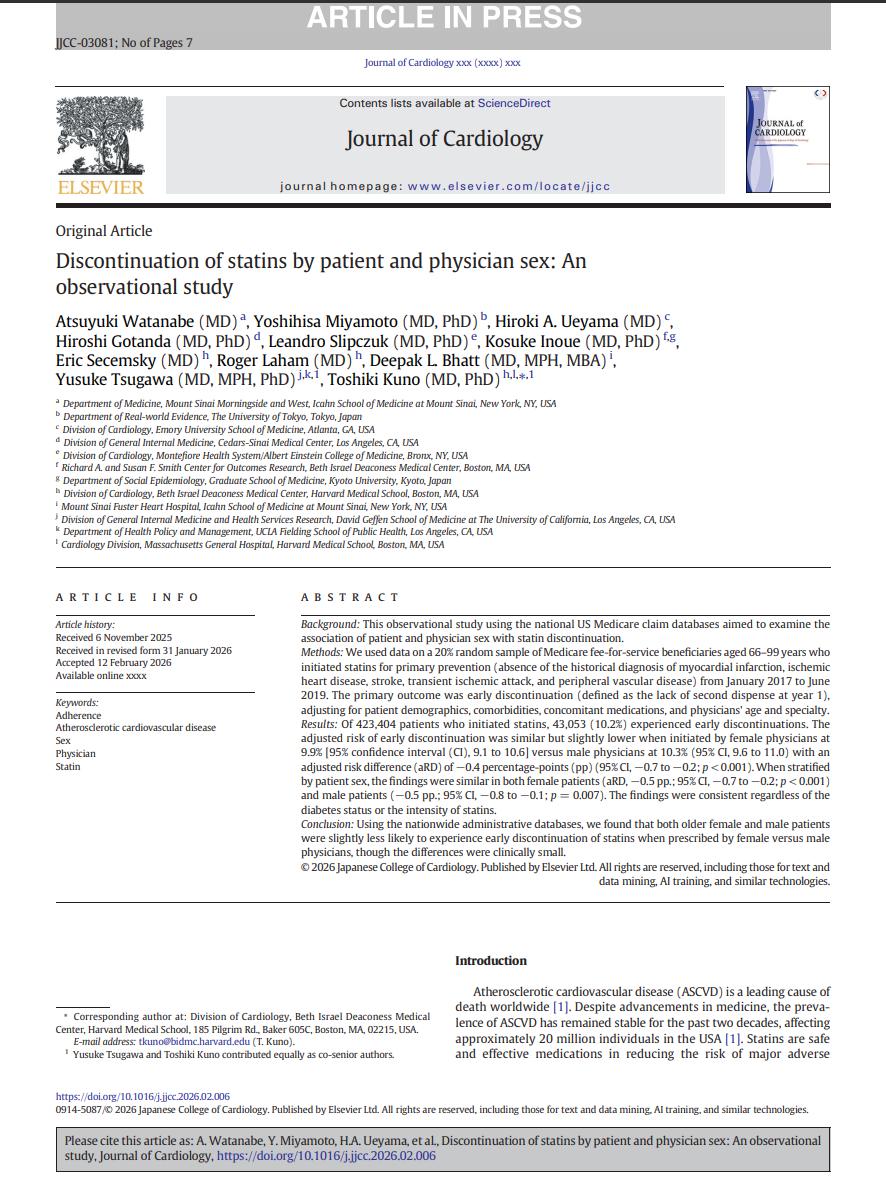
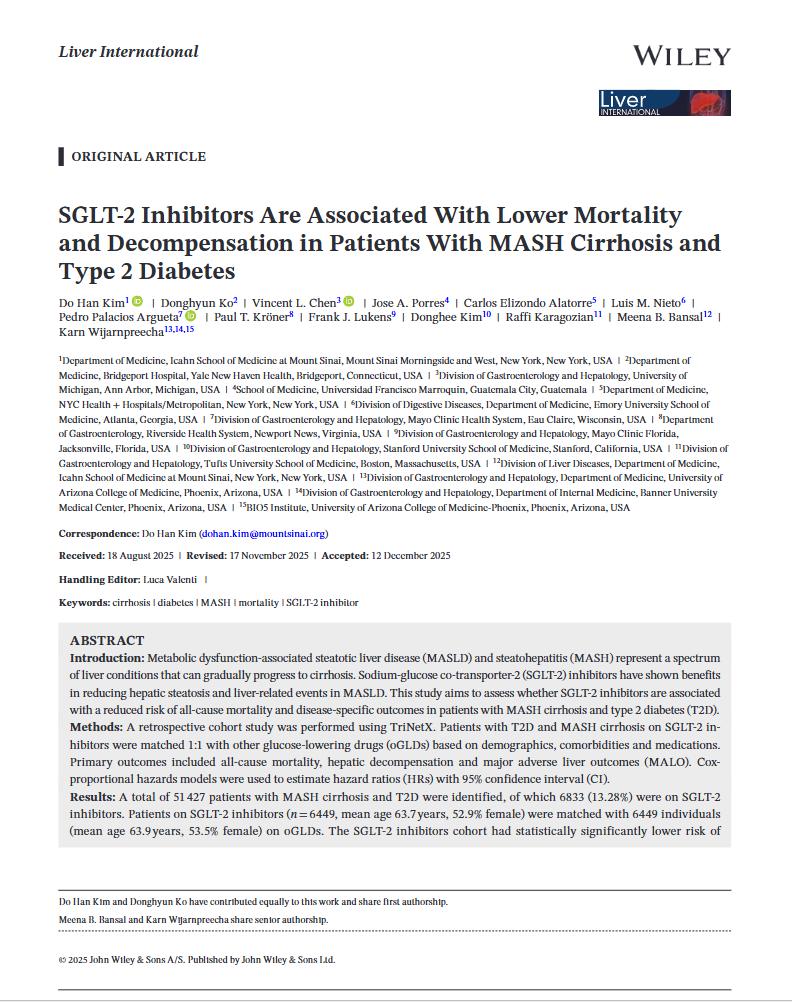
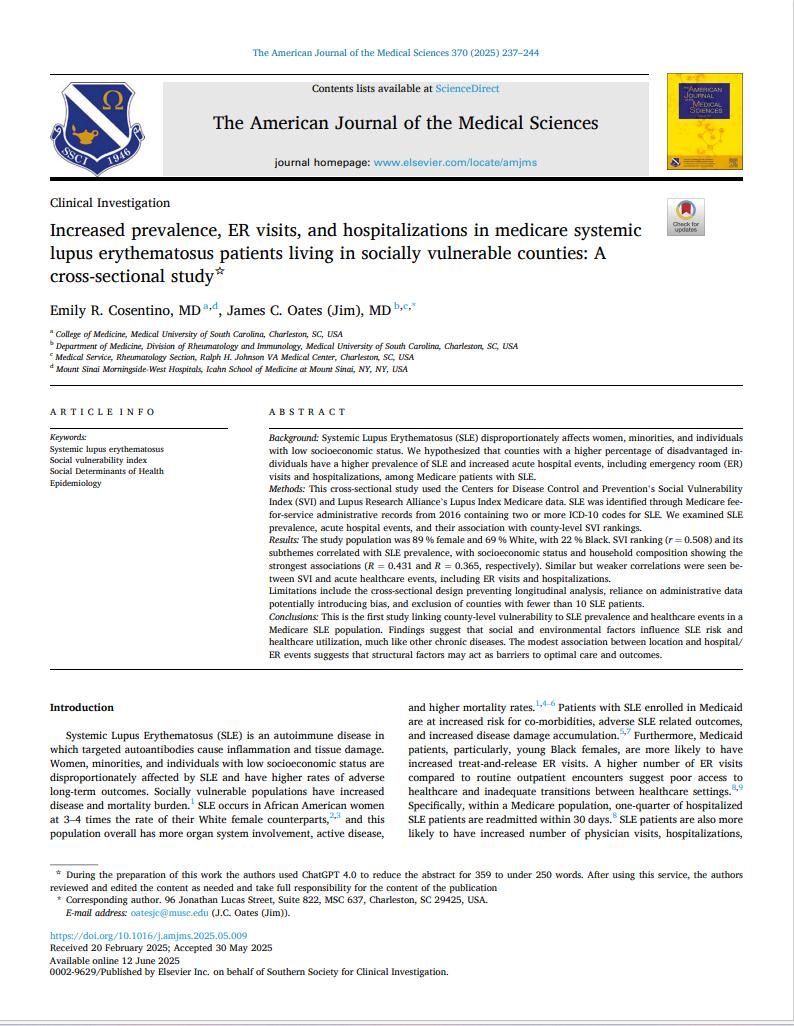
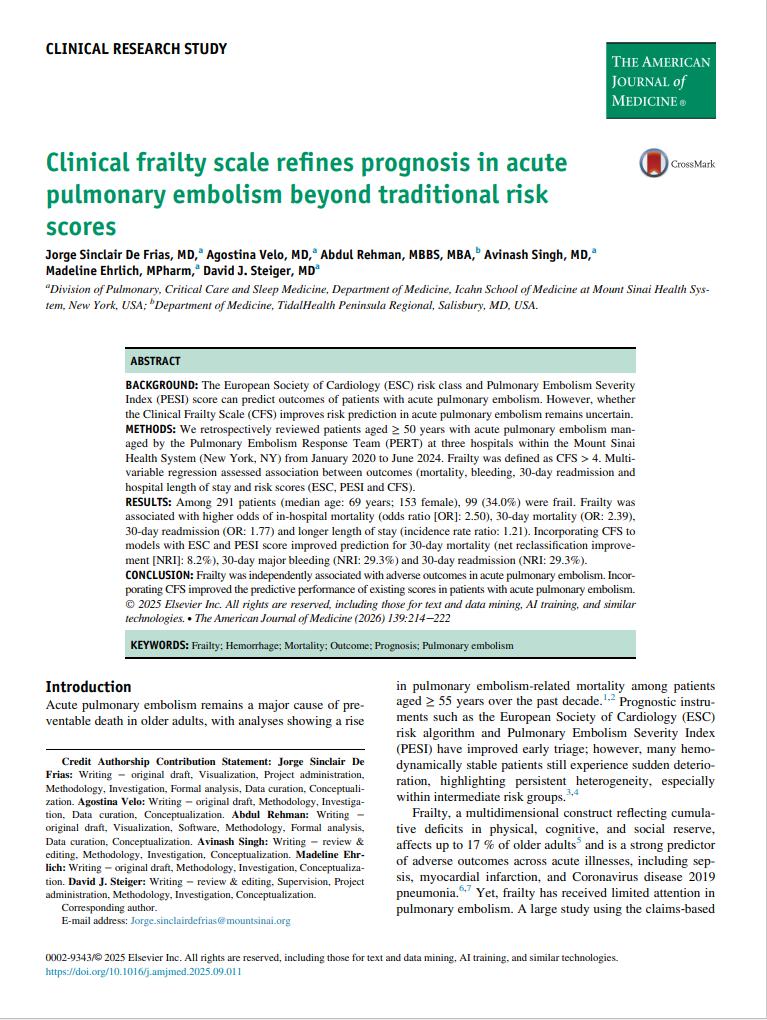
1
2
Ken Tanaka, Tatsuya Motoki, Yosuke Matsui, Hirotaka Nakashima, Hiroki Okazaki, Fumitoshi Fukuzawa, Hitomi Hashimoto, Kaichi Sugihara, Tatsuya Yoshida, Hidenori Arai “Evaluation of a ChatGPT-based artificial intelligence medical consultation system for frailty and sarcopenia related symptoms in older adults.” Aging Medicine and Healthcare, 2026. https://journals.lww.com/amah/fulltext/9900/evaluation_of_a_chatgpt_based_artificial.10.aspx
Jonathan Bar, Eden David, Ester Del Duca, Sophie Guenin, Curtis Tam, J Roscoe Wasserburg, Dev Patel, Camille Rothenberg-Lausell, Paola Facheris, Peter Taub, Emma Guttman-Yassky “OX40 and Regulatory Marker Alterations in Lesional and Non-Lesional Keloid Tissues.” Allergy, 2025. PMID: 40577225
3
4
Jonathan Bar, Ester Del Duca, Eden David, Swaroop Bose, Gabriella Chefitz, Patrick M Brunner, Robert Bissonnette, Emma Guttman-Yassky. “Skin Tape Stripping Reveals Distinct Biomarker Profiles in Chronic Hand Eczema of Patients with and without Comorbid Atopic Dermatitis.” Allergy, 2025. PMID: 39760239
Joanne Ellis, Léa Fortunato, Hannah Wajdner, Ester Del Duca, Joanna Barnard, Joanna C Betts, Swaroop Bose, John Browning, Núria Buil-Bruna, Scott Van Buren, Eden David, Scott Dinehart, Puneet Dhawan, Yeriel Estrada, Parima Ghafoori, Kiranmai Gumireddy, Zhenghong Li, Wei Jing Loo, Fiona Lovegrove, Jenny Lowe, Lawrence Charles Parish, Will Powley, Naveen Prasad, Joel Correa Da Rosa, Marieta Ruseva, Neda Shokrian, Farhat Syed, ChunHang Tang, Gabriel K. Wong , John B. Kelly, Nicolas Wisniacki, Iain Uings, Emma GuttmanYassky. “Clinical and Molecular Effect of the Anti-IL-18 Antibody Aletekitug in Adults with Atopic Dermatitis.” Allergy, 2026. PMID: 41410194
5
6
Jacob W Glickman, Eden David, Neda Shokrian, Kelly Hawkins, Ester Del Duca, Benjamin D Hu, Kristina Navrazhina, Britta Carroll, Arnav Mishra, Yeriel D Estrada, Giselle Singer, James G Krueger, Emma Guttman-Yassky. “Large-Scale Blood Proteomic Analysis Across Different Inflammatory Skin Conditions Reveals Extensive Immune Dysregulation with Distinct Biomarker Profiles.” Allergy, 2026. PMID: 41246813
Tetsuya Saito, Yoshihisa Miyamoto, Tomohiro Fujisaki, Hiroki Ueyama, Atsuyuki Watanabe, Kaveh Hosseini, Alexandros Briasoulis, Leandro Slipczuk, Hisato Takagi, Satoshi Shoji, Masao Iwagami, Dhaval Kolte, Tadao Aikawa, Carl J Lavie, Toshiki Kuno. “Sex Differences in Safety and Efficacy of Dual Antiplatelet Therapy Strategies for Patients with Acute Coronary Syndromes: A Systematic Review and Meta-analysis of Randomized Controlled Trials.” American Journal of Cardiology, 2025. PMID: 40691919
7
8
Leore Lavin and Shamir Geller. “Cutaneous T Cell Lymphoma Following Dupilumab Therapy in Patients with Atopic Dermatitis: Clinical Review and Recommendations.” American Journal of Clinical Dermatology, 2025. PMID: 40418285
Christina E Hum, Krystal Hunter, Keri M. Cronin, Sarah E Davenport, Vishwanath Bhat, Alla Kushnir “Evaluation of the Use of Ultrasounds in the Diagnosis of Developmental Dysplasia of the Hip in Premature Breech Newborns.” American Journal of Perinatology Reports, 2026. PMID: 40719078
*Updated on May 16, 2026
Arjun Syal, Jennifer Toh, Alissa McInerney, Douglas Tremblay. “The evaluation, management, and future of indolent systemic mastocytosis.” Annals of Hematology, 2025. PMID: 40751757 10
Mrittika Deb. “Beyond the Diagnosis: Finding the Person in the Patient.” Annals of Internal Medicine, 2025. PMID: 41397270
Priyanka Sridhar, Hong Yu Wang, Avinash Singh, Abdul Rehman, Agostina Velo, Destiny Nguyen, Jason Filopei, Madeline Ehrlich, Robert Lookstein, David Steiger Association of transfer time and delays with outcomes for patients with acute pulmonary embolism requiring interhospital transfer: a retrospective observational study.” Annals of Medicine, 2025. PMID: 40711763 12
Yong Zhang, Kangyun Wu, Dailing Mao, Courtney A Iberg, Huiqing Yin-Declue, Kelly Sun, Hallie A Wikfors, Shamus P Keeler, Ming Li, Deanna Young, Jennifer Yantis, Erika C Crouch, Joshua R. Chartock, Zhenfu Han, Kay O Broschat, Byers Derek E , Steven L Brody, Arthur G Romero, Michael J Holtzman. “A first-in-kind MAPK13 inhibitor corrects stem cell reprogramming and muco-obstructive lung disease.” BioRxiv, 2025 PMID: 3922902
Hamza Hashmi, Tara Sebastian, Sridevi Rajeeve, Tasmin Farzana, Ross S. Firestone, Eric M Jurgens, Kevin C Miller, Francesco Maura, Alexander M Lesokhin, Carlyn R Tan, Gunjan L Shah, Neha Korde, Heather J Landau, Maximillian Merz, Michael Scordo, Hani Hassoun, Kylee H Maclachlan, Urvi A Shah, Malin L Hultcrantz, Andriy Derkach, David Nemirovsky, Sergio Giralt, Sham Mailankody, Saad Z Usmani. “Functionally high-risk disease is associated with poor outcomes after late-line CAR T-cell therapy for multiple myeloma.” Blood Cancer Journal, 2026. PMID: 41968163
14
Tara Sebastian, Sridevi Rajeeve, Tasmin Farzana, Ross Firestone, Eric Jurgens, Kevin Miller, Bruno Almeida Costa, Alexander Lesokhin, Carlyn Rose Tan, Gunjan Shah, Neha Korde, Heather Landau, Michael Scordo, Hani Hassoun, Kylee Maclachlan, Urvi Shah, Malin Hultcrantz, Andriy Derkach, David Nemirovsky, Sergio Giralt, Saad Usmani, Sham Mailankody, Hamza Hashmi. “Impact of daratumumab refractoriness on clinical outcomes following CAR T-cell therapy for relapsed refractory multiple myeloma.” Blood Cancer Journal, 2025. PMID: 40813765 15
Mako Koseki Senda, Desiree Chow, Bharati Dev, Jake DeBroff, Caroline O' Ferrall, Ryan Fliehman, Rui Jiang. “Improving colorectal cancer screening through Cologuard education: a quality improvement initiative in an urban primary care clinic.” BMJ Quality Improvement Reports, 2025. PMID: 41073095 16
César Higgins Tejera, Raha Dastgheyb, Eran F. Shorer, Susie Lee, Deborah Gustafson, Anjali Sharma, Gypsyamber D'Souza, Kathleen M Weber, Qibin Qi, Leah H Rubin, Kathryn C Fitzgerald. “Metabolomic levels mediate the link between socioeconomic factors and changes in declarative memory in women with and without HIV.” Brain, Behavior, and Immunity Health, 2026. PMID: 41953582
Lindsay S. McAlpine, Eran F. Shorer, Jennifer Chiarella, Allison Nelson, Rebecca Veenhuis, Alba Azola, Alfred Lee, Richard Pierce, Shelli Farhadian, Leah H Rubin, Serena S Spudich; Yale COVID Mind; IMPACT Study Groups. “Vascular inflammation in neuropsychiatric long COVID.” Brain, Behavior, and Immunity Health, 2026. PMID: 42099668
Tatsuya Watanabe, Atsuyuki Watanabe, Masao Iwagami, Yusuke Tsutsumi, Keishun Boku, Yuki Enomoto, Yoshiaki Inoue. “The association between hospital volume and in-hospital mortality in severe burn patients: A nationwide study using the Japanese Burn Registry.” Burns, 2026. PMID: 41950740 19
Chi-Ting Shi, Kristen R. Ibanez, Jung-Min Lee, Tzu-Ting Huang. “Targeting ATR and PI3Kα Pathways Promotes Ferroptosis in PIK3CA-Wildtype Platinum-Resistant Endometrial Cancer.” Cancers, 2026. PMID: 41976288
Sara Diaz Saravia, Vincent Torelli, Maninderjit Ghotra, Samuel Tan, Paulus Adinugraha, Marko Novakovic, Katharine Idrissi, Basera Sabharwal, Sean P Pinney, Gagan Sahni 2, Matthew I Tomey “Cardiogenic shock in cancer: differences in use of temporary mechanical circulatory support, invasive hemodynamic assessment and patient outcomes.” Cardiooncology, 2025. PMID: 41437117
21
Yuko Kiyohara, Kota Minami, Lina Freeman, Wai Hong Wilson Tang, Sean P Pinney, Yuichiro Yano, Toshio Naito, Satoshi Miyashita. “Reperfusion therapy for older patients with acute myocardial infarction and cardiogenic shock.” Cardiovascular Revascularization Medicine, 2026. PMID: 41617604 22
Usman Saeedullah, Komail Jafri, Mandeep Singh, Harrison Bonilla, Jessica Yang, Anton Camaj, Abel Casso Dominguez, Stamatios Lerakis, Edgar Argulian “Single-leaflet device attachment after tricuspid transcatheter edge-to-edge repair: Systematic review and metaanalysis.” Cardiovascular Revascularization Medicine, 2026. PMID: 41813469
Ranbir Singh, Yash Prakash, Lakshay Chopra, Akarsh Sharma, Samuel Maidman, Dylan Sperling, Esha Vaish, Sahil Khera, Parasuram Melarcode-Krishnamoorthy, Samin Sharma, Annapoorna Kini, Stamatios Lerakis “Effects of aortic valve calcification on transcatheter aortic valve replacement for low-flow, low-gradient aortic stenosis.” Cardiovascular Revascularization Medicine, 2025. PMID: 39848825
Michael M Ong, Hadar K Shimshon, Leore Lavin, Hesham Alshaikh, Andrea Moy, Anthony Rossi “Axillary Breast Cancer Masquerading as Extramammary Paget Disease after Bilateral Total Mastectomy: A Case Report.” Case Reports in Dermatology, 2026. PMID: 41321605
on May 16, 2026
25
26
Donghyun Ko, Do Han Kim, Faith Xin Ning Tan, Glenn Jun Kit Ho, Rubhan Chandra, Zhang Zi Xuan, Ethan Tham Kai Jun, Nicole Shu Ying Tang, Hee Seung Yang, Jeffery Wei Heng Koh, Pojsakorn Danpanichkul, Mayank Dalakoti, Nicholas L Syn, Karn Wijarnpreecha, Hirokazu Takahashi, Ming-Hua Zheng, Atsushi Nakajima, Mazen Noureddin, Mark Muthiah, Carel W Le Roux, Mohammad Shadab Siddiqui, Cheng Han Ng. “Suboptimal therapeutic responses associated with semaglutide in type 2 diabetes and obesity: A meta-analysis of randomized controlled trials.” Cell Reports Medicine, 2026. PMID: 41850241
Phillip Lim, Tansu Eris, Leslee J Shaw, Laura P Gelfman, Annetine C Gelijns, Alan J Moskowitz, Emilia Bagiella, Fay Y Lin, Deepak L Bhatt, Gregg W Stone, R Sean Morrison, David J. Cohen, Michael G. Nanna, Karen P. Alexander, Krishna K. Patel. “Representation of Older Adults and Women in Randomized Trials of Noninvasive Imaging for Chest Pain.” Circulation Cardiovascular Imaging, 2025. PMID: 40899277
Yuko Kiyohara, Tadao Aikawa, Tetsuya Saito, Abel Casso Dominguez, Jose Wiley, Dhaval Kolte, Eric A Secemsky, Robert W Yeh, Roger J Laham, Azeem Latib, Deepak L Bhatt, Toshiki Kuno. “Comparison of Limus and Paclitaxel Drug-Coated Balloons, SecondGeneration or Newer Drug-Eluting Stents, and Balloon Angioplasty: A Network Meta-Analysis of Randomized Controlled Trials.” Circulation Cardiovascular Interventions, 2026. PMID: 41145110 28
Cathrine M. Moeller, Andrea Fernandez Valledor, Daniel Oren, Salwa Rahman, Julia Baranowska, Adi Hertz, Ersilia M DeFilippis, Changhee Lee, Matthew C Regan, Amit Oren, Afsana Rahman, Carolyn Hennecken, Ruben Salaza, Elena M Donald, Dor Lotan, David T Majure, Melana Yuzefpolskaya, Paolo C Colombo, Jayant K Raikhelkar, Justin A Fried, Kevin J. Clerkin, Farhana Latif, Gabriel T. Sayer, Nir Uriel. “Significance of Elevated Donor-Derived Cell-Free DNA in Heart Transplant Recipients with Negative Endomyocardial Biopsies: A Dawn of a New Era.” Circulation Heart Failure, 2026. PMID: 41025234
29
30
Manu Prasad , Alex T Cheng, Marcel Mayer, Louis Jansen, Elizabeth Koh, Zaineb Nadeem, Gopika Sivan Pillai, Joris Vos, Fengshen Kuo, Karena Zhao, Hannah J Sfreddo, Andrew Lee, Siqi Chen, Jennifer Schloss, Xinzhu Deng, Swati Jain, Daniel Muldoon, Chaitanya Bandlamudi, Jens Peter Klussmann, Thomas J. Ow, Alan L. Ho, Nancy Y. Lee, Nadeem Riaz, Richard J. Wong, Ian Ganly, Nora Katabi, Luc G. T. Morris. “Genomic Enrichment and Functional Impact of TP53 and CYLD Alterations in Recurrent and Metastatic HPV-Associated Head and Neck Cancer.” Clinical Cancer Research, 2026. PMID: 41603724
Glenn Jun Kit Ho, Faith Xin Ning Tan, N Apoorva Sasikumar, Ethan Kai Jun Tham, Donghyun Ko, Do Han Kim, Pojsakorn Danpanichkul, Zhenning Yu, Cheng Xianda, Zi Xuan Zhang, Karn Wijarnpreecha, Thanawin Pramotedham, Mazen Noureddin, Daniel Q. Huang, Yoshio Sumida, Atsushi Nakajima, Ming-Hua Zheng, Hirokazu Takahashi, Cheng Han Ng, Mark Muthiah. “High Global Prevalence of Steatotic Liver Disease and Associated Subtypes: A Meta-analysis.” Clinical Gastroenterology and Hepatology, 2025. PMID: 40204206
*Updated on May 16, 2026
31
Agostina E. Velo, Jeremy Mudd, Christopher G. Slatore, Raja Flores, Scott Swanson, Cardinale B Smith, Mark Chidel, Kenneth E Rosenzweig, Jeffrey A Kern, Juan P Wisnivesky “Factors Associated With Provider Decision-Making of Early-Stage Lung Cancer Patients Treated With Stereotactic Body Radiation Therapy or Sublobar Resection.” Clinical Lung Cancer, 2026. PMID: 41349182
Irim Salik, Iwan Sofjan, Sabrina Zeller, Eris Spirollari, Joon Yong Chung, Arjun Syal, Jared Cooper, Kimberly Curro, Kartik Prabhakaran, Jared Pisapia, Carrie Muh. “Uninsured status is associated with worse outcomes in a cohort of pediatric patients with traumatic brain injury.” Clinical Neurology and Neurosurgery, 2025. PMID: 40592038 33
Constance Chen, Davina A Malek, Jason A. Greenfield, Zhuochen Yuan, Kara M Cavuoto “Demographic and Socioeconomic Factors, Including Workers' Compensation, as Predictors of Monocular Blindness After Open Globe Injuries.” Clinical Ophthalmology, 2025. PMID: 40718508
34
Cathrine M. Moeller, Andrea Fernandez Valledor, Daniel Oren, Salwa Rahman, Afsana Rahman, Matthew Regan, Changhee Lee, Adi Hertz, Gal Rubinstein, Julia Baranowska, Boaz Elad, Carolyn Hennecken, Ruben Salazar, Amit Oren, Elena M Donald, Dor Lotan, Kyung T Oh, David Bae, Adil Yunis, David Majure, Melana Yuzefpolskaya, Paolo C Colombo, Jayant K Raikhelkar, Justin A Fried, Ersilia M DeFilippis, Koji Takeda, Kevin J Clerkin, Farhana Latif, Gabriel T. Sayer, Nir Uriel. “Clinical Utility of Combined Donor-Derived Cell-Free DNA and Peripheral Gene-Expression-Profiling in Heart Transplant Recipients.” Clinical Transplantation, 2025. PMID: 41085484
Gal Rubinstein, Andrea Fernandez Valledor, Cathrine M. Moeller, Julia Baranowska, Daniel Oren, David Kyung Taek Oh, David Bae, Adil Yunis, Dor Lotan, Afsana Rahman, Jayant K Raikhelkar, Justin A Fried, Ersilia M DeFilippis, Kevin J Clerkin, Farhana Latif, Gabriel T Sayer, Nir Uriel. “Extracorporeal Photopheresis in the Treatment of Cardiac Allograft Rejection in the Modern Era: A Single-Center Experience.” Clinical Transplantation, 2025. PMID: 40698560
Fumitoshi Fukuzawa, Omar Amir, Yuji Yamada. “Enhancing geriatric care through comanagement: a narrative review of collaborative medical-surgical models.” Cogent Gerontology, 2026. https://doi.org/10.1080/28324897.2026.2613524
James W H Choi, Vincent Torelli, Alex Silverman, Sara Saravia Diaz, Darren Kong, Esha Vaish, Luka Katic, Alex Nagourney, Zara Khan, Lexi Robbins, Sean Pinney, Nitin Barman, Serdar Farhan “AI-enhanced recognition of occlusions in acute coronary syndrome (AEROACS): a retrospective study.” Coronary Artery Disease, 2026. PMID: 40705383 38
Josef Miller, Tracy Dinh, Cole Pieroni, Agostina Velo, Anne Pohlman, Gaurav Ajmani, Krysta Wolfe, Bhakti Patel, John P Kress. “Lateral Versus Midline: A Retrospective Review of Paracentesis Site Location and Risk of Hemorrhagic Complication.” Critical Care Medicine, 2025. PMID: 41020659
16, 2026
39
40
41
Dahniel Sastow, Arjun Syal, Douglas Tremblay. “Contemporary CMML Risk Stratification and Management.” Current Hematologic Malignancy Reports, 2025. PMID: 40613931
Vincent Gallub, Linda Rogers, Boram Kim. “Corticosteroid stewardship in asthma: from individual prescribers to system-level change.” Current Opinion in Pulmonary Medicine, 2026. PMID: 41664503
Ryan Yanzhe Lim, Peter Jin Sun Low, Wen Hui Lim, Asvin Selvakumar, Do Han Kim, Nicole Shu Ying Tang, Pojsakorn Danpanichkul, Ethan Kai Jun Tham, Hirokazu Takahashi, Masahide Fujiyoshi, Bryant Low, Vincent L Chen, Karn Wijarnpreecha, Meena Bansal, Daniel Q Huang, Mazen Noureddin, Mark Muthiah, Mohammad Shadab Siddiqui, Eunice Xiang-Xuan Tan, Margaret Lp Teng “Impact of Transjugular Intrahepatic Portosystemic Shunt on Waitlist and Post-transplant Outcomes in Liver Transplant Candidates.” Digestive Diseases and Sciences, 2026. PMID: 41934580
42
43
Alexandria R Still, Marni H Wilkoff, Nivita D Sharma, Rama Hussein, Mako Koseki, Rashmi Advani, Yuying Luo, Lauren D Feld, Amy S Oxentenko, Julie K Silver, Renee Williams, Aasma Shaukat, Aimee Lucas, Haley M Zylberberg, Loren G Rabinowitz “Regional Differences Exist in Gender Representation Among GI Trainees and Faculty in the United States.” Digestive Diseases and Sciences, 2026. PMID: 41940888
Akhil Vaid, Jiya Sharma, Joy Jiang, Joshua Lampert, Ashwin Sawant, Edgar Argulian, Stamatios Lerakis, Pranai Tandon, Patricia Kovatch, Charles Powell, Charles B Cairns, Girish N Nadkarni, Monica Kraft. “Automated diagnosis of chronic obstructive pulmonary disease using deep learning applied to electrocardiograms.” EBioMedicine, 2026. PMID: 41485457
44
45
Eddy P Lincango, Luis A Figueroa, Cristina Arias Cortez, Doménica Herrera Hernandez, Emily Rivadeneira Cabezas, Francisco Rivadeneira Proaño, Pedro Isaac Torres Balarezo, Domenica Brito, Luis Serrano, Adela Casas-Melley, Dustin Huynh, Alvaro Sanabria, Bradley Johnson, Benjamin James, Lilah Morris-Wiseman, Julie A Sos, Benzon Dy 12, Minerva A Romero Arenas, Carmen C Solorzano, Sophie Dream, Juan P Brito. “Safety of surgery for managing hyperthyroidism in patients with or without preoperative euthyroidism: A systematic review and meta-analysis.” Endocrine, 2025. PMID: 40658187
Do Han Kim, Jose A Porres, Donghyun Ko, Denisa Costea, Sharon I Narvaez, Luis M Nieto, Frank J Lukens, Pedro Palacios Argueta, Ben M W Illigens, Tiago L Cerqueira, Paul T Kröner “Risk of 30-day all-cause mortality in octogenarians with non-variceal upper gastrointestinal bleeding: a multinational analysis.” European Geriatric Medicine, 2026. PMID: 41984308
46
Atsuyuki Watanabe, Yuriko Hiruma, Tadashi Asanuma. “Immortal time bias for active treatment of cardiac transthyretin amyloidosis with aortic stenosis.” European Heart Journal, 2025. PMID: 40737225
47
48
Akshay Khunte, Veer Sangha, Evangelos K. Oikonomou, Lovedeep S. Dhingra, Arya Aminorroaya, Andreas Coppi, Sumukh Vasisht Shankar, Elijah Rockers, Bobak J Mortazavi, Deepak L Bhatt, Harlan M Krumholz, Sadeer Al-Kindi, Girish N Nadkarni, Akhil Vaid, Rohan Khera. “Artificial intelligence-based automated interpretation of images of electrocardiograms: development and multinational validation of ECG-GPT.” European Heart Journal Digital Health, 2026. PMID: 41853639
Izuki Yamashita, Tomohiro Fujisaki, Yuko Kiyohara, Yuichiro Shirahama, Tsujita Kenichi. “Indirect comparison of statin-ezetimibe and statin-PCSK9 inhibitor combination therapies for coronary artery plaque regression in acute coronary syndrome.” European Journal of Preventive Cardiology, 2026. PMID: 41564015
49
50
Jorge Sinclair De Frías, Agostina Velo, Lorenzo Olivero, Abdul Rehman, Avinash Singh, David J Steiger. “Safety and efficacy of mepolizumab in eosinophilic chronic obstructive pulmonary disease: a systematic review and meta-analysis.” Expert Review of Respiratory Medicine, 2026. PMID: 41148003
Luka Katic, Ivana Ferenčak, Ana Gverić-Grginić, Ivana Goic-Barisic, Zana Rubic, Marina Radic-Skelin, Jelena Marinovic, Dora Smolić, Josipa Kuzle, Lucija Škara Abramović, Irena Tabain, Dragan Jurić, Marija Tonkic, Georgina Osorio, Anita Novak; ESCMID Food- and Water-borne Infectious Study Group (EFWISG) “Phenotypic and Whole-Genome SequencingBased Profiling of Antimicrobial Resistance and Virulence in Campylobacter spp. Isolated from Human Stool in a Croatian University Hospital.” Foodborne Pathogens and Disease, 2026. PMID: 40053320 51
Jack Jnani, Spencer F Weintraub, Aditya Sood, Austin Cheng, Maikel Kamel, Riya George, Brandon Impastato, Shreya Srivastava, Ji-Cheng Hsieh, Yisrael Wallach, Allan Lin, Andrew Tsai, Jack Alboucai, Kishen Bulsara, Matthew Griffin, Miguel Alvarez Villela, Matthew Pierce “Factors associated with critical care needs in patients presenting with ST-elevation myocardial infarction: impact of early decompensation and culprit lesions.” Frontiers in Cardiovascular Medicine, 2025. PMID: 41195130
Jacqueline Slobin, Lital Aliasi-Sinai, Tatyana Kushner “Recent Advances in the Epidemiology, Screening, and Management of Hepatitis C Virus Infection in Pregnancy.” Gastroenterology and Hepatology, 2026. PMID: 41884643
Kiyoshi Shikino, Akira Kuriyama, Yoshito Nishimura, Michito Sadohara, Saori Nonaka, Kosuke Ishizuka, Fumitoshi Fukuzawa, Hanae Shimura, Noriko Yamamoto, Mitsuru Moriya; Japan Physicians Well-being 2024 Study Group. “Burnout in Japanese Internists and Primary Care Physicians in 2024: The Prevalence and Risk Factors Using Structural Equation Modeling.” Internal Medicine, 2025. PMID: 40399092
Rodrigo Paredes de la Fuente, Alexander B Karol, Anneliese Markus, Anna Argulian, Reo Omori, Yu Fujiwara, Himanshu Joshi, Deborah B Doroshow, Matthew D Galsky “Evolving Trends in Latin American Participation in Global Oncology Clinical Trials: A Decade of Phase III Activity (2013-2022).” JCO Global Oncology, 2026. PMID: 41719503
*Updated on May 16, 2026
58
*Updated on May 16, 2026 55
59
Tadashi Asanuma, Yuriko Hiruma, Atsuyuki Watanabe, Tomonari M. Shimoda, Masao Iwagami, Kaveh Hosseini, Leandro Slipczuk, Jose Wiley, Alexandros Briasoulis, Hisato Takagi, Tadao Aikawa, Toshiki Kuno “Efficacy and safety of direct oral anticoagulants versus vitamin K antagonist in patients with left ventricular thrombus: A meta-analysis of randomized controlled trials.” Journal of Cardiology, 2025. PMID: 40983289
Yuriko Hiruma, Tomonari M. Shimoda, Atsuyuki Watanabe, Masao Iwagami, Leandro Slipczuk, Alexandros Briasoulis, Tadao Aikawa, Toshiki Kuno. “The effect of bedtime vs. morning antihypertensive treatment on cardiovascular events: A meta-analysis.” Journal of Cardiology, 2026. PMID: 41605370
Yuriko Hiruma, Atsuyuki Watanabe, Tadao Aikawa, Masao Iwagami, Kaveh Hosseini, Leandro Slipczuk, Toshiki Kuno. “Beta-blocker therapy for acute myocardial infarction with preserved ejection fraction: A meta-analysis from randomized controlled trials.” Journal of Cardiology, 2026. PMID: 41605367
Atsuyuki Watanabe, Yoshihisa Miyamoto, Hiroki A Ueyama, Hiroshi Gotanda, Leandro Slipczuk, Kosuke Inoue, Eric Secemsky, Roger Laham, Deepak L Bhatt, Yusuke Tsugawa, Toshiki Kuno. “Discontinuation of statins by patient and physician sex: An observational study.” Journal of Cardiology, 2026. PMID: 41740837
Javier Lira, Paige Dixon, Mone Zaidi, Se-Min Kim. “Extending the Graves' Triad: Thyroid Eye Disease, Dermopathy, and Acropachy: A Clinical Response to Teprotumumab.” Journal of Clinical Endocrinology and Metabolism Case Reports, 2025. PMID: 40808980
Lang Lang, Leah H Rubin, Beau M Ances, Aggrey Anok, Sarah Cooley, Raha M. Dastgheyb, Rebecca E Easter, Donald R Franklin Jr , Robert K Heaton, Scott L Letendre, Gertrude Nakijozi, Thomas Marcotte, Robert Paul, Eran F. Shorer, Stephan Tomusange, David E Vance, Yanxun Xu. “International application of an optimized harmonization approach for longitudinal cognitive data in people with HIV.” Journal of Clinical Epidemiology, 2025. PMID: 40945590
Luka Katic, Sanjay Sivalokanathan, James Choi, Darren Kong, Vincent A. Torelli, Alexander Silverman, Alexander Nagourney, Usman Saeedullah, Komail Jafri, Syed Zaidi, Serdar Farhan, Ashish Correa “A Comparative Analysis of Cardiac Amyloidosis and Cardiac Sarcoidosis: A Single-Center Experience.” Journal of Clinical Medicine, 2025. PMID: 40943826
Aarti Kishore Jain, Nimrod Gozum, Galadu Subah, Aryan Malhotra, Jenna Garrett, Michael Fortunato, Patricia Xu, Dong Lin, Aiden Lui, Elan Zebrowitz, Terry Nguyen, Fawaz Al-Mufti “Impact of Dementia on Outcomes in Patients with Acute Ischemic Stroke: A Cross-Sectional Study of 420,375 Hospitalizations.” Journal of Clinical Neuroscience, 2026. PMID: 41197213
63
Leore Lavin, Alexander Pan, Mirabel E. Dafinone, Nicholas Kurtansky, Madeline Tchack, Stephen Dusza, Kalee Shah, Pier Selenica, Anthony Rossi “Genomic Alterations in Perianal and Scrotal Extramammary Paget Disease: A Retrospective Case Series.” Journal of Dermatologic Surgery and Oncology, 2026. PMID: 41990219
Anthony Rossi, Alexander Pan, Christian Menzer, Leore Lavin, Saud Aleissa, Abdullah Aleisa, Hesham Alshaikh, George Dranitsaris, Stephen Dusza, Cindy Bravo, Mario E Lacouture “Platelet-Rich Plasma Treatment for Endocrine-Induced Alopecia and Persistent Chemotherapy-Induced Alopecia in Breast Cancer Survivors: A Randomized, Controlled, Pilot Study.” Journal of Dermatologic Surgery and Oncology, 2026. PMID: 40626588
Arthur Tarricone, Allen Gee, Karla de la Mata, Lee Rogers, Jose Wiley, Lawrence A Lavery, Prakash Krishnan. “Outcomes for Patients with Chronic Limb-Threatening Ischemia After Direct and Indirect Endovascular and Surgical Revascularization: A Meta-Analysis and Systematic Review.” Journal of Endovascular Surgery, 2026. PMID: 38687701
66
67
Juan E Corral, Do Han Kim, Shailja Shah, Amal Khanolkar 7Gastric Cancer Incidence Among Latino Groups Living in the United States and Canada: A Meta-analysis of Population Based Cancer Registries.: Journal of Gastrointestinal Cancer, 2026. PMID: 41843351
Ashish Yadav, Jacqueline Mirza, Eisha Gupta, Akshat Banga, Sawai Singh Rathore, Mohamed Ashraf Ahmed, Abhishek Maan, E Kevin Heist “Outcomes of endocardial versus endo-epicardial catheter ablation for ventricular arrhythmia in patients with arrhythmogenic right ventricular cardiomyopathy: a meta analysis.” Journal of Interventional Cardiac Electrophysiology, 2026. PMID: 42113327
K Ridgeway, Rebecca E Easter, Aggrey Anok, Raha M Dastgheyb, Scott A Langenecker, Julie Mannarino, Noeline Nakasujja, Deanna Saylor, Eran F. Shorer, Stephen Tomusange, Gertrude Nakigozi, Robert Paul, Leah H Rubin “Beyond accuracy: Facial emotion perception bias in people with HIV in Uganda.” Journal of Neurovirology, 2026. PMID: 41772354
William E Rosa, Ju-Chen Hu, Kate Mao, Carly Breen, Katherine Han, Eun-Ok Im, Yuhua Bao, Kevin T Liou “Pain Disparities Among Asian Americans Affected by Cancer: The Role of Depressive Symptoms.” Journal of Palliative Medicine, 2025. PMID: 41450163
Yuka Shichijo, Thomas Fusillo, Fay Kahan, Sonica Bhatia, Yuji Yamada. “Unveiling Hidden Abuse of Older Adults: A Case Study on the Critical Role of Clinical Vigilance and Skin Examinations.” Journal of the American Geriatrics Society, 2025. PMID: 40444680
Tetsuya Saito, Tadao Aikawa, Yuko Kiyohara, Hiroki A Ueyama, Hisato Takagi, Jose Wiley, Eric A Secemsky, Robert W Yeh, Roger Laham, Akiko Maehara, Toshiki Kuno. “Comparison of Intravascular Imaging-, Physiology-, or Angiography-Guided Approaches for Percutaneous Coronary Intervention: A Systematic Review and Network Meta-Analysis.” Journal of the American Heart Association, 2026. PMID: 41904803
72
73
Atsuyuki Watanabe, Tadao Aikawa, Yoshihisa Miyamoto, Hiroki A. Ueyama, Tomohiro Fujisaki, Satoshi Shoji, Kaveh Hosseini, Leandro Slipczuk, Alexandros Briasoulis, Polydoros N Kampaktsis, Jose Wiley, Eric A Secemsky, Masao Iwagami, Yusuke Tsugawa, Toshiki Kuno. “Ticagrelor Paradox: Systematic Review and Network Meta-Analysis.” Journal of the American Heart Association, 2025. PMID: 40847484
Atsuyuki Watanabe, Toshiki Kuno, Yoshihisa Miyamoto, Hiroki A. Ueyama, Hiroshi Gotanda, Sripal Bangalore, Yusuke Tsugawa. “Long-Term Outcomes Following Catheter-Based Therapies in Older Adults with Acute Pulmonary Embolism.” Journal of the American College of Cardiology, 2025. PMID: 40439656
74
75
Sanjay Sivalokanathan, Sharan J. Kapadia, Philip Robson, Zahi Fayad, Adam Jacobi, Anuradha Lala, Sean Pinney, Valentin Fuster, Maria Giovanna Trivieri “Sarcoidosis Masquerading as Hypertrophic Cardiomyopathy.” Journal of the American College of Cardiology. Case reports, 2026. PMID: 41563208
Shamir Geller, Viviane Liao, Leore Lavin, Haiming Tang, Mia Do, Andrea Moy, Cesar A Virgen, Liam Donnelly, Melissa P Pulitzer “JAK2 Fusions in Adult Patients With Mycosis Fungoides and CD30 Lymphoproliferative Disorders ” Journal of the American Medical Association of Dermatology, 2026. PMID: 41296329 76
Krishna K Patel, Tansu Eris, Christina M Pacheco, Kaesha Bowers, Parag Goyal, Fred Ko, Ksenia Gorbenko, Leslee J Shaw, Laura P Gelfman. “Perspectives on Post-Stress Test Decision-Making and Preferred Outcomes Among Older Adults.” Journal of the American Medical Association Network Open, 2025. PMID: 40856997
Kelsey Auyeung, Ramsey Kubofcik, Brian S Kim. “Therapeutic advances in pruritus as a model of personalized medicine.” Journal of the European Academy of Dermatology and Venereology, 2026. PMID: 41222106
Reo Omori, Yu Fujiwara, Kota Tokunaga, Takumi Sato, Sarbajit Mukherjee “Perioperative chemoimmunotherapy for patients with gastric or gastroesophageal junction cancer: a systematic review and meta-analysis.” Journal of the National Cancer Institute, 2026. PMID: 41581222 79
Atsuyuki Watanabe, Yoshihisa Miyamoto, Hiroki A Ueyama, Kosuke Inoue, Roger Laham, Deepak L Bhatt, Yusuke Tsugawa, Toshiki Kuno “Percutaneous ventricular assist devices for percutaneous coronary interventions in older patients with heart failure: A target trial emulation.” Heart, 2025. PMID: 41218925
80
Eran F. Shorer, Raha M Dastgheyb, Leah H Rubin, Aleksandra Safonova, Mary C Masters, Thomas D Zaikos, Suzaan Marais, Jessica Robinson-Papp “Parkinsonism in people with virally suppressed HIV.” Lancet HIV, 2026. PMID: 41325757
*Updated on May 16, 2026
81
Do Han Kim, Donghyun Ko, Vincent L. Chen, Jose A. Porres, Carlos Elizondo Alatorre, Luis M Nieto, Pedro Palacios Argueta, Paul T Kröner, Frank J Lukens, Donghee Kim, Raffi Karagozian, Meena B Bansal, Karn Wijarnpreecha “SGLT-2 Inhibitors Are Associated With Lower Mortality and Decompensation in Patients With MASH Cirrhosis and Type 2 Diabetes.” Liver International, 2026. PMID: 41454700
82
83
Gabrielle K Sharbin, Max E. Edeson, Ethan Burg, Hanieh K Hosseini, Davood K Hosseini, Shil Patel, Jonathan D. Weinberger, Hongfa Zhu, Rosario Ligresti. “Autoimmune pancreatitis masquerading as a pancreatic neoplasm: A Case Report.” Medicine (Baltimore), 2025. PMID: 40660582
Takemichi Matsui, Yumi Tsuchida, Takahiro Itamiya, Mineto Ota, Toshihiko Komai, Haruka Tsuchiya, Hirofumi Shoda, Tomohisa Okamura, Keishi Fujio. “Anti-U1-RNP antibody positivity is associated with elevated interferon-stimulated gene expression scores in systemic lupus erythematosus irrespective of disease activity: a transcriptome analysis in Japanese patients.” Modern Rheumatology, 2026. PMID: 40847821
84
85
Helen He, Flurin Cathomas, Lyonna F Parise, Eden David, Mina Rizk, Kelly Hawkins, Elizabeth Karpman, Scott J Russo, Emma Guttman, James W Murrough. “Major depressive disorder shares systemic immune signatures and potential therapeutic targets with inflammatory skin diseases.” Molecular Psychiatry, 2026. PMID: 41673463
Mateen Jangda, Jayshil Patel, Akhil Vaid, Jaskirat Gill, Paul McCarthy, Jacob Desman, Rohit Gupta, Dhruv Patel, Nidhi Kavi, Shruti Bakare, Eyal Klang, Robert Freeman, Anthony Manasia, John Oropello, Lili Chan, Mayte Suarez-Farinas , Alexander W Charney, Roopa Kohli-Seth, Girish N Nadkarni, Ankit Sakhuj. “NutriSighT: Interpretable Transformer Model for Dynamic Prediction of Underfeeding Enteral Nutrition in Mechanically Ventilated Patients.” Nature Communications, 2025. PMID: 41408053
86
87
Justin Kauffman, Emma Holmes, Akhil Vaid, Alexander W. Charney, Patricia Kovatch, Joshua Lampert, Ankit Sakhuja, Marinka Zitnik, Benjamin S. Glicksberg, Ira Hofer, Girish N. Nadkarni. “InfEHR: Clinical phenotype resolution through deep geometric learning on electronic health records.” Nature Communications, 2025. PMID: 41006287
Junya Tabata, Tzu-Ting Huang, Elena Giudice, Kristen R. Ibanez, Jayakumar R Nair, Aanika Balaji Warner, Britanny B. Solarz, Valentina Bolanos, Bernadette Redd, Nahoko Sato, Shraddha Rastogi, Sunmin Lee, Roshan L. Shrestha, Alexander Y. Mitrophanov, Stanley Lipkowitz, Kevin Conlon, Chien Chu Huang, Jung-Min Lee. “Durvalumab and cediranib with and without olaparib in recurrent ovarian cancer: a phase II proof-of-concept study.” Nature Communications, 2026. PMID: 41839869
*Updated on May 16, 2026
88
Sabine E. Breukers, Joleen J. H. Traets, Stan W. van Dijk, Mercedes Machuca Ostos, Itske Fraterman, Robert D. Crommelin, Hedda van der Hulst, Xiaohang Qiao, Thomas Boere, Lonneke V. van de Poll-Franse, Valesca Retèl, Vincent van der Noort, Joris L. Vos, Alexandra G. L. Toppenberg, Martijn van der Heijden, Francesco Missale, Fons Balm, Michiel van den Brekel , Richard Dirven, M. Baris Karakullukcu, Luc Karssemakers, W. Martin C. Klop, Peter J. F. M. Lohuis, Willem H. Schreuder, Ludi E. Smeele, Lilly-Ann van der Velden, Elsemieke Plasmeijer, Laura A. Smit, Jan Paul de Boer, Arash Navran, Bram Westerink, Petra K de Koekkoek-Doll, Jonas Castelijns, Maurits Wondergem, Wouter V. Vogel, Anke Kuijpers, Winan J. van Houdt, Suzanne Onderwater, Esther Maas-Bannink, Sten Cornelissen, Annegien Broeks, Bernard M. Tijink, Lot A. Devriese, Remco de Bree, Christian U. Blank, Ton N. Schumacher, Daniela S. Thommen, John B. A. G. Haanen, Charlotte L. Zuur. “Neoadjuvant ipilimumab and nivolumab in resectable cutaneous squamous cell carcinoma: a randomized phase 2 trial.” Nature Medicine, 2025. PMID: 41062829
89
90
91
Eion Plenn, Dylan Amin, Jonathan Henry, Gabrielle Leavitt, Jason Walker, Taraneh Soleymani. “A Qualitative Analysis of Patient Experiences Using Semaglutide 2.4 mg for Weight Loss.” Obesity Science and Practice, 2025. PMID: 40771966
Arjun Syal, May-Lucie Meyer, Kenneth Angelino, Noah Osei, Jorge E. Gomez, Fred R. Hirsch, Triparna Sen. “Antibody drugs conjugates in non-small cell lung cancer: current status and challenges.” Oncologist, 2025. PMID: 41052301
Arjun Syal, May-Lucie Meyer, Kenneth Angelino, Noah Osei, Jorge E Gomez, Fred R Hirsch, Triparna Sen. “Antibody drugs conjugates in small-cell lung cancer: present-day status and promises.” Oncologist, 2025. PMID: 41052285 92
Anagha Lokhande, Kanza Aziz, Asahi Fujita, Louis R Pasquale, Lucy Q Shen, David S Friedman, Michael V Boland, Alice C Lorch, Joan W Miller, Mengyu Wang, Tobias Elze, Nazlee Zebardast; IRIS® Registry Analytic Center Consortium. “Geographic Distribution of Access to Glaucoma Surgery: An IRIS® Registry (Intelligent Research in Sight) Analysis.” Ophthalmology, 2025. PMID: 40706687
93
94
Pranav Vasu, Isabella V Wagner, Paul Connor Lentz, Priyanka Gumaste, Yazan Abubaker, Bryan C H Ang, Abhimanyu S Ahuja, Emily Dorairaj, Ibrahim Qozat, Darby D Miller, Syril Dorairaj. “Obstructive Sleep Apnea as a Potentiator of Primary Open-Angle Glaucoma and Necessity for Interventional Therapy.” Ophthalmology Glaucoma, 2025. PMID: 40412806
Do Han Kim, Donghyun Ko, Carlos Elizondo Alatorre, Frank J Lukens, Jose A Porres, Pedro Palacios Argueta, Massimo Raimondo, Baoan Ji, Yan Bi, Paul T Kröner. “Low-dose aspirin use is associated with reduced 30- and 90-day mortality and overall improved outcomes in patients with acute pancreatitis: A multinational multicenter analysis.” Pancreatology, 2025 PMID: 41087237
*Updated on May 16, 2026
95
96
Moka Yoo-Jeong, Rebecca E. Easter, Jennifer M. Coughlin, Raha M. Dastgheyb, Scott A. Langenecker, Gabriela Molestina, Juhi Patel, Skylar Rucci, Eran F. Shorer, Isabelle Thompson, Alejandra Woolsey, Tracey E Wilson, Leah H Rubin. “Loneliness is related to facial emotion perception in people with HIV.” Scientific Reports, 2025. PMID: 40595899
Kota Tokunaga, Yu Fujiwara, Reo Omori, Takumi Sato, Manmeet Singh Ahluwalia, Sarbajit Mukherjee. “The Efficacy and Safety of Beta-blockers and Immune Checkpoint Inhibitors in Patients with Cancer: A Systematic Review and Meta-analysis.” Targeted Oncology, 2025. PMID: 41176581
97
98
Luis M Nieto, John Martinez, Sharon I Narvaez, Donghyun Ko, Do Han Kim, Kenneth J Vega, Saurabh Chawla “Glucagon-Like Peptide-1 Receptor Agonists Use Does Not Increase the Risk for Acute Pancreatitis and Is Associated with Lower Complications in Patients With Type 2 Diabetes Who Develop Acute Pancreatitis: A Multicenter Analysis.” The American Journal of Gastroenterology, 2026. PMID: 40358430
Do Han Kim, Donghyun Ko, Pojsakorn Danpanichkul, Glenn Jun Kit Ho, Faith Xin Ning Tan, N Apoorva Sasikumar, Ethan Kai Jun Tham, Daniel Q Huang, Nicholas Syn, Ming-Hua Zheng, Takumi Kawaguchi, Yoshio Sumida, Atsushi Nakajima, Hirokazu Takahashi, Mazen Noureddin, Cheng Han Ng, Mark D Muthiah, Karn Wijarnpreecha “Longitudinal Clinical Outcomes and Mortality from Steatotic Liver Disease: A Meta-Analysis.” The American Journal of Medicine, 2025. PMID: 40316227
99
102
Kota Minami, Fumitoshi Fukuzawa, Takaaki Kobayashi, Daniel Delmonaco, Alexandre R Marra, Fred Ko, Yuji Yamada “Longitudinal Clinical Outcomes and Mortality from Steatotic Liver Disease: A Meta-Analysis.” The American Journal of Medicine, 2026. PMID: 41864407
Patrick M Brunner, Eden David, Ester Del Duca, Meredith Manson, Agata Kurowski, Malini P Naidu 1, Lauren R Port, Jesus Gay-Mimbrera, Pedro J Gómez-Arias, Natalia Alkon, Jessica Beaziz-Tordjman, Yeriel Estrada, Yael Renert-Yuval, Juan Ruano, Emma GuttmanYassky “Transcriptomic profiling of vitiligo patients shows polar immune dysregulation in involved and uninvolved skin.” The Journal of Allergy and Clinical Immunology, 2025. PMID: 40513622
William Ang, Travis D Kerr, Ananya Kodiboyena, Cristina Valero, Joris L. Vos, Vladimir Makarov, Alex A Adjei, Luc Gt Morris, Stephanie L Schmit, Natalie L Silver, Sujata Patil, Daniel J McGrail. “Neutrophil to lymphocyte ratio varies in magnitude and biomarker utility based on patient demographics.” The Journal of Clinical Investigation, 2025. PMID: 41217829
Julia Baranowska, Daniel Oren, Andrea Fernandez Valledor, Matan Uriel, Changhee Lee, Cathrine Maria Moeller, Boaz Elad, Salwa Rahman, Adi Hertz, Devin Skoll, Matthew Regan, Ersilia M DeFilippis, Jayant Raikhelkar, Justin Fried, Dor Lotan, Kyung Taek Oh, David Bae, Afsana Rahman, Jason Choe, Kevin Clerkin, Adil A Yunis, Melana Yuzefpolskaya, Paolo C Colombo, David Majure, Farhana Latif, Gabriel Sayer, Nir Uriel. “Efficacy and safety of belatacept in heart transplant recipients.” The Journal of Heart and Lung Transplantation, 2025. PMID: 40446881
*Updated on May 16, 2026
103
Andrea Fernandez Valledor, Cathrine M. Moeller, Adi Hertz, Daniel Oren, Ilan Richter, Boaz Elad, Julia Baranowska, Salwa Rahman, Carolyn Hennecken, Afsana Rahman, Dor Lotan, David Bae, Adil Yunis, Justin A Fried, Ersilia M DeFilippis, David T Majure, Jayant K Raikhelkar, Koji Takeda, Kevin J. Clerkin, Farhana Latif, Gabriel T. Sayer, Nir Uriel. “A molecular reappraisal of quilty lesions: Insights from tissue and circulating biomarkers in heart transplantation. “The Journal of Heart and Lung Transplantation, 2026. PMID: 41643793
104
105
Andrea Fernandez Valledor, Cathrine M. Moeller, Daniel Oren, Salwa Rahman, Adi Hertz, Julia Baranowska, Carolyn Hennecken, Afsana Rahman, Boaz Elad, Ilan Richter, Dor Lotan, Adil Yunis, Justin Fried, Ersilia M DeFilippis, Jayant Raikhelkar, Farhana Latif, Kevin D Clerkin, David T. Majure, Gabriel T. Sayer, Nir Uriel. “Enhanced detection of antibody-mediated rejection using the tissue-based Molecular Microscope Diagnostic System (MMDx).” The Journal of Heart and Lung Transplantation, 2025. PMID: 41391648
Andrea Fernandez Valledor, Cathrine M. Moeller, Daniel Oren, Julia Baranowska, Salwa Rahman, Adi Hertz, Afsana Rahman, Carolyn Hennecken, Gal Rubinstein, Boaz Elad, Ilan Richter, Dor Lotan, Matthew Regan, Brian LaBarre, Adil Yunis, Justin Fried, Ersilia M DeFilippis, Paolo C. Colombo, Melana Yuzefpolskaya, Jayant Raihkelkar, Farhana Latif, Kevin D. Clerkin, David T. Majure, Gabriel T. Sayer, Nir Uriel. “Correlation between donor-derived cell-free DNA and tissue gene expression in heart transplant patients undergoing for-cause endomyocardial biopsies.” The Journal of Heart and Lung Transplantation, 2025. PMID: 40374050
106
107
Takeshi Suetomi, Hiroto Shimokawahara, Keiichiro Kuronuma, Yoichi Sugiyama, Ayane Miyagi, Yoshitake Fukuda, Misaki Kanezawa, Kazuki Suruga, Kazuna Hayashi, Soichiro Kobashi, Masataka Shigetoshi, Isao Tabuchi, Aiko Ogawa, Atsuyuki Watanabe, Takeshi Yamamoto, Hiromi Matsubara. “Pulmonary artery fresh floating thrombus in patients with chronic thromboembolic pulmonary hypertension on low-dose direct oral anticoagulants: A single-center angiographic observational study.” The Journal of Heart and Lung Transplantation, 2026. PMID: 41242355
Aparna Ragupathi, Ankitha Dindigal Rajesh, Amanda L. Teichman, Rachel L. Choron. “Documentation and Follow-Up of Incidental Findings Found on Trauma CT Scan Imaging: A Scoping Review.” The Journal of Surgical Research, 2025. PMID: 41130102
108
109
Anagha Lokhande, Luo Song, Yueyin Pang, Yan Luo, Louis R. Pasquale, Sarah R. Wellik, Carlos Gustavo De Moraes, Jonathan S Myers, Mohammad Eslami, Tobias Elze, Lucy Q Shen, Nazlee Zebardast, David S Friedman, Michael V Boland, Mengyu Wang. “The Impact of Myopia on Regional Visual Field Loss and Progression in Glaucoma.” Translational Vision Science and Technology, 2025. PMID: 40990860
Thei S Steenvoorden, Juan Miguel Tellez Garcia, Joost W van der Heijden, Frederike Bemelman, Janneke A. J. Rood, Sandrine Florquin, Alessandra Tammaro, Henri Leuvenink, Liffert Vogt “Alkaline Phosphatase Supplementation During Hypothermic and Normothermic Machine Perfusion Improves Metabolic Dysfunction in a Porcine Model of Donor Kidney Preservation.” Transplantation, 2026. PMID: 41799024
*Updated on May 16, 2026
110
111
Takumi Sato, Kohei Chida, Shipra Gandhi, Kazuaki Takabe. “Neurotoxicity of Immunotherapy: Immune Checkpoint Inhibitor-Related Encephalitis vs. Immune Effector Cell-Associated Neurotoxicity Syndrome.” World Journal of Oncology, 2025. PMID: 41488284
Lawrence A Lavery, Arthur N Tarricone, Andrew William Ernest Madsen, Nitish Thirugnanasambandam, Allen Gee, Dane K Wukich, Edgar J G Peters. “Does Antibiotic Treatment Before Bone Biopsy Affects the Identification of Bacterial Pathogens from Bone Culture in Diabetic Foot Osteomyelitis? A Systematic Review and Meta Analysis.” Wound Repair and Regeneration, 2026. PMID: 42141702
112
113
Arthur Tarricone, Allen Gee, Lee C Rogers, David C Lavery, Michael C Siah, Prakash Krishnan, Dane Wukich, Luke Perry, Matthew Sideman, Lawrence A Lavery. “Tibial Osteodistraction Angiogenesis for Diabetic Foot Ischemia: A Systematic Review and MetaAnalysis.” Wound Repair and Regeneration, 2026. PMID: 41674377
Arthur Tarricone, Collin E Pehde, Lee C Rogers, Allen Gee, Karla De La Mata, Kimberly Barron, Ian Barron, Alexandria A Armstrong, Robert Frykberg, Nitish Tirugnanasambandam, Lawrence A Lavery. “Minimally Invasive Floating Metatarsal Osteotomy for Diabetic Foot Ulcers: A Systematic Review and Meta-Analysis.” Wound Repair and Regeneration, 2026. PMID: 41518278
114
Prakash Krishnan, Arthur Tarricone, Allen Gee, Dong Won Lee, Jayati Mehta, Lawrence A Lavery, Samin Sharma. “Drug Eluting Stents as a Management for Patients with Below the Knee Peripheral Artery Disease: A Systematic Review and Meta-Analysis.” Vascular and Endovascular Surgery, 2025. PMID: 40621783
*Updated on May 16, 2026
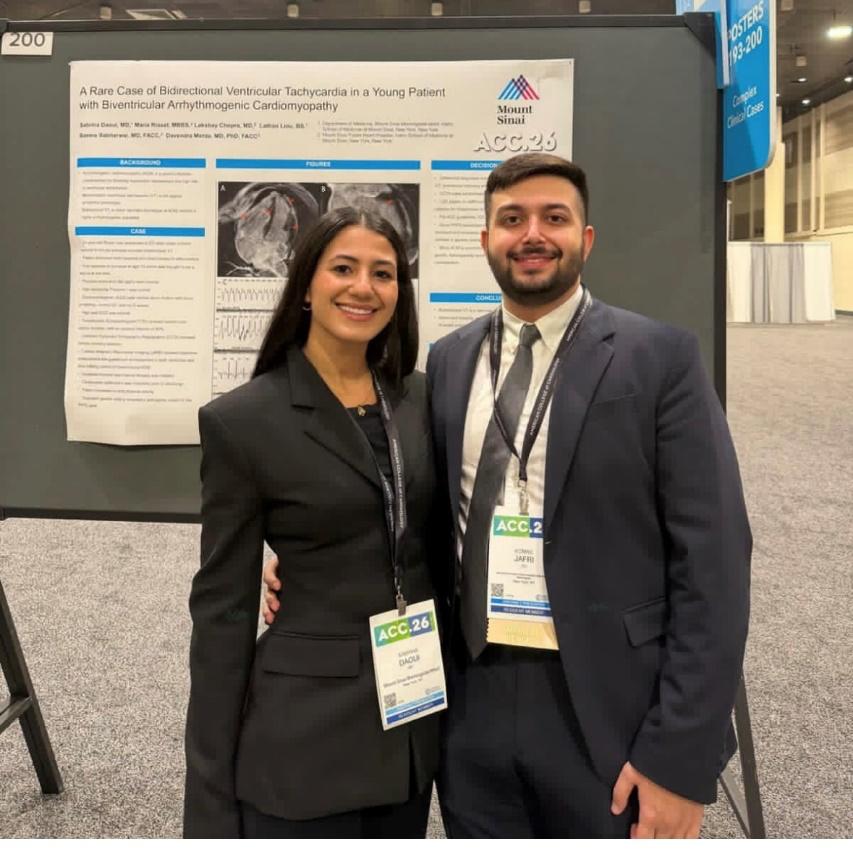
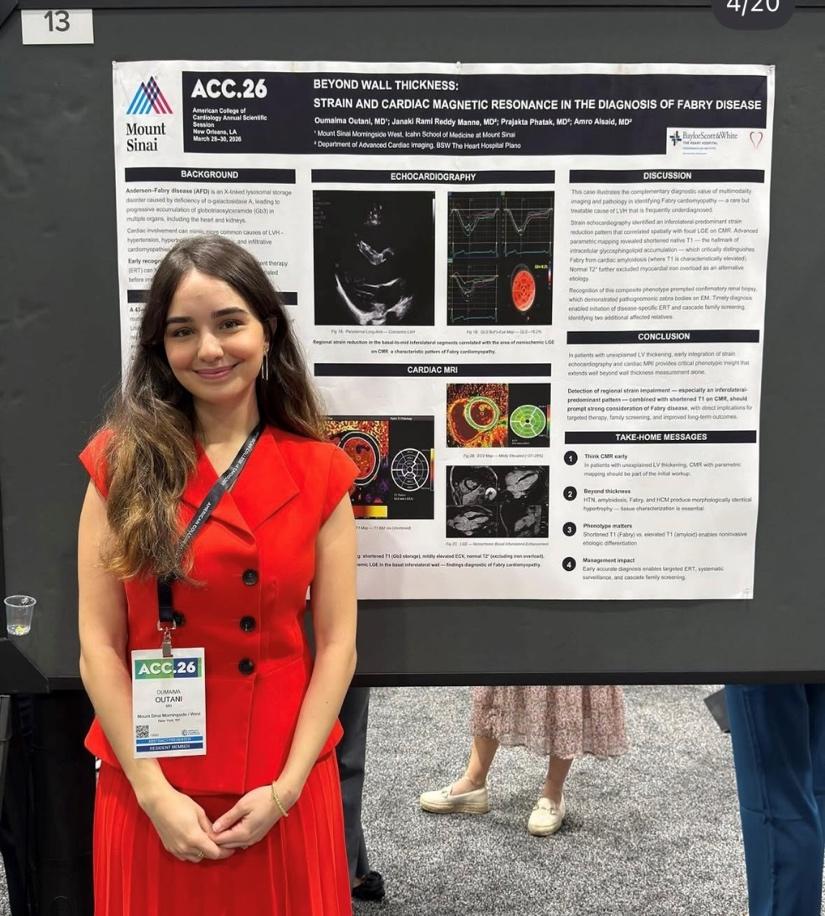
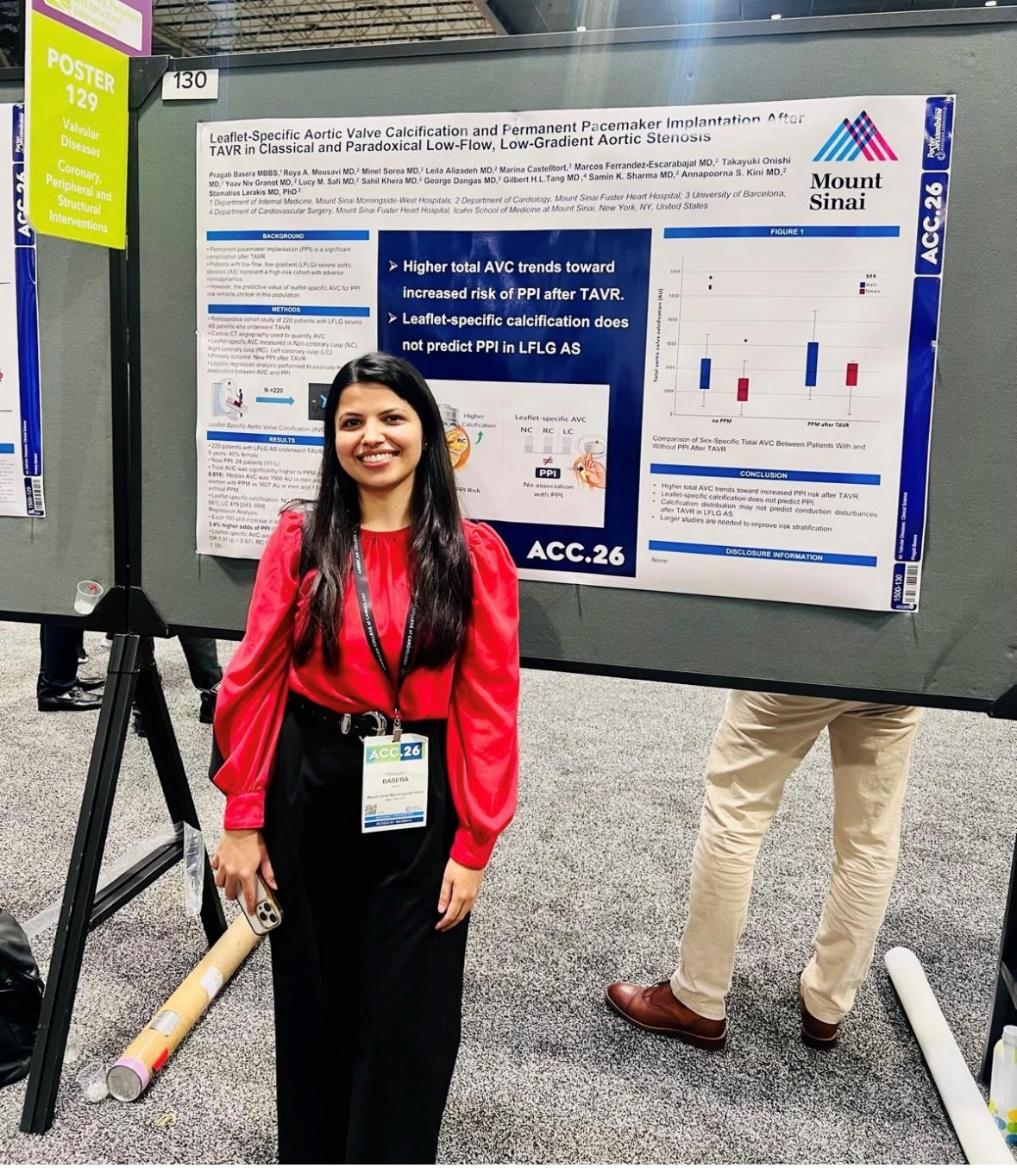

Abate Namnum, Priscilla Marie: 30-31, 64-66, 73, 120-122, 129130, 153
Abonamah, Adal: 32-33, 64-66, 120
Abraham, Joseph: 34-35
Agarwal, Arushi: 36
Ahmidouch, Manal: 37
Ajulu, Uchenna: 119
Akselrad, Melissa: 38, 64-66, 120122, 129-130, 223
Aliasi-Sinai, Lital: 39, 224, 225, 226, 324
Alsaud, Mohammed: 40, 166, 227, 243
Anand, Shubhankar: 41
Arabian, Jordan: 228-229
Arcayan, Brent: 42
Athota, Sruthi: 42, 43
Auyeung, Kelsey: 327
Balazadeh, Amirhossein: 44
Bapodra, Neil: 45-46
Bartholomew, Kaitlyn: 47
Basera, Pragati: 48, 230, 231, 234, Berman, Brandon: 49-50, 232, 233, 234, 289, 290
Beygui, Nooshin: 51-53, 235, 236
Bhatia, Harsimran: 54,195-196, 199
Bonilla, Harrison: 49-50, 55, 90, 99, 112-113, 171, 189, 232, 233, 237, 238, 239, 289, 290, 304, 320
Bupathi, Sneha: 56
Chang, Hsiao-Man: 57, 144-145, 187
Chartock, Joshua: 58, 62, 319
Cho, Changwoong: 59
Choi, Christiana: 60, 137, 188, 240, 241, 270
Choi, Seonghee: 61
Cholerzynska, Hanna: 62-63, 161, 187
Clausell, Kaitlyn: 284
Cosentino, Emily Renee: 64-66, 118, 120-122, 129-130
Costea, Denisa: 67, 101, 110-111, 323
Cronin, Keri: 318
Daoui, Sabrina: 171, 242
Das, Swarnima: 187
David, Eden: 318, 328, 330
Deb, Mrittika: 40, 68, 207, 227, 243, 319
Deovic, Sabina: 42, 69, 129-130
Desai, Binoy: 70-71,
Dev, Bharati: 72, 75, 244-245, 287-288, 319
Devireddy, Deepthi: 73, 152
Dhaliwal, Arshdeep: 74
Diola, Carlos: 75, 153, 244-245, 246-247, 248, 283
Dixon, Paige Ellen: 76, 325
Edeson, Max: 77-78, 155-156, 249-250, 328
Eris, Tansu: 79, 112-113, 321, 327
Faryad, Mawwra: 80
Fasciglione, Kimberly: 81
Fernandez, Triana: 82
Fukuwaza, Fumitoshi: 251, 252, 253, 318, 322, 324, 330
Fusillo, Thomas: 83-84, 144-145, 152, 161, 187, 203, 254, 326
Gallub, Vincent: 85, 89, 240, 255, 256, 257, 258, 259, 260, 323
Gee, Allen: 86-87, 326, 332
Go, Karen: 88
Goto, Toshiro: 89, 259, 260
Greenfield, Jason: 322
Guardia, Joshua: 55, 90, 99, 189, 233, 234, 237, 238, 239, 304
Guru, Pardeep: 187
Hartfield-Moseley, Isabelle: 34-35, 91-92, 261, 262, 263, 264, 265, 266, 267, 268, 269
He, William: 93-94
Henig, Ariel: 270
Henry, Chad: 95, 172
Huang, Jing: 96, 271, 302
Hussein, Rama: 97-98, 272, 273275, 276, 277-278, 323
Ibanez, Kristen: 320, 328
Impastato, Brandon: 324
Jafri, Komail: 49-50, 55, 86-87, 90, 99, 106, 171, 189, 232, 238, 239, 289, 290, 296, 320, 325
Jaladanki, Suraj: 100, 279-280
James, Nicholas Alexander: 101
Jeri Yabar, Antoine: 102, 198, 281
Kamr Aldin, Adham: 103
Kapadia, Sharan: 104-105, 144145, 282, 327
Katic, Luka: 106, 146, 296, 322, 324, 325
Kennedy, Madison: 107-108, 192
Khan, Zara: 109, 114-115, 322
Khandani, Sara: 165
Kim, Do Han: 67, 70-71, 110-111, 244-245, 283, 321, 323, 326, 328, 329, 330
Kim, Hyunwoo: 112-113, 144-145, 187
Kiyohara, Yuko: 320, 321, 324, 326
Kolansky, Matthew: 114-115, 144145, 150-151, 238
Komatsu, Taiga: 152
Kosse, Sarah: 116, 192
Kwon, Hyuck-Jin: 117
Lavin, Leore: 118, 318, 320, 326, 327,
Leavitt, Gabrielle: 119, 329
Lenchur, Christine: 64-66, 120122, 129-130
Lentz, Paul: 329
Leonhardt, Maxwell: 284
Lim, Jessica: 75, 123-124, 244245
Liranzo Tejera, Niurka: 32-33, 6466, 120-122, 129-130, 237
Lokhande, Anagha: 329, 331
Marull, Stephanie: 97-98, 125-126
Mathew, Kevin: 127-128
Matsui, Takemichi: 64-66, 120122, 129-130, 204, 328, Matsumoto, Hirohide: 169-170
Mehra, Sonia: 131-133, 285-286, 287-288
Melnyk, Nataliya: 129-130, 142
Mercurio, Ann: 116, 134-135
Mirza, Jacqueline: 136, 199, 326
Mirza, Serene: 60, 137
Mittag, Sonja: 138-139, 312
Moeller, Cathrine: 140-141, 321, 322, 330, 331
Muller, Avia: 42, 142, 291
Musial, Christopher: 292
Nadira, Fahema: 143, 179, 253, 292
Nagliya, Dipika: 144-145
Nagourney, Alexander: 106, 146, 322, 325
Noorani, Soha: 147-148, 276, 287288
Nuney, Amu: 187, 264, 265, 267
O'Ferrall, Caroline Leigh: 149, 319
Oller-Payano, Luis: 150-151, 198
Outani, Oumaima: 144-145, 152
Ouyang, Andrea: 153
Pak, Kevin: 154
Pandit, Meghana: 77-78, 131-133, 149, 155-156
Pandu, Prathyusha: 157
Paredes de la Fuente, Rodrigo: 158-160, 324
Patel, Riddhi: 144-145, 161, 187
Prasad, Sonya: 162
Dindigal Rajesh, Ankitha: 163, 187, 331
Ramachandra, Shruti: 164
Ramirez Cazares, Andrea: 60, 165
Reichard, Kyle: 88, 166, 254, 293, 294
Retsky, Rachel Arielle: 167-168, Reznik, Madeleine: 169-170, 203, 295
Rivadeneira Cabezas, Emily: 173, 323
Rizvi, Faryal: 54
Rockwell, Kristen: 42
Rozenfeld, Angelica: 161
Saeedullah, Usman: 49-50, 55, 90, 99, 106, 146, 171, 177-178, 189, 232, 238, 239, 296, 320, 325
Salomon, Zachary: 103
Samuel, Benjamin: 95, 172, 241
Saravanan, Vishmayaa: 173, 297298, 299
Satake, Kana: 101, 174
Sato, Takumi: 327, 330, 332
Sawaguchi, Yoshihiro: 60, 68,137, 175-176, 300
Sebastian, Tara: 177-178, 301, 319
Sherman, Brett: 179, 254, 302
Shizuku, Tatsunori: 118, 180
Shorer, Eran: 319, 320, 325, 326, 327, 330
Silverman, Alexander: 106, 181182, 322, 325
Sinclair De Frias, Jorge: 183, 293, 324
Soni, Astitva: 97-98, 131-133, 184-185, 303
Stephens, Christian: 69
Syal, Arjun: 319, 322, 323, 329
Tan, Wenchy: 186, 207,
Tchillingirian, Shahe: 144-145, 187
Tellez Garcia, Juan Miguel: 154, 331
Thomas, Teena: 69, 188
Torelli, Vincent: 99, 106, 189, 320, 322, 325
Trenschel, Robert W.: 190
Tsyngauz, Esther: 57, 90, 233, 237, 238, 304, 305
Vaca, Richard Guillermo Sr.: 9394, 191, 306
Vaid, Akhil: 57, 88, 192, 307, 308, 309, 310, 323, 324, 328, Vaish, Esha: 193, 320, 322
Velo, Agostina: 183, 194, 295, 311, 312, 319, 322, 324
Verma, Megha: 195-196
Vetrano, Matthew: 152
Viera Ramirez, Fernando Antonio: 197
Vittini Hernandez, Liliana: 39, 102, 198
Vos, Joris: 321, 329, 330, Wable, Dayita: 144-145, 161, 187, 199
Wajeeh, Hassaan: 313
Watanabe, Atsuyuki: 200, 318, 320, 323, 325, 327, 331
Weir, Vanessa: 292
Wiatrowski, Kyle: 201-202, 314315
Wolf, Alyson: 97-98, 203
Yamada, Kenji: 204
Yang, Alvin: 205, 316
Zaki, Youssef: 206
Zheng, Lucy: 109, 207

Residency Leadership
John A. Andrilli, MD, FACP
Program Director
Internal Medicine Residency
Jose Cabral
Senior Program Coordinator Internal Medicine Residency
Georgina Osorio, MD, MPH
Associate Program Director for Research Internal Medicine Residency
Eric Wu
Program Coordinator Internal Medicine Residency
Denny Ayala Reyes
Program Coordinator Internal Medicine Residency
Lizbeth Quilson
Program Coordinator Internal Medicine Residency

Residency Contact Information
Email: msmwimresearch@mountsinai.org
Website: https://icahn.mssm.edu/education/residenciesfellowships/list/msw-msm-internal-medicineresidency

Editor
Georgina Osorio
Associate Editors
Sara Diaz Saravia
Samuel Johnson
Alexandria Markley
Eric Wu
Denny Ayala Reyes
Lizbeth Quilson
Jose Cabral
Editorial Board
John Andrilli
Stephanie Behringer-Massera
Alfred Burger
Christina Cruz
Jake Debroff
Deborah Edelman
Evelyn Elias
Jason Filopei
Lindsey Fox
Tamara Goldberg
Krystle Hernandez
Alejandro Prigollini
Adam Rothman
Vasundhara Singh
Marni Wilkoff