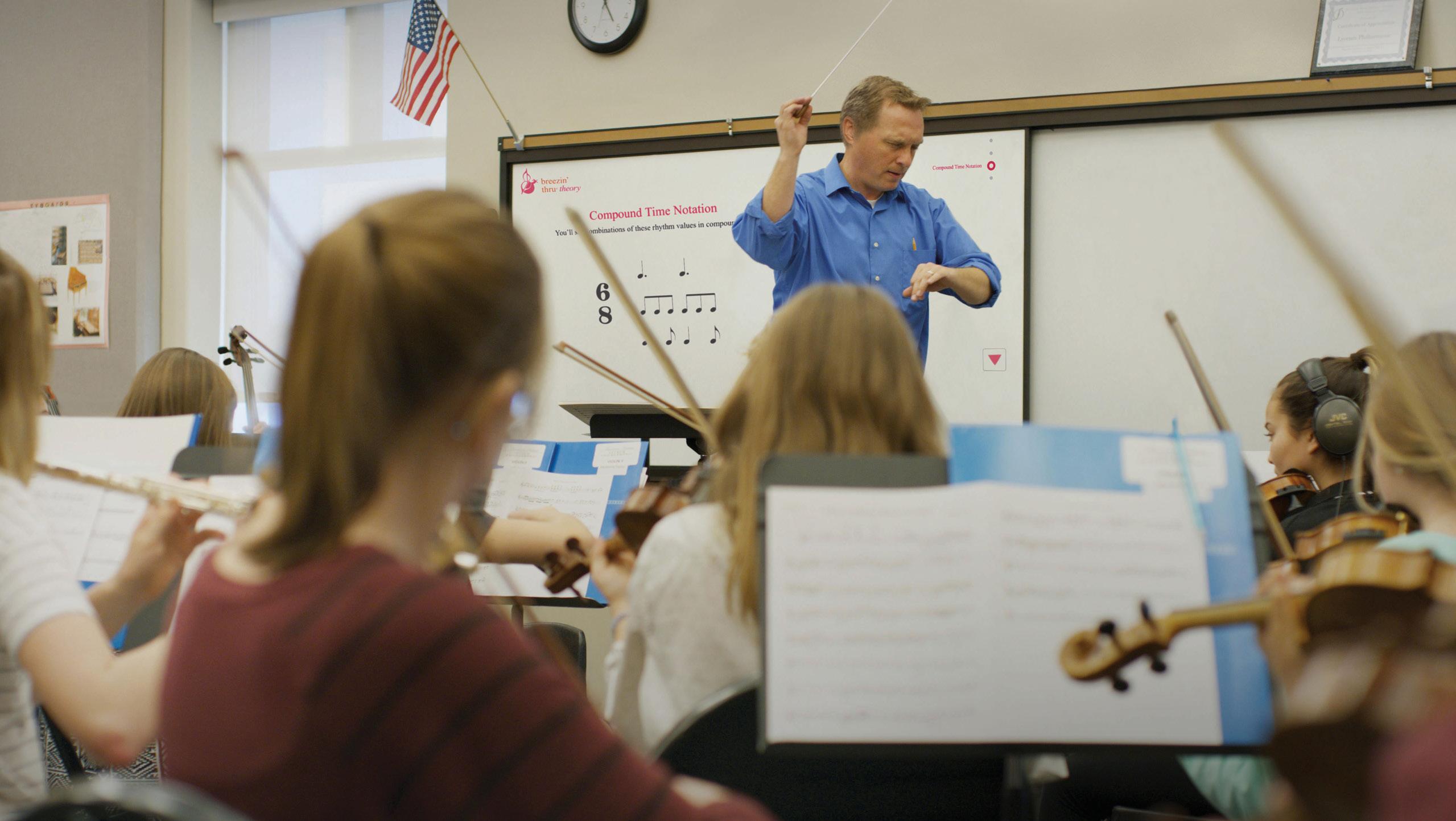
When students can quickly connect theory to the music in front of them, everything changes. Breezin’ Thru Theory builds rapid response, stronger sight reading, and deeper understanding. It’s fun and supports teachers in two powerful ways:
• In-the-moment: with NEW Theory On The Go and Breezin’ Thru Fingerings, you can address concepts quickly during rehearsals.
• Beyond rehearsal: with 24 chapters of scaffolded content, it builds skills methodically thru the year, ensuring no learning gaps, and saving you class and marking time.
The result? Less time struggling, more time making music, and rehearsals that really sing.
In This Issue
The Sound of Service
Megan Williams
President Andy Esserwein
Immediate Past President
Neil Ruby
Vice-President for Performance Evaluation Events
Kevin Brown
Vice-President for All-State Events
Marla Baldwin
Past Presidents’
Council Representative
Dr. Richard Bell
Executive Director
D. Alan Fowler
Band Division Chair
Sean McBride
Choral Division Chair Velma Jenkins
College Division Chair
Dr. Charles Jackson
Elementary Division Chair Erika Brown
Orchestra Division Chair Kevin Anderson
Association News
The President Speaks Andy Esserwein
As we close this school year, I find myself reflecting on my time serving as President of our wonderful organization—a responsibility that has been both an immense privilege and deeply humbling. Traveling across our state, visiting different districts, and connecting with so many of you has been incredibly moving. From our passionate music educators and talented collegiate students to the young musicians performing at every grade level, my heart is filled with genuine gratitude. Seeing your work firsthand always leaves me inspired by the sheer strength and spirit of our community.
If you want to feel the true heartbeat of GMEA, you only need to witness the incredible music-making that happened in all areas and at all age groups in our organization this spring. This energy began in the vibrant local performances at schools throughout our districts, and culminated so beautifully on our flagship stages—from the joyful, beautiful performances of the Statewide Elementary and Sixth Grade Honor Choruses, to our incredible In-Service Conference performing ensembles, and finally to the stunning, mature precision of our All-State ensembles. This dedication to artistry then carried through to our LGPE and Solo & Ensemble events, where the high standards of our directors and students were on full display. To experience these performances reminds us of the incredible scope of our reach; though the age levels and circumstances change from stage to stage, the underlying passion remains absolutely constant.
Of course, these extraordinary moments only happen because of the heart, imagination, and devotion you each bring to your classrooms every single day. From the very first moment a student tentatively holds an instrument or sings their first notes together, to the final, emotional concerts of our graduating seniors, our foundation is built on these daily victories. While statewide events showcase our high standards at the state level, they are ultimately a reflection of the steady learning, patience, and passion nurtured week after week and demonstrated throughout the year at your schools and in your communities. To every educator who pours their soul and expertise into preparing students for these moments: Thank You! Your efforts are the reason music education in Georgia continues to thrive.
At its core, the strength of GMEA lies in our unity. For our organization and our students alike, it is vital that we continue to lean on and support one another in our shared mission. Over the past year, we have focused heavily on listening to your voices, using those deep connections to cultivate new ideas that will help us grow together.
This collaborative spirit has fueled several exciting initiatives designed to expand our horizons and support our members. Over the past year, we have:
• Updated our Emerging Leaders program to better support and prepare the next generation of leadership.
• Introduced the GMEA Aspiring Supervisors Cohort to encourage professional growth and ownership within our ranks.
• Begun developing a new GMEA Mentorship program to provide crucial guidance and support for our newest educators as they enter the profession.
• Begun actively exploring Modern Band initiatives to help ensure our systems meet the evolving needs of today's diverse classrooms.
Additionally, we are taking a major step forward in our internal operations by modernizing our OPUS platform. Work will begin this summer to update our aging platform it to current technological standards for safety and security. Once this vital step is complete, we will be well-positioned to enhance functionality and improve the experience for all of our users.
Beyond our internal operations, we have worked diligently to amplify our voice within state and local government to advocate for music education. This focused advocacy has led to a victory for our community: the recent signing of Senate Bill 556 into law. This legislation officially recognizes fine arts pathways within the HOPE scholarship rigor qualifications—a decision that validates what we have always known: that a comprehensive fine arts education provides a rigorous, essential foundation for student success.
These forward-facing steps reflect an association that eagerly embraces growth. Just as we challenge our students to stretch their limits, GMEA is consistently working to innovate, adapt,
and build a more supportive home for our members.
Of course, an association is only as vibrant as the people who build it, and GMEA is fortunate to be powered by an extraordinary network of individuals. I want to extend my heartfelt appreciation to our Executive Committee, our Division and District Chairs, our Committee Chairs and Committee Members, and our incredible state office staff led by Executive Director Alan Fowler. The dedicated, collaborative efforts of all these individuals keep our organization running throughout the year. I am also deeply grateful to our district leadership, state and local event organizers and hosts, and the countless volunteers who step up at every event throughout the year. Your collective energy and willingness to serve are what turn our shared artistic visions into reality for tens of thousands of students across Georgia.
As July arrives, we will see several of our district leaders transition out of their leadership roles. We are profoundly grateful for their time, leadership, and service. GMEA is shaped at the local level, and we appreciate everything they have done to guide our districts forward.
I also want to take a moment to express my personal gratitude to Neil Ruby for his extraordinary service to our state. On July 1st, Neil will officially conclude a four-year leadership cycle on the Executive Committee, having served as President-Elect, President, and Immediate Past President. Neil embodies the very definition of a servant leader and is truly one of the most genuine and insightful people I know. His decisions have always been guided by deep personal integrity and an unwavering moral compass, reflecting a profound love for music education across Georgia. He has worked with boundless energy to ensure GMEA remains a welcoming, premier environment for educators and students alike, and has improved GMEA in so many ways during his service. Thank you, Neil, for your immense dedication, your time, and your friendship. While I know you will remain a vital voice in our community, I am incredibly excited for you as you step into this well-deserved chapter of your life.
To our entire GMEA community—as we look toward the quieter summer months, I hope you can find time to rest, reflect, and thoroughly recharge. The work you do is deeply rewarding, but it demands an immense amount of your energy, heart, and spirit. Please take this well-deserved break to celebrate your achievements, enjoy your families, and reconnect with the music and passions that first inspired you to become an educator. It remains an absolute honor to serve alongside you and to represent this remarkable community. Thank you for your continued partnership, your belief in our mission, and everything you do to ensure that music education remains a vital, thriving force in Georgia. I look forward to our continued work together in the upcoming year.
Keynote Speaker
2026 Biennial NAfME Music Research and Teacher Education Conference
Hilton Long Beach in Long Beach, California
September 30–October 3, 2026
Join music educators, teacher educators, administrators, and community and corporate partners who are passionate about music education for all. Attendees will benefit from hundreds of presentation and poster sessions covering all aspects of current research and emerging trends in music teaching and learning.
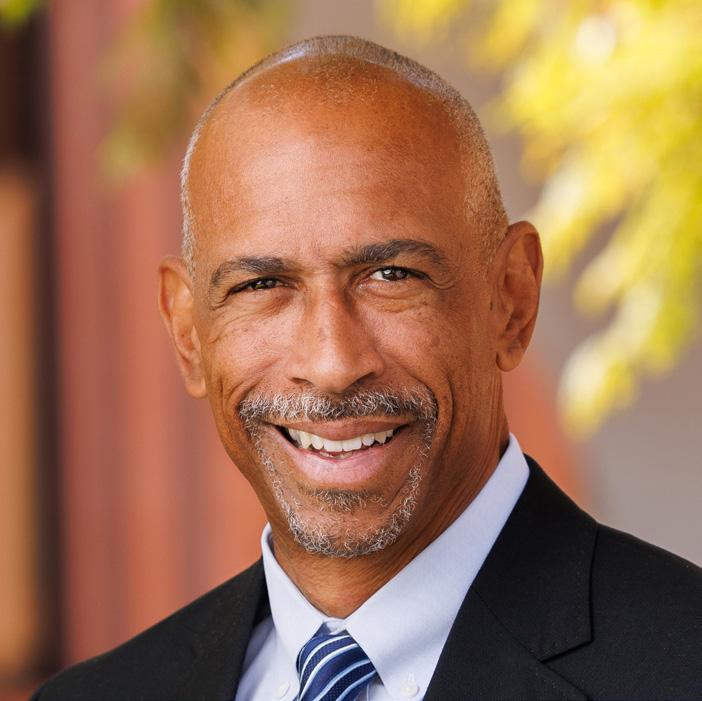
Keynote speaker Pedro Antonio Noguera is the Dean of the Rossier School of Education, and a Distinguished Professor of Education at the University of Southern California.
For registration and more information about the conference and keynote speaker, visit: bit.ly/2026MRTE
Pedro Antonio Noguera
From The Executive Director
D. Alan Fowler
“Each of us is a miracle; there will never be another you.”
With those words, Yo-Yo Ma ended his performance of Arvo Pärt’s “Spiegel im Spiegel" (Mirror in the Mirror), as he concluded his show at the Fox Theatre in April. As the applause began, I sat there absorbed in thought, considering what I had heard—and what we had all just experienced. When I finally joined in the applause, it had fully hit me that he is right and how fortunate we are that music is a part of us.
On three consecutive evenings and a Sunday afternoon last month, I found myself immersed in music. I heard the University of Georgia Wind Ensemble, the Eastside High School Birds of Prey Rock Band, Yo-Yo Ma, and the Covington-Conyers Community Orchestra. That Sunday morning, I sang in my church choir, and the following day, I led a dress rehearsal for the Newton County Community Band.
Different stages, different ensembles, but each one a reminder of the power of music, and I am better for having been there.
This column was not meant to be about those performances. I intended to focus on our work here in Georgia and at GMEA advocating for the value of music education.
But then I experienced those performances, four in just a few days, five counting Sunday morning’s anthem, and the rehearsals I attend regularly, including with my own band, the Honors Brass Ensemble at Beacon Hill Middle School, and Tara Winds. And it made me pause and reflect on my perspective and where I am today.
What struck me most as I reflected on those performances was not only the artistry, but what that artistry was teaching.
For years, we have said, and rightly so, that music education matters. We have advocated for its place in schools because of its academic benefits, its cultural significance, and its power to inspire. All of that is true. But sitting in those halls, listening, performing, observing, and participating, I was reminded of something even more important:
We are not simply teaching music. We are shaping young people and making the world better because of it.
When I think about the students and musicians I encountered over just those few days, I don’t just think about the music itself. I think about teamwork. I think about responsibility. I think about young people learning lessons that will shape how they live, work, and contribute long after the final measure is played.
In every ensemble, there is an understanding that no single person carries the performance alone. Success requires listening, adjusting, supporting, and trusting others. These are not just musical skills; they are life skills. They are the same skills needed in workplaces, in families, and in communities.
In every rehearsal, there is accountability. Students must come prepared, not just for themselves, but because others depend on them. They learn quickly that their effort (or lack of it) has a direct impact on the group. That kind of responsibility builds character in a way few other experiences can.
And in every performance, there is a shared commitment to something greater than the individual. That may be one of the most important lessons of all. In a world that often emphasizes individual success, music reminds us that our greatest accomplishments are often collective.
Student success must be our north star. But we must be clear about what success truly means. It is about more than test scores or LGPE ratings. It is about preparing young people for life.
If we are doing our job well, students leave our programs and our schools with three essential things: jobs, hobbies, and hope. They develop the skills to work, contribute, and live independently. They discover passions that enrich their lives beyond their careers. And perhaps most importantly, they gain confidence in themselves and belief in their future.
Music plays a powerful role in all three. It teaches discipline and perseverance. It provides a lifelong source of joy and expression. And it builds a sense of belonging, of being part of something meaningful.
It also reinforces a fundamental truth that has guided me for much of my life: there is no such thing as an unimportant person or an unimportant day.
Every student matters. Every rehearsal matters. Every performance matters.
The young musician sitting in the third chair of the second row today is not just learning a piece of music. They are learning how to listen, how to lead, how to follow, and how to contribute. They are learning what it means to be part of a community.
And that is why what we do through music education and through GMEA matters. We are not simply making music and preserving an art form. We are shaping the future of our communities by shaping the people who will lead them.
As Yo-Yo Ma reminded us, each of us is unique and each of us is a miracle. Music allows us to discover that individual voice, but it also teaches us how to use that voice in harmony with others.
It is in that balance—between the self and the community— that we find the foundation of great citizenship. So, as we continue our work across Georgia, let us keep advocating. Let us keep striving for excellence. But let us also be clear about our mission.
We are not just making musicians. We are developing citizens. And if we get that right, everything else will follow.
Division News
Band
Sean McBride
As I reflect on this year across the Band Division, I am continually inspired by the level of musicmaking happening throughout our state. From the performances in Athens at our annual InService Conference to the outstanding work of the All-State Jazz Band and All-State Bands and Orchestras, and the remarkable performances I have witnessed from my colleagues at our District 1 Large Group Performance Evaluation, it is clear that our students are achieving at an incredibly high level.
What has been most meaningful, however, is not just the level of performance, but the growth behind it. Every polished concert, every successful evaluation, and every moment on stage represents hours of preparation, persistence, and commitment on the part of both the students and you, their directors. The students are not only developing as musicians. They are also learning discipline, collaboration, and resilience. We find our success in this growth.
None of these performances or events would happen without the extraordinary efforts of the many individuals who serve our division. I want to express my sincere gratitude to the volunteers who give their time to organize All-State, Large Group Performance Evaluations, Jazz Performance Evaluations, District Honor Bands, and Solo and Ensemble events. These efforts reflect a spirit of servant leadership that is seen across our Band Division. It is this willingness to serve one another and to prioritize students above all else that makes our band division so strong.
I would also like to recognize our district leadership. The work you do extends beyond your own classrooms. You are providing opportunities for directors and students across your districts, all while running your own programs. Your leadership matters, and the impact you have is felt in every corner of our state.
As we continue through a busy spring and look towards next year, I also want to offer a simple reminder: take time for yourself and your family. In this profession, we are constantly giving of ourselves to others. It is important to take moments to recharge and reconnect with the people and things that bring us joy. Take some time to have fun. Take a nap. Make music for yourself.
Recently, I had the opportunity to perform in New Orleans, and it was a powerful reminder of why we do what we do. There is something incredibly meaningful about making music simply to bring joy to others and to ourselves. At its core, music is about connection, expression, and shared experience.
Thank you for all that you do for your students, your programs, and for music education in Georgia. It is an honor to serve alongside you.
Choral
Velma Jenkins
As we wrap up the school year, I hope you can look back and identify the moments that mattered most. Not just the final performances, but the growth, risk-taking, and everyday work that move our students forward. To those who gave their time this year in support of GMEA: thank you. Whether you hosted, organized, or volunteered, your work is the engine of this division. These events only happen because people are willing to step in and take on extra responsibility. It is easy to assume everything is already handled, but that is rarely the case. Broader involvement strengthens us all; if you have ever considered volunteering, I encourage you to take that step. Your perspective and time are invaluable to our collective success.
Looking ahead to next year, I want to encourage you to apply to present a session or bring a performing group to the 2027 In-Service Conference. You can find these applications in OPUS under "Applications and Forms" from now until they close on May 12. As you consider applying, please know that your choir does not have to perform Class A literature to be considered for a performance spot. Excellence is found in artistry, not a difficulty rating; a polished program of accessible repertoire is just as powerful and can serve as a model for our colleagues and a vital part of representing every classroom in our state. Beyond the stage, there is such a wealth of knowledge in Georgia. You don’t need a specialized degree to have something worth sharing; if you have a unique way to engage tenors and basses, a system for middle school sight-reading, or a strategy for building community, that is worth putting in front of others. Sharing that collective wisdom is how we continue to grow.
As we finish out these final weeks, please take a moment to check in on those around you. We are often a "department of one" in our buildings, and that isolation can make the "May grind" feel particularly heavy. Reach out to colleagues wrapping up their first year or their first year in a new setting. Even if you aren’t "new," a quick text or a coffee invite can be the bridge that helps a colleague make it to the finish line.
Finish the year strong, submit those conference applications by the deadline, and I hope you have a restful, well-deserved summer break.
Orchestra
Kevin Anderson
Spring is in the air! I hope your semester has been both productive and rewarding as you completed Large Group Performance Evaluations and now prepare for the final concerts of the school year. As we approach the finale of the 2025-2026 school year, I want to express my deepest appreciation for the dedication you show to your students and our craft every day. Before we transition into a well-deserved summer break, please take note of these essential end-of-year items:
* District Spring Meetings: Please make every effort to attend. These meetings are the primary venue for your voice to be heard regarding the future of our division.
• 2027 In-Service Conference: The call for performance groups and session presenters is now open! Sharing your expertise or your students' talents is what makes our conference world-class. Deadline: Thursday, May 14, 2026.
• LGPE Literature Submissions: Help keep our required lists up to date and vibrant. Submit your recommendations via the "Applications and Forms" section in OPUS by Friday, May 29, 2026.
• Orchestra Adjudicator Application: The application is being revamped and will be uploaded soon. Therefore, the application deadline has been extended to Friday, May 29, 2026.
Serving as your Division Chair this year has been a profound honor. I am constantly inspired by the resilience and creativity of Georgia’s music educators. I am excited about what next year will bring.
A special thank you to our District Event Hosts—your hospitality is the backbone of our programming. I also want to extend my sincere thanks to the All-State Organizers and Standing Committee; your behind-the-scenes work and thoughtful counsel are instrumental to our success each year.
I wish you all a restful and joyful summer. May you find time to silence the metronome, close the score, and recharge for the upcoming school year!
Elementary Erika
Brown
We had a full and enthusiastic audience for this year’s Statewide Elementary Honor Chorus, and it was truly inspiring to see our students shine. Our time at the ISC was equally wonderful—filled with learning, collaboration, and musical joy. I hope even more students and teachers will join us next year as we continue to grow this outstanding experience.
We are now accepting proposals for ISC sessions and performing groups. I encourage you to consider sharing your talents, ideas, and expertise with fellow GMEA members. Our state is filled with incredibly gifted educators doing remarkable work every day, and your contributions help strengthen our community. Remember, we are always better together!
As many of you participate in professional development opportunities this summer, I hope the experiences are both rewarding and refreshing. Wishing you a summer filled with rest, relaxation, rejuvenation, and of course—music. Enjoy every moment!
Division News
Historian Matt Koperniak
In this column, I would like to highlight aspects of our Association from the 19651966 school year, 60 years ago. Recently, a set of GMEA Handbooks was donated to our Association by Gene Dunn. These Handbooks originally belonged to the music teacher Troupe M. Harris (Sinfonians from the Epsilon Lambda chapter will recognize this name as the founding chapter president at the University of Georgia).
This set includes the 1965-1966 GMEA Handbook. At that time, the GMEA Handbook was a relatively new resource for members (the first Handbook was published in 1960). There are significant differences from our current GMEA Handbook today. For example, the 1965-1966 Handbook includes the GMEA Constitution & Bylaws, lists of all district officers and calendars of district events, and even the required music lists for Festival (now Large Group Performance Evaluation). In contrast, this information is now linked separately on OPUS and/or the GMEA website and no longer included in the Handbook.
In the Festival section of the 1965-1966 Handbook, band, choir, and orchestra are all organized by lettered classifications (e.g., Class A is most difficult, then Class B, Class C, etc.). Class J is for junior high school, as middle schools were not established in Georgia in the mid-1960s.
Bands were required to play three selections (a march or chorale, plus two selections from the required music list). However, at least one of the two selections was required to be “one of the five new numbers,” and the other selection could be from the cumulative music list. For example, in Class A (i.e., Grade VI), the five new selections for 1965-1966 were Dedication Overture (Giannini), Suite from Bachianas Brasileras No. 4 (Villa Lobos/ Reed), Prelude and Dance, Op. 76 (Creston), Elsa’s Procession to the Cathedral (Wagner/Caillet), and Mannin Veen (Wood).
In contrast, the music requirements for choirs and orchestras are nearly identical to the requirements today. Of note, the 19651966 choral required music list was divided into categories at each classification (Renaissance, Baroque, Classical, Romantic, Contemporary, and Folk). Compared to band and chorus, the required orchestra music list was much shorter, with only five selections at each classification for string and full orchestra, respectively.
These vintage GMEA Handbooks will be stored in the GMEA
archives at Georgia College in Milledgeville. They will also be scanned and uploaded to the GMEA History website. Stay tuned and best wishes for a great summer!
Guitar
Caryn Volk
Spring has sprung, bringing fresh starts and bittersweet endings. The students have a new energy in preparation for the final concerts and the joy and sorrow of goodbyes for the graduating class begin to emerge. And, we envision and plan for the success of next year’s
Congratulations to the over 1000 students who participated in the eleventh annual Giocoso Guitar and Piano Festival. Performances in large group, small group, and solo guitar, as well as 2- and 4-hand piano, gave non-traditional students a chance to shine for the audience and adjudicators. Be proud of your hard work for these performances!
The spring concert season is an opportunity for students to demonstrate their musical growth before an appreciative audience— make it special! Print, project, or QR a nice program with everyone’s name, songs, and special recognitions. Consider adding program notes for each piece or tributes to graduates. If your concert is more casual, encourage performers to say a bit about themselves and their songs before they play. Consider also a special gift or song spotlight for your graduates. Recognition is the performer’s lifeline!
As thoughts turn to next year’s planning, this is a good time to reflect on your success and your areas for growth. Did you increase recruitment and retention to add to overall program enrollment? Did you make choices in lesson planning and execution that contributed to improved behavior and musicality? Is there a gap between your expectation and your output? Make some notes while these thoughts are fresh in your mind, and you can begin to organize your amazing next year. If you can dream it, you can believe your students can do it.
We are gathering information on high school guitar in Georgia. If you have any sort of guitar at your high school, please contact us. Access to music is vital for all students, and we want to support you! Email gmeaguitar@gmail.com with your information or with any questions.
Finally, applications are now open for the 2027 In-Service Conference. Please consider adding your mastery voice as a session presenter or performance director.
All the best for your last few weeks, we’ll see you next year!
College
Dr. Charles R. Jackson
Greetings, College Division Members,
As the LGPE season concludes for our public-school colleagues and we transition into the next season here in Georgia (Pollen Season), there are several exciting opportunities across our colleges and universities that support both faculty and students in the College Division.
Please share THIS LINK with your graduating Music Education majors who are seeking full-time employment beginning in Fall 2026. This resource is the result of a collaborative effort between the GMEA State Music Supervisors Council and the GMEA College Division. It is designed to help students connect with music supervisors who are actively seeking qualified candidates for teaching positions across Georgia. Special thanks to the Music Supervisors Council Chair, Carolyn Landreau, for her leadership in bringing this initiative to fruition.
2027 GMEA In-Service Conference
Applications for clinics and performing ensembles are now open for the 2027 GMEA In-Service Conference in Athens, Georgia. Please use THIS LINK to access the official application. We encourage you to consider contributing your expertise through a College Division presentation to support and inspire music educators across the state.
The Freddy Martin Spirit Camp
Please use THIS LINK to share the informational flyer with your Music Education majors (band concentration). The Freddy Martin Spirit Camp offers college students the opportunity to attend clinics at no cost; participants are responsible only for room and board. This opportunity is also available to music educators completing their first year of teaching. It is an excellent professional development experience.
College Professional Learning Day
During recent GMEA college tours, Alan Fowler, Megan Williams, and Andy Esserwein have gathered student feedback regarding professional development needs. Each year, students express a strong interest in an in-person professional learning experience, and GMEA is pleased to offer this opportunity.
GMEA has assembled an outstanding lineup of current teachers and music supervisors, and we are fortunate to host this event at Georgia State University on May 9, 2026. Please share THIS REGISTRATION LINK with your students.
College/University Events
Please use THIS LINK to submit information about significant events hosted by your institution that may be of interest to other GMEA divisions and students. Submissions will be included in upcoming Georgia Music News reports.
Upcoming events from April 2026 through June 2026 include:
Institution: Augusta University
Event: University Singers presents: A Choral Kaleidoscope
Location: Maxwell Performing Arts Theatre, Summerville Campus
Date: April 23, 2026
Time: 7:00 PM
Description: This performance features a diverse program showcasing works by Hagenberg, Runestad, Torrejón y Velasco, Poelinitz, Taneyev, and others. The concert explores a wide range of musical styles and expressive elements, offering a rich and engaging choral experience.
Contact: Dr. Marcel Ramalho — mramalhodemello@augusta.edu
Institution: Georgia State University
Event: Summer Leadership Institute
Location: GSU Sports Arena
Date: June 1, 2026
Time: 9:00 AM
Description: This two-day institute brings together approximately 400 students from across the Southeast to develop leadership skills within high school music programs. The program features keynote speaker Fran Kick, along with breakout sessions focused on communication, team building, problem solving, and public speaking. A Director Track is also available, offering discussions on effective and practical teaching strategies.
For more information and registration: https://thearts.gsu.edu/educational-outreach/sli/ Contact: Prof. Devin Reid — treid12@gsu.edu
I hope the close of your spring semester runs smoothly as you prepare for summer events. Thank you for your ongoing dedication to developing the next generation of music educators, composers, and performers. Please feel free to reach out with any questions or ideas that support the continued growth and unity of the GMEA College Division.
Research
Research in Georgia is strong! Our research posters and research sessions spanned the state representing universities, schools, and music education organizations. Thank you all for connecting research to our practice and our practice to research! If you missed them, here is a quick review. Submit your short research articles. See the GMEA esearch page for details!
Research in Georgia is strong! Our research posters and research sessions spanned the state representing universities, schools, and music education organizations. Thank you all for connecting research to our practice and our practice to research! If you missed them, here is a quick review. Submit your short research articles. See the GMEA esearch page for details!
An Investigation of Impostor Phenomenon Among PK-12 Music Educators
Kenneth Luke, Dr. Emery Warnock
This session provides an overview of Impostor Phenomenon (IP) among PK-12 music educators across the United States, as well as the potential interactions between IP and years of experience, grade level, gender identity, race/ethnicity, content area, and community type.
College Music Teachers’ Perceptions of AI in Music Teaching and Learning
Dr. Robert C. Saunders
A survey of all USG music faculty reveals perceptions of AI-ME in higher education. Respondents indicate inconsistent access to training resources and skepticism of instructional efficacy. Future implications and program development are presented.
Co-Designing for Access: Supporting Music Literacy through Scaffolded Notation in the Elementary Music Education Classroom
Dr. Tiffany Roman, Erin Collins
This study explored a scaffolded music notation tool codesigned with music teachers to support students with special needs in inclusive elementary music classrooms. Using qualitative case study methods, it examines usability through observations, teacher interviews, and analytics, highlighting student-centered technology strategies for enhancing music literacy and differentiated instruction.
A Comparison of Male Retention Rates in Georgia TenorBass Choirs and Mixed Choirs
Dr. Alex Ubiera
This study examined male student retention in choral programs from eighth to ninth grade across Georgia. Schools with tenor-bass choirs had significantly higher
retention rates, especially those offering extracurricular tenor-bass ensembles. Findings support the inclusion of tenor-bass choirs in middle school curricula to improve male participation.
Cross-Age Music Mentoring: Effects on Adolescent SelfEfficacy, Levels of Connectedness, and Prosocial Behavior
Allison Hunger
This poster demonstrated how pairing traditional lessons with popular music lessons is an effective way for students to identify and practice concepts within the Kodály sequence by placing popular music strategies in the practice stage of the sequence and implementing them as ways to decode, play, arrange, and compose music.
Current Issues: A Content Analysis of State MEA Publications, 2024-2025
Dr. Patrick K Freer, Amber Daniel
This poster is a report of research examining NAfME’s state-level journals and magazines to determine current topics, their preponderance, and related variations between states and/or regions. The most frequent topics included the avoidance of teacher burnout, the appropriate use of classroom technology, and pedagogical techniques.
Effect of Music on Second Language Acquisition
Olivia Durrence, Dr. Kristen Lynch
Music participation has long been linked to academic achievement, but how strong is the relationship between ensemble involvement and students' achievement in a second language? This study investigates the correlation between these to provide insight to the impact of music education on student literacy.
Effects of focus of attention (internal/external) on muscle activity of singers
Victoria Rose Fitzgerald, Dr. Rebecca L. Atkins
To test muscle efficiency and focus of attention (FoA), 23 singers sang while thinking about differing internal and external FoA directives. Muscle activity (FFT) captured through sEMG preliminarily revealed no significant differences between internal and external FoA. Teacher directives may be interpreted differently by individuals, resulting in varying muscle activity.
E
xploring Pedagogical Content Knowledge in MidDegree Music Education Majors: Implications for Program Assessment.
Dr. Kristen Kuder Lynch, Dr. Alison Farley
This session examines pre-service music teachers’ pedagogical content knowledge at a mid-degree checkpoint, using framework analysis to assess their understanding of pedagogy, subject matter, and teaching contexts—offering insights into instructional effectiveness and program design.
Female Band Directors’ Approaches to Student Leadership Development
Dr. Sam Chase
This qualitative collective case study examined female band directors’ approach to fostering student leadership through their curricular and pedagogical decisionmaking. In this session, I will review the data collection and analysis methods, present the findings, and provide implications for band organizations, teacher preparation programs, administrators, and band directors.
Gateway Procedures for Upper Division Music Education Curriculum
Dr. Kenna Veronee, Dr. Victoria Warnet Richter, Dr. Rachel Sorenson
The purpose of this study was to investigate gateway procedures for entering upper-division music education programs nationwide. Specifically, this study focused on gateway procedures, assessed skills and their relevance to modern teaching, and the pros and cons of having gatekeeping mechanisms in place.
Music Outside of the Walls: A Case Study of Informal Music
Tara Claitt, Dr. Robert C. Saunders
This case study is intended to replicate the 2016 study done by Dr. Saunders in observing the demographic and regional similarities and differences. The study will begin with an interview of two in-service teachers, followed by observations of their classes, and then analyzing the data and transcripts to report findings.
Preparing to Teach Music: Insights and Lessons from the Student Teaching Experience
Dr. George Blankston
Discover key factors for successful student teaching experience in music education. Focusing on growth, challenges, and professional development, this study offers actionable insights on reflection, communication, lesson development and planning, and adaptability for students and mentors alike.
New Insights from the Developing Jazz Improvisers Database (DJID): Comparing Developing and Advanced Jazz Improvisers
Evan Szypulski
How do improvisers develop a stylistically appropriate musical vocabulary? This session presents findings from the Developing Jazz Improvisers Database (DJID), a growing collection of student solos used to study how improvisational vocabulary is acquired. Results reveal patterns in stylistic development that inform evidencebased strategies for teaching jazz improvisation.
Perceptions of Georgia Choir Teachers on the GMEA Large Group Performance Evaluation Process
Kelsey Armstrong
Survey research was conducted to identify perceptions of current choral directors on the LGPE process, and its benefits and challenges for schools across Georgia. Results from the survey identified characteristics of the process that teachers saw as highly valuable, as well as identified challenges teachers face with the process.
Student and Teacher Perspectives on Blending Popular Music Pedagogies into Kodály-Based Elementary Music Classes
Dr. Marti Parker
This presentation demonstrates how pairing traditional lessons with popular music lessons is an effective way for students to identify and practice concepts within the Kodály sequence by placing popular music strategies in the practice stage of the sequence and implementing them as ways to decode, play, arrange, and compose music.
Survey of Secondary Instrumental Music Educators’ Perceptions of Undergraduate Preparation to Teach in Disparate Locales
Dr. Elise M Naber-Allen
An overview of the results of a nationally-distributed anonymous online survey examining secondary instrumental music educators’ perceptions of their undergraduate preparation for teaching across disparate locales. Participants (N = 489) shared their perceptions of preparation to teach across disparate locales and experiences they perceived to impact their feelings of preparation.
The Changing Baton: Music Supervisors’ Leadership Across a Century of Reform
Samuel Davis
This poster examines the evolving responsibilities of music supervisors from 1907 to today, connecting their changing roles to broader educational reforms. Analysis of archival documents, scholarship, and policy highlights key themes of curriculum, leadership, accountability, professional development, and equity, offering lessons for contemporary arts education leader.
The Evolution of Integrated Music Education: A Historical Analysis of the Music Educators Journal, 1918-2025
Zilu Wang
This study reports a historical analysis of Integrated Music Education (IME) in the Music Educators Journal from 1918 to 2025. As Georgia's STEAM schools demand robust frameworks, this research traces IME's evolution to address current gaps in empirical support, policy, and collaborative models, aiming to inform sustainable integrative practices.
The Fidelity of IEP Implementation in the Secondary Choral Classroom
Dr. Kristen Passmore
This session is a presentation of research analyzing teachers' lived experiences surrounding IEP implementation in the secondary choral classroom.
The Impact of a Music-Based Rhythm & Movement Intervention on the Emotional Self-Regulation of Elementary Children
Anastasia Klukowski
A poster presenting the results of an action research study on the impact of a music-based rhythm and movement intervention on the emotional self-regulation of first and second grade students.
This is Your Brain on Jazz
Dr. Martin Norgaard
Twenty-two advanced jazz musicians sang and imagined jazz melodies and improvisations on three different chord progressions during brain scans. New analyses reveal executive control areas were deactivated and less connected during improvisation. These results align with participants’ own ratings of their perceived flow state during the task.
Trauma in the Music Classroom: A Content Analysis
Donna Williams
A summative content analysis was conducted of research articles published in NAfME journals from 2020-2025 for the search terms trauma and "trauma-informed". The results were sorted by year and demonstrated a correlation between pandemic events and relevant articles.
Undergraduate Voice Students’ Understanding of the Vocalize and its Purpose
Natalie Bazemore
This research analyzes survey data collected from undergraduate voice students and undergraduate voice teachers. It compares how teachers are educating their students of vocalizes and their purpose to how students are perceiving vocalizes and their purpose / application in the practice room setting.
Using a Personalized Learning Technology to Support Independent Play in the Elementary Music Classroom
Dr. Tiffany Roman
Researchers designed a learning technology for use in the elementary music classroom to scaffold independent learning and play. This 8-week mixed methods case study involved 463 elementary students in 4 different schools. Results show positive impacts on student motivation and evidence of self-regulated learning.
Wine-Dark Sea: Not Your Average Boat Ride
Memphis Embrick, Dr. Alyssa Grey
Experience Wine-Dark Sea through a programmatic lens that connects John Mackey’s powerful score to Homer’s Odyssey. This poster includes practical strategies for ensemble directors, featuring insights from experts in the field, along with a new resource guide designed to support meaningful interpretation and rehearsal planning
A Life in Music
Honoring the educators who gave their careersand their hearts - to Goergia's students.
Todd Ferguson
28 years · District 13
Chorus • Music Technology
Gwinnett County Public Schools
Archer High School
Mike Mitchell
41 years · District 9
Band
Forsyth County Schools
DeSana Middle School
Wendy Baggott
30 years · District 10
Chorus
Columbia County Schools
Evans Middle School
District 10 Chair and Choral Chair; organized and hosted District Choral LGPE, District Honor Chorus, 6th Grade Honor Chorus, and MS AllState mock auditions.
Debra Hughes
32 years · District 2
Band
Sumter County Schools
Sumter County High School
District 3 Chair; District 2 Treasurer.
Tim Anderson
29 years · District 5
Orchestra
Fulton County Schools
Autrey Mill Middle School
State and District All-State Organizer; All-State MS Orchestra Organizer; District 5 Orchestra Chair; Standing Committee Member.
Christy Hursey
30 years · District 8
Band
Wayne County Schools
Wayne County High School
District Honor Band organizer; LGPE host and organizer (Districts 8 & 11); Treasurer; hosted final round All-State auditions; GMEA Volunteer of the Year.
Curtis Hersey
33 years · District 8 Band
Charlton County Schools
Charlton County High School
Dwayne Wasson
37 years · District 12
Orchestra
Cobb County Schools
Wheeler High School Honor Orchestra Organizer and Host.
Ruthie Colegrove
25 years · District 13
Band
Wesleyan School
Organizer: Solo and Ensemble, District Honor Band, First-Year Honor Band.
Gina Davis
29 years · District 12
General Music
Cobb County Schools
Mountain View Elementary School
Kim Oden
31 years · District 12
General Music
Cobb County Schools
Bullard Elementary School
Amy Thomas
30 years · District 4
General Music
Newton County Schools
Middle Ridge Elementary School
Camilla Keever
30 years · District 4
Band
Newton County Schools
Indian Creek Middle School
District Treasurer
Marla Baldwin
30 years · District 12
Chorus
Cobb County Schools
Palmer Middle School
State Choral Chair, Vice President for All-State, Organizer and Host
Licia Murrell
30 years · District 12
Chorus
Cobb County Schools
McCleskey Middle School
Retired Reflections
A Life of Leadership, Legacy, and Lasting Impact:
By Jay Wucher
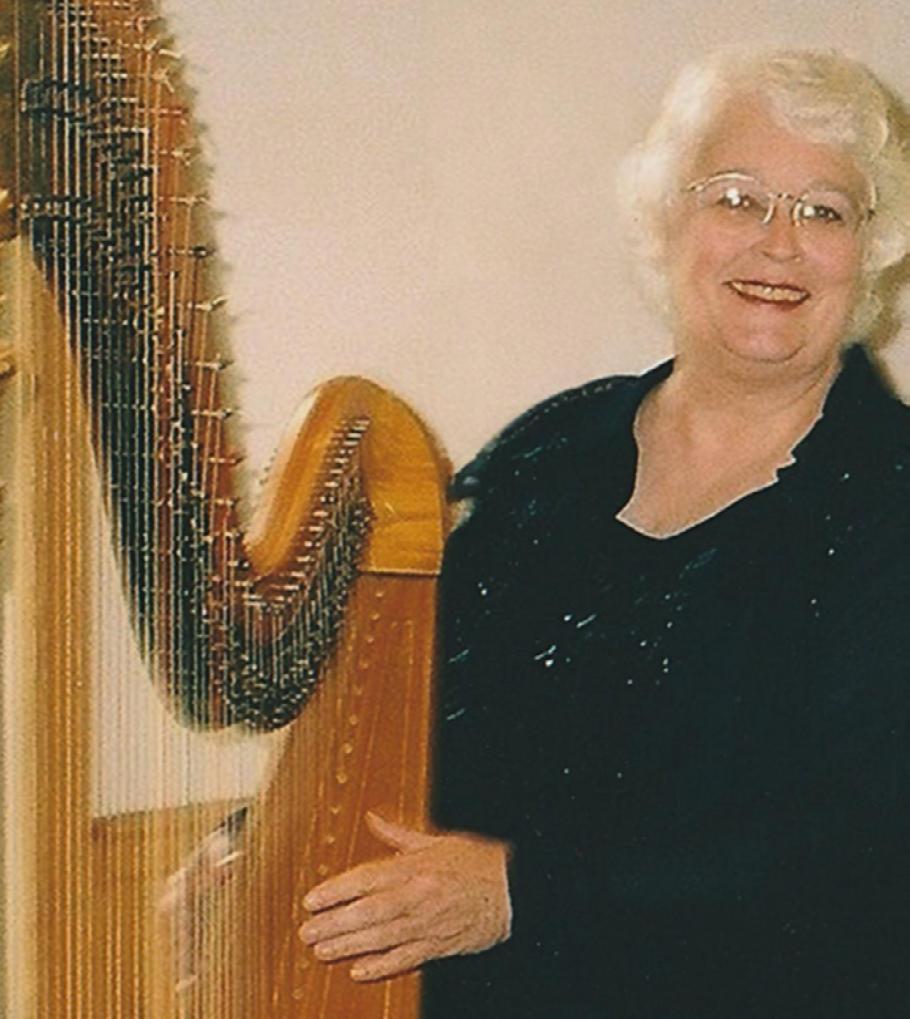
Our dear friend, cherished colleague and role model Virginia Oliver Lentz passed away peacefully on December 12th, 2025. If Ginny had not come to terms with her mortality, I can assure you that she would have been kicking and screaming. Ginny told me she had lived a wonderful life and was ready to leave this world, certainly a better place for so many of us who knew and loved her.
The list of honors, awards and recognition reads like a Who’s Who of Music Education. Ginny was the first female middle school band director in Fulton County, where she built a program that was one of the premiere music programs in our state. Prior to her work at Holcomb Bridge Middle School, Ginny had an equally successful elementary band program at Underwood Hills. Keep in mind the elementary bands all participated in LGPE. Ginny’s groups were always so polished in every respect. Ginny was the president of GMEA from 1983-1985, went on to serve as GMEA Executive Director, and traveled throughout the state of Georgia, promoting and representing our organization.
Ginny was proud of her accomplishments, but there are two that stand out. In an article from 1993, Ginny stated that she was enormously proud of being selected as the GMEA Music Educator of the Year in 1993. The other career highlight is the impact Ginny had on female band directors. There are countless examples of Ginny’s influence in teaching concert decorum, program selection, and appropriate dress.
Ginny was a walking encyclopedia when it came to program selection and was always willing to share her experience and insights for those of us lucky enough to know her and to pick her brain.
Ginny loved the water. She owned a houseboat and a beautiful second home in Florida. Her expertise in fishing and winning tournaments was legendary. Since most of her competition were men, she had to employ the same strategies she did in the male dominated world of band directors.
Jim and Sherry Sims were lifelong friends of Ginny’s. Jim had this to say about Ginny:
I’ve known Ginny since 1968. She was one of the first to befriend and welcome me to the family of music teachers in the Fulton County schools. Ginny always had a joke to tell me. Some of her jokes actually made my face turn a little red, but I always looked forward to her next quip. Ginny was an outstanding musician and teacher. We played together in the Atlanta Community Orchestra for many years. Most of our rehearsals ended up at “Lums,” and Ginny was always bringing laughter and joy to all around her.
Every memory I have of Ginny is a reminder of how lucky I was to call her one of my super good friends. She may be gone but never forgotten. She will always be loved by me and many others. My memory of her fills my heart! Thank you, Ginny, for every laugh, every hug and every moment of joy you have given to Sherry and me. I know we will see you in heaven.
Ginny showed her integrity in so many ways. About a year ago, she called me up and asked if I happened to know a good home for professional model French Horn. That instrument is now in the hands of student who is an All-State, All-District, and All-Region horn player who is in the band program at Baldwin High School in Milledgeville, Georgia. Even though Ginny was in declining health, she insisted that her saint of a husband make the three plus hour drive so that she could personally present the instrument to the young man. I am happy to say that her music lives on every day through a worthy and appreciative student musician. Seeing that act of kindness have a real impact makes me wonder how many other quiet, unselfish moments like it went unnoticed throughout her life.
Herb and Lois Cox were longtime friends of Ginny. Herb shared the following reflection on his lifelong friend:
Ginny and I worked together and were close friends for over 50 years. In addition to being an outstanding band director and professional leader, she had a remarkable gift for organization. For many years, she coordinated a back-to-school picnic and
Impact: Remembering Virginia Oliver Lentz
cookout for Fulton County band directors—long before iPhones, email, or social media made communication easier.
When I served as GMEA president, she assisted me in organizing a conference at Jekyll Island. Later, during her own tenure as GMEA president, she led the planning of conferences in both Jekyll Island and Savannah. She also served as Executive Director of GMEA and held an officer position in the Phi Beta Mu International Bandmasters Association.
Her Sandy Springs Elementary Honor Band, combined with the Sandy Springs Honor Orchestra, performed at the MENC National Conference in Atlanta in 1972— an uncommon collaboration of winds and strings at the elementary level. Her ensembles consistently earned Superior ratings at GMEA-sponsored evaluations.
Even after retiring, Ginny remained active in music education, leading the Sandy Springs New Horizon Band, a community ensemble of adult musicians that performed regularly throughout the year.
On a lighter note, while we were in Savannah planning an event, Ginny pulled her car over near a railroad crossing by a river. Dressed in heels and a skirt, she stepped out, retrieved a fishing rod from her trunk, crossed the tracks, and cast her line into the water—catching two bream. I watched in complete amazement. She was the ultimate fisherwoman. She will be deeply missed by my family and by her many colleagues.
The legacy Ginny left us is one of determination, service and doing the right things for the right reasons. Rest in Peace, Ginny, you are loved and missed.
GMEA Learning from Legends
Is there a Georgia music educator who has positively impacted your life and career? Someone along the way who has passed on to you their passion, skill, and encouragement in teaching music? The wisdom and advice these mentors have offered to us has been an invaluable resource to all of us. These voices of experience must be shared and celebrated among colleagues. This is exactly why a segment entitled “Learning from Legends” was created in 2025.
Did you know GMEA has its very own YouTube Channel?! There you can see videos of our podcast series “Georgia Music Matters” and interviews with Georgia’s own music education legends. To find this, go to the GMEA website, look under the “More” tab, and scroll down to “GMEA Youtube Channel.” Interviews currently posted include Alfred Watkins (band), Richard Bell (orchestra), Ed Davis (band), and Judy Spears (chorus). What a line up! We now seek to expand our bank of interviews by requesting more nominations of exemplary music educators in the fields of elementary music, chorus, band, and orchestra from across our great state! Their stories, experiences, and wisdom need to be available for all to benefit from. Please click here to submit your suggestion or email Megan Williams at meganw@gmea.org. What a privilege it is to honor those who have served our profession so well!
Inside the Opening Session of the 2026 GMEA In-Service Conference
The Classic Center in Athens served as the backdrop for the 2026 GMEA In-Service Conference this January, drawing music educators and programs from across Georgia for the association's signature annual event. Clinics, ensemble performances, and award recognitions filled the three-day program, reflecting the breadth of the state's music education community.
Opening Session Highlights
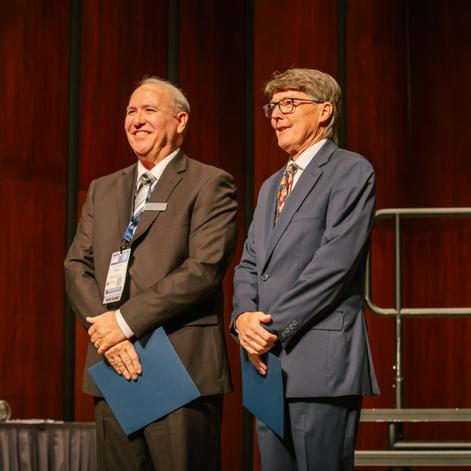
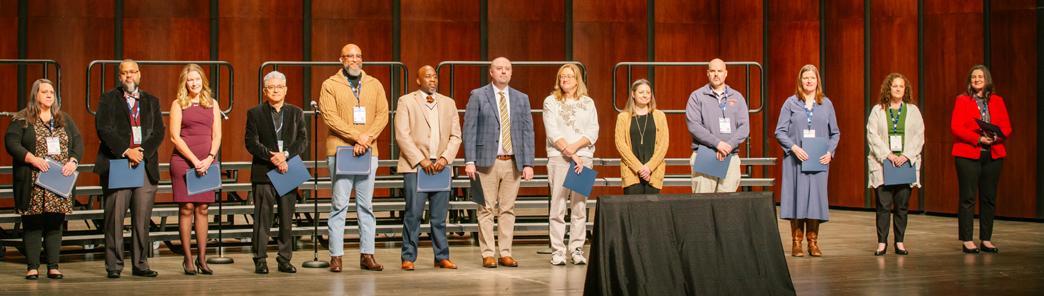
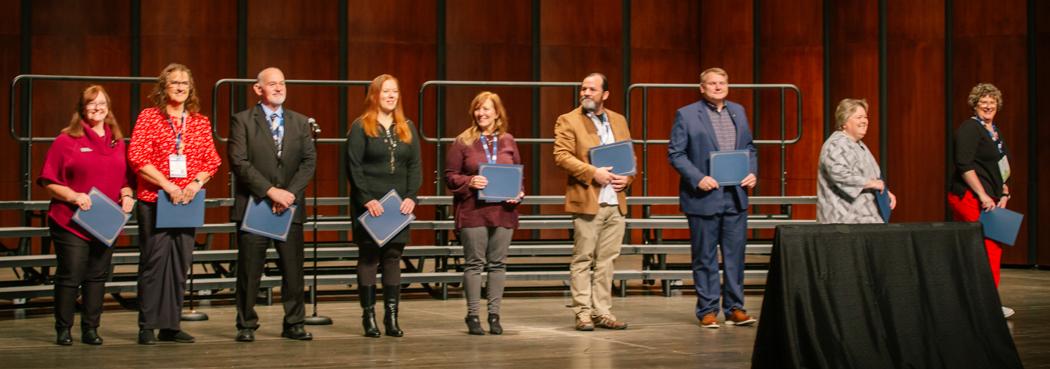
Awards and Honorees
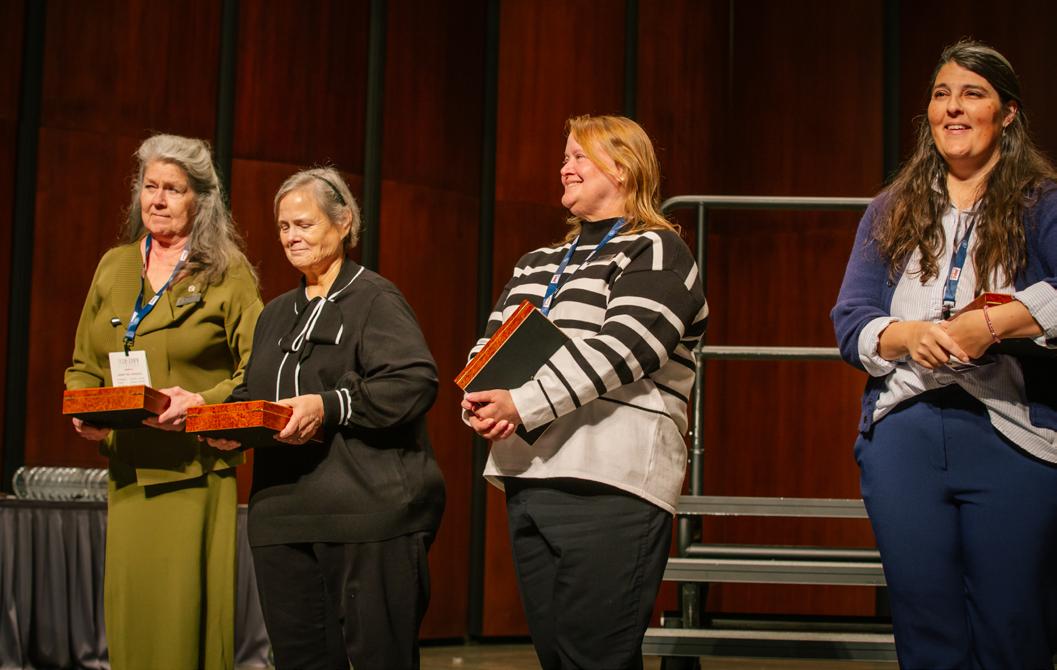
GMEA proudly recognized outstanding contributors to music education:
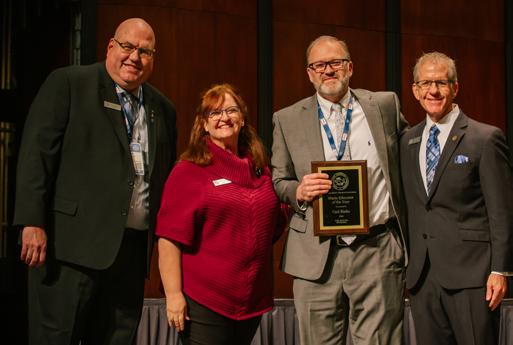
• Music Educator of the Year: Carl Rieke, Orchestra Director, Osborne Middle School, Hoschton, GA
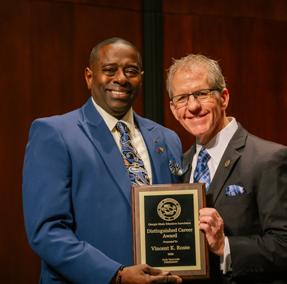
•Distinguished Career Award: Vincent Rosse, Director of Bands at Stephenson Middle School, Stone Mountain, GA
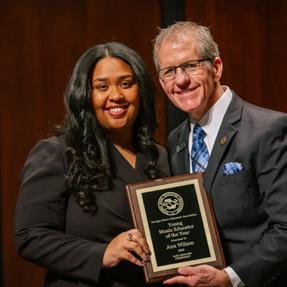
•Young Music Educator of the Year: Ann Wilson, Associate Director of Bands, Villa Rica High School, Villa Rica, GA
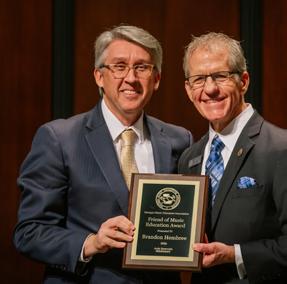
• Friend of Music Education: Brandon Hembree, Mayor of Sugar Hill, Georgia
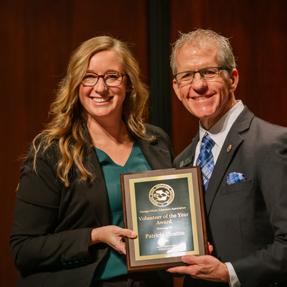
• Volunteer of the Year: Patricia Cleaton, Orchestra Director, Peachtree Ridge High School, Suwanee, GA
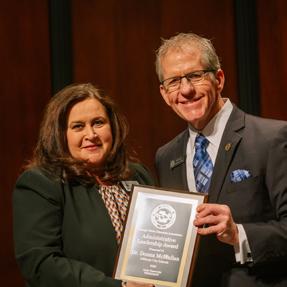
• Administrative Leader of the Year: Dr. Donna McMullan, Superintendent, Jefferson City Schools
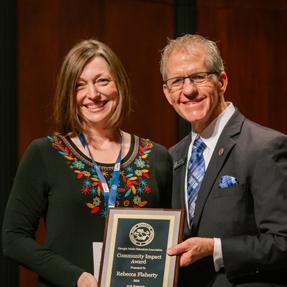
• Community Impact Award: Rebecca Flaherty, Founder and Artistic Director of SING Children's Choir
District Teachers of the Year
Outstanding educators from each GMEA district were recognized for their exemplary teaching, leadership, and dedication to students and communities.
District 1 - Dr. Kristen Donaldson
District 2 - John Scanling
District 3 - Allison Freeman
District 4 - Lorenzo Moore
District 5 - Lori Buonamici
District 6 - Ramielle Moorer
District 7 - Dr. Christopher Carr
District 8 - Zach Williams
District 9 - Raymond Thomas
District 10 - Victoria Alvarez
District 11 - Levita Carter
District 12 - Jay Champion
District 13 - Carl Rieke
District 14 - Miguel Guisasola Service Recognitions
The conference also celebrated long-standing service in music education. Notably, Vaughn Irby and Dr. Charles R. Jackson were honored for 40 years of commitment, alongside the 25year honorees whose influence and dedication have left a lasting legacy.
40 Years of Service
Vaughn Irby
Dr. Charles R. Jackson
25 Years of Service
Dr. Katie O. Anderson
Marie Bennett
John Birge
Ruthie Colegrove
Gerald Dailey
Joy Dumas
Victoria Enloe
Dr. Stephen Fields
Quentin R. Goins
Kevin M. Jones
Ricardo Rodriguez
Dr. Lenae Rose
Dr. Tarik Rowland, Sr.
Terra Spillman
Retirees
Marla Baldwin
Christy Hursey
Camilla Keever
William Kilgore
Dr. David Krosner
Licia Murrell
Amy Thomas
Alan Tolbert
Brenda Wood
The GMEA board also took a moment to recognize the association's own staff members, Cindy Reed, Bernadette Scruggs, Laura Webb, Megan Williams, and Aleta Womack, for their behind-the-scenes contributions to making the conference and the organization's broader work possible.
Keynote Address
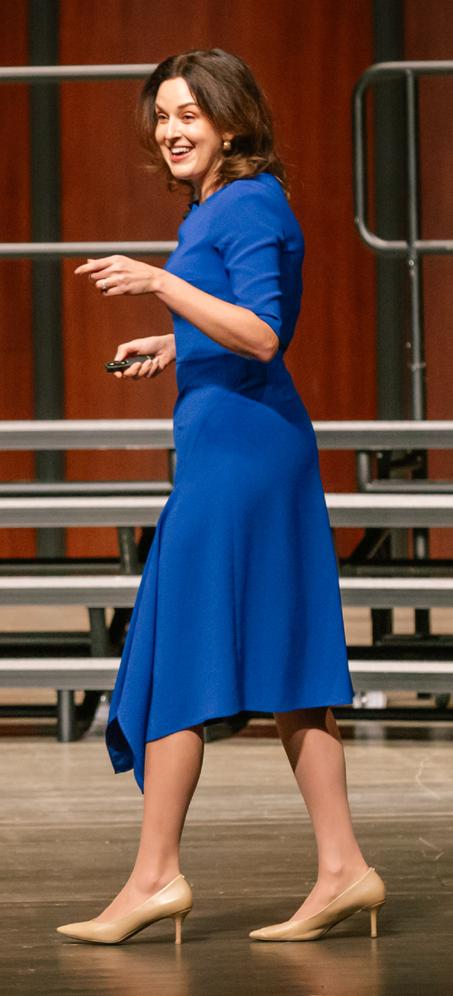
Susan L. Smith, NAfME Southern Division President, introduced keynote speaker Christy Todd to the audience before the keynote address. Todd, a music educator and former Georgia Teacher of the Year who now serves as Chief of Staff at the Georgia Department of Education, drew on her journey from the classroom to state leadership to explore the lasting influence teachers have on their students and communities. Her address challenged attendees to reflect on the reach of their work and consider new ways to connect with every student in their care.
Performances
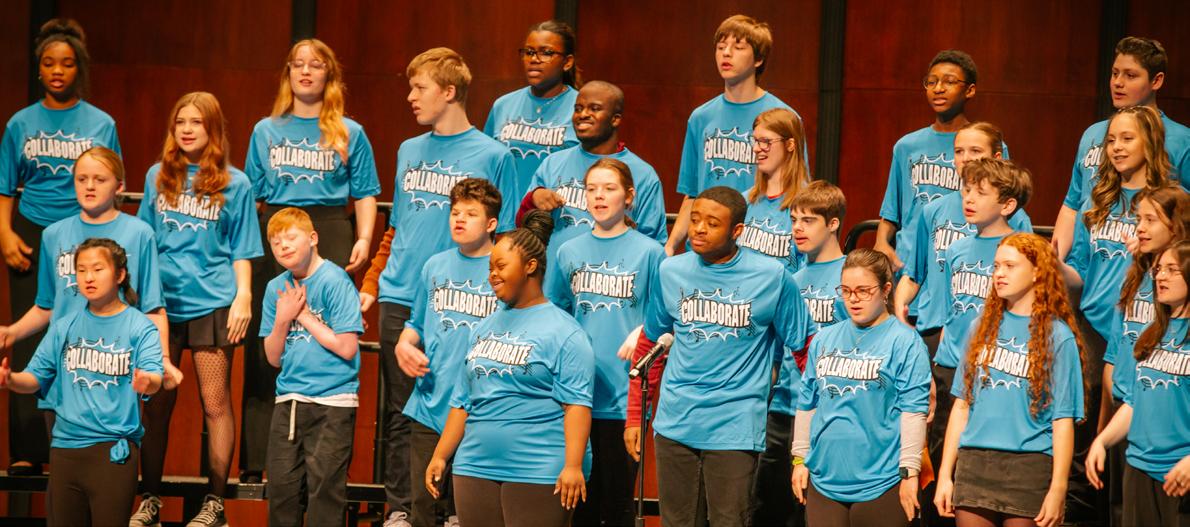
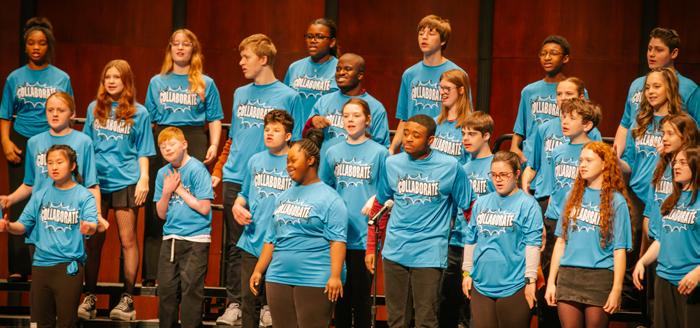
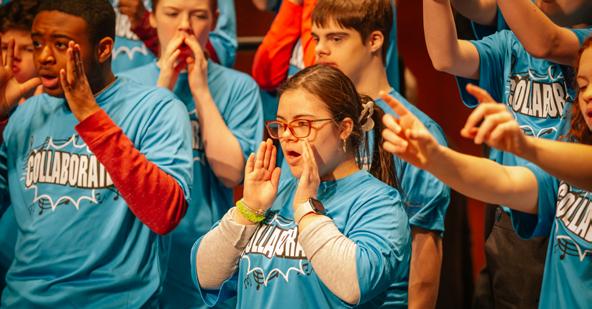
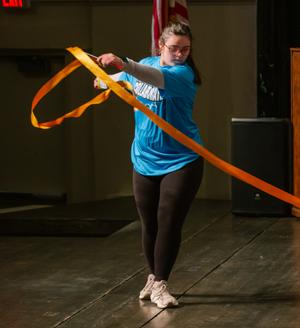
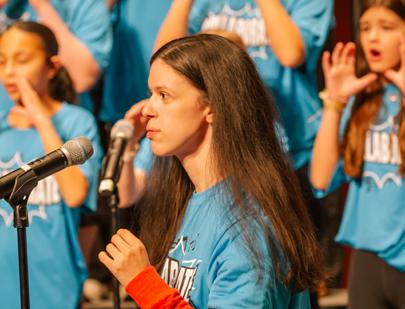
The opening session featured selections performed by members of Starr’s Mill High School and Rising Starr Middle School choruses, representing the schools’ Collaborative Music Program under the direction of Bonnie Krider. The ensemble demonstrated a fully inclusive approach, with students taking on visible and meaningful roles throughout the performance. Featured solos and a ribbon dance added both musical and visual interest, drawing strong engagement from the audience. The performance served as a clear example of how intentional programming can create space for every student to contribute on stage.
A Resounding Success
The 2026 GMEA In-Service Conference delivered on every front, honoring the educators who dedicate their careers to students, showcasing the talent those efforts produce, and giving Georgia's music education community a moment to come together. For veteran educators and newcomers alike, the gathering reinforced what makes this profession worth showing up for every day.
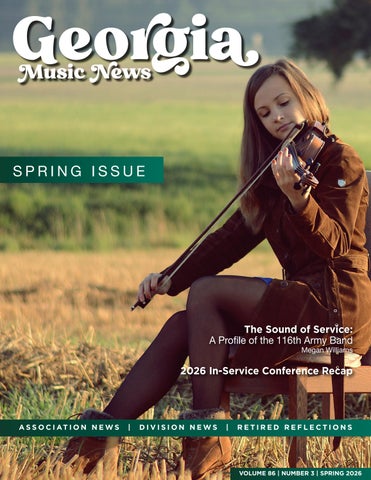
The Sound of Service: A Profile of the 116th Army Band
By Megan Williams
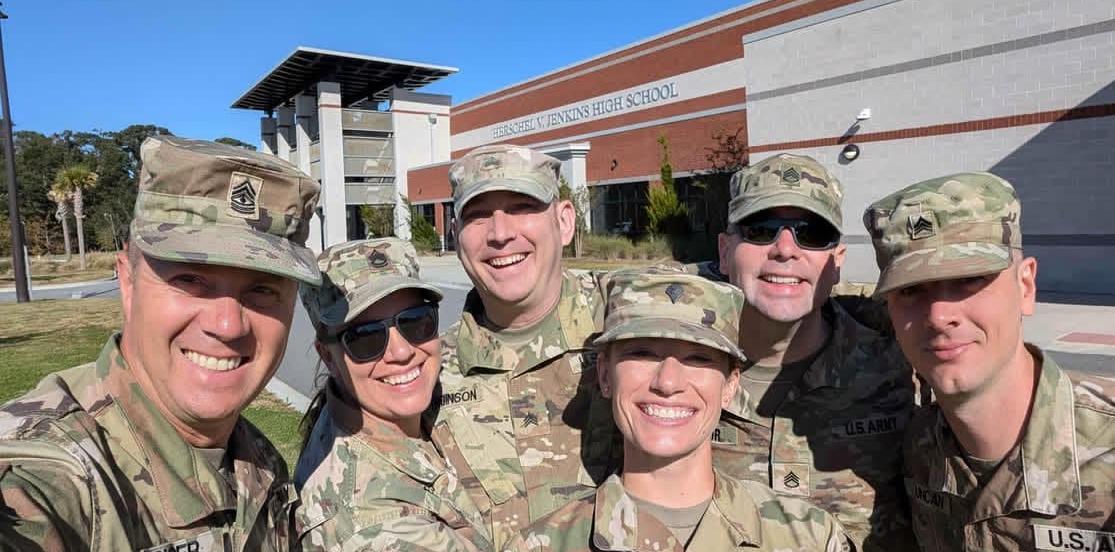
Most people think of the Army and immediately think of camouflage. Infantry. Artillery. Short hair-cuts. Yelling. Maybe you think of your grandfather who served, or your sister who is serving. Maybe you think of parades, boots, and bases.
And those images would be valid. But when I think of the Army, I immediately see smiles. I see laughter and camaraderie, and most importantly - I hear music.
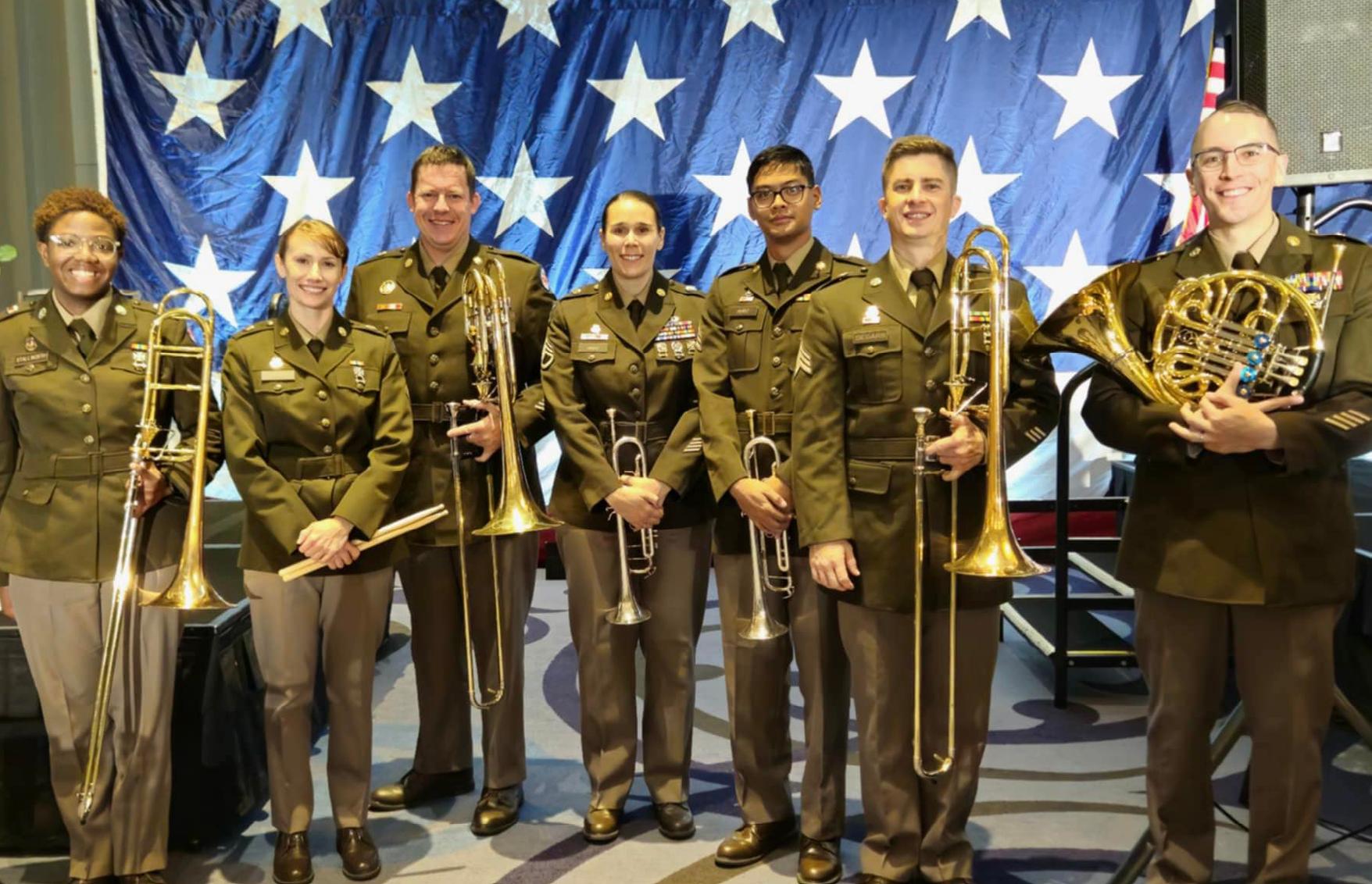
When I met the members of the 116th Army Band at the Georgia Music Educators Association Conference in 2024, I knew immediately I wanted to write about their group, their musicianship, their connections, and the teachers who inspired them to pursue the path that brought them together. When I think of what music education looks like in practice, I immediately think of the members of the Army Band. They embody what we often discuss - joy in music making and friendships gained through a shared goal of servitude and excellence.
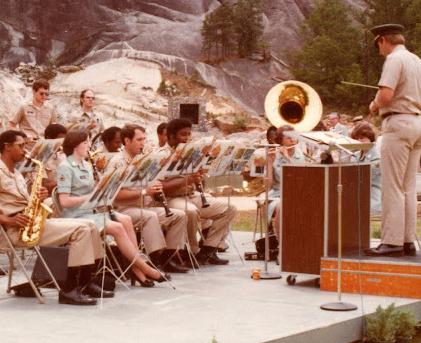
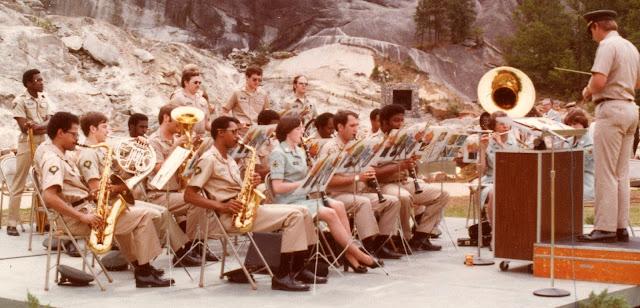
The 116th Army Band is comprised of members of the United States Army National Guard in Marietta, GA. The band carries the lineage and honors of the Gate City Guard, which was organized in Atlanta January 8, 1857, and received its charter from the Governor of Georgia in 1859. The band meets one weekend a month to rehearse and perform at local and state events. They have performed abroad at the United State Embassy in Tbilisi, and stateside at Atlanta Braves games, NASCAR races, the John Philip Sousa Foundation, the Georgia Music Educators Association Conference, and Governor Inaugurations.
Members must go through an audition process organized by SSG Brandyn Taylor (brandyn.k.taylor. mil@army.mil). There is a prescreening requirement and an in-person audition. The audition consists of two parts:
The 116th Army Band, directed by Warrant Officer Joe Maxey, provides music for the dedication of Stone Mountain's Memorial Plaza April 23, 1978. Georgia National Guard Archives
1. Prepared music that you get to select and
2. Quickly Prepared Music that we send you the day before your audition.
Scoring an 18/36 on the audition rubric for your instrument/voice allows enrollment in the ensemble.
Each member has a unique path that brought them to the 116th Army Band through encounters with music educators and a drive to succeed. Please find a small glimpse into their individual stories here. Thank you to the service members profiled here, as well as the entire 116th Army Band for all that you do in service to our state and our country.
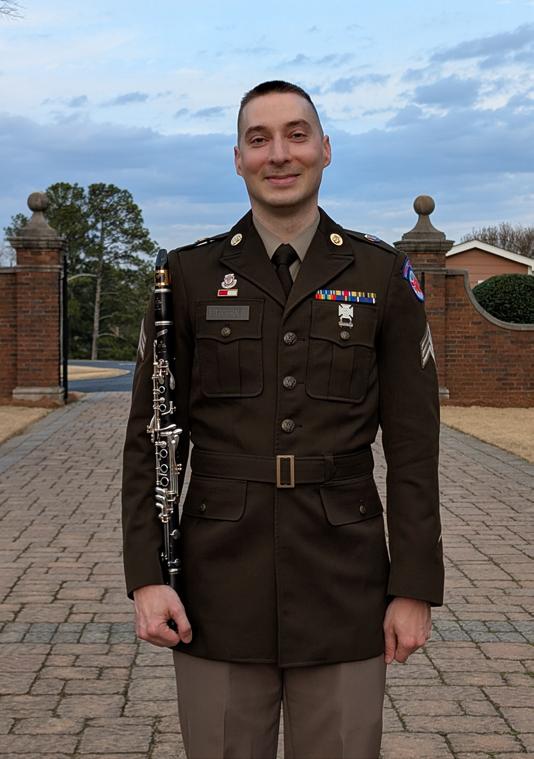
Tim Fitzgerald
Primary Instrument:
Clarinet
Job Away from the Army: Clarinet Professor at the University of North Georgia and Doctoral Clarinet Student at the University of Georgia
Hometown: Marietta
GMEA District: 12
Why Did You Join the Army Band?
I was encouraged to audition for the 116th Army Band by my colleague at The Westminster Schools, Brandyn Taylor, when I mentioned I was taking
premiere band auditions. He invited me to a Veteran’s Day ceremony where the 116th Army Band was to perform. I got chills not only from their musicality, but also in witnessing music’s different kind of meaningfulness in a military context.
What People Might Not Know:
Your unique musical voice is uplifted in the 116th. I have played chamber arrangements of orchestral pieces I’ve always wanted to perform, learned Jazz improvisation, and even performed an Eastern European folk medley that employed techniques I learned as a member of Mercury Orkestar (a Balkan brass band).
Advice for Joining:
Don’t hold back your questions and concerns about joining the military.
Director and School:
Andy Esserwein at Sprayberry High School
"During his years at Sprayberry, Tim was a standout student whose talent suggested a bright musical future. Seeing him excel today as a musician in a military ensemble is a wonderful testament to his hard work and passion. Beyond his own artistic growth, he is now in a unique position to inspire the next generation of players while serving as a musical ambassador for our community. His journey is a source of great pride for our program and for me personally as his former teacher. I am so happy to celebrate his success and look forward to all his future accomplishments.”
- Andy Esserwein, retired, Sprayberry High School
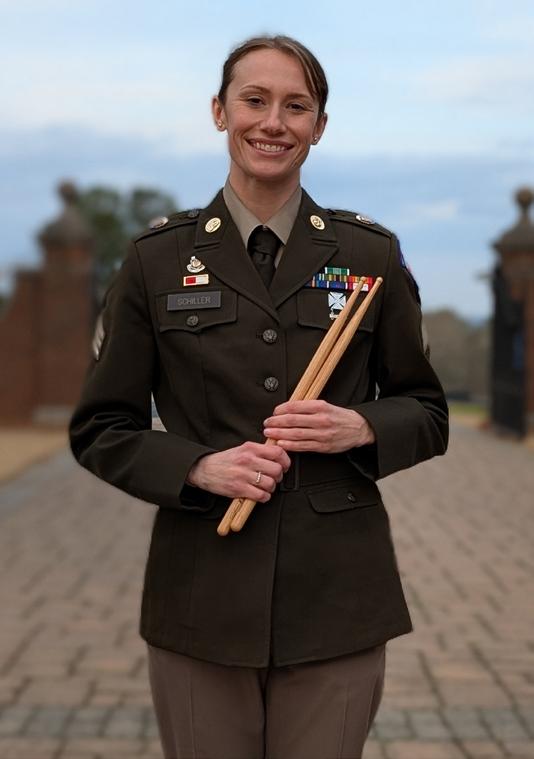
SGT Erica Schiller
Primary Instrument: Percussion
Job Away from the Army: Band director, freelance percussionist, route setter at climbing gyms in Atlanta
Hometown:
Stockbridge, GA
GMEA District: District 6
Why Did You Join the Army Band?
I joined for the part time opportunity to perform. As a band director who spends more time teaching than playing, the Army Band is a great way to continue growing as a performer. I also joined for the health benefits.
What People Might Not Know:
We have multiple different ensembles in addition to our concert bands, such as jazz combo, brass band, big band, rock band, ceremonial marching band, brass quintet, woodwind quartet, and sax quartet.
Advice for Joining:
Don't be afraid of basic training! Once it's over, the music making is totally worth it :)
Director and School:
Jim Bagley – Dutchtown HS
“I think the most accurate thing I can say about Erica Schiller is that as a student, she was what you wanted every student to be. She demanded the best of herself, inspired those around her to do their best, and did it while being the nicest person you'd ever want to meet. She's one of my favorite people of all time!” - Jim Bagley
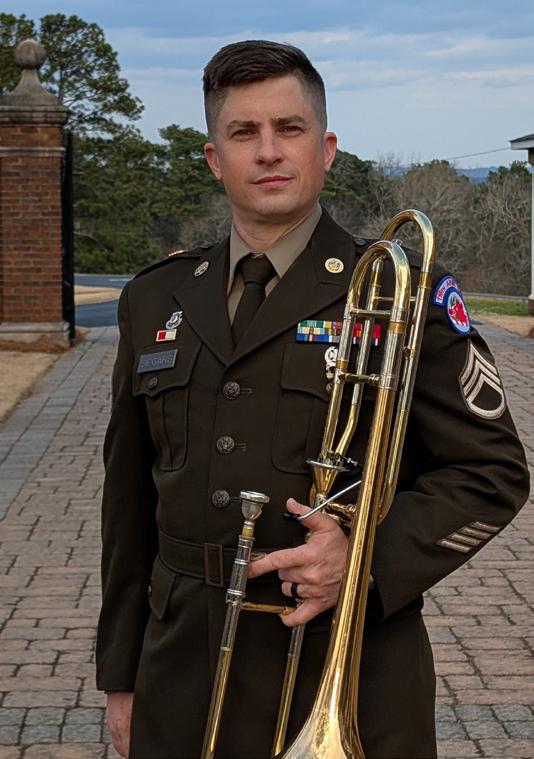
Matt Segars
Primary Instrument: Trombone
Job Away from the Army: Band and Orchestra Director
Hometown: Roswell, GA
GMEA District: District 12
Why Did You Join the Army Band?
I wanted a music performance outlet after college
What People Might Not Know:
The amount of performance opportunities and the different ensembles the 116th can provide
Advice for Joining:
Great outlet to continue playing your instrument and make music with other professionals
Director and School:
Pope High School – Gary Gribble and Cindy Sallas
Hightower Trail Middle School – Andrew Cole
“I had the honor of teaching Matt Segers in high school band. Matt was a dedicated and hard-working student. His determination and motivation set him apart from his peers. His desire to impact students through music is producing wonderful results. His musicianship, combined with his leadership skills are a positive influence for each student that he teaches.” - Gary Gribble, Pope High School (ret.)
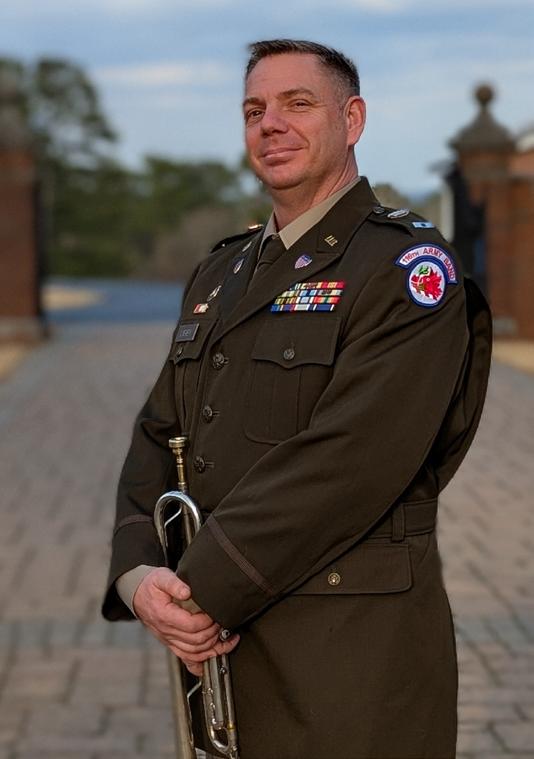
Christopher Libby
Primary Instrument: Trumpet
Job Away from the Army: High School Band Director
Hometown: Warm Springs, GA
GMEA District: I teach in District 3
Why Did You Join the Army Band?
Tuition Assistance and opportunity to serve country
What People Might Not Know:
Music and people come first
Advice for Joining:
Do it! Best kept secret in the military. Outstanding college benefits and you get to keep playing your instrument.
Director and School:
I attended Carson High School in Carson City NV. However, I received my Bachelors in Music from Georgia State and my Masters in Music Ed from Georgia College and State University. Robert Ambrose, band director
“Chris Libby was an outstanding student at Georgia State University. He was consistently among our best trumpets and it was clear to me that he would have a successful career in music. I am overjoyed to see him flourishing as a military musician” -Robert Ambrose, Georgia State University
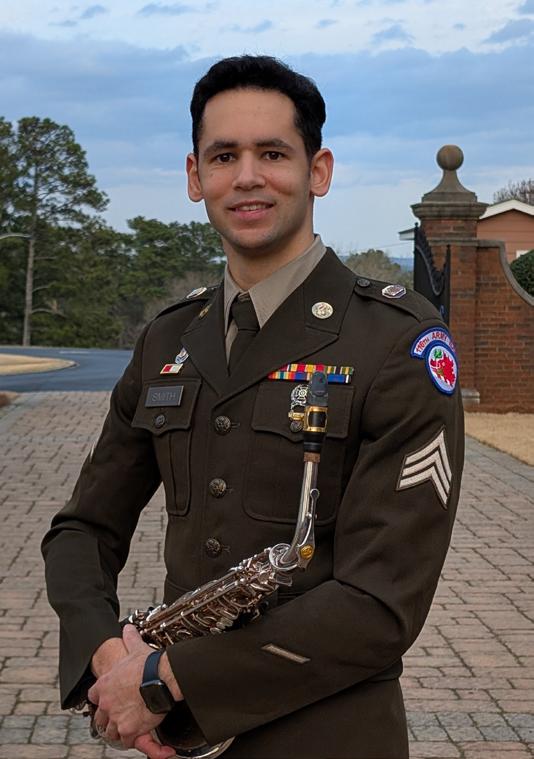
Cole Smith
Primary Instrument: Saxophone
Job Away from the Army: Band Director
Hometown: Conyers
GMEA District: District 4
Why Did You Join the Army Band?
I wanted to continue performing on my instrument while teaching. The Army Band is also a way I give back to communities that have done so much for me, whether through educational outreach, performances, or, occasionally, humanitarian aid when the need arises.
What People Might Not Know:
People might not know that Army bands perform a variety of music with different ensembles, including jazz combo, big band, rock band, in addition to the concert band and ceremonial band.
Advice for Joining:
My advice is to reach out to someone currently in a military band. Military musicians are very approachable and are very willing to answer your questions.
Director and School:
Scott Smith at Heritage High School in Conyers, GA (currently teaching at North Oconee High School)
"I had the pleasure of teaching Cole Smith when he was a student at Heritage High School in Conyers, Ga. Cole was a fantastic student throughout high school and was actively involved in all aspects of the band program. He was a band officer and a leader among his peers. He was a fantastic saxophone player. After high school, he went on to pursue his degree in music and recently earned his doctorate in music education. I have been able to watch him become a successful teacher while he continues to be an active performer. We now teach in the same GMEA district. I'm very proud of Cole and all of his accomplishments."
-Scott Smith, North Oconee High School
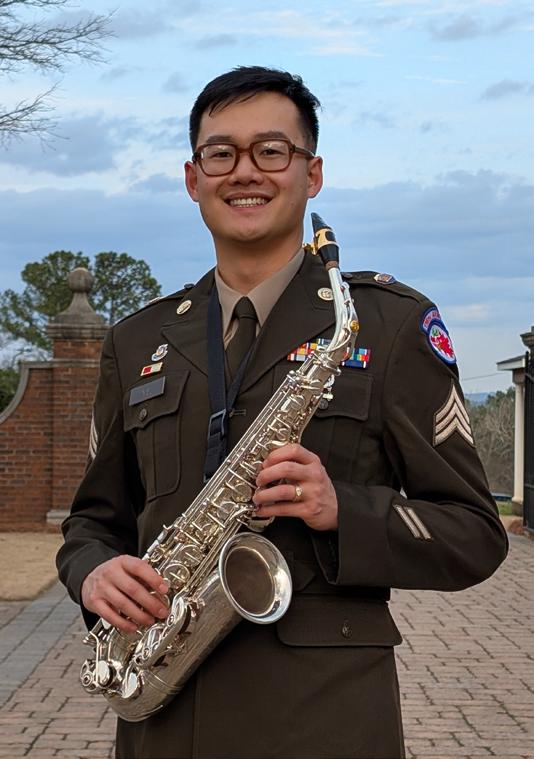
Charlie Ye
Primary Instrument: Saxophone
Job Away from the Army: Software Product Manager at VibePro
Hometown: Athens, GA
GMEA District: District 14
Why Did You Join the Army Band?
To keep playing and growing as a musician while I went to college for computer science at Georgia Tech. It’s the main reason I continue to play my saxophone!
What People Might Not Know:
There are amazing and unique playing opportunities. I’ve had the opportunity to perform at Braves games, NASCAR races, for the governor’s Christmas tree lighting, and recently even at the GMEA conference.
Advice for Joining:
Ask us all the questions! I’m sure you have many thoughts and concerns about joining. I know I did, and had many misconceptions coming in. We are here to make sure you have all the information you need to make the best decision for you.
I’ve learned and experienced so much in the 116th that I would not have otherwise. I will cherish the friendships and memories I’ve made forever. So, please don’t be afraid to bring up any topics that might make you hesitate!
Director and School:
Dr. Zandra Bell-McRoy at Cedar Shoals High School (currently teaching at University of West Georgia)
“Charlie was an exceptional musician in high school, but what truly set him apart was his character. Even as a teenager, he demonstrated a rare combination of kindness, thoughtfulness, and genuine empathy for those around him. I am so proud that he has continued to pursue his musical gifts — because that talent was always something special to witness. It was my absolute honor to serve as his band director, and I can say without hesitation that Charlie made me want to be a better educator every single day. For that, I will always be grateful.” -Dr. Zandra Bell-McRoy
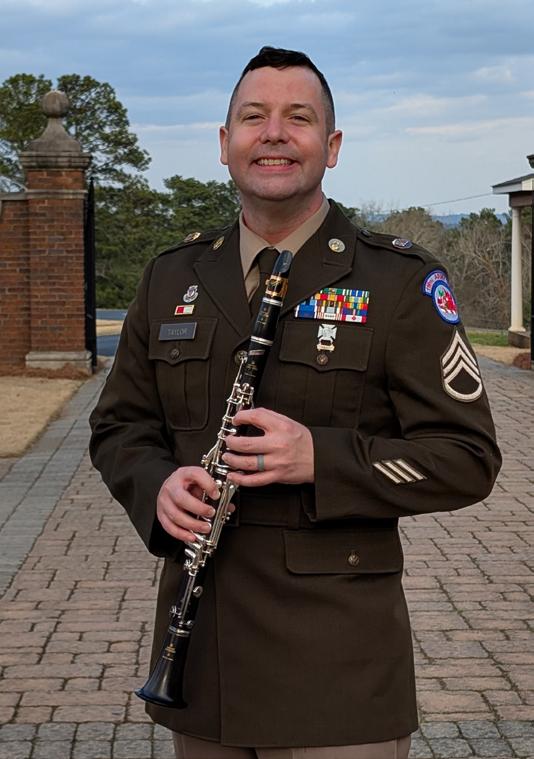
Brandyn Taylor
Primary Instrument: Saxophone and Clarinet
Job Away from the Army: Freelance musician and teacher
Hometown: Milton, GA
GMEA District: District 5
Why Did You Join the Army Band?
I have always wanted to serve my country and community through music and was thrilled to learn that I could do this in Georgia. The health benefits also added great stability to my freelancing career!
What People Might Not Know:
The Army Band program is the largest employer of musicians in the world and we are hiring! Our band is part-time and a non-deployable unit, so our mission is to make music here in Georgia.
Advice for Joining:
I had so many questions when I was joining and was certainly hesitant, which is normal. However, joining the 116th Army Band continues to be the best decision I've made in my professional life! Go for it!
Director and School:
Northwestern Middle School – Marcia Laird and Keren Barr
Milton High School – Randall Coleman and Lindy Sikes
“Brandyn Taylor was a saxophone player in my band program at Northwestern MS. He was and still is a superb musician. What I remember most about Brandyn was seeing that smiling face everyday with that positive attitude. His great attitude rubbed off on others. What a great role model.” - Marcia Laird
“As a high school student, Brandyn Taylor was that student that we all love having in our programs. He was an outstanding musician and absolutely LOVED being in band and being a part of every ensemble that he could. He was always prepared and ready for whatever the next challenge was. Eager to improve and be the best, he studied privately and worked harder than most of his peers to set a standard of excellence that permeated the entire program. Watching Brandyn’s successes has been one of the joys of my career!”
- Randall Coleman, University of Tennessee-Chattanooga
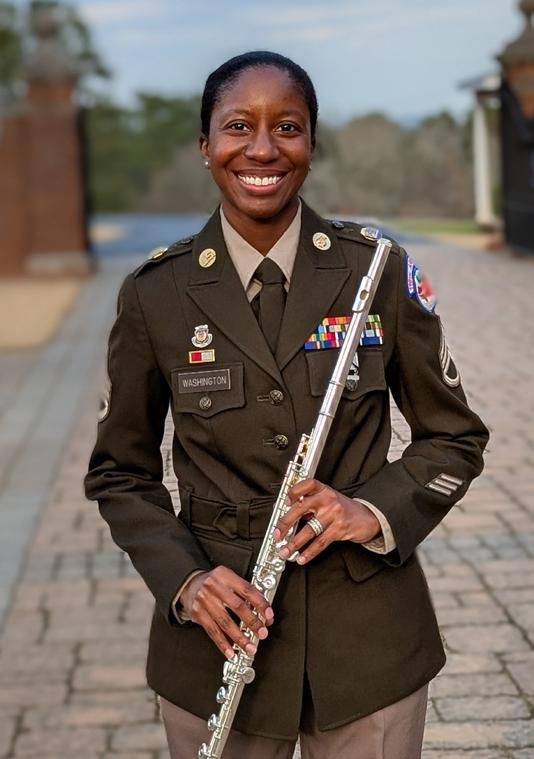
SSG Jada Washington
Primary Instrument: Flute
Job Away from the Army: Owner of a residential painting company
Hometown: Smyrna, GA
GMEA District: 12
Why Did You Join the Army Band?
I was a sophomore in college and trying to figure out how to pay for school. Once I learned what the Guard could do, it felt like the smartest move for me. I ended up having all of my tuition covered, I saved thousands of dollars from basic and advanced training, and I made extra money from drill every month. What really sold me was that if I had to work while in school, I wanted it to be something that strengthened my musicianship, not something that pulled me away from it.
What People Might Not Know:
They may think it’s a harsh, super strict environment with lots of rigid militant rules. We have our standards, but our culture in the band is very warm and it feels like a family. You build real friendships, you look out for each other, and a lot of people stay because of that sense of community.
Advice for Joining:
Come visit in person if you can. Sit in and observe a rehearsal, ask questions, and get a feel for the culture. It’s hard to understand what the life of a military musician is really like without testing the waters. Seeing it up close helps you know if it’s a good fit musically and personally.
Director and School:
Campbell High School – Cathy Asher and Kirk Stroud
"Jada was such an outstanding band student while she was in high school. From the beginning, Jada knew she had a passion for music and worked extremely hard to improve her skills in both musicianship and flute performance. Jada also cared for the students that saw her as a leader within our band program. Her smile was infectious as was her love for music. I am sure that with every performance she does with the military band, she hopes to inspire young musicians through her passion for music and the flute. I am very proud to have been a small part of her musical journey." - Kirk Stroud
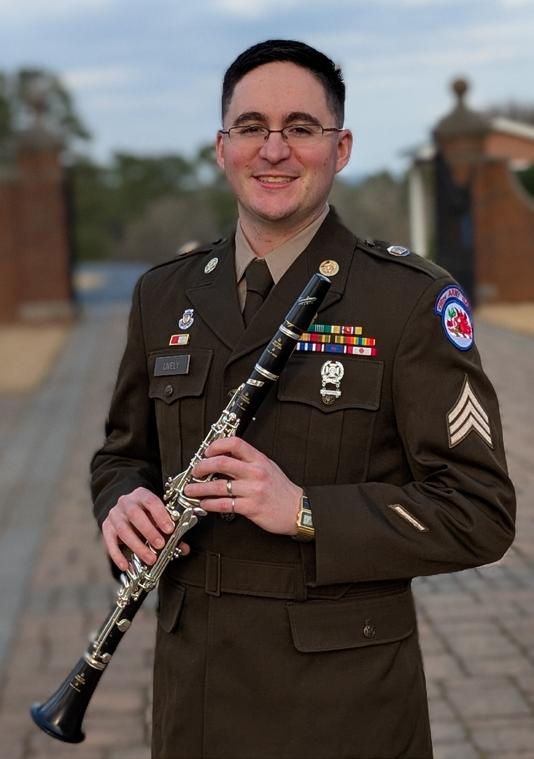
Job Away from the Army: Operations Manager, USA Taymer International Inc.
Hometown: Cartersville, GA
GMEA District: District 2
Why Did You Join the Army Band?
I always wanted to serve in some capacity. The 116th Army Band allows me to give back and serve the nation I grew in by performing music at a professional level in tandem with my other interests.
What People Might Not Know:
Army bands have so much variety! Jazz band/ combo, saxophone quartet, brass quintet, rock band - you name it.
Advice for Joining:
Learn as many genres of music as you possibly can.
Director and School:
Woodland Middle School – Michelle Gaspardo
Woodland High School – Eric Willoughby & Wesley Brooks
UWG – Dr. John Bleuel & Dr. Daniel Bakos
"Benjamin Lively was a talented student and musician. As a band director, I vividly remember that Ben could never seem to stop making music, exploring "unique" sounds on his saxophone, and entertaining his peers and our community. I am grateful to hear that he has continued this passion into the 116th Army Band, and I am certain that he will always share his love of music with those around him. Bravo to you, Ben!" -Wesley Brooks, Gwinnett County Public Schools
“Ben was the kind of student every teacher hopes to have. His passion for music, constant excitement to play, and eagerness to pursue every opportunity in saxophone choir, jazz band, marching band, and concert band made him a joy to teach. Just as importantly, his vibrant personality lifted the entire ensemble and inspired the students around him.” - Eric Willoughby
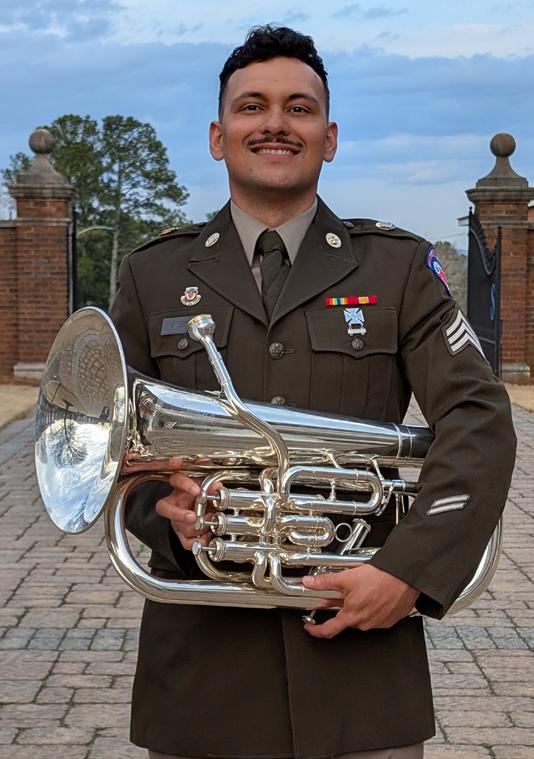
Carlos Alberto Valeriano Jr.
Primary Instrument: Euphonium
Job Away from the Army: Intelligent Traffic Systems Installer
Hometown: Marietta, GA
GMEA District: 12
Why Did You Join the Army Band?
I originally enlisted as a 12N(Heavy construction equipment operator) but after my first contract I realized the band existed and I wanted nothing more than to represent my country during performances and build those emotional connections on stage.
What People Might Not Know:
I never knew that there could be a group with so many different backgrounds both musically and culturally. to be able to witness those differences lift a group to unimaginable heights and build truly unbreakable bonds is an amazing sight.
Advice for Joining:
Just embrace those skills you didn’t know you hadthey can open up new opportunities for your team!
Director and School:
Jarius Thomas, Osborne High School
“As Carlos's Music (Band) teacher, It was a delight to have him as a student. Carlos has always been a gogetter and was always wanting to get better on his instrument. He also was a major help by volunteering to help work with other sections in the band regardless of whether he had knowledge of those instruments or not. It doesn't surprise me that he is still pushing at becoming the best he can be.”
- Jarius Thomas, Osborne High School
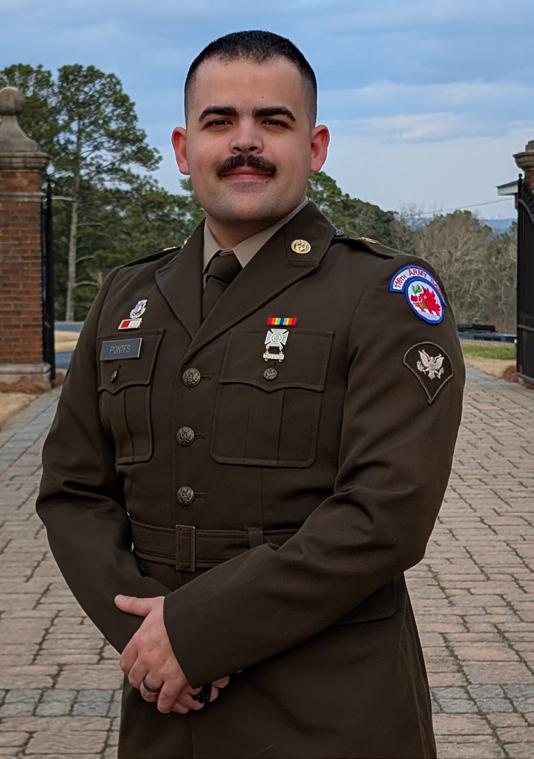
Peter Amos Pontes
Primary Instrument: Tuba
Job Away from the Army: Full-time college student, part-time worker at Home Depot
Hometown: Cleveland, Georgia
GMEA District: District 9
Why Did You Join the Army Band?
I joined the army band to serve my country while using the gift I was given.
What People Might Not Know:
You quickly learn how to sight read well and adapt to various environments.
Advice for Joining:
Do it, and let the rest figure itself out.
Director and School:
Dr. Ashley Jarrell at University of North Georgia
"Peter Pontes has a heart of gold. His earnest best wishes for others (especially his fellow musicians) is matched only by his sincere persistence and resiliency. His enthusiasm for music and learning is infectious."
-Dr. Ashley Jarrell, University of North Georgia
Congratulations!
NAfME Honors Georgia Southern University CNAfME Chapter
A big congratulations to the NAfME Collegiate Chapter at Georgia Southern University! The group has earned a spot among the nation's top collegiate music education chapters, receiving a 2025–2026 Chapter of Excellence honor from the National Association for Music Education.
Georgia Southern stood out for their exceptional work in the area of Recruitment, recognized for their initiative in drawing new students into the music education field and building a stronger pipeline of future educators.
Each year, NAfME selects collegiate chapters that go above and beyond across five key areas — advocacy, musical programming, professional development, recruitment, and community service. Georgia Southern's inclusion on this year's list reflects the genuine commitment and drive of their chapter members and faculty.
The honor will be celebrated at NAfME's National Leadership Assembly in June. Georgia Music Educators Association is proud to recognize the Eagles for this achievement — a true win for music education in Georgia!
Sixteen Georgia School Districts Honored Among Nation's Best for Music Education
The NAMM Foundation’s 2026 Best Communities for Music Education program recognizes communities across the country for their commitment to keeping music accessible for every student. Now marking its 27th year, the award shines a light on districts that demonstrate leadership in making music education available and equitable across their student populations. Districts are evaluated on a wide range of criteria, and being named to the list reflects a sustained, meaningful investment in music programs at the institutional level.
The NAMM Foundation, the philanthropic arm of the global music products industry, has named sixteen Georgia school districts among its 2026 Best Communities for Music Education. Georgia’s district recipients span the state, reflecting how broadly the commitment to music education reaches across diverse communities.
Georgia's 2026 NAMM Best Communities for Music Education
Baldwin County School District
Buford City Schools
Carroll County School System
City Schools of Decatur
Clarke County School District
Cobb County School District
Columbia County School District
DeKalb County School District
Forsyth County Schools
Fulton County Schools
Gwinnett County Public Schools
Marietta City Schools
Newton County Schools
Paulding County School District
Rockdale County Public Schools
Rome City Schools
Beyond the district-level honors, the NAMM Foundation also separately recognized individual schools this year. Among the 120 schools nationwide, Dunaire Elementary School, Stone Mountain, and Oconee County High School, Watkinsville, earned their own designations.
These recognitions highlight Georgia’s statewide commitment to music education, demonstrating a sustained commitment in communities of every size and across every region of the state.
• Field Trip Opportunities for All Ages
• $10 Educator Tickets
• Family Concerts
• Music for the Very Young Classes + Concerts
• Vivo Summer String Institute
• Atlanta Symphony Youth Orchestra
• Talent Development Program
• Behind the Curtain Digital Concert Series
"The music is not in the notes, but in the silence between."