GOWER BIRD HOSPITAL
NEWSLETTER
DECEMBER 2024
NEWSLETTER
DECEMBER 2024
We did originally try to limit ourselves to taking only wild birds but found there was nowhere else the hedgehogs could go. The nearest hedgehog hospital is in Cardiff and is already overstretched.
We have now been caring for hedgehogs for five years and, thanks to donations, we were able to improve our hedgehog facilities last year.
One sad case was a female hedgehog found last October in Sketty.
She had been painted with metallic spray paint. All her spines and skin were coated in various shades of blue, purple and yellow.
When the RSPCA brought her to us she was cold, in complete shock and an expression of terror frozen on her little face.
She died a few hours later –a combination of the toxic paint and shock. It’s hard to believe that people are capable of such thoughtless torment.
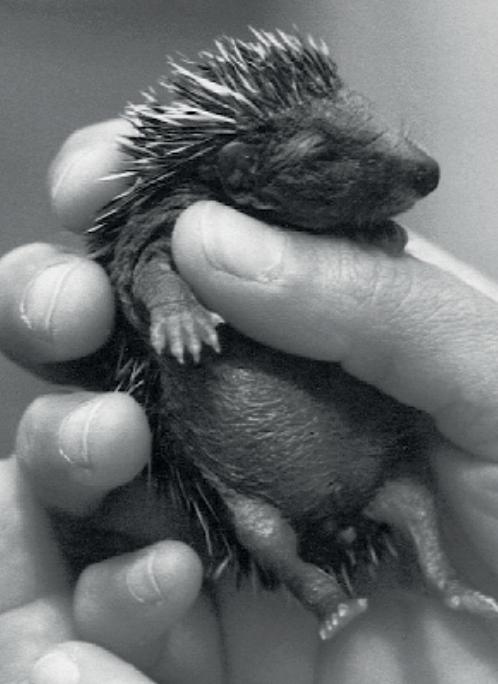
Hedgehogs also arrive with wounds from strimmers and garden forks. In the summer the wounds are often infested with maggots but with prompt treatment most of the hedgehogs make a complete recovery.
Another common accident is falling into swimming pools, drains or garage pits. Hedgehogs also get tangled in netting or discarded rubbish and of course they are A hedgehog demonstrates the scales. often hit by cars when crossing the road.
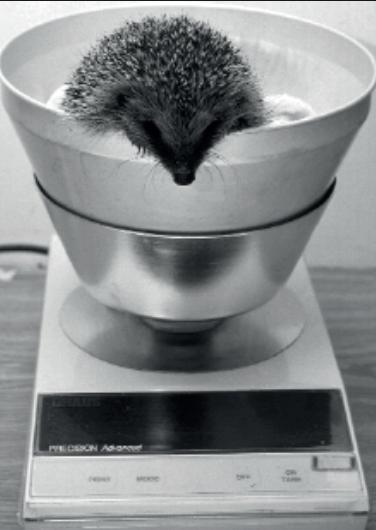
Hedgehogs are nocturnal creatures so any hedgehog seen in daylight hours is usually in trouble. It could be suffering from an injury, starvation, dehydration or an illness.
Put the hedgehog in a cardboard box lined with torn-up newspapers. If it feels cold add a hot water bottle (a plastic milk carton wrapped in an old towel makes an excellent disposable hot water bottle). Make sure the box has small air holes and a secure lid as hedgehogs are remarkable escape artists even when ill!
For more information, scan this code to go directly to our website.

As a registered charity, Gower Bird Hospital is entirely dependent on donations, fund raising and grants.
Thanks to everyone who gives a donation, raises funds and those kind people who have included Gower Bird Hospital in their will. If Gower Bird Hospital didn’t exist, many wild birds and hedgehogs would simply die in cardboard boxes as there would be nowhere for them to go to receive the specialised help they need.
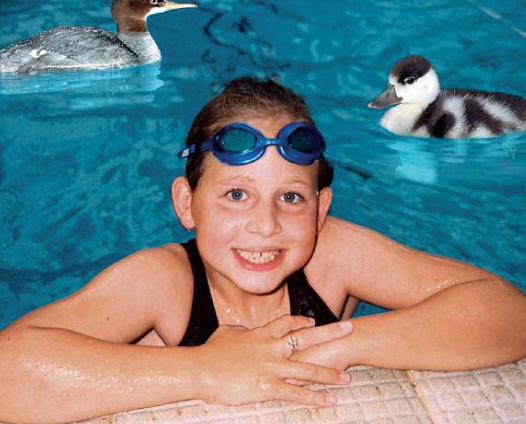
SPONSORED SUCCESSES! Danielle raised £309 with a sponsored swim of 2,000 metres — that’s 80 lengths!
© Romain de Kerckhove
YES, we treat feral pigeons!
Treating feral pigeons has taught us a lot about bird anatomy, wound management and disease.
Gower Bird Hospital is not ‘speciesist’ we do our best for any species of wild bird brought to us. Interestingly, we admit twice as many hedgehogs as feral pigeons, and blackbirds top the list of more than 100 different species of birds that are admitted every year.
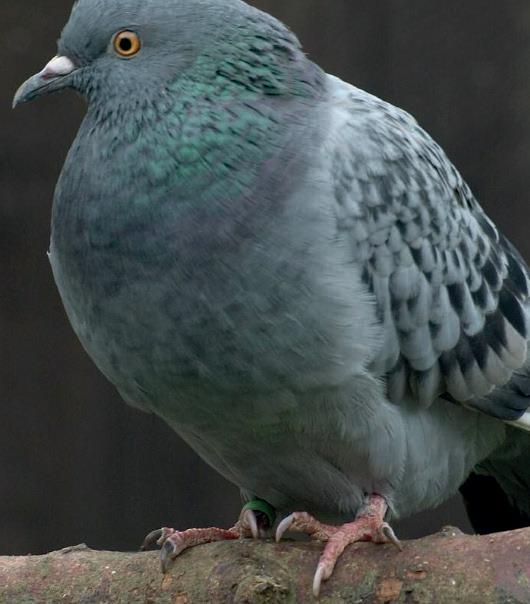
The original rock dove lives on coastal cliffs. Over many generations, people have captured and domesticated rock doves. Initially kept as a source of food, they were also bred to produce racing pigeons and fancy doves with unusual plumage.
As their original habitat is rocky cliffs, escaped or released pigeons have adapted well to living in towns and cities with large buildings providing many ledges for roosting and breeding. Food is readily available From people in towns, either dropped as rubbish or fed as bird food.
Why are they a nuisance?
The main problem is that what goes in must come out. Pigeon droppings accumulate on streets and buildings and must be cleaned up. As the pigeon population increases so does the amount of droppings.
£5.00 feeds a hedgehog for two weeks.
£10.00 buys mealworms to feed two fledglings for a week.
£20.00 provides two heat lamps to keep patients warm.
£100.00 buys a closed circuit TV camera.
We give our time voluntarily and receive no wages from the Hospital.
All donations go directly towards the Hospital’s running costs.
If you would like to give a donation to help us to help wildlife, please make cheques payable to Gower Bird Hospital.
Every donation helps. Thank you.
Tel: 01792 371630
A phone call is always greatly appreciated prior to the admission of a wildlife casualty.
Gower Bird Hospital, Sandy Lane, Pennard, Swansea SA3 2EW
Website: www.gowerbirdhospital.org.uk E-mail: info@gowerbirdhospital.org.uk