Siemens Energy: Taking a Leap Into the U.S. Green Hydrogen Market
Siemens Energy: Taking a Leap Into the U.S. Green Hydrogen Market
Sheetal Bhardwaj, Anil Khurana, Daniela Muhaj, and Michael Ryan1
“ We think hydrogen is the Swiss army knife. It’s got a lot of capabilities, and I think that’ll be the one that gets us to be decarbonized in the world.”
- President, Siemens Energy North America2
Acknowledgements:
This case was developed with the support of several individuals and organizations. The authors are particularly indebted to the Siemens Energy teams across government affairs, sales, product, and business development, whose insights and contributions were essential to its development. We thank Christopher Perry (Georgetown University, IBP’24) for organizing the U.S.–German Hydrogen Forum, which provided the foundation for this case study. Wesley Sun (B’25), Akash Chowdhury (G’29), and Delaney Brower (MBA’26) provided valuable research assistance. Joe Jasper and Jamie Massie contributed to the case design. We are also grateful to the numerous policy and industry experts who generously shared their time and perspectives through interviews conducted in support of this research.
Disclaimer:
This case study focuses in 2023 and 2024, excluding economic and political developments in subsequent years. All information (including but not limited to values, references, events, and quotes) attributed to Siemens Energy in this case study is purely estimates and fictional in nature, intended solely for educational purposes. They do not constitute official disclosures or statements from Siemens Energy and should not be interpreted as representing the company’s actual positions, practices, or events. Siemens Energy disclaims any responsibility for the accuracy or validity of the information presented in this study.
Introduction
In April 2024, Michael Connelly3, Head of the Global Electrolyzer Business at Siemens Energy, gathered his senior team in the company’s Washington, D.C., office. Joining him were Anil Raghavan, Director of Business Development for Hydrogen in the Americas, and Daniela Rodriguez, Head of Sales for North America. The meeting’s focus was to refine Siemens Energy’s strategy in the evolving hydrogen market. The agenda centred on the company’s next steps in the U.S. green hydrogen sector following the Department of Energy’s (DOE) latest policy announcement on hydrogen production incentives. With the annual strategy review with the CEO and board scheduled for the following week, Connelly needed to present a clear and actionable plan.
With over 175 years of expertise, as a division of Siemens AG till 2019, Siemens Energy had built a broad portfolio spanning conventional and renewable power, including hydrogen. The company provided integrated solutions for power generation, transmission, storage, and grid technology, as well as the electrification of complex industrial processes. For the fiscal year 2023, the company generated gross revenues of €31 billion, operated in more than 90 countries, and employed a workforce of 99,000.4 With annual investment of €1 billion in R&D, the group led the industry with its advanced technologies and equipment.5 Also see Exhibits 6, 7A, and 7B
Over the past decade, hydrogen had emerged as a pivotal player in transforming the global energy sector owing to its versatility. It could be used across various industries in numerous ways, as feedstock, fuel, heat, or for electrification, and as a storable and exportable energy source. Furthermore, green hydrogen, produced using renewable energy sources, held the potential to significantly contribute in the transition to a sustainable future by decarbonizing hard-to-abate sectors responsible for one-third of energy related greenhouse gas emissions, and help achieve the goal of net zero CO2 emissions (NZE) by 2050, as outlined in the UN Paris Agreement.6,7 The potential benefits were immense: reduced greenhouse gas emissions, enhanced energy security, and the creation of a new industrial sector. However, high productions costs, insufficient infrastructure, lack of government policy, and safety concerns hindered its production and utilization.
Recognizing the significance of adopting green hydrogen, countries worldwide were investing heavily in the sector as part of their national climate strategies. Supportive regulatory policies—subsidies, tax incentives, and mandates promoting the use of green hydrogen, attracted both established energy giants and innovative start-ups. Since 2020, the U.S. government identified hydrogen as crucial for transitioning to a lower carbon energy mix and as a competitive priority to acquire a lead in the sector over other nations. To support this, it rolled out the largest climate and energy investment in the country’s history, worth over US$430 billion, to accelerate its growth.8 With the country’s electricity generation exceeding 4,000 TWH in 2023, of which 60% was from fossil fuels, clearly, the scope for using green hydrogen in the U.S. was tremendous.9
Siemens Energy was driven by its goal to lead the global energy transition and increase the share of its renewables business. With the U.S. poised to become a leading hydrogen generator, the company envisioned a dominant role for itself in the country’s hydrogen sector. However, despite the company’s presence in the country for over a century, its involvement in the country’s hydrogen sector was limited. The US hydrogen market was complex, with evolving federal and state policies, and market-driven user behaviour. Given the sector’s demand for high investments and a long-term commercial perspective, Connelly and his team needed to evaluate the actionability of DOE’s regulatory incentives, demand certainty, and the durability of political support, all of which could influence the commercial viability and sustainability of the company’s projects in the country. Furthermore, strategic collaborations with key stakeholders, including other companies, research institutions, and government entities, was a must to enable scale, influence market dynamics and regulatory policies, and alleviate risks.
“Unlike Europe’s mandatory usage policy, the U.S. adopted incentive-based strategies to promote clean hydrogen in the industry in stages by making it economically viable, widely available and reliable technology.”
Global Hydrogen Industry
Since 1975, hydrogen, the universe’s most abundant element, had played a crucial role in global industrial production. Its popularity stemmed from its lightweight, energy density, and lack of emitting pollutants or greenhouse gases directly. The element’s ability to be stored, transported in various forms, such as ammonia, methanol, or liquid organic hydrogen carriers, used across several industries, and its potential to decarbonize high-polluting sectors, such as heavy industry and long-haul transport including shipping and aviation, further accelerated the momentum for adopting it.
Increasingly viewed as a clean energy solution, hydrogen was projected to contribute significantly in limiting global warming to 1.5°C and meet NZE goals by 2050.10 By 2023, the demand for hydrogen multiplied to reach 95 million tonnes (Mt).11 However, despite its promise as a panacea, a significant challenge remained in realizing these environmental benefits as different types of hydrogen were
produced using different methods. Black and brown hydrogen were produced through coal gasification, grey and blue hydrogen came from natural gas ( methane) coupled with carbon capture and storage, while green hydrogen was generated through water electrolysis that used renewable energy (refer to Exhibit 1 for details on hydrogen production methods).12 The production of hydrogen in the industry remained predominantly from fossil fuels as it was quite expensive to produce it from renewable sources. In 2022, 70% of its supply was derived from global natural gas and 30% from global coal, with less than 1% from clean sources such as renewable or nuclear energy (green or pink hydrogen).13 Consequently, hydrogen production was responsible for over 900 Mt of CO2 emissions ; to put this in context, it was more than the global aviation industry, which emitted nearly 800 Mt annually.14
*SMR is steam methane reformation | Source: https://www.nationalgrid.com/stories/energy-explained/hydrogen-colour-spectrum
Exhibit 1: Different Types of Hydrogen Production Methods
Colour Black/ brown Grey Blue Turquoise Green Yellow Pink
“The conditions have never been as good for hydrogen as they are now. Because of climate change, many companies see the need for action to reduce emissions.”
—CEO of Siemens Energy
02 Green Hydrogen
2.1 A High Potential Scenario
The global green hydrogen market, valued at US$6.26 billion in 2023, was projected to grow at a CAGR of 38.7% to reach US$165.84 billion in 2033.15 Regionally, Asia Pacific had the highest market share at 47.05%, followed by Europe at 23.48%, North America at 20.14%, and LAMEA at 9.33%.16 Green hydrogen’s low emissions and adaptability enabled its application across various sectors:
• Industrial processes: As feedstock, by replacing fossil fuels in high-temperature energy intensive industrial applications, such as steel production, ammonia synthesis and petrochemical refining.
• Residential and commercial use: For electricity, heating, and cooking purposes
• Mobility: In fuel cell electric vehicles (FCEVs) including passenger cars, heavy-duty trucks and buses, and public transit systems;
• Long-haul transportation: As feedstock for synthetic fuels such as e-gasoline, e-kerosene, and e-methanol, used in maritime, aviation and railways sectors.
• Power generation and storage: By converting excess renewable electricity into hydrogen, it could be stored and later reconverted to electricity, enhancing grid stability and reliability.
By 2050, demand for green hydrogen was estimated to reach 125-585 Mt per year, 73-100 percent of total hydrogen demand, and could account for up to 22% of the world’s energy needs.17,18 However, meeting this demand required a massive scale up in its production, distribution and storage capacity.
2.2 Key Challenges Enroute
With a growing projects pipeline worldwide, the potential annual production of low-emission19 hydrogen was projected to be around 45 Mt by 2030. However, by 2023, only 7% of the 1,418 announced projects requiring US$39 billion had passed the final investment decision (FID) stage. A total investment of US$570 billion was required to see through all the projects.20 Delays in securing funding frequently forced companies to reduce their green hydrogen production targets. For example, in early 2024, Spain’s Iberdrola, the multinational electric utility group, lowered its production target from 350,000 tons to 120,000 tons by 2030 due to lack of funding for its several projects.21
High costs due to lack of equipment and infrastructure, ambiguity in certification and regulation, and uncertainty about its demand prevented the scale-up of low-emission hydrogen production and use.
2.2.1
Lack of Infrastructure and Equipment
The green hydrogen industry required substantial capital expenditures across its value chain, including production, storage, transportation, and distribution, to build scale and efficiency, and, ultimately, competitive costs ($/per Kg). High costs and slow development of production equipment, renewable energy infrastructure, and ancillary systems for water purification, storage, transportation, and distribution of hydrogen had resulted in limited adoption by both producers and end-users.
Production Bottlenecks
The primary equipment used for producing green hydrogen was electrolysers—modular units that used energy, such as solar or wind, to split water molecules and generate hydrogen, and were of many types based on different technologies, including (refer to Exhibit 2 for comparison in electrolysis technologies):
• Proton Exchange Membrane (PEM) Electrolysis: PEM used a solid polymer electrolyte and required precious metals like platinum and iridium. It offered high efficiency (60-70%) and operational flexibility, ideal for pairing with variable renewable energy sources.
• Alkaline Electrolysis: A mature and less expensive technology, it used a liquid alkaline solution. However, it had higher OPEX, lower response times and less operational flexibility than PEM.
• Solid Oxide Electrolysis (SOE): Operating at high temperatures (700-800°C), SOE offered potential efficiencies up to 85%. However, it was in the developmental stage and faced challenges related to material durability and integration.
The production cost of green hydrogen comprised the acquisition cost of the electrolyser (estimated at 20%), the cost of renewable energy used to power the electrolyser (30% for wind and 40% for solar), operating
costs over the product’s lifetime (about 2030%), and the cost of financing (25-30%).22 In 2023, this was estimated to be around US$4.5-12 per kg23, considerably higher than that of blue hydrogen at US$1.8-4.7 per kg or grey hydrogen at US$0.98-2.93 per kg made from fossil fuels (refer to Exhibit 3 for average production costs).24
A massive scale-up of electrolyser manufacturing and renewable energies along with innovations in these technologies were essential for making green hydrogen economically viable. In 2023, the global electrolyser manufacturing capacity was only 11 gigawatts (GW)25, far below the required levels of an estimated 130 to 345 gigawatts (GW) by 2030 and 5,500 GW by 2050.26 Of the 11 GW, operational deployment stood at only 1.1 GW. Moreover, the commercially available PEM and alkaline electrolysers were more expensive than SOE systems, although the latter were close to commercialisation with the recent installations of a 2.6 MW capacity in Netherlands and a 4 MW system in a NASA research centre in California.27,28
More importantly, the scale of solar panels, wind turbines, and associated grid integration technologies, was grossly insufficient to ensure a reliable and low-cost supply of renewable electricity for consistent annual hydrogen production. To meet the projected green hydrogen demand by 2050, an annual supply of at least 6,690 TWh of dedicated electricity would be required. This was equivalent to the output of 1,775 GW of offshore wind farms, 2,243 GW of onshore wind, 4,240 GW of solar PV, or 957 GW of nuclear power.29 As the CEO of Siemens Energy pointed out in a CNBC interview, that to make green hydrogen commercially viable, “we need an environment, obviously, of cheap electricity and in this regard, abundant renewable energy available to do this.”30
Exhibit 2: Comparison of Hydrogen Production Technologies
Sources: International Energy Agency (IEA), “The Future of Hydrogen,” 2019; Hydrogen Council, “Path to Hydrogen Competitiveness: A Cost Perspective,” 2020; and US Department of Energy, “Hydrogen Program Plan,” 2020.
Exhibit 3: Average Production Costs of Different Types of Hydrogen in 2023
Hydrogen needed to be stored and transported from production sites to endusers, requiring storage tanks, pipelines, compressed gas trailers, liquid hydrogen carriers. Alternatively, it was converted into ammonia or methanol in downstream processes for easier transport. Hydrogen’s low density, which resulted in a volume nearly four times that of natural gas, and its low boiling point of −252.8°C at one atmosphere pressure coupled with its high flammability, necessitated advance storage methods, such as ultra-high compression or costly refrigeration.31 For its transportation, while pipelines offered the most cost-effective long-term solution,
they required substantial initial investment and regulatory approvals.32 The existing oil and gas pipelines were made of steel, which were suitable for carrying only minimal amount of hydrogen due to the risk of “embrittlement”.33 This called for developing plastic pipelines or retrofitting the existing ones with plastic. In contrast, compressed gas trailers and liquid hydrogen carriers were more flexible but involved higher operational costs and could only be used for relatively shorter distances.
Furthermore, for hydrogen’s use in the transportation sector, refuelling stations were critical. Its prices for end-users depended heavily on the number of refuelling stations, their usage frequency, and the daily volume of hydrogen delivered. However, establishing these stations required large investments in dispensing equipment and safety systems.
By 2023, about 5,000 km of hydrogen pipelines were operational, primarily in Europe and the US, over 1,100 hydrogen refuelling stations had been established across 35 countries, and the global bulk storage capacity stood at 0.5TWh.34 However, these were just a fraction of what was needed to meet the NZE goal, which called for 15,000 km of hydrogen pipelines and a global bulk storage capacity of 70 TWh by 2030, and 90,000 refuelling stations by 2050.35,36
2.2.2 Inadequate Standardization and Regulations
Despite a strong potential of the clean hydrogen market, international standards for its production, classification, safety, and use were not aligned, creating significant challenges. For instance, in 2023, the definition of clean hydrogen varied from hydrogen produced with a CO2 ratio of 1:2 to being completely carbon-free.37 The attempts to define and certify were work in progress. In 2023, EU adopted two delegated acts to define renewable hydrogen, which awaited approval; Australia, the UK and France developed certifications for guaranteeing origin and defining different hydrogen categories; and the US proposed a Clean Hydrogen Production Standard to set a target of carbon capture efficiency as 65%
or methane leakage rates higher than 3%.38,39 However, these efforts were disparate and not necessarily collaborative towards a common global definition.
More important, there was no unified global framework for hydrogen safety. Hydrogen was highly susceptible to leakages and ten times more easily ignited than natural gas with a high risk of high-pressure explosions during transportation.40
2.2.3 Demand Uncertainty
By 2023, adoption of green and other low emission hydrogen remained slow, and governments’ targets for demand fell significantly short of what was needed for climate goals. The global demand for the gas was limited to existing industries, such as ammonia production and refining, with less than 0.1% from new applications, such as steel, aviation and shipping. And even within the existing applications, only 0.7% of total hydrogen demand was for low emission hydrogen.41 High prices and inefficiency in the existing technology to capture energy from hydrogen fuel made it uncompetitive and slow to adopt. Of the planned clean hydrogen production capacity by 2030, only 10% had secured an off taker to purchase a certain amount of clean hydrogen at a predetermined price.42
The slow pick up of green hydrogen could also be attributed to the outbreak of COVID-19 in 2020-21, which had severely disrupted supply chains and delayed the implementation of many projects, preventing the anticipated reduction in technology and equipment costs. However, post the disruption caused by the pandemic, there was a renewed global push to accelerate the deployment of green hydrogen to meet the 1.5°C targets, which required 94% of hydrogen used to be green by 2050.43
2.3 Enhancing the Pace of Development for Green Hydrogen
Technological advancements, government incentives, and increased investments were creating favorable market dynamics to accelerate the growth of the green hydrogen industry.
2.3.1 Advances in Technology
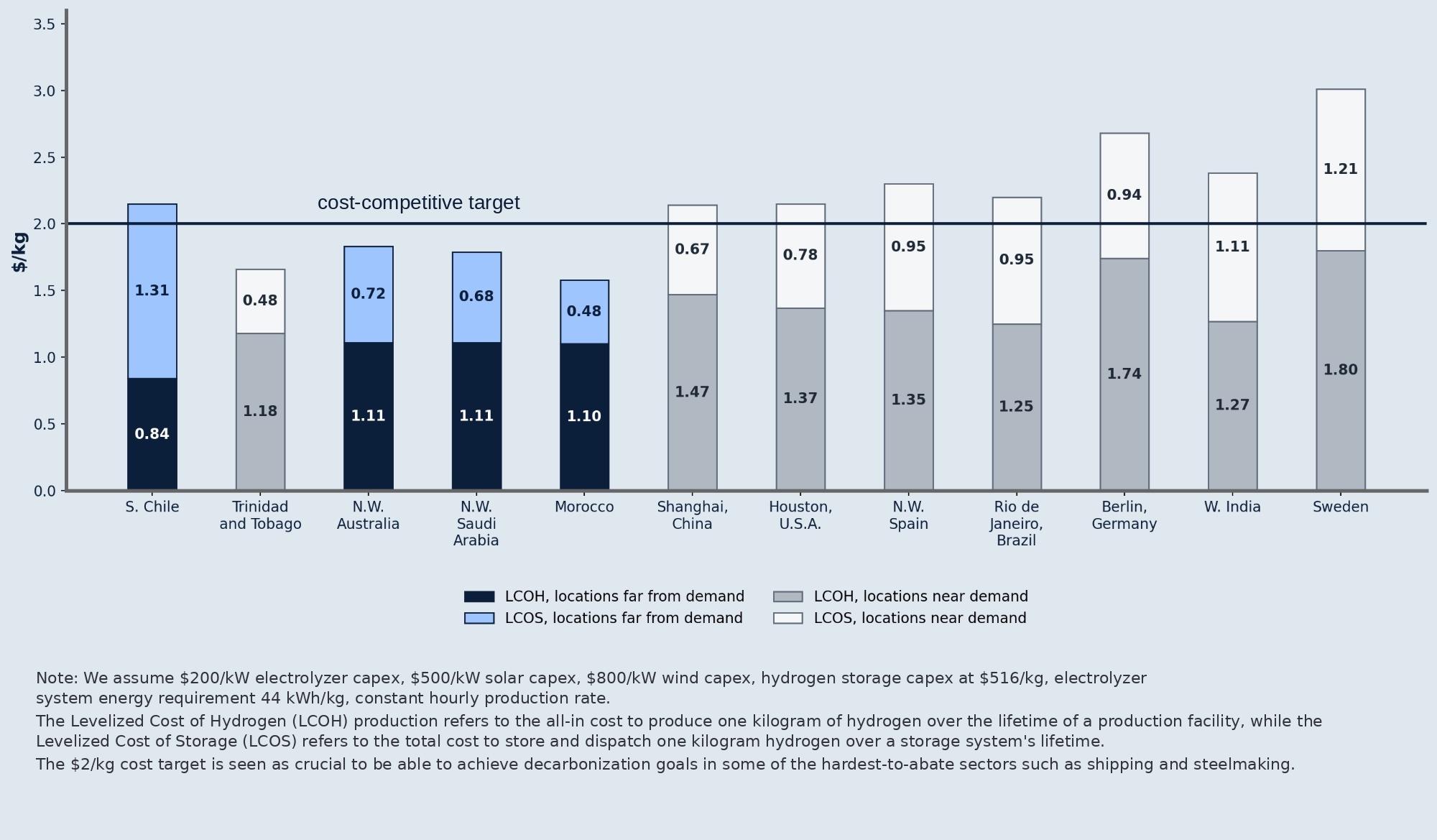
Technological innovations helped boost industry’s manufacturing capacity and infrastructure and contributed to the decline in renewable energy costs, thereby driving down the production cost of green hydrogen. By 2030, the cost of green hydrogen production was projected to decline by 50% to US$2.5 - 4 per kg (refer to Exhibit 4 for levelized cost estimates).44,45
The cost of electrolyzers, a crucial component in green hydrogen production, was projected to decrease by about 45% through 2030, as advanced versions of the technology were developed and the global manufacturing capacity grew - expected to increase to over 300 GW.46,47 Transportation and storage technologies had also been advancing, for instance, in 2022, Australia shipped the world’s first liquid hydrogen shipment under its Hydrogen Energy Supply Chain project to Japan. Pioneering projects for industrial-scale hydrogen storage were underway, including repurposing salt caverns and developing other underground sites like depleted gas fields, aquifers, and lined hard rock caverns. In April 2023, Austria operationalized a breakthrough facility - the world’s first ‘Underground Sun Storage’ with capacity to store 4.2 million kWh (4.2 GWh) of electricity.48,49 Moreover, under the European Hydrogen Backbone (EHB) plan, Europe was on track to having 11,600km of hydrogen pipelines by 2030 and nearly 40,000 km by 2040.50
Most important, over 2010-2022, the renewable power generation costs had declined considerably, reflecting the impact of both scale and learning curves. In 2022, the cost of solar power was down by 89% to US$0.049/kWh, two-third of the cheapest fossil fuel, while the cost of wind power had reduced by 69% to USD 0.033/kWh, around half of the cheapest fossil fuel.51
2.3.2 Government Initiatives and Industry Collaborations
“You need the fine print and the policies to incentivize or make it mandatory: to switch from grey to green, to switch from gas to hydrogen, to switch from coal to hydrogen… And then it will happen very fast.”
—CEO of Siemens Energy52
Around the world, nations acknowledged that setting goals, implementing enabling regulatory policies—subsidies, tax incentives, and mandates promoting the use of green hydrogen, and promoting collaborations among stakeholders were crucial to accelerating its growth on both supply and demand side. By 2023, a total of 32 governments had established hydrogen strategies, providing various incentives to boost the growth of the hydrogen industry in their regions (refer to Appendix for more details).
Collaboration in the industry grew, such as the Hydrogen Council53, a global group of leading companies advocating for the accelerated development and commercialization of hydrogen technologies; HyDeal Ambition, a consortium of European companies aiming to deliver green hydrogen at competitive prices through large-scale deployment; and European Clean Hydrogen Alliance with members from industry, public authorities, civil society, and other stakeholders, fostering cooperation and knowledge sharing. EHB, a group of thirty-three energy infrastructure operators, founded in 2020, took a coordinated approach to identify infrastructure needs and minimize barriers to implementation in Europe.54
H2Global, a German government funded initiative launched in 2021, used ‘doubleauctions model’ to bridge the gap between the high global price of hydrogen and the lower price it could be sold at and be used in economically viable ways at regional level.55
2.3.3 Surge in Investments in Energy Transition Technologies
In 2023, annual global investment in energy transition technologies including renewable energy projects, electric vehicles, power grids and hydrogen, jumped by 17% to reach US$1.77 trillion. Electrified transport was the largest sector invested with US$634 billion. New renewable energy sector followed with US$623 billion spent in constructing renewable energy production facilities, such as wind, solar, biofuels, and other green fuels. Among the emerging technologies, investments in hydrogen tripled to US$10.4 billion, carbon capture and storage (CCS) doubled to US$11.1 billion and energy storage grew by 76% to US$36 billion.56
China continued to be the largest market for all energy transition technologies spending at US$676 billion, followed by the US at US$303 billion and Germany at US$95.4 billion. EU as a whole spent US$ 360 billion.57 Clearly, subsidies, policies, and investments varied significantly across regions and nations, reflecting their different priorities and market conditions.
“We went from being behind in the U.S. to being a leader now when it comes to hydrogen. I think we will see some very substantial projects coming out in the very near future.”
— President of Siemens Energy Inc, North America
03
The US Hydrogen Market
Over 2023-2033, the U.S. hydrogen market was estimated to grow from US$18.3 billion to US$31.4 billion at a CAGR of 5.7%. Of this, the green hydrogen segment valued at US$931.8 million, was projected to grow at a CAGR of 38.8%.58 The United States’ vast renewable energy resources, particularly wind and solar, provided a strong foundation for producing green hydrogen at scale. However, electrolysis was a small albeit growing technology in the country. By early 2024, the U.S.’s planned and installed electrolyzer capacity to produce hydrogen from water was 4.5 GW, which would produce 0.72 Mt/year of green hydrogen. In comparison, the country produced annually 10 Mt of hydrogen from fossil fuels and as a by-product from other industrial sources.59
Unlike Europe’s mandatory usage policy, the US adopted incentive-based strategies to
promote clean hydrogen in the industry in stages by making it an economically viable, widely available and reliable technology. Notably, the clean hydrogen definition adopted by the government included the hydrogen produced from even fossil fuels or nuclear energy if one kilogram of hydrogen was produced with CO2 emissions of up to two kilograms, as well as on the other end, green hydrogen produced from renewable energy sources with zero carbon emission.60
“ The U.S. went from being a minor back door player to being front and center.”
—President of Siemens Energy Inc., North America61
In 2020, the U.S. government implemented several clean energy policies to support the green hydrogen economy, with the Bipartisan Infrastructure Investment and Jobs Act passed in 2021 and the Inflation Reduction Act (IRA) in 2022 as the most significant ones. Key initiatives under these Acts included establishing regional hydrogen hubs to develop interconnected networks for hydrogen production, distribution, and consumption nationwide; and substantive funding to improve the efficiency and cost-effectiveness of electrolysis technologies by fostering innovation and scaling deployment, with a goal of reducing the cost of clean hydrogen from electrolysis to US$2/kg by 2026.62 The Department of Energy (DOE)’s Hydrogen Energy Earthshot initiative further supported the sector by funding research and development for breakthroughs to help reduce the cost of clean hydrogen to US$1/kg by 2030.63
The IRA under Section 45V offered tax credits of up to US$3/kg for green hydrogen and US$1/kg for blue hydrogen to help make it competitive by closing the cost gap from grey hydrogen.64 Incentives from some states built further on the IRA to focus on a specific end use. For instance, Colorado, wanting to decarbonize the heavy-duty industry, offered additional incentives for use of low carbon hydrogen in the hard to abate sector.65 Additionally, regulatory mandates from bodies like the U.S. Environmental Protection Agency (EPA) and various state agencies significantly influenced the power sector’s shift away from coal. Twenty-two states pledged to achieve 100 percent carbon-free electricity by 2050 or sooner, and implemented market-based penalties to encourage the power industry to reduce carbon emissions.66 For instance, the Regional Greenhouse Gas Initiative (RGGI) - a cap-and-invest system, supported by a number of Eastern States; and California’s cap and trade system.67
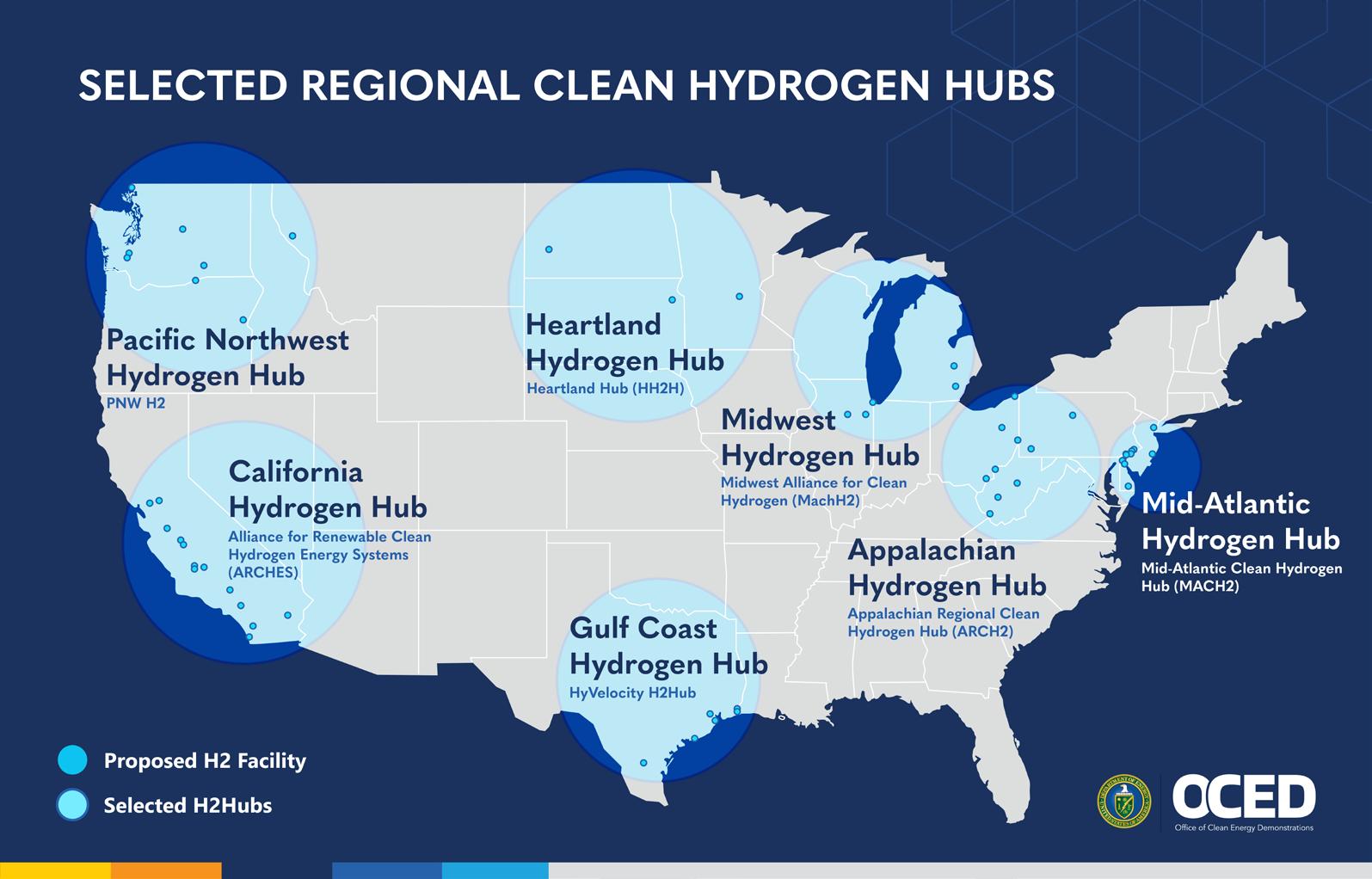
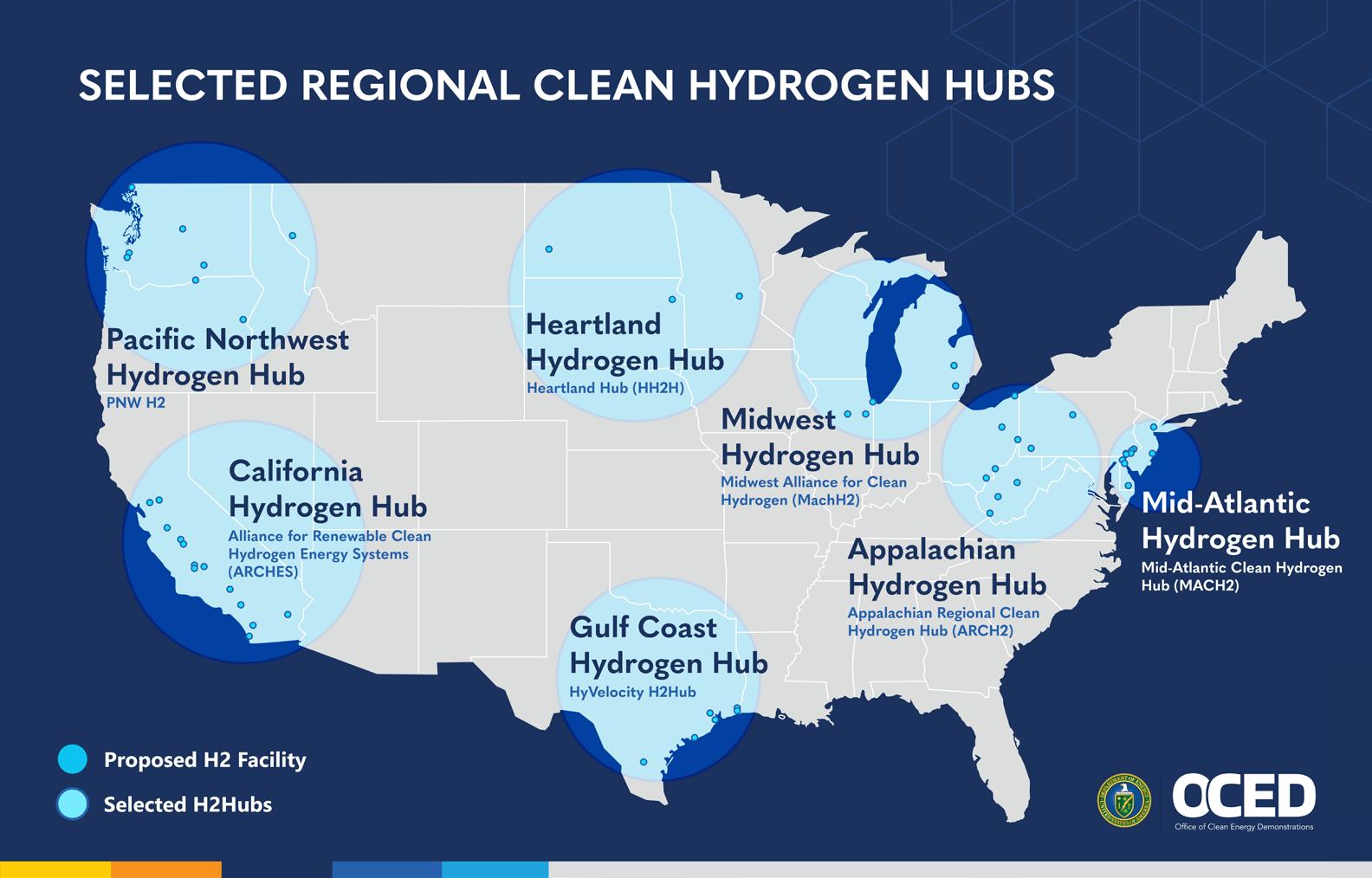
In 2023, seven regional clean hydrogen hubs were awarded US$7 billion under the Infrastructure Act, and were expected to leverage over US$40 billion in private investments (refer to Exhibit 5 for details on the hubs). Of their total funding, estimated to be nearly US$50 billion, two-thirds were earmarked for electrolysis-based green hydrogen production. In addition, US$1 billion was awarded to stimulate demand by promoting innovative end-uses of clean hydrogen.68
3.2 Competitive Landscape
The sector was rife with competition across the whole value chain, including companies that were involved in the entire hydrogen value chain from production to end use, as well as those servicing only a part of it as producers, developers of hydrogen fueling stations, or suppliers of the hydrogen equipment for production.
Several prominent and established global energy powerhouses were active across the value chain, including:
• Air Products and Chemicals, an American group operating in over 50 countries, led in hydrogen production and distribution. By 2023, it had committed US$15 billion to energy transition projects, including green hydrogen in North America, Europe, and Saudi Arabia;69
• Linde, a German industrial gases and engineering company with extensive experience in hydrogen technologies and infrastructure development, operated in 80 countries. In 2023, it invested US$1.8 billion to supply clean hydrogen to OCI’s world-scale blue ammonia plant on the US Gulf Coast.70 Over the next decade, Linde planned to invest more than US$50 billion into decarbonization, with US$30 billion expected in the U.S.;71
• Iberdrola spearheaded the development of green hydrogen with over 60 projects in eight countries.72 In 2023, it set up an alliance with UAE based Masdar group to invest US$16.2 billion in offshore wind and green hydrogen in countries including the US, Germany, and Britain.73
U.S.-based organizations like NextEra Energy, Plug Power and Bloom Energy focused on specific parts of the hydrogen ecosystem:
• NextEra Energy, the most valuable power company in the US in 2023 with a market capitalization exceeding US$150 billion, planned to invest over US$20 billion in green hydrogen following the passage of IRA.74
• Plug Power, a leader in hydrogen fuel cell systems, reported US$891 million in revenue in 2023. It was the largest buyer of liquid hydrogen, having deployed over 69,000 fuel cell systems and 250 fueling stations.75,76
• Bloom Energy, a US$1.3 billion revenue company, specialized in solid oxide fuel cells and electrolyzers. It built and operationalized the world’s largest SOE system at NASA Research Center in California, producing 20-25% more hydrogen per megawatt than PEM or alkaline electrolysis.77 In a 2024 partnership with Shell, it planned to develop largescale SOE systems for hydrogen production at Shell assets.78
Emerging start-ups including:
• Hyzon Motors specialized in hydrogen fuel cells to provide zero-emission power for decarbonizing heavy industries and clean mobility applications, including trucking, rail, marine, and airport ecosystems. In 2024, the company decided to prioritize its core markets - U.S. and Canada.79
• ZeroAvia was another promising company that developed hydrogen-electric propulsion and fueling solutions for aviation, targeting the decarbonization of air travel. In 2024, it completed its Series C funding round at a total of US$116 million.80
“We see ourselves as investors and decide what project to get involved in. Very few suppliers have the technology that we have. We do not pursue; we follow the market.”
—Michael Connelly
04 About Siemens Energy
In 2020, Siemens Energy was founded as an independent company following the restructuring of Siemens Group. For the fiscal year 2023, Siemens Energy reported orders worth €50.4 billion, a 32% y-o-y increase, and a healthy pipeline with an order backlog of €112 billion.81 Notably, one-sixth of the global electrical generation was based on Siemens’ technologies.82 Regionally, EMEA contributed nearly 50% of the group’s revenue at €14.8 billion, followed by the Americas at €10 billion.
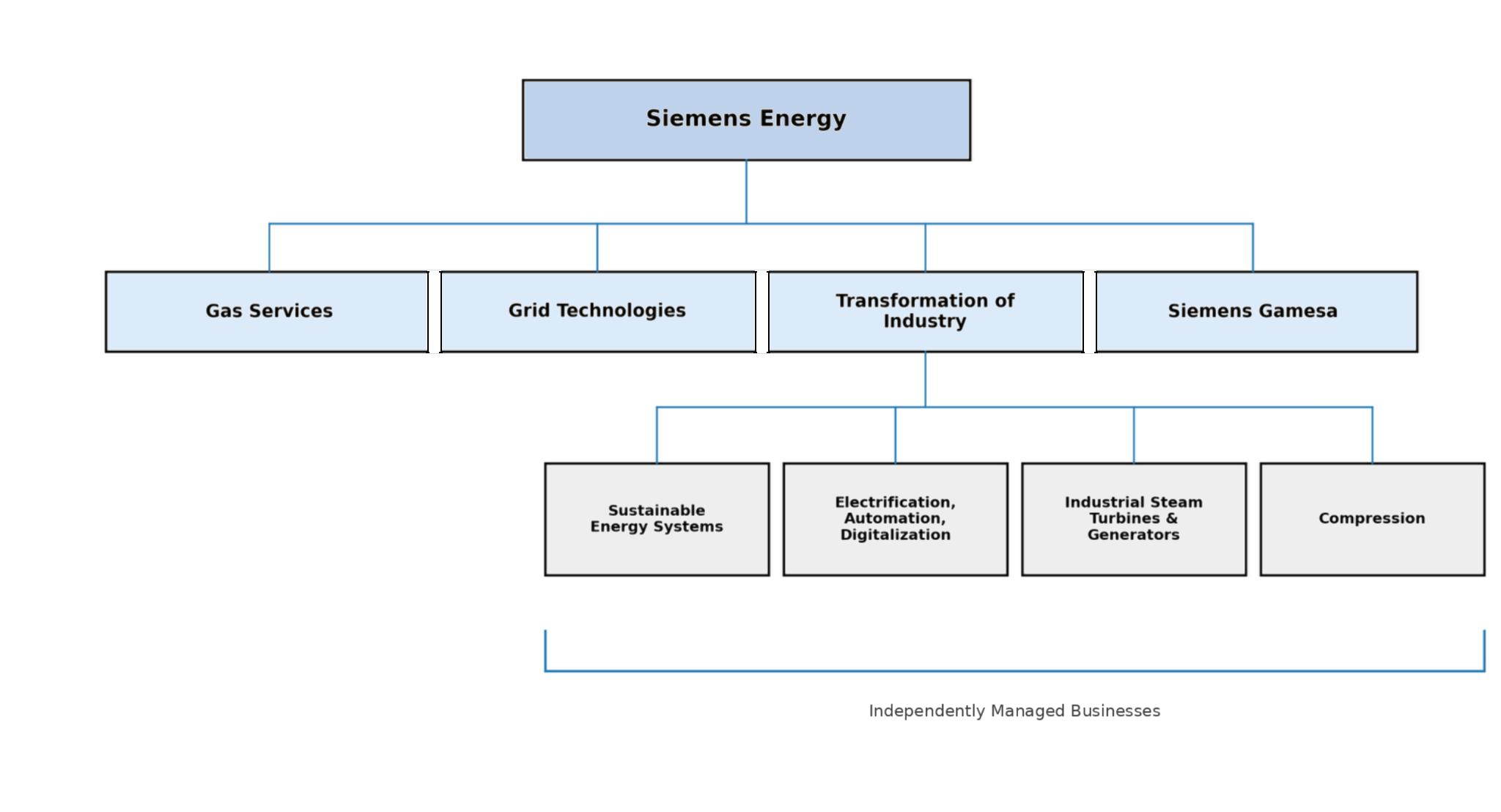
Siemens Energy offered advanced bridge technologies and equipment to integrate hydrogen, renewable energy and carbon separation solutions across all its businesses, which were (refer to Exhibit 6 for the business structure): Siemens Gamesa, which specialized in the onshore and offshore wind turbine sector; Gas Services (GS), which focused on centralized and distributed power generation systems using gas and large steam turbines, generators and heat pumps; Grid Technologies (GT) that managed grid infrastructure, offering solutions for transmission, grid stabilization, storage, digitalization and integration; and Transformation of Industry (TI), which enabled decarbonization of the industrial sector through four independently managed businesses: sustainable energy systems (electrolyzers); electrification, automation and digitalization solutions; industrial steam turbines for combined heat and power; and compressors (refer to Exhibit 7A and 7B for financial details).83 The GS and TI business units led the company’s R&D investments towards developing hydrogen-centric products and services.84
The company’s key clients were large utilities, public and independent power producers, transmission and distribution system operators, EPC (Engineering, Procurement and Construction) companies, and industrial
customers across sectors, such as oil and gas, power generation chemical, petrochemical, mining, aviation, shipping and railways. Its competitors included large or small multinational OEM manufacturers with strong positions in their home markets, EPC suppliers, and both established entities as well as start-ups focused on hydrogen and other clean technologies.
As investment programs to accelerate energy transition grew globally, particularly in the EU and the US, the company estimated its addressable market would reach €213 billion in 2028, up from €154 billion in 2022, growing at an annual rate of 6%. North America and Europe were expected to comprise more than 50% of the market.85
4.1 Siemens Energy’s Role in the Hydrogen Industry
“ Hydrogen can become a billion-euro business for Siemens Energy… The conditions have never been as good for hydrogen as they are now.”
—CEO of Siemens Energy86
Siemens Energy participated in key climate group initiatives within the hydrogen sector across countries, collaborating closely with government agencies, industry partners, and research institutions to develop a hydrogen economy that was both sustainable and economically viable over the long term. One of its key focus areas was manufacturing of electrolyzers and compressors, and expanding the use of bridge technologies, such as hydrogen-capable gas turbines. By 2023, the company had installed 117GW of renewable energy worldwide, and its gas turbines capable
Source: Provided by Siemens Energy, used with permission
Note Fiscal year ends on September 30 of the same year
Exhibit 7A: Financial Performance of Siemens Energy
Source: Siemens Energy Annual Report 2023, https://p3.aprimocdn.net/siemensenergy/41a02640-9d16-4610-af08-b0ce00e67556/2023-12-06Siemens-Energy-AG-Annual-Report-2023-pdf_Original%20file.pdf
of running on 75% green hydrogen, were expected to be 100% green hydrogen ready by 2030.87,88
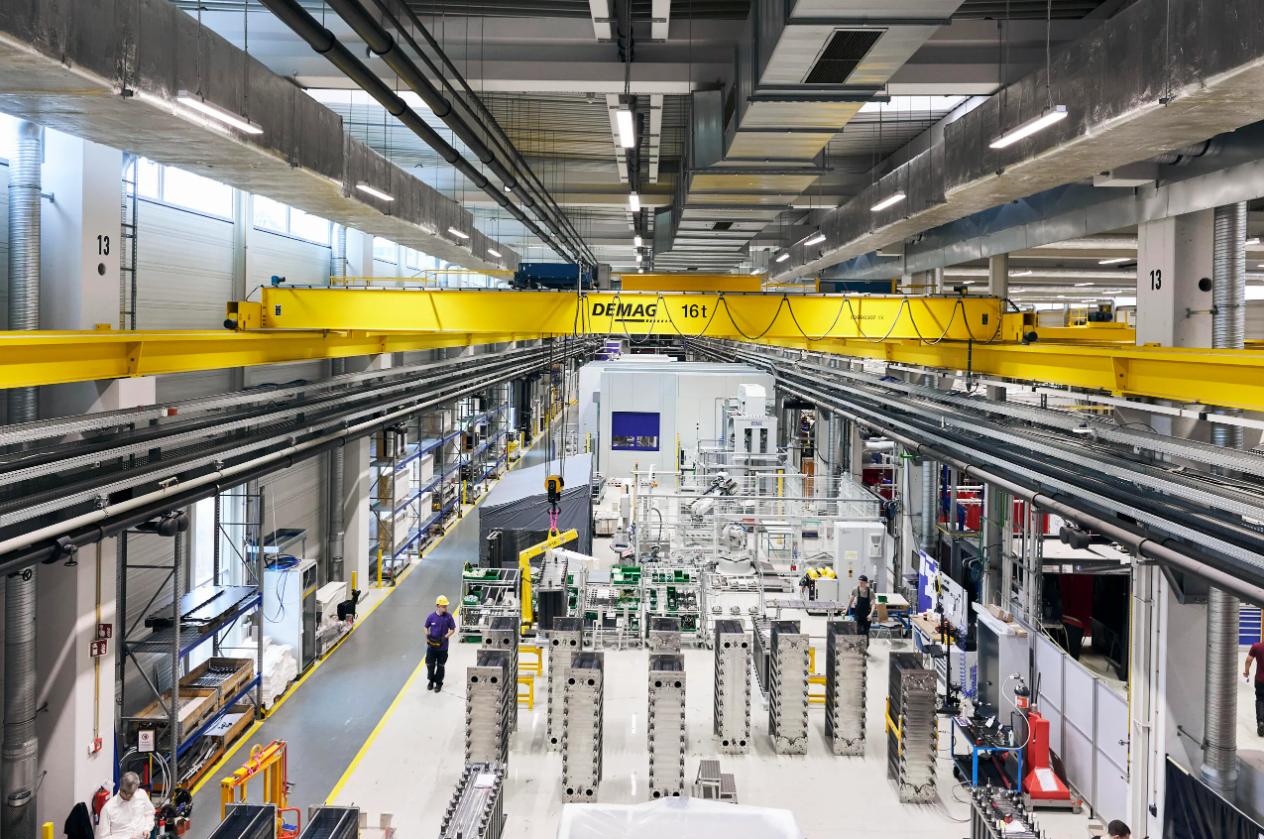
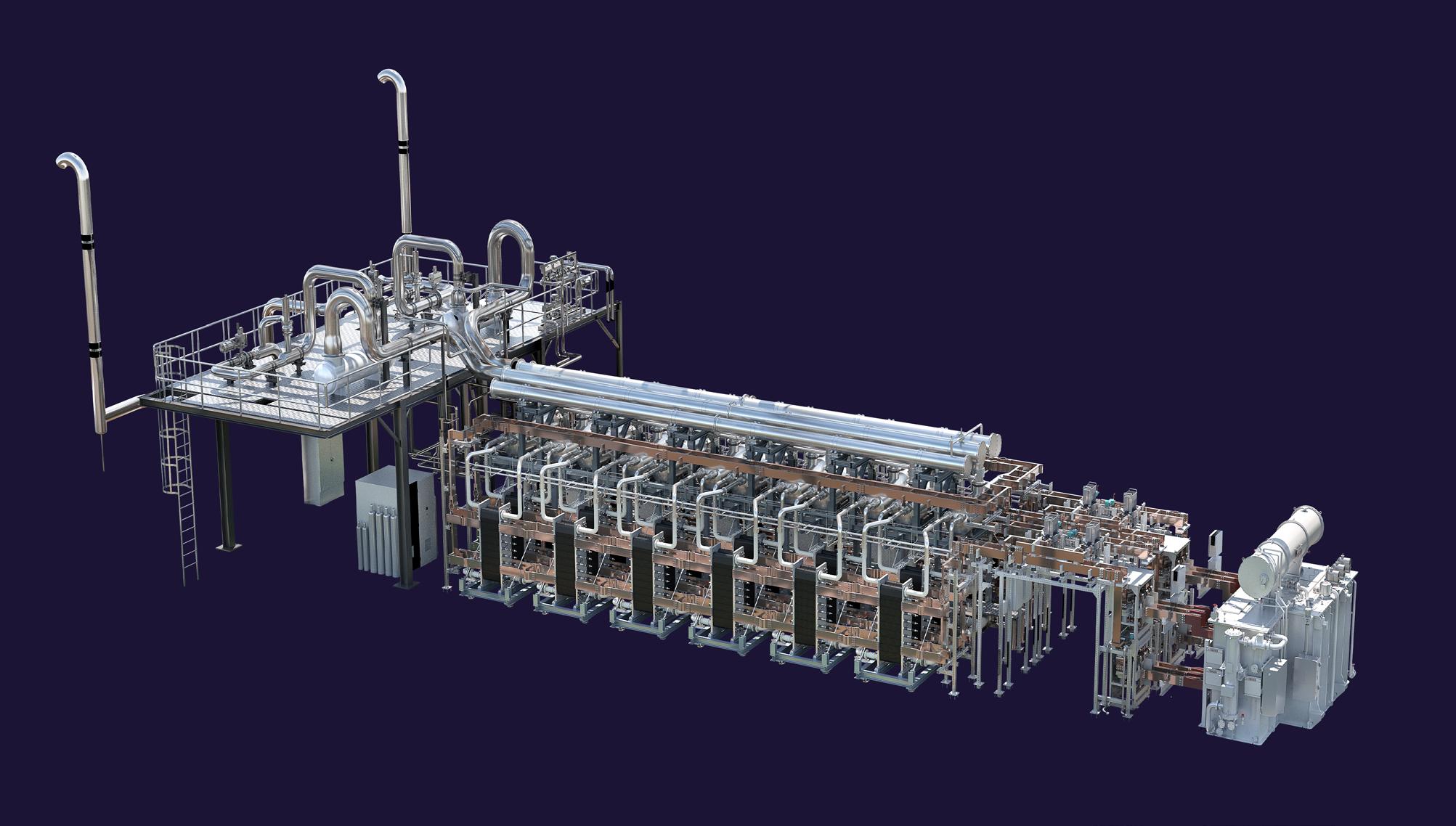
In 2023, Siemens Energy, in a joint venture with Air Liquide, established one of the world’s first highly automated gigawatt-scale electrolyzer factories in Berlin, for the production of industrial-scale renewable hydrogen electrolyzers (see picture in Exhibit 8). Starting with a production capacity of 1 GW, the plant aimed to triple its capacity by 2025.89 The electrolyzer system, based on PEM electrolysis, comprised 24 stacks that were prefabricated and could be installed on site, and had the capacity to produce 335 kg hydrogen per hour (see picture in Exhibit 9). The modular design reduced installation costs, made the electrolysis system transportable, and enabled the design of large hydrogen plants up to gigawatt capacity.90 The CEO of Siemens Energy said in a statement,
“ For this [green hydrogen] to be economically viable, the manufacturing costs for electrolyzers must be significantly reduced. With our new production facility, we are helping to make hydrogen
competitive sooner.” 91
In 2023, Siemens Energy secured the contract for supplying 12 electrolyzers with a total capacity of 200 megawatts to Air Liquide’s plant at Normandy, France. The facility was expected to produce 28,000 tons of renewable hydrogen starting 2026.92 Since 2021, Siemens Energy, together with owner HIF Global, cofounders Porsche and Enel ExxonMobil, Enap, and others, build the world’s first integrated, industrial-scale plant at Haru Oni, Chile, for producing synthetic climate-neutral fuels using wind power and water. The facility combined green hydrogen with CO2 to get methanol, which was then converted to produce the fuel. Siemens Energy considered hydrogen to initially gain most traction in the mobility sector for use as fuel, with companies like Amazon and DHL, striving for net zero carbon in their operations, keen to switch over to use green hydrogen powered forklifts and heavy-duty trucks.93 Operational from December 2022, the plant had a production capacity of 130 kilo liters of eFuel in 2023.94
Source: Provided by Siemens Energy, used with permission
Exhibit 9: Siemens Energy Electrolyzer
Source: Provided by Siemens Energy, used with permission
Exhibit 8: Siemens Energy Electrolyzer Plant in Berlin
“Siemens Energy’s strategy in the US has historically focused on providing energy solutions across various sectors, including renewable energy, gas and power, and industrial applications.”
—Raghavan
05 Presence in the US Market
In 2023, the US was Siemens Energy’s largest and fastest-growing market, generating €5.8 billion in revenue with a 32% year-over-year growth rate. One quarter of the electricity produced in the country relied on Siemens Energy technologies.95 In contrast, Germany, the second-largest market, reported €2.5 billion in revenue, experiencing a 7% decline compared to the previous year. The company had a robust team of 11,300 employees, spread across 84 locations, including more than 20 manufacturing facilities in the country.96
The Siemens group had been established in the US for over a century and was engaged in a large number of projects from power generation and transmission to industrial solutions promoting renewable energy. For instance, in 2012, the company had built its biggest onshore wind farm in the state of Iowa. The farm had a fleet of 258 wind turbines and a total capacity of 593 megawatts that could generate enough clean electricity to power 190,000 American households.97 In 2023, Siemens Energy won the contract to supply its compressors for the world’s first and largest direct air capture plant in Texas that aimed to remove 500,000 metric tons of CO2 from the atmosphere annually.98
5.1 In the Clean Hydrogen Domain
“ The company’s existing infrastructure and relationships in the US provide a solid foundation for potential expansion into the green hydrogen market.”
—Rodriguez
In 2020, Siemens Energy secured four grants from the DOE for testing its hydrogen
technology and related products to advance hydrogen applications within the US power generation sector. One of the grants was for a large-scale project on how Siemens Silyzer (renamed as Elyzer) electrolyzer could be combined with hydrogen compression, storage and power plant controls technology at the 840 MW Intermountain Generating Station in Utah. The plant aimed to transition from coal to natural gas blended with 30% hydrogen by 2025, and 100% hydrogen by 2045.99 While Mitsubishi would supply the turbines for the project, then vice president of global service operations for Siemens Energy, had said, “we have a good shot to create the hydrogen to fuel them”.100
The company also partnered with NextEra Energy, the largest renewable energy developer in the US, to supply steam turbines for a $65 million, 20-megawatt green hydrogen project in Florida. The project, aiming to turn excess solar into hydrogen, became operational in early 2024.101 Additionally, Siemens Energy collaborated with First State Hydrogen in early 2024 to support the development of the Mid-Atlantic Clean Hydrogen Hub (MACH2), a comprehensive and efficient green hydrogen production facility in the Mid-Atlantic region.102
With the IRA and other favorable legislation boosting the momentum for hydrogen in the US, Siemens Energy was experiencing a surge in electrolyzer orders with frequent customer inquiries about how quickly they could get them. While this opened up the opportunity to establish a US electrolyzer manufacturing facility similar to its Berlin one, the company first wanted to see how the US market would develop and overcome the challenges it still faced.103
5.1.1 Need for scale and collaborations
Siemens Energy’s hydrogen strategy aimed at large-scale production, targeting industries with high demand for hydrogen, such as power generation, chemical industry, and long-haul transportation. Raghavan emphasized that the economic viability of green hydrogen hinged on the market’s ability to scale production and drive the prices down. The company’s electrolyzers, at 18 MW each, were among the largest in the world, and deploying them in multiples on a site could add the required scale.104 However, while a few green hydrogen projects were being initiated in the US, most were small scale, around 5MW, and Siemens Energy was uncertain about the ability of these industrial players to expand effectively. Moreover, price forecasting for the projects was a challenge as EPCs had to make numerous assumptions about the man-hours required and the cost of construction, leading to inflated estimates.105 According to the company, the complexity of such projects necessitated involvement from major players like Shell and BP, which were vertically integrated across the value chain and with renewable resources, and developers, who had implemented wind and solar projects and were now aiming to vertically integrate by adding renewables.106 Most important, it called for strategic partnerships, Raghavan explained,
“ Siemens alone cannot deliver on the price; it has to be a collaborative environment. We need partnerships with the users of our equipment –companies that want to be key players in making hydrogen and other molecules like ammonia or e-fuels.”
There was also concern that these companies might prefer blue hydrogen over green hydrogen due to the perception that green hydrogen production took longer and initially showed higher costs. Moreover, Rodriguez observed that despite the considerable promise of hydrogen hubs, there was significant uncertainty surrounding their implementation in the US. For instance, although ARCHES,
the California Hydrogen Hub, had signed a contract with the DOE, it remained unclear how the project would unfold—whether it would be executed in phases or require coordination across multiple projects over time.107
5.1.2 Sustainability of the Incentive-based System
In the EU’s mandatory-use model, European entities stimulated demand for green products and offered pilot funding to producers, ensuring project implementation through incremental steps. On the other hand, the US model relied on the premise that the incentives would help the market become economically viable for the producers and at the right price there would be enough buyers for the hydrogen-based products. However, Rodriguez pointed out,
“ If the tax credits aren’t sufficient to make the economics work, projects get delayed and incur significant costs. This necessitates securing commercial loans, but banks require guarantees to cover these loans. With most US projects aiming to export hydrogen-based products to Europe, they need price guarantees from the off takers. But off takers may prefer to wait because they see projections of a much lower pricing in a few years, as the DOE expects price to drop to $1/kg by 2030. Why should they commit to expensive hydrogen now if it’s expected to become cheaper? Yet, prices won’t decrease if manufacturing costs don’t come down.”
In the incentive model, the relationship between securing funding and market certainty posed a classic chicken-and-egg dilemma. The delays in the implementation of projects, and the lack of policies for demand creation prevented the scale-up of low-emission hydrogen production and use. Additionally, Rodriguez emphasized that while tax incentives kickstarted the industry, they tended to be addictive and unsustainable in the long term,
emphasizing the need for the industry to transition to emphasizing the need for the industry to transition to self-sufficiency within a reasonable timeframe.
5.1.3 Inadequate Storage and Transportation Infrastructure
Having the right infrastructure was paramount for Siemens Energy. The hydrogen midstream infrastructure—comprising pipelines and storage resources—was crucial for scaling up and maturing the clean hydrogen market, ultimately establishing an economically viable industry. A significant challenge facing the US industry was delivering hydrogen from production facilities to buyers, as the country severely lacked pipelines. This necessitated a rapid and massive build-up, and as per DOE, required an investment of US$2-3 billion over 2023-2030, with projections increasing to US$15-$20 billion annually by 2050.108 Additionally, no federal agency was authorized to issue permits for interstate clean hydrogen pipelines, while many states even lacked regulations on who could issue permits for hydrogen transport within the state.109 As the President of Siemens Energy Inc., North America pointed out,
“ We’re going to create potentially a lot of hydrogen in this country… and we’ve got to get it from point A to point B where it’s going to be needed. … If you’re out in West Texas and you want to take wind turbine electricity, create hydrogen and get it to say Corpus Christi, there’s no pipeline that gets it there. The process is still very cumbersome… Once you start going across state lines, it just gets even worse. To me, our biggest risk is that infrastructure side.” 110
5.1.4 Prioritizing Investments across Markets
Siemens Energy aimed to prioritize its investments in the hydrogen sector by assessing the strategic fit and relative attractiveness of
regional markets. Connelly explained,
“ We see ourselves as investors and decide what project to get involved in. Very few suppliers have the electrolyzer technology that we have. We do not pursue; we follow the market. We do not compete for customers - we choose our customers. Thus, the real challenge lies in the market environment”
For instance, in comparison to the US, Siemens Energy saw Canada as a more promising regional hub for hydrogen production and export to Europe. According to Rodriguez, Canadian projects were moving forward at a favorable pace, as Canada had an overabundance of renewable energy, infrastructure including deep water ports, and a stable geopolitical environment. The country was not only close to producing hydrogen in high quantity and low cost, but also its projects were designed keeping the EU requirements in mind. Moreover, Canada to Germany was a short transit route through the North Atlantic; and Germany, which was expected to be a net importer of green hydrogen given its large industrial scale, considered Canada as a strong partner, and in August 2022, entered into a hydrogen alliance with it.111
Furthermore, the investment incentives in Canada were much simpler to implement than the tax credits offered under IRA in the US. Many stakeholders feared that lack of clarity and strict rules in the proposed act could stifle the development of hydrogen projects in the country. In January 2024, Ray Long, President and CEO of American Council on Renewable Energy (ACORE), said in a statement, “We are concerned with the lack of flexibility in the proposed rule and the impact it may have in jump-starting a hydrogen industry at scale…112
The ongoing politicization of the hydrogen policy in the US made it even harder to navigate the US market. While bipartisan support for clean energy initiatives had facilitated the implementation of key policies, the political debate about the role of government subsidies and regulatory frameworks remained dynamic, with
“While the path forward was uncertain, the potential rewards were significant and offered Siemens Energy an opportunity to shape the future of sustainable energy.”
many holding the far-left advocacy groups responsible for imposition of the stringent restrictions in the IRA.113
06 Going Forward
Despite high initial capital expenditures in the green hydrogen sector, long-term cost trends were promising as economies of scale increased. However, scalability of green hydrogen relied on a gamut of factors ranging from technological innovations to regulatory environment, infrastructure development, and higher utilization across industries. While Siemens Energy had the technology, it needed policies to manifest and economics to work to expand operations in the US green hydrogen market. One of the chief concerns of Connelly and team was the sustainability of the US government’s initiatives in the sector, and whether they would survive a new administration in the country. And, although the US, with its ‘once-in-a-generation’ generous incentives, led in the number of announced hydrogen projects globally, most of these projects had yet to secure capital commitments,
as building out infrastructure, reducing hydrogen prices, and improving project economics would take time.
Yet, as the President of Siemens Energy Inc, North America noted, “We went from being behind in the U.S. to being a leader now when it comes to hydrogen. I think we’ll see some very substantial projects coming out in the very near future.”114 Siemens Energy aimed to grow its hydrogen production capacity in the country to 10GW by 2030, with a long-term goal of gaining 20% market share.115 Connelly recognized that while the path forward was uncertain, the potential rewards were significant and offered Siemens Energy an opportunity to shape the future of sustainable energy.
Appendix
A Snapshot of Governments’ Initiatives To Boost the Hydrogen Sector
By 2023, national targets to deploy hydrogen production technologies had expanded, particularly for establishing electrolysis capacity. Collectively, these targets aimed for an aggregate of 160-210 GW, representing 30-40% of the required installed electrolysis capacity by 2030 under the NZE Scenario. China had developed the world’s largest electrolyzer capacity of 1 GW, and by 2025 targeted 200,000 mt/year of renewable hydrogen production and 50,000 hydrogen fuel cell vehicles.116 Japan and South Korea focused on importing hydrogen from overseas and using it to decarbonize power and transportation sectors by giving strong incentives for hydrogen fuel cell vehicles and building refueling infrastructure, while Australia aimed to capitalize on its abundant renewable resources to become a major exporter.117 EU, estimated to have the second largest installed electrolysis capacity of at least around 191 MW, aimed to reach 100 GW by 2030.118,119 The German market, estimated at USD 448 million and growing at a CAGR of 38.1%, in particular was at the forefront of EU’s green hydrogen movement, and by 2030, sought to shift the country’s energy mix towards renewable sources by targeting 10 GW of electrolyzer capacity.120,121,122 In North America, Canada targeted an increase of 20 Mt/year in its hydrogen production capacity by 2050, while the US aimed to increase clean hydrogen production to 10 Mt per year by 2030, 20 Mt per year by 2040, and 50 Mt per year by 2050.123,124
The EU offered multiple funding mechanisms to boost hydrogen projects, including the Important Projects of Common European Interest (IPCEI) program’s Hydrogen Bank that offered direct subsidies for creating hydrogen value chains in the region. It aided in market development through fixed subsidies for potential hydrogen producers who had evidence of preliminary agreements with buyers; and Innovative Fund for innovative tech, which supported 60% of project costs.125 The EU nations also mandated that by 2030, 42% of hydrogen used by industry and 1% of transport fuel must be renewable.126 This was expected to stimulate the demand for green hydrogen in the region significantly. The German government’s National Hydrogen Strategy encompassed substantial investments in hydrogen production, infrastructure, and research, as well as support for public-private partnerships. Through its H2 Global Scheme, a double auction mechanism, it incentivized both hydrogen producers and end users.127 Additionally, the Renewable Energy Sources Act (EEG) provided financial backing for renewable energy projects, indirectly promoting green hydrogen production. Canada’s national strategy earmarked C$1.5 billion clean fuel funds to scale hydrogen production and distribution infrastructure.128 Its Clean Hydrogen ITC offered developers up to 40% tax rebates on project costs, and Clean Technology Manufacturing ITC offered up to 30% refundable tax credits for hydrogen equipment.129
Process
gasification
or gasification
or gasification with carbon capture
Source Black coal or brown coal Natural gas or Methane Natural gas or Methane Methane
*SMR is steam methane reformation | Source: https://www.nationalgrid.com/stories/energy-explained/hydrogen-colour-spectrum
Exhibit 2: Comparison of Hydrogen Production Technologies
Yellow
Sources: International Energy Agency (IEA), “The Future of Hydrogen,” 2019; Hydrogen Council, “Path to Hydrogen Competitiveness: A Cost Perspective,” 2020; and US Department of Energy, “Hydrogen Program Plan,” 2020.
Exhibit 3: Average Production Costs of Different Types of Hydrogen in 2023
Source: Provided by Siemens Energy, used with permission
Note Fiscal year ends on September 30 of the same year
Exhibit 7A: Financial Performance of Siemens Energy
Source: Siemens Energy Annual Report 2023, https://p3.aprimocdn.net/siemensenergy/41a02640-9d16-4610-af08-b0ce00e67556/2023-12-06Siemens-Energy-AG-Annual-Report-2023-pdf_Original%20file.pdf
Source: Provided by Siemens Energy, used with permission
Exhibit 8: Siemens Energy Electrolyzer Plant in Berlin
Source: Provided by Siemens Energy, used with permission
Endnotes
1 Author names are listed alphabetically, by last name. Michael Ryan and Anil Khurana were the faculty leads for this case study. Daniela Muhaj was the research lead and a case writer. Sheetal Bhardwaj was a case writer.
3 The names of some company representatives and their exact roles within the organization in the case study are fictional and are used for educational purposes alone.
23 In March 2025, the production cost of green hydrogen translated to 6 to 41 cents/ KWh across the US and Europe, (assuming 1Kg of hydrogen produces 33.3 KWh of electricity) with variations by country and state, compared to average electricity grid costs of 16 cents/ KWh in the US and 25 € cents/ KWh in Europe, and 3.2 cents per KWh for electricity from coal. For more details, see https://www.brookings.edu/articles/the-real-costs-of-u-s-energy/, https://www.carboncommentary.com/blog/2021/6/11/ some-rules-of-thumb-of-the-hydrogen-economy, https://eprinc.org/wp-content/uploads/2024/08/ COW2024-34-USAndEuropeanHouseholdElectricityPrices.pdf.
25 For comparison, 1 GW of electrolyzer capacity translates to 8,760 GWh/ year (since there are 8,760 hours/ year) and to approximately 263 MT of hydrogen (since 1 Kg of hydrogen produces 33.3 KWh of electricity as in the preceding footnote)
32 In early 2025, the cost of transporting hydrogen in the US, in gas or liquid form, ranges from $0.5/ Kg/ 1000 Km via pipeline to $2.0 to $6/ Kg/ 1000 Km using rail or road, and by 2030 these costs are expected to come down significantly. For more details, see https://css.umich.edu/publications/factsheets/energy/hydrogen-factsheet.
33 Basically hydrogen is such a small (but energy dense) little element, that it can slip into and degrade tiny abrasions in steel pipelines, eventually risking creating holes / leaks which would compromise the pipeline and cause safety hazards. Such leaks are also extremely difficult to detect, given that hydrogen is odorless, colorless, smell/tasteless. For more details, refer to https://www.sierraclub.org/articles/2022/01/ hydrogen-future-clean-energy-or-false-solution
52 https://www.cnbc.com/2021/10/20/no-commercial-case-for-green-hydrogen-yet-siemens-energy-ceo. html
53 The Hydrogen Council is a diverse group of 140 companies from North America to Asia-Pacific, Europe, Africa and MENA region (https://hydrogencouncil.com/en/about-the-council/).
67 The cap and trade bill includes a price ceiling, price containment points, additional limits to the number and location of offset credits, limits on who can set greenhouse gas emission requirements, and specifics on industry assistance factors. For more details, refer to https://www.c2es.org/document/summary-ofcalifornias-extension-of-its-cap-and-trade-program/