Customizable Portions: A Cost-Conscious Approach to Reducing Plate Waste
Acknowledgements
This white paper reflects the collaborative efforts of individuals and thought leaders from various academic, research, and non-profit institutions whose diverse perspectives played a key role in shaping the outlined recommendations. We would like to express our sincere thanks to each of them for their time and expertise, which have challenged us to think beyond conventional approaches to transform innovative ideas into scalable solutions.
Organizations
Business for Impact, Georgetown University
McDonough School of Business – Business for Impact at Georgetown University’s McDonough School of Business is founded on the belief that companies can be a powerful force for good. We strive to help solve today’s most pressing issues by delivering world-class education, impactful student experience, and direct action with corporations, nonprofits, and government. Our aspiration is that Georgetown-educated leaders will be renowned for managing the triple bottom line – people, planet and profit.
Portion Balance Coalition, Georgetown University McDonough School of Business –
The Portion Balance Coalition (PBC), led by Business for Impact at Georgetown University's McDonough School of Business, is a cross-sector initiative that brings together CPG companies, foodservice operators, academic researchers, nonprofits, and government agencies to study how portion size, energy density, and meal or product design shape eating patterns and food waste. It translates satiety and portion-size science into practical strategies across the food system, including research that informs right-sized portions and menu architecture in restaurants to help reduce plate waste, and collaborations with CPG partners to apply portion-balance principles to product formats and design.
Earth Commons Institute, Georgetown University – Georgetown University’s Institute for Environment and Sustainability is a hub for environmental and sustainability innovation, research, and education that addresses the most pressing issues facing the Earth. The Earth
Commons is a team of interdisciplinary experts, researchers, leaders, students transforming the university and surrounding communities into a living laboratory to develop and apply scalable solutions for a greener, more sustainable world. Through education, research, and action at Georgetown and beyond, the Commons accelerates action on the most pressing issues facing our earth.
Menus of Change University Research Collaborative (MCURC) – The Menus of Change University Research Collaborative (MCURC) — co-founded and led by the Culinary Institute of America (CIA), Stanford Residential & Dining Enterprises (R&DE), and Stanford Prevention Research Center—is a global network of forwardthinking colleges and university scholars, foodservice leaders, executive chefs, students, and administrators, accelerating progress toward healthier, more sustainable, and delicious foods using evidence-based research and education.
ReFED – ReFED is a U.S.-based nonprofit that partners with food businesses, funders, solution providers, policymakers, and more to solve food waste. Its vision is a sustainable, resilient, and inclusive food system that makes the best use of the food we grow. The organization serves as the definitive source for food waste data, providing the most comprehensive analysis of the food waste problem and solutions to address it. Through its tools and resources, in-person and virtual convenings, and services tailored to help businesses, funders, and solution providers scale their impact, ReFED works to increase adoption of food waste solutions across the supply chain.
The Culinary Institute of America – The Culinary Institute of America (CIA) is the world’s premier culinary college, dedicated to improving the nation and the world through outstanding education, practice, and scholarship in all aspects of food and the related industries. Through a transformative learning experience, CIA prepares future food leaders, innovators, and experts for personal and professional success.
We would like to acknowledge members of The Culinary Institute of America’s Healthy Menus R&D Collaborative who contributed to this project through anonymized interviews, surveys, and pilot phase testing. This group advances healthy menu development for restaurants and other foodservice operations in a pre-competitive space. The member-based initiative takes inspiration, information, and insights from CIA health and wellness initiatives to craft highly targeted, sector-specific, practical solutions that contribute towards expanding healthy food and beverage options globally.
We extend our gratitude to the restaurants for participating in the waste audits; the industry experts who shared their insights in in-depth interviews; and the industry personnel who responded to the project survey. Their willingness to participate offered valuable insights into the current front-of-house food waste landscape that will benefit the industry at-large.
Project Team Members
Gina Green, Ph.D., Professor of Practice, Director of the Innovation Lab, Earth Commons Institute, Georgetown University
Laura Ferry, Senior Director, Portion Balance Coalition, Business for Impact, Georgetown University, McDonough School of Business
Abby Fammartino, MCURC Co-Director and Director of Health and Sustainability Programs and Research, The Center for Food & Beverage Leadership at The Culinary Institute of America
Valentina Córdoba, M.S., M.A., Research & Community Manager, The Center for Food & Beverage Leadership at The Culinary Institute of America
Andrea Morante, M.S., M.A., McDonough School of Business, Georgetown University
Hannah Blair, M.A., MPP, McCourt School of Public Policy, Georgetown University
Clare Buckley, School of Health, Georgetown University
Shreyaa Venkat, School of Health, Georgetown University
Mona Miraftab, McDonough School of Business, Georgetown University
Keyla Correia, Environmental Metrology and Policy, Georgetown University
Sophie Blumenthal, College of Arts and Sciences, Georgetown University
Sara Burnett, Executive Director, ReFED
Key Definitions
Back-of-house (BOH) food waste: Food waste generated by restaurants and dining establishments before reaching the customer. It typically results from inventory over-ordering, spoilage, trimming and preparation losses, or other operational decisions. This category does not include food waste discarded directly by customers.
Cross-utilization: The practice of using the same ingredients across multiple menu items to maximize efficiency and reduce waste from surplus inventory.
Front-of-house (FOH) food waste: Edible food not consumed by restaurant customers after being served or finishing a meal, often referred to as plate waste, it includes all food discarded in customerfacing areas of a foodservice establishment.
GLP-1 medications: Prescription medications (such as Ozempic and Wegovy) that reduce appetite and food intake, significantly affecting dining behaviors and portion preferences. The term “GLP-1 users” in this paper refers to customers who are currently using these prescription medications for disease treatment or prevention.
Menu engineering: The strategic design of menu offerings based on waste data, customer preferences, and profitability to optimize recipes, portion sizes, and reduce waste.
Plate waste factor: The proportion of served food (commonly expressed as a percentage or volume) that remains uneaten and is left on the plate when cleared. It is usually calculated with the formula: (Weight of Food Waste / Weight of Food Served) x 100.
Quick service restaurant (QSR): Commonly known as fast-food restaurants, they focuson speed, convenience, and affordability with a limited menu, counter service or drive-thrus, and minimal table service.
Return on investment (ROI): A financial metric that measures the profitability or cost savings gained from an investment relative to its initial cost, typically expressed as a percentage or ratio of net benefit to expenditure.
Tiered pricing: A pricing strategy offering multiple portion sizes at different price points to support customer choice.
Waste characterization / waste audit: A systematic process of collecting, sorting, documenting, photographing, and weighing discarded food to identify waste patterns, including quantities and types of foods, to support the development of evidence-based recommendations for waste reduction.
EXECUTIVE SUMMARY
Food waste is a significant and costly challenge for the U.S. foodservice industry, driven largely by front-of-house plate waste—food sold but not consumed—despite many reduction efforts targeting back-of-house and supply chain optimization. Portion customization presents a key solution, offering untapped potential to enhance profitability, support sustainability goals, and improve customer satisfaction.
Evidence from plate-waste audits and menu-level cost modeling suggests that a meaningful share of food costs is lost after food has already been purchased, prepared, and served. Because this waste is often concentrated in predictable, high-volume items, especially default sides and oversized components, restaurants can capture meaningful savings through relatively small portion adjustments rather than major operational changes. In this way, reducing front-of-house waste is not only a sustainability strategy; it is a practical, low-risk margin opportunity that restaurants can test item by item and directly influence through portion size and menu design.
Each year, nearly one-third of all food is wasted, with restaurants and other foodservice operations accounting for more than 17% of this total. Back-of-house (BOH) losses often result from over-ordering, spoilage, and storage inefficiencies. At the same time, front-of-house (FOH) waste typically stems from oversized portions, complex menus, and customer behavior. Recent data show that 27% of consumers left food uneaten at least once in the past month, and, more strikingly, 25% report leaving food behind always or most of the time. Altogether, nearly 70% of restaurant food waste comes from what customers leave on their plates.
At the same time, shifting consumer trends–including the rise of GLP-1 medications and growing demand for customizable portion sizes especially in Gen-Z consumers–create an opportunity for restaurants to pilot consumer-centric menu strategies that both cut waste and boost profitability. Most restaurant chains have yet to embrace portion customization for adult diners, representing a missed opportunity to meet evolving consumer preferences and capture the growing market of health-conscious consumers.
Recognizing a lack of detailed front-of-house plate waste data and growing interest in more flexible portion options, Georgetown University’s Portion Balance Coalition, Earth Commons Institute, Georgetown University, the Menus of Change University Research Collaborative (MCURC), and ReFED collaborated to examine front-of-house food waste through plate-level measurement and menu analysis. Rather than treating front-of-house waste as unpredictable or driven solely by customer behavior, this research focuses on how portion size and menu structure shape what is left on the plate. By examining waste patterns across meals, menu items, and service settings, the study explores where front-of-house waste is concentrated and how portion design may present opportunities for reduction. Observable data across restaurants indicates that plate waste appears most consistently in menus built around fixed, oversized portions and default sides, while menus offering lighter meals and customizable portions generate less plate waste.
The Customizable Portion Project
This study analyzed the current state of FOH waste management to uncover opportunities for reducing food waste by offering customizable portions in retail foodservice environments. Conducted between August 2024 and September 2025, this study combined 11 expert interviews (Annex A); a desktop analysis of 70 menus (Annex B), including the leading 8 of the 10 top chains in America; 20 survey respondents from commercial and non-commercial scaled foodservice operations (Annex C); in-house food waste audits at four locations in the Washington, DC metropolitan area combined with a detailed cost analysis, and projection modeling (Annex D).
Together, these approaches assessed post-consumption plate waste, identified consumer behavior trends, and developed cost-efficient recommendations to optimize portion offerings and reduce losses
Key Takeaways:
• Setting food-waste reduction targets is critical to success. About 40% of food service businesses surveyed do not have defined waste reduction goals. Establishing specific food waste reduction goals—like cutting waste by 50% by 2030—gives restaurants a target for action and a way to measure progress. Restaurants with formal targets are more likely to invest in FOH waste solutions and hold themselves accountable.
• Integrating food-waste data into portion decisions can provide operational insights and costsaving opportunities. Only 20% of businesses currently measure plate waste, largely due to labor constraints. Tracking plate waste at the ingredient level enables operators to prioritize changes that deliver the greatest financial impact. Even small adjustments to default portions can save thousands of dollars per year without compromising customer satisfaction.
• More indulgent menu items drive the most waste. Within the four restaurant audits, large, calorie-dense meals (800–1,000+ calories) generated the most waste, while lighter, customizable options (400–800 calories) contributed less.
• Starches and default sides dominate plate waste. Across all audited sites, rice, bread/buns, potatoes, fries, fruit salad, chips, and dips consistently drove waste, though specific items varied by restaurant, with a 38% starch waste average. Oversized starch portions and default side offerings deserve special attention in waste-reduction strategies.
• Customizable portions offer a significant opportunity to meet evolving consumer preferences. Only 25% of the restaurant chains analyzed in this study currently offer any form of reduced or customizable portions, such as half-size entrées or sides, different sandwich sizes, or smaller adult meal options. While some chains allow customers to build meals by selecting protein and sides, these formats rarely include smaller entrée portions. Expanding portion flexibility can help reduce plate waste while meeting evolving consumer preferences and engaging the growing market of health-conscious customers.
• Tailored approaches are essential to reduce customer-driven food waste. There are numerous innovative approaches to reduce customer-driven food waste, reflecting the diverse needs and preferences of diners and restaurant operators. Waste audits revealed that both the type of dishes, from more indulgent, high-calorie meals to lighter, nutrient-balanced options, as well as the service format (dine-in, take-away, or combination), play a key role in the quantity and type of FOH waste generated. Patterns vary widely by restaurant category. Effectively reducing food waste requires tailored tracking and interventions.
THE FOH-BOH WASTE REDUCTION FEEDBACK LOOP
Front-of-House (FOH) Waste
•Plate waste (uneaten food)
•Oversized portions
•Unwanted sides/condiments
•Unpopular menu items
Waste Audits Reveal Insights
•Track what customers leave behind
•Identify high-waste items and patterns
•Guide menu and portion optimization
The Compound E ect
•Reduced disposal costs
•Lower food costs
•Optimized inventory management
•Higher profit margins
•Improved sustainability
•Enhanced customer satisfaction
Back-of-House (BOH) Waste
•Over-ordering inventory
•Ingredient spoilage
•Excess prep/overproduction
•Unused menu ingredients
Best Practices:
The following list of best practices summarizes the top industry-driven recommendations uncovered in the study.
• Set food waste reduction targets. Start by establishing clear, measurable goals for reducing FOH waste based on benchmark data—for example, set a target to reduce plate waste by 20% over the next year. Specific targets guide the work, facilitate progress tracking, and provide opportunities to celebrate successes along the way.
• Track FOH food waste. Conduct simple waste audits—even manual ones—to help identify which dishes and ingredients end up in the FOH trash most often. Use these insights to adjust menus, test portion customization, or make takeout containers more accessible. Even a few days of tracking can reveal patterns that reduce costs over the long term.
• Adapt menus to appeal to evolving customer preferences. Today’s diners want more control over their meals. ReFED’s 2026 From Plate to Profit Report found that 59% of consumers say they would be more likely to visit restaurants offering flexible portion sizes, and nearly half are willing to pay a little more for right-sized meals that better fit their appetite. Consider offering half-portions, smaller plates, build-your-own meals, smaller initial portions with free refills, or à la carte sides instead of a single default option, so customers get only what they actually want to eat. Consider reducing heavier entrée portion sizes and starchy side amounts, and reduce menu items that rarely sell and incur high waste-management and inventory costs.
• Embed food waste reduction in employee-customer interactions. Train staff to ask simple questions such as, “Would you like [fries, fruit, potatoes, sauce] with that, or would you prefer to skip the side or sauce?” or “Can I get you a container for leftovers?” These small conversations empower customers to make better choices, reduce waste, and provide valuable feedback to the restaurant operator about what’s working—and what’s not.
• Market portion and meal changes to highlight customer satisfaction. Frame customizable portions positively. Emphasize choice, freshness, and value, putting customers in the driver’s seat to optimize the value of their meal. Deciding on their portion and what is included on the plate alongside transparent pricing and messaging can make them feel good about their choices, not shortchanged, and build trust and loyalty.
THE GREAT AMERICAN FOOD WASTE CHALLENGE
The Great American Food Waste Challenge
Across the United States, nearly one-third of the total food supply is lost or wasted with foodservice as a major contributor. In 2023, restaurants and other foodservice operators generated 12.7 million tons of surplus food, accounting for 17.2% of total food waste. This waste contributed to 64.6 million metric tons of carbon emissions, equal to 8 billion 10-mile food delivery trips, and is equivalent to 21 billion meals unsold or uneaten. 1
Food waste not only represents a significant loss of potential revenue but also a substantial operational cost. Restaurants in the US spend $162 billion on waste-related costs,1 including food, packaging, trash collection and disposal, and renting a dumpster alone generally costs $200-$800 per week.2
Across the industry, food waste reduction efforts largely focus on BOH, where owners and managers have more control through inventory management and operational efficiencies. FOH waste remains harder to tackle because it is driven by unpredictable customer behavior and limited data.
Customer-generated plate waste presents an opportunity to improve margins across the foodservice industry. Food left on the plate after customers have been served or finished their meals accounts for 70% of total restaurant food waste 3 The real costs, such as labor and ingredient costs related to preparing, selling, serving, and disposing of that food waste, are leverage points to optimize penny profit through right-sizing portion sizes and offering portion customization.
Designing Portions for Customer Satisfaction
Recent studies show that portion size and default servings shape how much people consume, often independent of hunger or intent.4 Concurrently, consumer demand for customizable portions is growing to meet dietary and financial needs 5 Nearly half of consumers say they were surprised by oversized portions, and 30% wished a restaurant meal had been smaller. Recent research finds that 59% of diners are more likely to visit restaurants offering flexible portion options, 5 58% report eating less since the COVID-19 pandemic,6 and and nearly half say they would pay more for right-sized meals that better fit their appetite 5 Restaurateurs in major cities note that diners are leaving more food on their plates and taking home leftovers less often.7 At the same time, 56% of diners choose restaurants based on lower price points, and more than a third are looking for creative ways to spend less on eating out.8
The rise of GLP-1 medications is quickly shifting dining trends. Roughly 13% of U.S. consumers use GLP-1 medications,9 which reduce appetite and lower tolerance for oversized, calorie-dense meals. Data from 2025 finds that 39% of GLP-1 users are consuming less calories (about 700 less per day),10 while many dine out more frequently, and consistently opt for smaller portions.11 Large combo deals, buffets, and “supersized” offerings face shrinking demand. Restaurants offering portion flexibility—half meals, lighter menu options, or customizable servings—are better positioned to meet evolving GLP-1 user preferences.12 The majority (73%) of GLP-1 users say they are more likely to visit a restaurant that offers flexible, customizable, or innovative portion options.13
This growing demand highlights a business opportunity for restaurants to rethink portion size and menu structure. When these design choices are examined through plate-level data, front-of-house waste emerges as a predictable outcome of how menus are built, rather than the result of unpredictable customer behavior.
ReFED’s modeling estimates that offering different portion sizes at restaurants has the potential to reduce 2.35 million tons of food waste annually while saving the foodservice sector $547 million.1
Menu Trends in Portion Customization
The following section features findings from a review of menus at 70 major restaurant chains, including 8 of the top 10 restaurant chains in America13 and a diverse mix of casual, fast-casual and quick-service restaurant (QSR) concepts (see Annex B for the full list of restaurants). The review assessed portion customization options and opportunities. The graphs below illustrate the types of chains included and the portion options they currently offer.
TOTAL RESTAURANTS
Key Findings:
• Limited portion flexibility. Only 43% of chains (30 out of 70) offer some form of customizable or reduced-portion options, including half-size entrées, multiple sandwich sizes, or smaller meal options. While some chains allow customers to build meals by choosing proteins and sides, these configurations typically do not offer half- or smaller portioned entrees.
• Limited adult portion options. Only 18% of chains (13 out of 70) offer BYO plates beyond kids' menus, leaving adult diners with limited control over portion sizes. While 33% of restaurants provide dedicated kids' menus, this approach fails to address the needs of adults seeking smaller portions.
• Few health-focused alternatives. Only 20% of restaurants (14 out of 70) offer dedicated lighter or health-conscious menu sections, such as Cheesecake Factory's SkinnyLicious® menu (entrées under 590 calories). Highlighting caloric information in these sections can help attract healthconscious diners as well as those using GLP-1 medications.
The bottom line: Most restaurant chains have yet to adopt portion customization as a market trend, missing a critical opportunity to reduce waste, meet evolving consumer preferences, and capture the growing market of health-conscious customers.
70 restaurant menus reviewed, including 8 of the top 10 restaurant chains in America, and a diverse mix of casual, fast casual and QSR concepts.
EMERGING INSIGHTS FROM INDUSTRY EXPERTS
Interview Insights
The following section features findings from 11 in-depth interviews. They were designed to discern current practices, motivations, and barriers related to food waste reduction and portion management (see Annex A for the full list of questions). Interviewees included restaurant owners and executive-level sustainability personnel representing a diverse sample of the food service industry and restaurant facility management, including global Fortune 500 companies, national specialized food service providers, global fast-casual chains, and regional enterprises.
Key Interview Findings:
“We measure BOH waste, but we do a pretty bad job with FOH waste. [...] not a lot of [retail sites] focus on plate waste, and those that do are usually colleges that have dish rooms.”
“We measure BOH waste, but we do a pretty bad job with FOH waste. [...] not a lot of [retail sites] focus on plate waste, and those that do are usually colleges that have dish rooms.”
“We measure BOH waste, but we do a pretty bad job with FOH waste. [...] not a lot of [retail sites] focus on plate waste, and those that do are usually colleges that have dish rooms.”
FOH (front-of-house) waste tracking is inconsistent or limited. Compared with BOH waste, which is tracked more frequently, few respondents cited efforts to track or address FOH waste, largely due to measurement costs, indicating a potential blind spot in restaurant and sustainability operations.
“A year or so ago we did a study that asked chefs what they saw as the most wasted items, and it was mainly bread and then salad bar items.”
“A year or so ago we did a study that asked chefs what they saw as the most wasted items, and it was mainly bread and then salad bar items.”
“A year or so ago we did a study that asked chefs what they saw as the most wasted items, and it was mainly bread and then salad bar items.”
“Two biggest hurdles are labor cost and increasing cost of raw materials. When things continue to rise, then you have to increase the cost, and give the customer less (which we won’t do), or nd some way behind the scenes.”
“Two biggest hurdles are labor cost and increasing cost of raw materials. When things continue to rise, then you have to increase the cost, and give the customer less (which we won’t do), or nd some way behind the scenes.”
“Two biggest hurdles are labor cost and increasing cost of raw materials. When things continue to rise, then you have to increase the cost, and give the customer less (which we won’t do), or nd some way behind the scenes.”
“We measure BOH waste, but we do a pretty bad job with FOH waste. [...] not a lot of [retail sites] focus on plate waste, and those that do are usually colleges that have dish rooms.”
“We measure BOH waste, but we do a pretty bad job with FOH waste. [...] not a lot of [retail sites] focus on plate waste, and those that do are usually colleges that have dish rooms.”
Fruit, vegetables, and bread are reported to be the most commonly discarded ingredients. Waste patterns varied by dining format, but trends included: bread and salad bar ingredients in buffet-style restaurants; and lettuce and tomato scraps and side items in burger/sandwich-style shops.
Customizable portions are rarely tested systematically. Only 25% of the restaurants interviewed reported testing changes to portion sizes. The main constraints include operational complexity, staff limitations, cost and technology barriers, and concerns about customer perception. Among all respondents, primary motivations for altering portion sizes included cost reduction (31%), improving customer satisfaction (31%), and reducing food waste (21%).
“Altering portion sizes – No. We are steadfast in not changing portion sizes. We are known for abundance, value, and fair prices.”
“Altering portion sizes – No. We are steadfast in not changing portion sizes. We are known for abundance, value, and fair prices.”
“Altering portion sizes – No. We are steadfast in not changing portion sizes. We are known for abundance, value, and fair prices.”
“A year or so ago we did a study that asked chefs what they saw as the most wasted items, and it was mainly bread and then salad bar items.”
“A year or so ago we did a study that asked chefs what they saw as the most wasted items, and it was mainly bread and then salad bar items.”
“Two biggest hurdles are labor cost and increasing cost of raw materials. When things continue to rise, then you have to increase the cost, and give the customer less (which we won’t do), or nd some way behind the scenes.”
“Two biggest hurdles are labor cost and increasing cost of raw materials. When things continue to rise, then you have to increase the cost, and give the customer less (which we won’t do), or nd some way behind the scenes.”
“Altering portion sizes – No. We are steadfast in not changing portion sizes. We are known for abundance, value, and fair prices.”
“Altering portion sizes – No. We are steadfast in not changing portion sizes. We are known for abundance, value, and fair prices.”
“Turnover is a huge issue. Our tool is extremely easy to use, but if managers are changing, asking employees to do the extra work becomes harder.”
“Turnover is a huge issue. Our tool is extremely easy to use, but if managers are changing, asking employees to do the extra work becomes harder.”
“Turnover is a huge issue. Our tool is extremely easy to use, but if managers are changing, asking employees to do the extra work becomes harder.”
Food waste reduction is complex and requires financial investment, personnel training, and management of customer expectations. Experts cited competing priorities: improving sustainability amid rising costs, employee training and turnover, and technological limitations. Additionally, restaurants struggle to adjust portions due to potential customer concerns about overall satisfaction and perceived value, as smaller or customizable portions may be perceived as offering less value.
“Turnover is a huge issue. Our tool is extremely easy to use, but if managers are changing, asking employees to do the extra work becomes harder.”
“Turnover is a huge issue. Our tool is extremely easy to use, but if managers are changing, asking employees to do the extra work becomes harder.”
Turnover is a big challenge. Our tool is very easy to use, but when managers keep changing, it’s harder to get employees to take on the extra work.
A
SURVEY OF CURRENT FOOD WASTE PRACTICES
Interview Insights
An online 25-question, multiple-choice survey (see Annex B for list of questions) was administered to 20 food industry personnel, including restaurant owners, executive chefs, and corporate sustainability personnel of leading restaurateurs, including national specialized food service providers, global fastcasual chains, and regional operators. Of the 20 respondents, 13 represented large restaurants, 6 represented non-commercial foodservice concepts, and one represented a local restaurant chain.
Key Takeaways:
• Food Waste Reduction Targets: The majority of survey respondents (12 out of 20) have food waste reduction targets, ranging from 50% waste reduction by a target date to aspirational zero-waste goals. However, only 25% are optimizing portions as a waste reduction strategy.
• Waste Tracking Methods: All 20 respondents measure food waste in some capacity, but tracking efforts overwhelmingly focus on BOH waste. Tracking methods vary: some use automated wastetracking technologies, while others rely on manual waste-tracking, such as measuring end-of-day waste of key items or using inventory management systems to estimate waste. Among those tracking waste, the top reported drivers were: (1) overproduction, (2) spoilage, and (3) plate waste. However, industry-wide evidence indicates that FOH plate waste is the leading cause of food waste across U.S. foodservice.
WHERE DO YOU MEASURE FOOD WASTE?
• FOH Waste Tracking Gap: Only 4 of the 20 participants (20%) track FOH food waste, indicating a significant blind spot in restaurant waste management. Among those who do track FOH food waste, the most commonly reported waste drivers are produce, condiments, and baked goods/grains.
• Barriers to Food Waste Management: Sites face several barriers to implementing effective food waste management. The most frequently cited challenges were the lack of standardized measurement systems, reported by 13 out of the 20 participants (65%), and limited staff capacity, reported by 12 out of 20 restaurants (60%). These constraints prevent restaurants from identifying and implementing appropriate waste reduction interventions.
BARRIERS TO REDUCING FOOD WASTE
STANDARDIZED MEASURING SYSTEMS
STAFF TRAINING
CUSTOMER SATISFACTION
COST CONSTRAINTS
CUSTOMER AWARENESS
SPACE LIMITATIONS
TIME CONSTRAINTS
FOOD DONATION OPTIONS
HEALTH & SAFETY REGULATIONS INVENTORY MANAGEMENT
The bottom line: These findings suggest that many restaurants are not failing to manage food waste – they are measuring the wrong part of the operation. While BOH waste is routinely tracked, only 20% measure plate waste, limiting the ability to assess portion design as a driver of waste and cost. Additionally, 40% of overall respondents lack formal food-waste reduction targets, and just 25% reported testing portion-size adjustments as a strategy to reduce waste.
The results highlight a missed opportunity: restaurants cannot effectively address FOH waste without first acknowledging its significance, implementing measurement systems, and establishing clear reduction goals. The survey underscores the need for accessible tracking tools, industry-wide education about the financial impact of FOH waste, and practical frameworks to help restaurants transition from awareness to action.
What’s Left on the Plate
To understand real-world FOH food-waste patterns, the project team conducted three-day waste audits at four restaurants in the Washington, D.C. metropolitan area. The sites represented diverse dining formats—from an all-day breakfast diner to a plant-based fast-casual restaurant—to capture how waste varies across different restaurant types and menu styles.
Restaurant Legend:
• All-day Breakfast Diner: a local establishment that serves a hearty breakfast menu (large egg and meat-based dishes with sides of home fries and potatoes); can seat up to 60 patrons at a time.
• Tavern/Bar Food: a tavern that primarily caters to students, serving bar food such as burgers, pizza, and sandwiches; can seat up to 60 patrons.
• Plant-based Fast Casual: a boutique farm-to-table vegetarian restaurant serving seasonal ingredients; can seat up to 125 patrons.
• BYO Fast-casual: a fast-casual restaurant that specializes in customizable bowls, pitas, and salads; can serve between 500-1,500 patrons per day.
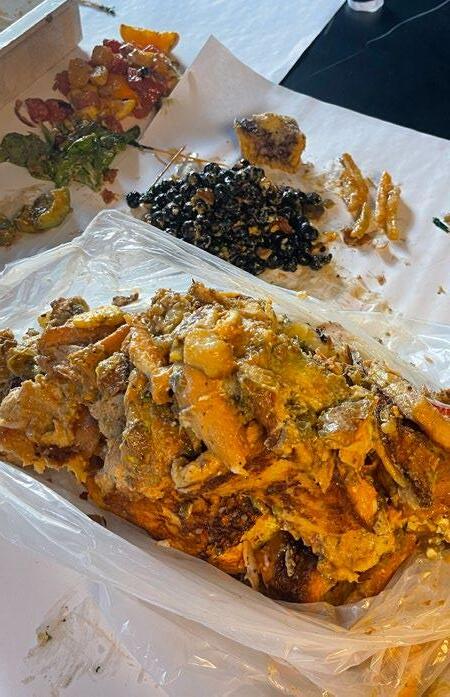
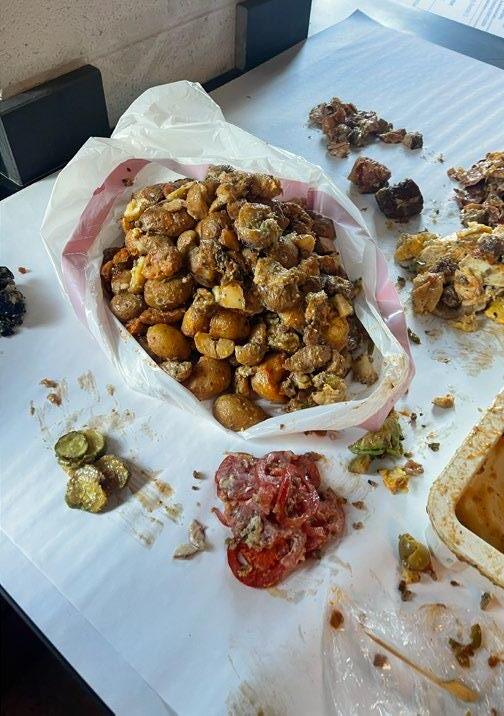
Audit Methodology: The researchers collected and sorted leftover food by category (starches, proteins, vegetables, etc.). They photographed and weighed the leftover food from plates during peak lunch hours over three days at popular restaurants in their Greater DC locations.
This waste analysis was designed to help identify where attention and action may be most effective, rather than to establish precise cause-and-effect relationships. It highlights which foods are most often left on the plate and compares patterns across restaurants to ensure the results are consistent and useful, even when individual plates or ingredients cannot be tracked directly.
In the absence of plate-by-plate measurement, the analysis relies on sales data and portion sizes to estimate which items are most likely contributing to overall front-of-house waste. This approach provides a practical way to compare menu items and identify priorities when more precise measurement is not feasible. The analysis assumes broadly similar consumption patterns within food categories and does not capture differences between individual diners. For that reason, the findings should be interpreted as directional—intended to guide testing and decision-making rather than to quantify exact amounts of waste per plate.
These findings show how portion size and menu structure directly lead to waste outcomes. Larger, calorie-dense, fixed meals consistently produced more plate waste, while meals that allowed for customer choice or lighter portions resulted in less food left behind.
Key Findings:
• Portion sizes drive waste. Within this restaurant sample, the location with the highest food waste served the largest, most calorie-dense portions (800-1,000+ calories per dish). In contrast, the two restaurants offering build-your-own bowls or lighter plant-based meals (400-800 calories) generated significantly less waste, suggesting that customer choice and lighter portions could reduce waste.
• Starches and sides dominated waste. Rice, bread/buns, potatoes, fries, fruit salad, chips, and dips consistently drove waste across all sites, though the specific items varied by restaurant. In particular, starch waste accounted for roughly 26–56% of total food waste across restaurants, with an average of 38% starch waste across all restaurants.These findings suggest that default sides and oversized starch portions deserve special attention in waste-reduction efforts.
• Some menu items never sold. 17% of menu items were not ordered during the three-day audit periods at several restaurants. These unpopular dishes could contribute to back-of-house waste through ingredient spoilage and prep labor, highlighting the need for periodic menu reviews to eliminate low-performing items.
Key Terms:
• Composite entrée: A multi-component prepared dish where ingredients form an identifiable entrée structure. Examples: sandwiches, quesadillas, tacos, burgers (if intact), or any recognizable assembled entrée (e.g., a taco shell clearly tied to its entrée).
• Starches: Carbohydrate-rich foods, typically used as sides or bases of meals. Examples: fries, chips, potatoes, pieces of bread that cannot be traced to a specific entrée.
• Protein: Items primarily composed of animal or plant-based protein. Examples: chicken, bacon, sausage, ham, brisket, eggs, beans, ribs, unidentified meats.
• Dessert: Foods that are sweetened, baked goods, or dessert-style items. Examples: brownies, banana bread, other baked sweets.
• Condiments & Dips: Liquid or semi-liquid accompaniments, dressings, or toppings. Examples: salsa, ranch, sour cream, ketchup, habanero sauce.
UNIT SALES BY VOLUME ACROSS RESTAURANTS
Normalized to 12-hour day
• Vegetables: Raw or cooked vegetables, salad components, or produce used as garnishes. Examples are celery, lettuce, tomatoes, cucumbers, mushrooms.
• Dairy: Foods primarily composed of dairy products, especially cheese-based items. Examples are mozzarella sticks, cheese toppings.
• Fruit: Whole or cut fresh fruit or naturally sweet, fruit-based items. Examples: blueberries, citrus wedges, lemon used in salads.
Note: All graphs are normalized to a standard time window (i.e. 12-hour day) or by volume sold (i.e. 100 units) due to variable observation window periods, unless otherwise noted.
Understanding what sells is an important first step in interpreting plate waste patterns. Graph 1 shows total units (i.e. menu items) sold by category across participating restaurants, normalized to a 12-hour day.
Dine-in sales captured are as follows: All-day breakfast 100%; Tavern ~46–55%; Plant-based ~46–55%; BYO ~40%. Takeout sales were not observed.
PERCENTAGE OF UNITS SOLD BY CATEGORY ACROSS RESTAURANTS
Normalized to 12-hour day
Graph 1 Analysis:
• All-day Breakfast Diner showed strong sales from peak brunch-hour audits (Tuesday, Saturday, Sunday), with a balanced mix of proteins and starches, reflecting fixed plate structures
• The Tavern and Plant-Based Fast Casual reported lower sales—likely influenced by seasonal factors. At the Tavern, end-of-school-year timing reduced student traffic, while colder weather during audit days at the Plant-Based Fast Casual location likely suppressed walk-in customers.
• BYO Fast Casual led in sales due to national brand recognition, fast-casual takeout efficiency, and prime urban location near office buildings. Its category mix is heavily weighted towards starches and composite entrées
Observing sales alone does not always indicate where inefficiencies occur. Graph 2 examines front-ofhouse waste by category to show which foods contribute most to plate waste. Dine-in sales captured are as follows: All-day breakfast 100%; Tavern ~46–55%; Plant-based ~46–55%; BYO ~40%. Takeout sales were not observed.
DINE-IN PLATE WASTE BY CATEGORY ACROSS RESTAURANTS
Normalized to 12-hour day
2: Sales normalized to a 12-hour day. BYO Fast Casual based on hourly averages scaled to 12 hours; other restaurants based on 4.5–7 hr observation windows.
Graph 2 Analysis:
• All-day Breakfast Diner had the highest waste and the largest, calorie-dense portions (8001,000+ calories) with multiple proteins and sides. As the only dine-in establishment, all waste was captured and measured.
• Tavern/Bar Food showed the second-lowest waste volume, largely stemming from fried sides and vegetable-heavy dishes, though the low waste total likely reflected fewer customers during the audit period rather than more efficient portions.
• Plant-based Fast Casual generated the least waste, which we hypothesize was due to lighter meals (400-800 calories) that were easier for customers to finish.
• BYO Fast Casual had moderate recorded waste despite high sales. The BYO format may contribute to more optimal consumption, as customers can select portion sizes and meal components that match their preferences. However, 60% of sales were takeout orders, which limited direct observation of consumption.
Graph
What is a Plate Waste Factor?
Plate waste factor is defined as the proportion of total observed waste in a given category that is attributable to customer plate waste, calculated as the total weight of waste in a given category divided by the total amount of waste. The graph below displays the estimated plate waste factor for the BYO Fast Casual restaurant, showing a moderate waste intensity overall. This reinforces that customizable formats can help reduce waste per order by allowing diners to tailor components.
ESTIMATED PLATE WASTE FACTOR OF BYO FAST-CASUAL BY BOWL BASE AND PROTEIN
Dine-in uncertainty captures uncertainty in the denominator of the plate waste factor due to unobserved daily dine-in volume. Given that Restaurant 4 reports a takeout share between 46% and 60% of total orders, the dine-in share is bounded but not point-identified. Plate waste estimates therefore reflect this bounded uncertainty, producing ranges (error bars) rather than point estimates.
Even restaurants with low food waste have opportunities to further reduce waste when looking at waste data relative to sales. While sales data provides useful context, it does not explain what food is left on the plate. Graph 3 looks more closely at front-of-house waste by category to identify which foods contribute most to overall waste.
• All-day Breakfast Diner recorded high waste intensity for starches (potatoes, fries) and fruits/ sweets. Large entrées likely fill customers before they touch sides, garnishes, or dessert.
• Plant-based Fast Casual had overall low waste but high waste intensity for sauces/condiments, vegetables, and proteins—suggesting over-portioned add-ons or unwanted garnishes in bundled meals.
• Tavern/Bar Food also showed low overall waste but elevated waste intensity for fried sides and condiments, indicating that default side sizes and sauce portions may be too large for typical consumption.
• BYO Fast Casual restaurant shows a moderate waste intensity overall, likely due to its highly tailorable menu format.
Bottom line:The total quantity of food waste cannot tell the full story. Restaurants need to identify which specific items are wasted relative to how often they are ordered. This can help inform strategies allowing for flexibility in meal customization. Even modest adjustments to default portions on a small number of high-volume items can yield meaningful cost savings over time.
Graph 4 examines item-level waste at the All-day Breakfast Diner, reinforcing that default sides and starches drive the highest percentage of plate waste per menu item for this restaurant.
TOP WASTE DRIVERS BY MENU ITEM
ESTIMATED FOOD WASTE PER ITEM SOLD (ALL-DAY BREAKFAST DINER)
Graph 4: Estimates are normalized to a 12-hour operating day. Some dishes reflect aggregates of similar menu items.
Graph 4 Analysis:
At All-day Breakfast Diner, potatoes and fries were the most plate waste culprits, followed by fruit salad and toast. The pattern could be driven by large, protein-heavy breakfast plates that fill customers up before they touch their sides.
Bottom line: Three days of audits revealed consistent waste patterns. Extrapolated over a full year, these seemingly small losses represent substantial financial waste and missed profit—tons of potatoes, hundreds of pounds of fruit, and countless slices of toast ending up in the trash instead of on the bottom line.
Graph 5 similarly represents a waste analysis by item-level at the Plant-based Fast Casual restaurant. This graph reinforces that oversized, starch-based entrées and calorie-dense dishes generate the most waste per menu item for this restaurant.
TOP WASTE DRIVERS BY MENU ITEM
ESTIMATED FOOD WASTE PER ITEM SOLD (PLANT-BASED FAST CASUAL)
Graph 5: Estimates are normalized to a 12-hour operating day. Some dishes reflect aggregates of similar menu items.
Percent of Dish Wasted (%)
Graph 5 Analysis:
Large-size menu items like nachos and chips and dips, as well as calorie-dense menu items like enchiladas drove waste at the Plant-based Fast Casual restaurant.
Bottom-line: Reducing the size, or offering a smaller option, of larger, calorie-dense entrées could reduce overall plate waste.
Chips & Dip
Nachos Beans
Tacos
Enchiladas
Graph 6 translates plate-waste data into dollars to show why portion design matters for restaurant profitability. Rather than abstract “waste reduction,” this model estimates the real food-cost savings operators could capture from modest adjustments to default portions on a few high-waste items.
ALL-DAY BREAKFAST EXAMPLE
$2,500
$2,000
$1,000 $1,500
Graph 6 Analysis:
This chart translates plate-waste data into dollars to show why portion design matters for restaurant profitability, estimating the food-cost savings that could result from modest adjustments to default portions on a few high-waste items.
At the All-day Breakfast Diner, potatoes and eggs show plate waste factors of roughly 21% and 12%; this translates into $2,315 and $1,523 in annual savings if default portions are reduced by 10–15%. Similar models can help operators identify high-waste items, adjust portion sizes, and convert waste into measurable profit. The percent wasted multiplied by a conservative average number of work days for restaurants (300), indicated the total value wasted in dollars. Similar models can be created to help restaurants identify highwaste quantity per dish, make appropriate portion allocations, and increase their cost savings.
Bottom-line: Waste reduction isn’t just a sustainability win—it’s a margin improvement strategy. Tracking plate waste factor at the ingredient level enables operators to prioritize changes that deliver the greatest financial impact. Even small adjustments to default portions can save thousands of dollars per year without compromising customer satisfaction.
Business Implication: High-waste items like starches and default sides appear across most restaurant menus, indicating that these findings extend beyond a single context. Optimizing portion design represents a scalable strategy for reducing food costs across the industry.
In Summary
FOH food waste follows clear patterns tied to portion size and menu structure. Across plate waste audits, menu analysis, and operator input, waste shows up most consistently where portions are fixed, oversized, and bundled with default sides. Meals that offer smaller or more flexible portions, by contrast, tend to leave less food on the plate. These patterns point to portion size and menu structure, not unpredictable customer behavior, as the primary drivers of FOH waste. Because these drivers are structural, front-of-house waste can be measured and addressed through customizable portions rather than relying on changes in consumer behavior.
Graph 6
OPTIMIZING PLATES TO MINIMIZE WASTE
A 5-step strategic approach to cutting costs and improving customer satisfaction
1
Measure FOH Waste
• Conduct waste audits
• Track plate waste patterns
• Identify high-waste dishes
2
Redesign Menus or
Make Dish Modi cations
• O er customizable portions
• Make sides opt-in
• Remove unpopular items
3
Optimize Pricing
• Use tiered pricing
• Price smaller portions fairly
4
Train Employees
• Use portion guides and micro-trainings
• Create feedback loops
5
Suggested Marketing Approaches
• Frame as customer choice
• Emphasize sustainability
• Use clear, positive language
• Share your impact metrics and successes, speci cally with food in uencers
The
Result:
Less Waste, Lower Costs, Happy Customers
Combined, these e orts create a positive feedback loop: savings fund continued work and improvement
Take Action: The Strategic Approach to Reduce Client-Driven Food Waste
This approach illustrates how the research findings can be applied in practice. Each recommendation addresses specific measurements, menu design, pricing, or service practices that contribute to front-ofhouse plate waste.
1. Measure Front-of-House Food Waste
The Gap: Only 20% of surveyed restaurants track FOH waste, citing cost and unclear ROI as barriers –meaning most operators lack visibility into a significant, controllable food cost.
TAKE ACTION
Set a baseline: Establish a baseline for food waste through regular audits. Even low-tech methods like manual sorting and weighing during peak hours, can reveal patterns. For tech-enabled restaurants, AIpowered tracking software could automate data collection and analysis.Even short plate-waste audits can quickly reveal where food dollars are being discarded, often pointing to a small number of items that drive the majority of costs.
2. Redesign Menus or Dishes Based on Waste Data
The Gap: Only 43% of chains (30 out of 70) reviewed offer customizable portions beyond kids menus, and 75% of the 20 survey respondents have not tested portion adjustments.
TAKE ACTION
Introduce customizable sizing: Offer half-portions, "mini" versions, or small plates for popular, highwaste items.
Make sides optional: Consider reducing the size of or inclusion of starches and sides that frequently go uneaten (like fried potatoes with breakfast plates or chips with entrees).
Remove low volume menu items: Consider eliminating dishes with low sales volume and incrementality.
3. Optimize Pricing to Support Customizable Portions
The Gap: Research shows that menu changes could be perceived as reduced value for the price, even if the quality or overall experience remains the same. Clear communication and value messaging promoting customization can counteract this and help maintain customer satisfaction.
TAKE ACTION
Use tiered pricing: Make the price difference between varying portions meaningful enough to encourage rightsizing, while ensuring proportional profitability.
Price fairly: 59% of consumers say they would be more likely to visit restaurants offering flexible portion size options, signaling strong demand for customization. However three in four consumers agree that a smaller portion without a smaller price feels like a rip-off. Over 40% also agree that paying a lower total price matters more to them when dining out than getting the most food for their money. That said, nearly half say they are willing to pay a little more for a portion that better fits their appetite.17
4. Train Employees
The Gap: Interviewees emphasized that staff need tools and confidence to offer portion choices without slowing service. Organizational change research shows that understanding the why behind new practices - such as portion customization - can shift staff from resistance to advocacy.18
TAKE ACTION
Provide practical tools: Interviewees suggested color-coded serving utensils, portion guides, and visual references ensure consistency.
Practice customer interactions: Use role-play scenarios to help staff confidently ask "Would you like the ‘extra large’ or ‘regular’ portion?" or "Would you like fries on the side?" when moving to a la carte sandwich options.
Create feedback loops: Empower staff to report which items customers frequently leave uneaten and seek feedback on the quality and quantity of dishes to share with back-of-house staff. Integrating customer feedback fosters a culture of innovation and ownership.5
Offer micro-trainings: Interviewees shared that short standups (5-10 minutes) more frequently can reinforce portion standards to staff.
5. Suggested Marketing Approaches
The Gap: Findings from other Georgetown University research indicate that portion size and default servings shape how much people consume, often independent of hunger or intent, helping explain why food is frequently left on the plate when portions are larger than a customer’s typical meal. 19
TAKE ACTION
Lead with choice: Framing smaller portions as additional options for your guest, not a replacement: "Now offering regular and lighter portion options." More information enables customers to select dishes that are more suitable to their preferences.20
Use descriptive portion language on menu: In one research study, participants selected reduced portions more often when presented with “standard/large” options as the default, compared to a menu without portion descriptions. Using descriptive language of portion sizing can encourage consumers to select smaller sizes.20
Study Limitations
This study provides important insights into FOH food waste management, but some limitations should be noted:
Waste Audit Scope and Sample Size: Waste audits were conducted at four DC metropolitan area restaurants (three local, one national chain) over three days each, limiting generalizability across restaurant formats, cuisines, and regions. The study period (August 2024–September 2025) did not capture 12 months of seasonal variation in dining patterns or waste generation.
Industry Awareness Gap: Limited recognition among restaurants that FOH waste is an issue affected both participation rates and data availability shared in interviews and surveys, as many establishments lacked tracking systems or historical waste data.
Participation Constraints: Efforts to recruit restaurants for plate-waste measurement revealed meaningful participation barriers. Many operators lacked the staff capacity, data systems, or internal alignment needed to engage in front-of-house waste tracking, even when they were interested. Some also expressed hesitation about publicly sharing information related to food waste performance. These challenges suggest that limited FOH measurement is not merely a knowledge gap but also reflects resource, operational, and reputational constraints faced by many restaurants, reinforcing the value of approaches that are intentionally cost-agnostic while allowing restaurants to layer in their own cost data as capacity allows. Reducing these barriers through simpler tools, clearer financial incentives, and more accessible methods will be essential for scaling platewaste measurement and portion innovation.
Interpretation of Waste Audit Results: This waste analysis was created to help decide where to focus attention, not to prove exact cause-and-effect relationships. It looks at what food is most often left uneaten and compares patterns within each restaurant so results are consistent and useful— even when we can’t track every ingredient or plate individually. Without plate-by-plate measurements, the analysis uses sales data and portion sizes to estimate which items likely contribute the most to overall waste. This approach gives a reasonable way to compare items and identify priorities when more precise measurement isn’t possible.
The analysis assumes that customers behave similarly within broad food categories and doesn’t capture differences between individual diners. For that reason, the results should be seen as directional signals —helpful for guiding testing and decision-making—rather than exact measurements of how much food is wasted per plate.
Conclusion
This study addresses a critical gap in restaurant food-waste management research: the opportunity for customizable portions to reduce waste and improve customer satisfaction. While the industry has made progress tracking BOH losses, FOH waste remains largely invisible—only 1 in 5 surveyed restaurants monitor what ends up in the trash after customers finish their meals.
This study highlights a strong opportunity for restaurants to track front-of-house food waste and pilot portion customization. Across interviews, surveys, menu analysis, and plate waste audits, a consistent pattern emerged: front-of-house food waste is not just a sustainability issue, but a menu design and profitability challenge.
When restaurants measure what is left on the plate, portion defaults and menu structure, rather than individual choice, stand out as key drivers of waste, making portion customization a practical lever for reducing losses and protecting margins. In other words, these losses are systematic rather than random, and they can be reduced through modest changes to default portions that protect both profits and customer satisfaction. The path to FOH food waste reduction follows five key steps: (1) measure waste patterns, (2) redesign recipes and menus based on data, (3) optimize pricing strategies, (4) train employees, and (5) champion choice to empower consumers to choose dishes that suit their needs.
Future research should build on these findings by conducting longer waste audits across a wider range of restaurant types and customer demographics, testing portion options in real-world settings, and pairing these pilots with customer satisfaction surveys. Together, these steps would provide a more complete picture of front-of-house waste and help confirm which interventions are most effective at scale.
The industry stands at a pivotal moment: With rising food costs, evolving consumer preferences driven by health trends and GLP-1 medications, and growing demand for sustainability, restaurants that proactively address FOH food waste and integrate flexible portion options will gain competitive advantages in profitability, customer satisfaction, and environmental stewardship.
For operators, this means front-of-house waste is not inevitable. It is a controllable food cost that can be reduced through smarter portion design. When restaurants measure what customers leave on their plates, they consistently see that waste is concentrated in a small number of predictable, high-volume items driven by default portions and menu design. Small changes to those defaults can therefore reduce waste while protecting margins and customer satisfaction.
This research outlines practical opportunities for restaurants to respond through measurement and portion structure. The research provides a clear roadmap —now the industry must act
ANNEXES
Annex A: Expert Interview Questions
1. Who manages food waste reduction for your organization?
2. In what ways do you measure food waste?
3. If you use an automated waste tracking technology, what software do you use?
4. Where do you measure food waste?
5. When measuring, what level of data are you collecting?
6. Do you report to Leanpath about this?
7. How often do you measure food waste in your restaurants BOH?
8. Do you have a food waste reduction target? If YES, then what is your food waste reduction target?
9. Target per year or milestones?
10. Please indicate the types of costs you incur to manage food waste.
11. Have you completed a waste characterization study?
12. What ingredient or item has the highest waste BOH?
13. Are there any incentives that you receive from municipalities or governments that help you reduce food waste?
14. What are some examples of waste reduction strategies/operational changes you’ve implemented?
15. Who establishes portion sizes for your menu?
16. Have you tested altering portion sizes to reduce waste? Primary motivations for that?
17. How do you know if it is working?
18. What are the most significant barriers you perceive to reducing food waste?
19. When you are planning the menu, are you looking at food density?
20. Is the food waste measured by weight?
21. How do you learn? What are the best ways that you and your team/CSR team learn?
Annex B: Restaurant Portion Audit
Below are the 70 restaurants included in the restaurant portion audit/national menu analysis - the analysis included fast food chains, fast casual restaurant chains, and casual dining chains. All menus are publicly available.
Pupatella
QDOBA
Subway
Applebee's
Bloomin' Brands
Outback Steakhouse
Carrabba’s
Bonefish Mac
California Pizza Kitchen
CAVA
Checkers
Cheesecake Factory
IHOP
Jason’s Deli
Jimmy Johns
KFC
Little Caesars Pizza
25. McAlister's Deli
26. McDonald's
27. Moe’s Southwest Grill
28. Nando’s Per-Peri
29. Panda Express
30. Panda Inn
31. Hibachi-San
32. Raising Cane’s
33. Urbane Cafe
34. Uncle Tetsu
35. Yakiya
36. Pieology Pizzeria
37. Panera Bread
38. PF Chang’s
39. Popeyes
40. Pret A Manger
41. Shake Shack
42. Silver Diner
43. Sonic
44. The Farmers’ Market
45. Hunt & Fish Club
46. Vyne Washington Tasting Room
47. The Breakfast Club
48. Flying Saucer
49. Hopworks Urban Brewery
50. Lolo American Kitchen & Craft Bar
51. LouLou Market and Bar
52. Matt’s Big Breakfast
53. Roosters Brewing Co.
54. Palm Restaurant
55. Ulele Bar
56. Bad Egg Breakfast Bar
57. Camden Food Co.
58. Five Borough Food Hall
59. Le Grand Comptoir
60. Mi Casa Cantina
61. Tap & Pour Gastropub
62. Union Street Gastropub
63. Urban Crave
64. Sweetgreen
65. Taco Bell
66. Texas Roadhouse
67. The Halal Guys
68. Tim Hortons
69. Torchy’s Tacos
70. Wendy's
Annex C: Food Waste Multiple-Choice Practice Survey
1. Would you like your company to be identified as a participant in this study?
Yes No
2. If you would like to be identified as a participant in this study, please provide your name and/or affiliation below: Name Affiliation
3. How are you taking this survey?
Via phone or in-person interview
Online
4. Which of the following best describes your restaurant's operational model? Please select all that apply.
Small Restaurant Chain (2–10 locations)
Large Restaurant Chain (11+ locations)
Franchise Model
Hybrid Model (mix of company-owned and franchised locations)
5. Do you measure food waste? Please check the correct answer
Yes No
6. Who manages food waste reduction for your organization? Please check all that apply:
Food operations team
Sustainability team
Culinary team
Supply chain team
Purchasing team
Marketing and customer experience team
Other (please specify):
7. In what ways do you measure food waste? Please check all that apply:
Regular inventory management
Waste provider data (e.g., landfill and compost weights)
Manual waste tracking (e.g., measuring end-of-day waste of key items)
Automated waste tracking (e.g., Leanpath, Winnow, or similar technology)
Waste characterization studies
Other (please specify):
Not applicable
8. If you use an automated waste tracking technology, what software do you use? Please answer in the text box below:
9. Where do you measure food waste? Please check all that apply:
Distribution or Co-Manufacturer Partner Locations
Owned Warehouses
Commissaries
Back of House
Front of House
Not applicable
10. When measured, what level of data are you collecting? Please check all that apply:
Total weight (mixed items)
Weight by item type
Weight by stock keeping unit (SKU), or individual ingredient
Not applicable
11. Do you track the cause of food waste (i.e., overproduction, spoilage, etc)? Check all that apply:
Yes, overproduction
Yes, food spoilage
Yes, specify others:
No
12. How often do you measure food waste in your restaurants BOH? Please check the correct answer:
Every shift or meal period
Daily Weekly
Bi-weekly
Other (please specify):
Do not measure
13. How often do you measure food waste in your restaurants FOH? Please check the correct answer:
Every shift or meal period
Daily Weekly Bi-weekly
Other (please specify):
Do not measure
14. Do you have a food waste reduction target? Please check the correct answer:
Yes
No
15. If YES, what is your food waste reduction target? Please indicate the unit of measurement (e.g., SKU, dollars, etc):
16. Please indicate what types of costs you incur to manage food waste. Check all that apply:
Restaurant Labor
Corporate Labor
Technology/IT
Waste Disposal/Hauling
Infrastructure or Hardware (e.g., compost bins, scales)
Other (please specify):
17. Have you completed a waste characterization study? Please check the correct answer:
Yes No
18. If YES, how frequently do you do them (waste characterization studies)? Please check the correct answer:
Yearly
Every 2 Years
Every 3 Years
Other (please specify): Not applicable
19. What ingredient or item has the highest waste BOH? Please provide the answer here:
20. What ingredient or item has the highest waste FOH? Please provide the answer here:
21. Are there any incentives that you receive from municipalities or government that help you reduce food waste? If so, please list them below:
22. What are some examples of waste reduction strategies/operational changes you've implemented? Please check all that apply:
Sell surplus food via external apps (e.g., Too Good To Go, Flashfood)
Regular waste audits
Other (please specify):
23. Who establishes portion sizes for your menu (strategy, culinary, nutrition, supply chain)?
Check all that apply:
Supply chain team
Culinary team
Nutrition team
Purchasing team
Marketing and customer experience team
Quality assurance team
Other (please specify):
24. Have you tested altering portion sizes to reduce waste? Examples include a reduction of ounces served per menu item or offering different sizes on the menu (e.g., half sandwiches). Please check the correct answer:
25. What are the most significant barriers you perceive to reducing food waste (e.g., portion sizes)?
Please drag and rank the 5 most significant barriers into the box on the right, placing the most important barrier at the top of the list.
Customer satisfaction
Cost constraints
Staff training and consistency
Inventory management challenges
Health, safety, and solid waste regulations
Difficulty in measuring waste
Limited space for waste management
Time constraints
Limited options for food donation
Lack of customer awareness
26. Are you interested in participating further in our study?
Yes, please contact me for a post-study follow-up
Yes, I would like to receive updates about the study’s findings.
Not sure at the moment; please follow up with me later.
No, but I would like to stay informed about the study’s outcomes.
No, I am not interested in participating further.
Annex D: Waste Audit Analysis Overview
Normalization of Data:
Sales and waste data were normalized to a 12-hour operating day to facilitate comparisons across restaurants with varying observation windows and operating hours.
Estimation of Item-Level Food Waste:
Item-level food waste was estimated using a sales- and portion-weighted allocation framework applied within each restaurant and category. Observed front-of-house waste was allocated to menu items proportionally based on adjusted sales and portion sizes.
Stability and Operational Relevance:
To ensure the robustness of the analysis, items were included only where minimum sales and portion information were available. Additionally, estimated waste intensities were constrained using specific guardrails. These included:
• Caps on extreme waste fractions
• Tiered cut bands that suggested larger reductions in portions for items with higher waste intensities
• Lower bounds on recommended portion sizes
When reliable recipe data was accessible, composition weights were included to refine waste attribution across shared ingredients and mixed dishes.
Overall, this approach produced interpretable waste estimates that can help prioritize opportunities for portion adjustments.
3. ReFED. “Restaurants and Foodservice.” ReFED, accessed January 5, 2026. https://refed.org/stakeholders/restaurants-and-foodservice/
4. Georgetown University’s Portion Balance Coalition. “The Power of Portions” https://3489754.hs-sites. com/pbc-power-of-portions-report-download
5. ReFED. “From Plate to Profit: How Portion Customization Elevates Dining and Reduces Waste.” ReFED, accessed December 9, 2025. https://refed.org/downloads/Datassential-ReFED-Restaurant-Portion-SizeStudy-2025.pdf
6. Cardello, Ferry, Freedman, “The Power of Portions.” Georgetown University, accessed January 10, 2024, https://www.portionbalance.org/research#Portion-Balance-Coalition-Research
7. Krueger, “Is the Doggy Bag Dead?” (2025) https://www.nytimes.com/2025/03/18/dining/restaurantleftovers.html
8. Valassis. (2024, June 25). Americans planning on dining out more turn to savvy money-saving strategies: Doggy bags, happy hours and value meals surge in popularity. PR Newswire. https://www.prnewswire.com/ news-releases/americans-planning-on-dining-out-more-turn-to-savvy-money-saving-strategies-doggybags-happy-hours-and-value-meals-surge-in-popularity-302180758.html
9. Montero, Alex, et al. KFF Health Tracking Poll: May 2024 — The Public’s Use and Views of GLP-1 Drugs. Kaiser Family Foundation (2024). https://www.kff.org/health-costs/kff-health-tracking-poll-may-2024the-publics-use-and-views-of-glp-1-drugs/
10. Mansouri, Jamil, and Brian E. Roe. “Changes in Food Waste among a Sample of U.S. Consumers after Beginning Anti-Obesity Medication.” Nutrients, accessed January 5, 2026. https://www.mdpi.com/20726643/16/19/3274
11. Ozempic, Tariffs & Whimsy: Trends Shaping the Future of Food and Beverage. Datassential, accessed January 5, 2026. https://datassential.com/resource/midyear-trends-tariffs-glp1-blog/
12. Hristakeva, Sylvia and Liaukonyte, Jura and Feler, Leo, The No-Hunger Games: How GLP-1 Medication Adoption is Changing Consumer Food Demand (December 27, 2024). Cornell SC Johnson College of Business Research Paper, Available http://dx.doi.org/10.2139/ssrn.5073929
14. ReFED. “Restaurants and Foodservice.” ReFED, accessed January 5, 2026. https://refed.org/ stakeholders/restaurants-and-foodservice/
15. If it was not clear that an item belonged to a specific entrée (e.g., fries that may have been ordered alone), it was categorized by ingredient type. If an item could be clearly linked to an entrée structure— such as a taco shell, part of a sandwich, or uneaten quesadilla—it was labeled as a Composite Entrée.
16. WashU Olin Business School. (2021, February 12). Price is ripe: Study finds increase in menu prices means decrease in restaurant ratings. Washington University in St. Louis. https://olin.washu.edu/about/ news-and-media/news/2021/02/price-is-ripe-study-finds-increase-in-menu-prices-means-decreasein-restaurant-ratings.php
17. Datassential and ReFED. “From Plate to Profit: How Portion Customization Elevates Dining and Reduces Waste.” Datassential, accessed January 5, 2026. https://datassential.com/resource/from-plateto-profit%20(1).pdf)
18. Kotter, J.P. (1995). Leading Change. Harvard Business Review Press.
19. Cardello, Ferry, Freedman, “The Power of Portions.” Georgetown University, accessed January 10, 2024, https://pacificcoastcollaborative.org/wp-content/uploads/2024/04/PCFWC-Foodservice-CaseStudy-Final.pdf
20. Hua SV, Kenney EL, Miller JM, et al. Naming Matters: Prompting Smaller Portions in an Online Randomized Controlled Trial. (2024) https://pmc.ncbi.nlm.nih.gov/articles/PMC10200744/