A decade of transformative giving reveals the power of collective action
In the spotlight
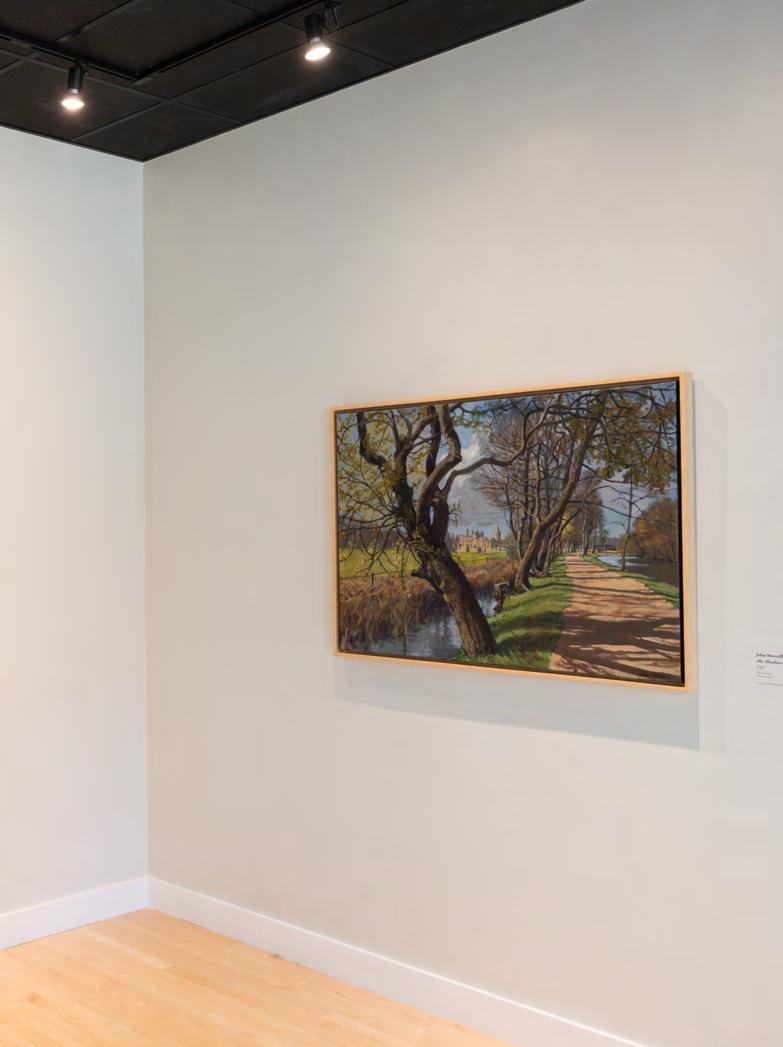
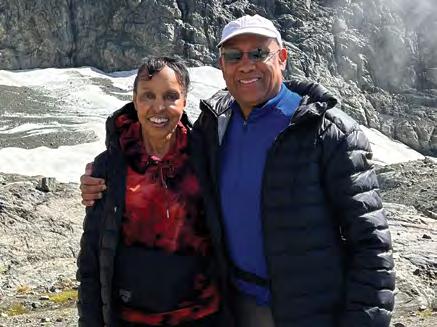
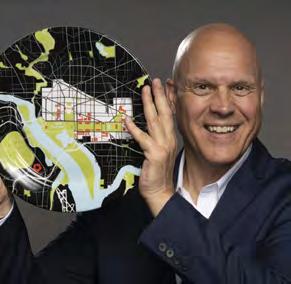
A recent exhibit in the Georgetown University Art Galleries highlights the work of John Morrell (C’73) (1951–2025), former gallery director and chair of the art and art history departments. Morrell’s works are held in the collections of the Smithsonian American Art Museum, the U.S. Postal Museum, and more.
Photo: Vivian Marie Doering
From the archives
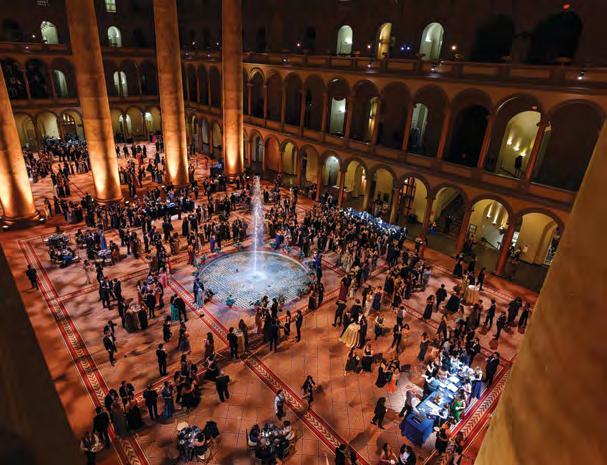
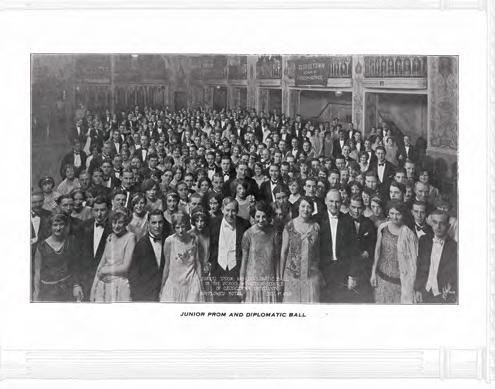
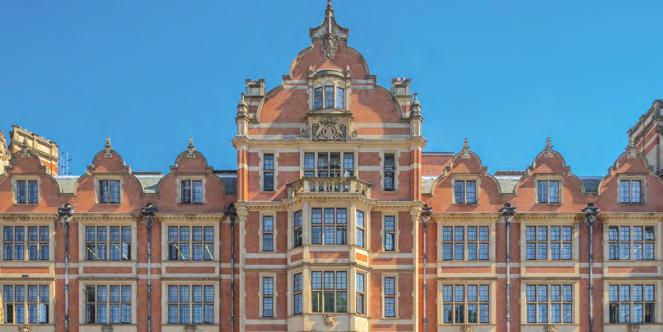
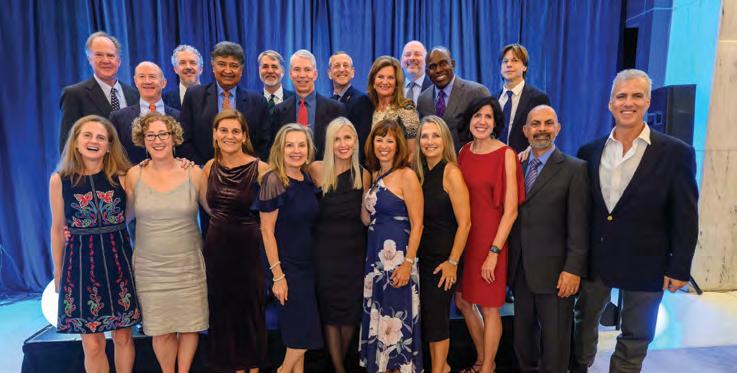
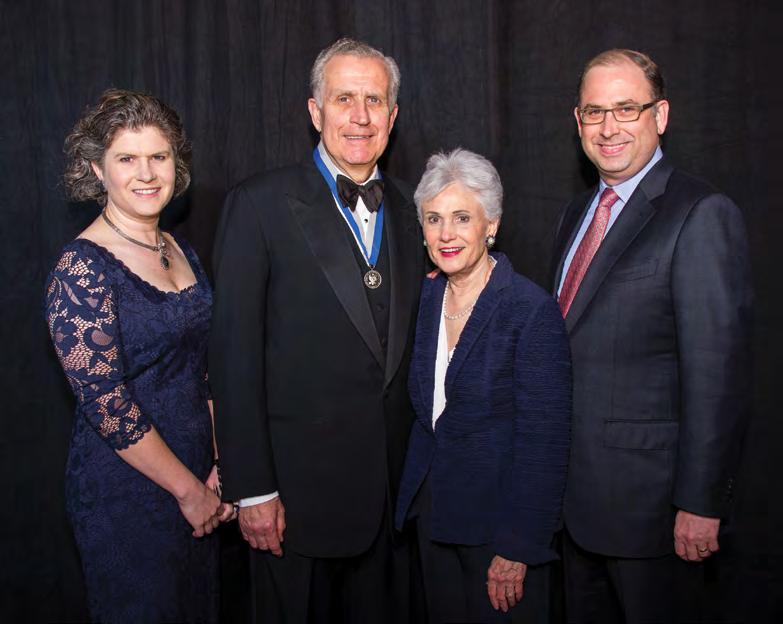
The School of Foreign Service Diplomatic Ball began in 1925. Event patrons have included royalty, ambassadors, and heads of state. Since its inception, Diplomatic Balls have been held at the National Building Museum (pictured above), International Spy Museum, Organization of American States, Library of Congress, Washington National Cathedral, and other marquee spots around town.
Photos: Art Pittman / Georgetown University Archives
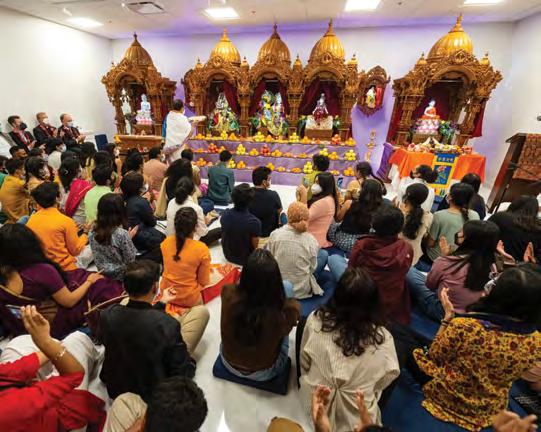
New Multifaith Center at the Capitol Campus deepens the ongoing work of Mission & Ministry downtown. 18 Rewriting survival
Decades of innovation usher in a new era of breast cancer research and care.
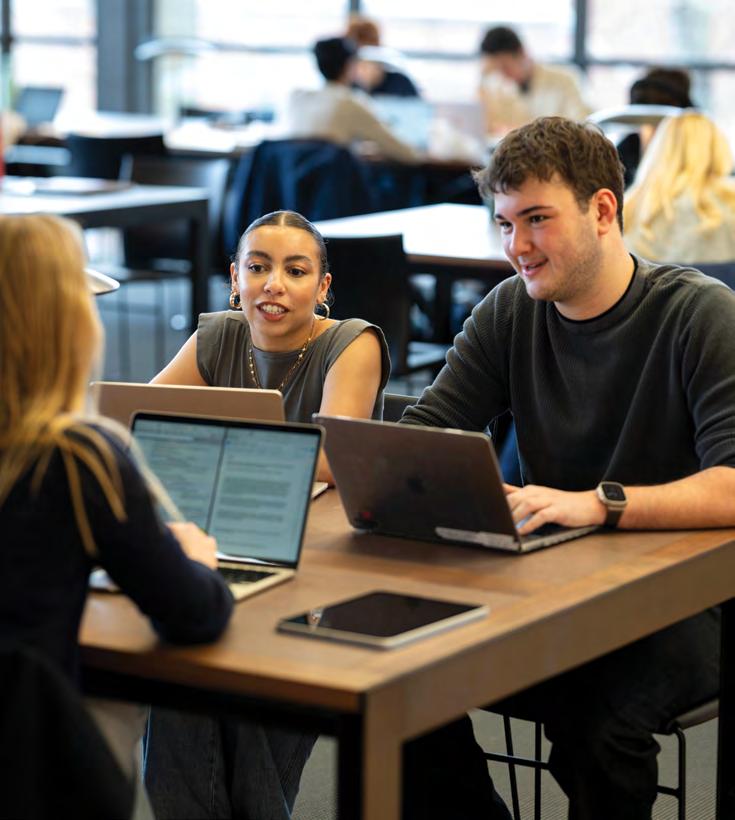
24 Called to give Gifts highlight the collective power and dedication of the Georgetown community.
Around Campus
“Behind every breakthrough, every new therapy, there are real people. That’s what drives everything we do—ensuring those people get more time, and better time, with the people they love.”
—LOUIS M. WEINER, M.D., DIRECTOR OF GEORGETOWN
LOMBARDI AND THE MEDSTAR GEORGETOWN
CANCER INSTITUTE
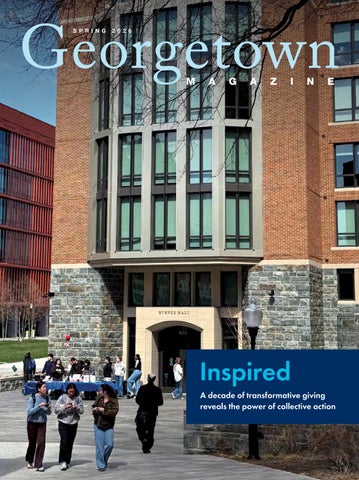
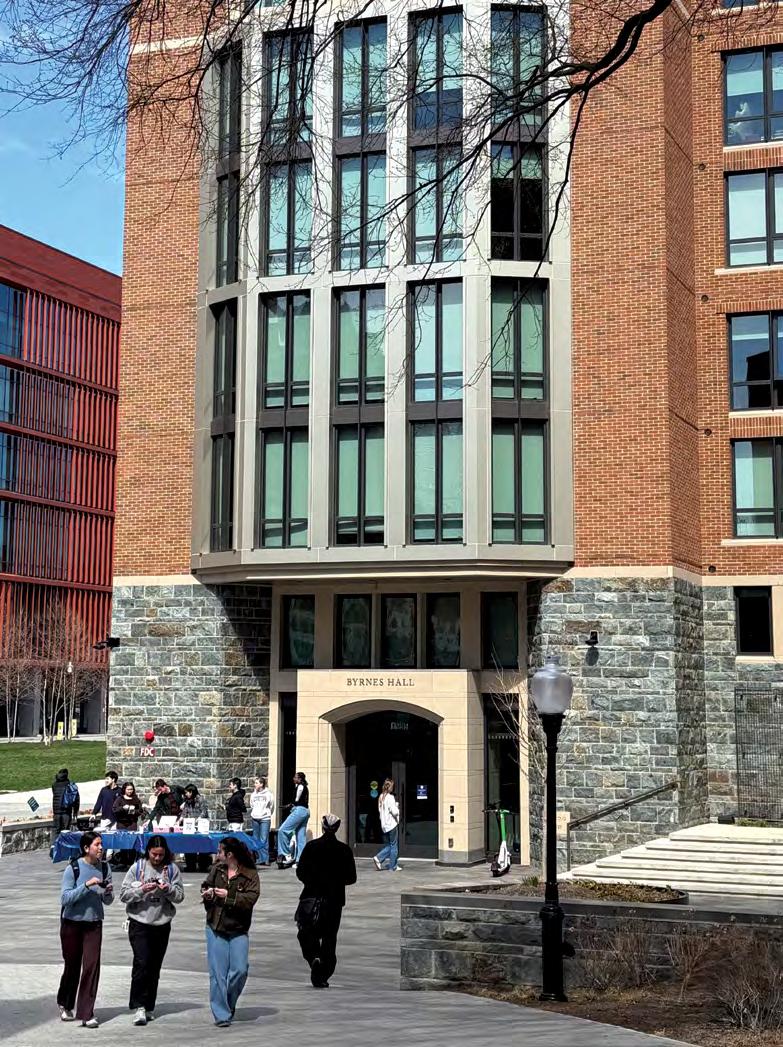
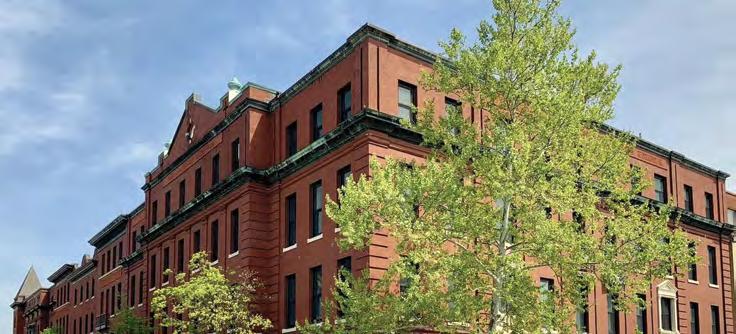
On the cover: In August 2025, Georgetown announced a $20 million gift from William “Bill” G. Byrnes (B’72, L’81) and Lisa H. Byrnes (SLL’80) to support the development of comfortable, dynamic, and accessible residences for a new generation of Hoyas. To recognize their transformative gift, Georgetown named the west tower of the new residential complex the William Gerard and Lisa Hawkins Byrnes Hall, or Byrnes Hall.
Cover Photo: Phil Humnicky
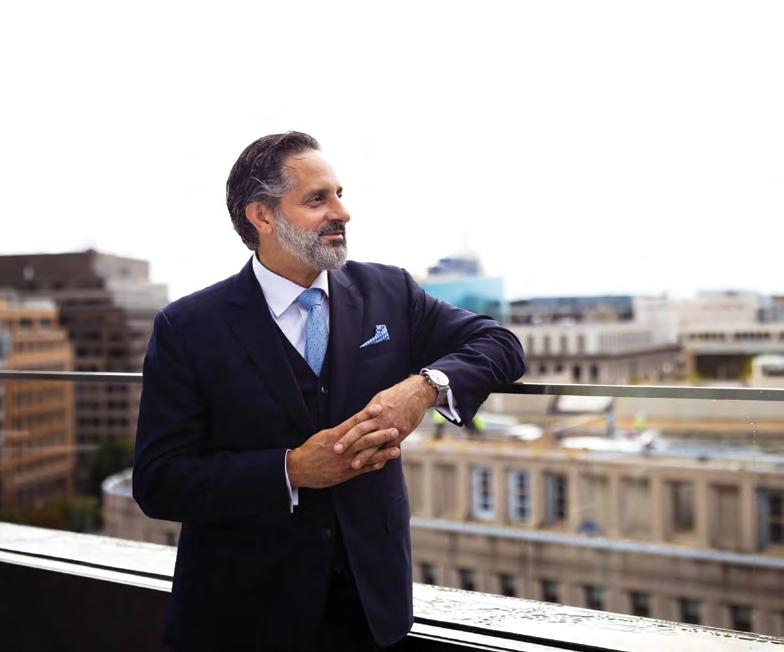
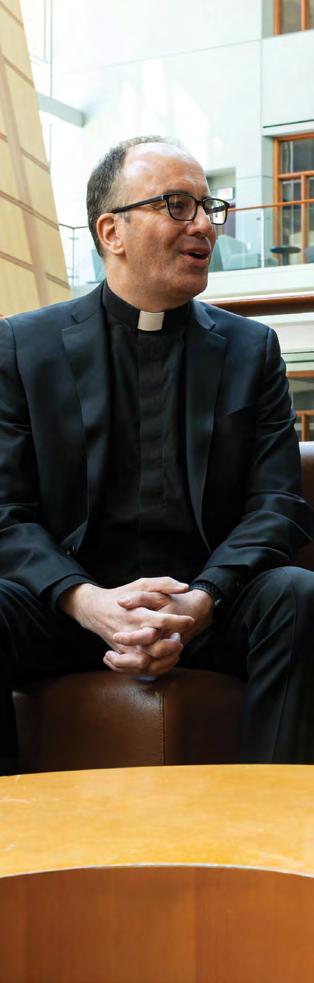
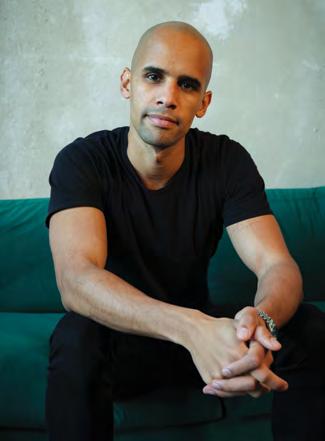
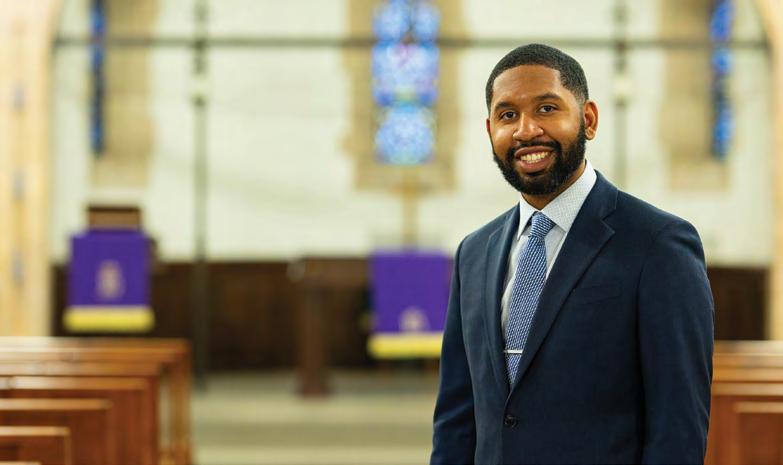
This July, Eduardo M. Peñalver will begin his term as the 49th president of Georgetown University. Peñalver, pictured here on one of the roof terraces of Georgetown’s Capitol Campus, is deeply committed to Catholic and Jesuit values.
Get to know President-elect Peñalver
In October 2025, Georgetown’s Board of Directors unanimously voted to name Eduardo M. Peñalver the 49th president of Georgetown University. He will begin his new role on July 1, 2026.
Peñalver will join Georgetown after serving as the 22nd president of Seattle University, another Catholic, Jesuit institution. He was the first layperson to lead the university since its founding in 1891. Before his appointment as president of Seattle University, Peñalver served as the dean of Cornell Law School, focusing on increasing financial aid and expanding programming.
He was raised in a Catholic family in Puyallup, Washington, a small town near Tacoma. His father, a retired pediatrician, immigrated to the U.S. in 1962 from Cuba, and his mother, a
retired school nurse, is the daughter of Swiss immigrants who became dairy farmers in Washington.
Peñalver earned his bachelor’s degree from Cornell University and law degree from Yale Law School, then studied philosophy and theology at Oxford University as a Rhodes Scholar. He also clerked for former U.S. Supreme Court Justice John Paul Stevens.
As a leading scholar on property law, Peñalver has published two books; served as a professor of law at Fordham, the University of Chicago, and Cornell; and held visiting professor posts at Harvard and Yale.
President-elect Peñalver shared with Georgetown Magazine some reflections on the role of his Catholic faith in his work and what makes Georgetown special.
Photo: Georgetown University
What drew you to Georgetown?
Georgetown’s a unique institution: being an R1 research university but also very much in the Jesuit Catholic tradition. You see this in the mission statement when it describes Georgetown as a student-centered research university—that is unique.
I’ve spent most of my career at research universities. The tension between research and teaching has always been one of the challenges that research universities grapple with. So I was really drawn and taken by that aspiration to be a research university but also student-centered and to deliver an amazing student experience rooted in the Jesuit commitment to cura personalis.
How has the intersection between research and teaching played out in your career?
When I started my academic career at Fordham, I expected to really enjoy the research part of the work. I love writing; that was the initial draw for me of becoming a legal academic, to have the time and the freedom to write about the things I wanted to write about.
And then I quickly learned how much I loved teaching and how much I enjoyed interacting with students. I got some of my best ideas for articles from questions that a student would ask in class. Students are free thinkers when it comes to the subjects that we’re teaching them; they’re approaching the issues with fresh eyes. So I just found a great interaction between my teaching and my research.
How does your Catholic faith influence your work?
I find that my faith is a source of comfort to me in a pretty challenging job at a challenging time for higher education. There’s a great comfort that comes from the length of that tradition and continuity of that tradition, and knowing all the challenging times that the Catholic Church has seen and lived through. And then there are the truths of the tradition, the truths of our faith—about what it means to be human—that help me think through some of the unusual situations that I have to confront as a university president.
What excites you about joining the Georgetown community? These moments of beginning are really exciting. I’m new to this community, and I already am meeting all kinds of new and amazing people who are steeped in the Georgetown tradition. I’m excited to immerse myself in that, learn more, and get to know the community and become a part of that tradition as well.
What would you like the community to know about you?
I’m someone who is always learning, and I’m always trying to update what I think. My best thinking is going to be informed by the feedback I get. So I want people to know that I’m always open to that feedback. I view the work of leadership is an extended dialogue that needs to be active on both sides.
At Jesuit institutions, we talk about being contemplatives in action, and both pieces are important. Because we can get kind of lost in contemplation and never take action, or we can just act without thinking. And we need to be doing both at the same time. I’ve always found that the Jesuit tradition really speaks to me in its pragmatism, its orientation towards action but also its reflectiveness and the way it brings those two sides together.
What’s on your mind as you enter this role?
As I prepare to take on this new role, I am spending a lot of time in conversation with members of the Georgetown community and thinking about how we can rise to meet this moment, leading the way with answers that are true to Georgetown’s distinctive history and values.
This is a pivotal time both for higher education generally and for Georgetown. Georgetown is uniquely positioned to meet this moment and to offer a distinctive response to the challenges that confront us. The Jesuit model of higher education offers compelling answers to many current critiques of higher education, with its emphasis on intellectual openness and dialogue across our differences and in the way it places students at the center of our educational mission. Additionally, the rise of generative artificial intelligence is forcing universities to re-evaluate how we prepare our students for the world they will enter and lead after graduation. Jesuits have embraced new technologies for centuries even while it yokes them to ethical limits and human values. Armed with these tools, Georgetown is up to the task of helping our students to navigate the new things being ushered in by AI. Finally, taking full advantage of our Capitol Campus will enable us to provide immersive experiential learning opportunities for our students and to engage with the many governmental, nonprofit, and business leaders at work in our nation’s capitol. •
—Interview by Mike DeRario
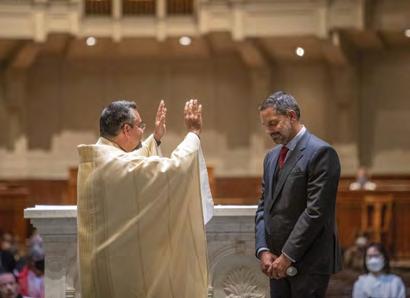
Peñalver receives a blessing at a Mass celebrating his inauguration as the president of Seattle University at St. James Cathedral in Seattle, Washington, on Sept. 23, 2021.
Photo: Yosef Kalinko
Family bonding through experiential trips
Inspired by the concept of cura personalis, Georgetown’s Prisons and Justice Initiative (PJI) recently added a Family First Program to its offerings. Led by Colie “Shaka” Long (SCS’26), the new program provides opportunities for PJI alumni to bond with their children, a key part of rebuilding their lives following incarceration.
Long took part in Georgetown’s Prison Scholars Program during his incarceration at DC Jail. Once he returned home, he joined PJI as a program associate to support his fellow returning citizens as well as current prison scholars at DC Jail. He also serves as a teaching assistant for Georgetown’s Prisons and Punishment class.
“PJI creates a space to remind people that they’re not the sum of the worst things they’ve ever done,” says Long. “During COVID, my only sense of affiliation to a community was
through those classes. The professors were a lifeline to the outside and helped us keep our humanity intact. Without PJI, we would see a lot of men and women lose their sense of relevancy in the world.”
Long was inspired to create the Family First Program when Jessica Trejo, a graduate of the MORCA-Georgetown Paralegal Program, was sitting in his office with her 14-year-old daughter, Jade Nunez. Long asked Nunez, “Jade, are you proud of your mother?” Nunez turned to smile at her mom and said, “Yes.” Long captured the moment on camera and decided to launch the program.
“A lot of times, incarcerated parents are absent during crucial, formative years with their children. We can’t get back those lost moments, but we can create experiential trips for the families to reconnect,” says Long.
“These Family First events are like a breath of fresh air in our structured lives. They’ve given us a reserved space to bond with our kids. We leave every experience feeling so much more connected,” says Trejo, who served five years in a federal prison in California, and spent a few more years separated from her daughter.
Past trips have included hiking, kayaking, a yacht cruise, visiting LEGOLAND and Six Flags, as well as a financial literacy brunch and holiday meals.
“I think the biggest reward is to hear from families how much their children enjoyed the trips. We can see the bonding that occurs,” says Long. “That makes me feel so rich inside.” •
—Nowshin Chowdhury
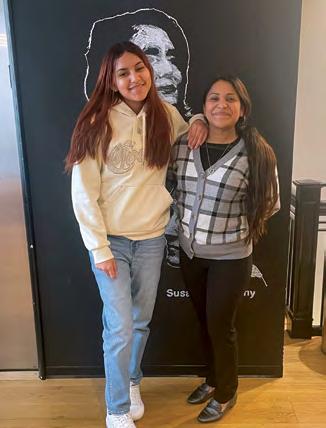
Jade Nunez, left, and Jessica Trejo visit the Prisons and Justice Initiative office in downtown Washington, DC. PJI’s Family First Program helped the family strengthen their bond through experiential trips.
A RENEWED COMMITMENT
In the coming year, Georgetown plans to replace the ICC’s roof and solar panels, which were first installed in 1984. More renewable energy information is available on the Planning and Facilities Management website.
Photo: Courtesy of Georgetown’s Prisons and Justice Initiative
Photo: Courtesy of Georgetown’s Prisons and Justice Initiative
Tackling worldwide issues with London School of Economics
Seven Georgetown faculty are among the inaugural recipients of the London School of Economics-Georgetown University Research Seed Fund, launched last spring as part of a collaboration between the two schools designed to foster academic excellence and spark change.
The partnership stemmed from both institutions’ shared commitment to address key global challenges by engaging with policy and international organizations in Washington, DC, and London.
Georgetown faculty members are working on five projects that aim to develop solutions to some of the world’s most pressing issues. Each project team will receive approximately $25,000, with equal contributions from both universities.
variations in how doctors diagnose and treat patients—and what that reveals about gaps in quality that governments face.
Erik Voeten, Peter F. Krogh Professor of Geopolitics and Justice in World Affairs at Georgetown’s School of Foreign Service and the Department of Government, Stephanie Rickard, professor of political economy at LSE, and Sarah Brooks, professor of political science at Ohio State University, are gathering data on community compensation in supporting renewable energy.
“The selection of this year’s award winners reflects the power of the Georgetown-LSE collaboration to harness the complementary strengths of our two globally respected institutions…”
Jennifer Tobin, associate professor of public policy at Georgetown’s McCourt School of Public Policy, and Ryan Jablonski, associate professor of political science at the London School of Economics (LSE), are collecting on-the-ground data from at least five of the countries in Sub-Saharan Africa hit hardest by the withdrawal of U.S. aid last year.
—JEFFREY URBACH
Arik Levinson, professor of economics at Georgetown’s College of Arts & Sciences, Sefi Roth, associate professor of environmental economics at LSE, and Lutz Sager, assistant professor in the ESSEC Business School and a visiting fellow in LSE’s Grantham Research Institute, are looking at how air pollution affects city residents across socio-economic groups as they go about their day.
Jishnu Das, Distinguished Professor of Public Policy at Georgetown’s McCourt School of Public Policy and the School of Foreign Service, and Mylène Lagarde, associate professor of health economics at LSE, are analyzing more than 12,000 clinical interactions around the world to examine the
Finally, there’s a research team mapping how public services have been digitized across Indian states to understand variations in adoption and implementation: Irfan Nooruddin, the Hamad bin Khalifa Professor of Indian Politics at Georgetown’s School of Foreign Service; Bhumi Purohit, assistant professor of public policy at Georgetown’s McCourt School of Public Policy; Pavithra Suryanarayan, associate professor at LSE; and Aliz Tóth, assistant professor of political science.
“The selection of this year’s award winners reflects the power of the Georgetown-LSE collaboration to harness the complementary strengths of our two globally respected institutions in advancing innovative, interdisciplinary solutions to some of the world’s most urgent challenges,” said Jeffrey Urbach, vice provost for research at Georgetown. •
—Rosemary Lane
Photo: iStock
Coming together to address Wikipedia gender gap
Dolores Kendrick grew up in Washington, DC, became a teacher, earned a master’s degree from Georgetown, and was named as DC’s Poet Laureate in 1999. Her best-known work, The Women of Plums: Poems in the Voices of Slave Women, was adapted for the theater and won multiple awards.
Despite Kendrick’s accomplishments, there was very little information available about her on Wikipedia until Carole Sargent, director of Georgetown’s Office of Scholarly Publications, took up the cause. She joined forces with Beth Marhanka, head of outreach and engagement at Georgetown University Library, to feature Kendrick during Women’s History Month—and then they decided to host an edit-athon to improve Kendrick’s Wikipedia page.
“We discovered that 80% of Wikipedia biographies are of men, and fewer than 15% of editors are women,” Sargent says. “It seemed like a feminist crisis to me. Wikipedia is the largest reference work in history. We formed a group dedicated to improving and editing existing pages and creating new pages for women who are not there at all.”
Since the first event in 2022, their effort has grown to include edit-a-thons involving multiple members of the Georgetown community and external partners who come together to transform Wikipedia content for a wide range of women. Anjelika Deogirikar Grossman, associate director of the Massive Data Institute, has played a leading role, bringing in Wikimedia DC as a co-sponsor. WikiProject Women in Religion and
HOW SWEET IT IS
WikiProject Women in Red have been supportive, and over a dozen Georgetown organizations and academic departments are active participants.
“Our projects have included [Georgetown Magazine features editor] Jane Varner Malhotra’s (S’21) research on the first known women to attend Georgetown, in the Medical School in the 19th century, as well as adding biographies of notable Catholic sisters,” says Sargent. “This work is so important. What we write is published instantly and affects knowledge and perception about these women not only now, but also for ages to come.”
The edit-a-thon team hosted an in-person session in March 2026 and plans to host an online session in July 2026. The events are open to faculty, students, staff, and alumni. New participants start with a training session and then engage in editing pages, choosing from a long list of women the organizers identify in advance. Participants are also welcome to bring their own related projects. “We will support any notable woman that you care about and think is underrepresented,” says Sargent.
“The wonderful thing about being a Wikipedia editor,” says Marhanka, “is that you can contribute anytime, from anywhere. The training is important because Wikipedia is very strict about what they post, but once you complete that, you don’t have to wait for a formal event to be an editor.” •
—Christine Wilson
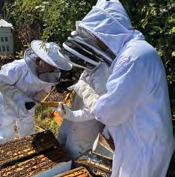
The apiary on Observatory Hill recently produced 300 pounds of honey for Leo’s dining hall, a landmark yield for the beekeeping course and Hoya Hive student beekeeping club.
Photo: iStock
Photo: CourtesyofHoyaHive
‘A turning point’ for the Steers Center
A decade ago, Georgetown parents Bob (B’75) and Lauren Steers founded the Steers Center for Global Real Estate. Since then they have worked closely with Matthew Cypher, Atara Kaufman Professor of Practice and director of the center, to stay ahead of changes in the industry.
In 2025, the center moved to 111 Massachusetts Avenue, a newly renovated building located on Georgetown’s Capitol Campus, and changed its name to the Steers Center for Global Real Assets to address the seismic shift toward an integrated approach to real estate, infrastructure, and energy transition. The innovative curriculum prepares students for a wider range of opportunities.
“This year marks a turning point,” says Matthew Cypher. “We are no longer a real estate center within a business school. We are a platform for thought leadership, talent development, and industry engagement at the intersection of infrastructure, energy transition, and real estate.”
In addition to the new name, approach, and location, the center received an additional $10M gift from the Steers to support two endowed professorships as well as 20 full-tuition scholarships each year through the Steers Scholars Program for the Master of Science in Global Real Assets. •
—Camille Scarborough
Recent gifts to Called to Be: The Campaign for Georgetown
Scholarships for Regents STEM scholars and med school students
School of Dentistry alumnus Richard Calabrese (D’77) and his wife, Angela, made a transformational bequest to establish two endowed scholarship funds designed to help aspiring scientists and physicians. Thanks to the Calabreses, Georgetown is ensuring that our student community thrives.
New retail initiative at McDonough
With a $6 million gift from the National Retail Federation and the NRF Foundation, Georgetown’s McDonough School of Business launched the NRF Business of Retail Initiative with a chair, two fellows, research grants, and more. Thanks to the NRF and its foundation, Georgetown is shaping the future of teaching, research, and learning.
Annual gala for a cause
On March 14, 2026, the 38th Annual Lombardi Gala raised $1 million for Georgetown University’s Lombardi Comprehensive Cancer Center. Thanks to attendees at this annual gala, Georgetown is advancing the health and security of people and the planet.
Interdisciplinary fellowship
The Franklin Fellowship at the McCourt School of Public Policy prepares first-year students to navigate the complexities of technology and policy in today’s world through work experience, an internship match, and an $8,500 stipend. Named for Benjamin Franklin, the fellowship is supported by two couples with careers in policy and technology. Thanks to these alumni donors, Georgetown is building a stronger, more ethical society.
Matthew Cypher leads a site walk-through in downtown Washington, DC. Students at the Steers Center for Global Real Assets benefit from these hands-on experiences.
Photo: Courtesy of Steers Center for Global Real Assets
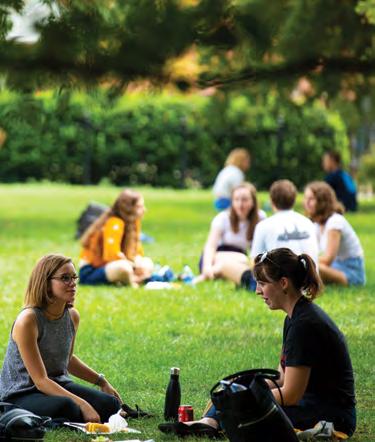
“How did you spend a sunny day on the Hilltop?”
Georgetown Magazine asked alumni to reflect on their favorite places to relax when DC weather was picture-perfect. Here’s what they shared:
“We would bike to Theodore Roosevelt Island and lie down to watch the planes as they approached National Airport. They flew very low! As a fine arts major, I recall that Dumbarton Oaks was a favorite place of a most amazing professor, Daniel Brush. We often gathered there on sunny days.”
—KATHARINE GOLAS (C’76)
The lawn in front of Healy Hall!
You can see the clock tower above you, but somehow time disappears when you’re there. Lying on that grass, you become like a plant—drawing energy from the sun above and from the ground beneath you. There’s something about that particular patch of earth, the weight of legacy it holds, that roots you to something bigger than yourself. Every Hoya who came before left something in that soil.
—DOMINIC BAULA (C’08)
Photo: Phil Humnicky
Photo: Paul B. Jones
“The roof on Nevils Hall. We’d all go up there to study and sunbathe.”
—TERRI COLAVITO (B’84)
I loved the koi ponds on campus during my time at Georgetown and I would always point them out to other students as places to relax, reflect, and unwind as they listened to the bubbling pond. One in particular, located at The Heyden Memorial Garden, was particularly special to me because it offers a tranquil retreat from the hustle and bustle of the campus below. You really can’t go wrong with any of the campus koi ponds!
—DAVINE SCARLETT (C’09)
For next time:
What was your favorite late night dining spot around Georgetown?
Tell us at magazine@georgetown.edu
Copley Lawn was the place
to ‘study’ on a warm sunny day. Almost everyone you knew passed by sooner or later: friends and classmates, faculty and staff, Dean and ‘Res Jes’ Father Robert Lawton—and even then-President Father Leo O’Donovan. Whether sitting under the shady trees or lounging barefoot in the grass, being grounded in the Hilltop’s green space was a welcome break from the rigorous academics and the urban sights and sounds barely held back by the 1866 stone wall. Hoya Saxa!
—COLLEEN (DITTBERNER) SPEARS (C’89)
“We’d
walk down the Exorcist Steps to the Canal and stroll along the towpath.”
—ROGER COCHETTI (SFS’72)
Georgetown students in 1989
Photo: Courtesy of Davine Scarlett
Photo: Georgetown University
Photo: Georgetown University
Photo: iStock
BY SARA PICCINI | DESIGN BY SOFIA VELASQUEZ
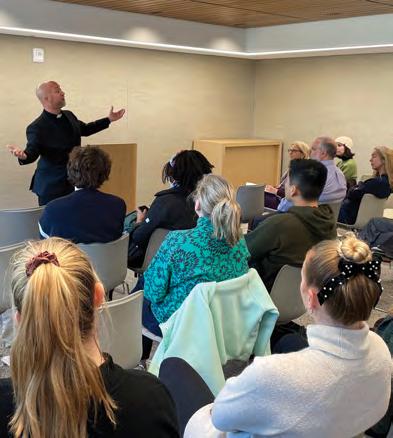
In August 2025, Jamie Kralovec, director of Mission & Ministry for Georgetown’s Capitol Campus, welcomed the community to the newly opened Multifaith Center at 111 Massachusetts Ave., which provides a contemplative space for group worship and personal prayer and meditation, as well as staff offices and meeting rooms.
During the center’s inaugural semester, Kralovec drew inspiration from an early Jesuit, St. Alphonsus Rodriguez (1532–1617). For 46 years, Rodriguez served in the humble position of porter at the Jesuit university on the island
of Majorca. As Kralovec explains, Rodriguez believed the act of opening the door was a sacramental gesture, and he received each visitor with grace and compassion.
“We want to maintain a real ministry of presence,” says Kralovec. “Half of my work in these few months has just been opening the door, being available for whoever might come in. I’ve been giving impromptu tours to students, faculty, and staff, to programs and units coming down to visit Capitol Campus, to curious comers and goers.
Photo: Phil Humnicky
“Mission & Ministry is a core resource in providing a sense of belonging and meaning,” says Anna Harty (G’27).
“In true Ignatian inculturation strategy, going back 500 years, the listening has to begin first as we carry out this project of integrating a campus and developing a community identity— growing in awareness of what is working, what needs to improve,” adds Kralovec.
The establishment of the Multifaith Center marks a new phase for Mission & Ministry on the Capitol Campus. Its location at “111 Mass”—a 230,000-square-foot building that is a new hub of educational programs for the downtown campus—underscores the significance of incorporating Georgetown’s core values into the fabric of community life.
“As we develop a campus culture downtown, it’s important to find ways to articulate and embody the values that we talk about as a Jesuit and Catholic university, everything from spaces for contemplation and action, to faith that does justice,” says Father Mark Bosco, S.J., vice president for Mission & Ministry.
“It’s essential for the culture of the campus to grow organically, and that means growing with the communities that surround it, using all the talent and resources available to us as Georgetown,” he adds.
‘LISTENING TO UNDERSTAND’
Bosco notes that the Law Center, a longstanding pillar of the university’s downtown presence, will play an essential role in the continued evolution of the Capitol Campus, building on its 150-year history of living out Georgetown’s values—particularly
through its renowned clinics. “They’ve been there for the long haul, so they live it in their bones,” he says.
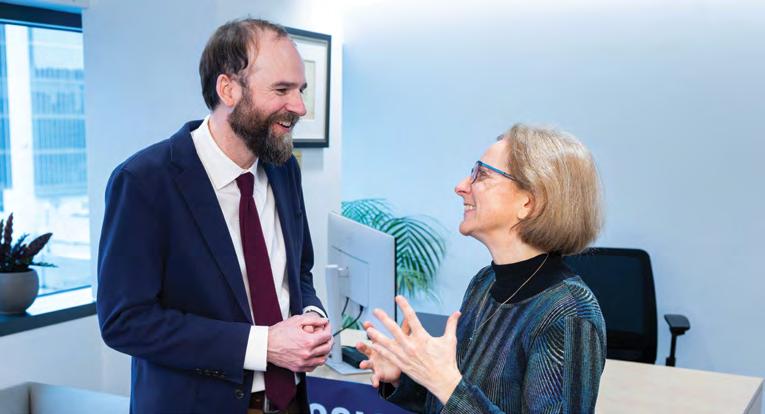
Kralovec works closely with the Law Center’s director of Mission & Ministry, Amy Uelmen (C’90, L’93, L’16). Uelmen, a longtime advisor to Dean Emeritus William Treanor, is the first person to serve in the position, taking on the role in the wake of the pandemic with the intention of rethinking the Law Center’s approach to campus ministry. Her role combines coordinating campus ministry activities with mission integration, in addition to teaching and scholarship, she says.
Kralovec and Uelmen came to know one another a decade ago when they both participated in an Ignatian Spiritual Exercises retreat offered by Mission & Ministry. “We’ve been really good friends for 10 years and already had a shared vision,” says Uelmen. “Jamie’s got incredible strengths, and those are pouring into this space.”
Uelmen and Kralovec envision developing some shared programming while creating distinct offerings where it makes sense. For example, Capitol Campus Mission & Ministry will join the Law Center’s established Mass on Sunday afternoons at Holy Rosary Parish.
“It doesn’t make any sense to have two Catholic liturgies when there’s plenty of room at the church across the street. And it’s just organic to do fellowship together afterwards,” says Uelmen.
Photo: Phil Humnicky
Jamie Kralovec, director of Mission & Ministry for the Capitol Campus, works closely with his Law Center counterpart, Amy Uelmen (C’90, L’93, L’16).
The two offices are also experimenting with a shared Capitol Campus/Law Center book group for staff. “We’ve had nice, robust participation,” she notes, adding that the past year “has been a real work of constant discernment, to read the needs on the ground.”
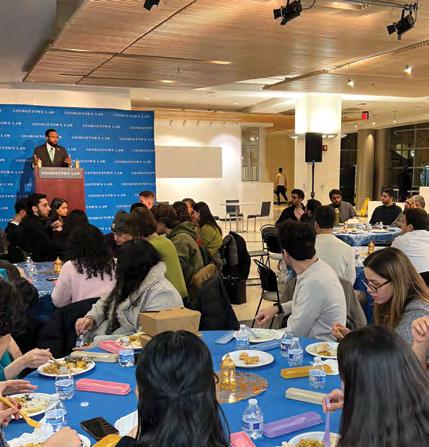
In focusing on specific needs of the Law Center, Uelmen’s office launched an Interfaith Advisory Council in 2023 with representatives from student religious organizations, including long-standing groups such as the Christian Legal Society and the relatively new Dharmic Life group. Activities such as interfaith Shabbat and Iftar dinners, as well as service work in the surrounding neighborhood, have helped to foster communication and understanding during a particularly fraught time for university campuses nationwide.
Both Uelmen and Sonia Robledo, program coordinator for Mission & Ministry at the Law Center, are members of the international Focolare community, which promotes interreligious dialogue.
“A large part of our work is just deep attention to hospitality,” Uelmen says. “That starts from warm human relationships. Focolare in Italian means hearth or family fireplace. We want to make sure that anyone who walks into our suite feels welcome, finds a cup of coffee, finds an ear.”
Uelmen notes that her colleague Michael Goldman (L’69), who has served as the Law Center’s Jewish chaplain since 2002, has made these opportunities for hospitality, such as drop-in brown bag lunches, the centerpiece of his work. Goldman was instru-
to extend the community building “so that the mission integration work reaches staff and faculty, too.”
As part of that work, Uelmen co-teaches a seminar, Religion, Morality, and Contested Claims for Justice, which focuses on what she calls “listening to understand” others’ viewpoints on controversial issues ranging from immigration to campus speech.
“The skill that we need to lean into is the capacity to just hold the tension when an issue isn’t going to be resolved right away.”
MISSION IN MOTION
Like Uelmen, Kralovec brings more than a decade of experience on the Capitol Campus to the Mission & Ministry position. After working in the Obama administration on the Strong Cities, Strong Communities initiative, he came to Georgetown in 2014 to serve as program director for the newly created Urban & Regional Planning master’s program at the School of Continuing Studies (SCS).
Completing the spiritual exercises retreat the following year was a life-changing experience for Kralovec. “The retreat illuminated for me the greater potential to put my gifts and talents to work in the service to the universal mission of Georgetown,” he says. He went on to earn a master’s degree in Christian spirituality from Fordham and pursue Ignatian spiritual training at Holy Trinity Catholic Church in DC.
In 2018, with the support of SCS Dean Kelly Otter and the Office of Mission & Ministry on the Hilltop, Kralovec took on the role as associate director for mission integration at SCS, a newly created position, while continuing to teach in the urban planning program.
Serving a population of more than 12,000 students, many of whom are non-residential and working professionals, required innovative strategies. “The realistic way of integrating mission is for the most part creating opportunities for adults to reflect on the
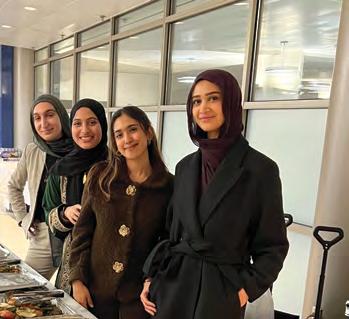
Law students celebrate Iftar, the evening breaking of fast during Ramadan, at a Mission & Ministry interfaith gathering held in collaboration with the Muslim Law Student Association.
Photos: Courtesy of Sonia Robledo
meaning of their experiences and to bring that reflection back into their busy lives,” says Kralovec. “The approach is bottom up—it’s invitational.”
“Jamie is extremely giving of his time,” says John Lauinger (G’30), a graduate student in the SCS urban planning program. Lauinger enrolled in the program after working for two decades as a journalist in New York City and DC, wanting to work more directly with the community. “I had a number of one-on-one calls with him where we talked not only about my classes, but my trajectory as a graduate student and my role in the community. He has a natural way of connecting with people.”
In his new role, Kralovec has expanded programs he began while at SCS in serving the broader Capitol Campus community. He offers a daily mindfulness meditation at noon, which he started when the pandemic began, and has developed an in-person/online hybrid version as well. He has also continued weekly postings on his “Mission in Motion” blog, begun six years ago.
Working with Luciana Paz, the new assistant director for interreligious student engagement, Kralovec is collaborating on programming with the new schools and units that have taken residence on the Capitol Campus.
In October, for example, the office sponsored a highly popular “Rest, Recharge, Renew” retreat for all graduate students at Georgetown’s Calcagnini Contemplative Center in Bluemont, Virginia. Early in the spring semester, Mission & Ministry held
a weeklong “Ignatian Prayer in Daily Life” on-campus retreat, pairing individual faculty, staff, and students with spiritual directors for daily prayer and meditation.
Kralovec also developed what he terms a “Walking Examen” for students, faculty, and staff during Jesuit Heritage month in November. “It’s taking the core spiritual practice of the Jesuits, the examen prayer, and transforming it into a reflective walking experience of the buildings and places on campus and the Jesuit significant sites nearby,” he says.
Another key staff addition on the Capitol Campus is Kathryn Jennings, who was appointed associate dean of students in March 2025 after working in student affairs at Catholic University for nearly two decades.
“I saw Jamie and Mission & Ministry as an instant partner in how we move forward,” she says. The university’s decision to place Student Affairs and Mission & Ministry resources downtown right away “says a lot about how we want to focus our student life, how we want them to engage, and what we want them to take away.”
ENGAGING WITH THE COMMUNITY
With his expertise in both urban planning and Catholic social thought, Kralovec—who is currently completing a doctoral dissertation on Ignatian urbanism—brings a singular perspective to his work.
“I see a bridge coming out of this office at the intersection of urban planning principles and the social
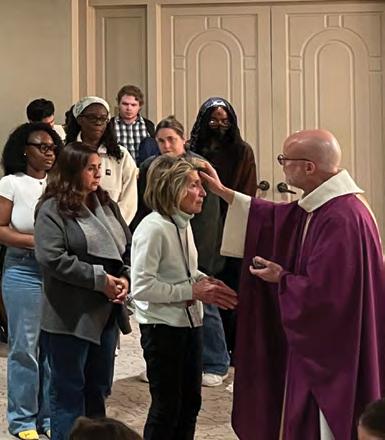
Left: Ash Wednesday service takes place at the Law Center’s St. Thomas More Chapel. Right: Father Barton Geger, S.J., leads an event at the new Multifaith Center on the Capitol Campus during Jesuit Heritage Month in November 2025.
Photos: Courtesy of Jamie Kralovec
of a Jesuit university, to inform and guide the university’s ongoing community engagement efforts,” he says.
“We’ve talked a lot about where we can be both helpful to and learn from the community,” notes Jennings. “Jamie and I are both on a community engagement committee that is partnering with DC business development districts—we’re uniquely situated here between three of these districts.”
“There’s an intense sensitivity to our footprint here in this neighborhood and what it means to be a good citizen,” adds Uelmen. “I think the Law Center has always been primed for this through addressing the housing, criminal justice, and human rights challenges in this space.
“So I think there’s a real opportunity as these other programs come in to continue to build on that embeddedness in the community.”
Kralovec sees great potential for community engagement with neighboring faith-based organizations. In Summer 2025, he taught a studio course on the topic for urban planning students, among them John Lauinger.
“The question for the class was ‘How can learning about communities of faith in the neighborhood influence a potential strategy to position the Capitol Campus within the downtown community?’ I thought that was an intriguing, insightful way of thinking about the future of the campus,” says Lauinger.
For his class project, Lauinger chose to focus on Holy Redeemer Catholic Church, a historically Black congregation that established a sanctuary in the early 1920s a few blocks north of Georgetown’s present-day Capitol Campus. “I attended Masses and had a number of interviews with the longtime pastor. This part of DC was buffeted by urban renewal, and the congregation has been adjusting to that changing reality ever since. They’ve developed a significant social justice ministry.”
Another student in the class, Anna Harty (G’29)—who works full time as an office manager for several Law Center clinical
programs—conducted a broader survey of the approximately 35 faith-based organizations in the neighborhood, which include Christian, Muslim, and Jewish places of worship as well as service organizations.
“Our takeaway was that faith-based organizations have remained the mainstay of providing a strong sense of community. They are core to serving needs that over time the city hasn’t been able to meet, such as homeless outreach,” says Harty.
“As the university develops a broader presence downtown, it only makes sense to build on Georgetown’s own identity as a faithbased institution to develop partnerships with these organizations. It seems like a very logical entry point,” she adds.
ON-THE-GROUND EXPERIENCE
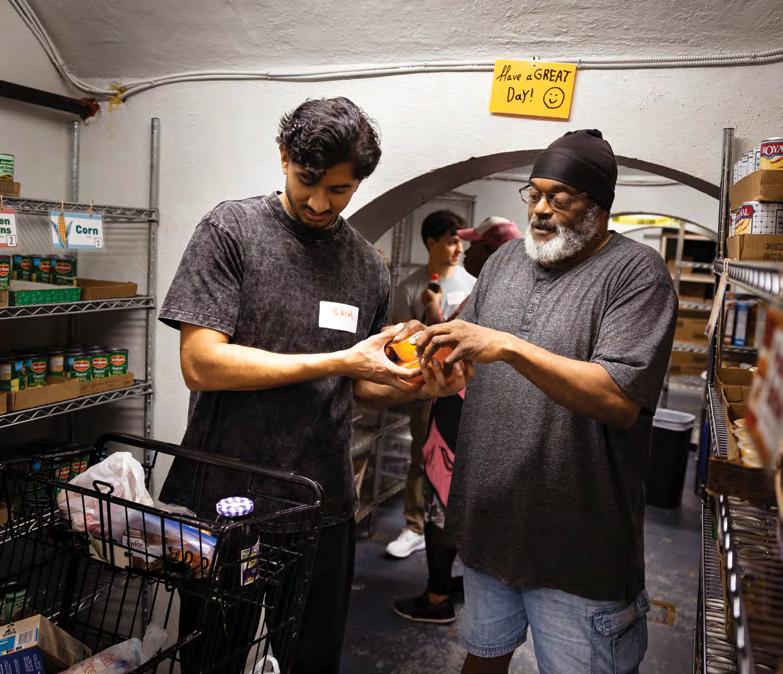
Those partnerships are already underway. The Mission & Ministry Office, for example, offers volunteer opportunities for students at the nearby Father McKenna Center, which provides support for the unhoused and families experiencing food insecurity. Lauinger has volunteered in the food pantry, helping individual clients in meal planning.
“In researching downtown DC through classes, there’s always a potential to think about it in theory,” says Lauinger. “But I know from my experience as a reporter that you have to speak directly to people—you have to have that first-hand, on-the-ground experience. So that was a really enriching experience for me.”
“Ignatian pedagogy always begins in context,” adds Kralovec “It’s very important to point out that the decisions we make—whether it’s Mission & Ministry strategic decisions, or academic, community engagement, or operations decisions—all of those have to fundamentally begin by honoring the unique context of this place.” •
By Lauren Wolkoff | Design By Shikha Savdas
Fifty years ago, a breast cancer diagnosis meant a similarly aggressive path for nearly everyone: highly invasive surgery to remove as much tissue as possible—sometimes including not just the breast but the lymph nodes and chest muscle—often combined with toxic chemotherapy and radiation.
Those who survived typically lived with years of physical and psychological effects, including chronic pain and limited mobility, cognitive decline, lymphedema, anxiety about recurrence, and the lasting emotional toll of the physical changes to their bodies. The effects of these issues reverberated throughout families and communities of support.
Over the last half-century, Georgetown University’s Lombardi Comprehensive Cancer Center has been at the forefront of upending the “one-size-fits-all” approach through precision medicine research—part of a broader shift toward more individualized care that has transformed this landscape. Depending on the tumor type and stage of disease, some breast cancer patients can now avoid chemotherapy or surgery entirely, while others receive treatment tailored to their tumor’s specific profile.
“As a field, we have moved from a blunt approach to a much more nuanced, individualized approach— sparing people unnecessary toxicity and financial burden while maintaining excellent outcomes,” says Louis M. Weiner, director of Georgetown Lombardi and the MedStar Georgetown Cancer Institute, and professor of oncology at the School of Medicine. “That’s what our researchers are working towards: reductions in mortality and improved quality of life for patients who are real people with families and futures, not statistics.”
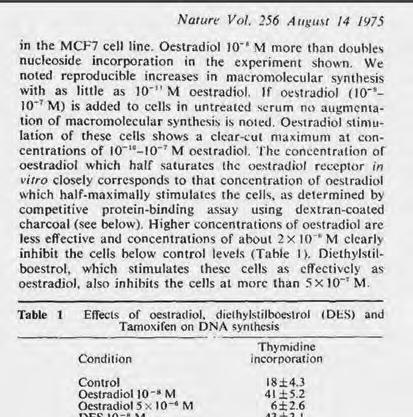
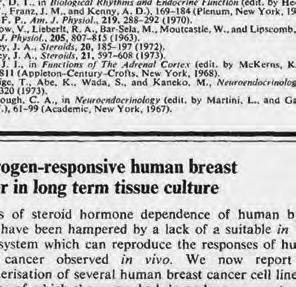
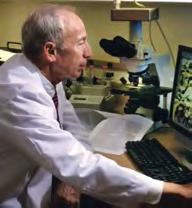
The arc of progress traces back to researchers such as Marc Lippman, a Georgetown professor of oncology whose groundbreaking work on estrogen receptors in the 1970s laid the foundation for targeted hormone therapies that have since saved countless lives. As a young researcher at the National Cancer Institute, Lippman and his colleague Gail Bolan developed a model of hormone-dependent human breast cancer with little preliminary data to guide them.
The discovery that estrogen fuels breast cancer growth opened the door to targeted therapies that now cure the majority of women diagnosed with the disease. Unlike chemotherapy, which indiscriminately kills all fast-growing cells—cancer cells along with hair follicles and nail cells, for example—targeted therapies are designed to disrupt the specific cellular machinery that drives the cancer itself.
“A remarkable aspect of this discovery is that it was met with a tsunami of opposition by people who couldn’t reproduce the study,” recalls Lippman. “When, eventually, our conclusions were shown to be entirely correct it provided a powerful impetus to our work.”
Lippman served as director of Georgetown Lombardi from 1988 to 2001, building one of the premier breast cancer programs in the country before leading major cancer centers at the University of Michigan and the University of Miami. He returned to Georgetown Lombardi in 2018, where he continues pursuing research on preventing cancer recurrence and reducing treatment toxicity.
“I’ve focused on this my entire career,” he says. “What makes me most proud is seeing the brilliant researchers who I had the privilege of mentoring go on to become leaders, at Georgetown and elsewhere.”
In the years of research that followed Lippman’s published findings, drugs like tamoxifen and others were developed and are now routinely used to block estrogen or the production of estrogen to treat breast cancer.
That early work in hormone receptors set the stage for today’s precision medicine approaches at Georgetown Lombardi, where researchers are working to refine treatments to spare patients unnecessary intervention while improving outcomes.
Leading through innovation
Breast cancer is still the most commonly diagnosed cancer among American women, accounting for nearly one in three new cancer diagnoses each year. Yet decades of advances in screening, treatment, and early detection have led to a boom in the survivor population. Today, the largest number of cancer survivors in the United States are breast cancer survivors, according to the American Cancer Society.
As the survivor population grows and ages, so does an urgent question: how do we fundamentally transform what it means to live with and beyond this disease?
“Our goal is to maximize both quantity and quality of life—giving patients with early-stage disease the best chance at cure without overtreating them, while helping those with advanced disease live well for as long as possible,” says Claudine Isaacs, associate director for clinical research and medical director of Georgetown Lombardi’s Fisher Center for Hereditary Cancer and Clinical Genomics Research.
Pursuing that goal requires a research enterprise with the scale and expertise to address breast cancer from every angle. As one of just 57 National Cancer Institute–designated Comprehensive Cancer Centers in the United States—a distinction Georgetown Lombardi first earned in 1974—the institution is required to meet rigorous standards across research, patient care, and community engagement.
Since its founding in 1970, Georgetown Lombardi’s impact has been sustained through breakthrough discoveries across multiple fronts.
One major area of progress has been developing more targeted treatments. Breast oncologist Sandra Swain, associate dean for research development at Georgetown University Medical Center, led the groundbreaking CLEOPATRA (CLinical Evaluation Of Pertuzumab And TRAstuzumab) trial that revolutionized treatment for HER2-positive metastatic breast cancer—one of the disease’s most aggressive forms.
By adding a third drug, pertuzumab, to the standard two-drug regimen, the research led to significantly improved survival outcomes and established a new standard of care used worldwide today. For patients with HER2-positive disease, this precision approach means powerful, life-extending treatment. For everyone else, it means avoiding toxic therapies that wouldn’t improve their chance of survival.
Other researchers have focused on minimizing treatment’s lasting physical toll. David Song, professor of plastic surgery, and chief medical officer and vice president of medical affairs for MedStar Georgetown University Hospital, pioneered lymphatic surgery techniques to reduce the risk of one of breast cancer
treatment’s most debilitating long-term complications, lymphedema, which is painful swelling caused by the build up of lymphatic fluid. His team has also developed nerve-preserving approaches that maintain sensation after mastectomy, including nipple re-sensitization surgery.
Still others are working to improve outcomes at the population level. Marc Schwartz, associate director for population science at Georgetown Lombardi and co-director of the Fisher Center along with Isaacs, has helped pioneer approaches that have transformed genetic testing in mainstream cancer care.
His team led one of the first studies offering genetic testing to women at the time of breast cancer diagnosis to help guide treatment decisions—a practice now standard nationwide. Schwartz also conducted the largest telephone-based genetic counseling study ever, proving that phone counseling worked just as well as in-person sessions at a fraction of the cost. This breakthrough expanded access for people in rural areas and underserved communities, making vital genetic information available to far more patients and their physicians.
“What makes us a comprehensive cancer center is excellence across multiple fronts—from the lab to the clinic to the community,” says Weiner. “Each breakthrough builds on decades of work, and together, they represent a fundamental transformation in how we treat this disease.”
Science takes a village
Georgetown Lombardi has built a research ecosystem that brings together clinicians, basic scientists, genetic counselors, population health experts, and patients—not just within its own walls, but through partnerships with institutions nationwide and globally.
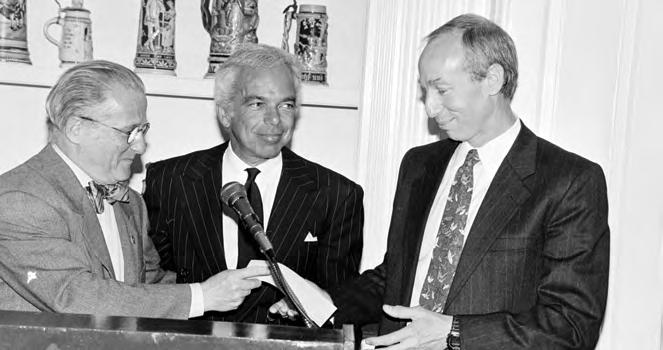
Lippman (right) at the Ralph Lauren Luncheon benefiting Georgetown Lombardi’s Nina Hyde Center for Breast Cancer Research in April 1995.
Photos: Getty Images / Georgetown University
For Isaacs, this expansive collaborative approach is essential.
“Science takes a village—a large village,” Isaacs says. “It’s important to recognize where to lead and where we need to collaborate, because you don’t get answers from doing research in isolation.”
One example of a fruitful cross-disciplinary approach is work on chemotherapy-related cognitive changes, commonly known as “chemo brain.”
“What makes us a comprehensive cancer center is excellence across multiple fronts— from the lab to the clinic to the community.”
LOUIS M. WEINER, M.D.
Jeanne Mandelblatt, director of the Georgetown Lombardi Institute for Cancer and Aging Research and professor of oncology and medicine at the School of Medicine, first discovered that women carrying a genetic variant associated with Alzheim er’s known as APOE4 were more likely to experience cognitive impairment following chemotherapy. She then partnered with William Rebeck, a professor of neuroscience, to explore this finding further in his lab.
“Through this collaboration, we’ve been able to replicate and extend findings to understand what parts of the brain are affected that we might target with treatments,” Mandelblatt says. “This is exciting because cognitive impairment is so com mon. We’re hopeful we will understand who experiences this really troublesome side effect and why.”
The work caught the attention of Lippman, whose expertise offered a new lens. When Lippman heard Mandelblatt present this finding, he had a realization: since the chemotherapy drugs in question don’t cross the blood-brain barrier, they must trigger inflammatory molecules elsewhere in the body that ultimately affect the brain.
He identified a key inflammation driver called RAGE (Receptor for Advanced Glycosylation End-products) as a potential culprit. Working with Barry Hudson, an associate professor of oncology, the team established that by inhibiting the expression of the RAGE protein, they could prevent cognitive decline in mice receiving chemotherapy. The work has now advanced to clinical trials led by Candace Mainor, a medical oncologist at MedStar Georgetown University Hospital.
Georgetown Lombardi’s commitment to collaboration extends to large multi-institutional clinical trials like I-SPY, where the center plays an active role alongside peer institutions internationally.
Director of Georgetown University’s Lombardi Comprehensive Cancer Center, Louis M. Weiner, center left, holds the Francis L. and Charlotte G. Gragnani Chair and is professor of oncology and chair of the Department of Oncology at Georgetown University Medical Center.
Photo: Phil Humnicky
For Weiner, this commitment to collaborative science is central to Georgetown Lombardi’s identity and impact.
“Patients expect collaboration—not competition. Our common enemy is cancer,” he says. “We live that principle by pursuing high-impact partnerships that transform outcomes for women with breast cancer.”
Training tomorrow’s leaders
Sustaining this culture requires investing in the next generation of researchers. For Rebecca B. Riggins, professor of oncology and associate director of education and training at Georgetown Lombardi, developing future breast cancer researchers is about cultivating a mindset.
“We have to start early in the pipeline with modeling for students and trainees that breast cancer research is interdisciplinary,” she explains. “You don’t always know where the next big thing is going to come from, which is why we need to keep a holistic approach and think of research as a long-term investment.”
Georgetown’s Tumor Biology Ph.D. program, part of the Biomedical Graduate Education program, exemplifies this commitment by training scientists in the interdisciplinary approaches essential to advancing cancer research. More broadly, demonstrating the power of Georgetown Lombardi’s training ecosystem, Georgetown trainees have gone on to lead major breast cancer programs at premier institutions around the country, including Johns Hopkins’ Sidney Kimmel Comprehensive Cancer Center, Sandra and Edward Meyer Cancer Center at Weill Cornell Medicine, Harvard’s Dana-Farber Cancer Institute, and MD Anderson Cancer Center at the University of Texas, to
The commitment to training reaches even younger scholars. Working with KID Museum in Bethesda, Maryland, Riggins and Kenneth Tercyak, professor of oncology and co-lead of Georgetown Lombardi’s Cancer Prevention and Control Program, created the Young Scholars Program—an annual initiative offering middle and elementary school students hands-on experiences in STEM and cancer research.
“I think we really owe it to our community to engage everyone,” Riggins says. “Early exposure to exciting and meaningful science experiences needs to start as early in the learning process as possible.”
Closing the gap
For all the extraordinary progress in breast cancer treatment, Georgetown Lombardi’s researchers are clear-eyed about the gap between scientific achievement and equitable outcomes.
“We have to start early in the pipeline with modeling for students and trainees that breast cancer research is interdisciplinary.”
REBECCA B. RIGGINS, PH.D.
Black women face a 40% higher mortality rate from breast cancer than white women, despite having similar or lower incidence rates. This disparity persists across every molecular subtype and every stage of disease, underscoring inequities in access to care and other systemic variables that affect outcomes. Even as treatment improves, disparities in screening access and health care navigation mean many women don’t benefit from these advances until the disease has progressed, according to
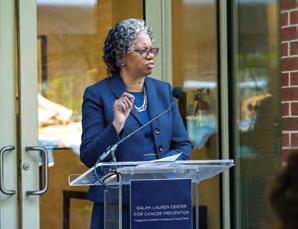
At the Ralph Lauren Center opening in 2023 in Southeast DC, Lucile Adams-Campbell noted that “Addressing cancer disparities in communities and meeting people where they are makes a real difference.”
Photo: Paul B. Jones
Photo: Phil Humnicky
“The Ralph Lauren Center has enabled us to be more inclusive, which is central to our mission,” says Adams-Campbell, the center’s founding director. “There are now people from all over Washington, DC, including more people of color, coming to Georgetown for care.”
Adams-Campbell notes that not all minorities are underserved, and not everyone who is underserved is a racial minority. Recognizing this complexity, her team discovered that patients were significantly more likely to enroll in clinical trials upon receiving support for issues such as housing insecurity, food access, and financial hardship through Georgetown’s medical-legal partnership, the Cancer Legal Assistance and Well-being (Cancer LAW) project through Georgetown’s Health Justice Alliance program.
“When we address patients’ financial and social challenges, they are better able to make decisions that are good for their health,” she says.
Unanswered questions
Even as Georgetown researchers work to ensure existing advances reach everyone, significant scientific challenges remain. For example, resistance to endocrine therapies—drugs that target hormone receptors—plagues even the most successful treatments.
“In many cases, resistance—whether it’s after five years, 10 years, or maybe even longer—becomes a problem,” Riggins explains. “Why does this occur? And, importantly, is that ‘why’ something
Some subtypes present their own stubborn mysteries. Lobular breast cancer, the second-most common subtype, has only recently gained focused attention. This tumor type is prone to late recurrence—even 20 years after initial diagnosis—long after many people think their risk is gone. Georgetown researchers, including Riggins, are working to understand the unique biology of lobular tumors and develop better imaging strategies for detection.
These are just two of many unanswered questions researchers are pursuing. Yet progress achieved over the past few decades in breast cancer demonstrates what’s possible. Between 1975 and 2019, breast cancer mortality decreased by 58%—dropping from about 48 to 27 deaths per 100,000 women. That translates to millions of lives saved, all because of research.
Finding answers to today’s research questions could save millions more lives and continue to positively impact survivors’ quality of life.
“Behind every breakthrough, every new therapy, there are real people,” Weiner says. “That’s what drives everything we do— ensuring those people get more time, and better time, with the people they love.” •
Lauren Wolkoff is a communications consultant based in Washington, DC. She received her MA in Latin American Studies from Georgetown’s School of Foreign Service.
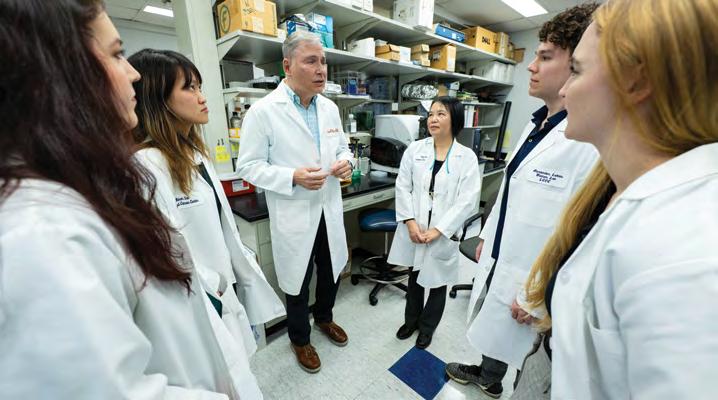
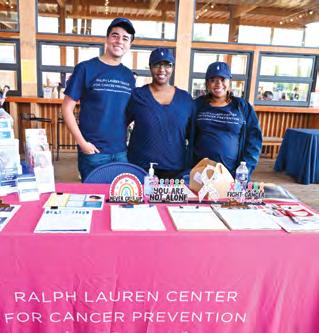
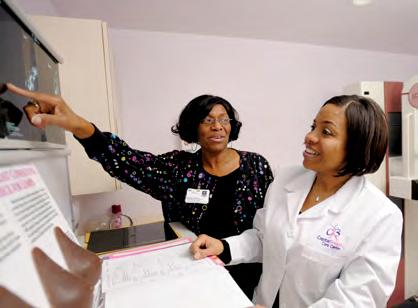
Left: Ralph Lauren Center for Cancer Prevention hosts its inaugural Men’s Health event in September 2025; Right: Georgetown team members work to address health disparities in the community.
Photos: Leslie E. Kossoff
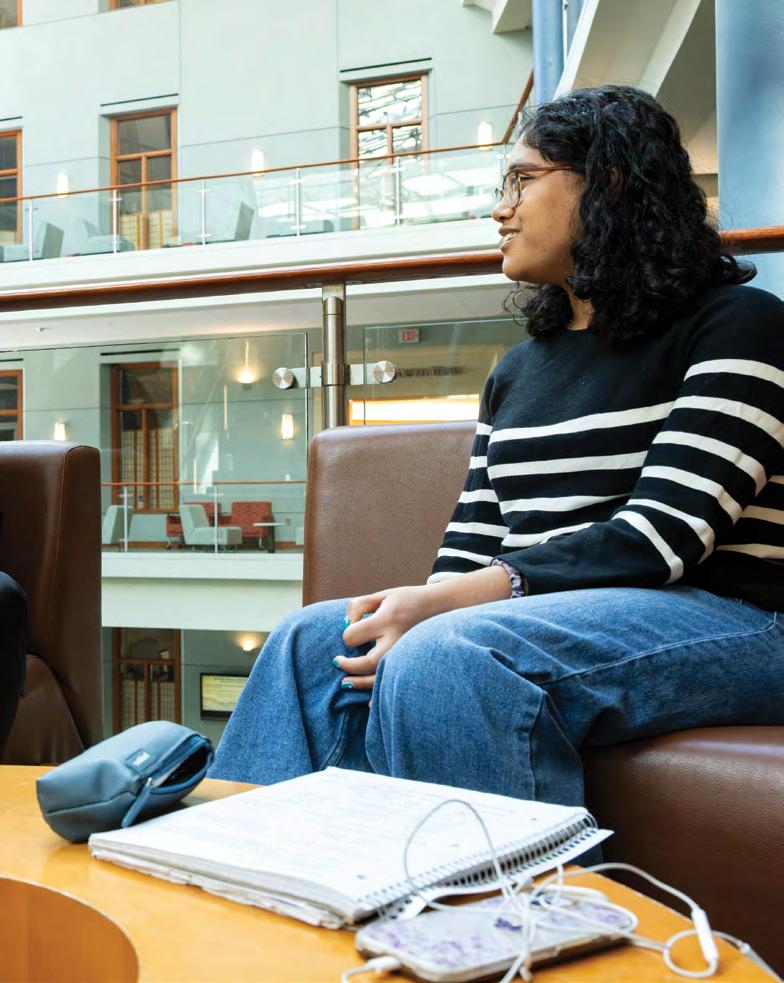
Mrudula Chodavarapu (B’26) enjoys how her professor, Quentin Dupont, S.J., engages students in discussions about business and ethics.
Called to give
Celebrating the creative, collective power of the Georgetown community
By Jane Varner Malhotra | Design by Shikha Savdas
Over the past decade, Called to Be: The Campaign for Georgetown has invited reflection on our university’s role as a place for student formation, world-class research, and contribution to the common good. The campaign asked community members to envision how we can become the university we are called to be.
From every corner of every campus, we’re experiencing the transformative generosity of Hoyas and a shared hope for the continued advancement of the institution and its place in our changing world.
A commitment to Jesuit values in business
As the sun set over the Potomac on a cool October evening, people streamed into the lower level of the Healey Family Student Center for a talk with disability activist Tiffany Yu (B’10), sponsored by the McDonough School of Business, the Disability Cultural Center (DCC), and others.
Yu was interviewed by Mrudula Chodavarapu (B’26), a senior double majoring in finance and in operations and analytics, who is involved in the DCC. She and the alumni author Yu, who has a permanent arm injury, engaged in a dynamic conversation about disability: how Yu navigated Georgetown and later a successful investment banking career, how not all disabilities are apparent, why it’s important to invest in disabled entrepreneurs, and how to be an ally.
The crowd came to hear from Yu, founder and CEO of Diversability and an internationally recognized leader in disability advocacy who established Georgetown’s Disability Empowerment Endowed
Fund through a seed gift in 2021. But people also came as friends of Chodavarapu, including Quentin Dupont, S.J., the Swan Family Ignatian Assistant Professor, an endowed professorship created in 2022 in support of Dean Paul Almeida’s vision for a business school steeped in Jesuit values.
Dupont taught Chodavarapu when she was a secondyear student and faced some disabling health challenges. Dupont was particularly supportive, she recalls.
“If there was anything that came up, he would go above and beyond to accommodate you,” she says. “He prioritizes his students.”
Residing on campus means Dupont is able to get to know students more fully, including attending programs like Chodavarapu’s event.
“I enjoy interacting with students in different contexts, whether at Mass or lunch at the Jesuit residence,” he says. “Because I live here I get to have
Photo: Phil Humnicky
encounters—some pastoral, some professional, some educational—on campus throughout the day and throughout the weekend. And that’s a privilege.”
“We want to model a credible path towards a person being both academically excellent and a true witness to the power and the worth of Jesuit values.” —QUENTIN DUPONT, S.J.
Dupont joined the faculty in 2021, becoming the first full-time Jesuit at the McDonough School of Business in decades. The aim of the endowed professorship is for students, faculty, and staff to work with someone who has dedicated their life to contemplation in action, caring for the whole person, and expanding the common good.
“We want to model a credible path towards a person being both academically excellent and a true witness to the power and the worth of Jesuit values,” says Dupont.
Chodavarapu appreciates not only Dupont’s warmth, humor, and mentorship, but also how he incorporates ethics in his finance courses.
“He helps us understand the ethics of finance, which some people view as inherently evil,” she adds with a smile. “Father Dupont takes that view and turns it on its head, asking us how we can use finance to promote good.”
Dupont is grateful to Joseph Swan Sr. (B’67) and Denise Swan (Parents’95, ’96, ’00, Grandparents’25, ’27, ’29) for supporting his unique blend of expertise in philosophy, theology, and business.
“For centuries, the Jesuits’ mission has been to educate young people’s minds, bodies, and spirits,” says Joe Swan. “They not only strengthen students’ understanding of what is right and wrong but also their responsibilities to the betterment of society. They help our future leaders understand the need and importance of introducing ‘soul’ into business and our democracy.”
“Jesuit business education is not just business education with a little bit of Jesuit flavor,” says Dupont. “It’s a whole way to think about purposefulness in order to help our students find their deep desires, their true selves, and to help them make the world the best version of what it can be.”
INTERFAITH VALUES
As a student during the pandemic, Anjali Bobba (B’23) found solace and community through Dharmic life programming and in the university’s Dharmic Meditation Center or Dharmālaya, which opened in Leavey in 2021. In appreciation and to support the Office of Mission & Ministry’s work with different spiritual traditions of the Indian subcontinent, her parents Durga (MBA’96) and Geetika (Parents’23, ’25) Bobba established the Anjali Keya Bobba Endowed Dharmic Life Fund. As a student, Anjali Bobba served as chair of religious policy for the Georgetown University Student Association and president of the University Honor Council. “I wanted to experience all aspects of the university and make sure that I left it even better than when I found it. It’s special that the value of interreligious understanding runs throughout Georgetown.”
Photo: Georgetown University
Paying it forward to support future scientists
For physician Toni Eldridge Wilkes (C’78), life has always revolved around science. Growing up in Philadelphia, her passion for the sciences motivated her to excel and led to the success she would achieve at Georgetown and beyond. These days, Wilkes is motivated by another passion—to support first-generation students and give back to the university that gave her the confidence and foundation for her achievements.
Wilkes arrived on campus in 1974 as part of Georgetown’s Community Scholars Program, which supports students who are part of the first generation in their families to attend college. The program offers a rigorous academic summer session before their first year to ease the transition to college and supports Georgetown’s long-standing commitment to access and affordability for a socioeconomically diverse cohort of students.
She soon met Royden B. Davis, S.J. (C’47, L’49, HON’85) (1923–2002), dean of the College, who encouraged her to major in biology, connected her to research at MedStar Georgetown University Hospital, and was the first to suggest a career in medicine.
As a first-generation student, Wilkes expected the Georgetown experience would be challenging.
“I knew it would be a hard path, and I knew I would need to work even harder to achieve my goals,” she says. In addition to scholarship support, she helped pay for college by working at the hospital and the student cafeteria, which didn’t leave a lot of time for other pursuits.
At her graduation, Wilkes received the Louis McCahill Award from the College of Arts & Sciences, recognizing her perseverance and determination in pursuing her education. The award and her Georgetown experience reinforced her lifelong commitment to hard work and high achievement.
The couple recently decided to include a bequest for Georgetown in their estate plans.
“I never thought in a million years I would be able to give back to the institution that gave me so much, but that is what I am doing—and what one should do,” she says.
The gift will create the Toni Eldridge Wilkes, M.D. (C’78), and David S. Wilkes, M.D., Endowed Scholarship Fund to support undergraduates studying the sciences, with a focus on students enrolled in the Regents STEM Scholars Program, an initiative that addresses the shortage of first-generation college students who successfully complete degrees in STEM fields.
“No matter how modest your means, just keep working hard and don’t give up,” she says.
After Georgetown, Wilkes earned her M.D. from Temple University, where she met her husband, David Wilkes. She practiced as an OB/GYN, serving low-income patients before building a successful private practice. Her husband pursued research and later served as associate dean at Indiana University School of Medicine and dean at the University of Virginia School of Medicine.
In order to start awarding the scholarship as soon as possible, the couple also made an outright commitment using an IRA Qualified Charitable Distribution, which allows them to meet the students benefiting from their scholarship funds and see first-hand the impact of their philanthropy. The bequest will add to the scholarship in the future and create a lasting legacy at Georgetown.
“My wish is to see other students like me achieve great things,” she says. “It can and will happen at Georgetown. It happened to me, and that’s why I feel strongly about making this gift.”
Toni Eldridge Wilkes, M.D. (C’78) and husband David Wilkes, M.D., are supporting first-generation students pursuing STEM fields.
Photo: Courtesy of Toni Eldridge Wilkes
Space to flourish
In Fall 2025, Sajan Blum (B’27) was one of 700 students to move into the new Hilltop residential community built on the site of the former Henle Village. The three dorms are Henle, Hayden, and Byrnes Hall, where Blum resides. “It’s definitely my favorite place I’ve lived in my three years here, convenient to everything,” he says, noting that it’s had a direct impact on his well-being.
Students enjoy the bustling first-floor common area, a warm and welcoming gathering space with natural elements like a plant wall and hanging fireplaces, plus lots of shared and private study spaces. It’s become a popular study destination, even for students who don’t live there.
The residents, all juniors and seniors, live in fully furnished four-bedroom, twobedroom, or studio apartments. Each unit is equipped with a washer and dryer along with a full-size kitchen. Blum shares an apartment with three friends.
The building’s name recognizes a transformational bequest from Bill (B’72, L’81) and Lisa (SLL’80) Byrnes. “We’re very happy to help build a space that will take away some of the stress and burden that juniors and seniors feel when looking for housing on or near campus,” says Lisa Byrnes. “It’s an honor to leave a legacy that serves and accommodates more students.”
“It’s wild that one gift can benefit so many of us,” adds Blum. “I’m definitely thankful!”
The ground floor of Byrnes Hall serves as a light-filled study and social space for residents like Sajan Blum (B’27), a finance and accounting major who plays on the ultimate frisbee team.
Photo: Phil Humnicky
A class act
When Eric Saucedo (MBA’94) served as class president while earning his MBA, the natural leader known for his warmth and generosity of spirit helped bring students together despite the program lacking many of the resources it has today.
“As a class we felt like we had to fend for ourselves,” recalls his friend and classmate Sandeep Vishnu (MBA’94). “We didn’t have a lounge, we didn’t have any buildings. We hung out on the fourth floor, really the attic in Old North.”
After graduating, Saucedo built a successful career in private equity while remaining active with his alumni community, helping to put together several networking events over the years. He was a true friend to many, and a beloved anchor who selflessly gave his time to nurturing relationships among his fellow MBAs. When he passed away unexpectedly in 2018, his classmates were devastated.
“Our class gathered to remember him,” says Vishnu. It was then that they decided to honor Saucedo through a class scholarship in his name. “Eric was the catalyst. He was the one who was organizing our reunions, the one keeping the class connected.”
Since then the group has raised more than $100,000 to establish the MBA Class of 1994 Endowed MBA Scholarship Fund to support the advancement of full-time MBA students. The Class of 1994 was the first to commit to establishing a scholarship fund, and has since inspired other classes to follow suit.
“This gift not only provides financial support to students, but creates lasting legacies that enhance our MBA community and the broader business world,” said Sudipta Dasmohapatra, senior associate dean of MBA programs. “We are grateful for the alumni from the Class of 1994 who made this gift possible. Their fundraising efforts create a cycle of giving and mentorship that will benefit future generations of MBA students for years to come.”
“This gift not only provides financial support to students, but creates lasting legacies that enhance our MBA community and the broader business world.” —SUDIPTA
DASMOHAPATRA
Vishnu says that dozens of small gifts came together to create the fund. He’s also noticed that the class has become closer and more engaged with Georgetown over the years thanks to programs like the MBA Advisory Council.
“I’m also delighted to see that other classes have picked up on the idea. Every class that’s graduating is now thinking of a class gift. We started something that has become bigger than what we are,” says Vishnu.
It’s a testament to Eric and who he was as a person.”
Alumni from the MBA Class of 1994 gather to celebrate their new class gift.
Photo: Courtesy of MBA Class of 1994
COLLABORATIVE RESEARCH
In 2020, Anisya (Parent’11, ’29) and Lynn Fritz (C’64, Parent’98, ’11, ’29) established the Fritz Family Fellows Program within the Georgetown Initiative on Technology & Society. The program works to cultivate the next generation of leaders with expertise in the social impacts of technology. For Fritz Fellow Larissa Johnson (C’27) (above, left), a double major in government and sociology, the fellowship has offered more access to interdisciplinary research opportunities and more confidence and involvement in the research with her faculty mentor. “The program has helped me understand how collaborative research really is, not only for my work but for the common good,” she adds.
“The Fritz Family Fellowship has given me the tools to speak professionally about my research, which has been such an asset,” says Joel Piels (C’27) (above, right), a junior majoring in Computer Science, Ethics & Society with a minor in Medical Humanities. “However, most meaningful and invaluable to me has been the one-on-one relationship I’ve been able to foster with my faculty mentor.”
Gathering spaces like the philanthropy-funded newly renovated Pierce Reading Room make it easy to work together.
Photo: Phil Humnicky
Accelerating research and enhancing the student experience
Inspired by a desire to help stimulate student’s scientific and discovery skills in new areas of human biochemistry, Marijn and Andra Dekkers (Parents’19, ’21, ’21) established an endowed chair in 2019 with Georgetown’s School of Health. Their gift, which also created the Dekkers Family Endowed Human Science Research Fund, supports expanded research opportunities in the Department of Human Science.
So far, two scientists have held the Dekkers Endowed Chair in Human Science. The first was then-Assistant Professor Blythe Shepard in 2019, who came to Georgetown two years earlier to start her own research lab focused on cellular signaling as a means to regulate kidney and liver physiology. She had been part of a team of researchers who were the first to discover that microscopic olfactory receptors (the kind found in the nose that allow organisms to smell) are also present in the kidney—findings that are helping transform scientists’ understanding of therapeutic agents that help reduce blood sugar in diabetic patients.
The resources provided by the endowed chair facilitated her mentorship of more than 20 undergraduate students in the lab.
“The Dekkers Endowed Chair made it possible for me to make great strides in my research endeavors while mentoring the future generation of scholars and scientists in the Department of Human Science,” notes Shepard, who is now an associate professor.
Following Shepard’s five-year term, Georgetown awarded the Dekkers Endowed Chair to Associate Professor Jan LaRocque in 2024 to support her research on genome integrity.
“Our genomes experience a large amount of DNA damage,” LaRocque explains. “The ability of the cell to recognize and repair DNA damage is essential for maintenance of genomic integrity, while failures in DNA repair can lead to mutations, cell death, premature aging, and cancer.”
The Dekkers Endowed Chair in Human Science supports student-driven investigations of the fundamental processes that maintain our genome, she notes—specifically how the cell recognizes and repairs DNA double-strand breaks. In 2025 the funds provided research stipends for LaRocque’s mentees, allowing them to continue their research projects during the summer months.
LaRocque has mentored dozens of undergraduate students during her time at Georgetown, co-authoring peer-reviewed articles and encouraging students to present their research findings at conferences.
She also serves as faculty co-advisor of the school’s annual Undergraduate Research Conference (URC), which provides Georgetown students from health- and science-related majors the opportunity to share their research with peers and faculty. A record 109 Georgetown students presented their work at the 2025 daylong exhibition.
“It’s such an important skill to learn how to translate complex research into something that is digestible to a general audience,” says Tala Assaf (H’26), a Human Science major who helped organize this year’s conference. The URC’s presentations and poster sessions offer “a unique opportunity to explain our research, an opportunity most undergraduates don’t have, but we’re fortunate to have at Georgetown.” •
Contributions by Heidi Atlas, Kimberly Clarke, Brian Rea, and Mindy Siebenaler
Top: Previous Dekkers Endowed Chair Blythe Shepard studies sensory receptors in kidneys. Below: Current Dekkers Endowed Chair Jan LaRocque researches DNA damage and repair.
Photo: Georgetown University
Photo: Georgetown University
How Ignatian values have guided Frank H. McCourt Jr. in public policy and life
Frank H. McCourt Jr. (C’75, Parent’05) is an accomplished civic entrepreneur and business leader whose vision and two generous gifts of $100 million helped to establish and enhance the Georgetown University McCourt School of Public Policy. Georgetown Magazine sat down with McCourt to talk about his deep connection to Georgetown.
How do you feel connected to Georgetown’s history?
I had the great pleasure of helping to establish the McCourt School of Public Policy. I remember standing there on the porch of Old North on that beautiful October day in 2013 when we had the founding ceremony in the quad. I was able to look up to my left and see my dad’s freshman dorm room in Healy. My dad, Frank H. McCourt, graduated in 1939. In my remarks, I talked about hearing his footsteps when I visit. Georgetown history runs very deep in my family.
How do Georgetown’s values resonate with you?
Growing up, I had the privilege of being educated by Jesuits for eight years. Cura personalis and “people for others” are principles about basic equity, justice, dignity, and respect for human beings, even those we might disagree with. Schools like Georgetown plant the seeds, and Ignatian values grow to become a part of who you are, how you process the world, make decisions, and think about others. It would be impossible for me to separate myself from these values now because they’re part of who I am. I’m so grateful for those seeds having been planted by the Jesuits.
Why do you believe it’s so important to ensure increasing access for students seeking a policy education?
I think it’s important to increase access for everyone, but we have to start somewhere. The ambition for the McCourt School is to become tuition-free. I think creating access to a college education for more people at less cost is mandatory. Georgetown needs to lead the way.
I know you and President Emeritus DeGioia (C’79, G’95) are close. Do you have any reflections you’d like to share about him or his accomplishments leading the university for 23 years?
I treasure my 50-year relationship with Jack. We were talking about the new public policy school going back as far as 2008. The world went upside down for a while during that period with the Great Recession, and it was also a difficult time in my personal life. Jack would come visit me in L.A. once or twice a year, and we’d have a meal together. It was amazing to me that not a single time during any of those conversations did he bring up the gift that I was planning to make.
So inevitably, at the end of every conversation, I would bring it up. I’d say, “Jack, we’re going to do this.” And he’d say, “Frank, I know. I’m not here to talk about that, I just wanted to see how you’re doing. We’re here. We’ll be here whenever.”
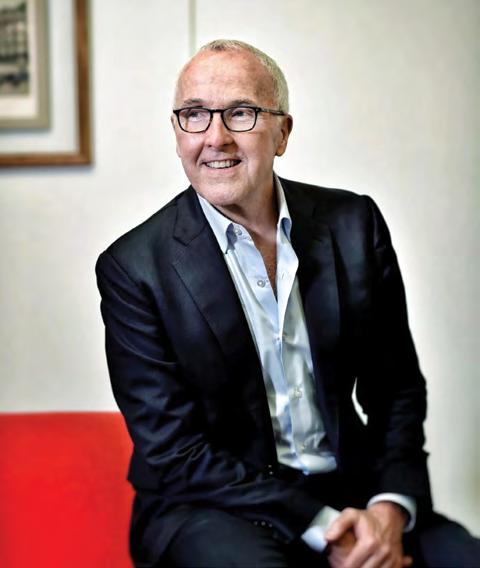
Frank H. McCourt Jr. learned to be a lifelong learner at Georgetown University. Looking to give that opportunity to future Hoyas, he helped establish the McCourt School of Public Policy in 2013.
Photo: Georgetown University
That’s Jack—just an incredibly empathetic, compassionate, generous, supportive human being. I doubled the size of my gift because of him without him asking, because I wanted to acknowledge him when I was in a position to do so. The day the McCourt School became a reality was a great moment. And then to see it flourish as it is… I can’t tell you how proud I am of that.
What’s something you wish everyone knew about the McCourt School of Public Policy?
What makes the McCourt School tick is this beautiful blend of technical skill with care for the person. Being a person for others in the policymaking arena is vitally important because policies need to consider the impact on human beings.
What is your calling? Has it changed with time?
I think my Magis, as the Jesuits would say, is now Project Liberty [an organization focused on building world-class digital infrastructure centered on people, designing sustainable data governance models, shaping smarter policy, and mobilizing a movement for change]. I believe we need to reclaim human dignity in the digital age by reclaiming personal data.
When I was in L.A., I owned the Dodgers. Everything was going great, and then I hit this bump in the road with my first marriage. During that time, I got the taste of what it’s like when social media is weaponized. People can say what they want and you’re in a fairly helpless position. I don’t say that to engender sympathy. I have been blessed with eight beautiful children, a fabulous wife, success in business, and the gift of a Georgetown education.
The point is I had an early look at what was happening with this technology, and how harmful it was going to be if it wasn’t fixed. That experience informed my conversations with Jack about the McCourt School and the need for technological policymaking.
I realized my reason for being was to help address this problem, but if we’re going to be successful, it’s going to require the efforts of many working together, including technologists, companies, academics, and policymakers. •
—Interview by Racquel
Nassor
Frank H. McCourt Jr. (right) shares a laugh with then-president John J. DeGioia in 2013.
Photo: Phil Humnicky
GUSIF participants come from all different backgrounds, many with little to no prior experience in business or finance. They meet weekly to learn and review financial concepts, accounting basics, and more.
Student investors set a high standard
Founded in 1996 by Bryan Giraudo (C’97) and Seong Kim (B’97), the Georgetown University Student Investment Fund (GUSIF) is much more than a club. Students run an active portfolio with $1.8 million in assets from the Georgetown University endowment and Georgetown University Alumni Association (GUAA), often outperforming Standard & Poor’s index.
The 90-member group is highly regarded, with one recent survey concluding that it is “the best finance course in the business school.”
Students from any undergraduate school can apply for membership.
“We’ve set it up like a layer cake to challenge students, and to maintain continuity over time as students graduate,” explains Tom Bianco (B’77, Parent’26), one of the GUSIF
advisors. “There are six leadership levels, so students are always learning new responsibilities. They take it very seriously.”
“Employers have taken note,” adds Noelle Verity Koetje (B’91, Parent’26, ’29), another advisor.
“These students have a high level of knowledge about the investment process. Their efforts mimic the real-world work of an asset management organization.”
Janani Sundaram (B’26) currently serves as CEO and chair of the board. She has been involved with GUSIF since her first semester of college.
“You don’t need a specific background to be selected for GUSIF,” says Sundaram. “Our tiered mentoring system and education structure mean you are learning from the
Photos: Courtesy of Georgetown University Student Investment Fund
“These students have a high level of knowledge about the investment process. Their efforts mimic the real-world work of an asset management organization.”
—NOELLE VERITY KOETJE
(B’91)
upperclassmen when you start. Now it’s come full circle and I get to be the teacher. It’s been such a great community for me through the years.”
GUSIF has seven portfolios: Financial Institutions, Healthcare, Technology, Media & Telecommunications, Industrials & Renewables, Tactical Opportunities, and Consumer
& Retail. Students learn how to research trends, analyze data, pitch ideas using quantitative and qualitative modeling, review risks, and make decisions that are in the best interest of Georgetown University and GUAA.
“Everyone is making a contribution,” she adds.
The time commitment is intense, with homework and weekend meetings. Some seniors are looking at their portfolios a few times a day.
Bianco says that the club members gain experience that directly prepares them for work in an investment firm.
“We have high expectations and they always meet them,” he adds. •
Lecture series unites Hoyas around the world
In 2020, GUAA’s regional clubs began hosting distinguished guest speakers as part of the Manresa Lecture Series, named after the city in Spain where St. Ignatius of Loyola experienced a profound transformation and developed his Spiritual Exercises.
The first event, hosted by the Georgetown Club of Philadelphia, featured Marcia Chatelain, then a Georgetown professor of history and African American Studies, speaking on the continuous work of civil rights in the U.S. Due to the global pandemic, the event was virtual only.
In 2022, the event moved to a hybrid format. Live event hosts have included: the Club of Metro New York, with Mary Jordan (C’83) speaking about the importance of free press; the Club of the Research Triangle, with David Fajgenbaum (NHS’07) talking about his journey from being diagnosed with a rare and deadly disease to his research on finding a cure; and the Club of Seattle, featuring David Coffey (G’03), executive director of Recovery Cafe, on the challenges of addiction recovery.
This May, the Club of Kansas City will be hosting the Manresa Lecture, which will feature former Georgetown Professor Debora Spar, who will talk about how technology is influencing social change.
Top: Fr. Phil Burrows, S.J., Georgetown’s inaugural VP of Mission & Ministry, with David Coffey (G’03) and Jarryd Delaney (SCS’24) at Club of Seattle event; Bottom: David Fajgenbaum (NHS’07) with Club of the Research Triangle leaders
Photos: Courtesy of Georgetown Club of Seattle
WORKING FOR THE COMMON GOOD
The 2025 Georgetown Entrepreneurship Summit was held last November in Washington, DC. A sold-out audience of over 200 entrepreneurs, investors, leaders, and changemakers discussed how ventures can align purpose, profit, and human flourishing to create lasting impact. Conversations featured José Andrés (Parent’23, ’26) and Norah O’Donnell (C’95, SCS’03, HON’24, Parent’29, ’29).
A forum where Hoyas thrive
On March 19–21, Georgetown University Women’s Forum, sponsored by the GUAA, celebrated Georgetown alumni from all 11 schools. The annual event featured speakers, interactive workshops, networking opportunities, and more at the Royal Sonesta Capitol Hill, next to the Georgetown Capitol Campus.
Photo: Phil Humnicky
Photos: Lissa Ryan Photography
5 Things to Do in Cincinnati, Ohio
The Georgetown Alumni Club of Cincinnati “knows how to mix our connection with the Hilltop with the City of Seven Hills.” During last year’s Hoyas Give Baxa event, they volunteered with Matthew 25: Ministries to help sort donated goods for global disaster victims.
Planning a trip to Cincy? Here are a few activities they recommend:
Riverwalk and John A. Roebling Suspension
Bridge —You can cross over this National Historic Landmark on foot and explore nearby Covington, Kentucky.
National Underground Railroad Freedom Center
Tour this inspirational museum on the banks of the Ohio River, once a critical boundary.
City murals—Catch a few of the more than 300 permanent outdoor murals on the city streets.
Chili tasting —This savory-sweet chili is perfect for any occasion, but none better than a ball game!
Cincinnati Zoo & Botanical Garden—Plan a day for exploring Cincy’s worldfamous zoo, especially Fiona the Hippo.
Last November, 575 medical and dental alumni gathered on the Hilltop for the first-ever combined reunion. Attendees enjoyed lectures, tours, class parties, and special events. At the Hoyas on Call luncheon, medical students had the opportunity to mingle with alumni at a relaxed barbeque.
FIRST COMBINED MED-DENT REUNION
Register for the Fifth Annual Manresa Lecture on May 7, 2026.
Professor Debora Spar will speak on “Sacred Goods: Reclaiming Love in the Time of AI.”
Photo: Leslie E. Kossoff
Photos: iStock / Lisa Hubbard, Cincinnati Zoo and Botanical Garden
Where the heart is
Through the Homelessness Outreach, Meals, and Education (HOME) Program at Georgetown’s Center for Social Justice Research, Teaching & Service, DC residents who are chronically unhoused can access resources such as laundry facilities, computers, and food pantries. Hoyas work across the Father McKenna Center, the Georgetown Ministry Center, the Hypothermia Outreach Team, and more.
GOOD AS (RE)NEW
In 2021, students began a sustainability nonprofit: Georgetown REUSE. The group now runs an ecommerce site, blog, and garment repair program called ReStitch. With donation bins located across campus, REUSE diverted over 4,600 pounds of waste from landfills, mended or upcycled over 100 items, and repurposed over 1,300 items in the 2024–2025 academic year.
Photo: Courtesy of
Photo: Courtesy of HOME Program
Class Notes
Tricia Wrotniak (B’89) rode her fourth BellRinger last fall along with her husband, Michael Wrotniak (B’89). Team Dynamite, which included their children Will (SFS’18) and Mary (C’26), raised over $24K.
Sabah Al-Sabah (SFS’04) discovered padel, a hybrid of tennis and squash, while traveling abroad. Since founding Padel Up in Sterling, Virginia, he has brought old classmates, new students, and others to the courts.
When stepping down in October, Tom Sietsema (SFS’83) revealed himself as the food critic for The Washington Post for the past 26 years.
Former Georgetown Women’s Soccer player and 2024 All-American Eliza Turner (B’25) joined FC Porto in Portugal for the 2025–2026 season. She’s the first American on the team.
Read more Class Notes online and consider submitting your own! The archive is searchable by name, school, year, and subject.
Photo: Courtesy of Sabah Al-Sabah
Photo: Marvin Joseph
Photo: Georgetown Athletics
Photo: Courtesy of Tricia Wrotniak
Remembering Paul Tagliabue’s unwavering commitment to
the Georgetown community
Paul Tagliabue (C’62), who served as chair of Georgetown University’s Board of Directors from 2009 to 2015 after a 17-year stint as the commissioner of the National Football League, passed away on Nov. 9, 2025, at the age of 84. Through his generous contributions to a multitude of Georgetown programs, including those that support LGBTQ+ students, Tagliabue leaves behind an enduring legacy that has shaped how the university advocates for its students.
“Paul Tagliabue was a consummate Hoya and carried our Catholic and Jesuit values everywhere he went, from right here at Georgetown to the NFL,” said Georgetown Interim President Robert M. Groves. “Georgetown is a better place because of the service and leadership Paul provided for many years.”
Academic and athletic success
Born to a working-class family in Jersey City, New Jersey, Tagliabue joined the Georgetown community over 60 years ago. As an undergraduate student, he achieved both academic and athletic success, becoming senior class president and captain of the men’s basketball team. He was a Rhodes Scholarship finalist before graduating in 1962 with honors and as the school’s second-leading rebounder.
That same year, Tagliabue won a scholarship to New York University School of Law, leading to a distinguished legal career at the Washington, DC, office of Covington & Burling, where he served as outside counsel to the National Football League before becoming its seventh commissioner in 1989. During his 17 years as leader of the NFL, the league not only saw massive financial success but also an unprecedented commitment to diversity in its hiring.
Paul Tagliabue is survived by his wife Chandler, and his two children, Emily (Parent’22) and Drew.
Photo: Phil Humnicky
“Georgetown is a better place because of the service and leadership Paul provided for many years.”
—GEORGETOWN INTERIM PRESIDENT
ROBERT M. GROVES
A legacy of service in the Georgetown community
Following his leadership of the NFL, Tagliabue joined the university’s Board, serving as its chair from 2009 to 2015, then stepping down to serve to act as vice chair until 2018. His wife, Chandler (Chan), is also a volunteer leader at Georgetown, having served on the Board of Regents from 2015 to 2021.
Throughout their service, the Tagliabues have given generously to the Georgetown community in support of a number of its initiatives, including undergraduate scholarships and the establishment of the Paul J. and Chandler M. Tagliabue Distinguished Professorship in Interfaith Studies and Dialogue.
As longtime advocates of the LGBTQ community, the Tagliabues were key supporters in the opening of the campus LGBTQ Resource Center in 2008. The center, which provides a safe, inclusive, and respectful environment for LGBTQ students, was the first of its kind at a Catholic university in the U.S.
In 2011, the Tagliabues designated $1 million for the LGBTQ Resource Center. A recent bequest from the Tagliabues, which brings their lifetime giving to over $14 million, includes additional support for the center’s programming.
To those who worked with him and whose lives were enriched by his presence and generosity, Tagliabue’s impact reflects a lifetime of caring and respect for the inherent dignity of all members of the Georgetown community.
Tagliabue is survived by Chan, his daughter Emily, his son Drew, his son-in-law Mark Jones, and three grandchildren. •
—Kimberly Clarke
funded key Georgetown initiatives that promote mutual respect and the humanity of everyone on campus, including needbased scholarships and the LGBTQ Resource Center, as well as professorships that encourage on interfaith dialogue.
The Tagliabues have
Photo: Phil Humnicky
Photo: Leslie E. Kossoff
Photo: Leslie E. Kossoff
Award winners pursue sustainable initiatives
Supported by the Office of Sustainability and the Earth Commons—Georgetown University’s Institute for Environment & Sustainability—Green Commons Awards are granted to anyone in the Georgetown community for projects related to environmental and sustainability issues in amounts up to $5,000. Winners have gone on to do important work in their early careers.
Emily Javedan (G’24) received the award to fund The True Price of a Mocha, a data-driven website that ranks coffee shops in Georgetown by both price and environmental sustainability.
“Everyday behaviors often influence big environmental systems and, as a daily coffee drinker, this research felt like the perfect crossover point. The Green Commons
Award served as an early signal in my professional career that I could independently lead a project from concept to execution,” says Javedan, who works for Guidehouse as an energy and business transformation consultant.
“Leaving Georgetown with a funded, public-facing platform has been valuable as I’ve navigated roles that require both analytical rigor and creative problemsolving,“ says Javedan.
Anya Wahal (SFS’23) won the award to create the short documentary film, Water in the West: The Story of Farming in the Colorado River Basin, following the lives of those affected by the water crisis in Arizona, expanding the subject matter from her senior thesis.
“That project has been a big part of my career. I think it’s why I won two scholarships,” says Wahal, who is currently a Marshall Scholar at Oxford doing her dissertation on semiconductors and drought and prior to that completed a Fulbright Scholarship in India working on water access. “Integrating myself in communities has been a big force for how I view my work in equity,” Wahal says.
Fellow Green Commons Award winner Nadia Sadanandan (H’24) used the stipend to start a Food Recovery Network chapter at Georgetown with her co-founder Daniella Passariello (SFS’23). The national network strives to alleviate food insecurity and food waste by recovering surplus food, helping the climate crisis, and improving community health.
Sadanandan, who is now pursuing an M.D./Ph.D. in cancer immunology at the University of Virginia, believes the award strengthened her application to the programs and “improved my understanding of both the social determinants of health and how food access intersects with systemic injustice and health disparities.” •
—Racquel Nassor
Illustration: iStock
Classroom essay helps alumnus tap into creativity
Cole Brown (C’18) is a storyteller who has authored books, produced films and shows, and become a political commentator.
“I’ve always had a curious mind,” says Brown, who walks around with headphones in, always listening to a podcast or an audiobook, eagerly learning something new.
“The project that basically launched my career started in a Georgetown classroom,” he says. “Georgetown’s curriculum challenged me to look at things from every angle. That sort of rigor, ingenuity, and thought process is really necessary to tell a story that cuts through what is a very noisy media environment.”
In an entrepreneurship class, Brown began writing an essay about growing up Black in predominantly white spaces. That essay ultimately turned into his first book Greyboy: Finding Blackness in a White World , which was published in 2020 and resulted in a series of speaking engagements.
He went on to co-author the book First Impressions with his friend Matt James, the first Black star of “The Bachelor” television series, and co-edited an anthology, Black Love Letters, with a foreword from musician John Legend.
Brown then became creator and executive producer of Magic City: An American Fantasy, a docuseries focused on an Atlanta strip club. Through his connection to Jami Gertz (Parent’14, ’17, ’21), who served as executive producer of the show, he was able to finance the series and bring on music industry
heavyweights Drake and Jermaine Dupri as executive producers. It aired on Starz in 2025 and was nominated for Best Limited Documentary Series for the 10th Annual Critics Choice Documentary Awards.
Last summer, Brown directed A Portrait of the American Dream: Oak Bluffs as part of a Ralph Lauren campaign focused on the Black community in Martha’s Vineyard.
“It was the most special thing I’ve done,” says Brown. “All of the models in the campaign were my friends and family, and I directed a film to go along with it.”
He also earned an MBA from Columbia University along the way and took on the role of general manager and head of business operations for the film production company Two One Five, founded by Questlove and BlackThought of The Roots.
Brown’s family traveled extensively when he was growing up, providing him with exposure to many different cultures. But it was at Georgetown that he gained lifelong, global friendships.
“I probably see five or six Hoyas each week,” he shares. “And when I travel, there are very few countries where I can’t call someone and sleep on their couch—and that’s a blessing.” •
—Nowshin Chowdhury
Cole Brown (C’18), author, producer, and political commentator, stays connected to Georgetown by visiting the Hilltop when his work brings him to Washington, DC, and lifelong Hoya friends.
Photos: Courtesy of Cole Brown
Hoya celebrates America’s 250th
Caroline Klibanoff (C’12) shares her passion for American history as the founder and leader of Made By Us, a national network of over 450 museums and historic sites engaging younger generations in history and civics.
“Young adults are often overlooked in museums that focus on programming for school age children on field trips or older adults who may become donors,” says Klibanoff. “Yet this is a critical stage of life for developing one’s civic identity, and museums are positioned to help.”
Made By Us addresses the gap for young adults ages 18 to 30, connecting them with museum resources, online and in-person.
“Museums are some of our last trusted institutions for knowledge. They’re seen as relatively nonpartisan and reliable,” she says. “Museums can provide a safe haven for every generation that wants to be informed and inspired by history.”
Last summer, Klibanoff opened a Wish Wall mural at the Smithsonian’s National Museum of American History during the Civic Season period between Juneteenth and the Fourth of July. The Wish Wall invited 10,000 visitors to share their wish for America’s future. The Smithsonian collected wishes for a time capsule that will open in 50 years.
“When we look to the future as well as the past, we realize we have a role in the story of American history,” she says. “I want everyone to have a basic history education. Every type of job can be helped by knowing history.”
As the country looks to its 250th anniversary this summer, Made By Us will launch more than 250 Wish Walls nationwide. Civic Season events, including Wish Walls, will take place across the nation, powered by an innovative Youth250 Bureau—a hotline of young people helping institutions improve 250th museum offerings geared toward younger generations.
“I came to Georgetown to study American Studies. I love U.S. history, literature, and culture, so it’s a dream for me to be part of planning the U.S. 250th and working with hundreds of history organizations,” she says.
“My Georgetown experience put public service at the forefront of the work I do. The idea of people for others is a fundamental building block of our democracy, and we need it more than ever,” says Klibanoff. “I love the name of the Called to Be [campaign]—that really is what it feels like to work on this big anniversary. I get to work on the challenges of the moment that I was given, and history teaches us that too.” •
—Racquel Nassor
Caroline Klibanoff and her Civil Season team—including fellow Hoyas Joseph “Scottie” Vandy (C’27) and Wyatt Nako (C’26)—celebrate the U.S. 250th celebration in front of the Wish Wall mural at the Smithsonian’s National Museum of American History.
Cynthia Groves, leadership coach and adviser to the Kosoy Women in Business program at Georgetown’s McDonough School of Business, wanted to provide students and earlycareer professionals with a playbook on how to navigate the invisible rules in the workplace. She turned to six alumnae, publishing their advice in a new book entitled Mastering the Corporate Chess Game: Strategies for Advancing Your Career.
The book features chapters from alumnae across Georgetown as well as top executives across industries, including a foreword by Norah O’Donnell (C’95, G’03, HON’24, Parent’29, ’29), CBS News’ senior correspondent and a 60 Minutes contributing correspondent.
Advisory Board for The Corp while teaching at the Law Center. She was the recipient of the John Carroll Award in 2018.
“Georgetown instills in you a focus on others, and I try to live those values every day,” says Stebbins. “Big Law firms are not the easiest place to work, so I try to mentor young associates. I also acknowledge their contributions because sometimes just saying, ‘Good work’ goes a long way.”
Cameron Rogers (B’10), a partner at Angeles Wealth Management, recounts in her chapter how discomfort and career stagnation can fuel growth, innovation, and alignment between your values and professional work. She is passionate about financial literacy and helping women develop greater agency over their money.
“When you’re in law school, you’re trained to practice law, but no one tells you about the business of law.”
—ANN BETH STEBBINS (C’86, L’94)
In her chapter, Ann Beth Stebbins (C’86, L’94), a partner at Skadden, Arps, Slate, Meagher & Flom LLP and Affiliates, dispels the myths about working for Big Law, explaining that while it is demanding, it can also be rewarding and intellectually stimulating.
“ When you’re in law school, you’re trained to practice law, but no one tells you about the business of law,” says Stebbins. “How you get ahead in the law firm often ties to the business model of the law firm and what you as a young lawyer can contribute to the success of the firm.”
Stebbins served on the Georgetown Board of Regents, Board of Visitors at the Law Center, and still serves on the Alumni
When she was a sophomore, Rogers joined the Georgetown Student Credit Union and she graduated into the workforce during a global financial crisis. She didn’t have a linear career, so she shares how others can adapt to meet opportunities and pursue their passions.
“I had a period of inertia that created a period of reflection that turned into my next catalyst point,” says Rogers. “I figured if I can articulate what happened, perhaps it could be helpful to others.” •
—Nowshin Chowdhury
Illustration: iStock
LIVES WELL LIVED
Lives Well Lived honors alumni, faculty, and staff who have recently passed away. We share with you these portraits of people who have made an indelible impact living day to day as people for others. Memories collected by Patti North.
You can find a more complete list at alumni.georgetown.edu/in-memoriam.
Peter Neil Clare (L’88)
Peter Neil Clare passed away on May 16, 2025, in Washington, DC. He was born on August 20, 1964, in Jamaica, West Indies. While he was still a child, his family moved to Long Island, New York. Peter attended the University of Pennsylvania, earning a B.A. in history in 1985. He followed his undergraduate studies at Georgetown University Law Center, earning his J.D. in 1988.
Peter dedicated his early career to affordable housing development in East-of-the-River DC. He rose to vice president of ARCH Development Corporation, leaving in 1994 to become executive director of East of the River Community Development Corporation. In 1996 Peter was named president of the Coalition of Non-Profit Housing Developers. Peter was also an adjunct professor of housing law at Georgetown University Law Center and Howard Law School, as well as a consultant to DC housing redevelopment projects.
Peter was a Renaissance man, having co-founded 8ROCK Cultural Arts Organization in the mid-1990s
and serving as a commissioner on the DC Commission for the Arts and Humanities from 1997 to 1999. In 2007, he started College Tribe, a nonprofit mentoring program for Black boys with a focus on STREAM (Science, Technology, Reading, Engineering, Art, and Math) education, to support and develop future Renaissance men.
He is survived by his partner Michelle Bonner and son Zac Clare. As fellow Hoya Fr. Raymond Kemp said of Peter, “Each of us needs to recall what Peter would have us do—exactly what he was trying to do: make a way for those who need a way to thrive, not just to survive. To develop each and every of their God-given talents.”
Jennifer Lyon (M’93)
Jennifer Hwei-Ming Lyon (formerly Skillman, née Kok) passed away on June 19, 2025, in Portland, Oregon. Born on June 29, 1968, in Kuching, Malaysia, Jenny graduated from Wellesley College in 1989 and went on to earn her medical degree from Georgetown School of Medicine in 1993, where she was elected senior class president. She completed her pediatric residency at the University of California, San Francisco (UCSF) and served as chief resident in her final year.
As a child, she was inspired to pursue medicine by her late father, Daniel Kok, a family physician practicing on the island of Borneo. Jenny was diagnosed with insulindependent diabetes in her teens, which further deepened her passion to help others, as she understood the patient’s perspective.
Becoming a pediatrician combined her love of children with the joy of healing. While living with several chronic illnesses and undergoing multiple organ transplants, Jenny
researched and sought the best care to manage her medical conditions.
She was devoted to her faith and found strong church communities in every city she called home—from her early years in Palo Alto to her time on the east coast, in San Francisco, and in New Mexico. Her sister, Cindy Hinman, said “Jenny pursued a life of compassion and purpose.”
She is survived by her daughter, Sarah Skillman; mother, Elizabeth Kok; sister, Cindy (Adrian) Hinman; and Bob and Cathy Kennedy, her uncle and aunt. The family asks that memorial gifts be directed to Habitat for Humanity, an organization near and dear to Jenny’s heart.
Ricardo
Ortiz
Ricardo Ortiz, an English and American Studies professor who taught at Georgetown for more than 25 years, passed away on Aug. 18, 2025, after a heart attack. He was 63.
Born in Cuba, Ricardo emigrated to Los Angeles with his family in 1966. He received his undergraduate degree in English and economics from Stanford University in 1983, master’s in 1987, and doctoral degree in English in 1992 from the University of California, Los Angeles. He taught at San Jose State University and Dartmouth College before joining Georgetown’s faculty in 1998. He served as chair of the English department from 2015 to 2021, then as director of the Master of Arts Program in Engaged and Public Humanities from 2022 until his passing.
Known almost as much for his infectious laugh as his scholarly achievements, Ricardo was also a sponsor and advocate for programs serving students, including the Georgetown Scholarship Program, the Black House Diversity Initiative, and the LGBTQ Resource Center. It was his advocacy, in part, that led to the establishment of the Center—the first in the nation at a Catholic university.
About Ricardo’s advocacy, Shiva Subbaraman, the LGBTQ Center’s first director remembered, “He said the LGBTQ Center gave us the chance at a Catholic school to reimagine our possibilities; that our lives are not simply about coming out, but a coming together of all of that we are called to be; of who we can be; and of who we can become. And he saw us in the fullness of our work in Student Life the way few do.”
Paul O’Neill (C’86, G’96), Ricardo’s fiancé, attributed his love for education to the transformative power it had on his own life, “He saw in students his 18-year-old self, and he wanted them to experience the flourishing that he experienced as an undergraduate. Kids who were immigrants, kids of color, and kids who were queer—he wanted to make sure that their experience in his classroom was an equalizing experience.”
In recent years, Ricardo worked as an advocate for public humanities scholarship and teaching. He helped establish, and then directed, Georgetown’s MA in Engaged and Public Humanities. Nicoletta Pireddu, director of the Georgetown Humanities Initiative recalled, “Ricardo was
the first person I would seek out to share the excitement of what Georgetown Humanities was beginning to build, to test half-formed plans, and to brainstorm new ideas. He met every one of them with that distinctive ability to make others feel seen, heard, and capable of more.”
Ricardo published two books in Latinx studies and more than 40 other academic works in the humanities. He was working on a book about Cuban Paris when he died.
He is survived by his fiancé, Paul O’Neill; sisters, Ana Mercedes and Ana Rosa; and nephews, Colin, Andrew, and Daniel. Georgetown has established the Ricardo L. Ortiz Endowed Humanities Fund to honor his memory and support the work to which he dedicated his life.
“We would not be the university we are today without Ricardo Ortiz—and I am confident his legacy will continue to shape this institution for years to come,” Interim President Robert Groves said at the memorial service. “How fortunate we have been to share this community with him for 27 years.”
Reverend TauVaughn Toney, Protestant Chaplain, on life’s questions
How did you come to the work of university chaplaincy?
While in seminary at Princeton, I did my internship in their Office of Religious Life. I liked being able to wrestle with students’ tough questions and bring the heart and mind together, balancing the spiritual and intellectual. Now in my fourth year at Georgetown, I am where I am supposed to be for such a time as this.
What does call mean to you?
When I think about calling, the words of womanist theologian Katie Cannon come to mind: “To do the work your soul must have.”
What spiritual needs do you encounter at Georgetown?
Like with any place, the needs are diverse and many. Our students have questions about everything going on in the world. We accompany each other in community to share those questions, to celebrate those questions, or just let people know that we have those questions, too. Hopefully God answers, and if not, we have each other to wrestle with and live with unanswered questions. Sometimes we try to run from or work through or grind away questions, but sometimes God is calling us to just sit with them, in community.
Another spiritual need is finding community. It’s one thing to be a student body, but to actually be in
community is different. Our work in Protestant ministry is to provide that sanctuary for anyone to just come and be. We don’t have to try and be anything beyond what God has already created us as. We live into that and do the work that our souls must have.
What might surprise alumni about your work?
Maybe that students really appreciate what those before them set in place and take ownership of continuing traditions, like the Gospel Choir. Also we welcome alumni back for special events like Friends and Church Family Sunday, and Reverend McGee Sunday, celebrating the ministry of our first Protestant chaplain, who started at Georgetown in 1972. He preached the DC ordination service for some of the first women in the Episcopal church, and his wife was one of the ordinands.
How do you measure success in chaplaincy work?
For me success is not something that you can quantify. It’s more a quality of life, a feeling, like when students say, “Oh, I really enjoyed our conversation.” You don’t always realize the work that you’re doing. My prayer for each of our students, and alumni, is that they find that kind of success that doesn’t grind the life out of them, but the success that gives them life, that helps us wake up and be grateful for what we have. •
—Interview by Jane Varner Malhotra
Photo: Phil Humnicky
Pop quiz
Do you recognize this annual performance? Visit magazine.georgetown.edu to see if you’re correct!
2115 Wisconsin Ave., NW, Suite 400 Washington, DC 20007-1253
Email: magazine@georgetown.edu
Address changes: 202-687-1994 or email alumnirecords@georgetown.edu
Spring 2026, Volume 57, Number 1 Georgetown Magazine (ISSN 1074-8784)
Georgetown Magazine is distributed free of charge to alumni, parents, faculty, and staff. The diverse views in the magazine do not necessarily reflect the opinions of the editors or official policies of the university.
Georgetown University provides equal opportunity in employment for all persons and prohibits discrimination and harassment in all aspects of employment because of age, color, disability, family responsibilities, gender identity or expression, genetic information, marital status, matriculation, national origin, personal appearance, political affiliation, race, religion, sex, sexual orientation, veteran status, or any other factor prohibited by law. Additionally, the university will use good-faith efforts to achieve ethnic and gender diversity throughout the workforce. The university emphasizes recruitment of women, minority members, disabled individuals, and veterans. Inquiries regarding Georgetown University’s nondiscrimination policy may be addressed to the Director of Affirmative Action Programs, Institutional Diversity, Equity & Affirmative Action, 37th and O Sts. NW, Suite M36, Darnall Hall, Georgetown University, Washington, DC 20057, or call 202-687-4798.
“Lecterns are not one size fits all,” says Amy Kenny, director of the Disability Cultural Center. Kenny, who uses a mobility scooter, found her view was often obstructed behind a lectern when presenting. Michael Pasimio (SFS’22, G’26) and Sarah Craig (SFS’23, G’26), pictured here with Chloe Smith (N’26) (far left) and Amy Kenny (seated), used skills from Georgetown’s Learning, Design, and Technology program to design an accessible, adjustable lectern that is now being used in Riggs Library.