Spider Problem White Tail Spider Eradication
Variously known as White Tail spider, Whitetail spider, White-tail spider, Whitetailed spider, White Tailed spider etc.; this Australian invader was first recorded in New Zealand in 1886, at Waiwera, Auckland.
It is believed that it came into the country with early colonists and is now well established throughout the North Island and is prevalent in many parts of the South Island. They are common in urban dwellings.
White Tails are active hunters, preying upon other types of spiders, and may be found roaming inside houses, especially in warmer weather. White Tail spiders have been implicated in cases of ulceration or necrosis following spider bites.
The incidence of ulceration following White Tail spider bite is not known. The majority of cases appear not to develop ongoing ulceration, although blisters and redness are common.
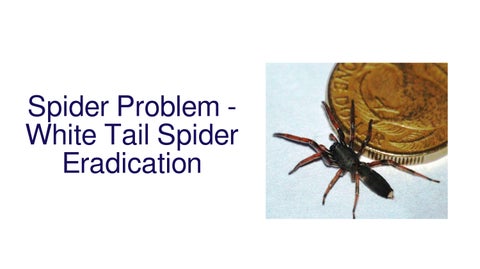
White Tail Spiders are slender looking, 1-2 cm in length, typically grayish or sometimes brownish in colour with orange to brown banded legs and usually with a distinct cream-white marking on the tip of the tail. Males and juveniles may have additional white spots on either side of the abdomen.
The leg span of a fully grown specimen is about the size of a fifty-cent coin. The two species present in New Zealand: Lampona cylindrata and Lampona murina cannot easily be distinguished from one another without close examination under a microscope.
The White Tail spider’s preferred habitat is under dry bark and plants, but they will often be found inside houses, where they look for shelter from the light after hunting at night. They are also known to move indoors in the winter to seek shelter from the cold.
The White Tail spider often hides in clothing and shoes, especially if they have been left lying on the floor. As White Tails eat many other kinds of spiders one sign that White Tail spiders are sharing your house is that there are few cobwebs and there are no other spiders to be found.
White tail spiders have been implicated in cases of ulceration or necrosis following spider bites. It is not clear whether white tail bites do cause ulcers but they do cause painful bites. These spiders do not build a web to catch their prey as they are active hunters.
The White Tail spider will cautiously enter the web of its intended victim and mimic the struggles of a trapped insect by plucking at the web. This may trick the resident spider into investigating the disturbance and so instead of gaining a meal, it becomes one when the White Tail strikes.
There are numerous accounts of particularly nasty bites that are caused by White Tail spiders. Where these spiders are positively identified as causing a bite, the bite will cause instant pain followed by typical symptoms including ongoing pain, discomfort and swelling at the bite site.
The bite can develop into a small ulcerous wound which can look similar to a boil. In some instances, victims report flu-like symptoms. Particularly nasty infections can leave scarring.
Find Out More At https://pest-control-palmerston-north-ltd.business.site