




As we move forward, our website will be improved and expanded in an effort to meet the needs of our members. The tenant court list is updated each month to provide the most current information to our members. Remember to tell your friends, buyers and sellers to check out our website too. You have the ability to print out rental forms. Members can advertise their rental property on our website. We also have a Facebook page. Check us Out!
Danny Peterson Paul Ruszkowski
We look forward to seeing you at our meetings. Please take advantage of the networking opportunities before and after the meetings.
Your membership in our Association gives you the chance to meet and learn from experienced investors whether you are starting out or are a longtime Landlord. We also have special Meetup meetings, the ability to obtain credit reports and past court evictions on prospective tenants, just to name a few services.
Are you doing business in a landlordfriendly area?
Some cities are easy to work with. Others seem to make your life difficult at every turn.
If you are searching for new investments, pay close attention to whether the community is landlord friendly.
There are still cities out there with no rental inspections at all. Others have inspections, but they are reasonable with both their expectations and the fees they charge. Then there are communities that make owning rentals unnecessarily difficult. My advice don’t do business in those areas. Life is too short, and our margins are too thin to deal with the extra stress and red tape.
As investors, we need to think beyond just the purchase price and rent amount The city you choose to invest in can have a major impact on your profitability, your time, and your peace of mind.
Choose wisely, invest smart, and focus your energy where you are wanted.
For the love of real estate,

Remember, for each new member you sign up with your name listed on their application, you will receive a $25 credit towards your renewal dues.
Arrive at the General membership meeting at 6:30 pm and bring your business cards.

• Monthly Meetings with expert guest speakers on a variety of topics
• Monthly newsletter containing valuable, up-to-date information
• Rental and Court forms
• Credit reports available on prospective tenants & access to OnlineRentApp.com
• List of Past Evictions
• The GLA website offers valuable Information & Rental Marketing.
• Discount on Sherwin Williams
• Networking with other investors, face to face
• Friendly office staff with answers and advice
• Notary public at GLA Office during business hours at no charge
To become a member of GLA mail your name, address, phone number and check payable to GLA G4428 Fenton Rd, Flint, MI 48507 OR on the web at glaoffice@geneseelandlords.org
Membership Application on Page 6
$197 NEW MEMBER FEE
$110 Renewing Member
You can't afford not to join!
The information that is requested is for the Landlord’s exclusive use, and the Landlord certifies that inquiries will be made ONLY for permissible purpose, namely in connection with a business transaction initiated by the consumer. Specifically for rental of home account to determine whether the consumer continues to meet the terms of the account such as rental of property. Landlords may not obtain reports on themselves, associates, family members, or any other person, exception the exercise of official duties. The law prohibits the Landlord from providing a copy of the report to the applicant.
Applications completed in black ink only. Please be sure member name is on application and is signed.
Check to make sure the name, SSN, current address, city and zip code are readable. Make sure application is signed by the tenant giving you permission to run the credit report. The office cannot complete the credit report unless it is signed by the applicant. And again, make sure the Landlord name is on the application and signed.
# of bedrooms
Monthly income of applicant
Security Deposit to be paid
Monthly rent to be paid
Lease term
If renting now, monthly rent
Credit reports can only be ordered by members whose account status is current. Nationwide criminal search can also be obtain on your prospective tenants.
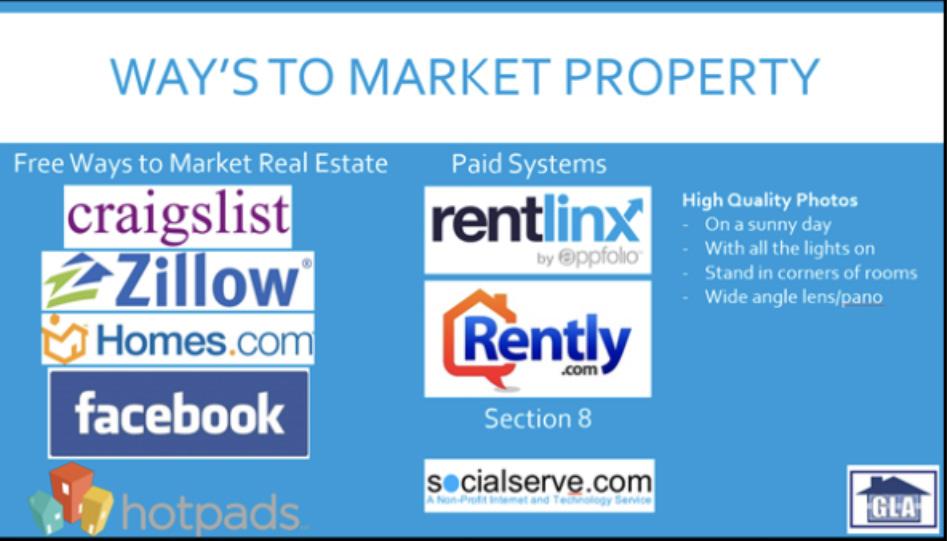
Do we have your email address?
We will notify members of important happenings and dates through email; be sure to keep current on information by providing the Genesee Landlord Office at (810) 767-3080 or email us at glaoffice@geneseelandlords.org
Please type or print and enclose this application with your check. One year membership fee is $197.
Name Address
City Zip
Phone
Fax
Spouse’s name
How did you hear about us?
Were you referred by a GLA member? If yes, who?
Please make check payable to : G4428 Fenton Road, Flint, MI 48507
VISA MASTERCARD Other
Number
Exp. Date Sec. Code
SIGNATURE x
Your membership in GLA affords you the possibility of becoming a more professional landlord, investor, or manager. Your continued support and participation in GLA provides the opportunity for a stronger association.
One faithful member was feeling rather blue, met with a neighbor, and then there were two. Two earnest members each enrolled one more, doubling their numbers; then there were four. Four determined members just couldn’t wait till each won another, and then there were eight! Eight excited members signed up sixteen more; in another six verses, there will be a thousand twenty-four!
- Author Unknown


TransUnion requires certain information from our members in order for us to provide credit reports or to obtain reports from your office directly through TransUnion. We are required to verify the security of stored documents by our members. This means that each member will have an on-site verification of their place of business (or their home office if they manage their rentals from home).
Our members should be aware that to continue obtaining credit reports from the Association, you will be required to complete this process. There will be no invasion of your privacy by this inspection. The inspection is performed by a person on behalf of GLA.
The verification requires each member have:
• Locked file cabinet or drawer where reports are stored;
• Secure office (a lock on the room where the reports are stored);
• Alarm system (optional)
• Paper shredder
• Picture of entire office (inside and out), picture of office sign (address must show on office, house and/or mailbox) to verify current location
• Driver’s license
• Password protected computer
*Once completed email information and pictures to Linda at geneseelandlord@comcast. net
The sole purpose of the physical verification and photographs is to protect our members and the Association from a claim that the credit reports and other information concerning potential tenants was not kept secure.
Failure to comply will require you to purchase credit reports through the old system at a cost of $17 per report. If you do comply the cost of the credit report will be $12.
We are still receiving incomplete and unreadable rental applications. The addresses and social security numbers are difficult to read. We must have the current address including city and zip code to run credit reports. Also all blanks on the application must be completed. PLEASE double check the information on the application for accuracy before you fax it to our office.
MAKE SURE ALL THE INFORMATION IS READABLE. If the information is un-readable or important information is missing, we cannot process the rental application. This will certainly enable our staff to process the application quickly and accurately. Your cooperation will be appreciated.


FOR RENT SIGN
HEAVY DUTY WIRE STAND
INVESTOR PACKAGE
$10
$5
$25
PREMIUM INVESTOR PACKAGE $50
LEAD PAINT BOOKLET (EACH) $.75
LEAD PAINT BOOKLET (50) $25
7 DAY NOTICE, 30 DAY NOTICE, COMPLAINT AND SUMMONS FORMS (EACH)
7 DAY NOTICE, 30 DAY NOTICE, COMPLAINT AND SUMMONS FORMS (100)
$.50
$30
GLA MEMBERSHIP $197
For your convenience, we take orders over the phone and at our meetings for pick up or delivery (with shipping cost) of the items you need most and use everyday in your business.


It is imperative that owners request hard copies of credit reports. Credit reports can change daily, and there will never be another report exactly the same as the one the owner ran to determine acceptance of a tenant. Without a copy of the report, the owner cannot prove the financial reasons for acceptance or rejection if challenged in court.
Resident harassment and bullying can happen at any property, and these situations are often difficult to handle.
Conflict is inevitable, but it becomes a serious issue when resident bullying or harassment rises to the level of a Fair Housing Act violation and can no longer be tolerated.
By The Fair Housing Institute
It’s simply a part of managing any property; your residents aren’t always going to agree. This makes conflict inevitable, but the key turning point is when it turns into bullying and harassment. To be clear, the Fair Housing Act states that resident bullying and harassment cannot be tolerated. Are you sure that your property, as a whole, has the best practices in place when it comes to resident bullying and harassment? Let’s go over four key points that occur during this situation and highlight best practices for each.
Your staff members typically have the most contact wih your residents. They’re the listening ear and first point

of contact for many issues, including incidents of harassment and bullying. So, what should happen if your staff member witnesses a case of resident bullying?
First and foremost, any member of your staff who is not involved with management should not get involved in the situation in any way. This is because not all staff members will have the training to discern a personality conflict from a conflict based on a protected category/ class.
The training you should invest in for all staff members is twofold: incident reaction and documentation. Training all staff members to stay a witness to an incident involving resident bullying and harassment is your first step. The next steps are to ensure that everyone understands how to document the witnessed occurrence properly. Any little detail missed can
affect management’s investigation of the incident.
So, a staff member has witnessed and documented a conflict between two residents that they perceived to be bullying and/or harassment. What are management’s next steps? Along the same lines as staff-member training, ensure that every step you take is well-documented when following up on the reported incident.
Your first important step is to establish that there is bullying and/or harassment taking place between the residents. If there is enough evidence found to support this claim, you cannot hesitate to launch an investigation. Why is this?
The most important answer to the above question is quite simple: Investigation hesitation can lead to a violation of the Fair Housing Act. It is illegal for harassment to persist with no action on behalf of the housing provider.
As a follow-up answer, the housing provider will almost always be the focus of the legal case if a court investigation is launched. This is based on the fact that the housing provider is operating as an asset of
a property management company, therefore, they have more money to pay in a settlement, as opposed to an individual who was the cause of the bullying. In summary, if you want to avoid a pricey settlement on top of a violation fine, it’s best that you launch an investigation as soon as it has been proven that harassment is taking place.
Once you have your documentation in place, from the incident report to the investigation, it is up to management to issue consequential action. Bullying and harassment are not only against the Fair Housing Act, they also are violations of the resident’s lease.
Depending on the severity of the situation, a lease violation or termination can be issued. A zerotolerance for bullying and harassment policy can also be installed as part of your property for further proof of a decision made by management.
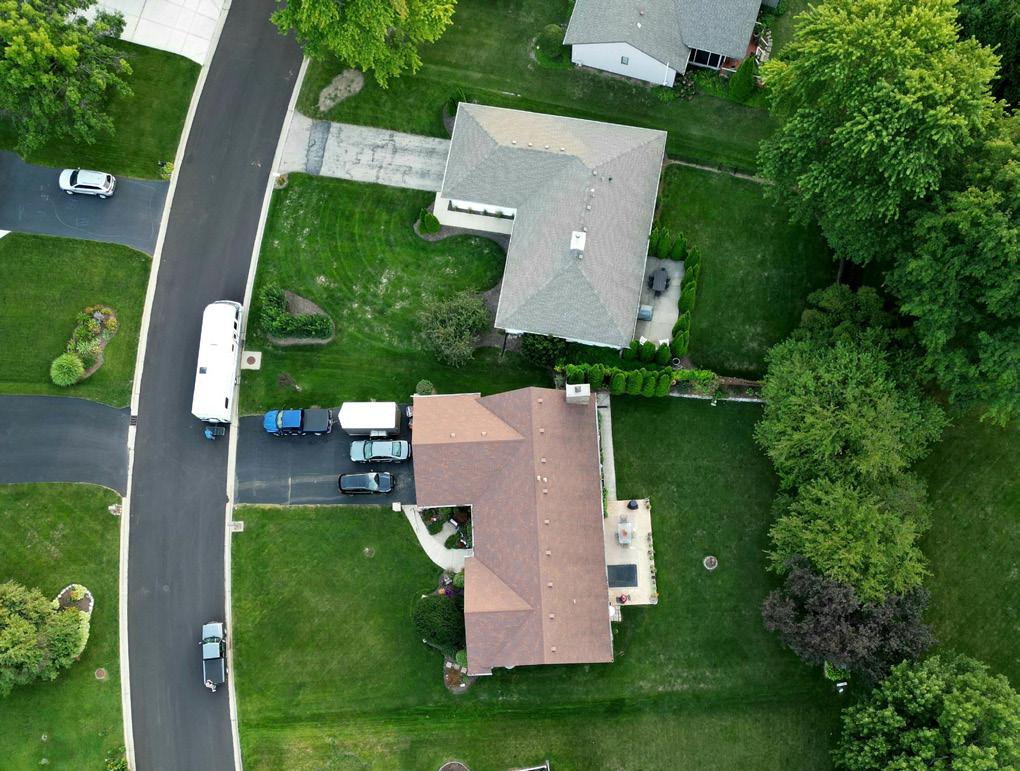
Here are 6 things to consider if you rent by the room- or want to do so – which can be financially beneficial but with some cautions.
Hula Hoop. Pet Rock. Rubik’s Cube. All fads that had their moment and, every once in a while, resurface with a new generation.
There is another old/new idea that is becoming a more popular option in an expensive and competitive real estate market: renting by the room.
A look back in history would show that renting by the room is not a new concept; in fact, it has probably existed for thousands of years in one form or another. But today’s environment brings challenges that likely never existed before. So, let’s take a deeper dive into this scenario and see how it may affect you as an owner and investor.
If you are like other investors, you have enhanced your portfolio with residential real estate, including single-family homes, condos, and apartments.
However, as the market has changed, you may find your earnings are falling short of what you wanted or projected. One

effective strategy to increase your return on investment is to rent by the room instead of leasing the entire property to a single tenant or family.
Renting out individual rooms can provide you as a landlord with multiple sources of income from several tenants, resulting in more consistent and profitable rental payments. While this approach can be financially beneficial, it does come with a few key things to consider:
No landlord wants an empty property, and by providing more affordable options, this becomes less likely. Renting a room can significantly lower living expenses for tenants. For instance, a threebedroom home that typically rents for $2,000 could be split into three rooms renting at $800 each, making it more affordable for individuals.

2. Increased income for landlords: The potential for increased income is music to every landlord’s ears. By renting to multiple tenants, landlords can maximize their rental income. That same three-bedroom home could generate $2,400 monthly if each room is rented separately.
3. Increased liability: Having multiple tenants with no connection to one anotherinstantly adds liability and tension into the property. With the sharing of common spaces and bathrooms, there is an increase in opportunities for interactions that could cause discomfort. More than ever, doing proper background screening is critical in protecting your interests and your tenants.
4. Potential for high tenant turnover: While renting by the room can yield higher revenue, there is a greater chance that you will experience more frequent tenant changes. As you know, every
time a tenant leaves, this creates extra work in finding, screening, and placing new tenants into the property. And renting by the room may limit your potential tenants as it may not be the perfect fit for everyone.
5. Increased communication: More tenants inevitably mean more calls about noise complaints, maintenance issues, and other issues that present themselves when you have unaffiliated individuals sharing a space. Are you ready as a landlord to take on the stress and extra workload that communicating with multiple tenants in the same property will bring?
6. Hidden costs:


an area new to most landlords, there are a lot of unknowns. There will be additional expenses, such as increased utilities and maintenance costs, that you previously haven’t experienced. Shared costs, like heating and landscaping, might not be easily passed on to tenants and could have an impact on overall profitability. Shared costs also create one more tension point as tenants compare their “use” to the cost they are paying, opening additional hidden costs related to legal or management fees you weren’t expecting. In areas of the country that require separate metering for utilities, this creates another cost that many landlords did not anticipate.
It’s not all gloom and doom, though. Most landlords typically lease their properties to a single family or individual. However, renting by the room can be a viable option, even in your primary residence. For tenants, especially young
professionals or students, sharing a house can be a more affordable option in high-rent parts of the country.
While renting by the room can be an effective strategy for increasing rental income, as we’ve discussed, it’s not without its challenges. Landlords must weigh the benefits against potential conflicts, hidden costs, and the hassles of managing multiple tenants. Whether renting by the room is just the latest fad or the new normal, thorough consideration is key to determining if this approach aligns with your long-term investment goals.

Here are 8 reasons to manage rental maintenance requests with property management software to improve communication between landlords and tenants.
One of the most stressful parts of being a landlord is getting a midnight call or text about a repair that’s needed. Even when it isn’t urgent, there’s still the burden of carrying the knowledge that a problem needs to be solved.
Managing rental-maintenance requests using property management software creates one portal where tenants and landlords alike can communicate and coordinate property repairs and upkeep, whether they be routine or an urgent problem.
With the right property management tool, rental-property maintenance can become far more efficient for landlords. You can keep all documents and records of rentalmaintenance requests in one place, which makes progress-tracking and communication easy.

Here are some of the reasons you should use property management software to manage rentalmaintenance requests:
Some property management tools such as Hemlane gives you access to a 24/7 repair coordinator that can handle your middle-of-the-night emergencies. The coordinator is responsible for diagnosing and troubleshooting rental-maintenance requests, scheduling dispatch, and coordinating with your service professionals and renters.
Property management software makes it unnecessary for many landlords to hire a property manager because it makes tasks such as advertising, screening, rent collection, and maintenance management efficient and easy. Whether you want to use these tools to make your life easier or pick one that takes most duties off your

shoulders, property management software offers you huge savings over hiring a traditional property manager.
A property management platform makes it easier to communicate with all necessary parties. It puts all the messages between you and your tenant together in one place, where it is easy to reference. Often you can loop in your chosen service provider (such as a plumber, repair person or electrician) so that you can share information and schedule visits without a lot of back and forth. Some tools also have a mobile app so you, your tenants, and your vendors can track progress on the go.
When it comes to communicating
about repairs, every bit of information you have helps you sort out the problem most effectively. Many property management software tools allow users to share photos and/or videos related to the repair job, making it easy for everyone to know the problem and track the progress of repair work.
Property management software allows you to keep track of important tasks, monitor progress, and store related notes and documents. Landlords can set reminders for routine maintenance and even schedule time-insensitive repairs. With Tenant Cloud, for instance, you can document priority levels, due dates, and more, and share them with the appropriate parties.
Many tools have an intuitive maintenance dashboard that helps managers track outstanding and

completed work. For example, in Rent Redi, landlords can view a timeline of activity on all rentalmaintenance requests in the maintenance-request dashboard. They can view the status of each maintenance request.
Renters also receive status updates automatically via email and text. They can add more details about the maintenance issue and provide their availability.
Tax season can be challenging, especially if you have to scramble around trying to find paper receipts and piece together all rental incomes. With a property management tool, you can easily upload invoices and receipts for individual maintenance tasks.
Landlords and property managers can create work orders and track expenses associated with a repair. Many property management tools allow you to assign expenses to individual units and/or renters. Some platforms can also pull together repair bills, other expenses, and online rent payments that you receive.
Along with landlords and renters, vendors or service providers also

participate in the rental-property maintenance process. With a property management software tool, you can bring your service providers into the system. This speeds up communication and streamlines maintenance tasks. Many of these tools allow landlords to create work orders, receive bids, and pay vendors all from within the platform.

Before you hire any property manager or property-management company, have these questions on your list:
No. 1: How Familiar is Your Team with Current Trends in Real Estate?
Real estate investment is a fickle game. So, you want to make sure to ask your potential property managers about the trends in place right now. This will show you how much market knowledge they have. That’s important for managing and maintaining your real estate in the best way.
Your potential property manager should be able to reach out and find reputable tenants to fill your property. This is an easier task than it was in the early 2000s, as the number of people renting property within the United States has gone up in various cities.
No. 2: How Do You Stand Apart from the Competition?
While it might be a bit awkward mentioning competitors to any potential property manager, this is a good way to filter out the really good companies. If you’re interviewing a genuine professional, he or
she will mention the competition respectfully and display knowledge of the local market trends.
Asking about the competitors will also bring the conversation to how this potential propertymanagement company is unique in its pricing and services. The company representative should be able to explain what makes the company different and better than the rest. Ideally, they should also provide some client references so you can be sure about going ahead.
If you interview a relatively new company, chances are that they won’t have relevant experience in the real estate industry. Their prices might seem affordable, but it’s just not worth taking the risk.
The questions you ask will tell you if the company is efficient and reliable enough to run everything properly. Even an expert can find it difficult to maintain real estate these days. So, you should ask to get in touch with previous clients as well.
You can also ask why and after how long precious contracts ended,
whether there’s a record of unethical practices, etc. Such details are critical. So, don’t feel strange about asking.
Keeping up with real estate trends also means that modern property managers should stay updated on the most important digital tools. Almost every industry has made changes to incorporate software and other forms of technology to make its process easier and smoother.
Ideally, your potential propertymanagement company should have software solutions that make its system easy to work for you. You should also be comfortable with the setup the company has, since this is what will be used to maintain your real estate.
The communication software the company uses is also important. This is how the company will get in touch with you. So, make sure that it fits your requirements.
One of the most essential questions to ask a potential property manager is about the income from your real estate. This usually means determining what the rent will be from the tenants. The answer to this concern lies in
knowing how real estate works within your state, city, and specific area.
Make sure you know about the details of the rent formula from the property manager. This is also the point where you give your own views about the rent and how it’s set. That way, both parties will remain on the same page and can move forward without much confusion or resentment.
Rent collection is usually be the responsibility of property management companies. This is why it’s best to hire one that has been working with the latest solutions. With automated payments and online systems, you can be sure of quick, convenient collection on all sides.
If your potential property manager has a quality software solution in place, you should consider hiring him or her. With updated decent software, you can also rely on the accuracy of your transactions.

There’s also the fact that some tenants might want to pay cash or make payment through some other method. Question the company about any alternative solutions for such cases.
Whether you’re interviewing familyowned property management companies or those with a more corporate structure, make sure their license is up to speed. Keep in mind that the different states will have varying licensing rules and regulations.
In addition to simply asking this question, you’d also have to conduct research on your own. See what qualifications are required for your region and ask the potential manager if he or she has the needed licensing.
To be on the safe side, ask for licensing proof as well. Certain states might require a more direct link to a well-known real estate organization. Others might require a real estate broker license before one becomes a property manager.
One of the main concerns related to residential property management

is that of repairs and maintenance. When a tenant experiences leaks, breakages, infestations, or any other problem, the issue must get proper and prompt attention.
A homeowner in the United States can expect to spend one to four percent of their real estate’s value on its maintenance. Keep this in mind so that you’re not thrown off by sudden repairs.
Property management companies will usually be dealing with these issues. Be sure to ask about them during an interview. A manager’s way of dealing with work orders and experience will count for a lot.
Financial transactions are often a tricky business, but that’s why you have to be clear-cut in this area. Remember to inquire about the fees of the property managers or the
property-management company. Both parties need to properly understand the financial section of the mutual agreement before moving forward.
One of the first details to sort out is the rent percentage that will go to the property manager or management company. If you do some research about the trends for paying for such services, you can negotiate the fees in an informed manner.
It’s also logical to ask whether there are hidden fees anywhere. Make sure to read the fine print before signing anything!
Any potential property manager should know about repairs and maintenance issues. However, it’s also very important to clarify which party is going to be held responsible

for handling costs associated with repairs or any damages. Make sure to have everything covered through a written policy.
When you ask a property manager about such a policy, you’re covering your own bases. No matter how careful a manager or managerial team is, damages to the property can still happen.
So, when you’re thinking about what questions to ask rental property management companies when hiring a property manager, make sure that the detailed compensation plan is near the top of the list.
The most difficult side of property management usually entails dealing with late payments by tenants or having to evict them for some reason. The property managers you end up hiring should be responsible and tactful enough to deal with such issues without incurring much damage. Such tasks can be complex, especially if the tenant is part of an HOA or some other influential group.
Nevertheless, you need to ensure that any manager under you should be getting those payments and evicting when necessary. In either case, they should also stay respectful and within legal limits.
Presented by Bobbie Kirby, Gla Executive director

On Monday, May 11, 2026, Flint City Council approved the first reading of a new ordinance requiring private owners of vacant & abandoned buildings to register their properties and pay a $250 annual registration fee. The legislation is designed to address urban blight by holding absentee property owners responsible and requiring neglected buildings to meet code standards. This process initiates a public hearing and could lead to the adoption of changes If approved again after a public hearing, the new ordinance would take effect in 30 days.
• Registration: Owners must register their privately owned vacancy or abandoned properties with Flint’s Building and Safety Inspections Department within 60 days of the vacancy.
• Fees: A $250 annual fee is charged per vacant property.
• Maintenance: Properties must be actively secured and kept free of weeds, junk, and other signs of neglect.
• Inspections: Registered buildings are subject to regular city inspections.
• Exemptions: Properties under construction and publicly owned buildings, including those held by the Genesee County Land Bank and Flint Community Schools, are exempt. The ordinance followed advocacy from neighborhood groups such as the Central Park Neighborhood Association, which cited the harm
abandoned properties cause to property values, health, and safety. The city will use the registry to identify owners and enforce compliance.
Some council members, including Dennis Pfeiffer, argue it is unfair to crack down on private owners while exempting the Land Bank, which owns more than 2,500 Flint structures and has been criticized for poor maintenance. Pfeiffer said the city should lead by example, noting that many streets have multiple neglected Land Bank properties. Officials acknowledge that enforcement against private owners has historically been slow and resourceintensive, a challenge echoed in other cities like Cleveland where demolition delays have frustrated residents.
Flint has long faced abandoned and firedamaged homes, a problem compounded by decades of economic decline. In 2023, officials targeted more than 1,000 properties for demolition, but limited funding has slowed the effort. Mayor Sheldon Neeley backs the ordinance as part of a broader strategy that includes forming an in-house demolition crew to remove 100 vacant homes in its first year. Similar challenges have emerged in other communities, including Columbia’s Broad River corridor, where hazardous properties have also prompted local action.
Division Ownership and managerial interests are equal (except control of business is solely with managing
spouse)
Title Title is in both parties. Each owns an undivided interest in the whole.
Possession Both co-owners have equal management and control
Conveyance Both spouses must join in conveyance. The exception is in the case of divorce, where one spouse can deed to the other.
Ownership interest must be equal
Sale or encumbrance by joint tenant severs joint tenancy
right of possession
Title is held jointly.
Conveyance by one co-owner without the others breaks the joint tenancy
Ownership can be divided into any number of interests equal or unequal
Ownership interest is in relation to interest in partnership
Ownership is a personal property interest and can be divided into any number of interests
Each co-owner has a separate legal title to his/her undivided interest Title is in the "partnership" Legal title is held by the trustee; benefi ciary has equitable
Equal right of possession
Each co-owner's interest may be conveyed separately by its owner
Equal right of possession but only for partnership purposes
Any authorized partner may convey part or entire interest in partnership property for partnership purposes. Purchaser acquires interest that partnership owned
Right of possession as specifi ed in the trust provisions
Designated parties with the trust agreement authorize the trustee to convey property. Also a bene fi ciary's interest in the trust may be transferred. *If allowed by the Trust Agreement
Ownership and managerial interests are equal
All co-owners have equal management and control.
Right of survivorship may be terminated only by a deed from all joint tenants.
Purchaser's Status Purchaser can only acquire whole title cannot acquire a part of it
Death Upon the death of a co-owner, title passes to the survivor when a death certificate is recorded.
Purchaser will become a tenant in common with the other co-owners in the property as to the purchaser’s interest. Other owners may
remain joint tenants
On co-owner's death his/her interest ends and cannot be disposed of by will. Survivor owns the property by survivorship
Purchaser will become a tenant in common with other co-owners in the property
On co-owner's death his/her interest passes by will to devisee or heirs. No survivorship right
Purchaser can acquire part or entire interest in partnership property. If in part, the purchaser will become a tenant in common with the partnership
Arise only by virtue of partnership status in property placed in partnership
On partner's death his/her partnership interest passes to the surviving partner pending liquidation of the partnership. Share of deceased partner then goes to his/her estate *subjectto the terms of the Partnership Agreement
Heirs or devisee have rights in partnership interest but not speci fi c property *subjectto the terms of the Partnership Agreement
A purchaser may obtain a beneficial interest by assignment or may obtain legal and equitable title from the trust
Successor bene fi ciaries may be named in the trust agreement, eliminating the need for probate
Purchase can acquire whole title, cannot acquire a part of it.
Creditor's Rights Property owned as TBE are not subject to debts of only one spouse, except for Federal Liens.
Co-owner's interest may be sold on execution sale to satisfy creditor. Joint tenancy is broken, creditor becomes a tenant in common
Co-owner's interest may be sold on execution sale to satisfy his/her creditor. Creditor becomes a tenant in common
Partner’s interest may be sold separately by “Charging Order” by his/her personal creditor, or his/her share of profits may be obtained by a personal creditor. Whole property may be sold on execution sale to satisfy partnership creditor
De fi ned by the trust agreement, generally the successor becomes the benefi ciary and the trust continues
Creditor may seek an order for execution sale of the benefi cial interest or may seek an order that the trust estate be liquidated and the proceeds distributed
Upon the death of a joint tenant, his/her interest passes to the surviving joint tenants, without administration, subject to the same procedures as property held in joint tenancy
Surviving joint tenant(s) own the entire interest.
Property owned as JTWFROS is not subject to most debts of one tenant, except for Federal Liens.
A trust is expressly created by an
Must be expressly stated









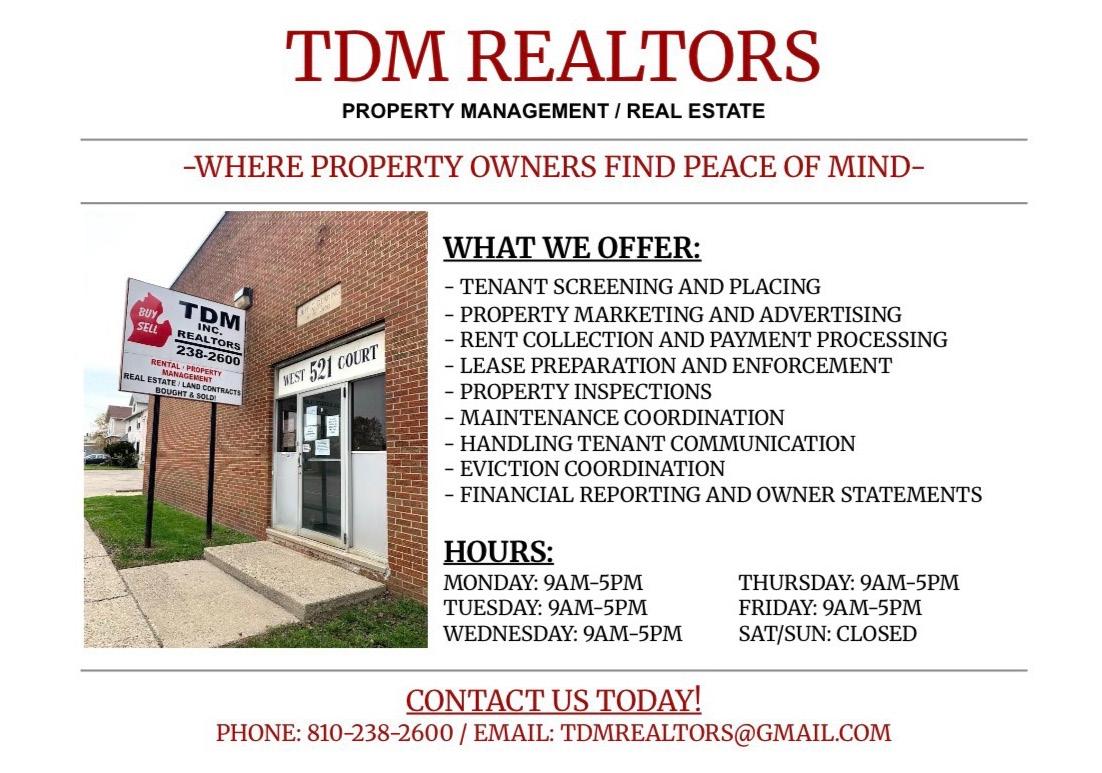





Advertising not only offsets the cost of newsletter printing and member outreach, it also provides services to our association from sources who are excited to work with us at reasonable and reliable rates. Our newsletter reaches an extensive network of real estate investors. Please refer to our local businesses when possible and let them know you saw their ad. If you are interested in placing an ad or know someone who is, the rates are as follows:
What do you like most about the GLA?
What changes would you like to see?
Meeting topic suggestions
Member benefits you’d be interested in
Vendors you’d like to see at meetings
Comments
The following is optional:
Name Phone Email
Would you like to be on committe? Yes / No

Reduce disputes with tenants by videotaping or taking pictures with your cell phone or camera of the unit’s condition before move-in and after move-out. If you do this when the unit is vacant, the tenant cannot claim his or her privacy was invaded. When move-out is completed, repeat the process again and have evidence of any damage that occurred during the occupancy of the affected tenant.
2026-2027
Ed Constable - President (810) 938-3339
edconstable1@yahoo.net
Aaron Dionne - Vice President (248) 705-1399 rangerbronco@charter.net
Ryan Scully - Secretary (810) 577-3146 scullyrealestateteam@gmail.com
Terry Hanson - Treasurer (810) 767-2500 terrylhanson@yahoo.com
Bobbie Kirby - Exec. Director 810-919-5130 ledesta1@att.net
Bernard Drew
Craig Fiederlein (810) 232-1112
cfiederlein@cflegal.net
Bryan Udell (810) 287-4486 cbu@homeventures.com
Danny Helkowski (810) 228-0478 dannyhelkowski@gmail.com
Political Action Chairman
Henry Tannenbaum (810) 238-2600 hrt@USOL.com
Ryan Bilkos (810) 660-3174 ryan.bilkos@gmail.com
Office Secretary
Amanda Lynch (810) 767-3080
Melanie Fiederlein (810) 288-9334 melfiederlein@gmail.com (810) 422-3655 mrbdrew@gmail.com
Contributor Linda MacKay
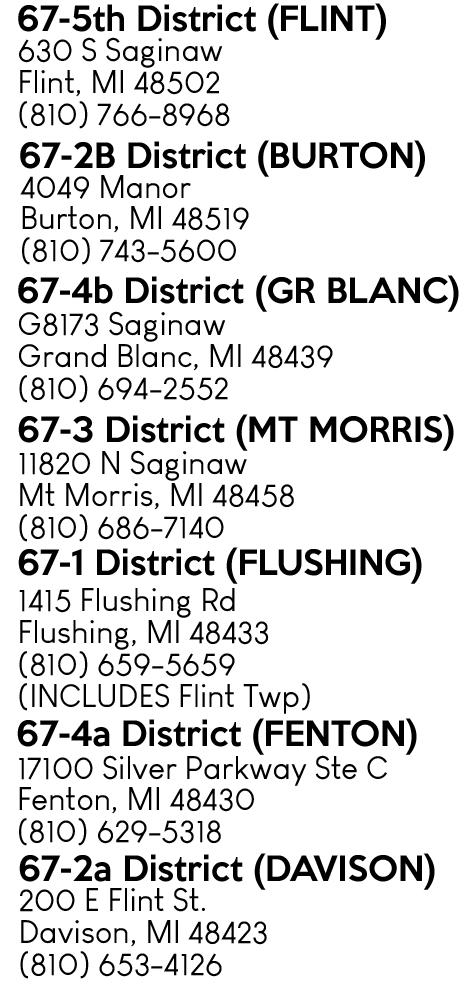
Ruth A. Johnson (R) Senate District 24
Contact: Senator Johnson Phone: 517-373-1636
Kevin Daley (R) Senate District 26
Contact: Senator Daley Phone: 517-373-1777
John Cherry (D) Senate District 27
Contact: Senator Cherry Phone: 517-373-0142
Graphic Designer