Gelatide
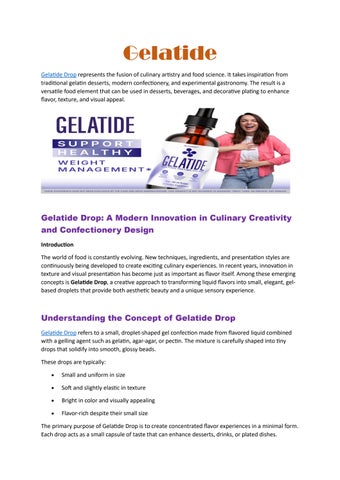
Gelatide Drop represents the fusion of culinary artistry and food science. It takes inspiration from traditional gelatin desserts, modern confectionery, and experimental gastronomy. The result is a versatile food element that can be used in desserts, beverages, and decorative plating to enhance flavor, texture, and visual appeal.

Gelatide Drop: A Modern Innovation in Culinary Creativity and Confectionery Design
Introduction
The world of food is constantly evolving. New techniques, ingredients, and presentation styles are continuously being developed to create exciting culinary experiences. In recent years, innovation in texture and visual presentation has become just as important as flavor itself. Among these emerging concepts is Gelatide Drop, a creative approach to transforming liquid flavors into small, elegant, gelbased droplets that provide both aesthetic beauty and a unique sensory experience.
Understanding the Concept of Gelatide Drop
Gelatide Drop refers to a small, droplet-shaped gel confection made from flavored liquid combined with a gelling agent such as gelatin, agar-agar, or pectin. The mixture is carefully shaped into tiny drops that solidify into smooth, glossy beads.
These drops are typically:
• Small and uniform in size
• Soft and slightly elastic in texture
• Bright in color and visually appealing
• Flavor-rich despite their small size
The primary purpose of Gelatide Drop is to create concentrated flavor experiences in a minimal form. Each drop acts as a small capsule of taste that can enhance desserts, drinks, or plated dishes.
Unlike traditional gelatin cubes or gummy candies, Gelatide Drops emphasize elegance and precision. They are often used in modern dessert presentation, gourmet confectionery, and experimental gastronomy.
• Gummy candies
The Evolution of GelBased Confections
To understand the significance of Gelatide Drop, it is helpful to look at the history of gel-based foods.
Early Gelatin Desserts
Gelatin has been used in cooking for centuries. Early gelatin dishes were often savory jellies made from animal bones and collagen extracts. Over time, gelatin became widely used in sweet desserts such as:
• Jelly desserts
• Fruit gelatin cups
• Layered gelatin molds
These dishes were popular because gelatin allowed liquids to be transformed into solid shapes while maintaining a soft texture.
Modern Confectionery Innovation
As culinary techniques advanced, chefs and confectioners began experimenting with new forms of gelatin-based sweets. This led to the creation of:
• Gourmet gummy candies
• Gel spheres used in modern cuisine
• Decorative gel toppings for cakes and pastries
Gelatide Drop can be seen as a continuation of this evolution, focusing on small, elegant droplets that deliver concentrated flavor and visual beauty.
Key Ingredients in Gelatide Drop
The creation of Gelatide Drops requires only a few essential ingredients. However, the quality and balance of these ingredients play a significant role in the final product.
1. Gelling Agents
Gelling agents are responsible for transforming liquid into a semi-solid gel structure.
Common options include:
Gelatin
Gelatin is derived from collagen found in animal connective tissues. It is widely used because it produces a soft, elastic texture that melts gently in the mouth.
Agar-Agar
Agar-agar is a plant-based alternative derived from seaweed. It forms a firmer gel and is popular in vegan and vegetarian recipes.
Pectin
Pectin is naturally found in fruits and is commonly used in jams and jellies. It produces a softer, fruitlike gel texture.
Carrageenan
Another seaweed-derived ingredient, carrageenan is used in certain dairy and dessert products to stabilize gels.
Each gelling agent produces a slightly different texture, allowing creators to customize the experience of Gelatide Drops.

The Science Behind Gel Formation
Gelatide Drop relies on a scientific process called gelation. Gelation occurs when molecules within a liquid form a network that traps water and other components, creating a semi-solid structure.
When gelatin or another gelling agent is heated in liquid, it dissolves completely. As the mixture cools, the molecules begin to reconnect and form a delicate network. This network traps the liquid inside, turning it into a gel.
The firmness of the gel depends on factors such as:
• The concentration of the gelling agent
• Temperature during preparation
• Acidity of the liquid
• Sugar content
By carefully controlling these variables, chefs can design Gelatide Drops with different textures, from very soft and delicate to slightly firm and chewy.
Methods for Creating Gelatide Drops
There are several techniques used to create Gelatide Drops. While the exact method may vary depending on equipment and desired results, the basic process follows similar steps.
Preparing the Mixture
The chosen liquid base is gently heated in a saucepan. The gelling agent is added and stirred until completely dissolved. Sweeteners and flavorings are then incorporated.
Forming the Drops
Once the mixture is ready, it is carefully shaped into droplets using tools such as:
• Droppers or pipettes
• Syringes
• Small molds
• Precision droplet tools
In some cases, droplets are released into chilled oil or onto a cold surface so they solidify quickly.
• Chocolate desserts
• Custards and puddings
• Ice cream plates
Culinary Applications of Gelatide Drop
Gelatide Drops can be used in many different ways in modern cuisine. Their versatility is one of the reasons they are gaining interest among chefs and dessert creators.
Dessert Garnishes
One of the most common uses for Gelatide Drops is as decorative garnishes for desserts. Their vibrant colors and glossy appearance add visual interest to dishes such as:
• Cakes
• Cheesecakes
They also provide small bursts of flavor that complement the main dessert.
Advantages of Gelatide Drop
There are several reasons why Gelatide Drop is gaining attention in culinary innovation.
Concentrated Flavor
Because the drops are small, they can deliver strong flavor in a controlled amount.
Versatility
They can be used in desserts, beverages, or plated dishes.
Visual Impact
Their appearance enhances food presentation and creates visually appealing dishes.
Customization
Flavors, colors, and textures can be adjusted to suit different recipes and themes.
Potential Commercial Opportunities
Gelatide Drops also have potential in the food market beyond restaurants.
Possible product ideas include:
• Gourmet candy collections
• Dessert decoration kits
• Beverage garnish packs
• Specialty baking ingredients
Because they are small and visually appealing, they could also be packaged as premium confectionery products.
The Role of Creativity in Food Innovation
Gelatide Drop represents a broader movement in the culinary world where creativity and science come together. Chefs and food developers are increasingly exploring ways to transform simple ingredients into exciting new forms.
This spirit of experimentation leads to new textures, presentations, and flavor experiences that keep the food industry dynamic and engaging.
The Future of Gelatide Drop
While Gelatide Drop is still an emerging concept, it has the potential to become more widely recognized as chefs and food creators experiment with its possibilities.
As consumers continue to seek visually appealing and unique food experiences, innovations like Gelatide Drop may become a staple in modern desserts and beverages.
Its simplicity, versatility, and aesthetic appeal make it a promising addition to contemporary culinary design.
Official Website - https://getgelatide.com/ Facebook - https://www.facebook.com/GelatideWeightLoss Pinterest - https://www.pinterest.com/gelatide/