Working our fingers to the bone – the rise of G eistlich in the chemical industry
As a pioneer of Swiss industrialization, Geistlich has been part of the country's economic development over generations. Time and time again, the company has faced up to the challenges of its time. Despite all adversities, Geistlich has never lost its spirit of innovation. In the 1980s, global changes triggered a strategic shift that paved the way for the entry into regenerative medicine and laid the foundation for today's success.
Switzerland's first glue factory
The history of the Geistlich company begins in 1825, when Heinrich Geistlich , son of a large family, is born in Greifensee near Zurich. He becomes a master metalworker in Meilen and works for fellow Christian Heinrich Glättli, who founds Switzerland's first glue factory in Riesbach in 1851. This “Lymhütte” is the first building block of what subsequently became the Geistlich company –and it is still commemorated today by the “Leimgasse” in Zurich's Riesbach district.
The business soon encounters resistance – b ecause it is based on a bone boiling plant, the unpleasant smells generated cause conflict with residents in the increasingly urban neighborhood. This prompts Heinrich Glättli to look for a new location, which he finds in Schlieren in 1867. Here, he buys a large plot of land on Engstringerstrasse north of the train station, far from the village and undeveloped. The nearby Swiss Northeastern Railway, the abundant groundwater, and the steady winds in the wide Limmat Valley provide ideal conditions.
Fig. 1
Heinrich Glättli and Heinrich Geistlich take the longstanding Swiss tradition of artisanal glue production and transform it into a modern industrial process.
A brief history of glue
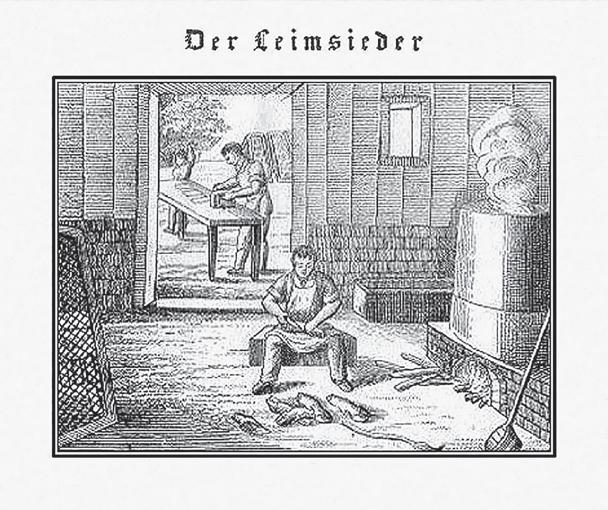
Glue made from animal and plant materials was already used by humans as an adhesive as far back as the Stone Age. Advanced civilizations such as the Egyptians, Greeks, and Romans mainly used animal hides and bones to make glue.
In the Middle Ages, glue was primarily used in bookbinding and woodworking. With the Age of Enlightenment, knowledge of the chemical principles of glue production also grew – in 1680, the extraction of hide glue from bones succeeded for the first time, and in 1690 the first glue factory was established. In the 20th century, technological advances made synthetic adhesives possible, which are more durable and versatile. Since the mid-19th century, and thus for over 150 years, Geistlich has been significantly involved in developments in glue production, combining traditional knowledge with modern technology and turning the craft into an innovative branch of industry.
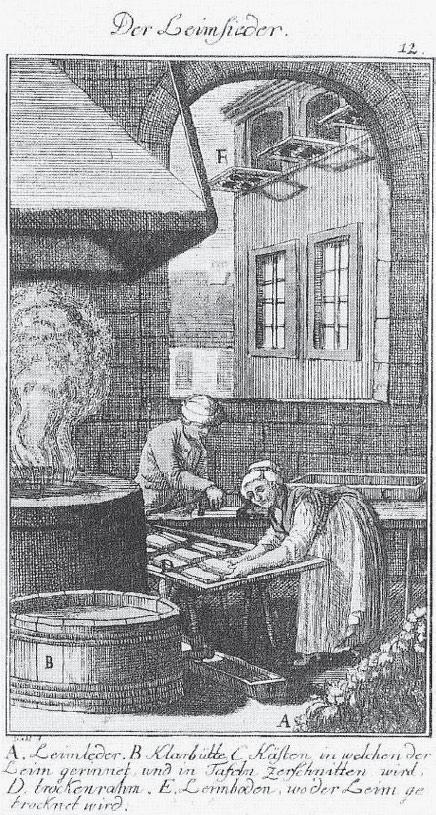
The traditional craft of glue making dates back to the Middle Ages.
Fig. 2
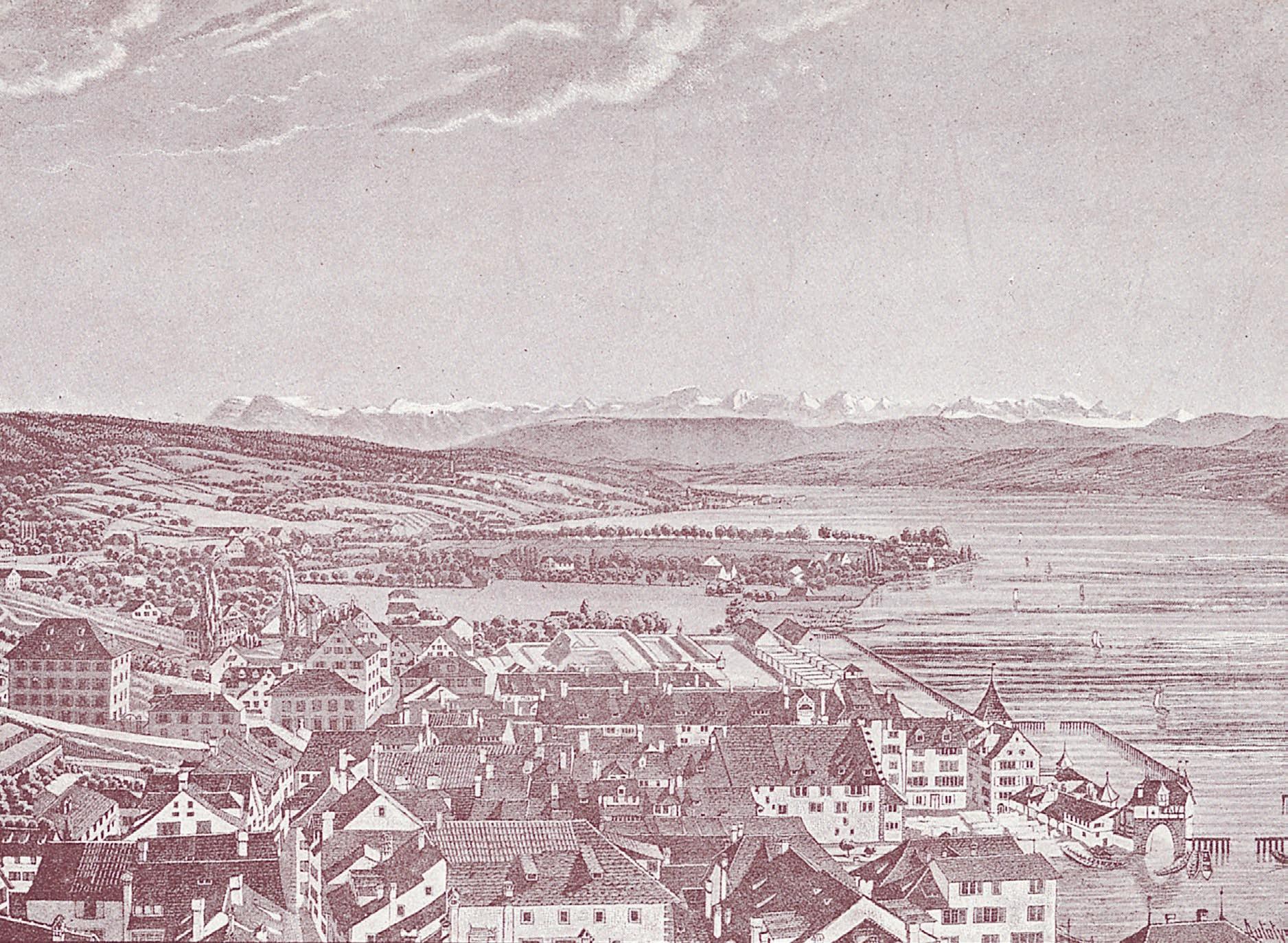
View from Karlsturm toward Stadelhofen and Riesbach, 1825.
Fig. 3
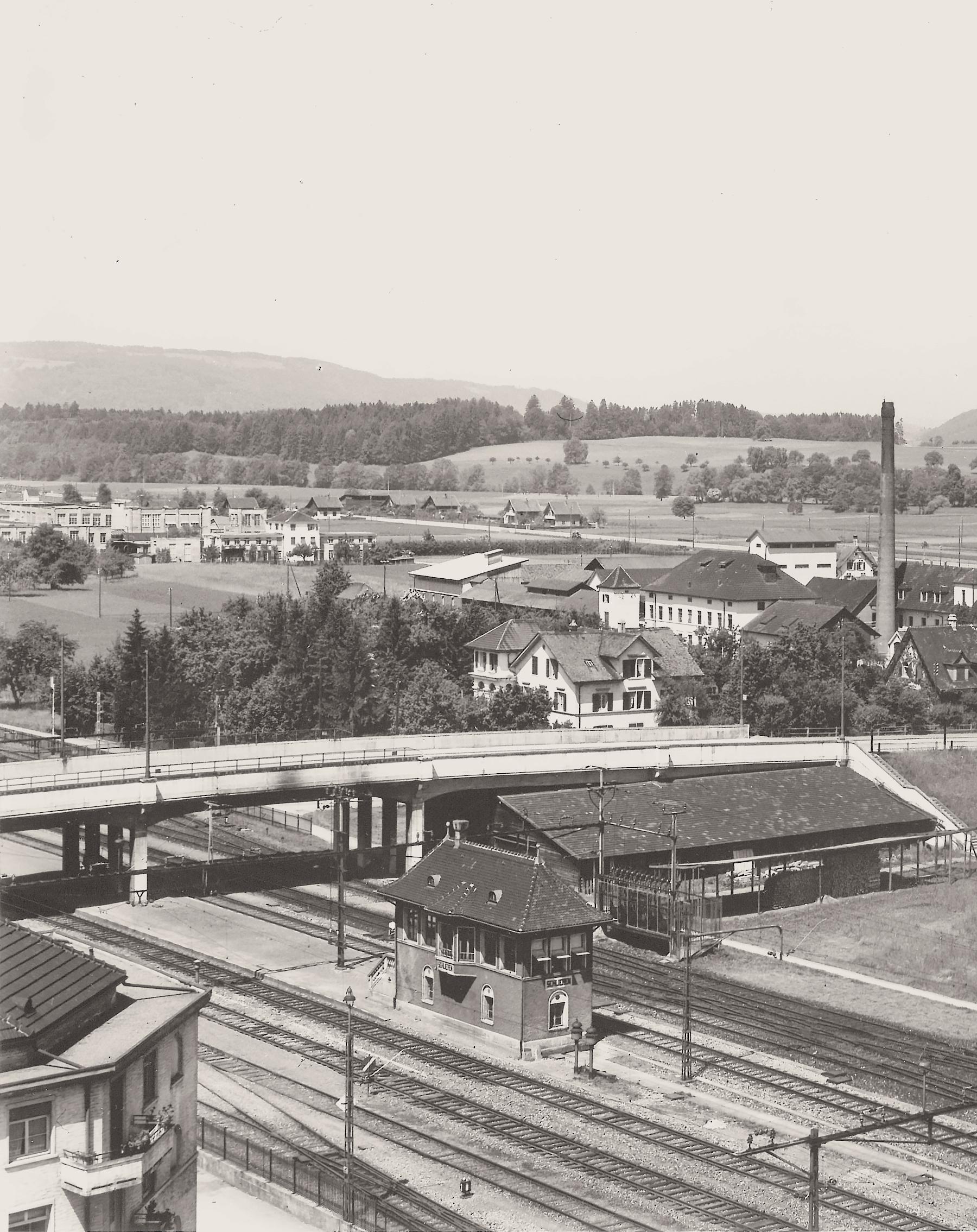
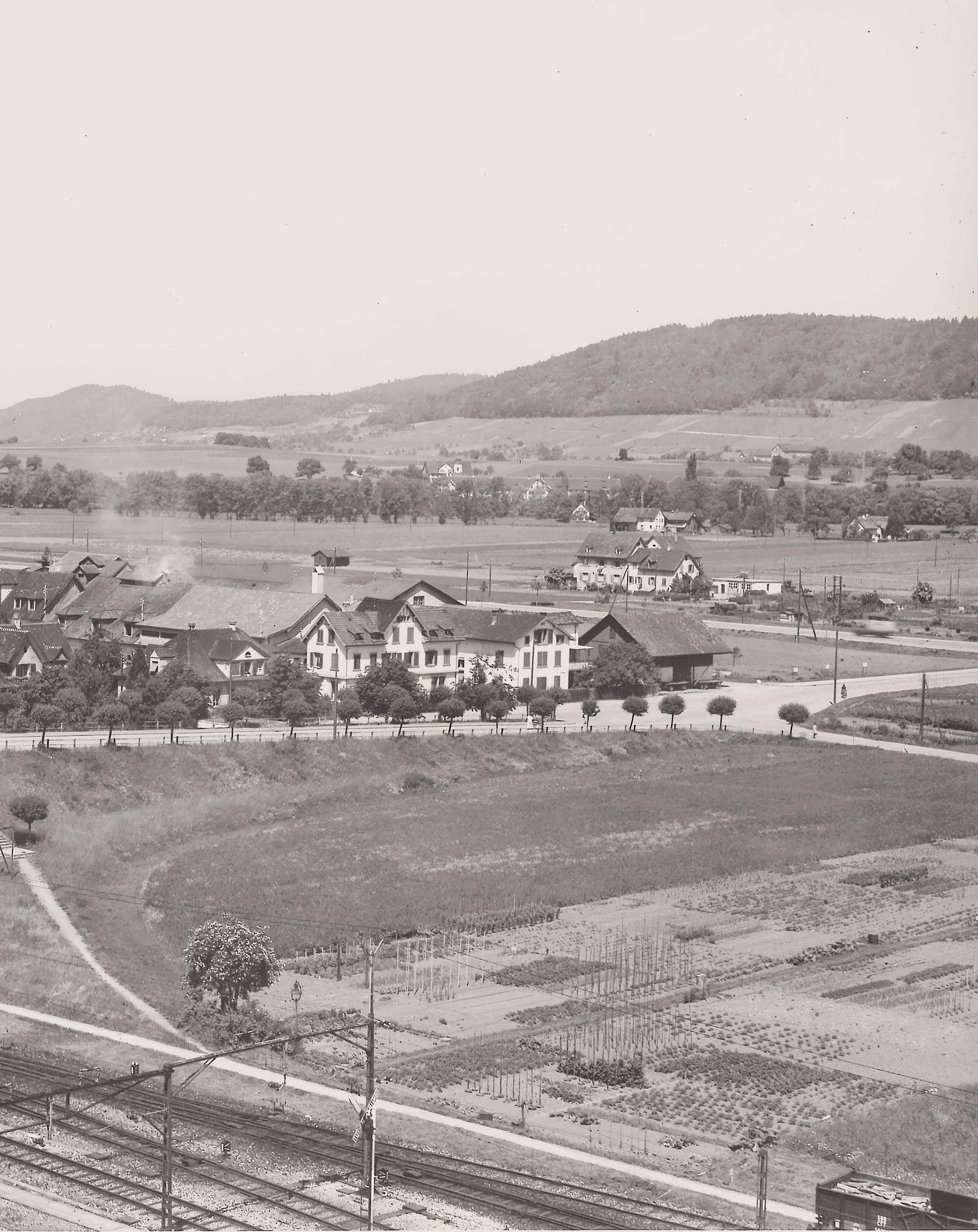
Fig. 4
Geistlich glue factory in Schlieren, around 1943.
Responsibility beyond the company
Social commitment is firmly anchored in Geistlich ’s corporate culture. In Schlieren, where almost every family had someone working in the “Lymi” factory, the family is heavily involved in its local community. The Geistlich family opens a kindergarten there as early as 1902 and helps to rebuild the secondary school. In 1917, a welfare house with kitchen, dining hall, and bathrooms for the staff follows. In addition, the company also supports cooperative and private housing construction for its employees. Today, the company and the family support several foundations working in research and innovation in regenerative medicine.
6
Fig. 5
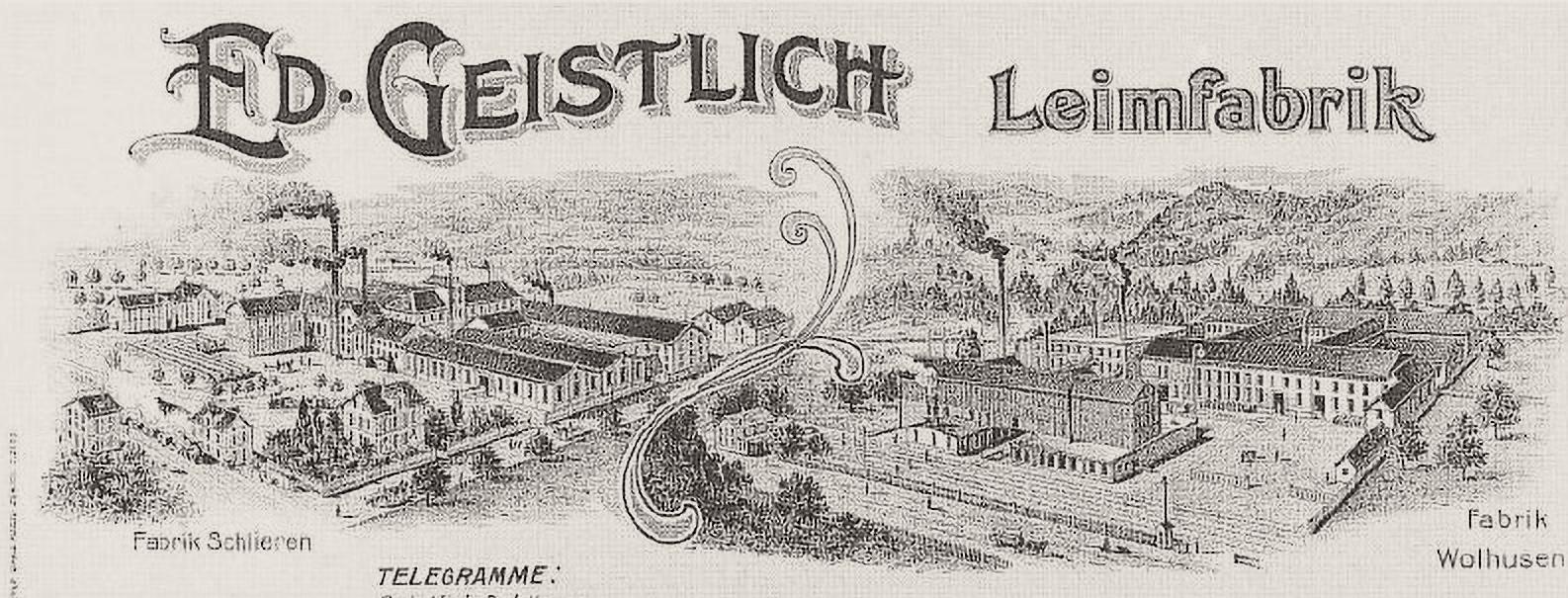
Tradition, quality, and reliability. Letterhead of the Geistlich company from 1904.
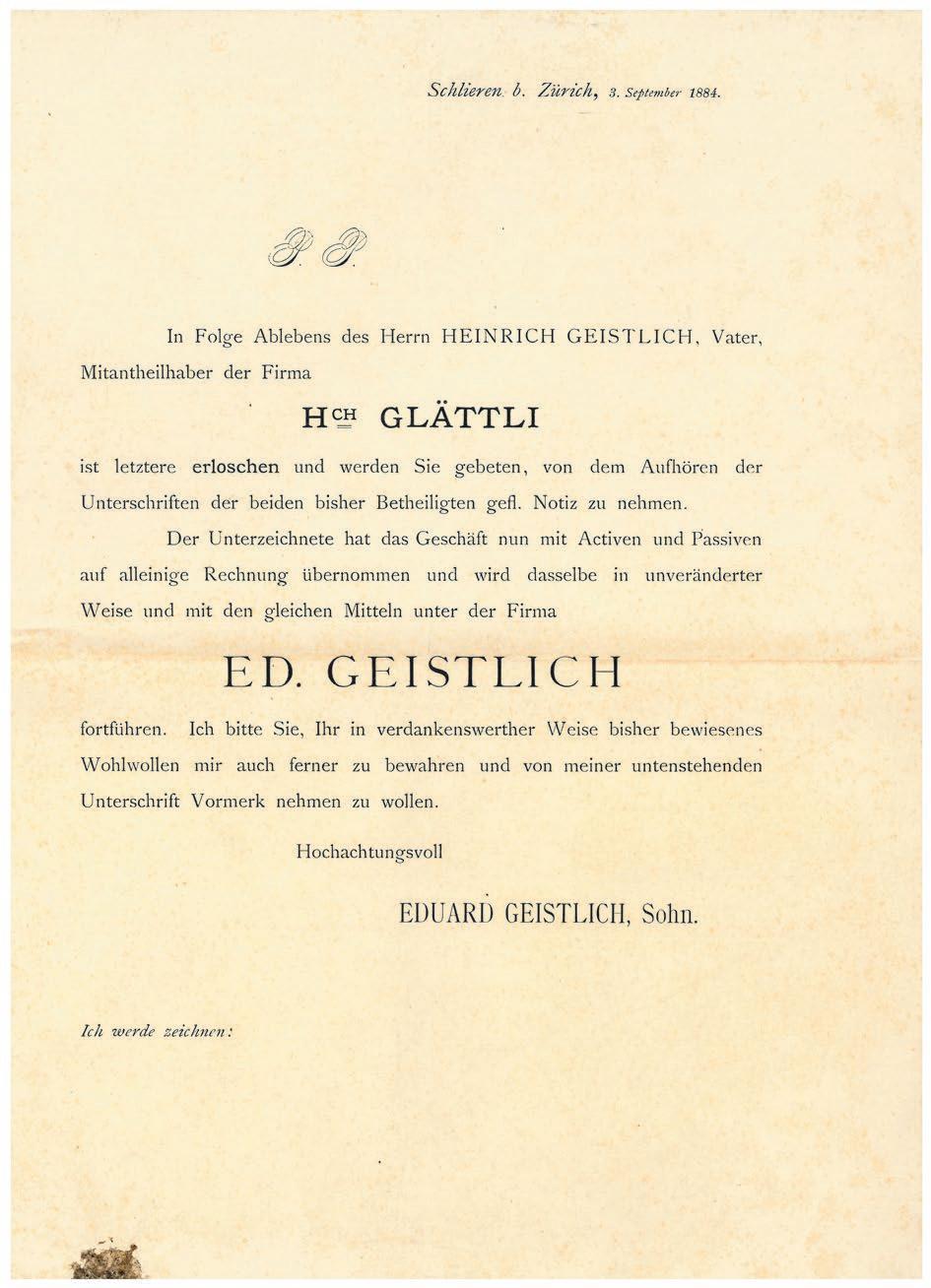
After the death of his father Heinrich, Eduard Geistlich Sr. becomes the sole owner of the company, which is also renamed after him.
Fig.
The beginnings of industrialization in Schlieren near Zurich
In 1869, the glue factory is relocated to rural Schlieren and makes a significant contribution to its development as the first local industrial company. Fertilizer production also starts here with 13 employees, utilizing bones from which the glue had been extracted.
In 1872, 16-year-old Eduard Geistlich , son of Heinrich Geistlich , joins the company and takes over Glättli’s business together with his father in 1880. After Heinrich Geistlich's death in 1884, Eduard Geistlich remains the sole owner of the business and develops it into an internationally successful company – opening up new foreign markets before the turn of the century. Despite high protective tariffs and strong competition, the products impress with their quality and make the Geistlich brand known throughout Europe.
Eduard Geistlich is both a successful entrepreneur and a visionary. And so, under his management, not only do the production facilities grow steadily, but he also drives the development of the region by bringing the first electricity supply to Schlieren, helping to construct the Limmat Valley Railway (1901), and installing the first telephone in the area. To this day, his entrepreneurial spirit and social commitment still characterize the company that proudly bears his name.
7
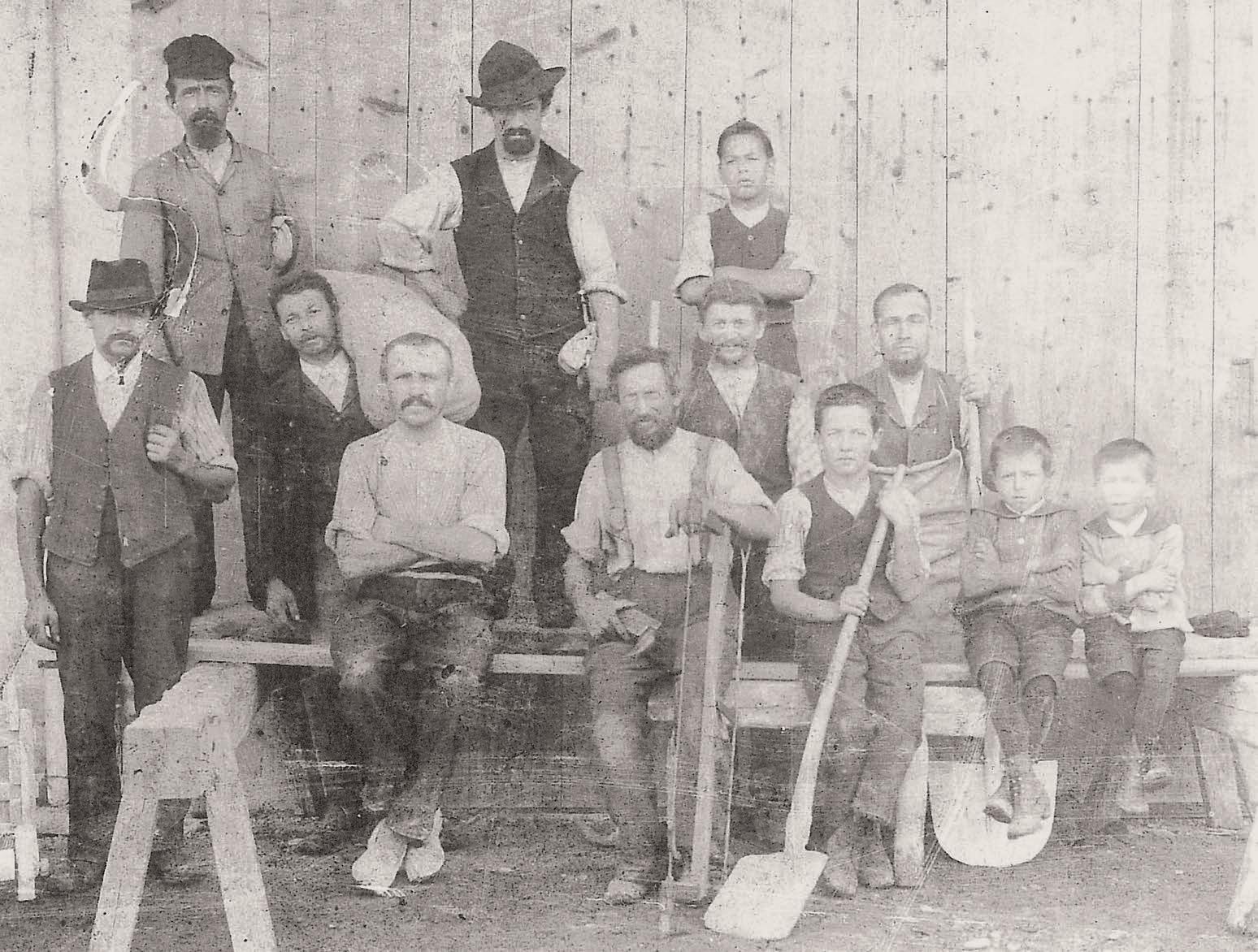
The manual/technical profession of glue making is physically tiring and predominantly carried out by men. Workforce around 1900.
Fig.
Takeover and transformation of the Wolhusen factory
In 1899, Josef Meyer's bone products and button factory in Wolhusen, which processes horns, claws, and bones, goes bankrupt. Eduard Geistlich recognizes the opportunity to continue the tradition of bone processing in the region and acquires the plant later the same year.
At the age of just 18, his eldest son Eduard Geistlich Jr. assumes management of the factory and transforms it into a modern glue and fertilizer factory within a year. From then on, bone and hide glues, fats, and organic fertilizers leave the factory, which soon surpasses the parent company in both size and output. The company's pioneering spirit is not only evident in production. A fter the completion of the Simplon Tunnel in 1905, which at the time is the longest tunnel in the world, Geistlich uses the skilled workers who have become available to blast a water channel into the rock. The company operates another hydroelectric power plant with water diverted from the Kleine Emme river, and the electricity generated supplies not only the factory but also three villages.
Eduard Geistlich Sr. dies of blood poisoning in 1907 at the age of 51, and two years later his children found the family-owned stock company “ Ed. Geistlich Söhne AG für chemische Industrie” – t hus embarking on a path toward a more modern corporate structure, while still preserving the family tradition.
Sustainability from the very beginning In 1895, Josef Meyer builds the first power plant in Wolhusen with a directcurrent generator, which initially only supplies his bone products and button factory with electricity. After the takeover in 1899, Eduard Geistlich Jr. modernizes the hydroelectric power plant. From 1908, it also supplies the municipality of Wolhusen, starting with street lighting and lighting for the school buildings. With increasing demand from the municipalities, the energy service provider Centrals chweizerische Kraftwerke (CKW) takes over the power supply in 1924. Today, Geistlich operates two of its own small power plants, which cover one third of its internal requirements. This electricity is used, among other things, to operate heat pumps. With these and other measures, Geistlich has already significantly reduced CO 2 emissions and is aiming to completely phase out fossil fuels in the coming years.
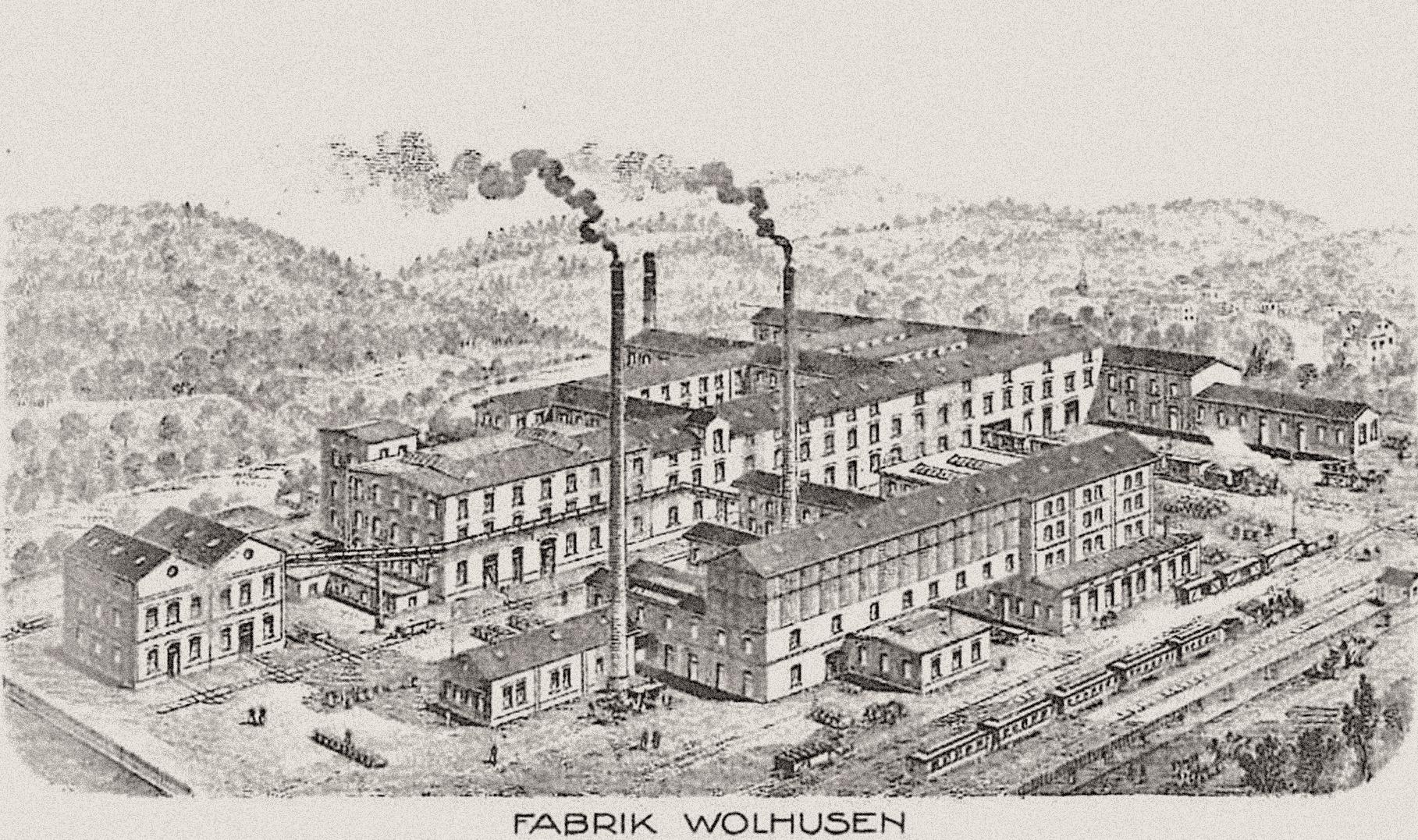
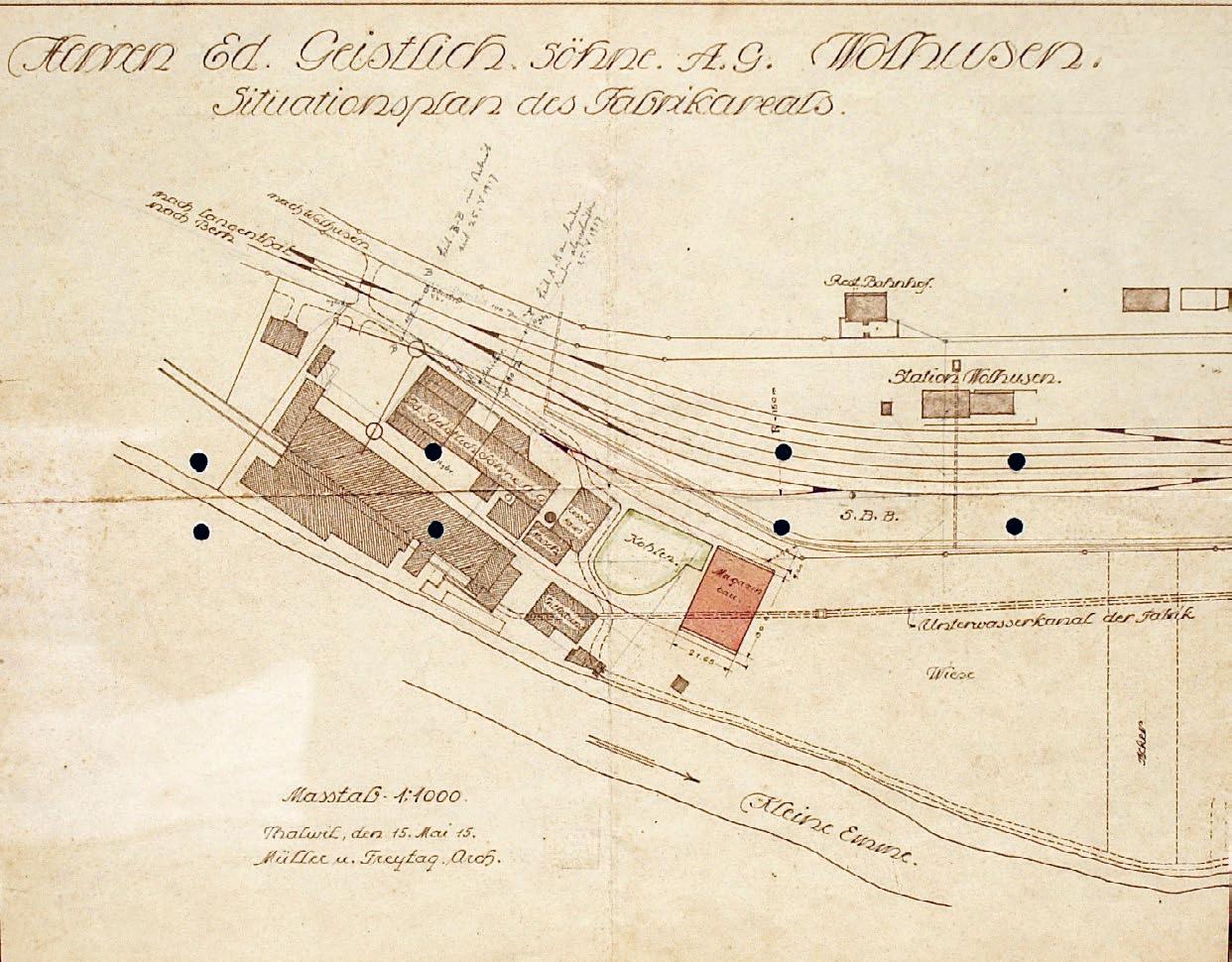
Fig. 8
Smoke-belching chimneys and bustling activity: symbols of productivity and progress. Advertising emblem of the Wolhusen factory around 1920.
9
Construction plans for the Wolhusen site in 1915, here already showing the water canal for electricity production.
Fig.
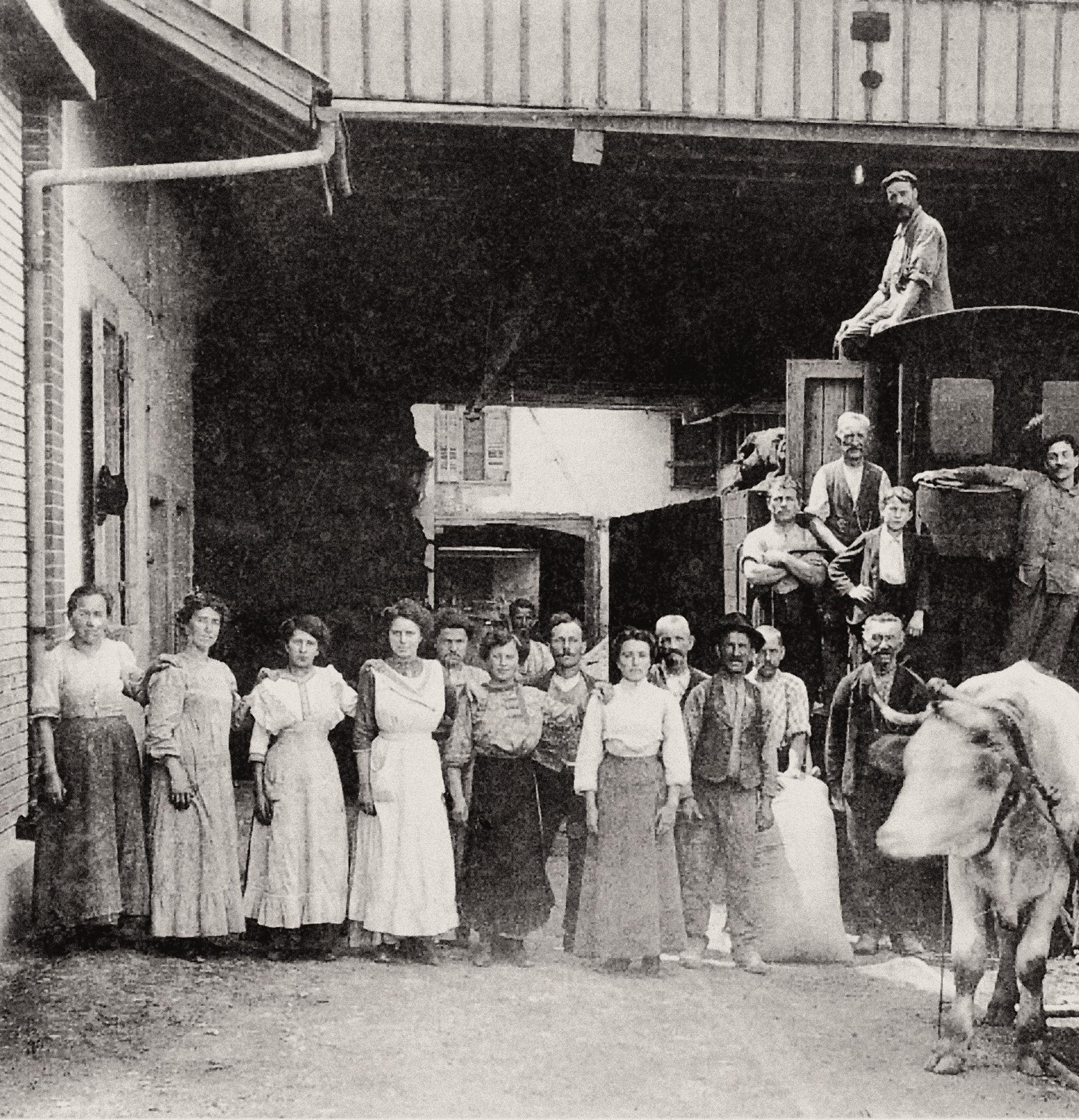
Fig. 10
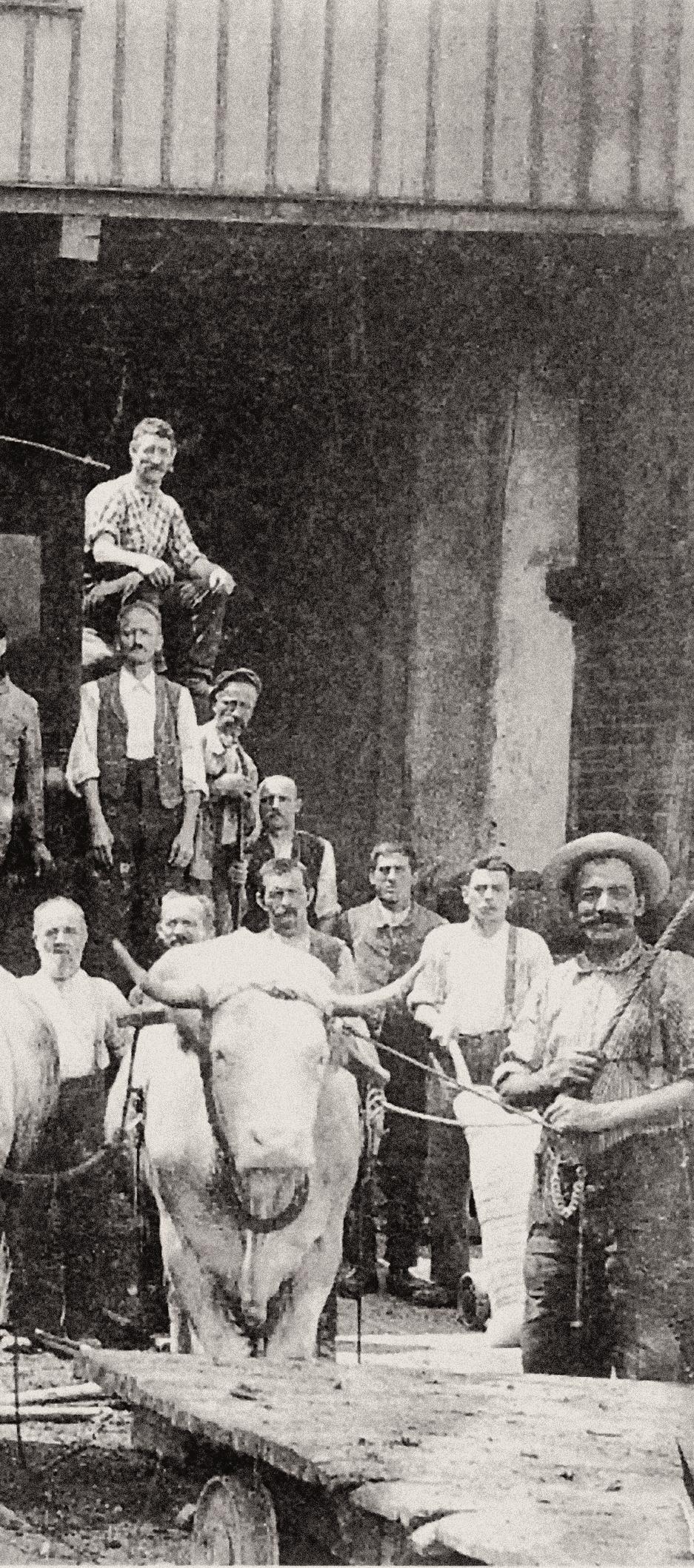
The Schlieren workforce standing close together in 1910 – connected as a factory community, as is typical of the time.
Faith, diligence, and a sense of community
The story of Geistlich is based on the values of Anabaptism, a Protestant faith community that emphasizes diligence, pacifism, and a sense of community. These virtues create a working environment that promotes trust and cooperation and provides the workforce not only with work, but also with a home. Many employees and managers from the early years belong to the Anabaptist church. This strengthens the sense of community and is something special, as professions involving bone processing were considered “dishonorable” at the time. The lived religious beliefs are also evident in the early introduction of accident insurance, health insurance, and an employee welfare foundation –exceptional for the early days of industrialization. The link to the Anabaptist church ends in the 1970s.
11
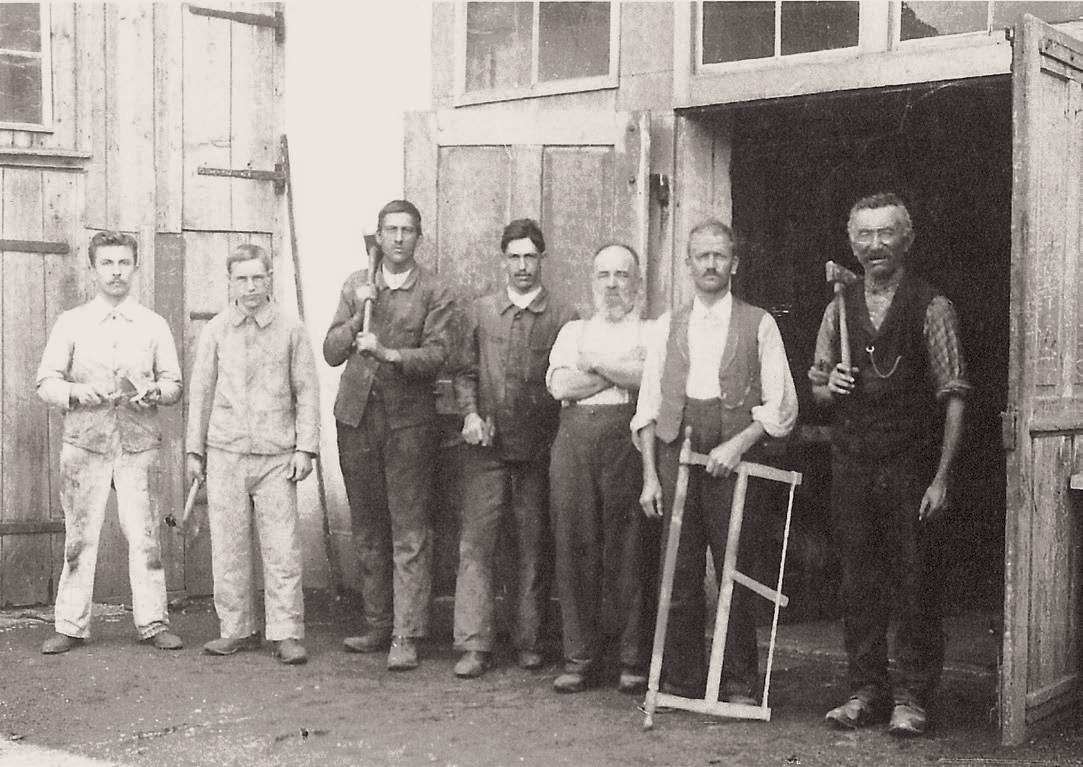
The craftsmen of the Wolhusen plant in 1907, proud of their trade, with tools in hand.
Fig.
12
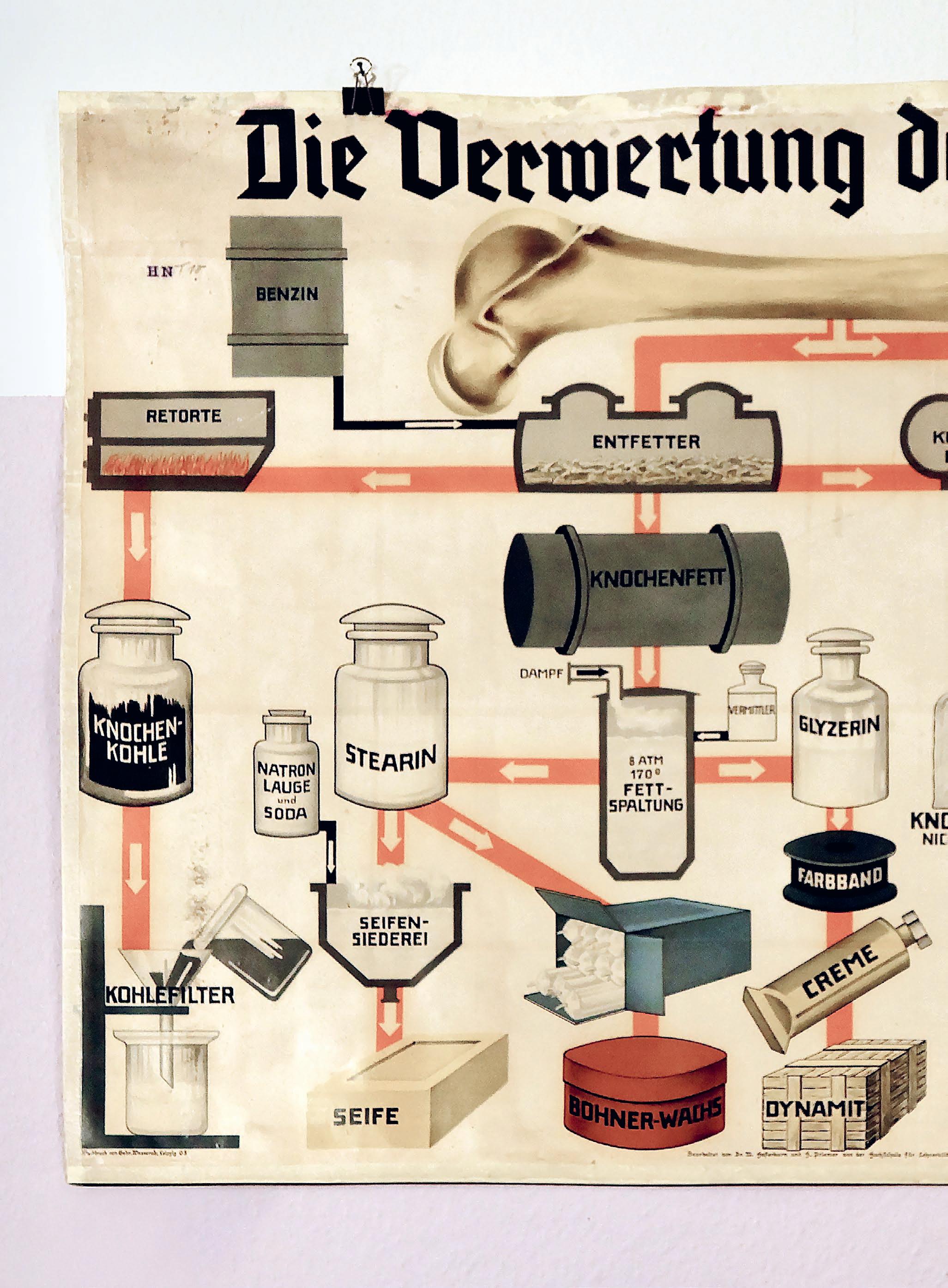
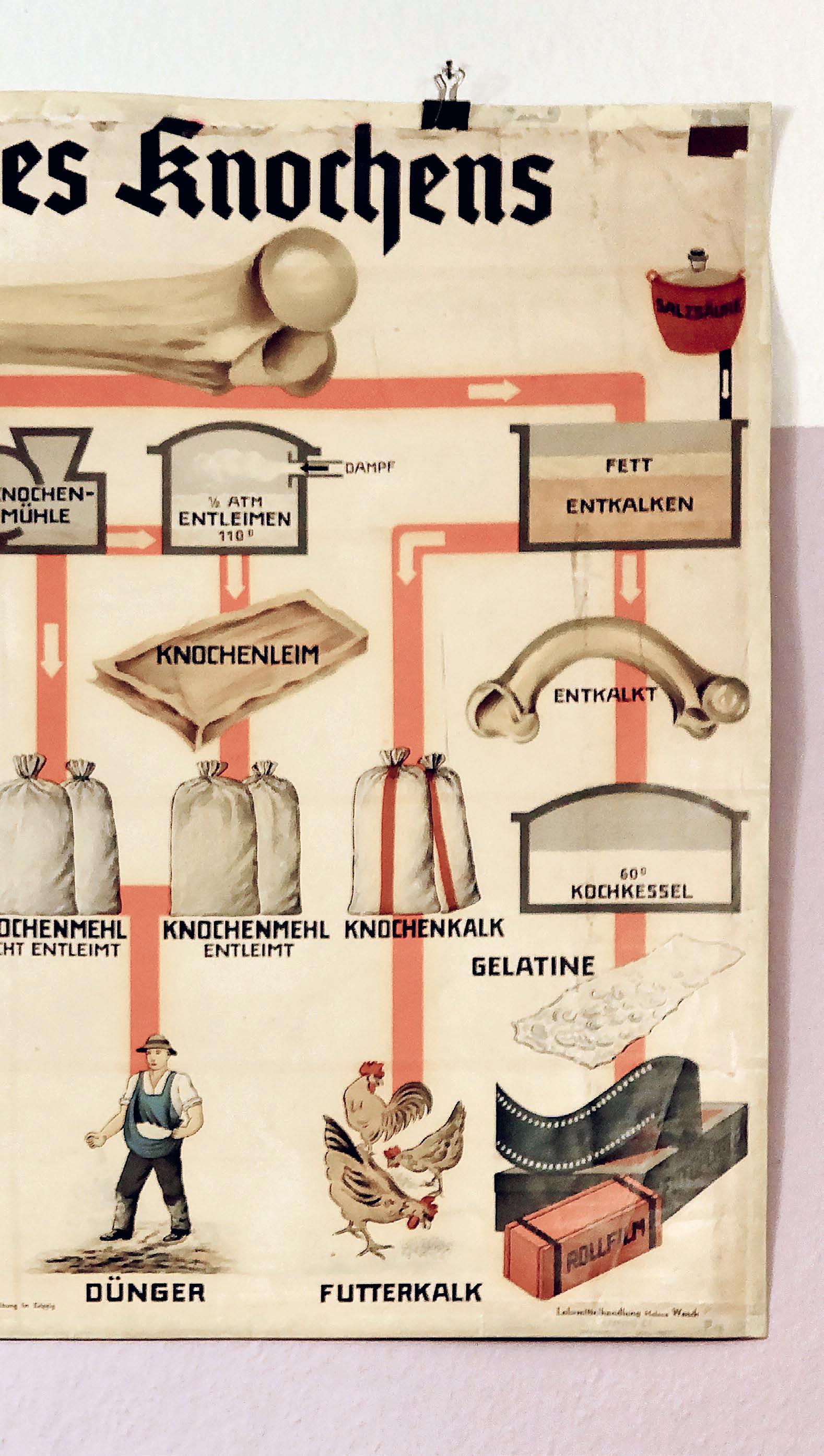
Classroom chart from 1937 depicting a process diagram showing the processing of bone up to the application of the various products made from this raw material.
Fig.
Geistlich and the First World War
The First World War increases the demand for fertilizer and glue. To meet demand, the company imports bones from Spain, Malta, and France, often in exchange for glue. But the war makes both procurement and sales more difficult. With great resourcefulness, the company finds a solution by getting local municipalities to collect May beetles, whose chitin is needed as a substitute raw material for fertilizer production. While the 1918 general strike paralyzes the country, Geistlich is spared from protests and sets a social example by financing a day-care fund for children.
To counter the expansion of Rousselot, Geistlich enters into a strategic partnership with its French competitor in 1920. It takes until 1974 before the company is able to buy back the 20 percent stake, allowing it to return to being a wholly family-owned business once again. From 1921 onwards, economic problems force the company to even consider closing down. Instead, however, the company successfully starts selling flower fertilizer.
In the following years, Geistlich expands its sources of animal raw materials and imports from Africa, Russia, South America, and India. India accounts for 600 tons and 200 tons come from England. With the “bone convention” Geistlich secures two thirds of the Swiss bone market and diversifies further with imports from Morocco, Egypt and Turkey.
Tradition and continuity
Fig. 13
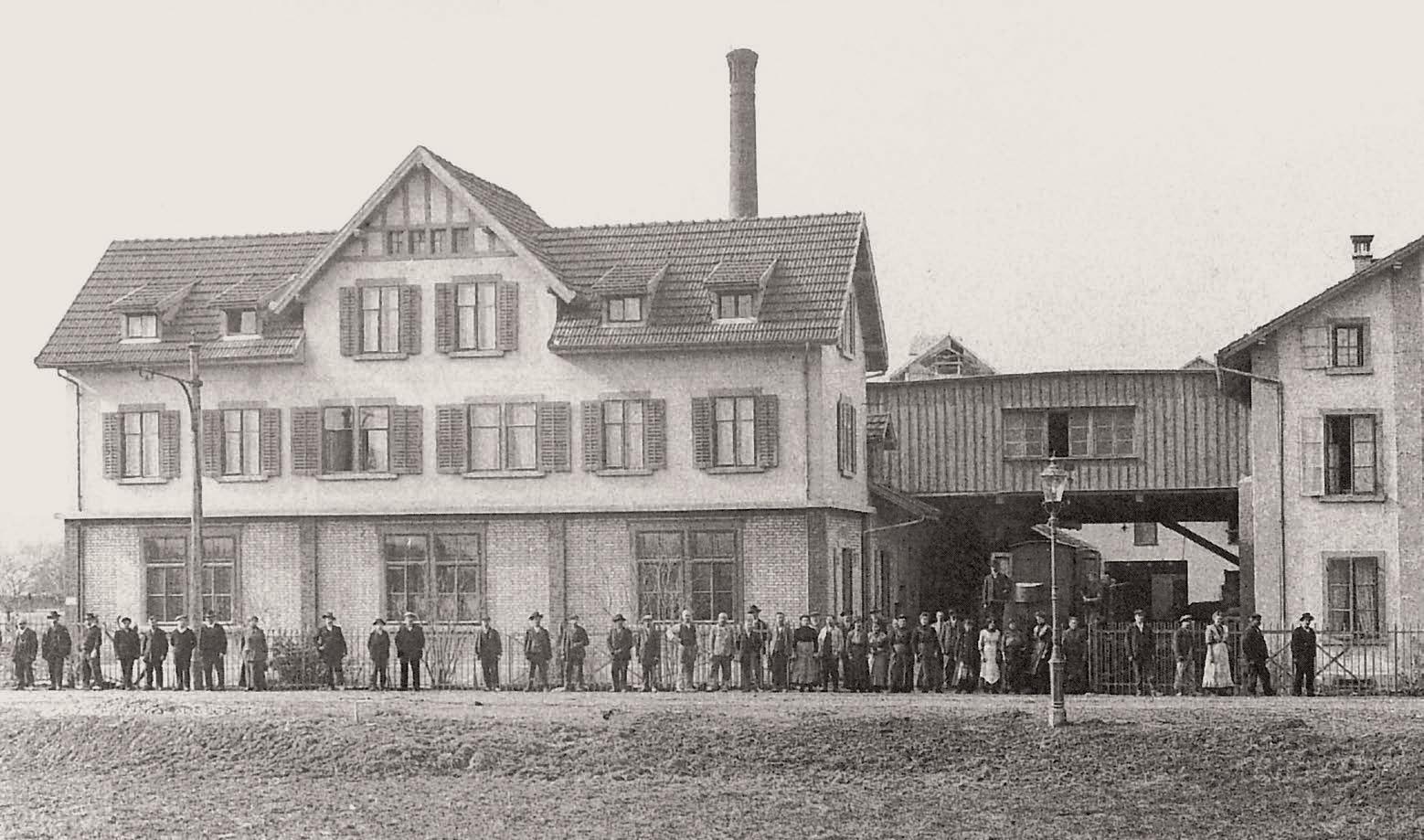
The entire workforce of Schlieren in front of the office on Engstringerstrasse around 1920; standing on the railway carriage is Director Emil Geistlich Sr., representative of the third family generation.
Geistlich has always been in family hands from the beginning, and remains so to this day. Cross-generational continuity is a strong foundation that shapes Geistlich’s corporate policy and entrepreneurial spirit. The company is currently in its fifth generation of family ownership and management. Despite constant development and evolution, the family succession has always been assured – and at the same time it has also managed to successfully preserve its values and corporate culture.
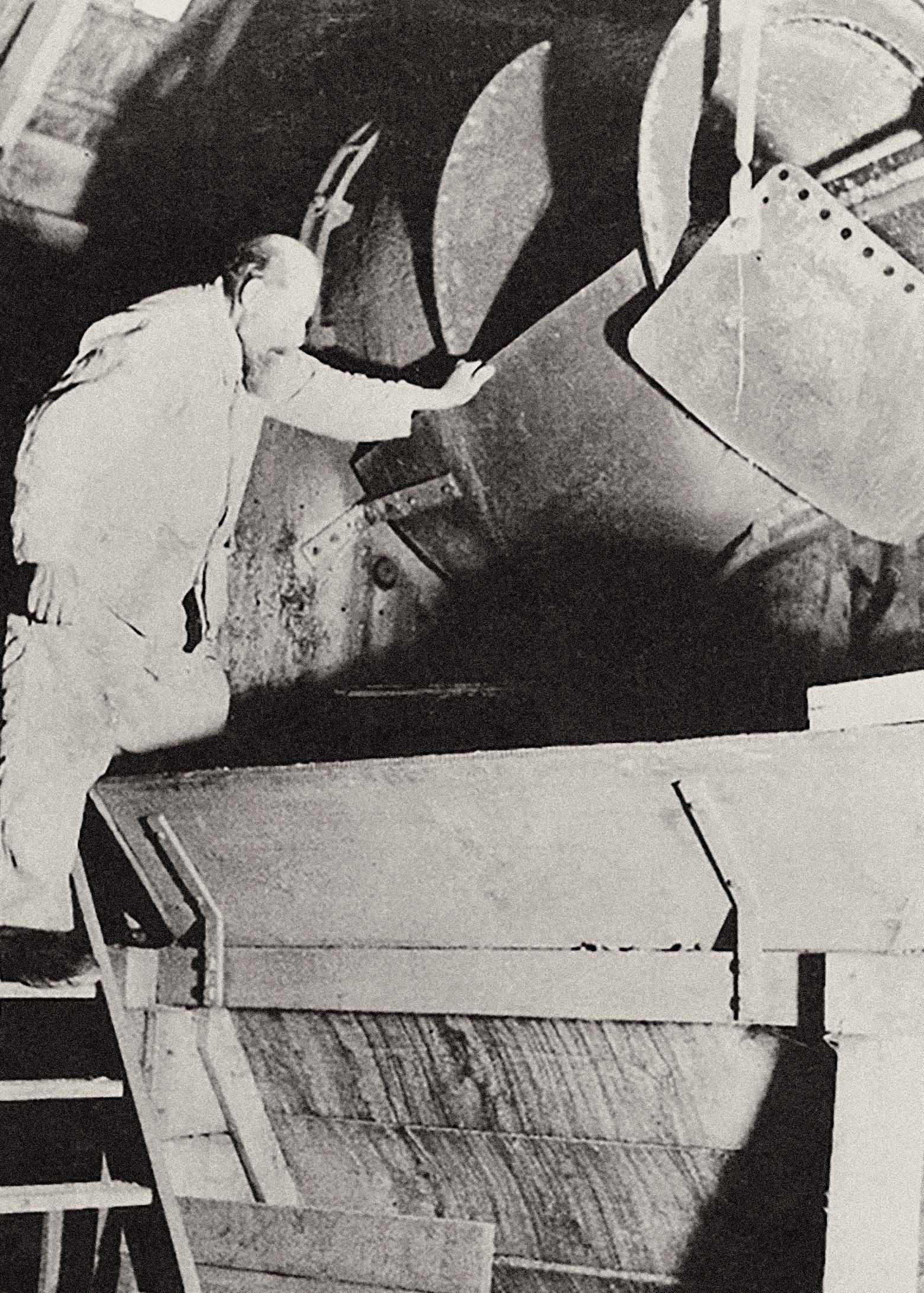
Fig. 14
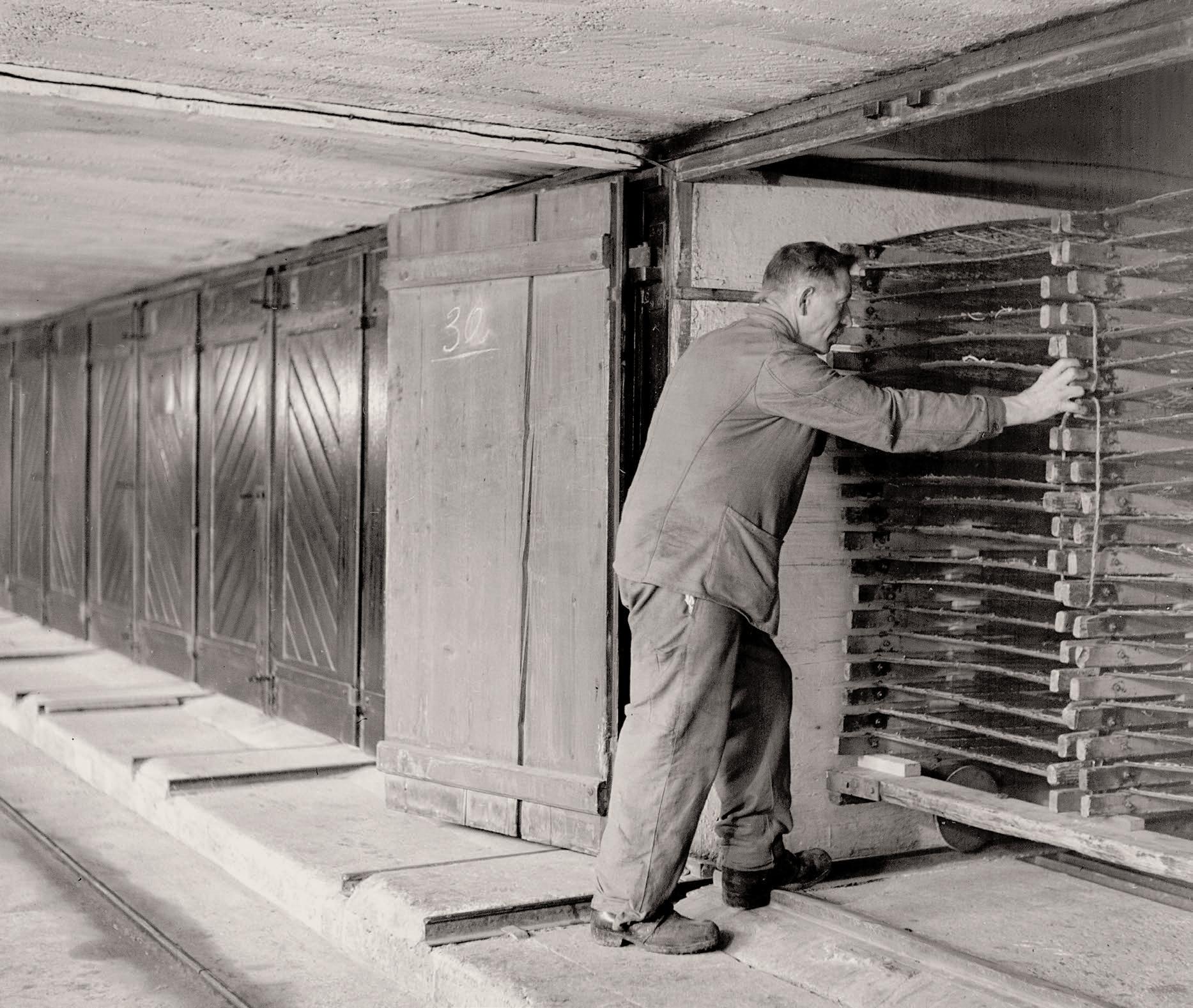
The moist glue is processed into powder, beads, or boards so that it can be stored, transported, and dissolved again subsequently. The picture shows August Fischer in the glue drying plant, 1938.
15
Photo from 1928.
Seated from left-to-right: Lina Diebold- Geistlich (1884), Elisabeth Kurth- Geistlich (1897), Karoline GeistlichLeuthold (1853), Ida Diebold- Geistlich (1894), Eduard Geistlich Jr. (1881).
Standing from left-to-right: Maria Diebold- Geistlich (1886), Emil Geistlich (1882), Alfred Geistlich (1883), Paul Geistlich (1895).
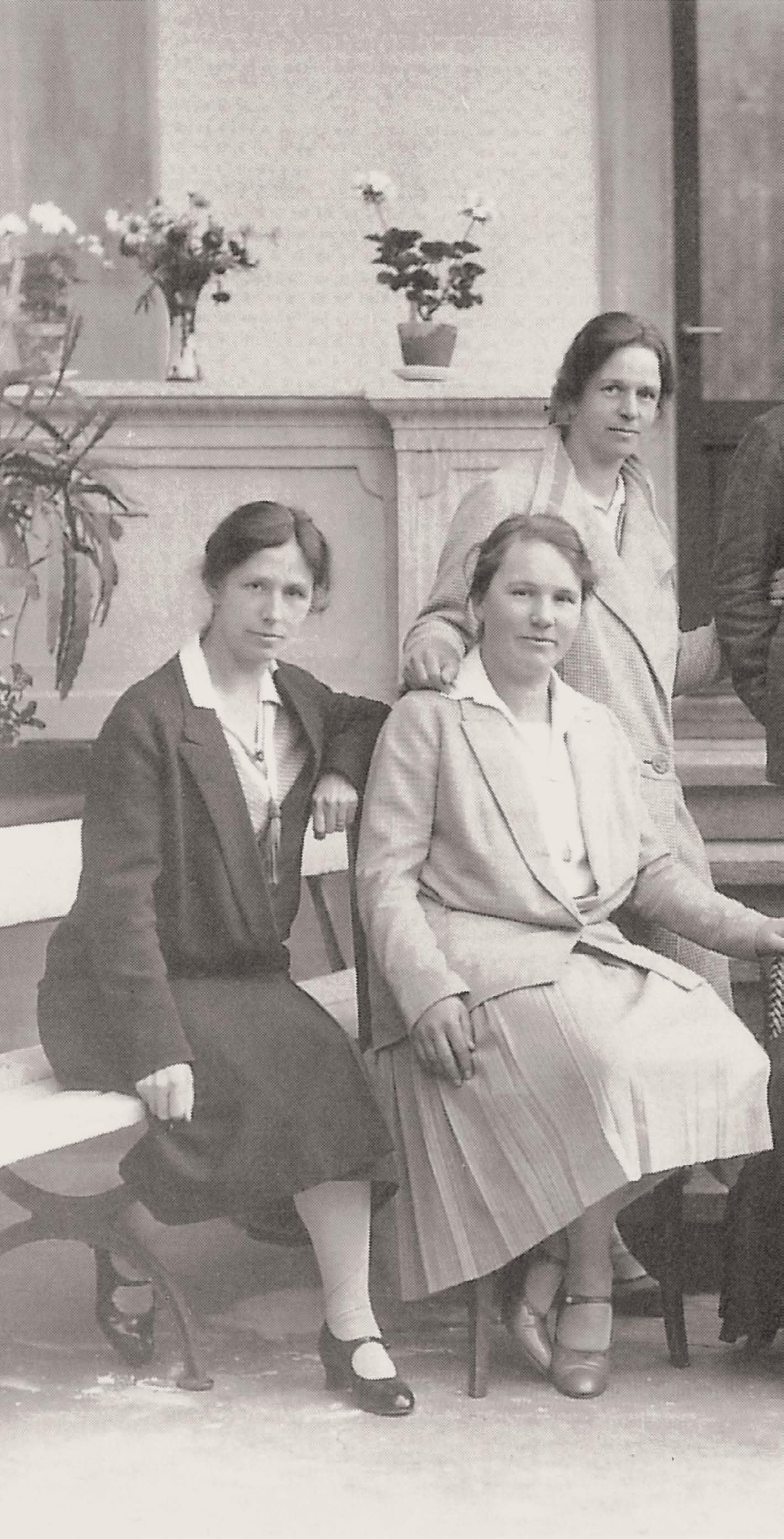
Fig.
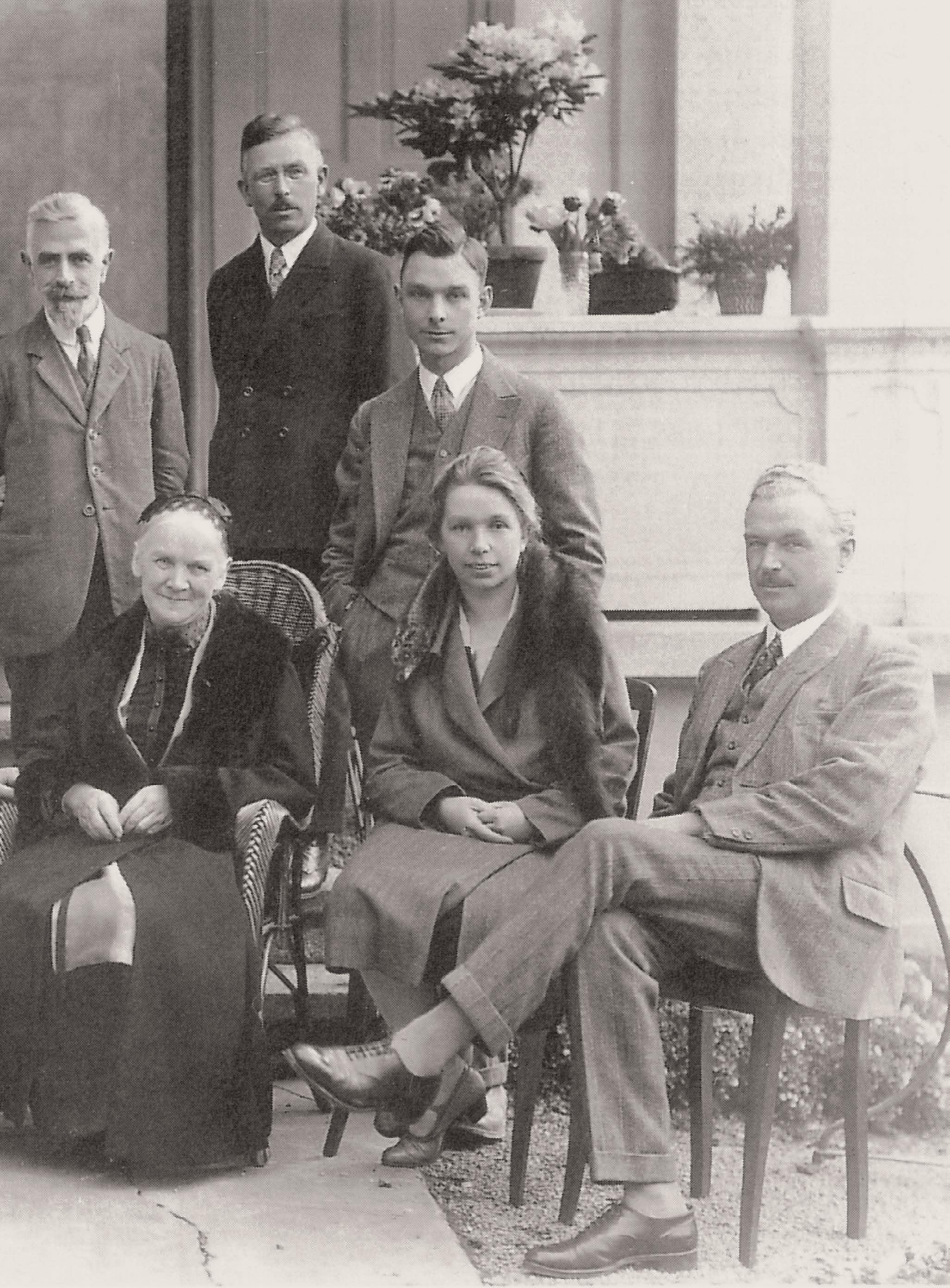
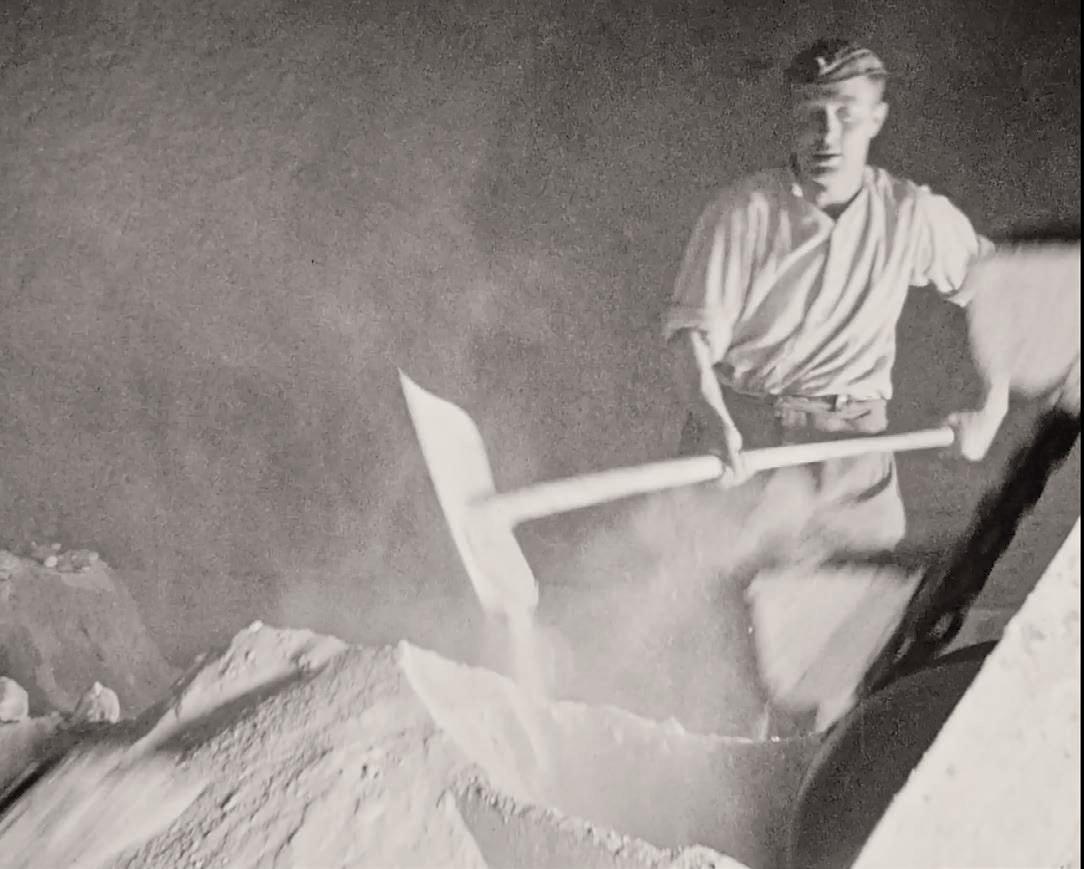
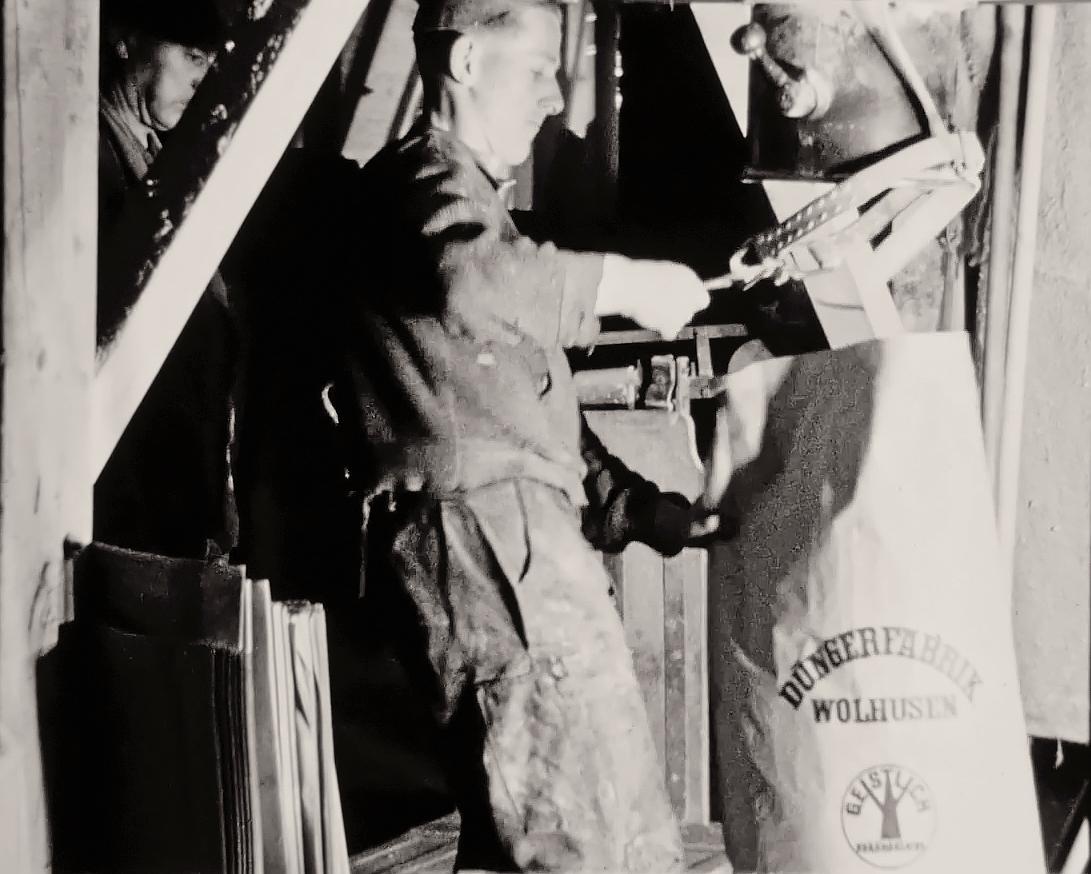
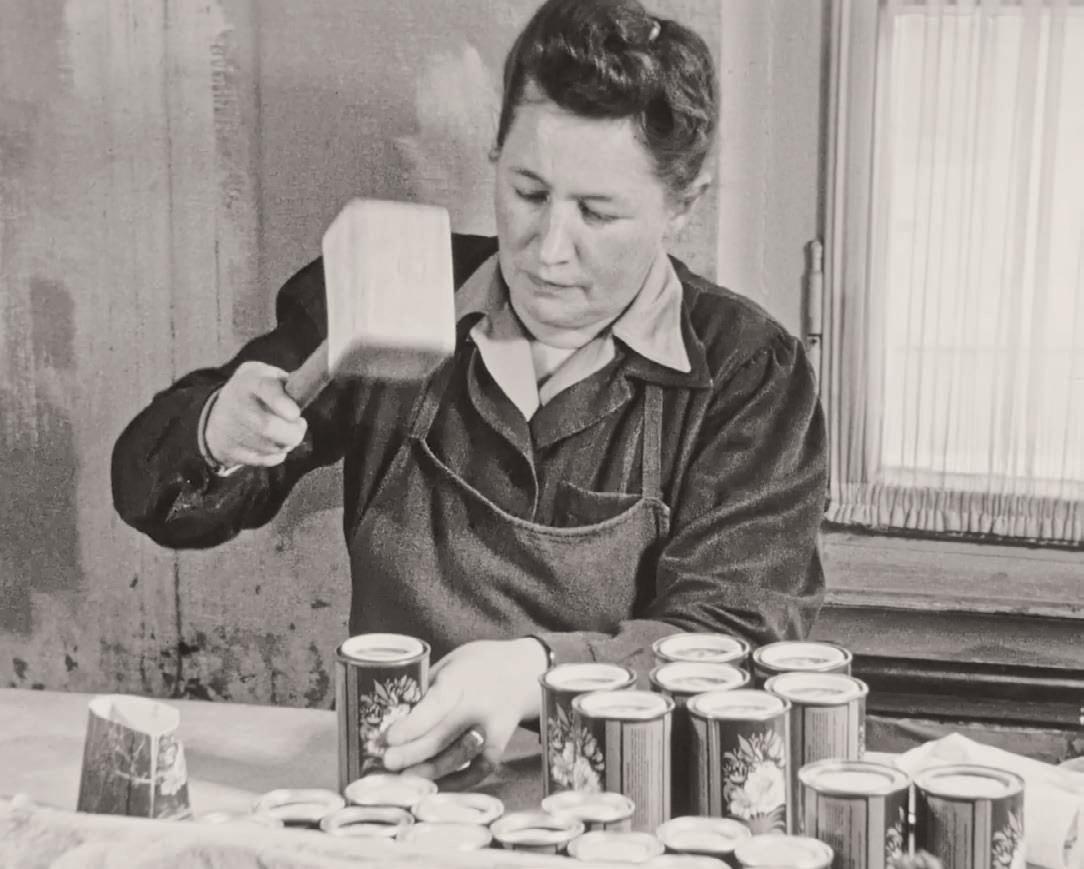
Fig. 16 / 17 / 18
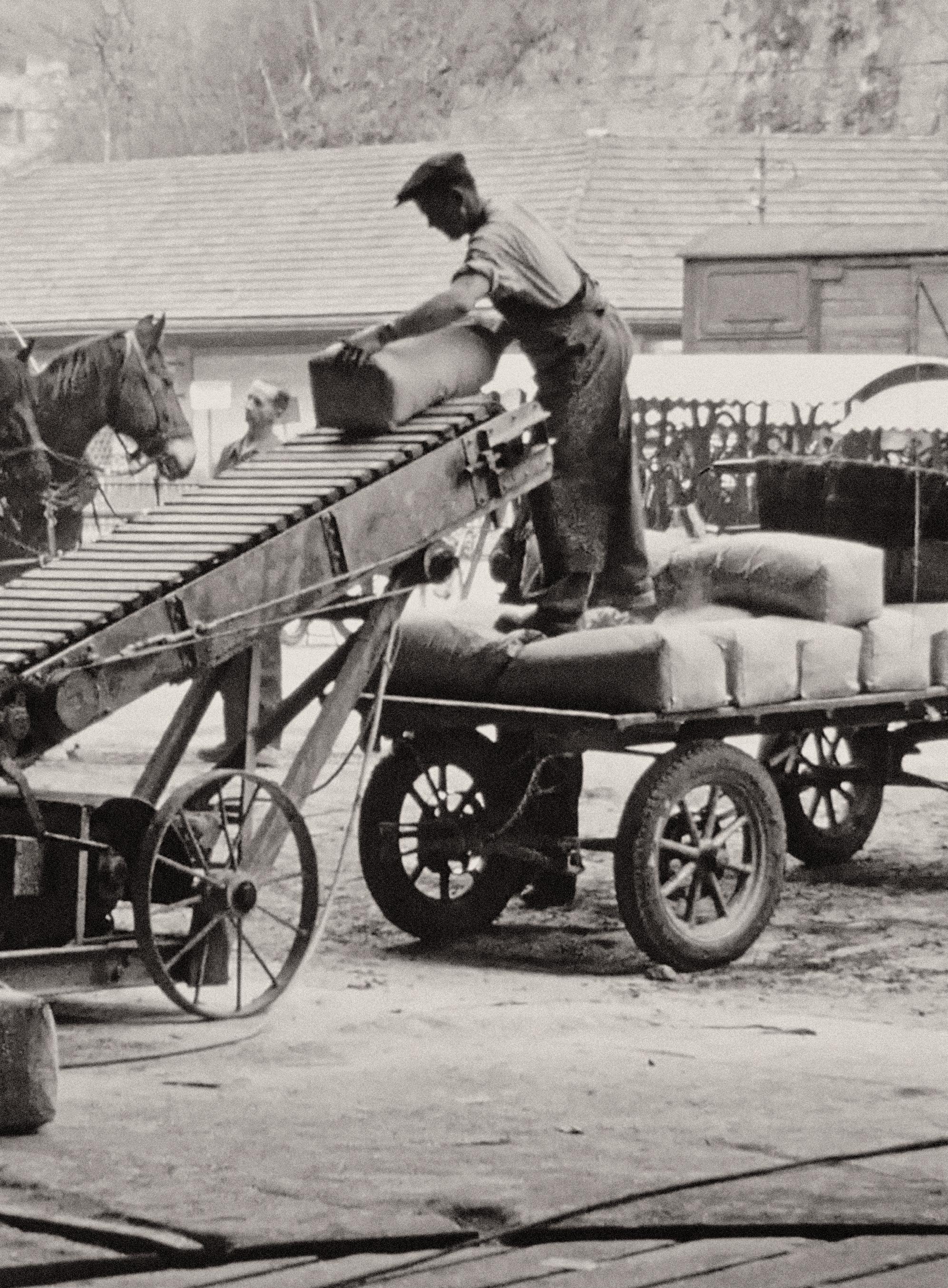
Insights into fertilizer production in Wolhusen around 1930. Already from an early stage, the company premises also include a farm and other areas on which Geistlich fertilizers are tested.
> Fig. 19
Under the banner of “Anbauschlacht,” the state-run program to secure home-grown food supplies during World War II. Poster: “Raccogliete le ossa!” “Collect the bones!” – 1941, design: Eric H ermès.
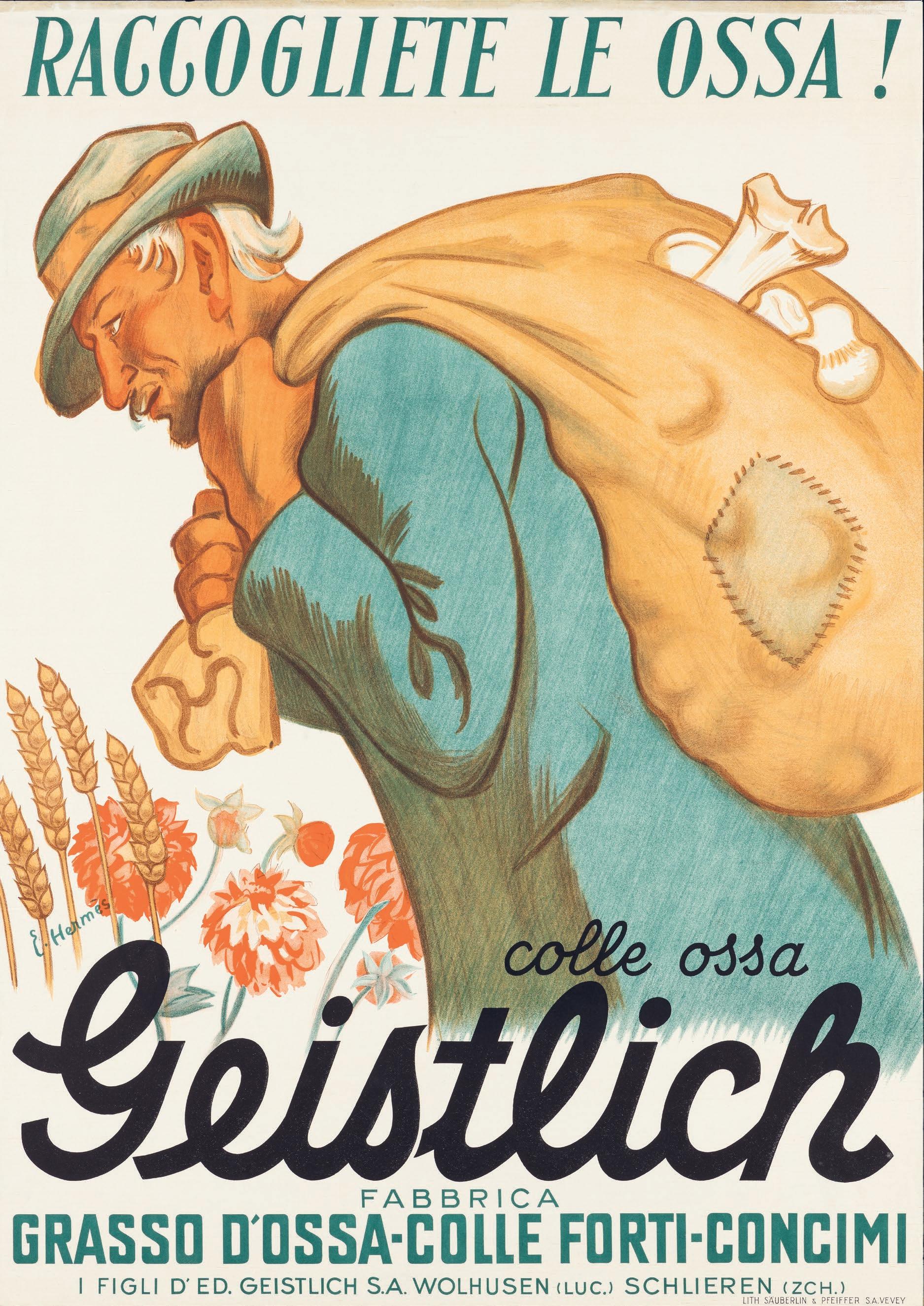
takes the bones from which the fat and collagen for glue production have been extracted and uses them to produce organic field and garden fertilizers. Wolhusen, around 1930.
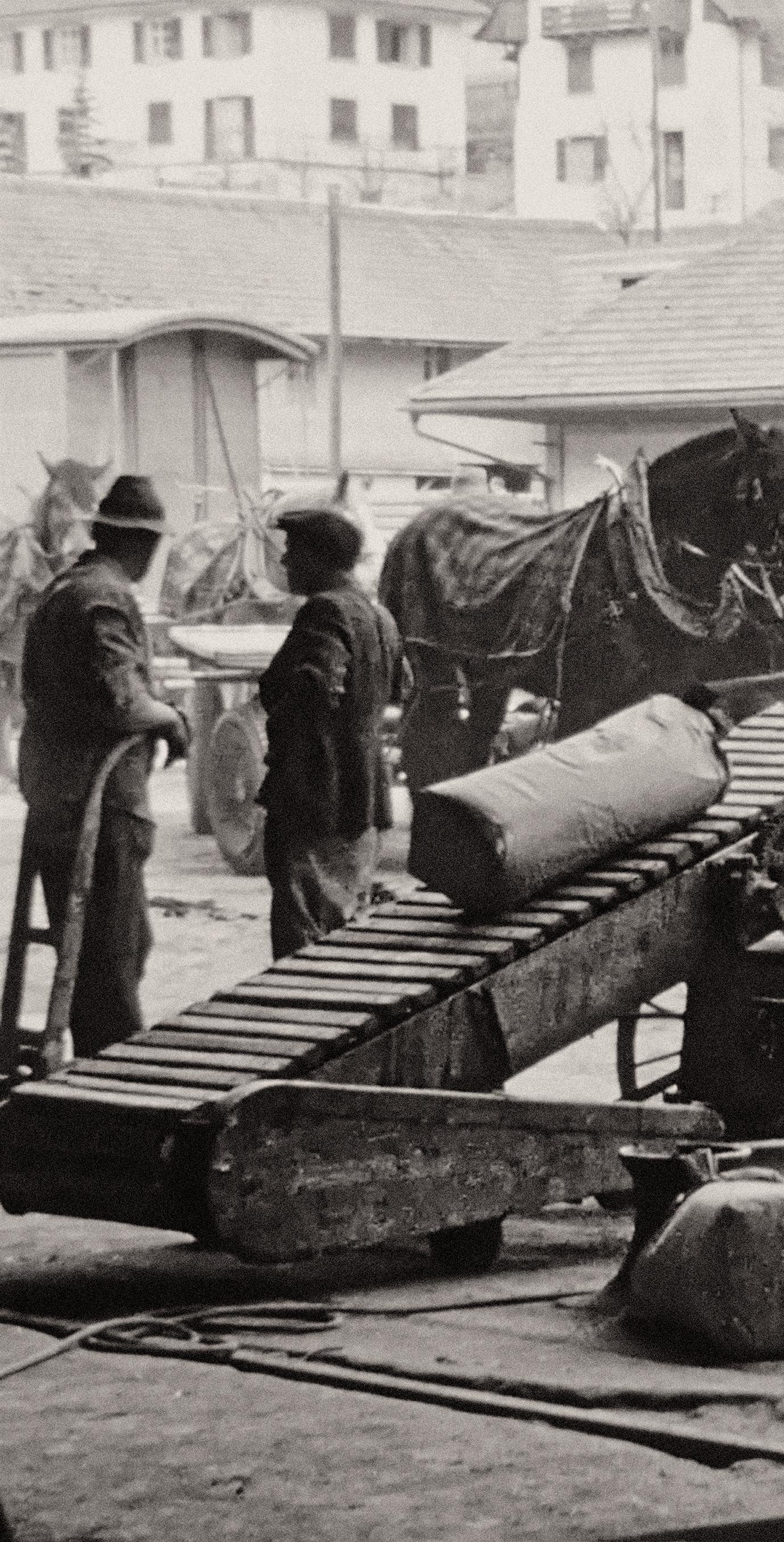
Fig. 20
Geistlich
Bone is the backbone
The processing and refinement of bones form the historical and technological foundation of the company. From the very beginning, the natural raw material has shaped the identity of the company, and it remains a key success factor to this day. Geistlich transforms bones into high-quality products for industry and research that are recognized worldwide. The strong specialization in bone processing not only promotes technological progress, but also opens doors to new business areas. In both its versatility and durability, bone is symbolic of what defines Geistlich : stability, innovative strength, and the ability to realign itself.
21
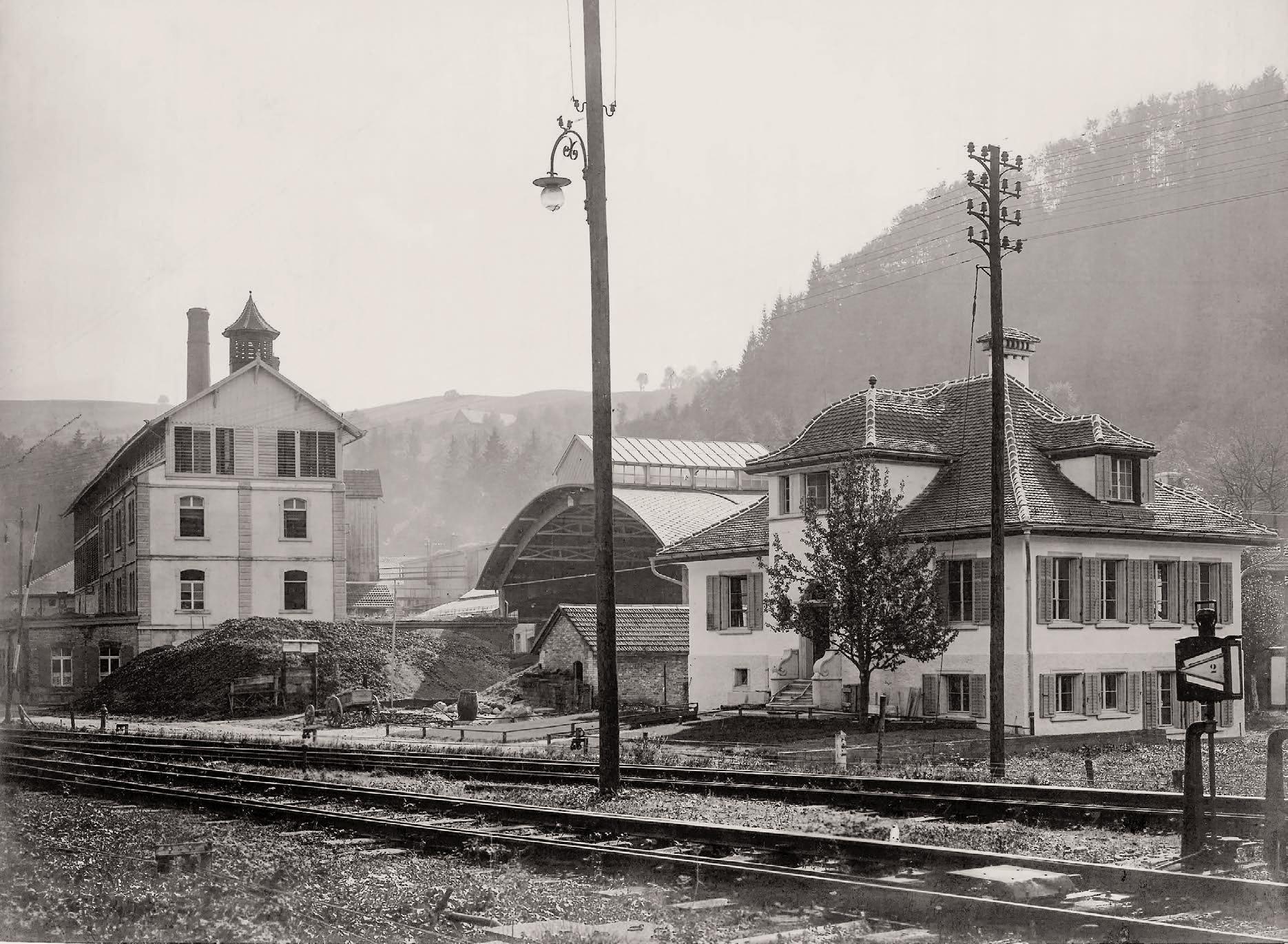
Impressions of the factory site in Wolhusen, undated.
> Fig. 22
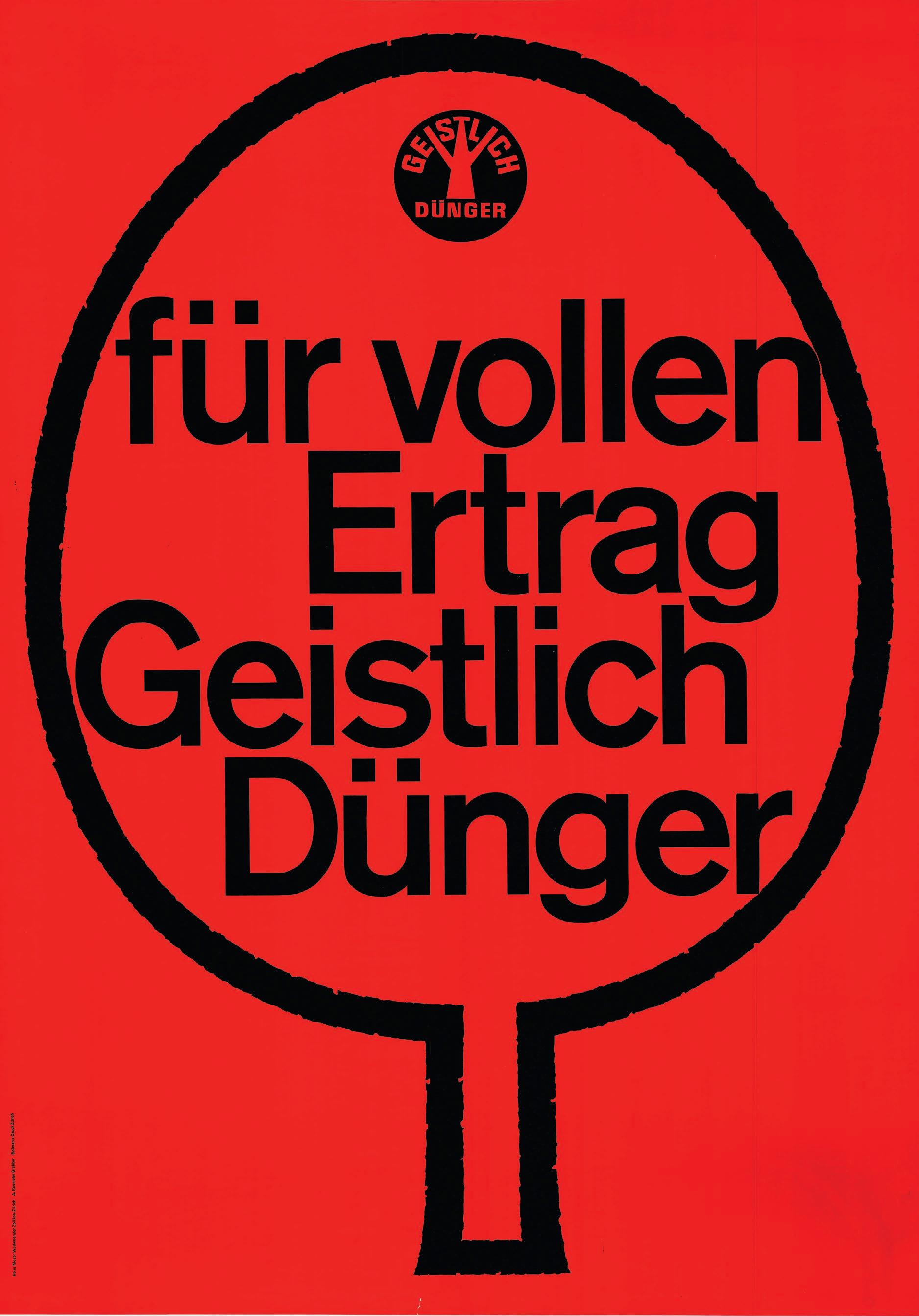
Poster “Geistlich fertilizer for full yield” with the Geistlich fertilizer tree: iconic logo and protected trademark for quality products.
Design: Heinz Moser, undated.
Fig.
Geistlich glue is an excellent binding agent
The success of Geistlich is rooted not least in the close bond between the company and its employees. In 1941, one third of the workforce have already been with the company for 20 years, and some for over 50 years – a loyalty that reflects mutual respect and appreciation. An employee sums it up at the 1941 anniversary celebrations: “ Geistlich glue is an excellent binding agent.” As early as 1895, the company has introduced free accident insurance, followed later on by support funds, pension payments, and family-friendly benefits. Geistlich remains true to this course to this day.
Fig. 23
Employees drying the glue boards in Wolhusen in 1944.
Synthetic glues and the importance of Geistlich fertilizer
At the start of the 1930s, Europe is in the midst of a severe economic crisis. Despite the difficult situation, Geistlich continues to pay pensions to 46 employees and offers them 90 days' unemployment insurance. In 1932, however, the company is forced to cut wages by ten percent. Although raw material prices are low, the future remains uncertain.
With the emergence of chemically cross-linked glues, Geistlich embarks upon their production by launching the semi-chemical veneer glue “Tucol” in 1933, which is patented in 18 countries. Animal glues remain in demand, but the company recognizes the advantages of synthetic products, which are easier to process and can be specified more precisely. The waterproof glue “Gewocol” follows during the Second World War, and synthetic resin glues after the end of the war.
The Nazi threat forces Switzerland to become self-sufficient, culminating in the state-run program known as the “Anbauschlacht” in which all parks and even sports grounds are cultivated to secure home-grown food supplies. When phosphate fertilizer imports fail to materialize during the war, Geistlich fertilizer plays a key role, as the product made from bone meal is the only domestic fertilizer containing phosphorus. So, while there is no shortage of orders, the wartime economy also causes problems as there is a compulsory duty to hand over all waste, including bones. The military also requisitions trucks and drivers – i ncluding those from Geistlich . Dwindling sales markets exacerbate the situation.
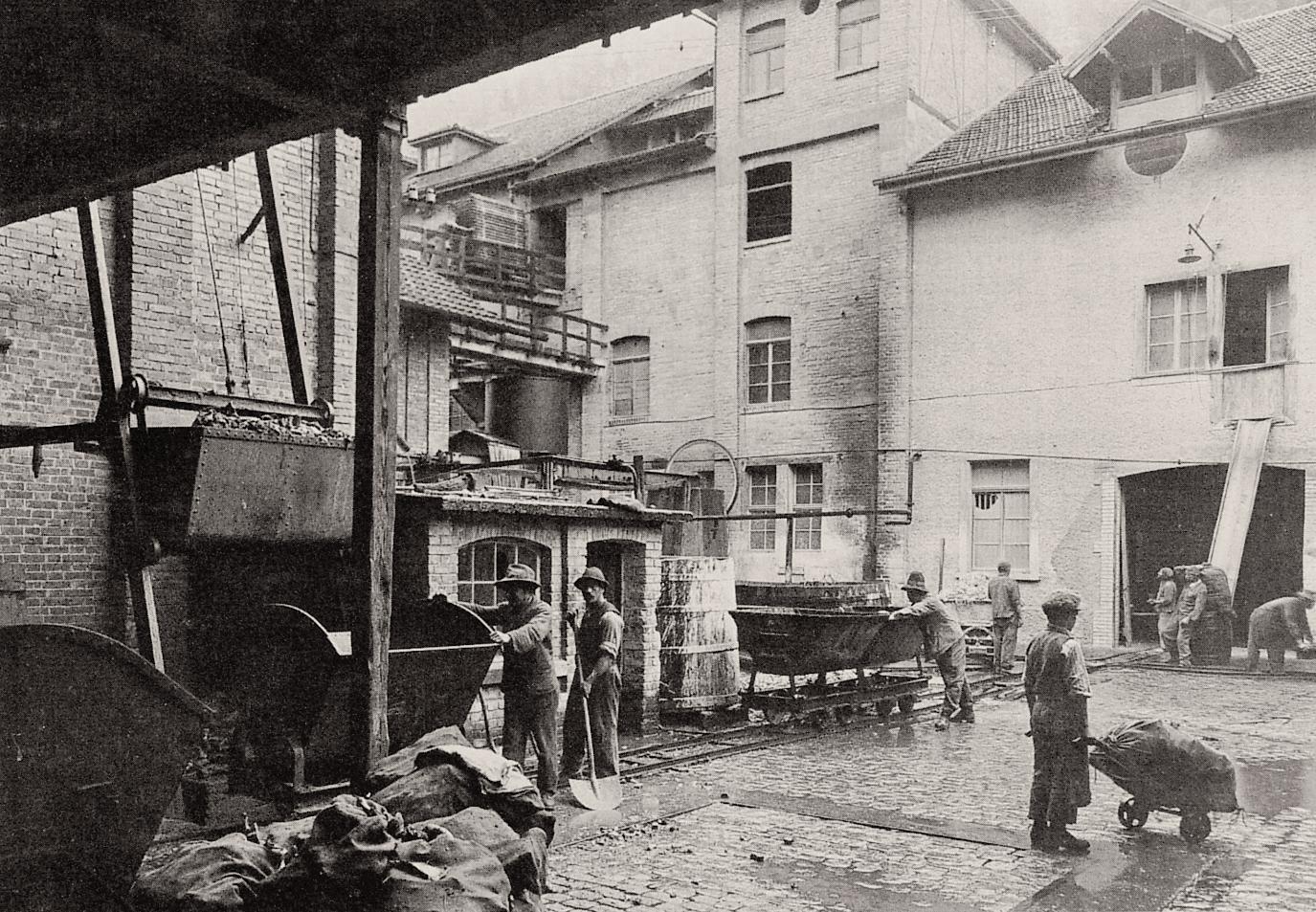
Fig. 24
Arrival of a load of bones at the factory in Wolhusen, around 1940.
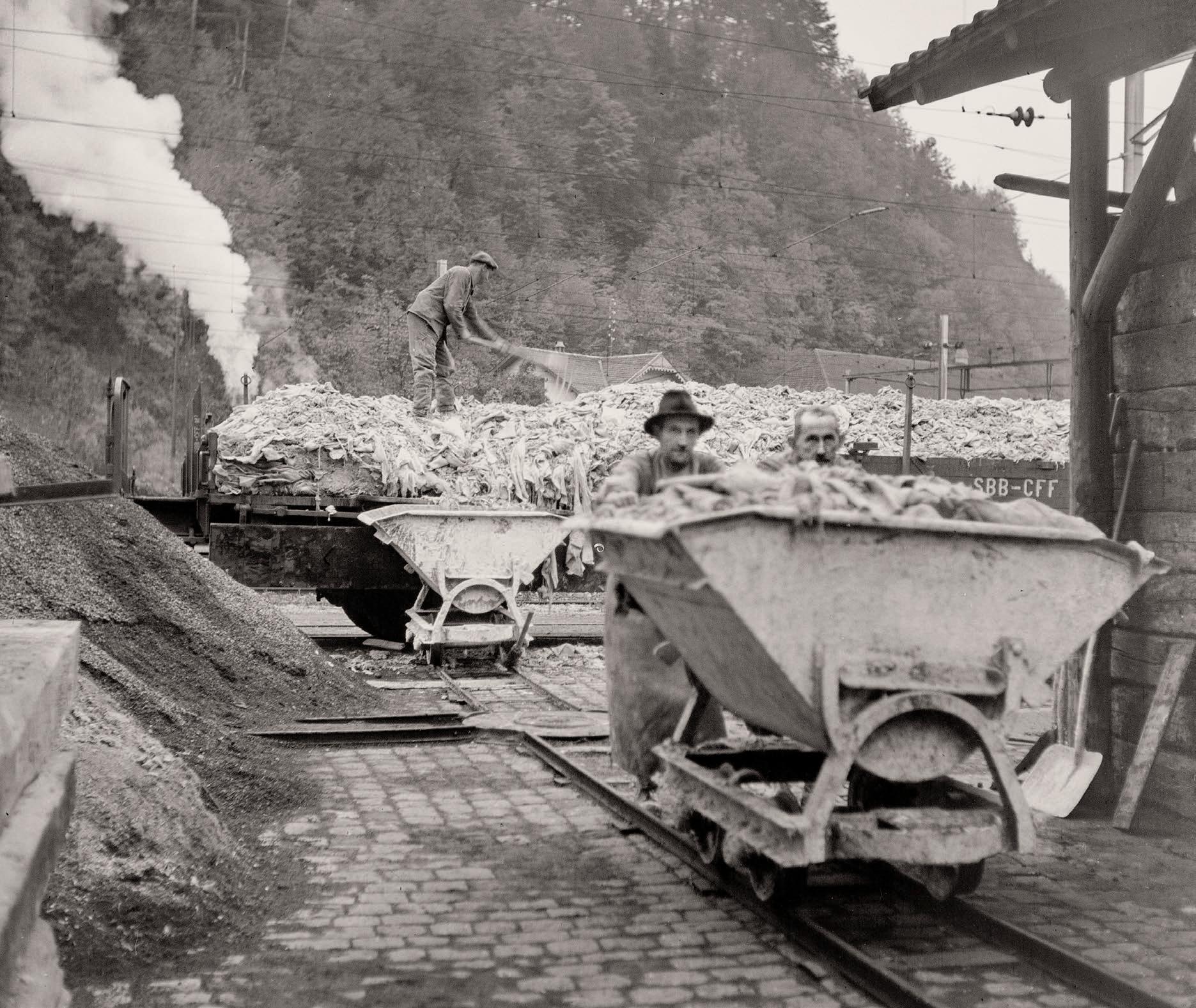
Employees around 1940 in Wolhusen at the incoming goods reception for hides and leather scraps, which are defatted and later processed into hide glue.
Fig. 25
26
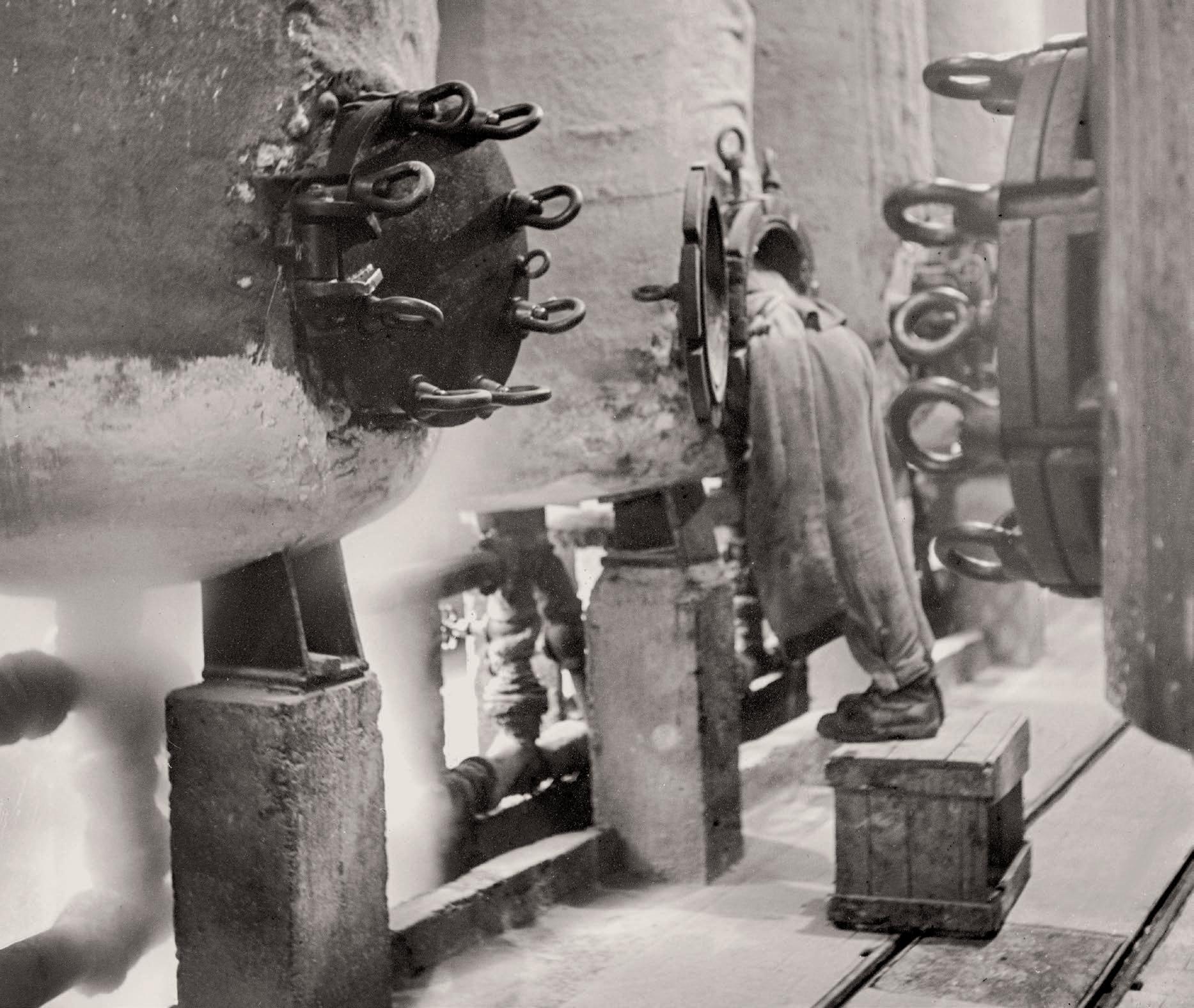
Employees in glue production in Wolhusen in 1944. Ovens and heating devices are carefully used to extract the glue from animal raw materials; here, the temperature is precisely controlled to preserve the quality of the glue.
Fig.
Opening of the Pharmaceutical Department during the Second World War
In 1943, Geistlich establishes a Pharmaceutical Department in Wolhusen on behalf of the Swiss Confederation in order to meet the increasing demand for dietary supplements and medicines during the war. At the same time, the company expands its range to add feed lime and develops innovative products such as vitamin-concentrates and the animal breeding agent “Vitossan.”
Just one year later, Geistlich succeeds in producing pure calcium phosphate in accordance with the strict requirements of the Swiss Pharmacopoeia. In 1945, Geistlich launches its first human pharmaceutical called “Decalcit,” a mixture of calcium phosphate and vitamin D that prevents osteoporosis. With growing success, the department expands its range to include the antibiotic “Sulfocillin,” injectable calcium preparations, the analgesic “Gewodin,” and vitamin preparations.
From 1948, Geistlich intensifies its research and development activities, patents methods for vitamin production, and constructs production facilities, laboratories, as well as a library. By combining experience in the processing of animal raw materials with innovative research, the company opens up a new area of business without forsaking its roots. The Pharmaceutical Department becomes known internationally with the “GEWO” brand (short for “GEistlich WOlhusen”) and establishes itself as an important pillar.
> Fig. 27
“Decalcit” is developed by Geistlich in the 1940s to alleviate osteoporosis in the Swiss population suffering from the consequences of World War II. The drug marks the entry of the company into the pharmaceutical industry.
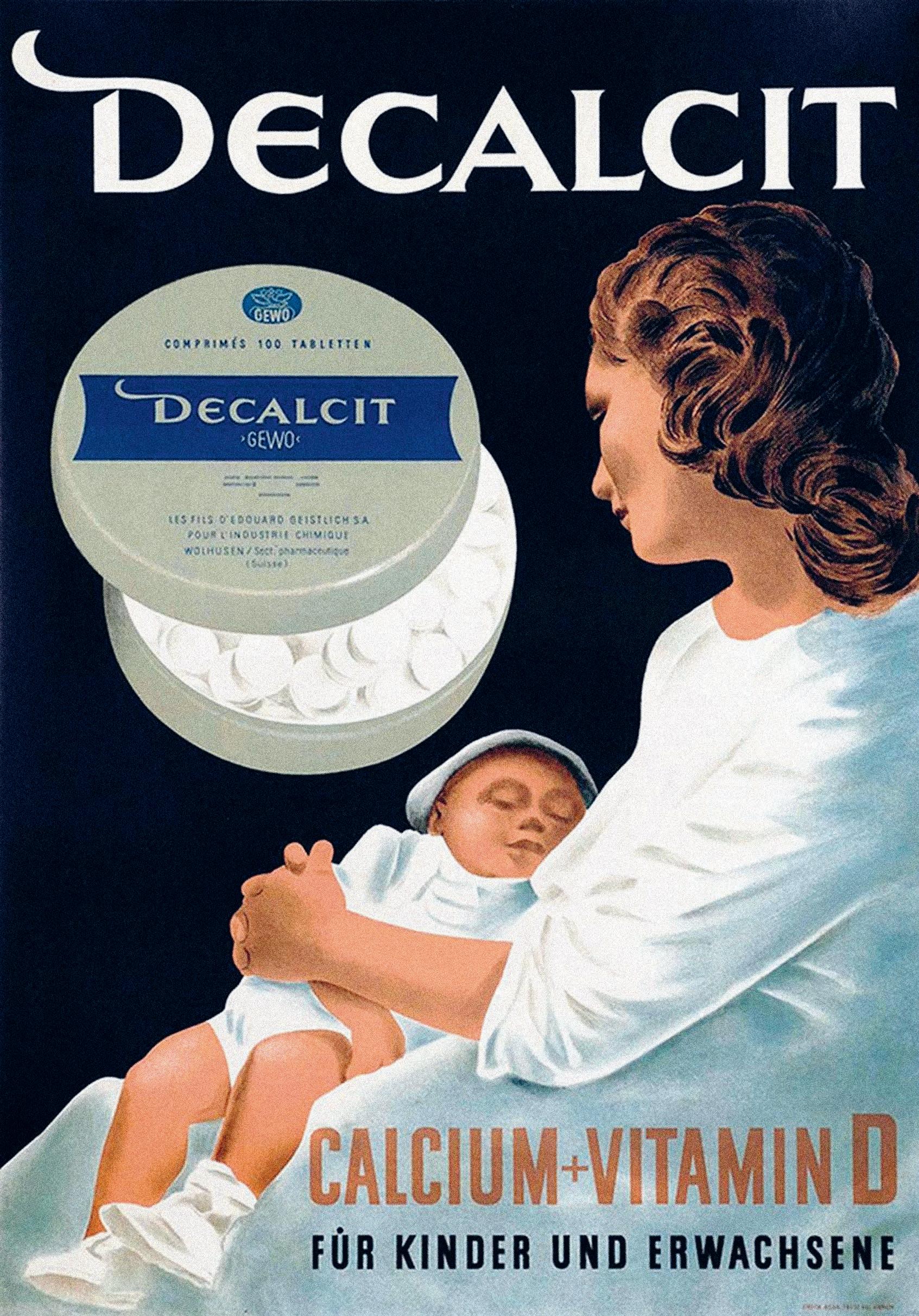
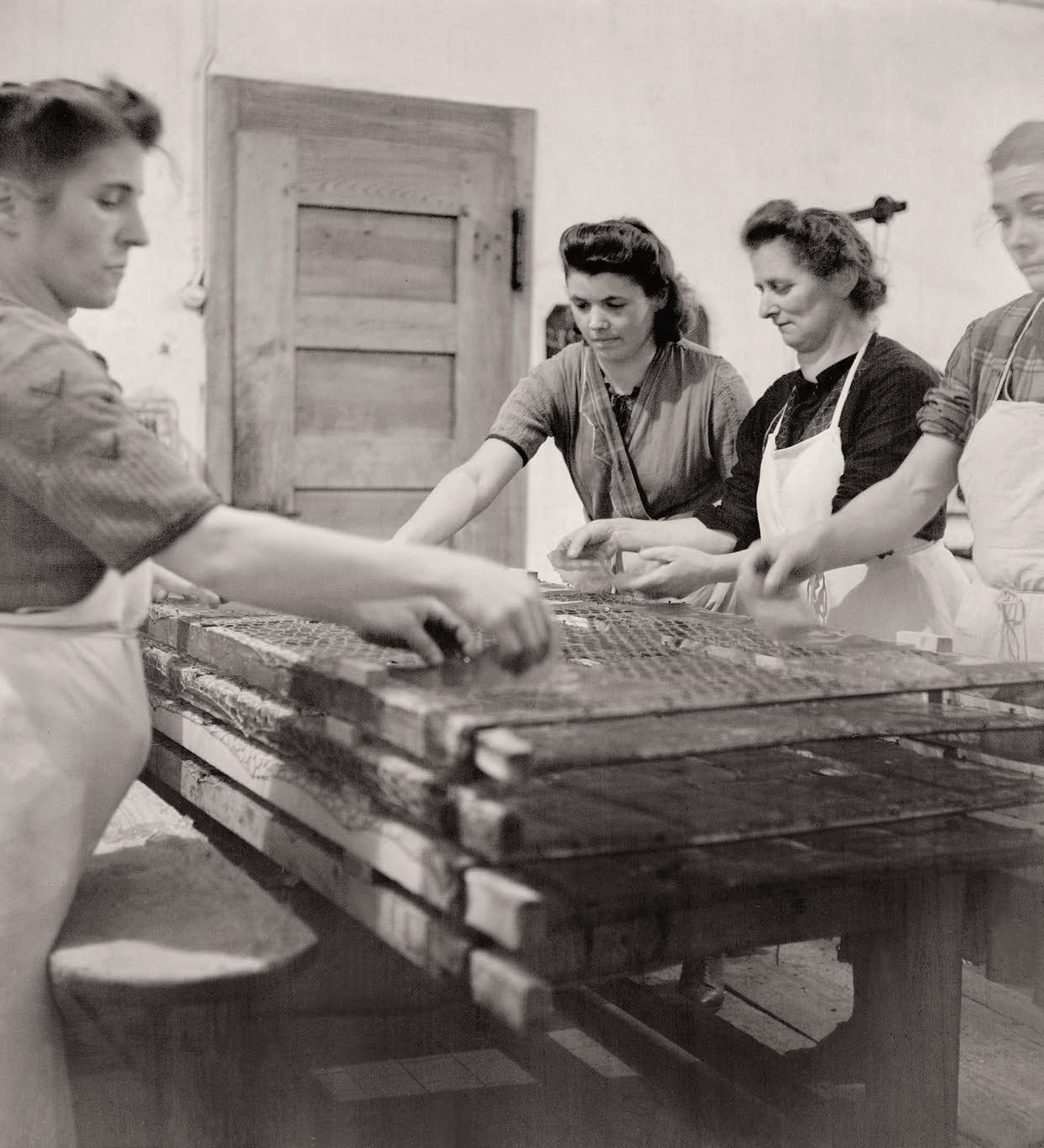
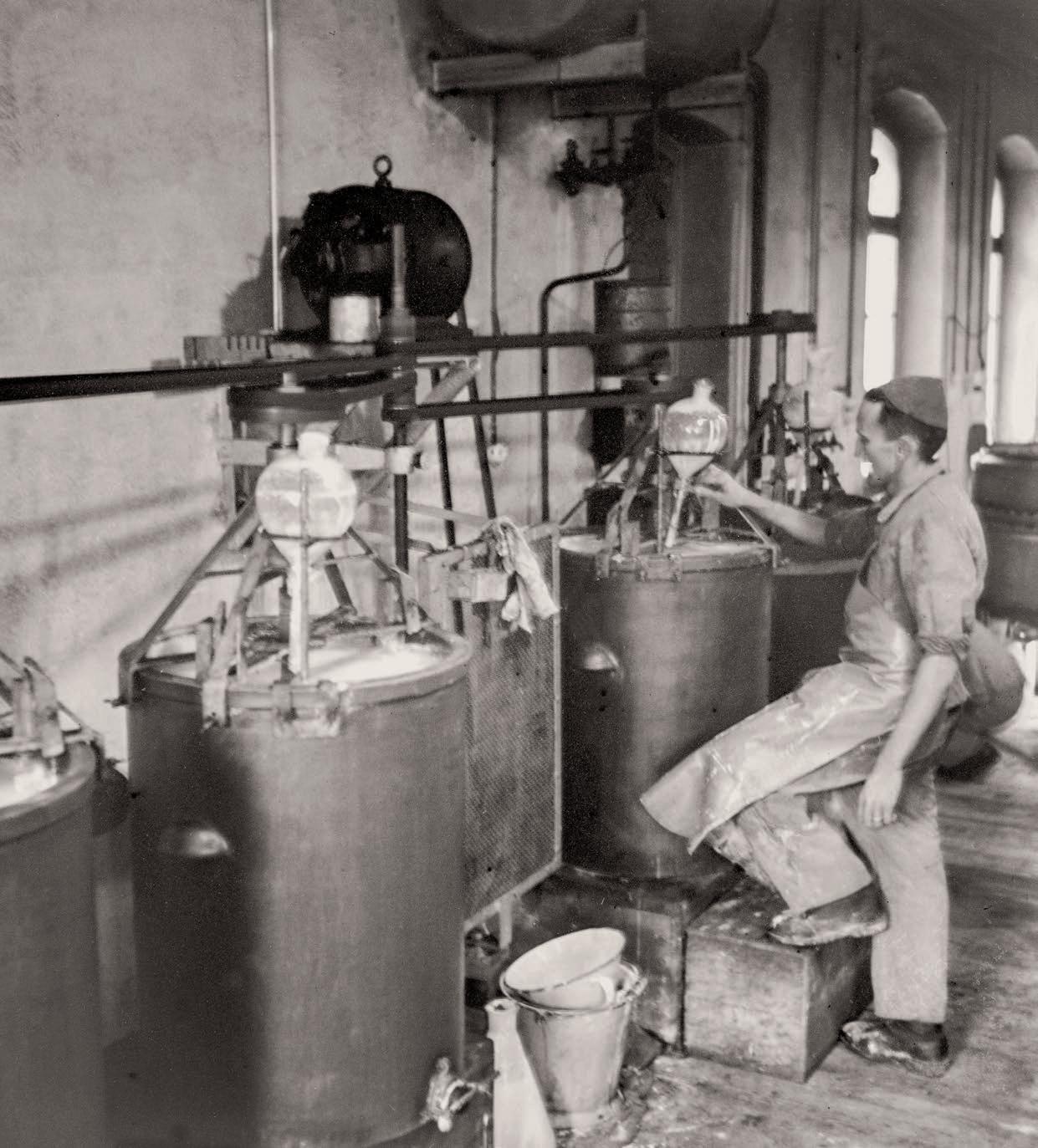
Fig. 28 / 29
G lue production in Wolhusen in the 1940s: The combination of manual work and technology is clear to see –employees operate machines and ovens, while elsewhere manual steps such as stirring, checking, and sorting of the glue are carried out.
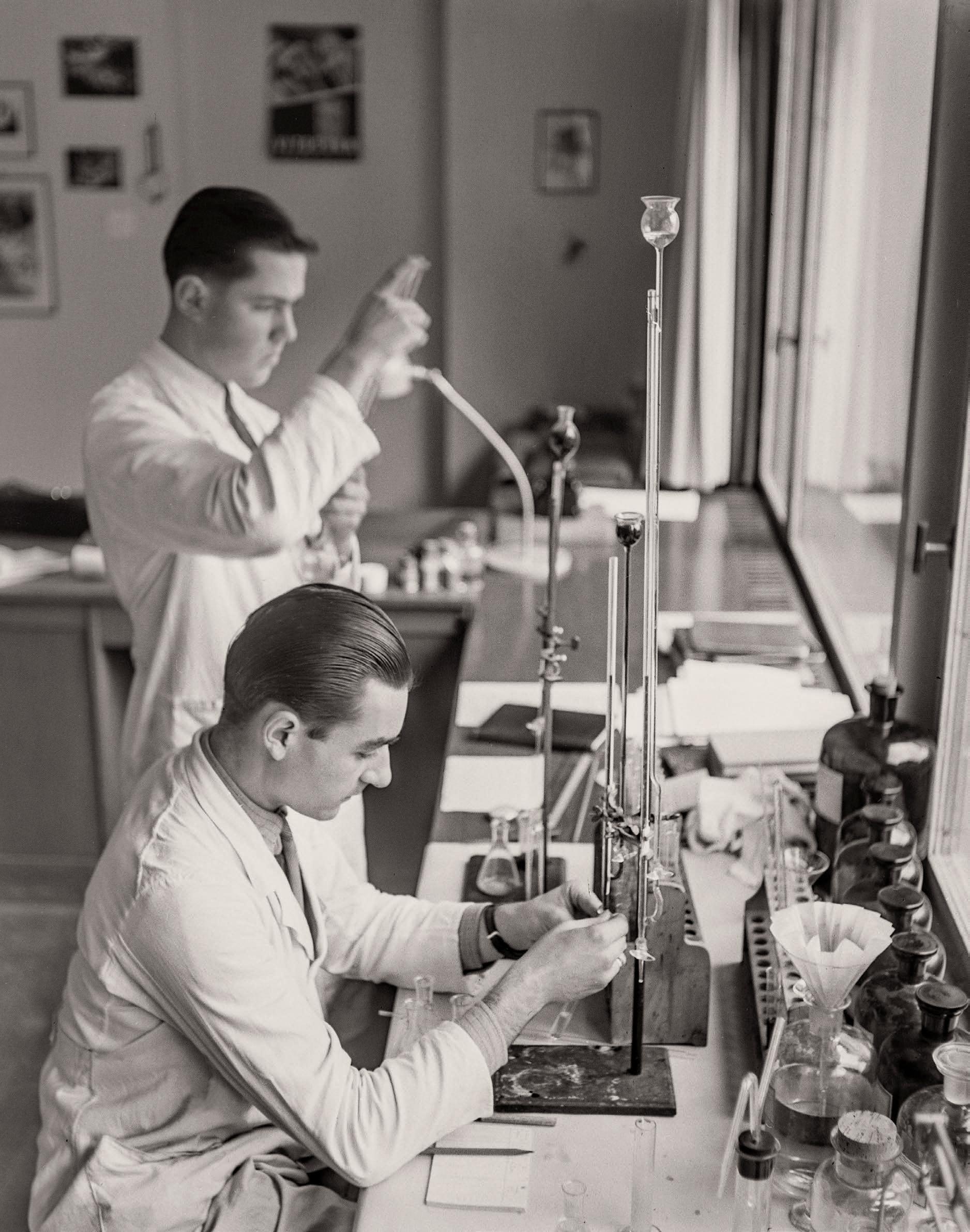
At the same time, research into new products takes place in the company’s laboratories. 1944, one year after the founding of the Pharmaceutical Department.
Fig. 30
Expansion of the business area in Zofingen
In 1949, Geistlich finances retirement pensions and support benefits directly from its operating results, without taking money from its reserves. This decision demonstrates the economic stability of the company and is repeated in subsequent years. Against this background, it is clearly a bold and significant step when in 1951 – t he year of its centenary – Geistlich acquires a majority shareholding in DELTA-Werke in Zofingen. Founded in 1906 as Hermann Daetwyler & Co. KG, the company has made a name for itself with glue, fertilizers, and animal feed. Geistlich initially continues these business areas.
Accompanied by an artfully staged film, Geistlich launches the gout preparation “GT 50” on the market in its anniversary year. Developed in collaboration with doctors and chemists, it impresses with its quality and efficacy. In 1957, the company invests in a new production building and a laboratory for chemical adhesives. Just one year later, the white glue “Konstruvit” is registered internationally. Its versatility, water resistance, and fast setting time make it a classic to this day.
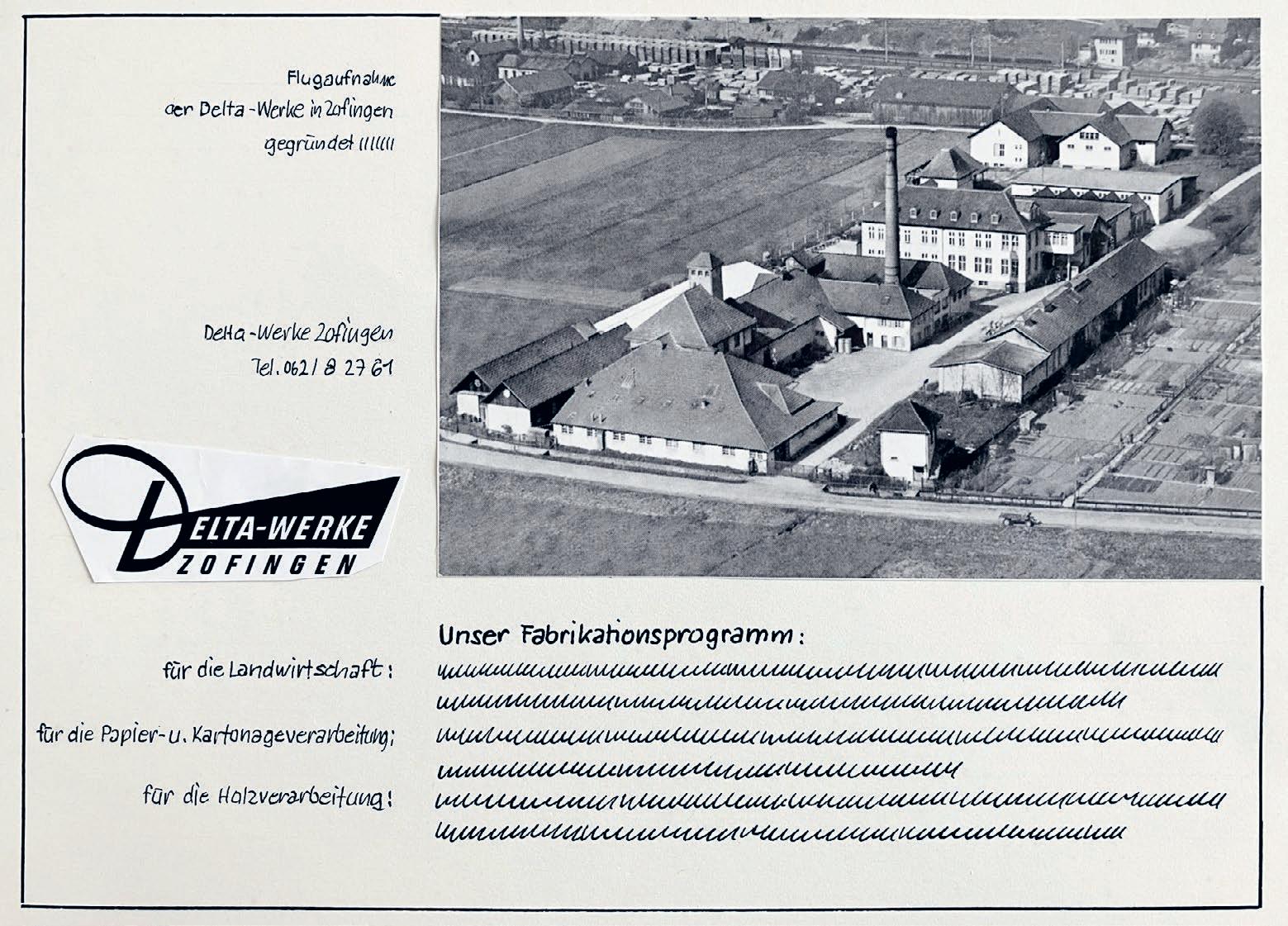
Fig. 31 Advertisement with a photograph of DELTA Zofingen AG in 1956.
.
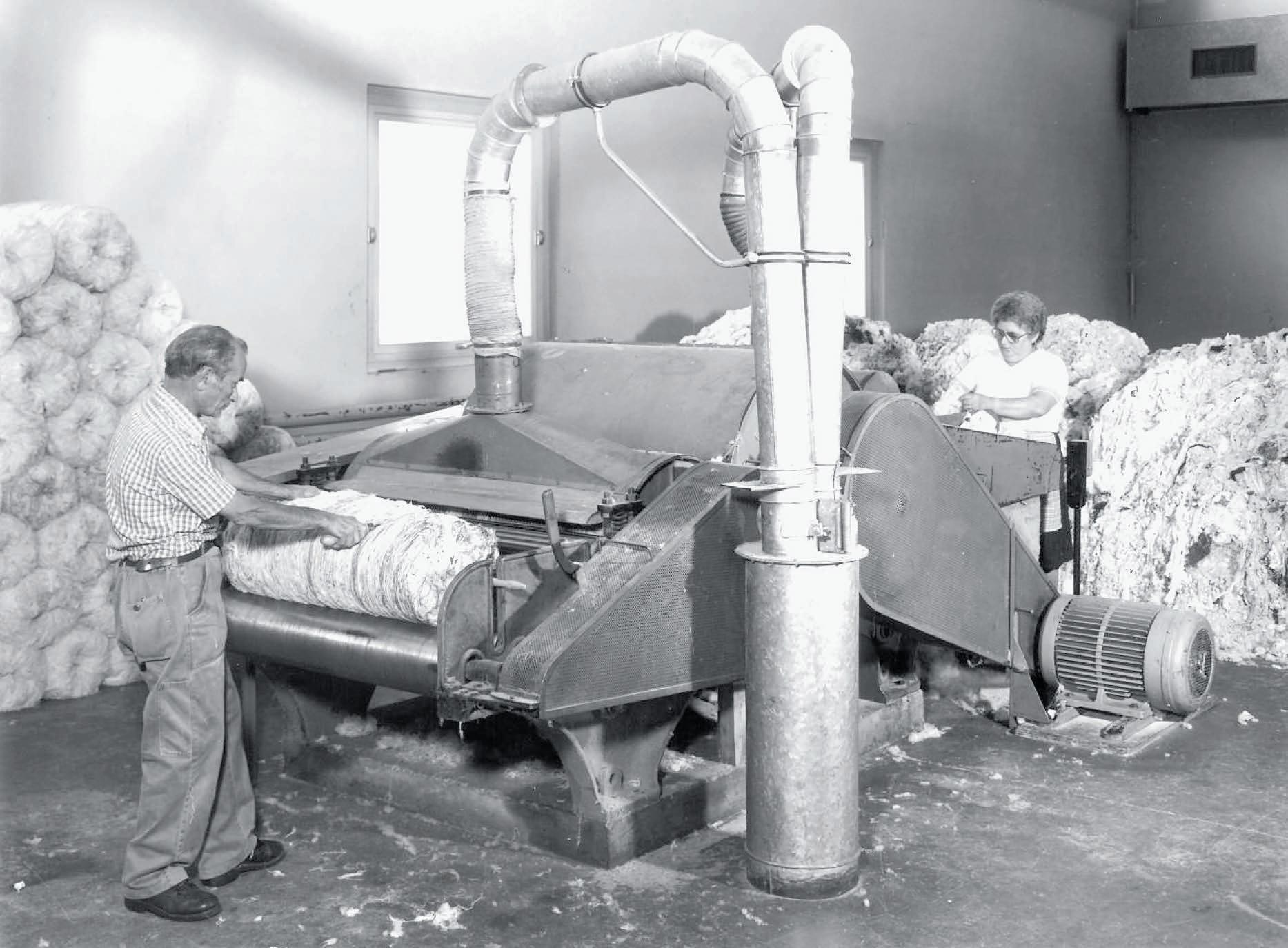
Fig. 32
Insight into textile processing at DELTA Zofingen AG for the production of cleaning threads, around 1960
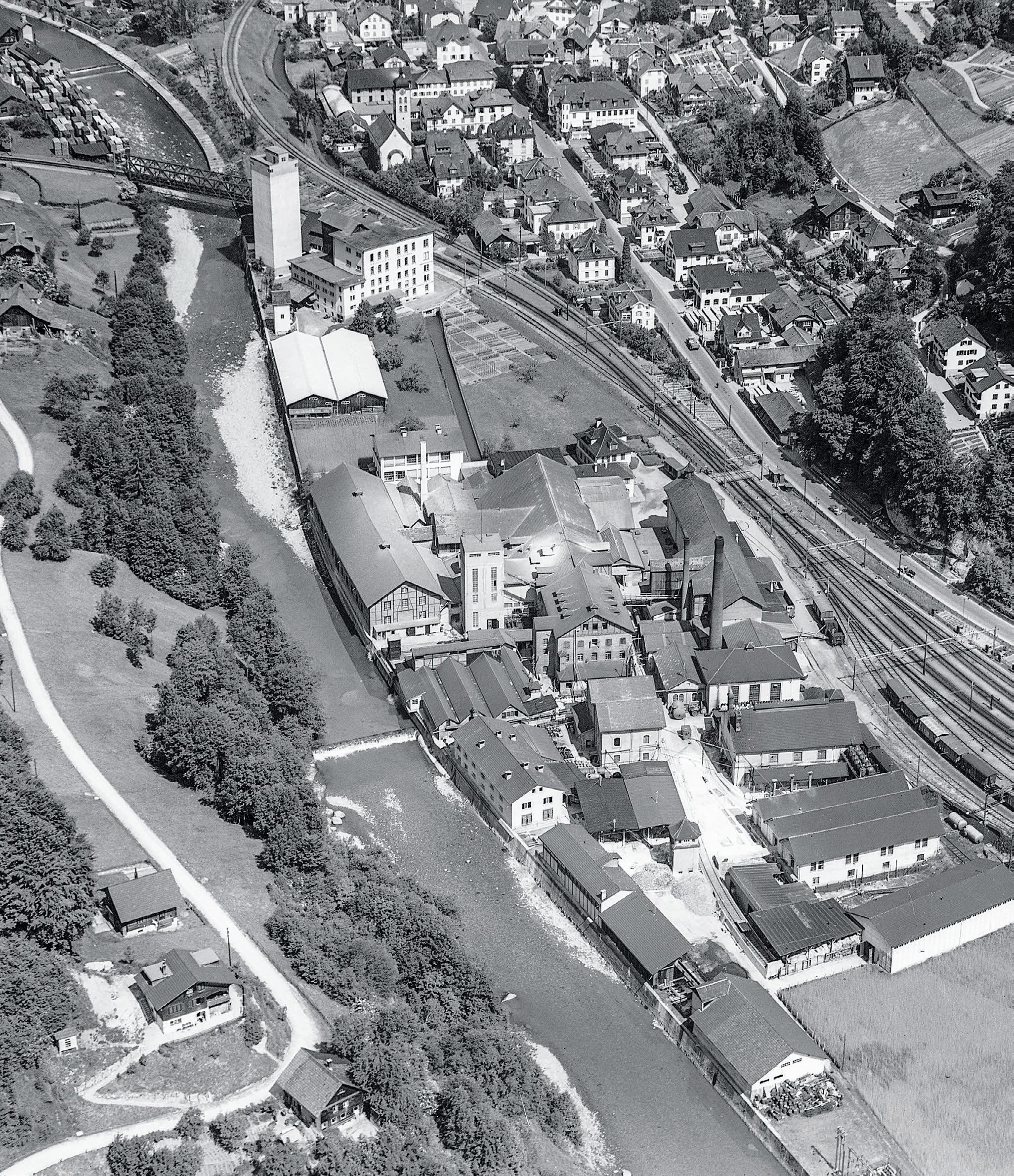
Aerial view of the Geistlich site in Wolhusen, around 1950. The plant is located between the tracks of the Entlebuch line (LucerneBern) and the Kleine Emme river, which flows into the Reuss at Emmenbrücke.
Fig. 33
A careful choice
Geistlich selects its locations carefully, ensuring good infrastructure and good access to raw materials, energy, and qualified employees. The move to Schlieren in 1869 takes advantage of its favorable location on the Swiss Northeastern Railway. From 1890, a direct rail connection facilitates the procurement of raw materials from Switzerland, Alsace, and Germany. Th e Limma t Valley also offers plenty of groundwater. Wolhusen, connected by rail since 1875 and linked to Langenthal from 1895, evolves into a transport hub. The company's location on the Kleine Emme river enables it to run its own small power plant. In 1951, the company expands to Zofingen, a central transport hub with fast connections.
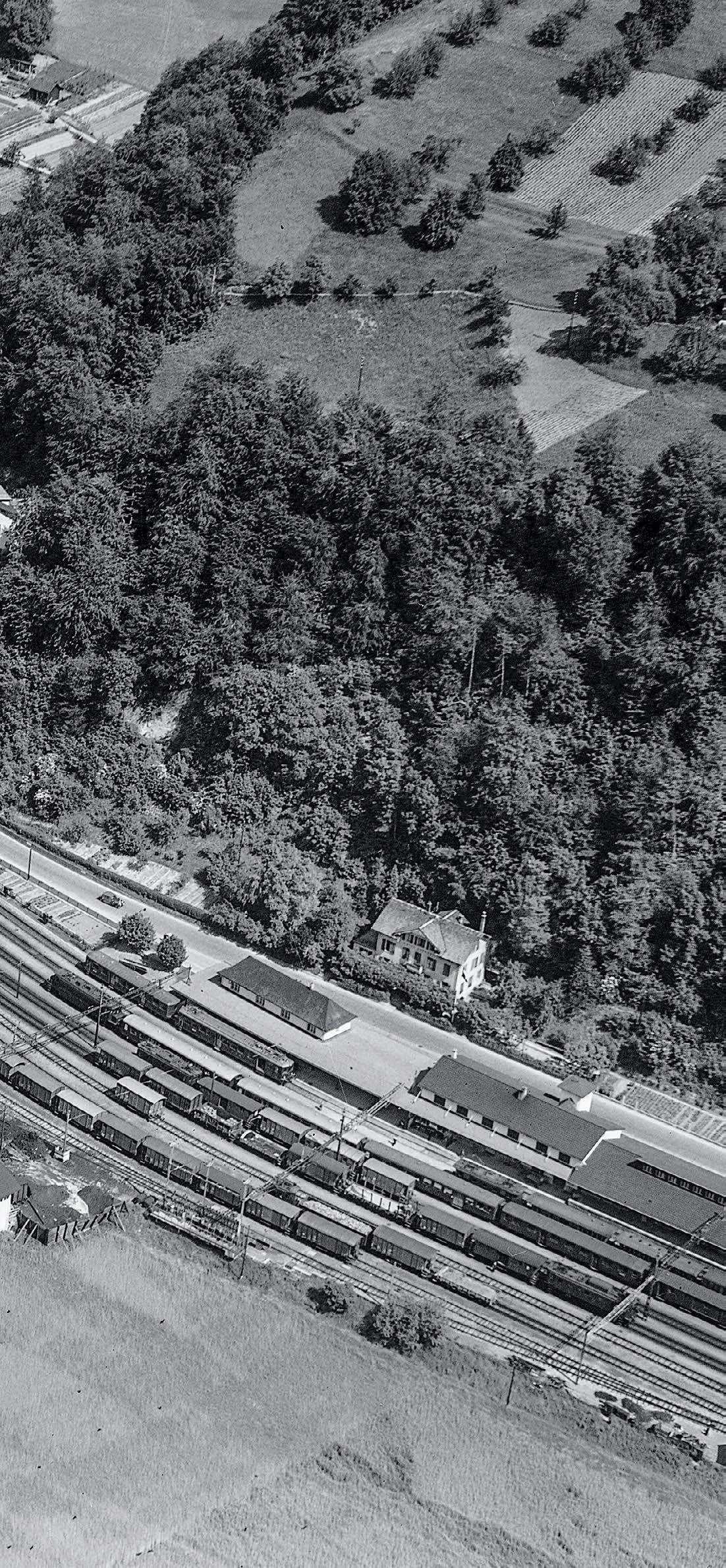
of Schlieren in 1966. The company premises, which can be seen in the middle of the picture, are located directly on the main Zurich-Olten line, a central east-west connection.
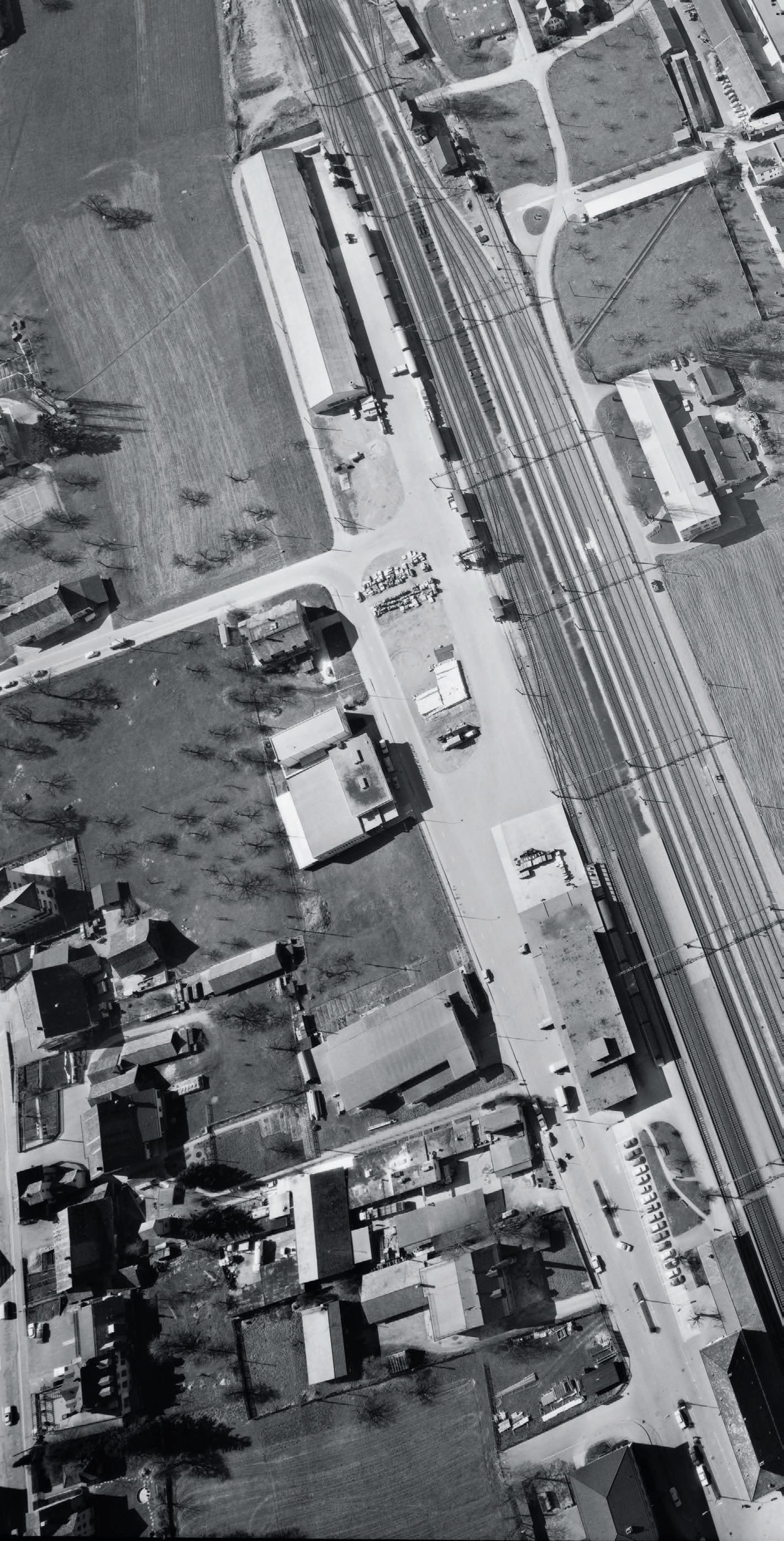
Fig. 34
Photograph
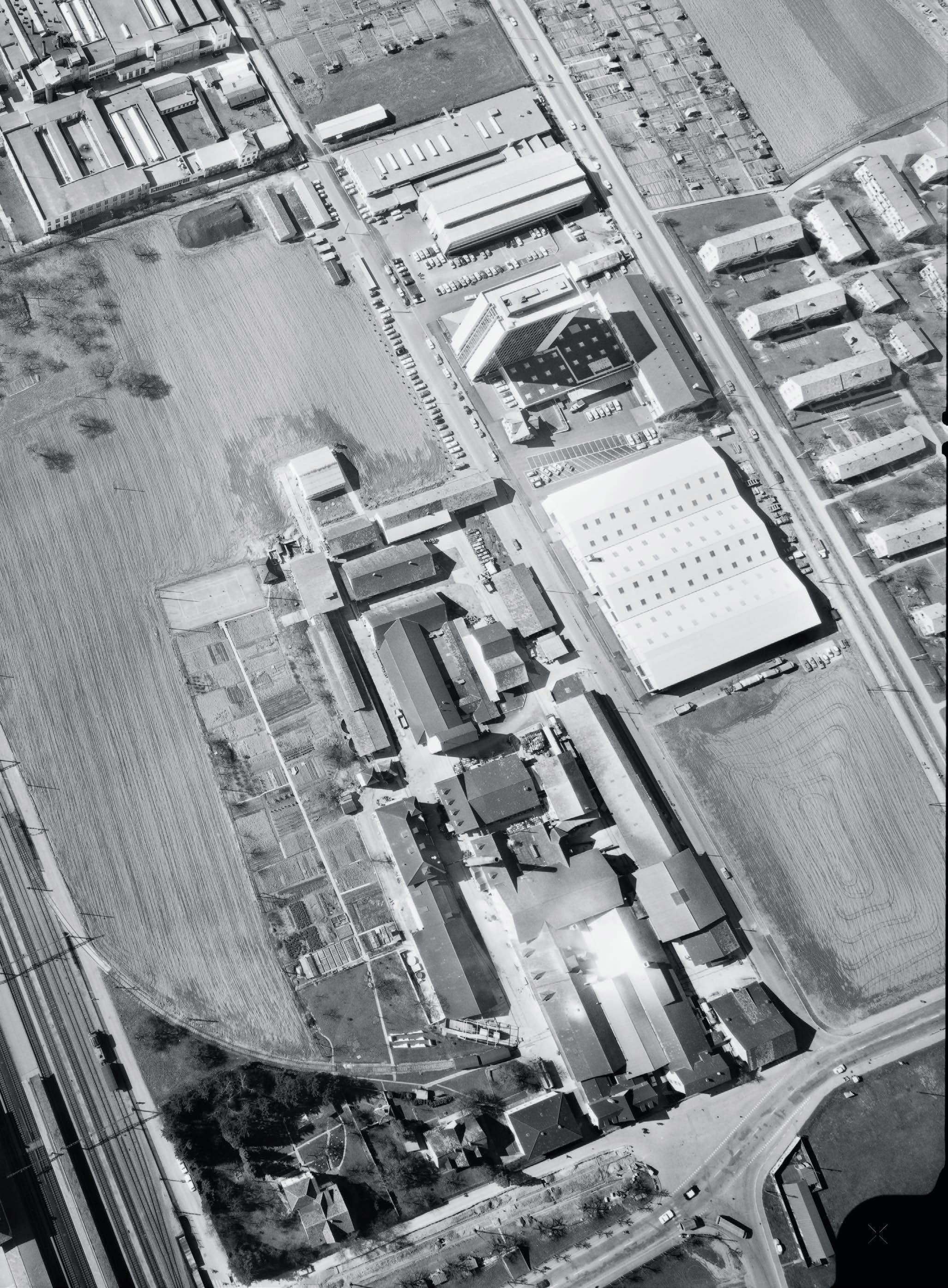
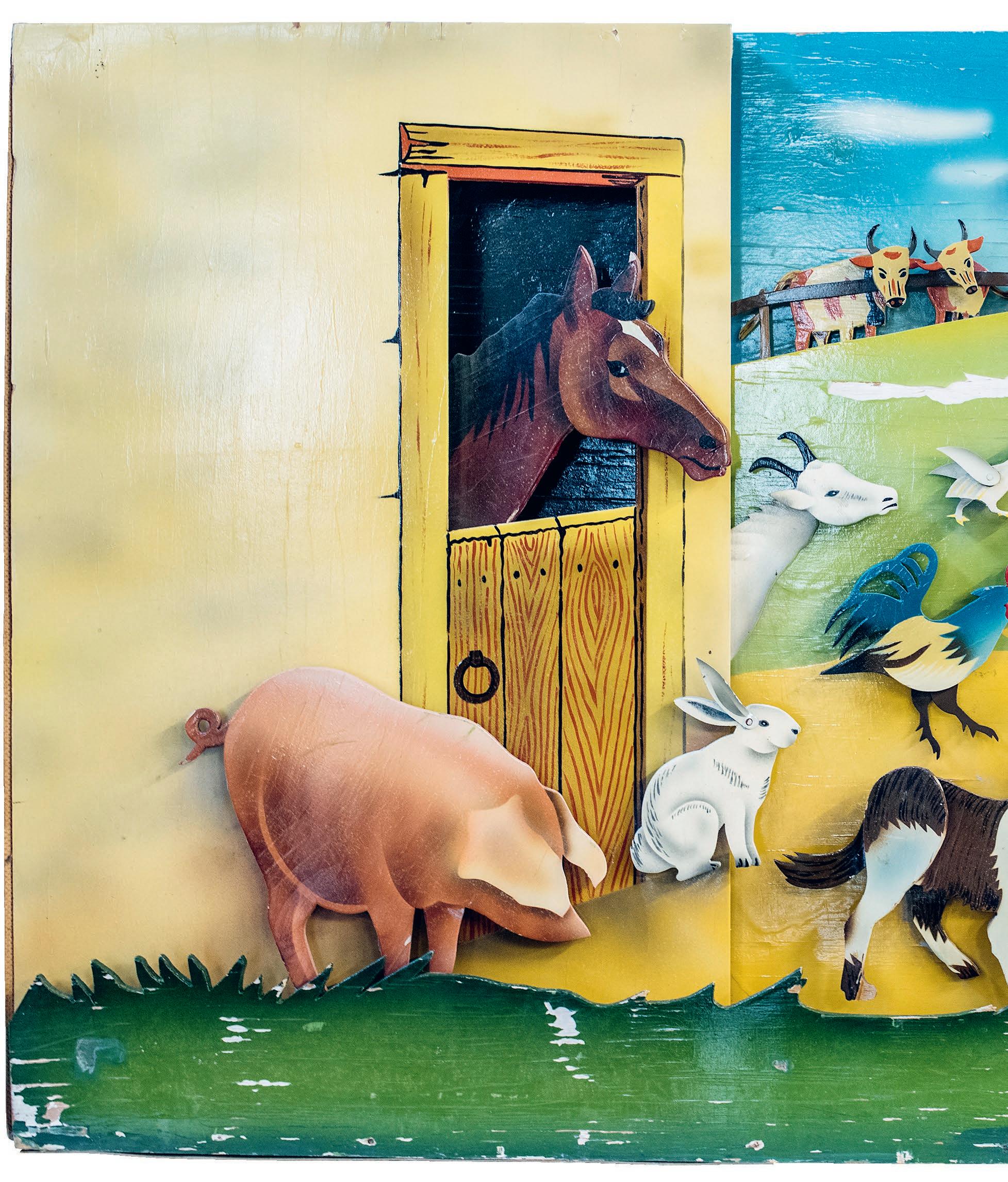
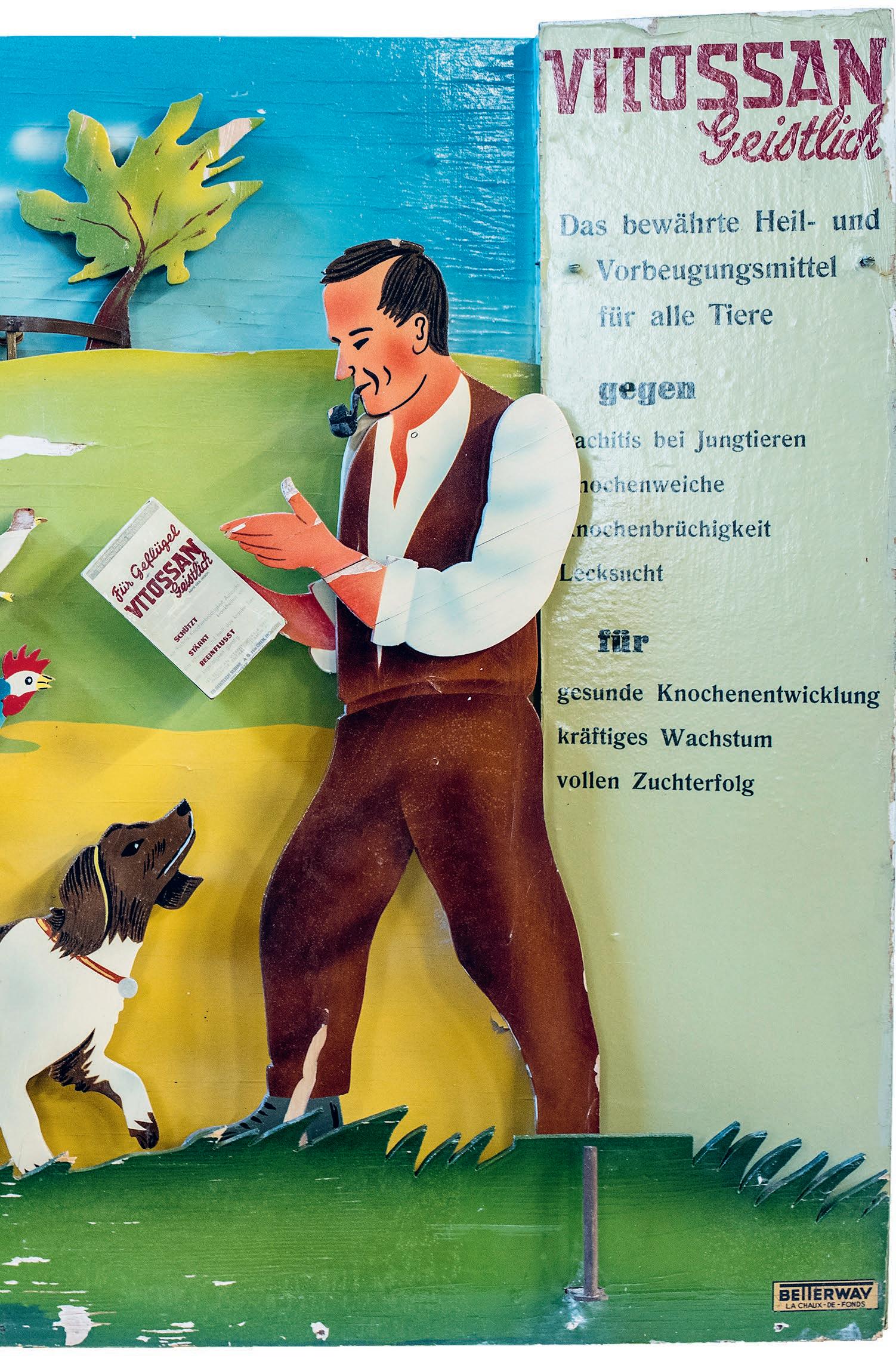
Fig. 35
In order to bridge agricultural shortages during World War II, Geistlich expands its range to include feed lime, laying the foundations for innovative products such as vitamin D concentrates made from irradiated yeast and the animal breeding agent “Vitossan.”
“Konstruvit”: The glue of the nation “Bio-Oss” may be the most ingenious invention in the history of Geistlich, but no product has made Geistlich more famous in Switzerland than the household glue “Konstruvit.” Even Friedrich Dürrenmatt couldn't do without it.
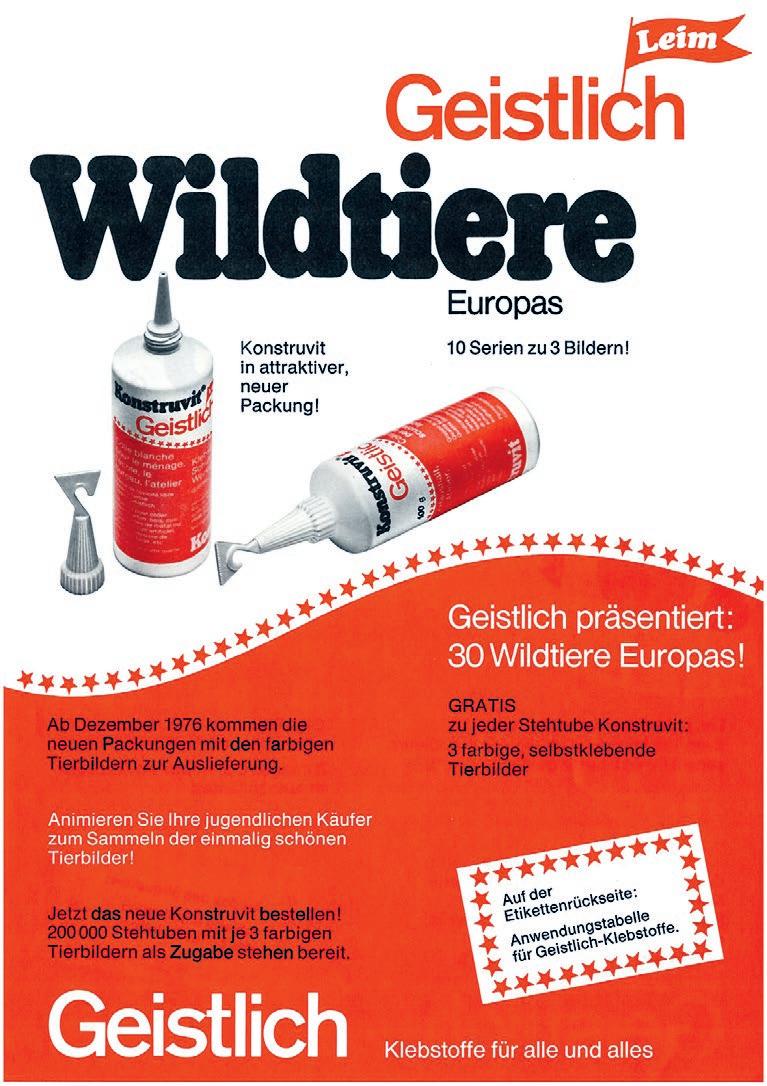
36 Popular – not just with children. Craft sheet with wild animals from 1976.
Fig.
“Do you have Geistlich and a pair of scissors?” Writer Friedrich Dürrenmatt poses this question to the then “grande dame” of Schauspielhaus Zürich (Zurich playhouse), Maria Becker, when she asks him to revise a text for her. However, Maria Becker only half understands Dürrenmatt’s question. “What is Geistlich?” she asks, to which Dürrenmatt replies: “It's a paper glue.” Scissors were needed to cut out the passages of text, and Geistlich was required to reposition and affix the scraps of paper. According to Dürrenmatt, “you can't write at all without scissors and Geistlich.”
What is remarkable about this anecdote is that Dürrenmatt uses the term “Geistlich” as a synonym here for “paper glue.” This is because very few companies succeed in making a product so popular that its name stands for an entire product category. Sony achieved this in the 1980s with the “Walkman”; a more recent example is “googling” as a synonym for performing a search on the Internet. How did Geistlich achieve this?
From monomer to polymer
The story of the glue demanded by Dürrenmatt begins in the early 1950s. At this time, Geistlich has already been successfully producing glues from animal collagen for a century. However, during the Second World War, a technological leap has taken place in the development of synthetic adhesives. In the late 1940s, companies such as the German company Henkel AG launch the first synthetic white glues for everyday use – a trend that Geistlich was determined not to miss out on.
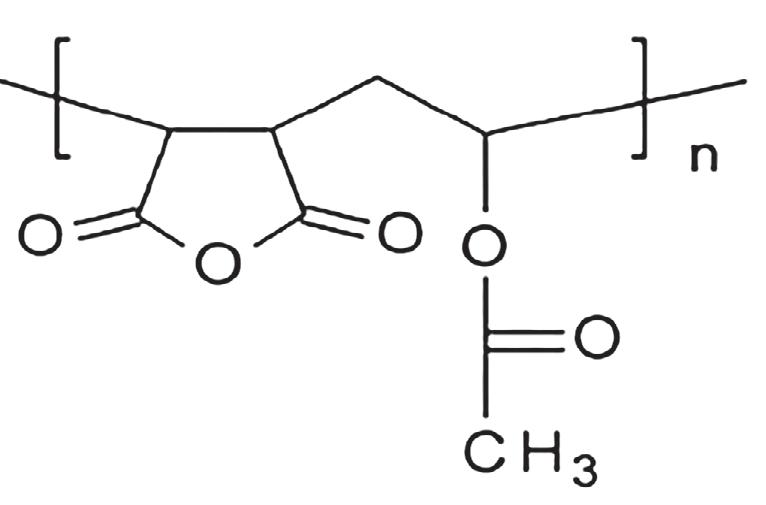
In 1952, under Paul Geistlich, the company begins researching and developing synthetically manufactured polymers for the production of adhesives. Here, the main difficulty lies in upscaling to full production technology. Geistlich conducts empirical research for years, systematically collecting and analyzing data – until a polymer is found in 1957 that meets the company’s exacting demands. The glue does not get stringy, becomes clear once hardened, sticks well, and is solvent-free – and therefore safe. On January 27, 1958, the white glue is registered at the patent office under the name “Konstruvit” with the patent number 168737.
Hans Geistlich, chemist and marketing pioneer
Initially, the new glue achieves only modest sales. Fortunately, Hans Geistlich, Paul Geistlich's son and successor, is not only an exceptional chemist, but also a skillful marketer. In 1965, he orders a redesign of the glue – the tube is changed to the red and white stand-up tube still common today, which not only looks better on shop shelves but also on desks. This makes “Konstruvit” from Geistlich an iconic product of everyday life.
Around 1970, Hans Geistlich teams up with Gerda Conzetti, the country's “arts and crafts icon.” “Arts and crafts were all the rage back then,” remembers Martin Geistlich, Hans Geistlich's son, who was eight years old at the time. Conzetti even has her own arts and crafts program on Swiss television – almost always with a logo-free “Konstruvit” stand-up tube in the picture. Together with her, Geistlich develops craft kits that sell incredibly well, especially when Hans Geistlich produces the first TV commercial in the company's history.
Fig. 37
Structural formula of the copolymer, i.e. of the chemical substance consisting of macromolecules used to produce Geistlich’s “Konstruvit” white glue.
Martin Geistlich remembers exactly how he and his siblings sat spellbound in front of the television one evening to watch the first broadcast of the commercial. What he saw was a man sitting behind a pane of glass, sticking letters on the pane with a tube of Geistlich – mirror-inverted from the viewers' point of view. When he finished, he turned the glass around to reveal the lettering: “Konstruvit.”
The brand remains
Glue production remains a solid business for Geistlich for decades. In its heyday, seven in ten Swiss households have a pot of Geistlich glue from Geistlich. But with the effects of globalization in the 1990s, margins start to dwindle. In 1999, Geistlich bundles its glue business in the company Geistlich Ligamenta AG. The company no longer earns its money with household adhesives, but primarily as a recognized specialist for dispersion, hot melt, and specialist adhesives in the woodworking industry.
However, there is insufficient money to expand the business; the holding company prefers to invest its limited resources in the medical technology sector. In 2016, Geistlich sells the glue business to GYSO AG, which has continued the range and the Geistlich brand ever since. Geistlich glues can still be found on many shop shelves in Switzerland today. The brand has outlived its parent company, Geistlich Ligamenta AG.
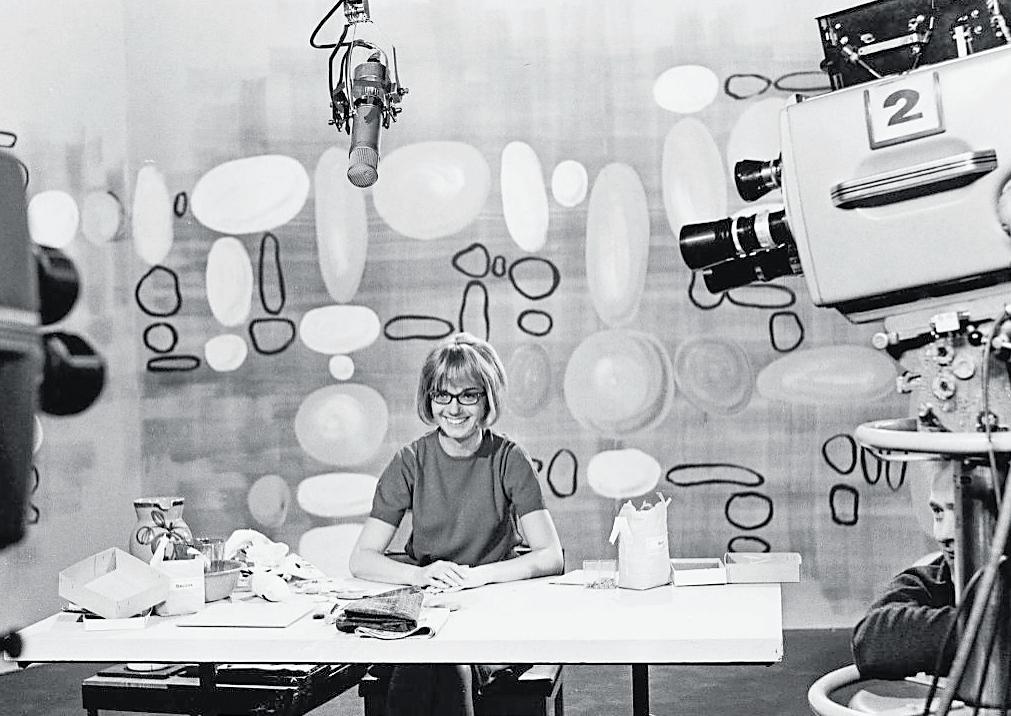
Fig. 38
TV presenter G erda Conzetti, the “crafting aunt of the nation.” “Crafting was all the rage back then,” remembers Martin Geistlich .
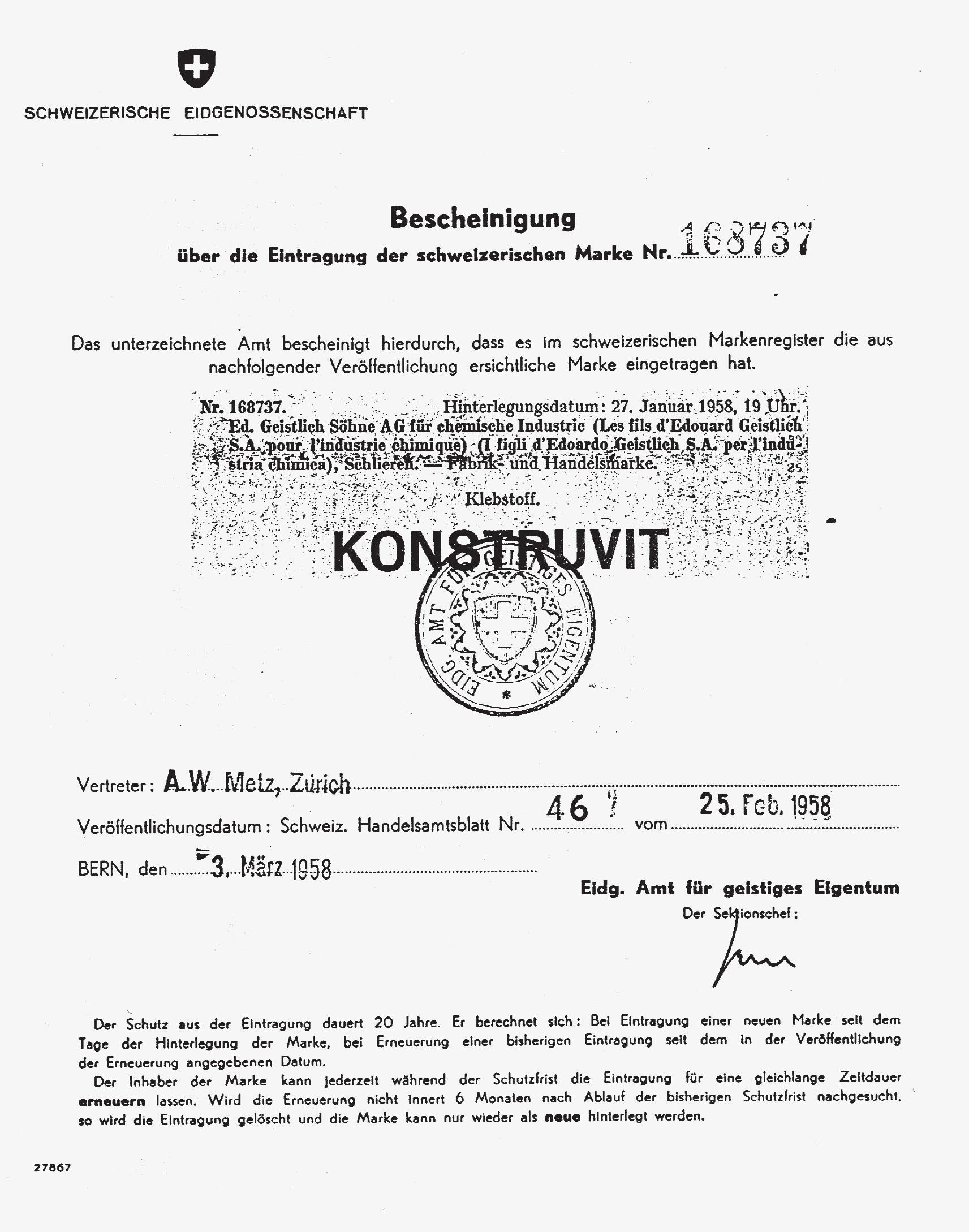
Fig. 39
On January 27, 1958, the white glue is registered at the patent office under the name “Konstruvit” with the trademark number 168737.
A wide, varied product range combined with expertise in pharmaceuticals and cosmetics
Geistlich’s adaptability and diversity become particularly apparent in the post-war period, when the global economy offers up new opportunities and chemical and pharmaceutical research leads to a surge of innovation. With the founding of a German affiliate in 1950 in Baden-Baden, the company strengthens this line of business.
Early on, Geistlich develops a broad range of pharmaceuticals for international markets and markets these under the “GEWO” brand. Preparations such as Gewodin, a proven painkiller and antipyretic, Batramycin, an antibacterial ointment, and Dipasic, a pulmonary remedy, impress with their efficacy.
But Geistlich does not stop at pharmaceuticals. Its knowledge and expertise in the fields of chemistry and pharmaceutical technology, such as cleanroom production, standardized quality controls, and the production of synthetic active ingredients, also form the basis for cosmetic products. The company recognizes this potential and expands its range to include care products, intimate care products, perfumes, and deodorants.
While pharmaceutical products continue to be manufactured in Wolhusen, the German affiliate specializes in baby care products from the 1980s onwards. Wet wipes, creams, lotions, shower creams, bath care products, and oils form a premium range that combines quality and care. Just a few years after the introduction of contract manufacturing, the company is among the three leading providers in Germany in the baby care segment. Operations are wound down in an orderly manner in 2019.
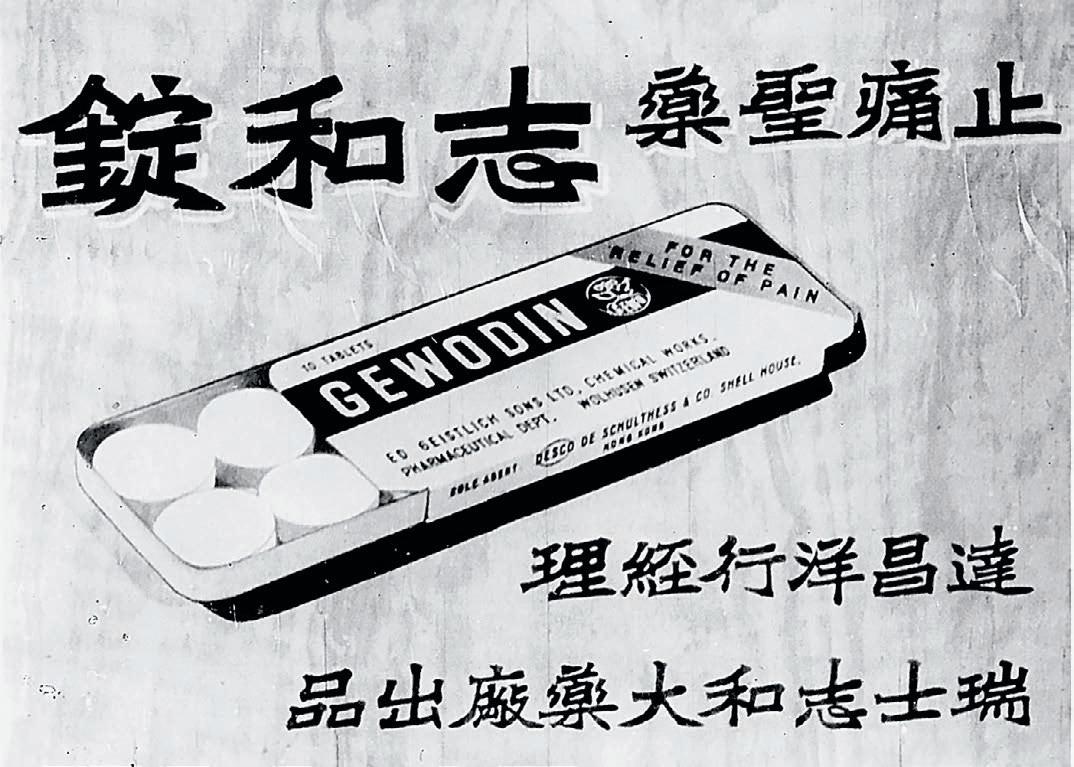
Fig. 40
“GEWO” is well-known in many households thanks to the brand’s numerous overthe-counter medicines. The brand gains international recognition early on and enjoys a reputation for quality, effectiveness, and reliability far beyond the borders of Europe.
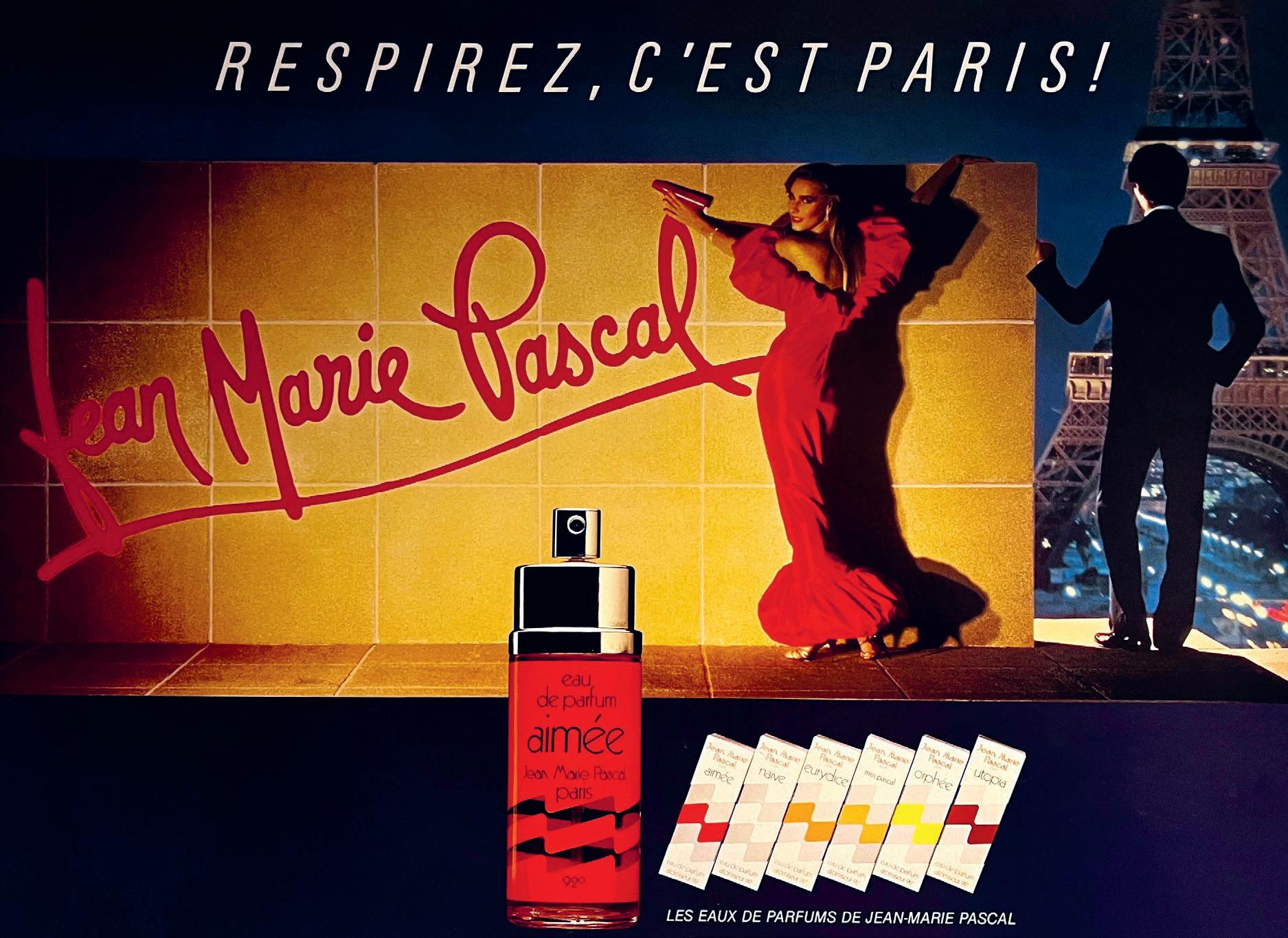
Fig. 41
Fragrances such as Aimée, Naïve, and Orphée appear under the “Jean Marie Pascal” brand in the 1970s. As is typical for the time, the advertising focuses on themes such as fashion, glamor, and self-fulfillment and positions the perfumes as lifestyle products.
Geistlich’s path to bone reconstruction
With the commissioning of its first in-house polymerization plant in 1964, Geistlich not only ensures quality, but also launches a wide range of new products on the market, including wood glues, construction adhesives, wall coatings, floor adhesives, and a DIY range.
In 1974, Geistlich reorganizes its production capacities and raw material flows. Glue production is centralized by relocating bone glue production to Schlieren. Gelatin for the food industry has been produced from pig skins in Wolhusen since 1970. DELTA is also realigned: In Zofingen, the focus is on processing cleaning rags and threads, with lots of existing equipment and lines in the old glue and fertilizer factory being repurposed for this. This restructuring lays the foundation for DELTA’s rapid rise to become the market leader for cleaning cloths and polishing threads. In 1976, the company is shaken by a serious explosion in Schlieren. Independently of this, Geistlich moves fertilizer production to Wolhusen, which helps to drive forward the centralization of production areas.
A new chapter begins in 1981, when Peter Geistlich comes across the research results of Philip J. Boyne from Loma Linda University in California on the subject of jawbone reconstruction. This discovery leads to a groundbreaking collaboration with Myron Spector of Harvard University and Boyne. Together they develop innovative bone substitute materials – a breakthrough.
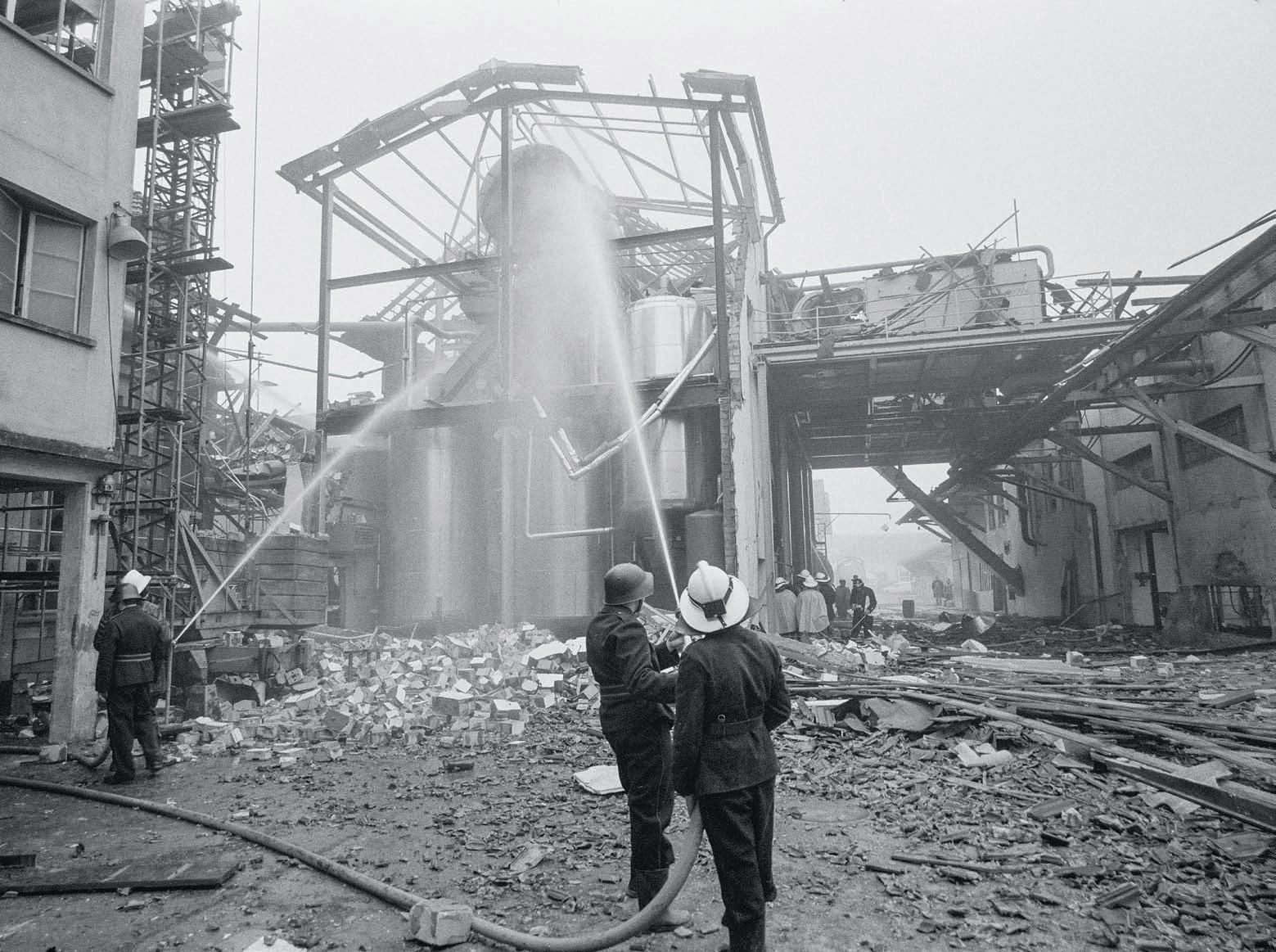
Fig. 42
A serious explosion at the site in Schlieren shakes the company in 1976.
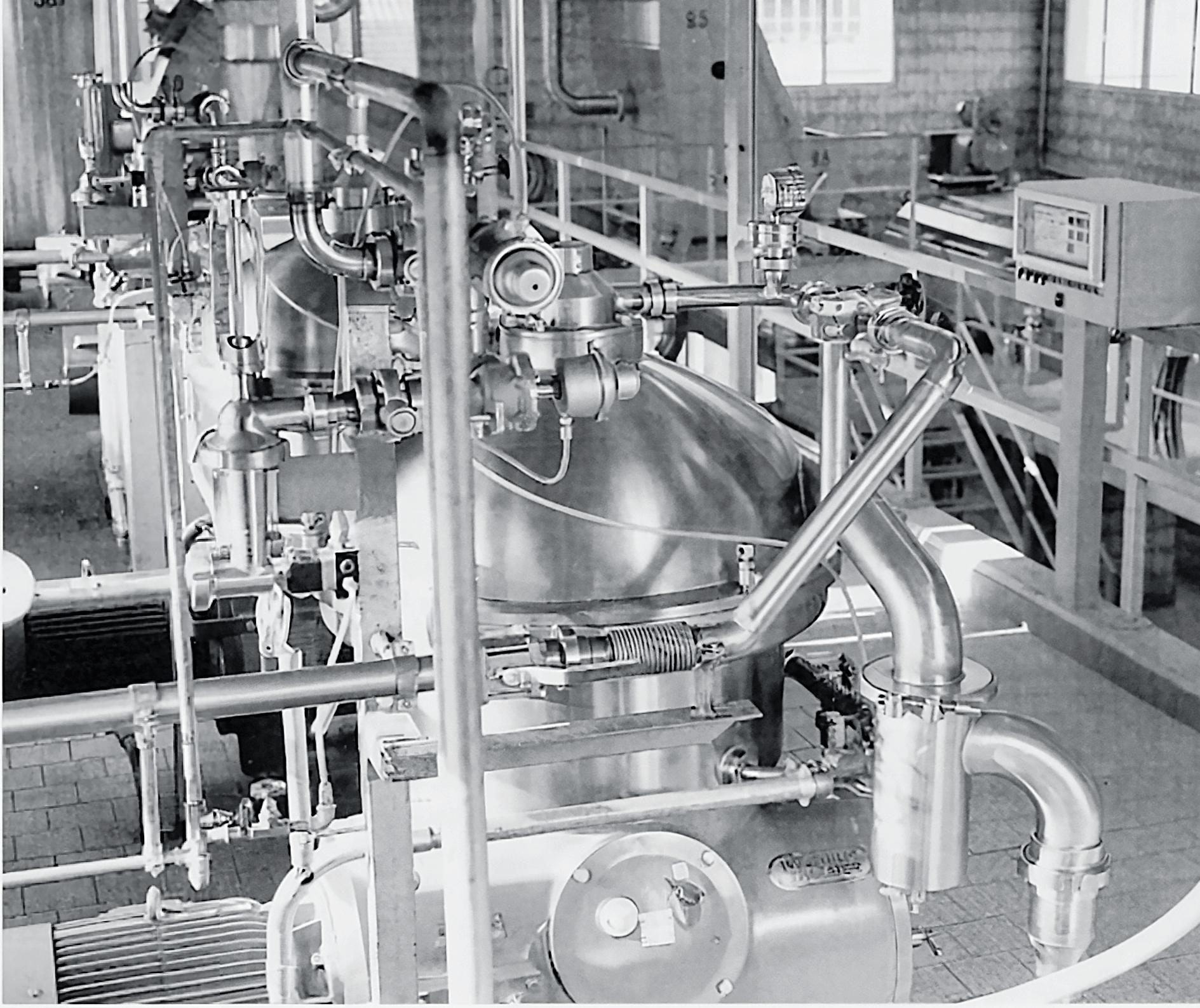
Fig. 43
After the explosion, Geistlich invests in its facilities and introduces a new water degreasing process in 1982. Separators, as shown in the picture, are used to extract bone fat from the process water.