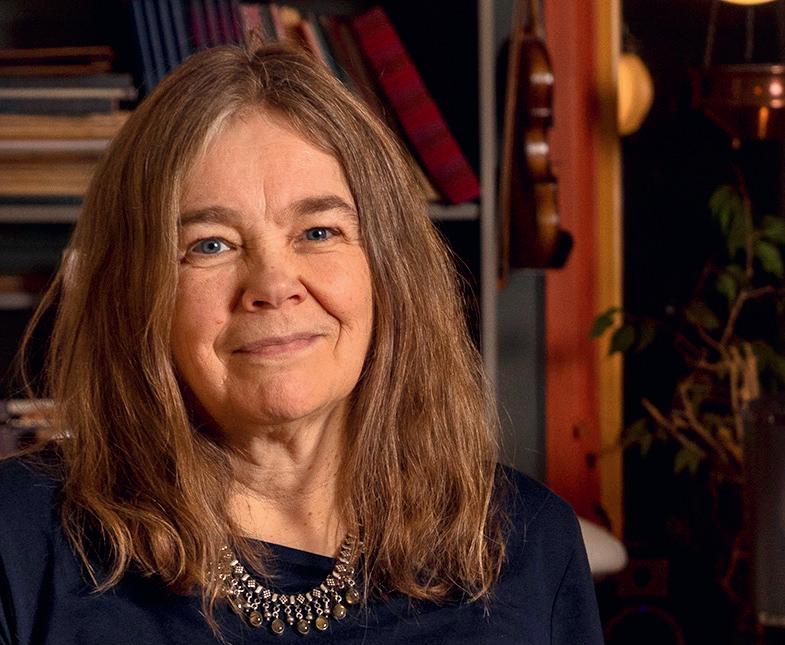
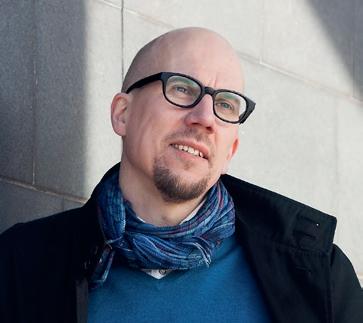
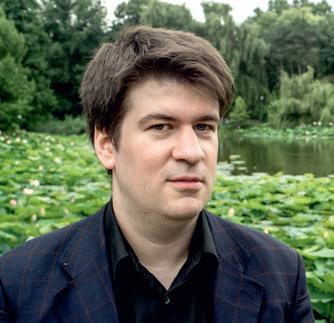
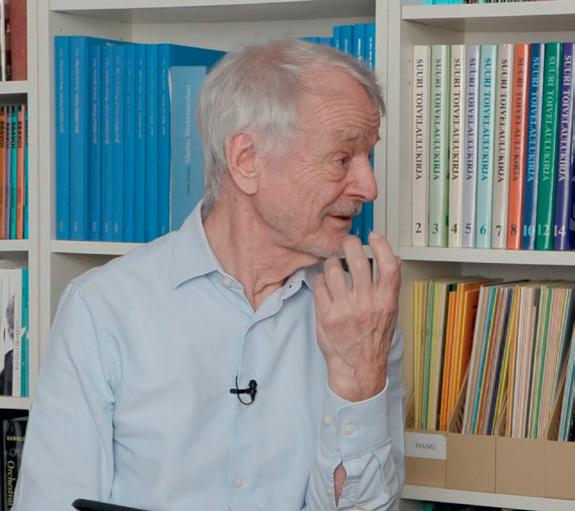
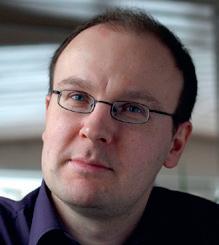
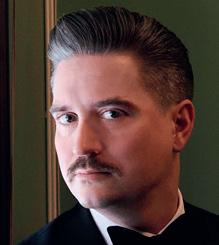
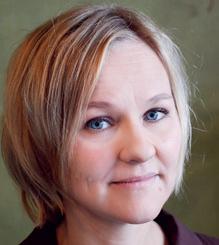
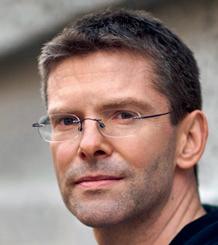
AnnaKarin Klockar is composer-in-residence with Dalasinfoniettan from the 2026/2027 season, presenting both new and earlier works. Highlights include the orchestral polska Radices in December and the premiere of the ouverture, Expectations, for the inauguration of the new concert hall, Kristinehallen, in Falun on 10 April 2027. Klockar composes across genres – from choir to orchestra – and her music blends classical, folk, and applied traditions. Shaped by many years in the Italian film and TV industry, her work combines dramatic awareness with Swedish roots. She gained international recognition in the choral world after winning the Allmänna Sången & Anders Wall Composition Award in 2016 with Speeches.
Peterson’s The Sanctuary Mass in Leipzig
Matthew Peterson’s The Sanctuary Mass (Högalidsmässan) has now been translated into both German and English. The German premiere will take place, in connection with the international choral congress and festival chor.com, in Thomaskirche in Leipzig on 2 October, performed by the Gustaf Sjökvist Chamber Choir and MDR Sinfonieorchester under the direction of Florian Benfer. The international edition of the vocal score (Eng/Ger) will be released in October.
Editors: Hanna Isolammi, Kristina Fryklöf
Translations: Jaakko Mäntyjärvi, Robert Carroll, Copilot
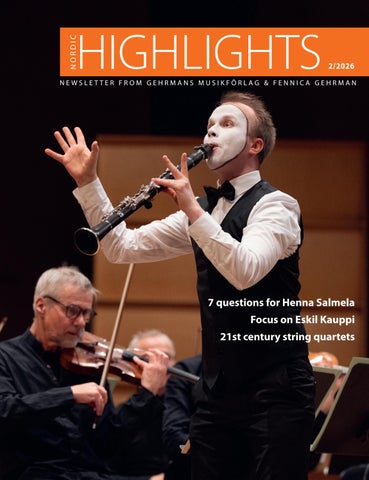
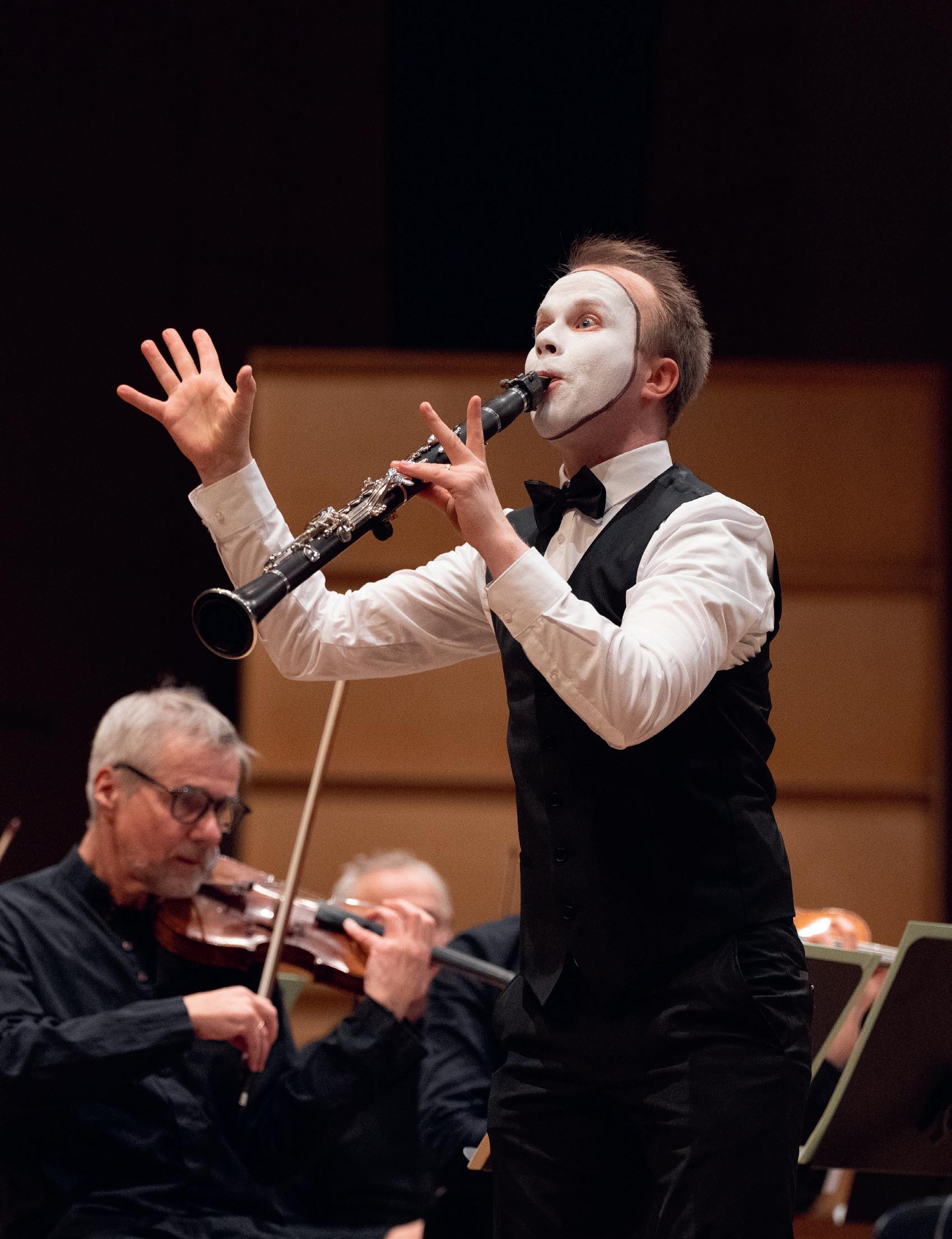
Cover: Lauri Sallinen, Musica Vitae and Jönköping’s Sinfonietta performing Lotta Wennäkoski’s Ele - five gestic scenes for clarinet and sinfonietta in Växsjö, Sweden.
(Photo: Julia Nilcrantz)
Design: Tenhelp Oy
Click the links, sound and video symbols
ISSN 2000-2750 (Online)
Photo: Kola Production
New developments at Fennica Gehrman
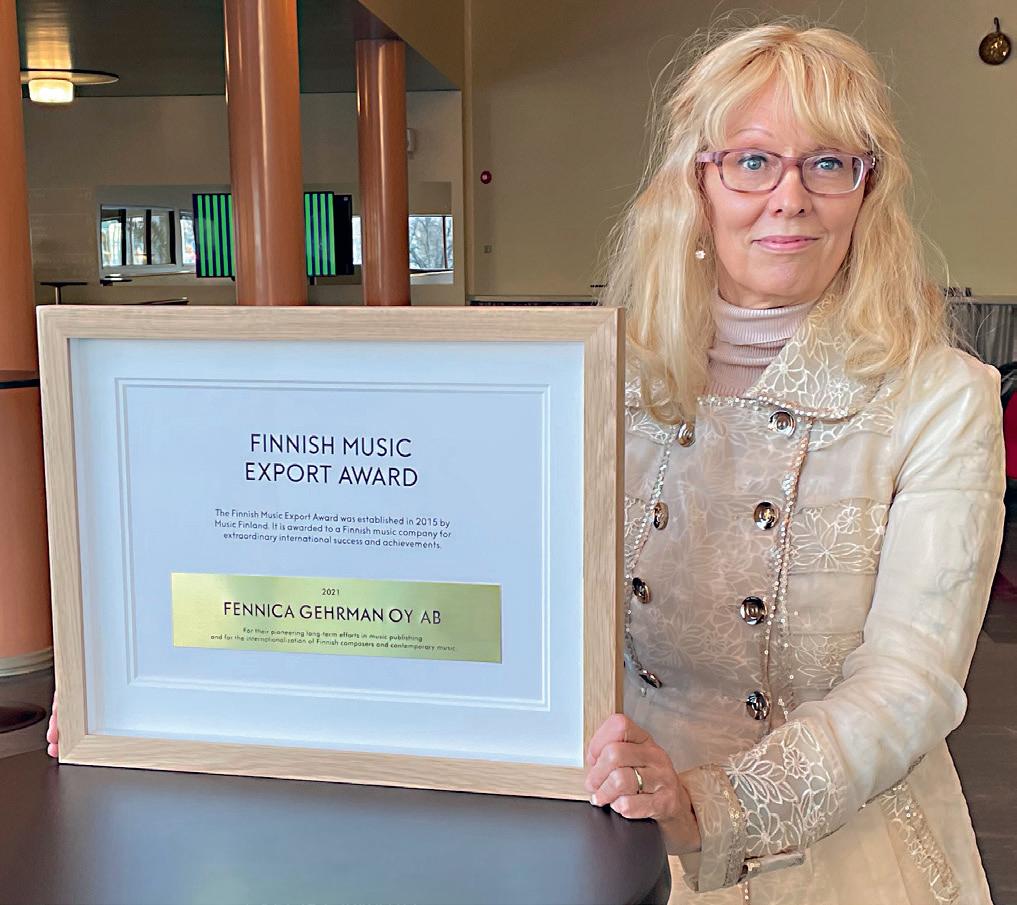
Fennica Gehrman’s new Director of Marketing and Administration is PhD Hanna Isolammi, an experienced music professional, researcher, and journalist. They have extensive knowledge of the composer community and the music branch both in Finland and internationally. “I am motivated by this opportunity as contemporary art music is especially close to my heart,” says Isolammi, who began their role on 1 June, as Henna Salmela is retiring after a 36-year career in publishing.
Leigo Music Festival celebrates Veljo Tormis jubilee
One of the longest-running classical music festivals in the Baltics, the Leigo Lake Music Festival will honour the jubilee of Veljo Tormis with a major new production on 31 July. A new adaptation of Tormis’s Curse Upon Iron (Raua needmine) created by Marianna Liik, will be performed by choir, electronics, and soloists. The festival brings together choirs from Estonia, Latvia, Lithuania, Finland, Sweden, and Ukraine into a single collective voice.
Jacob Mühlrad’s trilogy Resil
Jacob Mühlrad has completed the second part of his orchestral trilogy Resil, inspired by the resilience research of Professor Carl Folke. It will be premiered by the Swedish Chamber Orchestra under Brett Dean on 22 October and by the co-commissioner Tasmanian Symphony Orchestra in April 2027. Resil I, ‘Emergence and the Holocene’ (2024), portrays the rise of the biosphere and key turning points in Earth’s history. Resil II, ‘The Anthropocene’ (2026), reflects a system under stress shaped by human impact. Resil III, ‘The Hope of a Possible Future’, (to be composed within the next couple of years), will introduce a lyrical song – an echo from past to future generations.
Iiro Rantala’s Perfect Match
What do opera and football have in common? More than you might think! In Iiro Rantala’s new work, Perfect Match, for Oper Graz, the Finnish women’s national team meets the Austrian champions (men) in a fast, funny story of love, rivalry, and team spirit. With a libretto by Minna Lindgren this lively work celebrates humour, equality, and big emotions. Perfect Match will have its world premiere at Oper Graz on 19 December 2026, with a total of 14 performances scheduled around the turn of the year. Rantala’s operatic career in Central Europe is gaining strong momentum, and in 2027 a new commission, Cast a Diva, will follow at Komische Oper Berlin.
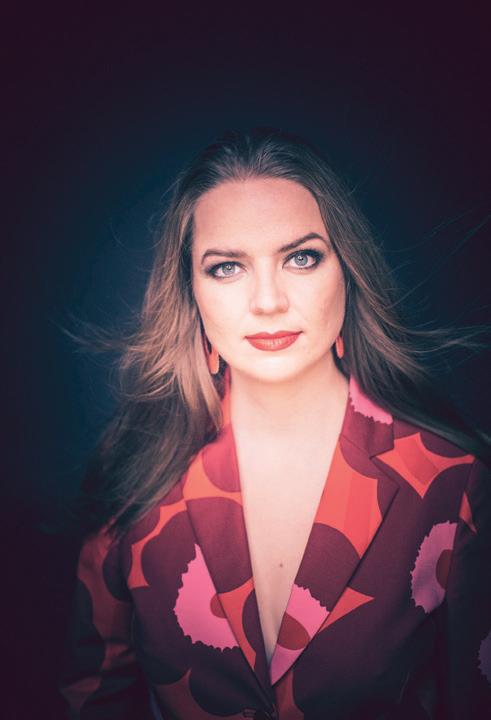
Iiro Rantala
Photo: Gregor Hohenberg
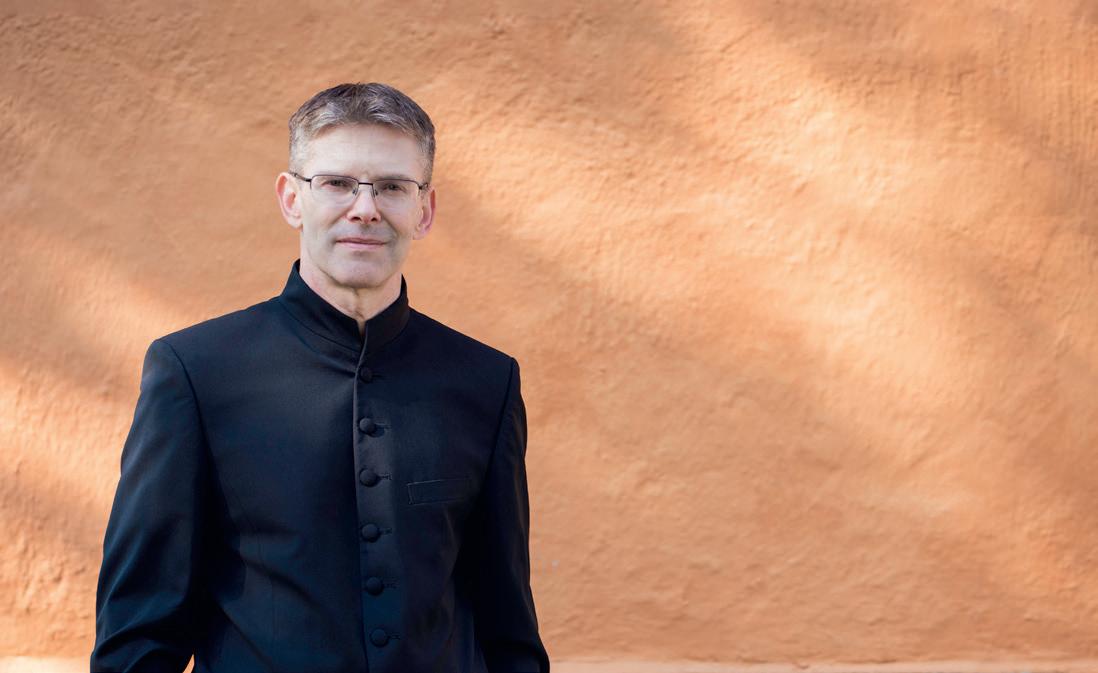
Jacob Mühlrad
Photo: Noah Agemo
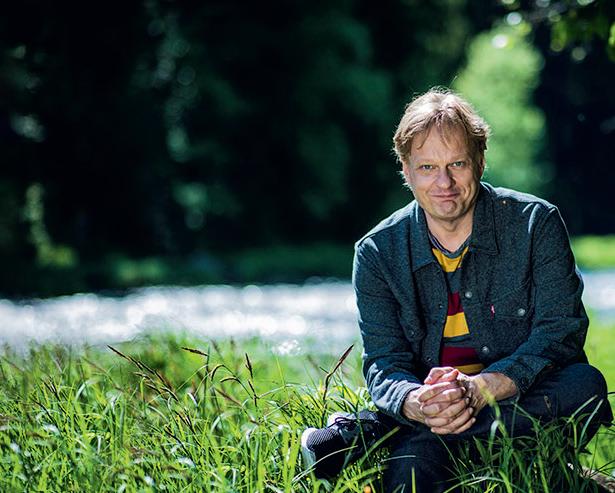
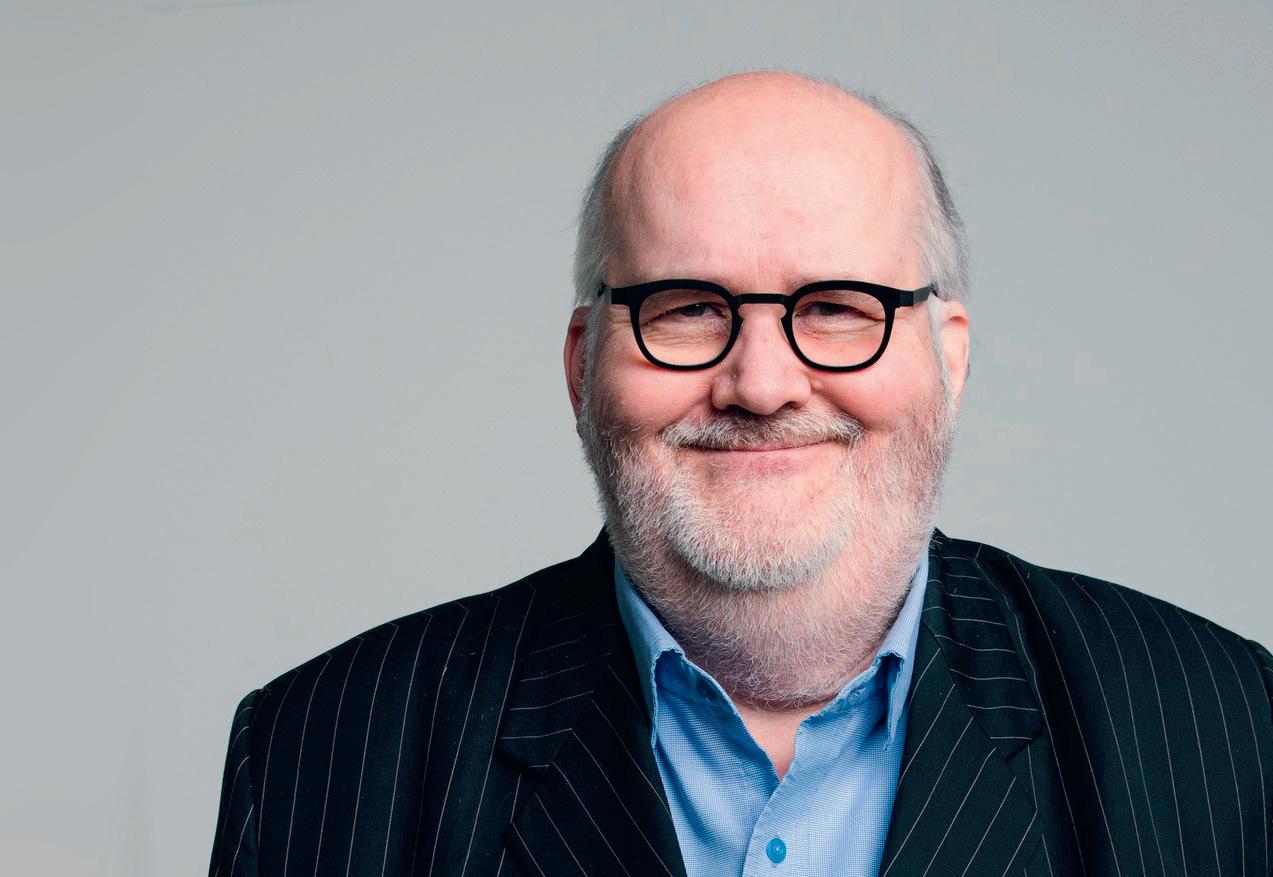
Anna-Karin Klockar
Cecilia Damström’s festival summer
Cecilia Damström has been named featured composer at the Kuhmo Chamber Music Festival (12–25 July), where several of her works will be presented across the programme. Her solo accordion work Renewables will be performed by Niko Kumpuvaara. The piano quintet Minna – Pictures from the Life of Minna Canth will be interpreted by Daniel Rowland (violin), Chiara Scannicandro (violin), Andres Kaljuste (viola), Maja Bogdanović (cello) and Mackenzie Melemed (piano). In addition, her wind quintet Raakku will receive its world premiere by the Orsino Ensemble. Damström’s music will also be featured at Our Festival (Meidän Festivaali), where Sistema for soprano recorder and string quartet will be premiered on 29 July by Eero Saunamäki and the Kamus Quartet. The song cycle Tidens ordning will be presented at the Mikkeli Music Festival on 2 August by bass-baritone Sam Taskinen.
Albert Schnelzer at Wermland Opera
Albert Schnelzer will serve as composer-in-residence at Wermland Opera during the 2026/27 season, starting on 5 September with the Clara Schumann homage Burn My Letters: Remembering Clara. On 12 November Roland Kluttig will conduct the world premiere of the Trumpet Concerto – Frozen Light, written for the Norwegian trumpeter Tine Thing Helseth. Yet another new orchestral work is scheduled to be premiered on 15 April under the direction of conductor Fredrik Burstedt. In parallel with the larger productions, a number of the composer’s chamber works will also be performed.
An autumn for concerto premieres
The coming autumn concert season will bring a striking run of concerto world premieres by Finnish-based composers. The first to be heard is Mizar, Esa Pietilä’s violin concerto, premiered on 17 September by violinist Erkki Lasonpalo and the St. Michel Strings under Janne Nisonen. On 7 October, Antti Auvinen’s new violin concerto follows, with Ava Bahari as soloist and the Finnish Radio Symphony Orchestra conducted by Nicholas Collon. The autumn sequence concludes in November with the world premiere of Matei Gheorghiu’s bassoon concerto Requiem , when the Lappeenranta City Orchestra and bassoonist MikkoPekka Svala present the orchestral version of a work already introduced in its chamber-ensemble form.
Essential aspects of string pedagogy
Géza Szilvay’s Essential Aspects of String Pedagogy was an inspiring 16-part workshop series for members of ESTA, sponsored by Fennica Gehrman, exploring the journey from the very first violin lesson to the threshold of professional studies. Built around beautifully produced 60–90-minute multi-camera sessions featuring Géza Szilvay and violinist Katariina Záborszky, and enriched by lively follow-up discussion, the series offered a vivid and practical panorama of string teaching. Topics ranged from basic holds, movement, rhythm and early improvisation to intonation, transposition, finger preparation, child-centred scale teaching, bowing techniques, finger patterns, shifting, and more.
New composer portraits
In our film series with composer portraits, two more films have been released during the spring. One gives a portrait of Tobias Broström, who has been in focus during May with two large-scale orchestra premieres: Symphony No. 2 with the Gothenburg Symphony Orchestra and his most playful work so far, The Grand Carnival (Den stora karnevalen) with the Jönköping Sinfonietta. And around his 70th birthday, on 1 May, Rolf Martinsson was featured in a portrait film. He is a composer who with his ear for colours and his sense of structure has guided generations of composers at the Malmö Academy of Music and created over 200 orchestral works, solo concertos, song cycles, chamber works, choral works and arrangements. All composer portraits can be accessed on Gehrmans YouTube Channel.
New Rautavaara scores
As Einojuhani Rautavaara’s centenary in 2028 draws near, Fennica Gehrman is shining a renewed spotlight on the composer’s legacy with a major programme of revised music editions. At the same time, Sinfonia Lahti is preparing a complete recording of the symphonies under Hannu Lintu. Newly revised scores are now available for landmark works including Cantus arcticus, Requiem in Our Time, the Pelimannit suite, and Symphonies Nos. 1, 3, 4, 7 and 8, among many others.
Photo: Ville Juurikkala
Cecilia Damström
Esa Pietilä Antti Auvinen
Matei Gheorghiu
Photo: Mikko Hannula
Photo: Eija Tervo
Photo: Octavian Balea
Photo: Hans Lindén
Géza Szilvay
Photo: Centre de VIlle
Seven questions for Henna Salmela
Director of Administration Henna Salmela is retiring after an extensive and distinguished career of 36 years in music publishing. She joined Fazer Musiikki as a press officer and has witnessed the company’s evolution from a small part in a major corporation into an independent and active operator in the field of art music. Here, she looks back and shares some of her innumerable encounters, incidents and memorable moments.
What has been the best thing in your career?
Working with music is a privilege. Memorable concerts, meeting composers and having interesting discussions with them about just about anything between heaven and earth. Being able to contribute to the emerging of new works and to help with the process that begins on the composer’s desk and culminates in the concert hall.
A publishing house cannot be a freezer or a microwave but more like an old-fashioned baking oven, keeping the music continuously warm and alive. Fennica Gehrman has an extensive historical catalogue that features both the finest legacy content and the cutting edge of Finnish art music. The Music Export Prize by Music Finland that we were awarded in 2021 was an important acknowledgement of the work we do.
We work to promote good things. We minimise our environmental load, we advocate for culture and we contribute to enriching our musical legacy. When we celebrated the 20th anniversary of Fennica Gehrman, I suggested commissioning violin works from several composers and then printing them, and they were also performed. This was a concrete measure to foster new music.
You are particularly fond of piano music. How has this manifested in your work?
The archives of any music publisher contain treasures for which there is no longer any demand as individual pieces. I have edited collections of piano pieces, featuring repertoire that I, as a pianist trained at the Sibelius Academy, wanted to rescue from oblivion and enable people to play them from proper sheet music rather than nth-generation photocopies. In a small publishing house, you can and should bring forward your own ideas! My background in business and economics helped in evaluating which items might be in demand.
Finnish operas have enjoyed success internationally, and you have also been involved in the process of commissioning several major orchestral works. Can you point to any particularly memorable moments?
At the turn of the millennium, opera houses in northern Germany (e.g. in Lübeck and Hagen) were very active in sourcing Nordic operas, and
they were in frequent contact with us. Operas by Einojuhani Rautavaara were staged in Hagen, Kiel and Greifswald. In Lübeck, they staged Kalevi Aho’s Before We All Have Drowned, and finally Rautavaara’s Rasputin in 2006. All of these productions were in German; the libretto translations were commissioned by us. It was a pleasure to contribute to and see these productions.
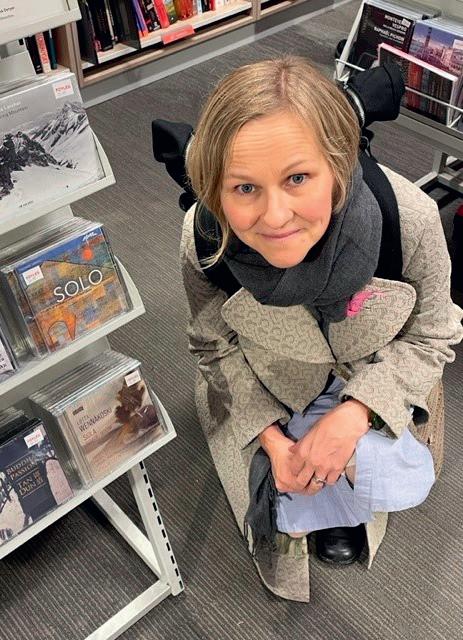
Lotta Wennäkoski has been in particular demand in recent years, receiving international joint commissions such as Flounce, premiered at the BBC Proms, and the violin concerto Prosoidia, both commissioned by the BBC. Their genesis was boosted by personal visits to BBC offices in Maida Vale. I most recently witnessed a sign of Lotta’s success in Amsterdam in autumn 2025 at the time of the premiere of her recorder concerto Vents et lyres, when we found that she had a named divider of her own in the CD rack at a local record shop. She also appeared on recordings found in London.
Einojuhani Rautavaara experienced an upswing to his career in the 1990s when his symphony Angel of Light made an international breakthrough. How was the publisher involved in this?
It was exciting to watch how the concert halls and music media of the world embraced Rautavaara — on the wings of an angel, as it were. When we celebrate his centenary in 2028, it will
Photo: Teemu Fiilin
Lotta Wennäkoski in London.
be fascinating to look back at the time when he evolved into an international major name.
As publishers, we did our bit in promoting Rautavaara. We collaborated with Finnish embassies to lobby radio stations around the world to play Rautavaara’s music. We distributed the book and CD Rautavaara Orchestral Works to media and people in the music industry. Over the years, Cantus arcticus became a major hit, being at one point performed somewhere in the world every week. The Ondine record label and Finnish Music Information Centre’s executive director Pekka Hako were vitally important in fostering the success of Angel of Light.
Rautavaara himself was an imposing figure, with a penetrating gaze and an eccentric style of speech. “In the world of beauty I can be an absolute monarch,” was one of his enduring aphorisms.
Which premieres of Kalevi Aho do you especially remember?
Kalevi Aho’s concerto project took flight with the Flute Concerto, or more properly with the Clarinet Concerto. Martin Fröst was awarded funding
by the Borletti-Buitoni Foundation to commission a concerto from Aho. The Foundation later supported several other soloists similarly, and as Aho acquired a reputation as a competent and dependable concerto composer, the requests began to flood in.
One of the most curious was the Contrabassoon Concerto commissioned by US bassoonist Lewis Lipnik. He was a member of the Washington National Symphony and a colourful personality, sometimes appearing as ‘the Contrabassoon Elf’ in a green outfit.
Several other Aho concerts were given multiple performances in Finland and abroad. The DeFilharmonie orchestra in Antwerp developed an enthusiasm for Aho, resulting in the composer being able to sample his favourite Belgian beers on site. One of the most memorable occasions in Finland was the premiere of the Tenor Saxophone Concerto in Lappeenranta, where schoolgirls mobbed Kalevi Aho like a pop star in the interval.
At the time of the premiere of Aho’s Luosto Symphony, the General Manager of the Lapland
Chamber Orchestra and myself went picking blueberries on the spur of the moment. She was an avid berry picker and had pails and boots in the back of her car.
Trade fairs enabled Fennica Gehrman to licence the Colourstrings violin method of Géza Szilvay to the Chinese market. How did that happen?
The Frankfurt Music Fair was for decades the place to be for music publishers to present sheet music, follow trends in the industry and meet colleagues from abroad. The fair expanded to Shanghai, and we went there in hopes of finding partners and establishing licensing agreements with local operators. After several years, Publishing Manager Ari Nieminen and myself succeeded in signing an agreement with a publisher in Beijing to introduce the Colourstrings violin method on the Chinese market. We also collaborated with a publisher in Shanghai on publications of Sibelius’s music. Exhibition stands arranged by Music Finland provided us with a broader foundation for these efforts.
You must have a considerable trove of anecdotes from your years on the job. Would you share some of them?
In 1993, Fazer Musiikki sold its publishing catalogue to the Warner Music Group, heralding the dismantling of a major player on the Finnish music scene. Big bosses from the USA came to inspect their acquisition, arriving in a white limo. Unfortunately, the limo got stuck on the tight curves of the entryway to the underground car park, forcing the visitors to struggle out of the vehicle, climb up onto the loading dock and make a memorable entrance via the goods lift!
We continued to work for music under new ownership, but in 2002 the newly founded Fennica Gehrman managed to reclaim the art music catalogue and return it to Finnish ownership –thanks largely to the efforts of John Eric Westö. We were standing on our own feet again.
I have often thanked my intuition for catching typos. Sometimes a commissioning agreement might read “Could you please sing the agreement”, and I’ve sometimes hurriedly began an e-mail by typing “Thank you for your lovely massage”. Fortunately, in the publishing business one is used to proofreading absolutely everything. Once we nearly had an extra marking copied into a score because an insect had landed on the glass of the photocopier, but this too was caught in time.
Photo: Henna Salmela
Kalevi aho surrounded by young fans.
Henna Salmela and Ari Nieminen with local colleagues at Shanghai Music Fair.
Eskil Kauppi: sea, sound & collaboration
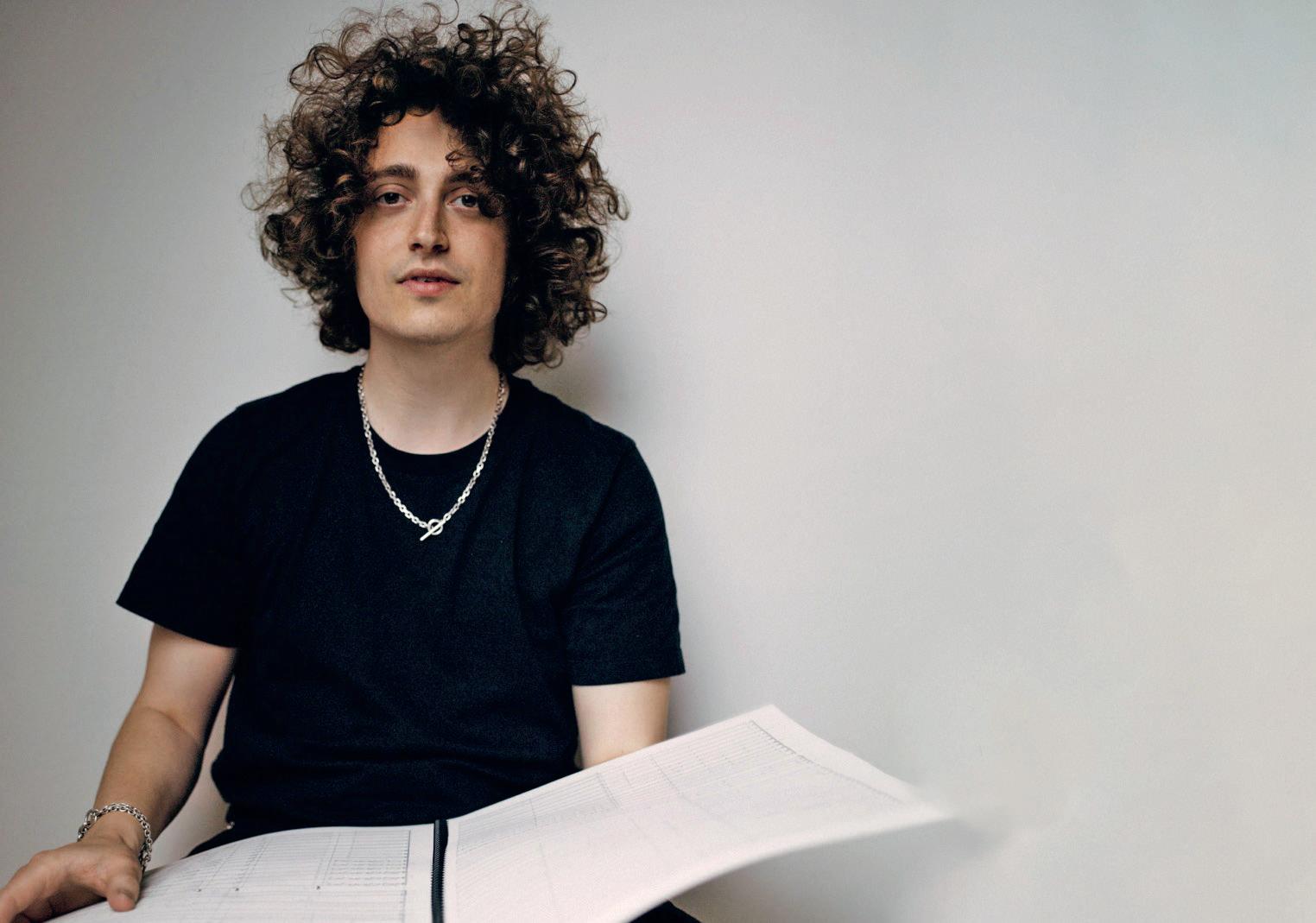
“With a sensitive ear for musical styles and a sure sense of how instruments function together, Eskil Kauppi creates orchestral music that is beautiful, innovative, and expressive, with clear traces of impressionism. His chamber music is characterized by a strong commitment to interplay and a curiosity about each individual musician’s voice, something that points toward a future filled with exciting collaborations.”
This was the jury’s citation when Eskil Kauppi was awarded the Rosenborg Gehrmans Foundation’s 75th anniversary scholarship in November 2025, granted to a composer at the beginning of his career.
Collaboration as a creative foundation
Eskil Kauppi (b. 2001) is currently establishing himself as a new and compelling voice within Swedish contemporary art music. Since completing his composition studies at the Malmö Academy of Music a year ago, he has chosen to dedicate himself fully to his creative work. The transition from studies to professional life has been rapid and intense; already he is involved in a range of projects.
A central part of Kauppi’s work is collaboration with individual musicians and ensembles. His music often emerges through close dialogue with the performers. Among the ensembles that have recently commissioned works from him are the Monbijou Quartet, the Nordic Wind Quintet, Brassunit, the Crusell Trio, and the Baltic Bassoon Quartet. He has previously written for the string orchestra Musica Vitae, the Helsingborg Symphony Orchestra, the Swedish Wind Ensemble, among others.
He also works with soloists including saxophonist Theo Hillborg, accordionist Leo Florin, violinist Malin Broman, and oboist Josef Wijk, moreover he has written a duo for trumpeter Håkan Hardenberger. Here, the individual personalities of the musicians play an important role in the compositional process.
For Kauppi, music is not a one-sided process, but something that emerges through encounters between people.
– Music is one big ongoing collaboration. That’s why we need to nurture our connections with colleagues and fellow musicians. Being curious, asking questions, and celebrating each other’s successes is, in my view, vital to the de-
velopment of music. We do this together, he says.
Nature and the Sea as inspiration
A recurring theme in Kauppi’s music is the sea and coastal landscapes. This is not only about depicting nature as an external image, but about allowing its movements and structures to influence the music itself. The sea becomes a model for how music can grow, change, and breathe.
In Wingbeat (Vingslag) , an orchestral suite in four movements, he turns his gaze to the sky. The work is inspired by birds such as eagles, dunlins, and sparrowhawks that pass the Falsterbo Peninsula in southernmost Sweden during migration. Their movements are translated into music through swift turns, hovering lines, and sudden directional shifts, creating a vivid and dynamic soundscape.
from within, rather than something observed and judged from the outside.
Musical language and artistic growth
In Miracle Coast Kauppi deepens his exploration of the sea. Both calm and powerful elements are depicted, from shimmering surfaces to waves that build and break. The orchestra becomes a sonic sea, where instrumental groups represent currents, winds, and motion.
This sea-inspired aesthetic continues in the new work Seabed Secrets, written for the Crusell Trio and premiered at the Østerbro Chamber Music Festival in Denmark on 12 June. The piece draws on the theme of the North Sea and its largely unknown deep-sea life.
– The title refers to seeing and discovering what lies hidden beneath the surface of the sea. There exists an entirely different life here, a field of shimmering creatures moving at their own pace. The pulse of the deep sea carries a different kind of power and stillness. And the three instruments of the trio are ideally suited to represent the different voices from the seabed, with the wah-wah mute for the horn, tremolos in perfect fourths in the clarinet, and the long melodic lines in the bassoon.
In February next year, the Nordic Wind Quintet will premiere Barefoot Ballet. Here the composer imagines ballet dancers moving barefoot, emphasizing precise foot articulation and close contact with the floor. – By dancing without shoes, they seek to free themselves from pain, perfect lines, and the need for validation from others. They strive to reclaim their bodies as something felt and experienced
Although still early in his career, Eskil Kauppi already demonstrates a clear artistic direction. His music combines sharp contours and rhythmic drive with moments of intimacy and sensitivity. He has been recognized for his skill in orchestration and the natural flow of his musical language. Jazz influences are evident in his use of modality and harmony – unsurprising given his background as both a classical and jazz pianist, trained at Lilla Akademien and the Royal College of Music in Stockholm.
Kauppi also points out that his engagement with the choir Petri Sångare has become an important source of his artistic development.
– By singing lines by composers such as Poulenc, Holst, and Sandström, as well as many newly written works, I constantly deepen my understanding of counterpoint. Being physically present within the musical texture has opened new perspectives on how independent lines can interact.
This autumn, Kauppi will take part in the premiere of his former professor Rolf Martinsson’s Requiem. Participating as a singer in this premiere holds special significance for him.
– After years of study under Martinsson’s guidance, I experience this project as a moment where different parts of my musical journey come together – a sense of the circle being completed.
Kristina Fryklöf
Photo:
Michel Thomas
REPERTOIRE TIPS
KALEVI AHO
String Quartet No. 5
– In memoriam Elke Albrecht (2021) Dur: 28’30’’
Commissioned by the Kamus Quartet in autumn 2021, Kalevi Aho’s Fifth String Quartet is a memorial to the German-Austrian musicologist Elke Albrecht, who died aged 40. A leading expert on Finnish opera, she had recently been completing a study of Aho’s concertos. Elegiac in tone, the quartet is built from the musical letters of her name. Its finale, a swift and dreamlike waltz, never fully resolves, and the work ends with its vital energy slowly fading away. See also Aho’s String quartet no. 4 (2021), Sumussa (2023), and previous works for string quartets.
CECILIA DAMSTRÖM
Letters (2018) Dur: 15’ for string quartet
Written as a commentary on Janáček’s second string quartet, Intimate Letters, Damström’s music draws on the letters he wrote to his beloved Kamila. She seeks to convey the emotions and ideas within his correspondence – heaven, hope, fear, fire, and much more.
21st century string quartets
TIINA MYLLÄRINEN
Daydreams (2025) Dur: 14’ for string quartet
Tiina Myllärinen writes music of joyful curiosity, energy and vivid imagination across orchestral, choral, chamber and solo genres. In recent years she has explored acoustic phenomena such as resonance, reflection and reverberation. In Daydreams, she turns to imagined sonic spaces within the music itself: although the material changes little, its shifting surroundings constantly recast its perspective and tension, leading toward a final glimpse of the dream world evoked by the title. See also Myllärinen’s first string quartet: (Bad) dreams come true (2022), and upcoming third string quartet.
In a creative and distinctive way, Damström combines the string quartet with melodrama. True to her style, she contrasts expressive and meditative elements while enriching the tonal foundation with modernistic textures in a personal voice. Dedicated to the Brodsky Quartet.
CARITA HOLMSTRÖM
Catacombs (2005) Dur: 18’ for string quartet
Carita Holmström, a pianist, singer, arranger and teacher, is a boldly original composer whose music crosses genre boundaries. Catacombs was inspired by her visit to 2000-year-old catacombs where early Christians hid from Roman persecution. The work traces a spiritual journey from darkness underground toward daylight, freedom and hope. At the same time, it echoes the fate of many people today who still must hide and flee persecution.
ESKIL KAUPPI
Pulse Ritual (2026) Dur: 7’ for string quartet
In Pulse Ritual Eskil Kauppi depicts the mechanical pulse that drives the human body. A rhythm that down through the ages has enticed people to move to the music. In accentuated 5 and 7 time, and with melodies taken from folk music, dance music is created with a strong rhythmical drive.
JYRKI LINJAMA
String Quartet No. 2 –
Allerheiligentag III (2018) Dur: 17’
SEPPO POHJOLA
String Quartet No. 5 (2018) Dur: 20’
Seppo Pohjola’s Fifth String Quartet was inspired by a visit to the Vincent van Gogh Museum in Amsterdam and especially by the haunting honesty of the painter’s self-portraits. It begins in hushed tones, with music asked to shimmer in rich nuance. Canon-like textures weave the instruments into a dense web of independent lines, each moving slightly apart. The work culminates in a gripping final section, sustained at forte for minutes and releasing an extraordinary surge of energy.
ALBERT SCHNELZER
Aksak and Ciphers (2023) Dur: 15’ for string quartet
JONAS VALFRIDSSON
String Quartet No. 3 (2020) Dur: 17’
Valfridsson’s String Quartet No. 3 reflects the tension between hopelessness and drive. The music moves through opposition, friction and unyielding energy – as an attempt to rediscover direction and meaning. The work can be heard as a reflection on the role of art in challenging times, and as an expression of the will to endure. It is dedicated to the courageous people of Belarus and their fight for freedom, and in particular to musician and activist Maria Kalesnikava.
LOTTA
WENNÄKOSKI
Flickereth (2023) Dur: 15’ for string quartet
Flickereth is Lotta Wennäkoski’s third string quartet, built around the idea of flickering — of light, flame, or butterfly wings. Alongside the strings, she introduces everyday objects such as metal mugs, pastry brushes and cotton sticks to extend this fragile, shifting sound world, carefully avoiding comic effect. The first movement, Eteislepatus, is harsh and arrhythmic; the second mournful and wistful, after Pentti Saarikoski. The third, Voleter, is bright, vivid and richly textured. See also Wennäkoski’s Pige (2021-2022) for string quartet that was commissioned to be paired with the Death and the Maiden quartet by Franz Schubert.
Jyrki Linjama’s String Quartet No. 2, Allerheiligentag III, grows from a Finnish All Saints’ Day folk chorale that inspired a whole cycle of works. Its origins lie in the old church on Seili (Själö), whose history as a leper colony and mental hospital coloured the composer’s imagination. In three contrasting movements, the quartet moves from sharply etched and gently swaying textures through a dance-of-death Scherzo to a finale where funeral-march tread meets tender lyricism.
A work inspired by the Ottoman rhythmic system Aksak, built on uneven patterns of 2s and 3s. It combines influences from Balkan folk music and Brahms’ rhythmic style across three movements: a lively dance, Râcenica, in 7/16, a slow, melancholic Lamento in 5/4, and a playful light dance, Scherzo in 5/8. The work also incorporates musical cryptograms, using note patterns derived from names, including Brahms, the composer’s family, and Clara Schumann. Also exists in versions for string orchestra and string sextet.
BENJAMIN STAERN
Fight-Union-Clinch (2025) Dur: 18’ for string quartet
Fight-Union-Clinch explores three core musical states – conflict, entanglement, and unity – drawn from physical experience. Energetic, rhythmically driven passages of tension (Fight) alternate with tightly interwoven, suspended textures (Clinch) and moments of collective motion (Union). The work unfolds through shifting processes of resistance and cooperation, where the string quartet develops a dynamic, almost physical interplay between four independent yet interconnected voices.
OUTI TARKIAINEN
Trois Poèmes (2013) Dur: 11’ for string quartet
Outi Tarkiainen is one of the most distinctive voices of her generation, writing music that engages deeply with the world while remaining artistically uncompromising. As she has said, she sees music as a force of nature capable of changing destinies. Trois poèmes (2013), commissioned by the Kamus Quartet, is an evocative three-part work, partly rooted in her Baudelaire song cycle. The delicate sensuality of the opening movements builds toward a passionate and turbulent finale.
NEW ALBUMS
ALEX FREEMAN Light
MATTHEW WHITTALL
The Geography of Hope
Audite Chamber Choir/Jani Sivén Alba ABCD 601(‘Voices of Earth’)
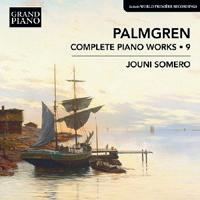
SELIM PALMGREN
Complete Piano Works 9
Jouni Somero (piano) Naxos GP964
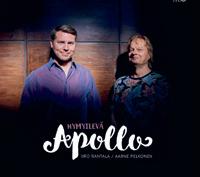
IIRO RANTALA
Hymyilevä Apollo (a song cycle on poems by Eino Leino)
Aarne Pelkonen, Iiro Rantala, Mila Laine, Jukka Perko IMPALA ICL 1005
Thursday’s concert featured a Swedish symphony by Benjamin Staern, “Through Purgatory to Paradise”, with a wealth of narrative… In Staern’s work one finds musical traces of the untimely deceased composer Lili Boulanger, of Dante’s wanderings in Purgatory and of the pandemic in Sweden. On the one hand, it has the texture of chamber music, on the other, of explosive maximalism with blaring horns, lovely purling melodies and harmonies to die for. Sydsvenskan 8.5.
Benjamin Staern: Symphony No. 2 – Through Purgatory to Paradise Malmö SO/Martyn Brabbins, 7.5.2026 Malmö, Sweden
Exciting and expressive ICE
Cecilia Damström’s “ICE” (which refers to ice as well as In Case of Emergency) depicts the ever faster melting ice and lodges a protest against the climate changes. Exciting and expressive music that penetrated my mind and lingered on. UNT 8.5.
Cecilia Damström: ICE
Swedish premiere: Uppsala CO/Paul Mägi, 7.5.2026 Uppsala, Sweden
Pettersson’s Symphony ignites jubilation
In the Eighth Symphony, he [Allan Pettersson] sits in the underworld and sings about what it is like to be there, day after day. The claim to speak the truth is absolute… The darkness settles in, but after a long time in its embrace, the ears learn to perceive subtle shifts within all the gloom... something remarkable happens: passages that ought to sound weary and grey instead come alive with color. A quiet teeming begins — a Petterssonian groove… enough for currents of warmth to begin to spread among the listeners… He reveals experiences that, though hidden, are as relevant today as ever. Sydsvenskan 29.5.
Allan Pettersson: Symphony No. 8
Malmö SO/Patrik Ringborg, 28.5.2026 Malmö, Sweden
Broström’s entertaining carnival
“The Grand Carnival” consists of five movements, each preceded by a verse introduction by the “carnival general” Vera Veljovic (text by the composer). The music is thoroughly entertaining, filled with variety and ideas… an exciting work that rewards repeated listening. Jönköpingsposten 1.6.
Tobias Broström: The Grand Carnival Jönköpings Sinfonietta/Johannes Gustavsson, 30.5.2026 Jönköping, Sweden
A colourful Finnish voyage of discovery
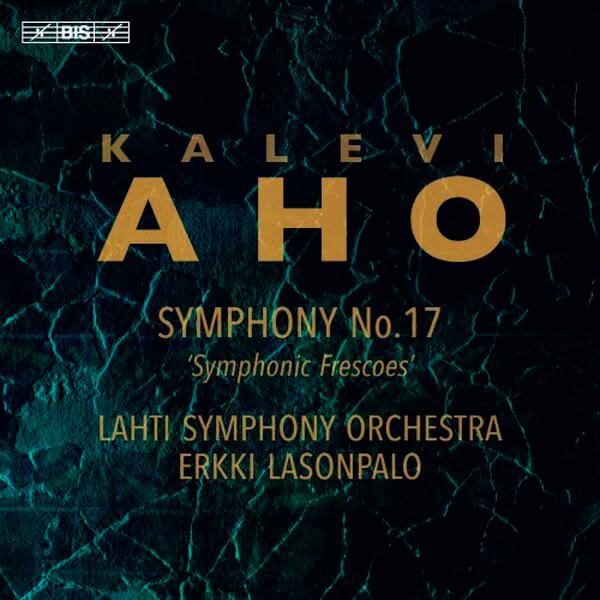
Aho’s symphonies vary in style and specific inspiration. Some feature a solo instrument or instruments, such as violin (No. 3), organ (No. 8), trombone (No. 9) and six percussionists (No. 11). No. 17 for large orchestra, subtitled Symphonic Frescoes, was written in 2017. Lasting just under an hour, it is a genuinely epic work, consisting of two monumental symphonic statements separated by a delightfully sinister scherzo, ‘Scherzo Macabre’.” Limelight 6.3.
Kalevi Aho: Symphony No 17
CD: Lahti Symphony Orchestra, cond. Erkki Lasonpalo (BIS2676)
Photo: Mats Backer
Photo: Gunnar Källström
Benjamin Staern
Photo: Elina Lukijanova
Cecilia Damström
Allan Pettersson
Kimmo Hakola’s timeless sound world
Kimmo Hakola’s Läpikajot Op. 120 (2026) lets the darkly singing ritual of the electric cello unfold in space and time, enveloping the listener in a timeless sound world where echoes of both the Renaissance and prog can be heard. Kompositio 1/2026
Kimmo Hakola: Läpikajot Op. 120 World Premiere: Iida-Vilhelmiina Sinivalo, vc, 15.4.2026 Tampere, Finland (Tampere Biennale Festival)
Sinfoniettas
across the world, take note!
Lotta Wennäkoski’s sonic performance for clarinet and orchestra is engaging, intelligent, and playful all at once. The compelling interpreter of this five-part work, Lauri Sallinen, has created a character who skillfully plays with sudden shifts in gestures, rituals, and forms of interaction, performing with virtuosity [- -]. Sinfoniettas across the world, take note! Here is a work from the still too rarely performed repertoire of contemporary art music that can be realised with a nimble-sized ensemble and offers rewards for the orchestral musicians as well. And it is highly audience-friendly too: Ele would fit excellently in the place of a conventionally safe standard concerto.”
Jälkikaikuja korvakäytäviltä 17.5.
Lotta Wennäkoski: Ele
Tapiola Sinfonietta, cond. Izabelė Jankauskaitė, sol. Lauri Sallinen, cl, 14.5.2026 Espoo, Finland
Past echoes of future sounds
In Zelo, Wennäkoski has created something rare: a work that respects its ancestry while sounding like nothing else in the contemporary world. It is a vivid, subterranean journey toward Finland’s musical
Illustrative and fresh pieces for horn and piano
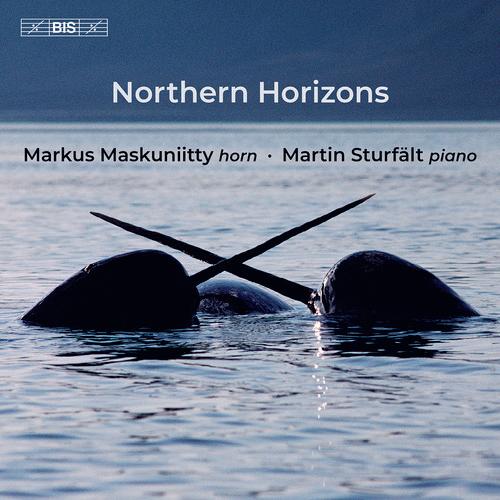
Albert Schnelzer’s I Remember River Clear is an illustrative fantasy, flowing, tonal and tuneful… Benjamin Staern’s synaesthesia-born music is usually a breath of fresh, humorous, clear air and his Day and Night is just that – an assiduous end to the album as it bursts with energy… It does a great deal with its instruments, as their players do – Maskuniitty’s tone, in particular, with a consistent warmth and lovely burnished, full-bodied quality – sometimes sounding almost like a flugelhorn, never blustering with typecast heroism, here and everywhere else. Gramophone April 2026
Albert Schnelzer: I Remember River Clear; Benjamin Staern: Day and Night
CD: Markus Maskuniitty, hn, Martin Sturfält, pf, (BIS 2712, ‘Northern Horizons’)
future, saturated in its mysterious, mythical past. Zelo is a masterpiece in orchestration on par with Ravel and Debussy, and it demands to be unleashed often. As the enthusiastic applause continued, the composer took to the stage to thank Ticciati, who conducted with a dedication that suggested an immaculate conception of ‘non-contemporary’ music; it was as if she had written it from the future-past. Seen and Heard International 30.3.
Lotta Wennäkoski: Zelo
World Premiere: London PO/Robin Ticciati, 25.3.2026 London, UK
Wealth of Musical Information
In Lotta Wennäkoski’s Blended Notes (2024–25), heard here in its premiere, the trio was joined by eight singers from the Oulu-based Soma Ensemble. It was refreshing to hear genuine hardcore modernism again after such a long time. Wennäkoski’s composition contains such a wealth of musical information and novel sonic effects that a significant part of its duration was spent simply listening in open-mouthed astonishment. Kaleva 14.3.
Lotta Wennäkoski: Blended Notes
World Premiere: Sitkovetsky Trio & Soma Ensemble, 13.3.2026 Oulu, Finland
PREMIERES
June–September 2026
OLLI KORTEKANGAS
Le bonheur de vivre
Marko Ylönen, vc
11.6. Helsinki, Finland
IIRO RANTALA
Hymyilevä Apollo
Aarne Pelkonen, barytone; Iiro Rantala, pno; Mila Laine, vc 11.6. Espoo, Finland (Urkuyö & Aaria Festival)
Further performances: 12.6. Ilmajoki Music Festival & 5.8. Rauma Festivo
ALEX FREEMAN
I rörelse
Festival choir
12.6. Helsinki, Finland (FSSMF Sångfest i Helsingfors 2026)
ESKIL KAUPPI
Seabed Secrets
Crusell Trio
12.6. Østerbro, Denmark (Østerbro Chamber Music Festival)
Pulse Ritual
Monbijou Quartet
14.6. Malmö, Sweden
TIINA MYLLÄRINEN
Shades (Guitar quartet)
Kekkonen Quartet
27.6. Porvoo, Finland (Summer Sounds Festival)
CECILIA DAMSTRÖM
Raakku for wind quintet
Orsino Ensemble
20.7. Kuhmo, Finland (Kuhmo Chamber Music Festival)