NEWSLETTER FROM GEHRMANS MUSIKFÖRLAG & FENNICA GEHRMAN
Focus on Matthew Peterson Uusinta catalogue New operas: Ovllá, Selma and The Way to Arareko
New composer:
Matei
Gheorghiu
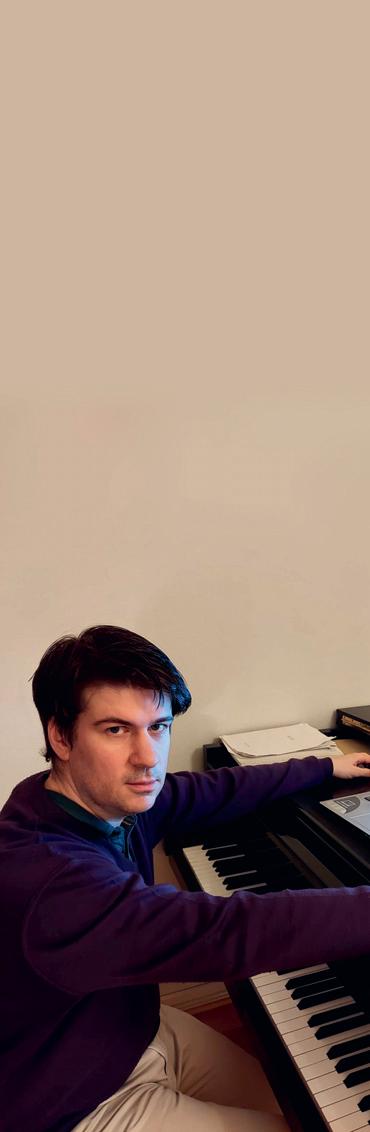
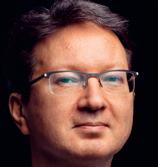
Fennica Gehrman has signed a publishing agreement with Matei Gheorghiu, a Romanian-Finnish composer born in 1984. He studied at the National Music University in Bucharest and later with Tapio Tuomela and Veli-Matti Puumala at the Sibelius Academy. Gheorghiu gained awareness with his piano concerto From the Village of Nowhere, which won the International Uuno Klami Composition Competition in 2024. The piece was most recently performed under Elisar Riddelin with Joonas Ahonen as soloist at a concert of the Kymi Sinfonietta on 4 March.
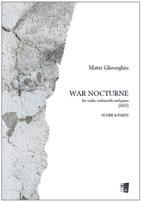
Fennica Gehrman has also published Gheorghiu’s pianotrio War Nocturne, commissioned by the Ilmari Hannikainen Piano Competition in 2026
More award-winning Aho albums
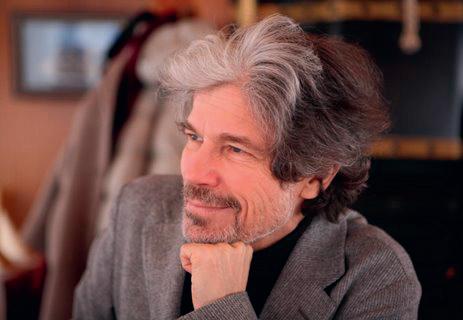
Kalevi Aho’s latest album has won the prestigious International Classical Music Award in the contemporary music category. It features the Moonlight Concerto for viola and percussion and the Alto Flute Concerto, performed by the orchestras of Mikkeli and Lahti, respectively. The soloists are Hiyoli Togawa, Alexej Gerassimez and Sharon Bezaly. The awards were presented on 18 March in Bamberg, Germany. Last year, an album featuring Aho’s string quartets was honoured with the Deutscher Schallplattenpreis 2025 as one of the year’s finest recordings. Both recordings were released by BIS Records.
Meanwhile, a CD by English clarinettist Julian Bliss – featuring Clarinet Concertos by Kalevi Aho and Magnus Lindberg – is one of three finalists for the BBC Music Magazine Award in the Concerto category. The winner will be announced on 22 April.
Daniel Nelson news
Daniel Nelson’s Steampunk Blizzard captivated New York audiences in three February performances at David Geffen Hall. This July, the New York Philharmonic and Santtu-Matias Rouvali will present the highenergy piece at Colorado’s Bravo! Vail Festival. Rouvali will also give the UK premiere with Philharmonia Orchestra London on 22 April.
Accordionist Martynas Levickis returns to Nelson’s 2023 concerto The Ghost Machine Treatise, written specifically for him. There will be performances at Theater St. Gallen on May 29 and 31, followed by appearances at Lithuania’s Vilnius and Pažaislis Music Festivals, performed with the St. Gallen Symphony Orchestra under Modestas Pitrenas.
World premiere for The Way to Arareko
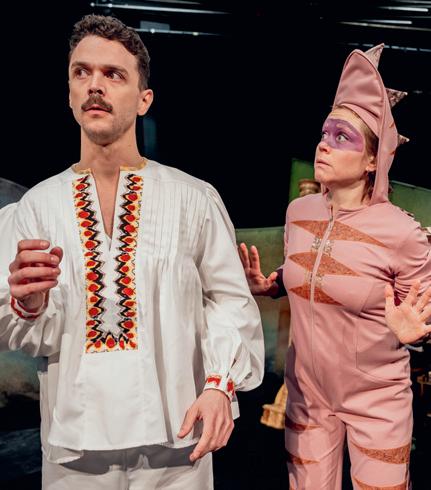
Karin Rehnqvist’s new children’s opera The Way to Arareko was premiered on 7 February at Bastionen in Malmö, where it was met with great enthusiasm from its young audience. Aimed at children aged six and up, the production is specially designed to engage kids with special needs. The story follows the lizard Trini on a mission to save the parched Sonora Desert, helped by a group of friends. Three singers in imaginative costumes lead the narrative through music, movement, and interactive moments that invite the audience to participate. The score is performed by an ensemble of harp, flute, clarinet and viola. The libretto, by Mexican author and harpist Mercedes Gomez, is translated and adapted by Lisbeth Hagerman.
Prestigious awards to Jennefelt and Skafte
Editors: Henna Salmela, Kristina Fryklöf
Translations: Jaakko Mäntyjärvi, Robert Carroll, Copilot
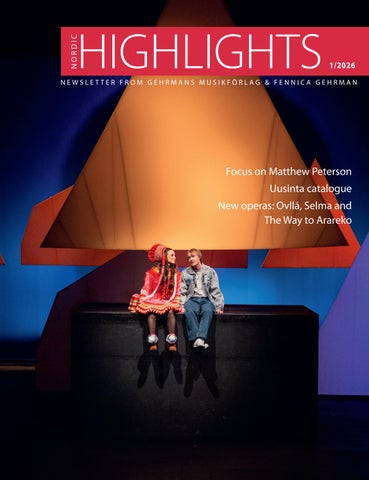
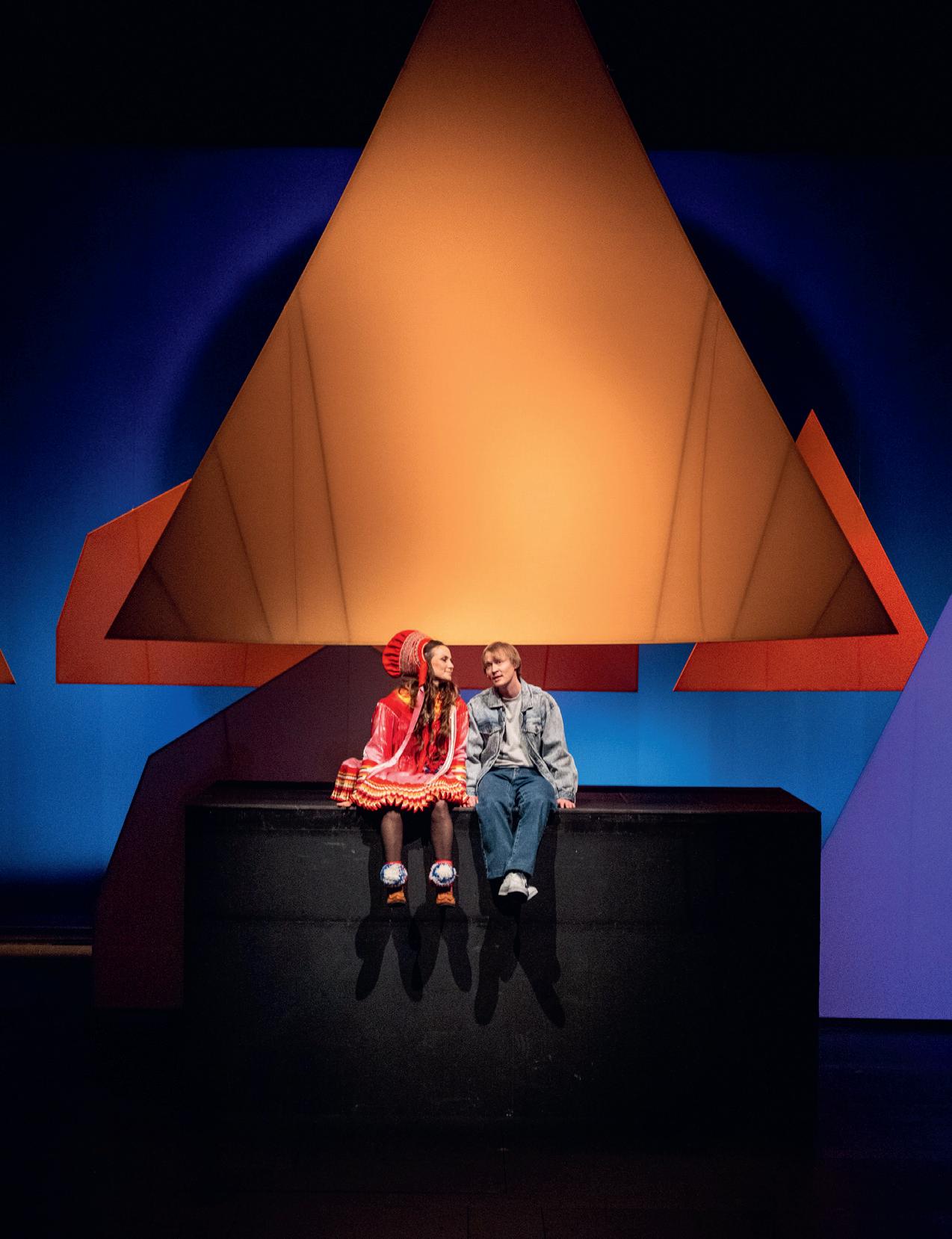
Cover: Ànne Máddji Heatta and Emil Kárlsen in Cecilia Damström’s opera Ovllá at Oulu Theatre
(Photo: Jouni Porsanger)
Design: Tenhelp Oy
Click the links, sound and video symbols
ISSN 2000-2750 (Online)
Thomas Jennefelt is awarded the ‘Preis der Europäischen Kirchenmusik 2026’, presented by the city of Schwäbisch Gmünd as part of the Festival of European Church Music in July. He is commended for “his distinctive musical language, uniting contemporary social themes with traditional sacred texts and genres.” Previous laureates include Arvo Pärt, Sofia Gubaidulina, John Rutter, and Eric Ericson. It is a great honour to be included among such distinguished artists,” Jennefelt says. Martin Skafte has been awarded the 2025 Järnåker Scholarship, Sweden’s most prestigious chamber music prize, for 12 Preludes – Book 2, the concluding part of his 24 Preludes for Piano . The work, written in dialogue with Debussy’s piano preludes and dedicated to pianist Jonas Olsson, is praised by the jury as “a unique journey through a musical universe with unexpected side streets and paths leading to both familiar and unexplored places.”
Photo: Jonas Persson
Photo: Markus Gårder
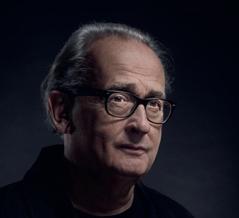
Thomas Jennefelt
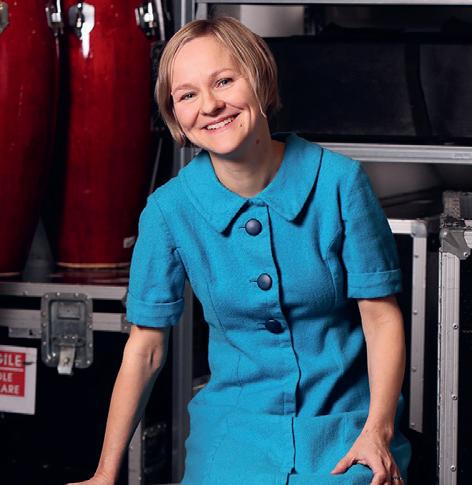
Martin Skafte Photo: Jenny Blad
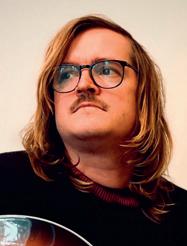
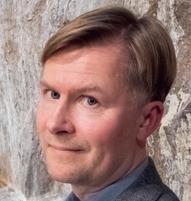
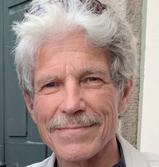
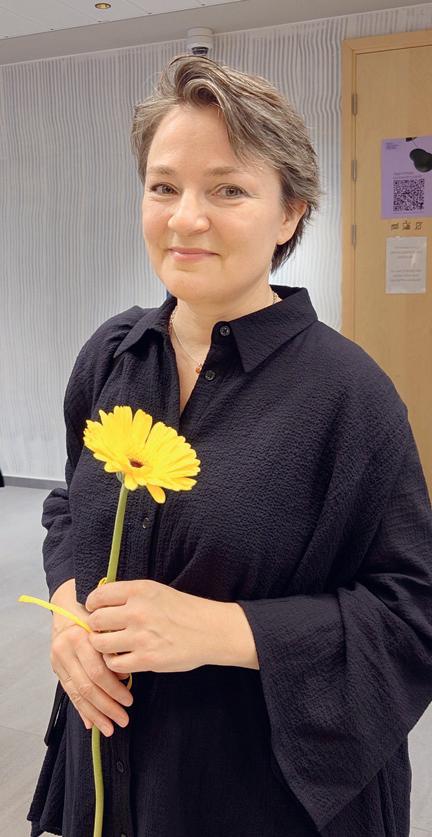
Seppo Pohjola
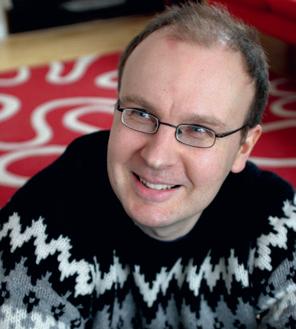
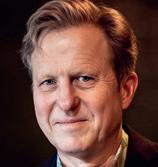
Matei Gheorghiu
Lintro (Joseph Mossop) and Trini (Kristine Nowlain)
Staern’s string quartet on tour
In spring 2026, the London-based Marmen Quartet launches a tour featuring Benjamin Staern’s first string quartet Fight – Union –Clinch. Following its world premiere in Växjö on 13 March, the quartet now takes the work to audiences in Lund (Sweden), Meister & Kammerkonzerte Innsbruck (Austria), and Darlington Music Society (UK). Synesthete Benjamin Staern describes the quartet as a “black comedy” – a dramatic yet humorous journey moving through a palette of dark glowing red, misty blue, and magnetic purple.
Wennäkoski premieres
Lotta Wennäkoski has been busy writing new works. Her latest commission, Zelo, was performed for the first time by the London Philharmonic under Robin Ticciati in London on 25 March. The commission involved a suggestion to compose a piece inspired by Sibelius. Having written Verdigris with allusions to Sibelius’s En Saga in 2015, in writing Zelo Wennäkoski was inspired by the energy and roughness of the Kullervo Symphony. Her new works also include Blended Notes, commissioned by the Sitkovetsky Trio. Scored for vocal ensemble of eight singers and piano trio, it was given its world premiere by the Soma Ensemble and the Sitkovetsky Trio at the Oulu Music Festival in Finland on 13 March. The texts are poems by William Wordsworth.
Seppo Pohjola in Gramophone
Jan
Sandström Competition
Joel Lindberg, a master’s compositio student at the Piteå School of Music, has been named the first winner of the newly-instituted ‘Jan Sandström Competition’. His winning piece, Oknos for string orchestra, will be published by Gehrmans Musikförlag. Lindberg describes the work as a musical portrayal of mental illness, marked by sharp contrasts and prolonged anguish. The title refers to the mythological figure Oknos, condemned to weave a rope endlessly eaten by a donkey. Oknos will receive its world premiere on 22 April, performed by the Norrbotten Chamber Orchestra under Isabelle van Keulen, and will then accompany the orchestra on its spring tour.
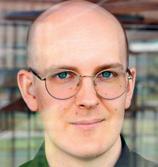
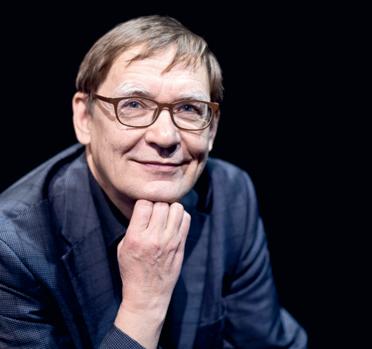
Seppo Pohjola was prominently featured in the January issue of Gramophone magazine. Andrew Mellor writes that his music is universal, characterised by its humbling sincerity and strength. Pohjola is an exceptionally prolific composer who has written several symphonies as well as critically acclaimed string quartets, which have been published by Fennica Gehrman and which are available on CDs by Alba Records. A recent work by Pohjola is Roots, commissioned by the Helsinki Philharmonic Orchestra for the Helsinki Variation series of orchestral pieces. At the moment he is working on his Eighth Symphony, his largest project to date.
Ari Nieminen in memoriam
Publishing Manager Ari Nieminen passed away on 14 February 2026 at the age of 73. A respected figure in the field of Finnish music publishing, he began his career at Fazer Music as an editor and later continued at Warner/Chappell Music Finland as Publishing Manager. When Warner discontinued its Nordic art music publishing, Nieminen played a key role in securing continuity at the newly founded Fennica Gehrman in 2002.
Throughout his career, Nieminen contributed to the development of the field through various positions of trust, including serving on the boards of Teosto and the Finnish Music Publishers Association. He combined deep musical knowledge, thorough publishing expertise and a strong ethical commitment to the rights and position of composers. For him, music was simultaneously culture, craft and longterm responsibility.
As a colleague, he was widely appreciated. His integrity, fairness and warm-hearted presence created an atmosphere of trust around him. Analytical thinking and thoughtful consideration were among his strengths, and with his gentle humour he fostered a safe and relaxed workplace atmosphere.
Ari Nieminen leaves a lasting and profound legacy. He will be deeply missed by his family, colleagues and friends and by the music community at large, for which he worked quietly, steadily and with unwavering dedication.
Lotta Wennäkoski
Photo: Maarit
Kytöharju
Joel Lindberg
Ari Nieminen
Seppo Pohjola
Uusinta’s musical catalogue to Fennica
The catalogue of Uusinta Music Publishing was transferred to Fennica Gehrman at the beg inning of 2026. Uusinta has been an important publisher of contemporary music, with a diverse catalogue featuring numerous Finnish composers. Here Lauri Toivio tells about the development of the company during its 25-year existence.
The story of Uusinta began in the summer of 2000. Following the debut of the Uusinta chamber ensemble a year earlier, a group of composers and musicians gathered at the Sibelius Academy to sign the founding documents of a new publishing company. The idea was sparked by composer Osmo Tapio Räihälä, while violist-composer Max Savikangas coined the name Uusinta (meaning both “replay” and “newest”).
Early stages
In the early stages, Räihälä and composer Kristian Rusila took charge of administration and finances. I stepped in as graphic designer and publishing editor and later also as CEO and
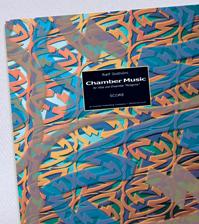
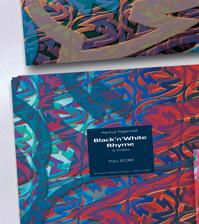
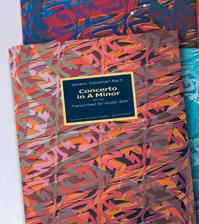
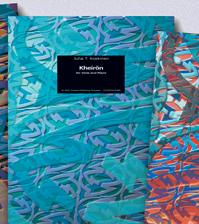
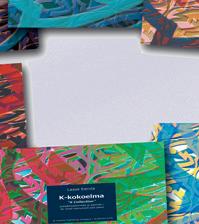
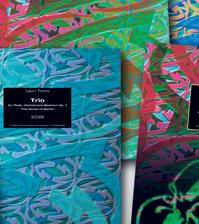
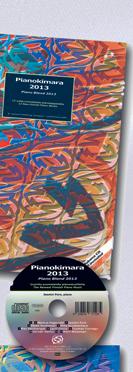
manager of the ensemble. Designing the logo was the first task; next came the score covers. The visual identity was built around a single adaptable colour concept: e.g. green for pedagogical publications, blue for chamber music, and a more individual palette for solo works. Over the years, this look has been interpreted as retro, futuristic –even psychedelic.
Uusinta’s first publication, Markus Fagerudd’s Iigo-Iigo (Tuba Concerto with piano reduction), appeared in autumn 2000. A year later, the piece was selected as the compulsory work for the final round of the Lieksa Brass Week international tuba competition. Fiftyeight competitors ordered the score, giving the company’s sheetmusic sales a swift start.
The production of sheet music soon began to run smoothly, and by the end of 2005, the number of publications had exceeded fifty. Notable milestones included Lasse Eerola’s extensive and popular pedagogical works, as well as numerous scores by composers Sebastian Fagerlund, Lotta Wennäkoski, and Osmo Tapio Räihälä. Examples from Wennäkoski include the chamber works Veno, Sinne, Kuule II and Ilmakehästä (From Atmosphere), and from Fagerlund Imaginary Landscapes and Emanations. A total of sixteen works by Räihälä were published.
Recordings were produced as well: Uusinta’s debut album At the Edge of Time and profile discs featuring Räihälä and Savikangas. For more than a decade, the ensemble acted as publishing house’s “house band” before its operations were separated from publishing.
Growing catalogue
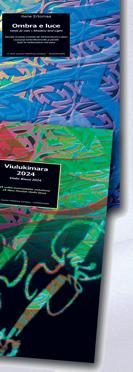
To mark its tenth anniversary, the company released its 100th score and first anthology, Pianokimara 2010 (Piano Blend), featuring pedagogical pieces by twelve Finnish contemporary composers. Its successor, Piano Blend 2013, offered more advanced repertoire. CDs were also included, featuring pianist Jasmin Fors performing the pieces. One of Uusinta’s last publications was Viulukimara 2024 (Violin Blend), a pedagogical duet collection written by eight composers.
Across 25 years, the catalogue grew to nearly 200 titles. While most works represent Finnish contemporary music from the last 30 years, historical pieces also found their place – from Bach arrangements to works by Ernest Pingoud, Sulho Ranta, and Lauri Ikonen.
From the beginning, quality rather than quantity was the guiding ethos: scores were edited with care and critical attention. International visibility was fostered through participation at the Frankfurt Music Fair for ten years.
Savikangas’ viola solo Extraterrestrial (“ET”) followed soon after, composed for the preliminary round of the 2001 Nordic viola competition. ET’s ten pages were printed as long 2,44 metre sheets, which the composer folded himself into accordion-style booklets to fit inside the covers.
In its final decade, the company collaborated with internationally acclaimed composer Outi Tarkiainen and the multitalented Ralf Gothóni, whose chamber arrangements of Hugo Wolf’s Italian Songbook and Schumann’s Dichterliebe were among the company’s most substantial projects.
After a quarter century of dedicated work, the time was ripe to pass the baton to Fennica Gehrman’s expert hands. Uusinta’s contribution to Finland’s contemporary music landscape has now found a happy new home.
Lauri Toivio
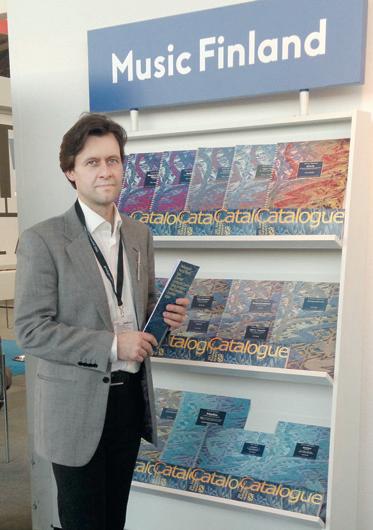
Lauri Toivio at the Frankfurt Music fair in 2014.
pu publ b icatioons, b in
REPERTOIRE TIPS
TIMO ALAKOTILA
Between Three Worlds (2018)
Dur: 25’ for wind band and solo violin
A violin concerto by Alakotila, who successfully combines modern and folk music languages in his output. The title of the work refers to the musical landscapes presented in the three movements. The first lets the soloist shine in dialogue with the band. The middle movement is lighter, with bass and guitar engaging with the solo violin. The brilliant, occasionally slower solo sections culminate, through a violin cadenza, towards a fast-paced finale.
ANTTI AUVINEN
JUHA T. KOSKINEN
Twelve Fn Kies (2017) Dur: 25’ for synth-solo (Moog) and big band
Auvinen is a musical explorer who considers that interesting art involves risk-taking and quests. This breath-taking work is a celebration of rhythmic pyrotechnics and can be performed in a variety of venues, not just in concert halls. The Moog synthesiser is featured in each of the twelve movements. The ethos of the work is in considering the space in which the music is performed but also in allowing freedom to musicians in an open expressive approach.
TOBIAS BROSTRÖM
Tragic Overture (2022) Dur: 11’ for brass band
Music for wind and brass band
Seishin (2010/22) Dur: 16’ for wind orchestra and percussion
The title of the piece means ‘sound of the heart/mind’ in Japanese and is derived from an ancient Japanese poem by Kūkai (774–835). This subtle and mysterious work is in three movements, each referencing a part of the poem. The opening sets a ritualistic Oriental atmosphere with gong sounds. In the second movement, the spatial orientation shifts as a cornet and percussionist join the “meditative woodland concert of the mind” from the opposite end of the auditorium.
MATS LARSSON GOTHE
Tobias Broström composed the set test piece for the EBBC (European Brass Band Championship) Challenge Section 2023, titled Tragic Overture. With his characteristic humour, he notes the piece did not turn out to be so tragic in the end. It follows an ABA structure, opening with a fierce 6/8 section. It is an exciting piece full of crossrhythms and cross-dynamic challenges.
MIKKO HEINIÖ
Domklang (2025) Dur: 20’ for winds, percussion and organ
This work was designed for and premiered at Turku Cathedral. The music travelled between the orchestra at the altar and the main organ at the rear, with some instruments placed along the sides as well. The performance was a magical sound world full of colourful music. The work has three movements: two freeform fantasias and a chaconne, or set of variations. Nonno
Piano Concerto No. 9 (2011) Dur: 21’ for amplified piano and big band With Nonno, Heiniö continued his distinctive series of piano concertos written for unusual ensembles. The music reflects the composer’s youthful interest in and admiration for jazz, blending its spirit seamlessly into a contemporary concert framework. In his review, fellow composer Olli Virtaperko wrote that Nonno is captivating and vibrant music, whose strength lies precisely in the way jazz and non-jazz elements are present at the same time, creating an intriguing ambience.
Symphonies for Brass Band (2021) Dur 22’ for brass band
Five vibrant and inventive explorations of the brassband sound, scored for twentyfive brass players and four percussionists. The work comprises five short symphonies, each with its own distinct character: Symphony No. 1: “Chorale”, Symphony No. 2: “Minuet””, Symphony No. 3: Variations on a theme by Jan Sandström (from the Motorbike Concerto), Symphony No. 4: “The Celestial Mechanics”, Symphony No. 5: “Second Chorale”.
Concerto for Violin (amplified or electric) and Big Band
A work that swings with musicianship and humour by a composer adept at marrying classical and jazz. Lintinen insightfully blends a variety of styles – Romantic, classical, big band writing, modern touches – into an original diversity of texture. The violinist is here not so much a soloist as a participant.
SAMPO KASURINEN
Overture (Alkusoitto) (2017) Dur: 7’ for wind band
Kasurinen is a multi-talented musician and composer known for his film scores and arrangements. His Overture did well in the composition competition held by the Guards Band. It opens with a rhythmic texture and proceeds to alternate energetic and lyrical moments, with brass power, narrative and wit.
BENJAMIN STAERN
Rainbow (2021) Dur: 10’ for small wind band
Rainbow is a ritornello in six variations, each inspired by the colours and meanings of the Pride flag: Red (life), Orange (healing), Yellow (sun), Green (nature), Blue (harmony), and Purple (soul). Through Staern’s synesthetic process, the colours generate specific pitches and timbres that continually return as a unifying ritornello motif. Rainbow is a concise, vivid celebration of diversity, identity, and the expressive power of musical colour.
Hymnus Aquarius (2023) Dur: 24’ for soprano saxophone and symphonic wind band
EINOJUHANI RAUTAVAARA
Concerto grottesco (1950) Dur: 6’ for wind band
An early work by Rautavaara which points the way forward to later successes. Three years after this, he wrote A Requiem in Our Time, which became his breakthrough work. Concerto grottesco opens with a ‘Fughetta’ followed by a slow movement titled ‘Träumerei’. The remaining two movements show the influence of Rautavaara’s first orchestral piece, the Concerto for Winds.
ROBERT RUOHOLA
Dream of a Beautiful Mermaid (2020) Dur: 9’ for wind band
A hymn to the Baltic Sea, portraying its significance to the surrounding nations and its gradual decline under climate stress, set against a utopian vision of a paradisiacal Aquarius. The lyrical opening in the solo saxophone, drawn from archaic folk melodies of Estonia, Latvia, and Lithuania, forms the harmonic backbone of the work. The concerto unfolds in four movements performed attacca, creating a continuous and evolving narrative.
ANN-SOFIE SÖDERQVIST
Quest (2003) Dur: 8’ for wind band
Drawing on her dual background in contemporary classical music and jazz, Söderqvist shapes a musical journey driven by both rhythmic drive and lyrical reflection.
A central feature of the piece is the marimba, whose agile lines act as a guiding thread throughout the journey. Motifs travel through the wind band with a sense of curiosity, shifting between energetic propulsion and more contemplative pauses, before the music finally settles in a quiet ending with a solo flute.
NEW ALBUMS
KALEVI AHO
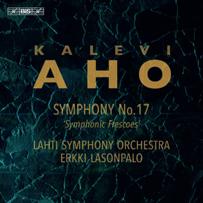
Symphony No. 17 ‘Symphonic Frescoes’ Lahti SO/Erkki Lasonpalo BIS-2676
This work by a young and exciting composer opens with a glittering soundscape with harp and percussion creating a dream-like atmosphere. Repetitive rhythms and entertaining melodies transform the music into something more feverish. The composer writes that this piece invites the listener into a musical world that blurs the lines between reality and fantasy.
ALBERT SCHNELZER
A Soaring Flight (2025) Dur: 8’ 30’’ for wind band or brass band (in different sizes)
Commissioned for the 500th anniversary of Military Music in Sweden, this piece was inspired by a flight over the Nordic landscape. It depicts a soaring journey through forests, mountains, shifting weather, and light. A piece celebrating both the wind band and the nature around us. The work exists in versions for both wind band and brass band, with several optional parts to accommodate ensembles of different sizes.
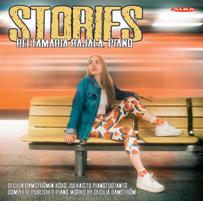
CECILIA DAMSTRÖM
Epitaph, Characters, Under stjärnhimlen, Unda, Piano Delirium, Psychedelic, Shapes
Reetamaria Rajala, piano
Alba ABCD 497 ’Stories –complete piano works’
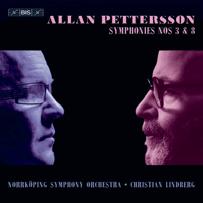
ALLAN PETTERSSON
Symphonies No. 3 & 8
Norrköping SO/ Christian Lindberg BIS-2740
Matthew Peterson: The Wanderers
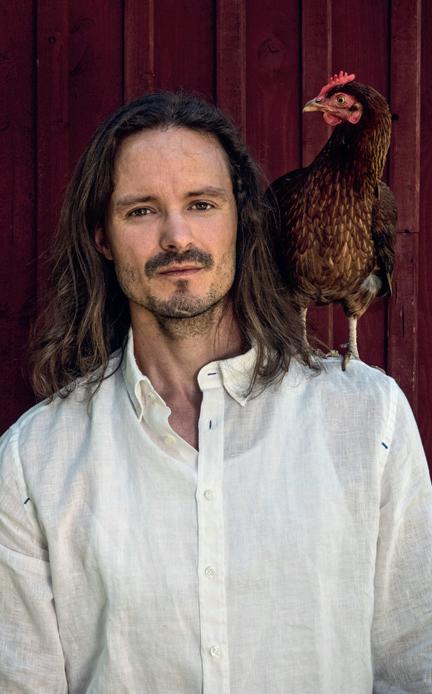
The Wanderers for choir and orchestra is Matthew Peterson’s second symphony. It is a story about the forests, lakes, hills, and blast furnaces in his home district of Dalarna, about man’s age-old relationship to the earth, and about being in the prime of life.
Matthew Peterson was born in Grand Forks, North Dakota, and grew up making music, hunting black grouse and fishing on the prairie. As he continued to study composition at St Olaf College and Indiana University, he was bowhunting white-tailed deer in the vast forests, once famously serving the composition department a whole roasted leg of venison.
– I remember that I bought a jar of Swedish lingonberry jam for our professor Sven-David Sandström to have on the side. Earlier in my studies I paid for extra lessons in composition with meat… I was different!
These landscapes, their flora and fauna, their smells and sounds have all made a lasting impression on Matthew Peterson. During his years in Indiana he met Per Mårtensson, the artistic leader of the Gotland Composer School in Sweden. On a Fulbright scholarship, Matthew came to Visby to write a chamber opera, Voir Dire. In 2018 in Stockholm, when he and his wife Sara were expecting their first child, the couple decided to move to friends in Smedjebacken, where
they couldlive a life centered around their outdoor lifestyle. Matthew was now back in the woods.
The unity
During the years 2024-2026 Matthew has been composer in residence with the Chamber Orchestra of Dalarna (Dalasinfoniettan), located in the region of Peterson’s home. His second symphony, The Wanderers, is a joint commission by Dalasinfoniettan and the Swedish Radio Choir, and the goal has been to weave the two together into a new kind of sound organism.
– The Radio Choir has shaped my development as a composer of choral music. It is one of the world’s finest ensembles, but here I was thinking about the individuals I have come to know during our previous collaborations. I have seen their faces before me while composing and I hope that the strength of my passion for these texts will rub off on them. It is a demanding musical work in which the singers are active during almost the whole 55 minutes.
The location
In The Wanderers Matthew Peterson wanted to create a work of universal resonance while remaining rooted in Dalarna: known for the beauty of its forests and fields and for its wood industry and mining.Would it be possible to fit all these things into one work? He hit upon two poets who have become part of the Swedish Volksgeist: Dan Andersson, from the forests around
Ludvika, not far from Smedjebacken, and the esoteric Gustaf Fröding from Värmland.
– Reading these texts is a sensual, rather than an intellectual, experience for me. I smell the
Photo: Johan Bergmark
Photo: Simon Hjortek
scents of wild rosemary, bog myrtle and moss, and the fermented aroma of the mouldering cranberries from last autumn. When I think of Dan Andersson’s words “when stars shine over whirling endless moors”, then I know. There is a unique sort of loneliness out on the bog on an October night, a sort of uncertainty and uneasiness. It becomes a different kind of place when I hear the call of the crane on an early morning in June.
According to Matthew Peterson, our belief in man’s ideas as the pinnacle of art is too one-sided. There is another world that opens up when one forms a relationship to a location and its fauna: mankind’s age-old relationship to the earth is an inexhaustible topic.
The language
What initiated the compositional process was Matthew Peterson’s own translations of poems by Fröding and Andersson. He simply picked out the passages he felt were appropriate to translate without losing the power of the text and combined them to form a new unity. – It was as if I were composing a text. I had the freedom to integrate choir and orchestra as I wished and enjoyed discovering that the poets’ amazing alliterations worked unexpectedly well in English: “Vad som av vinden viskas” became “What the wind whispers”. The four movements of the symphony each have a special location: the forest at night, the field in the sunshine, a fiery forge, a small lake in the woods. In hindsight Matthew Peterson discovered that there was one more level to the texts. In the forest, a feeling of getting lost, and in the iron works, of dreariness: Am I a human being or a beast?
– I understood that the text about the sun and the meadows is about how I feel: a 40-yearold man with children – I am a father and a composer, I cultivate the land and build on my house. I have a force within me to generate life in so many ways. Humankind has an incredible capacity to create!
The music
– The musical motif consists of three tones: F – G flat – A flat. These three tones can form both the major and the minor modes, depending on where we are in the scale. And this produces a kind of ambivalence that feels so right for the theme, a fluctuation between light and darkness. This appears on all levels and in different layers: from melodies in the foreground to structures deep within the construction, the motif permeates the whole work. I like limitations and usually work in this way. It leads to
a singular sonority for each individual work, which holds together the tone language.
For example,we hear the motif in the first movement’s chorus (“we are weary”) and in the second movement as brilliant, repeated sixteenth-notes. In the third movement it grows into a brutal bass line. In the fourth movement we find one of Matthew Peterson’s favourite passages in the piece: when the choir sings about the mirror-like surface of a woodland lake, we hear the motive in a long melody against its inversion, heading in different directions, climbing in the canon of the orchestra, and in the bass.
The wanderers
At the end of the Ice Age, people crossed the Bering Land Bridge and settled in North America. Matthew Peterson has likewise moved between continents.
–We are a wandering species. We seek, we explore, we adapt. Curiosity may be why we’ve flourished. I’m a wanderer myself, though deeply rooted here in Dalarna.
But the wanderers in the title of the symphony do not refer to Peterson himself, Fröding or Andersson. They refer to us who listen, to us who sing, to us who together experience the symphony; to all in whom the work arouses any feeling. – It is awesome when you come to think of the symphony as a form and the significance it has had. Beethoven’s 9th, Mahler’s 2nd… Works that have resonated across eras and places!
Janna Vettergren
The Wanderers was premiered on 21 March in Berwaldhallen, Stockholm and another performance was given 22 March at the House of Culture in Falun, with the Swedish Radio Choir and Dalasinfoniettan; conductor Claire Levacher
Quote:
“Once in his life a man ought to concentrate his mind upon the remembered earth. He ought to give himself up to a particular landscape in his experience; to look at it from as many angles as he can, to wonder upon it, to dwell upon it. He ought to imagine that he touches it with his hands at every season and listens to the sounds that are made upon it. He ought to imagine the creatures there and all the faintest motions of the wind. He ought to recollect the glare of the moon and the colors of the dawn and dusk.”
Kiowa writer and scholar N. Scott Momaday (the first Native American writer to be awarded the Pulitzer Prize).
PREMIERES
March–June 2026
BE NJAMIN STA ER N
Figght ht h – U Unio n n –– Clincnch
Strtring in Qu Quaartet No. o 1
Marmen m Qu Q art a et t 13 13.3.3. 3 Växxjö, ö jöö, Swweedededen
LO OTT T A WE W NN ÄKOSKI
Ble B d ndeedN d N N Note ot o s Som So a E a nseembl b e, e Sit it Sitkov ko k etsky Trio o
1 13.3.33. Oullu, Finlan la l d ( (Oul Oul u u Music F c est e iva a val) )
Zel Z o Lon Lo don n POO//Ro /R bin Ti Ticccciati
25. 25 2 3. L Lon Lo don, U UK
MATT HE W PE TERS ON
Sym S pho p ny n No o No. 2 – T The Wandereers
Da D Dalasiinfo o fonie i tta t tt n, , Sw Swewedis d h R Radio C o hoir/C r laiire r Levach chher er
21. 21 2 3. Stockhkholm, S ,SSwedwedeen
KI MM O HA KO L A
LÄP P ÄPIKA I JOT O Op 120 20 for f ce c llo a annd e deelec le tronics
Ear r th h Ear E Ea s s E sEnsemble
15.5.4. 4 Tam Taamper p e, Finlanand ( d Tam Tamper p re Bien i nale) )
JO EL L IN DB ER G Okn Ok O os
Nor Norrbo rb r tten CO/Isabellle e v van Keu eu e len n
22. 2 4. Pit itteå, eå e Sw S edeen n
T IM O - JU H AN I KY LLÖ N E N
Loioiste te e Op Op. 1 . 105 05
Ti i Tin T aC C a a Chri hr stense n n, , org or o an a
23. 23 3 4 4. Ke K Kemii, Finland
LA RA P OE
Whi W Wh rligig g g Oul Ou u S SO/R O umo m n G Gambba 6.5 5 .5. O Oululuu, F Finl nlland
A L BE RT S C H NE LZ E R
Con Conceer cer to o for f r Soprano no Saxophone n and d O Orchchesestra – A Arctic c Starflflower
Dal Da asinfo nfoonie e n ni tta tt n/C n laire e re Levacher, soll. Anders Pa Pauls s u son n 8.5 5 8 . Falun, Swe Swedden n
TO BI AS B RO ST RÖ M
Symphony ny No. N 2
Gotothehenburg S SO/SO/Sant a tu-Mat M Ma ias a Ro R uva v valli
27.5. 5 Got o henbur b bu g, Swe Sweden en Den stora karne rn va val v en (The G Granand C d arnevevaal) ) Jönönköpkööping ng Sinfo nf niettaa/Joohannes Guustavsson o 31.5. 5 Jön Jö köppingg, Sweden n
OL LI KOR TE KA NG AS
Le bonheur de v v e ivr ivre
Mar Ma ko Ylönenn, , cell lllo
11. 11.6. Hel He sinnki, Finland nd
TI IN A MY LL ÄR IN EN
Sh Shahades d (Gu Gu G itatar Quuar tet)
Kekkkonen Quartet
27 27.6. 6 Por voo F , Finlland nd (SSumm mmmer e Sounds nd Fe F st stival va )
REVIEWS
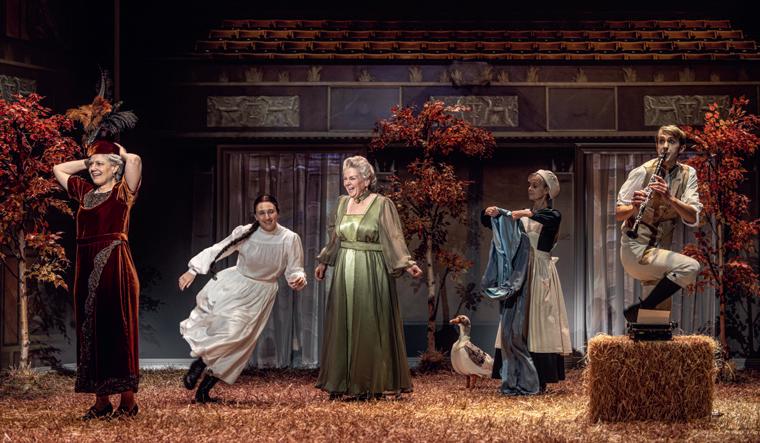
Larsson Gothe’s warm-hearted Selma
It is fantastic that there is an opera about two septuagenarians… A very beautiful and warm-hearted performance; a well thought-out production with elaborate and attractive set designs and costumes. The merry tone indicates a rustic comedy. The music is eclectic and entertaining… Larsson Gothe is good at painting with the orchestra, but he also knows how to write for the voice, and conductor David Björkman sees to it that this is convincing. Expressen 27.2.
Emil Jonason plays with intensity and perfect balance, a marvellous expression of the power of music… Larsson Gothe has an amazing ability to lend musical lustre even to what seems trivial. High and low get on well together in a manner that is typical Selma Lagerlöf. Svenska Dagbladet 27.2.
Mats Larsson Gothe’s music is tastefully spiced with musical references – there are a number of distinct allusions to Brahms’s String Quintet for Clarinet – but elements of folk music are also prominent. It is melodious and lucid, with brief flashes of syncopated percussion or ingenious melodic figures in, e.g., the woodwinds… This is not just an opera about Selma Lagerlöf, it is also a work that evinces fervent passion about literature, art and music. Aftonbladet 27.2.
Mats Larsson Gothe/Maria Sundqvist: SELMA – and a beautiful tale from a happy time World premiere: Wemland Opera/David Björkman, sol. AnnLouice Lögdlund, Katarina Giotas, Emil Jonason etc. 26.2.2026 Karlstad, Sweden
Brilliant virtuoso stuff
Julian Bliss opines that the two finest Clarinet Concertos of this millennium are those by Kalevi Aho and Magnus Lindberg. Aho’s Concerto begins with tumultuous drama. The second movement features an extensive cadenza, and the work culminates in wild, sarcastic dance rhythms in the middle movement. Towards the end, the music turns to expansive slow tempos and a mystical feel. Rondo 1-2026
Kalevi Aho: Clarinet Concerto
CD: BBC Scottish SO/Taavi Oramo, sol. Julian Bliss
Signum SGCD898
A colourful Heiniö premiere
In this commission by the festival, Mikko Heiniö relied on tonal colour and space. It was exciting to hear how the percussion placed in a chapel on the left responded to the trumpets upstairs, while the organ at the back engaged in dialogue with the orchestras. A sensitive touch was provided by a lone oboe in the pulpit. Turun Sanomat 5.2.
Mikko Heiniö: Domklang
World premiere: Navy Band/Jarkko Aaltonen, Markku Hietaharju, organ, 3.2.2026 Turku, Finland (Katedraali soi festival)
Glacial sonorities and heartfelt joik in Ovllá
Damström deserves the highest possible commendation for a work that must be the most beautiful she has ever written. The fundamental atmosphere remains, in a manner typical of her, strongly narrative and forward-driving, with an immediate address to the listener. At the same time, she continually adds more strings to her bow, lending the music an increased degree of complexity. Hufvudstadsbladet 26.1.
Cecilia Damström’s music – cool and glacial in its sonorities – does not clash with Emil Kárlsen’s beautifully composed, deeply heartfelt joiks. Rather, the two worlds intertwine harmoniously. Rondo 18.1.
The joiks function much like arias in the operatic tradition: moments of concentrated emotional truth. Narrative progression is carried through more conventional melodic writing, offering space for reflection and continuity. Alongside these two musical spheres, a third layer emerges through Damström’s modernist orchestral language, familiar from her earlier works. This serves as a reflective narrative voice, observing events from a broader perspective and illuminating Ovllá’s inner turmoil. Helsingin Sanomat 18.1.
World premiere: Oulu City Theatre, Oulu SO/Rumon Gamba, sol. Emil Karlsén, Ánne Maddji Heatta, Ánndaris/Anders Rimpi, Sara Margarethe Oskal etc. 16.1.2026 Oulu, Finland
Lindström’s witty and entertaining violin concerto
Malin Broman’s lovely pianissimi and sensitive expression created a quiet mood of restful darkness and glistening frost, supported by an equally pattering and deferring orchestra…there were lingering impressions of spookiness and singability, distorted reflections and reminiscences of folk music. The piece was accessible, entertaining and witty, and I have rarely heard so many positive comments from an audience after a premiere. Sundsvalls Tidning 30.1.
Emmy Lindström: November Night in Jakobstad –Violin Concerto No. 1
World premiere: Nordic CO, sol & leader Malin Broman, 29.1.2026 Sundsvall, Sweden
Emmy Lindström and Malin Broman
Mikko Heiniö
Photo: Sung-Won Yang
Kalevi Aho
Photo: Mats Bäcker
Photo: Gehrmans Musikförlag
Photo: Romain Etienne
Exciting horn pieces
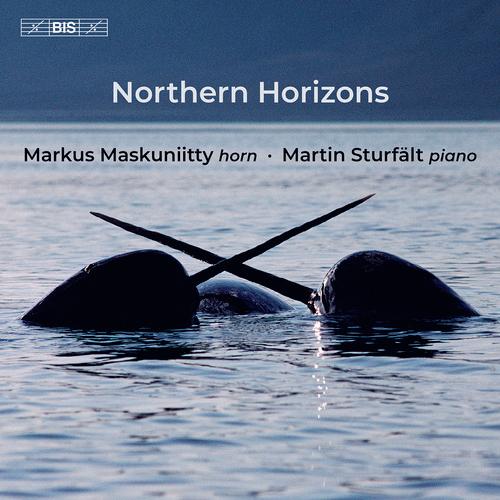
Benjamin Staern’s Day and Night is a complete hit – continuously captivating and a real showpiece… Schnelzer’s I Remember River Clear draws its inspiration from the Klarälven River in Värmland and flows smoothly forward in fivetime. The result is a folkmusicinspired play with nationalromantic elements. Musikrevyn 22.2.
Benjamin Staern: Day and Night, Albert Schnelzer: I Remember River Clear CD: Markus Maskuniitty, hn, Martin Sturfält, pf, BIS 2712 “Northern Horizons”
Esa Pietilä: Aphelium Journeys
Pietilä uses the string quartet to rich and modernistically detailed effect. Here, his music is effectively delivered by the Skatta Quartet in a high-precision recording. [...] The ideas burgeoning in the two Quartets burst into flame in the Saxophone Concerto that completes the trilogy. Pietilä’s tenor sax introduces a new element to the music, expanding his idiom to cosmic proportions. Rondo 1-2026
Esa Pietilä: String Quartets 1&2, Blazing Flames
CD: Skatta Quartet, Esa Pietilä, sax.
Alba ABCD 490 ”Aphelium Journeys”
Brass brilliance by Rautavaara
The concert opened with Rautavaara’s A Requiem in Our Time, with which he won the Thor Johnson Composition Competition for brass band in the USA back in 1954. Its punchy brass brilliance recalling big band music bears echoes of bright, brash and busy Manhattan. Helsingin Sanomat 10.12.
Einojuhani Rautavaara: A Requiem in Our Time Helsinki PO/Jorma Panula, 8.12.2025 Helsinki, Finland
Steampunk Blizzard sparks with energy
Daniel Nelson’s seven-minute Steampunk Blizzard opened with metallic brightness and tightly wound energy. Conceived as a “steam engine ballet in a snowstorm”, it evokes a fantastical contraption gathering force, answered by clattering percussion, abrupt brass punctuations and interlocking rhythmic figures. Percussive drive fused with a steady groove, the textures layered yet never opaque. Rouvali kept the machinery cleanly articulated, preventing the rhythmic build-up from thickening the texture. The result was brisk and focused, its energy tracing a compact arc that built swiftly and dissipated without excess. Bachtrack 21.2.
Daniel Nelson: Steampunk Blizzard New York Philharmonic/Santtu-Matias Rouvali, 18.2.2026 New York, USA
Klami’s marvellous masterpiece
The Kalevala Suite by Uuno Klami is a marvellous and successful essay in escaping the influence of Sibelius. Klami evokes the national epic in his own idiom, spiced with influences from the aesthetics of Ravel and particularly of Stravinsky. The work culminates in the fierce forging of the wondrous device known as the Sampo. Helsingin Sanomat 8.12.
Uuno Klami: Kalevala Suite
Finnish RSO/Nicholas Collon, 6.12.2025 Helsinki, Finland
Finest version of Pettersson’s 8th
The Eighth is one of Pettersson’s finest and bestknown, recorded at least five times… This new interpretation is tauter, now even more attuned to Pettersson’s obsessive-compelling idiom and manifestly sounding so. Indeed, in terms of orchestral virtuosity, I would aver that this is the finest, most confidently played version yet. Interpretatively, what Lindberg –now the most experienced Pettersson conductor of them all – does so well is to let the music flow, and at pace when needed. Gramophone March 2026
Allan Pettersson: Symphony No. 8
CD: Norrköping SO/Christian Lindberg BIS 2740
A compelling piece by Helena Tulve
This deeply poetic work drifts by like a dream and is wonderfully brought to life by Paavo Järvi. Though placed in the delicate role of an opening piece, it nonetheless became the real highlight of the evening. Resmusica.com 21.2.
The piece consists of slow shifts of sound material, with gradually evolving nuances, almost imperceptible tempo variations and subtle percussive punctuations. The orchestra, under Järvi’s expert leadership, brings out the shimmering, resonant, meticulously divided sonorities of the piece – a language rooted in the spectral tradition. Diapason 19.2.
Helena Tulve: Wand’ring Bark French premiere: Orchestre de Paris/Paavo Järvi, 18.2.2026 Paris, France
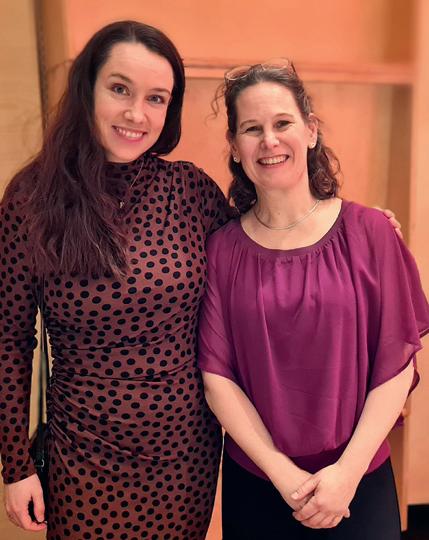
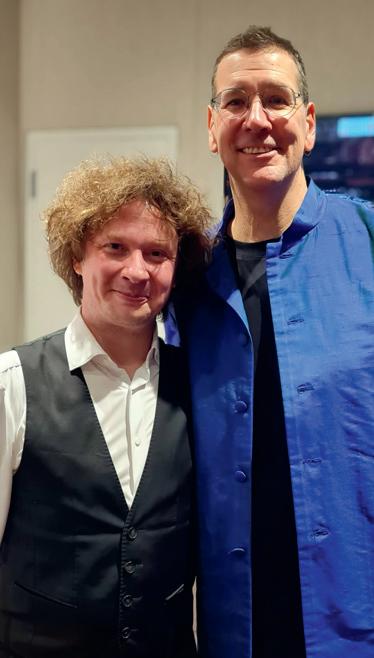
Santtu-Matias Rouvali and Daniel Nelson
Helena Tulve
Esa Pietilä
Photo: Patrik Stenström
Photo: Henna Salmela
Photo: Gehrmans Musikförlag
NEW PUBLICATIONS
CHORAL & VOCAL
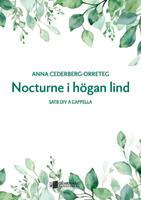
ANNA CEDERBERG ORRETEG (ARR.)
Nocturne i högan lind for mixed choir
Music: Evert Taube, Alice Tegnér
Text: Samuel Hedborn, Evert Taube (Sw) GE 14975
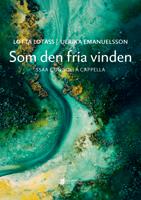
ULRIKA EMANUELSSON
Som den fria vinden for 2 sopr. and female choir
Text: Lotta Lotass (Sw) GE 14938
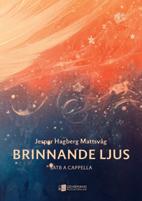
JESPER HAGBERG MATTSVÅG
Brinnande ljus for mixed choir
Text: Karin Boye (Sw) GE 15022
CARITA HOLMSTRÖM
Måla himlen (Taivaan maalari) for voice and piano
Text: Bo Carpelan (Swe), transl. Kaarina Helakisa (Fin) FG 9790550180413
MARCUS JOSEPHSON
Agnus dei for mixed choir
Text: Lat GE 14892
ILKKA KUUSISTO
Eläimellisiä lauluja for voice and piano
Text: Tapsa Rantanen (Fin) FG 9790550180482
MATHILDA LINDGREN/
SEBASTIAN RILTON
God natt jorden for solo and mixed choir
Text: Mathilda Lindgren (Sw) GE 14964
ROLF MARTINSSON
Tidig gryning
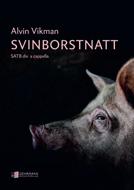
ALVIN VIKMAN
Svinbortsnatt for mixed choir
Text: Elsa Grave (Sw) GE 14971
MATTHEW WHITTALL
KJELL PERDER
Jubel jubel for mixed choir and children’s voices ad. lib
Text: Psalm 95 (Sw) GE14842
KAIJA SAARIAHO
Du gick, flög
Text: Gunnar Björling (Swe) for voice and piano
FG 9790550119154 for voice and cello
FG 9790550180277
MIKKO SIDOROFF
Träumen for mixed choir
Text: Rainer Maria Rilke (Ger)
FG 9790550180376
MATEI GHEORGHIU
ad puram annihilationem meam
Ritual for mixed choir (with percussion)
Text: Pierre Teilhard de Chardin (French, Lat)
FG 9790550115606
HANS ÅKESSON
Rosa, rorans bonitatem for solo and mixed choir
Text: Nils Hermansson (Lat) GE 14949
War Nocturne for violin, violoncello and piano
MARTIN ÅSANDER
Locus iste for mixed choir
Text: Latin hymn GE 14976
ORCHESTRA
Text: Edith Södergran (Sw) for soprano and piano GE13085 for soprano and string quartet GE 14768 (score) GE 14769 (parts)
GE 14746 (score), GE 14747 (solo flute), GE 14748 (study score)
TOBIAS BROSTRÖM
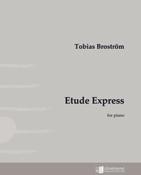
Etude Express for piano
GE 14778
DANIEL BÖRTZ
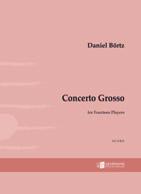
Concerto grosso for fourteen players
GE 14858 (score), GE 14860 (study score)
CECILIA DAMSTRÖM
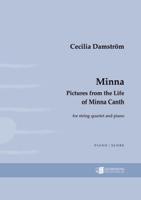
Minna piano quintet
GE 13577 (score), GE 13578 (parts)
CHAMBER/INSTRUMENTAL
For further information contact us at:
Gehrmans Musikförlag AB
Tel. +46 8 610 06 00
info@gehrmans.se
Web shop: www.gehrmans.se Hire: hire@gehrmans.se Sales: order@gehrmans.se
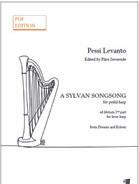
PESSI LEVANTO/ED. PÄIVI SEVEREIDE
TIINA MYLLÄRINEN
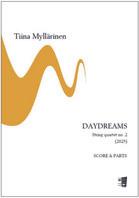
Daydreams
String Quartet No. 2 FG 9790550180284 (score and parts)
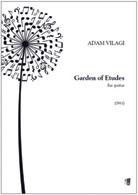
ADAM VILAGI
SEV EV V ERE IDE
Echoes and Dreams – 12 songs for harp FG 9790550180222
A dazzling collection for advanced amateur harpists and students to fill the pedagogical gap in the harp repertoire. The pieces are also available separately as PDF editions.
Garden of Etudes for guitar FG 9790550180352 o s)
AVAILABE FROM UUSINTA CATALOGUE
Piano Blend 2010 (Pianokimara)
Violin Blend 2024 (Viulukimara)
LASSE EEROLA
30 studies for clarinet, flute, horn, saxophone, bassoon or tuba
Rohtokokoelma (Herbal Collection) for piano with clarinet, flute, oboe, horn, bassoon, tuba, alto sax or tenor sax
N-sarja (N Suite) for piano with flute, oboe or clarinet
MARKUS FAGERUDD
Arco Naturale for string quartet
RALF GOTHÓNI
Five Finnish Folk Songs for voice and piano
LASSE KALLIONIEMI
Colours of the Spring (Kevään värit) for two flutes and piano
JENNAH VAINIO
Urhon ihmeelliset seikkailut for guitar
LOTTA WENNÄKOSKI
ír for piano
Ilmakehästä (From Atmosphere) for flute and piano
Fennica Gehrman Oy Ab
Box 42026, SE-126 12 Stockholm, Sweden
Fredrikinkatu 61 A 22, FI-00100 Helsinki, Finland
Tel. +358 10 3871 220
info@fennicagehrman.fi
Web shop: www.fennicagehrman.fi Hire: hire@fennicagehrman.fi Sales: customerservice@storia.fi
Several publications by Fennica Gehrman are also available as PDF editions or eBooks in our web shop.