Members of the Geelong Grammar School community have faced significant challenges from the hurt of the past. In recent years, the School has been working to provide an authentic response to survivors of sexual abuse.
Principal, Rebecca Cody, has observed: “I have met with survivors and I am deeply sorry for their pain and suffering: to be sorry though, is not enough; complying with new legislation is not enough – we need to set an example and lead. We need to move forward by recognising the devastating impacts and effects of childhood sexual abuse and by never losing sight of the learnings from them”.
Rebecca said: “Whilst we cannot undo the failures of the past, together we can acknowledge the harm, recognise the pain caused and together, we can support and enable a culture which fortifies against such devastating harms and places child safety at its core. Together, we can make a positive difference towards shaping a better world”.
For survivors, for victims of trauma, for those struggling in challenging times – there are options for reaching out and finding support.
You are not alone – you are a valued member of the Geelong Grammar School community – we are thinking of you, and we care.
Survivor Liaison Coordinator
Renee Handsaker provides outreach and support for survivors of child sexual abuse at the School. Renee can be contacted by phone on 0414 299 142 or by email: renee@sustainingconversations.com
Independent Counsellor
The School continues to provide the services of an independent counsellor, Pauline Ryan. This service is available to those in our community wishing to access counselling or support regarding abuse. Pauline can be contacted directly during business hours by calling 1800 799 139.
Healing & Hope
Healing & Hope is a unique initiative which has been established to endeavour to relieve the suffering and to provide practical comfort, assistance and support to survivors of child sexual abuse and victims of trauma within our Geelong Grammar School community, both past and present. To find out more please visit www.healingandhope.org.au, call or text 0438 561 747 or email: contact@healingandhope.org.au
Editor
Brendan McAloon
Cover Design
Juan Rodriguez Cuberes
Design
Claire Robson
Sofie Van Gunsteren
Photographers
Mike Dugdale (FB’71)
Nick Fletcher
Drew Ryan
Nick Sculley
Contributors
Jacqueline Adams
Will Donges (Yr12 Cu)
Tanya Hollis
Alfie Holuigue (Yr12 Cu)
Anna McCoy
Imogen McKenzie (Yr11 He)
Nick Sculley
Darren Watson
Website www.ggs.vic.edu.au
Email lightblue@ggs.vic.edu.au
Principal’s Perspective
Sonnet 18, inclusive of “Rough winds do shake the darling buds of May”, may be read as Shakespeare’s metaphorical description of the human life cycle of birth, ageing and death.
Recently, the winds of spring acutely felt at our Corio campus reminded me of the forces of beauty, youth, gratitude and hope that can sweep through the seasons of our life. Grateful for this School’s 2025 season of celebration commemorating 170 years and associated anniversaries, I have also been reminded of the depth of brilliance of a Māori whakatauki that it is a constant of every season. “He aha te mea nui o te ao? He tāngata, he tāngata, he tāngata: What is the most important thing in the world? It is people, it is people, it is people.”
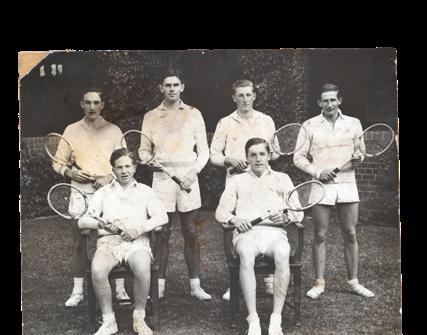
A decade or so ago, a phenomenal educator taught me the importance of being present for the significant seasons of others’ lives; especially for the people whom you care deeply about. She explained that wherever possible, just be there. Knowing there will come a time when you can’t be there is a motivator for choosing well; your presence can be a symbol of what matters most. It was this learning that inspired me to attend a service celebrating the life of George Chomley Senior (Cu’50). As an intergenerational Geelong Grammar School family, commencing their relationship with the School in 1880, the Chomleys, through John (M’85) as Deputy Chair of our Council, continue their impressive support for all matters GGS. During the service honouring George Senior’s 93 years, and awakened through scripture, I was struck by the various
The motif speaks to education’s enduring influence. Whilst his experiences of GGS were at a very different time to George, the story of our guest speaker at this year’s Leavers’ Celebration, Jim Gall (Cu’91), is deeply and brightly imprinted with our crest and all it represents. As Chair of Council, Paddy Handbury’s (M’72) Geelong Grammar arc is extraordinary. Calmly and wisely leading Council, Paddy has a quiet strength and conviction to do what is right and just. Previous guest speakers, Marta Dusseldorp (Cl’90), Rebecca Hossack (Li’73), Fiona Luth (Ingram, Cl’91), and Professor Sandy Peake (Li’74) trailblaze with areas of interest sparked at our School and now continue a profound modelling of learning in perpetuity. Every Light Blue publication could be filled with multiple men and women of Geelong Grammar who throughout their lives remain connected to us and continue to influence our GGS spirit. These people all have a different history with our School, and like our 2025 School Captains, many represent first generation Geelong Grammar families. It takes just one wise choice to initiate intergenerational flourishing.
If our Class of 2025 is very fortunate, there will be numerous seasons in their life: times for new beginnings, for growth, for change, and for rest; times for reinvigoration, rejoicing and reminiscing; times for contemplation, selfless care for others, and course correction. Wherever they go, and whatever they do, the constant throughout the seasons will be choice. Choices are the mark of our character. In his book, Road to Character, Canadian journalist David Brooks describes the difference between Curriculum Vitae and eulogy virtues. At the heart of the distinction between the two is what you will seek to be ultimately remembered for; these are the kind of virtues that George Chomley Senior’s children and grandchildren spoke about. This is the impression you leave on people’s hearts and minds.
In reflecting upon the overall season of our leavers’ time at Geelong Grammar, the broader season of our world has been significant. These young adults are yet to reach a double decade and arguably, they’ve seen more change globally in a condensed period than all of the experiences of my five decades combined: a pandemic, ongoing global conflict, a change of the monarchy, the death of Pope Francis, the welcoming of Pope Leo, and the appointment of the first female Archbishop of Canterbury, to name a few remarkable shifts. With all our young adults have seen in such a rush of years, and especially the examples of volatility and combat, it would be understandable if a few are subscribing to the thoughts of British philosopher Thomas Hobbes. He declared humans to naturally be in competition, and ultimately at war, with each other. Ancient Roman philosopher Seneca too said that if you take a walk in the countryside, you will find the ruins of once great cities, each destroyed by their citizens’ appalling treatment of one another.
Whilst we can mount an argument aligning with Hobbes and Seneca’s assertions, may we never forget it is the gifts of emotion and reason that enable humanity to employ the cardinal virtues of courage, justice, temperance, and wisdom. Reason is the wealth within us all; the resource that, used judiciously, can champion all that we need to shape a world worth living in. “Desire one thing alone,” offers Roman emperor Marcus Aurelius, “that your actions and inactions alike should be worthy of a reasoning citizen”.
It is the ancient wisdom of Aristotle that teaches us we are innately social beings.
From our very beginnings as babies within a family unit, we are hardwired towards caring and reciprocity, towards friendship, and to being in partnership with others.
As we grow, we extend our love for friends and relatives, and then hopefully, and ultimately, as citizens of the world, to all people. Given that our natures are both rational and civic, our telos is to apply our reason, and our emotion, for mutual benefit.
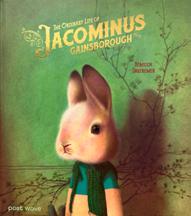
Continuing a long-standing tradition of gifting leavers with a picture book exemplifying various aspects of humanity’s purpose, the story selected in 2025 (The Ordinary Life of Jacominus Gainsborough by Rébecca Dautremer) ends with Jacominus Gainsborough’s dawning that “people change, and time passes”. Somehow, seasons are both personal and universal, ever present with people who guide our choices.
There will be those who are like you, some you don’t understand, some you will love with all your heart, and others whose company you will enjoy. Others too who will move you, some you can trust, many who will be a part of important seasons of your life, others you should have been more wary of, plenty you’ll forget without meaning to, and more whom you can never thank enough.
Just like Jacominus, we change, and time passes. Even with the great gifts of a loving family and an exceptional education, none of us can promise that our leavers will thrive in every season of their life: however, we can confidently continue to hold them and the promise of their becoming in our hearts and minds; a promise of enduring learning, wise choices, and generous service.
How our abiding philosophy, values and stories are actualised 170 years since our founding is best described through our students’ voices. At whatever season of your life this edition of Light Blue finds you and your family, may the sentiments and insights that follow from our leavers of 2025 be a gift of hope to you.
“
…So yes, the education is exceptional, and the sporting life is fantastic. The music department is extraordinary and yes, the facilities are incredible. But I believe the thing that stands out the most about the GGS experience, is the way, through thick and thin, we always come back and stand close to one another…
Spencer Siebel (Yr12 M)
“…In Middle School no one was worried about Covid-19, more just excited to watch movies and spend all day in House. We were definitely not short of any activities, usually filling our time with puzzles, colouring games and card games like Spoons, which didn’t always end so well. All of a sudden, two weeks turned into two months, and everyone felt that extra bit grateful for the chance to see our friends again. This is how I feel about the way we live here at Grammar, whether you’re boarding or not. When we all go our separate ways, these relationships are the ones that will get you through all the unknowingness of outside school. In 20 years from now, you’d give everything to be this exact age, in this health, and back in this moment…
Anoushka Jenkins (Yr12 Ga)
”
“Leonie Kosasi-Papdan (Yr12 A) “
…I couldn’t be more honoured to say so many thank yous. It’s a small indication of what I love and will truly miss about GGS. It’s a long list made up of so many people, because there are so many moving parts to our light blue experience. Because of this School we are made up of so much more than one part. Yet when we look back on our years, I think we naturally cut out some of the hardships, although I think it’s a disservice to what our light blue experience really means. High school is not easy wherever you are in the world, but we should feel privileged that for every hardship, we had a reason to care deeply about our own lives, and about other people. So, I thank the hardships and all the times I’ve cried because I’m better for it. We all are. The world owes us nothing, but we owe everything to ourselves and each other to persist with what we value most. Because we are not confined to who we are at one instance, but instead a culmination of what we have learned, keeping every part of ourselves to become who we are with our values as a constant, as is the light blue way…
…With exams around the corner, our mistakes tend to be on the forefront of our minds. But that is what my GGS experience taught me, not to be too critical of myself, and to be more conscious of the little successes along the way. I implore you to do the same, because if you obsessively lament over every little failure, you may find yourself becoming your own worst enemy…
Tommy
Cosgrave (Yr12 P)
“So, when we look back on this year – the competitions, the banter, the friendships, the challenges of boarding life, the highs and the lows – and as we watch the sun set, for us, on this place, we can see God’s quiet work in all of it. He has shaped us to be more resilient, more compassionate, and more faithful, through what we have heard in this Chapel over the years. We should be thankful for the example our teachers have shown us throughout our journey. We wish those who follow us success for the next year, for although the sun sets for us, it rises for them. While we who are leaving GGS are all different, we all have one thing in common – we are all now the OGGs of 2025. This is both a privilege and a responsibility, as it has been for those before us for 170 years. And 170 years is not enough
Charles Aponso (Yr12 M)
”
“…During my time here, I’ve met people who have had more faith in me than I ever had in myself. People I see myself in, even just slightly, and people I’m nothing like. Now it might’ve been the opportunities I was given here that reminded me why I moved schools. But it’s all these people that remind me every day why I stayed. And it’s the people that made a constant effort to chip away at me when I first came, that introduced me to new people and new things, that made the past few years what it was, that I’ve had the privilege of getting to know, and have equally had the privilege of being known by. To be part of something bigger than yourself. To have roots in the people sitting either side of you, though we may all come from different places, and may all go different places from here. In this auditorium let it ring true, to be loved is to be seen, and to be seen, really seen, is one of the rarest and most beautiful things we got to experience here…
Sarah Singh (Yr12 Cl)
”
“Now, of course, none of it would have been the same without the teachers we have. One of the best things about being in a boarding school is the connection we build with them. They’re not just teachers. They’re coaches and mentors. They’re the ones who push us to do better, even when we’ve already mentally checked out for the day. They stay back after hours, check in when they don’t have to, and somehow find the patience to deal with us when we’re at our worst… Every time I thought of a story or a moment, I kept arriving at the end – “Being at GGS is great!” But I couldn’t figure out what makes this School so great. Is it the facilities? Impressive, yes, but that’s not the core of this place! Is it the awards and achievements, the sporting victories or the academic results? Those are nice, and recognise our hard work and determination, but they don’t capture the real essence of GGS. Is it the House events, the swimming, basketball, soccer, and footy? They bring us together, but still, there’s something deeper. It’s the people, the friendships, the laughter, the support from teachers who we truly connect with, and the moments that we probably don’t notice until they’re gone. That is what makes GGS truly unforgettable.…
Fraser Carr (Yr12 A)
“…We are far from having the most exceptional ATARs, nor the most exceptional music facilities or, might I dare add, the most exceptional 1st boys’ AFL football team... So, what is this ‘exceptional’ education that the marketing team propose. Well, I ask that you take a second to look around at the people sitting among you…
Alfie Holuigue (Yr12 Cu)
”
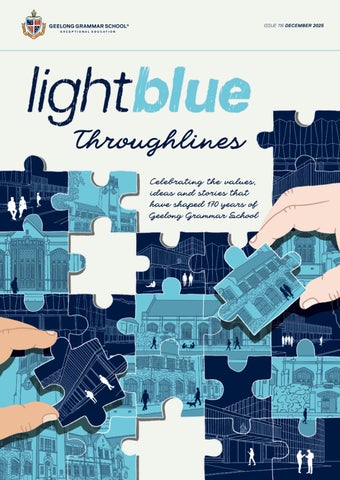
Undoubtedly, Geelong Grammar School can be described in a myriad of diverse and deeply personal ways. Reading excerpts above from longer reflections shared prior to the close of their time as Year 12s, it becomes quickly apparent that the opportunities our light blue education offers are felt and understood as bespoke experiences; at the same time and place, learnings yield similar, yet never identical, outcomes for individuals. From the perspective of the Principalship, an apt description of this phenomenon is Geelong Grammar as a light blue puzzle: many intricate pieces of the life of our School fit together and take shape as a unique philosophy and narrative with intergenerational influence. The intricacies and influence are marked through the character of our students and all they become for themselves and our world.
Rebecca Cody Principal
”
Year 12 Results
We are delighted for all our Year 12 graduates who contributed to outstanding academic results in 2025, further strengthening the high standards achieved in recent years.
Combined IB/VCE median ATAR 83.3
32% of students achieved an ATAR of 90 or above ( top 10%), up from 29% in 2024
99.5% of students who applied for tertiary admission received an offer to an Australian university of their choice
High Achievers
IB graduate Alfie Holuigue (Yr12 Cu) achieved a perfect score of 45 in the IB Diploma, converting to the highest possible ATAR score of 99.95.
William DeBortoli (Yr12 P) and Baran Karakas (Yr12 A) are our Proxime Accessit, each achieving an IB score of 44 which converts to an ATAR of 99.7.
Isabella Cameron (Yr12 A) is our top VCE student, achieving an ATAR of 99.4.
30 students across the IB and VCE achieved an ATAR of 95 or above (Top 5%). Of those 30 students, 11 either captained their House, the School, or one of our 1st sports’ teams.
In the VCE, Stella Shute (Yr12 He) and Paddy McGann (Yr12 Fr) achieved perfect VCE subject scores of 50 in Theatre Studies and General Mathematics respectively.
Among our IB cohort, over 20% of students achieved a perfect IB subject score of 7; the highest since 2021.
Dux
Alfie Holuigue (Yr12 Cu) is our School’s top International Baccalaureate (IB) graduate for 2025, achieving a perfect IB score of 45. “It’s insane,” Alfie said. “I woke up early and couldn’t get back to sleep. It was the longest wait ever and then to see it was a clean sweep… It’s pretty cool to have all the work pay off.” From Melbourne, Alfie joined the School at Timbertop in Year 9 and has been involved in many varied aspects of school life; from music and community service, to leadership and sport. “It’s been an incredible journey. Academics hasn’t really been my prime motivation but there was a terrific group of IB students that studied together. There was quite a bit of competition between us, but they were also incredibly supportive and great fun to be around. We’re all great mates and everyone has done so well.” Alfie was Vice-Captain of Cuthbertson House in 2025 and said his passion for learning was inspired by the environment at GGS. “The special thing about boarding school is that you are around your mates 24/7, and they become like a second family. What makes Geelong Grammar special is the people and the relationships. There are some incredible teachers. They really care about you and I don’t remember a class that I wasn’t excited to be in.”
Proxime Accessit
William DeBortoli (Yr12 P) and Baran Karakas (Yr12 A) are our dual Proxime Accessit, each achieving an IB score of 44, which converts to an ATAR of 99.7. From Griffith in the Riverina region of NSW, Will joined the School as a boarder in Year 7. Captain of Perry House, he received Distinction Prizes for Chemistry (SL), English: Language and Literature (HL), and Geography (HL). Will represented the School in Cricket and Soccer, finishing runner-up for the 1st XI Soccer best and fairest.
VCE High Achievers
Stella Shute (Yr12 He) and Miranda Worswick (Yr12 Ga) achieved ATARs of 95.65 and 97.75 respectively. Both girls managed to juggle monumental responsibilities beyond the classroom during Year 12, achieving success in their exams and co-curricular pursuits.
From Point Cook in Victoria, Baran joined the School in Year 7 as a day boarder. Baran earned an array of academic awards in Year 12, including the Clyde Old Girls’ Association Prize for English, the ANZ Prize for Industry, and the Westpac Bank Prize for Economics, in addition to a Distinction Prize for Geography (SL). Baran played First XV Rugby in Year 12 and also represented the School in Swimming.
VCE Top Performer
Miranda’s year started all the way back in the second week of January, leading our rowers during their pre-season camp as our Girls’ Captain of Boats. Miranda led our Girls’ 1st VIII to a third-consecutive Heads of the River title, before travelling to Tasmania to contest the national championships on Lake Barrington, and returning with the Under 19 Women’s National title. Beyond the river, Miranda was a member of the winning Garnett House Debating team, represented the Girls’ First Football team, and was Chapel Captain.
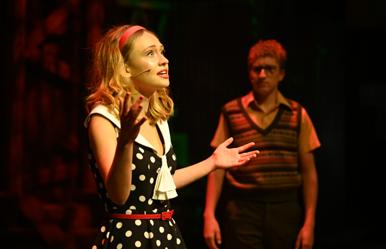
Stella thrived in the Drama and Theatre space in 2025, both in the classroom, where she achieved a perfect VCE subject score in Theatre Studies and the Juan José Garcia Prize for Drama, and on the stage, where she excelled in the role of Audrey in Little Shop of Horrors. Stella is one of the first students to arrive at GGS with multiple credits on an IMDb page, having appeared in a handful of TV shows, including Gymnastics Academy: A Second Chance! on Netflix. As Drama Captain, alongside Fraser Carr (Yr12 A), Stella set a fine example for the rest of the cast throughout the rehearsal process, culminating in what was one of the best GGS musicals in recent memory.
Isabella Cameron (Yr12 A) is our School’s top VCE student with an ATAR of 99.4. “It’s definitely very surreal,” Isabella said of the moment she received her score. “I always aimed to get high 90s but didn’t think I’d get this high... it’s pretty exciting!” From Newtown in Geelong, Isabella joined the School in Year 7 and has excelled in many areas of school life; from academics and service, to leadership and sport. “I’ve always been very academic, ever since primary school, and I’ve always loved school. I think I’m quite competitive as well, so sport is always something I’ve enjoyed.” Isabella was House Captain of Allen House in 2025, and was blown away by the supportive nature of everyone in the House, particularly around exam time. “I would go to the library every day and just being surrounded by high achieving kids who had really big aspirations was really motivating for me.”
Connecting Past and Present
Across 170 years, Geelong Grammar School has been shaped by values and ideas that have stood the test of time.
This section of Light Blue celebrates those continuities – the puzzle pieces that fit together across time to complete the picture of our School today.
Current activities at GGS often echo a historical precedent, highlighting how our heritage evolves yet remains true to its essence. From pioneering educational approaches to an enduring commitment to community service, these stories remind us that while times change, the principles that define our School continue to inspire.
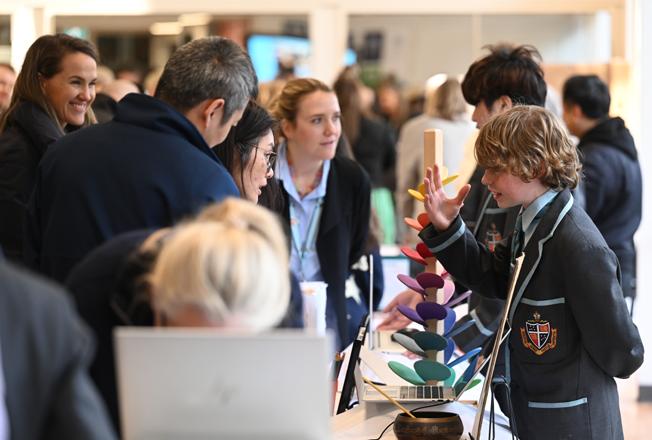
The inquiry-based approach of the Primary Years Programme (PYP) of the International Baccalaureate (IB) was on full display at our Year 6 PYP Exhibitions at Corio and Toorak Campus. The culmination of 16 weeks of collaborative learning, the PYP Exhibitions were an opportunity for our Year 6 students to demonstrate and explain their learning to our wider School community. This year’s PYP Exhibitions focussed on Transdisciplinary Themes – ‘Who we are’ and ‘How we express ourselves’ – that encouraged students to explore a topic of personal interest related to their local community and/or the world.
The PYP Exhibitions also highlighted our cross-campus learning community. Our Toorak Campus was the first school in Victoria to be accredited to teach the PYP in 2000, whilst the introduction of the PYP at Bostock House and Corio was successfully evaluated and authorised by the International Baccalaureate Organization (IBO) in 2024. The PYP focuses on the development of the whole child and has evolved from educational research conducted with IB World Schools – the PYP is taught in 2,275 schools in 127 countries.
An extraordinary
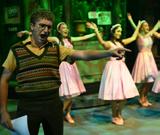
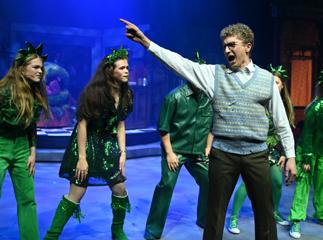
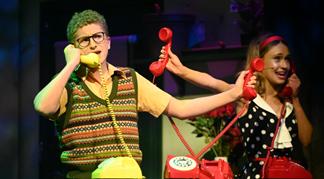
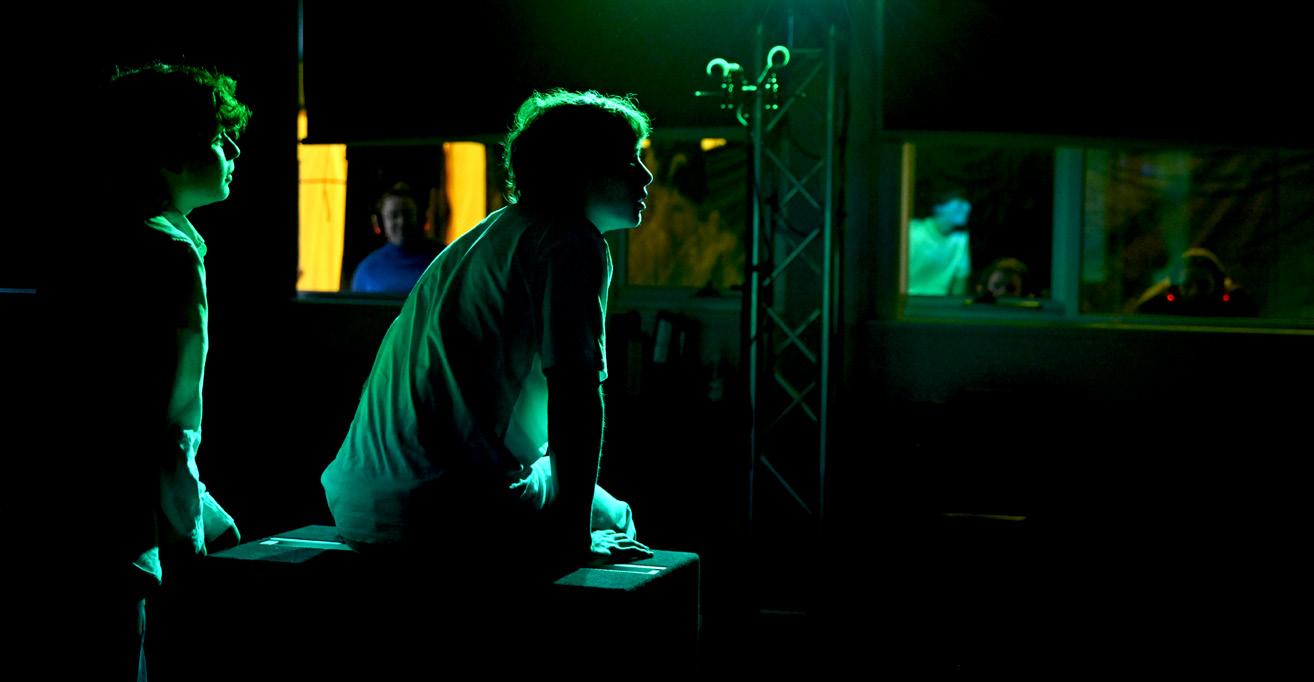
When Ian Darling AO (P’79) opened the School of Performing Arts and Creative Education (the SPACE) in May 2015, he expressed a “hope” that the new building “will take all aspects of the performing arts and creativity to heights never before experienced at the School”. As the lights went down on this year’s remarkable Senior School musical, Little Shop of Horrors , Ian’s hope seemed fully realised. Then came our Middle School students’ spectacular performance of Disney’s Dare to Dream Jnr , and Ian seemed like a prophet.
“The School for Performing Arts and Creative Education is not a conventional building in any way,” Ian had explained. “It was never intended to be. It is this unconventional and creative thinking that was at the very heart of the project.”
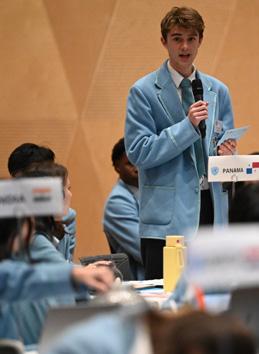
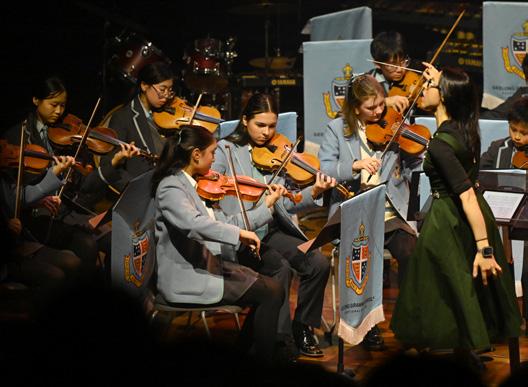
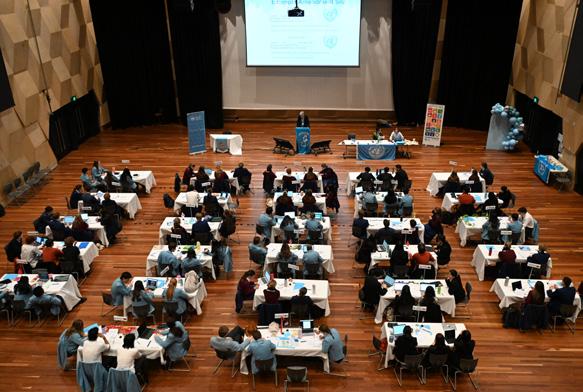
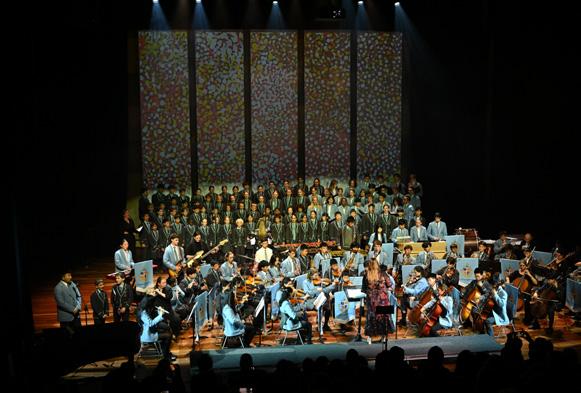
In fulfilling Ian’s clairvoyancy, across its 10-year anniversary, this unconventional and highly flexible building hosted regular Corio Campus assemblies, Careers Discovery Day, a student-led Subject Fair, a variety of VCE Theatre Studies and IB Theatre Arts productions, including an innovative immersive performance, a cross-campus Dance Concert, Gala Choralis, Middle School and Senior School House Music, an epic Winter Concert and an array of concerts and music soirées, as well as our Staff Conference, Student Film Festival, Year 6 PYP Exhibition, Middle School World Expo, Year 11 IB Theory of Knowledge (TOK) Exhibition and our Year 11 Model United Nations (UN) Day with visiting IB schools.
When Ian opened the SPACE a decade ago, he said the new building “needed to be a dynamic complex from day one… embraced by the whole community and used in all manner of ways”. “This School is all about community and the solution had to strengthen the sense of community at GGS not alienate it,” he explained. This year, community events hosted in the SPACE included everything from our annual Leavers’ Celebration Ceremony and Scholarship Morning Tea to the G30 Principal’s Summit and the 24th Tower Luncheon. The SPACE was a gift from our community (over half the funds for the $20 million project were philanthropically donated), and community remains at the heart of “this extraordinary space”.
SPACE
Bostock Centre
Junior School at Corio
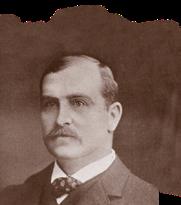
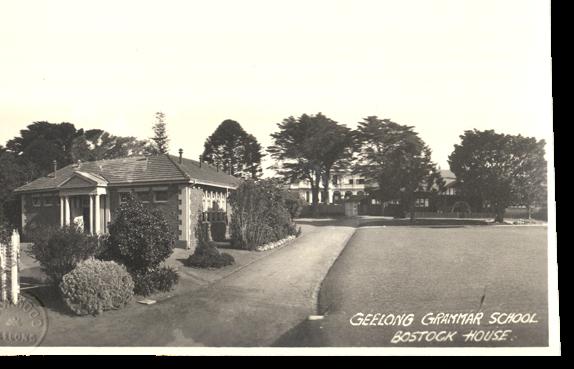
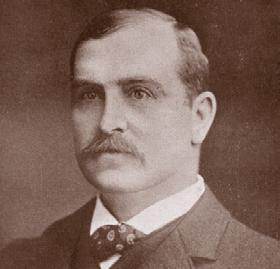
The main building of our new Junior School at Corio will be named the ‘Bostock Centre’ in honour of Thomas Edward Bostock (GGS Council 1909-1922), who played a pivotal role in the School’s move to Corio in 1914.
The ‘Bostock Centre’ name retains the historical connection with Bostock House and replicates the approach to naming the ‘Glamorgan Centre’ at Toorak Campus in referencing the School’s heritage in a contemporary context. Thomas Bostock was a successful wool broker who served as mayor of Geelong (1905-1908) and founded the Barwon Heads Golf Club (1907). Although not a former student of the School (he attended school in the UK and Germany), he showed an interest in it while mayor and joined School Council in 1909 – his sympathies for the School may have been partially fostered by his brotherin-law, Donald Mackinnon (GGS 1871-1875), who also joined School Council in 1909.
School Council minutes show that Bostock was an influential and energetic member of the Council’s Works Committee at the time of the School’s search for a new location, having outgrown the ‘old school’ building on Maud Street. Together with fellow councillors William Thomson ‘W.T.’ Manifold (GGS 1873-79), William Volum and Herbert Austin (GGS 1872-77), he was one of the first to inspect the Corio site on behalf of the School in September 1911. The potential of the location was reportedly brought to the attention of the Council by auctioneers E. R. Sparrow & Co. (Geelong Advertiser, 21 Sept 1911). This is not necessarily inconsistent with the anecdotal story that Bostock’s connection with Frank Austin, another brother-in-law and owner of ‘Avalon’ across Limeburner’s Bay, was the primary factor, since Sparrow & Co. had been engaged by Austin around that time to sell portions of his own property near the site of the future Corio Campus.
Bostock was credited as the primary supporter of the move to Corio as early as 1922, when his obituary in The Corian noted that “the re-building of the School on its present site overlooking Corio Bay was due, more than to any other cause, to Mr Bostock’s confident assurance that a progressive step in the right direction was being taken”. Francis Brown (Headmaster 1912-29), despite having arrived at the School after the Corio site was decided upon, made essentially the same assertion in his Annual Statement in The Corian in 1923, that “it was Mr Bostock’s alert mind that conceived the plan of moving the School from Geelong to its present site at Corio”.
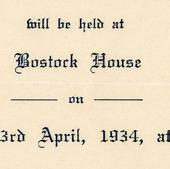
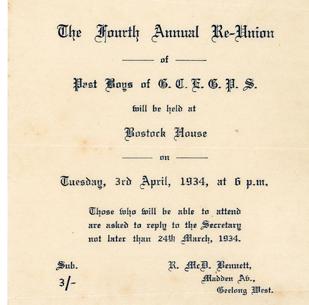
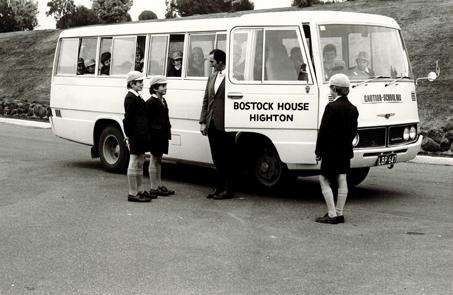
In April 1933, at the suggestion of James Darling (Headmaster 1930-61), the newly amalgamated Geelong Church of England Grammar Preparatory School was named ‘Bostock House’ in memory of Thomas Bostock (‘House’ indicated its kindred relationship to the other School Houses at Corio, and the former Headmaster of the Preparatory School, The Rev. P. H. Dicker, was redesignated its House Master). The name Bostock House was maintained in the move of the preparatory school from Aberdeen Street, Newtown, to Geelong Grammar School’s new campus at Highton in 1962. With the amalgamation of The Hermitage school at that site in 1976 the campus was identified as ‘Geelong Grammar School, Highton’, and the title Bostock House was applied to one of the two pre-school kindergartens operating there (the other being the Anne Peterson kindergarten, which originated with The Hermitage). At the end of 1997, with the closure of the Highton campus, the Bostock House Early Learning Centre was established in Noble Street, Newtown, catering for ELC to Year 4.
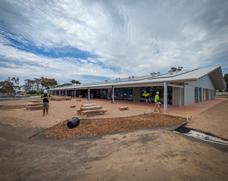
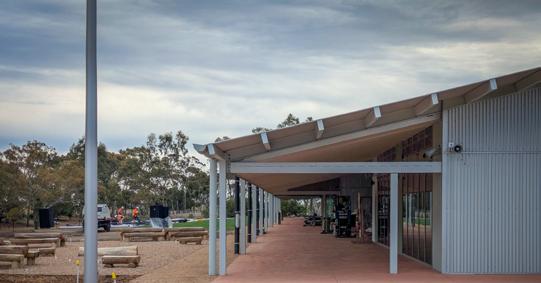
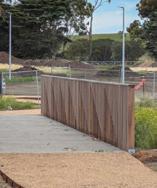
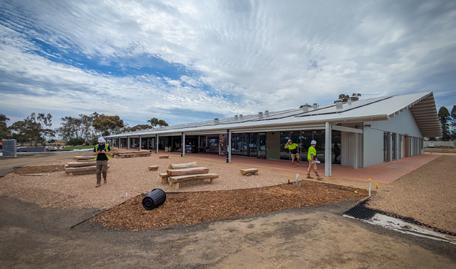
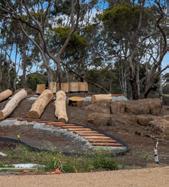
By 2022, the School’s ambitions had once again outgrown its location, with the announcement of the expansion of Corio Campus with a new purpose-built Junior School. After navigating several obstacles, including complex planning matters (bushfire, native vegetation, water and flood management), the construction of our new Junior School has made outstanding progress and will be fully operational for the beginning of Term 2, 2026. The Bostock Centre will be the flagship building at the heart of the new Junior School precinct, situated among native grasslands, fields, and wetlands. The new Junior School will have an emphasis on nature and inquiry-based learning that leverages the Timbertop experience, enlivens Adventure Education for all students at Corio, and builds on the legacy of Thomas Bostock. In 1922, The Corian proclaimed that the School “will not forget” him, “for he has left behind him an honoured name and a work that shall endure throughout succeeding generations”.
Great Vic Bike Ride
Still Wheeling
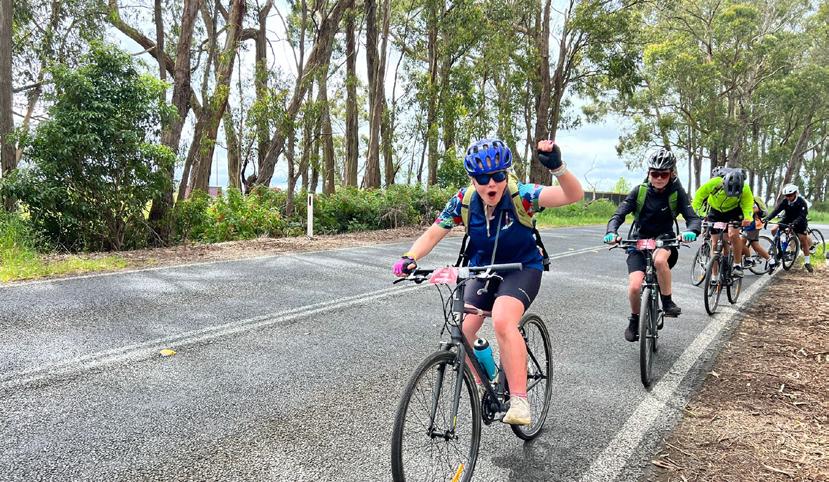
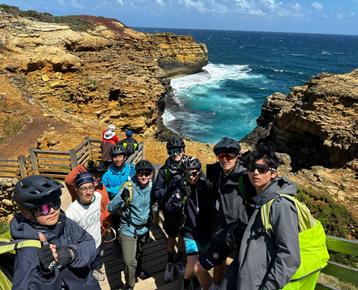
Our Year 8 students once again completed their preparation for Timbertop by conquering the Great Victorian Bike Ride (GVBR) in Term 4. Australia’s premier multi-day cycling event, this year’s GVBR was a spectacular five-day journey through southwest Victoria. Our riders began in Mortlake and cycled 364 kilometres to Camperdown, with overnight stays in Koroit and Port Campbell, and scenic loops along the Great Ocean Road, providing breathtaking ocean views, challenging climbs, and a shared adventure.
Year 8 student Arabella Grills (Yr8 Hi) said the experience was “one of the most rewarding and unforgettable” of her life. “Beyond the physical and mental challenges, it was the people who made the journey unforgettable,” Arabella explained. “The GGS community – friends, ride leaders, teachers, parent volunteers, and even members of the broader public we met along the way – all played a huge part in shaping the experience and the memories we gained. I felt a real sense of pride being part of our school group and something bigger than just my own ride.”
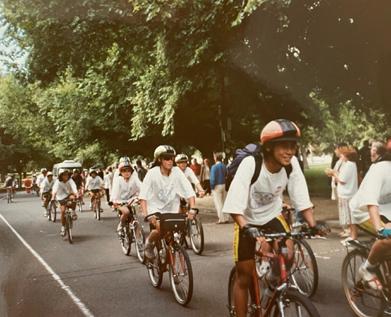
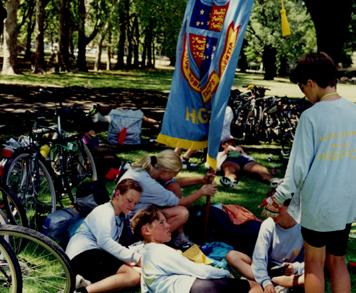
Bigger than just this year’s ride, our Year 8 students joined generations of GGS students to participate in the GVBR since 1994, when Rowan Swaney (Staff 1978-2014) led a small group of Year 6 students from Highton Campus on the School’s very first Great Victorian Bike Ride. Corio joined the ride in 1996, cycling from Dunkeld to Melbourne via the Great Ocean Road, and GGS has been a constant presence in the GVBR peloton for more than 30 years. Numbers have grown in recent years, as all Year 8 students now complete the ride as a “soft launch” for Timbertop, equipping them with foundational skills and experiences to set them for success in Year 9.
Co-ed at Timbertop
A Natural Fit
50 years since the first group of 14 girls arrived at Timbertop for Third Term 1975, the campus is now a 50:50 co-educational environment, which contributes significantly to “real world learning”.
“We are proud that boys and girls are given equal opportunities to grow, challenge themselves, and discover what they are truly capable of,” Head of Timbertop, Ross Hopkins, said.
“True success at Timbertop is not defined by whether you are a boy or a girl, but by your attitude, belief, and character. While a girls’ Unit might be more colourfully decorated and generally smell nicer than a boys’ Unit, the essence of Timbertop is that every student shares the same experience and stands on a level playing field.”
The “optimism” that girls would “fit into our lifestyle with a minimum of change or fuss” in 1975 (when the campus was also transitioning from Fourth to Third Form) was quickly validated, with another 14 girls joining the original cohort for First Term 1976. “It was thought by many that the Timbertop programme, especially hiking, would have to be changed to allow for girls, but this has not been necessary,” Housemistress of the first girls’ Units (J and K), Jenny Read, wrote in The Corian. “Girls have coped very successfully and happily with all aspects of life at Timbertop. They have hiked, camped, split wood, fed pigs, run races and cross-country runs, played basketball, swum and formed a tugof-war team. I feel that girls have become a very natural part of Timbertop and are making a worthwhile contribution.”
Choose your
own adventure
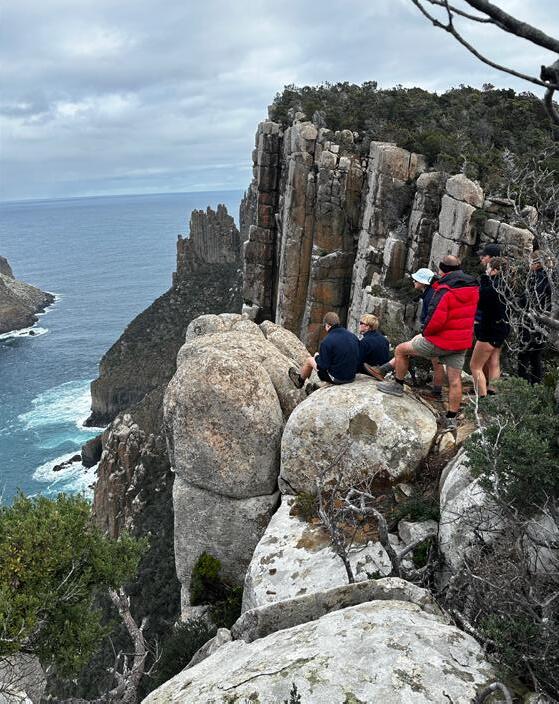
Our Year 10 Adventure Expeditions invited students to ignite their adventurous spirit and immerse themselves in the beauty and challenge of the natural world. An opportunity to step beyond the classroom and into the wild, each Year 10 student participated in one of the unforgettable adventures offered throughout the school year in parallel with the Academic Programme. Students rock-climbed Mt Arapiles, kayaked Tasmania’s Freycinet Peninsula and Lake Pedder, skied the Kosciuszko backcountry, rafted the Snowy River, surfed King Island, scuba-dived Jervis Bay, hiked the Three Capes, explored the Walls of Jerusalem, mountainbiked Blue Derby, fly-fished the Cathedral Ranges, photographed the Grampians, and trekked Mt Stirling. Each expedition was designed to develop confidence and competence in practical ways, promoting independence, self-reliance and resilience. “It wasn’t just a school trip – it was an experience that challenged us, brought us closer together, and gave us memories that will last a lifetime,” Ollie Steven (Yr10 Cu) explained.
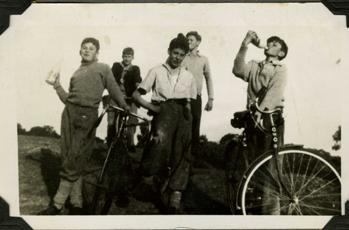
The language and definition of Adventure Education – experiential learning through and with nature – is an evolution of an educational philosophy that dates to John Bracebridge Wilson (Headmaster 1863-95). Whilst Adventure Education builds on the lessons of the School’s transformational Timbertop programme, Timbertop itself grew from the so-called “Saturday Parties”, Bracebridge Wilson’s love of nature (he was a marine biologist and Fellow of the Linnean Society of London), and his concern for the development of independence and comradeship. From the 1860s onwards, students set off into the surrounding countryside in “parties” of at least three members (they could set out from 4am and had to be back by 9pm for supper). Students roamed from the You Yangs to Torquay. They went by boat (along the Barwon River), cart and on foot (or later by bicycle), making for regular camping places “to nest or fish or swim or just ramble about”. In the October 1866 Quarterly, a student wrote: “How good are these long bright days, when we shake off the routine of school life. We believe that it is to this companionship on the river and in the bush that we owe much of the loyalty which has so long been the distinguishing mark of the boys of this School.”
Lorne 160
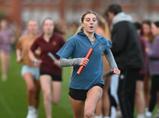
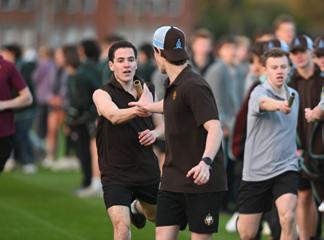
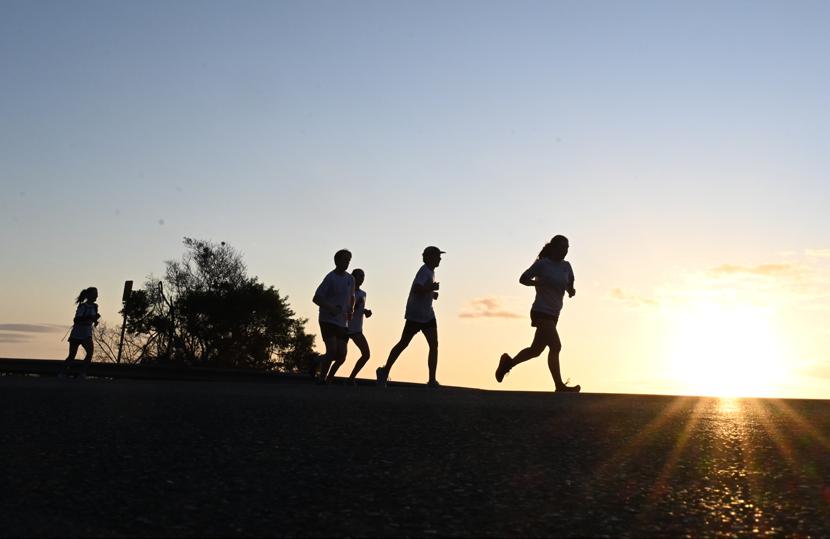
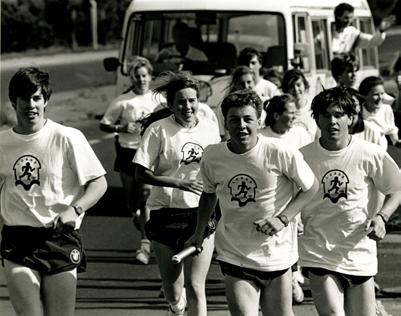
For 35 years, the Lorne 160 has inspired generations of Geelong Grammar School students to push their limits and make a positive difference to the lives of people across our local community. What began in 1991 with 16 students raising $2,829 for Shannon Park (then the Geelong branch of the Spastic Children’s Society) has grown into an annual initiative that has raised more than $1 million for 25 local charities. More than 640 students have completed the epic 160-kilometre relay route (from Corio to Lorne and back again) since 1991, with the 2016 group in particular battling wild weather – torrential rain, flash flooding, and landslides on the Great Ocean Road.
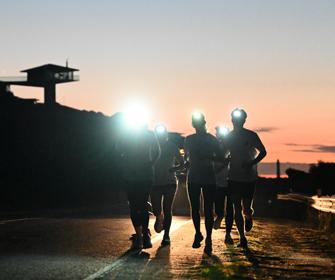
This year, our Year 11 runners raised almost $30,000 for the Cloverdale Community Centre, a communitybased Neighbourhood House that provides a range of education and training programs to meet the learning needs of the local Corio and Norlane community. “Our team completed the first leg together under the glow of head torches,” Zoe Reed (Yr11 Fr) said. “One of my first legs was along the coast at Bells Beach. It was around 2am, cold, windy, and completely dark. We reached the Great Ocean Road at sunrise and ran into Lorne as a team. As we made our way back to school, the biggest challenge, aside from fatigue and exhaustion, was the time pressure to make it back on schedule. Just as we started together, we finished together, and I will never forget running as a team through Lunan Gates and around Tower Road, where the whole school was eagerly awaiting our return to campus.”
Community Service
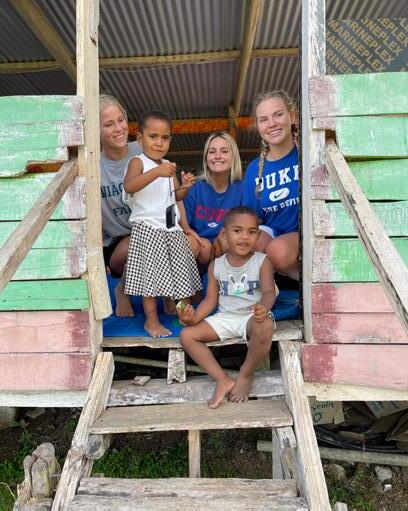
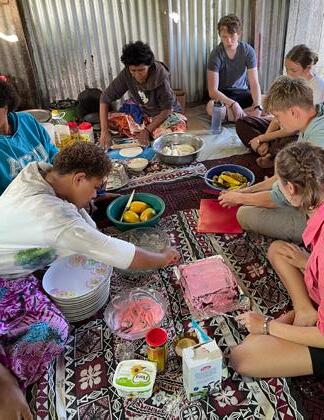
“The School has also turned outwards, seeking new ties and responsibilities,” the editorial of the May 1963 issue of The Corian reported in reference to the “thriving relationship” with the Martyrs’ Memorial School in Papua New Guinea, “which is proving as beneficial to us as it is to them”. The same sentiment could easily be applied to the School’s “thriving relationship” with the Fiji Book Drive, which has progressed from donating and packing books, to students embarking on the School’s first Fiji Cultural Immersion Tour, with 13 students and two staff members supporting literacy initiatives in a highland village in Nadroga-Navosa Province during the Term 3 school holidays.
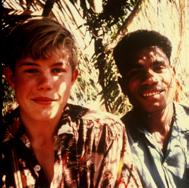
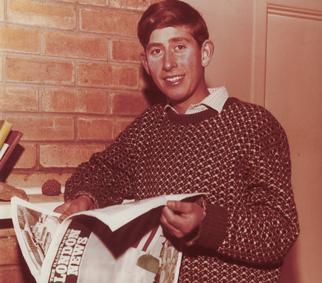
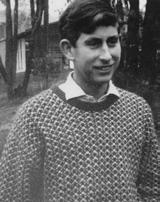
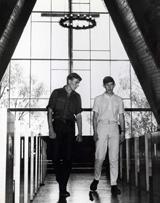
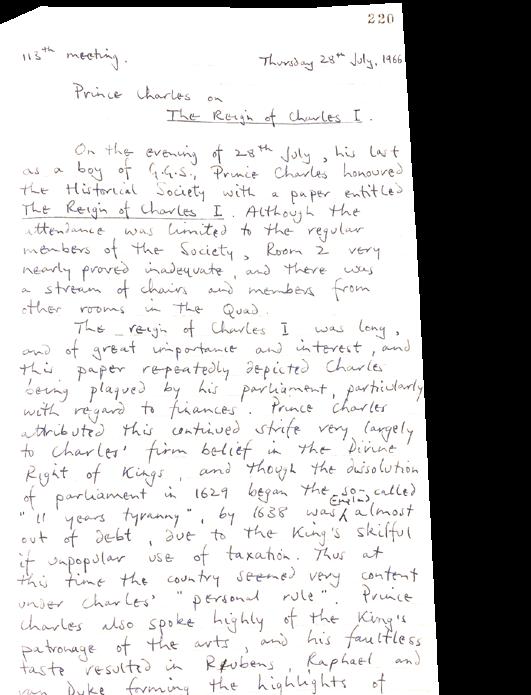
Martyrs’ Memorial School was established in 1948 near Popondetta in Oro (Northern) Province in memory of 12 Anglican missionaries killed in PNG during World War 2. A young Anglican priest, Theodore Woods (the son of the Archbishop of Melbourne, Frank Woods), gave a talk about the PNG school in the Physics classroom at Corio in the Second Term of 1960, inspiring students to raise funds for a “small tractor” for the remote school. The first of many GGS student excursions to Popondetta began in 1961 (King Charles’s first visit to PNG was part of a GGS excursion during the May 1966 school holidays). The relationship deepened when Daryl Davies (FB’61) spent 1962 teaching
at the Martyrs’ Memorial School before commencing his university studies. Reverend Michael Vine (P’49) was then posted to the nearby St. Michael’s Mission Station, “less than ten minutes walking distance” to Martyrs’ Memorial School, in 1963. “Such assistance as we can give is more fully appreciated because it is an exchange between friends,”
The Corian editorial concluded.
Similarly, the School’s partnership with the Fiji Book Drive is “an exchange between friends”. Founded by Fiona Luth (Ingram, Cl’91), Fiji Book Drive is focused on improving educational outcomes across the Fijian archipelago through increased access to educational resources by re-purposing books and educational resources. Since 2012, Fiji Book Drive has donated more than 450,000 books to 329 schools and kindergartens in Fiji, with GGS students volunteering to sort and pack books in their Melbourne warehouse for the past three years. Fiona is a former English teacher with a passion for children’s literacy – she developed a passion for Enid Blyton books as a child and was an avid reader. Fiji Book Drive was recently acknowledged as a runner-up in the Children’s Education category at the Women Changing the World Awards, whilst Fiona was recognised for her “entrepreneurial spirit and creative actions” by the Women Economic Forum (WEF) in 2024.
Goals Kicking Success Rowing
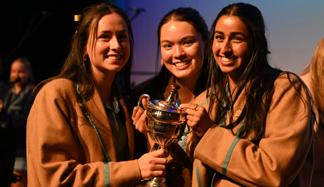
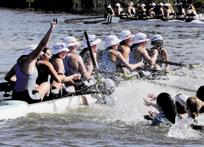
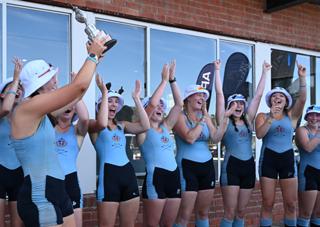
Our Girls’ 1st VIII had a brilliant rowing season, winning the APS Heads of the River regatta for a third consecutive year as well as the Under 19 Women’s VIII title at the Australian Championships in Tasmania, where the Boys’ 1st VIII won the Schoolboys’ Sprint. “We were all so surprised and delighted at our success and it was a wonderful experience to end the season with a win on beautiful Lake Barrington,” Girls’ Captain of Boats, Miranda Worswick (Yr12 Ga), said. “It was a reward for the girls’ hard work and another opportunity to showcase our skill on the water.”
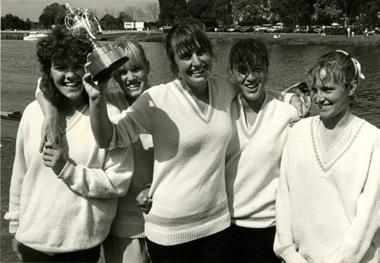
Geelong Grammar School has been the dominant force in schoolgirls’ rowing since the Association of Public Schools (APS) introduced a girls’ race to the Heads of the River regatta in 1981 – having previously been a schoolboys’ regatta for 114 years. Our 1st girls’ crews have won 26 Heads of the River titles in the past 44 years, achieving a six-year winning streak from 1993-98 and 2014-19 (the 2020 APS Heads of the River regatta was cancelled due to the COVID-19 pandemic).
Our Girls’ 1st IV finished runner-up in the inaugural girls’ APS Heads of the River race in 1981, before winning our first title in 1985 (having also won the inaugural Victorian Schoolgirls’ Regatta in Ballarat in 1985). GGS won the Girls’ 1st IV race again in 1986, becoming the first school to win both the boys’ and girls’ Heads of the River, with Fleur (Ga’87) and Simon Spriggs (FB’86) completing a sibling double.
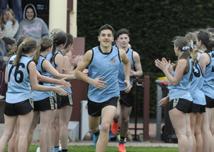
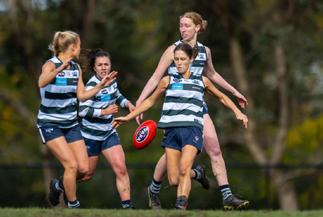
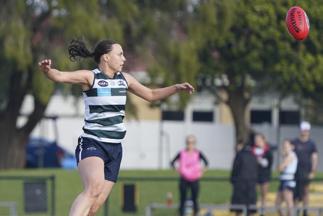
Captain of our Boys’ 1st XVIII, Josh Lindsay (Yr12 A), was drafted by the West Coast Eagles with Pick 19 in the AFL Draft in November. Josh won the 1st XVIII best and fairest, captained Victoria Country at the Under 18 National Championships, and was selected in the All-Australian Under 18 team. Josh joins Noah Long (P’22) at the Eagles in 2026, and will be amongst a growing list of Old Geelong Grammarians at AFL clubs, including Sam Lalor (FB’24), Ollie Hollands (P’22), Tom Brown (Cu’21), Jai Serong (Cu’21), Tanner Bruhn (Fr’20), Ollie Lord (M’20), Brodie Kemp (P’19), Caleb Serong (Cu’19), Brent Daniels (P’17) and Paddy Dow (M’17), with Lou-Lou Field (Fr’24), Georgia Gall (Ga’22), and Nina Morrison (A’18) in the AFLW. Head of Football, Darcy Lang, expects Josh to make an immediate impact at AFL level. “He has shown amazing resilience in the face of challenges, has great drive to achieve his goals, and shows genuine care for those around him,” Darcy said.
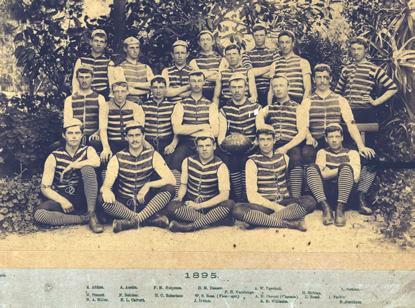
The School has a rich heritage of past students playing Australian Rules football at the highest level, dating back to Geelong Football Club pioneer, Jack Parkin (GGS 189295), who was a member of Geelong’s inaugural VFL team in 1897, playing 50 VFL games as an onballer for Geelong and kicking 11 goals. There was a strong connection between the School and the Geelong Football Club in
its formative years – sharing players and the dark blue and white striped uniform, which was said to represent the blue water of Corio Bay and the white seagulls that inhabited the area (Geelong was initially known as the Seagulls before being called the Pivotonians in the 1870s and the Cats from the 1920s onwards). The Football Club was formed in 1859 (four years after the School), and there are reports of the School playing informal football games against The Geelong College at the Commun na Feinne Reserve in South Geelong as early as 1863. The first official Grammar-College football match was played in 1868. Later in the same year, the two schools combined to beat the Football Club.
Hearts and Hands
Paddy Handbury
Paddy Handbury (M’72) retired as Chair of School Council in November.
Paddy served as Chair for the past six years and as a member of Council for approximately 15 years, including four years as Chair of the Foundation Board. Paddy’s connections to the wider Geelong Grammar School (GGS) community run deep. His grandmother Dame Elisabeth Murdoch (Greene, Clyde ’26), mother Helen Handbury (Murdoch, Clyde ’46) and sister Judy Paterson (Handbury, Clyde ’74) attended Clyde School. His wife Helen (Godfrey, The Hermitage ’73) attended The Hermitage. Their four children, Rob (M’98), Deb Lyons (Handbury, Fr’00), Christina Lloyd (Handbury, Fr’04) and Jack (M’06), all attended GGS, and they have grandchildren, great-nieces and great-nephews who are current, past and future students. But Paddy admits that it was far-fetched that he would return to serve on School Council, let alone as Chair, when he left Corio “at a sprint” midway through 1972.
At the suggestion of his Housemaster, Boz Parsons (M’36), Paddy went jackarooing on sheep and cattle stations instead of sitting his Higher School Certificate (HSC). He acquired a love of the land and over the next 40 years built one of Australia’s most impressive agricultural enterprises, with pastoral properties stretching across Victoria and South Australia. Paddy was a pioneer in exporting Wagyu cattle to Japan and revived the fortunes of legendary South Australian merino stud Collinsville, as well as dabbling in golf tourism through the development of The Sands resort in Torquay and Moonah Links on the Mornington Peninsula.
Paddy modestly describes himself as a farmer and remains strongly involved in rural Australia, having served as a Director of the Foundation for Rural and Regional Renewal (FRRR) and the National Centre for Farmer Health (NCFH). The latter was founded in 2008 with funding from the Helen and Geoff Handbury Trust as a partnership between Deakin University and the Western District Health Service to improve the health, wellbeing, and safety of farmers and farm communities. “I’m passionate about that, particularly mental health,” Paddy said.
A LEGACY OF SERVICE
Paddy had enrolled his children at the School and relocated to Geelong when Bill Mackinnon (M’57) approached him about joining the Foundation Board. “I thought (the School) was a much better place than what I remembered it to be, but maybe I wasn’t the best judge when I was at school,” Paddy recalled. “I couldn't get over how fantastic Timbertop was and how the programme had developed from when we were there (in 1970). It was very different, and a different experience as a parent – I’d learned what a wonderful school GGS was and is. When Bill asked me, I thought, ‘well, that’s a way that I can give back’.”
Giving back is part of Paddy Handbury’s DNA. His grandmother and parents were notable philanthropists, deeply committed to community service. Paddy’s father Geoff lost his own father to a car accident when he was seven years old and, after Naval service in World War II, became a passionate advocate of Legacy, which supports the families of veterans, particularly children who have lost their fathers to war. “We were brought up with a focus on service. My dad was president of Legacy, and we had Legacy kids living with us, so it was always there. When I was out in the bush, I was secretary and treasurer of the local CFA for 15 years or so. There are always things to get involved with and to give service to.”
Paddy joined the Foundation Board in 2002 and was elected to succeed Bill Mackinnon as Chair in 2003. He subsequently served on both the Foundation Board and School Council until 2014. “I felt that (12 years) was about enough. Bill Ranken (M’72) had been Foundation Chair (since November 2007) and Jeremy Kirkwood (FB’79) was Chair of Council and still had kids (Ally and Matthew) at the School.”
THE SECOND COMING
Positive Education would not exist without Paddy Handbury. In a strange twist of fate, one of Paddy’s jackarooing mates, Dr Trent Barry, introduced GGS to Professor Martin Seligman and the whole notion of Positive Psychology in 2005. “It was bizarre,” Paddy said. “We had jackarooed together up in the Riverina. He had kids at the School, which I didn’t know, and he rang me out of the blue about wellbeing and Positive Psychology, which he was studying with Marty Seligman.” The School had plans to build a new gymnasium, indoor pool and health centre – what would become the Handbury Centre for Wellbeing – and Positive Psychology provided an over-arching philosophy for the School’s approach to student health and wellbeing.
As Chair of the Foundation, Paddy led the fundraising campaign for the Wellbeing Centre and the introduction of Positive Education. At the time, he had been at odds with his father about the family’s pastoral properties. “It seems to happen with families and farms all the bloody time. We had left the farm (near Balmoral in the Western District). We’d expanded into South Australia, and I was spending a lot of time out there, travelling a lot.” Paddy’s mother Helen was critically ill with cancer when he and then Vice Principal, Charlie Scudamore, visited to discuss the Wellbeing Centre. “(When) Charlie started talking about wellbeing and resilience, about changing the way that schools approach health, Mum just lit up. She loved it. Dad embraced it too. My parents were always very keen on adolescent wellbeing, but they wanted it to be for everyone, not just Geelong Grammar School.” Consequently, when the Foundation contributed to bringing Seligman, Dr Karen Reivich and their team of experts from the University of Pennsylvania to Corio for a nine-day Positive Education training course for 120 GGS staff in 2008, invitations were also extended to local teachers, counsellors and university staff. “We talk about ‘exceptional’ and the School has been extraordinary as a leader in this space, where wellbeing is now part of the language of education in Australia.”
Paddy has previously discussed his journey with depression and the “black dog”. Somewhat surprisingly, he did not participate in the various Positive Psychology training courses until a decade later, when he enrolled in the Discovering Positive Education course in 2018. Coincidentally, so had incoming Principal, Rebecca Cody. “I was chatting to two women from Toorak College when this person came and put her books down and sat next to me. It was absolutely a coincidence.”
Over the next three days, Paddy witnessed “a respectful, insightful and thoughtful person”: “Bill Ranken rang me and said, ‘You’ve met the new Principal, what do you think?’. I told him that I was impressed”. Shortly afterwards, Jeremy Kirkwood asked Paddy to re-join School Council. “I let him swing for two days, but… I was keen to be on the journey with Rebecca.”
CHANGE BY CHOICE
When Jeremy retired as Chair of School Council in October 2019, Paddy was the logical successor. “I never set out to be the Chair of Council,” Paddy explained. “That just sort of morphed, but I probably felt that I hadn’t fulfilled what I had set out to do (in 2002), and that’s where the School needed me at the time.” Little did he know that an outbreak of an infectious virus in Wuhan, China, would consume his first few years of leadership; prompting the closure of the School in 2020, the transition to remote learning, and an ongoing impact on enrolments. “It was such an unknown and it wasn’t an easy period – I was in the front row, and it was tough. But it was an ‘exceptional’ response. It was so impressive, the way that Rebecca, the executive, teachers, operational staff, students and families handled a really difficult and challenging time.”
Amidst a period of upheaval, Paddy championed “change by choice”, leaning into the Strategic Framework endorsed by School Council in 2019, including the expansion of the Corio Campus with a new, purpose-built Junior School and subsequent closure of the Bostock House site on Noble Street in Newtown. “It wasn’t easy – we had issues with planning and inflation – but it was the right decision.” He also led the School’s survivor-focussed and trauma-informed approach to historical harm, which included a renewed emphasis on student safeguarding. “We have an absolute obligation to look after our OGGs who were hurt. Rebecca is very authentic – she doesn’t just talk the talk. The Royal Commission was tough, but she was never going to shy away from any of that stuff. The kids now have got the confidence in the administration and the staff to be able to come forward and talk to them and know they'll be believed. You would never dream of that when I was at school, so I think the cultural change has been significant.”
Paddy expressed gratitude rather than pride for the progress made during his tenure as Chair of Council –for his Council colleagues, staff and the wider School community. “I am very grateful for the progress we’ve made together,” he said. “I have greatly appreciated the support I have received from our community as we have tackled each challenge and seized each new opportunity. I couldn’t be happier to be leaving Council knowing the School will be guided by such exceptional and exciting leadership… As I have noted before, it gives me immense faith that our School is in great heart and hands.”
David Bowser
David Bowser (Fr’90) was elected to succeed Paddy Handbury (M’72) as Chair of the Geelong Grammar School Council on Monday 17 November at Timbertop. David has been a member of Council for almost three years, most recently serving as Chair of the Audit, Finance and Risk Committee. “David brings a unique combination of educational insight, commercial acumen, and a strong sense of service,” Paddy said. “He has developed a strong synergy and purposeful partnership with our Principal, Rebecca Cody, and I couldn’t be happier to be leaving Council knowing the School will be guided by such exceptional and exciting leadership.”
Byron Collins CHAIR OF SCHOOL COUNCIL
CHIEF OPERATING OFFICER
Byron Collins has been appointed as Geelong Grammar School’s inaugural Chief Operating Officer (COO) – a pivotal leadership role that will strengthen the operational foundation of the School and support the delivery of our Strategic Framework. As a Senior Executive with over 30 years of experience, Byron joins GGS in February 2026 as COO, representing a further evolution of our Operations and Shared Services portfolio. Byron joins the School from the University of Melbourne, where he has led the Infrastructure Services portfolio since its inception in 2014, and is currently Executive Director, Business Services and Chief Information Officer. “Byron impressed the selection panel with his depth of experience and expertise, his innately curious nature, and his willingness to challenge the status quo to improve performance,” Principal, Rebecca Cody, said.
David is the founder and CEO of Curio Group; a consulting and technology firm focused on learning and development. Earlier in his career, David spent 15 years as a neuroscientist and academic, teaching and leading research into the biological and genetic causes of neurological disorders – he was a European Molecular Biology Organization (EMBO) Fellow at Cambridge University, Head of Synaptic Neurobiology Laboratory at the Florey Institute, and Principal Fellow at Melbourne University, lecturing in neuroscience and physiology. He made the move to management consulting in 2011, initially with the Nous Group, where he led major projects in superannuation, banking, retail, education, and health. He founded Curio in 2017, which has grown into a global company that designs digital learning platforms, develops innovative programs, and delivers strategic initiatives.
David holds a PhD in Neuroscience and a Bachelor of Science (Honours) from the University of Melbourne, an MBA from Melbourne Business School, and a Graduate Diploma in Internet and Web Technologies from RMIT University. “My belief in the transformational power of education, shaped by my own experience at GGS, underpins a commitment to ensuring the School continues to flourish for generations to come,” David said.
The School’s governing Council is formed of voluntary members, plus the Principal in an ex-officio role. Members are nominated to Council and include Old Geelong Grammarians, current and past parents, educators, business executives and a representative of the Anglican Church.
Byron has demonstrated leadership in strategy, transformation, and operations at Melbourne University, IBM, SMS Consulting and AWB Limited. He has experience leading large teams (with more than 500 staff at Melbourne University) across a range of disciplines, including finance, information technology, cybersecurity, human resources, health and safety, facilities management, and project delivery. Byron led and/or served on several Melbourne University committees, including estate planning, critical incident management, sustainability, finance and resource allocation, diversity and inclusion, employment compliance, and enterprise bargaining. He is a Director of the Victorian Education and Research Network (VERNet) and holds a Master of Business Administration (MBA) from Melbourne Business School and a Bachelor of Science from the University of Melbourne.
Byron said he was “incredibly excited” to be joining the team at GGS and was looking forward to being a part of our School community in early 2026. “I am passionate about the power of education to transform lives and look forward to working with Rebecca and the leadership team to ensure the School delivers on its promise of Exceptional Education,” he said.
“As someone who enjoys working with people and seeing them thrive, I am particularly looking forward to meeting the members of the Operations and Shared Services team and understanding how each supports the mission of Geelong Grammar School.”
Sondra Wolfenden HEAD OF JUNIOR SCHOOL –
Sondra Wolfenden has been appointed as the inaugural Head of Junior School (ELCYear 4) at our Corio Campus.
An experienced educational leader, Sondra joins GGS from The Geelong College, where she has been Head of Junior School since 2017 and played a lead role in the redevelopment of Campbell House (ELC-Year 3). Sondra has been teaching for more than 20 years with experience in a variety of different settings. She holds a Master of Education (MEd) and has held key leadership roles, including as Campus Principal (Prep-Year 8) at Northern Bay College.
What excited you most about taking on this role?
Sondra: The opportunity to be part of building a learning community from the ground up is really exciting. This will be the third new school that I’ve worked in. You become strongly connected with that community. It’s an opportunity to imagine what is possible, and I think the possibilities of a new school are endless.
What is the biggest lesson that you’ve taken from your experience in leadership and education that informs the way that you lead?
Sondra: I always listen. I don’t just hear, I always listen. I try to ensure that I lead with love, kindness, and inclusiveness. I genuinely believe that the way you treat people – children, parents and staff – is really important in creating an inclusive, connected community.
How do you think our young learners will benefit from the setting of our new Junior School at Corio?
Sondra: I think the environment will inspire children to be courageous and curious learners. They will be able to use what they’re learning within the four walls of the classroom and take those experiences out into nature, with Adventure Education at the heart of how they explore and engage with the world around them. The Primary Years Programme (PYP) complements this vision beautifully, offering an inquiry-based framework that inspires curiosity, empowers children to ask big questions, and develops the skills they need to thrive — academically, socially, and emotionally. They’ll also have opportunities to connect with the culture and the land of Wadawurrung Country, and to seek to understand and to learn more about their environment.
Do you have a vision for what ‘a day in the life’ of the Junior School will look like?
Sondra: Obviously the focus is on learning and teaching, building on Geelong Grammar School’s strengths, and using those opportunities for real life learning with and through nature. But there’s also the unique opportunity of having Early Learning through to Year 12 on the one campus. I think that when we’re talking about creating citizens for the future, there’s no better role models than peers who are part of the same community. Our children will not only explore their own classroom and the environment of the Junior School, but they will also interact with other members of our community and the entire Corio Campus. I’m envisaging that there will be opportunities for students in older year levels to become engaged in learning with our Junior School students and vice versa.
What should our families expect when the new Junior School opens in Term 2?
Sondra: Our families should expect exceptional learning opportunities. My message would be to come and become a part of a really connected community where we not only value the voice of the children, but we also value and really respect the connections of a family. I think that family is an integral part of who we are and how we operate as a school.
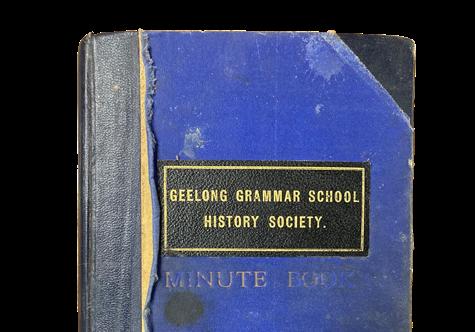
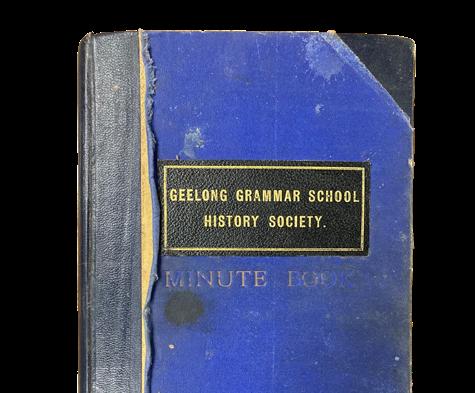
2025 marked the launch of Geelong Grammar School’s revitalised student-led History Club, with Alfie Holuigue (Yr12 Cu) at the helm. Leading with impassioned ambition to engage in all things history, he organised a cadre of zealous historians in a deep-dive of local history –our very own history of GGS.
Supported by resident archivist Darren Watson, the group immersed themselves in records and artefacts that trace the School’s foundations, its formative years, and pivotal moments in its evolution. The group was swept up in the records and artefacts that represent our School’s formation, a few fledgling years, and the turning points in our School’s storied past. Looking back at a time before The Hermitage or Clyde brought girls to our campus, a time pre-dating the construction of Shell Refinery on Limeburners’ Lagoon, and a time before Timbertop became part of the narrative, the History Club students noted not only the historically significant changes we have experienced, but importantly the historical continuity of enduring traditions that define our GGS identity.
It has been a pleasure to advise this group of intrepid researchers as they embraced the challenge of collectively telling the stories of our past –particularly as we celebrate 170 years of education at Geelong Grammar School. These students embody the values our School holds dear, and through their research they discovered a deeper sense of pride in our shared history.
Anna McCoy Head of History
1855
Our story begins with Thomas Manifold, a man of restless energy and ambition, who arrived in Hobart Town from Cheshire, England, in 1828 with £1,500 and a letter of recommendation from the Colonial Office. Just 18 years old, Thomas was given a land grant for 518 acres on the west bank of the Tamar River; a brackish estuary that flows from Launceston to the sea. He was soon joined by his family (including younger brothers John and Peter) and built Kelso House. But despite good water access, the soil quality was poor. In search of greener pastures, Thomas sailed from Van Diemen’s Land in 1836 to investigate the recent settlement of Port Phillip.
Excited by the potential of the district, he hurried back across Bass Strait with ewes and lambs, a horse and a dog, becoming the first European to land sheep at Point Henry*; the low-lying peninsula jutting out into Corio Bay known to the local Wadawurrung people as Maloppio.
In those days, a shallow sandbar extended from inside the peninsula to the northern foreshore, near the present-day location of Geelong Grammar School’s Corio Campus. Consequently, Point Henry became the fulcrum for the establishment of Geelong and Victoria’s Western District; the gateway for the wave of arrivals that followed Thomas Manifold, and surged with the discovery of gold at Ballarat in 1851 (the same year the Colony of Victoria was formally established).
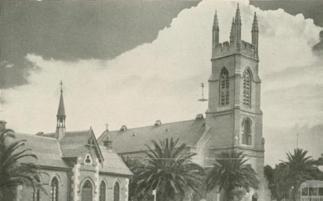
It reached its peak in 1854, when 438 ships arrived at Point Henry, a makeshift ‘canvas town’ mushroomed along the shoreline, Geelong’s population boomed, 90 hotel licences were granted (from 118 applications), and churches began to define the town’s skyline – most prominently, St Paul’s Church of England on La Trobe Terrace, which opened for worship in May 1854 (services having previously been held in a tent).
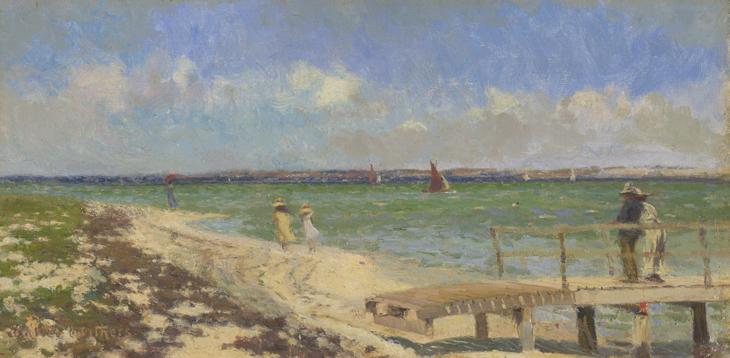
Top: Oil painting titled ' Breezy day at Point Henry, near Geelong ', by Walter Withers (1900)
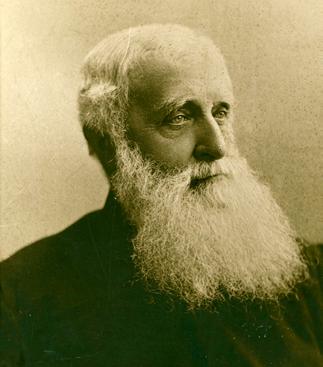
Above right: Theodore Carlos Benoni Stretch; St Pauls Church of England, Geelong
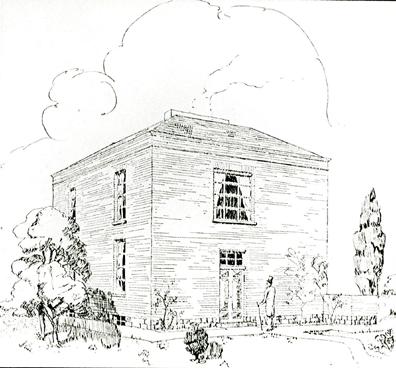
Opposite page: 18 Villamanta Street, 1856
It was the churches that drew Theodore Carlos Benoni Stretch to Geelong. Appointed Archdeacon of Geelong by the first Bishop of Melbourne, Charles Perry, it was Theodore Stretch who conducted the first service in St Paul’s. Stretch’s father was rector of St Swithun’s Church, Worcester. After studying at Oxford University, Stretch followed his father into the priesthood, serving parishes in Warwickshire and Northamptonshire, before joining the Church Missionary Society and sailing to Australia in 1852. He was 35 years old, with a wife (Martha) and nine children (five sons and four daughters). Fictionalised in the epic colonial trilogy The Fortunes of Richard Mahony by Henry Handel Richardson (the pen name of Ethel Florence Richardson), Stretch is characterised as “a big, brawny, handsome man, with a massive nose” admired for his “indestructible optimism”.
It seems appropriate that a man described as the School’s “original founder” was blessed with “indestructible optimism” who “had always some fresh scheme on hand”. As Archdeacon, Stretch’s responsibilities included oversight of the Ballarat goldfields – the Geelong Advertiser reported that he conducted a “a conciliatory tour” of Creswick Creek just days before the Eureka Stockade of December 1854 – and he was consequently granted a curate at St Paul’s to cover his regular absences; fellow Oxford graduate George Oakley Vance. Stretch wanted a school for his sons and “warm, scholarly” Vance had spent 18 months as a schoolmaster at Exmouth Grammar School. It was a perfect match. In August 1855, an advertisement appeared in the Geelong Advertiser seeking “communications from parents and guardians willing to support a really good Grammar School in Geelong”, noting that “the services of a highly accomplished English graduate (Vance) are now available”.
In his portrait of the School, Well-Ordered Liberty, our great oracle Michael Collins Persse (GGS Staff 1955-2018) depicted the very first incarnation of Geelong Grammar School as “a house of moderate size and unpretentious appearance in Villamanta Street, near the centre of Geelong”. Villamanta Street runs between La Trobe Terrace and Pakington Street, not far from St Paul’s. La Trobe Terrace was named in honour of the first Lieutenant-Governor of Victoria, Charles Joseph La Trobe, whilst Pakington Street commemorates Sir John Pakington, a British Conservative politician from Worcester (like Stretch) who served as Secretary of State for War and the Colonies in the 1850s and announced the end of penal transportation to Van Diemen’s Land.
The etymology of Villamanta Street is more opaque. Villamanta is a municipality of Madrid, Spain, and it is recorded that the street once hosted the Missionary Sisters of St Peter Claver, devoted to the legacy of a Spanish Jesuit missionary and the patron saint of slaves, although the street name predates the religious congregation. It seems more likely that Villamanta is a derivation of the Wadawurrung name for the highest peak of the You Yangs, Willa-ma-nauter, now referred to as Flinders Peak.
What is well documented is that Geelong Grammar School began in October 1855 in two modest semi-detached houses in Villamanta Street with 13 boys, including Stretch’s sons Theodore and Samuel, as well as generational GGS names such as Armytage and Pincott, still represented at the School 170 years later. By the end of 1856 there were more than 50 students enrolled at the new school, including at least 20 boarders. Vance hired an assistant master and the School moved a few blocks to the Hotel Garni building in Skene Street (later known as Knowle House and the first location of The Geelong College when it opened in July 1861).
The growth in enrolments was a timely endorsement of Stretch and Vance’s fledgling educational endeavour. Victoria’s Legislative Council had voted to grant £20,000 in 1854 and a further £15,000 in 1856 for the establishment of church-run secondary schools intended to prepare scholars for the newly established University of Melbourne (which, like GGS, officially opened in October 1855). The funding was given “to the four principal denominations… according to their numerical portions as shown in the Census of 1851”, with the Church of England receiving a combined total of £20,784. Having invested the 1854 grant in the establishment of Melbourne Grammar School (which opened in 1858), Bishop Perry decided to offer £7,000 of the 1856 grant to Geelong towards the construction of a new school building. But that is another story.
Brendan McAloon Director of Community Engagement
*After arriving in Point Henry, Thomas, John and Peter Manifold initially grazed sheep alongside the Moorabool River before travelling further west, crossing the Stony Rises, and establishing a station at Lake Purrumbete. John wrote to his mother that they had “at last got to the land we wished for”. John’s second son William Thomson (W.T.) Manifold (GGS 1873-79) was born at Purrumbete in 1861. W.T. would become Chairman of Geelong Grammar School Council (1911-22) and guide the School’s move to Corio.
TIDE of
CHANGE
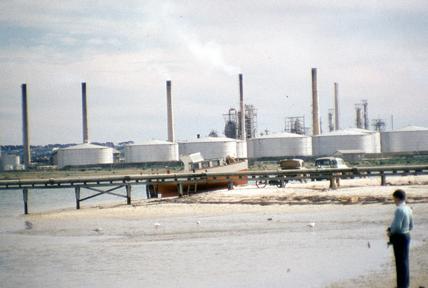
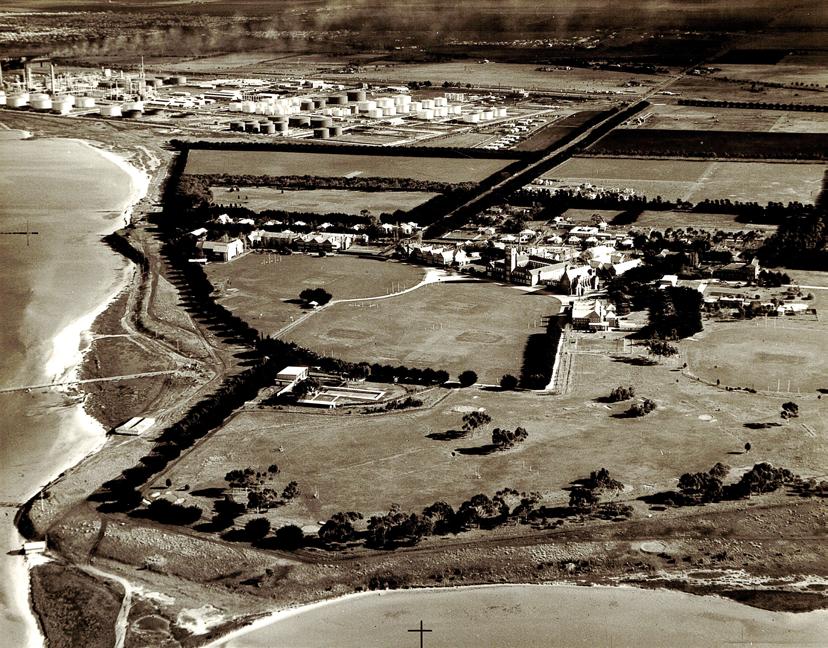
Geelong Grammar School (GGS) embraced its need for expansion in 1911. Having outgrown its location in central Geelong, by 1914 it had moved into new red brick buildings at Corio, on a desirable expanse of land overlooking Limeburners Lagoon, flanked by nature. 40 years later, in 1951, its bucolic existence was disrupted when construction began on Shell’s Geelong Oil Refinery. The neighbouring £20 million project was opened by the Governor-General, Field Marshal Sir William Slim, in 1954, transforming “an empty, windswept paddock” into “a rising industrial centre”.
Initially, the land belonged to the Commonwealth Government, to be utilised as a seaplane base (in proximity to Royal Australian Air Force (RAAF) bases at Point Cook and Laverton). It was never owned by GGS, nor sold to Shell. However, its acquisition by the Geelong Harbor Trust allowed it to be transferred to Shell Australia. Following this, arrangements made by a local real estate agent allowed Shell to purchase additional land from private owners. This led to a total area of 250 acres being owned by the company, including a 90-acre housing scheme constructed to house the workers (more than 1,000 workers from 14 European countries worked on the construction project).
The Geelong Refinery was the first post-World War II oil refinery built in Australia, and it soon became a vital contributor to the country’s energy needs. Expansion seemed inevitable, and in 1956 Shell began exploring the possibility to “purchase all the remaining land” surrounding the School’s boundaries. A memorandum from J.R. Darling (Headmaster 1930-1961) dated 11 June 1956 reveals scepticism of the
School’s ability to protest further intrusion “against so great a corporation”. But by 16 August 1956, Darling resolved that the “intention of the Council (was) to continue this resistance to industrial encroachment”.
Despite the pessimism of success, and considerations of relocation of the School, although subsequently deemed unaffordable, there was a diversion in Shell’s expansionary plans. Thanks to Darling’s appeals to the Chairman of Shell (the legal and executive control remained with the Londonbased Royal Dutch Shell Group), the School was given an option to purchase the land Shell had explored obtaining north of the campus, which was subsequently acquired by GGS not long after.
A new threat emerged after Shell sold the Geelong Refinery to Viva Energy in 2014. In 2020, Viva announced plans to develop a floating gas terminal, to be permanently moored at Refinery Pier in Corio Bay. The Victorian Minister for Planning, Sonya Kilkenny, directed Viva to prepare an Environment Effects Statement (EES) to assess the potential environmental effects of the proposed project. GGS published a short statement that the student-led Environmental Action Team (EAT) was opposed to Viva’s proposal, and the School joined local groups like Geelong Sustainability, Geelong Port and the North Shore Residents’ Association in making a submission to an independent Inquiry and Advisory Committee (IAC).
Although the Minister instructed Viva to prepare a Supplementary EES to assess specific environmental concerns (including marine environment, noise, and air quality), she ultimately approved the proposal, concluding that “the potential environmental effects of the project can be acceptably managed”. The School responded by recognising “the need to safeguard gas supply” but also reaffirming its intention to “continue to safeguard the sensitive environment in which the Corio Campus is located”.
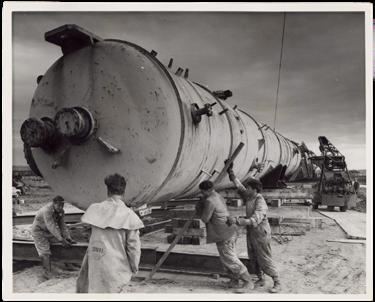
Above: Newton, H., & Shell Co. of Australia Ltd. (1950). Unloading and positioning of absorber tower prior to installation, Shell Refinery, Geelong. State Library Victoria
The project has since stalled due to a dispute over access to existing gas infrastructure.
In August 2025, The Australian newspaper reported that the Australian Energy Market Operator (AEMO) had declined to progress a conditional assessment on whether Viva’s floating gas terminal could access the South West Pipeline, which links the Otway Basin and the Iona gas storage facility in Western Victoria to Melbourne’s distribution network. The pipeline currently operates at near full capacity and existing users “vowed to oppose any move that could displace its gas from the pipeline”. Viva has said it will “walk away” from the project if it cannot access the pipeline.
Will Donges (Yr12 Cu)
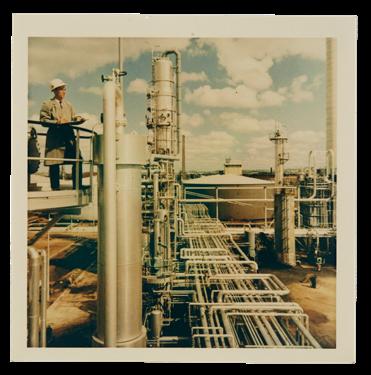
Above: Unknown photographer, Gantry system, Shell Refinery, Geelong, circa 1960s , Museums Victoria
The FIRST GIRLS
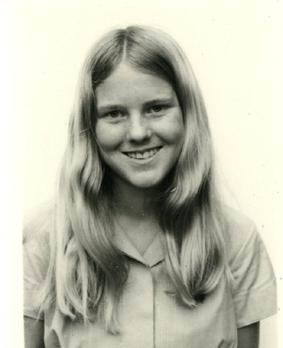
In the early years, Geelong Grammar School (GGS) was comprised of only male students, with a distinctly masculine focus on study, sport and boarding life. It was 117 years after the School’s inauguration that female students were enrolled “in their own right”. The enrolment of female students at GGS in 1972 remains a pivotal decision in the School’s illustrious history. The then Headmaster, Tommy Garnett (Headmaster 1961-1973), felt a change was necessary. Garnett had five children – two daughters and three sons –and believed that the inclusion of co-education in secondary school would be beneficial for both genders.
Garnett orchestrated a gradual shift, starting in 1970 with sixth form girls from The Hermitage School in Geelong attending Science and Maths classes as “guests” at Corio. The Hermitage (where Garnett’s daughters had attended school) was experiencing a shortage of specialist teachers. As a result, The Hermitage girls benefitted from strengthened educational opportunities at Corio, and the initiative encouraged collaboration and social development between students from both schools. Furthermore, it reinforced Garnett’s vision of co-education.
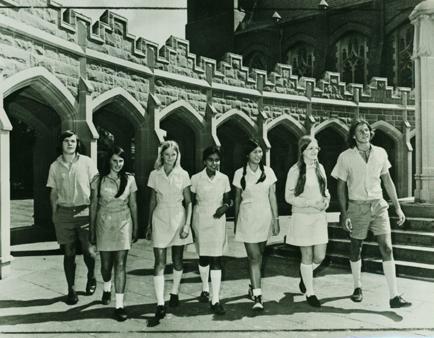
In 1972, 26 girls were admitted as full members of Geelong Grammar School, commencing in Years 11 and 12. It was a ground-breaking move later followed by many private schools in Victoria (including The Geelong College in 1974, Wesley in 1978, Carey in 1979, Caulfield in 1981 and Haileybury in 2000). However, Canadian student Beth Mencel (Rail, Li’73), was the very first female student at GGS.
Beth arrived at Corio in September 1971, a school term in advance by virtue of her having finished her school year in Canada in July.
In 1972, Beth became a member of Cuthbertson House. Of the 26 girls enrolled in 1972, 14 were boarding students, accommodated mostly in the homes of teachers living on school grounds, as well as in dormitories in Cuthbertson and Perry. Many of these boarding students originated from Sydney, Canberra and North East Victoria, but also included two international students from Malaysia.
Although they were outnumbered, the girls were included in an array of sports, often alongside their male counterparts. However, their contribution in Athletics and other sports did not contribute points in House competitions, much to the dismay of the girls. Nevertheless, female students were eventually awarded Colours for sports alongside the boys.
The addition of female students to GGS in 1972 was a change that “seems normal now [but was] quite revolutionary then,” according to eyewitness Simon Fieldhouse (Cu’72). It provoked a major shift in our community, leading to the 1976 amalgamation with The Hermitage and Clyde schools. Within a decade of those first girls, one in every three students at GGS was female, with 574 girls enrolled alongside 1,040 boys by late 1981, including 247 girls at Corio, 164 at Highton, 118 at Glamorgan (now known as Toorak Campus), and 45 at Timbertop (which had transitioned to co-education in 1975). The moment the first female students were welcomed into GGS life was a pivotal stepping stone in our light blue history.
Imogen McKenzie (Yr11 He)
The MAKING of a KING
It was January of 1966 when a 17-year-old Prince Charles first set foot on Geelong Grammar School’s Timbertop campus, set against the majestic backdrop of the Victorian Alps. Indeed, this was no small feat for the Royal Family to undertake – sending the heir to the throne 17,000 kilometres away from Buckingham Palace to an environment which demanded chopping wood, running cross-country, and hiking through the High Country; endeavours not at all synonymous with royalty. Yet, it was exactly this – far away from the press and in an unconventional schooling environment – that appealed to Queen Elizabeth II.
The Queen approached the then Australian Prime Minister, Sir Robert Menzies, about the possibility of the future King coming to Australia to broaden his education. Prince Charles was nearly three years older than the other boys at Timbertop and – whilst he chopped wood, ran, and hiked – his academic world differed immensely. In preparation for the University of Cambridge entrance exam, he was set large assignments and required to submit weekly essays for his three subjects – History, French, and English.
Prince Charles developed a particularly close relationship with his History tutor, the Oxford University educated Michael Collins Persse (GGS Staff 1955-2018), who praised Charles as a student of “outstanding ability”, and described his approach to history as “romantic” and “commonsensical”.
Evidently, the Prince was passionate about history, and he would go on to pass his A-level papers with Distinction. He read Archaeology and Anthropology at Cambridge in 1967, before switching to History, and graduating in 1970 with a Bachelor of Arts (BA), later promoted to a Master of Arts (MA). He was the first member of the British Royal Family to earn a university degree.
Prince Charles was supposedly treated no differently to other students while at Timbertop. This was something he rather enjoyed. His fellow students proved admirably ready from the start to treat him as a normal human being, despite his princely status. In fact, according to former Head of Timbertop, Jeremy Madin (FB’64), some even dared to tease him as a “Pommy b*****d!”. In 2015, Charles admitted: “I learnt an enormous amount in Australia and discovered just how direct and friendly and straightforward and so often blunt Australians are… But with such an incredibly good sense of humour.”
The Prince was expected to follow the Timbertop way of life, helping with jobs, from cleaning fly traps to chopping wood. However, he did enjoy his own private accommodation in the
single masters’ quarters (now the Archives Hut between G and H Unit), along with his own personal security, Inspector Derek Sharp, who kept watch at all times. Nevertheless, he was very well regarded in the community; someone who was evidently a celebrity but also a human of “extraordinary warmth and worth”.
Unsurprisingly, preparation and planning extended to media management. On Prince Charles’s first day and again midway through Term 1 (the arrangement was initially for Charles to attend Timbertop for one Term but was so successful it continued for a second Term), journalists and photographers were invited onto campus to capture images of him chopping wood, hiking with his peers, and sharing a meal in the dining hall. After that, the gates were closed. The press largely honoured this deal, however students occasionally reported seeing suspicious looking men hacking their way through the bush, camera in hand, in an attempt to get a glimpse of the young royal.
The period was undoubtedly transformative for the young Prince, and he still holds the School in very high regard – he regularly wears his Old Geelong Grammarians’ tie at public events; at the Melbourne Cup in 2012 and more recently when he met Prime Minister Anthony Albanese at Balmoral Castle in September 2025. While we may never fully grasp exactly what his experience was like, those of us who have attended Timbertop can relate to what Charles himself described as “the best part of my education – the part I enjoyed most, and I have very happy memories of it”.
At the 1988 Australia Day Bicentennial celebrations in Sydney, Charles said: “While I was here (at Timbertop) I had the Pommy bits bashed off me, like chips off an old block.” On the anniversary of the inauguration of Prince’s Charities Australia, he explained: “It is no exaggeration to say that Australia has always held a very special place in my heart ever since I spent time as a teenager at Geelong Grammar School in 1966.”
Alfie Holuigue (Yr12 Cu)
The CURIOUS CASE of the CUTHBERTSON HOUSE FIRE
The sky was overcast when Patrick McManamny arrived at the remote school at Corio that Thursday 23 April 1925. The 61-year-old retired police Superintendent, reputedly a terror to criminals, had come at the behest of the School’s Headmaster and Council to hopefully uncover the cause of the fire that had engulfed Cuthbertson House early on the morning of Wednesday 11 March.
McManamny’s ensuing investigation, as described in his typed report in the School’s archives, evokes many elements of the Golden Age of detective fiction as he probed the small, isolated community with its colorful cast of characters.
The fire had been a near-tragedy that saw 78 boys and several resident staff scrambling over the balconies for their lives. By divine benevolence or good luck there were no reportable injuries (although Rod Andrew (P’29) later recalled carrying one Cuthy boy to the School’s sanatorium with a broken ankle, having neglected to properly secure his knotted sheets to the bedstead before climbing down them) but the building was gutted and the financial loss considerable. Simple prudence demanded that the circumstances by which the fire had started being thoroughly explored.
The Headmaster, Dr Francis Brown (Headmaster 1912-29), and the School Council had convened their own internal enquiry and, although it was inconclusive, McManamny’s immediate course of action was very much informed by the witness statements submitted to it. That enquiry showed that wakeful boys occupying exposed balcony dormitories were the best nightwatchmen, and several of them provided the most intriguing leads.
Brian Westmacott (M’25) and James Guthrie (M’26) in Manifold House had been looking out over the moonlit playing fields at 10.30pm the evening before the fire when they saw a lone cyclist with no light traverse the fields from the south before being lost
to sight in a line of cypress trees extending eastward behind Cuthbertson House. Around the same time, Alec White (Cu’25), who slept on the balcony at the rear of Cuthbertson, heard somebody walking about below the balcony.
Glancing down he observed a boy in a dark knickerbocker suit but could not identify him. He afterwards went to bed, only to be jolted awake around 1am by his House Captain and dorm mate George Capper (Cu’25), who had been roused by the crackling of fire.
On the subject of the fire’s approximate point of origin, witnesses differed only slightly. The resident tutor, Alan ‘Teddy’ Marshall, was awakened in his room (situated at the rear of the House above the boiler room and the tuck room) by smoke from below and flames lapping at the outside of his window. The School’s foreman, Bill Batterham, was early on the scene, and stated that upon his arrival the fire was in the tuck room and on the balcony, and that the boiler room was already burnt out. He surmised from what he saw that the fire had started in the boiler room. The boiler attendant, Paddy Hennessy, swore he’d locked the door to the boiler room at 6pm the evening prior and that it was still shut when he first saw the fire. He was inclined to think the fire had its origin in the nearby boot room, which was at the centre of the blaze when he reached the scene.
After receiving these earlier findings McManamny was introduced to Manifold Housemaster, Charles Cameron, who went “very fully into all details”. McManamny’s report gives no specifics, but the lines of his later questioning suggest there was plenty of school gossip unrecorded by the internal enquiry, but which Cameron was well positioned to know about. McManamny next interviewed Miss Cecil Bright, the Manageress of the School’s small army of housemaids, laundry, and kitchen staff, but she could offer no useful information. He then directed his steps to nearby Biddlecombe Avenue and his most promising lead.
Bill Batterham, the foreman, oversaw the School’s hot-water, electricity, and outdoor staff. His many sidelines included teaching carpentry, building theatrical sets, and operating the cinematograph for Saturday film nights in Junior House. Commonly referred to as ‘Sergeant-Major’, this title and his military bearing were legacies of his former career with the Geelong Garrison Artillery.
Tom Judd, the School’s porter, later recalled that Batterham’s dentures always seemed to lack the requisite suction. With four sons and one daughter, Bill’s family overflowed their house on Biddlecombe Avenue, and 17-year-old Norman slept on the verandah. It was Norman who McManamny wanted to question, and the informed nature of that questioning can be inferred from Norman’s recorded responses, which are collated into a single statement in the report.
Norman admitted to having cycled around the school at 5.30pm the evening before the fire, claiming no particular reason, and to having been wearing knickerbockers. His family had entertained friends, Mr and Mrs Hunter from North Shore, until at least 11pm, and the first Norman knew of the fire was at 1am the next morning when the general alarm was raised. Much later that morning, after the fire had been quenched, he’d been confronted by James Guthrie (one of the two Manifold boys on the balcony) who flatly stated, “You lit the fire”, and said that he’d been recognized in the vicinity of Cuthbertson House with matches rattling in his pocket. Norman had denied the accusation and had told his mother about it. Under
McManamny’s questioning, however, Mrs Batterham had no recollection of the conversation – nor were she or her husband able to confirm Norman’s assertion that they entertained the Hunters on the night in question.
Norman’s entitled presumption of innocence was undermined by the history of his 19-yearold brother Maurice, who had been discovered some time prior to having been engaged in theft around the school.
Norman admitted to being aware of his brother’s activities before they were generally known. Maurice himself was recently back home from Melbourne on account of illness and was recuperating in bed when McManamny called. He seems to have avoided any suspicion concerning the fire and may have been in Melbourne when it occurred.
When questioned, Bill Batterham initially stuck to his belief that the source of the fire was the coal-fired stove in the boiler room and the kindling wood and paper stored there. Together with McManamny he inspected the stove, which heated a boiler containing the three bath’s-worth of water considered sufficient for 78 boys.
The investigator suggested that the secure door on the stove and its manner of burning made ignition from falling coal unlikely. Nor was it probable that kindling wood and paper would smoulder for seven hours before suddenly springing to life. Then the ex-policeman revealed details concerning the sightings of a youth on a bicycle and near the tuck room – information which Batterham gave the impression of having been previously unaware of. “That alters all my ideas,” he confessed.
Having shaken the foreman’s notions McManamny outlined a compelling scenario of his own:
It looks as if the youth with the bike was after something in the lockers and in one corner of the tuck room there was a box containing straw, the remains of a hamper that had been received that day, and the youth more than likely threw a match into the box which caused the straw to smolder and allow for the fire to be raging as found at 1am.
Batterham had to admit that the events described and suggested motive appeared likely. When the similarity of the notional culprit to his own son was then put to him he seems to have been unusually composed, “…if it is Norm I hope he will admit to it, as it points to him”. Certainly, McManamny found his behavior warranted highlighting, “Mr Batterham senior impressed me as a most remarkable man”, he wrote, exhibiting no sign of annoyance with Norman despite the weight of suspicion. McManamny suspected he might have known more than he was letting on.
Not so composed was Norman’s sister, Olive, who, having heard of McManamny’s investigation, approached him to make a statement. The tenor of the report suggests she came out blazing in defence of Norman. Olive assisted her older brother Joe in running the general store and post office near Corio station; an established source of sweets and soft drinks for boys from the School (which it would continue to be until it closed in 1977), and a venue for chatter and jokes with the congenial Joe.
According to Olive, two schoolboys (who she couldn’t identify) were in the shop the Saturday following the fire and had remarked that certain other boys were illicitly smoking in the tuck room behind Cuthbertson House on the fateful evening.
Schoolboys were also in the habit of seeking cigarettes at the shop, which her father had forbidden her to sell to them. As for Norman, he was at home the evening of the fire and never went out for any length of time that she could recall. She concluded with a shot at Mrs Lennox, wife of Jock Lennox the School’s groundskeeper, with whom there was clearly bad blood. She was one of the people who would, “like to see them (the Batterhams) out of the place”. This McManamny peremptorily dismissed as “women’s quarrels”.
Olive corroborated Norman’s assertion of his having told their mother about James Guthrie’s accusation, but she thought Guthrie’s remark probably no more than a joke. When McManamny approached Guthrie directly, the boy was circumspect. He said dormitory speculation had placed the origin of the fire in the tuck room, and one or other of the Batterham boys was believed to have accidently started it. Guthrie denied accusing Norman of being the culprit the morning after, but did tell him he’d been spotted running the previous night with the sound of a matchbox in his pocket (the former police officer sensed there probably had indeed been a direct accusation).
Here McManamny concluded his investigation. There was no “smoking gun” and there could be no dramatic unmasking of the culprit. All he had was a figure in the night, suggestive circumstances, and a great deal of rumor. Based upon these he could only offer the School’s authorities hunches informed by a lifetime’s policing experience: “I feel sure the fire was started in the tuck room by someone who was there unlawfully,” and, “I really think that student Guthrie’s and the other boys’ conclusions are not far wrong”.
Whilst hardly conclusive in its findings, the School Council chose to treat McManamny’s report as a justification for firm action. At its 11 May meeting a letter was drafted to Bill Batterham which, while acknowledging the value of his services, demanded that he make arrangements so that in future neither Norman nor Maurice would come within five miles of the School. More compassionate voices prevailed at the next meeting and the terms were modified; Norman and Maurice could continue to live in the home of their parents within the School bounds on the understanding that they were not allowed on any other part of the School’s property.
The communication made clear that Bill Batterham’s position at the School was dependent upon these terms being met. The fact that ‘Sergeant-Major’ Batterham continued to devote his “infinite skill and conscientious labour” to Geelong Grammar School for many years to come suggests that they were, and when he eventually retired at the end of 1934 the Council rewarded 21 years of excellent service with a honorarium of £500 and six months leave on full pay. Meanwhile, Maurice and Norman were able to remain close to family, and seven years after their questioning by McManamny, both played heroic roles in a fatal boating accident on Corio Bay. Maurice later rose to the rank of Commander in the Royal Australian Navy (RAN) and was awarded an OBE.
The typed report summarizing the investigation quietly disappeared into the School’s records. Writing in 1971 about his fifty years of service at the School, Tom Judd, who witnessed the fire, remarked that the cause was never determined, “or if it was, was never made public”, however he noted that there were, “a batch of rumours as to how it started”. He put forward the theory of an electrical fault, but, seemingly like quite a few others, might have known more than he was letting on.
Darren
Archivist
Watson
Above: Corio Post Office and general store, circa 1924. National Archives of Australia: B5919, 546.
The BOOK ENDS
Fittingly, the History Club has a history of its own. Its direct ancestor is the History Society formed in May 1949itself a reincarnation of the Historical and Philosophical Society which started seven years earlier. The stated purpose of the History Society (later re-branded ‘Historical Society’) was to provide a forum for lectures and for “discussions on controversial topics”. At its evening meetings, generally held three or four times a year, one could listen to fellow students reading papers on such diverse subjects as early Victorian goldfields, Greek history and historians, and Lenin and the formation of the USSR. The proceedings were dutifully recorded in the Society’s sumptuous blue minute book.
Occasionally the Society hosted guest speakers, the two most momentous of these being a prince and a girl. On 28th July 1966, his last day as a Geelong Grammar student, His Royal Highness Prince Charles delivered a paper on the reign of his ancestor King Charles I to a packed Society meeting, and on 8th November 1968 Miss Andrée Wright, a sixth form student from The Hermitage, presented her paper on the French revolutionary Robespierre.
Concerning the latter occasion the History Master, Michael Collins Persse, who was President and motivating force behind the Society from 1956 until 1971, wryly noted, “Never before had the quasimonastic precincts of the Historical Society been so broached — and graced.”
The last minuted meeting of the Historical Society occurred on 19th November 1971. In a brief footnote providing a coda to the entries Michael Collins Persse remarked that the Society’s demise formed part of a general withering of the traditional student clubs in the face of other weekday afternoon activities. But, like all good historians, he had one eye on the future when he contemplated a possible renaissance of the Historical
Above: At a meeting of the Historical Society, 1968
Restoring the past
Since its establishment in 1855, Geelong Grammar School (GGS) has been fortunate to benefit from the vision and generosity of its benefactors, whose support has helped to shape it into an institution of exceptional educational and cultural distinction. This enduring commitment is evident in the School’s distinguished architectural heritage, including buildings designed by eminent architects such as Gerard Wight, Philip Hudson, and Harold Desbrowe-Annear.
The School’s commitment to excellence has extended to the commissioning of leading artists and craftsmen, as well as the generous acquisition of artworks and cultural artefacts. Over time, GGS has evolved into more than an academic institution – it has become a significant site of cultural and historical importance. As custodians of this legacy, the School community bears the responsibility of ensuring that these cultural gifts are preserved and passed on to future generations.
As part of this stewardship, regular condition assessments of heritage artefacts are essential to detect deterioration and determine the need for conservation or restoration.
Three significant cultural assets were recently identified as requiring intervention:
- a series of murals painted by Ludwig Hirschfeld-Mack and his students;
- stained-glass windows by Christian Waller in the Chapel of All Saints; and
- a painting by Joe Furlonger titled Surfboard Rider 2
The conservation of thirteen murals by Hirschfeld-Mack –originally painted with students at the Senior Art School in 1943 – was initiated as a two-stage project. Planning began in December 2021 and was revisited in June 2024. Dr Caroline Kyi, a leading wall painting conservator with over two decades
of international and local experience, was commissioned to assess and treat the most prominent panel, The Resurrection, painted exclusively by Hirschfeld-Mack. Dr Kyi proposed a treatment plan focused on long-term preservation issues, including structural cracking, delamination, and surface grime. This stage was successfully undertaken during the 2024-2025 school holiday break.
The second phase saw the engagement of respected painting conservator, Catherine Nunn, to conserve the remaining 12 murals. These panels, depicting scenes from the life of Christ – Annunciation, Nativity, Flight into Egypt, Christ Among the Doctors, Healing of the Lame Man, Sermon on the Mount, Miraculous Draught of Fishes, The Last Supper, The Betrayal, Jesus Before Pilate, The Road to Calvary, and Crucifixion –were cleaned and treated over a nine-day period during the 2025 mid-year break. This collaborative artwork between Hirschfeld-Mack and students, including John Court (Cu’47), Michael Kellaway (Cu’44), and others, was carefully cleaned, paint accretions were removed, minor cracks filled with lime-based mortar, and insoluble accretions in-painted with appropriate materials. The intervention not only stabilized the panels structurally but also significantly improved their visual presentation.
The Chapel, a prominent architectural and spiritual heart of the School, features a remarkable collection of stained-glass windows by esteemed artists, including William Montgomery, Brooks, Robinson & Co., David Taylor Kellock, Christopher Whall, and Christian and Napier Waller. A 2024 inspection identified urgent conservation needs in two windows by Christian Waller (1894-1954), whose distinctive Art Deco and spiritualist style holds significant artistic and historical value. These affected windows are in the baptistry.
Robert Rusev Stained Glass Studio, a leading authority in stained glass conservation, was commissioned to undertake the required works.
The first window, titled His Banner Over Me Was Love –dedicated to Captain Stewart Irvine Weir (P’24), killed in action in Greece in 1941 – required in situ structural maintenance. This involved removal of corroded saddle bars, replacement of old copper ties, and recementing of external surfaces. The second stained-glass, The Light Shineth in Darkness, dedicated in memory of Robert de Wolf (M’34), demanded more extensive intervention due to severe buckling. Following full removal and bench restoration, including panel straightening, all necessary conservation measures were completed using reversible, heritage-appropriate methods. Protective powder-coated stainless-steel screens were also installed on the exterior of the Chapel to safeguard the windows from environmental and accidental damage.
The final project of the year was an unplanned conservation response to an incident in September 2024, when Surfboard Rider 2 by Joe Furlonger was damaged during a windstorm. This painting, hung in the foyer of the Handbury Centre, was torn from the wall and sustained two major canvas tears and stretcher damage. Created by Queensland-based artist Joe Furlonger (b. 1952), known for his neo-expressionist depictions of Australian beach culture, this large synthetic polymer on canvas painting has been part of the GGS Art Collection since 1993.
Helen Gill, a highly respected painting conservator, was engaged to assess and restore the work. Her treatment included consolidation of unstable paint, realignment of torn canvas threads, repair of tears, and reinforcement with bridging threads. Surface deformations were corrected using controlled humidity, and retouching was conducted with conservationgrade materials. Finally, the painting was re-stretched and fitted with a protective backing board to guard against future damage.
These critical conservation projects were made possible through the combined efforts of dedicated members of the GGS community, notably our Archivist, Darren Watson, former School Historian, Sophie Church, and Management Accountant, Ryan Wade, whose financial oversight and guidance were essential to the success of each initiative. The work was also supported by the School’s Arts Support Group, the Hirschfeld-Mack Club, which contributed proceeds from the sale of Hirschfeld-Mack woodblock print reproductions to the School’s Heritage Conservation Fund. Through the careful preservation of its artistic and cultural heritage, Geelong Grammar School not only honours the past but actively builds a legacy for future generations to experience, study, and cherish.
Dr Peter P Bajer Head of Visual Arts
Above: Restoration of a series of murals painted by Ludwig Hirschfeld-Mack and his students was successfully undertaken during the 2024–2025 holiday break
A year of generosity and impact:
Reflections from the Chair of the Geelong Grammar Foundation
As we near the end of 2025, I am filled with gratitude and pride for what we have achieved together as a community. This year has been a testament to the enduring spirit of generosity that defines Geelong Grammar School. Through the collective efforts of alumni, parents, staff, and friends, we have strengthened the Foundation’s ability to support the School’s vision and ensure that every student has equal access to an exceptional education.
One of the most remarkable highlights of the year was Giving Day 2025. On June 25, the GGS community came together in an extraordinary display of unity and purpose, contributing an incredible $1.17million. This achievement was not just a number – it was a powerful statement about what we value as a community: opportunity, excellence, and the transformative power of education.
Giving Day is always a special occasion, but this year felt different. From the early hours of the campaign, we witnessed inspiring levels of support. Gifts came from every corner of the globe – from alumni reconnecting with their GGS roots to parents eager to contribute to an exceptional education for their children and generations to come. The energy was palpable, both online and on campus, as stories of impact and gratitude were shared.
The success of Giving Day was made possible by the dedication of our volunteers and ambassadors, who championed the cause with passion and creativity. Their efforts remind us that philanthropy is not just about financial contributions – it is about relationships, shared values, and the belief that together we can make a difference. Every conversation, every post, and every phone call helped build momentum and inspired others to join in.
One may ask what $1.17million means for Geelong Grammar School. It means more scholarships for students who might otherwise be unable to attend our School. It means enhanced resources for learning and teaching, ensuring that our students are equipped for the challenges and opportunities of the future. It means investing in programmes that nurture resilience and character – qualities that we believe are as important as academic achievement. In short, it means lives can be changed and futures can be shaped.
Beyond Giving Day, 2025 has been a year of progress and promise for the Foundation. We have continued to advance our long-term philanthropic goals and prepare for a significant milestone: the Foundation’s 50th anniversary in 2026. This anniversary is not just a celebration of our history – it is an opportunity to look forward and reaffirm our commitment to supporting the School’s ambitions.
In 2026, the Foundation will aim to significantly increase support for scholarships, ensuring that a Geelong Grammar School education remains accessible to all students. Scholarships have always been at the heart of our mission, and as we mark 50 years of philanthropy, we want to expand these opportunities even further.
At the same time, we will work closely with the School to progress building ambitions linked to the masterplans for each of our campuses. These plans represent a bold vision for the future – creating spaces that inspire learning, foster wellbeing, and reflect the values of our community. From innovative learning spaces to enhanced boarding facilities, these projects will ensure that Geelong Grammar School continues to lead in providing an exceptional educational environment.
As Chair, I am sincerely grateful for the trust and support you place in the Foundation. Philanthropy is a partnership, and every gift – large or small – reflects a shared belief in the School’s mission. Together, we are building something extraordinary: a community where opportunity is not limited by circumstance, where innovation thrives, and where every student can discover their full potential. Looking ahead, we know that the challenges facing education are complex and evolving, but we also know that with your continued support, Geelong Grammar School will not only meet these challenges but lead with vision and courage. The Foundation’s role is clear: to provide the resources that enable the School to set the highest goals and to deliver on those goals.
To everyone who contributed to Giving Day, and to all who have supported the Foundation throughout the year, thank you. Your generosity is more than a gift – it is an investment in the future. It is a vote of confidence in the values that have guided Geelong Grammar School for generations and will continue to shape its path forward.
As we celebrate the successes of 2025, we look ahead with optimism and determination. With your partnership, we will continue to make a profound difference in the lives of students and in the story of Geelong Grammar School.
On behalf of the Foundation Board, I extend my heartfelt thanks and warmest wishes for the year ahead. Together, we have achieved something remarkable – and together, we will achieve even more in the days and years to come. Thank you.
Vanessa Mahon Chair, Geelong Grammar Foundation
Above: Vanessa Mahon with Baran Karakas (Yr12 A) and his parents, Bob and Kay, at the Scholarship Morning Tea
BIDDLECOMBE SOCIETY
Introducing Jim Gall
“Philanthropy at GGS is for everyone,” according Jim Gall (Cu’91), who was recently appointed as the new Chair of the Biddlecombe Society, a group dedicated to fostering a culture of philanthropy and legacy giving within our School community. Jim’s connection to GGS spans generations and reflects a deep family tradition of engagement. Jim’s journey began at Timbertop in 1988, following in the footsteps of his father Peter (M’53), who was one of the pioneering 1953 Timbertop originals. At Corio, Jim followed brothers David (Cu’85) and Nick (Cu’86) into Cuthbertson House, where he was a House Prefect in 1991. In turn, Jim and wife Sooz’s twin daughters Georgia (Ga’22) and Olivia (Ga’22) added another layer to the Gall family’s enduring relationship with our School.
The Biddlecombe Society was established more than two decades ago to recognise and celebrate those who have chosen to leave a lasting legacy through bequests to the School. Over the past 23 years, the Society has been guided by remarkable leaders whose vision and dedication have nurtured a strong culture of generosity. “As the incoming Chair, I recognise and show gratitude for the work of those who have led this group – Lorie Lie (FB’44), Neil Robertson (FB’72), David Henry (FB’70), Charlie Sutherland (P’86), and of course the much-loved Michael Collins Persse,” Jim said. “Each of these individuals made a significant and unique contribution to nurturing the benevolence of our community of bequestors.”
The Biddlecombe Society continues to thrive, with living membership reaching 300 in 2025 – a remarkable milestone that reflects the generosity and commitment of our community. This achievement was celebrated through special events at iconic venues, including the Shrine of Remembrance in Melbourne and the Sydney Opera House. More than 200 members of the GGS community participated in Biddlecombe Society events in 2025.
At the Melbourne event, a record 14 pins were presented to new members, symbolising the growing strength of the Society and the shared vision for the School’s future. Jim is passionate about ensuring that the Biddlecombe Society continues to reflect the School’s inclusive spirit. “Whether you are an Old Geelong Grammarian, a past parent, or a friend of the School, you are part of this community. It is my opinion that even those who are not alumni still ‘went to GGS’ – through their children, their family, or their connection. That sense of belonging is what makes our community and the Biddlecombe Society so special.”
As we celebrate the 50th Anniversary of the Geelong Grammar Foundation in 2026, Jim sees this milestone as an opportunity to strengthen and grow the Biddlecombe Society. “This anniversary is not just a celebration of the past, it’s a call to action for the future,” he explained. “My ambition as Chair is to continue this legacy of gratitude and support the ongoing connection of our community with each other and with the impact of philanthropy. I aspire for our events, our stewardship and our impact to continue to be the envy of other schools and institutions as we activate the generosity that is inherent in the GGS community.” Under Jim’s leadership, the Biddlecombe Society will continue to play a vital role in ensuring that the spirit of giving remains central to the School’s future.
Becoming a member of the Biddlecombe Society
The Biddlecombe Society honours those who have chosen to include Geelong Grammar School in their Will or estate plans. Membership is a way to celebrate your commitment and connect with others who share your passion for the School’s future. We invite you to consider joining this special group as we mark the 50th Anniversary of the Geelong Grammar Foundation in 2026.
Joining is simple:
• Contact us to discuss your bequest and the Biddlecombe Society
• Notify us of your intention to leave a bequest to GGS
• No minimum amount is required – every gift makes a difference
• Members are invited to special events and receive updates on the impact of philanthropy at GGS
To learn more or to join the Biddlecombe Society, please contact the Advancement team at: email: foundation@ggs.vic.edu.au tel: +61 3 5273 9349 web: www.ggs.vic.edu.au/bequests
Honouring donors to the ‘Dovecote’
In 2012, under the leadership of the late Charles Bright (P’62), the School established a fund for the construction of a house at our Corio Campus for treasured teacher, mentor and curator, Michael Collins Persse MVO OAM MA (Staff 1955-2018). 32 donors gave more than $300,000 to enable the house to be built and fitted out with Michael in mind. The house at 76 Biddlecombe Avenue was established in perpetuity for future teachers and their families. At the initiation of Michael’s friend and executor, Kate Baillieu, members of the School community gathered on 29 October 2025 to remember and recognise the generosity of those who contributed to the ‘Dovecote’ for Michael, and to unveil a plaque in their honour. In recognition of Charles Bright’s leadership of the appeal, Charles’s widow Primmy shared in the unveiling of the plaque with our Principal, Rebecca Cody. The permanent memorial will be installed at the site of Michael’s former home on Biddlecombe Avenue as a tribute to this special place and to all those who supported it.
OGG PRESIDENT
In my last report, I reflected on 2024 and promised that 2025 would be an exciting year. And it has certainly been a year of milestones, none more significant than the 125th anniversary of the Old Geelong Grammarians Association (the Association).
Celebrations commenced with a visit to Government House where, by invitation from Her Excellency the Governor of Victoria, the OGG Committee enjoyed afternoon tea and a tour of the State Apartments to mark the anniversary. It was an honour to be recognised by the Governor, and so meaningful to conclude the tour in the Billiard’s Room, where a portrait of former Governor and OGG Fellow, John Landy AC CVO MBE (M’48), is hung.
In September, the OGG Committee threw open the doors of The George Ballroom and hosted an OGG Spring Drinks in St Kilda, where OGGs and Honorary OGGs toasted the Association. This reception was an opportunity for families and friends of multiple generations to come together and reflect on their shared history, and the legacy and foresight of the Associations founders in 1900. Integral to the establishment of the Association were the Headmasters J. Bracebridge Wilson and Leonard Lindon, and so it was particularly poignant that Principal Rebecca Cody attended this event.
Alongside the 125th anniversary celebrations, the OGG events calendar was full, and it was gratifying to see 2025 registrations rise on 2024. The Timbertop Open Morning remained a favourite for OGGs and their families, with registrations up 37%. Connect in Sydney, co-hosted by Rebecca and NSW Branch President Will Wilson (P’78), saw a 39% increase. The OGG Business Breakfast, now in its second year under a new format and featuring His Honour Judge Justin Lewis (P’81) and Catherine Boston (Viggers, Fr’99), sold out a week before the bookings were due to close and recorded the second-highest registrations since 2011. Most remarkable was the OGG Art Exhibition, organised and sponsored for a second year by a dedicated group of OGGs. It doubled its artists and venues, with registrations up 74%. Even the OGG AGM enjoyed an 86% increase.
The AGM was of particular significance this year for two reasons: the attendance of the 2024 Dux of the School,
Charlie Cook (P’24), to receive the OGGs Prize for Academic Achievement, and the appointment of nine staff members as Honorary Life Members of the Association (Honorary OGGs). Honorary Life Membership is a prestigious recognition awarded to staff members who have given very significant service to the School or the Association over a period of the equivalent to 20 years of full-time employment at the School. Since it’s inception, 255 staff members, including 44 current staff, have been appointed Honorary OGGs.
While OGGs celebrated our shared history, interests, and new members, the OGG Committee spent 2025 developing plans for the future of the Association. In August, OGG Committee members participated in a workshop facilitated by Nina Thomas (Cl’93), to develop a strategic plan. The purpose of this plan is to bring greater structure and direction to the Committee – identifying new pathways to meet the Association’s objectives and strengthen engagement and outcomes over the next five years. This is a critical moment to have a strategic plan in place, as the Committee aims to build on the strong engagement momentum achieved in 2025. As we look ahead with a clear strategy, this moment also marks a personal transition.
It feels fitting that, after such a successful 12 months of reflection, legacy planning, and growth, I have decided to step down as President of the OGG Committee at the end of this year. My time as President has not been without challenges, none greater than navigating the lasting impact of COVID, but with the unwavering support of the Committee, Branch Presidents, and the Alumni Office, we have rebuilt engagement and embraced new ideas, formats, and approaches to meet the changing landscape of communication. I am proud to leave the Committee in a strong position, confident that the Association will continue to flourish. I look forward to enjoying future events in a more informal capacity and extend my sincere thanks to all OGG Committee members for their dedication, contribution, and support throughout my tenure. I’d also like to thank my wife Annabel for her huge support during my time on the OGG Committee – it has been an honour to serve as President. Thank you.
Andrew Burgess (FB’81) OGG President
2016 10 YEAR REUNION
Saturday 7 February 2026
50TH ANNIVERSARY OF THE AMALGAMATION LUNCHEON
Sunday 1 March 2026
OGG VS OGC GOLF DAY
Friday 6 March 2026
WOMEN'S INTER-SCHOOL GOLF CHALLENGE CUP
Monday 16 March 2026
2021 5 YEAR REUNION
Saturday 28 March 2026
1986 40 YEAR TIMBERTOP REUNION
Saturday 18 April 2026
OGGA AGM
Tuesday 5 May 2026
HOGA AUTUMN LUNCH
Thursday 7 May 2026
WESTERN DISTRICT CONNECT
Sunday 2 August 2026
2006 20 YEAR REUNION
Saturday 15 August 2026
1986 40 YEAR REUNION
Saturday 29 August 2026
OGG CHORAL REUNION GALA
Saturday 5 September 2026
OGG TIMBERTOP OPEN MORNING
Saturday 19 September 2026
1976 50 YEAR TIMBERTOP REUNION
Saturday 19 September 2026
1996 30 YEAR REUNION
Saturday 10 October 2026
25TH TOWER LUNCHEON
Saturday 7 November 2026
OGG MOTORING EVENT
Sunday 8 November 2026
COGA TASMANIAN TOUR 23-27 November 2026
1. The Governor of Victoria, Andrew Burgess (FB’81), and Rebecca Cody at Government House
2. The OGG Committee meets the Governor of Victoria for the 125th Anniversary of OGG Association
3. Ella Burgess (Cl’15), Annabel Burgess, Andrew Burgess (FB’81) and Zoe Burgess (Cl’17) at the OGG Spring Drinks
4. Petille von Bibra (Je’82), Mark Ritchie (P’82), Jeanette Perry, Fenella Cameron and Simon Perry (P’81) at the OGG Spring Drinks
5. OGGs celebrate 125 years of the OGG Association at the OGG Spring Drinks
6. Honore Moriceau (P’17), Sarah Commins (He’14), Will Henry (FB’17), Thomas Commins (FB’17) at the OGG Spring Drinks
7. Rebecca Cody at the OGG Spring Drinks
8. Honorary OGGs Stephen Pearce, Karen Negrau, Diana Hammond, Rebecca Greaves, Jonathan Auditore, Stacey Clancy, Shem Fitzgerald and Cameron Mackenzie with Andrew Burgess (FB’81) at the OGG Association AGM
were:
1. Paul Whinney, Rowly Paterson, Sarah Whinney (Paterson, Cl’00), Thomas Whinney, Trina Weatherly (Kelly, Clyde ‘71)
2. Rod Evans, Prue Evans, Jane Evans (Je’86), Katie Dopheide (Evans, Je’80), Nick Dopheide
3. James MacKirdy (M’81), Di MacKirdy, Julia Howells (Cuming, Cl’84), Evie Falkenberg
4. Lucy Moore (Cl’14), Hamish Kelso (M’09)
5. David Bufton (Cu’96), Jeanie Luckock (Fr’96), Gillian Russell (Holmes, Ga’89), Anna Bufton (Wilson, He’98)
6. Sally Beggs, Charlie Beggs (M’24), Richard Beggs (M’85), Rebecca Cody
At the Timbertop Open Morning were:
1. Back Row (L-R): David Bainbridge (P’68), Ian Farran (P’68), Andrew Patterson (P’68), Jo Kilpatrick (Cu’67), Jeffrey Kirk (Cu’69) Middle Row (L-R): Rob Clemente (FB’67), David McKay (P’68), Graeme Harvey (Cu’67), Michael Rowe (P’68) Front Row (L-R): Graeme Wood (Ge’68), Jamie Maconochie (M’67), Peter Willcocks (Cu’67), Michael Griffith (P’68), David Hudson (Ge’68)
2. OGGs and guests on a tour of the campus
3. Will Spry (FB’88), Matthew Browne (Fr’88), Nigel Tait (M’60), Frank Seppelt (M’67), Andrew Patterson (P’68), Michael Thawley (FB’67), Peter Willcocks (Cu’67)
4. Hugh Cameron (M’09), Isabel Cameron (Coburn, Ga’09), Daisy Jordan (Hayward, He’09), Michael Jordan (Cu’09)
5. Kim Henderson (Cu’63), Roxanna Henderson, John Ross (Cu’63)
6. Sandy Mackenzie (FB’59), Anita Beaney (Fr’88), Sarah Seaman (LindsayField, Ga’88), Jane Starey, Sally Wallis, Peter Gaylard, Adrian Wallis, Pam Gaylard
At the Western District Connect
At the South Australia Branch Gathering were:
1. Alister Haigh (Cu’72), Brooke Yates (MacLachlan, Cl’86), Sue Haigh, Simon Haigh (Cu’75)
2. Sandy Edwards, Guest
3. David Little (P’70), Merinda Edwards (Ga’05), Jo Peters (P’70)
11. Pearl Wang, Lewis Zhou Chen, Zoe Gannon (Wong, Fr’01)
12. John Chomley (M’85), Oliver Morphy (FB’21), Jack Chomley (Fr’19), Ryu Watanabe (Fr’19), George Chomley (FB’21), Max Grodski (FB’21)
OGG in Focus
Professor David Bowman (Cu’75), Director of the University of Tasmania’s bushfire research centre and Professor of Pyrogeography and Fire Science, was the guest speaker at this year’s Tower Luncheon. David is one of the world’s leading experts in his field, and his passion for nature was sparked more than 50 years ago, at Timbertop. “The science teacher (at Timbertop) explained to me that there was this field called botany, and it’s possible to do a PhD. And I just thought ‘wow, what an amazing idea… imagine studying this’. I have this fantastic life where I’m able to do what I always wanted to do, pretty much 24/7, and Timbertop was the beginning.”
Reflecting on his time at Timbertop, David regularly returns to his desire to find his place; the drive to find answers to the big questions like ‘who are you?’ and ‘where are you?’. “I was very motivated to study nature and the landscape because I was trying to figure out where I was – to explore the idea that there was this world to discover, and that you could do it intellectually, but also by physically being in the environment.” While he remembers the Timbertop year as a formative and inspiring experience, he credits the culture at Corio for helping him to take a major step post-school. “I remember my mother saying the open-neck shirt at Corio is a representation of (the School) having a strong flavour of people from the land and from the country. It’s not just that we weren’t in Melbourne, it was about a lot of kids being from regional areas, which gave you that connection to broader Australia. I think being in that environment gave me the confidence, when moving on to uni, not to study in Melbourne but move to Tasmania.”
“Back in those days, people didn’t generally leave their home state to go to uni,” David explained “After visiting Tasmania and the University of Tasmania, I just thought ‘this is where I’ve gotta be!’ There were people here who were very involved in the environment, and some really creative scientists, which meant I was able to start catching that wave, thinking about fire and landscapes and Aborigines. Very quickly I became fascinated by the whole landscape, and that set me up doing a PhD in forest ecology and management, and then that set me up to go to the Northern Territory (as a wildlife biologist). That was really amazing because the NT in 1984 was an
amazing frontier. One of the things that came out of my desire to know where I was in the world, and trying to understand things, was investigating the connection between Aboriginal Australians and fire; what do we actually know about that? I came back (from the NT) saying ‘I’ve gotta make sense of this’ and, once again, ask that question of ‘where am I?’.”
David decided to write a book about Australian forests, which involved more travel around the country. He was awarded the Charles Bullard Fellowship in Forest Research at Harvard University in 1994, which provided a global perspective. Ultimately, that led to pyrogeography, after identifying commonalities and common patterns across the world.
“To understand the global fire crisis that we are seeing, you need a comprehensive framework that is fit for purpose, and it turns out that didn’t exist. I didn’t coin the word, pyrogeography, but it was a vehicle for thinking about these problems. Now my life’s taken this significant turn to working to keep communities safe, and that comes back to service.”
Pyrogeography comprises two principal components. The first is scientific analysis, integrating ecology, climate science, geography, and social sciences to understand fire’s complex interactions with Earth’s systems and human societies. The second part is trying to find solutions. David is particularly focused on localised solutions. “To show that from little things, big things grow, rather than just getting overwhelmed that it’s all too hard,” David said. “The fire bunker at Timbertop is a fantastic example of human adaptation. We’re not going to be destroyed by these events; we’re going to be changed by them.”
At the Tower Luncheon, surrounded by his peers from 50+ years ago, David encouraged those present to seek solutions through positive thinking, rather than getting bogged down by what can appear to be insurmountable problems. After closely observing a period that has seen a striking escalation of fire activity worldwide (with fires now destroying twice as much tree cover per year as two decades ago), David remains energised about what comes next. “It’s an amazing, sort of drunken pathway that all of these things in my life are beginning to fit together. There’s this coherence and, while it’s obviously very serious stuff, it’s immensely satisfying. When your career has these next chapters and next instalments that I couldn’t have predicted 20-30 years ago, it’s like ‘aren’t I lucky!’… to be able to have all these new things to discover; new principles, new philosophies. It’s beautiful, and I’m having an amazing amount of fun.”
COGA
COGA AGM AND OLD GIRLS’ LUNCH 2025
The COGA AGM and Old Girls’ Lunch was held on Sunday 19 October at Royal South Yarra Tennis Club. After the formalities of the AGM, we welcomed guest speaker Meg Hornabrook (Clyde ‘57) who encapsulated a lifetime of adventurous travel, a broad range of employment, an enthralling cast of characters met, a roller coaster of achievements, endeavours, and entertaining anecdotes bound together by her effervescent personality. Her sister Roo Rawlins (Hornabrook, Clyde ‘59) has shared many adventures with Meg, including a hitchhiking odyssey around the UK and Europe with close friend Liz Smart (Goode, Clyde ‘57) in the 1960s, all neatly dressed in tweed skirts and cardigans! Meg has published three books including a detailed history of El Questro Station in the Kimberley, NT, where she worked as a ranger and guide for several years. Around 35 Old Girls gathered to enjoy each other’s company over a light buffet lunch.
COGA COMMITTEE 2026
With two new members elected at the AGM, the COGA Committee for 2026 is represented by President - Margie Gillett (Cordner, Clyde ‘71) and Vice-President - Elizabeth Landy (Manifold, Clyde ‘59); with Treasurer - Peta Gillespie (Clyde ‘69); Secretary - Trish Young (Clyde ‘75); Cluthan Editor - Julia Ponder (Clyde ‘69); Archives - Jackie Mackinnon (Kelly, Clyde ‘69) and Clyde House Liaison - Katrina Carr (Moore, Clyde ‘75). Committee members include Diana Whittakers (Moore, Clyde ‘63), Kammy Cordner Hunt (Cordner, Cl’76), Sally Powe (Douglas, Clyde ‘73), and we are pleased to welcome Cas Bennetto (Clyde ‘74) and Roo Rawlins (Hornabrook, Clyde ‘59) as newly elected members.
COGA is grateful for the ongoing contribution of Clyde Database coordinator Susan Schudmak (Sproat, Clyde ‘64), Clyde Golf coordinator Anna Tucker (Kimpton, Clyde ‘71) and Isabel Henderson Kindergarten representative Jane Loughnan (Weatherly, Clyde ‘70).
COGA CULTURE AND GARDEN TOUR, TASMANIA, SPRING 2026
Drawing together her knowledge and research of eastern Tasmania’s history, culture, local curators and custodians, Anna Affleck (Durham, Clyde ‘71) has organised the itinerary for an immersive art and garden tour to Tasmania for 23-27 November 2026. The tour is designed for enthusiasts who appreciate creative flair and natural beauty while exploring the region’s heritage properties, historic villages, renowned artists and breathtaking landscapes.
For bookings, the tour is open to Clyde Old Girls initially for EOI, and to friends in the OGG and GGS community if there are places available. The tour price includes daily coach transport, visits, accommodation and most meals.
For further information and enquiries, please contact COGA Treasurer Peta Gillespie (Clyde ‘69) by email: pmg252@gmail. com; or by post to: COGA Garden Tour, PO Box 311BK, Black Hill 3350.
At the COGA AGM were:
1. Cas Bennetto (Clyde ‘74)
2. Meg Hornabrook (Clyde ‘57) and Margie Gillett (Cordner, Clyde ‘71)
3. Jane Grimwade (Rumley, Clyde '61), Diana Whittakers (Moore, Clyde '63), Cas Bennetto (Clyde ‘74)
8. Roslyn Allen (Wilkins, Clyde '62), Clementina Hawker (Davies, Clyde '64), Anne Wyld (Law-Smith, Clyde '65)
HOGA
CASUAL LUNCH
Once again, the casual luncheon was a very popular event with very good attendance. We celebrated a number of our special Old Girls into the “Nineties Club”. We are so very proud of these amazing ladies, who still love to join their friends at our gatherings. We also held another successful gathering of ladies who live in the Adelaide area and had a lovely group attend.
AUTUMN LUNCH
This year we held our Autumn Lunch at Kooyong Tennis Club. It was a very popular venue and we had a very happy group of ladies attend. The food and ambiance was wonderful. The amazing part of the day was that we had three former Head Prefects in attendance. We are holding next year’s Autumn Lunch there on the 7th of May 2026, so keep the date free.
AGM AND OLD GIRLS’ DAY
As is our tradition, we once again held our Annual General Meeting and Old Girls’ Day Luncheon at the Darling Hall, where our Sanctuary is located. This year, instead of a speaker, we went on a tour through The Hermitage House, where most of our memorabilia from The Hermitage is housed. Many saw their names on Honour Boards, photos from the past and of course our beautiful furniture. The sundial is in the quadrangle, and our beautiful stained-glass windows are still spectacular in their radiance.
We also had an amazing collection of treasured items beautifully displayed in the Darling Hall, including uniforms, dating back to the start of the School, old badges, photos and other memorabilia, many of which we hadn’t seen before. These were sourced by Kristeen Hunter (Horne, The Hermitage ‘65), Gail James (The Hermitage ‘70) and Sarah Brown (The Hermitage ‘69) from our Archive collection. We did this as a celebration of our School and its ongoing presence on the 50th Anniversary of the closure of The Hermitage ahead of the Amalgamation with Geelong Grammar School.
WOMEN’S INTER-SCHOOL GOLF CHALLENGE CUP (WIGCC) EVENT
The 2025 Women’s Interschool Golf Challenge Cup was held on 17th of March at the Sorrento Golf Club. 30 teams of alumni from member schools competed in an 18-hole Stableford event on a mild Autumn Day - a day ideal for golf. This year, The Hermitage was represented by a very able team consisting of Jan Embling (Bell, The Hermitage ‘71), Prue Webb (Spittle, The Hermitage ‘70), Elizabeth Morgan (Schofield, The Hermitage ‘60) and Barbara Bruce (Brown, The Hermitage ‘54). The Tintern team were the winners of this year’s event.
This is primarily a charity event. All money raised at the stall and raffle on the day goes to McAuley House, which is connected to McAuley Community Services for Women, based in the western suburb of Footscray. This organisation supports women and children who have faced family violence and homelessness to take control of their lives.
GOLF DAY
This was once again held at Barwon Heads Golf Club, in somewhat blustery conditions. Those competing still enjoyed the challenge. This year those non-golfers were also able to attend lunch.
The winning team consisted of Judy Vanrenen OAM (The Hermitage ‘69), Sue Cauchi (McIntyre, The Hermitage ‘69), Rosie Garner (Langlands, The Hermitage ‘65), Judy Wilson (Morgan, The Hermitage ‘69), Cath Bell (Irvine, The Hermitage ‘70) nearest the pin on the 4th, and Naida Hutton (Glen, The Hermitage ‘68), nearest the pin on the 8th hole. The overall winner of the day was Judy.
A very enjoyable day was had by all who attended. Thanks go to Sarah Tallent (Calvert, The Hermitage ‘72) for her wonderful organisation.
At Cruden Farm were:
1. WIGCC Team members Jan Embling (Bell, The Hermitage ‘71), Prue Webb (Spittle, The Hermitage ‘70), Elizabeth Morgan (Schofield, The Hermitage ‘60) and Barbara Bruce (Brown, The Hermitage ‘54)
2. Secretary Jill Nicholls (Holmes, The Hermitage '68) and President Elizabeth Bennett (McDonald, The Hermitage '66) at the HOGA AGM
3. Golf Day organiser Sarah Tallent (Calvert, The Hermitage ‘72) with winner Judy Wilson (Morgan, The Hermitage ‘69)
4. A stained glass window in The Hermitage House that was originally from Miss Morres’ home in Sherbrooke
5. Hermitage Old Girls’ at the Autumn Lunch at Kooyong Tennis Club
1951
William Ian ‘Octa’ Wilson (P’51), who was born on 11 May 1934 and died on 4 July 2025, was president of the Richmond Football Club for 13 years, overseeing the club’s 1974 and 1980 premierships. Alongside his school friend Graeme ‘GR’ Richmond (FB’50), Ian is remembered as a trailblazing administrator at the club, also serving as a coach, secretary, committee member, treasurer and vice-president across 21 years.
Ian was the second child of Anne and Bill Wilson. At just 16, after lying about his age, Bill served on the Western Front in WW1. Anne sailed to Australia from Yorkshire with her younger sister, meeting her future husband aboard the ship. The couple married and started their family in the early 1930s – their firstborn, David William, sadly died shortly after birth in 1933. Bill started several small businesses before entering the family removals business in Malvern, where Ian would later join him.
Ian always said that GGS was the making of him, but it was his father’s lucky lotto win that saw Ian enrolled at the School alongside younger brother Bruce Wilson (P’51). Following his windfall, Bill asked a trusted friend – who was also a school master at Scotch College – to recommend the best school for his boys. The friend replied without hesitation, Geelong Grammar School. Arriving in February 1945, Ian’s School experience was inspired by the leadership of Sir James Darling (Headmaster 193061), who would remain a lifelong friend and mentor.
It was at GGS that Ian acquired his moniker, ‘Octa’. According to his son, Will Wilson (P’78), Ian was known as a big eater. Octo means eight in Latin, and fellow students began calling him “Octo belly triple bum”. The name was later shortened to ‘Octa’ and stuck, “mainly, because he liked it”. Co-curricular activities were Ian’s focus at School, rowing in the 1st VIII and playing Football, in his words, “without distinction”. Ian earned Colours in Athletics and served in the Sea Cadet Company as Acting Cadet Leading Seaman (Starboard). He made many enduring friendships across his five years at GGS, but it was in the boxing ring where he formed one of his closest, with Graeme ‘GR’ Richmond.
On leaving Corio, Ian returned to Malvern to work in the family business. He joined the Mercantile Rowing Club and devoted his energies to sculling, winning races at the Victorian Amateur Sculling Championship in 1957 and 1958. In 1958, he married Julia Page, with whom he had three children, Caroline, William and Amelia. Business success came through Asian transport ventures with his Swiss friend Jean-Jacques Borgstedt, whom he met at a conference in the early 1960s. But it was the Richmond Football Club that defined Ian’s public life
Ian’s love of the Tigers began as a nine-year-old watching Jack Dyer play in the 1943 premiership win over Essendon at Princes Park. He was a devoted supporter and fierce advocate of the club from that day forward. In 1964, his old mate Graeme Richmond invited him to meet then Tiger President, Ray Dunn. Reflecting on that fateful meeting Ian would recall, “apparently when I left the room (Ray Dunn) said to the other committeemen, ‘That fellow will be the next President of Richmond’.” Sure enough, Ian was elected to the committee a few months later and would remain at the club for the next 21 years.
Serving as Tigers President from late 1973 until 1985, Ian helped shape Richmond’s ‘Eat ’em Alive’ era, built on formidable recruiting, relentless competitiveness and plain-spoken defiance. With ‘GR’ by his side, the duo developed a partnership that led the club to achieve the success Ian believed its loyal supporters deserved, with VFL premierships in 1967, 1969, 1973, 1974 and 1980. Richmond became the first club in the league to secure a corporate sponsor after Ian brokered a spontaneous deal over boardroom drinks with a friend at Carlton and United Breweries. He championed Sunday football, pushed for a fairer distribution of revenue, and took on VFL authorities both behind the scenes and publicly.
His audacious approach didn’t always pay off, however, with some unsuccessful player trades, whilst a poaching war with Collingwood in the 1980s also fractured friendships and set the club back financially. Yet the club’s growth and success under Ian’s leadership remain testament to his commitment to the Tigers. Current Richmond President, John O’Rourke, paid tribute to Ian’s achievements in rebuilding and re-energising the club after many years struggling at the bottom of the ladder. “He was utterly determined to reward the Richmond supporters who had stayed loyal to the club despite being starved of success,” O’Rourke said. “With his business acumen, the Tigers became great innovators off-field, and he just had so much energy for the job. He was driven to see Richmond as a force to be reckoned with, and he worked incredibly hard to make that happen.”
Ian was awarded life membership of the club in 1975 and was inducted into the club’s Hall of Fame in 2010.
Ian is remembered by family and friends for his warmth, generosity and humour. His children recall the characters who flowed through their home during his years at Richmond, describing “a larger-than-life rogues’ gallery”. He had a signature greeting for everyone and, despite being known as a man of few words, cherished and nurtured his many friendships. He was an active member of the Sorrento community for more than 30 years, where he became the “unofficial footy godfather” of the Sorrento Sharks Football Club. On the day after his death, the Sharks played in his honour and proposed a plaque where he stood at the fence every Saturday. Ian is survived by his second wife, Juliana, his children Caroline, William and Amelia, and their partners, together with seven grandchildren and four greatgrandchildren.
1957
Thomas Edward (Tom) Bostock (M’57), who was born on 3 May 1939 and died on 2 May 2025, was widely regarded as one of Australia’s finest company and banking lawyers, celebrated for his formidable intellect, curiosity and charm. Over four decades at Mallesons (now King & Wood Mallesons), he shaped corporate law while pursuing passions for music, languages and wine.
Tom was the eldest son of Dorrit Muriel (née Robinson) and Keith Mackinnon Bostock (M’20), and was named after his grandfather, Thomas Edward Bostock, a successful wool broker who was mayor of Geelong and served on the Geelong Grammar School Council, playing an instrumental role in the School’s move to Corio. Keith Bostock had followed his father into the wool industry and was working as a textile merchant when World War II spread to the Pacific in 1941. Keith joined the Red Cross and sailed to Singapore, where he was captured as a prisoner of war in 1942 and worked on the Burma-Siam Railway with Edward ‘Weary’ Dunlop. Tom always remembered the hardwon wisdom his father passed on from this experience.
Educated at Glamorgan in the days of Isabel McComas and then under the visionary regime of Sir James Darling (Headmaster 1930-61), Tom attended the first year at Timbertop in 1953, relishing its outdoor regimen and discovering Italian – a love that later saw him lead Melbourne’s Dante Alighieri Society and earn Italy’s Order of Merit. At Corio, he was a House Prefect, won prizes in Classics and Languages, and the State Exhibition for Latin. A moment hearing Mozart’s 39th symphony sparked his lifelong devotion to music, which became his “still point in a turning world”. His knowledge of composers, conductors and performers was encyclopaedic, and he was gloriously incapable of listening at a moderate volume – music boomed from the speakers at home.
Tom wanted to study Classics, but his mother steered him toward Law. He kept Latin, and it was in first-year Latin at the University of Melbourne that he met Jennifer Jackson, his future wife. After a lively start at Trinity – so lively that his “presence was no longer required” – an uncle’s stern talk saw Tom graduate with honours in 1962. He worked briefly in Melbourne and London before joining Mallesons in 1964, becoming partner in 1970 and retiring in 2004. Later, he practised as Special Counsel at Gadens until 2010. “I saw myself as a craftsman,” he said. “That was my calling: the work.”
His career spanned company law, banking, securities and takeovers. His client list reads like a ledger of Australian corporate history: NAB (with whom he was relationship partner 1985-97), National Mutual, BHP, Western Mining, ANL, Bell Resources, ICI, Perpetual, Colonial Mutual, ACMAL, Massey Ferguson, Hanson, ANZ Executors & Trustees and the Nauru Phosphate Trust. He acted for BHP in its first defence against a bid by Robert Holmes à Court, played pivotal roles in the Coles-Myer merger, and advised the Commonwealth Bank in the rescue of the State Bank of Victoria after the Tricontinental debacle. He helped NAB buy Clydesdale/Northern and Yorkshire Banks when “NAB (was) taking on the world”. In the highwire Bond Brewing matter, he judged each step with the steadiness of a trusted counsel while, in his words, “the whole financial world was teetering”.
He served on committees, wrote widely, and mentored generously. Colleagues recall his wit and breadth of interests –from opera to economics – shared with infectious enthusiasm. Tom’s conservative outlook was rooted in the evolutionary nature of common law. “Reform, reform – aren’t things bad enough already?” he would quip, yet his thinking was anything but narrow. He read voraciously – from Herodotus to Ionescu –and explored ideas with the same intensity he brought to law.
Home life with Jennifer and their four children, Stephen (M’86), James (Gl’76), Robert (M’94) and Julia (He’97), was rich with ritual and humour: greetings in Japanese, Polish or whatever language fascinated him at the time, watching Gigantor and Thunderbirds, and frightening stories of ‘The Taxman’, a rapacious monster with long fingers. He was light on authority, heavy on affection, and offered advice without issuing instructions. The great tragedy of his life was the loss of his eldest son Stephen in 1986, a wound that never fully healed.
Tom’s eccentric streak was legendary: building a backyard bomb as a boy, an illegal overnight stay in East Berlin in the 1970s by wearing pyjamas under a three-piece suit or collecting curiosities like an Italian version of Mao’s Little Red Book and a replica of Beethoven’s death mask. He had a mind that was unwilling to accept surface conventions. “Give him a legal problem,” said Supreme Court judge Frank Callaway, “and he will not only solve it but perceive deeper issues others miss.” At 80, Tom fulfilled a boyhood dream by visiting Mongolia. In the middle of the Gobi Desert, he chatted amiably in Russian with the mother of his group’s host family as she milked goats. Such moments captured his energy, curiosity, and determination to connect deeply with people and ideas.
Wine was his other passion – “the perfect blend of the social and the intellectual” – initiated by his uncle Rex Ebbott. For decades he savoured first Friday lunches and “old bottles” tastings at the Melbourne Club, his second home, where conversation flowed as freely as his fabled cellar. “Jamsie, another bottle,” he’d say, launching into the history of Trieste or some obscure topic.
Tom remained proud of his family’s Geelong Grammar School ties and grateful for the rounded education it provided. He embodied loyalty, generosity and humility. He was a devoted husband, loving father and later, partner to Tania Marsan. He was a cherished brother to John (M’57) and Andrew (Bb’60). Reflecting on his life, Tom said: “I couldn’t have had a luckier run.” The profession, his colleagues, his friends and family were luckier still.
2010 10 Year
1. Sian Martin-Jankowski (P'10), Hugh Dixson (Cu'10), Charlie Heal (P'10), Robert Mackinnon (M'10)
2. Johnny Hussen (A'10), Morgan Temple (Ga'10), Adrian Chan (M'10), Will Hayward (FB'10)
3. Lily Ge (Fr'10), David Vinci (Fr'10), Alex Newman (Fr'10)
4. Rupert Champion de Crespigny (Cu'10), Grace Morrison (Cl'10), Lachy Hamilton (Cu'10)
5. Eliza Innes (Ga'10), Cici Leung (Ga'10), Camilla Studd (Ga'10)
6. Kirstie Green (A’15), Jackson Comben (M’15), Prue Coburn (Ga’15), Edwina Badgery (Ga’15), Issy Cusworth (Ga’15), Mariana Mohammed Azlan (Ga’15)
7. Harry Colley (Fr’15), Ed Clement (Cu’15), Langdon Hollands (Cu’15), Charles Birk (Cu’15), Henry Falkenberg (Cu’15), Thomas Hastings (Cu’15), John Roberts (Cu’15)
5. Libby Birch (Je'90), Susie Cohen (Adamson, Cl'90), Anna Webb (Jones, Timbertop '87), Candice Hirons (Walker, Ga'90), Kyla Davies (Je'90), Ali McGregor (Je'90), Frances Abdul Haadii (Lo, Je'90)
6. Campbell McPhee (Cu'90), Nok Rangsisingpipat (Je'88), Tom de Steiger (Cu'90), Robert Morton (M'90), Naarah Sawers (Je'90), Tim Westbury (Fr'90), Lanta Woodward (Fitzwilliams Hyde, Ga'90)
7. Shaun Lukman (M'88), Mike Cole (P'90), Tim Langford (M'90)
8. Nick Strong (P'89), Tony Geddes (FB'90), Nicholas Hanigan (M'90)
9. Charles Olbery (M'90), Sarah Burgess (Harris, A'90), Henry Choo (P'90), Peter Lawson (FB'90)
5. 1975 T1/2 and 1975 T3 Peer Group on the swimming dam jetty
6. Matthew Bowden (M'77), Andrew Chirnside (M'77), Tony Blakeley (M'77)
7. 1975 Term 1/2 Peer Group
8. Michael Voss (FB'78), Brian Mitchell (Cu'78)
9. David Rymer (Cu'77), David Dowe (Cu'78) Mark Ashkanasy (P'77), Mark Steven (FB'78), Grant Ashkanasy (P'78)
10. 1975 T1/2 and 1975 T3 Peer Group in front of C Unit
11. Craig Heath (FB'76), Kate Sleigh (Bryant, Cl'78), Kon Mantzaris (A'78), Andrew Graham-Higgs (Fr'78), Joanne Matthews (Davis, A'78), John Joyce (FB'78), Caroline Heath (Wells, Je'78), Fionn Lindsay-Field (Fr'77), Chris Orchard (Baulch, Fr'78), Gregory Kemp (A'78), Robert Lindsay-Field (Fr'77), Liz McCarthy (Searle, A'78), Lindy Elliott (Je'78)
12. John Hardie (FB'76), David Miles (M'76), Robert Heal (FB'77), Mark Walton (FB'77), Peter Kidd (A'77), Dominic Romeo (M'77), Warren Gordon (A'78), Peter Newman (M'77), Mark Steven (FB'78)
2. Emma Williamson (Gaylard, Cl'85), Cassie Franzose (Mitchell, Cl'85), Kirby Roper (Foreman, Cl'85), Tara Marlow (Kinnear, Cl'85), Sophie Wilson (Williams, Cl'85)
3. Michael Laird (A'84), Brad Poyser (A'85), Simon Naylor (A'85), Brendan Smith (A'85), Michael Davis (P'85), Michael Hastings (Cu'85), Michael Bodey (Fr'85)
4. Andrew Roper (M'85), John Chomley (M'85), Curtis MacKirdy (M'85), Tom Gubbins (M'85), Cassie Franzose (Mitchell, Cl'85), Richard Beggs (M'85)
5. Annabel Cooper (Crozier, Je'85), Victoria Young (Cl'85), Sue Oliver (Ga'85), Susie McDonald (Ga'85), George Brierley (Falkiner, Je'85), Angie Spry (Ga'85)
6. Bruce Devilee (FB'85), Michael Laird (A'84), Cath Rose (McVey, A'85), Danne Rasmussen (FB'85)
7. Will James (P'85), Michael Ambrose (Fr'85), Anthony Bown (FB'84)
8. Victoria Young (Cl'85), Stirling McGregor (P'85), Sophie Wilson (Williams, Cl'85), Angie Spry (Ga'85)
9. Brendan Smith (A'85), Penny Larritt (Backwell, Cl'85), Stuart McCullough (A'85)
10. Donovan Baarda (FB'85), Simone Worts (Ga'85), Ian McCracken (M'85)
11. Stuart Hodge (FB'85), Charlie Millard (FB'85), David Stevens (FB'85)
12. Susanna Goodrich (Utz, Ga'85), Jo Hook (Rattray, Ga'85), Deb Moloughney (Je'85), Sandy Nadenbousch (Cu'85), Rebecca Wilkins (Cl'83)
13. Craig Hutchings (Cu'85), Sam Roberts (Cu'85), Brad Poyser (A'85), Simon Naylor (A'85)
1951
Dianne Blood (née Boddy/ David Elford, P’51) was appointed an Officer of the Order of Australia (AO) in the 2025 King’s Birthday Honours for distinguished service to mechanical engineering through innovation and robotic design, and to diversity and inclusion. Dianne has created more than 2,000 successful designs and 40 international patents across a remarkable career. Her work spans areas as diverse as food canning, sheep shearing, deep-sea oil drilling, vehicle suspension, robotics, and geo-mechanical research. In 2023, Dianne received Engineers Australia’s highest award, the Peter Nicol Russell Memorial Medal. She was also awarded Australia’s most prestigious mechanical engineering award, the AGM Michelle Medal in 2010, for her outstanding contribution to mechanical engineering and her “demonstration of a balance of ingenuity and a range of theoretical knowledge and application”. Beyond her technical achievements, Dianne is deeply committed to mentoring the next generation of engineers and inventors. Among those has been Maria Cheng AM, who was named one of the World’s Top 50 Women in Tech by Forbes in 2018 and 2012 Young Australian of the Year. Dianne’s incredible life story featured in issue 113 of Light Blue, published in February 2024.
1958
Bruce Munro (FB’58) closed his ophthalmology practice in December 2025 after more than five decades of helping others see clearly. The father-of-three opened his practice on Ryrie Street in Geelong in 1974 and married his wife Judy the following year. After attending GGS (1950-58), Bruce studied medicine at Melbourne University and then trained in ophthalmology in London and Melbourne, before returning to Geelong. Bruce told the Geelong Advertiser he had always loved his job and marvelled at the advances in technology. “The cataract surgery now compared to what we were doing 50 years ago is chalk and cheese,” Bruce said. “It’s been great to watch it evolve.” Bruce has also volunteered his services to the Fred Hollows Foundation, working in Bangladesh to restore sight to those who cannot access treatment. “They would tow a barge up the end of a river and then do a week of cataracts,” he said. Since 2018, Bruce has worked with Deakin University’s Department of Optometry, helping to educate and assist the next generation of eye doctors. He has donated his equipment to Deakin and will be continuing to assist at its Collaborative Eye Care Clinic in Waurn Ponds.
1960
Helen Garner (Ford, The Hermitage ’60) won the Baillie Gifford Prize for Non-Fiction in November for her collected diaries, How to End a Story: Collected Diaries 1978–1998 (Text Publishing, 2025). It is the first time a collection of diaries has won the prestigious award, which is worth $100,000. “I never dreamt my book would win a prize of any kind because it seemed to fall between the cracks of the types of books people consider prizeworthy,” Helen said. Chair of judges, Robbie Millen, described How to End a Story as “a remarkable, addictive book”, revealing it was the judges’ unanimous choice. “Garner takes the diary form, mixing the intimate, the intellectual and the everyday, to new heights,” he said. “Garner is a brilliant observer and listener –every page has a surprising, sharp or amusing thought. Her collected diaries will surely be mentioned alongside The Diary of Virginia Woolf.” Helen received the inaugural Melbourne Prize for Literature in 2006, won the Windham Campbell Prize for non-fiction in 2016 and was honoured with the Australia Council Award for Lifetime Achievement in Literature in 2019. Her books include Monkey Grip (McPhee Gribble, 1977), The Children’s Bach (McPhee Gribble, 1984), The First Stone (Picador, 1995), The Spare Room (Text, 2008), This House of Grief (Text, 2014), and The Season (Text, 2024). More recently, she co-authored The Mushroom Tapes: Conversations on a Triple Murder Trial (Text, 2025) about the Erin Patterson murder trial with Chloe Hooper and Sarah Krasnostein. Helen initially published her diaries in three volumes: Yellow Notebook: Diaries Volume I 1978–1987 (2019), One Day I'll Remember This: Diaries 1987–1995 (2020) and How To End A Story: Diaries 1995–1998 (2021). The collected diaries, now published together, span 20 years and offer remarkable insights into the author’s writing process and her personal life. “In a sense I never expected anyone else would read it, let alone it would become a book people would consider for a prize,” she said.
1962
Geoff Mann (FB’62) was one of ten recipients of the Council on the Ageing (COTA) Victoria Senior Achiever Award at the 2025 Senior of the Year Awards, hosted by Her Excellency the Governor of Victoria in October. The award celebrates local community champions that significantly contribute to positive ageing in their community. Every week Geoff volunteers across three organisations: Geelong FoodShare, Rotary, and Barwon Health. He spends two days per week at Geelong FoodShare, working in the
commercial kitchen, preparing around 200 meals to share with people in need. Geoff also dedicates two days per week to Rotary, where he has been a valued member for over 25 years, which has included collecting medical resources for communities in Sri Lanka and Papua New Guinea, through an aid and equipment program. One day per week, Geoff drives for the volunteer patient transport program at Barwon Health. He ensures community members can get to and from important medical appointments. Geoffrey has volunteered at Barwon Health for five years and completed more than 3,200 trips in 2024. Geoff’s citation noted that his “optimism and volunteering show that ageing is full of growth, joy and contribution. Leading through example, he inspires people of all ages to value and celebrate the journey of getting older.”
1983
Jane Grogan (A’83) was named in the Forbes 50 over 50 list in July. The American business magazine’s 50 over 50 list highlights 200 inspiring women globally who are achieving significant career milestones and impact after age 50, emphasizing innovation, leadership, and breaking barriers. Jane is Executive Vice President and Head of Research at global biotechnology company Biogen, which is a pioneer in neuroscience, focused on developing therapies for complex neurological and neurodegenerative diseases like Multiple Sclerosis (MS), Alzheimer’s, Parkinson’s, Amyotrophic Lateral Sclerosis (ALS), and Spinal Muscular Atrophy (SMA). “I am deeply honoured to be included on the Forbes 50 over 50 list,” Jane said. “This is a moment to celebrate and recognise every woman making a difference in their industry, in their workplace, in their communities.” Jane joined Biogen in 2023, bringing nearly two decades of experience leading biotech research, including 15 years with Genentech, where she served in increasingly senior roles across immunology and immuno-oncology, covering research strategies and drug development across rheumatoid arthritis, lupus, and MS. She most recently served as the Chief Scientific Officer at Graphite Bio and ArsenalBio, both cell and gene therapy companies. Jane arrived at Biogen as it sought to reinvigorate its processes for moving drug candidates more efficiently through the arduous approval process. Since her arrival at the Massachusetts-based company, it completed a $1.5 billion buyout of Human Immunology Biosciences (HIB) and the acquisition of Alcyone Therapeutics. Jane studied biochemistry and pharmacology at Melbourne University before completing her Ph.D. in immunology at Leiden University in The Netherlands. She gained a following outside of biotech as co-host of the podcast, Two Scientists Walk into a Bar, where complex research topics are broken down for an everyday audience.
1986
Paul Dowie (Cu'86) and co-driver John Allen won New Zealand’s 30th Anniversary Targa Rally in October. The five-day rally covered more than 900 kilometres of New Zealand’s North Island and featured more 80 cars, with competitors from Australia, New Zealand, Europe and Japan. Driving a Porsche GT3 RS, Paul and John took the overall lead on the Ratapiko stage at the foot of Mt Taranaki on Day 3, and slowly extended the gap to finish 1 minute 16 seconds in front at the finish line in Hawke’s Bay. “This event was epic,” Paul said. “We're so glad that we got the real award, which is keeping the car in one piece.” Paul and John won the Australian Tarmac Rally (ATR) Championship in 2023.
1988
Franc Tétaz (A’88) was nominated for Best Original Soundtrack at this year’s ARIA Awards for The Surfer, a 2024 psychological thriller starring Nicolas Cage that premiered at the 77th Cannes Film Festival. Franc composed the film’s original score, which captures the protagonist’s nostalgia for his childhood beach, his underlying melancholy, and the unique atmosphere of the place itself. “François Tétaz’s terrific score carries strains of Morricone in its mythic propulsion,” America’s Paste Magazine enthused. Franc won the Australasian Performing Right Association (APRA) / Australian Guild of Screen Composers (AGSC) award for Film Score of the Year for Wolf Creek in 2006. He scored Luke Doolan’s short film Miracle Fish, which was nominated for an Academy Award in 2010, and won the Grammy Award for Record of the Year at the 55th annual Grammy Awards for ‘Somebody That I Used to Know’ (Gotye, featuring Kimbra) in 2013. More recently, Franc produced tracks and contributed to the Grammy-nominated soundtrack of Baz Luhrmann’s 2022 Elvis film, including the ‘Power of My Love’ duet with Jack White and Elvis Presley.
1991
Jim Gall (Cu’91) was guest speaker at this year’s Leavers’ Celebration Ceremony (formerly known as Speech Day) in October. In an uplifting and thought-provoking address, Jim spoke about his GGS journey, which began at Timbertop in 1988, following in the footsteps of his father, Peter (M’53), who was one of the 1953 Timbertop originals. Jim described Timbertop as “an incredible adventure” and, along with his three years at Corio, how GGS “shaped my life”. Jim was a member of the School’s drought-breaking 1990 APS Cricket Premiership team, but knee injuries curtailed his sporting ambitions. Jim’s plan B was journalism. “If I couldn’t play for Australia, perhaps I could write about it,” he explained. Jim started his career as a journalist in regional newspapers in Shepparton and Sale, where he developed a passion for authentic storytelling. He later founded the specialist rural and regional marketing agency, Redhanded Creative. When Redhanded was acquired by the Clemenger Group in 2012, Jim worked across the group’s advertising and marketing companies for the next decade, eventually serving as CEO of Clemenger BBDO and spearheading some of Australia and New Zealand’s most successful advertising campaigns, including the launch of Great Northern’s “The Beer from up Here”, along with a myriad of other memorable campaigns for Mars, BMW, Ford, NAB, Airbnb, TAC, Spark Telecom (NZ) and Air New Zealand, to name just a few. Jim said that working at Clemenger taught him about “being original, taking risks, and the power of robust ideas”. He also learned about the difference between facts and truth, in that “facts are fixed” and “truths are felt”. “Facts exist without emotion,” he explained. “Truths carry the weight of expectation.” In 2013, Jim made the bold decision to return to where he grew up – a farm just outside Euroa in North-East Victoria – with his young family, including daughters Georgie (Ga’22) and Olivia (Ga’22). Commuting from Euroa to Melbourne, Sydney and abroad, Jim credits his rural foundations as having an important grounding influence on his leadership style, family values and creativity. He is currently CEO of RB Sellars and a Board Director with Faithfulls Creek Pastoral Company, Barenbrug Australia and the Geelong Grammar Foundation, where he serves as Chair of its Biddlecombe Society. Jim told the families in attendance that although they may not have been students at the School, they “all went to Geelong Grammar”, and assured the Class of 2025 entering their exams that “everything will be alright”.
Peter Vanderwal (FB’91) placed 1st in the IRC Cruiser/Racer division and 25th overall IRC in the 80th Sydney Hobart Yacht Race. After only taking up sailing this year, Peter competed in the iconic Sydney Hobart race aboard 48 foot Swan yacht Sumatra to raise awareness and support for three vital causes: the National Breast Cancer Foundation, Shake It Up, and St Vincent’s Curran Foundation. “At the heart of our journey is the yacht’s co-owner Shane (Diethelm), whose triumph over a heart transplant and two battles with cancer shows the
strength of the human spirit,” Peter explained. “We’re raising funds for the St Vincent’s Curran’s Institute for heart transplant research, the Breast Cancer Foundation in memory of my mother and my best friend – both of whom we lost within six months of each other in 2012 – and the Shake It Up Foundation to fight Parkinson’s, the disease that took my father. We’re not just navigating the oceans and challenging ourselves against the elements; we’re championing the incredible resilience of those who’ve faced profound health battles, and celebrating those who have emerged with courage.” Peter prepared for the Sydney Hobart by competing in the Blue Water Pointscore Series, including the Noakes Sydney to Gold Coast Yacht Race in July. Sumatra suffered hydraulic issues at the start of the Sydney Harbour and the 12-person crew was forced to temporarily suspended racing to fix the issue before continuing to cross the line 53rd place, achieving an an excellent divisional win despite challenging conditions.
2010 Charlie Vickers-Willis (FB’10) starred in Netflix’s “sleeper hit” series The Survivors, an adaptation of Jane Harper’s novel of the same name, which was the #2 most watched series on Netflix worldwide during its first week of release and amassed 9 million views in just two weeks on the streaming platform. Set and filmed in Tasmania, Charlie featured in the lead role of the guilt-ridden protagonist, Kieran Elliot, in the six-part mystery-drama, which was praised by critics – the review aggregator website Rotten Tomatoes reported a 100% approval rating based on 15 critic reviews, with praise for Charlie’s powerful and convincing performance, highlighting his restrained intensity, quiet guilt, and emotional depth. Charlie has won fans worldwide for his portrayal of the enigmatic and unhinged villain Sauron in Amazon’s blockbuster Lord of the Rings series, The Rings of Power. He told the Man of Many website that he got into acting by doing “a lot of plays at school”. “I remember being in Year 12, and I was playing Richard III in our school production,” Charlie said. “That same year, it was being done by the Melbourne Theatre Company, and Ewen Leslie was playing Richard III, and I remember going to see it and just thinking ‘Wow, that’s so much better than what I’m doing. I’d love to be able to do that one day.’”
2012
Nat Thaipun (Ga’12) has published her debut cookbook, Thai: Anywhere and Everywhere (Hardie Grant, 2025) that celebrates Nat’s Thai-Australian heritage and global culinary adventures with accessible recipes that aim to bring authentic Thai flavours to home kitchens. Since winning MasterChef Australia in 2024, Nat has trained in some of the world’s best restaurants, including Michelin-starred St. John and Core in London. She hosted a series of pop-up culinary experiences in Australia, New Zealand and South Korea, before joining Melbourne’s premier fine dining destination, Vue de Monde, on Level 55 of the Rialto Towers. Nat’s book features a foreword from her post-MasterChef mentor, Jamie Oliver, and shares the culinary traditions of her mother and late grandmother. “I wanted to preserve the stories, memories, and techniques of Thai food before they disappear, especially the dishes that live in family kitchens rather than restaurants,” Nat explained. “It was my way of reconnecting with where I came from, while also exploring what it means to cook Thai food anywhere in the world.”
2016
Lauren Ryan (Cl’16) has continued her impressive rise on the global stage, finishing 13th at the 2026 World Cross Country Championships in Florida in January, leading the Australian team to an overall fifth-place finish. Since finishing 13th in the final of the 10,000m at the 2024 Olympics in Paris, Lauren has clocked personal bests across multiple distances in 2025, culminating in a top 10 finish at the 2025 World Championships in Tokyo, where she placed ninth in the 10,000 metres. Lauren returned to Melbourne in December to win her second Zatopek:10 race. The prestigious annual event at Lakeside Stadium doubles as the Australian 10,000m Championship. “I feel like there’s pressure now, but I need to remember that pressure is a privilege and what I worked really hard for,” Lauren said. “This is the track (Lakeside) that I have been racing on since I was a little kid. It’s interesting coming back as a top 10 runner in the world. I still think of myself as the same runner I was (at Geelong Grammar School).” It has been quite a journey from GGS via Florida State University. Now 27, Lauren balances her training between Australia and the USA, where she runs with the Under Armour Mission Run Baltimore Distance team under former Washington State University coach Lara Rogers. Lauren has thrived since joining the Maryland-based program in 2022, steadily improving PBs and breaking two national records, including the 21-year-old Australian 10,000 metres record in 2024.
Lauren will travel to the 2026 Commonwealth Games in Glasgow in July with a growing reputation and a realistic medal chance.
2021
Zara Walters (EM’21) was a member of Melbourne Vixens’ Super Netball championship winning team in August. The Vixens won a nail-biting grand final against this season’s minor premiers, the West Coast Fever, holding on to win by a solitary goal. The Vixens won the big moments throughout the finals series, prevailing by a single goal in their preliminary final victory, and two goals in the semi-final. A dynamic and speedy wing attack, Zara was a model of consistency throughout the finals series, averaging 12.33 assists and just one turnover per game across the series; creating many chances for the Vixens’ shooters while also protecting possession. Zara made her Super Netball debut in 2024, winning the Vixens’ Rookie of the Year award, having played in back-to-back premierships with Colac in the Geelong Football Netball League.
CORIO BOOK CLUB
Alan ‘Horrie’ Pierce (Ge’61) has published his fourth novel, Farewell Rabaul (Aurora House, 2025), to coincide with Papua New Guinea’s celebration of 50 years of independence. A work of historical fiction based on real events, Farewell Rabaul offers adventure, romance and political drama, but most significantly tells the story of an uprising by the Tolai people of East New Britain against colonial rule in the years 1969 to 1971. It was a seminal event that hastened the country’s move to selfgovernment and beyond. Alan was based in Rabaul as a crown prosecutor during that time. Although he was sympathetic to the Mataungans’ cause, he was obliged to support the Australian administration’s efforts to suppress the uprising.
Alan’s three previous novels have likewise taken inspiration from his own experiences. Cheung Chau Dog Fanciers’ Society (Asia2000, 2003) is an evocation of life on Cheung Chau, one of the most fascinating of Hong Kong’s islands, as the end of British Rule approaches. Alan spent five of his 14 years in Hong Kong living on Cheung Chau. The novel is still widely available after 30 years and is regarded as a Hong Kong classic. Set in the 1950s, Up at Killen’s Corner (Paperback, 2007) recounts the joys and tribulations of a migrant family from Belfast settling in the small Victorian seaside settlement of Ocean Grove. The Mine of Eternal Spring (Horizon Publishing Group, 2017) is the tale of a young lawyer who foregoes his legal career to work with a collection of disparate characters in a struggling goldmine in the remote Gippsland mountains – a mine such as this was part owned by Alan’s father.
After completing degrees in Law and Arts at Melbourne University, and two years with a solicitors’ firm in Melbourne, Alan joined PNG’s Legal Department in Port Moresby, first as a crown prosecutor for the New Guinea Islands region, then as a legal adviser to the government. In between, he completed post-graduate studies in Law at University College in London. After eight years in Papua New Guinea, he joined the Legal Department in Hong Kong, where he spent the next 14 years, principally drafting legislation to preserve the British common law system in preparation for handover of the colony in 1997. Alan returned to Australia in 1991 and joined the Attorney General’s Department in Canberra, working as a law drafter and consultant until his retirement. Alan and his wife now live in Sydney, as do his sons Sam (FB’91) and Barnaby (FB’93), and four grandsons.
Anthony McKnight (P’93) has independently published his first young adult novel, The Gruselmeister’s Apprentice (2025), about rampaging monsters, trigger-happy buffoons and one unfortunate turkey. Anthony’s debut novel is set in a quirky club in the 1930s where monsters are made, not hunted. Inside the eccentric Hunt Club, elaborate taxidermy creatures are crafted to substantiate members’ tall tales of epic chases and narrow escapes, but things take a dark turn when club members start dying, and the monsters may not be as fake as they seem.
The novel also features a playful nod to Anthony’s school days, with hidden Easter eggs that OGGs will recognise – familiar hallways and characters inspired by school life sprinkled throughout. Anthony’s passion for stories and history was nurtured at GGS by Glen Bechly (1966-96) and Hartley Mitchell (Staff 1990-2011). He also collected stories while working as a Tour Manager with Contiki. Anthony continues to harness the power of storytelling as a Humanities and English teacher in Ballarat, connecting with students who are more intrigued by people and “gross stuff” than by dates and facts.
Rebecca Starford’s (Fr’01) third book, The Visitor (Allen & Unwin, 2025), is “an atmospheric and tightly controlled novel that focuses on apparitions and the various shapes of grief, spooling out into fear and chaos,” according to The Saturday Paper
An exploration of intergenerational trauma and dispossession, the story moves from Oxfordshire in the UK to the bright, subtropical heat of Brisbane and the Queensland outback. The narrative shifts perspective between expatriate Australian writer Laura and her teenage daughter Tilly. When Laura’s parents are found dead in a remote Queensland gorge and their Brisbane home abandoned, Laura returns to Australia with her husband and daughter. Tilly, alarmed by her mother’s increasingly erratic behaviour, is drawn into the disturbing atmosphere of the house.
Described as “a riveting tale of Australian Gothic,” by Miles Franklin Award winning writer, Amanda Lohrey, Rebecca started the novel as part of a creative writing PhD at the University of Queensland exploring the theme of haunting in Australian literature, often connected to colonialism and stories of displacement, alienation and loss, inhabited by strangers who don’t belong. Rebecca’s memoir Bad Behaviour (Allen & Unwin, 2015) was adapted into a four-part television series that screened on Stan in 2023. Her first novel, The Imitator (Allen & Unwin, 2021), was published under the title An Unlikely Spy by Ecco Press in the United States, Canada, the UK and South Africa. She is also the co-founder and publishing director of Kill Your Darlings and has previously worked for Text Publishing and Australian Book Review.
100 GAME CLUB
Brooke McKay (He’15) became the first female player to play 100 games for the Old Geelong Football Club (OGFC), reaching the century milestone in Round 16 and becoming a life member of the club. Colloquially known as ‘Chooka’, Brooke joined Old Geelong in 2017, the inaugural year of the women’s program, alongside her sister Judy (He’13) and following in the footsteps of her brother Hugh (M’11). Brooke’s career has mirrored the rapid rise and remarkable progression of Old Geelong’s women’s program, which culminated in a senior premiership in Premier B division in 2024 and subsequent promotion to VAFA’s topflight Premier division. Brooke won a reserves best & fairest and was runner-up in a senior best & fairest before winning the next four senior best & fairest awards, including a joint win with Juliet Grant in 2025. She was selected for the VAFA Women’s Team of the Year for the fourth time in 2025, and was named captain of the team in 2024, when she also won the Premier B division best & fairest award. Brooke has captained the OGs women’s team since 2023 and was captain of the club’s 2024 premiership team. “To be that good at something, yet remain so humble, grounded and down to earth is truly rare, and this what makes Brooke one of a kind,” club legend Kath Dunn said.
Brooke wasn’t “one of a kind” for long, with fellow foundation player Annabel Rafferty (A’14) playing her 100th game in round 18 – Brooke and Annabel are the only two original players still with the OGs women’s team since its inception in 2017, with both now life members of the club. Annabel has developed into one of the most reliable, courageous, and intelligent defenders in the VAFA women’s competition, known for her graceful style, hard running and strong marking. The Old Geelong women’s team finished the 2025 season in seventh place with five wins, with the foundations firmly in place for future success, bolstered by the growth and development of the School’s women’s football program. “The (Old Geelong) women’s program began during such a transformative time for women’s football,” Brooke said. “We’re seeing players coming through now who grew up with a footy in hand. You can see that the skill and strategy come naturally to them in a way it never did for us.”
NICK INKS EXTENSION
Nick Dixon (A’14) has been re-appointed Old Geelong Football Club senior men’s coach for the next two seasons, until the end of 2027. Nick joined Old Geelong as a playing co-coach alongside Nathan Brown in 2023, with his brother and former Old Geelong captain Scott Dixon (A’13) as senior assistant. Nick transitioned to non-playing senior coach in 2025, guiding the senior men’s team to nine wins in VAFA’s Premier B division. “To be able to coach the club I consider my home is a huge honour,” Nick said. “I can’t wait to continue the journey with our group and see where we can take it.” An exceptional cricketer and footballer at GGS, Nick played for Geelong, Port Melbourne and Essendon at VFL level, for Collegians in Premier A, and was co-coach of North Shore in the Geelong Football League (GFL), where he was selected in the GFL Team of the Year and won the 2022 club best and fairest.
BIRTHS
Lucy and Harry Baylis (M'11), twin daughters, Arabella Annie and Marigold Rosemary, on 23 July 2023
Emily née Clarke (Fr’09) and Michael Mele, a daughter, Addison Ruth, on 10 April 2025
Marietta and Marcus Chernov (Cu’07), a son, Oscar Chernov, on 26 May 2025
Ashlee and Henry Drysdale (Fr’05), a daughter, Harriet Lucy, on 3 July 2025
Libby and Chris Gatenby (M’02), a daughter, Florence June Fairfax Gatenby, on 8 December 2024
Lucy née Keatley (EM'14) and Andrew Thomas, a daughter, Annabel Charlotte Thomas, on 28 July 2018
Tom McGhie and James Matthies (P'98), a son, Wilfred Thomas McGhieMatthies, on 7 March 2025
Hilary and Rupert Mitchell (P’10), a daughter, Winifred Logan Dickson Mitchell, on 27 June 2025
Jessica née Beauchamp (A'10) and Jussi Malassu, a son, Louie, on 22 April 2025
Lucy McEachern (Ga'99) and James Cambell Hill, a daughter, Harriet Xanthe Hill, on 5 November 2025
MARRIAGES
Tahlia Clarke (Fr’09) married Steven Griffiths (Current Staff) on 4 May 2024
Emily Fyffe (A’14) married Rupert Kemp (M’10) on 21 March 2025
Jessica Grills (A'14) married Thomas Rowe on 1 February 2025
Emily Gibney (Cl’10) married Thomas Mathai on 26 April 2025
Daisy Hayward (He’09) married Michael Jordan (Cu’09) on 23 November 2024
Lucy Keatley (EM'14) married Andrew Thomas on 16 December 2023
Camilla Studd (Ga’10) married Andrew Edwards-Parton on 23 May 2025
DEATHS
Judith Camden (Judy) Allen (Clyde 1949-56) on 12 February 2025
Michael Anderson (1946-51) on 10 July 2025
Juliet Ann Avery née Kimpton (1956-69) on 01 June 2025
Margaret Ruth Baylis née Haydon (The Hermitage 1950-53) on 20 January 2025
Anthony Fothergill (Tony) Barnes (1939-42) on 8 December 2024
Peter John Alfred Bright (1945-56) on 30 April 2022
Nigel Bruce Mackinnon Buesst (195256) on 27 December 2024
Nina Bovill née Laycock (Clyde 196268) on 21 May 2025
Thomas Edward (Tom) Bostock (194657) on 2 May 2025
Peter Alan Brockhoff (1952-53) on 20 March 2025
Enid Ruth (Ruth) Bugg née McKenzie (The Hermitage 1945-51) on 24 January 2025
Graeme David Canavan (1952-54) on 8 July 2025
Janet Marian Clarke née Hopkins (The Hermitage 1942-46) on 16 August 2025
Stephen Pendrill Charles AO (1949-54) on 13 June 2025
Elizabeth (Liz) Cook née McMillan (The Hermitage 1936-42) on 16 June 2025
Victoria Louise (Sally) Cook (Clyde 1961-73) on 8 November 2025
George Philip Coleclough (1952-55) on 25 November 2024
Amanda June Cunliffe née Rogers (Clyde 158-63) on 11 February 2025
Glenice Maureen Cusworth née Synot (The Hermitage 1947-49) on 24 February 2023
George Selwyn Chomley (1943-50) on 16 April 2025
Simon John Doble (1947-56) on 18 December 2024
Alistair David McGregor Dowsett (1954-54) on 7 August 2025
Ralph Henry Thomas Doughty (194860) on 19 January 2025
Paul Merrick (Mick) Dexter (1933-42) on 12 May 2025
Mary Elizabeth (Beth) Delany née
Philip (The Hermitage 1948-52) on 29 April 2025
Diana Louise Evans née Middleton (The Hermitage 1950-54) on 6 June 2023
Margaret Ellen Evans née Beck (The Hermitage 1949-50) on 4 June 2025
Norman Abraham Faifer (1964-70) on 13 October 2025
Norma Fivash née Miller (Clyde 1937-39) on 22 October 2023
Patricia Irene (Pat) Fisken née Falkiner (The Hermitage 1943-46) on 11 June 2025
Janet Fowles née Maling (Clyde 194347) on 29 June 2025
Wendy Margaret Favaloro née McLaurin (Clyde 1948-53) on 16 September 2022
Harold Michael John (Michael) Foulkes-Taylor (1949-53) on 21 July 2025
Judith Gray née Boyd (The Hermitage 1955 - 59) on 16 August 2024
John William Gubbins (1945-51) on 31 March 2025
Peter John Stuart Hasker (1953-56) on 31 May 2025
John Wentworth Harvey (1950-55) on 10 March 2025
Michael Charles Seymour (Charles) Hawker (1956-65) on 16 August 2025
Sheila Deanne Waugh Gunson née Hope (The Hermitage 1949-54) on 17 February 2025
Robert Douglas Hurley (1975-79) on 13 March 2023
Mary Henty-Peace née Winterbottom (The Hermitage '46) on 18 March 2025
James Robert (Rob) Joyce (1950-54) on 11 July 2025
Murray William Johns (1950-54) on 2 January 2025
Odile Mary Just (The Hermitage 19691972) on 21 November 2016
Jennifer Anne (Jenny) Lampard (198284) on 24 November 2025
Alison Gay MacKinnon née Madin (The Hermitage '58) on 22 April 2025
Susan Mary Patterson née Strachan (Clyde 1939-50) on 9 December 2018
Jocelyn Mary Kelso née Smith (The Hermitage 1932-42) on 1 August 2024
Jonathan Charles King (1944-48) on 20 February 2025
Lawrence Trevor (Trevor) King (195460) on 6 June 2025
George Ogden Kirk (1964-68) on 30 September 2022
Malcolm Christopher Lee (1970-73) on 27 January 2023
Vera Catherine (Cathy) Letcher née Alexander (The Hermitage 1942-47) on 14 May 2025
Rolf Lorie Lie (1952-52) on 14 April 2025
Jennifer Elliott Lindsey née Gill (The Hermitage 1955-57) on 4 May 2025
Geoffrey William Good Leviny (Glamorgan 1946-51) on 10 December 2024
David Audubon Long (1944-49) on 24 August 2025
Samuel Richard Lowbridge Bright (1985-88) on 10 March 2025
John Marsden (Past Staff 1982-90) on 18 December 2024
John Riviere Morris (1952-52) on 19 September 2024
Joan Mackenzie née Bloomfield (Clyde 1944-52) on 12 August 2025
Richard Thomas Hepple Marsden (1944-54) on 5 November 2025
Nicholas John Maberly (Nick) Margetts (1980-81) on 29 July 2025
William Bruce (Bruce) McDonald (195661) on Oct 2023
John Anthony (Tony) Mirams (1946-50) on 7 March 2025
Ruth Miller (Clyde 1937-42) on 19 April 2021
Hugh Scott Murray (1959-66) on 14 September 2024
Gilian Anne Mohr née Donald (The Hermitage 1935-48) on 13 January 2024
Judith Margaret Morrow née Tansley (The Hermitage 1938-48) on 4 November 2024
Fergus Stuart McColl (1984-90) on 29 September 2024
Christopher Paul (Chris) McKeown (1966-70) on 14 November 2025
Deborah Rutherford (Debo) McNab née Grimwade (Clyde 1948-53) on 1 July 2025
Philip Raymond Newton (1953-58) on 11 March 2024
Simon Meredith Napthine (1952-58) on 15 August 2025
James Guy Kitson (Guy) Nevett (194249) on 4 July 2024
Zoe Laura Officer (2006-07) on 6 June 2022
Dorothy Ruth Pizzey (Past Council 199703) on 1 November 2025
Rosemary Ann Parker née Holt (Clyde 1954 -57) on 30 May 2025
Wendy Cleeve Potter née Beilby (The Hermitage 1948-52) on 1 July 2025
Robert Thomas Brinsley (Tom) Paul (1989-93) on 1 March 2025
William John (Bill) Quinlan-Watson (1954-59) on 1 October 2025
Richard Kerslake Robinson (1950-52) on 19 August 2025
Gary Arthur Le Rossignol (1965-69) on 13 July 2025
Sheila Irene Rodeck née Thonemann (Clyde 1936-42) on 15 September 2025
John Wilson Rutter (1955-61) on 13 March 2025
John Edward Scott (1949-54) on 5 November 2025
Richard Phillip Simson (1945-50) on 26 September 2019
Russell McLarty Simpson (1953-56) on 2 October 2024
John Kennedy Stephen (1953-56) on 27 August 2025
Lisa Ann Santalucia (1973-85) on 7 October 2024
David Andrew Thomson (1974-80) on 25 May 2025
Zoe Ann Thomas née Thompson on 12 April 2025
John (Junior) Howard Taysom (1948-51) on 25 April 2025
Kenneth Denison von Bibra (1946-52) on 24 July 2025
Lorelle Joy Warren (1974-79) on 8 April 2025
Simon Maxwell Welsh (1948-56) on 9 June 2024
Anna Mary (Mary) Wenzel née Newman (The Hermitage 1940-51) on 24 September 2025
William Ian (Octa) Wilson (1945-51) on 4 July 2025
David John Wordsworth (1944-48) on 24 June 2024
Derek Wynell-Mayow (1938-46) on 27 July 2023
David Thomas Yencken (1951-58) on 22 September 2025
The 2026
GEELONG GRAMMAR SCHOOL & GEELONG GRAMMAR FOUNDATION Dinner
Friday 29 May 2026
Please join us at the National Gallery of Victoria, Melbourne, for the James R. Darling Oration, presentation of The Medal for Service to Society, and to celebrate 50 Years of the Geelong Grammar Foundation.