Middlef ield
Town Crier
page 4
Plain Country page 5

Classifieds

Page 7
By Rose NemuNaitis editoR@kaRlovecmedia com
South Russell Village Officer
Kailey Gavanditti is sworn to serve and protect her community.
But, as she learned recently, that protection goes beyond the physical.
Gavanditti joined a host of local law enforcement March 31 as a graduate of the Geauga County Crisis Intervention Training program inside the county office building in Claridon Township.
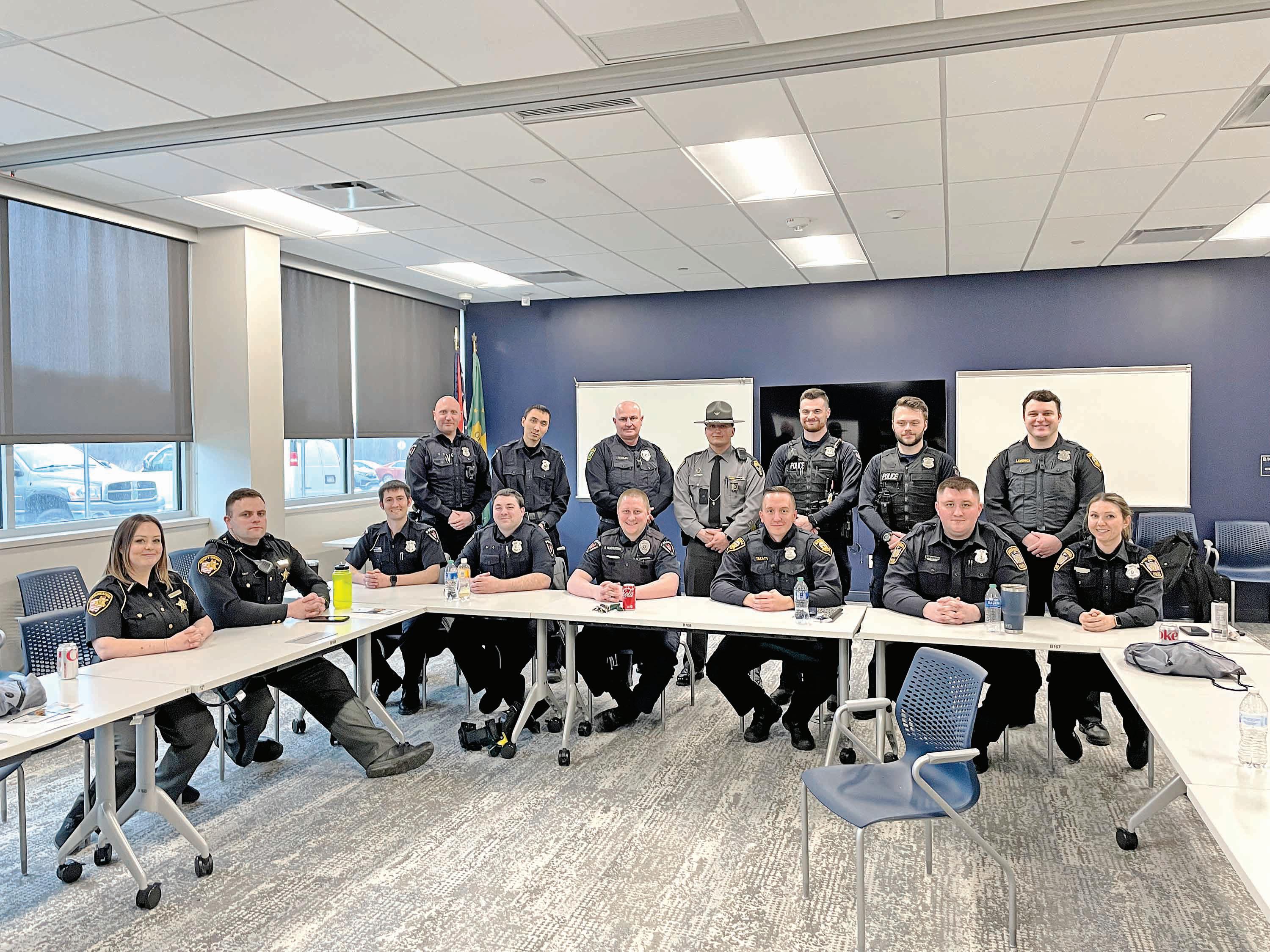
“This class has changed my view on mental illness,” Gavanditti said.
The program is a 40-hour comprehensive training on mental health provided to law enforcement to teach them how to de-escalate situations where an individual is in crisis.
The training is a collaboration between local law enforcement agencies and behavioral health providers.
Leaders included Geauga County CIT Coordinator Brian Ayer, of Geauga’s Ravenwood Mental Health Center; Chardon Police Chief Scott Niehus; and National Alliance on Mental Illness Geauga Executive Director Kimberly Carter.
Just as Seconds Count, So Do Words & Actions
Carter said CIT improves outcomes.
“What I mean by that is if the de-escalation techniques taught in
if those locations are not warranted or can be avoided,” Carter said. “The techniques in extreme cases save lives because a mental health crisis can go sideways and become out of control very quickly. Then, officers must respond with their tactical training to keep everyone safe. But, if those crises can be de-escalated before they become out of control, then everyone is safer.”
Gavanditti learned someone experiencing a crisis doesn’t need a person in a uniform — they just need a person.
“I have learned how much of an impact the words you speak to someone can be and may be one of the best tools you can have as an officer. My ah-ha moment was the moment I realized how much people crave human attention and sometimes, people just want to be seen and heard,” she said.
Fellow officer Andrew McKillen had his own “ah-ha” moment in a class scenario with Gavanditti involving the portrayal of a suicidal woman who had possibly been the victim of domestic violence.
“As we were talking to her, we discovered that this female was afraid of talking to men,” he said.
“And we were able to catch that, so I backed up a bit and let Officer Gavanditti talk to her and the
that these small observations and adjustments to those observations can go a long way in real-life situations involving crisis intervention.”
Police Make Differences Daily
“The lack of mental health crisis services across the U.S. has resulted in law enforcement officers serving as first-responders to most crises,” according to NAMI. “A CIT program is an innovative, community-based approach to improve the outcomes of these encounters.”
There are more than 800,000 sworn officers now serving in the United States, the highest figure ever, according to the National Law Enforcement Officers Memorial Fund.
In midst of a crisis, giving law enforcement as many tools as possible to do their jobs safely and effectively makes them an integral part of the solution, NAMI said.
“This is the darn best class we ever had,” Ayer told the new graduates. “You were engaged and asking questions and know some cases we’ve shared. I know our residents will be better off.”
CIT began in 1988 in Memphis, Tenn., and in Ohio in 2004 in Akron.
Geauga County’s program kicked off in 2006 and has held 18 classes
South Russell Village Police Lt. Todd Pocek attended the recent graduation.
“Law enforcement is not just about enforcing laws,” Pocek said. “It’s about helping a person through a crisis. That crisis could be they locked their keys in their car and are late for work, or they could be experiencing a manic episode. We can buy tools to unlock a car and train an officer to use them. We cannot buy a tool to help someone in distress, but we surely can train officers how to properly recognize signs and help resolve these issues.”
Role-playing is utilized as an integral part of the training and done in a way to make the experience as close to reality as possible.
“My ‘ah-ha’ moments were all the resources available in Geauga County,” said officer Kyle Raznoff, of University Hospitals Geauga Medical Center Police Department. “What I learned will make me a better officer going forward.”
Ayer said he hoped attendees could see those experiencing a mental health crisis through a lens of compassion and obtain new skillsets to provide support and assistance.
“We also want them to know that they have the help and support of a See Training • Page 6
PreSort Std U.S. Postage PAID Middlefield, OH 44062 Permit No. 77 OR CURRENT RESIDENT Postal Customer Local / ECRWSS facebook.com/middlefieldpost
Faith Matters Living Like Daniel
The last month or so, my wife and I have taken time each evening to pray for the persecuted Church worldwide. We use a prayer guide that daily highlights a different country where followers of Jesus experience opposition and persecution because of their faith.
It is heartbreaking to read of Christians in over 60 nations who face discrimination, re jection, isolation and sometimes displacement from their homes. Threats, beatings, imprisonment and even murder loom over the heads of millions who dare to read the Bible, share their faith or gather to worship the Savior.
Of course, this is not a new phenomenon. Since the days of the Early Church in the book of Acts, we read of the persecution the first disciples faced. Did you know that ten of the first Twelve disciples, plus Paul, suffered and died as martyrs? Church tradition tells us they were stoned, stabbed, speared, burned, crucified and beheaded.
al qualities while serving as an advisor. He never flinched or compromised when it came to matters of his Jewish faith. He was determined to remain faithful to God regardless of the cost.
By Roger Kruse
When King Darius agreed to issue a foolish decree that forbid anyone to worship any god but himself, Daniel simply carried on with his prayer life. With his upstairs windows opened toward Jerusalem, three times a day he got down on his knees and gave thanks to God, asking for His help. Those who were jealous of Daniel, quickly reported this to the King. Despite Darius’ fondness for Daniel, there was no changing the law, thus requiring Daniel’s punishment.
Many immigrants who first came to America did so seeking freedom to practice their faith. Thankfully, the First Amendment to our Constitution protects our rights concerning the free exercise of religion. Nevertheless, even here in the U.S.A., people of faith do sometimes experience some degree of discrimination.
The Bible warns us that opposition and persecution may, indeed, come knocking at our door. Jesus told His followers to first count the cost of becoming His disciple. Self-denial and a willingness to suffer are inherent to our call to be His followers.

I am inspired by the story of Daniel in the Old Testament. He was man of strong faith, wisdom and courage. He was providentially chosen to serve different kings during the time of Israel’s Babylonian Captivity. Daniel distinguished himself by his exception-
Daniel was thrown into the hungry lions’ den, which meant certain death. However, the next morning, it was discovered that miraculously Daniel was still alive. In fact, he was untouched and unhurt. God had sent an angel to close the mouths of the lions and he was later lifted out of the den.
Why do godly people suffer for their faith?
The answers are not simple. However, history has shown that a persecuted Church is often a growing one. Jesus told us that whatever persecutions we suffer for Him will not go unnoticed. We can assured that a great reward awaits us in heaven. Our physical life is temporary. Our days on the earth are numbered. However, our eternal life in God’s presence will have no end.
The example of Daniel beckons us to live courageously for Jesus. It may be our privilege to not only believe in Christ, but also to suffer for Him. Nevertheless, we are more than conquerors through Him who loved us. Nothing in all creation will be able to separate us from God’s love in Jesus.
Roger Kruse prays daily for persecuted Christian brothers and sisters around the world. Will you join him as we remember them before God?
Obituaries
Katherine Anne Woods
Katherine Anne Woods, age 78, passed away peacefully Friday, March 17, 2023.
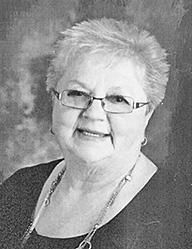
Kathy, as she preferred to be called, was born Jan. 25, 1945, in Warren, Ohio, to Frank Stephen and Mary Anne (nee Belich) Handsel. She grew up in Parkman Township and was a 1963 graduate of Cardinal High School.
Kathy most recently worked as an at-home caregiver to clients who became family — as many who knew her did. She was previously employed at Blossom Hill Retirement Home.
A former stylist, salon owner, Mary Kay representative and avid craftsperson, Kathy was known for her ability to make everything pretty.
She was kind, social and always willing to help others. Because of these qualities, she found and/or made friends everywhere she went. She was an active member of the Geauga County Dolphins, a local women’s group, and she enjoyed spending time with loved
ones, particularly spoiling her grandchildren: Mitchell, Lauren, Charlotte, and Jocelyn as “Grammy.” She was one-of-a-kind and will be deeply missed.
Kathy is predeceased by her parents, Frank and Mary; brother Frankie; husband, William “Bill” Woods; and nephew, Darren.
She is survived by her children, Mike (Tami) Skolaris, of Mooresville, N.C., James (Melissa) Skolaris, of Aurora, Marla (Jamie) Hocutt, of Brecksville; and siblings James (Audrey) Handsel, of Mitchell, S.D., Fran (James) Wesseling, of Cincinnati, and Barb (George) Graham, of Dublin, Ohio; and many nieces and nephews whom she dearly loved.
Memorial calling hours will be held Friday, April 28, 2023, from 5-7 p.m., at Sly Family Funeral Home, 15670 W. High St., Middlefield.


A Memorial Mass will be held Saturday, April 29, 2023, at St. Edward’s Church, 16150 Center St., Parkman Township at 11 a.m. Burial to follow at Parkman Cemetery.
Memories and condolences can be shared with the family at www.slyffh.com.

Page 2 Wednesday, April 19, 2023 Middlefield Post
karlovec group
8389 Mayfield Road, Suite B5
Chesterland, Ohio 44026
Phone 440-729-7667
FAX 440-729-8240
ads@karlovecmedia.com
editor@karlovecmedia.com
OFFICE HOURS
9:30 a.m. - 3 p.m.
Monday, Tuesday, Thursday, Friday
Closed Wednesdays
Jeffrey B. Karlovec, Publisher John D. Karlovec, Editor
Cassandra C. Shofar, News Editor
Jamie
A. Ward, Sports Editor
“MINERAL LAKE PARK” was at one time a very popular summer resort area. It was known all over northeast Ohio as a destination for boating and swimming in Mineral Lake and for picnicking and relaxation in the park area. This area was also a playground for many families from the Cleveland area, being accessible by the Chagrin Falls and Eastern electric railway that actually ran through the Park. It was owned by stockholders of the Mineral Lake Company formed around 1895 and operated until 1914 when the Village of Middlefield bought the park property.
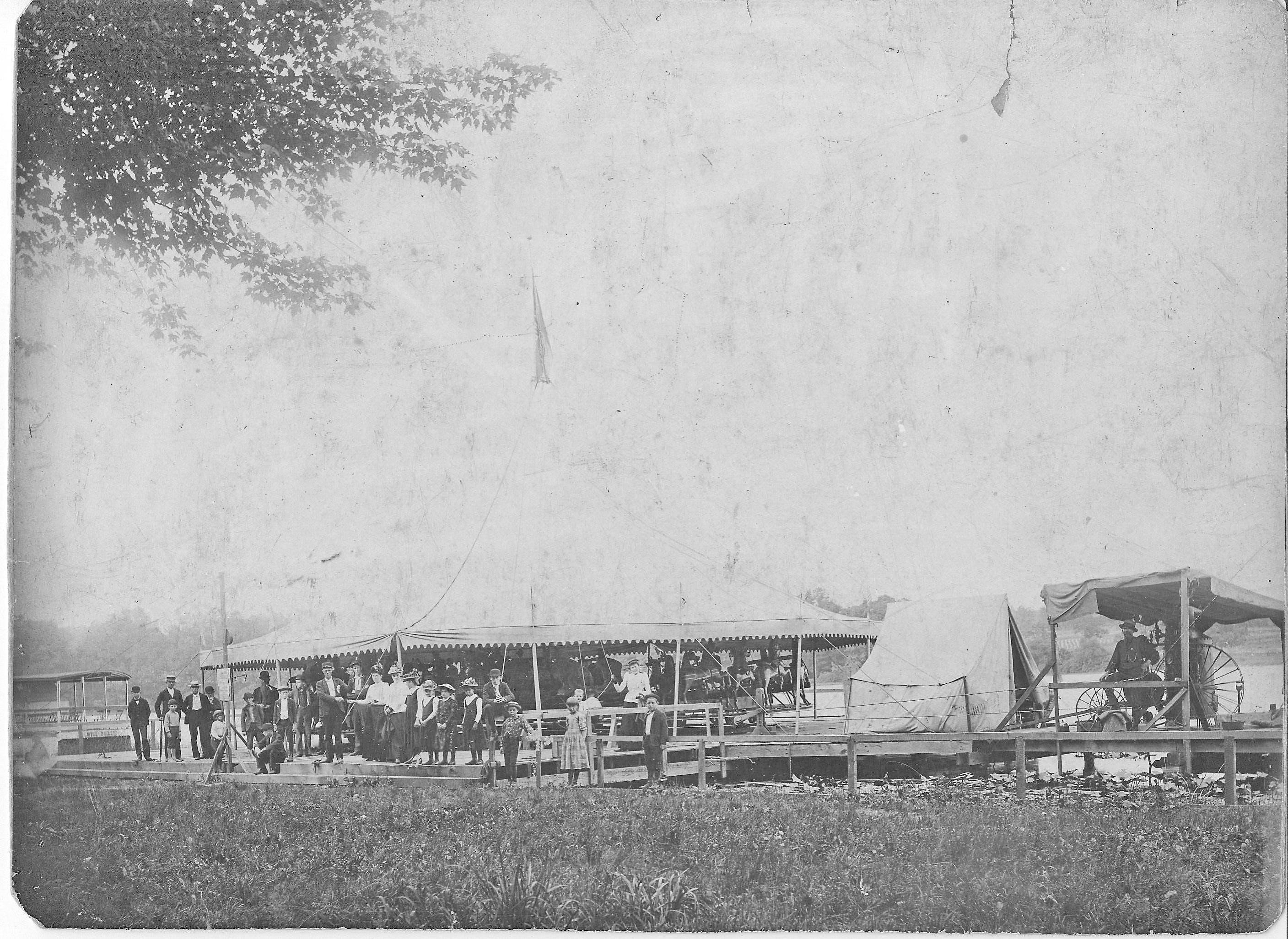
I have not found much more information about the resort area so if any readers can help with more details, please contact me at 440-413-0314.
Below is a picture of “SCHNEIDERS DEPARTMENT STORE” that was located on the site where the Good News building is now located. Dave Schneider operated this business for many years and was one of the few places in Middlefield where you could buy adult clothing. In the late 1960’s he opened the “SHE SHACK” next door in the former Geauga Vision building. This store specialized in young women’s cloth-

Community Meetings
Huntsburg Township: April 24, 7 p.m., Board of Zoning Appeals, public hearing to consider area variance application for property at 13045 Clay St.; May 2, 7 p.m., Board of Trustees. All meetings held at the Town Hall, 16534 Mayfield Road. Parkman Township: May 2, 7 p.m., Board of Trustees. All
meetings are held at the Community House, 16295 Main Market Road, unless otherwise noted.
Cardinal BOE: April 26, 6:30 p.m., work session. All meetings held at BOE Office, 15982 E. High St., Middlefield, unless otherwise indicated.
Karen
S. Kaplan, Graphic Design Pamela J. Molnar, Production Supervisor
Emma
McGuire, Paginator
Clay
Karlovec, Sales Representative Gayle Mantush, Sales Representative Barb Fontanelle, Sales Representative
Clinton
Deadlines
Sestak, Sales Representative
Regina
Swinerton, Classifieds
• Editorial submissions are printed as space is available, at the publisher’s discretion, and may be edited for length, clarity and grammar. All submissions are due by noon on the Friday prior to the Wednesday publication date for consideration for that edition.
• Email all editorial submissions to editor@karlovecmedia.com.
• The space reservation deadline for paid advertisements in that week’s Middlefield Post is 4 p.m. on the Thursday prior to publication. Late ads may be accepted at the discretion of management.
• Email advertising requests and questions to ads@karlovecmedia.com.
Circulation
• The Middlefield Post is distributed for free to homes and businesses in the communities of Middlefield, Parkman, Huntsburg and surrounding communities. It is mailed through the U.S. Postal Service.
• Copies are also available at rack locations within Middlefield and surrounding communities.


• Circulation in excess of 6,000.
• Produced by the Karlovec Media Group.
• In case of error, we will re-print that portion of an advertisement that was in error. Notification of error should be made within three days of published date.
• The Karlovec Media Group assumes no responsibility of error contained in any pre-printed material delivered with the paper as an insertion therein.
• The Karlovec Media Group reserves the right to reject or revise any advertisement or news item for publication. Letters to the Editor reflect the opinion of those signing them and not necessarily that of either the Karlovec Media Group, its affiliates or its advertisers. All letters submitted are subject to editing, and none will be returned.
• The opinions and representations contained in advertisements are those of the advertiser. They have not been verified by the Karlovec Media Group, nor should they be construed to represent the position or viewpoint of this newspaper or its publisher.
• Under no circumstances will any record filed in the county be suppressed at any time for anybody, except by order of court.
Page 3 Middlefield Post
Town Crier
Trash and Treasure Sale
April 21 and 22
Parkman Congregational Church is hosting its annual rummage sale on Friday from 9 a.m. to 4:30 p.m. and Saturday from 9 a.m. to noon. The church is located at 18265 Madison Road in Parkman.

Grange Rummage Sale
April 22, 9 a.m. to 2 p.m.
Huntsburg Grange is hosting a rummage sale and open house at Huntsburg Town Hall, 16534 Mayfield Road. Questions? Call 440-477-2822.
Gardening 101
April 22, 10 a.m. to noon
Geauga County Master Gardener Volunteers’ free Gardening 101 series continues with “Working the Garden” in the Patterson Center at the Geauga County Extension Office, 14269 Claridon-Troy Road, Burton. Master gardener Karen Wright will guide attendees in making smart choices early to minimize maintenance down the road.
Registration is appreciated. Contact Wendy Ward at 440-834-4656 or email ward.714@ osu.edu.
Masonic Lodge Open House
April 22, 11 a.m. to 2 p.m.
Western Phoenix Lodge #42, Free and Accepted Masons will host an open house at their lodge located on the third floor at 16196 Main Market Road in Parkman. The lodge will be open to the community for refreshments and a tour.
American Legion Fundraiser
April 22
Burton American Legion Atwood-Mauck Post 459 is hosting two fundraisers and gun raffles on the same day at the post located at 14052 Goodwin Ave., Burton. All proceeds benefit the post to add a wheelchair accessible ramp entrance and ADA compliant upstairs bathroom.
An Amish barbecue luncheon and bluegrass band concert featuring The Country Strings will be held from 2-6 p.m. Doors open at 1:30 p.m. Lunch ticket is $25.
Then, from 6-9 p.m., attend a World War II U.S.O. big band dinner dance featuring dinner by Mangia Mangia and music by Dan Zola Orchestra. Doors open at 5:30 p.m. Dinner ticket is $35. Event also features a silent auction and photo booth.
There will be basket and 50/50 raffles, four gun raffles and games all day.
Life Recovery 12 Step Meeting
Thursdays, 6:30-8 p.m.


The open group for men and women meets weekly at Horizons Christian Assembly, 14920 White Road in Middlefield and welcomes anyone struggling with grief, alcoholism, addiction, depression, co-dependency or any other habit that lessens the quality of life. The group offers support, encouragement, fellowship and discipleship.
Learn more at www.Horizons4you.com/ LifeRecovery.
See Town Crier • Page 7

Page 4 Wednesday, April 19, 2023 Middlefield Post
www.GeaugaMapleLeaf.com
Experiment on Sound

Jordak Elementary School third-graders recently conducted a science experiment on sound. The experiment demonstrated the science of sound by using an aluminum tuning fork where the students struck the fork to get it to vibrate. At the end of the tuning fork
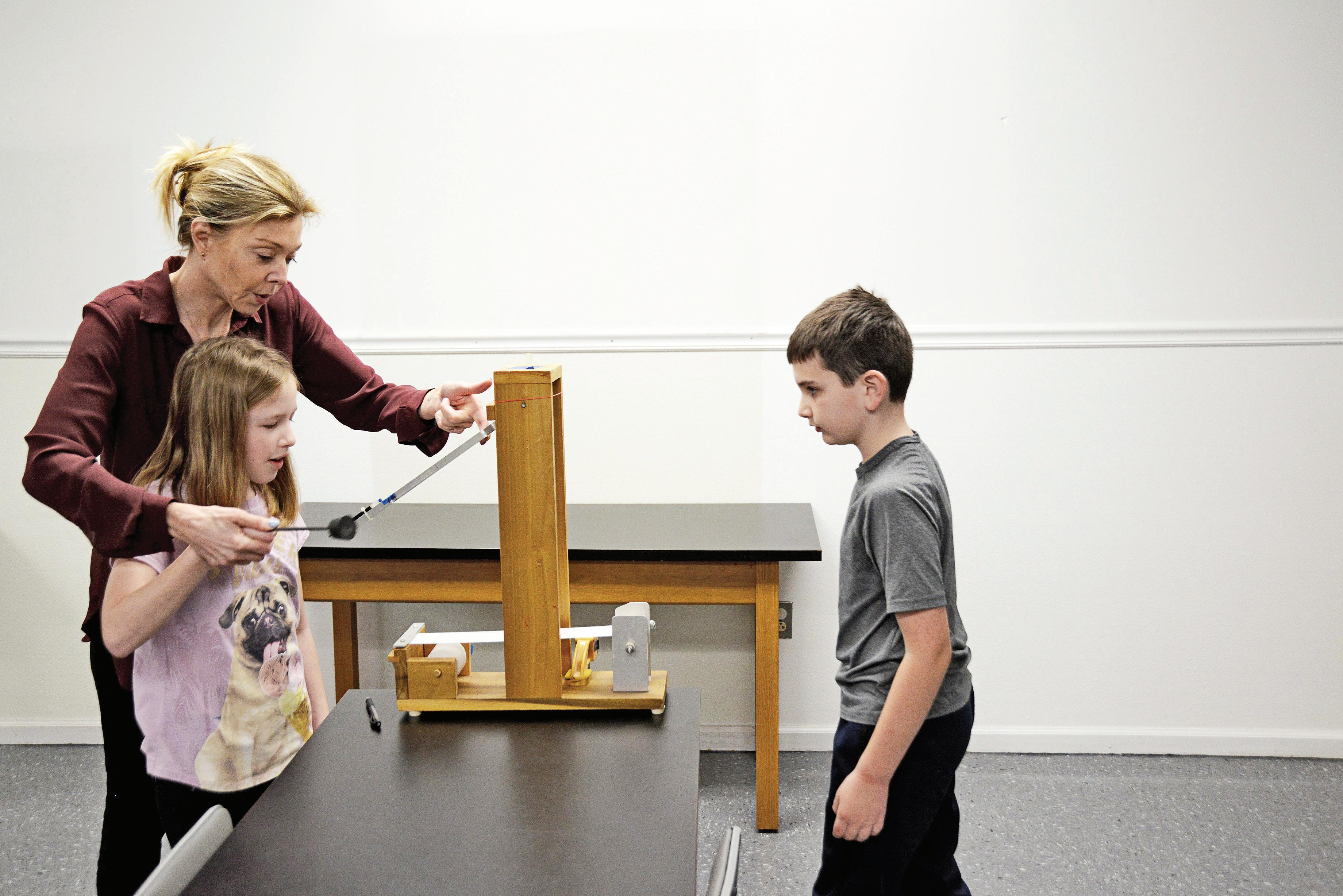
was an ink cartridge that passed over a paper strip and made marks on the paper. Since the fork was vibrating, the marks were waves representing the sound waves from the tuning fork. The kids loved doing the experiment, the idea of which came from Claire Zurbuch (Mr. Z).
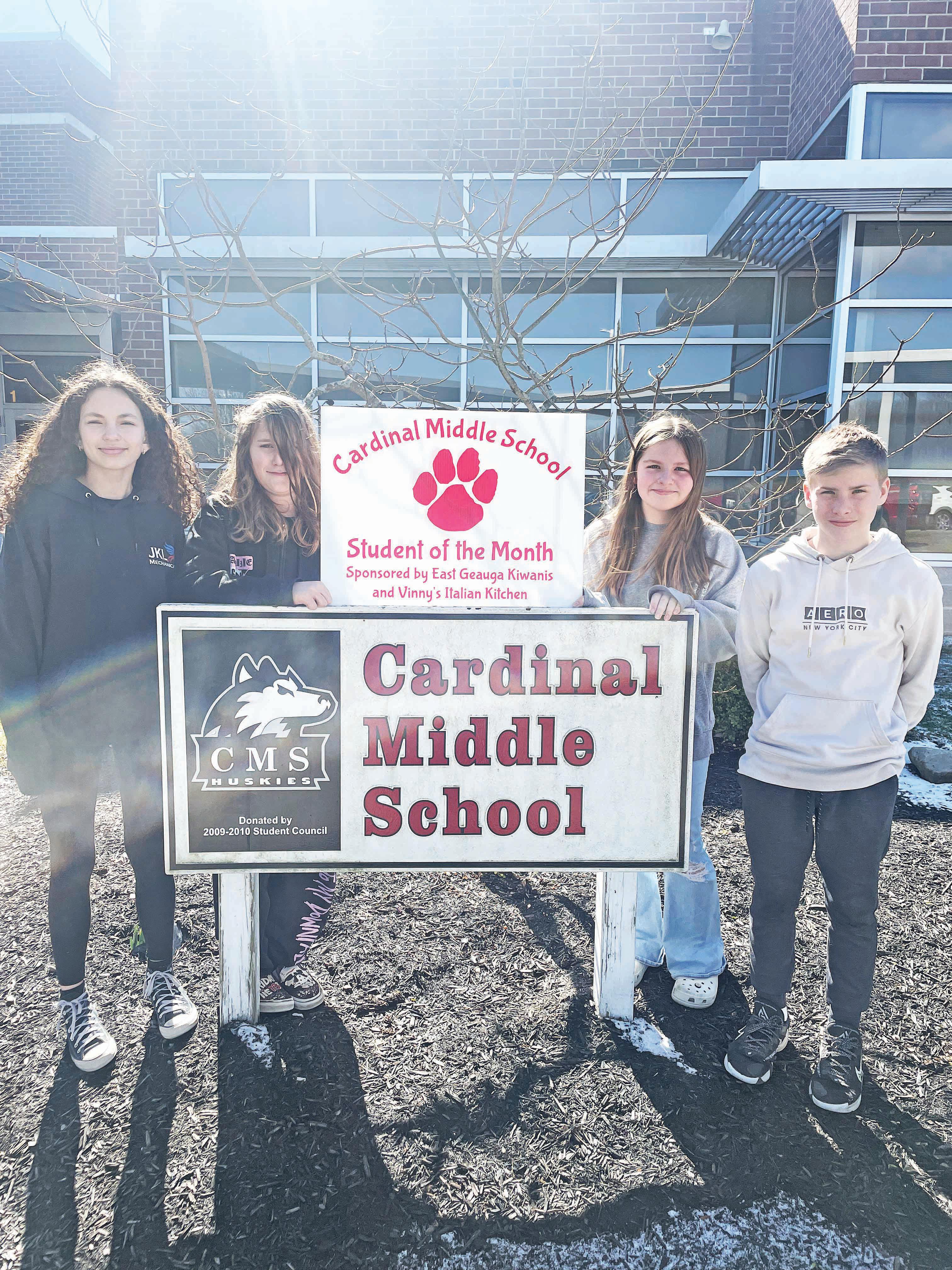
Cardinal Middle School Students of the Month

Coffee Break with Sue
Friendly hellos to all readers,
It seems folks are enjoying these warm days, especially the little ones.
On Wednesday, some of the Betzy Crist cousins were at Mom & Dad’s. Ones there were Katherine Byler and her daughter, Barbara Ann Detweiler, Crist Emma Burkholder, Joe Katie Byler and last, but not least, Dan P. Hostetler Esther. We had a
Last night we attended a fundraiser for the new school being built just east of KraftMaid, named – what else? – Town’s Edge
I don’t remember if I wrote the Byler nieces were also at Mom and Dad’s one day. There were Mel Lynda Smucker, Molly Kuhns, Ray Betty Byler, Ray Esther Gingerich, Sam Edna Kauffman, Allen Ray Barbie Yoder, Al Kathy Miller and her mom, Aunt Betty Burkholder. Another day well spent.
Andy Sarah Burkholder has now also
passed away some over 6 weeks after her husband, Andy. We are glad her suffering and sorrows are over. I’m sure they are greatly missed by the family.
We visited at Dad and Mom Yoder’s on Good Friday. Daughter Regina and Steven Gingerich, and family went with us. Dads are doing fairly well at this time.
It’s hard to believe that schools will be closing their doors soon for another season and, before we know it, will be opening again. Time flies!
We are having a garage sale Wednesday and Thursday of this week at Jon Becca/ Dad and Mom’s with lots of goodies. That’s the 19th and 20th. Y’all come; there are lots more in the area.


Cousin Mrs. Bert Edna Mae Hershberger is hospitalized at this time with serious heart issues. Please remember her in your prayers.
‘Til next time . . . Let us therefore come boldly unto the throne of grace that we may obtain mercy and find grace to help in our time of need. Heb. 4:16
Page 5
PLAIN COUNTRY
Cardinal
20 words for $12 Deadline: Friday at Noon MIDDLEFIELD POST 440-729-7667
Cardinal Middle School congratulates its Students of the Month for February. Special thanks to East Geauga Kiwanis and Vinny’s Italian Kitchen for sponsoring the students.
Training from page 1
number of agencies … 24 hours a day, that can come alongside them to provide the individual, and families at times, the help that they need in a time of crisis,” Ayer said. “Geauga County residents should know that there is a great amount of collaboration between law enforcement and mental health providers in an effort to provide help to those in the county experiencing a mental health crisis in a manner that shows the person dignity and respect.”
He added, “Families should know that law enforcement in Geauga County is committed to helping their loved ones in times of crisis get the help that they need. We know that their loved ones before their illness had hopes and dreams, and still have these in their lives, and at times, simply need some help and support.”




The group’s graduation keynote address featured retired Ohio Supreme Court Chief Justice Evelyn Stratton, who spoke about the Stepping Up Ohio initiative to reduce the number of people with mental illness in jails.
Middlefield Village police officers Paul Esposito and Jacob McIntee were hired last year and their completion of CIT meant every one of their department’s officers have graduated from the training.
“Law enforcement officers can sometimes fall into a habit of treating particular calls for service like a formula,” Esposito said. “CIT’s biggest takeaway is to not fall into that trap and ask more questions, look harder at details and use resources to try to help this person in a more lasting way.”
He said the training gave him significantly more tools to use on calls, which will translate to better results not only for the people he works with, but also for himself and his department.
“There was a point in the training, when dealing with a particular mental illness, that I saw some of my past interactions with individuals in a different light,” Esposito said. “It showed that, without this information on hand, I had been completely oblivious to signs, which could have changed my perspective of what was happening.”
Cookie-Cutter Solutions
Don’t Exist in Crisis
McIntee said he most valued learning how to interact in different ways with people in a mental health crisis, depending on the situation, and about the myriad resources available in the county.
“The training really opened my eyes to the definition of mental health crisis,” McIntee said. “I am able to recognize a mental crisis easier now and have a better understanding of how to interact with the person in crisis.”
The training explained how symptoms of certain mental illnesses can mimic symptoms of drug usage.
“Looking back at calls I’ve been on involving someone in a mental health crisis, I am now able to piece together why that person was displaying the symptoms they were,” McIntee said, adding he thinks everyone involved in public services should take a CIT class because of how helpful it was to him, personally.
“Mental health has been a long and ignored part of the job and through programs such as CIT via the county, we’re not only able to recognize persons in need of assistance, but we are trained to help them through a variety of situations, and if we can’t help, we can find the right organization who can,” said Pocek, also a past CIT graduate. “With any situation, in order to fix/help/ solve a problem, we must first understand the problem. This class gives the officers the ability to start understanding, which ultimately helps us guide persons through a difficult time.”
McKillen echoed his classmates on how the class changed his perspective on a lot of things.
“At the end of the day, everyone is a human with emotions,” he said. “And people in crisis/mental health situations are scared of what’s happening to them. If I can be the person that makes their day a little better because I’m listening to them and trying to get them help, then that’s great. Having these resources that this CIT class provided on my tool belt will overall make me a better law enforcement officer.”
Page 6 Wednesday, April 19, 2023 Middlefield Post
Town Crier
from page 4
OPERS Retirees Meet
April 26, 11 a.m.
The Geauga County Public Employee Retirees, Inc. (PERI) 86 will meet at St. Mary’s Banquet Hall in Chardon. Guest speaker is Geauga County Auditor Chuck Walter.
Call Mary Hedrick at 440-479-1952 to RSVP by April 21. Cost of lunch is $14. Yearly dues are $5.
Red Cross Blood Drive
April 27, 12-6 p.m.
American Red Cross will host a blood drive at Middlefield Library, 16167 East High St., Middlefield. Visit RedCrossBlood. org or call 1-800-733-2767 to make an appointment.
Spring Drive-It-Yourself Tour
May 6, 10 a.m. to 3 p.m.
Join Destination Geauga’s 19th annual self-guided tour of Geauga County businesses.
FOR RENT
Burton Ranch Condo: 2/BR, 2/Bath, AC, laundry, 2-car attached garage. No pets/smoking. $1,600/month. Includes snow plowing, lawn, trash. 440-221-0649.
COMMERCIAL RENTALS
FOR LEASE: 120x60 arena barn with pastures for agricultural use or storage and grounds for nursery/landscape operation. Newbury. 440-564-7363.
FOR SALE
Maple Syrup for sale: 1 gal. $38; Half gal. $22; 1 quart $13. 14899 Hayes Road, Middlefield. 440-632-9651. Gun rack, sofa, toddler toys, large aquarium with stand, vintage coffee mill, Billiard weight set. Cheap. 440-7291082.
Motorcycle helmet, saddle bag, chaps, jacket, vest, gloves; all XL, like new. $600. 440-285-3114
Western saddle $500. Honda push-mower $300. (8)Fishing poles and tackle $200/for all. 845-987-0079.
Teeter Inversion Table: as seen on TV, relieves all back pains, older model, excellent condition, $100. 440-4316944.
NEW Panasonic cordless phone, still in box, 2 additional handsets, can expand. White w/blue trim. 440-2239471. Also Wanted: Level/Transit.
Couch w/love-seat $200. Old table $75. Cedar chest $40. Large cabinet $40. Old fashioned mirror $40. Single bed $40. 440-632-9675.
Antique clocks, many. Oak crank wall-phone $369. Humpback chest $79. Wooden rocking horse $79. Kids spring rocking horse $49. 440-338-3563.

Two (2) Tires: LT225 / 65R17107 / 1035. Excellent tread. Like new. $60 each. 440-554-5731.
Celli Spading Machine: 55” wide, will spade up to 12” deep, had had very little use. $5,000 OBO. 440-5482414.
GARAGE/ESTATE SALES
ONE DAY SALE!! Saturday, April 22 8am-4pm at Abundant Life 13724 Carlton St, Burton. Household goods, elementary school books, school desks, office furniture. Proceeds to be used for community outreach.
Each stop offers either a discount, giveaway or sample to enjoy. Pick up a map of participating businesses and collect a stamp at each stop.
At the end of the tour, head to Century Village’s Bond building in Burton for the finale with music, food and a chance to win prizes from local businesses. Those who have visited 10 or more participating businesses will be entered to win the grand prize. Drawings begin at 4 p.m. For more information and the list of participating businesses, visit www.destinationgeauga. com or call 440-632-1538.
Red Wagon Spring Luncheon
May 6, 11 a.m. to 3 p.m.
The Christ Child Society of Geauga County is holding its 30th annual Red Wagon Spring Luncheon and Chinese auction at St. Noel Banquet Center in Willoughby Hills. Guest emcee is Jen Harcher, Channel 8 meteorologist.
Tickets are $50 per person. Email Jeanette Bussoletti at jbussoletti@yahoo.com or call 216-401-8190 for more information and reservations.
Real Estate Transfers
Following is a list of area real estate transfers for the weeks ending March 31 and April 7, 2023, provided as a public service by the Geauga County Auditor’s Office. Transfers may involve the sale of land only.
HUNTSBURG TOWNSHIP
Steven and Kathleen Miller, 11131 Kile Road, to Aden A. Miller and Karolyn Marie Byler, $130,000. (5.00 acres)
Wayne P. Miller, 11991 Madison Road, to Norman P. and Rosa Miller, $212,000. (3.28 acres)
Dan J. and Ellen A. Yoder, 13400 Bundysburg Road, to Marvin M. and Emma Miller, $350,000. (9.50 acres)
16281 Mayfield LLC, 16281 Mayfield Road, to Wayne P. and Lorena P. Miller, $300,000. (20.67 acres)
Paul W. Miller, Chardon Windsor Road, to Myron Miller, $22,000. (1.99 acres)
MIDDLEFIELD TOWNSHIP
Rodney A. Troyer (TOD), 17222 Kinsman
Road, to Aaron A. and Elyse L. Miller, $550,000. (7.56 acres)
William F. and Lucinda Mullet, 13620 Bundysburg Road, to William W. Mullet, $215,000. (3.53 acres)
Rasmus Boje Nielsen and Averi Sauder, 17595 Kinsman Road, to 17595 Kinsman Road LLC, $145,300. (3.00 acres)
MIDDLEFIELD VILLAGE
NVR Inc., 15231 Woodsong Drive, to Raj Ramabhai Patel, $340,000. (0.21 acres)
Thomas J. Vanek and Jennifer L. Reed, 14695 North Meadow Wood Drive, to Joann and Pascal Vincelli, $260,000. (0.28 acres)
Brightwood Lakes Development Company, 14709 Steeplechase Drive, to David T. and Dawnetta S. Wartluft, $39,900. (0.26 acres)
PARKMAN TOWNSHIP
Joshua David and Amy Sue Federspiel, 16450 Vernon Drive, to Ashley Marie and Joshua B. Gibson, $375,000. (1.40 acres)
PETS & ANIMALS
MS Kennels on the Farm, LLC offers in-home pet care. Call 440-636-2421.
Brother & sister cats need an indoor home. Very sweet, affectionate, 9-10 years old, fixed & vaxxed. Call Rebecca 440-321-2485.
MISCELLANEOUS
FREE fact: now dealers are putting animal sedatives! in drugs along with fentanyl! Sure to kill you.
REAL ESTATE
HELP WANTED
Suburban Driving School-Chesterland, looking for individuals to teach driver’s education. Paid training. Call 440729-4360 or 216-536-6708 or email resume: contact@ suburbandriveohio.com.

Maverick Environmental Equipment hiring Heavy-Haul Driver! Class A-CDL required. FULL TIME, great benefits, great team! Call Tim at 440- 488-7880.

Looking for 4-6 experienced campers, preferably friends, to camp on my farm 5/1/23 to 9/1/23 in exchange for 20 hours of light work per month. Text 330-691-7649. Applicants will be vetted.
We buy Houses and Land. Any condition or situation. Fast, friendly, local. Westwind Property Solutions. Text/call Wayne today at 330-269-9595.
Lot for sale. Thompson Township. Buildable. 1 acre. Wooded, scenic, quiet side street $15,900. 440-289-0708.
LOT FOR SALE: .34 acre lot in Bainbridge with Lake Lucerne amenities. Make offer before I list with realtor! 440-5962608.
SERVICES
Offering special discounts for interior and exterior painting and staining. 20+ years experience. Professional and insured. Call Dan 440-342-4552.
Joe Eicher doing roofing, siding, remodeling, cleanout houses, we do most anything. Call between 8a-4p, 440813-4272. No answer, leave message.
RM Roofing & Construction: Specializing in metal roofs, siding, pavilions, decks, garages and some remodeling. Call Ray at 234-830-1404.
WANTED TO BUY
4-wheelers, 3-wheelers, dirt bikes, mini-bikes, go-carts, golf carts, gators, farm tractors/equipment, trailers, riding mowers, snowplows. Paying cash. 440-413-3119.
Will pay cash for sports cards & collectibles. Entire collections or individual cards. Organized or unorganized. Call or text Rich at 440-552-0691.
Buying all Stanley Bailey planes and machinist tools. Call Karl at 440-812-3392.
Old fishing tackle wanted: fishing lures (wood or plastic), mouse to bear traps, wooden duck decoys. Call Lee 440313-8331.
Level/Transit 440-223-9471.
WORK WANTED


Will do in-home elderly care 24/7. Certified with references. 440-313-1804.

Will do housekeeping and dog sitting. References available. 440-313-1804.
Page 7 Wednesday, April 19, 2023 Middlefield Post
Classifieds 440-729-7667 20 words for $12
Classifieds

Page 8 Wednesday, April 19, 2023 Middlefield Post
