A Quick Look at Where They Started
The one-piece ski suit has a longer history than most people think. Italian fashion designer Emilio Pucci created the first one-piece ski suit in the late 1940s, originally designing it for a female friend at Zermatt, Switzerland.
The image landed in Harper's Bazaar's 1948 Winter Issue — and just like that, a trend was born.
Through the 1970s and into the 1980s, the one-piece exploded in popularity. Bold neon colors, wide shoulders, and a full-body silhouette made it the defining look of ski culture. Then the 90s happened.
Separate jackets and pants took over, and the onesie got quietly pushed to the back of the closet.
For about two decades, wearing one felt more like a joke than a style choice.
What Actually Brought Them Back?
The comeback started picking up real momentum around 2020–2022, and a few things drove it.
Retro fashion had a massive resurgence. The same wave that brought back baggy jeans, chunky sneakers, and vintage sportswear also pulled the one-piece back into the spotlight. Social media accelerated that — a bold neon suit on a snowy mountain photographs extremely well, and skiers noticed.
Celebrity and influencer visibility helped a lot. High-profile athletes and outdoor lifestyle creators started wearing one-pieces again, and their audiences followed. Once something hits that kind of reach, it moves fast.
But here's the thing that actually matters: the suits themselves got genuinely better. That's not marketing — it's a real shift in materials and construction that changed what these suits can actually do.
Old vs. New: How Much Has the Tech Actually Improved?
This is where it gets interesting. The 80s originals looked great but had real limitations. The fabrics were mostly nylon and polyester with basic water resistance.
Breathability was poor, which meant you'd get sweaty on hard runs and cold the moment you stopped. Bathroom breaks were... a whole ordeal.
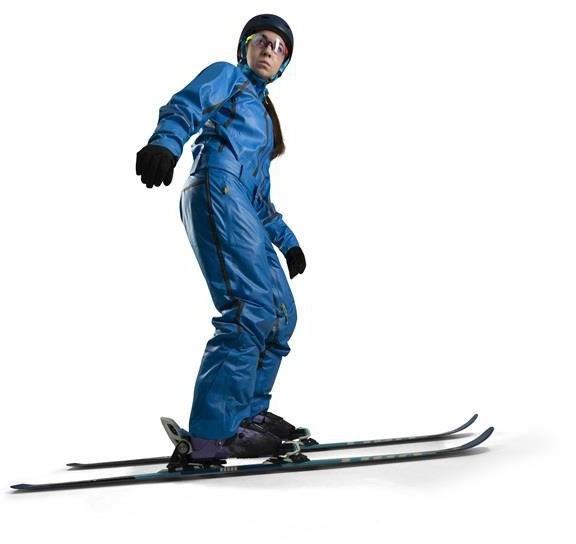
Modern one-piece suits are a different product entirely.
Feature 80s One-Piece
Waterproofing Basic water-resistant coating
Breathability Minimal
Insulation Fixed lining, often too hot or too cold
Mobility Stiff, limited stretch
Modern One-Piece
Fully taped seams, 20K–30K rated membranes
Breathable membranes + pit/thigh vents
Synthetic or bio-sourced fill, moisture-wicking
Articulated cuts, stretch panels
Bathroom access Full unzip required 350-degree waist zippers, quickrelease systems
Safety features None
Built-in RECCO avalanche reflectors on select models
Today's suits use three-layer Gore-Tex construction, PFC-free DWR coatings, and helmet-compatible hoods — features that simply didn't exist in ski gear 40 years ago.
Some high-end suits even include integrated snow skirts and underarm ventilation to manage temperature during intense runs.
The result is a suit that keeps snow out far more effectively than any jacketand-pants combo, because there's no gap at the waist for it to get in.
So Is a One-Piece Actually Better for Performance?
For certain conditions, yes — noticeably so.
In deep powder, a one-piece is hard to beat. No gap at the waist means no snow getting up your back when you fall or dig into a drift.
If you ski in cold, high-snowfall environments, that alone is worth a lot. The full-body seal also traps heat more efficiently, which matters on long days and early mornings.
That said, a one-piece has a few practical tradeoffs you should know about. Layering is less flexible — if temperatures swing a lot during the day, you can't just pull off your jacket.
And the bathroom situation, while much improved with modern zipper systems, is still more involved than with two-piece gear.
For resort skiing in variable weather, a quality two-piece might give you more flexibility. But for powder days, cold temperatures, or anyone who just wants one reliable piece of outerwear to handle everything — a modern one- piece holds up well.
What to Look for If You're Buying One Now
You don't need to spend $1,000 to get a good suit, but the features you should prioritize are clear. Look for fully taped seams, a waterproofing rating of at least 20,000mm, and some form of ventilation — pit zips or thigh vents make a real difference on hard runs. A 360-degree waist zipper is worth paying extra for.
And if you're buying a women's cut specifically, look for articulated construction around the hips and shoulders — the fit has improved significantly in recent years.
The one-piece ski suit came back because it earned it. Better materials, smarter design, and real performance improvements make today's version a serious piece of gear — not just a nostalgic throwback.
If you haven't tried a modern ski onesie yet, the slopes might surprise you.
Frequently Asked Questions
Why did the one piece ski suit become popular again?
Ans: Retro fashion trends, social media visibility, celebrity influence, and major improvements in materials and construction helped drive the one piece ski suit comeback.
How are modern one piece ski suit designs different from 80s versions?
Ans: Modern suits feature waterproof membranes, taped seams, ventilation systems, stretch panels, improved insulation, and easier bathroom access compared to older stiff, poorly breathable designs.
Is a one piece ski suit better for powder conditions?
Ans: Yes. The full-body design eliminates waist gaps, preventing snow from entering and trapping heat more effectively during deep powder or coldweather skiing.
What are the main drawbacks of a one piece ski suit?
Ans: Layering flexibility is limited, and bathroom breaks remain less convenient than two-piece gear, despite improved zipper systems in modern designs.
What features should you look for when buying a one piece ski suit?
Ans: Prioritize fully taped seams, at least 20,000mm waterproofing, ventilation zips, articulated construction, and a 360-degree waist zipper for better performance and comfort.