
Sterling® Premium is crafted in America with pride by people who bring generations of papermaking skill and passion to every product we make. Engineered for next-level consistency, Sterling Premium offers quality, printability and sustainability. Available in matching digital and offset sheets, Sterling Premium is made using 10% recycled fiber carrying three chain-ofcustody certifications. All of this backed by service and support as strong as our passion for paper.
Sterling Premium. Premium sheet. Premium impression.

billerud.com

KAYE AND SASHA KAYE-WALSH ARE EDITORS AT GDUSA
Comments, suggestions and letters can be sent to editorial@gdusa.com.
I am trying to integrate meditation into my life. It is not going well. Rather than focusing the mind through guided practice, I find myself wandering into news and politics, tomorrow’s to-do list, snack fantasies, plans for the next streaming binge, snack fantasies, self-recrimination for shortcomings past and present — and, inevitably, more snack fantasies.
(I don’t judge your fantasies so don’t judge mine.)
Despite my lack of discipline, one core lesson from meditation has stayed with me: time flows like a river and life unfolds in an endlessly shifting rhythm of gain and loss. Remain centered amid the constant current of momentary change, remembering that this, too, shall pass. Not Buddhism exactly but certainly Buddhist-adjacent.
“Remain centered” also happens to parallel what many of our 2026 People to Watch are preaching. Their collective message: the shiny new tools, technologies and tactics of the moment are being overvalued, while the timeless fundamentals of craft, artistry, authenticity, empathy, strategy and ideas are being undervalued.
A few voices from the group:
“The future of design belongs to those unicorns who can dance between emerging technologies like AI, generative tools, motion systems, and spatial computing — and the one thing technology will never replicate: the human heart.”— Diana Quenomoen
“There is no question that artificial intelligence is going to greatly influence our industry, but fundamentally I believe the same skills required now will only be heightened in 30 years — the ability to (1) storytell and (2) craft exquisitely.”
— Anjela Freyja
“The industry puts too much weight on novelty — AI aesthetics, fast visual trends, work built for social feeds but not to last. What gets overlooked is durability.” — Ben Muckenstrum
“It is critical to keep up with today’s media landscape, but in doing so, the industry often loses sight of the big ideas that transcend tactics.” — Ethan Schmidt
“I would like to see the weight of which we are valuing technology, speed and efficiency shift a little in favor of craftsmanship [and] authenticity.” — Kelli Woodell
To be clear, these are thought-leaders, not Luddites: they acknowledge the potential of today’s emerging technologies to support and faciliitate the process. But they are united in a central belief: the human heart and brain are the ultimate and essential tools for human connection and meaningful communication.



GDUSA-Graphic Design USA Volume 63/No. 1 January/February 2026 Kaye Publishing Corporation (ISSN0274-7499/USPS227020). Published 6 times a year with combined issues in January/February, March/April, May/June, July/August, September/October, November/December.
Executive, editorial and advertising offices at 594 Dean Street, Office 22, Brooklyn NY 11238. Phone: 212.696.4380. Website: www.gdusa.com.
SUBSCRIPTION: Domestic, $72 one year. Canada and Mexico $140 per year. Periodicals postage paid at New York NY and additional mailing office.
POSTMASTER: Send address changes to GDUSA - Graphic Design USA, PO Box 3072, Langhorne PA 19047. Permit #224.
GDUSA starts each year by featuring select creative and design professsionals who embody the spirit of the community. People we have come to know for their talent, leadership, influence, newsworthiness, insight, business savvy and/or public service. For 63 years now, this endeavor has provided a glimpse into what moves, motivates, worries and inspires — would it surprise you to know that the implications of AI are among the topices roiling the waters? A caveat: in a community this big and awash with talent and accomplishment, we know our limits and acknowledge our subjectivity. So give us your feedback and nominations for next time around. Meanwhile, enjoy the profiles, the stories, and the comments of this year’s truly exceptional cohort known as GDUSA’s People To Watch.
With the help of leading graphic design programs nationwide, we celebrate exceptionally promising students nearing graduation or recently graduated. We invite each of them to share a bit of themselves, what sparked their initial interest in the discipline, their hopes and dreams, their fears, their heroes and influencers. It’s a win-win: the students get recognized and we get energized. Represented are students from the traditional elite art and design institutions, wonderful public and private university departments, select online and continuing education programs. Cometh the spring — it cannot come soon enough here in the northeast — we will also publish our annual list of Top Design Schools & Programs are helping to shape these rising stars.
We have compiled as comprehensive a list as we are able of past People To Watch and published it on www.gdusa.com. (In the early years, the GDUSA project was rocky and recordkeeping sometimes fell by the wayside.) As you will see, the roster includes undisputed legends and legends-to-be and a few one hit wonders. This started with pioneering luminaries including Milton Glaser, George Lois, Lou Dorfsman, Saul Bass, Ivan Chermayeff, Massimo Vignelli, Primo Angeli, Henry Wolf. It carried right on up through the halcyon years of the 1980s and 90s and, of course, every year of this tumultuous 21st century. It is people watching at its best, a Hall of Fame of sorts, and a reminder that today’s creative professionals stand on the shoulders of giants.






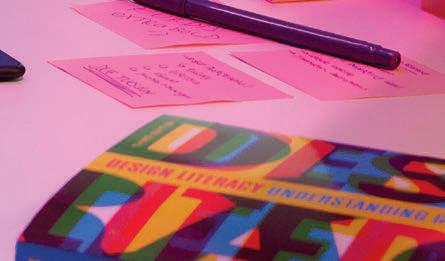

For 63 years, since 1963, Graphic Design USA | GDUSA has been a trusted news and information source for the creative community. After six decades on Madison and Fifth Avenues in Manhattan, we are now based in Brooklyn’s Prospect Heights neighborhood.
Today, GDUSA covers projects, people, technologies, commentary and analysis through our six-times-a-year print magazine, a widely read website, a monthly newsletter, a digital edition, periodic podcasts, and several national design competitions celebrating excellence in Graphic, Package, Web, Inhouse, Healthcare, and Sports Design. Our initiatives also include annual recognitions such as People to Watch, Designers for Good, Students to Watch, Top Design Schools, along with benchmark reader surveys on print, technology, and more.
In recent years, the purely news function has increasingly migrated to our website, where speed and flexibility allow us to report in real time. On our website today you’ll find stories on a global Netflix ad campaign; JDO’s package design for a Dove x Bridgerton collaboration; Chermayeff & Geismar & Haviv’s refreshed identity for the New York Road Runners; Design Army’s surreal mural in downtown Washington, DC; CF Napa’s 50th anniversary in branding; YouTube’s new color palette; Chase Design Group’s expanding European presence; and a new podcast from GDUSA favorite Paul Leibowitz. Tomorrow, there will be more.
We hope you continue to enjoy the print and digital magazines — and that you will make visiting gdusa.com a regular habit for daily news and updates.
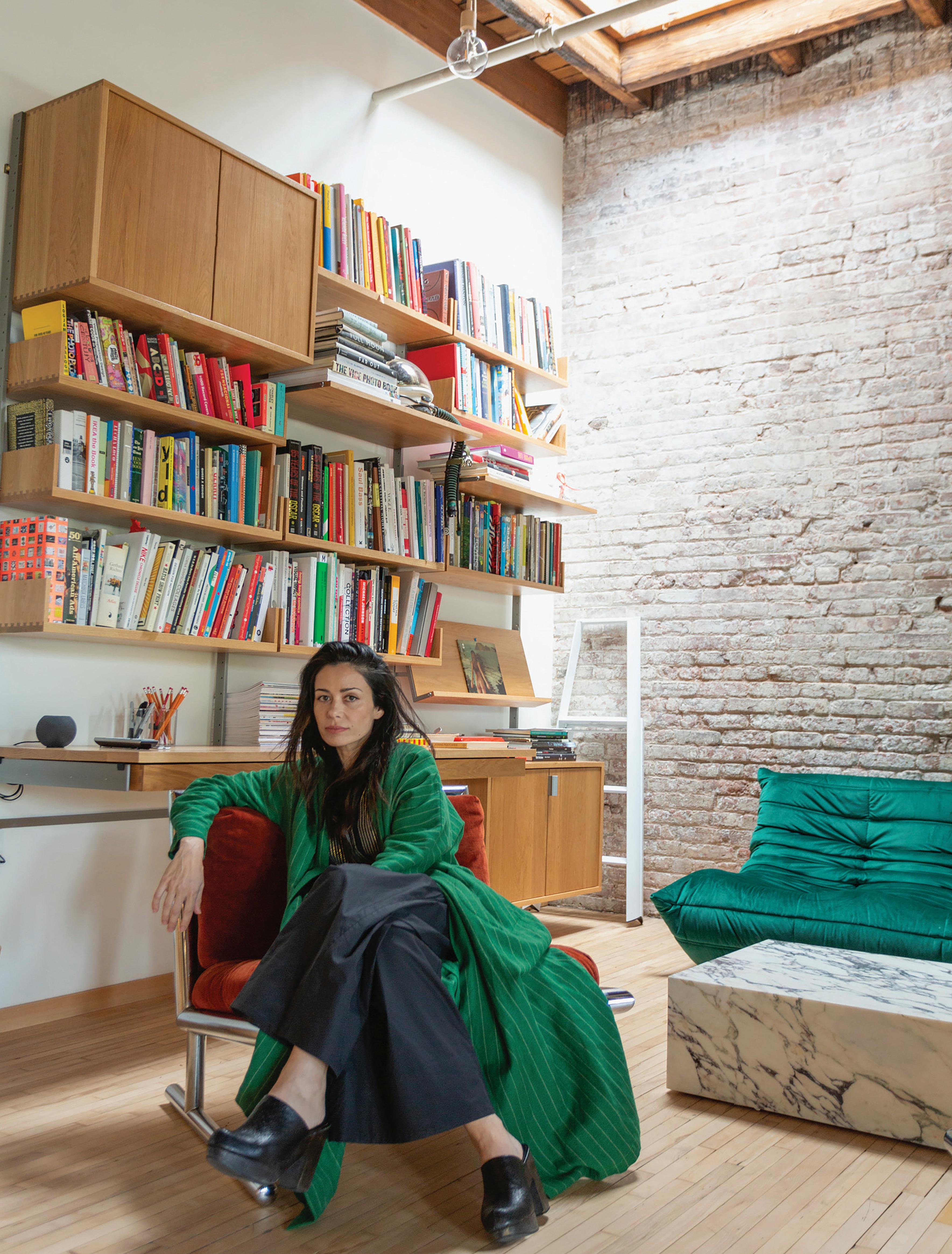
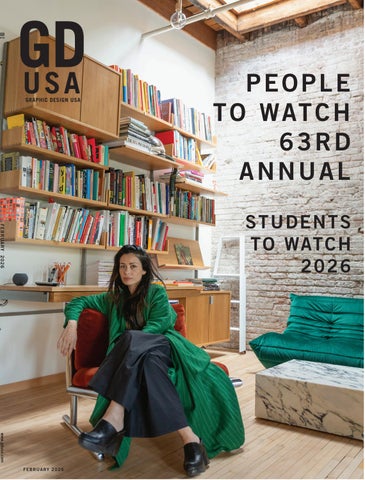
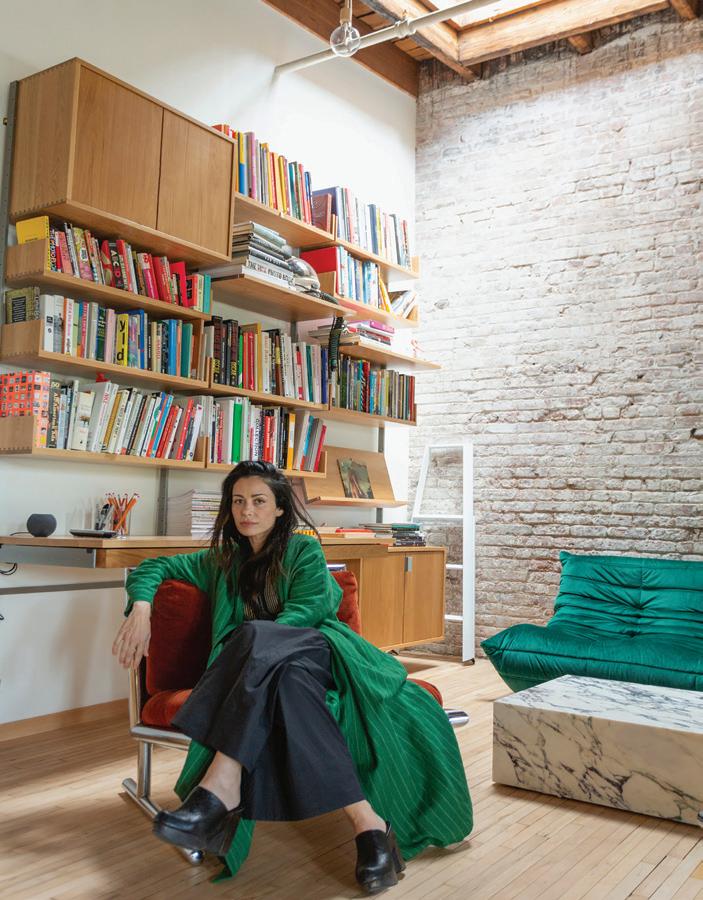
THE COVER
Larissa Marquez is Managing Director, Design, Rethink. She leads the independent agency’s design practice which includes brand strategy, visual identity, packaging and design systems. With over a decade of leadership experience, Larissa has guided complex, global initiatives for cultural and luxury brands, with senior roles at renowned studios like Pentagram and Gretel. GDUSA’s 63rd annual People To Watch special report begins at page 8.
COVER PAPER CREDIT: The cover of this edition of GDUSA is printed on FSC-certified Kallima Coated Cover C2S, part of the Kallima Paper family of coated cover paperboard. Kallima products are proudly manufactured by Rayonier Advanced Materials, a global leader in sustainable forest management practices. Their light-weight, fully bleached coated board products are used in commercial printing, publishing, prestige packaging, high-impact graphic corrugated containers, pointof-purchase displays and litho-laminated packaging. Kallima has a distinct low-density high-bulk construction resulting in less trees used and signficant cost savings to the customer. Contact: kallimapaper.com and 1.800.411.7011
Gordon Kaye PUBLISHER
Sasha Kaye-Walsh EDITOR/WEBSITE & SOCIAL MEDIA
Gordon Kaye EDITOR/PRINT
Charlotte Kaye GRAPHIC DESIGN
Kyle Redfield CHIEF TECHNOLOGY OFFICER
Althea Edwards READER SERVICES
Angelo Abbondante ACCOUNTS MANAGER
Shane Lukas
Yara-Nee Dennis A Great Idea INTERNET SERVICES
Maliya Malik DESIGN/SOCIAL MEDIA ASSOCIATE
Jeff Rosenberg Virtual360 PHOTOGRAPHY
Ron Andriani AD SALES + INTEGRATED MARKETING 201.669.9884 randriani@ gdusa.com
Milton L. Kaye 1921-2016 FOUNDER
Jay Lewis
PHOTOGRAPHER EMERITUS
COPYRIGHT 2026 KAYE PUBLISHING CORPORATION






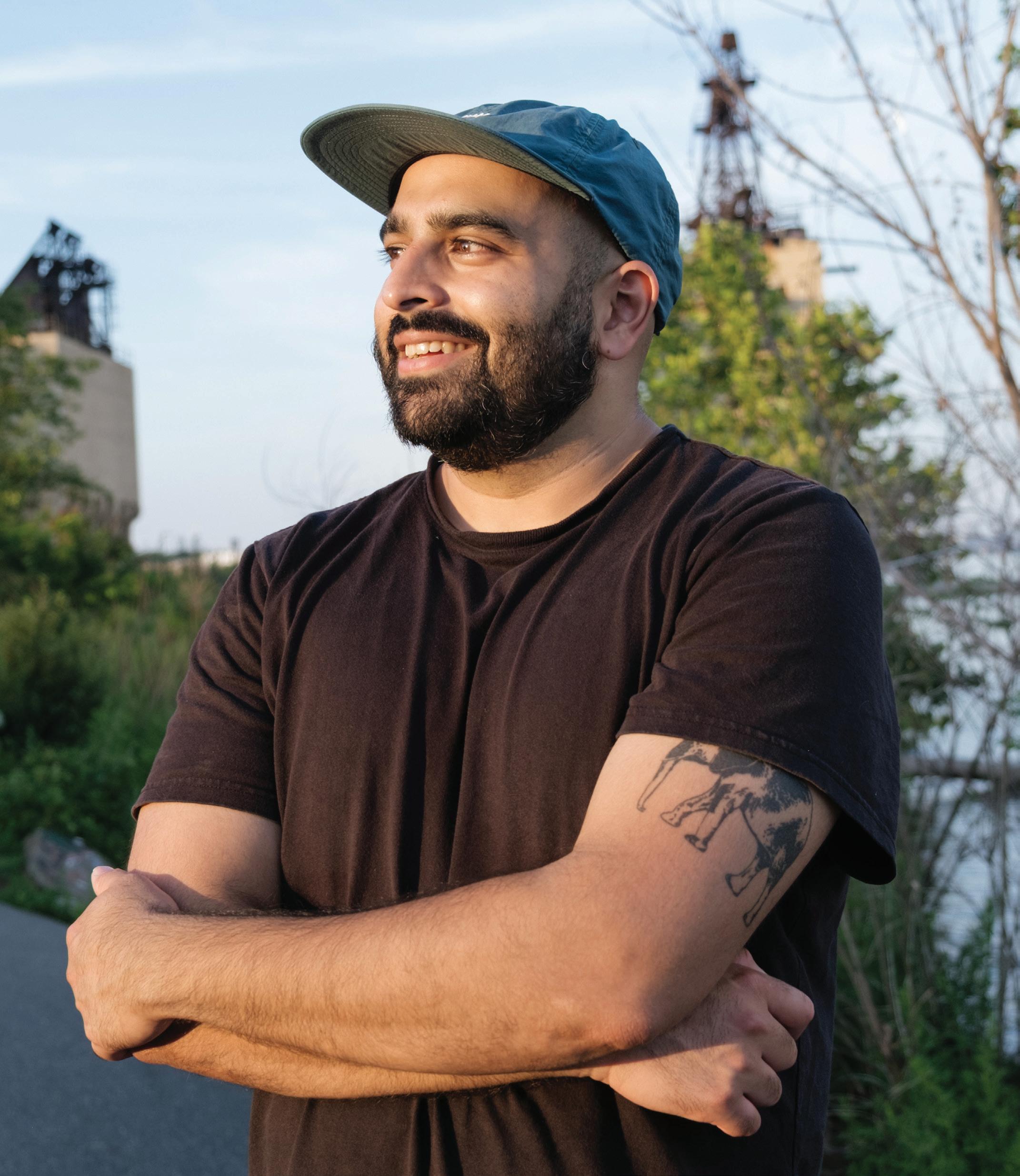
FOR SIX DECADES, THE FIRST EDITION OF GDUSA HAS RECOGNIZED ‘PEOPLE TO WATCH’ WHO EMBODY THE SPIRIT OF THE CREATIVE COMMUNITY.
Individuals we know and respect for a combination of talent, success, leadership, newsworthiness, influence, thought-leadership and community service. To kick off our 63rd anniversary year, we hear from this year’s cohort about the past, present and — most important — the future of graphic design. In a field so deep in talent and broad in numbers, this is clearly a subjective process. We hope you enjoy our 2026 selections, and appreciate their take on where the creative profession has been and where it is going. You might also wish to check out a listing of past people to watch on our website at gdusa.com
FOUNDING WORKER/OWNER FORGE, PHILADELPHIA PA/NEW YORK NY
Aneesh Bhoopathy is a designer based in Philadelphia and New York City. As a founding worker-owner at Forge, Aneesh leads identity, design systems, UX, and end-to-end creative for consumer brands and left political campaigns alike. His client work ranges from D2C brands like Jambys, and Birthdate Candles, to movement organizations like DSA and electoral campaigns including Zohran for New York City and Julia Salazar for State Senate.
WHAT PRINCIPLES GUIDE YOUR DESIGN DECISIONS?
a) Develop your instincts through continuous observation, curiosity, and experimentation.
b) Trust those instincts. If a creative direction is capturing your attention and interest, follow it. Even if it isn’t in the brief. Your attention is showing you a path forward and you have to follow that attention where it leads. More often than not it is trying to tell you something useful.
c) Where possible, learn how to translate those instincts into words. This is the hardest part for me. Artists speak with this language more
fluently than designers, so it was very useful for me to take some art classes. Where a designer will defer to their client or frame a decision in business terms, an artist can confidently assert that one option is “more compositionally interesting” or flat out “more visually striking” - giving voice to their own instincts.
HOW DO YOU STAY RELEVANT IN AN INDUSTRY THAT CHANGES SO QUICKLY?
Tinkering. Side projects, personal explorations, half-day logos made for friends bands - these are the projects that are best suited for trying new tools, techniques, and approaches.
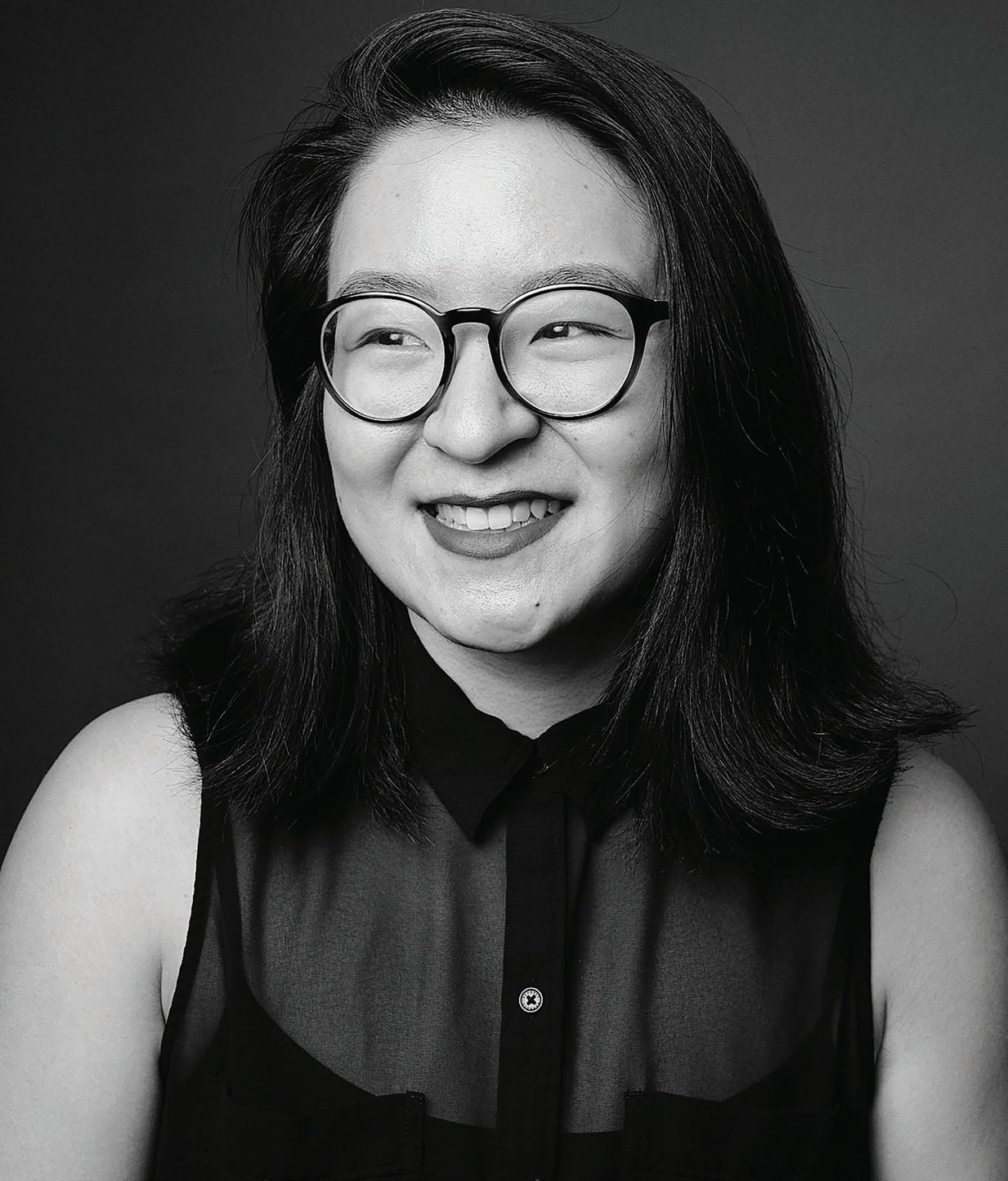
Esther Li is a New York-based, Boston-bred award-winning Creative Director, leading the creative team at Beardwood&Co. Over the past 15 years, Esther has specialized in brand identity design for clients such as Etsy, Major League Soccer (MLS), Target, AICP, Chobani, Dunkin’, and UNICEF. Esther’s expertise is rooted in her experience at world-class agencies such as SYLVAIN, Jones Knowles Ritchie, and Collins.
She has been a featured speaker at AIGA NY, served as a jury member for Dieline and Print Awards, and been recognized by D&AD, ADC, and The One Show, among others. In her spare time, she is a hardcore basketball fan and enjoys exploring the outdoors with her family.
For over 20 years, Beardwood&Co has created brave brand ideas and given them the confidence to win in boardrooms, markets, and culture. What’s more, they have produced DBA Design Effectiveness and Designalytics Award-winning work for brands including Yankee Candle, Corona, and Colgate, proving smarter doesn’t mean safer.day, pursue what’s next, work as one team, and celebrate wins.
My design philosophy is driven by a continual balance of what is known and what is yet to be discovered. I start by deeply understanding the challenge at hand. I dig into the brief, the brand, the problem they’re facing, and the clients themselves: their teams, how they work, where their struggles are, what matters to them. That sets the stage for what to solve and how to sell it. From there, I embrace the unknown and unexpected. There’s always that frantic moment of “oh god, am I going to figure it out?” I follow that fear instead of rushing to an answer just to relieve the anxiety. That allows me to lean into bravery and let the creative sparks fly.
I focus on the briefs and the challenges rather than the execution. When you focus on the problem you’re solving, you can meaningfully leverage creativity to build a solution. If you focus on the execution you want or new techniques you want to try, you lose the timelessness in your creative solution. I also can’t emphasize enough the importance of collaboration and leaning on talented people around you. That means bringing in the right balance of experts and unexpected fresh perspectives for any given project. Building and surrounding yourself with the right team of people with diverse backgrounds, levels, superpowers, and points of view will lead to an explosion of ideas that break through and resonate with people.
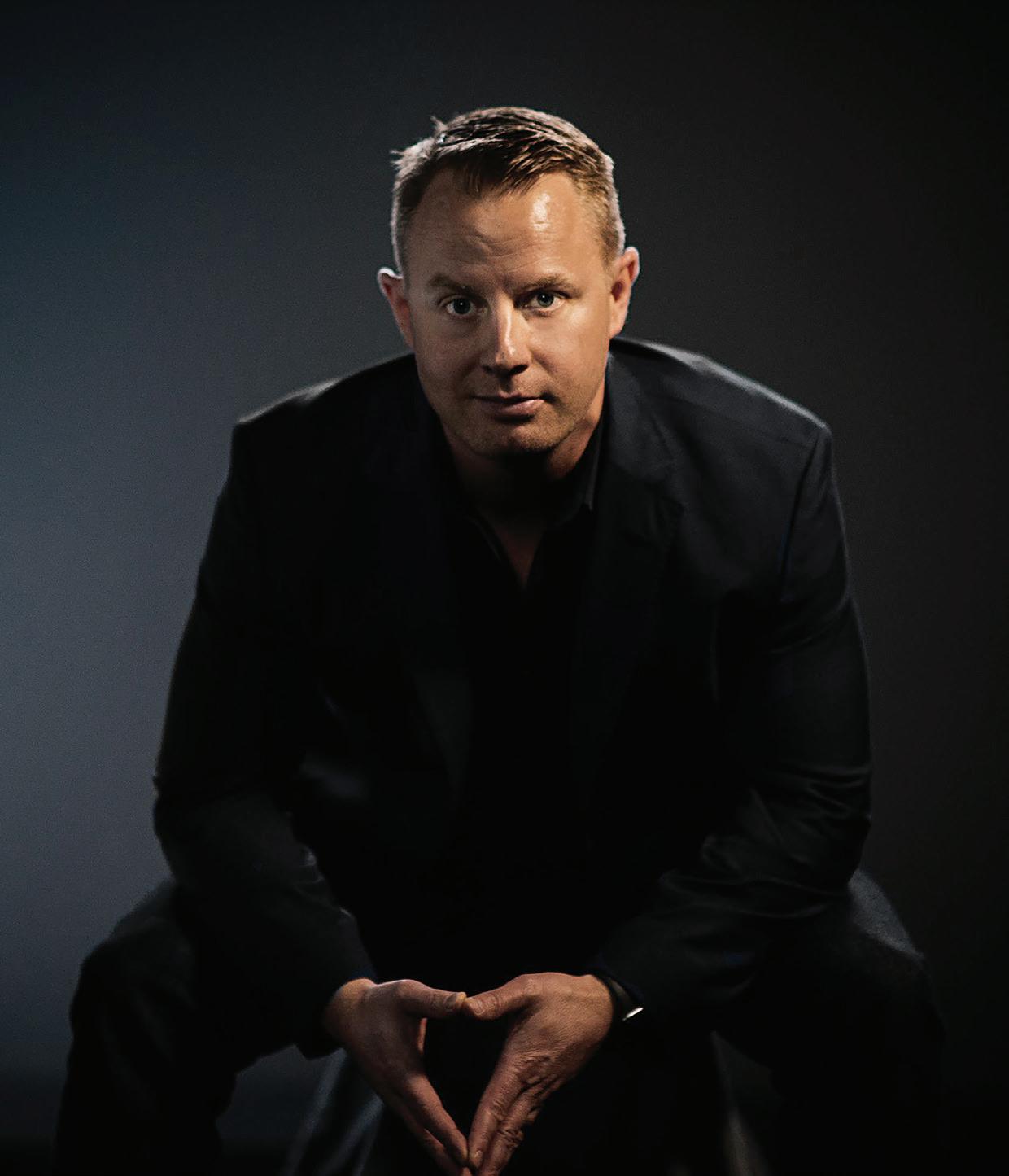
From designing nightclub flyers in the ‘90s to co-owning a boutique design firm to overseeing a Fortune 10 brand, Ryan Dahlheim’s career is anything but typical. With over 25 years of experience, he has driven innovative design across consulting, healthcare, and technology industries. As Creative Director at Protiviti, a global consulting firm, he oversees the creative direction and evolution of the Protiviti brand and all external marketing materials, leading an award-winning team to deliver compelling visual experiences that resonate with target audiences.
Prior to Protiviti, Ryan spent 11 years at McKesson, the world’s largest healthcare provider, where he rose to Director of Brand. There, he led the corporate creative team, maintained brand consistency across multiple channels, and played a key role in the brand’s evolution. His experience also included co-owning a boutique design firm specializing in digital experiences and branding, where he led all design work for clients including PeopleSoft, Blue Cross Blue Shield and more.
Ryan credits his success to his diverse background and passion for learning and leading. He strives to produce creative work that functions well, is distinct, and elegant—which isn’t always easy. However, when
you have a team that brings unique perspectives and is willing to share, it’s amazing what you can create.
BETWEEN NOW AND 2030, WHICH SPECIFIC SKILLS, TECHNOLOGIES, OR PRIORITIES WILL MATTER MOST IN SHAPING THE FUTURE OF GRAPHIC DESIGN?
With all the disruption from AI, it’s hard to predict what next year will bring, let alone 2030. But while AI may be disrupting every industry, it has also empowered us in ways I could have never imagined. My advice? Stay curious and hungry to learn. Keep an open mind to new ways and ideas. And above all, stay true to the craft. The tools may evolve, but the fundamentals of great design—solving problems, connecting with people, creating work that matters—those will always endure.
HOW DO YOU STAY RELEVANT IN AN INDUSTRY THAT CHANGES SO QUICKLY?
Continuing to stay curious, hungry, open, and true—these are the elements you can control, the things that keep you relevant no matter what changes come. But I also lean heavily on my amazing award-winning team here at Protiviti. We all have the same 24 hours in a day, but when you surround yourself with people who are passionate and embody those characteristics, magic happens. My success isn’t about me—it’s about being part of an incredible team that challenges, inspires, and elevates each other every single day.
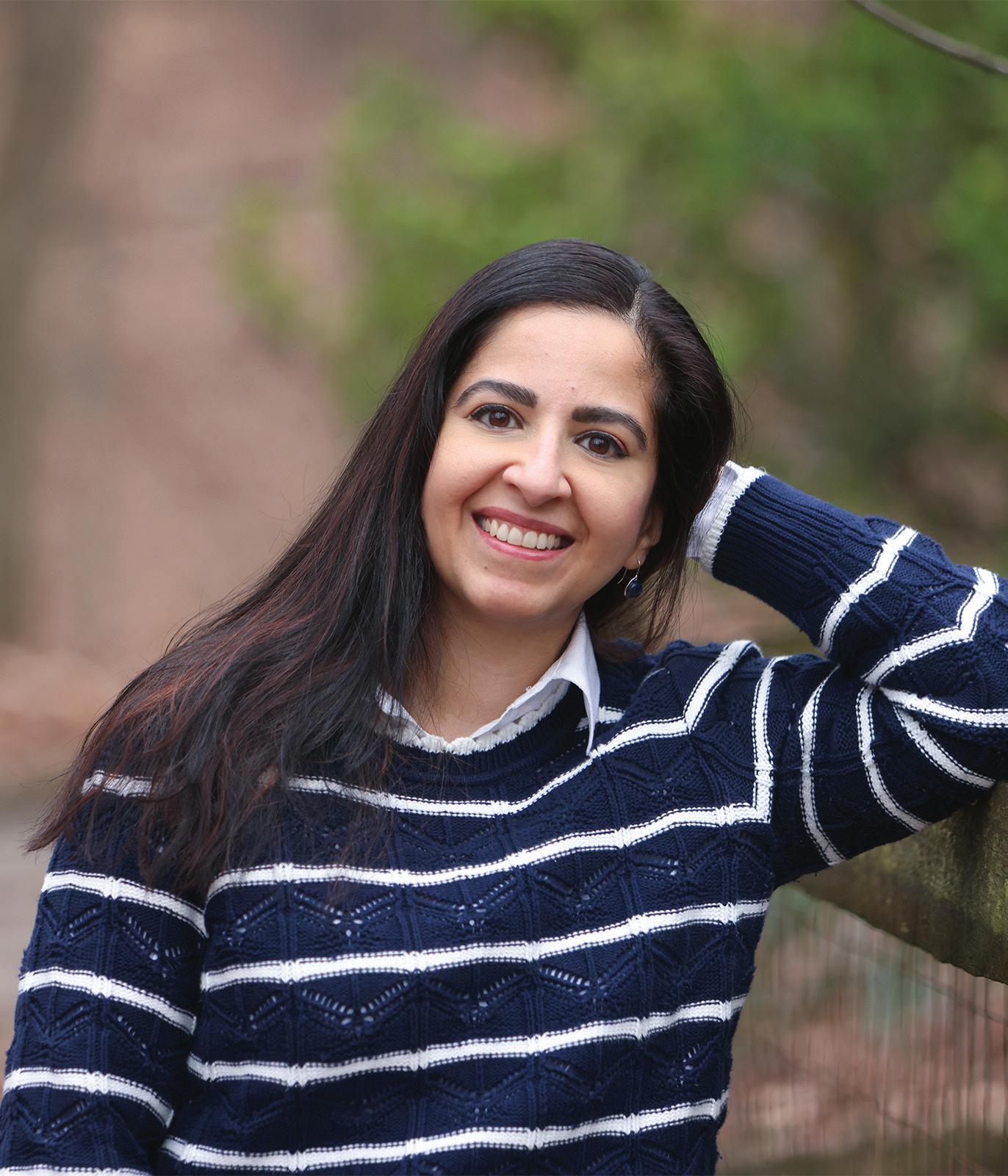
Anjum Jadavji is an award-winning senior creative leader with deep-rooted expertise in end-to-end packaging design and brand strategy. She is currently serving as the Senior Packaging Manager at The Home Depot. With a career defined by driving brand growth through data-informed design, Anjum directs a creative team and external agency overseeing 21 private brands. She is recognized for her ability to translate complex business goals into compelling visual stories that elevate brand perception and deliver measurable market impact.
Throughout her career, which includes leadership roles at RR Donnelley and Focus Brands, Anjum has excelled at scaling operations and fostering creative innovation. Her achievements range from launching award-winning co-branded packaging for KFC and Cinnabon to securing a $5 million account win at Walmart through strategic design. Anjum is also a champion of operational excellence, notably implementing new processes that significantly reduce review cycles.
Anjum’s work has been consistently recognized with numerous GDUSA American Graphic Design and Packaging Awards. She holds a BFA in
Graphic Design with Honors and a BA in English Literature, a unique academic background that fuels her ability to blend strategic storytelling with visual excellence.
BETWEEN NOW AND 2030, WHICH SPECIFIC SKILLS, TECHNOLOGIES, OR PRIORITIES WILL MATTER MOST IN SHAPING THE FUTURE OF GRAPHIC DESIGN?
Artificial intelligence is fundamentally reshaping graphic design, seamlessly integrating into our creative tools to automate routine tasks and accelerate workflows. The real challenge for experienced designers is maintaining authenticity and creative integrity while leveraging AI’s capabilities. As we move forward, the critical question will be whether AI remains a tool or will it become a true creative partner. This evolving relationship will require us to rethink established practices, adapt, and innovate — ensuring our creative vision leads the way as technology continues to advance.
As a creative leader, my guiding principle is ensuring every creative decision ladders back to the project’s objectives. In a world where consumers face overwhelming choice both in-store and online, packaging must work harder than ever to gain attention. Crafting solutions that balance solid design and brand integrity with consumer needs is essential. Context—market, shopper behavior, and competitive landscape—serves as the compass throughout the review process, helping ensure the final design is both strategically grounded and creatively impactful.
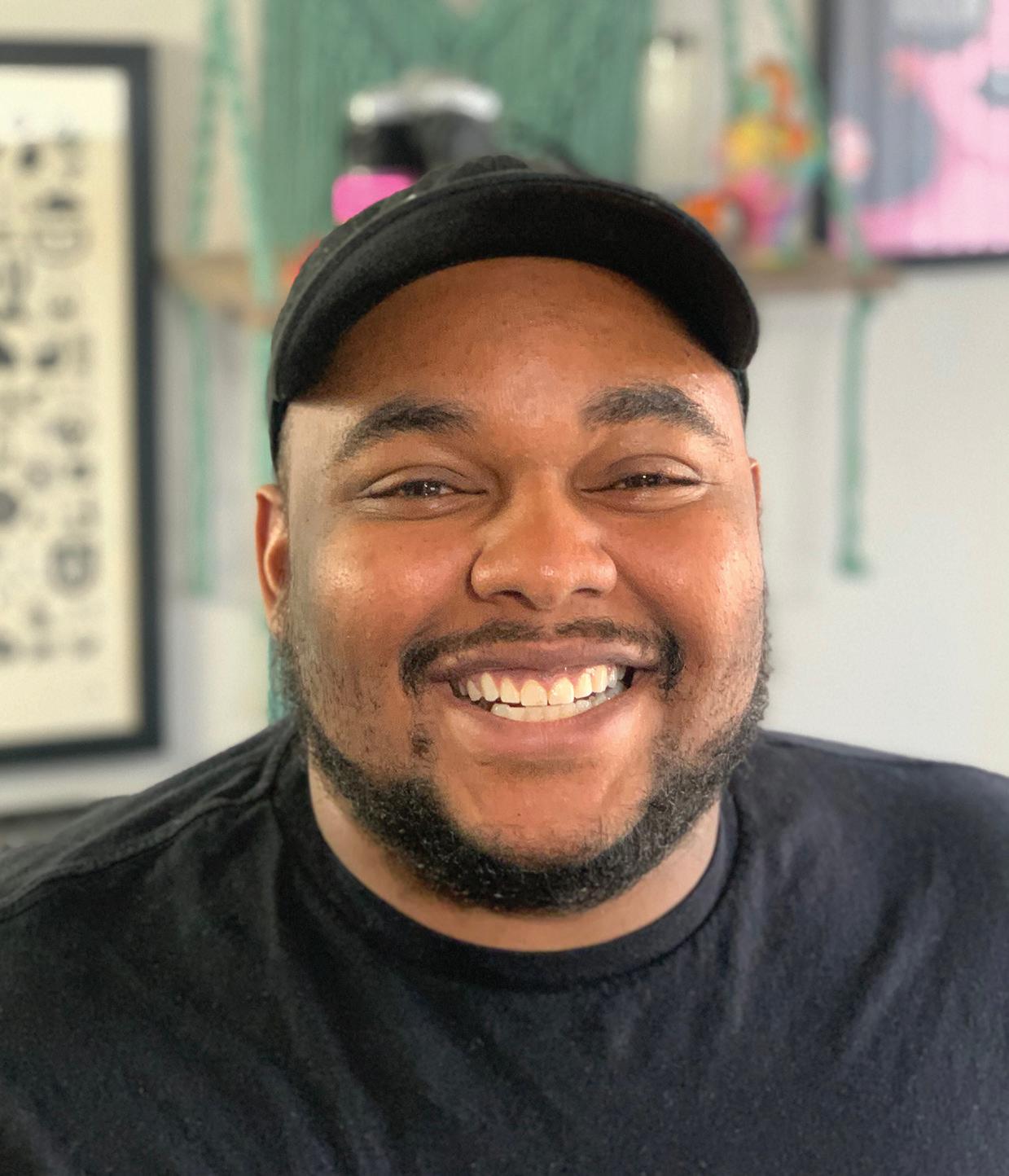
DESIGNER, PWR CREATIVE STUDIO, PHOENIX AZ
I’m Kameron, an aerospace engineer-turned-designer, I’m skilled in lettering, motion, and branding. I’m a true artist at heart and love to use these mediums as my paint brush. I’m also driven by a passion to serve organizations that are making a difference in the everyday person’s life. I see that the only way we can really make a way in this world is together.
Currently I work full-time as a freelance designer under my own creative studio called PWR. I truly believe that design has immense value to take ideas from being ignored to being seen by many. We are here to take the ones that push humanity forward and make them shine.
As a Black designer, I’m proud to play a part in showing the next generation of underrepresented students that design can be a viable career path for them when as a student I had no clue this path even existed. I’m also a huge lover of anime, music, and reading.
WHAT PRINCIPLES GUIDE YOUR DESIGN DECISIONS?
I always talk about how much being an engineer set me up to be a really good designer. It taught me how to truly critically think and solve problems. So design decisions for me all start with a super solid understanding of the problem and then building a good plan around how we are going to close the gap. I also think that varied perspectives and honest communication in our work is vital to coming up with diverse solutions.
HOW DO YOU STAY RELEVANT IN AN INDUSTRY THAT CHANGES SO QUICKLY?
You are only as relevant as the people that know you which can sound weird, but most of the game is creating and fostering human connection. I think a lot of people do this, but I think the thing that really can make a difference is leading with being genuine which starts with trying to be as much of yourself as you can. I’m really a design nerd, who loves trashy reality tv and watches anime. I lead with these whenever I show up in any space.

SENIOR CONSULTANT
CTO CHANGE MANAGEMENT & COMMUNICATIONS
KIMBERLY-CLARK CORPORATION, GLOBAL HEADQUARTERS
IRVING TX
Malinda Crosby Centeno is a creative-minded communications and change leader who helps global technology organizations tell clearer stories and move people to action. Partnering with CTOs, C-suite leaders, and cross-functional teams, she translates complex strategies, spanning data, analytics, AI/ML, and enterprise architecture, into human-centered narratives that employees can understand, trust, and adopt.
Her practice sits at the intersection of design, behavior, and business outcomes: internal campaigns, executive narratives, and multi-channel content that make transformation feel accessible and participatory. She brings depth across change frameworks and measurement, ensuring every creative decision is grounded in purpose, accessibility, and evidence, not trend for trend’s sake.
Malinda holds a B.S. in International Business and is pursuing a master’s in Strategic Communications & Innovation, pairing business fluency with modern communication strategy. Known for simplifying complex-
ity and building inclusive employee experiences, she champions creative systems that scale across channels while preserving clarity and brand integrity.
Beyond work, Malinda is passionate about service, mentorship, and community connection. She supports a wide range of volunteer efforts, from food insecurity and family support services to youth programs, and workplace giving and engagement campaigns. These experiences deepen her commitment to using communication as a unifying force: bringing people together across backgrounds, disciplines, and lived experiences to create positive, lasting change. They reinforce her belief that effective storytelling doesn’t just inform, it builds trust, strengthens communities, and helps people see themselves as part of something meaningful.
BETWEEN NOW AND 2030, WHICH SPECIFIC SKILLS, TECHNOLOGIES, OR PRIORITIES WILL MATTER MOST IN SHAPING THE FUTURE OF GRAPHIC DESIGN?
Human–AI co - creation, accessibility - by - design, and evidence - based storytelling will define impact. Designers will pair AI tooling with editorial judgment to accelerate exploration while safeguarding ethics and originality. Systems thinking, design that flexes across products, cultures, and moments, will outweigh one-off deliverables. Finally, fluency in data and behavior change will be table stakes: the future favors creative leaders who can prove that design not only looks right, but works, shaping decisions, reducing friction, and driving adoption at scale.
WHAT TREND DO YOU THINK THE INDUSTRY IS OVERVALUING - AND ONE IT’S OVERLOOKING?
Overvalued: novelty for novelty’s sake, flashy, AI - generated aesthetics that ignore comprehension, accessibility, and trust. Overlooked: the unglamorous craft of strategic communication design, message architecture, content design, and governance that keep brands coherent across torrents of change. The work that wins long - term is insight - led and measurable: creative systems that clarify choices, guide behavior, and make transformation feel achievable for real people inside real workplaces.
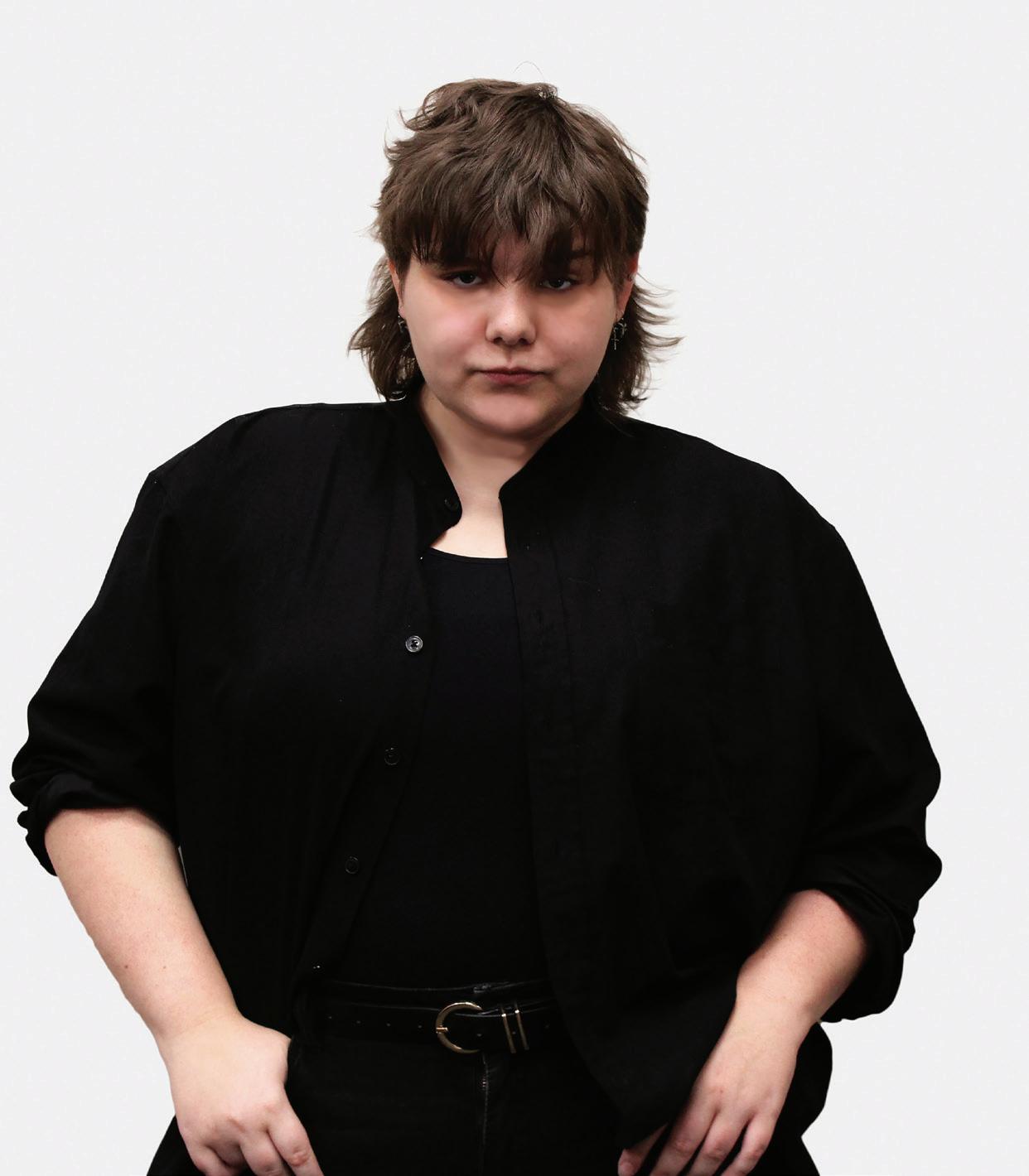
Paige Alana Bowermaster is a nationally recognized designer and creative professional. A graduate of Pennsylvania College of Art & Design, Paige is driven by the belief that design should challenge people to think differently.
At RKL, Paige is responsible for shaping the visual identity of a leading regional firm across accounting, tax, audit, business, and consulting markets. Paige showcases RKL’s brand through strategic visuals and intentional design. With her independent venture, Alana Graphics, she pushes creative boundaries in both print and digital media, creating designs that raise awareness and promote change.
Paige has gained widespread recognition — earning an American Package Design Award for her ANGLER earbuds, top placement at the Senior Show & Celebration Branding Competition, and the Graphic Design Department Award from her alma mater. Recently, she earned Digital and In-House Design Awards for her work on The Pivotal Group Website and the RKL Firm Culture Brochure, as well as two American Graphic Design Awards for her designs of the RKL Annual Review and APM direct mail piece.
Additionally, Paige believes in the power of art shaping community. Her design of the America250PA coloring book and Keystone Kid mascot has inspired over 20,000 Pennsylvania schoolchildren to experience history in a new way.
Previously named a 2023 Student to Watch by GDUSA, Paige is honored to be recognized as a 2026 Person to Watch and is grateful to GDUSA for all it has done for the creative community.
Intentionality, humanization of brand, and straight-up punk rock. Every element should have a purpose, and I should know exactly why I chose to put it there. In a world overrun by AI, I aim to focus on the humanization of brand identity and create work that fosters authentic connections with people. Finally, I’m inspired by the fundamentals of the punk rock movement. I enjoy challenging norms with bold, original ideas and designs. For me, successful design is a balance between thoughtful strategy and not being afraid to do things differently.
In a world where we are facing the implementation of technologies that claim to “do what we do”, staying relevant in an ever-changing industry means — as I mentioned in my previous answer—showing up as a human, as an artist. As designers, we are responsible for creating things that evoke emotions in people, and emotions are something that no technology can ever replace. I believe I stay relevant by showing up as my whole authentic and messy self in all the work I do.
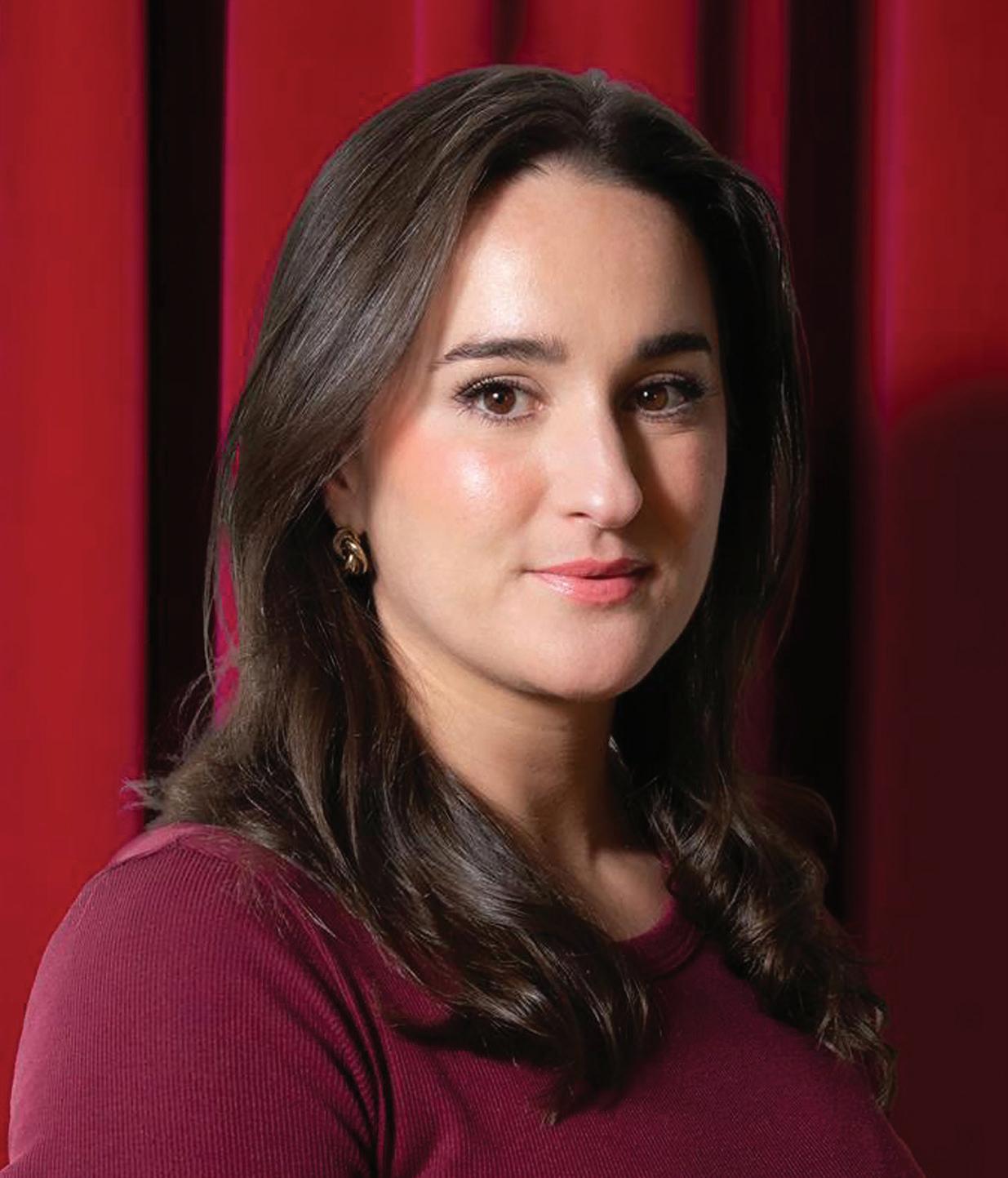
Alexa brings sharp cultural instincts and a bias for action as the Head of Strategy at CBX. A true thinker and doer, she translates human insight into brand momentum, pushing ideas that connect, captivate, and drive results.
Her experience spans high-growth DTC brands, venture capital firms, and creative agencies, giving her a 360° view of how brands are built and scaled. She’s shaped strategy for names like Anheuser-Busch, Walmart, JPMorgan, Simply Good Foods, TaylorMade, HumanCo, GlaxoSmithKline, Nestle, Unilever, and more, and helped launch products and innovation at Daily Harvest, including their first plant-based ice cream and milk lines alongside 30 other skus across the portfolio.
Alexa mentors early-stage founders, rising strategic talent, and creatives, consistently looking for fresh talent and new ways of showing up in culture. Outside the office, she’s a lifelong athlete, devoted meal prepper, and serial grocery aisle explorer.
WHAT PRINCIPLES GUIDE YOUR DESIGN DECISIONS?
Design is an operating system. It’s a primary way strategy becomes visible and usable for brands. The principles that guide my design decisions start with defining what a brand needs to mean and using that meaning as a filter for every choice across consumer touchpoints. When it’s working, design doesn’t just express an idea, it creates brand coherence and consistency across moments, channels, and contexts — even as things change. Strong design communicates a clear point of view and creates discipline around decision-making for why things do or do not belong. When design sings, it’s one of the most powerful tools for shaping how a brand gets noticed, remembered, chosen, and talked about in culture.
HOW DO YOU STAY RELEVANT IN AN INDUSTRY THAT CHANGES SO QUICKLY?
I stay relevant by looking at past trends and examining the enduring human behaviors beneath them. Most of my listening happens at the edges in unfiltered spaces like Reddit threads, TikTok comments, and retail safaris where cultural implication shows up before it’s even discussed. It’s where the honesty lives: the tensions, frustrations, workarounds, needs, and desires people share when they think no one is watching. That’s why I live in the comments section and believe it’s a place brands can’t ignore. I’ve learned that relevance isn’t about predicting what’s next, it’s about hearing what others are overlooking right now.
The Great Resignation has left companies scrambling for talented designers and creatives searching for fulfilling projects. That's where Artisan Talent comes in. We're a boutique creative staffing agency here to make things easier for you - whether you’re hiring talent or finding work. From small agencies to major corporations, our team is in the business of connecting people. That’s what makes us Artisan.
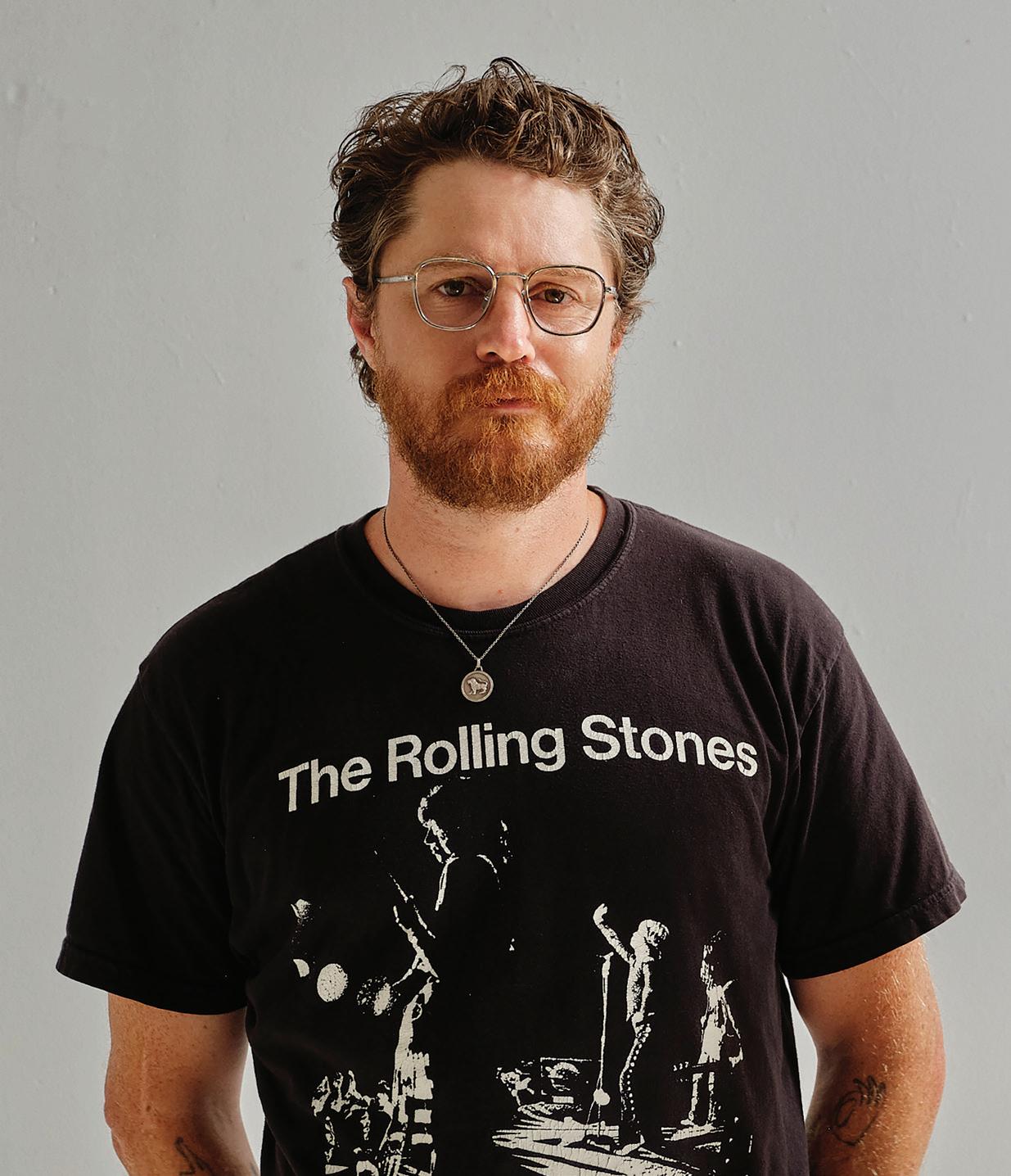
Super Okay is an independent brand design studio recognized for its disciplined, culture-led approach to brand building. Since co-founding the studio in 2020, Cappetta has played a central role in shaping Super Okay’s creative direction, client partnerships, and evolution into an award-winning, internationally recognized practice.
With more than fifteen years of experience, Cappetta combines the rigor of global brand agencies with the judgment of entrepreneurial brand building. He began his career in the Minneapolis advertising scene before spending a decade in Brooklyn working across agency, freelance, and in-house roles. His background includes creative positions at Chandelier Creative and Jones Knowles Ritchie, where he led the 2018 rebrand of Dunkin’, a project that earned multiple creative awards. He later served as in-house Creative Director and Head of Brand at Maven Clinic, guiding the company through a critical period of growth.
Cappetta’s work in the cannabis industry further shaped his approach to design as a strategic business tool, particularly within emerging and highly regulated categories. That experience continues to inform Super
Okay’s work today, where clarity, credibility, and cultural awareness are essential.
Under Cappetta’s creative leadership, Super Okay has partnered with brands including TCHO Chocolate, Imogene + Willie, THCDesign, Peter Michael Winery, and Field Mag. The studio’s work has received international recognition, including a Gold Pentaward in 2025 for THCDesign.
Cappetta views design not as an aesthetic layer, but as a system for long-term growth. At Super Okay, he focuses on building brands that endure by balancing ambition with restraint and creativity with business reality.
BETWEEN NOW AND 2030, WHICH SPECIFIC SKILLS, TECHNOLOGIES, OR PRIORITIES WILL MATTER MOST IN SHAPING THE FUTURE OF GRAPHIC DESIGN?
As AI makes execution faster and more accessible, the most important skill becomes judgment. A lot of people will be able to generate work, but far fewer will know what’s right, what’s necessary, and when something is finished. Craft doesn’t disappear, but it changes: it’s less about operating tools and more about directing them with intent and taste. In a world full of fast, passable output, designers who can make clear decisions, edit ruthlessly, and understand why something works will stand out. The future belongs to people who can cut through noise and produce work that feels considered, not just made.
Everything starts with understanding the essence of a brand and being honest about what has worked and what hasn’t. I don’t believe in applying the same solution to every problem. Some brands need change, others need protection, and many need clarity more than reinvention. My goal is always to do right by where a brand has been while helping it move forward in a way that feels earned. That means grounding decisions in context, history, and ambition, not trends or surface-level signals. Good design comes from making choices that respect the brand’s past and serve its future without overcomplicating the path between the two.
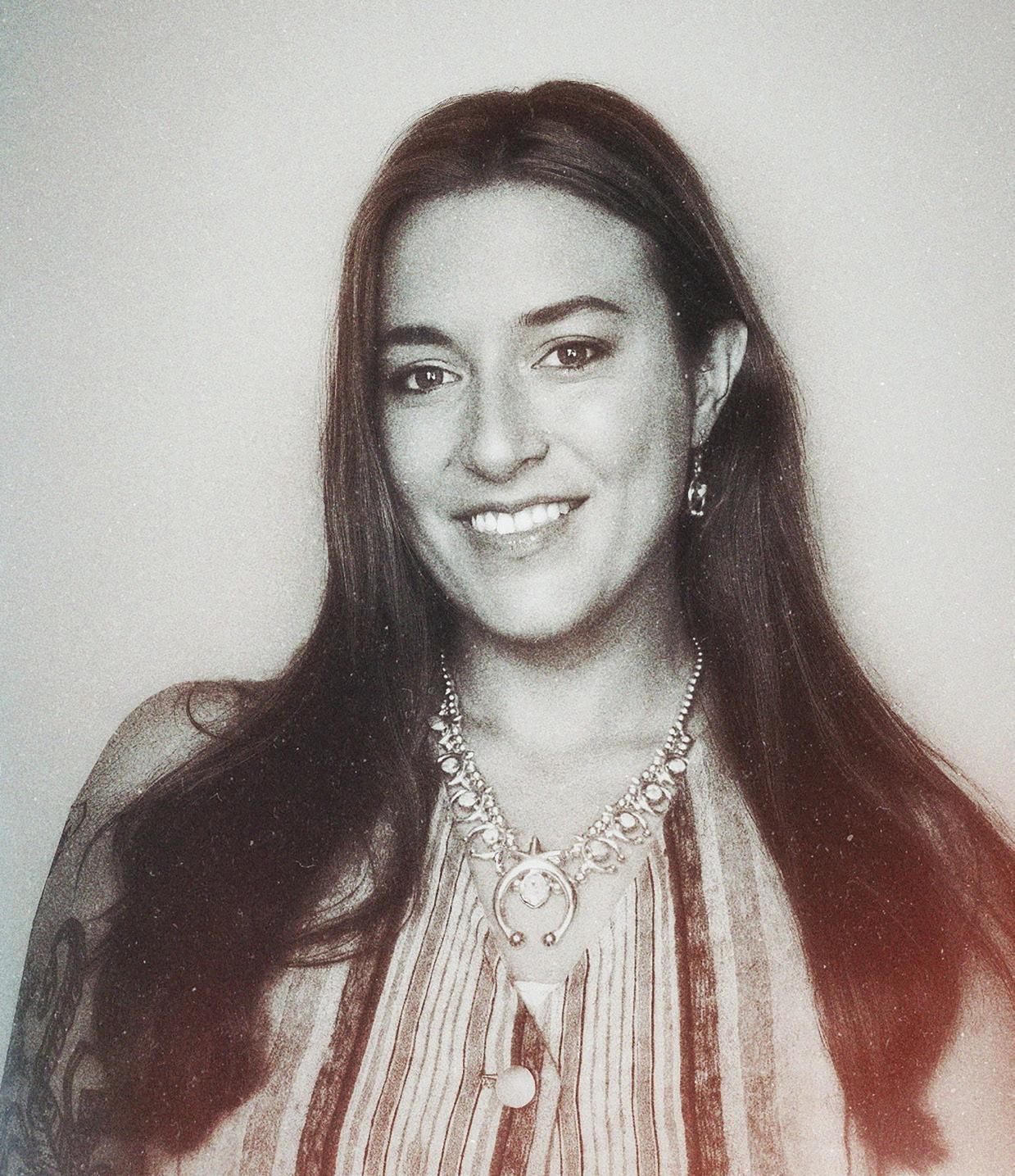
Kelli Woodell is a multidisciplinary designer whose creative career spans nearly a decade, working across inhouse and agency settings. Based in East Tennessee and now situated in Chattanooga, TN, Kelli brings a robust mix of branding, illustration, photography, art direction and web design to the table.
In early 2025, she stepped into a newly formed role as UI/UX Designer at the award-winning agency Brandon, where she will help lead the firm’s digital strategy and elevate user-centred experiences for clients. During her time at Brandon (since Spring 2022), Kelli distinguished herself through creativity, strategic insight and dedication—playing a key role in major client projects.
Kelli earned her BFA in Design from Tennessee Tech University and continues to deepen her expertise in UI/UX design while staying rooted in her broader visual-and-brand skill set. Off-duty, she is passionate about horses, dogs (especially a cattle dog companion), oil painting, live music, and the occasional home-improvement project left unfinished for the sake of creativity.
Always bringing what she cheekily calls “weird horse-girl energy” to advertising and design functions, Kelli thrives on challenging norms and crafting meaningful digital experiences through insightful, visually grounded design.
WHAT TREND DO YOU THINK THE INDUSTRY IS OVERVALUING - AND ONE IT’S OVERLOOKING?
I feel that while AI has assisted us greatly in areas like scaling our work and moving more quickly for our clients, it’s being a bit too relied on currently in the creative space. I understand both its convenience and value and still don’t believe that it will ever replace creatives entirely, but I think ultimately that the creative process is being circumvented more often, and I for one am missing the spirit that comes from that. I would like to see the weight of which we’re valuing technology, speed, and efficiency shift a little more towards the favor of craftsmanship, artistry, and authenticity. Granted, me becoming a professional designer was a result of me being an artist and a romantic at my core, so perhaps I am a bit of a daydreamer when it comes to this. Maybe I should have had ChatGPT condense this answer for me.
HOW DO YOU STAY RELEVANT IN AN INDUSTRY THAT CHANGES SO QUICKLY?
I think the short answer to this is to aim to be fluctuating parts of willing, humble, and confident. You have to be willing to continuously learn and evolve with the times and the tech, humble enough to know you always have room to grow and that there will always be someone younger right behind you, and confident enough to know you can adapt to the new as it comes. It’s all a bit easier to swallow when you’re loving what you do, so I would say it’s also important to find ways to fill your creative cup
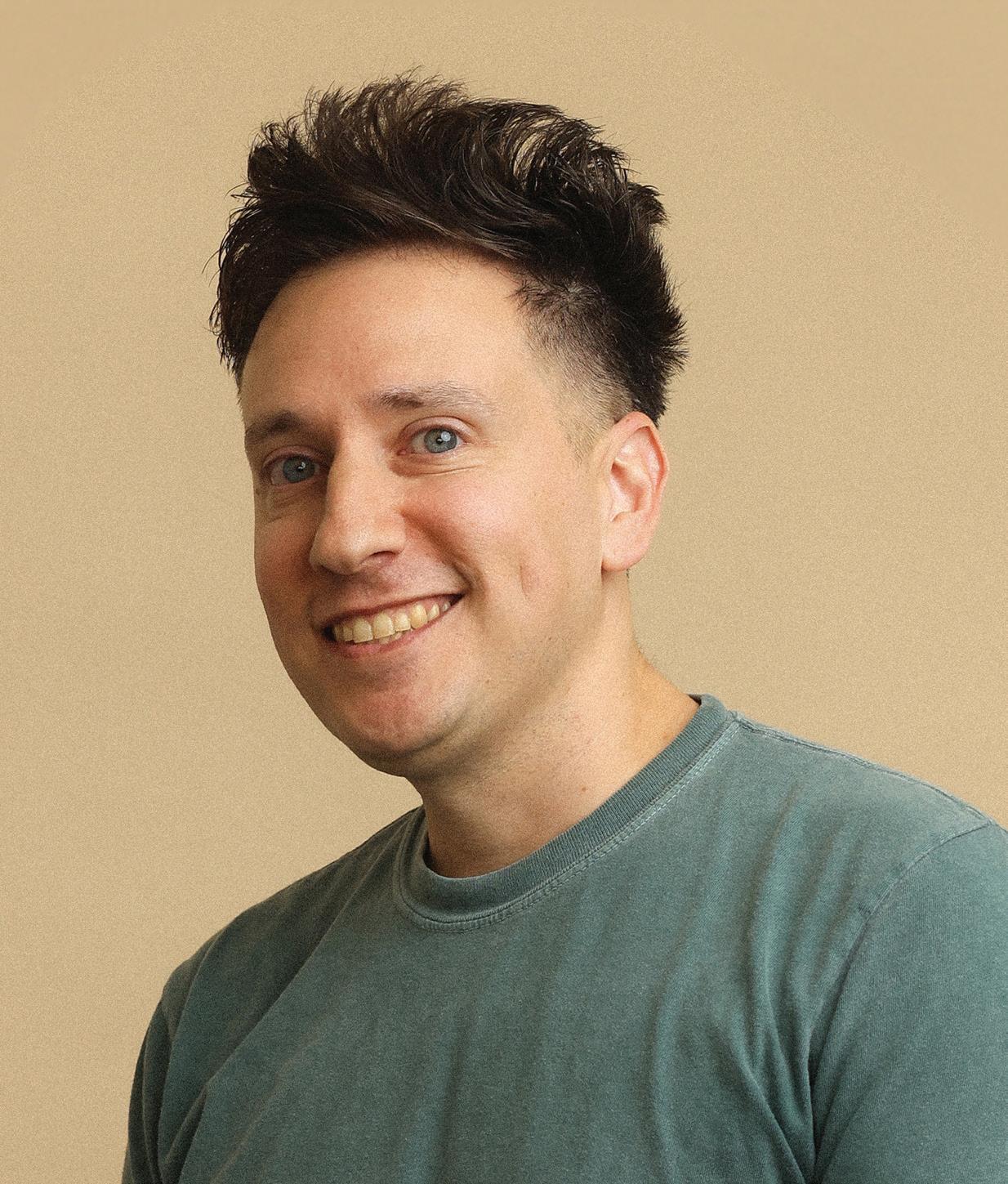
Jordan Diatlo is the founder of Leadoff Studio, an award-winning Industrial Design and Product Development firm based in NYC. Leadoff Studio specializes in creating innovative physical products and branding solutions, especially in the health and wellness categories. The studio takes a user-centric approach to design for clients like Nike, Lululemon, Ro, Dame Products, and Eight Sleep. With a career spanning over 15 years and several patents to his name, Jordan aims to lead the charge along with his team, and develop products that lead to positive outcomes for all.
HOW DO YOU STAY RELEVANT IN AN INDUSTRY THAT CHANGES SO QUICKLY?
Consistency and longevity are key. Thinking about how a brand identity will hold up over time and evolve with the business is at the core of our design thinking at Leadoff Studio, on the industrial design side, too. If we’re working with a client on both brand identity and product design, the lead time on the product release can range anywhere from six months to two years. So, we have to make sure the logo, typography, and all other graphic elements have legs and are timeless.
WHAT TREND DO YOU THINK THE INDUSTRY IS OVERVALUING - AND ONE IT’S OVERLOOKING?
I think the industry is overvaluing virality and is putting too much emphasis on the scroll economy. While you want your brand to reflect your customer base and keep them interested, you don’t want to lose sight of your brand’s story and loyalty. Also, the “millenial minimalism” trend, where brands are opting for clean lines and more simplistic san-serif typefaces. Some fashion and automotive brands jumped on the bandwagon of making their logo more minimalist. It worked for some, but for others it fell flat — and in the process, they lost the charm and history of their brand. An example of a company that got it right the first time and hasn’t changed their identity since is Nike. The swoosh is forever. It is legendary. Why fix something that’s not broken?
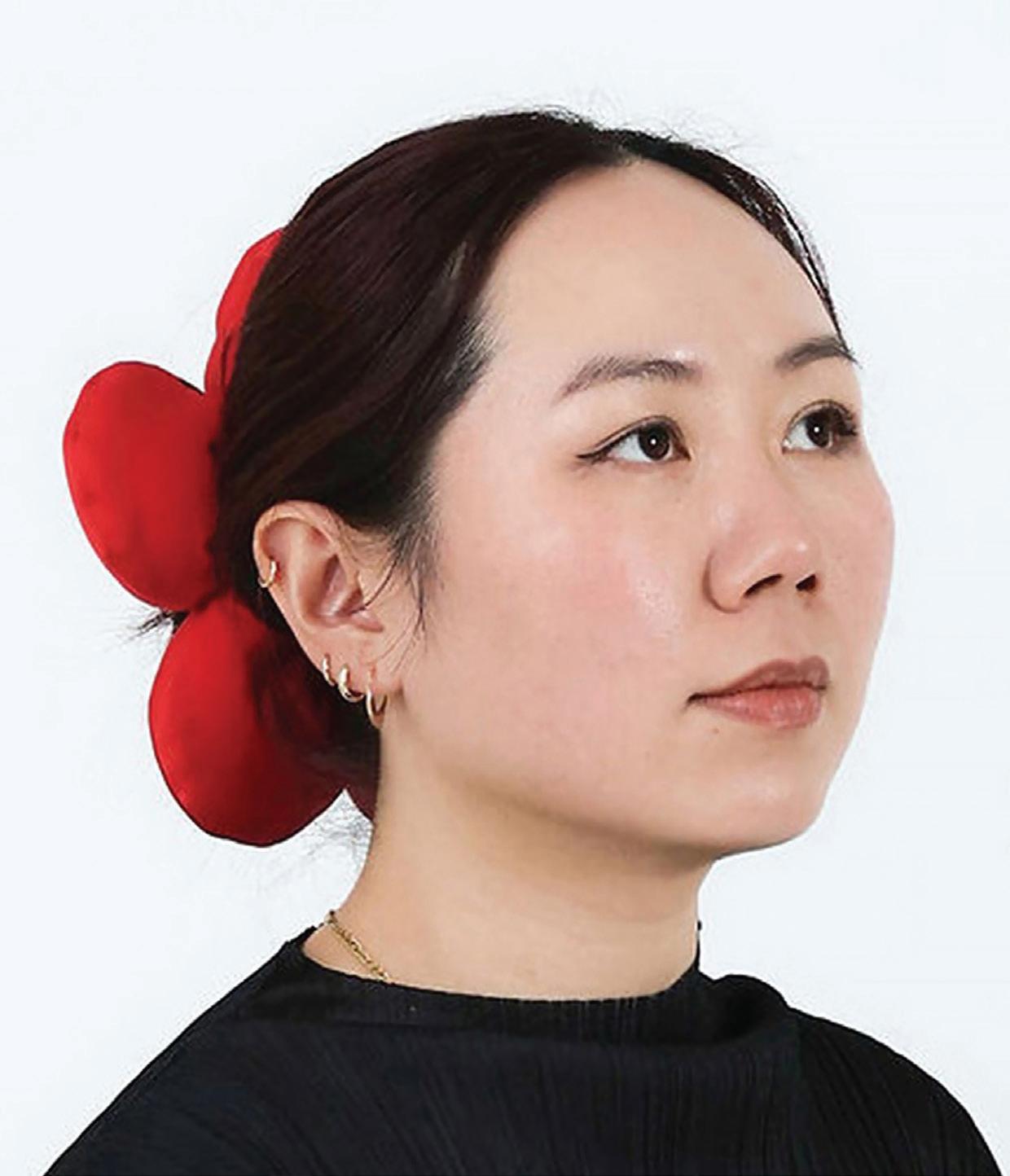
Mary Y. Yang is a designer and educator based in Boston MA. She is the co-founder of Radical Characters, an educational and curatorial platform that researches and explores graphic design, typography, and culture through Hanzi (Chinese characters). Yang is an Assistant Professor at Boston University, where she teaches in both the undergraduate and graduate Graphic Design programs. Her research and pedagogical approach examine how language can be used as a tool for multilingual exchange, co-building history, embodied learning, and cultivating spaces for collective knowledge. She is currently the 2025–2026 Artist-Writer-in-Residence at Johns Hopkins University’s University Writing Program.
In addition to her role as an educator, Yang is the founder of Open Rehearsal, a design studio that collaborates with cultural and educational clients on research and projects spanning brand identities, exhibition graphics, book design, environmental graphics, and editorial design. Her work has been recognized by Communication Arts and featured in AIGA, PRINT Magazine, Society of Typographic Arts, Design360°, and Hyperallergic.
Yang holds an MFA in Graphic Design from the Rhode Island School of Design and a BFA in Communication Design from Washington University in St. Louis, Sam Fox School of Design & Visual Arts. She has taught at RISD and lectured at the University of Washington. Previously, she has worked on the graphic and brand design team at Victoria’s Secret PINK (NYC), the University of Washington Press (Seattle, WA) and Studio Blue (Chicago, IL).
BETWEEN NOW AND 2030, WHICH SPECIFIC SKILLS, TECHNOLOGIES, OR PRIORITIES WILL MATTER MOST IN SHAPING THE FUTURE OF GRAPHIC DESIGN?
AI is transforming the design landscape, and I see it as a valuable tool for expanding creativity. However, it’s critical that designers stay grounded in their personal values and perspectives. As both a designer and educator, I prioritize self-awareness, critical thinking, and authenticity. In an increasingly homogenized visual world, designers must draw on lived and cultural experiences to develop a distinct voice — using technology to enhance creativity while staying connected to core values and shaping the future of the field in innovative and imaginative ways.
WHAT PRINCIPLES GUIDE YOUR DESIGN DECISIONS?
My design decisions are guided by language and cultural awareness. I aim to create work that reflects the lived and linguistic experiences of the communities it engages, whether through typography, image-making, or visual storytelling. I value research-driven approaches, where each project is informed by context, history, and audience. At the same time, I embrace playfulness and experimentation, using design to explore new cultural narratives.
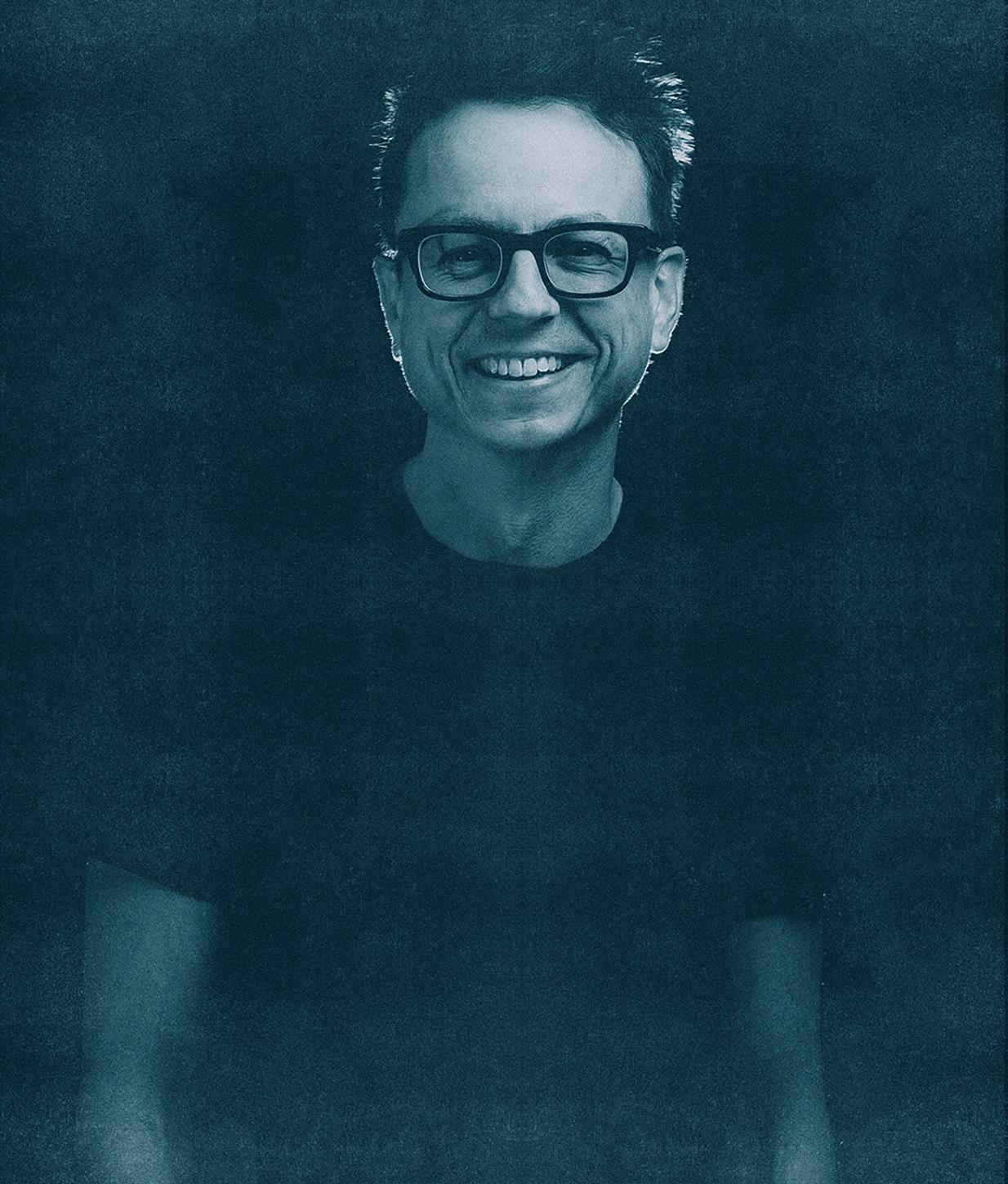
Chris Eichenseer is a designer, musician, and creative leader whose career has been defined by building brands from inside culture rather than chasing trends. He founded Someoddpilot in Chicago in 1999, initially as a design studio and independent record label created to release obscure electronic and post-rock music and design album artwork. Immersed in the underground music scene, Eichenseer developed a DIY ethos and cultural fluency that would become the foundation of the agency’s approach to brand-building.
As Someoddpilot evolved, its focus quickly expanded to meet new creative challenges. Early work included branding Pitchfork and iconic Chicago venues like the Empty Bottle, setting the stage for the agency’s growth into a full-service creative agency and brand consultancy. Today, Someoddpilot provides bespoke branding, strategy, and creative services for national and global brands including Patagonia, Saucony, Kimberly-Clark, SKYY Vodka, and others.
Under Eichenseer’s leadership, the agency has partnered with culturally significant institutions such as The Second City and Lollapalooza, most
recently reimagining the festival’s visual identity to honor its countercultural roots while positioning it for the future. In 2025, Someoddpilot reinforced its creative breadth through national campaigns for brands including Kettle & Fire, the Chicago Fire (MLS), Darn Tough, Toad & Co, Xero Shoes, and American Honey.
BETWEEN NOW AND 2030, WHICH SPECIFIC SKILLS, TECHNOLOGIES, OR PRIORITIES WILL MATTER MOST IN SHAPING THE FUTURE OF GRAPHIC DESIGN?
Man, I’m emphatically doubling down on human creativity and trying to over emphasize what robots suck at: loose, generative, inspired art-making that happens when we get into an almost flow-state, when we understand some parameters and are allowed to just play within them. I’m super excited about the mental sandbox at Someoddpilot that takes the inhibitions and fear out, and lets the freak flags fly. My favorite comment was on a music video set recently when one of the band members out of nowhere said, “Wow, I’m in love with the creative spirit in here right now!” Yes, this is the way!
HOW DO YOU STAY RELEVANT IN AN INDUSTRY THAT CHANGES SO QUICKLY?
I’m getting older (like we all are!), but I’ve never felt more free. I think that’s what counts. Being free and open and willing to dig in — to get way into what is right in front of you — senses completely alive like a child, tapping into the joy of making things and being playful. It’s the best. I can’t see how decades of experience wouldn’t rise rather than fall if we keep that mindset. In a fearful or angry creative environment, that’s impossible. If you feel yourself batting things away, you will shrink and miss what’s happening around you.That feels old-fashioned. I don’t believe in peaking in the past. We grow as we age. Freedom and joy can be cumulative. Embracing what’s new happens every time we walk down the sidewalk, if we let it. There’s no other choice but to lean into it. As long as we’re interested, we stay relevant.
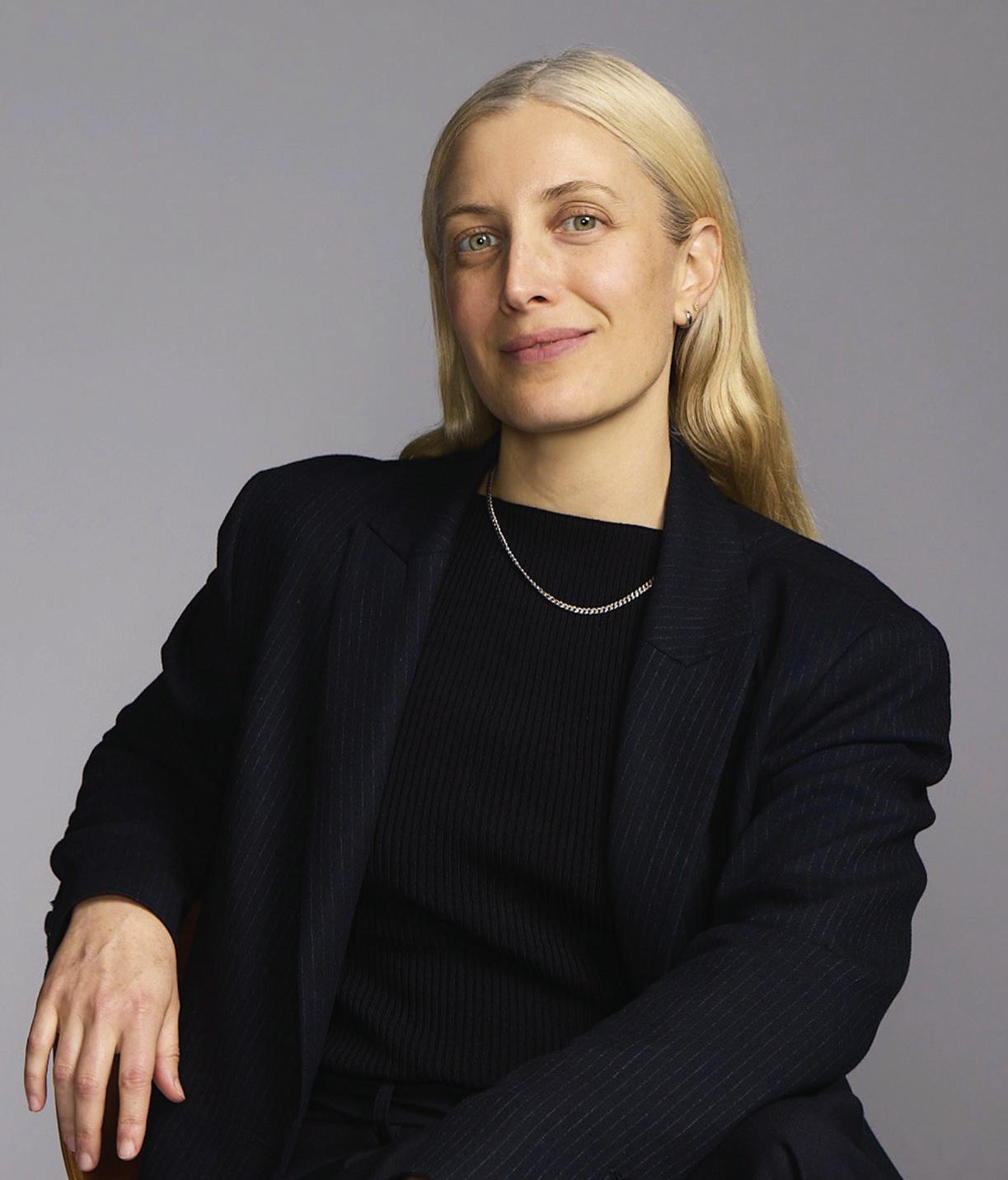
CREATIVE DIRECTOR, SIBLING RIVALRY, NEW YORK NY
Frances Yeoland is a Creative Director at Sibling Rivalry, an independent creative company crafting ideas, brands, and films designed to move people. With over 15 years of industry experience, Frances has delivered sensitive and imaginative work for clients across sectors from fashion to finance, including National Geographic, NBC Sports, Apple, and more. In fall 2025, she creative-directed the 360° brand campaign launching MS NOW, honoring the voices of all Americans with the powerful, unifying platform “We the People”.
Sibling Rivalry is more than a name – it’s an ethos. The team challenges each other and their partners to push what’s possible. Based in New York and Los Angeles, Sibling Rivalry powerfully unites branding, marketing, and production to deliver a seamless experience fueled by curiosity and collaboration. By leveraging tension and testing limits, Frances and the Sibling Rivalry team create work that clarifies and inspires.
BETWEEN NOW AND 2030, WHICH SPECIFIC SKILLS, TECHNOLOGIES, OR PRIORITIES WILL MATTER MOST IN SHAPING THE FUTURE OF GRAPHIC DESIGN?
For us to continue as an industry making genuinely anomalous creative and nurturing diverse talent, we will need to rethink our balance between people and profit. It may be part of a wider societal imperative, but we have to get our priorities in order: put people first, honour the creative process, and then, I believe, the groundbreaking work will follow.
WHAT PRINCIPLES GUIDE YOUR DESIGN DECISIONS?
I strongly believe in a democratic design process with clear, organized decision making. I get to work with exceptionally talented people, like Design Director Eduardo Palma and Sibling Rivalry director Bethany Mollenkof, who partnered with me on Sibling Rivalry’s 360° brand campaign for MS NOW. I strive to create an environment where everyone feels excited to share their weirdest ideas, because that’s what ignites the most vibrant work. I am also a romantic, in both life and design. I look for chemistry with a project, for that sense of obsession. One must be infatuated with the idea, and it’s that passion that drives the process.
WHAT TREND DO YOU THINK THE INDUSTRY IS OVERVALUING - AND ONE IT’S OVERLOOKING?
Automation of content will be the death of good storytelling. Investing in a shoot and creating distinct, ownable visuals for your brand (rather than relying on stock, for example), drives a far more powerful and lasting connection with audiences. We must not underestimate what a powerful competitive advantage that is. On the other hand, doom-scrolling on TikTok is surprisingly underrated. For me, it’s like a little boat ride along the social current, and I adore how fast it moves. It’s deeply communal and reflective. Ideas and their execution (visual, audio, movement, graphics) layer at breakneck speed without anyone being too precious. It’s a fascinating and satisfying ride.
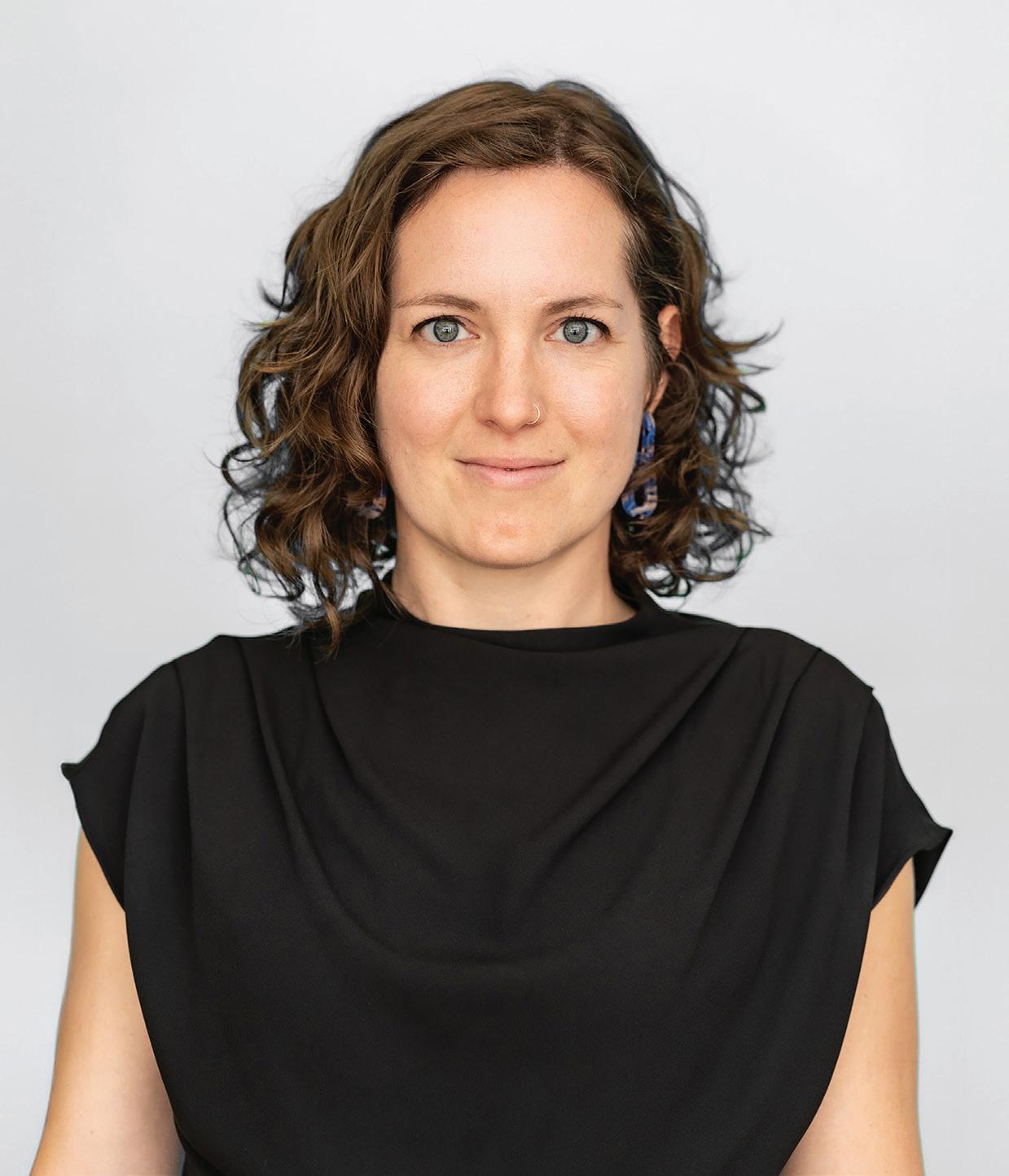
Mary Franck joined Hyperquake’s Experiences Team in 2025 as creative lead for experiential, cultural, creative technology, and digital media projects. Leveraging over 15 years’ worth of expertise, which builds upon extensive training in architecture, art, and technology, Mary specializes in infusing built environments with data and stunning digital media to inform, inspire, and connect audiences.
Her expanding body of work in the experiential field has grown from staff Creative Director roles with Future Colossal, IBM, and NBBJ/ESI Design; stints as Lead Creative Technologist for the New York Times’ experiential agency Fake Love and Senior Interactive Engineer for Obsura Digital; and extensive freelance work alongside many of the world’s most pioneering innovators. The resulting culture-defining projects for renowned brands, visionaries, and artists have often generated global media attention and brought home prestigious creative-industry honors.
Also an acclaimed artist whose works have been showcased internationally, Franck earned her B.A. in Conceptual and Information Art from San Francisco State University before completing her Masters in Design
Research from the Southern California Institute of Architecture. Currently residing in Brooklyn, Franck remains deeply committed to the alchemy of collaboration and teamwork – and to pushing what’s possible in experience design.
My principles are: 1. Affect, then message: emotion creates memories; even informative design needs an emotional component. 2. Design to cultivate attention. I strive to create space and focus to draw people in rather than overload them. 3. Think in systems. Technology today allows design to scale, take advantage of it. 4. Design holistically. Tailor designs to context for maximum impact. Controlling context is the power of experiential. 5. Show the beauty in complexity. Our world is complicated and designers are uniquely positioned to make and reveal meaning in that complexity. 6. Universal design. The best design empowers and includes.
I’ve stayed relevant by designing for new and emerging fields. My career focus has been experiential design, an area that has seen tremendous growth in the last decade. And within experiential my focus has been on emerging technology. I use tools and apply design to totally new formats, whether that’s volumetric light sculptures as public art or interactive, immersive AI explainers for IBM. Approaching new challenges and formats has made me a versatile designer. Design is a vast and multifaceted field, I’ve found the most relevance at the edges.
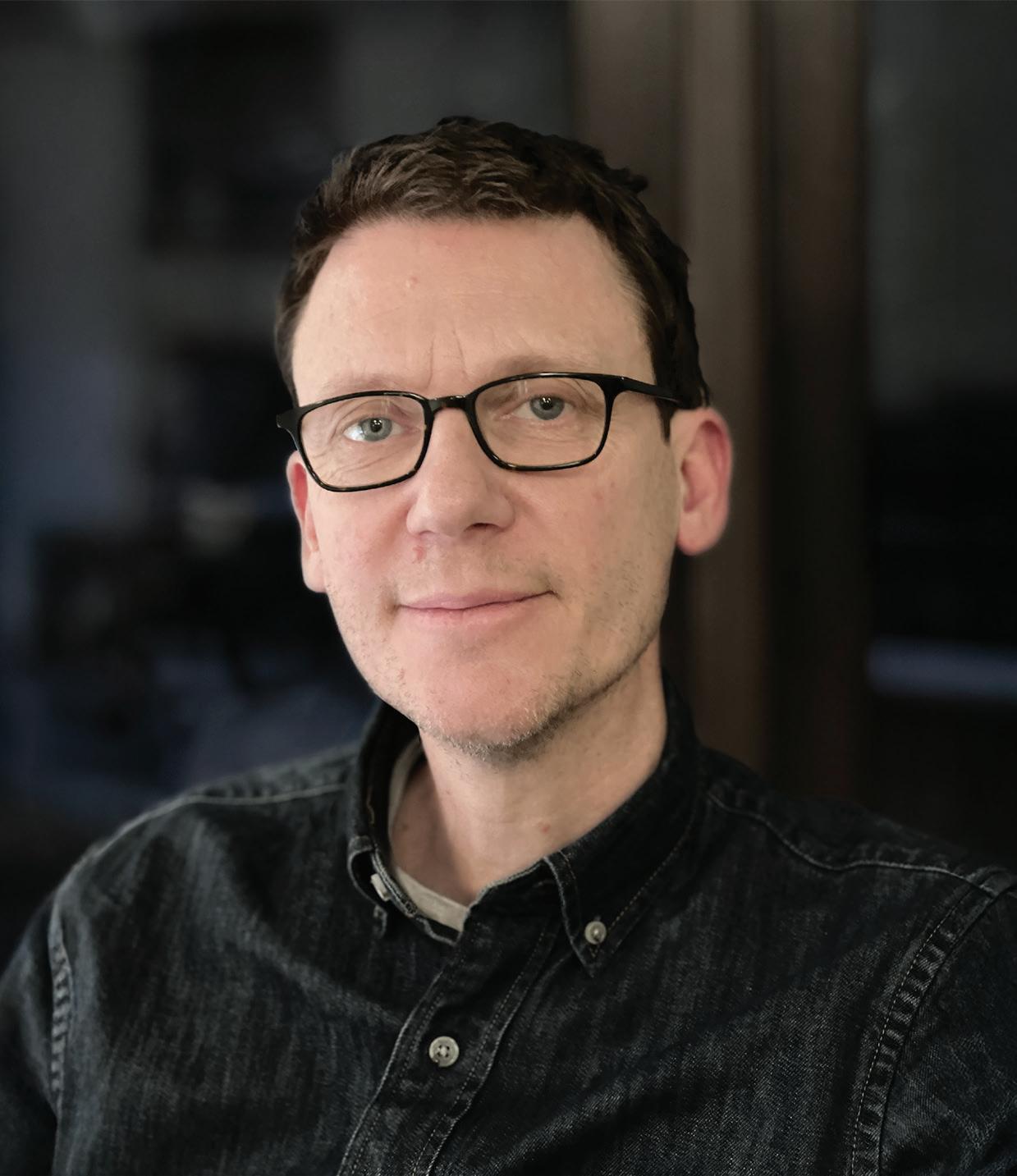
PRINCIPAL/EXECUTIVE CREATIVE DIRECTOR APPLIED DESIGN, NEW YORK NY
Craig’s experience includes high-profile projects as part of the creation of the National September 11 Memorial & Museum, the redevelopment of the World Trade Center and the ascension of NYU Langone Health. Craig executed these projects across all consumer touchpoints. He has spent the last 20 years creating, managing, and implementing brands in both Europe and the United States. His strategically focused work has touched audiences on many levels and in many forms, giving him invaluable insight into the wider applications of design and customer engagement. Craig’s skill at identifying and articulating the essence of a brand was built in key creative positions he previously held at Landor Associates, Addison, Interbrand, and Wolff Olins. His clients have included NYU Langone Health, The Braille Institute, Barclays, the BBC, the Central Park Conservancy, Citigroup, Inc., Microsoft, the Port Authority of New York and New Jersey, Sony Computer Entertainment Europe and the World Gold Council. His accolades include a Recognition of Excellence in Design from AIGA (American Institute of Graphic Arts), Good Design Awards, and a Gold Lion from the Cannes International Festival of Creativity. He holds a bachelor’s degree with honors in visual communication from Edinburgh College of Art in the United Kingdom.
Craig served as an adjunct professor of graphic design at Parsons School of Design—The New School for several years, and considers himself to be a perpetual student.
BETWEEN NOW AND 2030, WHICH SPECIFIC SKILLS, TECHNOLOGIES, OR PRIORITIES WILL MATTER MOST IN SHAPING THE FUTURE OF GRAPHIC DESIGN?
Curiosity has always been, and will remain, the defining skill for designers. Between now and 2030, tools, platforms, and technologies will keep shifting, but the real advantage will belong to those driven to explore, question, and experiment. As designers, we are trying to close the gap between what we can imagine and what we can make. Even in our most accomplished work, that gap never fully disappears. Curiosity is what pushes us to learn new skills, use new technologies so we can turn our ideas into reality.
WHAT PRINCIPLES GUIDE YOUR DESIGN
The work needs to pass a kind of unofficial three-point checklist where each answer is a definite “Yes”:
Does it speak for itself without needing explanation? – Yes.
Does it take a clear, distinctive position rather than sitting in the middle?
– Yes.
Is it as simple and distilled as it can possibly be? – Yes.
Then it is good.
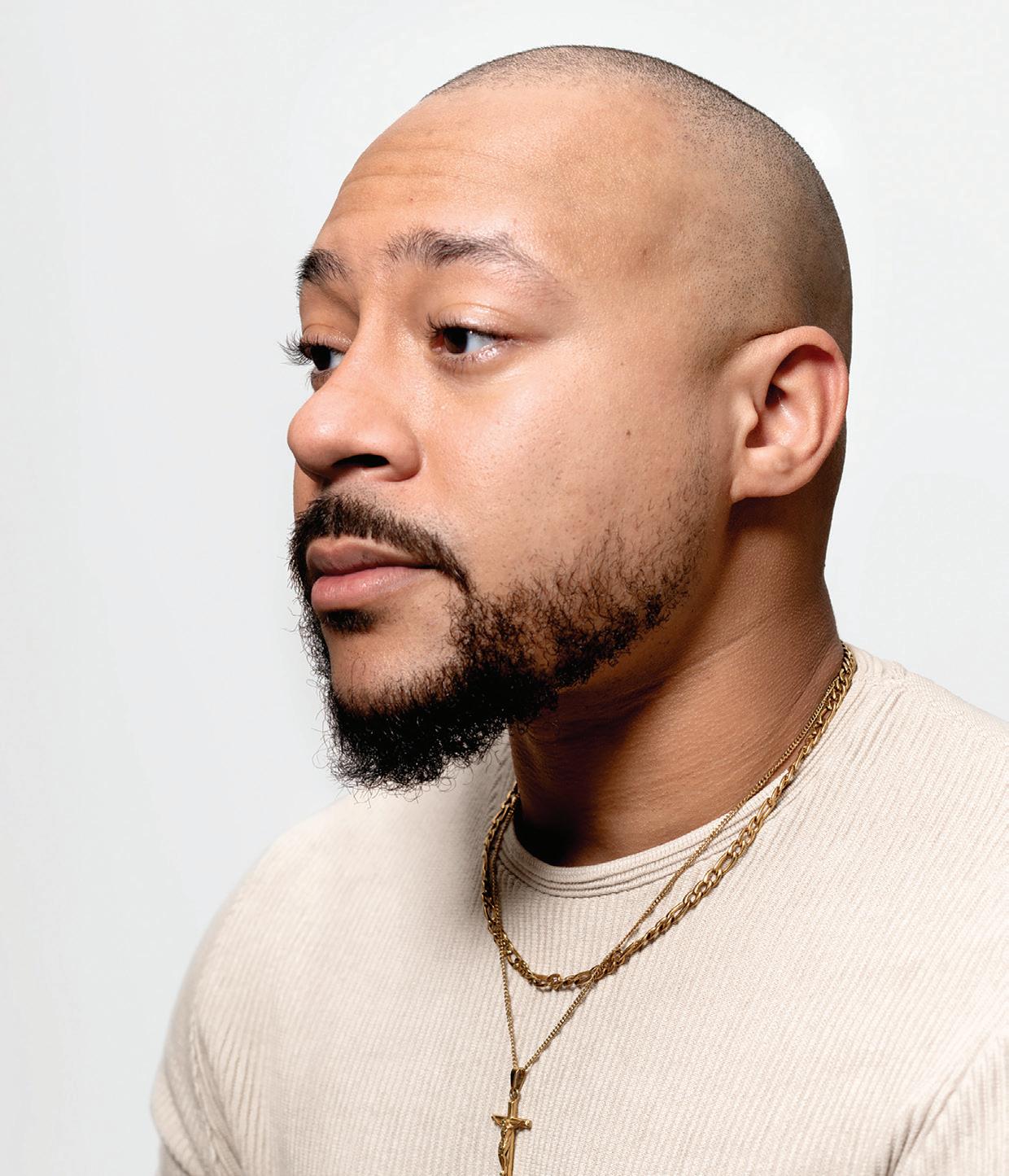
Christopher Guerrero is a Creative Director based out of Queens, New York. He studied Graphic Design at Mercy College and began his career as a designer at 8 Point Studio, focusing on branding and motion graphics. In January 2020, he joined Michael Bierut’s team at Pentagram, eventually rising to an associate partner. While there, he worked on a wide range of projects, from brand evolution for Verizon to identity systems for clients including the American Museum of Natural History, Academy Award–winning documentary studio Laylow Productions, and Metropolis, Marcus Samuelsson’s restaurant at the Perelman Performing Arts Center.
Christopher currently serves as Creative Director at Cardigan, leading design initiatives across a diverse set of clients and projects. In parallel, he works as an independent freelancer where he’s led work like promotional campaigns for NYU Skirball Center, brand evolution for Project Rock, a brand refresh for Rest Duvets, and a bold rebrand for AIGA New York.
BETWEEN NOW AND 2030, WHICH SPECIFIC SKILLS, TECHNOLOGIES, OR PRIORITIES WILL MATTER MOST IN SHAPING THE FUTURE OF GRAPHIC DESIGN?
Between now and 2030, an important skill for designers will be the ability to pivot. The ability to let go, start fresh, and adapt to new workflows and processes. One thing I continue to learn about the design process is that there is no universal formula for creativity — every client and project is different, which means the process will always shift. Rather than searching for a formula that doesn’t exist, we should embrace this variability. Designers who can adapt, remain flexible, and respond to change will be the ones making the biggest impact in the years ahead.
HOW DO YOU STAY RELEVANT IN AN INDUSTRY THAT CHANGES SO QUICKLY?
I believe staying relevant comes from a designer’s willingness to collaborate and learn from others. Working in a silo makes it easy to fall back on familiar solutions or past successes, but keeping an open dialogue with designers — whether more experienced, less experienced, or from different fields — can push your work forward, from achieving a certain aesthetic to refining your process. Having an open mind and recognizing that insight and inspiration can come from any level or background helps elevate you as a designer and ensures you remain relevant in an ever-changing industry.

CREATIVE DIRECTOR OF BRAND AND DESIGN
JOAN CREATIVE, NEW YORK NY/LONDON ENGLAND
Anjela Freyja is the Creative Director of Brand and Design at JOAN Creative. Working across New York and London, she has been shaping visual identities and building brand worlds for over fifteen years. Her work as a director is multidisciplinary, overseeing multiple creative specialities to ensure the highest quality of storytelling.
Anjela’s practice extends into writing and content creation where she analyzes art, design, and fashion, continuously engaging in cultural dialogue with her audience of over 200k.
BETWEEN NOW AND 2030, WHICH SPECIFIC SKILLS, TECHNOLOGIES, OR PRIORITIES WILL MATTER MOST IN SHAPING THE FUTURE OF GRAPHIC DESIGN?
There is no question that artificial intelligence is going to greatly influence our industry but fundamentally, I believe the same skills required now will only be heightened in 30 years and that is the ability to 1. Storytell and 2. Craft Exquisitely. As the world fills with clutter and noise from the internet, that ability to pull back and communicate something clearly, consistently, and beautifully only stands to become more important. And although it may sound easy, the simplest things are often the toughest.
HOW DO YOU STAY RELEVANT IN AN INDUSTRY THAT CHANGES SO QUICKLY?
It’s much easier to stay relevant in an ever-changing industry when your approach is not trend based. In my work I always aim to understand what a business or project stands for, what its story is, and then to translate that into an authentic and symbolic brand world. This type of storytelling transcends trends and gives brands a timeless foundation. Certainly this foundation can be adapted to trends, whether on social or advertising, but at its core, it knows what it is and that never changes. This is also important for customers today who are really craving authenticity from businesses. Brand loyalty starts with consistency and trust.
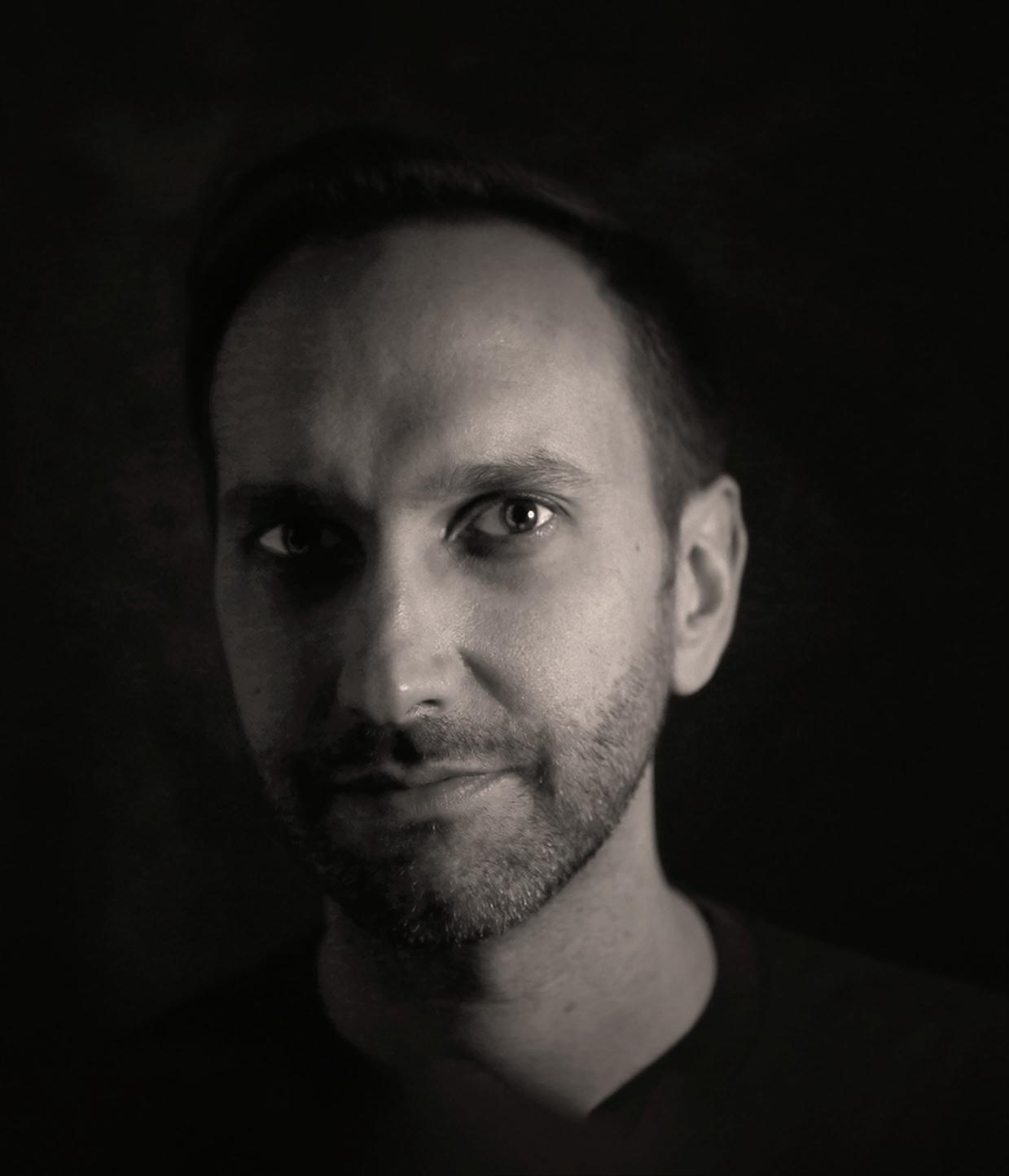
Ryan Michlitsch is a creative leader who has spent his career at the intersection of technology, humanity, and design. As Executive Creative Director at Hook and co-lead of our partnership with Google’s consumer apps team, he has developed strategic digital campaigns that are consistently effective, innovative, and award-winning.
Ryan’s work is notable for its versatility and profound impact. He is equally adept at creating for consumer-focused products like Google Search, Maps, and Gemini as he is for purpose-driven initiatives in the Responsible AI, Accessible Technology, and DEI space. This thought-leadership is best seen in his work for Google that drives awareness to their efforts to break down language barriers and make information more accessible to thousands of languages across the globe, including those with non-standard speech.
Most websites about AI initiatives put technology front and center, but Ryan and his team challenge that perception with a design philosophy that puts the focus squarely on humanity. In creating websites for Google’s Language Inclusion, Language Explorer, Project Relate, and
Project Euphonia, the goal was to showcase how these technologies can empower communities, not just wow them with the technology. The results speak for themselves: In addition to driving awareness, sign-ups and submissions, these projects have been honored with Webby, Anthem, and ADC awards.
Ultimately, Ryan’s work is guided by his desire to drive awareness around social issues and empower marginalized voices.
BETWEEN NOW AND 2030, WHICH SPECIFIC SKILLS, TECHNOLOGIES, OR PRIORITIES WILL MATTER MOST IN SHAPING THE FUTURE OF GRAPHIC DESIGN?
I believe the designer’s role is shifting from pixel-perfect executor to creative strategist, curator, and communicator. To stay relevant, a designer must be fluent in both generative AI and traditional Adobe tools. The boundary between developer and designer will continue to blur; eventually, only the most complex sites will require a dedicated developer. Consequently, designers must hone their understanding of psychology to evoke genuine emotion, balancing the speed of AI with the need for human authenticity.
WHAT TREND DO YOU THINK THE INDUSTRY IS OVERVALUING - AND ONE IT’S OVERLOOKING?
The rise of “prompt engineers” will quickly fade out as the tools become integrated more and more into every workstream a designer touches. Being hyper focused on being able to communicate with the AI tools will become so commonplace you will be competing against every single person who has access to it. One trend that’s being overlooked is “Trust Design”– the verification of non-AI content. As AI slop and deepfakes saturate the market, an increased interest in authentically created content and artwork will be inevitable.
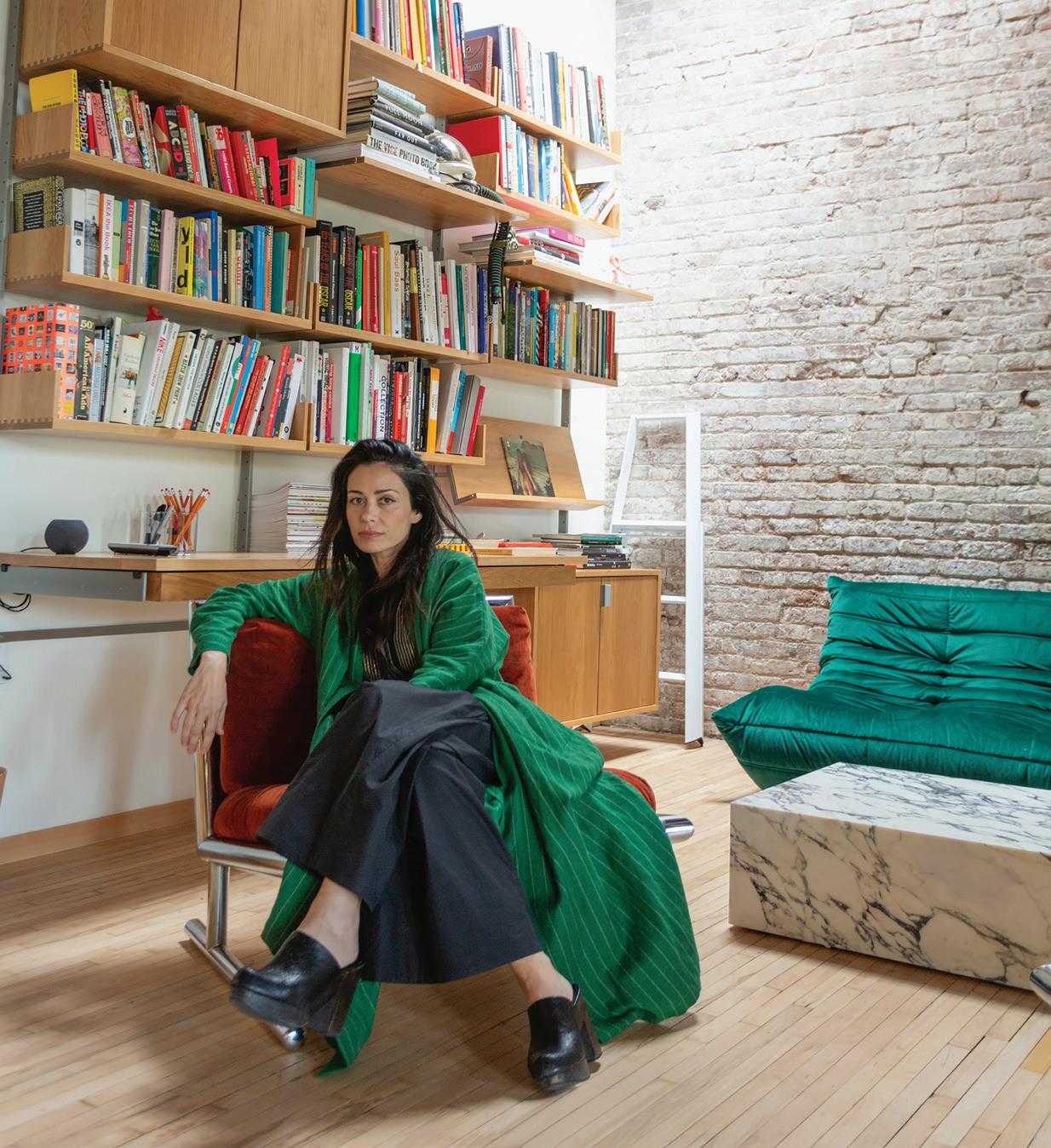
DIRECTOR, DESIGN, RETHINK, NEW YORK NY
Larissa operates at the intersection of creativity and business transformation. She leads cross-functional teams that bring together design, strategy, and operations, building the infrastructure that allows creativity to scale with purpose. With over a decade of leadership experience, Larissa has guided complex, global initiatives for cultural and luxury brands, with senior roles at renowned design studios like Pentagram and Gretel. She is known for translating creative ambition into sustainable growth; building high-performing teams, implementing forward-thinking operational models, and shaping environments where creative excellence can thrive. Passionate about advancing creative leadership, Larissa mentors emerging talent, redefines how design contributes to business value, and advocates for more equitable, diverse, and resilient creative systems.
My role isn’t to make design decisions, but to create the conditions for strong design decisions to happen. The principles that guide my work are clarity of purpose, respect for craft, and accountability to outcomes, which comes through building teams, processes, and partnerships that allow designers to do their best work. Since design doesn’t happen in isolation, healthy collaboration is also key. The best work comes when strategy, operations, and creative excellence are all prioritized and fully aligned. My job is to protect that.
Systems are more important than speed. The latter of which is being overvalued at the moment. Fast turnarounds often come at the expense of thinking, craft, and the sustainability of teams. What’s being overlooked is the operational systems behind creative excellence: How teams are structured, how feedback flows, how decisions are made, how designers are mentored and supported over the long term, and how design teams work effectively with cross-functional partners. The best work I see consistently comes from organizations that invest in those fundamental beliefs and values.
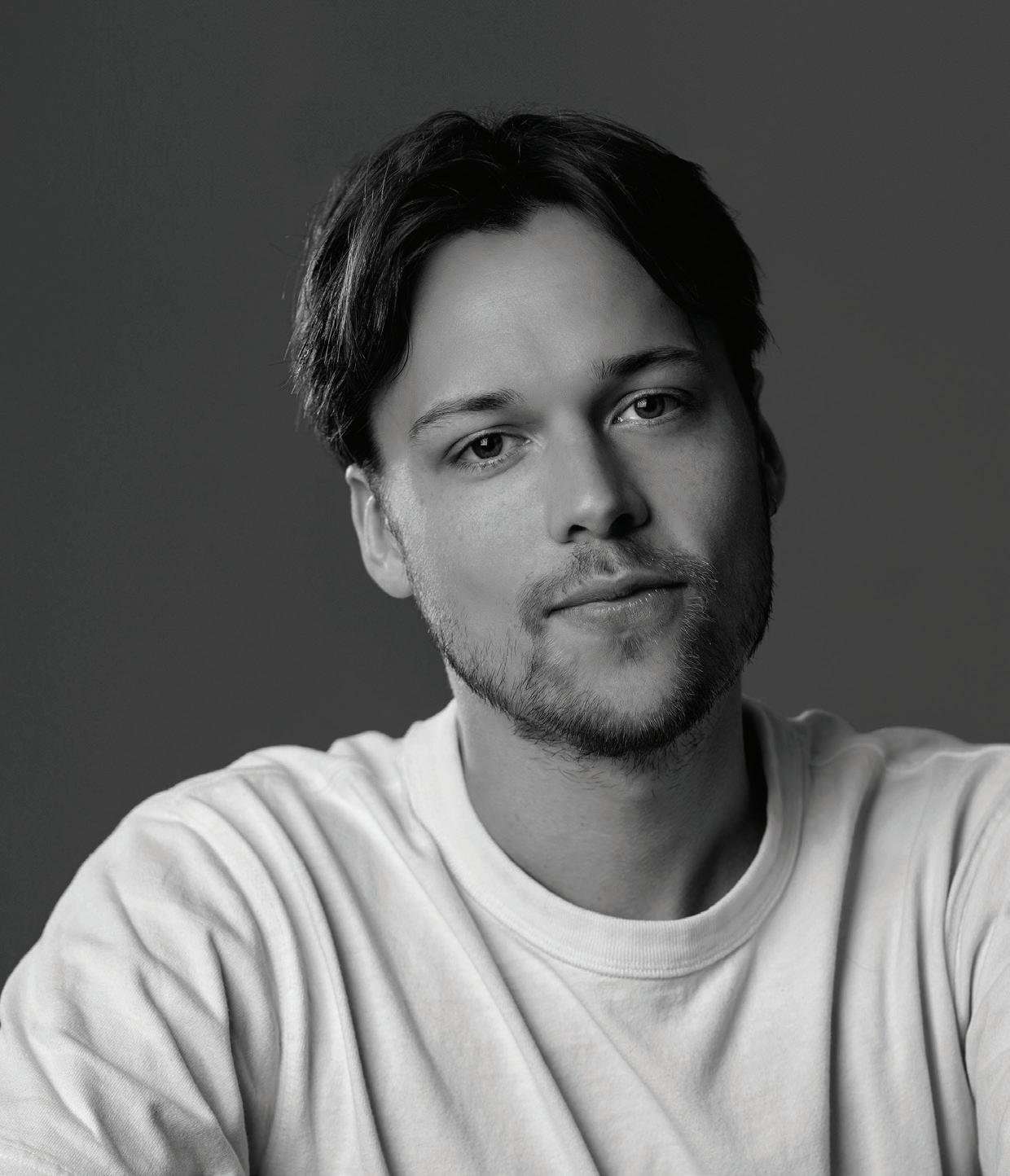
Ben began his career at R/GA and Droga5, creating work for brands like Meta, The New York Times, Reddit, and Essentia Water. Originally from France, he brings a European sensibility to his work with a deep respect for craft, visual storytelling, and the emotional power of detail. As the first creative hire at American Haiku, he launched the agency’s debut campaign for New Balance and helped guide it to Ad Age’s Newcomer Small Agency of the Year. His award-winning work, recognized by Cannes Lions, D&AD, The One Show, and the Clios, blends cultural insight with a belief that the most resonant ideas are also the most beautifully made.
BETWEEN NOW AND 2030, WHICH SPECIFIC SKILLS, TECHNOLOGIES, OR PRIORITIES WILL MATTER MOST IN SHAPING THE FUTURE OF GRAPHIC DESIGN?
Between now and 2030, I think graphic design will shift from execution to orchestration. As AI accelerates production, the real value will be taste, judgment, and the ability to synthesize culture and technology into coherent visual systems. The future looks less like making assets and more like building coherent worlds in which people actually want to spend time.
WHAT TREND DO YOU THINK THE INDUSTRY IS OVERVALUING - AND ONE IT’S OVERLOOKING?
I think the industry puts too much weight on novelty — AI aesthetics, fast visual trends, and work built for social feeds but not to last. What gets overlooked is durability. Brands need systems that can stretch over time, move across formats, and still feel intentional. Narrative thinking is undervalued too: design that unfolds and evolves, not just something that lives in a single frame.
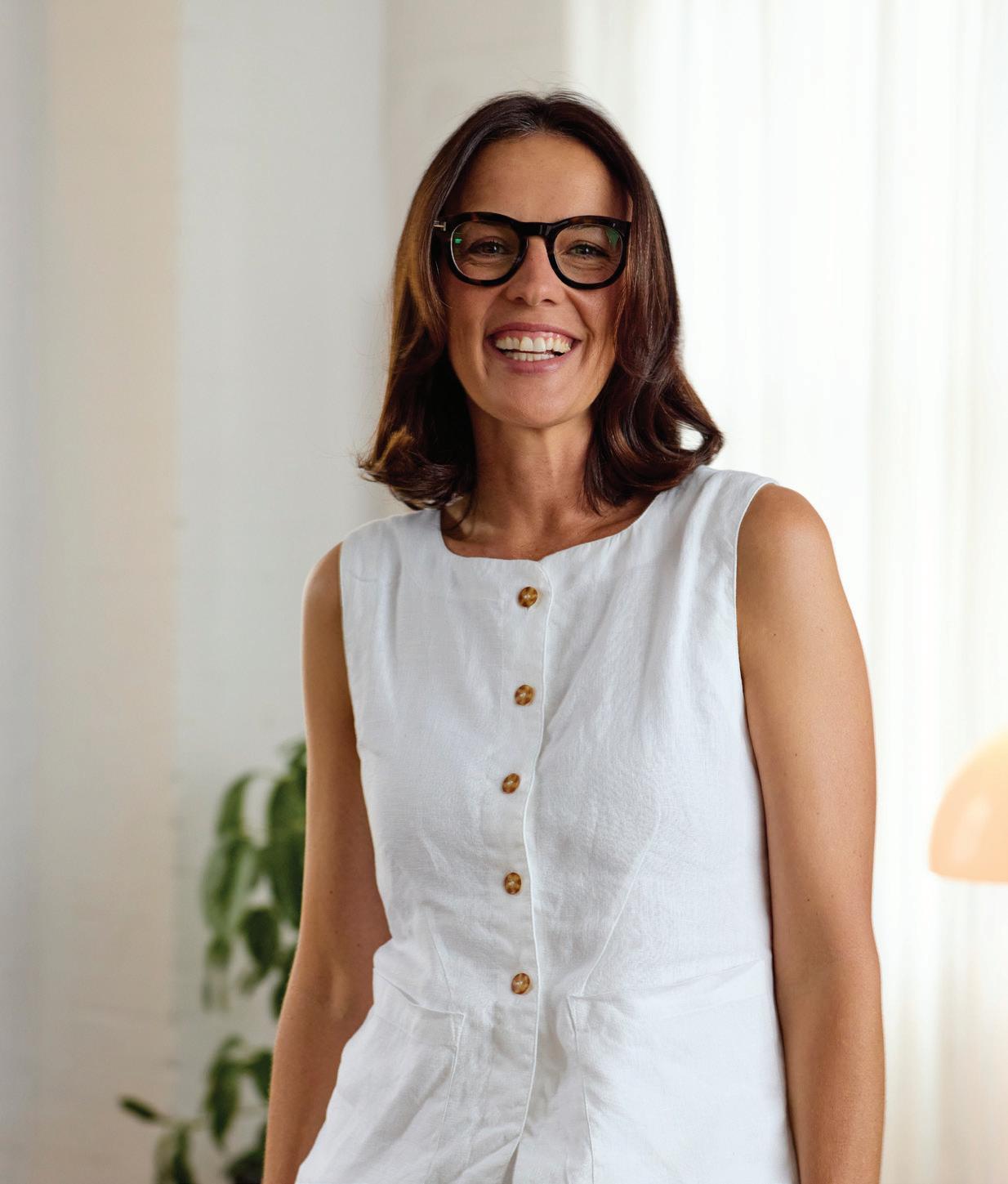
EXECUTIVE CREATIVE DIRECTOR CANVA, SYDNEY AUSTRALIA
Cat van der Werff is the Executive Creative Director at Canva, where she leads a global inhouse creative agency of more than 120 creatives across brand, campaigns, performance, and production, all in service of Canva’s mission to empower the world to design. She joined Canva in 2018 as the company’s first brand designer, bringing more than 15 years of global brand-building experience. Since then, she’s helped shape the creative direction for some of Canva’s most iconic campaigns, including Love Your Work, Put Imagination to Work, and Canva Create. With a focus on designing for scale, building high-trust creative teams & crafting a brand the world genuinely loves, Cat believes in design as a force for good.
BETWEEN NOW AND 2030, WHICH SPECIFIC SKILLS, TECHNOLOGIES, OR PRIORITIES WILL MATTER MOST IN SHAPING THE FUTURE OF GRAPHIC DESIGN?
The most critical skill for designers in 2030 won’t be mastering the latest tool. It will be imagination. The ability to envision what doesn’t yet exist, make unexpected connections, and do courageous new things. AI can generate and optimize, but it can’t imagine a better future or connect us as humans. As designers we have this incredible opportunity to use our creativity and craft of visual communication to inspire
collective action and shape a better world. As Melanie, Canva’s founder, says: “Everything that exists today was once imagined.
WHAT PRINCIPLES GUIDE YOUR DESIGN DECISIONS?
I believe design’s greatest power is as an equalizer – making ideas understood by everyone, no matter their background, education, or influence. That means always putting myself in the shoes of someone who isn’t a designer by craft. I actually test my creative work on my mum to see if she understands what I’m communicating. I call it the “mum test,” and it keeps me honest. I trust intuition and expert judgement, but I always remind myself that we’re rarely designing for other designers. Design should simplify complexity and help people feel and understand something clearly.
WHAT TREND DO YOU THINK THE INDUSTRY IS OVERVALUING - AND ONE IT’S OVERLOOKING?
What’s overvalued? Aesthetic perfectionism over real impact. We celebrate beautiful work that wins awards but doesn’t solve problems or connect with audiences. Design that impresses other designers but fails the “mum test” isn’t fulfilling its purpose. Great design should communicate clearly and create meaningful change, not just look good in a portfolio. What’s overlooked? Opening up the gates to design. Some believe giving “non-creatives” access to design tools devalues their craft. What I see is it frees experts to focus on complex, strategic work while making visual communication accessible to everyone. More people creating unlocks new perspectives, collaboration, and greater impact.
HOW DO YOU STAY RELEVANT IN AN INDUSTRY THAT CHANGES SO QUICKLY?
Honestly, I think the question gets it backward. Relevance isn’t about keeping pace with change, that’s just chasing trends. Short-term thinking and the limited view your algorithm feeds you won’t keep you relevant for long. Real relevance is built over a lifetime, creating work that connects with future generations.
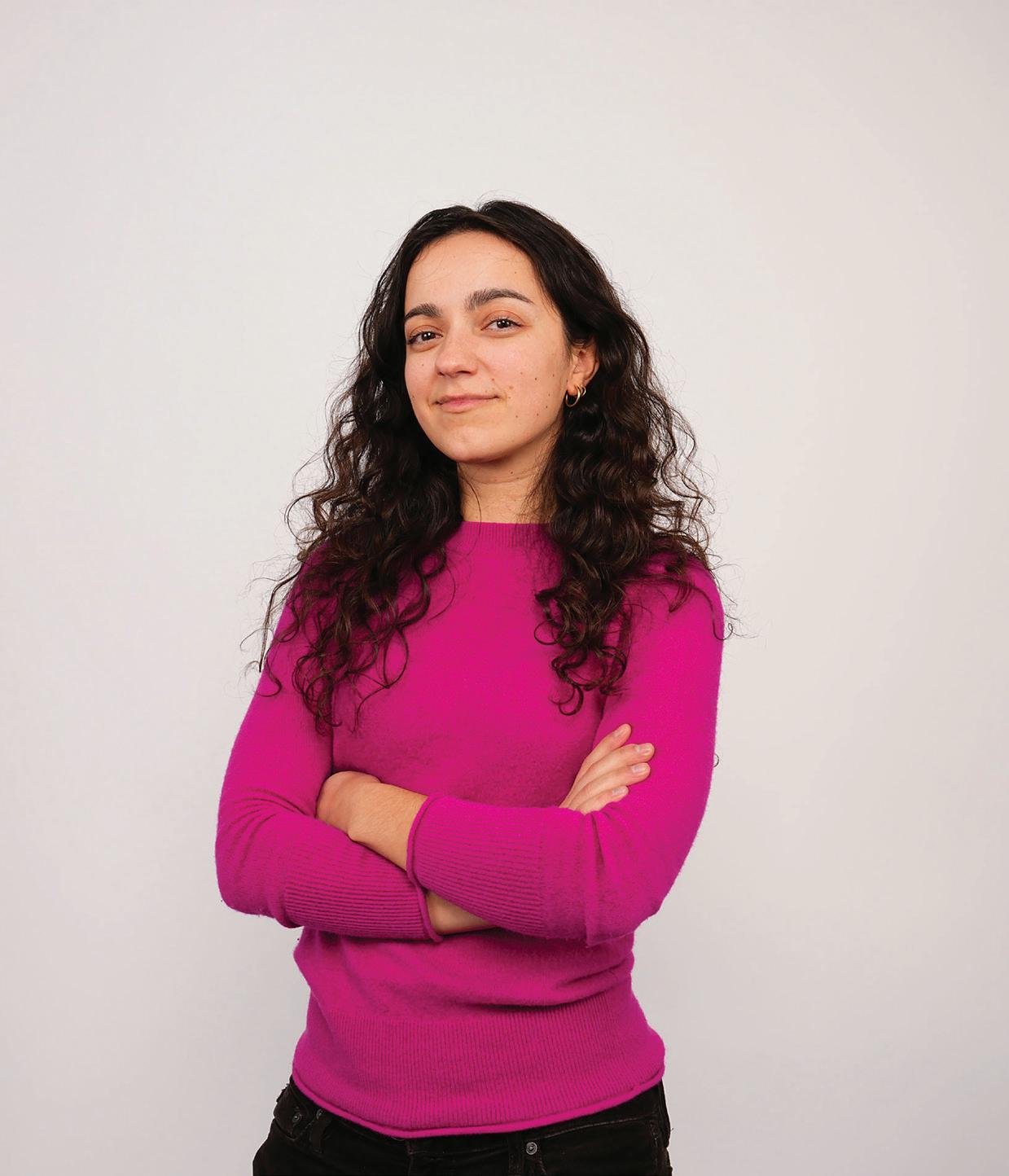
Jess Ulman is a Senior Designer at Colossus, which she joined in 2023. Jess brings an artful touch to her work which spans branding, illustration, web design, and editorial design.
At Colossus, Jess led the forthcoming rebrand for the renowned performing arts institution Celebrity Series, a brand overhaul set to debut in early 2026. In addition, Jess has lent her unique style to recent branding projects for Dream Recovery, a sports performance company, as well as the massive rebrand for Highspring, a global professional services organization with offices in more than six countries.
A self-taught designer and illustrator, Jess began her creative career at a small branding agency in western Massachusetts called IdeaCo., before moving to New York City. There, she worked with clients such as Spotify, Aetna, Apollo, and Brooklyn Magazine. Jess discovered her love for editorial design while leading the Brooklyn Magazine redesign. This magazine centered around creating playful, illustrative, and distinct spreads that reflected the eclectic nature of Brooklyn. Since then, Jess has aimed to incorporate a more human touch into her work, experimenting with hand drawn elements and textures, and leaning into the
whimsical imperfections that bring warmth to her projects. Jess is driven by the belief that no matter the brief, there is always room to push the envelope and create compelling work.
My work is guided by a few principles. Always answer the brief but also present a direction that pushes the creative bounds of what a client might be expecting. Confining yourself to online inspiration can limit your designs and get you caught in a trend spiral. Inspiration often comes from stepping away from screens. Books, architecture, doodles, and letting yourself be bored will help stretch your creativity. It’s important to distinguish what’s trendy from what feels timeless or uniquely lasting and which of those buckets your project fits into. And above all, the work can’t be treated too precious; iteration is a huge part of the process, and each round of refinement moves the idea toward a clearer, more meaningful solution.
The industry is overvaluing hyper-polished, algorithm-driven aesthetics — designs that follow the same trending styles, palettes, and layouts because they perform well on social feeds. This creates a sameness that prioritizes quick validation over meaningful originality. What’s being overlooked is more exploratory creativity: tactile inspiration and ideas that come from observation rather than optimization. There’s a growing hunger for work that feels human, and isn’t chasing the moment, but aiming for something lasting.
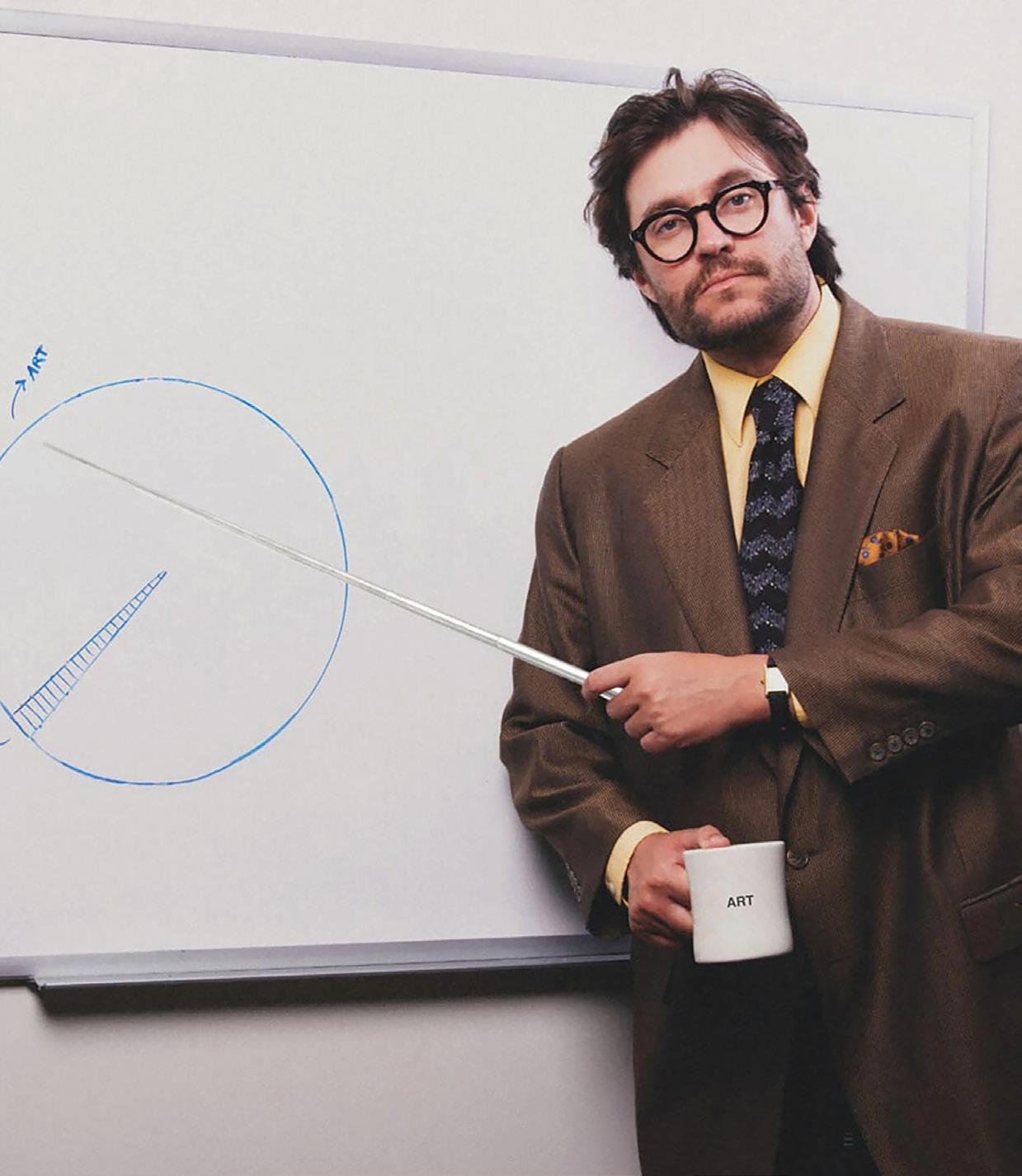
Before joining the Austin-based agency, Renan served as a Creative Director at Wieden+Kennedy in both New York and São Paulo. There, he led global campaigns for Budweiser — including the 2022 FIFA World Cup — as well as regional work for Nike’s Olympic platform across Latin America. His portfolio also includes award-winning campaigns for Old Spice, Sprite, Heinz, and Prime Video.
Renan’s work has been recognized by the industry’s top creative shows, including Cannes Lions, D&AD, The One Show, Andy Awards, and the Art Directors Club. In 2023, he was named the third most awarded Creative Director at The One Show in Brazil, contributing to Wieden+Kennedy São Paulo being crowned the most awarded agency of the year by the Brazilian Creative Club.
Born and raised in Capinzal — a small rural town in southern Brazil surrounded by grasslands and cattle — Renan developed an early love for aesthetics, storytelling, and animal print. His career began in 2007, creating animated vignettes and illustrations for MTV Brazil. A year later, he was invited to contribute as a graphic artist to Barack Obama’s first presidential campaign and was named Young Graphic Designer of the Americas by DAAB.
BETWEEN NOW AND 2030, WHICH SPECIFIC SKILLS, TECHNOLOGIES, OR PRIORITIES WILL MATTER MOST IN SHAPING THE FUTURE OF GRAPHIC DESIGN?
By 2030, the most critical skill will not be technical mastery, but curation and taste. As AI democratizes image generation, the value of a unique human perspective will skyrocket. The priority will shift from “how to make it” to “why we make it.” Designers must evolve into visual conductors, blending synthetic efficiency with human empathy. The future belongs to those who can harness technology not just to speed up production, but to build cohesive, soulful brand worlds that maintain the integrity of craft in an automated landscape.
WHAT PRINCIPLES GUIDE YOUR DESIGN
My decisions are guided by the belief that craft is a storytelling device, not just decoration. Coming from a background of rigorous Brazilian art direction, I prioritize clarity and emotion, stripping away the unnecessary until the core idea shines through. Whether building a design system or a global campaign, every visual element must serve the concept. I look for the tension between the classic and the unexpected. Ultimately, an obsession with detail is how we signal respect for the audience; if it doesn’t add meaning, it doesn’t belong on the page.
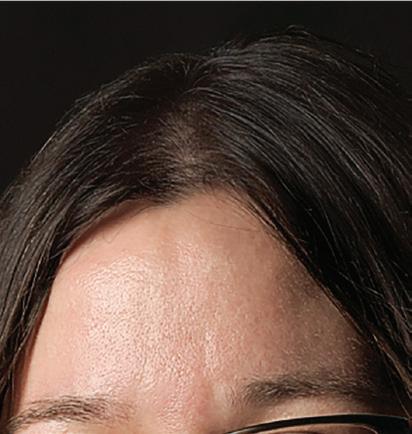

VP, CO-HEAD OF DESIGN, COLLE MCVOY, MINNEAPOLIS MN
Diana “DQ” Quenomoen leads a multidisciplinary team of design brilliance dedicated to building the brand operating systems that modern brands need to live, breathe, behave, and thrive. Her work blends strategic storytelling with distinct, scalable design systems that define how identity shows up in behavior, emotion, product, motion, and place. If a brand is a world, DQ makes sure it has gravity.
She believes design is a connective force and no, not the Star Wars kind. It is the bridge between strategy and feeling, clarity and expression, business ambition and human experience. Her passion lies in creating immersive brand worlds that stretch far beyond logos and colors. She creates worlds that act, respond, invite participation, and evolve alongside culture, technology, and the people they serve. And yes, she loves how those words rhyme right off the tongue.
Over her career, she has shaped brand evolutions, experiential environments, and full-funnel campaigns for brands both iconic and emerging, always with a focus on humanity, distinction, and future readiness.
Whether she is crafting a long-term vision with her team, mentoring emerging designers, or helping a brand rediscover its soul, DQ is guided by the belief that Design should create vivid, sensorial experiences that reveal who a brand truly is, what it stands for, how it behaves, and how it brings people in. Her work aims to ignite emotion, spark clarity like a firework, and build brand worlds that feel alive and built to endure.
BETWEEN NOW AND 2030, WHICH SPECIFIC SKILLS, TECHNOLOGIES, OR PRIORITIES WILL MATTER MOST IN SHAPING THE FUTURE OF GRAPHIC DESIGN?
The future of design belongs to those unicorns who can dance between emerging technologies like AI, generative tools, motion systems and spatial computing, and the one thing technology will never replicate: the human heart. Designers will need to build brand operating systems that scale across behaviors, senses, and experiences, not just static assets. As brands show up in more places and move faster than ever, our job is to design worlds that adapt, evolve, and communicate with clarity and emotion in every moment. Tech will accelerate us and humanity will anchor us.
WHAT PRINCIPLES GUIDE YOUR DESIGN DECISIONS?
I design from the inside out. Everything begins with the core of the brand’s world, the emotional operating system that shapes how it behaves, feels, and shows up. Every choice must ladder back to that foundation and express it distinctively. I’m guided by clarity, culture and a deep respect for human experience. The work must function beautifully, but it also needs to move people. I aim for systems that are flexible, future-ready and rooted in purpose, always allowing space for curiosity, surprise and delight.
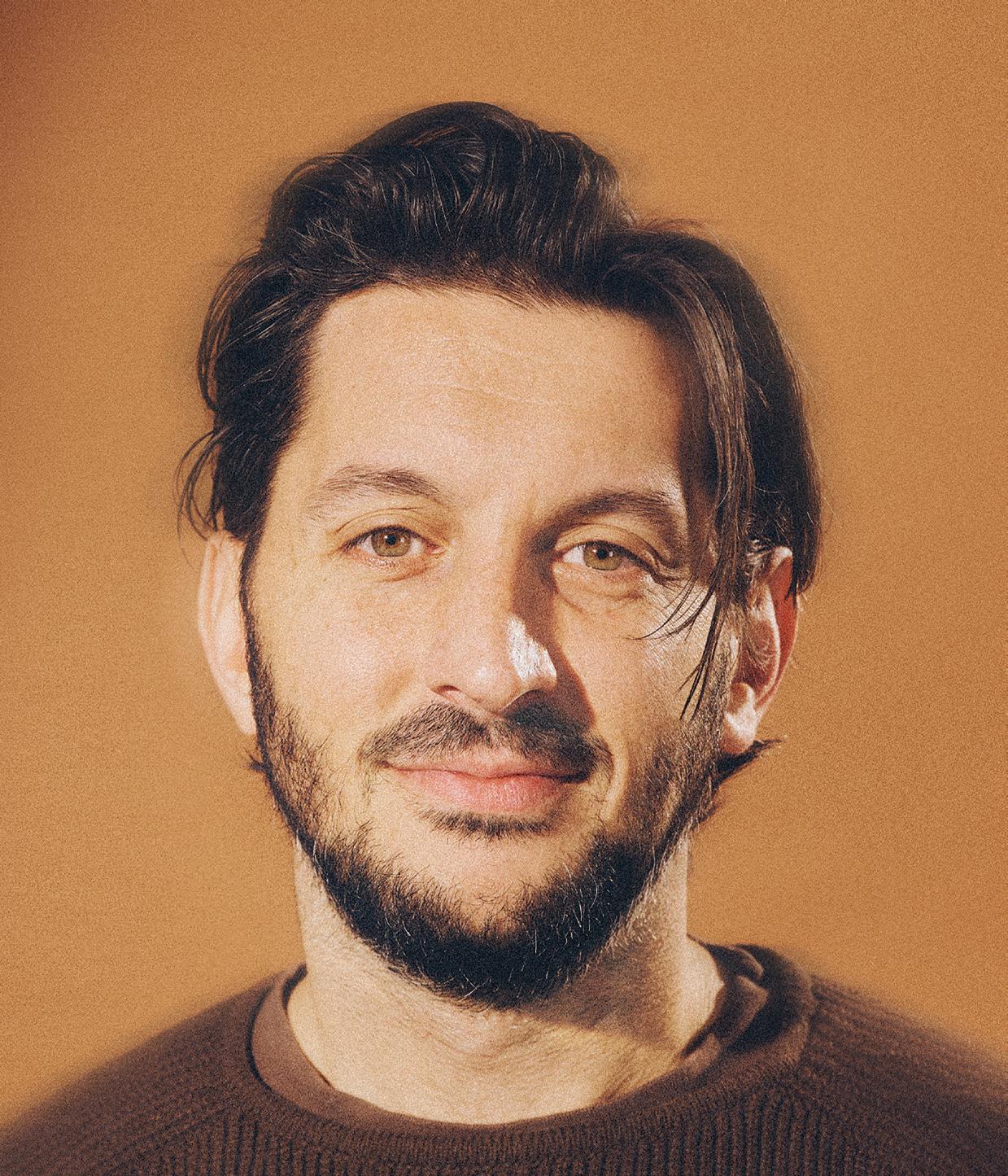
FOUNDER/CHIEF CREATIVE OFFICER, TAVERN, BROOKLYN NY
Mike Perry is founder and chief creative officer at Tavern, a Brooklyn-based global creative agency crafting timeless brands across food, beverage, hospitality, and beyond.
With 15+ years at the forefront of brand building, Mike’s earned a reputation as a certified creative powerhouse. His career spans leading roles at top global studios like Quaker City Mercantile, Stranger & Stranger, Design Bridge, and JKR, and media giants like NBC Sports and TikTok. He’s the creative mind behind some of the industry’s most recognizable rebrands for clients such as Budweiser, Burger King, and Diageo.
Driven by Tavern’s Modern Heritage philosophy, Mike blends legacy and innovation to create dynamic brands that flex to the lightning-fast pace of culture. In a world of trend-chasing, Tavern focuses on what lasts: commercially powerful, future-ready brands and ambitious experiences that resonate at every touchpoint. Recent collaborations include Sizzler, Burt’s Bees, Old Overholt Whiskey, and New York City FC.
As part of the Board of Directors at AIGA New York, Mike champions accessibility, relevance, and opportunity for the next generation of creative leaders.
Tavern’s design philosophy, Modern Heritage, guides every decision we make. Too many brands chase short-lived trends or lean on surface-level nostalgia, giving a quick hit of familiarity but little lasting relevance. Our approach is different. We focus on uncovering a brand’s true history, the symbols, stories, and values that made it matter in the first place, and reimagining them for today’s audiences. That’s the real power of brand heritage: it creates a balance of familiarity and relevance that builds long-term equity, not fleeting impressions. To achieve that, we ask deeper questions. Who has this brand always been? What has it always stood for? Which stories still resonate? When applied with intention, this approach works across categories, from spirits to sports.
Overvalued: nostalgia. It’s not a brand strategy, it’s novelty. From Budweiser to Kellogg’s, brands keep reviving decades-old designs to conjure warm memories of simpler times. It might drive clicks, but as a copy-and-paste tactic it rarely builds a meaningful connection between what a brand has stood for historically and what it represents today. The goal shouldn’t be to recreate the past, but to make it feel current. That’s the key distinction: nostalgia copies, Modern Heritage builds. Overlooked: world-building. It’s one of the most powerful ways to cultivate lasting brand communities. People don’t want to be sold to, they want to be part of something. The strongest brands build immersive worlds through layered storytelling that invite people to explore and discover. Vacation sunscreen does this particularly well, and more brands should take note. When you create a universe of engaging, evolving elements, you’re not just selling a product, you’re building a lifestyle people want to return to.
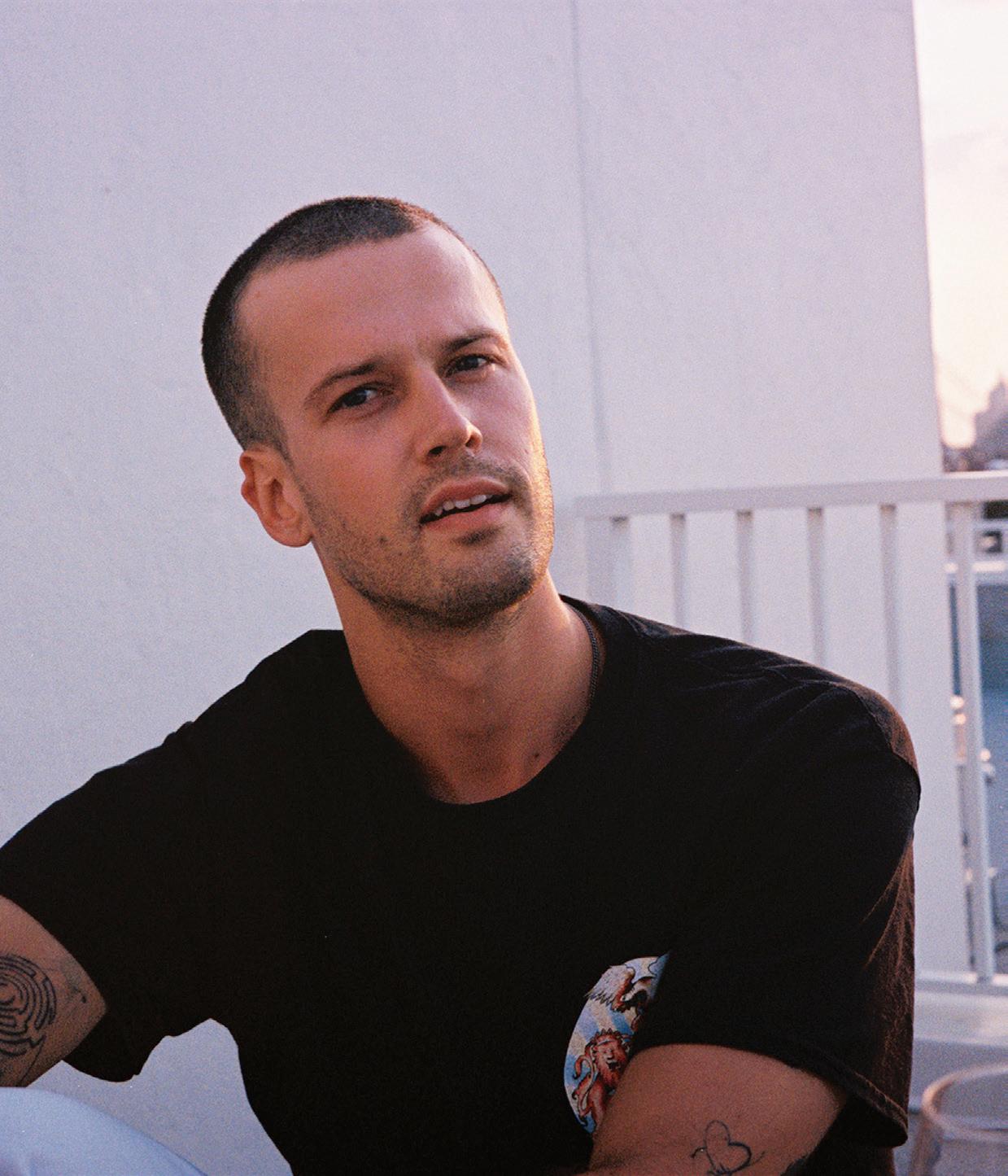
Andrew Rutledge is a founding partner at View Source, a design and technology studio that harnesses ideas, aesthetics, and code to realize brand vision.
Andrew brings over a decade of expertise in design innovation and brand transformation to his projects. As the former head of design innovation at Compass, he shepherded the company through unprecedented growth, scaling from 50 to 10,000+ members while spearheading innovative initiatives that redefined the real estate industry. His creative leadership at Publicis Groupe garnered international recognition, including a grand Clio, Cannes Lion Gold and Silver, and D&AD First Prize for groundbreaking Ray Ban campaigns.
Alongside View Source founding partners Jen Yuan and Ross Vandenhoeck, Andrew combines digital performance and human soul to build brands from idea to execution, partnering with ambitious startups and legacy icons like Bandit Running, Cadence, Aura Bora, and Pantone. Across sectors from sports to luxury, tech, and cultural institutions, he creates identities, experiences, and content that alter perception, incite wonder, and create a valuable connection between people and organizations.
There’s so many great quotes and principles to stand by and try to apply to your work and practice. Who actually runs through these in a checklist manner as if it were a computer virus diagnosis? So I prefer to keep it simple by asking “So what?” That simple question often fires up the synapses to think about the who, what, when, wheres and whys, though more importantly wires us back into the bigger picture. Is this interesting enough to get noticed? Mediocrity is often invisible until passion shows up and exposes it, as Graham Cooke says.
Investigating anything you’re afraid of is one way of staying relevant. At the same time, no one in the history of business that has taken care of their customer has ever lost. So by focusing on the tremendous amount of craft it takes to arrive at a great result, and ensuring its making your clients happy, you naturally end up remaining relevant. Though durability is key here. Make a few people really happy rather than a whole lot of people just a little bit happy.
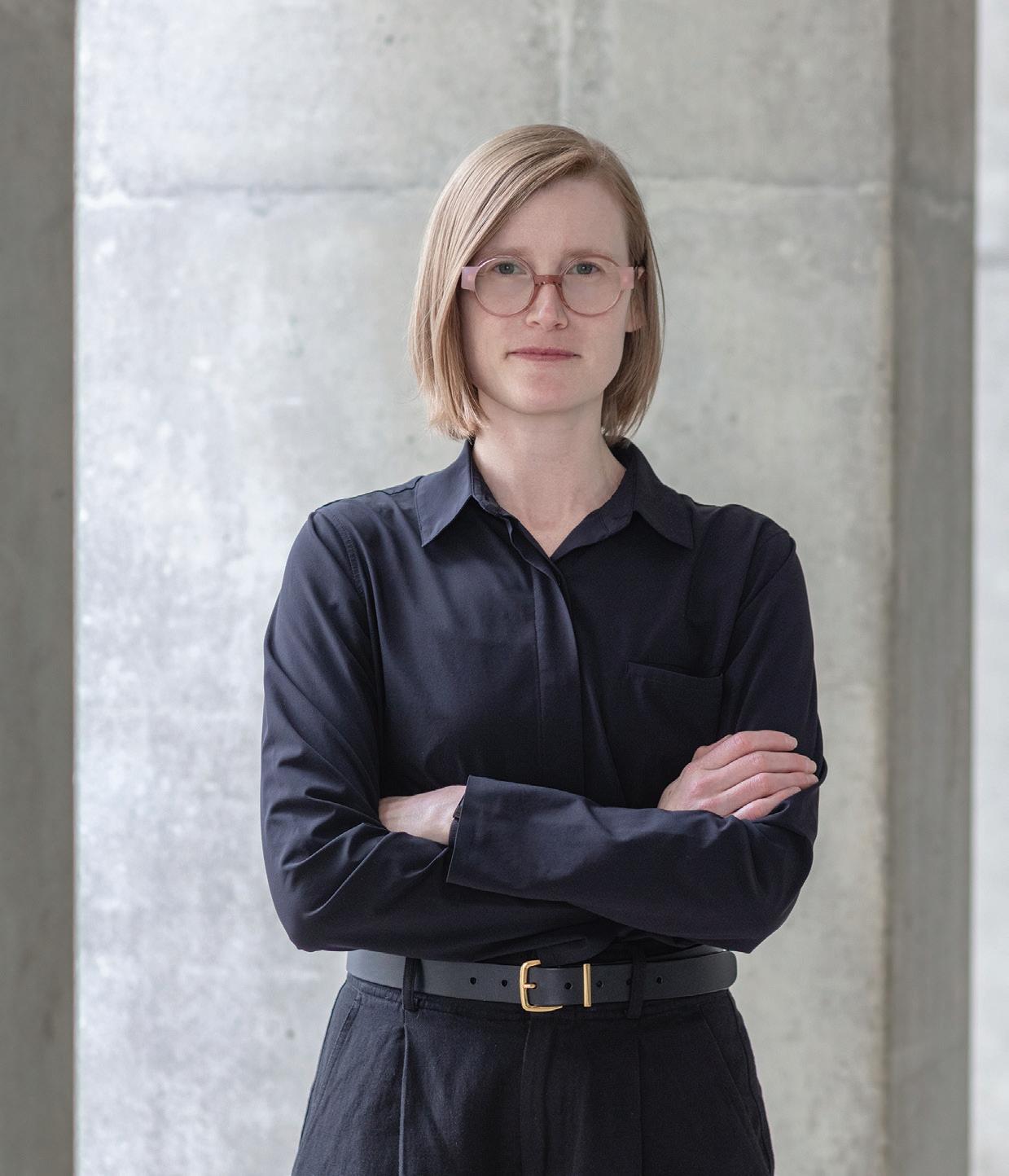
DESIGN DIRECTOR, SENIOR ASSOCIATE GENSLER, SEATTLE WA
Krista Reeder is a creative leader driven by a belief that design can connect people, strengthen communities, and inspire everyday lives. For over 18 years, she has led multidisciplinary teams to develop visual communication and environmental design strategies for organizations around the world.
After studying Visual Communication Design at The Ohio State University, Krista honed her skills at Pentagram New York, where she contributed to award-winning work for cultural institutions including The Metropolitan Museum of Art, Museum of Arts and Design, The Barnes Foundation, Sotheby’s, and Miho Institute of Aesthetics in Japan. In 2012, her love of food and community sparked a shift—collaborating with Whole Foods Market on more than 30 stores across the U.S. to root each store in local culture through community engagement, strategic positioning, identity design, and placemaking. That work grew globally through partnerships with Shinsegae and Emart in South Korea, developing food retail concepts that celebrate connection over a shared love of food.
Today, as Design Director of Brand Experience at Gensler, Krista brings together diverse teams and stakeholders around stories that inspire change and build community. Her work translates purpose into tangible experiences — through strategic positioning, visual communication, identity design, placemaking, and wayfinding solutions that help organizations communicate meaningfully and authentically express who they are. Her portfolio spans industries—from educational, cultural, and civic institutions to retail, residential, hospitality, workplace, sciences, and sports. Her work has been recognized by and/or published in GDUSA, Fast Company, AIGA, SEGD, AIA, Interior Design, Architectural Record, Communication Arts, Print Magazine, Design Observer, and featured locally by The Seattle Times and Oregon Business Journal.
In 2021, SEGD named Krista a Branded Environment Vanguard for Color Speaks — a Gensler Seattle initiative that transformed boarded storefronts during the pandemic with bold color and uplifting messages, sparking a global movement of hope and resilience.
BETWEEN NOW AND 2030, WHICH SPECIFIC SKILLS, TECHNOLOGIES, OR PRIORITIES WILL MATTER MOST IN SHAPING THE FUTURE OF GRAPHIC DESIGN?
Between now and 2030, the most important shift in graphic design will be how designers work with generative content. As AI tools accelerate production, the designer’s role is moving from sole creator to editor and curator — shaping, refining, and giving intention rather than starting from a blank slate. This shift from an additive to a reductive process will continue to be debated, placing greater responsibility on designers to guide outcomes with judgment, ethics, and craft. At the same time, community engagement will become an increasingly critical skill. Designing with people rather than for them creates more inclusive, relevant, and meaningful work. By inviting diverse perspectives into the process early and at key moments, designers can produce outcomes that are not only more impactful, but more grounded in real human experience.

With 25 years of experience driving creative excellence across B2C and B2B marketing, I’ve mastered the art of transforming complex ideas into clear, compelling visual narratives. Honing my skills has been a result of learning from experiences (good and bad) while working with great teams across various agencies. Throughout my career, I’ve developed a strong design foundation delivering standout package design, consumer advertising, direct mail, point-of-sale, and promotional campaigns that capture attention and drive engagement.
For over three years at Vanguard, I’ve served as Art Director on the Workplace Solutions marketing team. I lead the creative vision for the annual How America Saves campaign, which is Vanguard’s flagship research report and the industry’s most comprehensive look at DC plan participant data. By turning complex participant data into easily understood marketing insights, this campaign has become one of Vanguard’s most successful and visually distinctive efforts in the market. Beyond this marquee initiative, I also drive full-funnel marketing experiences, from research reports and presentations to dynamic web content and high-impact advertising.
As a player-coach, I blend strategic art direction with hands-on design execution, championing servant leadership and empowering teams to thrive. My philosophy? Bold creative strategy and smart content hierarchy are the bedrock of exceptional design. I lean into analytical thinking and challenge the status quo to push boundaries and deliver work that doesn’t just meet expectations but redefines them.
On a personal note, some things that matter most to me are football (Bills Mafia!) and family. I am a happily married father of five and have learned to stay calm and find order in the crazy, skills that serve me well professionally.
BETWEEN NOW AND 2030, WHICH SPECIFIC SKILLS, TECHNOLOGIES, OR PRIORITIES WILL MATTER MOST IN SHAPING THE FUTURE OF GRAPHIC DESIGN?
AI offers speed, efficiency, and automation, but true design requires thoughtful strategy and originality. As tools advance, we’ll face a choice: what’s easy versus what’s best. Leaning too heavily on convenience risks diluting creativity and weakening the future of graphic design. Our challenge is to integrate AI’s strengths without sacrificing the human insight that drives exceptional design solutions.
WHAT PRINCIPLES GUIDE YOUR DESIGN DECISIONS?
I think the most important part of great design is the thinking that happens BEFORE you design anything. There’s a lot of detective work you have to do to be ready to design, so I always start with two main principles. First, “always ask why.” Once you fully understand the ask, you are in a much better position to come back with better design solutions. Second, “don’t be afraid to challenge the status quo.” I think more often than not, what separates a designer from great design is never looking beyond what was asked, and so you end up stopping short of a design breakthrough.
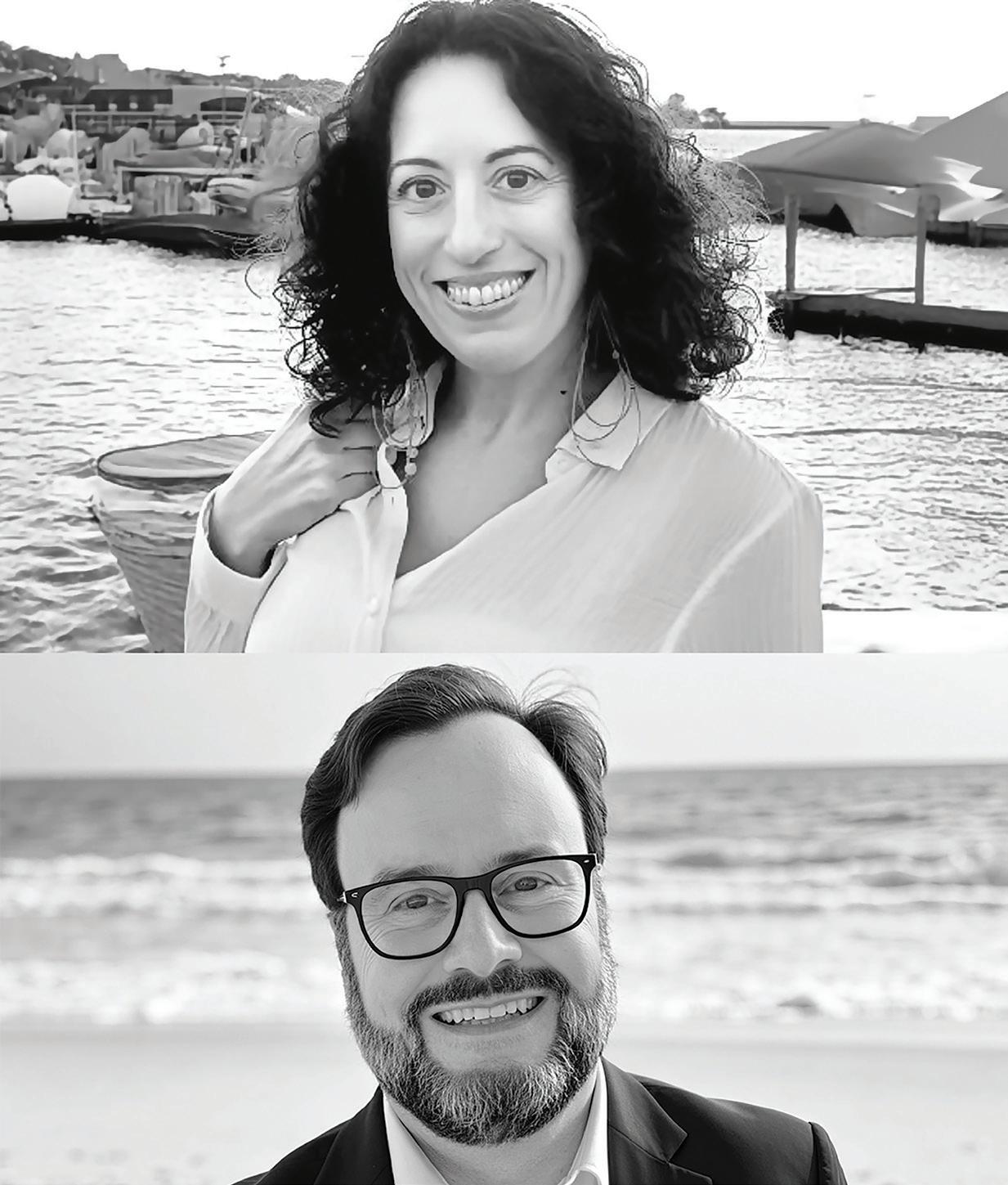
Debra Cassa and David La Cava are the creative partners behind Bluecap Studio, a Los Angeles-based design studio founded in 2020. Taking a collaborative and hands-on approach, Bluecap has forged partnerships with clients ranging from enterprise-level industry leaders to mid-sized businesses to non-profits and small startups, including Informa, Questex, DENSO Health, Trifecta Collective, the Cancer Support Community Los Angeles, and Kept. Building upon a solid foundation from their combined knowledge and experience, Debra and David are taking Bluecap into the future with a commitment to crafting high-impact branding and collateral for their clients.
Debra, a School of Visual Arts graduate, started her career in annual report design, then progressed to media promotions and marketing design. She excels in creating complex materials like infographics, e-books, and presentations, as well as visual designs for conferences and tradeshows.
David, a proud alumnus of CSUN, has a diverse background, starting
with creating corporate identities, style guides, literature, and destination marketing campaigns, later transitioning to designing key art campaigns in the entertainment industry, and then to experiential design at the world’s largest exhibit organizer.
Creating impactful visuals, nurturing strong client relationships and ensuring each project resonates effectively with its intended audience is part of what Debra and David refer to as “The Bluecap Experience™.” As Bluecap grows, they continue to focus on helping their clients communicate their message thoughtfully with clear, effective designs.visionary who believes in making things both beautiful and distinctive, a mantra she passes on to her team. And when she’s not shaking up the creative world, you’ll find her diving into garment construction and deconstruction, or bringing her creative spark into the classroom as a teacher for seven years.
WHAT PRINCIPLES GUIDE YOUR DESIGN
Clarity and purpose. Not design for the sake of mere ornamentation, but to serve a need. And the guiding principle that design is a core part of a business or brand’s identity, and that reinforcing and enhancing that identity is always part of the objective. That last one is crucial in today’s world; we recently spoke at a conference on cybersecurity about how important brand consistency is to maintain trust and recognition to help your clients avoid being scammed by those who would do harm to your reputation, by hijacking your brand for nefarious purposes. Protecting, upholding and cultivating our client’s brand is always a “North Star” for us.
BETWEEN NOW AND 2030, WHICH SPECIFIC SKILLS, TECHNOLOGIES, OR PRIORITIES WILL MATTER MOST IN SHAPING THE FUTURE OF GRAPHIC DESIGN?
The old-fashioned ones: interpretive skills, sensitivity to color and proportion and typography, and of course, communication, strategy and design direction. Technology can take you some fun places in design, but we feel like our best work is done when we get back to basics. We’d love to see the minimalism in design that there’s so much of currently to be transcended in favor of more uniqueness.
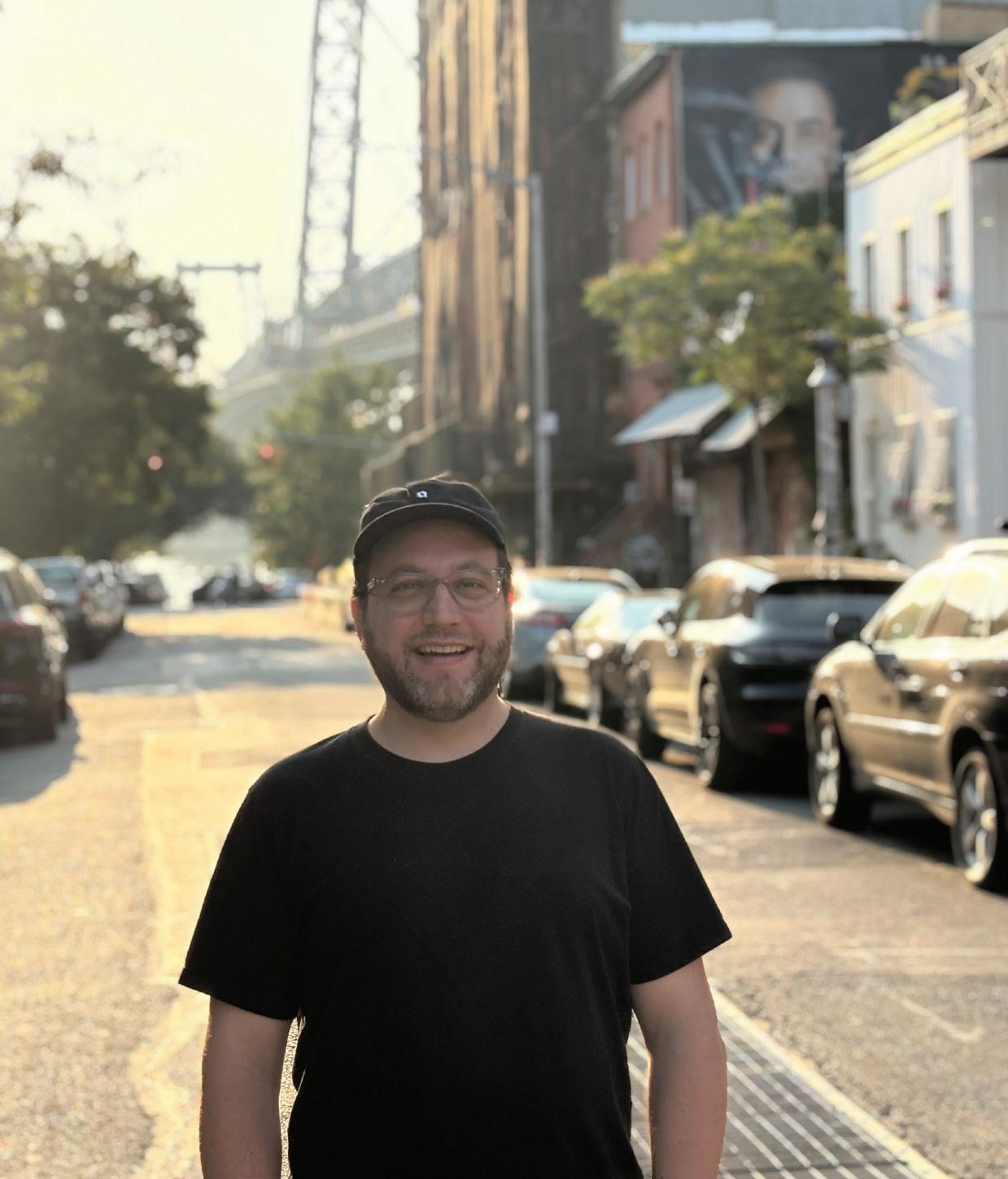
After about 20 years at agencies big and small, it feels like I’ve worked at just about every type of shop in NYC. From boutiques like Mother, 72andSunny, and Sid Lee to bigger places like Saatchi & Saatchi, R/GA, and McCann. I’ve worked across nearly every kind of account, but the work I keep coming back to lives at the intersection of tech and culture.
What’s always motivated me is the chance to make work that actually shows up in people’s lives. I’m especially drawn to projects where technology can be used to push culture forward, not just sell into it. Whether I’m developing a special credit card for low-vision communities or launching an album for a brand-sponsored artist, the goal is the same: create something genuinely new that meets people on their terms.
Along the way, I’ve been lucky enough to win a Cannes Grand Prix and a Penta Pencil for five years of great marketing on Mastercard. Still, the thing I’m most proud of is the relationships I’ve built – both as a mentor and creative partner. I believe it’s those close, collaborative relationships that actually make the work, and the creative process, worth showing up for.
Recently, I’ve been freelancing with brands like Google, Apple, Samsung, Spectrum, and a mix of other consumer and healthcare brands.
HOW DO YOU STAY RELEVANT IN AN INDUSTRY THAT CHANGES SO QUICKLY?
I had a mentor who once told me, “It’s good to reinvent yourself every ten years.” That stuck with me, and it feels especially true now, as the lines between advertising, technology, and social media continue to blur. No one is just one thing anymore. Designers are becoming technologists, copywriters are becoming AI specialists, and everyone is learning in public. To me, staying relevant means staying humble and open-minded — learning as much from younger teammates as you pass on to them, and staying curious about new platforms, ideas, and cultural signals as they emerge.
WHAT TREND DO YOU THINK THE INDUSTRY IS OVERVALUING - AND ONE IT’S OVERLOOKING?
It’s critical to keep up with today’s media landscape, but in doing so, the industry often loses sight of big ideas that transcend tactics. Short-term engagement is overvalued, while real brand building — the need for ideas that are simple, repeatable, and durable — is often overlooked. The work that truly sticks is the kind of big idea that can live across channels and campaigns. That kind of thinking feels rarer than ever in a world obsessed with immediacy.
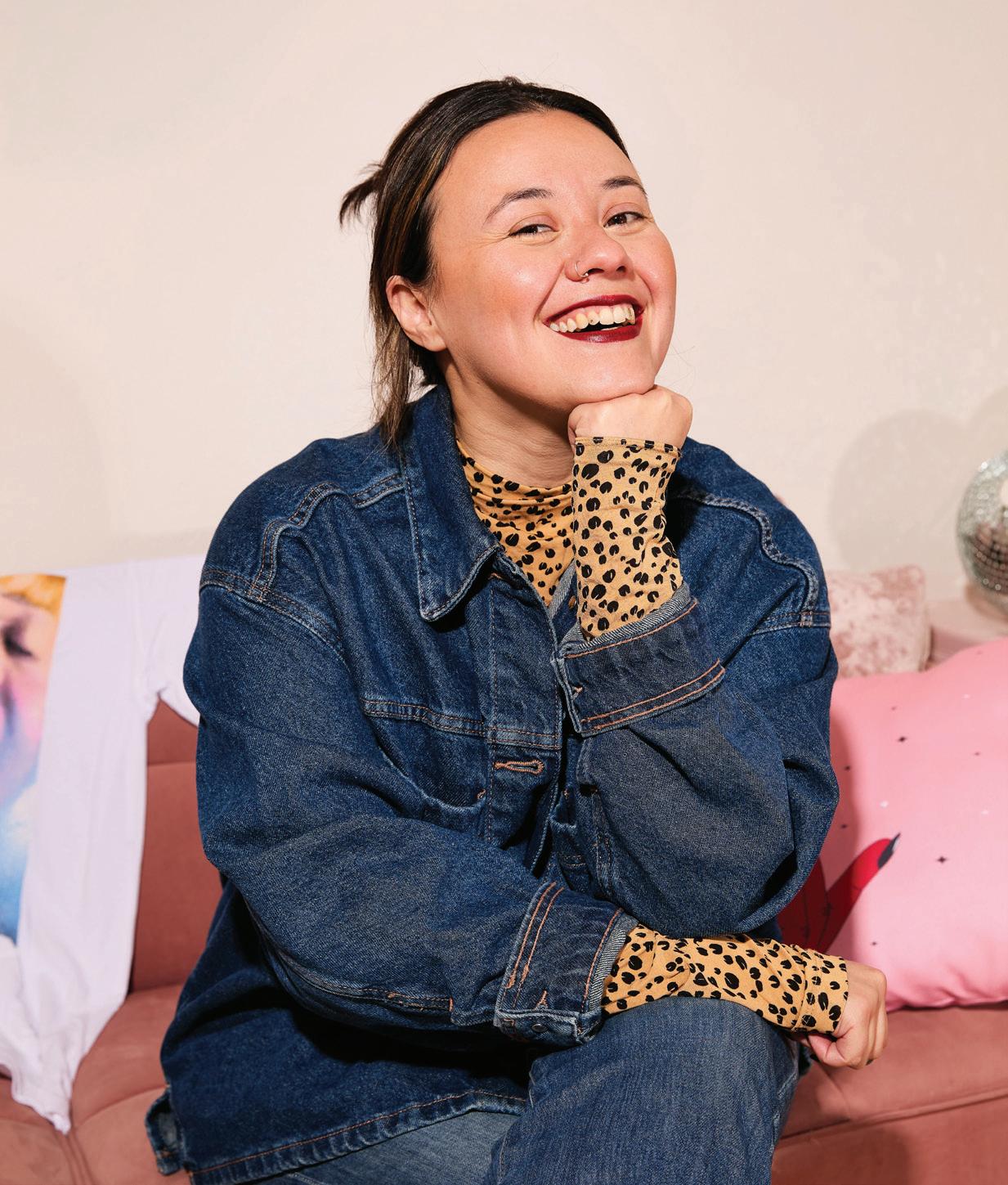
Marisa Sanchez-Dunning is the Chicana woman behind If Only Creative, a Bay Area creative studio founded in 2022 that builds and executes brand design, strategy, and trend-setting commercial photography. A veteran of working with POC-owned, purpose-driven brands, Marisa possesses a POV that taps into diverse cultures and resonates with global audiences.
Central to Marisa’s core are sustainability, equity, transparency, authenticity, and quality. If Only Creative became a reality because she was motivated and driven to craft a better world for creatives from all backgrounds. Whether it’s developing a sustainable materials guide, working with high-profile brands like Whole Foods, Bawi, and Date Better or hosting, El Otro Lado, a series of dinners reclaiming and celebrating Cinco de Mayo, Marisa has proven herself a game-changing creative director and founder with a talent for design leadership and strategic thinking, dreaming up brands rooted in human connection and industry know-how. She has spoken at conferences like AIGA, Brand New, and Dieline
My design decisions are guided by intentionality, cultural respect, and human connection. At If Only Creative, we are purpose-driven and craft work that centers on real people and their diverse lived experiences, helping brands connect meaningfully with the communities they serve. We specialize in partnering with POC and women-owned founders and lead with equity and transparency, meaning every visual choice is made with purpose, not for the sake of trend-chasing. Strategy and storytelling are the backbone of the agency, ensuring that our work isn’t just aesthetically beautiful, but also grounded, meaningful, and timeless.
HOW DO YOU STAY RELEVANT IN AN INDUSTRY THAT CHANGES SO QUICKLY?
Relevance demands staying curious and critical. I don’t blindly chase trends; I pay attention to why they emerge and who they serve. I’m constantly learning through collaboration, conversation, and hands-on client work, which keeps me connected to real audiences and real needs. By balancing evolving tools and platforms with a strong foundation in strategy and storytelling, I adapt without losing clarity or purpose.
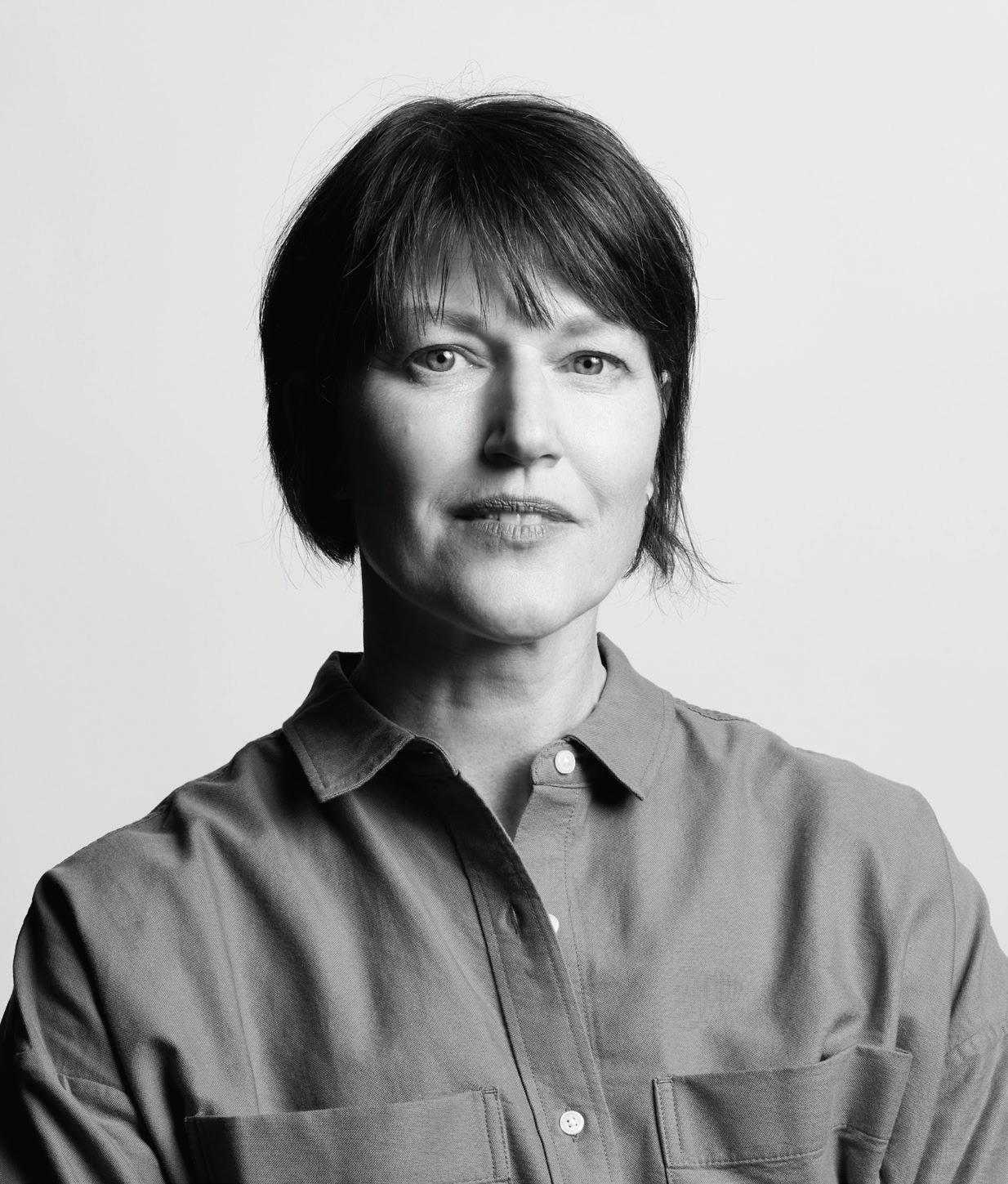
CHIEF CREATIVE OFFICER
Laura is a strategically minded design leader and culture builder who has extensive experience in branding, leading global rebrands of organizations such as Sonos, ASICS, and Linksys. She has collaborated with a diversity of clients from lululemon to Hutchins Center at Harvard University to Abu Dhabi Department of Culture and Tourism. Her work crosses fields of culture, fashion, architecture, technology, education, and place across brand, print, motion, digital, and environmental. Laura’s longterm partnership with Sonos saw her team through the design of multiple facets of the wireless audio brand experience — digital, retail, social, packaging, and content.
Her work has been featured in books such as Designing Brand Identity and Dynamic Identities as well as publications like Fast Company, Communication Arts, It’s Nice That, Print and Creative Review that she can speak to. She has been recognized by Cannes Lions and D&AD, among others. She has served as a member of the Board of Directors for the Advertising and Design Club of Canada. She enjoys talking about vision and process at conferences like Brand New, DesignThinkers, FITC and has juried many leading competitions.
Laura had an unconventional start to her design career, dipping her toes in the music world riding the wave of the Seattle grunge scene in the ‘90s with her all-female band, Jale, as a singer and bass guitarist. Signed to notable Sub Pop Records and touring the world, this was when Laura found her gateway to design. Though she studied fine art, it wasn’t until she began designing Jale’s album covers and posters that she took interest in design and branding. Laura’s musical background has given her a unique perspective into branding and a testament to her established career, expertise and perspective as CCO for the award-winning firm.
1.Build character -- Every piece of design needs to be part of the brand’s DNA, share and sometimes extend, its point of view, voice or visual language
2. Draw us in -- Is it unexpected (but still building character)? Is it original and different than what we see day to day? is it so well-crafted that we can’t look away?
3. Be simple -- Is it clear, easy to digest? Is it graphic and strong?
4. Consider the earth -- Have we looked at eco-friendly ways to produce this?
WHAT TREND DO YOU THINK THE INDUSTRY IS OVERVALUING - AND ONE IT’S OVERLOOKING?
It’s obviously hard to talk about AI as a trend — it’s more of a gale force wind. And designers are all trying to figure out how it can make our work better, not cheaper and sloppier. Will it provide real value in the end, or will it be another tool for our toolkit in the end. That said, now that Covid lockdowns are in the rearview mirror, I believe people will reassert in-person connections. Build trust, create together, capture the spark and love of creativity.
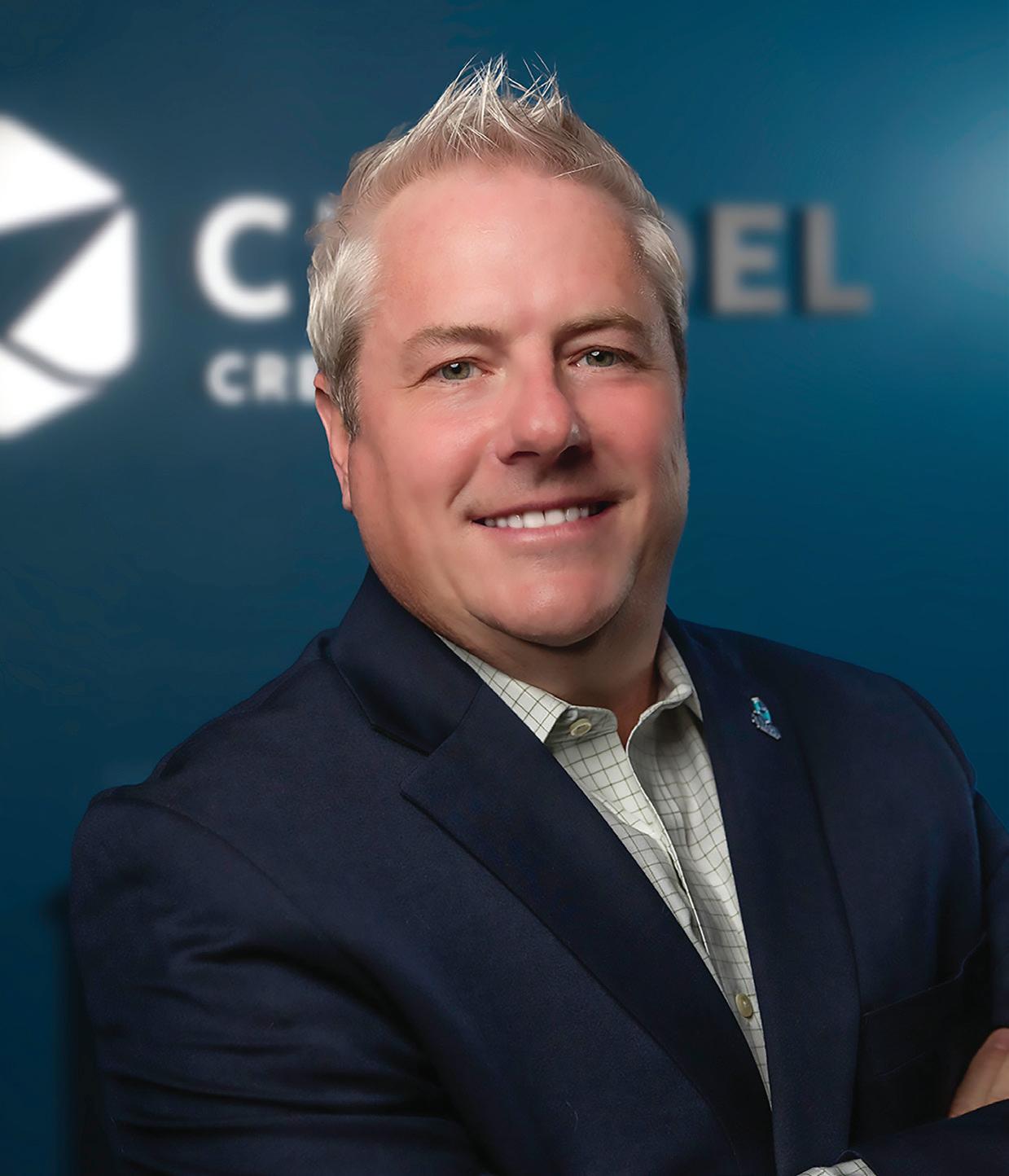
Tom Upton is an award-winning designer with three decades of industry experience. His career spans early days in package design to a focused expertise within the financial services sector, including time at institutions like Bank of America. Tom is currently the Senior Brand Designer at Citadel Credit Union in Exton, Pennsylvania, where leads brand design and execution for the organization.
Citadel Credit Union is a not-for-profit, member-owned financial institution that provides banking, investments, and insurance services to more than 275,000 members, while also offering essential educational resources designed to help members build and maintain long-term financial security.
At $6.5 billion in assets, it is one of the Greater Philadelphia area’s largest credit unions.
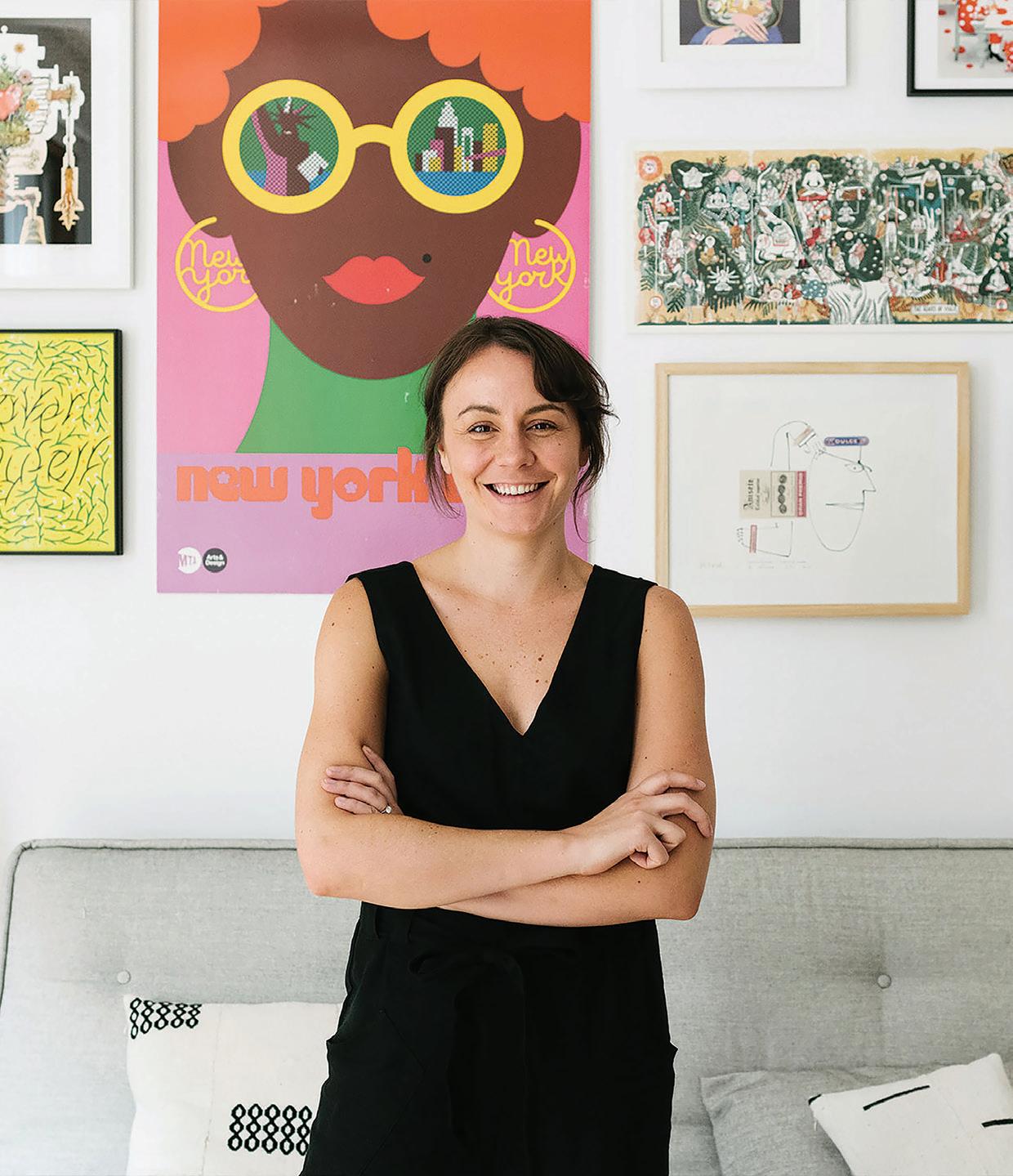
MANAGING AGENT/PRODUCER, NORTH AMERICA
THE JACKY WINTER GROUP, NEW YORK NY
Bianca Bramham is Managing Agent & Producer, North America at The Jacky Winter Group, representing the top commercial image-makers and animation directors in the world. Originally from Melbourne, where she worked in animation production, Bramham is now based in New York, where she set up Jacky Winter’s North American office and brings her deep-seated curiosity for the creative process and commitment to understanding the unique challenges artists and clients come up against while trying to get great work made.
BETWEEN NOW AND 2030, WHICH SPECIFIC SKILLS, TECHNOLOGIES, OR PRIORITIES WILL MATTER MOST IN SHAPING THE FUTURE OF GRAPHIC DESIGN?
Empathy. AI is automating execution and speeding up production, but understanding what clients are actually struggling with, what audiences need, or how to remove emotional blocks so teams can move forward will matter most. I’ve spent nearly two decades watching creative projects succeed or fall apart, and the difference rarely comes down to technical ability. It’s about reading the room and making things easier for the next person. The better I understand what an artist or client is up against, the better I can service them.
HOW DO YOU STAY RELEVANT IN AN INDUSTRY THAT CHANGES SO QUICKLY?
I learned early on from our director Jeremy Wortsman that it’s better to disrupt yourself before someone else does. I’m inspired by the artists I represent who aren’t afraid to experiment. The most prolific artists tend to stay relevant. There’s energy behind output that creates momentum, and that momentum creates opportunity. For me, staying relevant means staying curious outside of my own industry. Some of our best ideas have come from becoming a client ourselves or stumbling on a random tweet about something completely unrelated to commercial art and asking: how could this work for us?
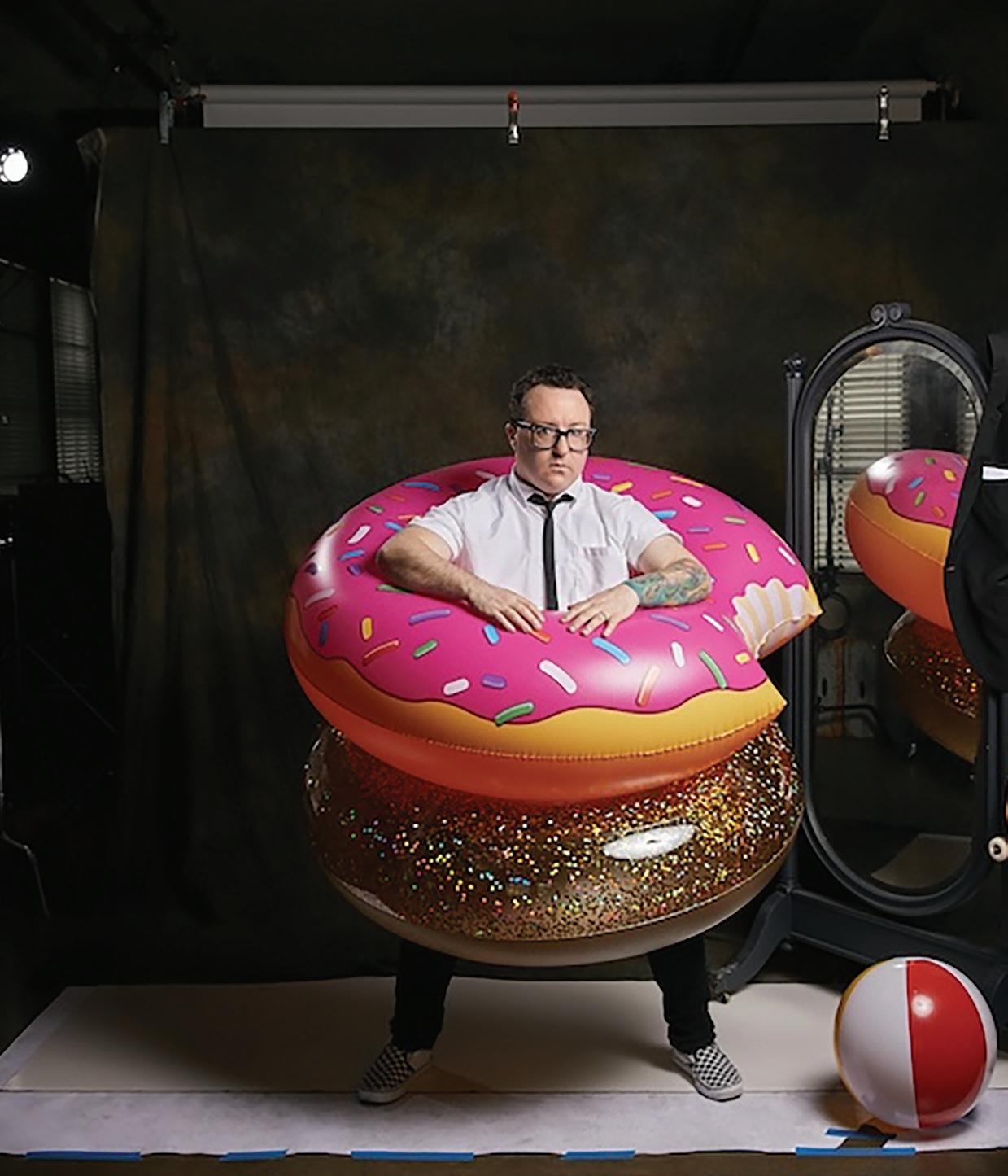
FOUNDER, ALICE, LOS ANGELES CA/NEW YORK NY
Paul Woods is an award winning designer, bestselling author, and founder of design and technology company Alice.
Over the course of his career, Paul has led projects for clients such as Google, Volkswagen, Lucid Motors, Red Bull, The City of Santa Monica and many others. His bylines regularly appear in publications including Fast Company, Creative Review, AdWeek, The Drum, and Automotive World. He is a holder of several patents in automotive experience design.
Paul’s best-selling book on creative culture, “How To Do Great Work Without Being An Asshole,” was published worldwide in 2019 via Laurence King and is available worldwide in nine languages. His follow-up book, “Sh*t They Didn’t Tell You,” a how-to guide for young creatives looking to start a career in the industry, was released in 2021.
Paul is the current president of AIGA Los Angeles, and a member of the Board of Advisors at The University of Michigan School of Information.
BETWEEN NOW AND 2030, WHICH SPECIFIC SKILLS, TECHNOLOGIES, OR PRIORITIES WILL MATTER MOST IN SHAPING THE FUTURE OF GRAPHIC DESIGN?
The value of craft, of care, is going to take a greatly elevated position. We saw it recently with the Apple TV identity being created using practical effects, paired with a soundtrack by Finneas. They could have easily been produced using CGI or AI, but Apple made an intentional choice to lead with human craft. In this case, it acts as a proxy for the quality of their programming and product. And this is just the start. As AI accelerates volume production, we will see more conscious celebrations of human craft permeate culture.
HOW DO YOU STAY RELEVANT IN AN INDUSTRY THAT CHANGES SO QUICKLY?
Curiosity is our superpower. Staying relevant means having an appetite to consistently learn. When change comes, including AI, it’s better to lean into it than resist it. Designers are problem solvers first and foremost, and new tools such as AI enable us to solve bigger, more important problems, or at the very least free us from iterative tasks so we have more time to focus on them. Most importantly, surrounding yourself with people, ideas, and work that challenge assumptions helps keep perspective sharp. Staying relevant means staying curious, staying uncomfortable, and growing alongside the next generation of designers.

MANAGING AGENT/PRODUCER, NORTH AMERICA THE JACKY WINTER GROUP, NEW YORK NY
Vincent Wanga is a dynamic international design thought leader, creative keynote speaker, award-winning creative and executive, author of “The Art of Direction,” serial entrepreneur, and experienced brand consultant with an exceptional range of expertise over a distinguished two-decade career. Vince has strategically leveraged his rich cultural heritage, deep intellectual pedigree, and acute creative acumen across multiple industries—collaborating with a diverse constituency of clients and companies from the newly founded to Fortune 500.
His extensive experience includes projects for the City of DC, Google/ NRG Energy, Marriott International, Gilead Sciences, GN Resound, SNCF America, Penn, Schoen & Berland, US Census Bureau, State Farm, University of Minnesota, World Bank Group, and a Michelin-starred restaurant group. As former vice president and head of creative for one of the fastest-growing technology startups in North America at the time, he oversaw corporate brand strategy and creative during unprecedented company growth from pre-Series A to an over $1 billion “unicorn” valuation.
With abundant aptitudes earned over the years, he looks at the world with a critical, creative eye while empathetically analyzing the eloquence and human consequence of our craft. Vince lives in Washington, DC, and Asheville, NC, with his dog, Okello. When he is not working on new business ventures, he passionately travels the world, collecting creative inspiration at the finest boutique hotels rewards points can buy.
Four specific things. Am I solving a problem (and not just a solution in search of a problem)? If the answer is no, you’re wasting precious time and resources. Trusting my experience, expertise, and intuition, and not letting that be distracted by trends, anecdotes, or groupthink. Honoring timeless design philosophies like Dieter Rams’ principles of design, that can stand the test of time and not fade away as soon as trends inevitably shift, as they say, nothing gets duller faster than the cutting-edge. Finally, backing my design instincts and intuition with research and data to ensure I’m solving for the business case and user/customer, and not just our fundamental need to create cool shit.
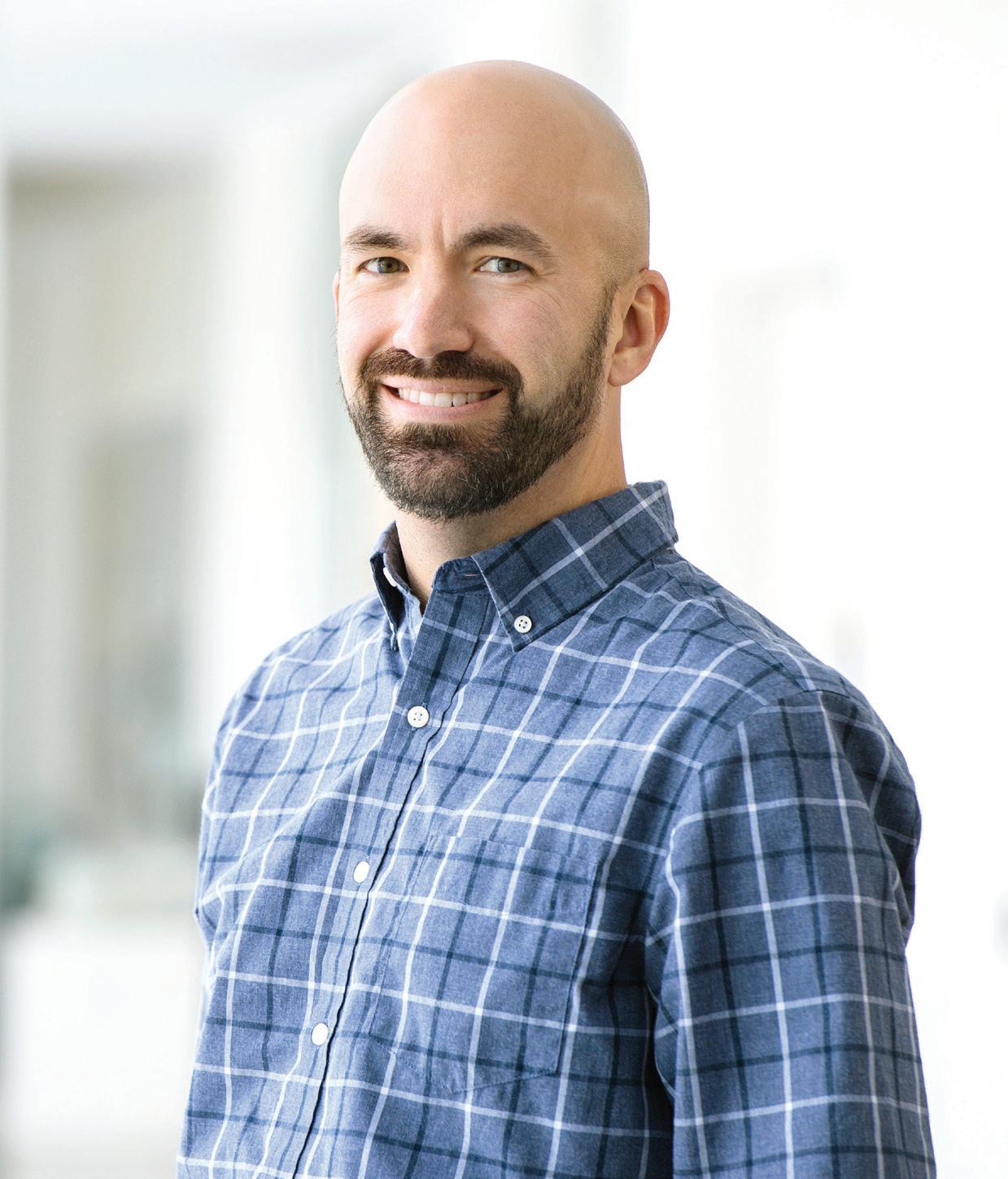
DIRECTOR OF VISUAL COMMUNICATIONS
HAMILTON COLLEGE, CLINTON NY
As the Director of Visual Communications at Hamilton College, Kevin Waldron leads a team that shapes the brand identity for a national leader in liberal arts education. With over two decades of experience in higher education, Kevin is a passionate advocate for the liberal arts, viewing visual storytelling as an essential tool for recruiting the next generation of global leaders.
BETWEEN NOW AND 2030, WHICH SPECIFIC SKILLS, TECHNOLOGIES, OR PRIORITIES WILL MATTER MOST IN SHAPING THE FUTURE OF GRAPHIC DESIGN?
If we choose to use AI to create an average persona of our audiences, an illustration, or automate away our entry level jobs, we need to recognize that we are choosing to replace a human with a machine.
A person brings not just the value of completing a task to their work, but they also bring empathy and a diversity of experiences. I believe prioritizing a human centered purpose over machine driven efficiencies can become a guiding principle in the years to come.
WHAT TREND DO YOU THINK THE INDUSTRY IS OVERVALUING - AND ONE IT’S OVERLOOKING?
To double down on my previous answer I think we are overvaluing efficiency and undervaluing the humanity that a person brings to design.
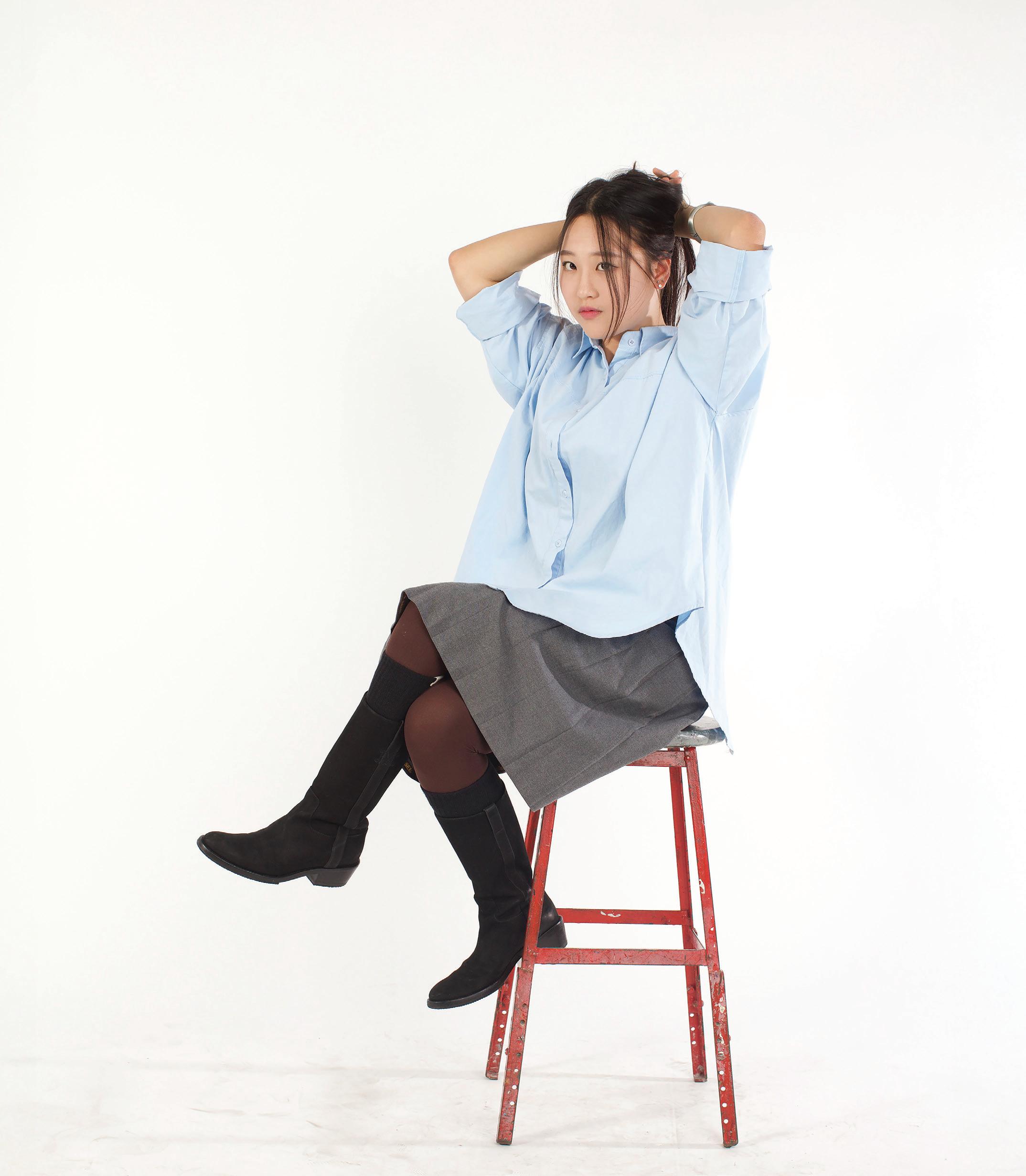
With the enthusiastic support of many of America’s leading art and design schools, we are proud to once again celebrate an outstanding group of students ready to step onto the professional design stage. Spanning undergraduate, graduate, and continuing education programs, these emerging creatives are developing the skills, confidence, and vision that today’s industry demands.
Students to Watch has become both a celebration and a catalyst—recognizing exceptional talent while energizing the broader creative community. We honor the strength of great traditional design schools and continue to broaden our reach to include public universities, innovative online learning models, certificate programs, and other dynamic pathways shaping the future of design.
In the next edition of GDUSA magazine, we extend the celebration to the institutions behind this work, spotlighting the programs that are cultivating talent, advancing creative practice, and helping define where the design industry is headed next .
My name is Jinseo Lee, and I’m a Korean designer and artist based in New York, currently a fourth-year student at The Cooper Union School of Art. Moving to New York reshaped how I see design. Being surrounded by the city’s visual language and gaining access to The Cooper Union Herb Lubalin Study Center of Design and Typography, led by curators Sasha Tochilovsky and Jess , pulled me deeply into the history of graphic design. Studying archival work and encountering past masters of the discipline grounded my practice in both curiosity and rigor (and getting my first Mac from school definitely helped). My work sits at the intersection of play and precision, where type becomes image, text becomes material, and ideas turn into objects, spaces, and experiences. I work across branding, book design, and web design, drawn to how graphic design can be everywhere yet often remain subtle and invisible. I’m also interested in moments where graphic design meets digital fabrication, something I grew deeply drawn to through Cooper’s interdisciplinary environment. Alongside graphic design, I work through drawing, photography, video, and printmaking to expand my visual language. When I’m not working, I like looking back through my old photos to rediscover small moments, and I also have an enduring love for strawberry shortcakes.
WHAT FIRST SPARKED YOUR INTEREST IN GRAPHIC DESIGN?
I think I was always naturally drawn to designed things, and my habit of looking up who made everything I see or liked slowly turned into a deeper curiosity about where these things were coming from, who was making them, and why, and I think that curiosity is what pulled me into graphic design.
WHO ARE YOUR BIGGEST CREATIVE INFLUENCES?
My family, my professors, and my friends are always my biggest creative influences, and recently I’ve also been revisiting Stefan Sagmeister’s work, Tibor Kalman’s Colors magazine issues, and the work of Kurt Woerpel, Nejc Prah, and Chloe Scheffe.
TELL US ABOUT A DESIGN PROJECT YOU’RE MOST PROUD OF. WHAT MADE IT SPECIAL?
I’m most proud of my branding project for 6BC Botanical Garden, which is an unique, community-run green space in the East Village. The project was the first time I created an identity for a place I personally care about. The experience made me understand what it means to give a visual voice to a place and how meaningful it is when your work becomes part of how people remember that place.
WHAT DOES ‘GOOD DESIGN’ MEAN TO YOU?
For me, good design is the kind of work that makes me think “I wish I had made that,” the kind that carries an energy that’s impossible for me to ignore and makes me stop, stare, and feel that mix of admiration, curiosity, and envy.
WHAT TRENDS IN GRAPHIC DESIGN EXCITE YOU - OR CONCERN YOU - THE MOST?
AI. It really concerns me, but it also excites me because of its potential. I am curious about how it can become a tool that expands what designers can do rather than replacing what makes design human.
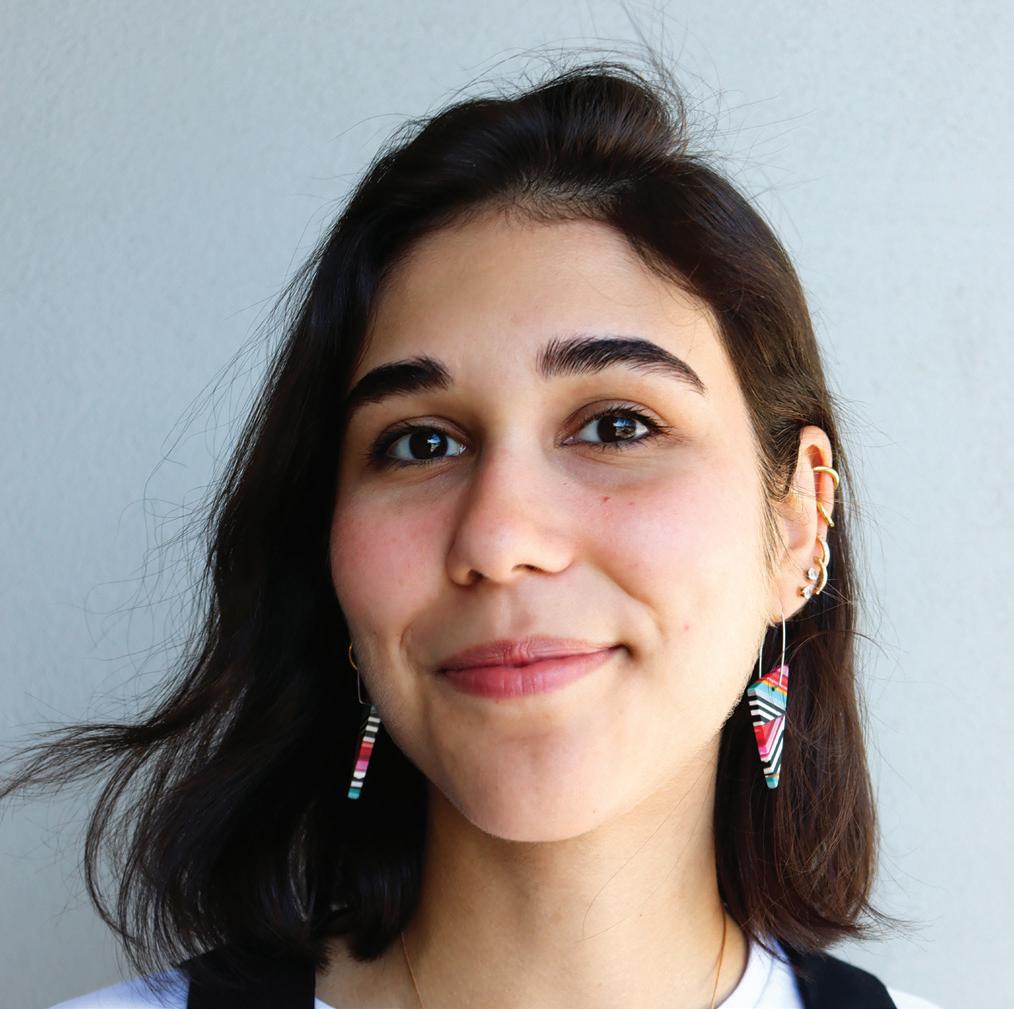
My name is Laura Garcia Gomez and I am a graphic design student at the Savannah College of Art and Design (SCAD). Through bright colors and maximalist patterns, I like to explore psychedelic scenes and collage-heavy graphics that combine my love for illustration, photography, fashion and motion media. Using my zest for life and curiosity for exploration and form, I channel my art into a reflection of those passions. I draw inspiration from my experiences and daily life which spark new conceptual ideas and aesthetic tendencies.
WHAT FIRST SPARKED YOUR INTEREST IN GRAPHIC DESIGN?
I have always liked making art, but I find it much more gratifying when it’s put to use, when art meets purpose.
WHO ARE YOUR BIGGEST CREATIVE INFLUENCES?
Pattern designer William Morris and fashion designer Iris Van Der Herpen have been very inspirational to me.
TELL US ABOUT A DESIGN PROJECT YOU’RE MOST PROUD OF. WHAT MADE IT SPECIAL?
I’m fond of my “A Night to Remember” project from one of my graphic design classes because I was able to combine my passions for music, writing, illustration, and collage all in one campaign.
WHAT DOES ‘GOOD DESIGN’ MEAN TO YOU?
To me, good design happens when it is made with intention and social awareness. When it provides a clear solution for why it was created, supported by a strong research-based foundation.
WHAT TRENDS IN GRAPHIC DESIGN EXCITE YOU - OR CONCERN YOU - THE MOST?
I’m interested in how we’re slowly rediscovering more interesting, hand-crafted techniques as refreshing solutions.
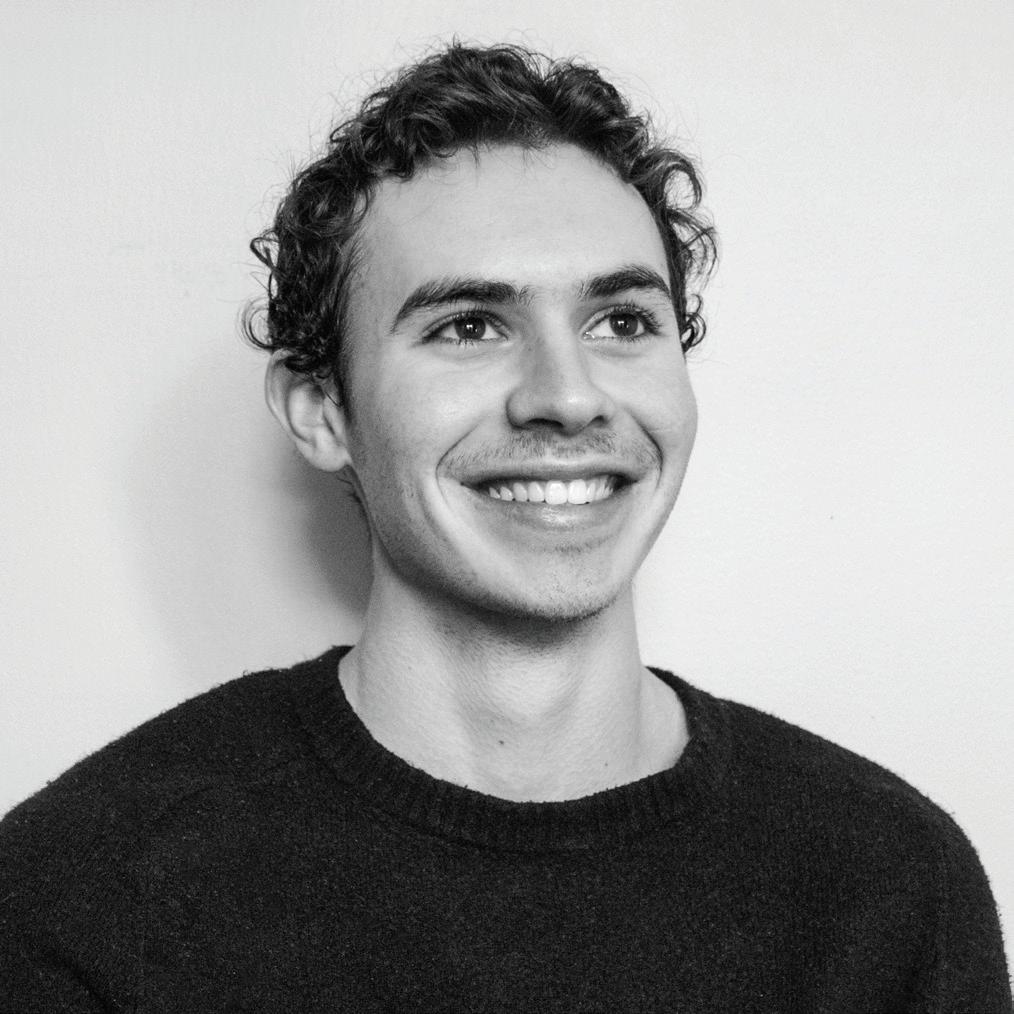
My name is Mac Wilkerson and I’m a senior graphic design student at Savannah College of Art and Design (SCAD) who likes to approach design with an eager, open mindset. I treat every project as if it is a chance to learn something new, explore a different angle, or connect unusual ideas. I’m drawn to mid-century styles, with a particular love for retro type, and I enjoy reworking old design styles in ways that feel fresh. One day, I hope to bring this mix of curiosity and nostalgia into the film or music world through logos, campaign visuals, packaging, and motion work.
WHAT FIRST SPARKED YOUR INTEREST IN GRAPHIC DESIGN?
The first thing that sparked my interest was print and packaging. I used to collect magazines and posters in high school and decorate my walls with them.
WHO ARE YOUR BIGGEST CREATIVE INFLUENCES?
I’m really inspired by designers like Braulio Amado and Vasilis Marmatakis. Their ability to experiment, mix genres, and create work that feels both distinctive and unpredictable fascinates me.
TELL US ABOUT A DESIGN PROJECT YOU’RE MOST PROUD OF. WHAT MADE IT SPECIAL?
I’m most proud of my project Alibi, a project where I designed both the mechanics and the visual identity of a board game. It pushed my creative limits in a way that felt risky at first, but I’m glad I took the chance because I’ve never had that much freedom in a project before.
WHAT DOES ‘GOOD DESIGN’ MEAN TO YOU?
Good design must serve a purpose and be done intentionally. I like to see design that pushes boundaries and goes beyond trends.
WHAT TRENDS IN GRAPHIC DESIGN EXCITE YOU - OR CONCERN YOU - THE MOST?
I’m into eclectic, maximalism. Designs that bring scanned textures, scribbles, old computer graphics, and print artifacts into a cohesive composition that feels a little chaotic but still intentional.
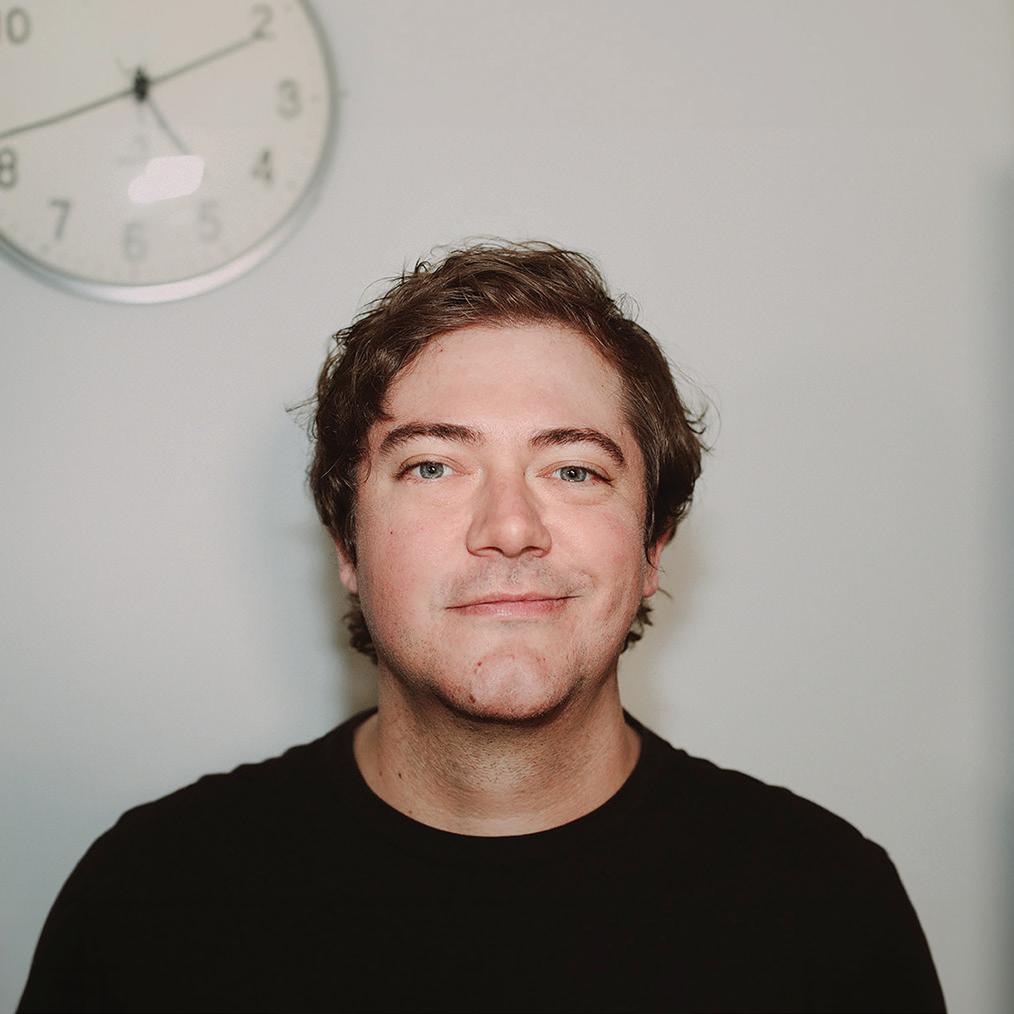
ACADEMY OF ART UNIVERSITY
Craig Fowler is a graphic designer whose creative journey began with music. As a kid, he was surrounded by the record album covers his grandfather, a musician, collected, and quickly realized that the music he loved was inseparable from the visuals that came with it. Posters, typography, and album art became his first design education. Later, a magazine ad in Spin helped him see graphic design as something he could actually study and pursue. Craig’s art education started early with park district classes and AP Studio Art in high school. A scholarship to the Art Institute of Chicago’s Early College Program exposed him to fine art at a serious level and shaped how he thinks about design.
At 18, Craig moved from Chicago to San Francisco to study Graphic Design at Academy of Art University. Learning design foundations such as typography, layout, and visual systems from working professionals at the Academy gave him an invaluable education and allowed him to break the rules with intention. He developed a passion for design that embraces texture, tactility, and a less polished, more organic look.
While still in school, Craig began working professionally, eventually growing from Junior Designer to Art Director. He found a creative home in food and beverage branding, where storytelling and expressive visuals are celebrated, while continuing to collaborate with music-industry clients.
Craig earned a Graphic Design USA Student Award for a bold tinned fish packaging project inspired by travel and vintage signage. Today, he works as Creative Director at Magnolia Brewing Co. and freelances through his own studio.
WHO ARE YOUR BIGGEST CREATIVE INFLUENCES?
My design influences include Stefan Sagmeister and Paula Scher. Both have done influential work in the music industry and are known for bringing fine art techniques into graphic design.
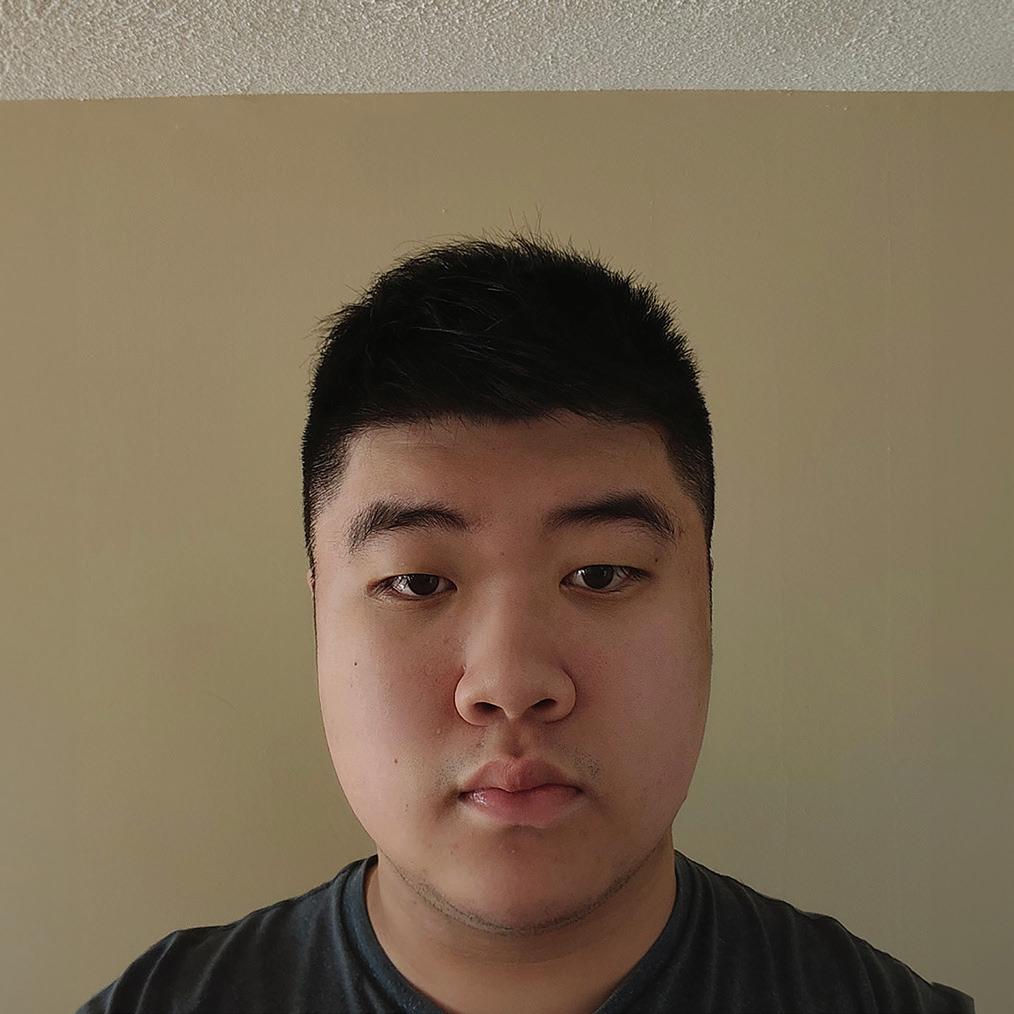
Gavin Wong’s interest in graphic design began in middle school. He was especially drawn to Japanese design—packaging, logos, and advertising—and the way visual systems communicate meaning. Early on, he became fascinated not just with how design looks, but with how it works beneath the surface and how ideas are translated visually. As a teenager, he installed free design software on his computer and spent hours experimenting and teaching himself.
Originally from Boston, Gavin visited San Francisco many times. He was excited to discover a graphic design program at Academy of Art University that aligned with his way of thinking. He has always loved history, particularly art and design history, and much of his work is influenced by modernist design principles and structure-driven systems.
Music has also played a significant role in shaping his creative voice. Gavin plays bass and electric guitar and has played saxophone and drums for over 13 years. That connection between sound and visuals informs his design work. He was surprised and honored to receive a GDUSA award for a bilingual Japanese and English poster created for a Tokyo math rock music festival—one of his favorite genres.
To Gavin, good design tells a clear story that audiences can understand and connect with. He believes designers must step into the audience’s perspective to evaluate value and impact. While he sees AI as a helpful tool for speeding up workflows, he prefers a hands-on approach.
Most importantly, Gavin believes in knowing your worth as a designer and trusting that what you create has meaning. His studies at the Academy have strengthened that confidence as he prepares to begin his design career.

Hi, I’m Romy, a current Senior and Communications Designer at Syracuse University. I’m someone who views the world with a creator’s eye, starting at a young age when I realized I was never going to be an athlete. I’ve always loved the imagination of art, drawing and painting with endless opportunities. As I grew up a bit, I discovered design, where I found the perfect balance between creativity, strategy, and purpose. Throughout my time at Syracuse, I’ve built a strong foundation in visual storytelling, problem-solving, and thoughtful design. I approach every project as an opportunity to learn, adapt to new perspectives, and push my skills further. I design with intention, stepping out of my own shoes to create work that connects with people and serves a greater purpose. As I look toward my future, I’m eager to apply my skills and immerse myself in the real world of design.
WHAT FIRST SPARKED YOUR INTEREST IN GRAPHIC DESIGN?
My interest in design began when I realized my creative skills could extend beyond traditional art and evolve within the modern digital world. Allowing me to communicate my ideas on a larger, more impactful scale.
WHO ARE YOUR BIGGEST CREATIVE INFLUENCES?
I gain my inspiration and influence from the world around me, where the constant presence of design, from digital interfaces to branding, continuously shape how I observe and think about visual communication.
TELL US ABOUT A DESIGN PROJECT YOU’RE MOST PROUD OF. WHAT MADE IT SPECIAL?
While studying abroad in London during my junior year, I developed a brand for British Ranch Dip. Designing for a new culture made the project especially meaningful, as it challenged me to consider audience, context, and perspective in a completely new way.
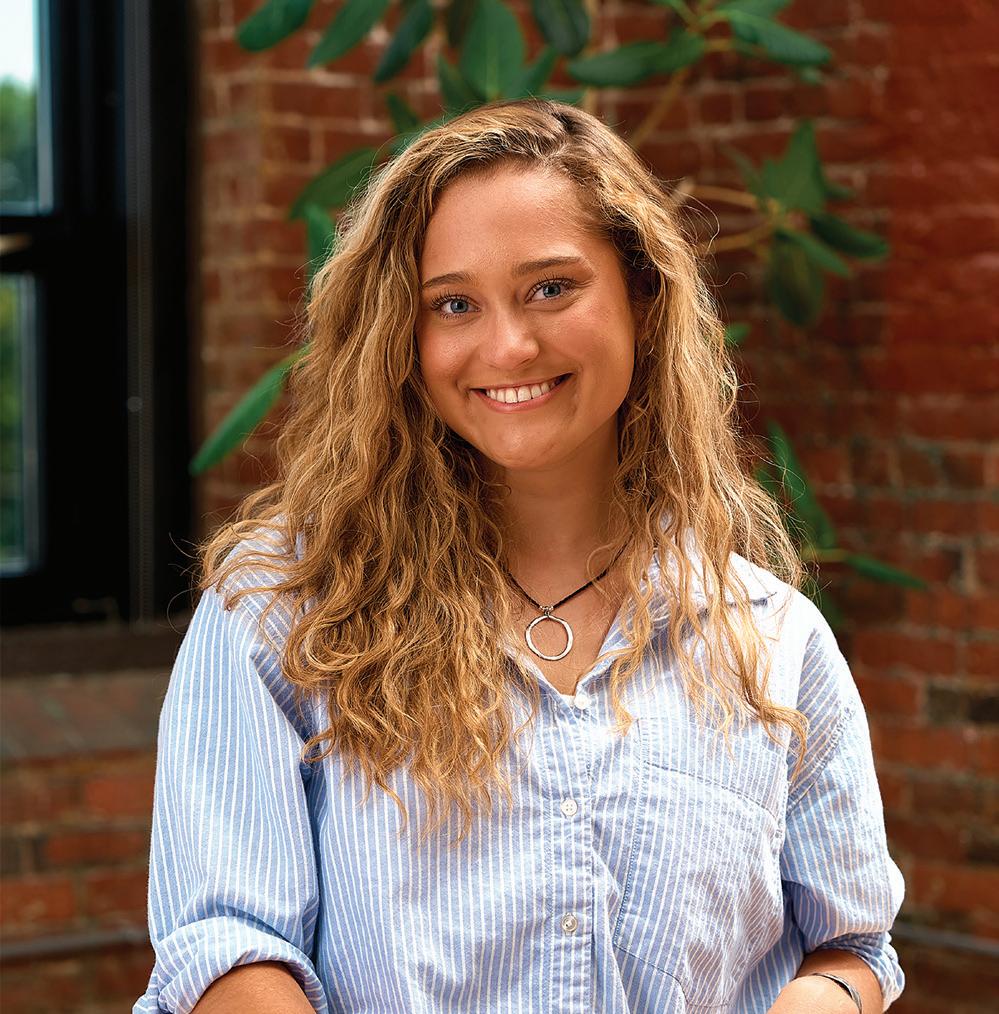
Olivia Smith is a senior Communications Design student at Syracuse University with a multidisciplinary approach to branding and visual storytelling. Raised in Westford, Massachusetts, she grew up making things and paying close attention to how people communicate, which shaped her instinct for design early on. She works at the intersection of intuition and strategy, focusing on how ideas connect, how systems function, and how visual choices shape understanding. Olivia allows her creative hobbies to influence her visual approach, drawing from hand lettering, illustration, and mixed media techniques to bring warmth and personality into her work. Her interests span brand identity, storytelling, advertising, and packaging, and she gravitates toward projects that invite diverse visual approaches and thoughtful experimentation. Olivia values collaboration and thoughtful critique, believing that the most impactful work is built together. She believes good design should help people see something in a new way, and she is most drawn to the moment when direction becomes clear and the work clicks into place.
WHAT FIRST SPARKED YOUR INTEREST IN GRAPHIC DESIGN?
For me, it wasn’t a sudden discovery. I grew up making things, paying attention to visual details, and wanting to understand the process behind them. Graphic design ended up being the place where those early instincts made sense.
WHAT DOES ‘GOOD DESIGN’ MEAN TO YOU?
Good design shifts perspective. It challenges the way you initially see something and helps you understand it in a clearer or more meaningful way.
WHAT TRENDS IN GRAPHIC DESIGN EXCITE YOU - OR CONCERN YOU - THE MOST?
Anti-design. It excites me because it challenges assumptions about what “good” design has to look like. When it’s intentional, it opens up space for work that feels more direct, less over-produced, and more reflective of how people actually communicate today.
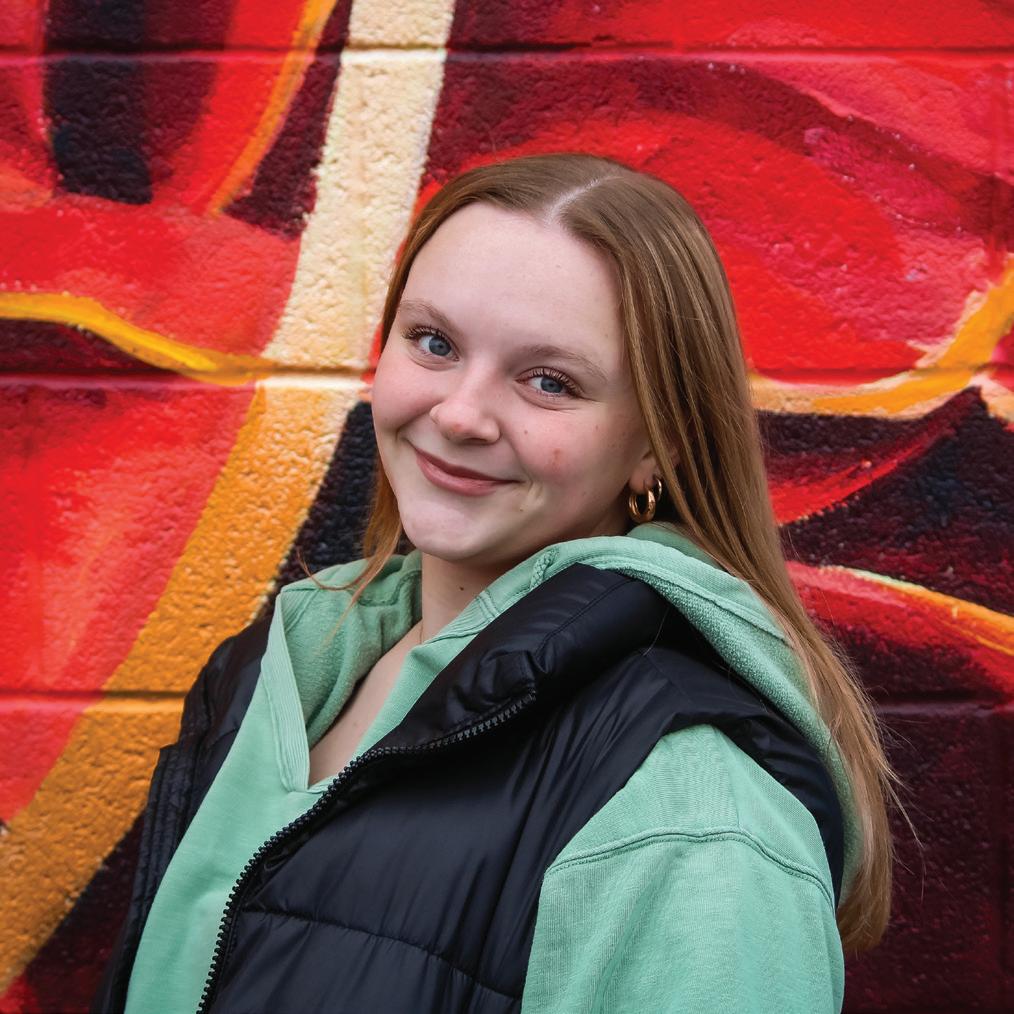
My name is Mya Colglazier, and I am a senior at Ball State University pursuing a BFA in Graphic Design. Originally from Fort Wayne, IN, I have found myself drawn to all things creative from a young age. From my very first design class at Ball State, I knew I had chosen the right path for my future. My design interests include editorial, branding and identity, and packaging design. I value the importance of creating functional designs, which has inspired me to create with intention and meaning. I have been a part of Studio 165+, a student-run design agency working with various clients around the Muncie area, for almost three semesters, two of which I have been a Team Lead. Outside of my passion for design, I am always willing to grab a coffee and meet with friends, go on a spontaneous adventure, stay in and binge watch a TV show, and spend time with my family, as well as my dogs.
WHAT FIRST SPARKED YOUR INTEREST IN GRAPHIC DESIGN?
Ever since I was young, I’ve always been doing something creative, whether that was a hands-on craft or just drawing. When I discovered graphic design, I was immediately drawn to the idea of creating designs that are found in everyday life. I was especially drawn to logo design, and the thought of getting to be creative for a living excited me.
WHO ARE YOUR BIGGEST CREATIVE INFLUENCES?
My biggest creative influence has been my professor, Shantanu Suman. Before Shantanu became my professor, I was very afraid to fail. He has been very influential in my growth as a designer and has helped me realize that failure is part of the creative process. Receiving critiques is vital to improving your designs!
BALL STATE UNIVERSITY
Hi! I’m Alyssa Vena, a senior Honors student at Ball State University majoring in Graphic Design and minoring in Sports Studies. I’m from Crown Point, Indiana, and throughout my time at Ball State I’ve been heavily involved in Studio 165+, the student-led design studio on campus. I started as a graphic designer my sophomore year and later served as Project Manager and then Team Lead, working closely with community partners in Muncie and the surrounding area. Those experiences allowed me to grow as a person and a designer, learning from my peers and our clients. Outside of Studio 165+, I am the Lead Representative for OneCreative, a student group for graphic design majors that organizes annual events like studio trips, portfolio reviews, and our 10-week mentorship program. I’ve also held two marketing roles for Ball State: I spent two years as the School of Art’s social media intern and currently work as the Marketing Assistant for the Honors College. Outside of graphic design, I love coffee, thrifting, hockey, and spending time with friends (in no particular order).
WHAT FIRST SPARKED YOUR INTEREST IN GRAPHIC DESIGN?
Posting edits and running fan accounts from a young age.
TELL US ABOUT A DESIGN PROJECT YOU’RE MOST PROUD OF.
WHAT MADE IT SPECIAL?
I’m most proud of my food truck branding project I created for a local Italian restaurant; after completing the wordmark, the rest of the project fell into place, and the process reminded me why I enjoy graphic design.
WHAT DOES ‘GOOD DESIGN’ MEAN TO YOU?
Good design is meaningful and satisfying.
WHAT TRENDS IN GRAPHIC DESIGN EXCITE YOU - OR CONCERN YOU - THE MOST?
Nostalgia in design is a trend that excites me.
Ivy Jenkins is a senior from Shepherdstown WV pursuing a BFA in Graphic Design with a minor in Business of Art and Design at Ringling College. Her interest in a creative path began at James Rumsey Technical Institute, where she gained early hands-on design experience in a simulated workplace setting. She specializes in branding, web design, and fabrication, creating thoughtful visual solutions that combine creativity with strategic intent. Her work spans both digital and physical media with a focus on engaging, meaningful experiences. When she is not designing, you can find her listening to music while crafting or watching any and all documentaries.
WHAT FIRST SPARKED YOUR INTEREST IN GRAPHIC DESIGN?
Taking the leap to enroll in the Graphic Design program at James Rumsey Technical Institute from 2020 to 2022 was the initial spark that introduced me to an exciting career path in design. What I learned from this experience gave me the confidence to explore Ringling’s PreCollege Graphic Design Immersion in the summer of 2021, where the projects offered me glimpse into the kind of dynamic, professional work that would continue to creatively push me as a full-time student. Together, these two experiences confirmed that this was the creative path I was meant to pursue.
WHO ARE YOUR BIGGEST CREATIVE INFLUENCES?
Aaron Draplin and Kel Lauren are my biggest creative influences for their unapologetic personalities and colorfully vocal work that has inspired me since starting my graphic design journey. What I have learned most from these creative powerhouses, is not to be afraid to explore new mediums, look for inspiration everywhere, and take time to be creative for yourself.
Bella Race is a designer completing a BFA in Graphic Design, driven by a love for delightful and human-centered design. A lifelong creative based in Folsom, California, she discovered a passion for digital art in a high school AP Photography classroom, using Photoshop to explore photomontage and expressive typography. While trying to figure out how she could turn this raw passion into a valid profession, Graphic Design struck her as a versatile medium that has the ability to persuade and inspire action. At Ringling College of Art & Design, she found a love for design for social good, always conducting deep user-centric research to consider different points of view and avoid generic solutions. With several honors, ADDY awards, and Ringling College’s Trustee Scholarship for Graphic Design under her belt, Bella is excited to keep learning and growing as she builds creative solutions that are intuitive, accessible, and empathetic.
TELL US ABOUT A DESIGN PROJECT YOU’RE MOST PROUD OF. WHAT MADE IT SPECIAL?
I’m most proud of the project I’m currently working on this semester: I’m developing “Between Us”; an interactive iPad data visualization experience that explores human loneliness. This project is special because it distills data-heavy information into a personalized exploration of human emotion. Seeing the reality behind loneliness’s complex nature gives the user an opportunity to look introspectively at their own life and emotional patterns.
WHAT DOES ‘GOOD DESIGN’ MEAN TO YOU?
‘Good design’ communicates something clearly. It can do this by being clever, intuitive, or emotional, and is especially successful when it helps you look at something from a new perspective.

Sophia Bryant is a graphic designer completing her senior year in the Communication Design program at the University of North Texas, part of the College of Visual Arts and Design. Her approach to design goes beyond creating appealing visuals; she sees it as a way to shape meaning, evoke emotion, and bring clarity to ideas through intentional form and storytelling. Her studies at UNT have encouraged her to question assumptions, explore new perspectives, and refine a creative voice grounded in research, curiosity, and thoughtful decision-making.
Sophia is especially drawn to branding and typography because they allow her to combine strategy, narrative, and visual expression into coherent, memorable systems. Each project has strengthened her ability to experiment, solve complex problems, and communicate with purpose, reinforcing her enthusiasm for the discipline and the possibilities within it.
Outside the classroom, she seeks out inspiration in subtle details and unexpected moments. She pays close attention to relationships between color, form, texture, and language, finding sparks of ideas in both everyday environments and the natural world. As she continues to grow as a designer, she aims to build a practice defined by clarity, intention, and a willingness to explore new creative territory, drawing from her experience in the UNT College of Visual Arts and Design’s Communication Design program as a foundation for what comes next.
WHAT FIRST SPARKED YOUR INTEREST IN GRAPHIC DESIGN?
My interest in design began with my dad. When I was young, I would visit his office, and the design floor immediately drew me in. Seeing teams collaborate, sketch, and produce creative work made me realize that design was not only visually exciting but also a way of communicating ideas. Those early experiences introduced me to the field and planted the seed for the path I’m pursuing now.
Rebecca Dugan is a senior in the UNT College of Visual Arts and Design’s Communication Design program, concentrating in Graphic Design with a minor in Art History. She is passionate about visual storytelling across mediums, whether she is designing for print or digital platforms or getting back to basics with a pencil and sketchbook. She is skilled in digital tools but also energized by hands-on experimentation with pens, paints, and nontraditional materials.
Rebecca currently serves as the secretary of AIGA UNT’s student chapter, where she has found a creative community that continually encourages and challenges her craft. She values giving back just as much, supporting her peers and participating in the vibrant DFW creative scene. After graduation, she hopes to grow as both a designer and a lifelong learner, approaching every project as an opportunity to refine her process and discover new ways to visually communicate.
WHO ARE YOUR BIGGEST CREATIVE INFLUENCES?
My inspirations shift from project to project, but I consistently draw from studios like Analogue, Asterisk, Buddy Buddy, and Smith and Diction, along with many others. Lately, I have been especially inspired by Erich Brechbühl’s motion design work, which pushes me to keep practicing and exploring motion-based graphic design.
TELL US ABOUT A DESIGN PROJECT YOU’RE MOST PROUD OF.
WHAT MADE IT SPECIAL?
One project I am especially proud of is my senior minor campaign rebrand for FossilEra. I have always been fascinated by the brand’s story, so having the chance to refine their messaging and clarify what makes them unique was incredibly meaningful. It was rewarding to work on a brand I genuinely care about and help strengthen its voice and identity.
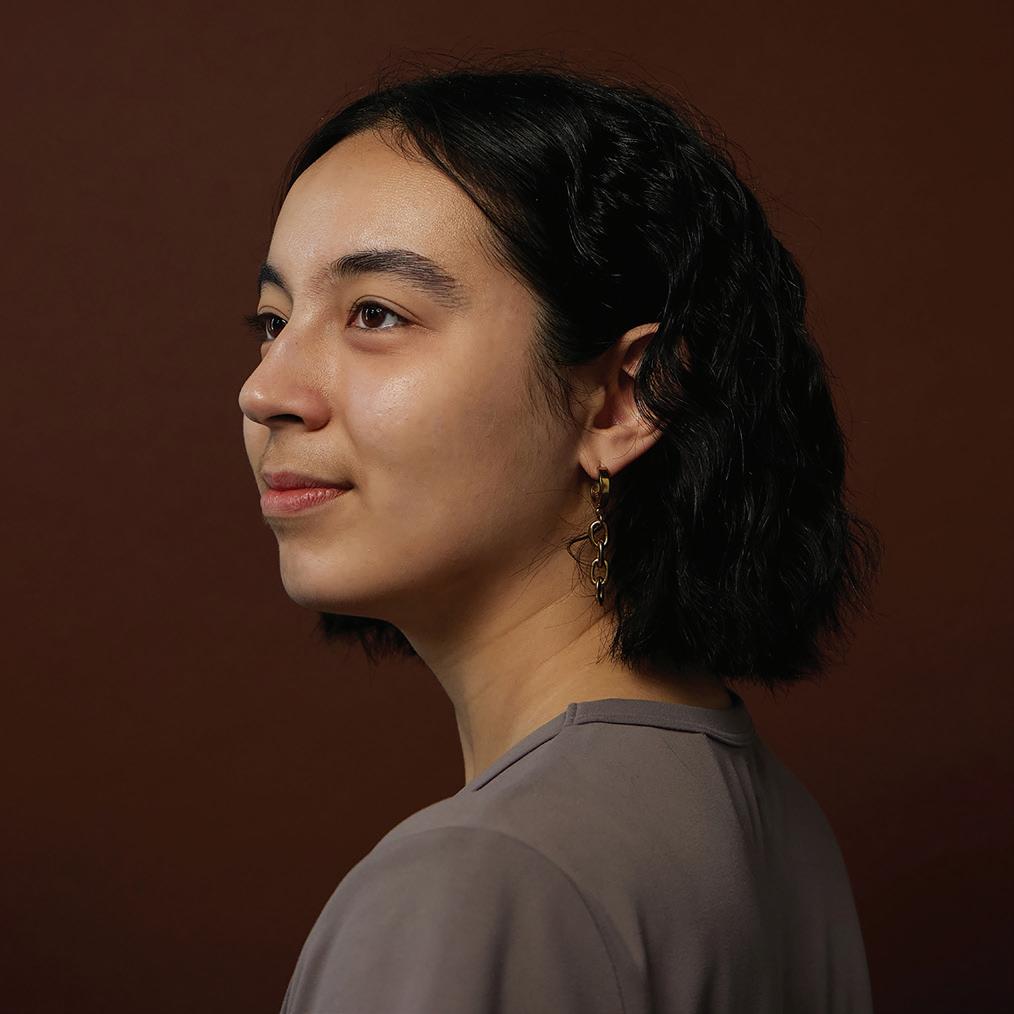
Juju Stojanovic is a designer exploring type, code, and graphic design through the intersection of her backgrounds as a professional ballet dancer and student of mathematics. She has worked in brand identity, type design, and exhibition design in Cincinnati, New York, and Berlin, and is currently studying communication design at the University of Cincinnati’s College of Design, Architecture, Art, and Planning (DAAP). Her work has been recognized by the Type Directors Club, Creative Review, and Graphis. She believes that design and creativity must be driven by human connection, persistent curiosity, and diverse perspectives.
WHAT FIRST SPARKED YOUR INTEREST IN GRAPHIC DESIGN?
The first time I heard of graphic design as a profession was from a book in my elementary school library where I learned that graphic designers design book covers, and as a huge bookworm I had always loved looking through the books at the library and bookstore. I think my love for design has also always been very rooted in letterforms though. As a kid of the 2000s I was obsessed with early Google Doodles (when they change the Google logo for various occasions) and had a Word Doc on the family computer where I archived and labeled each Google Doodle. I think it was when I first started to realize the limits that you could push letterforms to and still have them read as letters, while at the same time expanding their meaning beyond the words they spelled though a new layer of visual communication.
WHO ARE YOUR BIGGEST CREATIVE INFLUENCES?
Naturally, my design professors have been hugely influential to me. Ever since I was a kid, I’ve always looked up to the teachers in my life because a good teacher does more than just feed you information — they teach you how to see, how to think, and how to appreciate the thing they are teaching you. Similarly, I’m greatly influenced by all the amazing designers I have gotten to know throughout the past few years of interning and connecting with the creative communities in all the cities I’ve gotten to work in, live in, and visit.
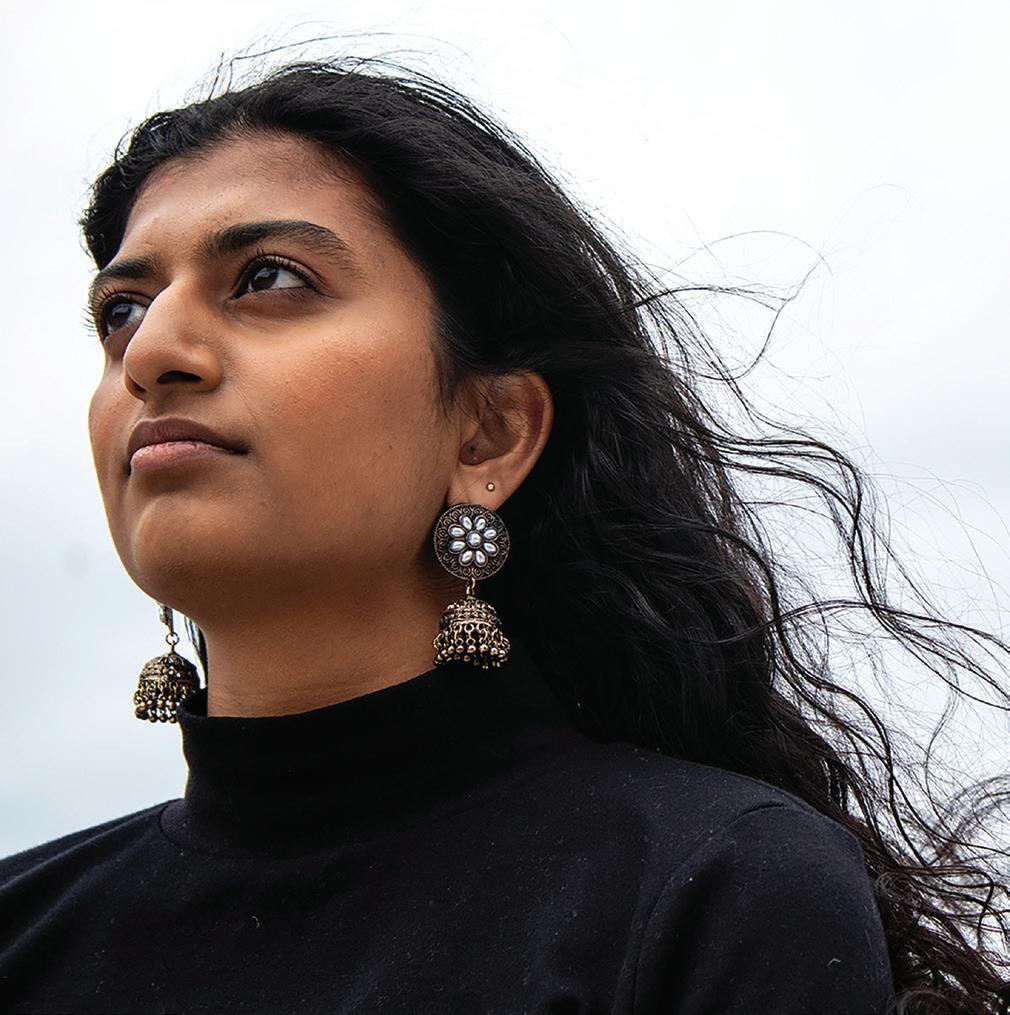
Don’t ask Varsha Vinod where she’s from—you’ll never get a simple answer. She moved twelve times, mostly growing up in India, Australia, Singapore, Chicago, and now Cincinnati, where she studies Communication Design at University of Cincinnati DAAP with a Political Science minor. Shaped by a life of constant movement, she brings an adaptability and empathy from navigating many cultures and languages. Each place she has lived and each language she has learned have deepened her understanding and love of how people communicate, think, and feel.
Comfortable in discomfort, Varsha isn’t afraid to start from scratch or be wrong. That willingness to explore and iterate helps her arrive at more intentional design solutions. Her process is deeply human-centered, grounded in clear communication, an obsession with research, and an openness to listen, learn, and evolve. Her penchant for user-centered design has led her to work at Apple, Procter & Gamble, Grand Studio, Hyperquake, and Dexel, a Singapore-based agency.
When she’s not designing, she’s playing sports, singing, playing instruments, writing film reviews, leading social design sprints with Design for America, or writing poetry. Across disciplines, time zones, and typographic systems, she strives to bring sensitivity and curiosity to everything she touches.
TELL US ABOUT A DESIGN PROJECT YOU’RE MOST PROUD OF. WHAT MADE IT SPECIAL?
What if your furniture could smell like your grandmother’s strawberry fields in Korea? At P&G, I created Reminiscent, a self-directed project bringing nostalgic regional scents to everyday items. It combined deeply considered qualitative research—from trend analysis to interviews with perfumers and immigrants—and a brand design that celebrated regional stories, multilingual typography, and color schemes inspired by synesthetic depictions of smell.
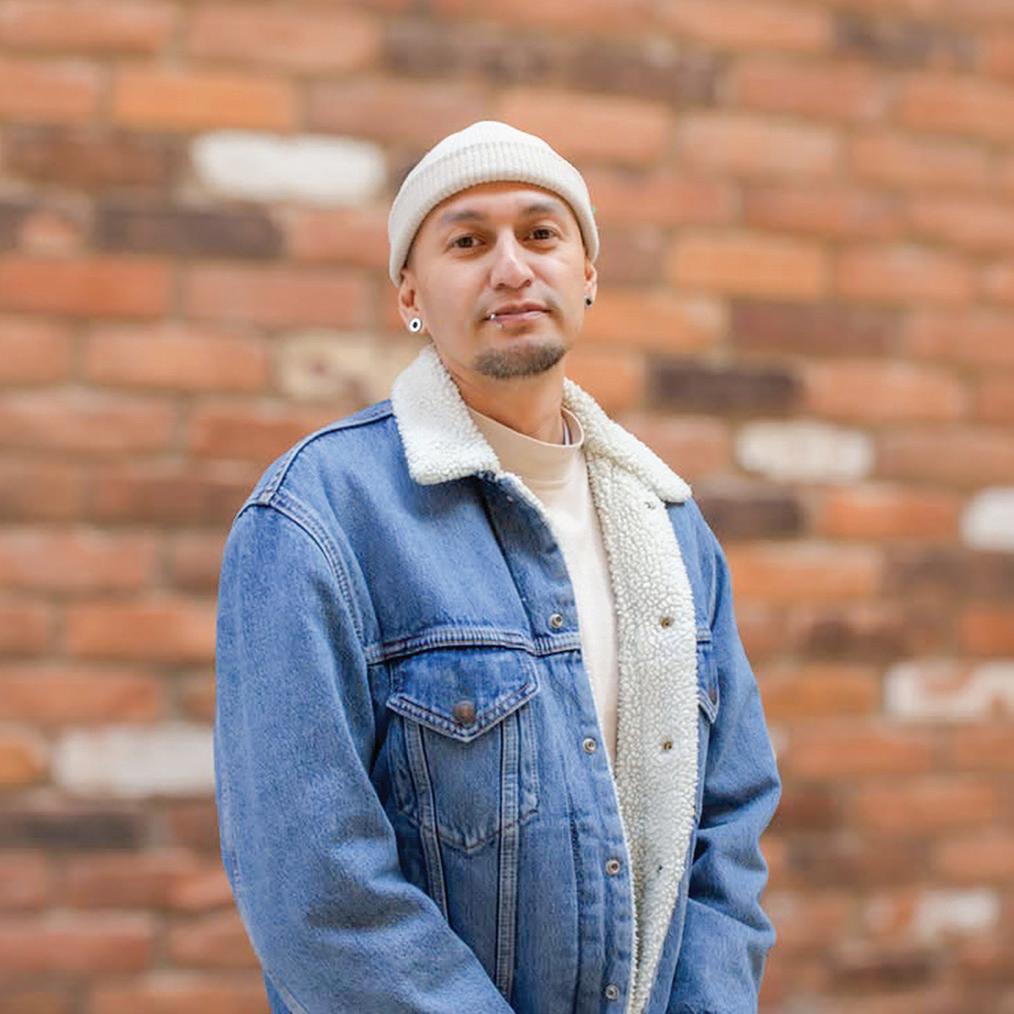
Salvador Gutierrez, also known as Sal, is an interdisciplinary Latino artist and designer born and raised in Los Angeles. During his time at Los Angeles Trade Technical College, he explored various design disciplines, including fashion, signage, and branding. Recognizing the intersections among these fields, Sal pursued a BA in Art with an emphasis in graphic design and visual communications at Cal State Los Angeles. He is now attending the USC Roski School of Art and Design, where he is working toward an MFA in Design. Currently, Sal is expanding his work to include sustainable, community-based, and social design practices. His future goals include working with mission-driven organizations dedicated to social and environmental justice, establishing an interdisciplinary studio, and becoming a design educator.
WHAT FIRST SPARKED YOUR INTEREST IN GRAPHIC DESIGN?
One of the first graphic designs that sparked my interest was Shepard Fairey’s Obama Hope poster. It was the first time I came to realize the influence a graphic can have on society.
WHO ARE YOUR BIGGEST CREATIVE INFLUENCES?
My biggest creative influences are Corita Kent, Neri Oxman, Ronald Rael, my professors (too many to name), and my Mexican-American culture.
TELL US ABOUT A DESIGN PROJECT YOU’RE MOST PROUD OF.
WHAT MADE IT SPECIAL?
A recent design project I am most proud of is a proposal to redesign an exceptional courtyard that supports USC’s art, design, and architecture communities, fosters creative interaction, and promotes sustainability and University engagement. What made this project special was the opportunity to work across disciplines and to consider historical preservation, sustainability, landscape, furniture, lighting, programming, and wayfinding.
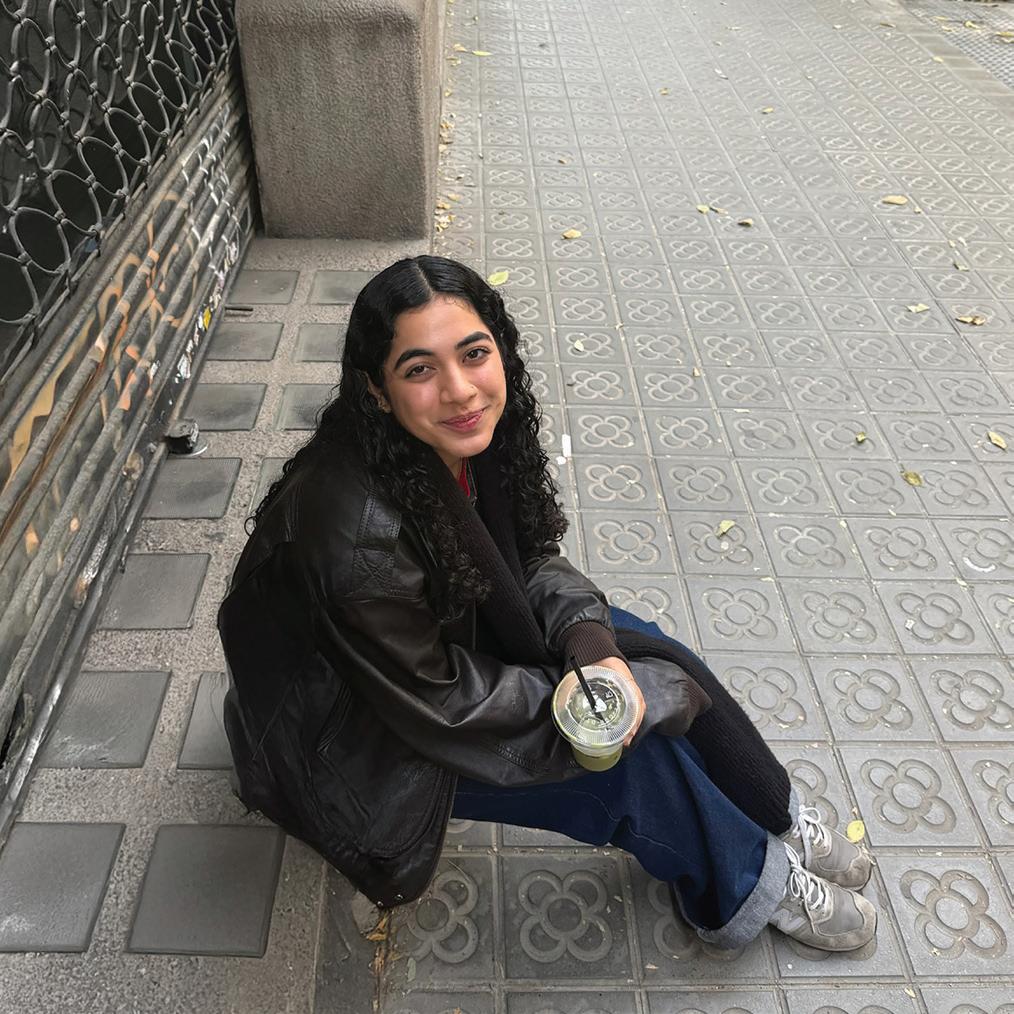
USC ROSKI SCHOOL OF ART AND DESIGN
Nishka Manghnani is a Los Angeles and Mumbai-based designer and creative strategist. Visual storytelling sits at the center of her work, informed by her cultural background and curiosity about how people interact with systems. She works across branding, experiential, and editorial design, approaching every project with intentionality. She identifies as a multimedia artist with a fascination for bringing analog practices into the digital world, exploring texture and tactility across mediums. She has a practiced eye for creative direction, shaping the vision of a project from its conceptual core to its final expression. Nishka graduates from USC’s Roski School of Art and Design in Spring 2026 and is excited to begin her career in design.
WHAT FIRST SPARKED YOUR INTEREST IN GRAPHIC DESIGN?
Growing up in Mumbai and being surrounded by bold hand-painted signs, unapologetically South Asian art–though often overlooked–always caught my design-eye.
WHO ARE YOUR BIGGEST CREATIVE INFLUENCES?
Aneesh Bhoopathy, for spearheading the revolutionary Zohran for NY campaign and Gabe Usadel, for his defiant and experimental approach to his projects.
WHAT DOES ‘GOOD DESIGN’ MEAN TO YOU?
Design that is intuitive, intentional, and emotionally resonant, something that communicates clearly while shaping how people experience a system.
WHAT TRENDS IN GRAPHIC DESIGN EXCITE YOU - OR CONCERN YOU - THE MOST?
I’m excited by how design is becoming more diverse and reflective of a wider range of cultural perspectives.

Yeunn Cho is a senior design student at Auburn University, graduating in May 2026. As an artist and designer, she is skilled in a wide range of art mediums and design tools. She is always excited to bring fresh perspectives shaped by her artistic background and her experience living between two cultures. She is currently interested in brand identity and UI/UX design, especially after branding a local Korean-style bakery and, more recently, designing an app with a research lab at Auburn University called SoliU. Outside of her studies, Yeunn enjoys reading and crafting.
WHAT FIRST SPARKED YOUR INTEREST IN GRAPHIC DESIGN?
I took an advertising design class back in high school, which helped me learn many tools, but I was always curious about what “design” actually was because it was never clearly defined to me. So my journey as a designer began with a simple question: “What is design, and more specifically, what is good design?”
WHO ARE YOUR BIGGEST CREATIVE INFLUENCES?
It depends on the project, but right now I’d say Dieter Rams and A.M. Cassandre.
TELL US ABOUT A DESIGN PROJECT YOU’RE MOST PROUD OF.
WHAT MADE IT SPECIAL?
There are several projects I’m proud of, but one I’m most proud of is a biodesign group project I conceptualized and led as the design lead, Wild Alchemy. I even had the opportunity to attend the Biodesign Challenge Summit and present it to a larger audience.
WHAT DOES ‘GOOD DESIGN’ MEAN TO YOU?
Good design is easily understood by people; for me, function comes first and then aesthetics come second.
WHAT TRENDS IN GRAPHIC DESIGN EXCITE YOU - OR CONCERN
YOU - THE MOST?
I think generative AI both excites and concerns me. It’s an incredible tool, but I also worry that it may take away opportunities for designers who are just starting their careers.
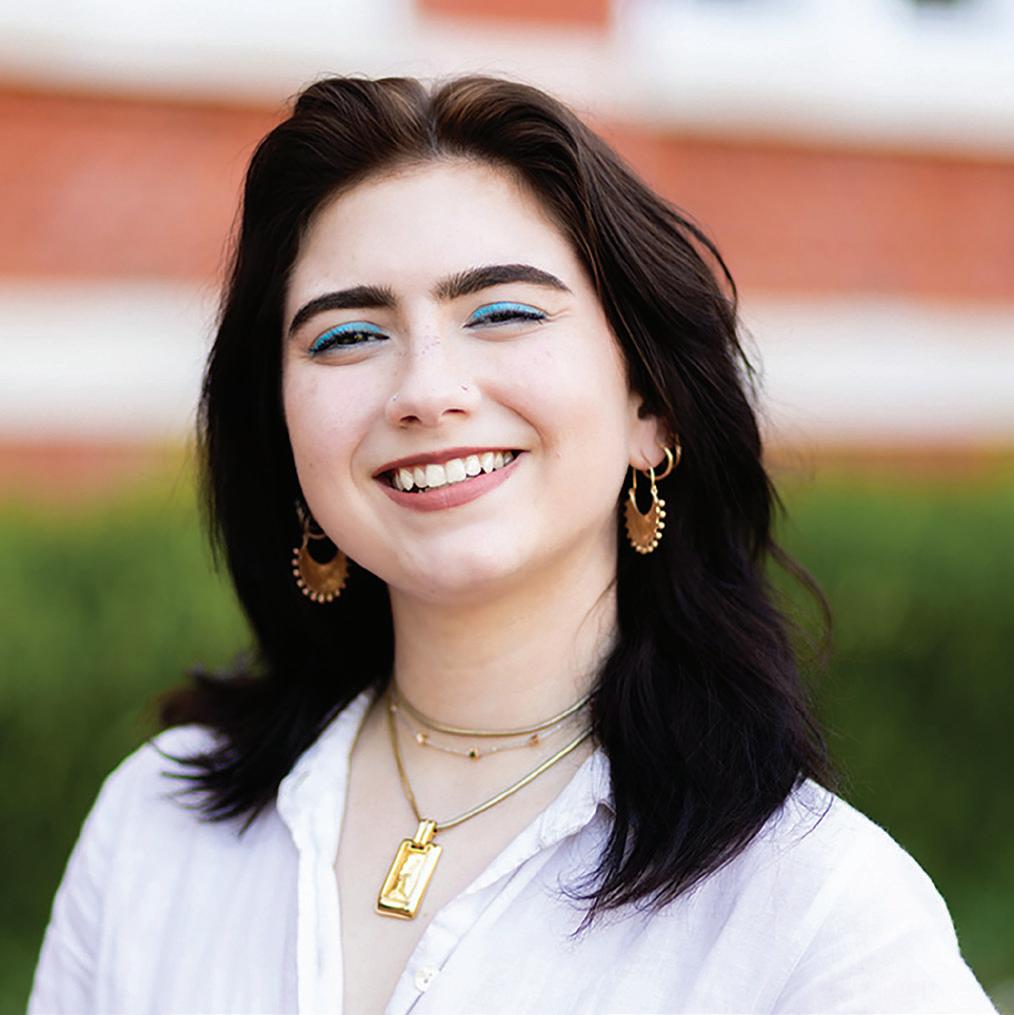
Rae Nawrocki is a senior in the Graphic Design program at Auburn University and has served for two years as the Station Manager for WEGL 91.1 FM, the university’s student-run radio station. Rae hosts Type Speaks, a podcast featuring interviews with creatives across the industry about their stories and design processes and works across mediums to explore the intersection of graphic design, media, and storytelling. With a passion for pushing creative boundaries, they explore innovative and unconventional approaches to visual communication. Their work blends traditional design principles with experimental techniques, drawing inspiration from diverse fields like broadcasting, speculative design, and the underground music scene. They also have worked for five years in education, spending their summers working with young children at art camps, trying to instill an early love of art and design for the next generation.
WHAT FIRST SPARKED YOUR INTEREST IN GRAPHIC DESIGN?
I took a class at high school and immediately fell in love and knew it was the right path for me. I was getting work from my school and doing personal projects and during that I just fell in love with the design process.
WHO ARE YOUR BIGGEST CREATIVE INFLUENCES?
I am often inspired by the mundane, I love looking at and seeing what may be overlooked and exploring what I can do with that.
TELL US ABOUT A DESIGN PROJECT YOU’RE MOST PROUD OF.
WHAT MADE IT SPECIAL?
I had a weeklong trip to NYC and collected all my trash from that time. I then used it to bind a book only using what I had gathered. It taught me a lot about looking closely at life and finding inspiration everywhere.
WHAT DOES ‘GOOD DESIGN’ MEAN TO YOU?
Good design has layers no matter what kind of design it is. Depth and effort will always shine through and be noticed.

Kristapher Halsey is a multidisciplinary designer and founder of Kuro GFX, a studio driven by the belief that design should tell a story that stays with you. His work blends cinematic atmosphere, bold visual identity, and refined photo compositing to create imagery that feels like a moment pulled from a larger world. He believes that the best design is the kind that connects first through emotion, then through structure.
With a background that began in self-taught experimentation and evolved into pursuing a Graphic Design Bachelor of Science degree from Full Sail University, Kristapher approaches every project with intention. He focuses on the small decisions that shape tone, clarity, and impact, treating each design as a full experience rather than a single deliverable.
His creative philosophy is simple. Design should feel alive. It should provoke, guide, and resonate. Whether building a brand system or crafting cinematic key art, he aims to create work that makes people pause and feel something real. Kuro GFX is his platform to explore that vision and push it forward with authenticity and craft.
WHAT FIRST SPARKED YOUR INTEREST IN GRAPHIC DESIGN?
My interest in graphic design came from a natural evolution of who I’ve always been. I grew up drawing and creating worlds on paper, then shifted into digital art as technology caught up with my imagination. That transition opened my eyes to how design could blend storytelling, emotion, and visual problem solving. Graphic design became the place where all of my passions connected, and once I realized I could turn that into a career, I never looked back.
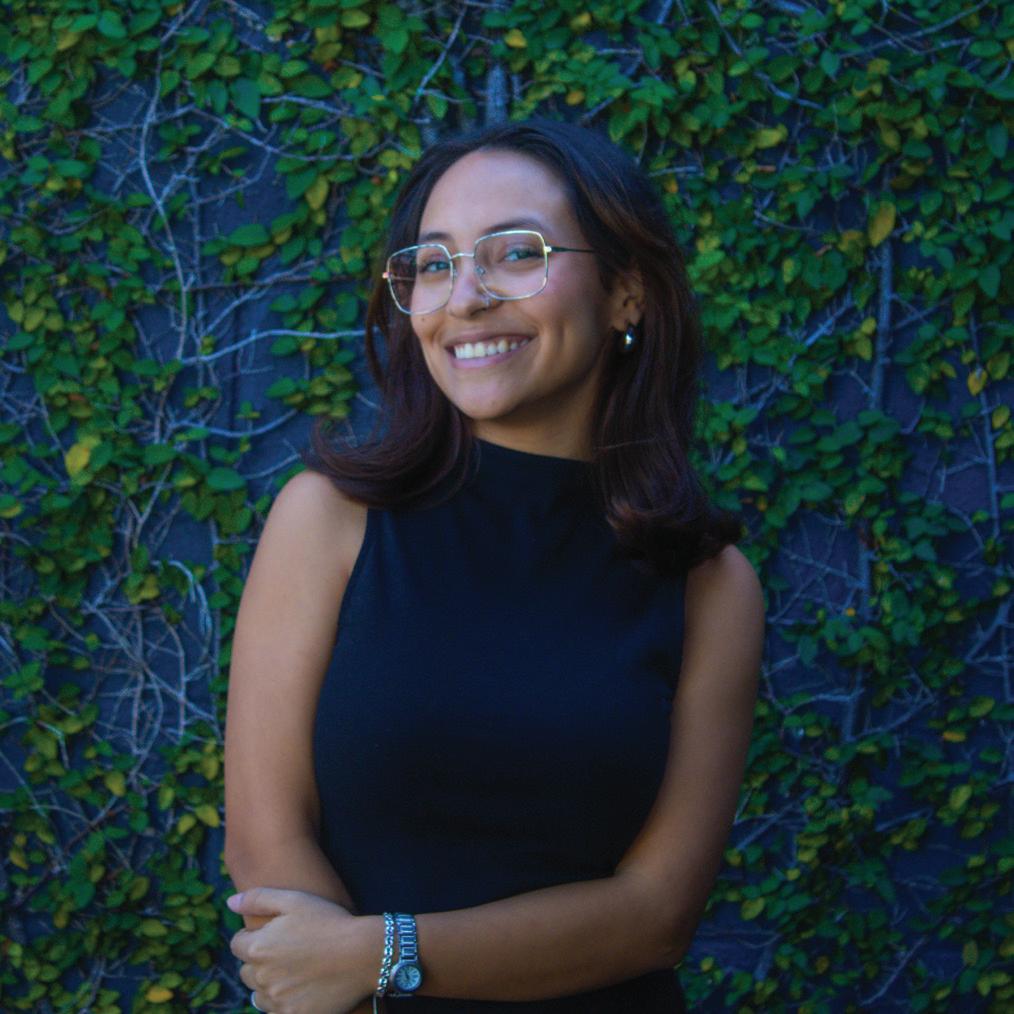
Ximena Morazan is a graphic designer, social media manager, and aspiring creative director from Guatemala. From acting to vectorizing, Ximena has always had a passion for the arts and dedicated her life to them. From an early age, she knew she wanted to excel in college outside of her country and be an important name in the industry. Ximena moved straight from Guatemala to Florida to attend Full Sail University for her Bachelor of Science in Digital Arts and Design, where she graduated as Valedictorian and received 2 Course Director Awards. Now she has returned to her alma mater for her Master of Fine Arts in Media Design, where she serves as a graphic design officer of various school clubs. After graduation, Ximena plans to join the Disney College Program and fulfill her lifelong dream of being part of the Disney family.
WHO ARE YOUR BIGGEST CREATIVE INFLUENCES?
Jessica Walsh and Kel Lauren. Their alternative, eclectic style resonates with the type of design I aim for.
WHAT DOES ‘GOOD DESIGN’ MEAN TO YOU?
Good design not only has to be visually appealing, but it has to deliver its message successfully. Harmony, innovation, and user-friendly designs are my priority as a media designer. Good design doesn’t have to be trendy to deliver; it is all about human connection and emotions..
WHAT TRENDS IN GRAPHIC DESIGN EXCITE YOU - OR CONCERN YOU - THE MOST?
As an old soul, the comeback of vintage layouts and textures excites me the most. On the contrary, fully AI-created designs concern me. Even though AI is an excellent tool, it worries me that designers might lose their basic skills to it.

DREXEL UNIVERSITY
Esther Im is currently finishing her B.S. in Graphic Design with minors in Marketing and Education at Drexel University. Originally from the Chicagoland area, Esther has been designing t-shirts, flyers, and logos since high school, documenting her progress on Instagram (@estherseasels). Studying in Philadelphia and interning in California grew her passion for art education, creative strategy, and design leadership. At Drexel, she has worked with the Dean’s Office at the Westphal College as a Marketing Intern, holds leadership roles in several student organizations including the Campus Activities Board, and serves as a guest lecturer for communications classes as part of her Independent Study. Esther’s creative process is grounded in thorough research paired with iterative sketching. In her work, she strives to capture the simple joy of discovering a place that feels like home, much like visiting a favorite restaurant for the first time. She finds purpose in crafting unique, personalized experiences. Esther is pursuing a multidisciplinary graphic design career while simultaneously working towards her goal of becoming a professor. When she is not behind her sticker-covered laptop, she can be found at a baseball game, ordering a matcha latte, or daydreaming at a museum.
WHAT FIRST SPARKED YOUR INTEREST IN GRAPHIC DESIGN?
I have always been drawn to creative problem-solving, whether it was crafting custom holiday cards for my parents’ acquaintances, illustrating my school mascot for the yearbook, or making binder covers for my Pokémon card collection. Over time, these hands-on projects naturally evolved into digital designs.
WHO ARE YOUR BIGGEST CREATIVE INFLUENCES?
My creative growth has been shaped by the people around me, especially my roommate, former coworkers, peers, and professors!
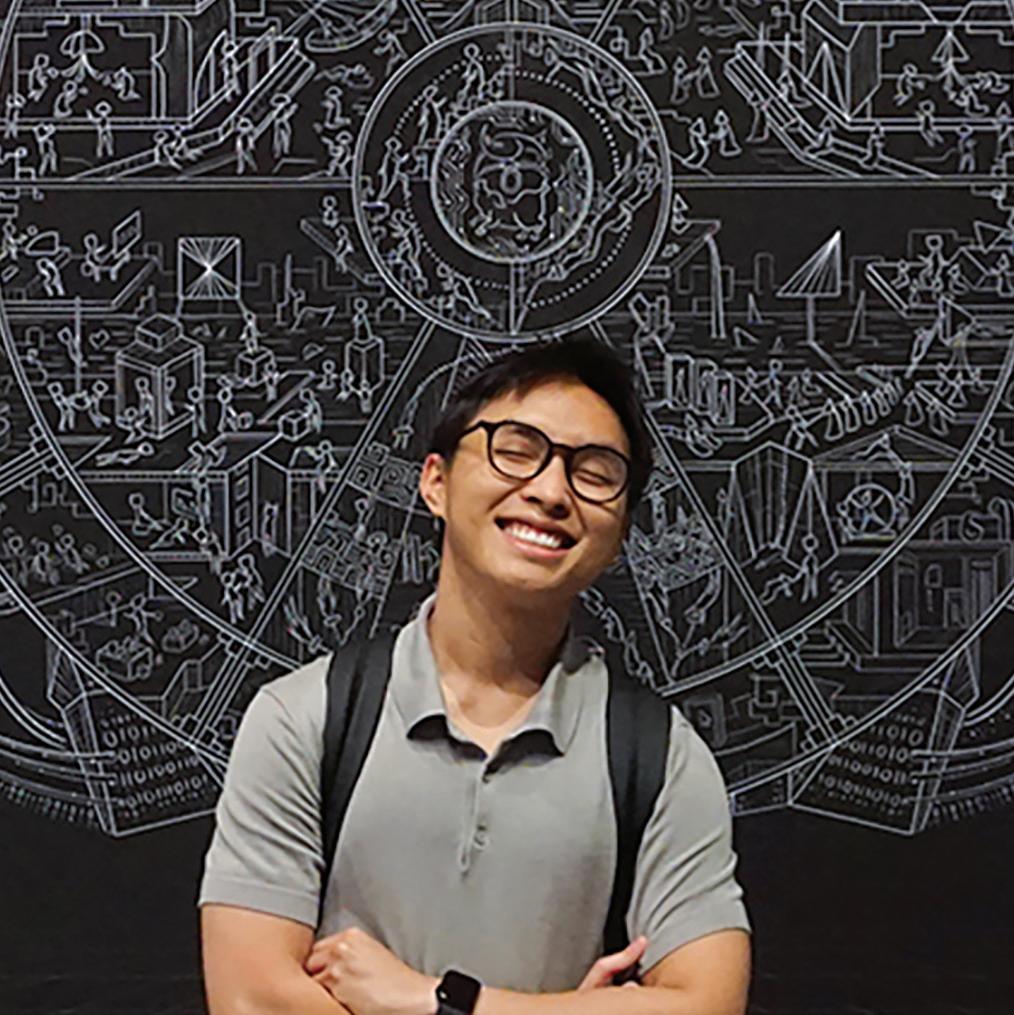
Tin Ta is a senior Graphic Design student at Drexel University, born and raised in Long An, Vietnam, and now based in Philadelphia. What began with his early curiosity about digital tools, as he spent afternoons on his family’s computer in middle school crafting PowerPoints, soon grew into a genuine passion for creating visuals that keep people engaged and connected to the stories behind them. He never imagined it would lead him all the way to Drexel, where he recently designed graphics for an exhibition exploring how humans interact with digital spaces and had his work featured there.
Tin’s practice sits at the intersection of culture and technology. He sees design as something rooted in people - built from shared histories, emotions, and everyday gestures - but also pushed forward by innovative tools and ways of seeing. His process is grounded in research and reflection, always looking back, paying attention to the present, and imagining what’s next. He believes design isn’t a linear trend race, but an expanding circle connecting past, present, and future with human experience at the center of it all.
TELL US ABOUT A DESIGN PROJECT YOU’RE MOST PROUD OF. WHAT MADE IT SPECIAL?
Digital Twin, the exhibition exploring human interaction with digital spaces, is one of my proudest projects. It was a special opportunity to apply the full range of skills I’ve learned at Drexel - from typography, editorial, and motion to exhibition and website design - to a real-life project about a topic I care deeply about.
WHAT DOES ‘GOOD DESIGN’ MEAN TO YOU?
To me, good design moves beyond cool visuals; it is about creating a meaningful experience, through thorough research and refinement, that truly speaks to, connects, and moves people.

Hello! My name is Katelynn Potts, and I’m a senior at the University of Central Oklahoma. I’m a designer who loves pushing myself to become the best I can be. I experiment with different physical media to make sure I leave no stone unturned. I love design that embraces the weird, colorful, and wacky. I aim to create experiences that show creativity can be a little strange and doesn’t need to fit into a modern, cookie-cutter world.
WHAT FIRST SPARKED YOUR INTEREST IN GRAPHIC DESIGN?
I first felt that spark for graphic design in high school when I discovered that my local vo-tech offered a program in it.
WHO ARE YOUR BIGGEST CREATIVE INFLUENCES?
My biggest creative influences are my friends and classmates, especially when we’re bouncing ideas back and forth.
TELL US ABOUT A DESIGN PROJECT YOU’RE MOST PROUD OF.
WHAT MADE IT SPECIAL?
The project I’m most proud of is a design titled, ‘Ålayi’. It was a very in-depth process that helped me learn more about my Chamorro heritage.
WHAT DOES ‘GOOD DESIGN’ MEAN TO YOU?
Good design means never taking the safe route and always challenging yourself to create something bigger and wilder.
WHAT TRENDS IN GRAPHIC DESIGN EXCITE YOU - OR CONCERN YOU - THE MOST?
Generative artificial intelligence is what worries me most about the future of the graphic design field.
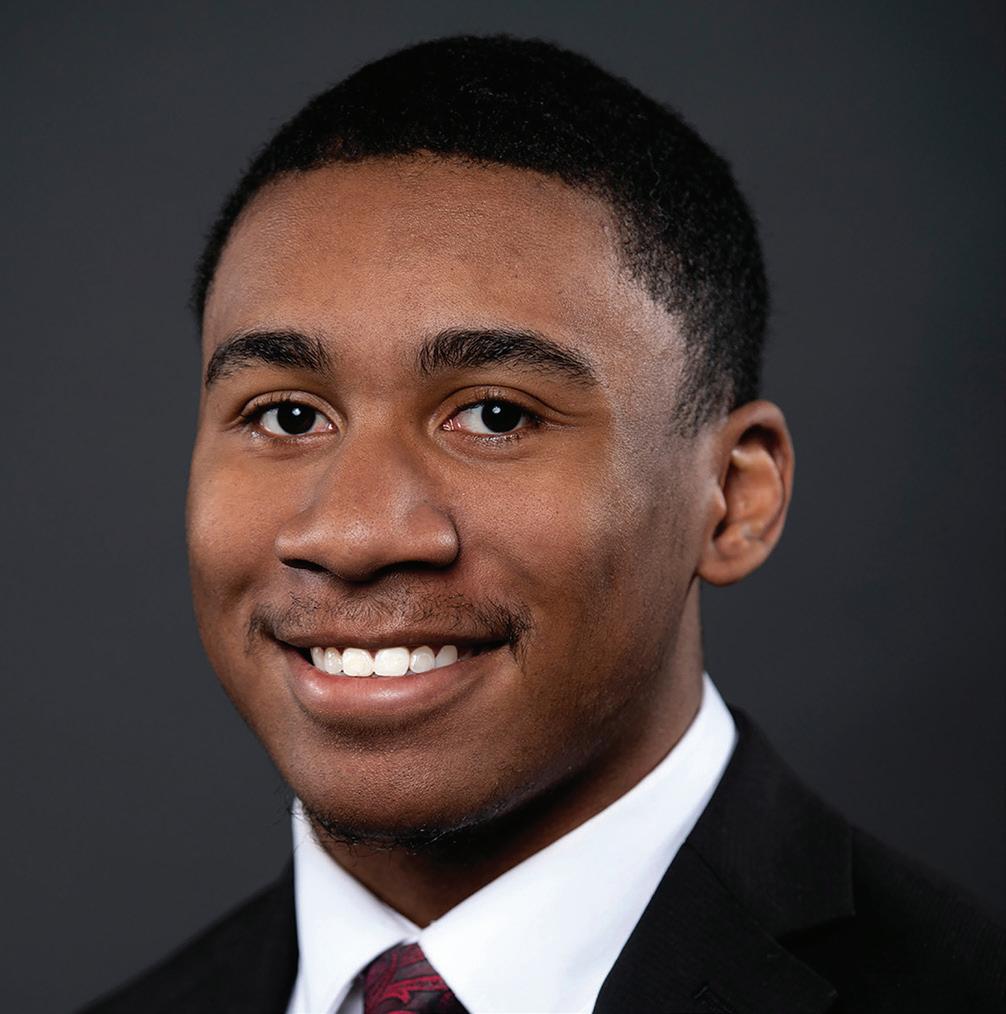
Drayeson Swanegan is an Afro-American graphic designer and BIPOC researcher currently majoring in Graphic Design with a minor in Design History at the University of Central Oklahoma. Growing up in northeastern Oklahoma City, he’s always had a strong connection with community, storytelling, and building relationships. His passion for design started from a young age, from building structures with Legos, doodling on the side of his math tests, and critiquing Super Bowl commercials every year. He’s won awards from GDUSA and the American Advertising Federation. His work has been included in local shows, including multiple accepted submissions to the National Conference on Undergraduate Research (NCUR). He’s had experience working with clients through High Five Media, in-house at American Fidelity, and on-capus with Inktank Studio. He also works alongside Amanda Horton on the Incomplete Design History podcast. Drayeson Swanegan loves design because of his love for people and passion for creativity.
WHAT FIRST SPARKED YOUR INTEREST IN GRAPHIC DESIGN?
I’ve always paid attention to advertisements, logos, and marketing campaigns, wondering, ‘Why does this make me want to buy it?’
WHO ARE YOUR BIGGEST CREATIVE INFLUENCES?
I’ve always admired the work of Emory Douglas, Spike Lee, and Keith Haring, but I’m also inspired by all my professors and their creative work, too.
TELL US ABOUT A DESIGN PROJECT YOU’RE MOST PROUD OF. WHAT MADE IT SPECIAL?
Pejorative, where I was allowed to research and design an exhibition that touched on my culture and my feelings about being black in Oklahoma.
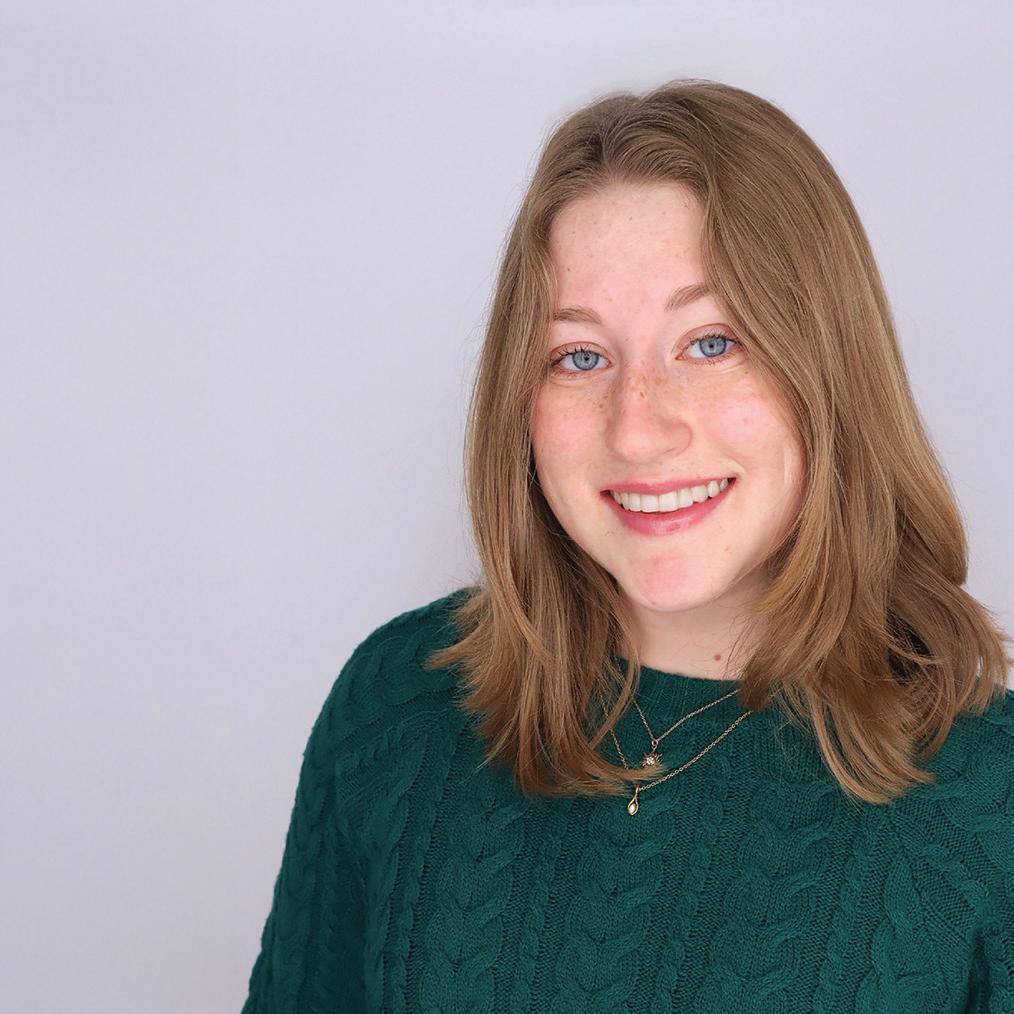
BOWLING GREEN STATE UNIVERSITY (BGSU)
Hello! I’m Madelyn Junk, a senior honors student at Bowling Green State University, pursuing a BFA in Graphic Design and a Marketing minor. With an avid love for brand strategy and identity design and a focus on environmental advocacy, I am driven towards providing creative and practical design solutions through the lens of promoting sustainability, empathy, and ecological balance. As a self-proclaimed sentimentalist and collector of paper ephemera, a quote that guides my design process is “seek what sets the soul on fire.” Alongside my studies, I am an ambassador for the Honors College and the College of Arts and Sciences and the president of Outdoor Adventure Club, all of which have provided me with a foundation of integrity, accountability, and leadership. When I am not in the studio, I can be found taking on my next challenge: rock climbing or ice skating, hosting an epic game night with friends, taking on a new baking or crocheting project, and playing Rummikub with my grandma.
WHAT FIRST SPARKED YOUR INTEREST IN GRAPHIC DESIGN?
Art and design have always been deeply intertwined with my life, ever since my childhood. Graphic design compels me with its opportunity to showcase new perspectives, create public good, and experiment with ways of meaning through creative problem solving and community engagement.
WHO ARE YOUR BIGGEST CREATIVE INFLUENCES?
Although cliché, I would have to credit my fellow classmates and professors at BGSU for relentlessly inspiring me. Being in a collective studio space and bouncing ideas off one another sparks a strong desire to break boundaries and dig deeper throughout my design process.
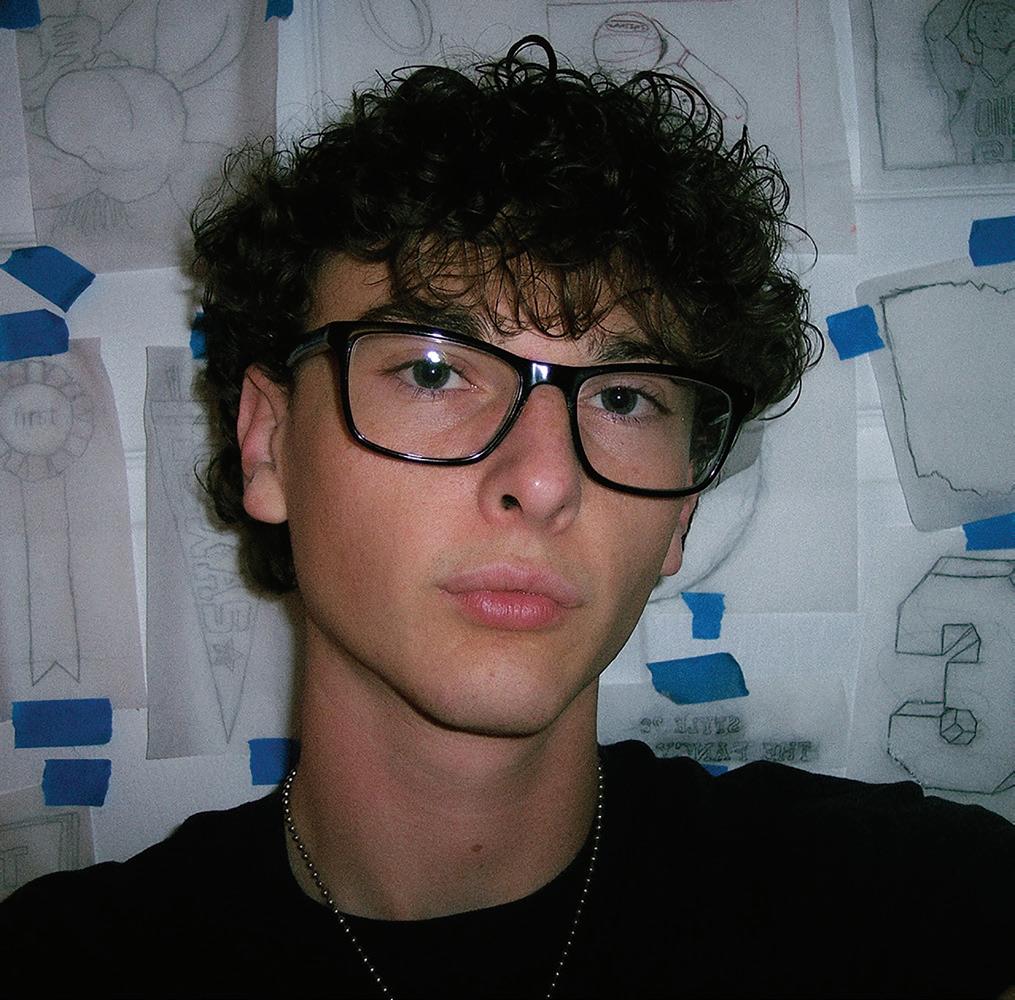
Blake Rupp is a senior at BGSU, passionate about analog making methods, fashion, and vintage-inspired aesthetics within graphic design. Through his time at BGSU, Blake has expanded his creative veins outside of just in-class assignments, but also through expansive extracurricular activities. He has created his own clothing brand, 1OF1SATURN, where he produces Americana-inspired clothing, short films, accessories, zines, and anything he sees fit—creating for the love of it, over profit or fame. He has also gained traction within the underground rap scene, designing album art, merchandise, and music videos for musicians all over the United States. Through this, he has continuously practiced unique design outputs for independent artists. With a focus on love, Blake can see himself designing in many fields, furthering his curiosity and enjoyment of learning.
Over the summer of 2025, Blake had the opportunity to work at a dream internship as a graphic designer for the Cleveland Cavaliers. Through his three-month stay at Rocket Arena, he was involved in various projects. From designing the social media campaign for Cavs Summer League, a merchandise collection for the City Edition, to special edition jerseys for the G-League affiliate, Blake created championship-seeking deliverables energizing fans, players, and the Cavs brand.
WHAT DOES ‘GOOD DESIGN’ MEAN TO YOU?
Good design, to me, means considering all elements of the output or experience. I find it to exist when there is passion and care involved, both for the output and for the audience interacting with the good design.
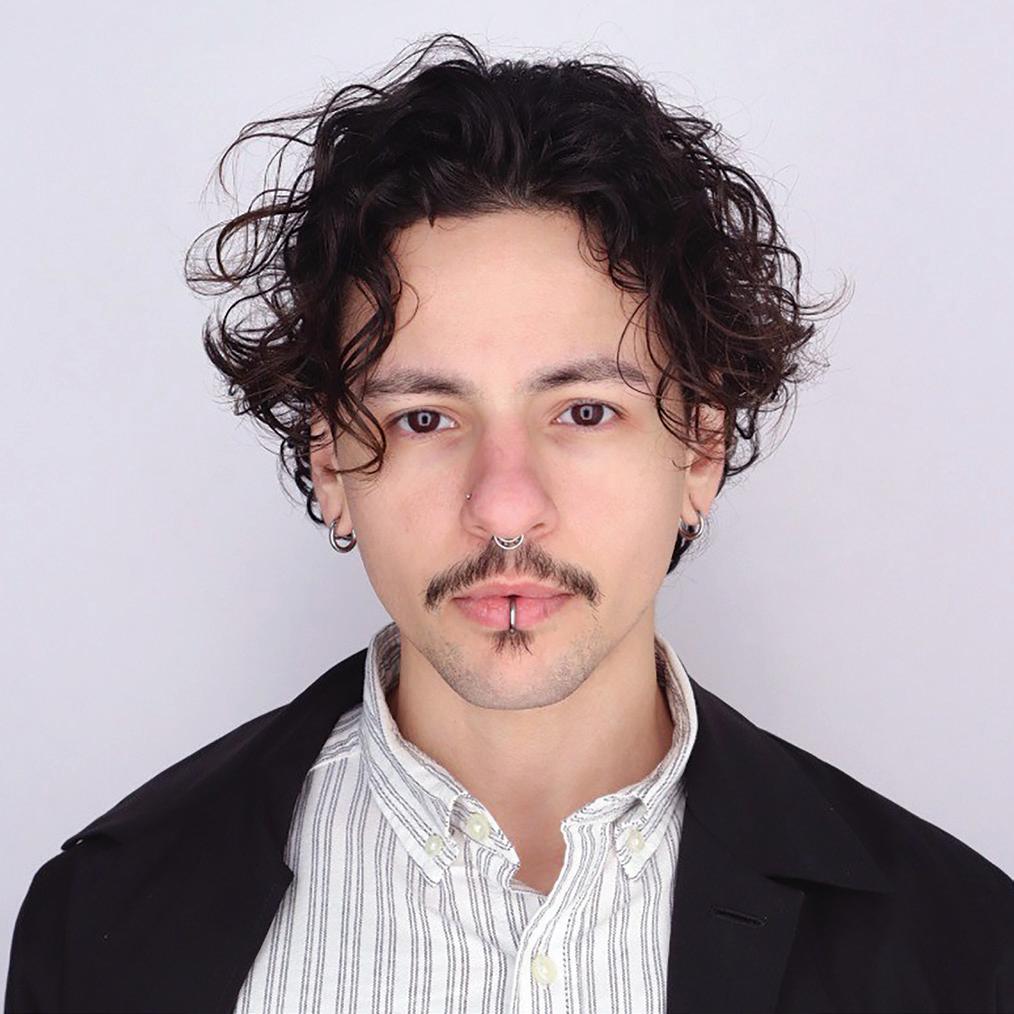
Eddie is a senior completing his BFA in Advertising at Kean University. He’s drawn to work that blends storytelling, clarity, and emotion, and his style leans toward bold ideas expressed through clean, minimalist visuals. While he’s especially passionate about design’s role in health communication—making complex information accessible and easy to understand—his interests extend across brand and experiential design as well. His experience spans digital design, branding, experiential marketing, and nonprofit collaboration. From shaping brand identities to developing creative for large-scale campaigns, Eddie enjoys crafting work that connects with audiences in meaningful ways. He has partnered with clients ranging from arts and culture organizations to major brands such as Visa for the upcoming Super Bowl, further strengthening his appreciation for design that lives both strategically and experientially. Eddie is the recipient of a 2024 GDUSA Award in the Design for Good category for Rethinking Your Narrative, a project that reflects his belief that design can shift perception and inspire change. As a 2025 MAIP Alum, he looks forward to continuing to grow within the fields of graphic design and advertising.
WHAT FIRST SPARKED YOUR INTEREST IN GRAPHIC DESIGN?
My interest in graphic design was sparked by my love for art, art history, and creative problem-solving.
WHO ARE YOUR BIGGEST CREATIVE INFLUENCES?
I’m inspired by Modernist principles, especially the Bauhaus movement and Swiss Typography.
TELL US ABOUT A DESIGN PROJECT YOU’RE MOST PROUD OF.
WHAT MADE IT SPECIAL?
One project I’m particularly proud of is a disease-state education campaign I contributed to during my summer internship. It was especially meaningful because I used design to translate complex health information into clear, accessible communication that supported patient understanding.
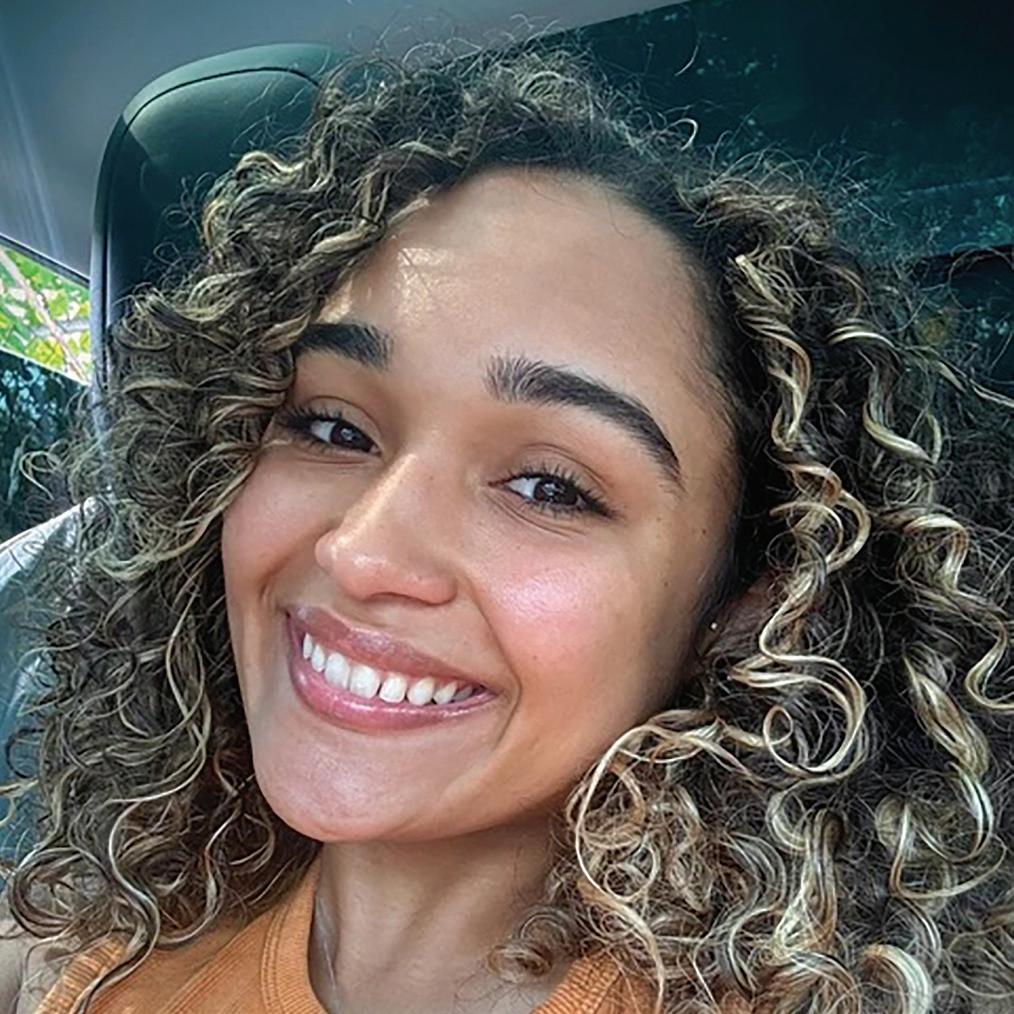
KEAN UNIVERSITY
I’ll happily wander through every “What If” because overthinking is just creative brainstorming with better branding. My work lives at the intersection of creativity and connection, where random thoughts turn into design moments that actually make sense. Inspiration hits everywhere from matcha runs to people-watching in everyday commutes like it’s research. At the end of the day, I just want to make things that make people stop, smile, and maybe say, “Wait... who made that?”
I’m all about making the choices count. It never gets easier; you just get better at it.
WHAT FIRST SPARKED YOUR INTEREST IN GRAPHIC DESIGN?
My interest in art direction started with noticing how visual choices shape the way we experience the world. Whether it was color, composition, styling, or the mood of an environment, I found myself drawn to how these elements work together to tell a story. Over time, I realized I was less interested in creating single visuals and more excited about crafting the overall vision behind them. I often call myself the “Idea Person” because what excites me most is building the concept, defining the tone, and imagining the world everything lives in. That curiosity grew into a passion for art direction building concepts, and creating projects that feel intentional, emotional, and memorable.
WHAT DOES ‘GOOD DESIGN’ MEAN TO YOU?
To me, good design is the perfect blend of clarity and personality. It solves a problem without losing its soul. Good design communicates something instantly, whether it’s emotion, function, or story while still leaving room for discovery. It’s thoughtful, inclusive, and intentional, and good design makes people feel something.
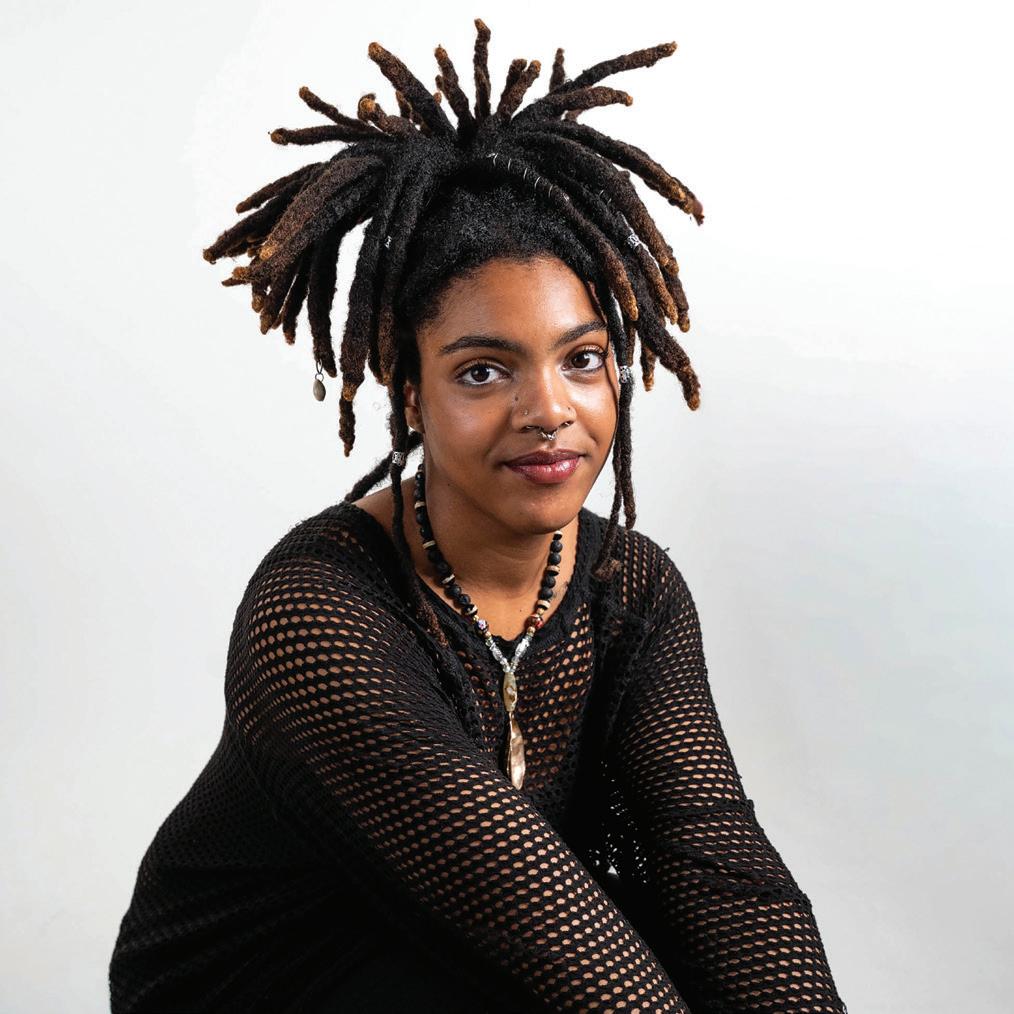
Nyla Fowler is a prospective artist primarily raised in South Florida. She is pursuing a bachelor’s in Communications Design with a focus in Graphic Design. Nyla brings an enthusiastic approach to bringing illustrative elements into her design. She finds her inspiration through her Caribbean culture and interest in narrative storytelling. She often utilizes vivid colors while experimenting with different styles, maintaining a painterly touch.
Nyla has goals of taking her craft overseas to further her observation and educate kids in their early childhood during her free time. She wants to help those in need and create art that sticks with people. She is currently in the process of creating an art program that exhibits artists and helps fund the arts.
WHAT FIRST SPARKED YOUR INTEREST IN GRAPHIC DESIGN?
I believe what first sparked my appreciation for graphic design, beyond aesthetics, was my History of Graphic Design class. Learning the different forms and languages that can go into graphic design and seeing all the different creative minds deepened my understanding of the art form and allowed me to truly fall in love with my craft.
WHO ARE YOUR BIGGEST CREATIVE INFLUENCES?
Illustrators such as Martin French, filmmakers such as Jordan Peele, and designers such as Shepard Fairey have a big influence on how I approach my work and research.
TELL US ABOUT A DESIGN PROJECT YOU’RE MOST PROUD OF.
WHAT MADE IT SPECIAL?
Most recently, I made a poster for my History of Graphic Design class inspired by the Punk movement. I feel this project turned a switch in my brain that truly tapped into the style and emotion I want to continue producing in my future works.

Taarena Rathore is an artist from Dallas, Texas. She is currently pursuing a BFA in Communications Design with a focus on Graphic Design at Pratt Munson, New York.
Growing up, she was surrounded by both fine arts and music, which ultimately influenced her career goals. She is a Graphic Designer and Social Media Representative for °1824 - Universal Music Group and hopes to work in the music industry full-time after graduation.
Aside from design, she enjoys exploring various art mediums, with photography being her favorite. Some of her most memorable photo projects include shooting bands Cage The Elephant and Wallows in Dallas.
In her work, she draws inspiration from the world around her through nature, friendships, and her other passions. Next year, she will continue her studies at Pratt Institute in Brooklyn, where she looks forward to expanding her skills and gaining more opportunities in the city.
WHAT FIRST SPARKED YOUR INTEREST IN GRAPHIC DESIGN?
After stumbling upon a YouTube livestream of a graphic designer in 2020, I found myself participating in a collaborative vector art project with people from all over the world. This sparked my interest in Illustrator, leading me to explore more of Adobe Creative Cloud and pursue a career in design.
WHAT TRENDS IN GRAPHIC DESIGN EXCITE YOU - OR CONCERN YOU - THE MOST?
A trend that excites me is the mixed-media and hand-drawn look that has started to come back. With technology and AI advancing, it’s refreshing instead to see physical media and designs made by people that feel personal and human.
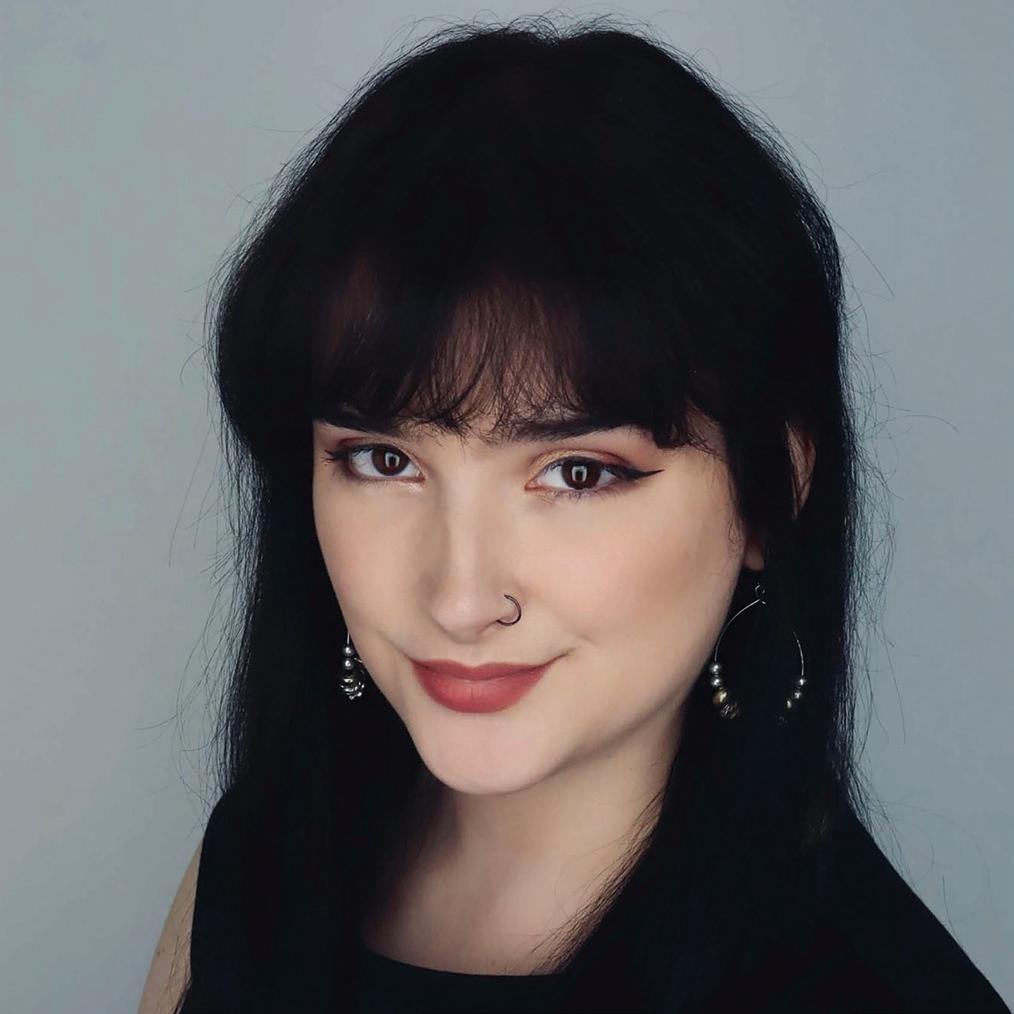
My name is Rory Gibson, and I am a student at Kennesaw State University as well as a Student Assistant Graphic Designer in KSU’s Department of University Advancement. I am pursuing a major in Graphic Communications and a minor in Marketing.
My dad has always told me, “If you have a job you love, you will never work a day in your life,” and it has proven to be true. When I received my first paycheck for designing, it felt unreal, and it solidified my decision of becoming a graphic designer beyond college, and genuinely loving what I do.
Outside of graphic design, I enjoy junk journaling, collecting Fugglers, watching youtube, and spending time with loved ones.
I am constantly looking for ways to expand my understanding of design and take on new challenges. I am extremely passionate about graphic design and hope that I will create thoughtful and memorable work.
WHAT FIRST SPARKED YOUR INTEREST IN GRAPHIC DESIGN?
My interest in graphic design was first sparked in my high school graphic arts class. Before taking that class, I didn’t even know what graphic design was, but it immediately captured my attention.
WHO ARE YOUR BIGGEST CREATIVE INFLUENCES?
I tell everyone that my biggest creative influence is my father. Ever since I was little, my dad always encouraged me to go above and beyond on school projects, and taught me to create things myself.
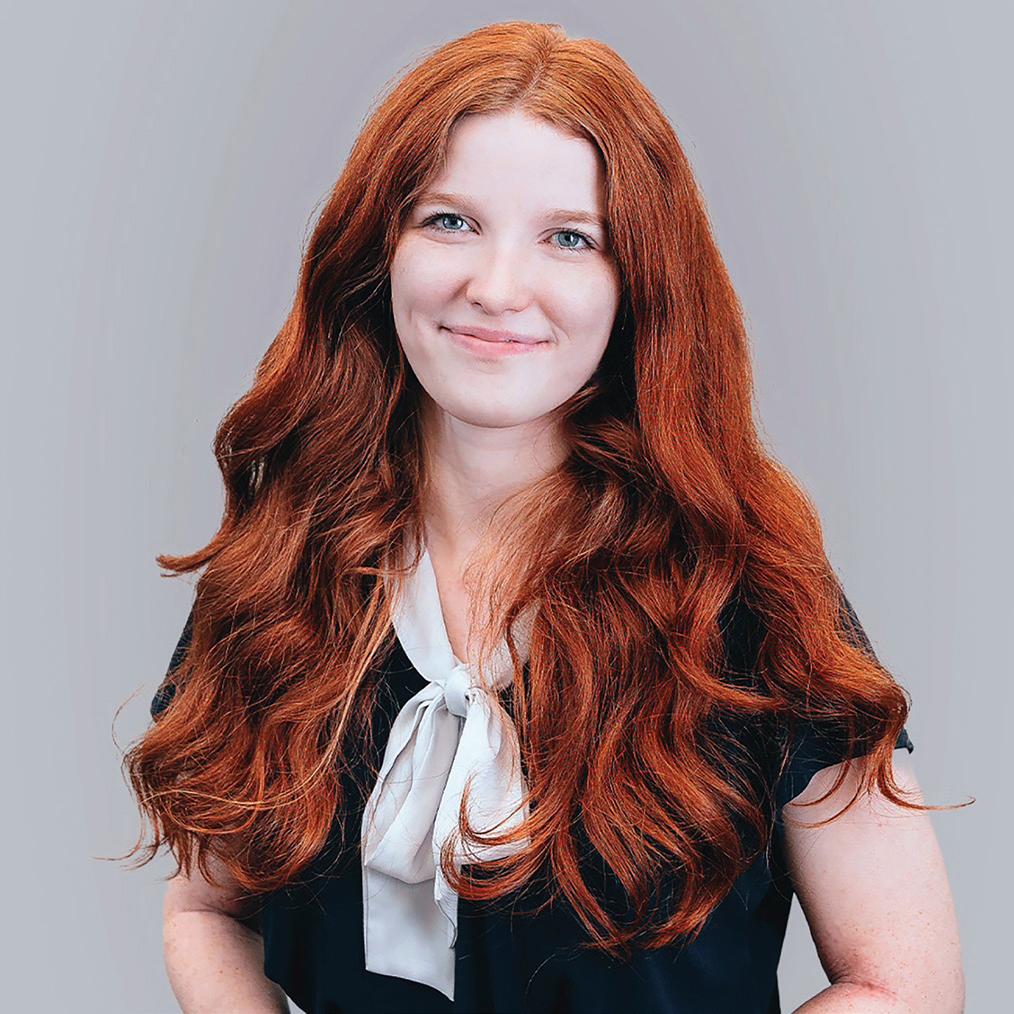
KENNESAW STATE UNIVERSITY
Award winning, published artist Lydia Pruett is a visionary, multimedia designer. A new up and comer looking to create striking visuals and designs, which causes pause and forms a connection with each viewer. Her love for the art form started back in 2023 and has since consumed her very breath. Lydia feels as though, through design, she is achieving her purpose in life. Her passion pushes her and her ambition allows for constant steady growth. In addition to her graphic work, she loves to explore and work with numerous mediums of art. Her personal favorite medium is painting, whether watercolor, acrylic or oil, and in any spare time she has she is painting something. Lydia often experiments with utilizing her traditional skills and bringing them into her digital design work, creating masterfully executed designs.
WHAT FIRST SPARKED YOUR INTEREST IN GRAPHIC DESIGN?
I felt it would fuel my very purpose in life, love at first sight really.
WHO ARE YOUR BIGGEST CREATIVE INFLUENCES?
The Creator Himself is my ultimate source of inspiration.
TELL US ABOUT A DESIGN PROJECT YOU’RE MOST PROUD OF.
WHAT MADE IT SPECIAL?
I once had a whole semester to create an app called AIO Fitness (an All In One health and fitness app). From start to finish, I personally conceptualized, researched, designed, and created a working prototype.
WHAT DOES ‘GOOD DESIGN’ MEAN TO YOU?
Three things must be checked, the client must be satisfied, the intent must be clearly made to the target audience, and it has to be visually pleasing.
WHAT TRENDS IN GRAPHIC DESIGN EXCITE YOU - OR CONCERN YOU - THE MOST?
Honestly, AI is a hot topic right now. However, I know that I will never have to fear for my job because I know with full certainty that AI will never be able to replicate what I create.
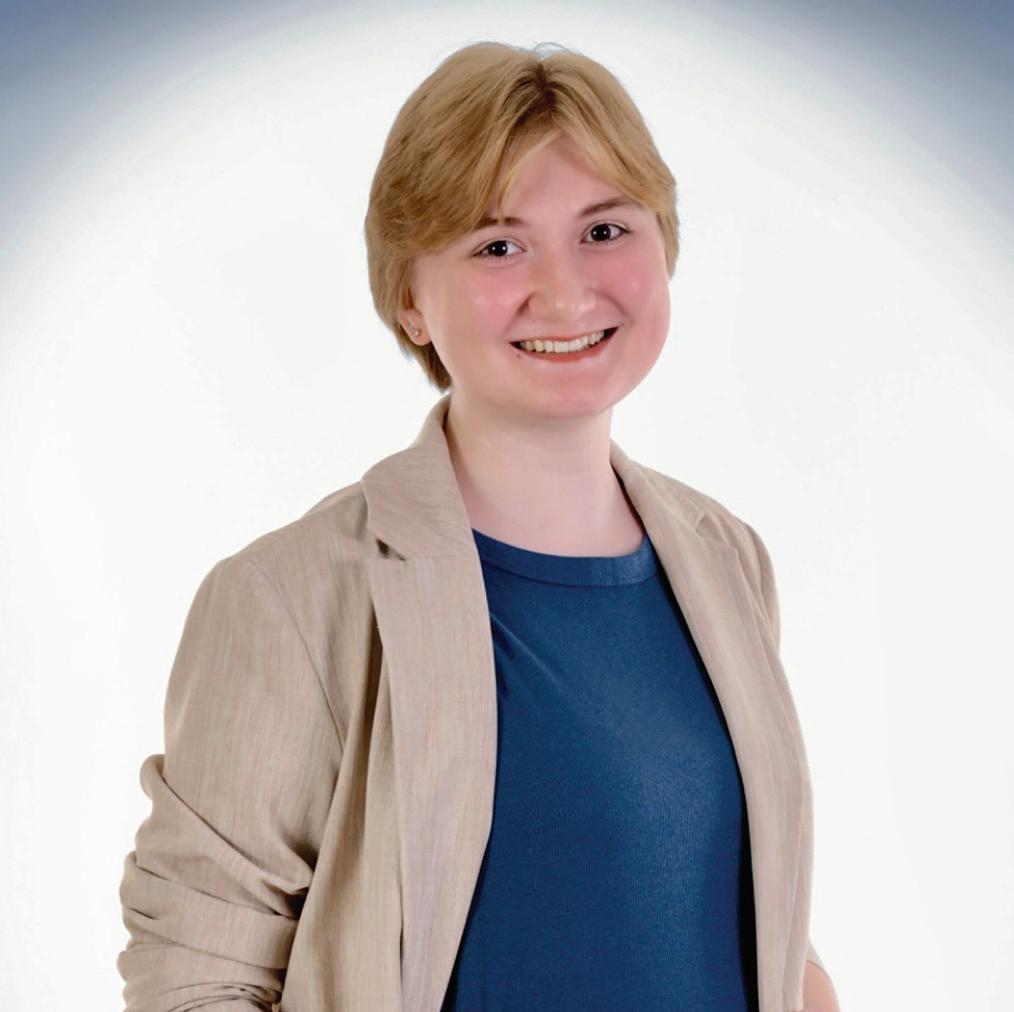
Margaret Beaver (she/they) is a twenty-year-old web designer, mental health and LGBTQIA+ equality activist, and award-winning poet and novelist. Her work, which spans nonfiction poetry and multi-genre fiction, centers on inclusivity, prejudice, abusive authority, mental illness, and the triumph of family. Margaret is a two-time Topical Winner with the Live Poets Society of New Jersey, a Readers’ Favorite five-star cover seal recipient, and the 2023 Donna Lynne Quille Award winner for Best Advocacy Prose. Her debut novel, FLOWERS FOR PAPA, was a Finalist for the 2024 YA Fiction American Writing Award and received both Runner-Up and Honorable Mention placements at the 2025 New York and Hollywood Book Festivals. They are also the author of INKWELLS. (2022) and SEASONS: AUGUST’S COLLECTION (2024).
Margaret holds certifications from the Warren Alpert Medical School of Brown University and Stanford Health Care concerning equality in medicine. In 2024, she became a certified Web Designer through IAP Career College and completed Graphic Design and UI/UX Design Specializations from CalArts. She is pursuing a BFA in Graphic Design at Sessions College and is currently employed as a Web Designer at GiraffeLight Media Agency.
She can be visited at margaretbeaverbooks.com.
WHAT FIRST SPARKED YOUR INTEREST IN GRAPHIC DESIGN?
My interest in graphic design was sparked by its adjacent branch, web design, and the pride that ensues when building websites for the businesses of close friends and family. Web design allows me to combine my three loves: writing copy for businesses, building the unique aesthetic of a business, and being able to help my loved ones.
WHO ARE YOUR BIGGEST CREATIVE INFLUENCES?
Rather than being inspired by particular creatives, I’m inspired by entire art movements—from the strategic minimalism of Abstract and Bauhaus to the homey comforts of Impressionism to the decorative ornateness of Art Nouveau.
Maggie Brownstone is a senior BFA Illustration student whose work centers on character-driven storytelling and thoughtfully constructed settings. Raised in a household of artists and fortunate enough to travel in her youth, she draws much of her inspiration from a background in ballet and a childhood spent exploring museums and castle ruins. Combined with a more modern discovery of true-crime stories and Dungeons & Dragons, these experiences have shaped her distinctive visual sensibility.
Maggie’s attention to gesture, composition, and atmosphere reflects both her years in the performing arts and a strong awareness of historical influence. Much of her creative work is intended to highlight inclusive representation and to explore themes of resilience in the face of oppressive systems. These priorities inform her developing work in animation and independent game development, where she focuses on blending an expressive illustrative style with movement, pacing, and staging to support dynamic interactive storytelling.
TELL US ABOUT A DESIGN PROJECT YOU’RE MOST PROUD OF. WHAT MADE IT SPECIAL?
I’m excited about a project I’m currently working on: a hand-drawn point-and-click mystery game. It’s my first attempt at combining illustration, animation, narrative, and UI into a single world. Balancing aesthetic, storytelling, and functional design has been challenging, but seeing it come alive interactively has been incredibly rewarding.
WHAT DOES ‘GOOD DESIGN’ MEAN TO YOU?
My idea of good design is universally accessible, even when visually rich or complex. Thoughtful color theory and composition can make a world of difference in terms of clarity and impact.
VIRGINIA TECH
Milana Slowinski is a multidisciplinary designer and digital artist with a foundation in international relations and political science. Having grown up in seven countries across three continents, she has a unique multicultural perspective and understanding of both design and life. Milana is constantly on the move, believing that design is also an ever-evolving discipline brimming with opportunity and innovation.
After spending a year studying international relations at renowned Jagiellonian University in Krakow, Poland, she transferred to Virginia Tech to pursue her calling for creating designs that tell stories and catalyze solutions. Outside of her studies, she dedicates time to designing assets for the CDC-funded Gulf South Vector educational center and conducting user research for a Deloitte client through Virginia Tech’s premier PRISM marketing agency. She has contributed to packaging and illustrative design for global brands like Lansinoh, and one can frequently find her at Virginia Tech’s Newman Library, where she works on several publications and original material.
No matter the project, Milana strives for communicative and resonant design that lives at the intersection of strategy and creativity.
WHAT FIRST SPARKED YOUR INTEREST IN GRAPHIC DESIGN?
My interest in graphic design was first sparked at 15 when I discovered that my artistic skills could translate beyond aesthetics and serve a functional, transformative purpose in the real world.
WHO ARE YOUR BIGGEST CREATIVE INFLUENCES?
I am a big fan of Elizabeth Goodspeed; her historically inspired, idea-driven work and dedication to design research deeply resonate with my own creative philosophy.
VIRGINIA TECH
Hi, I’m Chase Smith, a Graphic designer engrossed in data visualization and packaging design. Before I pursued my BFA in Graphic Design at Virginia Tech, I was in Chesapeake Bay Governor’s School (CBGS), an advanced STEM program focusing on marine science. I use my free time outside to help teach design concepts to underclassmen; I am the president of our chapter of AIGA and a Peer Mentor for freshmen students. When I’m not designing, you can find me digging into rabbit holes, woodworking, and overanalyzing my fantasy football league.
WHAT FIRST SPARKED YOUR INTEREST IN GRAPHIC DESIGN?
To be honest, I don’t really know, but I can make up a story if you need me to.
WHO ARE YOUR BIGGEST CREATIVE INFLUENCES?
Some of my biggest creative influences, in no order, are Tyler Okonma (Tyler, The creator), Jacob Christensen (Jakey), Marcus Morton (Redveil), Kendrick Lamar, Anthony Po, Denzel Curry, and Donald Glover (Childish Gambino).
WHAT DOES ‘GOOD DESIGN’ MEAN TO YOU?
Good design is anything that gets the designer’s point across without the designer having to explain the point of it to the viewer.
WHAT TRENDS IN GRAPHIC DESIGN EXCITE YOU - OR CONCERN YOU - THE MOST?
I believe that generative AI is a shortcut in learning and is detrimental to the development of designers. Getting creatively stuck is a vital part of the learning process, it is the direct result of critical thinking. Figuring out a method that helps get them out of that creative rut is key to success. If asking an AI model for ideas is part of a student’s design process, they aren’t exploring anymore and, in turn, aren’t learning.
I’m Ren, a music industry designer currently majoring in Visual Communication Design at the Hartford Art School. I’ve always loved music, and getting to combine it with my art has been a dream! I make album covers, posters, merch designs, as well as logo & branding design work. I’m very interested in musical identity and the many ways it can be visually represented through the art that accompanies it.
WHAT FIRST SPARKED YOUR INTEREST IN GRAPHIC DESIGN?
The first design project I ever worked on was an album cover for my high school friend’s band — it is still up on Spotify, actually. Ever since I have been infatuated with the visual representation of music and the ways graphic design intersects with the music industry.
WHO ARE YOUR BIGGEST CREATIVE INFLUENCES?
Currently I take a lot of inspiration from Kel Lauren, a Portland-based music industry designer who experiments with type and illustration. I’m also very active in the local music scene, and my main influences are the bands that I work for.
TELL US ABOUT A DESIGN PROJECT YOU’RE MOST PROUD OF.
WHAT MADE IT SPECIAL?
I’m working on a logo and album cover for one of my favorite local bands right now, Blandest. Their music inspires me to create a strong visual identity that reflects not only how it sounds, but also the musicians’ vision. This project is very special to me because I feel like I’m a part of a team that trusts me to understand and bring their vision to life.
WHAT DOES ‘GOOD DESIGN’ MEAN TO YOU?
Good design will visually interest, inspire, and educate. A lot of my work walks the line between abstraction and legibility, and I find my strongest pieces are ones that don’t fall squarely in either category, but instead balance between the two.

I’m Marina, a Hartford Art School student pursuing my bachelor’s degree in Visual Communication Design. I’m very open to all forms of design, but my current interests are packaging design, brand identity and editorial work. I’m always experimenting, trying to find multiple solutions to designs and I really enjoy the whole design process. Hands-on work is something I value a lot in design, assembling and seeing my work in a real space is incredibly fulfilling.
WHAT FIRST SPARKED YOUR INTEREST IN GRAPHIC DESIGN?
Being known as an “art kid” in high school, I was asked if I could help create a logo of sorts for an annual band concert that I was also a part of. I unsurprisingly failed due to lack of any real graphic design knowledge however, that experience along with a general interest in digital media sparked my interest and now love for graphic design.
WHO ARE YOUR BIGGEST CREATIVE INFLUENCES?
I’m not sure if I really have specific individuals that inspire me greatly, a lot of my inspiration comes from browsing the internet, things I see in real life, or my peers and professors.
TELL US ABOUT A DESIGN PROJECT YOU’RE MOST PROUD OF. WHAT MADE IT SPECIAL?
I’m most proud of a recently created packaging design system for a DVD set. I was able to really play and experiment with it, especially the clearness of it all, clear acetate packaging, clear discs, which lead to interesting human and type interactions.
WHAT TRENDS IN GRAPHIC DESIGN EXCITE YOU - OR CONCERN YOU - THE MOST?
The trends that excite me and that I enjoy are the more hands-on trends where you can see the humanness of it, ripped edges, custom typography and textures. The growing use of AI is very much a trend that concerns me.
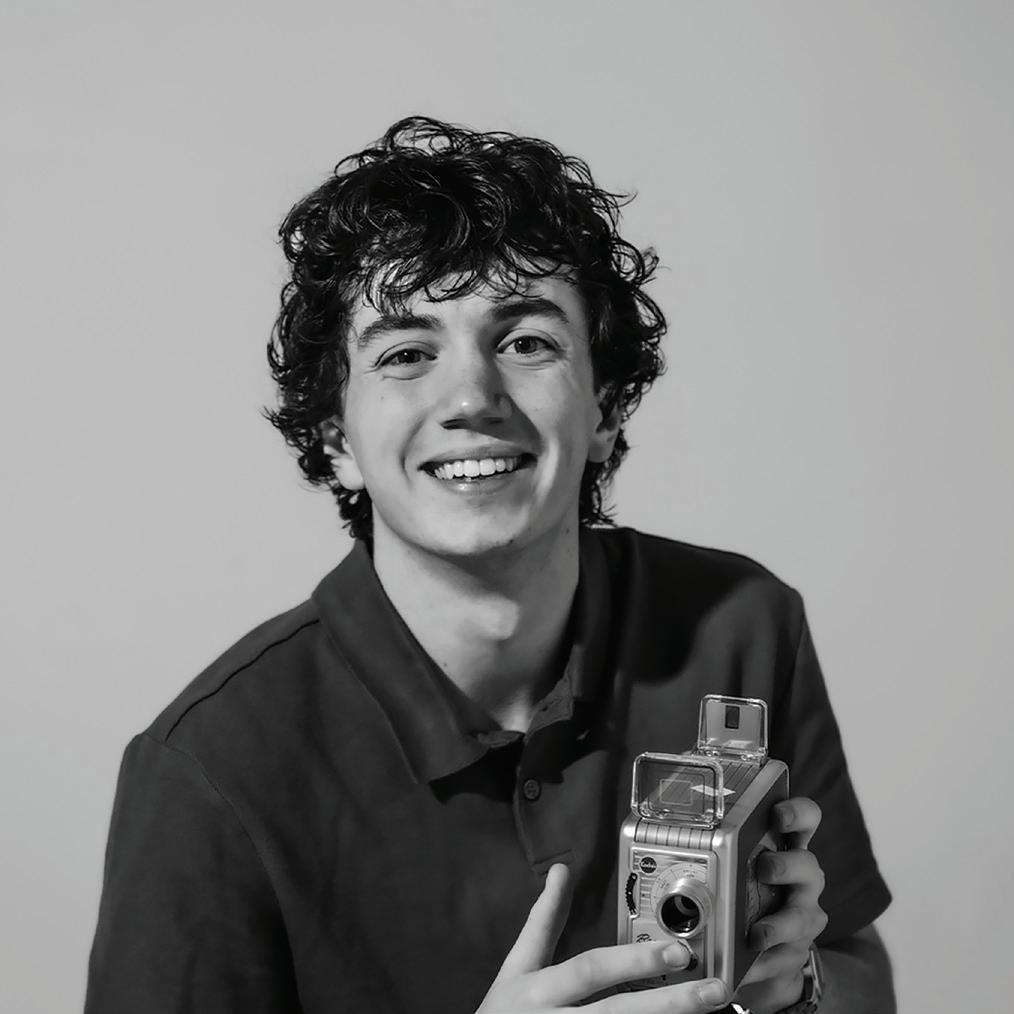
SYRACUSE UNIVERSITY
S.I. NEWHOUSE SCHOOL OF PUBLIC COMMUNICATIONS
Quinn is a graphic designer and photographer from Rochester, NY, passionate about elevating brands through unique visual strategies. Raised in a family of fine artists, he initially showed little interest in pursuing the arts. That changed in middle school when he discovered photography, and later in 2020, pandemic-induced boredom (PIB) sparked a fascination with graphic design. Captivated by the freedom to create anything in Photoshop, he has been dedicated to the craft ever since. Quinn now studies graphic design at the Newhouse School of Public Communications at Syracuse University.
WHAT FIRST SPARKED YOUR INTEREST IN GRAPHIC DESIGN?
During the pandemic I saw a pretty bad graphic posted by my favorite NFL team. I dove headfirst into sports design the same day.
WHO ARE YOUR BIGGEST CREATIVE INFLUENCES?
My parents, Tyler, The Creator, Adam Vicarel, Brian Collins, Saul Bass
TELL US ABOUT A DESIGN PROJECT YOU’RE MOST PROUD OF.
WHAT MADE IT SPECIAL?
I had the chance to create work for the WNBA All Star Game when I interned at Fresh Tape Media. The team put their trust in me to execute the full animation myself, and that was a pretty cool feeling.
WHAT DOES ‘GOOD DESIGN’ MEAN TO YOU?
Good design makes lives easier through excellent communication, and if we’re lucky we get to make it look pretty as well.
WHAT TRENDS IN GRAPHIC DESIGN EXCITE YOU - OR CONCERN YOU - THE MOST?
The current democratization of design software has the potential to lead to an explosion in the number of designers, which I think is really exciting because we’re going to see some really innovative design solutions come out of it.



SYRACUSE UNIVERSITY
S.I. NEWHOUSE SCHOOL OF PUBLIC COMMUNICATIONS


Megan is a graphic designer finishing up her final year at Syracuse University. With majors in graphic design and website design, she loves to find opportunities to bring art and technology together. Through these programs, she has developed special passions for typography and website building, but also loves to explore forms of physical art, including everything from collages and zines to embroidery. Adaptable and energetic, she works to make dynamic and compelling visuals, reflecting aspects of humanity in the designs she creates. Above all, she wants emphasis on the little things, knowing that the small details can communicate just as much as the entire design.
WHAT FIRST SPARKED YOUR INTEREST IN GRAPHIC DESIGN?
I first started with creating layouts in my high school yearbook. I loved finding new and creative ways to put the photos with the stories, and I found that I had a knack for bringing together small details on the page to cover a wide variety of different events.
WHO ARE YOUR BIGGEST CREATIVE INFLUENCES?
In general, I find myself super inspired by artists that create independent zines and handmade prints. I like to be influenced by the humor and realness of art made for a smaller audience to remind myself of why I enjoy creating. I also love designers who use typography as art, like Paula Scher, and frequently find myself using similar styles when I feel stuck in my own work.
TELL US ABOUT A DESIGN PROJECT YOU’RE MOST PROUD OF.
WHAT MADE IT SPECIAL?
think I’m most proud of my work with Jerk Magazine, the on-campus publication I’ve been working on since my first year at Syracuse. It’s been special to see my own work develop over the years, and I’ve been able to work with some really awesome people throughout my time to influence a stronger visual style for the magazine.
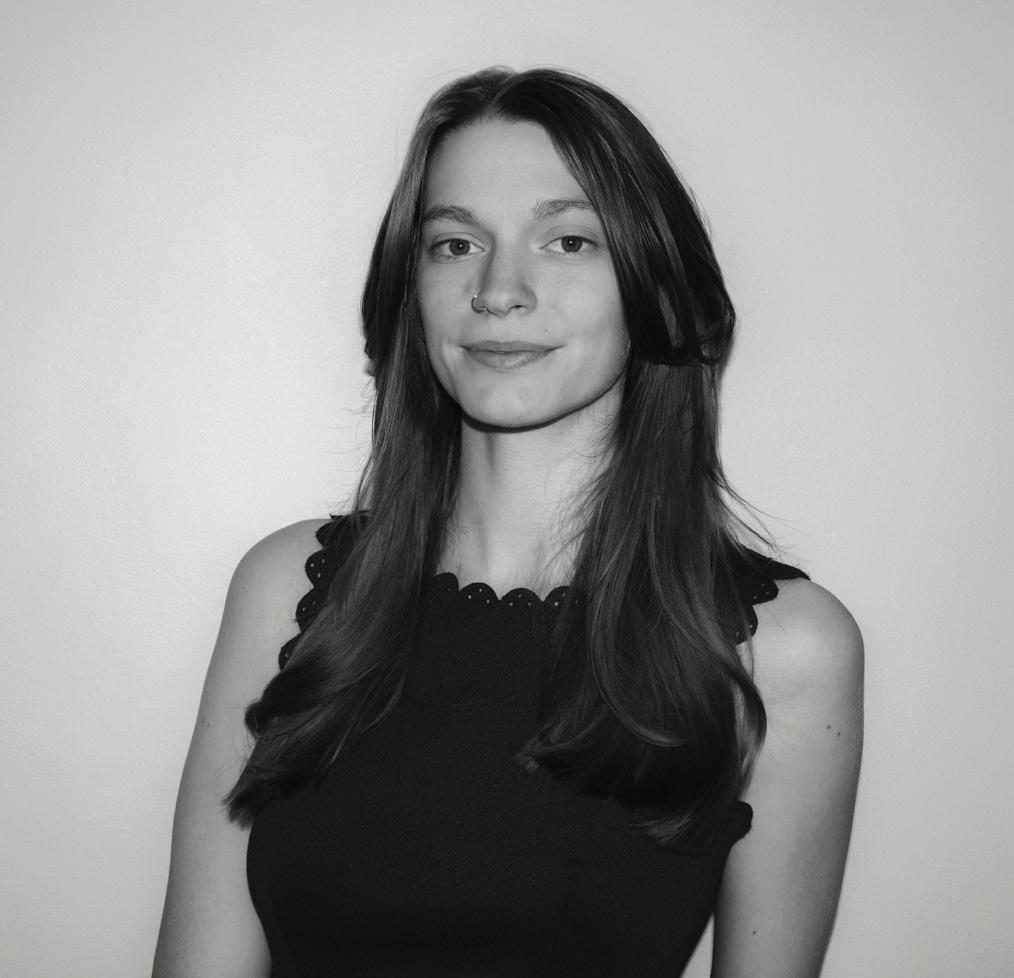
As a child, I was always drawing, painting, and crafting. Art defined me until I started college as a nursing student and realized I could not live without it. Discovering The Modern College of Design changed everything for me. Here, I fell in love with web design, branding, and UI/UX. From research and sketches to the final product, I love every step of the design process. It feels like solving a puzzle when you do not know what the picture will be. I am excited to enter a field filled with growth and inspiring people. What thrills me the most is never knowing what I will get to design next..
WHAT FIRST SPARKED YOUR INTEREST IN GRAPHIC DESIGN?
I first considered graphic design as a career path when I was exploring different options for creatives. I was sold when I learned that design combines my love of research, problem-solving, and creating.
WHO ARE YOUR BIGGEST CREATIVE INFLUENCES?
Musicians, painters, directors, and other designers, such as Jeremy Loyd. I am constantly taking inspiration from my current playlist or recently watched movies.
TELL US ABOUT A DESIGN PROJECT YOU’RE MOST PROUD OF.
WHAT MADE IT SPECIAL?
Recently, I redesigned the Education and Health Sciences page for the University of Dayton. This project is special to me because I pushed myself to create the website with people like me in mind. I wanted future students who are overwhelmed and trying to figure out where they will spend their next four years to feel supported.
WHAT DOES ‘GOOD DESIGN’ MEAN TO YOU?
Good design, to me, means delivering a clear message paired with a visually appealing layout. Not every design needs to reinvent the wheel to be powerful.
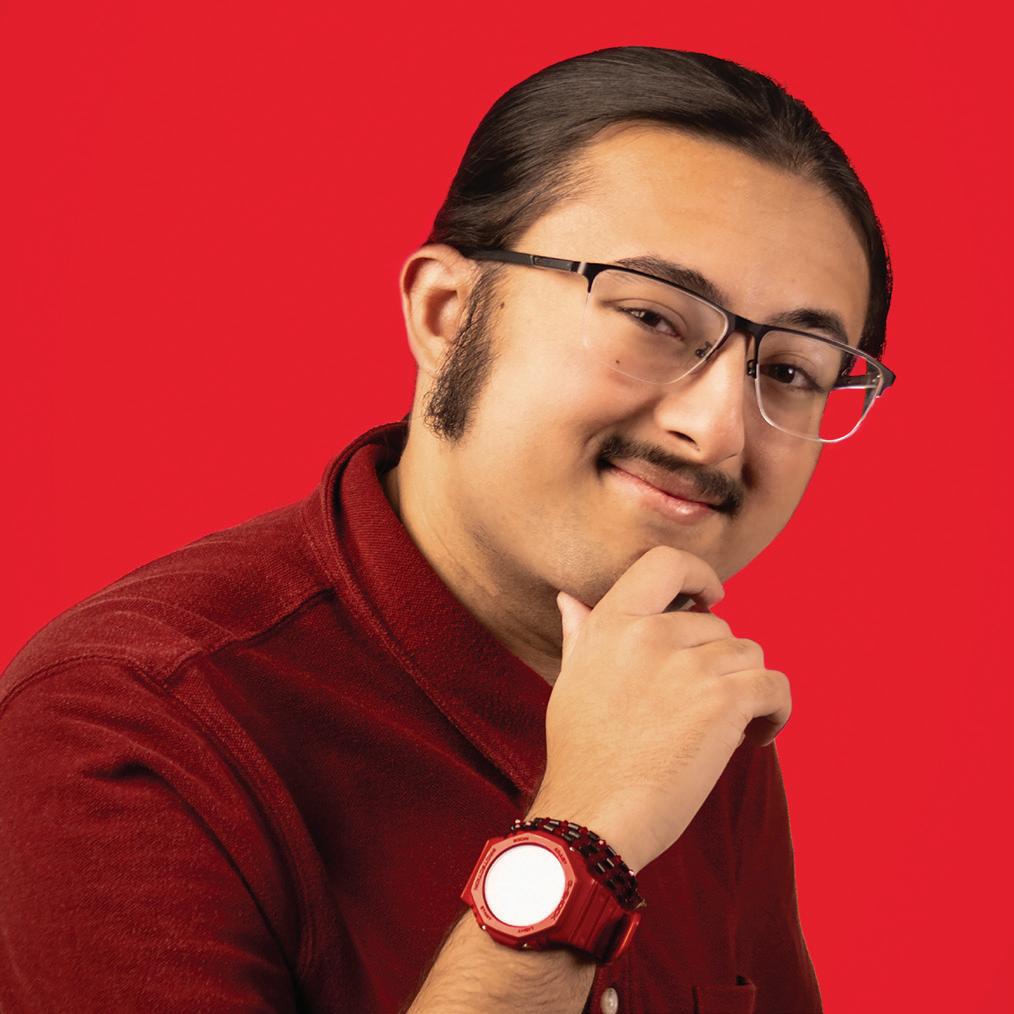
Hello! I am Parv Nema, a branding and UI/UX designer studying at The Modern College of Design and working toward my bachelor’s degree. I am a self-proclaimed typography nerd, and I’m obsessed with anything red. When I am not designing, I am usually playing video games, baking something sweet, or getting lost in writing. I am always on the lookout for something new to learn, especially from the people I meet. Talking with others and hearing their stories fuels a lot of my creativity.
Design has been part of my life for as long as I can remember. Growing up around amazing work online made me want to create things that feel just as exciting and meaningful. The idea of telling a story through clear, thoughtful visuals drew me in early and continues to guide the work I create. My goal is always to craft honest, impactful designs that help ideas become tangible realities.
WHAT FIRST SPARKED YOUR INTEREST IN GRAPHIC DESIGN?
My interest started early. I was fascinated by Google’s evolution throughout my time in school and amazed by how a logo could change and flow with the times. Watching their brand grow, especially through their Material Design system, made me realize how powerful and intentional design can be.
WHAT TRENDS IN GRAPHIC DESIGN EXCITE YOU - OR CONCERN YOU - THE MOST?
The biggest conversation in design right now is AI. I am excited by it as a tool that can support designers and help elevate human creativity rather than replace it. It will be interesting to see how the industry adapts and how professionals use AI in smart and intentional ways. As a big typography fan, I am also thrilled to see maximalism and bold, expressive type making a comeback. I look forward to seeing how it continues to evolve.

A Texan born and raised, Natalie Adams is a graphic designer currently living in Solomons, MD. She is a senior at The University of Alabama where she is pursuing a Bachelor of Fine Arts in graphic design and a Master of Business Administration. She specializes in illustration and has experience in package design, publications, motion design, and apparel design. Her clients include The Alabama Visual Arts Network, The University of Alabama Recreation department, and Rhythm & Brews Tuscaloosa. She is fascinated by the intersection of the creative process and the science of marketing. When beginning a new project, she is most excited by the initial step of brainstorming and moodboarding. Every piece she creates is imbued with its own visual story. She learned to draw from the comic books she collected as a kid, and her style is still inspired by the expressive characters and bold color she discovered in those pages. When she isn’t drawing in her sketchbook, you can find her at the movies or listening to loud 2000s punk hits.
WHAT FIRST SPARKED YOUR INTEREST IN GRAPHIC DESIGN?
My first exposure to graphic design came from following comic artists online. I had always loved illustration, and my eyes were opened to a vibrant new world of layouts, poster design, color, and typography.
WHO ARE YOUR BIGGEST CREATIVE INFLUENCES?
One of my biggest creative influences is the artist Gabriel Picolo. My creative process is also strongly inspired by movies, music, and fashion. Directors like Luca Guadagnino, Guillermo del Toro, and Petra Collins as well as artists like 5 Seconds of Summer and Djo are currently influencing my work.
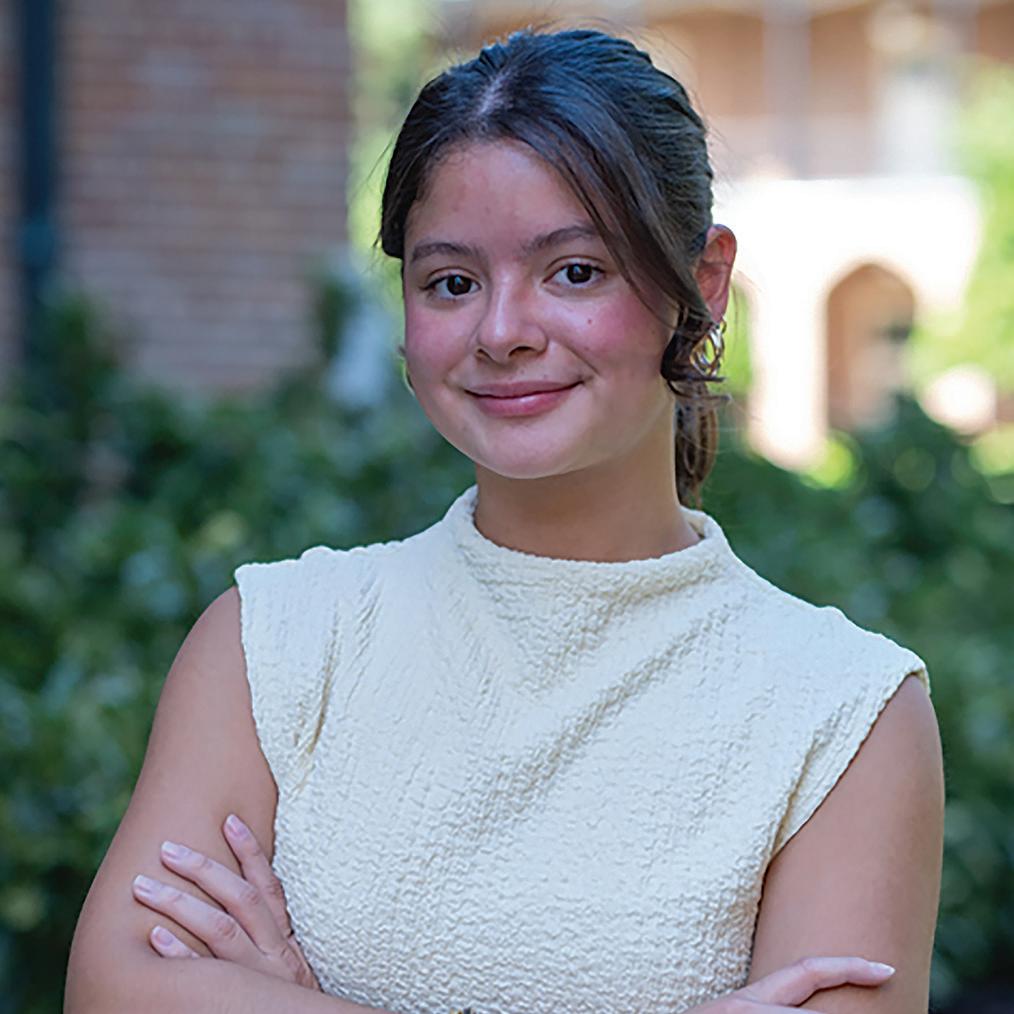
Andrea Maria Garay is a Salvadoran graphic designer pursuing a BFA in Graphic Design with a minor in General Business at The University of Alabama. With experience spanning various areas, including branding, packaging, and motion design, Andrea has developed a style that combines the synergy of playful experimentation with polished sophistication. She believes that design is not only about aesthetics, but also about practicality and functionality in creating experiences and making a lasting impact.
Over the course of her career, Andrea has partnered with clients across professional and academic settings, refreshing the branding of student organizations, establishing professional marketing campaigns, and contributing to creative teams on larger-scale projects. Currently, she serves as the Senior Graphic Designer at The University of Alabama’s Barefield College of Arts and Sciences Communications Team, where she provides creative direction and develops impactful designs for the College’s brand, events, and publications.
Andrea has also won local and regional recognitions. Awarded by the American Advertising Federation (AAF), she received a District 7 Silver ADDY Award in Sales and Marketing Promotion for Chump Chugs, a good and beverage line. She was also awarded the 20242025 Students Judge’s Choice for the show.
WHAT DOES ‘GOOD DESIGN’ MEAN TO YOU?
This is a great question – A good design should create a presence without shouting. It communicates a clear and consistent message, whether it is big or small, to your target audience and sparks an emotional reaction in some way.
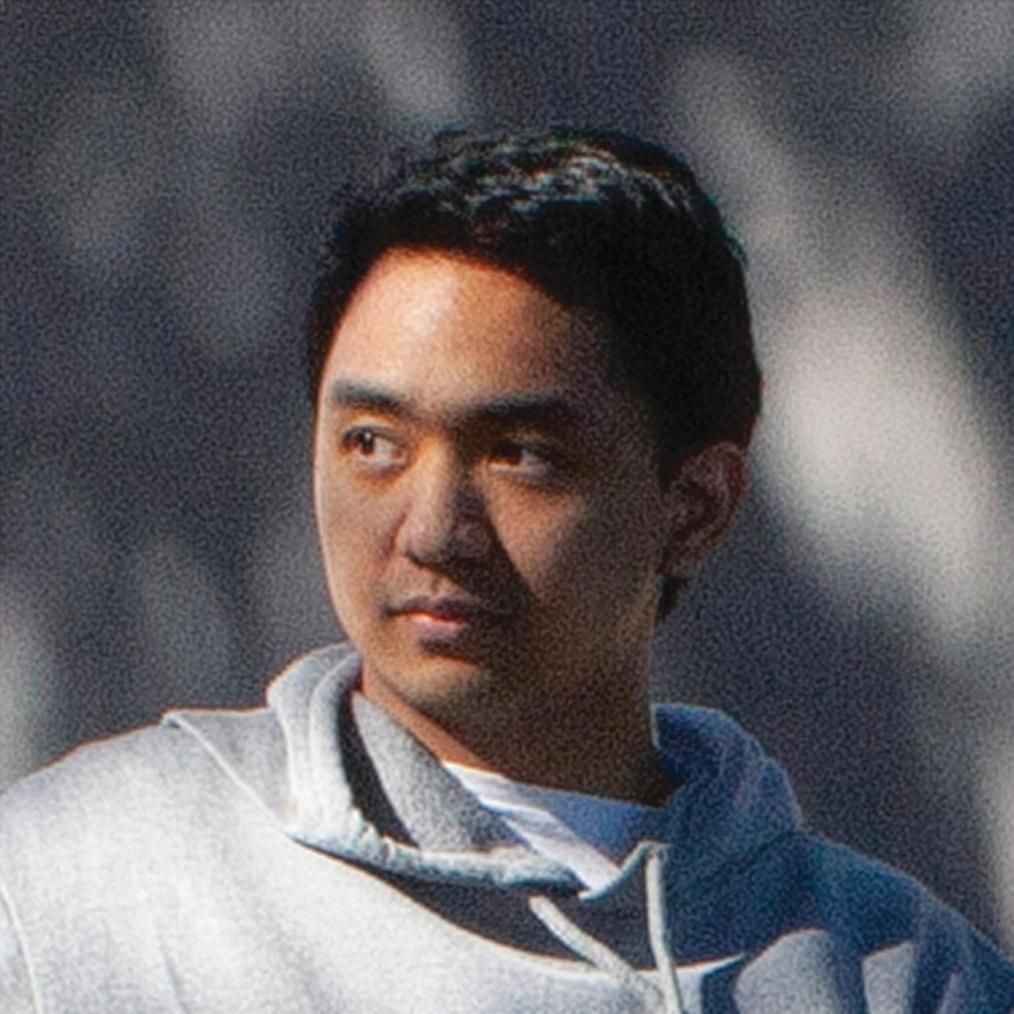
WOODBURY UNIVERSITY
Hello. I’m Alexander Arenas, a senior at Woodbury University studying graphic design. I mainly focus on visual identity and branding and am proficient in motion graphics, typography, and other multidisciplinary design aspects.
I began my graphic design journey in middle school and continued in high school, joining the Digital Media program and completing three years of classes. In my final year, I joined Yearbook Club and designed that year’s book cover. I came to Woodbury with my passion already cemented, and their program has helped me learn more about and gain experience in the graphic design profession.
Besides graphic design, I’m also a music fan, being an avid music listener and music producer for electronic music genres, mainly focusing on house music and other similar genres. I’m also interested in writing, webcomics, and anime, and I contribute to Wikipedia.
WHAT FIRST SPARKED YOUR INTEREST IN GRAPHIC DESIGN?
My interest in graphic design began in middle school when I used Canva to create album artwork for my music. My passion grew so much that at my graduation I was introduced as a “future graphic designer.”
WHO ARE YOUR BIGGEST CREATIVE INFLUENCES?
My influences are varied, though I gravitate toward more minimal designers such as Herbert Bayer, Yu Miyama, Sehoon Na, John Maeda, and aka-outwork.
TELL US ABOUT A DESIGN PROJECT YOU’RE MOST PROUD OF.
WHAT MADE IT SPECIAL?
A design project I’m most proud of is my thesis, the “Pluriversal House Music Project,” which combines my passion for house music and visual design to create a motion graphic video featuring different designs for various genres and eras. The video helped me experience and visualize the feelings of each subgenre, letting me learn about them while improving my motion graphics skills.
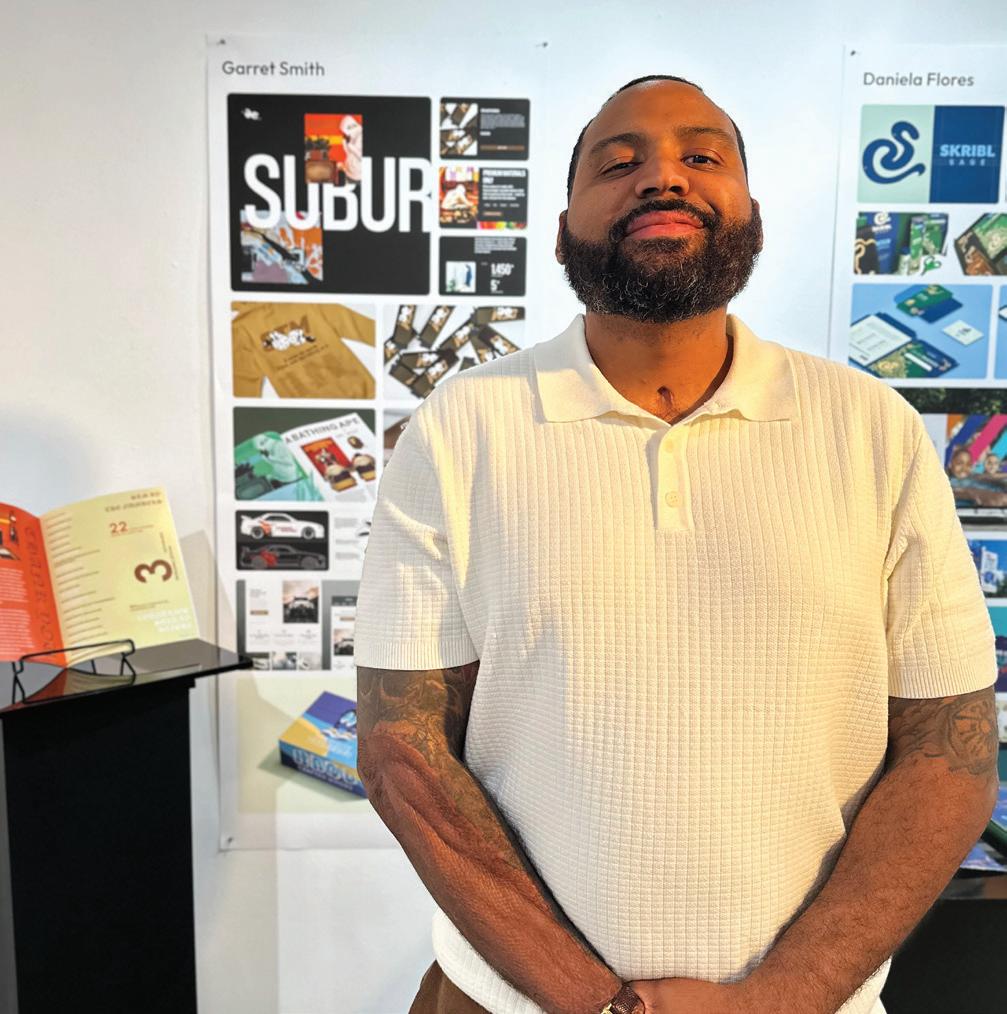
Garret Smith is a 29-year-old graphic designer born in North Carolina and raised in Florida, whose practice is shaped by both discipline and curiosity. He is a U.S. Army Veteran, having served from 2014 to 2020 as an Airborne Multimedia Illustrator, where he developed a rigorous, purpose-driven approach to visual communication. In 2025, he earned a BFA in Graphic Design from Woodbury University.
Smith’s passion for design began in childhood through vinyl records and VHS tapes, where he found himself more captivated by cover art than the music or films themselves. These early experiences sparked a lasting fascination with visual storytelling and cultural context.
Today, his work is driven by the integrated narrative potential of graphic design and the evolving nature of creative problem-solving. He values exploration, adaptability, and concept-led solutions that respond thoughtfully to shifting challenges. Smith is also a proud father to his three-year-old daughter, Zoey Smith, whose presence continually inspires balance, perspective, and purpose in his creative life.
WHAT DOES ‘GOOD DESIGN’ MEAN TO YOU?
Good design to me means adaptability and sustainability. A good design should evolve within the system that it lives in. The moment that our design approaches become stagnate, our concepts are at risk of becoming stale.
WHAT TRENDS IN GRAPHIC DESIGN EXCITE YOU - OR CONCERN YOU - THE MOST?
Graphic design is increasingly shifting toward a user-experience–driven agenda, where functionality, accessibility, and emotional clarity carry as much weight as visual impact. I’m excited to see the field evolve into a more human-centered discipline that prioritizes meaningful, intuitive experiences.

Deborah Khodanovich (she/her) is a graphic designer from Toronto, currently completing her MFA in Graphic Design at Rhode Island School of Design. Her practice explores gossip as a way of producing and sharing knowledge—thinking about how women’s information networks operate and how intimacy can act as a design methodology. She works across typography, textiles, and bookbinding, making things that question who gets to create knowledge and how it moves between people. She’s interested in how we attribute ideas, the way knowledge circulates through communities, and what gets valued or dismissed. A lot of her recent work bridges craft traditions with digital systems, thinking about how tools like weaving and typography are both about structure and connection. In addition to a personal practice, Deb has taught at both RISD and OCAD University, thinking about how we share ideas and learn from each other through more collaborative projects. In her spare time, she’s obsessively knitting, baking cookies and honey cake, and spending every second she can gossiping with her close friends.
WHAT FIRST SPARKED YOUR INTEREST IN GRAPHIC DESIGN?
As a kid, working on my school yearbooks and coding tumblr pages for people! I was also very into fine arts, painting, drawing, and so on, and when deciding what to do for my undergrad, graphic design felt like a natural marriage of those worlds—the art and the tech.
WHO ARE YOUR BIGGEST CREATIVE INFLUENCES?
More than anything my biggest creative influences have always been the people I’m surrounded by. My peers in my cohort. The absolutely unbelievably talented undergrads here at RISD. The textile students I’ve had classes with. My students from when I’ve TA’d and taught both here and at OCAD. All of my instructors past, present, and future. I’m sure this isn’t as fun of an answer as [insert celebrity designer name here], but it’s just true to me. We don’t exist in a vacuum, and a large part of my thesis work at the moment is thinking about how all knowledge is co-created. My work is an amalgamation of every person I interacted with while working on it, making all those around me my biggest influences.
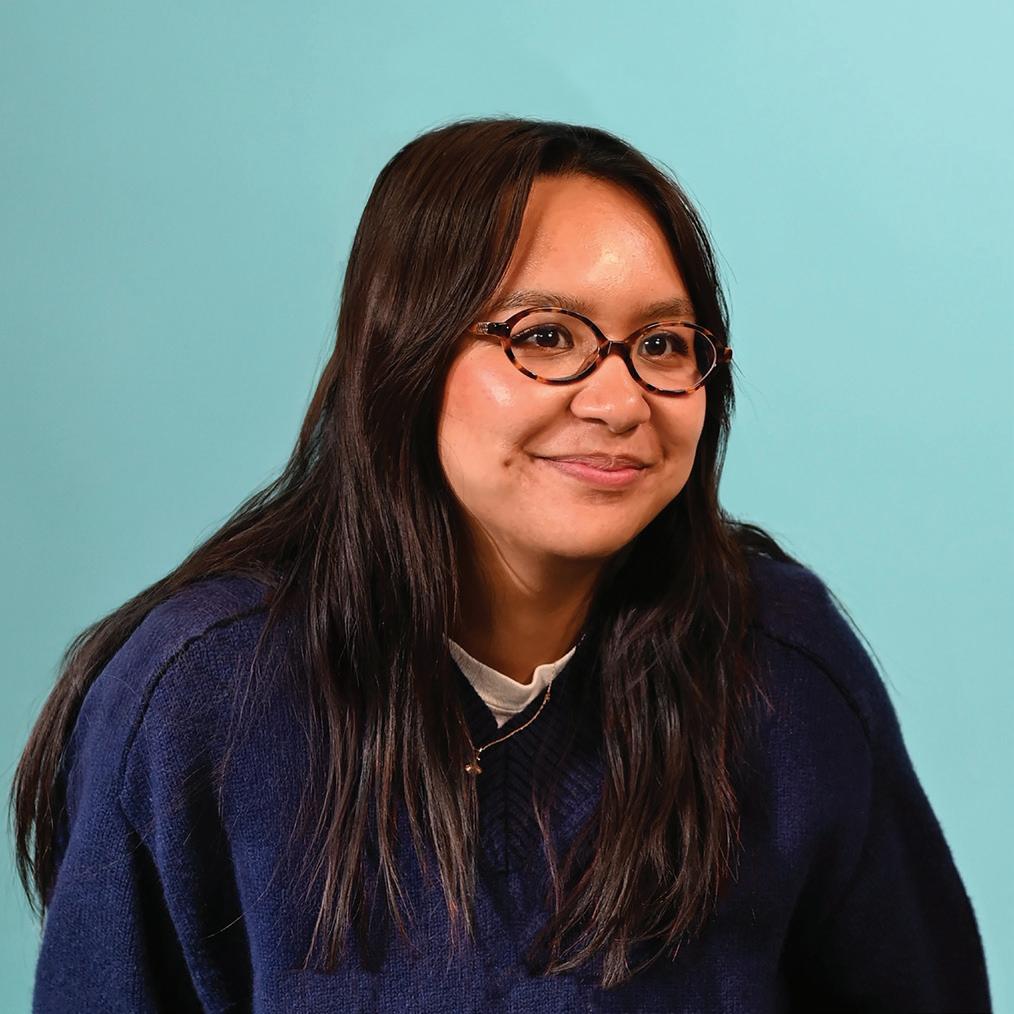
Nadine Macapagal (b. 2004) grew up between Daly City, California and Manila, Philippines, learning early that images, signs, and objects often say more than they seem to. She is now based in Providence, RI and is rounding out her BFA in Graphic Design. Her practice follows the traces people leave behind: images, interfaces, and everyday objects we keep returning to and the meanings that cling to them long after their original use.
WHAT FIRST SPARKED YOUR INTEREST IN GRAPHIC DESIGN?
Growing up between Daly City, California and the Philippines, I was surrounded by bold signage and shifting languages. Realizing how much meaning could live inside a simple word, a drawn symbol, or a random color is what first sparked my interest in graphic design.
TELL US ABOUT A DESIGN PROJECT YOU’RE MOST PROUD OF. WHAT MADE IT SPECIAL?
Working with Yung Studio on Lady Gaga’s MAYHEM BALL campaign was a recent highlight…not just because of the scale, but mainly because of the collective energy of the entire team and the chance to support a project that reached so many people.
WHAT DOES ‘GOOD DESIGN’ MEAN TO YOU?
Good design is like a good, homecooked meal: balanced, intentional, and made with care for the person you’re serving. It takes time to marinate, to balance what you keep in and what you leave out, and to serve something made with real care for the person who will receive it. .
WHAT TRENDS IN GRAPHIC DESIGN EXCITE YOU - OR CONCERN YOU - THE MOST?
I worry about how fast an idea becomes a trend and then a template, stripped of the nuance that made it matter. At the same time, I’m curious: what is a trend anyway, and how can I camouflage into the visual conversation without being swallowed by it?
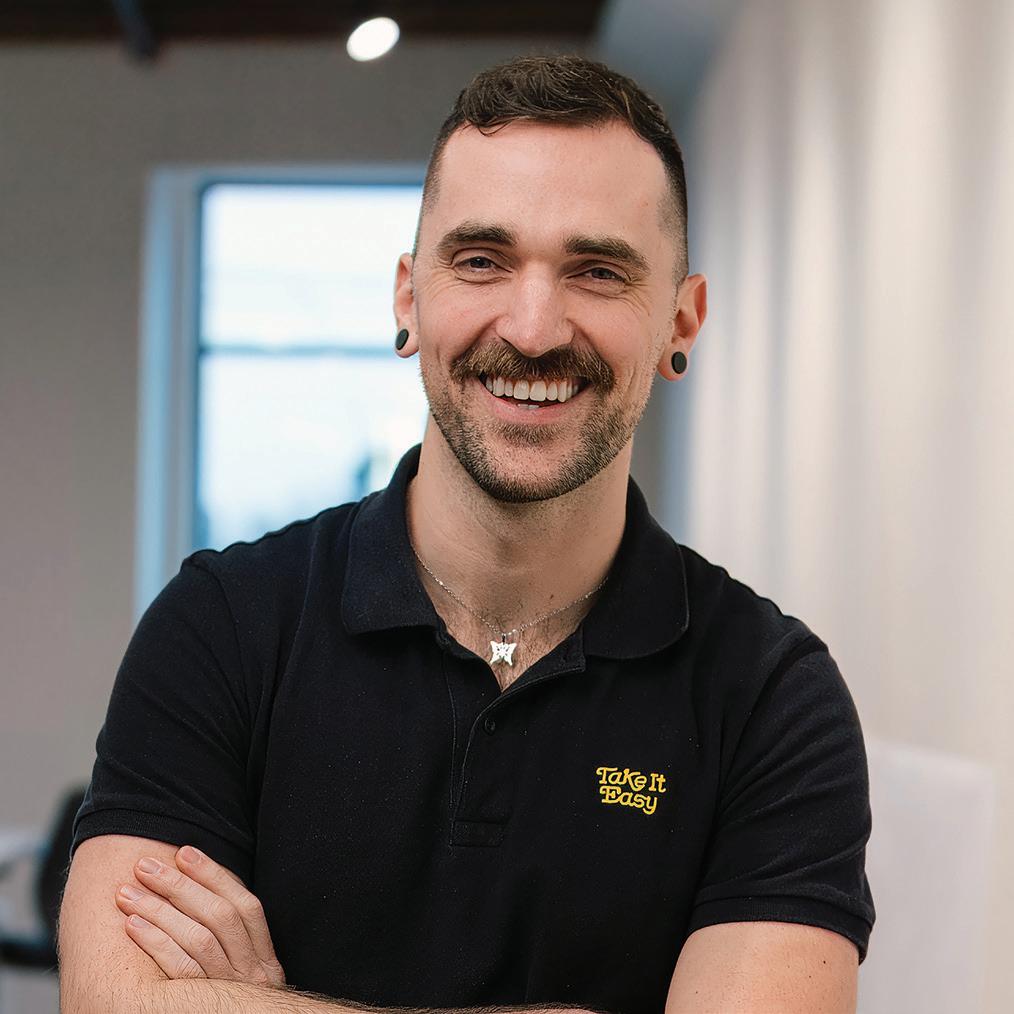
ARTCENTER COLLEGE OF DESIGN
Hi, I’m Ronnie, a designer with a passion for identity systems, motion graphics, and type design. Whether I’m connecting with people or crafting brands, I strive for authenticity in everything I do. I believe the best design is intrinsic in its nature, work that feels so true in its being that nobody questions how else it could be done. I enjoy the challenge of distilling vast ideas into a singular visual concept, and I aim to create work that resonates with the viewer.
WHAT FIRST SPARKED YOUR INTEREST IN GRAPHIC DESIGN?
I always had an innate love for graphic design, even before I knew what it was. Growing up in a small town in Texas, I had no idea it was even a career option for me. That said, I was always making elaborate posters for school and designing CD and book covers for me and my friends.
WHO ARE YOUR BIGGEST CREATIVE INFLUENCES?
My classmates are a constant source of inspiration for me. I’m lucky enough to be surrounded by an incredibly talented international pool of students. I love hearing their perspectives, seeing the designs they produce, and how their different life experiences influence their work.
TELL US ABOUT A DESIGN PROJECT YOU’RE MOST PROUD OF.
WHAT MADE IT SPECIAL?
I’m really proud of my rebrand for the ONE Institute. As the nation’s longest running LGBTQ+ advocacy group, with the world’s largest collection of queer history in their archives, I really enjoyed taking their rich history and making it new again. I let the conceptual challenge of visually defining queerness lead all of my decision making, giving the Institution a vibrant brand that compliments their cultural weight.
WHAT DOES ‘GOOD DESIGN’ MEAN TO YOU?
I know a design is good when it feels natural and the visual cues aren’t trying to say too many things at once. I feel chasing trends or being overly beholden to marketing strategies can diminish the core concept behind what a design wants to be.
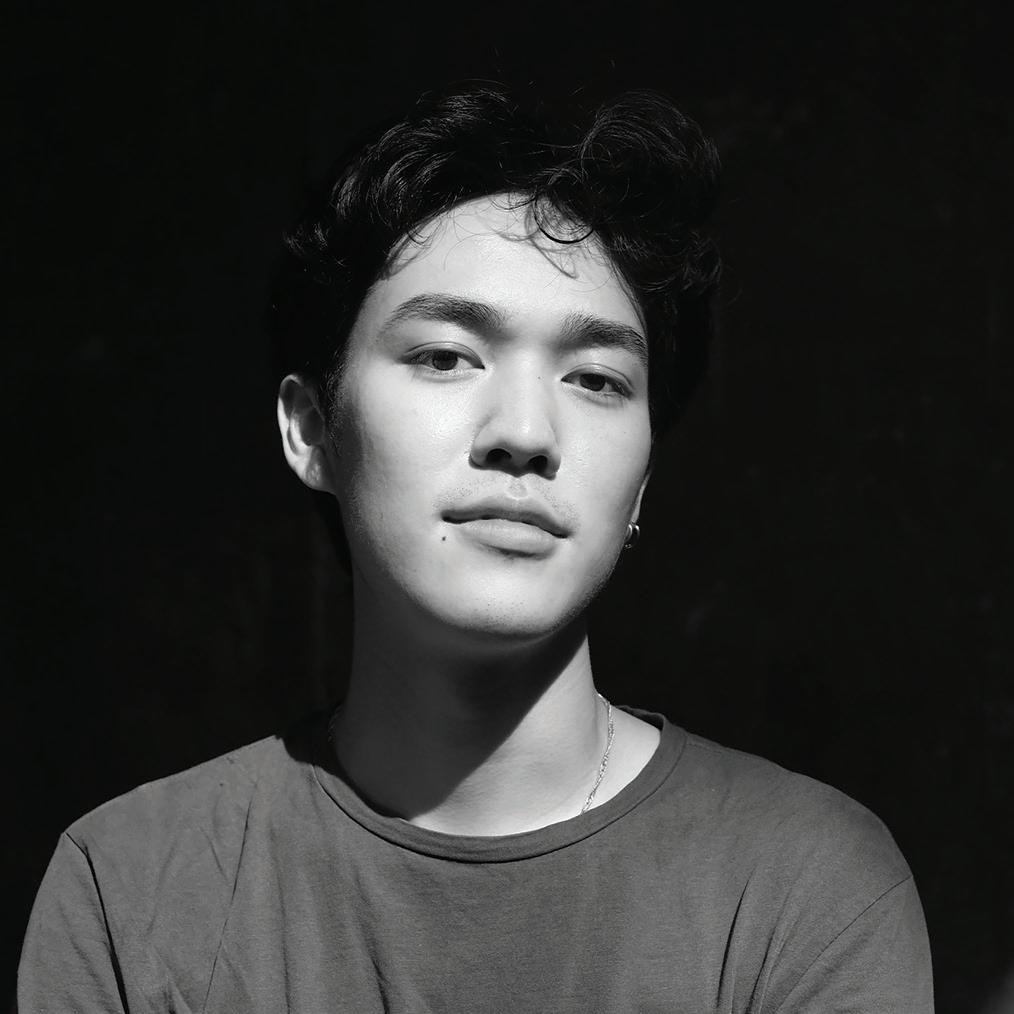
I collect small moments: the shadow of power lines on the street, receipts curling in the sun, the hidden geometry of crowded markets. These ordinary sights become raw material for my work.
As a designer, I decode these moments and rebuild them into visual language that resonates. I draw from this archive of small discoveries, turning everyday poetry into purposeful communication. Whether creating brand identities, crafting typographic systems, or designing editorial experiences, I’m always chasing that instant when the familiar feels new again.
My work moves between order and entropy, exploring how structure and chance coexist. Recent projects include Archiv des Wirrwarrs, an interactive installation on chaos and legibility, and a rebrand of ZKM | Center for Art and Media Karlsruhe. I specialize in typography, branding, and editorial design across print and interactive media.
I see design as a way of noticing, transforming fragments of the everyday into systems of meaning that connect people to the world around them.
WHAT FIRST SPARKED YOUR INTEREST IN GRAPHIC DESIGN?
Watching a family member who was a designer showed me that creativity could solve problems and shape how people see the world.
WHO ARE YOUR BIGGEST CREATIVE INFLUENCES?
Living in Berlin taught me to balance chaos with structure—from street graffiti to Bauhaus rationality, the city shaped how I approach design.
WHAT TRENDS IN GRAPHIC DESIGN EXCITE YOU - OR CONCERN YOU - THE MOST?
AI is reshaping design in exciting ways, but I’m concerned it might erase creative labor if we don’t engage it critically.

My name is Kora, and I am a graphic designer and illustrator based in Los Angeles, currently pursuing a BFA in Graphic Design at California Institute of the Arts (CalArts). I interned at Warner Bros. as a Graphic Design Intern and previously worked as a freelancer for the advertising company Illuminista. I believe great design stems from strong methodology, high personal standards, and a genuine love for puzzles. When I’m not designing, I’m making silly duck drawings, building miniature models, listening to music, reading books, or watching movies!
WHAT FIRST SPARKED YOUR INTEREST IN GRAPHIC DESIGN?
I’ve always appreciated design, even before starting, collecting Chinese red envelopes with designs that stood out to me, taking pictures of unique typography I see in my everyday life, and saving patterned wrapping paper I found in tea packaging.
WHO ARE YOUR BIGGEST CREATIVE INFLUENCES?
My biggest creative influences include Elizabeth Goodspeed, Gander, William Morris, Owen Jones, James Jean, Kay Nielson, Ralph Steadman, and Guo Pei.
TELL US ABOUT A DESIGN PROJECT YOU’RE MOST PROUD OF. WHAT MADE IT SPECIAL?
I am most proud of my branding project for Aurelian Chalice. I felt like the project highlighted my branding, illustration, type, patternmaking, and publication design skills, and I had a lot of fun and learned a lot!
WHAT DOES ‘GOOD DESIGN’ MEAN TO YOU?
“Good design” includes successful and clear communication, responds well to the intended audience, is experimental, and pushes creative boundaries.
WHAT TRENDS IN GRAPHIC DESIGN EXCITE YOU - OR CONCERN YOU - THE MOST?
Some graphic design trends that excite me the most are the resurgence of the Y2K aesthetic, the old money aesthetic, and more experimental typography + graphics!
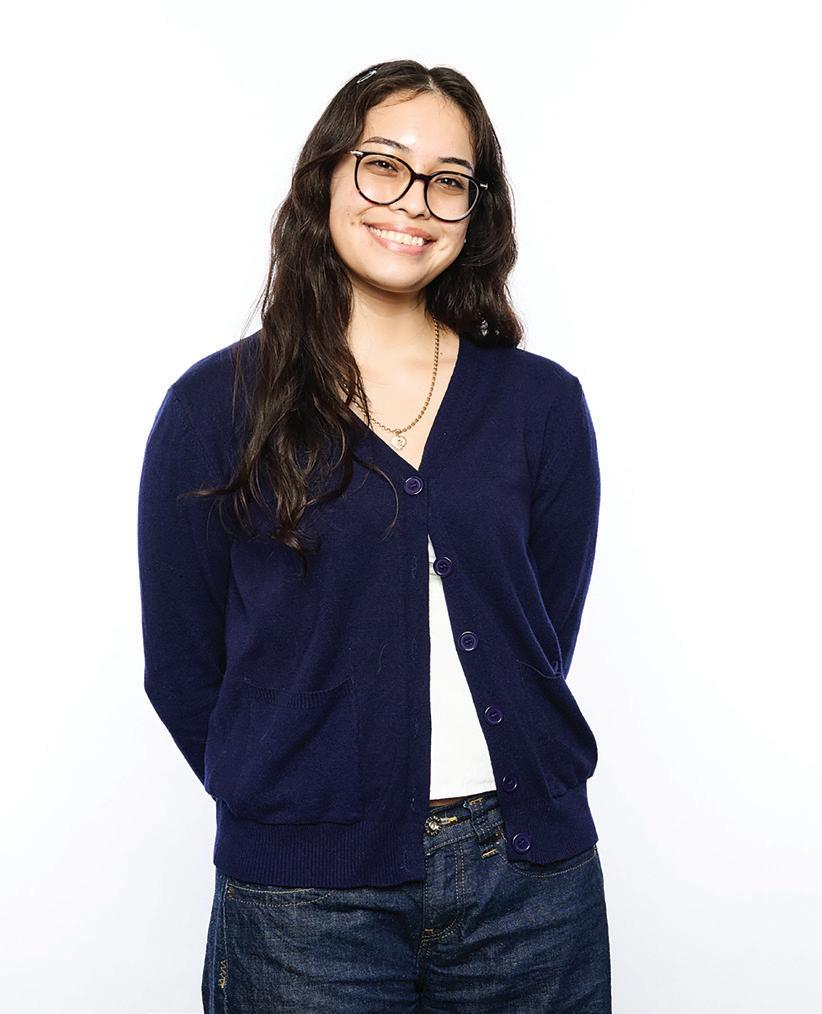
CALIFORNIA INSTITUTE OF THE ARTS (CALARTS)
Maria Garsa is a passionate multi-disciplinary graphic designer who loves what she does. She approaches design with thoughtfulness, personalizing each concept through attention to small details. Maria’s work is rooted in storytelling and community-building, using design as a way to create true human connections. She is driven by how creative expression can shape how we relate to one another and to the world around us, and she strives to create work that causes a meaningful, positive impact.
Maria doesn’t want to design for people but to design with people: she thrives off of collaboration. She makes friends everywhere she is and often tries to make people laugh. In the future, Maria is looking towards being a creative director or art director. She loves wearing multiple hats and leading.
In her free time, you can catch her hanging out with her cats, watching cat videos, crocheting, playing video games, or hunting for stickers for her sticker collection.
WHAT FIRST SPARKED YOUR INTEREST IN GRAPHIC DESIGN?
Graphic design was offered in my high school, and we were required to pick between film, architecture, or graphic design; I picked graphic design because I thought it was easy, but even though this wasn’t the case, I fell in love with the process of graphic design and the end results.
WHO ARE YOUR BIGGEST CREATIVE INFLUENCES?
Cartoons! Cartoons served a really big purpose when I was growing up; they helped me develop my personality and form my sense of humor and how I think today (specifically SpongeBob, Foster’s Home for Imaginary Friends, and Aaahh!!! Real Monsters).
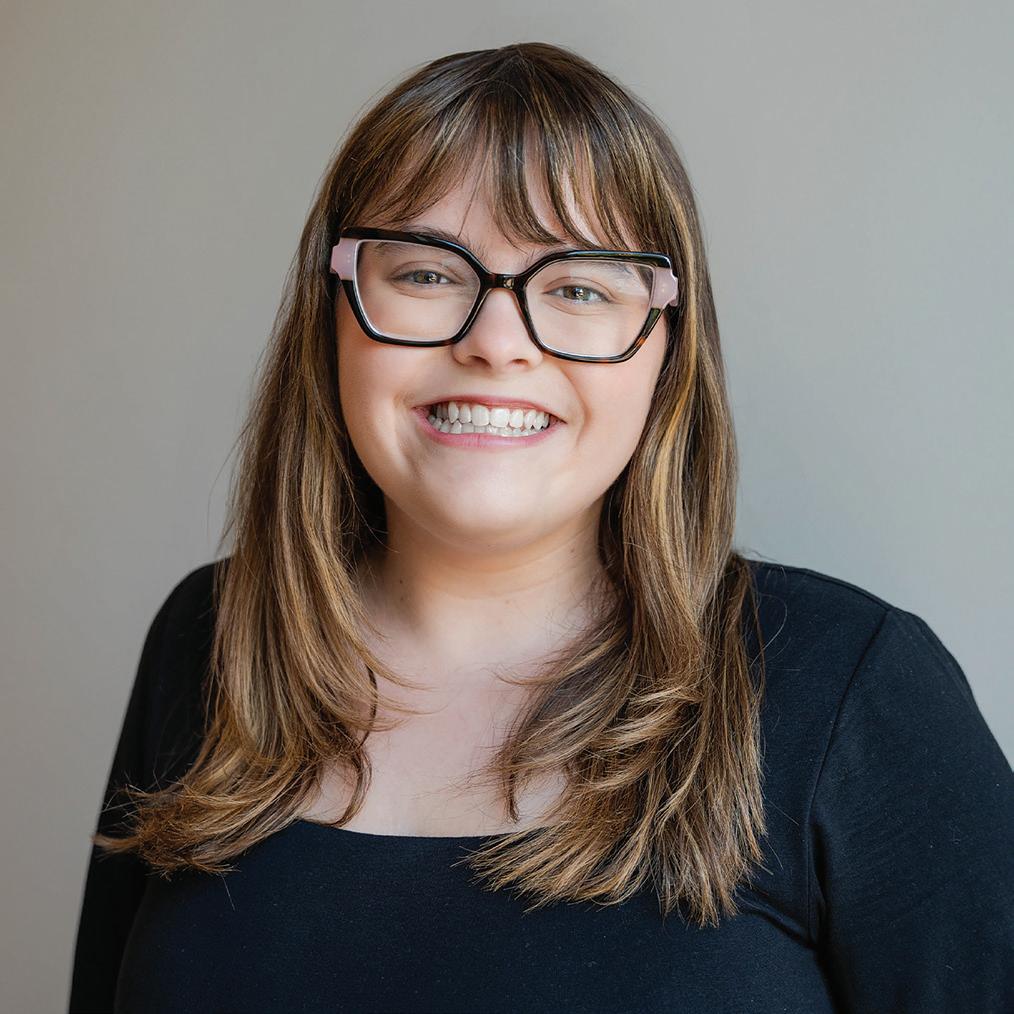
Lizzie Edwards is a senior at NC State University, graduating in Spring 2026 with a bachelor in graphic & experience design with a minor in anthropology. She is known for her bold typography, vibrant colors, and vintage-inspired style, and is actively shaping her creative voice as she prepares to launch her professional career.
Outside the classroom, Lizzie is the sole owner of GiveLoveStudio, a small business dedicated to spreading love and kindness through expressive design work. She also serves as a staff designer for Agromeck, NC State’s yearbook, where her contributions helped the publication earn Best in Show for the previous edition, “Under the Lights.”
Lizzie continues to grow her perspective through creative opportunities, including attending Adobe MAX 2024 in Miami, Florida and the 2025 Adobe Illustrator VIP Community Summit in New York City. Based in Raleigh, NC, she is passionate about exploring the intersections of design, community, and storytelling across all facets of her work.
WHAT FIRST SPARKED YOUR INTEREST IN GRAPHIC DESIGN?
I’ve been surrounded by creativity for as long as I can remember. Growing up in a household that celebrated arts, and with a mom who is also a graphic designer, I was exposed early on to the power of graphic design. My interest in design really took shape the summer before my freshman year of high school, when I set out to create a cassette-style album poster in hopes of winning tickets to see Niall Horan in concert. I taught myself Adobe Illustrator and Photoshop that summer, and quickly fell in love with the way music, art, and emotion intersect through design. That experience set the foundation for the creative path I’m pursuing today.
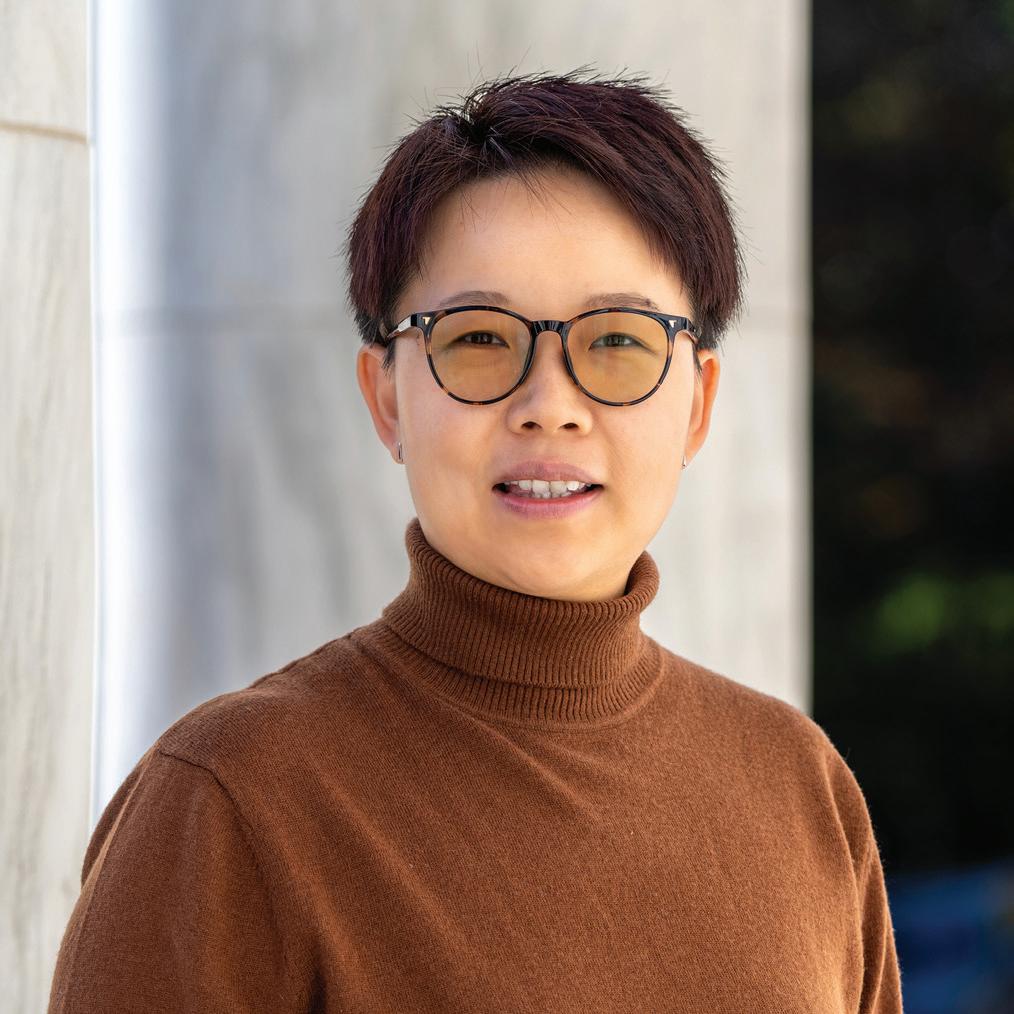
I was born in Xinjiang, China, and later moved to Nanjing for university, where I earned my bachelor’s degree in mechanical engineering. After graduation, I spent more than a decade in technology—first as a mechanical engineer, then as a marketing manager at a Bluetooth device company—before starting my own studio in Nanjing. For seven years, I worked across event planning, visual design, and customized product development, learning how design can shape experiences, connect people, and bring ideas to life.
Eventually, I reached a point where I wanted to grow beyond what I could learn on my own. That desire for self-improvement led me to the MGXD program at NC State University, where I am now studying user-experience design and exploring how emerging technologies, especially AI, can be made more transparent and understandable through thoughtful interfaces. My current work focuses on how design can help people interpret complex, AI-driven systems with clarity and confidence.
My design philosophy centers on clarity, logic, and empathy. I believe good design is a thoughtful structure that organizes information and experiences in a way that allows people to connect with them naturally.
It’s hard to name a single person. My creative influences mostly come from everyday life. I’m constantly inspired by what I see around me, posters on the street, packaging, typography in public spaces. Many of these works are anonymous, but they make me pause and ask why I’m drawn to them. That process of questioning why this catches my eye, why it feels right, has shaped my understanding of design more than any single figure.
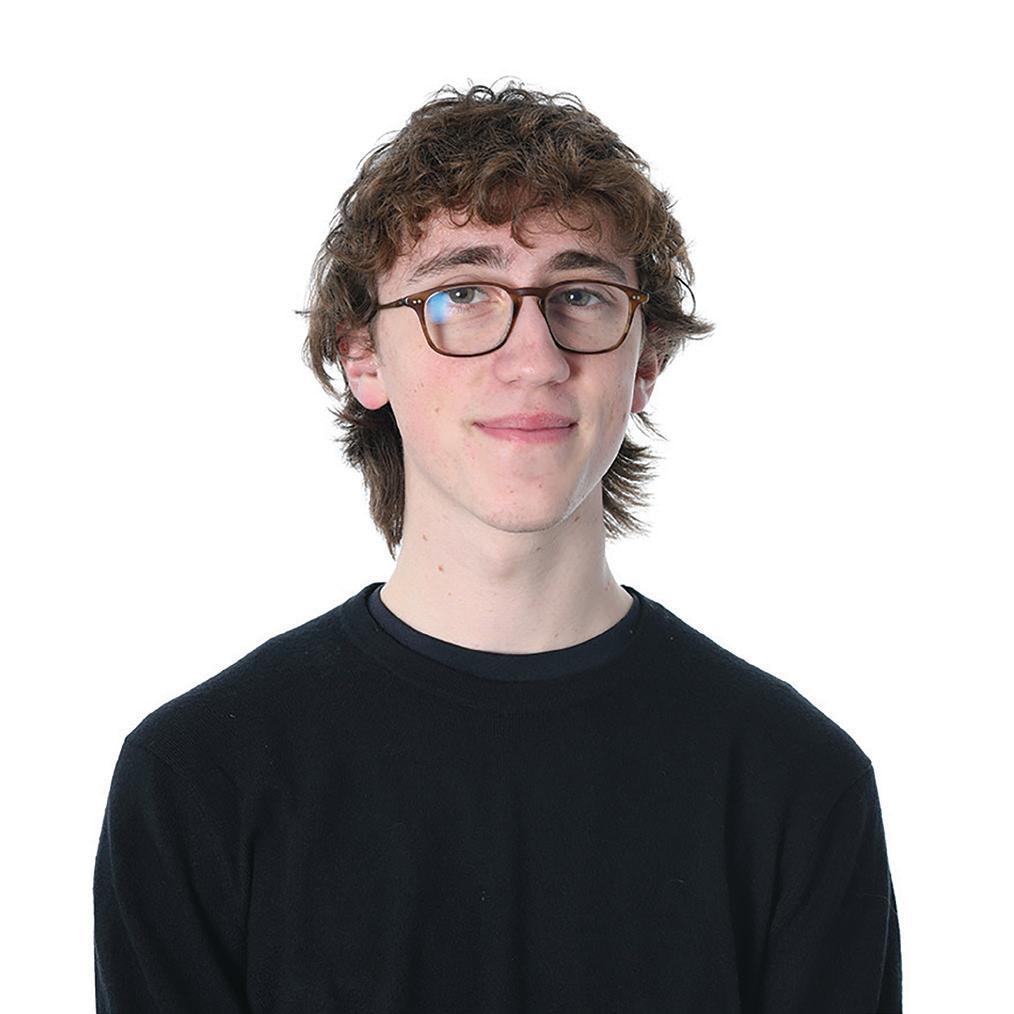
Samwell Nachimson is a junior designer at Snacks & Design, a senior BFA Design student at the School of Visual Arts, and the design student representative. As a representative, he plans and hosts events as well as co-hosts the Before & After student-led podcast. He’s also the mind behind Type Faces, a business where he crafts custom portraits out of letters, which he sells at live events and on his website. In his free time, he loves to skateboard and play basketball (and is the treasurer of SVA’s new Basketball Club), and has been collaborating with a skate photographer to make some eye-catching merch.
WHAT FIRST SPARKED YOUR INTEREST IN GRAPHIC DESIGN?
I was mainly an illustrator, but I got into design because I wanted to put my work on merch and be seen by people. This led me to create a skateboard company in high school and work on my school’s yearbook and newspaper.
WHO ARE YOUR BIGGEST CREATIVE INFLUENCES?
My portfolio instructor, Paula Scher, is a significant creative influence for me. I was introduced to her work when I was just getting into design, and her creative thinking and bold typography inspire me. I’m also inspired by the agency The Young Jerks and their whimsical packaging.
TELL US ABOUT A DESIGN PROJECT YOU’RE MOST PROUD OF.
WHAT MADE IT SPECIAL?
In my typography class, I was asked to create a bespoke typeface and put it in a book. I looked at the shoes I was wearing and was prompted to create “Vans Sans.” Vans Sans is an accordion-bound zine on the bottom of a real shoe that showcases letters made out of the grid on the bottom of a Vans sneaker. This project is special to me because when my professor reviewed the final project, he just couldn’t stop laughing. And I’m proud that I was able to make that absurd idea come to life.
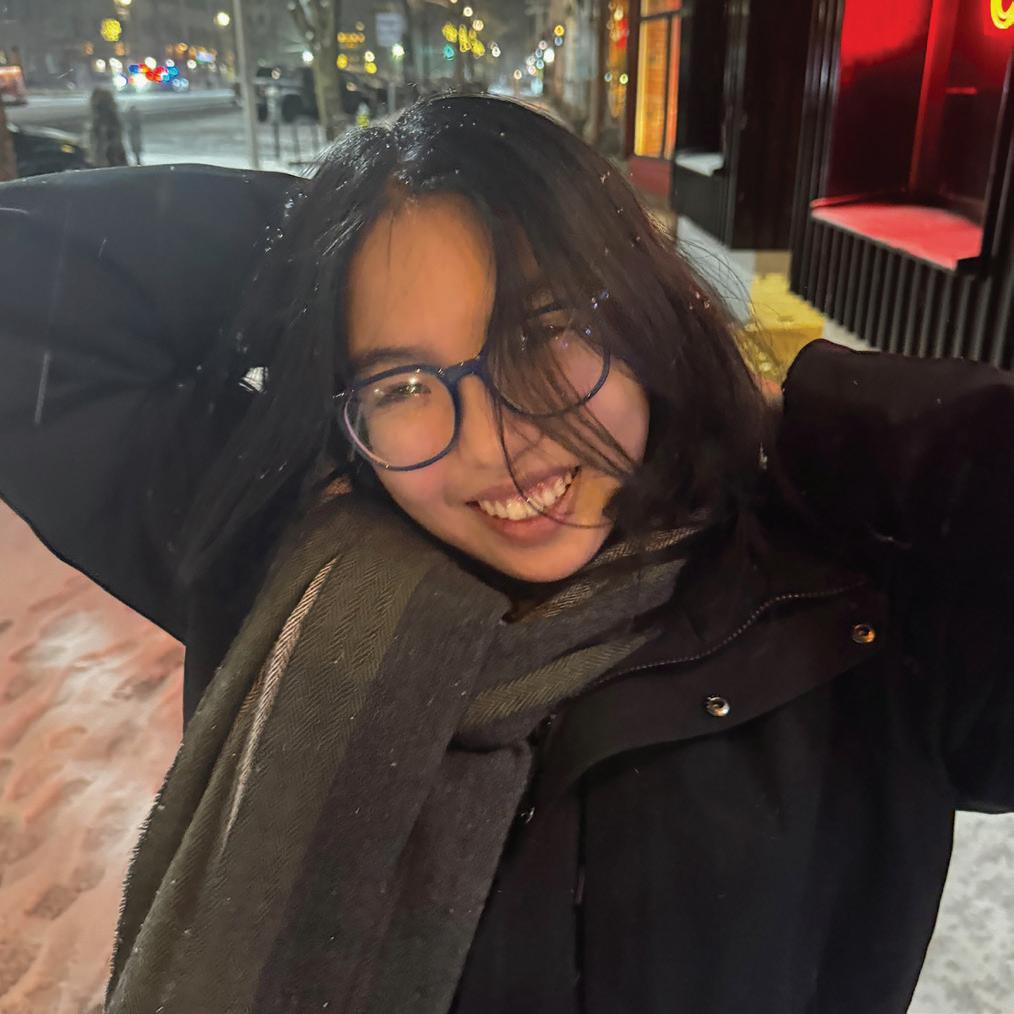
Zina is an art director completing her BFA in Advertising at SVA and is the advertising student representative. One of her many hobbies includes waiting for hours at pop-ups around New York City, which has made her obsessed with the world of experiential advertising. She draws inspiration from her collection of odd jobs to create work that feels human and has the right amount of humor. Outside of advertising, she has been on top of learning new design tools and techniques, following internships at Delcan & Co. and Visual Arts Press, picking up crochet, and searching for her next concert to attend.
WHAT FIRST SPARKED YOUR INTEREST IN GRAPHIC DESIGN?
I came into advertising without knowing what it was like, because I wanted to find new ways to promote small businesses like my parents’ restaurant. But my interest in graphic design started when I made poorly crafted logos for Roblox businesses at the lovely age of 10.
WHO ARE YOUR BIGGEST CREATIVE INFLUENCES?
I’ve been getting a lot of visual and storytelling inspiration from the music artists I listen to: Ginger Root, Pink Pantheress, and Lady Gaga. And of course, all of my instructors who made it possible for me to make ads: Gin Chen, Gabriel Gonzalez, Vinny Tulley, Beth Kushner, Dan Schunk, Gio Serrano, Jay Marsen, and Lex Beltrone.
WHAT DOES ‘GOOD DESIGN’ MEAN TO YOU?
As cliché as this answer might sound, good advertising is work that makes you feel something, that makes your thumb stop. For me, the campaigns I love are the ones that make me laugh for minutes on end or are so smart I feel envious of the creatives who made them.
WHAT TRENDS IN GRAPHIC DESIGN EXCITE YOU - OR CONCERN YOU - THE MOST?
I’ve been loving the unhinged nature of brand socials, like Sour Patch Kids, Nutter Butter, and Wendy’s. Campaigns like Wendy’s “Enter the Chat” or “French Toast Guy” have been on my mind when I think of social media.
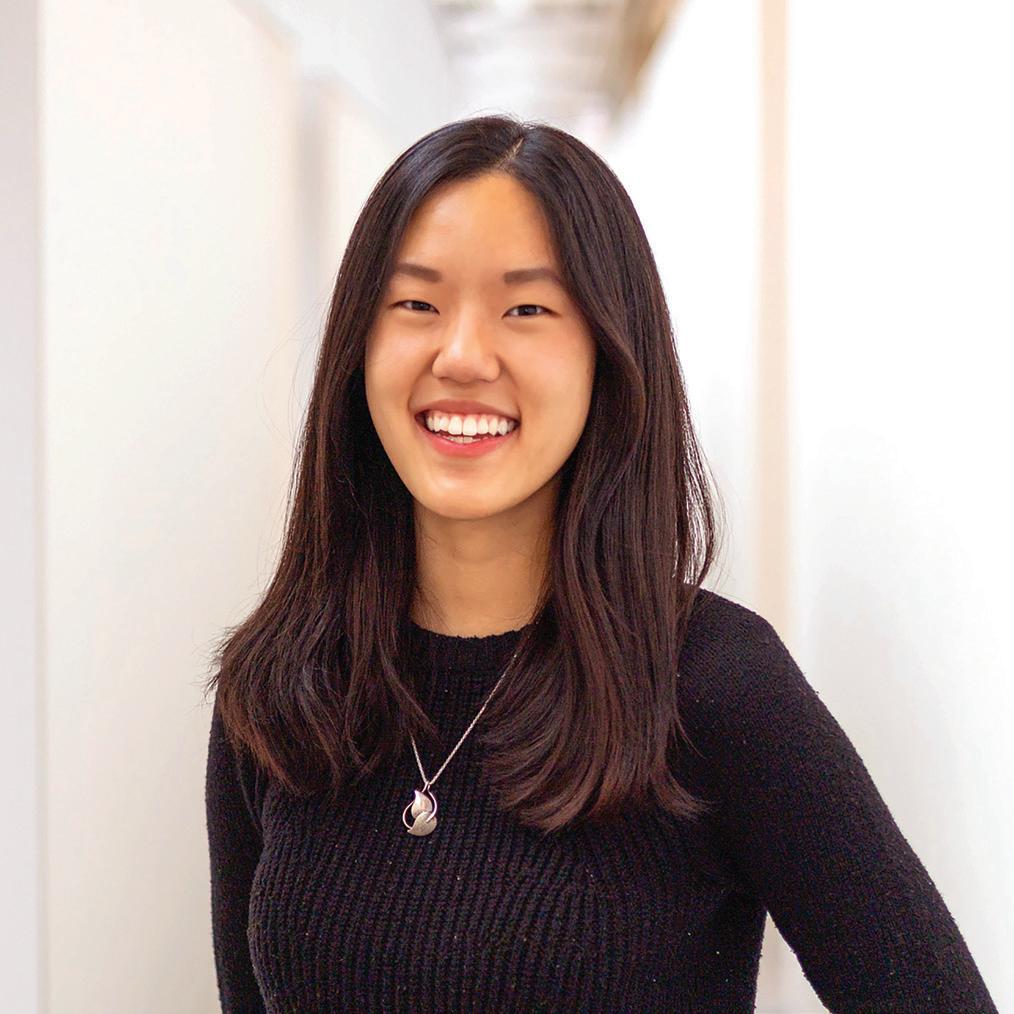
Sophie Leong is a student at the Sam Fox School of Design & Visual Arts at Washington University in St. Louis pursuing a BFA in communication design with a second major in marketing. Born in Shah Alam, Malaysia, she spent 12 years of her life there before moving to Cincinnati, Ohio. In her work, she enjoys exploring various narratives and mediums, but is often drawn to topics of identity and what it means to fully engage an audience. Recently, she has become more interested in conditional design and creating rules that others may follow to make art. She also has experience in branding, motion graphics, creative coding, book design, and more. Moreover, she finds immense value in exploring the design history of various cultures and letting visual traditions from around the world inspire her work. Outside of school, you can find her dancing, working with children, calling her sister, or burning another pan in the kitchen.
WHAT FIRST SPARKED YOUR INTEREST IN GRAPHIC DESIGN?
In high school I designed a silly magazine cover featuring two close friends. It was one of my first dives in Photoshop and it made me realize, “Whoa! I’m sort of good at this!”
WHO ARE YOUR BIGGEST CREATIVE INFLUENCES?
My professors! I love seeing the work and research they do outside of class and the various realms they are exploring and making an impact on.
TELL US ABOUT A DESIGN PROJECT YOU’RE MOST PROUD OF.
WHAT MADE IT SPECIAL?
I recently finished a branding project that included a physical PR box and featured Augmented Reality. I love discovering and trying out new methods of creating, both physically and digitally, and combining various elements to design a comprehensive experience. Plus, I got to spotlight my love for dance in this project!
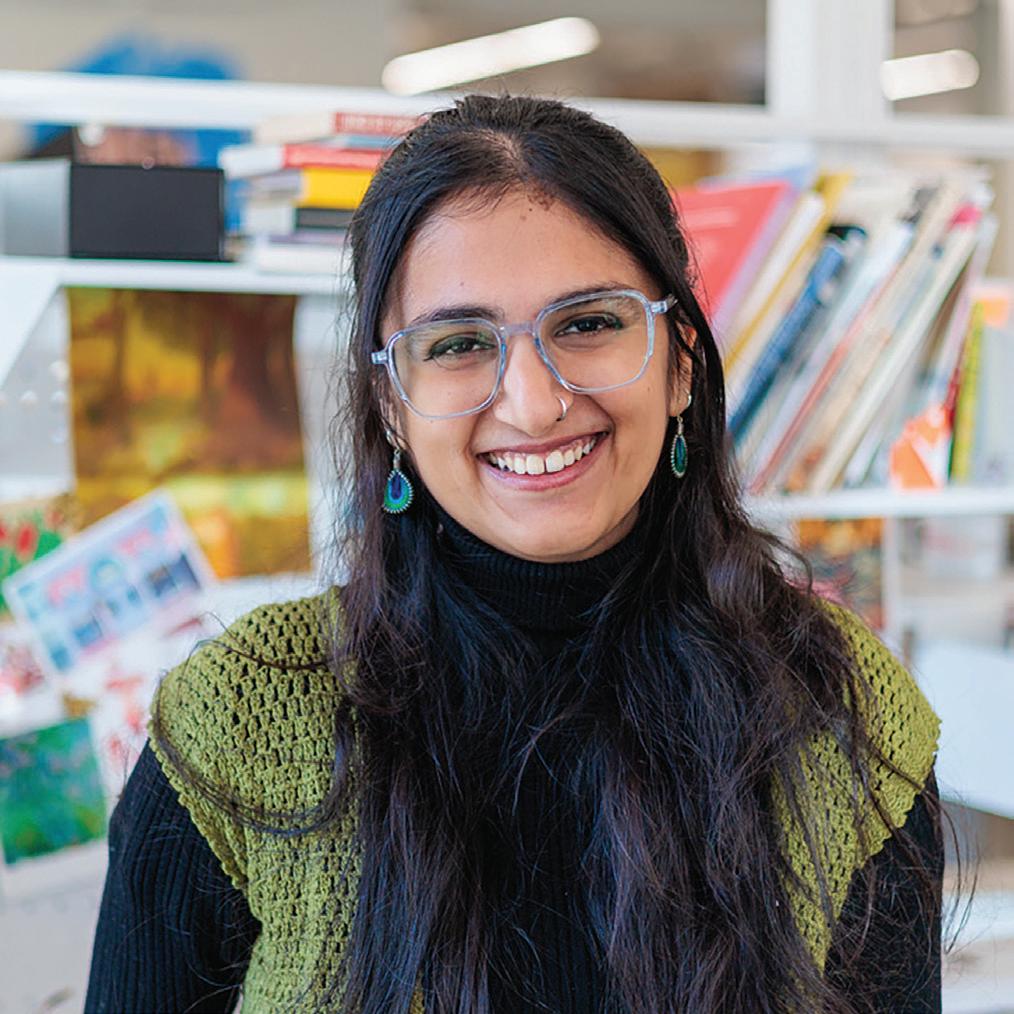
Shivani Shenoy is an illustrator and visual designer from Bengaluru, India. Her practice is rooted in an interdisciplinary exploration of nature. She has collaborated with organizations to create resources for environmental education and conservation initiatives. In her free time, she enjoys birdwatching. She is currently pursuing an MFA in Illustration & Visual Culture at Washington University in St. Louis.
WHAT FIRST SPARKED YOUR INTEREST IN GRAPHIC DESIGN?
Graphic design has a unique ability to convey compelling stories which can broaden our perception of the world and inspire meaningful change. It was this potential of storytelling that first sparked my interest in graphic design.
WHO ARE YOUR BIGGEST CREATIVE INFLUENCES?
My creative path has been profoundly shaped by the visionary spirit and nature-rooted philosophy of Ruth Asawa, Frida Kahlo, and Emily Dickinson.
TELL US ABOUT A DESIGN PROJECT YOU’RE MOST PROUD OF. WHAT MADE IT SPECIAL?
I enjoyed designing a snake zine, a modified accordion that debunks myths associated with snakes, while unraveling like a snake! The project expresses my passion for crafting interactive, conceptual stories that playfully explore form and function.
WHAT DOES ‘GOOD DESIGN’ MEAN TO YOU?
‘Good design’ is a conversation between purpose and creativity.
WHAT TRENDS IN GRAPHIC DESIGN EXCITE YOU - OR CONCERN YOU - THE MOST?
I am excited about the growing appreciation for hand-crafted art and design. In an increasingly digital world, the human touch brings uniqueness, making design feel authentic and inviting.
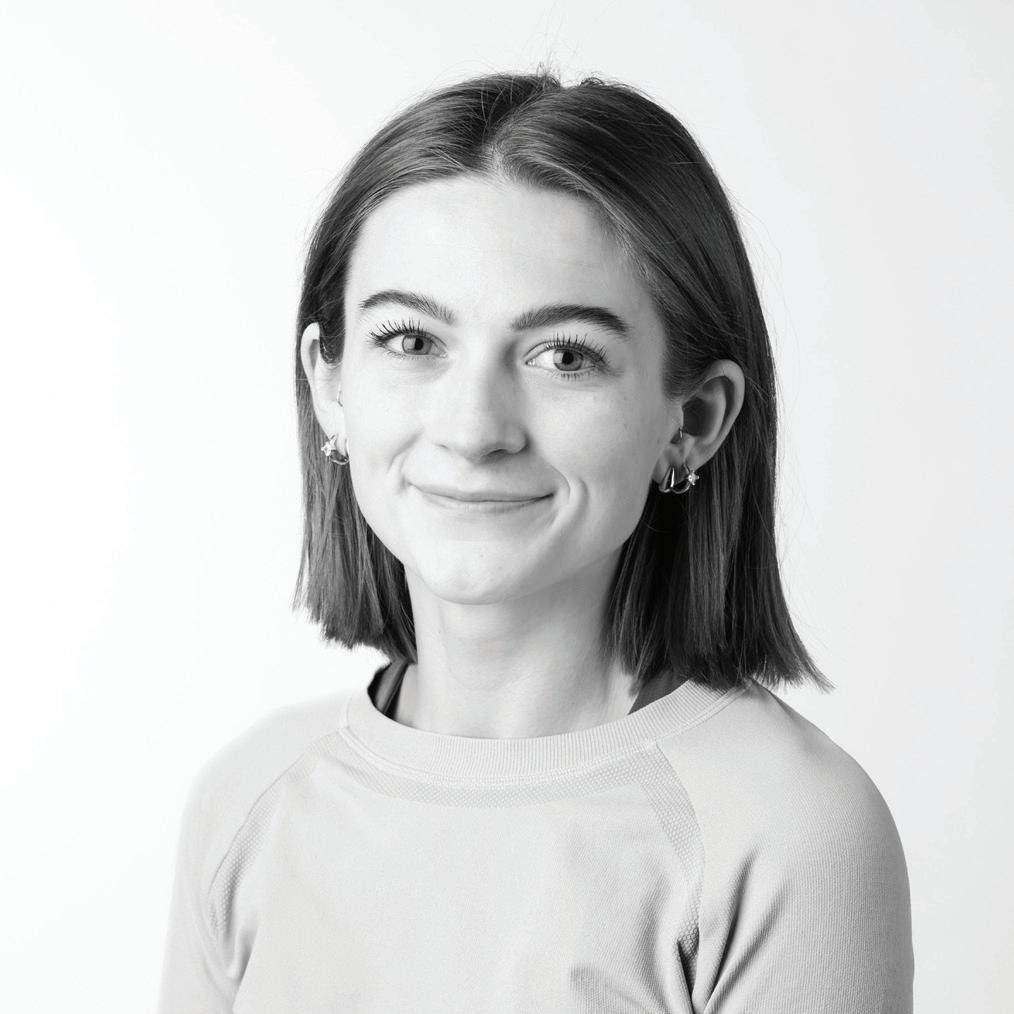
BRIGHAM YOUNG UNIVERSITY
Liz Bodell’s path to design began with a childhood love for drawing, painting, and her father’s woodshop. This history led her to pursue an education in graphic design. Graduating spring 2026 with a BFA in graphic design, she draws inspiration from her experiences living in Germany, love of art and language, and in industrial design. Her roles as the graphic design department’s teaching assistant, BYU AIGA chapter co-president, and summer internship in New York City at e.l.f. Cosmetics have strengthened her passion for how design shapes communication and communities. From these experiences, Liz is excited to continue creating design with roots in storytelling, beauty, and function.
WHAT FIRST SPARKED YOUR INTEREST IN GRAPHIC DESIGN?
I remember scrolling through Microsoft Word fonts for my fourth grade science fair project and thinking it was pretty cool. I didn’t know what graphic design was yet, but that sparked interest in type and design.
WHO ARE YOUR BIGGEST CREATIVE INFLUENCES?
My biggest creative influence right now is Alexander Girard. His patterns, use of color, and wooden dolls are vibrant and weird.
TELL US ABOUT A DESIGN PROJECT YOU’RE MOST PROUD OF. WHAT MADE IT SPECIAL?
I’m most proud of my most recent branding project, The Madonna Hotel, because it was my first branding project in the curriculum that I had initially given up on.
WHAT DOES ‘GOOD DESIGN’ MEAN TO YOU?
“Good design” should feel alive. I believe that it should spark emotion and reflect the human experience.
WHAT TRENDS IN GRAPHIC DESIGN EXCITE YOU - OR CONCERN YOU - THE MOST?
I’m enjoying the fact that sustainability is a growing movement. Consumption has been growing in popularity, and I feel as though sustainability and mindfulness combats that.
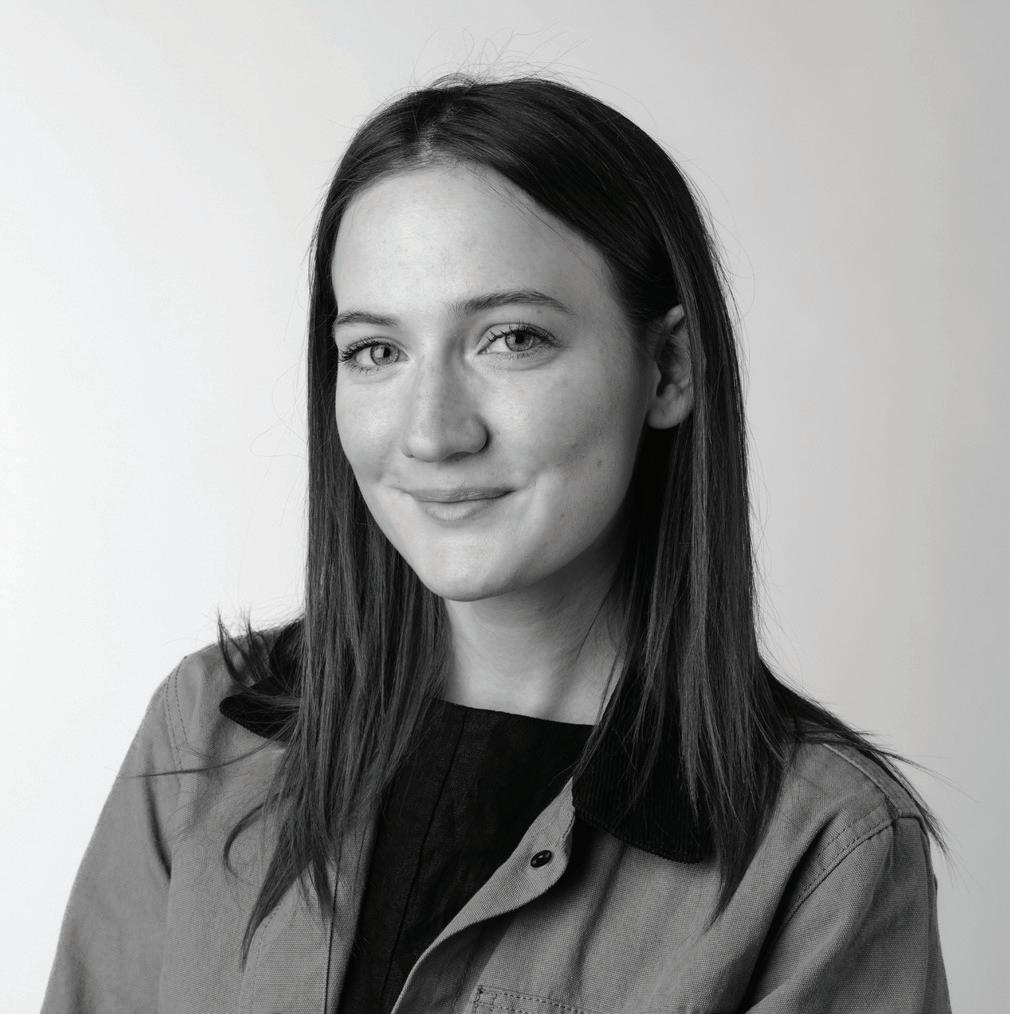
Katie Javadi is a graphic designer currently finishing her BFA in Graphic Design at Brigham Young University. Originally from the Oregon Coast, she is inspired by the things she grew up loving—flower gardens, coastal light, soft textures, and the beauty of things made by hand. She loves polaroid pictures, good movies, and the small and intentional details that shape how we experience the world. In her own design practice, Katie tries to stay connected to the tactile, human side of design. She finds the most beauty In things that feel imperfect, personal, or thoughtfully crafted. Katie tries to learn every day whether that’s through mediums, people, or practice. She gravitates toward processes she hasn’t tried or challenges that might feel unfamiliar. She believes that curiosity and the willingness to take risks is a designer’s strongest tool. She hopes to keep learning for the rest of her design career.
WHAT FIRST SPARKED YOUR INTEREST IN GRAPHIC DESIGN?
I had never planned to be a graphic designer. I had never even taken an art class! But after finding myself in one my sophomore year of college, I found it so fulfilling to be able to make beautiful things for the world around me.
WHO ARE YOUR BIGGEST CREATIVE INFLUENCES?
I am so inspired by my classmates, my professors, and the designers around me. I feel so lucky to have so many talented people around me to learn and collaborate with. Oh, and Paul Rand is absolutely spectacular.
TELL US ABOUT A DESIGN PROJECT YOU’RE MOST PROUD OF.
WHAT MADE IT SPECIAL?
I’m especially proud of a series of Kurt Vonnegut book covers that I designed. It wasn’t my most perfect project, but it gave me a love for analog processes and conceptual thinking.
UNIVERSITY OF ILLINOIS CHICAGO
Graphic Design has power, especially in the realm of education. As a Filipino American who was born and raised in Chicago, I stand in the belief of that power. My name is Isabelle Dizon, “Issa” for short, and I am currently a senior at UIC’s School of Design, pursuing a bachelor’s in Graphic Design with a minor in Global Asian Studies.
As a designer, my work centers around promoting diversity and awareness of humanitarian movements by leveraging on my expertise in visual communication. It is also built on the foundation of a strong passion for encouraging enlightenment and strengthening community. I specifically design for an enriching school experience, one that is led with educational visuals that lead to career opportunities, supportive community outreach, dwindling crime rates, solidarity between cultures internationally, and much more. Whether typesetting a manuscript, developing graphic novels, creating posters and branding, or designing publications, I strive to be the intersection of creativity and education that calls to bring power, in the form of knowledge, back to the people.
WHAT FIRST SPARKED YOUR INTEREST IN GRAPHIC DESIGN?
I grew up on comics, which involves the combination of text and illustration to convey a new message. This concept of type and image working together shares the exact same objective as graphic design-I learned at a young age that everything I loved in comics can be explored to further heights in the practice of visual communication.
WHO ARE YOUR BIGGEST CREATIVE INFLUENCES?
My greatest creative influences are Rama Duwaji, Zohran Mamdani’s wife and campaign branding designer, as well as comic artist Harmony Becker. It is incredibly inspiring how these women utilize color and texture, typography, and composition to provide accessibility to all different kinds of people who desire to be properly represented.
I’m an animator, designer, and print maker. I worked as a character animator for some years in the Philippines and now soon completing my Masters in Graphic Design at University of Illinois Chicago.
WHAT FIRST SPARKED YOUR INTEREST IN GRAPHIC DESIGN?
I’m interested in using graphic design as another tool for world-building, particularly within filmmaking and animation. I want to explore storytelling in all its forms—through narrative, abstraction, and visual systems. Stories are designed, and learning to design them well, whether independently or collaboratively, is a long-term pursuit for me.
TELL US ABOUT A DESIGN PROJECT YOU’RE MOST PROUD OF. WHAT MADE IT SPECIAL?
A current project I’m working on is an animated short that reframes our relationship with food as a metaphor for toxic romantic relationships. It’s a playful exploration of emotional dependency, compulsion, and memory. For me, strong storytelling is intuitive, honest, emotional, beautiful, fun and grounded in research.
WHAT TRENDS IN GRAPHIC DESIGN EXCITE YOU - OR CONCERN YOU - THE MOST?
Navigating the rise of AI-generated animation and video is intimidating!
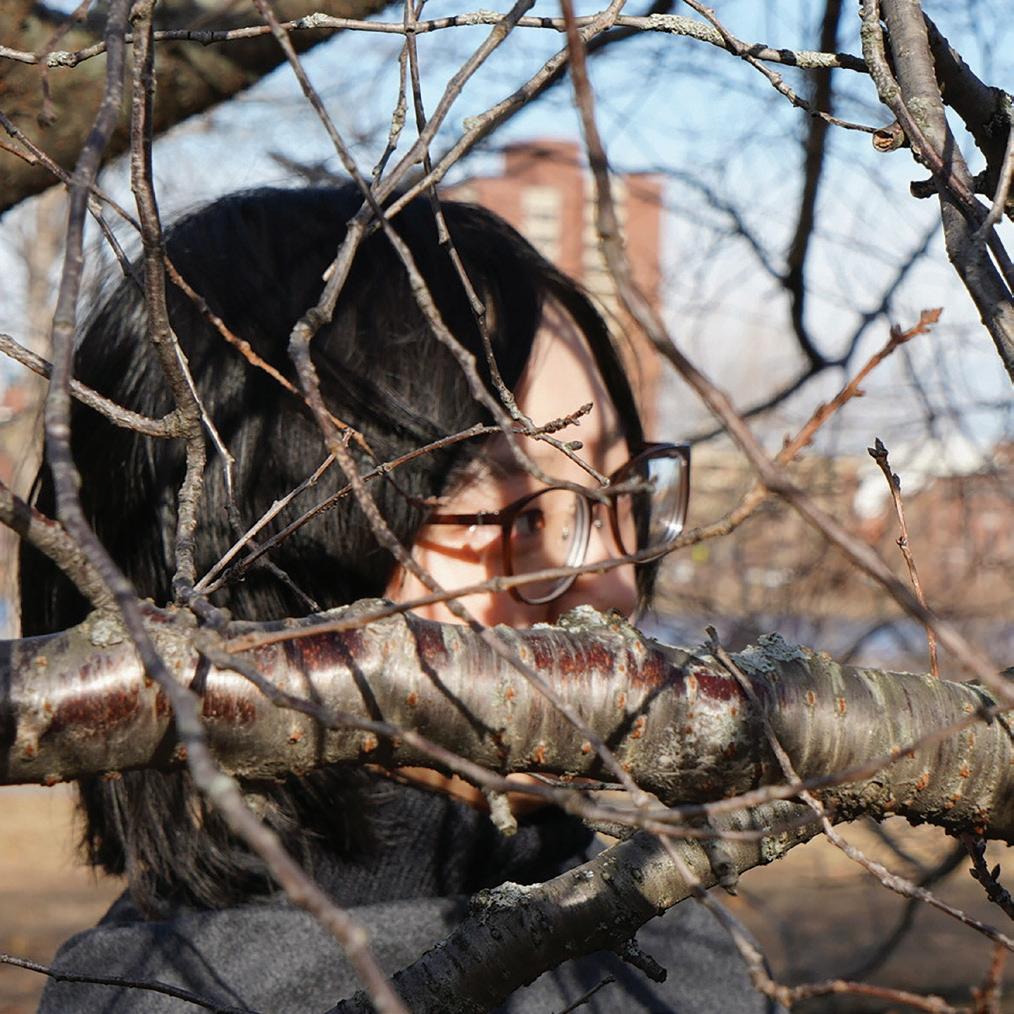
Anne Chen is a Shanghai-born designer and a senior at Boston University, graduating in Spring 2026. With a minor in printmaking, she is particularly drawn to etching and silkscreen, often combining the two, or integrating them with graphic design, to explore how analog and digital processes can meaningfully inform one another. Her practice centers on creating moments of connection: between people, between materials, and between inner experience and outward expression. Alongside this desire to communicate through works, she values self-exploration and continuous learning. This curiosity has led her to work across a wide range of graphic design fields, including branding, packaging, editorial design, UI/UX, and motion graphics. Originally from Shanghai, she enjoys films, animation, manga, and video games.
WHAT FIRST SPARKED YOUR INTEREST IN GRAPHIC DESIGN?
In high school, I joined an art club and was immediately drawn to a series of film posters designed by the seniors. After learning Adobe Illustrator from the club, I was pleasantly surprised to realize that I might be able to create designs like that too.
WHO ARE YOUR BIGGEST CREATIVE INFLUENCES?
It’s hard for me to choose just one designer or artist among all the creators I admire. So I would probably choose one of my family members who influenced many of my earliest creative interests and shaped my relationship with making things.
TELL US ABOUT A DESIGN PROJECT YOU’RE MOST PROUD OF. WHAT MADE IT SPECIAL?
My Catalog of Influences. It was my first fully creative editorial design project, and all the writing in it was based on self-analysis and exploration, which are things I used to resist. The process was painful, but I was delighted with the result. At least from a design perspective, I have no complaints, because I tried so many things I never had the chance to do before. Maybe after I gather more experiences, I’ll make a second volume someday.


Augie Oppenheimer is a senior at Boston University pursuing a BFA in Graphic Design with a minor in History of Art and Architecture. He is a transfer from the School of the Art Institute of Chicago, originally having studied industrial design, and much of his work reflects that. He focuses heavily around physical interaction, craft, and human factors. Augie chose to become a designer in order to utilize his creativity to solve real world problems, which he has been able to do while Interning at Spin350 Creative, working at the Daily Free Press, and designing for many other organizations throughout his time at Boston University. When not in the studio, Augie can be found playing rugby, sitting under a tree, or googling etymologies.
WHAT FIRST SPARKED YOUR INTEREST IN GRAPHIC DESIGN?
I was never really not interested in design, I’ve always been drawn to beautiful graphics. Book covers, wine labels, birthday cards, post stamps, really anything which is both beautiful and solves a specific problem has always been fascinating to me.
WHO ARE YOUR BIGGEST CREATIVE INFLUENCES?
Maira Kalman, Doug Chiang, and Massimo Vignelli are some of the (many) people I can always look towards for inspiration.
WHAT DOES ‘GOOD DESIGN’ MEAN TO YOU?
Good design is when something solves a problem in a beautiful and indefinitely functional way. The design needs to provide a solution and look good doing it.
WHAT TRENDS IN GRAPHIC DESIGN EXCITE YOU - OR CONCERN YOU - THE MOST?
The return to print media through zines and independent publishing is really exciting to me. In such a digital world, physical media stands out as something which people are wanting to get back into more and more.

Yunxi Ye is a graphic designer from China, currently based in Boston and pursuing an MFA in Graphic Design at Boston University. Her practice combines a “take it easy” openness with structured, verb-led experimentation, exploring how everyday actions and tools shape visual communication. She is particularly interested in how verbs can operate as frameworks for perception and interaction. Working across typography, publication design, motion graphics, and interactive media, she creates participatory and performative systems that translate physical action into visual and collective experience. Her work has been recognized by Design 360˚, the GDC Award, and the KTK Design Award, and has been exhibited internationally.
WHAT FIRST SPARKED YOUR INTEREST IN GRAPHIC DESIGN?
Noticing how small observations—a tree, a stone, a fleeting moment on the street—could become visual language first drew me to design. Design became a way for me to express what I noticed, felt, and understood about the world.
WHO ARE YOUR BIGGEST CREATIVE INFLUENCES?
I’m inspired by playful, systems-driven designers and studios such as The Rodina, Booklook, Studio Moniker, and Can Yang.
TELL US ABOUT A DESIGN PROJECT YOU’RE MOST PROUD OF. WHAT MADE IT SPECIAL?
Verb-led Design: A Grammar for Embodied Action reimagines verbs through a “Body–Verb–Tool” system, turning movement itself into the grammar of design. It reshaped how I understand methodology and grounded my practice in embodied ways of thinking and making.
WHAT DOES ‘GOOD DESIGN’ MEAN TO YOU?
Good design communicates clearly while inviting curiosity—creating a moment when someone pauses, notices, and feels something.
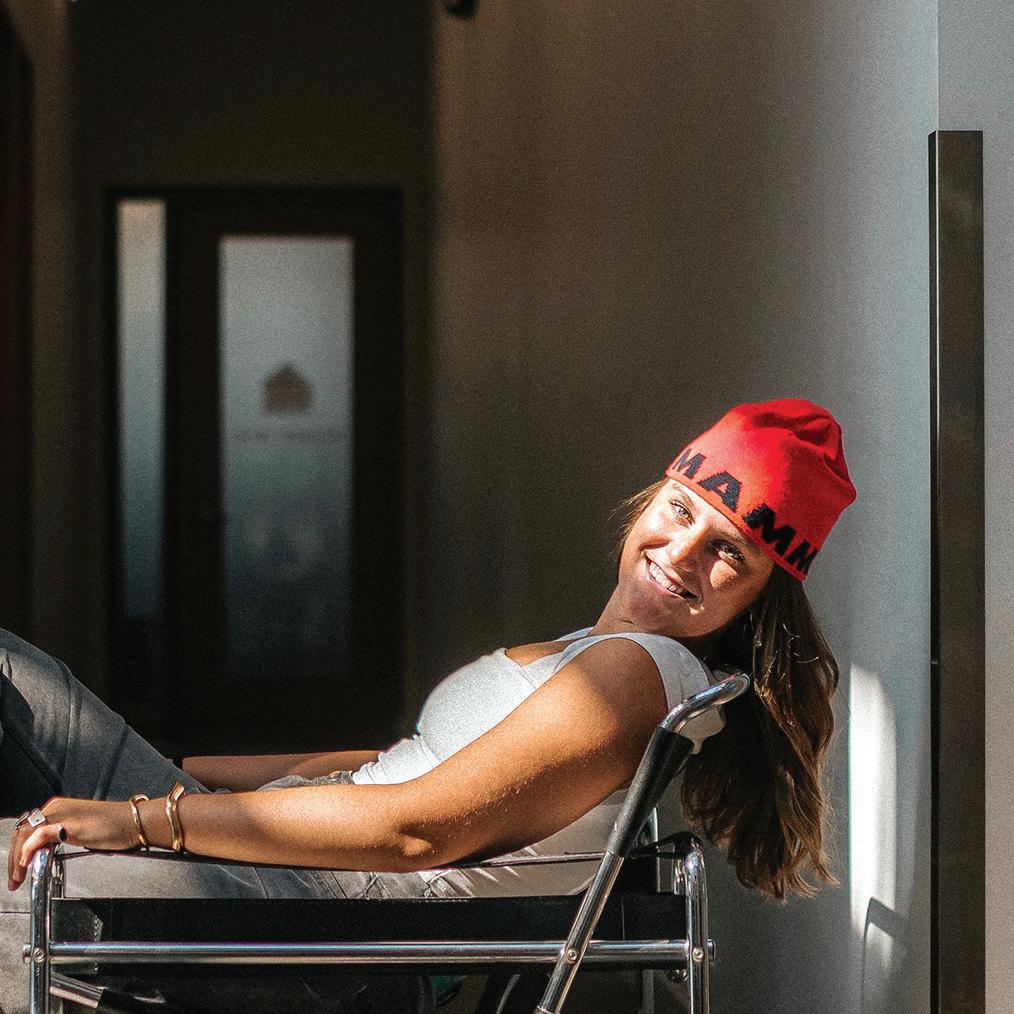
I’m Sasha Maguire, originally from Maine and now living in Bozeman, Montana, where my lifestyle and creativity are shaped by the landscapes around me. I spend my time skiing in the winter, wakesurfing in the warmer months, and traveling whenever there’s time. As a designer, my voice is loud, expressive, and bold, and intentional. My work tends to be direct and candid, reflecting both my personality and the way I see the world. Most days begin the same way: I wake up excited to pull a good espresso shot, because nothing gets designed until the espresso is right.
WHAT FIRST SPARKED YOUR INTEREST IN GRAPHIC DESIGN?
I moved to Montana for the outdoor community and chose graphic design without fully knowing what it was. I fell in love with it once I realized I could take ideas, emotions, and messy thoughts and turn them into something visual that communicates what someone is trying to say.
WHO ARE YOUR BIGGEST CREATIVE INFLUENCES?
I am totally enthralled by David Carson’s work. I’ve looked up to his work from the very beginning, and there’s no amount of beach culture or surf magazines that could ever make me bored of what he creates.
TELL US ABOUT A DESIGN PROJECT YOU’RE MOST PROUD OF.
WHAT MADE IT SPECIAL?
I’ve spent the past year creating Women Who Design, a series of zines that capture the voices and work of local women designers under the tagline “Amplifying Voices. Celebrating Design.” It’s special because it’s helped me build real connections, learn directly from talented mentors in my community, and create a stronger sense of visibility and support among designers in Bozeman.
WHAT DOES ‘GOOD DESIGN’ MEAN TO YOU?
Good design is work that communicates clearly and feels intuitive without needing explanation. If someone with no design background understands it, feels something from it, or remembers it, then it’s doing its job.
Hi, I’m Phillip Biondo. I was born and raised in Cincinnati and I’m a Senior studying Visual Communication Design at The Ohio State University. I’ve always been drawn to creating things that feel meaningful to people. I also always had an interest in computer science and technology, and I loved the idea of blending the fields I was passionate about. That path pushed me deeper into UI/UX, graphic design, and technology. Through these interests, I’ve had the opportunity to work with talented teams at Bath & Body Works, Event Marketing Strategies, and the OH-Tech Consortium. I hope to always bring an interesting perspective and new approach to creating work that feels engaging and genuinely exciting.
WHAT FIRST SPARKED YOUR INTEREST IN GRAPHIC DESIGN?
I would make playlist covers in middle school to send to my friends. I also joined a few t-shirt design competitions in high school.
WHO ARE YOUR BIGGEST CREATIVE INFLUENCES?
I find a lot of creative inspiration from music and film. Donald Glover has always inspired me with the amount of range his work has. An earlier inspiration is Caravaggio and the way his work feels.
TELL US ABOUT A DESIGN PROJECT YOU’RE MOST PROUD OF. WHAT MADE IT SPECIAL?
I am proud of the work I have done on my senior capstone, Amast. This is an app designed to help travelers connect and tell the stories of their traveling experiences. It is really exciting to see everything I have learned come together to make an idea from scratch that I believe in.
WHAT DOES ‘GOOD DESIGN’ MEAN TO YOU?
I think good design can look different depending on what’s being created. I think good design should always make the user feel understood..
WHAT TRENDS IN GRAPHIC DESIGN EXCITE YOU - OR CONCERN YOU - THE MOST?
I love the shift back toward old technology and mediums; I feel focusing on the intention behind doing and making is important, both in what we create and in how we do things.
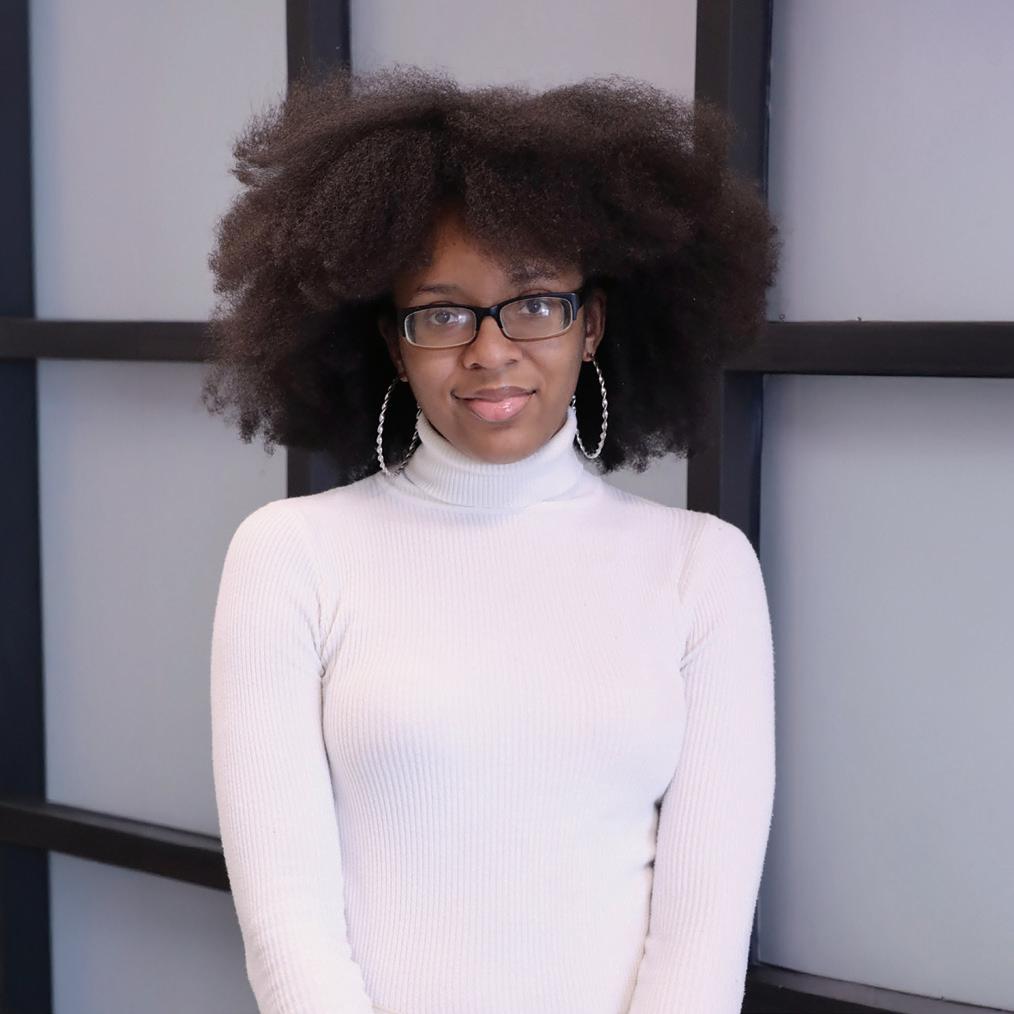
Jada Davis is a Senior at The Ohio State University pursuing a Bachelor’s degree in Visual Communication and a minor in Art History. As someone who has spent most of her childhood living in Columbus, being a student at Ohio State University is an accomplishment she is extremely proud of. Growing up in Columbus, creativity has always been a core part of who she is. With a passion for creativity, design has become an integral part of her identity. She is intrigued by design because she loves how it is constantly shifting and evolving. There is always new software to learn and a new technique to try. This has allowed her to be both ambitious and fearless in her approach towards design. After she graduates, she aspires to be a practicing graphic designer who uses visual communication to solve problems and tell stories. She hopes to use her acquired knowledge in design to address social issues and advocate for change. Moving forward, her intention is to continue growing and evolving as a designer.
WHAT FIRST SPARKED YOUR INTEREST IN GRAPHIC DESIGN?
I became interested in design during my Sophomore year of High School. I took a class that completely changed the way I viewed creativity and design. In this course, I was given the necessary tools, resources, and support to explore this interest. My experience with this course forced me to push myself outside of my comfort zone and truly take agency of my future desires. I was happy to know that I could pursue a profession that would allow me to be creative while also solving problems and evoking emotions.
WHO ARE YOUR BIGGEST CREATIVE INFLUENCES?
One of my biggest creative influences is Lorna Simpson, who is considered a pioneer of conceptual photography. She is a remarkable woman who is good at photography, drawing, painting, and even sculpting. I respect how she is not afraid to push herself outside of her comfort zone and try new things.
Alex Lipscomb is a graphic designer, he reads, watches films, wanders, and wants to live to see the liberation of all people. He is inspired by art, culture and the intersections of his identity and modern mainstream culture. His work aims to find new visual ways to interact with the medium of design. His favorite book is America by Jean Baudrillard, His favorite color is black. He loves his friends and family very much, he could not live without them.
WHAT FIRST SPARKED YOUR INTEREST IN GRAPHIC DESIGN?
Magazines. When I was a child I used to rip the ads i liked in magazines and save them in a folder. Eventually at Doctor’s offices I used to ask to take the magazines home and just look at the design.
WHO ARE YOUR BIGGEST CREATIVE INFLUENCES?
David Wojnarowicz, My peers, Avant Garde Films, and nature.
TELL US ABOUT A DESIGN PROJECT YOU’RE MOST PROUD OF. WHAT MADE IT SPECIAL?
My book, the late capitalist library. I am most proud because I could merge my love of reading theory into a project that looked at the idea of the library in a very abstract way. I always decide to approach my college assignments in abstract ways to help with my conceptual thinking, and to hopefully take me down a new path that is underexplored.
WHAT DOES ‘GOOD DESIGN’ MEAN TO YOU?
Good design is something that you can look at 100 times and not hate it. Good design evokes strong emotions and looks forward. Good design is culturally specific and done from within marginalized communities. Good design is ugly to most people, and sexy to few.
I am David Pietras, from New Jersey, living in New York City and I am a Graphic Designer. I want to use design to reconnect people to the physical world. I believe in things like naivety, paper, sounds, intuition, toys, objectivity and formalistic beauty. I have a shih-tzu named Misiu which is Polish for little bear.
WHAT FIRST SPARKED YOUR INTEREST IN GRAPHIC DESIGN?
A few things made me interested in graphic design as a child. I would go to museums with my parents and they felt beautiful and more special than other things I saw, and I would stare at the pamphlets. I also loved the letter and number segments in Sesame Street, and the way my family’s 80s-90s technology and music looked.
WHO ARE YOUR BIGGEST CREATIVE INFLUENCES?
I am influenced by modernism and formalism as they are described by art theory. I think about Clement Greenberg’s ideas a lot right now. I am also reading the 1972 debate between Wim Crouwel and Jan van Toorn, and both are inspirational in their own sense. I like Josef Muller Brockmann and Ed Fella equally. Karel Martens makes me smile.
WHAT DOES ‘GOOD DESIGN’ MEAN TO YOU?
“Good design” is not enough because it’s too easy now. Truly good design is much better or much worse than good design.
WHAT TRENDS IN GRAPHIC DESIGN EXCITE YOU - OR CONCERN YOU - THE MOST?
I am concerned about the lack of consideration for tangible design. There is too much digital work that all looks the same, it’s well done and clean, but lacks soul and gives me a headache. What excites me now is the hand-done work that is being pushed by me and my peers. I think things will change soon.
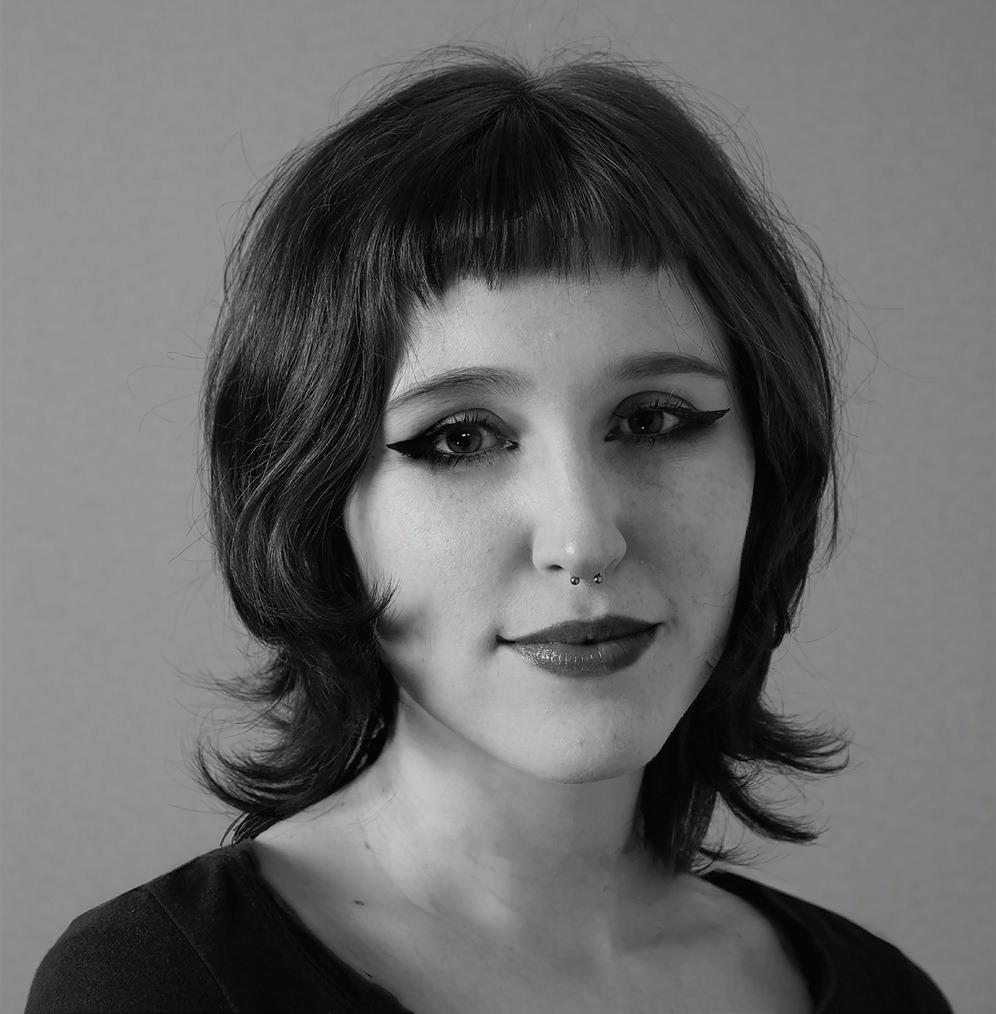
I am currently pursuing a BFA in Graphic Design after earning an AA in Studio Arts. San José State University’s rigorous program has allowed me to explore interdisciplinary design, with branding, book design, and experience design emerging as some of my particular interests. I approach design with a focus on problem-solving, innovation, and finding unexpected solutions, a mindset that continually pushes me toward thoughtful and forward-thinking outcomes. My work has led me to collaborate with a wide range of clients, from San Jose’s music community to emerging start-ups. As I enter the industry, I look forward to applying my philosophy of clean, confident design while continuing to learn from those around me.
WHAT FIRST SPARKED YOUR INTEREST IN GRAPHIC DESIGN?
It was born of the realization that graphic design offers a perfect intersection between the studio art I was familiar with and the technological environment of Silicon Valley, where I grew up.
WHO ARE YOUR BIGGEST CREATIVE INFLUENCES?
When I think of influence. I think of the phrase “you are your friends.” I would have to say that my design classmates are my biggest creative influence pushing me to be the best I could be while growing alongside them.
TELL US ABOUT A DESIGN PROJECT YOU’RE MOST PROUD OF. WHAT MADE IT SPECIAL?
The project I’m most proud of is The Medium Is Massage. It was not only a lesson in design cohesion but also in perseverance. At 160 pages, it serves as a personal reminder of what can be accomplished under a very tight deadline.
WHAT DOES ‘GOOD DESIGN’ MEAN TO YOU?
I don’t believe good design is a universal standard, as we are often led to think. Rather, it is a living, breathing, and evolving reflection of culture. While design is rooted in general principles—practicality, usability, and innovation—it also mirrors the world around us, growing and changing alongside society.
Quynh Vu is a designer most interested in exploring communication through multimedia approaches. With roots in fine arts, Quynh strives for visual diversity in her work by combining the analogue quality of traditional mediums with what it means to exist in a digitally dominated world into her print, branding, and illustration practices. The core of her designs are driven by communication and empathy and are attempts at communicating her worldview to others.
WHAT FIRST SPARKED YOUR INTEREST IN GRAPHIC DESIGN?
Introductory design classes at SJSU really helped open my eyes to what differentiated art from design and its overlaps. I started to notice design everywhere in the world since then.
WHO ARE YOUR BIGGEST CREATIVE INFLUENCES?
I’m greatly influenced by contemporary digital media designers such as Alida Sun and Lea Naisberg as well as Art Nouveau artists such as Alphonse Mucha and Gustav Klimt.
TELL US ABOUT A DESIGN PROJECT YOU’RE MOST PROUD OF. WHAT MADE IT SPECIAL?
I made a book on my journey growing up Catholic for my Advanced Typography class called “Ex Opere Operato” meaning “By the Work Worked”. It contained a lot of experimental print approaches such as metal embossing, sewn typography on fabric, and riso printing on various paper materials.
WHAT TRENDS IN GRAPHIC DESIGN EXCITE YOU - OR CONCERN YOU - THE MOST?
The trend that excites me most is movement back to slower processes such as printmaking as well as the increase in more bespoke typography in branding. On the other hand, the pervasiveness of AI in the creative industry worries me as a prospective junior designer.
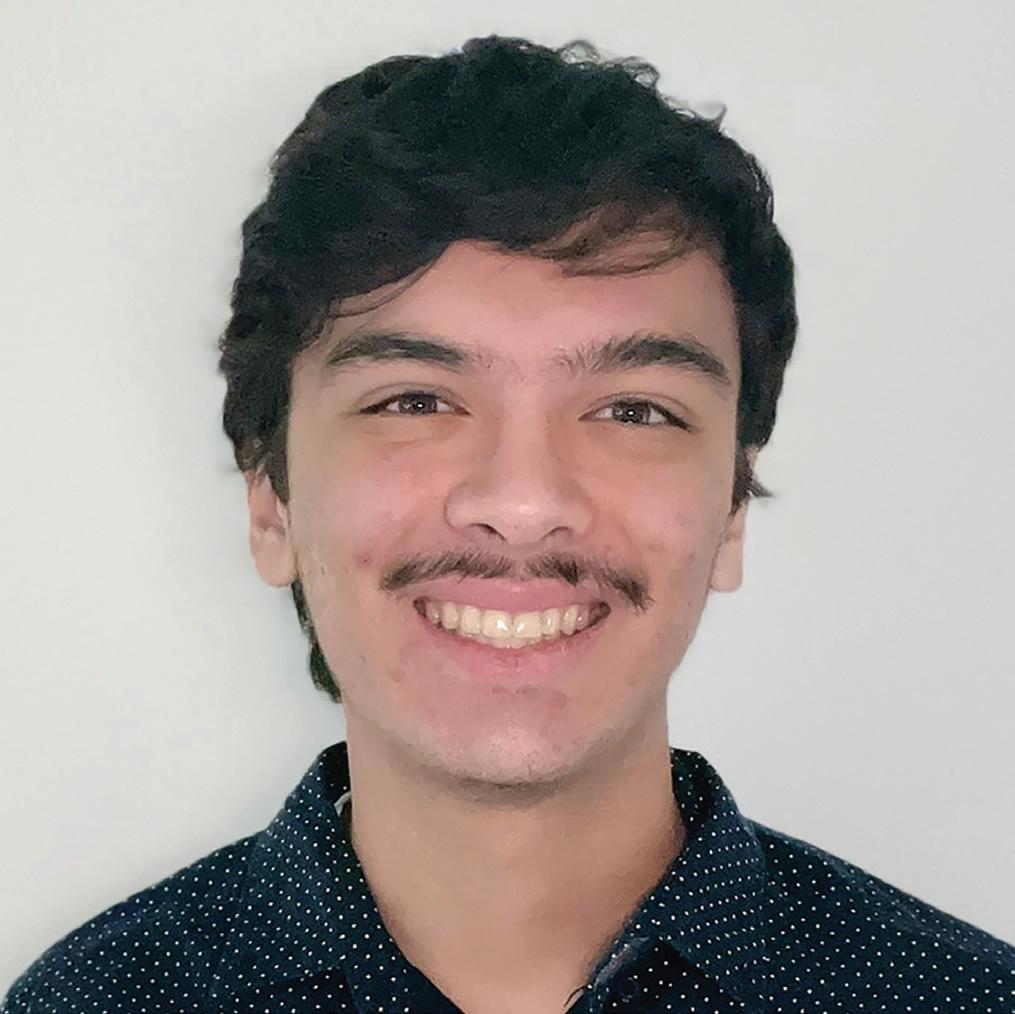
MICHIGAN STATE UNIVERSITY
Gabe is a senior at Michigan State University pursuing a BFA in Graphic Design. In his undergraduate years he has experience in freelance work, developing social media content and several printed products. Gabe approaches his work with an attention to small details and thought behind every decision that goes into his designs. He firmly believes that the diversity of everyone’s experiences is one of the most interesting parts of design, and he values all of the different influences that make him a better artist. Art is a defining part of Gabe’s life and he loves being part of a community of creatives that pushes his work further every day.
WHAT FIRST SPARKED YOUR INTEREST IN GRAPHIC DESIGN?
My first experience in graphic design was in a graphic design class in high school. I had always been creative growing up, but it was in that high school class when it felt like a door had opened to a completely new world of creating that changed my life.
WHO ARE YOUR BIGGEST CREATIVE INFLUENCES?
My biggest creative influences are the people around me. I find myself influenced by the conversations that I have, the exceptional work I see from my peers every day, and just being part of an amazing creative community that helps me elevate my work.
TELL US ABOUT A DESIGN PROJECT YOU’RE MOST PROUD OF.
WHAT MADE IT SPECIAL?
In 2024 I designed a Macbeth poster for a showing of the play for a course at MSU. To this day it’s still the project that I put the most care into developing. What makes this project special to me is all of the decisions I made behind the scenes that manifest into the final product, creating a cohesive and well-rounded poster.
WHAT DOES ‘GOOD DESIGN’ MEAN TO YOU?
To me, ‘good design’ means that every choice made is intentional and informed. The ‘why’ behind most design decisions is often just as if not more important than what someone sees as the final product.
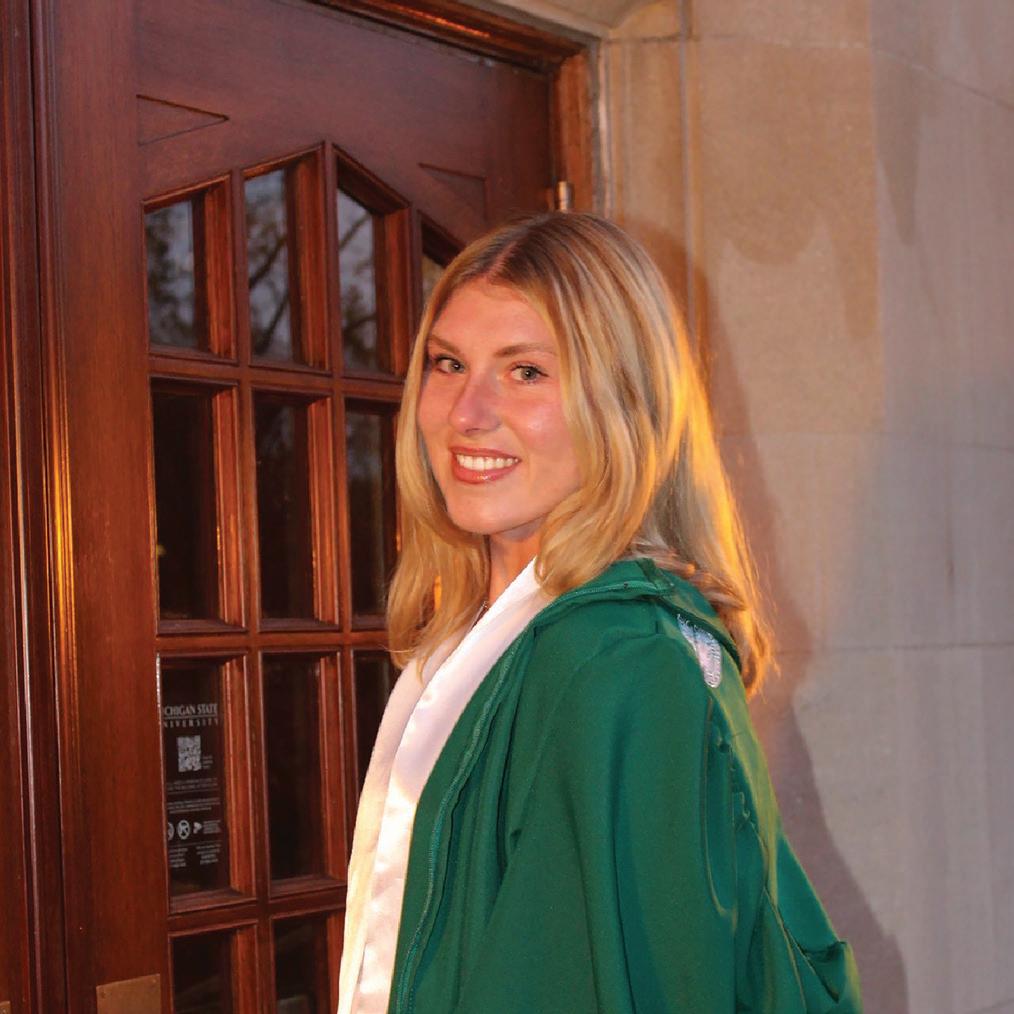
Art and athletics have always been a part of Allison’s life. These two passions are what led her to Michigan State University to pursue her BFA in Graphic Design as a student athlete. Allison has experience working in sportswear design environments, and had the opportunity to intern at Nike in Beaverton, OR, in the Content Studio. Her passion for storytelling is evident in her work, and she approaches design with a dedication to serving others. The part Allison loves most about design is its ability to communicate concepts and ideas that bring people together by celebrating the human experience.
WHAT FIRST SPARKED YOUR INTEREST IN GRAPHIC DESIGN?
All throughout middle and high school I loved being artistic. I’d help design t-shirts for my school’s track program, along with other teams and school organizations. I knew pretty early on that I loved storytelling and helping find creative solutions.
WHO ARE YOUR BIGGEST CREATIVE INFLUENCES?
My biggest creative influence is my grandmother. She is a painter, and growing up I always admired how she celebrated beauty in the natural world through painting.
WHAT TRENDS IN GRAPHIC DESIGN EXCITE YOU - OR CONCERN YOU - THE MOST?
I think AI is a trending topic of conversation in the design community right now. While there are a lot of unknowns that accompany AI, I feel like now more than ever as graphic design students we have a unique challenge to become versatile and really expand on our individual strengths, in addition to being open to learning. It’s definitely an exciting time with a lot of opportunity for growth in the field!

TEXAS STATE UNIVERSITY
I grew up in Austin, Texas, spending most of my time outdoors and making things. I joined the Army at 17 while I was still in high school and served seven years in the Special Operations community as an Army Ranger, completing four deployments to Syria, Iraq, and Afghanistan twice. After leaving the Army, I began pursuing a career in design, drawn to the challenge, creativity, and clarity it offers. Today I live in Texas with my wife and our two daughters, and we spend our time exploring gardens, visiting museums, and being outside together whenever we can.
WHAT FIRST SPARKED YOUR INTEREST IN GRAPHIC DESIGN?
My interest in graphic design was first sparked by me exploring careers that were opposite of the military while still challenging in similar ways.
WHO ARE YOUR BIGGEST CREATIVE INFLUENCES?
My current biggest design influences are Mark Brinkman and Tyler Rico. Both of them have been tremendously influential in shaping how I approach and execute designs.
TELL US ABOUT A DESIGN PROJECT YOU’RE MOST PROUD OF.
WHAT MADE IT SPECIAL?
A book I created using a pinhole photograph taken where my wife and I married. Every decision in the book was shaped by meaningful dates in my life, allowing me to experiment with time, memory, and form.
WHAT DOES ‘GOOD DESIGN’ MEAN TO YOU?
Design that speaks for itself, is layered with meaning, and is reduced to its most essential and intentional form.
WHAT TRENDS IN GRAPHIC DESIGN EXCITE YOU - OR CONCERN
YOU - THE MOST?
I’m excited to see how AI will challenge designers to both use it creatively and push against it with more human, hands-on work.
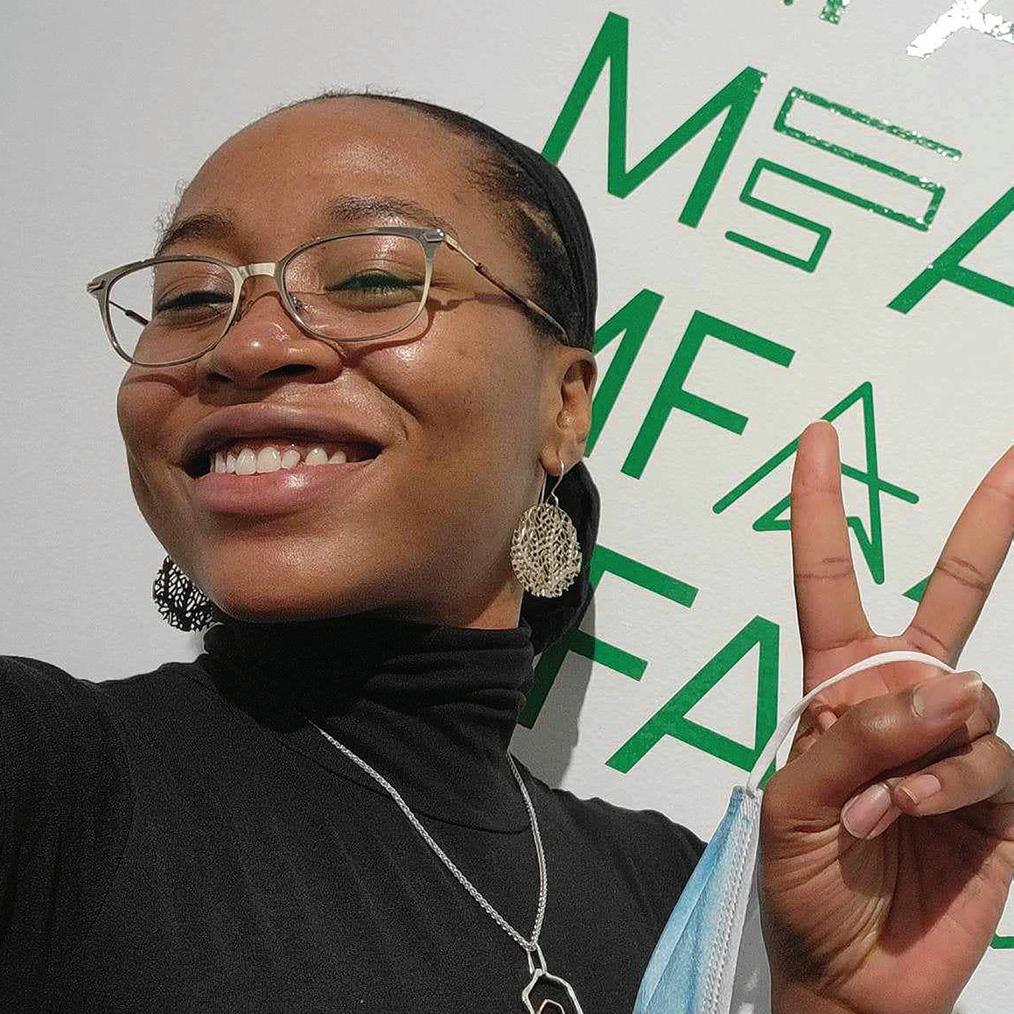
TEXAS STATE UNIVERSITY
Born and raised on St. Croix, United States Virgin Islands, Jaina Warren is a designer focused on using design to tell interesting stories about her community and communities like hers. She received her Bachelor of Science in Graphic Design from La Roche University in Pittsburgh, Pennsylvania. Unsatisfied with what she learned about the world of design, a year after completing her undergraduate degree, she set out to pursue an M.F.A. in Communication Design at Texas State University. Jaina’s work centers around visual storytelling that uplifts the histories, identities, and lived experiences of underrepresented communities. She uses design as a tool to examine systems, challenge assumptions, and create work that resonates with people both inside and outside the Caribbean.
WHAT FIRST SPARKED YOUR INTEREST IN GRAPHIC DESIGN?
Animated TV shows and movies sparked my interest in graphic design. I was drawn to the way they crafted entire worlds through color, motion, and visual storytelling.
WHO ARE YOUR BIGGEST CREATIVE INFLUENCES?
My graduate professors have been my biggest creative influences. They taught me to value the creative process itself, not just the final outcome.
TELL US ABOUT A DESIGN PROJECT YOU’RE MOST PROUD OF. WHAT MADE IT SPECIAL?
The design project I’m most proud of is my motion design piece for my thesis exhibition. It combines everything I love about design, color, motion, and visual storytelling.
WHAT DOES ‘GOOD DESIGN’ MEAN TO YOU?
To me, ‘good design’ is created for people, by people. In a time when AI is often positioned as the creative solution, good design remains a thoughtful, innovative response to complex problems. ‘Good design’ is rooted in human intention and care.
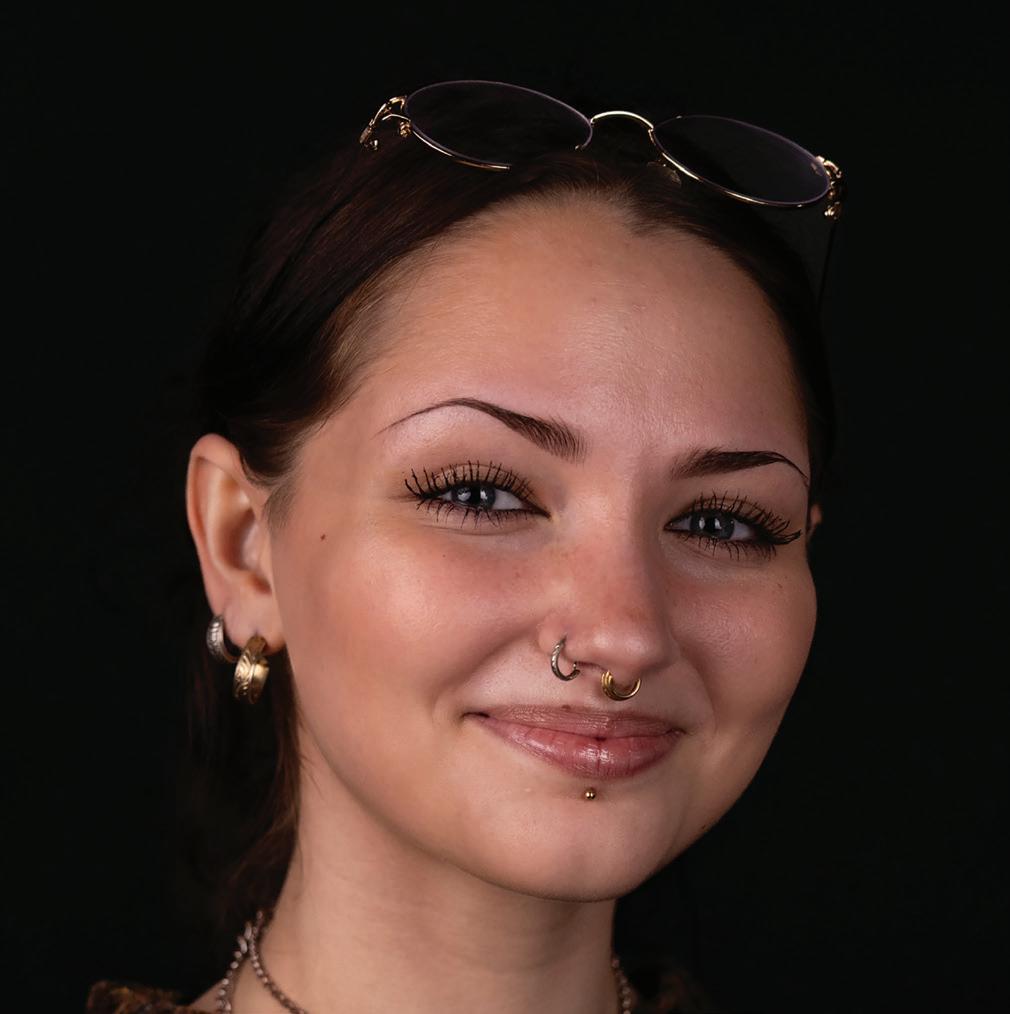
MILWAUKEE INSTITUTE OF ART & DESIGN
Nola Hennen is a third-year student set to graduate in May of 2027 with a BFA in Communication Design. Her passion for design stems from her love of human connection and storytelling, born from her three years as a freelance caricature artist in Southeastern Wisconsin. She also loves textiles and ceramics, allowing her to continuously challenge herself to adopt various thought processes, specifically through her current work with Hummel. As a curious and enthusiastic learner, Nola loves that she is continuously able to challenge herself to grow through a career in visual problem-solving. She dreams of being able to help various types of people tell their stories effectively and authentically through her designs.
WHAT FIRST SPARKED YOUR INTEREST IN GRAPHIC DESIGN?
Going into MIAD, I loved digital illustration specifically, but was unaware that there was so much more that I could do with the visuals I was creating.
WHO ARE YOUR BIGGEST CREATIVE INFLUENCES?
I love to bounce ideas off the people surrounding me, such as my peers in our studios or my professors. I also love to swing back to creative projects that I have loved, such as comics or cartoons.
TELL US ABOUT A DESIGN PROJECT YOU’RE MOST PROUD OF.
WHAT MADE IT SPECIAL?
I am currently most proud of my work with GBM & Me, which is a website I am currently working on, intended to explain Glioblastoma to children ages 7-10 through the use of interactive maps and lessons.
WHAT DOES ‘GOOD DESIGN’ MEAN TO YOU?
To me, good design equates to a visual solution for a question tailored to a specific audience. This is done most effectively using an empathy-based approach.
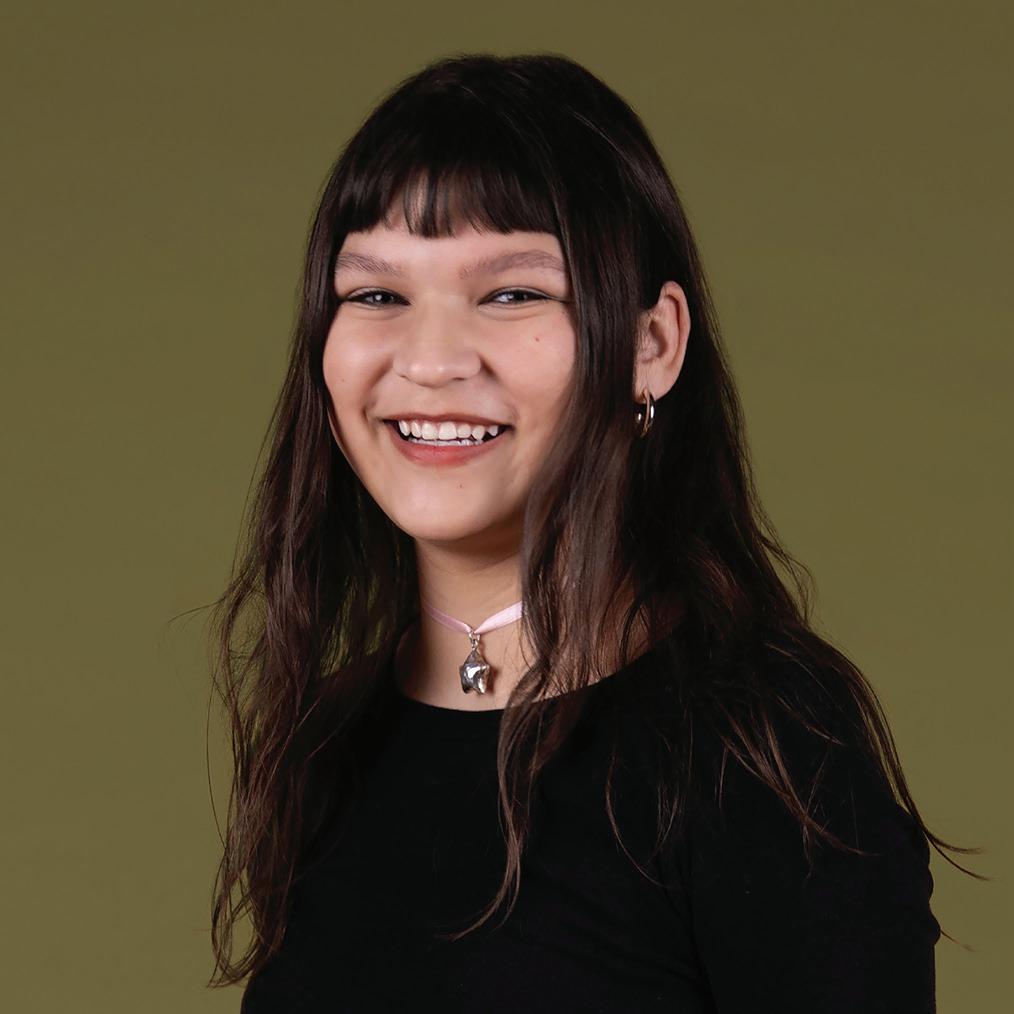
MILWAUKEE INSTITUTE OF ART & DESIGN
Olivia Nava is a graphic designer in her final year studying Communication Design at MIAD, with strong interests in branding, art direction, and print design. Her Mexican heritage influences her creative approach, through the use of energetic color and bold typography to produce work that is engaging, expressive, and impactful. Through travel, Olivia draws inspiration from the cultures and perspectives of others, allowing these experiences to shape the storytelling within her work. She expands her practice through hands-on exploration across physical mediums including printmaking, collage, and sewing, approaching each project with curiosity, lots of research, and intention.
WHAT FIRST SPARKED YOUR INTEREST IN GRAPHIC DESIGN?
In middle school I was obsessed with this app where you had to guess famous brand names based on their logos and I was good at it which makes sense since I enjoy identity design.
WHO ARE YOUR BIGGEST CREATIVE INFLUENCES?
FISK Projects, Rayk Studio, Can Can Press, Stillz, i-D Magazine, Bethany Vargas, Emma Bers, and Mexican artisans.
TELL US ABOUT A DESIGN PROJECT YOU’RE MOST PROUD OF.
WHAT MADE IT SPECIAL?
I am very proud of the branding and packaging elements I designed for a friend’s collegiate fashion collection which was super rewarding because I found a way to collaborate with a friend from a different major and see how graphic design can translate into the fashion world.
WHAT TRENDS IN GRAPHIC DESIGN EXCITE YOU - OR CONCERN YOU - THE MOST?
I’ve been loving modern medieval design and micrographics while something that concerns me is anything AI-generated.

Ayla Chandola is a Chicago-based graphic designer graduating this December with a BA in Graphic Design from Columbia College Chicago. Her practice spans digital and print design, with a focus on crafting visual systems with research and intent. Ayla approaches every project by considering how form, texture, color, and hierarchy come together to communicate meaning and shape the viewer’s experience.
Her work is defined by a strong understanding of typography and layout, often exploring the relationship between structured grids and expressive detailing. She is drawn to projects that allow her to build conceptual depth, translating insights from user behavior, brand strategy, and cultural context into thoughtful, functional design.
With a minor in Design Management, Ayla bridges creativity with strategy. She brings an understanding of marketing and brand storytelling into her design decisions. Her goal is to work within the creative agency world, contributing to multidisciplinary teams that value experimentation and strong visual identity work.
Ayla’s practice continues to evolve as she explores new mediums and methodologies, but her core focus remains the same: creating visual experiences that are purposeful, intuitive, and visually engaging.
WHAT FIRST SPARKED YOUR INTEREST IN GRAPHIC DESIGN?
When I was in high school, I collected magazines and would cut out my favorite images, arranging and gluing them together in a sketchbook.
WHO ARE YOUR BIGGEST CREATIVE INFLUENCES?
I don’t usually point to a single person as my influence; My creative influences come from cultural themes and the small details I notice while observing everyday life.
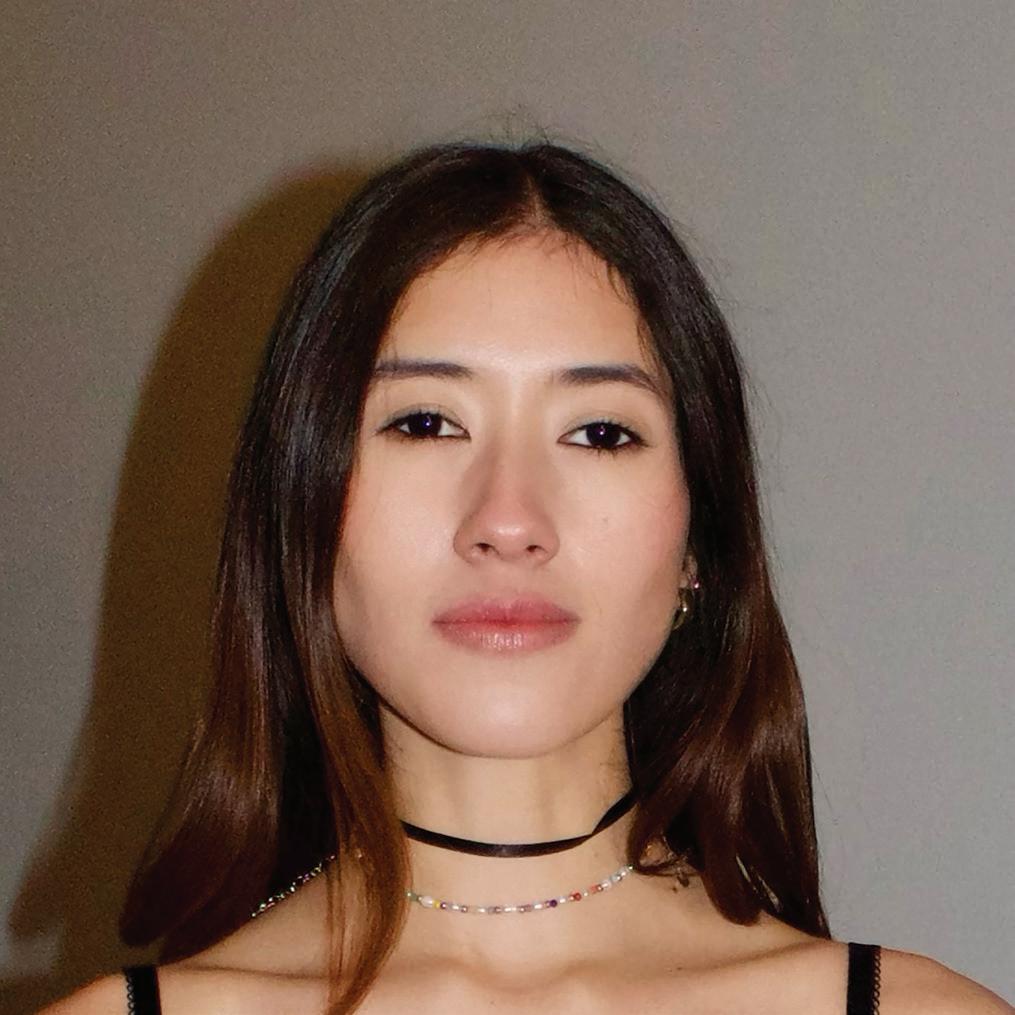
Hello! I’m Verónica Ramos. I’m a Venezuelan born and raised current Chicago-based graphic design student at Columbia College Chicago. I’m passionate about publication, brand identity, packaging, and all the things that influence everyday life and culture. I enjoy broadening my scope of knowledge to include historical, social, and philosophical perspectives onto my work, which I believe have helped me grow both personally and creatively.
Outside of my work or studies, I enjoy books, movies, and continue to explore the city I live in. I value collaboration, stepping out of my comfort zone, and continuous improvement, and always inspired by the people and world around me.
WHAT FIRST SPARKED YOUR INTEREST IN GRAPHIC DESIGN?
The notion of language (both written and visual) as it relates to power, meaning, and belief systems; becoming a graphic designer and maker of meaning, with the responsibility that comes from it, allows me to engage in visual activism.
TELL US ABOUT A DESIGN PROJECT YOU’RE MOST PROUD OF. WHAT MADE IT SPECIAL?
A poster design based on a research project about Barbara Kruger at the end of 2024 that reflected anti-feminist political discourse and criticism.
WHAT DOES ‘GOOD DESIGN’ MEAN TO YOU?
Thought-provoking, intentional, accessible — A composition that, through its elements, is capable of not just retaining viewer attention, but also promotes thought and incites discourse.
WHAT TRENDS IN GRAPHIC DESIGN EXCITE YOU - OR CONCERN YOU - THE MOST?
I’m always happy when I see maximalism having a comeback and continue to be wary of artificial intelligence.
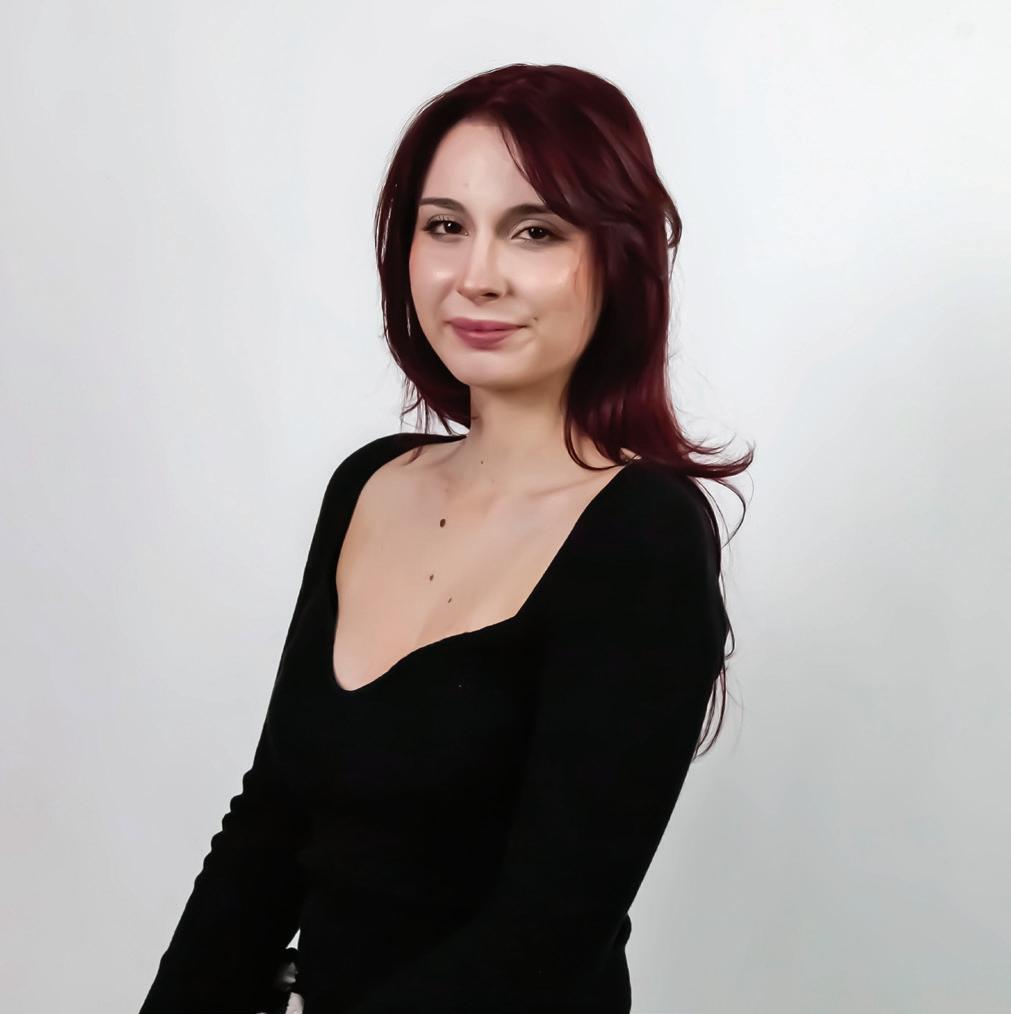
Dylan Abraham is a Detroit-based Lebanese-American designer and a junior at the College for Creative Studies, where she is earning her BFA in Communication Design and Strategy. She is a multidisciplinary designer with a love for motion, publication, and brand design, guided by a deep interest in how visual systems communicate with clarity and impact. Dylan believes that strong design comes from recognizing both one’s own strengths and weaknesses, and she approaches her practice with a commitment to continual growth. She actively pushes beyond her comfort zone, experimenting with new techniques and challenging herself to take a fresh approach with every project. Driven by curiosity and a passion for thoughtful storytelling, she strives to create work that is visually engaging, culturally aware, and grounded in intentional, strategic design.
WHAT FIRST SPARKED YOUR INTEREST IN GRAPHIC DESIGN?
I first became interested in design when I began noticing the stories embedded in everyday things; product packaging, album covers, even short motion graphics. I’ve always loved storytelling and writing, so discovering that a story could exist beyond the page, communicated through subtle choices that invite you to look deeper, immediately drew me in. The small details in typography and the way color alone can shape a larger narrative made me want to create my own work.
My biggest creative influences are Semi:Formal and Irma Boom. S:F’s innovative motion work showed me how movement can bring ideas to life, while Irma Boom’s experimental book design opened my eyes to the storytelling potential of typography, structure, and detail. Their work continues to inspire me to push boundaries and explore new ways of communicating visually.
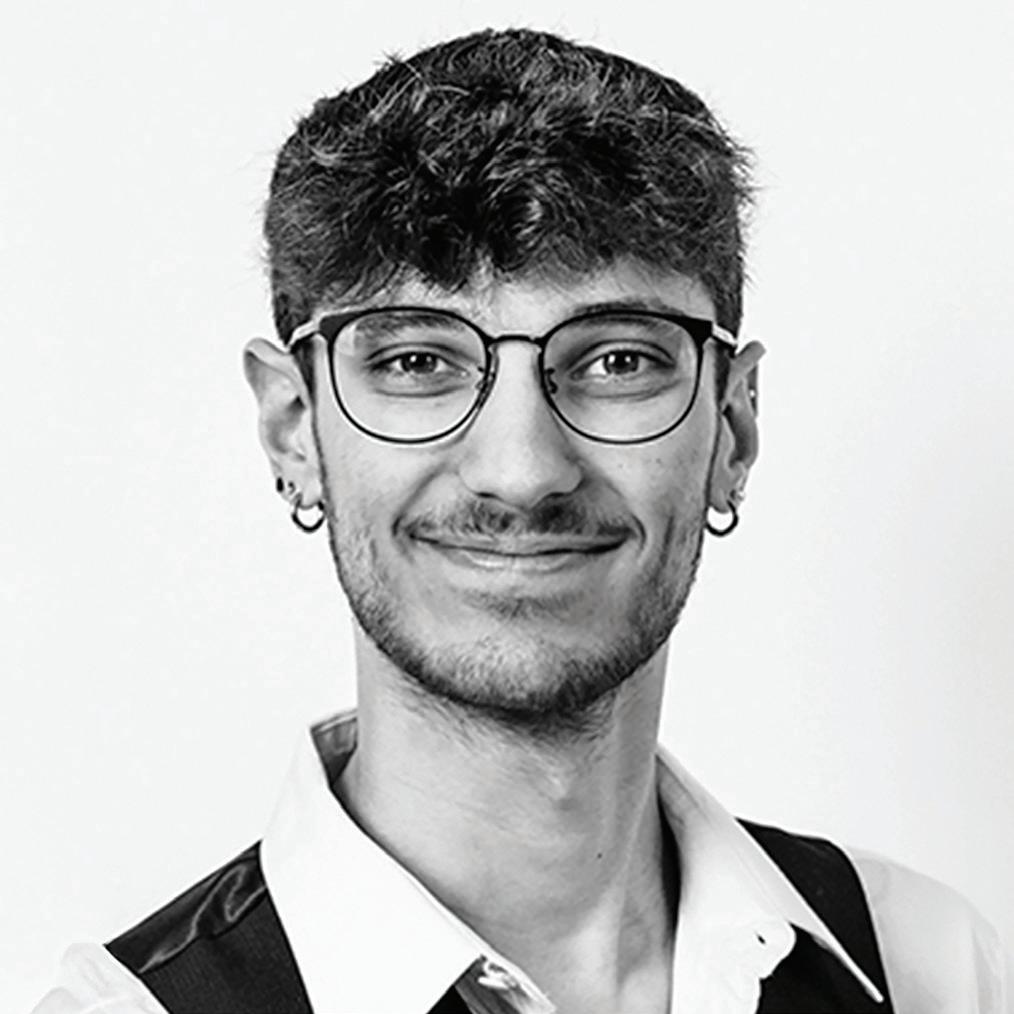
Zander Connally is a Detroit-based communication designer finishing his degree in Communication Design and Strategy at CCS. His work gravitates toward publication design, branding, motion, typography, and print, always exploring the tension between structure and experimentation. He’s drawn to the space where legibility brushes up against illegibility, where play meets constraint, and where the grid becomes a tool for both order and disruption.
Zander hopes to one day run his own print and publication focused studio, championing traditional processes like risograph printing and celebrating the physicality of design. He aims to be one of the voices pushing back against the so-called death of print, bringing a fresh, unapologetically tactile perspective to the field, and reminding the world that print isn’t ending; it’s evolving.
TELL US ABOUT A DESIGN PROJECT YOU’RE MOST PROUD OF. WHAT MADE IT SPECIAL?
Hue to Hue // A Design Archive is the project that solidified my love for publication and print, and remains one of my proudest typographic accomplishments. The book is a curated archive of design pieces I consider “good,” organized through a continuous chain of linked color that guides the viewer page to page. The final result, over 100 pages, printed and bound, was more than a finished object; it was a deep exploration of complex typographic systems and the kind of meticulous, process-driven thinking that made me fall in love with the medium.
WHAT DOES ‘GOOD DESIGN’ MEAN TO YOU?
To me, “good design” doesn’t have a single definition, it shifts from person to person, shaped by taste, bias, and experience. But in my eyes, good design is carefully curated, thoughtfully explored, and delightfully unexpected. It bends grids, transcends hang lines, and isn’t afraid to misbehave a little. Good design invites play, embraces authenticity, and radiates with hue.
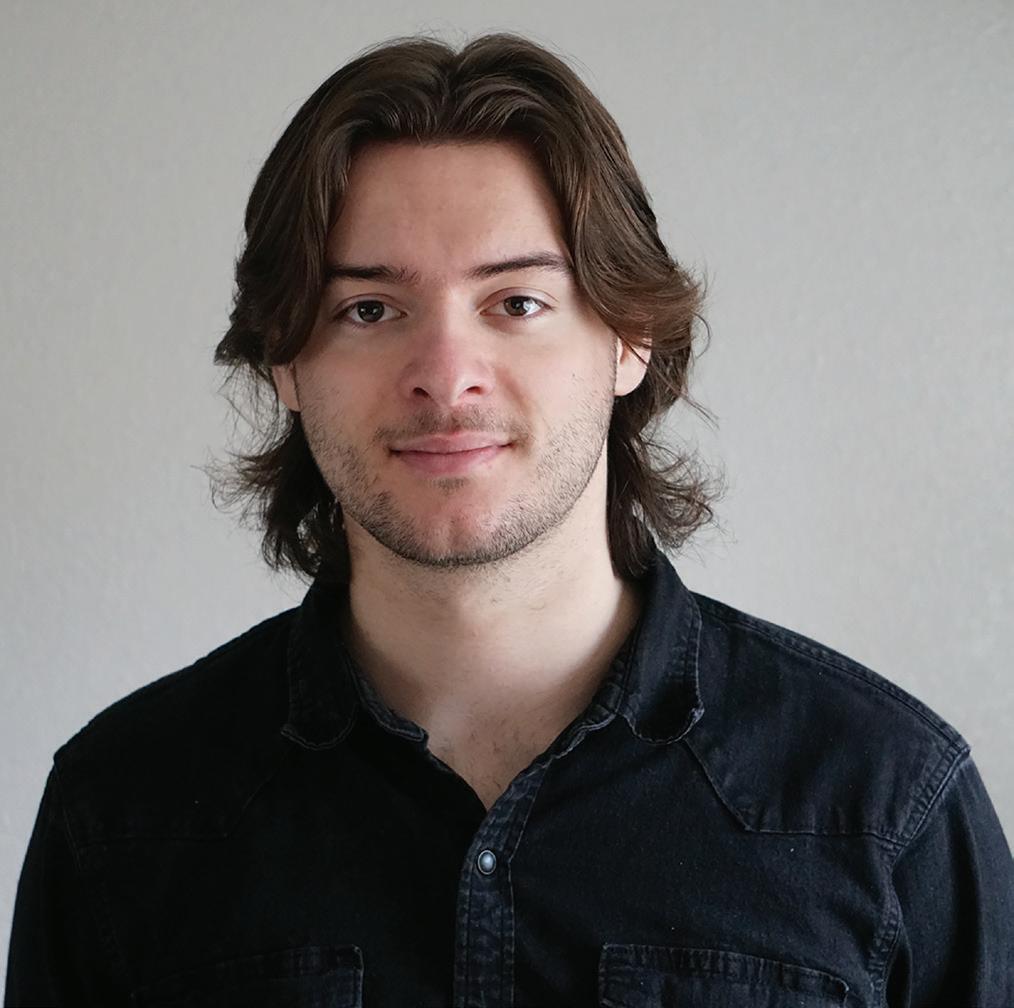
Originally from the St. Louis area, I am currently a senior at DePaul University studying graphic design with a minor in UX design. I applied for the graphic design program with most of my knowledge coming from high school digital media classes that prioritized Photoshop, and over the past four years my understanding and appreciation for design have expanded greatly. I’ve developed a love for more conceptual work and become more interested in typography than I would have ever imagined. Since moving to Chicago, I’ve become much more inspired by my surroundings. I often draw inspiration from the city’s architecture, organic forms found in nature, and different types of signage. Another constant source of inspiration for me comes from music, as I am frequently hunting for new projects to check out or just listening to my current favorites.
WHAT FIRST SPARKED YOUR INTEREST IN GRAPHIC DESIGN?
Growing up with an affinity for sketching certainly contributed to the journey, but I’d say manipulating and editing photos on my phone in seventh grade is what really got me into graphic design.
WHO ARE YOUR BIGGEST CREATIVE INFLUENCES?
The most impactful creative influences in my life are the talented faculty members that I’m always able to turn to for feedback and guidance. Aside from them, I have been very interested in Ben Laposky’s work with oscilloscopes and Laura Hilbert’s typographic projects as of late.
TELL US ABOUT A DESIGN PROJECT YOU’RE MOST PROUD OF.
WHAT MADE IT SPECIAL?
For my capstone project, I pushed myself to design using an unconventional form and tools that were not very familiar to me. It was incredibly rewarding to work with my hands and be in the woodshop for hours every week, and I’m glad I used the opportunity to try something new. The project was special to me because it was very personal, and I put in a lot of work, both physically and mentally, to bring my concept to life.
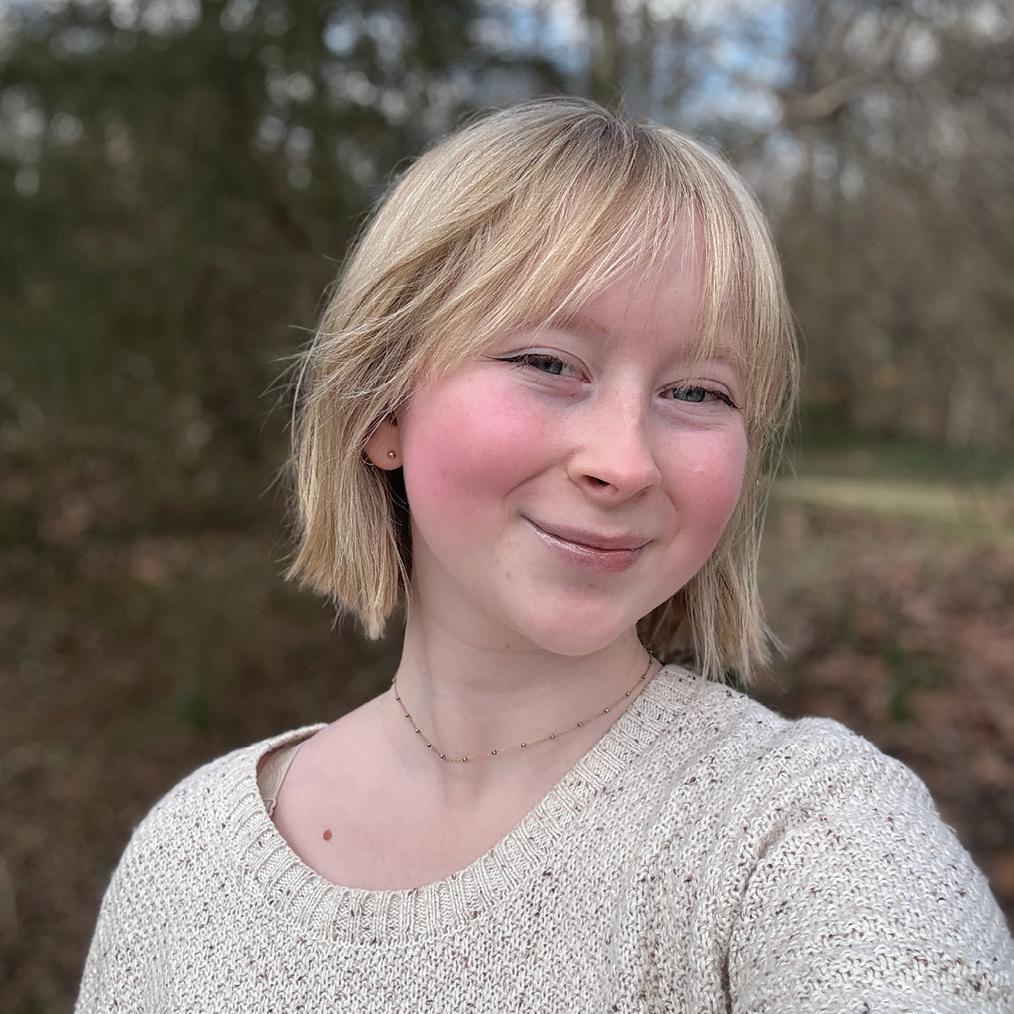
Heather Wright is in her last quarter of a BFA in Graphic Design and a User Experience Design minor at DePaul University. Her recent projects explore a variety of interests such as publication design, merchandise, and exhibition design. After revisiting the Children’s Museum of Indianapolis, where she grew up, she has been fascinated with the type of work that goes into creating a successful and impactful exhibit accessible to all ages. Her work also tries to improve the experience for the audience, looking at all the small details especially in areas like wayfinding. She hopes to be able to give back to non-profits like those that raised her and connected her with her community so they can continue to educate future generations. Beyond her career in design, Heather is constantly trying to learn new things whether it be about the world around her, or miscellaneous fun facts. Because while she knows that curiosity killed the cat, it is satisfaction that brought it back.
WHAT DOES ‘GOOD DESIGN’ MEAN TO YOU?
It is hard to pin down exactly what ‘good design’ is because I think it can be very nuanced. However, I find good design tends to have thought and reason behind it. So much of design involves storytelling and being able to showcase that in the work makes it much more compelling.
WHAT TRENDS IN GRAPHIC DESIGN EXCITE YOU - OR CONCERN YOU - THE MOST?
There is a lot to be said with new trends in the field that I find concerning, but there are so many positive ones that get overlooked because of that. I have been seeing more and more design for good in the last several years. People are coming together to create work that uplifts our communities and tries to create change and I am so excited to see that.

Emanuel Cabrera is a Miami-based multidisciplinary graphic designer and art director whose practice moves fluidly between fine art, graphic design, fashion, and music. He approaches design as a language of innovation—an evolving dialogue between modern aesthetics, culture, and lived experience. His work seeks to dissolve the boundaries between disciplines, transforming visual communication into an exploration of identity and meaning. Emanuel is currently pursuing a BFA in Digital Arts/Graphic Design with a Minor in Art History at Florida International University. He graduated Summa Cum Laude with an Associate of Arts degree from a competitive arts conservatory in 2023, where he received formal training in traditional fine art.
WHAT FIRST SPARKED YOUR INTEREST IN GRAPHIC DESIGN?
My connection to design began in elementary school, where imagination met intention. I sketched my first superhero, designed his world, and bound those ideas into my first comic book. That early act of creation revealed how form can give meaning to thought. As I grew, this passion evolved into a deeper understanding of design—not just as decoration, but as a system of communication, storytelling, and purpose. Graphic design became the space where art meets clarity, and creativity serves both people and ideas.
WHO ARE YOUR BIGGEST CREATIVE INFLUENCES?
One of my defining creative influences is Virgil Abloh. His ability to fuse music, architecture, and fashion redefined how I perceive the boundaries of design—revealing it as a language that moves freely between disciplines and cultures. His work taught me that design is not confined to medium but expanded by mindset. I also draw deep inspiration from Saul Bass, Paula Scher, and Cornel Windlin—designers whose visual voices have shaped how we see, read, and feel the world through form and intention.
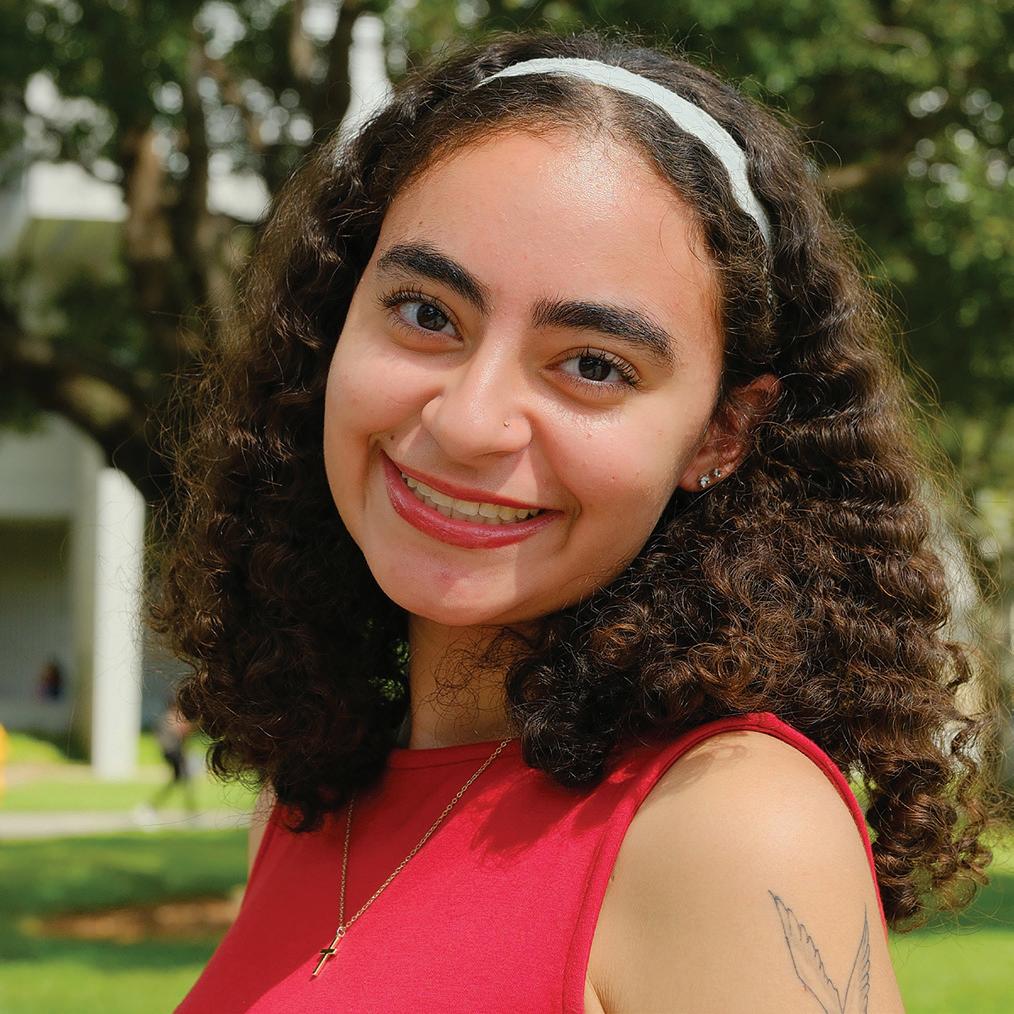
FLORIDA INTERNATIONAL UNIVERSITY
Samantha Garces is a senior at Florida International University and is graduating in Spring 2026 with a BFA in Graphic Design and a minor in Art History. She was born and raised in Miami, Florida and is interested in the arts and film.
I am a designer and illustrator based in Miami, Florida, soon to graduate from Florida International University. My practice is rooted in curiosity and driven by a desire to connect ideas through form, image, and narrative. Drawing, reading, film, and music inform how I see and interpret the world—they are extensions of my creative process as much as they are sources of inspiration.
I’m especially interested in the dialogue between illustration and graphic design. The intersection of mixed media, where digital precision meets the tactility of the handmade, is where my work feels most alive. Through design, I aim to create visual experiences that invite reflection and emotion—works that speak to both individuality and shared meaning. Each project is an opportunity to define my voice, to experiment with new mediums, and to translate personal vision into a universal language of design. https://readymag.website/u2761368840/samanthagarces/
TELL US ABOUT A DESIGN PROJECT YOU’RE MOST PROUD OF. WHAT MADE IT SPECIAL?
Funnily enough, the design project I am currently working on for my class with Professor Silvia Pease is what I am most proud of. I feel as if I pushed myself out of my comfort zone with the conceptual illustrations, use of vibrant colors, and bold typography. I also find it so much bigger than myself and for an important cause because it is a series of five posters for the Students Demand Action non-profit, which works to end gun violence on schools and campuses.
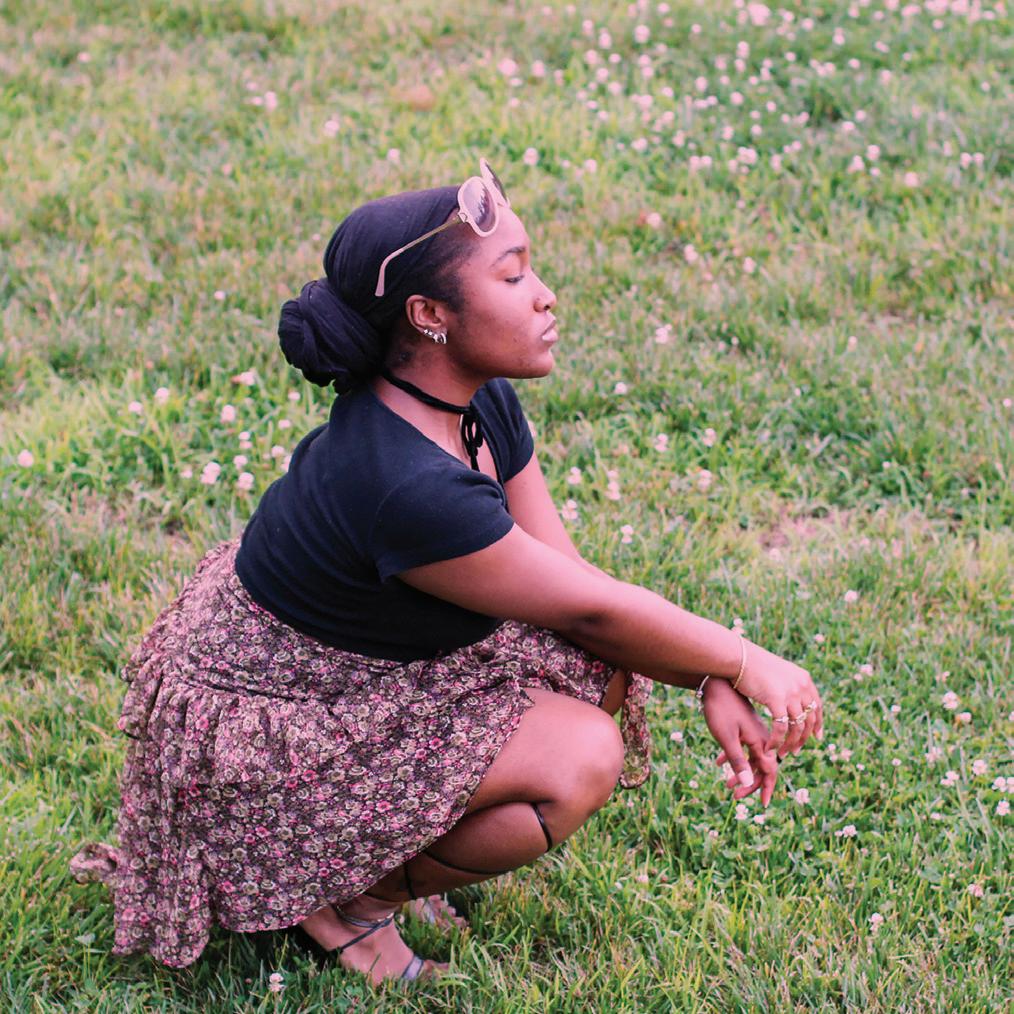
GEORGE MASON UNIVERSITY
I am a creative based in the DMV area who specializes in multiple forms of visual communication including: graphic design, photography, videography, and editing. I was born in Norfolk, Virginia and have lived in 4 different cities in my life, 3 in Virginia and 1 in Japan. I’ve grown up seeing simple small-town signs in Suffolk, Virginia to bold, neon Kanji billboards in Tokyo, Japan. Exposure to extremely advanced innovations in Japan fueled my love for using technology as a means to create. Living in lively cities and the humble countryside made me appreciate a vast array of cultures and perspectives in life. I’ve always been a nomad even with creative hobbies: ballet, cheerleading, rollerskating, gymnastics, and drawing. Diversifying my hobbies and skills is important to me because I don’t find value in limiting myself. I’m pursuing a May 2026 BFA, and I also work in GMU’s branding department as a videographer and editor. On filming days, I like to shoot additional behind the scenes content to make stylized vlogs of our filming process to memorialize the moments that our team can look fondly back at.
WHAT FIRST SPARKED YOUR INTEREST IN GRAPHIC DESIGN?
Living in Japan and seeing the beautiful maximalist designs in magazines and everyday store signs.
WHO ARE YOUR BIGGEST CREATIVE INFLUENCES?
My grandfather made art so naturally and made work to bring people together. Intranet Girl is another huge inspiration for me because of the nostalgic, cyberpunk, 3D worlds that she creates. VR designer, Jack Harrison’s work because of the way that he leverages analog technology to breathe new life into his designs and animations.
TELL US ABOUT A DESIGN PROJECT YOU’RE MOST PROUD OF. WHAT MADE IT SPECIAL?
One of my favorite artists asked me to create a promotional video for his debut album and I was so honored and excited – partially because the video was reminiscent of 90s album commercials.
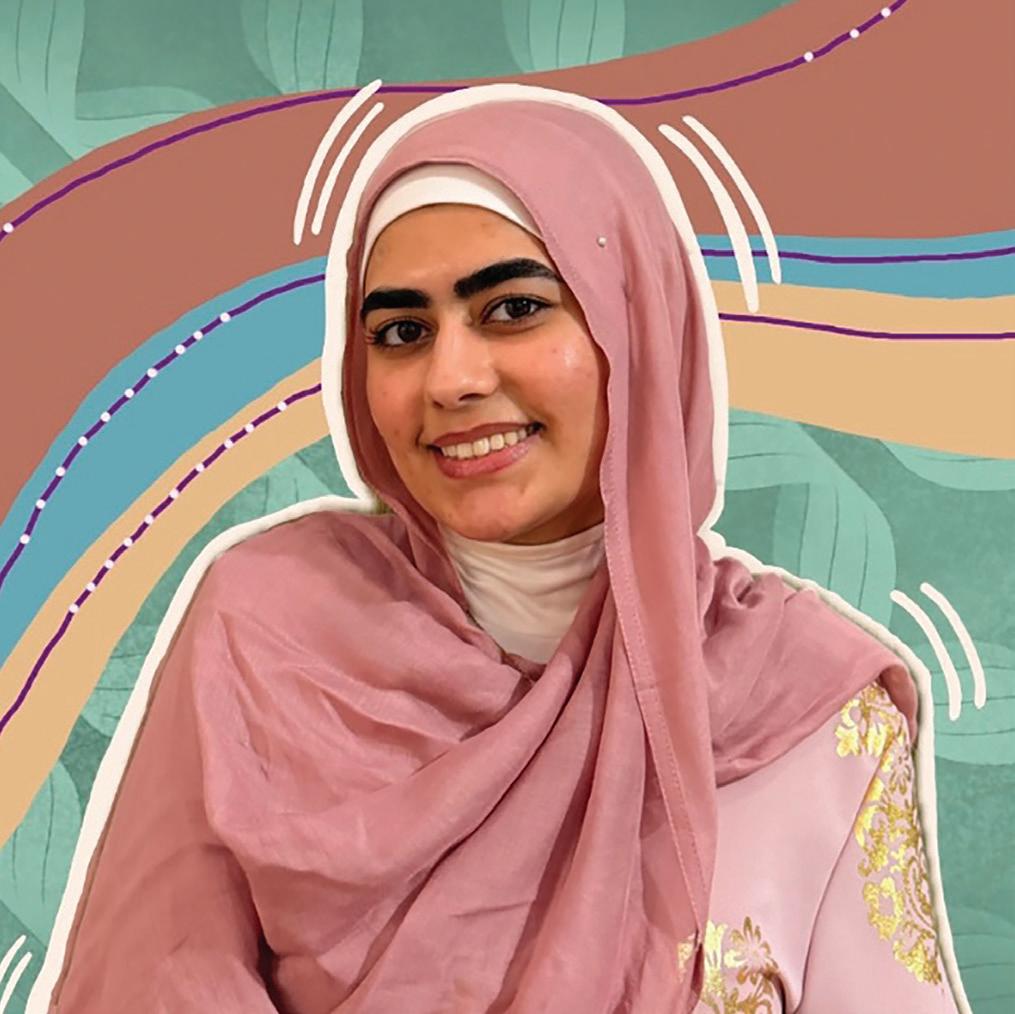
Farashta Rezai’s design perspective bloomed while growing up between Afghanistan, Africa, and America; every place changed the way she sees design, pattern, and color. The shift from knowing one language, Farsi, to learning English, wasn’t just expanding her language knowledge; it was a way of learning how to turn voices into visual storytelling.
While at university, she gained the opportunity to embed her voice as an Afghan girl into her projects hoping to inspire her peers to do the same. To her, design grants an ability to change the audience’s perspective and make them feel emotions through the work. She combines her creativity and voice in designs that offer the public a viewpoint they haven’t seen before.
Farashta interned as a Social Media & Marketing Designer for Go Local FXBG, non-profit organization. There, she gained experience with clients, and learned how influential visual designs help organizations connect with their communities while also showcasing the positive impact of their hard work. In the near future, she plans to launch her own small bear-themed bakery inspired by cute, cozy, warm Japanese cafes, and incorporate a flower shop and a small library. Farashta loves to indulge her baking skills, travel, as well as explore art and design museums all over the world.
WHAT DOES ‘GOOD DESIGN’ MEAN TO YOU?
To me, “good design” is design that can positively impact individuals by raising their awareness about social justice and human rights issues. A good design has the ability to influence viewpoints, inviting them to think critically about challenges like racial inequity, global warming, and accessibility to education. Good design interacts emotionally with the audience while giving them visual facts that help them understand the subject.
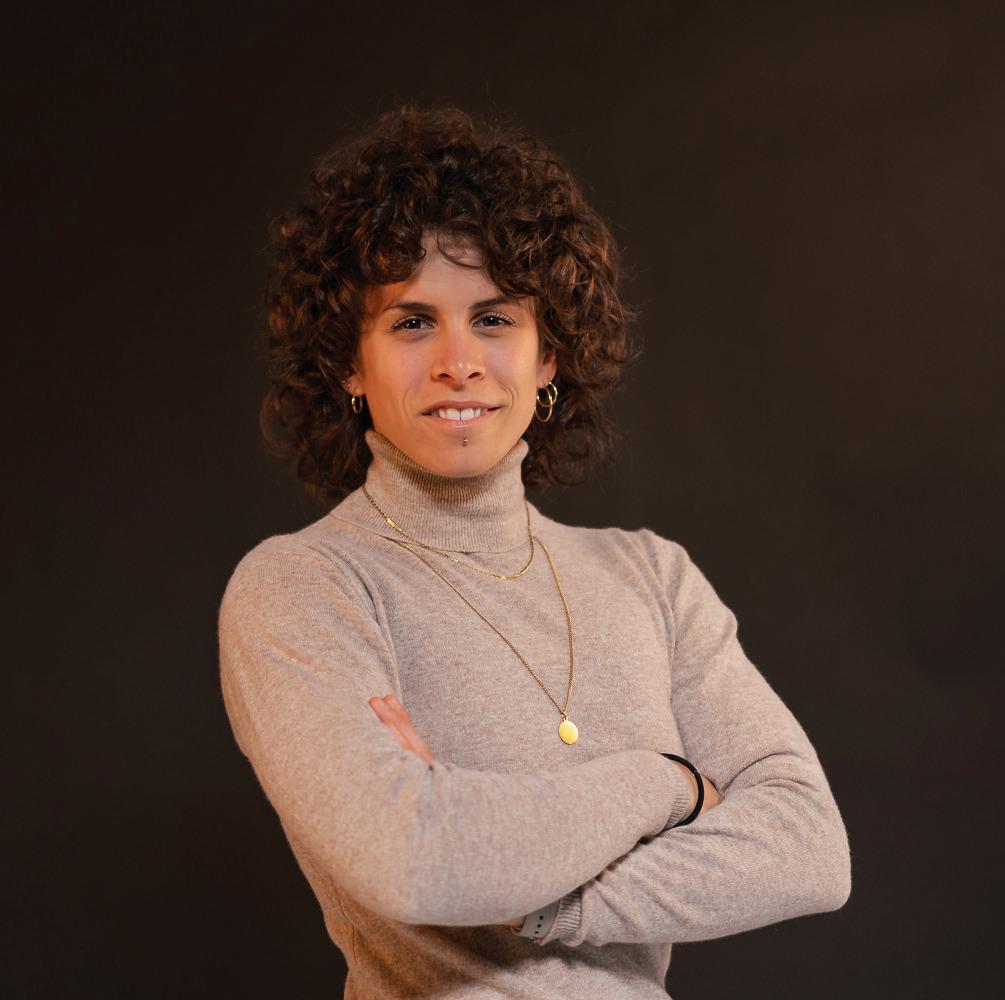
Silvia Alberti is a dual-degree graduate student at Iowa State University, pursuing an MFA in Graphic Design and an MS in Human–Computer Interaction. Originally from Italy, she grew up in the Valpolicella region, surrounded by art, vineyards, and the visual culture of her hometown. She earned her BFA in Graphic Design from Northwest Missouri State University before moving to Iowa to expand her practice at the intersection of design, research, and storytelling.
Her current graduate research, Designing Inclusion, focuses on early childhood education and how the aesthetics of assistive devices shape children’s understanding of disability. She works through illustrated stories, flashcards, and classroom-ready tools, using design as a way to help children talk about diPerence with curiosity rather than discomfort. Her approach draws from research-through-design, educator collaboration, and visual experimentation. Beyond research, Silvia has worked as the Design and Marketing Lead for Cantina Spada since 2019, creating branding, packaging, campaigns, and visual assets across print, digital, and web. Photography continues to be part of her everyday practice, alongside mixed-media projects, interactive installations, and client branding work. Across all of it, she tries to make work that feels intentional, accessible, and grounded in real human needs and experiences.
WHAT FIRST SPARKED YOUR INTEREST IN GRAPHIC DESIGN?
My first experience with digital creation started when I was a kid trying to recreate the FX I saw in Harry Potter and Dragon Ball; filming little clips and layering ePects to see if I could make the magic look real. I didn’t know it was “graphic design” at the time, and honestly, with how broad the field is now, who can even say where it starts or ends? I just kept making things until I realized design was the one place where all those interests naturally came together!
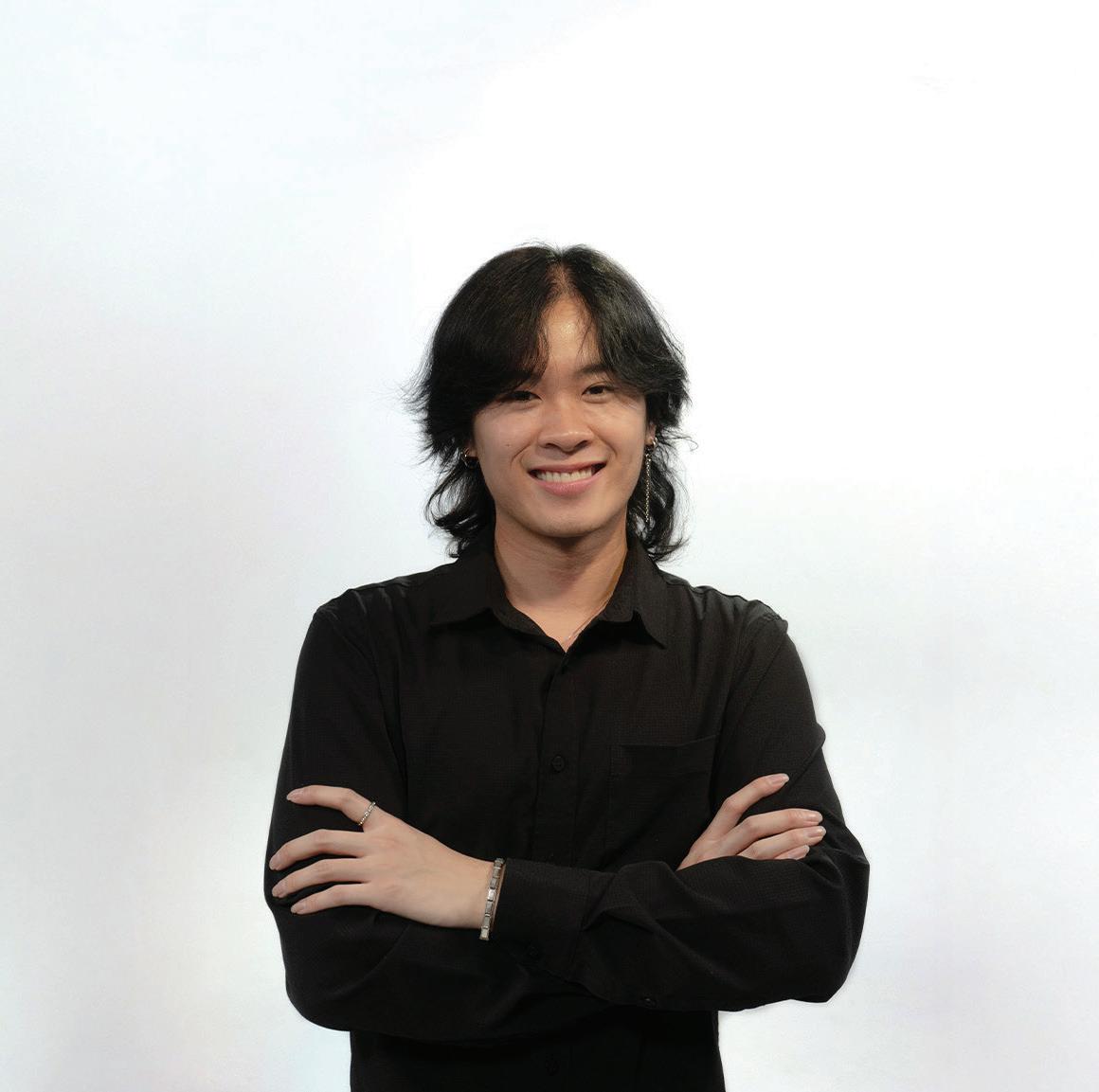
My name is Aejay Vivanh-Vong, and I’m majoring in Graphic Design with a minor in UX Design. Over time, design has become a natural part of who I am, shaping how I think, how I communicate, and how I express ideas. It gives me a way to translate thoughts and experiences into something visual, intentional, and engaging. Design has become the place where I feel most connected to my creativity and most confident in my voice.
My Asian heritage has influenced me in subtle but meaningful ways, especially in how I approach storytelling, composition, and the emotional weight of visual choices. Growing up in a Thai family taught me the importance of care, patience, and consideration, values that show up in the way I develop ideas and refine my work. These influences don’t define my design, but they guide the way I continue to develop my design skills, create with purpose, and stay grounded in what feels true to me.
Design, for me, is both personal and expressive. It reflects the way I move through the world, with curiosity, thoughtfulness, and a commitment to creating work that feels genuine. It’s become more than a profession I’m pursuing, and more a part of my identity and how I hope to make a meaningful impact.
My biggest influences are my professors, Brandon Olsen and Bernard Canniffe, whose guidance shaped my design approach. During my sophomore year, I remember Bernard saying, “design is exhaustive,” which pushed me to explore ideas deeply, thinking beyond the surface and designing with intention. I’m also inspired by Jack Chen, a designer from New York whose work shows a strong voice and purpose.
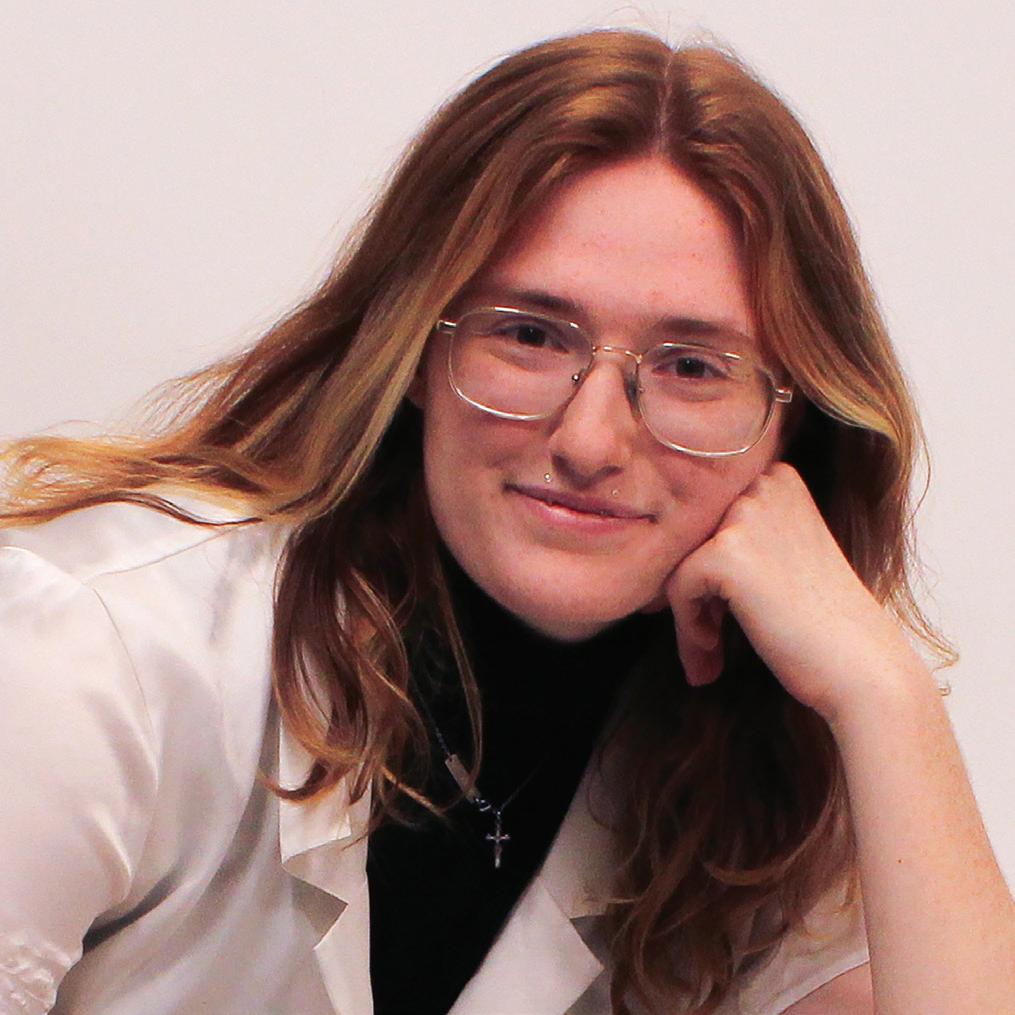
KANSAS CITY ART INSTITUTE (KCAI)
Marcus Geary is a senior design student at the Kansas City Art Institute, studying social and experiential design. From the Twin Cities, Marcus has spent his time in Kansas City working as co-director on the A20 winner Sprung Formal 20, while expanding his love for gallery design and drawing when he finds the time. Marcus is pursuing his interests in wayfinding and brand identity, focusing on illustration and typography throughout his work. As an artist and designer, Marcus is passionate about making people’s lives joyful. Marcus believes that design makes the world a better place and is excited to be part of the change he wishes to see.
WHAT FIRST SPARKED YOUR INTEREST IN GRAPHIC DESIGN?
Kellogg’s cereal boxes and their redesigns were a big inspiration for me. From the 60s to now, they’ve always been something that reminds me of the joy of graphic design.
WHO ARE YOUR BIGGEST CREATIVE INFLUENCES?
My favorite artist is Edward Hopper, my favorite book is The Anthropocene Reviewed by John Green, and my favorite movie is Bones and All (2022), directed by Luca Guadagino. In my life, however, it’s my mom, my twin sister, and my best friend who are the biggest sources of inspiration for me.
TELL US ABOUT A DESIGN PROJECT YOU’RE MOST PROUD OF.
WHAT MADE IT SPECIAL?
Sprung Formal 20, KCAI’s annual Literary Magazine. Last year, I co-directed the project. From January to May, we produced the journal with a team of our classmates. I headed the publication design, and it was such an amazing feeling when I finally got the journal in my hands for the first time.
WHAT DOES ‘GOOD DESIGN’ MEAN TO YOU?
Successfully functional for the correct audience.
KANSAS CITY ART INSTITUTE (KCAI)
Jenny Niehaus is a Graphic Design and Entrepreneurship student from the Kansas City Art Institute. Within thier work, Jenny focuses on design as a tool for communication and connection. She believes that design is best when used to create discussion and community. Her interest in design is expansive and ranges in spaces such as motion design, identity systems, event design, and design marketing. Jenny is always looking for ways to expand where graphic design exists and bring design into new experiences
WHAT FIRST SPARKED YOUR INTEREST IN GRAPHIC DESIGN?
My interest in design can not be distilled into one “spark”, but instead my passion for design comes from a multitude of moments, people, and experiences. I always had a lot of love for art and engaged with it in varying spaces, from collecting album art, to participating in amazing charity events like Friends of Kids with Cancer: Art from the Heart, and my high school design curriculum; all of that and more are what led me to love design.
WHO ARE YOUR BIGGEST CREATIVE INFLUENCES?
My peers, faculty, and community outside and within the Kansas City Art Institute have a large influence on my creative processes and methods. Some of the designers outside of those spaces that I look to for inspiration range from Frank Lloyd Wright to Seo Hyojung.
WHAT TRENDS IN GRAPHIC DESIGN EXCITE YOU - OR CONCERN
YOU - THE MOST?
I am excited about the work and trend I see of designers engaging with charities and grassroots organizations. It inspires me because I see a generation engaging with design and using it for the benefit of communities.
To request free product information from companies featured in this issue contact the advertisers directly as provided below or within their ads.
GDUSA PRINT AND DIGITAL MAGAZINES
Academy of Art University 3 academyart.edu
Artisan 17 artisantalent.com
Billerud/Sterling Premium IFC billerud.com
Domtar 7 info.domtar.com/cougarswatchbook
Kallima IBC kallimapaper.com
Savannah College of Art & Design 5 scad.edu/visit
Sylvamo BC acccentopaque.com
GDUSA.COM RUN-OF-SITE BANNERS
Academy of Art University academyart.edu
Art Directors Club Awards adcawards.org
Artisan artisantalent.com
Billerud billerud.com
Domtar https://bit.ly/4aYyGgG
GDUSA Book Shop bookshop.org/shop/gdusa
Kallima kallimapaper.com
Northwestern University sps.northwestern.edu/info/information-design.php
The ONE Show oneshow.org
Sessions College www.sessions.edu/bachelors/ Sylvamo accentopaque.com
Syracuse University School of Design vpa.syr.edu/cmd2025
Type Directors Club https://www.oneclub.org/tdcawards/
GDUSA.COM TOP DESIGN SCHOOL BANNERS (gdusa.com/2025-gdusa-schools/)
Auburn University cadc.auburn.edu/graphicdesign
Bowling Green State Unversity bgsu.edu/arts-and-sciences/school-of-art/
Drexel University drexel.edu/westphal/academics/undergraduate/graphicdesign/
USC Roski roski.usc/the-mfa.design-degree-program/
The University of Southern Mississippi usm.edu/performing-visual-arts/
The University of Texas at Austin designcreativetech@utexas.edu
University of Cincinnati, Ullman School daap.uc.edu/academic-programs/school-of-design/ communication-design.html
Woodbury University woodbury.edu

Exceptional
Sustainably