Guilford College Moments in Black History 2026 Booklet
Compiled by Meredeth D. Summers
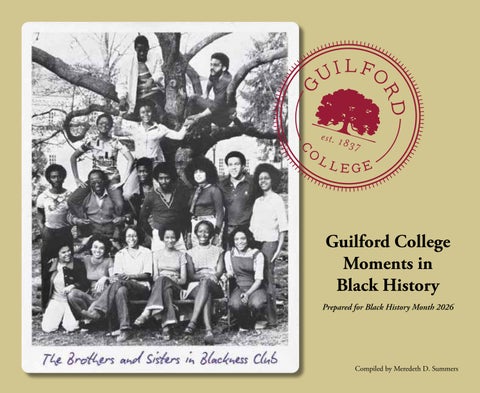
Guilford College Moments in Black History
This booklet includes stories about individuals and organizations in the history of the Black experience at Guilford College. These stories were compiled by Meredeth Summers, Chief of Staff and a Guilford parent, for distribution to the College community during Black History Month in February 2026. While Guilford did not integrate its student body until the 1960s, the significant influence of people of color on the campus and surrounding community dates to the 1800s and the New Garden Boarding School, predecessor to the College. This set of stories is representative of the individuals and organizations who were trailblazers for the Black experience. Information in this booklet was drawn from the Quaker Archives, news and feature stories and magazines published by the College’s Office of Communications & Marketing and other sources. If you have questions about the booklet, please email Meredeth at summersm@guilford.edu.
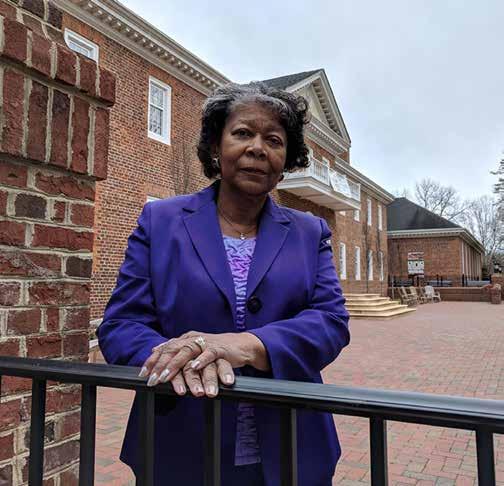
Lavina “Vina” Curry
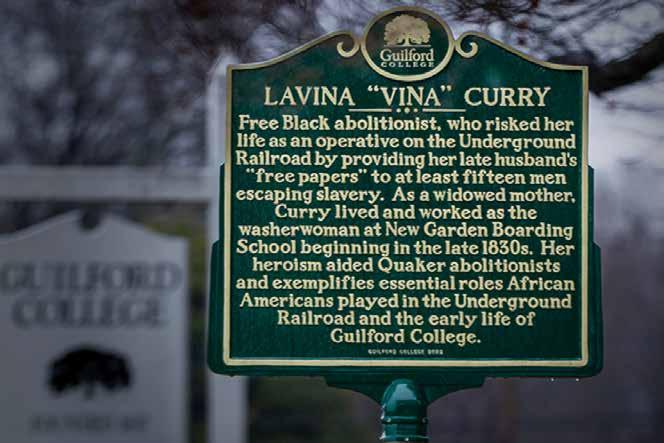
Lavina “Vina” Curry was a free Black abolitionist who lived and worked in Guilford County during the early nineteenth century. Employed as a washerwoman at New Garden Boarding School — the institution that later became Guilford College — Curry played a courageous role in the Underground Railroad.
After the death of her husband, Archibald Curry, Lavina safeguarded his freedman’s papers and made the bold decision to lend them to enslaved men seeking freedom, enabling them to travel north more safely. Historical accounts indicate that these papers were used at least fifteen times to aid freedom seekers escaping slavery.
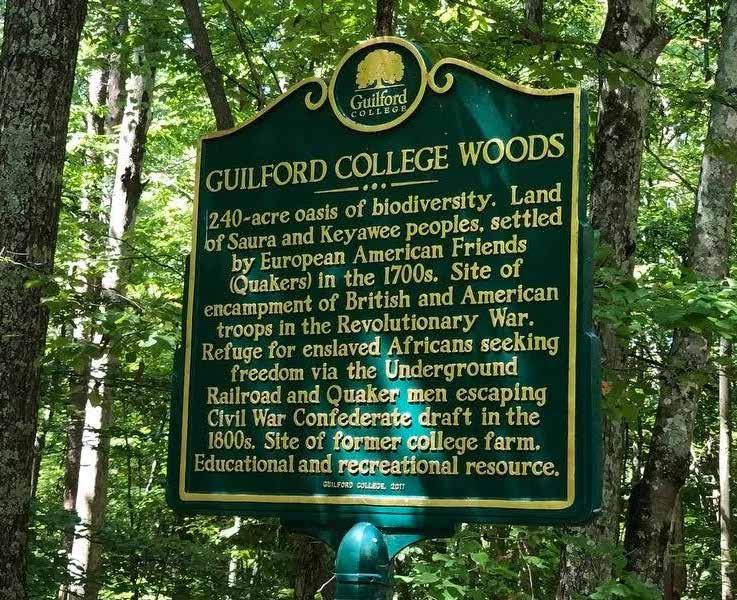
For generations, Curry’s story remained largely unknown. In recognition of her courage and the vital role African Americans played in the Underground Railroad and the early life of Guilford College, a historical marker honoring Lavina Curry was installed on campus in 2022 at the Friendly Avenue entrance.
Today, her legacy reminds the Guilford community that the pursuit of freedom and justice has always depended on the bravery of ordinary people willing to take extraordinary risks. Her story deepens our understanding of Guilford College’s Quaker roots, its connection to the Underground Railroad, and the essential contributions of free Black communities to the struggle for liberation.
READ MORE ABOUT LAVINA HERE
Gertrude Judd Upperman ’69
Gertrude Judd Upperman ’69 was among the early African American students who helped shape a more inclusive Guilford College during the Civil Rights era. Growing up just two blocks from campus, her family’s connection to the College spanned generations, with relatives working at Guilford and in the surrounding community.
As a student in the 1960s, Upperman helped build community and belonging for Black students at Guilford. She was a charter member of Brothers and Sisters in Blackness, the College’s first Black student organization, and she later became one of the institution’s early African American graduates.
Her commitment to Guilford only deepened after graduation. Upperman served on the Alumni Association Board of Directors, helped organize the Black Alumni of Guilford College (BAGC), and supported campus initiatives for decades. In recognition of her lifelong service, in 2019 she received the Charles C. Hendricks ’40 Distinguished Service Award, one of the College’s highest alumni honors.
Gertrude Upperman’s life reminds us that Guilford College’s history of inclusion was shaped not only by institutional change, but by students and alumni whose commitment to community, belonging, and education spanned generations
READ MORE ABOUT GERTRUDE HERE
The Underground Railroad and
Witness Tree
Long before Guilford College became a center for higher learning, the New Garden community was part of a quiet but courageous movement for freedom. In the nineteenth century, Quakers and free Black residents of Guilford County participated in the Underground Railroad, helping enslaved people move toward safety in the North. In 2017, the federal government recognized the land as one of the earliest documented sites of the National Underground Railroad Network to Freedom.
One of the most powerful symbols of this history on Guilford’s campus is the Underground Railroad Tree. The massive and beautiful Liriodendron Tulipifera, or Tulip tree, has many names, but is most often called the Witness Tree, or URR Tree. A core sample was taken in 2015 and determined that it dates back, at least, to the late 1700’s.
We do not know or have any records indicating that the tree was used as a meeting place, or served any significant role during the times of the Underground Railroad, but many stories talk about the tree as a witness to the many activities of refuge, courage, and interracial collaboration for justice that took place on the land — then known as the New Garden Woods, and now known as the Guilford College Woods.
While historians continue to study and interpret these stories, the tree has become an enduring symbol of cooperation between Black and Quaker communities in the struggle against slavery. It represents both the danger faced by those seeking freedom and the moral conviction of those willing to help them.
Today, the Underground Railroad Tree stands as a living reminder that Guilford College’s history is deeply rooted in courage, community partnership, and the pursuit of justice — values that continue to shape the College and the broader Greensboro community.
LEARN MORE
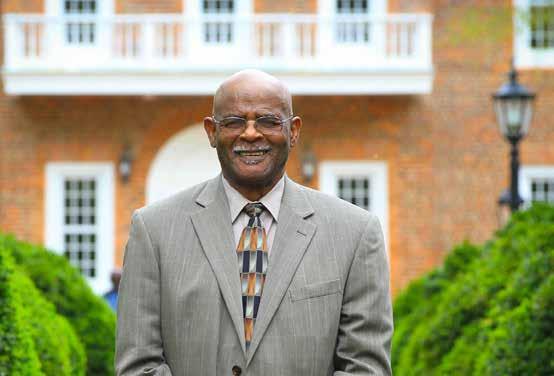
Doug Gilmer
For more than four decades, Doug Gilmer was a steady and beloved presence at Guilford College — someone whose work in dining services shaped daily life on campus and whose mentorship touched generations of students.
Gilmer began working at Guilford College in 1963 as a dishwasher and steadily rose through the ranks of dining services, serving as a cook’s helper, head cook, kitchen manager, supervisor, and general manager before becoming director of operations (read more). His career reflected dedication, leadership, and the often-unrecognized contributions of Black staff members who helped sustain Guilford’s community through decades of change.
When Gilmer retired in 2009 after 46 years of service, students and colleagues remembered him as far more than a dining services leader. He was known as a mentor, listener, and friend — someone who created a sense of belonging for students in one of the most central gathering places on campus. He was especially remembered for his connection to students, including members of Guilford’s 1973 NAIA championship men’s basketball team, and for the relationships he built across generations of Guilfordians.
In recognition of his extraordinary service and lasting impact on the College community, Guilford College awarded Doug Gilmer an honorary degree in 2016 (read more), affirming that his leadership, mentorship, and commitment to students were as meaningful to the institution as any formal academic contribution. Also, the beautiful space, to your left as you enter the dining hall, is named in his honor — The Gilmer Room.
Doug Gilmer’s story reminds us that Guilford College’s history is shaped not only in classrooms and offices, but in the daily care, dignity, and communitybuilding work that defines the student experience. His legacy lives on in the countless students who found encouragement, conversation, and belonging in the dining hall.
READ THE ARTICLE
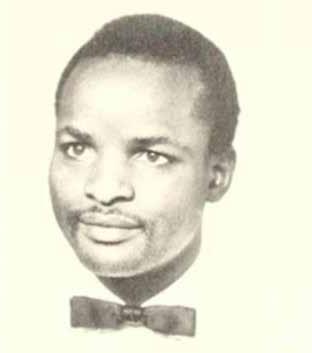
Washington Rakama ’64
Washington Zebedee Walusala Rakama ’64 represents a pivotal moment in Guilford College history — one that connects the Civil Rights Movement, the internationalization of higher education, and the College’s growing commitment to inclusion.
When Rakama enrolled at Guilford in 1962, he was among the first African (Kenyan) students to attend the College, part of a historic fall semester that also saw the enrollment of Guilford’s first African American student. Together, these students marked the beginning of a new chapter in the institution’s life — one defined by broader access, global connection, and the gradual transformation of campus community.
Two years later, in 1964, Rakama became Guilford College’s first Black graduate, achieving a milestone that reflected both personal determination and institutional change. His time at Guilford unfolded during the height of the Civil Rights Movement, when colleges and universities across the United States were confronting questions of segregation, equality, and opportunity. Rakama’s presence on campus embodied Guilford’s Quaker testimony of equality and its evolving commitment to educational access.
Beyond the classroom, Rakama helped shape student life in lasting ways. Along with Ayub Watakila ’65, he played a central role in the early development of soccer at Guilford College. In the 1960s, soccer was still new to campus and operated largely as a student-driven program, often organized by international students and graduates of Quaker schools such as Westtown. Players sometimes purchased their own equipment, and coaching support was informal. Rakama and Watakila were notable scorers and advocates for the sport, helping establish a tradition that continues at Guilford today.
After graduating with a degree in Economics, Washington earned a master’s degree at UNCG. In his career, he was Deputy Permanent Secretary in the Government of Kenya as well as Town Clerk of Kakamega, Nanyuki and Kitale. At his death on March 29, 2020, he was the patron of Banyala ba Ndombi in the Luhya Council of Elders.
In the Spring of 2014, Washington was inducted into the Golden Circle, honoring alumni celebrating the fiftieth anniversary of their graduation. His brother, Livingstone Rakama ’77 — a Greensboro resident and active member of the alumni community — accepted the recognition on his behalf, as there was not enough time to arrange travel documents.
Washington Rakama’s story reflects a powerful convergence of racial inclusion, global engagement, student leadership, and educational opportunity at Guilford College. As the College’s first Black graduate, he helped open the door for future generations of African American students who would shape Guilford’s intellectual and community life. As one of its earliest international students, he helped expand the College’s sense of the world beyond campus.
Today, Rakama’s legacy lives on in Guilford’s diverse student body, its global partnerships, and in campus traditions — like soccer — that began with students willing to build something new. His story reminds us that the path toward belonging and equity is often created by individuals who step forward first.
James C. McMillan
James Carroll McMillan (1925–2022) holds a historic place at Guilford College as the first African American full-time faculty member and department head in the College’s history. An accomplished artist, educator, and community leader, McMillan helped shape Guilford’s academic and cultural life during a period of significant institutional change.
McMillan joined Guilford in 1969 as professor of Art and chair of the Art Department, a role he held until his retirement in 1988. His appointment marked an important milestone in the College’s journey toward racial inclusion, coming only a few years after Guilford began enrolling Black students in the early 1960s. During that time, he was arrested three times for civil disobedience in the fight for equal treatment. He also served as a faculty liaison for the Congress of Racial Equality (CORE).
Before arriving at Guilford, McMillan had already built a distinguished career. Born in Sanford, N.C., he attended Howard University, served in the U.S. Navy during World War II, and later earned a Master of Fine Arts in sculpture from Catholic University. He taught at Bennett College, where he helped build its Art program, and became recognized for powerful works such as the fresco mural “Black Miners,” which drew national attention. (Learn more here)
At Guilford College, McMillan was known not only as a professor and department chair, but as a mentor to students and an advocate for the arts as a force for community transformation. In recognition of his impact, Guilford established the James C. McMillan Scholarship for Art students, ensuring that his legacy continues through future generations of artists. After retiring from Guilford in 1991, he helped co-found the African American Atelier in Greensboro, an organization dedicated to promoting African American art and artists and expanding arts education for young people.
McMillan’s influence extended far beyond the classroom. His artwork has been exhibited in retrospectives and collected by institutions across North Carolina, including Guilford College. His work focused on the human condition, incorporating themes of racism, injustice, the Civil Rights Movement, and the Depression. He was a versatile artist skilled in oil, sculpture, and drawing. (See more here)
James C. McMillan’s story reflects a defining moment in Guilford College history — when the institution’s commitment to equality began to be reflected more fully in its faculty leadership. His life’s work reminds the Guilford community that art, education, and social change are deeply connected, and that institutions grow stronger when new voices are welcomed into leadership.
SEE JAMES’ ARTWORK
Sarah Thomas Curwood
Sarah Thomas Curwood (1916–1990), the first African-American Guilford College Trustee, was an educator, sociologist, environmental advocate, Quaker leader, and public servant whose life of scholarship and service left a meaningful legacy at Guilford and beyond.
Born Sarah Ethel Thomas in Binghamton, N.Y., she became one of the early Black women graduates of Cornell University (1937) and later earned a master’s degree in Education from Boston University and completed doctoral work in Sociology at Radcliffe College. Her academic career included teaching Early Childhood Education at Harvard Graduate School of Education and Sociology at institutions such as Antioch College, Rhode Island College, the University of New Hampshire, and Knoxville College, where she helped shape generations of students.
Curwood’s professional life was deeply connected to community activism and public service. She worked with the Head Start program in New Hampshire and Vermont, contributed to organizations such as the Boston Urban League, the American Friends Service Committee, and the Massachusetts Committee on Children and Youth, and combined her academic work with environmental stewardship as a tree farmer and member of a county forest advisory board.
During the mid-1980s, Curwood served on the Guilford College Board of Trustees, becoming the first African American trustee in the College’s history. As a member of the New England Yearly Meeting of Friends, she brought Quaker values of equality, education, and community responsibility to Guilford’s governance during the presidency of Bill Rogers. Her trusteeship reflected Guilford’s growing commitment to racial inclusion not only among students, but also in institutional leadership.
In 1992, Guilford College established the Sarah T. Curwood Scholarship, which supports African American students majoring in Education Studies — a fitting tribute to Curwood’s lifelong dedication to teaching, child development, and educational access.
Curwood’s influence also extended through her family. Her son, Steve Curwood, became a Pulitzer Prize–winning journalist and public radio host, continuing the family’s tradition of public engagement and storytelling rooted in Quaker values.
Sarah Thomas Curwood’s life reflects a powerful intersection of education, Quaker witness, environmental stewardship, and racial justice. Her leadership at Guilford College helped expand who could shape the institution’s future, while the scholarship that bears her name continues to support new generations of educators committed to equity and community.
READ THIS ARTICLE
James McCorkle ’66
James McCorkle ’66 holds a defining place in Guilford College history as the first African American traditional-age student to enroll at the College, helping to integrate Guilford during the early years of the Civil Rights Movement.
McCorkle arrived at Guilford in 1962, encouraged by a guidance counselor at Atkins High School in Winston-Salem who told him about the opportunity to attend the Quaker college. At the time, he had planned to enroll at Morehouse College, but after careful reflection, he chose Guilford — a decision that would make him a trailblazer in the College’s history.
Growing up in foster homes in Winston-Salem, McCorkle had already learned resilience and adaptability. He also experienced the realities of segregation firsthand — drinking from “coloredonly” water fountains and sitting in segregated sections of public spaces — experiences that shaped his understanding of the importance of educational opportunity and social change.
The fall of 1962 marked a turning point for Guilford College. While McCorkle was the first African American traditional student, he was not the only Black student on campus that semester. Washington Rakama ’64 and Ayub Watakila ’65, Quaker students from Kenya, also enrolled, signaling the beginning of both racial integration and a more international student body at Guilford.
McCorkle lived in English Hall with two roommates and immersed himself in campus life (read more). He played intramural sports, built friendships across campus, and excelled academically as a National Merit Scholar. Faculty members such as Mary Feagins, who taught German, and Ernestine Milner, who taught Art, were especially meaningful mentors during his time at Guilford.
After graduating in 1966 with a major in Chemistry and a minor in Education, McCorkle became a high school teacher at Dudley High School in Greensboro, where he had previously been a student teacher. He later served in the Peace Corps for four years, working in Malaysia and Ghana, an experience he credited in part to the cross-cultural preparation he received at Guilford.
Reflecting on his experience decades later, McCorkle described his path as “the road less traveled,” expressing pride in persevering and completing his education during a transformative era. His story remains central to Guilford College’s history of integration and its ongoing commitment to equity, belonging, and the power of education to change lives.
Today, James McCorkle’s legacy lives on in the generations of Black students, alumni, faculty, and staff who continue to shape Guilford College — and in the courage required to be first.
THIS ARTICLE
Mary Ellen Cathey
Mary Ellen Cathey represents an important but often-overlooked part of Guilford College’s Black history — the twentieth-century staff members whose daily care and labor helped sustain student life and community on campus.
Cathey worked at Guilford College during a period when staff members, particularly Black staff, were central to residential life in campus dormitories such as Mary Hobbs Hall. Relationships formed in those spaces often shaped students’ experiences as deeply as classroom learning. Former residents of Mary Hobbs remembered Cathey as a caring presence whose warmth and generosity left a lasting impression on generations of Guilford students.
In 1995, alumni and former residents of Mary Hobbs Hall established the Mary Ellen Cathey Scholarship for Music in her honor — a tribute to the relationships she built and the impact she had on students’ lives. The scholarship continues to support Guilford students pursuing degrees in Music, with preference given to students with financial need and to minority students. (read more)
Decades later, the scholarship remains an active part of Guilford’s commitment to opportunity and access. Music students such as Destini Nyorkor ’26 and other recent recipients have been recognized through the Cathey Scholarship, continuing the legacy of encouragement and support that Cathey embodied during her years on campus.
Mary Ellen Cathey’s story reminds us that Guilford College’s history is shaped not only by faculty, administrators, and alumni, but also by staff members whose care helped create a sense of belonging for students during times of social change. Her legacy lives on each year when the scholarship bearing her name helps a student pursue music, creativity, and community.
M.L. Carr ’73
M.L. Carr ’73 chose Guilford College when he could have chosen almost any school.
Recruited by several major college programs, Carr instead committed to Guilford (then a small NAIA school) because of trust, integrity, and education.
“Coach Jerry Steele didn’t promise me but one thing – that he would do everything within his power to make sure I would have a degree,” Carr said of his college decision. “Unlike some of the other schools, there wasn’t any promise of money or anything else. I liked and trusted both he and Coach (Jack) Jensen.
I also liked the fact Guilford was small, well-respected academically and seemed nourishing.”
That choice changed Guilford history.
Carr flourished under coaches Steele and Jensen, becoming an All-American and helping lead the Quakers to the 1973 NAIA National Championship, one of the most celebrated achievements in Guilford athletics. Fifty plus years later, that championship remains a defining moment in College history — recently honored in the documentary “A Season to Remember.” (Read more and watch here)
With his Guilford degree in hand, he embarked on a professional career that spanned the globe, both overseas and in St. Louis, Detroit, and Boston. He earned ABA All-Rookie Team honors, was named to the NBA All-Defensive Second Team, contributed to two Boston Celtics championships, and later served as the Celtics’ head coach and general manager. His exuberant towel-waving on the sidelines became a national symbol of championship energy and leadership.
Beyond basketball, Carr built an extraordinary career as a business executive and entrepreneur, serving as CEO of a Boston-based investment firm and holding leadership roles in banking and corporate governance. He has also been a College trustee, dedicated philanthropist and civic leader, supporting educational initiatives, mentoring young professionals, and contributing to community development efforts — extending his commitment to opportunity far beyond the court.
In 2018, Carr was inducted into the Small College Basketball Hall of Fame (read more), recognizing not only his professional accomplishments but his foundational impact at Guilford College. (Watch the video) Carr’s legacy is not only athletic excellence, but a lifelong commitment to leadership, education, and service.
M.L. Carr’s story is a powerful reminder that Black excellence at Guilford has never been confined to one arena. His decision to attend a small Quaker college, because it promised education over spectacle, reflects the enduring Guilford values of integrity, scholarship, and community. His legacy lives on in the rafters of Ragan-Brown Field House, in the championship banner of 1973, and in every student-athlete who chooses education first.
READ THIS ARTICLE
Ed Lowe
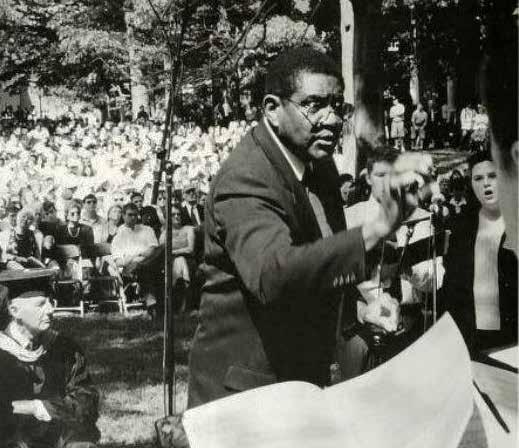
Edward Lowe, born and raised in Panama, became a cherished and transformative figure in Guilford College’s musical and cultural life after joining the faculty in 1972. He was the second African American full-time faculty member at Guilford College (following James McMillan), and he helped shape the College’s artistic legacy for nearly three decades through performance, mentorship, and community engagement.
Before coming to Guilford, Lowe had already built an impressive international and collegiate career in music. Born on August 3, 1932, in Panama, the second of seven children, he developed an early love for singing and studied piano at the Conservatory of Music in Panama. After helping his younger siblings complete their education, he came to the United States to attend Simpson College in Iowa, earning his Bachelor of Music Education (B.M.Ed.) in 1954. He completed his master’s degree at Indiana University in 1956.
From 1956 to 1969, Lowe served as Associate Professor of Music at Bennett College in Greensboro, where he became a highly respected educator and conductor. In 1968, he became a naturalized United States citizen. He then continued his collegiate leadership as Associate Professor of Music and Director of the University Madrigal Singers at Southern University in Baton Rouge, Louisiana (1969–1972), deepening his engagement with African American musical traditions and the cultural experience of the South. Lowe also pursued advanced musical study internationally. During summers and study leaves, he trained in Europe, earning a Certificate from the Akademie “Mozarteum” für Musik und Darstellende Kunst in Salzburg, Austria (1961). He later studied privately with distinguished conductors Sir Simon Rattle and Helmuth Rilling in Germany (1984, 1991), further refining his expertise in choral and orchestral traditions.
By the time he joined Guilford College in 1972, Lowe brought with him nearly two decades of collegiate teaching experience, international training, and a deep commitment to musical excellence — a foundation that would profoundly shape Guilford’s choral program for the next twenty-seven years. From 1972 until his retirement in the late 1990s, Lowe served as Director of the Guilford College Choir. In 1983, his dedication and influence were recognized with the title Charles A. Dana Professor of Music, a distinction reflecting his leadership in the department and his lasting impact on the College’s arts culture.
Under his direction, choir members encountered a wide range of musical traditions. Performances included classical choral works, American and traditional folk songs, and Negro spirituals, showcasing both technical rigor and the cultural richness of Black musical heritage. Lowe’s programming encouraged students to view music not simply as performance, but as a means of connecting history, culture, and community.
Choir tours during spring break were a hallmark of Lowe’s tenure, reflecting his belief in music as a form of witness and outreach. He once explained:
“Our tour will take place during spring break. I think it admirable for the students to give up their holidays to be ambassadors for Guilford College. The students will be staying in homes of sponsors because I feel this is one of the most effective ways to speak of the college, to tell of the Guilford experience. During the school year, a main goal of the choir has been to establish firmer relations between the college and the broad community. Choir members give freely of their time, performing at various civic and social functions, and many of their Sundays center around concerts.”
Through these tours and performances across the region, Lowe strengthened campus–community relationships and gave students firsthand experience as cultural ambassadors.
Students and colleagues remembered Edward Lowe for his unique teaching and directing style — disciplined yet warm, demanding yet deeply nurturing. Many noted that his guidance helped students grow not only as musicians, but as confident communicators and leaders in the arts. Today, his portrait hangs in the foyer of Dana Auditorium, a quiet testament to his enduring influence on the College’s musical life.
Lowe retired near the end of the 1990s and passed away in November 1999. In recognition of his profound impact on students and the Music Department, Guilford College established the Edward Lowe Endowment Fund in 2000 (read more), which continues to support music students and uphold his legacy of artistic excellence and educational opportunity.
Edward Lowe’s story reminds us that Guilford College’s Black history is shaped not only by milestones and “firsts,” but by sustained work that nurtured generations of students, elevated Black cultural traditions, and used the arts as a bridge between campus and community.
READ THIS ARTICLE
Minnette Coleman ’73
Minnette Coleman ’73, who graduated from Guilford College with a degree in Drama and Speech, has dedicated her life to storytelling, performance, and preserving the history of the Black experience through literature and theater.
Born and raised in Atlanta, Ga., Minnette developed her voice as a writer early in life. As a student she reported on her high school’s activities for Atlanta’s first integrated youth magazine and later wrote jazz reviews for the Atlanta Daily World, one of the nation’s oldest Black newspapers. Her earliest writing awards came for poetry focused on social justice and women’s rights, themes that would remain central throughout her career.
During her years at Guilford College, Minnette was active in campus life and leadership among Black students. She participated in Brothers and Sisters in Blackness, the College’s first Black student organization, and later served as historian for the Black Alumni of Guilford College (BAGC), helping preserve and share the stories of Black students whose experiences shaped Guilford during and after the years of integration. She was a member of the Alumni Association Board of Directors.
Following graduation, Minnette pursued theater and writing. She performed in theaters across the South and later off-Broadway in New York City, including with the historic Ridiculous Theatrical Company in Greenwich Village. She also wrote and toured a one-woman show, Hand-Me-Downs, about the Civil Rights Movement, blending performance and historical memory.
A longtime resident of Harlem, Minnette is a member of the Harlem Writers Guild, where she continues to write Black historical fiction. She is the author of the novels The Blacksmith’s Daughter, No Death by Unknown Hands, and The Tree: A Journey to Freedom. Her work has also appeared in the Quaker Higher Education Journal, The Killens Review of Arts and Letters, and literary anthologies.
Minnette has said she writes historical fiction because she “does not want our stories to be forgotten.” Through her work as a performer, novelist, and community historian, she has ensured that the experiences and struggles of earlier generations remain alive for future readers and audiences. (Watch here)
Her journey from Guilford’s classrooms and student organizations to Harlem’s literary community reflects the enduring power of art, memory, and storytelling in preserving Black history. She also remains actively connected to the Guilford community today, staying close to the Black Alumni of Guilford College, Friends Center, and students on campus through her regular and generous donations of clothing to the Quaker Closet.
READ THE ARTICLE
Brother and Sisters in Blackness
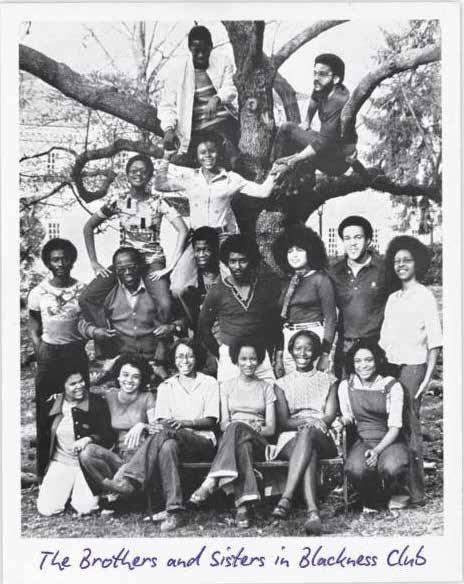
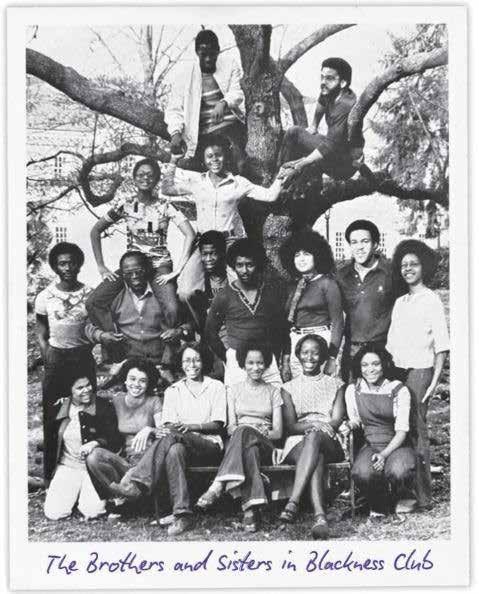
Brothers and Sisters in Blackness (BASIB) holds a special place in Guilford College history as the first Black student organization on campus. Formed in the years following the College’s integration in the 1960s, BASIB provided a space where Black students could support one another, celebrate their culture, and advocate for a more inclusive campus community.
When Guilford first admitted African American students in the early 1960s, Black enrollment remained small and many students experienced isolation on a predominantly white campus. In response, Black students organized BASIB to build community, encourage dialogue about race, and address issues affecting Black students’ experiences at the College.
The organization quickly became a central hub for student leadership and cultural programming. Members organized discussions, community events, and advocacy efforts that helped bring attention to racial equity and representation on campus. In the broader spirit of the Civil Rights era, BASIB created space for Black identity, activism, and solidarity at Guilford. (See Guilfordian article)
Many of Guilford’s early African American students were involved in the group. Gertrude Judd Upperman ’69, one of the College’s early Black students and later a prominent alumni leader, was a charter member of Brothers and Sisters in Blackness. See the names of other early officers here.
Over time, BASIB evolved (see more here) and later became known as the African American Cultural Society (AACS), the Blacks Unifying Society (BUS), and its current iteration — the Black Student Union (BSU) — which is continuing the mission of supporting Black students and promoting cultural awareness on campus.
The legacy of Brothers and Sisters in Blackness lives on today through the many Guilford students, alumni, and leaders who helped build a more inclusive campus community. The organization helped lay the foundation for later multicultural programs, Black alumni networks, and ongoing conversations about equity and belonging at Guilford College.
READ THIS ARTICLE
Carolyn Beard Whitlow
Carolyn Beard Whitlow helped shape Guilford College’s intellectual and cultural life for more than two decades as a poet, scholar, artist, and mentor. Serving on the faculty from 1993 to 2014, Whitlow held the title of Charles A. Dana Professor of English.
Beard Whitlow also made institutional history at Guilford. She became the first African American tenured professor in the English Department and the first African American Clerk of the Faculty, an important governance role within the College’s Quaker-inspired system of shared leadership. Her presence in these positions reflected both academic excellence and the continued evolution of Guilford’s commitment to inclusion. (Read more here)
Before joining Guilford, Beard Whitlow had already developed a rich interdisciplinary career in the arts and humanities. She earned three degrees — a B.S., M.S., and M.F.A. — and established herself as both a writer and visual artist. Her work explores themes of African American history, memory, family, and social justice, often weaving together literature, visual art, and historical reflection.
At Guilford, Beard Whitlow was widely known for her dynamic teaching and mentorship. Students remember her courses as spaces where poetry, culture, and history came alive through careful reading, creative writing, and discussion. She encouraged students to see literature as a way to understand identity, confront injustice, and imagine new possibilities.
Beard Whitlow is also an accomplished poet and visual artist, particularly known for combining poetry with textile and quilt art. Her quilts often incorporate written text and imagery to tell stories rooted in African American history and community experience. This blending of artistic forms reflects her belief that creative expression can serve as both scholarship and historical witness. (Read more here)
Her writing has appeared in numerous publications, and her poetry has received recognition for its exploration of race, heritage, and personal narrative. In interviews, Beard Whitlow has spoken about poetry as a process of discovery — one that allows the writer to uncover hidden stories and meanings through language. (Watch this video)
During her years at Guilford, Beard Whitlow received several honors recognizing her contributions to teaching, writing, and campus leadership. She was celebrated by students and colleagues alike for her dedication to academic rigor, creative exploration, and the nurturing of new voices in literature.
Carolyn Beard Whitlow’s legacy at Guilford College lives on through the students she mentored, the poetry and art she created, and the institutional paths she helped open. As a scholar, artist, and leader, she expanded the boundaries of what it means to teach literature — reminding the Guilford community that storytelling, creativity, and justice are deeply intertwined.
READ MORE ABOUT CAROLYN HERE
Black Alumni of Guilford College
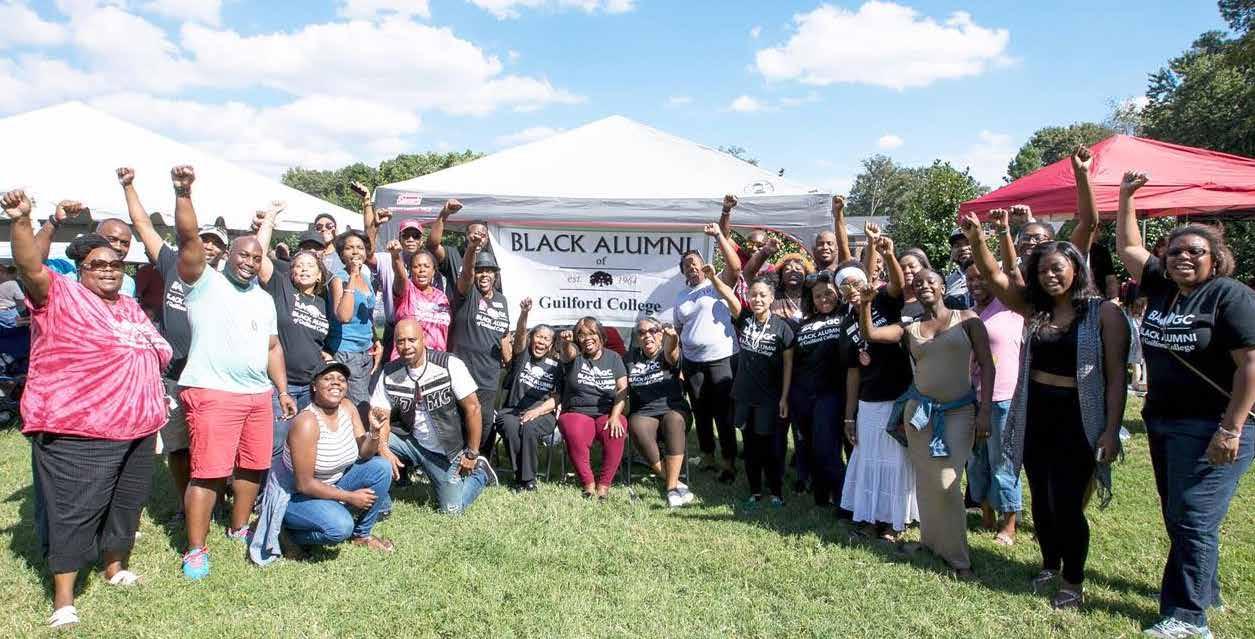
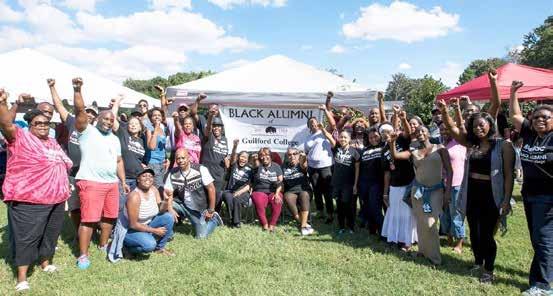
The Black Alumni of Guilford College (BAGC) represents a powerful legacy of community, leadership, and philanthropy that stretches across more than six decades of Guilford’s history. BAGC connects generations of Black students and alumni who helped transform Guilford into a more inclusive academic community.
The BAGC traces its roots to the early years after integration in the 1960s (read more here), when Black students formed strong bonds through groups such as Brothers and Sisters in Blackness, the first Black student organization on campus. Those relationships continued beyond graduation and eventually evolved into the Black Alumni of Guilford College network.
David Hopkins ’91, current Trustee, served as BAGC’s first president, helping establish the organization’s structure and mission of mentorship, advocacy, and support for current students. Among its most dedicated leaders is Toyia Hancock ’93, a founding member and current President of BAGC who has helped guide the organization for many years and expand its impact across the Guilford community.
Through events such as Black Alumni Weekend and Homecoming gatherings, BAGC continues to strengthen connections between alumni and current students while honoring the legacy of the College’s earliest Black graduates. Celebrating its 60th Anniversary in 2024, this group continues to be a beacon that shines brightly. (Read more here)
BAGC’s commitment to student success is reflected in the BAGC Boost Award, which provides both emergency financial assistance and merit-based support to students. The program helps students facing unexpected hardships and recognizes those who demonstrate academic achievement, leadership in campus activities, and service to the community.
The organization’s leadership and philanthropy have also earned important recognition. BAGC received the Guilford College Community Cares Award on April 25, 2014. Established in 2010, the award honors alumni who collectively demonstrate the Quaker testimony of community. It recognizes alumni whose collective actions reflect the values of peace, justice, love, compassion, and joy through their service and good works.
In addition, BAGC and its members have been honored by the Association of Fundraising Professionals’ North Carolina Triad Chapter for their generosity and philanthropic leadership. (Read more here)
Today, the Black Alumni of Guilford College continues to serve as a bridge between past and future — honoring the courage of the first Black students who integrated the College while supporting the students who carry that legacy forward.
READ THIS ARTICLE
Honoring the Unsung Heroes & Living Legends of Guilford College
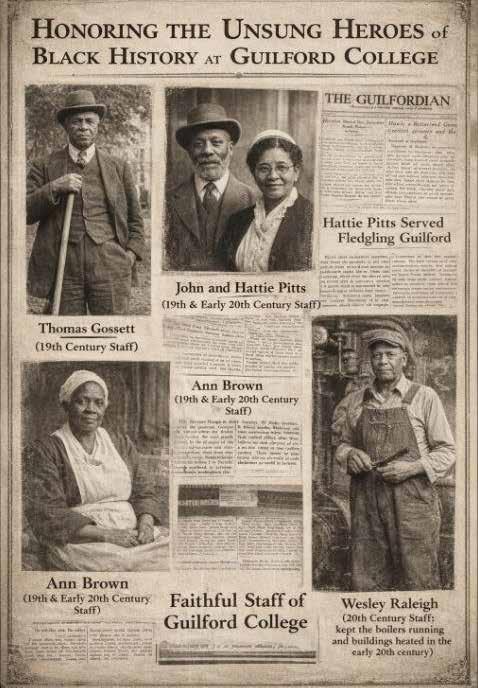
The story of Guilford College is often told through its presidents, professors, and graduates. Yet the institution was also built and sustained by dedicated staff members whose labor, leadership, and quiet service made daily life possible. Among these were Thomas Gossett, John and Hattie Pitts, Ann Brown, and Wesley Raleigh —individuals whose contributions helped support the College through its earliest decades.
In the 19th century, Thomas Gossett and Ann Brown were among the African Americans whose work supported the early New Garden Boarding School and the developing Guilford College community. Their roles, often behind the scenes, helped maintain the daily operations that allowed students and faculty to live and study on campus.
One of the early documented families connected to the College was John and Hattie Pitts (read more here).
John Pitts served Guilford for more than 30 years (1888–1922) as a janitor and hack driver, transporting students and assisting with campus operations during a period when travel and logistics were essential to the functioning of the College.
Hattie Pitts also served the community and is remembered for her contributions to New Garden Boarding School, where she worked as a teacher and caregiver to students.
In the early 20th century, Wesley Raleigh carried out another essential role: maintaining the boilers that heated Guilford’s buildings. During winters, the reliability of the campus heating system was critical for dormitories, classrooms, and meeting spaces. Raleigh’s work helped ensure that campus life continued even during the coldest months. (Learn more here)
These individuals represent the many African American staff members whose essential work sustained the College long before their contributions were widely recognized.
Over time, African Americans at Guilford College have broken barriers and opened new pathways for leadership across the institution.
Some notable “firsts” include:
Claudette M. Franklin – Assistant Director of Housing/Security (1978–81) and later Assistant to the Dean of Students for Minority Affairs (1981–86)
Mary E. Lowe – First African American Director of Housekeeping at Guilford. (Read about her here)
Irene Harrington – First African American Director of the Career Development Center and first African American promoted to Assistant Academic Dean
Ernest McCoy – First African American male counselor in Campus Life, serving as Assistant Dean of Students for Counseling and Minority Students
Mary Minor – First African American Facilities Director
James Shields ’00 – First African American Director of the Bonner Center
These leaders represent important milestones in Guilford’s institutional history, expanding opportunities for leadership, mentorship, and student support across the College.
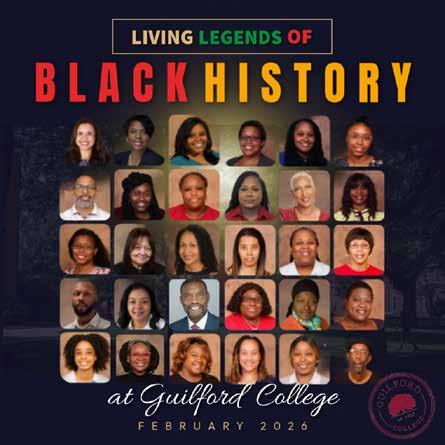
While these names represent significant moments in Guilford’s journey, they are only a small part of a much larger story. Over the years, many African American students, staff, faculty, and alumni have made significant contributions and achieved numerous historic “firsts” at Guilford College — some of whom remain active members of the campus community today. These individuals are living legends, whose courage, leadership, and dedication continue to inspire the Guilford community. Their presence, perseverance and stories remind us that history is not only something we remember — it is something we continue to build together.