















PRESIDENT
Desiree Lizama
Guam Contractors’ Association
CHAIRMAN
Matthew Hunter
Dylan Mechanical Construction Services
VICE CHAIRMAN
Soraya Vongjalorn
Vertex Guam
SECRETARY / TREASURER
Brian Holm, Hensel Phelps
CONTRACTOR DIRECTORS:
Dean Bates, Black Construction Corp.
Alan Bell, SmithBridge Guam
Charles Hazzard, DZSP21
John Limtiaco, Pacific Trucking
Collin Thompson, Pacific Rim Constructors Inc.
Mark Thornton, Granite
ASSOCIATE DIRECTORS:
Mark Cruz
Mid Pac Far East
Jose Garcia
First Hawaiian Bank
Stephen Gatewood Matson Navigation
Geraldine Leon Guerrero
Adztech Advertising and PR
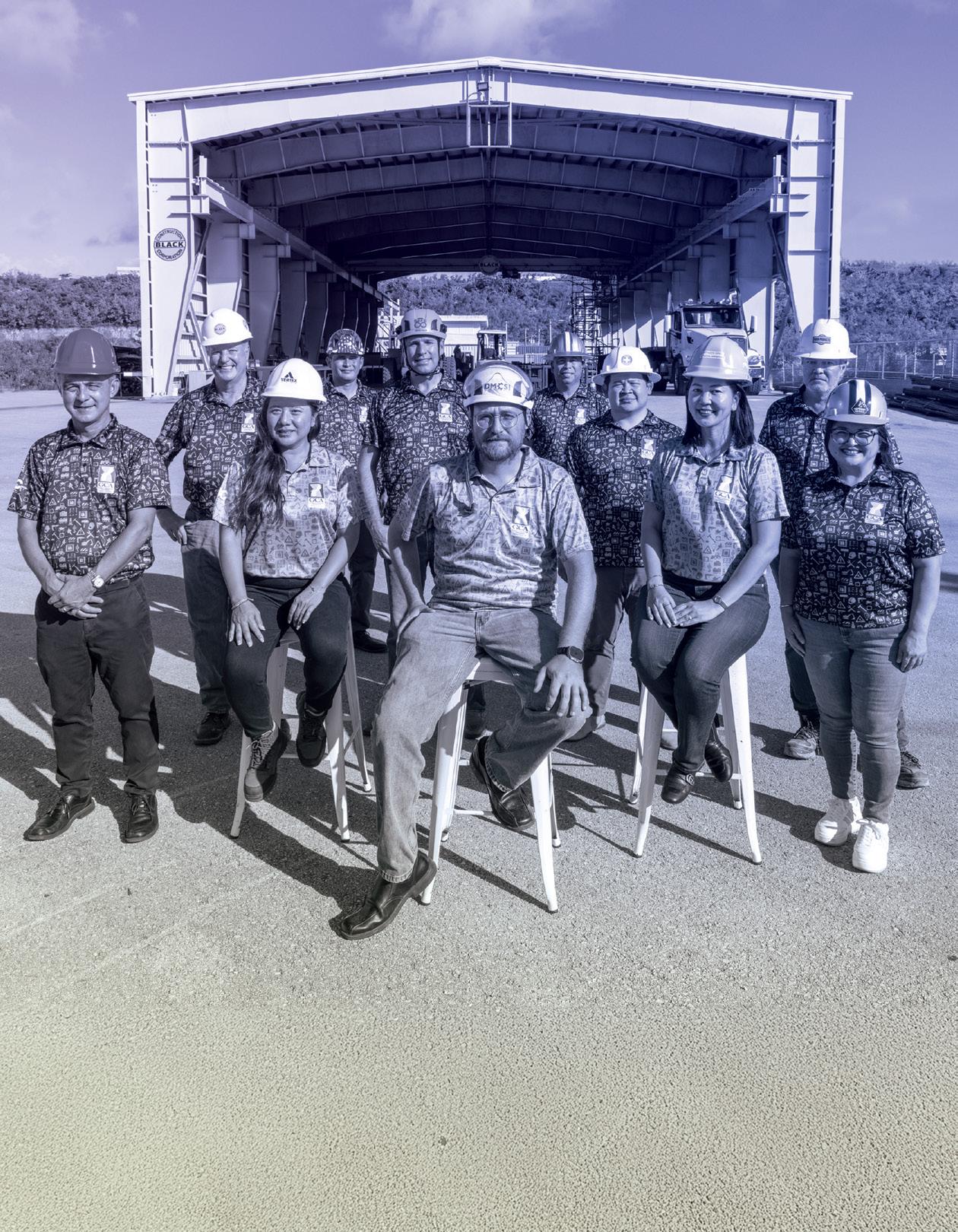
JOIN ONE OF OUR MANY COMMITTEES!
Guam Contractor’s Association (GCA) in conjunction with Adztech and Public Relations, Inc. publishes the Construction News Bulletin (CNB) monthly. Reproduction of materials appearing in this publication is strictly forbidden without written permission by GCA.
While we always strive for accuracy, we will from time to time overlook mistakes. In order to help us improve the quality and accuracy of this publication, we ask that you take the time to look at the information provided and notify GCA or Adztech of any corrections as needed. Opinions and editorial content of this publication may not necessarily be those of the publisher, production team, sta , GCA members, GCA Board of Directors and advertisers
For more information about advertising in the GCA Construction News Bulletin contact the advertising department at (671) 477-1239/2239 or email at adztech@teleguam.net.
Distributed to GCA members or can be obtained by stopping by the Guam Contractors’ Association o ce located at 506 Mariner Ave., Barrigada, Guam 96913
To find out more about how you can become a GCA member contact Guam Contractors’ Association at Tel: (671) 647-4840/41 or Email: info@guamcontractors.org www.guamcontractors.org
Postmaster: Send address changes to Guam Contractors’ Association, located at 506 Mariner Ave., Barrigada, Guam 96913
PUBLISHER:
Desiree Lizama
PRODUCTION TEAM
LEAD: Geri Leon Guerrero
AD SALES: Alyssa Roces
PRODUCTION: Jason Davis
Alyssa Roces
Christopher “Taco”
Rowland
Katee Arceo
PHOTOGRAPHY:
Christopher “Taco” Rowland
EDITOR: Adztech
CONTRIBUTING WRITERS:
Francine Taitague
Rodney “RJ” Ricarte
Terence Tang
Patricia “Patti” L. Diego, MPA
Maelani Taisacan
Topasna
Nadia Holm
GCA STAFF: Francine Taitague
Trevor Cruz
Rosielyn Holgado
Peter Finona
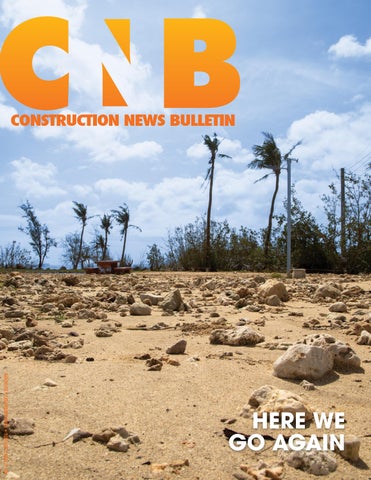
COVER:
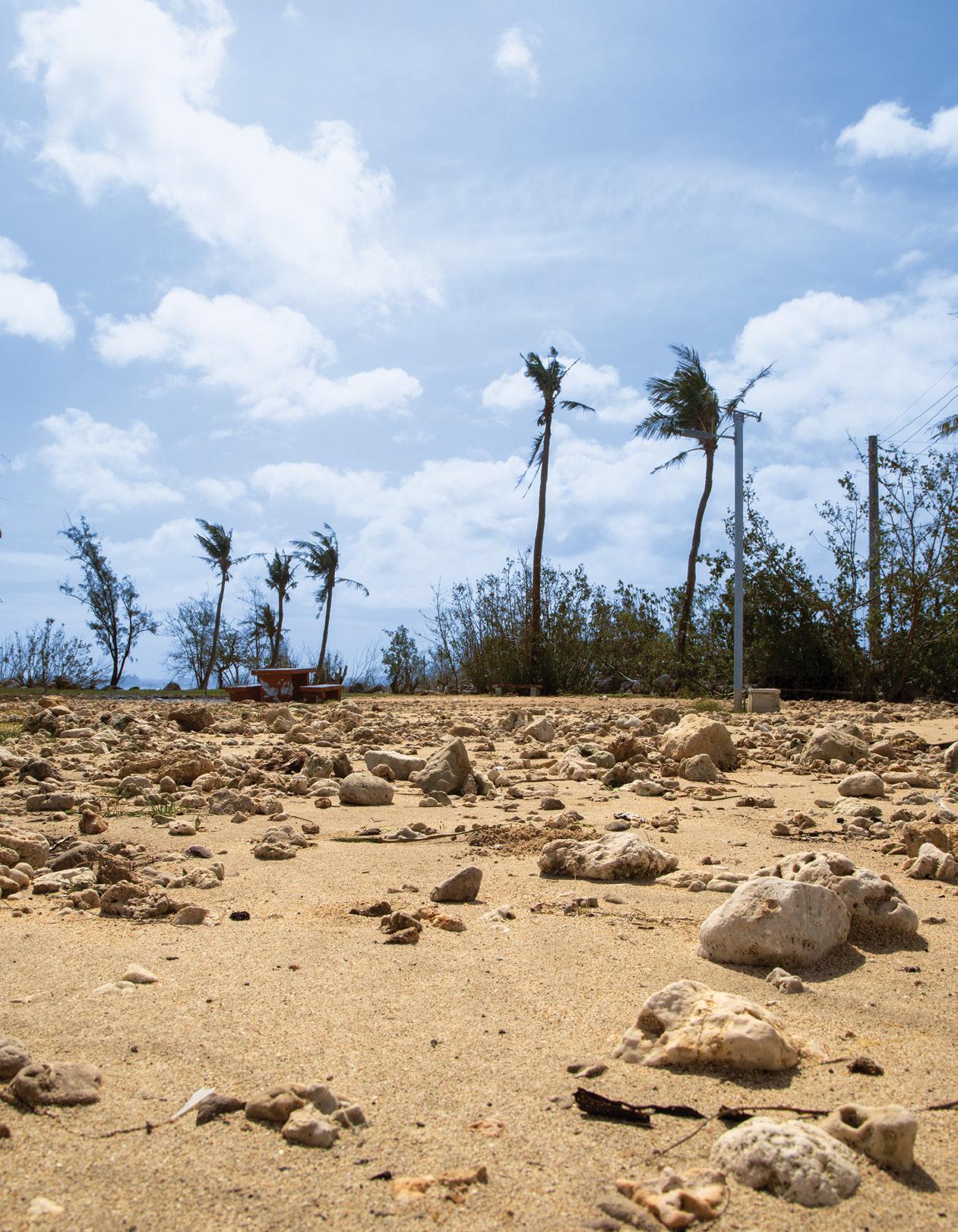
Just barely recovered from Sinlaku, Bavi decides to test the islands resl








Letitia Lujan Asst. General Manager

By Desiree Lizama President Guam Contractors Association
This August, the Guam Contractors Association is bringing our industry together twice in one week — once to protect our workforce, and once to strengthen it.
First up is the Samoan Joe Annual Safety Conference, August 27 and 28 at the Dusit Thani Guam Resort, from 9:00 a.m. to 4:00 p.m. both days. This conference exists for one reason: to make sure our workers come home to their families every day.
This year's lineup delivers on that mission. Federal OSHA will walk through the mishaps and lessons learned from 2025. Justine Som of Federal OSHA joins us as a guest speaker.
Nadia Holm leads sessions on ethical leadership and safety, and on case studies of major industry disasters.
The National Association of Women in Construction, Guam Chapter, presents on gender-based violence and harassment.
We'll cover OSHA 7115: Lock Out/Tag Out, one of the most critical certifications on any job site. This will be presented by the University of California San Diego.
Registration is $150 for one day or $200 for both — an investment that pays for itself the moment it prevents one accident. I encourage every contractor, supervisor, and tradesperson in our industry to enroll now.
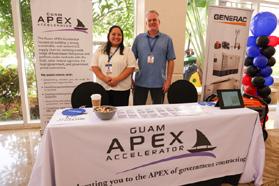
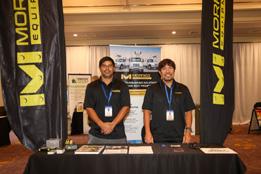
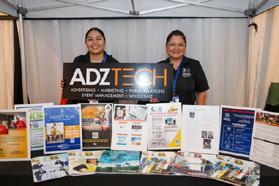
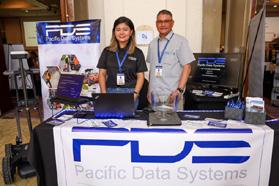
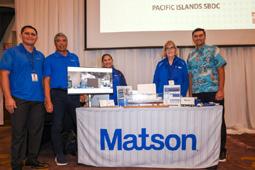
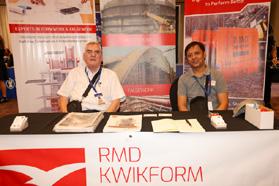
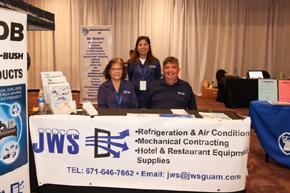
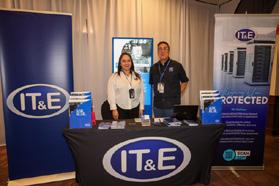
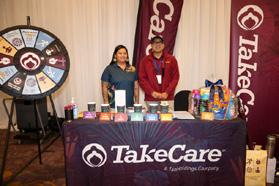
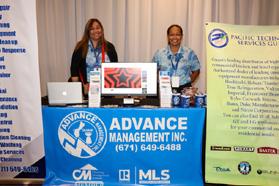
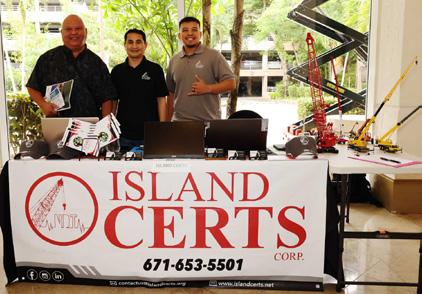
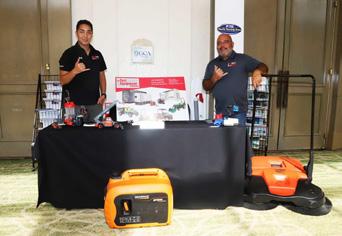
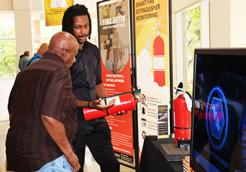
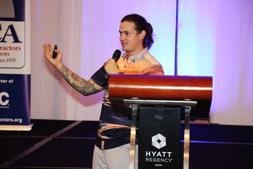
Then, on August 28, stay at the Dusit Thani for the GCA Industry Fair. This is where our industry shows up for itself — contractors, suppliers, and professionals from across Guam, together under one roof, networking and showcasing the latest innovations shaping construction here at home.
Whether you're looking for your next supplier relationship or your next opportunity, this is the room to be in.
Safety and growth aren't separate conversations. They're the same conversation. Enroll in the Safety Conference. Register for the Industry Fair. Bring your team.
For more information, contact the GCA office at (671) 647-4840 or info@guamcontractors.org.
Together, we build Guam.


By Francine Taitague Education Director Guam Contractors Association
Every construction leader in Guam faces the same challenge: finding workers who think independently and perform with confidence. The answer is an apprenticeship program built into your company.
A direct path to stronger profits
Companies that invest in apprenticeships see the payoff fast. Independent, confident workers need less supervision and make faster, sharper decisions on the job, which drives productivity and profitability. These employees adapt readily to new technology, keeping your company able to adopt new methods quickly. Workers who feel valued show greater satisfaction and loyalty, cutting turnover.
Apprenticeship programs develop independent thinking. Apprentices tackle real challenges from day one, working through problems with minimal oversight. This hands-on approach builds autonomy. Workers learn to think on their feet and adapt to the unexpected.
Confidence built through mentorship
Confidence grows inside a structured apprenticeship, and it shows in the quality of the work. As apprentices master technical skills under experienced mentors, they
gain expertise to take on complex projects. Every completed task builds self-assurance, and feedback from professionals reinforces that progress. The result is a workforce unafraid to take on tough assignments.
I've seen these programs transform workers and companies. The foundation of a strong construction company rests in the hands of those who build our world, one worker at a time.
The Guam Contractors Association keeps track of hours worked and the education progress of the apprentices in your program. We can guide your company through the whole process. What have you got to lose?
Join the list of companies that have or are in the process of creating an apprenticeship program to enhance the skills of its workforce.
I can help you! Interested in learning more? Please contact me at (671) 647-4841 or francine.taitague@guamcontractors.org.
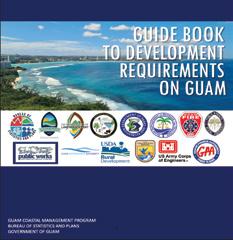
This Guidebook informs the public about Guam's development laws, regulations, permits, clearances, and guidelines. It summarizes each requirement, identi es the responsible agency, describes the application process, provides sample applications, links to codes and regulations, and suggests additional resources/references. It serves as a streamlining tool for successful development and environmentally compliant projects on Guam.

TO EFFECTIVELY EDUCATE THE PUBLIC AND ADDRESS AS MANY INFORMATION GAPS AS POSSIBLE THE GUIDEBOOK:
Outlines and summarizes the permit application processes, procedures and requirements
Provides a checklists for plan review and document submissions
Provides process ow charts
References to Executive Orders, laws, rules and regulations, ag opinions, and other supplemental information.
Lists a permitting matrix
Provides latest agency forms
Provides fee structures and schedules
Provides updated license and permitting agency directories
Provides links to decision support tools, resources and manuals available online


By Rodney “RJ” Ricarte
Your TakeCare GCA Employee Health Plan provides access to off-island medical care when specialized services aren't available on-island. Understanding this process can prevent unnecessary delays and ensure you receive timely care.
The foundation of a successful off-island referral begins with proper documentation. Many delays occur due to incomplete submissions. You'll need:
▪ a completed Off-Island Referral Form from your primary care provider; and
▪ supporting documents specific to your condition (medical records, lab results, imaging reports, etc.)
Each specialist you need to see requires their own set of pertinent records. Without complete documentation, specialists at your destination may be unable to provide treatment, causing frustration after you've already traveled.
Avoid purchasing airline tickets before securing approval. While special fares are tempting, this approach can lead to disappointment if your referral requires additional documentation or isn't approved in time.
Once TakeCare receives your complete documentation, our clinical team begins the review process. With all necessary information in place, this typically takes five business days. Urgent cases receive expedited handling—if you've recently been hospitalized or have a time-sensitive condition, please ensure this is clearly indicated.
The thoroughness of your documentation directly impacts TakeCare’s ability to process your referral quickly. Incomplete submissions will extend the timeline as we work with your provider to gather missing information.
After approval, the TakeCare team will contact you to discuss:
▪ your preferred travel dates,
▪ your facility of choice, and
▪ any specific needs regarding your off-island care.
We then begin appointment coordination with the off-island facility, ensuring your medical needs align with your travel plans whenever possible.
Before leaving the off-island facility: obtain all your medical records and treatment recommendations,
▪ hand-carry these documents back to Guam; and
▪ schedule a follow-up with your referring physician.
This final step ensures continuity of care. Your provider needs to be informed about your treatment to update your records and provide appropriate follow-up care. In some cases, your medical provider may recommend a return visit, which would require a new referral through the same process.
By understanding these steps, you can help ensure your off-island treatment proceeds smoothly. The TakeCare team is committed to supporting your healthcare needs and guiding you through this process every step of the way.
For more information, please refer to the TakeCare Member Handbook located at https://www.takecareasia.com/, or call Customer Service at (671) 647-3526 or Toll Free at (877) 757-6418.
Rodney "RJ" Ricarte is the TakeCare account executive for GCA.
Contact him at (671) 487-7121 or rodney.ricarte@takecareasia.com.


By Terence Tang
One of the most common CMMC misunderstandings contractors make is assuming that only the prime contractor carries the compliance burden. In many cases, that assumption is wrong and it can stall an entire project.
For construction firms, the real issue is flow-down. When a prime contractor holds a Department of Defense (DoD) contract with CMMC requirements, those requirements do not stop at the prime. They "flow down" through the supply chain to any subcontractor that will store, process, or transmit Controlled Unclassified Information (CUI).
Put simply: if a subcontractor handles CUI — project drawings, specifications, or federal bid data — that subcontractor must meet the same CMMC level required in the prime contract.
Not every subcontractor is affected equally. The obligation follows the information, not the tier.
The flow-down rules generally break down like this:
Subs handling CUI: Must independently meet the required CMMC level, whether that is Level 1 or Level 2, before performing federal work.
Subs handling only Federal Contract Information (FCI): Typically, must meet CMMC Level 1 basic safeguarding requirements.
Subs handling neither: A supplier delivering commercial materials that never touch CUI or FCI may fall
outside CMMC scope entirely.
This is why scoping matters at every tier. A prime cannot simply certify on behalf of its subcontractors — each responsible party is accountable for its own compliance and its own SPRS score.
Over-assuming responsibility gets expensive fast. Primes who ignore flow-down risk losing awards, while subs who assume "the prime handles it" can be dropped from projects when they cannot demonstrate compliance.
If your company works as a subcontractor on Guam defense projects, start by confirming what information you actually handle and what your prime's contract requires of you.
Then determine your obligations, before a project depends on it.
Terence Tang is vice president of client strategy at Intech Hawaii. A Certified CMMC Professional (CCP) and CISSP, he advises defense contractors in Guam, Hawaii, and the U.S. mainland.


By: Patricia L. Diego, MPA
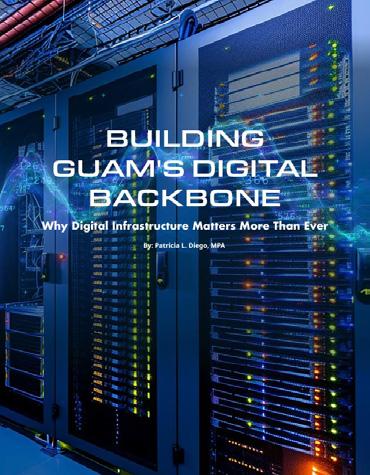
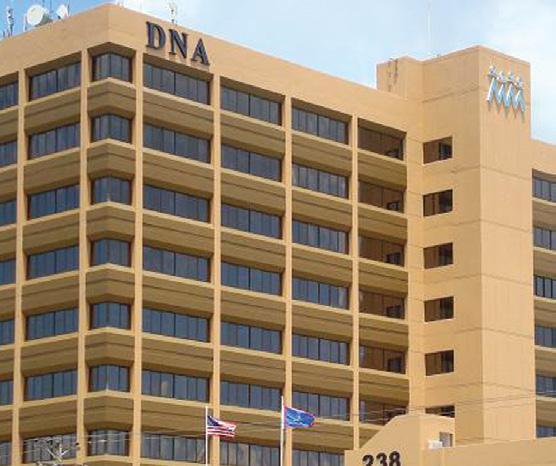
Anyone who has driven along Governor Carlos G. Camacho Drive, formerly Camp Watkins Road, in Tamuning has likely noticed GTA's striking new GU3 building steadily taking shape near Alupang. Framed by steel, concrete, and clean architectural lines, the facility has become one of Guam's most recognizable construction projects and has sparked widespread curiosity about what is being built behind its walls. Every day, hundreds of motorists pass the site, watching another section of steel rise above the surrounding landscape. Some assume it is another office building. Others believe it is a warehouse or a telecommunications facility. The reality is far more significant.
The new structure is GTA's sophisticated data center and cable landing station, while also representing a critical piece of Guam's expanding digital infrastructure. Designed to support the communications and information systems that quietly power modern life, the facility is about much more than one building or one company. Although most people will never step inside it, they will benefit from the technology it supports.
For many people, the term 'data
systems, and communications infrastructure securely process and move enormous amounts of information every second. From online banking and healthcare records to emergency communications, business operations, government services, education, streaming entertainment, and cloud computing, many of the digital services people use every day ultimately depend on facilities such as this one.
Guam occupies one of the most strategically important locations in the Pacific. Multiple trans-Pacific fiber-optic cable systems converge on the island, making Guam an increasingly important gateway connecting Asia, Oceania, and the continental United States. As demand continues to grow for secure and resilient digital infrastructure, projects like GU3 have the potential to strengthen Guam's role in the expanding Indo-Pacific technology economy.
While technology sits at the heart of the project, its impact extends well beyond computers. Construction supports local contractors, engineers, electricians, HVAC specialists, concrete crews, equipment suppliers, transportation providers, and many other businesses. Once operational, the facility could help
Like any major infrastructure investment, data centers require substantial capital, dependable electric power, resilient communications, sophisticated cybersecurity, imported specialized equipment, and highly trained personnel. Guam's tropical climate, salt-air environment, and exposure to typhoons require engineering that emphasizes durability, redundancy, and long-term operational resilience.
Whether viewed through the lens of construction, technology, economic development, or public infrastructure, the GU3 facility represents another milestone in Guam's continuing evolution as a regional communications hub. Like airports, seaports, highways, and power plants, digital infrastructure has become an essential component of modern society. The building that has captured the attention of motorists today is helping lay the physical foundation for Guam's digital future.
Power infrastructure is equally fundamental to that future. As the Guam Power Authority has emphasized, developers of major projects should engage the utility early in the planning process to evaluate electrical capacity, system reliability, interconnection requirements, and

According to the Guam Power Authority (GPA), large-scale data center development requires a careful, upfront evaluation of electrical infrastructure and available system capacity. GPA notes that locating these facilities near major electrical infrastructure is a key factor for project success, demanding close coordination between project developers and utility providers from day one. As the demand for digital infrastructure grows, locations with immediate access to robust power, water, and fiber-optic networks will offer the greatest opportunities for future expansion and long-term land-use planning across the island.
The utility continues to emphasize that early engagement between project developers and GPA is essential. This
early contact allows engineers to properly evaluate electrical load requirements, verify available grid capacity, plan interconnection needs, and identify potential infrastructure upgrades. For data center projects with substantial, non-stop power demands, the availability and proximity of electrical infrastructure become just as critical as land availability, fiber-optic connectivity, or water service. Developers can no longer treat utility integration as a final step: it must be a primary driver of site selection.
For Guam's construction industry, this discussion highlights a major regional trend: modern digital projects increasingly require deeply coordinated investments in power, communications, civil works, and water systems. As
Guam positions itself to attract future technology and data-driven investments, local contractors and developers must work hand-in-hand with utility providers. This close relationship ensures that the supporting physical infrastructure keeps pace with rapid technological growth.
Ultimately, developers, contractors, and business leaders must engage GPA at the very beginning of the planning process. Power availability, proactive infrastructure design, and future growth capacity are no longer secondary considerations. In the highly competitive world of large-scale development, securing reliable and resilient power infrastructure has become the ultimate competitive advantage.



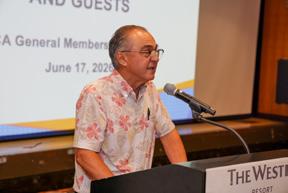

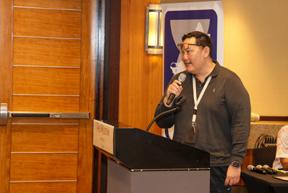
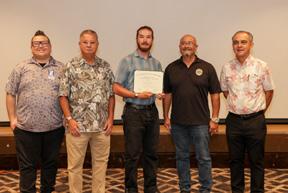
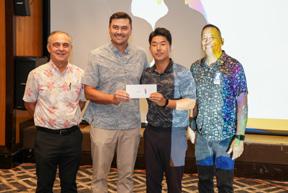
GCA Membership Luncheon
June 17th, 2026
Westin Resort Guam
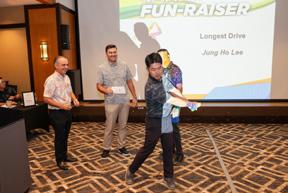
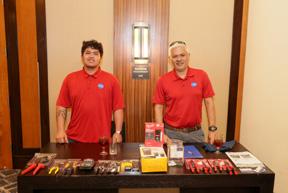
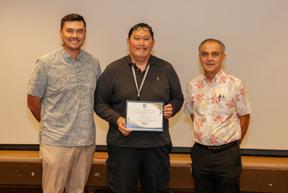
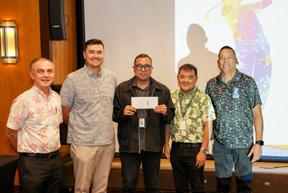





By Patricia L. Diego, MPA
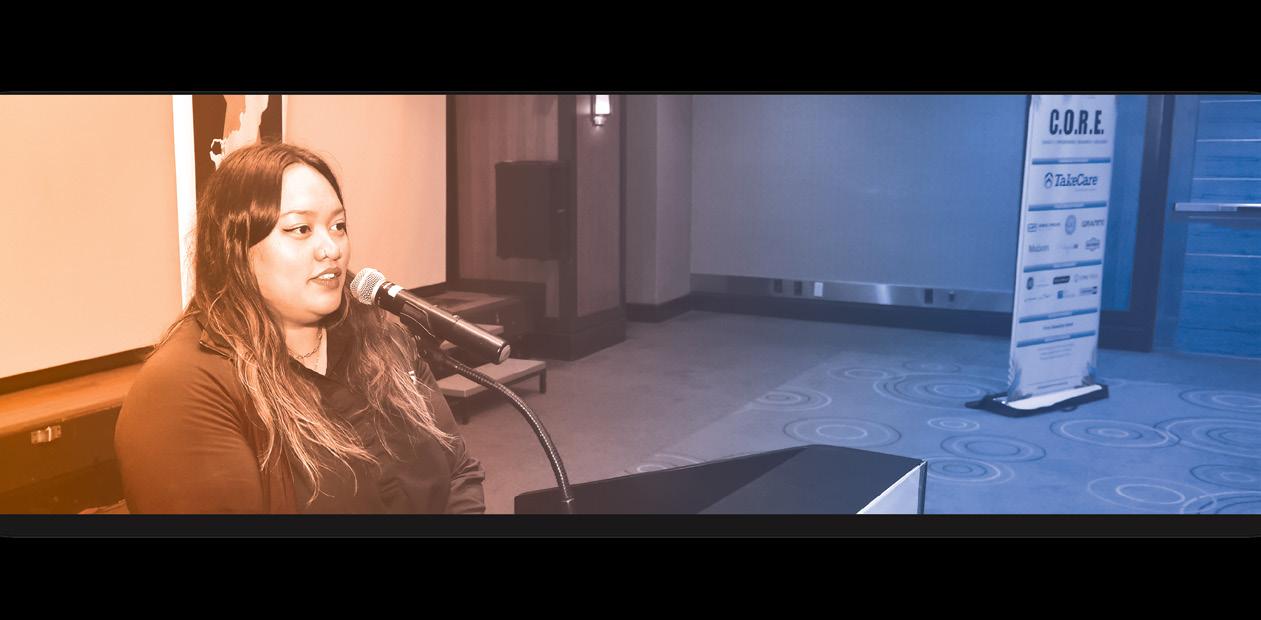
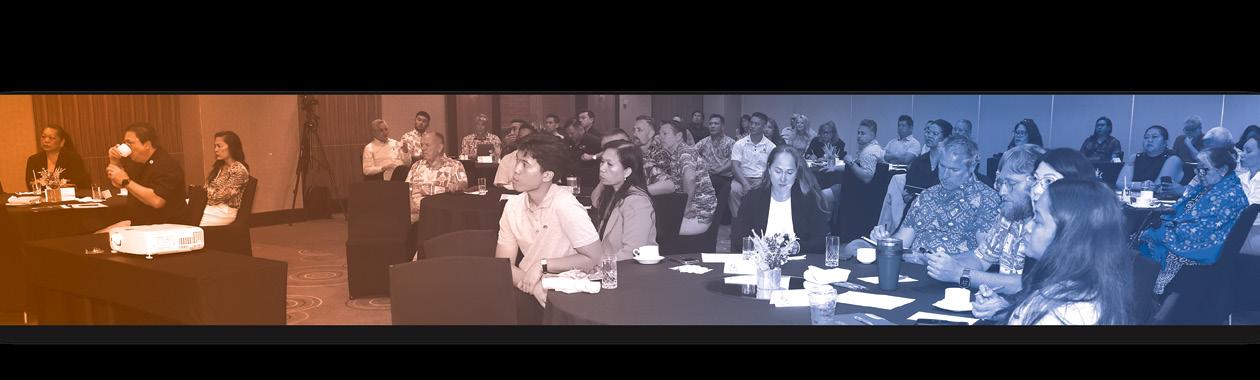
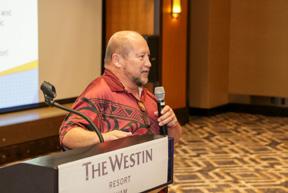
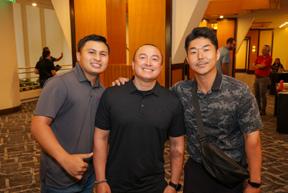
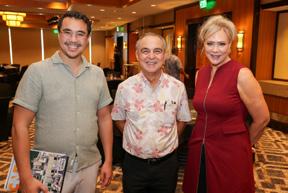
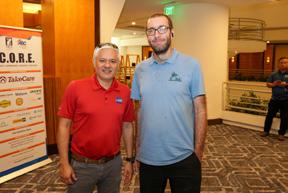
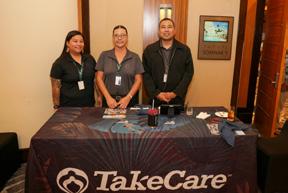
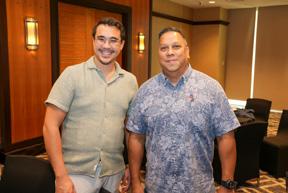
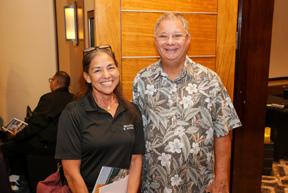
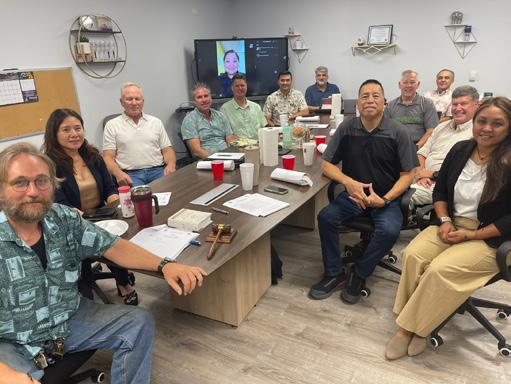
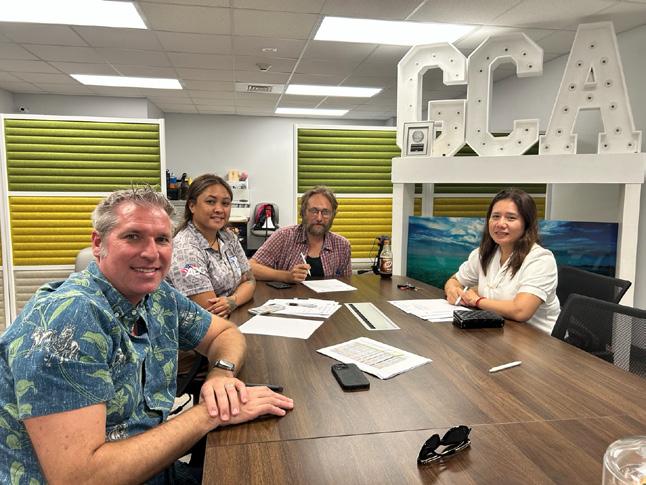
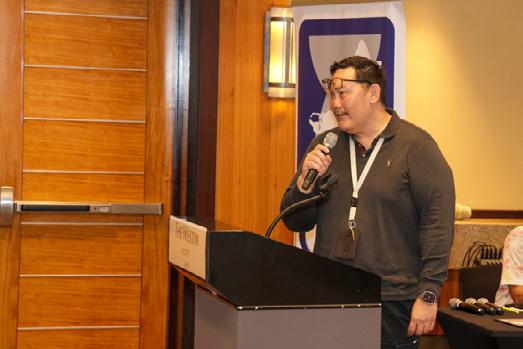
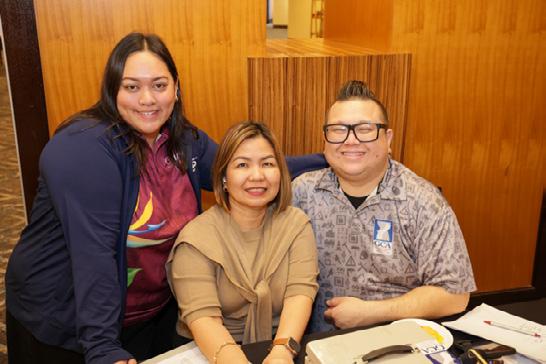
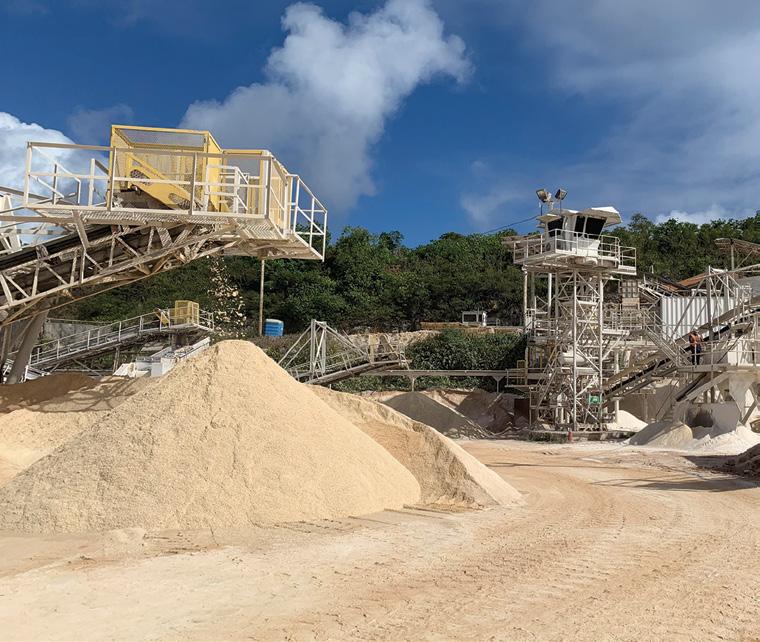
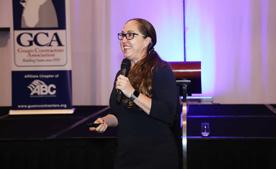
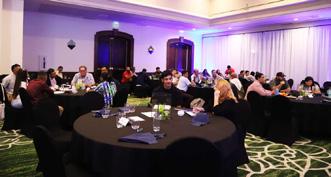
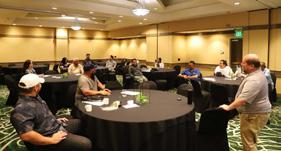
Building a resilient island takes more than infrastructure. It takes people working together. At the Guam Contractors Association's General Membership Luncheon on June 17, 2026, seventy-six industry professionals gathered at the Westin Resort Guam to address workforce challenges, military buildup demands, and the future of Guam's development.
With Guam's heat index levels regularly reaching the danger zone during the summer months, Jesse Pangelinan of the OSHA On-Site Consultation Program reminded attendees that heat illness remains one of the most serious hazards facing outdoor workers.
Referencing OSHA's national "Water. Rest. Shade." Heat Illness Prevention Campaign, Pangelinan emphasized that heat safety requires proactive jobsite management and daily attention to three fundamentals: hydration, rest, and shade. Contractors should ensure access to clean drinking water, provide scheduled cooling breaks, and maintain covered recovery areas for workers.
By incorporating these practices into daily operations, contractors can reduce heat-related incidents, protect their workforce, and keep projects moving safely and efficiently.
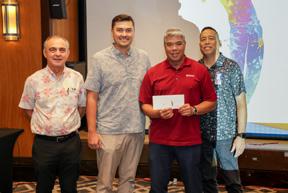
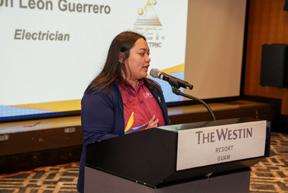
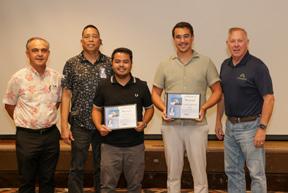
One luncheon highlight was the recognition of an apprenticeship completion. Ramon Leon Guerrero was recognized for successfully completing his electrical apprenticeship program sponsored through the Guam Contractors Association. He completed 8,000 hours of on-the-job training, finished the GCA Trades Academy program, and received Electrical Levels 1 through 4 and Fundamentals of Crew Leadership certifications. Leon Guerrero is now serving as an electrical technician with Guam S.E.T. Electric. In recognition of his accomplishment, he received a certificate of completion and a $200 Home Depot gift card from GCA.
GCA reminded employers that registered apprenticeship programs are industry-driven training programs that allow workers to earn while they learn. Employers interested in employers interested in developing workforce talent through registered apprenticeship programs were invited to contact GCA Apprenticeship Coordinator Peter Finona or Education Director Francine Taitague for assistance in establishing and implementing apprenticeship opportunities within their
companies.
GCA was pleased to welcome two new member companies during the luncheon: Corerin Technical Solutions, LLC dba CTS Pacific and GeoEngineers, Inc.
Representing CTS Pacific, company leadership shared their professional background in operations, technical services, and project management on Guam before launching their own business. They expressed appreciation for the opportunity to join GCA and look forward to supporting the island's growing construction industry.
Nathan Yu, a structural engineer with GeoEngineers, introduced the firm's expansion into Guam. He explained that GeoEngineers is a 100 percent employee-owned company providing geotechnical engineering, environmental services, water resources expertise, trenchless technology, and construction design support.
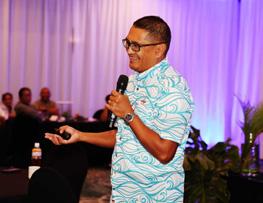
Guest speaker Nic Rupley Lee, Community Outreach Program Director for the Guam Waterworks Authority (GWA), provided a comprehensive update on water and wastewater operations, infrastructure investments, regulatory compliance, the ongoing PFAS response, and long-term system resiliency. Member questions centered on water quality, testing, typhoon recovery, water security, septic-to-sewer transitions, and wastewater infrastructure. Responding to a question from the audience, Rupley Lee confirmed that Guam's water is entirely safe to drink directly from the tap.
Looking ahead, Lee reported that GWA's capital improvement program is approaching $900 million in planned investments. The program is expected to support critical upgrades +to water and wastewater systems while addressing broader industry challenges, including aging infrastructure, long-term water supply needs, resiliency, water loss reduction, and sustainable funding for future improvements.
Before adjournment, GCA announced upcoming activities and reminded members about future events, including the annual safety conference, EXPO-related activities, softball, and other association programs. Members were encouraged to submit business cards for raffle drawings and follow GCA communications for event details.
Lunch concluded with important announcements and reminders:
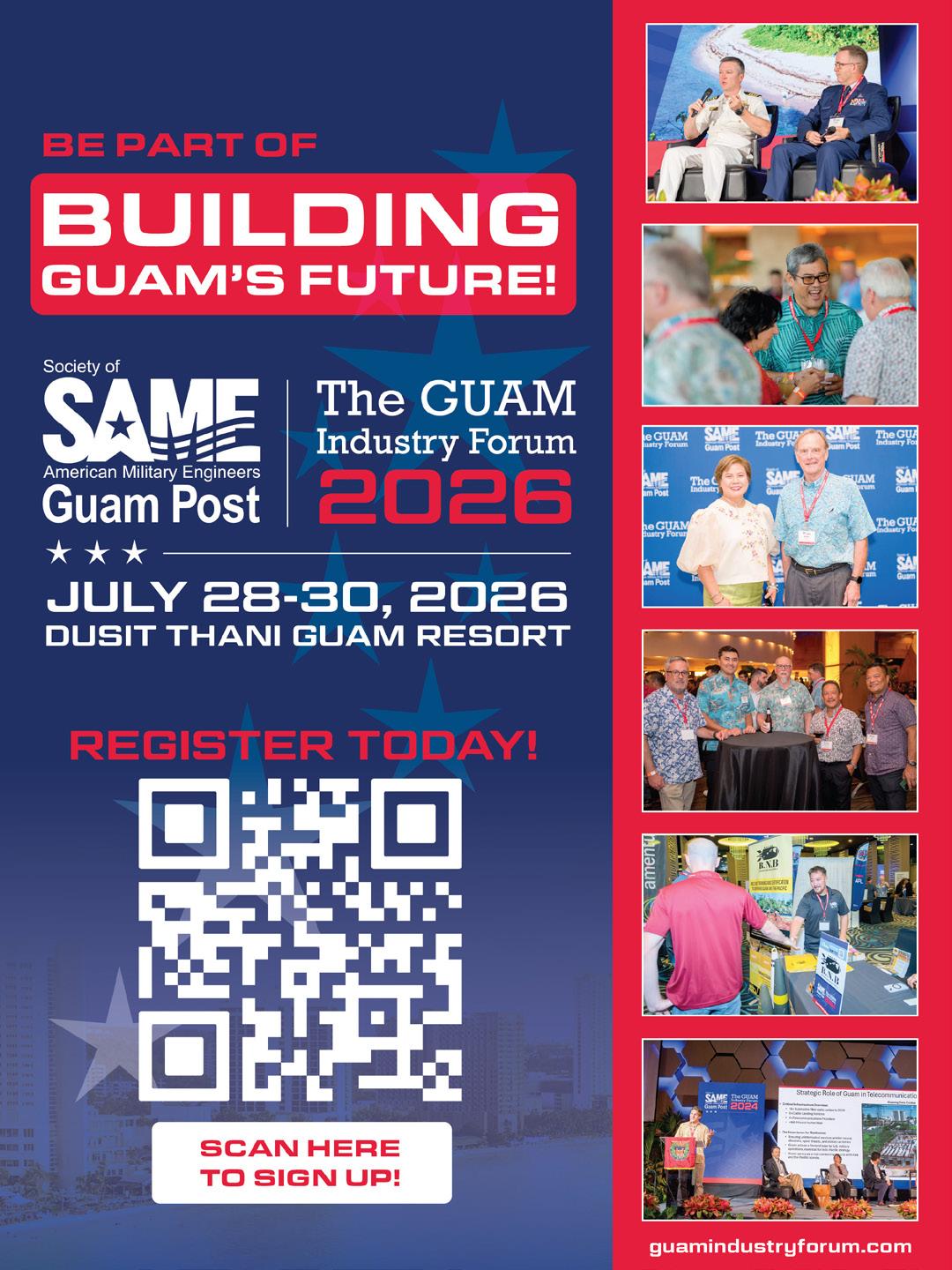
▪ SAME Guam Industry Forum - July 28–30, 2026.
▪ The Joseph Leasiolagi 'Samoan Joe' Safety Conference - August 27–28, 2026.
▪ The GCA Trades & Industries Fair/Expo - August 28, 2026.
▪ Construction Warriors - October 2026
▪ Careers in Construction Month (CCIM) - October 2026
The GCA monthly luncheon continues to bring together the members and organizations helping to build Guam's future. Each month provides an opportunity to connect with industry colleagues, hear timely updates, share perspectives, and strengthen the partnerships that drive our construction community forward. We invite all members to join us in August as we continue learning, collaborating, and advancing the interests of Guam's construction industry.

By: Maelani Taisacan Topasna, Chief of the Contracting Office, United States Property and Fiscal Office for Guam, Guam National Guard

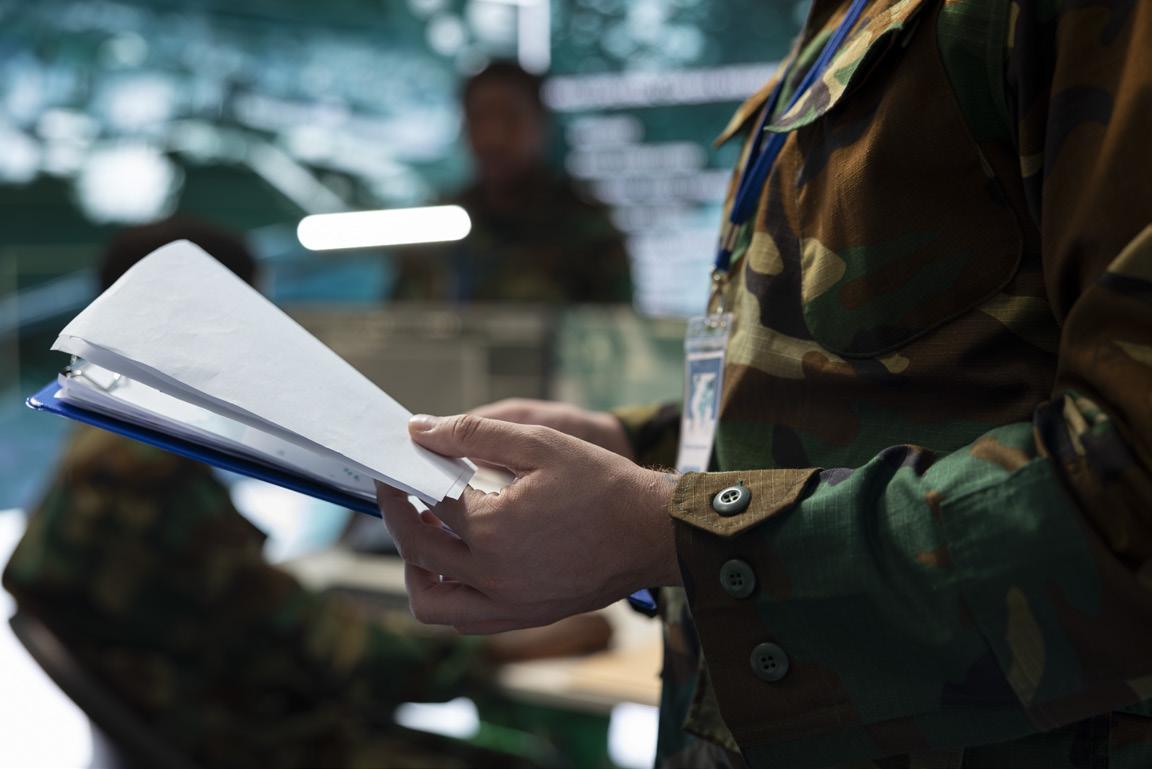
To the members of the Guam Contractors Association: the landscape of military construction is shifting, and the rules of engagement have permanently changed.
Let's be entirely honest upfront: the federal government is finally catching up to current industry practices.
Collaborative, fast-paced frameworks like progressive design-build and flexible agreements are not new to the commercial marketplace. The private sector has used these exact methodologies for years to build complex projects on time and within budget. What is new is that the defense enterprise has officially been granted the landmark authority to step completely out of the traditional Federal Acquisition Regulation (FAR) environment and onto a modern, commercial playing field for military construction projects
On December 18, 2025, President Donald Trump signed the Fiscal Year 2026 National Defense Authorization Act (FY26 NDAA) into law as Public Law 119-60 (P.L. 119-60), introducing a landmark statutory enforcement. This legislation unlocks a single, incredibly powerful tool, allowing the Department of War to completely pivot away from traditional FAR constraints and execute construction projects at the true speed of the commercial market.
For decades, traditional procurement has kept the government and the construction industry inside a rigid, often adversarial FAR-based sandbox. The routine is all too familiar: for a typical design-build project, agencies hand over a restrictive 35% design package and ask for a firm commitment, while on a design-bid-build track, agencies dictate rigid, completed specifications for the contractor to simply execute. Both traditional paths strip away contractor innovation, frequently forcing bottom-dollar bids that inevitably face the potential for administrative friction, costly change orders, and post-award gridlock.
The old way of doing business can delay the critical ability to support the mission and protect the region. In response to these persistent challenges, Congress has fundamentally changed the playing field.
Because this framework became effective just months ago, the entire Department of War enterprise is currently in active transition. The various military services—including the Army, Navy, and Air Force—are systematically working through administrative channels to flow this power down, with respective service Secretaries issuing formal delegations of authority to their field Head of the Contracting Activity (HCA) levels.
Furthermore, because these mechanisms are entirely new to defense construction, components across the Department of War are actively developing their standard operating procedures (SOPs). Instead of drafting
these rules in a vacuum, agencies are deliberately pushing draft SOPs out to the private sector for transparent industry feedback and collaborating across components to build an agile, effective playbook. The momentum is structural, and the local industry on Guam needs to follow this trajectory and be ready to ride this wave as it spans across the entire Department of War.
This modernized framework establishes a regulatory fortress, explicitly combining two powerful congressional authorities to ensure speed, commercial alignment, and execution streamline:
• 10 U.S.C. § 2808a: The language explicitly dictates that the Secretary concerned may enter into transactions other than contracts, cooperative agreements, and grants for military construction, alterations, and facility repairs. Because this statute belongs uniquely to the Department of War, defense components are liberated from rigid traditional procurement restrictions to build flexible, merit-based partnerships.
• 0 U.S.C. § 3241(g): The code dictates that the Secretary concerned may enter into a progressive design-build contract for a military construction project under a single, unified agreement structure executed in two distinct, progressive phases:
▪ Phase 1 (Pre-Construction & Design Services): The contractor and the government collaborate from a 0% starting point to develop and refine the project scope, design, and cost estimates. The strict statutory goal of this phase is to deliver a design that satisfies fiscal law requirements by producing either a complete and usable facility or a complete and usable improvement to an existing facility.
▪ Phase 2 (Final Design & Construction): Once the Phase 1 criteria are successfully met and verified as a complete and usable infrastructure solution, a bilateral modification is executed to the existing agreement. This modification officially awards the construction phase, firmly locked into a negotiated Guaranteed Maximum Price (GMP) or fixed-price agreement, eliminating separate post-design bidding cycles.
While using these transactions for construction is a massive paradigm shift, the legal framework protecting it is highly distinct. To operate effectively in this space, the entire industrial base must become educated contractors who understand the actual boundaries of GAO case law—knowing exactly what to do, what not to do, and recognizing that these mechanisms cannot simply be used to stall a critical project.
It is also important to note that because these two
specific construction-related statutes are brand new—enacted on December 18, 2025, under the FY26 NDAA (P.L. 119-60)—there are currently zero GAO case rulings on construction-specific Other Transaction Authority (OTA). The construction playbook is being written right now. However, GAO has spent the last two decades building a strict legal fence around non-FAR defense transactions in other sectors, and those established rules dictate exactly how the government will be held accountable.
The baseline tracking dates back twenty years to the landmark decision in Exploration Partners, LLC (B-298804, December 19, 2006). This case established the foundational ground rules for OTA jurisdiction: under this long-standing precedent, when an agency has explicit statutory authority to use an OTA, the Government Accountability Office does not have bid protest jurisdiction over the evaluation or the award decision itself.
However, being an educated contractor means knowing that this system is not a blank check for the government. The government isn’t perfect, and when an agency fails to follow its own rules, the framework holds them accountable. GAO will step in and review whether an agency is improperly using its authority, and it has sustained major protests when the government stepped outside its boundaries:
• Failure to Follow Solicitation Terms: GAO holds the government strictly to the ground rules it publishes. In SpaceX (B-419503, April 30, 2021) with the U.S. Space Force, the principle was reinforced that if the government establishes evaluation ground rules in its solicitation and then completely deviates from them during the source selection, the process fails. If the agency doesn't follow its own terms, the government has to go back to the drawing board.
• Improper Follow-on Scope: The government cannot use an OTA to sneak in a massive expansion of work that wasn't properly competed. In Kinematrix Inc. (B-419958.2, October 27, 2021), a protest was sustained regarding follow-on production because the agency failed to clearly anticipate, define, or account for that future scope in the initial competitive solicitation, trying to award it before the initial prototype phase was legally completed.
The ground rules are clear: as long as an agency stays within its statutory boundaries and follows its own published terms, the process remains lean, agile, and commercial. But if the government messes up, the government has to go back and redo it. True transparency means educating the entire market on these boundaries upfront so that everyone—both agencies and commercial builders—can focus entirely on execution.
Here is the most critical pivot to understand about this legislative shift: when utilizing these new authorities, the government is deliberately stepping back from dictating arbitrary design choices.
This progressive design-build framework starts at a true 0% design
This means completely throwing out the old habit of handing out a 35% government-conceived design "for reference." If the government pre-determines a third of the project before the contractor even gets to the table, it isn't a true progressive design-build—it's just traditional procurement with a different label. This framework completely rejects retaining that artificial control.
When these modern solicitations drop, contractors will not receive a thick binder of government-dictated blueprints. Instead, the street packages will consist of a DD Form 1391, basic utility map data, and a clear, functional problem statement.
The government is no longer handing industry a solution; it is bringing industry a problem. The job of the commercial builder is to sit at the table with the agency from day one and help shape the solution. The Department of War is buying engineering expertise, value engineering, and supply-chain innovations while the project is being designed, not after the concrete is already poured.
Because this framework requires intense, side-by-side collaboration from a 0% starting point, the defense cosystem is intentionally pivoting to work with firms
Expectations are entirely direct: this framework is not looking for fancy marketing packages, corporate capture managers, or slick proposal shops that write beautiful stories but disappear the moment the ontract is signed. No one should waste valuable capital on corporate fluff.
The Department of War is not buying a book—it is building infrastructure.
The focus is entirely on real builders. The priority is the hard hats: the project managers, lead structural engineers, estimators, and superintendents who will actually be standing in the dirt on the job site making the daily decisions.
Under this progressive framework, the expert team proposed in the selection process is the exact team that must sit across from the table on day one to make hard technical decisions face-to-face. The government is investing heavily in real-world capability, commercial agility, and boots-on-the-ground expertise.
This is Guam's moment to work together as true commercial partners to give the warfighter exactly what they need, when they need it. The wave is here, the enterprise playbooks are active, and this is the statutory blueprint for the future of Guam's construction ecosystem.
Get ready, be ready, and stay ready to build.
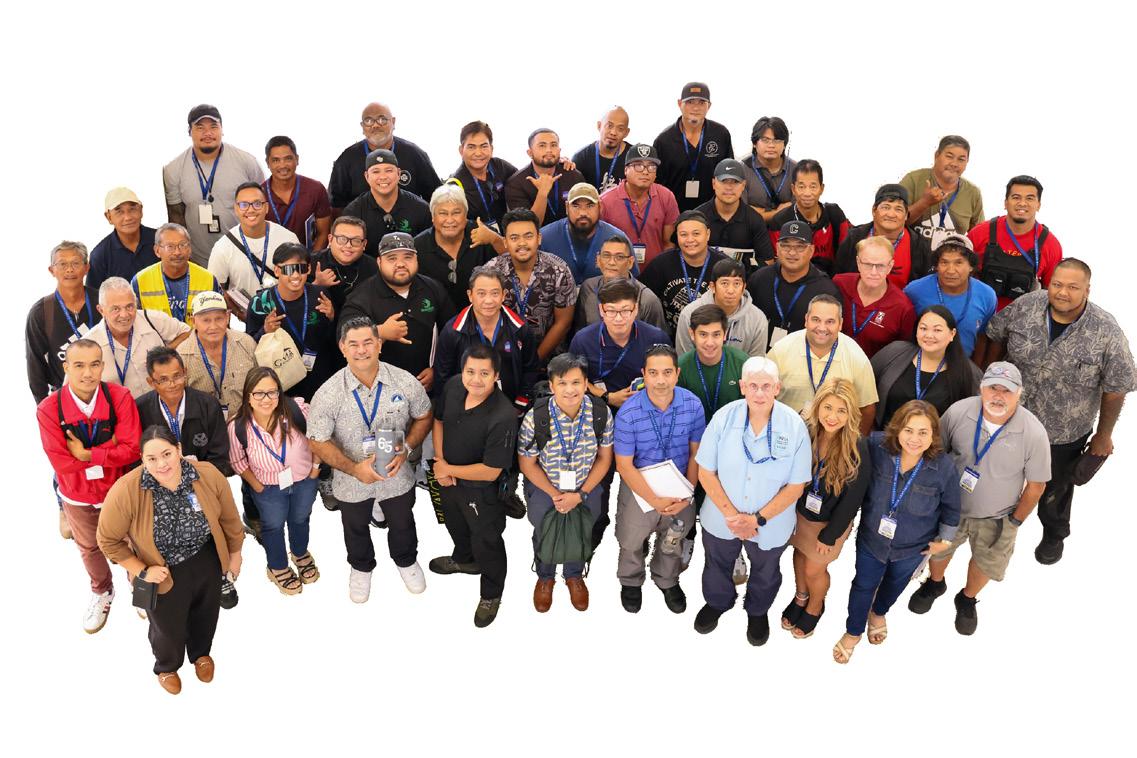

FRIDAY, AUGUST 28, 2026 • DUSIT

9:00AM - 4:00PM







By Nadia A. Holm, CIH, CSP, CHST
Ethical leadership in safety is more than a management philosophy; it is the foundation of trust, accountability, and protection in any organization. When leaders prioritize integrity, transparency, and fairness, they create conditions where workers feel safe to speak up, follow procedures, and take ownership of their environment. But when ethical leadership breaks down, the consequences can be catastrophic.
At its core, ethical safety leadership requires consistency. Workers watch leaders closely, and when leaders model safe behaviors, they reinforce a culture where safety is non negotiable. Conversely, when leaders cut corners or ignore hazards, they normalize risk-taking. Ethical leaders also demonstrate fairness, applying standards uniformly and making decisions based on facts rather than convenience. This fairness builds trust—an essential ingredient for hazard reporting and continuous improvement.
Courage is another pillar. Ethical leaders stop work when conditions are unsafe, challenge outdated practices, and take responsibility when the organization falls short. They communicate openly about risks, incidents, and lessons learned, fostering transparency and empowering frontline workers to voice concerns. Above all, ethical leadership is people-centered, recognizing that every worker deserves to go home unharmed.
History shows what happens when ethical leadership is absent. Several major events demonstrate how leadership failures directly undermine safety:
▪ Boeing 737 MAX Crashes (2018–2019) — Investigations into the Lion Air and Ethiopian Airlines disasters revealed that Boeing leadership repeatedly dismissed internal safety warnings about the Maneuvering Characteristic Augmentation (MCAS) system. Pressure to compete in the market led to decisions that prioritized speed and profit over engineering integrity. The result was two fatal crashes, 346 lives lost, and a global grounding of the aircraft.
▪ Deepwater Horizon Explosion (2010) — The BP oil rig disaster exposed a pattern of cost-cutting, ignored warnings, and rushed
decision-making. Leaders failed to act on known issues with the blowout preventer and cement integrity. Eleven workers died, and the incident became one of the worst environmental disasters in U.S. history—rooted not in technical failure alone, but in leadership’s disregard for safety-critical information.
▪ Upper Big Branch Mine Disaster (2010) — At Massey Energy’s mine in West Virginia, investigators found that leadership fostered a culture where production was valued over safety. Workers reported intimidation for raising concerns, and hundreds of violations went unresolved. A methane explosion killed 29 miners, illustrating how unethical leadership can silence the very voices that protect lives.
These events share a common thread: leaders ignored concerns, silenced experts, or prioritized profit over people. When ethical leadership fails, safety systems collapse not because hazards are unpredictable, but because the organization chooses not to confront them.
In everyday workplaces, the signs are more subtle but still dangerous: inadequate training, ignored hazards, unclear communication, and a disengaged workforce. These conditions increase accidents, injuries, and turnover, weakening the organization’s ability to maintain a strong safety culture.
Ultimately, ethical leadership is a daily practice. It is the quiet, consistent commitment to integrity that shapes decisions, behaviors, and culture. When leaders embrace ethics as the foundation of safety, they elevate not only compliance but also morale, performance, and trust. In any organization, whether an airline manufacturer, a mine, or a construction site, that commitment truly saves lives.
Nadia Holm CIH, CSP, CHST is the President of Oceania Safety and Environmental, providing comprehensive industrial hygiene, safety, environmental, and regulatory compliance solutions tailored to the unique needs of Guam and the broader Pacific region.

AUGUST 27 & 28, 2026 9:00A.M. - 4:00P.M.
DUSIT THANI GUAM RESORT
$150 / ONE DAY • $200 / BOTH DAYS



CONTACTS • OPPORTUNITIES • RESOURCES • EDUCATION
DIAMOND SPONSORS
PLATINUM SPONSORS

GOLD SPONSORS

SILVER SPONSORS
First Hawaiian Bank
BRONZE SPONSORS


Isla Coatings and Roofing Supply Island Equipment Company Phoenix Pacific (Guam), Inc.
SUPPORTER
America's Best Electricmart Inc.
www.guamcontractors.org