

PERMITS, POLICY AND PROGRESS


















PRESIDENT
Desiree Lizama
Guam Contractors’ Association
IMMEDIATE PAST CHAIRMAN
Joe Roberto East Island Tinting
CHAIRMAN
Matthew Hunter Dylan Mechanical Construction Services
VICE-CHAIRMAN
Kathleen David Pacific Rim Constructors
SECRETARY / TREASURER
Soraya Vongjalorn Vertex Guam
CONTRACTOR DIRECTORS:
Dean Bates Black Construction Corporation
Nadia Holm ECC
John Limtiaco Pacific Unlimited
AJ Perez Hawaiian Rock Products
Randolf Salas Proferre
ASSOCIATE DIRECTORS:
Mark Cruz Mid Pac Far East
Jose Garcia First Hawaiian Bank
Geraldine Leon Guerrero
Adztech Advertising and PR
Camilo Lorenzo Matson Navigation
JOIN ONE OF OUR MANY COMMITTEES!
Guam Contractor’s Association (GCA) in conjunction with Adztech and Public Relations, Inc. publishes the Construction News Bulletin (CNB) monthly. Reproduction of materials appearing in this publication is strictly forbidden without written permission by GCA.
While we always strive for accuracy, we will from time to time overlook mistakes. In order to help us improve the quality and accuracy of this publication, we ask that you take the time to look at the information provided and notify GCA or Adztech of any corrections as needed. Opinions and editorial content of this publication may not necessarily be those of the publisher, production team, sta , GCA members, GCA Board of Directors and advertisers
For more information about advertising in the GCA Construction News Bulletin contact the advertising department at (671) 477-1239/2239 or email at adztech@teleguam.net.
Distributed to GCA members or can be obtained by stopping by the Guam Contractors’ Association o ce located at 506 Mariner Ave., Barrigada, Guam 96913
To find out more about how you can become a GCA member contact Guam Contractors’ Association at Tel: (671) 647-4840/41 or Email: info@guamcontractors.org www.guamcontractors.org
Postmaster: Send address changes to Guam Contractors’ Association, located at 506 Mariner Ave., Barrigada, Guam 96913
PUBLISHER: Desiree Lizama
PRODUCTION TEAM
LEAD: Geri Leon Guerrero
AD SALES: Alyssa Roces
PRODUCTION: Jason Davis
Alyssa Roces
Christopher “Taco” Rowland
Paradis Fejerang
PHOTOGRAPHY: Eric Rosario
EDITOR: Adztech
CONTRIBUTING WRITERS: Francine Taitague
Rodney “RJ” Ricarte
Patti L. Diego
Maelani Taisacan
Topasna Regina Weaver
GCA STAFF:
Francine Taitague
Trevor Cruz
Rosielyn Holgado
Peter Finona
COVER: 2026 Updates on construction permits, policies & progress


By Desiree Lizama President Guam Contractors Association
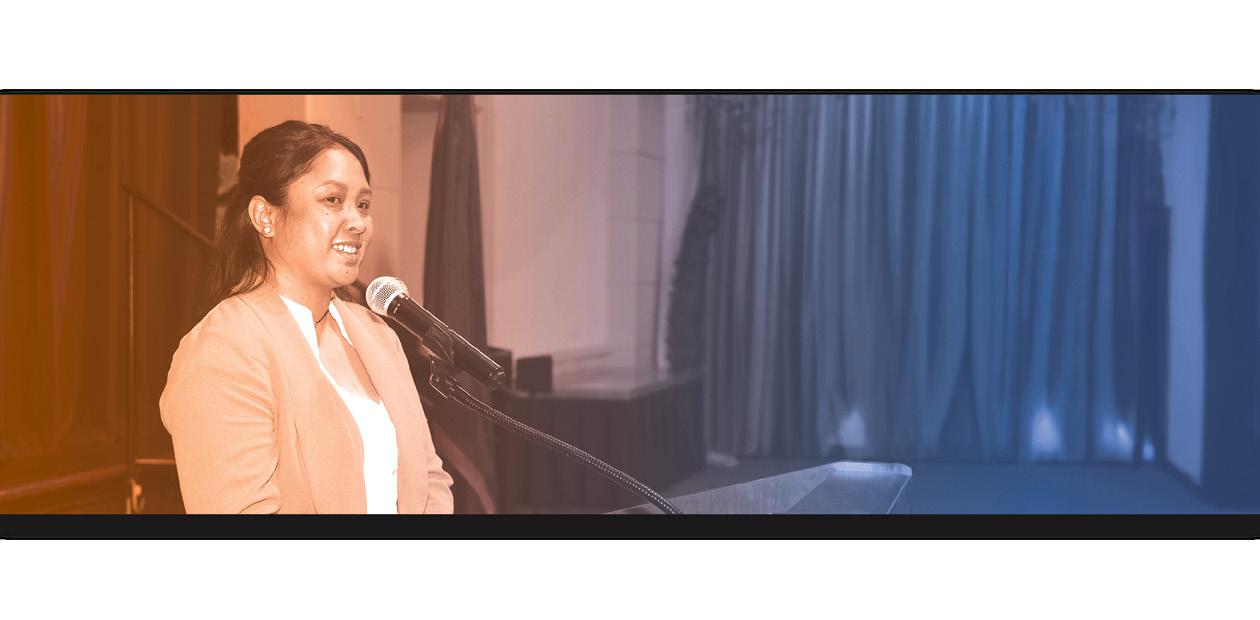
As President of the Guam Contractors Association, I am proud to lead an organization that is truly member-driven. The GCA is not simply an association you belong to—it is an association that belongs to you.
Our strength, our influence, and our success depend entirely on the actions and participation of our members.
That is why today I have a simple but important message: get involved by joining a committee.
Committee participation is one of the most valuable ways to maximize your GCA membership. It offers unparalleled opportunities to network with fellow contractors, gain deeper insight into the construction industry in Guam, and help shape the future of our industry.
When you serve on a committee, you are not just a member—you are a leader.
The GCA offers a variety of committees designed to address every aspect of our industry and community:
Activities, Professional and Community Affairs … plans and coordinates our social and professional events, including subcommittees for the annual golf tournament, picnic, and awards banquet. If you enjoy bringing people together, this is your committee.
Membership … helps plan the monthly luncheons and the recruitment of new members to ensure we continue growing and providing value. Your business acumen can make a real difference here.
Small Business … plans the networking events and conducts outreach to ensure our smaller member firms have their voices heard and their needs addressed. Every member matters at GCA.
Government, Military and Labor Relations … keeps members informed on legislation affecting our industry, represents us in hearings, and monitors labor practices. This committee is vital to protecting our interests.
Safety … develops partnerships and sponsors training to promote safe working conditions across our industry. Nothing is more important than bringing our workers home safely every day.
Education and Training … sponsors our apprenticeship programs through the GCA Trades Academy, building the skilled workforce our industry needs.
Emerging Leaders … engages members under 40 to encourage youth participation in GCA programs—ensuring our industry's future remains bright.
No matter your expertise or interest, there is a place for you. Your participation strengthens not only your own business but our entire industry.
I encourage you to take the next step and join a committee today.
Get involved in the GCA in 2026. If you would like more information, please call or email the GCA office at (671) 647-4840 and info@guamcontractors.org.
Together, we build Guam.









By Francine Taitague Education Director
Guam Contractors Association
A new year brings fresh opportunities to strengthen your team. Across Guam, construction firms are grappling with a widening talent gap—experienced professionals are retiring, project demands are climbing, and the pipeline of skilled workers isn't keeping pace. The solution? Developing your own talent through a structured apprenticeship initiative.
Launching an apprenticeship initiative positions your organization for long-term success. Here's how to get started.
Every effective training initiative begins with intentional structure. Map out a comprehensive timeline—most programs span two to four years based on the specialty. Define specific learning milestones that reflect both industry benchmarks and your organization's unique operational needs.
Craft a compensation structure that acknowledges growing expertise while keeping the program financially viable. View trainees as future assets—their value to your operation grows substantially as they advance. Weave safety protocols throughout every phase of instruction, setting standards that go beyond basic compliance.
Before diving in, take an honest inventory of your organization's capacity. Are you familiar with current regulations and program requirements?
Do you have adequate facilities, equipment, and—most critically—seasoned professionals willing to guide newcomers? Identify your top performers who combine technical mastery with the patience and communication skills needed to teach effectively. These individuals will serve as the foundation of your mentorship efforts.
Which specialties will you need most? What percentage of your current team might transition out? Factor in
your instruction expenses, equipment, supplies, and the time your mentors will dedicate to training.
Effective implementation demands solid administrative infrastructure. Establish tracking systems to monitor trainee advancement, including logged hours and performance assessments.
Familiarize yourself with all applicable regulations, from employment laws to safety mandates and program standards.
Establish clear success indicators—completion percentages, competency targets, and advancement rates. Schedule consistent check-ins with both trainees and mentors.
The Guam Contractors Association maintains records of hours completed and educational progress for every participant in your program. Our team walks alongside you through each phase of development and implementation.
Important note for HR professionals: GCA apprenticeship standards now extend beyond construction trades to include administrative and office-based career pathways. This opens doors to cultivate talent across your entire organization—not just on the construction jobsite.
Join the growing roster of forward-thinking firms establishing and expanding their workforce development programs.
Ready to take the next step? Call me today at (671) 647-4841 or email me at francine.taitague@guamcontractors.org.
Together, we're shaping Guam's construction future—one skilled professional at a time.









By Rodney “RJ” Ricarte
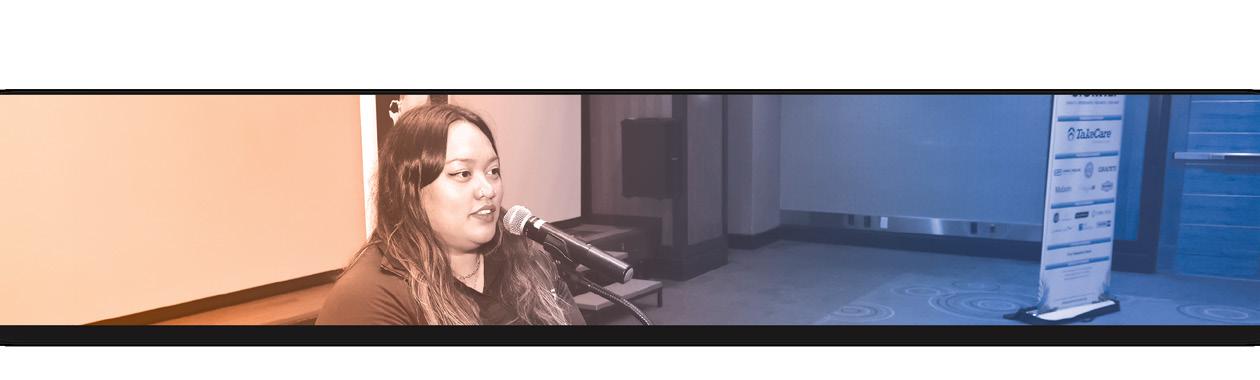
TakeCare can help you get healthier in 2026. Your TakeCare GCA Employee Health Benefit is based on the principles of what we call the Balanced Lifestyle which is being active, eating right, relaxing and unwinding, and being socially connected. Consistently practicing all four helps you to live a balanced lifestyle and a healthier life.
January is the perfect time to assess your health needs for the new year. Let’s quickly take an inventory of what you need to do to live a more balanced lifestyle.
Start with the basics: an annual physical examination. This cornerstone of preventive care gives your healthcare provider a comprehensive view of your health status. During this visit, essential metrics like blood pressure, cholesterol, and blood glucose levels are checked, providing vital information about your cardiovascular and metabolic health. These simple tests can reveal early warning signs of conditions like hypertension or diabetes before they become serious concerns.
You and your family’s TakeCare GCA Employee Health Plan is packed full of incentives to encourage healthy habits and screenings.
Your health is your wealth. At TakeCare, we're making that more than just a saying. The incentive program offers members up to $350 for individuals and $700 for families, transforming your healthcare into a rewarding experience across three key areas: wellness, fitness, and outcome-based Incentives.
Since first impressions start with a smile, the FHP Dental Center is dedicated to helping you achieve and maintain that confident, healthy smile for a lifetime. As your comprehensive dental care provider, FHP combines advanced technology with personalized attention to meet all your family's oral health needs.
Your health benefit provides access to off-island medical care when specialized services aren't available locally. This requires complete documentation before travel. Submit referral forms and medical records—approval takes five business days. Never buy tickets before approval. After authorization, TakeCare coordinates appointments matching your preferences. Upon return, hand-carry all records to your physician for follow-up care continuity.
TakeCare includes a valuable Executive Checkup benefit that provides comprehensive health screening at premier medical facilities across Asia. Unlike specialty care referrals, this benefit offers a streamlined process designed for your convenience. TakeCare partners with premier facilities across Asia, including locations in the Philippines, Taiwan, South Korea, Japan, Thailand, Singapore, and more. Whether you're planning a trip specifically for health screening or incorporating it into existing travel plans, this benefit offers valuable peace of mind through comprehensive health assessment.
2026 can be the year you and your family get healthy.
Rodney “RJ” Ricarte is the TakeCare account executive for GCA. He can be contacted at (671) 487-7121 or rodney.ricarte@takecareasia.com.




By Patti L. Diego
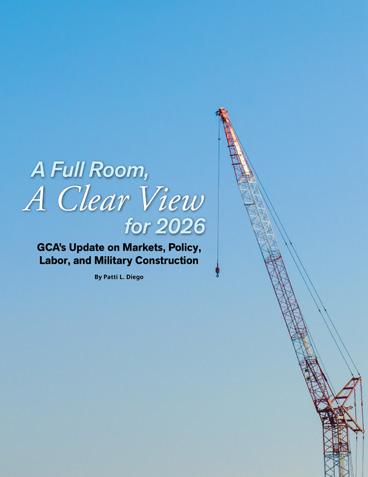
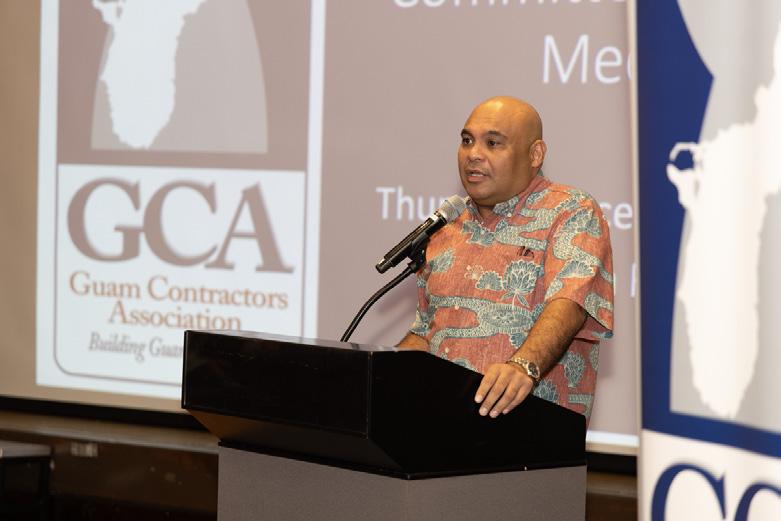
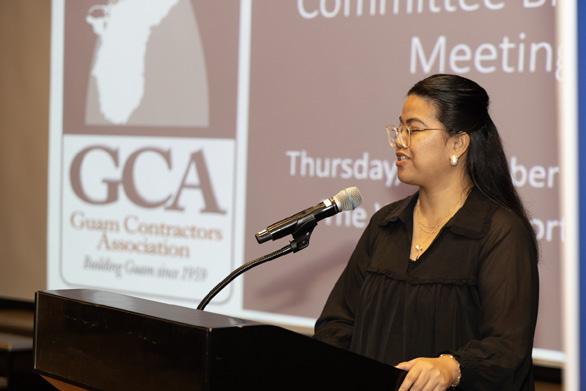
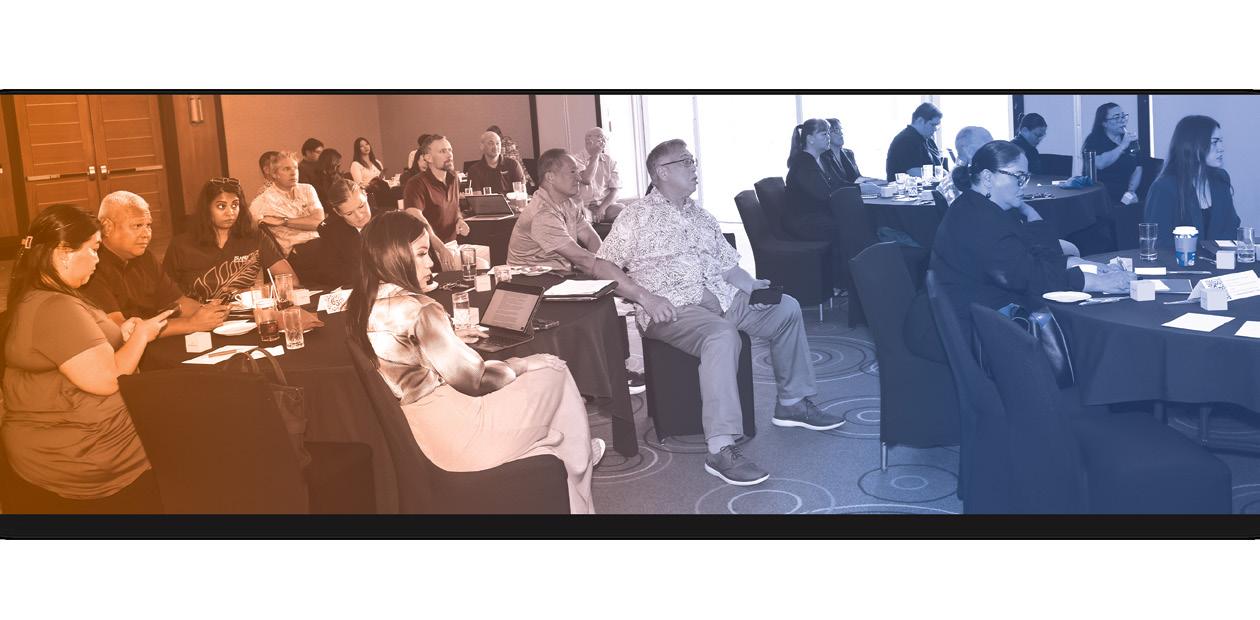
The Guam Contractors Association’s Government, Military, and Labor Affairs Committee convened its December 18, 2025 breakfast meeting to provide members with a comprehensive, forward-looking briefing on the policy, permitting, labor, and military construction issues shaping Guam’s construction environment. Held at the Westin Somnak Ballroom, the meeting brought together senior government leaders, regulatory officials, military representatives, and industry experts before a full audience, following a tightly sequenced agenda designed to deliver timely, decision-relevant information for GCA leadership and the contracting community. Lieutenant Governor Joshua Tenorio framed the discussion around the importance of disciplined fiscal management and deliberate coordination across agencies, noting that alignment
ture planning and federal and military initiatives remains critical as Guam moves into another year of sustained investment.
“Fiscal discipline, coordinated planning, and alignment with federal and military initiatives are essential to keeping Guam’s infrastructure projects moving forward responsibly and on schedule.”
Lieutenant Governor Joshua Tenorio
Key highlights included presentations from Lieutenant Governor Tenorio; Siska Hutapea, President of Cornerstone Valuation Guam, Inc.; representatives from Congress-
man James Moylan’s office, including T’Nelta Mori and Trinajae Apatang; Speaker Frank Blas Jr.; Greg Massey of the Alien Labor Processing and Certification Division, Guam Department of Labor; Michelle Lastimoza, Adminis-
trator of the Guam Environmental Protection Agency (GEPA); and Eugene Mesa, P.E., Director and Chief Engineer with NAVFAC Marianas. Taken together, the presentations illustrated the level of coordination underway across civilian government, defense planning, workforce development, and infrastructure delivery. Hutapea’s market overview pointed to continued demand pressures in both the housing and commercial sectors, driven in large part by military-related growth and the need for accurate, current valuation data to support sound project planning.
For contractors navigating an increasingly complex operating environment, the briefings offered a practical snapshot of how policy decisions, permitting timelines, labor availability, and federal construction planning are aligning in real time to support project execution and informed business planning. Briefings from Congressman James Moylan’s office underscored the close connection
“Military-driven growth continues to shape Guam’s housing and commercial markets, increasing demand pressures and underscoring the importance of accurate valuations for project planning and investment decisions.”
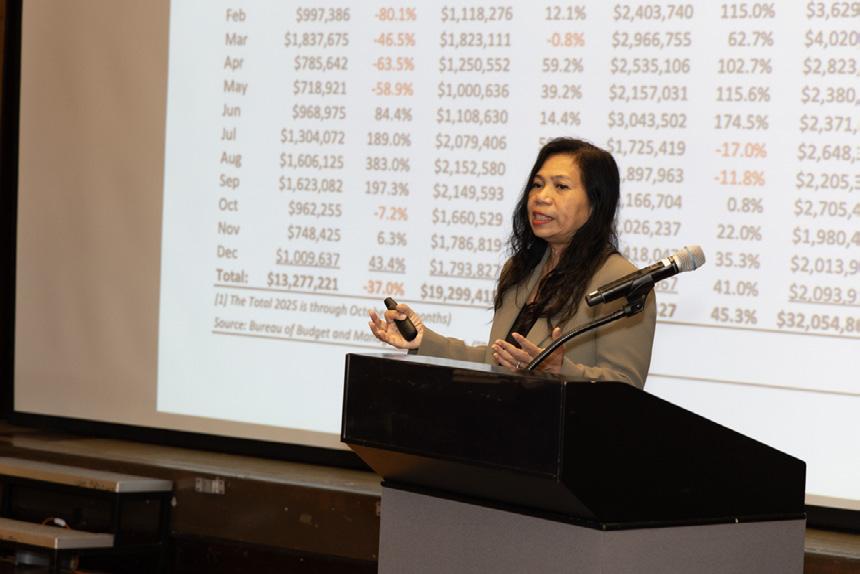
Siska Hutapea, President – Cornerstone Valuation Guam, Inc.

between recent federal legislative activity and Guam’s construction outlook, particularly as NDAA-related actions continue to shape funding priorities and coordination with military agencies.
developments and early indicators of the 2026 military construction pipeline. From the military engineering perspective, Mesa emphasized the value of early project visibility, noting that advance
“Federal legislative activity, including NDAA-related measures, remains closely tied to Guam’s construction outlook, reinforcing the need for ongoing coordination between contractors and federal agencies.”
T’Nelta Mori & Trinajae Apatang – O ce of Congressman James Moylan
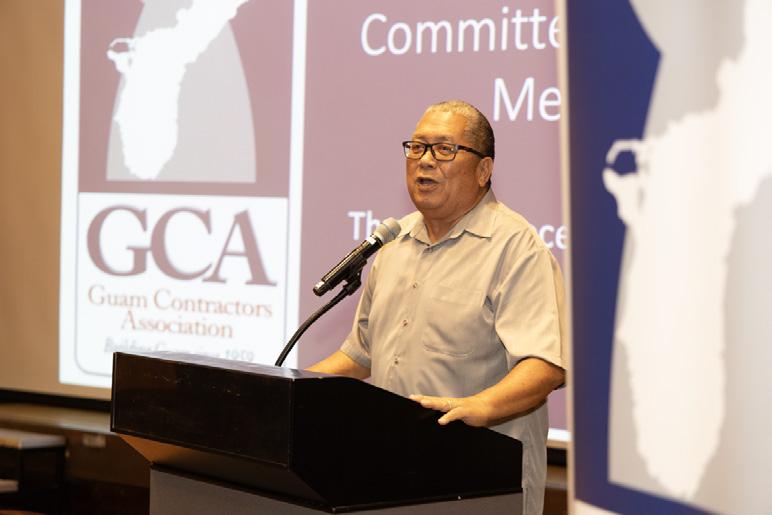
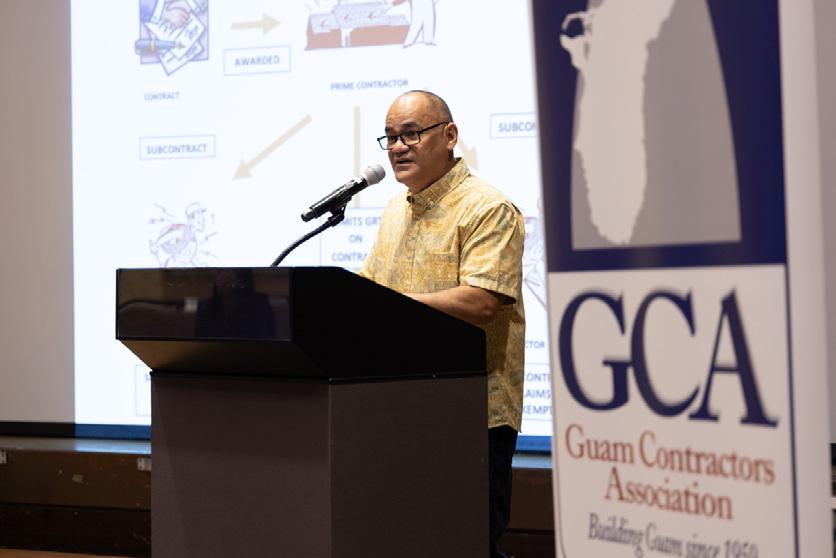
Guam legislative perspectives were also part of the discussion, with Speaker Frank Blas Jr. outlining ongoing efforts to improve the permitting process. His remarks reflected a legislative focus on increasing efficiency while maintaining the regulatory safeguards necessary for responsible development, an issue of direct relevance to contractors managing project schedules and compliance requirements.
Federal engagement featured prominently through policy briefings from Congressman James Moylan’s office and NAVFAC Marianas, highlighted NDAA-related

insight into upcoming work allows contractors to better plan investments, workforce needs, and bidding strategies for 2026 and beyond.
Discussions reinforced GCA’s long-term workforce commitment through continued support for the
GCA Trades Academy. That commitment reflects a strategic focus on building local capacity as Guam prepares for continued project growth tied to the sustained military buildup.
Labor availability remained a central concern, with workforce briefings from the Guam Department of Labor highlighting the importance of timely labor processing and coordinated workforce strategies. Massey’s presentation addressed the practical challenges contractors face in securing skilled workers and the steps being taken to respond to increased demand.
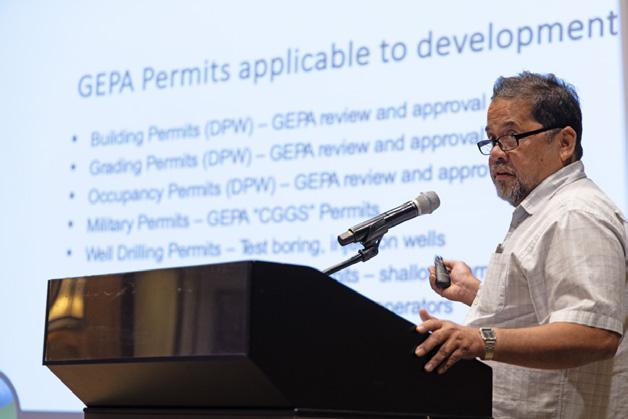
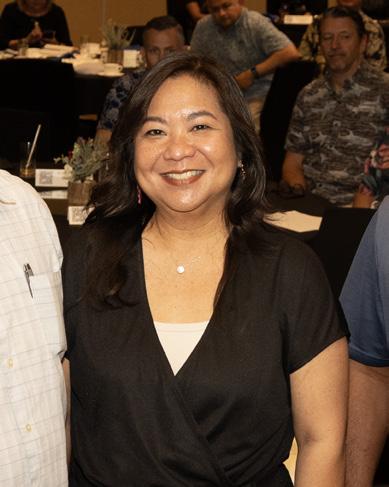
As Guam enters 2026 amid continued military investment and heightened infrastructure activity, the GCA Government, Military, and Labor Affairs Committee meeting served as a practical forum for aligning expectations, identifying challenges, and reinforcing cooperation across sectors. Environmental considerations were also emphasized, with GEPA Administrator
“Permitting reform remains a legislative priority, with a focus on improving e ciency while preserving the regulatory safeguards necessary for responsible development.”
Speaker Frank Blas Jr.
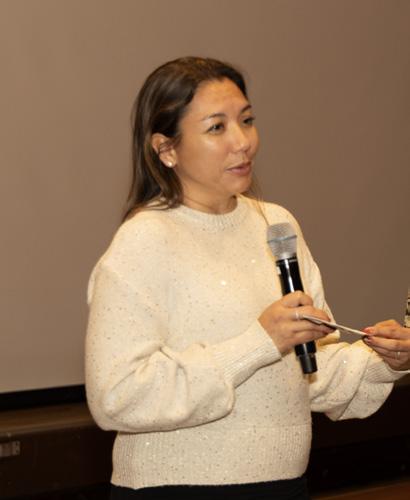
“Addressing workforce shortages requires timely labor processing and coordinated strategies to ensure contractors have the skilled workers needed to meet growing construction demand.”
Greg Massey – Alien Labor Processing and Certi cation Division, Guam Department of Labor
Michelle Lastimoza stressing that permitting efficiency and regulatory compliance must advance together to support development while safeguarding Guam’s natural resources.
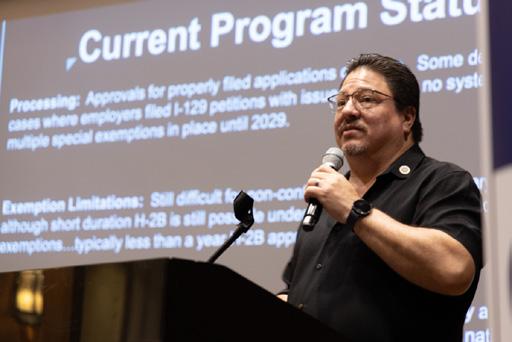
By convening decision-makers and industry leaders in one room, GCA created a timely forum for cross-sector coordination as Guam enters a period of sustained military and infrastructure growth, reaffirming its role as a trusted conduit for
information, coordination, and advocacy. GCA’s ongoing goal is to help its members plan, compete, and deliver successfully in a rapidly evolving construction landscape.
“E cient
permitting timelines and regulatory compliance must move together to support development while protecting Guam’s environmental resources.”
Michelle
Lastimoza, Administrator –Guam Environmental Protection Agency
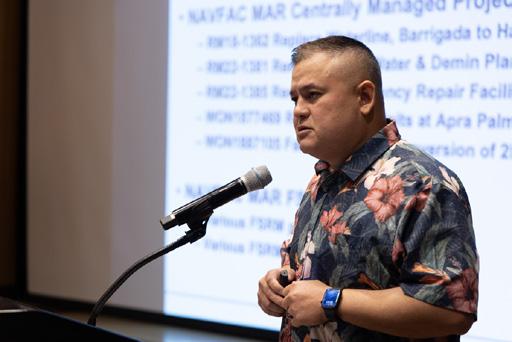
“Early visibility into the military construction pipeline allows contractors to plan, invest, and position themselves for upcoming opportunities in 2026 and beyond.”
Eugene Mesa, P.E., Director and Chief Engineer – NAVFAC Marianas
By Regina Weaver, Corrosion Control Specialist, Guam
Guam’s tropical climate creates one of the most aggressive corrosion environments in the world. Constant exposure to salt air, high humidity, frequent rainfall, and airborne contaminants accelerates metal deterioration across vehicles, equipment, and infrastructure. Salt particles are carried inland by prevailing winds and remain active due to persistent moisture, allowing corrosion to progress rapidly, often before damage is visible.
Unlike seasonal corrosion in colder climates, corrosion in Guam is continuous. Without structured mitigation, assets experience shortened service life, increased maintenance demands, and rising lifecycle costs.
• Environmental Factors Driving Corrosion
• Salt-laden air is transported inland
• High humidity is preventing salt deposits from drying
• Frequent rainfall reactivates corrosive residue
• Airborne contaminants are accelerating metal degradation
• The Role of Professional Corrosion Control
While corrosion cannot be eliminated, it can be effectively managed through disciplined maintenance and professionally executed corrosion control services. In high-risk environments such as Guam, relying solely on basic washing or surface-level protection is often insufficient.
Scheduled fresh water washing programs are a foundational corrosion mitigation practice. Proper washing targets undercarriages, seams, fasteners, and enclosed
areas where corrosion typically initiates. These programs are most effective when performed consistently and according to established maintenance standards.
Professional rustproofing services apply moisture-displacing materials that penetrate seams, joints, and hard-to-reach areas. These treatments form a protective barrier that slows corrosion progression in areas conventional coatings cannot reach. In Guam’s environment, recurring application is commonly required to maintain protection.
High-performance primers and coatings designed for marine and tropical conditions provide long-term corrosion resistance when applied with proper surface preparation. Professional application ensures coating integrity, adhesion, and performance under sustained salt and humidity exposure.
Effective corrosion management on Guam requires more than reactive repairs—it demands proactive planning, trained execution, and ongoing maintenance. Organizations that incorporate professional corrosion control services into their maintenance strategy are better positioned to extend asset life, control costs, and maintain operational reliability in one of the world’s most challenging environments.



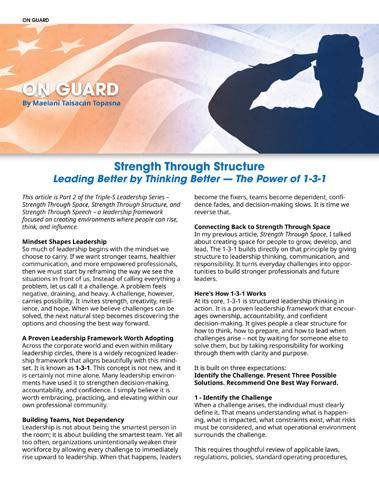
By Maelani Taisacan Topasna

This article is Part 2 of the Triple-S Leadership Series –Strength Through Space, Strength Through Structure, and Strength Through Speech – a leadership framework focused on creating environments where people can rise, think, and influence.
So much of leadership begins with the mindset we choose to carry. If we want stronger teams, healthier communication, and more empowered professionals, then we must start by reframing the way we see the situations in front of us. Instead of calling everything a problem, let us call it a challenge. A problem feels negative, draining, and heavy. A challenge, however, carries possibility. It invites strength, creativity, resilience, and hope. When we believe challenges can be solved, the next natural step becomes discovering the options and choosing the best way forward.
Across the corporate world and even within military leadership circles, there is a widely recognized leadership framework that aligns beautifully with this mindset. It is known as 1-3-1. This concept is not new, and it is certainly not mine alone. Many leadership environments have used it to strengthen decision-making, accountability, and confidence. I simply believe it is worth embracing, practicing, and elevating within our own professional community.
Leadership is not about being the smartest person in the room; it is about building the smartest team. Yet all too often, organizations unintentionally weaken their workforce by allowing every challenge to immediately rise upward to leadership. When that happens, leaders
become the fixers, teams become dependent, confidence fades, and decision-making slows. It is time we reverse that.
In my previous article, Strength Through Space, I talked about creating space for people to grow, develop, and lead. The 1-3-1 builds directly on that principle by giving structure to leadership thinking, communication, and responsibility. It turns everyday challenges into opportunities to build stronger professionals and future leaders.
At its core, 1-3-1 is structured leadership thinking in action. It is a proven leadership framework that encourages ownership, accountability, and confident decision-making. It gives people a clear structure for how to think, how to prepare, and how to lead when challenges arise – not by waiting for someone else to solve them, but by taking responsibility for working through them with clarity and purpose.
It is built on three expectations: Identify the Challenge. Present Three Possible Solutions. Recommend One Best Way Forward.
When a challenge arises, the individual must clearly define it. That means understanding what is happening, what is impacted, what constraints exist, what risks must be considered, and what operational environment surrounds the challenge.
This requires thoughtful review of applicable laws, regulations, policies, standard operating procedures,
internal guidance, directives, memorandums, and current industry practices so the challenge is presented accurately and with context.
The next step requires structured thinking. The individual does not simply report a challenge — they take ownership of it by presenting three realistic, researched, and viable solutions. This demonstrates readiness, maturity, and leadership responsibility. It shows that the individual has analyzed possibilities, weighed impacts, and truly engaged in problem-solving instead of passing the burden upward.
Then comes empowerment. Out of the three possible solutions, the individual recommends the one they believe best supports the mission, the organization, and the situation at hand. This is where confidence is built. This is where leadership grows. The individual is no longer just reporting — they are leading.
Implementing 1-3-1 can require a cultural shift. Many teams are accustomed to bringing challenges upward and waiting for leaders to solve them. 1-3-1 changes that dynamic. It requires patience, accountability, and thoughtful leadership — both from the individual presenting the challenge and from the leader receiving it. But when teams commit to it, something powerful happens: people stop passing challenges upward, and they start rising to meet them.
Our job as leaders is not to take that opportunity away. It is not to rush in and rescue. Instead, it is to guide, listen, evaluate, and support. Sometimes we will agree with their recommendation. Sometimes we will refine it. Sometimes we will redirect. But every time, we are strengthening someone’s ability to think courageously, act responsibly, and grow confidently. That is leadership — not control, but empowerment.
The structured 1-3-1 leadership framework has the power to transform organizational culture. It reduces dependency, speeds up decisions, strengthens communication, fosters trust, and develops confidence. More importantly, it sends a powerful message to our teams: I trust you. I believe in your judgment. You are capable of leading. When people feel trusted, they rise. When they are empowered, they grow. When they are encouraged to think, they become leaders.
To our industry partners, this is where you come in. In the federal contracting environment, government and industry are not on opposite sides — we are mission
partners. As the federal government, we hold the responsibility of stewardship and accountability, but leadership is strongest when partnership is strong. And you are the industry experts. You bring the technical knowledge, capability, innovation, and real-world experience that makes success possible.
So when a challenge arises in contract performance, execution, funding, or schedule, I encourage you to embrace the 1-3-1 as well. Instead of submitting a concern alone, bring the challenge forward with three thoughtful, feasible options and one recommended path that remains within scope, within funding boundaries, and aligned with mission requirements. Help us understand your perspective. Help us evaluate. Help us decide — and when appropriate — help us concur with your professional recommendation.
When you do this, you are not just raising an issue; you are strengthening the partnership. You are contributing to timely solutions. You are supporting accountability and mission execution. And together, we move forward more efficiently, more effectively, and with greater trust in one another.
The 1-3-1 is far more than a procedural exercise. It is a mindset. It is a commitment to intentional leadership development. It is an investment in people. And when we apply it — in leadership conversations, collaboration, and within the many demanding environments we operate in — we create stronger communication, deeper trust, and greater capability across our industry.
To my colleagues and members of the Guam Contractors Association, challenges will always be part of our work, our projects, our partnerships, and our leadership journeys. But how we choose to approach them will always define our culture and our character. When we see challenges as opportunities, when we strengthen our mindset, and when we intentionally practice 1-3-1, we lift not only ourselves, but our teams, our organizations, and our professional community as a whole. Together, we can build a culture where people think deeply, communicate clearly, and lead confidently.
Because when we lead with structure, we lead with clarity, we build confidence, and we create a culture where people believe in their ability to think, decide, and lead. And when we trust our teams with the responsibility of 1-3-1, we are not just solving challenges…
we’re building stronger leaders.


By Joe Taitano II for Pacific Daily News
January 9, 2026 - At a public hearing Thursday, stakeholders voiced strong support for Senator Chris Duenas’ Bill 240-38, which would ease zoning requirements for temporary workforce housing in Guam’s light industrial, or M1, zones. The bill would eliminate the need for conditional use permits for worker barracks, provided they meet existing safety and sanitation standards. Proponents argue the change would reduce construction delays, ease the housing crunch for residents by moving workers out of residential units, and provide certainty for developers amid a workforce of more than 5,000 H-2B laborers, most in construction. Supporters, including realtors and a former planning commissioner, said industrial zones remain the least intrusive and most practical location for such housing.
Full story at: https://www.guampdn.com/news/bill-to-ease-permitting-for-worker-barracks-construction-sees-support/article_7d8ceddc-85a5-48e2-aa0a-073d0cf0911c.html
By Jason Salas for KUAM News
January 8, 2026 - Details have emerged regarding January 5’s chemical spill in Barrigada that caused hours-long traffic disruptions near the Tiyan Shell gas station. The Guam EPA reports the spill occurred when unsecured drums fell from a Black Construction transport truck, rupturing one 55-gallon drum and releasing a concrete curing compound, with approximately two gallons entering a storm drain. Officials say the spill was successfully contained and cleaned up before contaminating soil or groundwater, aided by dry weather conditions. No EPA violation was issued, though police cited the driver for an unsecured load, with regulators emphasizing the incident as a close call and a reminder of the importance of proper load security.
Full story at:
https://www.kuam.com/story/53363916/no-epa-violation-for-construction-company-responsible-for-chemical-spill
By John O’Connor for The Guam Daily Post
January 7, 2026 - The Guam Power Authority says a new electrical substation in Mangilao must be built regardless of whether a new public hospital proceeds, warning that loss of federal American Rescue Plan Act funding would shift the cost to ratepayers. The $32 million project is tied to infrastructure plans for the Mangilao medical complex and must meet a year-end federal spending deadline. Ongoing legal disputes involving the governor, the attorney general, and multiple agencies threaten the timeline, with the attorney general challenging the use of Coronavirus State and Local Fiscal Recovery (CSLFR) funds without legislative appropriation. GPA maintains that losing the funding would forfeit a major savings opportunity and ultimately increase costs for customers, as growing demand in Mangilao requires additional power infrastructure.
Full story at: https://www.postguam.com/news/local/gpa-with-no-funding-substation-will-be-built-at-ratepayer-expense/article_1a0cb8a5-36d6-4749-bf92-ad6d2344048b.html
By Uriah Aguon for Pacific Daily News
January 7, 2026 - CHamoru Village in Hagåtña will undergo a three-phase renovation and development project funded by approximately $5.6 million in U.S. grant funding, aimed at improving accessibility, functionality, and the visitor experience. Planned upgrades include new permanent vendor spaces at the FestPac Village, construction of a three-story facility with a commercial kitchen and Department of CHamoru Affairs offices, and repairs to existing village structures. The project is structured to keep the village and Wednesday Night Market operational during construction, though a start date has not been set and vendor communication remains a concern. While management is pushing to increase occupancy, foot traffic, and tourism engagement, vendors have raised questions about economic sustainability, limited staffing, and inconsistent enforcement of operating hours.
Full story at: https://www.guampdn.com/news/chamoru-village-to-undergo-some-5-6m-worth-of-repairs/article_f592e2c1-12c8-4126-bcb7-668b8e662fcc.html
By Seth Robson for Stars and Stripes
January 7, 2026 - Roughly two-thirds of the $8.9 billion budget for Camp Blaz has been spent as construction continues on the Marine Corps’ first new base since 1952. About $6.2 billion has been expended to date to prepare the 562-acre facility for the relocation of Marines from Okinawa, part of a long-standing U.S.–Japan agreement. Guam’s military population is projected to grow to approximately 24,000 service members by 2033, with around 4,000 Marines expected to relocate or rotate through the island. Officials say Camp Blaz enhances U.S. operational flexibility in the Indo-Pacific, with Japan contributing roughly $3 billion toward construction and related infrastructure.
Full story at: https://www.stripes.com/branches/marine_corps/2026-01-07/marine-corps-camp-blaz-guam-20325967.html
On Sept. 30, the U.S. Department of Transportation released an interim final rule to revise its Disadvantaged Business Enterprise program.
DOT’s DBE program seeks to assist the formation and growth of small businesses owned by economically disadvantaged individuals, by ensuring that state and local governments establish goals for DBE participation on federally assisted projects.
The final rule ends presumptions of disadvantage based on race or gender that have previously been used by businesses to qualify as DBEs.
This rule is in accordance with the DOT’s proposal in May 2025 to settle a lawsuit challenging the constitutionality of these presumptions in the case Mid-America Milling Co. v. U.S. Department of Transportation.
With these presumptions eliminated, existing DBE firms must be reevaluated and will be able to apply for recertification by demonstrating “individualized proof regarding specific instances of economic hardship, systemic barriers, and denied opportunities that impeded the owner's progress or success.”
On Dec. 22, 2025, federal restrictions implementing provisions of H.R.2670, the National Defense Authorization Act for Fiscal Year 2024, took effect. The restrictions, enacted under the American Security Drone Act of 2023, prohibit contractors and recipients of federal funds from operating, or using federal funds to procure or operate, certain foreign-manufactured unmanned aircraft systems on federal and federally assisted projects.
The prohibitions apply to UAS manufactured or assembled by covered foreign entities identified by the
Federal Acquisition Security Council and listed in the System for Award Management. SAM.gov indicates that all entities listed on the International Trade Administration’s Consolidated Screening List are included on the FASC-covered foreign entity list. The list currently includes prominent drone manufacturers DJI and Autel Robotics.
Contractors should ensure compliance with FAR 52.240-1 and applicable agency funding terms when procuring or operating UAS in connection with federal or federally assisted work.

$26,895 $122.25 $2,522.63 $38,235.04 $16,953.70 $6,463.46 $45,073.88 $0 $121,458.98 $11,132.56
$3,011.31








SUPPORTER