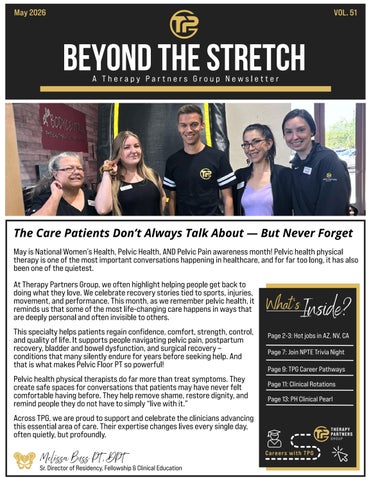

BEYONDTHESTRETCH

this essential area of care Their expertise changes lives every single day, often quietly, but profoundly
Melissa Buss PT, DPT
Sr Director of Residency, Fellowship & Clinical Education

HOT JOBS IN CLICK ON THE ROLE TO APPLY

Physical Therapist
Pelvic Health Physical Therapist

Clinic Director/Physical Therapist


8 locations in Tucson!






Las Vegas, Nevada


Explore more HOT JOBS at Smith Therapy Partners & El Dorado PT!































FILL YOUR TANK FIRST
A note for Mental Health Awareness Month
You know that feeling when you’re driving with the fuel light on? You’ll probably make it where you’re going, but the whole ride has this low hum of stress underneath it. You’re not really present. Part of your brain is just doing the math on how far you can push it. That’s what running on empty feels like as a clinician.
It’s May, which is Mental Health Awareness Month, and the thing I want to say is pretty simple. You can’t run on an empty tank. It doesn’t matter if you’re a brand-new grad still figuring things out or someone who’s been carrying a full caseload for fifteen years. The math is the same. Every single day, you pour your energy, your attention, and your real care into the people on your schedule. That work matters. It also costs you something And if you never stop to fill up, the tank eventually hits zero whether you planned for it or not
So here’s the part worth saying out loud. Filling your tank isn’t a luxury, and it isn’t a reward you earn once everything else is done. It’s part of the job. A rested, supported clinician makes better calls and brings more genuine warmth into the room. Refueling looks different for everyone, but it usually starts small:
• Say “I’m stretched thin this week” out loud instead of carrying it by yourself

• Actually use your PTO
• Move your body, get outside, eat a real lunch
• Lean on a teammate, and let them lean on you
And here’s something that’s easy to miss. Burnout isn’t only a work problem. A lot of the time, it’s what happens when work becomes the only thing in the tank. If your job is the one place you get meaning and energy all week, even a job you love will eventually wear you down. The clinicians who go the distance are the ones who protect a life outside the clinic. The hobby that has nothing to do with being productive. The friends who knew you way before your credentials The long walk with the dog The weekend plans you don’t cancel None of that is a distraction from your work It’s what makes good, steady work possible in the first place So along with the small stuff above, take an honest look at what actually fuels you outside the clinic, and treat it like it matters Because it does
Where you work matters too, and honestly, this is the part I care about most. At TPG, we call it the TPG way, and it comes down to one idea. We take care of each other so we can take great care of our patients. One makes the other possible. It isn’t a poster on the wall. It shows up in the small stuff, on a regular Tuesday. Picking up a patient for the coworker who is slammed. Covering a few minutes so someone can catch their breath. The inside jokes, the team playlist, the little wins you actually stop to celebrate. Work is going to be hard sometimes. But hard does not have to mean joyless. A clinic where people genuinely like each other and look out for each other is one where the tank stays fuller for everyone, patients included.
In practical terms, that means real support behind you. It means an Employee Assistance Program for the times a good weekend is not enough. It means a culture where using your PTO and asking for help are just normal, not something you apologize for. And it means we go after the things that quietly drain you. Right now, for example, we are looking closely at how AI can take some of the documentation load off your plate, because charting should not be the reason you skip lunch or stay late The clinicians who last are not the ones running hardest on empty They are the ones who landed somewhere that helps them keep the tank full
So this month, allow yourself to fill up The people you care for need the best version of you, and that version runs on a full tank
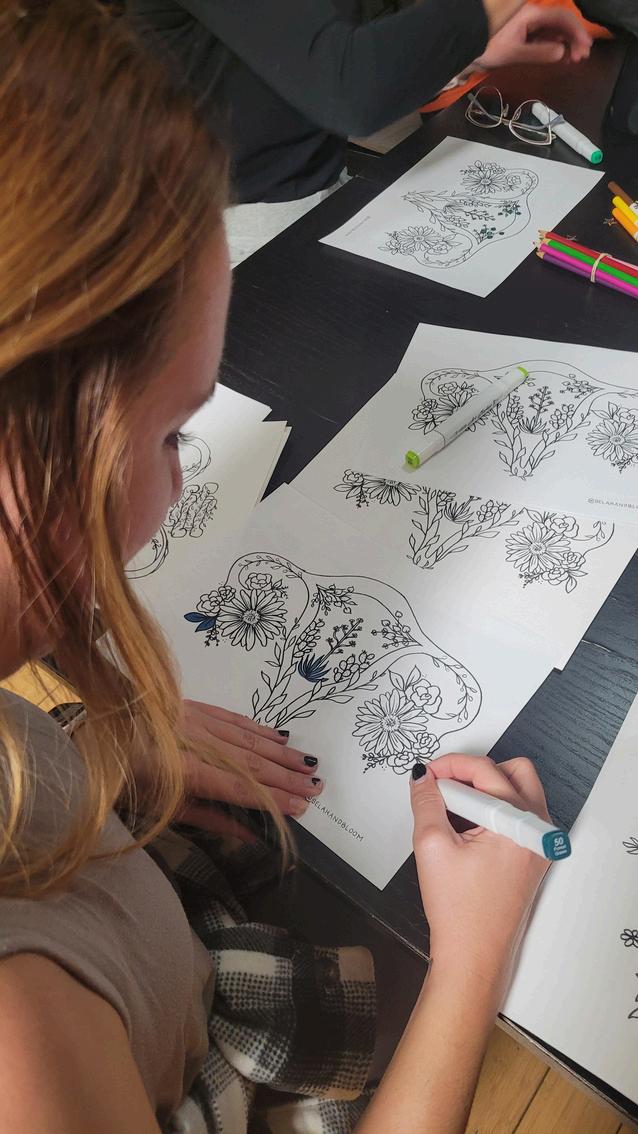
E L V I C P E L V I C
P

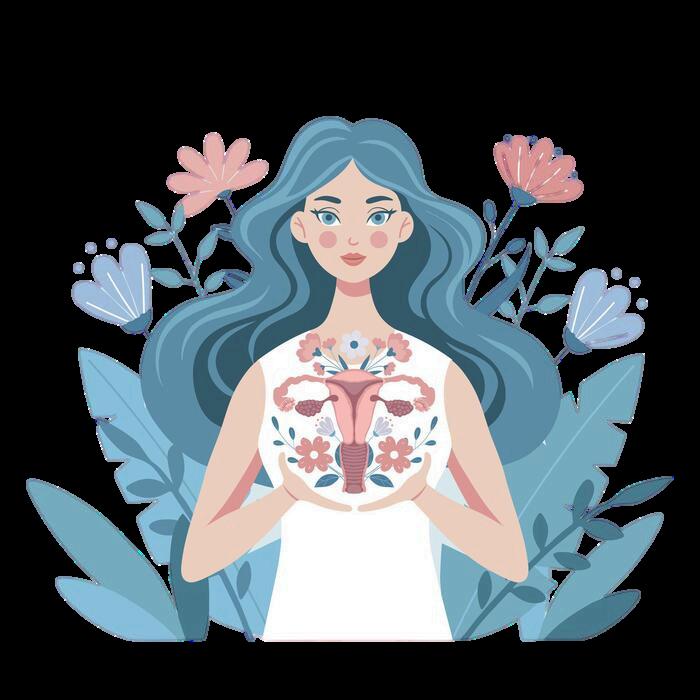

May is officially recognized as National Women’s Health Month and Pelvic Health Awareness Month. It is a dedicated time to focus on preventive care, women's wellness, and the diagnosis and treatment of pelvic floor disorders and gynecologic cancers.
This month emphasizes overall physical and mental well-being for women across all stages of life.
Preventive Screenings: Use this time to book your annual well-woman exam, which includes Pap smears, breast exams, and pelvic exams to catch potential issues early.
Pelvic health encompasses the function of the pelvis, bladder, bowels, and reproductive organs. It is estimated that 1 in 3 women will deal with a pelvic floor condition in their lifetime, including issues like incontinence, endometriosis, and chronic pelvic pain.
Treatments Available: Pelvic health often improves significantly with targeted physical therapy, medication, or minimally invasive procedures.
May also overlaps with several cancer awareness causes, including Bladder Cancer Awareness Month. Gynecologic and pelvic cancers (such as cervical, ovarian, and uterine cancer) are a critical focus of women's health.
Advocacy & Education: Organizations like the Foundation for Women's Cancer provide patient education on symptoms, treatments, and survivor support.





















THURSDAY, JUNE 18TH Location:Online|Time:5p-6pPST



Career Growth
Your Way | Choose Your Path
New Graduate Success Program
12-month structured program
Monthly Interactive Journal Clubs
Monthly Special Topic Didactic Training
Online Modules

Residency Program
12-month Residency Program
Available at most TPG locations
Prepare to sit for APTA's Specialization Certification Exam
Advanced Clinical Programs
Sports, Pelvic Health, Geriatrics, Orthopedics, Hand Therapy, Neurology, & Pediatrics
Knowledge Tracks in specific curriculum
12 months to complete a program
75% pass rate of all courses & completion of program requirements
Case study write-up & presentation
Anyone in an Advanced Clinical Program will be
EMERGING LEADERS & CLINICAL LEADERSHIP PROGRAM
The Emerging Leaders Program is designed for clinicians beginning their leadership journey. It focuses on developing foundational leadership skills, communication, and effective team management. The Clinical Leadership Program is specifically tailored for clinic directors within TPG. This program enhances leadership abilities, clinical expertise, and operational management skills.
TPG CAREER PATHWAYS
Career growth, your way!
Residency Program
Sports
Orthopedics
Women’s Health
New Grad Success Program
Staff Clinician
Leadership Pathway
Emerging Leaders
Clinical Leadership Program
Clinical Director
Regional Director
Advanced Clinical Pathways
Sports
Pelvic Health
Hand Therapy
Geriatrics
Neurology
Orthopedics
Pediatrics
Educational Leadership
Clinical Instructor
New Grad Success Mentor
TPGU Faculty
New Graduate
1+ Years Experience
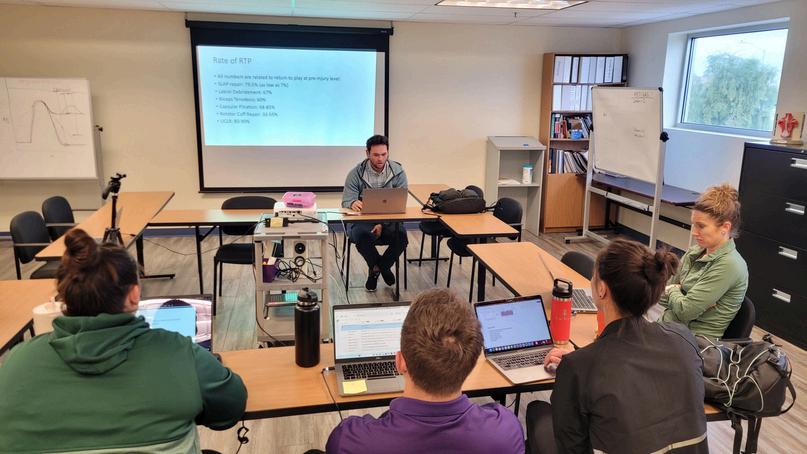


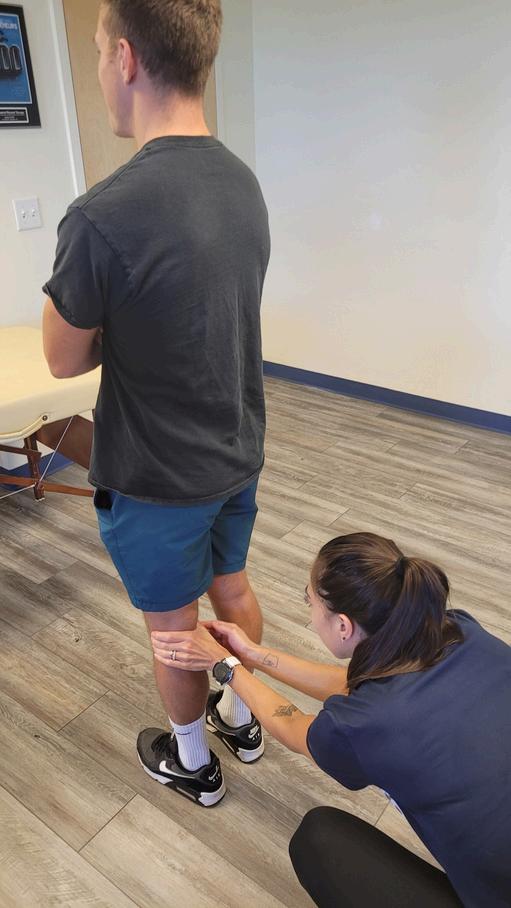








TPG is a family of outpatient PT brands committed to advancing clinical excellence at every stage of your career. Whether you’re a student seeking a hands-on clinical rotation or an experienced clinician ready for your next growth opportunity, we provide the mentorship, leadership, and real-world experience to help you thrive. Through strong university partnerships, collaborative teams, and a relentless focus on high-quality patient care, we create environments where learners build confidence, clinicians sharpen their expertise, and professionals at every level continue to grow.


Email Fatema Ghani, Dir. University Relations fghani@tpgpt.com







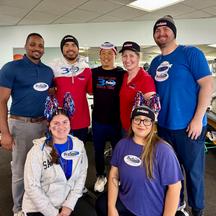
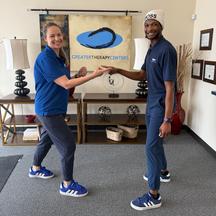
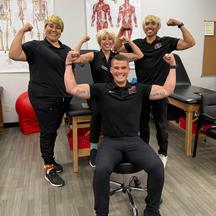
SPIRIT WEEK WINNERS!
College/Sports Day: PS Costa Mesa
Summer Fun: PS Orange Main
Dress like your CD/Manager: STP Las Vegas 7121 Craig








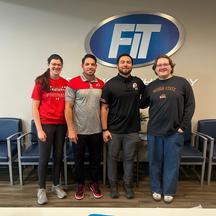
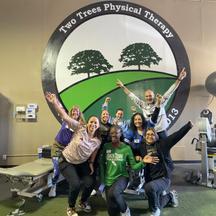

Decade Day: PS Rancho Palos Verdes
TPG/Brand Spirit: PS Culver City




CLINICALPEARL:THEPAINPEOPLEDON’TTALKABOUT
A look at Pelvic Pain Awareness Month
Some injuries get talked about all the time A torn ACL, a cranky lower back, a shoulder that will not cooperate Pelvic pain is not one of them It tends to be carried quietly, sometimes for years, and far too many people living with it never hear the words that would change everything This is real, this is common, and physical therapy can help
May is Pelvic Pain Awareness Month, designated by the International Pelvic Pain Society to pull a common and frequently misunderstood condition into the open. The idea behind the month is simple. The more people who understand pelvic pain, the fewer people who suffer through it alone.
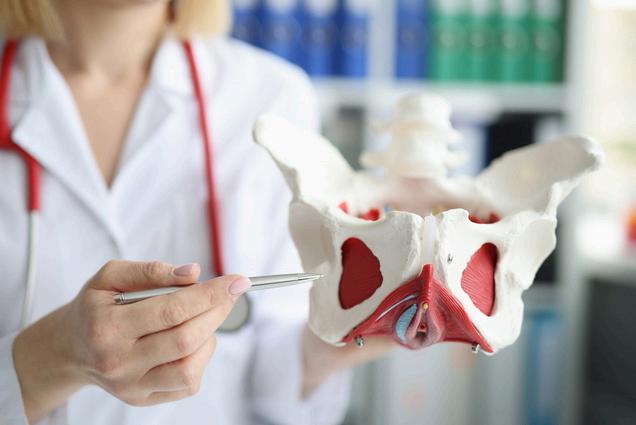
And it’s more common than most people think. One widely cited study found that roughly one in seven women in the United States reported chronic pelvic pain, and broader reviews put the number even higher, with some estimates approaching one in four. It affects men as well, which is a piece that often gets missed entirely Chronic pelvic pain is generally described as noncyclical pain in the pelvis, lower abdomen, or lower back that lasts six months or longer and is significant enough to interfere with daily life
Part of what makes it so hard is the path to help In that same research, around six in ten people with chronic pelvic pain did not have a clear cause identified for it Care often gets scattered across specialties, urology, gynecology, colorectal, pain management, and patients can spend months or years being passed from one provider to the next Many are told, in one way or another, that the pain is in their head It is not It is a real, physical problem, and it deserves a real, physical answer
That’s where pelvic health physical therapy comes in. Pelvic floor PT is widely regarded as a first-line, evidence-based treatment for most pelvic floor disorders. It can help with a wide range of conditions, including: 4
• Chronic pelvic pain and pelvic floor muscle pain
• Painful intercourse, vaginismus, and vulvodynia
• Pelvic pain during pregnancy and recovery after childbirth
• Bladder and bowel symptoms, including urinary urgency and leakage
• Male pelvic pain, including chronic pelvic pain syndrome

And the evidence holds up. A systematic review found pelvic floor physical therapy to be effective for conditions like chronic pelvic pain syndrome, vulvodynia, and painful intercourse. A 2024 meta-analysis found that multimodal physical therapy meaningfully reduced pain intensity for women with chronic pelvic pain compared with other approaches. And in one study of patients with myofascial pelvic pain, close to two out of three reported significant improvement after a course of pelvic floor PT For a condition this stubborn, those are results worth noticing
Here’s the part worth sitting with For someone who has spent years being dismissed, a clinician who listens, explains what is actually going on, and has the skill to help can change the entire course of their life That is what pelvic health PT does It is some of the most personal and most human work in our field, and it is exactly the kind of care this awareness month exists to highlight
So this May, help bring it into the open Mention pelvic health to a patient who might need it Point a friend toward care And if pelvic health is a direction you have ever been curious about, know that it is a field that needs more skilled and compassionate clinicians, and a group of patients who will be deeply grateful you showed up.

ClinicalInstructor InterestSurvey
UOP, Chapman University, and TPG are collaborating to conduct a survey focused on identifying barriers to being a CI. We can boost the value of their results by increasing clinician participation!