Charlotte Fashion Plate • Bob Manzano and Gregory Martin & CBS
Montcross Area Chamber of Commerce
Publisher’s Note
Women Impacting Gaston and a Historic Community Remembrance
By Deborah Ally, Publisher, Gaston Lifestyles magazine
United Way of Gaston County relaunched its Women United Gaston whose focus is Early Childhood Literacy. This group sponsors a child for five years in the Dolly Parton’s Imagination Library and supports 2nd graders as Reading Soulmates. For more information contact Andrea Stephens, at astephens@unitedwaygaston.org
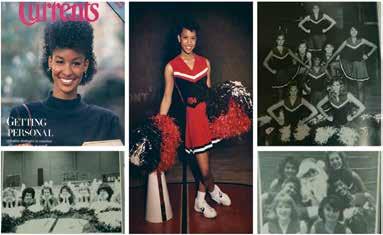
According to The Voice, writer Matthew Memrick, interviewed fellow Alum, Adrienne McCorkle in the article: “The Black Cheerleader Chick”She was the only Black cheerleader at Belmont Abbey in the late nineties. Decades later, her voice still carries. The opening paragraph states that Adrienne Moore McCorkle never planned to make history at Belmont Abbey College. But when she became the school’s only Black cheerleader in the late 1980s, and later its captain, she quietly did just that. The full article can be read at https://consciousalumniofbac. substack.com/p/the-black-cheerleader-chickLegacy).
Deborah Ally
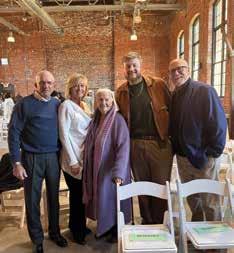
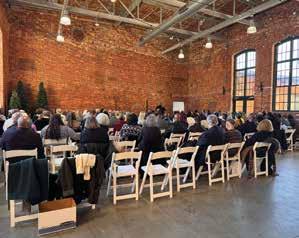
On February 22, 2026 the Highland Neighborhood Association held a ribbon cutting ceremony for the Highland Art Park. President Derrick Harris and past President Elizabeth Brooks Gordon gave opening remarks along with special remarks from Gastonia City Councilwomen Donyel Barber and Angela Dreher, Ina Biggers (Biggers Family Legacy), David Wilson (Lead Artist) and Joy Vermillion Heinsohm (Z. Smith Reynolds Foundation)
A Place to Begin Again
A Calling Grounded in Compassion
By Megan Baksh Photographs Courtesy of Catherine’s House
During Women’s History Month, Gaston is proud to celebrate women transforming their communities through compassion and leadership. At Catherine’s House in Belmont, North Carolina, CEO/
President Kathy Bolster Gauger leads a nonprofit transitional housing organization dedicated to helping women and children as they move from crisis to stability, while navigating the complex realities of trauma. Through safe housing, support services and a commitment to empowerment,
Gauger’s servant-leadership is a powerful testament to the resilience and opportunity that Catherine’s House honors.
After completing graduate school in the late 1990s, Gauger interned and began her career at Florence Crittenden Services, a maternity home in Charlotte, North Carolina. During her time there, she supported pregnant women experiencing homelessness and transported them to Catherine’s House after they gave birth. That essential work introduced her to the values and mission that would eventually shape her chosen career path.
As Gauger gained experience in her field, her responsibilities shifted from direct client work to administrative roles. Encouraged by colleagues, she applied for and was selected as CEO/President of Catherine’s House in 2021. She felt a strong sense of calling to the position and has never been happier in her work. Throughout her career, she has remained focused on serving women and children facing housing instability, grounded in the belief that safe, stable housing should not be a luxury.
One aspect of her career she considers a gift is that each day she goes to work, she enters someone’s sacred space — a privilege she holds with great respect.
“Here at Catherine’s House, each day I walk into this building, I am entering the home of up to 15 women and 11 children,” Gauger says, describing the responsibility she carries into work each morning. “That means I need to check any personal baggage at the door. If I’ve had a rough drive or my own life is challenging, I cannot carry that in with me. I am stepping into the home of women who have faced significant trauma. They deserve our very best — our full presence and our best foot forward.”
Where Mercy Lives
Catherine’s House was built upon the vision of Catherine McAuley. Born in 1778 in Dublin, Ireland, McAuley drew inspiration from her father, a successful businessman and devout Catholic whose empathy and compassion led him to help those in need throughout the city. After receiving a significant inheritance, McAuley made it her life’s work to serve those less fortunate than her.
In 1827, she created her first charity in Dublin, the House of Mercy. It offered education, shelter and support for women and children in need. It became the headquarters for the Sisters of Mercy, a religious community McAuley founded in 1831. The Sisters expanded their mission across Ireland and eventually throughout the world. Today, Catherine’s House continues to uphold that same legacy of mercy, love and empowerment, providing strength and hope to women and children as they move toward self-sufficiency.
Cover Story
More Than Shelter
Going beyond basic transitional housing, Catherine’s House has much to offer. From the moment someone experiences a
childhood trauma that is now manifesting in negative outcomes in adulthood.”
The presence of a clinical director on-site, working alongside a case manager as a team, helps identify underlying issues and provides a space for processing, coping and learning new tools to help residents succeed.
The First Night of Safety
crisis, they have a human being to connect with — someone kind and caring. Once they arrive, they are surrounded by services to help them move beyond their situation. Counseling and case management work together to support that progress.
Catherine’s House uses the ACE score — Adverse Childhood Experiences — to better understand a resident’s trauma. The score ranges from zero to 10, with zero meaning little to no traumatic experiences in childhood and 10 indicating severe trauma, such as exposure to substance use in the home, domestic violence or having a parent incarcerated. Higher ACE scores are linked to mental health challenges, substance use and difficulties maintaining employment and relationships. The more adverse experiences someone has, the greater the risk for health issues later in life.
“Since last July, 95% of the women we’ve served have had an ACE score of 5 or above,” Gauger notes, pointing to the statistic as both sobering and telling.
“Nearly every woman who walks through our doors has experienced significant
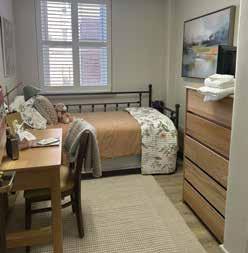
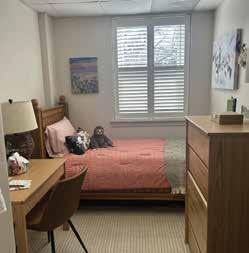
If someone needs emergency housing, Catherine’s House is the next step after initial stabilization. Once residents arrive, they are welcomed into their rooms — dignified spaces to call their own.
Within the first 24 to 48 hours, residents meet with their case manager and clinical director. Their immediate needs are assessed, ensuring access to essentials such as child care, food stamps, toiletries and clothing.
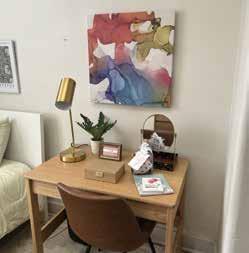
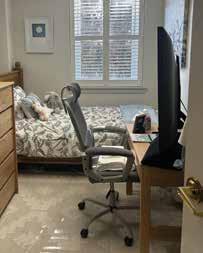
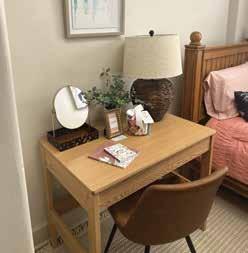
“We’ve partnered with a nonprofit agency called A Lotta of Love, and they’ve helped us purchase new dressers and desks and decorate the rooms,” Gauger explains, describing the intentional details that matter.
“Imagine someone who’s been sleeping in their car — maybe during a storm — coming into a peaceful, decorated bedroom with brand-new bedding that’s never been slept in.”
Supporting Wellness and Self-Sufficiency
Focused on building trust and stability from the start, Catherine’s House ensures residents are aware of wellness opportunities while teaching practical life skills they can use after departure.
If residents are interested in the YMCA, Catherine’s House can provide a three-month membership at no cost so they can focus on their wellness. Every Monday night, groups meet to discuss budgeting, trauma, domestic violence, coping skills and practical life skills — with babysitters on-site so parents can fully participate.
“On case management nights, we review residents’ spending habits,” she says, emphasizing that the conversations are practical, not punitive. “For example, if someone is spending $30 to $40 at McDonald’s every night for their
family, we help them redirect that money toward groceries. We also teach cooking skills when needed, connecting residents with our residential support specialist.”
Healing Beyond the Walls
Through its aftercare initiative, Catherine’s House remains involved in residents’ lives even after they leave. At the two-year mark, when they technically roll off aftercare, many remain in contact — a benefit of continued connection.
The aftercare initiative has expanded Catherine’s House’s reach. Former residents often form their own communities, supporting one another and attending events together, in addition to the ongoing support provided by staff.
“We have former residents who come back and share their stories with new residents,” Gauger says, underscoring the power of peer encouragement. “It can be overwhelming to navigate a new life here, but hearing ‘I did this, you can do it’ provides hope and practical tips for success.”
that makes maintaining employment difficult. Finding landlords willing to take a chance on someone with a past eviction presents an additional hurdle. Through community partnerships, however, Catherine’s House works to overcome these challenges.
The Weight of Affordable Housing and Basic Needs
While Catherine’s House provides residents with tools to succeed, many still face challenges after departure. Finding affordable housing can be one of the greatest obstacles. In Belmont, a twobedroom apartment with rent and utilities may cost up to $1,800 per month. Even someone earning $15 per hour would need to work 2½ full-time jobs to afford it.
Many residents have experienced trauma
“We look to the community to help solve these problems,” Gauger says, stressing that collaboration is essential. “Landlords trust that Catherine’s House will guarantee rent if needed. Partners set aside day care slots, and donations fill gaps in groceries and essentials. By leveraging these resources, we help our residents thrive.”
Bridge to Home
With grant support from the Gaston Community Foundation, Catherine’s House will launch a new program called Bridge to Home. It will extend transitional housing beyond the Belmont facility, allowing residents who are not yet ready for independent living to stay in fully furnished homes in the community. The program bridges the gap between short-term transitional housing and full-market rental apartments, giving residents more time to stabilize and prepare for independent living.
The Heart of the Mission
Catherine’s House embodies the concept of mercy. For Gauger, that means everyone should feel safe, have a place to call home and be cared for no matter their circumstances.
“Mercy is love that leans in instead of turning away,” Gauger says, returning to the principle that guides the organization’s work. “It’s compassion that sees the full weight of someone’s story — their wounds, mistakes and fears — and chooses tenderness over judgment. Mercy says you are more than your worst moment. You are still worthy of care. We are founded on the Sisters of Mercy concept of mercy, giving love and care regardless of whether someone ‘deserves’ it.”
For more information about Catherine’s House, please visit catherineshouseinc.org.
Business Center
Growing Downtown, Together
Inside
the GBA Downtown Program
By Megan Zelaski Photographs Courtesy of Gaston Business Association
What started as a simple idea in 2024 — bring downtown businesses together in one room — has grown into one of the most dynamic and collaborative initiatives in Gaston County.
The GBA Downtown Program began through a partnership between Downtown Gastonia (DTG) and the Gaston Business Association(GBA) with one clear goal: strengthen the downtown business community by connecting the businesses that already exist while strategically attracting new ones.
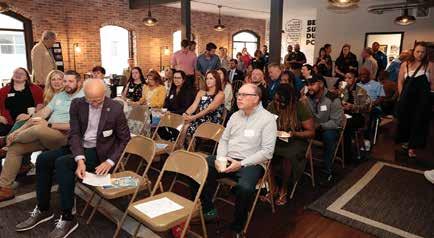
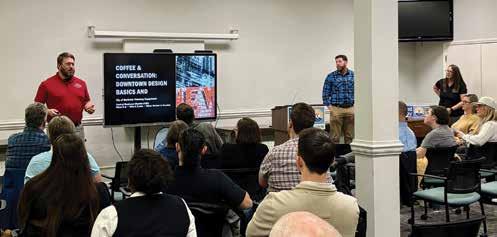
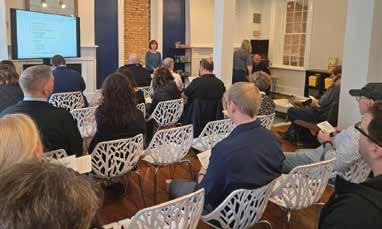
In the early days, monthly meetings gathered 10 to 13 business owners and stakeholders. Those conversations focused on sharing updates that many businesses weren’t always aware of — from development news to public safety information to upcoming events. Fast forward to today, and those meetings regularly draw 70+ attendees. Hosted in community spaces throughout downtown, the gatherings now feature updates from Gastonia Police, public safety leaders, nonprofit partners, new businesses, and community stakeholders. What was once informational has evolved into something much bigger — a true ecosystem of collaboration. As participation grew, so did the need for more focused conversations. The Downtown Program expanded into structured committee groups that meet monthly at Alchemy Co-Working on West Main Avenue. Each group focuses on a
specific aspect of downtown growth: Business Recruitment & Retention, Placemaking & Public Spaces, Leadership & Engagement, and Storytelling & Visitor Experience. These smaller focus groups allow business owners and community leaders to dive deeper into strategy, ideas, and implementation.
“Downtown thrives when entrepreneurs feel connected,” says Keanu Trujillo, owner of Alchemy Coworking where focus groups are held. “Hosting these groups at Alchemy has been powerful because you can actually see ideas turn into partnerships. I’ve said it before, and I will say it again, Gastonia is on the rise.”
In addition to leading the in-person efforts, Steve D’Avria, Senior Vice President of the GBA and Downtown Program lead, keeps the momentum going through a bi-weekly Downtown Gastonia (DTG) newsletter distributed to more than 1,000 subscribers. The newsletter provides timely updates on development, safety, new businesses, public initiatives, and upcoming opportunities.
“Downtown growth doesn’t happen by accident,” says D’Avria. “It happens when business owners, city leaders, nonprofits, and residents sit at the same table and decide they’re going to move forward together. The Downtown Program is about
Downtown Gastonia Meeting
Downtown Gastonia Meeting
creating alignment, momentum, and opportunity — not just for today, but for the next generation.”
The success in Gastonia has sparked growth beyond city limits. Over the past year, the Downtown Program has expanded into Downtown Dallas on a smaller scale, with plans to follow a similar structure in 2026.
Dallas brings its own unique identity to the program — with assets like the Aquatic Center, the Art & History Museum, Gaston College, and a growing local business community. While each municipality maintains its distinct character, the shared framework helps provide structure, connection, and strategic direction.
At its core, the GBA Downtown Program is about more than meetings. It’s about creating a culture of communication, coordination, and shared ownership of our downtown districts. Want to attend a Downtown meeting? Check out the GBA Events Calendar on our website to learn the details.
Dallas Caffeine & Conversation
Downtown Gastonia Sign
Active Living
A New Chapter for the Stowe Family YMCA
15 Million Investment Expanding Opportunity, Connection, and Impact in Gaston County
By Sarah Shriver, VP of Marketing and Financial Development, Gaston County Family YMCA
Photographs Courtesy of Gaston County Family YMCA
The Stowe Family YMCA is entering an exciting new chapter, one shaped by vision, community support, and a commitment to meeting the evolving needs of Gaston County families. This more than $15 million expansion and renovation project represents one of the most significant investments in the YMCA’s history. The transformation includes 15,000 square feet of brand-new space and 37,000 square feet of thoughtfully renovated space, all designed to create a more welcoming, functional, and inspiring experience for members of all ages.
“Our goal was never just to build more space,” shared Mary Moffitt, Executive Director of the Stowe Family YMCA. “It was to create spaces that truly serve people, places where families feel safe, connected, and supported at every stage of life.”
A Destination for Summer Fun, Wellness, and Community
One of the most visible and celebrated additions opened last summer with the debut of the new Outdoor Water Park, quickly becoming a favorite destination for families across the county. Alongside it, the addition of our Outdoor Pickleball and Basketball Courts has created even more opportunities for connection, competition, and healthy activity.
The Stowe Water Park features:
• An outdoor pool with expanded lap lanes and zero-entry access
• A family-focused splash pad and exciting slide tower
• A convenient snack bar
• Ample lounge space, umbrella patio tables, and shaded areas designed for comfort and connection
• Three outdoor pickleball and basketball courts designed for league play, tournaments, and open recreation
More than just amenities, the Water Park and outdoor courts reflect the YMCA’s commitment to water safety, wellness, physical activity, community engagement, and family togetherness. These spaces are designed not only for fun, but to foster connection and healthy lifestyles for all. Increased capacity allows the YMCA to expand summer camp, afterschool care, wellness programs, youth development initiatives, and community outreach, ensuring no one is turned away due to lack of space.
The Outdoor Courts include:
Outdoor Pool
Pickleball Court
A Front Door That Feels Like Home
When you walk into the newly renovated Stowe Family YMCA, it won’t just feel like entering a building. It will feel like stepping through your own front door.
The reimagined entrance was designed with safety and accessibility in mind, creating a smoother, more welcoming arrival for everyone. But beyond that, it was designed to feel warm.
Inside, the expanded lobby opens into a cozy, living-roomstyle gathering space — a place where you can sit for a while, catch up with a friend, wait on your child’s class to finish, or simply take a breath between workouts. It’s a space that invites conversation, connection, and community.
Because the YMCA isn’t just somewhere you go. It’s somewhere you belong.
A Dedicated Space for Families, Youth, and Active Older Adults
One of the most impactful additions is the new 8,000-square-foot Family Wing, created to serve children, teens, and older adults in meaningful ways.
This dedicated space offers:
• Safe, welcoming environments for kids and teens to learn, grow, and lead
• Opportunities to build friendships, explore interests, and gain confidence
• Room to expand youth programs that support academic success, leadership development, and healthy lifestyles
• A warm gathering space for seniors to connect through arts and crafts, Bible study, fellowship, and active older adult programming
“This expansion allows us to reach more children and families than ever before,” said John McGill, Capital Board Chair. “More space means more programs, more access, and more lives positively impacted.”
Growing Impact Across the Community
Beyond the visible upgrades, the expansion’s greatest impact is its ability to serve more people. Increased capacity allows the YMCA to expand summer camp, afterschool care, wellness programs, youth development initiatives, and community outreach, ensuring no one is turned away due to lack of space.
The community will soon have the opportunity to celebrate together, with a ribbon cutting of our new expansion in late March or early April. More details will be shared as the date approaches.
Light the Match! Be Part of the Stowe Legacy
As the Stowe Family YMCA looks to the future, community members are invited to leave a lasting mark.
Every day at the Y, families grow stronger in spirit, mind, and body. Through the Light the Match Campaign, supporters can honor someone special with a Name on a Paver, creating a permanent tribute located near the entrance of the Stowe Family YMCA.
Every paver gift is matched 100%, doubling its impact while directly supporting programs that ensure every child has a safe place to learn, play, and grow. Gifts are fully tax deductible and may be spread over five years, making it easy to make a meaningful difference.
In addition to pavers, there are still meaningful naming opportunities available throughout the facility for those who wish to make a lasting investment in the future of the YMCA. To learn more about naming opportunities, please reach out to Mary Moffitt at mmoffitt@gastonymca.org.
To learn more about the expansion, upcoming grand opening details, or the Light the Match Campaign, visit gastonymca.org.
Lobby Rendering
Front Rendering
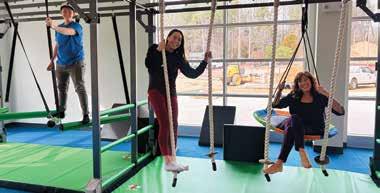
Adventure Zone Play Rig
Finance Limiting Institutional Homebuyers
What It Means for Buyers and What Really Drives Prices
By Ryan Schrift, Managing Director of R.J. Schrift Private Asset Management
OnJanuary 20, 2026, President Trump signed an executive order titled Stopping Wall Street from Competing with Main Street Homebuyers. The goal is to improve housing affordability by restricting large institutional investors from buying single-family homes.
The idea is simple and popular: big investors are crowding out families, shrinking supply, and pushing prices higher. But when you look at the data, the story is more complicated, especially for buyers in places like Gaston County and across North Carolina.
Who Actually Owns the Homes?
Headlines often point out that investors made about 30–34% of home purchases in 2025. That sounds alarming, but it can be misleading. Investors tend to buy and sell more often than regular homeowners, which makes their share of transactions look bigger than their share of ownership.
The U.S. housing market is still mostly owned by individuals. As of mid-2025, more than 86% of single-family homes were owned by people who live in them. About 12% were owned by small investors with just a few properties. Medium-sized investors made up around 1.5%, and large
institutional investors—those with 100 or more homes owned less than 1% of all single-family homes nationwide.
So, while big investors get the most attention, their overall footprint is still pretty small.
Where Are Institutional Investors Concentrated?
Large investors don’t spread out evenly across the country. They tend to focus on certain areas where they can manage properties more efficiently. Even so, their reach is limited. No state has more than about 3% of its single-family homes owned by large institutions. Georgia is near the top at around 2.6%. At the county level, the pattern is similar. Only a small number of counties account for most institutionally owned homes, and in more than half of U.S. counties, these investors own none at all. No county is anywhere close to being dominated by them.
That means for most buyers, including many in North Carolina, institutional investors are not the main force shaping the market.
Would Pushing Them Out Fix Affordability?
Probably not, at least not in a meaningful way.
The U.S. is short an estimated 6 million homes. Large institutional investors own roughly 825,000 single-family homes. Even if every one of those homes suddenly went back on the market, it would barely dent the overall shortage. In states like Hawaii, California, and New York, the housing shortage is far larger than the number of homes owned by big investors. In places like Georgia, Tennessee, and North Carolina, institutional ownership is a bit more noticeable, but those states are also leaders in new home construction. That points to the real issue: we simply don’t have enough homes.
This brings us to the most important point for buyers:
There are many more structural factors that drive home prices and affordability issues than the share of homes owned by
Ryan Schrift
So, while big investors get the most attention, their overall footprint is still pretty small.
institutional investors, such as chronic supply shortages, zoning and permitting limits, income growth, and mortgage costs.
These factors matter far more to your monthly payment than who owns a small slice of the housing stock.
What Happens Next?
The executive order focuses on existing homes, not new construction. That could push large investors to build more rental communities instead, which may help renters but does little to increase homeownership opportunities.
The administration has also suggested other ideas, like encouraging Fannie Mae and Freddie Mac to buy more mortgage-backed securities and allowing buyers to use 401(k)
funds for down payments without penalties. These steps might help around the edges, but they don’t fix the core problem.
For homebuyers, the takeaway is simple: headlines may change, but affordability is still mostly a supply and financing problem. Until more homes are built and borrowing costs come down, buying a home will remain a challenge no matter who else is in the market.
Ryan Schrift is the Managing Director of R.J. Schrift Private Asset Management, a Belmont based Financial Planning and Investment Advisory Firm. Securities are offered through LPL Financial, Member FINRA/ SIPC. R.J. Schrift Private Asset Management is an other business name of Independent Advisor Alliance, LLC. All investment advice is offered through Independent Advisor Alliance, LLC, a registered investment adviser. Independent Advisor Alliance, LLC is a separate entity from LPL Financial.
Photo Gallery
Heart Society of Gaston County, Inc. — 64th Heart Ball
Dr. Dustin Letts
Mike Fayed
Erin Dunaway, Joan Martin, Victoria Holbrook & Julia Watson
Gaston County Jaycees
Craig & Julia Watson
Renee Morgan & John Forgan
Jeff Barbour & Joan Martin
David & Helen Rogers Wes & Erin Dunaway
Gastonia Alumnae Chapter of Delta Sigma Theta Sorority, Inc. — Fire & Ice Scholarship Gala
Delta Chapter Members
Delta women & their spouses
Beady & Valerie Waddell
Luico & Ja’Nate Holland
Starla Littlejohn & John McGill
Kendall Thompson with parents Gregory & Dorothy Thompson
Jacob & Marilyn Green
Renee Knight
Why Pantone’s 2026 Color of the Year Matters
How You Can Wear It with Style
By Felicia Bittle, Fashion Contributor
Photographs Courtesy of Felicia Bittle
“In a world full of noise, wearing white might be the boldest statement you make in 2026.”
Every December, fashion insiders, designers, stylists, and trend watchers around the world wait for the same moment: the announcement of the Pantone Color of the Year. It’s more than just a prediction — it’s a reflection of the cultural mood, the creative energy in design, and a direction that ripples across fashion, beauty, interiors, and even pop culture.
For 2026, Pantone chose a shade that surprises, soothes, and inspires: PANTONE 11-4201 Cloud Dancer — a soft, billowy white that feels like a breath of fresh air.
This is the first time Pantone has selected a version of white as the Color of the Year — a subtle but powerful statement in an age where bold brights and saturated hues have dominated the fashion conversation for years.
So what does this mean for you — the everyday woman building a wardrobe that feels chic, polished, and intentional?
Cloud Dancer Is More Than “Just White”
Calling Cloud Dancer simply “white” is like calling a diamond “clear.” Yes — it’s light, neutral, and clean — but it carries emotional weight too.
Pantone describes the shade as “a calming influence in a noisy world,” a hue that speaks to clarity, reflection, peace, and renewal. In fashion terms, this is not a sterile or stark white. It’s milky, soft, and versatile — a neutral that lives beautifully with color rather than washing it out.
Think of it as:
• A blank canvas your personal style can thrive on
• A color that pairs seamlessly with bright tones, rich jewel shades, and classic neutrals
• A subtle way to elevate everyday dressing without overpowering your look
Why Cloud Dancer Works in Wardrobe Basics
Some people wince when they hear “white,” especially when they think of laundry battles and inevitable spills. But here’s a stylist secret: white in the right shade reads sophisticated, not high-maintenance.
Cloud Dancer is especially elegant in classic silhouettes — think:
• A softly structured blazer paired with tailored trousers
• A crisp button-down with cropped denim
• A flowing midi dress with luxury sandals
• Lightweight knits that feel fresh from brunch through sunset And because it’s gentle on the eye, Cloud Dancer plays beautifully with textures — knit, silk, linen, wool — all layered together for depth and dimension.
The Power of Pairing: How to Wear It with Confidence
Cloud Dancer doesn’t have to be monochromatic. In fact, where the magic happens is in contrast and balance. Here are a few of my goto combinations:
• Cloud Dancer + Cobalt Blue — A striking play between serene and bold. Cobalt has been everywhere on the spring 2026 runways, especially in handbags and tailored pieces.
• Cloud Dancer + Tomato Red or Scarlet — Passionate,
Felicia Bittle
playful, and unexpectedly chic.
• Cloud Dancer + Earth Tones — Soft creams, camel, olive, or mocha ground the look in quiet luxury.
• Cloud Dancer + Soft Pastels — A feminine, modern palette perfect for church, brunch, travel, or special occasions. Your wardrobe favorites — scarves, belts, jewelry, handbags — become relevant anchors when paired with this clean neutral. It’s also a wonderful way to update classics without feeling like you need a full closet overhaul.
Cloud Dancer Isn’t Just a Trend — It’s a Style Philosophy
What’s unique about this Color of the Year is its intent. It’s not just pretty — it’s purposeful. Pantone suggests that in a world filled with noise, screens, and sensory overload, we’re ready for simplicity. We’re ready for clarity. And we’re ready for style that feels intentional, not chaotic
Cloud Dancer encourages us to strip back the clutter — in fashion and in life — and focus on pieces that feel calm, confident, and timeless.
In a World of Color, White Can Make the Boldest Statement
Stepping into 2026 with Cloud Dancer doesn’t mean you stop wearing color. It means you bring a refined point of view to your palette. You let your personality shine through how you wear color — not just what colors you wear.
So, the next time you open your closet and think, “What feels fresh?” — try reaching for Cloud Dancer first. It might just be the breath of style your wardrobe has been waiting for. “White done right doesn’t whisper. It radiates confidence.”
Not sure how to add Cloud Dancer to your wardrobe?
• Replace your usual black or beige top with a soft white blouse.
• Try a white blazer over denim for instant polish.
• Update your shoe game — a winter white boot is powerful.
• Mix textures: knit + leather, silk + wool.
• Add one bold accessory to keep the look dynamic. Simple. Elevated. Intentional.
Daniel Stowe ConServanCy
Discover Our Paths Through Nature Connecting with Nature Through Our Trail Systems
By Caitlin Conner, Marketing + Communications Manager Photographs Courtesy of Daniel Stowe Conservancy
AtDaniel Stowe Conservancy, our promise is to help all discover their path to nature. Sometimes, this is a metaphorical path, allowing visitors to connect to nature through familyfriendly events, strolling our botanical gardens or enjoying a picnic outside in The Village. And we’ve got plenty of them! Stowe’s 8+ mile trail system stretches across our 380-acre property and will continue growing for years to come, as outlined in the Stowe Trail Masterplan, which includes:
• Adding around three more miles of hiking trails
• Improving and resurfacing current trails
• Unlocking lakefront access
• Adding mountain bike trails for all skill levels.
In this article, we’re breaking down our current eight+ mile trail system at Stowe to help you plan your next outdoor adventure.
Starting Your Hike
There are a few different places you can begin your hike at Stowe, but most people start at the Pond Loop trails just beyond The Trailhead Store. The pond loops are the gateway to all our trails across the property, no matter how far you want to hike. If you’re starting at the Pond Loop trails, there is free parking behind The Trailhead Store.
Before you begin, we’d advise taking the following steps:
• Familiarize yourself with our new trail map.
• Determine how far you want to hike.
• Make sure you’re properly prepared for your hike.
• Check the weather and dress accordingly.
• Visit our website for more details at www.danielstoweconservancy.org.
When we talk about trails, you’ll see each labeled by material. Determining the type of trail can help you confirm how advanced a hike is and decide if the trail is a good fit for you. We have the following types of trail at Stowe:
• Grass – The softest option of them all – ideal for walking your dog.
• Concrete – A completely paved, smooth path. Ideal for
wheelchairs and strollers – most commonly found in the formal botanical gardens.
• Crushed concrete – A softer, gravel-like path, not quite as sturdy as concrete but still stroller and wheelchair-friendly. Found on most of our trails.
• Natural trail – Dirt trails require more concentration. Be careful not to trip over rocks and roots. We’d recommend avoiding using strollers or wheelchairs on natural trails
Fun fact – we chose our color palette for the Daniel Stowe Conservancy brand based on the different types of trails on our property
The Pond Loop Trails | 0.5 miles combined | Easy | Crushed Concrete Dog, stroller, bike and wheelchair-friendly!
As mentioned in the last section, the Pond Loop trails are a great gateway to the rest of the trails on the property. They circle around the large and small ponds behind The Village at Stowe and provide access to our observation deck.
Persimmon Trail | 0.27 miles | Crushed concrete + natural | Intermediate Dog friendly!
This short loop through the woods provides a quick connection from The Village to The Gardens and Stowe Connector Trail. Some steep spots may present a challenge for beginners or those using wheelchairs or strollers. We wouldn’t recommend using mountain bikes on this trail.
The Pond Loop Trails
Worrell’s Walk | 0.25 mile out + back | Crushed concrete | Easy
Dog, bike, stroller and wheelchair-friendly!
Worrell’s Walk, is a flat wide crushed concrete path makes for an easy, enjoyable stroll through the woods. Worrell’s Walk, like Persimmon, connects The Village to The Garden Pavilion and Stowe Connector Trail, but is slightly longer than Persimmon. Worrell’s Walk is a great lead-in to a longer hike because it takes you to The Stowe Connector Trail that eventually leads you to the Duke Kimbrell Trail on the shores of Lake Wylie.
Stowe Connector Trail | 1.2 miles out + back | Crushed concrete + natural | Easy Dog, bike, stroller and wheelchair-friendly!
The Stowe Connector Trail allows hikers to complete a loop around The Gardens at Stowe via the Duke Kimbrell Trail for a pleasant, partially-wooded hike that’s just over three miles.
Duke Kimbrell Trail | Around 3 miles | Natural | Intermediate-Challenging Dog and bike-friendly!
While the Duke Kimbrell Trail is not managed by Stowe, we’ve partnered with the Carolina Thread Trail to create
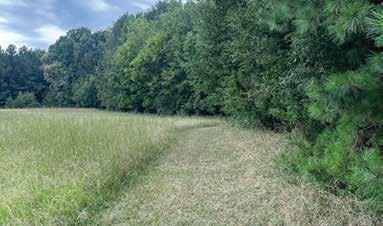
The Grass Cross Country trail is a one-mile loop to the left of the small pond; you’ll see it as you turn into the property from the main entrance. This is our only grass trail and makes for a great spot to walk your pup.
Lost Hollow Adventure Trail | 0.5 mile out + back | Natural trail | Easy
Our Adventure Trail opened in Spring 2025 to provide kids with a natural playscape to let their imaginations run wild. It is a half-mile completely shaded trail through the woods beyond Lost Hollow that includes five outdoor “rooms” that encourage creativity, storytelling and play in nature (with benches for mom and dad, of course).
Meadowood Walk, is a half-mile loop around our Piedmont Prairie, stretching through the woods. The furthest point of the loop brushes close to the lakefront. The new 0.25mile Lakeview Loop trail extension off of Meadowood Walk gives hikers a glimpse of Lake Wylie. .
No matter which trail calls to you – whether it’s a quick stroll around the ponds or a longer, more rugged route exploring the forest – every step at Daniel Stowe Conservancy connects you more deeply to the land, its wildlife and yourself. With even more miles and experiences on the horizon through our Stowe Trail Masterplan, there’s never been a better time to lace up your shoes, grab a friend and discover your path to nature here – it might be right under your feet.
seamless
from the Stowe Connector Trail to the Duke Kimbrell Trail.
Worrell’s Walk
Grass Cross Country Trail
Duke Kimbrell Trail
Hollywood obsessed
Sheree J. Wilson Reflects on Her Iconic TV Career
From Dallas to Walker
By Tony Miros
Photographs Courtesy of Bob Manzano and Gregory Martin & CBS
Inthe 1980s, there was one television phenomenon that had the entire world glued to their screens—Dallas. The primetime soap had it all: the deliciously devious J.R. Ewing, family betrayals, cheating spouses, crooked oil deals, and jaw-dropping cliffhangers that kept audiences buzzing for weeks. From “Who Shot J.R.?” to the infamous dream season twist, viewers simply couldn’t get enough of the Ewing clan. After that controversial season in 1986, creator Leonard Katzman and fan-favorite Patrick Duffy returned to restore the show’s magic—and introduced a bold new character, April Stevens. Played by Sheree J. Wilson, April was a sharp, wealthy, and formidable force designed to go toe-to-toe with J.R. Though originally slated for just 10 episodes, Wilson stayed for five seasons, becoming a fan favorite before her shocking exit.
Sheree J Wilson
In 1992, Wilson returned to primetime in a whole new way, trading high-society drama for action-packed justice as Assistant District Attorney Alex Cahill on Walker, Texas Ranger, starring alongside Chuck Norris. The hit series ran for eight seasons and introduced Wilson to a whole new generation of fans, cementing her place as a television favorite in two very different, iconic roles.
Today, Wilson continues to make her mark behind the scenes as president of Sandalphon Entertainment, producing projects that range from award-season dramas and action thrillers to comedies and faith-based films. I recently had the pleasure of sitting down with her for an episode of Hollywood Obsessed Podcast, where we talked about her remarkable journey—from Dallas to Walker and beyond. The conversation was insightful, inspiring, and filled with laughter—here are some highlights from our unforgettable chat.
How She Broke into the Business
Sheree J Wilson: “I was actually running a fashion show at the Denver Merchandise Mart, and the photographer there kept taking pictures of me. At one point he said, ‘Aren’t you
going to get into your next outfit?’ And I said, ‘You don’t understand—I’m not modeling in the show. I’m running it. I hired the models. I put all of this together!’
But he took those photos and showed them to Vicki Light, who had the Light Company in Denver, and told her, ‘This girl has a great look.’ Vicki said, ‘Take more pictures—I’d love to sign her if she’s interested.’
So he basically tricked me,” she laughed.
“He called and said, ‘I don’t know if modeling is really for you.’ And I said, ‘No, I’m getting a business degree and heading to New York.’ He said, ‘Well, modeling in New York goes hand in hand with that.’
Then he said he wanted to test out a new camera and asked me to meet him at a local high school—just wear jeans. He’d bring a few outfits and we’d take some test shots. So I did it. He brought a tennis outfit, then bicycle clothes, and we did all these different looks—posing on bikes, playing tennis, the whole thing.
The next Sunday, about a week later, my roommate comes running in screaming, ‘Come quick! The apartment’s on fire!’ I said, ‘What?!’ She said, ‘Look at this!’ She opens the newspaper— and there are full-page JCPenney ads… and it’s me! Me on a bike, me in the tennis outfit with a guy—everywhere.
I called him and said, ‘Bernard Grant—you tricked me! When were you going to tell me we were shooting ads?’ He said, ‘I didn’t want you to be nervous. You were a natural.
The Cast of Dallas
Tony Miros
Hollywood obsessed
Now come pick up your paycheck.’
At the time I was making about $3.28 an hour at a clothing store back in 1979—and he paid me $50 an hour. I thought, ‘Oh my goodness… I think I can do this!’
I became the JCPenney girl in Denver. We were shooting constantly—one ad after another. It ended up putting me through college and gave me enough savings to eventually move to New York.”
How She Ened up on Dallas
Sheree J Wilson: “Leonard called my agent, Vicki Light, and said he wanted to meet with me. Vicki told me, ‘Leonard Katzman wants to see you over at Lorimar.’
And I said, ‘Am I in trouble?’” she laughed. “I had just worked with him in New York and we’d had such a great experience—I thought everything went wonderfully. He’d directed several episodes.
So I go into his office and he says, ‘Okay, the show’s in trouble. There are all these characters, and I don’t even know what to do with all of them. I don’t know how to untangle the mess that’s been made since I’ve been gone. So…I think it’s all going to be a dream. Patrick wakes up in the shower and it was all just a dream. I don’t know how else to explain it—and hopefully the audience will forgive me.’
Then he said, ‘J.R. needs a new nemesis. He needs someone sassy, spunky—someone who can really go toe-to-toe with him. And you showed me you could do that on Our Family Honor. So I’m going to write this character for you, if you’d like to join the show.’
He told me, ‘You’ll have the same size dressing room as Larry, Linda, Patrick, Charlene—everyone. We’re one big happy family.’ Then he added, ‘I can probably only hire you for about ten episodes…because you might be the black widow—everyone you’re in a scene with might end up dead!’” she laughed. “I thought, ‘Oh no, they’re going to hate me!’
I left his office and immediately called Vicki. I said, ‘Unless I’m crazy…I think I just got offered a job on Dallas.’ She called Leonard to confirm—and that’s how it all began.
Her First Day on Set
Tony Miros: For you to walk onto a show that had already been such a massive hit on CBS—and to join a cast that had been together for so long—I’m sure that had to be a little intimidating.
Sheree J. Wilson: Oh, absolutely. I mean, you’re walking
in and there’s Barbara Bel Geddes—Miss Ellie for crying out loud—and Bobby and Pam and all of them. It was probably the most intimidating group ever, because I was their biggest fan. I was completely fangirling—these were all actors I loved.
And Barbara Bel Geddes—this was great—I was walking away after a scene and they called “cut.” I turned to leave, and she came up behind me and kicked me right in the butt and said, “That’s for good luck, kid.”
Tony: Wow—what a moment! That must’ve taken you by surprise. But what a legend.
Sheree: Total legend. And then you’ve got people like Howard Keel, George Kennedy—I mean, the list just goes on and on. I still pinch myself to this day about how lucky I’ve been—and still am. We’ve sadly lost Larry and several of the greats, but Patrick, Linda, Steve, Charlene—so many of them are still here, and we’re all still playing.
And I’ll never forget when Larry met me. He looked at me and said, “Hello, darling.” I said, “Hello, Mr. Hagman.” And he said, “It’s Larry. Do you know your jokes?” I said, “My jokes?” He said, “Do you know your lines?” I said, “Oh yes—I know my lines. I know your lines. I know everybody’s lines. I have a photographic memory.” And he said, “Oh, we’ll see about that.”
April’s Demise
Tony Miros: Dallas fans knew every detail—every storyline, every relationship. And your romance with Bobby meant so much to them. That’s why April’s ending in Paris was such a shock. Nobody saw it coming. Fans truly believed Bobby and April were finally going to get their fairy-tale ending.
Sheree J. Wilson: I had no idea what Leonard was planning either. I went to him when I was very pregnant and said, “Leonard, I’m only going to be a first-time mom once. And you’re saying next season is the final season and you’re wrapping everything up. So I don’t know how many episodes you’ll need—but give me the most money for the least amount of shows, and send me out in grand fashion.” And he said, “Okay.”
To listen to the rest of my fascinating conversation with the fabulous Sheree J Wilson (Episodes 153 & 154), visit my podcast website: https://www. hollywoodobsessedthepodcast.com Enjoy!
Sheree & Chuck Norris
April Stevens (Sheree J Wilson) & Bobby Ewing (Patrick Duffy) Wedding
DiD You Know?
An Invitation to Connect, Learn, and Serve Bringing Communities Together
By Sharon Heinrich, Rotary Club of Gastonia
Photographs Courtesy of Rotary Clubs in Gaston County
The first Rotary club in Gaston County was chartered in 1920 in Gastonia, only 15 years after Rotary was born.
Rotary is a global network of 1.2 million members, with more than 45,000 clubs in more than 200 countries. Members share diverse experiences and perspectives, and are welcome in Rotary clubs around the world.
We invite you to serve, learn, and connect with Rotary. Each club is unique, and welcomes new members.
“The Rotary Club of Gastonia has proudly served our community for more than a century, bringing together civicminded leaders who are committed to service above self,” explains Andrea Stephens, Club Membership Chair.
“Our members make a meaningful impact through handson projects and strategic partnerships, including our longstanding collaboration with H.H. Beam Elementary School, where we support students, families, and educators in ways that strengthen the entire school community. We meet weekly as a club and enjoy regular social gatherings outside of meetings, all grounded in a deep commitment to service and fellowship.”
“Rotary is more than meetings—it’s a place to build lasting friendships, grow professionally, and give back alongside people who genuinely care.” — Andrea Stephens, The Rotary Club of Gastonia.
If you are looking for a rewarding way to connect, serve, and lead in Gaston County, we invite you to learn more about membership or visit the club by contacting Andrea Stephens, at astephens@unitedwaygaston.org.
Gastonia East
Gastonia East Rotary Club’s well-known signature project offers the community a concert stage, literally. Member Drew Horine explains, “For the past decade, the Gastonia Concert Series, managed by Gastonia East Rotary Club, has become one of Gastonia’s most impactful community-driven events. What began as a way to bring people together through live music has grown into a powerful force for local good. To date, the Concert Series has raised more than $275,000 through advertising sponsorships and beverage sales. Proceeds from the series have helped fund nonprofit grants, the annual Senior Thanksgiving Dinner, and the 9/11 First Responders Lunch, while supporting ongoing service projects across the county. Beyond its financial impact, the series has helped foster community pride, revitalized shared public spaces, and created a welcoming tradition that brings residents together year after year—reflecting Rotary’s long-standing commitment to service and local engagement.” Look for the 2026 concert schedule coming this spring and come join the fun!
Gastonia
Rev Dr Joan Martin moderated a panel by Interfaith Trialogue leaders
Iconic Gastonia Concert Series
Gastonia Evening
Gastonia Evening Rotary Club offers a relaxed setting in which members enjoy fellowship and a focus on service. As part of their partnership with Webb Street School, students enjoy an extra birthday celebration. Members prepare personalized birthday bags for each student, created with care, to help each child feel valued on their special day. The club hosted a trivia night to raise project funds, which were matched by a Rotary District 7680 Grant.
Mt.
Holly
“Mt Holly Rotary club is unique because we do a lot for youth”, President Somer Castle shared. “We sponsor 2 Interact clubs (a Rotary experience for high school students) at East Gaston High School and Mountain Island Charter School. We have an annual Christmas party for underprivileged kids. We
sponsor students for SFTL, Seminar for Tomorrow’s Leaders, a 4-day leadership development experience. We will host a food tent at Mt Holly’s P.A.C.E. event (formerly Springfest) in May to raise money for student scholarships.” This year, the club will manage the Business Awards for the Mt Holly Community Awards Dinner on April 30th.
Forum speakers (from L to R): Michelle Mathis, Leslie Lee, Anna Coey, Tabatha Jones, Kevin Oliver and Dane Mullis
Belmont
Belmont Rotary Club, which recently celebrated 100 years, hosted its 3rd Opioid Education Forum on January 22nd at Belmont Abbey, for students, parents and the public, coordinated by Rotarian Whitney Norton. Among those attending were nursing students at the college. They heard from a panel of professionals working to stem the misuse of opioids, which claims thousands of lives annually in North Carolina.
Mt Holly – Thursday 12:15 Mount Holly Municipal Complex; Facebook
Kings Mountain – Thursday 12-1:30, Patrick Senior Center; Facebook
To learn more about Rotary International, visit www.Rotary.org
Rotary International vision statement: “TOGETHER, we see a world where PEOPLE UNITE and TAKE ACTION to create LASTING CHANGE - across the globe, in our communities, and in ourselves.”
Birthday bags by Gastonia Evening Rotary
Opioid
Technology
A Little Technology Goes A Long Way
Helping Adults get Online, Stay Connected, and Move Forward
By Michael “Donovan” McQuitter, CC, IT and Specialist Photographs Courtesy of Michael McQuitter
For many, technology can feel like it’s evolving faster than ever. From online job applications to virtual doctor visits and digital banking, everyday tasks have increasingly required basic technology skills. So how do we keep up? In this issue we want to highlight the new classes being held at Gaston County Public Library-Main Branch called TECH 101.
At the Gaston County Public Library-Main Branch, located at 1555 E Garrison Blvd, Gastonia, NC 28054, TECH 101 is designed specifically for adult learners who want to build confidence with technology in a welcoming, supportive environment. With the tagline, “Get online, stay connected –learn the basics today,” the program focuses on practical skills that participants can begin using immediately in their daily lives.
A Comfortable Place to Start
Many adults hesitate to sign up for technology classes because they worry they’re “too far behind” or that the material will be too complicated. TECH 101 removes that fear. These classes are tailored for beginners and those who simply want to upskill or need a refresher. Instructors understand
Many positions now require basic computer knowledge, online communication, and document creation.
that everyone learns at a different pace and create a nopressure environment where questions are encouraged.
Whether you’re brand new to computers or just need help navigating your smartphone more efficiently, the goal is to help you feel capable and connected.
What You’ll Learn
TECH 101 covers essential digital skills that are increasingly necessary in today’s world. In the past they have covered various topics such as Microsoft products like Word. Current topics include:
• Basic Internet Skills – Understand how to browse safely, conduct effective searches, use email, and recognize common online scams. These lessons help participants navigate the web with confidence.
• Basic Smartphone Skills – This beginner-friendly class helps participants gain confidence using their smartphones by covering essential skills like calling, texting, using apps, adjusting settings, and staying safe online.
Each session focuses on hands-on learning. Participants don’t just listen, they practice. This approach helps build both skill and confidence.
Why Digital Literacy Matters
Technology is no longer optional. It plays a central role in communication,
Michael McQuitter
employment, healthcare, and even social connection. By offering free, public education, the Gaston County Public Library is helping close the digital divide and ensure that everyone in the community has access to essential tools.
For adults in the workforce, improving technology skills can directly impact job performance. Many positions now require basic computer knowledge, online communication, and document creation. Strengthening these abilities can lead to better productivity, greater independence on the job, and potentially even higher pay.
For those re-entering the workforce or considering a career change, digital literacy is especially important. Online job applications, virtual interviews, and electronic résumés are now standard practice. Knowing how to navigate these systems can make a meaningful difference in employment opportunities.
Beyond work, digital skills also enhance everyday life. From staying in touch with family through email or video calls to accessing online services and community resources, technology helps people remain connected and informed.
Get Started Today
If you or someone you know could benefit from building basic technology skills, now is the perfect time to get involved. For more information or to sign up, visit the TECH 101 page at the Gaston County Public Library website: www.gastoncountylibrary.tech101.
You can also contact Talisa Crawford at Talisa.Crawford@gastongov.com for details about upcoming sessions.
Technology doesn’t have to be intimidating. With the right guidance and a supportive environment, anyone can learn the basics. Through TECH 101, the Gaston County Public Library is helping adults get online, stay connected, and move forward with confidence.
GLM Design Services
PeoPle on the Move
Montcross Area Chamber
Announces Annual Awards
By Jennifer Reep, President Montcross Area Chamber of Commerce
Photographs Courtesy of Montcross Area Chamber of Commerce
ALowell business that has quietly served its community for 44 years, a Belmont couple whose booming business is one of the fastestgrowing private companies in the United States and a Cramerton public servant who tirelessly works for his community and all of Gaston County was honored by the Montcross Area Chamber of Commerce at its 66th Annual Celebration on February 5.
The reception, silent auction, dinner and program was in the Grand Hall at the Mount Holly Municipal Complex from 5:30 until 8 p.m. For more information, go to: www. montcrossareachamber.com.
The chamber annually presents a Business of the Year Award, an EPIC Award for entrepreneurial excellence and the Harley B. Gaston, Jr. Public Service Award to recognize extraordinary community service. The award is named for an attorney and judge who was a founder of the Chamber in 1960.
Business of The Year
The late James F. Smith purchased a small two-room building in Lowell in 1980 and rented one room to Paul Lowrance for a trophy shop business. Two years later, S&L Creations was born specializing in screen printing, trophies and awards. In 1992, James Smith’s daughter Pam joined the business that she and her nephew Travis Smith, who started work at S&L as a teenager, still operate today. Travis is president of the company and serves on the Lowell City Council, and Pam volunteers for a lengthy list of community organizations.
When COVID struck, S&L printed thousands of masks for emergency workers, hospitals and others. They have always been here to support the community. If you’ve ever received a trophy, worn a team shirt, or attended a community event, there’s a good chance S&L Creations played a role.
EPIC Award
Given annually to a member of the Chamber who is entrepreneurial, progressive, innovative and collaborative, the EPIC Award this year goes to Teri and Ken Pahon, founders of Portable Restroom Trailers.
After starting PRT in Ohio in 2007, the Pahons relocated to Belmont and joined the Chamber in 2011 with fewer than five units. Today, they are the largest in-stock provider of portable restrooms, shower and laundry trailers in the industry with more than 30 offices in 22 states and reaching all 48 contiguous states.
The Pahons sell trailers, as well as rent them, for events as small as a local Chamber golf tournament or barbecue and as large as a national political party convention.
Harley B. Gaston, Jr. Public Service Award
A Cramerton native and resident, Jeff Ramsey has worked tirelessly to serve his hometown and to serve all of Gaston County through more than 16 years on the Gaston County Board of Education.
In 1994, he was elected to the Cramerton Board of Commissioners and helped rebuild a struggling recreation program, transform a former school into affordable senior housing, secure funding to revitalize downtown and more during 14 years in office.
Ramsey led the Cramerton Centennial celebration in 2015, during which he brought members of founder Stuart Warren Cramer’s family to participate. That event sparked the founding of the Cramerton Historical Society and Museum, with Ramsey as the first president. It also led to Ramsey organizing and leading a team that worked two years with the author to complete the historical book series “Cramerton: A Trilogy.”
Pam Smith, Lance Kirkland of SouthState & Travis Smith
Ken Pahon, Adriana Phillips of Expedia Cruises - Teri Pahon
Jeff Ramsey
Those Who serve
MLK Unity Award Celebration
With the African American Museum of History and Culture
By Abigail Lee, Community Engagement and Programs Manager
The Gaston Together MLK Unity Award Celebration, honoring award recipient honoring Cathy Young, was held on January 19th, 2026. Ms. Young is a well-known realtor in the area. She is celebrated for her volunteer work with Bountiful Blessings food pantry and for serving on the boards of multiple organizations, including Habitat for Humanity, the American Red Cross, WMCA, and Hearts to Home ministry.
This year, the Gaston Together MLK Unity Award Celebration was held at Loray Mill in partnership with the African American Museum of History and Culture. It was
the first time the celebration was hosted at this venue. The African American Museum of History and Culture unveiled a plaque with the names of all award recipients and an electronic kiosk with the names and biographies of all MLK Unity Award winners.
The Gaston Together MLK Unity Award was established in 2004 and recognizes current or former Gaston County citizens who have performed exemplary community service to help build bridges of unity across lines of race, class, gender, faith and/or among municipalities within our county. Names of the honorees are engraved on the MLK Monument located at the MLK Plaza. In 2025, the last spot on the monument was filled by David L. Caldwell. An ad hoc committee is working on expanding and repairing the monument at the MLK plaza.
Gaston Together is grateful for our partnership with the African American Museum of History and Culture and the inclusion of the plaque and biographies of MLK Unity Award winners in the museum. The award, and its winners, are part of Gaston County’s history and we are honored to be included in the museum’s goal “to have [visitors leave] with more knowledge than how they came, and then [share] that knowledge with others.”
Photographs Courtesy of Gaston Together
MLK 2026
Cathy Young and family
MLK 2026 awards
MLK unity celebration
Cathy Young
Eats & trEats
Fish and Chips
By Melissa Latin, Charlotte Fashion Plate
Photo by Melissa Latin, Charlotte Fashion Plate
There’s nothing quite like the satisfying crunch of perfectly fried Beer Battered Fish and Chips. This classic dish combines tender white fish with a light, crispy batter made from self-rising flour, Guinness stout, and seltzer, giving it an irresistible texture and flavor.
• 1 1/2 pounds haddock or cod filets
• 2 to 3 large russet potatoes
• oil for deep frying, canola or peanut
• optionally, use beef tallow for frying
Ingredients
For the Beer Batter:
• 1 cup + 1 tablespoon self-rising flour, plus more for dredging
• 1/4 cup rice flour or cornstarch
• 1/4 teaspoon salt
• 1/2 cup Guinness stout, cold
• 1/2 cup seltzer or sparkling water, cold
Preparation
1 . Peel the potatoes and cut into thick chips. Soak the fries in cold water for at least 15 minutes.
2. Heat to 325°, enough oil in large pot, or deep fryer for a deep fry.
3. Rinse the potatoes and pat dry.
4. Add the potatoes to the oil and fry for 4-5 minutes (fry in batches, if necessary).
5. Remove the fries with a slotted spoon and allow to drain on paper towels or a cooling rack.
6. Place the chips in freezer to chill, or allow to come to room temperature.
7. Pat the fish dry and season on all sides with salt. Dredge in flour.
8. Prepare the batter by whisking together the ingredients.
9. Turn up the heat on the oil to 350°F (177°C).
10. Working with one filet at a time, dredge the fish on both sides in the flour, then fully coat in the beer batter. You may have to fry the fish in batches. Coat only those you can fit in the fryer.
11. Allow any excess batter to drip from the coated fish.
12. Add the fish to the fryer using a back and forth motion to firm up the batter before releasing.
13. Allow the fish to fry until golden brown on both sides. Turn as needed in the fryer.
14. Drain on a sheet pan fitted with a cooling rack.
15. Turn the heat up on the oil to 375°F (190°C). Add the fries and fry until golden brown.
16. Serve traditionally with malt vinegar and/or with coleslaw, homemade tartar sauce and lemon wedges.