Tony Miros • Brent Messer • Michael McQuitter Humanity of the Charlotte Region
Richard Walker • Melissa Latin
Photographers
Cover Story
Youth Groups
Gaston Business Association • Felicia Bittle
Douglas Kirkland • Daniel Stowe Conservancy Habitat for Humanity of the Charlotte Region
Jenn Phillips Photography Gaston County Sports Hall of Fame
Michael McQuitter • Charlotte Fashion Plate Rotarians in Honduras
Publisher’s Note
A Season of Milestones
By Deborah Ally, Publisher, Gaston Lifestyles Magazine
Weare living through a season of remarkable milestones, blending historic legacies, local leadership, and enduring popculture icons.
Nationally, the United States celebrates its 250th anniversary honoring two and a half centuries of history, progress, and enduring spirit. Our youth have plenty to say about it in the cover story, along with Donovan highlighting inventions in the Technology section and Ryan describing America’s wealthcreation machine in Finance.
Closer to home, local impact takes center stage. Fifteen years ago, I graduated from Leadership Gaston marking a decade and a
Deborah Ally
half of fostering civic leader relationships and driving community growth. In the Business section, GBA highlights recent activities of the program. On a global scale, the Gastonia Rotary Clubs’ Chorti project celebrates over 20 years, honoring two decades of dedicated, life-changing international service and humanitarian aid.
Finally, a touch of cinematic magic joins the festivities: the legendary, groundbreaking original Superman movie is rapidly approaching its 50th anniversary. Tony chats with Sarah Douglas in Hollywood Obsessed about her contributions to the series.
Together, these milestones represent the enduring power of leadership, service, heroism, and unity across generations.
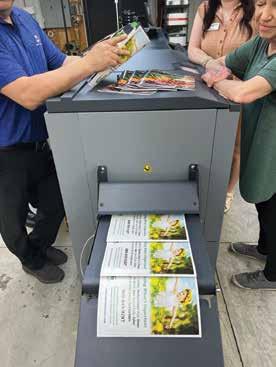
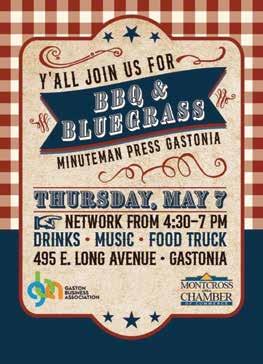
BBQ and Bluegrass with Minuteman Press Gastonia
Custom Webb Kitchen
Cover Story
America’s 250th Birthday: Honoring the Past, Shaping the Future Local Students Share Their Vision for the Nation’s Future
By Megan Baksh Photographs Courtesy of Youth Groups
OnJuly 4, 2026, the United States will celebrate its 250th birthday as a nation—the semiquincentennial: 250 years since the signing of the Declaration of Independence. The momentous occasion offers Americans a chance to reflect on the nation’s history, achievements, and challenges. Although many adults may take the opportunity to step back in time, connecting past progress to future hopes, today’s youth is ready for what comes next.
What does America mean to the generation that will help shape its next 50 years? What are they proud of? What growing concerns do they have? And what kind of country do they hope to leave behind for future generations?
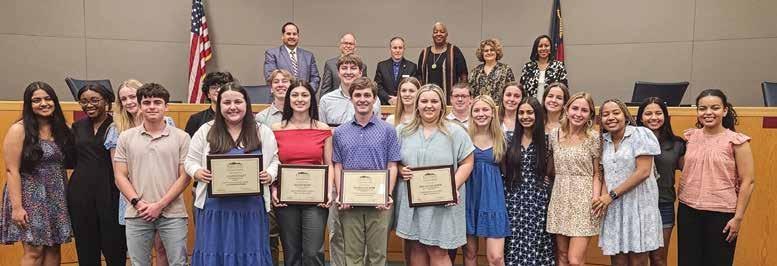
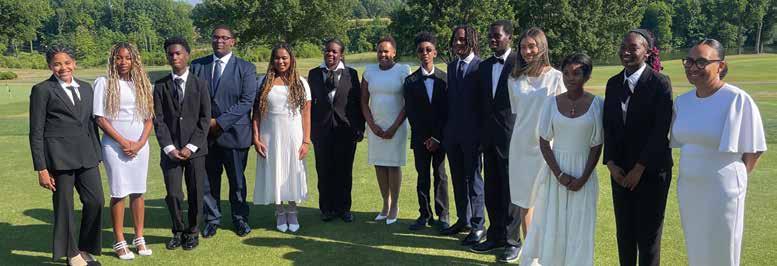
To explore those questions, Gaston Lifestyles invited local students from the Gastonia-Piedmont Chapter of Jack and Jill of America, Inc. as well as the Gastonia Mayor’s Youth Council to share their thoughts as America approaches its 250th birthday. Students from Highland School of Technology, Forestview High School, Gaston Christian School, South Point High School, and Piedmont Community Charter High School responded with next-level perspectives that were thoughtful, encouraging, and brimming with hope.
While their answers revealed different viewpoints, several common themes emerged: freedom, diversity, opportunity, and a strong determination to improve the nation for future generations.
A Nation Still Growing
When students were asked what came to mind when they heard the phrase “America at 250,” many reflected on the nation’s history and its remarkable journey.
For Swara Patel, 17, of Highland School of Technology, the anniversary immediately conjures the events that created the nation.
“I think of all the American history that has led us to its 250th birthday,” Patel said. “I think of all the battles we fought and the conflicts we had to push through to help us come to this point.”
Patel said she thinks specifically of the American Revolution and the signing of the Declaration of Independence, viewing the anniversary as a reminder of perseverance and progress. Others focused on America’s relative youth.
“When I hear the phrase ‘America at 250,’ I think about how young of a country America is compared to a lot of the others,” said Elizabeth D’Avria, 15, of Highland School of Technology. Forestview High School student Miah Thomas, 17, shared a similar perspective, noting that the anniversary represents 250 years of self-government and independence.
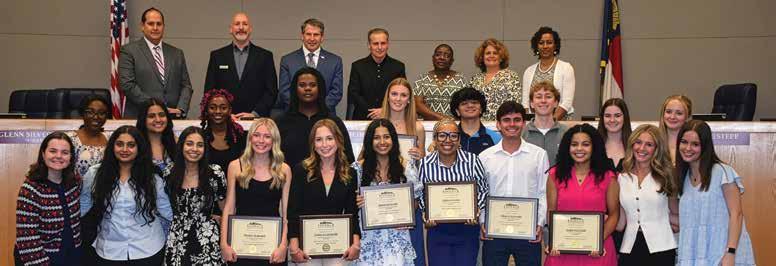
Gastonia Mayor’s Youth Council (with the current City Council)
That sense of perspective resonated with Gaston Christian School student Piper Riley.
“When I hear that phrase, I think about how young our country is and how far we’ve come as a nation,” Riley said. “Being so young compared to other countries and being a country with more freedoms than most is amazing.”
For Emma Kate Laudner, 17, of Highland School of Technology, the milestone represents both reflection and responsibility.
“It holds a weight over my head that there is much responsibility for myself and people of my generation to uphold America’s expectations and positively impact the future,” Laudner said.
Even brief responses resonated meaning. Highland School of Technology student Celeste Thorne, 15, simply described the milestone as “America’s 250th birthday,” a reminder that, at its core, the nation’s celebration is a commitment to move forward on its journey together with the people who continue to shape it.
Freedom to Choose
If there was one theme that appeared more often than any other when students described what being American means to them, it was freedom.
For South Point High School student Sidney Lindstrom, freedom is closely tied to identity.
“To me, being an American means having the freedom to be myself,” Lindstrom said. “It means I can share my talents, celebrate my culture, speak up for what I believe in, and chase the opportunities that matter to me.”
Several students connected freedom to the ability to shape their own future.
“Being an American to me is speaking out for what you believe in and helping make changes for your country,” D’Avria said.
Laudner described being American as having “the freedom
to pursue my own path” and the opportunity to express her opinions openly.
Others emphasized opportunity.
“As a teenager in today’s society, it means working hard for what I have and being appreciative of the ability to make a life for myself on my terms,” Riley said.
“My future is not guaranteed, but there are so many possibilities and so many opportunities for me to climb the metaphorical American ladder.”
Patel described being American as taking pride in the country’s accomplishments while remaining grateful for those who came before.
Thomas emphasized the importance of understanding and accepting people from different backgrounds.
“Being an American means that you are capable of connecting with individuals with different ethnicities and accepting everyone for who they are,” she said.
Lucas Holland, 16, of Piedmont Community Charter High School, described being American as both a privilege and a responsibility, acknowledging that the nation’s challenges can sometimes make the political landscape feel complicated.
Collectively, the responses suggest that many young people continue to view America through a unique lens of possibility. Success is not guaranteed, but they believe that opportunity remains within reach and creative solutions still exist because it’s never too late to try.
Strength in Diversity
When students were asked what makes them proud of America, one answer continued to echo throughout their responses: diversity.
Several students independently identified America’s cultural diversity as one of the nation’s greatest strengths.
“People from all over the world come to America because of
Gastonia Mayor’s Youth Council (with the previous City Council)
Cover Story
its known opportunities,” Patel said. “The diversity in America is what makes it exceptional and helps everyone have a better sense of belonging.”
Thomas reiterated that sentiment.
“One thing that makes me proud about being an American is the amount of diversity present in the country,” she said. “It is a beautiful characteristic of America that makes the country so distinctive.”
D’Avria agreed, saying the variety of cultures represented across the country provides opportunities to learn from one another.
“It gives us chances to understand and learn about other cultures and lifestyles,” she said.
Laudner described diversity as something she witnesses daily.
“I am blessed to see people of many different backgrounds and cultures come together in one nation,” she said.
Lindstrom also pointed to acceptance and inclusion as values she hopes continue to grow in future generations.
Not every student focused on the same source of pride.
Riley highlighted the nation’s military and its role in preserving American freedoms.
“The men and women who serve our country are the reason we have so many freedoms,” she said.
Whether discussing diversity, opportunity, or service, students consistently pointed to the people of America as one of the country’s defining strengths.
Creating Positive Change
Patriotism did not prevent students from speaking candidly about issues they would like to see improved.
Several focused on affordability and access.
Patel pointed to healthcare.
“Too many people face expensive care and high medical costs when, really, healthcare should just be a basic human necessity,” she said.
Thomas focused on education.
“Addressing these problems now will create a better learning environment for future generations,” she said, citing concerns about student achievement, school funding, and teacher pay.
Laudner shared concerns about both education costs and the rising cost of living.
“I believe that future generations should not carry the burden of having to worry about educational costs,” she said.
Others focused on social issues.
D’Avria said she would like to reduce discrimination faced by minority groups.
Lindstrom envisioned a future where people are respected regardless of race, culture, background, or beliefs.
“I would want everyone to feel accepted,” she said. Riley highlighted political polarization.
“Yes, we are Republicans or Democrats, but we are all Americans,” she said.
Her response reflected a theme that appeared throughout the survey: disagreement itself is not necessarily the problem.
“It’s okay, and it’s healthy, to disagree,” Riley said. “But we need to fix how we act on those disagreements.”
Holland focused on leadership and government, expressing a desire for stronger standards for future national leaders.
Despite their differing priorities, students consistently approached these issues with a desire to improve rather than criticize.
The Next Generation of Leaders
Students were also asked what challenges they believe their generation is uniquely prepared to solve.
Patel pointed to misinformation.
“Because we have grown up in the digital age, we understand how information spreads online,” she said.
Environmental concerns emerged as another common theme.
D’Avria believes her generation is especially prepared to address climate change because young people have grown up
The Teen Group of the Gastonia-Piedmont Chapter of Jack and Jill of America, Inc.
hearing about its consequences.
Laudner agreed, citing advances in technology and science that make environmental solutions more achievable than ever before.
Mental health was another issue students identified.
“Mental health has become more widely spoken about throughout our country today,” Riley said. “I feel as though my generation has the capability to create and provide access to professional help on a larger scale than ever before.”
Thomas highlighted entrepreneurship and innovation.
She noted that many members of Gen Z are already creating new opportunities through business ownership, social media, and alternative career paths.
Holland pointed to inclusion and public trust as areas where younger Americans can make a meaningful impact.
The responses reflected confidence without arrogance—a belief that challenges exist, but also that solutions are possible.
Looking Ahead to 2076
When students were asked to imagine America’s 300th birthday in 2076, their answers shared a common thread: hope.
Patel hopes the nation becomes “more united, prosperous, and equitable.”
Thomas envisions a country that is environmentally conscious, technologically advanced, and open to new ideas.
D’Avria hopes America becomes more inclusive and places a greater emphasis on education.
Lindstrom imagines a nation that is safer, cleaner, and more united.
“I hope future generations will remember us as the generation that cared about diversity, safety, climate change, and creating positive change,” she said.
GLM Design Services
Riley hopes future Americans will view her generation as one that used its resources wisely and genuinely cared about the nation’s future.
Laudner hopes future generations recognize today’s efforts to address climate change and create a more sustainable society.
Thorne offered perhaps the simplest vision of all.
“I would hope our country would show signs of progression,” she said, “while using that as a blueprint for change.”
The students’ profound answers reveal a generation that sees challenges clearly but refuses to be defined by them.
As America approaches its 250th birthday, it is a reminder that each generation is indisputably responsible for the opportunities and responsibilities that they inherit. However, the students’ hopes for 2076 are ambitious and rooted in values that have long defined the American dream of freedom, opportunity, determination and perseverance.
Gaston Lifestyles Magazine, we’re more than just a publication – we’re your go-to source for professional design services. We create designs that elevate your brand and make a lasting impression. Let us help you stand out with designs that captivate and communicate e ectively.
Business Center
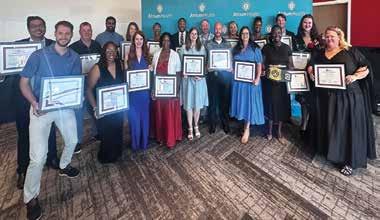
Leadership Gaston
Developing the Leaders of Tomorrow Since 1979
By Megan Zelaski Photographs Courtesy of Gaston Business Association
Strong communities do not happen by accident. They are built by leaders who are willing to learn, serve, collaborate, and invest in the future of the place they call home. For more than four decades, Leadership Gaston has been helping develop those leaders right here in Gaston County.
Formed in 1979 by the Gaston Regional Chamber of Commerce, Leadership Gaston was created with a simple but powerful mission: to identify and develop highly motivated leaders who are committed to making a positive impact on their community. Today, as a program of the Gaston Business Association, Leadership Gaston continues that mission by preparing current and emerging leaders to better understand the opportunities and challenges facing Gaston County.
Leadership Gaston brings together individuals from diverse backgrounds, industries, and experiences who have demonstrated leadership potential and a desire to become more engaged in their community. Participants gain firsthand exposure to key issues affecting Gaston County while building meaningful relationships with fellow leaders from across the region.
One of the greatest strengths of Leadership Gaston is the diversity of its participants. The program welcomes applicants from all sectors of the community, including private businesses, nonprofit organizations, local and state government, education, healthcare, entrepreneurship, public safety, and more.
Throughout the program, participants explore topics such as economic development, education, healthcare,
local government, public safety, quality of life, and community leadership. They hear directly from community leaders, tour local facilities, and engage in discussions that provide a deeper understanding of the factors shaping Gaston County’s future.
Leadership Gaston extends beyond the classroom experience. Participants are challenged to immerse themselves in the community through a series of hands-on activities designed to broaden their perspectives and strengthen their civic engagement. Each class member completes a first responder ride-along, attends a city council, town board, county commission, or school board meeting, tours a local nonprofit organization, and participates in a Gaston Business Association networking event. These experiences provide participants with a firsthand look at the people, organizations, and institutions that help make Gaston County thrive.
In addition, each Leadership Gaston class collaborates on a service project that addresses a community need. The class project encourages participants to work together, apply their leadership skills, and leave a lasting impact on the community. Many graduates point to these projects as one of the most rewarding aspects of the program, as they transform leadership lessons into meaningful action.
For the past five years, Leadership Gaston has been proudly supported by program sponsor Atrium Health. Jeff Ross, Strategist for West Market Community Engagement & Corporate Responsibility at Atrium Health, has become a familiar face to Leadership Gaston participants and a passionate advocate for servant leadership. His message to every class is simple yet powerful: “If service is beneath you, then leadership is above you.”
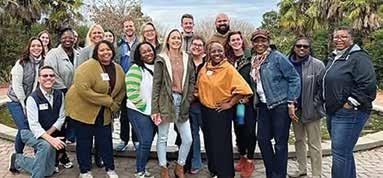
Fall Class of 2023 at the former Daniel Stowe Botanical Gardens
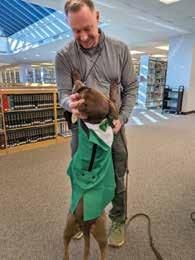
Matthew Hensley with Gaston PD and the library dog
That philosophy reflects the heart of Leadership Gaston. The program is not simply about developing professional skills or expanding business networks—it is about encouraging participants to become active, engaged leaders who are committed to serving their organizations and their community.
As recent Leadership Gaston alumnus Matthew Titchiner of the Gaston County Museum of Art & History shares:
“Leadership Gaston was an eye-opener to not just the countless facets and pressing challenges of the community I live in and serve, but also provided invaluable exposure to established and emerging leaders from all walks of life. The course was a great connector and foundation for continued leadership growth.”
One of the program’s greatest strengths is its alumni network. Since 1979, Leadership Gaston has graduated hundreds of leaders who continue to serve throughout Gaston County as business executives, entrepreneurs, nonprofit leaders, educators, healthcare professionals, elected officials, and community volunteers. The relationships built during the program often extend far beyond graduation, creating a network of engaged leaders who remain connected through their shared commitment to the community. This growing alumni base serves as a valuable resource for both current participants and the broader community, demonstrating the lasting impact of leadership development and civic engagement.
Applications are now being accepted for the Fall 2026 Leadership Gaston class. Whether you work for a corporation, own a small business, serve in government, lead a nonprofit organization, work in education or healthcare, or are an entrepreneur looking to make a difference, Leadership Gaston offers an opportunity to grow as a leader while gaining a deeper appreciation for the community we all share.
The future of Gaston County depends on leaders who are willing to learn, connect, and serve. Leadership Gaston is helping build that future—one class at a time.
Spring Class of 2026 at their graduation
Active Living
The Women Behind This Community
How Ladies Night Out Celebrates the Women Who Make Gaston County Thrive
By Katie Lank, Associate Executive Director McGill Family YMCA Photographs Courtesy of Jenn Phillips Photography
There is a woman in Gaston County who wakes up before sunrise to open her shop. Another who spent years building a business from her kitchen table while raising two kids. Another who runs a wellness practice where she helps people heal, body and soul. You probably know women like these. You may be one of them.
At the Gaston County Family YMCA, we have always believed that a strong community is built by strong people, and the women of this county are among its greatest strengths. This August, we are celebrating that truth in the most fitting way we know how: by bringing the community together.
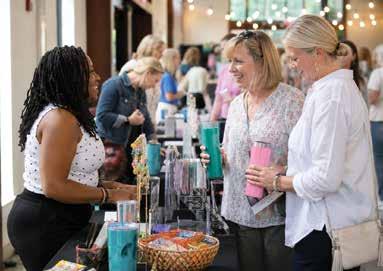
On Friday, August 7th, from 6:30 to 10 p.m., the YMCA hosts its fourth annual Ladies Night Out: Makers Market and Fashion Show. It is an evening of shopping, connection, great food, and community pride. And this year, it just might be the best one yet.
An Evening Worth Marking on Your Calendar
Ladies Night Out started as a simple idea: create a space
where women could gather, support one another, and have a genuinely good time. Four years later, it has grown into something much more meaningful than a night out.
The evening features a Makers Market spotlighting women-owned and womenoperated local businesses across health, beauty, fashion, and lifestyle. You will have the chance to shop from talented local vendors, connect with entrepreneurs doing remarkable work right here in our own backyard, and enjoy bites from local food trucks while you do it.
The night wraps up with a fashion show featuring local boutique wear, a celebration of style, confidence, and the creative spirit that runs through this community. It is open to everyone, and that is very much the point. We see husbands, brothers, and friends show up every year to cheer on the women they love, and that energy is part of what makes the night so special.
More Than a Fun Night, A Mission in Motion
What makes Ladies Night Out more than just a great event is where the proceeds go. Every dollar raised supports two programs that change lives in Gaston County: the YMCA’s LIVESTRONG program and general YMCA community support.
LIVESTRONG at the YMCA is a free, evidence-based fitness and wellness program designed specifically for cancer survivors. It helps participants rebuild strength, restore confidence, and reconnect with their bodies after treatment. For many survivors, it is the first time since their diagnosis that they have felt like themselves again.
Consider someone like Maria, not unlike dozens of women who have walked through our doors. She finished treatment feeling exhausted and uncertain about what came next. A neighbor told her about LIVESTRONG. Within a few months, she was not just moving again. She was laughing again, showing up for herself, and building friendships with people who understood her journey in a way few others could.
That is the kind of impact your presence at Ladies Night Out makes possible. When you show up, shop local, and spend an evening celebrating the people around you, you are also helping someone like Maria find her way back.
Local Businesses Leading the Way
None of this happens without the people who believe in it. This year’s event is supported by the City of Mount Holly, Truliant Federal Credit Union, Clariant, Tails R Waggin’ Day Spa and Resort, Gaston Thermal Imaging, Tranquil Moments Health and Wellness, and Flower of Life House of Healing Inc. These are neighbors investing in neighbors, businesses investing in people, and partners investing in a shared vision of what Gaston County can be. Sponsorship opportunities are still available for those who want to be part of it.
Come As You Are. Leave Feeling Connected.
The YMCA has always been about more than programs and memberships. It is about people finding their place, their people, and their purpose, sometimes in ways they never expected.
Ladies Night Out is one of those nights. Whether you come to shop, to cheer on local makers, to watch the fashion show, or simply to spend an evening doing something good for yourself, you belong here.
Bring your best friend. Bring your sister. Bring the neighbor you keep meaning to spend more time with. And yes, bring the men in your life too. Supporting the women of this community is something everyone can be a part of.
Ladies Night Out: Makers Market and Fashion Show
Friday, August 7, 2026 | 6:30 to 10:00 p.m. | Mount Holly Municipal Complex
Want to attend? Tickets and event details are available at gastonymca.org
Own a women-led business or interested in sponsorship? We would love to have you involved. Businesses that invest in this event invest directly in the health and well-being of Gaston County. To learn more email Katie Lank at klank@gastonymca.org.
The Greatest Wealth-Creation Machine Ever Built
For 250 Years
By Ryan Schrift, Managing Director of R.J. Schrift Private Asset Management
Asa student of history, when I think about America’s 250th birthday, my mind doesn’t immediately go to the stock market. Instead, I find myself reflecting on the summer of 1776, when a group of imperfect but courageous individuals signed the Declaration of Independence and launched an experiment unlike any the world had ever seen.
The Declaration asserted a revolutionary idea: that individuals possess certain unalienable rights and that government exists to protect those rights, not grant them. A few years later, the Constitution established a framework designed to limit government power, protect private property, and preserve individual freedom. Two hundred and fifty years later, that experiment has produced something remarkable. The United States has become the greatest wealth-creation machine in human history.
How did thirteen small colonies on the edge of the Atlantic become the world’s largest economy? The answer isn’t natural resources alone. Many nations possess abundant resources.
It isn’t geography alone. Other countries enjoy strategic advantages as well.
The answer is freedom. Freedom allows individuals to dream, create, innovate, build businesses, and take risks. Freedom encourages competition, rewards hard work, and creates opportunities for advancement. But freedom alone is not enough. Individuals also need access to capital.
That is where America’s capital markets enter the story. The stock market is often misunderstood as a place where people simply trade shares and speculate on prices. In reality, capital markets serve a much larger purpose. They connect ideas with investment. They allow entrepreneurs to raise money, businesses to expand, workers to find jobs, and innovations to reach the world.
For generations, American investors have provided capital to companies that transformed everyday life. Railroads connected a growing nation. Steel built cities. Electricity illuminated homes. Automobiles changed transportation. Computers and the internet reshaped communication and commerce. Today, artificial intelligence is opening another chapter in American innovation. Every one of those advances required vision, entrepreneurship, and capital.
America has never been perfect. Our history includes periods of division, injustice, and mistakes that should not be ignored. Yet one of the nation’s greatest strengths has been its ability to confront challenges, adapt, and continue moving forward.
America’s enduring strength has always been its ability to attract people seeking
Ryan Schrift
America’s enduring strength has always been its ability to attract people seeking opportunity, freedom, and the chance to build a better life for themselves and their families.
opportunity, freedom, and the chance to build a better life for themselves and their families. As we celebrate America’s 250th anniversary, investors have an opportunity to look beyond daily headlines and market volatility and appreciate the larger story.
For 250 years, the combination of freedom and capital formation has helped create unprecedented prosperity. It has lifted living standards, funded innovation, and expanded
opportunities for millions of people. America’s greatest export has never been a product. It has been an idea. And when free people are empowered by free markets and supported by access to capital, extraordinary things can happen. That is the story of America at 250 and why it remains the greatest wealth-creation machine ever built.
Ryan Schrift is the Managing Director of R.J. Schrift Private Asset Management, a Belmont based Financial Planning and Investment Advisory Firm. Securities are offered through LPL Financial, Member FINRA/ SIPC. R.J. Schrift Private Asset Management is an other business name of Independent Advisor Alliance, LLC. All investment advice is offered through Independent Advisor Alliance, LLC, a registered investment adviser. Independent Advisor Alliance, LLC is a separate entity from LPL Financial.
Photo Gallery
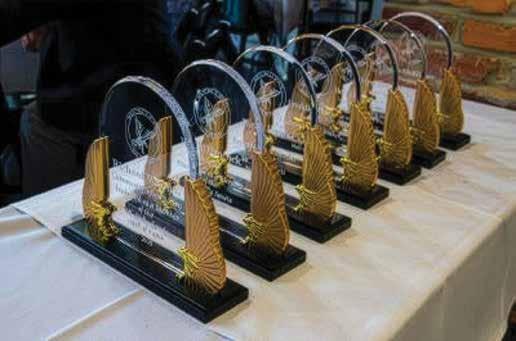
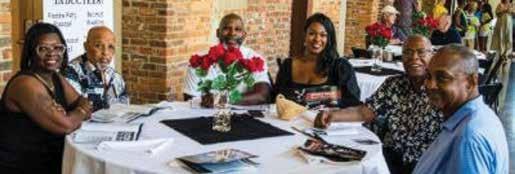
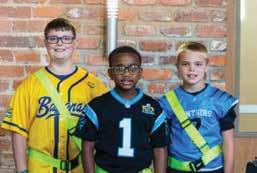
Mount Holly Sports Hall of Fame 2025 Banquet (2026 Banquet will be held on July 18, 2026)
Did You Know - Rotary Creating Lasting Impact in Honduras (see
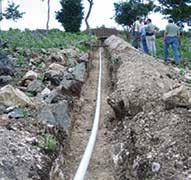
Building cisterns to hold freshwater
story on page 22)
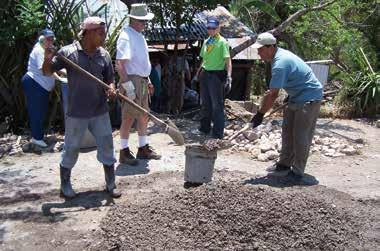
Rotarians making blocks and blocks drying in sun
New Habitat house
Rotarians making blocks and blocks drying in sun
Chorti child
New house made possible by Habitat and Rotary
A photo of water lines across mountains
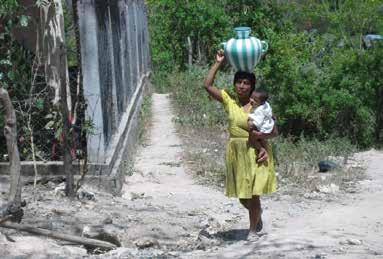
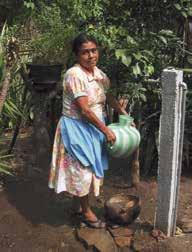
Chorti woman carring water
Don Warren & Tim Grooms with children
The New Luxury
Why Smart Shoppers are Buying Less and Buying Better
Felicia Bittle, Executive Image Consultant, CEO & Founder, FABstyles
Photographs
Courtesy of Felicia Bittle
For years, fashion encouraged us to believe that more was better. More clothes. More trends. More sales. More shopping. Yet many closets today are overflowing with clothing, while their owners still find themselves saying, “I have nothing to wear.”
The reality is that style has evolved. Today’s most stylish and financially savvy consumers are moving away from impulse purchases and embracing a different philosophy: buy less, buy better. This shift isn’t necessarily about spending more money. It’s about making smarter decisions, choosing quality over quantity, and building a wardrobe that works harder for your lifestyle.
The new luxury isn’t excess. It’s intention.
Quality Over Quantity
One of the biggest misconceptions about building a great wardrobe is believing that having more options automatically creates more style. In reality, the opposite is often true. A closet filled with poorly fitting, rarely worn items can create more frustration than confidence. Instead of focusing on how many pieces you own, consider the quality, fit, versatility, and longevity of the pieces already in your wardrobe.
A well-made blazer, a quality pair of dark denim, a versatile dress, or a timeless leather shoe can often create more outfit combinations than several trend-driven purchases that only work for one occasion.
The goal is not simply to buy clothing. The goal is to build a wardrobe that supports your lifestyle.
Understanding Cost Per Wear
One of the smartest ways to evaluate a purchase is through what stylists’ call “cost per wear.” The concept is simple: take
the cost of an item and divide it by the number of times you realistically expect to wear it.
For example, a $500 coat worn 100 times costs approximately $5 per wear. A $75 trendy jacket worn only three times costs $25 per wear.
When viewed through this lens, higher-quality purchases often become the better value. Before making a purchase, ask yourself not only whether you love the item, but whether you will actually wear it frequently enough to justify the investment.
Luxury Doesn’t Always Mean Expensive
Many people associate luxury with designer labels and high price tags. However, true luxury often comes down to craftsmanship, quality materials, exceptional fit, and longevity. Today, consumers have more options than ever to access premium brands and high-quality pieces without paying full retail prices.
Consignment boutiques, luxury resale platforms, estate sales, vintage shops, and end-of-season sales offer opportunities to purchase exceptional pieces at significantly reduced prices. The key is knowing what to buy.
Classic handbags, quality outerwear, tailored blazers, leather goods, watches, and timeless footwear often provide the greatest long-term value because they remain relevant season after season.
Five Questions to Ask Before Buying Anything
Whether you’re considering a designer handbag, a new suit, or a simple sweater, asking a few strategic questions can help you avoid costly mistakes.
Felicia Bittle
“The new luxury isn’t excess. It’s intention.”
1 Where will I actually wear this?
Purchase for your real life, not your fantasy life. An item may be beautiful, but if it doesn’t align with your lifestyle, it will likely spend more time in your closet than in rotation.
2 Can I wear it at least three different ways?
Versatility increases value. The more ways you can style an item, the harder it works for your wardrobe and your budget.
3 Does it work with what I already own?
The best purchases integrate seamlessly into your existing wardrobe. Before buying something new, consider whether it complements the pieces you already wear most often.
4 Is this a trend or an investment?
There is nothing wrong with enjoying trends. The key is understanding the difference between a temporary purchase and a long-term wardrobe investment. Spend accordingly.
5 Will I still love this a year from now?
Timeless pieces continue to earn their place in your wardrobe long after trends have faded. The best purchases often feel just as relevant next year as they do today.
The Power of Intentional Style
Style is not about owning the most clothing or spending the most money. It’s about making thoughtful choices that reflect who you are, support your lifestyle, and create confidence every time you get dressed. The most stylish people are rarely the ones buying the most. They’re the ones buying with purpose. As consumers become more intentional about how they spend their money, one thing is becoming increasingly clear: true luxury isn’t found in having more. It’s found in having better. And when every piece in your wardrobe earns its place, getting dressed becomes simpler, smarter, and far more rewarding. Your wardrobe should not only reflect your personal style, but also support the image, impression, and impact you want to make in the world.
Daniel Stowe ConServanCy
Beat the Heat at Stowe
The Carolinas get hot, come and stay cool
By Caitlin Conner, Marketing and Communications Manager Photographs Courtesy of Daniel Stowe Conservancy
With temperatures rising to the 90s and humidity thickening the afternoon air, I often find myself running for the nearest building with air conditioning. Naturally, planning a day outdoors might not be at the top of your list when you can’t step outside without sweating.
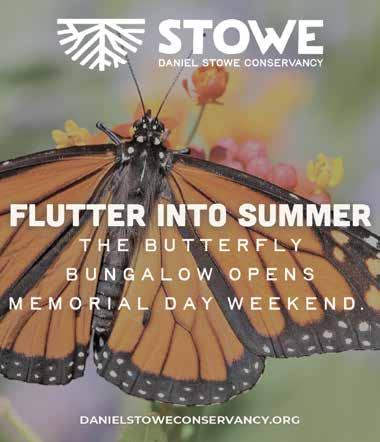
But what if I told you that you could spend the day at Daniel Stowe Conservancy this summer without feeling like you want to melt? With last year’s upgrades to the property, there are more ways than ever to stay relaxed and cool while still enjoying a day out in nature. Here are my top five tips to beat the heat at Stowe this summer and fill your path to nature with shade and spots to splash.
Creekside Room
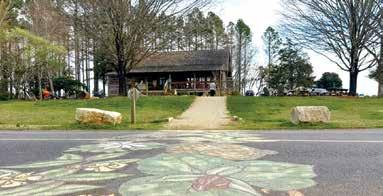
The opening of the Adventure Trail last year unlocked brand new ways for kids to explore the outdoors. This halfmile trail spanning from the Lost Hollow children’s garden to the Prairie Castle Playground introduced five outdoor “rooms” along the way, each with different themes. The Creekside Room, the second room on the trail, is particularly popular in the summer. This room contains a man-made
creek of running water over cool rocks that gives kids (and adults!) the chance to splash and play. Some kids make a big splash and even wear their swimsuits, while Mom and Dad cool off by sticking their toes in.
The water in Creekside isn’t swimmable (it’s just a couple of inches deep), but it provides a great, safe way to take a break from the sun and cool off on the Adventure Trail.
The Adventure Trail
Speaking of the Adventure Trail, it’s probably the most shaded space on the property! The dense tree cover protects walkers from the sun for the entire half-mile trail. If the kids are getting hot during your visit, a break on the Adventure Trail is probably just what you need. The five outdoor rooms will also keep them entertained for hours, including:
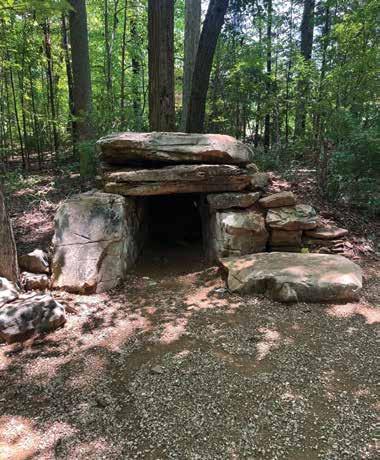
• The Ramble Rocks Room for jumping and climbing on boulders and building sand castles.
• The Creekside Room for splashing through running water.
• The Habitat Room to explore life-sized animal homes like fox dens and a spider web.
• The Woodwind Room to play bamboo musical instruments and perform on-stage.
• The Secret Room to uncover the home of Willow the Dragon.
The Tunnel Fountain
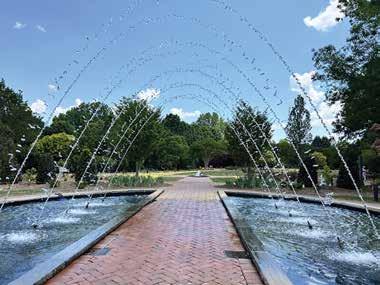
One of the most iconic spots in The Gardens at Stowe is the Tunnel Fountain right at the beginning of the Perennial
Gardens. The jet-stream fountains shoot up to a spectacular water arch display over the walkway. If you could use a cool down, walk through the tunnel of water for a nice cooling sprinkle. If you feel like getting a true splash, stand directly in the walkway while the fountain is off and wait for it to turn on. That will cool you off quick!
Meadowood Walk
While it’s not quite as shaded as the Adventure Trail, Meadowood Walk provides an extra half mile of tree-covered trail around the perimeter of our Piedmont Prairie and savanna grassland. You can reach Meadowood Walk directly from the Adventure Trail or enter the other side of the loop when you reach the Conifer Garden at the boundary of the formal botanical gardens just before the Prairie Castle. Meadowood provides a serene walk in nature with plenty of opportunities to spot native birds like the brown-headed nuthatch and the red-bellied woodpecker.
Indoor Spots for Snacks + Shopping
After your walk through The Gardens or on the trails, you might be ready for some AC and relaxation. Thankfully, there are plenty of place on the property to kick back with a drink, browse a curated selection of plants and decor and take a moment to yourself after a peaceful day in nature.
• Big Leaf Café + Shop in the Garden Pavilion provides tasty grab-and-go salads, desserts, wraps, sandwiches, chips and more, along with beer, wine, soda and other cold drinks. You can also browse Stowe merch and a wide range of garden-themed gifts.
• The Trailhead Store is our cozy coffee cabin in The Village at Stowe. Stop by for delicious lattes and teas crafted by our baristas, or treat yourself to a cold beer or wine. Trailhead also offers a similar selection of snacks and grab-andgo meals as Big Leaf. The seating area outside Trailhead includes a shaded porch as well as several shaded picnic tables and chairs that overlook our scenic ponds.
• The Farmhouse Garden Center gives you an airconditioned space to shop for plants and cute, vintageinspired home decor. Recently, Farmhouse began selling fresh, local produce courtesy of FreshList, so you can also stop by to pick up your seasonal produce, eggs, jam and more! (Pro tip – for true relaxation, head down the back hallway at Farmhouse for a cozy couch you can kick back on to cool down in the summer!)
Not only are our retail shops a great spot to take a break from the sun, they also offer cold treats of their own! Grab an iced coffee from Trailhead or Big Leaf, a canned cocktail from Farmhouse or delicious Friyos popsicles from Trailhead.
This may not count as one of the cooler spots on the property in the summer, but we’re excited to announce that the Prairie Castle Playground (one of the sunniest spots on the property) now has brand-new sun shades and benches for seating so that parents can stay cool while their kids play!
The Carolinas get hot, but there are plenty of ways to enjoy the beautiful blooms of The Gardens at Stowe in the summer. Be sure to pack water, hats and sunscreen on your next visit and follow this guide to stay cool as you find your path to nature at Stowe!
Hollywood obsessed
One-on-One with Sarah Douglas
Hollywood’s Favorite Villain
By Tony Miros
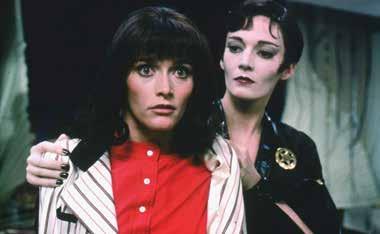
Long before superhero films became the dominant force at the box office, audiences around the world were captivated by a cinematic miracle: Christopher Reeve soaring across the screen in the 1978 classic Superman: The Movie. The film not only introduced moviegoers to the definitive Man of Steel—it also unleashed one of his most formidable adversaries, the icy and unforgettable Ursa, played by the stunningly talented Sarah Douglas.
As one-third of the Kryptonian supervillains who attempted to conquer Earth in Superman II, Douglas proved that beauty and menace could make a powerful combination. Her commanding screen presence and razor-sharp performance instantly earned her a place in pop culture history. So, you can imagine my kryptonite-level excitement when I had the opportunity to sit down with Sarah herself for a two-part conversation on Hollywood Obsessed Podcast (Episodes 167 and 168).
Since her iconic battles with Superman, Douglas has built an impressive career portraying some of film and television’s most memorable villains. Television audiences watched her manipulate and scheme on Falcon Crest, while science-fiction fans remember her as the ruthless alien commander Pamela in V: The Final Battle. She even returned to her Kryptonian
roots decades later with a guest appearance on Supergirl, offering the Girl of Steel a few pointed words of wisdom. On the big screen, she squared off against Arnold Schwarzenegger in Conan the Destroyer, cast spells as a wicked sorceress in Beastmaster 2: Through the Portal of Time, and portrayed a brilliant genetic scientist opposite Louis Jourdan in The Return of Swamp Thing, among many other memorable roles.
What surprised me most, however, was not her remarkable résumé but the woman behind it. When I recently sat down with this charismatic British actress, I discovered someone who could not have been more different from the intimidating characters she has portrayed for nearly five decades. Warm, witty, gracious, and wonderfully down-to-earth, Sarah quickly revealed herself to be one of the nicest people you could ever hope to meet—despite making a career out of playing some of entertainment’s most delightfully wicked villains.
What follows are highlights from our hour-plus conversation, filled with nostalgia, behind-the-scenes stories, and personal reflections from one of film and television’s most iconic screen villains. Enjoy!
How Ursa Came into Her Life
Tony Miros: I remember the first time I saw you was in Superman. I heard there were 600 actresses up for the part of Ursa.
Sarah Douglas: I was in the Canary Islands at the time, in the days before cell phones and the internet, so I didn’t really know what was going on with the casting of Superman I’d received a message saying they wanted to meet with me, and, to be honest, I wasn’t duly impressed because Superman wasn’t a big deal in England back then.
We all knew who Superman was, of course, and I think we may have seen some of the old serials during Saturday morning cinema, but I remember those programs being more about Lassie and Bonanza. Superman simply wasn’t the cultural phenomenon in England that he was in America.
Even today, there are wonderful Superman fans in
Ursa and Lois in Superman II
Sarah Douglas
Photographs Courtesy of Douglas Kirkland
Tony Miros
Hollywood obsessed
Ursa (Sarah Douglas & Christopher Reeve in Superman II
England, but the truly devoted fans are in America. They’ve been supporting Superman for generations.
“Truth, Justice, and the American Way” meant something very special here, and it was such a huge part of American culture.
Working with Brando on Superman
Tony Miros: So one of the first things you worked on was with Marlon Brando before he left the production. What was he like?
Sarah Douglas: He was absolutely wonderful. My age will tell you that I was completely, totally, and utterly in awe of him. He was a superstar—larger than life. There was no doubt about it. His presence was just... wow. You were very aware of it the moment he walked into a room.
As a young actress, I had idolized him. I’d watched his films and admired his work for years, so I could hardly believe I was actually working with him. He was witty, charming, lovely, and couldn’t have been sweeter.
For me, the whole experience was an absolute joy. But one thing that fascinated me was that he didn’t learn his lines— and apparently he never did on any of the films he made. As a young, rather keen actress, I was fascinated watching him work and observing what seemed like this incredible intensity.
Remembering Christopher Reeve
Tony Miros: I want to talk a little bit about Christopher Reeve. Everybody remembers and loves him as Superman. I recently saw the documentary about his life and thought it was incredible, especially the way it explored his journey and his children. Looking back on your relationship with him, what would you like people to remember about Christopher Reeve beyond Superman?
Sarah Douglas: I think what we hear time and again is that Christopher was deeply compassionate. In his later years, he went from being Superman to becoming a different kind of Superman. He was a super dad, a super husband, and an extraordinary human being. Watching that documentary and seeing the struggles he endured—and the way he faced them—was phenomenal.
To hear the rest of my spectacular conversation with the wonderful Sarah Douglas, listen to Episodes 167 and 168 of Hollywood Obsessed. Visit the podcast website at www.hollywoodobsessedthepodcast.com and enjoy
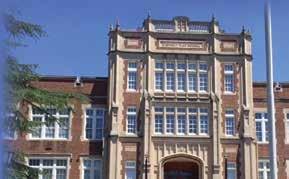
• National Historical Registry
• 76 apartments –76 different floor plans ranging from 800 sq ft - 4,300 sq ft
• Studios apartments up to 4 bedrooms apartments • Fitness room • Courtyard
DiD You Know?
Creating Lasting Impact
How One Rotarian’s Vision led to Clean Water, Health, Hope, and Life in Honduras
By Brent Messer, Rotary Club of Gastonia Photographs Courtesy of Rotarians in Honduras
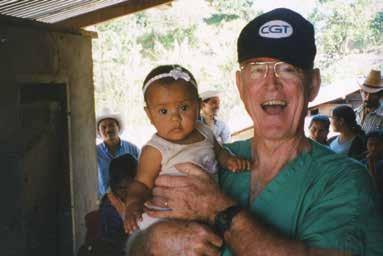
It’sbeen over 20 years now that The Rotary Club of Gastonia embarked on an adventure that changed and saved the lives of people they did not know in a place far away. Children have survived to live healthy lives, form families, and offer hope for future generations because of Rotary and the vision and persistence of one Rotarian. Don Warren, who passed away in October 2025, embodied the spirit of Rotary. He was a
person of action, who when faced with a great need and challenge, knew that the power of Rotary and its members could make a difference.
The Chorti indigenous people living in the mountains of Honduras had long suffered from unclean water, and a 50% child mortality rate before age 7. In January 2004, missionaries Billy and Mary Collins reported at Parkwood Baptist Church what they had witnessed while working with the Chorti people. Don was there that day and was inspired to take action.
Rotarians in his Gastonia club and Rotary District 7680 joined Don’s efforts. With Rotary grants, they organized to supply 21 Chorti villages with clean water piped from freshwater springs in higher elevations. Over 21,000 people were afforded clean water, along with outside toilet facilities for each home.
During this time, a Medical Clinic was created in the nearby town of Copan Ruinas in a truly amazing sequence of events.
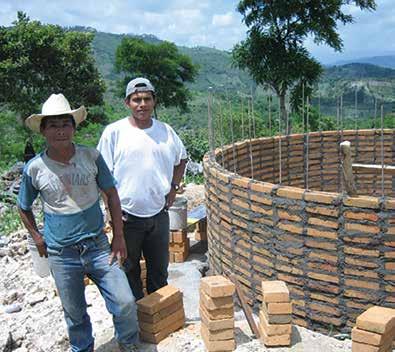
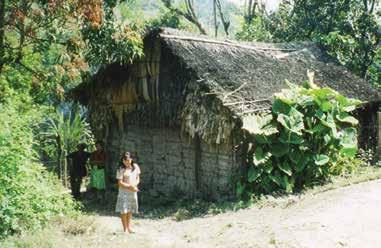
When visiting the area, Rotarians saw Chorti houses made of sticks and mud with thatched grass roofs and dirt floors. They discovered that Triatomine bugs (kissing bugs) living in the thatched roofs would infect the people with a parasite that caused Chagas disease, which could cause heart disease leading to an early death. The water project then expanded, bringing in Habitat for Humanity.
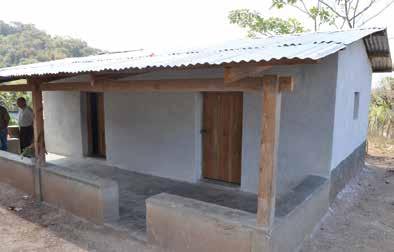
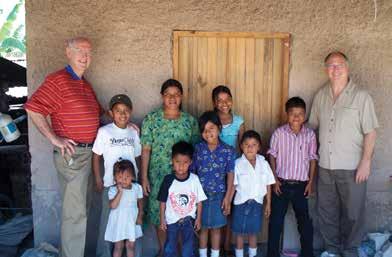
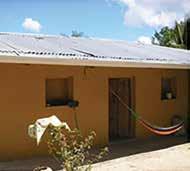
Don, having worked with Habitat International, contacted President and CEO Paul Leonard and asked if Habitat would consider donating housing to people making less than $300 per year. Habitat altered their policy and began to donate a percent of local contributions to international efforts that provided gifted housing. Habitat was able to provide the Chorti people with simple block houses equipped with metal roofs. Over 1,000 safe homes were created as the Chorti learned how to build healthy homes.
Chorti children sitting at their new desks
Don Warren holding a Chorti child
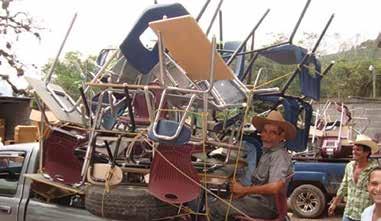
The ripple effects of the original project continued to expand. During an encounter with a village mayor, Don was made aware of the need for school furniture for Chorti children. Desks and seats the children used were simply made by placing boards on 2 cement blocks. Don contacted Reeves McGlohon, then superintendent of Gaston County Schools, who led him to a manufacturer of school desks. The owner had just sold his business and was about to retire, but
before he did, he directed the buyers to donate over $500,000 worth of desks and chairs. The furniture, sent in 2 shipping containers, was carried by the Chorti up into the mountains, making 176 round trips.
During this time, a Medical Clinic was created in the nearby town of Copan Ruinas in a truly amazing sequence of events. Charlotte heart surgeon pioneer Dr. Francis Robicsek spent some of his early years near Copan Ruines and was familiar with the Chorti people. He had even published a coffee table book with photos he had taken. For years he had been collecting used surplus medical equipment as he thought how he could help the people living in the mountains of Honduras.
Rotarian Barbara Voorhees came across the book that Dr. Robecek had produced. She then gave it to Don who met with Dr. Robicsek at his Charlotte home to have him autograph the book. After Don explained what Rotary was doing in Honduras, Dr Robecek decided to create a medical clinic for the Chorti and people of Copan Ruinas.
About 8 years after the water projects had been completed with the Chorti people now having clean water, improved sanitation and healthy housing, improved education space, and medical access, it was reported to the members of The Rotary Club of Gastonia that not one child had died during those 8 years. To the Chorti people, it was truly a lifesaving miracle, and it was made possible by Rotary, its members and the vision of one Rotarian who chose to make a difference.
Belmont – Wednesday 12:30, First Presbyterian Church - Belmont, https://belmontrotaryclub.com, Facebook Cherryville – Wednesday (1st & 3rd), 12:00 , Cherryville Community Building; Facebook Mt Holly – Thursday 12:15 Mount Holly Municipal Complex; Facebook Kings Mountain – Thursday 12-1:30, Patrick Senior Center; Facebook
Rotary is a global network of 1.2 million members, with more than 45,000 clubs in more than 200 countries. Members with diverse experiences share a commitment to service and fellowship, and are welcome in Rotary clubs around the world. We invite you to connect with Rotary. Each club is unique, and welcomes new members.
Villagers delivering the desks up the mountain
Chorti woman now getting clean water at her home
Chorti stick houses with thatch roofs
Technology United States of America at 250
The Technologies That Built the Modern World
By Michael “Donovan” McQuitter, CC, IT and Specialist Photographs Courtesy of Michael McQuitter
Asa society we are surrounded by technology. The Internet, phones, even lights didn’t exist when our country declared Independence in 1776. Over the last two and a half centuries, American innovators have repeatedly taken ideas that seemed impossible and turned them into technologies that reshaped daily life. As we approach our 250th year of being a country here are a few of the standout inventions of technology.
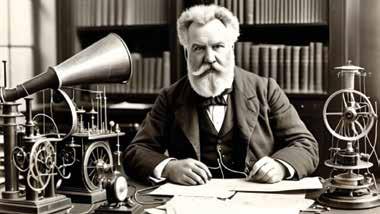
1. The Telegraph & Telephone (1837–1876)
Long-distance communication meant physically moving a message. A letter being sent via horse and carriage or on a ship across countries. News and decisions traveled only as fast as a person could carry them.
Samuel Morse, along with Alfred Vail and Leonard Gale, developed a single-wire system, and Morse’s key contribution was Morse code, a system of dots and dashes that translated the alphabet into electronic pulses. On May 24, 1844, Morse sent the first official telegraph message from Washington, D.C., to Baltimore, Maryland, reading: “What hath God wrought.” Inspired by this, Alexander Graham Bell patented the telephone in 1876, adding the ability to hear another person’s voice from miles away.
Families separated by migration could hear one another again. Doctors could respond to emergencies faster.
As the United States of America marks 250 years of Independence, these innovations are a reminder that progress usually starts with a simple idea and someone willing to follow through on it.
Businesses could make decisions in minutes instead of days. Together, the telegraph and telephone laid the groundwork for every communication technology that followed, from radio and television to video calls and smartphones.
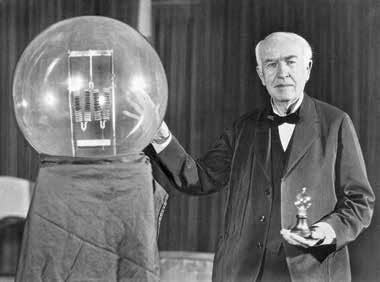
2. The Light Bulb (1879)
Daily life was built around daylight. Once the sun went down, options narrowed to candles, oil lamps, or gas lighting, all of which were dim, costly, or risky to use indoors.
Thomas Edison demonstrated a practical incandescent light bulb in 1879. Electric lighting already existed in some forms, but Edison’s design lasted longer, cost less, and worked
Michael McQuitter
as part of a full electrical system, not just a standalone novelty.
Life no longer had to revolve around daylight. Factories could run after dark, students could study at night, and cities got brighter and safer. Edison’s work helped launch the modern electrical grid and power the next wave of industrial growth, and most electrical devices we use today trace back to that shift.
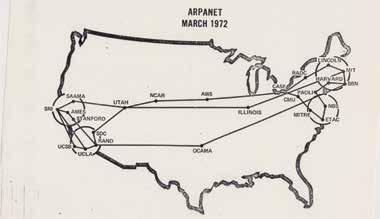
3. The Internet / ARPANET (1969)
Shifting to almost 90 years later we had the birth of computers and they existed, but they worked in isolation. Each machine held its own data, and sharing information between computers in different locations wasn’t possible.
In 1969, researchers at UCLA tried to send the word “login” over a new computer network. The system crashed after the first two letters. Even so, that experiment marked the birth of Advanced Research Projects Agency Network (ARPANET), the precursor to the modern internet.
By letting computers share information across networks, ARPANET created a new kind of communication infrastructure. Once the internet became available to the public, it reshaped business, education, entertainment, and
social life. Today, it’s about as essential to modern life as roads and electricity.
4. The Personal Computer (1970s–1980s)
Owning a computer, let alone using one casually, wasn’t something most people could imagine.
Innovators like Steve Jobs, Steve Wozniak, Bill Gates, and Paul Allen helped bring computers into homes and offices during the 1970s and 80s, building machines designed for everyday people rather than specialists.
Word processing, spreadsheets, graphic design, programming, and eventually internet access all became part of everyday life. Computing power shifted from something reserved for institutions to something anyone could have on a desk, setting the stage for the digital age we live in now.
5. The Smartphone / iPhone (2007)
Steve Jobs introduced the iPhone in 2007, describing it as a phone, an iPod, and an internet communicator in one device. It turned out to be a lot more than that. It became a camera, map, bank, music player, television, shopping tool, and connection point to friends and family. Everyone today practically has a smartphone to make calls, send a text message, and have the convenience of a small computer in the palm of your hand.
Looking Ahead – Present Day
Today, technology is everywhere and growing at a rapid pace with AI, smart devices, and advanced robotics take shape. At the core of all of this is imagination, the idea that the world could work differently than it did before. As the United States of America marks 250 years of Independence, these innovations are a reminder that progress usually starts with a simple idea and someone willing to follow through on it.
Here’s to the next 250 years of invention, discovery, and possibility.
PeoPle on the Move
Together we build a stronger Gaston
Habitat for Humanity of the Charlotte Region
By Habitat for Humanity of the Charlotte Region
Photographs
Courtesy
of Habitat for Humanity of the Charlotte Region
Across Gaston County, change isn’t just something you hear about—it’s something you can see. Walls are rising in new homes. Crews are working to repair aging roofs. Volunteers are lending their time and talents alongside neighbors. It’s visible, tangible progress happening every day.
But what’s happening here is about more than construction. It’s about creating opportunity, strengthening stability, and helping families build and maintain a place they’re proud to call home.
Habitat for Humanity of the Charlotte Region is rooted in this community, working to address housing needs in multiple ways. That includes building new homes for families who are ready to invest in their future, as well as repairing existing homes so longtime residents can remain in the neighborhoods they love. Together, these efforts help ensure that growth doesn’t come at the expense of community—but instead strengthens it.
For many families, safe and stable housing is the foundation for everything else—health, education, financial security, and
connection to neighbors. When that foundation is strong, families can thrive. And when families thrive, communities do too.
None of this happens in isolation. Our impact is made possible by people across the community— volunteers who show up ready to lend a hand, donors who believe in the mission, and partners who share a commitment to building a stronger Gaston.
That collective effort is what turns construction sites into neighborhoods and repair projects into renewed hope. It’s what transforms individual homes into something bigger: a more connected, resilient community.
Whether you’re picking up a hammer, contributing financially, or simply learning more about the work being done, there is a place for you in this effort.
Because the progress happening in Gaston County and across the Charlotte Region isn’t just something to see—it’s something to be part of.
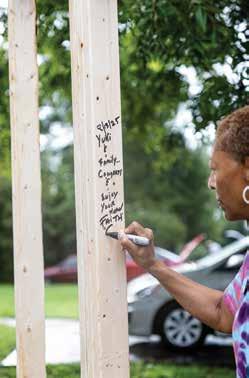
Stud signing for a new home in Bessemer City
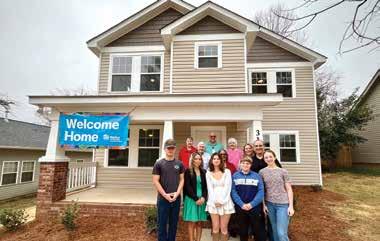
Welcoming Home a family in Bessemer City
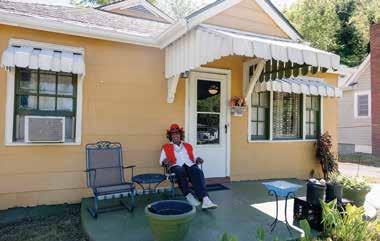
Critical Home Repair homeowner, Tarba outside of her home
Those Who serve
2026 Gaston County Sports Hall of Fame
Honoring Champions of our past who paved the way for our future
By Richard Walker, www.CarolinaSportsHub.com Photographs Courtesy of Gaston County Sports Hall of Fame
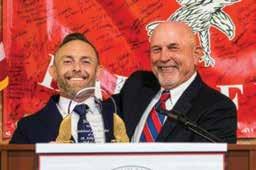
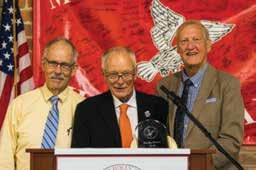
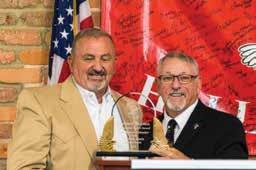
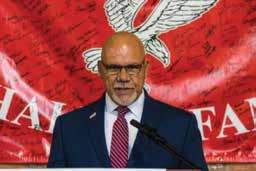
Starting with featured speaker Rick Barnes discussing his long coaching career, persistence in athletics was a theme at the 2026 Gaston County Sports Hall of Fame banquet at the Gastonia Conference Center on May 4, 2026. That persistence was perhaps best exemplified by the final statement of the final inductee.
“We do not stop playing because we grow old,” said the 93-year-old Hester Martin Haynes. “We grow old because we stop playing.”
Haynes was the best example of such athletic persistence as she first gained athletic success what is believed to be the first female baseball pitcher in N.C. high school history in 1949 and is currently active as a participant in the N.C. Senior Games.
Barnes, a 1973 graduate of Hickory High School and 1977 graduate of Lenoir-Rhyne College, said he finds it funny that he is now the second-oldest NCAA Division I coach.
“At one time, I was the youngest coach in the country,” Barnes said. “That was 40 years ago. Now I’m the secondoldest. And I’m just glad that (the oldest NCAA Division I coach) Rick Pitino is still coaching.”
Montgomery, who died at 74 on July 21, 2008, grew up during the Jim Crow era in the South and attended old Highland High School in Gastonia before playing at North Carolina Central, serving in the military, earning a tryout in the old AFL for the then-named Boston Patriots (now England) and eventually becoming a college coach for one year and high school coach and teacher for the next 31 years.
“This honor proves that his impact reaches beyond the scoreboard,” said his Eric Montgomery, who accepted the induction in his father’s behalf. “To many, he was a great athlete. To others, he was a teammate, a coach and a mentor. And to me and my family, he was our rock and foundation.”
Anderson, who was inducted by his sons Dan and Matt, talked about how fortunate he was to have started playing basketball in Gastonia in the 1970s. Coached by future Hall of Famers like Joe Robinson, Jerry Green and Jerry Steele in junior high, high school and college,
respectively, Anderson also received coaching from Jerry Maye (who family tree includes current New England Patriots quarterback Drake Maye) and future administrator Dean Knight in Gastonia.
“I was so blessed in so many ways,” said Anderson, who last season became only the second 800-game N.C. high school basketball coaching winner. “My brothers (Andy and Mitch) let me tag along and learn the game. And my family, my wife Toni especially, have been so supportive. And now I’m blessed with two sons, two daughters-in-law – and I call them daughters -and five grandchildren.”
Culbertson, who was inducted by former teammate and longtime friend Mick McMahon, emerged as a sports standout in elementary school in the late 1950s before starring on Gastonia’s Little Orangemen Pop Warner youth football national championship team in 1960. His school’s lone four-sport lettermen in 1965 at old Gastonia Ashley High, Culbertson went to serve in the U.S. Marine Corps before spending the 50 years as a coach and game official.
“I was so lucky to have the coaches that I had,” said Culbertson, whose coaches included Gaston County Sports Hall of Famers Russ Bergmann, Everette “Shu” Carlton, Earl Groves and Larry Rhodes. “And being around athletics has helped me in so many ways.”
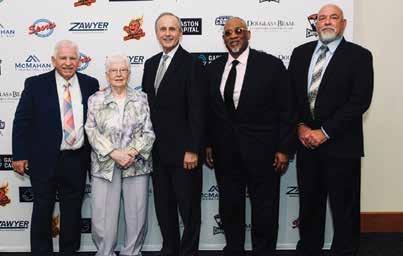
2026 Inductees (Left to Right) Steve Culbertson, Hester Haynes, Rick Barnes event speaker, Eric Montgomery representing his father Robert Montgomery & Danny Anderson.
Eats & trEats
Prosciutto Melon Skewers with Basil Pesto
By Melissa Latin, Charlotte Fashion Plate
Photo by Melissa Latin, Charlotte Fashion Plate
Sweet melon, salty Prosciutto di Parma, creamy mozzarella, and fresh basil all come together in these easy Prosciutto Melon Skewers. Finished with a light, lemony basil pesto drizzle, this is one of those simple appetizers that looks beautiful on a platter, but takes very little effort to make. They are refreshing, light, and perfect for warm weather entertaining.
These melon skewers are ideal for summer parties, cookouts, brunches, holiday gatherings, or even a quick no-cook appetizer on hot days. The combination of juicy watermelon, cantaloupe, basil, and prosciutto gives them that classic sweetand-salty flavor that always disappears quickly.
Ingredients
• 1/2 pound Prosciutto di Parma
• 1/2 cantaloupe
• 1/2 seedless watermelon
• 1 container fresh mozzarella pearls
• 20+ fresh basil leaves
• 2 tablespoons prepared pesto
• 1 teaspoon olive oil
• 2 teaspoons fresh lemon juice
• 1/4 teaspoon coarse salt
• 1/2 teaspoon cracked black pepper
• 3 fresh mint leaves, torn (optional)
• Wooden skewers
Preparation
1. 1.Using a melon baller, scoop balls from the watermelon and cantaloupe.
2. In a small bowl, combine the prepared pesto, olive oil, and fresh lemon juice.
3. Build the skewers by threading on a folded piece of prosciutto, cantaloupe ball, basil leaf, mozzarella pearl, watermelon ball, another folded piece of prosciutto, and another basil leaf. Repeat until all ingredients are used. You can assemble the skewers however you prefer.
4. Arrange the skewers on a serving platter.
5..Sprinkle with the coarse salt and cracked black pepper.
6 Drizzle the pesto mixture over the skewers, using as much or as little as desired.
7 Finish with torn fresh mint leaves, if using.
8 Serve immediately, or chill until ready to serve.