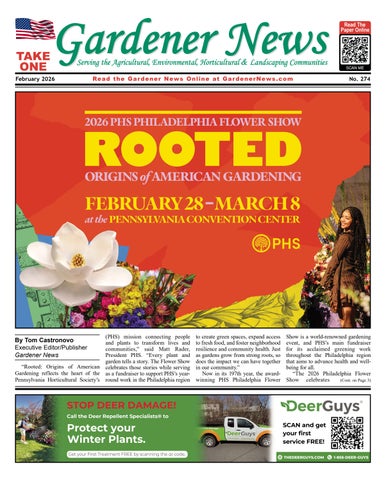
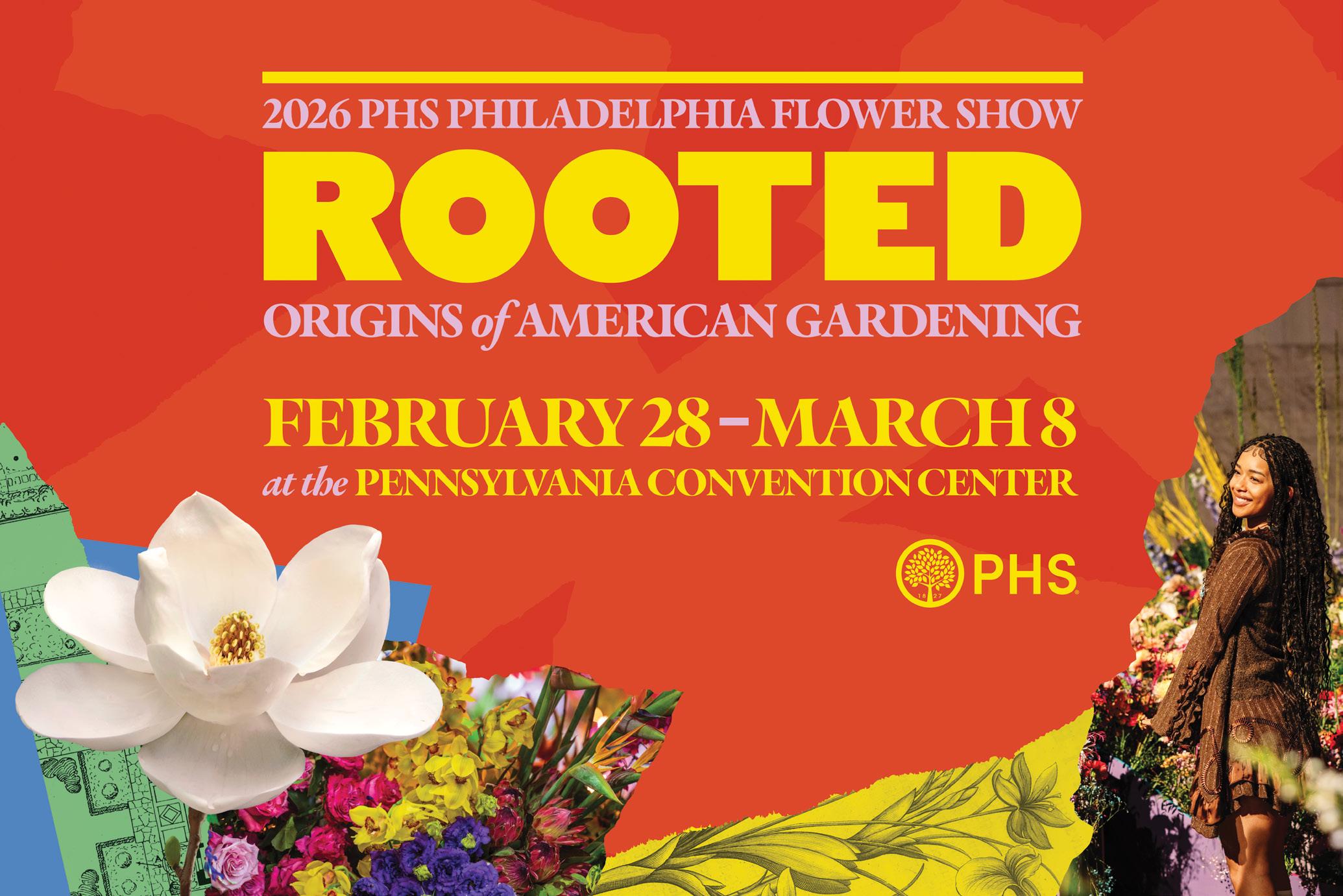
“Rooted: Origins of American Gardening reflects the heart of the Pennsylvania Horticultural Society’s
(PHS) mission connecting people and plants to transform lives and communities,” said Matt Rader, President PHS. “Every plant and garden tells a story. The Flower Show celebrates those stories while serving as a fundraiser to support PHS’s yearround work in the Philadelphia region
to create green spaces, expand access to fresh food, and foster neighborhood resilience and community health. Just as gardens grow from strong roots, so does the impact we can have together in our community.”
Now in its 197th year, the awardwinning PHS Philadelphia Flower
Show is a world-renowned gardening event, and PHS’s main fundraiser for its acclaimed greening work throughout the Philadelphia region that aims to advance health and wellbeing for all.
“The 2026 Philadelphia Flower Show celebrates (Cont. on Page 3)
GardenerNews.com
Some plants have qualities that seemingly elevate their status and provide them with a perceived sense of ‘garden aristocracy’. Perhaps it is the color of their foliage, their overall size, or their habit, but somehow they present a very regal appearance. Since my high school days, Blue Atlas Cedar has been one plant that has personally projected this persona!
Known botanically as Cedrus atlantica ‘Glauca’, this aristocrat is also perfectly happy to mix and mingle with common garden plants providing, of course, the garden has sufficient space to give this plant a proper home!
Cedrus is a member of the Pinaceae or Pine Family and consists of four species. Cedrus atlantica is native to the Rif Mountains of Morrocco and the Atlas Mountain of North Africa where it has sadly become an endangered species due to climate change. The Genus name was originally published in 1757 by the German physician and botanist Christoph Jacob Trew (1695-1769) and is from the Latin of the same name for Cedar trees! This species was first described by the Italian physician and botanist Saverio Manetti (1723-1785). Unfortunately,
Morris County Park Commission
By Bruce Crawford Horticultural Manager
A Garden Aristocrat
his description proved invalid. In 1847, the Austrian Botanist Stephan Friedrich Ladislaus Endlicher (18041849) described the plant as Pinus atlantica, but it was not until 1855 that the plant was properly named Cedrus atlantica by the French botanist Elie Abel Carrière (1818-1896). The species epithet as chosen by Endlicher is in reference to the Atlas Mountains.
The foliage of Atlas Cedar appears in two distinct arrangements; as individual needles along the outer 8-10 inches of a branch, and as whirls of 20-24 needles atop short spurs on older portions of the stem. Cedrus atlantica ‘Glauca’ differs from the straight species by having a blueish-grey coating on the leaf that provides an attractive blue appearance rather than green. In youth, the plants grow 12-18 inches
annually, forming a narrow yet open habit. This natal appearance is deceptive since over the course of 70 years the plants will obtain regal heights of 50-60 feet and widths over 60 feet! It is not unusual for trees to develop several codominant leaders yet, unlike many trees, these leaders have a very stable branch attachment. Over time these leaders lose their growing tips and become ‘flat-topped’, with the outstretched branches producing strikingly attractive horizontal lines. The beautiful specimen at Frelinghuysen Arboretum features a stout single leader with lateral branches spreading to over 75 feet!
In late summer, both male and female cones appear from the centers of the whirled foliage, with the light tan male cones appearing in masses along the lower branches.
They are slender, measuring 2-3 inches long by ¾-1 inch wide and are arranged vertically along the branches. Once the pollen is shed by late October, these cones quickly wilt and fall to the ground. By comparison, the female cones appear higher in the tree and once again have an upright orientation. They have a whiskey barrel appearance, growing to 3+ inches long with an equal or slightly smaller diameter. They display an attractive purple cast over their twoyear lifespan, before the mature winged seeds take flight.
Aside from needing a suitably large area for plants to grow, Blue Atlas Cedars relish full sun and welldrained soils with an acidic or slightly alkaline pH. Plants are hardy in zones 6-9 and, once mature, are very drought tolerant. Its use in
the garden will change as it matures; initially it serves as a blue element, against which shrubs bearing purple, blue or white flowers and/ or foliage can be displayed. With age, it takes on the scale of a small building and creates a great space beneath for a seating area or a small secret garden all unto itself – ideal for a back yard hideaway!
From my introduction to the tree in high school to admiring the handsome specimen at Frelinghuysen Arboretum today, Blue Atlas Cedar is certainly an aristocrat among ornamental plants. Its royal size at maturity definitely requires forethought and planning to accommodate. However, bearing this caveat in mind, its attractive form and ability to unpretentiously compliment numerous ‘common’ garden shrubs suggests many more gardens might need a touch of Garden Aristocracy!
Editor’s Note: Bruce Crawford is a lover of plants since birth, is the Manager of Horticulture for the Morris County Parks Commission, and a Past President of the Garden State Gardens Consortium. He can be reached at BCrawford@ morrisparks.net
2026 PHS Philadelphia Flower Show
the rich stories, bold creativity, and enduring inspiration that gardens bring to our lives,” said Seth Pearsoll, VP and Creative Director of the Philadelphia Flower Show. “Every element is designed to inspire, so visitors will find themselves marveling at the creativity and discovering something new around every corner.”
As the Pennsylvania Convention Center will host an additional event during the Flower Show’s run, PHS has refreshed the Show’s footprint to ensure a smooth, intuitive, and engaging experience for all visitors. Over the years, PHS has consistently heard that the Flower Show is more than a place to view beautiful exhibits; it is a hub for discovery, creativity, and shared experiences. To support this multi-dimensional experience, PHS will debut a thoughtfully reimagined layout supported by a new wayfinding
(Continued from page 1)
framework that helps guests easily navigate the Show through five core experiences: SEE, SHOP, MAKE, LEARN, and PLAY.
PHS will continue to utilize its primary exhibition spaces for the Show’s gardens, exhibits, and experiences. The beloved Marketplace shopping destination will move to a new street-level home directly below the main exhibition space, giving vendors a highly visible location enhanced with floral moments and seating areas that invite guests to linger and explore.
Below are select highlights that visitors can expect in 2026.
The Flower Show brings together an extraordinary range of floral, landscape, and botanical artistry, showcasing lush gardens and plants, innovative design, and world-class creative talent from across the globe.
These exhibits invite visitors to experience the power of storytelling through plants, honoring history, culture, and imagination while pushing the boundaries of what gardening can be.
Competitive Classes – Long considered the beating heart of the Flower Show, these competitions celebrate the tradition of gardeners proudly presenting their most extraordinary and curious plants. Today, the Hamilton Horticourt, Design Gallery, and Artistic Gallery carry that legacy forward, inviting competitors to showcase exceptional plants, floral artistry, and botanical craftsmanship that reflect the depth, discipline, and creativity at the core of gardening.
• The Hamilton Horticourt, the world’s largest plant competition, brings together thousands of amateur and expert-grown plants.
• The Design Gallery presents floral arrangements crafted for themed challenges, highlighting designers’ skill, creativity, and the artistic power of flowers.
• The Artistic Gallery showcases pressed plants, botanical art, photography, and handcrafted works, celebrating botanical creativity across mediums.
Curated Exhibitors – PHS selects dozens of exceptional floral and landscape designers whose creativity and expertise shape the Flower Show’s most anticipated visual experiences. Together, these designers bring Rooted: Origins of American Gardening to life through deeply personal interpretations of the theme, drawing from their own experiences, cultural heritage, and creative perspectives.
The holidays are over. It’s a new year. Sure, it’s cold outside, but it’s time to start thinking of warmer days and considering what you can do for your gardening space and make it a great 2026 growing season.
There are several things you can do, as we enter February, to plan and improve your garden.
Following are a few of those essential tasks.
Prune Shrubs and Trees: February is a good time to prune dormant fruit trees and shrubs. This helps shape the plants and promote stronger yields in the spring and summer. Late-winter pruning helps with successful harvests of blueberry bushes and fig trees.
Start Seeds Indoors: Begin sowing seeds for coolseason vegetables like broccoli, cabbage, and kale indoors. This should be done six to eight weeks before your last frost date. Warmer weather crops can be started indoors in late March or early April. There are some creative ways to start your seeds using materials from around the house, including old plastic soda or milk bottles. You can cut the tops off and fill
NJ Dept. of Agriculture
By Joe Atchison III Assistant Secretary of Agriculture
Time to Consider Your 2026 Garden!
them with soil. This allows you to watch root development. You can also use empty cardboard egg cartons for individual cells that you can break off and plant directly into the ground when it’s time. Empty plastic muffin containers create a mini greenhouse when the lid is closed.
Clean Up Garden Debris:
Remove any dead plant material and debris from your garden to prevent disease and pests from overwintering. Between weather and wind and the general dying off from last season, there always seems to be debris in my garden area. On a nice day, get out there, trim it and rake it up as needed. Prepare Soil: Test your soil and amend it as necessary. Adding compost or organic
matter can improve soil health and fertility. One good resource is available directly from New Jersey’s land grant university, Rutgers. You can send in a soil sample and get a detailed analysis back from them. Details and more information can be found at: Soil Testing Laboratory | Rutgers Cooperative Extension, https://extension.rutgers.edu/ soil-testing-lab
Mulch and Weed Fabric to Hold Back Pesky Plants: Apply mulch to protect perennials and prevent weeds. This is especially important if you want to guard against fluctuating temperatures. You can also put down weed fabric to tamp down any early emergent weeds. Plan Your Garden Layout: Sketch out your garden layout
and plan crop rotations to ensure optimal growth and soil health. Making sure you rotate from season to season is important in getting good results. These sketches can be simple squares and circles approximating garden areas, or as intricate as scaled foot-by-foot breakdowns of your garden space. Be as detailed and imaginative as you like. But get a plan on paper to make it easier when it’s time to do the ordering and then the planting.
Check and Maintain Tools: Sharpen and clean your gardening tools to ensure they are ready for the busy season ahead. Always good advice. My dad would always clean all tools after each use before putting them back in the garage or shed. So now, I have that
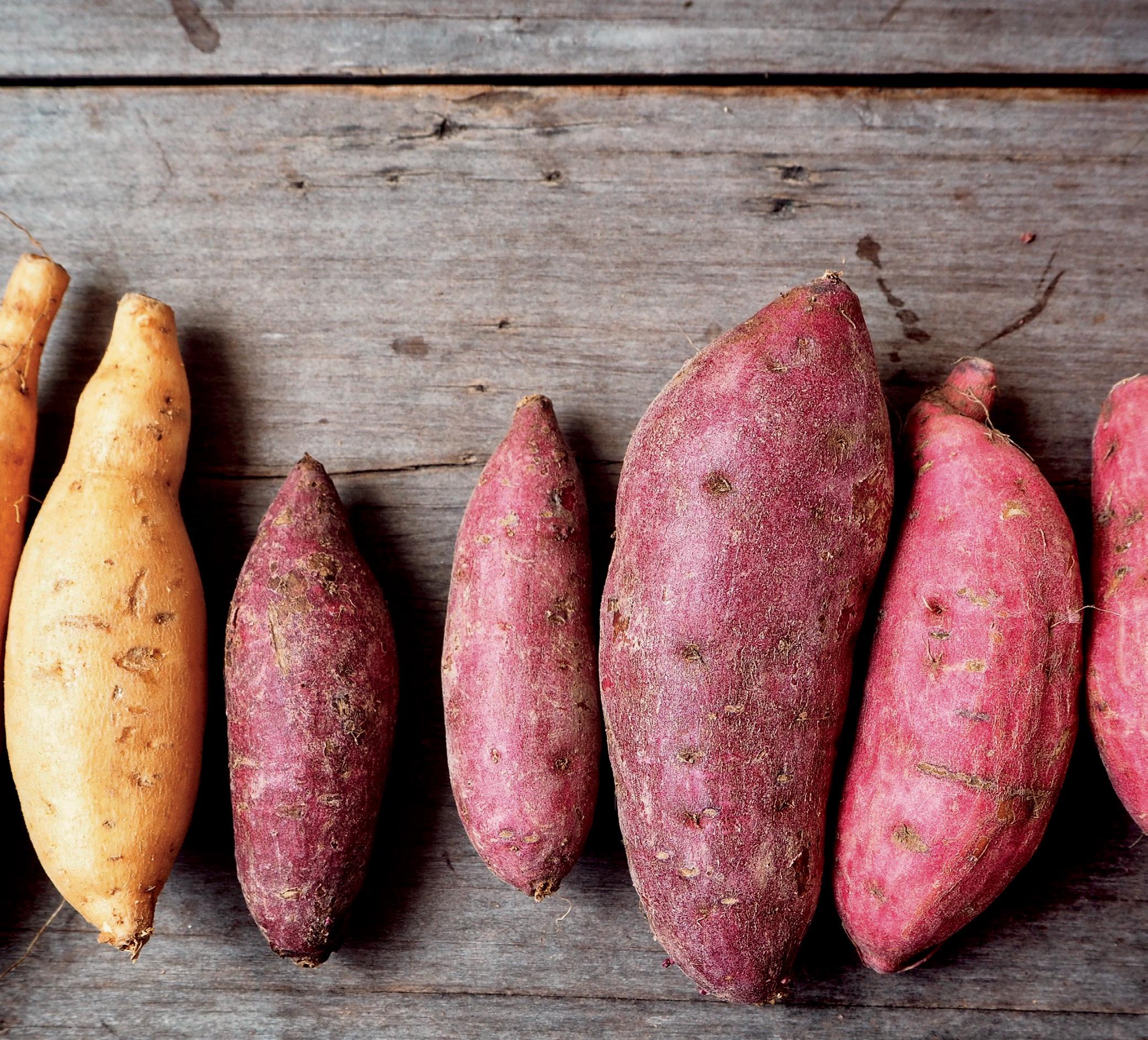
SweetPotatoGnocchi
DIRECTIONS
1
2
3
same habit. And of course, sharper tools make cleaner cuts, which benefits the plants being cut.
Monitor Weather Conditions: Keep an eye on the weather for any late frosts and be prepared to cover tender plants if necessary. I don’t do this as much as I should, and my plants have suffered previously. I drive around my neighborhood and see small shrubs and other plants with sheets or other fabric or sometimes plastic bags draped over them and taped at the bottom and I wish I had made more time to do the same. Take the time to plan and act to prepare for this coming gardening season. As fellow New Jerseyan Thomas Edison once said, “Good fortune is what happens when opportunity meets planning.”
Editor’s Note: Joe Atchison III is the New Jersey Assistant Secretary of Agriculture. Atchison is also the Director of the Division of Marketing and Development for the New Jersey Department of Agriculture. He can be reached at (609) 292-3976.
New Jersey’s long agricultural tradition and widespread home gardening culture are reflected in its nickname, the Garden State. With over 3.88 million households, 33% of which are actively gardening and 66% growing houseplants, millions of residents incorporate plants into their daily lives. This practice impacts our state’s economy, sustainability, and health.
As in the rest of the county, New Jersey has a measurable difference in generational plant care activities. Millennials lead the generations in home gardening, followed by Baby Boomers, then Gen X, with Gen Z showing the fastest growth but still smaller overall participation.
Millennials are the most active gardening generation in NJ, especially in houseplants and urban gardening. They consider gardening a lifestyle rather than a practice. The pandemic years saw a surge in millennial “plant parents,” with many adopting gardening for wellness and sustainability. This generation’s sense of social responsibility is evident in their strong presence in community gardens across the state.
Baby Boomers, traditionally the backbone of NJ’s gardening culture, focus heavily on landscaping, lawns, and property value improvements. They also represent the most significant group participating in long term volunteerism in programs such as the Rutgers Master Gardeners. Due to this generation’s aging, revisioning of standard volunteer programs is needed to ensure upcoming generations continue supporting horticulture community activities.
Gen Z makes up the smallest share of gardeners but are the fastest-growing demographic in NJ gardening. They are strongly influenced by social media trends and are more likely to experiment with houseplants and alternative growing spaces such as vertical and rooftop gardens in urban areas. Their activism and cause-driven social ethic will likely shape the future of horticulture-based volunteerism.
As an example, food security is a pressing issue across New Jersey and is a primary concern for those in the home horticulture field. By growing produce at home, families reduce reliance on store-bought food, cut costs, and enjoy fresher meals. This is especially vital in urban areas where access to fresh produce can be limited. According to the NJ Office of the Food Security Advocate, over 1 million residents, including 270,000 children, are food insecure, a 65% increase compared to five years ago.
There are also significant environmental benefits that are increasingly important as natural habitats shrink. Home gardens support pollinators, improve soil health, and reduce carbon footprints by lowering transportation needs for food. Water-wise and native plant gardening also help protect New Jersey’s diverse plant heritage and future environmental stability.
For some, home gardening is shifting from hobby to lifestyle— creating greener homes, healthier communities, and more resilient ecosystems. Whether it’s a balcony herb garden or a backyard orchard, the emphasis is on connection to nature and self-sufficiency.
Gen X, while the smallest generation, is the primary one managing family gardens, blending vegetable production with ornamental plants, balancing practical food gardening and landscaping aesthetics. They are less likely to support gardening trends yet have steady, long-term home gardening practices.
Irrespective of what is driving home horticulturists’ motivations, Rutgers Cooperative Extension (RCE) provides research-based, locally focused resources to improve community health and environmental sustainability. Fact sheets are a prime example of these. They are short, practical publications (2–4 pages) written
in plain language, offering stepby-step instructions, best practices, and troubleshooting tips tailored to New Jersey’s growing zones.
In 2024, 216 of RCE’s horticulture fact sheets were updated. A cross-functional team of faculty, staff, volunteers, and student interns collaborated over 15 months to update the library in time for RCE’s new website launch. Volunteers contributed over 1,000 hours, resulting in a revitalized resource library that now serves as a model for future initiatives.
Central to this effort was the pairing faculty and staff with undergraduate interns to revise fact sheets regarding garden pests. This collaborative approach reduced mentor workload, provided interns with hands-on experience in science communication, technical writing, and research. Aligned with the Rutgers New Brunswick Master Plan, the initiative fostered student success by fostering career readiness, interdisciplinary collaboration, and inclusive engagement.
Home gardeners are encouraged to visit Rutgers Cooperative Extension Home, Lawn and Garden website www.Go.Rutgers. edu/home-lawn-garden where they will find an array of fact sheets and courses designed to ensure success growing gardens in our beautiful Garden State!
The new Garden State Gardeners education programs, including evening virtual lectures as well as multi-session, intensive programs are also growing. This month, the “Let’s Grow Your Mind” series on Monday evenings features introductory-level virtual while more experienced gardeners can find in-depth courses on composting and planning theme gardens.
Rutgers Cooperative Extension continues to work toward a future where gardening, landscaping, indoor plants, and agriculture characterize our beautiful garden state.
RUTGERS NJAES/RCE
LAND-GRANT UNIVERSITY NEWS
New Jersey 4-H Youth Place in Top Three at 2025 National Avian Bowl
New Jersey 4-H sent two youth competitors to the National 4-H Avian Bowl Championships, marking a milestone for the state’s 4-H Poultry Project and Rutgers Cooperative Extension. The competition took place in Louisville, Kentucky, on November 18–21, 2025, where Brooklyn and Cheyenne Bilge of Atlantic County 4-H received an impressive third place overall.
The National 4-H Avian Bowl is a quiz-bowl–style contest held as part of the National 4-H Poultry and Egg Conference. This competition challenges youth to master poultry science material, from embryology to commercial production systems. For New Jersey, having youth compete at the national level represents a major achievement, especially as it follows the revival of the NJ State 4-H Avian Bowl, which had been inactive for a decade. Over the past two years, efforts to rebuild and strengthen the state-level competition have been led by a team of 4-H volunteers, including
Amelia Valente-Minervini, 4-H Senior Program Coordinator and NJ 4-H State Rabbit, Cavy, Small Animal, Herpetology, and Poultry Project Liaison.
Competing against seasoned teams from across the country, Brooklyn and Cheyanne dedicated months of studying to prepare for the event, and they demonstrated exceptional knowledge of poultry health, management, anatomy, nutrition, and industry operations.
Young people interested in joining the 4-H Poultry Project can enroll in their county 4-H program through their county Rutgers Cooperative Extension office. Participation in a 4-H poultry or small animal club provides access to handson learning, project resources, and eligibility to compete in county, state, and national 4-H events.
The next NJ State 4-H Avian Bowl will take place on May 16, 2026, in Hunterdon County, offering new and returning members the opportunity to test their poultry knowledge.
45th Rutgers Home Gardeners School
March 14, 2026
9am - 4pm
New Brunswick, NJ
Whether you’re just starting out or have years of gardening experience, our programs offer expert instruction in both classic and innovative gardening and landscaping techniques.
From hands-on workshops to in-depth presentations, you’ll gain practical skills, new ideas, and inspiration to create and maintain beautiful, sustainable landscapes and gardens. There’s something for everyone!
Join us this March for a day filled with inspiration and practical knowledge that will help you prepare for the growing season ahead! Don’t miss this chance to help your gardening talents blossom. Learn more or register today at https://cpe. rutgers.edu/home-gardeners-school#register
RCE 4-H Agents Recognized with National Awards at Annual Extension Banquet
Five Extension professionals with the 4-H Department of Youth Development, Rutgers Cooperative Extension, were recognized with national awards for their work supporting 4-H Youth Development in New Jersey by the National Association of Extension 4-H Youth Development Professionals this fall. The annual conference, which was held in Atlanta, GA, this year, recognized “those individuals who have excelled in their professional responsibilities, created outstanding programming, and have reached milestones in their careers.
In addition, Jeannette Rea-Keywood, state 4-H agent who passed away in 2021, was posthumously inducted into the National 4-H Hall of Fame during a separate ceremony preceding the conference. A faculty member of Rutgers Cooperative Extension in the Department of 4-H Youth Development for more than 30 years at both the county (22 years) and state (9 years) levels, Jeanette was an active member of the National Association of Extension 4-H Youth Development Professionals and Epsilon Sigma Phi. She held numerous offices at the state and national levels in both professional organizations and chaired the National ESP conference in 2016 when it was hosted in New Jersey.
Matthew Newman, Chair of the Department of 4-H Youth Development, praised the recipients.
“It is altogether appropriate that our dedicated Rutgers 4-H faculty and staff are so recognized for their commitment to excellence, both in service and programming. The awards highlight not only individual achievement but also the collective excellence and commitment to high standards that define our 4-H team,” said Newman.
Kelly Dziak, 4-H agent, RCE of Morris County –Distinguished Service Award
Kelly Dziak, a NJ 4-H alumna, has served the New
Jersey and Morris County 4-H Youth Development Program since 2010, with a focus on building a welcoming community and fostering a sense of belonging for both youth participants and adult volunteers. In addition to overseeing the county 4-H program, Kelly provides guidance and oversight to several state-level program such as serving as faculty advisor to the NJ 4-H Dog Project, state leader for the 4-H Leadership Academy program, and co-host of the 4-H Volunteer Ventures podcast. The 2025 Distinguished Service Award recognizes her outstanding program leadership and professional contributions to the 4-H Youth Development program. This honor reflects her dedication to the 4-H program, her commitment to highquality educational programs, and her passion to build a supportive community for youth and adults to learn and grow.
Melissa Bright, 4-H agent, RCE of Somerset County – Achievement in Service Award
Melissa Bright has served as an agent for the past 3.5 years, focusing on 4-H agri-science education, with an emphasis on dairy and beef cattle, livestock management, public speaking, and career readiness. She oversees all aspects of the county’s 4-H program, including club operations, volunteer recruitment, and leadership development, fostering youth engagement in agriculture and lifelong learning. This 2025 Achievement in Service Award recognizes her outstanding leadership and professional contributions to the 4-H Youth Development Program and the National Association of Extension 4-H Youth Development Professionals. This honor reflects Melissa’s excellence in professional attitude, continuous improvement, notable accomplishments, community
involvement, and special achievements throughout her career.
Alayne Torretta, 4-H agent and department head, RCE of Warren County – 25 Years of Service Award Alayne Torretta has served NJ 4-H since 2000. Under her direction, Warren County 4-H maintains 18 4-H clubs that all together serve 170 youth. Among the primary responsibilities, she supports volunteer development and state and federal reporting. A NJ State 4-H Positive Youth Development Champion, she has served on the NJ 4-H State Steering Committee and the NJ State 4-H Global and Cultural Engagement Task Force, among other roles. She was celebrated with the 25 Years of Service Award for a quarter century of dedicated service to the ideals of 4-H youth development as well as to the national association.
Laura Bovitz, 4-H agent, and Shannon Glynn, 4-H program assistant, RCE of Middlesex County were awarded the National Award for Excellence in Healthy Living Programming for their work in the Teen Mental Health Fair in partnership with county 4-H Teen Ambassadors. In response to the growing mental health issues in youth, the fair was established with 4-H teens taking the lead in identifying issues, developing interactive activities and resources and working with 4-H staff to contact outside agencies and professionals who addressed these issues. Topics such as stress management, social media, body image issues, dating violence, depression and anxiety and more were included in the event. 4-H teen Ambassadors continued outreach after the event through the development of a teen-led Instagram page, “Teen Balance,” that provides additional resources and uses a “teens teaching teens” approach to discuss issues of interest to teens in the area of mental wellness.
Reflecting on a Longtime New Jersey Agricultural Asset
Former New Jersey Farm Bureau Executive Director, Peter J. Furey, was recognized at the December 17, 2025 New Jersey State Board of Agriculture meeting in Trenton for his many years of service and contributions to the agricultural industry. State Board members commended Furey for his steady, even-paced demeanor and full understanding of the legislative process, which
Agriculture Bills Signed Into Law
On Monday, January 12, 2026
S-216/A-3034 (Smith, Greenstein/Calabrese, Freiman, Spearman) - Directs New Jersey Department of Agriculture to advertise and promote State aquaculture products through Jersey Fresh Program; establishes annual $25,000 appropriation.
The Jersey Fresh Program is the marketing and quality grading program that is currently used, by the department, to advertise and promote the availability of fruit and vegetable agricultural commodities that have been produced in the State and graded for quality.
contributed greatly to the formation of the Farmland Preservation and Right to Farm Programs, helping to save the department when it was at risk of becoming part of the New Jersey Department of Environmental Protection, and the grandfathering provision in the State Agriculture Development Committee’s controversial soil protection standards. Furey served as executive director from April 1982
until July 1, 2025. New Jersey Farm Bureau is a grassroots, membership-supported, non-government organization that advocates for agriculture in the state. From left to right in the front row is Hillary Barile, Holly Sytsema, Peter J. Furey, Bob Blew, Stephen Lee, David DeFrange II, and Rick Gardner. From left to right in the back row is Joel Viereck and New Jersey Secretary of Agriculture Ed Wengryn.
44th Connecticut Flower & Garden Show Coming February 19-22, 2026 to Connecticut Convention Center in Hartford
This prestigious annual event will be New England’s ONLY 2026 major flower exhibition and show, and its theme is “A Storybook Garden”. Featured will be 150,000 square feet of expansive live gardens, nonstop seminars and demonstrations, the Federated Garden Clubs of Connecticut’s annual Standard Flower Show, and hundreds of exhibitors displaying and selling all types of items and gifts. This annual event offers ideas for house, apartment, and condo-dwellers alike and is for gardening beginners to experts, and everything in between.
• As soon as attendees enter the Exhibition Hall: Over 20 colorful live garden and landscape exhibits in full bloom by professional landscape designers and nonprofit organizations, including naturalistic, low-maintenance, native, containers, vegetables, organic, herb, and pollinator gardens.
• Over 80 hours of different seminars and demonstrations by more than 20 expert horticulturalists, landscapers, and industry professionals who include renowned entomologist and conservationist Doug Tallamy, co-founder of Homegrown National Park and author of the book, “How Can I Help?”, and Nancy DeBrule Clemente,
organic gardener and founder of NatureWorks. All sessions are Free with admission.
• The Federated Garden Clubs of Connecticut’s annual Standard Flower Show with a 12,500-square-foot design, horticulture, botanical arts, and photography competition with hundreds of entries from members across the state –themed, “A Storybook Garden”.
• Close to 400 booths with displays, activities, shopping: artisans, handcrafted gifts, fresh flowers, live plants, garden ornaments, metalwork sculptures, herbs, bulbs, seeds, fertilizers, soils, books, patio furniture, and lawn/garden tools and equipment, patio furniture, and more. Bring 1/2 cup of soil for Free testing to UConn Home & Garden Education Center booth.
The spring preview blooms Thursday, February 19 through Sunday, February 22, 2026, at the Connecticut Convention Center, 100 Columbus Blvd. in Hartford, Conn. 2026 Dates/Hours: Thursday, Feb. 19 from 10 a.m. to 7 p.m.; Friday, Feb. 20 from 10 a.m. to 8 p.m.; Saturday, Feb. 21 from 10 a.m. to 8 p.m.; and Sunday, Feb. 22 from 10 a.m. to 5 p.m. Discounted admission tickets can be purchased now at www.CTFlowerShow. com, $17 for Adults and Seniors
I recently read that New Jersey’s gas tax was set to rise again on January 1, 2026. This tax increase will have the effect of taking money away from both consumers (those who just use their cars for transportation), and producers (those who produce, sell, and deliver a good or a service) alike.
While this tax might not seem like a big deal at first, over time, it will definitely decrease the profit margins of any producers in New Jersey while at the same time cut into any discretionary spending of consumers. This would not be so bad if it were for the entire United States, but that is not the case. Now producers in other states will have an advantage if their gas tax is lower than it is here in New Jersey.
This will certainly not be the first time that there have been differences in the cost of production for agricultural producers across the United States. In fact, these differences in the cost of production are what actually make certain regions of the country more competitive than others. And while some of these differences are man-made, like the tax issue, many others
Carl Linnaeus (1707-1778), the “Father of modern taxonomy”, is best known for naming about 14,000 species of plants and animals but he made mistakes. One of these was the name he used for striped maple, Acer pensylvanicum which correctly written should have been Acer pennsylvanicum. This just shows that even great men can’t spell and without my spell-checker I would be up the creek also.
Acer pensylvanicum, is commonly known as striped maple, moosewood, and whistle wood. It is a slow growing shrub or very shade tolerant small tree. The young bark is smooth and greenish gray. However, there are also highly visible wiggly, raised, mostly vertical white stripes, hence the most widely used common name. Striped maple obviously is an important part of the moose diet, and the stems are strong and have large hollow cores which makes them ideal for whistles. This plant is closely related to a possibly extirpated NJ plant, the mountain maple.
Acer is Latin for maple and pensylvanicum refers to the area from where Linnaeus received the plant for identification in 1753. Striped maple grows naturally
The Town Farmer
By Peter Melick Agricultural Producer
Cost Differences
are simply factors of geography, climate, and proximity to market as well as a host of other factors.
One hundred and fifty years ago, all of the perishable fruits and vegetables that were consumed here in New Jersey had to be produced either in New Jersey or nearby. Before the advent of refrigerated transportation, the time it took to transport these products from far away would cause these products to spoil enroute. That is why New Jersey farmers grew so many peaches. The peaches had to get from the tree to the consumer in a day or two. That meant that other regions where peaches are grown today such as South Carolina, Michigan, and California were way too far away. New Jersey farmers had
a captive audience. Or at least they did until someone figured out how to make refrigerated rail cars.
Climate is another factor that impacts the cost of production. In dry or desert areas of the country, finding and delivering enough water for a crop can be a huge expense. Here in New Jersey though, where there is more than enough available water in the ground for any agricultural needs, the expense of irrigation while significant, is usually not that big of a factor. But a dry climate can also be an advantage. Little or no rainfall usually equates to little or no fungal disease pressure. And this lack of disease pressure will more than likely mean higher overall yields as well as decreased costs
for fungicide treatments.
New Jersey growers are currently able to produce high quality great tasting tomatoes during the months of July, August, and September. And any attempts to extend that season either earlier or later in the season, while possible, will add greatly to the overall costs of production. Florida growers on the other hand, can grow and harvest tomatoes much earlier in the season due to their warmer climate. But when it becomes too hot there during the middle of the summer, they are not able to produce a high-quality product consistently and cost-effectively. Another expense we have here in New Jersey that many growers in other areas of the country do not have is deer
The Native Plant Society of New Jersey
By Hubert Ling Horticulture Chair
Linnaeus Got It Wrong!
from Canada south to Ohio, PA, NJ, and in the mountains as far south as northern GA. It occupies much the same areas as last month’s plant, mountain maple. In NJ striped maple is limited to the northern half of the state and is common in High Point State Park. It generally reaches a height of less than 20 feet; however, trees which have been suppressed in deep shade for 40 years may respond with 3 feet of new growth per year if given the optimal light exposure.
This plant grows best with dappled light in well-drained, cool, slightly acid soils. It will not tolerate water as will red maple. It is fire resistant and rapidly repopulates after a fire. It tolerates heavy shade, nutrient poor, and sandy soils. In areas where trees
are regularly lumbered, striped maple may become the dominant plant.
Striped maple flowers attract bees, butterflies, moths, and other pollinators; the plants also provide valuable cover for nesting birds such as black-throated blue warblers. Numerous mammals such as beavers, chipmunks, deer, moose, porcupines, rabbits, ruffed grouse, squirrels, and snowshoe hares eat the bark, buds, seeds, and twigs.
The lumber is fine grained and of good quality but only available in small sizes. It has been used for inlays. In the early 1700s, farmers in the colonies of America and Canada used dried striped maple leaves as fodder, and in spring horses and cattle would munch on sweet twigs and buds of striped
fencing. Especially when it comes to higher value crops like fruits and vegetables, New Jersey’s criminally high deer population makes it next to impossible to grow many of these crops without them being protected from the devastating effects of deer damage. Without deer fencing, it is foolish to even try and grow many of these sensitive crops.
As you can see there are advantages and disadvantages no matter where farmers try and grow their crops. They just must figure out what works for them and make the best of it. Think Spring!
Editor’s Note: Peter Melick is co-owner of Melick’s Town Farm in Oldwick and a 10th-generation New Jersey farmer. Peter is Mayor of Tewksbury Township, Hunterdon County, NJ. He also served as a director for the New Jersey Farm Bureau and is a past president of the New Jersey State Board of Agriculture. Peter has also been featured on NJN, News 12 New Jersey and on the Fox Business Network.
maple. Preliminary tests have shown that a promising anti-cancer agent is found in striped maple which reinforces the idea that we should protect our environment since any organism may prove valuable or essential to life.
Native Americans valued striped maple for medicinal uses. Boiled bark was used as a poultice to relieve limb swelling, kidney, and respiration problems, and as an emetic and laxative. Obviously, the bark is mildly toxic and should not be used without expert medical advice. The Chippewa used striped maple for arrows and dice bowls.
The reproduction strategy for striped maple is a bit different; the plants appear to change sex due to changes in the environment. Individual plants have been
followed for several years and changes from male to female are the most common. In addition, some trees produce both male and female flowers. However, the strictly male plants generally are more vigorous than the females, and female mortality over the years may be high. Striped maples produce small yellow 1/3inch diameter flowers on 6-inch drooping racemes in May. The fruits are double winged samaras. In fall the large, soft leaves turn a vibrant yellow.
Propagation is generally done by seeds which must be moist stratified over winter. Seeds with the seed coats removed germinate rapidly at about 100% without being stratified. Cuttings may root under mist, but the rate of success is low.
You might consider striped maple if you have very shady spots in your garden. You will have a unique member of the deep woods!
Editor’s Note: Hubert Ling is Past President of The Native Plant Society of NJ and Horticulture Chair. He can be reached at milhubling@verizon.net.
2026 PHS Philadelphia Flower Show
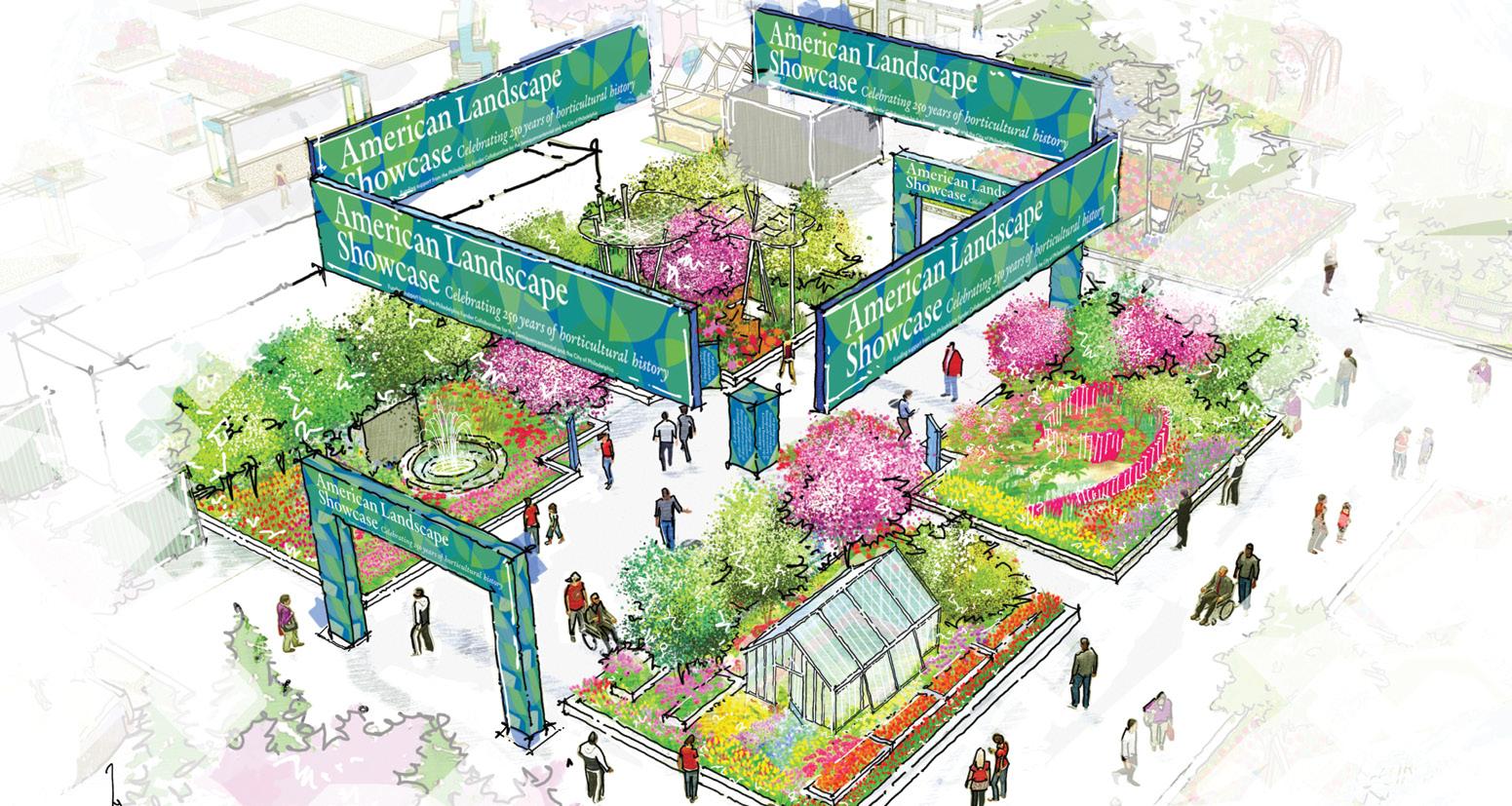
• The “American Landscape Showcase,” a special exhibition celebrating America’s 250th anniversary, features four gardens, each crafted by a world-renowned designer to interpret the roots, traditions, and resilience of American gardening. Etta Studio, Unknown Studio, Design Under Sky, and Kelly D. Norris highlight how gardening has shaped communities over 250 years. The Showcase is made possible by the City of Philadelphia and the Philadelphia Funder Collaborative for the Semiquincentennial.
• Four acclaimed international florists will exhibit “First Bloom –Rooted in Memory,” where designers share the origin moments that sparked their passion for flowers. Gábor Nagy, Alex Segura, Chantal Post, and Conny van der Westerlaken showcase worldclass artistry and innovative design, giving visitors a glimpse of the artist’s life and cutting-edge creativity. Their participation underscores the Flower Show’s reputation as a premier destination for inspiration, craftsmanship, and international, horticultural collaboration.
Local educational exhibitors are showing how the next generation of horticultural professionals is shaping the future of gardening. Designed and built by students, these exhibits combine traditional gardening practices with modern approaches to sustainability, plant science, and design. Visitors will see heirloom seeds and culturally significant plants celebrated, discover
(Continued from page 3)
how historic gardens and planting methods continue to inspire new ideas, and experience creative floral designs that connect art and horticulture. Each exhibit demonstrates how students are learning, experimenting, and passing knowledge forward, offering a fresh perspective on the skills and creativity that will guide American gardening for years to come.
This year, the Flower Show’s Marketplace moves to street-level below the main exhibit halls, creating a dedicated shopping area where visitors can easily browse and discover unique finds. Guests will explore a curated selection of vendors featuring live plants, florals, garden tools, decorative wares, jewelry, and home accents, all designed for an engaging and seamless shopping experience.
Create and Craft with Hands-On Workshops
The Flower Show offers handson workshops, botanical crafts, and expert-led demonstrations.
Artisan Row is the Flower Show’s experiential hub where guests can create an elevated floral or gardeninginspired craft working side-by-side with artisans. Now expanded due to popular demand, Artisan Row will expand to an additional footprint and add three new creative experiences to the Convention Center’s concourse level. This year’s lineup will feature seven artisans teaching guests how to create fresh floral crowns, floral candles, custom scents, fresh and dried
bouquets, terrariums, hand painted vases, floral handbags, custom hats, tote bags and more. Purchase required.
Dive into the art of container gardening with Potting Parties, interactive workshops led by designer Tu Bloom, the Official Botanical Artist of the Grammy® Awards. These sessions are fun for all skill levels, giving participants handson experience and ending with a personalized creation to take home. New this year, select Potting Party sessions will be offered as a special floral arrangement class, introducing guests to the fundamentals of floral design using seasonal botanicals and natural elements. Purchase required.
Expert Tips, Garden Insights & Tours
Visitors looking to deepen their gardening knowledge will find expert insight throughout the Flower Show. From engaging lectures and oneon-one advice to behind-the-scenes tours, these learning experiences offer inspiration and practical takeaways for gardeners at every level.
The Know to Grow speaker series returns this year, featuring leading horticultural experts sharing insights, traditions, and practical advice to help attendees cultivate their own gardens and deepen their connection to the natural world. This year’s Know to Grow lineup explores topics including heirloom and early American gardens, native bees and pollinator habitats, resilient ecological design, orchid
cultivation, intensive vegetable gardening, and the cultural histories that have shaped American gardening traditions. All lectures are included with admission.
Plant People Place is your go-to destination for gardening advice and expert insight. This interactive area connects visitors with passionate plant society members, expert gardeners, and industry specialists, including experts in cacti, bonsai, begonias, and violets, as well as seed specialists from Burpee and tree experts from Bartlett Tree Experts. Whether you’re troubleshooting a plant problem, exploring something new, or looking to deepen your gardening knowledge, these experts are on hand to answer questions, share practical tips, and help you grow with confidence.
Here are a few select exhibitor highlights.
• The American Institute of Floral Designers (AIFD) will present a compelling installation that illustrates how deeply rooted foundations empower communities to flourish. The exhibit visually represents AIFD’s enduring legacy, showcasing how connection and belonging, both across the U.S. and worldwide, stem from strong roots in nature and horticultural expertise.
• Jennifer Designs, the 2025 winner for “Best in Show – Floral,” returns with “Rooted in Love,” an immersive theatrical garden inspired by Shakespeare’s (Cont. on Page 20)
USDA Accepting Applications for the 1890 National Scholars Program
The U.S. Department of Agriculture (USDA) is now accepting applications for the USDA 1890 National Scholars Program, which aims to encourage students at the Congressionally created 1890 land-grant universities to pursue careers in food, agriculture, and natural resource sciences. The application deadline is March 8, 2026.
Students around the country are invited to complete and submit their applications online through an online application. The USDA 1890 National Scholars Program is available to eligible high school seniors entering their freshman year of college that will attend one of the 1890 land-grant universities and pursue degrees in agriculture, food, natural resource sciences, or related academic disciplines. The program is also open to rising college sophomores and juniors that meet the same criteria.
“Our land-grant universities, especially our 1890 land-grants, are critical in educating the next generation of agriculturists, and the USDA
1890 National Scholars Program supports this effort by providing students with real-world work experience and support for their education. Now more than ever we need to encourage our young people to join the noble and fulfilling profession of farming and feeding our fellow citizens,” said U.S. Secretary of Agriculture Brooke L. Rollins. “President Trump has made it a priority to promote excellence at Historically Black Colleges and Universities, and USDA is proud to further these efforts through this important program.”
This program is a partnership between USDA and the 19 land-grant universities that were established under the Morrill Land Grand Act of 1890. Scholars accepted into the program will get work experience at USDA through summer internships and will also receive financial support from USDA for their education.
The USDA 1890 National Scholars Program supports Executive Order 14283, White House Initiative to Promote Excellence and Innovation
at Historically Black Colleges and Universities, and continues USDA’s long history of developing leaders and providing support to public landgrant universities to build the next generation of the agricultural workforce.
The 19 members of the 1890 universities system are: Alabama A&M, Alcorn State University, Central State University, Delaware State University, Florida A&M University, Fort Valley State University, Kentucky State University, Langston University, Lincoln University, North Carolina A&T State University, Prairie View A&M University, South Carolina State University, Southern University and A&M College, Tennessee State University, Tuskegee University, University of Arkansas Pine Bluff, University of Maryland Eastern Shore, Virginia State University and West Virginia State University.
For the application: https://national-scholarprogram.powerappsportals.us/
Gardener News
Bobcat Celebrates a Year of Innovation, Impact and Investment
Bobcat Company closed out 2025 by celebrating a year defined by innovation, investment and community impact—advancing its mission to empower people to accomplish more.
“2025 has been a year of progress and purpose,” said Mike Ballweber, president of Doosan Bobcat North America, Inc. “We introduced new solutions, invested in our facilities and people, and deepened our commitment to the communities we serve. These efforts have laid a strong foundation for the future and position us to deliver even greater value and opportunity for our customers, employees and partners in the years ahead.”
Expanding Solutions and Driving Innovation
Bobcat continued to broaden its product portfolio in 2025, giving customers more solutions and options to tackle their toughest challenges. The company introduced new offerings across large and compact construction equipment, forklifts, grounds maintenance solutions, portable power and industrial air.
Key launches included large wheel loaders and excavators, new compact excavator models, the MT120 mini track loader, new compact tractor models, a new small articulated loader model, new diesel pneumatic tire forklifts, a new portable generator, and tank-mounted air compressors.
Bobcat showcased these innovations at major industry events, including World of Concrete, ProMat, Utility Expo and Equip Expo—and highlighted its commitment to American manufacturing at the AEM Celebration of Construction on the National Mall.
Making a Difference in Communities
As part of its “Work Worth Doing” initiative, Bobcat honored everyday heroes who are making an impact in their communities. Highlights included gifting equipment to U.S. veteran Jason Shield’s Hoof Haven Sanctuary, partnering with the Los Angeles Fire Department for wildfire response, helping a local school keep its athletic fields turf-ready with a zero-turn mower donation, and contributing $150,000 to the National Recreation and Park Association to improve outdoor spaces nationwide.
Bobcat employees also stepped up in meaningful ways across the globe. Through the Doosan Bobcat Community Days event, more than 700 employees across 12 countries volunteered thousands of hours to support local projects and nonprofits. During its fall Annual Giving Campaign, Bobcat and its employees donated more than $200,000 to 127 nonprofits across North America, expanding the company’s impact even further.
Bobcat also teamed up with The Salvation Army to raise awareness for National Preparedness Month, encouraging emergency readiness and safety.
Advancing Education and Future Talent
Bobcat continued to invest in STEM education and future workforce development through key partnerships and hands-on learning opportunities. The company donated $200,000 to the University of North Carolina at Charlotte’s William States Lee College of Engineering to support scholarships and launched a Bobcat Student Development Program. In North Dakota, Bobcat sponsored Gateway to Science’s Outdoor Explorium exhibit, offering hands-on learning with a Bobcat excavator arm.
Investing in People and Workplace Excellence
Bobcat earned recognition as one of Newsweek’s America’s Greatest Workplaces for 2025, reflecting its commitment to meaningful work, employee wellbeing and a strong workplace culture. The company completed a $4.8 million renovation of its Bismark, North Dakota facility, part of more than $82 million invested in North Dakota facilities over the past decade. Bobcat also celebrated employee innovation through its annual Credo Awards and Patents Recognition Program, honoring nearly 150 individuals and teams.
Looking Ahead
As Bobcat enters 2026, the company remains focused on driving innovation, supporting its employees, customers and dealers, and making a lasting impact in the communities where it operates—all while empowering people to accomplish more around the world.
About Bobcat Company
Bobcat Company empowers people to accomplish more, a mission it has honored since creating the compact equipment industry in 1958. As a leading global manufacturer, Bobcat has a proud legacy of innovation, delivering smart solutions to customers’ toughest challenges. Backed by the support of a global dealership network, Bobcat offers an extensive line of worksite solutions, including loaders, excavators, tractors, utility vehicles, telehandlers, mowers, turf renovation equipment, light compaction, portable power, industrial air, forklifts, attachments, implements, parts and services.
With its North American headquarters in West Fargo, North Dakota, Bobcat leads the industry with its innovative offerings designed to transform how the world works, builds cities and supports communities for a more sustainable future. The Bobcat brand is owned by Doosan Bobcat Inc., a company within Doosan Group.
In
New Jersey visit Bobcat of North Jersey at njbobcat.com
Bobcat® T7X Electric Compact Track Loader
Barckett
• Totally battery powered with no hydraulics
• Instantaneous torque up to three times that of traditional loaders
• Near-silent operation and low vibration
• Drastically reduced maintenance and operation costs
• Cutting-edge software offers countless ways to optimize performance
• Intelligent power management system preserves runtime and battery life
• Controls are consistent with diesel-powered equipment
• Greatly reduced noise and vibration improves experience for operators and bystanders
Up to six hours of continuous runtime
No horsepower lag or performance trade-offs
In the Chef’s Corner
By Andy Lagana Chef
Slow Cooked Pork Shoulder served with White Beans and Spinach
Greetings Gardener News readers. This month, I’m sharing a perfect winter recipe - slow cooked pork shoulder. When paired with white beans and spinach, you’ve got a hearty and delicious meal all will enjoy.
Gather 6 pounds bone-in pork shoulder (Boston butt) – fat cap trimmed to ¼ inch, 3 tablespoons Kosher salt, 8 fresh bay leaves – divided, ¼ cup sage leaves plus 4 large sprigs, 4 tablespoons olive oil – divided, 1 head of garlic – halved crosswise, 9 juniper berries, 4 black peppercorns, 3 cups dry white wine, ¼ cup red wine vinegar, 1 large beefsteak tomato – halved crosswise, 1 head of garlic – halved crosswise, 4 large sprigs sage, 2 cups cannellini (white kidney) beans – soaked overnight and drained or 2 cans of Goya cannellini beans, 2 tablespoons plus ¼ cup olive oil, 2 bunches mature spinach – tough stems removed, Kosher salt, 2 tablespoons olive oil plus more for drizzling, 4 garlic cloves – thinly sliced, and salt and pepper to taste.
To start, sprinkle the pork with 3 tablespoons of salt. Tear 4 bay leaves and ¼ cup sage leaves into small pieces and scatter over it. Place the pork on a wire rack set inside a rimmed baking sheet, covering loosely with plastic wrap. Chill for 12 hours, then let it sit for an hour at room temperature.
Preheat oven to 450°. Heat 2 tablespoons oil in a large pot over mediumhigh. Cook the pork, turning occasionally, until browned
on all sides, for 15–20 minutes. Then, transfer to a large plate. Remove the pot from the heat and pour off any fat. Discard the fat and leaves in the pot, then wipe it out. Add the remaining 2 tablespoons of oil along with garlic, juniper berries, peppercorns, sage sprigs and 4 remaining bay leaves. Cook over low heat for one minute until the garlic starts to brown around the edges. Then, pour in the wine and vinegar. Return the pork to the pot, placing fat side up, and cover it with parchment paper, tucking the edges down around the sides of pork. Cover the pot with a lid, transfer it to the oven, and cook for 30 minutes. Reduce the oven temperature to 300° and cook, turning the pork every 30 minutes or so and adding a splash of water if the braising liquid is reducing too quickly. The cooking process should last approximately 2 ½ - 3 hours or until the meat is very tender and pulling away from the bone.
Let the pork sit until cool enough to handle. Remove and discard bones, then shred the meat into 2”–3” pieces, also removing any excess fat. It should pull apart very easily but still hold together in pieces. Transfer the meat to a large saucepan and strain the braising liquid while discarding the solids. Cover and keep warm over the lowest heat until ready to serve.
For the white beans, combine tomato, garlic, sage, beans and 2 tablespoons of oil in a large pot. Pour in
Whole Milk is Back: President Trump Signs Whole Milk for Healthy Kids Act
cold water to cover by 1½” and bring to a simmer over medium heat, skimming foam from the surface. Reduce the heat so that the liquid is at a gentle simmer, cooking until the beans are almost tender but still slightly starchy in the centers. After 35–45 minutes, they should be 75 percent cooked. While the beans are still cooking, preheat the oven to 300°. Remove the beans from heat, season them with several generous pinches of salt and then add the remaining ¼ cup oil.
Transfer to the oven and bake without disturbing the beans (you want a film to form on the surface) until tender for 15–25 minutes. Finishing the beans in the oven ensures that they are evenly cooked and creamy. Turn the oven off and leave the beans inside to keep warm until ready to serve.
Next, working in 2 batches, cook spinach in a large pot of boiling salted water for two minutes until tender and no bite remains. Drain in a colander and let cool slightly, then squeeze out excess water. Heat 2 tablespoons of oil in a medium skillet over medium heat and cook the garlic, stirring until softened and barely golden for one minute. Add the spinach and stir just to coat the leaves in oil and warm through.
To plate, spoon the beans with some cooking liquid onto your plates. Arrange pieces of pork and the spinach over the beans. Drizzle with oil and sprinkle with salt. Delicious!
President Donald J. Trump on January 14, signed the Whole Milk for Healthy Kids Act in the Oval Office alongside U.S. Secretary of Agriculture Brooke L. Rollins, U.S. Health and Human Services Secretary Robert F. Kennedy Jr., USDA National Nutrition Advisor Dr. Ben Carson, dairy farmers, moms, and bipartisan members of Congress to restore access to whole milk in schools and strengthen support for American dairy producers.
This legislation advances the Trump Administration’s agenda and aligns with the Dietary Guidelines for Americans, 2025–2030, released last week, which reintroduced full-fat dairy as part of a healthy dietary pattern.
“Thanks to President Trump’s leadership, whole milk is back – and it’s the right move for kids, for parents, and for America’s dairy farmers,” said Secretary Brooke Rollins. “This bipartisan solution to school meals alongside the newly released Dietary Guidelines for Americans reinforces what families already know: nutrient dense foods like whole milk are an important part of a healthy diet.”
Secretary Rollins was joined by dairy farmers Thomas French, Kevin Satterwhite, Jamie Pagel, William Thiele, and Tara Vander Dussen, and emphasized that restoring whole milk in schools supports both children’s nutrition and the producers who sustain rural jobs and communities. She also highlighted the Trump Administration’s broader work to rebuild the farm economy through fair trade, lower costs, reliable financing, and strong markets, all while working to make groceries more affordable for families. As a result, between January and December of last year, dairy products became more affordable, including butter (down 3.4%) and cheese (down about 2%).
The law reflects strong bipartisan leadership, including sponsors Senator Roger Marshall (R-KS), Senator Peter Welch (D-VE), Chairman of the U.S House Agriculture Committee Representative Glenn Thompson (R-PA-15) and Representative Kim Schrier (D-WA), with support from Chairman of the U.S Senate Agriculture Committee Senator John Boozman (R-AR).
USDA implementation begins immediately. Following the announcement USDA issued program implementation guidance to school nutrition officials to implement the bill, and a proposed rulemaking will soon commence to ensure schools and nutrition programs can begin offering whole milk as quickly as possible. USDA will now undergo a rewrite of Child Nutrition Programs to ensure school meals are aligned with the Dietary Guidelines for Americans 2025-2030.
New Jersey Landscape Contractors Association
February always seems to arrive with a mix of reflection and anticipation—and this year is no different. Just weeks ago, we gathered to celebrate the NJLCA Landscape Achievement Awards, an evening that reminded all of us why this industry sets such a high bar for creativity and craftsmanship. The gala wasn’t just about who took home an award; it was about recognizing the level of talent across the board. In fact, this year’s judging was the most competitive we’ve ever seen.
For those considering entering next year, a few takeaways stood out. Projects that have had time to mature tend to tell a stronger story and better reflect the original design intent. Photography also plays a huge role— whether you’re hiring a professional or using your phone, understanding lighting, angles, and timing makes all the difference. Final photos should be taken right after a thorough cleanup, free of equipment, debris, or fallen leaves. Dormant turf and poor weather conditions can work against even the best installations. In addition, dramatically filtering images can take away from the work you complete. Most importantly, don’t be discouraged. The level of competition is proof that outstanding work is happening across our membership—keep entering and keep raising the bar.
As we turn the page from awards season, all eyes now shift to the largest event
The NJLCA Today
By Gail Woolcott Executive Director
Setting the Standard— and the Agenda— for the Year Ahead
a.m. to 3:30 p.m. at the Meadowlands Exposition Center in Secaucus, this event marks the unofficial launch of the spring season for our industry. With more than 340 exhibit booths and over 175 vendors, attendees will find no shortage of new products, services, and solutions designed specifically for landscape, hardscape, and outdoor living professionals. Complementing the show floor is a full day of education curated by the NJLCA, with sessions offered in both English and Spanish and taught by industry experts who understand real-world challenges.
Plus this year, we have the exciting announcement that our Keynote Speaker will be George Martin, retired New York Football Giants Super Bowl XXI co-captain. George will give a presentation on “Striving for Excellence.” He will discuss the New York Football Giants turbulent years in mid-70s, the addition of Coach Bill Parcells, the team’s attitude adjustment
leading to a very successful period, including multiple Super Bowl appearances and how attendees can apply the same principles to have their own successful outcomes with their teams and businesses.
Trade shows like Landscape New Jersey continue to matter because they bring the industry together in a way few other experiences can. They create space for conversations that don’t happen over email or on a screen—conversations that lead to partnerships, fresh ideas, and practical solutions. The connections formed on the show floor often turn into long-term relationships with suppliers, peers, and mentors who help move businesses forward.
Education remains another cornerstone of the experience.
Staying current with recent technology, best practices, and regulatory changes is no longer optional—it’s essential. Events like this allow landscape professionals to sharpen their skills, explore
new approaches, and return to their businesses better equipped for the season ahead. Topics at the show will include DEP regulations, fertilizers, trees and shrubs, social media, scale insects, landscape lighting, sales, company culture, exit planning and more!
There’s also something intangible that happens when you step away from daily operations and immerse yourself in the larger industry community. Energy builds. Ideas spark. Motivation resets. Teams that attend together often return more engaged, better informed, and more connected to the bigger picture of what they do and why it matters.
We look forward to welcoming professionals from across the landscape, hardscape, agricultural, and outdoor living industries to Landscape New Jersey 2026. If you’re ready to reconnect, learn, and kick off the season with momentum, this is where spring begins.
We are also entering a
new legislative session with optimism and momentum. Last year, we played a key role in securing exemptions from the A-901 licensing requirement for certain contractors, and we expect that corrective legislation to advance this year. We will also be reintroducing the landscape licensing bill with thoughtful revisions shaped by ongoing discussions with legislators and industry stakeholders. As always, we remain committed to actively monitoring legislation, protecting our members and the industry from harmful proposals, and advocating for policies that strengthen and support the green industry. Finally, I would be remiss in not congratulating the Gardener News “Person of the Year,” Joe Bolognese. I have a front-row seat to Joe’s dedication, volunteerism and passion, and this honor could not have gone to a better person. Full disclosure, Joe is my husband, but that cannot take away the amazing things he’s done in this industry.
Editor’s Note: Gail Woolcott is the Executive Director for the New Jersey Landscape Contractors Association. Gail was presented with a community service award from the Borough of Fairview, New Jersey for her assistance in leading the 9-11 Memorial Park project and the Legislative Champion of the Year award from the Federation of Employers and Workers
Consumer and Business Advisory Pennies and Cash Transactions
The New Jersey Division of Consumer Affairs (“Division”) is aware that the U.S. Mint has discontinued the production of the penny. This is contributing to a penny shortage and affecting the ability of businesses to provide exact change to cash-paying customers. The Division is therefore issuing this advisory, applicable only to cash transactions, for businesses and consumers alike. 1
A business may choose, but is not required, to implement a policy of rounding cash transactions up or down to the nearest nickel (after applying applicable taxes 2 ) in order to determine the amount of change owed to a customer; provided, however, that any such rounding policy must be disclosed clearly and conspicuously prior to the consumer incurring any charge for the goods or services purchased. Transactions where the total amount is under five cents need not be rounded down.
Implementation of a rounding policy for cash transactions is voluntary. The Division has prepared a sample printable notice that businesses may display. Businesses may also create their own notices, but such notices must clearly and conspicuously describe their rounding policy.
The foregoing applies to cash transactions only. If you have questions, please contact the Division online or by phone at 973-504-6200.
1 This advisory is not legally binding and may be modified, supplemented, or rendered moot by future State or federal legislation or rule making.
2 Sales tax must be calculated on the actual sales price, prior to rounding, and must be remitted as required by law. For more information on how to calculate and remit taxes, please see the following notice from the Division of Taxation.
NORTHEASTERN ASSOCIATION OF STATE DEPARTMENTS OF AGRICULTURE NEWS
The Northeastern Association of State Departments of Agriculture convenes the following 10 states: Connecticut, Delaware, Maine, Massachusetts, New Hampshire, New Jersey, New York, Pennsylvania, Rhode Island, and Vermont.
NEW JERSEY DEPARTMENT OF AGRICULTURE
USDA Foods Conference Draws Record Attendee
Registration, Showcasing Innovations in School Nutrition
In collaboration with the New Jersey Department of Agriculture (NJDA) Division of Food and Nutrition, the U.S. Department of Agriculture (USDA) Foods Conference at the New Jersey Convention and Exposition Center was a landmark event in school nutrition, with over 675 registered attendees gathering to explore updates for the use of USDA Foods in school meal programs. This year’s conference highlighted significant growth and innovation, including participation from more than 85 students across nine school districts in New Jersey and presentations by 45 Stateapproved processors showcasing their latest food offerings tailored for the upcoming 2026-2027 school year.
The conference kicked off with a General Session focusing on pivotal program updates and critical training, essential for schools preparing USDA foods diversion decisions [JS1] [IW2] for the next school year. Attendees gained firsthand insights into the new Food Distribution Management System platform, designed to streamline operations, enhance service delivery, and create a demand-driven allocation method for school food authorities.
A highlight of the event was the Processor Exhibits, where attendees engaged directly with State-approved processors, taste-tested new products, and discovered innovative options for USDA Foods diversion. These exhibits are an unparalleled opportunity to refresh menus, streamline procurement, and spark new ideas for school meal programs.
The Student Session introduced students to New Jersey’s Child Nutrition Programs and the National School Lunch Program. This growing segment allows students to learn about USDA Foods used in school meals, explore the vendor exhibit, and provide valuable feedback through surveys, emphasizing the importance of student involvement in shaping the future of school nutrition.
This conference is a testament to the commitment from the State, NJDA, USDA, and the attendees to excellence in school nutrition, fostering collaboration and innovation among food authorities, processors, and students alike. The USDA Foods Conference continues to be a premier event for driving impactful changes in school meal programs across the state.
NEW YORK DEPARTMENT OF AGRICULTURE
State Agriculture Commissioner Richard A. Ball Delivers State of Agriculture Address at 194th Annual New York State Society Forum
New York State Agriculture Commissioner Richard A. Ball on January 8, 2026 delivered the State of Agriculture Address at the 194th New York State Agricultural Society Annual Forum, outlining the agricultural industry’s progress in 2025 in several key priority areas. The Forum, which is traditionally the oldest and largest agricultural meeting of its kind in the State, took place at the Wegmans Conference Center in Rochester. This year’s State of Agriculture address was accompanied by a series of videos showcasing the on-the-ground impact of the State’s efforts to support the many diverse sectors of New York agriculture, including in the areas of school food, agricultural education, dairy, and environmental protections.
“We all have a shared mission, a common goal that brings us together: to uplift New York agriculture, to see it grow and thrive. It’s because of this, despite all that is going on in the background, I carry tremendous optimism for the future of our industry here in New York,” said Commissioner Ball. “With the support of our Governor, here in New York State, we are staying the course. We are working harder than ever toward our number one priority of supporting our farmers, our producers, our food businesses, and our families who rely on the food we cultivate.”
In keeping with this year’s Forum theme of “Harvesting Change,” Commissioner Ball spoke about the need for adaptation in the face of challenges that New York farmers are facing on the global, national, and local fronts. The Commissioner highlighted the progress of the State’s many programs aimed at helping industry stakeholders evolve and adapt, including through climate- and land-focused initiatives such as the Climate Resilient Farming Grant Program, the Agricultural Nonpoint Source Abatement and Control Program, and the Farmland Protection Program; and through programs aimed at helping farmers modernize their operations and remain flexible, like the Dairy Modernization Grant Program, the Aquaculture Infrastructure Grant Program, and the NYS Grown & Certified Infrastructure, Technology, Research and Development Grant Program.
Calling the 2020s “the decade of collaboration,” the Commissioner additionally emphasized the need for the agricultural community to continue working in partnership to tackle challenges and uncertainties and highlighted the many opportunities the industry
has before it. This includes the State’s efforts to provide increased support for agricultural education and agricultural workforce development, ensure continued innovation and the future of the industry, and maintain its high level of environmental protection programming.
Commissioner Ball also highlighted the Department’s continued work alongside its many partners to ensure Governor Kathy Hochul’s priority of a strengthened food supply chain through several programs and initiatives, including the Nourish New York program; the Urban Farms and Community Gardens Grant Program; the Regional School Food Infrastructure Program, the Farmers’ Market Resiliency Grant Program; the Farm-to-School initiative; the 30% NYS Initiative; and the New York Food for New York Families program.
Finally, the Commissioner spoke about the Department’s ongoing activities to promote New York producers through the Taste NY and NYS Grown & Certified programs and to maintain its essential functions to protect public health and the food supply; ensure animal and plant health; and protect consumers and businesses.
A recording of the State of Agriculture speech will be made available on the New York State Agricultural Society’s YouTube channel. A transcript of the Commissioner’s remarks as prepared can be found on the Department’s website at agriculture.ny.gov/2026state-agriculture-address.
The New York State Agricultural Society Annual Forum brought together representatives from all sectors of the agricultural industry to discuss topics that are crucial to the future of New York agriculture. This year’s forum focused on how stakeholders are adapting to policy, innovation, and market shifts in the transforming landscape of food and agriculture in New York, across the United States, and beyond.
In addition to a number of education workshops and panels throughout the day, New York State Agricultural Society honors were presented in eight categories throughout the day-long program to industry stakeholders including: Ag Promotion, Business of the Year, “Cap Creal” Communications recognition, Century and Bicentennial Farms, Distinguished Service, Farm Safety, Next Generation Farmer, and NY FFA Chapter of the Year.
2026 PHS Philadelphia Flower Show
(Continued from page 10)
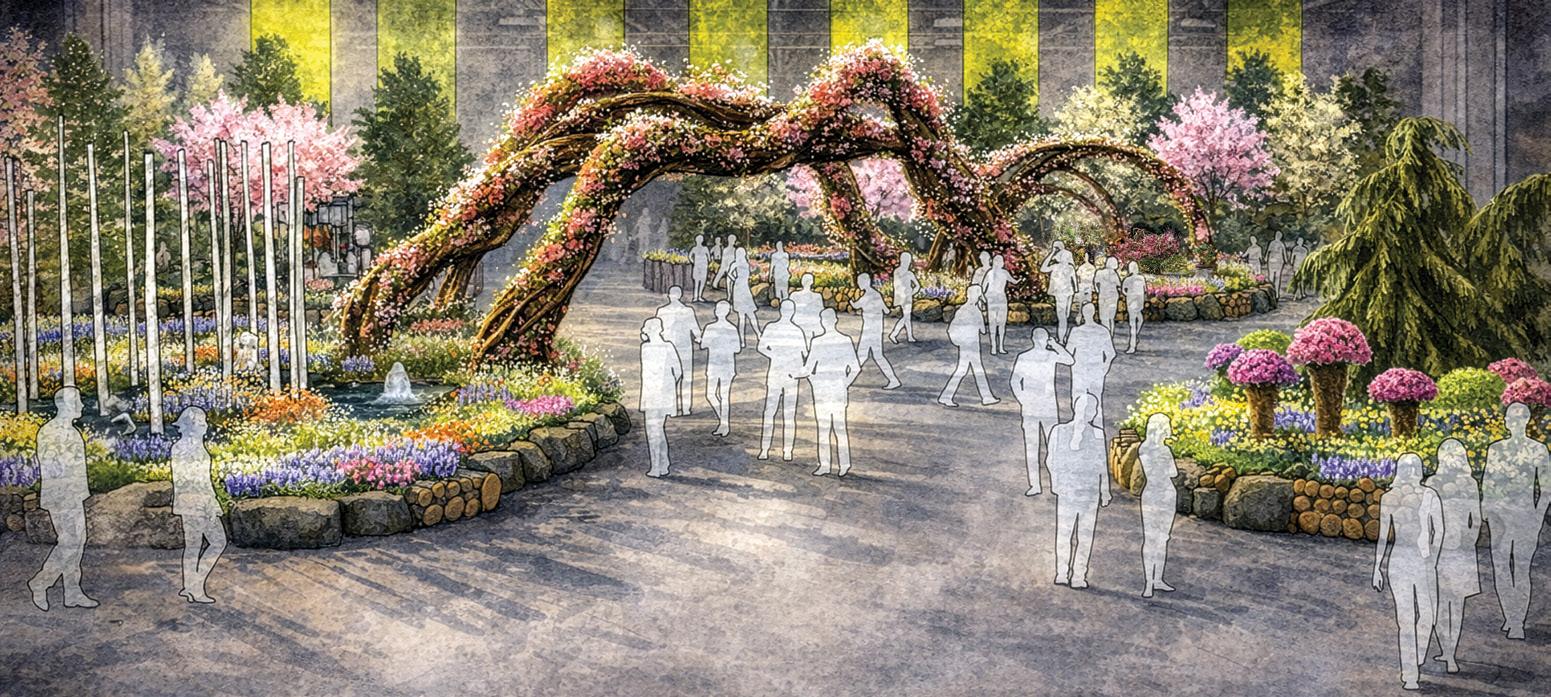
The PHS Entrance Garden – “The Forest Floor” This wondrous, sprawling creation draws on global influences that have shaped American gardening traditions over generations, taking inspiration from the calm of a Japanese Zen garden and the misty, magical ambiance of a Scottish forest. Bold, organic stonework, textural plantings, and water features are crowned by a sweeping, twisting root structure, creating a striking focal point that illustrates how American gardening has long evolved through the weaving together of diverse cultural inspirations. This immersive entryway sparks imagination and guides visitors through the garden’s intricate and surprising floral details.
Romeo and Juliet. The exhibit explores the interplay between horticulture and literature, highlighting plants and flowers as symbols of love, conflict, and tradition while demonstrating their power to create meaningful environments.
• Men’s Garden Club of Philadelphia presents a garden that showcases the beauty and complexity of natural root systems. Suspended planters and hanging plant material draw the eye upward, while sculptural stumps with exposed roots add earthy texture. Two Dawn Redwood trees anchor the space with distinctive branching, textured trunks, and vibrant orange foliage, offering a living link to the deep history of the natural world.
• Rachel Cho Floral Design, a first-time exhibitor, presents “Rooted Reflection,” a display where bold, vibrant blooms erupt from mirrored surfaces, creating a kinetic play of light and reflection. Mirrors act as portals, connecting past and present, self and ancestry, inviting visitors to explore both the personal and shared roots that shape our gardens and lives.
• Simply Nia Design returns with an exhibit that emphasizes connection. The installation highlights the ways our roots, both personal and ecological, inform the spaces we cultivate and the relationships we nurture.
• Susan Cohan Gardens returns with “Kindred Spirit,” honoring the
design principles of Martha Brookes Hutcheson, a pioneering landscape architect from over a century ago. The exhibit celebrates Hutcheson’s use of native plants and her approach to blending agriculture with designed gardens, bridging past and present horticultural practices.
• Design Under The Sky presents “[DECAY]DENCE,” a display that takes plants that usually grow wild in cities, often ignored or considered weeds, and arranges them in a classical, orderly garden, highlighting the intent of a caretaker to showcase their underappreciated attributes.
• Bucks County Community College’s Floral Design Program presents “Rooted in Art,” connecting the legacy of Stella Elkins Tyler, whose vision shaped much of the campus’ artwork and the renowned art department, to students’ own roots. Inspired by her legacy, the display will feature avant-garde floral designs that honor the artistic vision shaping the campus.
• Delaware Valley University presents a visually striking exhibit honoring Carl Linnaeus, the father of taxonomy, tracing the journey of a single plant species through a pyramid of discovery and classification while highlighting his use of Latin as a universal language for identifying plants and animals.
• Lankenau Environmental Science Magnet High School draws inspiration from community gardens and its partnership with True Love Seeds, celebrating ancestral and culturally important heirloom seeds while exploring the horticultural knowledge passed down through generations.
• Temple University explores the ongoing relationship between regional geography, cultivated food systems, and natural resources, highlighting the centuries-long influence of Pennsylvania Quakers on the cultivation and stewardship of land.
• University of Delaware brings to life Marian Coffin’s historic gardens at Gibraltar in Wilmington, teaching visitors about Coffin’s influential planting methods and continuing her legacy as one of
(Cont. on Page 21)
The American Landscape Showcase: four distinct gardens united by the story of American gardening’s evolution.
GardenerNews.com February 2026
One of the most picturesque and iconic conifers for this region is the Eastern hemlock, Tsuga canadensis. This coniferous evergreen can tower to seventy feet tall at maturity. The small needles are dark green, and it has a stately pyramidal habit at maturity. The Eastern hemlock was a ubiquitous conifer used in the landscape for decades. Many landscapers used it as an accent conifer, but it was also often used planted at the back or side of property for screening.
Predating the use in many East Coast gardens and landscapes, the weeping Eastern hemlock, Tsuga canadensis ‘Pendula’ was popular as an interesting specimen planting. They were often planted as a very small planting in a rock garden, but over decades would grow into a massive and very architectural specimen with broad weeping branches. Like other hemlocks, they thrived in the northeastern garden.
Like many other conifers, there are a host of more diminutive or “dwarf” types that were selected for Tsuga canadensis. Often called the bird’s nest hemlock, ‘Jeddeloh’ grows to two to three feet fall with a spread of three to four feet. Over time, a depression develops in the center of the plant creating a bird’s nest-like appearance. ‘Minuta’ is one of the smallest forms. ‘Cole’s
Pennsylvania Horticultural Society
By Andrew Bunting Vice President of Horticulture
Hemlocks Reconsidered
Prostrate’ is a ground covering type of hemlock. It grows much more wide than tall, and overtime can be used to cascade over rock outcroppings or a retaining wall. ‘Albospica’ has a white variegation on the tips of the new needles. This variegation adds additional interest, especially to the winter garden.
In the wild, the Eastern hemlock occurs on slopes and ravines in cool conditions throughout a large portion of the Northeast and can be found from Nova Scotia and Ontario and throughout New England to the mid-Atlantic states, and across to the Great Lakes region and down the Appalachian Mountains to Georgia and Alabama. Unfortunately, over the last twenty years or so hemlocks have been devastated by two invasive pests the Hemlock Woolly Adelgid and the Elongate Hemlock Scale, often called Fiorinia Scale, and the impact has been exacerbated by global climate change. Over
time this weakens the trees and they become more and more sparse and eventually die altogether. Horticultural oils and insecticidal soaps are a non-toxic approach to preventing impact from these pests, but this requires diligent spraying. For large trees, an arborist needs to be hired which can come at a considerable expense, and the treatment needs to continue regularly.
Additionally, the Carolina hemlock, Tsuga caroliniana which is native to the Southern Appalachian Mountains, is equally susceptible. Because of these issues hemlocks are rarely planted today as landscape or garden trees. Other non-native species can be impacted as well.
For many years, both the Morris Arboretum and Gardens and the U. S. National Arboretum have promoted the Chinese hemlock, Tsuga chinensis as an alternative to the Eastern hemlock and the Carolina hemlock. It has very similar attributes to both species
and has exhibited extreme resistance to the aforementioned insect problems. Unfortunately, the Chinese hemlock has not gotten good traction in the nursery industry and remains relatively obscure today.
Historically, the U. S. National Arboretum has been a leader in tree and shrub hybridizing and breeding. Many excellent selections and cultivars of crepe myrtles, viburnums, flowering cherries, and many more have been introduced by the National Arboretum. Two selections of hemlocks are recent introductions. Tsuga ‘Traveler’ and ‘Crossroad’ are both interspecific hybrids between Tsuga chinensis and T. caroliniana and have shown great resistance to the adelgid and scale. In their youth both cultivars are very dense and have a full pyramidal habit. ‘Traveler’ over time has an elegant habit where the tips of the branches are open and somewhat pendant. ‘Crossroad’ is more upright,
symmetrical, and pyramidal. Both selections hold great promise for the landscape. These majestic conifers were once a staple in gardens in the MidAtlantic used as a specimen tree, but also effectively used for hedging and screening. Hemlocks, in general, are also fairly deer resistant!
Editor’s Note: Andrew Bunting is Vice President of Horticulture for the Pennsylvania Horticultural Society. He is one of the most recognized horticulturists in the Philadelphia, Pa., region and a highly regarded colleague in the world of professional horticulture. Bunting has amassed a plethora of awards, including the American Public Gardens Association Professional Citation, Chanticleer Scholarship in Professional Development, Delaware Center for Horticulture’s Marion Marsh Award, and the Certificate of Merit from the Pennsylvania Horticultural Society. In addition, Bunting has lectured extensively throughout North America and Europe, and participated in plant expeditions throughout Asia and Africa. Learn more at https://phsonline.org/team/ andrew-bunting
2026 PHS Philadelphia Flower Show
Delaware’s most important landscape designers.
I can’t wait to visit Lady Farmer Kathleen Gagan at the Peony’s Envy booth in the curated vendor marketplace. Kathleen was the 2017 Gardener News Person of the Year. Her display garden is located in Bernardsville, Somerset County in the Garden State.
I’m also looking forward to visiting with the folks at PHS’s new automobile partner, Nissan. I own a 2011 Nissan Pathfinder with 352,000 plus miles. I think it’s getting time for a new Pathfinder. Although, mine is still running great! I change the oil every 3,500 miles.
I’m also very excited to see Andrew Bunting, a Gardener News columnist and vice president of horticulture for PHS. If you recognize Andrew from his picture in his column as you are walking around the show, please say
hello to him.
(Continued from page 20)
The award-winning PHS Philadelphia Flower Show is the nation’s largest and the world’s longestrunning horticultural event and features stunning displays by some of the world’s premier floral and landscape designers. Started in 1829 by the Pennsylvania Horticultural Society, the Show introduces diverse and sustainable plant varieties and garden and design concepts. In addition to acres of garden displays, the Flower Show hosts worldrenowned competitions in horticulture and artistic floral arranging, gardening presentations and demonstrations, and special events.
The Pennsylvania Horticultural Society (PHS), an internationally recognized nonprofit organization founded in 1827, uses horticulture to advance the health and well-being of the Greater Philadelphia region.
PHS programs create healthier living environments, increase access to fresh food, expand access to jobs and economic opportunities, and strengthen deeper social connections between people. PHS’s work spans 250 neighborhoods; an expansive network of public gardens and landscapes; yearround learning experiences; and the nation’s signature gardening event, the Philadelphia Flower Show. PHS provides everyone with opportunities to garden for the greater good as a participant, member, donor, or volunteer.
Tickets for the 2026 PHS Philadelphia Flower Show are on sale at tickets.phsonline.org. To stay up to date with the latest information on the 2026 Flower Show, please visit phsonline. org/the-flower-show. For questions, please email flowershowtickets@ pennhort.org.
Editor’s Note: Tom Castronovo is executive editor and publisher of Gardener News. Tom’s lifelong interest in gardening and passion for agriculture, environmental stewardship, gardening, horticulture and landscaping, led to the founding of the Gardener News, which germinated in April 2003 and continues to bloom today. He is also dedicated to providing inspiration and education to the agricultural, environmental, horticultural, and landscaping communities through this newspaper and GardenerNews. com.