
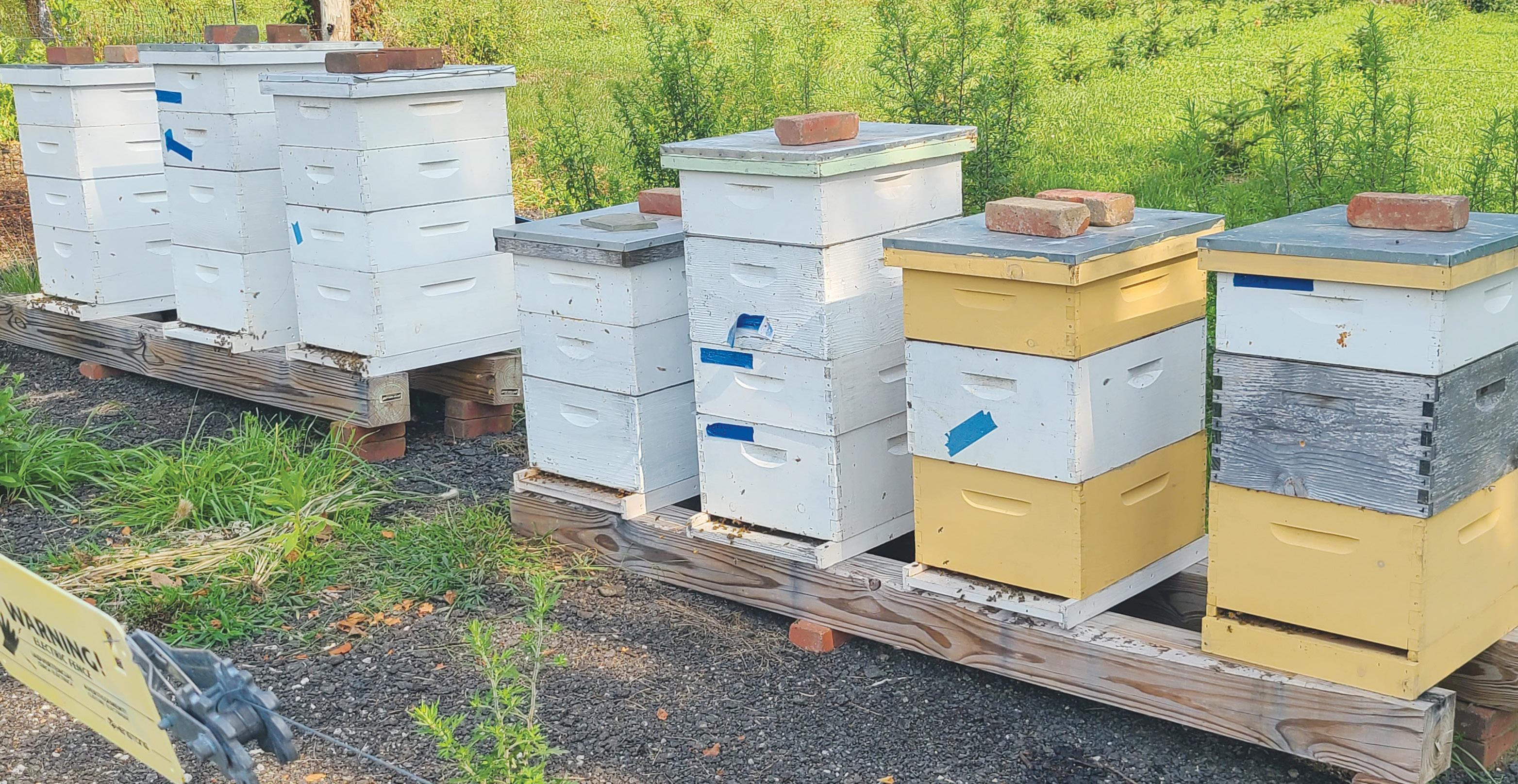
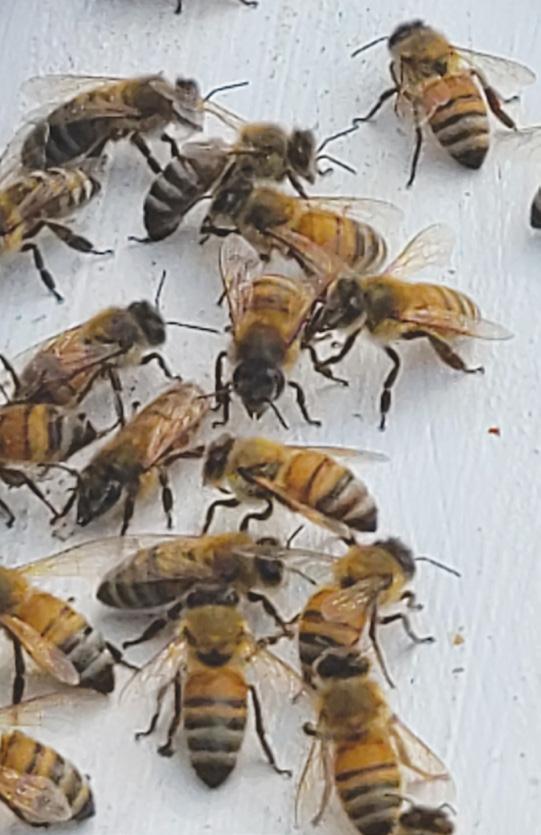
What is National Honey Bee Day?
By Tom Castronovo Executive Editor/Publisher Gardener
National Honey Bee Day (NHBD) is observed annually on the third

Saturday in August to recognize the important role that honey bees play in agriculture, ecosystems, and food production. The date was officially recognized through a proclamation by the United States Department of Agriculture (USDA) and has since
become an annual event celebrated across the United States. This year the holiday falls on Saturday, August 15th. What started as a grassroots effort by a small group of beekeepers to build community awareness around the art of beekeeping, the celebration has spread



nationwide with local and regional events hosted throughout the country.
NHBD got its start in 2009 when a small group of beekeepers petitioned for and obtained a formal proclamation of NHBD from the USDA and was first celebrated on




Around The Garden
By Tom Castronovo Gardener News
What’s Wrong in my Garden and Landscape?
It’s been a while since I’ve shared some of my gardening and landscaping thoughts with you. So let’s jump right in.
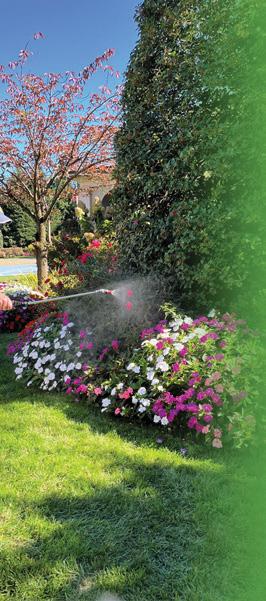
In the garden let’s look for disease. I examine my plants once a week throughout the gardening season. Fungi and bacteria thrive in humid conditions. When I water, I try to water the soil and not the foliage. My plants are spaced for good air movement so they dry quickly after rain or dew.
Hot weather can rapidly dry out soil, especially in deck pots, hanging baskets, and raised bed gardens. My watering schedule varies depending on weather conditions. Some plants wilt naturally in response to hot weather, and overwatering can also cause wilting, so don’t rely on looks alone. Test whether you need to water by feeling the soil. Whenever the top inch of soil surface feels dry, give the soil a good soaking to ensure that moisture reaches all the way to plants’ deepest roots. Make sure to aim the flow of water at the base of your plants so the leaves stay dry, which helps prevent disease.
Plants deplete the soil’s vital nutrients simply by growing. Regular feeding helps your plants grow bigger, stronger, more productive, and better equipped to handle stress. I always make sure that my plants are well hydrated the day before I feed. Most fertilizer materials are highly soluble salts. We all know that salt can be toxic to root tissues, causing symptoms associated with root damage such as wilting, marginal yellowing, and stunting. Leaf burn or scorch can also result from direct foliar contact with some fertilizers. I feed my plants every two weeks in the morning.
When I see a white crust on top of the soil in my deck pots and hanging baskets, I know salt has compromised my soil. I flush them well with water to leach (wash) the fertilizer (salts) through the soil. In the garden I add gypsum, which is the most economical soil amendment for removing salt from the soil particles. Regular soil testing is also a good way to maintain soil health.
Once in a while I test my irrigation water as well to check the salt content. My cherished tropical houseplants get bottled water. Yes, I spoil them.
I usually water my hanging baskets daily, sometimes twice a day in the extreme heat or on a windy day. Again, it all depends on the weather. If you water a lot, think about adding a little bit of food once in a while. By the way, I just gave my hanging baskets a haircut and can’t wait to see how this rejuvenation pruning helps produce a bushier flower-filled basket.
Let’s now talk about the lawn.
Water is an essential component of all plant life, but especially important to growing a healthy, lush lawn. No lawn is the same, so it’s important to water your lawn on a consistent schedule that is tailored according to your specific climate, soil condition, and grass type. This will provide your lawn with the necessary hydration it needs to grow strong and healthy all year long.
On average, lawns need about 1.0-1.5 inches of water per week, including rainfall.
I water early in the morning, between the hours of 5 am and 10 am, to ensure water is absorbed without evaporation from the heat of the sun. I always avoid watering at night as it will not dry thoroughly, causing the water moisture to settle on the leaves and promote fungus that can cause widespread damage to the lawn.
My lawnmower blades are always kept sharp, so they cut the grass and do not tear it. Dull blades help disease and insects easily enter the torn grass. Dull blades will also give the lawn a grey look after its cut.
I’m now going to hop into the landscape beds.
The hot topic in the nursey industry right now is Boxwood blight.
Boxwood blight is a fungal disease that causes leaf spots, twig cankers, rapid defoliation, and eventual death of boxwood if left unmanaged. English and American boxwood are most severely affected, although there is some tolerance to boxwood blight in a growing number of species and hybrids—especially Asian species. Pachysandra is among the many varieties of boxwood that are considered susceptible.
The fungus that causes boxwood blight can infect all above ground portions of the shrub, especially following periods of high humidity. The blight causes rapid defoliation, which usually starts on the lower branches and moves upward in the canopy.
Once the disease is detected, sanitation is critical for management. Remove and bag any diseased plants and fallen leaves and dispose of them with your household garbage.
While I’m talking about Boxwood (Buxus spp), New Jersey has its first case of Box Tree Moth.
The Box Tree Moth is a federally regulated pest that primarily feeds on the Boxwood species. If left unchecked, it causes significant damage and can potentially kill Boxwood plants. The nursery and landscape industries that rely on Boxwood plants generate more than $9.8 million in economic activity annually within New Jersey and an estimated $140 million nationally, according to data provided by USDA National Agricultural Statistics Service.
I will be now looking for adult Box Tree Moths while I search for the stars of the Milky Way. The moths generally have white wings with a thick brown border. I’m told that it can be hard to find as it is most active at night.
Recently I came across Rhizosphaera fungal disease on a Norway spruce tree in a friend’s backyard. This disease causes needles to turn brown and fall off. The ground around the trees looked stressed from drought.
I explained to him that his trees can be protected from needle cast with properly timed fungicide applications. I recommend calling a local arborist.
As always, thank you for reading Gardener News in print and online at www.GardenerNews.com.
Editor’s Note: Tom Castronovo is executive editor and publisher of Gardener News. Tom’s lifelong interest in gardening and passion for agriculture, environmental stewardship, gardening, horticulture and landscaping, led to the founding of the Gardener News, which germinated in April 2003 and continues to bloom today. He is also dedicated to providing inspiration and education to the agricultural, environmental, horticultural, and landscaping communities through this newspaper and GardenerNews.com.
Rutgers Snyder Research & Extension
Farm’s Open House & Tomato Tasting
Get ready for one of New Jersey’s most delicious summer traditions on August 26, 2026 1:00 PM – 7:00 PM! The Rutgers Snyder Research & Extension Farm Open House and Tomato Tasting will be held at 140 Locust Grove Road, Pittstown, NJ — and it will be bigger, tastier, and more fascinating than ever. Take a wagon tour of the farm to learn about the research and extension programs being conducted. Taste more than 50 tomato varieties. Please register at https://snyderfarm. rutgers.edu/open-house/. Event is rain or shine.
Penn State’s Ag Progress Days
Penn State’s Ag Progress Days, held annually during three days in August, is Pennsylvania’s largest outdoor agricultural exposition. With over 400 exhibitors from the United States and Canada, there is something for everyone to enjoy at no cost as parking and admission are free. The show is hosted by Penn State’s College of Agricultural Sciences and showcases educational programs, current research, and the latest innovations in agricultural equipment and technology.
Sponsored by Penn State’s College of Agricultural Sciences, Ag Progress Days is held at the Russell E. Larson Agricultural Research Center at Rock Springs, located 9 miles southwest of State College on Route 45. Admission and parking are free. Hours are 9 a.m. to 5 p.m. Aug. 11; 9 a.m. to 7 p.m. Aug. 12; and 9 a.m. to 3 p.m. Aug. 13. Admission and parking are free. Learn more at https://agsci.psu.edu/apd

Sorry to any school-age children checking out the Gardener News, and I hate to be “that guy,” but the school year is back upon us. There may be a few more weeks, but schools are hard at work planning for the return of students.
If it’s time to head back to school, it’s definitely time to consider school meals. For parents, you likely fall into one of two camps, “My kids take the lunch I pack them,” or “My kids eat the meals the school provides.”
There are advantages to both. Packing a lunch for them to take with them ensures you can pick and choose what goes into the bag. That includes being able to have them take plenty of Jersey Fresh fruits, vegetables, and other farm-fresh products with them.
And, with the work the NJDA’s Division of Food & Nutrition has done over the past decade, it also means the school feeding operators themselves are thinking of ways to include more Jersey Fresh ingredients and whole produce in cafeteria lunches and buying those items from our local farmers.
No matter what path

NJ Dept. of Agriculture
By Joe Atchison III Assistant Secretary of Agriculture
Jersey Fresh is “Class-y”
you follow, it leads to Jersey Fresh and other New Jersey agricultural products. When packing lunch, everyone thinks of including a fresh apple. And with many different varieties in New Jersey, that’s a great choice, especially when New Jersey’s apple season stretches into the school year. This year, however, with the spring freeze we had, apples may be a little limited in some areas.
But apples, as much as they are associated with schools and teaching, aren’t your only option. New Jersey farmers grow corn into October, weather permitting. A zesty corn salad makes a great Jersey Fresh side dish in a lunchbox. Green beans, broccoli, and cauliflower are easy, raw snacks, and available several months into the school
calendar.
If your kids like sour candy, in a couple months, they’ll love raw cranberries! Salads from Jersey Fresh fall greens, lettuces, and spinach with added veggies, and perhaps some added protein, are sure to be a favorite.
If you prefer to let your kids eat what the school has prepared, let me tell you, they are luckier than I was as a student. Mystery meat much of the week followed by square pizza Friday was on our menu. Today, many schools have salad bars, nutritionally balanced hot meals, and the options can be endless. I have attended a trade show where there was pulled pork, Chinese food, seafood, fresh, local chicken and so much more. I was amazed.
New Jersey schools also have access to a local food
Jersey Tastes. Jersey Tastes.
A Year-Round Celebration of the Garden State's Fruits and Vegetables
NUTRITIONFACTS:
purchase program that provides supplemental funding for them to source Garden State-grown, raised, and harvested fruits, vegetables, meats, seafood, eggs, dairy, and cheese.
This more direct connection between school lunches and our state’s awesome farmers has resulted from a concentrated effort by the Division of Food & Nutrition to integrate the two, benefiting both the students who have healthier food choices and the farmers who have an additional market for their products.
All of this was made possible because, in 1997, the NJDA assumed responsibility for school feeding operations. The division knew it could interest farmers in selling their products into school feeding, and there
was confidence that, with the right marketing, students would WANT those items. New Jersey stands as one of only four states where the state agriculture department houses school feeding programs. Other states have tapped New Jersey for advice when they wanted to go the same route.
Some New Jersey schools also offer Breakfast After the Bell, as logistical considerations can make it difficult to have some students report to school earlier and thus eat breakfast before first period starts. Studies have shown better grades begin with a healthy breakfast. If a child is worrying about their empty stomach, they are less likely to focus on class.
So, as you prepare to send your kids back to school, keep it classy and make sure Jersey Fresh is included!
Editor’s Note: Joe Atchison III is the New Jersey Assistant Secretary of Agriculture. Atchison is also the Director of the Division of Marketing and Development for the New Jersey Department of Agriculture. He can be reached at (609) 292-3976.
Eggplantsarealsorichinantioxidants, particularlyanthocyanins,whichhelpprotect cellsfromdamage.Theymaysupportheart health,bloodsugarcontrol,andevenbone health.
Eggplants are also rich in antioxidants, particularly anthocyanins, which help protect cells from damage. They may support he health, blood sugar control, and even bo
HOWDOESITGROW:
EggplantgrowsverywellinNJ,rankingasthetop growingregionintheU.S.Millionsofpoundsare grownannually.NJ’ssandy-loamsoil,good drainage,andwarmsummerclimatesuitthis warm-season,nightshadecropperfectly.
Eggplant grows very well in NJ, ranking as the top growing region in the U.S. Millions of pounds are grown annually NJ’s sandy-loam soil, good drainage, and warm summer climate suit this warm-season, nightshade crop perfectly
New Jersey is a powerhouse when it comes to eggplant production! The state grows about 66% of the world's eggplants, with most of the farming concentrated in South Jersey, particularly in Gloucester, Cumberland, Salem, and Atlantic counties.
The Jersey Fresh program highlights locally grown eggplants, and New Jersey leads the nation in acres of eggplant harvested.
NewJerseyisapowerhousewhenitcomes toeggplantproduction!Thestategrows about66%oftheworld'seggplants,with mostofthefarmingconcentratedinSouth Jersey,particularlyinGloucester, Cumberland,Salem,andAtlanticcounties. TheJerseyFreshprogramhighlightslocally growneggplants,andNewJerseyleadsthe nationinacresofeggplantharvested.
Eggplantsareactuallyberriesin botanicalterms.Theworld'sheaviest eggplantweighedaround12pounds. FUNFACT:
Eggplants are actually berries in botanical terms. The world's heaviest eggplant weighed around 12 pounds.

https://www.nj.gov/agriculture/farmtoschool

Since 1984, Jersey Fresh has been a proud partner of the hardest working people in the Garden State who produce some of the finest fruits and vegetables in the USA. When you see the Jersey Fresh logo, you know it’s Grown Right. Right Here. By Your Neighbors. Fruits and vegetables from New Jersey are frequently picked, packed and on shelves for you in the same day. Please support our local farmers and buy Jersey Fresh! (And if you don’t see it, ask for it!)



As we move into summer there are many great plants that will provide excellent flowering. There is an endless assortment of perennials, shrubs, and even some flowering trees that are in flower now in the garden.
Ever since hydrangeas were featured on the cover of Martha Stewart Living over 20 years ago, there has been a global renaissance with hydrangeas. One of my favorite species is the native smooth hydrangea, Hydrangea arborescens
‘Haas Halo’ is different than many of the ‘Annabelle’ types with large ball-like flowers in that the flowers are a very large flat-top cluster of white, showy, sterile florets around the edge of the flower and tiny fertile flowers in the center. These fertile flowers are a magnet for a myriad of pollinators. In the Mt. Cuba Center hydrangea trials, this received one of the top rankings. While in the wild, the smooth hydrangea can be found growing in full shade, it thrives and has better flowering in full sun. For the mophead or round clusters of flowers, I like Hydrangea arborescens Incrediball™ with large heads of white flowers or Invincibelle® Ruby with smaller flower heads of pink flowers.
This is also beebalm, Monarda season. The beebalms are an important pollinator plant especially

Early Summer Color in the Garden Pennsylvania Horticultural Society
for the Ruby-throat Hummingbird which spends its summers in the MidAtlantic. There are many species and cultivars, and colors can be found in an array of pinks and purples and bright fire-engine red too. ‘Purple Rooster’ grows to about three feet tall with a compact habit. It is covered with an abundance of tubular purple flowers. Most bee balms are deer resistant and tolerant of damp soil.
A perennial with towering spikes is Acanthus mollis, bear’s breeches. Each flower has a subtle bicolor effect with purple flowers and a lower white “lip”. There are bold basal leaves where the spikes of flowers are borne and reach nearly five feet all. Acanthus mollis likes light or dappled shade and often prefers dry shade-like conditions. It will grow better under a tree where there is some root competition versus growing in a garden bed
By Andrew Bunting Vice President of Horticulture
with moist, rich soil high in organic matter.
Popularized by the worldrenowned garden designer, Piet Oudolf, is Stachys ‘Hummelo’ which is noted for its clumps of basal foliage and spikes of lavender tubular flowers. It is excellent planted in sweeping masses. Alternatively, there is the stunning diminutive species, Stachys spathulata, dwarf betony which reaches only four inches tall with bright pink-lavender flowers. It thrives in full sun and makes an excellent groundcover.
Commonly called the wine cup or buffalo rose, Callirhoe involucrata is a sprawling herbaceous perennial that forms a large ground covering mass over time. It performs very well in hot, dry conditions and is native to the plain states. It has bright magenta cup-like flowers with a white center.
There are several largestature perennials in
flower in the garden now. Persicaria polymorpha, giant fleeceflower, is a knotweed relative, but is much more behaved in the garden. It has bold foliage and can reach six feet tall. It is covered with large plumes of white flowers. While it thrives best in full sun, I have seen it growing in the dappled shade of honeylocusts where the flowering was reduced, but it was still impactful. Even taller is Datisca cannabina, false hemp, which is as the epithet would imply has hemp-like foliage. The foliage of this herbaceous perennial is finely textured. It quickly grows to eight feet tall in the spring and early summer. Long, arching spikes of subtle yellow flowers contribute to this being a towering perennial in the garden. Texturally it would go well with more bold foliage perennials in the garden.
While many clematis have
finished flowering, Clematis ‘Sweet Summer Love’ is still covered in an abundance of deep purple flowers. This clematis would be perfect growing on a trellis or tripod-like structure or can be grown on a climbing rose. Visiting local public gardens are great places to view these plants and get ideas for your own garden.
Editor’s Note: Andrew Bunting is Vice President of Horticulture for the Pennsylvania Horticultural Society. He is one of the most recognized horticulturists in the Philadelphia, Pa., region and a highly regarded colleague in the world of professional horticulture. Bunting has amassed a plethora of awards, including the American Public Gardens Association Professional Citation, Chanticleer Scholarship in Professional Development, Delaware Center for Horticulture’s Marion Marsh Award, and the Certificate of Merit from the Pennsylvania Horticultural Society. In addition, Bunting has lectured extensively throughout North America and Europe, and participated in plant expeditions throughout Asia and Africa. Learn more at https://phsonline.org/team/ andrew-bunting
NASDA Applauds Introduction of the Securing Agriculture’s Workforce Act
The National Association of State Departments of Agriculture commends U.S. House Agriculture Committee Chairman Glenn “GT” Thompson on introducing the Securing Agriculture’s Workforce Act, which would bolster the agricultural workforce through longneeded reforms to the H-2A guestworker visa program. Chairman Thompson was joined by a bipartisan group of more than 40 co-sponsors, underscoring the importance of this issue across the country.
“For decades, the single most widespread and urgent issue we have heard from each and every state department of agriculture is the need for agricultural labor reform,” NASDA CEO Ted McKinney said. “The Securing Agriculture’s Workforce Act provides longoverdue improvements to the H-2A program that will make this vital program more accessible and
affordable for farmers and ranchers across the U.S. NASDA appreciates Chairman Thompson’s efforts to build on bipartisan input, and we look forward to working with Congress to get this critical legislation over the finish line.”
This legislation would expand access to the H-2A program by eliminating the requirement for labor to be seasonal and expanding the definition of temporary to include positions lasting fewer than 350 days. These changes would allow industries like dairy, aquaculture processing, controlled environment agriculture and more to access the program. The bill would also codify the U.S. Department of Labor’s recent reforms to the Adverse Effect Wage Rate and improve transparency in the program’s cross-agency administration.
As part of the organization’s policy priorities, NASDA supports a modernized workforce
system that provides farmers and ranchers with access to a stable, legal workforce while strengthening food security for families at home and enhancing the competitiveness of American agricultural products abroad. NASDA strongly supports the Securing Agriculture’s Workforce Act as a meaningful step toward addressing one of the most significant challenges facing U.S. agriculture and providing farmers with a more reliable workforce.
NASDA is a nonpartisan, nonprofit association which represents the elected and appointed commissioners, secretaries and directors of the departments of agriculture in all 50 states and four U.S. territories. NASDA engages state departments of agriculture to strengthen U.S. agriculture and allied industries through policy, partnerships and public outreach. To learn more about NASDA, please visit www.nasda.org.
LAND-GRANT UNIVERSITY NEWS UNIVERSITY
Longtime NOAA Researcher John Krasting Named Incoming New Jersey State Climatologist
Announcement by Laura Lawson, SEBS Executive Dean and NJAES Executive Director. Dear Colleagues,
I am pleased to announce the appointment of Dr. John Krasting as New Jersey State Climatologist, effective July 1, 2026. Dr. Krasting is joining Rutgers University–New Brunswick as an Extension Specialist in the Department of Environmental Sciences at the School of Environmental and Biological Sciences.
Dr. Krasting succeeds Dr. David Robinson, a Distinguished Professor of Geography and one of New Jersey’s most trusted public voices on weather and climate, who is retiring.
Dr. Krasting, a Rutgers-trained climate scientist and New Jersey native, returns to Rutgers after more than 15 years at NOAA’s Geophysical Fluid Dynamics Laboratory in Princeton. His expertise spans climate variability, climate modeling, sealevel rise, coastal inundation, ocean processes and the impacts of climate change on natural and human systems. Through his research and public engagement, he has contributed significantly to advancing our understanding of climate science and its relevance to communities, policymakers, and decision-makers across New Jersey and beyond.
Dr. Krasting earned his bachelor’s degree in meteorology from Rutgers in 2003 and his Ph.D. in atmospheric science from Rutgers in 2008.
Throughout his career, he has contributed to research on climate risk, sea-level rise and Earth system modeling and helped lead NOAA research efforts focused on developing data and models to better understand sea-level rise and coastal inundation. Before focusing fully on climate research, he also worked as an on-air meteorologist in the New York and Philadelphia media markets, experience that strengthened his ability to communicate complex scientific information clearly and effectively.
Established at Rutgers in 1979, the Office of the New Jersey State Climatologist serves as the state’s official source of weather and climate expertise.
As State Climatologist, Dr. Krasting will lead efforts to provide authoritative climate information, support climate-related research and education, and engage with government agencies, communities, and stakeholders throughout the state.
An important component of this work is the Rutgers New Jersey Weather Network (the NJWxNet), which provides real-time environmental data to support weather monitoring, climate research, agricultural decision-making, emergency management, and public information.
Dr. Robinson, who has served as New Jersey State Climatologist for 35 years, is the longestserving state climatologist on record in the United States. During his tenure, Dr. Robinson provided invaluable expertise to government officials, the
media, educators and the public. Over the course of his career, he gave an estimated 10,000 media interviews and played a key role in the development and growth of NJWxNet, creating a lasting resource for climate monitoring and public service across New Jersey.
We extend our deepest gratitude to Dr. Robinson for his exceptional service, leadership, and dedication to the people of New Jersey. His contributions have strengthened Rutgers’ reputation as a trusted source of climate information and created a lasting legacy that will continue to benefit the state for years to come.
Dr. Krasting’s appointment reflects the university’s longstanding leadership in meteorology, climatology and atmospheric sciences. For decades, Rutgers faculty, researchers and students have advanced understanding of weather, climate variability, climate change, hydrology and coastal resilience through pioneering research, education, and public service. As State Climatologist, Dr. Krasting will build upon that tradition while helping strengthen the university’s service to communities across New Jersey.
Please join us in congratulating Dr. Krasting on his appointment and in thanking Dr. Robinson for his many years of outstanding service as New Jersey State Climatologist.
A Legacy of Generosity: New Teaching Garden Expands Hands-on Learning Opportunities
When a student confessed he had been going hungry, program coordinator at the Office of Continuing Professional Education (OCPE), Fran Koppell, took money out of her own wallet to help him buy groceries. When a formerly homeless student was struggling academically, Fran made sure he had the support he needed. And when students had nowhere to go on Thanksgiving, she opened her home, welcoming them to gather at her dining table as part of her family.
For 15 years, Fran Koppell was the face of the Rutgers Professional Golf Turf Management Twoyear Certificate Program, which brings students from all over the world to Rutgers to learn the science and art of turf management. As she took these students under her wing to help them achieve their dreams of becoming golf course superintendents, Fran became a second mom to many. Sadly, she was forced to step away from the program in 2021 and lost her battle with cancer in 2023.
To honor Fran’s legacy of care and kindness, a new teaching garden was dedicated in her memory on June 22, with her husband, children, grandchildren and extended family in attendance.
“This garden will allow Fran, in some small way,
to continue to help and support students who will come to the two-year turf management program in future years,” said Karen Plumley, OCPE director. “Students who will never know Fran will still get to experience her generosity and caring nature.”
The garden was inspired by the vision of SEBS Dean Laura Lawson to create more experiential learning spaces on campus. As OCPE staff considered ways to honor their former colleague, they landed on the idea of creating a teaching garden to provide additional hands-on learning opportunities to the two-year turf management students for whom she cared deeply.
“Fran’s legacy will live on with all of our visitors, and, in particular our students” said Lauren Errickson, director of Rutgers Gardens. “This garden serves as a place to learn about plant identification, proper pruning techniques, landscape design, and all of the technical aspects. It also gives us a chance to learn how to be kind to each other, how to care-take a space, how to become better people, and to grow as we all do on our journey within the gardens, the school, and the community.”
The garden came together through a collaboration
between OCPE, Rutgers Gardens, SEBS, and Rutgers Institutional Planning and Operations. Under the guidance of Stephen Kristoph, a longtime OCPE instructor and instructor in the Department of Landscape Architecture, the teaching garden was designed by Danielle Lohrman, a junior in that major. The student team the built the garden also included Solana Garcia, Kaitlin Gotting, Addison Cheney, Andy Garcia, Olivia Sheehan and David Ackerman.
Lohrman was excited to take on the challenge. “In the landscape architecture program, a lot of the work we do is hypothetical. This garden is something I got to design and actually see come to fruition. It was nice to put pen to paper, shovel to ground, and plants in soil.”
As a Rutgers Gardens summer intern who will also stay on in the coming school year, Lohrman is happy she will be able to continue working in the space. “I really want to be involved in the maintenance of this garden. It’s my baby!”
The public is encouraged to enjoy OCPE’s Teaching Garden—located in front of the Holly House in the Rutgers Gardens at130 Log Cabin Road, New Brunswick, NJ.

RUTGERS NJAES/RCE
From the Director’s Desk
Rutgers Outreach
Provided by Brian Schilling Director
Summertime, and the Living is Easy
Here we are in the midst of another summer, with extreme heat waves and crazy weather, sporadic power outages, busy roads everywhere you go, and constantly reminding folks outside NJ that it’s not the beach, it’s the shore! But this is Jersey, and we’re out and about looking for summer fun and family events that almost everyone can enjoy. Luckily for us, it’s not just summer. It’s County Fair season!
New Jersey’s 4-H and county fairs run primarily in July and August, and what remains in the schedule is sure to please any 4-H or county fairgoer! The Sussex County Farm and Horse Show/NJ State Fair runs through August 8.
During August, 4-H and county fairs are being held in Middlesex, Salem, Somerset, Atlantic, Passaic, and Hunterdon counties, each with its own distinct and unique offerings of 4-H youth programs and projects, vendors, entertainment, wagon rides, bands, and fireworks. With a rich history connected to local communities, these 4-H and county fairs have become an annual cornerstone, drawing in an increasingly diverse and ever-growing attendance. Many fairs host and support local artists by offering music and performances from singers, bands, and performers, bringing a unique level of excitement to the stage.
Over the years, countless volunteers, county agencies, and local businesses have worked together to provide the public with a family-friendly event offering 4-H and agricultural activities and exhibits, rides, food, craft and commercial vendors, entertainment, home arts competitions, and much more. These 4-H and county fairs have become events where thousands of visitors return annually to join in the summer festivities. We hope to see you at
the fairgrounds! The entire 4-H and county fair list is available online at https://nj4h.rutgers. edu/fairs/?date, with links to each fair you’re interested in attending, along with event schedules, parking information, and all you’ll need for a great fair experience this summer.
The last hurrah of the summer growing season then takes place at the Annual Snyder Research and Extension Farm’s Open House and Tomato Tasting on August 26, from 1 to 7 p.m. Farm Director Pete Nitzsche, his staff, regional faculty and staff of Rutgers Cooperative Extension, and Rutgers Master Gardener volunteers welcome visitors every year for this unique experience at one of Rutgers’ research farms. The farm’s 390 acres provide valuable capacity for research involving soil and climate conditions and crops of northern New Jersey. Normally closed to the public as a research facility dedicated to soil health, fertility, crop production, regional tree fruit varietal trials, specialty crops, sustainable production practices, and new technology such as drones and on-farm solar energy, for one day each year, this farm turns into a public destination for tomato lovers and farming and gardening enthusiasts alike. The day promises to be a unique experience, with wagon tours of the farm to learn about the research and extension programs being conducted, as you take a break from tasting more than 50 tomato varieties! With more than 75 experiments underway to develop or improve cropping systems and business tools fitting New Jersey’s unique agricultural needs, you’re bound to leave the open house feeling very full! Online registration for your attendance is available at https://snyderfarm.rutgers. edu/open-house/
But you may be wondering, “What happens to all that produce we see growing in
the research fields?” We are very proud to share that, for more than 25 years, Snyder Research and Extension Farm has worked with community organizations and, in 2008, partnered with Rutgers Against Hunger (RAH), harvesting and distributing tons of high-quality farm-fresh fruits and vegetables to New Jersey food banks and soup kitchens. This massive effort has been orchestrated by farm supervisor Ed Dager, who has coordinated various groups of volunteers to harvest the produce, including Rutgers Master Gardener volunteers, Rutgers students, local schools, and even corporate partners. In 2020, with the expansion of tree fruit donations to food banks, the year’s total amounted to close to 80,000 pounds of produce that included peaches, apples, sweet corn, potatoes, peppers, tomatoes, and winter squash. As of September 2024, the farm has donated a cumulative total of 2,278,316 pounds of fresh fruits and vegetables. The farm’s bounty has been distributed to organizations in Somerset, Morris, Union, Middlesex, Essex, Passaic, Mercer, Hunterdon, Warren, and Sussex counties. Some of the recipient organizations include the Flemington Food Pantry, Farmers Against Hunger, NOR’WESCAP, and Giving Gardens. The freshpicked produce is a welcome contribution to food bank recipients who often have limited access to fresh fruits and vegetables.
Education and community service were defining ideals held by Clifford and Melda Snyder, original owners of the farm, once known as Cliffields. Snyder Farm continues the couple’s work through home lawn, garden, and orchard programs; on-farm internship opportunities; and hunger relief efforts.
Rutgers Cooperative Extension
Phone Directory
Atlantic County Phone: 609-625-0056
Bergen County Phone: 201-336-6780
Burlington County Phone: 609-265-5050
Camden County Phone: 856 216 7130
Cape May County Phone: 609-465-5115
Cumberland County Phone: 856-451-2800
Essex County Phone: 973-228-2210
Gloucester County Phone: 856-224-8040
Hudson County Phone: 201-915-1399
Hunterdon County Phone: 908-788-1339
Mercer County Phone: 609-989-6830
Middlesex County Phone: 732-398-5260
Monmouth County Phone: 732-431-7260
Morris County Phone: 973-285-8300
Ocean County Phone:732-349-1246
Passaic County Phone: 973-305-5740
Salem County Phone: 856-769-0090
Somerset County Phone: 908-526-6293
Sussex County Phone: 973-948-3040
Union County Phone: 908-654-9854
Warren County Phone: 908-475-6505

Now that we are moving into the month of August and can actually count the number of remaining summer weekends on one hand, many families take this opportunity to take a vacation (or another vacation) before school resumes. And why not? August is one of the few times during the hectic year when many families have a clear enough schedule to spend some quality leisure time together before getting back to the grind in September.
But this was not always the case. Many years ago, when our society was much more agrarian than it is now, August, at least in the Northeast region of the country, was one of the primary months for bringing in the agricultural harvest for the season. In fact, the task of getting the crops in was of such importance that it was the impetus for kids not having school during August in the first place! In fact, I have read old newspaper articles that stated something to the effect of, “Due to the lateness of this year’s tomato crop, the Board of Education has decided to delay the start of the school year by one week so that all
For my first recipe, I wanted to start with something I love cooking this time of year: corn fresh from our farm. This charred corn and poblano salad is the kind of recipe that feels equally at home at a summer cookout, a weeknight dinner, or a simple meal-prep lunch. It’s bright, colorful, and full of texture, with fresh sweet corn, smoky poblano peppers, juicy cherry tomatoes, sharp red onions, and fresh cilantro all tied together by a tangy lime dressing. Every bite gives you a little bit of sweetness, acidity, heat, and crunch, which makes the salad feel lively and satisfying, and perfect for summer.
One of the best things about this dish is how much flavor you get from such simple ingredients. Charring the corn and poblanos in a hot skillet brings out a deeper, more complex taste than boiling or steaming ever could. The corn turns lightly caramelized, the poblanos soften and pick up a smoky edge, and the whole salad takes on a roasted flavor that makes it taste like it came straight off the grill.
The dressing is just as important as the vegetables. Fresh lime juice adds brightness, honey balances the acidity, and

The Town Farmer
By Peter Melick Agricultural Producer
Summer Jobs
able-bodied boys and young men can help with the harvest.”
Can you imagine a Board of Education doing that today?
And speaking of helping with the harvest, that was what most teenagers did during the summer months when they did not have school. If your family did not have a farm or business to work at, you more than likely knew someone who did. Even kids as young as ten or eleven would be paid a few pennies to keep the pickers in empty baskets or to carry water to and from the field. Many girls would help their mothers with canning and preserving the season’s harvest so that the family could live off it for the entire year. It does not sound like it was as much fun as

a summer full of day camps, travel sports, and weeks at the shore.
But were kids better prepared with actual life skills then or now? While it used to be the norm for kids to have a decent amount of work experience before they graduated from high school, now the opposite is true. Many parents place more emphasis on kids focusing on schoolwork and sports and not as much emphasis on obtaining and holding a job during their high school years. The result is most kids graduate from high school with very few practical and real-life job skills. Sure, they can score well on the SAT, but do they know how to show up for a job day in and day out, or do they know how to get
along with a boss they don’t like?
Plus, school schedules do not do kids any favors. If a high schooler plays a fall season sport, many of these teams start to hold practices in June, right after school gets out for the summer. And many of these practices are scheduled for the middle of the day, making holding a job almost impossible. Another limiting factor when it comes to summer employment has to do with the incredible number of burdensome regulations that are imposed by New Jersey on businesses that hire juvenile workers. The record-keeping and documentation that is required makes it very easy for business owners to just wait
Culinary Experiences from the Farm
By Andrew Melick Executive Farm Chef
Charred Corn and Poblano Salad
olive oil gives the salad a silky finish. A little salt, pepper, and cumin round everything out without overpowering the fresh ingredients. Once tossed together, the salad benefits from a short rest so the flavors can mingle and deepen, making it even better after a few minutes on the counter or in the fridge.
Serve this salad chilled or at room temperature as a side dish with grilled meats, tacos, or seafood, or enjoy it on its own for a light vegetarian option. It’s the kind of recipe that proves a few well-chosen ingredients, prepared simply, can create something fresh, flavorful, and memorable.
Charred Corn & Poblano Salad
Yield: 4 servings (6 oz per serving)
Ingredients for the Salad:
• 11 oz Charred corn kernels (about 3 ears of fresh corn)
• 4 oz Cherry tomatoes, halved (about 3/4 cup)
• 3 oz Poblano pepper, finely diced (about 1 small pepper)
• 2 oz Red onion, finely diced (about 1/4 cup)
• 0.5 oz Fresh cilantro, chopped (about 1/4 cup packed)
Ingredients For the Lime Dressing:
• 2.5 tbsp Fresh lime juice (approx. 1.25 oz)
• 1 tbsp Honey (approx. 0.75 oz) – acting as your natural emulsifier
• 2 tbsp Extra-virgin olive oil (approx. 1 oz)
• 1/2 tsp Kosher salt
• 1/4 tsp Black pepper
• 1/4 tsp Ground cumin (optional, for depth)
until kids are 18 years old to hire them. Sure, these were all well-meaning regulations when they were implemented, with the intent of keeping child laborers from being exploited, but now these rules are effectively keeping many kids out of the work force altogether. And when employers must pay a minimum wage of almost $16 per hour for someone with no work experience (and whose parents were actually paying someone to babysit just a year or two earlier), it makes the decision that much easier.
Enjoy your summer while it lasts!
Editor’s Note: Peter Melick is co-owner of Melick’s Town Farm in Oldwick and a 10th-generation New Jersey farmer. Peter is Mayor of Tewksbury Township, Hunterdon County, NJ. He also served as a director for the New Jersey Farm Bureau and is a past president of the New Jersey State Board of Agriculture. Peter has also been featured on NJN, News 12 New Jersey and on the Fox Business Network.
until the salt is dissolved and the honey is completely integrated into the juice.
While whisking vigorously, slowly drizzle in the olive oil. The honey will bind the acidic juice and the oil together, creating a perfectly smooth, stable emulsion. 4. Dress and Serve Pour the dressing over the salad ingredients.
Method of Preparation
1. Prepare the Corn and Poblanos
Heat a dry cast-iron skillet over high heat. Add the corn kernels and diced poblano peppers. Cook, stirring occasionally, for 4–5 minutes until the corn is beautifully charred in spots and the peppers are slightly softened. Remove from heat and let the mixture cool to room temperature.
2. Mix the Base
In a large mixing bowl, combine the cooled corn and poblanos, halved cherry tomatoes, diced red onion, and chopped cilantro.
3. Emulsify the Dressing
In a small bowl or liquid measuring cup, whisk together the fresh lime juice, honey, kosher salt, black pepper, and cumin
Toss thoroughly to ensure everything is evenly coated.
For the best flavor, let the salad sit for 15–20 minutes before serving to allow the lime and honey to marinate the vegetables. Serve chilled or at room temperature.
Editor’s Note: Andrew Melick is an eleventhgeneration farmer from Oldwick, New Jersey. A graduate of Johnson & Wales University with a culinary arts degee, he manages the commercial kitchen operations for Melick’s Town Farm. In this role, Andrew specializes in leveraging home grown ingredients to develop and craft a diverse lineup of farm to table products featured at the farm market.




























Bobcat® T7X Electric Compact Track Loader
•
•









GardenerNews.com
Allegheny monkeyflower, Mimulus ringens was happily placed in the snapdragon family (Scrophulariaceae) where it had hundreds of relatives. This pigeonholing was done on the basis of similar complex flower shapes. However, recent biochemical work involving chloroplast and ribosomal DNA strongly suggested that most of these relatives should be placed in different taxonomic groups.
Consequently, our NJ monkeyflower has lost almost all its relatives, including the striking Western scarlet monkeyflower which now is in the genus Erythranthe. Except for the closely related sharpwing monkeyflower, which also resides in NJ, all the other species of Mimulus are in Australia, Asia, or Africa.
Mimus means mimic in Latin. It is generally thought that the plants got this name since the flowers resemble grinning monkey faces. The species name ringens means to have a wide-open mouth (gaping). A careful examination of the flowers, which I just recently did, confirms that this is true; the ‘lips’ of the monkeyflower are open and you can see into the ‘throat’.
Monkeyflower’s native range

The Native Plant Society of New Jersey
By Hubert Ling Horticulture Chair
The Flower that Lost its Family
is in Eastern North America from Canada south to Louisiana and west to the Great Plains. In NJ it has been found in almost every county but is more common in the northern half of the state. Mature plants are 1-3 feet tall and about one foot wide. The plants produce rhizomes, but the colonies do not tend to get very large; they are only 1-6 feet in diameter.
The complex monkey-face flower is made up of five fused petals: two form the upper lip and three form the lower lip. They are all joined together at the back to form a purple, tubular, one inch structure, which has a small, open, yellow throat almost filled with fuzzy hairs. In NJ the blooming season starts in late June and extends until early August. The flowers are not fragrant, but they do provide the pollinating
bumblebees with a nectar reward and they also attract butterflies.
The Royal Horticultural Society gave its Award of Garden Merit to the cultivar ‘Highland Red’.
Pollenated flowers develop into rounded seed capsules which contain about 700 dust-like seeds. These are distributed by water or wind. Propagation is generally done by seed which need cold, moist stratification for 60 days. The minute seeds need light to germinate so just press them into the soil and do not cover them.
New plants can also be started from stem or root cuttings.
The plant prefers wet, rich soils, and partial shade. It is naturally found on wet meadows, streambanks, swamps, and drainage ditches. Monkeyflower will tolerate standing water, and full sun if kept wet. It is useful to
control erosion along stream banks because of its rhizomes and does well in raingardens or in damp low spots in your yard. As expected, monkeyflowers are not drought resistant, and they are classified as an obligate wetlands plant. There are no particular problems with insects or diseases, and they are generally avoided by herbivores.
Monkeyflowers are easy to identify in the wild because of their monkey-faced flowers, opposite, four-inch long, elongated, clasping leaves, and square, hairless stems. The plant is not closely related to the mints which are noted for their square stems.
Monkeyflowers attract hummingbirds, butterflies, and bumblebees. Bumblebees are about the only insects strong enough to force their way into the partially closed narrow throat
of monkeyflowers to obtain the nectar, although this is not a problem for the long, narrow bill of a hummingbird. The plants are larval hosts for buckeye, checkerspot butterflies, and the chalcedony midget moth.
You can grow monkeyflowers with blueflag iris (Iris versicolor), cardinal flower (Lobelia cardinalis), great blue lobelia (Lobelia siphilitica), and swamp milkweed (Asclepias incarnata). I have raised monkeyflowers from seed under normal garden conditions, and the plants do well if it is a very rainy year, but the plants will be stunted if rain is not abundant. Recently I started a chlorine-free, bog garden in a small, plastic, kiddy pool and the plants uniformly look very vigorous. If you want something different, try monkeyflowers. For photos & details see: https://www. awesomenativeplants.info/photo_ galleries/photo_pages/mimulus_ ringens.html
Editor’s Note: Hubert Ling is Past President of The Native Plant Society of NJ and Horticulture Chair. He can be reached at milhubling@verizon.net.
FDA Issues Emergency Use Authorization for Generic Over-the-Counter Drug to Treat New World Screwworm in Dogs and Cats
The U.S. Food and Drug Administration issued an Emergency Use Authorization (EUA) for generic Nitenpyram Tablets (nitenpyram) for the treatment of New World screwworm (NWS) infestations (myiasis) in dogs, puppies, cats, and kittens that weigh at least two pounds and are at least four weeks old. This is the first generic animal drug authorized for use against NWS.
“The U.S. government is maintaining an aggressive approach to stop the spread and eradicate this pest,” said U.S. Health and Human Services Secretary Robert F. Kennedy Jr. “When I signed the initial emergency declaration back in August 2025, we established a proactive defense. Today’s authorization is the latest tactical tool in that ongoing containment strategy — providing an affordable, fast-acting treatment for dogs and cats in affected areas.”
The FDA has concluded that based on the totality of the scientific evidence available, it is reasonable to believe that Nitenpyram Tablets may be effective in the treatment of NWS myiasis in certain dogs, puppies, cats, and kittens, and the known and potential benefits of the product outweigh its known and potential risks.
“The FDA has spent nearly a year fast-tracking reviews and readying for the arrival of New World screwworm in the U.S.,” said Acting FDA
Commissioner Kyle Diamantas. “As of today, under the Trump administration’s decisive leadership, the FDA has issued ten EUAs and three conditional approvals for drugs to combat this threat, and this count will continue to grow as we receive more animal drug submissions and unleash American regulatory speed.”
“The Trump Administration is taking a whole of government approach to fighting New World screwworm. USDA has been working with our partners to prepare for this day and were ready day one to spring into action,” said U.S. Department of Agriculture Secretary Brooke Rollins. “HHS and FDA have been great partners in this fight, and I am thankful to Secretary Kennedy for making sure cat and dog owners have access to treatment should they need it.”
“Generic animal drugs build resilience in our domestic supply chain and play a critical role in expanding the toolkit of U.S. veterinary drugs for New World screwworm,” said Timothy Schell, Ph.D., director of the FDA’s Center for Veterinary Medicine. “By authorizing this generic treatment, FDA is reinforcing our commitment to providing timely, affordable options to safeguard animal health for American pet owners.”
NWS flies lay eggs in open wounds or mucous membranes of mammals and the larvae hatch within hours and burrow into the animal’s flesh. Nitenpyram works quickly, killing most NWS larvae within hours of the first dose. Pet owners should administer a second dose six hours after the first. Because the effects are short-acting, Nitenpyram Tablets do not prevent NWS myiasis or protect against reinfestation. Following treatment with Nitenpyram Tablets, a veterinary professional may need to physically remove any remaining live or dead larvae. This task is best performed by someone with training in veterinary medicine to minimize the risk of infection or further tissue damage. Pet owners should consult a veterinarian about appropriate wound care and how to minimize the risk of reinfestation.
Nitenpyram Tablets are available over the counter and come in two tablet sizes: 11.4 and 57 mg. Dosage is based on a dog’s or cat’s weight. Do not administer to pets less than two pounds.
Detailed product information about Nitenpyram Tablets can be found in this Fact Sheet: https://www. fda.gov/media/193065/download?attachment Refer to the package insert for safety information related to redosing, use in pregnant or nursing dogs and cats, and use together with other products.
NORTHEASTERN ASSOCIATION OF STATE
The Northeastern Association of State Departments of Agriculture convenes the following 10 states: Connecticut, Delaware, Maine, Massachusetts, New Hampshire, New Jersey, New York, Pennsylvania, Rhode Island, and Vermont.
MAINE DEPARTMENT OF AGRICULTURE
Maine Healthy Soils Program Awards Nearly $1 Million to Help Farmers Build Resilience
The Maine Department of Agriculture, Conservation and Forestry (DACF) has awarded nearly $1 million through its Maine Healthy Soils Program to help 19 farms implement projects that improve soil health, increase farm resilience, and strengthen long-term agricultural sustainability.
The DACF awarded $960,000 through the competitive Soil Health Implementation Grant (SHIG) program, which provides grants of up to $65,000 to help farmers overcome practical barriers to adopting proven soil health practices. Projects include investments in equipment, drainage improvements, irrigation upgrades, cover cropping, reduced tillage, rotational grazing, and other practices that improve soil function while protecting Maine’s working lands.
“The Maine Healthy Soils program helps farmers to incorporate new practices into their production systems that are aimed at enhancing resilience and long-term productivity,” said DACF Commissioner Amanda Beal. “Investments in soil health now will pay dividends for our farms, our environment, and future generations.”
Demand for the program continues to grow. In its second year, the Department received 98 applications requesting nearly $5 million, demonstrating strong interest from farmers across Maine. Twelve of the 19 recipients are receiving DACF grant funding for the first time, reflecting the program’s expanding reach into Maine’s agricultural community.
The Maine Healthy Soils Program provides both technical assistance and financial support to help farmers improve soil health through voluntary, sciencebased practices that strengthen farm productivity while protecting natural resources.
A complete list of grant recipients and project descriptions, along with more information, is available at the Maine Healthy Soils Program website https:// www.maine.gov/dacf/ard/resources/healthysoils/index. shtml.
NEW JERSEY DEPARTMENT OF AGRICULTURE
NJDA Establishes Quarantine After Box Tree Moth Detected in Cape May County
The United States Department of Agriculture’s Animal and Plant Health Inspection Service (USDA-APHIS) has confirmed a find of Box Tree Moth (Cydalima perspectalis) at private residences in Cape May County, New Jersey.
A quarantine has been initiated for the movement of any live plants, debris, or dead material of Boxwood (Buxus spp) out of Cape May County without a fully executed compliance agreement authorized by the New Jersey Department of Agriculture.
The Box Tree Moth is a federally regulated pest that primarily feeds on the Boxwood species (Buxus spp.). If left unchecked, it causes significant damage and can potentially kill Boxwood plants. Boxwoods are a popular ornamental evergreen shrub common to many landscape environments in the United States. The nursery and landscape industries that rely on Boxwood plants generate more than $9.8 million in economic activity annually within New Jersey and an estimated $140 million nationally, according to data provided by USDA National Agricultural Statistics Service.
Box Tree Moth is not an unexpected find in New Jersey due to the distance from infestations reported in Delaware, Pennsylvania, Maryland, and New York State. Other infestations of this pest have been identified in Michigan, Ohio, and Massachusetts. The Department is currently working closely with the USDA and Rutgers Ag Experiment Extension to map out the infestations in the County.
Only a handful of properties in Cape May County have confirmed populations of this insect and control measures have been implemented. This invasive pest is a strong flyer, spreading naturally 3 to 6 miles per year with experts suspecting up to 20 miles. The aggressive, destructive nature of the caterpillar life stage makes it essential to take quick action as soon as damage is detected because defoliation can occur within 10 days.
The caterpillars, which can grow to 1.5 inches, will start out as lime-green, with black stripes, white spots, hair, and a shiny black
head. The caterpillars are ravenous feeders and, in heavy infestations, can completely defoliate host plants. After the leaves are gone, they feed on the bark, eventually killing the plant. In addition to damaging foliage, these caterpillars can also create a large amount of webbing on the plant.
The adult Box Tree Moth generally has white wings with a thick brown border. It can be hard to find as it is most active at night. The Box Tree Moth can sometimes be confused with the melonworm moth.
What You Can Do
Affected homeowners can help prevent this invasive pest from spreading throughout the state by monitoring, reporting, and controlling infestations.
• If you have Boxwood plants in your landscape, monitor them for brown or skeletonized leaves, defoliation, and webbing with caterpillars.
• Contact the New Jersey Department of Agriculture or Cape May County’s Rutgers Agricultural Cooperative Extension to report a suspected find and learn what pest management tools are available.
• Allow NJDA or Federal agricultural officials to inspect your Boxwood plants and place detection traps.
• Remove infested Boxwood plant branches. For heavy infestations, cut the Boxwood from its base. Your plant should grow back from its roots. All Boxwood debris should be double bagged in plastic and placed in the trash. Homeowners should follow the New Jersey Department of Agriculture’s recommendations which can be found at: https://www.nj.gov/agriculture/divisions/pi/ prog/BoxtreeMoth.shtml
Nursery owners, landscapers and Plant Dealers should monitor their Boxwood plants and implement safeguards to limit pest risk. All nursery businesses should report Box Tree Moth detections to the Department. The order can be found at: https://www. nj.gov/agriculture/divisions/pi/pdf/2026_ BTM%20Quarantine%20Order.pdf
DEPARTMENTS OF AGRICULTURE NEWS
NEW YORK DEPARTMENT OF AGRICULTURE
Funding Opportunity Comes as Grown & Certified Celebrates its 10th Anniversary
The New York State Department of Agriculture and Markets, in collaboration with the New York Farm Viability Institute (NYFVI), announced $1.36 million in funding is available through the New York State Grown & Certified (NYS G&C) Research and Development Grant. This is the first time that program funds have been specifically dedicated to research and development as a way to help agricultural producers, processors, and distributors launch new NYS G&C products or increase distribution of existing products. This funding opportunity builds on the $8.5 million awarded to NYS G&C participants this past fall for infrastructure and technology projects.
State Agriculture Commissioner Richard A. Ball said, “Working with our partners at the New York Farm Viability Institute, we are pleased to offer for the first time to our New York State Grown & Certified participants this new grant opportunity focused on research and development. It will help accelerate the creation of new value-added Grown & Certified products and get them to market while providing resources and support along the way. I encourage all Grown & Certified participants to learn more and apply for the program.”
Executive Director of New York Farm Viability Institute Aaron Ristow said, “This grant opportunity represents an important investment in the long-term viability of New York farms participating in the New York State Grown & Certified Program. By supporting research, development, and commercialization efforts, this funding will help producers bring new value-added products to market, strengthen their businesses, and expand opportunities for growth across the state’s agricultural sector.”
The NYS G&C Research and Development Grant, which is administered by New York Farm Viability Institute on behalf of the New York State Department of Agriculture and Markets, is available to businesses currently enrolled in the NYS G&C program and making edible products. Applications that meet all technical requirements will be awarded funding on a rolling basis until funds are exhausted. Grants will range from $10,000 to $50,000.
The program is designed to help farms move from concept to commercialization, increasing market opportunities for New York–grown products. The grant provides funding for technical services that help applicants move their product ideas forward in a thoughtful and structured way.
Applicants must identify where they currently are in their research and product development journey and define what support they need to move to the next stage. Some applicants may only be at the beginning stages of researching a new product idea, while other applicants may already have their NYS Grown & Certified products on the market and are looking to increase production or sales.
Learn more at: https://nyfvi.org/grant-programs/producergrants/nys-grown-certified-research-and-development-grant/ gcrd-2026/
MASSACHUSETTS DEPARTMENT OF AGRICULTURE
250 Snapshots of Farm to School Project as Part of Massachusetts 250 Celebration to Spotlight Connections Between Students and Farmers in Massachusetts
State education and agricultural leaders kicked off an initiative to spotlight how Massachusetts students connect with the state’s rich farming heritage and history. Energy and Environmental Affairs (EEA) Secretary Rebecca Tepper was joined by Department of Early Education and Care (EEC) Commissioner Amy Kershaw, and Massachusetts Department of Agricultural Resources (MDAR) Commissioner Ashley Randle at the MetroWest YMCA Outdoor Center in Hopkinton for an announcement of this effort that coincides with the country’s 250th birthday. The launch features a new website with 250+ “snapshots” of Farm to School programs across Massachusetts.
The project highlights how early education programs, schools, colleges, and universities across the state bring local foods into their cafeterias. It also showcases how teachers weave food and farming into their curricula. Students receive an interactive hands-on learning experience on how food is grown and harvested. At the same time, schools are building strong relationships with local farmers and community partners while supporting the local agricultural economy by purchasing food grown here.
The Farm to School stories focus on the “Three C’s”: Cafeteria, Classroom, and Community. Connecting these three areas help boost the local agricultural economy while improving student health. They also lead to better learning outcomes and foster closer community ties.
At the event, attendees experienced the MetroWest YMCA’s Farm to School program in action through an interactive “Garden to Kitchen to Community” tour that demonstrates how local food, nutrition education, and community partnerships work together to improve health outcomes and expand food access.
Classroom: Growing Healthy Habits
Guests toured the Outdoor Center’s teaching garden and learned how the YMCA integrates nutrition education, gardening, and local agriculture into its curriculum. Preschool students participated in hands-on activities, demonstrating how early exposure to fresh foods helps build healthy eating habits, food literacy, and a lifelong appreciation for locally grown produce.
Cafeteria: From Local Farms to Local Families
Visitors also saw how the YMCA transforms locally sourced and rescued food into nutritious meals for children and families throughout the MetroWest region. Attendees observed volunteers conduct a food preservation party, preparing fresh, healthy meals and snacks that will be distributed later that day through the YMCA’s food access program. This demonstration highlighted how the Y reduces food waste, supports local agriculture, and increases equitable access to nutritious foods.
Community: Building a Stronger Local Food System
The third stop showcased how collaboration creates lasting impact. Through partnerships with local farms, food rescue organizations, schools, and community agencies, the MetroWest YMCA expands access to healthy foods while connecting families to nutrition education and additional resources. Participants in the YMCA’s food access program (youth to partners) shared their experience, illustrating how Farm to School not only nourishes individuals but also creates opportunities for education, collaboration, food system resiliency, and community engagement.
The 250 snapshots can be found online which describe examples of hydroponic gardens in classrooms, local tastings in cafeterias, field trips to nearby farms, and many other exciting culinary and educational projects.
To learn more and view the stories, visit mass.gov/farmtoschool250
Without doubt, variegated foliage is one of the unsung heroes of the garden! Most gardeners gravitate to shrubs with showy blossoms, evergreen foliage, or perhaps unusual habits. Those with variegated foliage, especially deciduous foliage, often go overlooked.
One such understated champion is Variegated Five Leaf Aralia. Although the botanical name by which I learned the plant – Acanthopanax sieboldianus ‘Variegatus’ – has since changed to the tongue twisting Eleutherococcus sieboldianus ‘Variegatus’, the beauty of its foliage remains unchanged!
Eleutherococcus is a member of the Ginseng Family or Araliaceae and contains about 38 species, all native to Eastern Asia. As is often the case, the evolving story of its name is as long as Eleutherococcus is challenging to pronounce! Between 1843-1846, the plant was originally, named and described as Aralia pentaphylla by the German botanizing team of Philipp Franz Balthasar von Siebold (1796-1866) and Joseph Gerhard Zuccarini (1797-1848). In 1898, the Japanese botanist Tomitaro Makino (1862-1957) renamed the plant Acanthopanax sieboldianus Acanthopanax was originally crafted in 1854

Morris County Park Commission
By Bruce Crawford Horticultural Manager
The Beauty of Foliage Times Five
by the French botanists Joseph Decaisne (1807-1882) and Jules Émile Planchon (1823-1888). It is from the Greek Acantha for thorn and Panax, the genus name of Ginseng to which it bears a resemblance. Makino altered the species epithet to honor Siebold for initially describing the plant. Makino’s reclassification remained intact until 1939 when the Japanese botanist Gen’ichi Koizumi (1883-1953) recommended shifting the plant to the genus Eleutherococcus. The name comes from the Greek Eleutheros meaning free and Kokkos for seed. It refers to how the fruits or berries are not tightly clustered together but are ‘free’ or openly arranged on individual stems. Interestingly, although the change was suggested in 1939 it was over 50 years later before this ‘new’ genus name became more commonly accepted!
Genus name aside, Variegated Five Leaf Aralia provides a wonderful garden addition that for many has yet to be discovered! The straight species becomes a large arching shrub, attaining heights and widths of 8-10 feet and potentially forming large thickets through root suckers. The deep green foliage measures 2-3 inches in diameter and is palmately compound, whereby the leaf consists of a whirl of 5-7 leaflets. At the base of each leaf is a small, ¼-inch long thorn that helped inspire the name of Acanthopanax. The plants are dioecious, with the greenish white male and female flowers appearing on separate plants in May. Not surprisingly, the ¼-inch-diameter flowers often pass unnoticed!
For the variegated form, the deep green foliage features irregular margins of pale-yellow variegation from leaf break in
April into late May, when the color transitions to an all-white variegation for the remainder of the growing season. Plants mature to a more compact height and width of 5-6 feet, allowing plants to be accommodated with ease in smaller gardens. The plants also sport female flowers. After working with this plant for over twenty years, one drawback I have noticed is the tendency for certain stems to revert to all-green foliage – an easily resolved issue with a pair of pruners!
Similar to the culture of the straight species, the variegated form is tolerant of windy sites along with the often-lethal combination of dry and alkaline soil conditions. Unlike many variegated plants, its tough constitution allows the foliage to remain mostly unblemished in exposed locations! The plants are also at home in sun or shade
in zones 4-9. I suppose the one lacking feature is fall color, since the foliage drops while green after the first heavy frost!
For the designer, Eleutherococcus sieboldianus ‘Variegata’ is ideal for brightening shady woodland gardens and darker recesses. The white variegation pairs well with white blossoms and provides a nice backdrop for blue or purple flowers, which all too often vanish into the shadows of green foliage.
Shrubs are certainly the workhorse of a garden and those with attractive, variegated foliage like Variegated Five Leaf Aralia have much to offer. Its attractive arching habit, restrained size and tough constitution allows it to readily resolve numerous design challenges. In fact, with each leaf presenting at least five variegated leaflets, you might say this plant showcases the beauty of foliage times five!
Editor’s Note: Bruce Crawford is a lover of plants since birth, is the Manager of Horticulture for the Morris County Parks Commission, and a Past President of the Garden State Gardens Consortium. He can be reached at BCrawford@ morrisparks.net
Ocean Spray Names Abigail Buckwalter President and Chief Executive Officer
Ocean Spray Cranberries, Inc., the agricultural cooperative owned by roughly 700 family farmers, recently announced the appointment of Abigail Buckwalter as President and Chief Executive Officer. Buckwalter brings 20 years of global leadership experience across consumerpackaged goods and healthcare. She comes to Ocean Spray from Nestlé Health Science U.S., where she led the organization of more than 6,000 people for the past three years as CEO. During that time, she managed a complex and diverse multi-billiondollar portfolio of global consumer and healthcare brands.
“Abigail is a transformational leader, and we are thrilled to welcome her to Ocean Spray. She brings both the global business experience needed to drive growth and the instincts to build brands that last,” said Peter P. Dhillon, Chairman of the Board. “While her track record of operational excellence and innovation
is impressive, what truly set her apart is how she thinks about and enacts people-first leadership every day. That combination of global vision and human-centered approach is exactly what what’s needed to lead Ocean Spray into its second century of business.”
A leader at Nestlé Health Science since its inception 15 years ago, Buckwalter was instrumental in shaping the organization’s direction and impact. In roles across Europe, Oceania, and North America, she cultivated a deep understanding of diverse business environments, along with a resilient, executionfocused mindset. She has led strategic portfolio reviews, guided successful business turnarounds, enhanced operational efficiencies, and accelerated innovation pipelines that have driven market share gains and profitable growth.
“Our industry finds itself at an incredibly dynamic tipping point
in consumer behavior and buying habits. I believe Ocean Spray, with its iconic brand and global platform, is uniquely positioned to deliver against those expectations around taste and health benefits,” said Abigail Buckwalter. “In my two decades working in consumerpackaged goods, I’ve learned what’s possible when consumer obsession and operational excellence come together. That is what we will strive for, every day, here at Ocean Spray.”
Buckwalter is a dedicated mother of three, a travel and adventure enthusiast, and a lifelong learner. Prior to joining Nestlé, she built foundational expertise across the consumer-packaged goods, healthcare, non-profit, and food service sectors.
She holds a bachelor’s degree from the University of Wisconsin and an MBA from Columbia University in New York. Buckwalter is the recipient of the University
of Wisconsin School of Journalism and Mass Communication’s 2026 Distinguished Service Award.
About Ocean Spray
In 1930, Ocean Spray was founded by three maverick farmers –bonded by bold cranberry love. Since then, we’ve grown into a vibrant global agricultural cooperative, built on the strength of roughly 700 family farmers in the United States, Canada, and Chile. Together, we’ve worked to preserve the family farming way of life for nearly 100 years, and for generations to come. Today, our cranberries show up in more than a thousand deliciously nourishing products in over 100 countries worldwide. United by passion and purpose, Ocean Spray is committed to trailblazing the power of the mighty cranberry through its offbeat taste and uncanny nutrition to feed better, happier lives for all. Born Tart. Raised Bold™.
What is National Honey Bee Day?
August 22, 2009 (the fourth Saturday of August, now celebrated on the third Saturday). The following year, nonprofit group Pennsylvania Apiculture Inc. stepped in to facilitate the observance and the promotion of the occasion.
With pollinators under serious threat, the day also rallies the public around practical actions to protect honey bees and the food systems that depend on them. NHBD helps draw attention to the threats bees face from habitat loss, pesticides, parasites, and climate change.
Honey bees are not native to North America. They were originally imported
(Continued from page 1)
from Europe in the 17th century. There are over 20,000 known bee species in the world, and 4,000 of them are native to the United States.
Adult honey bees have a short lifespan of 4-6 weeks, but a honey bee colony produces overlapping generations with bees actively foraging from early spring to fall frost. You can count on the pollination services of honey bees for the entire growing season, according to the Center for Pollinator Research at Penn State University.
The color and flavor of honey that the honey bees produce differs depending on the nectar source (the blossoms) visited by the honey bees.
In fact, there are more than 300 unique types of honey available in the United States, each originating from a different floral source. Honey color ranges from nearly colorless to dark brown, and its flavor varies from delectably mild to distinctively bold, depending on where the honey bees buzzed. As a general rule, light-colored honey is milder in taste and dark-colored honey is stronger.
Every pollinator garden planted, every jar of local honey bought, and every conversation about pollinator health helps protect honey bees for future generations. Please support your local beekeepers by buying their honey where you food shop.
Editor’s Note: Tom Castronovo is executive editor and publisher of Gardener News . Tom’s lifelong interest in gardening and passion for agriculture, environmental stewardship, gardening, horticulture and landscaping, led to the founding of the Gardener News, which germinated in April 2003 and continues to bloom today. He is also dedicated to providing inspiration and education to the agricultural, environmental, horticultural, and landscaping communities through this newspaper and GardenerNews. com.




Per the New Jersey Landscape Irrigation Contractor
Per the New Jersey Landscape Irrigation Contractor
Certification Act of 1991 45:SAA-1 et seq., any person or company installing, repairing or servicing any irrigation system must be licensed by the state of New Jersey.
Certification Act of 1991 45:SAA-1 et seq., any person or company installing, repairing or servicing any irrigation system must be licensed by the state of New Jersey.
Information on how to become licensed may be found here:
Information on how to become licensed may be found here:
nj.gov /dca/codes/advisory/Landscp_Irr_Cont.shtml
nj.gov /dca/codes/advisory/Landscp_Irr_Cont.shtml
INDIVIDUALS OR COMPANIES THAT ARE IN VIOLATION WILL BE SUBJECT TO FINES.
INDIVIDUALS OR COMPANIES THAT ARE IN VIOLATION WILL BE SUBJECT TO FINES.
For more information please contact: LIC@DCA.nj.gov or 609-984-7834
For more information please contact: LIC@DCA.nj.gov or 609-984-7834
This City Will Pay You to Ditch Your Lawn
In this era of weather extremes, and with the dramatic loss of essential birds, butterflies, bees, and other wildlife, we must embrace change in our interactions with our world. One action each property owner in the City of Lambertville, Hunterdon County, NJ can take to help reduce flooding, reduce air and water pollution, increase groundwater recharge, and provide habitat for threatened wildlife, is to replace some (or all!) of their lawn with native plants.
The Less Lawn, More Native Plants Rebate Program reimburses residents up to $700 to replace lawn with native plantings like pollinator gardens, rain gardens, meadows, hedgerows, trees, you name it.
Qualifying projects must replace lawn with a garden of plants native to our region. Projects may be rain gardens, pollinator gardens, meadows, a new hedgerow, tree planting, or other project that meets these qualifications. Funding for such projects is $5.00 per square foot of lawn replaced with a native plant garden. For planting trees, the minimum size is 2-inch caliper or greater and the rebate is $100 per tree. Trees must replace lawn. No more than 20% of plants installed may be cultivars.
Before and after photos of the site, dimensions of the planted garden, receipts for all completed work, including an itemized list of number and species of each plant, any additional materials such as soil amendments, labor, and total cost. The rebate will not exceed the amount spent and will exclude hardscape, decorative stones, trellises, etc.
Questions about your garden plan or plant list? Email lawnrebateLV@gmail.com — they’ll even review your plans before you start.
For more details and an application go to: https://lambertvillenj.org/resident/ resilient-lambertville/residential
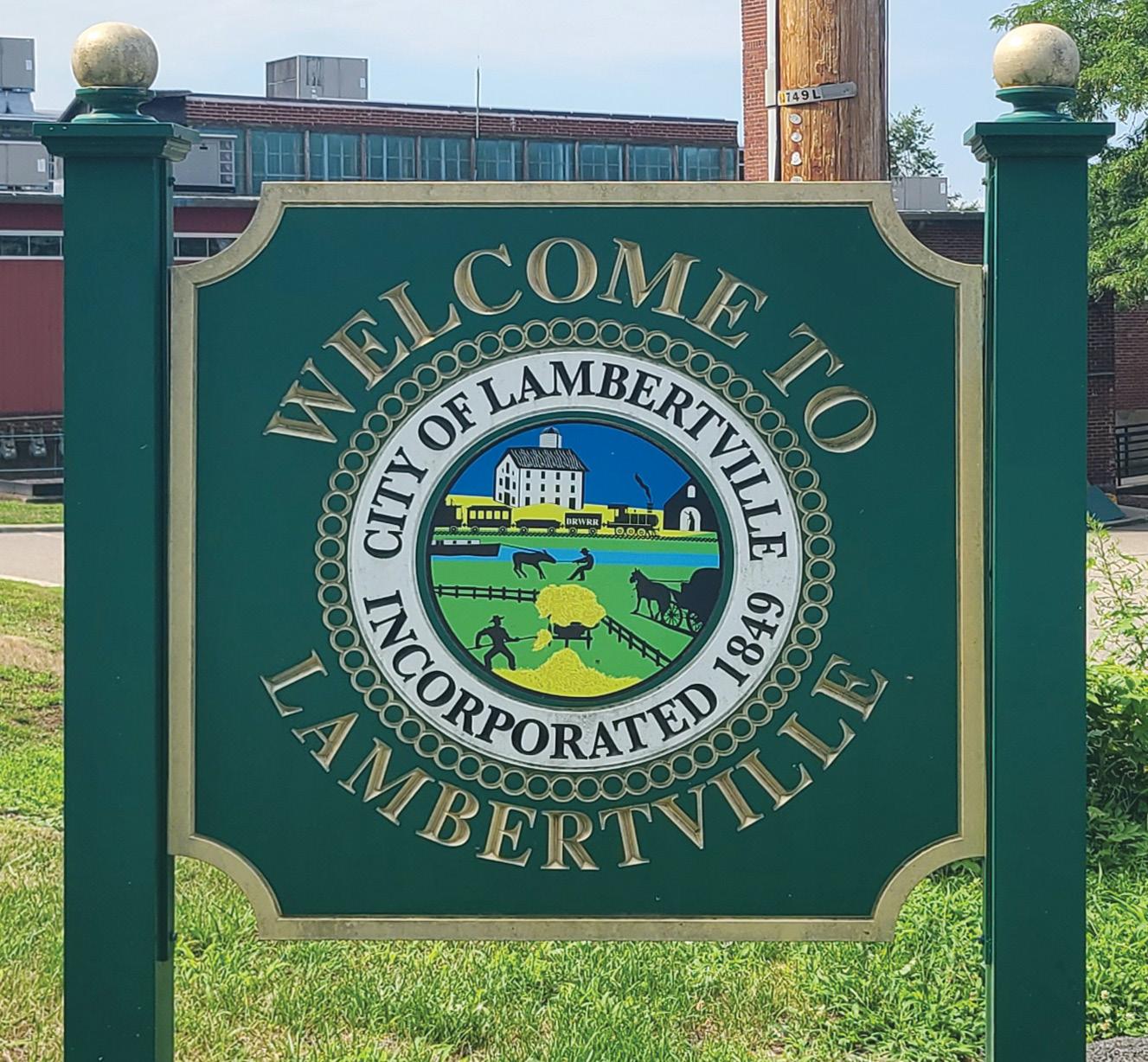
New Jersey Landscape Contractors Association
In January, New Jersey took a major step toward addressing invasive plants with the passage of the Invasive Species Management Act, signed into law on January 20, 2026. The law creates a statewide framework for identifying, managing, regulating, and educating the public about invasive species that threaten New Jersey’s environment, economy, agriculture, and landscapes.
For me personally, and for the New Jersey Landscape Contractors Association (NJLCA), this law carries special importance. I am honored to have been nominated to serve as a member of the newly reconstructed New Jersey Invasive Species Council, representing the landscape industry. This appointment is not just a personal recognition. It is a recognition that landscape contractors need to be part of the conversation when policy is being created that directly affects the plants we install, maintain, remove, recommend, and replace.
The law establishes a permanent 19-member council within the New Jersey Department of Environmental Protection. It includes representatives from DEP, Agriculture, Treasury, Transportation, Health, and the State Forester, along with 13 public members appointed by the Governor. Those public members include representatives from environmental organizations, agriculture, the landscape industry, the nursery industry, higher education, county parks, urban ecosystems, and the general public with invasive species experience. In addition, the law prohibits unregulated sale, distribution, import, export, and propagation of listed invasive species.
The structure of this council truly matters. Invasive species management cannot happen in a vacuum. It requires science,

The NJLCA Today
By Gail Woolcott Executive Director
A Seat at the Table: Representing the Landscape Industry on the New Invasive Species Council
environmental protection, agriculture, horticulture, nursery production, landscape installation, maintenance, education, and field experience. Each of us sees a different part of the problem.
The council’s responsibilities will include recommending which species should be classified as invasive, whether certain species should be prohibited, what sterile cultivars or exceptions may be appropriate, and whether conditional use waivers should be granted. The council will also help identify research needs, review current control efforts, develop educational materials, encourage the use of native or appropriate alternative plants, recommend regulatory changes and update New Jersey’s invasive species management plan.
The law currently lists the following prohibited invasive species: (1) Norway maple; (2) tree of heaven; (3) mimosa tree or Persian silk tree; (4) porcelain berry; (5) Japanese angelica tree; (6) Japanese barberry; (7) Japanese clematis; (8) autumn olive; (9) weeping lovegrass; (10) winged burning bush; (11) English ivy; (12) Japanese hop; (13) European privet; (14) Amur honeysuckle; (15) Morrow’s honeysuckle; (16) purple loosestrife; (17) Japanese crabapple; (18) Chinese silver
grass; (19) Eurasian water-milfoil; (20) Oriental photinia; (21) Callery or Bradford pear; (22) common buckthorn; (23) jetbead; (24) multiflora rose; (25) European water chestnut; (26) Siebold’s arrowwood; (27) Japanese wisteria; (28) Chinese wisteria; (29) sericea lespedeza and (30) running bamboo. Some of those names will be very familiar to landscape professionals. Others may be less common in everyday landscape work. But all of them raise important questions: What alternatives are available? How will this affect growers, designers, contractors, municipalities, and property owners? How do we educate customers who may still know these plants by their ornamental value, without understanding their long-term impact?
That is why it’s so important for NJLCA to have a seat at this table. Landscape contractors are on the front lines. Our members are in residential yards, commercial properties, public spaces, parks, campuses, and community landscapes every day. They see what is spreading. They know what customers ask for. They understand what plants are available, what survives, what fails and what is realistic to maintain. They also know
that sudden regulatory changes, without practical implementation, can create confusion and cost for small businesses.
My role on this council will be to help bridge that gap between policy and practice. As Executive Director of the NJLCA, I work every day with contractors, suppliers, nurseries, educators, regulators, legislators, and our industry partners. I understand the environmental concerns behind invasive species management, but I also understand the issues faced by the people who will carry out many of these changes in the field.
Good policy should protect NJ’s environment while also giving the green industry clear guidance and realistic timelines. It should help contractors educate their clients. It should support nurseries and growers as they transition away from prohibited species. It should encourage alternatives, including native plants and non-invasive cultivars where appropriate. And it should avoid creating rules that sound good on paper but are difficult or impossible to implement in the real world.
I believe I was chosen for this council because NJLCA has a long history of advocacy, education, and industry leadership. Our association does not simply react to issues after decisions are made. We
show up, ask questions, and bring contractors’ concerns to the table. We work with other organizations, educate our members, and try to find solutions that protect both the environment and the professionals who care for it.
Invasive species are not just an environmental issue. There is a landscape issue, an economic issue, a property management issue, and a public education issue. When invasive plants spread, they can crowd out native species, reduce biodiversity, alter habitats, increase maintenance challenges, and create long-term costs for all. Addressing them responsibly requires communication, education, planning, and partnership.
Serving on the New Jersey Invasive Species Council allows me to represent the hardworking outdoor living professionals who will help put this plan into action. It also gives NJLCA members a voice in shaping how invasive species policies develop in the years ahead.
I am honored to serve, proud to represent NJLCA and committed to making sure that NJ’s landscape industry remains part of the solution.
Editor’s Note: Gail Woolcott is the Executive Director for the New Jersey Landscape Contractors Association. Gail was presented with a community service award from the Borough of Fairview, New Jersey for her assistance in leading the 9-11 Memorial Park project and the Legislative Champion of the Year award from the Federation of Employers and Workers of America. She can be reached at 201-703-3600 or by emailing gwoolcott@ njlca.org.
Greenworks Tools Recalls 24V and 8V Kobalt Yard Power Tools with USB-C Batteries Due to Risk of Serious Injury from Fire Hazard
Recall Date: July 09, 2026
Name of Product:
Kobalt 24V and 48V Trimmers, Blowers, Mowers, Chainsaws and Pruning Saws with USB-C Batteries
Hazard:
Charging the lithium-ion batteries through the USB-C port while the batteries are inserted in the yard power tools can cause the batteries to short-circuit, posing a risk of serious injury from fire hazard.
Remedy:
Consumers should stop charging the batteries with the USB-C port while the batteries are inserted in the yard power tools immediately and contact Greenworks Tools to receive a free replacement battery.
Sold At: Lowe’s stores nationwide and online at Lowes.com from January 2026 through May 2026 for between $20 and $482. Learn More: https://www.greenworkstools.com/ pages/product-recall-information






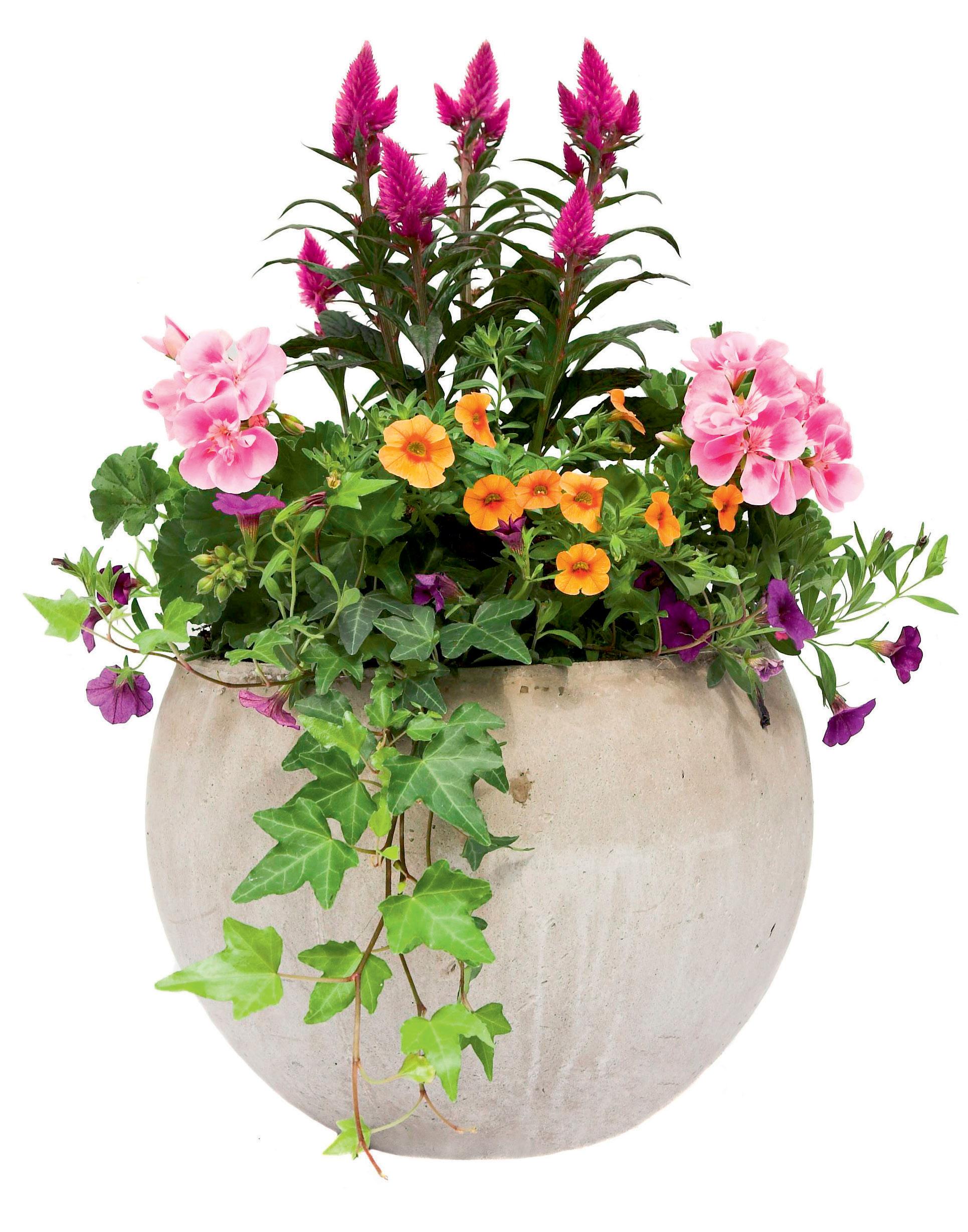

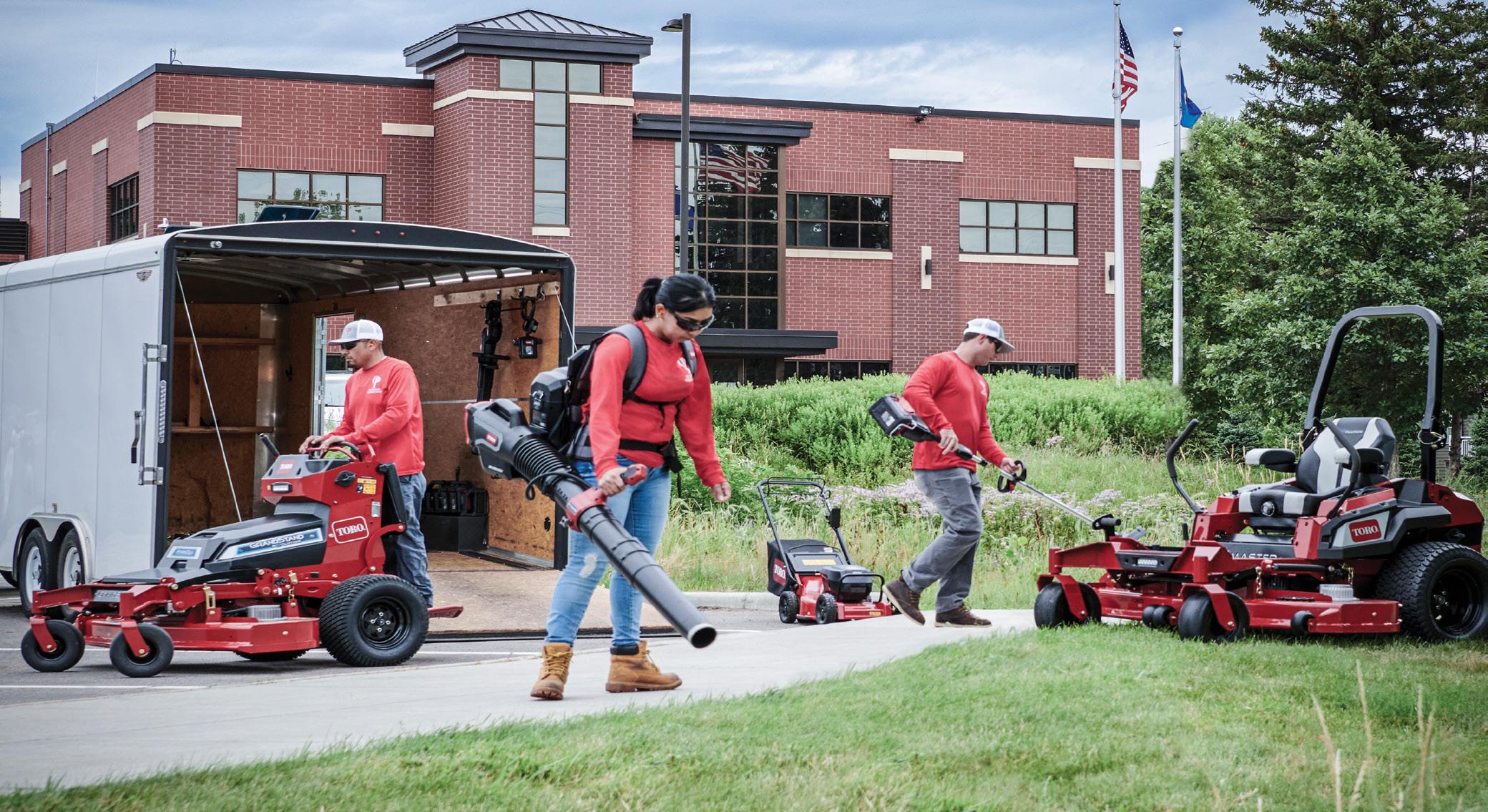


7500-G SERIES ZERO-TURN
96” TURBO FORCE ® CUTTING DECKS
PRODUCTIVITY TO A NEW LEVEL
Impressive 96” wide cutting deck folds to 75” to fit
REVOLUTION HANDHELD PRODUCTS
ALL DAY PERFORMANCE
The fully interchangeable 60V Max*
Flex-Force battery system powers the entire line of Revolution commercial grade handheld tools. The backpack, available as a power source for the leaf blower, string and hedge trimmers, and is built for comfort and ready to keep jobs moving all day.
STAND-ON MOWERS
TRACTION & HANDLING
A wide stance and optimal balance enhance hillside stability and control. 36”-72” TURBO FORCE ® CUTTING DECKS
CUSHIONED SUSPENSION
Flex-Ride operator platform suspension self-compensates for operators of all sizes, resulting in less fatigue and higher productivity throughout the day.
SPRAYMASTER®
Dual
Provide
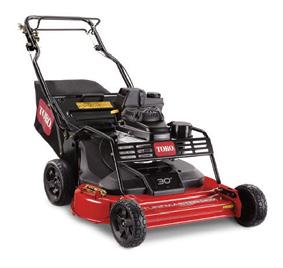
A variety of attachments and accessories such as Mulch Dump, Pro-Force blower, snow thrower, power broom, tine rake, dethatcher and BOSS snow blade all provide the ultimate in productivity.