DISCOVER
TRA LE TRACCE DEL TEMPO
Arte, storia e tradizioni narrano il passato del Garda Trentino, terra di confine e crocevia di culture. Qui l’anima italiana abbraccia quella mitteleuropea, tra gusto classico e rigore nordico, in un equilibrio tutto da scoprire. Fatti incuriosire, esplora il patrimonio del Garda Trentino.
ZWISCHEN DEN SPUREN DER ZEIT
Kunst, Geschichte und Traditionen erzählen die Vergangenheit des Garda Trentino, einer Grenzregion und eines kulturellen Kreuzwegs. Klassische Eleganz und nordische Klarheit verschmelzen zu einem besonderen Gleichgewicht. Lass dich neugierig machen und entdecke das Erbe des Garda Trentino.
AMONG THE TRACES OF TIME
Art, history and tradition tell the story of Garda Trentino, a borderland and crossroads of cultures. Here, the Italian soul meets Central European spirit, blending classical taste with northern precision in a unique balance. Let curiosity guide you as you explore Garda Trentino’s heritage.
Trentino
È l’essenza del Garda Trentino: un mix unico di attività all’aria aperta e stile italiano, tra adrenalina e relax, piccoli centri vivaci e buon cibo.
È nel nostro DNA: dalle sponde del Lago di Garda alle Dolomiti di Brenta, passando per Ledro, Comano, Valle dei Laghi e Val di Gresta. VIVI L’ITALIAN OUTDOOR.
Das ist Garda Trentino pur: der perfekte Mix aus Outdoor-Action und italienischem Lebensgefühl – irgendwo zwischen Adrenalin-Kick und Dolce Vita, lebhaften kleinen Orten und gutem Essen.
Das haben wir einfach im Blut: vom Gardasee bis zu den Brenta-Dolomiten, über Ledro, Comano, das Valle dei Laghi und das Val di Gresta.
ERLEBE DAS ITALIAN OUTDOOR.
This is what Garda Trentino is all about: a unique mix of outdoor thrills and that unmistakable Italian flair – where adventure meets relaxation, charming little towns, and delicious food.
It’s in our veins – from the shores of Lake Garda to the Brenta Dolomites, through Ledro, Comano, Valle dei Laghi, and Val di Gresta.
EXPERIENCE THE ITALIAN OUTDOOR.

EXPERIENCE
THE BEST OF GARDA TRENTINO
In acqua, in montagna, tra piazze e borghi o a cavallo: ci sono mille modi per vivere il Garda Trentino. Scegli tra visite, tour guidati, degustazioni, laboratori… e prenota subito la tua Experience preferita!
Auf dem Wasser, in den Bergen, durch lebendige Gassen oder auf dem Pferderücken: es gibt unendlich viele Wege, Garda Trentino zu erleben. Ob Tour, Verkostung, Workshop oder geführtes Abenteuer – such dir deine Lieblings-Experience aus und buch sie direkt!
On the water, up in the mountains, through lively squares and quaint villages, or even on horseback: there are endless ways to experience Garda Trentino. Take your pick from guided tours, tastings, workshops… and book your favourite Experience today!

SPECIAL DEALS ONLY WITH YOUR CARD! gardatrentino.it/guestcard
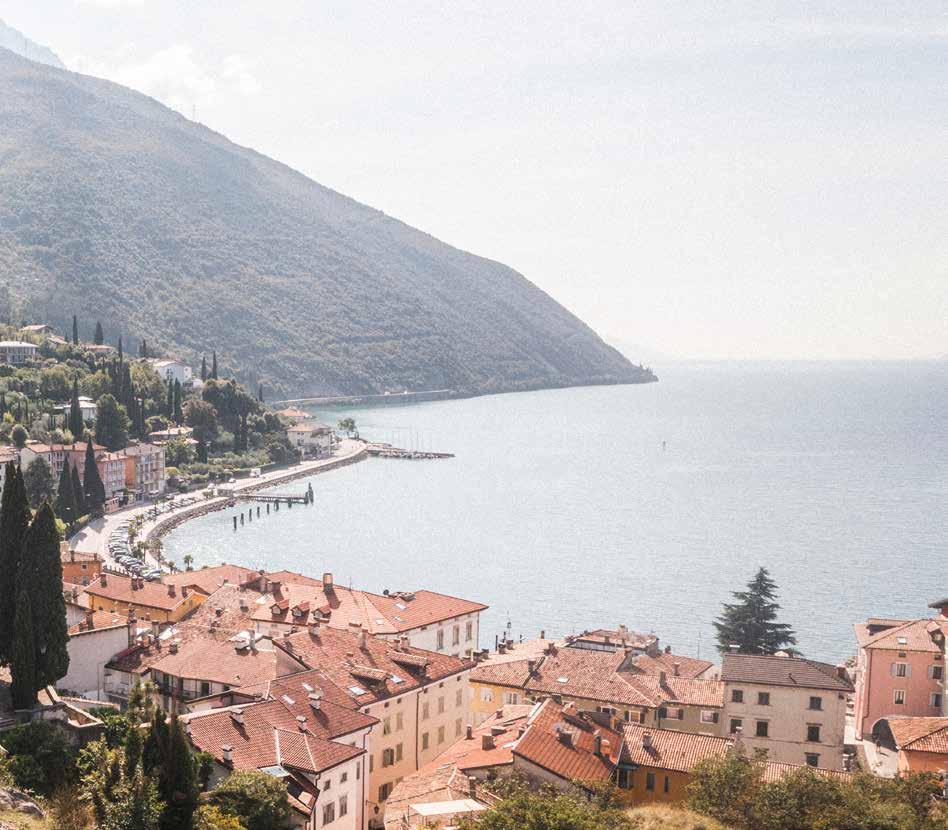
Torbole, 12 settembre 1786
«Quanto vorrei che i miei amici fossero per un attimo accanto a me e potessero godere della vista che mi sta dinnanzi!».
J.W. von Goethe, Viaggio in Italia (1816-17)
Torbole, den 12. September 1786
«Wie sehr wünschte ich meine Freunde einen Augenblick neben mich, daß sie sich der Aussicht freuen könnten, die vor mir liegt!».
J.W. von Goethe, Italienische Reise (1816-17)
Torbole, 12th September 1786
«How much do I wish that my friends were with me for a moment, to enjoy the prospect, which now lies before my eyes!».
J.W. von Goethe, Italian Journey (1816-17)
GARDA TRENTINO
CERTIFIED BY GSTC (GLOBAL SUSTAINABLE TOURISM COUNCIL)


Come destinazione e come comunità ci impegniamo costantemente sul fronte della sostenibilità. Questo percorso ci ha permesso di ottenere il riconoscimento di “destinazione certificata”, un importante traguardo che ci sprona a continuare a migliorare il Garda Trentino.
Vuoi saperne di più?
Als Destination und als Gemeinschaft setzen wir uns kontinuierlich für Nachhaltigkeit ein. Dieser Weg hat uns die Anerkennung als zertifizierte Destination eingebracht, ein bedeutender Meilenstein, der uns motiviert, das Garda Trentino weiter zu verbessern.
Möchtest du mehr erfahren?
As a destination and as a community, we are constantly committed to sustainability. This journey has led to our recognition as a certified destination, an important milestone that encourages us to continue improving Garda Trentino.
Would you like to know more?
CULTURE MAKES PEOPLE TRULY FREE.
Il Garda Trentino custodisce un ricco patrimonio storico e culturale, testimone della nostra identità e del territorio. Proteggerlo è una responsabilità condivisa: bastano poche semplici attenzioni per preservarne bellezza e valore.
Vuoi aiutarci anche tu?
Basta poco per fare la differenza.
Das Garda Trentino bewahrt ein reiches historisches und kulturelles Erbe als Ausdruck unserer Identität. Es zu schützen ist eine gemeinsame Verantwortung. Mit wenigen achtsamen Gesten bleibt seine Schönheit erhalten.
Möchtest du uns auch helfen? Es braucht nicht viel, um etwas zu bewegen.
Garda Trentino preserves a rich historical and cultural heritage as an expression of our identity. Protecting it is a shared responsibility. With a few mindful actions, its beauty can be preserved.
Would you like to help us, too? It takes little to make a difference
gardatrentino.it/MakeTheDifference
Non toccare opere, affreschi e reperti: il tempo li ha conservati, aiutalo a farlo ancora.
Berühre keine Werke, Fresken oder Funde.
Die Zeit hat sie bewahrt, hilf mit, dass es so bleibt.
Do not touch artworks, frescoes or artefacts.
Time has preserved them, help it continue to do so.
Osserva senza portare via: ogni dettaglio racconta una storia, lascialo dove si trova.
Beobachte, ohne etwas mitzunehmen.
Jedes Detail erzählt eine Geschichte.
Look without taking anything away. Every detail tells a story.
Rispetta chi ti è accanto: silenzio, telefoni spenti e voci basse fanno la differenza.
Respektiere die Menschen um dich herum. Stille, ausgeschaltete Handys und leise Stimmen machen den Unterschied. Respect those around you. Silence, switched off phones and low voices make a difference.
Lascia il luogo come l’hai trovato: usa i cestini o porta via i rifiuti.
Hinterlasse den Ort wie du ihn vorgefunden hast. Nutze Abfalleimer oder nimm deinen Müll mit.
Leave the place as you found it. Use bins or take your litter with you.
Non mangiare, bere o fumare negli spazi chiusi e nei luoghi di culto.
In geschlossenen Räumen und Gotteshäusern nicht essen, trinken oder rauchen.
Do not eat, drink or smoke in enclosed spaces or places of worship.
Scatta foto solo dove consentito, sempre senza flash.
Fotografiere nur, wo es erlaubt ist, immer ohne Blitz.
Take photos only where permitted, always without flash.
Scegli un abbigliamento adeguato al contesto.
Wähle eine dem Ort angemessene Kleidung.
Choose clothing appropriate to the setting.
ANDRÉ MALRAUX
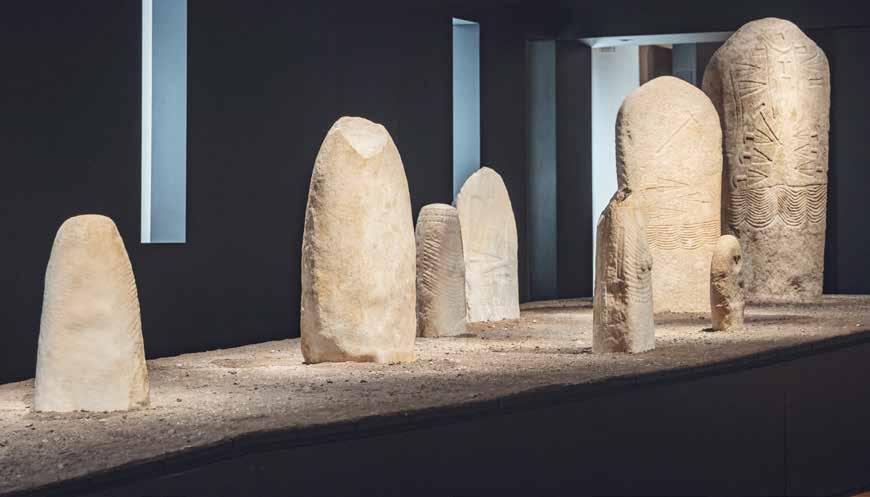
ARCHAEOLOGICAL SITES
DOVE IL PASSATO RIAFFIORA
Il trascorso millenario del Garda Trentino risplende nei suoi frammenti: dagli insediamenti dell’età del Bronzo all’arrivo dei Romani, fino alle corti medievali. Un viaggio tra manufatti e cimeli che bisbigliano miti e leggende perdute. Capovolgi la clessidra e attraversa le stagioni della storia.
WO DIE VERGANGENHEIT
WIEDER AUFTAUCHT
Die jahrtausendealte Geschichte des Garda Trentino schimmert in ihren Spuren: von Siedlungen der Bronzezeit über die Römer bis zu den mittelalterlichen Höfen. Eine Reise zwischen Artefakten und Relikten, die von Mythen und Legenden flüstern. Dreh die Sanduhr und durchstreife die Zeiten.
WHERE THE PAST RESURFACES
The millennia-old past of Garda Trentino shines through its traces: from Bronze Age settlements to the Romans and medieval courts. A journey among artefacts and relics whispering myths and lost legends. Turn the hourglass and step through the seasons of history.
gardatrentino.it/archaelogical-sites
Fiavé / Molina di Ledro
SITI PALAFITTICOLI DI FIAVÉ E LEDRO

Inserite nel 2011 nella lista dei “Siti palafitticoli preistorici dell’arco alpino”, Patrimonio dell’Umanità UNESCO, le Palafitte di Fiavé e di Ledro rappresentano una delle più antiche memorie della vita quotidiana delle comunità agricole dell’Età del Bronzo (ca. 3500-1200 a.C.). Tra resti dei pali originali, fedeli ricostruzioni e reperti custoditi con cura nei rispettivi musei, è possibile immergersi alla scoperta di questi antichi villaggi e delle persone che li abitavano.
PFAHLBAUSIEDLUNGEN VON FIAVÉ UND LEDRO
Seit 2011 zählen die Pfahlbauten von Fiavé und Ledro zum UNESCO-Welterbe “Prähistorische Pfahlbauten im Alpenraum” Sie bewahren eine der ältesten Erinnerungen an das Alltagsleben bronzezeitlicher Bauern zwischen 3500 und 1200 v. Chr. Zwischen originalen Holzpfählen, detailgetreuen Rekonstruktionen und sorgsam gehüteten Funden in den Museen wird Geschichte lebendig und führt dich mitten in diese uralten Dörfer am Wasser.
PILE-DWELLING SITES OF FIAVÉ AND LEDRO
Since 2011 the pile-dwelling sites of Fiavé and Ledro have been part of the UNESCO World Heritage “Prehistoric Pile Dwellings of the Alps”. They preserve one of the oldest memories of Bronze Age farming life between 3500 and 1200 BC. Among original wooden posts, faithful reconstructions and carefully kept artefacts in the museums, history comes alive, inviting you into these ancient lakeside villages.
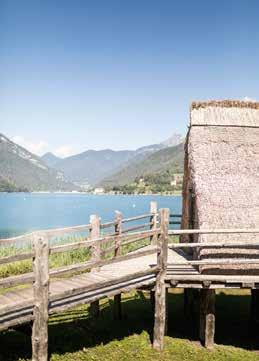
VISITA I MUSEI
BESUCHE DIE MUSEEN
DISCOVER THE MUSEUMS
Museo delle Palafitte di Fiavé
Parco Archeo Natura
Museo delle Palafitte di Ledro
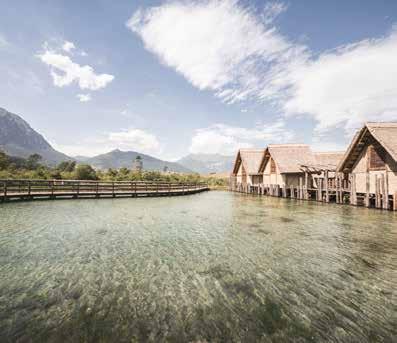
LEDRO
FIAVÉ
Campi / Lundo - Lomaso
AREE ARCHEOLOGICHE
DI SAN MARTINO
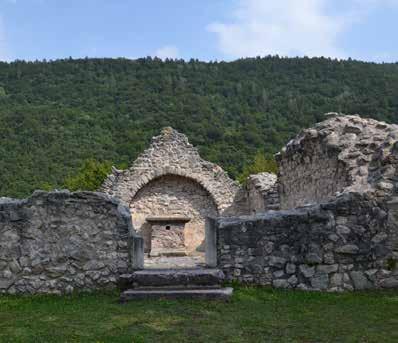
Nel Garda Trentino, San Martino è un nome che unisce più luoghi. A Campi, le tracce di insediamento risalgono alla preistoria e attraversano epoche diverse: sacralità e funzioni militari proseguono in età romana fino al Medioevo, quando nasce un villaggio attorno alla chiesa, oggi visibile nelle rovine sul fianco del monte. Nel Lomaso, un sito fortificato costruito a fine epoca romana per difendersi dalle incursioni barbariche e poi utilizzato da Goti, Bizantini, Longobardi e Franchi, conserva ancora i resti dell’oratorio e delle mura.
ARCHÄOLOGISCHE STÄTTEN VON SAN MARTINO
Im Garda Trentino verbindet der Name San Martino mehrere Orte. In Campi reichen die Siedlungsspuren bis in die Vorgeschichte zurück und durchziehen verschiedene Epochen: sakrale und militärische Funktionen bestehen von der Römerzeit bis ins Mittelalter Fort, als rund um die Kirche ein Dorf entstand, dessen Ruinen heute noch am Berghang sichtbar sind. Im Lomaso bewahrt eine spätrömische Befestigungsanlage, errichtet zum Schutz vor barbarischen Einfällen und später genutzt von Goten, Byzantinern, Langobarden und Franken, noch heute die Reste des Oratoriums und der Mauern.
SAN MARTINO ARCHAEOLOGICAL SITES
In Garda Trentino, the name San Martino links different places. In Campi, traces of settlement date back to prehistory and span different eras: sacred and military functions continued from Roman times into the Middle Ages, when a village grew around the church, whose ruins are still visible today on the mountainside. In Lomaso, a fortified site built in the late Roman era to defend against barbarian incursions and later used by Goths, Byzantines, Lombards and Franks still preserves the remains of its oratory and defensive walls.
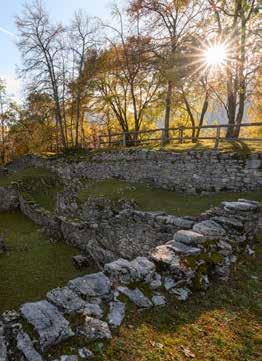
WALK AMONG THE PAST
Entrambi i siti di San Martino sono raggiungibili con piacevoli escursioni tra i boschi.
Beide Stätten von San Martino sind über angenehme Wanderungen durch die Wälder erreichbar.
Both San Martino sites can be reached via pleasant walks through the woods.
CAMPI
LUNDO
Cavedine
SENTIERO ARCHEOLOGICO DI CAVEDINE
Un facile itinerario nella valle di Cavedine conduce alla scoperta di luoghi intrisi di storia e mistero. Dalla fontana romana alla Cosina (cucina), fino alla Carega del Diaol (Sedia del Diavolo), o Trono della Regina, il percorso intreccia presenze romane ed echi più remoti.
ARCHÄOLOGISCHER PFAD VON CAVEDINE
Eine leichte Route im Cavedinetal führt zu Orten voller Geschichte und Geheimnis. Vom römischen Brunnen bei der Cosina (Küche) bis zur Carega del Diaol (Stuhl des Teufels), oder Thron der Königin, verwebt der Weg römische Spuren mit noch älteren Echos.
CAVEDINE ARCHAEOLOGICAL TRAIL
An easy trail in the Cavedine Valley leads to places steeped in history and mystery. From the Roman fountain at the Cosina (Kitchen) to the Carega del Diaol (Devil’s Chair), or Queen’s Throne, the route weaves Roman traces with echoes of a more ancient past.
FOLLOW THE STEPS
Talpina è la tua guida: scansiona i QR code per scoprire contenuti e quiz, oppure interagisci con le installazioni didattiche.
Talpina ist deine Begleiterin: scanne die QR-Codes, um Inhalte und Quiz zu entdecken, oder interagiere mit den interaktiven Lernstationen entlang des Weges.
Talpina is your guide: scan the QR codes to unlock content and quizzes, or interact with the educational installations along the route.
Lago di Loppio
SITO ARCHEOLOGICO ISOLA DI SANT’ANDREA
Sull’isola di Sant’Andrea, un tempo circondata dalle acque del lago di Loppio, si trovano i resti di una chiesa romanica del XII secolo e quelli di un castrum militare di età tardoantica, costruito per controllare l’accesso al Garda Trentino.
ARCHÄOLOGISCHE STÄTTE DER INSEL SANT’ANDREA
Auf der Insel Sant’Andrea, einst vom Wasser des Loppiosees umgeben, befinden sich die Reste einer romanischen Kirche aus dem 12. Jahrhundert sowie eines spätrömischen Castrums, das zur Kontrolle des Zugangs zum Garda Trentino errichtet wurde.
SANT’ANDREA ISLAND ARCHAEOLOGICAL SITE
On the island of Sant’Andrea, once surrounded by the waters of Lake Loppio, lie the remains of a 12th-century Romanesque church and a late Roman castrum built to control access to Garda Trentino.
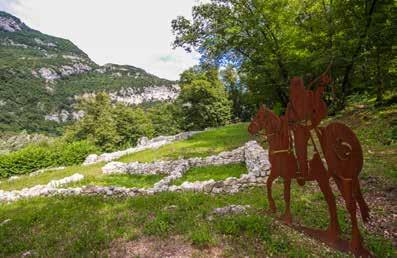
Un castrum è un accampamento fortificato utilizzato dalle legioni romane per la difesa e il controllo dei territori.
Nel Medioevo, il termine venne esteso a piccoli castelli o borghi murati.
Ein Castrum ist ein befestigtes Lager, das von römischen Legionen zur Verteidigung und Kontrolle des Territoriums genutzt wurde. Im Mittelalter wurde der Begriff auch für kleine Burgen oder ummauerte Siedlungen verwendet.
A castrum is a fortified camp used by Roman legions for defence and territorial control. In the Middle Ages, the term was also applied to small castles or walled settlements.
HISTORICAL VILLAGES
IL BATTITO LENTO DEI BORGHI
Ritrova l’equilibrio, rallenta il passo e lascia che il tempo cambi ritmo.
È questo l’effetto dei borghi del Garda Trentino, con i loro vicoli, piazzette e case antiche che sembrano assopite.
Tic, tac... Il resto può aspettare.
DER LANGSAME HERZSCHLAG
DER DÖRFER
Finde dein Gleichgewicht, verlangsame deinen Schritt und lass die Zeit ihr eigenes Tempo finden. Das ist die Wirkung der Dörfer im Garda Trentino, mit ihren Gassen, kleinen Plätzen und alten Häusern, die wie im Dämmerschlaf liegen. Tick, tack... Alles andere hat Zeit.
THE SLOW HEARTBEAT OF THE VILLAGES
Find your balance, slow your pace and let time change its rhythm. This is the effect of the villages of Garda Trentino, with their narrow lanes, little squares and ancient houses that seem gently asleep.
Tick, tock... The rest can wait. gardatrentino.it/CharmingVillages
Rango
RANGO

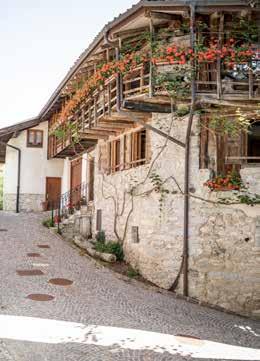
Rango è un borgo antico, costruito in pietra e legno, testimone di un passato contadino in cui le giornate erano scandite dal suono delle campane. Fienili storici (ère) e balconi si affacciano sulla piazza, attorno alla fontana. Sotto i portici e tra passaggi nascosti, mani esperte hanno trasformato le cataste di legna da ardere in una vera forma d’arte. A Natale, Rango accoglie il mercatino nei tradizionali vòlt, le cantine rustiche dove si incontrano artigianato locale e sapori del territorio.
RANGO
Rango ist ein altes Dorf aus Stein und Holz, Zeuge einer bäuerlichen Vergangenheit, in der der Klang der Glocken den Rhythmus des Tages bestimmte. Historische Scheunen, die Ère, und Holzbalkone blicken auf den Platz rund um den Brunnen. Unter den Lauben und in versteckten Durchgängen haben geschickte Hände aus gestapeltem Brennholz eine echte Kunstform geschaffen. Zur Weihnachtszeit empfängt dich Rango mit seinem Markt in den traditionellen Vòlt, den urigen Gewölbekellern, wo lokales Handwerk auf typische Köstlichkeiten trifft.
RANGO
Rango is an ancient village of stone and wood, bearing witness to a rural past when the sound of bells marked the rhythm of the day. Historic barns known as ère and wooden balconies overlook the square around the fountain. Beneath the arcades and through hidden passages, skilled hands have turned stacked firewood into a true form of art. At Christmas, Rango welcomes you with its market set in the traditional vòlt, rustic cellars where local crafts meet the flavours of the land.
BACK TO SCHOOL
A Rango, il Museo della Scuola conserva nelle aule banchi e materiali di quando, nella prima metà del Novecento, i nostri avi imparavano a leggere e a scrivere.
In Rango bewahrt das Museo della Scuola in seinen Klassenräumen Bänke und Lehrmaterialien aus der ersten Hälfte des 20. Jahrhunderts, als unsere Vorfahren hier lesen und schreiben lernten.
In Rango, the Museo della Scuola preserves desks and teaching materials from the first half of the 20th century, when our ancestors learned to read and write here.
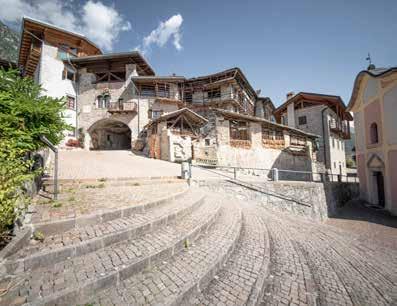
CANALE DI TENNO
A breve distanza dal lago di Tenno, Canale è un borgo medioevale che conserva intatta la sua architettura originale, tra case in pietra, ballatoi in legno e vicoli stretti dove risuonano silenzi pieni di storie. In estate il paese si anima con il festival “Rustico Medioevo”, tra menestrelli, giocolieri, dame e cavalieri che riportano tra le vie atmosfere d’altri tempi. In inverno, invece, cambia abito e accoglie la magia dei mercatini di Natale, lasciando che luci e profumi si diffondano tra le stradine, scaldando i cuori e rendendo il borgo ancora più intimo.
CANALE DI TENNO
Nur wenige Schritte vom Tennosee entfernt liegt Canale, ein mittelalterliches Dorf mit ursprünglich erhaltener Architektur. Zwischen Steinhäusern, hölzernen Laubengängen und engen Gassen klingen stille Geschichten nach. Im Sommer erwacht das Dorf mit dem Festival “Rustico Medioevo” zum Leben, zwischen Minnesängern, Gauklern, Damen und Rittern, die vergangene Zeiten in die Gassen zurückbringen. Im Winter wechselt es sein Gewand und begrüßt den Weihnachtsmarkt: Lichter und Düfte ziehen durch die Straßen, wärmen dein Herz und machen den Ort noch stimmungsvoller.
CANALE DI TENNO
Just a short distance from Lake Tenno, Canale is a medieval village that preserves its original architecture. Among stone houses, wooden balconies and narrow lanes, silence echoes with stories. In summer, the village comes alive with the “Rustico Medioevo” festival, where minstrels, jesters, ladies and knights revive the atmosphere of past centuries. In winter, it changes its attire and welcomes the magic of the Christmas markets, as lights and scents drift through the lanes, warming hearts and making the village even more intimate.
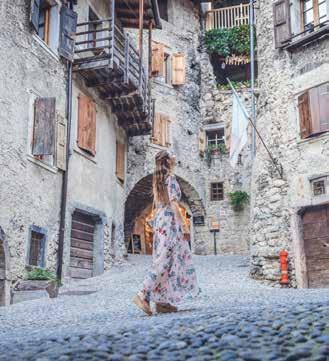
RUSTIC VIBES
Completano la visita la Casa degli Artisti “Giacomo Vittone”, luogo di creatività e ispirazione, e il Museo degli Attrezzi Agricoli, scrigno degli strumenti di lavoro dei nostri nonni.
Die Casa degli Artisti “Giacomo Vittone“, ein Ort voller Kreativität, und das Museo degli Attrezzi Agricoli mit den Werkzeugen unserer Großeltern runden deinen Besuch ab.
Your visit is completed by the Casa degli Artisti “Giacomo Vittone”, a place of creativity, and the Museo degli Attrezzi Agricoli, a treasure chest preserving the working instruments of our grandparents.
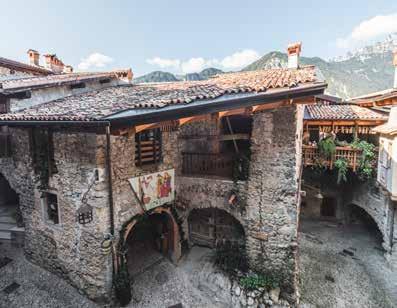
GLI ALTRI BORGHI DEL GARDA TRENTINO
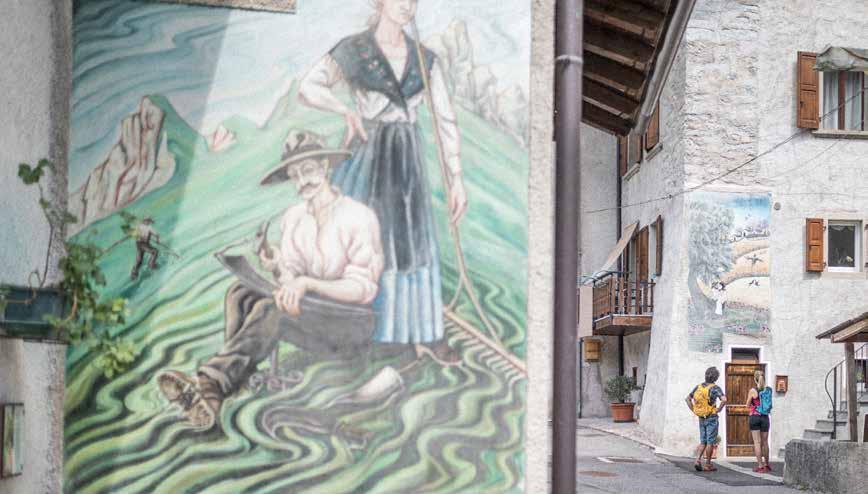
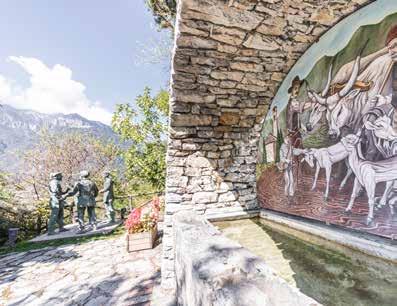
Oltre ai borghi più conosciuti, il Garda Trentino rivela altri luoghi silenziosi, dove i ricordi si intrecciano con la vita di ogni giorno. Alcuni si trovano ai piedi dei castelli, come la piccola frazione di Frapporta, uno dei rari esempi in Trentino di abitato cinto da mura, o il quartiere medievale Stranforio ad Arco, dalla cui porta si scorgono ancora gli apparati del ponte levatoio sul fossato. Altrove, lungo le strette vie dei paesi, compaiono murales che raccontano scene degli antichi mestieri e della realtà rurale: a Balbido e a Nago ogni muro diventa una pagina da sfogliare.
WEITERE DÖRFER IM GARDA TRENTINO
Neben den bekanntesten Dörfern offenbart das Garda Trentino auch stille Orte, an denen sich Erinnerungen mit dem Alltag verweben. Einige liegen am Fuß von Burgen, etwa der kleine Ortsteil Frapporta, eines der seltenen Beispiele eines von Mauern umgebenen Dorfes im Trentino, oder das mittelalterliche Viertel Stranforio in Arco, an dessen Tor noch die Vorrichtungen der Zugbrücke über den Graben zu erkennen sind. Anderswo erzählen entlang der engen Dorfstraßen Wandmalereien von alten Handwerken und vom ländlichen Leben: in Balbido und Nago wird jede Wand zu einer Seite, die es zu entdecken gilt.
OTHER VILLAGES OF GARDA TRENTINO
Beyond its best-known villages, Garda Trentino reveals quieter places where memories blend with everyday life. Some lie at the foot of castles, such as the small hamlet of Frapporta, one of the few walled settlements in Trentino, or the medieval quarter of Stranforio in Arco, where the remains of the drawbridge mechanisms over the moat can still be seen at the gate. Elsewhere, along the narrow village streets, murals depict scenes of traditional trades and rural life: in Balbido and Nago, every wall becomes a page to discover.
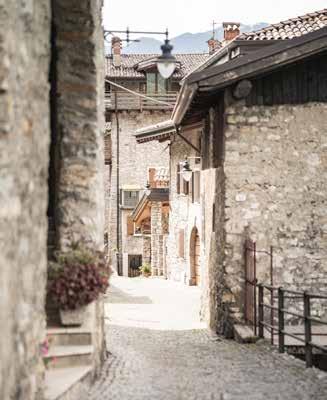
A GUINNESS WORLD RECORD
Chi passa per Balbido non può non notare la Stria (strega) più grande del mondo, presenza curiosa che sembra mettere in guardia gli escursionisti lungo la Strada delle Streghe e verso la Val Marcia.
Wer durch Balbido kommt, bemerkt unweigerlich die größte Stria (Hexe) der Welt, eine ungewöhnliche Erscheinung, die Wandernde entlang der Hexenweg und auf dem Weg ins Val Marcia zu begleiten scheint.
Anyone passing through Balbido cannot miss the world’s largest Stria (witch), a curious presence that seems to watch over hikers along the Strada delle Streghe and on the path toward Val Marcia.
CASTLES
UN ASSEDIO DI CURIOSITÀ
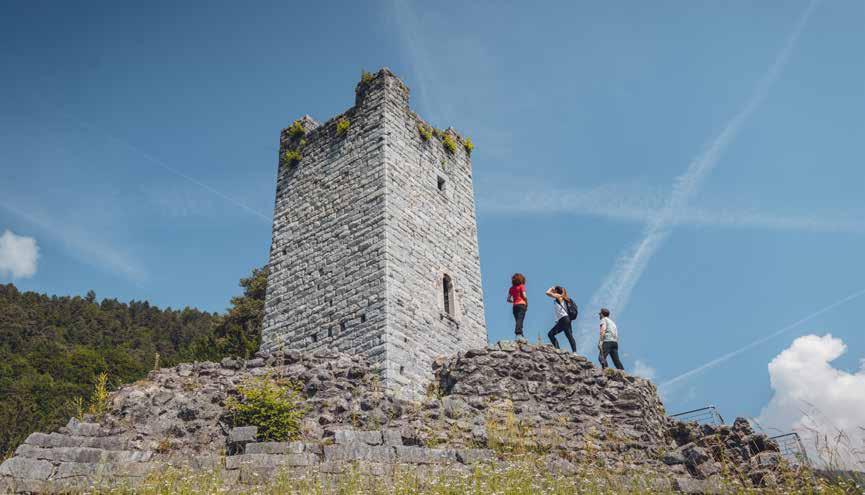
Castelli, baluardi e bastioni; condottieri e principi vescovi; guerre e battaglie: anche queste sono le cronache del Garda Trentino. Camuffati dall’ombra, fragili equilibri di potere e trame nascoste risuonano ancora tra corridoi e sale decorate. Quale castello vuoi conquistare per primo?
EINE BELAGERUNG DER NEUGIER Burgen, Bollwerke und Bastionen; Feldherren und Fürstbischöfe; Kriege und Schlachten: auch das sind die Chroniken des Garda Trentino. Im Schatten verborgen hallen zerbrechliche Machtspiele und geheime Intrigen noch heute durch Korridore und geschmückte Säle. Welche Burg eroberst du zuerst?
A SIEGE OF CURIOSITY
Castles, bulwarks and bastions; commanders and prince-bishops; wars and battles: these, too, are the chronicles of Garda Trentino. Hidden in the shadows, fragile balances of power and secret plots still echo through corridors and decorated halls. Which castle will you conquer first? gardatrentino.it/castles
BASTIONE
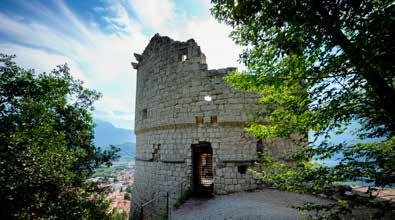
L’incursione francese di inizio Settecento ridusse in rovina l’opera che i Veneziani costruirono nel 1507 a difesa dal Principato Vescovile di Trento. Dal Bastione, lungo il giro di ronda, si ammira il panorama altogardesano, soprattutto al tramonto, quando il lago si tinge di sfumature rosate.
BASTIONE FESTUNG
Der französische Angriff zu Beginn des 18. Jahrhunderts legte die Anlage in Trümmer, die die Venezianer 1507 zum Schutz vor dem Fürstbistum Trient errichtet hatten. Vom Bastione genießt du den Blick auf den Alto Garda, besonders bei Sonnenuntergang, wenn sich der See rosarot färbt.
BASTIONE FORTRESS
The French raid in the early 18th century reduced to ruins the fortress built by the Venetians in 1507 to defend against the Prince-Bishopric of Trento. From the Bastione, along the rampart walk, you can admire the Alto Garda panorama, especially at sunset, when the lake turns soft shades of pink.
Oggi il Bastione si raggiunge in poco più di due minuti con l’ascensore panoramico in vetro, gratuito con la Garda Guest Card.
Heute erreichst du das Bastione in etwas mehr als zwei Minuten mit dem verglasten Panoramaaufzug, kostenlos mit der Garda Guest Card.
Today, the Bastione can be reached in just over two minutes by the glass panoramic lift, free with the Garda Guest Card.
Arco
CASTELLO DI ARCO
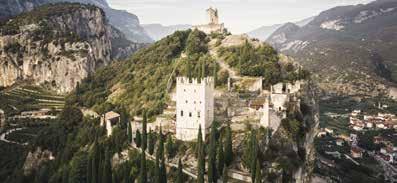
Il castello di Arco, emblema dell’Alto Garda, ammaliò il pittore tedesco Albrecht Dürer, che ne colse l’atmosfera in un acquerello oggi conservato al Louvre. La rocca mantiene intatto il suo fascino lungo il percorso tra la Torre Grande, la Torre Renghera e il ciclo del gioco degli scacchi
BURG VON ARCO
Die Burg von Arco, Wahrzeichen des Alto Garda, verzauberte den Maler Albrecht Dürer, der ihre Atmosphäre in einem Aquarell festhielt, das heute im Louvre aufbewahrt wird. Die Rocca bewahrt ihren Reiz entlang des Weges zwischen Torre Grande, Torre Renghera und dem Freskenzyklus des Schachspiels
ARCO CASTLE
Arco Castle, symbol of Alto Garda, captivated the German painter Albrecht Dürer, who captured its atmosphere in a watercolor now preserved at the Louvre. The fortress retains its charm along the route between the Torre Grande, the Torre Renghera and the fresco cycle of the chess game.
Il castello fu dimora dei
Conti d’Arco, tra i quali spicca la figura dell’umanista Niccolò d’Arco (1479-1546).
Die Burg war die Residenz der Grafen von Arco, zu denen auch der Humanist und Dichter Niccolò d’Arco (1479–1546) gehörte.
The castle was the residence of the Counts of Arco, among whom the humanist and poet Niccolò d’Arco (1479–1546) stands out.
Riva del Garda
TAKE A RIDE
Nago
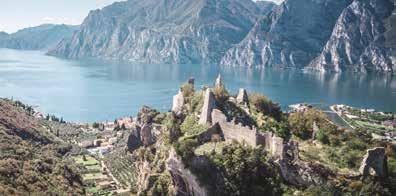
CASTEL PENEDE
Posto su uno sperone di roccia sopra l’antica strada romana che collegava Torbole a Trento, il castello è citato per la prima volta nel 1210 come feudo vescovile affidato alla dinastia degli Arco. Oggi si presenta in rovina, distrutto dall’esercito francese del generale Vendôme a inizio XVIII secolo.
BURG PENEDE
Auf einem Felssporn über der antiken römischen Straße zwischen Torbole und Trient gelegen, wird die Burg 1210 erstmals als bischöfliches Lehen der Grafen von Arco erwähnt. Heute ist sie eine Ruine, zerstört zu Beginn des 18. Jahrhunderts vom französischen Heer unter General Vendôme.
PENEDE CASTLE
Perched on a rocky spur above the ancient Roman road linking Torbole and Trento, the castle is first recorded in 1210 as a bishopric fief entrusted to the Arco dynasty. Today it lies in ruins, having been destroyed by the French army of General Vendôme at the beginning of the 18th century.
WAS DANTE HERE?
Secondo la leggenda, nel corso del suo esilio Dante fu ospite nel 1309 a Castel Penede. Del suo passaggio sarebbe rimasta traccia perfino nella Divina Commedia (Inferno XX, vv. 61-66).
Der Legende nach war Dante während seines Exils im Jahr 1309 zu Gast auf Castel Penede. Eine Spur seines Aufenthalts soll sogar in der Göttlichen Komödie (Inferno XX, 61–66) zu finden sein.
Legend has it that Dante stayed at Castel Penede in 1309 during his exile.
His visit is said to have left a trace even in the Divine Comedy (Inferno XX, 61–66).
Stenico
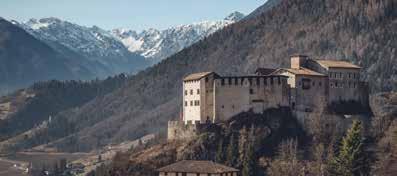
CASTELLO DI STENICO
Tra i complessi fortificati più mirabili e meglio conservati del Trentino, il Castello di Stenico, residenza estiva dei principi vescovi, si erge a testimonianza della grandezza delle Giudicarie, come attestano le Sale del Giudizio e del Consiglio, destinate alla giustizia e alla rappresentanza.
BURG VON STENICO
Zu den eindrucksvollsten und besterhaltenen Wehranlagen des Trentino zählt das Castello di Stenico, Sommerresidenz der Fürstbischöfe. Es zeugt von der Größe der Giudicarie, wie die Sala del Giudizio für die Rechtsprechung und die Sala del Consiglio für repräsentative Aufgaben zeigen.
STENICO CASTLE
Among the most remarkable and best-preserved fortified complexes in Trentino, Castello di Stenico was the summer residence of the prince-bishops. It stands as a testament to the greatness of the Giudicarie, reflected in the Sala del Giudizio for justice and the Sala del Consiglio for representation.
Judicaria è un termine di origine longobarda che definiva un distretto amministrato da un judex (giudice). Per Stenico si parla di Giudicarie Esteriori.
Judicaria ist ein Begriff langobardischen Ursprungs und bezeichnet einen von einem Judex (Richter) verwalteten Bezirk.
Stenico gehört zu den Giudicarie Esteriori.
Judicaria is a term of Lombard origin referring to a district governed by a judex (judge). Stenico is regarded as part of the Giudicarie Esteriori
Drena Lago di Toblino
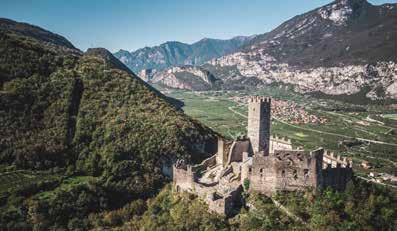
CASTELLO DI DRENA
Dal XII secolo il castello, con il suo alto mastio, sorveglia e domina fiero l’intera valle del Sarca. Per la sua posizione strategica fu a lungo conteso e rimase in mano ai conti d’Arco fino al 1703, quando il passaggio distruttivo delle truppe francesi dirette in Austria ne segnò il declino.
BURG VON DRENA
Seit dem 12. Jahrhundert wacht die Burg mit ihrem Bergfried über das Sarcatal. Aufgrund seiner strategischen Lage war die Burg lange umkämpft und blieb bis 1703 im Besitz der Grafen von Arco, bis der zerstörerische Durchzug französischer Truppen auf dem Weg nach Österreich ihren Niedergang einleitete.
DRENA CASTLE
Since the 12th century, the castle, with its tall keep, has proudly overlooked and guarded the entire Sarca Valley. Long contested for its strategic position, it remained with the Counts of Arco until 1703, when French troops marching to Austria set its decline in motion.
TASTE
THEM ALL
I maroni di Drena, un’eccellenza del Garda Trentino e parte degli itinerari del Mese del Gusto.
Die Kastanien von Drena, eine Spezialität des Garda Trentino und Teil der Genussrouten des Mese del Gusto.
The Chestnuts of Drena, a specialty of Garda Trentino and part of the Mese del Gusto itineraries.
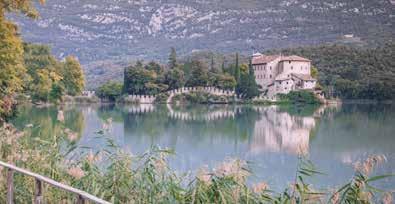
CASTEL TOBLINO
Da tempietto pagano dedicato agli spiriti del bosco si trasformò in fortilizio medievale, poi rimaneggiato dai principi vescovi, in particolare Bernardo Clesio e i Madruzzo. La sua posizione sopra le acque del lago contribuisce a creare un’atmosfera romantica e suggestiva
BURG VON TOBLINO
Ursprünglich ein heidnisches Heiligtum für die Geister des Waldes, wurde der Bau später zu einem mittelalterlichen Wehrbau und von den Fürstbischöfen, besonders Bernardo Clesio und den Madruzzo, umgestaltet. Seine Lage über dem See verleiht dem Ort eine romantische und eindrucksvolle Atmosphäre
TOBLINO CASTLE
Originally a pagan shrine dedicated to the spirits of the forest, it later became a medieval stronghold and was subsequently remodelled by the prince-bishops, especially Bernardo Clesio and the Madruzzo family. Its position above the waters of the lake adds to its romantic and evocative atmosphere
PLAN YOUR VISIT
Le visite al castello si svolgono in date specifiche, su prenotazione obbligatoria, e sono riservate ai soci (iscrizione possibile al momento della visita).
Schlossbesichtigungen finden an bestimmten Terminen und nur mit Reservierung statt. Sie sind Mitgliedern vorbehalten (Mitgliedschaft auch vor Ort möglich).
Castle visits are held on specific dates and require advance booking. They are reserved for members, with membership available at the time of the visit.
CHURCHES
SULLE VIE DEL SACRO
Dove l’arte si congiunge con la spiritualità. Dai plutei (lastre marmoree) altomedievali, agli affreschi romanici e gotici, dalle sculture e tele di pittori itineranti allo sfarzo del barocco trentino, fino agli eremi più remoti. Ora et admira le chiese del Garda Trentino.
AUF HEILIGEN WEGEN
Wo Kunst und Spiritualität aufeinandertreffen.
Von frühmittelalterlichen Marmorplatten über romanische und gotische Fresken, von Skulpturen und Werken wandernder Maler bis zum Glanz des Trentiner Barock und zu den entlegensten Eremitagen. Ora et admira die Kirchen im Garda Trentino.
ALONG SACRED PATHS
Where art and spirituality come together. From early medieval marble slabs to Romanesque and Gothic frescoes, from sculptures and works by travelling painters to the splendour of Trentino Baroque and the most remote hermitages.
Ora et admira the churches of Garda Trentino.
gardatrentino.it/churches
Riva del Garda
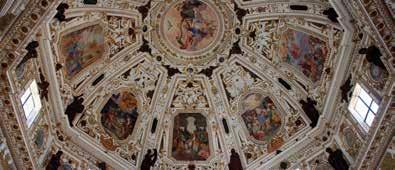
CHIESA DELL’INVIOLATA
Massima espressione del barocco trentino, la chiesa dell’Inviolata, nasce per volontà di Giannangelo Madruzzo e Alfonsina Gonzaga, ed è il gioiello di Riva. Le cappelle conservano opere di Palma il Giovane, Pietro Ricchi e Teofilo Polacco, con la Vergine che veglia i fedeli dalla cupola ottagonale.
INVIOLATA KIRCHE
Die Kirche dell’Inviolata, Meisterwerk des Trentiner Barock und Juwel von Riva, wurde von Giannangelo Madruzzo und Alfonsina Gonzaga gewollt. In den Kapellen sind Werke von Palma il Giovane, Pietro Ricchi und Teofilo Polacco zu sehen, während die Jungfrau aus der achteckigen Kuppel wacht.
INVIOLATA CHURCH
Built at the request of Giannangelo Madruzzo and Alfonsina Gonzaga, the Inviolata Church shines as a symbol of Trentino Baroque and a true jewel of Riva. The chapels house works by Palma il Giovane, Pietro Ricchi and Teofilo Polacco, while the Virgin watches from the octagonal dome.
FIND YOUR QUIET
Accanto alla chiesa sorse, tra il 1615 e il 1616, il Convento dei Gerolamini, a cui era affidata la cura del santuario. Dal 2023 il chiostro affrescato è visitabile.
Neben der Kirche entstand zwischen 1615 und 1616 das Kloster der Hieronymiten, dem die Betreuung des Heiligtums anvertraut war.
Seit 2023 ist der freskengeschmückte Kreuzgang zugänglich.
Next to the church, the Hieronymite Monastery was built between 1615 and 1616 and entrusted with the care of the sanctuary. Since 2023, the frescoed cloister has been open to visitors.
Arco
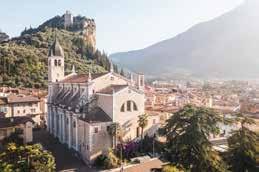
CHIESA DELLA COLLEGIATA
Il nome deriva dal latino Collegium, a indicare la presenza di una comunità di sacerdoti. L’attuale forma è del 1613 e sostituisce la precedente chiesa romanica. Opere di Domenico Rossi e Felice Brusasorci decorano gli altari, dove un tempo riposava Francesco II delle Due Sicilie, morto nel 1894.
COLLEGIATA KIRCHE
Der Name leitet sich vom lateinischen Collegium ab und verweist auf eine Priestergemeinschaft. Der heutige Bau von 1613 ersetzte die frühere romanische Kirche. Die Altäre schmücken Werke von Domenico Rossi und Felice Brusasorci. Hier ruhte einst König Franz II. von den Beiden Sizilien, der 1894 starb.
COLLEGIATA CHURCH
The name derives from the Latin Collegium, referring to a community of priests. The present building dates to 1613 and replaced an earlier Romanesque church. The altars are adorned with works by Domenico Rossi and Felice Brusasorci. Here once rested King Francis II of the Two Sicilies (d. 1894).
Sotto il presbiterio si trova la “cripta”, parte dell’antica cappella di San Michele, decorata ad affresco e luogo di sepoltura dei primi Conti d’Arco.
Unter dem Presbyterium befindet sich die “Krypta”, Teil der alten Michaelskapelle, die mit Fresken geschmückt ist und als Begräbnisstätte der ersten Grafen von Arco diente.
Beneath the presbytery lies the “crypt”, part of the ancient Chapel of St Michael, decorated with frescoes and used as the burial place of the first Counts of Arco.
Nago
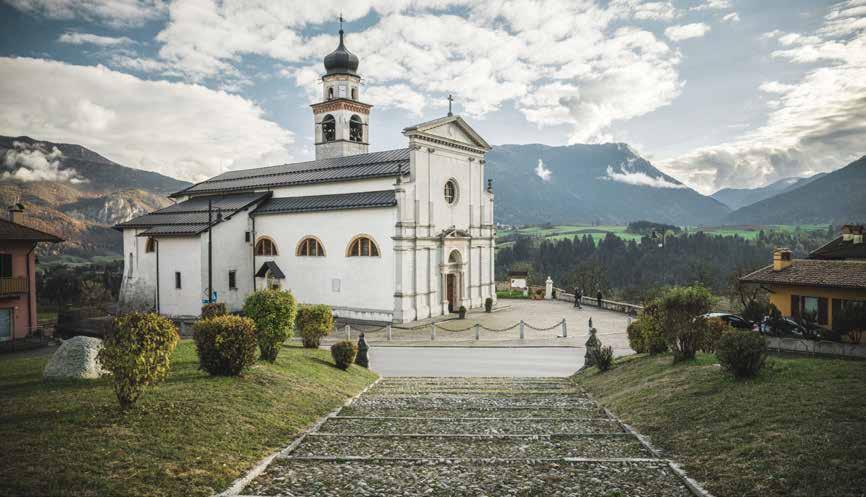
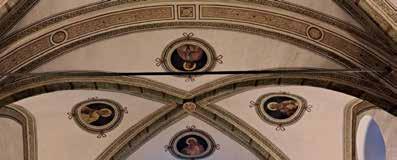
CHIESA DI SAN VIGILIO
La chiesa ha origine nel V secolo, in epoca paleocristiana
Il campanile è l’unico elemento superstite dell’edificio romanico, attorno al quale fu realizzato l’ampliamento di fine XVI secolo. I tondi degli apostoli nella volta sono frutto del restauro seguito al primo conflitto mondiale.
SAN VIGILIO KIRCHE
Die Kirche hat ihre Ursprünge im 5. Jahrhundert, in frühchristlicher Zeit. Der Glockenturm ist der einzige erhaltene Teil des romanischen Baus, um den der Ausbau Ende des 16. Jahrhunderts entstand. Die Apostelrundbilder im Gewölbe stammen aus der Restaurierung nach dem Ersten Weltkrieg.
SAN VIGILIO CHURCH
The church has its origins in the 5th century, in the early Christian period. The bell tower is the only surviving part of the Romanesque building, around which the late 16th-century enlargement was built. The roundels of the Apostles on the vault date from the restoration after the First World War.
San Vigilio, patrono del Trentino, è raffigurato nel timpano della chiesa da un’antica statua lignea che lo mostra con la barba, un unicum rispetto alle altre raffigurazioni del santo.
Der heilige Vigilius, Patron des Trentino, ist im Tympanon der Kirche in einer alten Holzstatue dargestellt, die ihn mit Bart zeigt, eine Besonderheit im Vergleich zu anderen Darstellungen des Heiligen.
Saint Vigilius, patron saint of Trentino, appears in the church pediment in an ancient wooden statue that shows him with a beard, an unusual feature compared with other representations of the saint.
Bezzecca
CHIESA DI SANTA LUCIA IN PRATIS
Risalente al XIV secolo, è tra le chiese più antiche della Val di Ledro. Accanto agli affreschi quattrocenteschi della Madonna con Bambino e di Santa Lucia restano visibili le incisioni lasciate dalle truppe garibaldine durante la Terza Guerra d’Indipendenza (1866).
SANTA LUCIA IN PRATIS KIRCHE
Die Kirche stammt aus dem 14. Jahrhundert und zählt zu den ältesten der Val di Ledro. Neben den Fresken des 15. Jahrhunderts mit der Madonna mit Kind und der Heiligen Lucia sind noch Ritzinschriften der Garibaldi-Truppen aus dem Dritten Italienischen Unabhängigkeitskrieg von 1866 sichtbar.
SANTA LUCIA IN PRATIS CHURCH
Dating back to the 14th century, it is among the oldest churches in the Ledro Valley. Alongside 15th-century frescoes of the Madonna and Child and Saint Lucy, engravings left by Garibaldi’s troops during the Third Italian War of Independence in 1866 are still visible.
A MODERN OLD WAY
Le incisioni nelle chiese, presenti fin dal Medioevo, riflettono il bisogno umano di lasciare un segno del proprio passaggio.
Non sono forse i graffiti urbani di oggi la loro eco contemporanea?
Die Gravuren in den Kirchen, die es seit dem Mittelalter gibt, spiegeln das menschliche Bedürfnis wider, eine Spur als Erinnerung an das eigene Dasein zu hinterlassen. Sind die heutigen Graffiti in den Städten nicht ihr zeitgenössisches Echo?
The carvings in churches, present since the Middle Ages, reflect the human need to leave a mark in memory of one’s passing. Are not today’s urban graffiti their contemporary echo?
Bono
CHIESA DI SAN FELICE
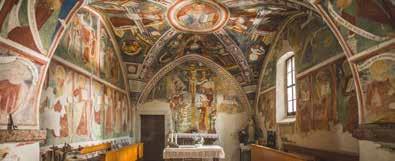
Tra i campi coltivati del Bleggio, dietro la sobrietà delle forme esterne, la chiesa custodisce uno dei cicli più significativi della pittura sacra trentina: il Cristo Pantocratore con i Dottori della Chiesa, la Crocifissione, teorie di santi realizzati nel 1496 da Cristoforo II Baschenis.
SAN FELICE KIRCHE
Mitten in den Feldern des Bleggio verbirgt die Kirche hinter schlichten Mauern einen der bedeutendsten Zyklen sakraler Malerei im Trentino: Christus Pantokrator mit Kirchenvätern, die Kreuzigung und Heiligenfiguren, 1496 von Cristoforo II Baschenis gemalt.
SAN FELICE CHURCH
Among the cultivated fields of Bleggio, behind its simple exterior, the church holds one of Trentino’s most significant cycles of sacred painting: Christ Pantocrator with the Doctors of the Church, the Crucifixion and rows of saints, created in 1496 by Cristoforo II Baschenis.
Originari della Valle
Averara (BG), i Baschenis furono una famiglia di pittori attiva tra la metà del Quattrocento e la metà del Seicento. Le loro opere arricchiscono numerose chiese del Trentino occidentale.
Die Baschenis waren eine aus dem Valle Averara (Bergamo) stammende Malerfamilie, die zwischen der Mitte des 15. und der Mitte des 17. Jahrhunderts tätig war. Ihre Werke schmücken zahlreiche Kirchen im westlichen Trentino.
Originally from Valle Averara (Bergamo), the Baschenis were a family of painters active from the mid-15th to the mid-17th century. Their works adorn many churches in western Trentino.
Tenno
CHIESA DI SAN LORENZO
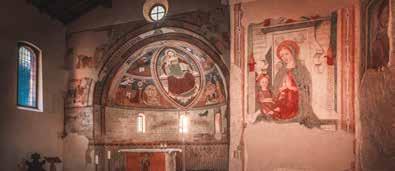
Fin dal IX secolo osserva l’Alto Garda dall’alto. Incastonati nell’abside esterna, restano pavoni e motivi intrecciati dell’antico pluteo altomedievale, mentre uno dei più illustri cicli romanici del Trentino dialoga con il Giudizio Universale del pittore gotico veronese Giuliano d’Avanzo.
SAN LORENZO KIRCHE
Seit dem 9. Jahrhundert blickt sie über den Alto Garda. In der Außenapsis sind Pfauen und Flechtmotive eines frühmittelalterlichen Pluteus erhalten, während einer der bedeutendsten romanischen Freskenzyklen im Trentino mit dem Jüngsten Gericht des Veroneser Gotikmalers Giuliano d’Avanzo in Dialog tritt.
SAN LORENZO CHURCH
Since the 9th century it has watched over Alto Garda. In the outer apse, peacocks and interwoven motifs from an early medieval pluteus remain, while one of Trentino’s finest Romanesque fresco cycles enters into dialogue with the Last Judgment by the Veronese Gothic painter Giuliano d’Avanzo
FUGITIVE CHRONICLES
Tra le saghe locali si ricorda la fuga dal castello del capitano di ventura Niccolò Piccinino nel 1439, episodio riportato da Niccolò Macchiavelli nelle Istorie fiorentine.
Zu den lokalen Sagen gehört die Flucht aus der Burg des Söldnerhauptmanns Niccolò Piccinino im Jahr 1439, die von Niccolò Machiavelli in den Florentinische Geschichten überliefert wurde.
Among the local legends is the escape from the castle of the mercenary captain Niccolò Piccinino in 1439, recorded by Niccolò Machiavelli in the Florentine Histories.
Calavino
CHIESA DI SANTA MARIA ASSUNTA
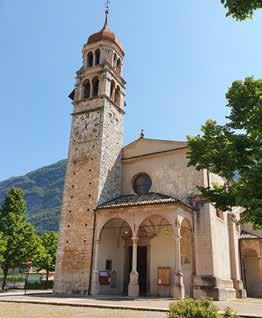
Le prime testimonianze risalgono al 1236, ma le origini sono più antiche. La chiesa acquista particolare importanza nel XVI secolo, con la pala attribuita a Marcello Fogolino sul lato sinistro della navata e la cappella della famiglia Madruzzo, affrescata da un esponente della scuola di Tiziano.
SANTA MARIA ASSUNTA KIRCHE
Die ersten Zeugnisse stammen aus dem Jahr 1236, die Ursprünge sind jedoch älter. Im 16. Jahrhundert gewann die Kirche an Bedeutung mit dem Fogolino zugeschriebenen Altarbild im linken Seitenschiff und der Madruzzo-Kapelle, gestaltet von einem Vertreter der Tizian-Schule.
SANTA MARIA ASSUNTA CHURCH
The first records date back to 1236, yet its origins are even older. In the 16th century, the church gained particular importance, with an altarpiece attributed to Marcello Fogolino on the left side of the nave and the Madruzzo family chapel, frescoed by a painter of Titian’s school.
Mori
SANTUARIO DI MONTALBANO
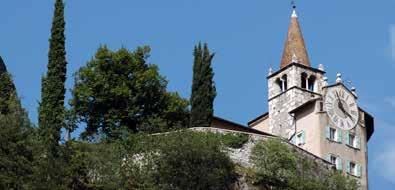
Il Santuario della Beata Maria Vergine domina il paese di Mori e la piana dell’Adige fin dal 1556, anno della sua costruzione. Sotto il campanile a cuspide, il grande orologio, con i suoi quattro metri di diametro, scandisce il tempo e accompagna le giornate.
HEILIGTUM VON MONTALBANO
Seit 1556, dem Jahr seiner Errichtung, überragt das Heiligtum der Beata Maria Vergine das Dorf Mori und die Etschebene. Unter dem spitzen Glockenturm gibt die große Uhr mit ihren vier Metern Durchmesser den Takt an und begleitet den Tag.
SANCTUARY OF MONTALBANO
Since 1556, the year of its construction, the Sanctuary of the Blessed Virgin Mary has overlooked the village of Mori and the Adige plain. Beneath the pointed bell tower, the great clock, four metres in diameter, marks the passing of time and accompanies the day.
Dietro la chiesa affiorano le rovine del Castello di Montalbano, costruito nel XIII secolo e distrutto dai veneziani nel 1439, dopo la rivolta di Guglielmo Castelbarco di Lizzana.
Hinter der Kirche treten die Ruinen der Burg von Montalbano hervor, im 13. Jahrhundert erbaut und 1439 von den Venezianern nach dem Aufstand von Guglielmo Castelbarco di Lizzana zerstört.
Behind the church rise the ruins of Montalbano Castle, built in the 13th century and destroyed by the Venetians in 1439 after the revolt of Guglielmo Castelbarco di Lizzana.
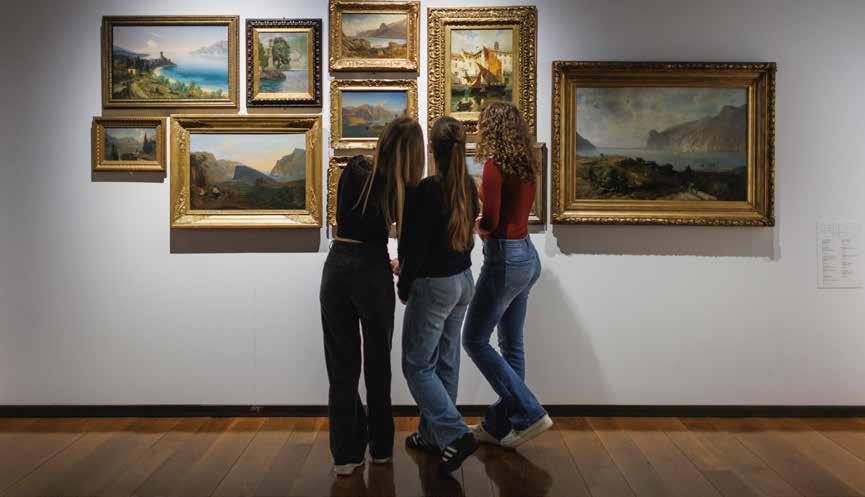
MUSEUMS
DIE HÜTER UNSERER IDENTITÄT
Die Museen im Garda Trentino erzählen von den tiefsten Wurzeln der Region. Tritt ein und folge deiner Neugier durch die Räume: du entdeckst nicht nur Kunst und Funde, sondern auch Wissenschaft und Traditionen, die bis heute lebendig sind. Folge deinem Kompass: es gibt noch viel zu entdecken.
THE KEEPERS OF OUR HERITAGE
The museums of Garda Trentino tell the story of the region’s deepest roots. Step inside and follow your curiosity through the rooms: you will discover not only art and artefacts, but also science and traditions kept alive through time. Follow your compass: there is still so much to explore.
I CUSTODI DEL NOSTRO PATRIMONIO
I musei del Garda Trentino raccontano le radici più profonde del territorio. Entra e percorri le sale seguendo la curiosità: scoprirai non solo arte e reperti, ma anche scienza e tradizioni mantenute vive nel tempo. Segui la tua bussola: c’è ancora molto da esplorare.
gardatrentino.it/museums
MAG – MUSEO ALTO GARDA E TORRE APPONALE
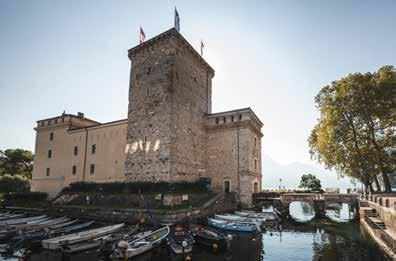
Da castrum novum Ripae a dimora dei principi vescovi, la Rocca ospita oggi il Museo Alto Garda, dedicato alla storia e all’arte del territorio. Il percorso parte dalle statue-stele, rende omaggio a Francesco Hayez e racconta il passato bellico dell’Alto Garda.
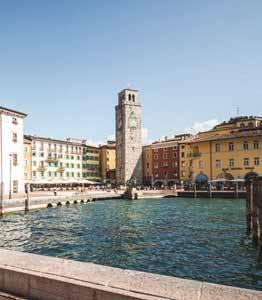
La Torre Apponale, costruita nel XII secolo a difesa del porto e della piazza, regala uno sguardo sul centro storico di Riva e sul lago. In cima si trova uno dei simboli della città: l’Anzolim de la Tor, il segnavento dorato che da secoli accompagna la vita del borgo.
MAG – ALTO GARDA MUSEUM UND APPONALE TURM
Vom castrum novum Ripae zur Residenz der Fürstbischöfe: heute beherbergt die Rocca das Museo Alto Garda mit Geschichte und Kunst des Garda Trentino. Der Rundgang beginnt bei den Stelenstatuen, würdigt Francesco Hayez und erzählt von der kriegerischen Vergangenheit des Alto Garda.
Der im 12. Jahrhundert zur Verteidigung von Hafen und Platz errichtete Torre Apponale schenkt dir einen weiten Blick über die Altstadt von Riva und den See. Oben thront eines der Wahrzeichen der Stadt: das Anzolim de la Tor, der goldene Wetterhahn in Engelsform, der seit Jahrhunderten das Leben des Borgos begleitet.
MAG – ALTO GARDA MUSEUM AND APPONALE TOWER
From castrum novum Ripae to the residence of the prince-bishops, the Rocca now hosts the Museo Alto Garda, dedicated to the history and art of the Garda Trentino area. The route begins with the statue-stelae, pays tribute to Francesco Hayez and recounts the wartime past of Alto Garda.
Built in the 12th century to defend the harbour and main square, the Torre Apponale offers sweeping views over Riva’s historic centre and the lake. At the top sits one of the city’s symbols: the Anzolim de la Tor, the golden weather vane in the shape of an angel that has accompanied village life for centuries.
Prima della Rocca, Riva aveva un altro castello, il castrum veterum, oggi scomparso. Passeggiando per il centro, se osservi con attenzione, potresti riuscire a vedere alcuni resti nascosti.
Vor der Rocca besaß Riva eine weitere Burg, das Castrum veterum, heute verschwunden. Wenn du durch das Zentrum spazierst und genau hinsiehst, entdeckst du vielleicht noch verborgene Spuren.
Before the Rocca, Riva had another castle, the castrum veterum, now lost. As you stroll through the centre, look closely and you might spot a few hidden remains.
Riva del Garda
Arco
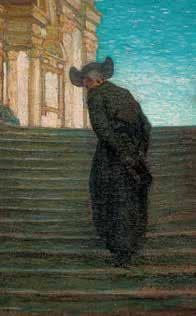
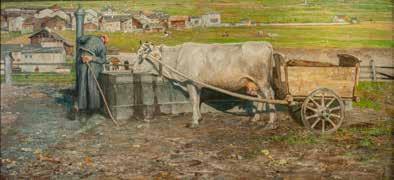
GALLERIA CIVICA GIOVANNI SEGANTINI
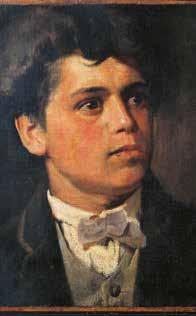
La Galleria Civica G. Segantini celebra il legame del pittore divisionista con la sua città natale. Un percorso tematico ripercorre la sua intera produzione, dalla giovinezza alla maturità, con opere come Autoritratto giovanile (I), A Messa ultima (II), L’ora mesta e Sole d’autunno (III)
STÄDTISCHE GALERIE GIOVANNI SEGANTINI
Die Galleria Civica G. Segantini würdigt die Verbindung des divisionistischen Malers mit seiner Heimatstadt Ein thematischer Rundgang zeichnet sein gesamtes Schaffen nach und präsentiert Werke wie Jugendliches Selbstbildnis (I), Die letzte Messe (II), Die traurige Stunde und Herbstsonne (III).
GIOVANNI SEGANTINI CIVIC GALLERY
The Galleria Civica G. Segantini celebrates the bond between the Divisionist painter and his hometown. A thematic itinerary traces his entire artistic production, featuring works such as Self-Portrait as a Young Man (I), The Last Mass (II), The Hour of Sadness, and Autumn Sun (III).
Giovanni Segantini (Arco, 1858 – Schafberg, 1899) è considerato uno dei grandi maestri del divisionismo italiano. Le sue opere affrontano tematiche legate alla vita contadina e rurale alpina, al legame tra madre e figlio e all’intreccio simbolico tra natura, vita e morte.
Giovanni Segantini (1858 – 1899) gilt als einer der großen Meister des italienischen Divisionismus. Seine Werke behandeln Themen des bäuerlichen und alpinen Landlebens, die Bindung zwischen Mutter und Kind sowie das symbolische Zusammenspiel von Natur, Leben und Tod.
Giovanni Segantini (1858 – 1899) is regarded as one of the great masters of Italian Divisionism His works explore themes connected to Alpine rural and farming life, the bond between mother and child, and the symbolic interplay between nature, life and death.
A SPLASH OF ART
Il divisionismo è un fenomeno pittorico italiano di fine XIX e inizio XX secolo, che prevede l’accostamento dei colori in piccoli tratti o punti, ottenendo effetti di luce intensi e brillanti.
Der Divisionismus ist eine italienische Malrichtung des späten 19. und frühen 20. Jahrhunderts. Farben werden in kleinen Strichen oder Punkten gesetzt, wodurch intensive Lichteffekte entstehen.
Divisionism is an Italian painting movement from the late 19th and early 20th centuries, which involves placing colors in small strokes or dots, creating intense and brilliant light effects.
Pieve di Ledro
LABORATORIO E MUSEO A. FOLETTO
Fin dal 1850 la famiglia Foletto trasmette di generazione in generazione saperi legati alla tradizione farmaceutica e alle erbe medicinali. La loro farmacia curava un tempo l’intera valle, oggi è un museo aperto a chi desidera conoscere la produzione di creme, sciroppi e liquori artigianali.
MUSEUM DES PHARMALABORS A. FOLETTO
Seit 1850 gibt die Familie Foletto ihr Wissen über pharmazeutische Tradition und Heilkräuter von Generation zu Generation weiter. Einst versorgte ihre Apotheke das ganze Tal, heute ist sie ein Museum für alle, die die Herstellung von handgemachten Cremes, Sirupen und Likören entdecken möchten.
PHARMACY LAB A. FOLETTO’S MUSEUM
Since 1850, the Foletto family has passed down knowledge of pharmaceutical traditions and medicinal herbs from generation to generation. Once serving the entire valley, their pharmacy is now a museum open to those who wish to discover the making of handcrafted creams, syrups and liqueurs.
Nell’ultimo decennio dell’Ottocento, la passione e gli studi di Angelo Foletto portarono alla realizzazione di un erbario di circa 1.700 campioni, un prezioso documento della biodiversità locale.
Im letzten Jahrzehnt des 19. Jahrhunderts führten Leidenschaft und Studien von Angelo Foletto zur Anlage eines Herbariums mit rund 1.700 Proben, ein wertvolles Zeugnis der lokalen Biodiversität.
In the last decade of the 19th century, Angelo Foletto’s passion and studies led to the creation of a herbarium of about 1,700 specimens, a precious record of local biodiversity.
Padergnone
CASA CAVEAU VINO SANTO
L’ottocentesco appassitoio Rigotti rivive oggi come Casa Caveau Vino Santo, dove si tramandano il sapere e il processo che trasformano la Nosiola, l’unico vitigno a bacca bianca autoctono del Trentino, in Vino Santo Trentino DOC, il “Passito dei passiti”.
CASA CAVEAU VINO SANTO
Der Traubentrocknungsraum Rigotti aus dem 19. Jahrhundert lebt heute als Casa Caveau Vino Santo weiter. Hier wird das Wissen bewahrt, das die Nosiola, die einzige autochthone weiße Rebsorte des Trentino, in den Vino Santo Trentino DOC verwandelt, den “Passito dei passiti”
CASA CAVEAU VINO SANTO
The 19th-century Rigotti drying house now lives on as Casa Caveau Vino Santo, where the knowledge and techniques that transform Nosiola, Trentino’s only native white grape, into Vino Santo Trentino DOC, the “Passito dei passiti”, are passed down.
SLOW FOOD
Vino Santo Trentino DOC, Presidio Slow Food, nasce da un lungo appassimento naturale di cinque o sei mesi. In effetti è il più lungo al mondo e produce un vino dolce tra i più pregiati.
Der Vino Santo Trentino DOC, Slow Food Presidio, entsteht durch eine fünf- bis sechsmonatige natürliche Trocknung, die längste der Welt. So entsteht ein edelsüßer Wein von besonderer Qualität. Vino Santo Trentino DOC, a Slow Food Presidio, is made through a natural drying process lasting five to six months, the longest in the world. The result is an exceptionally refined sweet wine.

GLI ECOMUSEI DEL GARDA TRENTINO
Un ecomuseo è un “museo del territorio”, senza confini fisici, che mette al centro la comunità e il suo impegno nella tutela e nella valorizzazione del patrimonio culturale e naturale, espressione dell’identità e della memoria condivisa. Nel Garda Trentino hanno sede l’Ecomuseo della Judicaria “Dalle Dolomiti al Garda”, attivo dal 1999, e l’Ecomuseo della Valle dei Laghi, costituito nel 2015.
DIE ECOMUSEEN DES GARDA TRENTINO
Ein Ecomuseo ist ein “Museum des Territoriums“ ohne feste Grenzen. Im Mittelpunkt stehen die Gemeinschaft und ihr Engagement für den Schutz und die Aufwertung des kulturellen und natürlichen Erbes als Ausdruck gemeinsamer Identität und Erinnerung. Im Garda Trentino haben zwei Ecomuseen ihren Sitz: das Ecomuseo della Judicaria “Dalle Dolomiti al Garda”, aktiv seit 1999, und das Ecomuseo della Valle dei Laghi, gegründet 2015.
THE ECOMUSEUMS OF GARDA TRENTINO
An Ecomuseum is a “museum of the territory” without physical boundaries. It places the community at its heart, promoting the protection and enhancement of cultural and natural heritage as an expression of shared identity and memory. Garda Trentino is home to two ecomuseums: the Ecomuseo della Judicaria “Dalle Dolomiti al Garda”, active since 1999, and the Ecomuseo della Valle dei Laghi, established in 2015.
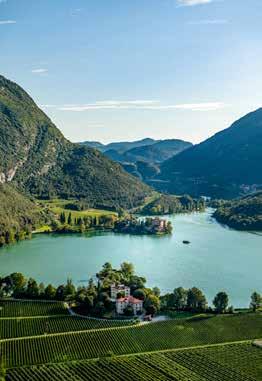
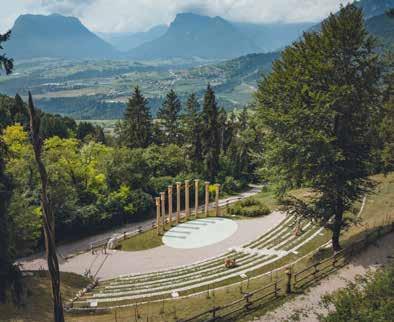
Gli ecomusei ti accompagnano alla scoperta di luoghi, storie e angoli meno conosciuti attraverso attività e percorsi (solo in italiano).
Die Ecomuseen begleiten dich mit Aktivitäten und Routen bei der Entdeckung wenig bekannter Orte, Geschichten und verborgener Winkel (nur auf Italienisch).
The Ecomuseums guide you through activities and routes to discover lesser-known places, stories and hidden corners (Italian language only).
VALLE DEI LAGHI
COMANO
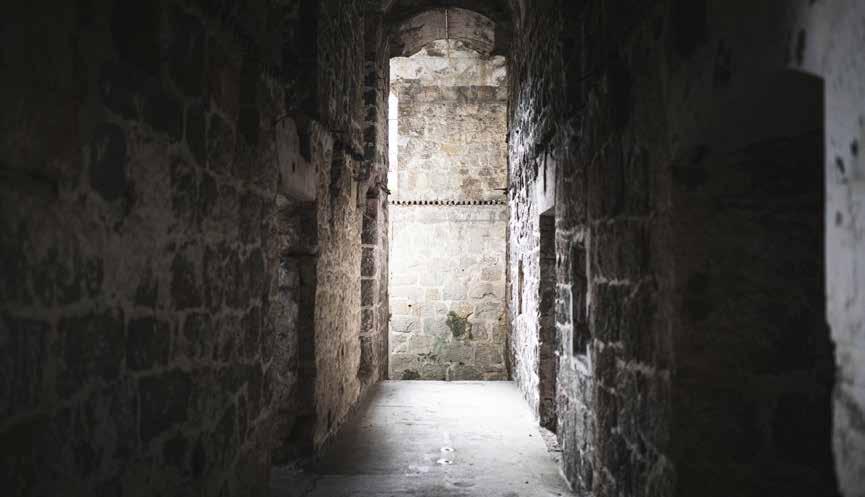
WORLD WAR I
IN PRIMA LINEA NEL RICORDO
Posto sul confine tra Italia e Impero austro-ungarico, il Garda Trentino fu segnato profondamente dalla Prima Guerra Mondiale. Sulle montagne si combatteva per conquistare posizioni strategiche e avanzare lungo il fronte.
Forti, trincee e gallerie restano come cicatrici, memoria di coraggio e dolore.
IM ZEICHEN DER ERINNERUNG
An der Grenze zwischen Italien und der k.u.k Monarchie gelegen, prägte der Erste Weltkrieg das Garda Trentino tief. In den Bergen wurde gekämpft, um strategische Stellungen zu erobern und an der Front vorzurücken. Festungen, Schützengräben und Stollen bleiben als Narben und erinnern an Mut und Leid.
AT THE FOREFRONT OF REMEMBRANCE
Located on the border between Italy and the Austro-Hungarian Empire, Garda Trentino was deeply marked by the First World War. In the mountains, battles were fought to seize strategic positions and advance along the front. Forts, trenches and tunnels remain like scars, a memory of courage and suffering. gardatrentino.it/great-war
Riva del Garda
FORTI DEL MONTE BRIONE
A difesa dell’Alto Garda, tra il 1860 e il 1907 l’Impero
austro-ungarico costruì un sistema di forti sul Monte Brione. Oggi, lungo il Sentiero della Pace, si incontrano Forte San Nicolò, Forte Garda, Batteria di Mezzo e Forte Sant’Alessandro, mai espugnati durante la Prima Guerra Mondiale.
MONTE BRIONE FESTUNGEN
Zur Verteidigung des Alto Garda errichtete die österreichischungarische Monarchie zwischen 1860 und 1907 ein Festungssystem am Monte Brione. Entlang des Sentiero della Pace triffst du auf Forte San Nicolò, Forte Garda, Batteria di Mezzo und Forte Sant’Alessandro, im Ersten Weltkrieg uneingenommen.
MONTE BRIONE FORTS
To defend Alto Garda, the Austro-Hungarian Empire built a system of forts on Monte Brione between 1860 and 1907. Today, along the Sentiero della Pace, you encounter Forte San Nicolò, Forte Garda, Batteria di Mezzo and Forte Sant’Alessandro, never conquered during the First World War.
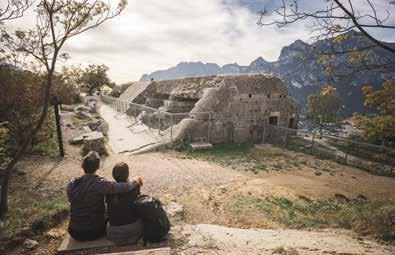
Sul Brione si trovano quattro generazioni di forti, ciascuna con una funzione specifica di controllo degli accessi all’Alto Garda. Solo Forte Garda aveva funzione sia difensiva sia offensiva.
Am Monte Brione finden sich vier Generationen von Festungen, jede mit einer eigenen Funktion zur Kontrolle der Zugänge zum Alto Garda. Nur das Forte Garda hatte sowohl eine defensive als auch eine offensive Funktion.
On Monte Brione, four generations of forts stand, each designed to control access to Alto Garda. Only Forte Garda had both defensive and offensive functions.
Riva del Garda
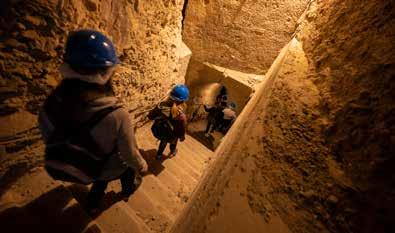
TAGLIATA DEL PONALE
Il Sentiero del Ponale non è solo un percorso tra scorci e pareti a picco sul lago. Nelle sue gallerie si cela una delle più audaci opere di ingegneria militare di inizio Novecento: la Tagliata del Ponale, un invisibile sistema fortificato interamente scavato nella roccia del monte Rocchetta.
TAGLIATA DEL PONALE
Der Ponaleweg ist mehr als nur ein Panoramaweg mit steilen Felswänden über dem See. In seinen Tunneln verbirgt sich eines der kühnsten militärischen Bauwerke des frühen 20. Jahrhunderts: die Tagliata del Ponale, ein unsichtbares Verteidigungssystem, vollständig in den Fels der Monte Rocchetta gehauen.
TAGLIATA DEL PONALE
The Ponale Trail is more than just a scenic route with cliffs plunging above the lake. Within its tunnels lies one of the boldest feats of early 20th-century military engineering: the Tagliata del Ponale, an invisible fortified system entirely carved into the rock of Monte Rocchetta.
BECOME AN EXPLORER
La Tagliata del Ponale, attiva tra il 1904 e il 1918, è solitamente chiusa al pubblico e accessibile solo attraverso l’Experience “Mondo Ponale”.
Die Tagliata del Ponale, zwischen 1904 und 1918 aktiv, ist normalerweise für Besucher geschlossen und nur im Rahmen der Experience “Mondo Ponale” zugänglich.
Active between 1904 and 1918, the Tagliata del Ponale is usually closed to the public and can be accessed only through the “Mondo Ponale” Experience
Bezzecca
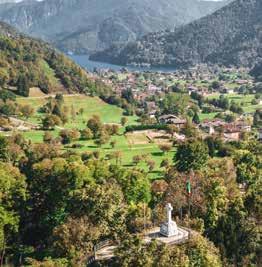
COLLE DI SANTO STEFANO
Il Colle di Santo Stefano, teatro delle battaglie
risorgimentali e della Grande Guerra, invita alla memoria e al raccoglimento. Accanto alla chiesetta, oggi Sacrario Militare, una scala a chiocciola conduce alla Galleria “La Marmora” e al complesso difensivo che sovrasta l’altura.
COLLE DI SANTO STEFANO
Der Colle di Santo Stefano, Schauplatz der Kämpfe des Risorgimento und des Ersten Weltkriegs, lädt zum Erinnern und Innehalten ein. Neben der kleinen Kirche, heute Militärheiligtum, führt eine Wendeltreppe zur Galleria “La Marmora“ und zur Verteidigungsanlage oberhalb des Hügels.
COLLE DI SANTO STEFANO
Colle di Santo Stefano, scene of the battles of the Risorgimento and the First World War, invites reflection and remembrance. Next to the small church, now a Military Shrine, a spiral staircase leads to the “La Marmora” Gallery and the defensive complex overlooking the hill.
Il 9 agosto 1866, a Bezzecca, Garibaldi pronunciò via telegramma il celebre “Obbedisco”, fermando l’avanzata italiana verso Trento. Il Museo Garibaldino e della Grande Guerra ripercorre queste vicende.
Am 9. August 1866 sandte Garibaldi in Bezzecca das berühmte Telegramm “Obbedisco” und stoppte den Vormarsch auf Trient. Das Museo Garibaldino e della Grande Guerra erzählt diese Ereignisse.
On 9 August 1866, in Bezzecca, Garibaldi sent the famous telegram “Obbedisco”, halting the Italian advance toward Trento. The Museo Garibaldino e della Grande Guerra retraces these events.
Nago / Val di Gresta
LA LINEA DEI FORTI: DAL MONTE CORNO ALLA VAL DI GRESTA
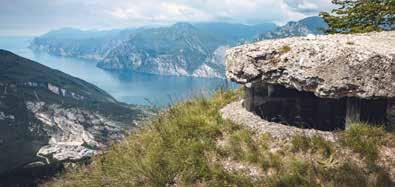
Un intricato reticolo di trincee e postazioni militari, risalenti al periodo di dominazione asburgica, attraversa le montagne della Val di Gresta. Un secolo dopo, al posto di batterie e osservatori d’artiglieria, si incontrano ampi panorami sul Garda e sulle Dolomiti di Brenta.
DIE FORTLINIE: VOM MONTE CORNO INS VAL DI GRESTA Ein dichtes Netz aus Schützengräben und Militärstellungen aus der Zeit der Habsburger Herrschaft durchzieht die Berge der Val di Gresta. Ein Jahrhundert später eröffnen sich dort statt Batterien und Artilleriebeobachtern weite Ausblicke auf den Gardasee und die Brenta-Dolomiten.
THE FORT LINE: FROM MONTE CORNO TO VAL DI GRESTA An intricate network of trenches and military posts dating back to Habsburg rule runs across the mountains of Val di Gresta. A century later, where batteries and artillery observers once stood, wide views open over Lake Garda and the Brenta Dolomites.
BECOME AN EXPLORER
Biaena, Faè, Corno, Creino, Nagià Grom: un insieme di cime da attraversare lungo gli itinerari della Grande Guerra, dove i segni del passato accompagnano lo sguardo sul paesaggio.
Biaena, Faè, Corno, Creino, Nagià Grom: eine Kette von Gipfeln entlang der Wege des Ersten Weltkriegs, wo Spuren der Vergangenheit deinen Blick durch die Landschaft begleiten.
Biaena, Faè, Corno, Creino, Nagià Grom: a chain of peaks along the First World War routes, where traces of the past accompany your gaze across the landscape.
LIVING HISTORY
OPERE D’ARTE A CIELO APERTO
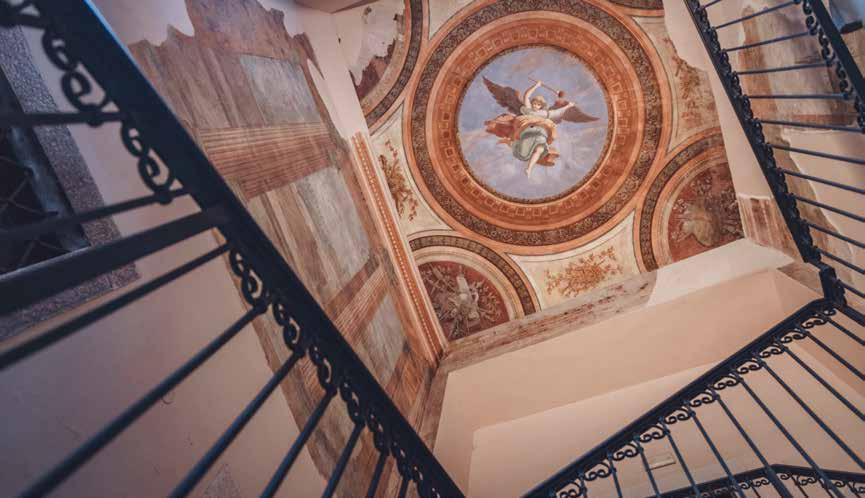
I centri del Garda Trentino sono quadri in continua evoluzione, ritoccati dai colori delle diverse epoche. Dai palazzi affrescati ai ponti romani, dalle porte medievali alle stazioni e alle sale da ballo imperiali, fino ai monumenti più recenti. Un racconto che si lascia leggere camminando.
KUNSTWERKE UNTER FREIEM HIMMEL
Die Orte im Garda Trentino sind Gemälde im Wandel, übermalt von den Farben verschiedener Epochen.
Von freskengeschmückten Palästen über römische Brücken und mittelalterliche Tore bis zu Bahnhöfen, kaiserlichen Ballsälen und den jüngsten Monumenten. Eine Geschichte, die du beim Gehen entdeckst.
ART IN THE OPEN AIR
The towns of Garda Trentino are ever-evolving paintings, retouched by the colors of different eras. From frescoed palaces to Roman bridges, from medieval gates to imperial railway stations and ballrooms, and on to the most recent monuments. A story you discover as you walk.
gardatrentino.it/living-history
Riva del Garda
CENTRALE IDROELETTRICA DI RIVA DEL GARDA
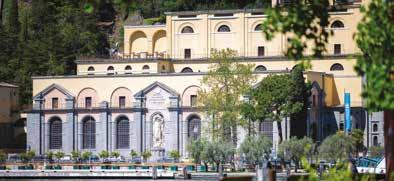
Dal 1925, l’imponente architettura con il Genio delle Acque, opera di Silvio Zaniboni, segna l’orizzonte del lungolago di Riva del Garda. Progettata da Giancarlo Maroni, la struttura è un capolavoro tecnico che produce elettricità sfruttando l’acqua del lago di Ledro.
WASSERKRAFTWERK VON RIVA DEL GARDA
Seit 1925 prägt die monumentale Architektur mit dem Genio delle Acque von Silvio Zaniboni die Uferpromenade von Riva del Garda. Von Giancarlo Maroni entworfen, ist die Anlage ein technisches Meisterwerk, das Strom aus dem Wasser des Ledrosees erzeugt.
RIVA DEL GARDA HYDROELECTRIC POWER PLANT
Since 1925, the imposing structure crowned by the Genio delle Acque by Silvio Zaniboni has defined the skyline of Riva del Garda’s lakeside. Designed by Giancarlo Maroni, the structure is a technical masterpiece that generates electricity using the waters of Lake Ledro.
LOOK UP
La chiesetta di Santa Barbara domina Riva del Garda dall’alto; fu costruita nel 1927 dai minatori impegnati nella costruzione della centrale e delle condotte.
Die kleine Santa Barbara Kirche überragt Riva del Garda; sie wurde 1927 von den Bergleuten erbaut, die am Bau des Kraftwerks und der Druckleitungen arbeiteten.
The small Santa Barbara Church overlooks Riva del Garda; it was built in 1927 by the miners involved in constructing the power plant and its pipelines.
Riva del Garda
SPIAGGIA DEGLI OLIVI
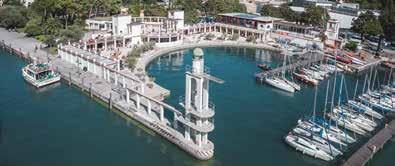
Inaugurata nel 1934 alla presenza di Gabriele D’Annunzio, la Spiaggia degli Olivi nasce dalla visione dell’“Architetto del lago”, che volle donare a Riva del Garda un lido vicino alla Rocca. Negli anni ’60 e ’70 divenne uno dei luoghi simbolo della Dolce Vita locale, tra musica e serate mondane.
SPIAGGIA DEGLI OLIVI
1934 in Anwesenheit von Gabriele D’Annunzio eröffnet, entstand die Spiaggia degli Olivi aus der Vision des “Architekten des Sees“, der Riva del Garda ein Strandbad nahe der Rocca schenken wollte. In den 1960er- und 70er-Jahren wurde es zum Symbol der lokalen Dolce Vita mit Musik und mondänen Abenden.
SPIAGGIA DEGLI OLIVI
Inaugurated in 1934 in the presence of Gabriele D’Annunzio, Spiaggia degli Olivi was born from the vision of the “Architect of the Lake”, who wished to gift Riva del Garda a lido by the Rocca. In the 1960s and 1970s, it became a symbol of the local Dolce Vita, filled with music and glamorous evenings.
Soprannominato l’“Architetto del lago”, Giancarlo Maroni firmò numerosi progetti a Riva del Garda e non solo, tra cui il celebre Vittoriale degli Italiani per l’amico Gabriele D’Annunzio.
Als “Architekt des Sees“ bekannt, zeichnete Giancarlo Maroni zahlreiche Projekte in Riva del Garda und darüber hinaus, darunter das berühmte Vittoriale degli Italiani für seinen Freund Gabriele D’Annunzio.
Nicknamed the “Architect of the Lake”, Giancarlo Maroni designed numerous projects in Riva del Garda and beyond, including the famous Vittoriale degli Italiani for his friend Gabriele D’Annunzio.
Pietramurata
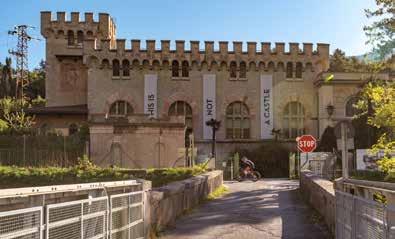
CENTRALE DI FIES
Ispirata all’architettura di un castello medievale, la Centrale di Fies si è reinventata nel tempo, passando dalla produzione di energia a spazio dedicato all’arte contemporanea e alle performance. Un luogo culturale che ha dato origine e sviluppo al Centrale Fies Festival.
WASSERKRAFTWERK VON FIES
Von der Architektur einer mittelalterlichen Burg inspiriert, hat sich die Centrale di Fies neu erfunden: von der Energieproduktion zu einem Ort für zeitgenössische Kunst und Performance. Ein Kulturort, aus dem das Centrale Fies Festival hervorging und sich entwickelte.
FIES HYDROELECTRIC POWER PLANT
Inspired by the architecture of a medieval castle, Centrale di Fies has reinvented itself over time, transforming from a power plant into a space for contemporary art and performance. A cultural venue that gave birth to and fostered the Centrale Fies Festival
OPENING TIME
La Centrale di Fies è accessibile al pubblico in occasione di eventi, manifestazioni e iniziative culturali organizzate al suo interno.
Die Centrale di Fies ist bei Veranstaltungen, Events und kulturellen Initiativen im Inneren für dich zugänglich.
Centrale di Fies is open to the public during events, festivals and cultural initiatives held inside the venue.
Santa Massenza
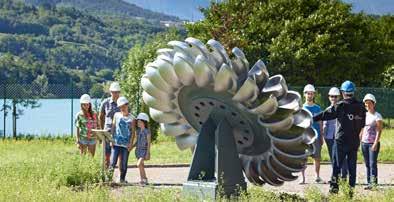
CENTRALE IDROELETTRICA DI SANTA MASSENZA
Dalle cime dell’Adamello al lago di Garda, l’acqua percorre gallerie e condotte fino alle turbine, collocate a 600 metri di profondità nel cuore della montagna, dove si trasforma in energia elettrica rinnovabile. Un sistema che rende questa centrale la più potente del Trentino.
WASSERKRAFTWERK VON SANTA MASSENZA
Von den Gipfeln des Adamello bis zum Gardasee fließt das Wasser durch Stollen und Leitungen zu den Turbinen, 600 Meter tief im Berg. Dort verwandelt es sich in erneuerbare Energie. Ein System, das dieses Kraftwerk zum leistungsstärksten im Trentino macht.
SANTA MASSENZA HYDROELECTRIC POWER PLANT
From the peaks of Adamello to Lake Garda, water flows through tunnels and pipes to turbines set 600 metres deep inside the mountain, where it becomes renewable energy. A system that makes this plant the most powerful in Trentino
ESSENCE OF GRAPPA
Oltre alla centrale idroelettrica, Santa Massenza è nota come la “Capitale della Grappa Artigianale”, grazie alla presenza di cinque distillerie a conduzione familiare.
Neben dem Wasserkraftwerk ist Santa Massenza als “Hauptstadt des handwerklichen Grappa“ bekannt, dank fünf familiengeführter Brennereien.
Beyond the hydroelectric plant, Santa Massenza is known as the “Capital of Artisan Grappa”, thanks to its five family-run distilleries.
HIDDEN GEMS
Stacca la spina e rallenta. Nel Garda Trentino i tesori parlano a bassa voce. Sono luoghi che non cercano attenzione, ma si lasciano scoprire da chi si prende tempo per guardare. Fermati, alza gli occhi: ogni dettaglio è un segreto che chiede di essere accolto.
Schalte ab und werde langsamer. Im Garda Trentino sprechen Schätze leise. Es sind Orte, die nicht nach Aufmerksamkeit verlangen, sondern sich denen zeigen, die sich Zeit nehmen. Halte inne, heb den Blick: jedes Detail ist ein Geheimnis, das entdeckt werden will.
Switch off and slow down. In Garda Trentino, treasures speak softly. They are places that do not seek attention, but reveal themselves to those who take the time to look. Pause and look up: every detail is a secret waiting to be embraced
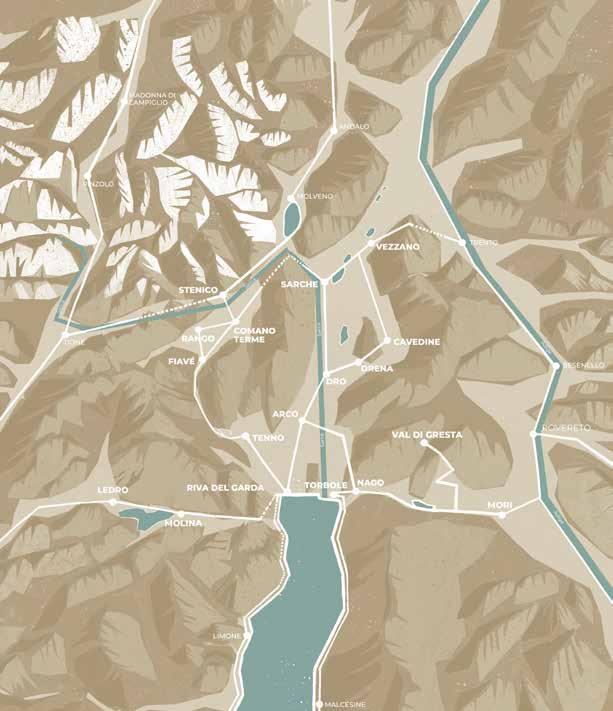
1 Via Fiume, Marocco e Porta Bruciata 2 Eremo di San Paolo Einsiedelei / Hermitage 3 Valle di Santa Lucia Tal / Valley
Cascata Gorg d’Abiss Wasserfall / Waterfall 5 Castel Restor Burg / Castle 6 Monumento alla Vicinia Denkmal / Monument 7 Chiesa di Sant’Abbondio Kirche / Church 8 Roggia di Calavino Wasserkanal / Water Channel 9 Chiesa di San Biagio Kirche / Church
HIDDEN GEMS
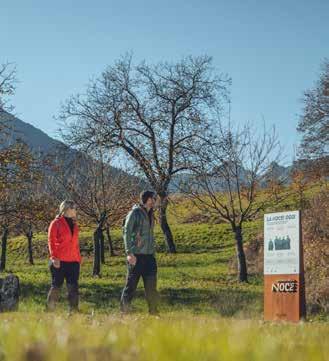
A volte però non basta osservare: bisogna mettersi in cammino e seguire le orme di chi questi sentieri li ha già percorsi. Rivivi l’impresa della Galeas per Montes, quando nel 1439 i veneziani trasportarono via terra le galee dall’Adige a Torbole lungo la valle di Santa Lucia, conquistando il dominio del lago dopo la Battaglia del Ponale. Oppure incamminati lungo il Sentiero della Noce del Bleggio, prodotto così legato al territorio da aver dato il nome a una rivolta popolare.
Perché nel Garda Trentino riecheggiano storie di imprese lontane, in attesa di tornare alla luce.
Manchmal reicht es jedoch nicht, nur zu beobachten: Man muss sich auf den Weg machen und den Spuren derer folgen, die diese Wege schon vor uns gegangen sind. Erlebe die Galeas per Montes von 1439, als venezianische Galeeren über Land von der Etsch nach Torbole durch das Valle di Santa Lucia gebracht wurden und Venedig nach der Schlacht am Ponale die Herrschaft über den See erlangte. Oder wandere auf dem Walnussweg im Bleggio, dessen berühmte Nüsse einen Volksrevolte ihren Namen gaben. Denn im Garda Trentino klingen noch Geschichten ferner Taten nach, die darauf warten, wieder ans Licht zu kommen.
But sometimes it is not enough to simply look around: you have to set out and follow in the footsteps of those who walked these paths before. Relive the feat of the Galeas per Montes, when in 1439 the Venetians hauled their galleys overland from the Adige to Torbole through the Valle di Santa Lucia, securing control of the lake after the Battle of Ponale. Or follow the Walnut Trail of Bleggio, whose famous walnuts even gave their name to a popular uprising. Because in Garda Trentino the echoes of distant feats still linger, waiting to be brought back to light.
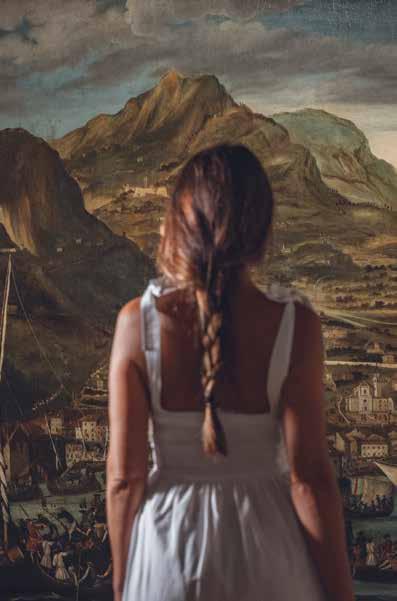
Nel 1577, più di cent’anni dopo la battaglia, Tintoretto dipinse nella Sala del Maggior Consiglio di Palazzo Ducale a Venezia il ricordo dello scontro contro i milanesi avvenuto presso la cascata del Ponale.
Im Jahr 1577, mehr als ein Jahrhundert nach der Schlacht, hielt Tintoretto das Gefecht gegen die Mailänder beim Ponale-Wasserfall in einem Gemälde in der Sala del Maggior Consiglio des Dogenpalasts in Venedig fest.
In 1577, more than a century after the battle, Tintoretto painted a scene of the clash against the Milanese near the Ponale waterfall in the Hall of the Great Council of the Doge’s Palace in Venice.
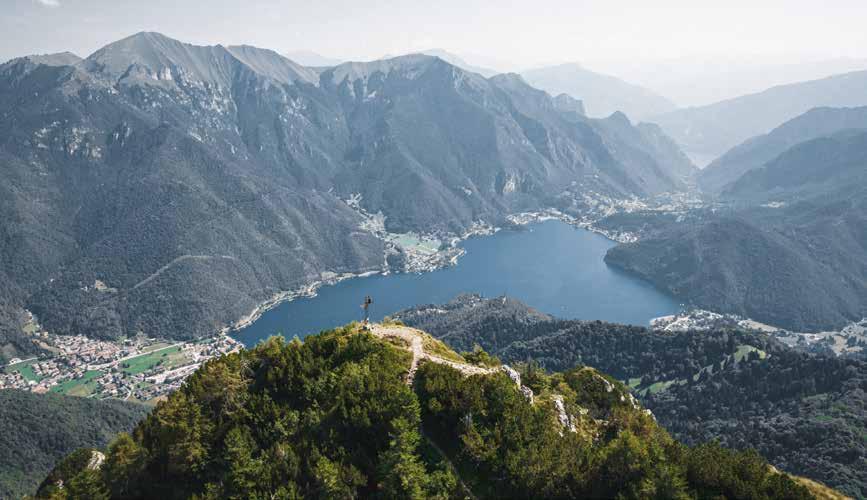
NATURE
L’INCONTRO DEGLI ELEMENTI
Il Garda Trentino è una sinfonia di acqua, aria, terra e fuoco. Laghi e corsi d’acqua seguono il ritmo dei venti, campi e vigneti germogliano grazie al clima mite, mentre foreste e Dolomiti sono guardiane della biodiversità.
Sintonizzati sulla melodia dell’Ora, il vento del Garda.
DAS ZUSAMMENSPIEL
DER ELEMENTE
Das Garda Trentino ist eine Sinfonie aus Wasser, Luft, Erde und Feuer.
Seen und Wasserläufe folgen dem Rhythmus der Winde, Felder und Weinberge gedeihen im milden Klima, während Wälder und Dolomiten als Hüter der Biodiversität wachen.
Stimme dich auf die Melodie der Ora ein, den Wind vom Gardasee.
WHERE THE ELEMENTS MEET Garda Trentino is a symphony of water, air, earth and fire. Lakes and waterways move to the rhythm of the winds, fields and vineyards thrive in the mild climate, while forests and the Dolomites stand as guardians of biodiversity. Tune in to the melody of the Ora, the wind of Lake Garda.
gardatrentino.it/nature
NATURE IS NOT A PLACE TO VISIT. IT IS HOME.
Nel Garda Trentino ci crediamo fermamente e scegliamo ogni giorno di prenderci cura della nostra destinazione. È una scelta necessaria, per rendere il territorio in cui viviamo un luogo bello da vivere, a lungo termine o solo per qualche giorno, oggi e in futuro.
Vuoi aiutarci anche tu?
Basta poco per fare la differenza.
Im Garda Trentino glauben wir fest daran und entscheiden uns jeden Tag, unsere Destination achtsam zu pflegen. Eine notwendige Wahl, damit unser Lebensraum heute und in Zukunft ein schöner Ort bleibt, für lange Zeit oder auch nur für ein paar Tage.
Möchtest du uns auch helfen? Es braucht nicht viel, um etwas zu bewegen.
In Garda Trentino, we firmly believe in this and choose every day to care for our destination. It is a necessary commitment to ensure that the place we live in remains beautiful, whether for a lifetime or just a few days, today and in the future.
Would you like to help us, too? It takes little to make a difference
gardatrentino.it/makethedifference
Porta via i rifiuti e smaltiscili correttamente.
Nimm deinen Müll mit und entsorge ihn korrekt. Take your litter with you and dispose of it properly.
Segui i sentieri segnalati e resta sui percorsi.
Folge den markierten Wegen und bleib auf den Pfaden. Follow marked trails and stay on the paths.
Non accendere fuochi e non lasciare materiali infiammabili.
Entzünde keine Feuer und hinterlasse keine brennbaren Materialien. Do not light fires or leave flammable materials behind.
Non raccogliere né danneggiare le specie protette, ma custodisci i loro colori con una foto.
Pflücke oder beschädige keine geschützten Arten.
Bewahre ihre Farben mit einem Foto.
Do not pick or damage protected species. Capture their colours in a photo instead.
Rispetta gli animali: osservali da lontano, senza flash.
Respektiere Tiere. Beobachte sie aus der Ferne und ohne Blitz. Respect wildlife. Observe from a distance and without flash.
Proteggi la biodiversità e informati su come tutelare l’equilibrio dell’ecosistema.
Schütze die Biodiversität und informiere dich, wie du das Gleichgewicht des Ökosystems bewahren kannst.
Protect biodiversity and learn how to safeguard the balance of the ecosystem.
Raccogli solo ciò che conosci bene e fai attenzione a funghi, fiori e bacche potenzialmente velenosi.
Sammle nur, was du sicher kennst, und achte auf potenziell giftige Pilze, Blumen und Beeren.
Collect only what you know well and be aware of potentially poisonous mushrooms, flowers and berries.
GARY SNYDER
BIOSFERA UNESCO ALPI LEDRENSI E JUDICARIA
Dal 2016 l’area è riconosciuta come Riserva della Biosfera
UNESCO per l’impegno nella tutela dell’ecosistema e della biodiversità. Si estende per circa 47 mila ettari e comprende ambienti molto diversi tra loro, che raccontano la ricchezza naturale del Garda Trentino.
UNESCO-BIOSPHÄRENRESERVAT ALPI LEDRENSI - JUDICARIA
Seit 2016 ist das Gebiet als UNESCO Biosphärenreservat anerkannt für sein Engagement zum Schutz von Ökosystem und Biodiversität. Es erstreckt sich über rund 47.000 Hektar und vereint sehr unterschiedliche Lebensräume, die den natürlichen Reichtum des Garda Trentino zeigen.
UNESCO BIOSPHERE RESERVE ALPI LEDRENSI – JUDICARIA
Since 2016, the area has been recognised as a UNESCO Biosphere Reserve for its commitment to protecting ecosystems and biodiversity. It covers around 47,000 hectares and includes very diverse environments that reflect the natural richness of Garda Trentino.
LAND ART
A BoscoArteStenico e Ledro Land Art le opere si intrecciano con il paesaggio, dando vita a equilibri e armonie che cambiano con il passare delle stagioni.
In BoscoArteStenico und Ledro Land Art verweben sich die Werke mit der Landschaft und schaffen Gleichgewichte und Harmonien, die sich mit den Jahreszeiten wandeln.
At BoscoArteStenico and Ledro Land Art, artworks intertwine with the landscape, creating balances and harmonies that change with the passing seasons.
PARCO NATURALE ADAMELLO BRENTA GEOPARK
Istituito nel 1967, è la più vasta area protetta del Trentino. Dal 2008 è riconosciuto come Geopark e, dal 2009, fa parte della rete UNESCO, con l’obiettivo di tutelare il patrimonio geologico e geomorfologico e promuovere uno sviluppo sostenibile del territorio.
ADAMELLO BRENTA NATURPARKS GEOPARK 1967 gegründet, ist es das größte Schutzgebiet im Trentino. Seit 2008 als Geopark anerkannt und seit 2009 Teil des UNESCO Netzwerks, setzt es sich für den Schutz des geologischen und geomorphologischen Erbes und für eine nachhaltige Entwicklung ein.
ADAMELLO BRENTA NATURAL PARK GEOPARK
Established in 1967, it is the largest protected area in Trentino. Recognised as a Geopark in 2008 and part of the UNESCO network since 2009, it works to protect its geological and geomorphological heritage and promote sustainable development.
A LONG JOURNEY
Dai ghiacciai dell’Adamello e della Presanella nasce il fiume Sarca, che attraversa il Garda Trentino fino alla foce a Torbole, passando per la forra del Limarò e la Valle dei Laghi.
Aus den Gletschern von Adamello und Presanella entspringt die Sarca. Sie durchquert das Garda Trentino bis zur Mündung in Torbole und fließt durch die Schlucht des Limarò und das Valle dei Laghi. From the glaciers of Adamello and Presanella rises the River Sarca. It flows through Garda Trentino to its mouth in Torbole, passing the Limarò gorge and the Valle dei Laghi.
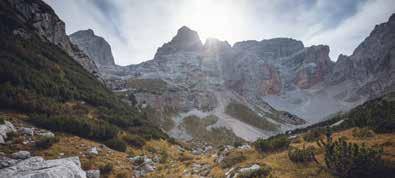
RISERVA NATURALE
MONTE BRIONE
Una mezzaluna che divide la riva del lago, custode di una delle concentrazioni floristiche più ricche dell’area gardesana. Oltre venti specie di orchidee selvatiche fioriscono in questo ambiente, dove convivono avifauna mediterranea e tracce di un passato bellico.
NATURSCHUTZGEBIET MONTE BRIONE
Eine halbmondförmige Landzunge teilt das Ufer und bewahrt eine der artenreichsten Pflanzenvielfalt im Gardagebiet. Über zwanzig Arten wilder Orchideen blühen in diesem Lebensraum, in dem mediterrane Vogelwelt und Spuren einer kriegerischen Vergangenheit nebeneinander bestehen.
MONTE BRIONE NATURE RESERVE
A crescent shape dividing the lakeshore, guardian of one of the richest concentrations of flora in the Lake Garda area. More than twenty species of wild orchids bloom in this habitat, where Mediterranean birdlife coexists with traces of a wartime past.
OUR GREEN GOLD
Nel Garda Trentino, il microclima mediterraneo dà origine all’olio d’oliva più settentrionale al mondo: un’eccellenza da scoprire tra l’Olivaia del Monte Brione e il Sentiero dell’Olivo ad Arco.
Im Garda Trentino bringt das mediterrane Mikroklima das nördlichste Olivenöl der Welt hervor. Eine Besonderheit, die du zwischen der Olivaia am Monte Brione und dem Olivenweg in Arco entdecken kannst.
In Garda Trentino, the Mediterranean microclimate gives rise to the northernmost olive oil in the world. A true excellence to discover between the Monte Brione olive grove and the Olive Trail in Arco.
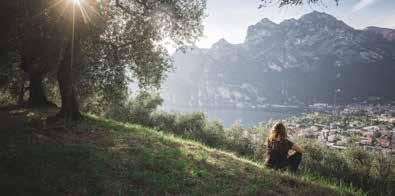
RISERVA NATURALE
MAROCCHE DI DRO
La più grande frana postglaciale delle Alpi ha creato un paesaggio atipico per il Garda Trentino: una distesa di maròc, grandi blocchi di roccia. In questo ambiente, tra formazioni geologiche ben visibili, si possono osservare anche impronte di dinosauri risalenti a oltre 190 milioni di anni fa.
NATURSCHUTZGEBIET MAROCCHE DI DRO
Der größte nacheiszeitliche Bergsturz der Alpen schuf eine für das Garda Trentino ungewöhnliche Landschaft: ein Feld aus Maròc, gewaltigen Felsblöcken. In dieser Landschaft mit gut sichtbaren geologischen Formationen kannst du auch Dinosaurierspuren entdecken, die über 190 Millionen Jahre alt sind.
MAROCCHE DI DRO NATURE RESERVE
The largest postglacial landslide in the Alps created an unusual landscape for Garda Trentino: a stretch of maròc, huge rock blocks. In this landscape, with its clearly visible geological formations, you can also spot dinosaur footprints dating back more than 190 million years.
Durante gli scavi del 1907 per la Centrale di Fies, il ritrovamento di un tegolone romano e di alcune ceneri riaccese la leggenda della mitica città di Kas, sepolta sotto le Marocche.
Bei Bauarbeiten für die Centrale di Fies im Jahr 1907 wurden eine römische Ziegelplatte und Aschereste gefunden. Der Fund nährte die Legende der sagenhaften Stadt Kas, die unter den Marocche begraben sein soll.
During excavations in 1907 for the Centrale di Fies, the discovery of a Roman roof tile and ashes revived the legend of the mythical city of Kas, said to lie buried beneath the Marocche.
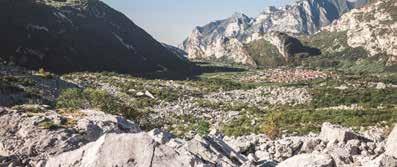
RISERVA NATURALE LOCALE
LAGO DI TENNO
Alle pendici del Monte Misone, circondato da una vegetazione fitta, il lago di Tenno riflette sfumature turchesi ed è dal 2024 riserva naturale.
A seconda delle stagioni, il livello dell’acqua può innalzarsi fino a sommergere l’isola. Dal ponte sospeso si colgono scorci particolari sul lago.
LOKALES NATURSCHUTZGEBIET TENNOSEE
An den Hängen des Monte Misone, von dichter Vegetation umgeben, schimmert der Tennosee türkis und ist seit 2024 Naturreservat. Je nach Jahreszeit steigt der Wasserspiegel und überflutet die Insel. Von der Hängebrücke genießt du besondere Ausblicke auf den See.
LOCAL NATURE RESERVE LAKE TENNO
On the slopes of Monte Misone, surrounded by lush vegetation, Lake Tenno shimmers in turquoise hues and has been a nature reserve since 2024. Depending on the season, the water level can rise enough to submerge the island. From the suspension bridge, you can enjoy unique views over the lake.
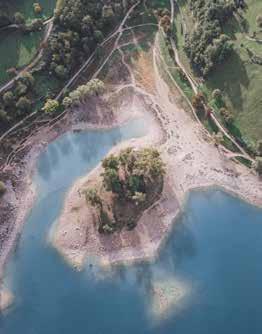
L’ORO BLU
DEL
GARDA TRENTINO
Oltre al Benaco, il Garda Trentino si apre in un mosaico di specchi d’acqua: dal lago di Ledro a un’intera vallata di laghi da favola come Toblino, fino ai limpidi cristalli di Lamar, Terlago e Lagolo, e al lago di Cavedine, racchiuso nell’anfiteatro dei Monti Brento e Casale.
DAS BLAUE GOLD DES GARDA TRENTINO
Neben dem Benaco entfaltet sich das Garda Trentino in einem Mosaik aus Seen: vom Ledrosee über das Valle dei Laghi mit Toblino bis zu den klaren Wassern von Lamar, Terlago und Lagolo, hin zum Cavedinesee im Amphitheater von Brento und Casale.
THE BLUE GOLD OF GARDA TRENTINO
Beyond Benaco, Garda Trentino unfolds in a mosaic of waters: from Lake Ledro to the Valle dei Laghi, a whole valley of fairytale lakes such as Toblino, to the clear waters of Lamar, Terlago and Lagolo, and on to Lake Cavedine, set within the amphitheatre of Mount Brento and Mount Casale.
Con il nome di Benaco, il lago di Garda compare già nelle fonti latine. L’origine del termine potrebbe risalire al celtico bennacus, “cornuto”, legato alla presenza di molti promontori.
Unter dem Namen Benaco erscheint der Gardasee bereits in lateinischen Quellen. Der Begriff könnte vom keltischen bennacus stammen, “gehörnt“, in Anspielung auf die zahlreichen Landzungen.
Under the name Benaco, Lake Garda already appears in Latin sources. The term may derive from the Celtic bennacus, meaning “horned”, referring to its many headlands.
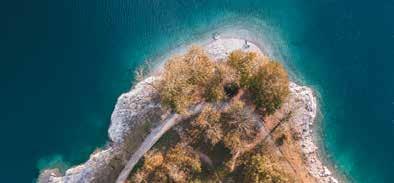
I Garda Rangers lavorano ogni giorno per mantenere in ordine sentieri, falesie e percorsi del Garda Trentino
Vedi qualcosa da sistemare?
Segnala e falli entrare in azione!
Die Garda Rangers sind täglich im Einsatz, damit Wege, Kletterspots und Trails im Garda Trentino in Bestform bleiben
Dir ist etwas aufgefallen, das nicht passt? Meld es – und bring die Rangers in Ak tion!
The Garda Rangers are out ever y day, keeping trails, crags, and routes in top shape across Garda Trentino.
Spotted something that needs fixing? Report it and get them into action!
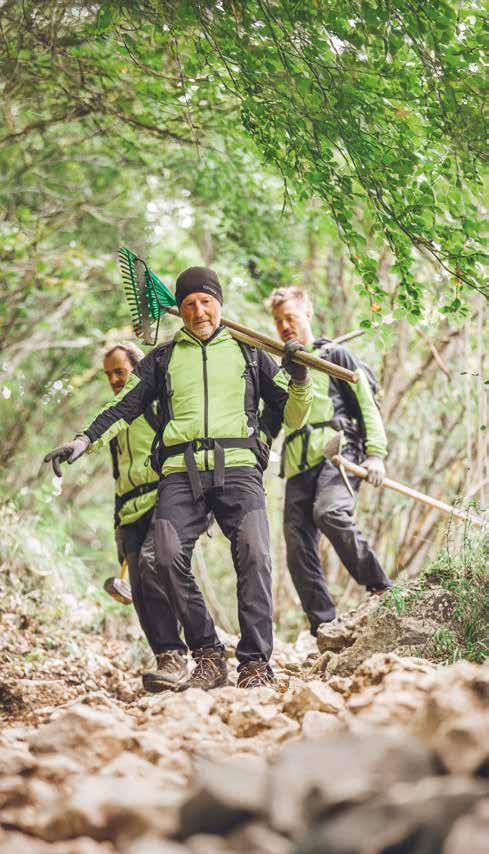
GARDA

Ingressi alle attrazioni più amate, traspor ti gratuiti e attività esclusive, tutto in una card. PRENOTA direttamente in una delle 50 0 s trutture par tner: È INCLUSA!
L A TUA GARDA GUEST CARD
Eintritt zu den beliebtes ten Attrak tionen, kos tenloser Transpor t und exklusive Ak tivitäten, alles in einer Kar te BUCHE direk t in einer unserer über 50 0 Par tnerbetriebe: DEINE GARDA GUEST CARD IST INKLUSIVE!
Acces s to the mos t beloved attrac tions , free transpor tation and exclusive ac tivities , ever y thing in one card
TUNITIES
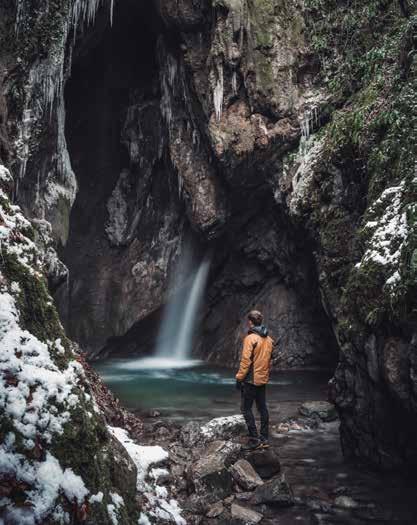
Scopri tutti i vantaggi inclusi. Entdecke die gesamten Vorteile.
BOOK direc tly in one of our 50 0 par tner f acilities: YOUR GARDA GUEST CARD IS INCLUDED! gardatrentino.it/guestcard
Discover all the benefits.

PHOTO CREDITS:
Archivio Garda Dolomiti APT Spa (Watchsome, Tommaso Prugnola, Mattia Bonavida, Michele Carrioggia, Giorgio Dubini, Jennifer Doohan)
Archivio Fondazione Museo Civico di Rovereto.
Archivio della Memoria Valle dei Laghi (Rosetta Margoni)
Trentino Marketing (Daniele Lira) @visitrovereto
Jacopo Salvi for MAG
Comune di Arco, Galleria Civica G. Segantini
@Archivio Gruppo Dolomiti Energia
ILLUSTRATION: mappa: ledolab.it
Si declina ogni responsabilità per eventuali variazioni e inesattezze per cause non dipendenti dalla nostra volontà. Wir übernehmen keine Gewähr für eventuelle Änderungen, die unabhängig von unserem Willen sind.
We do not accept any responsabilities for changes occured for reasons not dependent on our will.
Discover Garda Trentino
BRESCIA BERGAMO MILANO
VALLE DI LEDRO
Lago di Ledro
BRENNER
TRENTO INNSBRUCK MÜNCHEN ROVERETO
BOLZANO INNSBRUCK MÜNCHEN
Laghi di Lamar
Lago di Terlago
VALLE DEI LAGHI
Lago di S. Massenza
Lago di Toblino
Lago di Cavedine
Lago di Tenno
RIVA DEL GARDA
Lago di Garda
Lago di Lagolo
ROVERETO
TORBOLE SUL GARDA / NAGO
GARDA DOLOMITI AZIENDA PER IL TURISMO S.P.A.
Largo Medaglie d’Oro al Valor Militare, 5 | 38066 Riva del Garda TN - Italia +39 0464 554444 | info@gardatrentino.it gardatrentino.it
VENEZIA BERGAMO MILANO

VENEZIA