
Gannon University - Totem 2026

Page 1


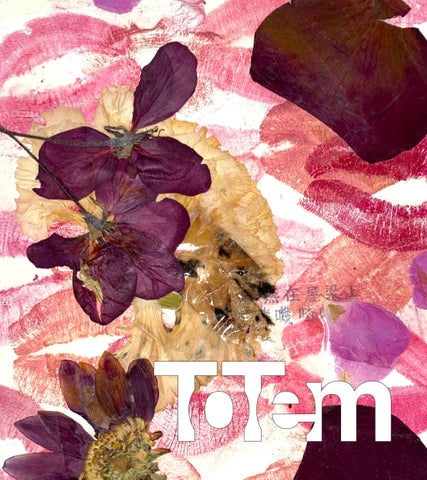
Totem is Gannon University’s annual student-produced literary-art magazine containing poetry, short stories, creative nonfiction, and visual art submitted by the students, alumni, faculty, and staff of Gannon University. Totem strives to highlight the creative talents of those in our university community by sampling a diverse range of artistic media and perspectives.
All work is read anonymously, and the work of the Gannon students is given first priority throughout the process. Totem is published in early spring of each year and is distributed free of charge throughout Gannon’s Erie, PA and Ruskin, FL campuses.

Submissions can be submitted through the Submittable link found at www.gannon.edu/totem or delivered to the English Department or the Totem office, both located in the A.J. Palumbo Academic Center, by end of the fall semester.

No part of this magazine may be reproduced without written permission of the artists and writers whose works appear.

Gannon University

109 University Square Erie, Pennsylvania 16541-0001

814.871.5886

CREDITS

EDITOR

Sophia Messenger

ASSISTANT EDITORS

Diego Casillas

Thomas Caulfield

Maeve McCormick

Juliana Romero

Alina Stiger

ADVISORS

Clayton Bradshaw-Mittal, Ph.D.

Assistant Professor, English

COVER ARTWORK

Aidai Tynybek kyzy

CREATIVE WRITING AWARD JUDGES

Candace Walsh, Ph.D. (Creative Nonfiction)

Shipra Agarwal, M.D. (Fiction)

Faylita Hicks, M.F.A. (Poetry)

THE JUDGING PROCESS

Great care was taken to select the written and artistic works that are published in Totem. Submitter names were concealed during the reading process, and readers recused themselves if they recognized the work. After reading and re-reading the submissions, the editorial staff met to discuss each submission one by one to choose those that best represent the university. For the art, a mix of students and faculty members scored their choices of work, which also had the names of the artists removed.

All Creative Nonfiction, Fiction, and Poetry submitted by students was considered for the Creative Writing Awards, judged by Candace Walsh (Creative Nonfiction), Shipra Agarwal (Fiction), and Faylita Hicks (Poetry).

Totem is grateful to every artist and writer who submitted their work this year. The submission pool is open to students in all majors, to faculty across the disciplines, and to alumni.

5 THE CRIMSON ARCHIVE; MISSALE AETERNUM Esther Ribeiro

18 I KNEW YOU, ONCE Emily Cummings

30 THE ARCANA DIVISION Yaser Hadi

50 THE END Joseph Dietz

76 THE DREAM OF A WESTERN WIND Eric Bruno

Creative Nonfiction

24 THE BEAUTY SHOP Jessie Watkins

38 IN MY MOTHER’S STRENGTH, I FOUND MY OWN Sabina Acharaya

52 BEYOND STRUGGLES: A JOURNEY OF GROWTH AND GRATITUDE Ahad Kamal Rongon

56 PAIN THAT STILL LINGERS Kensy Akem Anjeh

62 A PLACE CALLED HOME Susmita Gurung

72 THE BOY WHO CRIED Luis Bernado Nhaca Junior

88 AN ACQUAINTANCE OF DEATH Sophia Messenger Art 4 ГЕРБАРИЙ Aidai Tynybek kyzy 17 THE EDGE Mia Stone

22 COLLABORATIVE ART #4 Gannon University English Department

DAVOS Shannon Hughes 43 ALMOST GOLDEN Abby Moskala

48 LIGHT AGAINST THE VOID Brendan Miller

55 PATHWAY TO PARADISE Darci Gerber

64 DANCE OF ISLANDS Ariana Morales

68 GROWN ON THE EDGE OF THE RIVER Julie Ditz

74 CAGED DREAMS Latifa Rezayee

75 HOARD OF BOOKS Katherine Calvert

86 SLEEPY HIPPO Derek DiMatteo

87 THE VIEW OF MONT-SAINT-MICHEL Jordan Baird

94 RIDE HOME Milo Terry

LISTENING

I stutter in my own thinking unable to reconcile the cool touch of air with the ever-presence of human cruelty.

Alight in the wash of a foaming sea the sky turning in on itself like the refracted clicks of a sperm whale coda for an un-ended time.

I practice the way of making small indelible gestures reconciling memory and wonder.

A perennial hope.

The song comes to the speakers and I yearn for it like a bass line reaching for a future rhythm.

Sonorous and enveloping, the mesh of the human body cannot hold it.

And suddenly I am freed into a moment of obsolescence.

So significant to me and so blind to the world around us.

Perhaps this is often how it is: making big of something so small.

The rain keeps ticking on the roof a reminder of our connections to both sky and earth.

And the speaker fades, signals an ending.

Tynybek kyzy 1st Place, 2026 Totem Cover Art Contest

1st Place, 2026 Gannon Fiction Contest

THE CRIMSON ARCHIVE; MISSALE AETERNUM

The dorm bathroom lights buzzed the way they always did at midnight, too bright for how exhausted I felt. I leaned over the sink, splashing water on my face, trying to wake up enough to get through another page of philosophy reading. My professor had warned us about falling behind—one more absence and I’d fail.

My reflection stared back, eyes red-rimmed, skin splotchy with stress breakouts. College hadn’t been the shiny brochure of endless possibilities; it was three a.m. essays, overpriced coffee, and the creeping suspicion that everyone else was holding it together better than me.

I blinked.

And for a second, the reflection didn’t blink back.

It just…stared.

My stomach dropped. I told myself I was overtired, that the energy drinks were messing with me, that mirrors play tricks when you’re exhausted. But as I leaned closer, something dark glistened on the glass. A bead of red welled up from the corner of my reflection’s eye—like blood seeping through the surface.

I jerked back, slamming into the paper towel dispenser.

The mirror dripped. Slow, deliberate streaks of crimson running downward, as though my reflection were bleeding out. But when I touched the glass, my fingers came away dry. The streaks weren’t on this side. They were trapped inside.

“Too much caffeine,” I muttered, my voice breaking, desperate for the sound of something normal.

But when I turned to leave, the overhead light flickered. And faintly—so faintly I thought I imagined it—I heard words. Latin, whispered through the bathroom vents like a prayer half-swallowed:

“Agnus Dei… qui tollis peccata mundi…”

The prayer my grandmother used to say at Mass. The prayer for forgiveness.

Only now it didn’t sound like forgiveness. It sounded like a sentence.

The next morning, I almost convinced myself I’d dreamed it. The reflection, the blood, the whispering Latin—it had to be sleep deprivation. Midterms were creeping closer. My brain was a mess of deadlines and caffeine.

Except…

When roll was called in theology, Professor Harris skipped right over my name.

Not a pause. Not a stumble. Just—gone.

“Here,” I said quickly, before she could move on. My voice cracked from nerves, too loud in the quiet room.

She blinked at me. “Oh. Right.” Then she made a half-hearted check on her clipboard, like she was humoring me.

The guy next to me gave me a side-eye. “Chill,” he whispered. “You’re not even on the list.”

Not. On. The. List.

By the time class ended, my palms were sweating. I tried to laugh it off, to say it was a clerical error, but when I pulled up the syllabus on my phone, my name wasn’t there either. No sign I’d ever been enrolled.

Later, at lunch, after stopping by the enrollment office, I sat across from my roommate, Jess, waving a fry to get her attention.

“You’ll never believe what happened—”

She squinted. “Sorry, do I…know you?”

I froze, fry dangling mid-air. “Jess. It’s me.”

Her face stayed blank. A crease of irritation formed between her eyebrows. “Sorry, I think you’ve got me confused with someone else.” She gathered her tray and walked away.

The cafeteria buzzed around me, laughter and conversation, the clatter of silverware. Normal. Ordinary. And yet—my stomach twisted, my throat tight.

When I reached for my water cup, I noticed a smear of red on my thumb. Not ketchup. Not paint. A dark, tacky streak of blood, welling fresh from beneath my nail as though something inside me was trying to claw its way out.

By Thursday, I was sure I’d cracked.

When Professor Veyne passed back essays, forgetting to give me my essay. I raised my hand, voice shaky.

“You didn’t give me mine.”

Esther Ribeiro

He tilted his head, pity curling his lips. “You’re not in this class.”

“Yes, I am. I sit here—every Monday, Wednesday, Friday—”

His eyes went cold, like glass. “Enough.” He dropped a stack of papers on my desk anyway. The top one was covered in red ink. Not grades. Not feedback. Just the same word scrawled over and over until the page bled crimson:

“WHO?”

My throat closed.

I shoved the papers into my bag, heart pounding so loud I couldn’t hear the rest of the lecture. By the time I stumbled outside, the hallway walls seemed to pulse with whispers. Latin again. Words I’d grown up hearing in Mass but twisted, sharper:

“Corpus…sanguis…memoria…”

Body. Blood. Memory.

I pressed my palms to my ears, but it was inside me now. Crawling beneath my skin.

I thought maybe church would help.

That’s what my mom always said—go sit with God when the world feels heavy.

So on Sunday night, I slipped into the small chapel on campus. The air smelled faintly of incense and floor polish. A handful of students knelt scattered through the pews, their heads bowed. Safe. Normal.

I slid into the back row and clasped my hands so tightly the knuckles ached. The rhythm of Mass should’ve been comforting—the rise and fall of voices, the call and response. But when the priest lifted the host and chalice, the words twisted in my ears:

“Hoc est corpus meum.”

Only it didn’t sound like this is my body.

It sounded like this is your body.

And when the bells chimed, the cup overflowed—not with wine, but with something thicker, darker. Red spilled over the rim and onto the altar cloth, spreading like a wound. No one else flinched. They just kept singing.

When I went up for communion, the wafer dissolved on my tongue like iron. My teeth ached, my throat filled with copper, and when I looked up at the crucifix above the altar, Christ’s eyes wept rivulets of blood. The drops landed silently on the marble floor, splashing near my shoes.

I stumbled back to my dorm shaking, knuckles pressed white against my mouth. I was seeing things. I had to be.

But when I unlocked my door, I found my desk covered in papers I hadn’t written. Notes in red ink, scrawled in frantic Latin across my assignments:

“Sanguis pro veritate.”

Blood for truth.

“Memoria pro fide.”

Memory for faith.

I shoved them onto the floor. My breath came ragged, chest heaving.

“Stop,” I whispered. “Just stop.”

In the mirror above my dresser, my reflection tilted its head a beat too late. Blood dripped steadily from its nose, painting its shirt front red. My own skin was pale, untouched.

Something inside me broke.

I grabbed a pen from my desk and scrawled my name across my forearm. Then again on the wall. Then on the back of my notebook. The letters smeared, shaky, desperate: Don’t forget me. Don’t forget me.

By the time the sun rose, my dorm reeked of copper. My arms burned with ink and blood. The walls bled with my name.

And still, when I looked in the mirror, my reflection’s mouth moved without mine.

It was whispering.

Prayers.

In a voice that wasn’t my own.

A week has passed by, the world felt tilted.

I’d stopped trying to talk to Jess. She avoided me like I was contagious. My other friends weren’t better—at lunch, whole tables went silent when I sat down. Conversations picked up again the moment I left, like a curtain dropping after a play.

But class was worse.

I walked in and sat down at my usual desk. Pulled out my notebook and pen to take notes.

Professor Harris walked into the lecture hall, then stopped, turning her head to me. Thirty pairs of eyes swiveled to me.

“You don’t belong here.” Her voice was flat, final.

“I’m enrolled,” I shot back, clutching my notebook like a shield. “Check the roster.”

Her lips curled. “I did.”

I glanced at the board, desperate to anchor myself. But written in thick red marker, where today’s notes should have been, was only one word, scrawled over and over until the whiteboard seemed to bleed:

“HERETIC.”

A laugh bubbled out of me before I could stop it—sharp, broken, wrong.

The students around me leaned back in their chairs, whispering. Their faces blurred, features melting, eyes hollowing into black pits.

“No—” I stumbled, grabbing the desk for balance. My knuckles cracked against wood. “This isn’t real.”

“Sit down,” Harris snapped. Her voice echoed too loud, booming like it came from the walls.

“Confess.”

My knees gave out. I hit the floor, clutching my bag. Something warm and sticky slid over my fingers. When I looked down, red ink—or blood—was seeping through the canvas, spreading across the tile.

Whispers crawled through the room, layering over one another, a chorus of voices I couldn’t shut out:

“Corpus.”

“Sanguis.”

“Oblivio.”

Body. Blood. Forgetting.

I pressed my palms to my ears until they ached, but the voices burrowed inside. My breath came fast and shallow, my chest heaving like I was drowning.

And when I looked up, every student was pointing at me. Fingers raised, accusing.

“Heretic,” they hissed, in perfect unison.

By Friday night, I couldn’t breathe on campus without feeling eyes on me. My classmates whispered. My professors stared through me. Even strangers on the street seemed to step aside, like I carried a disease.

So I went back to the chapel. It was nearly empty, candles guttering low. Shadows pooled between the pews. I slipped into the confessional, the wood creaking beneath my weight.

The small grate opened with a click. A priest’s silhouette shifted behind it, faceless in the dark.

“Bless me, Father, for I have sinned,” I whispered, my voice shaking. “It’s been… it’s been months since my last confession.”

Silence.

I swallowed. My throat tasted faintly of copper. “I think I’m losing my mind. People don’t remember me. My name’s disappearing from rosters, from everything. And I keep—seeing things. Blood. Everywhere. I don’t know what’s happening. I don’t know what I did wrong.”

The silence stretched so long I thought maybe he hadn’t heard me. Then, softly, he chuckled. It wasn’t kind.

“Child,” he murmured, voice curling like smoke through the grate. “Do you not understand? You are the sin.”

My chest tightened. “What?”

“The blood you see is your own. Your memory. Your soul. It is being tithed.”

I pressed against the grate, nails digging into the wood. “Please—help me—” “Confess.” The voice sharpened. “Confess, and be forgotten.”

Something wet dripped onto my knee. I looked down. A dark stain spread across the floorboards beneath the booth, thick and metallic. Blood. Rising slowly, soaking through my shoes.

I screamed and shoved the door open, stumbling into the nave. The pews were empty now. No priest. No congregation. Just me, and the crucifix looming above the altar.

Christ’s head turned.

Slow. Deliberate.

And his mouth opened, spilling a string of Latin in a guttural hiss:

“Sanguis pro veritate. Memoria pro fide.”

Blood for truth. Memory for faith.

I bolted from the chapel, heart pounding, the echo of the words chasing me into the night.

I ran.

I don’t remember from where, or toward what — only the echoes of laughter, the weight of their eyes, the professor’s voice pressed into my skull like nails. The halls bent in on themselves, doors vanishing when I reached for them, the white walls humming like they could hear me think. My own reflection in the glass darkened with every glance, lips moving when mine didn’t, whispering prayers in tongues I didn’t know.

And still I ran.

The campus spread wrong beneath me, paths folding into each other, buildings rising where they shouldn’t. Until—the library.

I don’t even remember deciding to go inside. One moment, the night air shivered against my skin, the next I was drowning in the dust and silence of shelves that stretched impossibly tall. My chest burned, each step jagged, but I kept moving, fingers dragging along spines that pulsed faintly like veins.

“Help me,” I whispered. Or maybe I didn’t.

The shelves narrowed. Stretched. Shadows tore like fabric.

I wander, walk up and down the shelves. Rows of books stretched ahead, dim and endless. My shoes squeaked against the floor as I started walking, aisle after aisle, the smell of old paper clinging thick in my throat.

And then—

The shelves bled apart.

Not toppled, not splintered—melted, their edges sagging like candle wax. Behind them, a darkness waited, framed in stone. A door, carved with patterns I almost recognized from chapel walls, but wrong—too sharp, too hungry.

I hesitated at the threshold. The doorway shouldn’t exist, not here, not anywhere, but the scent of iron and wet stone pulls me forward. My footsteps echoed as if the library itself exhaled each time I moved.

The stairs spiraled downward, narrow and uneven, slick beneath my shoes as though something had seeped into the stone for centuries. I trailed my fingers along the wall, and when I drew them

back, my skin was streaked red. Not dust. Not paint. Blood.

The deeper I went, the heavier the air grew. My chest tightened, like I was inhaling the marrow of the dead. The electric hum of the campus above me—students laughing, footsteps, the shuffle of books—was gone. Down there, the silence vibrated. Down there, the silence watched.

My thoughts fragmented as the steps twisted on themselves. I didn’t know how long I’d been descending. Minutes. Hours. Years. My legs burned, but I didn’t stop. Something drove me downward, something older than this school, older than me.

When I reached the bottom, I almost collapsed. The air was colder, wet, smelling of rust and mildew. A vast chamber stretched before me, ribbed with stone arches that drip crimson like veins. In the center, lit by a lantern that shouldn’t burn, rested another library—shelves stretching impossibly high, their books bound in leather that glistened as if alive.

I drifted between the shelves, my fingers grazing the spines. At first, they were just books. Dusty, leather-bound, the gold lettering worn with time. But as I looked closer, I saw the names.

The shelves stretched endlessly, breathing with the silence of something waiting. My hand drifted across the spines of the books, fingertips tracing letters etched in dust and fading gold.

Names.

Not titles. Not authors. Just names.

Eleanor Price, 1997.

Malcolm Reed, 1998.

Samantha Hale, 1999.

Each one steady, careful, until suddenly—until the years themselves thinned.

Rachel Klein, 2013.

Evelyn Ward, 2020.

I walked faster, scanning the rows. The pattern held: every year, a name. My chest hollowed, a coldness creeping up my throat.

Marcus Vance, 2024.

Then 2025. Only there was no name next to it.

(empty space), 2025

As if it were waiting, for the right name.

The spine was blank. Faintly indented, as though something had been carved there and scraped away. My breath caught. My hand hovered above it, trembling.

The numbers gleamed bright red, dripping slowly, drop by drop, staining the floor.

I swallowed, my throat dry, and forced my eyes away. The air was thick now, heavy with the metallic stench of blood. The shelves were warping, bending inward like ribs closing around me. The spines bled together, the names running crimson, until I could barely see.

I reached out—my fingers brushed leather—and came away slick.

Blood.

It dripped down the bindings, worming through the cracks in the wood, pooling at my feet. I stumbled back, heart hammering, but the shelves didn’t stop. They groaned, shuddered, bent inward as though bowing under the weight of something alive.

Pages tore themselves free, fluttering into the air like wounded birds. Some clung to my hair, my clothes, the words scrawled across them in languages I didn’t recognize.

The aisles twisted. No matter which way I turned, I found myself back where I started. Trapped.

I couldn’t move. My breath tore itself out of me in ragged gasps as the blood puddled deeper, soaking into the carpet, seeping toward that door like it was being pulled home.

The book with the year 2025 flew off the bookshelf, zooming through the air, to the center of the archive.

I follow it, hypnotized almost, as if my movement were not my own.

In the center of the room, a desk. An open ledger. A quill, dripping red. The book laid open on the surface. Wet with blood, pulsing like a heart.

I took a step forward. My name was already inked there.

I barely registered the door closing behind me before a figure stepped from the shadows. Tall. Cloaked in black robes that seemed to drink the faint lantern light. My chest seized; my fingers pressed to the iron frame as if holding myself to the real world.

“Welcome,” the figure said, voice calm, almost gentle. But the edges of it cut like razors.

“I—I don’t understand. What is this place?” My voice trembled.

The figure moved closer, the shadows twisting around them. And then I saw the face—familiar, horrifying. The head priest. The voice: the same priest I had tried to confess to. His eyes glimmered with something older than memory, older than sin.

“This is the Archive,” he said. “The heart of the university, though most don’t see it. Every year, it demands a life.”

I stumbled backward, breath shallow. “A life? What do you mean?”

His gaze settled on me, unwavering. “The Archive chose you.”

I laughed. I choked. “No. That’s…that’s impossible. You’re insane. I—”

He shook his head slowly, and I saw it then: my reflection in the glossy floor, faint, flickering. A smear where my face should have been, bleeding into nothing.

“It’s too late,” he said. “Your reflection fading means the Archive has already claimed you. You are part of it now, whether you understand or not. You were never meant to remember fully…just long enough to fear, long enough to see what you are becoming.”

The walls groaned. The shelves behind him shifted and pulsed, like lungs. I stepped back. My hands met more blood than floor, my own or theirs—I couldn’t tell.

“I…don’t understand,” I whispered.

He leaned closer. His voice was almost a lullaby now, cruel in its gentleness.

“Soon, you will. But not yet. First…you must see.”

And then he stepped aside, and the center of the Archive opened like a wound, swallowing the lantern light, inviting me forward.

I backed away, hands trembling, knees weak. “No… this can’t be real. You can’t just—choose people—like this.”

The priest tilted his head, the shadows clinging to him like living ink. “The Archive is older than this campus. Older than the walls you walk every day. It is the university’s pulse, its heartbeat. Without it, everything here—knowledge, memory, faith—decays. Each year, the Archive chooses someone. A student, a faculty member, anyone bound to this place. Fresh, new…alive. Their blood, their memory, keeps the university alive.”

“Blood?” I whispered, voice hoarse. “What do you mean?”

He gestured at the endless shelves, the books pulsing like veins. “Every spine holds a name. Every name a life. Each year, one is taken. Their reflection fades, their presence erased, until only the Archive remembers. Knowledge demands blood. Faith demands memory. And you…you were chosen. The moment your reflection began to blur, it was done.”

I looked down at the floor. My reflection was nothing but a streak, a smudge, a shadow of myself, dripping like ink into the tile. “No,” I said, shaking my head. “I—I won’t let it. I’m not…not going to—”

“Fight?” he said softly, stepping closer. “You can try. But the Archive always wins.”

I swallowed hard, chest heaving, mind racing. My hands clenched into fists. “Then I’ll make it fight me.”

I screamed, lunging forward with my fists, only to fall short, heaving, gasping, my vigor gone. My fists pounding at the air, at the shelves, at the pulsing volumes that whispered my name.

It was no use.

My body…wasn’t mine. Bones creaked, blood dripped from my fingernails. My skin split as blood oozed out. Limbs flailed, joints bending wrong, veins burning as if the blood inside me had turned traitor. I coughed, a wet, hot splatter hitting the floor. Every gasp was heavy, coppery, the taste of my own life.

I clawed at the ground, at the walls, but the Archive was patient. Merciless.

And then the lantern light flickered across the crucifix above the Archive—and I saw it.

Upside-down. Dripping. Bleeding onto the stones below.

I coughed again, red pooling in my mouth, my vision blurring. My hands were shaking too violently to hold anything, too weak to fight. My reflection—collapsed entirely.

The last thing I saw, the last thing I felt, was the book sealing shut. My name etched fully across its spine in dark, glistening red, carved into eternity. The sound was final, like bone snapping, the echo rolling through me as if it closed my heartbeat.

And then—darkness.

The priest stepped forward, calm, methodical. He wiped the slick crimson from the book with a sleeve, careful, deliberate, and slid it back into the endless shelves of the Archive. He hummed a hymn as he shelved it.

The body that had been the student vanished into the stone floor, absorbed into the very foundation of the library. Not a scream remained, not a mark, only the faint copper scent lingering in the arches. Forgotten, erased, non-existent.

The priest ascended another staircase, quiet as a shadow, emerging in the chapel above. Candles flickered in the same rhythm, as if nothing had happened. Students filed into pews, professors lectured, Mass continued.

The university endured. Knowledge lived. Memory demanded blood. The Archive existed underneath it all.

And the next year, 2026, the Archive would choose again.

Mariana Syrotiak

THE ANALOG

Earbuds in, phone in hand, poker face, glossy eyes— I fit right in.

I pass others, Mirror images, living and looking at similar screens.

But then— Who is this?

No buds. No phone. Hands in pockets, eyes wandering, Even a small, unguarded smile

Seems to be peering through.

How strange. They must be From another planet.

THE EDGE

I KNEW YOU, ONCE

He blinked a number of times, telling himself he hadn’t seen what he’d thought he’d witnessed. One minute, Charlotte, the understated yet charming girl he’d met that evening, was on the lawn in front of the home of his fellow militiaman and the next, she’d disappeared into thin air. It was impossible, he told himself. And yet he couldn’t bring himself to return to the warmth of the library he’d just vacated, his eyes continuing to rove the land and cobblestone street before him.

Ben was not a man prone to fancy. He couldn’t be, given the multiple responsibilities that threatened to consume his every thought. The comfort of his mother and his two younger sisters, Annalise and Amelia, not to mention the safety of his city, mattered too much for him to be anything but stringently pragmatic. His time was spent keeping his father’s blacksmithing business afloat and counseling his sisters against ill-advised romances with colonial soldiers.

But even after he’d accidentally bumped into Charlotte and made her acquaintance, Ben couldn’t shake the feeling that he’d met her before. Which was also impossible. He’d played it off with a comment about her having a familiar face but there was nothing ordinary about her. To begin with, the way she wore her long dark hair wasn’t in keeping with the formality of their gathering. She’d pulled it away from her face with a simple band, not bothering to curl or plait it. Her dress had also stood out for its plainness and her shoes had looked uncommonly wet from the snow.

That had ended up not mattering at all to him, though. It was the way she inclined her head when he talked to her, the way she skirted any deeper insights into herself that jogged his memory. He felt as if she’d given him that look even before the first time she did it that evening. She had a melancholy about her but there was also an understated kindness in her eyes, as well. He’d been thrown off balance, which was a rarity for him.

Before he’d died, his father had always stressed the importance of approaching any task with dogged determination and Ben had prided himself in his ability to continue his father’s legacy. His sisters always teased him for being so stern, but how else did they expect him to act? It was his duty to keep everything in check. He didn’t have time for distractions, which Charlotte and her mysterious disappearance would most certainly create.

It was best to chalk it up to his eyes playing tricks on him. She’d been more ahead of him than he thought she’d been and disappeared into Boston’s maze of streets. That’s what he decided to tell himself as he turned back toward the house and shook his head slightly, whisps of his sandy hair coming loose and falling across his eyes.

“What are you doing out in the snow, Irons?”

He looked up and saw the best of his mates, Tom Landry, standing just outside the front door, smoking a pipe and feigning boredom. His legs were crossed in a nonchalant stance but Ben knew better. Tom had likely combed the entire house before coming out here to look for him. He didn’t leave a stone unturned before he started to worry.

“I don’t rightly know, to be honest,” Ben said, coming up the slight incline until he stood next to his friend.

“Does it have anything to do with the lass I saw you disappear into the library with?” Damn Tom and his keen observations. They were what made him an excellent law clerk.

“Of course not. I simply needed some air. They invited too many people to this.”

“Hmmm, I’d have to agree. Are you ready to ride back?”

Tom still looked skeptical but he also seemed willing to let the situation lie, which Ben was grateful for. Once Tom got on the scent of something, he rarely abandoned it until he knew all of the details. They made their way to the cavernous barn set back from the house to retrieve their horses, their boots crunching in the packed down snow. It was fortunate that the street they’d both resided on since childhood wasn’t too far away, and they set out at a gentle canter.

Their minimal conversation as they rode centered on their plans for the upcoming week and Ben was grateful to leave the party and its unexpectedly complicated emotions behind. He needed to focus on what lay ahead for the new year and not ruminate on what had already come to pass.

Ben’s was the second house in as they turned down the familiar lane and he bid Tom farewell as his friend continued on toward his home that now held his parents and own young family. He’d married Gracie in the throes of that year’s scorching summer and they were already expecting their first baby in May.

The lamp was still burning in the front parlor window of his own house and Ben couldn’t help but let out an exasperated sigh as he led his spotted mare back to the barn which adjoined his workshop. His mother must still be awake. Despite the fact that he’d turned thirty a month ago, he still sometimes felt like a schoolboy, beholden to tell his mother every detail of his day. She meant well, of course, and he knew she worried about him, but it was all so suffocating sometimes, this need of hers to always make certain that he was in good spirits.

After he’d gotten Penny rubbed down and fed, he trudged back up the drive, hoping that his mother would have gone up to bed now that she’d seen he was safely home. The lamp was still burning, however, as he opened the front door and knocked the snow from his boots. Still burning as he unlaced said boots and shrugged off his greatcoat. No such luck. When he entered the parlor, another hearty blaze was burning in the fireplace and he placed his boots on the hearth to dry them out, turning slowly toward the rocking chair that his mother occupied in the front corner of the room.

Ginny Irons may have appeared frail to those who didn’t know her. She’d always been short in stature and slight in build, her bountiful chestnut hair now streaked with gray and spectacles perched on the tip of her nose. However, Ben knew firsthand how foolish it was to underestimate his stalwart mother. She nearly always got what she wanted in the end.

“You’re home early,” she said, continuing her knitting as she rocked ever so slightly back and forth. It was a simple enough observation but he knew an accusation when he heard one.

“I thought you’d be pleased. You needn’t have waited up for me.”

“There’s nothing wrong with staying out a bit later when you know you have a day off tomorrow.”

She’d ceased her knitting and was giving him a pointed stare and he knew what she was thinking.

“Mother, I’m not going to pick up a wife at a militia gathering,” he said, failing to keep the petulance out of his voice. Charlotte’s face flashed unbidden in his mind for a moment but he pushed that aside. He needed to focus on placating his mother.

“I said nothing of the sort. I only want you to know that you don’t need to worry about us every waking moment. You’re watching your life pass you by, Ben.”

“It’s late. I don’t have the patience for one of your lectures,” he said a bit too harshly. He regretted his tone when he saw a flash of hurt in his mother’s eyes but Ginny, true to form, got the last word in.

“And I don’t feel like taking on your stubbornness tonight, either.”

She rose from her chair and came to stand beside him. Her eyes softened as she reached out to cup his cheek and he softened in return, taking her arm and looping it through his.

“You just mean the world to me, my boy,” she said, and Ben felt horrible for snapping at her. It really wasn’t her fault that he was on edge.

“And you to me. But I think it’s time to be off to bed.”

His mother finally conceded with a nod and he doused the fire, leading her up the stairs in the sudden darkness, resolved to wipe the memories of Charlotte from his mind.

Charlie hadn’t allowed herself to travel back for two weeks. Well, that was a lie. She’d tried once but she’d been too jumpy and distracted, landing herself in the hull of a merchant vessel in the middle of a storm. It was unclear even what time period she’d thrown herself into and she’d spent two excruciating hours sequestered behind a barrel of coffee, seawater creeping ever closer to her ill-equipped boots. When she’d been deposited back in her walkup, she’d bolted for the bathroom and spent the next half hour clutching the bowl, her face green with seasickness. It was a miserable existence trying to function in her present time while also trying to not be consumed

by thoughts of getting back to Benjamin, but equally terrified to attempt another journey.

It was a blustery Wednesday in the last week of January when she couldn’t take it anymore. She was making uncharacteristic mistakes at work and she’d gotten a pretty deserved dressing down from her supervisor. Her desperation was at a fever pitch and she knew that if she didn’t at least attempt to get back, she was going to drive herself mad. So when she’d dressed for the occasion and taken the music box in her hands, she forced herself to take deep, cleansing breaths. Those three free months of yoga last year really paid off, she thought as she allowed her heart rate to settle, her hands to steady.

She lifted the music box’s lid and closed her eyes, too afraid to see where she was headed as she hurtled through time. Her boots met the ground and only then did Charlie open her eyes tentatively. A lane of modest but inviting homes stretched out before her, the sun just beginning to dip below the horizon. There were ship masts poking the sky’s underbelly in the distance and she allowed herself to hope. Not too much, only a little. She peered down at her feet and she saw cobblestones peeking through the snow below them. There was the clop of horseshoes not too far away and her hope climbed a bit more.

“Miss, what are you doing there? It’s not safe to be in the middle of the-”

She turned her head and there Benjamin was, wiping his filthy hands on a rag, an equally filthy apron falling down to his knees. He was as handsome as ever but this time, his head jerked back in surprise and a sense of dread threatened to overtake her joy at seeing him again.

“Charlotte?” he gasped, his voice barely above a murmur. Her heart, which had been racing before, plummeted down to her toes.

What have I done?

Gannon University English Department

COLLABORATIVE ART #4

OUR UNWILLING DANCE

There are strings attached to control the creations like foolish puppets.

The honest fool is the master, the one to be damned.

Look at your dolls, do you not see the beauty?

The porcelain skin and laced-up ribbons, there is such delicacy to the craft of beauty. You ignore the fragility; the dainty bodies are tossed around to dance for your show.

Cracked by the carelessness of splendor, the fate of the broken is to be left on the floor to mingle with the dust and rats.

The dolls cannot be freed from the manipulative hands of power.

They dance their forced pirouette presented with a ruby-stained grin, one that cannot be taken away.

Their birth was the perfect precision of delicate design.

Fatality is their forced fate, the strings relentlessly pulling them to the final act.

The grand leaps of hope only to land with grace in realization; it is all a trap, a trap of confinement with the intentions of conformity.

Dance to the words, dance for the world; it’s what’s expected.

If it is not complete the consequences will be seen, but success allows the applause to be heard. They did it, take a bow, they performed to please. Hear the cheers!

The crowd admires, the master is praised, everything is as intended.

The reward for the behaved is the endless cycle of leaps and turns, the same old dance. There will be nothing new, it is this until the grave.

Leap with joy or leap for praise, how will the body’s stories end?

No one is safe from the final chapter, when the strings are cut, and the bodies are quiet.

The ruby smile fading in color or the porcelain skin chipping away.

While the body decays, the freedom from the strings begins.

Dance a new dance, one not controlled by such greedy hands.

This is for self-praise, for the applause of the heart, the celebration of freedom at last.

While the creation of beauty is wonderful, the end is just as divine.

Free from the traps, free from the power; the mind can now sway with the spirit.

Jessie Watkins THE BEAUTY SHOP

At this time of year, every year, when the air is crisp and the leaves are falling, I get excited. This is my favorite time of year for only one reason. When I was little, I never cared how my hair looked or what was done with it. I couldn’t do it myself, so my mom did it for me. But this year was different. My mother, my sister, and I hopped in the car on the way to DC. My mom dressed in a plaid scarf, sweater, black leggings, and combat boots. She was perfectly dressed for the crisp weather. There was a flurry of vibrant orange, red, yellow, and green trees. A cool breeze passed on my face as we made our way down I-495 to the beauty shop. My mom and sister, Lani, in the front seat, were talking about school. Lani was complaining about the homework she had. My mother reassured her that she was getting into the swing of 6th grade so it was going to be tough. I was sitting in the back seat just admiring the view of the sun over the auburn trees and the townhomes for miles ahead. I was in the 3rd grade, not having a care in the world. I just wanted to play soccer and have fun with my friends.

The Beauty Shop has always been a place that filled me with differing emotions. The happiness I felt when Ms. Beenie’s warm, soft voice echoed through the shop welcoming my family in. The curiosity I had towards all the clients who entered the beauty shop as one person left seeming completely different. The anxiety I felt knowing what was about to come.

We arrived at the beauty shop, the walls filled with posters of hairstyles you could get, each salon station had pictures of the stylists’ loved ones, and a small seating area with magazines piled high.

“Hey, my pretty ladies, ready to get that hair done” Ms. Beeine would say.

She always made me feel at home and safe. I never dreaded seeing her when I entered the beauty shop. She was the reason why after every hair appointment we came back at the same time the next year to see her. Ms. Beenie was a short older black woman, she had a cute, little, salt and pepper curly pixie cut, with bold red glasses, and smelled like freshly baked cookies. She always smelled so good. She was comfort personified into a person who was like a grandma to me.

My sister, being the oldest of the two of us, went first. She stood up, her hair looking a little crazy, her PINK sweatshirt, leggings, and Uggs. She always walked with her head raised high and a beautiful smile on her face. While she was getting her hair washed and blow-dried, she talked with all the ladies in the shop as I eavesdropped on their conversations. They talked about a range of topics from the news to the weather, to how their church families were doing, to gossip in the streets of DC. They talked about the struggles of being a black woman. I can still recall all the things they would say. Conversations that you didn’t think would happen in a beauty shop happened there. Truly thought-provoking conversation that, at the time, I didn’t know I needed to hear.

In the shop, people were getting silk presses, wash n go’s, curly cuts, sew ins, leave outs, and more. Pretty much anything you can think of. I admired all the styles the hairdressers could do. Day in and day out they were consistent in styling these black women’s hair so perfectly. They treated their hair like a crown, so perfectly fit onto whoever wore it. As my turn approached, I was filled with fear, excitement, and nervousness. If you have never experienced it before, I can try to explain it. In the black community there is a term called tenderheaded. That means your head gets sore easily from any pulling on your hair. I would cry and cry and Ms. Beeine hadn’t even touched my head yet. But she never made me feel bad. She always caressed my shoulder and told me I could take a break whenever I needed. But today was different. It was my first time getting my hair silk pressed or flat ironed. I remember it like it was yesterday. As I approached the bowl, the sound of loud voices, flat irons clamping, hair dryers, and the tv ricocheted off every wall. I calmed my nerves just enough to get through the wash and blow-dry with a newfound sense of ease. I must admit I cried a little bit, but for the most part I was strong. I sat patiently for what felt like hours as I got my hair pressed out. I could hear the flat iron sizzle, and I got a whiff of all the products in my hair combining to make the most perfect scent, a mixture between a field of daisies and vanilla.

When the time finally came, and Ms. Beenie turned the chair around it was like my eyes were open for the first time. I saw someone new in the mirror. Not the girl who would complain about her mom doing her hair, not the girl who used to dread getting her hair done at the salon, not the girl who just wanted to play with her friends, this girl was different. I developed confidence. I began to understand those black women. The women who entered the shop with scarves and bonnets on and left with lip gloss poppin, their phones out snapping pictures, and the most vibrant smile on their faces. It all made sense. The beauty shop wasn’t a place to be scared. I shouldn’t have been nervous about the pain or how long I would spend there. I should appreciate every second that I get to take care of my culture. Now I value my hair so much. It represents me. My friends always say the way they find me in a crowd is through my hair, my mom always finds me on the soccer field with my fluffy hair. My hair not only signifies me as a person but shows one way that I am confident and proud of my black culture.

Still to this day when I visit Ms. Beenie, she will ask me how my hair is and if I am keeping up with it. That to me is her secret code telling me to “Never lose that confidence, never lose that pride, your culture is YOU!”

Alix Aquino I WAS YOURS

I hope you drown in guilt every time you hear my name. I hope you feel ashamed Every time you see my face.

I hope you regret every tear you made me drop. And I hope you never find love— because if you do, That just means I wasn’t enough.

I hope you cry yourself to sleep I hope you wake up and miss my wishes. I hope you go through your day and feel me all around you— That my presence strangles you.

I hope you change and come back to me. I hope you wake up and miss so much that you’re not willing to stay the same but change. I hope you realize what you lost— who you lost, that you come crawling back to me.

You changed me, for good and for bad. I let parts of me go just to be held by you. I changed how I said things, how I talked to people, how I behaved, how I lovedfor you.

The gentleness of my words and the caresses of my lips were there for you. Yet, you never saw me. You never loved who I was. You never loved me.

You say you did; you say you do, Then why did you not choose me? You say you did; you say you do, Why did you not see me when I screamed at the top of my lungs? Why did you give up?

We fought multiple times for the same thing, and I would always cede. I would apologize for being me. The last time we fought, I fought to be seen. And you refused.

You made so many promises, yet not one did you fulfill. You made so many promises, yet not one remains. I want you, I love you. Please, mi vida. I love you.

I want you to tell the world what you did. I want you to tell the world how you let me down. When they ask about me,

I want you to tell them how you wanted a store-bought perfectly manufactured girl instead of a living one.

When they ask about me I want you to tell them how I changed for you, and when I did not want to do that anymore, you let me go.

I want you to tell them how you saw an emotional support animal in me. Tell them the girl you wanted to marry carved her heart out for you. Tell them you let go of the one good thing that happened to you. Tell them all the good I did; the bad I did.

I beg you, tell them what you did.

Tell them how I asked Begged, to be understood, And you flinched, As if my love burned you.

Tell them how scared I was of my parents — but I let you into my most sacred world because I loved you.

Tell me that you will be better. Tell me that you will love me. Tell me that you will stay.

I care not about what others think of me, I love you.

See yourself. See yourself.

DAVOS Shannon Hughes

Yaser Hadi

THE ARCANA DIVISION

A steady hum filled the cabin of Flight 237—a sound so ordinary it might’ve lulled anyone to sleep. But for Hiroki Sato, it was a backdrop to the quiet buzz in his mind. His gaze drifted beyond the condensation-smeared window, clouds swirling like ocean currents far below, as the last glimmers of city light faded into night.

He wasn’t like other high schoolers. While his classmates were glued to social media or stressing over popularity contests, Hiroki found himself lost in questions most people ignored. He liked numbers, theories, and puzzles—things that made sense. He wasn’t a genius, not really. Just sharper than most, the kind of kid who actually read the manual and remembered it later. Smart, sure. But mostly quiet. Mostly normal.

And yet, beneath that calm, something waited.

Deep in his bag, nestled under textbooks and a broken pair of noise-cancelling headphones, an old pendant began to glow—faintly, then brighter. It was circular, silver, etched with runes that twitched and crawled when glanced at from the corner of his eye. A family heirloom, his grandmother had said. A guardian. He hadn’t worn it in years.

Now, it pulsed like a heartbeat.

The plane trembled.

Not the bump of turbulence—this was violent, unnatural. The lights flickered. Oxygen masks dropped. Panic erupted. But Hiroki wasn’t screaming. He couldn’t. His body was frozen by a sensation he couldn’t explain: the air felt thin, stretched, as though space itself was tearing apart.

Outside, the stars bled across the sky, unraveling into streaks of brilliant, alien colors. The clouds swirled like they were being sucked into a void. Then—

Silence.

No crash. No fire.

Just light.

Hiroki wasn’t floating. He was lying on his side, breath ragged.

The sky above him swirled in purple hues, thick with haze and unnatural stars that pulsed like veins. The ground beneath him was real—solid, cracked stone peppered with debris from the wreckage. Parts of the plane were strewn around him—seats, metal panels, oxygen masks—and nearby, other passengers groaned, stumbled, or cried out, struggling to make sense of their survival.

A field of jagged rock stretched to the horizon, mountains jutting up like the broken teeth of some ancient beast. The terrain was harsh, but undeniably real. This wasn’t a dream. This wasn’t Earth.

Hiroki pushed himself to his feet, wobbling, the pendant on his chest now glowing steadily. His breath caught as visions flashed across his sight—burning cities, collapsing oceans, forests withering into dust. Not imagination. Not hallucination. Echoes.

A sound tore through the stillness—like paper being ripped underwater.

Before him, space split open. A tear, sharp and vertical, glowed with brilliant silver light. Ribbons of energy leaked from its edges, dancing and writhing like serpents of starlight. And from that tear emerged a single object.

A rifle. Silver. Elegant. Etched with the same shifting runes as his pendant. It hovered for a breath, then dropped gently into his hands.

The moment he touched it, he knew. It was his.

Then—a crunch of boots.

A figure approached from across the rocky field. She moved with precision, each step confident on the uneven terrain. Short, white hair framed a sharp face. Her uniform was sleek and dark blue, stitched with faint glowing glyphs—part tactical gear, part mystical armor.

“Hiroki Sato,” she said, voice crisp and direct. “You’re late.”

He blinked, dazed. “Late for what?”

“Agent Lena Volkov. FBI—Division of Unexplained Phenomena. Congratulations, you just survived a dimensional rift.”

“A what?”

He glanced around at the scattered passengers, the stunned faces, the injured ones trying to help others. This wasn’t over.

She extended a hand. “Come on. There are still people trapped in the fuselage. We need to pull them out before the Veil-Ripper realizes your Arcana’s awake.”

Hiroki took her hand, and they ran back toward the wreckage. Together, they pried open twisted metal and dragged survivors from the remnants of the plane, some unconscious, others too panicked to move. Screams echoed from inside, smoke rising in thin curls as the air turned sharp and hot.

A tremor rumbled beneath their feet.

Then the creature came.

It tore over the mountain ridge like a moving nightmare—massive, hunched, and chitin-plated. Its body was black and bruised with jagged limbs, glowing lines of violet energy cracking through its armored skin. It let out a roar so deep it shook the very sky. Its maw split open like a blooming flower lined with teeth.

“Veil-Ripper,” Lena growled, raising a sleek, rune-lined sidearm. “It’s early. Dammit.”

The monster charged, each footfall shaking the terrain.

“Get those people behind the debris wall!” she shouted. Hiroki didn’t argue. He helped the others to cover, rifle clutched tight, the pendant on his chest burning hotter than ever.

Then he turned. The Veil-Ripper was almost upon them.

“Stay with me!” Lena barked, opening fire. Her bullets glowed as they hit the creature’s hide, slowing it but not stopping it. “Aim for the joints!”

Hiroki steadied his rifle, heart pounding, and squeezed the trigger. A burst of white-hot energy tore through the air and slammed into the beast’s shoulder. It shrieked, reeling back.

They fought side by side—Lena with precision, Hiroki with raw instinct. Every time the creature advanced, they pushed it back, protecting the survivors.

“This is the Nexus,” Lena shouted over the chaos. “A fracture realm. A scar in the multiverse. That thing didn’t just pull you here. It’s part of something bigger. This realm obeys no rules but its own.”

Hiroki didn’t answer. He fired again.

When the creature finally retreated into the fog-choked mountains, wounded but not defeated, Lena lowered her weapon, chest rising and falling.

“That?” she said, pointing to the pendant. “It’s an Arcana. A relic. And it chose you. We’ve been tracking it since your grandmother passed. That flight? It was the trigger. The Veil-Ripper sensed it and came to claim you.”

Hiroki looked down, fingers clenched tight around the rifle.

“Why me?”

“Because you see what others miss. The Arcana didn’t want a soldier—it wanted someone who thinks. You’re not here by accident, Sato. You’re here because reality itself is cracking, and you might be the one to read the fractures.”

Hiroki swallowed, eyes wide, breath ragged. “So... I fight back?”

“No,” Lena said, glancing at the people they’d just saved. “First, we protect. Then we learn. And when the time’s right—we strike.”

Hiroki looked at the wounded, the people leaning on each other, the violet sky spinning overhead.

“I was supposed to be on my way to a math camp.”

Lena let out a tired, almost sympathetic laugh. “Welcome to the real field trip.”

The air was thick with dust and static. Smoke curled from broken metal, and the hum of Hiroki’s rifle still vibrated faintly in his hands. He crouched behind a crumpled luggage cart, chest rising and falling as he scanned the wreckage. Survivors were quiet now, no longer screaming—just breathing, clinging to cover, hoping the chaos would pass.

Beside him, Lena knelt, her sleek sidearm glowing faintly with residual heat. She checked the chamber with calm precision.

“We won’t last forever like this,” she muttered, her gaze scanning the haze.

Hiroki swallowed. “Then what do we do?”

“Backup’s coming. Seven minutes out. We hold them off until then. Keep the civilians safe. We don’t need to win—just last.”

A deep rumble rolled through the ground.

The Veil-Ripper appeared again on the distant ridge, dragging its monstrous form along the rocks. It loomed like a storm incarnate—tall as a structure, limbs jagged and spiked, glowing violet energy leaking from deep cracks in its obsidian hide. The earth groaned beneath its weight.

“It’s closer,” Hiroki said quietly.

“It’s been tracking the Arcana,” Lena replied. She rose and braced herself. “Eyes, joints, anywhere it’s cracked. Hit it hard. Don’t let it move forward.”

The beast roared—an earth-shaking cry that shattered stones and sent a wave of pressure slamming through the field. Hiroki gritted his teeth, trying not to stumble.

Lena fired. A single shot from her sidearm cracked across the distance and struck the creature’s shoulder. It flinched, slowed—but did not stop.

“Now!” she shouted. “Keep it back!”

Hiroki rose, heart pounding. He aimed, focused on the same joint, and fired.

The beam sizzled through the air, striking true. The Veil-Ripper reeled slightly, letting out another unearthly shriek.

They moved as one—Lena darting from cover to cover, firing with quick, calculated bursts, keeping the beast staggered. Hiroki provided supporting fire, each blast of energy punching into exposed cracks and glowing veins. The creature advanced—but only in fits and starts, its

progress stalling each time they coordinated their attacks.

It tried to shift direction, its gaze turning toward the survivors, but a well-placed burst from Hiroki slammed into its eye, blinding it momentarily. Lena capitalized, landing a direct hit to the other shoulder.

“Don’t let it push in!” she yelled. “We hold this line!”

The Veil-Ripper growled in frustration, claws scraping across the rocks as it tried to lunge. But every time it began to move, coordinated fire forced it back.

“We’re slowing it,” Hiroki breathed, eyes wide. “It’s not getting through!”

“That’s the idea,” Lena said, voice even, breath controlled. “Stall it. Every second matters.”

Another roar split the air, but this one wasn’t from the creature.

The sky flashed. Streaks of red and silver light descended like falling comets.

“There!” Lena pointed upward. “Backup’s here!”

Three figures dropped from the sky, their landings sending shockwaves through the cracked ground. The dust cleared quickly, revealing three armored agents: one wielding a lance that pulsed with gravitational force, one suspended by floating glyphs, and the last clad in reinforced armor with a cannon on their shoulder.

“Chrono-Tactical Unit,” Lena confirmed with a nod. “Right on time.”

The Veil-Ripper hesitated, its clawed limbs digging into the ground. It let out a frustrated roar but didn’t advance.

“Time to fall back!” one of the new agents shouted, voice sharp through amplified speakers.

Lena grabbed Hiroki’s shoulder. “Let them handle it. We regroup behind the wreckage.”

They moved quickly, retreating to a safer edge of the field as the new squad unloaded a coordinated barrage of Arcana-infused strikes. The Veil-Ripper shrieked again, this time in pain, and began its slow retreat into the swirling haze beyond the ridge.

As they reached cover, Lena finally looked at Hiroki—not just assessing him now, but acknowledging him.

“You held the line, rookie. That’s more than most manage their first day.”

Hiroki wiped sweat from his brow. “Please tell me that was the worst of it.”

Lena allowed herself the faintest smile. “That? That was a warm-up.”

The mountains in the distance trembled again.

Whatever was waiting in the Nexus—it wasn’t finished with them yet.

The sky above cracked with energy again—only this time, it wasn’t the threat of another monster. It was a gateway.

Hiroki stood near the perimeter of the wreckage, surrounded by flickering embers and drifting ash. The Chrono-Tactical agents moved with precision, coordinating the evacuation. The worst was over, at least for now. Above the shattered landscape hovered a glowing circular rift, suspended in midair like a silent guardian. Its swirling hues of blue and silver pulsed rhythmically, almost in sync with the faint thrum in Hiroki’s chest.

Lena stood beside him, her uniform coated in grime, but still crisp and composed. “This portal will take the civilians back to Earth,” she said. “Same coordinates their flight was originally headed for. When they wake up, they’ll remember turbulence—maybe a rough landing. Nothing more.”

“They won’t remember anything?” Hiroki asked, glancing at the faces of people quietly stepping into the light.

“No,” she said. “For their sake. People break when they see behind the curtain. You didn’t.”

She gave him a sidelong glance. “You’re not most people, Sato.”

One by one, the passengers vanished through the rift, until the crash site was quiet again. Lena turned to a second portal that hovered nearby—smaller, more focused. Symbols shimmered in and out of view around its edge.

“This one’s for us.” She nodded toward it. “Time to debrief.”

“Joy,” Hiroki muttered, following her through.

The facility on the other side was unlike anything Hiroki had imagined. Sleek corridors stretched in every direction, lined with transparent screens and geometric glyphs hovering midair. Agents walked briskly through the halls, armored figures brushing shoulders with white-coated scientists. The place buzzed—not just with technology, but with something deeper. Like the building itself was alive.

“Where are we?” Hiroki asked, his voice small in the echoing corridor.

“Base Alpha,” Lena said. “This is the center of everything—the core hub for Nexus operations. Offgrid, multidimensional, highly classified.”

They passed through biometric scanners that flickered blue as they stepped into a circular command chamber. Holograms danced in the air, forming a web of data centered on Hiroki’s glowing Arcana signature.

Several senior agents were already waiting, their expressions a mix of curiosity and caution. At the center stood a tall woman with gleaming golden eyes.

“Your Arcana has awakened,” she said. “You’ve been chosen, Hiroki Sato. Like others before you. But yours is… adaptive. That’s rare.”

Hiroki looked down at the pendant on his chest. It pulsed faintly, a quiet rhythm in his bones. “Chosen by what, exactly?”

“No one knows,” the woman replied. “They’re ancient. Intelligent, in some way. Arcana react to instinct, to stress, to survival. Yours changed form to meet your intent—became what you needed in that moment.”

Lena stepped beside him. “That means it’s not just a weapon. It’s an extension of you.”

He furrowed his brow. “So... I’m not the only one?”

A man to her right stepped forward. “No. You’re one of many. Recently, Arcana have started awakening in people all over the world—most of them high schoolers, like you. We’ve created a new division to train and protect them: Arcana Division.”

“You’re asking me to join?” Hiroki asked.

“We’re offering,” the golden-eyed woman corrected gently. “But the truth is... it’s already started for you.”

Lena folded her arms. “You fought. You held your ground. You didn’t break. That counts for something.”

He began to pace. “This is insane. I’m not a fighter. I was headed to a math camp.”

“No one’s expecting you to be a soldier,” the woman said. “We need thinkers as much as we need warriors. People who adapt, improvise. That Arcana chose you for a reason.”

“And what exactly would I be doing? Fighting more monsters like the Veil-Ripper?”

“Eventually, yes,” Lena answered. “But not alone. You’d be trained alongside others in the Arcana Division. Supported by Chrono agents. And someday, you’ll work with the Angels Division—those chosen by angelic tech, wielding divine-class weapons.”

“Wait. There are angel weapons now?” Hiroki asked, incredulous.

“There are threats out there far worse than what you saw today,” Lena said. “Demons. Dimensional horrors. Reality glitches. Some require more than bullets to stop.”

Hiroki looked between them all. His heart raced, not from fear—but from the weight of what he was being asked. And the memory of the battlefield still echoed in his mind: the smell of smoke, the heat of the rifle in his hands, the way Lena never flinched.

“How many others said yes?” he asked quietly.

“Most said no at first,” Lena admitted. “Then they saw the alternative.”

He stood there for a long beat, staring at the floor. Then he looked up.

“I want answers,” he said. “The real ones. Not half-truths.”

“You’ll get them,” the golden-eyed woman promised. “Along with training, guidance—and a chance to fight back.”

He sighed. “Then I guess I’m in.”

A soft chime rang through the room as his Arcana signature synced to the base’s system.

“Welcome to the fight, Hiroki Sato,” Lena said with a knowing nod.

He exhaled slowly. “Let’s just hope I don’t regret it.”

Lena’s smirk returned. “You will. But it gets easier.”

The lights dimmed slightly as the room recalibrated, and Hiroki took his first real step into a war he hadn’t even known existed.

In addition to this story, Yaser Hadi’s story “Echoblind” was selected for 2nd Place in the 2026 Gannon Fiction Contest by Shipra Agarwal.

Sabina Acharaya IN MY MOTHER’S STRENGTH, I

FOUND MY OWN

I was born in Nepal. Before I came into the world, my parents had already separated due to my father’s struggles with alcoholism and his abusive behavior toward my mother. As I grew older, I learned that one of the reasons he chose to leave was because I was born a daughter—he had hoped for a son instead. Knowing that truth left a deep sadness in my heart. I would watch other children laughing and playing with their fathers and feel an ache inside me. I had always heard that daughters were supposed to be a father’s pride and joy, yet my own father never wanted me. I couldn’t understand how he could leave without even seeing me once. Why wasn’t I enough? Why was being a girl reason enough for him not to love me? For years, I longed for even one moment where he might look at me with love, hold me close, and call me his little girl. That moment never came. In Nepal, especially during that time, having a son was often considered preferable, and many fathers longed for one. When my father saw that I was a girl, he chose to leave, leaving my mother to raise me alone. My mother became both a parent and a provider, raising my sister and me with immense strength and unconditional love. Despite the hardships, she did everything in her power to give us the support and care we needed. Her sacrifices shaped the person I am today. Even though I grew up without a father, I always had her—and she showed me what true resilience, love, and perseverance look like. For that, I will be forever grateful.

When I turned five, we made a life-changing move to the United States. The transition was incredibly difficult since none of us spoke English. My mother took on a job to support us, while my sister and I started school, surrounded by a new language and culture that felt completely foreign. Over time, I began to learn English and eventually became fluent, but those early days were filled with confusion and struggle. One vivid memory from that period is attending school events or parent-teacher meetings. I would often see other children with their parents, but my mom was rarely able to attend. As a child, I felt sad and confused, wondering why she wasn’t there. Looking back now, I understand that she missed those moments because she was working extra hours to build a better life for us. She sacrificed time with us to ensure we had everything we needed. On her rare days off, despite being exhausted, she always spent time with us—hiding her tiredness just to make up for what she’d missed.

Starting school in an English-speaking environment without knowing the language was one of my earliest challenges. I often felt lost, isolated, and self-conscious, watching other children communicate effortlessly while I struggled to understand even simple words. That changed when I was placed in an ESL (English as a Second Language) class. There, I met other children who were going through the same thing, and for the first time, I didn’t feel so alone. We started with basic vocabulary and gradually built up to forming sentences and learning grammar. At the end of each session, we practiced speaking in front of the class. At first, I was terrified, but my classmates encouraged me, and I began doing the same for them. This supportive environment gave me

confidence and taught me the value of community and perseverance. Through this experience, I learned that challenges can be overcome with effort, adaptation, and the support of others.

Until high school, I struggled deeply with my cultural identity. As a child and young teen, I was embarrassed to admit that I was Nepali. I avoided cultural foods, traditions, and clothing, hoping to fit in. During a time when racism and discrimination against South Asians was common, I faced frequent misunderstanding and hostility from peers, which left me feeling isolated and ashamed of my heritage. I began to believe that if I dressed like everyone else, acted like them, and wore branded clothes, I would finally belong. Without realizing it, I started disconnecting from my true self, trading cultural pride for the illusion of acceptance. As I grew older, however, I began to reflect on that shame and confusion. I learned to appreciate the beauty of my culture and the richness of my Nepali heritage. Embracing my background helped me reconcile my identity—I realized I didn’t have to choose between being Nepali and fitting in. I could be both, proudly and authentically.

Growing up, I was always outgoing and loved meeting new people. Making friends came naturally—until the COVID-19 pandemic changed everything. After the pandemic, I experienced a drastic shift in my personality. I went from being social and confident to withdrawn and anxious. I found it hard to connect with people and often avoided interactions, even with familiar faces. The anxiety I developed made speaking in class or meeting new people incredibly difficult. I wanted to engage, but something always held me back. I often hoped the professor wouldn’t call on me, even when I knew the answers. Despite my efforts to overcome this, it remains a struggle. It feels as though I’ve built a protective bubble around myself—one I long to break free from but don’t yet know how.

Now, in my third year of college, I am majoring in Health Science. After earning my degree, I plan to attend graduate school to pursue Occupational Therapy. Although I haven’t begun researching specific programs yet, I plan to start during my senior year. My passion for this field stems from my desire to make a real, positive difference in people’s lives through personalized, hands-on care. I am drawn to the holistic nature of occupational therapy, which focuses not only on physical healing but also on restoring independence, confidence, and purpose. What excites me most about this profession is the blend of science and creativity it offers. I love the idea of developing individualized solutions for clients—whether that means helping someone rebuild strength after an injury or creating adaptive strategies for a child to thrive in school and play. Each person has unique goals, challenges, and strengths, and I want to design innovative, tailored approaches to help them succeed. For me, occupational therapy is more than a career— it’s a calling to help people reclaim their lives, their dignity, and their sense of self. Knowing that my work could restore hope and autonomy in others gives me a deep sense of purpose.

Throughout my life, I’ve learned invaluable lessons that continue to shape who I am. Growing up without a father taught me about loss, but it also showed me the power of unconditional love through my mother’s strength. Moving to the United States taught me resilience and adaptation, while learning English showed me that persistence and community can help overcome any barrier. My struggle with cultural identity taught me self-acceptance, and the pandemic

reminded me of the importance of mental and emotional health. Despite every hardship, I have continued to push forward, guided by determination and purpose. My passion for health science and occupational therapy reflects my desire to make a meaningful difference in the lives of others. These experiences have instilled in me the values of resilience, empathy, and perseverance.

Ultimately, I have learned to be profoundly grateful—for my family’s love, for the opportunities I’ve been given, and for the lessons I’ve learned from each challenge. Every experience has shaped me into the person I am today. I understand that not everyone is as fortunate, and this awareness drives my desire to give back. One day, I hope to reach a level of success that allows me to support others—whether through financial help, volunteering my time, or sharing the knowledge and skills I’ve gained. I believe true success isn’t measured by personal achievements but by how much we contribute to the well-being of others. As I move forward, I aspire to live by that belief and make a meaningful difference in the world.

Chet LaPrice

REVIVE

Stride the unseen path and touch the serenity of the quiet woods.

DROWNING IN OCTOBER’S SEA

october- the nights come so early the sky is deep and endlessly dark, but it’s so beautiful because the stars are able to shine much brighter. i look up as i walk at nightnameless, but they draw me in. i was never able to remember the constellations, but my thoughts run wild with them in space. the streets are calm like still ocean waters, but the sky creates life on the ground a feeling i cannot forget, so empowering limitless fields of peace. the stars hide under streetlights why do they leave me? only for a moment, until the fluorescent glow fades... that moment feels like forever when life stops and i’m left stranded without a vest to keep me afloat. still water is still dangerous, open- the only place to go is under why can’t i swim without the stars? i’ve learned that if i hold my breath they might not hear me drown. yes, the waters remain calm despite the wild currents below

ALMOST GOLDEN

SUNRISE AND SUNSET

They mirror each other on the edge of the world, One rising, one resting, Both brushing the sky with colors too bold for words.

The sunrise comes first, gold spilling over the horizon like a secret too bright to hide. Young light stretching its wings, vibrant, daring, unstoppable. It whispers promises that beginnings are meant to shine.

The sunset follows, a softer warmth that lingers. Its hues are gentler, as if the sun savors every second before surrendering to the night. It mumbles reminders, there is beauty in letting go.

Twin moments, the day’s heartbeat, one inhale, one exhale.

In both, the sky pauses to show us what it means to be alive: to rise with hope, to rest with grace, and to adore the world in all its fleeting colors.

So we watch, morning’s spark, evening’s glow, knowing that nature does not rush magic.

Amanda

Sky 1st Place, 2026 Gannon Poetry Contest

AUTUMN’S PROMISE

The air turns crisp, and the leaves turn brown, The sun sets early, and the birds fly south, The days feel shorter, and the sweaters come out, Surely, it’s fall that I’m talking about. The season of pumpkins and apples and spice, The feeling of warmth from the fire is nice, The way that the wind chills the air, The shedding of leaves leaving trees bare. What a beautiful sight to see, the change, Although it doesn’t last so long, If only that’s something that could be arranged, But instead, in the blink of an eye, it’s gone. Some say all good things come to an end, And I don’t believe it to be true, Because as beautiful as the dying leaves shed, There’s even more beauty when they renew.

WINTER

Wind whips in white whirls

Branches are brittle and black

Underneath life waits

LIGHT AGAINST THE VOID

Jayden Tolliver 2nd Place, 2026 Gannon Poetry Contest

MATCHES IN THE DARK

They wander through shadows where streetlights glow, In places where most people never will go. With backpacks of memories heavy to hold, And dreams that stay warm when the nights turn cold.

They’ve slept on the floors of a friend’s tiny room, And learned how to rise from the weight of the gloom. They’ve carried their stories through long, restless days, Yet still find the courage to hope in small ways.

A smile from a stranger, a ride on the bus, A teacher who whispers, “Your future needs us.” A shelter door opening soft in the rain— These moments say, “You’re not alone in the pain.”

And though the world tries to dim their spark, Their hearts strike matches in the dark. Each sunrise says, “You made it through.” Each helping hand says, “We see you.”

One day they’ll stand in a place of their own, A room filled with safety they’ve never known. And step by step, they’ll find their way— For hope is a light that does not stray.

So even when nights are long and deep, Their dreams stay bright, their stars don’t sleep. They walk with strength, with quiet might— Young souls still shining in the night.

Joseph Dietz THE END

Katie leaned over the edge of a bridge. She looked down and saw the rushing water below. The whole world seemed to move in slow motion and with perfect clarity. Consequently, she could see everything. The way the water flowed, every current, every rock above the surface. Dirt blowing gently across the bridge in the wind. There were no birds, no clouds in the sky. Just blue, pure blue. Except for the dirt. Blue water, blue sky. The bridge itself was blue. Garishly so.

Katie believed in angels. She believed that some were guardian angels. She believed that God sends guardian angels when His children need them most. Once, when she was younger, she had fallen off a cliff. By all rights, she should have died that day, but miraculously, she had survived the fall with nothing more than a broken arm. She believed her guardian angel had saved her that day. She hadn’t seen him, but somehow, she had known. For that, she’d been grateful.

Katie had lost her gratitude a long time ago. She didn’t believe in that kind of intervention anymore. She barely believed in anything anymore. Everything seemed to be blowing away now. Not just the dirt. Katie looked around. Nothing. An empty blue space. Nothing was left. Katie remembered people on the bridge. She remembered laughter, the smell of spring, sunshine, perfect joy. There had been so many birds then. There had been hope then. Before then, she’d had nothing. Then, for a few months, she had everything. Now she had nothing again.

She could barely remember how everything had fallen apart. Everything seemed to blur around her. She inhaled slowly and climbed onto the railing. Perched the railing, she thought of the best way to die. Jumping? Falling? Forwards? Backwards? Could she lower herself slowly with her hands gripping the railing, dangling helplessly until she lost her grip? Maybe if she waited here long enough, an angel would come save her? Or maybe, a demon would push her?

She liked to imagine angels singing in Heaven. As long as they sang, there was love and happiness everywhere on Earth. Every human, living and dead, had a choir of angels all their own. But demons would sneak into Heaven, disguised as angels. They’d infiltrate a choir, and when they sang a false note, death and sadness would enter the world again, and that choir’s human would die. God was all-powerful, but He allowed this. When a wrong note screeched out, God would redirect the song, and the dissonance gave way to a harmony infinitely greater than before. Then, the recently deceased would appear before the heavenly choir. God would explain to the deceased what had happened. The choir would sing the old song followed by the new song. If the deceased liked the new song, they would stay in paradise, but if they objected and asked for the old song again, they would fall into Hell, for that song could never be played again, neither in Heaven nor on Earth. And there is no music in Hell.

Katie wondered who the demon was in her choir. I! Was he looking down, waiting for the perfect moment to scream? WILL! She wished he would get it over with. SHOW! She could hardly stand

to wait like this. YOU! She prepared for the jump. DESPAIR!

Suddenly, a clear, gentle note flew down from the sky. With it, came a bird. As Katie watched, the bird seemed to grow larger. Its wings moved towards its back while arms sprouted where the wings had been. The feathers glowed and were transformed into shining robes of white. As the bird continued to grow, it seemed to grow more human. Katie gasped, and there was an angel before her.

“Be not afraid, Katie. I am your guardian angel. I was here for you when you fell before, and I am here for you now. It is not your time yet, and you have done so well even until now. I am so proud of you. All Heaven is so proud of you.”

“Why? Can’t you see what I’m about to do?”

“Yes, but I can see that you have not done so yet, no matter how easy it might seem now. What you are about to do is in your hands, and I cannot stop you. No force that can stop you. No force but you. There is so much more we would love to see from you. Your song is among the most beautiful we have ever heard, and it grows more beautiful every day. Do not let it end now. You will not see me again after this, not in this life, but I will be always looking after you. I love you, Katie, and I know I am not the only one. The next time you feel overwhelmed, look up, and remember we are playing for you, even if you cannot hear it yet.”

A flash of warm light and a delicate sound like a small bell. The angel was gone.

Katie stared at where the angel had been. After a few moments of contemplation, she offered a prayer of gratitude and climbed back over the railing to the safety of the bridge. She hugged herself and rubbed her arms while smiling gently. She began to walk away.

Out of nowhere, the fear slashed into her brain. The heartbreak, the loneliness, the mockery, the hatred, the pain. Nothing but pain. PAIN! How everything turned into nothing. Nothing she could handle. Nothing she could fix. Nothing but bystanders. Abandoned. What the fuck is a song for? What the fuck is that supposed to do for me? “I’ll be looking after you”? What the fuck is that supposed to mean? Stop looking, come here, and fucking save me now! Katie screamed and rushed back to the edge of the bridge. She was still screaming, and it grew to an unholy shriek as she fell to her death in the water below.

BEYOND STRUGGLES: A JOURNEY OF GROWTH AND GRATITUDE

Born and raised in the bustling capital of Dhaka, Bangladesh, my life has been marked by challenges that were as complex as the city’s crowded streets. Growing up in a middle-class family, I learned early on that every need had a price. I vividly remember one bitter winter evening: the chill seeped through our thin walls, and my mother, wrapped in her worn shawl, sacrificed her small savings to buy me a sturdy winter coat. I recall how the fabric felt rough against my skin and how my father’s weary smile concealed the long hours he had spent working extra shifts at the local factory to keep our family afloat. These moments of sacrifice were not isolated incidents, but recurring demonstrations of love and resilience that set the foundation for my understanding of gratitude.

Throughout my early schooling, I was constantly compared to my siblings. Teachers and relatives labeled me as the worst student, not because I lacked effort or curiosity, but because my two older brothers excelled academically. Although these remarks stung, they did more than just lower my self-esteem; they sparked in me a determination to find value outside the classroom. I was not defined solely by grades. Instead, I resolved to be known as someone who strived to be a good human being, a commitment that would eventually guide every step of my journey.

School was a double-edged sword for me. I was the class clown, always ready with a joke or a witty remark, thinking humor was the key to bridging gaps between people. One incident in middle school remains etched in my memory. I had entrusted a close friend with a secret, believing it would bring us closer. In a painful twist of betrayal, that friend divulged my private thoughts to the entire class. I stood frozen in the corridor, the echo of laughter ringing in my ears as I felt the sting of humiliation. The physical sensation was as vivid as the emotional one: my hands trembled, and my heart pounded in the silence that followed. That day, I learned a hard lesson about trust and the fragility of relationships.

At the age of 21, driven by an insatiable desire for growth and opportunity, I embarked on one of the most significant journeys of my life, moving to the United States to pursue a degree in management at Gannon University. The process of obtaining a U.S. visa was a daunting ordeal. I spent countless nights poring over visa applications, meticulously gathering bank statements, letters of recommendation, and personal essays. I vividly remember the day I first visited the embassy: the sterile smell of disinfectants, the monotonous hum of fluorescent lights, and the tense atmosphere as applicants shuffled nervously in line. Every step, every interview question, and every delay heightened my determination and resilience. Those moments of waiting and uncertainty, though fraught with anxiety, were also the crucibles in which my dreams were forged.

Arriving in the United States felt like stepping into a new universe. The sensory overload was immediate: unfamiliar scents of urban air mixed with the aroma of street food, the incessant

hum of diverse languages in bustling hallways, and the stark contrast of weather from the humid climbs of Dhaka to the crisp, brisk air of a New England autumn. However, adapting to this new world was not seamless. I encountered small yet jarring cultural differences that made every day a learning experience. In one of my early days at university, I attended a casual social event where laughter and animated chatter filled the room. As I attempted to join a conversation, my words seemed to vanish into the background. I remember standing in a circle of strangers, my voice lost amid the rhythm of an unknown language and subtle social cues. It was at that moment that I first felt the pang of being an outsider.

Then came an incident that would redefine my understanding of belonging and identity. At a campus party, I was excited to celebrate with my new peers. The bass of the music vibrated through the floor, and bright lights danced over faces animated with laughter. I approached a group, hoping to share a joke, only to be met with a silence that felt deafening. It wasn’t that they didn’t understand me; it was as if my presence was being deliberately ignored. I stood by the doorway, feeling invisible as my attempts at conversation dissipated into the background murmur of the party. That night, the sting of subtle racism being treated as if my skin and my heritage rendered me less than left a lasting impression. The cold dismissal I experienced that evening forced me to confront the harsh reality of cultural prejudice, deepening my resolve to carve out a space where I could belong on my terms.

The cumulative weight of these experiences of financial hardships, academic comparisons, personal betrayals, and cultural isolation eventually led me to a transformative realization. I began to accept myself, flaws and all, and recognized that the color of my skin, my cultural heritage, and my life story were not burdens but badges of honor. Embracing my identity wasn’t an overnight epiphany but a gradual process. I took concrete steps to affirm who I was: I joined the university’s South Asian Cultural Association, attended community events where I could speak Bengali and share stories from home, and even volunteered at local cultural festivals. In these settings, I found solace and strength. I vividly remember a workshop organized by the association where I first shared my story with an intimate audience. As I spoke, I could see empathy in the eyes of those listening to validation that I had finally found a community that understood and celebrated my unique journey.

These newfound relationships quickly blossomed into a surrogate family. I met people from diverse backgrounds who, like me, had faced their battles and found refuge in shared experiences. We spent long evenings discussing our struggles over cups of chai(tea), sharing not just our pain but also our dreams. It was in those moments, filled with the rich aroma of spices, the sound of heartfelt laughter, and the gentle clinking of teacups, that I truly felt seen and valued. The bonds I forged during this time became the cornerstone of my support system, reinforcing my belief that no matter where you are, a true sense of belonging is cultivated through shared vulnerability and mutual respect.

Reflecting on my journey from Dhaka to this new land, I recognize that every struggle, every moment of despair, and every act of kindness have contributed to the person I am today. The arduous visa process, the sting of betrayal, and the painful lessons of racism were not isolated

misfortunes but integral chapters in a larger narrative of resilience and self-discovery. They have taught me that growth often arises from discomfort and that embracing one’s identity is both a personal and a collective act.

Now, as I stand on the brink of a future filled with possibility, I am no longer the timid, selfdoubting child from Dhaka; I have transformed into someone who not only dreams but actively builds bridges between cultures and communities. My parents, who once worried about my future and compared my achievements to those of my siblings, now see a different kind of success, a success measured not by conventional academic milestones but by the strength of my character and my commitment to living authentically.

In every struggle, there is a lesson; in every hardship, a hidden strength. I have learned to cherish the bitter with the sweet, understanding that the full flavor of life can only be savored through both its challenges and its triumphs. As I continue my path, I hold onto the lessons of my past, the sacrifices of my parents, the sting of betrayal, the pain of exclusion, and the warmth of genuine acceptance. Each experience has sculpted me into a person who values empathy over judgment, community over isolation, and authenticity over conformity.

My journey is far from over. Each day brings new challenges and opportunities to reaffirm my identity and my purpose. As I write these words, I know that the narrative of my life is still being written: a story of growth, gratitude, and the enduring human spirit Ahad Kamal Rongon

PATHWAY TO PARADISE

PAIN THAT STILL LINGERS

What if humans could go back in time? What would you do if you could travel back in time? Take back those words, never go to that place, apologize for that mistake. As I get ready to go out with my friend Mel, I quickly zip up my pants. I don’t need to suck in; my belly is flat because I haven’t eaten since morning. It’s my routine now, and it doesn’t really bother me as much as it used to. So, I collect my things —not forgetting my wired earbuds—and head out. I’m going out with Mel today, and it’s the second thing on my list; the first thing is going to my mom’s lawyer… errands and all. As I walk up to the road, a brief thought crosses my mind: I feel good today. I wouldn’t say it’s a special occasion, but I’d say I’m happy to feel this way. I turn up the music in my earbuds. It’s summer, so you know it’s sunny, roughly about thirty-eight degrees Celsius, but the sunlight and slight buzz from leaving the house make it all worth it. Fresh breeze, happy thoughts, some sunlight—good day, right?

I’m by the roadside now, waiting for a cab. I check my phone very often in case Mel texts, and because I get anxious standing by the side of the road by myself. It distracts me from the stares I assume I get from people; yes, assume. I’m actually excited to see her; I haven’t left the house in a while. Introverts need social interactions too. This is mine. Finally, after five minutes of soaking in the violent rays of the sun, the cab gets here, and I get in. I begin my “in a car ritual.” It goes thus: I take out my earbuds, connect them, and select the song. It’s usually a song I’m in love with at the moment; in this case, it’s “Wait A Minute” by Willow Smith. Then I blast it at full volume and just sit. I sit and think, I reflect, and I silently pray the driver doesn’t pick up any more passengers on the way so I can be the only one in this car. Selfish, but we all have our preferences.

I arrive at the designated location which is above the bank, which looking back at it now, reminds me I didn’t quite notice. I hate stairs, but I’m not going to fly up there, so I walk up and immediately question where I’m going because I honestly feel a little lost. Then I see a waiting room, so I approach the receptionist and ask, “Uhm, hi, please, do you know where Mr. George’s office is?” She responds, “Hi, do you have an appointment with Mr. George?”

“Oh, I don’t, but my mom does. Her name is Christina Evers.” “Just take a seat and give me a few minutes, okay?”

“Sure, no problem.”

I take a seat; a few minutes go by, and she signals for me to come up, then points me in the direction of his office. I proceed to relay the information to Mr. George, and after a brief conversation, I leave.

I’m in a hurry, mind you, because I know I’m late. I’m always late; it’s become more of a lifestyle now, and I’m not proud of that. I take a cab, tell the driver to hurry up; we arrive, and I get out of the 1st Place, 2026

car and stand by the side of the road. I’m about to call Mel when I see her standing idly, checking her phone, no doubt wondering where I am. I sneak up on her (you know, because it’s fun). We laugh, exchange pleasantries, hug—all the works. When I look back on how happy I was to see her and spend time with her, I’m a little surprised because fast forward to now, and I don’t feel the same. There’s no excitement, no familiarity, no fondness even, just emptiness and nothingness. Could it be as a result of the fact that now memories of her are laced with something so terrifying it hurts to think about? Or am I just a bad friend altogether?

I never exactly mentioned the plans that Mel and I had, did I? Let’s rewind to this morning. Mel had plans to start a business—something along the lines of resin art. You know, making keychains, pens, little earrings, necklaces, cute stuff that people our age like. The only problem is she has no idea how to start this said business or where to find equipment for it, thus leading to calling me: “Rose, I need you to help me find resin. I have no idea where to start. I don’t even know how to use resin; I really am ridiculous, so please, I could really use your help.” I wouldn’t say I knew where to find it, but I’m a bit versed with a little bit of everything, and what kind of friend am I if I don’t support her in any way that I can? Back to where we left off: Mel and I have already scouted potential locations where we can find said resin; there are five of them. Remember, it’s sunny, the sun is beating down on us, we’re tired, thirsty, I’m hungry, and we haven’t found any resin yet. Turns out that stuff is scarce—what do you know?

Doing all that walking around doesn’t make us any less tired. We just finished with the fourth shop—another disappointment. We’re about to call it a day, and I’m so tired I feel like I’m going to pass out, but Mel says, “Please, let’s just check the last shop.” I honestly don’t think they’d have it, but she’s pleading and I want to help. And what do you know? They do. I’m so happy; we’re both so elated—a day well spent; we finally found the resin.

As we inquire about the price, the manager is curious: why do two young girls want resin? Apparently, it’s a dangerous, flammable kind of liquid, so he’s cautious, you know. We tell him our plans, and he goes ahead to applaud us for our creativity and ambition, but he also says to be careful with it, and he throws in a few things about how you’ve got to use it. I’m one ear in because I expect Mel to be listening—well, the reason being I have nothing to do with this in terms of using it.

We laugh; it’s fun. The manager now says he’s leaving and tells his assistant to prepare the purchase. I’m watching the assistant now; he gets a bottle and pours some resin because thank God it’s retail, as Mel doesn’t have the funds to buy a whole bottle. Then I look down at my phone; a message from my mom reads, “Are you done?” I reply, “Yes, Mom, I’m done; I’m on my way home soon.”

In my peripheral vision, I see him add something to the resin, and then, like a chemical experiment, it transforms from thick, colorless to a watery green—oh so fascinating. I ask, “Why is it like that?” He goes, “I don’t know.” He’s barely paying any attention to us; he’s engaging in a conversation with another customer. Mel’s head is up now; we look at each other, and I can swear we’re both

thinking the same thing: what does he mean by he doesn’t know? He hands us the bottle; we pass it between each other, also passing knowing looks.

This doesn’t look right, and there’s also a bit of doubt. We’ve never used this before; we could be wrong—he’s the professional, of course. And just then, the bottle starts to get hot; we both feel it. My train of thought is spiraling now; Mel is just as confused as I am, and I’m wondering what is happening. I slowly open the bottle, and the air dissipates. A sigh of relief escapes my lips. That’s over. I close the lid and put it down; Mel proceeds to pay the assistant, and a few minutes later, Mel and I go out with a BANG!!! Literally.

BANG!!! I’m going to make this as non-detailed as possible. Everyone has experienced some pain in their life; it could be emotional, psychological… physical. The words, “my life flashed before my eyes,” are pretty inaccurate because my life didn’t flash before my eyes; I actually don’t know what happened because looking back now, I can’t remember. But what I do know is it was so fast: one minute I was me, chatting on my phone, laughing on TikTok; the next minute I’m being rushed to the hospital. Pain—so much pain, I might as well have been dead. I know I’m supposed to be reflecting, and I actually think I am because that’s what I thought.

I should have died; I shouldn’t have said I was going to help; I should have been a bad friend; I should’ve insisted we go back home. I should’ve done a lot of things I didn’t that day. I’m not going to traumatize you with the gory details, or lie and say it got better, because it didn’t; it only got worse.

I got injured—let me rephrase that: only I got injured. That’s what I’ll say, and that’s all there is to be said. I decided to help a friend out, and I ended up in the hospital. It was indeed a sad day to be me.

Months go by, and I’m all better now. All those clinical visits, more than I care to remember, finally paid off. Those were the worst days, weeks, months of my life. I’m not going to say it was hard and that friends and family helped me get through it, and I emerged unscathed because that would be a lie. My family did help; Mel, on the other hand, didn’t. My whole life changed because I tried to help a friend, and she didn’t have the decency to call. She did call a few weeks later, though, apologizing and saying she stayed away because she felt guilty. I didn’t care, I didn’t respond. I’ll probably never forget; the truth is, I can’t forget, and deep down I won’t let myself either. I have a reminder; it’s large and dark and still hurts sometimes, chipping away at my self-esteem from time to time. I’ve cried over this, I’ve prayed over this, I’ve wished for the power of time travel because of this, but here I am. I’m not the same person I used to be; I’m not a better version of myself, I’m not a worse version either—I’m just stuck in limbo. Now you know what I would do if I could go back in time.

I’m not ashamed to say I regret that day because I shouldn’t be, and I do; I loathe it with every fiber of my being. But what do you do? You move on, even if you don’t want to, because it doesn’t matter. The world is going to keep spinning either way.

Alyssa Baker SPACEMAN

Spaceman run And Spaceman stay Why did Spaceman go away?

Spaceman left And Spaceman say “You’ll see me on the moon someday”

Spaceman fly But Spaceman wait Spaceman gone, now it’s too late

Spaceman cry In Spaceman space His helmet fell from that high place

Spaceman gone Now Spaceman lay Alone out in the Milky Way

Spaceman blue And Spaceman grey Moons crumble and stars decay

Spaceman see And Spaceman hear But Spaceman only lives within his tears

Spaceman cold And Spaceman pray Spaceman will be home someday

WHERE THE SKY BREAKS AT DUSK

The more I forget The clearer you bloom.

I walk…afar My steps hum along the meadow path.

Towns tremble with your echo, a moon striving to be sun.

Other streets, air strange, mountains mute against my skin.

Yet— in foreign tongues a whisper lingers of what once was.

I carry you like a scar…

soft wind along the nape— past exhaling memory.

The more I forget, the clearer you bloom.

Skies open…fairer but none break as mercy at dusk.

Nostalgia bruises delicate, quiet the past enfolds without asking to stay. No loss in longing, only proof I belonged.

I miss your fissures, your poor gifts that turn to fortune the girl that used to be mine in the elder trees.

Though the world calls other names, between breaths your murmur remains.

O hometown— absence is no wound, but a voice, that christens my whisper: Return.

Susmita Gurung

A PLACE CALLED HOME

Have you ever felt like adjusting to a new environment just isn’t for you? On a quiet, tiring night in New York, my family and I finally entered our hotel room. The scent of clean sheets and Febreze filled the air, a smell I’ll never forget. I set my pink, flowery handbag on the floor and stared longingly at the bed that seemed to call my name repeatedly. A knock interrupted my thoughts; a hotel server stood at the door with our dinner. My dad thanked her in his broken English. She was short, with dark curly hair and fair skin; that’s all I remember since I was only eight. On the tray was a whole roasted chicken, fries, water, and soda. My sister Ganga and I hesitated to eat. We were surprised by the portion, while the rest of my family didn’t mind. Eventually, I noticed my hunger had completely taken over me. My mom offered me a piece, and I took a bite. The first bite was soft and chewy, perfectly seasoned, and so meaty that I couldn’t help but ask for more.

Exhaustion soon took over, and my eyes began to water from tiredness. My mom scolded me to wash my hands and go to bed. The bed was so spacious, big enough to fit five people. I snuggled into my mother’s arms while Ganga, my oldest sister, and Mom slept peacefully beside me. However, I remained awake, anxious about being in a strange new place. At times, I wished I could go back to Nepal, wondering if this was truly what America was supposed to be like. As my thoughts slowly cooled, morning had already arrived, and there were only four hours left before it was time to leave for another flight. Dad, who had been placed in another room with my brothers, came knocking on the door, reminding us that we had to leave two hours earlier than planned. At the airport, we found ourselves among many immigrants, each waiting for their own flight, each carrying a dream of their own, just like us.

It was September 12, 2012, a crisp fall morning when we arrived in Erie, Pennsylvania. I poked my head out the van window, watching rows of colorful houses pass by. One light-green house stood out, and when the van stopped, the driver said, “We’re here.” I felt a mix of curiosity and nervousness. As I stepped out of the van, my dad reached for my hand, and just like that, the nervousness began to loosen. He carried a big smile full of pride. “Houses like these were only in rich Nepali movies,” he said. “And now we’re going to live in one.”

A man walking by greeted us. “Are you guys Nepali too?”

“Yes,” my dad replied, his face lighting up.

After a short conversation, the man waved goodbye and my parents seemed relieved to know someone from home. My brothers, Kesh and Yam, were twelve and eighteen, and my sister Ganga was nineteen. All of us lingered near our parents, paying half attention to the adult talk as we were exhausted and eager to go inside, but we couldn’t hide our curiosity about the new life that awaited us.

Inside were the wooden stairs, and as we walked up the stairs, there was an odd odor in the new house. At the corner of the kitchen was a door that led to a small bedroom and a bathroom, while the living room led to three other rooms. The living room itself had two floral sofas and a tiny glass tea table. I lay down for a moment and soon drifted into sleep.

The next morning, Dad told us we were going to my cousin’s house for breakfast. As I was getting ready, Mom entered wearing a bright yellow silk saree. She looked so beautiful that I couldn’t wait to grow up and wear one too.

Outside, a car horn honked. My cousin Parkash had arrived in his black Hyundai Sonata. I ran downstairs to greet him.

“Namaste,” he said with a smile, so polite and changed from the cousin I remembered.

When we reached his house, my aunt came outside, and she and my mom burst into tears. Their reunion was full of warmth and relief. Inside, I smelled the delicious smell of chicken curry and admired the cozy, beautifully decorated home. They had a big TV, a black leather sofa, and a poster of Buddha on the wall. As everyone laughed and talked, I realized something quietly powerful. All the unfamiliar places, language barriers, and challenges we faced were temporary. With time, we would adapt, and this new place would soon become our home.

DANCE OF ISLANDS

Ariana Morales

1st Place, 2025 Berwyn Moore Young Erie Poet Award

THE BREEZE AND THE WIND

The breeze is quiet, gentle as it moves across your face. It cools the heat of the day, carries the smell of rain or salt, and brushes past as if it was never there.

It bends the flowers without breaking them, moves the grass without tearing it, a touch so light you might not even notice.

The wind is something else. It rushes in with noise and force, grabs at windows and rattles doors, turns calm waters into restless waves.

It bends trees and pulls at their roots. It is harsh. It takes up space and leaves you bracing against it.

The breeze feels like those good days — the ones when everything feels easy, when laughter comes without trying, and the world feels lighter.

The wind is the hard part — when things break, when life feels too heavy to carry and you’re struggling just to stand.

But even the strongest winds pass. And the breeze always comes back, patient and soft, reminding us there’s calm after the storm. Life is made of both. We need the breeze, but we learn from the wind.

Genevieve Watson

LAST SUPPER

Los Angeles, 2022

As autumn leaves fold in on themselves like paper cranes, my family holds a homecoming—it’s strange to call it

a homecoming because the woman at the head of the table has six days left to live. That night, the house is feverish with moonlight. I find my eyes pulled in by the sliver of her shadow, disfigured in its contortion, a crescent moon spilling

across the satin tablecloth. By now, she has forgotten how to cook & her children never learned, so they bring dishes

1st Place, National High School Poetry Contest

from the Chinese grocery store, try their best to recreate the nights they spent relishing her lo bo gao. As the table becomes

an altar, I hold a dry tangerine in my mouth like a sentence I can’t say, a sentence refusing to be spoken. As a child, I imagined the day

I would learn to coat tomatoes in sugar like she did. As a child, I imagined death as a house in flames. But here, nobody says

a word. Plates pile around her in delicate mountains. In the hallway, a watercolor sampan careens down a waterfall—even it makes

a muted splash. Somewhere down the street, this reunion is real. This house is not a temple, the leaves hang heavy and green. In her paintings, the waterfalls freeze like faces. But here, obscured by a mask, I no longer see the vowels take shape on her lips. The accent that raised me turns foreign. When I touch her, I touch a ghost, the tenderness trembles her wet hair, loosing like tangled lace between my fingers. In the end, a text will break through the early morning fog, saying it was clean, sterile and white. My family marks the morning on a calendar with red ink

but I saw her death before she even died—that night, through the eye of the golden doorknob, I watched like a god.

GROWN ON THE EDGE OF THE RIVER

SICKNESS (CYGNUS)

1st Place, 2025 Gannon Poetry Contest

The fowl’s foul. The Cygnus. Swans thrusting forward marigold breasts in chivalrous courtship. Blowing a yearning tune in search of love. Once a partner is found, mating is pursued until breaths cease. Something innate and natural yet convoluted by personal volitions.

The fowl’s foul. The sickness. Ruffled feathers and grotesquely contorted necks are proclaimed as heavenly devotion to each other. Preening desperately, the entangled souls are plucked and torn in precarious frenzy. Where romance first ascended, sustainable flight is impossible for the distortions of pearl wings.

Siegfried, finding endearment amongst burgundy lustfulness, plunges fondly in some selfdefined version of love. He first plunges into the alluring waters of Odette’s softly dipped crown and poised breast between tenderly angled wings. Upon later recognizing his rationality had been blinded by infatuation, he leaps into murky lake water with no intention of swimming. His beloved, Odette, perishes with him. Only upon this mangled display of devotion are they able to be united, in their eternal rest.

To live, to die, to mate, and to pledge as the Cygnus do; this is the sickness.

Scott Glen DOC TOM’S

I have this throbbing in my hand. Been going on since late last night. Broke a 7/8ths crescent wrench Sending my fist straight to a fight.

Not sure where to go Since Doc Tom has gone. This town’s got nothing Giving a leg up.

Driving down on through the valley, Looking for some consultation. Gone right on by the old clinic, But the Doc’s not here anymore.

There’re the young kids at the playground. Well sometimes they get tough and rough, And moms are left wondering how They’ll get them all fixed up, cause they’re

Not sure where to go

Since the doctor’s moved. No one to suture

Those deep running cuts.

Driving down on through the valley Looking for some consultation. Gone right on by the old clinic, But the Doc’s not here anymore.

Your brother’s not doing so well. The cancer pain is getting worse. Your savings have gone to his meds. No gas to get to the city,

and you’re

Not sure where to go. There’s nowhere around To ask for the help He needs on this night.

Driving down on through the valley

Looking for some consultation. Gone right on by the old clinic, But the Doc’s not here anymore.

Luis Bernado Nhaca Junior THE BOY WHO CRIED

2nd Place, 2026 Gannon

There are a few times in a boy’s young life when he has to reshape his way of thinking and understanding of the world, but for me those moments seem to have happened more than they should have.

My family is an accurate representation of how the people in Mozambique think: “Feelings are nothing but obstacles,” and “Only women have the time to feel things; men should be cold, emotionless.” As a ten-year-old boy, all I could do was go along with and push down any trace or ounce of emotion that seemed unnecessary or useless to them. I didn’t know any better, so all I could do was listen to what they told me, even though it felt wrong. At the time, I truly believed that I was the only one who felt emotions deeply, the only one who had stayed up at night because of them, the only one who actually wondered if it was okay to feel.

At the time, I didn’t realize how all these moments, as difficult and confusing as they were, shaped me in ways that I couldn’t see then. Each moment was quietly teaching me how to be more honest, kind, and to have the ability to see the world in a different light. There is one moment in particular that forced me to rethink my entire perspective of the world I was living in and showed that something in me had to change.

I would say that I was the most uncomplicated ten-year-old in the history of all ten-year-olds. I didn’t need much to be happy or to enjoy myself because I was one of those people who just enjoyed their own company. It might seem lonely or deeply depressing to some people, but for me it was the way that I liked to live, away from anything that might bother me.

For my tenth birthday party, my mother asked, “What do you want to do for your birthday?” I said, “I want a basketball Chicago Bulls-themed party, with Derrick Rose everywhere!” My mother is a sort of laid-back African woman who always got excited whenever I would actually tell her what I wanted. Even then, I was an odd quiet kid who didn’t really like to deal with the rush of emotions that come with parties. But this party, for some peculiar reason, I needed to have a party for my tenth birthday filled with people I did not have the slightest care for; I couldn’t even name half of the adults to this day.

During the party, I had an intense feeling of happiness that only kids can enjoy. I smiled ear to ear in my Chicago Bulls jersey and shorts, with a laugh that echoed throughout my entire house. I was happy. It all came crashing down during the cutting of the cake when my father publicly announced to every guest in the vicinity, including my primary school crush, who was there with my other schoolmates, that I had feelings for my crush ever since kindergarten. Everyone, every single person, laughed their lungs out so much so that they couldn’t even hear my deafened cries as I hurriedly ran to my room with tears in hand. I cried until my pillow was soaking in sweat, snot, and tears. My father came into my room and said, “Real men don’t cry

over something like that, so stop crying!” His words thundered in my chest, and just like flicking a light off, I held those tears for years.

At this point, I am a sixteen-year-old high school student-athlete living my best life. A beautiful girl with luscious black hair, pearly white teeth, and a sense of humor that knocked my socks off at every joke was my girlfriend. I was averaging twenty points a game, I had good grades, and there was absolutely nothing to worry about. But I guess good things don’t last forever. My socalled “perfect girlfriend” left me to be with some random guy I had never met, my basketball stats dropped because I injured my right wrist during a game, and consequently, my grades dropped because I couldn’t focus in school.

I remember being in my room with my blood boiling so much that my eyes just wanted to explode. It felt like a dam in me was cracking at every second, ready to let the water run. Just as I was about to cry out all the water in my body, I remembered what my dad told me, “Real men don’t cry over something like that, so stop crying!” So again, I held it all back.

At eighteen years old, I was a stereotypical student-athlete, the kind they would show in TV shows. The kind who only cared about drinking, having sex, and performing well in my games. I felt completely out of place, confused about what to do with my life. When my final exams came, I was underprepared, painfully anxious, and even panicking every second. When exams ended, I was just relieved that I got through them, but still, I didn’t really care. I had decided on something, something that would have ended the story that God was writing for me if I had gone through with it. I had decided to take my own life. I couldn’t take it anymore; it all felt repetitive, it felt wrong, it felt pointless.

When exams were done, I went into my room, reminiscing on how much of my life I spent holding myself, and I thought to myself, “I wasted my life.” That was the first time that I felt the urge to pray; something told me to get on my knees and pray. That’s what I did, and as I prayed, I felt an overwhelming warmth in me; it felt like I was being held, comforted. I cried every single drop of water that was in me; I never knew that I could ever feel so relieved. I felt alive, and I wanted to keep being alive.

Now, as a twenty-year-old Computer Science/Software Engineering student, I understand that each of these moments happened so that I could understand what kind of person I am, and what kind of person I have to be. Each moment became a building block for the foundation on which I stand today. I do not need to be the man that society wants me to be — emotionless, cold, “tough.” I need to be the man that I am: sensitive, caring, and “tough.”

As a child, they told me that, “Real men don’t cry over something like that, so stop crying!” But as the man that I am today, I say that a real man feels his emotions and finds his strength in his vulnerability.

CAGED DREAMS

HOARD OF BOOKS

3rd Place, 2026 Gannon Fiction Contest

THE DREAM OF A WESTERN WIND

Trouble

Seasons arise, and the settings change. The earth now alive, will later be at rest. In the cold, winter falls, and the flowers lie under ice and snow. The sun shines but the coldness stays. The barren likened wasteland keeps the tracks of those who journey, and the smoke from fires flies out of chimneys. The winter is dead, and all the children want is life. The veracity of the winds keeps the gods high above. But look reader, in the valley another spring leads to summer as a little godchild picks flowers and reclines in her father’s garden.

She was a meek child and picked the lilies throughout the walled enclosure. Her father was sure she was safe and even had a young maiden keeping the girl under her thumb.

“Look! Mary, Look! A monarch butterfly is by the bunches of lilies!” said Josephine.

“Oh, how wonderful!” replied Mary, her overseer.

“I’m used to the little white ones,” said Josephine. “I haven’t seen a monarch until now!”

“Have you ever caught one, Josie?”

“No, I would never! They deserve their freedom!”

“Yes, I believe you’re right. It is a shame to limit the skies for that which flies.”

“The birdsongs are so beautiful, and what a wonderful breeze!” said Josephine.

“It’s nearly noon, darling! We had better go wash up for lunch,” said Mary.

“You can go ahead; I’m watching my figure.”

“Watching your figure? You’re only nine years old.”

“My prince might arrive at any time.”

“Fine, stay within view of the kitchen window! I will be right there if you need me.”

What a beautiful day for a dream. Oh, but it is so much better to be awake! thought Josephine.

She filled a basket with white and yellow flowers, and the breeze blew through her braids. She soon heard a voice from within the tree line, away from the house but to the front side, where the driveway was. Who is this? She sounds like a grandmother. Oh, so sweet a sound and it is great to honor the elders. Maybe she would like a lily!

The young Josephine walked around the side of the house and out of the garden. She saw an elderly woman who gave her a great big smile. She had no idea the hag was a witch. She raised her basket with bunches of flowers and asked, “Would you like a flower, dear woman?”

“Dearie, you are so nice, and what a beautiful sundress!” Exclaimed the witch. “Are you a princess living in this giant castle?”

“I am!”

“And where are your mother and father?”

“They are away on holiday, but don’t worry I have a sitter!”

“Oh, I wouldn’t worry, honey.”

“I never do either!”

Oh, you never do—you little brat? Thought the hag.

“Here, would you like a flower?” asked Josephine.

“I would love a flower. Oh, how pretty.”

“Would you like to meet Mary, my cousin?”

“I am afraid not, princess.” And at this moment, the witch grabbed the child, but Josephine was strong and ran away back to the garden. There she yelled and banged at the kitchen door. Quickly, Mary entered the garden and tried to soothe the sickened child.

“You don’t know what happened, do you?” asked Josephine.

“No, what do you mean?” asked Mary. “I only left to grab some clothes from the washroom.”

“There was an old woman who tried to seize me!”

“Where?” asked Mary. “Where was she?”

“In front of the house!”

“You knew to stay in the garden, Josie!”

“Well, when my father comes home, he will have to decide what to do with you! I was nearly kidnapped!”

“Come on, Josie. You are all still wound up.”

“You would be too, Mary!”

The day passed into night, and the two girls listened to the radio as Josie colored. She was still pretty shaken by the witch and was slowly forgiving Mary.

“It’s about bedtime now, go wash up,” said Mary.

“I don’t want to sleep. I am afraid.”

“Well, go clean up, I’ll be right here.”

Josephine was in the washroom as there was a knock on the door.

“Who is there, Mary?”

She heard no reply.

“If it’s the witch, you should have known better! Mary?”

She turned the hall corner and a man in black grabbed her.

“Help! Help!” She cried but the man’s hand closed her jaw.

Soon she was bound and knew to keep quiet, because no one would hear her pleas anyway. The neighbors lived too far away to hear her.

They sat Josephine with Mary in the back of a van, and then one of the men stayed to watch them as the others were pillaging the household.

Josephine and Mary were both crying as the men jumped in the back with giant garbage bags filled with jewelry and other fine pieces of small sculptures and the like.

“Do not worry, girls,” said one of the men. “You will go home after your daddy pays us for your release.”

They would have screamed out loud, but they were gagged as the van sped off. They had no idea where they were due to blindfolds and the trip seemed excruciatingly long. When the men removed their blinds, they were in a brick basement. There was a torch hanging from the ceiling, which offered a little light.

“Why didn’t you save me?” asked Josephine of Mary.

“How could I have done that? Asked Mary.

“You would think you would listen to the girl and know the ghouls were around this evening.” Said an old woman in the dark corner of the room.

“It’s the old woman!” cried Josephine.

“I should have taken you somewhere safe, Josie,” said Mary. “I made the mistake of rationalizing the situation too much. I am so sorry!”

“Well, none of that matters now!” said the hag. “Yet, rationalizing is good, yes?”

Eric Bruno

“I don’t want to die!” cried Josephine.

“Just listen here,” said the old witch, “let me tell you a story. A true story. One about a princess like you.”

“I’m scared!” cried Josephine.

“Now just listen to my tale...”

Poor Proserpine

“Proserpine was a beautiful maiden born in the summertime. She shined in the sun and was as beautiful as she was blessed. The men would all cry, ‘Prose, Prose as lovely as the rose!’ and she would smile in radiant, flower fashion and soon she was given a beautiful garden, acres wide and full of color. She was so beautiful, but more than just a mortal man had taken an interest in her.

Her father was a mortal, and as all mortals do, died. Her mother was the goddess of warm, soft summers. The mother goddess, being an immortal, wandered around their land without a care. She would jump in the river and splash with the crabs.

Then one day she had a dream, outside of her ever-summer garden the cold was stirring. A pale man the size of a mountain rode on his giant and black steed. He was death, and he was king of the dead. The gods knew him as Hades, or Pluto. He was from far passed the river Styx, which is the river of the dead. The deceased would grasp at those trying to pass and drown them in sorrow. The land was cold.

Prose’s mother upon finding out her girl was kidnapped, poisoned the land, but even just for a time, winter was upon the world. The fall of leaves came early, long before they were ever meant to fall. Ice, sleet, and hail destroyed the goddess mother’s terrain. The sun told her the act of the kidnapper, and the goddess mother spent her life then, on earth, away from her fellow gods, She being ashamed of her folly in losing her dear daughter.

The seasons change now on our plane. Winter occurs for the frozen abode of poor Prose, now in the underworld and spring comes back in her memory. She lost her childish nature, her warmth, and has taken for her suitor the god of death...”

“So, Prose never went home?” asked Josephine.

“She is in home, in the innards of the darkness!” said the hag.

“Don’t listen to her, Josie,” said Mary. “She is just telling lies! Prose is a lie!”

“Oh, but she was taken by death; you two might yet live! You see, all comes around that goes around, and your parents, Josephine, they are moneygrubbing villains.”

“That is another lie!” exclaimed Mary. “Your parents are heroes and philanthropists!”

“Philanthospits?” asked Josephine.

“Might as well be! They remind me of pus to be honest!” said the witch. “Just keep hope they pay, and your good old timer here will keep you awake and far from the death that otherwise awaits!”

“She’s going to kill us!” cried Josephine.

“She is just a wicked old hag,” said Mary. “She should leave us alone!”

“To what, allow you to break your bounds?” asked the witch. “You two have life stirring in you!”

“Why did you tell us that story?” asked Mary. “Was it just to force our faces in the ground?”

“Even goddesses can be taken away from their freedom. Prose is dead, still kicking though, she reigns in Hell with Satan!”

“Awe, beautiful. That’s how someone should entertain a nine-year-old.” mocked Mary.

Josephine was silent and began to sob. She curled as much as she could into the fetal position, but she didn’t want the witch to hear her.

Some time passed and some of the robbers came into the basement. They had a phone with them.

“Would you like to tell your father you are well?”

“I don’t feel well!” cried Josephine, scared and affected by the story she had just heard.

“Well, just let your dad know you’re alive...”

“Please, Daddy, please pay them! I am so scared!”

“I told you Mr. Jefferies, you will receive her once the money is in our hands,” said the robber into the phone. They then left the room and the hag stayed behind with their captives.

“I don’t want to be like Prose!” cried Josephine.

“Then shut your trap!” exclaimed the witch.

“Do you know any pleasant stories. Myths of love and reigning victorious in the face of death rather than succumbing to it?” asked Mary.

“Ha, I knew I’d reel you in!” said the hag. “How about the story of love itself and the journey the goddess of the soul embarked upon to seize that love!”

Cupid and Psyche

“Once upon a time, there was a princess known as Psyche, or Soul. She was so beautiful that Venus, the goddess of beauty, lost her followers, who worshiped flesh and bone, Psyche, over herself. Surely, people came from all around to gaze upon the beautiful maiden.

Now, Venus had a son, valiant but crooked, named Cupid, or Love. She sent him to have his powers force Psyche into a relationship with the most vile, destructive man available. He flew to go do her duty.

On earth, the father of Psyche went to the oracle at Apollo, and the god told him to dress his daughter for death and leave her on a hill. Apparently, she would be taken as a bride by a villainous serpent, stronger than even the gods.

The father and mother wailed but sent out their gorgeous daughter, unto a giant hill and she looked down at the drop. Surely, if she tripped, she would fall, but she stood and waited. Then Zephyr, the god of the western wind, picked the maiden up and dropped her to the bottom, unharmed. She was soon in beautiful foliage and what an otherworldly beautiful garden there was.

She journeyed a bit and found a golden hall and voices bid her ‘hello’! She was not afraid and rather pampered by the invisible master of the house who was to be her husband. Soon, while life was beautiful, though not as beautiful as she, her sisters, not nearly as wonderful as her, came by the Zephyr to the palace.

They were jealous and picked up on the fact that Psyche hadn’t even set eyes on her love, convinced her it really was a serpent and that it would surely eat her some night. They gave her a blade, and she was torn between life and fear.

She felt she had to defend herself when night fell and the two, Psyche and the supposed serpent, lay in bed. She worked up the courage and plunged the dagger into the husband-to-be. Suddenly, Cupid flew away saying. ‘Love cannot exist where there is no trust!’ She was betrothed to the very god of love the whole time.

She journeyed far and wide, searching for Cupid. She begged the other gods to aid her, but they were afraid of the rage of Venus. Then the bugs heard Psyche and carried her off towards the region of Venus.

Venus was still upset at Psyche, and while she rested on a cushion, bid Psyche to lie on the floor and eat a share of bread, just as though a dog. Then Venus asked Psyche to deliver her a golden sheep’s wool from beside the river. Psyche produced one that was stuck in the briars even though she could not reach the magical sheep. Venus had more up her sleeve.

‘There, do you see the black water of that gushing river?’

‘Yes, goddess.’

‘Go and fill me a flask from the river Styx!’

Psyche could not get close enough to the tumult of water. She soon befriended an eagle, which soared over and then directly above the raging waters, filling her flask for her. Venus’ plans to dispose of Psyche were foiled again.

For the last quest, Venus asked Psyche to cross the river Styx and actually bring back a charm box from the dark queen Proserpine in the underworld. Fate was good to Psyche and she began back to Venus with the box. She looked inside, however, due to curiosity, and found the box empty but the magic struck her and forced her into a deep slumber.

Cupid found her and flew to Olympus, where he sat in conference with Jupiter, god of gods. He told of the rage of Venus and begged Jupiter for Psyche to regain her life. Jupiter sided with the god of love and soon soul and love were married. After feeding with the gods, Psyche became immortal to this day and reigns with love.”

“So, Psyche survived all those dangerous trials,” said Mary to Josephine. “I think we are going to be just as lucky!”

“I want to feel love again, I’m so scared, and I miss my parents!” said Josephine.

“We will all be together again,” said Mary, boldly.

“Fate will deal with us all,” said the witch.

The End of It All

Police sirens could be heard.

“They must have been able to trace their call!” cried Mary.

“We’re going home?”

“I think we are, honey!” replied Mary.

They perked up instantly and soon police were rushing down the wooden steps and into the dreary basement.

“We caught the robbers with new technology,” said an officer. “You are lucky they didn’t grab you both last week!”

The officers loosened their bounds and the girls felt free, saved from evil.

“We have the two victims,” said an officer on his radio.

“What happened to the woman?” asked Josephine.

“What do you mean, isn’t she right... here.... I don’t know Josie, where could she have gone?”

“You are saying there is another victim down here?” asked an officer.

“No, she was with them. There is no way she could have run, we would have all seen her.

“Well, we’ll find out by interrogating the robbers,” said the officer.

Later that night the police, girls and their parents all stood about the red, white, and blue lights of police vehicles.

“The kidnappers say only the four of them were acting tonight,” said an officer.

“She was a ghost!” cried Josephine, while her mother’s arm was around her.

“More like a demon-witch; we are not crazy, sir!” exclaimed Mary.

“I don’t think either one of you are, but we are going to have to say you two were the only ones down there,” replied the officer.

“I don’t know if I will ever feel alone again,” said Mary.

“I hope I never have to leave you two!” exclaimed Josephine to her parents.

“Honey, we won’t be leaving any time soon,” said her mother.

“Ever?”

“Let’s go home. Are we needed here?” asked the mother of the officers.

“No, no, we’ll be in contact,” said an officer. “We can see they are quite shaken; are you sure you don’t need any further help?”

“No, it’s time to go home,” said her father. “We’ve had enough commotion this night!”

In time, as the seasons changed, the two girls felt at ease again. They never forgot the witch or her mythological tales of death, and, though they tried, never felt quite alone again. It was as though there were eyes in the darkness, with clawed hands reaching out for them, and always in wait. Yet, the girls grew stronger and feared less each passing night. Even if they weren’t alone, they felt safe.

SPRING CLEAN-UP

(FOR MY BROKEN ANATOMY)

I met a girl, and I am scared.

Scared that her siren’s eyes, her laughter’s tantalizing melody Will bury themselves in my chest like a seed in moist earth, Thundering roots will burst through my skin, Tie my hands, or worse: Crack through my skull, claim the cavities in my head.

I met a girl, Held out my cold hand in defense, and nearly Leapt! back when I felt it: The first ruinous brush. Her fingertips met mine, The telltale shiver ran up my spine.

I met a girl, and I was scared out of my mind. She wouldn’t be you. And if she was, that she’d leave, too.

And come spring I would have to hack up costal trees from my sternum, clear the birds’ nest from the crook of my neck. Slather ointment on the corners of my smile mercilessly overgrown up, and up. Cleanse my cerebrospinal fluid of her parasitic poetry, rip her sweet, wild weeds from my ears, wipe the dirt off my glasses and her cherry chapstick from my teeth. Use my boot to rub her silhouette off the grass and whatever ragged breath I have left to erase her face from the clouds overhead.

I met a girl. I am scared I will love her, and she will love me back— To ruin.

Scared I’ll forget you, or worse: That your frigid laughter will ring in my ears when my lips are on hers, that her cheeks, her skin, will burn under scouring palms and ALL I’LL THINK OF is your words.

I am scared I will love her, helplessly, to death, That I’ll become dependent on the moisture of her breath. Scared she’ll leave, and I’ll be left With an arid throat, a blade, and a fistful of Pulsing. Cords.

I met a girl. Bloody roots splash: The thirsty dirt drinks in the nutrients For next time.

SLEEPY HIPPO

THE VIEW OF MONT-SAINT-MICHEL

AN ACQUAINTANCE OF DEATH

I am not a stranger to death. Or perhaps, I should say that I am not a stranger to the presence of death. The earliest memory I have of attending a family member’s funeral is from when I was about three or four years old. My maternal grandparents had approximately twenty children in their immediate families between the two. The first funeral I went to was for one of my great uncles. I remember almost nothing about it except for the fact that I wore a white dress with purple polka dots.

My family took in a stray barn cat the same summer as my first funeral. She was a small calico that we named Cami. Unbeknownst to us, Cami was pregnant and had kittens not long after coming across our home. It wasn’t a month later that she got hit by a car trying to cross the road in search of live prey instead of the kibble we gave her. My mom had to bottle feed all six kittens every two hours until they were old enough to eat solid food. She accidentally backed over one of them with her car one Sunday morning when we were running late for church. I do not actually remember that, but somehow it got brought up in a recent conversation, and I know that she still feels guilty about it to this day.

When I was five, we bred our female yellow lab with a friend’s chocolate lab. There were four black puppies and three yellow ones. None of them were brown, much to our surprise. All but one of them lived through their birth. The last black one died because its umbilical cord got stuck around its neck. My parents didn’t let me see it, but I know that it is buried somewhere in our backyard. Along with that puppy, there are probably dozens of goldfish skeletons littered throughout the area of the yard that used to consist of our playset. The hardest fish to lose was the one that I won at the fair two and a half years prior to its death.

I attended funerals for more than just family members throughout my childhood. My first-grade teacher died two years after I was in her class. I had visited Mrs. Wilson every day when I was in second grade; her classroom was right around the corner from mine. My fifth-grade teacher had a cancer relapse when I was in seventh grade—I went to his funeral, too. My mom taught at my grade school district the entire time I was there, from pre-kindergarten until I graduated. She was there before I started and after I finished. I have been to several funerals for her coworkers, both in childhood and my adult life.

My grandmother on my mom’s side passed away from Alzheimer’s when I was ten. The last day I saw her was the day before she died. My mom, sister, and I had been on our way home from a softball tournament and we stopped at my grandma’s nursing home on the way. She didn’t know who we were. She hadn’t for years. At that point, all she could do on her own was breathe and sleep. Our visit got cut short by a phone call from my dad who had gotten into a motorcycle accident on his way home from watching me play in that same tournament. When we left the nursing home to go to my dad at the hospital, I didn’t know that it would be my last time seeing her. She died the next day in the company of my mother.

There aren’t many deaths from my early teenage years that stick out in my mind, but from about age fifteen to now, I can name quite a few. My paternal grandfather had a heart attack in 2019. I had never been close to him, so while the death was raw and difficult for my dad and his sisters, I am ashamed to say that I can’t recall grieving over him for an extended period of time. Every time I drive towards the Pennsylvania/Ohio border on I-90, I pass the church where the funeral was held. That was my first and only time going there.

In the summer of 2020, my childhood cat got hit and killed by a car. We’d had him since I was three years old, and his was the first one that I can really recall facing the permanence of death. He was there one minute and gone the next. My sister and I were not home when he was killed, but my mom and stepdad were. A few weeks later, my mom and I went on a walk that turned into sheltering in a culvert from a torrential downpour. Our conversation turned to Koda, and we cried until there were more tears than rain running down our cheeks. I have moved on, but to this day, my mom still cannot talk about the day she had to pick him up off the road.

In December of the same year, my maternal grandfather died of congestive heart failure. I will never forget the day that he died. My dad and I had been deer hunting in a remote stretch of woods. The day was cold, and although I had gotten a yearling buck, I felt bad that my father hadn’t gotten anything. He went out with his father’s rifle that day, and just the experience of hunting with that specific gun and his oldest daughter brought him joy. I knew my papa was in the hospital while I was in the woods, but my mother insisted that there wasn’t anything I could have done for him. I remember looking to the sky and praying for two things: one, that my dad would get a deer with his dad’s rifle, and two, that God would take care of my papa in whatever way He had planned out. Both of those things ended up happening that day. My mom called me a few hours after we got out of the woods. I knew what she was going to say before she even had a chance to get the words out. Like with my grandma, I hadn’t known that the last time I saw my papa six days prior would be the last time I’d see him alive.

The death of my grandfather was one of the hardest ones that I have dealt with, but I would argue that the worst ones so far have been my childhood dogs. That same female lab that had puppies when I was five years old in 2009 died at age fourteen in the spring of 2022. Her death was one that we had seen coming. She’d been diagnosed with liver failure several months prior and we knew that her time with us was coming to an end. It was a beautiful afternoon in March when I realized that I was going to have to say goodbye to the dog who had been in my family since I was three. My sister and I had stopped at home after our dual enrollment classes before going back to our high school when we found a mess on the floor near the dog beds. Without going into the gory details, it was fatally grotesque. Originally, we wanted to stay at home and be with her when she passed, but our mom encouraged us to go back to school. She was gone by the time we got back. The stench of death still lingers in my nostrils to this day.

Her son followed two months later. We went to sleep one night and he was gone the next morning. He showed no physical signs of discomfort or health issues in the days leading up to his death, but we knew why he passed. He’d died from a broken heart and was lost in a world without his mother. I found it to be rather ironic that the dogs I’d had through all of my grade school years

both passed away during my senior year, with the son dying on the day of my senior sign-out. It was almost like they wanted me to know that I would be okay as an adult without them. I dream about them from time to time. It’s always the same—I’m shocked to see them alive and then know it can’t be real because I watched them die. This spring will mark four years since they’ve been gone. It still feels like it was yesterday for me.

In 2024, my childhood crush died unexpectedly. I woke up one morning to a text from a friend who had told me what happened. I refused to believe it at first. It didn’t feel real even when I went to his viewing and saw him lying in his casket, looking so peaceful that he could have been sleeping. I still have a hard time accepting that he’s gone. His death haunts me every time I think about it. For some morbid reason, I always hear the words from the last Harry Potter movie in my head, from the part where Voldemort announces, “Harry Potter is dead.” Except, I replace Harry Potter with my crush’s name.

That summer, a girl I knew from high school was killed in a car accident. Like my crush’s death, it was preventable and could have been avoided. I went to her viewing, too. Every time I drive by the wooden cross with her name on it, I am reminded of the classes we shared and the sports teams we played on together. Parents aren’t supposed to bury their children, and classmates shouldn’t have to bury each other.

My great uncle passed away from cancer in February of this year. He’d fought bravely for three years and was in remission for a while before things turned out for the worst. His decline was heartbreaking. It took an earth-shattering toll on my family, especially my dad. The two of them were more like brothers than uncle and nephew. The funeral was one of the rare occasions where I saw my dad cry. His eulogy was beautiful. On the way to the cemetery, a bald eagle flew overhead of the funeral procession as though PJ was smiling down on us saying, “I’m okay, don’t worry about me anymore.” Somehow, it’s been almost a year already.

I have seen many other deaths of people and animals, but it has been recent events that have had me pondering my own feelings about dying, especially those of certain celebrities. These people are of a status that transcends my own, but at the end of the day, they are still human beings with families and friends who will miss them. Ozzy Osbourne’s death hit me harder than I expected. Maybe it was because he was so legendary that he almost seemed immortal. Val Kilmer was one of my Top Gun heartthrobs. It’s hard to believe that I just watched him in the sequel that came out three years ago. Jane Goodall is a woman whom I’ve admired since I was six years old. The fact that she passed in her sleep peacefully tells me that good things do happen to good people, and she was one of the best.

When I was younger, I used to be afraid to die. As an adult, I create all kinds of scenarios in my head of ways that I could go out without even trying to. I’ve seen too many good people die randomly, prematurely. I’ve seen people be taken from their husbands, wives, children, parents, friends, coworkers—it happens in the blink of an eye, and it usually affects the people who expect it the least. Death is not coordinated. It is by chance and unfortunate timing.

I don’t know how I am going to die. I can hope that I’ll live a long life, but the truth is that I could pass away on my drive to school tomorrow. I can do everything I can to prevent that from happening, but when my time is up and all the sand has drained from the hourglass that is my life, it won’t be up to me. It’s too cliché to say that I will live every day like it’s my last. Instead, I plan on living as though tomorrow is guaranteed. Why? Because I have too much to live for to treat it like it could disappear in an instant. There are too many things that I want to do, and too many outcomes that I am working towards. I don’t want to be satisfied at the end of each day. I want to wake up more driven and more determined to get as much done as possible in the time that I have. That is the only way I can truly prepare for the end.

When I was a toddler, my favorite song was “Live Like You Were Dying” by Tim McGraw. We used to watch CMT on the tv, and every time that music video came on, I would instantly stop what I was doing and focus all of my attention on it until the song ended. It didn’t matter what or who else was present—I was drawn to that song like it was my saving grace. I still know all the lyrics by heart, and when I replay them in my head, there is one verse in particular that stands out to me. Near the end, McGraw sings “And ya got eternity to think about what to do with it. What did you do with it?”

I want to do everything. Until my heart stops beating.

When my time comes, I don’t want to be scared or unsure.

I want to be ready.

And when that day arrives, Death and I will walk hand in hand. No longer as acquaintances, but as friends.

FLIPPING AND FRIENDSHIP

For C.

One spring day we visited a playground, and you, probably no older than six, climbed up and hung from some complex tangle of metal bars, your flips and spins being watched by other little girls playing nearby. From a park bench I read your intentions. “You stay over there!” were your clear instructions, and I knew the gymnastic revolutions were invitations to future friendships and not intended to impress a dad.

Such climbings and spinnings are not for show; they are signals to would-be companions. That day, the pigtailed and braided darlings received your message and shyly approached to learn your name and your clever tricks and share with you some precious time away from embarrassing attentions of moms and dads not willing—not yet—to accept or appreciate the complicated maneuvers of flipping and friendship.

Hopefully I stayed far enough away that you could spread your wings and make those friends. (Dads sometimes misunderstand the needs of daughters. We imagine them as frail, potential casualties of dangerous worlds, when what they really need is to explore, to experiment, to make leaps, to climb and spin and flip and fall headlong into the world.) Did I let you explore that day?

Maybe I got it right that time because what I recall now is you bounding into the car and declaring, “Those girls liked me.”

They probably did. No, of course they did.

Milo Terry

RIDE HOME

Alina Stiger A NIGHT NOT WASTED

Quietly following down a dim lit road

If I were to stop now it would be in poor taste

As I stare off at the moon that glowed Alone, not waiting to leave this night a waste.

I’ve never veered this far off course

And I’ve never strayed this far from home

But I’ve never felt so little remorse

When learning things, I’ve never known

Like why the birds cry out as I pass

As if warning their love to keep them safe

Or how the rabbits stay huddled in the grass

To keep each other’s warmth while hiding their face

I now know why the trees sway as they do

For they whisper each other like an old friend

They carry the weight of the forest’s coo

From its early creation until its end

A careful balance push and pull

We strive to hold each other in place

Our embraces are soft and warm as wool

As we stay intertwined strongly with grace

Quietly following down a dim lit road

I only stopped for a second with haste

I saw a beauty lit by the moon that glowed

I was alone but my night was not left a waste.

CONTRIBUTOR NOTES

Sabina Acharya is a fourth-year Health Science student who plans to continue her education in Occupational Therapy. She was born in Nepal and moved to the United States when she was five years old. Growing up, Sabina faced many challenges, from learning a new language to finding pride in her cultural identity. These experiences helped her become strong, caring, and motivated to help others. She wrote this essay to share her story and explain how her journey has inspired her to help people live better, more independent lives through a career in Occupational Therapy.

Kensy Akem Anjeh writes essays that explore everything and nothing—whatever captures her curiosity. A full-time student and campus tutor, she is pursuing her Bachelor of Science in Nursing at Gannon University. In her free time, she enjoys reading, listening to music, and writing poems, abstracts, and thoughtful paragraphs about the world around her.

Alix Aquino is a Senior Biology major. She was born and raised in El Salvador with dreams of becoming either a PA or Forensic scientist.

Jordan Baird is a Junior Journalism Communications major. She is actively involved in Gannon’s newspaper, The Gannon Knight, as the Features Editor. She is fond of art, and her favorite hobbies have always been reading and writing.

Luis Bernardo Nhaca Junior is a Mozambican Freshman pursuing a Computer Science/ Software Engineering Bachelor’s degree.

Eric Bruno, Junior English Major, is an avid wordsmith who enjoys writing screenplays of movies and “zen” poetry. He was featured in Totem 2004 and has published a poetry collection entitled Cry Mercy at Decay. He loves being able to attend Gannon University.

Katherine Calvert , is an assistant teaching professor in the Doctor of Physical Therapy program. She lives in Florida with her husband and two daughters.

Liu Cao is an an Assistant Professor of Environmental Science and Engineering, driven by a genuine love for the environment that extends well beyond her profession. She considers herself an outsider and natural explorer, most at ease in open spaces rather than structured ones. She enjoys reading, hiking, and spending quiet, unhurried time outdoors, simply observing, reflecting, and finding meaning in the small, often overlooked details of the natural world.

Emily Cummings is a Gannon staff member who has worked in the College of Humanities, Education and Social Sciences’ Dean’s office for the past 10 years. She earned her BA in History from Gannon in 2010 and has been writing (and reading) historical fiction for as long as she can remember. Her debut novel, The Senator’s Daughter, was published in April 2023. She is working on a companion novel for that work and is also experimenting with a time travel romance piece, as well.

Matthew J. Darling is an Assistant Professor and Chairperson of the English Department at Gannon University, where he teaches courses in American Literature, Literary Criticism, and Composition. His publications include “Roy Hobbs as ‘Toxic Jock’: Explaining the Fall of Malamud’s Would-Be Hero” (2024); “’American out of Conflict: World War II and the Elegies of Muriel Rukeyser” (2022); “’What Follows Is Substantially True and Accurate’: Autobiographical Subjectivity in David Foster Wallace’s The Pale King ” (2017); “Writing, Mothering, and Traumatic Subjectivity in Sapphire’s Push ” (2013); and “David Foster Wallace and the Athlete’s War against the Self” (2013).

Joseph Dietz is a Sophomore Mathematics major, but he likes writing too. He is a devout Roman Catholic.

Derek F. DiMatteo is an assistant professor of English at Gannon University. He teaches courses such as American Literature Since 1945, The Environmental Imagination, Literature for Young Adults, and Methods of Teaching English. His research focuses primarily on American literary and cultural studies, African American literature, and American protest literature. He has taught at Indiana University—Bloomington, Lakeland University Japan, and at high schools in the USA and Japan. He credits Anthony Bourdain with inspiring him to start training in jiujiutsu.

Julie Ditz is a Junior Physician Assistant who loves taking photos of the world around her. Nature is where she finds her peace and she enjoys taking photos to share that peace with others.

Darci Gerber is a secretary for the Doctor of Physical Therapy program in Ruskin, FL.

Scott Glenn is a first year Radiology Science student who is pursuing his second degree. On occasion he writes fiction, but poetry and song writing are a new style of creative expression for him.

Sumita Gurung is a Sophomore majoring in Nursing with a minor in Psychology. She dreams of becoming a pediatric nurse because she loves caring for children and wants to help them feel safe, supported, and comforted as they heal. Through her writing, she captures the courage it took to start over in a completely new place.

Yaser Hadi is a writer and visual artist whose work explores themes of fractured time, memory, and parallel realities. He holds a deep interest in synthesizing visual storytelling with prose, crafting narratives that build expansive, interconnected worlds. When not writing, he is perpetually focused on the intricate tapestries of character and setting that drive his creative work. This is his second submission to Totem.

Shannon Hughes is an associate professor in the Physical Therapy Department at Gannon University, Ruskin campus. Her past times are spending time at the beach, sunset photography, pet portraits and acrylic painting.

Chet LaPrice is the operations manager for Gannon University’s radio station, 90.5 WERG. After graduating in 1992, Chet worked commercial radio before coming back to Gannon in 2002, running WERG while earning an MBA and then a Ph.D. in Organizational Learning and Leadership. 90.5 WERG was named Best College Radio Station in America (2014) and was voted Erie’s Favorite Radio Station in the Erie Reader “Best in Erie” survey (2025). Chet serves on the board of the Intercollegiate Broadcasting System, a college media consultative organization. He is a member of Bike Erie and the Erie Astronomy Club, and is married to Dr. Elisa Konieczko, who also teaches at Gannon.

Lori Lindley is the Dean of the College of Humanities, Education, and Social Sciences at Gannon University. She was inspired to submit poetry by Dr. Clayton Bradshaw-Mittal’s haiku workshop at Whispers in the Woods at the Tom Ridge Environmental Center.

Cadence Hoover is a senior political science and writing student. She enjoys writing free verse poetry that reflects on the feelings that arise from her experiences and her environment.

Maeve McCormick is a Senior at Gannon University studying Writing and French. Her passion lies in poetry, though she has experience with the Gannon Knight’s newspaper, research writing, and fiction. McCormick hopes to travel after graduating, meeting different cultures to be her poetic muse.

Sophia Messenger is a senior English major at Gannon University in Erie, PA, with a focus in creative writing. She is the Editor of Totem, Gannon’s student-led literary art journal. Sophia is a volunteer reader for CRAFT Literary and is also a reading intern for Abode Press. Her most recent project is her senior creative thesis, The Art of Writing What’s Real: Tales from an Outdoorswoman. She hopes to pursue an MFA in creative nonfiction writing after graduating in May 2026. She enjoys writing about her rural upbringing, reading, hunting, and spending time with her family, friends, and her cat, Jasper.

Brendan Miller is currently a senior at Gannon University in the 5-year Physician Assistant program. Growing up, he has always maintained an active role in the arts and has been a Schuster Scholar at Gannon for the past four years. Although he is studying medicine, he continues to draw and paint as a hobby, often connecting his work to personal experiences and emotions. After completing his program, he plans to work as a physician assistant, advocating for both the physical and mental health of his patients.

Ariana Morales is a Freshman in Mortuary Science. She has a deep love for self expression through all different mediums. She has been making digital drawings since twelve years old and continued the passion hobby up to current years. Ariana has previously worked on multiple graphic design projects and short stories for highschool coursework, and has even picked up photography.

Abby Moskala is a junior studying Electrical Engineering at Gannon University. She enjoys hands-on creative work, from building circuit boards and working on cars to painting and ceramics. Abby hopes to explore field-based work after graduation while keeping a personal art studio where she can continue creating in her free time.

Markella Nacopoulos is a Senior at Northwest Pennsylvania Collegiate Academy and serves as its Student Body President. She is a two-time recipient of the Berwyn Moore Young Erie Poet Award and has won many awards for her poetry. She is a United Nations gender equality advocate and passionate about ensuring quality education for girls worldwide. A Greek Orthodox Christian, she holds a deep love for her faith and culture. When Markella isn’t writing, she loves to read, sing, spend time with family, and excitedly impart her science and Star Wars knowledge to family and friends.

Latifa Rezayee grew up in Afghanistan, always dreaming of being a doctor. Her life was never easy compared to other people her age, and it got even worst when the Taliban closed the doors of schools for women and girls, but she was a girl with dream. She cried, she fought, and she reached her dream, which was education.

Juliana Romero is a writer whose work explores love, identity, and the natural world through a philosophical and observational lens. Her poetry often draws on images from nature to examine human connection, time, and interior landscapes, resisting abstraction in favor of concrete detail. She writes in both English and Spanish and is interested in the intersections of emotion, place, and thought. Juliana is a student at Gannon University, where she studies Economics and Political Science.

Ahad Kamal Rongon is an international student from Dhaka, Bangladesh. He is currently working on a memoir titled Beyond Struggles: A Journey of Growth and Gratitude. He is currently majoring in Bachelor of Science in Business Administration & Management and minoring in MIC (Minor in Innovation & Creativity). He is planning on opening his own business one day or working as a business manager for a big multinational company. He wants to be a good leader, entertainer, motivational speaker, influencer and social media content creator. He always thinks big and wants to do something great for the world with his passion and desires.

Matthew Shenoda is a writer, professor, and author and editor of several books. His poems and essays have appeared in a variety of newspapers, journals, radio programs and anthologies. His debut collection of poems, Somewhere Else (Coffee House Press), was named one of 2005’s debut books of the year by Poets & Writers Magazine and was winner of a 2006 American Book Award. He is also the author of Seasons of Lotus, Seasons of Bone (BOA Editions Ltd.), editor of Duppy Conqueror: New & Selected Poems by Kwame Dawes, author of Tahrir Suite: Poems (Northwestern University Press), winner of the 2015 Arab American Book Award, editor of Bearden’s Odyssey: Poets Respond to the Art of Romare Bearden (Northwestern University Press, 2017) and author of The Way of the Earth (Northwestern University Press, 2022). His latest book is Holdings (forthcoming, Knopf, 2027).

Alina Stiger is an English Major studying along the Pre-Law Track at Gannon University. She plans to attend law school after finishing her undergraduate degree.

Mia Stone is a Junior Mortuary Science Major. She is the president of two organizations on campus, the Honors Program and Gamma Sigma Sigma, National Service Sorority. She is currently completing a semester long project on the importance on installing suicide preventative infrastructure on tall buildings, highways, bridges, and parking garages.

Mariana Syrotiak is the director of the English Language and Global Training. She is also an ESL teacher and an adjunct instructor. She loves to walk, listen to audiobooks and she is always on a quest for a good photo opportunity. In her free time she returns to one of her past careers and all time passion: puppetry. When inspired, she puts down stream of consciousness thoughts that might or might now resemble a poem.

Milo Terry is a senior, pursuing a degree in Digital Media Communications with a minor in Computer Science. He spends basically all of his free time making art. He specializes in acrylic painting, drawing inspiration from the world around him, as well as science fiction and fantasy media.

Jayden Tolliver, Senior Social Work major, writes poetry for awareness of youth homelessness.

Aidai Tynybek kyzy is a senior majoring in Political Science and Legal Studies

Jessie Watkins is a Sophomore Political Science major. She is involved in varsity women’s soccer at Gannon. Additionally, she is involved in several clubs such as Model UN and Civics. She has a passion for reading and writing. She loves to learn and grow as a student and a person.

Turn static files into dynamic content formats.

Create a flipbook
Gannon University - Totem 2026 by Gannon University - Issuu