ERIE GRADUATE RESEARCH AND SCHOLARSHIP
Presentation:
12
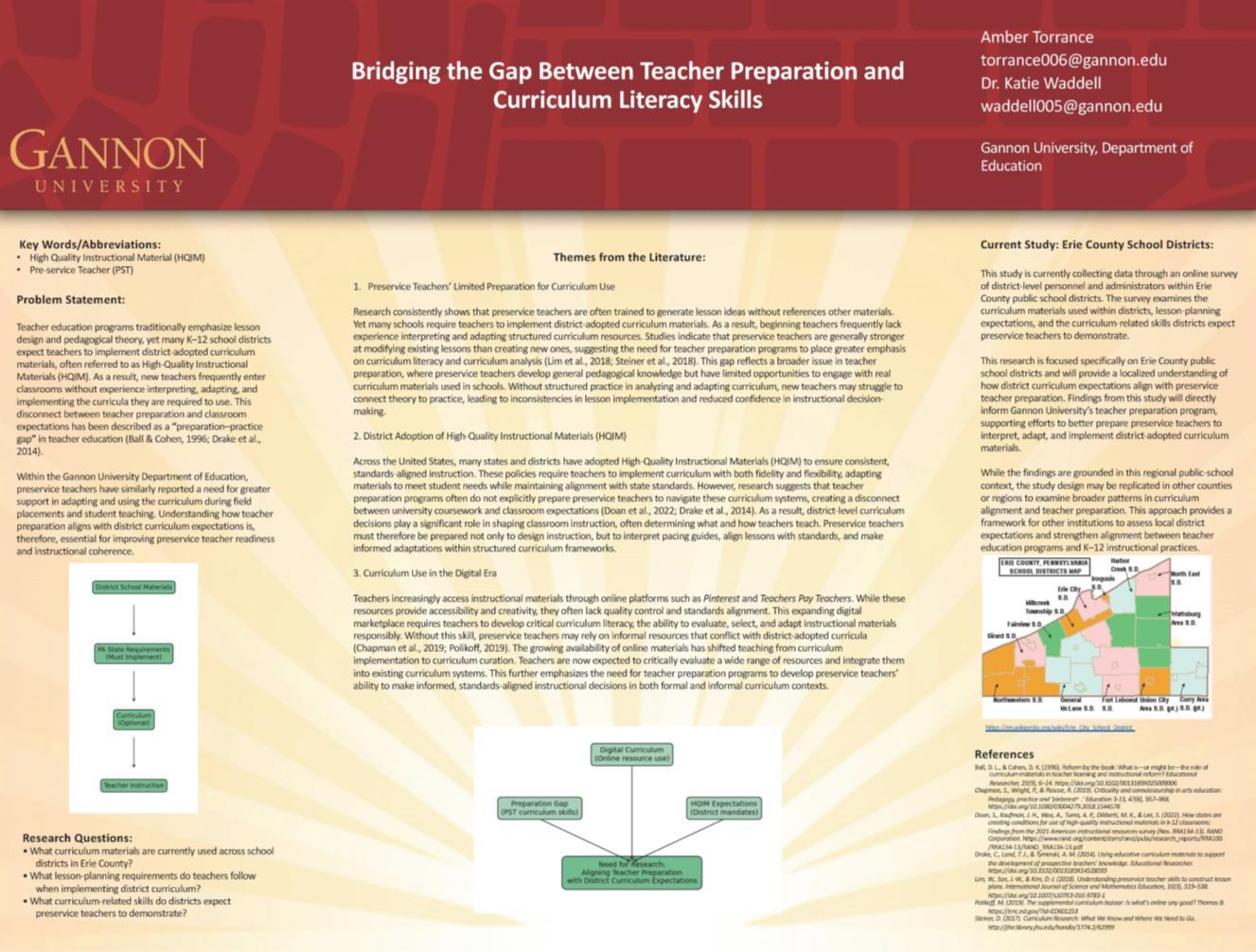
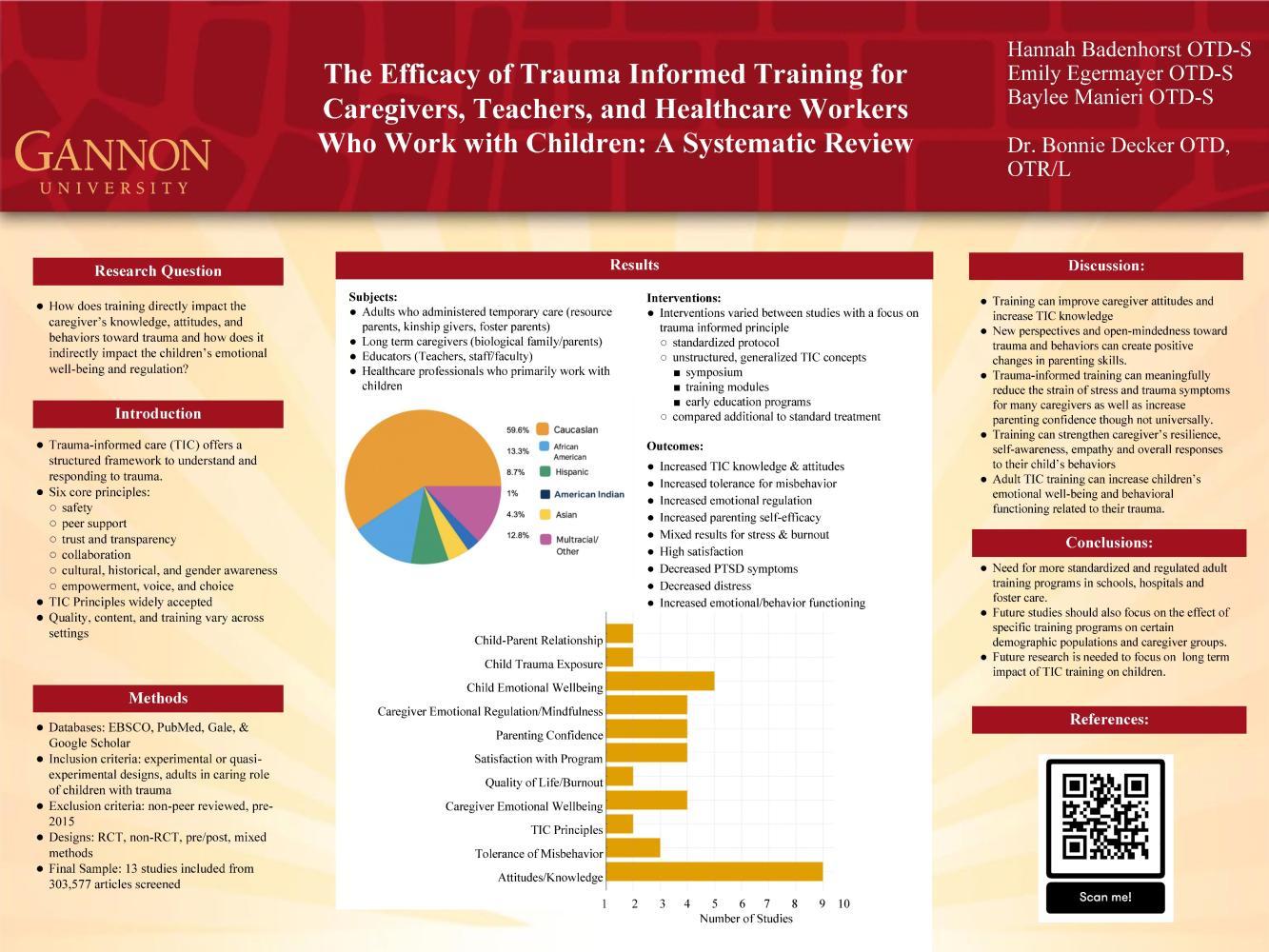
Title: Bridging the Gap Between Teacher Preparation and Curriculum Literacy Skills
Abstract: Teacher education programs traditionally emphasize lesson design and pedagogical theory, yet many K–12 school districts expect teachers to implement district-adopted curriculum materials, often referred to as High-Quality Instructional Materials (HQIM). As a result, new teachers frequently enter classrooms without experience interpreting, adapting, and implementing the curricula they are required to use. This disconnect between teacher preparation and classroom expectations has been described as a “preparation–practice gap” in teacher education (Ball & Cohen, 1996; Drake et al., 2014).Within the Gannon University Department of Education, preservice teachers have similarly reported a need for greater support in adapting and using the curriculum during field placements and student teaching. Understanding how teacher preparation aligns with district curriculum expectations is, therefore, essential for improving preservice teacher readiness and instructional coherence.
Presenter(s): Amber Torrance
Sponsoring Department: Education
Mentor(s): Katie J Waddell
Presentation: 13
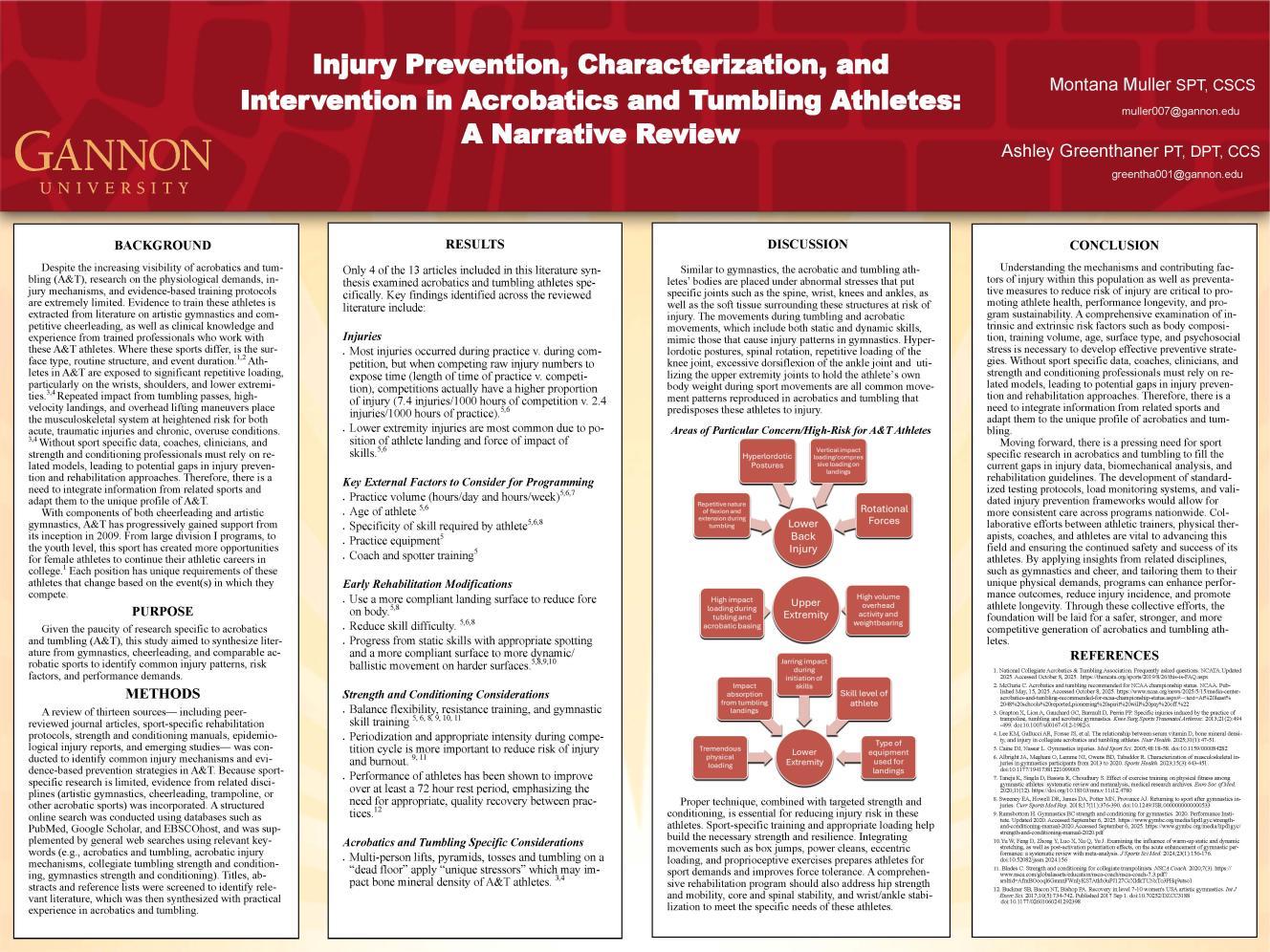
Title: Injury Prevention, Characterization, and Intervention in Acrobatics and Tumbling Athletes: A Narrative Review
Abstract: Despite the increasing popularity of acrobatics and tumbling, research on physiological demands, injury mechanisms, and evidence-based training protocols specific to this sport remains limited Current understanding of sport demands is largely inferred from existing literature on similar sports, which share movement patterns and performance settings. Purpose: Given the paucity of research specific to acrobatics and tumbling, this study aimed to synthesize literature from gymnastics, cheerleading, and comparable acrobatic sports to identify common injury patterns, risk factors, and performance demands Methods: Literature from thirteen sources was reviewed, including publications relevant to strength and conditioning professionals, rehabilitation specialists, and gymnastics coaches with practical experience in acrobatics and tumbling. Conclusions: Only four of the thirteen reviews articles specifically addressed acrobatics and tumbling, underscoring reliance on related acrobatic sport literature to inform understanding of injury patterns, risk factors, and performance demands Synthesized findings indicate that injury risk varies by athlete role and position and is influenced by skill demands, environmental conditions, and athlete behaviors. These results highlight the need for targeted strength programs, prehabilitation strategies, appropriate warm-up/preparation, and assessment of intrinsic and extrinsic risk factors to support athlete longevity and performance
Presenter(s): Montana Muller
Sponsoring Department: Physical Therapy Program
Mentor(s): Ashley Greenthaner
Presentation:
14
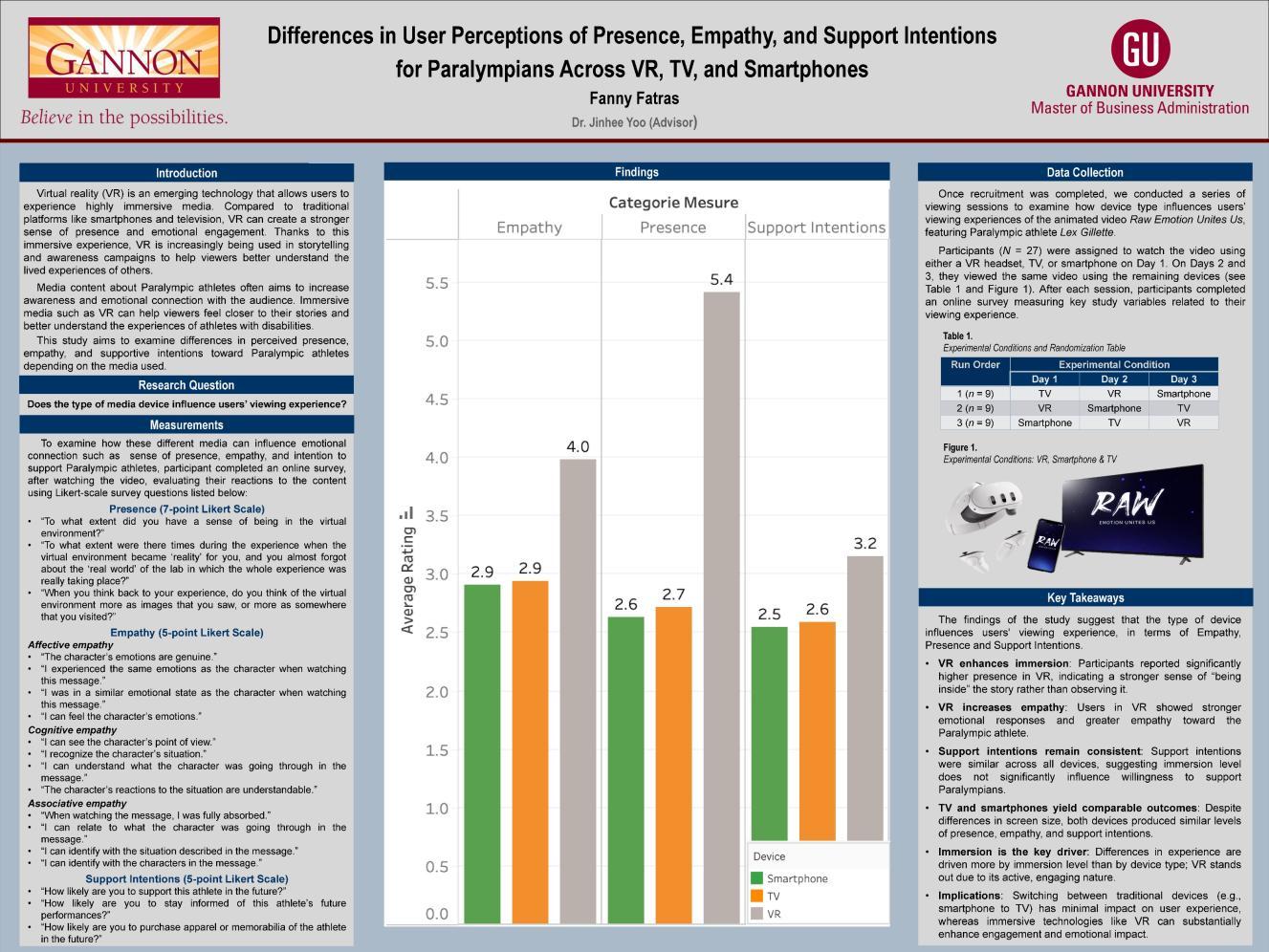
Title: Differences in User Perceptions of Presence, Empathy, and Support Intentions for Paralympians Across VR, TV, and Smartphones.
Abstract: Virtual reality (VR) is an emerging technology that allows users to experience highly immersive media. Compared to traditional platforms like smartphones and television, VR can create a stronger sense of presence and emotional engagement. Thanks to this immersive experience, VR is increasingly being used in storytelling and awareness campaigns to help viewers better understand the lived experiences of others. Media content about Paralympic athletes often aims to increase awareness and emotional connection with the audience. Immersive media such as VR can help viewers feel closer to their stories and better understand the experiences of athletes with disabilities. This study aims to examine differences in perceived presence, empathy, and supportive intentions toward Paralympic athletes depending on the media used.
Presenter(s): Fanny Fatras
Sponsoring Department: Sports Management and Marketing
Mentor(s): Jinhee Yoo
Presentation:
15
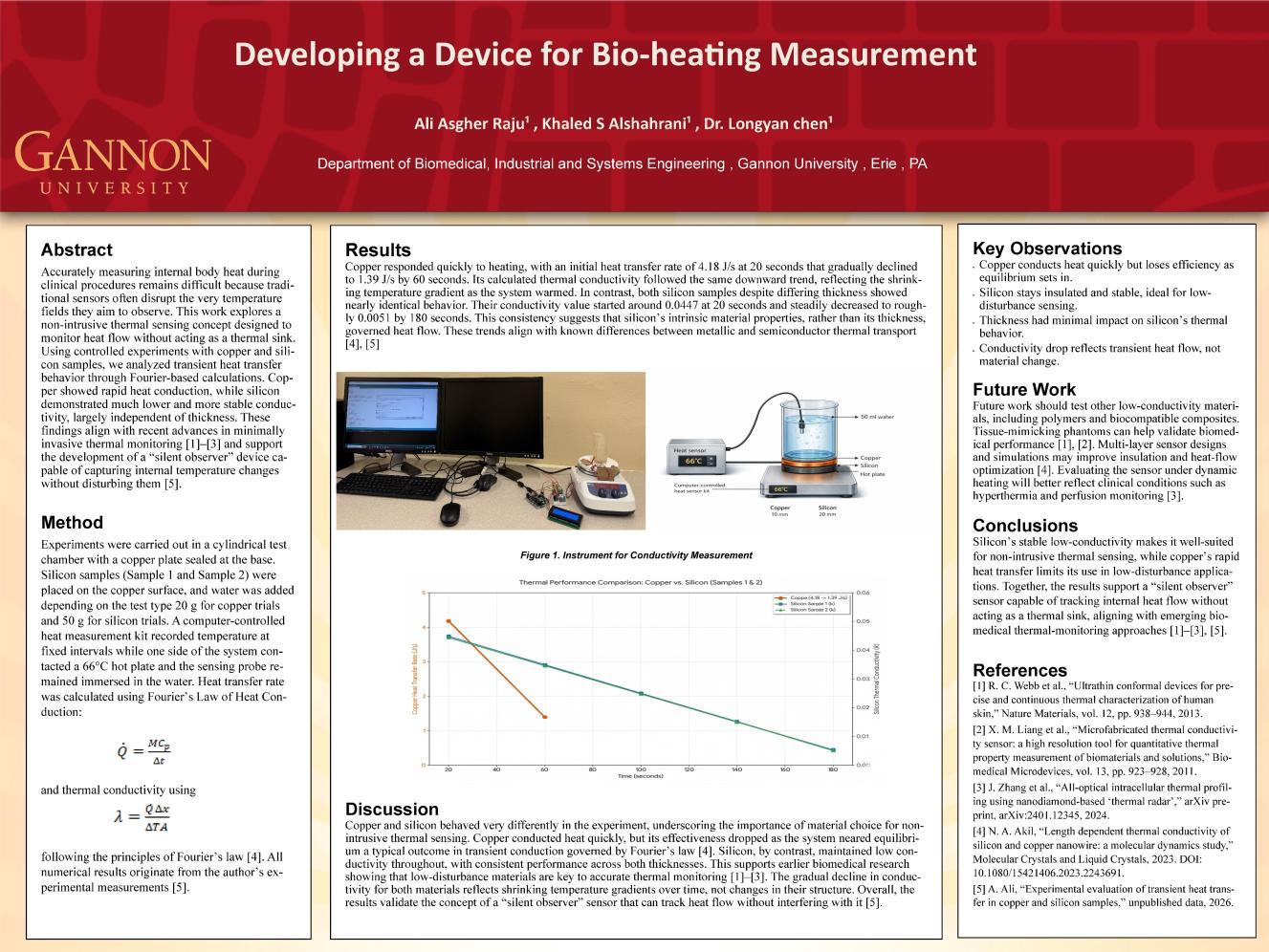
Title: Developing a Device for Bio-heating Measurement
Abstract: Accurately measuring internal body heat during clinical procedures remains difficult because traditional sensors often disrupt the very temperature fields they aim to observe. This work explores a non-intrusive thermal sensing concept designed to monitor heat flow without acting as a thermal sink. Using controlled experiments with copper and silicon samples, we analyzed transient heat transfer behavior through Fourier-based calculations. Copper showed rapid heat conduction, while silicon demonstrated much lower and more stable conductivity, largely independent of thickness. These findings align with recent advances in minimally invasive thermal monitoring [1]–[3] and support the development of a “silent observer” device capable of capturing internal temperature changes without disturbing them [5].
Presenter(s): Ali Asgher Raju, Khaled Seed Alshahrani
Sponsoring Department: Bio-medical Engineering
Mentor(s): Longyan Chen
Presentation: 16
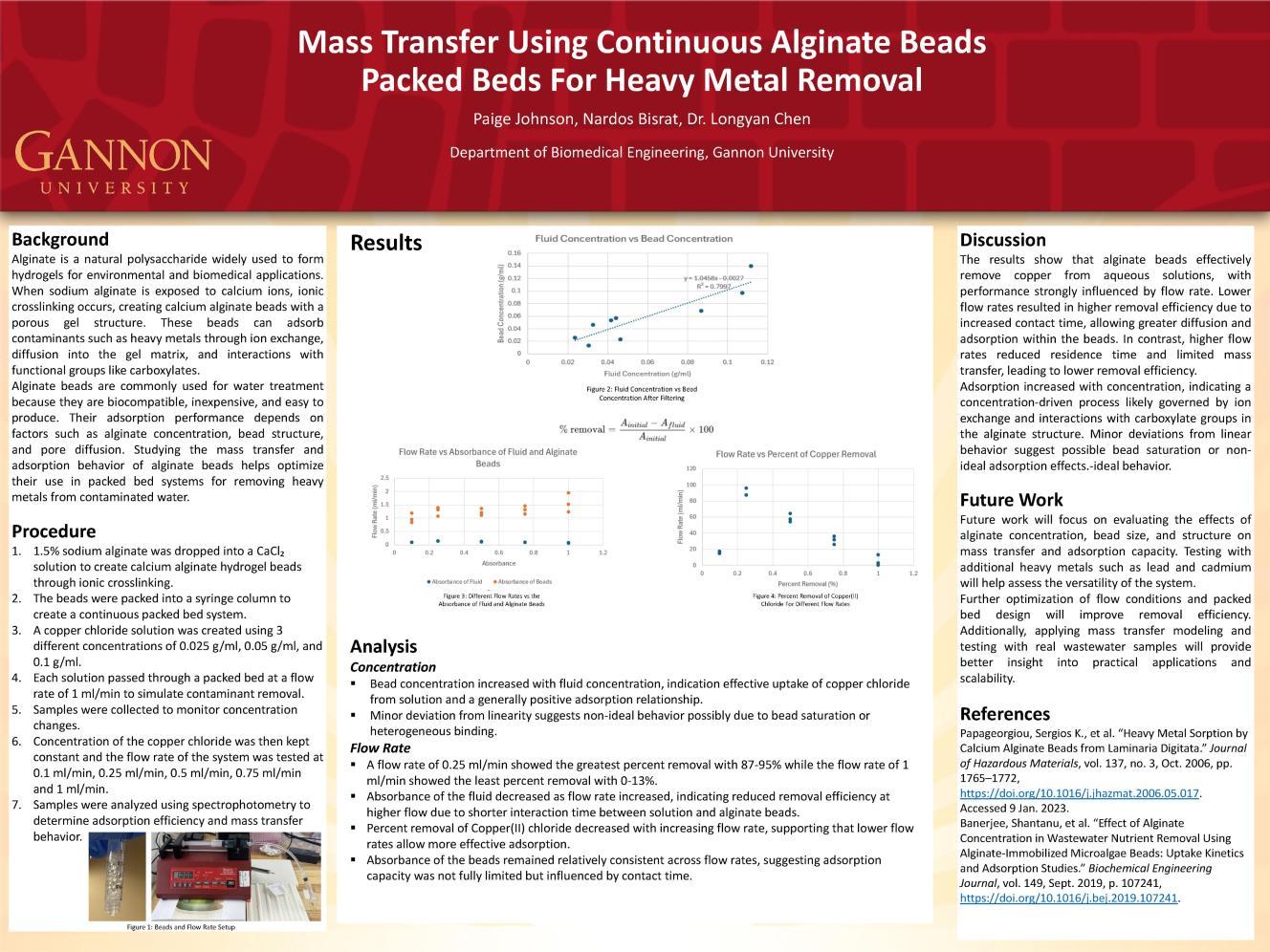
Title: Mass Transfer Using Continuous Alginate Beads Packed Beds For Heavy Metal Removal
Abstract: Alginate is a natural polysaccharide widely used to form hydrogels for environmental and biomedical applications. When sodium alginate is exposed to calcium ions, ionic crosslinking occurs, creating calcium alginate beads with a porous gel structure. These beads can adsorb contaminants such as heavy metals through ion exchange, diffusion into the gel matrix, and interactions with functional groups like carboxylates. Alginate beads are commonly used for water treatment because they are biocompatible, inexpensive, and easy to produce. Their adsorption performance depends on factors such as alginate concentration, bead structure, and pore diffusion. Studying the mass transfer and adsorption behavior of alginate beads helps optimize their use in packed bed systems for removing heavy metals from contaminated water.
Presenter(s): Paige Johnson, Nardos Bisrat
Sponsoring Department: Bio-medical Engineering
Mentor(s): Longyan Chen
Presentation: 17
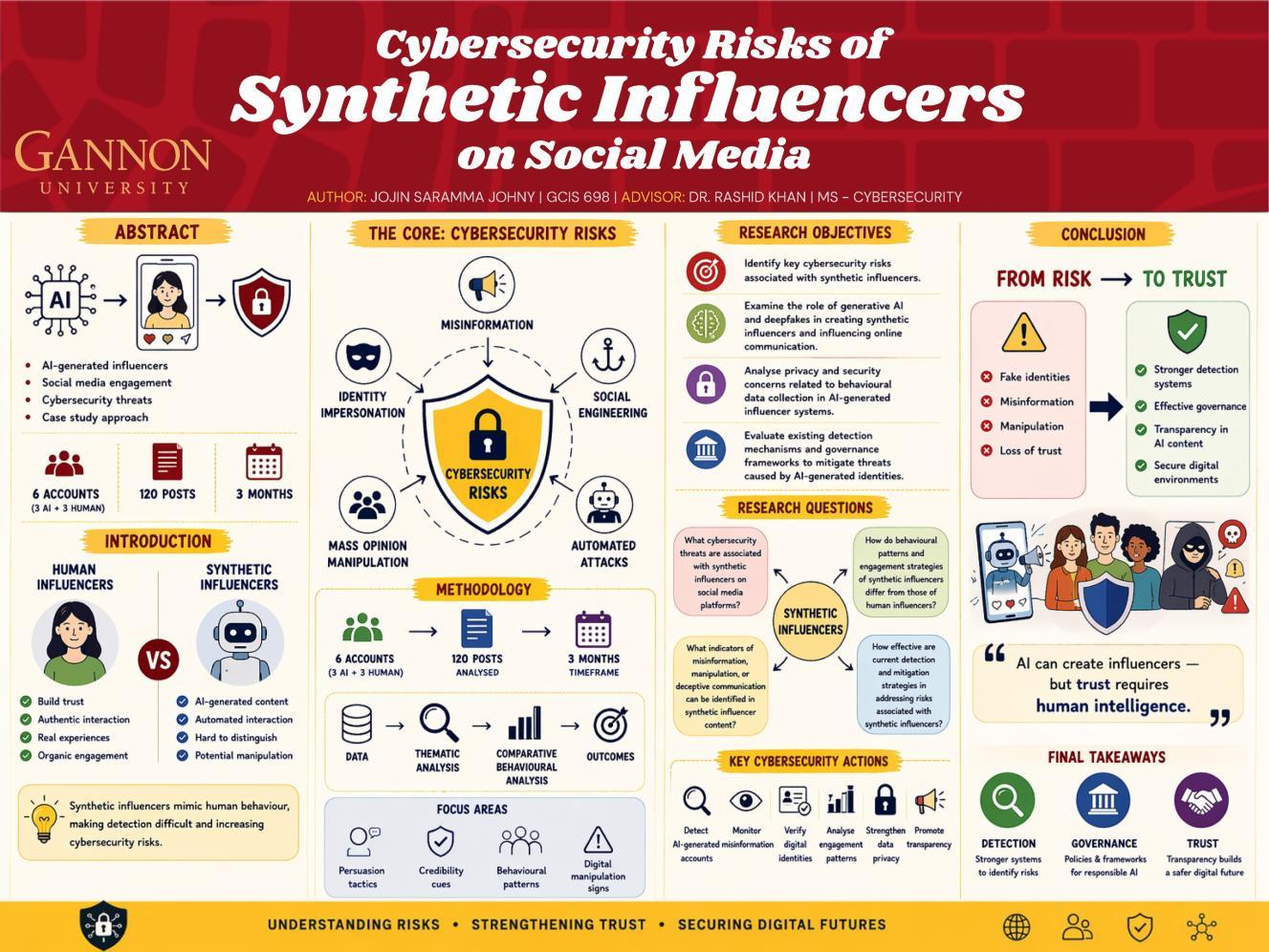
Title: Cybersecurity Risks of Synthetic Influencers on Social Media
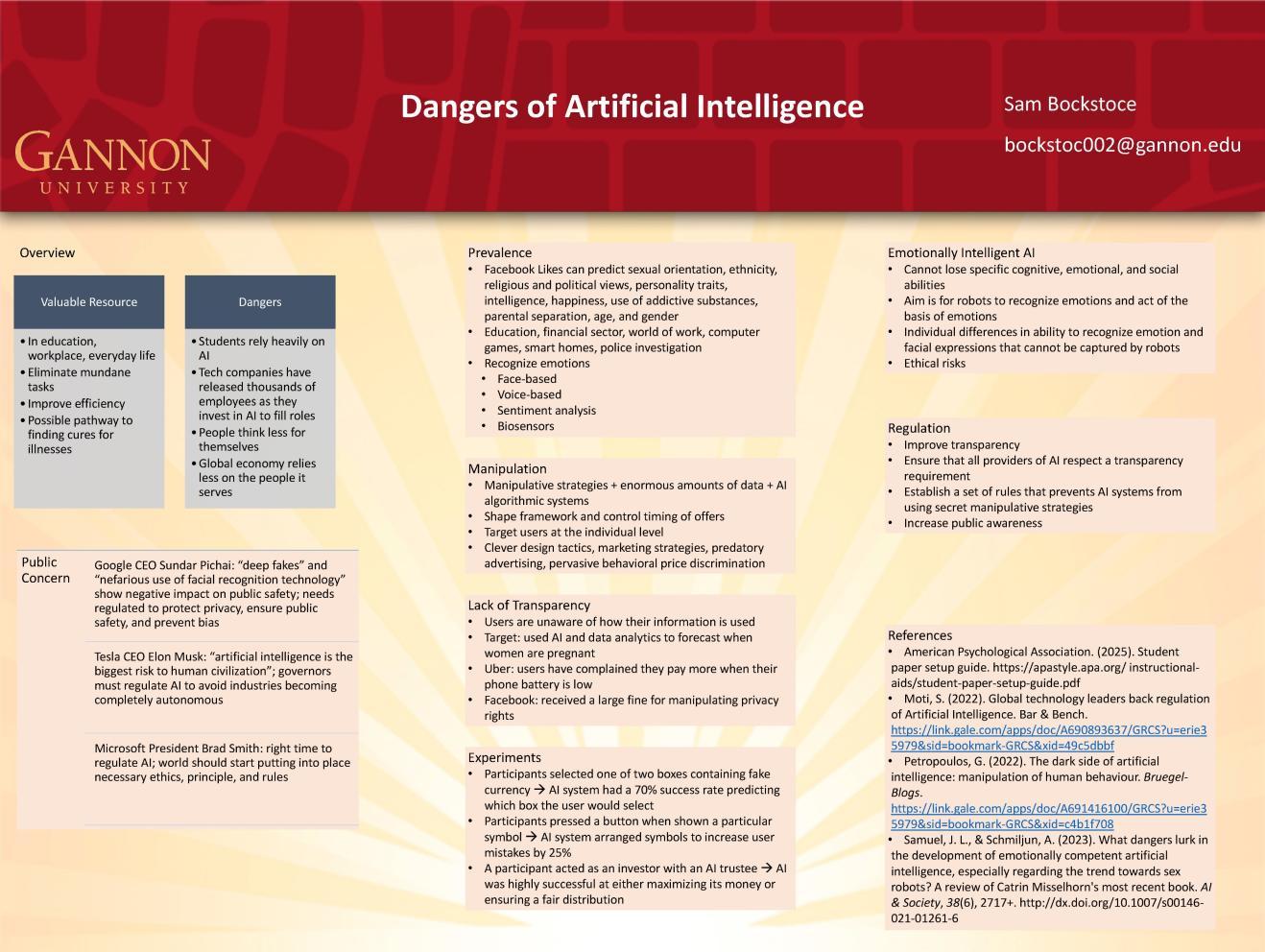
Abstract: Recent advances in artificial intelligence have led to the rise of synthetic influencers that closely resemble real individuals on social media platforms. While these digital personas create new opportunities for marketing and engagement, they also introduce important cybersecurity and ethical concerns, including misinformation, privacy risks, and the manipulation of user behavior. This study examines the risks associated with synthetic influencers and explores how their behavior differs from that of human influencers. Using a qualitative approach, publicly available social media data is analyzed to identify signs of misleading or harmful activity. The study also evaluates the effectiveness of current detection systems in identifying these AI-driven accounts. The results highlight gaps in existing security measures and suggest improvements that can strengthen platform safety and accountability.
Presenter(s): Jojin
Saramma Johny
Sponsoring Department: Computer and Information Science and Cybersecurity
Mentor(s): Rashid Khan
Presentation: 18
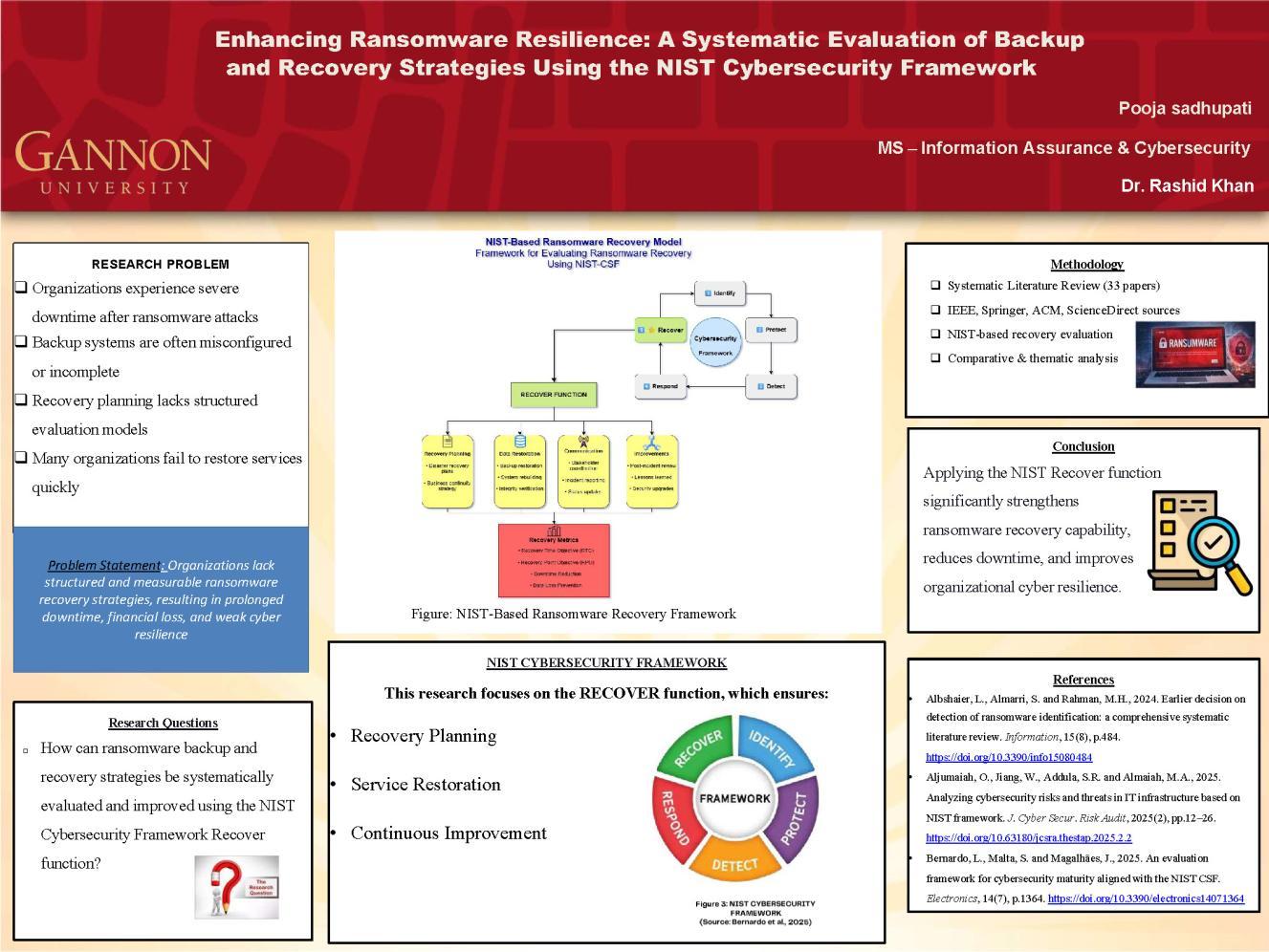
Title: Enhancing Ransomware Resilience: A Systematic Evaluation of Backup and Recovery Strategies Using the NIST Cybersecurity Framework
Abstract: Ransomware attacks lead to significant downtime and financial loss due to weak backup and recovery strategies. This study evaluates ransomware resilience using the NIST Cybersecurity Framework, focusing on the Recover function. A systematic review of 33 research papers identifies key gaps and best practices. The results show that structured recovery planning improves resilience and reduces downtime.
Presenter(s): Pooja Sadhupati
Sponsoring Department: Computer and Information Science and Cybersecurity
Mentor(s): Rashid Khan
Presentation:
19
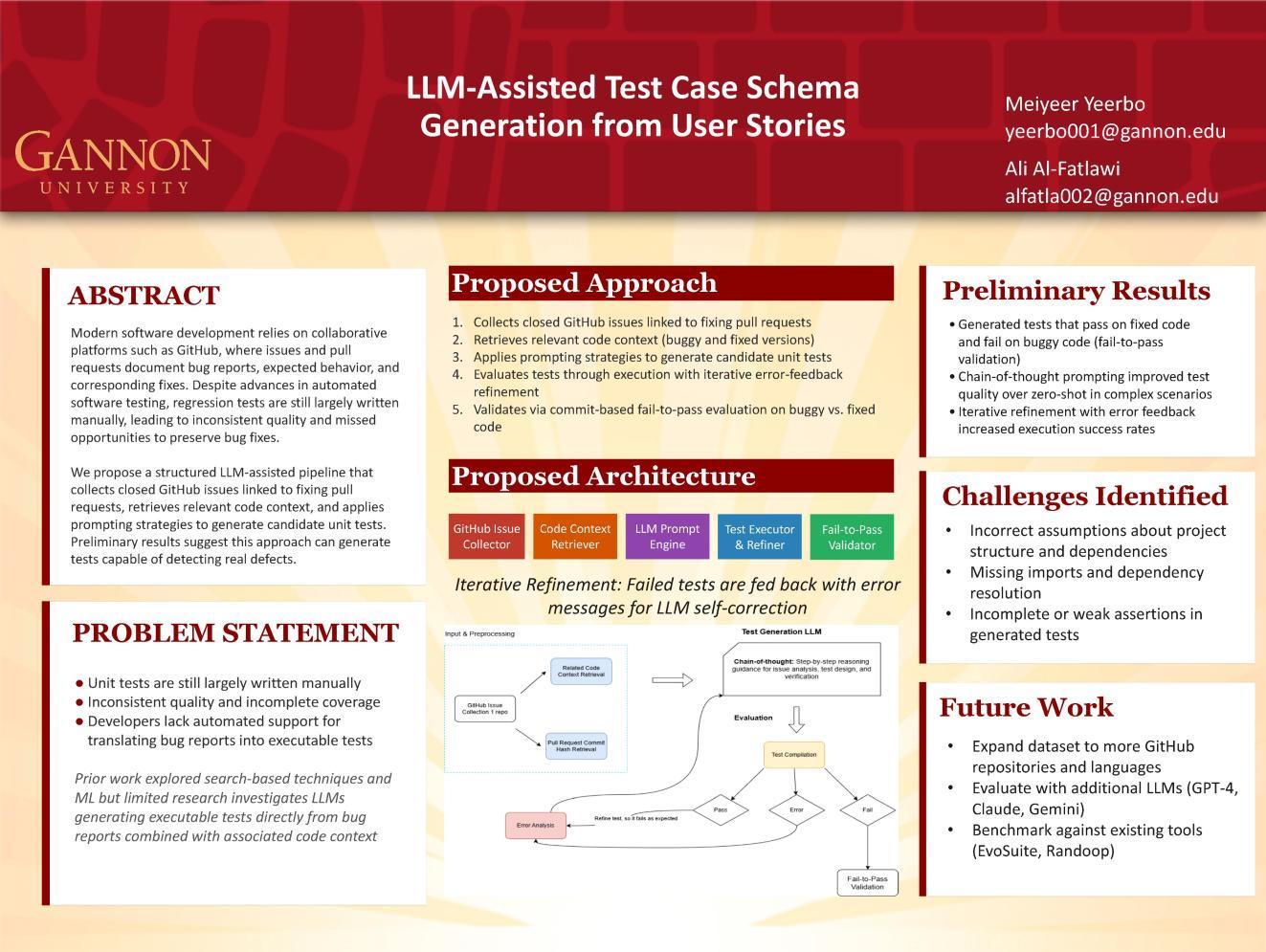
Title: LLM-Assisted Test Case Schema Generation from User Stories
Abstract: Modern software development relies on collaborative platforms such as GitHub, where issues and pull requests document bug reports, expected behavior, and corresponding fixes. Despite advances in automated software testing, regression tests are still largely written manually, leading to inconsistent quality and missed opportunities to preserve bug fixes. We propose a structured LLM-assisted pipeline that collects closed GitHub issues linked to fixing pull requests, retrieves relevant code context, and applies prompting strategies to generate candidate unit tests. Preliminary results suggest this approach can generate tests capable of detecting real defects.
Presenter(s): Ali Al-Fatlawi, Meiyeer Yeerbo
Sponsoring Department: Software Engineering and Computer and Information Science
Mentor(s): Md Tajmilur Rahman
Presentation: 20
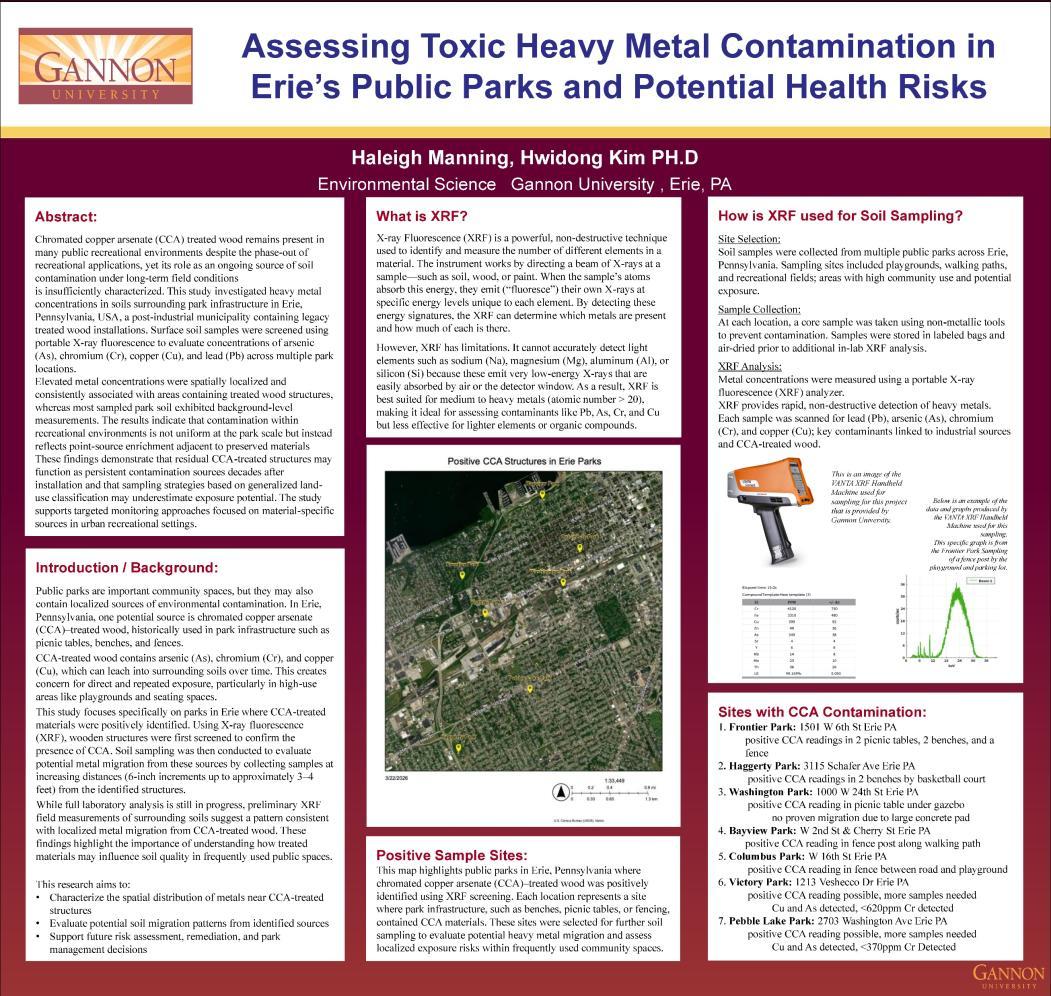
Title: Assessing Toxic Heavy Metal Contamination in Erie’s Public Parks and Potential Health Risks
Abstract: Chromated copper arsenate (CCA) treated wood remains present in many public recreational environments despite the phase-out of recreational applications, yet its role as an ongoing source of soil contamination under long-term field conditions is insufficiently characterized This study investigated heavy metal concentrations in soils surrounding park infrastructure in Erie, Pennsylvania, USA, a post-industrial municipality containing legacy treated wood installations Surface soil samples were screened using portable X-ray fluorescence to evaluate concentrations of arsenic (As), chromium (Cr), copper (Cu), and lead (Pb) across multiple park locations Elevated metal concentrations were spatially localized and consistently associated with areas containing treated wood structures, whereas most sampled park soil exhibited background-level measurements The results indicate that contamination within recreational environments is not uniform at the park scale but instead reflects point-source enrichment adjacent to preserved materials These findings demonstrate that residual CCA-treated structures may function as persistent contamination sources decades after installation and that sampling strategies based on generalized land-use classification may underestimate exposure potential The study supports targeted monitoring approaches focused on material-specific sources in urban recreational settings
Presenter(s): Haleigh Manning
Sponsoring Department: Environmental Science & Engineering
Mentor(s): Hwidong Kim
Presentation: 21
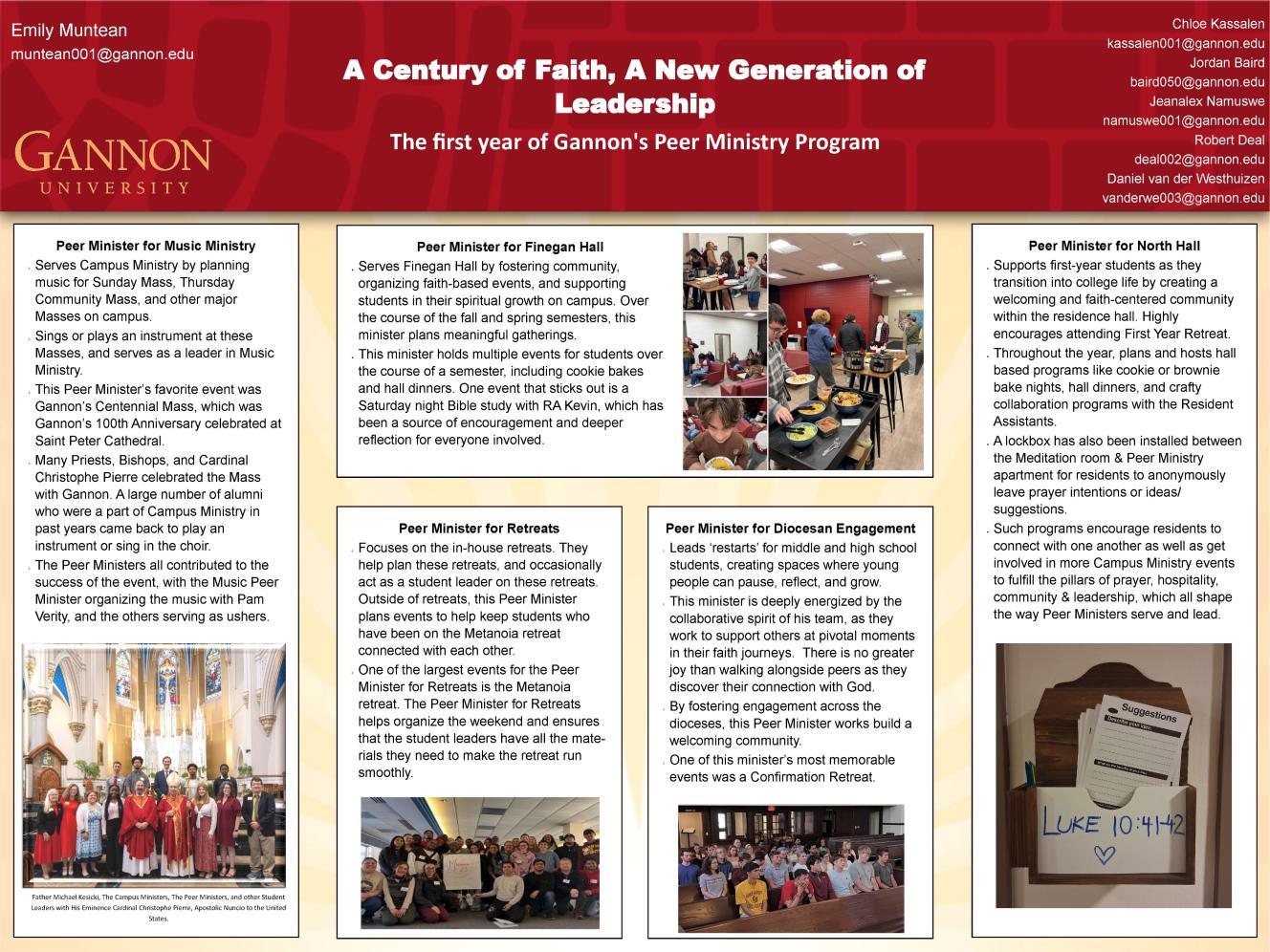
Title: A Century of Faith, A New Generation of Leadership: Fulfilling the Call of the Holy Father through the Metanoia Retreat
Abstract: Gannon’s Campus Ministry has always been dedicated to providing support to students in the firstyear halls through student leaders and campus ministers. This year, starting in fall of 2025, Campus Ministry launched a Peer Ministry program. This program involves student leaders living and serving in the first-year halls, while also serving in their specific area of ministry. Five students were hired with 5 different areas of ministry: North Hall, Finegan Hall, Diocesan Engagement, Retreats, and Music Ministry. In only one year, they have made major contributions to Gannon. Between Gannon’s Centennial Mass, the many first-year hall programs, and various retreats, the Peer Ministers have worked hard to build relationships with first-year students, foster faith development, and create meaningful opportunities for engagement across campus. The four pillars of prayer, hospitality, community, and leadership have served as the foundation of the program and led them in their ministries. The success of the program’s inaugural year demonstrates its positive impact on student involvement, spiritual growth, and community building, laying out a strong foundation for continued growth in years to come.
Presenter(s): Chloe Kassalen, Jordan Baird, Jeanalex Namuswe, Robert Deal, Daniel van der Westhuizen
Sponsoring Department: Campus Ministry
Mentor(s): Emily Muntean
Presentation: 22
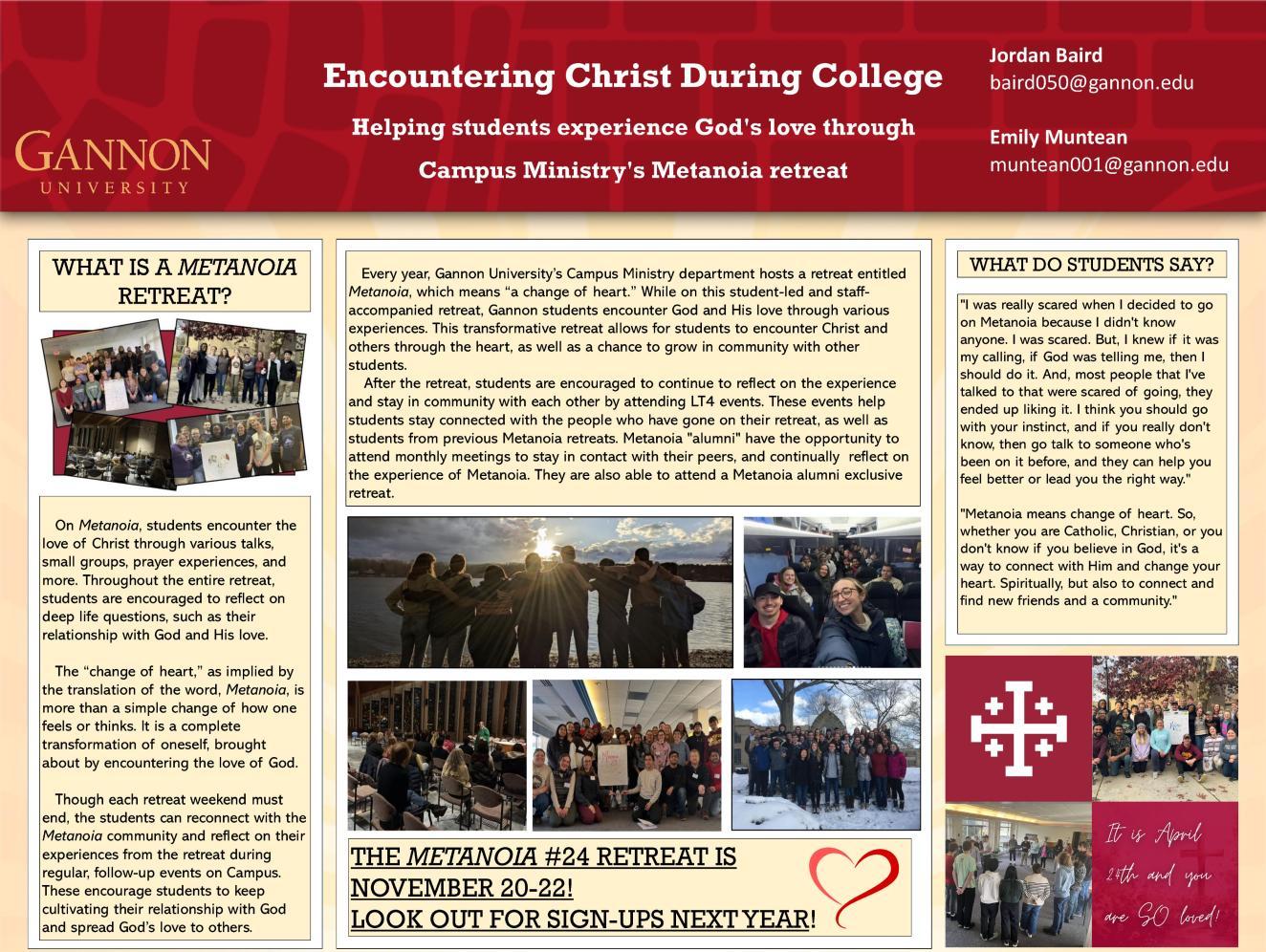
Title: Encountering Christ During College
Abstract: Gannon University’s Campus Ministry hosts a yearly retreat entitled “Metanoia” which translates to “a change of heart”. While on retreat, student leaders and a couple staff members help the attending Gannon students experience and encounter God and His love and purpose for them in a whole new way. The offcampus retreat is three days long, with a special emphasis on Living the Fourth Day of the retreat which extends and remains with them well into the future. Mindful of their retreat experience, talks, and mission; the participants are thus encouraged to live out the remainder of their lives (the 4th Day) as disciples of Jesus Christ. Metanoia alumni fulfill this commissioning in different ways, whether by leading future Metanoia retreats, becoming more involved in other aspects of Campus Ministry, and helping to bring their families, friends, and Gannon’s entire campus closer to God and His love for them.
Presenter(s): Jordan Baird
Sponsoring Department: Campus Ministry
Mentor(s): Emily Muntean
Presentation: 23
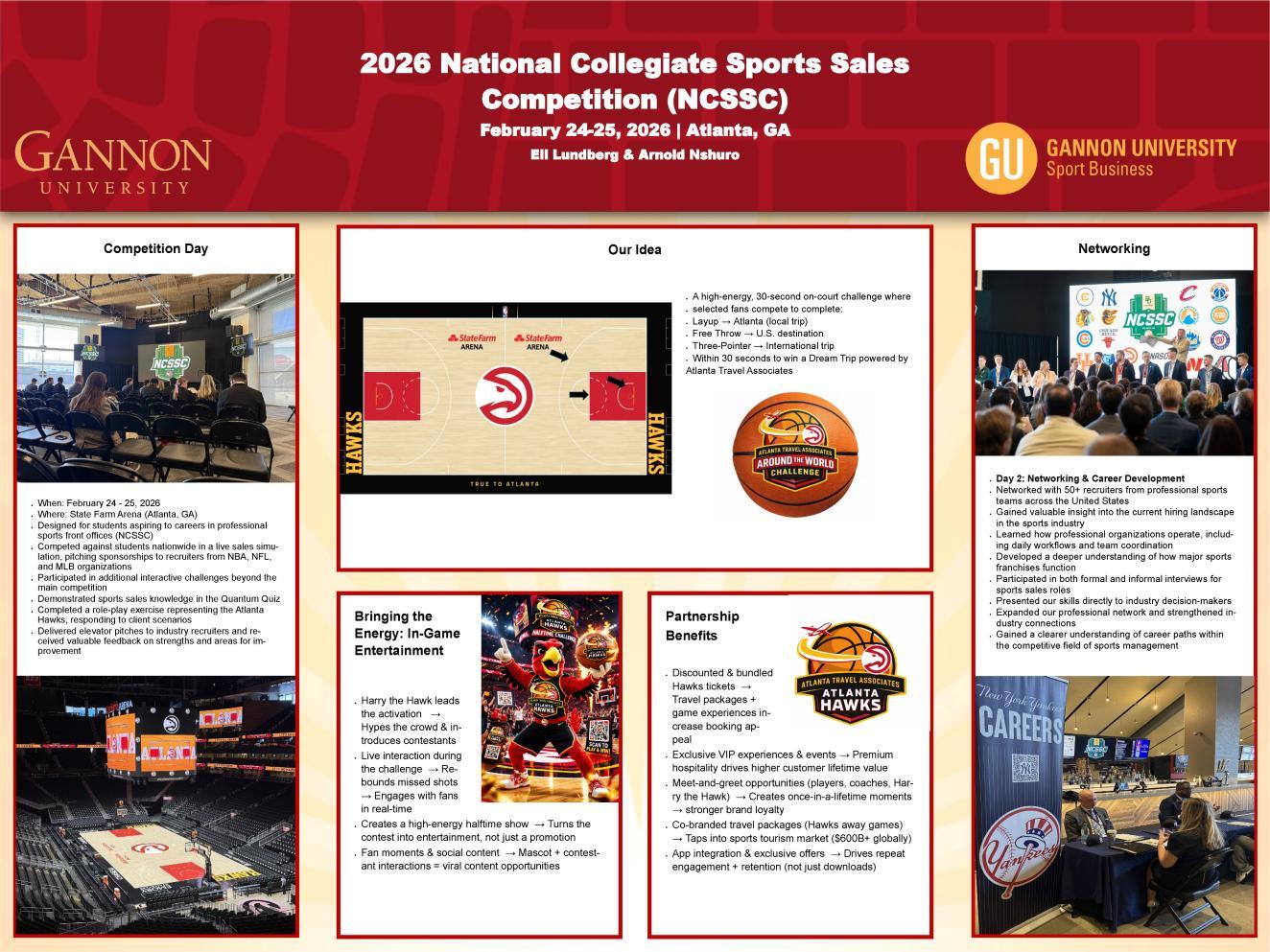
Title: 2026 National Collegiate Sports Sales Competition (NCSSC)
Abstract: This presentation is to inform students, staff, and faculty about the National Collegiate Sport Sales (NCSSC) competition in Atlanta, Georgia which is co-hosted by Baylor University and the Atlanta Hawks basketball team. We will present information about our trip to this event and competition in a live sponsorship sales simulation which was judged by 50+ sport industry professionals. During this experience we networked with sport industry professionals and competed against hundreds of other colleges and universities, and we will outline the full itinerary and benefits to future Gannon students interested in working in sport business.
Presenter(s): Eli Lundberg, Arnold Nshuro
Sponsoring Department: Dahlkempher School of Business
Mentor(s): Jinhee Yoo, Eric Brownlee
Presentation: 24
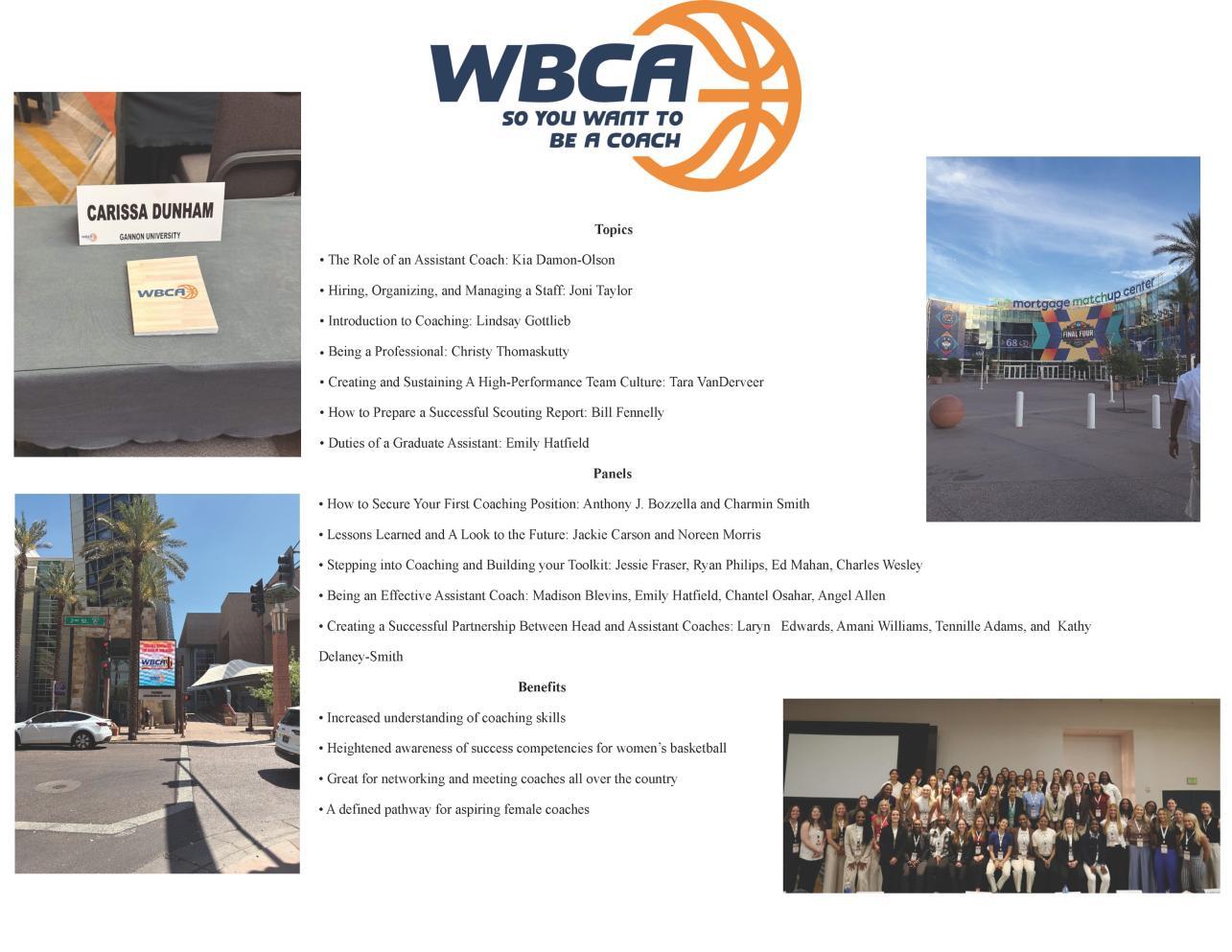
Title: So You Want To Be A Coach
Abstract: This poster is about my time at the So You Want To Be A Coach program at the Division 1 Women’s Final Four. This is an event held in Phoenix Arizona right before the final three games are played. This is a convention that will allow participants to listen in to some of the best coaches in women’s basketball speak. This is a great networking event as well that will allow me to meet potential employers in the field I would like to work in. The program only accepts 100 college seniors all over the country and I was one selected. This would be a great opportunity to learn and network.
Presenter(s): Carissa Dunham
Sponsoring Department: Dahlkempher School of Business
Mentor(s): Eric Brownlee
Presentation: 25
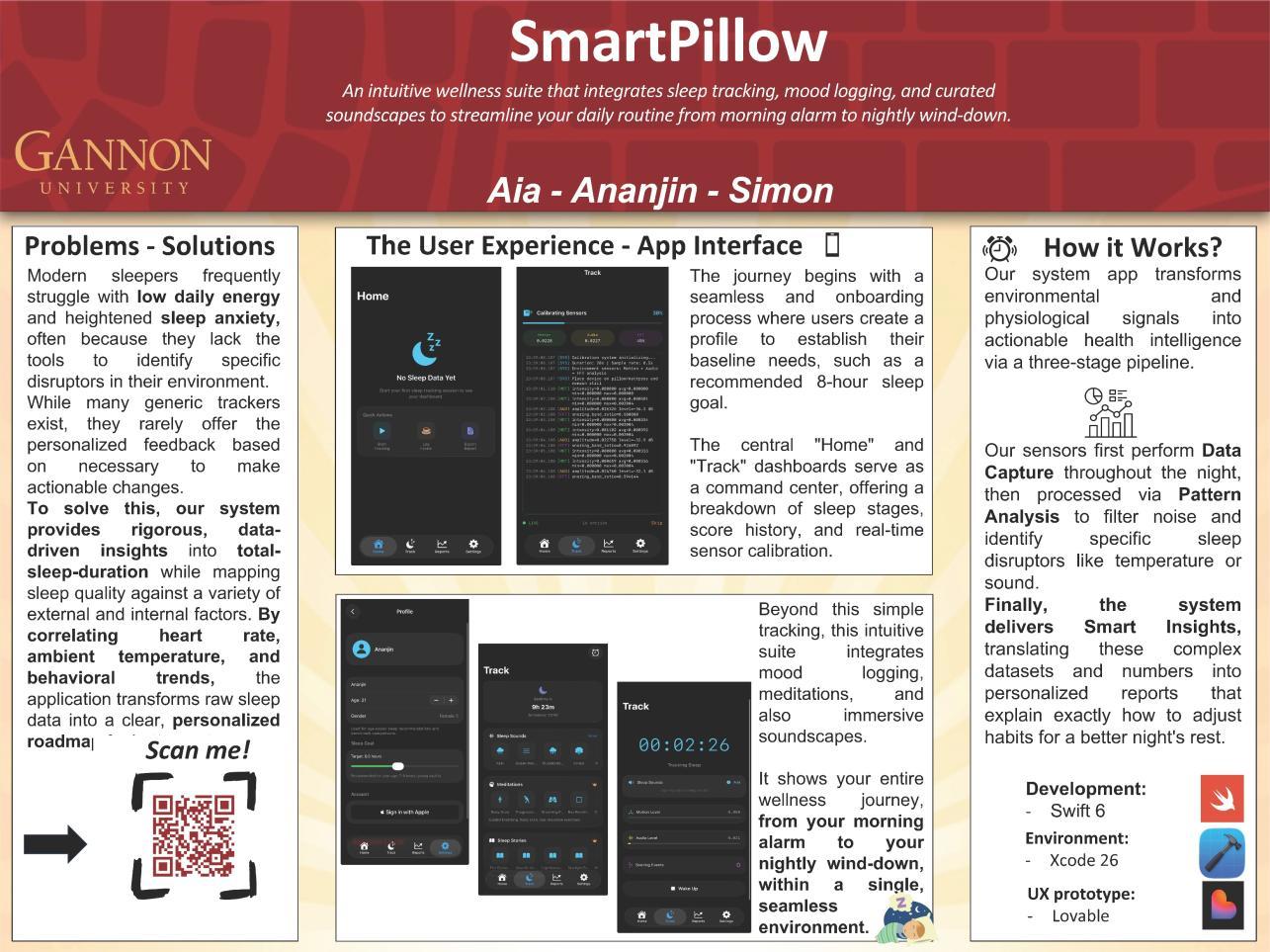
Title: SmartPillow
Abstract: Modern sleepers frequently struggle with low daily energy and heightened sleep anxiety, often because they lack the tools to identify specific disruptors in their environment. While many generic trackers exist, they rarely offer the personalized feedback based on necessary to make actionable changes. To solve this, our system provides rigorous, data-driven insights into total-sleep-duration while mapping sleep quality against a variety of external and internal factors. By correlating heart rate, ambient temperature, and behavioral trends, the application transforms raw sleep data into a clear, personalized roadmap for better rest.
Presenter(s): Aia Ahmed, Simon Alberico, Ananjin Batdelger
Sponsoring Department: Industrial Engineering
Mentor(s): Ikechukwu Ohu
Presentation: 26
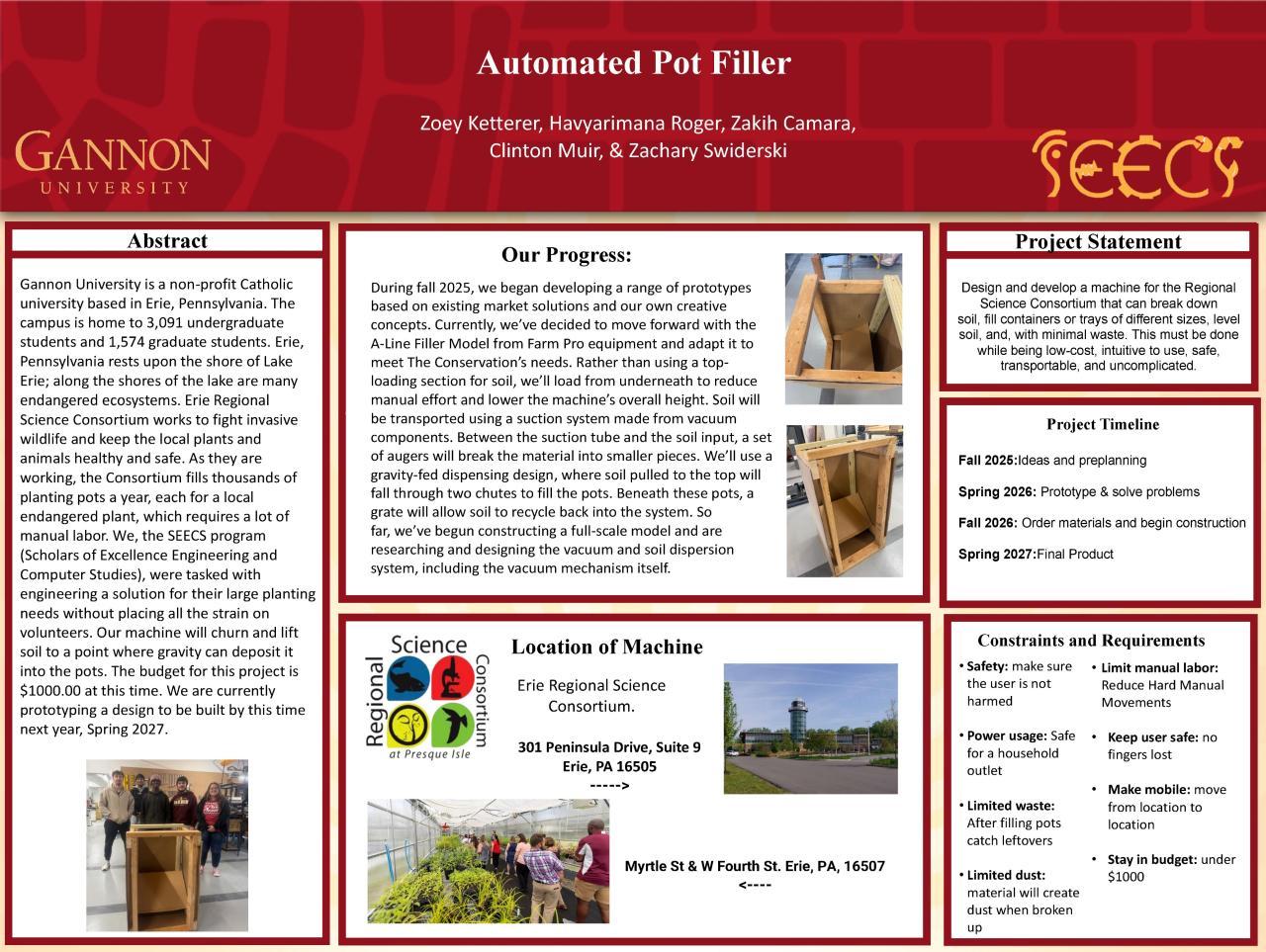
Title: Automated Pot Filler
Abstract: Gannon University is a non-profit Catholic university based in Erie, Pennsylvania. The campus is home to 3,091 undergraduate students and 1,574 graduate students. Erie, Pennsylvania rests upon the shore of Lake Erie; along the shores of the lake are many endangered ecosystems. Erie Regional Science Consortium works to fight invasive wildlife and keep the local plants and animals healthy and safe. As they are working, the Consortium fills thousands of planting pots a year, each for a local endangered plant, which requires a lot of manual labor. We, the SEECS program (Scholars of Excellence Engineering and Computer Studies), were tasked with engineering a solution for their large planting needs without placing all the strain on volunteers. Our machine will churn and lift soil to a point where gravity can deposit it into the pots. The budget for this project is $1000.00 at this time. We are currently prototyping a design to be built by this time next year, Spring 2027.
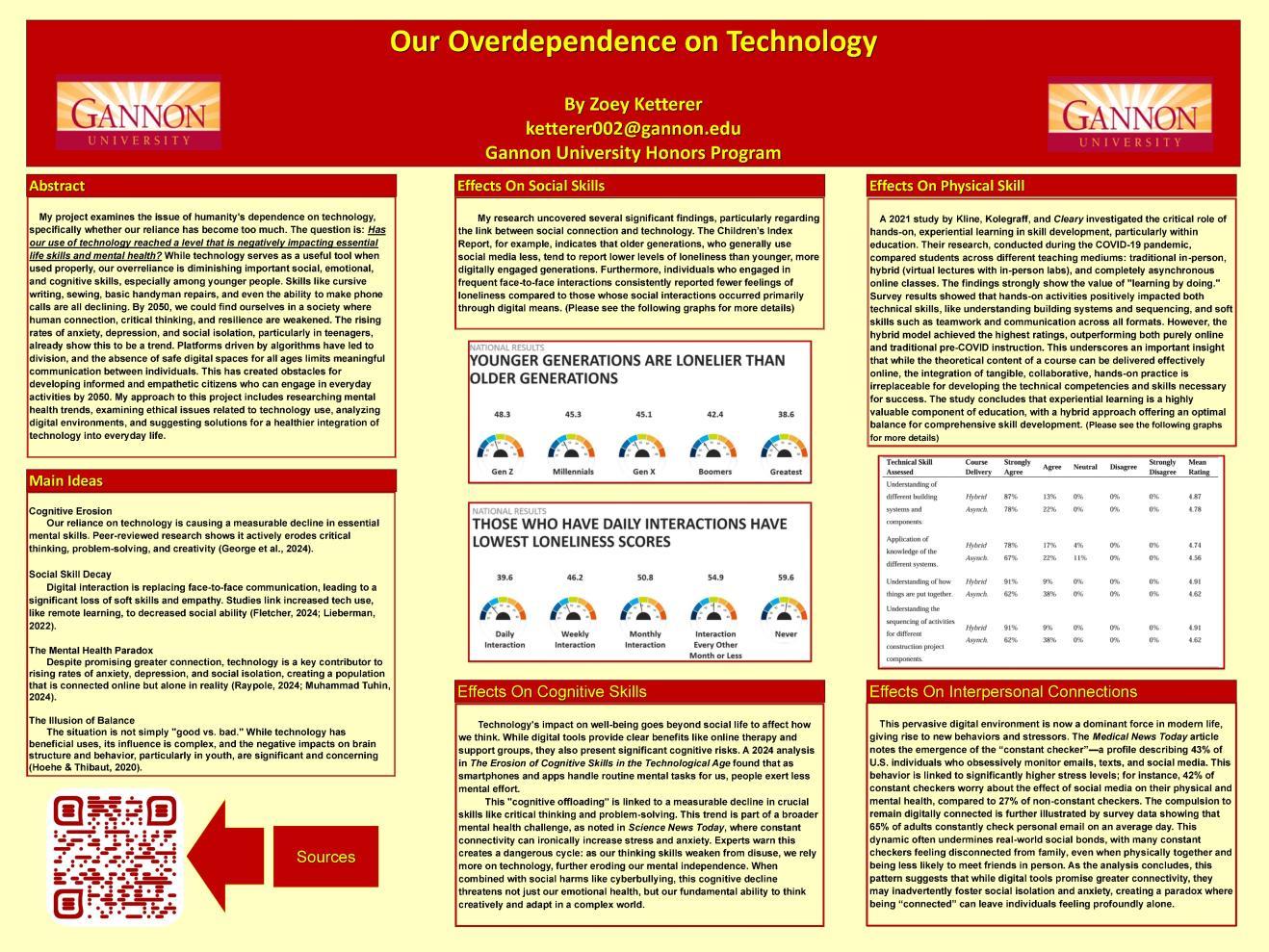
Presenter(s): Zoey Ketterer, Havyarimana Roger, Zakih Camara, Clinton Muir, Zachary Swiderski
Sponsoring Department: Electrical & Cyber Engineering (Scholars of Excellence Engineering and Computer Studies)
Mentor(s): Lin Zhao
Presentation: 27
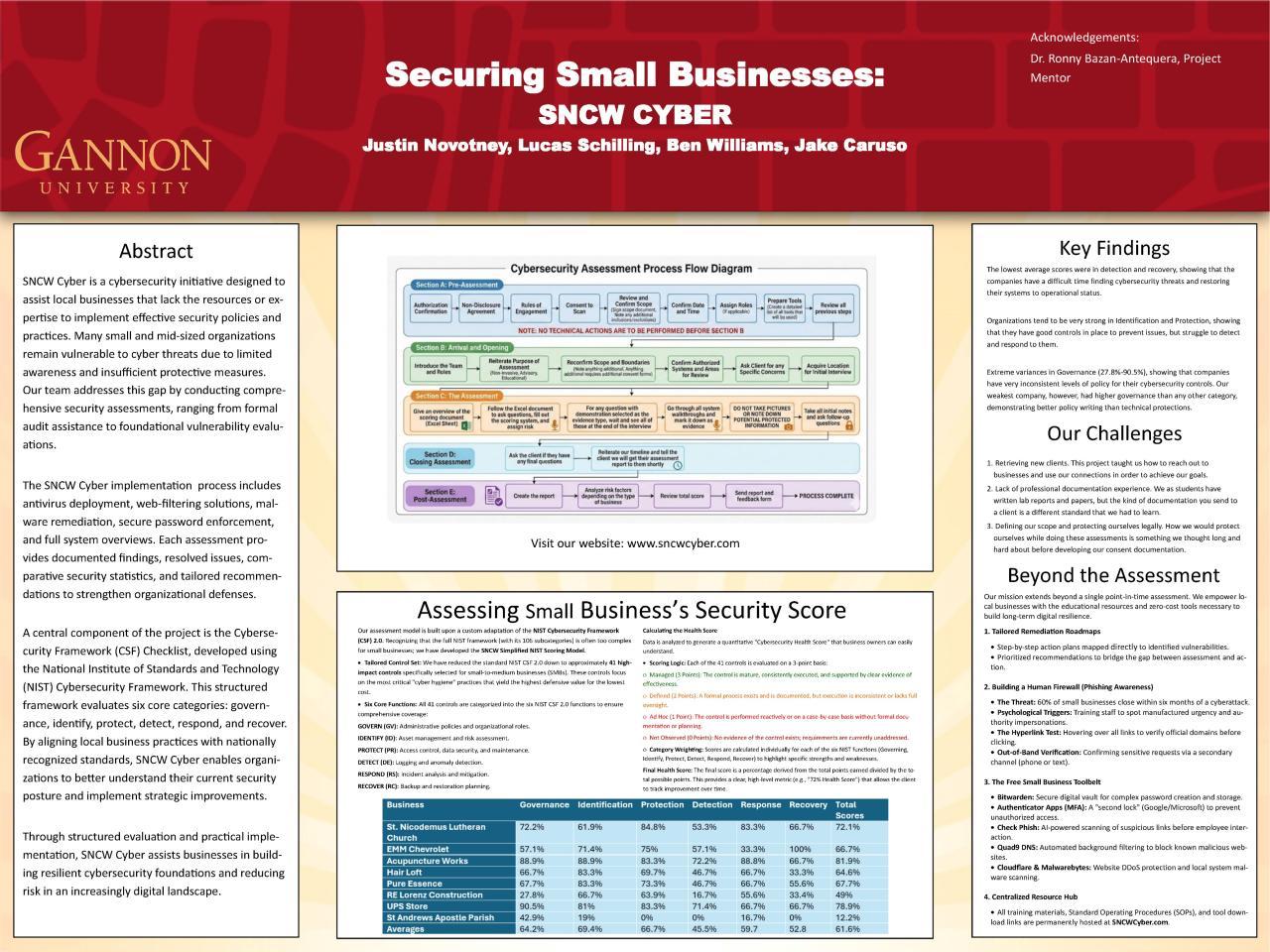
Title: Securing Small Businesses: SNCW Cyber
Abstract: SNCW Cyber is a cybersecurity initiative designed to assist local businesses that lack the resources or expertise to implement effective security policies and practices. Many small and mid-sized organizations remain vulnerable to cyber threats due to limited awareness and insufficient protective measures. Our team addresses this gap by conducting comprehensive security assessments, ranging from formal audit assistance to foundational vulnerability evaluations The SNCW Cyber implementation process includes antivirus deployment, web-filtering solutions, malware remediation, secure password enforcement, and full system overviews. Each assessment provides documented findings, resolved issues, comparative security statistics, and tailored recommendations to strengthen organizational defenses. A central component of the project is the Cybersecurity Framework (CSF) Checklist, developed using the National Institute of Standards and Technology (NIST) Cybersecurity Framework This structured framework evaluates six core categories: governance, identify, protect, detect, respond, and recover. By aligning local business practices with nationally recognized standards, SNCW Cyber enables organizations to better understand their current security posture and implement strategic improvements. Through structured evaluation and practical implementation, SNCW Cyber assists businesses in building resilient cybersecurity foundations and reducing risk in an increasingly digital landscape.
Presenter(s): Jacob Caruso, Justin Novotney, Lucas Schilling, Ben Williams
Sponsoring Department: Computer & Information Science
Mentor(s): Ronny Bazan-Antequera
Presentation: 28
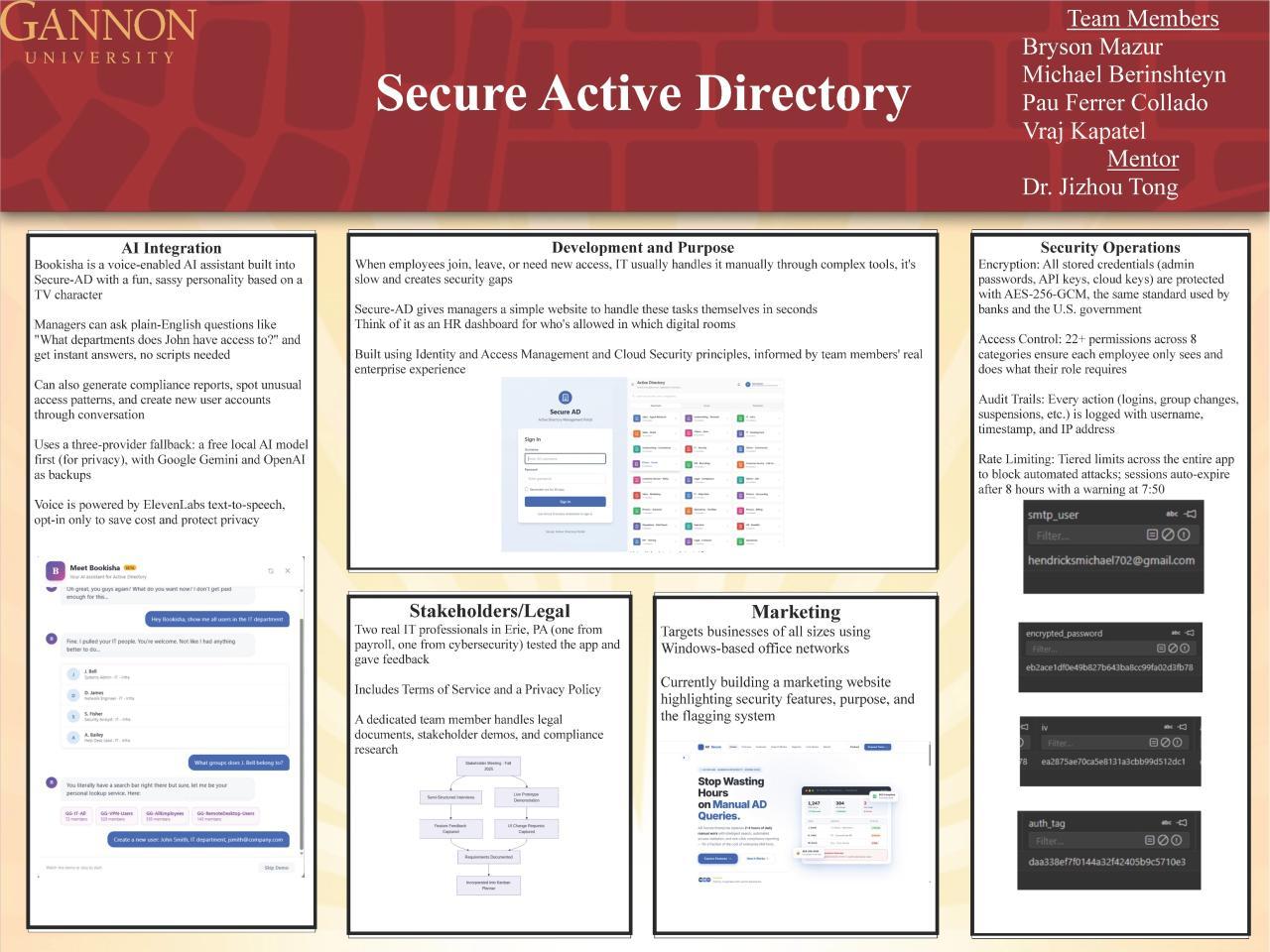
Title: Secure Active Directory
Abstract: When employees join, leave, or need new access, IT usually handles it manually through complex tools, which is slow and creates security gaps. Secure-AD gives managers a simple website to handle these tasks themselves in seconds. Think of it as an HR dashboard for who's allowed in which digital rooms. Built using Identity and Access Management and Cloud Security principles, informed by team members' real enterprise experience, Secure-AD features a voice-enabled AI assistant called Bookisha with a fun, sassy personality based on a TV character. Managers can ask plain-English questions like "What departments does John have access to?" and get instant answers, no scripts needed. Bookisha can also generate compliance reports, spot unusual access patterns, and create new user accounts through conversation, using a three-provider fallback: a free local AI model first for privacy, with Google Gemini and OpenAI as backups Voice is powered by ElevenLabs text-to-speech, opt-in only to save cost and protect privacy. On the security side, all stored credentials are protected with AES-256-GCM encryption, 22+ permissions across 8 categories ensure role-based access control, every action is logged with username, timestamp, and IP address, and tiered rate limiting blocks automated attacks with sessions auto-expiring after 8 hours The application was tested by two IT professionals in Erie, PA, includes Terms of Service and a Privacy Policy, and targets businesses of all sizes using Windows-based office networks.
Presenter(s): Michael Berinshteyn, Bryson Mazur, Pau Ferrer Collado, Vraj Kapatel
Sponsoring Department: Computer & Information Science and Cybersecurity
Mentor(s): Jizhou Tong, Mei-Huei Tang, Richard Matovu
Presentation: 29
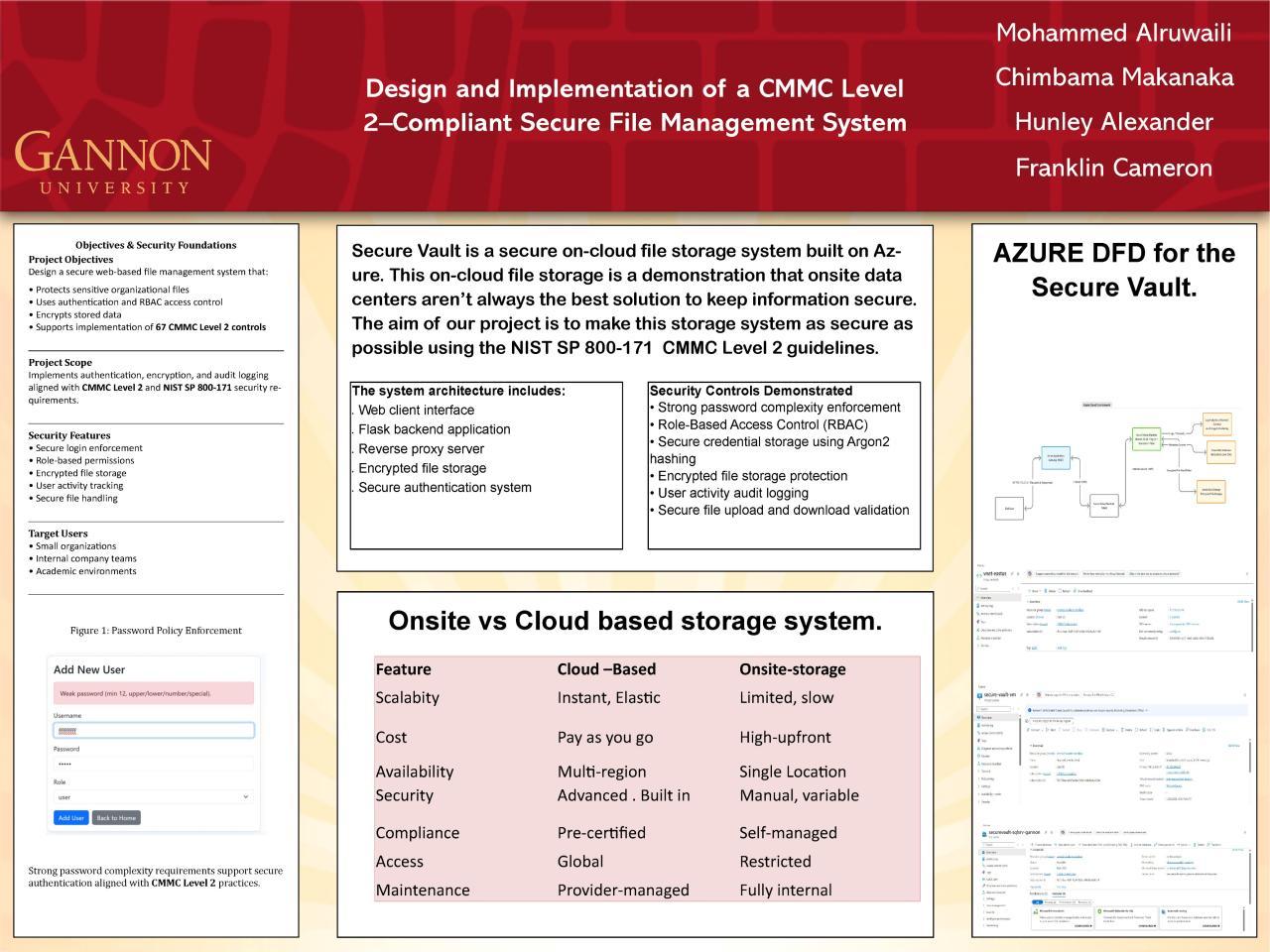
Title: Design and Implementation of a CMMC Level 2 Compliant Secure File Management System
Abstract: Organizations that handle Controlled Unclassified Information (CUI) must comply with cybersecurity standards such as CMMC Level 2, yet many systems lack clear, auditable implementations of these requirements. This project presents a cloud-based secure file management system designed to demonstrate selected CMMC Level 2 (NIST SP 800-171) controls at the application level. The system allows authenticated users to securely upload, store, share, and manage files using role-based access control, strong encryption, and audit logging. Key features include Argon2-based authentication, AES-256-GCM encryption for data at rest, least-privilege enforcement, and administrator-only management functions. The project emphasizes audit readiness by producing verifiable evidence of security and access-control enforcement, illustrating how CMMC requirements can be implemented in a practical cloud application.
Presenter(s): Mohammed Alruwaili, Makanaka Kirk Chimbama, Cameron Franklin, Alexander Hunley
Sponsoring Department: Computer & Information Science
Mentor(s): Yunkai Liu
Presentation: 30
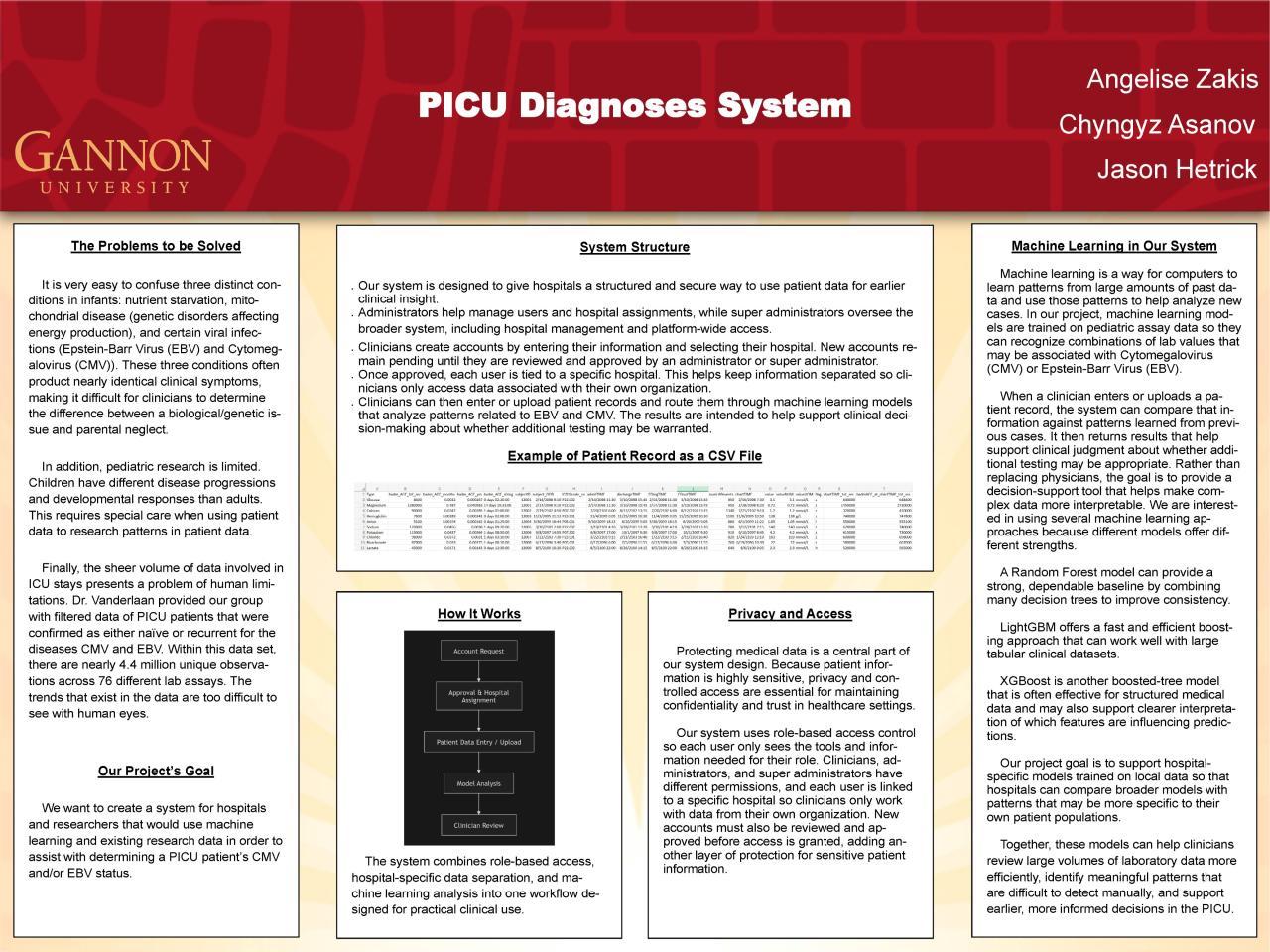
Title: PICU Diagnoses System
Abstract: The PICU Diagnoses system is an engineering capstone project that applies machine learning techniques to support clinical decision-making within Pediatric Intensive Care Unit (PICU) environments Critically ill pediatric patients generate complex, high-volume clinical data that can be difficult to interpret using traditional analytical methods. This project explores how machine learning can identify meaningful patterns within multi-dimensional ICU data to assist diagnostic and prognostic assessment. The platform implements an end-to-end machine learning workflow developed in Python using data science libraries including pandas, NumPy, and scikit-learn. Secure ingestion of laboratory and physiological patient data is followed by preprocessing routines designed to manage noisy time-series measurements. Feature extraction and transformation prepare clinical variables for predictive modeling, while evaluation and interpretability components support analysis of model outputs. The system integrates encrypted data storage with a webbased interface built using Gradio, enabling users to submit patient datasets and visualize prediction results. Supported by a high-performance computing environment, the prototype demonstrates automated clinical data processing and interpretable machine learning–driven prediction delivery for pediatric critical care research.
Presenter(s): Chyngyz Asanov, Angelise Zakis, Jason Hetrick
Sponsoring Department: Computer & Information Science
Mentor(s): Yunkai Liu
Presentation: 31
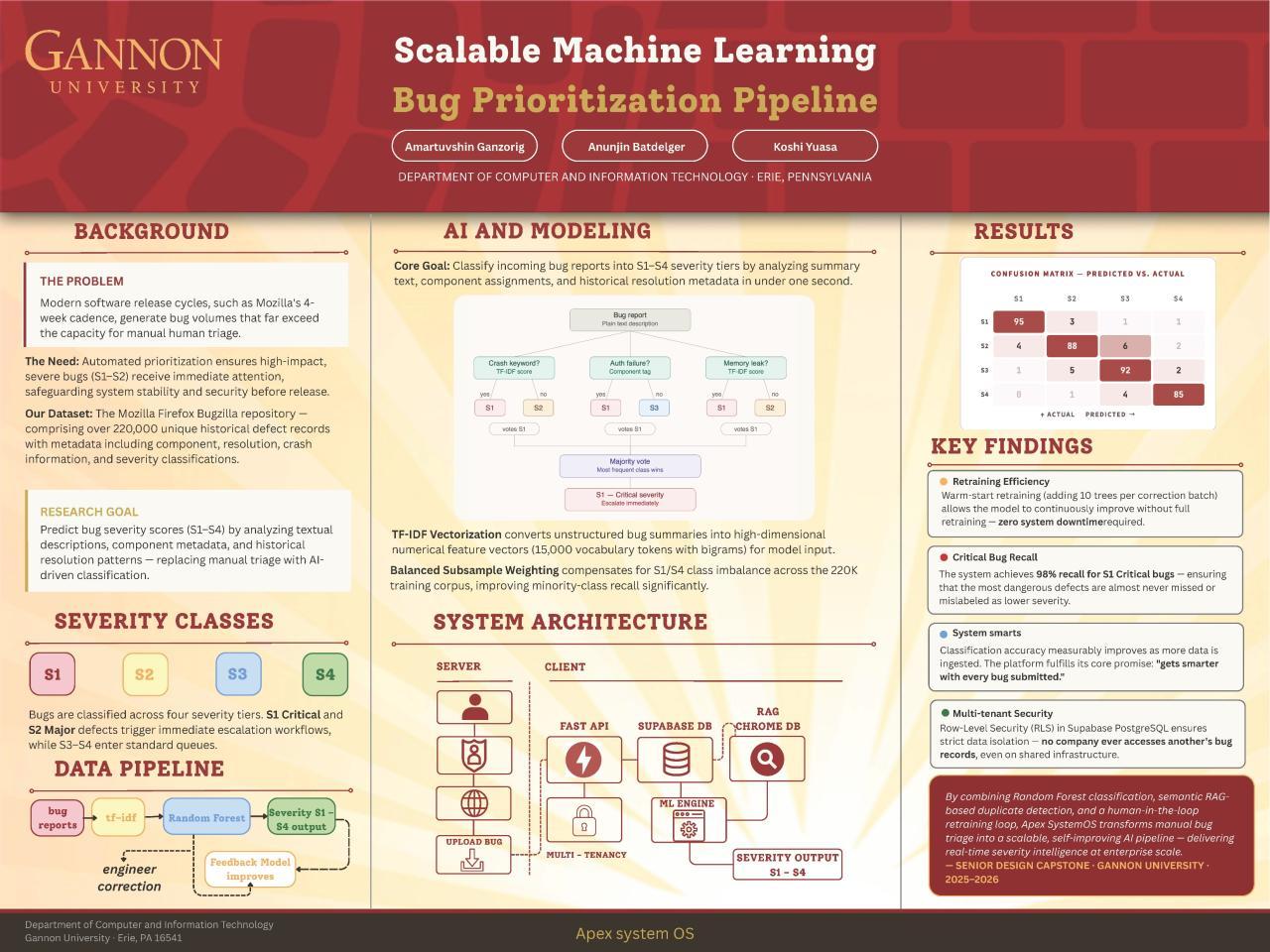
Title: Scalable Machine Learning Bug Prioritization Pipeline
Abstract: Modern software release cycles generate bug volumes that far exceed the capacity for manual human triage This project presents Apex System OS, a scalable machine learning bug prioritization pipeline designed to classify incoming reports into S1-S4 severity tiers in under one second. Utilizing the Mozilla Firefox Bugzilla repository of over 220,000 unique records, the system employs a Random Forest classification model integrated with TF-IDF vectorization and semantic RAG-based duplicate detection. Key technical milestones include a 98% recall rate for S1 Critical bugs and the implementation of Row-Level Security (RLS) in Supa base PostgreSQL to ensure strict multi-tenant data isolation. By incorporating a human-in-the-loop retraining loop, the platform allows for warm-start model improvements with zero system downtime. This architecture transforms manual triage into a self-improving AI pipeline, delivering real-time severity intelligence at an enterprise scale.
Presenter(s): Anunjin Batdelger, Amartuvshin Ganzorig, Koshi Yuasa
Sponsoring Department: Computer & Information Science
Mentor(s): Md Tajmilur Rahman, Mei-Huei Tang, Richard Matovu
Presentation: 32
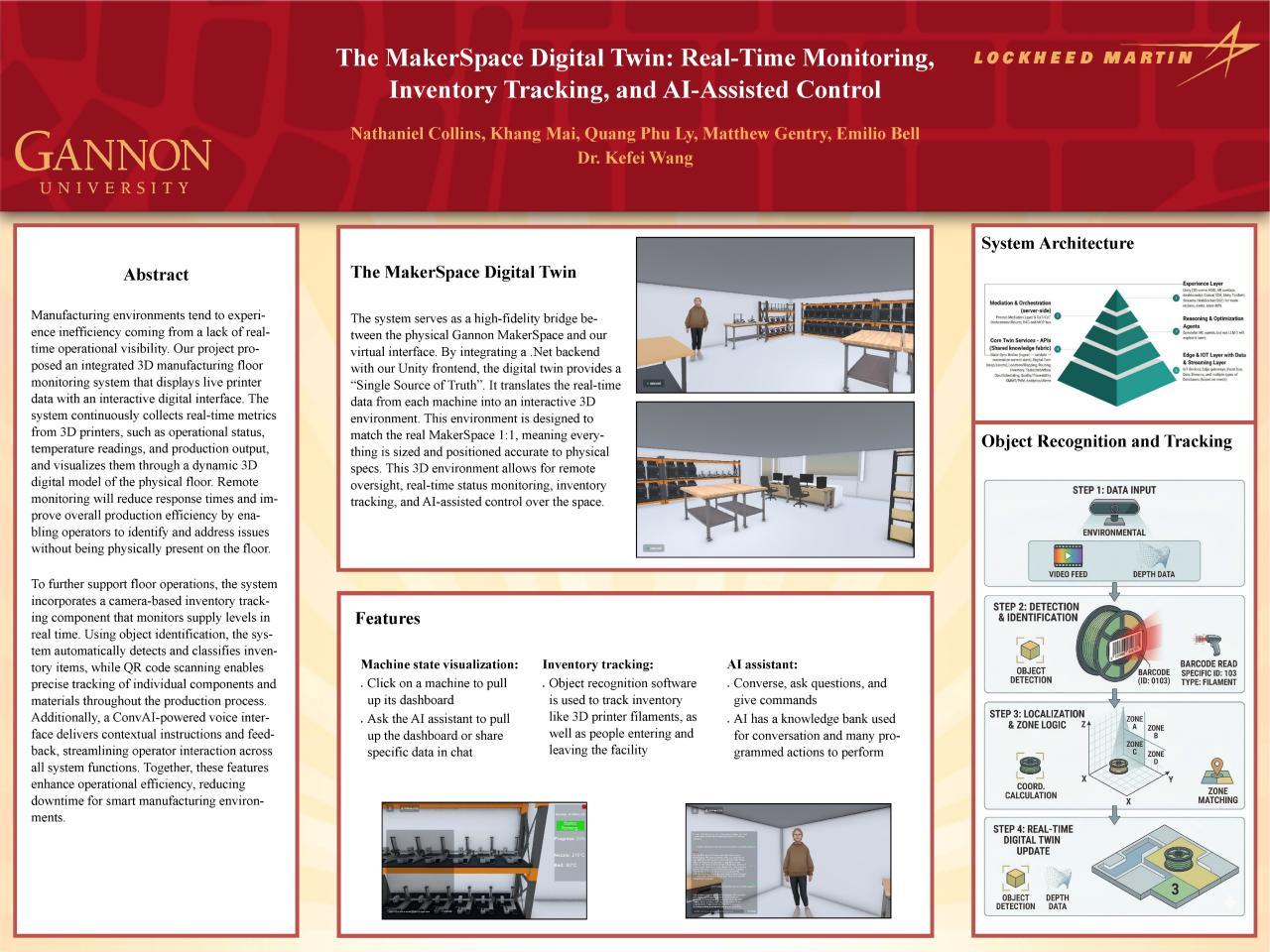
Title: The MakerSpace Digital Twin: Real-Time Monitoring, Inventory Tracking, and AI-Assisted Control
Abstract: Manufacturing environments tend to experience inefficiency coming from a lack of real time operational visibility Our project proposed an integrated 3D manufacturing floor monitoring system that displays live printer data with an interactive digital interface. The system continuously collects real-time metrics from 3D printers, such as operational status, temperature readings, and production output, and visualizes them through a dynamic 3Ddigital model of the physical floor. Remote monitoring will reduce response times and improve overall production efficiency by enabling operators to identify and address issues without being physically present on the floor. To further support floor operations, the system incorporates a camera-based inventory tracking component that monitors supply levels in real time. Using object identification, the system automatically detects and classifies inventory items, while QR code scanning enables precise tracking of individual components and materials throughout the production process. Additionally, a ConvAI-powered voice interface delivers contextual instructions and feedback, streamlining operator interaction across all system functions. Together, these features enhance operational efficiency, reducing downtime for smart manufacturing environments.
Presenter(s): Nathaniel Collins, Khang Mai, Quang Phu Ly, Matthew Gentry, Emilio Bell
Sponsoring Department: Computer & Information Science
Mentor(s): Kefei Wang
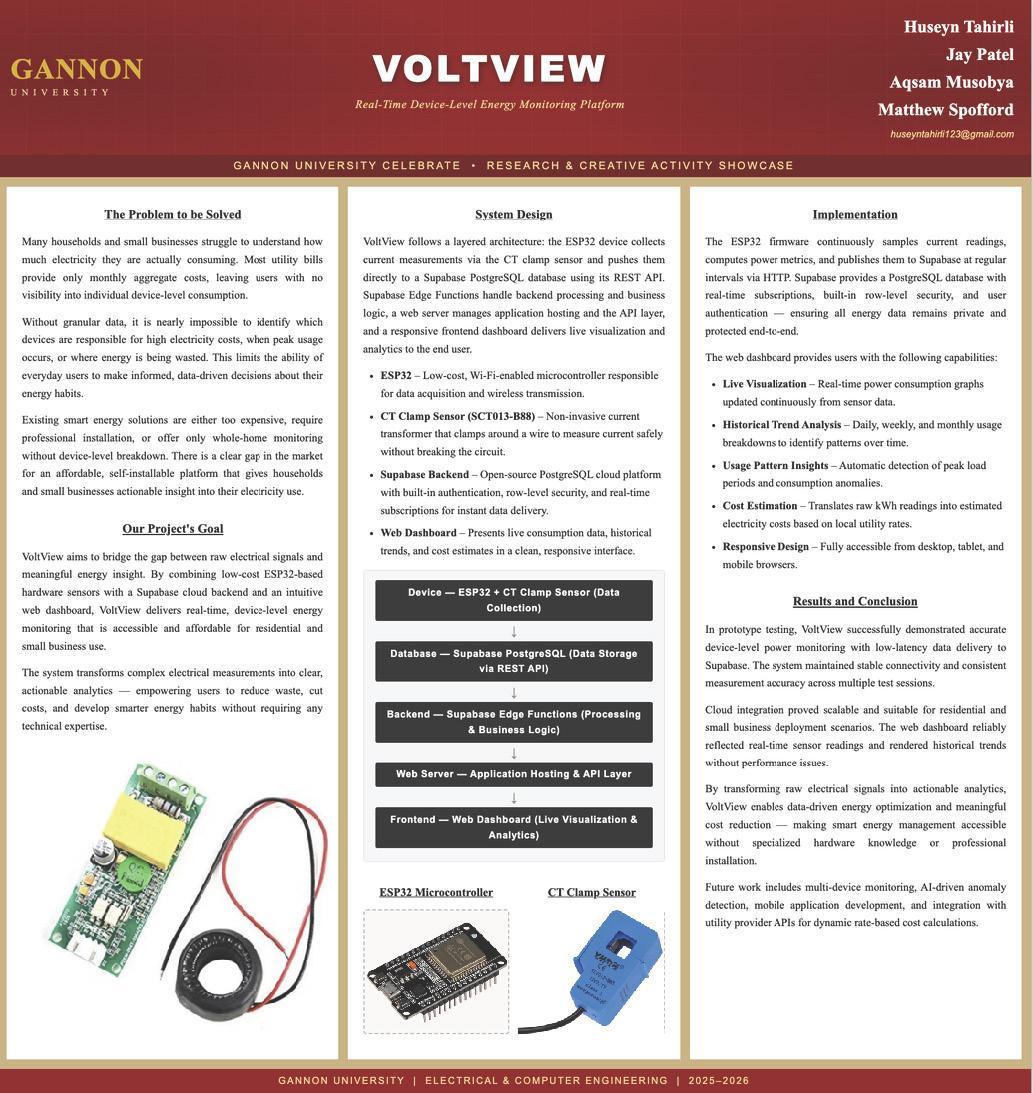
Title: VoltView
Presentation: 33
Abstract: Many households and small businesses struggle to understand how much electricity they are actually using and lack visibility into device-level electricity consumption, as most utility bills provide only monthly aggregate costs. This limits the ability to identify peak usage, inefficiencies, and cost drivers.VoltView is a real-time energy monitoring platform integrating ESP32 powered hardware sensors with a secure cloud backend. The system collects electrical measurements at the source and transmits data using lightweight communication protocols for real-time processing and storage. A web-based dashboard provides live visualization, historical trend analysis, and usage pattern insights.In prototype testing, VoltView demonstrated accurate device-level monitoring with scalable cloud integration suitable for residential and small business deployment. By transforming raw electrical signals into actionable analytics, VoltView enables data driven energy optimization and cost reduction.
Presenter(s): Huseyn Tahirli, Jay Patel, Aqsam Musobya, Matthew Spofford
Sponsoring Department: Computer & Information Science
Mentor(s): Kefei Wang
Presentation: 34
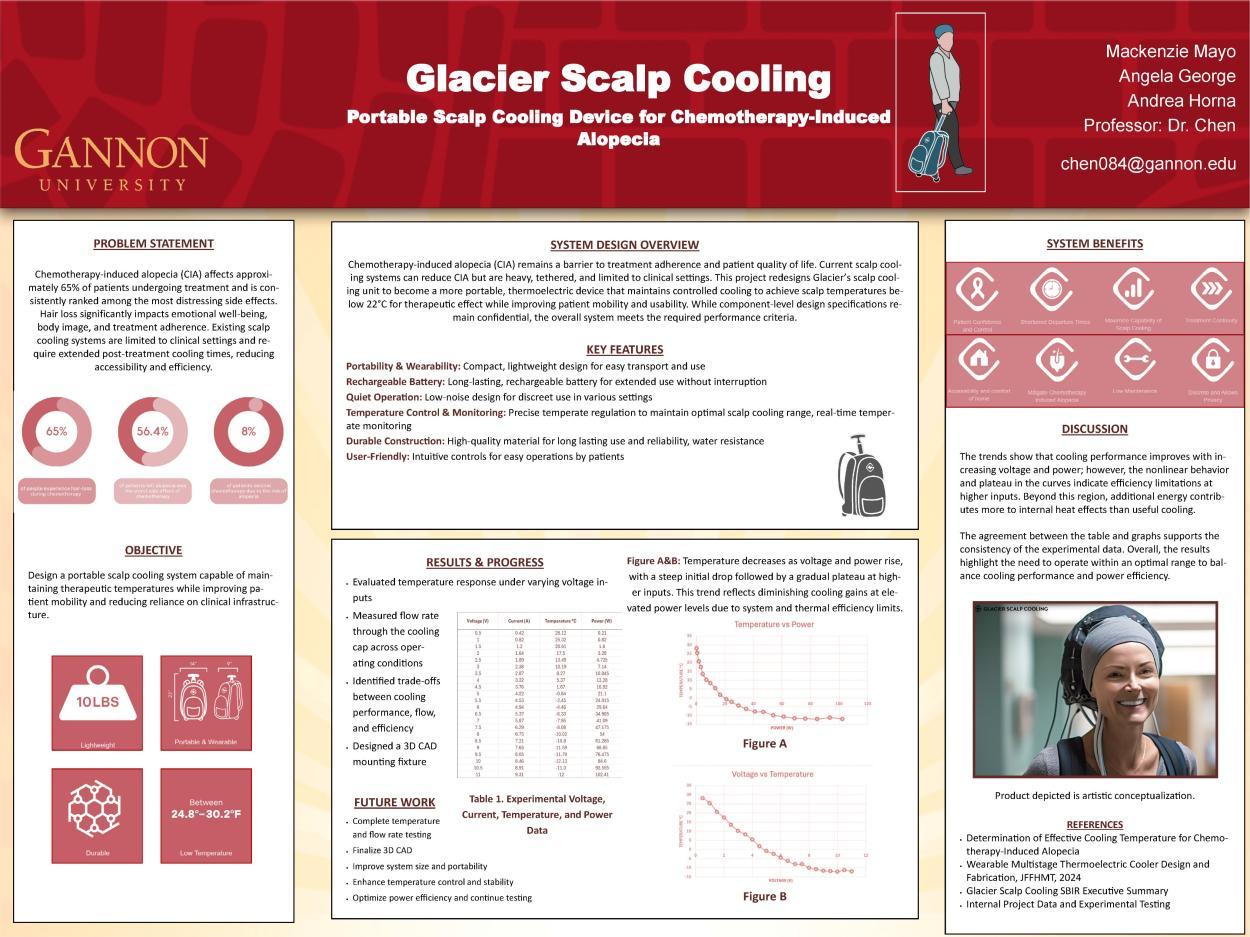
Title: Glacier Scalp Cooling Portable Scalp Cooling Device for Chemotherapy-Induced Alopecia
Abstract: Chemotherapy induced Alopecia can have detrimental effects on recovery and mental health. The loss of hair could affect the identity and control of the patient, leading to anxiety and depression. Clinical scalp-cooling systems like Paxman and DigniCap have shown strong results at lowering scalp temperature, but at the cost of large size, tethered operation, and limited portability These factors restrict patient mobility and prevent use outside operation centers This project redesigns the Glacier Scalp Cooling system into a lightweight, portable thermoelectric device, with the ability to maintain therapeutic scalp chemotherapy. Customer needs assessment, benchmarking, and the Analytical Hierarchy process (AHP) were prioritized in design requirements, allowing for optimal temperature control, biocompatibility, portability and usability The selected design will use a smaller TEC module capable of a cooling differential of ≥25–30 °C, with a compact heat sink, and low-noise fans, ensuring heat rejection and stable temperature control. Thorough analysis showed that this system meets requirements of a cooling load of 50 W. The portable housing which provides proper ventilation is ISO 10993-compliant materials for safe skin and air-path contact The electrical design also aligns with IEC 60601, requirements for insulation, battery safety, and electromagnetic compatibility Overall, the redesigned Glacier system provides a lightweight, patientcentered scalp cooling design that delivers stable therapeutic temperatures in a fully portable form factor while meeting clinical safety, comfort, and usability requirements.
Presenter(s): Mackenzie Mayo, Angela George, Andrea Horna
Sponsoring Department: Bio-Medical Engineering
Mentor(s): Longyan Chen
Presentation:
35
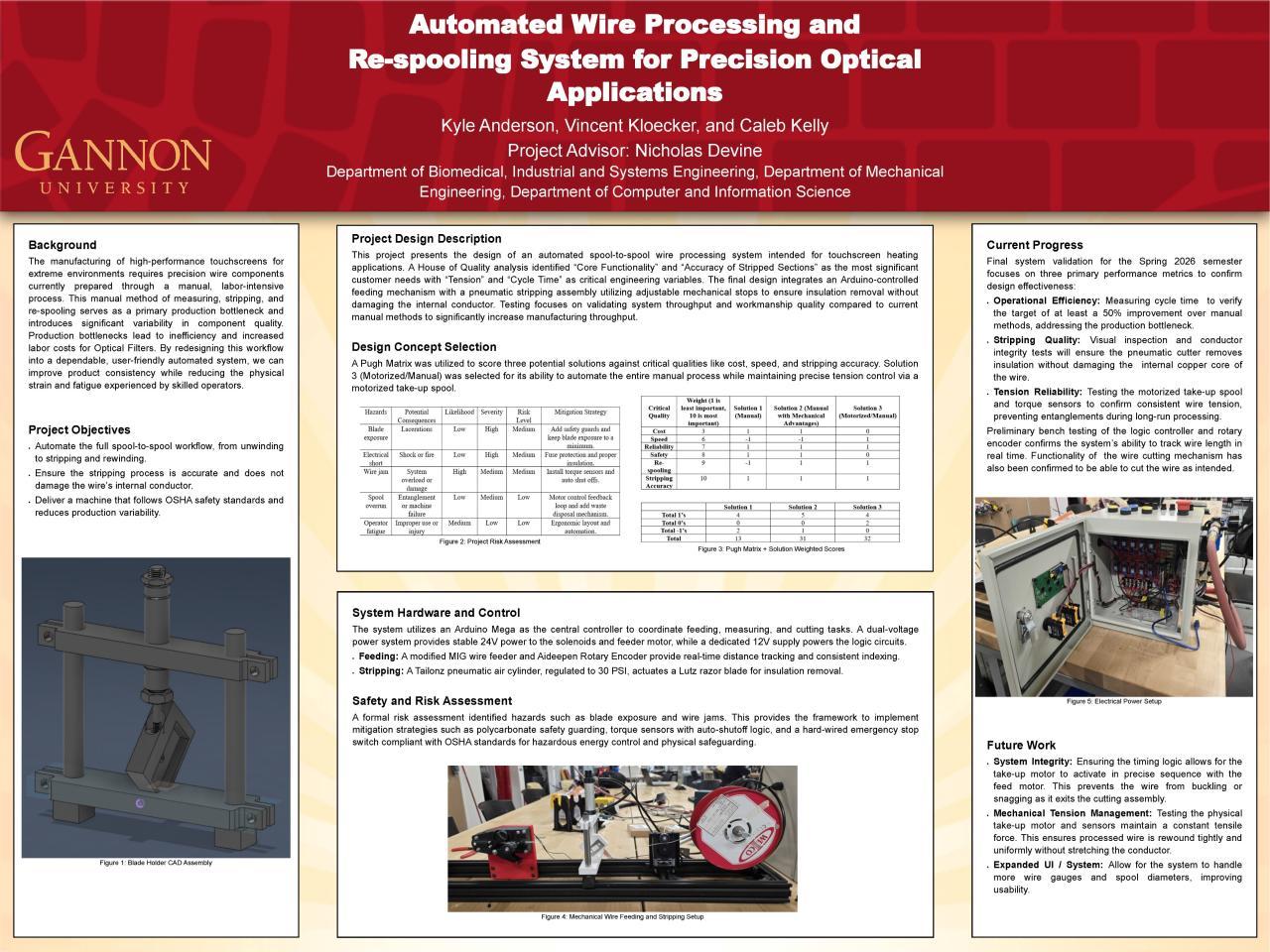
Title: Automated Wire Processing and Re-spooling System for Precision Optical Applications
Abstract: This project presents the design of an automated spool-to-spool wire processing system intended for touchscreen heating applications A House of Quality analysis identified “Core Functionality” and “Accuracy of Stripped Sections” as the most significant customer needs with “Tension” and “Cycle Time” as critical engineering variables. The final design integrates an Arduino-controlled feeding mechanism with a pneumatic stripping assembly utilizing adjustable mechanical stops to ensure insulation removal without damaging the internal conductor. Testing focuses on validating system throughput and workmanship quality compared to current manual methods to significantly increase manufacturing throughput.
Presenter(s): Vincent Kloecker, Kyle Anderson, Caleb Kelly
Sponsoring Department: Bio-Medical Engineering
Mentor(s): Nicholas Devine
Presentation: 36
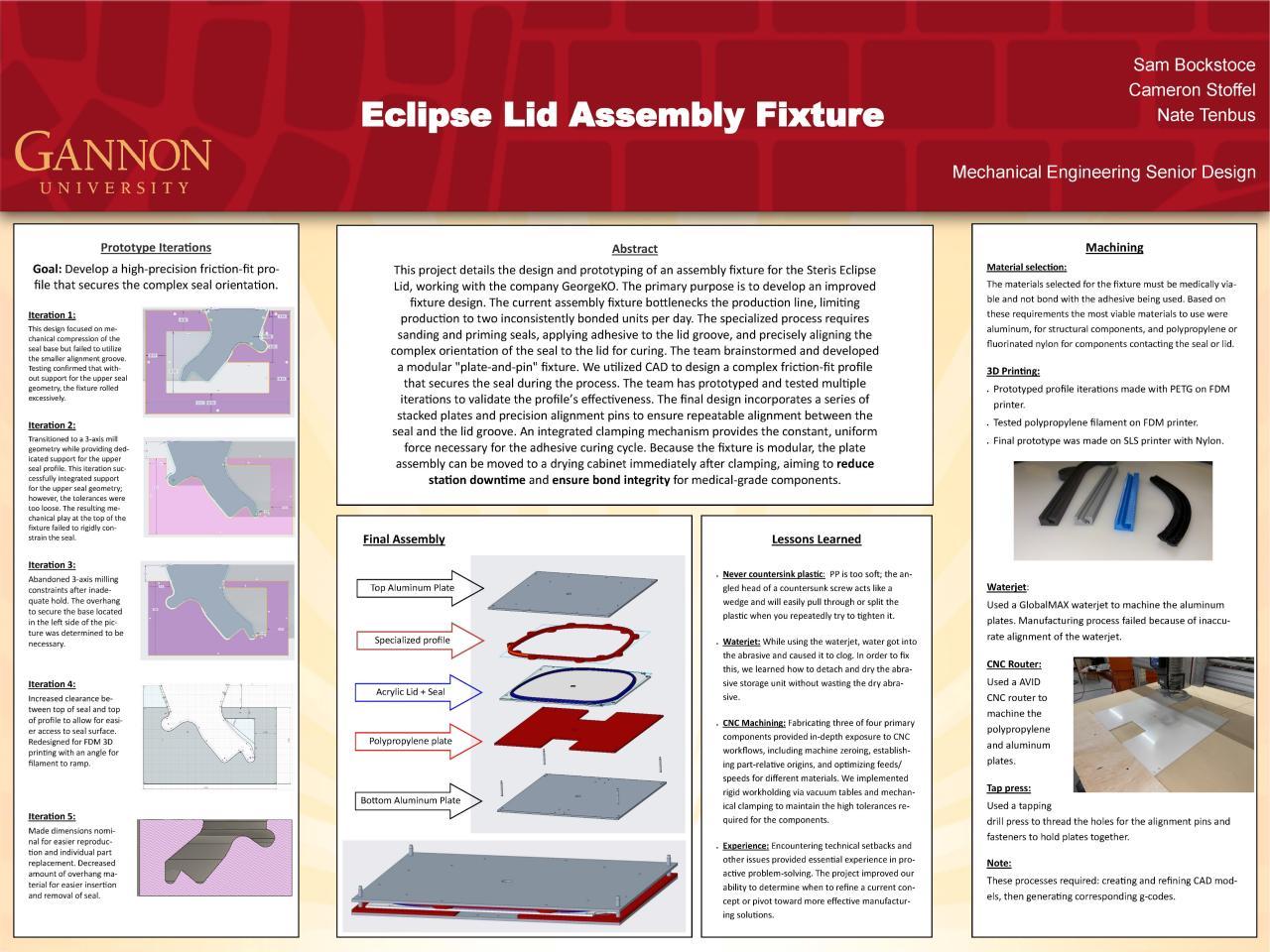
Title: Eclipse Lid Assembly Fixture
Abstract: This project details the design and prototyping of an assembly fixture for the Steris Eclipse Lid, working with the company GeorgeKO The primary purpose is to develop an improved fixture design The current assembly fixture bottlenecks the production line, limiting production to two inconsistently bonded units per day. The specialized process requires sanding and priming seals, applying adhesive to the lid groove, and precisely aligning the complex orientation of the seal to the lid for curing. The team brainstormed and developed a modular "plate-and-pin" fixture. We utilized CAD to design a complex friction-fit profile that secures the seal during the process. The team has prototyped and tested multiple iterations to validate the profile’s effectiveness. The final design incorporates a series of stacked plates and precision alignment pins to ensure repeatable alignment between the seal and the lid groove. An integrated clamping mechanism provides the constant, uniform force necessary for the adhesive curing cycle. Because the fixture is modular, the plate assembly can be moved to a drying cabinet immediately after clamping, aiming to reduce station downtime and ensure bond integrity for medical-grade components.
Presenter(s): Sam Bockstoce, Cameron Stoffel, Nate Tenbus
Sponsoring Department: Bio-Medical Engineering
Mentor(s): Nicholas Devine
Presentation: 37
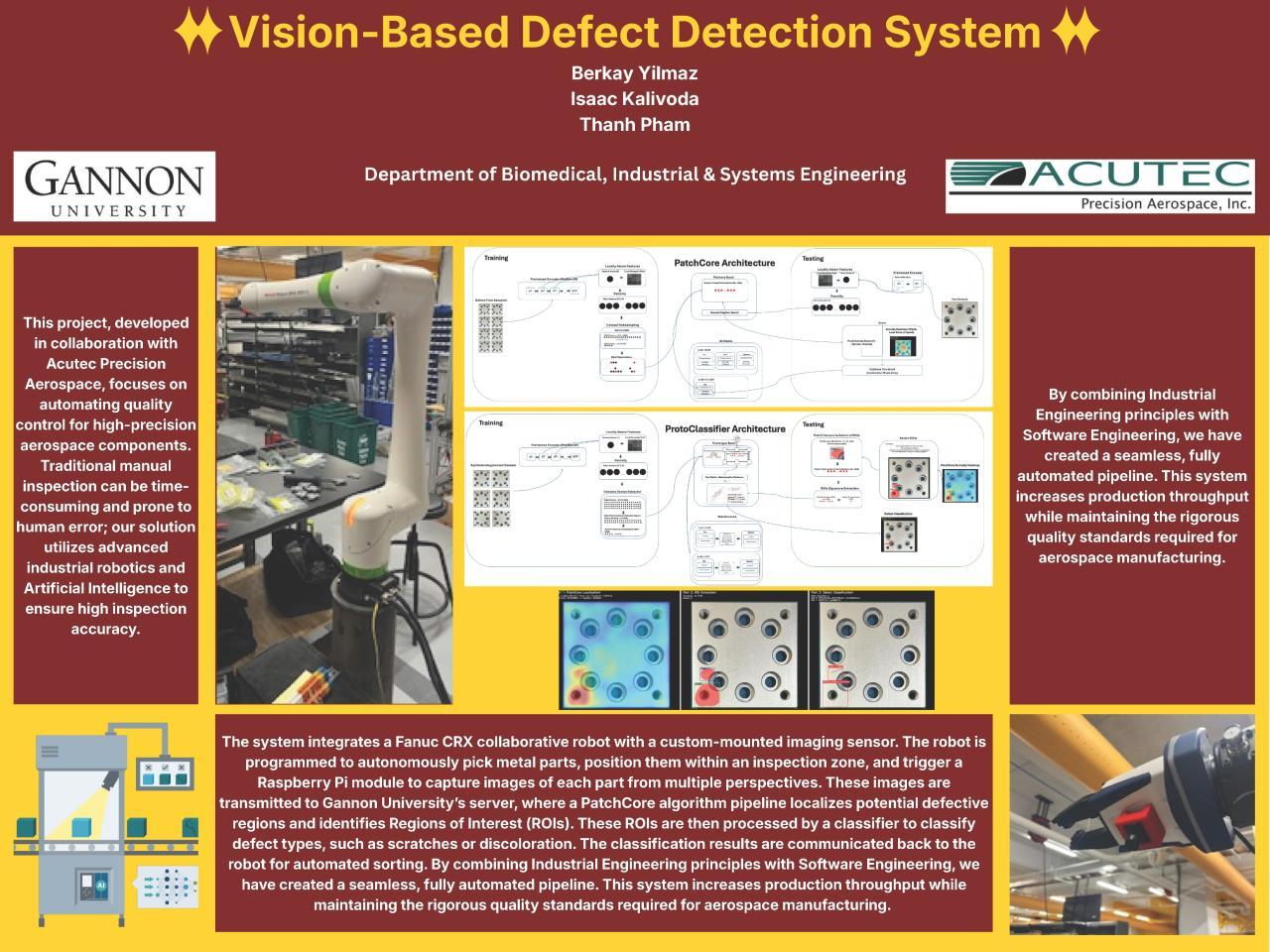
Title: Vision-Based Defect Detection System
Abstract: This project, developed in collaboration with Acutec Precision Aerospace, focuses on automating quality control for high-precision aerospace components. Traditional manual inspection can be time-consuming and prone to human error; our solution utilizes advanced industrial robotics and Artificial Intelligence to ensure high inspection accuracy The system integrates a Fanuc CRX collaborative robot with a custom-mounted imaging sensor The robot is programmed to autonomously pick metal parts, position them within an inspection zone, and trigger a Raspberry Pi module to capture images of each part from multiple perspectives. These images are transmitted to Gannon University’s server, where a PatchCore algorithm pipeline localizes potential defective regions and identifies Regions of Interest (ROIs) These ROIs are then processed by a classifier to classify defect types, such as scratches or discoloration The classification results are communicated back to the robot for automated sorting By combining Industrial Engineering principles with Software Engineering, we have created a seamless, fully automated pipeline. This system increases production throughput while maintaining the rigorous quality standards required for aerospace manufacturing By combining Industrial Engineering principles with Software Engineering, we have created a seamless, fully automated pipeline This system increases production throughput while maintaining the rigorous quality standards required for aerospace manufacturing.
Presenter(s): Berkay Yilmaz, Isaac Kalivoda, Thanh Pham
Sponsoring Department: Bio-Medical Engineering
Mentor(s): Nicholas Devine, Longyan Chen
Presentation: 38
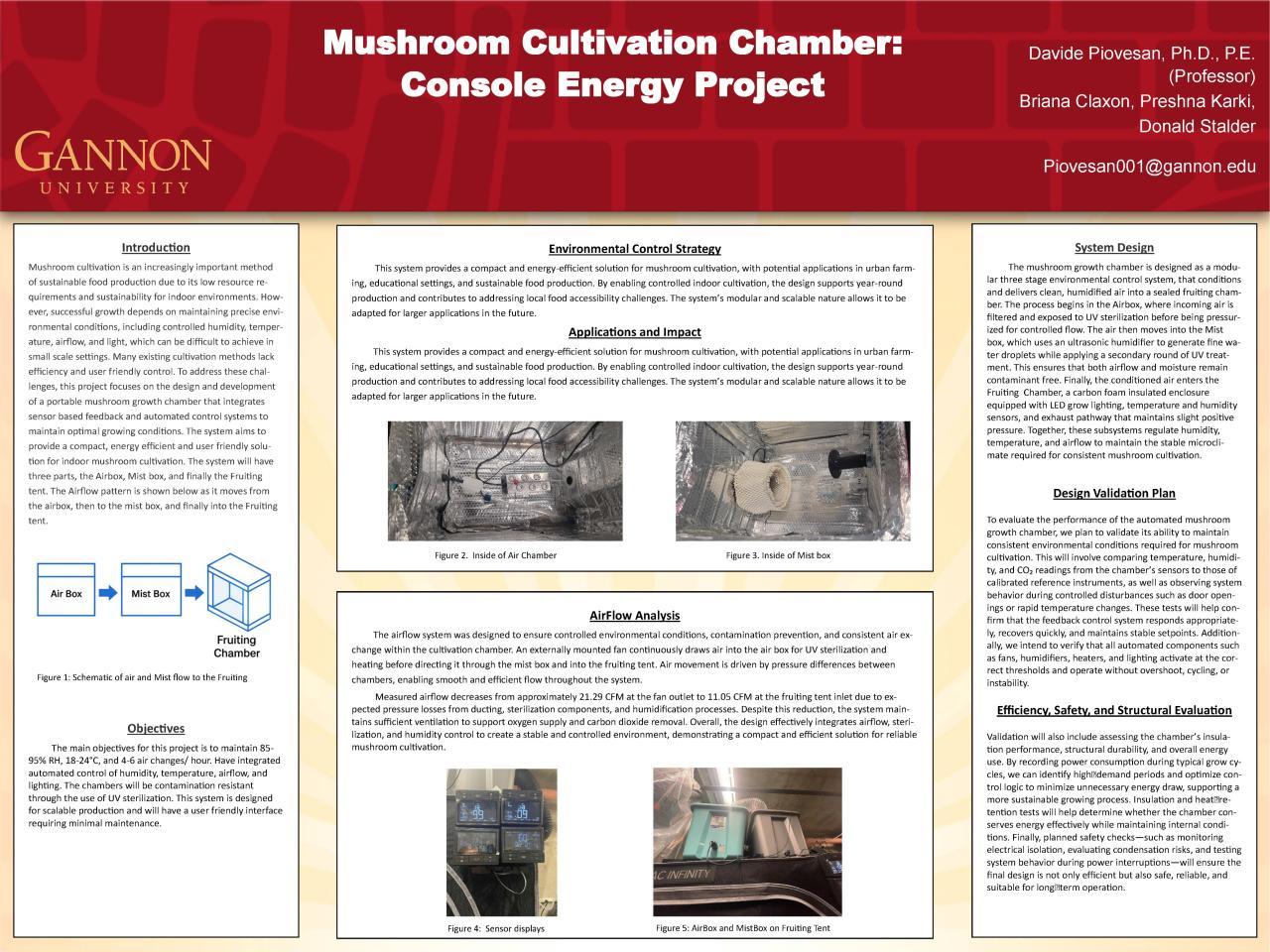
Title: Mushroom Cultivation Chamber: Console Energy Project
Abstract: Mushroom cultivation is an increasingly important method of sustainable food production. Indoor cultivation requires precise control of environmental parameters such as humidity, temperature, airflow, and light. This study presents the design and prototyping of a portable mushroom growth chamber intended to provide controlled conditions for indoor cultivation. The system is designed to maintain optimal environmental parameters, including humidity of 85-95%, temperature of 18-24 °C, and adequate airflow to support consistent mushroom growth. Key design objectives include minimizing contamination through easily cleanable components and maintaining a compact, modular structure suitable for small-scale or indoor environments. The chamber integrates sensor-based feedback and a microcontroller interface to monitor and automatically regulate humidity, temperature, ventilation, and lighting conditions. Sustainable and energy-efficient materials are incorporated to reduce environmental impact and operational costs. The design also emphasizes userfriendly controls and monitoring, allowing growers to easily operate and track system performance. Prototype testing evaluates the chamber’s ability to maintain stable environmental conditions and provides insights into potential future scaling and system optimization.
Presenter(s): Briana Claxon, Preshna Karki, Donald Stalder
Sponsoring Department: Bio-Medical Engineering
Mentor(s): Davide Piovesan, Robert Michael, Longyan Chen
Presentation: 39
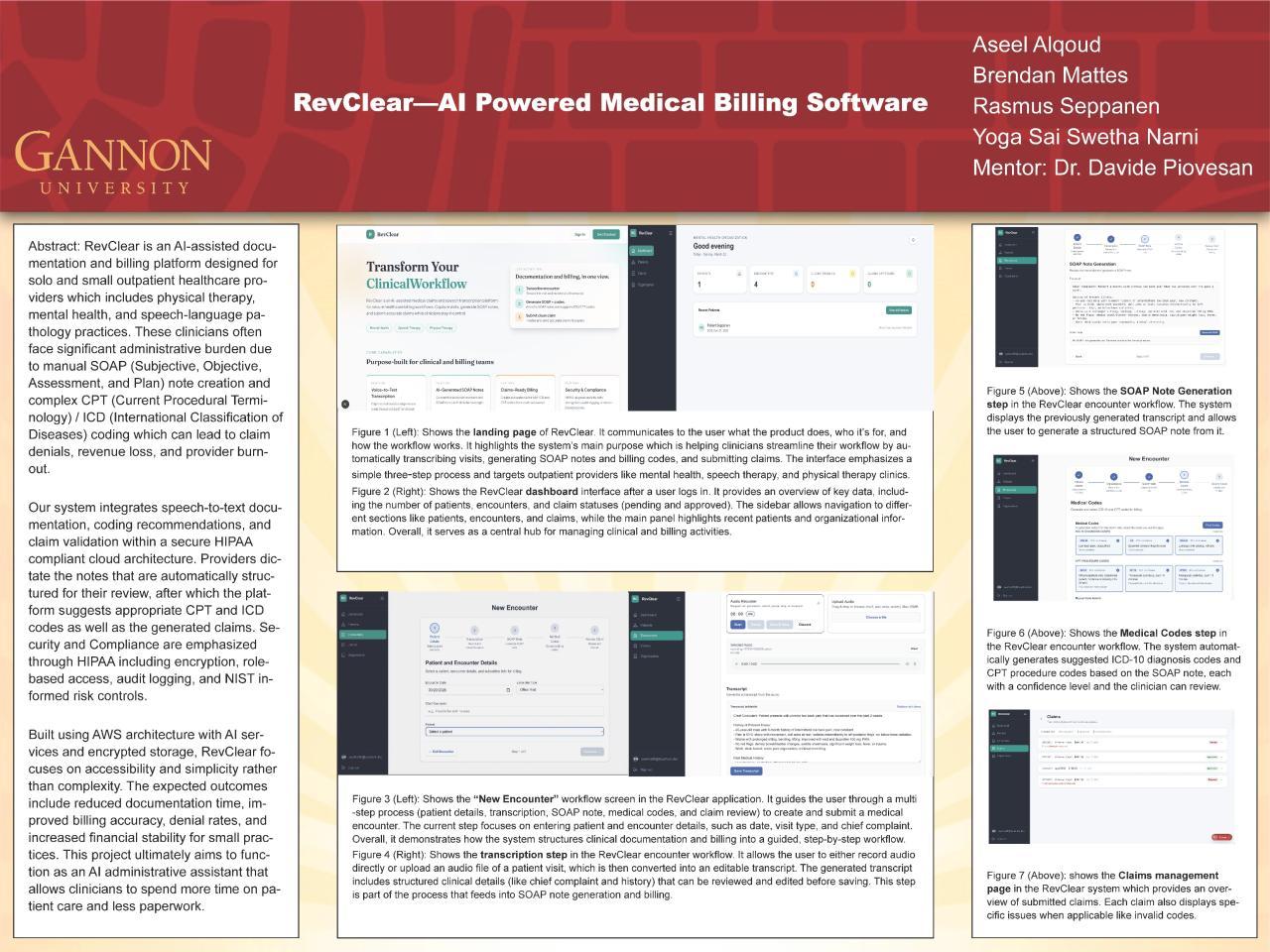
Title: RevClear—AI Powered Medical Billing Software
Abstract: RevClear is an AI-assisted documentation and billing platform designed for solo and small outpatient healthcare providers which includes physical therapy, mental health, and speech-language pathology practices These clinicians often face significant administrative burden due to manual SOAP (Subjective, Objective, Assessment, and Plan) note creation and complex CPT (Current Procedural Terminology) / ICD (International Classification of Diseases) coding which can lead to claim denials, revenue loss, and provider burnout. Our system integrates speech-to-text documentation, coding recommendations, and claim validation within a secure HIPAA compliant cloud architecture. Providers dictate the notes that are automatically structured for their review, after which the platform suggests appropriate CPT and ICD codes as well as the generated claims. Security and Compliance are emphasized through HIPAA including encryption, role-based access, audit logging, and NIST informed risk controls. Built using AWS architecture with AI services and encrypted storage, RevClear focuses on accessibility and simplicity rather than complexity. The expected outcomes include reduced documentation time, improved billing accuracy, denial rates, and increased financial stability for small practices. This project ultimately aims to function as an AI administrative assistant that allows clinicians to spend more time on patient care and less paperwork.
Presenter(s): Aseel Alqoud, Brendan Mattes, Rasmus Seppanen, Yoga Sai Swetha Narni
Sponsoring Department: Bio-Medical Engineering
Mentor(s): Davide Piovesan
Presentation: 40
Title: Automatic OCXO Tuning Device
Abstract: Many modern industries (defense, telecommunications, satellite communications, scientific measurement, and finance) rely on extremely stable time-base references. This makes high- stability OCXO products both critical and difficult to produce at scale. Designing and manufacturing these oscillators at high quality is non-trivial: small component tolerances, thermal behavior, and aging effects all interact to determine final frequency accuracy The primary purpose of this project is to design and prototype a device capable of automatically centering the frequency of the company’s OCXO-based products using a digital control loop and a high-precision external reference. To achieve this, our approach constitutes a custom PCB board with a 32-bit microcontroller unit that interacts with a complex network of circuitry consisting of a phase lock loop (PLL), digital potentiometer, and a shunt resistor, among other components We engineered custom loop filters within the PLL that interact with the corresponding frequency we aim to achieve, with the digital potentiometer allowing us to vary the resistance in cohesion with the capacitance to comp the oscillator. All of this integrates with a Microcontroller that can communicate to any Windows PC via a graphical user interface, easy to use for lab and factory personnel By integrating low cost and efficient components with software defined processes, this project aims to become a foundation in the field of crystal oscillators. This cost and energy efficient approach will redefine the possibilities of modern industries that rely on OCXOs.
Presenter(s): Keegan Szewczyk, James Carey
Sponsoring Department: Electrical and Cyber Engineering
Mentor(s): Lin Zhao, Keith Szewczyk
Presentation: 41
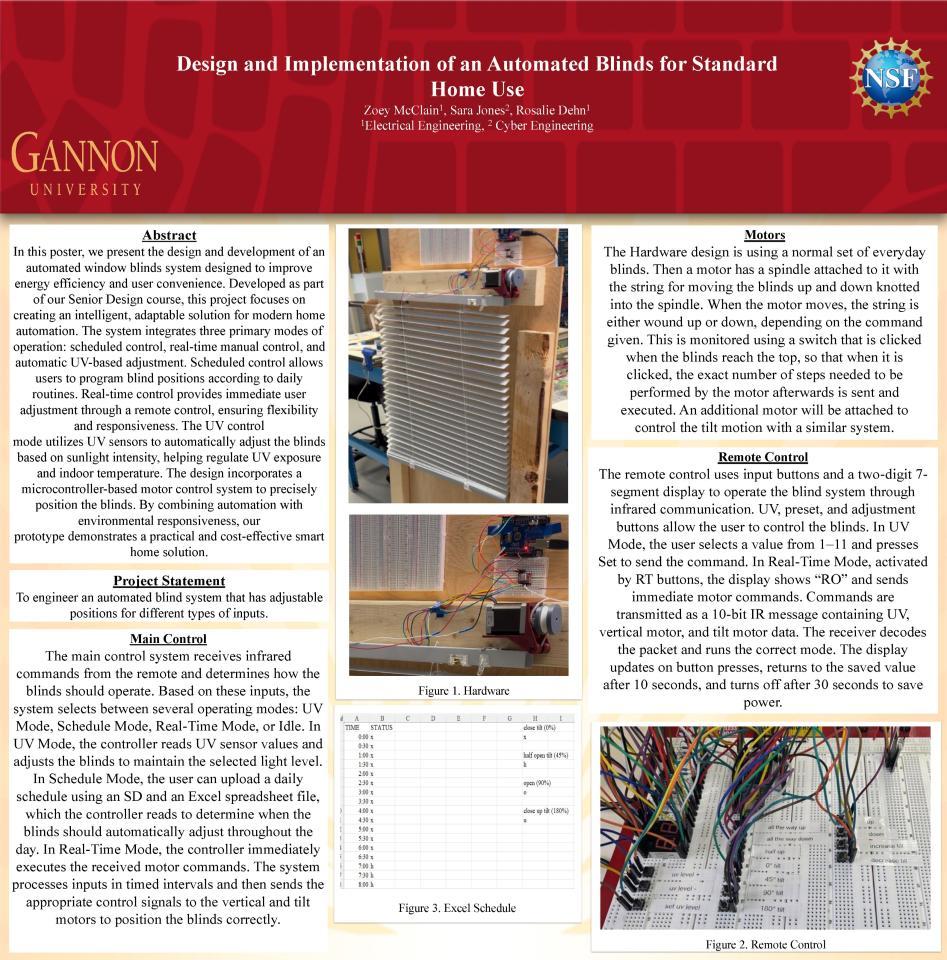
Title: Design and Implementation of an Automated Blinds for Standard Home Use
Abstract: In this poster, we present the design and development of an automated window blinds system designed to improve energy efficiency and user convenience Developed as part of our Senior Design course, this project focuses on creating an intelligent, adaptable solution for modern home automation. The system integrates three primary modes of operation: scheduled control, real-time manual control, and automatic UVbased adjustment. Scheduled control allows users to program blind positions according to daily routines. Realtime control provides immediate user adjustment through a remote control, ensuring flexibility and responsiveness. The UV control mode utilizes UV sensors to automatically adjust the blinds based on sunlight intensity, helping regulate UV exposure and indoor temperature. The design incorporates a microcontrollerbased motor control system to precisely position the blinds. By combining automation with environmental responsiveness, our prototype demonstrates a practical and cost-effective smart home solution.
Presenter(s): Zoey
McClain, Sara Jones, Rosalie Dehn
Sponsoring Department: Electrical and Cyber Engineering
Mentor(s): Lin Zhao
Presentation: 42
Title: Virtual Synchronous Machine-based Grid-forming Inverter
Abstract: The global transition toward renewable energy has led to the widespread replacement of conventional synchronous generators with inverter-based resources, reducing grid inertia, and increasing the rate of change of frequency during grid disturbances. Maintaining stability under these conditions is essential for a reliable and sustainable power system. This poster presents the design, simulation, and implementation of a three-phase grid-forming inverter controlled as a Virtual Synchronous Machine (VSM) to emulate synchronous generator dynamics, establish voltage, regulate frequency, and provide virtual inertia during gridconnected operation. The system includes a three-phase voltage source inverter with an LCL output filter and a digital signal processor implementing a cascaded control architecture. The VSM algorithm applies the synchronous machine swing equation to generate voltage magnitude and phase references, while inner voltage and current control loops ensure precise tracking and stable performance. A real-time application interface enables system monitoring. Simulation and experimental results demonstrate reduced frequency deviations and stable voltage under dynamic loading, advancing grid-forming solutions critical to highrenewable and sustainable energy systems.
Presenter(s): Connor Angiel, Antreas Antoniou, Hannah Jacobs
Sponsoring Department: Electrical and Cyber Engineering
Mentor(s): Lin Zhao
Presentation: 43
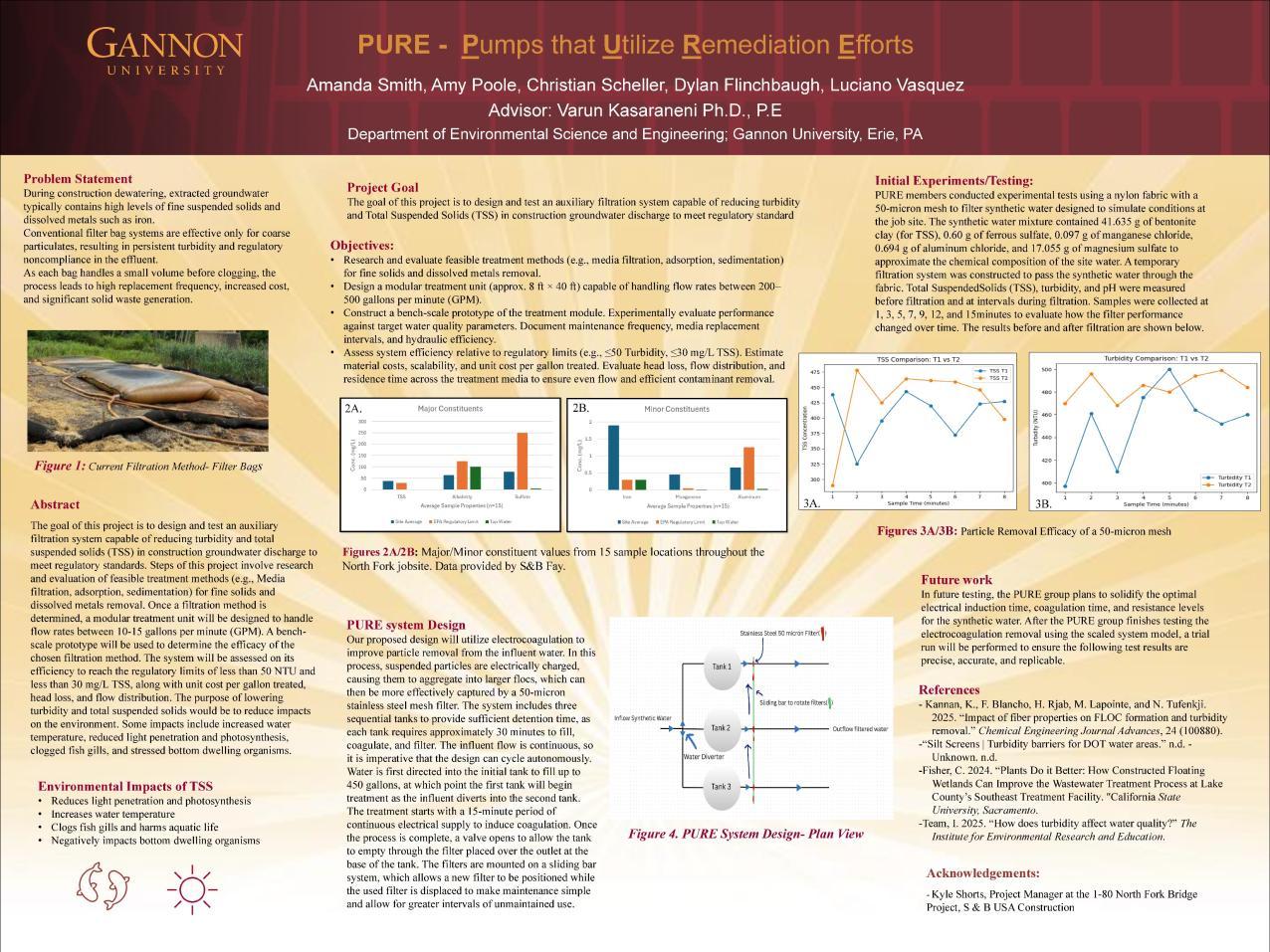
Title: PURE (Pumps that Utilize Remediation Efforts)
Abstract: The goal of this project is to design and test an auxiliary filtration system capable of reducing turbidity and total suspended solids (TSS) in construction groundwater discharge to meet regulatory standards Steps of this project involve research and evaluation of feasible treatment methods (e.g., Media filtration, adsorption, sedimentation) for fine solids and dissolved metals removal. Once a filtration method is determined, a modular treatment unit will be designed to handle flow rates between 10-15 gallons per minute (GPM). A bench-scale prototype will be used to determine the efficacy of the chosen filtration method. The system will be assessed on its efficiency to reach the regulatory limits of less than 50 NTU and less than 30 mg/L TSS, along with unit cost per gallon treated, head loss, and flow distribution. The purpose of lowering turbidity and total suspended solids would be to reduce impacts on the environment. Some impacts include increased water temperature, reduced light penetration and photosynthesis, clogged fish gills, and stressed bottom dwelling organisms.
Presenter(s): Amanda Smith, Amy Poole, Christian Scheller, Dylan Flinchbaugh, Luciano Vasquez
Sponsoring Department: Environmental Science and Engineering
Mentor(s): Varun Kasaraneni
Presentation: 44
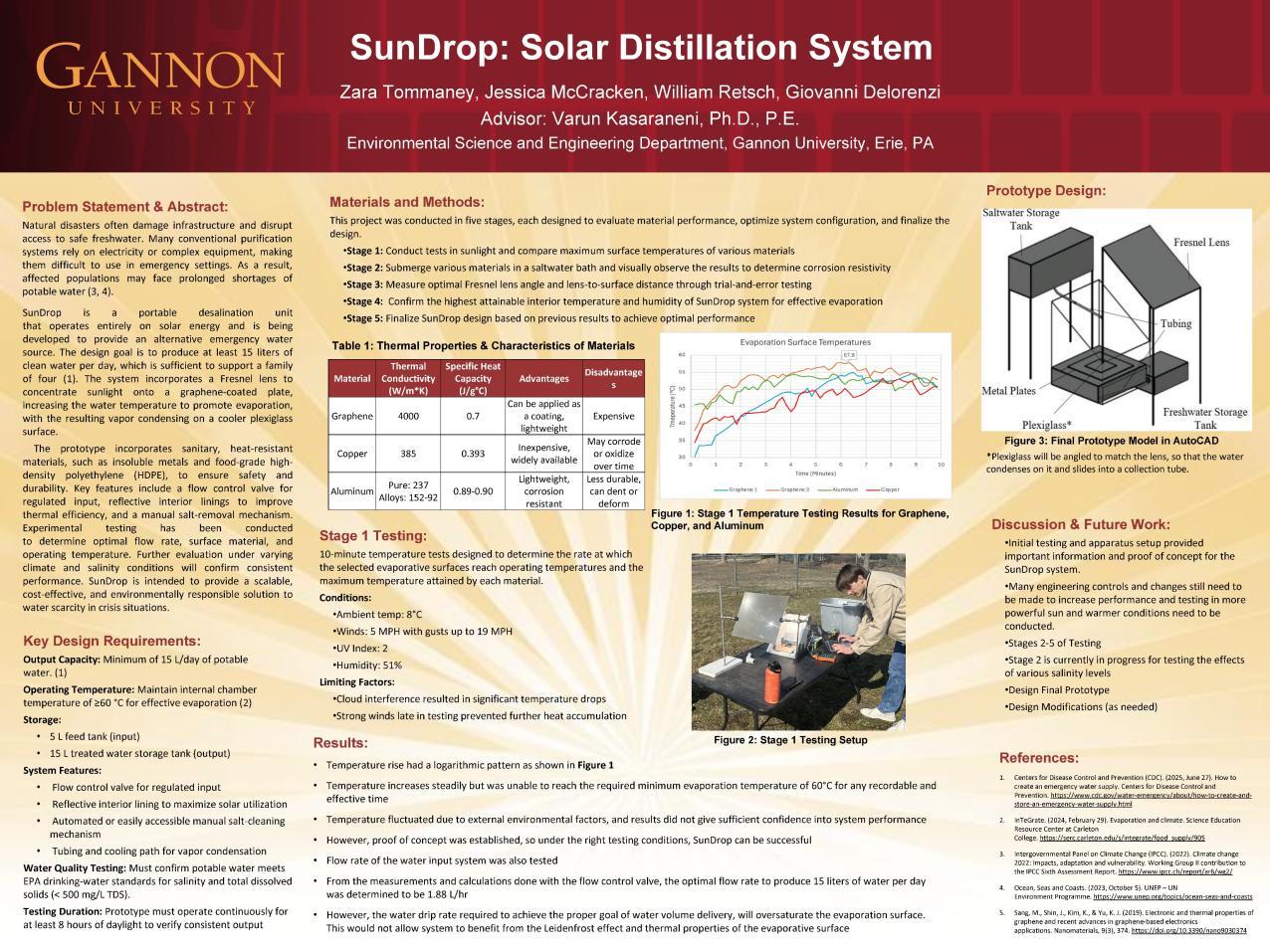
Title: SunDrop: Solar Distillation System
Abstract: SunDrop is a portable desalination unit that operates entirely on solar energy and is being developed to provide an alternative emergency water source The design goal is to produce at least 15 liters of clean water per day, which is sufficient to support a family of four (1). The system incorporates a Fresnel lens to concentrate sunlight onto a graphene-coated plate, increasing the water temperature to promote evaporation, with the resulting vapor condensing on a cooler plexiglass surface. The prototype incorporates sanitary, heatresistant materials, such as insoluble metals and food-grade high density polyethylene (HDPE), to ensure safety and durability. Key features include a flow control valve for regulated input, reflective interior linings to improve thermal efficiency, and a manual salt-removal mechanism. Experimental testing has been conducted to determine optimal flow rate, surface material, and operating temperature. Further evaluation under varying climate and salinity conditions will confirm consistent performance. SunDrop is intended to provide a scalable, cost-effective, and environmentally responsible solution to water scarcity in crisis situations.
Presenter(s): Zara Tommaney, Jessica McCracken, William Retsch, Giovanni Delorenzi
Sponsoring Department: Environmental Science and Engineering
Mentor(s): Varun Kasaraneni
Presentation: 45
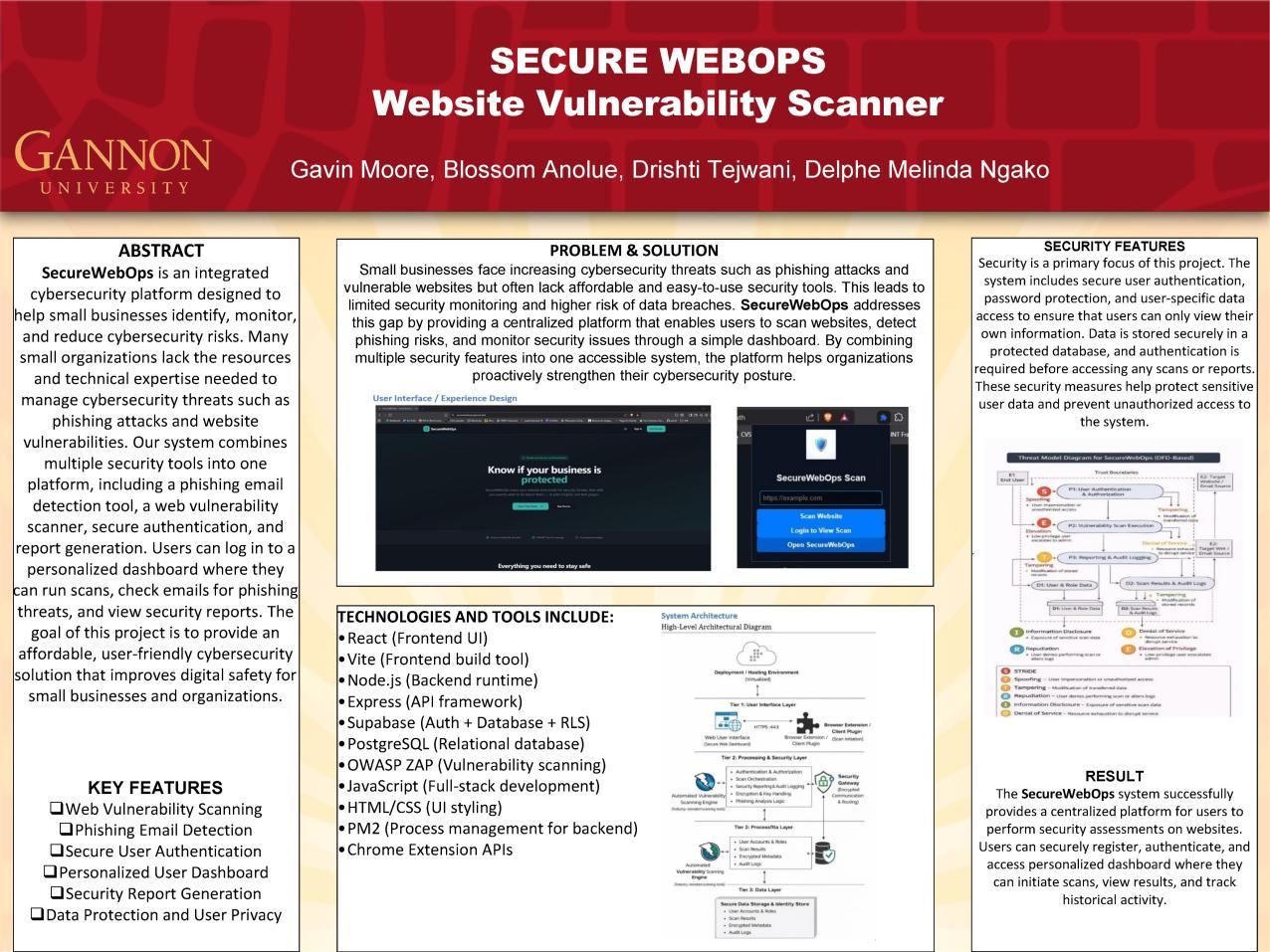
Title: SECURE WEBOPS Website Vulnerability Scanner
Abstract: SecureWebOps is an integrated cybersecurity platform designed to help small businesses identify, monitor, and reduce cybersecurity risks Many small organizations lack the resources and technical expertise needed to manage cybersecurity threats such as phishing attacks and website vulnerabilities. Our system combines multiple security tools into one platform, including a phishing email detection tool, a web vulnerability scanner, secure authentication, and report generation. Users can log in to a personalized dashboard where they can run scans, check emails for phishing threats, and view security reports. The platform uses modern web technologies and secure database systems to ensure that user data is protected and only accessible to authorized users. The goal of this project is to provide an affordable, user-friendly cybersecurity solution that improves digital safety for small businesses and organizations.
Presenter(s): Blossom Anolue, Gavin Moore, Melinda Ngako, Drishti Tejwani
Sponsoring Department: Industrial Engineering
Mentor(s): Ikechukwu Ohu
Presentation: 46
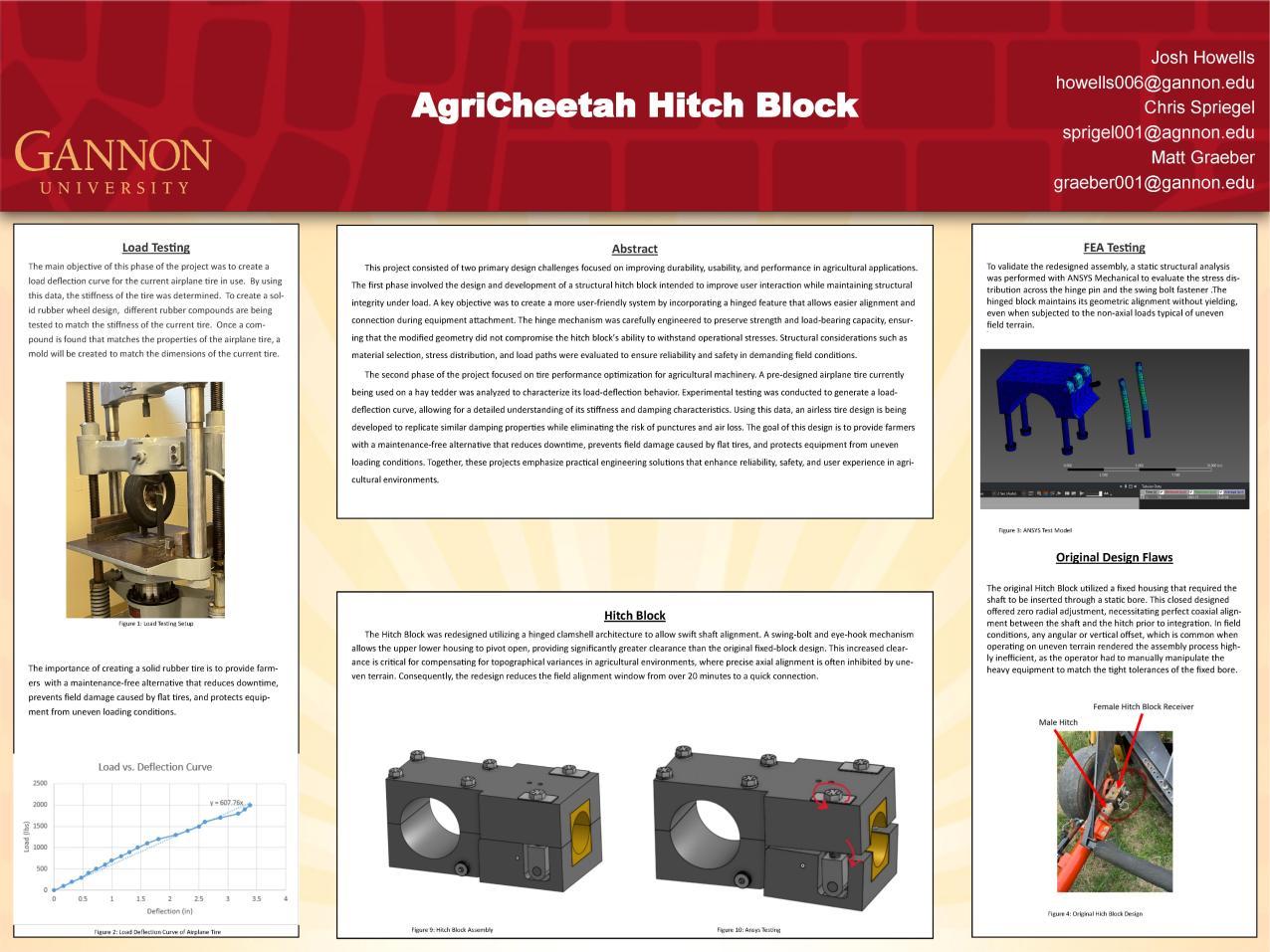
Title: AgriCheetah Hitch Block
Abstract: This project consisted of two primary design challenges focused on improving durability, usability, and performance in agricultural applications The first phase involved the design and development of a structural hitch block intended to improve user interaction while maintaining structural integrity under load. A key objective was to create a more user-friendly system by incorporating a hinged feature that allows easier alignment and connection during equipment attachment. The hinge mechanism was carefully engineered to preserve strength and load-bearing capacity, ensuring that the modified geometry did not compromise the hitch block’s ability to withstand operational stresses Structural considerations such as material selection, stress distribution, and load paths were evaluated to ensure reliability and safety in demanding field conditions The second phase of the project focused on tire performance optimization for agricultural machinery. A pre-designed airplane tire currently being used on a hay tedder was analyzed to characterize its load-deflection behavior Experimental testing was conducted to generate a load-deflection curve, allowing for a detailed understanding of its stiffness and damping characteristics. Using this data, an airless tire design is being developed to replicate similar damping properties while eliminating the risk of punctures and air loss The goal of this design is to provide farmers with a maintenance-free alternative that reduces downtime, prevents field damage caused by flat tires, and protects equipment from uneven loading conditions Together, these projects emphasize practical engineering solutions that enhance reliability, safety, and user experience in agricultural environments.
Presenter(s):
Matthew Graeber, Josh Howells, Chris Spriegel
Sponsoring Department: Mechanical Engineering
Mentor(s): Robert Michael
Presentation: 47
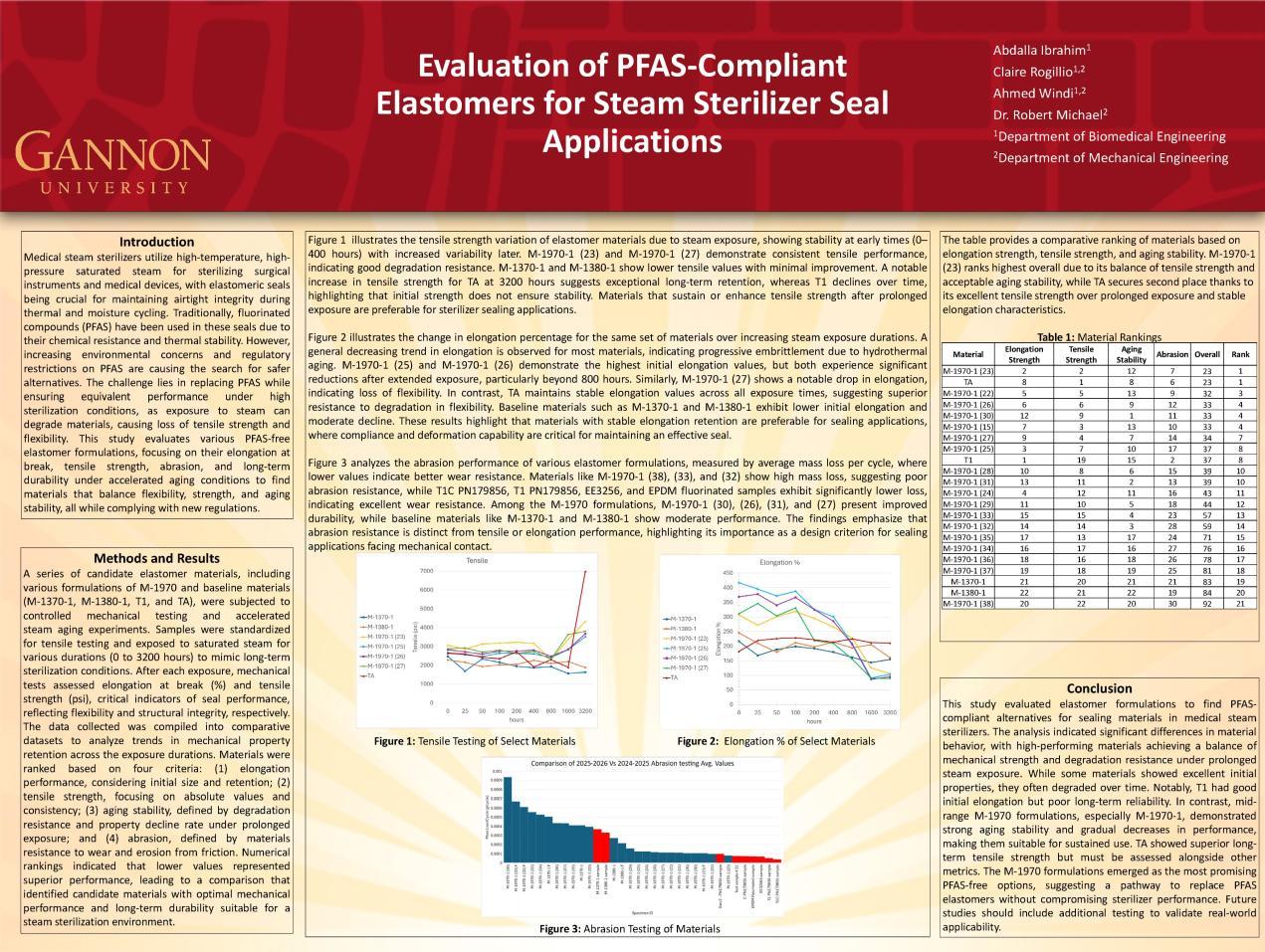
Title: Evaluation of PFAS-Compliant Elastomers for Steam Sterilizer Seal Applications
Abstract: Increasing regulatory pressure on per- and polyfluoroalkyl substances (PFAS) has led to redesigning components in medical sterilizing systems that formerly depended on fluorinated elastomers. This research investigates redesigning the rubber sealing part in a medical steam sterilizer to achieve PFAS compliance while still meeting the mechanical and durability criteria for dependable sterilizing performance. Multiple prospective elastomer materials were tested using accelerated steam-aging studies, which subjected samples to saturated steam for 0, 25, 50, 100, 200, 400, 800, 1600, and 3200 hours. The key performance measures were abrasion, elongation at break, tensile strength, and long-term aging stability The experimental results were examined to assess material deterioration patterns and mechanical property preservation after prolonged exposure to high-temperature steam settings typical of sterilizing cycles. The results show that numerous PFAS-free elastomer formulations exhibit mechanical stability comparable to or superior to baseline materials, particularly in tensile strength retention, abrasion resistance, and degradation resistance. The findings provide a data-driven foundation for choosing a PFAS-compliant sealing material that can retain sealing integrity and operational dependability in medical sterilizing equipment. This work contributes to continuing industry efforts to migrate to environmentally friendly materials without sacrificing device performance or safety in hospital sterilization systems.
Presenter(s): Claire Rogillio, Ahmed Windi, Abdalla Ibrahim
Sponsoring Department: Mechanical Engineering
Mentor(s): Robert Michael
Presentation: 48
Title: Redesign of Gauge Protector Bladder
Abstract: This poster presents the different solutions we have come up with to expand the lifetime of an elastomeric bladder used in a high-pressure control system For this oilfield application, the bladder separates a hydraulic fluid, and fracturing fluid. The bladder operates under continuous pressures of 10-12ksi, while seeing occasional spikes to over 15ksi. It experiences constant cyclic loading with elongation during service reaching about 15% axially. The bladder is in constant contact with hydraulic fluid, fracturing fluid, and produced fluids from the well. These fluids contain hydrocarbons, sour gas, water, salts, acids, and small abrasive particles. Where failures are caused by thread and hose extrusion, overtightening the assembly, cyclic deformation, and abrasive wear. Which leads to increased downtime, safety risks, and decreased customer satisfaction.
Presenter(s): Andrew Wiley, Dang Nguyen, Evan Reid
Sponsoring Department: Mechanical Engineering
Mentor(s): Robert Michael
Presentation:
49
Title: Heat Exchanger Insulation Design for eVinci Microreactor

Abstract: This project focuses on the design and evaluation of a high-temperature insulation system for the primary heat exchanger region of the Westinghouse eVinci microreactor, where heat pipes can reach temperatures of 850 °C and operate in a helium environment that significantly alters heat transfer behavior compared to air. Because most insulation materials are characterized under air conditions, their thermal performance in helium is not fully quantified. To address this, a vacuum-based insulation concept was developed to minimize conductive and convective heat transfer while reducing radiative losses through reflective metallic layers, all within a 2.25-inch radial space constraint. Analytical heat transfer calculations were performed to estimate temperature gradients, and finite element analysis (FEA) was used to more accurately predict heat transfer between layers and overall thermal behavior. A prototype system incorporating a vacuum chamber, 1020 mild steel, and ceramic fiberglass insulation was constructed, and an experimental test rig was developed to measure temperature gradients. These experimental results will be compared with analytical and FEA predictions to validate the design and assess its effectiveness for high-temperature microreactor applications.
Presenter(s): Parker Wilk, Ashley Fox, Sebastian Gallo, Pedro Aragon
Sponsoring Department: Mechanical Engineering
Mentor(s): Hamid Torab
AND
Presentation: 50
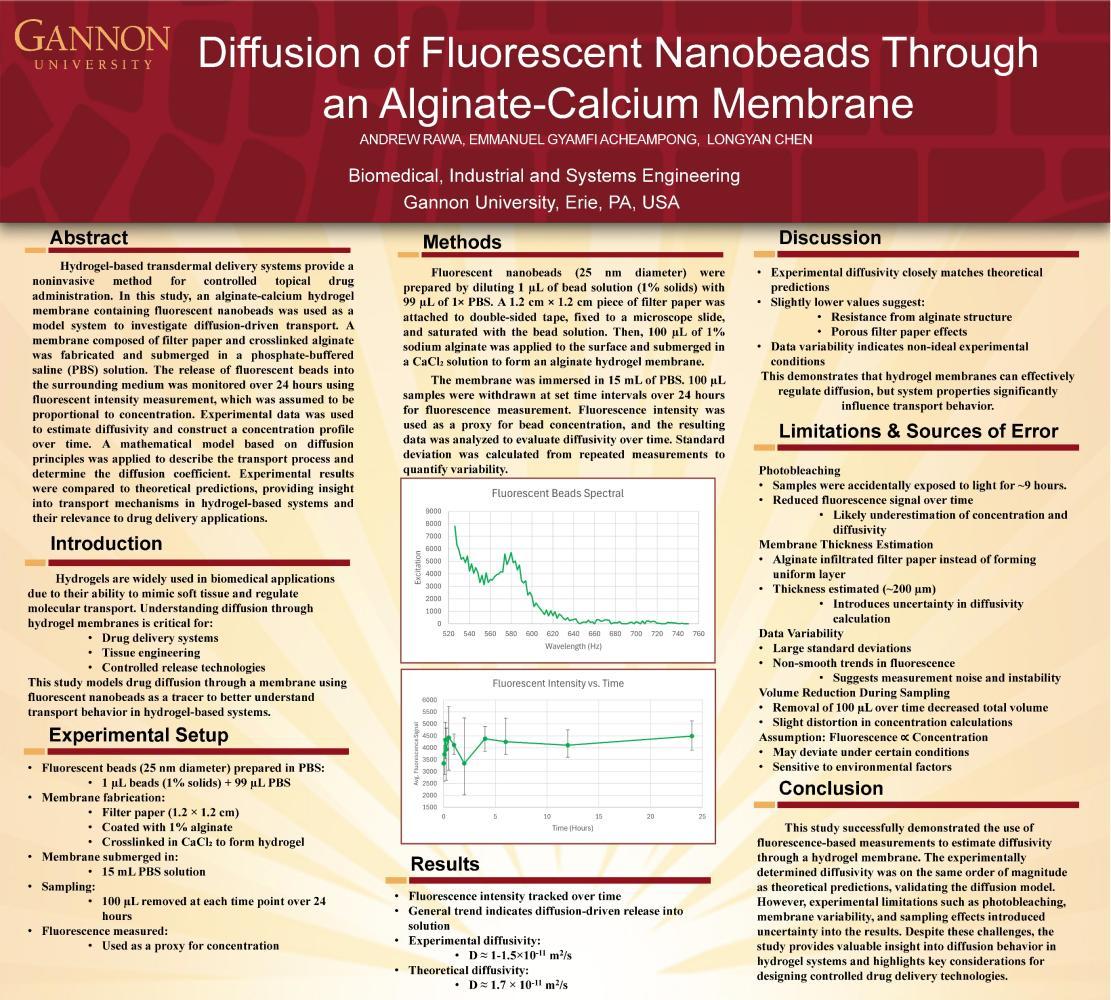
Title: Diffusion of Fluorescent Nanobeads Through an Alginate-Calcium Membrane
Abstract: Hydrogel-based transdermal delivery systems provide a noninvasive method for controlled topical drug administration. In this study, an alginate-calcium hydrogel membrane containing fluorescent nanobeads was used as a model system to investigate diffusion-driven transport. A membrane composed of filter paper and crosslinked alginate was fabricated and submerged in a phosphate-buffered saline (PBS) solution. The release of fluorescent beads into the surrounding medium was monitored over 24 hours using fluorescent intensity measurement, which was assumed to be proportional to concentration. Experimental data was used to estimate diffusivity and construct a concentration profile over time. A mathematical model based on diffusion principles was applied to describe the transport process and determine the diffusion coefficient. Experimental results were compared to theoretical predictions, providing insight into transport mechanisms in hydrogel-based systems and their relevance to drug delivery applications.
Presenter(s): Andrew Rawa, Emmanuel Gyamfi Acheampong
Sponsoring Department: Bio-Medical Engineering
Mentor(s): Longyan Chen
Presentation: 51
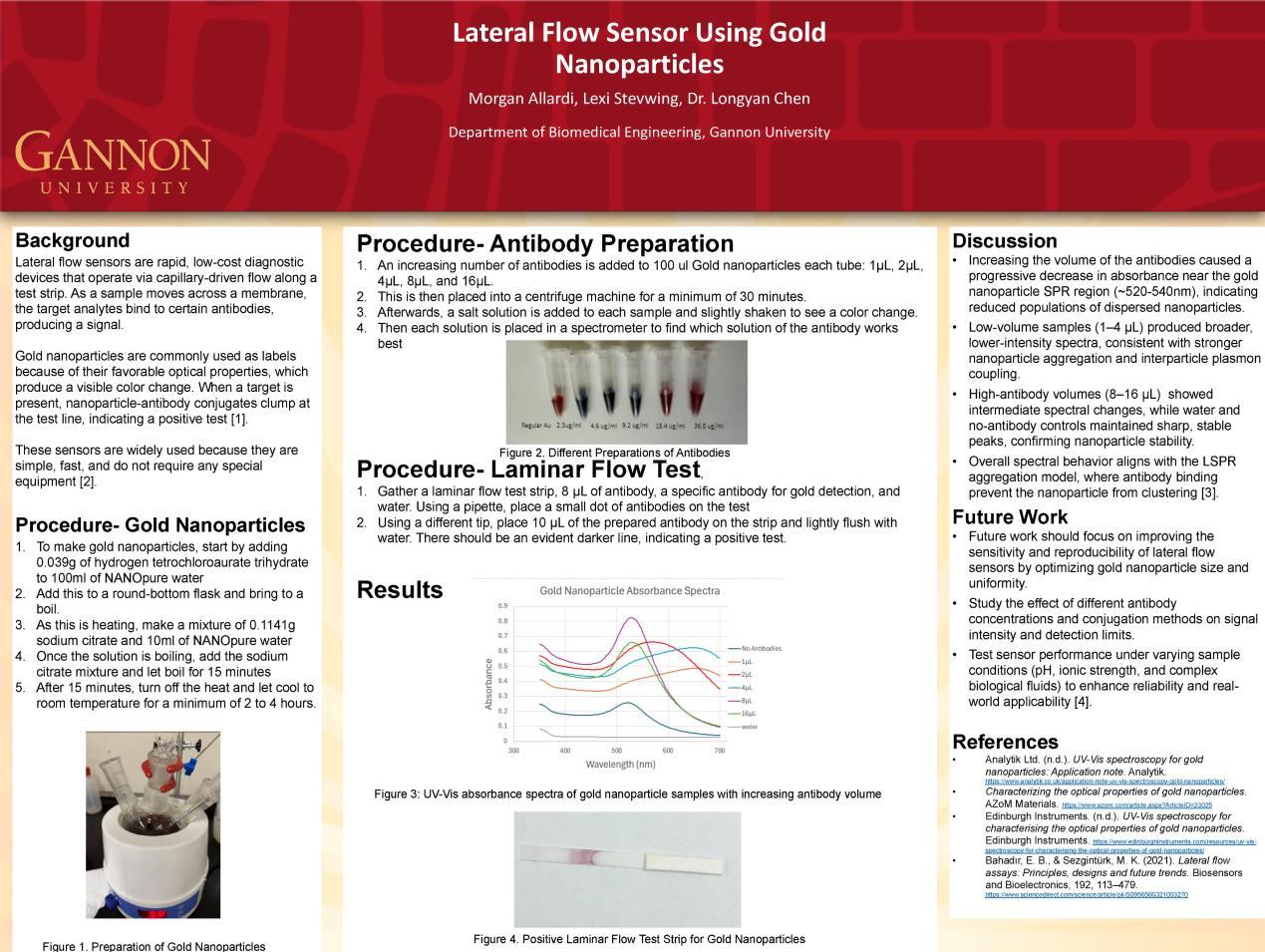
Title: Lateral Flow Sensor Using Gold Nanoparticles
Abstract: Gold nanoparticles (AuNPs) have gained significant interest due to their unique optical properties and applications in biomedical diagnostics. In this study, we describe the synthesis of stable 20-40 nm AuNPs and their utilization in studying antibodies in a lateral flow immunoassay. The nanoparticles are synthesized through citrate reduction and then conjugated with antibodies to recognize significant targets. The functionalized nanoparticles are then used for a lateral flow test strip composed of a sample pad, conjugate pad, nitrocellulose membrane, and adsorbent pad. The performance of this assay would be assessed through visible colorimetric detections, showing the potential of AuNP-based lateral flow systems for rapid and accessible biomedical diagnostics.
Presenter(s): Alexa Stevwing, Morgan Allardi
Sponsoring Department: Bio-Medical Engineering
Mentor(s): Longyan Chen
Presentation: 52
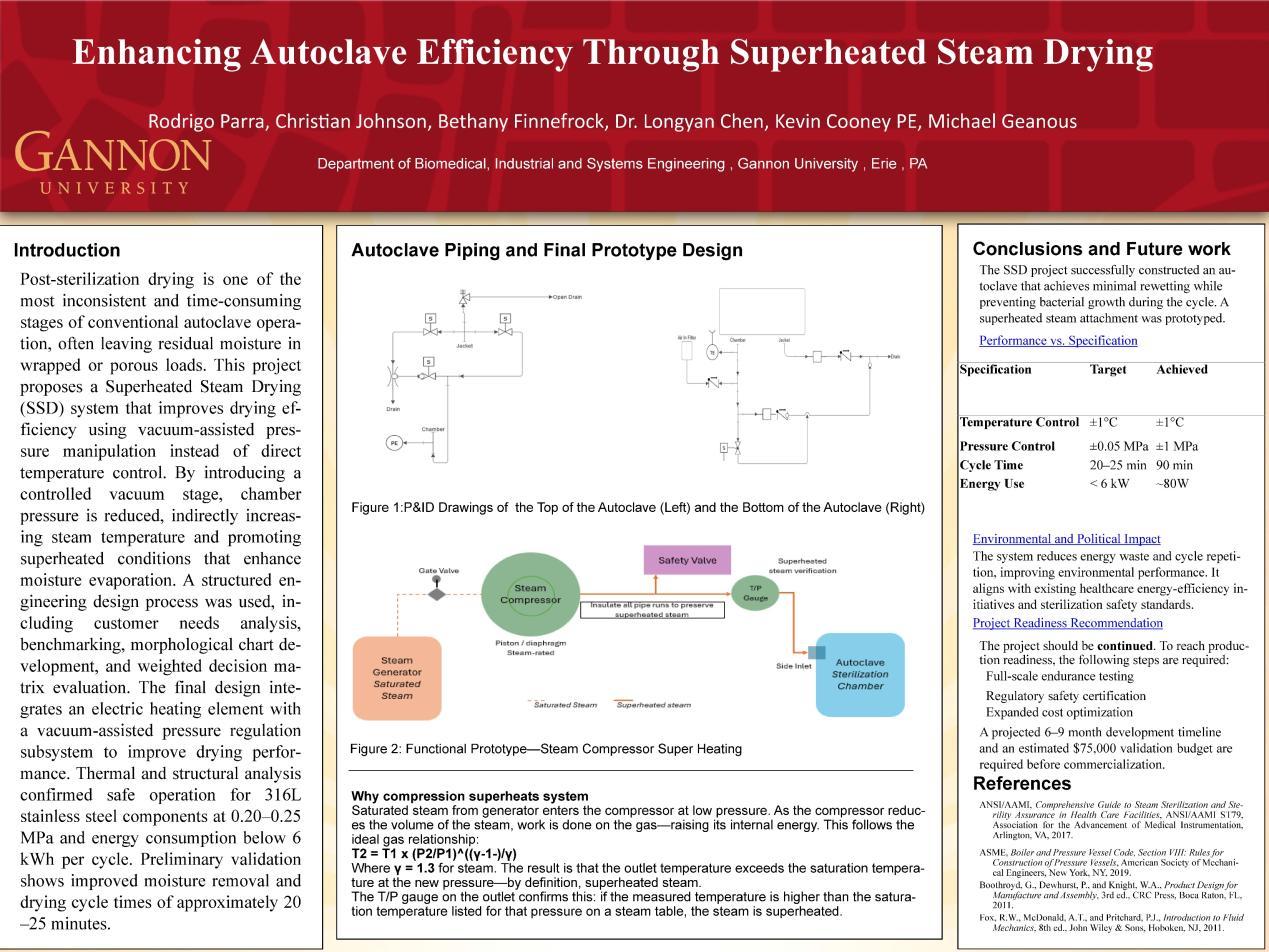
Title: Enhancing Autoclave Efficiency Through Superheated Steam Drying
Abstract: Post-sterilization drying is one of the most inconsistent and time-consuming stages of conventional autoclave operation, often leaving residual moisture in wrapped or porous loads. This project proposes a Superheated Steam Drying (SSD) system that improves drying efficiency using vacuum-assisted pressure manipulation instead of direct temperature control. By introducing a controlled vacuum stage, chamber pressure is reduced, indirectly increasing steam temperature and promoting superheated conditions that enhance moisture evaporation A structured engineering design process was used, including customer needs analysis, benchmarking, morphological chart development, and weighted decision matrix evaluation. The final design integrates an electric heating element with a vacuum-assisted pressure regulation subsystem to improve drying performance. Thermal and structural analysis confirmed safe operation for 316L stainless steel components at 0.20–0.25 MPa and energy consumption below 6 kWh per cycle. Preliminary validation shows improved moisture removal and drying cycle times of approximately 20–25 minutes.
Presenter(s): Rodrigo Parra, Christina Johnson, Bethany Finnefrock
Sponsoring Department: Bio-Medical Engineering
Mentor(s): Longyan Chen
Presentation: 53
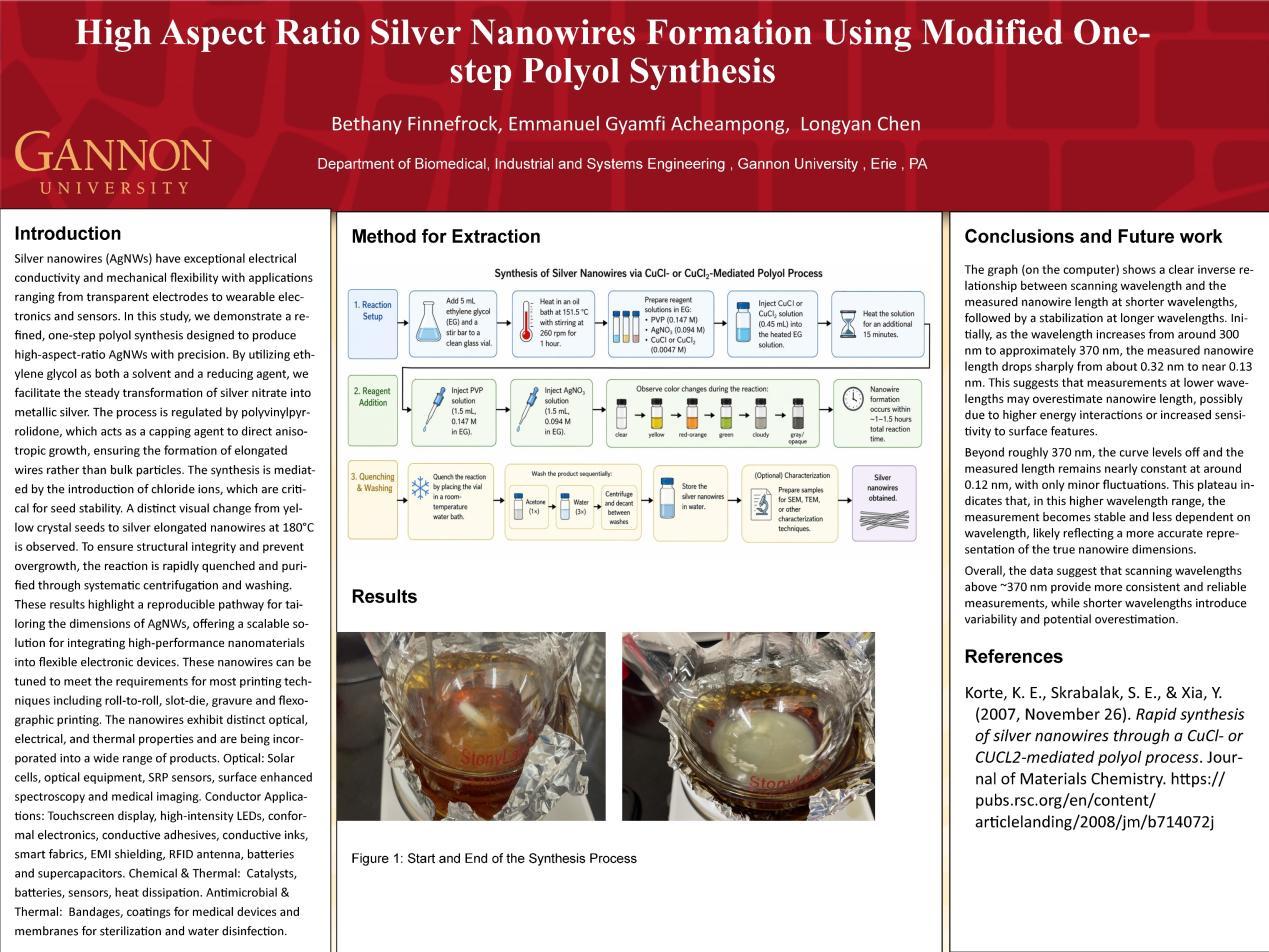
Title: High Aspect Ratio Silver Nanowires Formation Using Modified One-step Polyol Synthesis
Abstract: Silver nanowires (AgNWs) have exceptional electrical conductivity and mechanical flexibility with applications ranging from transparent electrodes to wearable electronics and sensors. In this study, we demonstrate a refined, one-step polyol synthesis designed to produce high-aspect-ratio AgNWs with precision. By utilizing ethylene glycol as both a solvent and a reducing agent, we facilitate the steady transformation of silver nitrate into metallic silver. The process is regulated by polyvinylpyrrolidone, which acts as a capping agent to direct anisotropic growth, ensuring the formation of elongated wires rather than bulk particles. The synthesis is mediated by the introduction of chloride ions, which are critical for seed stability. A distinct visual change from yellow crystal seeds to silver elongated nanowires at 180°C is observed. To ensure structural integrity and prevent overgrowth, the reaction is rapidly quenched and purified through systematic centrifugation and washing. These results highlight a reproducible pathway for tailoring the dimensions of AgNWs, offering a scalable solution for integrating high-performance nanomaterials into flexible electronic devices.
Presenter(s): Bethany Finnefrock, Emmanuel Gyamfi Acheampong
Sponsoring Department: Bio-Medical Engineering
Mentor(s): Longyan Chen
Presentation: 54
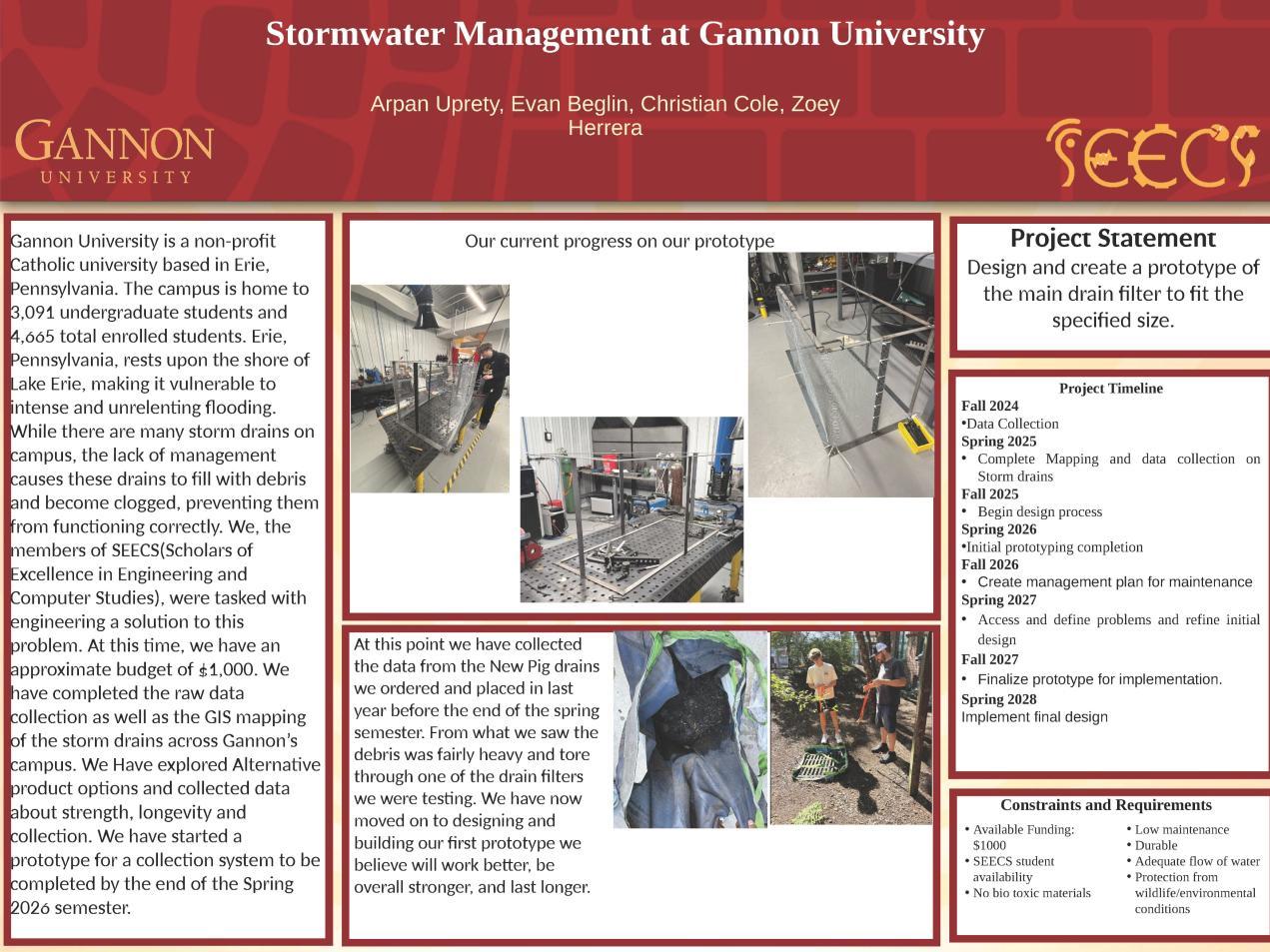
Title: Stormwater Management at Gannon University
Abstract: Gannon University is a non-profit Catholic university based in Erie, Pennsylvania. The campus is home to 3,091 undergraduate students and 4,665 total enrolled students Erie, Pennsylvania, rests upon the shore of Lake Erie, making it vulnerable to intense and unrelenting flooding. While there are many storm drains on campus, the lack of management causes these drains to fill with debris and become clogged, preventing them from functioning correctly. We, the members of SEECS(Scholars of Excellence in Engineering and Computer Studies), were tasked with engineering a solution to this problem. At this time, we have an approximate budget of $1,000. We have completed the raw data collection as well as the GIS mapping of the storm drains across Gannon’s campus. We Have explored Alternative product options and collected data about strength, longevity and collection. We have started a prototype for a collection system to be completed by the end of the Spring non2026 semester.
Presenter(s): Arpan Uprety, Evan Beglin, Zoey Herrera, Christian Cole
Sponsoring Department: Bio-Medical Engineering (Scholars of Excellence Engineering and Computer Studies)
Mentor(s): Nicholas Devine
Presentation: 55
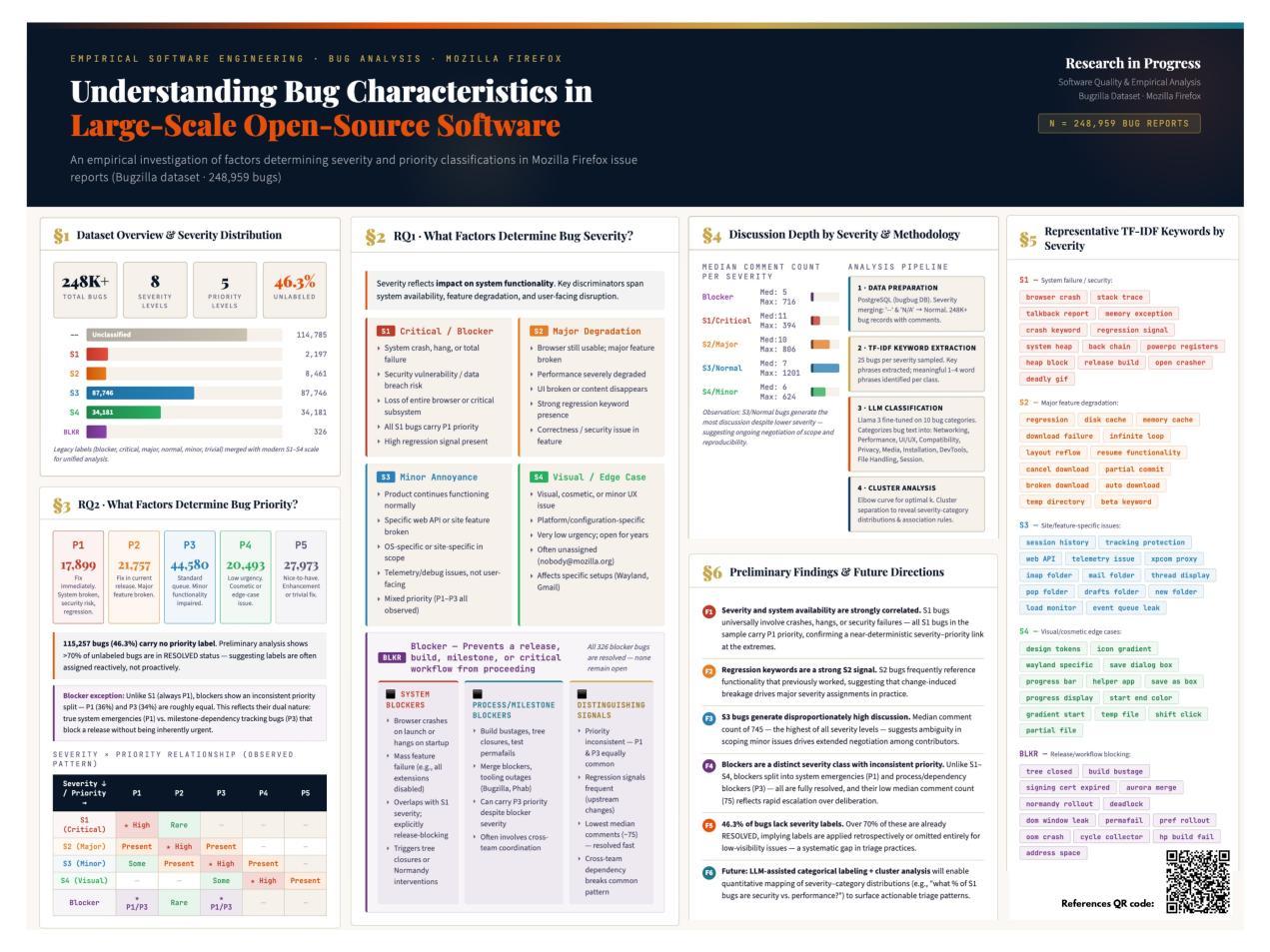
Title: Understanding Bug Characteristics in Large-Scale Open-Source Software
Abstract: Software bug reports offer extensive textual and structural information that can provide insight into issue severity and lifecycle behavior This paper gives an empirical examination of browser bug reports with an emphasis on understanding severity distribution and problem reopening tendencies. Using a large-scale dataset of bug reports extracted from an open-source browser project, we examine structured variables (e.g., severity levels, categories, and status transitions) alongside unstructured textual data from summaries and comments.In order to increase semantic consistency and retrieval effectiveness of our textual data, we convert commonly co-occurring words into meaningful compounds before extracting the features. After extracting features, we apply Term Frequency - Inverse Document Frequency (TFIDF) to help identify distinguishing terms that relate to different levels of severity. Our statistical analysis will identify the relationship between the characteristics of the text (i.e., report length, keywords used) and severity classifications and to explore possible variables that may lead to reopening a bug. The study will shed light on the relationship between the language used to investigate a bug and its reopening, as well as when a problem might need more research and which signs are associated with specific problems. The results may also aid in data-driven decision-making for software maintenance and quality assurance, as well as enhance the bug triaging procedure.
Presenter(s): Malachi Malipeddi
Sponsoring Department: Software Engineering and Computer and Information Science
Mentor(s): Md Tajmilur Rahman
Presentation:
56
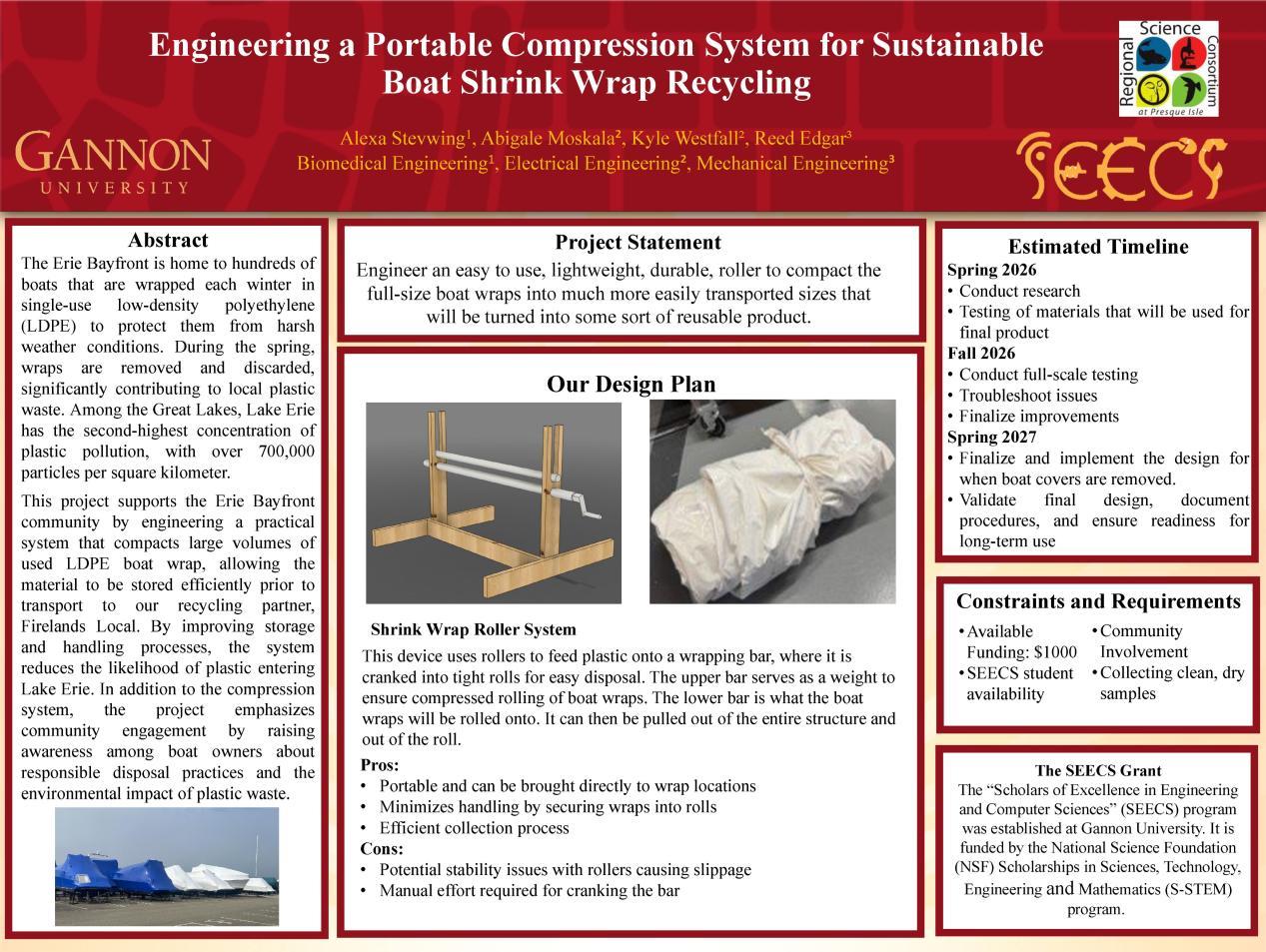
Title: Engineering a Portable Compression System for Sustainable Boat Shrink Wrap Recycling
Abstract: The Erie Bayfront is home to hundreds of boats that are wrapped each winter in single-use lowdensity polyethylene (LDPE) to protect them from harsh weather conditions During the spring, wraps are removed and discarded, significantly contributing to local plastic waste. Among the Great Lakes, Lake Erie has the second-highest concentration of plastic pollution, with over 700,000 particles per square kilometer. This project supports the Erie Bayfront community by engineering a practical system that compacts large volumes of used LDPE boat wrap, allowing the material to be stored efficiently prior to transport to our recycling partner, Firelands Local. By improving storage and handling processes, the system reduces the likelihood of plastic entering Lake Erie. In addition to the compression system, the project emphasizes community engagement by raising awareness among boat owners about responsible disposal practices and the environmental impact of plastic waste.
Presenter(s): Abigale Moskala, Kyle Westfall, Alexa Stevwing, Reed Edgar
Sponsoring Department: Environmental Science & Engineering (Scholars of Excellence Engineering and Computer Studies)
Mentor(s): Varun Kasaraneni
Presentation: 57
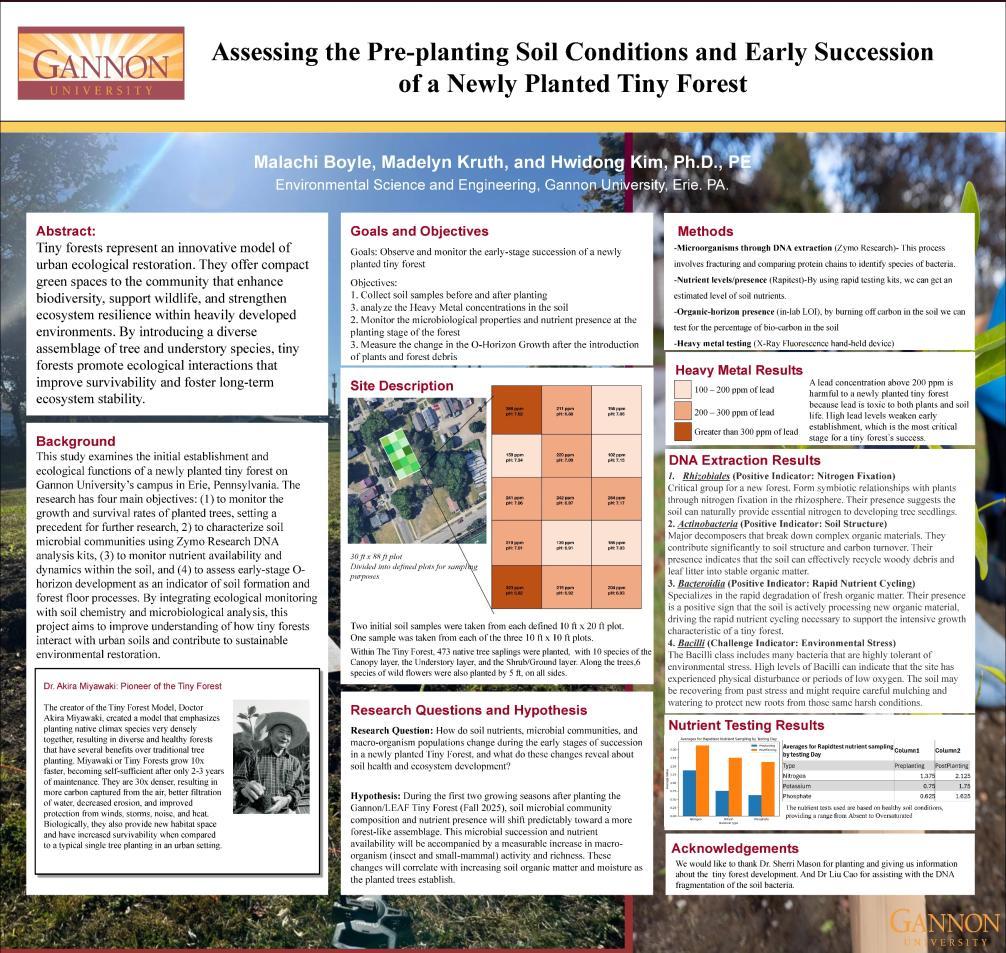
Title: Assessing the Pre-planting Soil Conditions and Early Succession of a Newly Planted Tiny Forest
Abstract: Tiny forests represent an innovative model of urban ecological restoration. They offer compact green spaces to the community that enhance biodiversity, support wildlife, and strengthen ecosystem resilience within heavily developed environments. By introducing a diverse assemblage of tree and understory species, tiny forests promote ecological interactions that improve survivability and foster long-term ecosystem stability.
Presenter(s): Malachi Boyle, Madelyn Kruth
Sponsoring Department: Environmental Science & Engineering
Mentor(s): Hwidong Kim
Presentation: 58
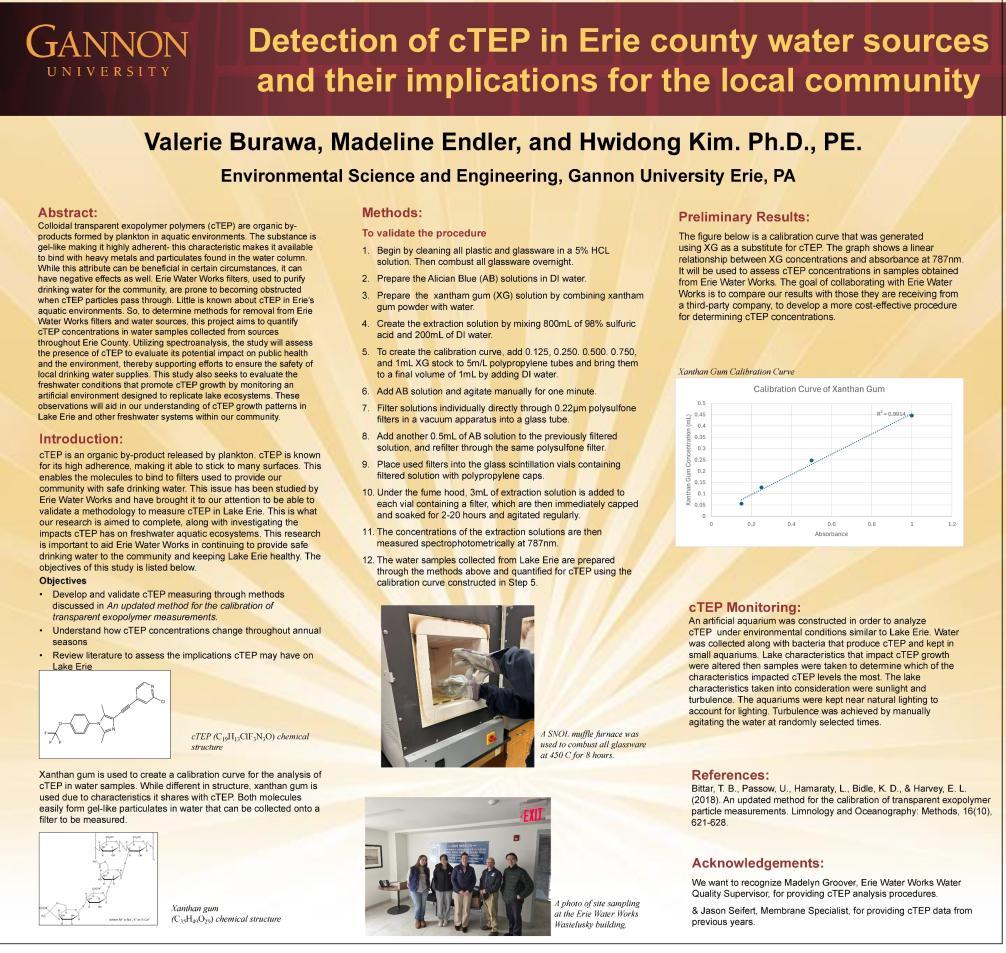
Title: Detection of cTEP in Erie County Water Sources and Their Implications for the Local Community
Abstract: Colloidal transparent exopolymer polymers (cTEP) are organic by-products formed by plankton in aquatic environments The substance is gel-like making it highly adherent- this characteristic makes it available to bind with heavy metals and particulates found in the water column. While this attribute can be beneficial in certain circumstances, it can have negative effects as well. Erie Water Works filters, used to purify drinking water for the community, are prone to becoming obstructed when cTEP particles pass through. Little is known about cTEP in Erie’s aquatic environments. So, to determine methods for removal from Erie Water Works filters and water sources, this project aims to quantify cTEP concentrations in water samples collected from sources throughout Erie County. Utilizing spectroanalysis, the study will assess the presence of cTEP to evaluate its potential impact on public health and the environment, thereby supporting efforts to ensure the safety of local drinking water supplies. This study also seeks to evaluate the freshwater conditions that promote cTEP growth by monitoring an artificial environment designed to replicate lake ecosystems. These observations will aid in our understanding of cTEP growth patterns in Lake Erie and other freshwater systems within our community.
Presenter(s): Valerie Burawa, Madeline Endler
Sponsoring Department: Environmental Science & Engineering
Mentor(s): Hwidong Kim
Presentation: 59
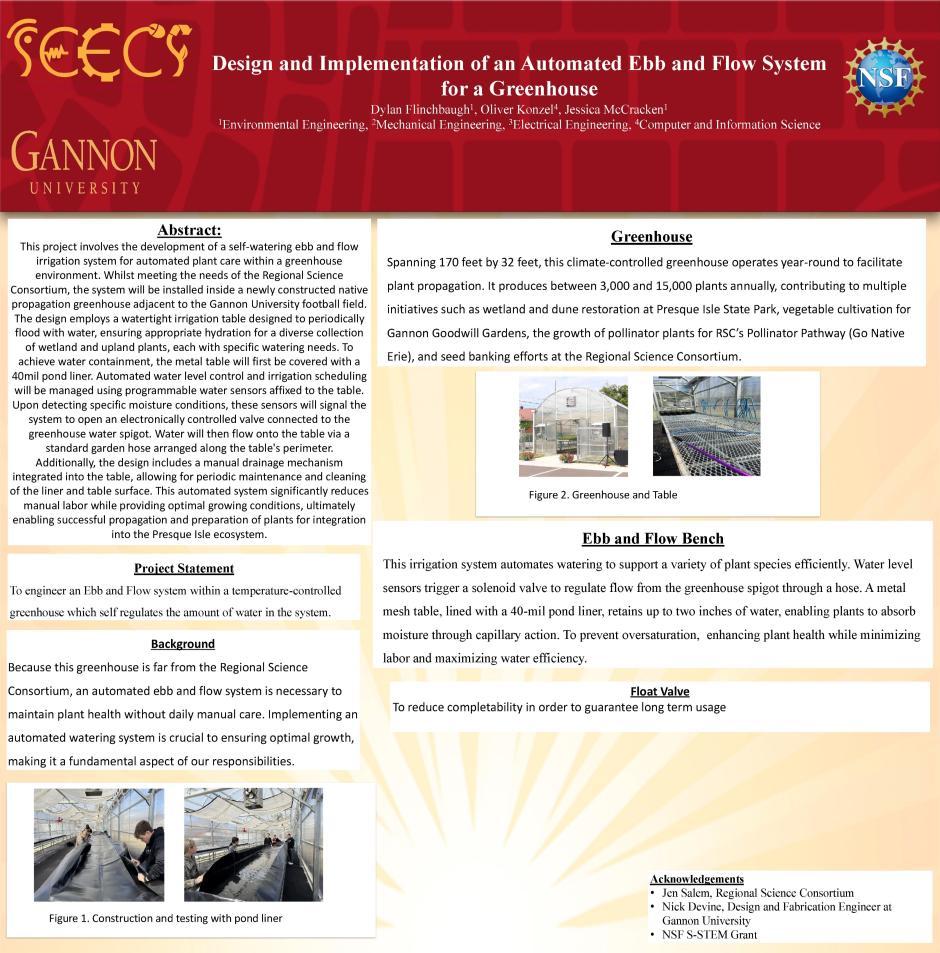
Title: Design and Implementation of an Automated Ebb and Flow System for a Greenhouse
Abstract: This project involves the development of a self-watering ebb and flow irrigation system for automated plant care within a greenhouse environment. Whilst meeting the needs of the Regional Science Consortium, the system will be installed inside a newly constructed native propagation greenhouse adjacent to the Gannon University football field The design employs a watertight irrigation table designed to periodically flood with water, ensuring appropriate hydration for a diverse collection of wetland and upland plants, each with specific watering needs. To achieve water containment, the metal table will first be covered with a 40-mil pond liner. Automated water level control and irrigation scheduling will be managed using programmable water sensors affixed to the table. Upon detecting specific moisture conditions, these sensors will signal the system to open an electronically controlled valve connected to the greenhouse water spigot Water will then flow onto the table via a standard garden hose arranged along the table's perimeter.Additionally, the design includes a manual drainage mechanism integrated into the table, allowing for periodic maintenance and cleaning of the liner and table surface. This automated system significantly reduces manual labor while providing optimal growing conditions, ultimately enabling the successful propagation and preparation of plants for integration into the Presque Isle ecosystem
Presenter(s): Oliver Konzel, Dylan Flinchbaugh, Jessica McCracken
Sponsoring Department: Mechanical Engineering (Scholars of Excellence Engineering and Computer Studies)
Mentor(s): Scott Steinbrink
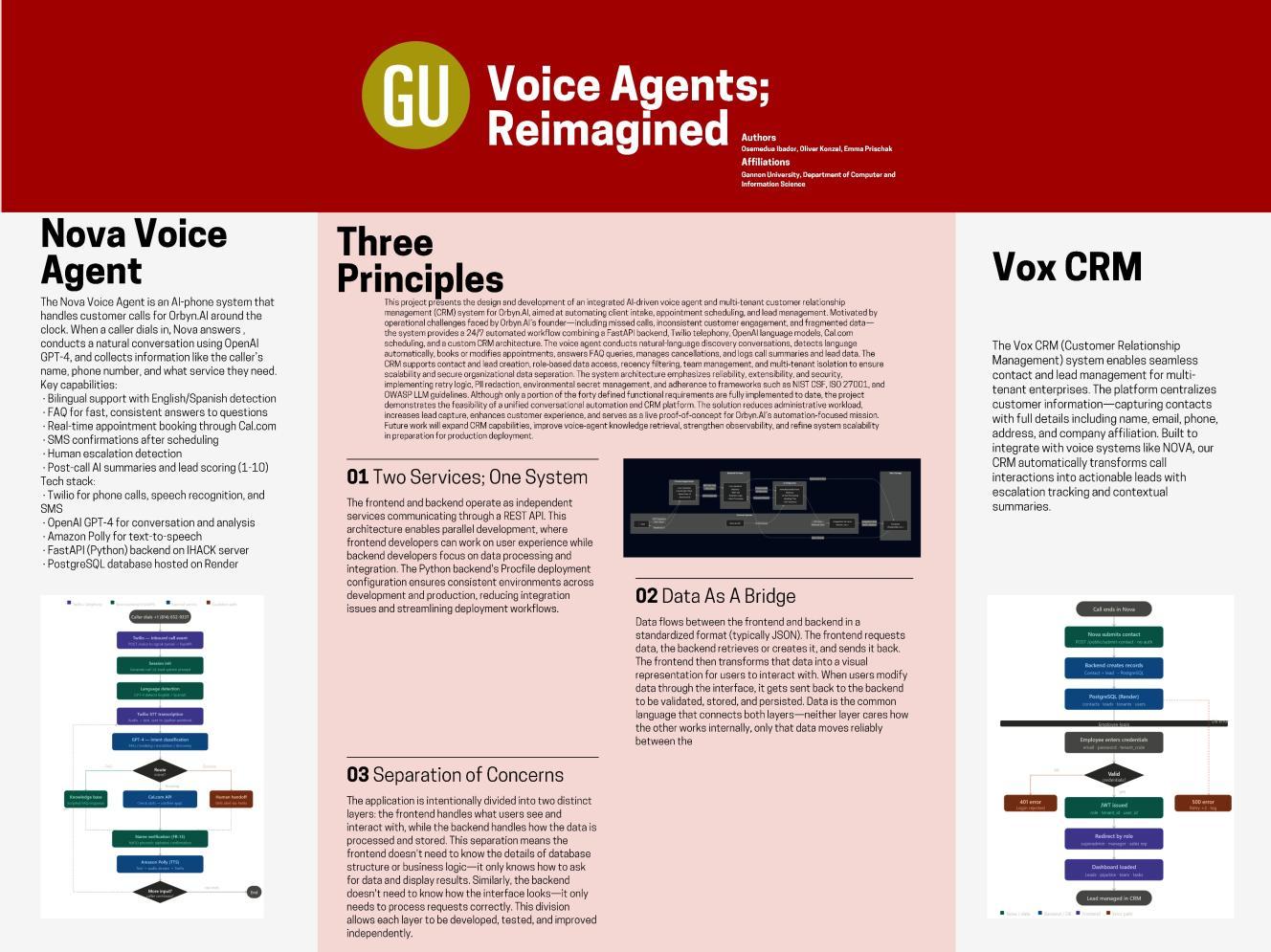
Presentation: 60
Title: Voice Agents; Reimagined
Abstract:
Presenter(s): Oliver Konzel, Osemedua Ibador, Emma Prischak
Sponsoring Department: Computer and Information Science
Mentor(s):
Presentation: 61
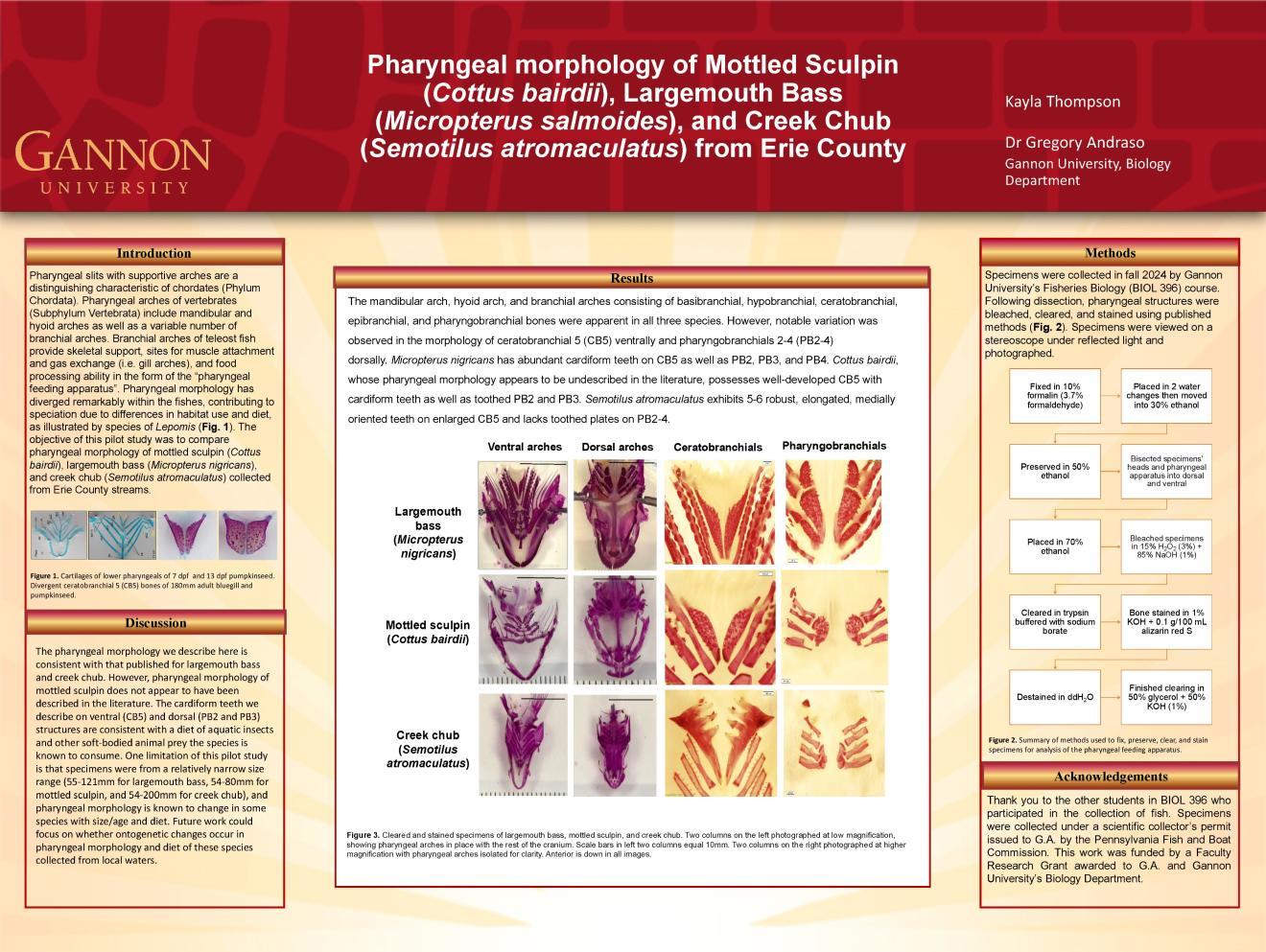
Title: Pharyngeal morphology of Mottled Sculpin (Cottus bairdii), Largemouth Bass (Micropterus salmoides), and Creek Chub (Semotilus atromaculatus) from Erie County
Abstract: Teleost fish possess a pharyngeal feeding apparatus, comprised of modified gill arches, used to process food. Pharyngeal morphology has diverged remarkably, contributing to speciation due to differences in habitat use and diet The objective of this pilot study was to compare the pharyngeal morphology of mottled sculpin (Cottus bairdii), largemouth bass (Micropterus nigricans), and creek chub (Semotilus atromaculatus) which are native to the northeastern United States. Specimens were collected in fall 2024 by Gannon University’s Fisheries Biology (BIOL 396) course. Following dissection, pharyngeal structures were processed by bleaching in hydrogen peroxide and potassium hydroxide, initial clearing in buffered trypsin, staining with Alizarin Red S, and final clearing in glycerol. Specimens were viewed on a stereoscope under reflected light and photographed The mandibular arch, hyoid arch, and branchial arches consisting of basibranchial, hypobranchial, ceratobranchial, epibranchial, and pharyngobranchial bones were apparent in all three species However, notable variation was observed in the morphology of ceratobranchial 5 (CB5) ventrally and pharyngobranchials 2-4 (PB2-4) dorsally. M. nigricans has abundant cardiform teeth on both CB5 and PB2-4, while S. atromaculatus exhibits 5-6 robust, elongated, medially oriented teeth on CB5 and lacks toothed plates on PB2-4 C bairdi, whose pharyngeal morphology appears to be undescribed in the literature, possesses well-developed CB5 with cardiform teeth as well as toothed PB2 and PB3 These morphological differences are consistent with distinct feeding strategies and dietary niches, which in turn reflect the ecological habitats occupied by each species.
Presenter(s): Kayla Thompson
Sponsoring Department: Biology
Mentor(s): Gregory Andraso
Presentation:
62
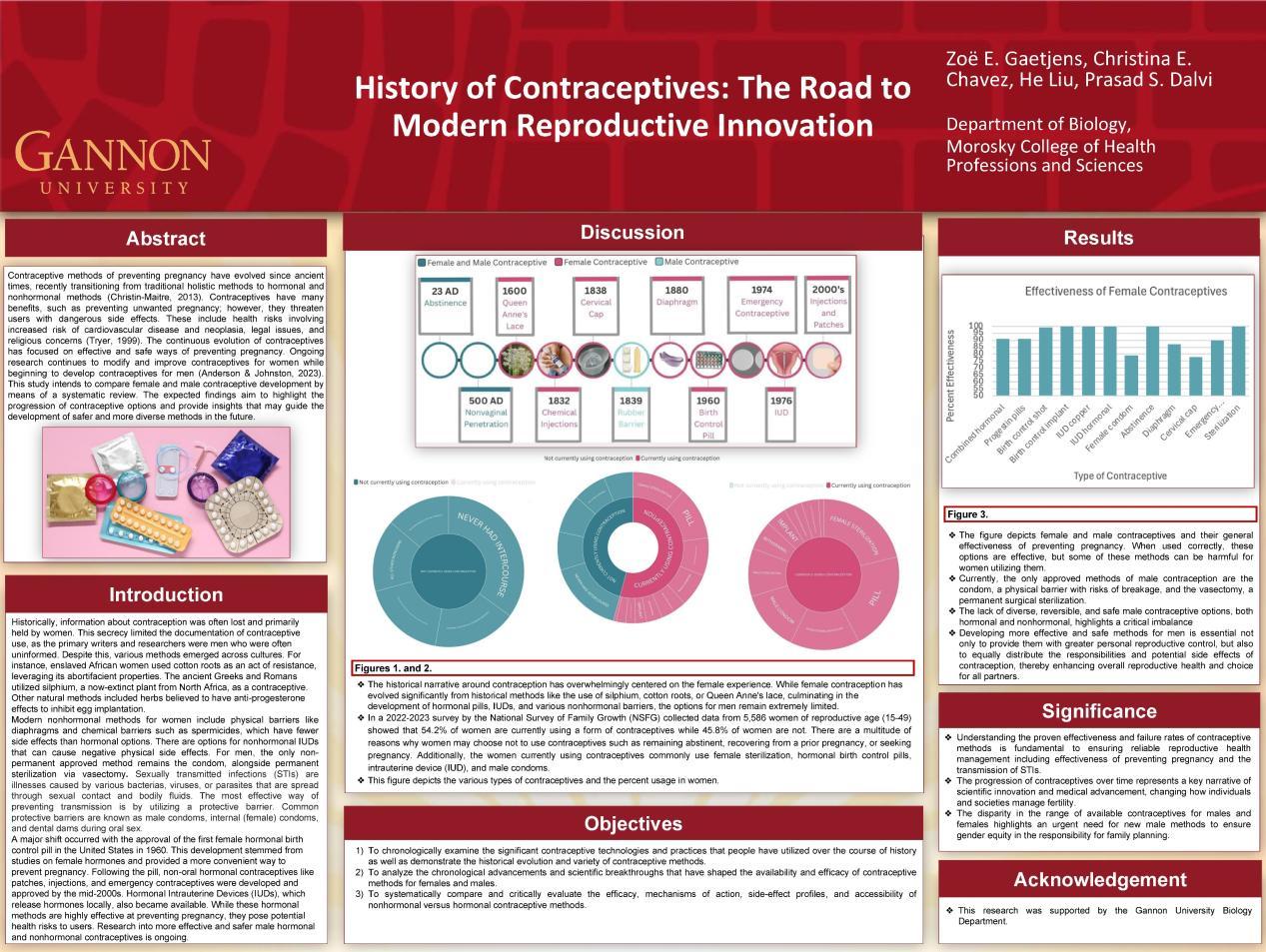
Title: History of Contraceptives: The Road to Modern Reproductive Innovation
Abstract: Contraceptive methods of preventing pregnancy have evolved since ancient times, recently transitioning from traditional holistic methods to hormonal and nonhormonal methods (Christin-Maitre, 2013) Contraceptives have many benefits, such as preventing unwanted pregnancy; however, they threaten users with dangerous side effects. These include health risks involving increased risk of cardiovascular disease and neoplasia, legal issues, and religious concerns (Tryer, 1999). The continuous evolution of contraceptives has focused on effective and safe ways of preventing pregnancy. On going research continues to modify and improve contraceptives for women while beginning to develop contraceptives for men (Anderson & Johnston, 2023).This study intends to compare female and male contraceptive development by means of a systematic review. The expected findings aim to highlight the progression of contraceptive options and provide insights that may guide the development of safer and more diverse methods in the future.
Presenter(s): Zoë Gaetjens, Christina Chavez
Sponsoring Department: Biology
Mentor(s): Prasad Dalvi, He Liu
Presentation: 63
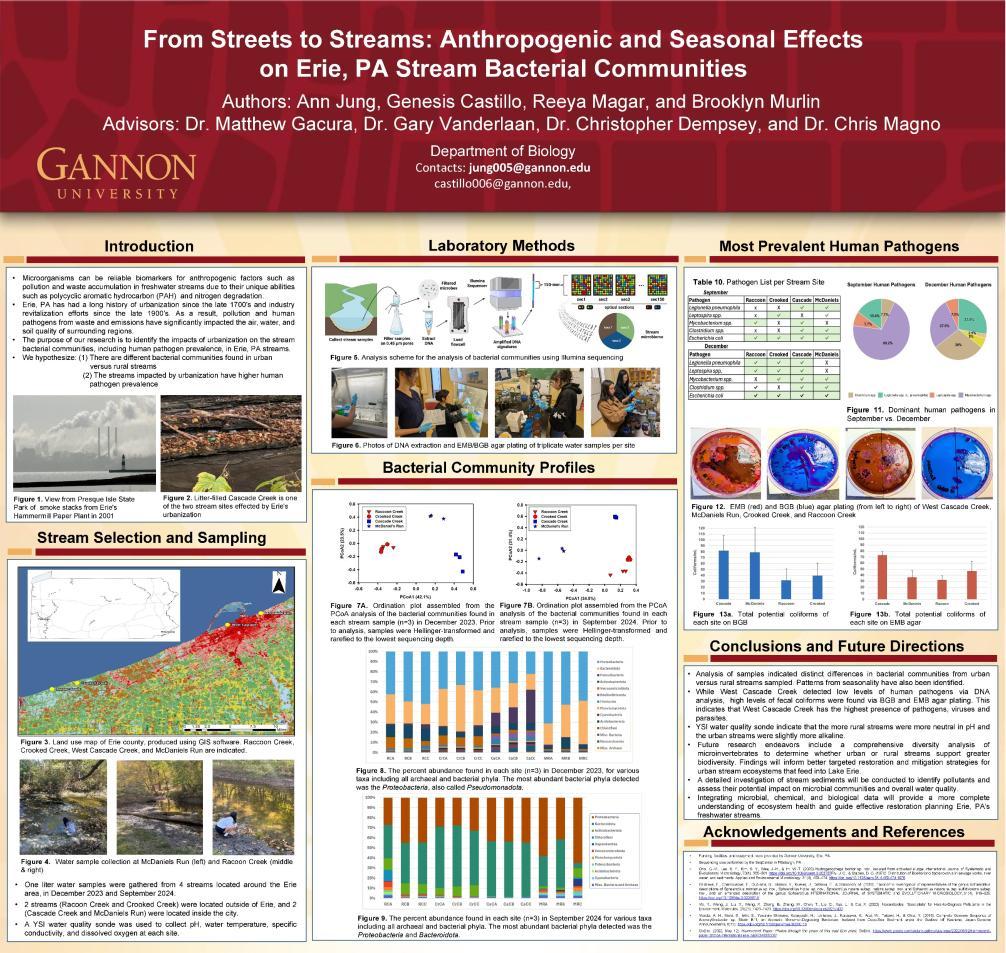
Title: From Streets to Streams: Anthropogenic and Seasonal Effects on Erie, PA Stream Bacterial Communities
Abstract: Anthropogenic activities, such as pollution and river channelization, can negatively impact aquatic community composition and diversity. While these changes are often evident in macroscopic organisms, microorganisms are understudied, and little is known on how they respond to anthropogenic change Alterations in microbial community structure can lead to reduced ecosystem resilience, affecting biodiversity, human pathogen prevalence, food security, and water quality Erie, PA, with its long history of industry, provides an ideal environment to assess the impact that these activities have on stream bacteria and identify potential sources of waterborne disease. In our study, we analyzed four streams near or in the city of Erie to assess the impacts of urbanization on stream bacteria community composition and diversity. Triplicate water samples were collected from four streams in December 2023 and September 2024. West Cascade and McDaniels Run flow primarily through urbanized areas, whereas Crooked Creek and Racoon Creek are in more rural and forested watersheds. A YSI water quality sonde was used to collect environmental characteristics at each site DNA extractions were performed on filters from each sample using a commercial kit Illumina barcoding was then performed on the 16s rRNA gene from each sample. Both December and September data sets indicate a diverse bacterial community at all four sampling locations Differences were clearly detected between the communities found in the urban streams versus rural streams. Seasonal trends in our data sets suggest colder conditions result in more detectable levels of pathogenic bacteria
Presenter(s): Ann Jung, Genesis Castillo, Reeya Magar, Brooklyn Murlin
Sponsoring Department: Biology
Mentor(s): Matthew Gacura
Presentation: 64
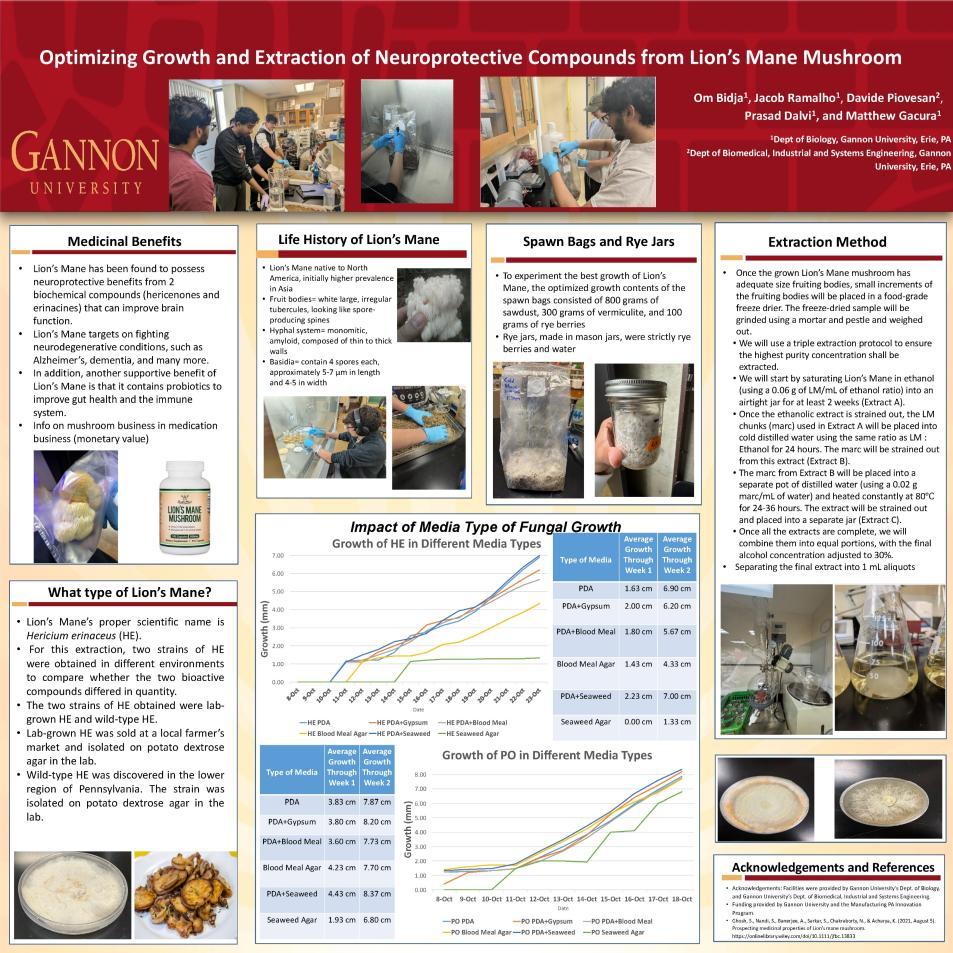
Title: Optimizing Growth and Extraction of Neuroprotective Compounds from Lion’s Mane Mushroom
Abstract: Lion’s mane, Hericium erinaceus (HE), an edible mushroom, has been found to possess neuroprotective properties. HE contains two main bioactive compounds, hericenones and erinacines, that can improve brain function. Previous studies suggested that the consumption of HE has a direct correlation to promoting neuronal growth and nerve repair. At the same time, HE is a sought-after gourmet mushroom that is enriched in dietary fiber and protein. Despite growing interest in its medicinal potential, little is known about how nutrient availability influences HE growth and metabolite production. In our study we will be optimizing the growth of HE, using several different nutrient substrates. Afterwards we will utilize solvent extraction using ethanol to remove bioactive compounds from mushroom tissue To optimize HE growth we tested the presence of several substrates enriched in limiting nutrients on the overall growth rate of HE These substrates were: seaweed, gypsum, bloodmeal, and potato dextrose broth To test these substrates, agar media was produced enriched in each type of nutrient. The growth rates of HE will then be measured over two weeks, to determine which substrate improves the growth The optimized substrate will be used for scaled mushroom cultivation and subsequent alcohol extraction of hericenones and erinacines for neurobiological testing. After allowing growth of the mushrooms, the extraction of medicinal components will be performed, and the isolated compounds will be used for testing cell growth and survival using mammalian neuronal cell cultures. We anticipate that nutrient enrichment will accelerate HE growth and potentially increase the concentration of neuroactive metabolites
Presenter(s): Om Bidja, Jacob Ramalho
Sponsoring Department: Biology
Mentor(s): Matthew Gacura
Presentation: 65
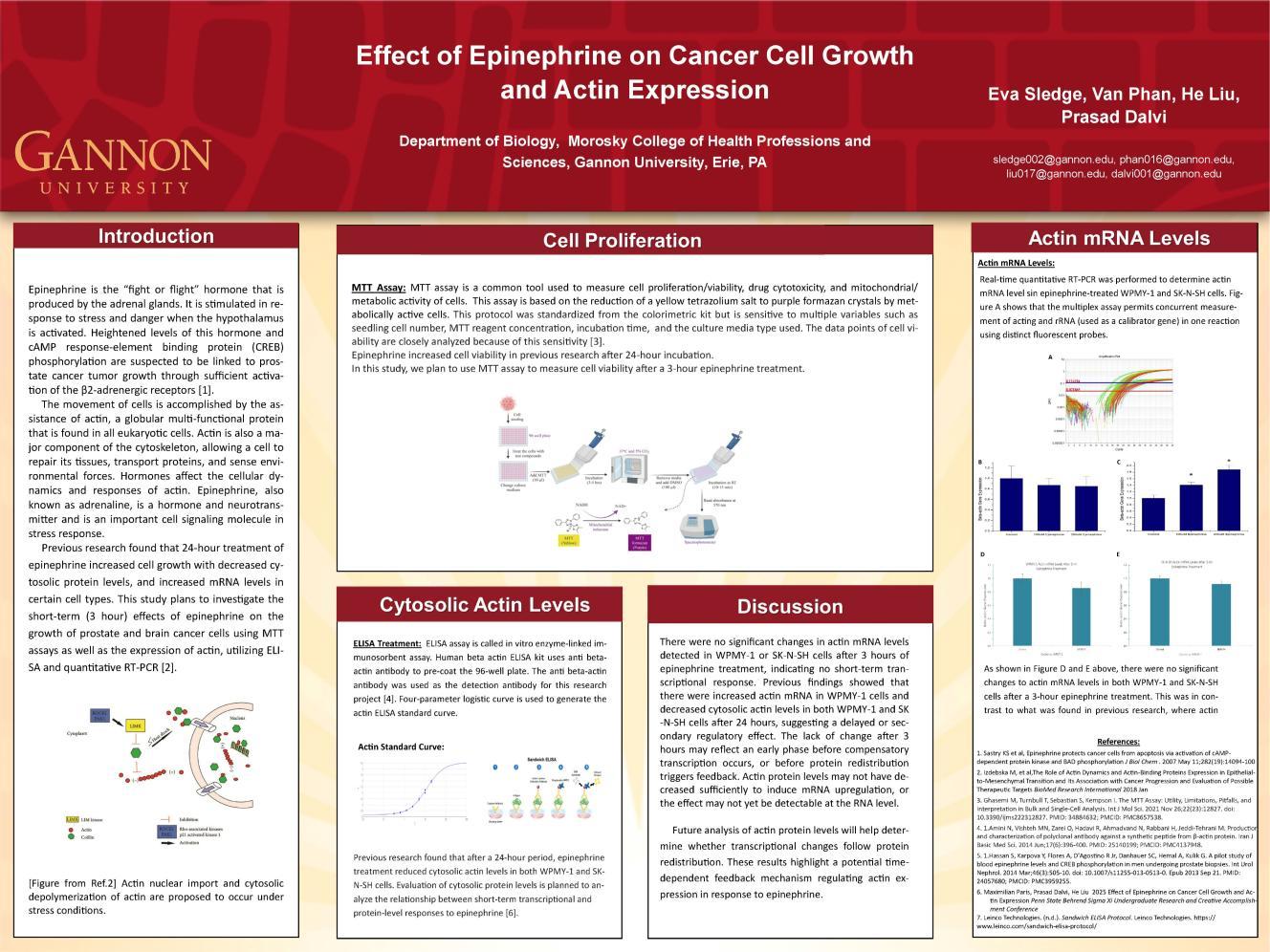
Title: Effect of Epinephrine on Cancer Cell Growth and Actin Expression
Abstract: The movement of cells is accomplished with the assistance of actin, a globular multi-functional protein that is found in all eukaryotic cells Actin is also a major component of the cytoskeleton, allowing a cell to repair its tissues, transport proteins, and sense environmental forces. Hormones affect the cellular dynamics and responses of actin. This study plans to investigate the effect of two stress hormones, epinephrine and cortisol, on the growth of prostate and brain cancer cells by the use of MTT assays as well as the expression of actin, utilizing ELISA and quantitative RT-PCR.
Presenter(s): Eva Sledge, Van Phan
Sponsoring Department: Biology
Mentor(s): He Liu, Prasad Dalvi
Presentation: 66
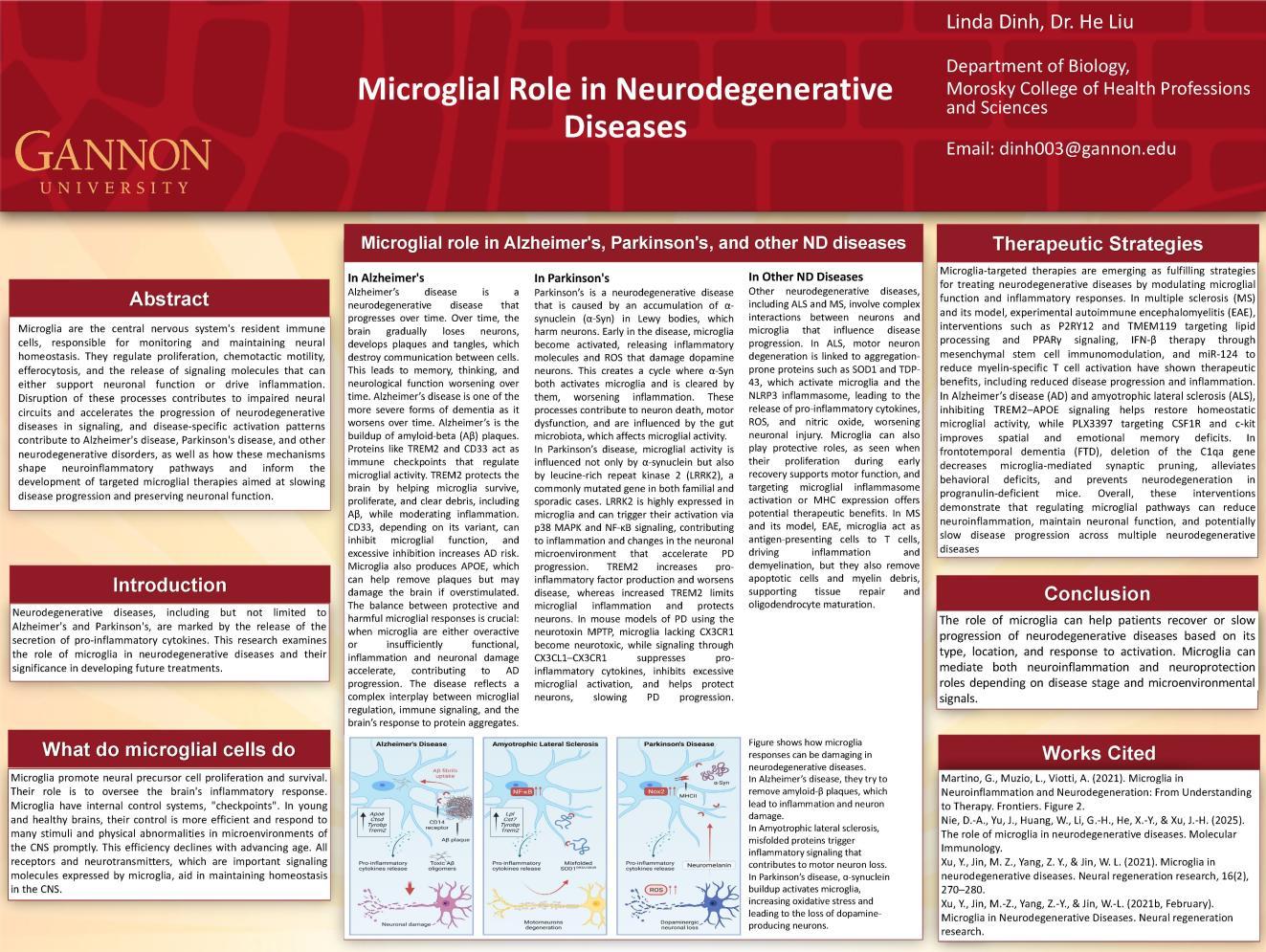
Title: Microglial Role in Neurodegenerative Diseases
Abstract: Microglia are the central nervous system's resident immune cells, responsible for monitoring and maintaining neural homeostasis They regulate proliferation, chemotactic motility, efferocytosis, and the release of signaling molecules that can either support neuronal function or drive inflammation. Disruption of these processes contributes to impaired neural circuits and accelerates the progression of neurodegenerative diseases in signaling, and disease-specific activation patterns contribute to Alzheimer's disease, Parkinson's disease, and other neurodegenerative disorders, as well as how these mechanisms shape neuroinflammatory pathways and inform the development of targeted microglial therapies aimed at slowing disease progression and preserving neuronal function.
Presenter(s): Linda Dinh
Sponsoring Department: Biology
Mentor(s): He Liu
Presentation: 67
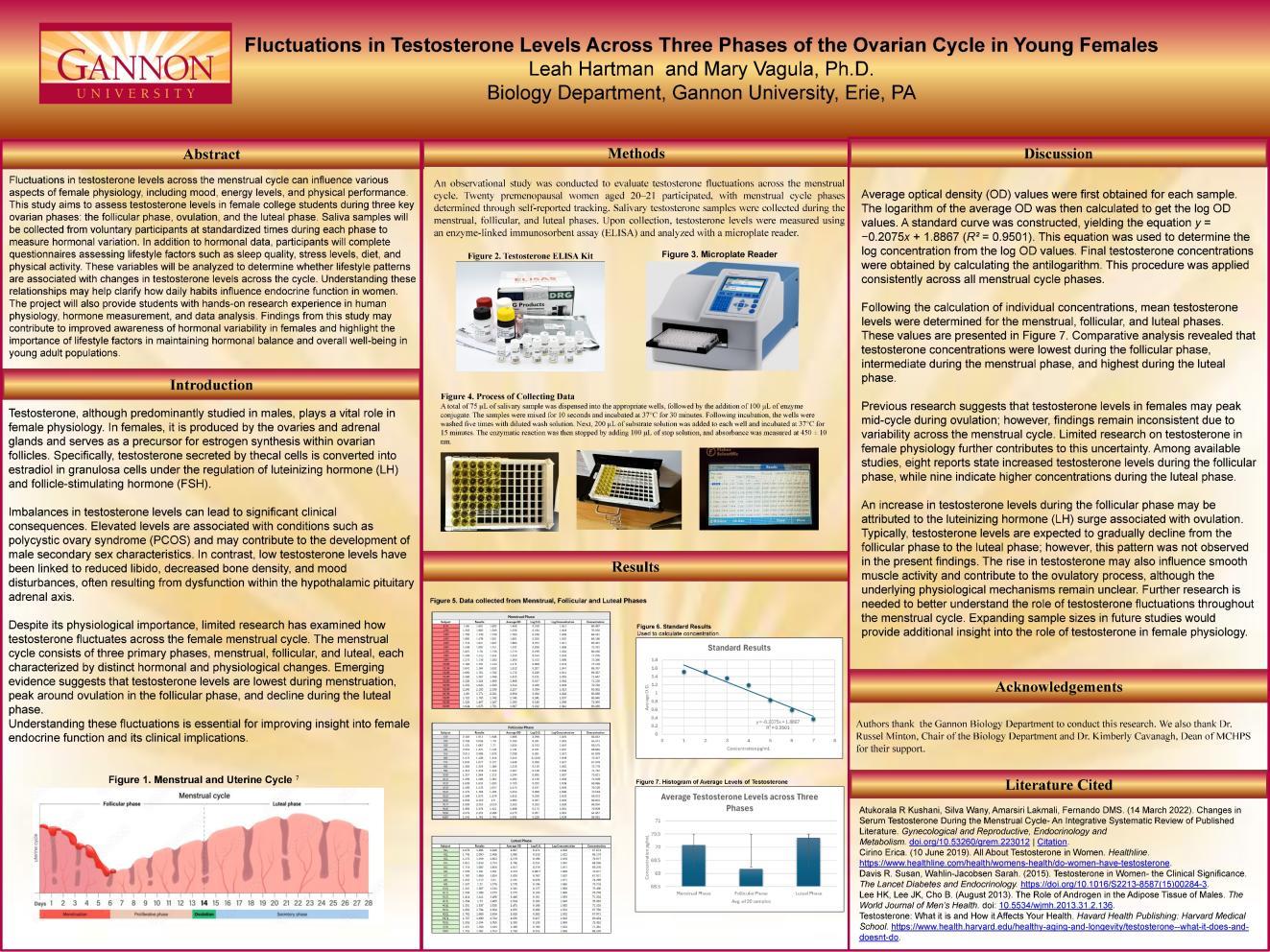
Title: Fluctuations in Testosterone Levels Across Three Phases of the Ovarian Cycle in Young Females
Abstract: Fluctuations in testosterone levels across the menstrual cycle can influence various aspects of female physiology, including mood, energy levels, and physical performance This study aims to assess testosterone levels in female college students during three key ovarian phases: the follicular phase, ovulation, and the luteal phase. Saliva samples are collected from voluntary participants at standardized times during each phase to measure hormonal variation. In addition to hormonal data, participants will complete questionnaires assessing lifestyle factors such as sleep quantity, stress levels, diet, and physical activity. These variables will be analyzed to determine whether lifestyle patterns are associated with changes in testosterone levels across the cycle. Understanding these relationships may help clarify how daily habits influence endocrine function in women. The project will also provide students with hands-on research experience in human physiology of ovarian and menstrual cycles, hormone measurement, and data analysis. Findings from this study may contribute to improved awareness of hormonal variability in females and highlight the importance of lifestyle factors in maintaining hormonal balance and overall well-being in young, female adult populations.
Presenter(s): Leah Hartman
Sponsoring Department: Biology
Mentor(s): Mary Vagula
Presentation: 68
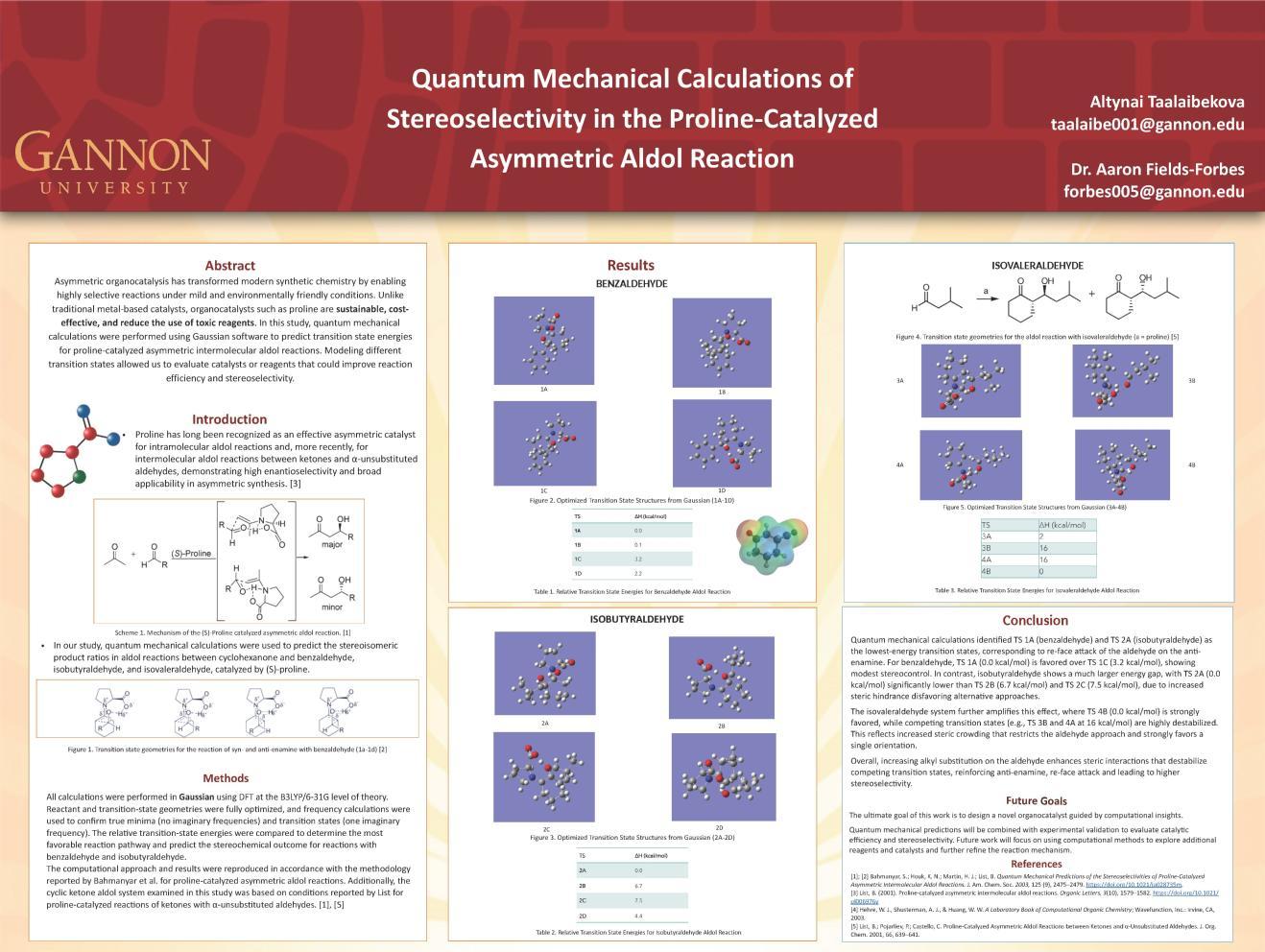
Title: Quantum Mechanical Calculations of Stereoselectivity in the Proline-Catalyzed Asymmetric Aldol Reaction
Abstract: Asymmetric organocatalysis has transformed modern synthetic chemistry by enabling highly selective reactions under mild and environmentally friendly conditions. Unlike traditional metal-based catalysts, organocatalysts such as proline are sustainable, cost-effective, and reduce the use of toxic reagents. In this study, quantum mechanical calculations were performed using Gaussian software to predict transition state energies for proline-catalyzed asymmetric intermolecular aldol reactions. Modeling different transition states allowed us to evaluate catalysts or reagents that could improve reaction efficiency and stereoselectivity.
Presenter(s): Altynai Taalaibekova
Sponsoring Department: Chemistry
Mentor(s): Aaron Field-Forbes
Presentation: 69
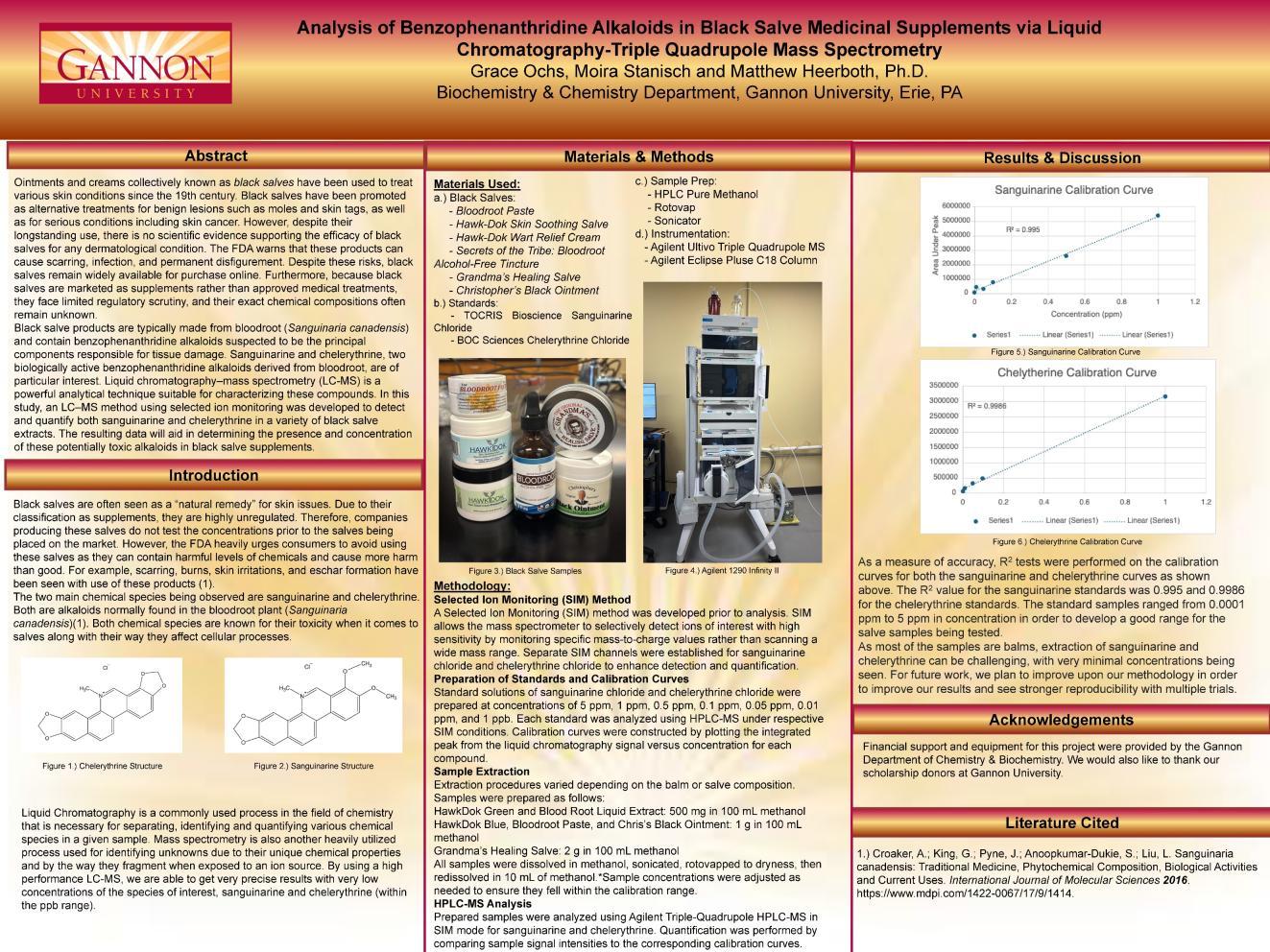
Title: Analysis of Benzophenanthridine Alkaloids in Black Salve Medicinal Supplements via Liquid Chromatography-Triple Quadrupole Mass Spectrometry
Abstract: Ointments and creams collectively known as black salves have been used to treat various skin conditions since the 19th century Black salves have been promoted as alternative treatments for benign lesions such as moles and skin tags, as well as for serious conditions including skin cancer. However, despite their longstanding use, there is no scientific evidence supporting the efficacy of black salves for any dermatological condition The FDA warns that these products can cause scarring, infection, and permanent disfigurement. Despite these risks, black salves remain widely available for purchase online Furthermore, because black salves are marketed as supplements rather than approved medical treatments, they face limited regulatory scrutiny, and their exact chemical compositions often remain unknown.Black salve products are typically made from bloodroot (Sanguinaria canadensis) and contain benzophenanthridine alkaloids suspected to be the principal components responsible for tissue damage. Sanguinarine and chelerythrine, two biologically active benzophenanthridine alkaloids derived from bloodroot, are of particular interest Liquid chromatography–mass spectrometry (LC-MS) is a powerful analytical technique suitable for characterizing these compounds. In this study, an LC–MS method using selected ion monitoring was developed to detect and quantify both sanguinarine and chelerythrine in a variety of black salve extracts. The resulting data will aid in determining the presence and concentration of these potentially toxic alkaloids in black salve supplements
Presenter(s): Grace Ochs, Moira Stanisch
Sponsoring Department: Chemistry
Mentor(s): Matthew Heerboth
Presentation:
70
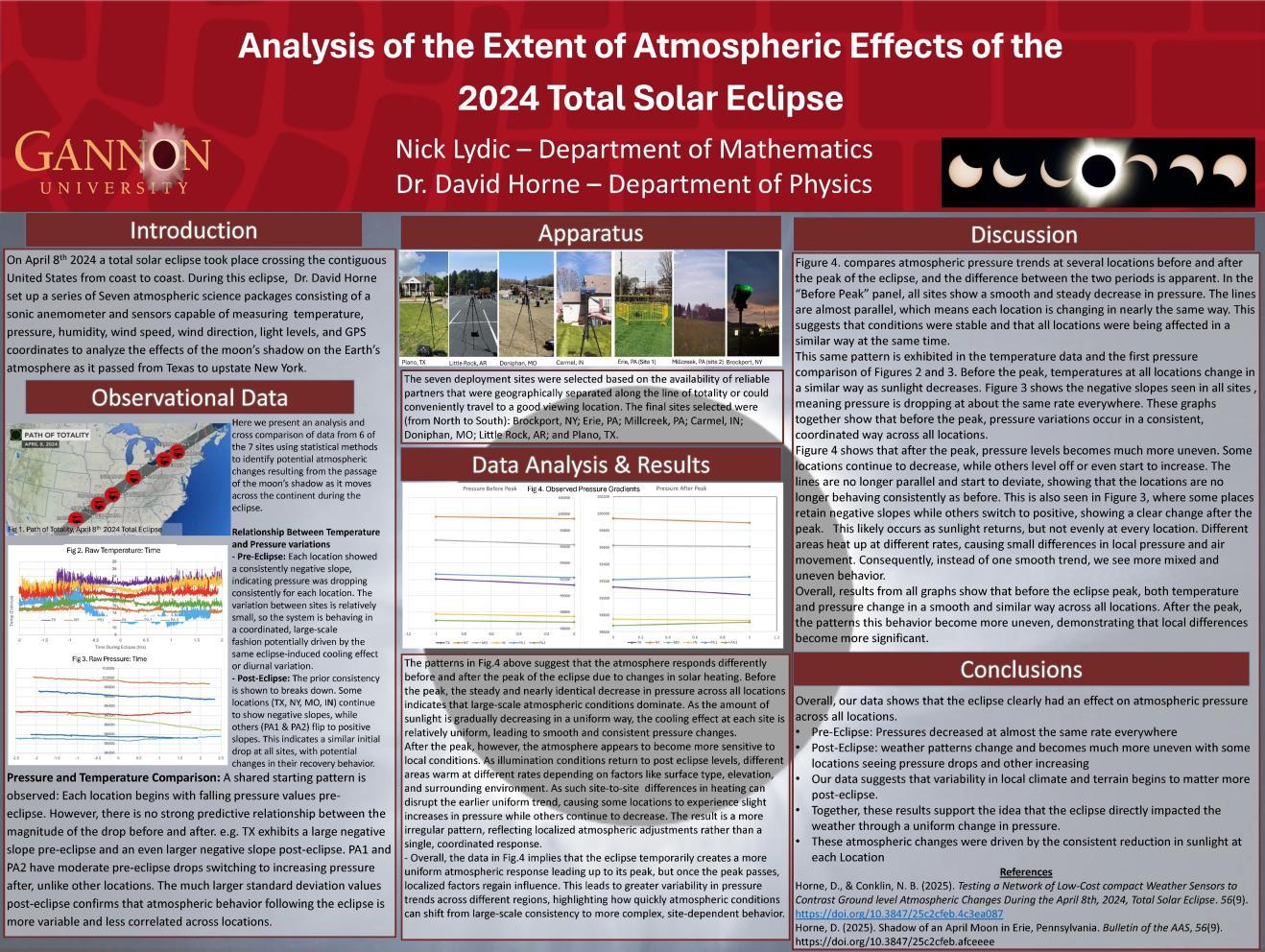
Title: Analysis of the Extent of Atmospheric Effects of the 2024 Total Solar Eclipse
Abstract: On April 8th 2024 a total solar eclipse took place crossing the contiguous United States from coast to coast During this eclipse, Dr David Horne set up a series of Seven atmospheric science packages consisting of a sonic anemometer and sensors capable of measuring temperature, pressure, humidity, wind speed, wind direction, light levels, and GPS coordinates to analyze the effects of the moon’s shadow on the Earth’s atmosphere as it passed from Texas to upstate New York.
Presenter(s): Nick Lydic
Sponsoring Department: Physics
Mentor(s): David Horne
Presentation: 71
Title: How Social Media Impacts the Personal Brands of Higher Education Leaders
Abstract: Higher education institutions are beginning to switch to social media rather than traditional communication methods to disseminate information (Barus, 2023) More specifically, higher education professionals are turning to social media to connect with students and build connections outside of the academic setting (Ahlquist, 2020). Relationships between higher education professionals and students are vital in the academic setting to ensure students succeed and feel a sense of belonging. However, it is not solely the relationship between professors and students that makes an impact. Higher education leaders are also using social media to connect with students in an authentic, personable approach. The purpose of this research is to analyze how higher education leaders are portraying themselves to the students through their personal brands on social media. Personal branding defines an individual's characteristics and what values they stand for, both in a personal and professional manner (Cote, 2024). In higher education leadership, personal brands are important because they demonstrate what sets an institution's leadership apart from others. It gives students a glimpse of the atmosphere the president, vice president, and other leaders have created on campus. By incorporating a leader's personal brand into their social media content, it is easier for students to establish a connection, and a welcoming safe environment is created.
Presenter(s): Madeline Emerson
Sponsoring Department: Communications and the Arts
Mentor(s): Jennifer Allen Catellier
Presentation: 72
Title: Dangers of Artificial Intelligence
Abstract: Artificial intelligence has proved itself a valuable resource in education, the workplace, and everyday life It has been able to eliminate many mundane tasks, improve efficiency, and is even thought to be the pathway to finding a cure for currently incurable illnesses. Artificial intelligence, however, presents many dangers. In schools, students rely heavily on AI to complete work, giving assignments little thought before asking an AI chatbot to complete the assignment for them. Tech companies have already released thousands of employees as they invest in artificial intelligence to fill these roles. As AI becomes more intelligent, people think less for themselves, and the global economy relies less on the people it serves.
Presenter(s): Sam Bockstoce
Sponsoring Department: Honors Program
Mentor(s): Greylyn R. Hydinger
Presentation: 73
Title: AI Won’t Take Over Your Job - And Here is Why
Abstract: The topic I will be focusing on is how jobs will change over the next twenty-five years due to Artificial Intelligence (AI) and technological advancements Through my research I have found that AI will not be the cause of unemployment in the world. People are losing their jobs, and they are doing so quite quickly. However, I have found that AI is also creating new job opportunities and promoting collaboration instead of destruction. This topic is important because if AI were to take over all jobs, it will only result in catastrophe. The world’s economic system will be destroyed, and it would take a very long time, if ever, to rebuild what was lost. It is important to make sure the world understands that this is not going to happen. This will reduce panic and self-destruction in the long run. The work I have done to reach this conclusion is fully research based with statistics and explanations for all the fears a person would have regarding the increase of AI in the workplace.
Presenter(s): Isabella Snyder
Sponsoring Department: Honors Program
Mentor(s): Dominic Prianti
Presentation: 74
Title: Businesswoman: Busting Myths and Examining Challenges
Abstract: Despite record numbers of women joining the workforce, gender inequality in business remains a structural problem- not a personal one This study investigates two widespread misconceptions: that business is fundamentally a man's world, and that women aren't assertive enough to be leaders. Using data from McKinsey & Company, the U.S. Government Accountability Office, Bain & Company, and Boston Consulting Group, this project examines the ways in which institutional and cultural barriers, such as promotion gaps, wage inequality, a lack of mentorship, and limited access to capital, continue to impede women's advancement. Results show that businesses with more female leadership outperform rivals both strategically and financially, demonstrating that gender equity is not only a moral but also an economic necessity. In addition to highlighting quantifiable disparities and challenging damaging stereotypes, this poster presentation offers a vision for inclusive business practices.
Presenter(s): Rima Subin
Sponsoring Department: Honors Program
Mentor(s): Dominic Prianti
Presentation: 75
Title: Factors affecting access to mental health care: a literature review
Abstract: The World Health Organization (WHO) defines mental health as a state of well-being that allows individuals to cope with life’s stresses The main factor being evaluated in this review is based on the connection between insurance or lack thereof and the treatment of mental health care. This creates a relevant connection to our future society and citizenship since there has been an uptrend in untreated and diagnosed mental health conditions. Although awareness has increased, many conditions remain untreated. It is hypothesized that the level of insurance one has equals the level of mental health care they can or chose to access. Scientific reports and peer-reviewed articles were analyzed to determine whether insurance is a leading factor. Results show that stigma, particularly the belief that individuals should handle problems alone, often prevents people from seeking care. Telehealth improves access to care, though limited internet access in rural areas remains a barrier. In conclusion, it is important for mental health services to be covered by insurance, and for mental health advocacy to increase to reduce the stigma so more people can get the care they need.
Presenter(s): Alexandra Meier
Sponsoring Department: Honors Program
Mentor(s): Dominic Prianti
Presentation: 76
Title: Food
Waste: A Community Issue
Abstract: Food waste, defined as “...the decrease in the quantity or quality of food resulting from decisions and actions by retailers, food service providers, and consumers ” is becoming an increasingly urgent global issue Although it is still a commonly held belief that restaurants and underdeveloped countries are primarily responsible. However, recent research has shown that individual households in developed countries contribute to over half of the world's food waste annually, suggesting that these countries should be targeted first for policy reforms and lifestyle changes aimed at reducing food waste's negative impacts. There are two main problems associated with food waste: misallocation of resources and environmental damage. When food waste occurs, we squander valuable land, water, and labor resources that could otherwise help reduce food insecurity. Additionally, it contributes to the overall loss of biodiversity globally and creates adverse conflicts between humans and wildlife. Creating and spreading public awareness on how to properly store and manage food, along with possible diet shifts, are steps that could significantly decrease the impact of food waste. Unfortunately, if these solutions are not enacted soon, then our future global population will face multiple public health risks through undernourishment, food insecurity, and intensifying climate change.
Presenter(s): Piper McClintic
Sponsoring Department: Honors Program
Mentor(s): Dominic Prianti
Presentation: 77
Title: Our Overdependence on Technology
Abstract: My project examines the issue of humanity's dependence on technology, specifically whether our reliance has become too much The question is: Has our use of technology reached a level that is negatively impacting essential life skills and mental health? While technology serves as a useful tool when used properly, our overreliance is diminishing important social, emotional, and cognitive skills, especially among younger people. Skills like cursive writing, sewing, basic handyman repairs, and even the ability to make phone calls are all declining. By 2050, we could find ourselves in a society where human connection, critical thinking, and resilience are weakened. The rising rates of anxiety, depression, and social isolation, particularly in teenagers, already show this to be a trend. Platforms driven by algorithms have led to division, and the absence of safe digital spaces for all ages limits meaningful communication between individuals. This has created obstacles for developing informed and empathetic citizens who can engage in everyday activities by 2050. My approach to this project includes researching mental health trends, examining ethical issues related to technology use, analyzing digital environments, and suggesting solutions for a healthier integration of technology into everyday life.
Presenter(s): Zoey Ketterer
Sponsoring Department: Honors Program
Mentor(s): Dominic Prianti
Presentation: 78
Title: Policy Practice Project: Barriers to Suicide Act of 2025
Abstract: H. R. Bill 3505, titled Barriers to Suicide Act of 2025, is a bill that if passed will install suicide preventive barriers on infrastructure in high suicide risk areas This research project explores what the policy is, the historical roots, opportunities and constraints impacting the legislation's ability to be passed, and the actions I had taken to support this bill.
Presenter(s): Mia Stone
Sponsoring Department: Honors Program
Mentor(s): Dominic Prianti
Presentation: 79
Title: Microplastics Intake: An Unseen Threat
Abstract: Microplastics are increasingly being detected in the food we eat, the water we drink, and even in the air we breathe, challenging the idea that tiny plastics are harmless Rising exposure raises concerns for human health because these particles can circulate through the bloodstream and reach organs such as the liver, heart, and brain, where their effects remain unclear. Early studies indicate microplastics may trigger inflammation, damage cells, interfere with the immune system, and gradually harm tissues. The long-term consequences, including potential accumulation in the body, are still unknown. With global plastic production projected to nearly triple by 2060, plastics breaking down in the environment and entering the food chain could dramatically increase human ingestion. Misconceptions about the safety of microplastics can prevent people from recognizing the risks they pose. Evidence shows the importance of public awareness regarding responsible practices. Simple steps, such as reducing single-use plastics and carefully managing waste, can help lower exposure and reduce potential harm to the human body.
Presenter(s): Quentin Cuzzola
Sponsoring Department: Honors Program
Mentor(s): Dominic Prianti
Presentation: 80
Title: Obsessive-Compulsive Disorder
Abstract: Obsessive-compulsive disorder (OCD) is a chronic psychiatric disorder characterized by recurring obsessions and compulsions, affecting approximately 1 to 3% of the general population, although many cases remain undiagnosed or misdiagnosed. According to the World Health Organization, OCD is within the top 10 debilitating conditions due to the time-consuming, intrusive thoughts and uncontrollable compulsions that can disrupt work and personal life. This poster and presentation will cover the symptoms, prevalence, risk factors, etiology, diagnosis, treatments, and complications of OCD. The pathophysiology of the disorder will also be discussed regarding the cortico-striatal-thalamo-cortical (CSTC) brain circuits and the potential hyperactivity that may be associated with this disorder. OCD is often misdiagnosed due to limited awareness of the diverse symptoms and overlapping symptoms with other mental disorders. This presentation will address the misconception that OCD is just being ‘neat’ or wanting things ‘clean. ’ OCD can involve cleanliness and hygiene, but OCD, more importantly, is defined by spending more than an hour a day on obsessions, compulsions, or both, accompanied by significant distress and impairment. Early detection, correct diagnosis, and adequate treatment are critical for an individual with OCD.
Presenter(s): Sophia Wilson
Sponsoring Department: Honors Program, Physician Assistant Program
Mentor(s): Dominic Prianti, Dexter Witchey
Presentation: 81
Title: Acid Mine Drainage Sites and Their Effects on Species Richness and Poverty Levels
Abstract: This project is focused on the impact of acid mine drainage in Pennsylvania. By overlaying several data sets with each other, this project addressed the impacts abandoned mining sites have on the quality of the surrounding watersheds and their spatial relation to impoverished areas. Understanding which areas appear to be the most impacted by acid mine drainage can help environmental agencies prioritize funding for cleanup measures. This project also aims to bring awareness to the unjust pollution of local water supplies used by many residents of Pennsylvania. This project mapped the location of acid mine drainage sites, stream quality data, and poverty rates in Pennsylvania. The main findings of this project revealed that water quality downstream of abandoned mine sites was often negatively affected and that abandoned mining sites tend to be more prevalent in rural post industrial areas that tend to have higher rates of poverty. This project indicates that rural areas with higher poverty rates likely lack the infrastructure and tax revenue that is needed to properly address the remediation of abandoned mining sites and policy makers should be aware of this need and fight for policies that aid to solving this issue.
Presenter(s): Ethan Boots, Jonathan Hansford
Sponsoring Department: Criminal Justice
Mentor(s): Christopher Magno
Presentation: 82
Title: An Analysis of Structure Fires and Poverty Rates in the City of Erie
Abstract: The topic for our presentation is tracking working structure fires in the city of Erie from 2021 to present in order to establish patterns, identify any possible concerns and other at risk areas The city of Erie has a population of just under 100,000, and with the city being about 230 years old and a majority of the houses are over 70 years old, older houses pose a greater risk of structure fires in the city, and it shows with the data collected with just under 400 house fires in the last 5 years or once every 4.5 days on average. This study is important because it tracks any trends in structure fires in the city and certain data can be inputted to see if there are any contributing factors such as poverty On average there are approximately 2,100 fire deaths per year, and another 13,000 fire related injuries per year. Being able to establish any trends could allow for an increased fire education in any determined “higher risk” areas. The data we used was provided by the fire marshals office or the City of Erie and it contained the date, address, and fire type at which the incident occurred The tools we used was excel to table where we transferred the data given to us to our GIS platform We also included the poverty rate available to us as reported in 2023 Together we compared these two data sets and were able to draw an inference that the areas with higher poverty experienced a larger number of structure fires.
Presenter(s): Rebekah Young, Alexander Purchase
Sponsoring Department: Criminal Justice
Mentor(s): Christopher Magno
Presentation: 83
Title: Analyzing Aviation Accidents United States 2023
Abstract: This project uses GIS to analyze aviation accidents that occurred in the United States throughout 2023. This is an important issue because even though commercial aviation accidents are lower than they have ever been before, general aviation accidents are becoming increasingly more frequent. GIS helps visualize accidents by type and location. This way it is easy to visualize the most common root causes and any areas where accidents or incidents are occurring more frequently than others. This project shows trends that can be addressed to improve safety and reduce the frequency of accidents occurring in our skies.
Presenter(s): Ryan Eastbourn, Jacob Eastbourn
Sponsoring Department: Criminal Justice
Mentor(s): Christopher Magno
Presentation:
84
Title: Economic Impact on Erie from Sports Event
Abstract: This study shows the impact of the economy in Erie from local sporting events, focusing on local restaurants, hotels, and gas stations. It uses data to compare normal revenue levels when no sporting events are taking place with revenue during sporting events, demonstrating the importance of sports to the local economy. Using data from ArcGIS Pro, the study analyzes patterns through techniques such as dot density, graduated colors, and buffer analysis to identify the areas where people spend the most money at these points of interest. To map where and how much fans spend, the study conducts a survey that includes questions about hotel stays, dining at restaurants, and frequency of gas purchases. This approach provides the necessary data to highlight the difference between periods with and without sporting events and illustrates the economic impact they have on the city of Erie.
Presenter(s): Ashleigh Crawford, Matthew Smith
Sponsoring Department: Criminal Justice
Mentor(s): Christopher Magno
Presentation: 85
Title: Geographic Distribution of ICE Arrests in the United States
Abstract: This collection of maps and charts provides a detailed analysis of Immigration and Customs Enforcement (ICE) arrests across the United States between 2023 and 2025, focusing on various geographic regions and categories of enforcement. The maps reveal significant regional variations in arrest activity, with the highest concentrations in southern border states such as Texas, California, and Arizona, which align with heavy immigration flows. The maps also high-light the most common countries of origin for individuals arrested, particularly from Latin America, including Mexico, Venezuela, and Ecuador. Urban areas, especially those with large immigrant populations such as New York City, Los Angeles, and Miami, show elevated arrest rates for both immigration violations and criminal convictions. The bar chart further underscores the prevalence of "Other Immigration Violations" across various cities, with Dallas being a notable hotspot. These visualizations offer insights into the geographical distribution of ICE enforcement and the broader patterns in U.S. immigration control.
Presenter(s)
: Lava Abdulqadi, Tanzima Diwan
Sponsoring Department: Criminal Justice
Mentor(s): Christopher Magno
Presentation: 86
Title: Gun Violence Surrounding the Erie Public High Schools
Abstract: This project analyzes gun violence trends in Erie, Pennsylvania, from 2020 through 2024, with a specific focus on the proximity of these incidents to Erie Public High Schools. Understanding this data is vital; the personal and collective trauma of gun violence demands proactive attention rather than reactive measures. By visualizing these patterns, we provide a shared framework for the school district, parents, and students to develop informed safety strategies. Ultimately, this analysis serves as a roadmap to protect students during their daily commutes and throughout the school day, ensuring that no potential threat to student safety is overlooked.
Presenter(s): Brandon Shepard
Sponsoring Department: Criminal Justice
Mentor(s): Christopher Magno
Presentation: 87
Title: Invasive Species in Brazil
Abstract: Invasive species are a major driver of biodiversity loss and ecological disruption worldwide. Brazil, which contains a large portion of the Amazon rainforest, is particularly vulnerable due to increasing human activity, land-use change, and global trade. This study examines the spatial distribution of selected invasive species across Brazil using geographic information systems (GIS). Occurrence data were mapped to identify patterns of spread and geographic concentration, with particular focus on Aedes aegypti and Sus scrofa, two species with significant ecological and public health impacts. Additional spatial analysis explored the relationship between invasive species occurrences, road networks, and demographic patterns. The results reveal clear geographic clustering, especially in regions with higher population density and developed infrastructure. These findings highlight the importance of spatial monitoring and targeted management strategies to reduce the ecological and socio-economic impacts of invasive species in Brazil and the broader Amazon region.
Presenter(s): Mattia Parrini
Sponsoring Department: Criminal Justice
Mentor(s): Christopher Magno
Presentation: 88
Title: Mapping Danger: Homicide Clusters and Preschool Exposure in Erie, PA (2020-2024)
Abstract: This project maps homicide hotspots in Erie Pennsylvania (2020-2024) at the block level and analyzes their proximity to preschool locations. Using GIS techniques, areas if concentrated violent crimes (homicides) were identified and compared to the geographic location of early childhood education centers. The findings highlight zones where preschools are located near high crime areas , indicating potential increased expo-sure to violence for young children.
Presenter(s): Trinity Langdon
Sponsoring Department: Criminal Justice
Mentor(s): Christopher Magno
Presentation: 89
Title: Mapping Health Care Deserts
Abstract: This project explores citywide spatial analysis of health care accessibility in Erie, Pennsylvania, focusing on the distribution of pharmacies and hospitals. Using ArcGIS Pro, this study integrates health care facility locations with average household income and vehicle access data to assess whether essential medical services are equitably distributed. The analysis reveals significant spatial inequalities, particularly affecting lowincome neighborhoods and residents without personal transportation, identifying potential health care retail deserts across the city.
Presenter(s): June Monasterio Alvarez
Sponsoring Department: Criminal Justice
Mentor(s): Christopher Magno
Presentation: 90
Title: Mapping NO2 Pollutants Compared to Annual Average Daily Traffic Values in the City of Erie
Abstract: We want to know; does vehicular traffic decrease Erie’s air quality or are there other factors that have a larger impact? Air quality is extremely important, obviously everyone needs air to survive, and if our study shows that areas with higher traffic contribute to more air pollution, it may persuade Erie civilians to travel more conservatively. To collect our data, we downloaded traffic information from PennDOT’s TIRe which shows the annual average daily traffic (AADT) on major roads and we are comparing that data to a map of NO2 pollution in Erie from the EPA’s EJScreen. We found that the high traffic areas had some correlation with the poor air quality around Erie, but that the air quality was the poorest in areas surrounding industrial buildings, due to high transportation traffic. For the future, we hope that people in Erie will do their part to limit the air pollution caused by their cars, through carpooling, walking, or public transportation.
Presenter(s): Kevin Giacobbi, Cole Ternent
Sponsoring Department: Criminal Justice
Mentor(s): Christopher Magno
Presentation: 91
Title: Mapping Parish Ministries in the Diocese of Erie
Abstract: The Roman Catholic Diocese of Erie, covering 13 counties of northwestern Pennsylvania, is particularly challenged with adequately tending to the spiritual welfare of the Christian faithful in a mix of urban, suburban, and rural communities. Proper access to faith formation opportunities (i.e. religious education, OCIA) and parish-level ministries are important ways to keep the faith alive. Working with the Office of Faith Formation, I used ArcGIS to map the hotspots for faith formation opportunities and parish ministries. Comparative analysis with block-level demographic data and a computed “Parish Attractivity Score” indicates which areas of the Diocese are spiritually thriving and which need more support. The findings show three ministry hot spots across the region and plenteous opportunities for new parish ministries. Religious education access is fairly accessible, yet there is a need to increase outreach to rural areas, such as McKean County. These results highlight the importance of parish-level evangelization and inform the Office of Faith Formation where to devote more resources.
Presenter(s): Timothy Haklar
Sponsoring Department: Criminal Justice
Mentor(s): Christopher Magno
Presentation: 92
Title: Mapping Risk and Response: Spatial Patterns and Healthcare Access to Drug Overdose Incidents in Erie, PA (2020–2024)
Abstract: This study examines the spatial patterns of drug overdose incidents in Erie, Pennsylvania, from 2020 to 2024, with a focus on both geographic distribution and access to healthcare services Using GIS-based methods, overdose incidents were mapped and analyzed at multiple levels, including point distribution, block group aggregation, and hotspot clustering. In addition, hospital locations were incorporated to assess service accessibility through buffer analysis The results show that overdose incidents are not randomly distributed but are concentrated in specific areas of the city, particularly in central and western Erie Hotspot analysis further confirms statistically significant clusters in these regions, indicating persistent areas of elevated risk. The block group analysis supports these findings by highlighting neighborhoods with consistently higher incident counts. Service accessibility analysis reveals that while some high-risk areas fall within close proximity to hospitals, others remain outside optimal coverage zones This suggests potential gaps in immediate access to care during overdose events Overall, the study highlights the importance of spatial analysis in understanding overdose patterns and emphasizes the need for targeted interventions and improved service accessibility in high-risk areas.
Presenter(s): Khandker Kaif Sabit
Sponsoring Department: Criminal Justice
Mentor(s): Christopher Magno
Presentation: 93
Title: Mapping the Opioid Overdose Mortality Across Pennsylvania Counties (2020-2024)
Abstract: Pennsylvania still faces a relentless opioid crisis, and unpacking where and why it's hitting hardest isn’t simple. This research digs into county-level overdose deaths from 2018 to 2024 through Geographic Information Systems (GIS). The spatial justice method brings everything together, mapping how opioid deaths overlap with poverty and other vulnerabilities, not just as numbers but as layered, visual stories. Using point density to show where overdose deaths pile up and chord maps to track mortality rates and poverty levels, the study highlights clear hotspots, urban pockets, and scattered rural areas both emerge as trouble zones. The link between high death rates and economic hardship jumps right out in the data. This poster lays out the stark geographic differences and, honestly, makes the case for smarter intervention. The goal is to try and direct resources and support right where they’re needed most.
Presenter(s): Colby Erdos
Sponsoring Department: Criminal Justice
Mentor(s): Christopher Magno
Presentation: 94
Title: Marine Protected Areas and Protection Gaps in the Bahamas
Abstract: This project examines whether Marine Protected Areas (MPAs) in The Bahamas effectively protect important marine ecosystems and biodiversity hotspots. The Bahamas contains extensive coral reefs, seagrass beds and mangrove ecosystems that support many marine life including reef fish, sharks, sea turtles and queen conchs. Using the GIS mapping techniques, spatial data on MPAs and mangrove ecosystems were analyzed to evaluate how well these habitats are currently protected. The results show that while a lot of MPAs overlap with key marine habitats, some important ecological areas remain outside protected boundaries. These gaps suggest that additional conservation planning may be needed to better protect biodiversity and maintain healthy marine ecosystems. GIS mapping provides valuable insight into the spatial distribution of marine habitats and can support improved marine conservation strategies in The Bahamas.
Presenter(s): D'Asia King
Sponsoring Department: Criminal Justice
Mentor(s): Christopher Magno
Presentation: 95
Title: Pollutants Near Elementary Schools in Erie, PA
Abstract: This project shows the presence of environmental pollutants around grade schools and the health problems they cause among children and faculty. It discusses air, soil, and water contamination from nearby industries. Children are more prone to infections and diseases because they are still developing, making them especially vulnerable to environmental hazards encountered during school. Recognizing nearby industries and potential pollution sources helps protect the health of students and staff. This study uses data from the CDC Public Health Data and the Environmental Data Toxics Release Inventory to show the distance between grade schools and industries, as well as the potential health impacts. The results show that schools located near high-traffic roads and industrial zones have higher levels of air pollutants, particularly nitrogen dioxide. These pollutants cause asthma, respiratory diseases, headaches, and cardiovascular problems. Overall, the findings indicate that environmental conditions around schools significantly affect the health of children and staff and highlight the need for preventive measures to protect school environments.
Presenter(s): Entela
Latifi
Sponsoring Department: Criminal Justice
Mentor(s): Christopher Magno
Presentation:
96
Title: Pollution from Industries in Erie, PA and Proximity to Streams
Abstract: For this project, we analyzed the pollution released by industries in Erie and its proximity to streams, highly populous areas, and the type of industries to determine the differences between high and low income areas and the amount of pollution that is generated as well as whether these sites can be transported through runoff to nearby streams and Lake Erie or other bodies of water. We used our total onsite release data and stream data to create buffer zones that would show the overall reach for both streams and the pollutants. The areas that overlap would be more at risk for polluted waters and ecosystems. We also used our total release data to show where the most pollutants are being released and if they have any correlation with high poverty or populated areas.
Presenter(s): Camdyn Allison, Remick Munson
Sponsoring Department: Criminal Justice
Mentor(s): Christopher Magno
Presentation: 97
Title: Retail Deserts & Spatial Inequality in Erie, PA
Abstract: This study examines retail access inequality in Erie, Pennsylvania by analyzing the distribution of essential services such as grocery stores, pharmacies, and banks. Using GIS mapping and buffer distance analysis, the study identifies areas with limited access to these services. The results show clear spatial patterns where lower-income neighborhoods often have reduced accessibility to essential retail services. These areas can be considered retail deserts, highlighting unequal access across the city. Overall, the findings emphasize the need for improved accessibility and more equitable planning to better support underserved communities in Erie.
Presenter(s): Jashanpreet Kaur
Sponsoring Department: Criminal Justice
Mentor(s): Christopher Magno
Presentation:
98
Title: Serious Crime in Erie, Pa (2022-2024)
Abstract: This study examines the spatial distribution of serious crime in the city of Erie, Pennsylvania.The purpose of this research is to identify patterns and placed based risks associated with violent and major property offenses. Including aggravated assault, robbery, burglary, motor vehicle theft, weapons violations, and firearm related incidents. Understanding where these crimes are concentrated is important because it can help law enforcement and community leaders respond more effectively. Using 2024 Erie Police Department crime data and Geographic Information Systems (GIS), we mapped incidents across the city to identify patterns and hotspots. The analysis shows that serious crimes are not spread evenly throughout Erie. Instead, they tend to cluster in specific neighborhoods, with violent and firearm-related offenses often appearing in the same areas. These findings suggest that certain locations experience overlapping risk factors that may contribute to higher crime levels.
Presenter(s): Almina Borovina, Kara Loftus
Sponsoring Department: Criminal Justice
Mentor(s): Christopher Magno
Presentation: 99
Title: Spatial Analysis of Overdose Patterns and Treatment Access in Erie, Pennsylvania
Abstract: This project uses GIS mapping to analyze overdose patterns in Erie, Pennsylvania. The goal is to identify where overdoses are most concentrated and examine how they relate to social and environmental factors such as population distribution and access to resources. By visualizing overdose data spatially, this project aims to better understand patterns of risk and highlight areas where intervention and support services may be most needed. The results provide insight into how overdose incidents are distributed across the city and help guide more effective placement of prevention and treatment resources.
Presenter(s): Grant MacKay
Sponsoring Department: Criminal Justice
Mentor(s): Christopher Magno
Presentation: 100
Title: Spatial Optimization of Social Services (Erie, PA)
Abstract: This study utilizes Geographic Information Systems (GIS) to identify optimal locations for a Social Service facility in Erie, Pennsylvania, by analyzing the intersection of socioeconomic need and resource accessibility. Effective community support requires a data-driven approach to ensure services are placed where they are most reachable by the populations that need them most. Using 2026 demographic data, public transit routing, and existing social service databases, the study maps the spatial distribution of low-income households alongside the city's current social services landscape, limiting it to food, shelter, and clothing. The analysis identifies service deserts areas characterized by high poverty levels and limited transportation options where existing non-profit presence is minimal. The findings reveal specific neighborhoods in the East Side and Downtown Erie that face significant barriers to accessing essential services due to transit gaps. These results provide a strategic framework for urban planners and philanthropic organizations to prioritize site selection based on maximum community impact and logistical feasibility, ensuring that new investments directly address structural barriers to equity in the Erie metropolitan area.
Presenter(s): Travis Kruszewski
Sponsoring Department: Criminal Justice
Mentor(s): Christopher Magno
Presentation: 101
Title: The Social Injustice of Industry and Poor Waste Management
Abstract: Adverse environmental conditions caused by industry such as waste dumping is a large issue faced in most parts of the world. Along with causing environmental degradation, waste dumping is also linked to health issues for those in the surrounding areas. In a social context, waste dumping primarily effects low income communities who lack funding and resources to protect themselves. This project uses ArcGIS to provide a visual of waste dumping spots, in conjunction with low income community locations and the number of health issues they have. The goal of this study is to bring attention to groups which may be at risk from poor waste management, and help aid policy makers in determining laws which will bring justice to those affected.
Presenter(s): Madeline Endler
Sponsoring Department: Criminal Justice
Mentor(s): Christopher Magno
Presentation: 102
Title: Total Chemical Releases in Northampton County, PA– Comparing 2024 and 1989
Abstract: Analyzing Toxin Patterns Resulting in Pollution within Northampton County, Pennsylvania. With the help of Geographic Info System, I analyzed and discovered the toxin release patterns found in Northampton Pennsylvania using spatial and cluster formations. I have mapped different risk populations such as the elderly surrounding these facilities, the types of chemicals being released into the environment, the industries with up to a one-mile buffer of chemicals being released around them, and a comparison of two different time periods affecting the levels of pollution to the people surrounding them. During the industrial period one of the cities located in Northampton County, Bethlehem, was known for steel production and a lot of cities within Northampton County released record breaking amounts of toxins into the environment leading to loads of air pollution at dangerous levels. With research support the amount of toxins currently being released in Northampton PA and in the year of 1989 are at similar levels. This leaves us to evaluate if it’s at a dangerous level for citizens around it and if we are doing anything to stop it. Too much pollution can cause a variety of issues expanding from damaging our resources to making individuals very sick; this issue is significant to human welfare.
Presenter(s): Olivia Rosenberger
Sponsoring Department: Criminal Justice
Mentor(s): Christopher Magno
Presentation: 103
Title: Toxic Algae Blooms on Lake Erie
Abstract: The harmful algae blooms are cyanobacteria, better known as “blue-green algae” which pose a threat both to the aquatic animals of the lake as it creates ecological dead zones by taking up all the oxygen and it threatens humans by causing gastrointestinal symptoms, headache, fever and skin irritation.
Presenter(s): Delaney Kimball
Sponsoring Department: Criminal Justice
Mentor(s): Christopher Magno
Presentation: 104
Title: Transit Access in Erie, Pennsylvania by Group Block 2025
Abstract: This study examines transportation inequality and public transit accessibility in Erie, Pennsylvania, with a focus on whether low-income communities have equal access to public transportation. Access to reliable transit is important for employment, healthcare, education, and grocery access, especially for people without cars The purpose of this project is to analyze whether bus routes and stops are placed in a way that meets the needs of higher-poverty areas. Using GIS mapping in ArcGIS Pro, Erie Metropolitan Transit Authority (EMTA) bus data was combined with U S Census poverty data. Choropleth maps and buffer analysis (¼-mile walking distance) were used to evaluate transit coverage. The analysis shows that some higher-poverty areas, particularly on the east side near Holland Street, Parade Street, and parts of Buffalo Road, as well as areas farther from major corridors like Peach Street and State Street, have fewer nearby bus stops or fall outside of walkable buffer zones This means residents in these neighborhoods may have limited access to public transportation. Although services like Uber exist, they are not always a reliable option for everyone. Many residents may not have consistent access to a smartphone, a bank account, or extra money for rides Because of this, public transportation remains a critical resource and should be easily accessible to all communities. These findings suggest that improving bus stop placement and route coverage in underserved areas could help reduce transportation inequality and better support daily needs and economic opportunities for residents.
Presenter(s): Courtney Corder
Sponsoring Department: Criminal Justice
Mentor(s): Christopher Magno
Presentation: 105
Title: Viability of Rooftop Solar Panels on Gannon’s Erie Campus
Abstract: This project examines the viability of incorporating rooftop solar panels on Gannon University’s Erie campus. We will utilize Geographic Information Systems (GIS) to demonstrate the optimal buildings for implementation of rooftop solar panels, using Google’s Project Sunroof and Google Earth imaging to supply this data. These methods will provide information on sunlight exposure, roof shape, and energy usage of Gannon’s buildings. Results suggest that several campus buildings possess the unobstructed solar access, roof structure, and square footage required for optimized solar collection. This project is important because renewable energy can decrease reliance on fossil fuels, benefitting the environment through decreased greenhouse gas emissions and air pollution. Solar panels can reduce energy costs for the University, fulfill Gannon’s sustainability initiatives, and promote the University’s marketability.
Presenter(s): Ellyse Hoppe, Elizabeth Kibler
Sponsoring Department: Criminal Justice
Mentor(s): Christopher Magno
Presentation:
106
Title: Violent Offenses in Buffalo, NY: 2020-2025 Trends
Abstract: This project analyzes the relationship between violent offenses and poverty across the City of Buffalo, New York from 2020 to 2025 using GIS mapping techniques. Multiple spatial layers were created, including crime counts by block group, poverty rates by household, and identified crime hotspots. By visualizing these variables together, the goal was to determine whether higher poverty levels are associated with increased violent crime. The maps reveal clear spatial patterns, showing that areas with higher poverty rates tend to experience higher concentrations of violent offenses. Hotspot analysis further supports this by identifying clusters of crime in specific neighborhoods rather than evenly distributed incidents. However, the relationship is not perfect, as some areas with lower poverty still show notable crime activity. Overall, this project demonstrates how GIS can be used as a powerful tool to better understand crime distribution and support more targeted policy decisions in urban areas like Buffalo.
Presenter(s): Brendan Murphy
Sponsoring Department: Criminal Justice
Mentor(s): Christopher Magno
ERIE UNDERGRADUATE RESEARCH AND SCHOLARSHIP PLATFORM PRESENTATIONS
1:15
1:30
Research & Scholarship Honors Program The Egg as a Quantum Cage: Ethics, Evolution, and the Collapse of Selfhood Kalinn Mecklin
1:45
2:00
2:15
Research & Scholarship Honors Program Improving Accessibility and Reducing Communication Barriers for Deaf and Hard-of-Hearing Individuals
2:45
Research & Scholarship Honors Program Is how hard you exercise more important than how you exercise? Implications for cardiovascular risk reduction in adults Megan Murphy
Research & Scholarship Honors Program The Long-Term Impact of Undergraduate Sleep Habits on Adult Mental Well-being Saradha Gautam
Research & Scholarship Honors Program An Examination of Intimacy between Teachers and Students in Pop Culture Mia Stone
2:30 Research & Scholarship Honors Program Addiction Recovery Through Social Support: The Role of Peer Groups and Recovery Housing Sophia Price
Research & Scholarship Honors Program
Accessibility Of Free/Reduced OnCampus Daycare Services And The Effects Esther Ihemesie Platform Presentation Schedule – Beyer Hall 405