
Year 28 ∙ number 179
july-august 2026
gamberorosso.it
ON THE BANDITS’ TRAIL
ITALY’S BEST ROSÉ WINES
FERRARI THREE-STROKE
Year 28 ∙ number 179
july-august 2026
gamberorosso.it
ON THE BANDITS’ TRAIL
ITALY’S BEST ROSÉ WINES
FERRARI THREE-STROKE
From the Via Francigena to silent villages: there’s more pleasure in walking

5 >Editorial
Follow that sign by Lorenzo Ruggeri
>Cover Story
On the Bandits' Trail by Antonella De Santis
16. The Silent Villages Trail by Giacomo Proia
20. Summer on the Via Francigena by Eugenio Marini
58. Italian wine in Poland: why Warsaw is a market worth keeping an eye on by Marzio Taccetti

39. Under the tower by Raffalee Mosca
26. Ferrari three-stroke by Lorenzo Ruggeri
50. “Rosé is a way of life, an antidote to formality” by Vittorio Ferla
54. I centesimi. Think Pink by Marzio Taccetti
61. Vini d'Italia Live in Stockholm by Lorenzo Ruggeri
The chef’s recipe Luca Casablanca by Antonella De Santis
Editor Gambero Rosso S.p.A. via Ottavio Gasparri, 13/17 - 00152 Roma +3906551121 - fax 0655112260 gambero@gamberorosso.it
Director Lorenzo Ruggeri
Editor-in-chief
Sonia Ricci
Editorial team Clara Barra, Marco Sabellico (correspondent)
Editorial coordination: Antonella De Santis
Translation Eleonora Baldwin
Graphic Project
Tina Berenato - TB design
Layout
Maria Victoria Santiago, Chiara Buosi
Contributors
Antonella De Santis, Vittorio Ferla, Eugenio Marini, Raffaele Mosca, Giacomo Proia, Marzio Taccetti
Photos and drawings
Cover by Alberto Blasetti
Alberto Blasetti, Rinaldo Gabbianelli, Salvatore Moscatello, Giovanni Rizzo, Michele Sersale, Francesco Vignali, AdobeStock
Copyright © 2026 Gambero Rosso S.p.A. All rights reserved.
Administration via Ottavio Gasparri, 13/17 - 00152 Roma
Advertising Class Pubblicità S.p.A. via Marco Burigozzo, 5 - 20122 Milano +390258219522 - sbianchi@class.it
Gambero Rosso is a Registered Trademark
Copyright by GAMBERO ROSSO S.P.A.
How to find us via Ottavio Gasparri, 13/17 00152 Roma +3906551121 gambero@gamberorosso.it www.gamberorosso.it filgamberorosso $gambero_rosso


Lorenzo Ruggeri

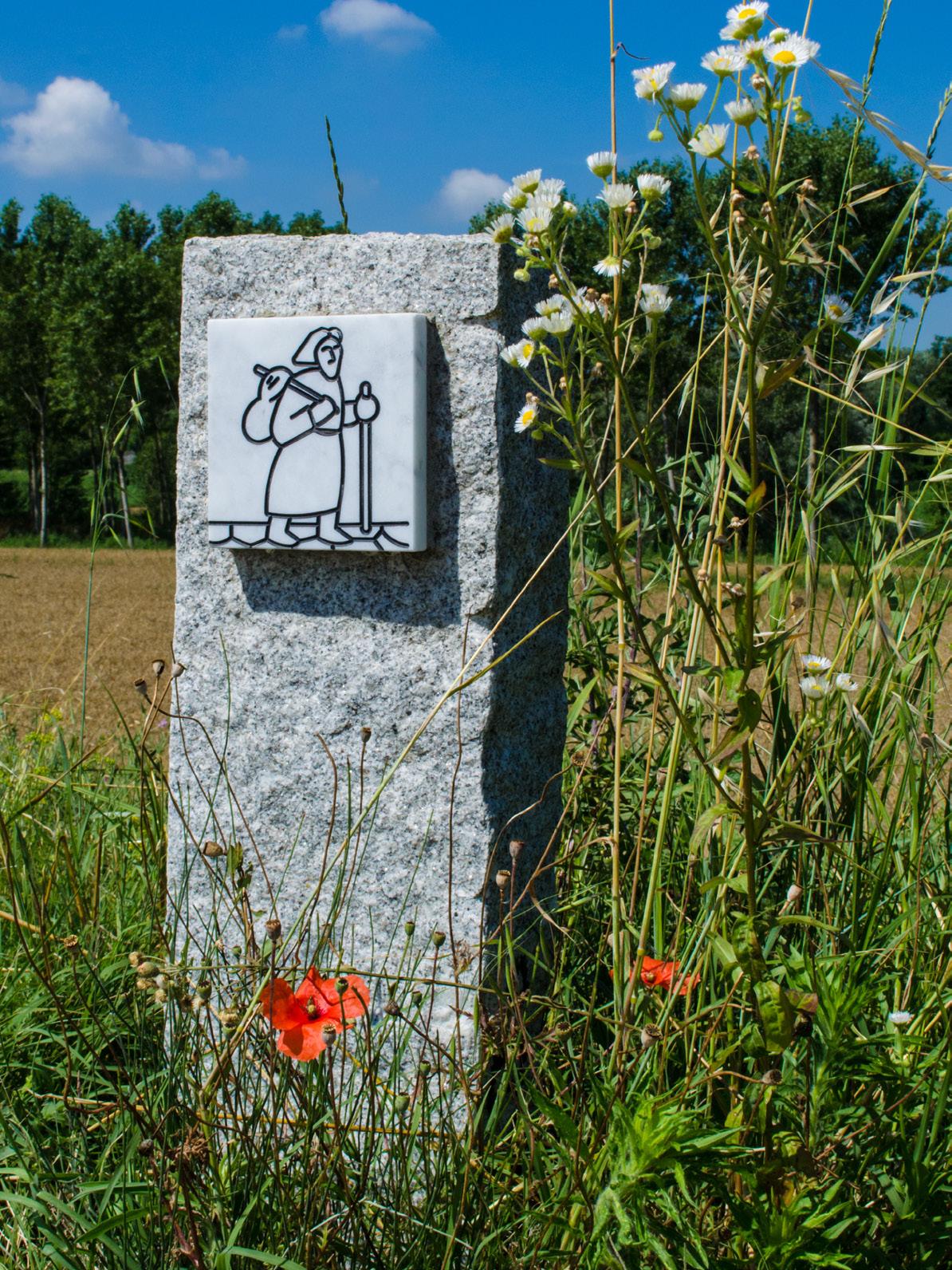
A brown background and the stylised silhouette of a pilgrim with a staff – the traveller’s walking stick – a cloak and the customary rucksack. Over time, we have become familiar with that Via Francigena sign: in the middle of a deserted country road, at the entrance to a town, to the right of a historic monument. It is a symbol we recognise instinctively and which today speaks volumes about the desire to slow down. In this summer issue, we have rediscovered one of Europe’s great routes, the path which, from the Early Middle Ages onwards, linked Canterbury to Rome before continuing on to the ports of Puglia and the Holy Land. We have retraced it through the lens of gastronomy and its stories. The journey thus becomes a trip filled with bread, visits to wineries, trattorias, delicatessens and hidden gems well worth seeking out on foot or by bike. Perhaps without chasing luxury at all costs, but rather that quality and charm that Italy continues to preserve along the lesstravelled roads. A growing number of people are choosing to embrace the rhythm of the journey: some for their faith, some to rediscover their own spirituality, and some simply to change their perspective. Many of the stories you’ll find in the following pages originate precisely along that historic trail. San Gimignano was always a must-visit stop on the itinerary; the town is celebrating the 60th anniversary of the Vernaccia DOC – the first in Italy – and is redefining its identity around wine and a thriving restaurant scene. The gateway to Italy was Aosta, an Alpine crossroads that we explore through the talent and sensitivity of a great pastry chef and cook, Paolo Griffa. And then there are the quiet villages where you can recharge your batteries, places that are coming back to life thanks to new “slow” itineraries: this is the case with Collelungo, a small hamlet of Baschi in Umbria, featured on our cover and the focus of a new itinerary that has literally won us over. Summer is also the season for rosé wines. «Making rosé is like boiling milk», recalls Mattia Vezzola, who has always seen rosé wine as a way of life: «An antidote to formalism». Glass in hand, we’ve selected some of the finest examples from the Italian peninsula. And, speaking of time, we enjoyed a vertical tasting of Giulio Ferrari, where the large bottle size and the disgorgement date matter even more than the vintage: they slow down or speed up the evolution of the same wine. Finally, we travelled across the ocean to California, the Disneyland of the global wine world, to explore how hospitality and the way wineries can be experienced is changing.
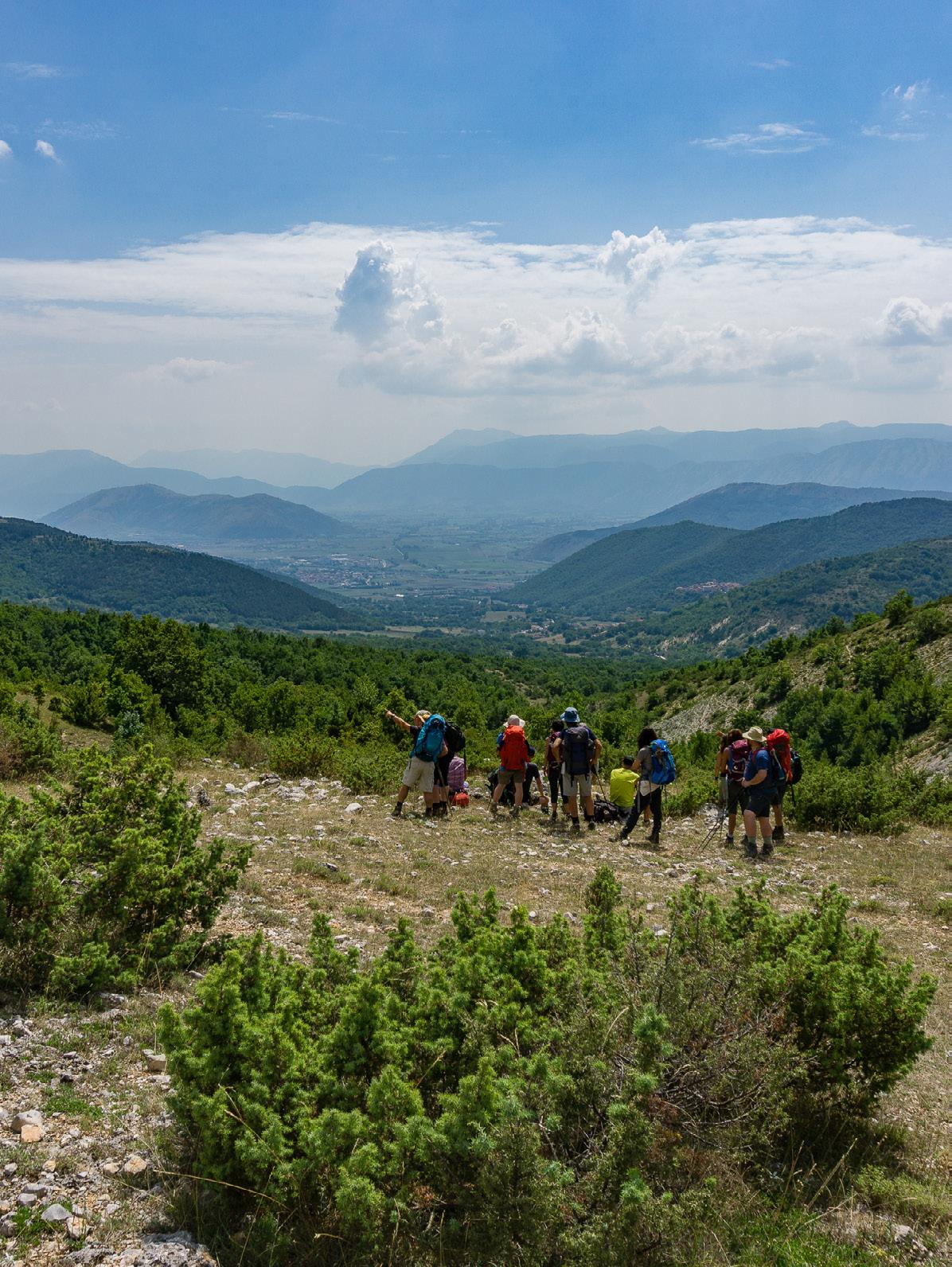
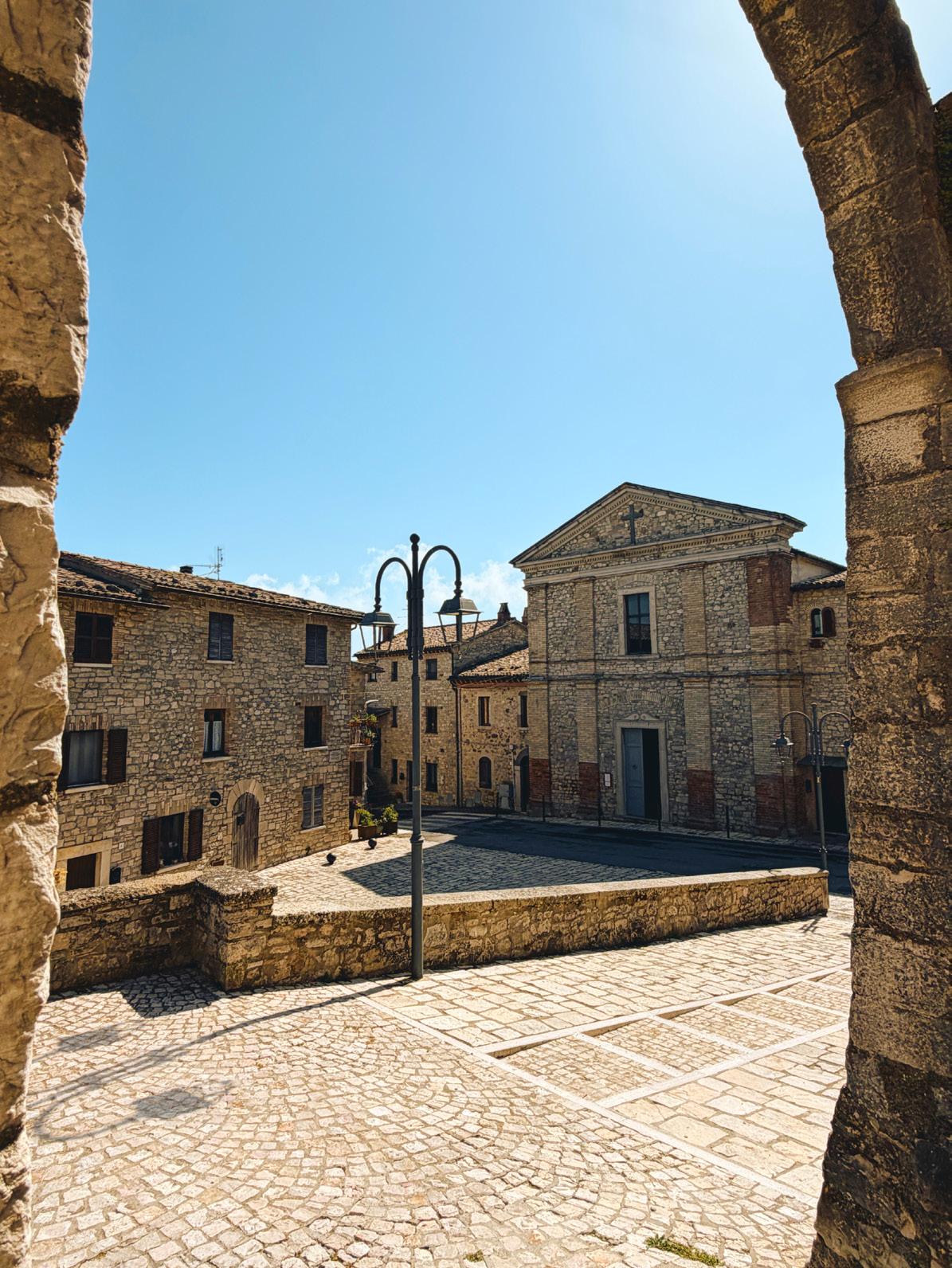
breathes new life into villages, footpaths and the memory of an ancient borderland
by Antonella De Santis- photo by Rinaldo Gabbianelli, Salvatore Moscatello, Giovanni Rizzo and Michele Sersale
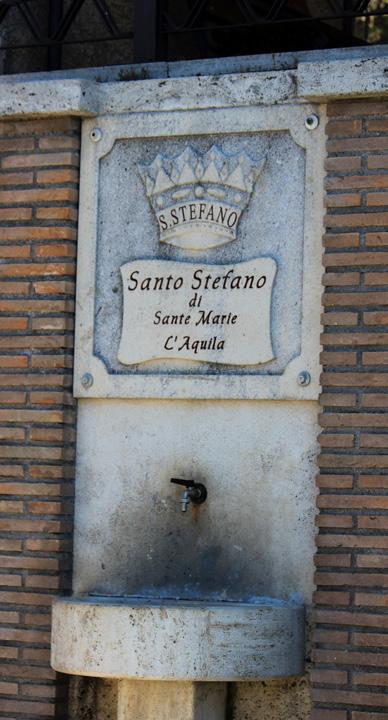
«History, as we read it in books, is always written by the victors, but as you walk, you can learn the counter-truths, and along the Cammino dei Briganti, there are many stories – both good and bad». So writes Luca Gianotti in his book dedicated to the Cammino dei Briganti, that mid-mountain trail winding through medieval villages, woods and valleys of the central Apennines, which he himself helped to create. Launched in 2016, it is celebrating its 10th anniversary with a sculpture by Cesare Pergola entitled La carovana sul cammino (“The Caravan on the Trail”), to be placed at one of the most scenic spots between San Donato and Scanzano, and with a variation to the route that removes a fixed stage and incorporates a new one – challenging and beautiful, just like Abruzzo itself. The start and finish, however, remain the same. The circular route – 108 kilometres and 18 villages across Lazio and Abruzzo – begins and ends in Sante Marie, where (upon prior notice) you can collect
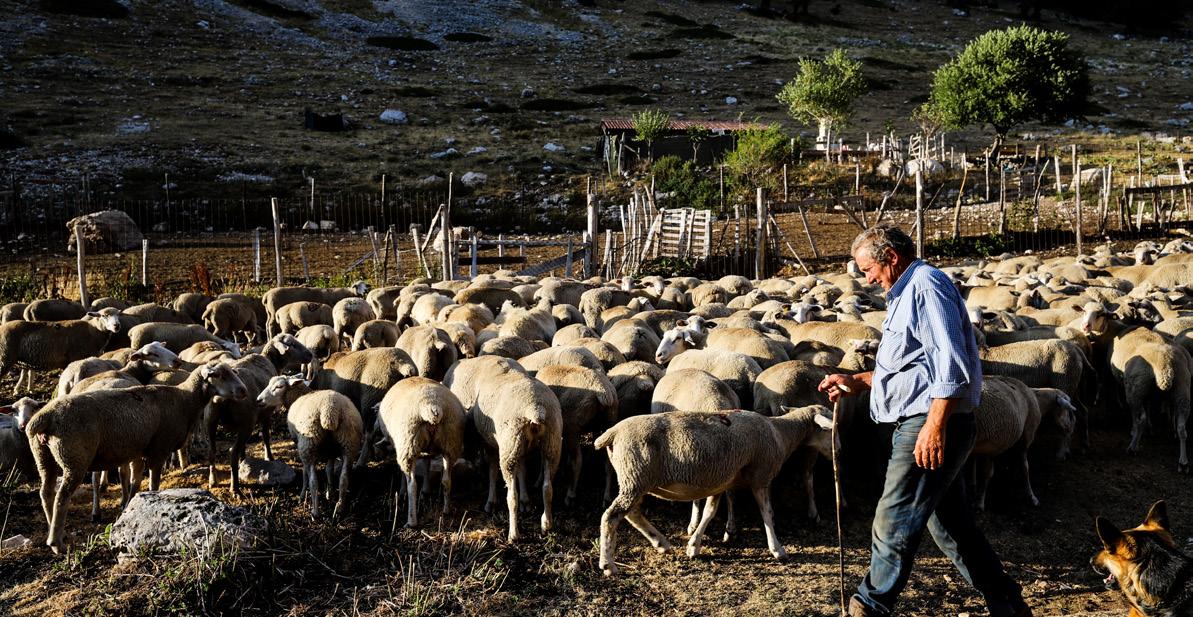
the “Salvacondotto” from the town hall; this pilgrim’s credential must be stamped at each stage to receive a certificate confirming completion of the walk (info: camminodeibriganti.it). This walk needs to be organised in advance to avoid the risk of not finding accommodation: there aren’t many places to stay along the route. Accommodation is in B&Bs, farm stays, private homes and inns, which almost always offer rustic, flavourful cuisine that evokes the scent of pastures and the mountains: sheep’s cheese, lamb (such as pecora a lu cuttur, which some call ‘alla callara’, cooked for a long time in a large pot over a lively fire), local vegetables and pulses, and fresh pasta. Sitting down to a meal is part of this redemptive ritual of pilgrimage, which demands a certain frugality.
Before setting off, it is well worth visiting the Museum of Brigandage during the Unification of Italy at Palazzo Colelli. This place captures, at least in part, that aura of a dark fairy tale that surrounds
the epic saga of brigandage – the bloody resistance to the Savoy army that, for around a decade, set the Marsica region ablaze with looting, ambushes, kidnappings and armed conflicts. The route follows in their footsteps along windswept mule tracks, steep paths and almost forgotten villages that once offered refuge to the armed bands living in hiding. The capture of Croce di Tola, known as Crucitte, in 1871 marked the end of an era. The myth, however, is not destined to fade; it will endure for centuries.
The first leg of the walk towards the hamlet of Santo Stefano is a good way to warm up your muscles. The walk is easy and short. It’s a 5.6-kilometre walk through beech woods, and that’s enough to get a feel for a landscape where, almost everywhere, the memory of those who fell in the two world wars is honoured with monuments and commemorative plaques, amidst climbs and steep gradients. The first climb is 380 metres up, with roughly half that distance descending, until you reach your destination: at 1,050 metres, right at the foot of Monte Faito. The 12th-century Church of St Stephen the Protomartyr is one of the attractions, alongside Palazzo Paoluzi
Tomei with its stone portal, courtyard and internal spiral staircase, which is said to have been ascended by nobles on horseback, as well as visiting cardinals and kings. This is attested to by the chronicles of the time and has become the stuff of tales that blur into legend, aided by the atmosphere of these quiet places. The rest is down to the view over the Marsica and that light which lingers a little longer, bestowing longer days than in the surrounding villages.
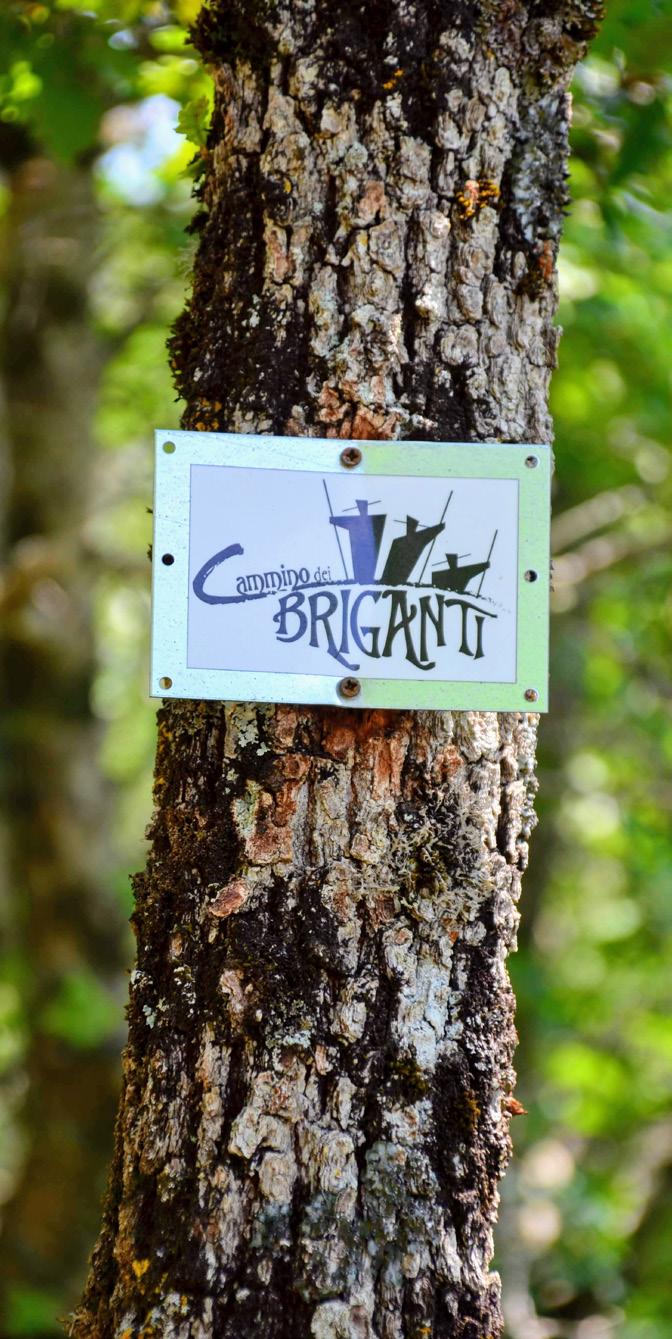
The population of Santo Stefano is steadily dwindling; it is an area suffering from severe depopulation, with villages that have no more than a few dozen residents in winter. After all, this is why Luca Gianotti – a native of Modena who has lived in Abruzzo for 30 years – decided to work on the trail, having spent his whole life involved with walking routes. «During a walk in the Marsica, I wondered what I could do to combat the terrible depopulation of the Apennines». The idea came naturally, based on a route he used to follow on his trekking trips with donkeys. Today, the route is marked with horizontal red and white stripes and signs bearing the trail’s logo, and by the presence of those who choose this form of tourism that respects the local environment: «the trail is a living organism that evolves and grows». The arrival of walkers
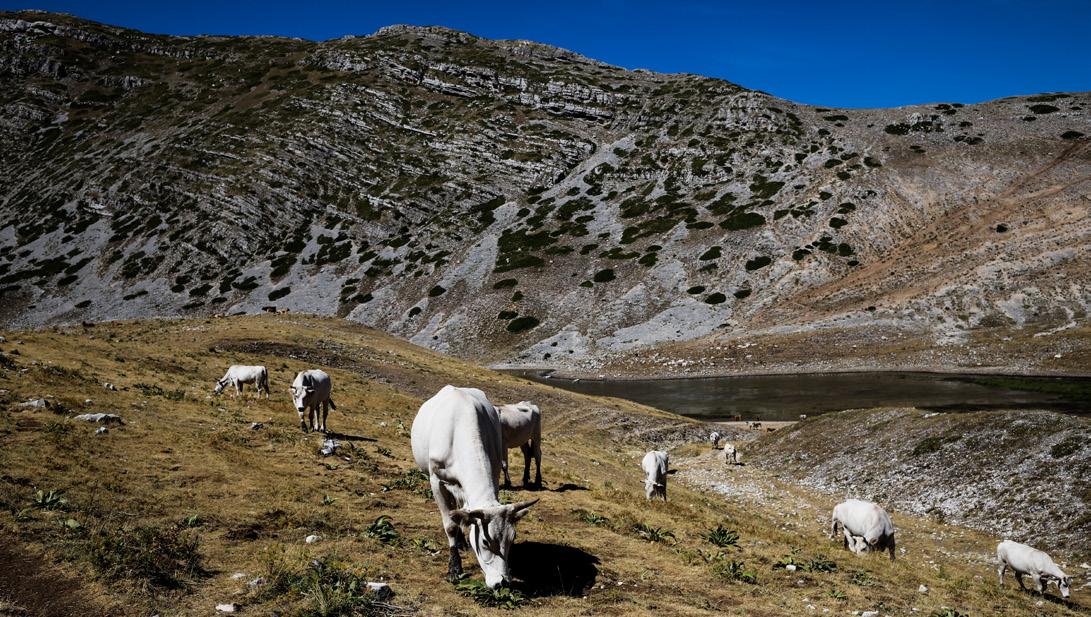
has given a small boost to the business initiative: «The impact on the local area is positive, though not exceptional; there is an economic benefit –B&Bs have opened in the villages where people believed in the project the most, and some young people have taken up activities linked to the trail; but it’s not enough to reverse the trend – young people continue to head to Rome or larger towns to find work». Over the past 10 years, more than 25,000 walkers have passed through, with peaks of over 3,000 a year during the Covid period. We’d need 10,000 a year; «we’re still a long way off», comments Gianotti.
The second leg, from Santo Stefano to Nesce, is more demanding: it covers almost 14 km through little-visited woods and gorges, in a wild area on the old border between the Papal States and the Kingdom of the Two Sicilies, now between Abruzzo and Lazio. You set off early in the morning and, after about an hour’s walk, pass through the Val di Varri and the hamlet of almost the same name – a long, winding row of houses that has all but forgotten the 12th-century convent from which the settlement originated. Today, only the stone walls and a handful of inhabitants remain. The route continues along a scenic path
that stays at an altitude of around 1,000 metres (alternatively, you can descend via Poggiovalle, a village famous for its brigands), from where you can enjoy the arrival at Nesce, a medieval hamlet of Pescorocchiano, now in the province of Rieti. Once in Lazio, in this stone village just a stone’s throw from archaeological finds that bear witness to the presence of the Equicoli – “the warriors of the mountains” – who lived there as far back as the 4th century BC, the journey really gets going. The start is always tricky; you realise you don’t know your own body. You look around and realise you’re all on your own. And then it’s just you, and you have to decide what to do. Rush to reach the finish line as quickly as possible and grab a few extra moments’ rest, or stop along the route, knowing that getting back on track could be very tough. At some point (if there’s signal), your phone comes to the rescue – not so much to make a call – you wouldn’t even have the strength to say a word – but to listen to something that might take your mind off the pain concentrated in your legs, and the back that’s screaming at you for all the times you’ve skipped the gym, put on a song, a podcast, an audiobook – anything that stops you from feeling so acutely what your muscles have to say. Your trainers become your best friends, or your worst enemies, depending on
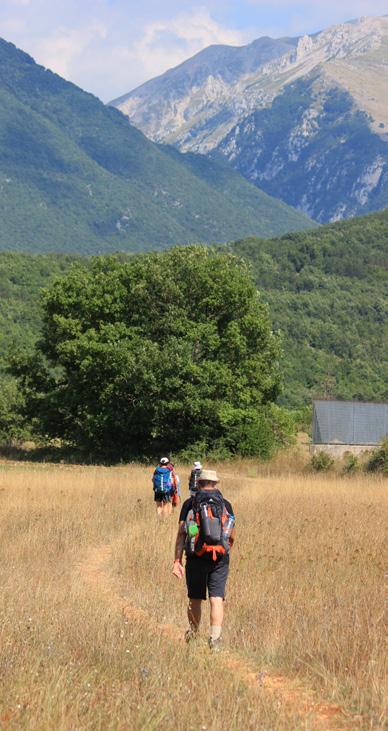
the situation. Silently, and sometimes even out loud, you’ll find yourself repeating this. So much will depend on them. Then there’s a moment of epiphany, when your boundaries are all you can and want to feel; you want to sense their limits and changes, their surges and cries for help. You love and hate yourself; you feel as though you’re a tree, a bush, the ant scurrying away as you pass by; you are nature, and that’s all you need. Everyone has their own rhythm, their own path, even whilst following the same route. You set off together, yet arrive at different times – or perhaps not; you’ll find yourself overtaking and being overtaken by the same people time and time again throughout the day. You might decide it’s time to grab a bite to eat, away from the rest of the group, or choose not to break the spell of a steady, harmonious stride, a steady breath, your heartbeat and breathing keeping time with the rhythm. Thoughts flow swiftly and smoothly, because when your stride is smooth, so is your mind. You think and move on, think and move on, until thinking becomes synonymous with emptying your mind and understanding everything. It’s a bit like meditation, a bit like the essence of butoh, a bit like drawing closer to nature – and, if you believe in Him, to God too. You invoke Him and curse Him every time you curse yourself for deciding to get yourself into this mess. ‘Why
on earth did I do this?’ is a question you’ll ask yourself often, when you’re still a long way from your destination and too far gone to turn back. No buses or lifts. Just your own footsteps to carry you. It’s perhaps no coincidence that, in Japanese, the character for “walking” sounds similar to the word for “speaking with God”; and above all, it’s no coincidence that pilgrimages are said to be “prayers on the move”. After this long stage, you’ll know what that really means. It’s hard work, yes, and very hard at that. But the effort is worth it.
The third leg is the big new feature of this tenth-anniversary edition. Gianotti explains: «There has been a change every year», but this year’s is a decisive one: until 2025, Duchessa was reached via a one-day hike that started and ended in Cartore, where participants stayed for two nights. «This was a problem because Cartore has limited accommodation». The extended stay held up the flow of walkers. And besides, the whole point of the walk is precisely not to settle in one place. So, from this year onwards, instead of heading straight for Cartore via the lower route, we head towards Corvaro, the largest hamlet of Borgorose. We are at the foot of the Duchessa – 842 metres above sea level – and within the protected area of the nature reserve of the same name. We reach it via a country lane that runs alongside the River Salto, passes beneath Mount Rose towards Spedino before reaching the village, which offers dining options to suit all tastes, appetites and needs: this time, we can even treat ourselves to the luxury of choice. The route is approximately 15 kilometres long with an elevation gain of 400 metres; along the way, you’ll come across low-rise stone buildings, without any large shop signs but with an old-world atmosphere that tells the story of these places. The MAC (Cicolano Archaeological Museum) houses the artefacts unearthed here. For those who prefer, there is also an alternative route that bypasses the mountain and passes through Grotti, Torano and Spedino – possible destinations for an overnight stay, but also for a delightful stop-off. In Torano, in Piazza Vittorio Emanuele, the Picchio allows you to step out of the pilgrim’s shoes for a moment and immerse yourself in village life: a bar, bistro and meeting place, it’s the sort of spot you visit for a platter of cold cuts but also for dishes that linger in the memory. Such as tonnarelli with white lamb ragù and its rich sauce, or slow-cooked veal cheek in Montepulciano d’Abruzzo, accompanied by just
the right glass of wine. The villages are 3 or 4 kilometres apart, and the road is easy to follow.
The fourth stage leads to La Duchessa along a wild path that winds its way up through a beech forest to the lake, and then descends into the valley later that day, heading for Cartone where you will spend the night. The route is as follows: Val di Fua, Prati di San Leonardo, Rosciolo: it is essential to have studied the map. The route is spectacular, but it takes your breath away. The walk covers around 15 kilometres with a challenging elevation gain of over 900 metres. There are alternative routes here too: the first, 21 kilometres long, continues past the lake up to 2,100 metres before descending towards the Val di Teve and reaching Cartore. The very long alternative route is 29 kilometres and reaches Rosciolo: it’s quite a test of strength. So too is the ascent of Monte Velino, up to 2,489 metres, an extra stage with an overnight stay in a mountain refuge: a gruelling route in the high mountains, recommended for experienced walkers accustomed to difficult and poorly marked trails. The distance from Cartore to Rosciolo is 8 kilometres, with a moderate elevation gain on
the slopes of Monte Velino. Along the route, you’ll come across the Romanesque church of Santa Maria in Valle Porclaneta, a little-known gem dating back to the year 1000. After the exertions of the previous day, this shorter stage allows you to recharge your batteries – and perhaps even enjoy a less spartan dinner. From the Locanda dell’Arco, you can enjoy an incredible view of the valley. But that’s not the only thing that surprises about this establishment, where quintessentially Piedmontese agnolotti and risottos are served alongside local classics. By now, most of the journey is behind you and you can even relax a little: the undulating hills are nothing compared to the climb you’ve already completed. Another 7–8 kilometres and you’ll reach Massa d’Albe, passing through a beautiful, uphill gorge, until you find yourself once again at the foot of Mount Velino. It’s time to stop for the night so you can set off again the next day well-rested and early in the morning, as this stage is not a short one, however easy it may be. You start by climbing up to Alba Fucens, with its open-air archaeological finds, the amphitheatre and the church of San Pietro, which was originally a pagan temple. This Roman-era site is situated in a small valley surrounded by three hills and is an unmissable stop before continuing on to Magliano de’
Marsi: the largest town on the entire route, a proper little town with shops, restaurants and pubs, such as Jamboree: serving pizzas, fried snacks and burgers, the result of careful research into ingredients and their preparation. The guide advises against stopping here: head for Scurcola (or, as an alternative, via Sorbo) and from there on to Le Crete for an overnight stay in a rural guesthouse. It’s in the countryside, about 5 kilometres from Tagliacozzo, the ancient capital of Marsica with its medieval layout – one of Italy’s most beautiful villages, also mentioned in the Divine Comedy. Tagliacozzo is a lively little town, with restaurants and cocktail bars, shops and sights to see – though not this time. We’ll make a point of returning at the end of the walk; for now, we must leave it behind to reach our destination: it’s 21 kilometres, taking in dirt tracks and scenic ups and downs, ruins and villages that come back to life in summer, grazing livestock and wildlife. From here on, the countdown begins; we pass through San Donato, Scanzano and Tubione with their surreal silence, and then finally Sante Marie, which welcomes us on arrival with its many murals that, since 2014, have told the story of brigandage and the harsh life of the peasantry. A stop at the Big Bench offers a panoramic break. It’s all true – we’ve made it.

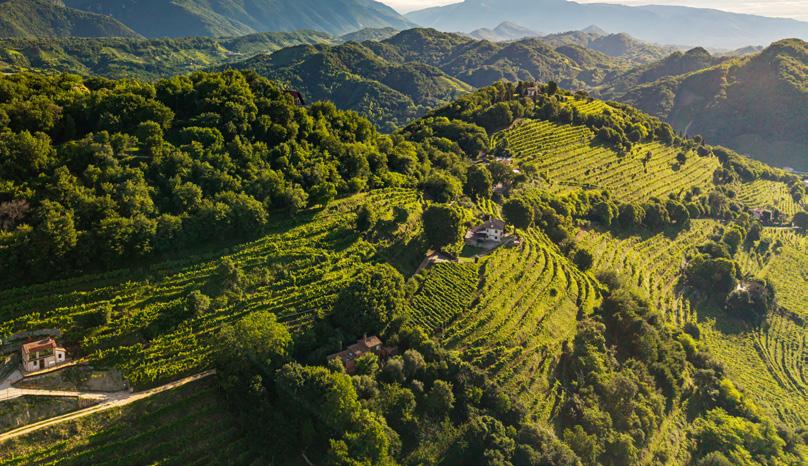
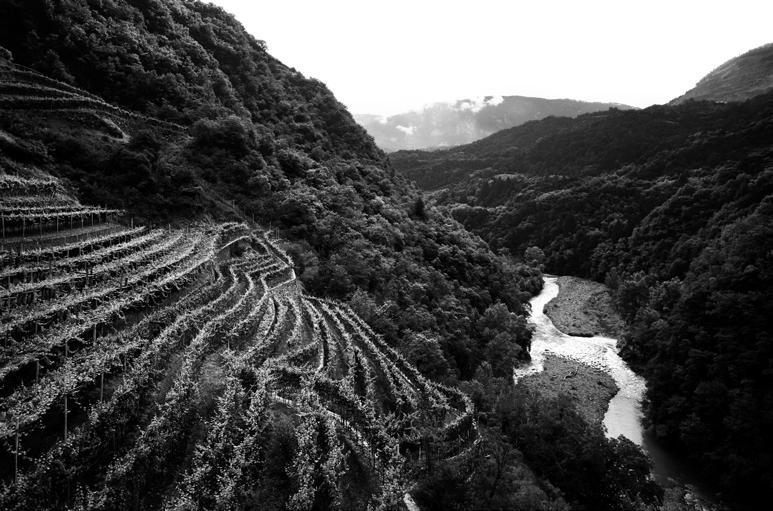
In the northeast of Italy, across the steep, handshaped slopes of the Conegliano Valdobbiadene hills, a UNESCO World Heritage Site, the work in the vineyards is defined by “heroic viticulture”. Here machinery gives way to manual work. For generations, human hands have shaped these vertical terrains, giving life to a unique landscape.
At the heart of this historic territory, BiancaVigna is opening its doors to a new hospitality experience, combining territorial heritage and architectural sustainability.
The history of BiancaVigna begins in the early 1900s, when Genesio, grandfather to current owners, Elena and Enrico, started cultivating Glera vines on the steep hill of San Gallo. The work there was demanding, due to the dramatic steepness of the hill, hitting a 70% slope. On the other hand, these vertical vineyards benefit from optimal sun exposure and constant ventilation, creating strong vines and grapes with an excellent, vibrant aromatic profile.
Following in their grandfather’s footsteps, almost 30 years ago Elena and Enrico founded BiancaVigna, realizing their dream of producing their own terroir-driven sparkling wines. In 2026, their commitment to sustainability has culminated
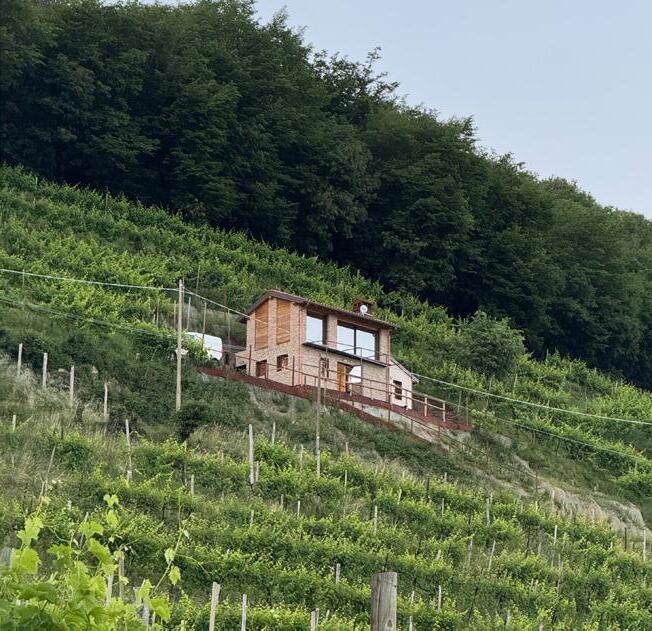
in a remarkable achievement: grandfather Genesio’s original barn on the San Gallo hill, where he planted his very first vines, was meticulously restored.
The historic structure has been transformed into an nZEB (Nearly Zero Energy Building)—a high-performance building with near-zero energy consumption, powered by on-site renewable energy. It stands as a brilliant embodiment of BiancaVigna’s philosophy: celebrating its heritage while respecting the environment.
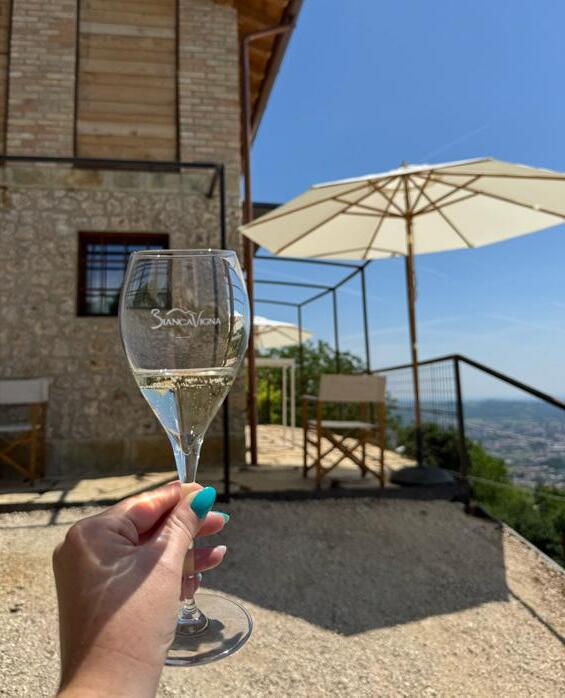
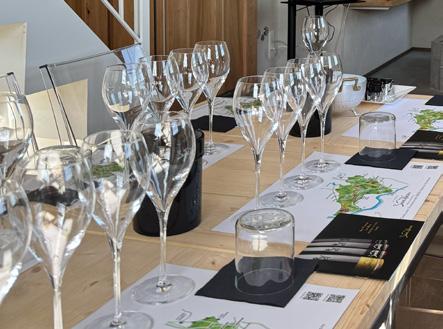
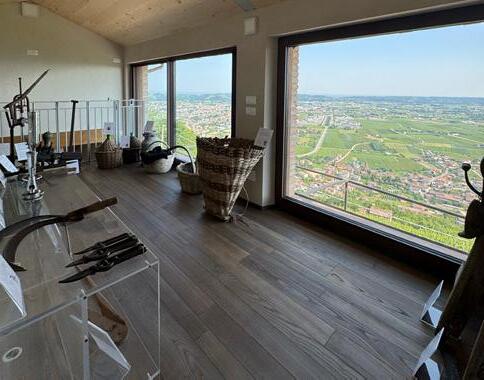
The renovated barn now offers an immersive tasting experience. Visitors can taste BiancaVigna’s Conegliano Valdobbiadene Prosecco Superiore DOCG while enjoying a breathtaking view of the hills and their characteristic grassy ridges, gaining a true understanding of what “heroic viticulture” truly means. On the upper floor, a curated museum area displays early 20th-century manual viticulture tools, offering a connection to the region’s rural past.
A perfect blend of family history, beautiful landscape, and forward-thinking green technology. We await you on these unique hills, to taste our wines and experience the soul of Conegliano Valdobbiadene.

BiancaVigna
Via Monte Nero 8, Conegliano (TV) +39 0438 788403 biancavigna.it
$@biancavigna_prosecco f@biancavignaprosecco

A circular route around Mount Croce di Serra, in Umbria. Approximately 90 km of paths, through woods and small, almost entirely uninhabited hilltop stone villages
by Giacomo Proia - photo by Alberto Blasetti
Our shoulders are now bent under the weight of the rucksack, our ankles are aching from wobbling for kilometres through mud, grass and stones, and our stomachs are rumbling because we’ve long since digested our lunchtime sandwich. That’s when a perfectly human thought creeps in, making us wonder: «Why am I doing this?» The answer doesn’t come - at least not whilst we’re still on the move. A few hours later, over a plate of homemade pasta and a glass of Grechetto, we reflect on the landscapes we’ve seen and the people we’ve met, and we imagine what the next day might be like. The answer still hasn’t come, and it won’t, because in the meantime we’ve forgotten the question.
The Cammino dei Borghi Silenti stretches for ninety kilometres through a part of Umbria that seems to have been overlooked by the great religious movements that have led to the prolifera-
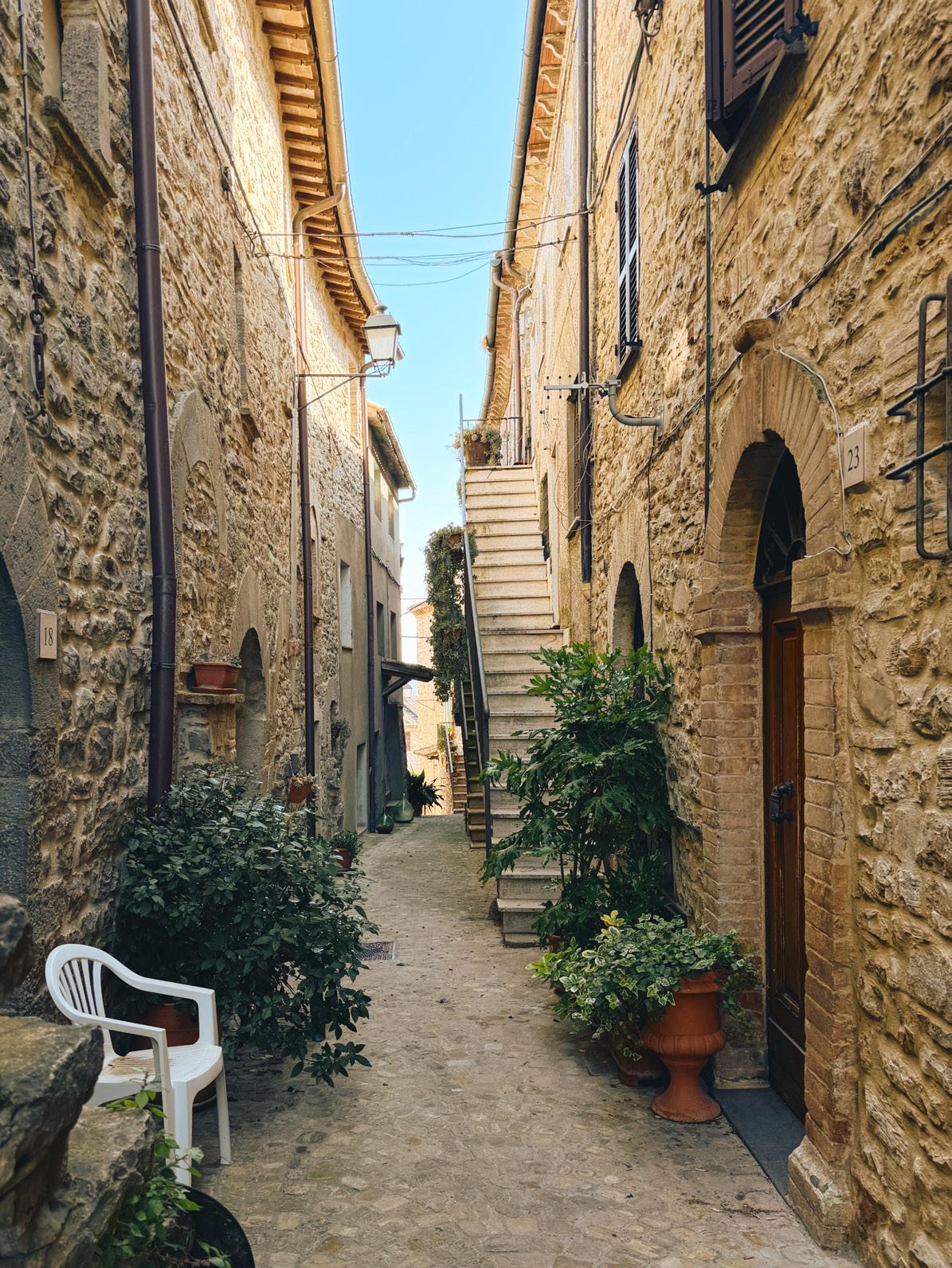
An alleyway in the village of Collelungo, a hamlet in the Baschi municipality at 478 metres above sea level
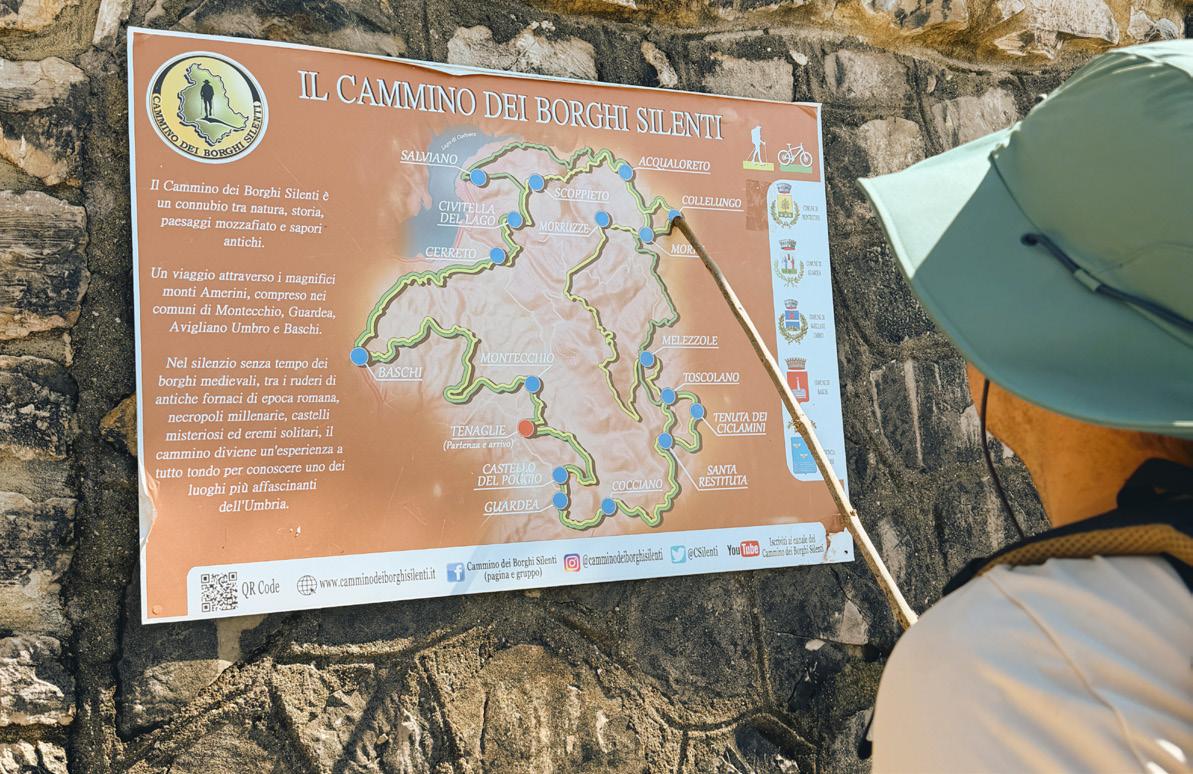
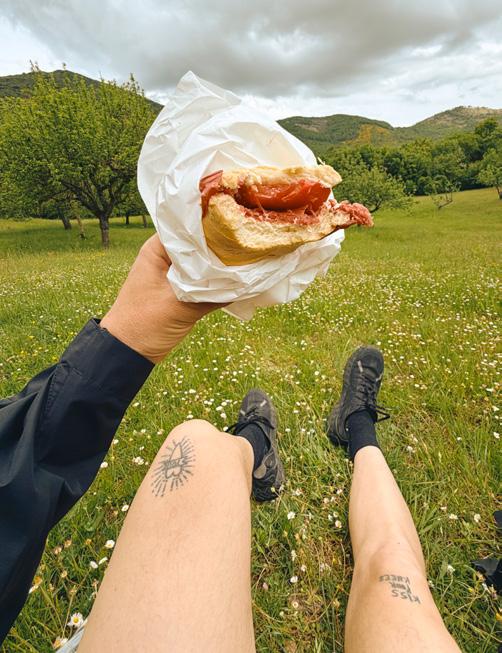
tion of shrines and monasteries all around. Even nature here seems to have held back, as if it hadn’t wanted to go overboard in shaping the land or filling the lakes and rivers too much; these appear almost as a surprise amongst mountains that, with a little determination, anyone can climb. Tenaglie is the starting point and will be the finishing point. After collecting our credentials and downloading the GPS tracks onto our phones, my travelling companion and I set off at a brisk pace - the pace of those who have finally embarked on an adventure that has been anticipated for days of phone calls, bookings and buying equipment. After the first kilometre, whilst we’re still trying to find the most comfortable way to carry our rucksacks and the most comfortable way to lace up our shoes, we start to wonder if we’ll make it. As we venture into the first woodland, however, when the colours of the wildflowers begin to distract us, we find ourselves wanting to see more and more, and our legs respond to our will, tackling the first climb and reaching a meadow that seems tailor-made for flopping down on the grass to eat a sandwich. All around us are other pilgrims, faces
and voices we’ll encounter right up until the very last day. The first “silent” village is nearby. Amidst the beech and oak trees, the brickwork begins to come into view, and suddenly we find ourselves amongst the houses. We begin to understand why the word ‘silent’ forms part of this route’s name. The houses of Santa Restituta, separated by a flight of steps that cuts through the whole village on its way downhill, are almost all shut, and the first voices - other than those of the swallows - can be heard near a small bar, which seems to have been set up specifically to provide refreshments for walkers. Then more woodland, though a little different from before, with small ponds appearing here and there, their still water resembling a floor, broken only by the occasional frog diving in, startled by our passing. Here are the walls of Toscolano, enveloping the stone houses in an embrace, as if to protect them from the encroaching greenery all around. Arriving in Melezzole feels like a triumph, because the village sits on a hill that, in a way, has to be climbed, despite our tiredness after completing the first and longest stage of the entire journey. It feels as though the narrow streets are more frequented by pilgrims than by locals. A house
- just like any other - becomes our home for the evening, and we immediately appreciate the relief of a first shower and more comfortable clothes. We have an aperitif at the only bar, which is just outside the walls, but not before making sure the grocery shop will be open tomorrow morning. That’s because until dinner time, you can’t let up on an organisation that requires constant dedication to remain solid.
When you step into one of the little restaurants or taverns at the end of the day, you’re hit by the aromas wafting from the kitchen, and it’s easy to give in to the temptation to overindulge. But the spirit of the walker - which, after the first day, has taken root within us without our realising it - suggests a tasty but moderate meal, because we need to set off light the following day. It’s easy to do, because the food in the Borghi Silenti is just like the landscapes and villages we encounter: it doesn’t overwhelm you with promises of abundance. At the Semiramide restaurant, we realise that the dishes on our plates have aromas reminiscent of those we encountered whilst walking; a journey that leads from the woods to the table where we are seated, where chicory fritters, strigoli soup and ciriole with wild asparagus await us.
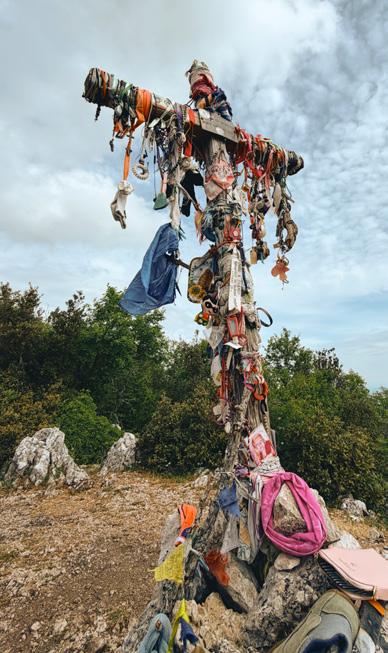
The second leg is shorter than the first, but that’s little consolation, because looking at it on the map, it’s a constant up-and-down that looks set to be a challenge. Our rucksacks, shoes and walking poles are gradually becoming extensions of our bodies, and our legs - which the day before didn’t seem up to tackling another stage - are doing their job, though not without a few aches and pains and some muscles that need stretching. A photo near the cross on Monte Croce Serra marks our arrival at the highest peak of the entire route, with views over lakes, hills and villages of all shapes and sizes. Voices herald the arrival of about fifteen rather boisterous walkers, who have chosen the most garish colours for their technical clothing. On closer inspection, they resemble the colourful bracelets and ribbons that have now covered the iron cross embedded in the rock. The summit is rather narrow, and we’ve certainly ended up in a few of their group photos. The cows watch us as the path levels out and leads us down, until we enter one of the largest chestnut groves you could possibly see. The approaching black clouds mean our visit to Morruzze is all too brief. It’s an even smaller and quieter place than the others, with stately homes surrounded by
gardens and pine forests. We start daydreaming about which house we might buy. Sitting on a bench in a deserted square overlooking the valley, we see the first flashes of lightning striking the woods and mountains - perhaps the very ones we’ve just crossed. We arrive in Morre dry, as it only starts to rain once we reach the café. We watch the other pilgrims arrive soaking wet, and feel a little smug about our timing, not realising that we’ll end up just the same. In fact, on the walk from the bar to the house where we’ll be staying, it pours down hard enough to soak us through in a matter of minutes. It comes as a surprise to discover that, despite it being spring, the lady hosting us in her home has the fire lit. She also has the television on, showing the afternoon programme schedule, and this, too, warms us in its own way.
«We’ve completed the toughest leg», we say to each other at the Uva Passera wine shop in Morre. We raise a glass of organic Umbrian Sangiovese, whilst waiting for a tasty lasagne alla boscaiola. We’re all feeling rather pleased with ourselves, until we read in the guidebook that, yes, the hardest stretch is behind us, but the steepest
climb of the entire route is the one awaiting us the following day. In the bakery section of the grocery shop, we’re tempted by the torchietti, cheese-filled doughnuts, which we eat in the village square, where other walkers have gathered, ready to set off. From Morre, we descend through fresh grass and trickles of water that follow the river down to the valley floor, all the way to the Hermitage of Pasquarella. A place nestled amongst the mountain rocks, where, centuries ago, a group of simple men decided to retreat. We imagine their songs reverberating inside the little church, which is closed, but has a small open window that lets our voices in and sends them back out with a surprising echo. Then the climb begins, and as the guidebook said, it’s the toughest, but also the most beautiful. Every now and then we stop and look back, and the path we’ve just covered is quite a sight, plunging steeply downwards and disappearing into the woods. At the top, we feel like resting for half an hour, but the walker’s spirit calls us back to action, suggesting that the longer we stand still, the harder it is for our legs to get going again.
You reach Civitella del Lago after a stretch along


25 - 26 OCTOBER 2026


the tarmac under the sun, which the cypress trees surrounding the cemetery are unable to shield you from. It seems to be the least quiet of all the villages, despite the funeral that is taking place when we arrive. There are two bars and three restaurants. We have to make our sandwiches straight away, because the lady at the grocery shop tells us they’ll be closed the next day due to a First Communion. We realise it’s Saturday today. The little square is bustling with local young and old, tourists and swallows swirling around the bell tower. After an aperitif, we emerge from the narrow streets to find ourselves facing a sunset that paints Lake Corbara, the hills around Orvieto and dozens of other villages scattered across the horizon a deep red. A waiter at Zio Cencio, the restaurant situated right there on the viewpoint and where we’re due for dinner, tells us that one of those villages is Civita di Bagnoregio, “the dying town”. Zio Cencio, given its location and history, seems accustomed to catering for
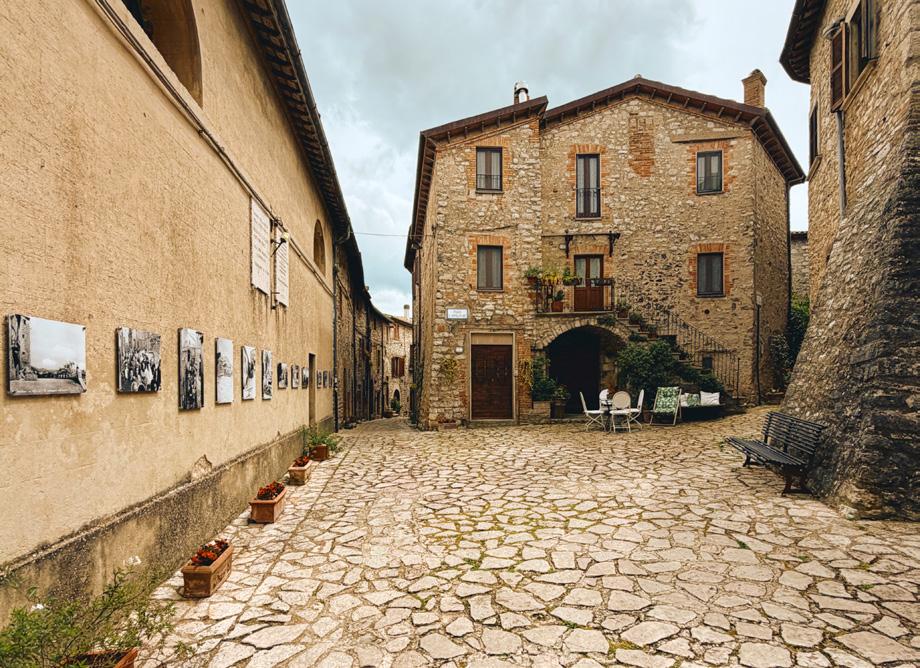
Below, the main square at the entrance to Toscolano – on the wall, an exhibition of vintage photographs
On the left, Morre along the way
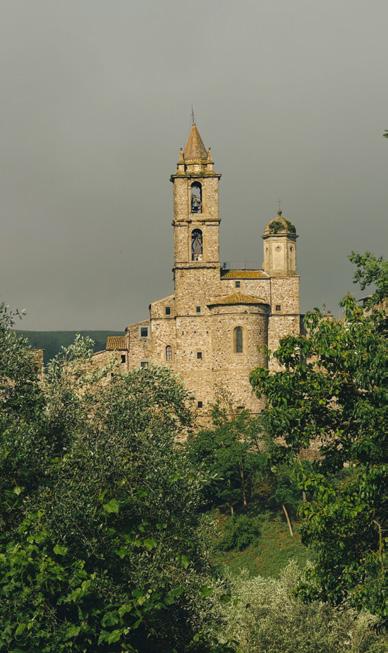
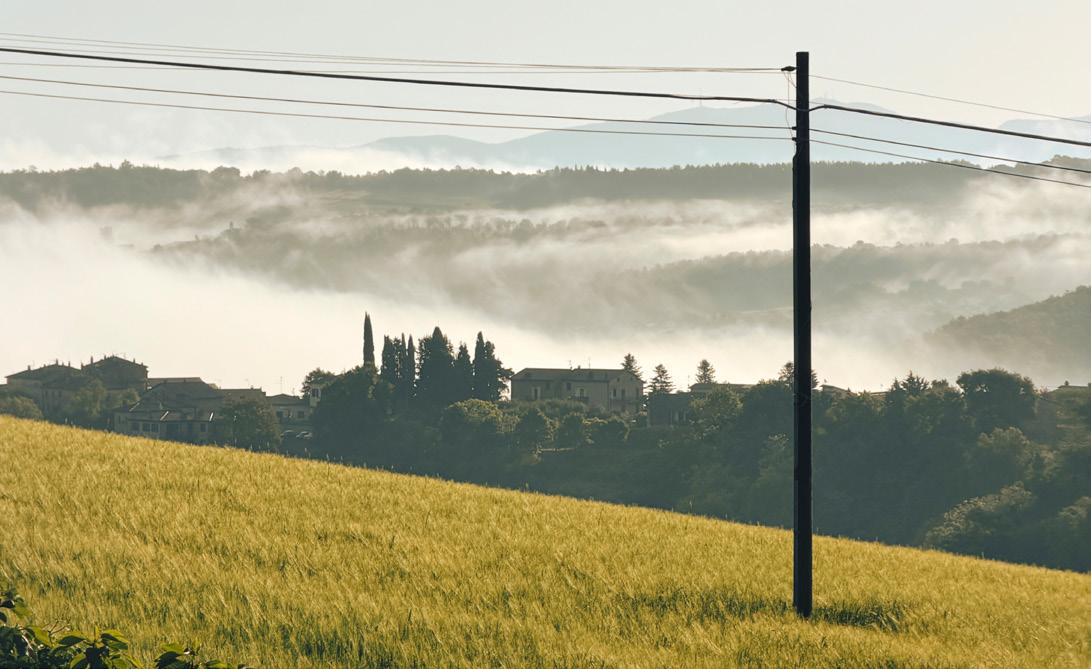
A photograph of Baschi taken from a distance, with the bell tower of the church of San Nicolò dominating the picturesque medieval village
a more diverse clientele, at least judging by the people seated around us, enticed by more universally Umbrian flavours, such as those of wild boar and truffles.
The penultimate stop promises to be the easiest. We descend from Civitella, which we leave behind, shrouded in a ring of mist. We walk around the lake and hear an animal plunge into the water as soon as it hears us. It starts to rain, but the falling rain reaches us gently, filtered through the beech leaves closing over our heads. As we emerge from the woods, a building appears that looks like a winery - and indeed it is. Outside the door stands a gentleman who seems to be waiting for us. He is the owner of the Barberani winery. We don’t feel comfortable going in - our shoes are caked in mud - so he brings out a few bottles and some wine glasses. He lets us taste a Grechetto, a Rosato, and a Calcaia, produced with the help of a mould that grows on the grapes, favoured by the microclimate. From the glasses, it seems as though the same scent of the
clayey mud we’ve been treading on for the last few kilometres is wafting up - mud that has now become an extra sole on our boots.
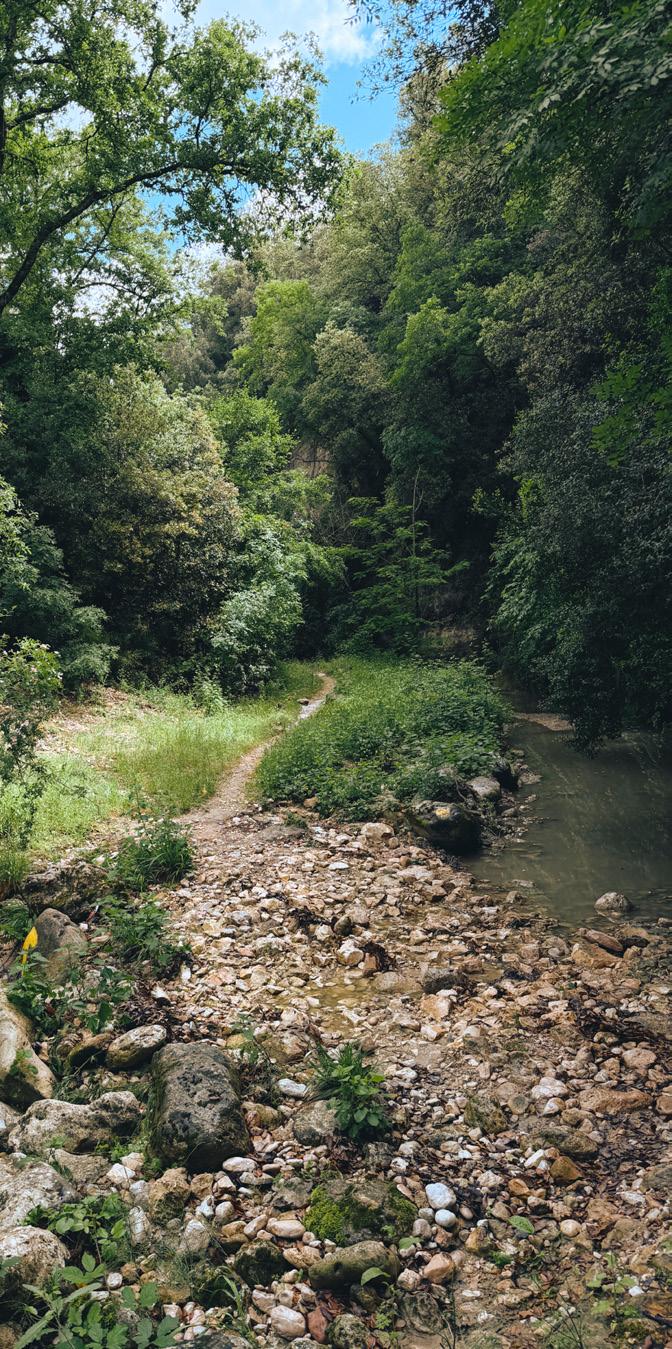
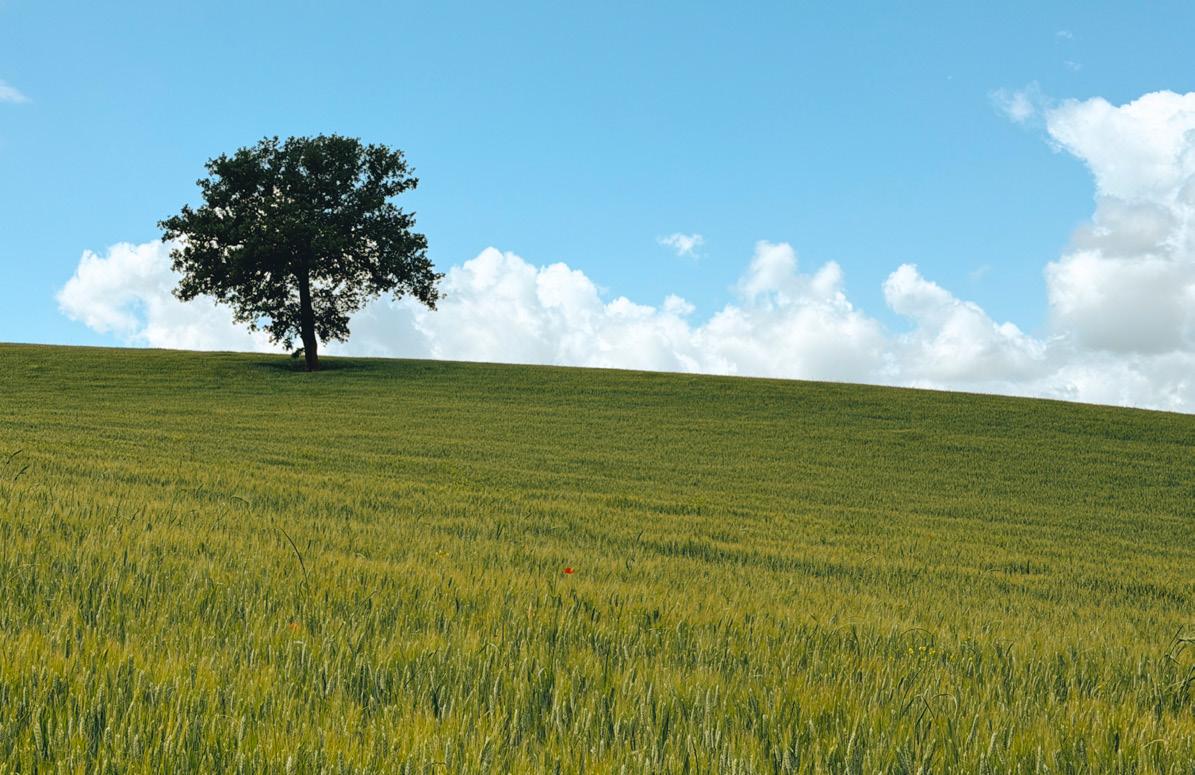
We arrive in Baschi without a hitch. It’s the village with the most cars, and it’s where we meet more locals than pilgrims. We share the house with a fellow walker, whom we’ve bumped into several times over the past few days. In the heart of a village that seems to have a little less to tell, we find ourselves in the narrowest of alleys in the historic centre, all shrouded in a mystery as enigmatic as it is alluring. The Cardeto restaurant is a hall that looks as though it were made for ceremonies. And indeed, when we arrive, the waiters are still tidying up the dozens of tables that had hosted a communion. Perhaps the very same communion to which the lady from the grocery shop in Civitella del Lago had been invited. We treat ourselves to some fried food and a lovely pizza, whilst music videos featuring nothing but Italian music play on the television. The final stop, which we tend to underestimate ‘because by now we’ve seen it all’, treats us to a walk in the hills amongst the most colourful flowers of the entire journey, an Umbrian-Etruscan necropolis, a stroll along a stream that we
have to wade across two or three times, a solitary oak tree in the middle of a green meadow that looks like a screensaver, a stop at a local wine cellar where a gentleman grills tomato bruschetta over charcoal, a visit to Montecchio, one of “Italy’s most beautiful villages”, and a chat with Ilaria in her workshop, where she works with leather and makes accessories for musical instruments. Arriving back in Tenaglie, our starting point, feels like a victory, and it seems like only yesterday that we were here, looking nervously at the map of the route hanging on the wall. A final photo, a drink at the bar, and off we go again. In the car, we tell ourselves that, after all, it’s nice to be back home, and that there’s nothing better than sleeping in your own bed after days spent in unfamiliar beds. During the return journey, the initial question resurfaces, but in the past tense: «Why did I do it?». But the answer comes a few days later, without warning. The world we live in every day has now taken us back, but it seems a little different from how it was. With a bit of time and attention, the very things this walk asked of us - a handful of villages perched on the hills, surrounded by woodland and silencewe discover that they are now part of us.
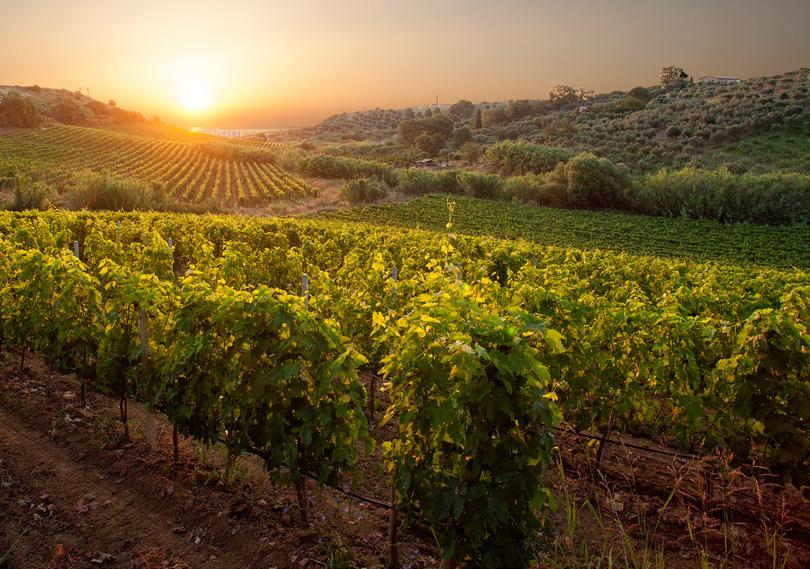
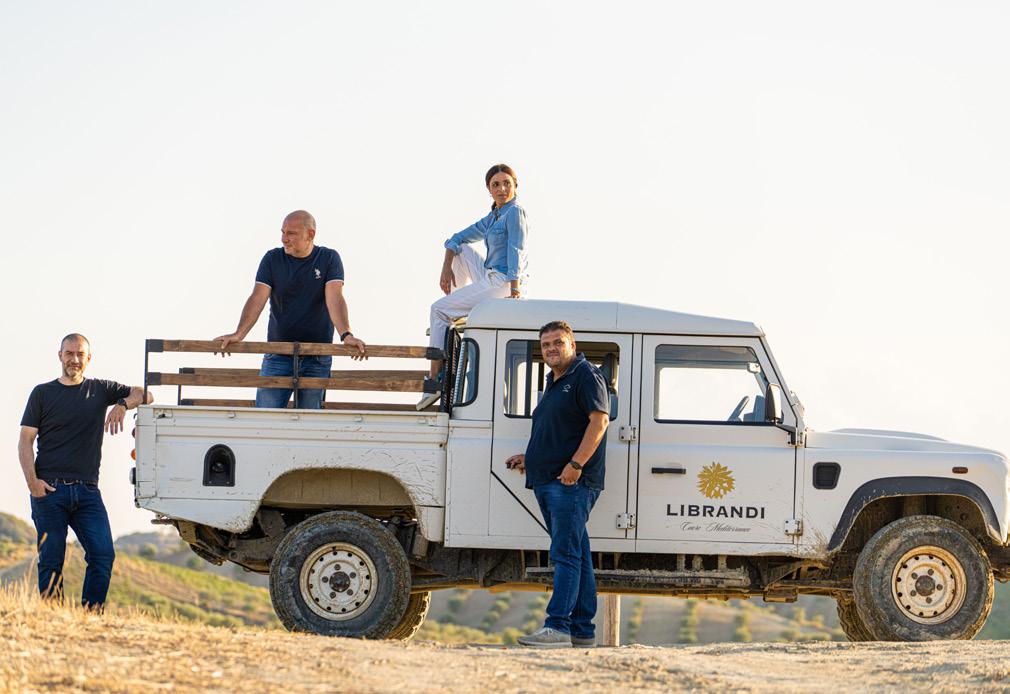
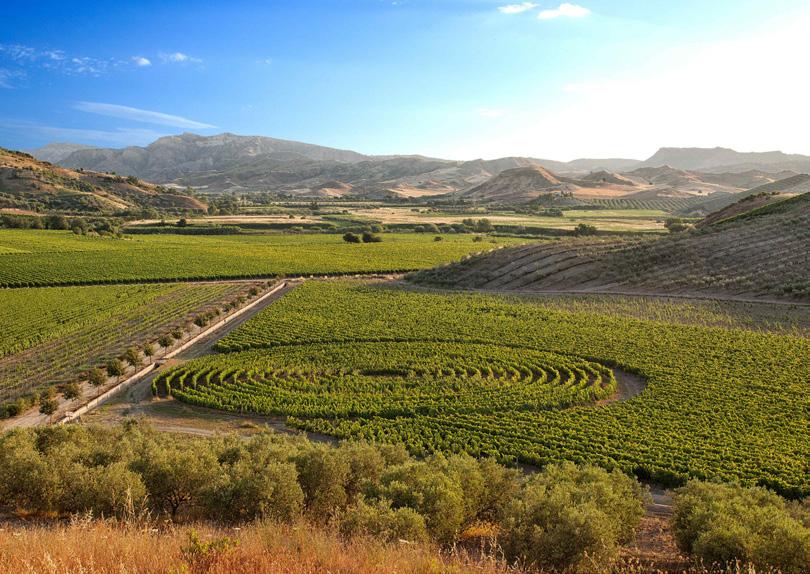
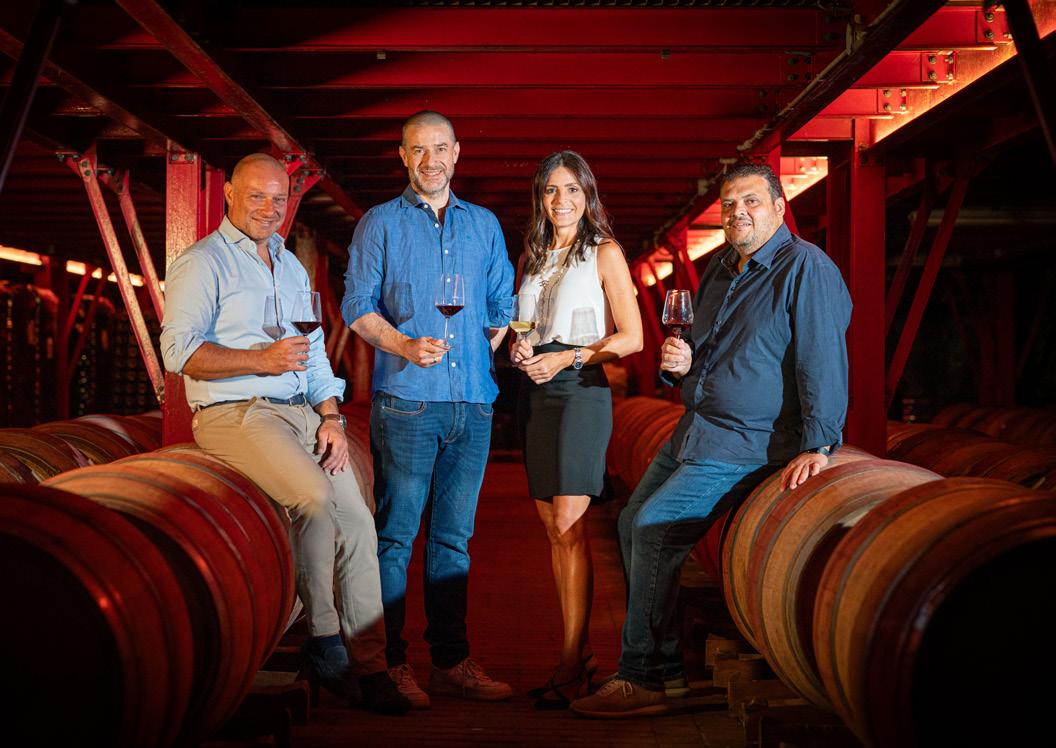
To describe Calabria’s white and rosé wines today, we need to shift our perspective and start by looking at what this region truly is: a complex system in which the sea and the mountains meet, creating unique conditions for balanced viticulture. It is precisely within this context that the work of the Librandi family has been taking place for over seventy years, following a journey that has spanned different yet consistently coherent phases: first, the promotion of Cirò’s traditional varieties; then, the introduction of international grape varieties to demonstrate the region’s potential; and finally, the research into and rediscovery of ancient indigenous varieties.
At the heart of this approach lies a profound understanding of Calabria’s wine-growing heritage, developed in part through extensive research that led to the creation of the estate’s Varietal Garden, where some 200 regional indigenous varieties have been collected and studied. This heritage is now tangibly expressed in the winery’s wines, allowing the region to be understood not in general terms, but through its specific
characteristics. “It was the harmony of our land that showed us the path to take: to understand and make the most of what we already had”, say the Librandi family.
Starting with the white wines, the story unfolds along a thread that links tradition, research and contemporary interpretation. The Segno Librandi Cirò Bianco DOC, made from Greco Bianco, represents the historical roots of this journey: a wine that immediately conveys its connection to the Ionian coast, characterised by balance and drinkability, whilst retaining as its distinctive feature the savoury quality that stems from its proximity to the sea. Complementing this is the Asylia Bianco DOC, also made from Greco Bianco, which broadens the traditional understanding of the grape variety by offering a fresher and more pleasant interpretation.
The work to promote native grape varieties finds one of its most significant expressions in the Efeso IGT Calabria, made from Mantonico, an ancient grape variety revived through years of study and experimentation. Here, the link be-
tween research and the local terroir is clearly evident: Mantonico, grown in its vineyard of choice, produces a white wine that combines depth and savouriness – a powerful wine that ages well and demonstrates the still partly unexplored potential of Calabria’s wine-growing region.
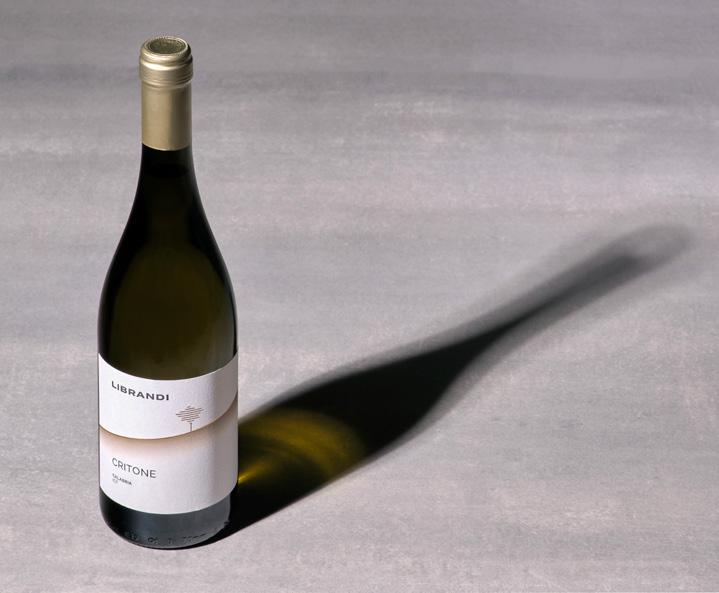
Alongside the indigenous varieties, Librandi’s range is complemented by international grape varieties, introduced from the 1980s onwards and perfectly integrated into the local soil and climate conditions. The Critone IGT Calabria, made from Chardonnay and Sauvignon Blanc, is the most emblematic example of this: a wine that has helped redefine the very image of Calabria as a wine-producing region, demonstrating how this territory is capable of producing white wines that are both balanced and dynamic.
The Almaneti, a classic method sparkling wine made from Chardonnay, follows the same line, confirming the region’s aptitude for freshness and stylistic precision even in the world of sparkling wines.
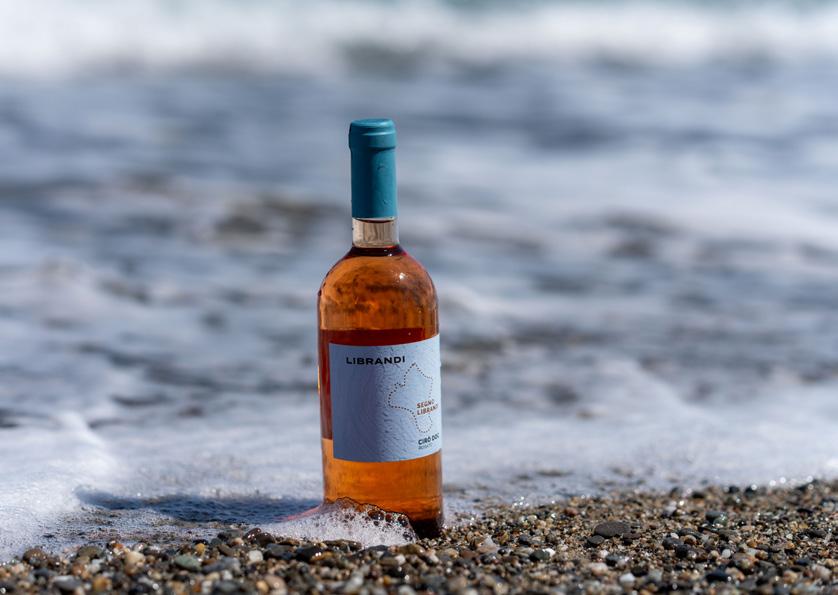
Whilst the white wines showcase Calabria’s more structured and mineral side, the rosés, on the other hand, express its more Mediterranean character and identity, with Gaglioppo taking centre stage. The Segno Librandi Cirò Rosato DOC offers the most direct interpretation of this grape variety: a wine rooted in tradition yet
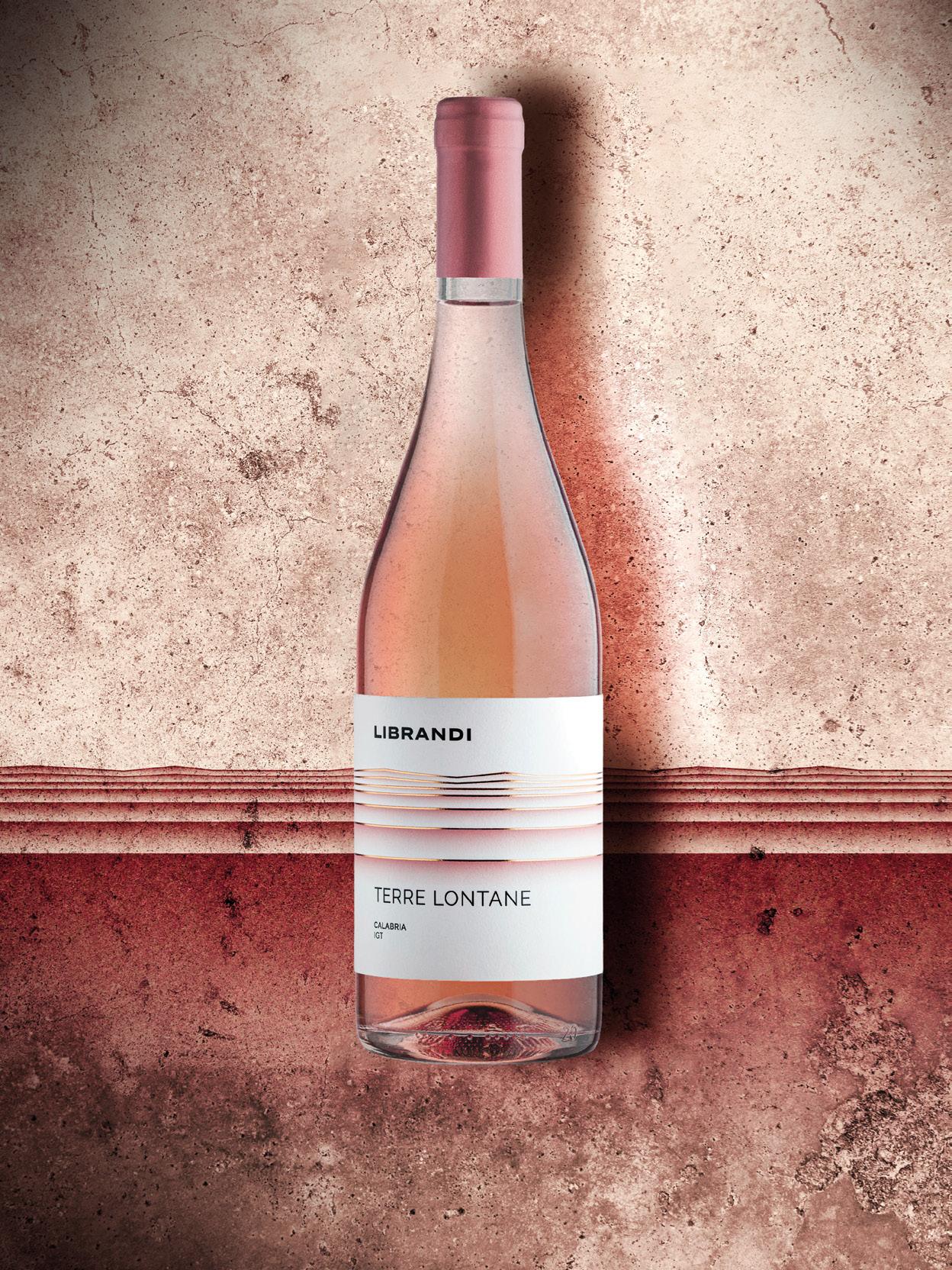
expressed in a contemporary style, focusing on balance and finesse. The Terre Lontane IGT Calabria, made from Gaglioppo and Cabernet Franc, introduces an element of experimentation and dialogue with international varieties, offering a more multifaceted and modern take on Calabrian rosé, even in terms of colour.
Rounding off the range, the Rosaneti Brut Rosé, made from Gaglioppo, demonstrates the versatility of this grape variety even in sparkling wine production, adding a further dimension to the range and confirming the region’s ability to express itself through different styles.
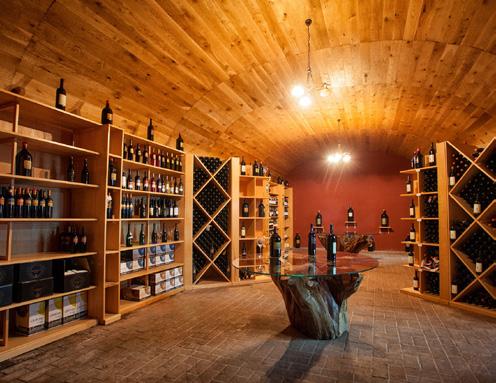
At the heart of all these expressions lies a common thread: a focus on micro-territoriality. Each wine is born from a precise selection of vineyards and soil and climate conditions, in a process that aims to interpret Calabria in all its complexity. It is this approach that now allows us to present a more complete picture of the region, in which whites and rosés become fundamental tools for storytelling.
The result is a renewed vision, deeply rooted in the region’s identity yet capable of speaking a contemporary language. Librandi’s wines reflect a Calabria that is no longer defined by a single style, but by a multitude of nuances in which freshness, balance and innovation find an authentic synthesis.
Cirò Marina (KR)
S.S. 106 – C.da S. Gennaro - 88811 +39 0962 31 518 librandi.it
by Eugenio Marini
The allure of pilgrimage routes is growing ever stronger. So much so that spiritual journeys such as the Camino de Santiago (Way of St James) are now undertaken not only by practising Christians, but also by lay people and agnostics. This contemporary development prompts us to view pilgrimage outside the religious context which, given the progressive secularisation of society, had rendered it an almost isolated practice. Now, however, it represents a “new” and widespread way of travelling – one that is more sustainable and unhurried – in contrast to conventional tourism, the hustle and bustle of daily life and the chaos of big cities. With a rucksack on your back and a sufficient supply of water, you set off on foot or by bicycle for tens and tens of kilometres, discovering ancient villages, cities of art and protected areas. A true adventure which, between visits to one settlement and the next, offers the chance to immerse yourself in unspoilt natural scenery, but also to finally have time to reflect. Thus, the hike also becomes a period of introspection, a search for one’s inner self, put-
ting the traveller to the test, both physically (with long and sometimes perilous stretches) and psychologically.
Among the most well-travelled routes of the pilgrim fathers is the Via Francigena, whose origins date back to the 9th century. Sigeric, Archbishop of Canterbury, described its stages in detail on his return from Rome, where he had travelled to receive the pallium from Pope John XV. Rather than a single medieval road, it consists of a network of routes leading to the Holy City, which for centuries have been travelled by soldiers, merchants and the faithful, all intent on reaching the tombs of the apostles Peter and Paul. This Council of Europe Cultural Route covers a journey of around 2,000 km, from the famous Canterbury Cathedral to St Peter’s, passing through the county of Kent in England, the English Channel, the Pas-de-Calais, Picardy, Champagne-Ardenne and Franche-Comté in France, the cantons of Vaud and Valais in Switzerland, and the regions of Valle d’Aosta, Piedmont, Emilia-Romagna, Liguria, Tuscany and Lazio in Italy. Along this route, we
food lovers see another path – a sort of map within a map – with addresses that could prove to be valuable tips for finding affordable places to eat.
The Via Francigena’s culinary trail
England: South-east of London lies the starting point of the route, marked by a milestone at the south porch of Canterbury Cathedral. From here, the English section of the Via Francigena unfolds – a lush, green route, the shortest and easiest part of the journey, characterised by meadows, villages and farms that define the rural landscape of Kent, at least until you reach the white cliffs of Dover, just before crossing the English Channel. On British soil, contrary to expectations, our recommendation does not concern one of the classic pubs you might find in the area – where, incidentally, hop fields characterise the landscape. Rather, to avoid the
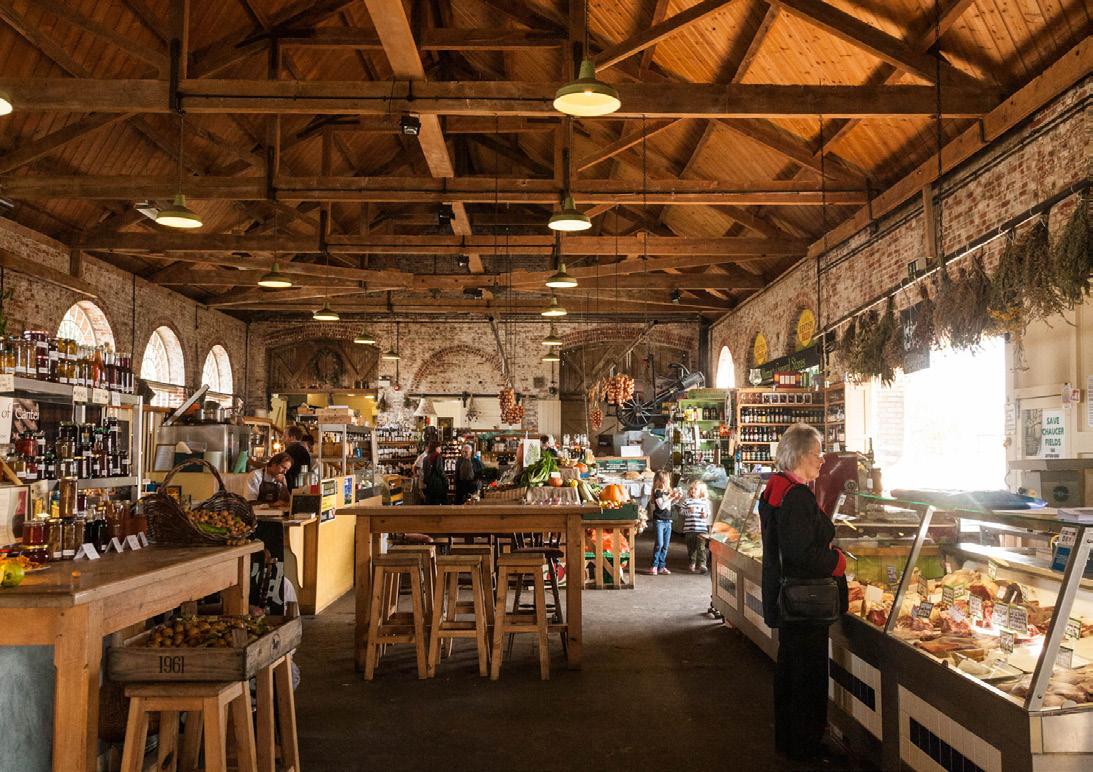
run-of-the-mill offerings of some pubs, we suggest stopping off near Canterbury West railway station. Inside a Victorian-era warehouse, you’ll find a farmers’ market with a butcher’s, fishmonger’s, cheese, charcuterie and wine shops, as well as a café, a bakery and a restaurant, The Goods Shed. Here you can take a seat at one of the simple pine tables to enjoy a carefully curated and decidedly seasonal menu, which remains true to its rustic and traditional roots, with desserts that exceed expectations. The produce is the same as that sold at the stalls on the ground floor, whilst the fish is caught in the nearest coastal waters. Whether you visit for lunch or dinner, it’s a spot with a thoroughly informal atmosphere, where a booking isn’t strictly necessary.
In the footsteps of Victor Hugo France: The section beyond the Alps, at 962 km, is the longest stretch abroad, characterised by a varied landscape comprising plains, farmland, expanses of vineyards and hills. Without taking anything away from the other routes, it can be considered the most fascinating itinerary in gastronomic terms. The culinary delights to be savoured along the route are truly endless, given
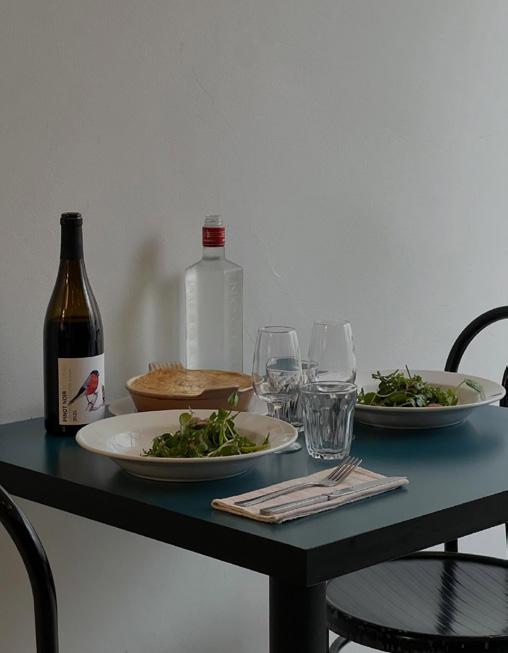
the range of local specialities such as Dijon mustard, Morteau sausage, Morbier, Mont d’Or and Comté cheeses, and wines from Champagne, Burgundy and the Jura. And if we had to recommend a particular place, our choice would be Casinne, a bistro in Besançon – the birthplace of Victor Hugo – where a 17th-century fortress, a UNESCO World Heritage Site, still stands. This little neighbourhood spot, with an open kitchen and seating for just 18, offers a small selection of simple, sometimes homely dishes inspired by French, Anglo-Saxon and Italian cuisines, focusing on seasonal and local produce – a philosophy that also guides the selection of organic, biodynamic and “natural” wines. The menu, which changes frequently, includes “nose-to-tail” dishes as well as vegetarian options, alongside homemade desserts and ice cream. Specialities include soft-boiled eggs served with cod brandade, asparagus soup with Bresse cream, or coq au vin –free-range chicken braised Burgundian-style and served with pancetta, mushrooms and mashed potatoes. For those who do not fancy wine, there is always the option to choose from the cocktail list, which complements the drinks menu.
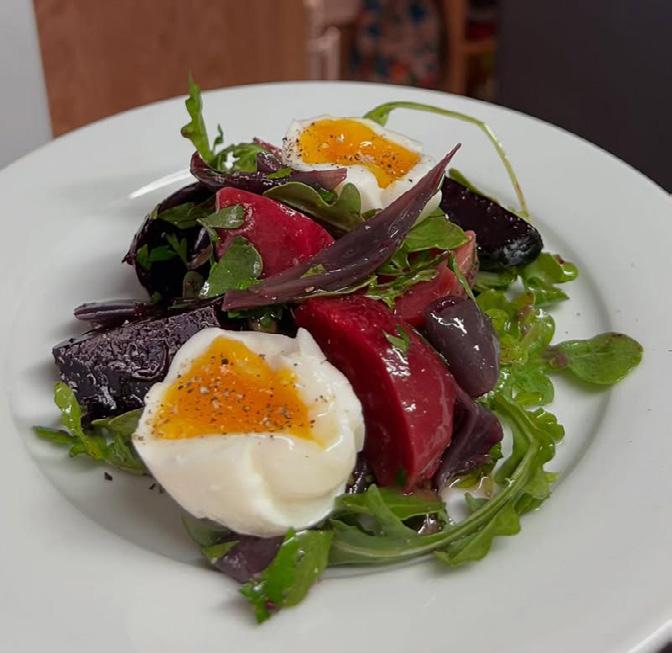
A dish featuring soft-boiled eggs from Casinne, a small bistro in Besançon
Switzerland: The Swiss pass, on the other hand, offers pilgrims the most evocative panorama, characterised by valleys, stretches of lake, waterfalls and an alpine landscape featuring wooden chalets and huts which, from the terraced fields up to the ascent towards the Great St Bernard Pass (the highest point of the pilgrimage at 2,473 metres), becomes progressively more rugged. The character of these places is reflected in their culinary heritage, the result of pastoral traditions upheld by the local communities. The region is renowned for its hearty, opulent and invigorating cuisine, shaped by the mountain microclimate and its harsh temperatures, which includes cheese fondues, raclette, cured meats and cantonal specialities, such as papet vaudois – a leek and potato stew served with pork sausage and cabbage. As you travel through the country’s towns, you might fancy an alternative to this more traditional repertoire, which, in some tourist-trap
restaurants, can cost an arm and a leg. It’s better to opt for more reasonably priced and enjoyable places such as Maza in Lausanne, designed with sharing in mind. The menu is, in fact, designed to encourage diners to order several courses and sample a bit of everything. At lunch, for example, you can choose three small dishes from the menu for 42 euros. The cosmopolitan flair – consistent with both the professional experience and the Egyptian and Chinese backgrounds of the owners, Robin and Julien – shapes the cuisine, which features spicy and robust dishes. A creative offering with Eastern, Asian and European influences that showcases an international profile, thus setting it apart from the average local fare. This is evident in the spring rolls stuffed with lamb shoulder and the original take on the Caesar salad – a version made with pani puri, garnished with a Parmigiano foam and bursting with flavour on the palate.
Panu
Manu in Pavia, Manuela Bonizzon’s artisan bakery
And here we are in Italy. If we exclude the Southern Via Francigena, which ends at Santa Maria di Leuca in Puglia, the Italian section of the route takes in seven regions, passing through mountain passes, high-altitude forests, rice paddies, vineyards, plains, coastlines, hills, countryside, olive groves and volcanic soil. The stretch through the “Boot” peninsula is by far the longest, but when there is so much to discover, the strain of the kilometres covered is felt less keenly. Descending from the Alpine peaks, for instance, you reach Aosta where, as well as Paolo Griffa’s Caffè Nazionale, you can rely on the comforting fare of the Trattoria di Montagna – Le Bar à Vin. This is the place to savour the simple yet comforting dishes of Aosta Valley cuisine, from polenta concia to the valley’s carbonade. The “modern” take on traditional fare in this case does not detract from the execution of the recipes, which remain satisfying and enjoyable, albeit in a lighter form. The escalope and the platters of alpine cheeses and local cured meats – fine ingredients supplied by La Bottega degli Antichi Sapori – are equally impressive. You’ll feel right at home here, thanks
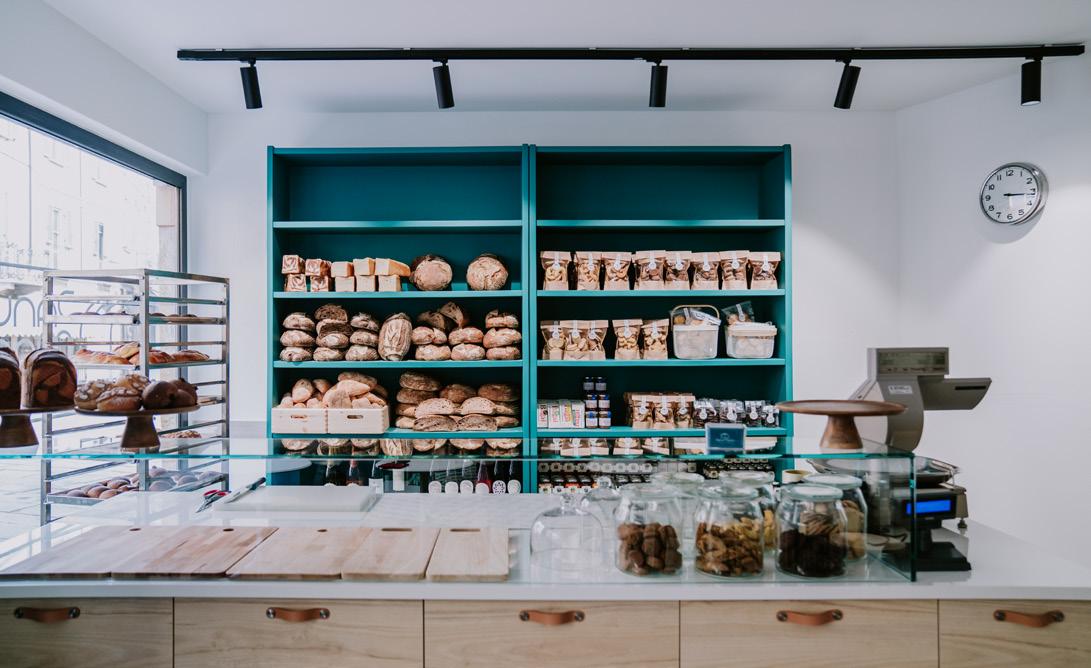
to the friendly service, the unpretentious setting and the outdoor seating area, which is best enjoyed to the full as summer arrives. Continuing our journey through the Po Valley, and having left behind the historic farmhouses of Piedmont and the Lombard countryside, we come to Pavia, another gastronomic stop. In the heart of this riverside city, made famous by its Certosa monastery, the artisan bakery Panu Manu is the ideal spot for breakfast or a snack. It is a Northern European-style bakery, from its minimalist aesthetic to the size of its viennoiserie (croissants, pain au chocolat and pain suisse). The owner, Manuela Bonizzoni, bakes fresh every morning; in the space of three years, she has gone from using a domestic stand mixer at home to running a fully-fledged production workshop, which has enabled her to become a successful baker. Her creations, such as country loaves, panettone and puff pastries, are made using doughs prepared with Italian wheat flour sourced from short, ethical supply chains, and based on active sourdough starter (she is one of the few in the province of Pavia to use it). In addition to braided loaves, cube-shaped brioches and baked cakes, the range
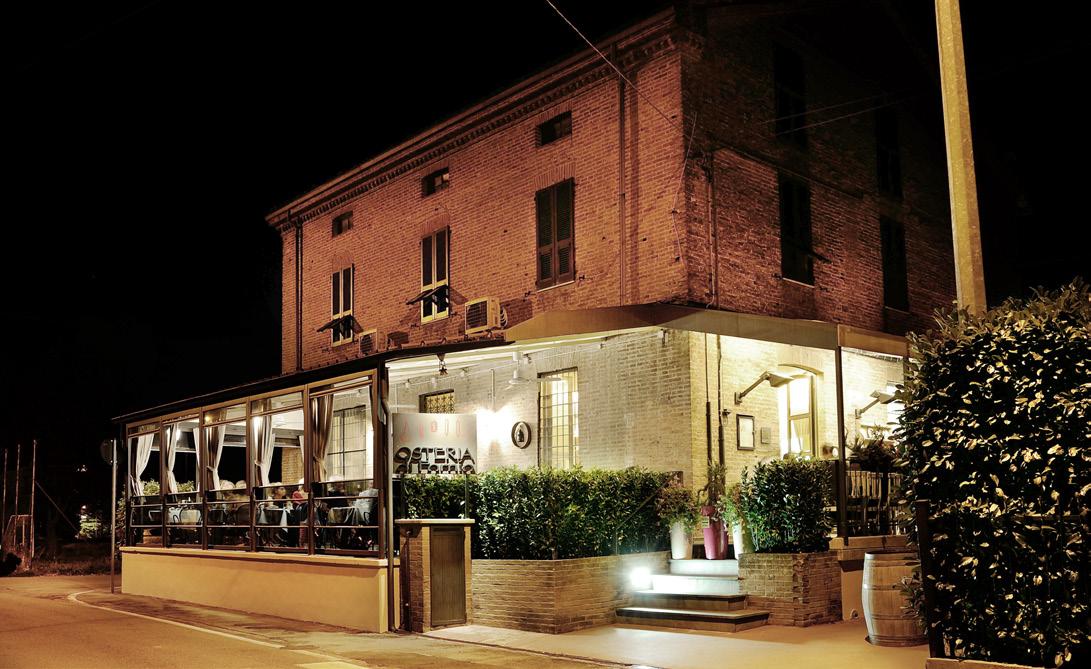
of sweet treats is complemented by several vegan options and a range dedicated to those with lactose intolerance. The selection is rounded off by focaccia, savoury pastries and, during weekend brunches, sandwiches made with loshokupan and stuffed almost to bursting. Meanwhile, heading towards the Tuscan-Emilian Apennines, near Fidenza, chef Cristina Cerbi showcases her take on the Parmesan tradition, without compromising on generous portions or the local custom of fresh, homemade pasta. At the Osteria di Fornio, first courses do indeed take centre stage. Take, for instance, the mezze maniche pasta stuffed with Parmigiano Reggiano in capon broth – a recipe handed down in the family since 1928 that is now a highlight of the menu, on a par with the oven-baked pork cheeks with caramelised red onions, to which the chef adds a special sweetand-sour twist. To finish, the mouth-watering “Tavolozza di dessert” - 10 puddings alongside a selection of dry pastries — lends a touch of nos-
Osteria di Fornio in Fidenza (Parma) where the menu features a dish created in 1928 and passed down through several generations
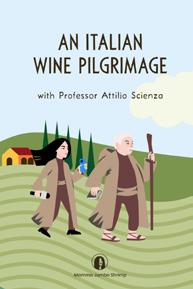
In the world of Italian wine, there is one word that keeps cropping up: territory. We use it as if it were a natural, almost immutable given. The book An Italian Wine Pilgrimage: with Professor Attilio Scienza (Mamma Jumbo Shrimp; 20 euros), by Attilio Scienza and Stevie Kim, does the opposite: it sets in motion what we are accustomed to regarding as stable. It reminds us that territory, before becoming an identity, was a journey. Scienza writes as much in the preface: the encounter between man and space produces territory, that is, civilised space. It is the result of an action. That movement leaves its mark: roads, vineyards, monasteries, markets, place names, maps. The book stems from the Italian Wine Podcast series of the same name, conceived as a journey along the ancient routes travelled by pilgrims, merchants and travellers. A journey along the roads that have connected peoples, cultures and landscapes, and where, as people passed, so too did the vines: the conversations between Stevie Kim and Scienza have been transcribed, reworked and expanded to become a pilgrimage in book form.
talgia and charm to the experience. You can dine upstairs amidst contemporary artworks, or head down to the cellar, surrounded by regional and international wines, with a room dedicated to the curing of salami and culatello.
Once you’ve passed the city walls of Lucca and the medieval towers of San Gimignano, deciding to recharge your batteries in Abbadia Isola is undoubtedly a good idea. Especially if you’re planning to sit down at Futura Osteria, a haven for any food lover passing through the Monteriggioni area. However, Samuele Bravi and Nicola Saporito’s establishment is much more than just a simple osteria: the dishes exude a distinct energy, the very same that inspires them to rework some of the great classics of regional cuisine with both reason and flair. Thus, “pici all’aglione” becomes “spaghettini al sugo d’aglione”. Yet the concept doesn’t lack the down-to-earth quality one expects from this type of establishment. The culi-
Futura Osteria in Monteriggioni (Siena): brilliant reinterpretations of tradition and striking combinations
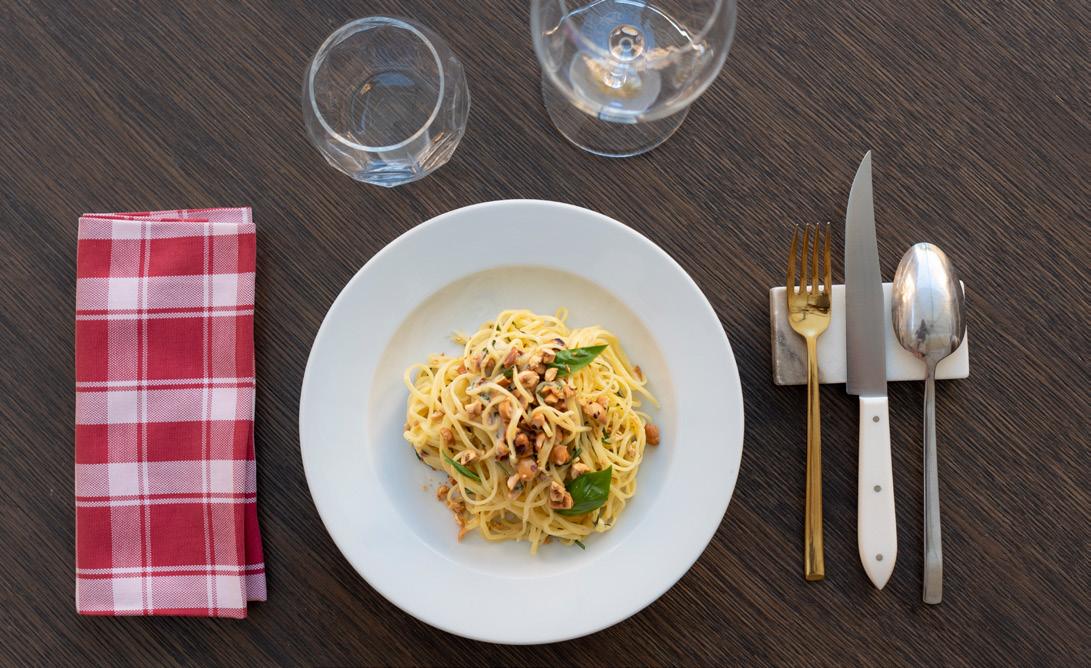
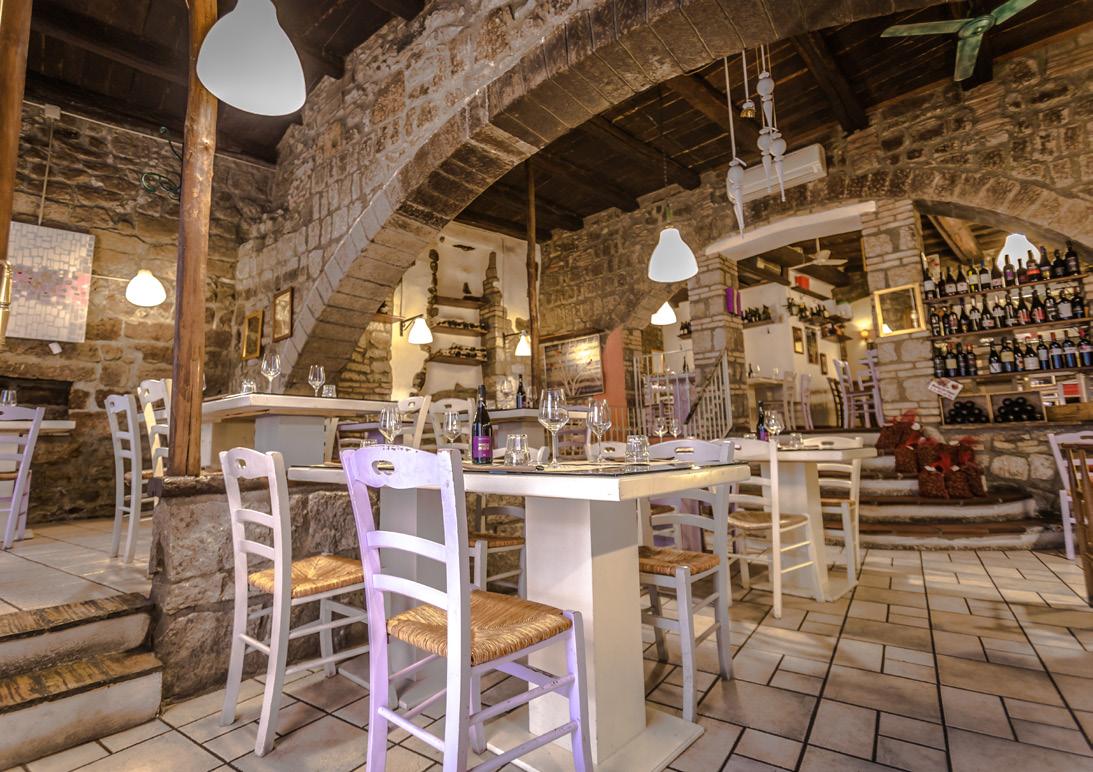
nary combinations – some more “trendy” than others – are both fresh and striking, showcasing the micro-seasonality of the ingredients, sourced locally or harvested on the premises, such as the vegetables from the garden (even the cheeses and cured meats are produced and matured in-house). The dishes, therefore, vary according to the season, but the rotation does not include the Florentine steak cooked on the charcoal grill, which is never removed from the blackboard menu. And to give guests plenty of choice, the restaurateur couple offer four tasting menus, ranging from a minimum of 25 euros to a maximum of 70. Right from the heading «I Vini che Berrei» (The Wines I Would Drink), the selection appears to be decidedly personal: whilst the wine list includes labels from the rest of the peninsula, champagne and other foreign wines, the focus is largely on home-grown wines, given the restaurant’s emphasis on Tuscan wines. Viterbo is also a destination for regulars and day-trippers on the move, who travel from Radicofani along the Via Cassia, passing by the Basilica of the Holy Sepulchre and the shores of Lake Bolsena. In the Etruscan and medieval town centre, innkeeper Paolo Bianchini welcomes visitors to his “Osteria
L’Osteria del Vecchio Orologio in Radicofani showcases the food and wine culture of the Tuscia Viterbese region
del Vecchio Orologio”, taken over in 2014 by the Ferrari family, who had first opened the business way back in 1966. The owner has preserved the agricultural and rural spirit of the original management, traces of which can be found in some of the restaurant’s recipes; the establishment is characterised by its peperino stone structure and the arches within. The tavern acts as a guardian of the food and wine culture of the Tuscia Viterbese region, drawing on its wine cellar and a range of dishes typical of the area, such as panzanella with tuna and onion, lombrichelli with tomato, wild fennel and pecorino, Leprino-style rabbit and stuffed chicken leg, or even roast suckling pig with “alla paracula” potatoes. The menu is extensive, featuring fried dishes, traditional Roman first courses and seafood specialities – there’s plenty to choose from. That touch of leisure, combined with good food, is a real treat during long days at sea. Rome is just a stone’s throw away.
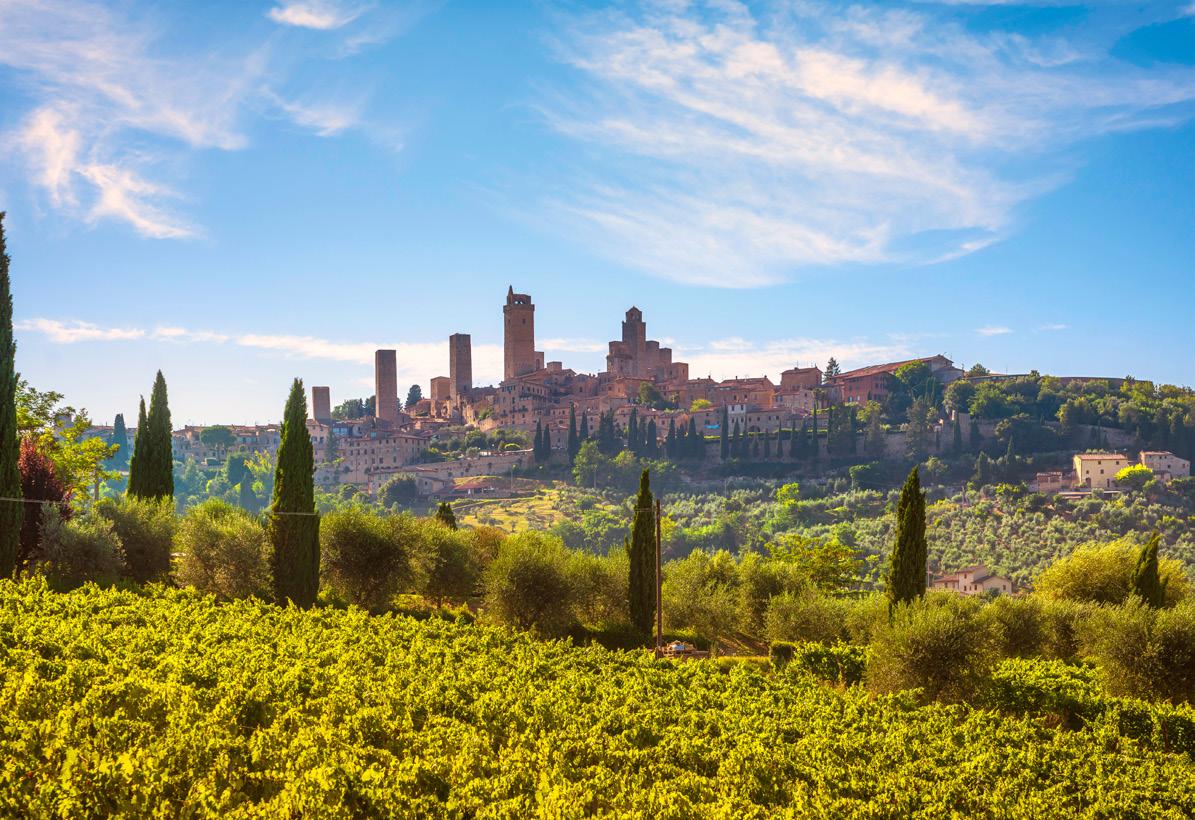
San Gimignano, an iconic stop on the Tuscan Via Francigena pilgrim route, is celebrating its 60th anniversary with a renewed buzz in the food and wine scene
by Raffaele Mosca
There isn’t a single person in Italy who hasn’t heard of Vernaccia di San Gimignano. Perhaps it’s down to the stellar fame of the “New York of the Middle Ages”. Or perhaps because it was Italy’s first DOC in 1966. Dante Alighieri played his part: after staying in the town as an ambassador for the Florentine Republic in 1300, he mentioned it in the 24th canto of Purgatory. According to the great poet, Pope Martin IV, who had ended up in
Vernaccia di San Gimignano is perhaps the least accessible of all Italian white wines
the circle of the gluttonous, not only drank it but also used it to drown the eels of Bolsena. And he is said to have eaten so many that he died of indigestion. In any case, this is not the oldest record: as early as 1276, the name “Vernaccia” appeared in the “Ordinamenti della Gabella” of the Municipality of San Gimignano, where a tax of three soldi was set for every soma of Vernaccia exported outside the municipal territory – a figure far higher than that levied on the “Greco” mentioned alongside it. This year marks the 750th anniversary of that first mention.
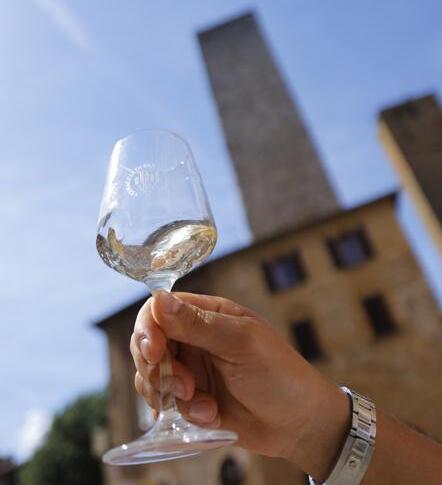
>Vernaccia
Michelangelo Buonarroti the Younger described it as a wine that “stings and pricks”; Mario Soldati as “salty, smooth, seductive”. More recently, Gabriele Gorelli MW described its structure as “a suit of armour to withstand the test of time”
In short, there is no doubt that it is Tuscany’s most historic wine, on a par with Vin Santo and more so than any Sangiovese-based red. The problem is certainly not a lack of visibility, nor a lack of fame: if anything, it is that, in the modern era, it has never regained the prestige it enjoyed between the Middle Ages and the Renaissance. This is, in fact, a fate shared by many regions with an ancient history, and one that is reinforced by the fact that San Gimignano is an island of white wine in the red ocean of Tuscany. There is also another fundamental problem: Vernac-
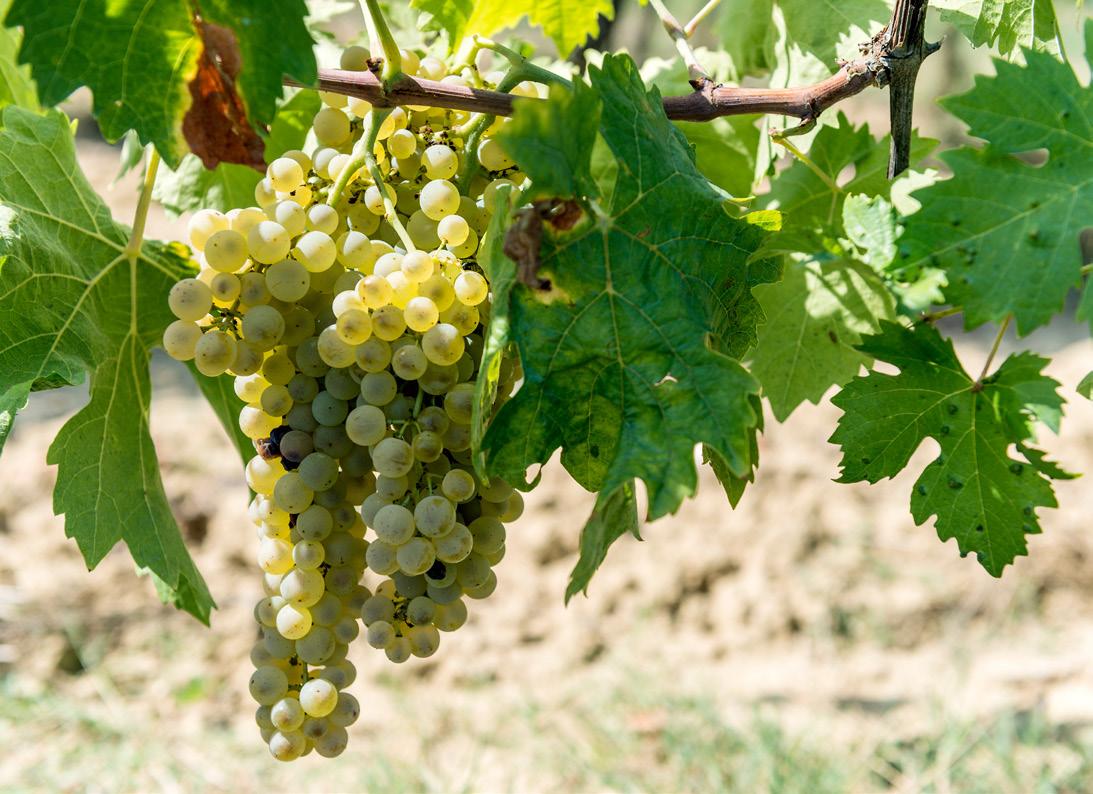
cia di San Gimignano is perhaps the least accessible of all Italian whites. It lacks the aromatic appeal of Vermentino, which has, to some extent, stolen its thunder in the region. Nor does it possess the biting acidity of other currently fashionable varieties; indeed, there is not even a single way to interpret it. And, as always, tourist flows are both a blessing and a curse: they allow almost everything to be sold locally, without the need to develop large commercial networks, but they limit its presence elsewhere. This is also why, following a surge in popularity more than ten years ago, it seems to have all but disappeared from the menus of Italy’s finest restaurants, despite the fact that the appellation has never had a higher average quality than it does today.
But to understand Vernaccia, one must first understand San Gimignano, a place that operates at two speeds: a destination for hit-andrun tourism, like all small towns of art, but also for slow, discerning travellers who stay a while and seek quality. This is already evident from the presence in the town centre - alongside the tourist-oriented establishments - of at least four reliable venues for those who wish to eat and drink well. Three of them are all within a few metres of one another: the Michelin-starred Linfa and its Tuscan bistro Cum Qui-
San Gimignano is a place of two speeds: a destination for hit-and-run tourism, but also for slow travellers seeking and finding quality
bus, the contemporary osteria San Martino 26, and the wine bar La Vecchia Nicchia, which offers not only a fine selection of Vernaccia but also natural Italian and French wines. Then there’s the world-famous Gelateria Dondoli, a multiaward-winning ice-cream parlour that’s always bustling with an endless queue, the Boboli bakery, and La Buca di Montauto for locally sourced cheeses, cured meats and honey. Not to mention the local farms that have accommodation facilities on their premises: some, such as Tenuta Sovestro, Tenuta Guardastelle and Locanda dei Logi, are veritable luxury wine resorts. And amongst the wineries, there are those offering tours featuring schiacciate baked in wood-fired ov-
ens and homemade produce, such as Casa Lucii, which, incidentally, welcomes guests under a beautiful pergola. What does all this mean?
It means that, despite a tendency amongst producers to sell locally, the target audience remains demanding enough to encourage them not to focus solely on sales figures and price.
Ageing as the only solution
Ed And this is perhaps why the 2025 vintage, presented at Regina Ribelle – the annual preview – seems to be one of the most well-balanced vintages ever. It remains true to the classic style of a wine that retains its distinctive character over time,
One thing emerges clearly from the tastings: the wait is worth it
yet with greater precision than in the past. Michelangelo Buonarroti the Younger, as recorded by Vasari, already described it as a wine that “stings and pricks”; “salty, smooth, seductive” was, on the other hand, Mario Soldati’s definition.
‘Smooth’ aptly conveys the idea of an aromatic profile which, if not marred by bizarre winemaking practices, remains very understated and delicate. ‘Sharp and tangy’, on the other hand, is the hallmark of the palate: it has a phe-
nolic component which, together with the salinity - perhaps linked to the marine-derived soils, full of fossils, or perhaps not - balances the moderate acidity and imparts a sense of surprising liveliness, vigour and flavour. The other characteristic is its structure: “a suit of armour to withstand the test of time”, as Gabriele Gorelli MW described it in a masterclass a few years ago. And this is where the most significant problem facing Vernaccia at present comes to light: namely, the
Tasted in advance, the 2025 vintage seems to be among the most well-balanced vintages
tendency of producers to release it onto the market too early. Almost all are released as early as the spring following the harvest: whilst these wines are precise and enjoyable, at that stage they lack expression and aromatic definition. They are pleasant, and even pair well with food thanks to their full mid-palate, but they are still a little shy, at times basic, and in the worst cases even vaguely bitter on the finish. The complexity and originality of the grape variety only begin to emerge later on, by which time much of the production has already been snapped up. Of course, the “Riserva” category has existed since the very beginning, requiring a longer ageing period of at least
11 months. But for some producers, the regulations are not strict enough; moreover, it accounts for only 4 per cent of production. A possible solution? To introduce another category with a longer ageing period: “a sort of super Riserva”, explains Alessio Gragnoli, director of Teruzzi & Puthod, the largest estate in the appellation, which ages its Sant’Elena cru for more than three years. A solution that might not change much in substance, but which would certainly allow those with different ambitions to showcase them more effectively. The other problem is that, in an attempt to force the issue somewhat and achieve greater immediacy, there has often been a reliance
on oak ageing - which the grape variety can actually handle quite well, provided the toasting is not excessive - resulting in over-thetop wines, almost akin to Chardonnays, but lacking the necessary punch. We are rapidly moving away from those excesses, although it is still possible to come across the odd wine that has been a bit overoaked, particularly amongst the Riserva wines.
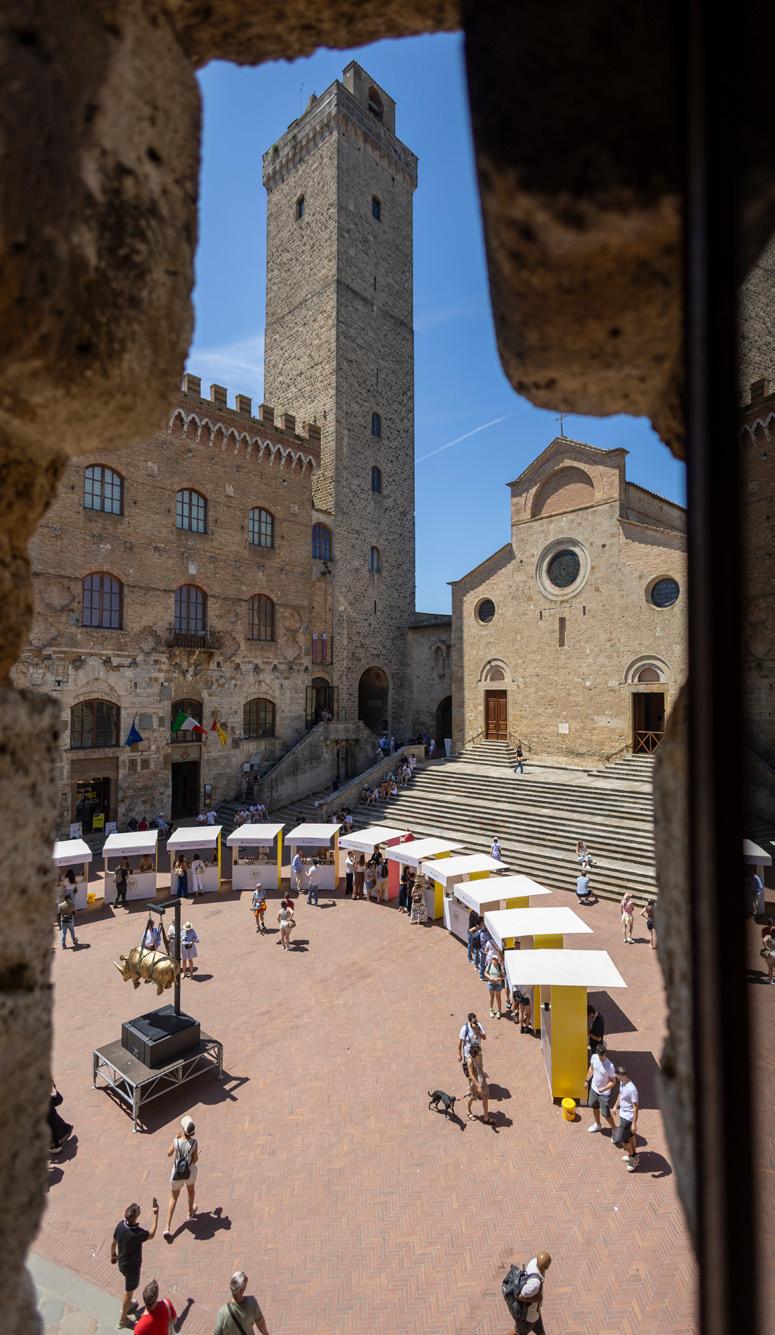
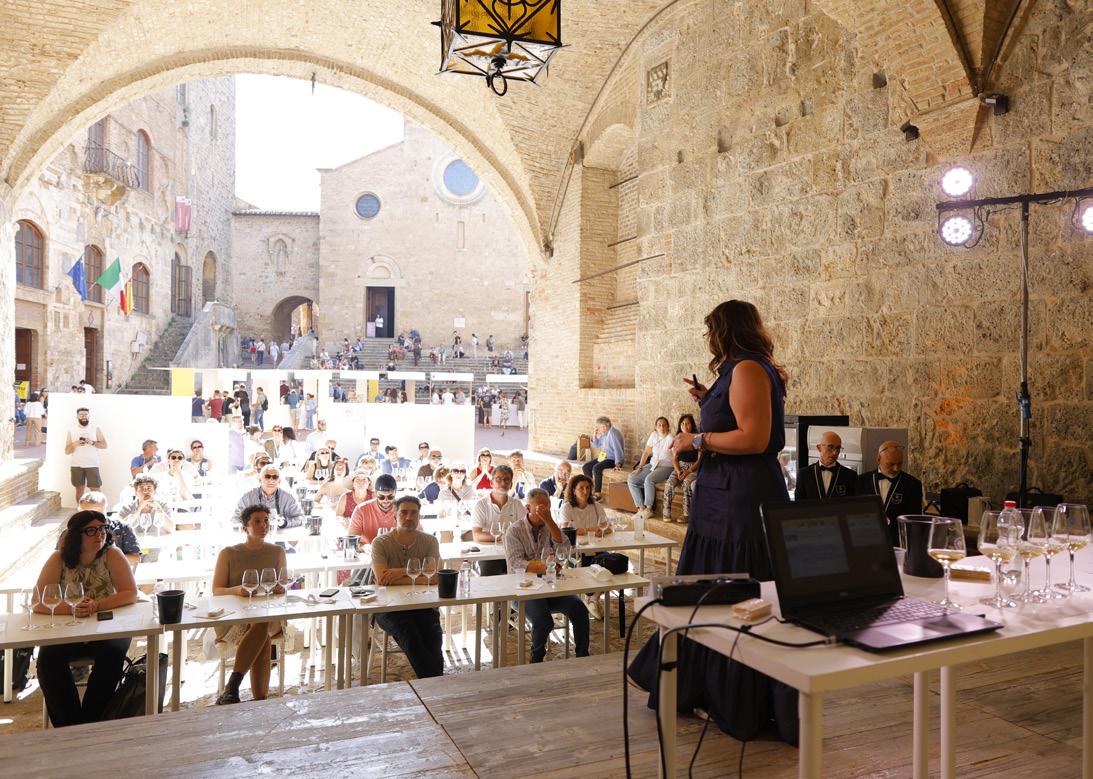
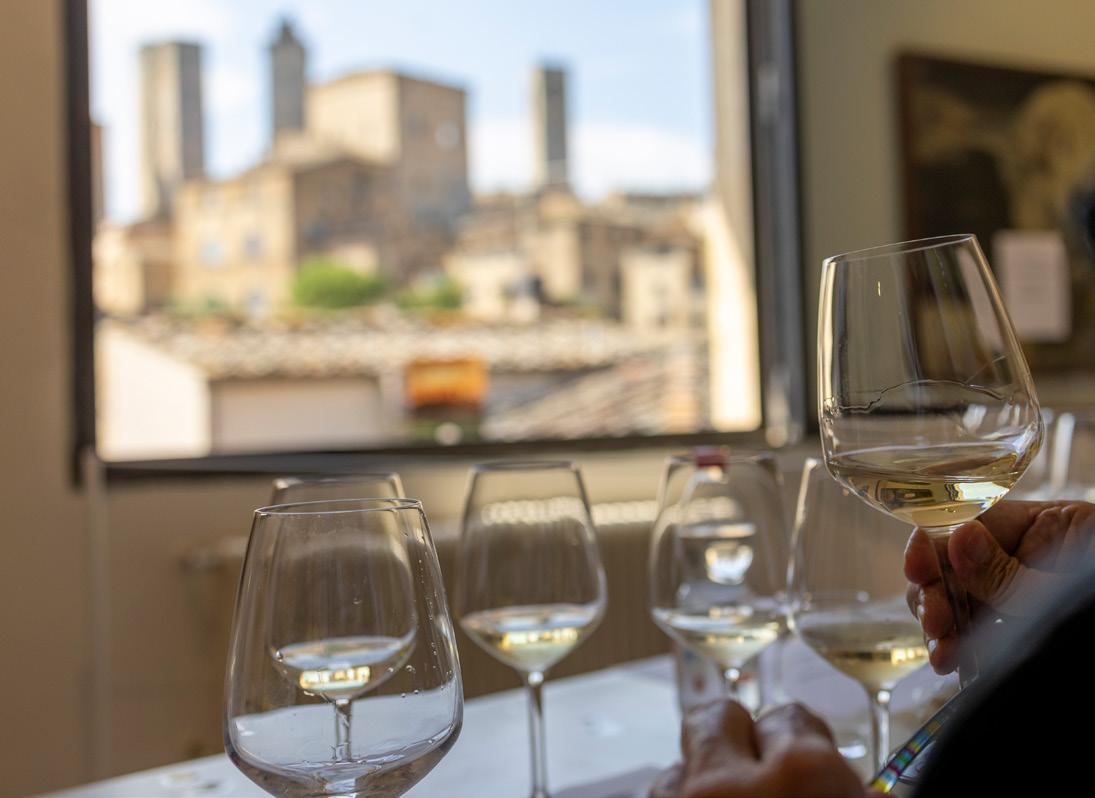
The other tasting, held in the cloister of the Town Hall, featuring the wineries’ favourite vintages - up to 2013 - leaves no room for doubt: the wait is well worth it. The colour becomes “liquid gold”, the acidity subsides, but the savouriness continues to give the Vernaccia its
vigour; the structure remains intact and, above all, the profile effortlessly breaks away from the cliché of an aged white wine - almost entirely characterised by hydrocarbon notes - and displays originality and grace. Between five and twelve years old, the wines are at the height of their splendour, although, if one wishes, one can go back much further. Perhaps the most impressive tasting was that of a 1996 Carato from Montenidoli a few years ago, still absolutely intact and so complex as to put even the Burgundies of the great masters to shame. Unfortunately, we are talking about rare gems, because bottles with a few years under their belt are still very scarce. Exceptions include es-
San Gimignano is an island of white in the red ocean of Tuscany
tates such as Il Colombaio di Santa Chiara and Cappella Sant’Andrea, among the few to offer more than one vintage in their range. And it is no coincidence that it is precisely these producers who most frequently take Vernaccia beyond these hills, commanding prices that are quite different – commensurate with the prestige and historical significance of this enclave. Perhaps they point to a path which, despite all the challenges, would be worth pursuing more collectively.
Il Colombaio di Santa Chiara
A great white wine with just one drawback: it is still too young, having been harvested almost three years ago. On the nose, it offers briny, iodine-like notes and hints of moderately ripe fruit; on the palate, it is captivating: savoury, creamy, with a Chablis-style salinity and spicy undertones. The development is rich, punctuated by hydrocarbon notes that dominate the finish and will become more pronounced with time.
Cappella Sant’Andrea
More expressive than others, it offers notes of yellow peach, saffron, wild herbs and hints of spice. Original and exotic on the palate at first, then crisp; it is reminiscent of certain Alsatian whites in terms of the balance between fruitiness and structure. The finish is long and balsamic; appealing now, but also with good ageing potential.
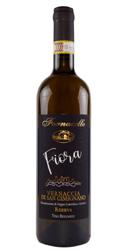
Fornacelle
A fairly classic example of a Riserva: barely marked by its time in oak, but with fruit, herbaceous notes and a hint of smokiness that lend it character and a sense of its terroir. This is followed by a lively, salty and spicy palate, which softens and broadens slightly on the finish, lingering with notes of flint and sweet spices.
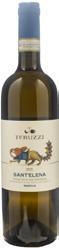
Teruzzi
The largest winery in the appellation offers a highly appealing single-vineyard reserve. It is complex on the nose, with aromas of broom, sweet almond, cinnamon and honey, underpinned by a smoky note. On the palate, it is full-bodied and enveloping, yet also possesses good acidity which, together with a salty finish, makes it a wine that pairs well with food and is surprisingly agile, versatile at the table and capable of ageing well.
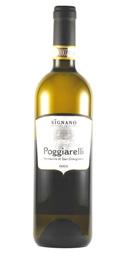
Signano
Subtle, smoky and briny; hints of citrus intertwine with notes of sweet almond and yellow flowers. It has structure and depth, but at this stage the almond and vegetal notes prevail; together with salty undertones, they give the finish a slightly austere yet clean character.
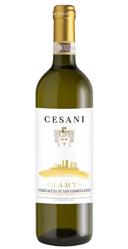
Cesani
Old vines and a distinctly “less is more” style give it a darker-than-average colour, golden verging on amber. The nose is pungent, with notes of hay, liquorice and aromatic herbs, underpinned by earthy undertones. On the palate, it is textural, with hints of almond, yet full of character and a good fruitiness that rounds out the slightly astringent finish.
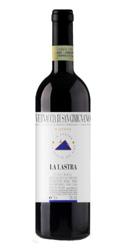
La Lastra
Delicate, yet full of character. The nose opens with a briny note, followed by hints of wild herbs, summer melon and a touch of citrus. On the palate, it is lively and straightforward, with lovely fruit that is gently softened by a brief spell in oak, and a briny finish.
>Etichetta Verde 2025 91
Tenuta La Vigna
The nose is typically understated, not yet fully developed, with light smoky notes and a hint of citrus. On the palate, it is savoury and incisive, with a spicy finish and an underlying, almost marine character. It is inevitably still a little tight, but very pleasant.
>Abbazia Monte Oliveto 88
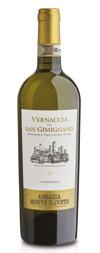
Abbazia Monte Oliveto
Captivating in its simplicity: white almond, pear and a subtle vegetal note. On the palate, it is straightforward and savoury, without frills, yet with fine precision and above-average length. A consistent finish with hints of citrus zest.
>Mareterra Riserva 2014 93
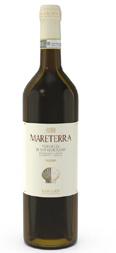
Casa Lucii
An extremely cold vintage that seems to have worked very well for the Vernaccia: here, notes of hydrocarbons emerge alongside a hint of honey and a vegetal undertone. More subtle than others, it retains its pristine freshness and hints of dried herbs that enliven the light, refreshing finish. In superb form.
>Isola Bianca 2020 91
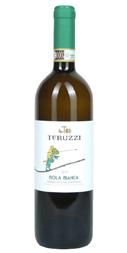
Teruzzi
Spanish flan, flint, salted caramel, hints of overripe yellow fruit – it almost seems as though it has developed woody notes, but that is not the case. Well-structured, enveloping, with a hint of zesty flavour still present, but also honey and a slight hint of hydrocarbon. A long, smoky finish.
La Lastra
A great vintage that has evolved into something truly splendid: it offers aromas of honey, apricot and dried herbs, with a very light hydrocarbon undertone. Fresh, crisp and still sharp despite the passing years; a few more mature notes emerge in the background, but it is the salinity that takes centre stage, shaping a progression of extraordinary liveliness, still far from reaching its end
>Rialto 2020 92
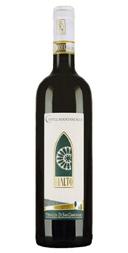
Cappella Sant’Andrea
Not a Riserva. And the difference is particularly noticeable in the delicacy of the nose, which still displays vegetal notes of saffron, hay and a hint of hydrocarbons. On the palate, it is smooth and creamy, then savoury, well-balanced and long-lasting, with honeyed and hydrocarbon-like notes.
>Crocus 2018 91
Casa alle Vacche
It is almost impossible to believe that this is not from a recent vintage. It is all about spices, citrus fruits and aromatic herbs, with almost no sign of having developed. On the palate, it is light and briny, still all about its drinking dynamics, demonstrating the potential of a ‘modest’ vintage, yet with just the right amount of freshness for long-term ageing.
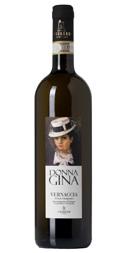
Fattoria di Fugnano
Here we enter uncharted territory for Vernaccia: we are faced with a profile that is almost transalpine in character, fresh and oxidative at the same time. Honey, marzipan, saffron and flint herald a creamy and intensely savoury palate, with intense hydrocarbon notes reminiscent of certain Jura wines. The finish is long, deep and highly original.
>Sanice Riserva 2017 92
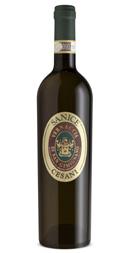
Cesani
A deep golden colour verging on amber gives way to a surprising nose: hints of candied orange, medicinal herbs and brined olives are almost reminiscent of certain Carso orange wines. This lovely wine is very satisfying with its rich fruitiness, immediately tempered by flashes of saltiness and light tannins, which lend it depth. Unconventional, yet full of character.
>Mocali Riserva 2019 88
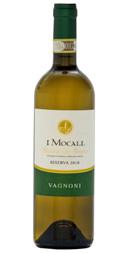
Vagnoni
The nose is definitely mature: salted caramel, quince, white chocolate and just a hint of piquancy and spice to liven it up. On the palate, it is consistently full-bodied and enveloping, yet discreetly balanced; iodine and aromatic herbs enliven a finish with a few toasty notes.
Can large bottle sizes and disgorging have a greater impact than the vintage?
A vertical tasting turns this perspective on its head
by Lorenzo Ruggeri
When travelling back in time, a keen ear is a must. «It’s a bit like with vintage cars; you have to pay attention to the details: the sound of the engine, the quality of the materials, the craftsmanship. It takes a certain amount of attention», recalls Marcello Lunelli, vice-president of Ferrari and one of Italy’s most discerning palates, during our last visit
in Trento. Our conviction? That the vast majority of sparkling wines in Italy – and beyond – are uncorked long before they are truly ready to reveal their true character. This applies to the great cuvées but also to the less prestigious labels, which are often consumed just a few weeks after disgorgement, whilst the carbon dioxide is still compressed and
their characteristics barely defined. As with still wines, time is the best interpreter of the terroir: an element all too often reduced solely to the vintage and the months spent on the lees. In other words, to the method.
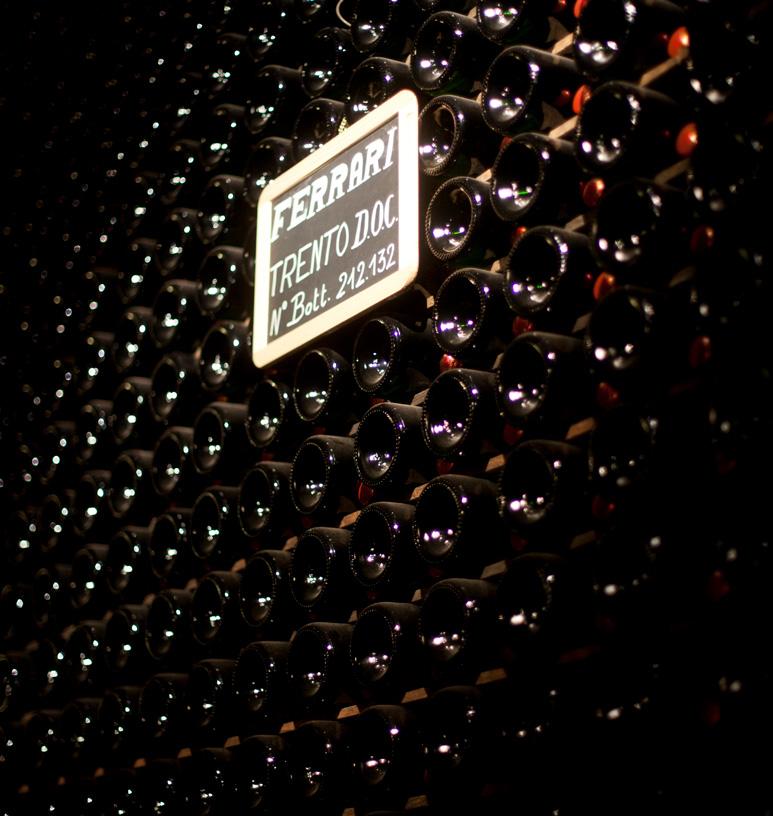
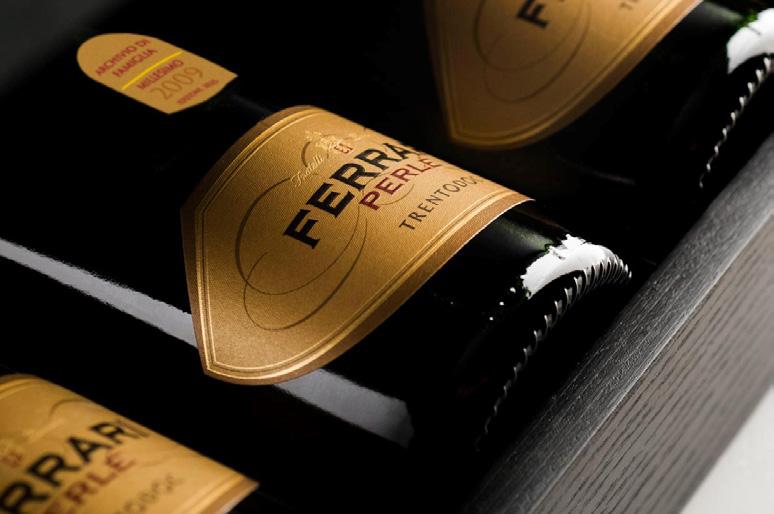
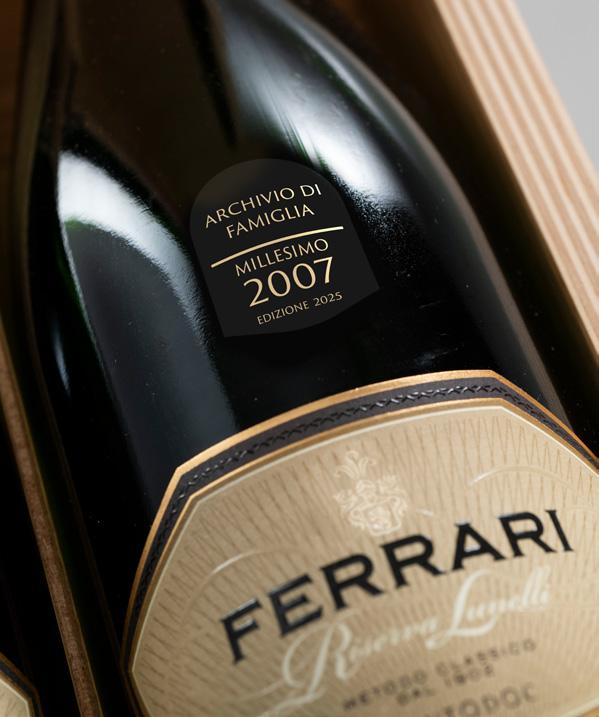
The inspiration comes from the Ferrari winery’s ‘Archivio di Famiglia’ project, presented in Verona. It spans the ‘Edizioni Originali’ range (original disgorgement) and the ‘Sboccature Recenti’ range, dedicated to Trentodoc wines that have continued to mature for further years in the bottle – sometimes 15, 16, or even 20. “ “We are unique in terms of the breadth, variety and depth of our range,” says Matteo Lunelli, recalling the substantial investments made in recent years at the winery to support the quality initiative and meet the demands of a discerning French oenologist such as Cyril Brun. The Archivio di Famiglia allows enthusiasts and collectors to journey through time via different pathways: on the lees or after disgorgement. From the Ferrari Perlé vertical tasting to the
Lunelli Riserva, right through to Giulio Ferrari, including horizontal tastings of Perlé Rosé, Perlé Nero, limited editions and an extraordinary selection of large-format bottles. A tool for understanding how wine continues to evolve over time. Old bottles, of course, but also recent, specially arranged disgorgements, sometimes with revised dosages, precisely to understand how the wine reacts, recomposes itself and finds new balances. What emerges from the tasting is a development along three axes: the character of the vintage, the large format which slows down the wine’s evolution, and the time elapsed since disgorgement – a crucial interval for imparting depth and completeness to the drinking experience.
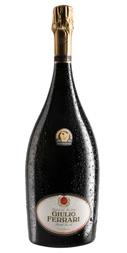
This three-dimensional vertical tasting prompts a concrete reflection on what it truly means to work with time. It begins with Giulio Ferrari 2015, which is slightly subdued compared to the rest of the selection, and concludes with Giulio Ferrari Collezione 2007. Ferrari thus seeks to bring clarity to a subject about which we in Italy still know very little: the relationship between the vintage, time spent on the lees, the date of disgorgement and subsequent ageing. After all, it was Giulio Ferrari himself, at the end of the Second World War, who discovered the extraordinary longevity of his own sparkling wines when he found perfectly preserved bottles. The real turning point, however, came in 1972, when Mauro Lunelli secretly set aside 5,000 bottles of a special cuvée made exclusively from Chardonnay grapes from Maso Pianizza, which would only see the light of day eight years later with the launch of the Riserva del Fondatore, dedicated to Giulio Ferrari. A vineyard «that has something different about it, that enjoys more hours of sunlight».
“The oak vaccinates the wine”
Strong confirmation comes from the Riserva Lunelli, also made from Chardonnay grapes, the only Ferrari wine whose fermentation takes place in large Austrian oak barrels. A great food-friendly white masquerading as a Trentodoc. Or perhaps the other way round. At the outset, Cyryl quotes Olivier Krug: «The beauty of using oak is that it vaccinates the wine for life». A phrase that conveys the idea of the cask not as an aromatic tool but as an element that prepares the wine for complexity and longevity. Having arrived from Champagne, Brun explains that he set up a tasting panel right from the start to share decisions and learn the language of Trentodoc. «First of all, I observed, tasted and asked questions.
Then I took action: new presses, working exclusively with whole grapes to capture the quintessence of our terroir. And then there were the dosages, liqueurs and corks. Today we use only microgranules». Three years have passed since his arrival, following nearly 30 years under Ruben Larentis as Ferrari’s illustrious chef de cave. And it is significant that a professional born in Aÿ, in the heart of Champagne, openly argues that Trentodoc must break free from that reference point to highlight its own identity. We have heard a similar line of reasoning from Richard Geoffroy, the long-standing cellar master at Dom Pérignon, now working at Bellavista in Franciacorta. Meanwhile, also in these pages a few months ago, Selosse urged Italian producers to explore alternatives to Champagne, both in terms of grape
varieties and stylistic approaches. «Back home, we call a 250-metrehigh plateau the “Montagne de Reims”; here, you have a proper mountain. The altitude changes, and so does the world: the temperature range, the light, the ageing potential. We still have so much to learn». As he spoke of seeking greater creaminess in the cuvées, without losing their verticality, a monumental Giulio Ferrari 2008 arrived in the glass –for this writer, the finest Metodo Classico produced in Italy, neck and neck with the Giulio Edizione Limitata 2002. For the record, we should also mention a sparkling Giulio 1986 magnum, disgorged after almost 30 years.
The Italian market – one need only look at the sales statistics – has a keen appreciation for the vintage; it recognises its appeal, but is not accustomed to considering that a sparkling wine does not stop evolving once it is released onto the market. There is at least one further, decisive phase that begins after disgorging. This information is often completely absent from restaurant wine lists. And there is yet another phase, which varies depending on the bottle size. In this sense, the Ferrari tasting resembles a small cultural manifesto for Italian sparkling wine. The oldest vintage on offer, the 2006, seems the youngest thanks to the combination of the magnum format and recent disgorgement. Through the Ferrari Family Archive, the house is developing a broader framework for top-tier Trentodoc, adding value to the cuvées and to the significance of patience. It is a valuable endeavour for the entire sector. «The best investment is to cherish time», concludes Matteo Lunelli. It is not enough to say that a vintage is great; one must understand when to open it, when to disgorged it and how long to let it breathe in its second life. Time, in short, is not a trophy: it is expertise.
Disgorged 2024
This warm vintage is evident in the inviting aromas of yellow peach, Golden Delicious apple and lemon cream. On the palate, it is full-bodied, caressing and smooth; the development is more horizontal than vertical, resulting in a Giulio with an intensely fruity profile that is, however, less taut than usual. The 2015 vintage, in our view? One of the less successful vintages for both Trentodoc and Franciacorta. The same goes for Champagne.
Disgorged 2024
The oldest vintage in the tasting seems the youngest: this is the effect of the magnum bottle combined with recent disgorgement. It is fresh and well-structured, with notes of citron, green apple and basil. On the palate, it is still austere but possesses great richness, with an extraordinary depth of flavour and energy. A completely different story compared to the muscular 2006 Giulio (0.75-litre bottle, disgorged in 2016).
>Riserva Lunelli 200794
Disgorged 2025
This Riserva has spent a full 17 years on the lees, resulting in a mature and multi-faceted wine born of a sunny vintage. Here too, the carbonation is gentle, offering exquisite tactile sensations, with notes of exotic fruit, pineapple, then citron, and a hint of pastry in a finish that will prove highly rewarding in a couple of years’ time. Pairing? Seafood risotto.
Disgorged 2024
Style, precision and finesse. The 2016 displays a delicate smoky note that sets the scene for a wine of great harmony and freshness. On the palate, it is particularly creamy in its perlage – extremely fine and sustained – with a mountainous character and a noble bearing. The balance between ripeness and freshness is perfect; the wine tiptoes onto the palate and dances there.
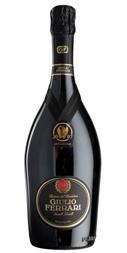
Disgorged 2025
More nuance than power, more horizontal development than sharp verticality. The nose is captivating and luminous, with fragrant notes of bread crust, mountain butter, white pepper and candied citrus. On the palate, it is as smooth as silk; the ultra-fine perlage lends it a very precise and solid structure, with an extremely long finish. Ageing potential: at least 15 years.
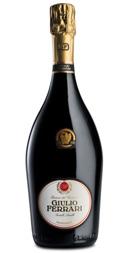
Disgorged 2020
Captivating. There is a rare and precious sense of magic in this monument to Italian winemaking. The vintage – cool and rainy – has produced a unique expression. Refined aromas of hazelnut, pepper and a hint of the sea. An unpredictable palate in two stages: it opens rich and full-bodied, then releases a memorable burst of citrus freshness. Savoury and endless. It calls for a meal and inspires dreams.
>Riserva Lunelli 200994
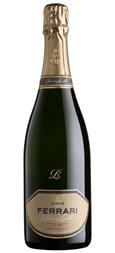
Disgorged 2024
The smoky notes of hazelnut and coffee are even more intense here, accompanied by hints of ripe apple and enticing hints of wildflower honey. On the palate, it is rich, juicy, dense and enveloping, well supported by a lively acidity. It has a distinctive vinous character, with plenty of flavour and good depth, making it almost a meditation wine, to be sipped slowly with a good friend.
Disgorged 2023
Undoubtedly one of the finest vintages for Ferrari’s Blanc de Noirs. The mild, late-ripening vintage yields particularly crisp fruit notes of peach and red apple, alongside hints of bergamot and almond. On the palate, it is powerful yet balanced, well-proportioned and with a long finish. Fresh and lively.
“Rosé
From Valtènesi to Provence, Mattia Vezzola recalls 50 years of research that have transformed the way we think about wine
by Vittorio Ferla
“Making rosé is like boiling milk”, Serge Dubois, former president of the Union Internationale des Oenologues, once told me. You put the milk in the saucepan and watch it whilst you wait. Then suddenly your ankle starts to itch and you get distracted; you look back at the
saucepan and the milk is gone». The lesson? To make rosé, you have to act quickly; it’s different from simply adding a bit of colour to some wine.” Thus begins our conversation with Mattia Vezzola, the driving force and guiding light behind Costaripa, the oenologist who for
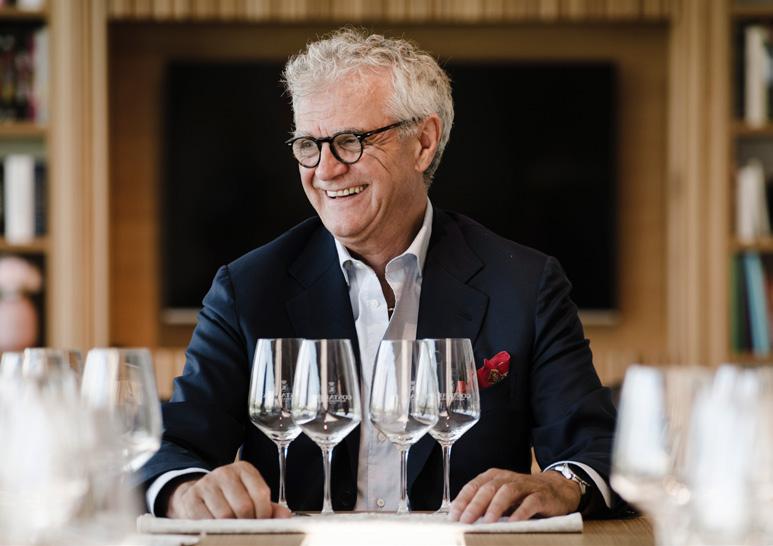
years has interpreted and embodied the concept of Valtènesi rosé – perhaps the most representative wine of Lake Garda. We are in Moniga del Garda, on the Brescia side of the lake.
In the book The Look of Wine –Reading Wine Colour, the first international scientific guide to the colour nuances of each wine, Florence de La Rivière cites Costaripa’s RosaMara as the benchmark wine for identifying the colour “Rosa Cipria” (powder pink). What does this mean to you?
Being recognised by the French is flattering: it makes you realise you’ve done a good job. In Provence, they’ve identified 140 shades of pink. If you say “onion skin”, “pearl” or “powder pink”, it gives a different sense of refinement. But colour doesn’t equate to quality; it has nothing to do with the wine’s value.
And what is the value of wine? For me, the value of wine is time: the ability of wine to evolve perfectly for as many years as possible.
Last year, you were the first Italian to be invited to the “Matinée Technique 2025” conference, an event organised by the Groupe ICV Provence, the most authoritative institution in French rosé wine research. These French people have a soft spot for you… It was a most pleasant surprise. ICV Provence, which organises the World Rosé Awards, has for five years recognised Valtenesi wines for their “juiciness”. Put simply, this means: by not undergoing malolactic fermentation, they possess a natural, integrated acidity derived from the vineyard, contain well under one gram of sugar, and boast a balanced harmony between taste and aroma. It is extremely rare to find this combination anywhere in the world. There, they asked me to speak about the philosophy behind RosaMara.
And how did you explain it?
I’m 74 years old and I lived through the 1970s, when the whole world moved away from barrel fermentation and towards stainless steel. Stainless steel became a watershed moment in winemaking. I simply told them: «RosaMara exhibits length, volume and mouthfeel because it’s made the way you used to make wine before stainless steel came along». Like the estates in Bandol, Provence, it has maintained a thread of classicism. These are wines that, thanks to viticulture and technology, are destined to have a more meaningful life. At estates producing these wines – such as mine – the vineyards are tended with 420 hours of labour per hectare. When you visit them, you don’t spend your time in the cellar, but focus primarily on the vineyard. This approach yields very different rosés: not aperitif wines that taste of raspberry, papaya or mango sweets, but gourmet wines in a different category that deserve a place on a wine list.
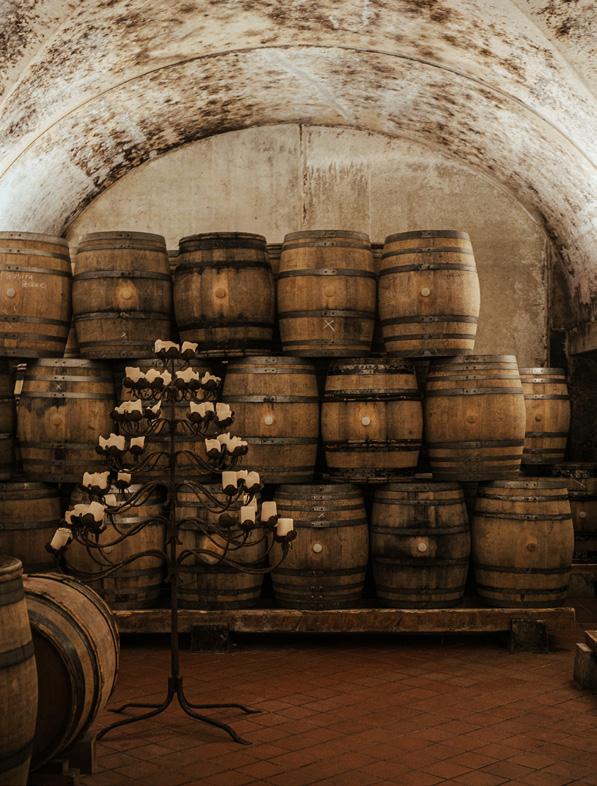
Please define “a different category”.
Most producers worldwide make rosé wine from the red grapes left in the vineyard after the best grapes have been selected for red wines. Many wineries also use the ‘bleeding’ technique, but in this case the must represents the wateriest part of the grape. At Costaripa, the grapes have always been cooled to below 10 degrees within 15 seconds, so that the skins become less fragile and more robust. Skin-must contact lasts from 30 minutes to an hour. This allows us to extract from the grapes the precursors of aromas and mineral salts – the structural elements – as well as subtle colours tending towards a powder-pink hue.
uses old Burgundian barrels not to impart aromatic nuances but to ensure very slow oxygenation
Oak seems to have become something of a taboo these days, and nobody associates it with rosé wine. Here too, Costaripa stands out.
The use of Burgundy barrels. The older they are, the more valuable they become. They must not impart any aromatic nuances, but through very slow oxygenation, a wine is produced that is much more stable and long-lived, with a different texture. The wine gains in volume and body, and its mouthfeel, length and persistence are en-
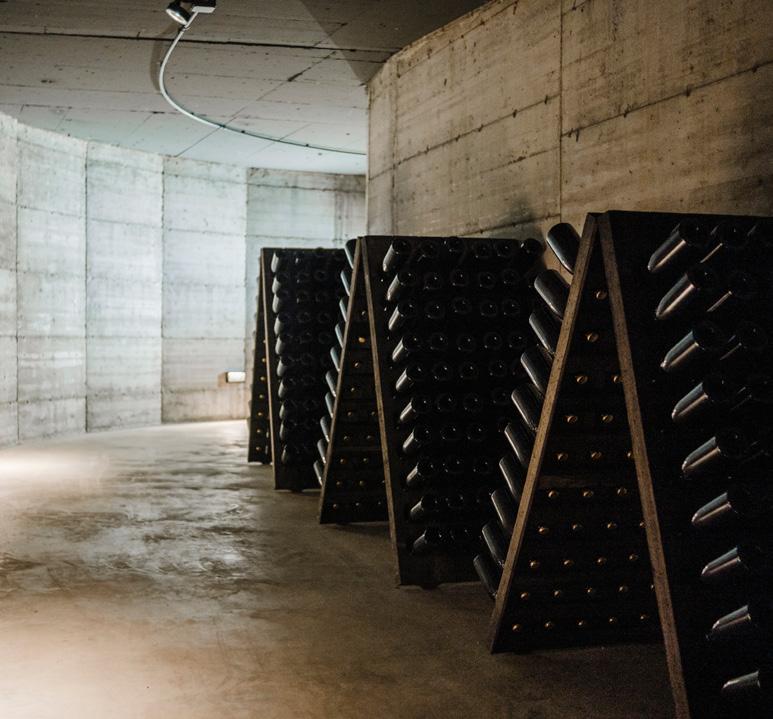
hanced. This type of rosé can age comfortably and evolve perfectly for as long as 7–8 years.
Longevity and rosé seem like contradictory terms: does the quality of the wine lie in waiting?
Yes, that is my approach to rosé. Speaking to a Champagne vigneron 55 years ago, this concept of classicism has stayed with me. A full 35 years ago, I bought twelve bottles of 1964 Dom Pérignon with the aim of comparing, over time, the ‘oldschool’ approach to winemaking with the new one. Two years ago, I uncorked one of the four remaining bottles: it still had a hint of effervescence in the glass but not a trace of oxidation. It was a 60-year-old Champagne! The quality of a wine lies in its ability to express its age. But this is achieved by producers who start with
viticulture. In Italy, wine-producing families with a 100-year history account for less than 4 per cent of all Italian wine producers.
Patrick Leon, the renowned oenologist at Mouton Rothschild and Château d’Esclans, said: «To produce great rosés, you need to follow the same philosophy, the same viticulture and the same oenology as those applied to Champagne wines».
An important statement, given that he came from Bordeaux. Yes, that’s right. He once told me: ‘To make rosé, you have to forget about making wine; you have to make Champagne.’ It means creating lots of small plots to be harvested by hand, from which to select the musts. Because of that remark, I had to rebuild the cellar (he smiles, ed.). We now have a 2,200-metre cellar and
The traditional wooden pupitres where the remuage is carried out strictly by hand
have reached 75 different rosé varieties. My son Gherardo, an oenologist who returned from Champagne a year ago, told me there are still too few: I showed him the bill for the cellar extension.
«This time, if you’ve got the money, you’re doing it», I told him. The truth is that making rosé with this philosophy is like making a Hermès scarf: it’s incredibly expensive.
In short, rosé isn’t just a summer wine…
I define rosé as a way of life, an antidote to formalism.
Is Valtènesi the only Italian region comparable to Provence?
Yes, let’s say it has the potential. A region surrounded by the Lessini Mountains, Monte Baldo and the Adamello range, yet it enjoys a Mediterranean climate. In short, it seems even the Almighty has had a stroke of luck here.
No. You can make good rosés – he points out – but making a rosé that expresses your family’s connection to the local area is quite another matter: you can only do that when three generations have been dedicated to viticulture. Just as in Provence, here in Valtènesi – on the D’Annunzio side of Lake Garda – vines have been planted to produce rosé wines since 1896. That is why we have this vocation.
Which other Italian regions are suited to rosé?
Some regions, such as Salento and Abruzzo, have a history that cannot be erased. But they also produce other wines. Valtenesi’s aim is to produce only rosé. On a shelf, it makes sense to place Champagne
and Franciacorta side by side: the name of the region and the name of the wine are one and the same; they are distinct from the wines of other regions.
Similarly, it makes sense to place Valtenesi and Provence side by side: these are wines that share the same principles and values. If you place Valtenesi amongst other rosés, it loses its identity.
Given the changing trends in style and consumption, where does rosé fit in? What scope does it have, and what scope might it still have?
You may well be a chief executive, but if you lack expertise and invite people to lunch who eat very different things – sole, lamb, spitroast – or have opposing dietary habits – meat-eaters, vegetarians, vegans – the only wine you can choose is a rosé. When that moment arrives, your salvation lies in a top-quality rosé. And then: wherever there’s water – the sea, a swimming pool, a lake – there’s always a certain type of cuisine that, by its very artisanal and family-oriented nature, calls for a rosé to pair with it. Unfortunately, for 50 years we’ve been making rosés from cellar leftovers, so consumers are right to be wary. Today, we need to build credibility.
Which target groups are the most interesting? Perhaps young people?
Yes, rosé can work well for that age group. People aged 25–35 are looking for quality. Whether it’s pizza, bread or ice cream, young people want to choose the best. Financially, they’re on a tight budget, so the choice of glass and a particular type of wine are crucial. There are rosés that are affordable and versatile when it comes to food pairings; they’re generally light on the palate and nose, and very easy
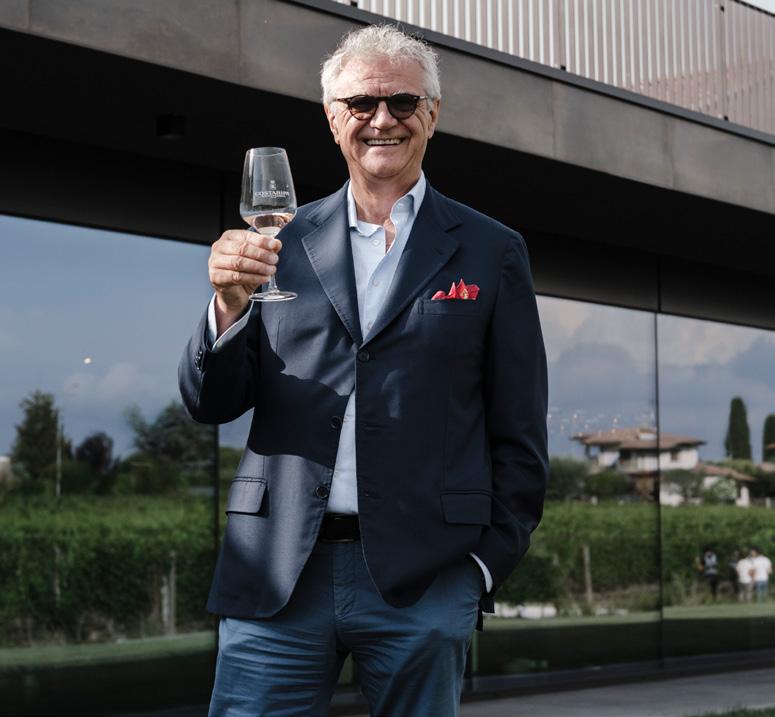
to drink. And with the right alcohol content, you’ll even pass the drink-driving tests.
How do you see the future of rosé wines?
Over the next 30 years, I foresee a trend towards improved quality, but we must preserve the distinctive style of a region. Let’s say no to ever-changing fads: this has happened with novello wines, with ‘paper-white’ wines, and with concentrated wines. The “pendulum theory” doesn’t work: first you go to one extreme, then you swing to the opposite. We need to stay the course and work on our own identity.
A few years ago, the Istituto Rosautoctono was founded to bring together national consortia committed to promoting and raising
the profile of historic rosé wines made from indigenous grape varieties. But we haven’t heard anything more about it. Is there a need for a collective movement for Italian rosé wine?
All initiatives promoting rosé are welcome. The difficulty lies in finding a common thread that goes beyond colour alone. Some regions produce rosé to tap into the market, but they lack the cultural dimension. Some time ago, Provence secured two million euros from the EU for promotion across Europe: the only condition was that they choose a partner. They chose Valtènesi because it is the only region that shares the same philosophy. In short, we can work together, but those geographical areas that share the same aim of producing rosé based on viticulture work best.
94
>RGC Valtènesi Molmenti ’19
A local taste of summer. Here is our selection of bright, fragrant and refreshing rosés. They help beat the heat without compromising on character or depth. Behind their apparent lightness lies a surprising ability to age well. These are wines that pair beautifully with food, extraordinarily versatile and ideal companions at the table
Costaripa Moniga del Garda (BS)
A superb Valtènesi. We tasted the 2019 vintage of Molmenti once again: a blend of notes of peach and green tea, complemented by very subtle spicy and toasty undertones. On the palate, it is smooth as silk, enveloping and juicy, with delicate peppery notes that add a refreshing touch to a deep and satisfying drinking experience. Perfect with white meat, served at 12 degrees.
94
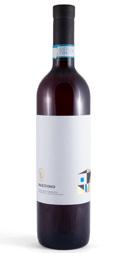
>Cerasuolo d’Abruzzo Baldovino ’24
Tenuta I Fauri Ari (CH)
by Marzio Taccetti
A Cerasuolo d’Abruzzo which, thanks to its smooth, delicious flavour, means the bottle is finished in no time. On the nose, it offers a slightly peppery bouquet, with notes of a dying fire and ripe raspberries. A hint of sea salt heralds a surprising first sip, with hints of citrus and aromatic herbs that lead the palate towards a lively and precise finish. A wine well worth stocking up on.
>Cerasuolo d’Abruzzo Rosa-ae ’24 94
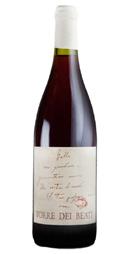
Torre dei Beati
Loreto Aprutino (PE)
Rosa-ae is always a safe bet, managing to blend mineral and iodine-like notes with a more indulgent fruity element. The nose is crisp, whilst on the palate the fruit provides rhythm without feeling heavy. The savoury undertone makes for a juicy, smooth mouthfeel, with the acidity lending it bite and vitality. The finish, taut and persistent, fades into mineral and fresh notes.
93
>RGC Valtènesi ’24
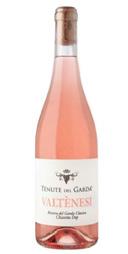
Tenute del Garda
Lonato (BS)
Full of vigour and complexity, Tenuta del Garda’s Valtènesi ‘24 is a rosé wine of great character. Its pale pink colour hints at a complex bouquet of small fruits, with smoky nuances and hints of Mediterranean scrub. On the palate, it combines freshness, character and depth, offering a satisfying drinking experience and the potential for interesting development over time.
>Cerasuolo d’Abruzzo Giusi ’24 93
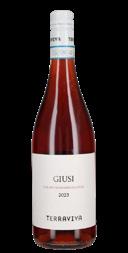
Tenuta Terraviva Tortoreto (TE)
A truly successful interpretation of Cerasuolo d’Abruzzo, thanks to its lively aromatic profile and agile palate. On the nose, floral notes and hints of small red berries blend with hints of graphite. On the palate, it is savoury and well-balanced, underpinned by a vibrant freshness, with a long, intense finish marked by a distinct Mediterranean character.
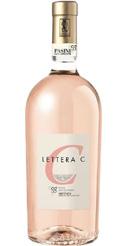
Pasini San Giovanni Puegnago sul Garda (BS)
The 2022 vintage of Valtènesi Lettera C beautifully illustrates the ageing potential of Groppello in its rosé form. Tension, freshness and mineral savouriness underpin a complex and multi-faceted profile, featuring red fruit, blood orange and rosehip, with a background of aromatic herbs. On the palate, it is dynamic and deep, with a long finish that returns to savoury and mineral notes.
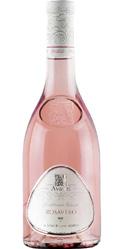
Avanzi
Manerba del Garda (BS)
In the glass, the very pale, brilliant pink of the Rosavero ‘24 is truly intriguing. On the nose, it is fresh, with notes of small berries, rose and hints of Mediterranean scrub that fade into citrus tones. On the palate, it is taut and lively, with a savoury edge that underpins the flavour without overpowering the fruit, whilst the mineral note lengthens its finish and lends it depth.
92
>Aurea Gran Rosé Tenuta Ammiraglia ’23
Marchesi Frescobaldi Firenze
The Aurea Gran Rosé 2024 is produced near the sea, from grapes processed with great care and fermented in French oak tonneaux. It has a pale pink colour, with hints of rose gold. The nose is intense and complex, with notes of nectarine, red berries, citrus and a hint of spice. On the palate, it is soft, velvety, fresh and savoury, with elegant tertiary notes and a beautifully lingering finish.
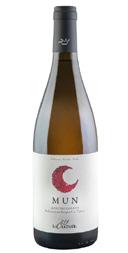
La Calcinara Ancona
A rosé produced by soft pressing of whole bunches and spontaneous fermentation in stainless steel. Its antique pink colour hints at a complex, iodine-tinged nose, with ripe, sweet wild berries, wild rose and thyme. On the palate, it is lively, flavourful and relaxed, with hints of fresh fruit, hay and almond. The salty finish and irresistible drinkability highlight its gastronomic character.
>Torre Kalena Rosato ’22 93
Steiger-Kalena Casacalenda (CB)
Original and full of character, this rosé is a blend of Aglianico, Montepulciano and Tintilia, aged for a year in tonneaux. A rich nose of raspberry, black cherry and balsamic notes is complemented by a savoury and impactful palate. Full-bodied and energetic, yet smooth and well-balanced, it finishes with a focused and persistent aftertaste.
>Cerasuolo d’Abruzzo ’24 92
Zappacosta
Chieti
The nose of Zappacosta’s Cerasuolo d’Abruzzo ‘24 is intriguing and well-defined, featuring spicy notes of black pepper, graphite and a pleasant hint of ash. On the palate, it is full-bodied, yet supported by a good freshness that gives the wine a lively rhythm. The well-integrated tannins provide structure without making the wine feel stiff. The finish is briny, clean and persistent.
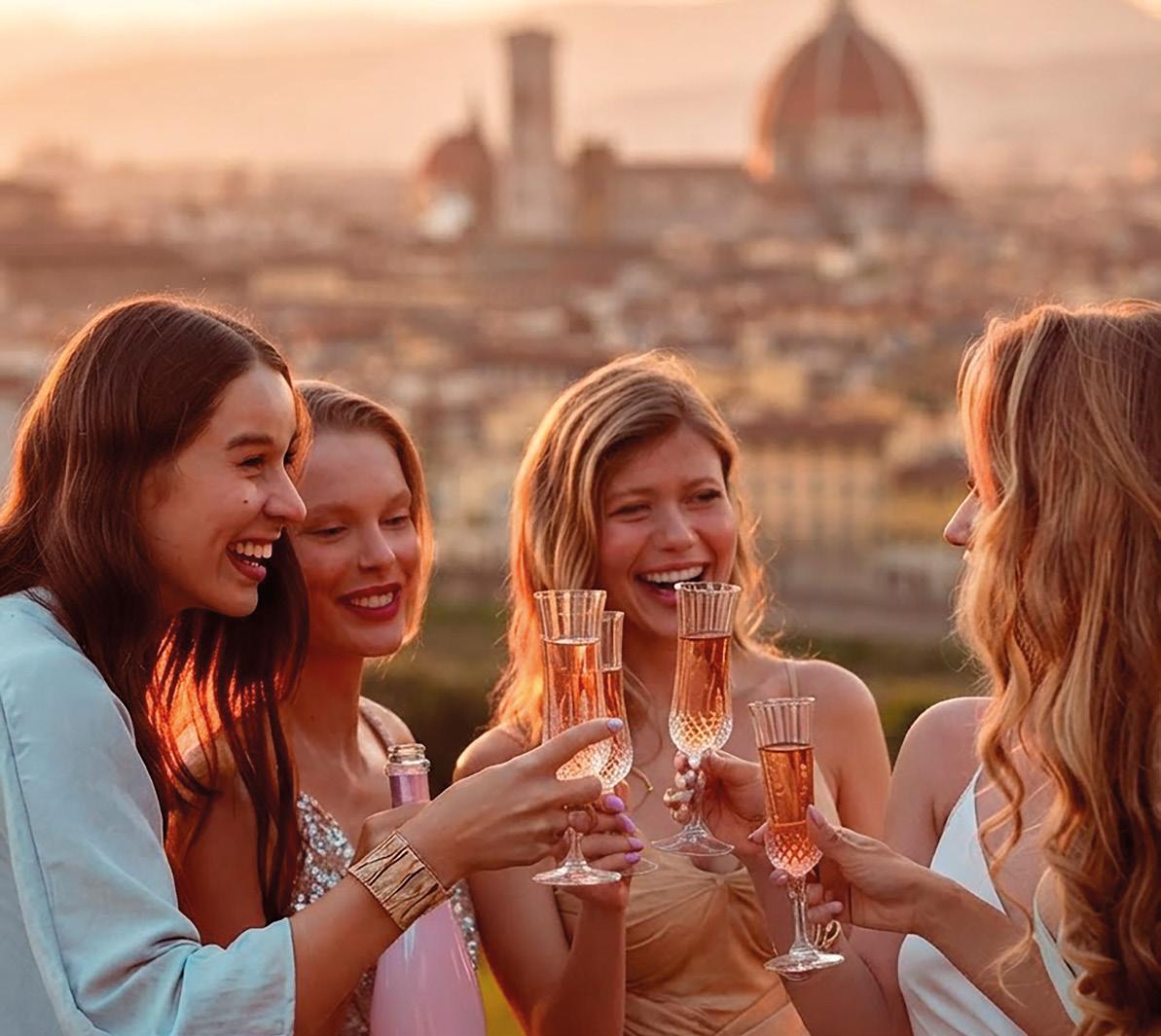
>Pinot Grigio delle Venezie 92
Bosco del Merlo Sequals (PN)
This rosé, made from Pinot Grigio grapes, stands out for its candy-pink colour, a shade that differs from the more common onion-skin hue. On the nose, it offers a refined and delicate profile, with elegant hints of rose petals, wild strawberries and pomegranate, whilst on the palate it is fresh and precise, showing good harmony with the nose and a wonderfully smooth mouthfeel.
91
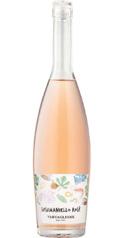
Varvaglione 1921 Leporano (TA)
Nel calice, il In the glass, Varvaglione’s Susumaniello Rosé ‘24 focuses on immediacy and precision: aromas of melon and citrus give way to a crisp, fresh and clean palate. The savoury notes provide a pleasant coun-
terpoint to the sweet fruitiness and support the wine without weighing it down, leaving a crisp and pleasant finish. A fresh and lively rosé that showcases another side of Apulian winemaking.
90
>Cirò Rosato Mabilia ’24
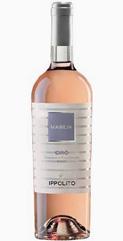
Ippolito 1845
Cirò Marina (KR)
This delightful rosé is made from 100 per cent Gaglioppo grapes. Its cherry-red colour heralds a fragrant bouquet, with hints of black cherry, rose petals, peach and Mediterranean scrub. On the palate, it is fresh, invigorating and satisfying, underpinned by a distinct savoury quality that gives the wine a lively character. The finish is crisp and flavourful, with fruity notes and a finish of good length.
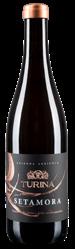
F.lli Turina
Moniga del Garda (BS)
A Valtènesi with a multifaceted and fresh bouquet, where notes of wild strawberry and redcurrant, orange zest, aromatic herbs and a hint of vanilla interplay. On the palate, it is savoury, satisfying and full of character, underpinned by a lively acidity that lends rhythm and depth to the mouthfeel. The finish is long and smooth, with savoury notes and Mediterranean undertones that extend its length on the palate.
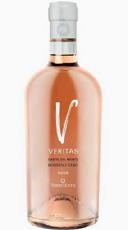
Torrevento Corato (BA)
This fresh and approachable rosé is made from Bombino Nero grapes grown on the hills of Castel del Monte. Its pale, luminous pink colour hints at a floral and fruity profile, with notes of raspberry and strawberry. On the palate, it is round, balanced and fresh, underpinned by good acidity that enlivens the mouthfeel and leads to a clean, fresh finish.
90
>Five Roses Anniversario ’24
Leone de Castris
Salice Salentino (LE)
The Five Roses Anniversario ‘24 opens with a floral profile, interwoven with notes of citrus, redcurrant and small red berries. On the palate, it has good structure and freshness, with crisp fruit that gives it depth and makes it a delight to drink. A mineral undertone accompanies its development, adding depth and definition. It finishes with a crisp, fruity and lingering aftertaste.
>Cerasuolo
Fontefico
Vasto (CH)
Fossimatto ‘24 is a Cerasuolo d’Abruzzo with a genuine character. On the nose, hints of graphite and black pepper create an intense and distinct profile. On the palate, notes of cherry, raspberry and wild strawberry emerge, intertwining with mineral undertones. The savoury element gives the wine its drive, complementing a smooth mouthfeel that is nevertheless structured by delicate tannins.
91

>Mazzapink ’24
Tenuta di Valgiano Lucca
A 100% Sangiovese, but vinified as a rosé, with a light-hearted and immediate character. Mazzapink plays on freshness and minerality, with crisp fruit notes reminiscent of pomegranate, raspberry and strawberry. On the palate, it is savoury, smooth and agile in its development, yet never lacking in precision. A light and refined expression of the Lucca region, combining vigour, elegance and great drinkability.
89
>Chiaretto di Bardolino
Traccia di Rosa ’23
Le Fraghe
Cavaion Veronese (VR)
Traccia di Rosa ‘23 offers a juicy and satisfying drinking experience whilst remaining true to the concept of a dry, authentic wine. The nose evokes plums, yellow peaches and apricots, with developing hints of candied orange and saffron. On the palate, it is juicy and satisfying, maintaining a dry profile, underpinned by pronounced freshness and a long, savoury finish. The finish is elegant, persistent and beautifully complex.
by Marzio Taccetti
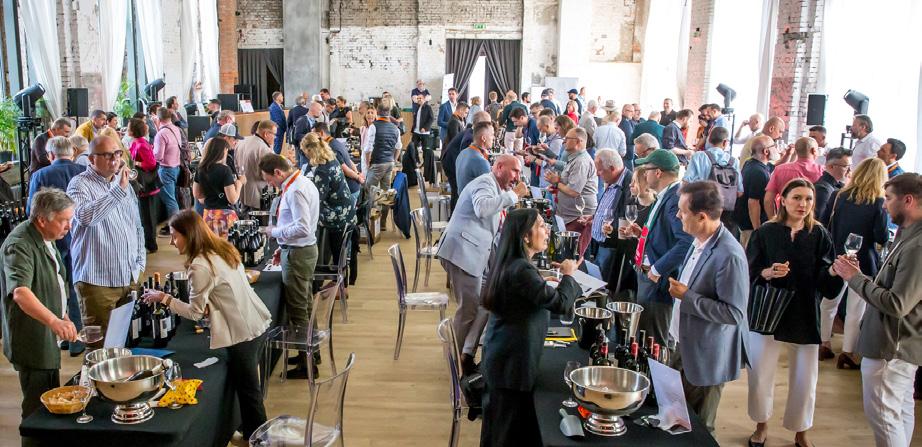
In Poland, Italian wine no longer needs introducing. Rather, it needs explaining. The Vini d’Italia Tour arrived in Warsaw on 3 June, with the day divided between a tasting session reserved for industry professionals, an open session for wine enthusiasts, a masterclass and an awards ceremony for the restaurants selected by the Top Italian Restaurants guide.
Among the tasting stations at the event held at the Reduta Banku Polskiego –a monumental building in the centre of the capital – questions from the public to the wineries highlighted a market worth keeping an eye on. This is a tried-and-tested
format in which producers and the public come together in the same room to taste wines and exchange views. But it is the context that makes Warsaw a stop worth observing closely. Poland remains a country where wine still occupies a relatively small share of the market compared to beer or other alcoholic drinks, but demand is growing, particularly for foreign labels. This is a sign that should not be underestimated. According to Polish customs data reported by ICE, between January and November 2025, Italy was among Poland’s leading wine suppliers, both in terms of volume and value. Exports
reached around 33 million litres, accounting for a quarter of the country’s wine imports. Over a five-year period, the value of Italian wine sold on the Polish market grew by 33 per cent, whilst imports increased by 25 per cent over three years. This growth does not eliminate the uncertainties of a price-sensitive market which, like so many others, is subject to the general slowdown in consumption; however, it points to a now well-established commercial presence and a market that remains open, one that does not seem to focus solely on the best-known appellations and wine types.
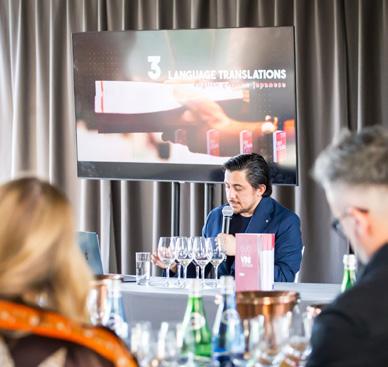
The masterclass, held from 1 pm to 2 pm, was one of the moments when the willingness to listen emerged most clearly. The glass was filled in turn with sparkling wines, whites and reds from different regions and traditions. This was not a summary of Italian wine, but a sequence designed to highlight its internal diversity.
This fragmentation represented both a strength and a challenge. Italy offers a wealth of names, grape varieties and appellations that few other countries can match, but it is not enough simply to showcase many labels: one must clarify the differences and characteristics of the various regions behind them. At the tasting tables, importers,
restaurateurs and sommeliers were seeking information on distribution, the company’s range and further details on grape varieties and wine styles. The Warsaw leg of the tour revealed one thing above all: an audience that no longer views Italian wine as a single, homogeneous category, but rather as a market that is becoming more nuanced and, consequently, more discerning.
But it is not just Italian wine that is sought after and appreciated in Poland. During the Vini d’Italia Tour stop, the Warsaw venues featured in the 2026 edition of Top Italian Restaurants were also honoured. This selection reflects a rather varied Italian presence: not just traditional restaurants, but pizzerias and cocktail bars that offer different dining experiences and atmospheres. In the restaurants category, the Due Forchette award went to Osteria da Già and Le Braci. Una Forchetta was awarded to Piccola Italia, La Luce, San Lorenzo and Allora. When it comes to pizza, Warsaw has demonstrated how this dish can be superbly interpreted beyond national borders without losing its authenticity. Pizzaiolo and Ciao a Tutti were awarded Due Spicchi; followed by Spacca Napoli, Nonna Pizzeria and Mąka i Woda, which received Uno Spicchio.
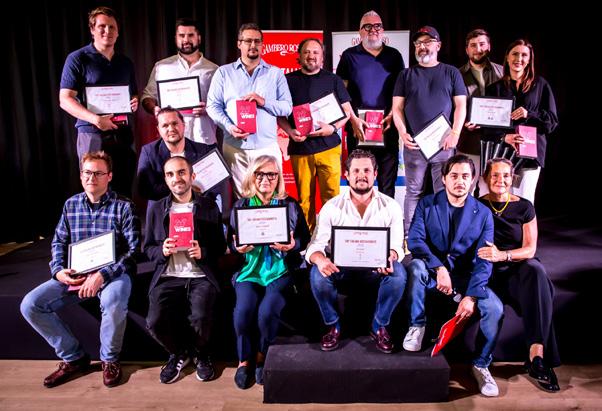
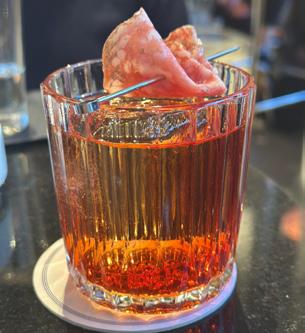
Among the winners of the Top Italian Restaurant awards, Feliks Bar Café stands out with a ‘Martini Cup’ rating, an accolade reserved for cocktail bars and aperitif venues. The venue is housed in one of the few historic buildings in Warsaw to have survived the destruction of the Second World War. Its name is taken from the building’s founder, Feliks Bar. The concept is unmistakably Italian, from the marble bar to the seamless transition from espresso to cocktails. The owners’ aim is to blend Italian inspiration with Polish culture, drawing on the diversity they encountered whilst travelling through Italy’s various regions: wines, bitters, cuisine and drinking rituals.The Negroni is at the heart of the menu and is the bar’s best-selling cocktail. As well as the classic recipe, it is prepared with slight variations. Accompanying the drink is a small selection of cold cuts, cheeses and sandwiches. «Many customers walk in, look at the bar and order a Negroni straight away, even before reading the menu» says Michał Sidło. The Polish leg of the tour revealed one thing above all else: an audience that no longer views Italian wine as a monolithic entity, but asks increasingly nuanced –and therefore increasingly demanding –questions. At the end of the day, one clear impression remains: in a market that is still developing its own wine culture, attention counts for more than enthusiasm. And in Warsaw, that day, there was plenty of attention.

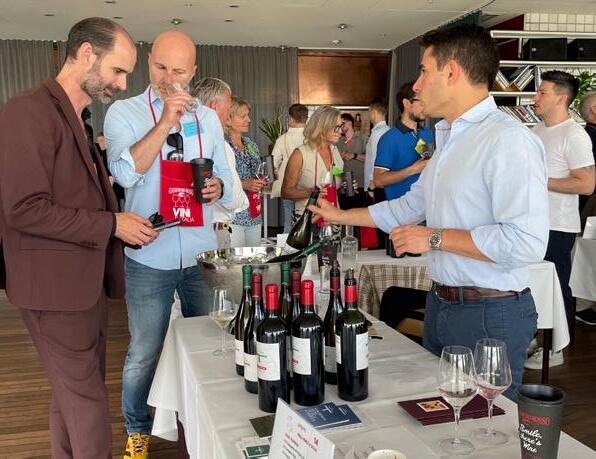
by Lorenzo Ruggeri
The wine scene in Stockholm is one of the liveliest in Europe. You only need to take a stroll through the wine bars in the city centre or flick through the wine lists in restaurants to appreciate the level of attention to detail, research and depth devoted to wine. On June 8th, we witnessed first-hand, once again, the level of curiosity and knowledge the Swedish wine trade has regarding Italian wine: 30 wineries gathered at the Moderna Museet, bathed in glorious summer light. The tasting also revealed several points of interest, with trends we’ve observed in other European capitals. “Compared to previous years, demand for wines by the glass has increased, whilst the trend for heavily macerated orange wines has definitely slowed down; customers want lighter, more approachable wines,” says Michele Montarari, owner of the excellent wine bar and bistro Adria.
Mancini has once again been named the best Italian restaurant in Sweden according to the Gambero Rosso Top Italian Restaurants guide: it is, in fact, the only Italian restaurant in the country to have been awarded Tre Forchette. Close behind is Trattoria Montanari (Due Forchette, one more than in the 2025 edition), a historic family-run osteria also situated in the heart of the Swedish capital. Among the city’s wine bars, Adria, Corvina Enoteca and L’Avventura stand out, having been awarded Due Bottiglie, whilst the pizzeria scene in Stockholm is buzzing with activity, particularly when it comes to Neapolitan pizza: Due Spicchi were awarded to Magari, Giro Pizzeria, Barden Vedugnspizza, The Italian Cousins and 450 Gradi, the establishment opened by former Serie A
During the event, a masterclass dedicated to the Lombardy Region was held: “Taste of Lombardy”. Forty journalists toured Lombardy’s vineyards, which cover some 22,000 hectares of vineyards. The tour began with Classese, the new collective brand of the Oltrepò Pavese Consortium, which identifies the Oltrepò Pavese Pinot Nero Metodo Classico, featuring a trio of top-quality cuvées, before moving on to Lugana, with a mini-vertical tasting of Turbiana wines, and continuing with various expressions of Valtènesi, the signature rosé of Lake Garda. Finally, wines from the Consorzio Vini Mantovani were tasted, ranging from Lambrusco to rich and intense passito wines.
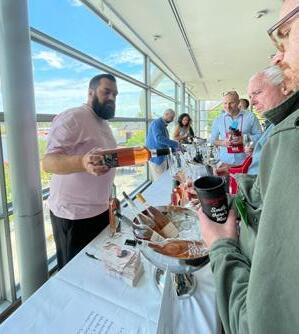
and Premier League footballer Jesper Blomqvist. Rounding off the selection in the city are: Bastardo, Luca, Sessanta (a new entry) and the up-and-coming Bonaccorso – Osteria Siciliana, which has been awarded Una Forchetta for the first time.
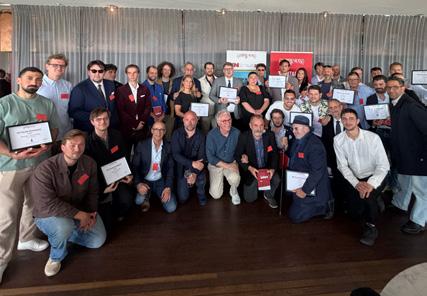
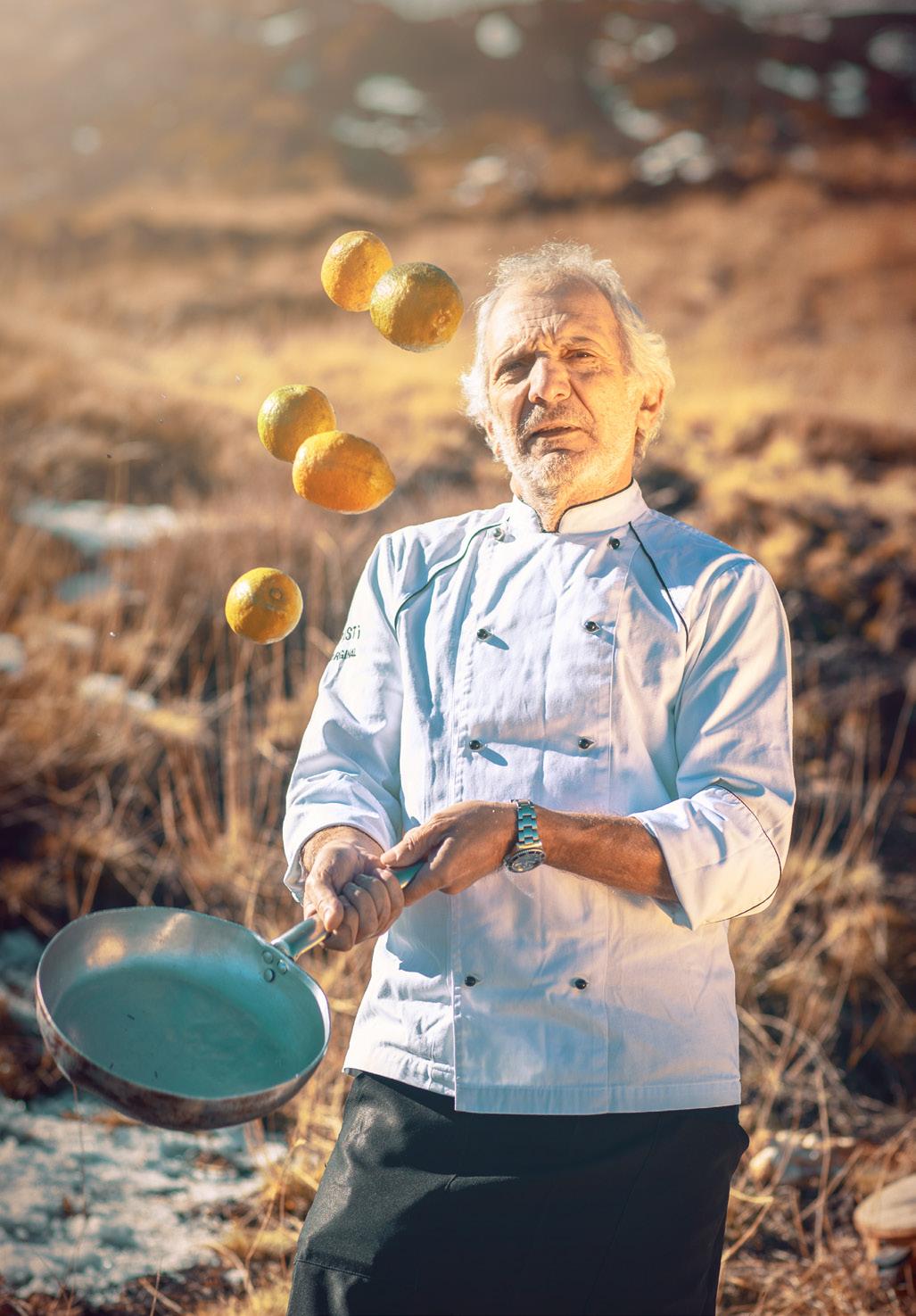
by Antonella De Santis
Birthplace
Messina Age 69
Resident in Taormina
LEATEST BOOK READ
Roll on - JJ Cale
LATEST ALBUM DOWNLOADED
A Field Guide to Human Behavior by Desmond Morris
BELOVED INGREDIENT
Smoked Herring
Least loved ingredient
None
THE DISH OF A LIFETIME
Seafood Couscous Ittiturismo La Tramontana in Trapani
GRAND MAESTRO YOU WORSHIP
Gualtiero Marchesi
MOST ESTEEMED PEER
Maurizio Rossi - Osteria
della Villetta
MY DEFINITION OF CUISINE
Traditional and made with quality ingredients
FAVOURITE RESTAURANT ABROAD
Solo Pasta - Taipei
Chef - Ja Ping Wang
ONE WINE ABOVE ALL OTHERS
Piano delle colombe - Girolamo Russo
HAD I NOT BEEN A CHEF… Alchemist
DISHES PRESENTED
Albacora Salad
Cabbage pasta
Sea bream with citrus Lemon “gelo” pudding
CONTACTS
Taormina
vico Francesco Paladini, 3
339 364 2088
SEATS
40
FRONT OF THE HOUSE
Chia-Hua Lee
Loris Calcagno
Fabrizio Mazzullo
SOMMELIER
Chia-Hua Lee
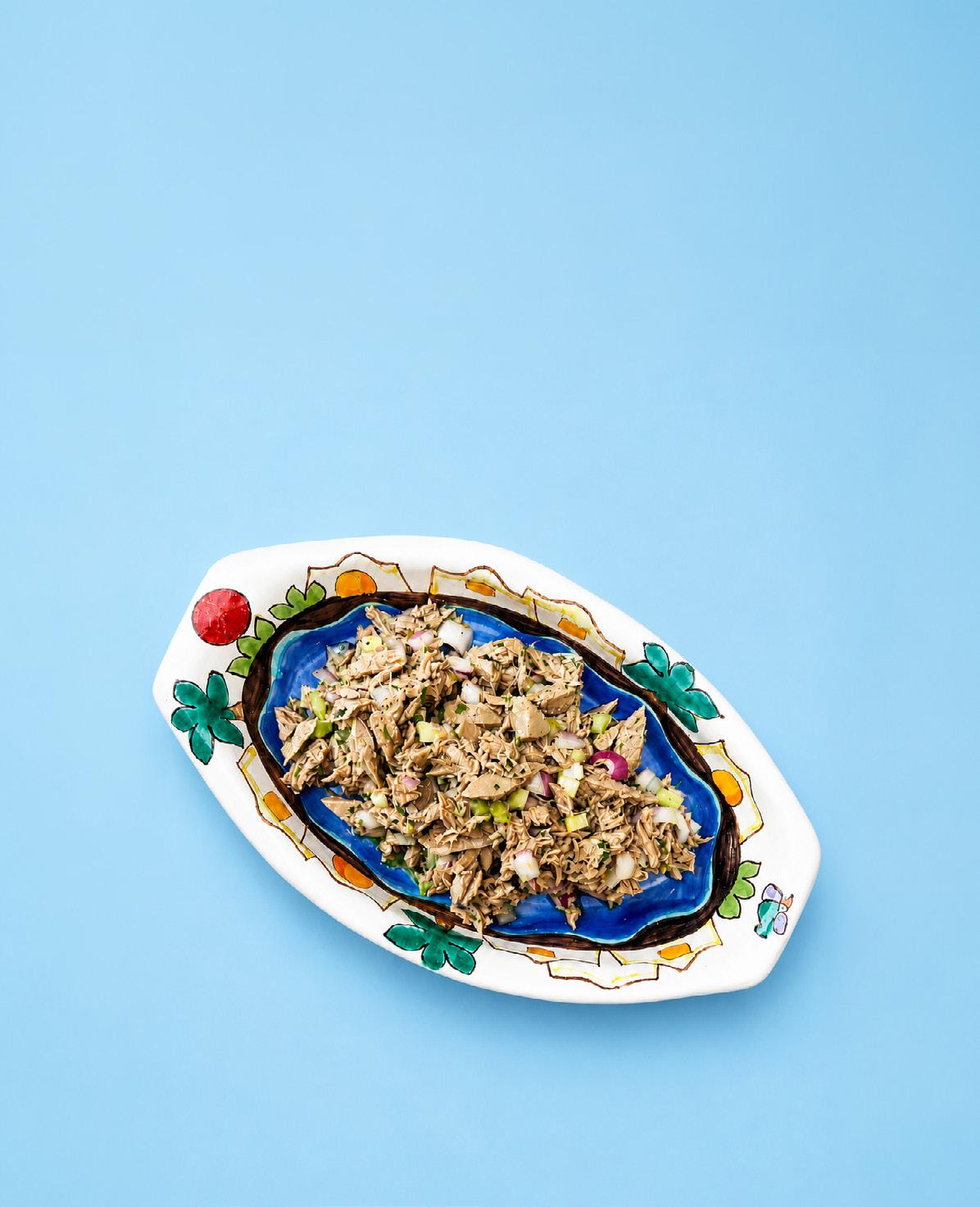
INGREDIENTS FOR 6 SERVINGS
500 g albacore tuna steaks (or longfinned tuna)
150 g red onion
100 g celery
20 g capers
100 ml extra virgin olive oil
50 ml white vinegar
1 clove garlic
Mint, oregano, black pepper
Boil the fish in plenty of boiling water for 15 minutes, drain and leave to cool slightly.
Dice the onions and celery.
Rinse the capers in water and vinegar to remove the salt.
In a bowl, carefully remove the bones from the boiled fish fillets, flake them gently and mix in the onion, celery and capers.
Season with oregano, black pepper, white vinegar, salt, oil and mint pesto, prepared by pounding a sprig of mint, a clove of garlic, plenty of oil, salt and pepper in a mortar.
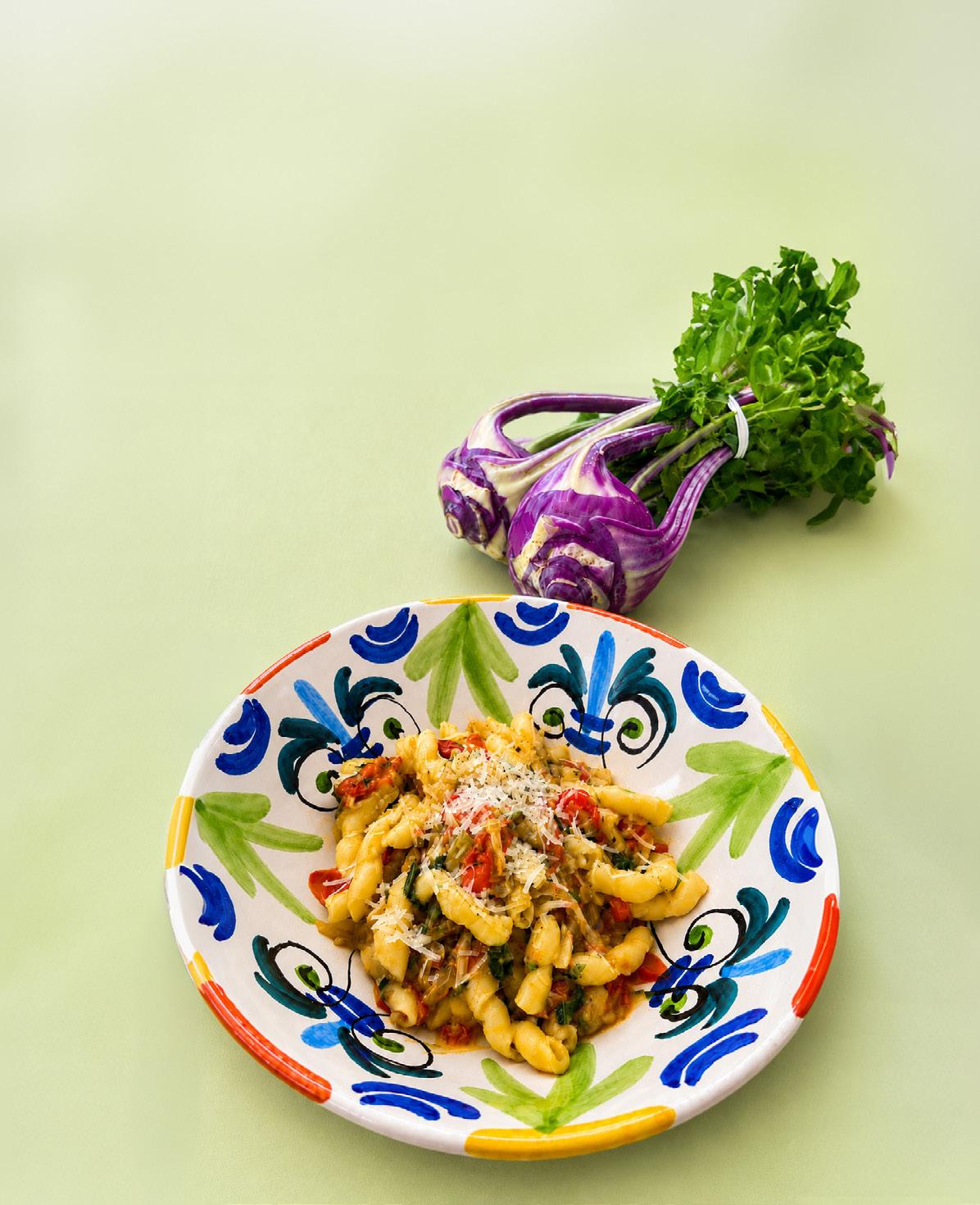
INGREDIENTS FOR 6 SERVINGS
600 g “trunzo” cabbage
500 g busiate pasta
250 g white onions
200 g datterino tomatoes
80 g caciocavallo cheese from Ragusa, aged 12 months
100 ml extra virgin olive oil
Black pepper
Slice the onions thinly and cut the cherry tomatoes into quarters. Peel the cabbage and cut it into julienne strips; chop the softer leaves finely. In a saucepan, gently fry the onion in oil; halfway through cooking, add the cabbage, the chopped leaves and the tomatoes, then simmer over a low heat for 30 minutes, adding some of the pasta cooking water as required. Boil the busiate, toss them in the cabbage sauce and add grated caciocavallo to taste.
INGREDIENTS FOR 6 SERVINGS
6 fillets red seabream
150 ml lemon juice
150 ml orange juice
30 g desalted capers
30 g sugar
60 ml extra virgin olive oil
4 garlic cloves
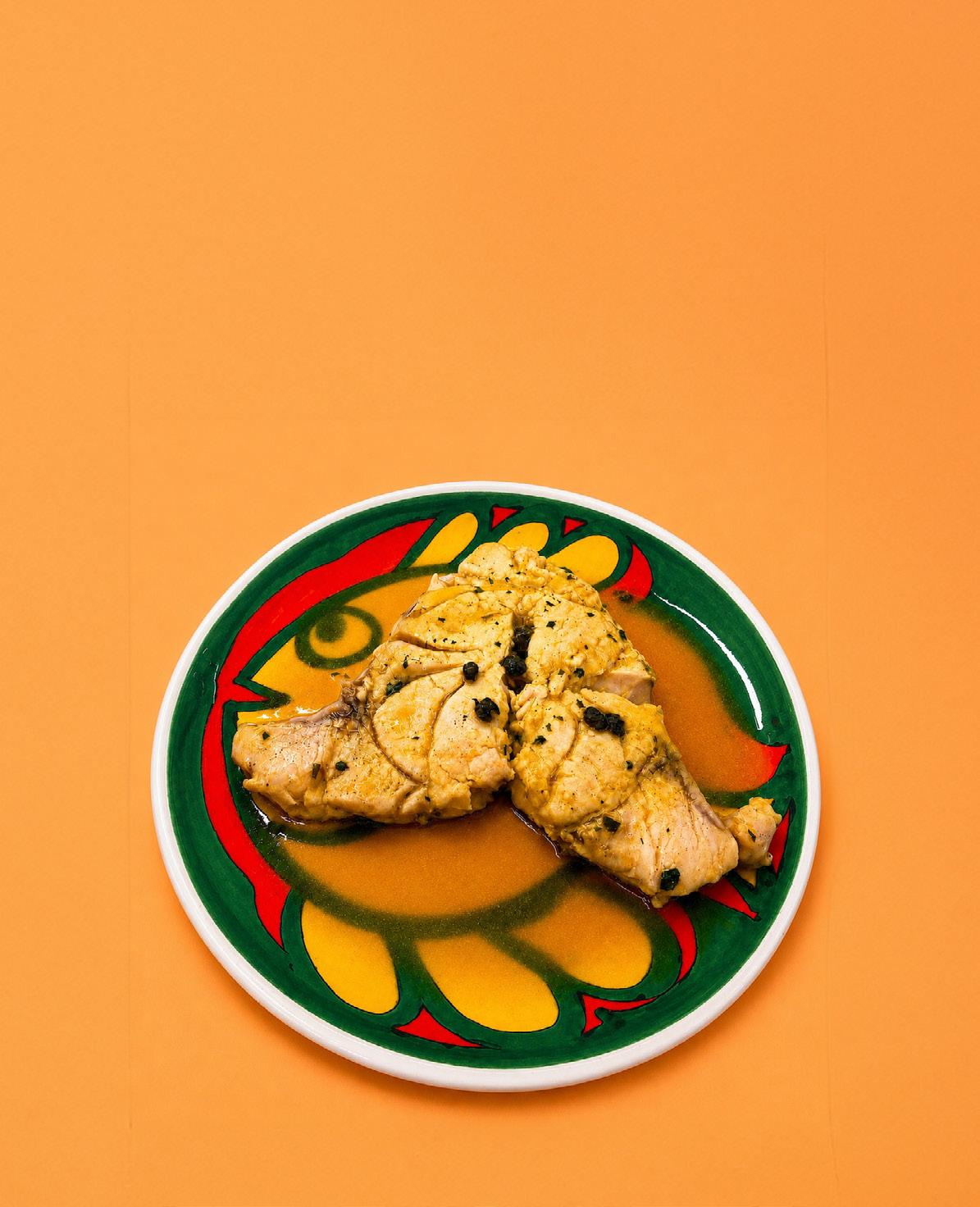
>Seabream
Gently sauté the garlic, capers and sugar in extra virgin olive oil, add the orange and lemon juice, and cook over a low heat for 5 minutes. Add the sea bream fillets and continue cooking for a further 10 minutes.
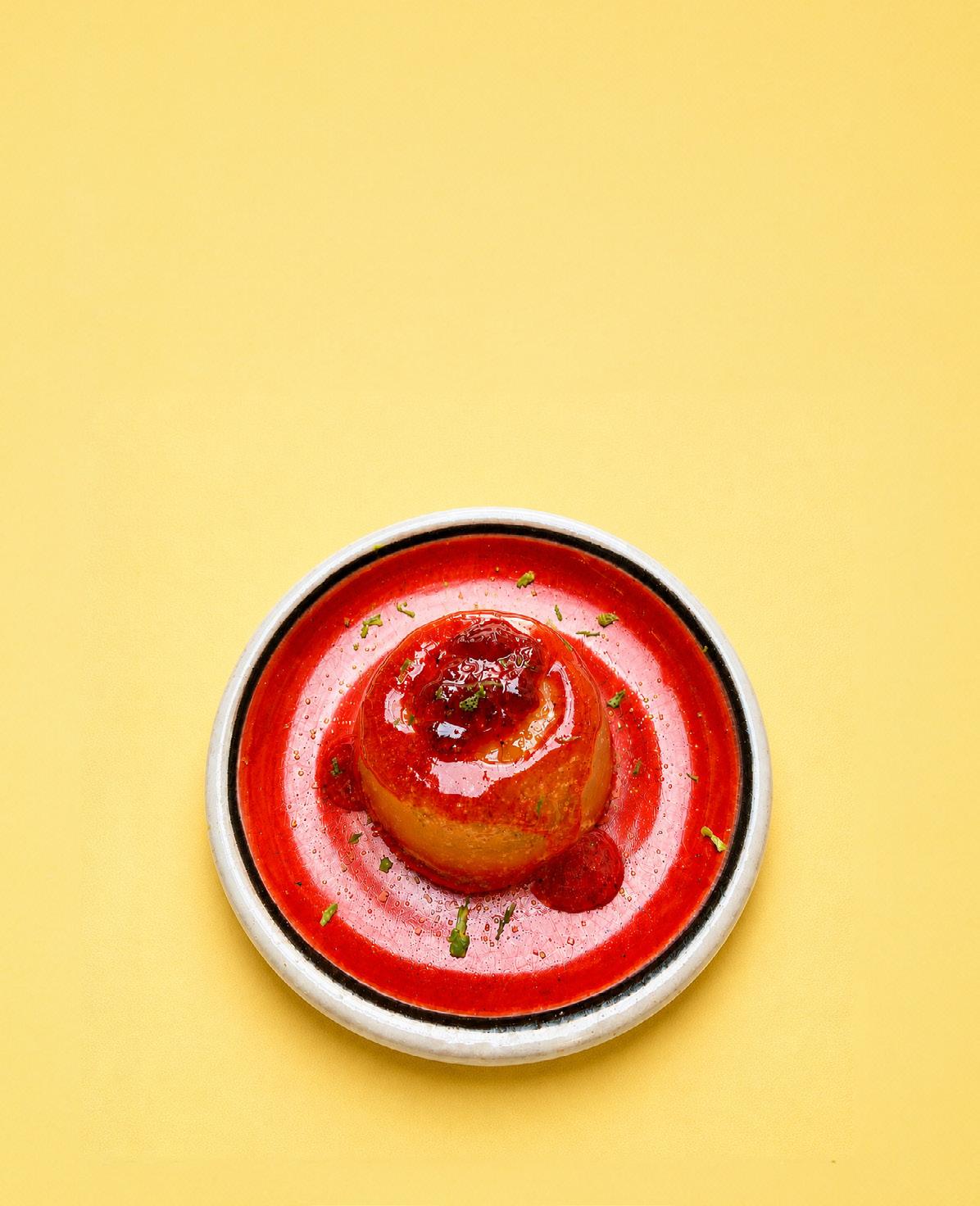
INGREDIENTS FOR 6 SERVINGS
14 g gelatine
350 ml strained lemon juice
150 ml water
150 g Zefiro caster sugar
150 g strawberries
Organic lemon zest
Brown sugar
Dissolve the gelatine in lukewarm water, strain and add the sugar. Squeeze and strain the lemon juice, then mix the two preparations together.
Pour into aluminium moulds and chill in the fridge for 8 hours. Blend the strawberries with 30 ml of water and 30 g of sugar. Turn the jelly out onto a dessert plate, decorate with the strawberry purée, extra lemon zest and a sprinkling of brown sugar.