
Afulodidim Nikefolosi & Brice Catherin
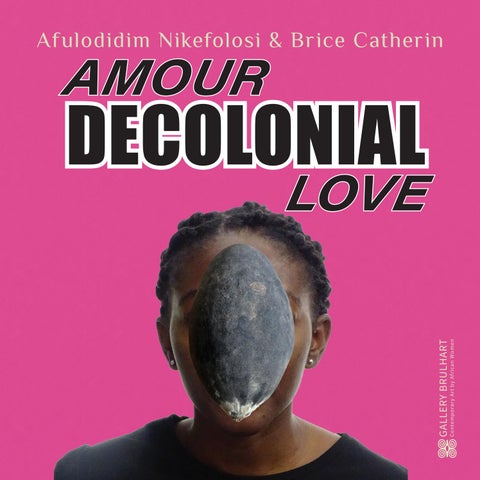
Afulodidim Nikefolosi & Brice Catherin
What is decolonial love? An invitation. An intimacy. A betrayal.
In this world which is still struggling to come to terms with its colonial past and where colonial relations shift and are masked in the everyday interactions, the exhibition is an opportunity to explore new ways of confronting the fear of difference through what is said to be the most powerful force — love.
We blur the lines between intimacy and intrusion just as we question decolonial love/l’amour décolonial. Using objects that are usually viewed from a distance, if at all, we invite exhibitioners to engage their curiosity and see further than what would ordinarily be allowed. But this curiosity is also an intrusion. The juxtaposition of cultures and the use of cultural artefacts cause a tension between the familiar and the exoticisation of self and others. The curiosity then becomes an intrusion in thought and affect. There is postcolonial discomfort. Yet we are still invited to love.
Our exhibition asks: what is it to love decolonially? Faced with the Other, tolerance is merely a societal wooden leg, since it somehow implies the position of a superior being magnanimously accepting the presence of an inferior one. As for empathy, it is just not enough. The exercise of empathy is always, at best, partial, and, at worst, a brutal disillusion.
We have a Fanonian approach of anger, acknowledgement of social inequalities, forms of systemic violence, and histories of exploitation and denial. The best possible world cannot be built with corpses in the closet. We believe the tension of decolonial love, between brutal reality and profound love of difference, is the fertile ground of (possible) collective futures.
The play with language therefore is both a hope and a warning that in attempting to share a postcolonial world in search for better, it is all too easy to fall into the colonial, even as we try and imagine something better. Yet, we continue to hope for, to grasp, to create decolonial love.
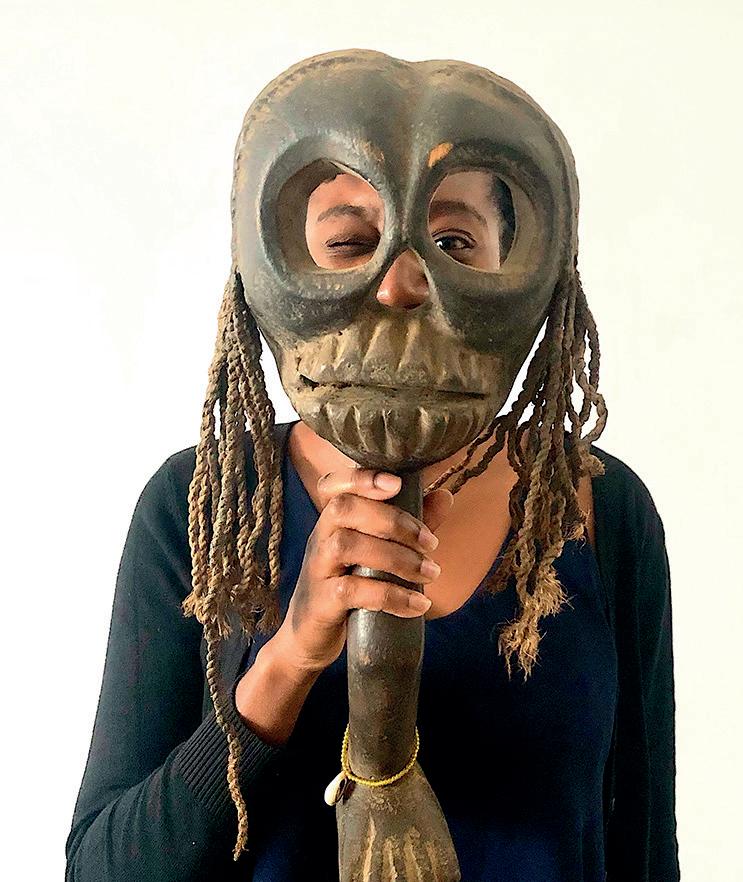
The Mask Series shows modified masks. Traditionally in Zambian cultures, masks are sacred and ritual objects. Their wearers are to be feared and never approached. Nowadays, ‘lay’ masks are being produced by artisans and sold in markets for domestic and foreign consumption. Yet, these masks are still loaded with myths and secrets. In our installation, we invite the visitor to literally look at what’s hidden behind the masks with the help of magnifying glasses. Each mask carries a different secret.
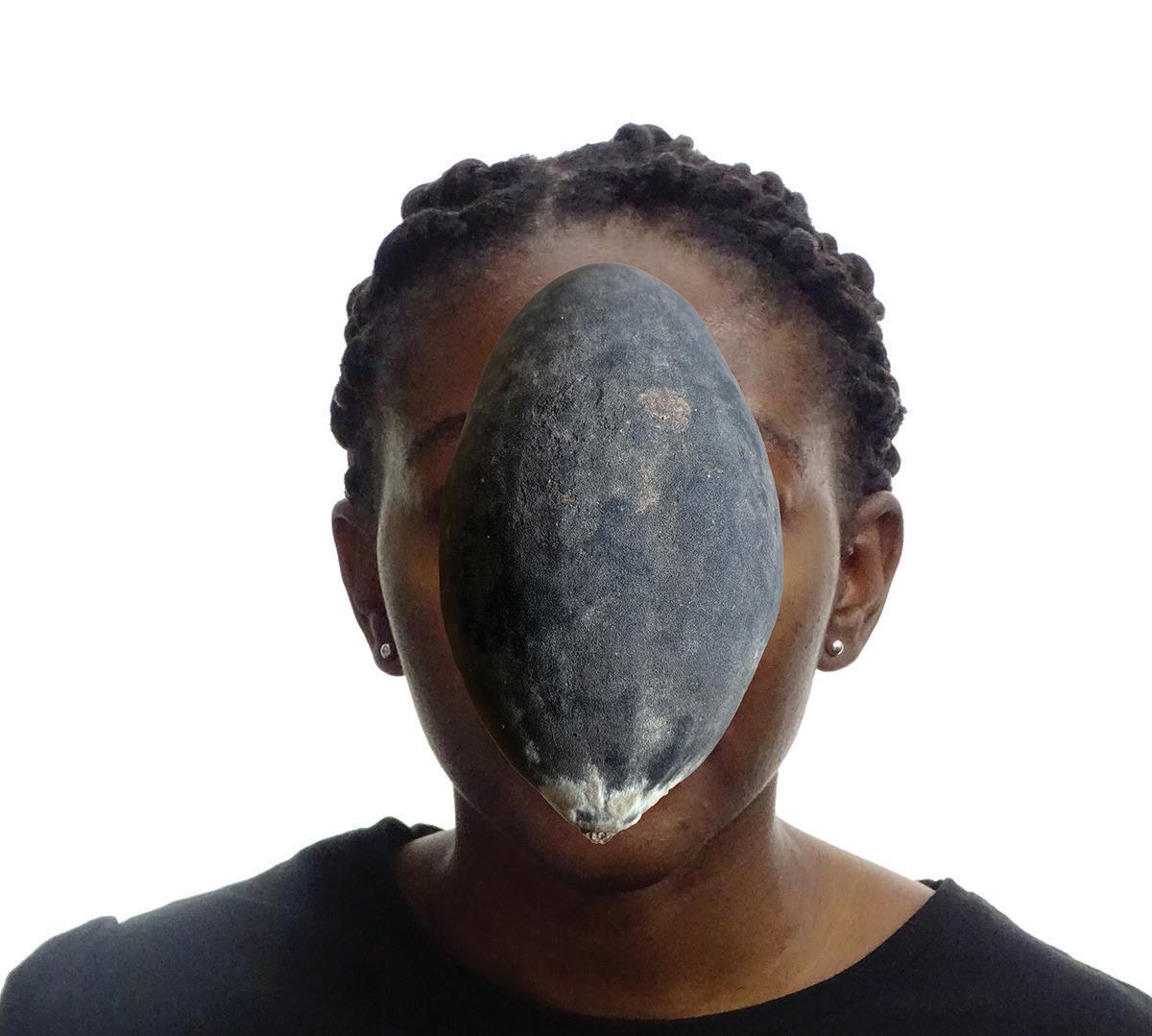
The Baobab Series is an ongoing collection of photo portraits in which faces are hidden by a floating baobab fruit. Directly referencing — and gently mocking — Magritte’s Le fils de l’homme, this series plays on a number of layers of mystery: who is behind this fruit? Why this fruit and what is it actually? While partially hiding the subjects of the photo, the baobab fruit encourages the viewer to investigate what they’re seeing more thoroughly than a ‘simple’ portrait might have. Exploring the themes of borders, spirituality and intimacy, each portrait invites the viewers to attempt to see what lies behind the baobab, even while appreciating its presence as an obstruction and therefore subject. It is a commentary on the things that are hidden in plain sight, what we choose to see and what effect this choice of perspective has on our understanding of society.
The Beads explore the topic of intimacy. Used as a communicative tool, beads act as codes and adornments. By exhibiting more than 100 meters of hand strung beads, Afulodidim comments on the beauty standards that exist and the labour of beauty and communication. The beads create an intimacy between maker and viewer: a silent but ever-present representation of what, through our gaze, becomes a violation of that intimacy and transformed into the realm of voyeurism.
Written as a visit of the exhibition in a textual form, Tente is a collection of tales that explore the themes of postcolonial discomfort and the possibility of decolonial love. While Afulodidim Nikefolosi and Brice Catherin travel through Zambia to follow Tente the sorceress and her tribe, they explore some of the myths, the history, the tensions and the hopes of what constitutes modern Zambia.
Qu’est-ce que l’amour décolonial ?
Une invitation.
Une intimité.
Une trahison.
Dans ce monde peinant à assumer son passé colonial et où les relations coloniales se déplacent, masquées dans les interactions quotidiennes, l’exposition est l’occasion d’explorer de nouvelles façons d’affronter la peur de la différence par le biais de ce que l’on dit être la force la plus puissante — l’amour.
Nous brouillons les lignes entre intimité et intrusion tout comme nous interrogeons l’amour décolonial. En détournant des objets aperçus habituellement de loin, nous invitons le public à voir plus loin que ce qui est normalement autorisé. Mais cette curiosité est aussi une intrusion. La juxtaposition de cultures provoque une tension entre le familier et l’exotisation. Émerge alors un malaise postcolonial. Malgré cela, chacun·e est invité·e à aimer.
Face à l’Autre, la tolérance n’est qu’une jambe de bois sociétale, puisqu’elle implique en quelque sorte un être supérieur acceptant magnanimement la présence d’un être inférieur. Quant à l’empathie, elle ne suffit pas. Son exercice est toujours, au mieux, partiel, au pire, une désillusion brutale.
Notre approche est fanonienne: nourrie de colère, de reconnaissance des inégalités sociales, des formes de violence systémique, des histoires d’exploitation et du déni. Le meilleur des mondes ne peut être bâti avec des cadavres dans le placard. La tension issue de l’amour décolonial, entre la réalité brutale et l’amour profond de la différence, est le terrain fertile de futurs collectifs.
Notre titre est à la fois un espoir et un avertissement : en essayant de partager un monde postcolonial en quête d’amélioration, il demeure trop facile de retomber dans le colonial. Malgré cela, nous continuons à espérer, à saisir, à inventer un amour décolonial.
La série des masques : Dans les cultures zambiennes, les masques sont des objets sacrés. Leurs porteur·ses sont craint·es et ne doivent jamais être approché·es. Aujourd’hui, des masques « profanes » sont produits par des artisans et vendus sur les marchés pour la consommation nationale et internationale. Pourtant, ces masques sont encore chargés de secrets. Dans notre installation, nous invitons les visiteur·ses à regarder littéralement ce qui se cache derrière les masques.
La série baobab est une collection de portraits dans lesquels les visages sont dissimulés par un fruit de baobab flottant. Faisant directement référence au célèbre tableau de Magritte, cette série joue sur plusieurs niveaux de mystère : qui se cache derrière ce fruit ? Pourquoi ce fruit, et d’ailleurs, quel est-il ? Tout en dissimulant partiellement les sujets de chaque photo, le fruit encourage les spectateur·ices à enquêter sur ce qu’i·elles voient de manière plus approfondie que ne l’aurait provoqué un « simple » portrait. Explorant les thèmes de la frontière, de la spiritualité et de l’intimité, chaque portrait invite le public à essayer de voir ce qui se cache derrière le fruit, tout en appréciant sa présence en tant qu’obstacle et donc sujet, commentant sur ce qui est caché à la vue de tou·tes, sur ce que nous choisissons de voir et sur l’effet que ce choix de perspective a sur notre compréhension de la société.
Les perles explorent le thème de l’intimité. Utilisées comme outil de communication, elles agissent comme codes et ornements. En exposant plus de cent mètres de perles enfilées à la main, Afulodidim expose les normes de beauté et le labeur que requièrent beauté et communication. Les perles créent une intimité entre la confectionneuse et les spectateur·ices : une représentation silencieuse de ce qui, par notre regard, devient une violation de cette intimité et se transforme en voyeurisme.
Écrit comme visite de l’exposition sous forme textuelle, Tenté est un recueil de contes explorant les thèmes de ladite exposition. Alors qu’Afulodidim et Brice voyagent à travers la Zambie pour suivre Tenté la sorcière et sa tribu, ils explorent à travers la fiction les mythes, l’histoire, les tensions et les espoirs de ce qui constitue la Zambie moderne.
Afulodidim is Zambian and Brice is French. Through both their combined and parallel art practices, they ask each other and the audience: “How do you think? How do you make stuff? How do you create an allegory? How do you welcome into your world? What can I do to enter your world?”
Afulodidim est zambienne et Brice est français. À travers leurs pratiques artistiques combinées et parallèles, ils demandent l’une à l’autre et au public « Comment penses-tu ? Comment fabriques-tu des objets ? Comment crées-tu une allégorie ? Comment accueilles-tu dans ton monde ? Que puis-je faire pour entrer dans ton monde ? »
Afulodidim Nikefolosi is the artist pseudonym of a Zambian postcolonial-decolonial Afro-feminist scholar who completed a PhD at the University of Huddersfield Business School (UK) in 2025. Her research is concerned with attitudes and everyday experiences that relate to race, academic identity and the postcolonial condition, which she has discussed at institutions that included the University of St. Gallen (CH), Stellenbosch University (SA), the University of Bayreuth (D) and the University of Birmingham (UK). She is interested in further investigating these topics through artistic practices that use collaboration as a method.
Afulodidim was born and raised in Zambia and educated in Australia and the UK. Since 2020 and in parallel of her academic work, she has published short fictions in English in the British magazine The Mass, in French in the French magazine Mon Lapin Quotidien (with Brice Catherin), has collaborated on art videos with the Noisebringers exhibited in the USA and Switzerland, and has composed an orchestra piece for the Glasgow Improvisers Orchestra (UK). Most of these works explore the concept of postcolonial discomfort, which she is now experiencing in Cork, Ireland since January 2025, after spending two years in Switzerland.
Afulodidim Nikefolosi est le nom d’artiste d’une universitaire afro-féministe postcoloniale et décoloniale zambienne qui a obtenu un doctorat à l’école de commerce de l’université de Huddersfield (Royaume-Uni) en 2025. Ses recherches portent sur les attitudes et les expériences quotidiennes liées à la race, à l’identité universitaire et à la condition postcoloniale dont elle a débattu dans des établissements tels que l’université de St. Gallen (CH), l’université de Stellenbosch (SA), l’université de Bayreuth (D), et l’université de Birmingham (UK). Elle approfondit ses recherches sur ces sujets par le biais de pratiques artistiques qui considèrent la collaboration comme méthode.
Afulodidim est née et a grandi en Zambie et a fait ses études en Australie et au RoyaumeUni. Depuis 2020 et parallèlement à son travail universitaire, elle a publié de courtes fictions en anglais dans le magazine britannique The Mass, en français dans le magazine français Mon Lapin Quotidien (avec Brice Catherin), a collaboré à des vidéos d’art (avec les Noisebringers) exposées aux ÉtatsUnis et en Suisse, et a composé une pièce orchestrale pour le Glasgow Improvisers Orchestra (Royaume-Uni). La plupart de ces œuvres explorent le concept d’inconfort postcolonial, qu’elle expérimente actuellement à Cork, en Irlande, depuis janvier 2025, après avoir passé deux ans en Suisse.
Brice Catherin is a French artist and doctor in music composition (University of Hull, UK). He was originally trained as a classical cellist (HEMU, Lausanne, 2004) and composer (HEM, Geneva, 2006), which he survived by focusing on experimental music, free improvisation, and putting many musicians from different backgrounds together to make noise. He now has 19 years of experience as an independent musician (improvisation and experimental music), intermedia artist, performance artist, visual artist and writer, and eight years of experience as an art researcher.
His transversal and international approach to art practices has led him to collaborate with artists from all over the world. He also develops art projects and art-based Participatory Action Research (PAR) projects across disciplines with non-artists from the Global Majority as well as under-represented and/or minoritised populations in Europe and Southern Africa.
He is presently the co-artistic director of the Association de Malfaiteurs with Jonathan O’Hear (Geneva, Switzerland), a postdoctoral researcher at the University College Cork (Ireland), and an affiliate artist of the UNESCO Chair in Glasgow (UK).
Exhibitions
2024 | It could be better | Galerie Analix Forever | Geneva
2022 | AiiA Festival | Théâtre Saint-Gervais | Geneva
2021 | AiiA Festival | Théâtre Saint-Gervais | Geneva
2021 | Is the new punk | Galerie Analix Forever | Geneva Screenings
2022 | AiiA Festival | Théâtre Saint-Gervais | Geneva
2021 | AiiA Festival | Théâtre Saint-Gervais | Geneva
2021 |Tente III (with the Noisebringers) | JeffersonParkEXP Twitch (USA)
2021 | Tente II (with the Noisebringers) | JeffersonParkEXP Twitch (USA) Art performances
Solving Diversity
2022 | Galerie Analix Forever, Geneva
2024 | Théâtre du Grütli
2025 | University of Warwick (UK)
2025 | University of Glasgow (UK) Songs for the birthing shamaness
2024 | Glasgow Improvisers Orchestra (UK) Workshops
2023 | Our Stories | Writing workshop for primary school children | Zambia
Brice Catherin est un artiste français et docteur en composition musicale (université de Hull, Royaume-Uni). Il a reçu une formation de violoncelliste classique (HEMU, Lausanne, 2004) et de compositeur (HEM, Genève, 2006), à laquelle il a survécu en se concentrant sur la musique expérimentale, l’improvisation libre, et en réunissant de nombreux·ses musicien·nes d’horizons différents pour produire du bruit. Il a aujourd’hui 19 ans d’expérience en tant que musicien indépendant (improvisation et musique expérimentale), artiste intermédia, performeur, artiste visuel et auteur, et huit ans d’expérience en tant que chercheur dans le domaine de l’art.
Son approche transversale et internationale des pratiques artistiques l’a amené à collaborer avec des artistes du monde entier. Il développe également des projets artistiques dans plusieurs disciplines y inclus de recherche-action participative artistique dans plusieurs disciplines avec des non-artistes de la majorité globale ainsi qu’avec des populations sousreprésentées et/ou minorisées d’Europe et d’Afrique australe.
Il est actuellement codirecteur artistique de l’Association des Malfaiteurs avec Jonathan O’Hear (Genève, Suisse), chercheur postdoctoral à la University College Cork (Irlande) et artiste affilié à la Chaire UNESCO de l’université de Glasgow (Royaume-Uni).
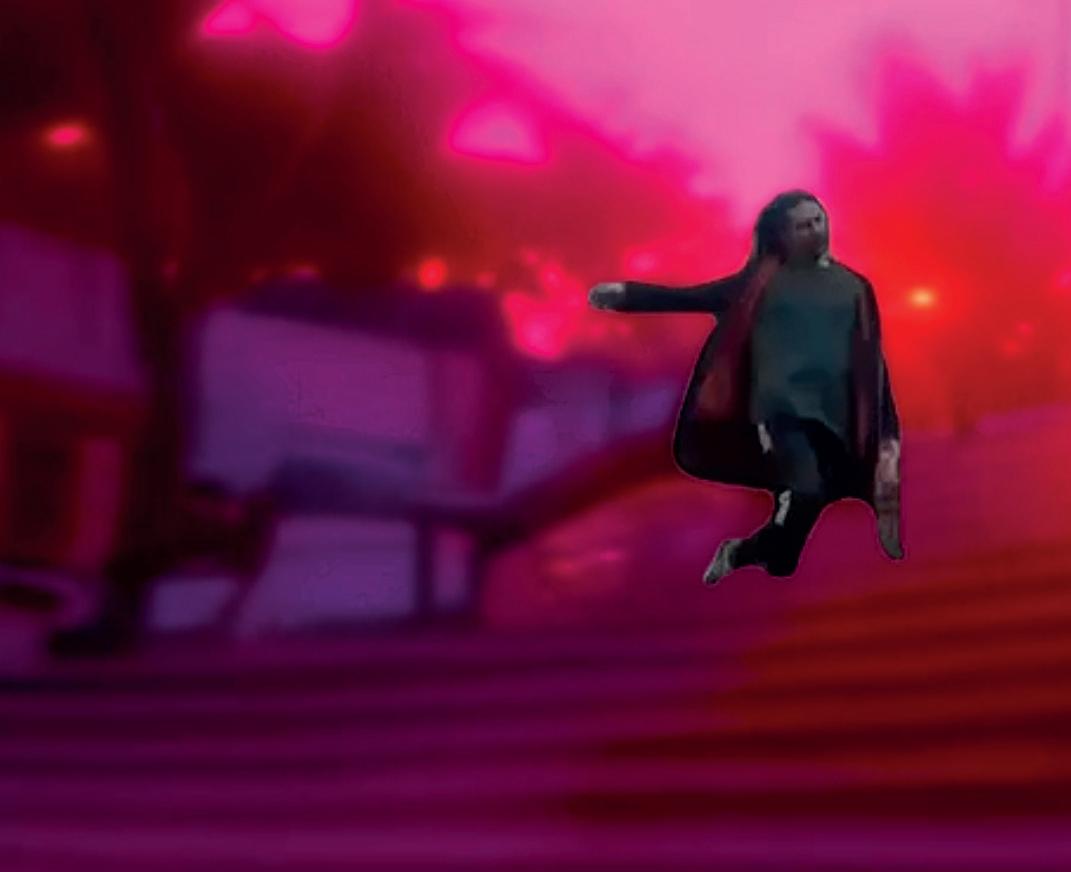
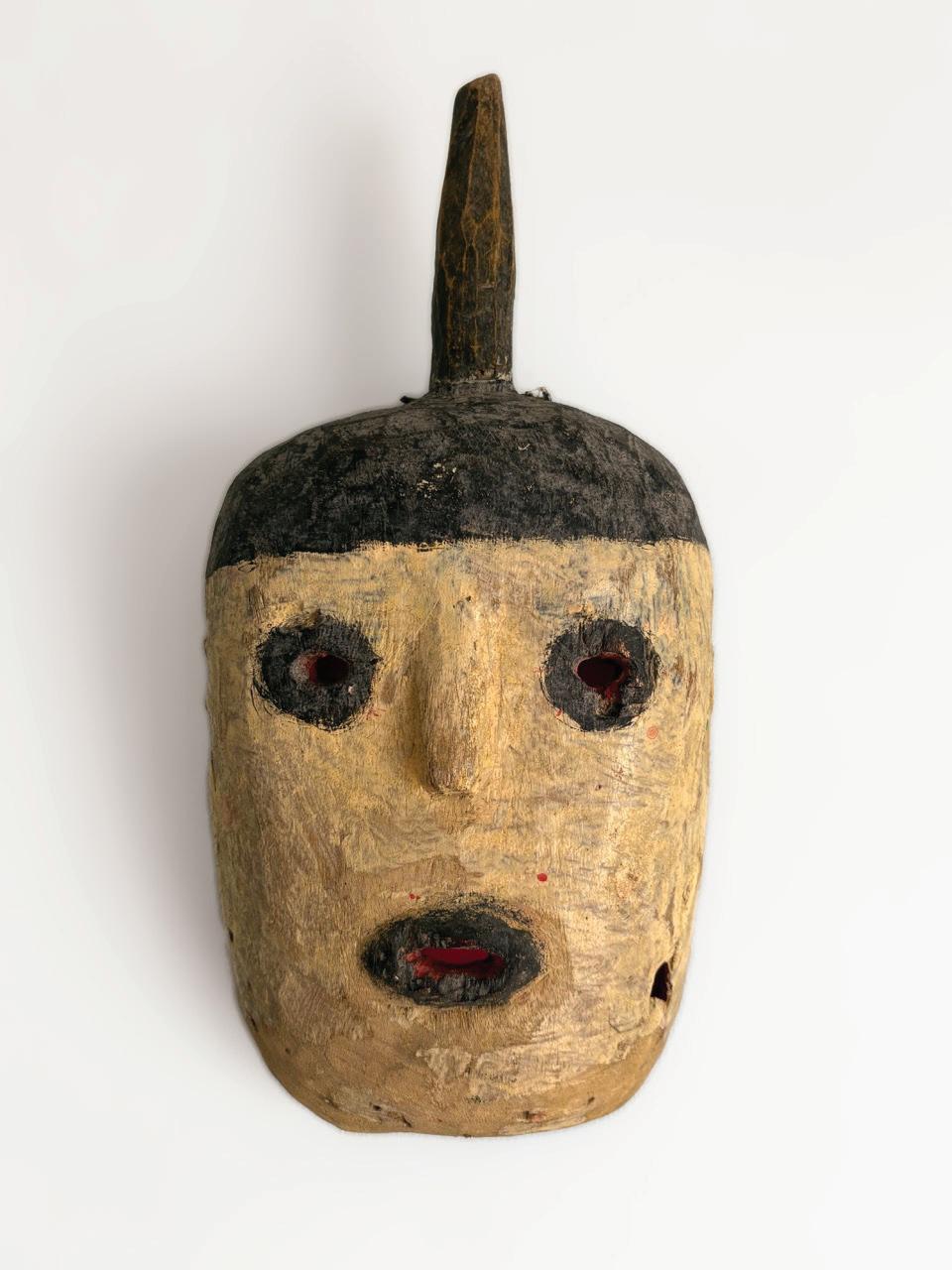
33 x 17 x 9 cm
media.
2025
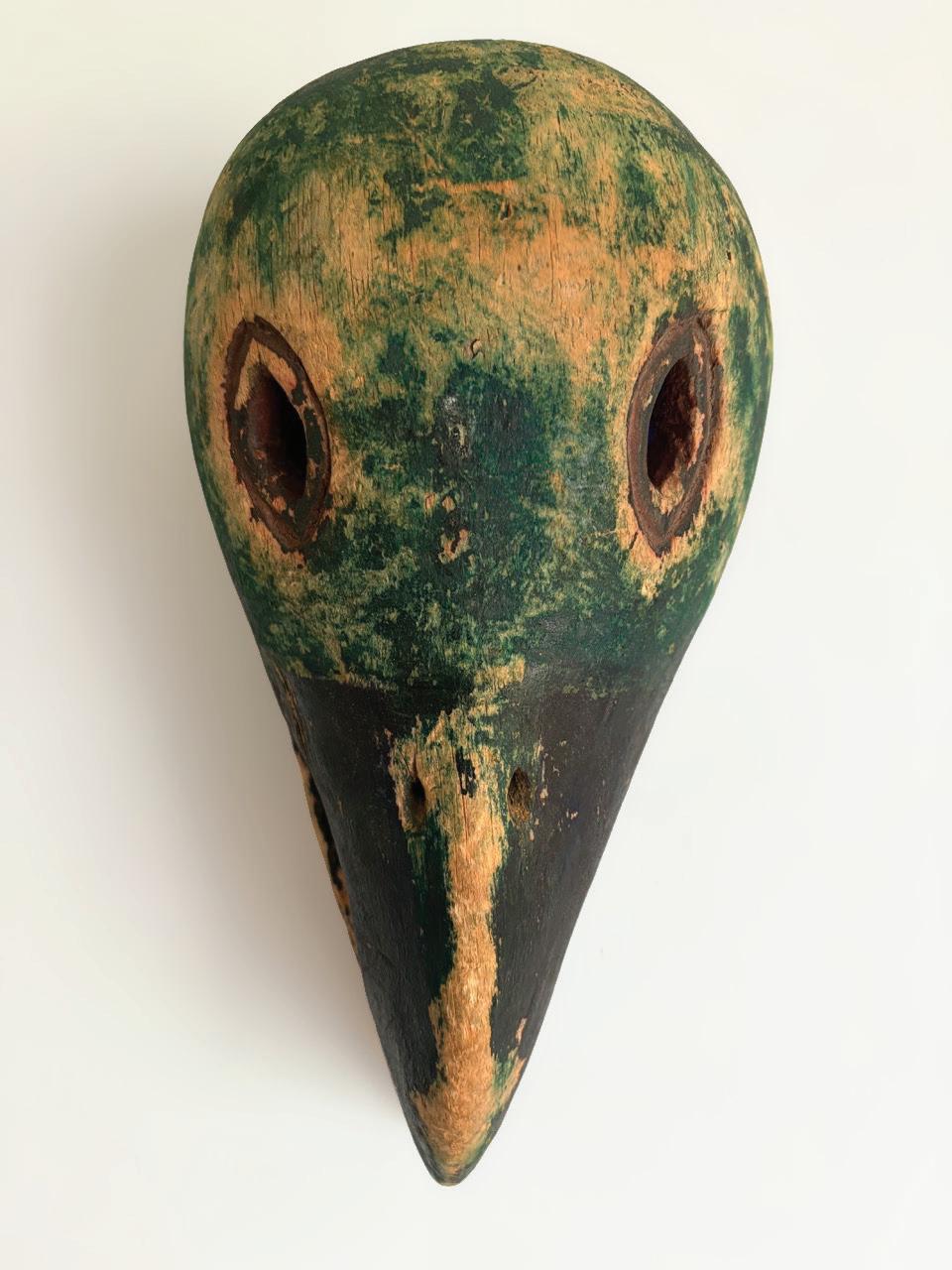
32 x 17 x 13 cm
Found wooden mask, mixed media. Comes with a 2x magnifier lens.
Masque en bois trouvé, techniques mixtes. Accompagné d’une loupe grossissante 2x.
2025
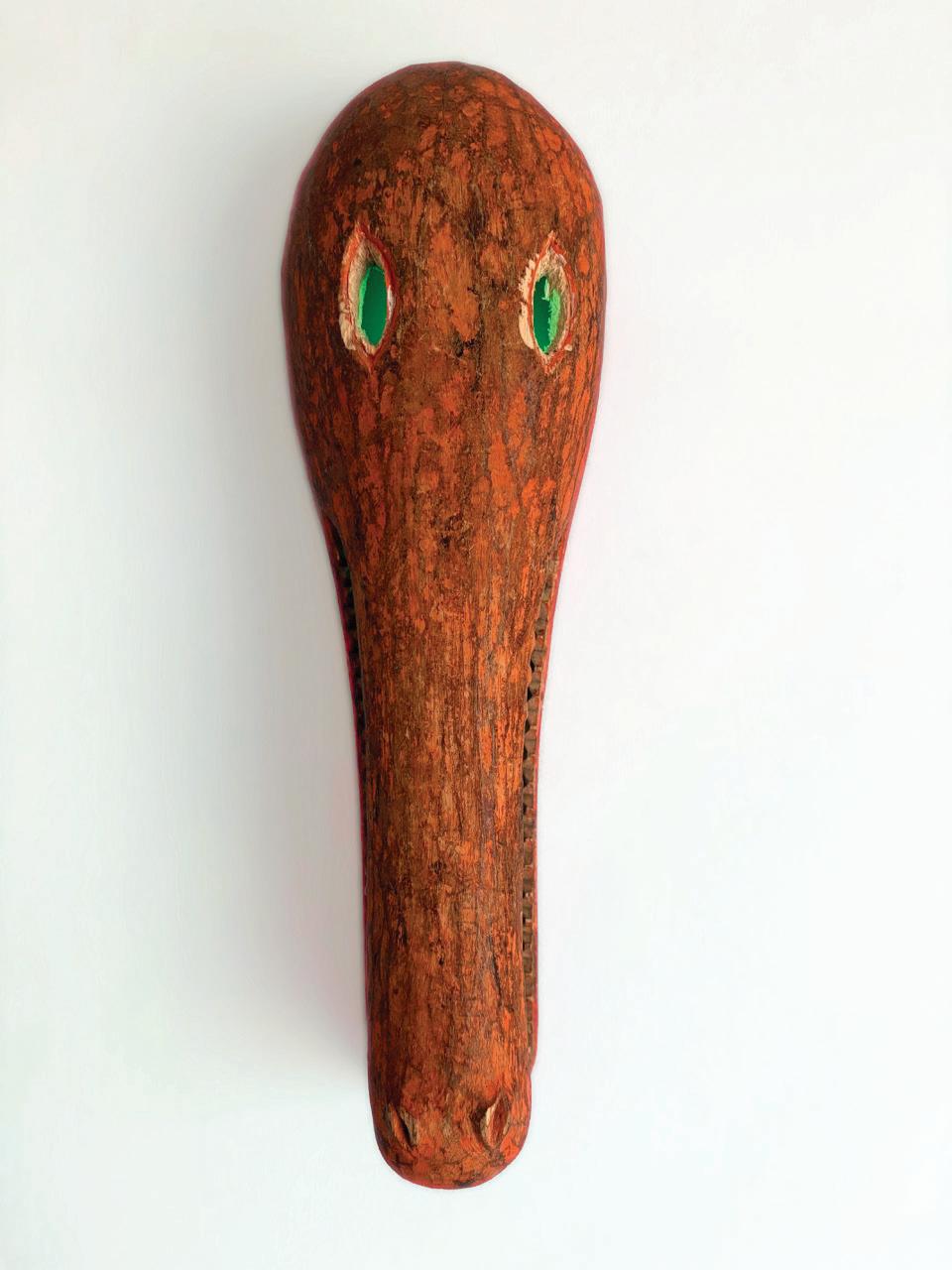
39 x 13 x 9 cm
Found wooden mask, mixed media. Comes with a 5x magnifier lens.
Masque en bois trouvé, techniques mixtes. Accompagné d’une loupe grossissante 5x.
2025
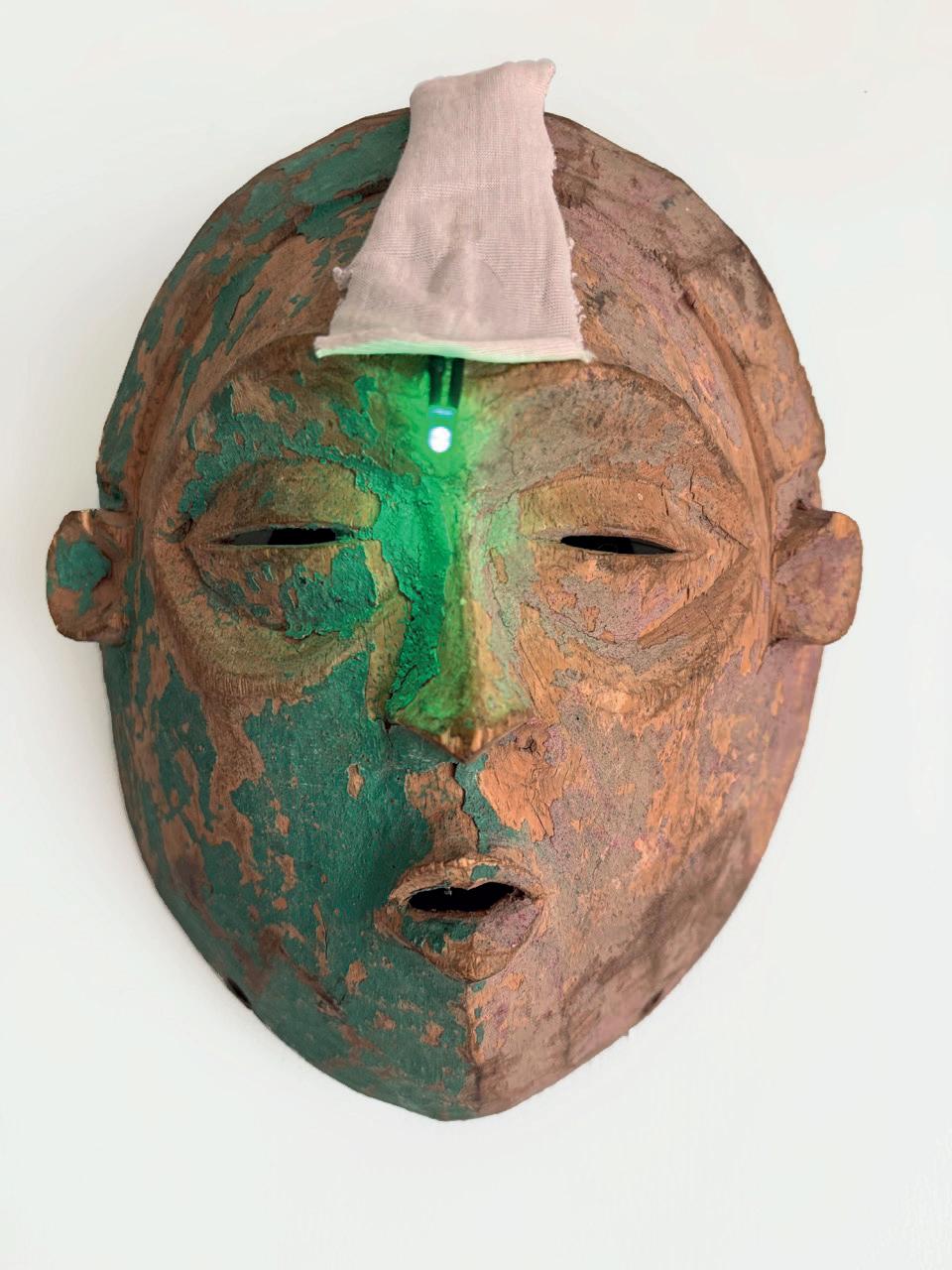
22 x 18 x 11 cm
Found wooden mask, mixed media. Masque en bois trouvé, techniques mixtes. 2025
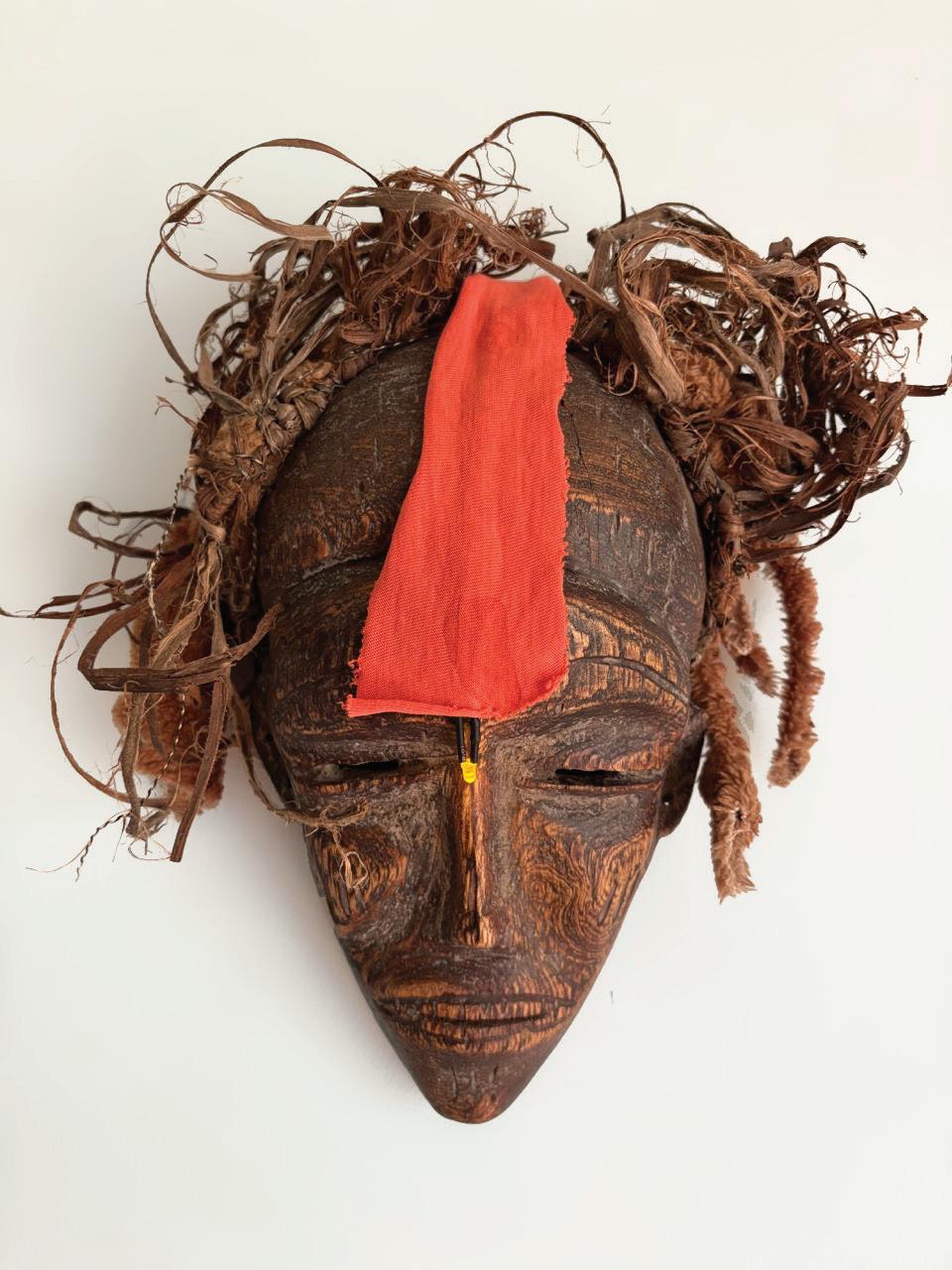
27 x 19 x 11 cm
Found wooden mask, mixed media. Masque en bois trouvé, techniques mixtes. 2025
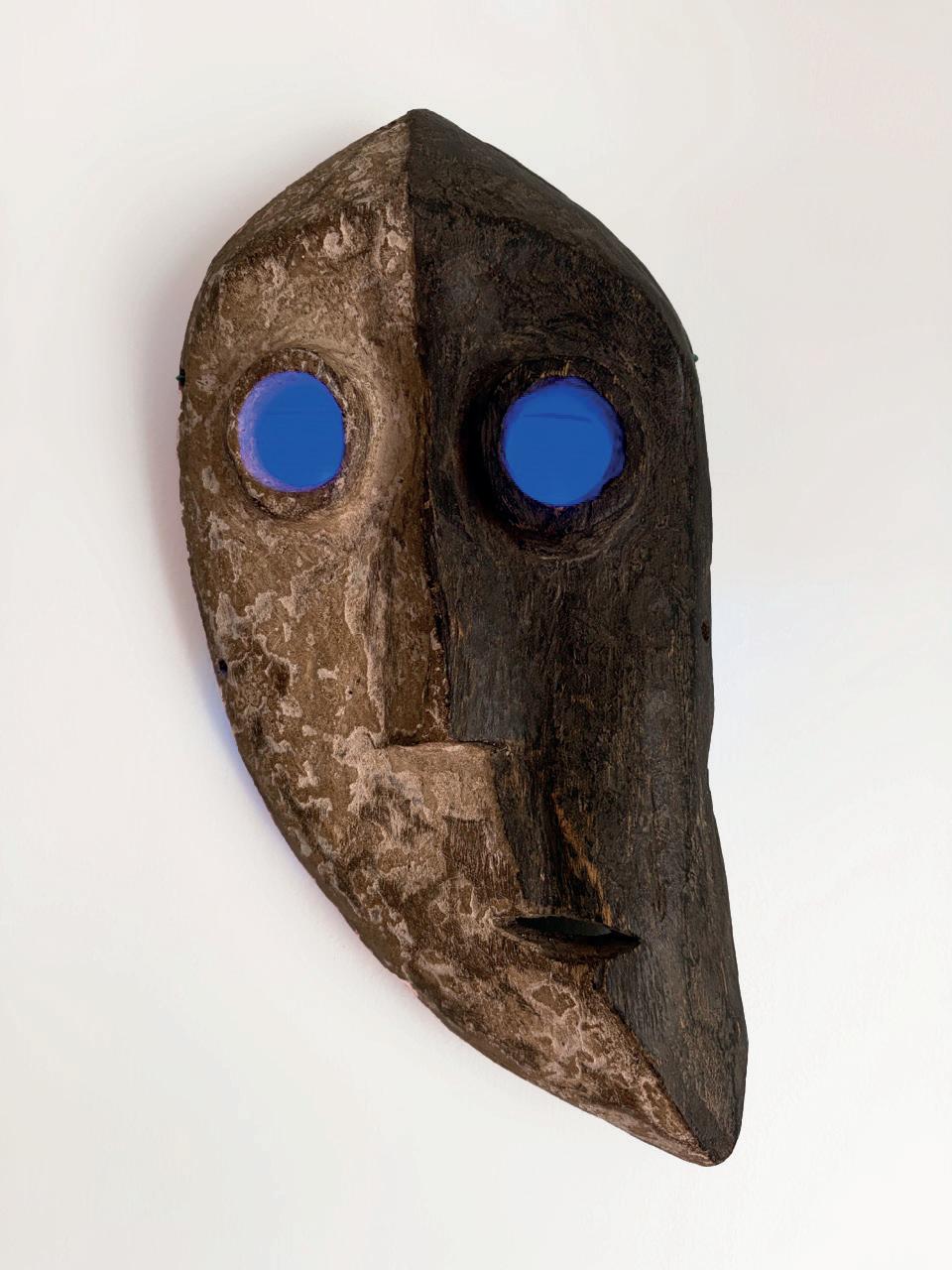
26 x 13 x 4 cm
Found wooden mask, mixed media. Comes with a 5x magnifier lens.
Masque en bois trouvé, techniques mixtes. Accompagné d’une loupe grossissante 5x.
2025
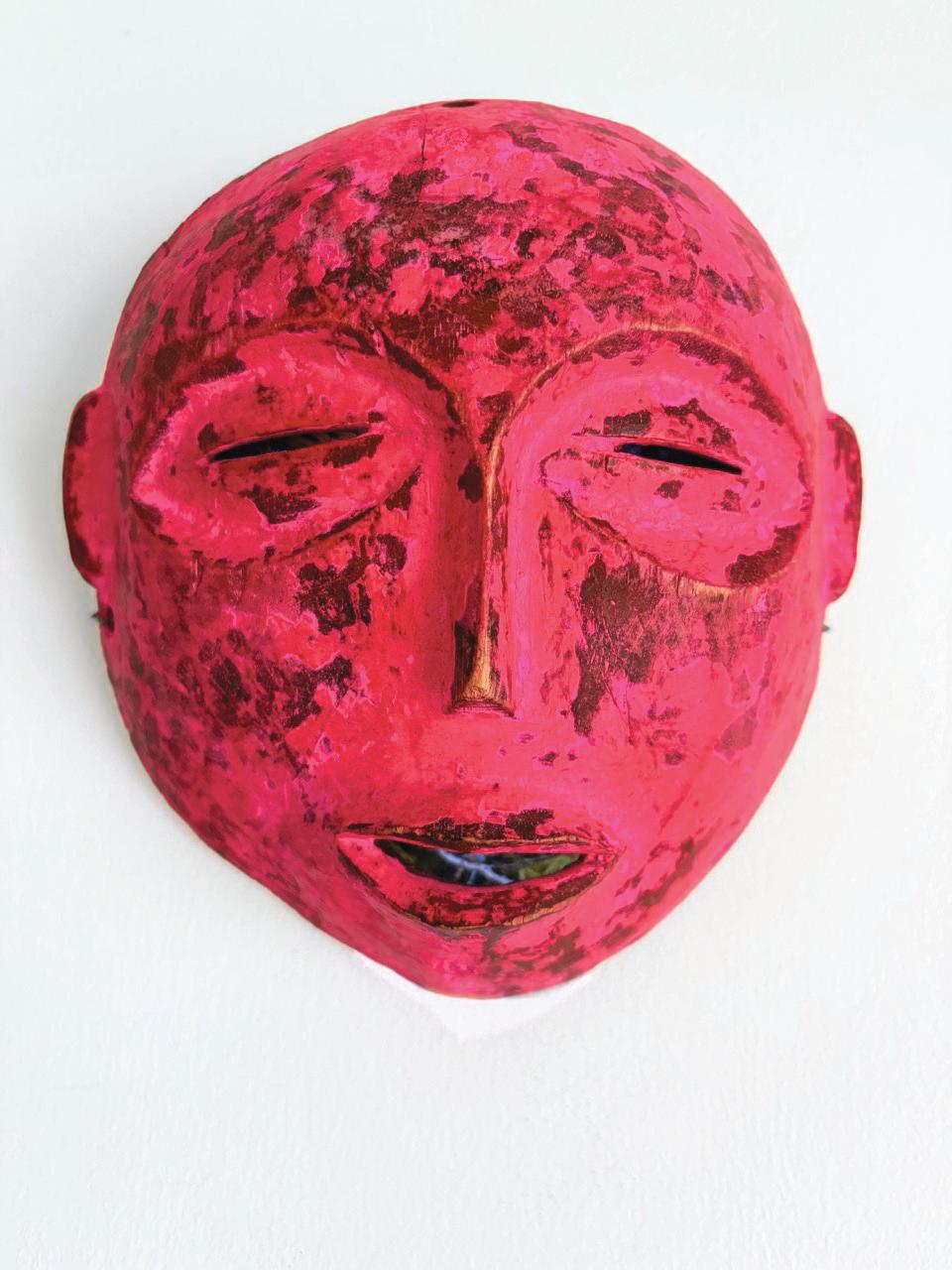
20 x 18 x 8 cm
Found wooden mask, mixed media. Comes with a 5x magnifier lens.
Masque en bois trouvé, techniques mixtes. Accompagné d’une loupe grossissante 5x.
2025
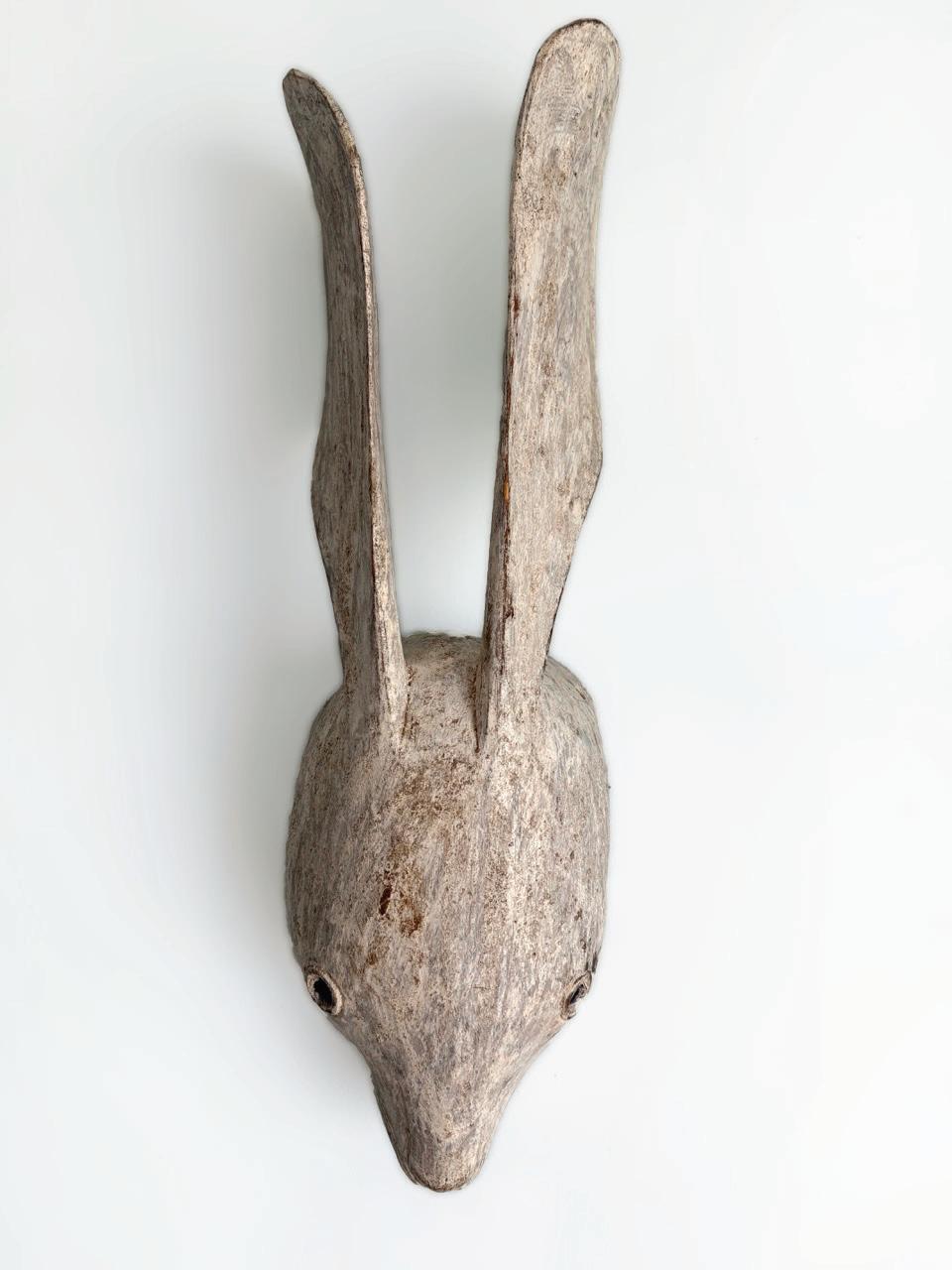
43 x 14 x 10 cm
Found wooden mask, mixed media. Comes with a 5x magnifier lens.
Masque en bois trouvé, techniques mixtes. Accompagné d’une loupe grossissante 5x.
2025 Rabbit
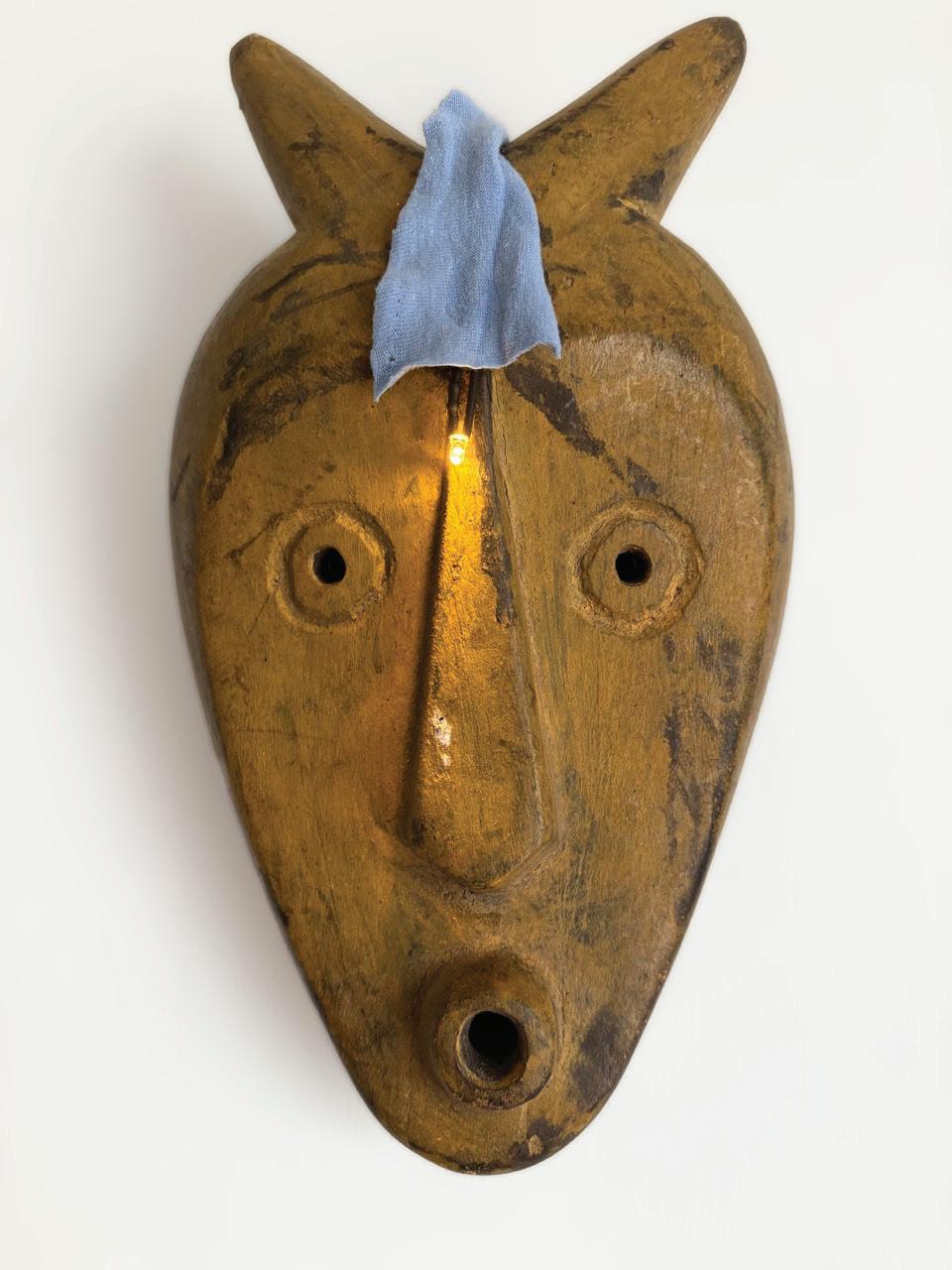
31 x 18 x 9 cm
Found wooden mask, mixed media. Masque en bois trouvé, techniques mixtes. 2025
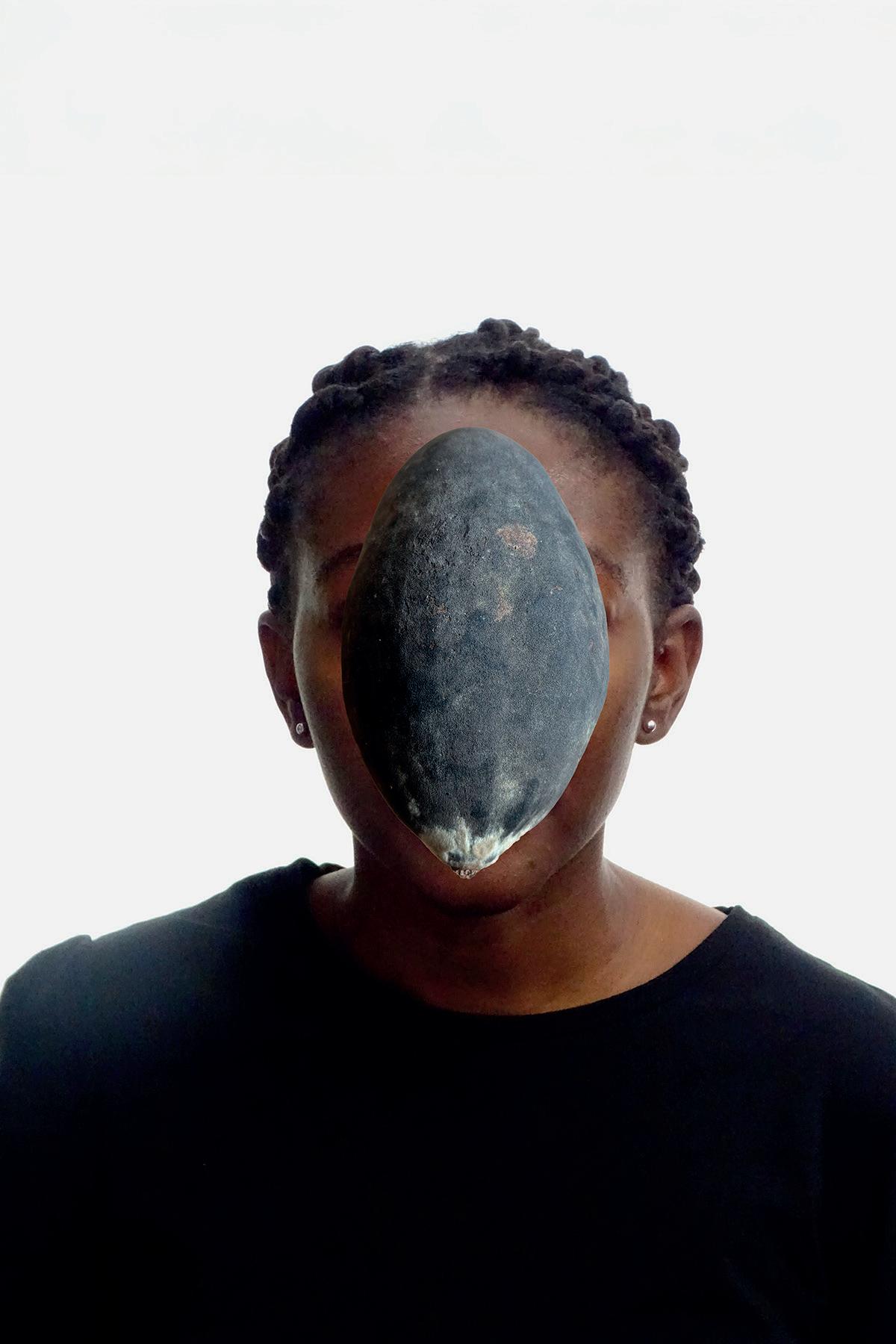
80 x 60 cm
Edition 1 of 3, + 1 artist edition.
Photo collage with reclaimed ID photo
Collage photo avec photo d’identité réappropriée
2025
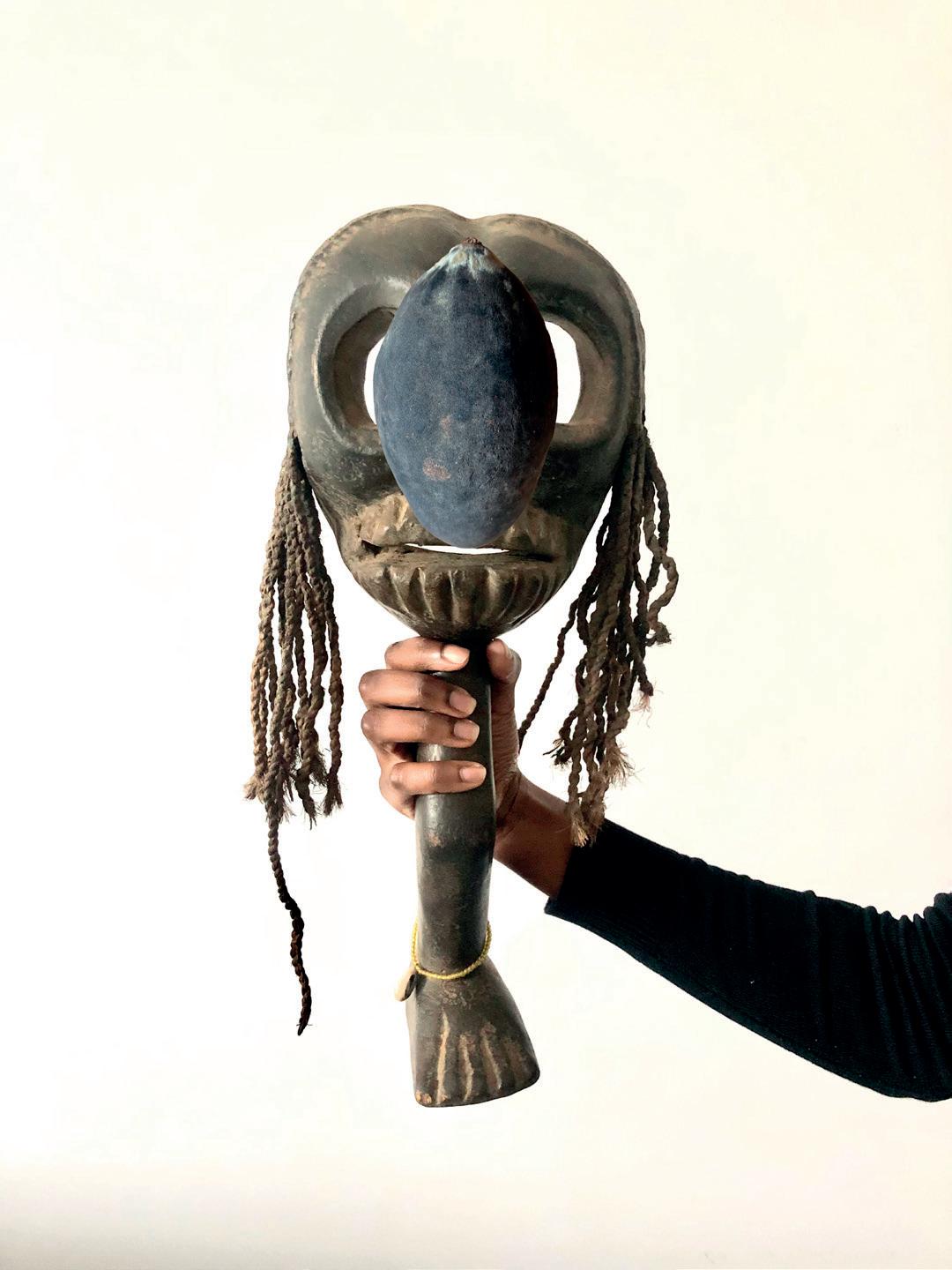
80 x 60 cm
Edition 1 of 3, + 1 artist edition.
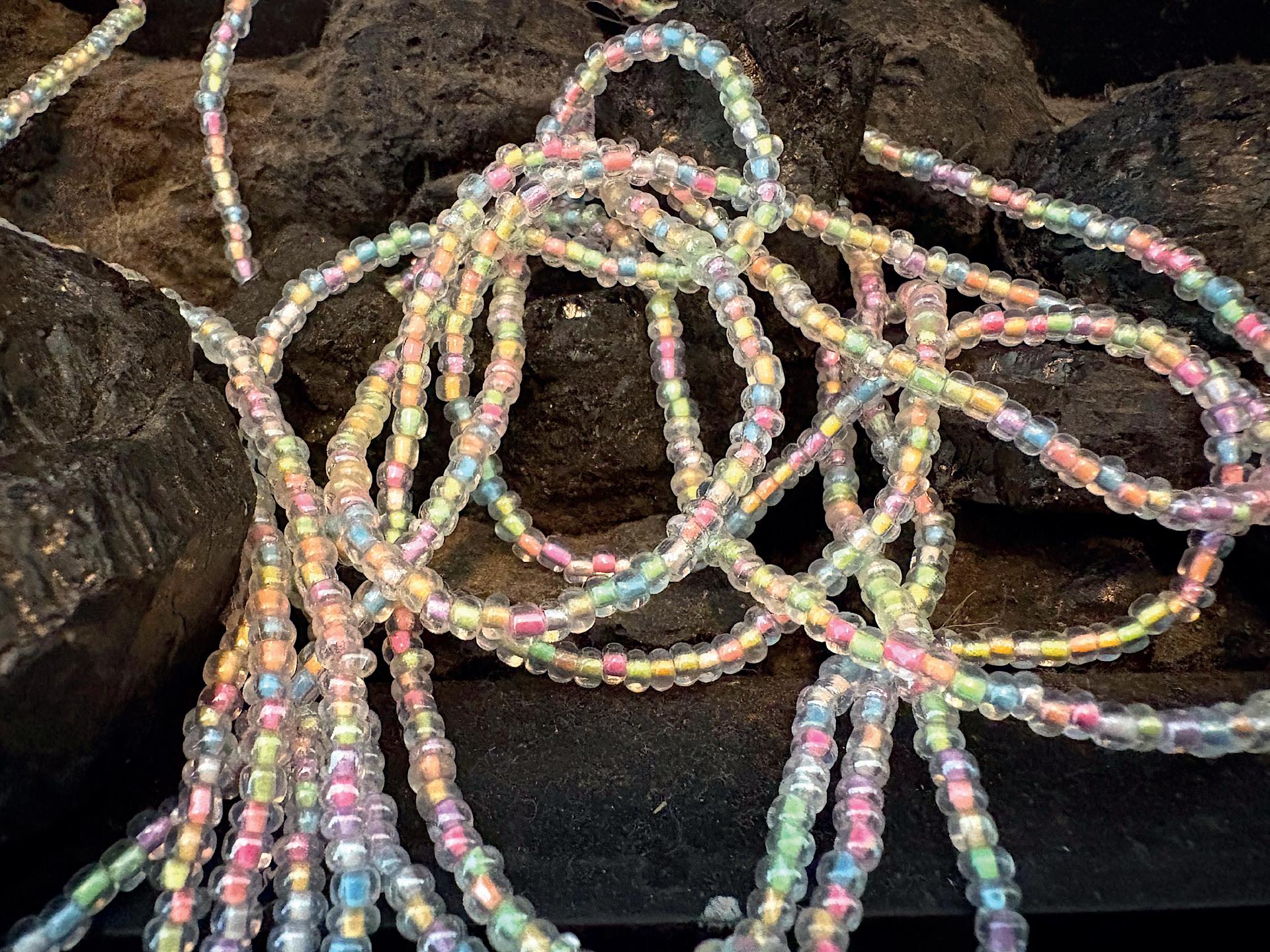
0.2 x 10,000 cm
Glass/plastic beads, elastic thread. Perles en verre/plastique, fil élastique 2025
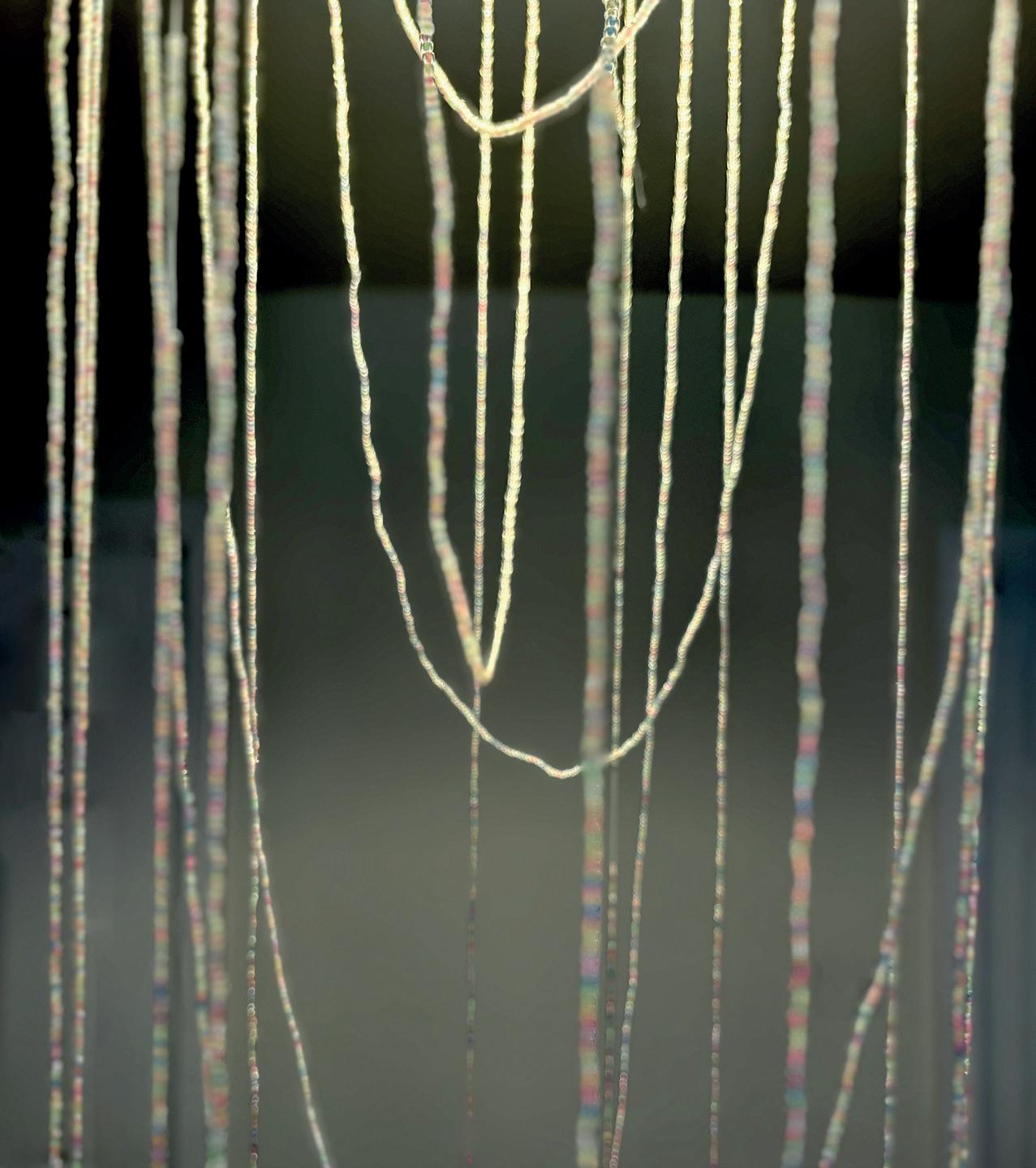
0.2 x 10,000 cm
Glass/plastic beads, elastic thread. Perles en verre/plastique, fil élastique 2025
www.gallerybrulhart.ch
@gallerybrulhart
Rue des Vollandes 21 1207 Genève GALLERY BRULHART
Contemporary Art by African Women