Quench Magazine, Issue 209 - December 2025

Page 1


Meet the Editors

Costume! I would be lying if I said I remembered how I came up with this theme. It feels so relevant yet understated. For this issue, I thought of Costume as a way of disguising your self. Costume isn’t only dress; it is also all the facets of creating a character. This includes makeup, confidence, hair, music, props and much more. Through our different sections, we explored Costume in all its aspects and the Welsh icons that give us such brilliant ways of seeing and interpreting Costume.

For some time now, costumes have been a big focus in the cultural and entertainment industries. We are seeing incredible costume design in films like Wicked or Frankenstein and extensive creativity in theatre. People are noticing this more and more and appreciating the meaning ful details that go into the process. Highlighting this on a Welsh level was very important for this issue.

This issue is extremely local; we focus on talent and content from our capital city and Wales as a whole. This was extremely important to me as the festive season is here and celebrating the creativity and talent we have in Wales is so important. It is a long issue, but the contents are phenomenal.

POP was a revealing first issue where we gave readers an experience of how to be themselves and optimise their potential. Costume is a complete 180 from this idea and explores how to create characters and alter-egos. This year, I want to put a lot of em phasis on creating a story through all our issues together. This story is still being written but I hope you get a sense of what these two chapters signify already!

With the new year coming, a lot of us will romanticise the idea of becoming someone new. I hope this theme will help you create a new persona for yourselves, whilst also staying true to your roots!

Special thanks to the Quench team who worked really hard on this very long issue!

- Charlotte, Editor-in-Chief

Hello again, readers and welcome back to issue 209 of Quench - Costume!

It’s shaping up to be an incredibly busy time of year, having made it through the November mid-term assignments you have approximately two weeks of rest (if you call Christmas-time rest) until it all starts back up again for the January deadlines and exams. Despite this overwhelming and often overstimulating period, we hope Costume can bring you a sense of relief, relaxation and an interesting read. I think it perfectly sums up this time of year, from dressing up for festive parties to being your true self around friends and loved ones, costume encapsulates everything.

For this issue I had the absolute pleasure of speaking to Bafta-winning actress, Rakie Ayola and our very own drama society, Act One to discuss all things costume in drama. They offered some great insights to the creative and collaborative world behind the scenes of media and have definitely influenced what I think about while I watch tv, theatre and film since.

The issue covers themes of tradition, modernity and identity and it has really shown me that costume is omnipresent, it’s just not always recognisable! Our wonderful contributors have written some incredible pieces that can offer perspective, advice and even five makeup tricks you need to know - courtesy of Greta Tude (see page 12)!

Whether you celebrate Christmas or not, I hope Costume inspires you to play dress up, try some new things out and most importantly, HAVE FUN this festive period!

- Molly, Deputy Editor

It feels as though winter has suddenly crept upon us with little warning, and the evenings are getting shorter, colder and much darker. This time of year often seems like a bit of a blur; rain, deadlines, faulty central heating and the aching lack of vitamin-D. So, when Charlotte suggested the theme of ‘costume’ for this issue, it felt like the perfect beacon of colour in an otherwise dreary winter period.

The theme of costume provides a versatility that is embedded within self-expression and breaking boundaries. As an integral feature within the theatre world, costume gives us the opportunity to become someone different or to extend and exaggerate parts of ourselves that otherwise remain hidden. Costume also exceeds the theatrical realm and can be used personally as a means of decoration and as an exploration of self-identity, becoming an exciting means of experimentation. We wanted to encapsulate this within issue 209, placing focus on individual experimentation, whilst paying homage to the incredible craftsmanship and artistry that gets put into costumes themselves. Frills, sparkles, lace and dramatic eye makeup intertwined with intricate seams and carefully sewn pieces – costume brings together the art and the artist.

This issue has been incredibly fun to work on, and we’ve collaborated with so many amazing individuals; from drag queens, to dancers to costume designers. Every page is full of expression, rich colours and individuality, which reflect our hard-working Quench team and their wonderful selves. I hope that this issue adds a bit of sparkle and warmth to your wintery days and inspires you to jump further into the world of costume!

Jemima, Deputy Editor

Meet The Team

Charlotte Hardie-Watts Editor-In Chief
Molly James Deputy Editor
Jemima Lake Deputy Editor
Ola Rzeszut Features
Jessica Scurlock Features
Lily Portch Fashion
Blessing Ajiloseda Fashion
Victoria Deviana-Wedge Culture
Emily Gillbard Culture
Christine Jenkins Film & TV
Lydia Guy Film & TV
Kani Abdullah Travel
Molly Derrick Travel
Erin Davies Clebar
Lili Ray Clebar
Leigha Sanejo Love
Lauren Hazeldine
Kitty Connolly Literature
Alicia Tariq Literature
Eiriana Zhou Food & Drink
Ruby Davis Music Emma Howe Music
Jessica Fotheringham Beyond
Maya Jacob Columnist
Seren Ward Social Secretary
Jasmine Mitchell Food & Drink
Thandi Nia Carklin Head of Design
Emily Allbutt Page Designer
Huda Malik Page Designer
Adriana Coulter Page Designer
Melody Cox Page Designer
Kas Bayat Photographer
Eve Harris Photographer
Lucy Bremner Illustrator
Jahdai Headley Illustrator
Erica Russell Head of Social Media
Mia Bikova Instagram
Meagan Griffiths X
Martha Spencer Instagram
Deryn Whitehouse TikTok
Alyssia Hampson Copy Editor
Priyanka Seepaul Copy Editor
Kyle Adam Copy Editor
Lydia Byrne Copy Editor

Table of Contents

Pages 10-12 ...............................................................................................................................................................Fashion

“For God’s sake! I don’t have a pea outfit! The struggles of costume socials in Cardiff” “Stage Makeup Tips and Tricks: Greta Tude Shares Her Best”

Pages 14-15 .................................................................................................................................................................Culture

“Masquerade Balls: A Costume Revival” “Subcultures and Costumes of Rebellion”

Pages 18-20...................................................................................................................................................................Travel

“Eisteddfod: The Culturally Welsh Festival that Travelled the World” “Travelling Circuses of Cymru and Beyond”

Pages 22-23

Interview

“Costumes & Characters: An interview with Cardiff Cabaret Club & Foo Foo Labelle”

Pages 24-26...................................................................................................................................................................Clebar

“Romeo a Juliet: Y Broses Greadigol”

“Tu ôl i’r teitl ‘Miss Wales’”

Pages 30-33

Music

“Drag Your Friends Out: How Drag Queens Bring the Sparkle to Nightlife” “Music Fuelling Fashion: Goth and Rock Fashion in Cardiff’”

Pages 34-35..............................................................................................................................................................Interview

“Kostume Kaos: An Interview with Rakie Ayola” ........................................................................................................................................................................Column

“Growing Up In Welsh Costume” ..........................................................................................................................................................Literature

“The Spectacle of Uniformity: How Costumes Evoke a Loss of Identity” “From Page to Stage: Character and Costume in Roald Dahl’s Matilda” .....................................................................................................................................................................Love

“Sex on Fire: Spicing Things Up in the Bedroom”

“Expressions of Sexual Identity: Clothes, Colour and Costume”

Pages 44-45

Pages 46-49

Pages 50-52

Pages 54-56

Pages 58-59

Interview

“In Conversation with Act One”

Pages 60-61.................................................................................................................................................................Beyond

“From Dance Performances to Postgrad Life: In conversation with Beth Mesher”

Page 64

With special thanks to Marigold Costumes and Myst Fortune. To our models, Sophie Walbank, Prerna Saiprasad

Interview “Myst Fortune”

Ever been invited to a social with the most niche, off the wall costume imaginable? I’ve seen Greggs’ sausage rolls, pumpkins and minions to name just a few. We all know how much these weekly outfits add up, so I’ve collected a few tips to save money on dressing up, with the bonus of being more sustainable!

Costume Social Survival Kit

There are some things you just can’t do without. These are versatile piec es which you’ll use repeatedly, and not just for nights out:

A bandana can be a posh cravat, a pirate’s headband or a cowboy’s neckerchief. Sunglasses can be Top Gun Jenner. My hot take is a waistcoat, which looks cute with a pair of jeans for everyday wear but can also be an accessory to a pirate, cowboy or Peaky Blinders outfit. A great hack is using knee high socks rather than buying black boots.

For

God’s

I don’t have a

DIY is your BFF

To me, there’s nothing more endearing than a homemade costume. If you have friends going to the same social, why not get together to prepare your outfits? It’s always better to look a bit silly with others. It’s always best to use what you have. For example, you need to dress as a pea but of course you don’t have a pea costume (I mean duh!). Do you A - go on Amazon and buy a costume? Or B - look in your wardrobe and think outside the box?

You’ve got a light green vest, a plain black headband and some funky green socks. Your friend has a dark green cardigan, and you’ve DIY’ed some little peas on your headband. Then, wear a nice mini skirt or jeans, some jewellery and a little bit of green makeup and BAM! You’re a pea and you haven’t spent a penny.

Last resort

Once you’ve turned your wardrobe upside down, it’s time to ask your friends. Dress-up culture at university is all about borrowing, so don’t be afraid to check what your mates have. You never know, they might just have the perfect shirt! Lastly, charity shops are a great option, they’re generally cheaper (and there’s already enough clothes to dress the whole planet for the next six generations!) so I urge you to shop second hand.

sake!

pea outfit!

Survival Guide to Uni Socials

I never thought I would leave my hometown and childhood behind… only to find myself in a new city and somehow returning to my childhood dressing-up box.

Within my first week I was informed about the ‘Weekly Wednesday Socials’, thinking I would put on a big girl outfit to represent my new life, the kind of outfit my mum would take one look at and say, ‘go change!’. Little did I know I would be wearing a nappy, a bib and a dummy… it couldn’t have been more different from

Now, we all know those weekly ‘what to wear’ moments are not cheap… so below lies my ‘Survival Guide to University Socials’:

1. Before you spend your last pennies on that frantic next-day delivery purchase, ask your flatmate whether they still have their handcuffs and police hat and pray that they didn’t lose them the week before on the YOLO dance floor.

2. Book that emergency train home, forget about catching up with your family and raid your childhood dressing up box!

3. DIY is your new best friend! Got some old bedsheets? That’s your toga outfit sorted. And if creativity is not your forte, just know that the charity shops on Albany Road and a scroll on Vinted is worth a look!

4. Face paint and makeup are crucial finishing touches and are essential to getting away with not quite having the required outfit! A bit of yellow paint and a dream can take you from a banana, to a minion, to a tropical VK.

5. If your society demands you dress as a carrot, leaving your face tinted orange for your Thursday 9 am, do yourself a favour by getting a good makeup remover.

6. Social themes are on rotation, so keep your costumes! Your final year self will be thankful when you drag out that battered cowboy hat that’s survived more socials than you have.

7. When your university era finally comes to an end, sell your costumes on Vinted or on the Cardiff Overheard Facebook group. You’ll be saving a fresher who still believes clubbing involves high heels.

P.S. you can reclaim a few pounds from that last minute purchase which has haunted you ever since!

Words by: Maia Di Gesaro

Design by: Emily Allbutt

Stage Makeup Tips and Tricks

Greta Tude Shares her Best

Between 9am lectures and hectic Wednesday night socials, tried and tested beauty tips and tricks are essential! And who better to take advice from than drag queen Greta Tude? She may be the pop princess of Wales, but she’s got tips for us too!

Skincare

I’m sure you have all heard of the importance of skincare; Greta says nothing to the contrary. ‘Make it a daily habit - morning & night! Nothing prepares your skin for makeup like good skincare. And push through the first few weeks of when you start a new routine or product. You’ll see your skin reacting - it’s not a bad thing. It’s reacting to the new changes, it’s good!’

Invest

As uni students, we know discernment when beauty shopping is so important. With Wednesday night social themes ranging from army to rockstars, it can all add up!

To this, Greta says - ‘Makeup doesn’t need to be expensive! As a drag queen, I go through products like there’s no tomorrow. I found investing in tools gives better pay off. I’ll use a good brush for a long time, but the product runs out. Look for something within your budget and make it work - you don’t need to break the bank!’.

Lashes

For those who struggle with lashes, Greta’s experience comes in handy. She insists ‘stick your lashes at the top of your liner! Trust me on this, do not glue it on your actual lash line, it’ll droop. Lift it up with your liner, it’ll give you a better finish, more impact and a foxier look!’.

Routine (or not!)

With all the inconsistency that surrounds uni life, it can be fun to switch up your routine or products or both! Greta says, ‘I don’t think I’ve ever done my make up following the same steps back-to-back. Just do what you feel like you should be doing. Follow your gut and if today you want to do your base first, and tomorrow do your eyes first, just do it. You will end up happy with your result whatever way you do it because it’s what you wanted to do - and if you’re not, add some glitter and you definitely will be happy then!’.

Greta Tude’s tips and tricks prove that great looks are not at all unattainable for the everyday student, and that in fact the best looks are composed of only four key elements. After all, if Greta can make it through hour-long and high intensity shows with her flawless beat, you can make it through a long night out!

Subcultures and Costumes of Rebellion

Subcultures are formed within cultures, consisting of distinct beliefs, values, styles and behaviours. They are known for their shared identities, offering space to share and converse with others on communal interests and creating a community within cultural phenomenons. Through shared ideologies, subcultures create a sense of belonging and have sometimes been used as a political tool to fight for what they believe in. What’s most interesting to me is that although subcultures are established from larger societies, they have their own norms and values which differentiate themselves from the mainstream, forming completely unique and creative sub genres.

Goth. Goth is probably one of the most well known subcultures ever created. It was formed in the late 1970s to early 1980 and is still thriving to this day. The goth scene originated from the post-punk music scene, which later evolved to incorporate aesthetics from gothic literature and film, in turn influencing the goth look. Traditional goth is characterised by dark clothing, black and bold makeup, and black hair often shaped into spikes or teezed to create both volume and a powerful presence. Within the umbrella term of goth, there are subcultures which take gothic influences and blend them into other elements such as cybergoth. Incorporating rave culture and cyberpunk, cybergoth puts a unique and colourful spin on the typical melancholic goth. In Wales, Welsh folklore tales influenced the Welsh gothic scene as its elements were used as literary inputs, creating a uniquely Welsh goth culture. In the modern day, the goth community is going strong with the rise of the internet, allowing individuals within the subculture to connect and share with others their passion and interests in all things goth.

Mods. Short for modernists, the mods are a subculture that began in the late 1950s in London and helped redefine what it meant to be a teenager in the 20th century. They were known as the baby boomers emerging from post-war Britain, with money to spend in jazz clubs and on tailored Italian suits. The mods uniform was smart and tailored, wearing slim-fit and polished shoes as a way to express societal beliefs. This fashionable and fun group were looking to differe-

ntiate themselves from their parents’ generation, and used fashion as a way to symbolise this. Their attention to detail was recognised nationwide and influenced many younger generations, viewed as a more mature stance within society. The mods incorporated themselves into Welsh culture by using Italian cafes and ice cream parlours in small towns, using them as hubs for the mod community to hang out and enjoy their endearing lifestyles.

Hippies. A counterculture movement rejecting mainstream American values and instead focusing on peace, love and ideological freedom. Originating in the 1960s, hippies distanced themselves from materialism and capitalism, instead engaging in new lifestyles with an artistic touch to them. Identified as free-spirited, creative and communal, hippies advocated for non-violence and nuclear disarmament. Their style was inspired by psychedelic colours, favouring long hair, beards and flowy clothes with lots of movement. A key element within the hippie subculture was the role of spirituality; traditional Western religions were rejected, instead turning to Buddhism and Hinduism and having heightened interest in astrology, which influenced their lifestyles. Many also embraced communal living and alternative family structures, reinforcing the idea that this subculture was about community and supporting one another. West Wales became a haven for hippies in the1970s as people wanted to escape city life and infiltrate the quieter, calmer dwellings, where communities were strong and tight-knit, allowing for self-sufficiency. The movement began to decline in the 70s, yet the cultural impact can be still recognised to this day through the act of rejecting the mainstream and uniquely being yourself.

Subcultures come in many different shapes, colours and characteristics; unravelling them layer by layer reveals deeper meanings and elements that you might not have expected. Through shared values, community, and the creation of bonds based on shared ideologies, subcultures provide a space where people can embrace their true identity. Doing so is both necessary and powerful when living in a society so heavily impacted by digitalisation that many people are left feeling isolated.

by:
Design by: Adriana Coulter

Masquerade Balls: A Costume Revival

Behind the shimmer of satin masks and the whispers of elegant silk gowns, Cardiff’s nightlife is rediscovering an old secret: the magic of the masquerade! Fashion is nothing if not cyclical and as the reign of edgy Y2K begins to fade, we seem to be turning towards the fantastical; a revival blending art, performance and mystique. But what is it that draws modern audiences back to this centuries old tradition? Is it the intoxicating glamour, the fleeting sense of escape or the freedom to express boundless creativity? Whatever the reason, the masquerade is back and Cardiff is ready to dance behind the mask again... The allure of the masquerade is rooted in its spirit of escapism, offering audiences a taste of old-world glamour and a rare chance to step outside of the ordinary. In a world of social media and constant visibility, the idea of hiding one’s identity (even just for an evening) feels almost radical, like a nostalgic rebellion against oversharing. The masquerade offers not only a break from reality but a fully immersive experience, allowing guests to inhabit a cinematic fantasy and embody a more vivid version of themselves. It values creation over curation. Each evening of masks and mystery becomes a celebration of creativity, anonymity and connection, fulfilling our post-pandemic craving for shared experiences while romanticising the elegance of a bygone era. Perhaps that’s why the masquerade still casts its spell, reminding us that sometimes the most revealing thing we can do is hide behind a mask.

This renewed fascination has inspired a wave of themed masquerade nights across the UK, reimagining the tradition for a modern audience. These events range from Venetian balls to charity galas and even themed club nights reflecting a growing appetite for theatricality and spectacle. Themed events have seen a resurgence in recent years, encouraging self-expression and inviting guests to interpret the dress code in their own creative ways. Cardiff’s ‘Eyes Wide Shut’ at Revolucion de Cuba Cardiff puts a contemporary spin on the tradition, blending the sense of mystery of masquerade with the energy of a modern club night. The result is a playful merging of atmosphere, fashion and nightlife that resonates with a younger crowd. Equally, more refined occasions such as the Masquerade Ball Fundraising Event at the Mercure Cardiff Holland House Hotel and Spa showcase how costume culture continues to unite community and creativity. These events are not merely nostalgic nods to the past, but bold inventions, proof of a collective craving to escape monotony and step into a more imaginative world, even if only for one night.

Despite the appeal of the digital detox, in the age of Instagram and TikTok, the masquerade has simply found a new stage on which to perform. With the rise of ‘Get Ready with Me’ videos, DIY-ing outfit tutorials and transformation content, costume culture, and by extension masquerade content, has thrived online. Short-form videos such as Reels and TikToks provide the perfect setting for dramatic mask reveals and invite audiences to share in the spectacle of theatrical excitement. The social media buzz captivates both the creator and viewer, with much of the thrill laying in anticipation and big reveals, from outfit inspiration to the final look. This creative moment has real viral potential and the amount of work that goes on behind the scenes truly shows just how powerful the trend has become. For example, last month beauty creator @GlambyFlo attended a historically inspired masquerade ball. She documented the getting ready process across three TikToks which promoted both L’Oreal makeup and a vintage clothing brand that provided her gown. Alongside the videos, she captured striking photos for Instagram, perfectly demonstrating how masquerades appeal to modern influences. Yet beyond the decadent formalwear, today’s social media audience also celebrates DIY and sustainable interpretations of the dress code, feeding the algorithm with accessible creativity. These miniseries and thrift-inspired looks highlight that the modern masquerade isn’t only about luxury, but also about expression, reinvention and the joys of participation.

Beyond the screens and viral trends, the heart of the masquerade remains unchanged. A celebration of mystery, glamour and shared experience, events rooted in community as individuals come together to honour the bygone era while reinventing it for the present. The modern masquerade is more than just an event; it’s an experience, a place where art, music and human connection intertwine with allure and mystique.

The resurgence of the masquerade in Cardiff and elsewhere across the UK displays how cultural traditions can both adapt and thrive in modern times, proving that the appetite for art, spectacle and shared creativity is far from fading. In bringing together history and modernity, the masquerade reminds you that even in a fast-paced world, there’s still room for elegance, imagination and community.

Words by: Lily Bartle-Jenkins

Design by: Huda Malik

Eisteddfod

The Culturally Welsh Festival that Travelled the World

Imagine this: a culture that reveres its poets as the most prestigious of all. Next August will mark the 850th Eistedd fod, since what most agree was first held in Cardigan Cas tle in 1176. The name Eisteddfod combines two Welsh words: ‘eistedd’, which means ‘to sit’ and ‘fod’ which means ‘to be’, roughly translating to ‘sitting together’. Eisteddfod is an art festival celebrating Welsh language and culture. Every summer, Wales holds an ‘Eisteddfod’, with a series of competitions in various categories ranging from music to performance arts, literature, and visual arts. The robes are inspired by Celtic druidic traditions. The festival moves around Wales, but in 2026 it will be held in Pembrokeshire and Ceredigion from August 1 st - August 8th. Up to 170,000 visitors flock to the festival each year to see their favourite artists battle it out for the prizes, according to wales.com. This festival is so enduring that it’s travelled across several continents and made its way to the Welsh diaspora across the world. You can experience Eisteddfod in South Ameri ca, North America, South Africa and Australia, where Welsh people have brought their culture, fashion and language.

At each Eisteddfod, you will see the ‘Gorsedd of the Bards’ dressed in traditional Welsh robes in different colours that indicate their position. Art graduates wear green robes, the blue robes are worn by those who have contributed to soci ety in some way such as a journalist, scientist, or a lawyer, and previous Eisteddfod winners are honoured with white robes. The group is headed by the ‘Archdruid’, who presides over the ‘Chairing of the Bard’, a prestigious ceremony in which the best poet is seated on an intricately carved wood en chair. One of the coolest things about this culture is how much respect it gives to its artists and storytellers!

Women’s traditional dresses often include a tall stovepipe hat, shawl, and flannel skirt which highlights the culture of Wales beautifully. The costumes are incredibly symbolic as they include dragons, harps, and daffodils, which are used to present the Welsh culture. Fun-fact about the robes is that each colour has a meaning. The white robes are worn by druids which symbolises peace and purity. Blue robes, on the other hand, are worn by bards, representing truth and artistic expression. While green robes are worn by ovates, associated with nature and learning. The design of the robes evoke ancient Celtic druidic traditions with the long, flowy, and hooded style. Some members wear ceremonial items such as carrying swords, staffs, and harps which is often included during the Crowning and Chairing of the Bard.

Eisteddfod in Argentina

You might know Patagonia for the hiking brand, and its associated mountain paradise. Believe it or not, there’s a community of Welsh speakers there who have been celebrating Eisteddfod in Chubut every year since 1875. The relationship between Wales and Argentina is rooted in a story about 150 Welsh nomads who travelled 8,000 miles to escape the repression of the Welsh language.

After increasing restrictions on the Welsh language, Michael D. Jones, a non-conformist from Bala, and Lewis Jones, a Caernarfon publisher, were offered Argentinian land. This land was already occupied by an Indigenous tribe. Hugh Hughes, a Welsh artist, wrote a pamphlet promising a Utopian land ‘much like Wales’. This pamphlet managed to recruit another 150 people to embark on a long journey from Liverpool to set up a new Welsh-speaking colony called Y Wladfa, according to Wales.com.

The competitions are held in Trelew, Chubut province in Patagonia, where they serve Welsh cakes with tea and have held the festival since 1920. The most exciting event is the coronation of Bardic ceremony, when they determine who the best poet of the year is. This takes place right at the end of the festival and the winners sit on their ‘bardic chair’, made from local wood just like they do in Wales. They even added an archery competition this year to honour another aspect of Welsh history and culture, according to Elvalle Online.

Eisteddfod in Australia

If you are looking for Welsh tradition, Australia may not be the place to experience Eisteddfod. Australia is home to over 156,000 people with Welsh ancestry and nearly 30,000 Welsh-born people have moved there, according to the 2021 census. This community established its roots during the gold rushes, but the migration of Welsh people to Australia has continued throughout the years. They have held the event in Canberra every year since 1955.

In Australia, it is mainly the word ‘Eisteddfod’ that remains. It has lost its Welsh roots and has become a more generic arts competition. While they have retained the reverence of the arts, you will not find any of the traditional costumes and are unlikely to hear Welsh spoken here.

Eisteddfod in North America

New Yorker Megan Williams told the BBC: “Part of my heart is always in Wales, even when I’m in the United States.” The North American Eisteddfod, which goes by ‘The North American Festival of Wales’, is run by the Welsh North American Association. This is a group that “strives to preserve, develop and promote our Welsh cultural heritage and traditions”. The festival includes categories which are very similar to those in the traditional Welsh festivals, with recitation competitions in Welsh, English, and French.

Eisteddfod in North America can be traced all the way back to the 1830s, even before Wales’s first modern National Eisteddfod. Last year, the festival was held in Ottawa, Canada, and this year it will be held in Massachusetts, USA. The spirit of the festival lives on here thanks to the Welsh North American Association’s preservation efforts.

Words by: Abigail Neve

Design by: Thandi Nia Carklin

Travelling Circuses

of Cymru and Beyond

We’ve all seen a travelling circus: one day the local football field is full of acrobats, strongmen and a big top, but it’s gone the next day – just before you had a chance to buy a ticket! The aesthetic of the circus is recognised worldwide, characterised by a red and yellow tent that features a wide variety of acts and performers.

The quintessential image of the circus you may be thinking of originates from the Victorian era. However, the true beginning of the circus dates back to Ancient Rome, featuring staged battles, chariot racing and horse shows. Despite this, the modern circus is attributed to Philip Astley, who held his events in London in the late 18th Century. His circus combined horse riding, clowns and acrobats to create a sort of ‘variety show’. He designed the circus space that is still used today: a ‘ring’ in which the audience watch performers in a circle below.

The idea of a ‘Travelling Circus’ was popularised by William Batty in the mid-19 th Century, whose circus travelled all the way from Scotland to Portsmouth. It was from here on that circuses would visit different locations, putting up a temporary ‘big top’ and living quarters for performers.

It was around this era that the circus tents would be so large, due to their immense popularity, that clowns and other spoken performers couldn’t be heard by the audience. This is when the emphasis shifted to visual entertainment, such as acrobats, tightrope walkers and strongmen. Part of visual entertainment is, of course, costume and aesthetics. This meant that the performer’s outfits had to transcend beyond practicality. This was the birth of the classic ‘ringleader’ outfit, which closely resembled the uniform of soldiers at the time, tutus and extravagant leotards.

Recently, Circus Zyair, a travelling group, arrived in Swansea during their tour. The self-proclaimed ‘Greatest Show on Earth’ consists of acrobats, jugglers and magicians. The costumes reflect that of a much more modern style of circus; with acrobats wearing glittery, often matching, leotards and magicians wearing funky waistcoats. There is even an act featuring two aerial performers who appear as if they are being suspended in the air by their hair!

Nowadays, circus-inspired performance is a popular type of exercise. I spoke to a member of Cardiff University’s Aerial Fitness Society, Louisa Hanley, to find out more:

[Aerial fitness referring to suspending performance, specifically aerial hoop performance and pole dancing]

What first inspired you to join the Aerial Fitness society?

A. It was the fresher’s fair! I saw it and thought ‘I wish I could do that’. I went to the Give it a Go afterwards and saw that not many people there were exactly professional; so, I felt comfortable enough to keep going with it!

How do you think the society improved your skills?

A. The teachers are really patient and supportive, it’s totally judgement free so you actually feel confident to try new things, making you a better performer overall.

How do you think aerial fitness in Wales differs from other places, if at all?

A. I have done a few classes back at home [in England] and I would say that the classes in Cardiff have felt a lot safer: in Cardiff there is a lot more emphasis on health and safety precautions.

People often think aerial fitness looks super easy; how would you respond to that?

A. This is a common misconception, as the performance is meant to look effortless. It actually requires a great amount of core and upper body strength. It can be super painful at times as well!

What is generally worn to practice?

A. You usually need as much bare skin as possible, as this allows you to grip the pole a lot better. There are so many random contact points, like under your elbow, knee and even armpit! However, you can get specialist ‘pole leggings’ if you don’t want your legs exposed.

What is usually worn to competitions and shows?

A. You can get two-piece sets specially for pole dancing; but they are often quite risky! The outfits are a bit like a bikini, and the tops for shows are often similar to a strappy sports bra.

What is your favourite thing to perform/practice?

A. Anything to do with spinning! I’m a bit scared of going upside down, but every time I do it, I feel super accomplished.

What do you think of Cardiff University Aerial Fitness Society?

A. It has been so welcoming, there is such a lovely and supportive atmosphere. The society places emphasis on confidence and community rather than technical accuracy, ensuring students of all levels feel comfortable!

Design by: Adriana Coulter

Costumes & An interview with Cardiff Cabaret

As described by Foo Foo Labelle, the founder of Cardiff Cabaret Club, the club is a community where people can attend cabaret classes and perform in shows. After this, people can consider solos and develop their performance skills. Back in October, I was able to attend some of the Cabaret Club rehearsals for their Birthday Bash show which has now passed. I was able to talk with some of the women about their experience performing and how they feel about their costumes.

I spoke with a lovely woman named Julie. She has done a variety of shows with the club now and really enjoys being in such a close-knit club. She was a singer in a choir and a friend of hers encouraged her to join the club. She described the group of women as a sisterhood. Bonding over hair & makeup and adjusting each other’s corsets gives her a sense of family. As an older sister myself, I completely understand her perspective. Having seen the women’s relationships with one another, it does indeed resemble a big sisterhood of dancers.

Julie uses her costume as a prop. She says, “When you’re up there on the stage, you’re someone else, you’re not you”. The use of costumes for the cabaret dancers is more than just their performance attire; it’s a prop, a new identity and a sign of unity within the group. Sassy uses her stage name to give herself an alter ego and avoid any stigma in her workplace. She uses costumes to adapt her character to each new show.

Words

Photos courtesy of: @evitapics & @neilnezkendall

For many, they didn’t have any prior experience with performance and show hair & makeup. Julie says she’s still learning the makeup tips and tricks for the stage. She showed us her magnetic false eyelashes and had she been a saleswoman, I would’ve bought them immediately. I asked her about her costumes and what she chooses for each show. Steph (Foo Foo Labelle) chooses the costume colours for each show and the women then pick from their burlesque wardrobes what would be suitable. Julie has a variety of performance clothes. She often DIYs her items after purchasing them and other girls add studs, material and more to feel at their most confident before performing. They often exchange accessories and share their makeup items and tricks. She speaks about her fellow showgirls with the highest regard. I felt the closeness and bonding between them all during the rehearsals. It was lovely to witness how such individually talented women come together with performance and, more importantly, costume.

& Characters

Cabaret Club & Foo Foo Labelle

A couple of weeks later, I was able to interview Foo Foo Labelle individually. Almost every burlesque performer has a stage name or alter ego. Steph came up with the name Foo Foo Labelle after working as a dancer for a company with a similar last name. Foo Foo came along as a joke – it’s definitely a showstopper!

Steph had previously told me she bases entire shows on one singular costume. I brought that up and she told me about a fabulous costume she once received. After lockdown, she had a birthday and received a beautiful gown from her friends. As she used to belly dance, she already owned a shamadan. She wore the gown and shamadan together for a show and did a sexy wax pouring act. She tells me she loved playing this character, so she now uses that character as a hosting persona and plays a version of “Be Our Guest” from Beauty and the Beast. She takes a lot of pride in talking about her costumes and performances.

I continued to ask her about the obvious link between her costumes and her confidence. She says that when she walks out on stage, you can see the transition from Steph to Foo Foo “It’s like someone else”, she said. She puts emphasis on the importance of making the audience feel good and how that comes from her own confident energy. “The audience needs to feel in safe hands”, she said. Before her shows, she explained to me how she doesn’t have any sort of routine. She is looking after the other people on the show. Between the rehearsals earlier in the month and this conversation, Steph is definitely the older sister figure in the Cabaret club and in other shows she performs in.

“You do feel really powerful, which is why we do it, you’ve changed the room. You put something out there that wasn’t there before.”

I asked if, after a show, performing has changed how she sees herself offstage. “You do feel really powerful, which is why we do it, you’ve changed the room. You put something out there that wasn’t there before.” The Cardiff cabaret scene is very special to Steph. She talks of our city as an interconnected village. Cardiff is an amazing cultural hub for all kinds of talent, including drag and dancers and Steph agrees that there are inevitable connections you make along the way.

As the founder of Cardiff Cabaret club, I asked her about the identity of the club and how costume comes into play with that. She explained that she focuses on costumes on a visual level, how the troupe’s costumes look altogether and the cohesiveness of the outfits. However, on a group level, she prioritises the troupe’s needs. She makes sure that all body types look good in the costumes and that the accessibility and pricing are good. “Costumes also vary depending on the show”, she explains. They have done routines dressed as zombies or characters from the Rocky Horror Picture Show. “Everyone can bring their own ideas and develop those themes with costumes”, she says.

Coming soon, Foo Foo has a Christmas show in Cardiff! It’s up for five nights, and it’s a pantomime-themed burlesque, drag, comedy and cabaret show called ‘The Big Burlesque Panto’. She plays one of the villains, the Evil Queen. The show will run in the Wales Millennium Centre from the 17th to the 20th and on the 31st of December. Get your tickets now to not miss out!

Romeo a Juliet Y Broses Greadigol

O’r eiliad y clywais fod cynhyrchiad Romeo a Juliet yn dod i Gaerdydd, yn yr iaith Gymraeg, roeddwn wedi ysu i fynd i’w gwylio .... a chefais ddim fy siomi! Pan gododd y llenni, cefais fy nhynnu’n llwyr i fyd Shakespeare, lle roeddwn yn teimlo fel pe bawn yn Verona ei hun; roedd y set yn anhygoel a’r gwisgoedd wedi’u greu mor ofalus fel bod pob manylyn yn dweud stori ei hun.

Cysylltais gyda Elin Steele, y cynllunydd tu ôl i’r set a’r gwisgoedd, i ddeall sut crëwyd y byd gweledol hwn, yn ogystal â’r broses greadigol a arweiniodd at y perfformiad hudolus. Dyma oedd ganddi i ddweud:

Ysbrydoliaeth Syniadau Cychwynnol y Gwisgoedd

Roedd y broses greadigol o greu’r gwisgoedd yn un fanwl, gydag ysbrydoliaeth yn tarddu o gyfuniad o’r hen a’r newydd.

“Oddan ni’n gwybod sa angen edrychiad penodol i wneud y gwahaniaeth rhwng y Montagues a’r Capulets yn amlwg, tra hefyd yn eu cadw o fewn yr un byd a’i gilydd,” eglura hi.

“Roedd Steffan, y cyfarwyddwr, yn hoff o esthetig odd yn teimlo’n gyfoes, ond sa’ncyfeirio at agweddau gwisg cyfnod Elisabeth gan ystyried bod Theatr y Globe, lle mae’r darn yn trosglwyddo, wedi ei ddylunio o fewn y steil yma, fel yr adeilad gwreiddiol.”

Y Daith o Frasluniau Cyntaf i Ffitio Terfynol

Wrth ddechrau’r broses dylunio, cychwynnodd Elin drwy greu “moodboards ar gyfer y ddau deulu”, wedi hynny, mae palet lliwiau, defnyddiau a gemwaith yn cael eu dewis cyn i’r brasluniau cyntaf ddod yn fyw.

“Wrth i ni gychwyn ar ymarferion, mae goruchwyliwr a chynorthwyydd gwisgoedd yn ymuno â’r tîm, a dan ni’n mynd ati i greu, prynu neu llogi darnau i adeiladu ar edrychiad gwahanol gymeriadau,” meddai.

Yna, dechreua’r broses o ffitio, steilio ac addasu’r gwisgoedd, gan arwyddo popeth i ffwrdd cyn noson y wasg.

Sut mae’r gwisgoedd yn adlewyrchu taith emosiynol pob cymeriad?

Mae dehongliad gweledol y cymeriadau yn un o elfennau mwyaf trawiadol y cynhyrchiad. Mae’r gwisgoedd yn adlewyrchu’r cyfnod yn ogystal ag adrodd stori emosiynol pob cymeriad.

Yn achos Romeo a Juliet, mae’r Montagues (teulu Cymraeg eu hiaith) yn cael eu darlunio drwy liwiau ac arwynebau naturiol: “Mae eu gwisgoedd nhw yn adlewyrchiad mwy daearol, gyda lledr a linen, gemwaith aur ar gyfer edrychiad mwy Celtaidd,” eglura Elin.

“Tra gyda’r Capulets (teulu Saesneg), mae’r edrychiad yn fwy cyfoethog, jewel tones o ran defnydd a thlysau amlycach.”

Caiff y gwahaniaethau rhwng y ddau deulu eu hatgyfnerthu gan ddefnydd eu gwisgoedd, tra bod tebygrwydd yng ngwisgoedd Romeo a Juliet yn cyfleu’r undod rhyngddynt.

“Mae’r ddau cariadon yn gwisgo gwyn i adlewyrchu’r un byd, un fwy diniwed efallai.”

Beth oedd y weledigaeth ar gyfer y set?

“Fe wnaeth y syniad gwreiddiol gychwyn gyda’r canhwyllau, y cysyniad o dân a dŵr, y gwrthdaro o fewn y ddrama ac os gallant cydfodoli. Mae’r set yn aur sydd wedi dirywio, wedi’i losgi a’i grethu, yn dystiolaeth o’r hen ymladd, gyda bariau haearn bron fel sgerbwd neu gawell.

“Ar y daith yng Nghymru, rydym wedi ychwanegu glaw i‘r gofod pan mae Maercutio’n marw, sy’n cataleiddio’r ymladd pellach yn y ddrama.” A’n wir, rwy’n cofio’r effaith unigryw hwn pan welais i’r cynhyrchiad yn Theatr y Sherman. Roedd e’n olygfa deimladwy iawn.

Sut mae’r cynhyrchiad yn cydbwyso’r awyrgylch hanesyddol gyda’r cyfoes?

“Roedd o’n teimlo’n gywir i wreiddio’r darn mewn cyfnod bach allan o amser, heb ffonau symudol a gyda chyllyll traddodiadol yn hytrach na gynnau,” meddai Elin.

Eto i gyd, roedd cadw’r stori’n berthnasol i gynulleidfaoedd heddiw hefyd yn bwysig:

“Roedd angen i’r actorion dal i deimlo ar yr un lefel a’r bobl ifanc oedd yn gwylio, nid yn ddigysylltiedig fel sa falla’n bosib gyda darn cwbl hanesyddol.”

Profiad y ‘Taith Gyffwrdd’

Cyn i’r drysau agor i’r gynulleidfa, mae Theatr Genedlaethol Cymru yn cynnig Taith Gyffwrdd i bobl sydd â nam ar eu golwg, neu i unrhyw un sydd eisiau deall y byd gweledol yn ddyfnach. Yn ystod y daith, mae’r gynulleidfa’n cael cyfle i gyffwrdd â samplau o ddefnyddiau, darnau o’r set a’r gwisgoedd. Caiff model bach o’r set ei ddefnyddio i helpu pobl ddychmygu’r lleoliad cyn i’r sioe ddechrau. Mae’r profiad hwn yn cynnig elfen gynhwysol i’r cynhyrchiad, gan groesawu pawb i’r byd creadigol.

Pam y mae ail-ddychmygu Shakespeare trwy lens Cymreig mor bwysig?

“I fi, y peth sy’n bwysig am waith Shakespeare yw ei fod o’n treiddio amser a diwylliant. Profiad dynoliaeth yw craidd y straeon, a defnydd iaith sy’n arwain hynny. O ganlyniad, mae’n gwneud hollol synnwyr i ddweud stori Romeo a Juliet gan blethu’r Gymraeg â’r Saesneg, fel rhywbeth sy’n ein cyfuno yn hytrach nag ein gwahanu.”

Geirau gan: Erin Davies

Lluniau gan: Elin Steele

Dylunwyd gan: Thandi Nia Carklin

“Roedd y broses greadigol o greu’r gwisgoedd yn un fanwl, gydag ysbrydoliaeth yn tarddu o gyfuniad o’r hen a’r newydd.”

Tu ôl i’r teitl ‘Miss Wales’

“Myfyrwraig sydd ar daith i gynrychioli Cymru ar lwyfan byd-eang..”

Mae Grace Gavigan, myfyrwraig 19 oed o Bort Talbort sy’n astudio’r gyfraith ym Mhrifysgol Caerdydd, yn un o’r 40 o ferched ledled Cymru sy’n cystadlu am deitl ‘Miss Wales 2026’. Ond i Grace, mae’r teitl yn fwy na choron. Mae’n gyfle i rannu Cymru gyda’r byd, ac i godi llais dros faterion cymdeithasol ac amgylcheddol sy’n bwysig iddi hi.

Llais dros Gymru, yr amgylchedd a chymuned

Yn angerddol dros yr amgylchedd, mae Grace wedi gwirfoddoli gydag Ymddiriedolaeth Natur De a Gorllewin Cymru ers dros ddegawd, gan gymryd rhan mewn prosiectau cadwraeth ar hyd arfordir Cymru. Trwy brofiadau gyda’r Ymddiriedolaeth, mae hi wedi datblygu cariad dwfn at y cyfoeth rhyfeddol o fywyd gwyllt sy’n byw yma. Yn fwy diweddar, mae hi wedi ymuno â Chyngor Ieuenctid y Cenhedloedd Unedig fel un o’u llysgenhadon dros yr hinsawdd. Roedd hi hefyd yn rhan o gystadleuaeth Miss Earth 2024, sy’n canolbwyntio ar waith amgylcheddol. Wrth astudio’r gyfraith, mae Grace yn gobeithio mynd ymlaen i fod yn Gyfreithiwr Amgylcheddol.

“Dydw i ddim yn astudio’n bell o adref, dim ond fyny’r ffordd, gallwn i byth ddianc o Gymru.”

[“I’m not studying far from home, it’s only up the road, I don’t think I could escape Wales.”]

Dathlu’r Gymraeg a Chymreictod

Mae hi hefyd yn defnyddio ei phlatfform ym myd ‘paegant’ i hyrwyddo hyder, chwaeroliaeth a Chymreictod. Er na fu iddi fynychu ysgol Gymraeg, mae hi’n falch o’i chysylltiad gyda’r iaith a’n awyddus i’w ddysgu’n fwy hyderus. Mae hi bellach yn dilyn gwersi Cymraeg yn y brifysgol, gan obeithio siarad yr iaith yn rhugl ymhen amser.

“Dw i’n meddwl bod llawer o falchder yn ein hiaith, yn enwedig fel rhywbeth sydd wedi cael ei feirniadu cymaint drwy gydol ein hanes. Mae’n deimlad pwerus i’w gymryd yn ôl a rhannu pwysigrwydd dysgu’r iaith gydag eraill”. [“I think there is a lot of pride in having our language, especially as something that’s been so heavily criticised throughout our history. It’s very empowering to take it back and share the importance of learning the language.”]

Mae hi’n gobeithio bod yn rhan o genhedlaeth newydd o ferched Cymreig sy’n defnyddio eu lleisiau i ysbrydoli newid.

Miss Wales heddiw...

Mae ‘paegantry’ wedi esblygu llawer ers y 60au/70au, gyda mwy o ffocws nag erioed ar elusen, cyfeillgarwch a hyder. Disgrifia Grace y gystadleuaeth fel cymuned o ferched sy’n cefnogi ei gilydd, yn hytrach na chystadleuaeth harddwch arwynebol. Mae cystadleuaeth fel Miss Wales bellach yn rhoi pwyslais mawr ar waith elusennol, gyda’r cystadleuwyr yn cyfrannu at brosiectau cymdeithasol a’n codi arian ar gyfer achosion megis A-Sisterhood, elusen sy’n cefnogi merched yng Nghymru a thu hwnt.

“A strong woman stands up for herself, but it takes a stronger woman to stand up for others,” meddai Grace, gan ddyfynnu geiriau trefnydd Miss Wales sy’n ysbrydoliaeth iddi.

“Dyma rywbeth rwy’n cario gyda mi, geiriau sy’n cyfleu’r newid sylweddol yn niwydiant pasiant dros y blynyddoedd.”

I Grace, mae’r newid yn adlewyrchu’r ffordd y mae merched ifanc yn defnyddio eu llwyfannau’n fwy pwrpasol i danio trafodaethau.

Rhannu Cymru gyda’r byd.

Wrth edrych tua’r dyfodol, mae Grace yn dweud y byddai ennill teitl Miss Wales 2026 yn gyflawniad arbennig - nid yn unig iddi hi, ond i’r achosion mae hi’n eu cefnogi.

“Byddai’n golygu’r byd i mi. Mae bod yn y rownd derfynol a defnyddio fy nghyfryngau cymdeithasol i rannu fy ngwaith eisoes yn rhywbeth arbennig. Ond byddai derbyn teitl Miss Wales sy’n rhoi’r gallu i mi rannu fy angerdd dros achosion amgylcheddol a chymdeithasol ar lwyfan rhyngwladol yn rhywbeth gwirioneddol arbennig.”

[“It would mean the absolute world to me. Being a finalist and using my social media to share my advocacy is already something special. But to become Miss Wales and to receive that title is to share my passion of protecting the environment and people on an international stage would be something really special.”]

I ferch o Bort Talbort, byddai’r teitl hefyd yn symbol o ddygnwch cymunedol.

“Rwy’n credu bod ‘paegantry’ a Chymru yn rhannu llawer o rinweddau; yr ymdeimlad hwnnw o gymuned a gwydnwch.”

[“I think that pageantry and Wales share a lot of collective qualities; that sense of community and resilience.”]

A’n wir, hanfod y profiad i Grace yw defnyddio ei llais i ysbrydoli eraill, gan ddangos bod harddwch gwirioneddol yn byw yma yng Nghymru, yn rhan o’r bobl a’n byd natur.

Geiriau gan: Lili Ray

Dylunwyd gan: Huda Malik

Meet The Editors

Drag Your FriendsOut

How Drag Queens Bring the Spark to Nightlife

Although drag shows are becoming more mainstream, they date back to early theatre when male actors would play female roles and wear elaborate costumes and masks. Only recently have drag queens gained widespread visibility and recognition. Still, many don’t fully understand what drag really is. Drag shows are about the artistry and the freedom that it gives the artists and the performers. It’s a way to break free from societal norms and express yourself fully. The dancing, clothes and makeup are just a reflection of who those people are as individuals, and they share that with others.

Not only do they express themselves through performance, but they also share this art with others. The sharing of this art, having people in the room be appreciative and being joined by the music is what creates a loving community. And obviously they always bring a humorous angle or bit, which always makes it more enjoyable too.

I went around asking fans what they love about drag, and their answers all came down to one word: freedom. They admire how unapologetically confident drag artists are, how they use performance to show who they are or what they care about in a creative way. It’s the performance aspect as well as the sense of community and belonging. They create a safe space promoting acceptance and courage all while challenging norms at the same time. Drag artists entertain but most importantly spread joy and positivity.

So, what does this look like right here in Cardiff?Cardiff is a very accepting and inclusive city with a lively queer community, so there are a few different drag bars you could explore. If you don’t know where to start, we’re here to help. This is my first year in Cardiff, around two months ago I had never stepped foot in this city, so I’m still exploring and discovering new places all the time like I imagine lots of you are.

During my first weeks here, I did ask people for different suggestions on where to go on a night out, and a couple of people suggested this place called Kings. You can find Kings in the city centre on Churchill Way open most days from 20:00 to 3:00. It’s run by the owners of Pulse (another well known club) and is known to be a very busy and lively drag bar. The space is divided into two, with the ground floor having some games, bar and karaoke and on top a roof area for drinks. There are plenty of different events that take place each week, including karaoke, quiz nights, happy hour or drag nights, you can always follow their Instagram to know the latest.

The staff and locals are also known for being super nice and friendly! It’s free entry with it getting busier usually around midnight. Plus, it’s very student friendly with a lot of the demographic being the younger university crowd of Cardiff. If you’re interested in finding out more about drag bars but don’t know where to begin, Kings is a great place to start.

So, make sure to grab a friend (or a few) and check out your local drag bar. I guarantee you’ll have a fun time and leave with a whole new appreciation for the art of drag!

Why Go?

Honestly the people are a great reason. In a world filled with negativity and hatred, being surrounded by warmth, humour and acceptance is refreshing. Drag bars draw open- minded crowds and offer a comfortable, friendly atmosphere. It’s a safe space for both the performers and audience. And of course, the music is so much fun especially if you’re a fan of pop hits, karaoke nights, and plenty of sing-along moments. There’s also obviously the performance aspect, the drag queens themselves. Anyone who loves art can appreciate the creativity and effort that goes into every performance. You should go if you’re wanting to try something new, if you want to experience a night which involves music, dancing and comedy. And most importantly you should go if you’re planning on having fun! It’s a great way to spend your evening with some friends and an opportunity to learn and appreciate individuality. You never really know what performances you’ll see but you can always expect dancing, glamorous outfits, exaggerated makeup, witty banter, and something fun for everyone!

Music Fuelling Fashion GOTH AND ROCK FASHION IN CARDIFF

What goes into an alternative outfit?

Well, pretty much anything. Often, lots of eyeliner and pretty solid boots, but everyone has their own style. The thing that drew me into rock-inspired styles was that there was no right answer and nothing to prove. An oversized band shirt or a corset, I can just feel comfortable in my skin. When it comes to alternative spaces anything goes. A black leather jacket or pastel colours,

When I asked around, I got a lot of answers, many mentioned something I identify with pretty closely. If you don’t fit into mainstream pop culture or struggle with the clean-cut gender roles in lots of fashion, it’s a safe space to feel accepted. There’s a strong link to music. Lots of people make their way into alternative music via the fashion, or vice versa. It’s a nice way to spot people who are into the same stuff you are.

I shouldn’t overlook the obvious, because life isn’t always complicated, it’s a lot of fun. Some people just like the way they look with black lipstick better than with pink. I love seeing my orange hair out the corner of my eye. I wasn’t really looking to stand out from the crowd when I coloured it, and I don’t if I’m at a gig or rock club. It just feels right for me.

Words by: Jasmine Cooper

The alternative scene is largely music based, but as a community it is heavily affected by visual elements.

The fashion can be identified with black, layered clothes, theatrical jewellery, or body modifications such as tattoos or piercings. Goths specifically, began in the late 1970s, fuelled by bands such as Bauhaus, Siouxsie, the Banshees and The Cure. This was heavily influenced by the punk and DIY movements that occurred earlier in the decade.

Goth fashion was inspired by Victorian mourning attire, combining the morbid aesthetics found in gothic literature with the dramatic colour scheme of funerals. These themes seamlessly translated into the style’s music, tending to centre round life, love and death. Common items of clothing include corsets and fishnets, however the specifics of each outfit can change based on subcultures, such as trad-goth, cybergoth or industrial goth. Each intricate style is based on varieties of goth or alternative music, showing just how diverse these subcultures can be.

In Cardiff, clubs like Fuel offer a place for both music and fashion to be explored. For those who don’t know, Fuel is Cardiff’s rock and metal club on the historic Womanby street, home to venues such as Clwb Ifor Bach, another key part of Cardiff’s alternative history.

Despite the decline in ‘traditional’ alternative culture since its peak throughout the 80s, 90s and 00s, it is still possible to shop goth today. In Cardiff, second hand shops such as Hobos or Rokit offer great vintage clothing. Blue Banana or Damaged Society are also good options for buying alternative clothing at a more mainstream level.

Words by: Niko Davey

Design by: Melody Cox

No matter if you’re at home or uni there’s going to be alternative fashion.

With band t-shirts to badges, Cardiff is no exception to the styles influence.

With an affinity for goth dress growing up, I can’t understate the confidence felt when you stop trying to dress for everyone else and start dressing for you. For me, this meant an un-breaking bond with my eyeliner, dying my hair black, pink, green and whatever else I could get away with. My love of punk and metal was something introduced to me by my family and I still hold today.

While my personal style now is much tamer in comparison, alternative and gothic styles hold a permanent place in my sense of self. Coming to Cardiff, seeing so many people wear makeup and clothes in ways I admire gave me the sense of assurance that I needed to explore a new city.

Music and fashion show themselves to be linked in a mutual give and take. Being interested in punk music inspires you to dress adventurously, and being interested in gothic fashion encourages you to listen to the scene’s music. This open-minded relationship carries forth when attending shows at Tiny Rebel and Fuel where everyone is welcome in the community.

Dressing alternatively means many different things. There’s no right way to do it, which is what makes it great. You can express your style however you want, choose how you present yourself, taking pride in doing so. It’s a part of Cardiff life that I love and would encourage others to explore!

Kostume An Interview with

‘Costume often carries unspoken context’

I recently had the pleasure of interviewing Rakie Ayola, multi-Bafta winning actress, who was born and bred in Cardiff and attended The Royal Welsh College of Music and Drama (‘before it was Royal!’ she adds).

After starring in the Netflix drama KAOS as Persephone last year and performing several plays where her costume often carries unspoken context, I was keen to find out Ayola’s thoughts on costume in these productions.

In KAOS, the scenes in the underworld are all shot in black and white, muting any colour, creating an unusual challenge for the costume and makeup designers; Rebecca Hale and Vickie Lang. I asked Ayola whether the monochrome aspect had any impact on her costume. Her answer was assuredly ‘yes’! Hale made sure the fabrics and patterns were still visible in black and white, while Ayola wanted a clean, recognisable silhouette and for Persephone to channel something akin to Margaret Thatcher’s style.

It quickly became clear that costumes are not an afterthought for Ayola. In fact, they are an aid to understanding her character. It’s not simply thinking ‘this character woke up today and put this on’ but rather a real process into understanding the person they want to convey. ‘In KAOS, Persephone doesn’t slack, she is always working, desperate to prove her place and thus dressed to impress,’ Ayola said. ‘Persephone is either around her ‘employees’ at home, or up on Olympus aiming to impress Zeus (Jeff Goldblum) so you’d never see her in a pair of trackie bottoms,’ she added.

‘You’d never see her in a pair of trackie bottoms’
‘Their work is their themselves through

This led seamlessly to my next (in KAOS) were business dress, derworld is your job, rather than trayal do you think?’ Ayola said a character was more collaborative Persephone. ‘Their (Hades & they define themselves through breathe life into that and go along palm trees dotted around the underworld’s Persephone has tried to make it

When thinking about costumes, the physical attributes, such as accents can also play a role in a majority of the cast kept their native keeping her Cardiff accent made ed a more seamless transition into accent when I was 10,’ she tells me, about how her obsession with Anne developing a Canadian accent career to come).

For years, people didn’t want Ayola accent’ as it wasn’t ‘Welsh enough’. harsh and I think they wanted something However, just before filming Ayola husband (David Thewlis) and she was doing his American accent. she said. Thewlis agreed and the to the producers, who were probably recalls! ‘It was lovely to act as someone world and is confident enough charge of her world and her accent,’

Kostume Kaos with Rakie Ayola

their life, they define through their work’

question; ‘all of your costumes dress, implying that Queen of the Unyour life. Why was that the porthat she had never felt creating collaborative and exciting than creating Persephone) work is their life, their work and it was lovely to along with it’. She remembers seeing underworld’s set and thinking ‘yes, ‘homely’’.

costumes, it’s commonplace to focus on clothing and makeup. However, character’s persona and, as the native accents, I was intrigued if made Ayola a better actor and providinto Persephone. ‘I lost my Cardiff me, before launching into a story Anne of Green Gables led to her (perhaps this was a hint at her

Ayola to use her ‘returned Cardiff enough’. ‘A Cardiff accent is quite something more lyrical and soft’. Ayola had a call with her on-screen she found out that Jeff Goldblum accent. ‘Well I’m not doing American,’ the duo went to break this news probably a few steps ahead, she someone who is the queen of her to speak the way she likes, in accent,’ Ayola tells me.

‘Bridgertonhasgottobeup thereobviously’

Furthermore, ‘it was fun and very liberating to bounce off David’s accent too and not take the edges off their sound in order to be the highest status people in their world’. Since then, Ayola has been able to use her accent a lot in television, ‘people will start to think I can’t do anything else!’ she jokes.

I was keen to move away from KAOS and tap into the rest of Ayola’s expertise:

Have you ever been presented a costume and not wanted to wear it?

‘Never because they’re wild or zany, it’s because I don’t know what they’re saying. It would usually happen in a present-day production and I find myself thinking ‘I don’t know and don’t understand this, would my character wear or even buy this?’ Then I’m really grumpy and that has happened!’

What is your favourite costume that you’ve worn for a play, film or show?

‘I was in On Bear Ridge, a post-apocalyptic play by Ed Thomas. The costumes were layered to suggest a cold place and a massive nod to decades earlier. I also had a padded gilet which was quite modern, it spanned decades and spoke volumes and it was instant costume, sat beautifully in Cai Dyfan’s set design.’

What show would you really like to be in, purely for the costume?

‘Bridgerton has got to be up there obviously for the corsets, dresses and the wigs. Aside from that, hmmm, something with a big fur (faux…obviously) coat or costume. Maybe a furry cape or something with feathers round the collar or neck.’

Design

Growing up inWelsh Costume

St. David’s Day, or Dydd Gwyl Dewi, was always at the forefront of my childhood. Each year on March 1st, children in Wales come to school in traditional Welsh costume to celebrate St. David the patron saint of Wales. In other words, schools turn into a parade of miniature national identities. Boys get off lightly; they are made to wear a checked waistcoat, a flat cap (or ‘dai cap’, as some call it), and a leek pin. Girls, however, are the real spectacle; they wear the traditional Welsh lady costume, which consists of a red skirt, a checkered apron, a white shawl, a red-and-black checkered overgarment, and a daffodil pin. The whole look sits somewhere between historical reenactment and a slightly eccentric fashion editorial.

This was my favourite day to celebrate at school. We were provided an array of activities to celebrate the occasion, from themed lessons about St. David to eating Welsh cakes and cawl and singing traditional Welsh songs like Sosban Fach. I vividly remember the excitement the night before, with my mother carefully pressing the skirt and shawl and hanging my costume up, ready for the morning. My bonnet would always sit slightly wonky, despite how carefully it was tied. I can still remember the itchiness of the fabric more than anything else. There was pride in that, though, the quiet ritual of it.

At the time, the costume was just part of the fun; it was something I was excited to wear because everyone else did (and who didn’t love a non-uniform day). However, it’s only as I’ve gotten older, and moved to Cardiff, Wales’ capital city, full of rich history, that I started to realise how much history those outfits represented. It’s weird to me that my first experience of national identity came through putting on a costume.

To be frank, I always thought the costume was based on something tied to folklore or medieval tradition. Instead, it turns out the whole look is based on what rural Welsh women wore in the 19 th century; the sturdy wool skirts, flannel shawls, aprons, and stovepipe hats were more of a practical choice than a fashion statement. Interestingly enough, what turned everyday clothing into cultural iconography was tourism.

Victorian tourists became obsessed with the look — not the reality of it, but the version they could sketch in travel journals and reproduce on souvenir china. By the time the postcards started circulating, the outfit had basically become a logo for “Wales,” whether accurate or not.

But there was more going on beneath the novelty. Toward the end of the 19th century, Wales was dealing with anxiety over cultural identity — industrialisation, anglicisation, and the slow erosion of Welsh language and tradition. Some people believed that, alongside reinforcing the language, establishing a recognisable national dress might help.

And then there was Augusta Hall, or Lady Llanover, arguably the most influential figure in the whole process. Wealthy, patriotic, and very committed to image-making, she encouraged her household and friends to wear the outfit and publicly championed it as a symbol of Welshness. She even accepted an Eisteddfod prize while wearing it, which tells you exactly how invested she was in the concept. If anyone can be credited with turning the costume from regional dress into national shorthand, it’s her.

What’s strange is how easily that visual stuck. Wales doesn’t often get the luxury of a global aesthetic. Scotland has tartan; Ireland has the pastoral fantasy; England has the monarchy. Wales gets a tall black hat and a red skirt — humble, a bit eccentric, and weirdly distinctive.

As a Welsh student surrounded by English peers in university, I came to realise how distinctive the costume really is. My friends ask about it in the same tone: curious, amused, and slightly unsure if I was joking. From the outside, it probably does look like that, so I get the confusion.

Now, when St. David’s Day comes around and I see children walking around in their costume the whole thing feels oddly contemporary. Not because the outfit itself is modern, but because of what it represents: a tradition that hasn’t been streamlined or aestheticised for social media, one that still looks a little strange and a little stubborn and is therefore unmistakably Welsh.

While I won’t be wearing the costume anytime soon, I now appreciate it and what it means in Welsh culture.

For a look that started off as rural workwear, it’s quite an achievement that it has become a symbol of Welsh identity.

Words by: Maya Jacob Design by:

“My bonnet would always sit slightly wonky, despite how carefully it was tied. I can still remember the itchiness of the fabric more than anything else. There was pride in that, though, the quiet ritual of it.”

The Spectacle How Costumes Evoke

Aldous Huxley’s Brave New World imagines a heavily controlled, engineered society in which each member is equipped with specific genetic attributes and attached to one of five castes: Alphas, Betas, Deltas, Gammas and Epsilons. The Alphas and Betas sit at the top of society, bred as individuals and superior in both physical and intellectual aspects. The remaining three castes, designed as inferior, are mass produced to serve various roles, be it service, consumption or labour. Within the novel, each caste is assigned a specific uniform colour: Alphas wear grey, Betas mulberry and so on. The use of coloured uniforms in Huxley’s society serves to establish a social hierarchy, substituting self-development with a predetermined purpose. For the lower castes in particular, the uniform symbolises their lower status.

Moreover, uniform functions as a physical attachment to the individual, a constant reminder of their lack of individuality, which hinders any form of self-expression. Considering this, it is worth noting the parallels between this aspect of Brave New World and other works of fiction, such as the Divergent series by Veronica Roth. Within the society Roth creates, we perceive the use of factions as a form of skill-based categorisation, with different coloured uniforms indicating each faction. Both texts convey a sense of imprisonment, both within the uniforms individuals wear and within their societal roles. In short, works of fiction like Brave New World succeed in ascribing costumes an inescapable quality, acting in turn to eradicate identity.

By exaggerating their appearances, Capitol in The Hunger Games selves. In a desperate effort to display a faceless, bejewelled, multicoloured es and hair in every colour of the itants will do anything to distinguish er members of Panem. In attempting wealth-expression, the Capitol citizens tween them and the districts. They comparison to the humility shown wealth does not equate to positive

Collins’ focus is primarily on District spective, where we see a different her selection for the Games, Katniss identity containment to another. At money to express herself, attending clothes and dressing her sister in same lifeless colours worn by the becomes a tribute in the Games, Capitol’s idea of District 12 and As her fabricated identity later becomes she is never given an opportunity confinement of external forces. in the Games, whether former victors erases their right to self expression. puppets for their districts and are they never chose to enter.

of Uniformity

Evoke a Loss of Identity

appearances, the citizens of the enforce uniformity upon themdisplay their wealth, they become multicoloured mass. Painting their facthe rainbow, the Capitol’s inhabdistinguish themselves from the poorattempting various forms of self- and citizens exaggerate the divide beThey appear ridiculously shallow in shown in the districts, illustrating that positive representations of identity.

District 12 through Katniss’ perdifferent kind of uniformity. Through Katniss moves from one version of At home, she lacks the time and attending the reaping in her mother’s in hand-me-downs that match the the rest of the district. When she Katniss is forced to embody the is branded as the ‘Girl on Fire’. becomes a symbol of the rebellion, opportunity to express herself without the For all the tributes who partook victors or not, being district-born expression. They become nothing but are eventually forced to fight a war

Clothing began as a simple necessity, protection from the elements around us. Over time, it became a symbol of hierarchical power, like in Ancient Rome, where the colour and trim of the wearer’s toga indicated their status. Today, it is a tool for expression, a way to experiment and communicate. This freedom to define ourselves through what we wear is something many take for granted, as its loss can be deeply oppressive.

Margaret Atwood’s The Handmaid’s Tale captures uniformity and its restrictions perfectly. In her dystopian, regressive world of Gilead, women’s identities are stripped away and concealed by uniforms that dictate their places within society. These are not clothes of choice, but of control. Handmaids wear long, dark red dresses and bonnets to symbolise their fertility, in the novel their only role is to reproduce. Wives wear blue, mirroring the Virgin Mary and her purity; a wife’s involvement in intimacy with her husband is limited to watching. Marthas wear green, representing domestic duty and service, and so on. Their monotonous uniforms erase any individuality, reducing them to interchangeable figures. With accessories limited and personal choice removed, the women in Gilead have been silenced. Their clothes do all the speaking for them, it just isn’t their voices we get to hear.

Atwood’s warning remains powerful today: when control over clothing is lost, so is personal identity. It is vital to embrace the freedom you possess and showcase your unique style. As Gianni Versace once advised, ‘Don’t make fashion own you, but you decide what you are, what you want to express by the way you dress.’

From Page To Stage Character

and Costume in Roald Dahl’s Matilda

The transition from books and works to visual media is a challenging yet rewarding endeavour. The struggle of illustrating the emotions, dialogues and connotations of a script can often turn into satisfaction when done correctly.

Cardiff’s very own Roald Dahl is one such author who could render imaginative worlds in ink. He allowed children to flourish and dominate narratives unrestrained by adult authority. Matilda is one of Dahl’s most eccentric works, allowing a timeless transition to the main stage. Through costumes and visual sequences, it has the ability to transform imaginative caricature into realistic ideas, which simultaneously feel Dahl-esque when presented onstage.

If you’re familiar with Matilda, then you’ll know that one of the most pronounced characters in the book is Miss Trunchbull. Dahl’s notion of this antagonistic principle is described as a horse-like, terrorising woman who despises children, which is everything Dahl doesn’t embody in his writing. Whether it’s on screen or on stage, the embodiment of this figure is primarily created through the military-like costume of Trunchbull. The presentation of medals and weapon-like belts exaggerates the satirical effect it renders upon the audience.

Simultaneously, Miss Trunchbull’s domineering costumes reflect the polar opposite of Miss Honey’s costume and persona. Whilst Trunchbull’s leather boots and khaki pants render an image of aggression and tyranny, Miss Honey’s outfits combine pastel fabrics and cosy cardigans that evince a calm and nurturing presence. The use of neutral tones and brighter colours in her costume contrasts the prison-like atmosphere of Crunchem Hall and reflects a sense of comfort rather than authoritative control. The fluidity of costume designers using colour to enact a moral compass allows the contrast between the kindness and the cruelty of two polarising characters to be illustrated.

The stage adaptation of Dahl’s book, titled Matilda the Musical, has the striking ability to transition the timeline from the 1980s to the modern era of contemporary relevance.

It utilises costumes to reinforce the iconography associated with the original book and simultaneously maintains the imagery linked with the characters This mainly derives from Dahl’s genre of writing. In Matilda, the time frame of the 1980s becomes necessary to recall when understanding the socio-cultural and technological lens of people’s lifestyles. When it comes to fashion, Dahl’s writing doesn’t anchor it to that specific time. It thereby gives costume designers, for stage adaptations, the freedom to focus on theatrical designs based on characterisation and persona, rather than tailor them to a specific decade.

Whether you’re a film junkie or an avid bookworm, it is clear to all that Dahl’s narrative tone and storytelling have always maintained a scope for adaptation. The characters become effortless to transition from the page due to their timelessness and vivid symbolism. His catalogue consists of nonsensical imagery and humorous plots that make a transition to the theatrical or visual stage seem inevitable. By using child protagonists such as Matilda, Dahl encourages the youth to present a call to action against dominating figures, whilst maintaining that childlike nature. Matilda’s costume depicts a simplistic and innocent figure with a blue dress and red ribbon that, similarly to Miss Honey, revolts against the mundane, uniform life she exists in.

Ultimately, through literary works like Matilda, it’s clear to us that costumes act as a medium of storytelling. They represent the iconography that exists within a deeper narrative, and develop the expected stereotypes associated with it. The clothing, prosthetics and makeup succeed in collectively rendering Dahl’s vision and transporting the audience from the page to the stage. It acts as a reminder towards the power of imagination and creativity beyond the line on a piece of paper.

“The characters become effortless to transition from the page due to their vivid symbolism. His catalogue consists of nonsensical imagery and humorous plots that make a transition to the theatrical or visual stage seem inevitable.”

Spicing Things Up In The Bedroom Sex on Fire

Sex is always a daunting topic to talk about. Sometimes conversations can feel taboo or even uncomfortable. However, sex is supposed to be fun, and you should never feel ashamed to be open about it! In fact, when you embrace your wants and desires, sex is often at it’s best and you are able to have the most fun with your partner. So, why not try spicing things up?

There are many ways that you can heat things up in the bedroom. From upgrading your lingerie, to trying out a role play, there is always a new way to make things more fun and fiery. As long as you are comfortable and establish stable trust with your partner, there’s nothing stopping you from exploring some new options to upgrade your sex life.

First and foremost, if you’re looking to try out some new things, it’s good to know where to find them! In Cardiff, there are several shops that you can go to that can provide perfectly for this. Remember, you can always check these places out online first to get an idea of what you want.

Primark: a great option for students as their lingerie is budget-friendly and they always have a range of colours and styles available. Find the store on Queen Street as part of the St Davids Shopping Centre.

Ann Summers: offers a range of different options for spicing things up. You can find role-play costumes, sex toys and lingerie all in their Queen Street store. The staff are always very welcoming and are happy to help and they offer student discounts.

Bravissimo: It’s always a good idea to know your bra size if you are buying lingerie, and places such as Bravissimo offer free measuring. They offer bras for D-cup and up and are also located in the St David’s Shopping Centre.

Marks and Spencer: a wide range of lingerie options which are budget-friendly and good quality.

Boux Avenue: offers a range of lingerie in lots of different colours, which are all included in their student discount

Love Honey: If you would like to be more discreet with your purchasing, there are plenty of trustworthy websites where you can find what you need and Love honey is one of them.

Role plays offer imaginative scenarios that you can act out with your partner. The police officer is a classic roleplay theme to explore. Either you or your partner can be in charge as the officer, and the other can be the prisoner. You can then incorporate handcuffs as part of your routine which can be very enjoyable, especially if the handcuffs are fabric instead of metal.

If you like acts of service, role playing as a nurse and patient can be great fun, or you could choose your favourite movie characters and dress up for a night of fantasy. Why not re-use some Wednesday night social or Halloween costumes? Role plays can be anything that you desire or think that could be a turn-on.

Outside of role plays, even just lingerie can create more spice. It can help boost your confidence and make you feel empowered and sexy. Some specific colours can add to the mood and add to this feeling. For example, red is always linked to lust and passion. Wearing this colour can make you feel bolder and more desirable.

Of course, none of this can be possible without trust. Here are some key tips to ensure that you are comfortable and have a good time:

Remember there’s no right or wrong script to follow. Do and say what you are comfortable with. It’s also always a good idea to have a safe word during ordinary sex, just in case either you or your partner does not like something and wishes to stop. This should not be a big ask. Ensure that you have spoken about safe words before starting a role play, just in case. If you are ever uncomfortable with something during sex, your safe word is a way for your partner to know that they must stop. Finally, try not to put pressure on yourself - you don’t need to execute an Oscar-worthy performance! Role plays should be fun and light-hearted to build the mood and spice things up.

Expressions of Sexual Identity

Truthfully, I’ve been in a six-year long situationship with makeup.

At my all-girls school, femininity felt like a competition I never signed up for. I was Asian, chubby, and closeted. So, makeup became a way for me to blend in and mute the parts of myself that didn’t fit the mould. Most nights I prayed that noone would clock my lesbianism. Spoiler: everyone did.

During lockdown, that changed. Away from the scrutiny of others, I picked up an eyeliner pen for the first time (the results were questionable) and started wearing vibrant, experimental clothes. Granted, it was awful and nonsensical as I look back on it now, but it was my own way of expressing my queerness.

However, during college, with external pressures and all sorts of heartbreak, my vibrancy had wilted away. Makeup had become armour again.

Then I met my girlfriend. She was the first person to tell me I didn’t need makeup at all and that my femininity wasn’t something to prove to anyone. For the first time in my life, I wholeheartedly believed it.

Now, I act with intention when it comes to makeup, fashion and femininity. At a lecture? Bare- faced and basic. But at the club? In a skin-tight dress with the heaviest eyeliner and glitter you ever did see.

For many queer people, clothes and colour are more than just aesthetic choices. They’re everyday acts of self-definition and resistance against conformity. Makeup both kicked me down and built me up. The key, I’ve now learned, is making sure it’s you that’s holding the brush.

Words by: Leigha Sanejo

Clothes, Colour and Costume

I’ve always felt a strong link between my personal life and the style of clothing I wear. If I’m feeling confident, I like to wear red. Red tops, red lipstick, red gym clothes - you name it. It helps me feel bolder, more sensual, more empowered. As a child, I always wore pink as well and it was (and still is) a major part of my identity. I love the fee ing of wearing it. It’s both coquette and calming and, in a way, it helps me embrace that inner child that loved it so much.

Clothes are an important part of my identity. But when I went through a break-up from a relationship that I had been in for almost two years, I needed a more permanent change…

Dyeing my hair red was one of the best decisions I have ever made. I was greatly impacted by the break-up and I was really struggling with navigating a new, single life. This was something that I had not been used to for a long time, and it honestly scared me a lot. I lost a lot of self-confidence and felt like I was drifting through life for a bit. This new change in identity helped me with moving on, like I was gaining a piece of myself back.

My hair is now a major part of my identity. I almost do not recognise myself with my natural, brown hair colour. For me, brown hair reflects the unhappiness of that relationship. Red hair allowed me to transform into someone new.

Lila is a second year student at the Royal Welsh College of Music and Drama, studying Design for Performance. I caught up with her to talk all things costume!

What are you working on at the moment?

At the moment I am doing my independent specialism project. We were basically given the freedom to do whatever we want based off of a piece of theatre or a theatrical character. I normally work backwards so I’ve started with an idea, and now I have to try and find a way to link it into theatre. I’m doing a burlesque costume because I love burlesque, and have chosen to make it beetle themed, so now I have to work backwards and find a show that has a character which can link to this. I basically come into Uni everyday from 9am until 6pm and just sew and sew and sew!

Moving into industry, I would like to be a maker and not a designer, so I’d basically be making other people’s designs. Most really famous designers don’t make anything that they design – I don’t want the reputation, I want to be the person doing the making. Doing things with your hands actually produces a feeling of accomplishment in your brain – your brain releases a chemical when you do any active work that involves using your hands.

Lila’s Design Project Sketch

In Conversation Design for Performance

Lila Meddings

What did you get up

My course is quite a unique course in England, so first year is like an to prop making to costume making. I only did one costume making project basically make a costume out of rubbish. Our tutors would bring all these weeks to make a costume from it to present onstage. There were eight work – this occurs every year and it’s great. Last year our theme for with strings that when pulled lifted the dress up into a constantia – it

Lila’s Peacock Feather Headress

What inspired you to get into the costume world?

Having the freedom to wear and buy any clothes that I wanted; my mum let me dress myself when I was younger, so I had that freedom to dress how I wanted. I never had to wear a uniform at school because I grew up in Spain and in Spain you don’t need to wear school uniform. I was wearing heels in year three to school with mini-dresses that my mum had bought me from car-boot sales.

So, when I moved to England, I studied a foundation course, and costume was just a world of anything and felt like a bit of me. I feel like fashion (as a degree) has too many restrictions, it is quite mainstream and feels very adamant on physical image and a specific type of body. Whereas costume focuses on opera and big women: acting is at the forefront and not a particular body image. I love the freedom of it. I thought that I was going to be doing fine art, but I decided I want to make crazy costumes instead.

Conversation with Performance Student

Meddings

up to in first year?

experimental year. You do everything from set designing to puppetry project in first year which was called ‘wearable art’ which is where you these things from the scrap store and give us a theme, and we had four eight performances across the weekend for everyone to showcase their for this was space and I made a massive skirt which had eight layers was like a moving galaxy.

Lila’s Burlesque Inspired Corset

Do you buy your own materials?

In first year no, the Uni provide you with materials. However, for this specialism project in second year you do need to buy your own fabrics. They have all the industrial things that we need, but fabrics and anything specific to our costumes need to be bought ourselves. For my costume, I bought all my feathers and fabrics and binding and gems – I have a gemstone gun.

Where do you buy your materials from?

There are actually no fabric stores left in Cardiff unfortunately, they have all closed down because of online fashion and fast fashion. I find a lot of stuff in car-boot sales, charity shops and there is one discounted fabric store in the Pumping Station which is in the bay – it’s quite far away but they have loads of fabric and it’s all discounted so it’s really good. Otherwise you have to go to Bridgend for the fabric stores.

“I come home from Uni after doing eight hours of sewing and I’ll sit down and I’ll start sewing something for myself because I love it so much!”

Do you think that the costumes you are designing affect and reflect your own personal style?

Absolutely. The reason that I’m doing a beetle themed burlesque costume is because I was wearing turquoise oneday when I started the project and didn’t know what colour scheme to go for – my tutor told me to do what I was wearing! That was it, and then I found these beetle-like decorations. Alongside this project I’ve been dressing very patterned; I’ve become very dotted and stripey. I’ve been layering lots of textures within my own outfits because burlesque is very textured. Whatever I’m doing definitely reflects how I dress.

How to make a hat:

So you have wooden hat blocks – proper milliners will have hundreds of them of all different shapes and sizes – and for a traditional top hat you will have two blocks, one forming the top part and the other being the bottom. You heat up felt with steam and stretch it over the blocks, pulling it down with wire or string until it stretches tightly over the block. You then leave it to dry overnight and this establishes the shape! You can then reinforce it with wire and hand-sewing.

Lila’s Headress

Dressing Up

Three delicious recipes

Chilli Miso Salad Dressing

The number of times I have heard someone say the words ‘salad’ and ‘boring’ in the same sentence is quite frankly a criminal amount, so this dressing recipe is a small part of my long-time effort to save the reputation of the humble salad. Dressing, in my opinion, is what can take a salad from a sad pile of leaves to the stuff of dreams; especially when the ingredients are thinly sliced and mixed well enough to soak everything in chilli-miso goodness. If you’re one of the many salad-deniers out there, I hope this recipe will help you see the light.

2 tbsp miso paste

½ tsp garlic paste

½ tsp ginger paste

1 tsp honey

1 tsp soy sauce

1 tbsp crispy chilli oil

1-2 spring onions, chopped

1. Start by adding miso to a bowl. I prefer to use the Itsu easy-miso packets because they are liquid, however if you are using a jar of miso measure out two tablespoons and a little bit of hot water, then mix with your fork until it becomes liquid.

2. Then mix the rest of the ingredients together, using a fork to ensure that everything is combined nicely.

3. Once the dressing is finished, you can start building your salad on top of it; I would recommend using things like cucumber, bean sprouts, thinly sliced carrots, or even rice noodles. This will make for a delicious salad that you can eat with chopsticks that will be perfect topped with kimchi and sesame seeds.

Words by: Charlotte Shadrach

The Daily

I love a Caesar salad more they do tend to be quite also a bit tricky if you want developed a very easy and ing alternative that tastes classic! I made this during always a delicious, reliable and other veggies as well, remain true to the original, your own croutons from some ing your chicken with that your own Caesar chicken.

Dijon Mustard

2 anchovies Parmigiano Greek Yogurt Olive oil

1. In a large bowl, add smash them up into small one tablespoon of olive Dijon mustard and mix it

2. Add 2 to 3 tablespoons grate some fresh Parmesan to taste).

3. Add some chopped lettuce, avocado and croutons and and fresh salad that can main with some grilled chicken

Words by: Charlotte Hardie-Watts

Design by: Charlotte Hardie-Watts

Up Your Salads

recipes to up your salad game

Daily Caesar

more than anything, but quite heavy sometimes and want it to be authentic. I’ve and reliable Caesar dresstastes almost the same as the during reading week and it’s reliable meal. I add in avocado well, but if you also want to original, I’d recommend making some old bread and coatthat same bread to make chicken.

add your 2 anchovies and small pieces. Add in about oil, a large teaspoon of all up.

tablespoons of Greek yoghurt and Parmesan at the end (according

lettuce, diced tomatoes, and you have a really nice can be served as a side or chicken added to it. Enjoy!

Hardie-Watts

Hardie-Watts

Vietnamese Sweet and Sour

Whilst I sometimes enjoy a simple salad—usually more for the health benefits and extra vitamins than anything else—the only salads I truly love indulging in are the ones that are drenched in dressings packed with striking Southeast Asian flavours and unapologetic spoon-loads of sugar. In particular, Nước Chấm drizzled over a cold bowl of Bún Thịt Nướng (vermicelli noodle salad with grilled pork) on a hot summer’s day truly hits like nothing else. The tangy freshness of the lime and vinegar brightens the slightly bitterness of the fish sauce, while the sugar binds it all together and carefully balances the punchy flavours. If you haven’t tried it yet, let this be your sign to start spicing up your salads.

1 clove garlic, finely minced

1-2 bird’s eye chilis, chopped and deseeded

1 whole lime, squeezed

1 tbsp rice vinegar

2 tbsp fish sauce

4 tbsp sugar (palm or granulated)

4 tbsp water

1. Add the garlic, chilis, fish sauce and rice vinegar into a bowl.

2. Squeeze in the lime juice and add the sugar, then add water and combine until mixed.

3. Drizzle over a bowl of cooked vermicelli topped with chopped cabbage, shredded carrots, radish, cucumber, your choice of protein (I recommend honey-soy glazed grilled pork, chicken, or fried tofu), and a garnish of fresh mint, coriander, and Thai basil— then enjoy!

Curtains up on Cardiff three show-stopping spots for special occasions

Let’s face it, most of the time student life means tracking that weekly budget and not popping Prosecco. But every now and then, an occasion will come up that deserves that bit of drama. Maybe it’s your friend’s birthday, a date that you want to impress, or perhaps a visit from the family. On those nights you want somewhere theatrical, something to dress up for and a place that feels more than just another bar or restaurant.

That’s where we’re here to step into the spotlight and help you find Cardiff’s most theatrical dining and drinking spots, places that don’t just serve food and cocktails but instead put on a show and make the evening feel like an opening night.

Gin and Juice

• Where: Castle Arcade, City Centre

• Perfect for: Date nights, drinks with friends

“Relaxed, elegant, charming”

Step into the beautiful and intriguing Castle Arcade to find the city’s Gin and Juice. The speak-easy, glamour-style interior extending to the heated outdoor seating creates a gorgeous and relaxed atmosphere with blend of jazz, funk and soul influenced music creates the perfect soundtrack for the night, mate and relaxed feel makes it the perfect setting for those meaningful conversations whether that’s on a date or celebrating an occasion with your closest friends. Watch your cocktails come to life as the talented mixologists handcraft a drink to remember as well as this very performance adding to the charming feel of the bar. With a variety of choices of cocktails to choose from, it is definitely worth trying ‘Let’s get it on’, a concoction influenced by the Marvin Gaye song. The drink is certainly impressive, decorated with a small card displaying the musical score on one side and the lyrics on the other. Its burst of berry flavours, refreshing feel and dry Pink Ribbon strawberry gin creates a perfect and delicious harmo ny. Alternatively, June Bug is a standout choice if you are in the mood for some thing truly unexpected. A distinct blend of coconut rum, melon and banana liquor creating a fruity drink with a warm undertone, perfect for the colder Cardiff nights. What to wear: Dress up for this one, the interior is eccentric so why not match it.

• Where: Windsor Place, City Centre

• Perfect for: When the family’s come to visit, dining out

“Cozy, authentic, Welsh”

The Daffodil is an underrated gem. It’s the perfect spot for when you are craving that cozy pub charm whilst delivering a little bit extra. Whether it’s you and your housemates fancying a meal out or maybe your family has come up to visit you and you wish to showcase Welsh culture, The Daffodil is the venue to go.

This is a place where Welsh heritage is celebrated through both its decor and menu. Classics are reimagined with flair, such as thick muscles cooked in Welsh cider and a locally sourced rump-steak that, in my opinion, really steals the show. That same local pride is also performed in the drinks with ciders and beers from nearby breweries and a wine board that invites you to try something new. The Daffodil is seriously underrated and must be explored!

What to wear: You want something smart-casual, so find a knitted jumper and your favourite pair of jeans!

The Daffodil Botanist

“Lively, unique, stimulating”

• Where: Church Street, City Centre

• Perfect for: Celebrations, Group outings, Date nights

Botanist’s totally unique, magical interior is something you have to experience! Its secret garden setting decorated with palm trees, leaves and glowing garden lights, paired with a live band from the beautiful bandstand every weekend, creates an atmosphere that feels vibrant. It’s truly the perfect atmosphere for those celebration moments or group events. The uniqueness does not stop at its interior. Food here is presented in a way which is truly showstopping. If you and your friends enjoy a sweet treat then’The Botanist Sharing Plan Pot Pud’ is a must. It’s quite frankly adorable. Three puddings including chocolate mouse with chocolate soil, banoffee brownie sundae and a vanilla crème brûlée are beautifully placed in endearing plant pots, a clear artistic cohesion with the restaurant’s overall garden theme.

Notorious for its performative cocktails, mixologists here craft cocktails inspired by and rooted in nature. From drinks served in plant pots, others decorated in flowers to mist pouring out your drink, these cocktails are truly worthy of an applause. What to wear: It’s a place for occasions so why not dress up for it! If you need inspiration, why not wear florals to match the restaurant’s aesthetic. Also, make sure to bring layers if you are sitting on the rooftop terrace especially in these colder

Jasmine Mitchell

Charlotte Hardie-Watts & Samir Ait-Kaci

WHY STUDENTS

Cardiff Uni

Some would say that the award-winning fancy dress shop in Cardiff, The Joke Shop, is like a Mary Poppins bag - and they are right. Located in the heart of Cardiff City Centre (across from Cardiff Castle) costumes, masks, wigs and more are stacked from floor to ceiling making it full of costume and joke discoveries. Their goal is to provide Cardiff with endless giggles and fun.

Walking into the store, you’re instantly enveloped into the world of costume and its endless possibilities - in every corner, you’ll find hidden gems. It’s a little chaotic yet charming, but what do you expect from a costume shop with over 20 years in the business?

For students, especially at Cardiff University, The Joke Shop is a rite of passage for those silly Wednesday YOLO socials. It’s perfect for upholding the title as the ‘Silly Fresher’ and if your society needs you to be a Smurf, Minion, Pea or even something beginning with the first letter of your name, you will always find that the Joke Shop has everything you need.

For instance, their face paint, in the words of a Year 2 Student:

“The face paint is super easy to apply and stays on for a long period of time”.

They’re right since their face paint will quite literally stain your bathroom sink for a semester and will probably stay on your face for a day or two.

Worth it? Yes.

Don’t just hear it from us, this is what some other Cardiff students have said:

“They have fabulous costumes that are hard to find elsewhere” – Maddie, Year 3

“Joke Shop Lady has such a warm and lovely personality. She has everything in her shop, you just dig around and suddenly find the most perfect costume for any occasion” –Erin, Year 3

“It gets you costumes ASAP, which is perfect for YOLO” –Rhys, Year 2

“Her TikTok is hilarious, and her Instagram is iconic” – Anya, Year 3

The Joke Shop has upheld their reputation through their social media, with over 20,000 followers combined on Instagram and TikTok. The Joke Shop Lady is known to perform pranks on customers and share her enthusiasm for her shop and the endless fun it ensues. Through her social media presence, she’s always a fun topic of discussion. Her captivating energy is sure to make you smile, no matter how silly it may be!

It’s also important to note how The Joke Shop supports Cardiff students and their accompanying societies. Lizzie (Year 3) tells us how the Joke Shop Lady kindly gifted items to the ice skating society when they did a charity hike in costume, showing the kind-hearted nature of the shop and their willingness to support students.

Not only is The Joke Shop quicker than your Amazon Prime delivery, but it’s also the perfect way to support a local business in Cardiff. With affordable prices, it’s hard to believe that you can find all the costumes you could possibly desire in just one humble shop. In a city full of franchise chains and restaurants, The Joke Shop is the perfect place for students to discover new costumes and the art of dressing up for any occasion.

So, next time you’re stuck on what to wear for your next social night out, spend a day at The Joke Shop and have fun sifting through the endless options on offer. You might end up being the best dressed!

Words by: Jessica Scurlock and Ola Rzeszut Design by: Thandi Nia Carklin

LOVE THE ICONIC Joke Shop

Creative Cymru

A Look Into Costume Workshops in Cardiff

Cardiff’s creative community has long championed craft – from ceramics to slow fashion – and costume design is no exception. The city’s network of makers and studios reflects a growing appreciation for hands-on creativity and the value of making something tangible. In an age defined by mass production, these workshops offer an antidote: a slower, more deliberate way of creating that prioritises skill, connection and the quiet satisfaction of producing something uniquely your own.

Whether you’re sewing, upcycling or starting from scratch, Cardiff’s studios blend technical know-how with artistic flair. Here are four spaces shaping the city’s costume and craft culture.

Lark Design Make, Cathays

Lark Design Make is an independent craft studio in Cathays that has become a fixture in Cardiff’s creative scene. Founded by designer and educator Gemma in 2012, the studio began with small sewing classes before growing into a fully-fledged creative hub. Workshops cover everything from sewing and crochet to jewellery making and macramé. The atmosphere is relaxed and inclusive; ideal for beginners or those revisiting long-forgotten skills. Lark’s ‘make it in a day’ sessions are particularly popular, offering the chance to complete a project in one sitting, whether that’s a handmade dress or a costume accessory. The focus is less on perfection and more on enjoying the process, celebrating the satisfaction of crafting something by hand.

The Little Sewing Works, Cardiff Bay

For those who prefer a quieter setting, The Little Sewing Works in Cardiff Bay offers a calm and focused environment for learning. Founded by seamstress and tutor Ceri Watkins, the studio specialises in practical sewing skills; from basic dressmaking to alterations, pattern cutting and up-cycling.

Workshops are taught in small groups, ensuring tailored guidance and enough time to master each step. The emphasis is on building confidence at your own pace. Students can bring personal projects or start fresh under Ceri’s expert instruction. Beyond workshops, The Little Sewing Works also provides sewing machine servicing and haberdashery supplies, making it a comprehensive resource for anyone keen to develop their craft.

Twin Made, The Corp Market, Canton

Bursting with colour and creative energy, Twin Made is a studio that encourages experimentation. Founded by Charlotte, a former Design and Technology teacher, Twin Made has evolved from an Etsy shop into one of Cardiff’s most distinctive workshop spaces.

Located in The Corp Market, it runs a lively calendar of classes; from embroidery and crochet to dungaree-making and sequin kaftans. Each workshop is designed to be accessible and social, with Charlotte’s teaching style rooted in enthusiasm and practicality. Twin Made also hosts themed evenings like ‘Crappy Craft Club’, which embraces imperfection and playfulness. The studio’s philosophy is simple: creativity should be joyful, messy and unpretentious.

Rooftop Atelier, Barry

A short train ride from Cardiff, Rooftop Atelier in Barry offers panoramic views and professional expertise in equal measure. Founded by designer and tutor Joanne Rutter, the studio combines technical precision with an approachable, creative atmosphere.

Rooftop Atelier’s classes range from complete beginner sessions to advanced garment-making, where students can refine their skills and work on personal designs. The studio also offers open sessions for independent making and one-to-one tuition for those seeking extra support. With bright workspaces and a strong sense of community, Rooftop Atelier provides the perfect environment to experiment with fabric, fit and form; an ideal setting for anyone interested in costume design.

From Cathays to the coast

Cardiff’s sewing studios show that creativity thrives in the act of making. Whether it’s a stage costume, a new skill or simply the pleasure of creating something by hand, these workshops remind us that craft is as much about process as it is about outcome.

What connects these spaces is their shared emphasis on accessibility and community. Each offers the opportunity to slow down, learn something new and rediscover the satisfaction of working with your hands. As sustainability and individuality continue to shape how we approach fashion, Cardiff’s costume workshops provide an alternative to mass production.

Together, they represent a growing network of local makers who see design not as a luxury, but as a practice that anyone can take part in. Whether you leave with a finished garment or simply a renewed appreciation for the art of making, these studios prove that creativity in Cardiff remains collaborative, grounded and endlessly inventive.

Words by: Olivia Griffin
Design by: Emily Allbutt

Wearing Wales: An Interview with

Steve

From Eragon to Sadie J, Steve Speirs has worn more roles than most; knights, pirates, dads, teachers, and everyman misfits. Each one comes with its own costume.

For Speirs, costume is more than just fabric and fit. It’s a thread that ties together his characters, his craft, and a bit of home. Speirs says his characters are “steeped into [his] DNA”. That innate sense of self has carried through a career as varied as his wardrobe. From a red coat uniform in Sharpe’s Peril, or a more relaxed attire like in Big School

That being said, he’s had his fair share of costume misadventures, the kind that remind you acting isn’t always as glamorous as it looks. Having recently shot a film set in the Victorian era he recalls hating one collar in particular. From the itchy discomfort of medieval garb in A Knight in Camelot with Whoopi Goldberg to the drenched chaos of Pirates of the Caribbean, the glamour of costume often fades once the cameras start rolling, as you’re either sweating, freezing, or soaked through. He jokes, “I’d rather be a sitcom dad in joggers and a T-shirt”. So much like his roles in Stella and The Tuckers.

When asked to reflect on the famous adage that costume is half the character; the rest is what you bring to it. He agrees, saying, “Costume and makeup are very much a key to unlocking a character.” But he adds that “everything starts with the text.”

It’s a philosophy that calls to mind his Flatnose in Inkheart, a story where words themselves had the power to summon stories to life. Speirs, not only dressing for the tale, but echoing how stories, with its writing, acting, costume, are all acts of conjuring. Each thread pulling another into being and weaving a tapestry. The complex, complementary layers of storytelling. It is the combination of elements that truly brings a character to life. One without the other feels incomplete; together, they shape the full essence of a character, external and internal stitched into one. But perhaps it’s more than that. Whether in medieval garb or a tracksuit, Speirs brings a distinct authenticity to every performance, proof that while a costume may define a character, the real magic lies in the actor within it.

Most recently, Speirs teamed up with Ruth Jones on From Merthyr with Love, a heartfelt exploration of the town of Merthyr Tydfil, a place steeped in Welsh pride and industry. The project has already opened doors for the duo, with the BBC comissioning a new series. Much closer to Speirs off screen, who carries a different kind of costume. Bits of Wales he never takes off, from the hills, the rain, and the familiar clink of a pint glass. They’re in everything he does. It’s not something he feels pressure to perform. Rather, it’s simply who he is. The small-town warmth, the chaos, the quiet resilience of families like the ones he grew up around. “Families like that exist all over the UK,” he says. “And if you don’t recognise them, it’s probably because it’s yours.”

Maybe the real secret is that the costume isn’t a costume at all, it’s just who you are. The best characters seem to come from that place, where performance meets personhood. For Speirs, that also happens to be Welsh, grounded, funny, self-aware, and unpretentious. There’s something great about that. About learning from someone who’s written, acted, and done everything in between, and still finds the heart of it all in being himself.

And as for the next role? Whether it’s another high-seas adventure or a galaxy far, far away, he’s hoping he gets to stay

Words by: Christine Jenkins

Design by: Adriana Coulter

on the Costume of Comedy Speirs

Vanessa Shanessa Jenkins:

How Gavin and Stacey's Nessa Became a Cultural Phenomenon for her Outfits

“Oh!”

Gavin and Stacey is one of the best sitcoms of the 21st century as it goes, and I’ll tell you for why. When it isn’t the hilarious jokes or the heartwarming plot line, it’s the characters that entice viewers the most. The impact of beloved character Nessa has contributed immensely to the public outlook of Wales. She’s renowned for her bold personality and strong character type, the kind of woman who constantly shocks you with her confidence and unfiltered honesty.

A major aspect of Nessa’s character is her staple outfits. Her bold, almost gothic style, full of leather, animal print, and revealing pieces, perfectly complements her personality. Her look offers a shock-factor appeal to British audiences who, at the time of Gavin and Stacey’s release, hadn’t seen such unapologetically confident female characters on screen.

Nessa subverts stereotypes. She’s career-focused and puts her priorities above men. But she dresses in somewhat traditionally feminine clothing, short skirts, open tops, and heavy makeup. By embracing conventional dress codes while maintaining her independent, no-nonsense attitude, she challenges what femininity means. Nessa reclaims the ‘feminine style’ as her own, showing viewers what it means to be your own person, a woman who’s bold and completely herself.

Even though she isn’t the main character, Nessa has become nationally iconic. Her look is easy to replicate and can often be seen on the streets of Cardiff. She’s instantly recognisable and represents a unifying Welsh culture. I mean, who doesn’t love sitting down with an Indian takeaway in front of the telly to watch a bit of Gavin and Stacey? Nessa’s become so beloved that her outfits have turned into a staple of Welsh party culture.

After all, it’s characters like Nessa who have helped shape England’s modern image of Wales, crushing old stereotypes because she’s so loved. So, if you want to make friends in Cardiff, I’d recommend dressing up as Nessa, you’ll have the whole city lining up to meet you!

A

GUIDE TO THE PERFECT NESSA COSTUME

1. What’s occurrin’? A whole lotta leopard print, that’s what.

2. Boots made for Barry Island.

3. Eyeliner so thick even Stacey can see it from Essex.

4. Top it off with the confidence of a woman who’s been in prison, sang with Meat Loaf, and still makes time for a ciggie outside The Dolphin.

When you’re not out in Cardiff watching ten Nessas sprint for Caroline Street, you’re walking the streets of Barry, fully immersed in her immense influence on Welsh identity. Barry itself has become a tourist destination, with coach tours and gift shops celebrating Gavin and Stacey putting the town on the map.

One glimpse and you know who she is, even if you’re not a fan. It was a clever move by Ruth Jones to make Nessa not only strong and intriguing but culturally unique through her Welsh dragon tattoo and bold fashion. This image of Nessa appears all around Wales, even Cardiff’s St. David’s Grand Arcade renamed itself “Nessa’s Grand Arcade” for the show’s finale.

Overall, Nessa’s character in Gavin and Stacey makes her one of the most influential TV figures of the 21st century. Her bold outfits and unapologetic personality not only encourage women to be confident and carefree but have also shaped the public image, tourism, and pride of an entire country. A true testament to her iconic status.

Words by: Isla Moore

Design by: Melody Cox

What made you join Act One as a costume designer and hair and makeup artist?

H: I’m an exchange student and only here for one semester so I thought why not come out of my shell and try something new?! I’ve always been interested in costumes and fashion so it just made sense.

I: I’ve been in theatre for five years now, and I simply just wanted to try out the behind the scenes!

A: I’m training in hair and makeup for my course and one of our modules required 35 hours of work experience. I knew of Act One and thought it was the perfect medium!

A C

TWhat do you like about costume designing and hair and makeup artistry?

H: I like thinking creatively, costumes define a character and a production. It’s so important to have a good costume and it’s great collaborating with the actors and directors.

I: It’s very fun to look at the direction of the production and help determine the context through costume. The collaboration with the actors is also a lovely experience.

A: I look after the wigs, of which there are a few for this show! It’s very important that the wigs are secure so the actor feels secure! There would be nothing worse than a wig flying off mid performance, so being able to gain the actors trust so they can play their role to the best of their ability is crucial.

Ahead of their annual pantomime, I got the chance

Act One’s production team; Costume Designers Hair and Makeup Artist, Alice Turner. We for taking on

Act One are showcasing Knotted from the 4-6th designs come

What is one show, film or play design

H: I love Shakespeare, so A Midsummer up there! It’s so whimsical and fun, I just helping design the costumes for the variety

I: It’s very apt for now but, Wicked. There’s around (pun intended) and I think it’d be

A: I would obviously have to say Bridgerton costumes mixed with the period style is be great to do to be honest. Also, rogue era, the scars on the Phantom would be that reason, it really tells the story!

chance to sit down with some key members of Designers Hannah Ferrer and Iona Nankervis, and discussed their motivations and inspirations on their roles.

4-6th December, be sure to go and see these come to life!

play that you would love to design for?

Midsummer Night’s Dream would definitely be just think it’d be a fabulous experience variety of zany characters.

There’s so many different costumes flying be amazing to design some of them.

Bridgerton, the modern makeup, hair and is just so cool! Any period piece would rogue but I’d like to do Phantom of the Opbe very cool to make and I love SFX for

How do you source your inspiration?

H: We are obviously Cardiff based, so having little nods to the university life is important to remember, even if it’s yolo t-shirts! We want the performance to be identifiable as a Cardiff University society production, so we definitely get inspiration from the city’s uni culture.

I: Pinterest is great! We create moodboards for the imagery and costumes, taking inspiration from past productions too.

A: I mainly source my inspiration from past productions. I’ll do some research into the hair and makeup of the characters in other productions to make sure I understand the very basis of them, and then add a few fun tweaks or things I think shouldn’t be left out!

ENOWhat is your favourite play or production that you have been a part of?

H: I used to dance a lot and we once covered The Addams Family which has to be my favourite.

I: Peter Pan last year was amazing, however for the costume aspect I was once a cat in a show, I got to wear leopard print clothes and my Dr. Martens - definitely my favourite costume I’ve had to wear.

A: I did an acting diploma before my hair and makeup artistry course and we did Into The Woods which was brilliant.

Words by: Molly James

Design by: Molly James

From dance performances to

postgrad life: In conversation with Beth Mesher

It takes a lot of skill and time to be the president of a dance society: communication, organisation, confidence and patience. All of which Beth Mesher learnt during her time as president of Expression Dance during her third year as a human geography student at Cardiff University.

Beth did jazz and contemporary dance all three years she was at university, with a small break during her placement year. She started dancing from around the age of nine. ‘I used to do everything,’ she said. Ballet, jazz, theatre, contemporary. ‘I used to do street,’ Beth added, ‘but I don’t think that was for me.’

Having gained all these skills, not only as president of the society, but events manager during her second year, Beth now works for Toyota GB in the head office on their graduate placement scheme. She worked for Toyota during her placement year and left such an impression that she was invited back for the graduate scheme. Beth said her experience performing in front of audiences gave her a high level of confidence in public speaking. This has a massive impact on her success in interviews, ‘It really helped boost my job applications,’ Beth added, ‘the main experience I had to talk about in my placement interviews was being events manager in second year.’

Beth’s favourite event of the year was Cardiff Comp- a competition involving around ten different universities being hosted by Cardiff. It was always a very long and tiring day but was always the most fun, she said. For Beth, Cardiff Comp was something outside of her degree to work towards that drove her ambition. It was a big commitment that taught her and her teammates a lot of good habits, she added. Beth said she thinks it ‘sets you up nicely for when you go into work and need to find a work-life balance.’

The idea that a part of you dissociates when the lights come up is real, Beth said. ‘A flip switches,’ she added. Beth said that was always one of her favourite parts about it. ‘When you’re in a bad mood you still have to put a smile on and make a show of it,’ she said. There was always a pep talking backstage before going on, and one element Beth said was always included was that they had earned the right to be there and to enjoy themselves on stage.

Beth still gives herself little pep talks before having to do anything challenging during her postgrad life. The one thing she misses most about student life is the people and being able to see her friends everyday. Having done dance nearly everyday, Beth said that no matter what kind of day she was having, she always knew that she would see some of her favourite people at the end of the day.

Beth said that dance has been very important in her life and that she misses doing it as often as she did during university. However, she said she is enjoying taking a break from the structure of the dance lifestyle and hopes to join a social dance club in the future.

Words by: Jessica Fotheringham
Design by: Huda Malik

Interview with Drag Queen Myst Fortune

Could you briefly introduce yourself?

I’m Myst Fortune. I’m a 20-year-old drag artist and costume designer and overall fashion clown originally from Cardiff, but I’m now based in Brighton.

What got you into drag?

In 2019, I joined an LGBT youth group and ended up participating in a fundraiser where members did drag for the first time. In that show, I also met my drag siblings Ali Bama and Anniben and since then, I’ve just never really stopped.

What’s your favourite performance moment?

It would definitely have to be from back in August when I performed in an Alice in Wonderland-themed show, taking the role of the caterpillar. It felt like a full circle progression of my aesthetics from when I first started drag until now and was a very proud moment for me.

Do you design and make all of your costuming?

Yes and it has always been a massive point of pride for me in my work that even though I’m not always entirely perfect pretty much everything I do is self produced and that applies to not only costuming but to show mixes and props aswell.

What’s your favourite part of getting into drag?

I think I would have to say the point after the makeup has been completed where you put your whole outfit on all together for the first time it’s a tense yet very proud moment when u can see all these hours of work converge into one stunning piece of work

How would you describe the drag scene in Cardiff?

I honestly love drag in cardiff beyond words there is always such a sense of community and the variety of performance types is amazing and there really is something for everyone I truly believe there is nowhere else like it and I’m so glad I get to do drag in this city.

Any upcoming shows we can see you in?

It’s actually the first time in a while that I have not had any shows coming up, as I’ve just started my degree and all my energy is going into that right now, but do keep an eye on my Instagram @myst_fortune as I have some extra special looks on the horizon that I can’t wait to share!

Interview & Design by: Charlotte Hardie-Watts

Mae’n hwyl i wisgo fyny

Turn static files into dynamic content formats.
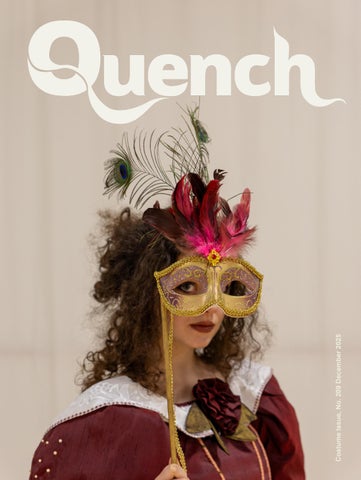
Create a flipbook
Issuu converts static files into: digital portfolios, online yearbooks, online catalogs, digital photo albums and more. Sign up and create your flipbook.