
gair rhydd
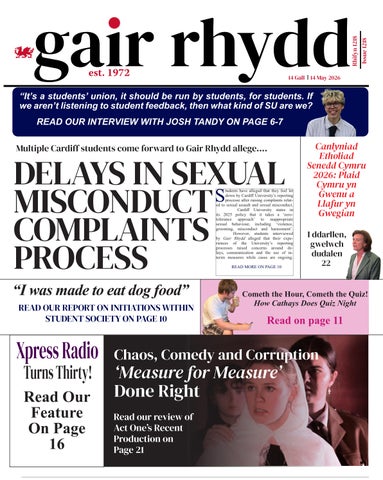
“It’s a students’ union, it should be run by students, for students. If we aren’t listening to student feedback, then what kind of SU are we?
Multiple Cardiff students come forward to Gair Rhydd allege....
DELAYS IN SEXUAL MISCONDUCT COMPLAINTS PROCESS
Students have alleged that they feel let down by Cardiff University’s reporting processe after raising complaints related to sexual assault and sexual misconduct. Cardiff University states in its 2025 policy that it takes a ‘zerotolerance approach’ to inappropriate sexual behaviour, including ‘violence, grooming, misconduct and harassment’.
However, students interviewed by Gair Rhydd alleged that their experiences of the University’s reporting processes raised concerns around delays, communication and the use of interim measures while cases are ongoing. READ MORE ON PAGE 10
Canlyniad Etholiad Senedd Cymru 2026: Plaid Cymru yn Gwenu a Llafur yn Gwegian I ddarllen, gwelwch dudalen 22

Editor-in-Chief:
James Roberts
Deputy Editors:
Bhamini Khandige
Aneurin Davies
Head of Design:
Olivia Nilsen
Design:
Seven Standen
Elisa Main
Head of Social Media:
Bella Jane
Head of Opinion:
Miriam Southall
Opinion:
Bethan Jones
Ffion Perkins
Helen Turnbull
Oliver Hanlon
Head of Review:
Ruby Collins
Review:
Kit Robinson
Thomas Cunnick
Head of Taf-Od:
Hannah Williams
Taf-Od:
Ela Rhys
Elen Williams
Erin Davies
Gwenno Davies
Hanna Morgans Bowen
Ifan Meredith
Head of News:
Ella Simons
News:
Alicia Tariq
Gabriela Hunt
James Burns
Kani Abdullah
Emma Mathews
Elisabeth Ounsworth
Meghan O’Niel
Head of Spotlight:
Rachel Bedding
Spotlight:
Ellie Evans
Eve Harris
Eve Yates
Molly Spencer
Head of Politics:
Ruaidhrí Gillen Lynch
Politics:
Oliver Dermody
Sophie Scott
Areille Melamed
Hugo Keenan
Oskar Hyams
Head of Sport:
George Jones
Sport:
Harvey Knowles
Luke James
Mael le Paih
Head of Puzzles:
Daniel Raybould
Proofreaders:
Ethan Gerrard
Ellie Gale
Emily Martin-Jones
Ariana Rohgar
Student Media
Co-ordinator
Elaine Morgan
A Note From the Editor
By the time you are reading this I will have finished our final edition of the year and the transition towards the new year of Gair Rhydd will have begun. I may have given an emotional speech at our media awards which will have passed by the time you are reading this, there as here I wish to reflect on the previous year.
We took over a paper which was in bad shape after a period of mismanagement had left us both unequipped to deal with producing a newspaper and lacking the ability to drive our content into the modern media landscape. A year later and over 1000 followers heavier, we have begun something that will hopefully continue into the future, and restore Gair Rhydd as central to student life in our city.
From the first formal complaint in six years from the Honorary Consul of Israel, to interviews with prominent political figures, academics, student leaders and others and organising a debate for the Students’ Union elections, this has been an exceptional year.
Gair Rhydd has been the main thread through my university experience, and central to my final year of undergraduate. As I said at the SVMAs this year has been in some ways the best of times and the worst of times. I still remember my first encounter with the paper at the Fresher’s Fair in 2023, at that point I could not have imagined how important this publication would be to my development as a writer and leader, nor could I then have imagined I would one day lead it.
Coming into this year I had several things to fix, the website, our budget, our team. And I set out with several things I wanted to do. Happily, I can report that I have been able to achieve most of them, such as increasing our viewership online and our readership
in print, and publishing articles and interviews which have garnered interest and stoked debate. We have worked with and at times challenged the SU, that is no secret, but we have done it with the best intentions, aiming to provide an authentic voice for our demographic.
Achievement aside, I want to pay tribute to my amazing team. This year has been the most collaborative I have ever experienced. Throughout the year, I have been blown away by the talent and dedication of our members, as they report on the things that matter to students. Some of the team have told me that this year has boosted their confidence in their respective skills, for me this is the greatest reward of being editor.
I want to asy thank you to my deputies, Nye and Bhamini, who have been with me through thick and thin. Likewise I want to thank Heads of Sections, as they have put up with my failings and supported me through the ups and downs of the year. I need to thank other members who have gone above and beyond, such as Oliver Hanlon, Olivia Griffin, Elisa Main, Seven Standen and Ethan Gerrard. But all in all, the team has been brilliant. I could not have done anything this year without you. Gair Rhydd goes on. Furthermore I want to thank Hannah Williams for patiently sitting with me, as we designed the Taf-Od pages, and interpreting them for me as someone who speaks no Welsh.
Free word lives for another year, an unfiltered account of student life to challenge University executives and Sabbatical Officers alike.
Gair Rhydd Am Byth
News 3

A Revolution in Welsh Politics Labour
Lose an Election for the First Time in a Century
Ifan Meredith Taf-od Editor
Wales have voted. People wanted change and that is reflected in the results with Labour suffered an agonising defeat. The day of the results was an earthquake to the political landscape of Wales and had shockwaves all the way to Downing Street. We knew this would be an interesting election and that it would be close. The polls indicated that it would be a twohorse race between Plaid Cymru and Reform UK.
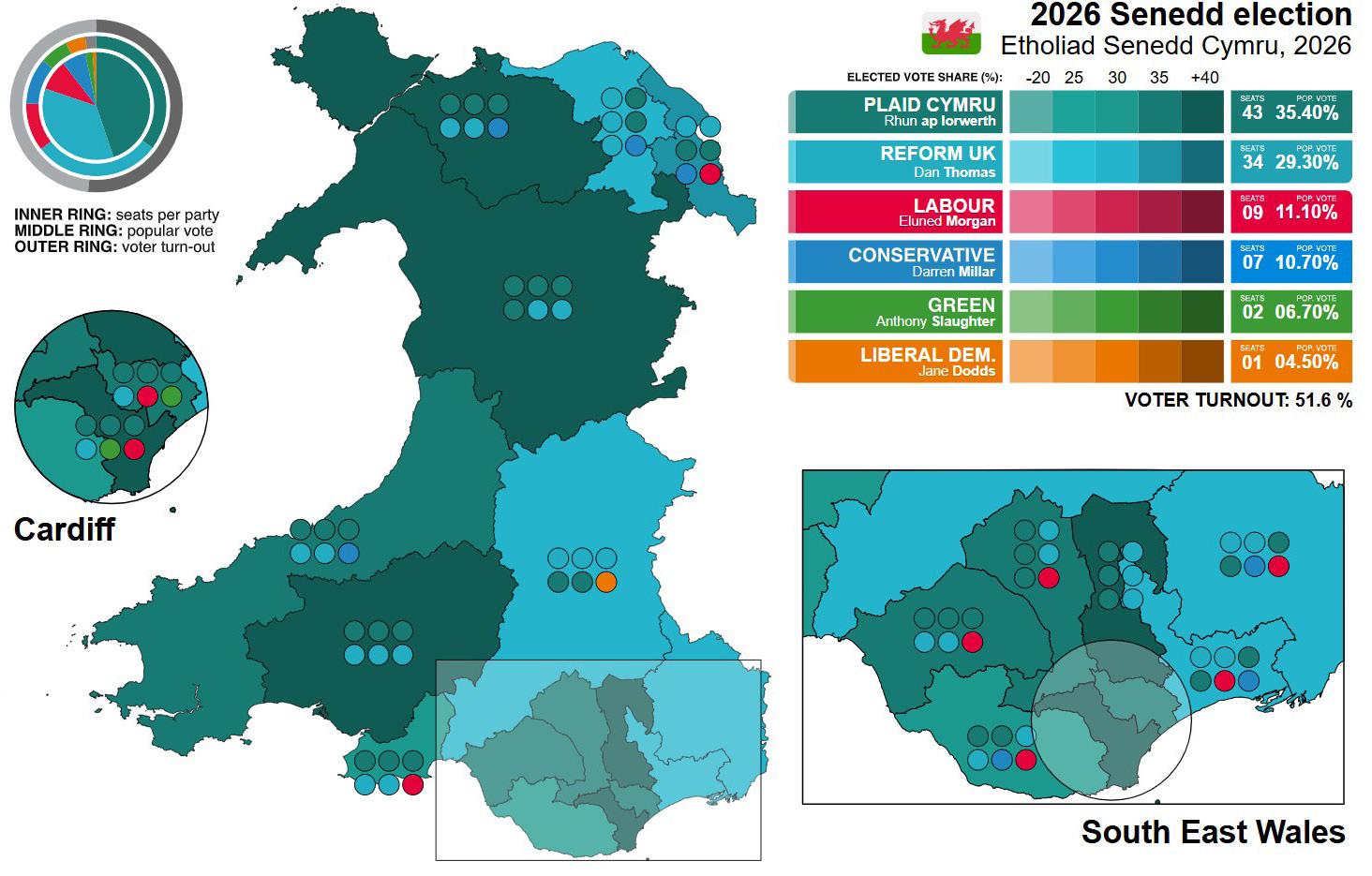
Plaid Cymru won the most seats in the seventh Senedd but fell short of the required 49 seats for a majority. This means that passing legislation may be difficult as the Welsh Government would have to either be a coalition or ensure cooperation agreements as was seen between Plaid Cymru and the Labour Welsh Goverment in 2021.
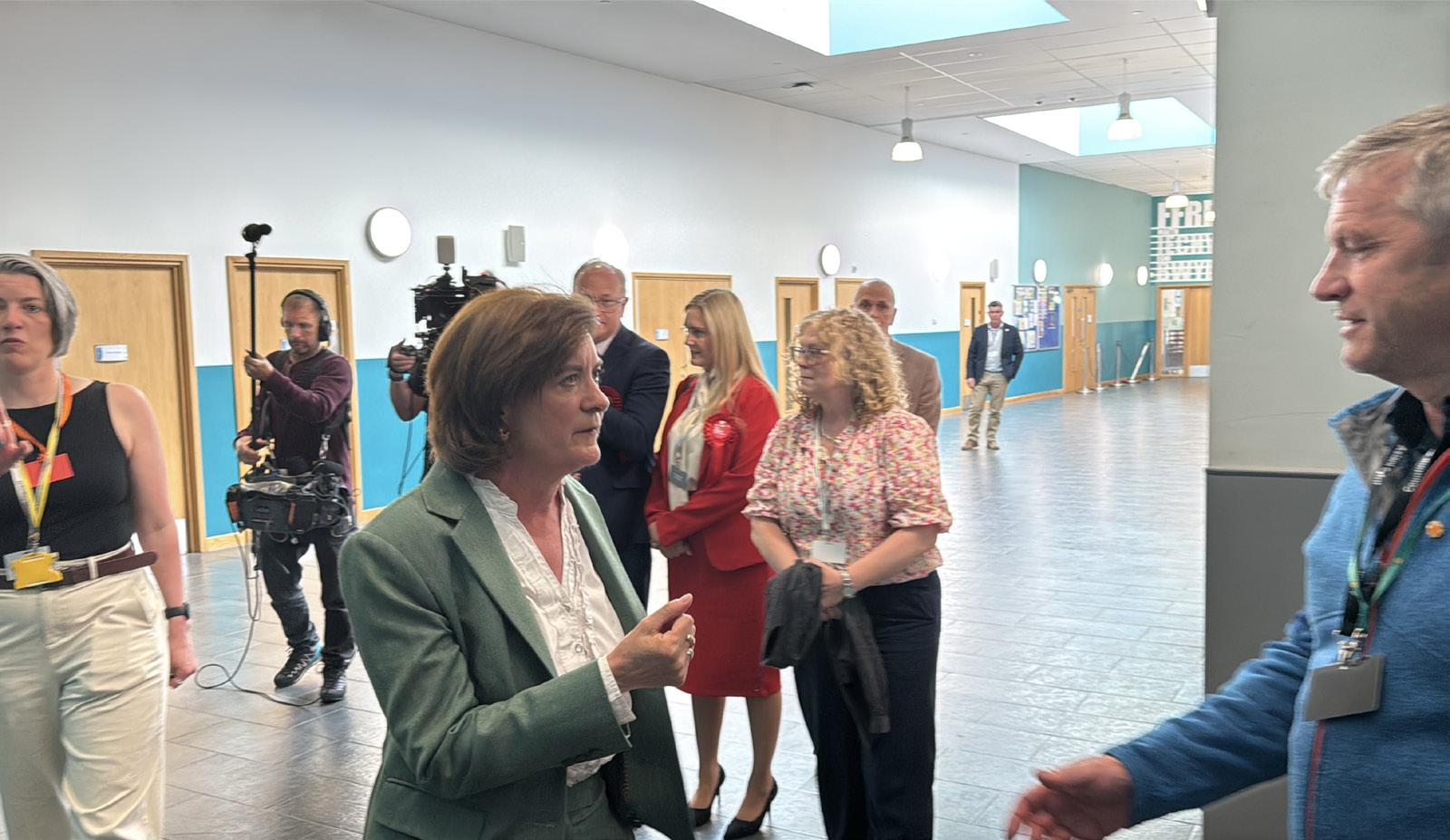
Plaid Cymru won a total of 43 seats across the 16 constituencies. Labour lost a significant amount, leaving them with only 9 out of the 96. One of the seats they lost was Ceredigion Penfro where First Minister, Eluned Morgan was standing. After the counting, the result came at 17.00 where Plaid Cymru won 3 seats, Reform 2 and Conservatives 1 leaving no room for the Welsh Labour Party Leader.
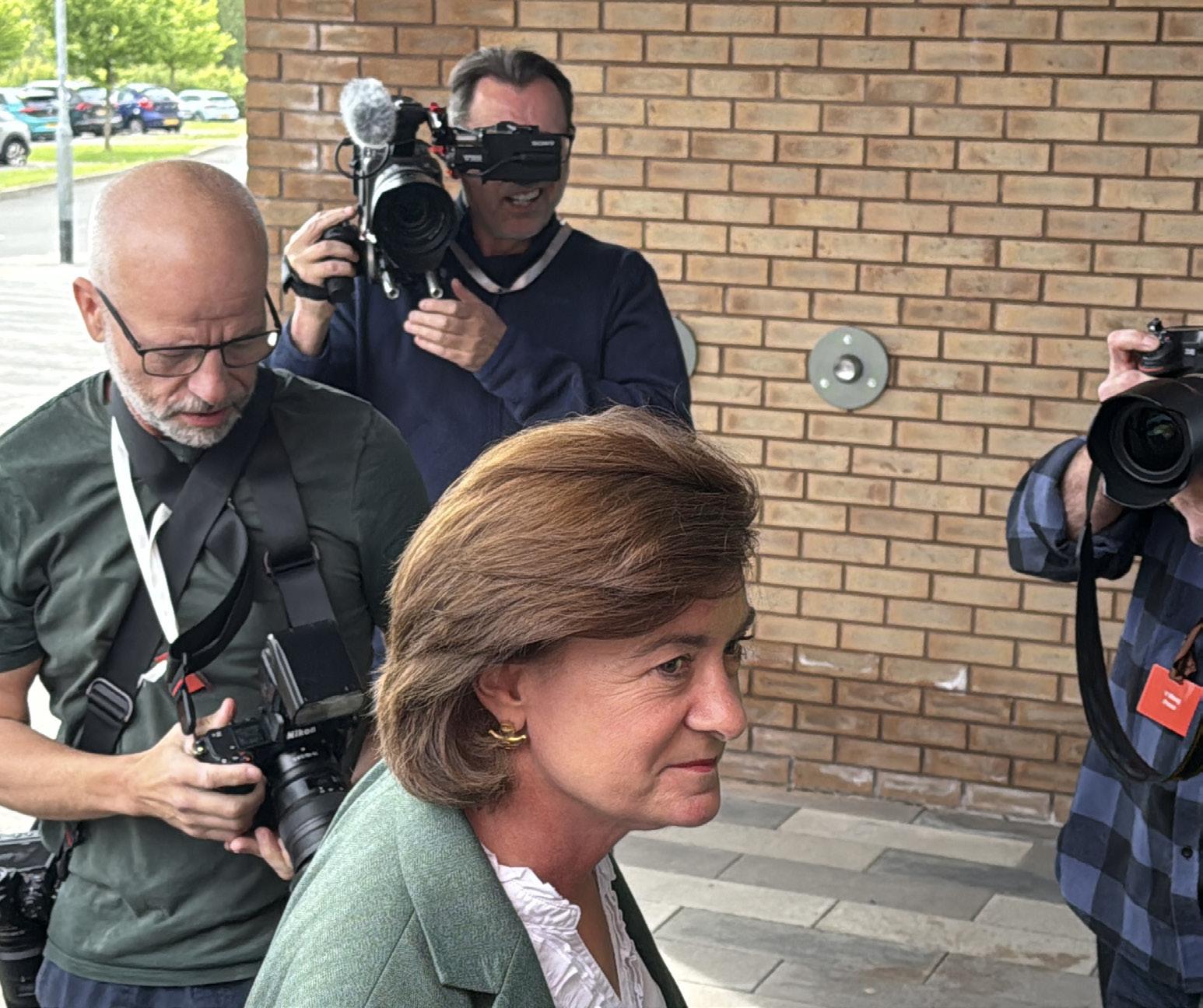
Following the announcement, Eluned Morgan resigned as the leader of the party and in a media huddle insisted that she took responsibility for the loss of Labour and emphasised that Sir Keir Starmer was not on the ballot paper in this election. On Saturday, it was announced that Ken Skates would be the one to temporar-
ily take the reins of the Welsh Labour Party.
Within 14 days of the election, the Senedd must hold its first Plenary where a Presiding Officer is appointed as well as a new First Minister. As the party with the most seats in the Senedd, -- is the likely candidate to become the next First Minister. This appointment must be made within 28 days of the election (by June 3) or Wales face another election. However, this outcome is unusual and has never been the case in the previous six Senedd elections.
“She did not have a ‘favourite’ role if she were to serve”
After being chosen, the First Minister will then form a government by appointing Ministers for policy areas such as Education, Health, the Welsh Language and the Economy. The members of this team (the Cabinet) will be formed by members of the leader’s party. Rhun ap Iorwerth said that his intention is to run a minority government in the Senedd.
Elin Jones, MP for Ceredigion Penfro, has been a Member of the Senedd after every election. In 2007, Jones served as the Minister for Rural Affairs in the One Wales Government and therefore it is expected for her to take an important role in any Plaid Cymru Welsh Government.
Speaking after the result in Ceredigion Penfro, she told me that she would be ready to help Rhun ap Iorwerth and did not have a ‘favourite’ role if she were to serve.
Senedd Election Results A
New System and a New Era for
Wales
FElisabeth Ounsworth News Editor
or the first time in a generation, the people of Wales have woken up to a Senedd no longer run by Labour. Labour’s grip has snapped and Plaid Cymru has become the biggest party; meanwhile, the Conservatives have been largely pushed out by the new right-wing kid on the block, Reform UK. The results of Wales’ Senedd election mark a new era in Welsh politics.
This election quickly became what many called a ‘two-horse race’ between Plaid Cymru, Wales’ progressive, pro-independence party, and Reform UK, a firmly rightwing party focusing on tackling immigration and cutting taxes. Plaid Cymru claimed 43 seats, with Reform just behind on 34; Labour claimed nine, Welsh Conservatives seven, the Green Party two and the Liberal Democrats one. No party achieved a majority of 49 seats.
This year, Wales debuted a new ‘closed proportional list’ voting system, designed to allow for proportional representation. As part of this system, Wales was divided into 16 new constituencies, with each one having six seats up for grabs. This system had the potential to create more opportunity for smaller parties and threaten the ‘two-party politics’ that have dominated Wales - however, the huge disparities between the policies of Reform UK and Plaid Cymru resulted in many choosing to ‘tactical vote’ against the party they didn’t want, rather than vote for the one they did. Therefore, this election once again resembled a ‘first past the post’ voting system with a tense neck-andneck surge between the two parties; however, it did also allow for new voices to be heard.
The Green Party has for the first time gained a voice in the Senedd; while performing worse than what polls predicted, their two seats provide them with a foothold. The Liberal Democrats also gained a seat, showing how this new system can be a gateway for smaller parties.
For Labour, this election brought with it huge losses, losing 35 of their previous seats. This resulted in the First Minister herself, Eluned Morgan, losing her own seat in
the Senedd. During the BBC’s live coverage, Welsh Labour candidate Huw Thomas said Labour must take time to “reflect” on the reasons behind these losses. The Conservatives had similarly crushing losses, losing 22 seats. One thing is clear: the Conservatives are no longer the dominant right-wing party in the Senedd.
In a landscape of political disillusionment, economic instability and struggling healthcare and education systems, the dramatic difference between Plaid and Reform appealed to voters. Their polarised policy distance collapsed the right-left axis that has served Conservatives and Labour for decades, creating a new axis defined by the tension between Plaid’s Welsh nationalism and progressive cultural ideologies, and Reform’s British unionism and anti-immigration rhetoric, making them the only two parties to win a seat in every constituency. After winning a seat in the Casnewydd Islwyn constituency, Reform leader Dan Thomas claimed that “for decades, the Welsh valleys and cities such as Islwyn and Newport have been [...] forgotten by the old parties of Wales. [...] Now, in Reform, they finally have a voice.” In his victory speech, Plaid leader Rhun ap Iorwerth said “we have won because we represent hope over division. [...] Wales demanded a new beginning and now a new dawn beckons.” These huge changes mark a turning point for Wales, but also a time of political uncertainty. With no party achieving a majority, there are two possible scenarios. Firstly, Plaid Cymru could form a coalition government with another party - however, with the Greens at just two seats, they are out of the running, and Plaid have given no indication that they would be happy to share governance with Labour, the party which previously dominated Welsh politics. Therefore, the likely scenario will be a minority government run by Plaid Cymru, in which Plaid would have to convince other parties to vote for their policies on a case-by-case basis, requiring a high level of trust. But with so many new and opposing voices in the Senedd, whether this will be a success or setback will depend on whether they can learn to speak to one another.
News
Cardiff Housing Hell
James Burns News Editor
Cardiff is home to over 40,000 students, across three main universities, all of whom are looking for a place to live, in the hope they can make their student house a home. Yet, the process of adding that personal touch, and settling into a base that remains a reliable constant each and every day can be disrupted by a number of issues, especially as students, who tend to look at rental prices in the lower end of the market.
“30% of
students cited experiencing problems with
damp and mould”
New research by Save the Student revealed the most common issues students face when renting private accommodation at university. From mouldy walls to rodent infestations, student houses across the UK appear to be plagued with some seriously unsavoury issues.
30% of students cited experiencing problems with damp and mould, 25% noted a lack of water or heating, as well as 20% confessing to have issues with rodents or pests. Almost half of students in the survey said they experienced more than one issue with their house.
These problems align with a continued rise in rental costs. In Cardiff, according to Uni Homes the average student accommodation is £197.94 per person. This has seen a staggering surge in recent years with a huge 106% increase in student rent prices in the Welsh Capital from 2020 to 2026. As rents continue to rise, so does the frustration of students who feel like the whole process and their living standards are unfair.
One graduate renter in Cardiff noted “many students are not aware of their renting rights, and they take advantage of this due to the rush of trying to find somewhere to live before the next academic year”
“We have had 4 gas leaks and multiple violations of both rentsmart guidelines and the gas safe registry rules, currently in touch with lawyers after going through the gas registry and citizens advice.”
Another renter noted their battle with “constant black mould”, that was impos-
sible to get rid of, and of “frequent rat visits” dealt with bags of poison and nothing more.
Rats can spread an array of diseases and bacterial infections, even without direct transmission. They also reproduce very fast and can overwhelm a building in just a few months.
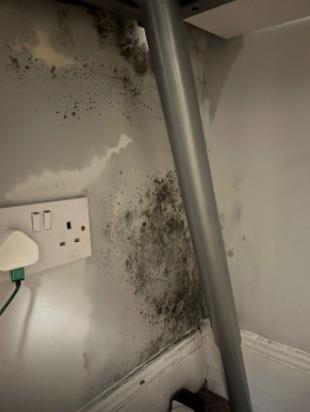
A Student living in Cathays noted their experience living with the presence of mould in their bedroom, a place where they should feel at their most safe and comfortable.
“We noticed the mould when properly moving in in September time, and this is my bedroom! it was a real shock and has caused a lot of issues for me personally as someone with asthma. it’s sad this is the reality for a lot of student housing- it shouldn’t be acceptable.”
People living with mould are more likely to suffer from respiratory illnesses, infections, allergies or asthma. Those who already experience respiratory issues, have their chances of asthma attacks, coughing and breathlessness increased significantly.
Black mould even caused the tragic death of Awaab Ishak, a two-year-old from Rochdale, who died as a result of a severe respiratory condition caused by prolonged exposure to black mould. The student continued, noting the difficulty of combating mould: “Mostly I have been using mould spray and a dehumidifier to prevent this situation but that becomes expensive! Unfortunately, I just have to minimise its impact on my health.”
“I have contacted the landlords and they did get someone to check it and fix an external issue but unfortunately that hasn’t erased the problem so it continues to be an issue - hopefully before new tenants arrive this will be fixed so they also won’t have to deal with what I have.”
Fighting back against mould has become the norm for Cardiff students.
As another student, Charlotte, suggests: “I think all students have to deal with it at some point, and it is so hard to eliminate it”
“Often I think the only solution is to repaint with anti-mould paint, but landlords aren’t willing to spend that money, and the blame is placed on the tenants for not staying on top of it.”
Evidently then, students and landlords are locked in a blame game cycle, in which landlords are submitting students to fix their own problems, especially when housing is in such high demand anyway.
Charlotte does note however that Cardiff Student Letting are “good and acces-
sible for students to sort their issues”, and that their maintenance man is always “friendly and quick to respond” to any problems.
“Students and landlords are locked in a blame game cycle”
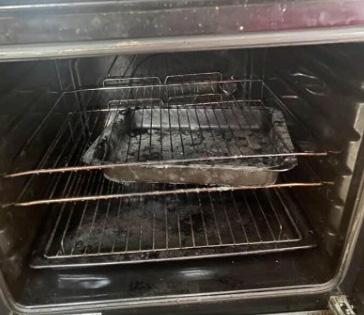
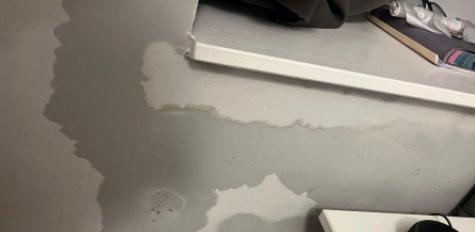
It does appear that some student houses in Cardiff do not live up to the prices that are being paid, and students and their experience with housing is a repeating spiral of let-downs. A student in Cathays showcases the state his house was in when he arrived for the first time back in September. Broken drawers, stained walls, peeling wallpaper and dirty ovens are not exactly the housewarming gifts one would write home about. An expectation upon students to ‘just get on with it’ has become normalised to a worrying degree to the point it is affecting both physical and mental health of those at the university. It appears that if rent is going to rise at the continued rate, then so should the housing standards that come along with it.
For now it persists as just another issue for students to bear , placed upon them by the powers above them.
Images provided by people mentioned in article
Survey of Students Finds Sexual Harassment and Violence are Common at Cardiff
Seven Standen Design Deputy
Arecent investigation by Gair Rhydd found 56% of students surveyed had experienced sexual violence during their time at Cardiff University. The majority (67%) reported they were subjected to sexual violence multiple times. Additionally, 70% of students surveyed had experienced sexual harassment during their time at Cardiff University. While sexual misconduct is common at UK universities, with 25% of students experiencing harassment and 14% experiencing violence, the prevalence of incidents at Cardiff should not be ignored. Student organisation Time To Act states, “Sexual violence should not be part of the student experience. It isn’t a sad fact of life. It isn’t something that can be justified, accepted, nor tolerated.” But three years after Time To Act and Stronger Together challenged Cardiff
University to improve their practice, sexual violence is still common and victims are still failed.
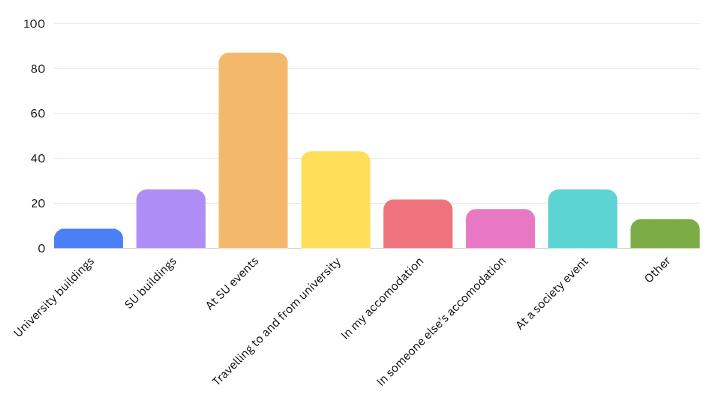
Data from survey respondents suggests Student Union (SU) events are high-risk for sexual misconduct. Most students (87%) who experienced sexual harassment said it had occurred at SU events, such as YOLO. Time To Act co-founder Bethia Tucker said SU events are “notorious for being filled with harassment and misogynistic behaviour”. One student reported a man trying to break down the toilet door while she and her friends were attending YOLO.
Harassment commonly took the form of leering or suggestive looks (76%), unwanted sexual advances or flirting (76%), or sexual comments or noises (72%). Unwanted physical contact (68%) and sexual jokes or innuendos (60%) were also frequently reported.
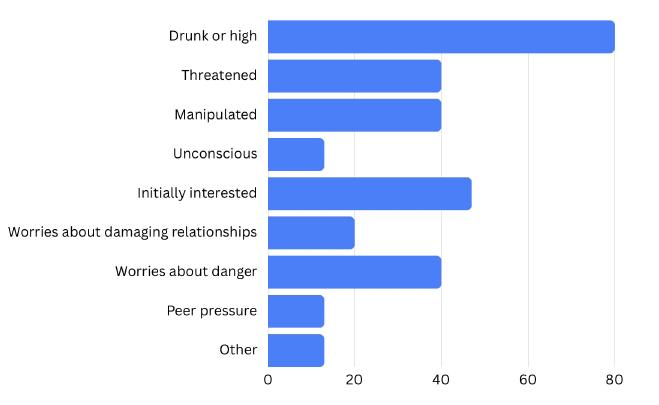
Furthermore, 80% students reported being drunk or high when they experienced sexual violence, confirming SU events (where people
are likely to be intoxicated) may be a common location for misconduct. In comparison, national statistics show 39% of people are drunk when assaulted and the same percentage of perpetrators were drunk while committing assault. One student said, “He would get me drunk on purpose (even acknowledging the fact I was drunk) and I tried to say no but nothing would come out my mouth.”
Gair Rhydd found strangers were the most common perpetrators (83%) in sexual harassment and violence, in comparison to friends, friends of friends, or society members. These encounters make sense in the context of SU events, like YOLO, where large numbers of students mingle. It’s also supported by national statistics, which found strangers were more likely to be the perpetrator when alcohol or drugs were involved. However, misconduct doesn’t take place exclusively at SU events, according to the students surveyed. Sexual harassment was also reported in SU buildings (26%) and society events
(26%), although the numbers are much smaller.
As many as 39% of students reported experiencing sexual misconduct in their own or someone else’s accommodation. This aligns with national statistics, which show sexual assault is most likely to happen in the victim’s or perpetrator’s home. One student said they “felt too unsafe to say no” to a partner “as it was at his house and on the 3rd floor with a house full of boys”. This is not an uncommon experience, as 40% of students reported they were worried about the potential danger if they said no to a sexual encounter. Given the alarming violence women are subjected to when rejecting men’s advances — which can result in severe injuries or even death in some cases — this fear isn’t surprising. Most students (83%) said they had not reported sexual harassment or violence to the police or university. Not only does this suggest Cardiff University’s official data onsexual misconduct underrepresents the sever-
-ity of the problem, it means perpetrators aren’t penalised for their behaviour. However, students commonly felt the system doesn’t punish sexual misconduct even when it is reported.
One student, who previously accessed the Report and Support system, said, “When I contacted the university about my rape, I was directed to some free counselling sessions… the focus was on me healing rather than consequences for the perpetrator.” This claim is supported by a Freedom of Information (FOI) inquest from 2023, filed by the BBC, which found 0.3% of reports made to Cardiff University resulted in an expulsion or suspension. From 2017 to 2021, one student was permanently excluded, despite 1454 cases of sexual abuse or violence being reported.
“85% of students said they wouldn’t go to the Report and Support system”
Gair Rhydd’s investigation found all students who experienced sexual harassment had experienced it more than once. Of those, 29% were sexually harassed more than ten times while attending Cardiff University. For students who had experienced sexual violence, 67% had experienced it more than once. It has to be questioned whether the university letting offenders remain at university plays a role in reccurring incidents — or if perpetrators knowing they will face no consequences for their actions encourages inappropriate (and criminal) behaviour.
Although Cardiff University’s policy states “anyone found to have behaved unacceptably may be subject to disciplinary action up to and including dismissal or exclusion”, the numbers suggest otherwise. Time To Act says the information uncovered by the FOI “shows a play-by-play of failure by Cardiff to acknowledge and act on sexual violence”.
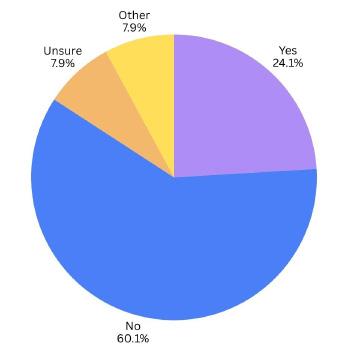
Cardiff’s poor disciplinary record might explain why 58% of students felt the university did not adequately support students who experienced sexual harassment or assault. One student said they “haven’t heard hugely positive things” about the Report and Support system, while multiple said they didn’t know how the process worked or if it was helpful. Students were more likely to talk to a friend (92%), family member (35%), or a charity (23%) than go to Cardiff University’s report system (15%).
The Report and Support system was set-up in 2017, in the wake of the #MeToo movement, and received over 100 reports in the first six months. Students were promised the chance to meet with a staff member to “talk through the incident and its impact and discuss any practical help” within a few days. In 2018, Tammy LouiseWilkins documented her positive experience ac-
Newyddion
cessing the new system for The Tab, writing “I’m glad I chose to use the support system, it opened up many support systems I didn’t know the uni had”. Some students (23%) agreed Cardiff University provided adequate support for people who experienced sexual harassment and violence. Another stated the initial help was great, but lacked follow-up or long-term support. Like Louise-Wilkins, a student said they received “5 free sessions” with a counsellor — but, notably, the counsellor was not “sexual assault trained”.
If true, this suggests Cardiff is directing students to Student Wellbeing rather than the “trauma-informed practitioners” on their Student Support Intervention Team. Supporting students, particularly those who have experienced sexual violence, should be a priority of the university. But waiting times for Student Wellbeing are reported to be up to 18 weeks (four months), suggesting the service is oversubscribed and underfunded. It also isn’t a specialist trauma-informed service.
Long-term support is crucial when it comes to supporting victims of sexual violence as they experience higher rates of physical and mental health problems. Being subjected to sexual violence significantly impacts a person’s life and it’s unlikely five counselling sessions (especially if they aren’t trauma-informed) will provide adequate support.
It’s worth noting, in the recent past, Cardiff has been criticised for failing its students. In 2023, the university came under fire from the BBC for failing to support victims of sexual violence.
One student reported receiving no support and being hassled repeatedly by the university for fees she had already paid, the latter of which she didn’t receive an apology for. This goes against Cardiff’s policy, which states “victimisation of any individual making a complaint under this policy will not be tolerated.”
Another student said she didn’t report being sexually assaulted because she “heard from other people who’ve experienced similar things that they are not going to do anything about it”.
Emily Carr, who previously served as Cardiff SU’s Women’s Officer, said complaints about sexual harassment and spiking were “flat out denied” by “senior members of the Student Union”.
Three years later, Cardiff students are not any more confident in the university’s ability to handle sexual misconduct. Of those surveyed by Gair Rhydd, 85% of students said they wouldn’t go to the Report and Support system. Among those, 15% said they would rather tell nobody at all.
Back in 2023, student organisations Time To Act and Stronger Together were formed to provide support for victims of sexual misconduct. Representatives from both groups met with university senior staff to discuss the mishandling of sexual violence, only to be let down again. Becca Rumsey, who co-founded Time To Act, said, “I raised the point about sexual mis-
The conditions under which Cardiff students reported experiencing sexual violence:
Where
Cardiff students reported experiencing sexual harassment:
conduct, and how they need to do better to support their students. Unfortunately, three male academic staff were laughing - which highlights just how important what we are doing is.”
“Unwanted touching was the most commonly reported form of sexual violence”
With the support of Cardiff students, the Time To Act motion was passed at the 2024 Annual General Meeting. This motion stated “Cardiff University and the Students’ Union [will] uphold their legal duty of care for victims of sexual violence at Cardiff University”.
The founders of the motion (Tucker, Carr, and Rumsey) said, “Many survivors of sexual violence who shared their stories with us, didn’t know they were able to get support from the university”. As Gair Rhydd uncovered, the majority of students didn’t know about or didn’t want to access Report and Support. Of those who did report their experiences, 44% were scared of facing repercussions, 24% felt they didn’t have enough evidence to ‘prove’ anything, and further 20% thought they wouldn’t be believed.
In addition to raising awareness of the Report and Support system, the motion wanted more education around consent and intersectional responses to sexual violence. Sharon Ng’ang’a and Ishani Patwal wrote in Gair Rhydd’s special ‘Time To Act’ report, “The fight against sexual violence and rape culture must be intersectional. We must move those on the margins to the centre”.
There were also concerns around society culture, in the wake of the Warwick rape chat scandal, which led to Time To Act’s recent ‘Don’t Be A Shitty Committee’ campaign. They provide free training services for Cardiff societies and sports teams, covering sexual health, sexual violence, and consent and active bystander training.
Since 2023, the SU has rolled out more educational material about sexual violence and harassment. For example, the SU building currently features posters on the definition of consent — it is a step in the right direction to run a preventive campaign against sexual misconduct, which targets potential perpetrators, rather than focusing solely on the after effects. Consent is an important issue, as Gair Rhydd found nearly half of students who experienced sexual violence were initially interested in the sexual encounter but later changed their minds.
However, 40% of students were threatened verbally or physically and 33.3% were guilted or manipulated into the sexual encounter. This suggests factors other than consent, such as the role of power imbalances and misogynistic violence, need to be tackled with equal vigour. It is also important to recognise everyone who experiences sexual violence and harassment is different, with unique experiences and reactions. While one in four women have been assaulted, so have one in 18 men. One student
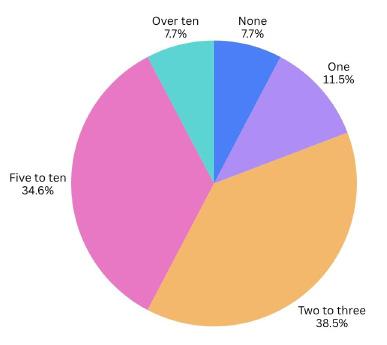
said, “Worst incident was a guy in a club coming on to me, me saying ‘no, I’m not gay’, and him responding by putting his hand down my trousers into my underwear.” Unwanted touching was the most commonly reported form of sexual violence among students surveyed (87%), although 60% had been penetrated by a body part or object. Sexual misconduct has become an accepted part of life, according to Time To Act, and is seen as an unavoidable part of attending university. Of those surveyed, 92% of students knew someone who had experienced sexual harassment or violence while attending Cardiff University. Among them, 39% knew two or three people and 35% knew between five and ten. This aligns with Report and Support’s recent report, which shows harassment is the most commonly reported problem at Cardiff. However, Time To Act refute the idea sexual violence is a ‘normal’ part of attending university. They call for the university to make greater structural changes, hold perpetrators accountable, and tackle wider rape culture on campus. The recent investigation, conducted by Gair Rhydd, shows students are still likely to experience sexual harassment and violence, yet the majority don’t feel they’re being adequately supported. One student said, “I have found the lack of help (regarding both bringing the man to justice AND counselling) really difficult due to not living near home and not knowing people that well.”
If you have been affected by the topics covered in this form, you can talk to Rape Crisis Wales at 0808 500 2222 or start a free online on their website. It is anonymous and open 24/7.
Stronger Together is a Student Led Service offering community support to survivors of sexual assault/abuse. They hold 2 hour group sessions, every Thursday @ 3pm, Meeting Room 3E, in the SU.
How
many people do you know at Cardiff who have experienced sexual harassment/violence?
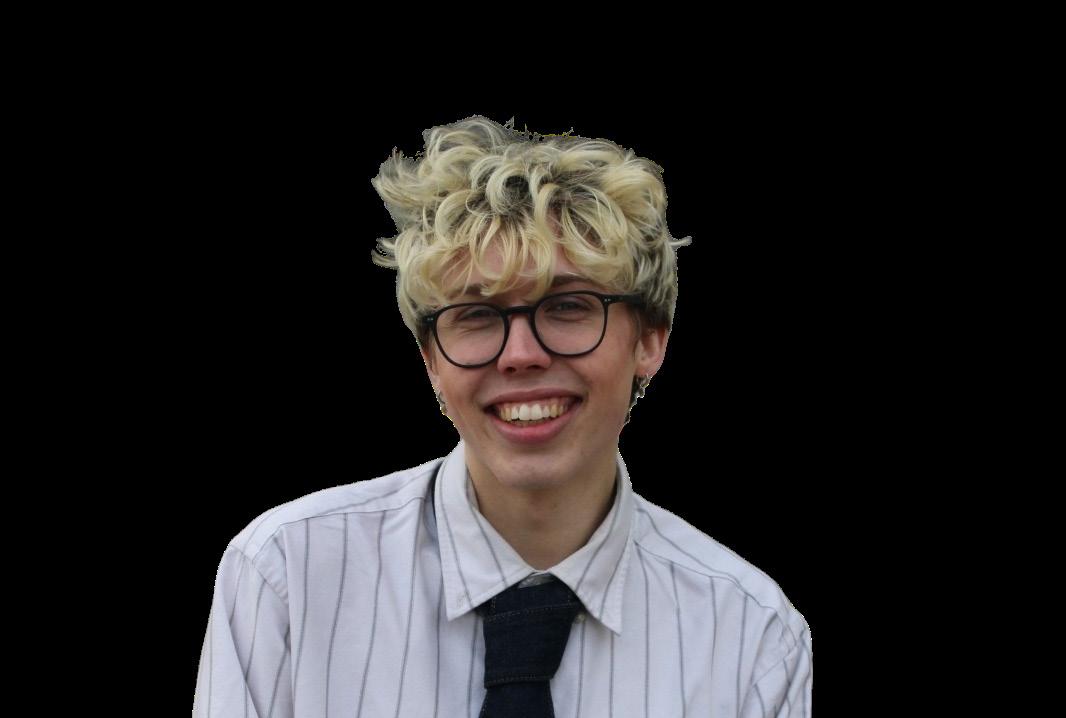
Your New SU President 26/27: What to Expect from Josh Tandy
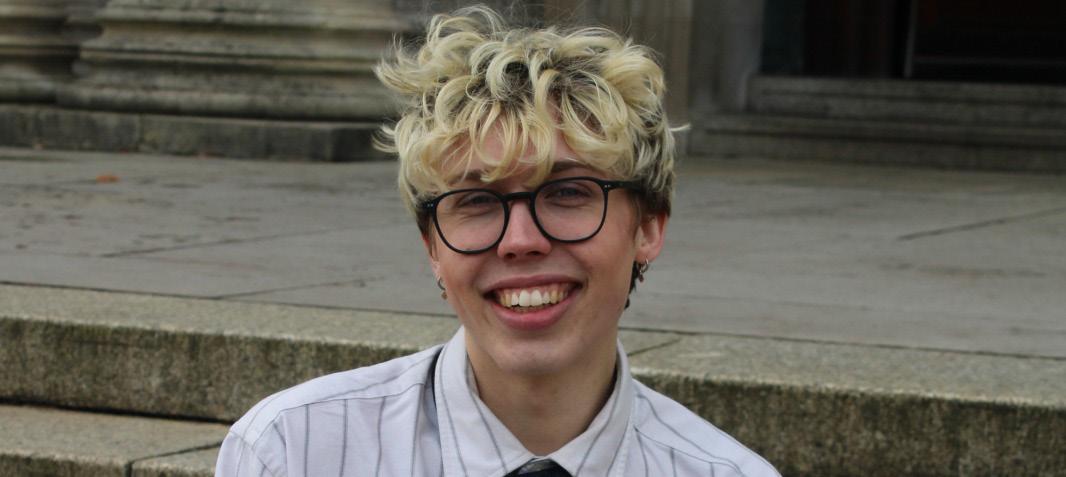
Gair Rhydd asks Josh Tandy about his time as VP Heath and his plans for the upcoming year. Although known to some as “Tik-Tok Tandy” his vision for his time as Union President go beyond the realm of social media, and reveal deeper ideas of how he plans to support Cardiff Students
Ella Simons Head of News
This was not a quiet campaign for Joshua Tandy, his rise to the top role in our SU has been hard to miss both on social media and across our campus. Tandy has made certain his name is recognised University wide and whatever your opinion on him, no one can deny that Joshua Tandy is a political force to be reckoned with in our student community.
Tandy is recognised by all as one of the most defining student voices in Cardiff, known for his energetic campaigning and strong presence across the student body. Tandy has rapidly become one of the loudest and most established voices for the Students’ Union, and it is impossible to diminish his powerful impact as such an active member of the student community. After a record shattering election campaign, Tandy will be your next SU President for Cardiff Student’s Union 26/27.
As previously shared by Gair Rhydd, “Tandy secured 3,463 votes, emerging as the final winner after several candidates were eliminated and their votes redistributed” after “8,282 votes were cast in the presidential race” making Tandy the clear front runner of this election after a 27.7% voting turnout - one of the highest of any SU in the country.
Tandy is the current VP Heath Park for 25/26. The step to SU President will be Tandy’s second term as a Sabbatical Officer meaning after this there will be no other roles in his future on the team. Tandy has faced criticism and challenge but despite those barriers, he has delivered on every single manifesto point from his 25/26 role as VP Heath Park, suggesting him a possible beacon of hope for his residency as SU President, where he is determined to focus on engagement with the wider student community with a focus on Student Protection
& Safety, Cost of Living & Wellbeing and a Student-Led University Experience. With such ambition and visibility comes responsibility, a pressure and expectation to deliver. In my interview we discussed his journey this past year within student leadership, as we look ahead to next year to explore and understand what students should expect from his presidency.
Could you tell the readers who you are, what you study and what your current role as a sabb officer is? And maybe why you wanted to become SU President?
“So I'm Joshua Tandy. I studied biomedical anatomy. Big up the School of Bioscience. I'm currently the VP Heath Park, so I look after the Heath Park campus both in educational and all welfare matters... I won the election, which means I'm going to be the next SU president.”
When asked why he ran for the role Tandy shared that:
“The reason I ran for President, obviously, was because, you know, it was either that or VP undergraduate because they're most closely aligned to my kind of concern and kind of what I wanted to do for the university. And I think I really enjoyed a year as a VP but I really wanted to work on kind of the big issues and that kind of holistic sense of a university experience... And so I felt that that step up, instead of kind of going to VP undergraduate, was more directly in tune with the experience that I already had, but also what I want to do... A new challenge.”
Why do you think you stood out to students and why do you think you won over their vote? What was your selling point and what was the angle you took when trying to gain
votes from such a diverse student population?
“I mean, I love elections. It's such a lovely time to see everyone so, kind of excited, enthralled, and honestly, just participating in democracy! It's really nice to see...But yeah, I think that for me, my angle was definitely, I do what I say I do... By the end of my term, I would have ticked off every single point, in some cases, above what I actually promised.”
“And I think that that was the angle that I tried to portray to students. I also am quite an avid user of social media, and I think that the way in which the students' union communicates to students. I want them to think, you know, we do job shop and student advice, and all of those different services, so that's the kind of angle that I came out with. The angle was more awareness for the union.”
What are your most significant achievements as VP Heath Park?
“I have roughly like 9 points for my original manifesto. Some of them were harder than others. Some of them were running events and just bringing a bit of life back to the Heath. Some of them were more operational as it took a lot more, like, better food options, for instance.”
“I think my biggest wins are probably the food options in the IV Cafe.. And then finally, one thing that I was really proud to do and I was kind of still doing is “Heath Park On Tour”. So, going away to, well, I've already been to Bangor and Wrexham.... I'm running free events for students to get out and about and so that was a really nice thing to do and every student I've interacted with said "you know that it's amazing and that they didn't know we do this, so that's something that I really want to
continue.”
You said in your campaign you were on track to fulfil all your manifesto points as VP Heath this year. Have you achieved that and could you go into more detail onto how?
After discussing all nine of Tandy’s manifesto points as VP Heath Park which can be found under the VP Heath Park section on the SU website Tandy said:
“...And that means that everything within my manifesto promised is completed. So I made 9 points in my original manifesto.. and all 9 will be completed by June.”
Tandy shared that he has faced criticism where students have asked was his manifesto “too easy” but in response Tandy shared that:
“I would just like to kind of say that I personally don't think so. I mean, I, you know, I obviously work nine to five and I'm contracted and paid for that time. But, you know, out of a choice of my own, I quite frequently am here till six or seven o'clock making sure that everything is kind of on track, because that takes a lot of work. Yeah, it wasn't. It wasn't easy to do, but I I think I'm just fueled to do it because I just want the best for the student body... But this isn't a normal job, you know? It's a job that you can hold for 2 years, maximum of your entire life. I think if you're gonna do it, you need to do it well, because there's only one of you, there's only one of you. And I think, yeah, you just really need to do it well. And so I'm really committing this year and I really committed this next year. And honestly, if I'm not absolutely exhausted by the time I come to July 1st next year when I finish. I haven't done my job well.”
At the AGM you argued for the removal of the VP Heath Park role. Was that a difficult decision? Could you explain to our readers what your move to SU Pres means for the VP Heath Park role as its subsequent changes that go along with that restructuring?
For context, the Heath Park Sabbatical role that Tandy has fulfilled this year is moving to two Heath Park students as co campaign officers.
“We didn't do this because of any other reason, except that it was the student feedback that we received. The other reason was that we kept seeing the VP Heath role be either unfilled or filled by an un-Heath student. And I'll hold my hands up. I'm not a Heath student. I worked extensively at a college level, so I had Heath experience, but I'm not by nature a Heath student. I'm in the Sir Martin Evans building as a Bioscience student and there was a new amendment added in and this year which meant that you have to be from the demographic. to run for the position that you're representing.”
“...Obviously, they're really busy, and that's the reason that we decided to put two in, because if there's two, you can have, you know, broadly, the kind of same output, but especially for when, for instance, they're in clinical placement, there's more of a chance of one of them being here, always present, while the other one's away, and that sort of thing. So that's the reason we decided to put two in as campaign officers and I think how it's gonna work, the new system.”
Tandy further shared that:
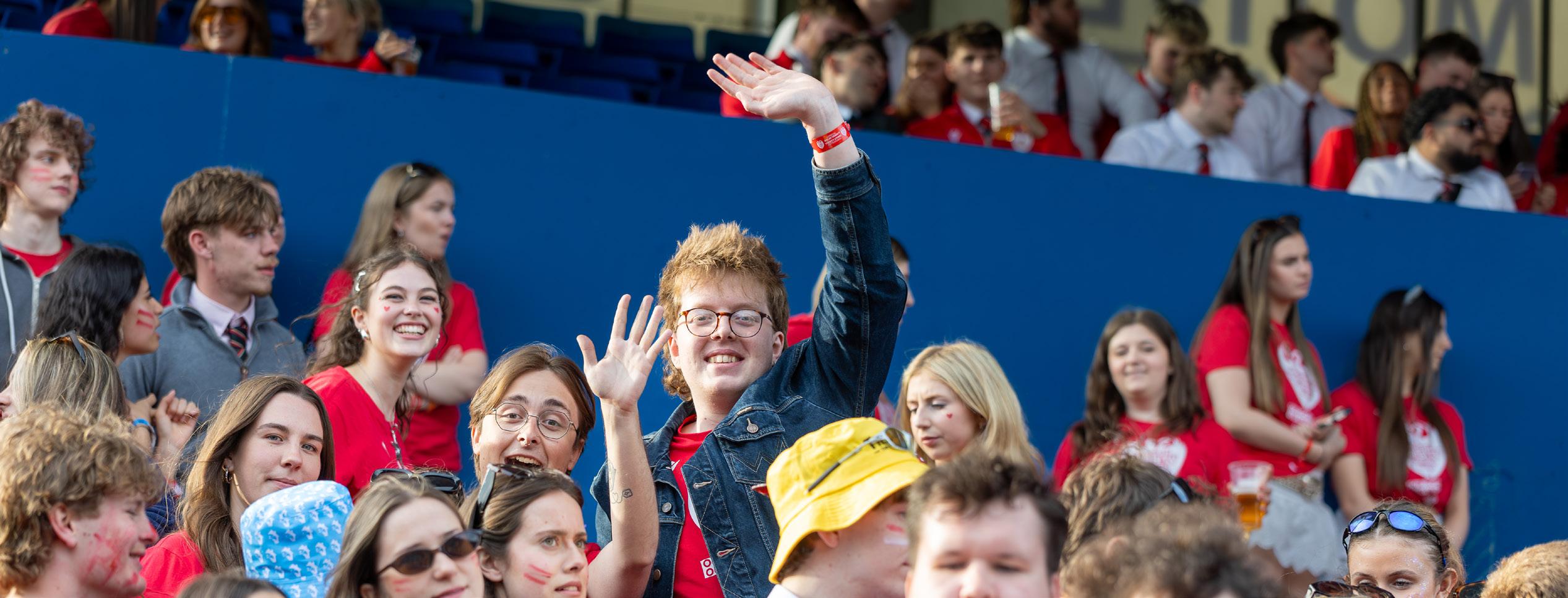
“It’s a students’ union, it should be run by students, for students. If we aren’t listening to student feedback, then what kind of SU are we? But also, that feedback was clearly proven positively, because we had four people run for that position. So that just really was affirming that I made the right choice. People do want this to, yeah, make them campaign officers instead.”
Is there anything this past year you feel you would’ve approached differently or changed if you were SU Pres?
In essence, Tandy shared he felt a stronger social media presence would allow for better engagement and visibility for the Student’s Un-
Newyddion
ion beyond YOLO and the Taf confirming that communication, transparency and awareness will be heightened through a stronger social media presence from the Union and personal accounts too.
“I think more of a general way I want to be and almost like remembered as an actual president, is hopefully just really transparent and frequent communication on accessible formats. Because I think it's really important, in this day and age, that we are putting, you know, all of our own individual work, but also the work conferences, like motions that we're making, and that sort of thing, that we're putting them on the website, that we're putting blogs out about them, that we're putting reels out about them. And I think, you know, it's obvious to me that, like, since the use of my social media, you know, is really useful, because people see me, and they ask about my work, and they know about my work.”
How will you foster relationships and work with some of the University’s top voices such as Wendy Larner? Do you have any plans in that regard?
“I mean, I'm a scientist by trade. I'm a very evidence-based kind of proposer, arguer, speaker, that sort of thing. I won't believe in something that I don't have evidence for. I think it also works both ways. I think that if someone provides better evidence, like, you know, if I'm thinking one way and a student comes to me and they're like, Josh, I'm gonna tell you like, this is my personal experience, and here are the stats, like, I'm gonna listen, and I think, you know, that's always really important for me to have that trait”
“I think when speaking to those those highlevel people, I'm not going to just say this is what students want, which I think quite often is an easy thing to fall back on because, you know, you're elected, you represent the students' union, as SU president and I think that you know, it's really easy to just go well this is what students want. But I constantly make sure that I go out, and I look at SSP minutes from my student reps. I make sure that I'm just constantly surrounding myself with a diversity of students to make sure that I know that it is right. And if I'm going to say, Wendy Larner, we need to do this, we need to take this course of action or change priorities; I, for my own personal kind of moral standpoint, need to be able to back that up because otherwise, why am I saying it?”


How do you intend to engage and work with Student Media?
“I think that we should be utilising student media and I think that we should. Make sure that that is supported and everything just like all societies and clubs. And I think, obviously, you know, do this interview now, obviously I'm going to be really, like, compliant with, obviously, like, anything that they ask of me. Like, they want interviews, I'm always gonna be happy for those. Or on a more organisational level I think it's really important that we're getting student media access to events, whether that be, you know, varsity, they should be able to do a story on varsity and just get the necessary arrangements in place to do that. You can't report on it if you're not there, you know what I mean?”
“And I think that you should feel comfortable to be able to come to either me or, you know, kind of societies and communities, 'cause though you're not a society, I say you are very much a community of writers, and I think that that role now at more accurately describes and caters to you - I think you should feel comfortable going to what will be Manala next year and if you don't feel comfortable, then I'd really say raise it with me and let's start a conversation there. Because like you say, student media, it is such an important part of the union.”
In your campaign your three key manifesto points are ‘Student Protection & Safety’, ‘Cost of Living & Wellbeing’ and a ‘Student-Led University Experience’. How do you aim to achieve these?
For context these three sections are part of nine key manifesto points which meet the needs of these three overarching ideas - all can be found via Tandy’s social media page tandy4president and will be made available on the SU site from July 1st for further information.
1. Student protection Bill
2. Zero Tolerance of Sexual Violence
3. Cutting the Cost of Living
4. Student First Spaces
5. Two Campuses, One Union
6. Students at the Centre 7. Stronger Mental Health Support
8. Fair Parking for Students
9. Say It, Show It, Deliver It!
All of these areas hold a strong focus on welfare, affordability and transparency. Ensuring students have greater influence and understanding on their University, encouraging students to be using their voices. Whilst Tandy recognises the challenges ahead to deliver on all of these points, he aims to put “in major groundwork and room for this to have real impact in the future.”
Finally, what legacy would you want to leave as Cardiff’s 26/27 SU President?
“I want people to know more about the students' union, and I want students to interact with it in more than one way, you know? If you go to YOLO, I at least want you to know that when you go, that same space that you're partying in is also used to hold events like the Wendy Town Hall.”
“I think to any student, no matter the issue, you know, I've got a lovely...very efficient team of staff coming in. I think that I'm gonna work really great with them. And I think we're gonna work great as a team. Email me and like I'll work with your VP society to tackle a society's issue. I'll work with your international students officer tackling international student issues. I'm always going to be an open ear and just really, I think, also just have a real emphasis on working with the team and that sort of thing. I've noticed that a lot of people, especially in the election period, obviously use the president as the main point of contact, but all the sabbs do so much more work than I think most people realise!”
Tandy’s final statement was: “I would just like to say a thank you to my campaign manager, Taylor, just because they're, I've been so fabulous, they have a 100% success rate with running campaigns. So they've never failed. I'm really lucky for my whole campaign team and to be in the position that I'm in.”
“I just want to say a big thank you to the outgoing staff team for believing in me this year, and putting me forward, and giving me their endorsements, and everyone else who also gave me their endorsements. I just want to say a big thank you. And I just really hope to make everyone proud.”
Students Allege Delays in Sexual Misconduct Complaints Process
Gabriela Hunt & Olivia Griffin News Editors
Students have alleged that they feel let down by Cardiff University’s reporting processe after raising complaints related to sexual assault and sexual misconduct.
Cardiff University states in its 2025 policy that it takes a ‘zero-tolerance approach’ to inappropriate sexual behaviour, including ‘violence, grooming, misconduct and harassment’.
However, students interviewed by Gair Rhydd alleged that their experiences of the University’s reporting processes raised concerns around delays, communication and the use of interim measures while cases are ongoing.
Though several students described positive experiences with individual staff members and support teams; the concerns raised relate to the wider misconduct process.
An issue repeatedly raised by whistleblowers is the length of the University reporting process. One student described assisting with a police misconduct report and said that, within approximately two weeks, evidence had been gathered and next steps had been outlined; this included implementing a no-contact order.
They described being “pushed around” between different student services for several weeks before making any progress on the re-
port. They claimed that the relationship between the Students’ Union and the University appeared unclear in how such cases were handled. They felt the University was “working around me, rather than with me”. Another student told Gair Rhydd that, aside from the implementation of a behavioural agreement within the first weeks following their report, there had been little progress on their case. The report is yet to reach a conclusion after eight months in the system.
“It feels like the university has just pushed [my] case aside. I feel disappointed and defeated”
“It feels like the university has just pushed [my] case aside. I feel disappointed and defeated” they said. A number of students have questioned the ‘behavioural agreements’ reached post-complaint. Based on accounts, these agreements are described as ‘measures introduced after a case is submitted, placing certain restrictions on the subject. Students shared that these restrictions could include limited access to specific buildings, spaces and societies. After revising the University’s Student Conduct Procedure and seeking further clarification, Gair Rhydd has been unable to identify a publicly available de-
scription of this process beyond student accounts.
Another whistleblower alleged that although restrictions were applied to the subject in their case, the consequences of breaching the agreement were unclear. They also claimed that, due to the confidential nature of the agreement, members of a society committee were not formally informed of the agreement. They said that they believed this limited enforcement.
The whistleblower took it upon themselves to inform the relevant well-being officer about the agreement, and were later informed by the University that committee officers “should not know”. They said they were left feeling responsible for monitoring and reporting any breaches of the terms themselves.
One of the most alarming cases brought to Gair Rhydd alleged that an individual who had been reported for misconduct was still able to run for Student Senate, while a case against them remained ongoing. According to the whistleblower, the Students’ Union informed them that action could not be taken against the subject until the case was concluded.
Several whistleblowers with active cases raised concerns regarding graduation; with one student reporting that their main concern was receiving reassurance that the person they had reported would not attend their graduation ceremony, while another said they had “all but given up” on pursuing their case.
Cardiff University was contacted for
comment, a spokesperson said: “We are unable to comment on anonymous, ongoing, or individual cases. However, we are very sorry to hear of these concerns. All complaints are taken seriously, and we encourage any student with such concerns to report them formally to the University so they can be investigated and appropriate action taken.”
Do Cardiff students feel the university supports victims of sexual harassment and violence?
Plaid Cymru Led Cardiff Student Poll Ahead of Senedd Election
Meghan O’Neil News Editor
7May 2026, was a date many may have heard buzzing around Cardiff recently, as the Senedd election took place. But what were the students of Cardiff voting for?
All students living in Cardiff, wherever they were from within the UK, were eligible to vote in the Senedd election. The Senedd is the Welsh Parliament, which is democratically elected and represents the interests of Wales and its people, as well as making laws for Wales.
Every six years, voters in Wales decide who they want to represent their local constituency in the Welsh Parliament.
This year, however, things were slightly different, as the constituencies had been changed from 40 to 16, with six seats available within each constituency. This meant that six members were elected in each area, resulting in 96 seats in parliament rather than the previous 60.
The two constituencies in Cardiff, following the revision of the boundaries were Caerdydd Ffynnon Taf, covering Cardiff North and Cardiff East, and Caerdydd Penarth, covering Cardiff West, Cardiff South and Penarth. However, voters still had one vote for one political party, with the six seats then shared out proportionally based on each party’s share of the total vote.
The six main parties were Plaid Cymru, Welsh Labour, Welsh Conservatives, Wales Green Party, Reform UK Wales and the Welsh Liberal Democrats. The last election, in 2021, saw Welsh Labour take the majority, with all four Cardiff constituencies electing Labour representatives.
Based on the latest figures published by YouGov, taken from 3,069 Welsh adults, the two
parties in contention for the majority were Plaid Cymru and Reform UK Wales, with a predicted 37 seats for Reform UK Wales and 36 for Plaid Cymru.
Neither was expected to have enough to form a majority, meaning a coalition government was likely to take place with other parties. Added to this, with five of the six main parties saying they would not form a coalition with Reform, it remained interesting to see how this would play out.
But who were students voting for in this election? With roughly 62,000 students at university and living in Cardiff, they were a significant target for political parties.
To get a gauge of what the student population was thinking during the campaign trail, Gair Rhydd put out two polls on Overheard at Cardiff University to find out students’ voting intentions ahead of polling day, receiving a total of 406 responses. One poll allowed respondents to remain anonymous, while the other was public.
With 278 of the 406 respondents, Plaid Cymru came first in the student polls; receiving the most votes by a landslide. The Green Party received the second highest number with 72 intended votes, while Welsh Labour came third with 18 votes.
This partly reflected the predictions made by YouGov and an ITV Wales data set, which predicted that Plaid Cymru would win in both Caerdydd Penarth and Caerdydd Ffynnon Taf, with Reform coming in second.
However, results from the Overheard poll showed that Reform was nowhere near second place in students’ voting intentions, with only 11 votes for the party. The party leading the student vote was Plaid Cymru, with a significant majority.
When asked about Reform’s surprising popularity in the upcoming election, one Welsh Cardiff University student said: “It makes me scared for the future of Welsh culture and language, espe-
cially after seeing the recent clip of Nigel Farage referring to Welsh people as ‘foreign speakers’.”
The results from this poll suggested that students were saying no to parties such as Reform UK, the Welsh Conservatives, Propel and the Welsh Liberal Democrats, as they received very few votes. It was always going to be interest ing to see the results of this election, as it was expected to cause division in public opinion. No matter what party students were voting for, May 7 was their chance to head down to the polling stations and have their say.

Image Credit, Wikimedia Commons
Source: Gair Rhydd
Newyddion
‘Vape Nation?’ A smoke-free future with a vape problem
Olivia Griffin News Editor
Anew law banning future generations from buying cigarettes has been passed in a landmark move to create a smoke-free generation.
But while the new law aims to create a smoke-free generation, concerns are growing that many young people are already being exposed to nicotine through vapes before they ever reach for a cigarette.
“Health bodies have repeatedly warned that [vapes] are not risk-free and should not be used by children”
The Tobacco and Vapes Act 2026 received Royal Assent on 29 April and will make it illegal to sell tobacco products to anyone born on or after 1 January 2009. The ban will not criminalise smoking itself, but will gradually raise the legal age of sale each year; meaning children currently aged 17 and under will never legally be able to buy cigarettes.
The Act has been described by the UK Government as a major step towards cre-
ating a “smoke-free generation”. It also gives ministers new powers to regulate vapes and other nicotine products; including restrictions on flavours, packaging, advertising, sponsorship and how products are displayed in shops.
The measures come amid grow ing concern about youth vaping, with brightly coloured packaging, sweet flavours and dis posable products having become increas ingly visible among children and teenagers.
Although vapes are widely con sidered less harmful than cigarettes for adult smokers trying to quit, health bodies have repeatedly warned that they are not riskfree and should not be used by children.
Public Health Wales has said vap ing devices should not be used by children and young people, and that it remains illegal to sell nicotine-containing vapes to anyone un der 18. It has also warned that most vapes con tain nicotine, a highly addictive substance.
In its latest position statement on vapes, Public Health Wales said nicotine de pendence is likely to have a negative impact on social and psychological wellbeing, particularly for children and young people. It also said young people using vapes have increasingly reported symptoms of dependence as products have become more effective at delivering nicotine.
This has complicated the idea of a smoke-free generation. The new law is designed to stop young people from starting smoking,

but campaigners and public health experts are increasingly focused on whether nicotine addiction is already taking hold through vaping instead.
In Wales, the issue forms part of a
Consent Motion in December 2025, supporting measures to create a smokefree generation and curb youth vaping.

Wales has already taken separate action on disposable vapes. Since 1 June 2025, businesses in Wales have been banned from supplying or offering to supply single-use vape products, whether or not they contain nicotine.
Reusable vapes main legal to sell.
What is the Graduate Job Market
Like in 2026?
Ines Patrick Contributor
It is the question in the back of every student’s mind: will I find a job?
Considering that graduate employment at the UK’s leading employers has fallen by 24.5% since 2022, and estimates show that there are likely to be even fewer jobs available for graduates in 2026, it seems less and less likely that students will find jobs upon graduating. A 2025 study by Universities UK demonstrated that just 59% of graduates are in full-time employment (of any type) 15 months after graduation.
University has long been pushed as a path to guaranteed employment. In 1999, Tony Blair declared a target: 50% of young adults to go into higher education by 2010, aiming towards economic growth and more youth employment. Tuition fees were just £1000 per year, means tested, and students received higher grants and bursaries to incentivise them towards university.
Whilst this target was achieved in 2019, before being scrapped by Starmer in 2025, the promise of a guaranteed graduate job seems to be disappearing more and more. Some political parties have blamed ‘Mickey Mouse’ degrees and lower standards of entry at low-ranked universities, but graduate employment is falling year by year, even in the most essential areas.
Although a degree in a vocational field such as healthcare may seem like a secure path to attaining a job for life, NHS hiring freezes throughout the UK have meant that this has not been the case in recent years. Last year, 30,000 doctors applied for 10,000 posts following their foundation training, with 52% left with no substantive employment. Additionally, 75% of midwives did not feel confident that they would secure a job after graduation. The situation has not improved this year either: in April, the two Welsh universities offering paramedic science degrees
(Wrexham and Swansea) cancelled their 2026 intake due to the lack of NHS job vacancies.
“As a first-year diagnostic radiography student myself, I have seen first-hand the worry and stress experienced by thirdyear students who have not been able to secure jobs, with a lack of band 5 posts released.”
This is also a fundamental issue with the HEIW bursary. Around 80% of current thirdyear radiography students at Cardiff are funded by the bursary, which stipulates that students must work in Wales for 2 years after graduation, or face repaying £30,000 in tuition fees. Without the ability to secure a job, many students are forced to move home, with many living hours away from Cardiff. This means that they will have to travel back and forth to attend interviews, and are unable to commit to renting accommodation in Wales. Furthermore, HEIW have failed to address this, with students feeling that they have been unclear about how many jobs they must apply to before being released from the bursary, and how much time they have to secure an NHS job before repayments begin. Overall, the graduate job market appears unfortunately bleak, even in areas that have long been hailed as leading to a guaranteed job. We can all attest to the fact that the NHS is understaffed and underfunded: in May 2025, the number of people waiting over 36 weeks for treatment was 22.2 times higher than in May 2019, pre-pandemic, but hiring freezes are preventing this from being addressed. Graduates in all areas are struggling to secure jobs, and even the NHS is no exception.
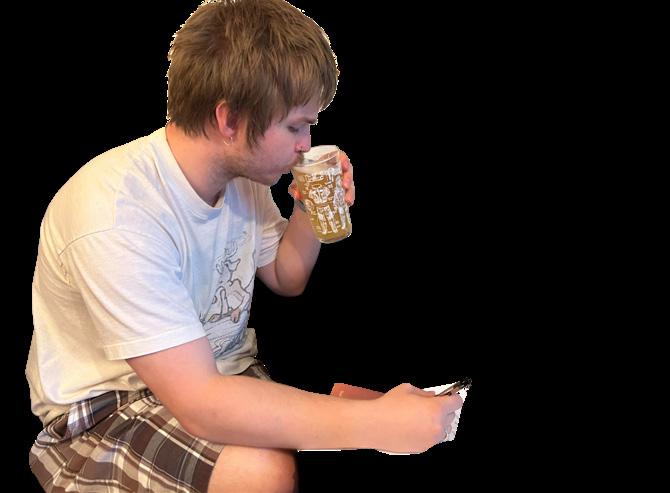
“I was made to eat dog food”
Whistleblower Tells of Mistreatment in Student Society
Elisabeth Ounswerth News Editor
Initiations, toxic drinking culture and ritual humiliation are allegedly still alive and well in one well-known Cardiff University society, according to a source. Despite the Union’s ban on initiations and strict rules for societies, dangerous behaviour is reportedly still continuing under the university’s radar, creating an environment that “fosters exclusion, humiliation, and judgement”.
An anonymous source, who joined as a Fresher in 2025, claims that the highly regarded society was presented as a safe space but that treatment from older members made them feel like an outsider, claiming they “felt alienated in a space that should have been supportive”.
Despite the university’s rules, the source alleges that excessive drinking culture, intimidation and initiation practices are still rife in this society, claiming that “the society is so focused on heavy drinking that anyone who doesn’t want that lifestyle is shamed or excluded”, and that they operate with a “gang mentality”. The source also highlighted the mistreatment of Freshers, describing a “humiliation or initiation ritual” in which they were allegedly forced to “crawl into a house, wear nappies on our heads” and even “made to eat dog food”.
The source claims they were “treated like a second-class citizen simply for being a Fresher” and that “no one seemed to care about how uncomfortable or degraded we felt”.
The source also had deep concerns over the society’s social media presence. Allegedly, publicly posted images include people nude, on the toilet, or extremely drunk and vomiting. (Some of which have been seen by Gair Rhydd). The source called this “completely inappropriate” and said it disregards the wellbeing and safety of those being photographed.
As well as disregarding the online safety of their own members, the source alleges that the society is also “openly hostile” to societies from other universities, claiming that “the things they say are appalling and absolutely
should not be online”.
The source said that the university is continuing to endorse the society to Freshers, saying it is “painted as one of the best societies at the university, and staff promote it without any real understanding of what goes on inside.”
They claim this pushes students toward a society “that doesn’t reflect the values the university claims to uphold”, highlighting a possible need for more monitoring of treatment within student bodies.
Readers may remember that the Men’s Cricket Club was banned for the remainder of the academic year in January. A statement made at the time on the Union’s website says that their “investigation found clear evidence that activity associated with the Club fell well below the standards expected of Union members. These behaviours were inconsistent with our Code of Conduct, [...] and raised significant concerns around student safety and welfare.”
The statement reiterates their zero-tolerance policy around initiations, which they say “is guided by a clear duty of care to students”.
According to these allegations, despite the harsh consequences seen for other clubs found to be breaching the university’s code of conduct, and despite expectations being repeatedly communicated, there are students and societies still taking advantage of, and mistreating their members, both new and old. Additionally, if staff members are endorsing the society to new students without knowing about its alleged malpractice, this raises concerns around whether societies need to be monitored more closely to ensure future students can be safeguarded from this mistreatment.
The Union’s website urges anyone with concerns around conduct within a sports club or society to contact the Union via their customer service email or raise issues with the university using the Report and Support tool. Students can be supported in doing so by the Union Advice Team.
In the interest of protecting the source of these claims, Gair Rhydd has not contacted the society in question, nor will we name them.
“The Union’s website urges anyone with concerns around conduct within a sports club or society to contact the Union via their customer service email or raise issues with the university using the Report and Support tool.”
Will New Rental Reforms Make Housing in Cardiff Fairer?
Advait Gangawanwale Contributor
Tenants welcome greater flexibility and protection, while landlords warn of growing pressure on Cardiff’s housing market.
The beginning of May brought a sense of relief for Melvin, a student renter in Cardiff. The Renters’ Rights Act 2026 came into force on 1st May, marking the biggest overhaul of England’s rental sector in 40 years.
Like many students in Cardiff, he has experienced the uncertainty that comes with shared housing, changing friendships, and long fixed-term contracts that can leave students tied to houses they no longer want to live in. With new rental reforms coming into effect across England, renters like him hope similar changes could eventually reach Wales and make the housing market feel less rigid.
While the reforms mainly apply to England, renters and landlords in Cardiff say the debate reflects wider pressures within student housing markets across the UK.
“I feel like rolling contracts would be a breath of fresh air and especially for students, as they are more uncertain and picky with whom they share space with,” said Melvin.
The reforms, introduced through the UK government’s new renters’ rights changes, will abolish ‘no-fault’ evictions where a landlord asks a tenant to leave even if the tenant has done nothing wrong. Similarly, rolling tenancies in place of many fixed-term contracts are introduced. Landlords will also face tighter restrictions on rent increases and rental bidding wars.
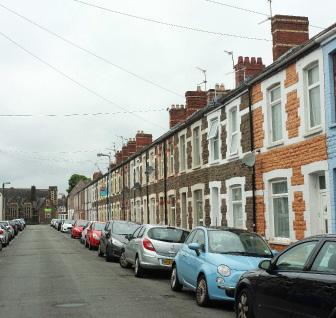
For tenants, particularly students and young renters, the reforms are being seen as a move towards greater flexibility and protection in an increasingly expensive rental market. In Cardiff, where areas such as Cathays and Roath are dominated by student housing, the changes could significantly affect how students rent and move between properties.
However, while renters have welcomed the reforms, landlords are concerned over what the long-term effects could be.
Hannah Walters, a property owner
in Cardiff, said that stronger tenant rights were necessary given the current state of the housing sector. “There needs to be further protection for renters in the current market.”
“At the same time, some landlords warned that the changes arrive during an already difficult period for property owners. Alongside the new reforms, many say they are dealing with higher operating expenses, stricter compliance requirements and increasing agency fees, adding further strain to the rental sector.”
Gary, a Cardiff-based landlord, said property owners are facing growing financial pressures. “There are more costs now than there used to be,” he said. “Safety checks, fire alarms, agencies, everything has become more expensive.”
He also said that uncertainty surrounding the reforms is making some landlords reconsider staying in the rental market.
“Some owners are already choosing to sell HMOs,” he said, raising concerns about the future availability of student housing in Cardiff.
For Melvin and other tenants, the reforms are about more than just contracts and policies. He also believes problems surrounding tenancy deposits still need greater attention.
“In most cases the deposits are deducted unfairly,” he said, arguing that the process for disputing charges should be made clearer and easier for renters.
The reforms may offer tenants more security and flexibility, but they also arrive at a time when both renters and landlords feel increasing pressure from Cardiff’s housing market. In a city heavily dependent on student housing, the reforms could mark the beginning of a significant change in the relationship between tenants, landlords and the rental market itself.
Cometh the Hour, Cometh the Quiz!
How Cathays Does Quiz Night
Ethan Gerrard Proof-Reader
Cathays doesn’t do quiet evenings. It does not really do subtlety either. What it does reliably, loudly and with a pint in hand, is the pub quiz. Between the competition and chaos, they have become a staple of student life, an excuse to gather, shout answers with misplaced confidence and, occasionally, win something worth shouting about.
On a Tuesday night, The Flora offers a more balanced entry into the scene. At £2 a head and an 8pm start, it strikes an accessible but still competitive middle ground. The format is clean, two rounds that are but deceptively varied. The first moves briskly through on-screen trivia, a nostalgic ‘back to school’ section, music, and a picture round (which had us identifying a Lost Mary flavour, a task far more divisive than expected). The second round opens you up to food, sport, ‘around the world’ and a rotating ‘people’s choice’ topic, which revealed to me, perhaps surprisingly, that Lucky Saint leads the UK’s 0% market! Then comes the wildcard; a mystery challenge that might see you performing a TikTok trend in front of the host for up to three points. There is also a bonus riddle, because no quiz here is complete without one final moment of collective confusion. It is playful, well-paced, and, crucially, feels winnable.
Inside the Students’ Union, the Taf hosts a quiz of organised chaos. Every Thursday at 8pm (£5 per team), it is louder, bigger, and packed to the edges, arrive late and you’ll be standing. Six rounds of ten questions cover everything from music (ours being nightcore covers) to picture rounds, with the occasional ab-
surdity thrown in, like ‘Who said it: Gandhi, Liz Truss or Darth Vader?’ (a hint, it was probably Liz Truss!) A bonus round might involve con structing a balloon hat (structural integrity not guaranteed, ours resulted in a smashed glass). The prize is more about spectacle, and the free drinks! A minute behind the bar the following week, pouring as many drinks as possible. At the centre of it is host Lucy Gibbins, whose ap proach explains much of the quiz’s appeal. Hav ing started hosting at 18 after a background in entertainment, she treats the role as she is or chestrating the entire spectacle. “I love the sense of community”, she explains, noting how teams from across courses and societies mix in a way that rarely happens elsewhere. That accessibil ity is key, “you don’t need to know everything about everything to have a chance at winning”, and it shows in the breadth of rounds and the willingness to embrace silliness. Tie-breaks, she admits, are where things peak, recalling “the great British moo off” with some pride.
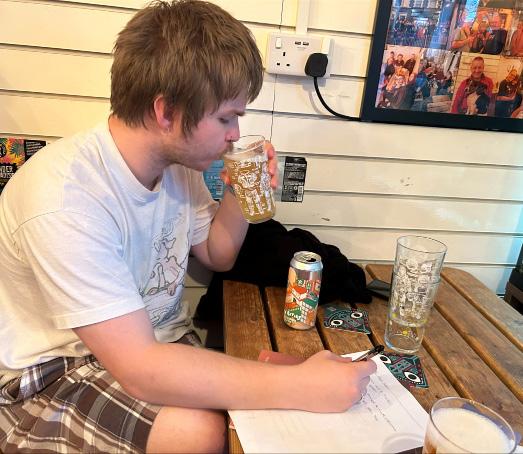
Elsewhere in Cathays, the formats shift but the appeal remains consistent. The Crwys leans into speed and interaction, its Monday night quiz running through phones with themed rounds, it has me focusing on World War II, pitched with just enough difficulty to keep things interesting. it trades the noise of larger venues for a closer, more conversational format. Ca thays Beer House leans into something far more intimate. For £2 at 7pm on a Monday, it trades the noise of larger venues for a closer, more con versational format. The opening round is a con nect round alternating weekly between music, picture or themed links, what began as a string of seemingly unrelated names gradually revealed its logic, whether that be radio breakfast hosts or literary characters. Whilst teams puzzle that

Students paving the way for the future with CARBs
This year’s annual Undergraduate Placement Awards, hosted by the Cardiff Business School, saw the incredible achievements of many Cardiff students celebrated. The awards are dedicated to the outstanding achievements of students who have contributed to the success of businesses on a local, national or global scale, and recognises the dedication and professionalism of students on placement, as well as the support provided by their employers.
This year the response to the awards was exceptional, with 51 students submitting applications that demonstrated the impact their work had during their placements.
From a high standard across the board, 20 finalists were chosen, and awards were presented to four outstanding winners, with three students achieving highly commended awards. Miss Catherine Williams, Undergraduate Placements Officer, says “We are exceptionally proud of the way in which our Placement Students represent the Business School and wider university when undertaking an internship; the Placement Awards highlight the incredible feats these students achieve year upon year.”
If you’re undertaking a placement of your own next year, this is a great way to get your contributions recognised by the university!
out, the host Martin moves between tables, ask
Sbotolau
A Band to Watch: MORN
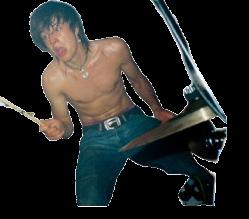


Ellie Evans Spotlight Editor
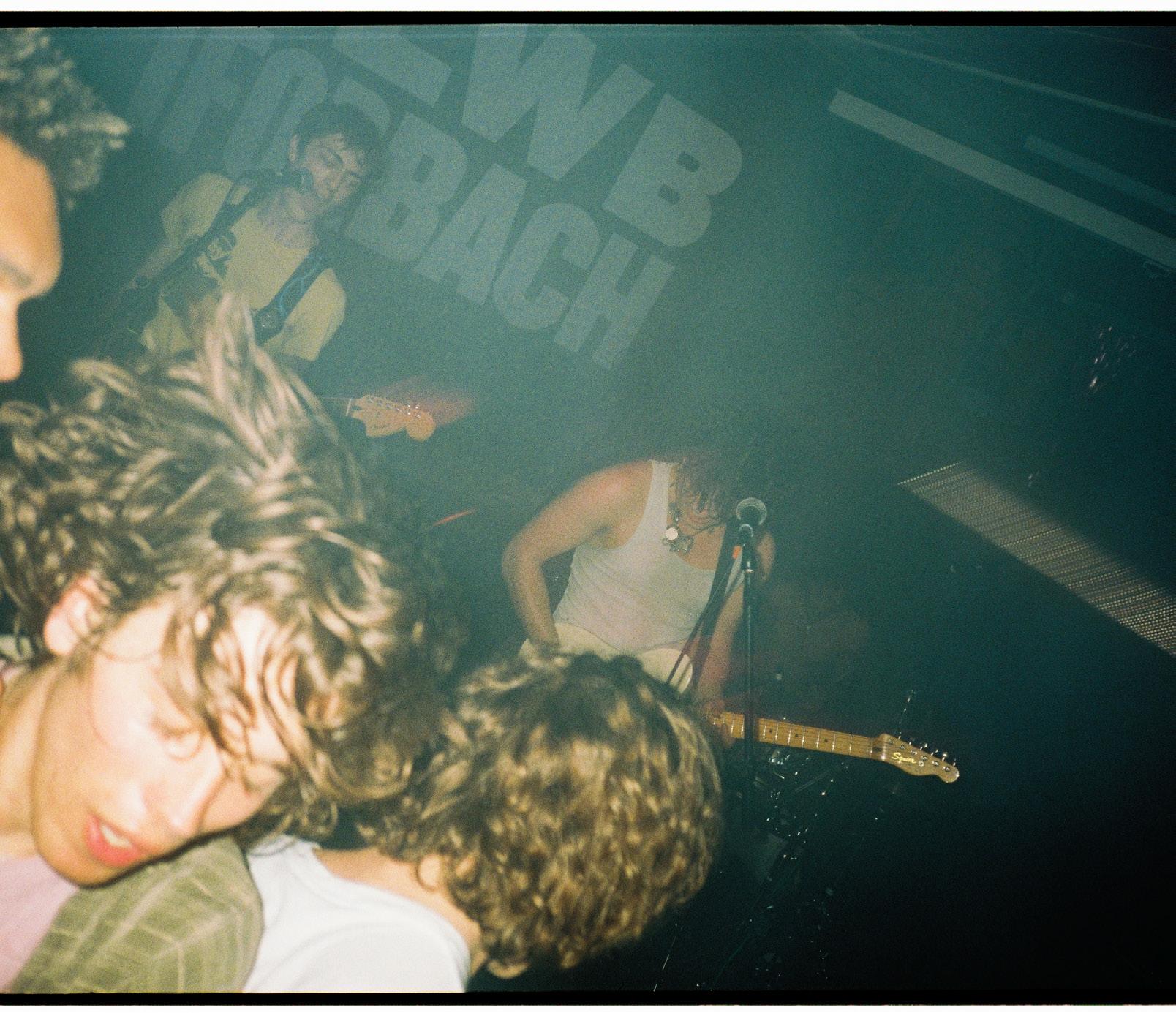
From the farmlands of South Wales, the post-punk band MORN are without a doubt destined for big things. With piercing guitar riffs and unrefined vocals that create doom over beautiful chords, the band is made up of two sets of siblings: Rob and Oli, and Noah and Mae. In conversation with the band, they discussed their experience as an upcoming band with me.
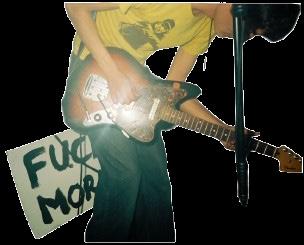

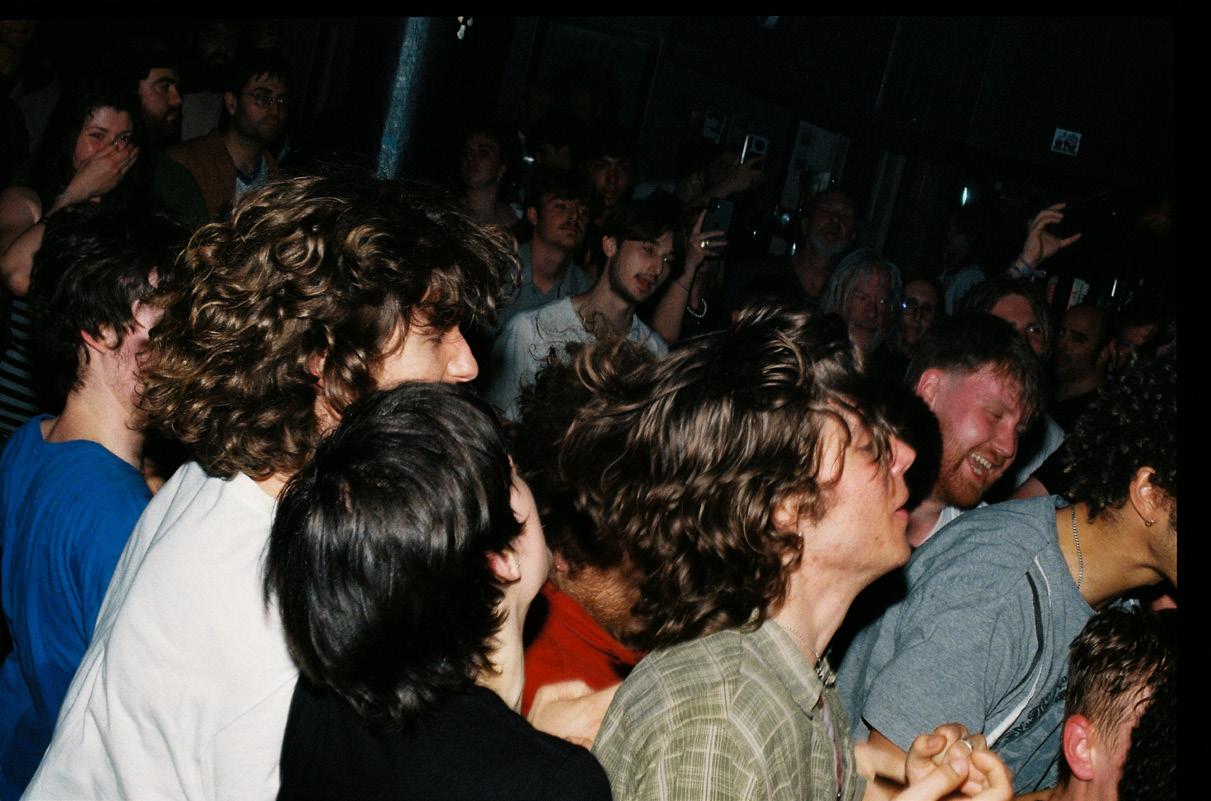
Q: You’ve built around 5,000 monthly listeners on Spotify with only one officially released single. Has that early attention felt exciting, motivating, or unexpectedly pressurising?
It’s great to know that people are enjoying our music. It gives us another reason to keep going. For us, the pressure we feel is mainly what we put on ourselves, trying to make something we’re really proud of. We make music because we love it but our goal is for our music to connect with people, so we’re so grateful for all the support we’ve had so far. There’s a long road ahead…
Q: If someone is seeing Morn live for the first time this year, what would they leave feeling about the band that they couldn’t get from streaming alone?
The best live show money can buy hehehee. Really though, we just try our absolute best to blow people’s minds. We try to leave it all out there on the field & make an impression that they won’t forget. They will hear plenty of unreleased music too, we’ve been working really hard writing. We have so many songs now, so it’ll be different every time too…
Q: What are the main sonic influences when creating your music?
Personally, I’ve been really influenced by the music of Gareth Liddiard recently, an Australian songwriter. He writes such great commentaries in his songs and has such a unique style of playing guitar. It’s such an interesting mix, but definitely not for everybody. Sometimes I even find it a bit much.
We’re all also really into Battles, but specifically the one song, ‘Rainbow’. We’ve been trying to replicate the feeling that it gives us in our own music.
Q: Your session with Huw Stephens on BBC Radio Wales in March felt like a real milestone. What did it mean to
have someone with such a great track record of spotting emerging talent early on, championing Morn on the radio?
It was great fun to do! He’s pretty much welsh royalty at this point, we’re so honoured ton have his support! It was nice to have a proper chat for the first time.
Q: By the time this interview is out, everyone will have two new Morn tracks to sit with. What kind of world do these next two songs bring people into?
Both tracks, especially “The Standard Model” sits in the world of Modern Man, our first release. In the production of it, and sonically too. But the second track “I Watched You as Your Mind Slipped Far (Away from Me)” shows a bit more of the direction that we might be heading.
Q: Can you tell me a bit about what you think sets you apart from others? What is Morn trying to say that other bands aren’t saying right now?
Oli (my brother who is the other guitarist) has been going on about ecstatic truth. It’s something that our favourite filmmaker Werner Herzog talks about. ‘Ecstatic Truth’ is what we want to capture in our music, since we feel it encapsulates what we want to do.
It’s not something you come by every day.
Q: Do you feel like the current industry gives small bands a fair shot? What’s your experience?
I don’t think so at all, and I can definitely say that for us collectively. We have been really lucky in our journey, and we’re so thankful to everybody who has supported us so far. But lots of other people don’t get the same opportunities we have.
Having a thriving community of Welsh musicians is amazing, and there are plenty of schemes that have funded our music videos and releases. That being said, in terms of English arts funding: it seems pretty negligible. So one thing I’d say is that if you are from Wales, you’re VERY lucky because people are willing to help out emerging artists. You’re also lucky because Cymru is the best.
Image Credit, Jacob Allen (@jacob_ffoto)
Sbotolau
Food Festivals in Cardiff Serving up a Summer of Flavour
Eve Yates Spotlight Editor
The weather is finally picking up in Cardiff, and now the sun is shining it means it’s food festival season. From the 15th-19th April, Cardiff Queen Street was buzzing. The Great Cardiff feast had arrived and brought with it a packed line up of vendors. From pulled BBQ pork, churros, ciders, Jamaican grill, dumplings, Greek food, loaded fries, chicken wings, hot dogs, burgers, there was so much food to choose from. And that’s not all; stalls were selling deli products, such as samosas, olives and an array of sweet treats to choose from, such as brownies and cakes. The food festival was free to walk around, and the prices were reasonable for good quality, freshly cooked food.
It was refreshing to see Queen Street busy, with the festival clearly bringing in tourism to Cardiff, and thankfully the weather was good for it. Majority of the stalls were local traders or independent businesses, and it was a delight to see so many people coming to support them. Bute Park was full of locals and visitors enjoying the fantastic food on offer. I couldn’t resist some fried vegetable dumplings with a zingy chilli dip. What more could you want?
Watch this space Cardiff is not through yet when it comes to bringing vibrant events and food to the city centre. The Great Cardiff Feast appears to be the first of many food events to come. The touring Foodies Festival will be in Bute Park from the 9th11th May, and this is one of the UK’s largest touring food festivals. Celebrating drinks and good food, the festival is hosting celebrity chefs and musical headliners. MasterChef
champions and Bake Off stars have the opportunity to show off their cooking skills to the live audience. There will be a drinks experts running tasting sessions, and live music raising money for the charity Crisis.
The Feast On festival is coming back to Bute Park this summer from 29th -31st May, described as a “feast that ignites the senses with every bite”. This festival will offer more than just food, but live music, cooking demos, eating challenges, food tasting, wine tasting and food sustainability talks. Some of Cardiff’s finest eateries are already announced in the lineup, with Tuk Tuk (Crwys Road), Bodega (Lakeside) and Pasture (town centre) all taking part this year. While the tickets for entry are a little on the pricey side, the festival this year sounds like a good one, and not one to miss.
“The Cardiff Food and Drink Festival will also be returning to Cardiff Bay from the 3rd - 5th July.”
This is one of the most popular events in the Cardiff summer calendar, bringing together local produce and delicacies from around the world. It is free to walk around the festival. While the stallholders have not been announced yet, the producers’ fair, farmers market and street food piazza are all making a comeback. There will also be a crafters market and bandstand with live music.
So whether you’re a food fanatic, enjoy a cheeky drink in the sun or just fancy a day out, Cardiff has lots more exciting food events on the horizon to look forward to.

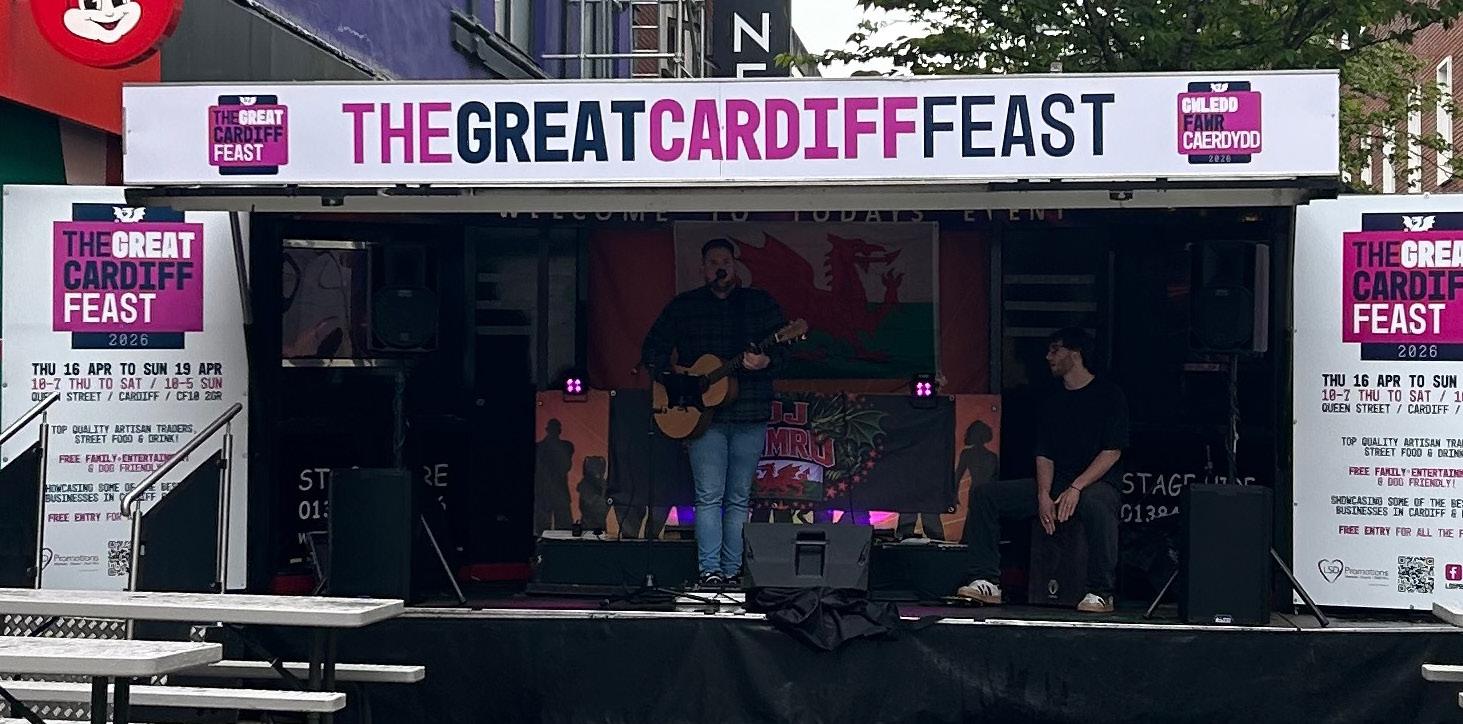
The Battlefield of Finding Part-Time Work
Eve Harris Spotlight Editor
With the student community making up approximately 20% of Cardiff’s population, the process of finding part time work in the Welsh capital is becoming increasingly unattainable. The density of students from across Cardiff University, Cardiff Met and USW creates an overly competitive vacuum for casual and part time work. Consequently, a large proportion of students in Cardiff find themselves possessing a wide range of desirable skills, yet forced to compete for unskilled work, only to be turned down by employers.
According to the Office for National Statistics, unemployment for young people aged 16 - 21 has risen to 16.1% as of this year, making many feel understandably discouraged and unmotivated. The ONS has also reported that between January - March 2026, the estimated number of job vacancies has seen a decrease of 29,000, following broad estimates since March - May 2025. For students, the traditional term time job has become a near impossibility.
Additionally, considering that Cardiff’s city center is compact in comparison to other major cities including Manchester and London, the supply of student-friendly roles, for
example, retail and hospitality, are overwhelmed with applica tions. Looking on Indeed, a large proportion of part time vacan cies are located outside of the city centre, making them inaccessible to many students who lack means of transport, for instance. Popular job application sites such as Indeed are increasingly using AI to seek out candidates and look through poten tial CVs. Therefore, in some cases, large numbers of CVs are screened out by arti ficial intelligence before a manager even gets the opportunity to read them. Whilst the Students’ Union offers services such as the SU Jobshop, there are simply not enough opportuni ties to cater to Cardiff’s extensive student population. With constantly rising living costs, this begins to create a worrying is sue, as being a student is becoming unaf fordable for many.
With a lack of vacancies for students, study ing at university risks becoming a privilege rather than an opportunity that should be open to all.

Coachella Craze-iness
Holly Osbaldeston Contributor
Coachella has become more focused on the material aspects of the festival rather than the music itself. Influencers have been a driving force of this as they take sponsorships to be there. This means that they are obligated to focus on the brand that has invited them, leading to them talking more about the brand than the music.
This is obviously not the case for every Coachella goer, not all of them are influencers, but they will all be, to some extent, influenced by what they see. A large example for this is the style of clothing at Coachella. It has been normalised to plan outfits months in advance. Some brands have even created festival clothing lines, which furthers the need for people to have new clothes for every festival they attend. This can be seen as a part of a wider trend in consumerism where people are buying more clothes and wearing them for less time, causing more waste.
This clothing shift is due to influencers convincing people more than ever that it is something shameful to wear an outfit more than once. This gets exacerbated for festivals because of the constant pressure to post our lives on social media. This can be seen in the picking up of the term ‘influencer olympics’ by social media to describe the festival. They all feel a need to outdo each other leading to more extravagant clothing, more brand deals, more unnecessary items in their tents when they camp. All of this creates an ecosystem of waste that is extremely damaging for the environment.
Coachella does have prompts for how
“Coachella produces 107 tonnes of daily waste, of that amount only 20% gets recycled”
people could be more environmentally conscious, however that does not seem to be enforced in a meaningful way. Comparatively, Glastonbury Festival has been taking initiatives to lower the waste that is left behind, including using compostable packaging. There is still an environmental impact of the festival as not everything can be fully prepared for, and people will still leave waste no matter what it is. However, they are still doing more than Coachella when it comes to reducing the environmental impact.
This could be because Glastonbury Festival is not as influencer focused as Coachella. As much as people go and dress up for the clout of the festival, Glastonbury is still mostly about the music, not social capital. The waste that is produced by festivals seems to be a universal issue as it is difficult to police but there is a very distinct difference between festivals that try to mitigate the issue and ones that do not. Even Burning Man, a festival that already creates a large quantity of carbon emissions, and creates waste, has a sustainability plan. Burning Man has also entered the influencer sphere but not in the same way as Coachella.
It seems no other festival is viewed on social media like Coachella is. This could be due to its roots in more alternative fashion which drove a specific Coachella look. This type of look seems to be sanitised as companies fight to sponsor influencers, but it still leads to people thinking that Coachella is different and therefore justified in its over consumerism, which keeps getting worse each year.
Debate, Delay and Dignity: The Assisted Dying Bill
Helen Turnbull Opinion Editor
After more than 220 hours of debate, the Terminally Ill Adults (End of Life) Bill failed to pass on 24th April. However, the Bill didn’t fail through a vote in the House of Lords, but by being run out of time. Since the Bill’s first reading on 23rd June 2025, 43 UK citizens travelled to Dignitas, an assisted dying centre in Switzerland. Was this blocking caution or democratic failure?
Kim Leadbeater, Labour MP, introduced the Terminally Ill Adults (End of Life) Bill to the House of Commons in October 2024 and it passed its third reading with a majority of 23 in June 2025. The Bill then faced 1,280 amendments in the House of Lords, a parliamentary record with just seven peers responsible for nearly 700 of the amendments.
“Exhausting the 14 Friday sessions of debate is a clear act of filibustering rather than conventional scrutiny”
The Bill proposed to allow terminally

ill adults, subject to safeguards and protections, to request assistance to end their own life. The Bill applied only to people aged 18 or over with the capacity to make the decision to end their life, having been a resident of the UK for at least 12 months prior to making the declaration.
The Bill sets out a notably rigorous process for making this declaration. The person must pass through seven stages: a preliminary discussion; first declaration; assessment by a doctor; independent second assessment from a doctor with no prior involvement in patient’s care; review by a panel consisting of a senior judge, psychiatrist and social worker; followed by a mandatory reflection period of at least 14 days; and a final second declaration. Coercion is taken very seriously, as anyone who makes a declaration through coercion could face up to 14 years in prison and anyone who coerces another to make the declaration could face life imprisonment.
Some peers opposed on principle, among them the Archbishop of Canterbury, who argued that life should never be taken. Disputes arose with the condition that a person’s death must reasonably be expected within six months as peers argued that this prognosis could be uncertain.
The result of this Bill has been met with justifiable anger and frustration. The Chief Executive of Humanists UK, Andrew Copson commented: ‘It’s a stain on our democracy and a slap in the face to hundreds
of terminally ill people’. Paul Foster, Labour MP for South Ribble told The Observer: ‘This is the Lords at its worst […] they’re trying to prevent government functioning’.
“Nobody should mistake delay for defeat”
Despite opposition, approximately 200 Lords wrote to MPs to express their regret that significant procedural delays ran this Bill out of time. It is not merely that this constricts the autonomy of terminally ill patients to choose the nature and place of their death, but the method of defeat. With peers covering only 7 of the Bill’s 59 clauses whilst exhausting the 14 Friday sessions of debate is a clear act of filibustering rather than conventional scrutiny. This raises the question of whether a determined minority of peers can override democracy through procedure. Regardless of this frustrating setback, Sarah Wootton, Chief Executive of Dignity in Dying, optimistically responded, ‘nobody should mistake delay for defeat’. The Assisted Dying Bill may well return, but its manner of defeat exposes troubling weaknesses in the operation of the House of Lords. Image: Unsplash.
Should Horse Racing be Banned in the UK?
Megan Warren Contributor
Horse racing in the UK has a centurieslong history, from events like the Kiplingcotes Derby to the globally recognised Grand National. For many people, it represents tradition, prestige, and national identity. For me, the issue feels far more personal. Having worked with horses and studied how their bodies function, I find it difficult to separate the spectacle from what the animal is experiencing underneath the rider.
The main ethical concern comes down to welfare. Around 170 horses a year in the UK are euthanised following race-related injuries. Even without headline-making incidents, the everyday risks are significant. Racing asks horses to run at high speeds, in close proximity to others, often over obstacles, where a single misstep can have severe consequences. Watching these events with an understanding of equine movement changes how you see them. Every stride places force through joints and tendons that are already under strain.
Age plays a huge role in this discussion. Most racehorses begin competing at just two or three years old. From a biomechanical perspective, that is incredibly early.
A horse’s skeletal system is still developing well beyond that point, particularly in the spine and lower limbs. Growth plates do not fully close until around four or five, sometimes later. Repeated high-intensity work before that stage increases the likelihood of longterm damage. Tendon injuries, joint problems, and stress fractures are common, and many horses retire young because their bodies cannot cope with the demands placed on them.
As a rider myself, I know that when
you sit on a horse, you feel subtle changes, rhythm, balance, and tension. Those signals become even more pronounced when something is wrong. Situations where injured horses continue racing, such as with Gold Dancer at the Grand National this year. Shows the pressure the industry places on horses and jockeys that overshadows welfare and leads to pointless deaths. Supporters of racing often point to improvements in care. Veterinary standards have advanced, and many racehorses are kept in excellent condition. The industry also provides employment for thousands of people across the UK, particularly in rural communities. A complete ban would have economic consequences, affecting not just racecourses but breeders, trainers, and support staff.
Even so, economic benefit does not remove ethical responsibility. Public attitudes toward animal welfare continue to shift, as seen with the decline of greyhound racing in many areas. More people are questioning whether the risks faced by animals in sport are justified.
A ban is one possible outcome, though reform offers another path. Raising the minimum racing age would better align with physical development. Limiting how often horses race and strengthening safety standards could reduce injury rates. Greater accountability across the industry would also help ensure that welfare remains central. Horse racing sits at a difficult crossroads. Tradition and livelihood pull in one direction, while growing ethical awareness pulls in another. From my perspective, understanding how a horse’s body develops and responds to stress makes it harder to accept current practices. Change feels necessary, whether through strict reform or a more fundamental shift in how the sport operates in the future.
Barn
Britain’s Love Affair With Cyclist Hatred
Oliver Hanlon Opinion Editor
Nothing seems to boil the blood of the masses quite like hordes of men in Lycra. What should be a rather uncontentious, uncontroversial and ultimately quite boring hobby seems to be treated with unprecedented levels of vitriol in Britain. Motorists hate them, pedestrians hate them, and a large chunk of the press hate them, so why is it that cyclists are so universally hated?
Even if this fury is entirely misplaced, it cannot be said that cyclists really help themselves. In Cardiff, walking down the high street is no easy feat as swarms of delivery cyclists fly past, weaving through crowds on suped up and often dodgy E-bikes. I’ve become all too familiar with the awkward scramble of trying to get out of the way of these bikes as they seem to charge at you, going Mach-10. Is this a problem of our own creation? Well, if you’ve ordered fast food on any of the various apps, you’ve sort of gotten what you wanted: fast food. It’s not like these cyclists are getting points for nearly clipping as many pedestrians as they can, although sometimes it really feels like it; the faster they get their job done, the sooner they can get onto the next delivery. Faster deliveries mean faster bikes, and these faster bikes, often used by delivery cyclists, are often the kind that are illegally converted, sometimes from stolen bikes. The perception that cyclists are riding illegal bikes dangerously through pedestrian areas is hard to dispel when
cyclists are in fact riding illegal bikes dangerously through pedestrian areas and enraging the public doing so. However, the gig economy has only provided a new outlet for the public’s general disdain for cyclists; Britain’s hatred of cyclists is much older and goes much deeper.
The notion that cyclists flout the rules of the road and that cars have more right to be there seems to be very common; it’s a notion that the media is often all too happy to support. Drivers have to spend a lot of money on lessons and pass their test to be on the road, but any cyclist can just hop on a bike and get straight on the road. This is obviously because one is effectively heavy machinery, and the other is just a bike, but it does create a conflict where drivers think they’ve earned their right to be on the road and cyclists have not. So when a middle-aged man in neon Lycra blocks up traffic during a school run, a driver doesn’t see a person travelling to work, they see someone who hasn’t earned their right to the road and is flaunting it. The brightly coloured spandex of the cyclist isn’t seen as appropriate sportswear, but a taunt at all the motorists behind them.
It should be pretty clear at this point that cyclists have an image problem; their skin-tight neon Lycra has become offensive to large swathes of the British public. That image problem is largely to do with how cyclists are portrayed in the media. Stories, particularly in the right-wing press, portray cyclists as lycra-clad rule breakers who have no respect for the roads; this takes them from slightly annoying to public enemy number
one. You don’t blame narrow roads or inadequate cycle lanes when the cyclist delaying you is seen as an invasive species, whose only purpose is to cause you malice. This image problem has only compounded in the social media age.
Cyclists have garnered a reputation as busybodies who have it out for drivers; the con tent seen on the pages of people like Cycling Mikey and Jeremy Vine, recording drivers’ traffic offences, only acts as rage bait to the public. The vitriol directed at Jeremy Vine’s content was so intense that he stopped cycling videos in April 2025. CyclingMikey, in particular, is an amalgamation of everything wrong with cyclists in the public’s mind: rude, en titled, and invasive. Ultimately, cyclists con tribute to less congestion and cleaner air, but to shirk their evil reputation, an effigy of the current cyclist in the public’s mind needs to be burnt and replaced with something new. The public currently sees cyclists as Lance Arm strongs; lycra-clad, self-righteous, road cheats, who treat our streets with contempt. Instead, the me dia should try to push new mas cots for the hobby, like Ben Foster or Sir Chris Hoy, partly to ease the temptation of mo torists running cyclists off the road and also to promote less wasp-like behaviour from the lycra-wearing masses.
Image Credit, Welsh National Library

Artemis II is the Ultimate Distraction

OBethan Jones Opinion Editor
ver the Easter break, many of us plucked up the courage to turn our TVs on and flip over to the news channels – something we have all been avoiding for a quite a while. We gathered around our screens to watch as four astronauts took to the moon, a journey which has not been made since 1972. But whilst they marvelled at our oasis that we call Earth, the rest of us cannot be so easily distracted.
The Artemis trip was never intended to unite us. It is easy to envision humanity as this homogenous group when you only see a blue, glowing orb. But for most of us, it is hard to remember our similarities when armed combat and structural violence are all that seem to surround us. The reality is the Artemis mission is only a piece in the puzzle of a continuing space race that is a direct result of conflict.
Following the development of the atomic bomb, the US and the USSR fell into the Cold War, a competing battle for global power which lasted for the latter part of the 20th century. It was fuelled by ideological headlocks, technological advancement and war, with one of the main focuses being on space.
Space discovery has never been about progressing the entirety of humankind, but a route only to reassert a hierarchy amongst global powers. If you can colonise space, what is to stop you from total, complete hegemony?
It is no coincidence that this mission has come at a time when the United States is involved in a monumental amount of conflict. Space exploration has always coincided with military ambition - we saw this during the 1991 Gulf War, which marked the first large-scale military use of satellite technology. And today, this dependency is even more visible with Russia and Ukraine, and more recently with Iran and the US.
When nations desire new surveillance, new weapons, and new strategies, they take to
the stars. Space is no longer a distant fantasy that is dreamed up in legends and films but is now a functional and contested territory used by powerful nations to compete for security and militarisation.
Technological advancement is never a neutral achievement. We must remind ourselves - Who is funding this? And for what cause? It costs NASA an incredible amount to hurl four people into space, which means contracts are going to be bought up by large, rich corporations. And to no one’s surprise, SpaceX and BlueOrigin, owned by both Musk and Bezos, are two of the largest companies that NASA rely on for this funding and technology.
Musk already sees space as his own cosmic playground, owning 2/3 of the 10,019 active satellites that currently orbit Earth, and simultaneously littering millions of pieces of debris into our atmosphere. What we are currently seeing is a concentration of power into the hands of a small group of techno-elites who seem to be getting a seat at the table for just about anything these days, with space exploration being no exception.
SpaceX are receiving billions of dollars of US governments contracts – money which could have addressed the 37 million American people who are living below the poverty line or those struggling with housing costs or stagnant wages. Instead, the money is being funnelled into the hands of individuals whose profits will not be shared with the likes of you and me.
Space programmes are wrapped in nationalistic slogans, painted as though they are for the sake of our collective future and frame exploitation as exploration. Terence McKenna once said, “You do not depart for the stars under calm and orderly conditions”. And whilst wars grind on and climate systems collapse, space becomes the ultimate distraction. It is easy to turn your eyes to the sky when there is wreckage at your feet. But under the surface remains the egotistical elite who fund their dreams at the cost of many and announce their achievements over the sound of bombs.
Xpress Radio
Xpress Radio was founded in September 1996, but was truly born of a public health emergency shortly after. Largely, the birth of the station as we know it today can be traced back to a meningitis outbreak, which prompted the university to fund the station’s FM license to keep students informed. Initially, the station only had a Restricted Service License (RSL), allowing just 28 days of broadcasting during the autumn term. Founders Adam Newton and Max Odell had spent two years trying to get the station off the ground, Odell said in a Gair Rhydd article, from the founding in 1996, that: “I’m so stressed out. I’m doing a million and one things at the moment, but it’s definitely worth the hassle. It is so good after two and a half years to see X-Press up and running.”
At the time, the station was a small operation with “so few resources,” relying on joint funding from the Students’ Union and the Centre for Journalism Studies. While the founders were just trying to survive their first 28 days on the air, they were already being praised for an “unexpected level of professionalism” that suggested Xpress was built to last. It has indeed lasted, leaving a legacy of many talented and prominent radio presenters and journalists who made their names in the Xpress studio. Most recently, the station served as the launchpad for Sam MacGregor and Danni Diston. The duo began presenting together on Xpress Radio during their time at Cardiff University, winning Student Radio Awards before eventually moving to BBC Radio 1 as the first regular daytime presenters to broadcast live from Wales for the network.
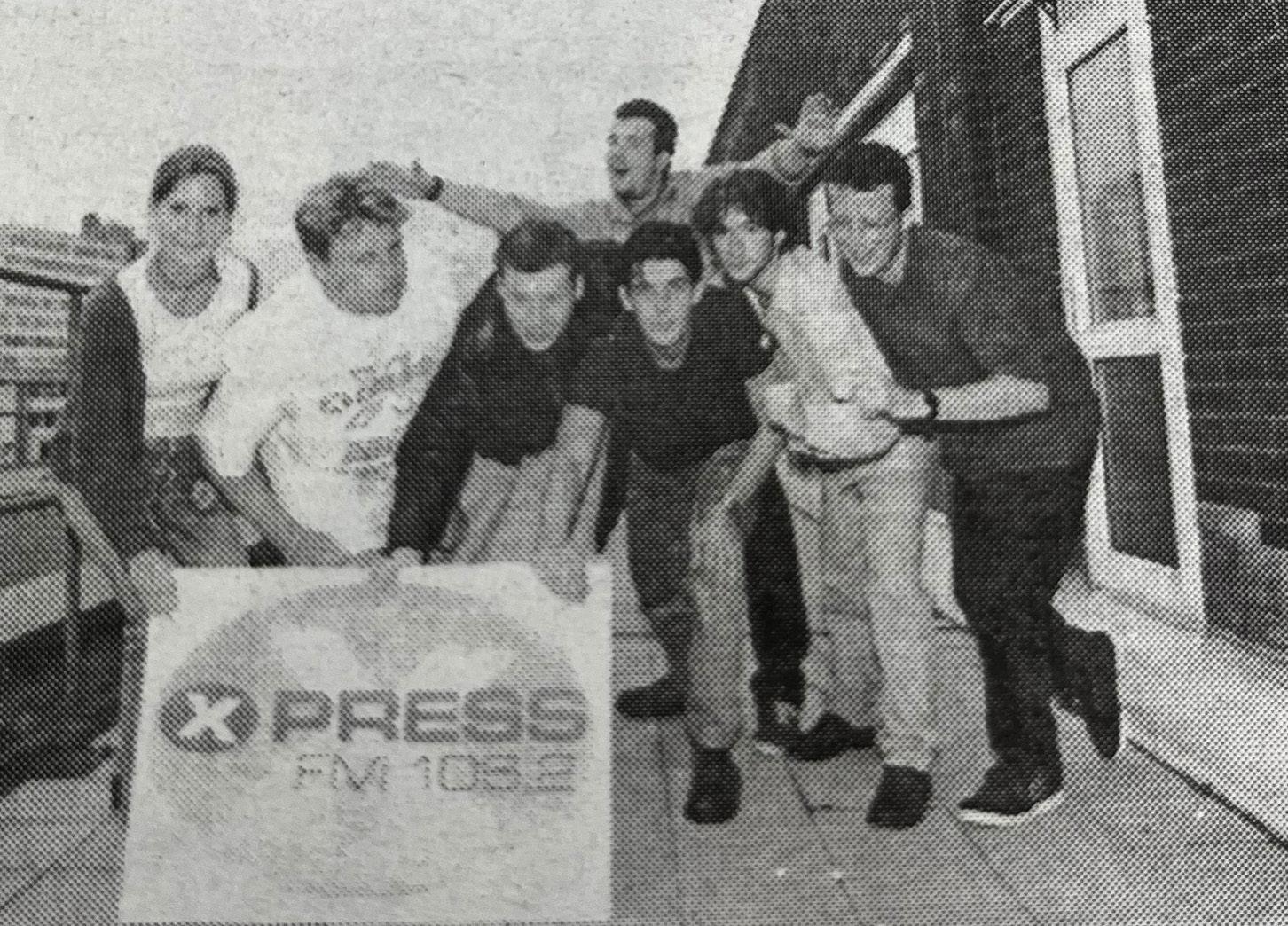
Thirty years on, the “scrappy operation” described by Odell has transformed into a sophisticated, 24/7 digital broadcaster. The mantle is now held by Station Manager Sami Ait- Kaci, who reflects on what the station has meant as a giver of opportunities for students, as well as a place for massive personal growth: “Being part of Xpress has been one of my most valuable experiences at university, and having the opportunity to manage a team of such talented people has been a pleasure,” Sami says. Reflecting on his own journey, Sami admits that the learning curve was steep.
“Stepping into Xpress, I had little knowledge of the radio industry. I now know how every single part of our studio works, what you’re supposed to say on radio, the big radio faux-pas, and how to entertain and inform using only your voice and music.” Sami also notes that joining the radio is a great way to get out of your comfort zone: Joining the radio station is great because if you’re already an extrovert, you’ll likely be a natural, and if you’re
more of an introvert, you get used to the pressure of having to speak clearly into a microphone, which eventually turns you into an extrovert.”
For those looking to follow in these footsteps, the door is always open. “If you’re new to the station and want to get involved, we provide regular training and one-to-one feedback to help you grow,” Sami explains. This commitment to training and developing talent and skills has made Xpress Radio an integral part of the Cardiff Student Media eco-system. Their 24/7 programming reflects the diverse interests of the student body, broadcasting across a vast range of genres and maintaining a strong commitment to regular Welsh language shows.
Giles Cosgrove has been responsible for much of this output for over half a decade, delivering everything from award-winning radio dramas to ‘The Alternative Show’. He said of the radio that:
“Xpress has given me a home for my creativity, a voice on campus, and the confidence to be myself. The commu-
nity of presenters, technicians, and producers really feels like a family, and it’s one of the highlights of my week getting on air with ‘The Alternative Show’.”
When asked about what it’s like to run a show on Xpress, Giles said that: “I’m buzzing off the one-to-one relationship with everyone who tunes in. It’s like having all your friends over and being able to talk to each of them directly. By 9 o’clock, I’m usually shattered, having had a lot to laugh about and proceed to upload the show to our listen again service on Mixcloud before driving home and listening back to my show to hear myself and the highlights and the mistakes to ensure next week is even better than the last.”
As Xpress Radio enters its fourth decade, it stands as a testament to the hard work of everyone from the 1996 founders to the current committee. For those who have walked through its studio doors, the impact is lifelong. As Sami sums up the milestone:
“Happy 30th Xpress, here’s to 30 more!”
Feature Turns Thirty!
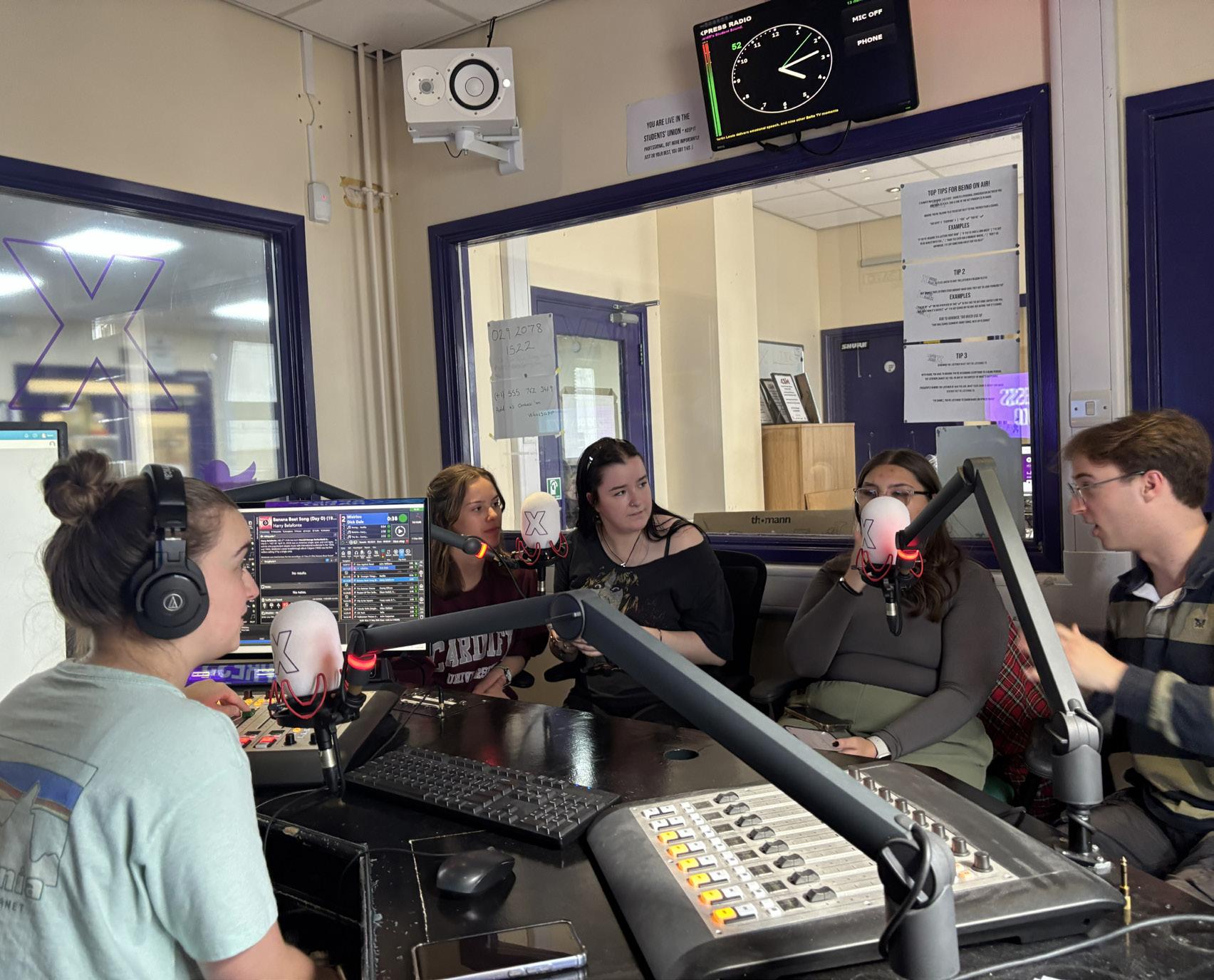

Gair Rhydd shares an office with Xpress, we are (usually) the best of neighbours.
Feature By Oliver Hanlon
Rhia Davies Opinion Editor
Gun violence is heavily politicized, and no gun violence is more scrutinized than school shootings. School shootings are a special, uniquely evil type of violence in the public consciousness, and it’s not hard to understand why: there’s no bigger universal taboo than the killing of children.
Shortly into Kristoffer Borgli’s The Drama, it’s revealed that Emma, played by Zendaya, planned to shoot up her high school as a teenager. More than just planned, she brought a gun to school with the intention to use it.
When portraying school shooters, both in fiction and in the news media, there’s a fear that it might come across as ‘cool’ or desirable to impressionable audiences. Cults of personality develop around certain shooters, most infamously Eric Harris and Dylan Klebold, who perpetrated the Columbine massacre. There exist entire internet communities dedicated to aggrandizing school shooters. A film like The Drama might run the risk of engaging in this type of behaviour - of making school shootings seem appealing to a certain kind of mentally ill teenager - but the film actively avoids this. It does so by exposing the artifice of the shooter.
To plan a school shooting is to engage in selfmythologizing. You write your manifesto, give your reasons, show the world who you want to be remembered as. This is the sort of behaviour that develops insidious fanbases. Emma claims that she herself developed an online following through embracing the ‘shooter aesthetic’. You buy into the mythology and create your own. But Emma doesn’t have a deeply tragic backstory. As she stumbles over herself to explain why she did it - or nearly did it - it becomes clear
A Modern Messiah Complex? Waking Up From The Fantasy of Violence
that what Emma experienced was little more than typical teenage loneliness and milquetoast bullying. It’s sad, and it’s not fair, but deciding to take a gun to school is a self evidently ridiculous overreaction.
Emma lives in a nice house with a pool. Emma has loving parents. Emma tries and fails to record her video manifesto several times while being interrupted by technical issues. None of it feels cool or compelling, it feels like watching a child who has no idea what she’s doing.
Adult Emma, looking back on the moment she snapped out of it all, described it as “waking up from a bad dream”. She goes on to live a normal life, she settles into domesticity and gets engaged to the love of her life. The film makes its point explicit in one sequence, when Robert Pattinson, Charlie asks: “if there are so many school shootings in the USA, how many people thought about it, planned it, before backing off?”
“Rather than contribute towards the desensitisation of gun violence, The Drama looks at that desensitisation, at the children who’ve been affected by it, with sympathy. Emma would never have gotten that far if her own dad didn’t have the gun.”
The Drama doesn’t portray teenage Emma with any kind of allure or mystique, and when she gives up on her plan, she’s given the opportunity to grow and live a normal life. This could make it a valuable portrayal for children going through similar experiences to Emma - that despite how taboo and unspeakable it is, they’re not permanently marked by it, and that there’s hope for them to grow past it. That it’s never too late for them to come home.


Miriam Southall Head of Opinion
In today’s generation, the use of Christian symbolism to promote and justify actions and opinions has become increasingly common, especially in the world of politics. As both a religion and a powerful symbolic language, Christianity has played a central role in Western culture, society, and political life throughout its history.
This widespread influences resulted in some parts of its biblical message being expanded upon and taken out of context, leading to what can be referred to as a “messiah complex.”
One of the core beliefs in Christianity revolves around the Messiah—Jesus, who is seen as a divine saviour enduring suffering to redeem others in the end. This symbolism of a messianic figure has extended beyond theology into the realms of politics and psychology.
The pattern involves individuals, particularly public figures, presenting themselves as destined to save others while also feeling persecuted. Though this is not entirely accurate to biblical texts, in a modern Western context, the messianic figure is often portrayed as white, reflecting cultural narratives and historical power dynamics. As a result, there is an explosion of Christian imagery that provides public figures, who seek a moral high ground, with more legitimacy and authority.
With this broader context in mind, we can now address the issues surrounding Donald Trump's AI post about Jesus and Russell Brand's performance on the Piers Morgan show. Both examples highlight deep cultural associations between spiritual authority and the concept of the white savior.. In Trump’s AI generated image we see him dressed in white robes with glowing hands extended over a sick man, very much visually mirroring Jesus healing the sick.
Though some may say it clearly Trumps way of presenting himself as a Messianic figure, despite his claims that it was him as a doctor. By aligning himself with this Christ-like imagery, Trump taps into a narrative that he is on a divine mission and how the people are out to persecute him. This in turn makes him more loved by his fans as they become more passionate and unable to see his wrongdoing. We can see how the post just wasn’t some image but one of a political performance manipulating people’s beliefs to appear more righteous and powerful.
Moving on, we can now discuss how Russell Brand's Bible incident fits the same pattern. Brand appeared on the Piers Morgan show, and when asked to find a scripture he mentioned during court, he fumbled through his Bible on live TV, struggling to find any relevant verses. Many saw this as an exposure of his performative Christianity and how he, too, was exploiting religion to improve his image in the public eye..
While not exactly like Trump's AI image, it still resonates with the idea of Christianity being taken out of context and exploited. Many brands use Christian symbols to frame themselves as innocent and morally upright. Trump has consistently presented himself through a messianic lens. It could be argued that the height of his messiah complex peaked when he brought a Bible to court.
By presenting scripture in a public setting, he portrays a narrative of persecution, making himself appear innocent and even spiritual. While Trump uses Christian symbolism to evoke power and a moral high ground, Brand uses it to enhance his character in hopes of redemption. As a Christian myself, I am appalled to see how my faith is being manipulated.
It is important that we recognize these figures with a messiah complex for what they truly are: frauds.
Image Credit, Donald J Trump via Truthsocial
Adolygiadau 19
Tomodachi Life: Living The Dream?
Thomas Cunnick Review Editor
Nintendo as a video game company have always held an appeal based on a kind of surreal world. Games like the Super Mario and Animal Crossing franchises, among others, for instance, are set in worlds where plumbers jump over pipes fuelled by mushrooms and anthropomorphic crossover where animals live human lives within a realistic civic system.
It is this sensibility and the fact that their products are modular, seem polished and considered, that sets them apart at a time where the games industry seems to be stagnating.
“This is an immersive but simple game where you create and control fictional characters”
Nintendo has been in the business of porting popular games and formats from earlier incarnations into its most recent games console (Switch/Switch 2) refining its more established titles as well as bringing a new generation into its universe through tried and tested gaming models. Nintendo’s current hand-held console now sees a game called Tomodachi life: Living the Dream which is based on an earlier game model and is named after the Japanese word for ‘friend or acquaintance’. This is an immersive but simple game where you create and control fictional characters, known as ‘Miis’ (a feature carried over from the popular ‘Wii’ game console) and have them live on an island of your own making, forging relationships and interactions between each one of these Miis. These Miis respond to commands and environments of your creation as well as sporting quite complex behaviour models that try and replicate a sophisticated urban model with ideas around social inter-
action, neighbourliness and a stoic approach to life being brought to the fore. The game rewards these attributes and approaches in your game-playing. The narrative itself is open-ended, based on a series of awards and mini-tasks, ultimately holding your island in a state of contented equilibrium.
“The game certainly has potential to grow and be as popular as previous versions”
The new technology of the Switch allows some big updates in the gameplay, the graphics are sharper and better defined and this goes some way to sustain the illusion of a smoothly run island. The level of customisation is also much higher than previous versions with buildings being able to be remixed to match iconic facades and even the faces of the characters and the much desired ability to change the Mii’s sexuality and gender (which Nintendo had been criticised in the past for not including.) Communities of online builders and ‘modd-ers’ now abound as a result.
There have been some amendments to the game model in this recent port however. The Miis don’t behave in random ways or interactions and the population is now more limited to 70 Miis which, to some extent, limits possibilities in the gameplay. Nintendo, however, do tend to update their games over the air so, technical refinements aside, there is scope here for user feedback to add more charm and playability back into the title.
The game certainly has potential to grow and be as popular as previous versions, games sales to date prove this with Japanese sales alone selling over half a million copies in the first four days
Foo Fighters’ Your Favourite Toy Review
Ryan Greenhall Contributor
Over 30 years into their career, Foo Fighters have released their 12th album Your Favourite Toy. Built from a bank of demos, the record follows a chronological thread, with ten songs shaped by the muses and memories of David Grohl’s youth. Grohl has spoken openly about how complicated his relationship with music became after the death of his bandmate and drummer Taylor Hawkins. This album feels different because it reflects where he stands now.
I agree with him. There is a sense of renewal throughout the album, a shift in tone that gives Foo Fighters a slightly different sound while still holding onto the familiar ingredients that fans can recognise instantly. A few of these tracks will possibly appear within their upcoming Stadium shows in Liverpool. Grohl has also faced negative attention recently after reports of an affair. He is currently fathering a child outside of his marriage, while still being with his wife. He said that this album captures moments in his life that he regrets, and that he often finds it easier to write and put his soul into music. He has expressed the hurt he has felt by harming the people around him. That sentiment does appear in the album, although often in a vague and indirect way. A little more vulnerability could have made the album even more compelling. Songs like ‘Child Actor’ hint at something deeper by confronting his lifelong need for validation as a young musician, while ‘Unconditional’ feels like someone holding on to memories with guilt. However, the emotional core within the lyrics sometimes feels
slightly out of reach. The guitars and instrumentals are great, layered, and strong, but it’s missing the grit and looseness that usually define Foo Fighters.
In an interview with Planet Rock, the band mentioned that they intentionally left mistakes in the recordings. This adds another layer to the album’s title. It gives a sense of things moving in different directions, as if the songs are constantly taking shape and being toyed with. The guitars stack and collide, turning imperfections into something purposeful. ‘Spit Shine’ is a perfect example. It is raw, snarky, and unpolished in a way that feels refreshing. It is something the band clearly enjoyed making, and it stands out as a favourite of mine too.
Grohl mentioned in an Apple Music interview that he still rehearses every day and feels genuinely lucky to keep making music. That dedication absolutely comes through on ‘Your Favourite Toy’. The craftsmanship is undeniable. But there’s also a sense that this discipline sometimes sands down the rougher edges, the very edges that if pushed further, could have taken the album somewhere more daring. His gratitude is real and moving, yet it occasionally translates into caution. At moments, the band feels almost too comfortable, as if they’re holding back rather than leaning into risk. As a whole, Your Favourite Toy is a good album, even if it plays things a little safe. That isn’t inherently a flaw. Foo Fighters have shaped some of the most influential rock music of the last few decades. Still, I genuinely believe that embracing more experimentation would allow them to evolve in even more ways. This album doesn’t feel like one of those leaps. It’s thoughtful and well‐constructed, but it doesn’t always dig as deep as it could.
Feminist Horror and Netflix’s Something Very Bad Is Going to Happen
Jasmine Comanescu Contributor
Hayley Z Boston’s new mini-series derives its horror from one question: Are you sure he’s the one? What are you risking if he’s not? The prophetic title acts alongside an episodic countdown to ‘I do’ in a way that equates wedding bells to a funeral march. A warning for spoilers ahead: something very bad happens.
The series follows Rachel Harkin (Camila Morrone) and her fiancé Nicky Cunningham (Adam DiMarco) in the days leading up to their wedding at his family’s house in the woods. Rachel’s introduction to the Cunningham’s rings close to the tone of Ready or Not (2019), throwing her into a world of prestige, old money, and seemingly eerie motives. Boston throws several red herrings to both main character and audience in the first four episodes of the series, and while some viewers have reported this being 'cheap scares', I'm here to offer a different reading.
The series plays on a certain level of meta. The audience knows the genre they are
watching, as well as the name. The opening shots of the first episode show us a bloodsoaked wedding. Therefore, even if the circumstances remain a mystery, we are placed alongside Rachel in knowing for certainty that (and excuse the pun) something very bad is going to happen. Rachel’s inexplicable dread, as a result of her lived experience and the curse that has followed her since her violent birth, has her looking out for the same clues the audience is trying to pick up on. What this leads to is her sometimes following a wrong trail, such as the belief that the Cunninghams are eager for a cult-like bridal sacrifice, and ignoring more glaringly obvious things, like her incompatibility with her Fiancé.
“Marriage as a means of horror is frontline in SVBIGTH”
Marriage as a means of horror is frontline in SVBIGTH and has taken a leading role in the genre as a whole. Ready or Not, Till Death, and the cult classic Possession, are all examples of supernatural elements combined with the ageold institution as a way of communicating oppression, and how marriage can be used as a vehicle of violence and control. SVBIGTH pushes us to consider this aspect across the spectrum: a marriage that can stifle you, a marriage with the wrong man, a marriage that changes who you are at your core. A marriage that can kill you.
Any one of those things can lead to Rachel’s demise. As a character, Rachel and her dynamics to those around her feel unquestionably real. Her fights with Nicky feel almost voyeuristic to watch – like overstepping into a couple’s highly vulnerable moments. She makes imperfect choices at times, but the conflict of the series relies on her kindness and selflessness regarding her fiancé. The bonds she builds with Jules and Nell are strong, to the point of multiple fan theories suggesting one of the pair to be her true soulmate – a theory I thoroughly reject.
The compatibility of Jules and Nell as
equal partners is a crucial foil to the unbalanced relationship between Rachel and Nicky, resulting in a truly heartfelt conclusion to their characters in the final episode. The idea of her partnership with Nicky being an unhealthy one is reliant on proof that the curse isn’t a catch-22. Marriage as an oppressive force can only be combated by two things: true companionship and honesty between two individuals, otherwise its gentleness is just a facade. Or escaping. The conclusion to Rachel’s character is freeing, albeit blood-stained. She escapes the curse of her mother, and her role as a Witness is clearly one of guidance rather than of fear. In reshaping her own fate, she begins a new cycle that does not have to be shaped by corpses in white gowns.
Michael: A Thriller or a Bad Biopic?
Isaak Hewitt Contributor
April saw the release of Antoine Fuqua's Michael, the instant smashhit biopic chronicling the life of the King of Pop, portrayed by Juliano Valdi and the star's real-life nephew, Jaafar Jackson.
Kit’s Classic Corner
The Godfather (1972): A Film You Cannonli Appreciate
Laurie Green Contributor
The Godfather so easily could have been a pulp production capitalising on the success of Mario Puzo’s novel. So what makes it the widely regarded classic that so many cannot refuse?
The novel was a popular tale of crime and intrigue with complex anti-heroes. Paramount Pictures saw this and, in a safe bet to appeal to this audience, snatched the rights. Acknowledging the failure of earlier mob piece: Brotherhood (starring Kirk Douglas) – a film set in Italy that lacked any Italian-American actors or producers – Paramount hired the fledgling Italian-Tunisian director, Francis Ford Coppola.
“Just one of the many tours de force on display throughout”
Coppola’s vision for the film was uncompromising, leading to conflict between him and Paramount. The film captures post-war America meticulously - despite Paramount’s insistence it should be placed in the modern day. The costume and set design, paired with Nino Rota’s classic soundtrack, pull you into this world of economic boom and social conflict.
Paramount even considered Marlon Brando too famous and Al Pacino not famous enough for the production, but Coppola fought them and won, leading to two of cinema’s iconic (and endlessly quotable) performances.
“The film’s staying power lies in what it does not say”
While the film’s success has led to many of the performances being lost in an ocean of pastiche, they still hold up today. Diane Keaton (who plays Kay Adams, a spirited woman slowly corrupted by living amongst crime) is quietly understated, just like Kay’s role in the narrative. She portrays Kay’s slow
transformation with subtlety, which, by the end of the film, becomes enthralling. Just one of the many tour de force on display throughout.
“Negative space is used narratively but also visually”
Like Keaton’s performance, the film’s staying power lies in what it does not say. We know our protagonists profit from violence, intimidation and addiction, but never in the film is this shown. There is only the family and those who oppose it. This creates the impression of crime so poisonous and entrenched in institutions that it happens quietly, off-screen. This also cleverly tricks the viewer into rooting for its characters.
Negative space is used narratively but also visually. Our characters occupy dark spaces, shadows pooling in the creases of their skin. Gordon Willis, the cinematographer behind these striking images has been referred to as the ‘Prince of Darkness.’ These shots add to the moral complexities the story grapples with. Most conversations in the film are our characters deciding what the most virtuous path for the family to go would be, but within this ominous backdrop.
“The Godfather... is a film you can only appreciate”
The opening sequence captures the contradiction in our characters brilliantly. The film begins with the lush and sacred wedding of Don Corleone’s daughter. It is gloriously shot, radiant and vibrant. However, we soon realise that the guests laughing, singing and dancing are mostly made up of Mobsters and Mafiosos. The beauty of this day is painfully subverted later on in the film when we see our newlywed bride beaten by her husband, revealing how hypocritical and deeply misogynistic this world is.
The Godfather, defined by its complex narrative, powerful cinematography and generational performances, is a film you can only appreciate.
One word above all fits both figure and film: divisive. Whilst initial reviews were scathing—one might say they were "bad, bad, really really bad!"—audience reactions have told a different story. The film's $217 million opening has made it the biggest biopic opening ever, beating even Freddie Mercury biopic Bohemian Rhapsody, and a sequel going beyond the Bad Tour into the 90s and beyond is already planned.
Social media is plastered with fans raving about the film and MJ's music, not to mention plenty of videos of packed cinemas cheering and singing along. Michael-mania is back in full force and it's as if the 80s never left.
“Michael-mania is back in full force and it’s as if the 80s never left”
Such is the divide between fans and critics that many have now been telling the early reviewers to "beat it." Whilst Jackson himself famously sang that "it doesn't matter who's wrong or right," Gair Rhydd asks: does the truth about Michael lie with its critics or its fans?
Truthfully, the answer is somewhere in the middle. Writing as someone who has grown up around Michael Jackson's music, it's clear that love for MJ's songs quite easily translates into love for the film.
Showstopping recreations of iconic performances such as 'Bil lie Jean' and 'Bad' left audiences enthralled. The moment when 'Human Nature' is performed in its entirety is a particularly chillinducing highlight, as is the be hind-the-scenes look at the leg endary 'Beat It’ video’s creation.
Both actors who portray Jackson are also phe nomenal. Valdi, who plays the singer as a child, brings an equally adorable innocence and heartbreaking quality to his perfor mance. Nevertheless, it’s Jaafar Jackson that steals the show. Perfectly embodying his uncle’s manner isms and demean our, watching this remarkable, starmaking turn truly is like seeing MJ himself on the screen.
For those with an interest in the man beyond the mu sic, though, might be underwhelm ing. Above all, it's disap pointing how a film telling the story of such a unique individual feels so familiar. There's little here that differen tiates it from Bohemian Rhapso dy, Bob Dylan-biopic Unknown, or last year's Spring
steen: Deliver Me from Nowhere
The plot follows the increasingly tired arc of child prodigy to international superstar, lacking an emotional hook—like the in-depth character study of Elton John in Rocketman—to engage non-fans. Indeed, the 'Smooth Criminal' singer is barely characterised beyond being portrayed as saintly and slightly strange, and even that unusual personality is barely examined beyond the surface.
“Its admittedly considerable flaws might be offputting”
The one real attempt at depth comes with the focus on the star's relationship with his father. It is welldocumented how Joe Jackson's abuse brought his son's success at the cost of his childhood. Seeing this storyline played out onscreen is heartbreaking, with Colman Domingo's intimidating, domineering performance being a standout, bringing some much-needed emotional complexity to an otherwise very straightforward film. However, perhaps straightforward is all Michael needs to be. Its admittedly considerable flaws might be off-putting if you haven't got an established interest in the film's subject. Yet, for any Michael Jackson fans— including my MJ-superfan aunt, Linda Vincent, who reviewed it as “absolutely incredible”—they're easy to ignore. If that's you, you would be wise to moonwalk down to your local cinema and book a ticket. Michael isn't bad

Ruby Collins Head of Review
Fired from her role at the New York Vanguard via a group text chain, Andy Sachs (Anne Hathaway) begins the film at rock bottom: no job, no income, no direction. This professional freefall leads her back to the notorious Run way magazine, a return to her roots and consequently, to the gruelling, cruel expectations of the legendary Miranda Priestly (Meryl Streep).
“The film’s career driven women are positioned against tech-billionaire”
The Devil Wears Prada 2 is gener ally sharp and entertaining. As the protagonists travel through the architectures of Milan, lakeside mansions of Lake Como, and skyscrapers of Manhattan, the film successfully recaptures all the elegance and glamour of its classic predecessor.
Emily Blunt as Emily Charlton similar ly taps back into the hilarity of the first film. Now

manding boss as a victim of cancel culture. Twen, audiences are supposed to laugh at Miranda as she is called out by her latest ’s Simone Ashley) for bodyshaming, classism and her viral sweatshop affiliations. These jokes, however, fall flat as the film tries to appease viewers’ various politics— leaning into those who feel that cultural sensitivity has gone too far yet also reiterating its feminist moral. for her passionate outburst at her awards night, Andy Sachs is once again applauded for her enduring independence and newfound confidence. The film’s career driven women are positioned against tech-billionaire Benji Barnes, the embodiment of the anti-humanity, AI forward values which this film intensely criticises. This feminist moral directive, -
ever, is undermined by underdeveloped boyfriend, Peter. We are, of course, given shockingly little information about Peter, besides
Chaos, Comedy and Corruption: Measure for Measure Done Right The Devil Wears Prada 2 is an Entertaining but Messy Sequel
Jaiya Singh Contributor
Last week, Act One staged a run of Shakespeare’s problem play Measure for Measure, directed by Alexander Sutton and produced by Nik Pelley. From the wonderfully dynamic music by Luke Monkhouse, to its strong ensemble cast, the show artfully balances the severe dark elements of the play with hilarious and salacious moments that had the audience laughing uproariously.
“Her shifts between anger and grief were palpable for the audience”
The play switches between tragedy and comedy fluidly throughout. On one hand, the Duke has left Angelo, a man who exploits his judicial power by condemning Claudio to death for his sexual relationship with Juliet, in charge of Vienna. Claudio’s sister, Isabella is then faced with an abhorrent dilemma: to surrender her virtue and chastity to Angelo in order to save her brother. This heart-wrenching plot is accentuated by Tabitha Kenworthy’s astounding performance acting as Isabella. As the moral and emotional centre of the play, her shifts between anger and grief were palpable for the audience. The final scene, where Isabella falls to her knees alone on stage, eclipsed in red lighting and a hauntingly sombre instrumental, successfully portrayed the horror that, I for one, felt when reading her fate— to abandon her convent and marry the Duke. Despite the play being well known, this adaptation felt fresh and thrilling; the actors added their own improvised lines to high-
light the absurdity of some of the key moments. For instance, when the Duke asks Isabella for her hand in marriage (a moment that seems to ironically contrast the message of the play), the Provost (Lily Spitza) eloquently shouts, “Are you fucking kidding me right now?” This is an example of how this production seamlessly creates charged, tense scenes whilst being able to deliver comedic moments that do not shy away from the challenging issues within Measure for Measure
Moreover, characters like Lucio (Bethan Thomas), Elbow (Sophia SzczegolskiJacobs) and Pompey (Niamh Shaw) fulfilled the comedic side of the play. From the handling of a dildo on stage, to hilarious attempts at “hiding” (i.e. hiding behind posters and clinging to walls in the background), the audience was left greatly amused. Leaning into the salacious elements of the play, the hypocrisy and corruption of power within the system are stressed. While those of the lower class are condemned for impropriety, both Lucio and Angelo’s later-revealed transgressions have been wrongfully concealed. This careful balancing of tones has been woven cleverly in this production so that whilst Huw Patterson’s Angelo unsettles the audience, Pompey
“It managed to combine both the tragic and comedic elements into a cohesive, considered, and often hilarious performance”
and Elbow’s exchanges lighten the mood.
A most notable, but appreciated, addition was the amusing and light-hearted presentation of the Duke. The dark and cunning character whose manipulative schemes are usually a point of contention was turned on its head with the per-
formance from Pippa Wilcox, who made the Duke an amusing and ridiculous meddler. Donning a cane and comedic hunchback, the actor’s facial expressions, mannerisms, and delivery of lines highlighted the absurdity of the Duke’s actions, making him more enjoyable to watch. Whilst there may have been several moments of breaking character, I found these to place the audience closer to the performance and its characters; it added to the atmosphere of the production’s final show. Despite being a “problem play” for defying easy categorisation and abrupt tone shifts, Act One’s production of Measure for Measure successfully managed to combine both the tragic and comedic elements into a cohesive, considered, and often hilarious performance.
Images Credit, Act One
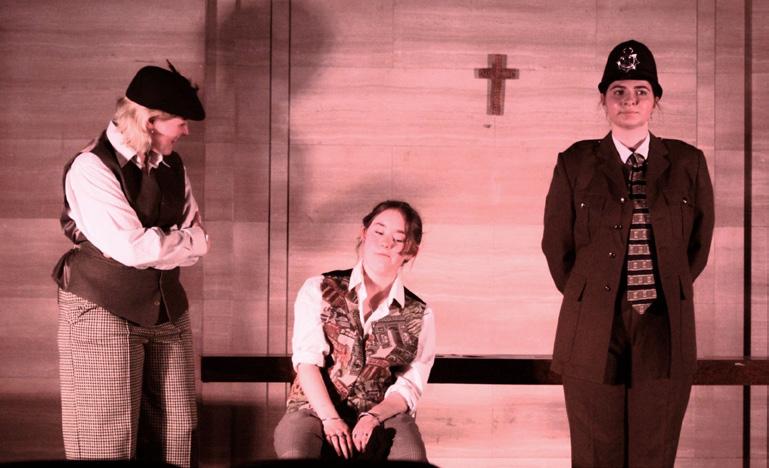
his Australian nationality and profession as a contractor. This addition of a love interest is confusing; if this film truly applauds Miranda and Andy’s drive and ambition, why give Andy an, often irrelevant boyfriend, or a partner at all?
“It still relies on plus-sized women as punchlines and irrelevant love interests”
In an attempt to champion the artistic and human in an increasingly impersonal world, The Devil Wears Prada 2, struggles, becoming a confusing jumble of feminist aspiration, anti-AI sentiment that (ironically) still relies on plus-sized women as punchlines and irrelevant love interests.
Upcoming releases: Passenger (May 22)
Backrooms (May 29)
Scary Movie 6 (June 5)
Disclosure Day (June 12)
Toy Story 5 (June 19)
Supergirl (June 26) Moana (July 10)
The Odyssey (July 17) Spider-Man: Brand New Day (July 31)
Canlyniad Etholiad Senedd Cymru 2026: Plaid Cymru yn Gwenu a Llafur yn
Ifan Meredith Golygydd Taf-Od
Dyma ddaeargryn i dirwedd wleidyddol Cymru. Am y tro cyntaf ers canrif, dydy Llafur heb ennill etholiad yng Nghymru. Mae’n ddigwyddiad sydd yn chwildroad i raddau ac yn cael effaith yr holl ffordd i Stryd Downing.
Wrth i bleidleiswyr Cymru gamu i’r blychau pleidleisio ar Fai 7, roedd cryn dipyn o ansicrwydd gyda’r polau piniwn yn cyfleu ras agos rhwng Plaid Cymru a Reform. Ar ôl i’r blychau gau am 10yh y noson honno, dechreuodd Cymru gyfri yn gynnar fore Gwener, Mai 8 ac erbyn 18.00 roedd gennym ganlyniad mai Plaid Cymru fydd y blaid fwyaf yn y seddi. Dechreuodd y cyfrif yn etholaeth y Prif Weinidog, Eluned Morgan, Ceredigion Penfro, am 11.00 fore Gwener ac erbyn 17.00 roedd yna ganlyniad lle ddaeth i’r amlwg y byddai hi yn colli ei sedd. Roedd cyfryngau o bob cwr o Brydain yno yn gohebu ar y digwyddiad; GB News, Channel 4 a Sky News. Diswyddodd Eluned Morgan fel Arweinydd y Blaid Lafur yn syth ac wrth siarad â’r cyfryngau, dywedodd ei bod yn cymryd cyfrifoldeb gan bwysleisio nad oedd Syr Keir Starmer ar y papur pleidleisio yn yr etholiad hwn. Erbyn dydd Sadwrn, cyhoeddwyd mai Ken Skates byddai’n arwain y Blaid Lafur yng Nghymru dros dro.
Llwyddodd Plaid Cymru i ennill 43 o seddi ond yn brin o’r trothwy o 49 ar gyfer mwyafrif yn y Senedd. Roedden ni’n gwybod hyn cyn yr etholiad gan fod y system newydd a chafodd ei defnyddio eleni yn cael yr effaith yma sydd yn golygu fod gofyn cydweithio yn rhyngbleidiol er mwyn i’r Llywodraeth leiafrifol allu gweithredu.
Gyda’r pleidleisiau wedi eu cyfrif, y cam nesaf yw dewis Prif Weinidog Cymru a’r ymgeisydd tebygol yw arweinydd Plaid Cymru, Rhun ap Iorwerth gan mai ef sydd yn arwain y blaid fwyaf yn y Senedd. Ond bydd aelodau yn dewis hyn erbyn Mai 28, 14 niwrnod ar ôl yr etholiad, yng nghyfarfod Plenari cyntaf y Senedd lle fydd Llywydd newydd hefyd yn cael eu hapwyntio. Gwerth yw nodi os na chaiff Prif Weinidog ei ddewis o fewn y terfyn amser o 28 niwrnod, erbyn Mehefin 3, fydd Cymru yn wynebu etholiad arall lle gall pethau fod yn fwy diddorol!
Fodd bynnag, anaml iawn mae hynny yn digwydd gyda dim un o’r chwe etholiad Senedd Cymru wedi gorffen fel hyn. Ar ôl i’r Prif Weinidog gael ei apwyntio, bydd yn ffurfio Llywodraeth gan ddewis Gweinidogion i gymryd gofal dros feysydd megis Iechyd, Addysg, yr Iaith Gymraeg, Llywodraeth Leol a’r Economi.
Mae Arweinydd Plaid Cymru wedi cyhoeddi ei fod am redeg Llywodraeth leiafrifol ar ôl cwrdd ag aelodau ei blaid ddydd Sadwrn, Mai 9. Bydd hyn yn golygu gallai fod yn anodd
i’r Llywodraeth basio deddfau felly efallai mai anochel fydd ceisio cyfaddawdu. Un peth yn sicr ydy na fydd Reform â’r Ceidwadwyr yn gallu cael digon o aelodau ynghyd i allu bod yn fwy na Phlaid Cymru i fod y blaid fwyaf yn y Senedd. Elin Jones yw unig aelod Plaid Cymru i weithio fel rhan o Lywodraeth a hynny yn 2007 dan ‘Lywodraeth Cymru’n Un’ fel Gweinidog dros Faterion Gwledig. Mae hi wedi bod yn Aelod o’r Senedd ers dechrau datganoli yn 1999 a hi yw’r Lly wydd diweddaraf. Mae disgwyl y byddai hi felly yn chwarae rôl bwysig mewn Llywodra eth Cymru dan arweiniad Plaid Cymru. Wrth siarad â mi yn dilyn canlyniad Ceredigion Penfro, dywedodd ei bod yn ‘edrych ym laen’ at weld ‘sut y bydd Rhun yn mynd ati i roi tîm o weinidogion at ei gilydd os geith e’r cyfle i wneud hynny’. Dy wedodd y byddai yn barod i helpu Rhun ap Iorwerth fel rhan o Lywodra eth Plaid Cymru gan ddweud nad oes ganddi ‘favourite’.

Rhedeg at Achos Da: Miloedd wedi Ymgynnull ar gyfer Race for Life Caerdydd
Erin Davies Golygydd Taf-Od
Yn lle gwyrddni tawel y coed sy’n amgylchynu Parc Bute fel arfer, trodd ei lwybrau’n fôr o binc y penwythnos hwn, wrth i dros 6,000 o bobl ymgynnull yng nghalon Caerdydd i godi arian ar gyfer ymchwil canser. Nid yn unig i redeg, ond i gofio, i frwydro ac i herio canser. I’r rhai a gymerodd ran yn y Race for Life yng Nghaerdydd, roedd croesi’r llinell derfyn yn fwy na chyrraedd y diwedd. I lawer roedd y digwyddiad yn deyrnged i’r rhai a gollwyd, yn ddathliad o fywyd, ac yn ddatganiad clir o obaith ar gyfer y dyfodol. Cychwynnodd y penwythnos gyda’r her fwdlyd Pretty Muddy, cwrs 5k llawn rhwystrau a mwd, sydd wedi’i gynllunio i fod yn hwylus ac yn hygyrch i bobl o bob oed a gallu. Cafodd cyfranogwyr eu herio i ddringo, cropian a llithro eu ffordd drwy’r cwrs, gan orffen gyda sleid fwd ar y llinell derfyn. Roedd llawer yn cymryd rhan o fewn grwpiau gyda ffrindiau a theulu, gan ychwanegu at yr awyrgylch cymunedol a chefnogol.
Parhaodd y digwyddiad i Ddydd Sul, gyda dewisiadau pellter yn cynnwys 3k, 5k a 10k, gan roi cyfle i bobl o bob lefel ffitrwydd gymryd rhan heb unrhyw bwysau. Nid yw’r ras yn gystadleuol, felly gallai cyfranogwyr gerdded, loncian neu redeg eu ffordd ar eu cyflymder eu hunain tuag at y llinell derfyn.
Ymhlith y rhai a gymerodd rhan yn y 10k oedd Lili Ray, myfyrwraig yn ei thrydedd flwyddyn ym Mhrifysgol Caerdydd, a phenderfynodd rhedeg gyda grŵp o ffrindiau o’r brifysgol. Dywedodd “Roedd yr awyrgylch ym Mharc Bute yn hyfryd,
pawb wedi dod at ei gilydd ar gyfer yn un achos. Ma’ canser yn rhywbeth sydd wedi cael effaith arnom ni fel teulu, felly roedd hynny’n rheswm mawr dros redeg.
“Doedd na’m pwysau, dim ond hwyl ar gyfer achos da. Roeddwn i a’m ffrindia’ wedi rhedeg y cyfan gyda’n gilydd, ac roedd y cwmni wrth redeg yn help mawr. Mi oedd croesi’r llinell derfyn hefo’n gilydd yn rili sbesial. Bydd rhedeg y Race for Life yn siŵr o ddatblygu i fod yn draddodiad blynyddol, a byddwn i’n annog unrhyw un i gymryd rhan!”
Yn yr un modd, cymerodd Gwenno Davies ran yn y ras 5K gyda’i ffrindiau, gan ddisgrifio’r awyrgylch fel un “gefnogol” ac “ysbrydoledig”.
Dywedodd Gwenno “Nes i joio mas draw yn y Race for Life! O’n i ddim yn disgwyl awyrgylch mor gefnogol, ‘odd e mor ysbrydoledig gweld y cefnogwyr yn sefyll o gwmpas y llwybr yn clapio ac yn dal arwyddion!
“Roedd e’n brofiad emosiynol gweld gymaint o bobl yn ymdrechu i gyflawni’r sialens, i godi arian dros glefyd sy’n effeithio ar bob un ohonom ni mewn rhyw ffordd neu’i gilydd. Fi’n rhedeg tipyn beth bynnag, felly o’n i’n meddwl ‘pam lai?’ cymryd rhan a chodi arian dros elusen sydd mor arbennig imi.”
Pe baech eisiau bod yn rhan o’r achos da, mae cyfle o hyd i gymryd rhan, gyda’r Race for Life yn parhau mewn lleoliadau ledled Cymru. Bydd digwyddiadau’n cael eu cynnal yn Abertawe ar yr 16eg a 17eg o Fai, Llanelli ar 30ain o Fai, yn ogystal ag y Rhyl a Wrecsam dros fisoedd yr haf.
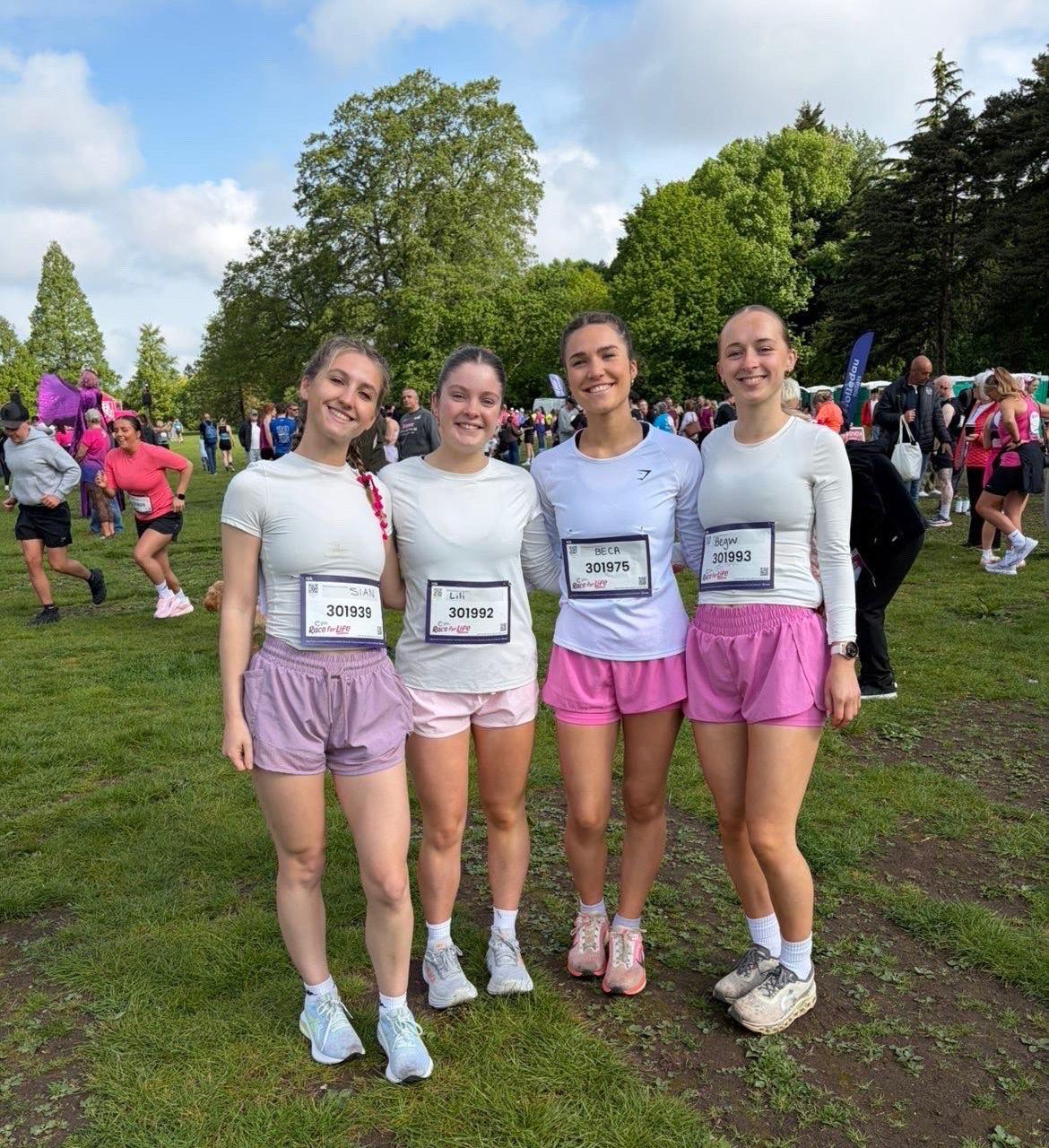
Ethol Pwyllgor GymGym 2026 / 27
Ela Rhys Golygydd Taf-Od
Yn sicr, mae’r flwyddyn ddiwethaf wedi bod yn hynod lwyddiannus o dan arweiniad a gofal aelodau Pwyllgor 2025/26. O gyffro gwyllt Wythnos y Glas ym mis Medi, y crôls di-ri a’r atgofion bythgofiadwy; heb os, mae pob un o aelodau brwdfrydig y GymGym wedi cael blwyddyn arall i’w chofio eleni.
Crôl Teulu, Crôl Cripi, Crôl Mîms Eiconig, Crolig, Crôl Odliadur – dyma flas yn unig o’r nosweithiau campus a lwyddodd i’n diddanu eleni. Amhosibl yw anghofio hefyd am y penwythnos tyngedfennol nôl ym mis Chwefror ble croesawyd yr Eisteddfod Rynggolegol yn ôl i’r brifddinas am y tro cyntaf mewn dros ddegawd. Cyfle amhrisiadwy i 600 o fyfyrwyr o brifysgolion ledled Cymru ddod ynghyd i ddathlu, cymdeithasu a chystadlu. Bu i ni ffarwelio â’r ddinas am benwythnos yn ogystal gan heidio ar y fferi i Ddulyn. Er gwaethaf hynt a helynt y daith hirfaith adref, roedd
Dulyn yn gyrchfan perffaith i gymdeithasu ac ymgolli yng nghynnwrf Pencampwriaeth y 6 Gwlad.
Elliw Strain oedd is-lywydd y Pwyllgor eleni ac wedi mwynhau’r profiad yn arw. Dyma oedd ganddi i’w ddweud wrth adlewyrchu ar y misoedd diwethaf: “Mae eleni wedi bod yn flwyddyn gofiadwy i aelodau’r GymGym gyda presenoldeb, yn enwedig yn Retros drwy gydol y flwyddyn wedi adlewyrchu hynny! Yn bennaf, ‘dwi wedi mwynhau croesawu’r glasfyfyrwyr yn Wythnos y Glas a chael cymysgu gyda cymaint o bobl.”
Wrth i Elliw ymadael â’r rôl, bu iddi gynnig ychydig o gyngor i’r Pwyllgor newydd. Cynghorodd: “Top tip i Bwyllgor y flwyddyn nesaf – sicrhewch eich bod yn wyneb cyfarwydd i’r glasfyfyrwyr a byddwch mor groesawgar a phosibl.”
Mae Sami Sullivan yn fyfyriwr yn ei flwyddyn gyntaf yn y brifysgol ac wedi cael amser wrth ei fodd gyda’r gymdeithas eleni. Dywedodd Sami: “Mae wedi bod yn flwyddyn prysur gyda llawer o ddigwyddiadau cymde-
ithasol gwych. Nes i fwynhau’r wledd Nadolig yn fawr a roedd y daith i Ddulyn yn un o uchafbwyntiau’r flwyddyn.”
Tydi ymuno â cymdeithas ddim yn brofiad hawdd yn enwedig i fyfyrwyr newydd yn ystod eu dyddiau cyntaf yn y brifddinas. Ond, bu i Sami ganmol y croeso a dderbyniodd gan y GymGym yn ystod y cyfnod ansicr hynny’n fawr. Dywedodd: “Cawsom ni groeso da wythnos freshers a fe wnaeth yr holl grôls amrywiol roi’r cyfle i gwrdd â phobl newydd.”
Er hynny, mae bellach yn amser trosglwyddo awenau’r Pwyllgor eleni i aelodau angerddol newydd. Yn dilyn y broses ymgeisio a’r pleidleisio, y canlynol sydd wedi hoelio eu lle ar bwyllgor y GymGym ar gyfer y flwyddyn academaidd nesaf. Llongyfarchiadau enfawr i: Rhodri Jenkins, Y Llywydd, Efa Llew, Is-Lywydd, Gethin Roberts, Trysorydd ac i Sioned Roberts yr ysgrifennydd.
Pob hwyl i’r Pwyllgor newydd a chawn edrych ‘mlaen am gystal blwyddyn fis Medi. Ond, am nawr cyn ffarwelio’n llwyr, cawn droi ein gorwelion tuag at, ac edrych ymlaen am
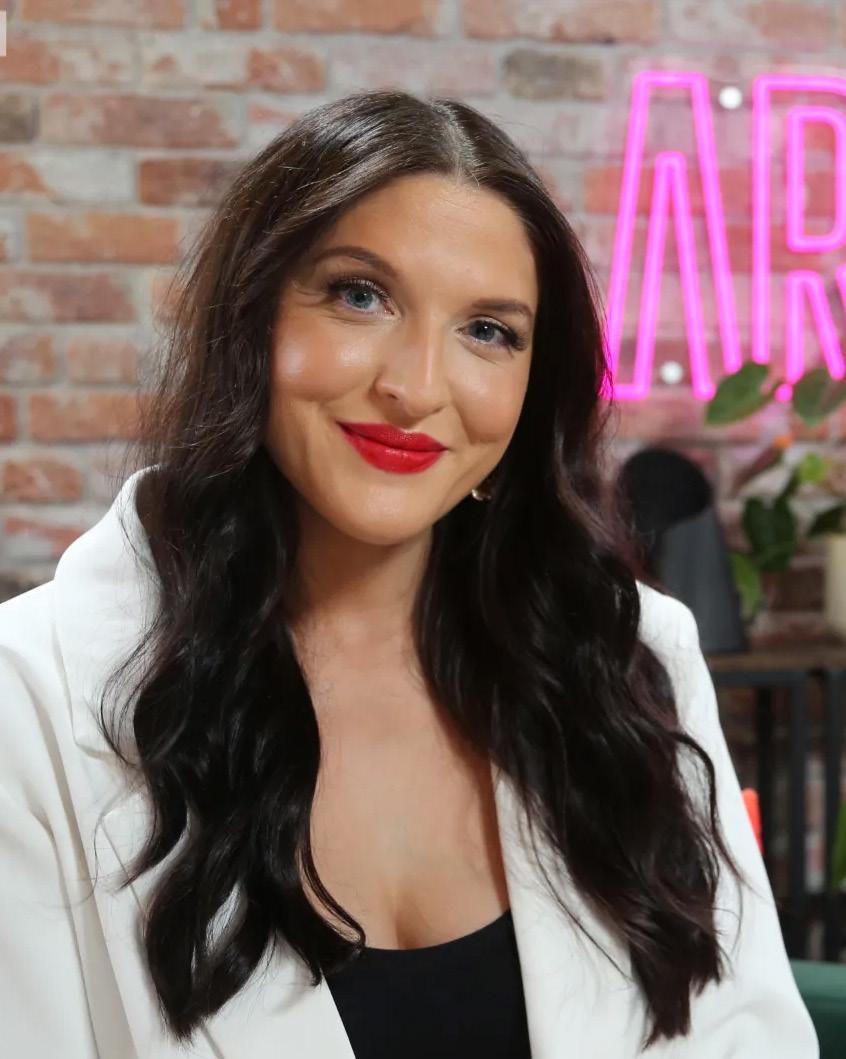
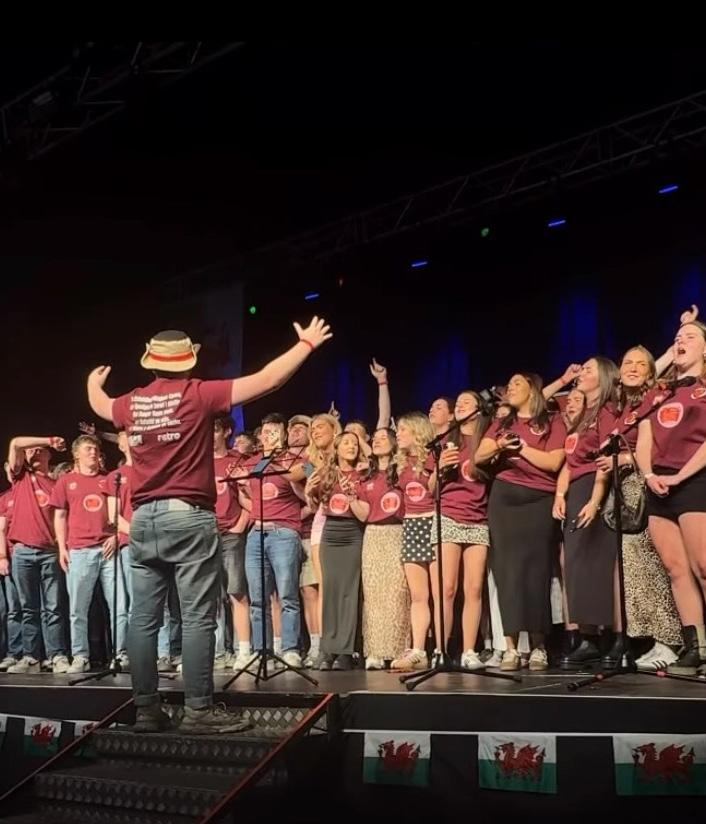
Podlediad
Newydd yn
Trafod Straen Myfyrwyr
Gwenno Davies Golygydd Taf-Od
Mae Hansh wedi rhyddhau ail gyfres o’u podlediad ‘arloesol’ Ar Led, sy’n trafod iechyd meddwl a lles pobl ifanc. Gwnaeth criw o fyfyrwyr Prifysgol Caerdydd ymddangos ar un rhifyn i drafod yr heriau sy’n eu hwynebu o ddydd i ddydd yn y Brifysgol.
Mae’r gyfres yn ehangach yn edrych ar ystod o brofiadau, gan gynnwys cyflyrau cyffredin fel gor-bryder ac iselder, a phynciau fel delwedd y corff, straen, niwroamrywiaeth a galar.
Un o’r myfyrwyr wnaeth siarad ar y rhaglen yw Teifi Mead, sy’n astudio yn ei ail flwyddyn. Yn ôl Teifi, rhai o’r prif ffactorau sy’n rhoi straen ar fyfyrwyr yw ‘arian, pwysau gwaith a’r cymhlethdod o fyw bywyd cwbl newydd mewn cyfnod bregus mewn bywyd.’
Ar y rhaglen, mae’r tri myfyriwr yn siarad am y problemau hynny mewn ffordd sy’n ‘agored ac yn onest,’ yn ogystal â rhannu eu ‘top tips’ i fyfyrwyr newydd.
Dywedodd cyflwynydd y rhaglen, y meddyg iau Ffraid Gwenllian, bod y gyfres yn ‘ofnadwy o bwysig’ am ei bod yn ymwneud â phynciau ‘sy’n aml yn cael eu hystyried yn tabŵ o fewn cymdeithas.’
‘Mewn gwlad fach fel Cymru, lle mae pawb yn nabod ei gilydd, mae pethau tabŵ yn gallu teimlo hyd yn oed yn fwy tabŵ weithiau.’
Ychwanegodd Teifi ei bod hi’n bwysig cynnal trafodaeth ar straen myfyrwyr oherwydd ‘dyw’r probleme ma ddim yn cael digon o ymwybyddiaeth o fewn gohebu a newyddiaduraeth arferol.’
Gwnaeth Cadi Davies, myfyriwr blwyddyn gyntaf, fwynhau gwrando ar y podlediad am ei fod yn cynnig rhywbeth ‘unigryw a phersonol’ i siaradwyr Cymraeg.
‘Wrth gwrs, ma lot o bethe Saesneg mas fynna a ma nhw’n gallu bod yn ddefnyddiol iawn, ond mae’r ffaith fod y gyfres hon ar gael yn y Gymraeg yn neud i’r cwbl deimlo’n fwy agos-atoch.’
‘Mae hi’n gyfres arloesol beth bynnag, ond mae’r ffaith bod y sgyrsiau yma’n digwydd yn Gymraeg yn ei gwneud hi hyd yn oed fwy arloesol,’ meddai Ffraid.
Mae’r gyfres ar gael ar S4C Clic, BBC iPlayer a sianel YouTube Hansh.
Cyngor Teifi i fyfyrwyr sy’n delio â straen yw, ‘yn syml, siaradwch.’
‘Ma pawb fel arfer yn teimlo’n debyg, hyd yn oed os dyw e ddim yn amlwg i bawb. Os ma da chi rhyw fath o ‘support network’ fel ma nhw’n dweud, boed hynny yn ffrindie, teulu, cariad, neu warchodwyr –ma siarad yn gallu helpu gyment o broblemau.’ Image Credit, Hansh
Wythnos y GymGym ym mis Mehefin i goroni beth sydd wedi bod yn glasur o flwyddyn i’r GymGym.
Adnewyddu Clwb Ifor Bach yn
“Angenrheidiol
i’r Sîn Gerddoriaeth Gymraeg”
FHannah Williams Pennaeth Taf-Od
is diwethaf cafodd cynlluniau eu cymeradwyo i ehangu Clwb Ifor Bach yng Nghaerdydd. Agorodd y clwb yn wreiddiol yn 1983 fel clwb cymdeithasol i siaradwyr Cymraeg y brifddinas. Ers hynny, y mae wedi dod yn un o leoliadau cerddoriaeth fyw mwyaf eiconig Caerdydd, yn cynnal gigs gan artistiaid adnabyddus a newydd, ac mae’n fan sy’n boblogaidd iawn ymhlith myfyrwyr Cymraeg y ddinas.
Yn ôl eu gwefan, “Rydyn ni wedi bod ar flaen y gad o ran diwylliant Cymru ers dros ddeugain mlynedd, ac rydyn ni’n falch o fod yn lleoliad llawr gwlad a hyrwyddwr cerddoriaeth mwyaf blaenllaw Cymru. Mae Clwb Ifor yn cyflwyno’r gorau o blith cerddoriaeth Cymru a thu hwnt i’w gynulleidfaoedd, gan roi cyfleoedd i filoedd o artistiaid newydd ddatblygu eu crefft.”
Ers 2019 mae’r clwb wedi cyflwyno cynlluniau i ehangu eu lleoliad gyda’r bwriad o gynyddu capasiti. Ac o’r diwedd, mae’r amser wedi dod i wireddu’r cynlluniau hynny. Tan hyn, tri llawr sydd wedi bod yn y clwb, ond mae’r cynlluniau newydd yn golygu y bydd hynny’n cynyddu i bum llawr, gyda theras ar y to, llawr tanddaear, yn ogystal â chyfleusterau gwell. Y bwriad yw dymchwel yr adeilad drws nesaf i’r clwb er mwyn creu digon o le i allu cael 500 person ar y llawr gwaelod a 250 ar yr ail lawr. Yn ôl Cyngor Caerdydd y nod ydy "helpu strategaeth cerddoriaeth fyw, sefyllfa cerddoriaeth ar lawr gwlad, ac economi nos y brifddinas".
Mae Alis Glyn yn artist cerddoriaeth sydd hefyd yn fyfyriwr yn ei blwyddyn gyntaf ym Mhrifysgol Caerdydd. Ers iddi symud i Gaerdydd ym mis Medi’r llynedd, dywed
Alis iddi gael “profiad anhygoel” fel artist yn y brifddinas. Ychwanegodd, “Dwi wedi sylwi ers dechra' yn y brifysgol cymaint o gyfleoedd sydd ar gael yma i artistiaid Cymraeg, cymaint o gigs mewn amryw o leoliadau gwahanol a chyfle i glywed gan artistiaid ar baneli ynglŷn â’u profiadau nhw a lle cafon nhw y cymorth yng Nghaerdydd.”
“Geshi dipyn o sioc gan ‘mod i wedi arfer â pawb yn glos at ei gilydd!”
Wrth ymateb i’r cynlluniau i ehangu’r clwb, dywedodd, “Pan glywes i am y cynllunia’ ynglŷn â ehangu Clwb Ifor Bach, geshi dipyn o sioc gan 'mod i wedi arfer â pawb yn glos at ei gilydd! Ond i fod yn hollol on est dwi’n rili cyffrous i weld be fydd hyn yn ei olygu i’r gigs sydd yn cael eu cynnal yn Clwb a hefyd y gynulleidfa newydd mae’r lle am ei denu.”
Daw’r newyddion yn dilyn cyfnod cythryblus i leoliadau cerddoriaeth fyw yng Nghaerdydd, gyda lleoliadau fel The Moon, Gwdihŵ, Buffalo a Ten Feet Tall wedi gorfod cau eu drysau am y tro olaf yn ystod y blyny ddoedd diwethaf. Yn ôl Alis, “ma' hi’n biti mawr bod llefydd yn gorfod cau gan fod cy maint o lefydd yng Nghaerdydd yn cynnal gigs erbyn rŵan.”
“Dwi’n credu bod diogelu ac adnewyddu lleoliadau fel hyn, yma yng Nghaerdydd yn angenrheidiol i’r sîn gerd doriaeth Gymraeg sydd yn hynod o fywiog a chyffrous ar hyn o bryd. Ma’r cyfle i gael perf formio mewn lleoliadau gwych fel hyn wir yn hybu artistiaid ifanc i barhau i berfformio a chyfansoddi yn y Gymraeg”.
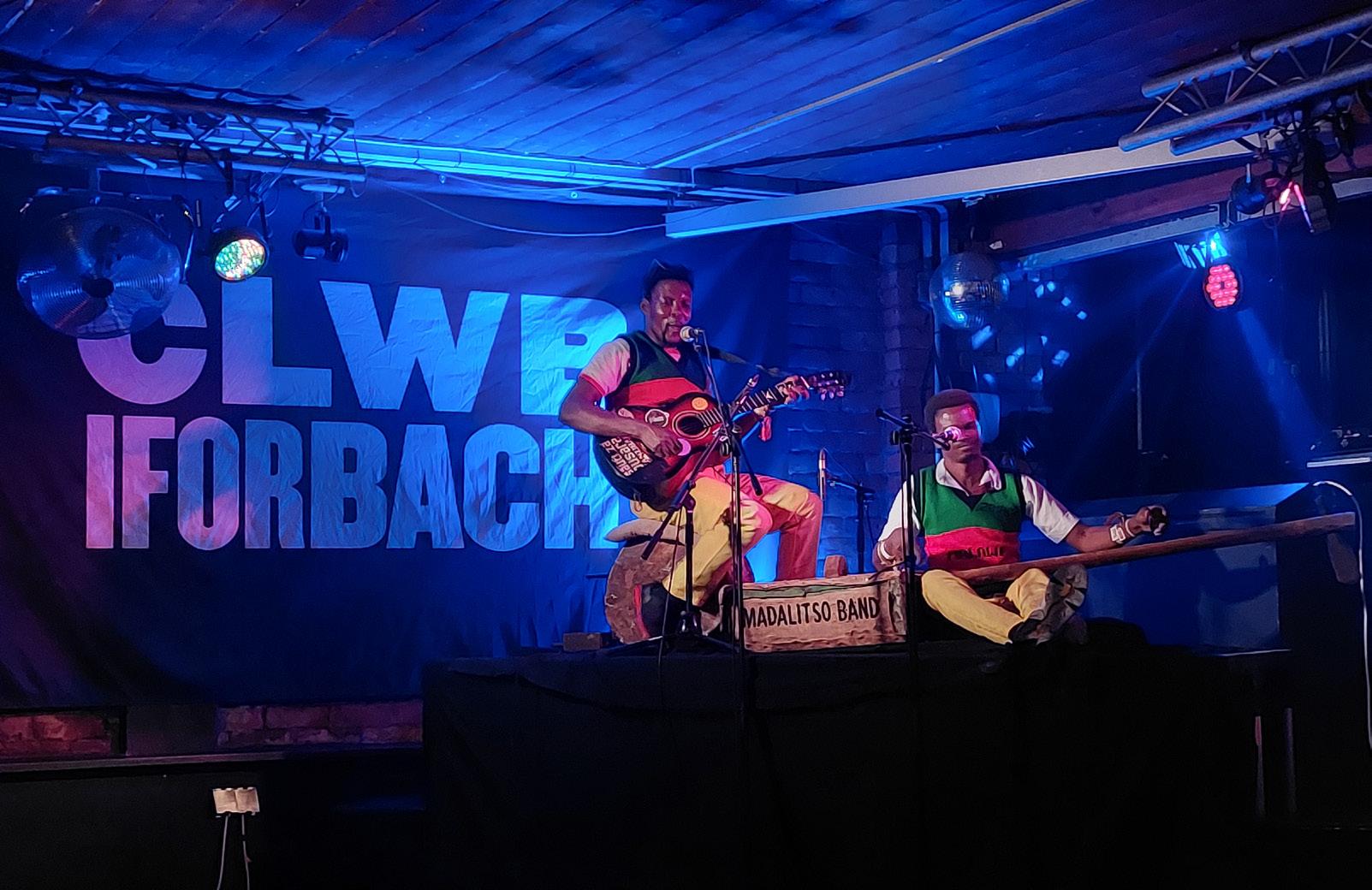
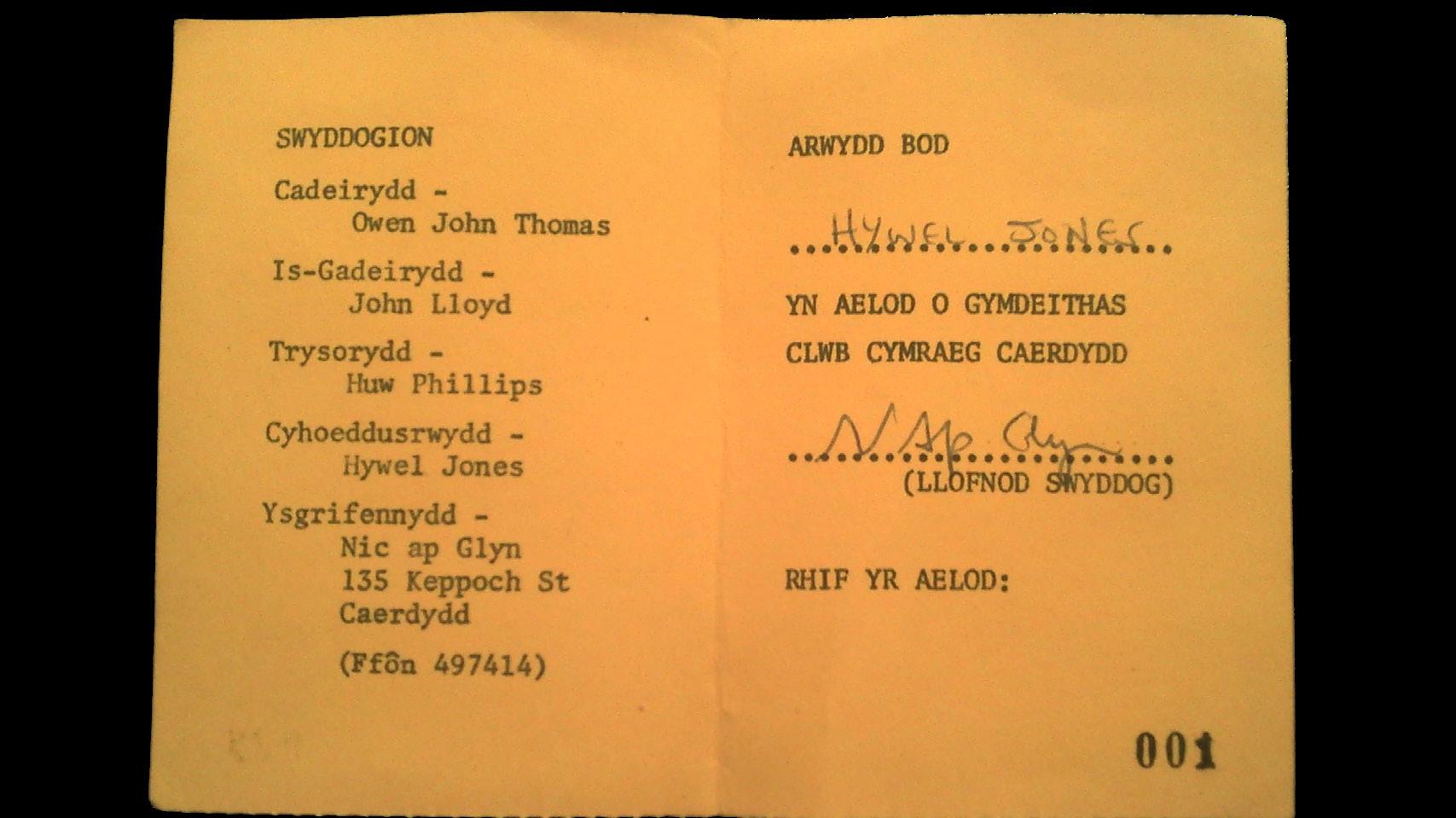
Tafwyl 2026: Ugain Mlynedd o Ddathlu’r Gymraeg
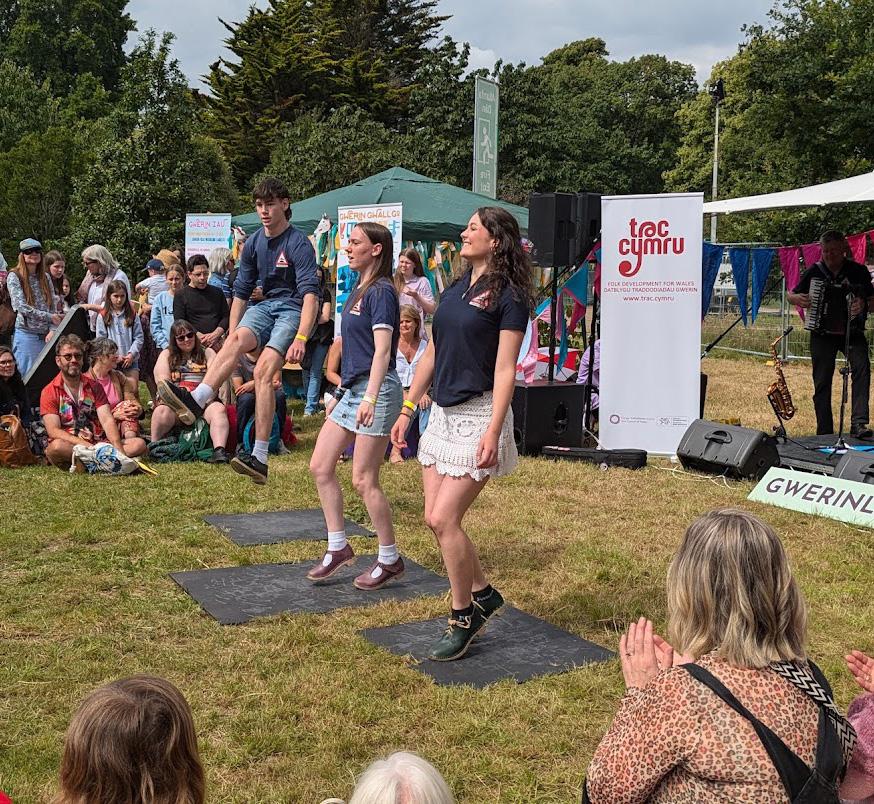
WEfa Jones Cyfrannwr
rth i ŵyl Gymraeg fwyaf y brifddinas baratoi i ddathlu carreg filltir arbennig, mae cyffro’n adeiladu ar draws Caerdydd. Eleni, mae Tafwyl yn dathlu ugain mlynedd ers ei sefydlu, ac mae’r trefnwyr yn addo penwythnos i’w gofio.
Ar benwythnos y 20fed a 21ain o Fehefin, bydd Tafwyl yn agor ei gatiau unwaith eto i groesawu pobl o bob cwr o Gymru. Ers ei sefydlu yn 2006, mae’r ŵyl, a oedd unwaith yn gymharol fach, wedi tyfu’n un o ddigwyddiadau diwylliannol pwysicaf Cymru. Bob blwyddyn mae’n denu miloedd o ymwelwyr gan gyfuno cerddoriaeth fyw, bwyd, llenyddiaeth, siopa, a gweithgareddau teuluol.
Fel bob blwyddyn, bydd mynediad yn agored ac am ddim, gan ei wneud yn hawdd i bawb fynychu. Ond i nodi’r dathliad arbennig hwn, un o’r newidiadau mwyaf eleni yw’r lleoliad. Bydd Castell Caerdydd yn croesawu’r ŵyl gyda drysau agored, gan ddarparu cefndir trawiadol a hanesyddol i’r digwyddiad. Yn ogystal â’r lleoliad, mae’r lein-yp ar gyfer yr ŵyl wedi creu cryn gyffro. Bydd artistiaid adnabyddus fel Candelas, Buddug, Al Lewis, Ani Glass a Cowbois Rhos Botwnnog yn perfformio dros y penwythnos, gan sicrhau cymysgedd o enwau mawr a thalent newydd. Ychwanegiad newydd i’r maes eleni yw’r Ardal Tocyn Aur. Bydd yr ardal hon yn cyn-
nig profiad premiwm i’r rhai sy’n dymuno bod yn fwy cyfforddus ac ymlaciol. Am bris cynnar o £20 y diwrnod, bydd ymwelwyr yn cael mynediad i ardal 18+ o dan do gyda bar preifat, tai bach moethus a golygfa sefyll wych o’r Prif lwyfan. Mae’r trefnwyr yn pwysleisio bod niferoedd yn gyfyngedig, felly bachwch eich tocyn cynnar nawr! Wrth gwrs, nid oes rhaid bod yn siarad-
“Mewn dinas mor amlddiwylliannol â Chaerdydd, mae digwyddiadau fel Tafwyl yn chwarae rhan allweddol wrth gynnal a hyrwyddo diwylliant Cymraeg”
wr rhugl Cymraeg i fwynhau’r digwyddiad. Mae Tafwyl yn cynnig croeso cynnes i bawb, boed yn siaradwr rhugl, yn ddysgwr, neu’n berson sydd newydd ddechrau eu taith Gymraeg. Ar ôl ugain mlynedd o lwyddiant, mae’n amlwg fod Tafwyl yn parhau i fod yn un o uchafbwyntiau diwylliannol Caerdydd. A gyda dychweliad i’r castell, ardal newydd, a lein-yp addawol, mae pob arwydd yn awgrymu y bydd hon yn flwyddyn go arbennig. Wela’i chi’n Tafwyl!
Gwlad y Gân: Pobl Ifanc yn troi at Ganu Corawl
WElen Morlais Williams Golygydd Taf-Od
rth i Eisteddfod yr Urdd nesáu unwaith eto, mae’n ddiddorol gweld cynifer o fyfyrwyr Cymru yn troi at ganu corawl. Mae’r cythraul canu wedi cipio brwdfrydedd ein cenhedlaeth ni ac roedd Eisteddfod Ryng-golegol Caerdydd eleni yn dyst i hynny gyda chorau lu o bob prifysgol: Bangor, Abertawe, Aberystwyth a Chaerdydd yn codi eu lleisiau ac yn cystadlu’n frwd yn erbyn ei gilydd. Bellach yng Nghaerdydd, mae tri chôr ar gyfer pobl ifanc: Côr Aelwyd y Waun Ddyfal, Côr Ifor Bach a Taflais. Mae’r ffaith bod gymaint o opsiynau a chyfleoedd yn bodoli yn dangos bod canu corawl yn parhau fel traddodiad byw ond hefyd yn rym cymdeithasol ymhlith pobl ifanc. Mae’r traddodiad, wrth gwrs, yn un sydd â gwreiddiau dwfn. Ers y 18fed ganrif, mae canu corawl wedi bod yn rhan annatod o gymunedau yng Nghymru ac yn arwydd o hunaniaeth genedlaethol. Blynyddoedd yn ôl, daeth cymanfaoedd canu a chanu emynau yn rhan ganolog o fywyd cymunedol, a daeth yr arfer o bobl yn dod ynghyd i ganu yn un rheolaidd. Yn raddol, tyfodd y traddodiad y tu hwnt i gapeli, i gystadlaethau fel yr Eisteddfod a bellach, gwelwn y traddodiad yn blaguro ymysg myfyrwyr prifysgolion Cymru.
EBetsan Griffiths Cyfrannwr
leni mae’r Eisteddfod Genedlaethol yn dychwelyd i’r gorllewin pell; byd y ‘Wes, Wes’, yng nghesail mynyddoedd y Preseli. Bydd yr Eisteddfod yn cael ei chynnal yng Ngogledd Sir Benfro yn Llantwd, rhwng 1af a’r 8fed o Awst.
Caiff yr Eisteddfod ei halw yn Eisteddfod y ‘Garreg Las’, gyda’r dalgylch yn ymestyn dros dair ardal, sef Sir Benfro, De Ceredigion a
Taf-Od 25
I lawer o fyfyrwyr, mae’r profiad o fod yn rhan o gôr yn fwy na chanu. Dywedodd Gwenno Davies, myfyrwraig yn ei thrydedd flwyddyn ac aelod o Gôr y Waun Ddyfal: “Odd y penderfyniad i ymuno â’r Waun Ddyfal yn hollol amlwg i fi. O’n i’n canu gytre gyda’r ysgol a’r aelwyd felly odd e’n naturiol i fi gario ymlaen i ganu yn y brifysgol. Ond i fod yn onest, yr ochr gymdeithasol sy’n denu fi at y côr. Yn Aelwyd y Waun Ddyfal, ma’ fe wir yn teimlo fel bo’ ni’n un teulu bach.” I Gwenno, mae’r côr wedi bod yn flas o normalrwydd iddi mewn dinas newydd: “Ma’n rhoi rhyw flas o fyd gytre i fi. O’n i’n canu lot gytre ac ma’r agwedd yna o fywyd ‘di gallu aros yn gyson gyda fi wrth symud i brifysgol yng Nghaerdydd. Fi ddim yn credu fydden i’n
teimlo mor gartrefol fan hyn heblaw am y côr.” Mae’r Eisteddfod, boed yr Urdd, Genedlaethol neu’r Rhyng-golegol yn chwarae rhan allweddol wrth gynnal ac adnewyddu’r traddodiad corawl. Bob blwyddyn, mae’r amrywiaeth o gystadlaethau corawl o gorau ieuenctid i gerdd dant, o gorau merched i gorau sioe yn cynnig mwy na chyfle i ganu; mae’n cynnig cymuned, hunaniaeth a man i bobl ifanc ddod at ei gilydd. Eleni, bydd dros 70 o fyfyrwyr o Brifysgol Caerdydd yn teithio i Ynys Môn gydag Aelwyd y Waun Ddyfal sy’n arwydd clir fod y traddodiad yn fyw ac yn ffynnu. Ac wrth i ni, y genhedlaeth newydd, gymryd awenau’r traddodiad corawl yng Nghymru - gallwn ddathlu â balchder mai Gwlad y Gân yw hi o hyd!
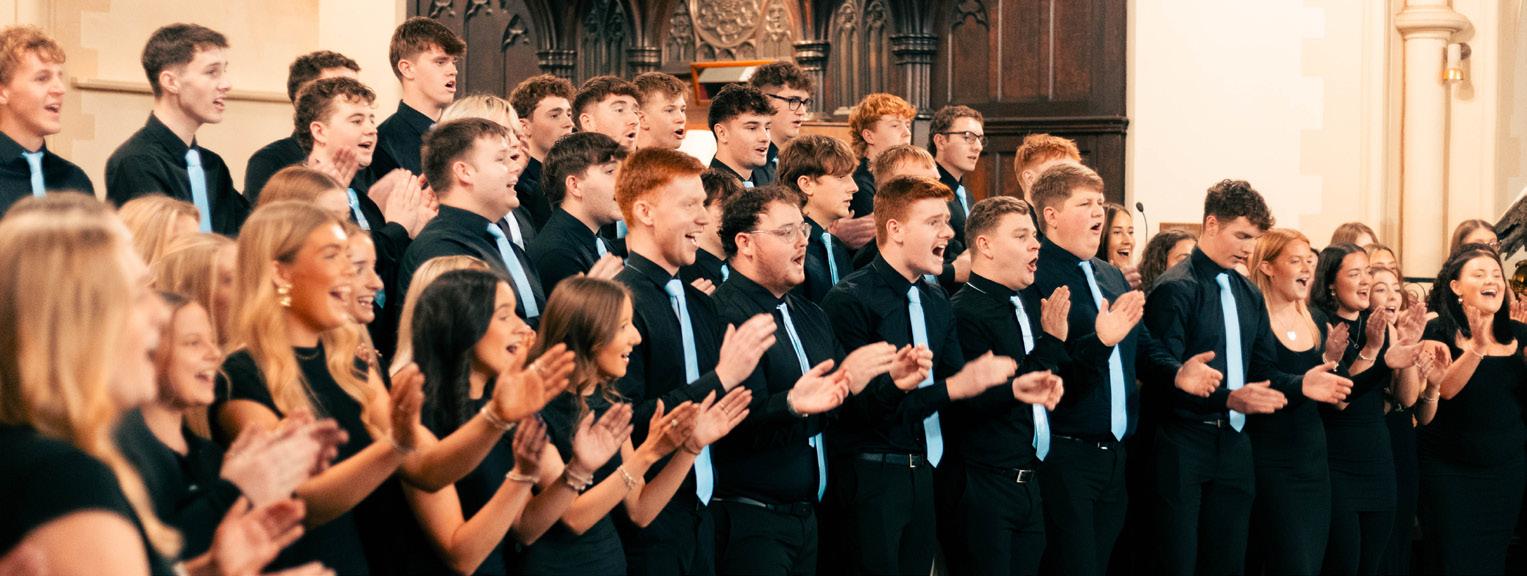
Edrych ymlaen tuag at Eisteddfod y Garreg Las
gyfer y brifwyl. Yn ôl Golwg 360, mae Eurfyl Lewis, Is-gadeirydd y Gronfa Leol wedi sefydlu 20 pwyllgor apêl dros yr ardal i gyd, gan geisio ysbrydoli pobl leol a chynnal ystod eang o weithgareddau.
Cred Eurfyl fod hi’n hollbwysig fod
“Dwi’n hynod o gyffrous i gael Eisteddfod Genedlaethol yn fy mro i”
Chymraeg. Allen i ddim meddwl am le gwell i gynnal Eisteddfod Gen.”
Digwyddiadau Arbennig Ar ddydd Sadwrn cyntaf yr Eisteddfod, bydd Super Furry Animlas yn dychwelyd i Lwyfan y Maes, y tro cyntaf iddynt berfformio yn yr Eisteddfod ers 30 mlynedd. Hwn bydd yr unig gig uniaith Gymraeg bydd y band yn gwneud. Mae’r Eisteddfod yn rhagweld y noson fel un boblogaidd, ac wedi creu tocynnau diwrnod a gwersylla arbennig ar gyfer y noson. Yn ogystal, mae’r band Y
dana wrth BBC Cymru Fyw: “Ein bwriad ydi mynd ar gynulleidfa nôl mewn amser gan greu set llawn nostalgia!”
Maes B/ Hwyrnos
Unwaith eto, mae yno gyffro ynglŷn â ‘lein-yp’ Maes B, ble bydd pobl ifanc yn cwrdd a dathlu cerddoriaeth gyfoes Gymraeg. Mae’r bandiau hen ac eiconig yn ail ymweld â llwyfannau Maes B, megis Bwncath, Candelas, Fleur De Lys, Eden a Phys Melyn. Hefyd bydd bandiau ac unigolion sy’n newydd yn y sin gerddoriaeth Gymraeg, fel Lafant, Betsan, Martha Elen a Tew Tew
What is the Future of International Law?
Az Kim Contributor
In current global affairs, this feels like a futile question with no answer that seems just. We have to ask why the scaffold of international politics has been reduced to a philosophical debate, and who is responsible for the conditions that have created and fueled this delegitimization of global governance.
Conversations regarding international law often revolve around the charters and treaties created and signed by Western powers. But how does this neglect to consider the historical role of colonization in shaping the very laws that guide geopolitics? Currently, with rising convictions that ‘might’ maybe does make ‘right’ in our world, the questions of whether international law has the same influence it had 70 years ago, or whether it is even applicable to the current global stage, are at the forefront of politics. I argue that there can be no meaningful future for international law, both as a discipline and in practice, without engagement with its colonial and imperial past.
The very basis of intergovernmental relations, the League of Nations, was an imperial assemblage, reinforcing colonial structures under the guise of international law. These structures persist, impacting how the world sees and delineates African nation-states in the 21st century. Even the United Nations Security Council, which, arguably, is responsible
for maintaining peace and security at the international level, serves the interests of the global north. The chief question, therefore is not why international law is failing, but who it is failing?
“International law functions differently for the global north than it does for the south”
Security is the core of all discourse regarding law, whether political or unpolitical, domestic or international. Asking “why” presupposes a set of assumptions about who can speak security, for whom security is mobilized, and for what purpose. Instead of seeing security as an objective condition, as a hierarchical binary wherein one individual’s security is traded for another’s, we should look at security as a performance. Treating security as a speech act, something to be performed through language, makes it impossible to ignore the influence that political narratives have on our understandings of what makes somebody secure or safe. In doing so, the empirical limits of treating security as a clear-cut political good are proven obvious, and ask us to look at our responsibility to challenge the spaces that need transformation and how that can be facilitated. Look at the Trump administration’s address to the nation regarding the bombings
of Iran: He makes no attempt to give a singular reason or justification for bombing Iran —probably because he doesn’t need to. He has no international audience to convince, at least not in the same way Bush did when speaking about the War on Terror. Consequently, President Trump didn’t go through the legal channels via the Security Council — why would he? Security council consultation would merely be a performative act, something to only delay the attacks.
This war has made it clear, more than ever, that international law functions differently for the global north than it does for the south. And even more so, that certain nation-states are given a longer leash from both governing international bodies and the greater international community. Growing evidence that we are moving from a unipolar American world to a multipolar world, with Israeli and Russian power at the forefront, shows that ignoring the history of international law has fatal consequences. Not only does it undermine the legitimacy of foreign affairs, but it also neglects to secure the safety of the global majority that doesn’t fall under the governance of the great powers.
The future of international law seems bleak, and, frankly, without radical change, it is. So, ask the convoluted questions: Why don’t we consider the inescapable history of international law? Whose security are the current systems of international law designed to protect? And as a result, whose insecurity are we creating?

Arrogance, Alienation and Organisation: PolSoc Senedd Hustings
Oskar Hyams Politics Editor
Last Thursday the Politics Society (PolSoc) held a fantastic Senedd hustings at the SU, with Plaid, Conservative, Labour, Green and Liberal Democrat candidates taking part. It was a masterclass in student led democracy, with students from across the University community submitting questions, the opportunity for student media (Gair Rhydd) to ask questions and scrutinise the candidates’ responses in real time and excellent moderating, led by an SU official and
the event surer of was that Reform do not care about students. They are currently in a battle with Plaid to become the largest party in this year’s Senedd and yet, they chose not to present their case to the student population. If they can’t be bothered to turn up to a 2-hour debate, how can they be trusted to represent student interests during a full day’s sitting in the Senedd?
“The more the debate progressed, the more my feeling
bate) referred to what they had done in the past, rather than what they would do differently. This would be an understandable approach if Labour were ahead in polls and had not pushed a new era austerity programme at a national government level. However, this came across as totally tone deaf and arrogant when Labour have had over 25 years to tackle the cost of living and yet, 30% of children in Wales now live in poverty.
Plaid referred to the cost of living and the need for Wales to be more self-sufficient. The Greens bizarrely led with bins before pivoting to housing and their policy of rent freezes, which was the focus of their responses for the entire debate.

“Their performance was over-shadowed by our new electoral system”
The Tories claimed “Darren Millar has quick solutions” while referring to the NHS and unemployment, as if 14 years wasn’t enough time to prevent just under 8 million people being on NHS waiting lists in England (for hospital treatment) by the end of the Sunak Administration. The Lib Dems also referred to the cost of living and the £1 bus fare introduced by Jane Dodds. The more the debate progressed, the more my feeling of alienation began to grow. This peaked with the Labour candidate saying students were only “possibly” being exploited about housing. This showed unbelievable dismissiveness considering a recent National Student Accommodation survey found 36% of students have thought about dropping out due to the cost of rent and 41% feeling their accommodation represented poor value for money. This lack of conviction was
mirrored by Greens and Plaid calling for the abolishment and replacement of the Barnett Formula (the UK Government grant which helps fund devolved public sector) and then U-turned when pressed on how to replace Barnett. When pushed, Plaid backed down and said we only need to launch a commission, and the Greens offered a non-answer to Barnett’s replacement. If the debate was judged on purely on performance, then the Lib Dems would have ended the night as debate winners and would have comfortably secured my vote. However, this election does not exist in a vacuum. Their performance was over-shadowed by our new electoral system which means (if the polls are correct) even in our new proportional voting system, a vote for the Lib Dems is a wasted vote. I also must wrestle with a fact that every student must contend with, the exploitation of the Plan 2 Student Loan system, that the Lib Dems and the Tories implemented. No amount of £1 bus fees will ever bridge the gap between their promises of affordable living and an outrageous student loan system they voted for. You and I must now choose. For me, it is a choice between wasting my vote and voting Lib Dem, voting Green to keep Reform out of the last seat in Caerdydd Penarth or voting Plaid to give them enough seats to guarantee the prevention of a Reform Government. How will your vote decide Wales’s future?
Images: Unsplash.
UK Prisons: Modern Day Asylums or Palaces of Justice?
Oskar Hyams Politics Editor
Trigger Warning: This article contains sensitive material that some may find distressing (self harm and suicide).
Our prisons are failing. The system postures as a palace of rehabilitation. The reality is a lethal combination of understaffing and poor access to mental health support for prisoners. Statistics can help us understand the scale, but only the personal and human cost will convey the need for real change. For Mary, the cost was her husband, Peter (real names changed). So, how is the system failing, how did it fail Peter and what should be implemented to turn our prisons from modern asylums to places of rehabilitation?
Ignorance of the crisis or inability to act? Either way, HM Prison service is crumbling under the pressure. The Prison Advice Trust has found that ‘Poor mental health is the norm, not the exception’ among prisoners. This reality is compounded by the HMIP (inspectors of prison standards) annual report 23/24 which found ‘worrying gaps’ in mental health services. These disastrous mental health conditions in prisons can be directly linked back to nearly a decade and a half of austerity, which targeted prisons and led to understaffing and an inability to deliver justice. Within 4 years of the Coalition Government being elected in 2010, the number of prison officers fell by 5,000. Former director-general of HM Prison Service (Phil Wheatley) did not mince his words when he stated, “As staff numbers declined... self-harm and suicide began to rise.”
The current number of prison officers still hasn’t returned to 2010 levels. This is a stain on our justice system. Without proper staff-
ing levels, the prison service will continue to fail in completely delivering its duty of care. In at least 2 prisons in the UK, mental health support is not available at all and in least 3, the wait for support is ‘excessive’. How can we expect prisoners to be rehabilitated or safely return to society if their mental health is not properly addressed while in the government’s care? For Mary, this is not an academic question to be studied or a policy question to be debated, this was a defining tragedy of her life. Terminal failure of officers to act, officer inexperience and rigid mental health processes led to the death of her husband, Peter. Mary and Peter’s story is not one of rehabilitation, but a result of systemic neglect.
“This was the culmination of a system that kept families in the dark on what was being done to support Peter”
When Peter entered the prison system, he was an alleged first-time offender with no experience of the system that now had total control over his life. After his arrest and once he’d been put on remand, Mary stated that, “he didn’t really know what was going on” as he was being processed and that, for the family it was very difficult to get information about how he was inside. To begin with, he attempted to engage with staff by asking about programmes to keep him busy. However, when he asked this, the prison staff laughed in his face. Following an assault by another prisoner, Peter and his family began to push for greater mental health support. However, Mary found that the system lacked any sort of flexibility for him to
properly access support and once he was moved to a Vulnerable Prisoners Unit (VPU), Peter’s family were shocked to find there was not fewer prisoners, nor better mental health support for a unit specially dedicated to those who are vulnerable.
“Our prisons are meant to rehabilitate, not traumatise”
Less than 6 months after Petet’s ACCT was closed, the planning process put in place for prisoners at risk of suicide, Peter took his own life. This was after he had not been checked for at least 3 hours during the day (missing breakfast and his medication), as officers, who were inexperienced on that wing had been allocated to the VPU. This was the culmination of a system that kept families in the dark on what was being done to support Peter. A system that lacked clear lines of communication for concerns. A system that laughed in the face of a man who was just doing what he could to productively serve his time. Peter’s death must be a call to action. As Mary states, “without funding, change is impossible”. This is echoed by the University of Bristol, who call for investment into improving living conditions, over providing more places. Mary knows there are “good people” in the system, but through mental health training for officers and a review of the ACCT system, we can deliver a “first line of defence” against suicide in prisons. Our prisons are meant to rehabilitate, not traumatise. Until those on the front lines receive proper training and funding, prisons are failing to deliver their duty of care. They are failing to deliver re habilitation. They are failing to deliver justice.
If you require support, you can find it here:
In the UK and Ireland, Samaritans can be contacted on freephone 116 123, or email jo@samaritans.org, jo@samaritans.ie or https://www.samaritans.org/how-we-canhelp/contact-samaritan/
Details on support from Cardiff University can be found here: https://www.cardiff. ac.uk/study/student-life/student-support/ counselling-and-wellbeing
Content Crisis: Scrolling Responsibly
Sophie Scott Politics Editor
It’s a Brave New World out here thanks to social media. The short-click pleasure feeding machine has long encouraged momentary thrills over care and promoting an end for the human suffering that it platforms for their audiences to see. We’ve had thirty second clips of human atrocities chucked in between influencer advertisements and entertainment. This scrollpast relationship that social media has made between its users and events of horror has made the bystander effect flow from tap. The proximity to any crisis our phones have given us has created a paradox: we know more than ever, but despite that we seem to be less emotionally responsive.
“Distress has become an online currency”
At the heart of the issue is the speed and volume of content we have got. Although it is true that this means we can be informed and get to see experiences most impacted by global issues, we are still influenced by the algorithm of platforms which are designed to profit on engagement, meaning the emotionally charged and visually striking images of war, starvation and explosions are pushed to the forefront. Distress has become an online currency but it’s not causing the impact
that we’d hope for. There is no flood for help and any outroar for change falls quiet by time it gets to the Palace of Westminster and silent at UN General Assembly meetings. New unrestricted journalism means we know the truth of many situations and injustices are being performed for our entertainment across phone screens but we are realising we do not have any power to change anything.
“If platforms continue to prioritise speed and engagement above all else, they risk creating audiences that are informed but indifferent”
This is causing many issues with disillusionment and apathy. 58% of the country’s young voters think ‘politics is a waste of time because nothing changes’, which is beyond concerning when the worst horrors of politics can be seen right in front of our own eyes. Although seeing wrongful and institutional supported death and illness and torture creates an emotional reaction for most, it falls short to cause sustained awareness or action.
This raises an important question about responsibility. How can you maintain that important events are shown to the general population through social media, to make sure that honest and unrestricted journalism can happen whilst also making sure not to suck all emotions out of it?
There are several ways platforms could take a more active role in addressing this issue. They could prioritise content that provides con text and credible information rather than content that simply provokes strong emotional reac tions. They could also introduce fea tures that encourage users to pause and reflect, rather than endlessly scroll. Partnerships with repu table news organisations, think tanks and humanitarian groups could help ensure that coverage of crises is accu rate, nuanced, and informative.
At the same time, any intervention must be care fully balanced. Over moderation risks limiting access to important in formation, while under moderation al lows harmful patterns to persist. The goal should not be to hide users from reality, but to present that reality in a way that en sures understanding rather than detachment.
Ultimately, the normalisation of hu man crises on social media is not inevitable. It is a product of design choices, economic incen tives, and cultural habits that can be reconsid ered. If platforms continue to prioritise speed and engagement above all else, they risk creat ing audiences that are informed but indifferent. If they take responsibility for how stories are told and encountered, they have the potential to cul tivate a more thoughtful and responsive public. Don’t lose the content, don’t lose the truth, just try and maintain emotions and

My Mum and ME
Ruaidhrí Gillen Lynch Head of Politics
Ihad a childhood I could never complain about. I am very grateful to have had the constancy I had, to have been always very happy and very loved. I was raised by a single mother, and it is because of her determination and dedication that my home life growing up was so secure. We were never wealthy, but I never went without. We had lots of fun, laughter and adventure together, and my mum always found ways to work harder, and smarter, to provide for me so that I never had to worry, and I didn’t. Then, when I was in my late teens, ME came and took this ability away from my mum, and both of our lives were changed.
May 12th was International ME Day. I’ve wanted to write something about ME since I started at Gair Rhydd, but I haven’t until now because there’s so much to say and honestly, it is hard to find the words. I felt I wouldn’t judge anything I wrote good enough. However, in hopes of getting something published to make this disabling condition even slightly more acknowledged, I have decided to let the experiences speak for themselves. I can only hope that people find them shocking enough to encourage others to become better informed. I hope that people living with ME might eventually experience a warmer and less prejudiced society, might encounter professional competence and care as standard, instead of endemic scorn and routine dismissal. I hope they will, one day soon, feel supported rather than isolated, that they will finally be collectively believed and that they will get the help they deserve, the care any of us would expect.
ME (Myalgic Encephalomyelitis) is described by Action for ME as ‘a chronic, fluctuating disease, causing symptoms such as PEM, sleep problems, problems with thinking and memory (brain fog), pain, and crushing fatigue.’ Post Exertional Malaise, they clarify, is ‘the hallmark symptom of ME and means that simple physical or mental activities, or combinations of activities, can leave people with ME feeling utterly debilitated’. The ME Association further clarify that ME is generally classified as a post-viral syndrome and neurological condition which has ‘a clearly defined diagnostic criteria produced by the National Institute for Health and Care Excellence (NICE).’ ME has been officially recognised by The World Health Organization (WHO), as a physical condition classified under diseases of the nervous system, since 1969. Yet in 2026, the prejudice that ME ‘must be all in the head’ is still alarmingly widespread.
“People with ME... are under attack from wilful ignorance”
The symptoms of ME are chronic and complex, affecting many body systems. ME is a fluctuating condition and can affect people to vastly differing degrees from those who, with careful management of symptoms (Pacing), may continue to work and enjoy some degree of social activity, to those who are unable even to think clearly, to care for themselves in the most basic ways, who are often in constant pain, immense sensory discomfort and battling against malnutrition. As it stands, there is no recognised drug or treatment for ME. In the UK alone, an estimated 1.35 Million people are affected by ME (data source: Action for ME) yet ME receives the tiniest fraction of the funding and public investment given to the conditions you might be more used to seeing on your tv or phone screens. Furthermore, while research efforts such as DecodeME are encourag-
ing (and championed by Action for ME and the ME Association), research into ME remains decades behind most other disabilities and diseases. All of this information is very important to share but it is not the sole reason I am writing this. I am writing this article because I have firsthand knowledge of how ME can mean unremitting pain and isolation, how ME makes you feel like you are losing yourself. I am informed enough to know that those with Severe ME are losing their lives. The worst part? It is likely that most of you haven’t ever heard this until now.
“ME is a serious condition taking away livelihoods and lives, but it’s invisible”
In October 2021, Maeve BoothbyO’Neill died after a decade-long battle with ME. She was 27 years old. Restricted to a liquid food diet where she simply couldn’t consume enough calories to live, Maeve starved to death. Her mother knew it, her father knew it, she knew it, the GP knew it; yet nothing was done because, as Prof David Strain put it, there was not a “ward anywhere in the country at the moment that can provide the sort of care that is needed for ME patients.” Merryn Crofts died aged just 21 in 2018. Sophia Mirza died aged 32 in 2005. It is sad enough that these women died so young. What is more upsetting is that deaths like these are wholly preventable but will continue to occur until societal and institutional attitudes improve. People with ME aren’t just under attack from the condition itself, they are under attack from wilful ignorance. Carla Naoum, 23, was admitted to hospital in 2024, suffering symptoms stemming from her ME. Despite there being no ME specialist at the hospital to advise on such decisions, the psychiatrist assigned to oversee her care (although it is long established that ME is not a psychiatric condition) insisted upon removing accommodations for her condition, and told the family that
she, the woman reduced to just 35kg, needed “to calm down.” That is the level of ignorance people with ME frequently encounter. Not only does the condition itself require immense resolve to remain hopeful in, but people living with the condition find themselves having to fight and educate the people who should be helping them. Bear in mind, these examples are not the only ones. While ME news stories still struggle to get much mainstream media coverage, cases like these are not rare.
For the last few years, my mum has been living with ME. From 2021, mum became very ill, very rapidly. She was bedridden most days and she couldn’t eat much; she lost so much weight; she struggled for over 18 months to get above 40kg. She couldn’t formulate her thoughts for large parts of each day, and she spent most days alone because she insisted I leave her and go to Sixth Form to get my education. But you know, the physical suffering wasn’t even the worst part of her situation. Unsurprisingly, my mum had to step away from her job as a primary school teacher.
It wasn’t a job actually; it was a vocation. Mum had worked in everything from hospitality, to sales, in management, in youth and community work, as well as in education roles, but she had wanted to be a primary school teacher since she was a little girl. When I was 8, we emigrated from Ireland to Birmingham, and Mum put herself through university (for the third time) gaining her PGCE qualification to teach full-time in the UK. And my mum loved teaching. She’d arrive in early; she was always the last teacher out the door in the evening, and still, she would do more work at home after cooking dinner. She’d buy Christmas gifts and Easter eggs for the kids she knew might not get any; she had a soft spot for the pupils from less privileged or more challenging backgrounds. She encouraged every one of her students to have the highest of aspirations. She cared so much about her classes that they, along with me, were “her kids.”
To me, my mum was, and still is, my greatest inspiration, and she knows that. She also was, and still is, my greatest supporter. Alongside the agony of giving up her vocation, my mum
would, in the period where she wasn’t able to do much for me, cry with frustration because she believed she was somehow ‘letting me down’ as a mum. I didn’t see it that way at all. My mum did not choose to have ME. Nobody would. And beyond that, in retrospect, she inspired me still, with how she coped. Living in a part of Staffordshire where we didn’t have family or friends nearby, having newly insecure finances, and insisting that her son go to Sixth Form every day and forget about home for a few hours, my mum would sit daily in the silence of her own pain, fatigue, nausea and brain fog. In a letter detailing our experiences at the time, a 17-year-old me wrote that I just wanted Mum to “have her life back.” ME is a serious condition taking away livelihoods and lives, but it’s invisible so people ask, “Isn’t that the one where you’re just tired all the time?” or tell you that they “don’t believe in ME, sorry.” ME is misunderstood on a very large scale. Nothing I write here is going to change that overnight, and the hardest part of writing this hasn’t been trying to write it in pretty words – I don’t need to because the condition speaks for itself; the hardest part has been confronting myself with the details again. But if anyone who reads this learns something new and tells someone else, and that person tells another, then that’s a step towards the understanding that people suffering across the UK need. Today, my mum is “doing better.” She still has ME in the Moderate to Severe classification; she has not been able to return to work and sadly had to accept permanently retiring from teaching decades before she would have ever imagined. Mum struggles still with dayto-day activities. Over time, however, we have learned what systems to put in place to help, and Mum has disability aids, and a small support network nearby now, who are indispensable. Things are still challenging but life is brighter. Always a language and literature person, Mum has recently returned to writing poetry, and for her, finding the right words has also meant being able to picture a new path ahead to follow.
Prevalence of people with ME in the UK
Wales is the Unsung Trailblazer of the UK’s Homelessness Agenda
Hugo Keenan Politics Editor
Earlier this year, Wales became legislative leaders in addressing homelessness in the UK. The legislation in question, The Homelessness and Social Housing Allocations Bill, which was passed by the Senedd with unanimous support.
This puts the wheels into motion on an agenda that is sweeping across the UK in the new year: addressing homelessness at its roots. And with this advance, Wales is in the driver’s seat.
On paper, the bill aims to prioritise a multi agency response to homelessness. Formed using recommendations by the many associated charities and NGOs operational in Wales, it pledges a unique response. It prioritises bringing Welsh public services together to respond to the causes and consequences of homelessness, transforming the homelessness system in Wales to focus on earlier identification and prevention, targeting those most at risk. It marks a resounding success not only for Wales (who reserve bragging rights) but stands to prove the broader triumph of devolution in the UK, something that’s sure to put a smile on the chops of architect Tony Blair. Only in recent history has Wales held powers that allow it to make and implement such legislative changes independent of Westminster. The 1999 creation of the Senedd landed them responsibility for policy areas like housing, facilitating the creation of what’s proving to be pioneering policy. The Senedd’s ability to self determine certain areas in this way also provides more targeted and effective policy delivery, as opposed to the prior arrangement of Westminster legislating on behalf of Wales. And this system certainly has its
benefits. Implementation of such legislation in the devolved Welsh jurisdiction first can later benefit the rest of the UK alike. It serves as a kind of ‘trial run’ before wider implementation across the UK, reducing the risks associated with rolling out large scale policy change from Westminster across the nation. Autonomy and union are the associated benefits therefore from the Senedd’s standpoint, they can have their (welsh) cake, and eat it.
What’s more, in a time when Starmer is inching closer to Europe with most recent defence pledges and rejoining the Erasmus Scheme last month, this legislative direction can’t help but echo that of continental Europe. Take Finland for example, a well established, progressive, Scandinavian welfare state with a leading system of education and rehabilitation. They implement a ‘Housing First’ policy which treats housing as a fundamental right and foundation for perpetuating personal success. Recognition for the need to address base level issues and inequalities in the UK, and now legislative progression in Wales reflects EU style policy, highlighting what’s
“Long term success ultimately lies in the hands of the oncoming government”
proving to be an increasingly eurocentric direction for the UK. Despite the negative narratives around Brexit, Wales is showing that it is possible to take ideas from Europe on housing policy and translate them into legislation in a bold move to address the homelessness problem in the UK.
With the Senedd elections of May upon us, the Bill’s long term success ultimately lies in the hands of the oncoming government, who will be responsible for its implementation. This leaves work still to be done. Whilst the bill being passed does mark huge success, ensuring continued cross party support for this change going forward is just as important, carried once more on the backs of the associated charities and NGOs. As the new government takes its seat, their role will continue to be one of importance in ensuring the bill takes its full course and delivers on its promises.
So with Westminster announcing £124 million for supporting housing services in 2026/27–2028/29, aiming to assist over 2,500 people in England, can the UK sustain this journey toward world leading, more European style homelessness policy? Or will the outcome of the Senedd elections doom the ‘test trial’ necessary to get this ball well and truly rolling?
All eyes on the Senedd’s summertime sequel.
Image: Unsplash.

Diaspora Jews and the struggle over Israel
In a recent interview with the New Yorker, Nathan Felder spoke to journalist Eyal Press about the tensions which were encroaching on his synagogue congregation Beth El in South Orange, New Jersey. When Felder joined Beth El in 2020 the “We stand with Israel and We pray for peace” sign which stood in front of the synagogue had not yet been mounted.
It was hung roughly a year after Hamas’s Attack on October 7th, 2023, to express solidarity with the 1,200 people who were murdered – in the largest massacre of Jews since the Holocaust – and with the 250 people who had been abducted by Hamas (Bring them Home Now! had been inscribed on the back).
Felder understood the Shuls’ decision to mount the sign. His own grandfather had been a proud supporter of Israel who in 1975, sold his home and moved to Beersheba, a city in Southern Israel. Felder himself had joined Habonim Dror a progressive Zionist youth movement and in 2001 after graduating high school had deferred college to spend a year in Israel on a kibbutz and then in Karmiel, a city in the North. Last spring when Felder read the reports that famine was intensifying in Gaza due to the Israeli blockade of food and other humanitarian aid the “We stand with Israel” sign began to trouble him. Amongst other things he was concerned that neighbours would assume that he and his fellow worshippers condoned Israel’s actions. Felder viewed Israel’s blockade as a desecration of what his grandfather had taught him was a
core Jewish tenet: protecting human life. Outside of the synagogue’s entrance Felder unfurled a sign of his own; “Starvation is against Jewish values: our support of Israel cannot be unconditional”.
“76% of British Jews disapprove of Netanyahu”
Felder’s story is not unique. As Israeli actions become increasingly indefensible, a growing number of diaspora (Jews who live outside Israel) communities are horrified by Palestinian suffering that is perpetuated by Netanyahu and the Israeli government, leading to accusations of ‘disloyalty’ from one side and ‘blind nationalism’ from the other. While the media has portrayed an image of heavy polarization between the staunchly Zionist and the fiercely anti-Zionist, in actual fact it remains far more complex.
Roughly 7.2-7.5 million Jews reside in Israel constituting the largest share of Jewry worldwide. As such it is highly common for diaspora Jews to have family, friends and at the very least distant relatives who are Israeli. The reality is there isn’t one monolithic Zionist identity, nor are there two separate groups who are at odds with one another. Most Jews have a complicated and often painful relationship to Israel.
In the summer of 2024 JPR (Jewish Policy Research) published a report corroborating these mixed feelings amongst Jewish communities in Britain. The data showed that 76% of British Jews disapprove of Netanyahu, with 74% believing that he prioritises his personal interests over what’s best for the state of Israel. Additionally,
54% believe that pro-Palestinian protests should be allowed to take place but 66% avoid them for fear of their safety as Jews, Overall, 72% of Jews have some degree of pride in Israel but 56% also feel some sense of shame, most
is not one of certainty or division, but of living with a tension that refuses to be resolved.
Approval of Netanyahu among British Jews, 2024 (%)
feel a bit of both. Reading between the lines of the data, it feels obvious that much of the shared emotion is pain. For many diaspora Jews the story
Arielle Melamed Politics Editor
30 Sport
The 2026 World Cup: Football’s Most Controversial Edition Yet?
A tournament unlike any before it, for better or worse.
Mael Le Paih Sports Editor

The World Cup, kicking off on 11 June, is shaping up to be one of the most controversial editions in the tournament’s history. Co-hosted by the United States, Canada and Mexico, it is being held against the backdrop of record-high ticket prices, the threat of ICE immigration raids and calls for a boycott of the competition altogether. With 11 of the 16 host cities in the US, and 26 of the 32 knockout games on US soil, domestic tensions are heightened. President Trump’s hardline immigration policy, FIFA’s new market-rate ticket pricing model, and FIFA presiInfantino’s warm relationthe US president have attention from football political tensions of second term. Public calls cott of the tournament in recent months. Writing in , academics tracking the movement noted that the case rests on a mix of immigration concerns, human rights questions and Trump’s foreign policy threats against allies including Canada and Greenland. Critics point to fatal ICE shootings of civilians, a chilling effect
An Adrenaline-Fuelled
Uon travellers from majority-Muslim and African nations barred under Trump’s travel ban, and proposed visa rules that would require visitors to surrender five years of social media history along with passwords for their email and apps. Former FIFA president Sepp Blatter has joined those backing fan-led boycotts. In contrast, France and Germany’s football federations have ruled out any official action.
Even fans travelling to the tournament face a surge in ticket prices compared to previous years. The cheapest ticket costs around £300, and the most expensive for the final is nearly £8,700. FIFA’s new dynamic pricing model lets prices rise and fall with demand, and the body takes a 30 percent commission on resales. One final ticket was listed on the official platform for £8.5 million. Gianni Infantino has defended the pricing model as essential to fund the development of football worldwide.
The most serious concern lies in travelling to the US. Under Presidential Proclamation 10998, fans from four of the qualifying nations are barred from entering the United States, with players and immediate family granted narrow exceptions. These nations are Iran, Haiti, Senegal and Ivory Coast. A separate Visa Bond programme, expanded in April, now requires nationals from 50 countries to lodge bonds of up to £11,000 before travelling.
Night
Given the hostility surrounding ICE’s role in tournament security, FIFA management has asked Infantino to request a suspension of ICE activities for the duration of the tournament. The ICE director has previously told Congress that the agency will play a “key part” in tournament security. A union representing 2,000 hospitality workers at SoFi Stadium in Los Angeles has threatened to strike unless FIFA secures a public commitment that ICE and Border Patrol will be kept away from games.
Whether these pressures on Trump will produce concrete results this close to the tournament is unclear. Despite these calls, Infantino has maintained a close relationship with Trump in recent years. He attended Trump’s second inauguration, opened FIFA’s New York offices in Trump Tower, and last December created a “FIFA Peace Prize” for the president at the World Cup draw.
The tournament will sell out stadiums and provide the spectacle it always has. However, this time it risks being remembered less for the football than for the politics, the profit and the policing that surrounds it. For all the talk of FIFA “uniting the world”, the 2026 World Cup may end up doing the opposite: showing just how divided football, and the world it claims to bring together, has become.
at Cardiff University’s Premier Martial Arts Exhibition
Kit Robertson Review Editor
pon arrival at the premier martial arts tournament for Cardiff University, nobody could have guessed that in the days preceding the event, there were concerns that it wouldn’t sell enough tickets to break even. Y Plas heaved and roared from every direction. There was a palpable feeling of anticipation in the air, as if the entire building was poised and ready. Participating were the Cardiff Kickboxing and Taekwondo societies, with fighters having travelled from Bath, Warwick, East Anglia and Swansea. Against regulation, I had adopted a rather flexible approach to the black-tie dress code, marking something of an informal departure from the crowd around me. Given the recent academic and financial pressures, I felt that a white shirt, black dress shoes, and black trousers would suffice.
The half-time salsa show, courtesy of Cardiff University Dancesport, granted some relief from the tension before the brawling resumed for the second half. Far and away the highlight of my night was the final fight between Kennedy Ribeiro, representing Cardiff, and James Driffield, representing East Anglia. By now, the ring had almost been swamped by the impenetrable crowd in the stands. Amidst the excited furore, I spotted a break in the crowd from my upraised position and caught a glimpse of the ring. Kennedy arced his foot in a crescent motion and reared it down from above his head, delivering a perfect heel kick to his opponent’s thigh. His footwork was faultless, and James’s timing was slightly off. James buckled for a brief second before hopping back into a defensive stance, his concentration clearly scattered.
I muscled my way to the front of the audience and, from there, I had a much better view of the rest of the brawl. Once the fight resumed, it was more a relentless war of attrition than
a display of technical prowess as they both wore each other into a state of exhaustion. It was at this crucial point in every match that the suspense reached its peak. For all attendees, it was difficult not to be struck and engrossed by how quickly such a physical sport takes a toll on all its combatants. Red-faced and now heavily sweating, the contest resumed until Kennedy clinched a symbolic victory for Cardiff. By the end, each jab, reverse and side kick was laboured and sluggish, and the crowd was virtually deafening. It marked the final performance in what had been a thoroughly enjoyable evening of spectatorship.
Of the matches I watched in full, the results were as follows: Thomas Wood def. Roland Irabor, Will Sagar def. Jacob Ho, Nupi Haradini def. Rhiannon Thomas, Ciara Algar def. Kae Jones and Jose Patin o Min a n def. Adison Amano. For anyone contemplating attendance at next year’s annual fight night, it’s an experience that I would highly recommend and would happily repeat.
A New Rivalry on Ice: Cardiff and Swansea Face Off in Cymru Clash
Rachel Bedding Head of Spotlight
If varsity has left a red and green shaped hole in your heart, then Cardiff’s uni ice hockey club — the RedHawks — have something to help fill that gap. Things are getting heated in the bay as the club prepare to bring back the Cymru Clash for the first time in five years, showcasing the very best of what university ice hockey can bring to the table in Wales. Swansea and Cardiff will go head to head in what is shaping up to be the most exciting match of the season for the RedHawks. Vice-President, frontrunner of the game, and Captain of the Swansea side Edmund Mortimer has this to say on the return of this thrilling match-up: Running again for the first time in five years, what’s been your biggest challenge in bringing the game back?
“Starting from scratch was very hard, having no one to ask for guidance or anyone with prior experience made us have to plan it out in extreme detail, thinking of all possibilities such as finances, how can we make it affordable to the club and players.”
Ahead of the game, what do you think swansea’s chances are looking like?
“Well I’m optimistic of a big upset. The team will be walking into the lion’s den for sure. We aren’t looking to be dinner, we’re looking to slay the beast. However, the away stadium and lots of us not playing before major crowds, this will test our composure. The team has been preparing on and off ice and now we’ve just got to work as a team. I think we can come out with a good result for Swansea.”
What are you hoping for as a result for the game and the club?
“We want a close game that’s entertaining to watch and to play. However, this means we won’t be going easy, we are all rearing to go and ready to solidify our sleeves in Clash history. This is a major stepping stone for the club to hopefully allow us to show to the student body that we are a competitive team, and that ice hockey is here [to stay] in Cardiff. We welcome anyone to come and give it a go or even come and support us during our season!”
With Swansea coming into the game ready to go, Captain of the Cardiff side, Rhys Malcolm, said he’s expecting “big things” from his team, and
“big things”
he himself is more than ready to “show Swansea who’s boss”.
“I’m optimistic of a big upset as well”, says Rhys in response, who is a favourite of the team to score some big shots. “Look, it absolutely could happen for us at the weekend but we’re going have to put up a big performance against a very physical Swansea side. We’re coming into this one pretty short benched and missing a couple of players in key areas, so we’re really going to have to want it in order to come out with the win. That being said we’ve absolutely got the kind of big game players you need to really step-up into something like this. I think either way we should be able to put on a show.” in Welsh ice hockey, head to the RedHawks SU page to get your tickets, or see their Instagram @cu.redhawks for updates.
“If you’re interested in the most heated rivalry”


Another Summer of Women’s Sport: But Will Cricket Be Left Behind?
Rosa Simkin Contributor
It’s beginning to feel eerily familiar. As the summer draws closer, anticipation is building as stadia across England & Wales prepare to host another major tournament.
We have seen it before. The euphoria of the Lionesses home Euros win in 2022, marked a seismic shift in the perception of women in sport. In 2025, the Red Roses carried on the momentum, lifting the World Cup on home soil in front of record crowds. Closer to home, Rhian Wilkinson led Wales to their first major tournament, competing in the 2025 Euros, a tournament which the Lionesses won once more, marking a watershed moment; not just for Welsh football, but for national sporting identity itself.
Now, another global tournament looms, the ICC Women’s T20 World Cup. Elite athletes, compelling rivalries and intense local identity; as England, Scotland and Ireland have all qualified.
And yet, it doesn’t feel the same.
There’s no sense, at least not yet, that women’s cricket is about to dominate the national conversation in the way football and rugby have. No widespread anticipation that this will be the summer where everything changes.
Part of the answer lies in visibility. When the Lionesses triumphed in 2022 & 2025, they did so in front of record-breaking crowds and crucially, on free-to-air television.
Women’s cricket, by contrast, remains far less visible. Much of the international game, and even significant portions of the domestic calendar, sit behind subscription services. For potential new audiences, it is a barrier. You cannot build a cultural moment if people cannot easily watch it.
Sky Sports have tried to address this issue by making some games available for free via their app and Sky Mix. However, accessibility is not just about availability, it is about visibility. If audiences have to actively search for a game, download an app, or work out where Sky Mix sits in a crowded TV landscape, the moment is already diminished.
There is also the question of perception. Cricket in the UK still carries an image problem, one that feels particularly pronounced in the women’s game. It is often viewed as elitist, tied to private schools and exclusive pathways and less accessible than football or even rugby.
Football’s success, especially in 2022, was rooted in its universality. The Lionesses’ triumph felt shared because the sport itself belongs, culturally, to everyone. Cricket does not yet occupy that same space. Until it does, its ability to generate a truly national moment will remain limited.
Structure, too, plays a role. Women’s cricket has undergone significant transformation in recent years, from the introduction and subsequent dismantling of regional teams to the growth of The Hundred and the ongoing restructuring of the county game.
It is not always clear where to start, how the different competitions fit together, or which ones carry the most weight. Compared to the relative simplicity of the English football pyramid, this lack of clarity can make it harder for casual viewers, particularly those drawn in during major tournaments, to invest quickly and stay engaged.
This summer’s World Cup represents a genuine opportunity. Not just because of the quality on show, but because the broader context has changed. Women’s sport is no longer fighting for basic recognition in the same way it was even a few years ago.
The task for cricket is to translate that momentum into its own movement.
That will not happen automatically. Momentum does not transfer neatly between sports. Fans who filled Wembley in 2022 will not necessarily tune into a cricket match unless given a reason to. That reason has to be built; through storytelling, accessibility, and visibility.
Women’s cricket is full of compelling narratives, but they need to be told and told well. England have not won a tournament since the home ODI World Cup in 2017, and the pressure is building on the tournament’s host. The success of the Lionesses and Red Roses was pivotal to the transformation of their sporting landscapes; England cannot expect a similar reception if they fall short. On the pitch, however, there is serious potential, as Charlotte Edwards, now over a year into the Head Coach role, has had her first real opportunity to shape the squad.
There is also a need to rethink accessibility in a broader sense. Grassroots engagement, community programmes and visible pathways into the sport all matter. If cricket is to shed its elitist image, it must actively demonstrate that it is open to everyone.
The England and Wales Cricket Board has begun to address this, with over 236,000 children from more than 1,350 schools picking up a bat and ball as part of Schools Cricket Day on 23 April, marking 50 days to go until the tournament begins. This was the largest single-day cricket participation event in UK history.
For Wales, this conversation carries an added layer of significance. The success of the national football team in reaching the Euros showed what is possible when visibility, identity and performance align. Replicating that in cricket is more complex, given the structure of the England and Wales Cricket Board means Wales falls under England’s banner, but the principle remains the same: representation matters.
The challenge is ensuring that interest is cultivated, rather than assumed. Ultimately, the question is not whether women’s cricket can have its moment. It can. The quality is there. The athletes are there. The appetite, as recent summers have shown, is there.
The question is whether the structures around the sport will allow that moment to happen. If cricket wants to follow rugby and football, it must do likewise.
Wales’ Finest: EFL Team of the Season
George Jones Head of Sport
The 2025/26 EFL Season has come to an end, which saw an overall positive season for the 4 Welsh clubs within the EFL. Cardiff City, the most notable, managed to bounceback straight away by finishing second in League One after being relegated from the Championship the year before. In the Championship, Wrexham AFC had a very impressive season, back in the second tier for the first time since 1982, but agonisingly missing out on a playoff place on the final day as Hull City managed to beat Norwich City, confirming sixth place. Unfortunately there was nothing to write home about for Swansea City, who ended up in 11th on 64 points. Definitely not a bad season for the Swans, especially with having Golden Boot winner Zan Vipotnik on their side but still room to improve overall ready for the 26/27 season. Newport County on paper performed the worst of the four, barely escaping the drop in League Two and finishing in 20th, four points clear of the relegation zone. Looking ahead to next season, Newport stay in League Two and in the Championship, all 3 other Welsh sides will compete in the same division – for the first time since 1980/81 and only the second time ever.
Reflecting on the season, we’ve compiled a best XI from the four Welsh clubs to highlight the star performers of this season in Wales. After much deliberation, we’ve gone with a 4-2-3-1 formation with a deserved 4 Cardiff City inclusions, 3 from both Wrexham and Swansea and one player selected from Newport County.
Goalkeeper/Defenders –
GK: Nathan Trott (Cardiff City)
RB: Perry Ng (Cardiff City)
CB: Dylan Lawlor (Cardiff City)
CB: Callum Doyle (Wrexham AFC)
LB: Josh Tymon (Swansea City)
Midfielders –
CDM: Matty James (Wrexham AFC)
CDM: Ethan Galbraith (Swansea City)
Attackers –
CAM: Bobby Kamwa (Newport County)
CAM: Josh Windass (Wrexham AFC)
CAM: Ollie Tanner (Cardiff City)
ST: Zan Vipotnik (Swansea
City)
Cardiff City Trott, Lawlor and Ng were central to City’s successes, being part of the joint-3rd best defence in the league and keeping an impressive 17 clean sheets. Left-back Joel Bagan was also unlucky not to be included, especially after being included in the EFL’s League One TOTS but unfortunately misses out behind Swansea’s Josh Tymon. At the top end of the pitch, Ollie Tanner impressed throughout on the right side, amassing 12 assists and 3 goals in just 28 appearances. Yousef Salech also deserves a mention, as the Danish forward scored 14 for City this season.
Wrexham AFC
For the Red-Dragons, Callum Doyle and Josh Windass were the clear standouts, both picking up individual player awards at Wrexham’s awards. Windass scored a career-best 16 goals and also achieved 5 assists, whilst Doyle impressed in almost every game he played and clearly has a bright future ahead with some Wrexham fans worried about a potential buy-back by Manchester City, who Wrexham bought Doyle from last summer. Lastly, Matty James’ calmness in midfield made Wrexham a fundamentally better side, with a far better record with James in the team than out.
Swansea City Despite the team’s overall performance being slightly lacklustre, the Swans arguably had the most notable individual performances of all the Welsh teams this season. Zan Vipotnik took home the Championship golden boot, finishing on 23 goals. Josh Tymon also had a great campaign throughout, with 9 assists, a very impressive tally for a full back. Manchester United academy graduate Ethan Galbraith also looks to be a very exciting young talent, one that Swansea will do well to keep hold of over the next few transfer windows.
Newport County While County had a disappointing season, barely surviving the drop, Bobby Kamwa impressed on the left side of attack and scored some crucial goals towards the end of the season that hugely contributed to the Exiles staying up. In particular, Kamwa scored a dramatic late winner at Rodney Parade against Oldham Athletic in the penultimate game of the season, proving to be a vital three points for County.
Crossword

ACROSS DOWN
2. Poisonous plant type, often with black berries (10)
52. They may be inflated? (4)
1. Striking, say (10,6)
9. Menu-sheet substitutes (2,5)
13. Awe-struck mouths, often (5)
14. Lopped an arm off, say (6)
16. Identificatory necklace (7)
17. Reverse (4)
19. Fornication friction fighter (4)
20. Urinary excrement (5)
21. One who sullies, damages, compromises (9)
25. Illicit dealings (7)
28. Sorta suffix (3)
29. After taxes (3)
30. WNW opposite; Mexican Spanish “dude” (3)
32. Marsh wader (5)
33. Glucagon, e.g. (7)
36. Cross a line, perhaps (8)
38. Yucatán native (4)
39. Dance type? (3)
41. Dev’s concern alongside the user interface, init. (2)
42. O’clock in Oberhausen (3)
44. Booze during Prohibition, e.g. (10)
46. Throw up, more or less literally (4)
47. Bullshit word for a small island that’s somehow valid in Scrabble (2)
48. Schlemiel; successful dieter? (5)
51. Ascetic; unadorned (7)
53. Restless, apprehensive, fidgety (5)
54. Grave words? (7)
56. Such as, init. (2)
57. Bathroom fixture (3)
58. Litter’s littlest (4)
60. Male delivery? (3)
62. Coughing consequence (6)
63. Unconscious assimilation; solvent molecule movement (7)
66. US civil rights and anti-racism org, init. (5)
67. Time for 9,192,631,770 periods of radiation from a caesium-133 atom’s ground-state hyperfine transition, briefly (3)
68. Sister? (3)
69. Gist (7)
70. Strengthening defence; improving effectiveness by adding nutrients (3)
73. Illiad poet or Bart pa (5)
75. Gossip; some like it hot (3)
76. Thus (4)
77. Shorten a cyclopaedia (7)
81. Vegan protein source (4)
83. Super- synonym (3)
84. 1997 Smith and Jones movie, init.; comp. unit (3)
86. Prattle; it’s a gift (3)
88. Arugulas? (7)
90. Shared between us (4)
92. TV programme head; berth moorer? (6)
95. Союз
97. Autobahn auto? (3)
99. Kinky sex act (5)
100. Controversial baked good (5)
102. (Offensive) blow or snow? (4)
104. Thailand, once (4)
105. Good glaze? (5)
106. Many of a certain second-hand clothing chain store (6)
107. “Stat!”
108. Inc. in Britain (3)
109. Eureka moment outputs (5)
110. Feminine flatulence (5)
112. What pecker is to plonker (7)
113. Skimpy seaway (5)
114. Whirring sound onomatopoeically; Ethiopian coin (4)
3. Amphetamine; berth place? (5)
4. Four-legged animals’ arses (5)
5. In bed no more (6)
6. Cain casualty (4)
7. Inactive (4)
8. Shuriken specialist (5)
9. Proton part; creamy, unripened cheese (5)
10. Chipped fish? (3)
11. Glum, gloomy, saturnine (4)
12. Pop (4)
15. Gamer victory; Christen (3)
18. Within earshot (4)
20. Theatre seater; “Yeah!” singer (5)
22. Sailor’s salutation (4)
23. Apocalypse Now and Platoon setting, briefly (3)
24. Where to kick a 102 Across addiction (5)
25. Hi-___; revive in tabletop or video games (3)
26. Attempt to persuade (4)
27. Genuflect (5)
30. Well-read (7)
31. Commonly conflated with gender (3)
34. Alt. British spelling of another definition of 25 Across (8)
35. Ostentatious, 51 Across antonym (6)
37. Art movement emphasising the subconscious; or more broadly, any oneiric art (10)
39. Tag; record company (5)
40. Model of excellence (7)
43. Of the moon (5)
45. Littering at scale (3,7)
47. Way too fervent or excited (16)
49. Call to come to court (8)
50. Maiden’s possession (9)
55. Goon (8)
59. Nantes negative or Rennes refusal (3)
61. Pursuer of pill pushers, slangily (4)
64. Lennon’s love (3)
65. Repetitive soothing action, common with autism (4)
67. Religious splinter group (4)
70. Make out, sloppy style (6,4)
71. A return to a past state (10)
72. AI techbros’ ambition, init. (3)
74. Matrimonies (9)
78. Stock character? (6)
79. Ph.D. prerequisite, briefly (4)
80. Dubai dignitary (4)
82. Previously (3)
85. Gun point? (7)
87. Dispute settler (7)
89. Campaign catchphrase (6)
91. Brouhaha, ruction (6)
93. Masticate (4)
94. Semicircular glacial valley, from Welsh (3)
96. Indian lute (5)
98. Manufactured (4)
101. Symbol for force unit equal to 10-2 newtons (2)
103. Mayweather’s mission, init. (2)
104. Extremely offensive pejorative (4)
110. Nerdy panel TV show; another bullshit Scrabble classic (2)
111. On cap, init. (2)